
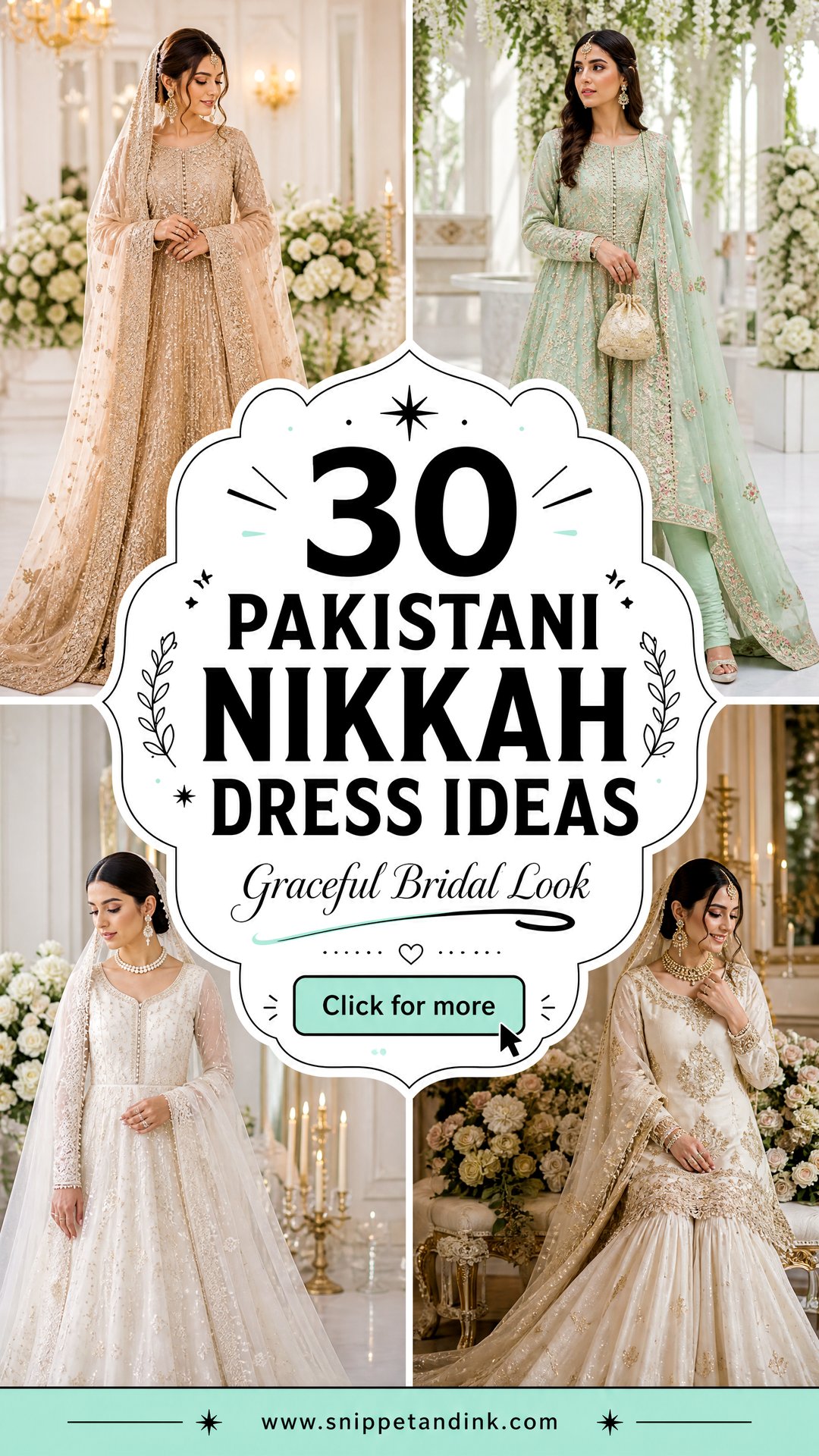
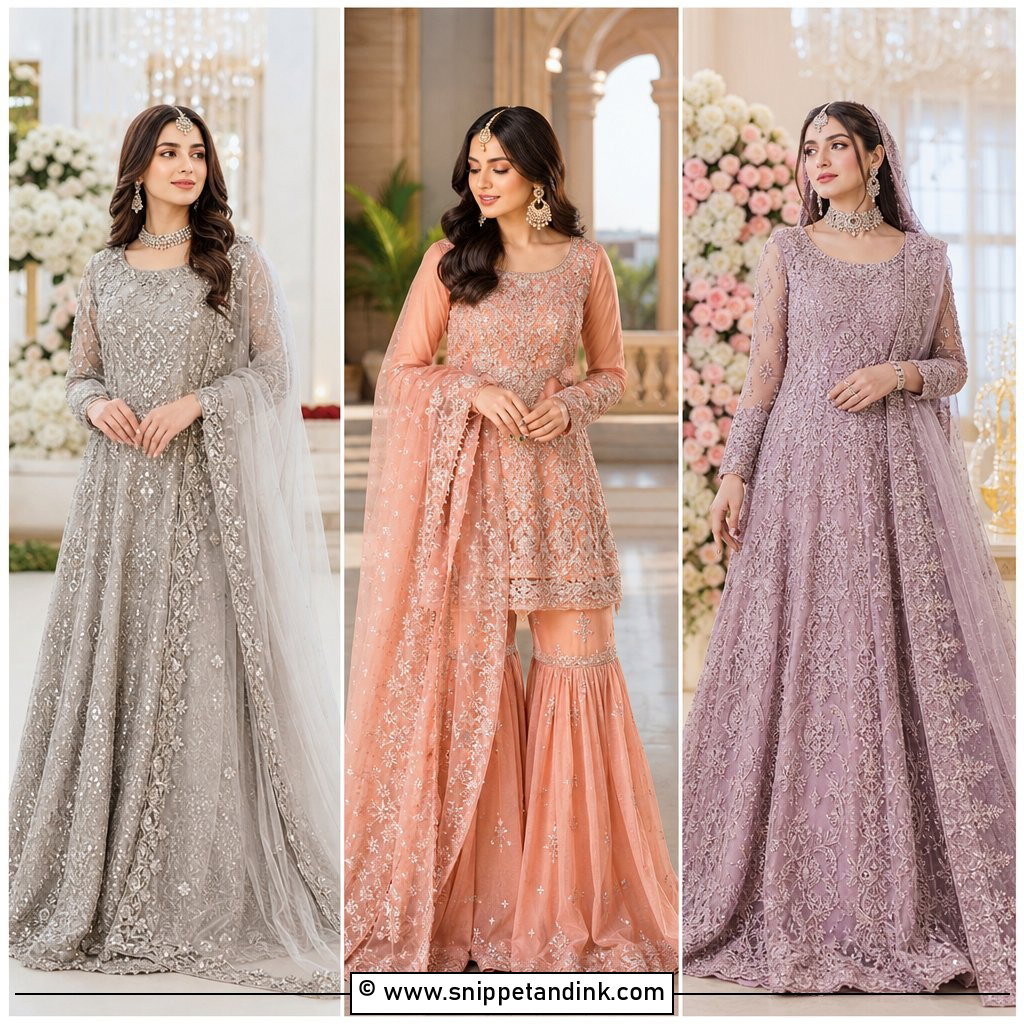
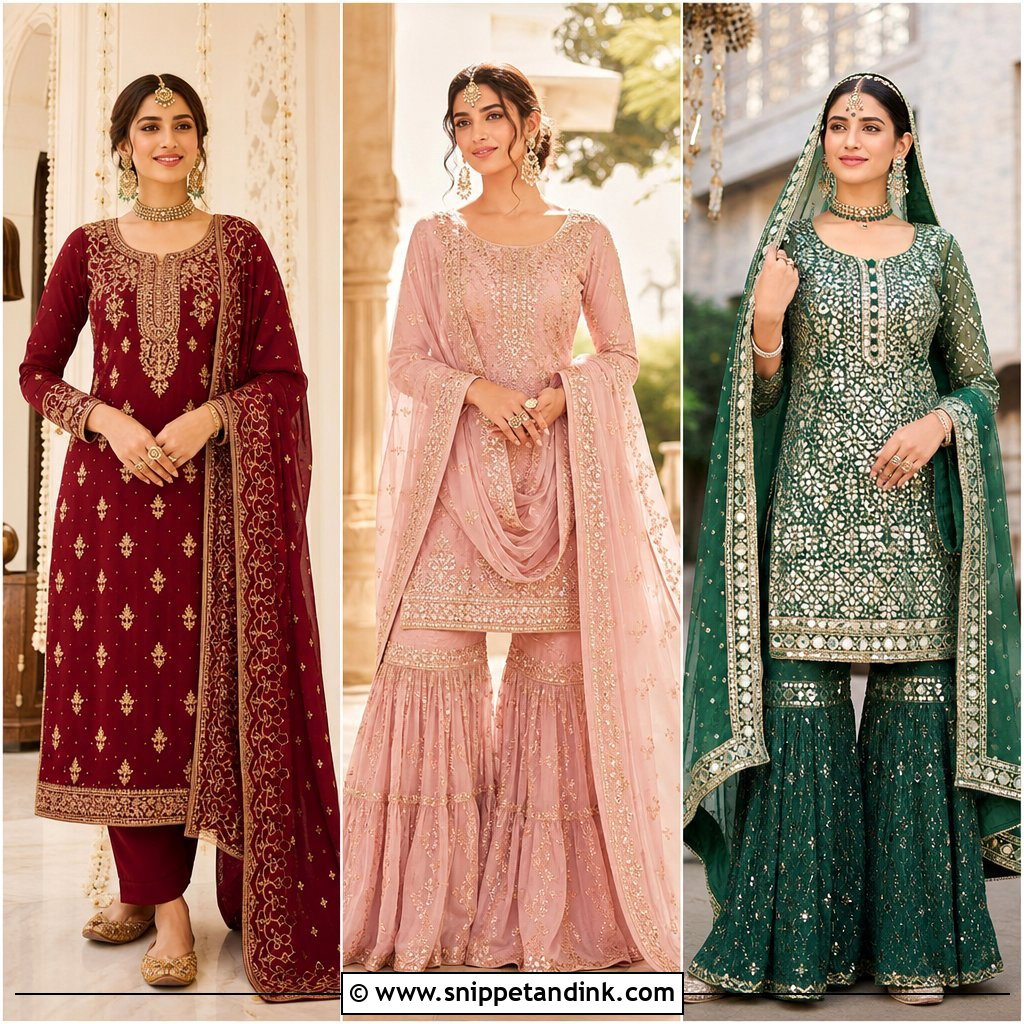
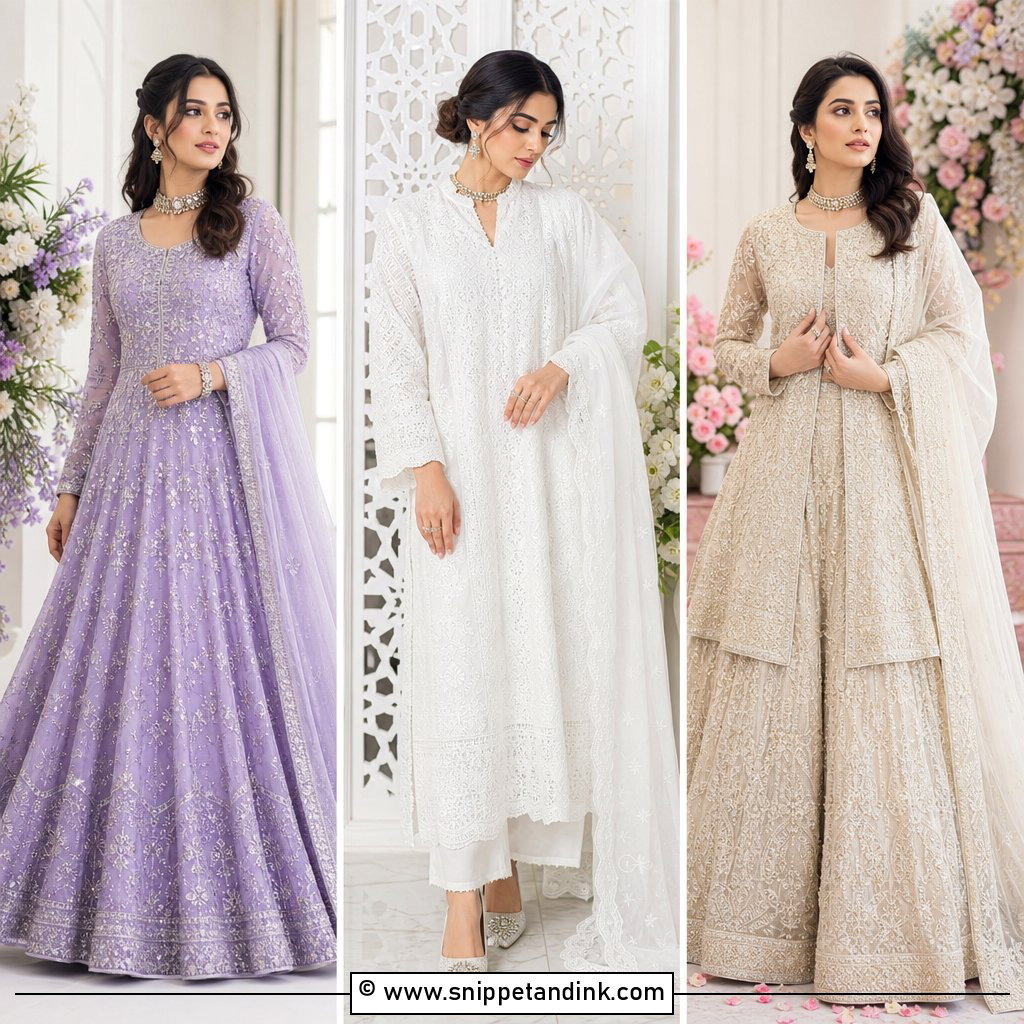
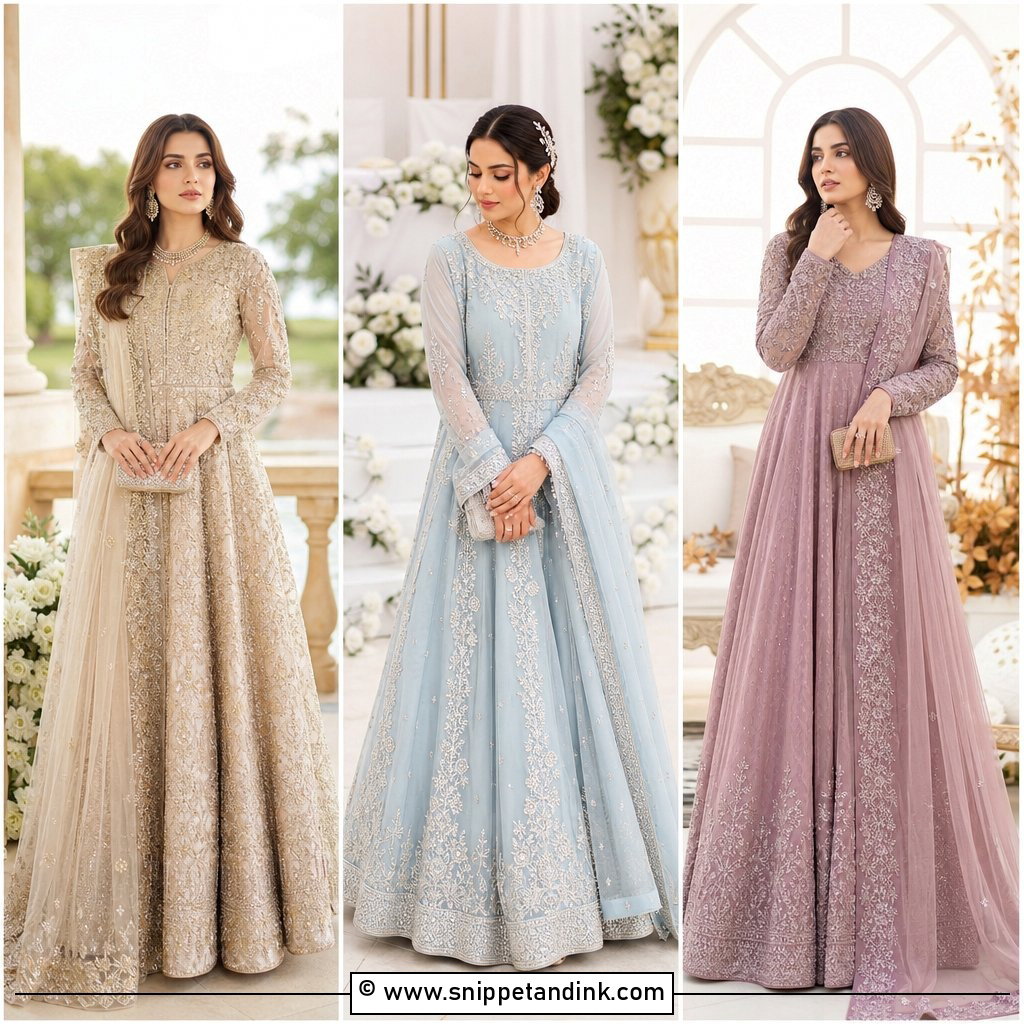
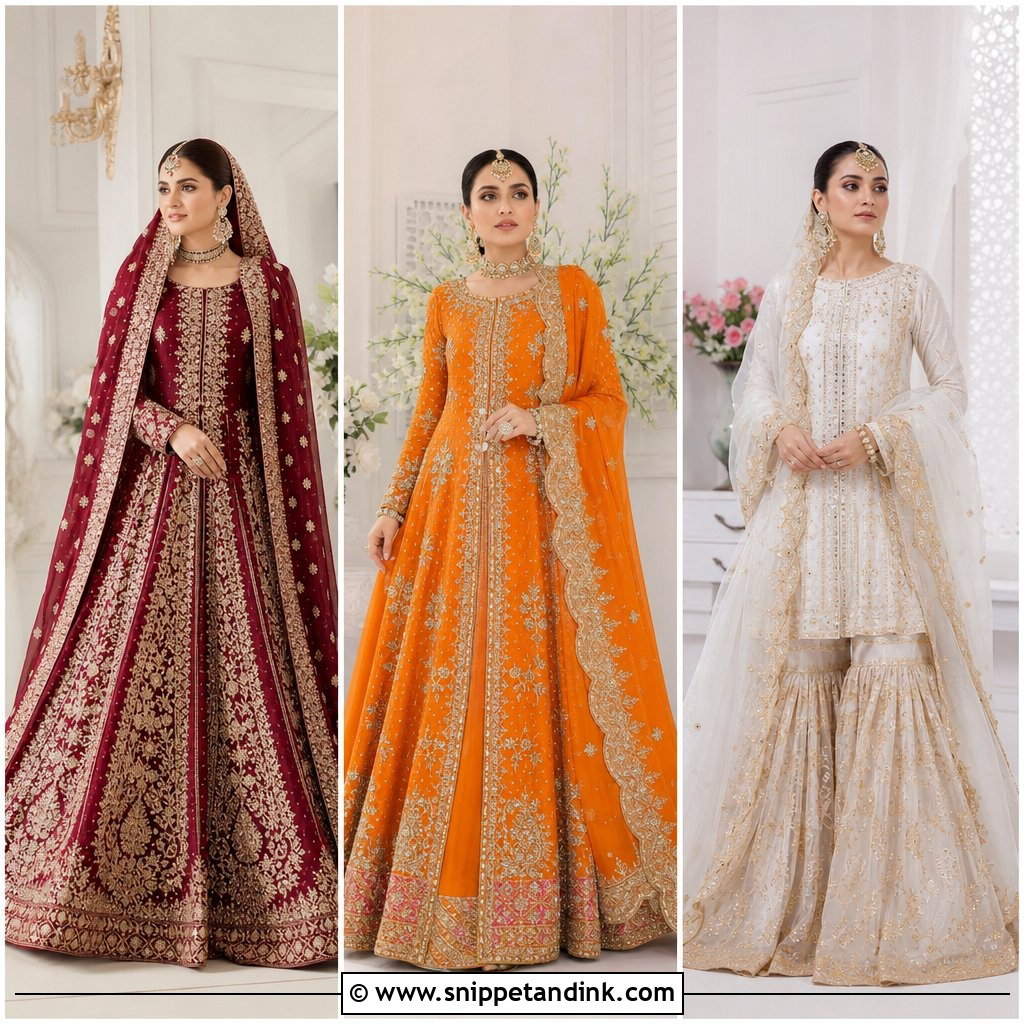
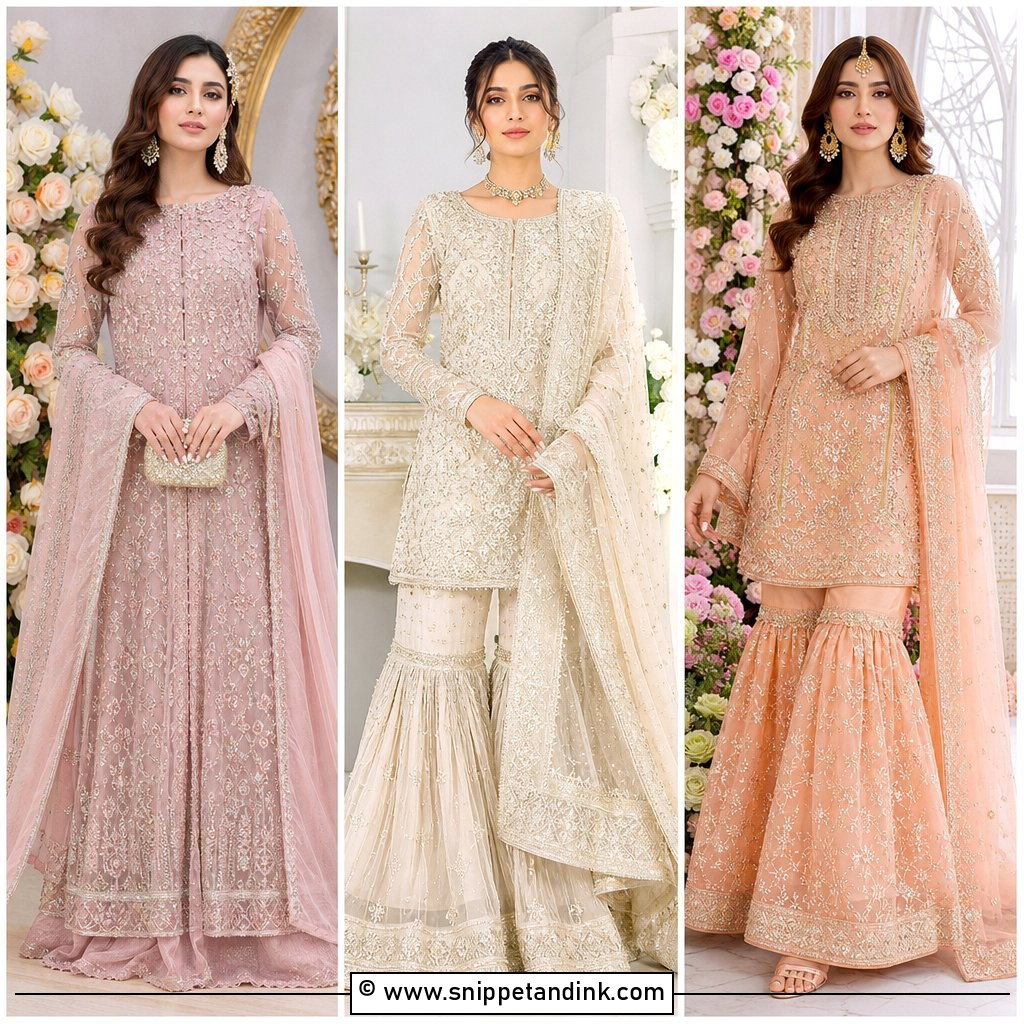
The nikkah is the quietest event of a Pakistani wedding, and the outfit should feel that way too. You’ll sit for most of it, often with your head covered, while the vows are read and the nikkah nama is signed, so modesty and comfort matter more here than sheer volume. Ivory, white, champagne, blush and soft pastels still lead, but the cuts have opened up: long maxis, paneled pishwas, organza lehengas, tailored ghararas and shararas all sit comfortably in a nikkah wardrobe. The heaviest outfit is rarely the right one. What works is something that suits the setting, whether a living room, a mosque, a hotel hall or a daytime garden, and that you can sit in for an hour without fidgeting. Here are 30 nikkah looks, from simple to regal, with my notes on each.
Mosque, Living Room or Hotel Hall? Read the Setting First
Before I look at colors with a nikkah bride, I ask where the ceremony is, because each setting quietly sets the rules.
In a mosque
Expect to remove your shoes, sit on a carpet and keep your arms, neckline and hair covered. Practices differ from one mosque to the next, so ask the committee about any requirements for the bride and her party. Choose a shape you can sit cross-legged in, like a sharara, gharara or anarkali with churidar, and slip-on khussas rather than strappy heels.
At home
Home ceremonies are close and crowded. Wide farshi ghararas and long trails get stepped on in doorways, so I steer brides toward a pishwas, a short kameez with sharara or a simple suit with a special dupatta.
In a hotel or banquet hall
Here there’s room for volume and a longer dupatta, and the lighting is usually warm and artificial. Silver and icy pastels can look flat under yellow bulbs; champagne, ivory and dusty rose hold up better.
1. White Nikkah Lehenga With Organza Dupatta
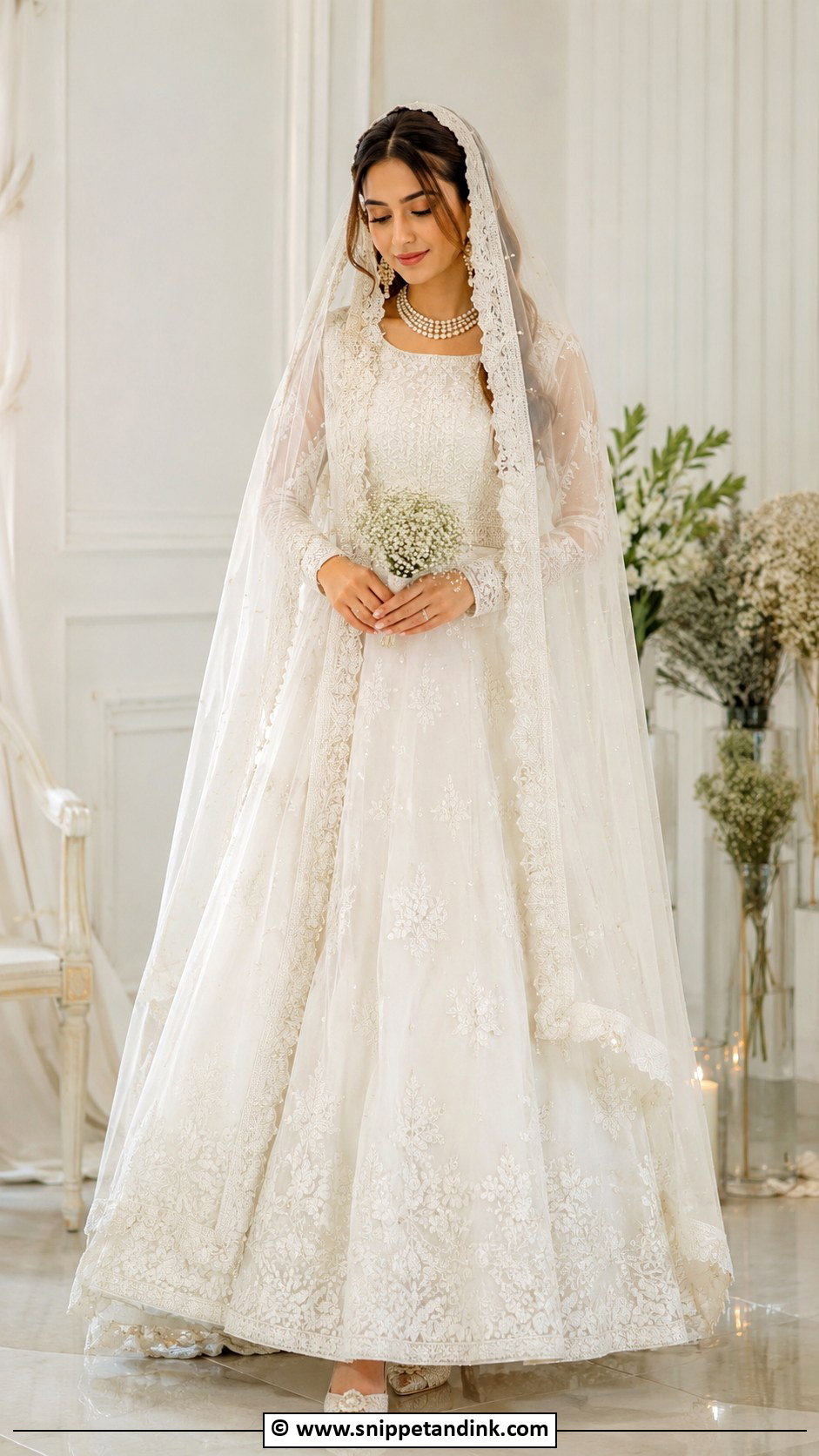
White is the nikkah color most brides picture first, and a lehenga in it feels calm and ceremonial. Keep the work to threadwork, pearls, sequins or light zardozi so it stays bridal without turning heavy, and choose a blouse with full or three-quarter sleeves. A sheer organza dupatta with scalloped borders can go over the head or rest on one shoulder. Pearl-white organza looks very different from chalk-white net, so match the dupatta and lehenga under daylight before stitching begins. Pearl jewelry, soft glam makeup and ivory khussas or embellished heels suit a daytime nikkah, a mosque ceremony or a small family gathering.
2. Ivory Nikkah Sharara With Short Kameez
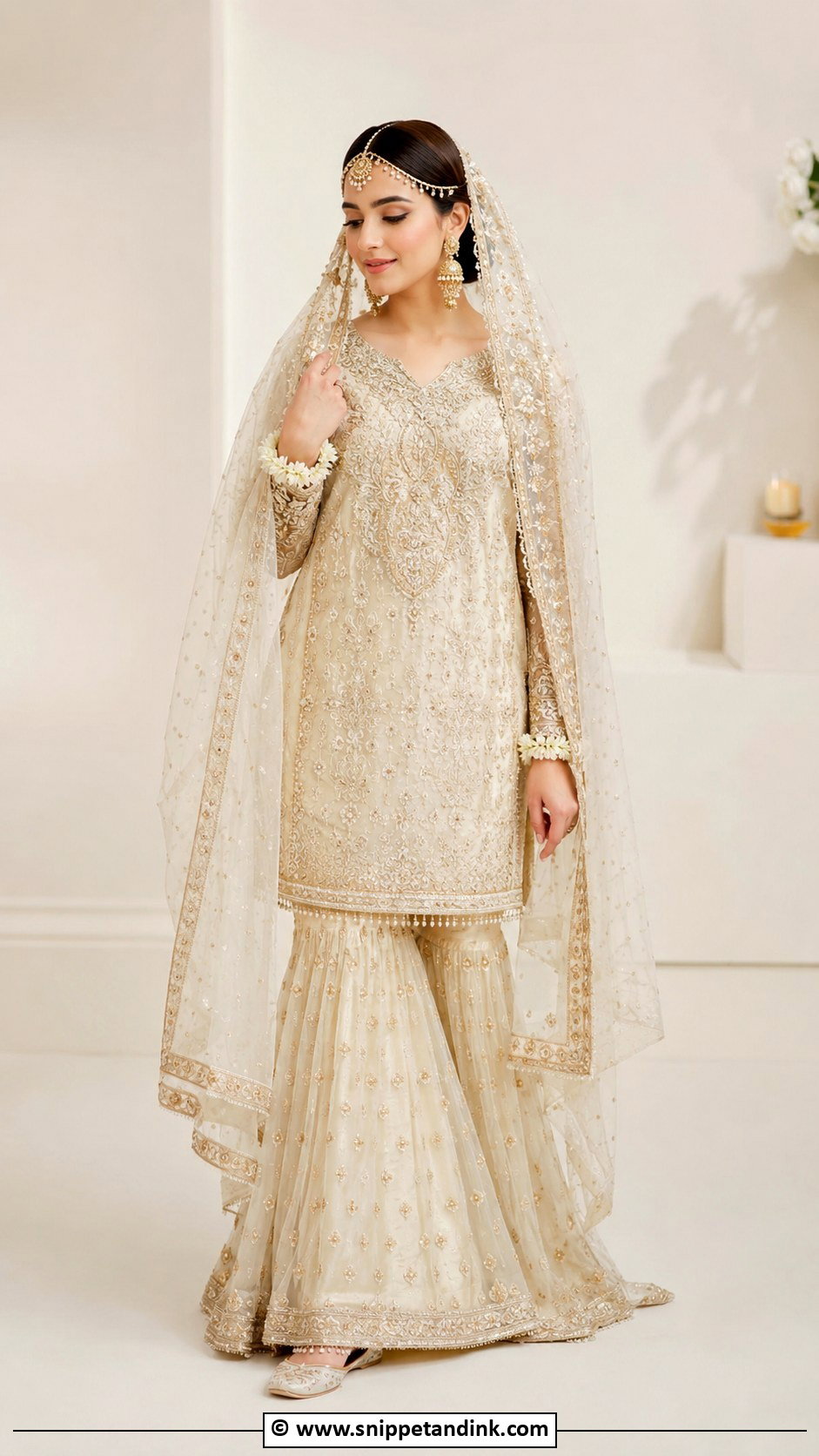
A short kameez with a flared sharara is a classic Pakistani shape, and in ivory it reads fresh rather than old-fashioned. Put fine embroidery at the hem, sleeves and neckline, and pin a lightly bordered dupatta neatly over the head. Ivory sharara legs crease where you sit, so I have the bride stand for a moment before every photo while someone gives the flare a shake. Jhumkas, a delicate matha patti and soft pink makeup finish it, indoors or out.
3. Champagne Nikkah Maxi With Bridal Dupatta
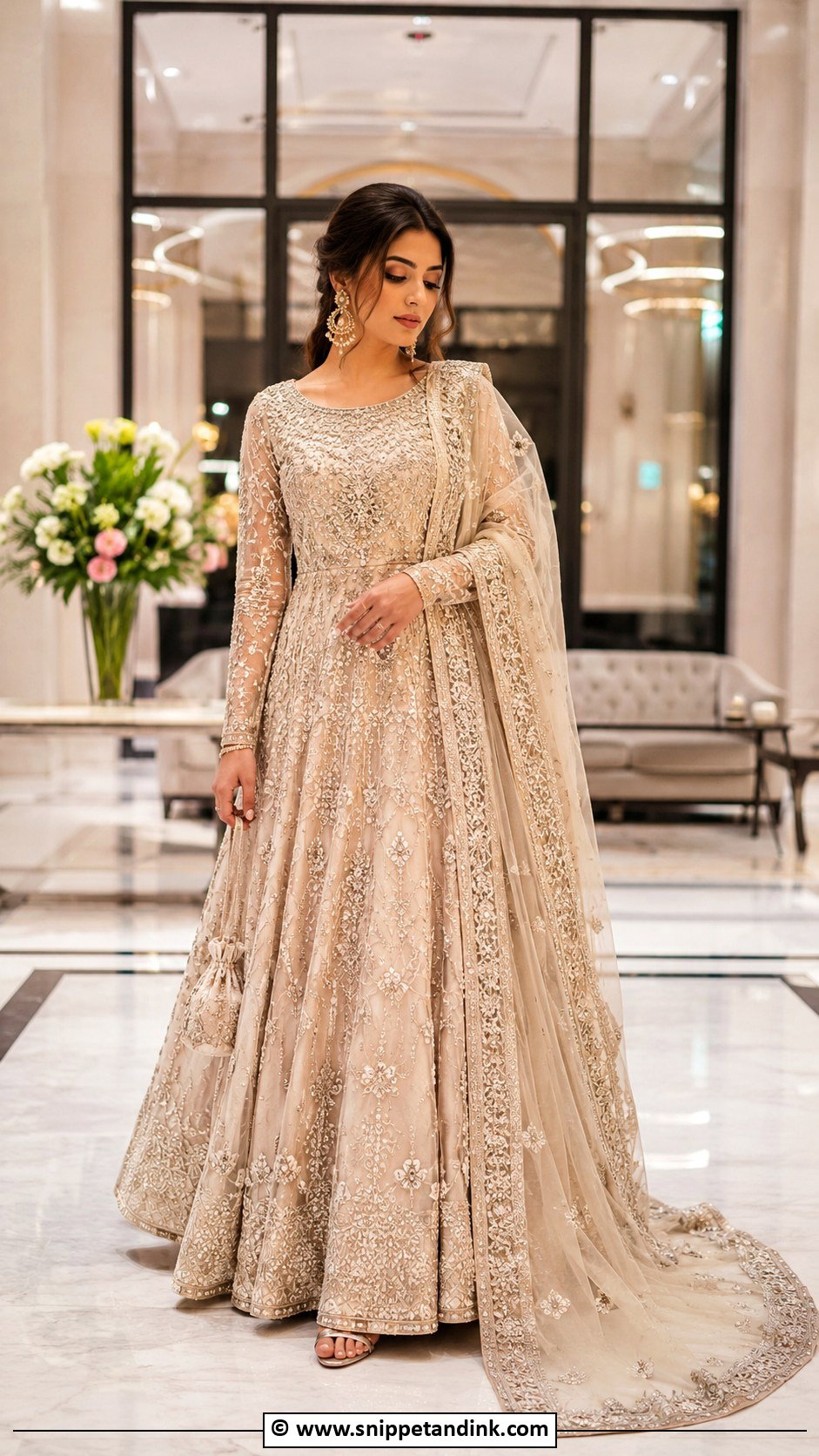
Champagne looks expensive without being loud, which is why it suits a hotel or evening nikkah. A floor-length maxi with a fitted bodice and a flowing skirt flatters most figures, and silver, dull gold, pearl or crystal embroidery keeps the finish refined. Put the handwork along the dupatta border, since that’s what frames your face while you’re seated. I’d test champagne next to your skin before ordering; on some complexions it reads golden and rich, on others it drifts toward beige and flattens the face. Kundan earrings, a small choker and metallic heels complete it.
4. Blush Pink Nikkah Gharara With Veil Dupatta
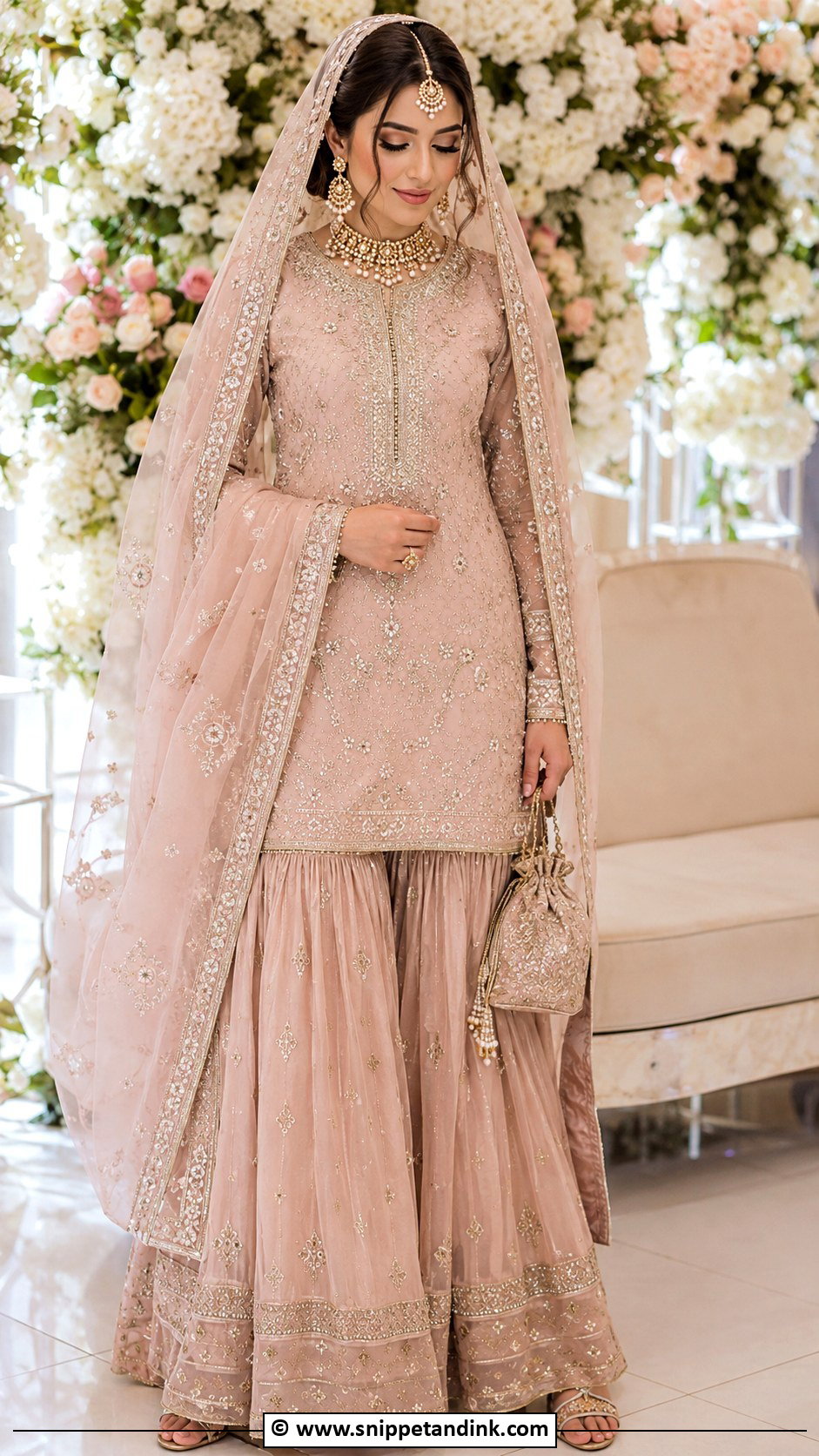
Blush gives a romantic nikkah look without going fully white. A fitted kameez with a structured gharara, worked around the knee joint, hem and sleeves, keeps it rooted in tradition. A veil-style organza or net dupatta draped over the head softens everything. Blush can turn faintly grey in shade, so if the ceremony is outdoors under trees or a canopy, I’d pick a blush with a touch more warmth. Gold or pearl jewelry, rosy makeup, a sleek bun and embellished sandals suit it.
5. Pastel Green Nikkah Pishwas With Churidar
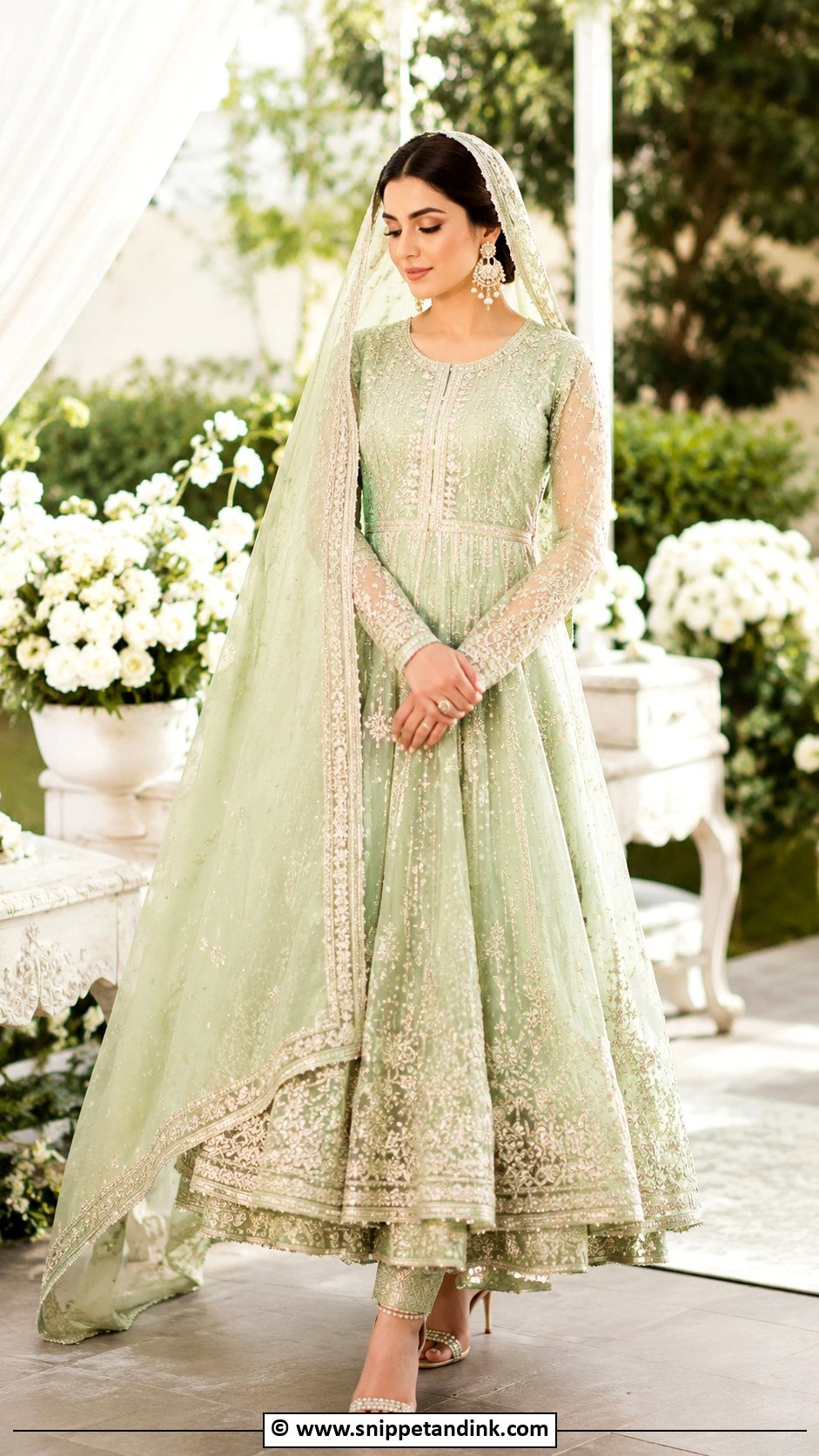
Pastel green and a pishwas belong to daytime: garden venues, spring and summer, natural light. The long flared panels move gracefully, and a fitted churidar balances that volume. Ivory, gold or silver embroidery gives it a delicate bridal finish, with a matching or ivory dupatta over the head. Churidar is cut longer than the leg and gathers at the ankle; I check those gathers sit evenly, because bunched fabric at one ankle shows in every standing photo. Pearl earrings, soft curls and dewy makeup complete it.
6. White Anarkali Nikkah Dress With Pearl Jewelry
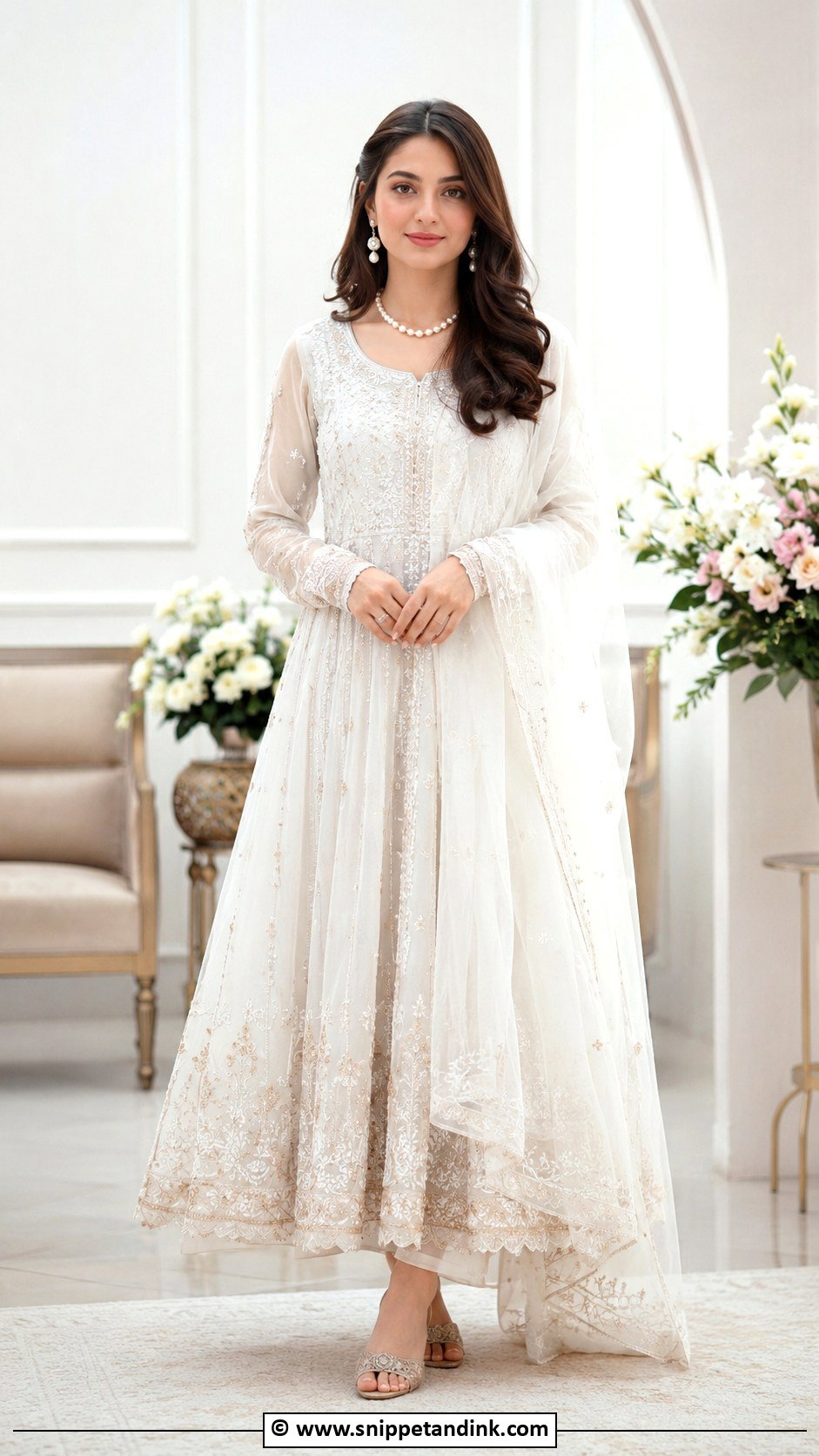
A white anarkali gives a regal shape with very little effort. The fitted top flares into a full skirt, and subtle embroidery, lace or pearl work keeps it refined. A sheer dupatta with a neat border adds modesty. I pair it with pearls almost every time; heavy gold against a plain white anarkali tends to look borrowed from another outfit. A low bun, soft eyes and a nude or pink lip complete it. It’s easy to sit and move in, which counts for a lot during a long ceremony.
7. Silver Nikkah Lehenga With Long Shirt
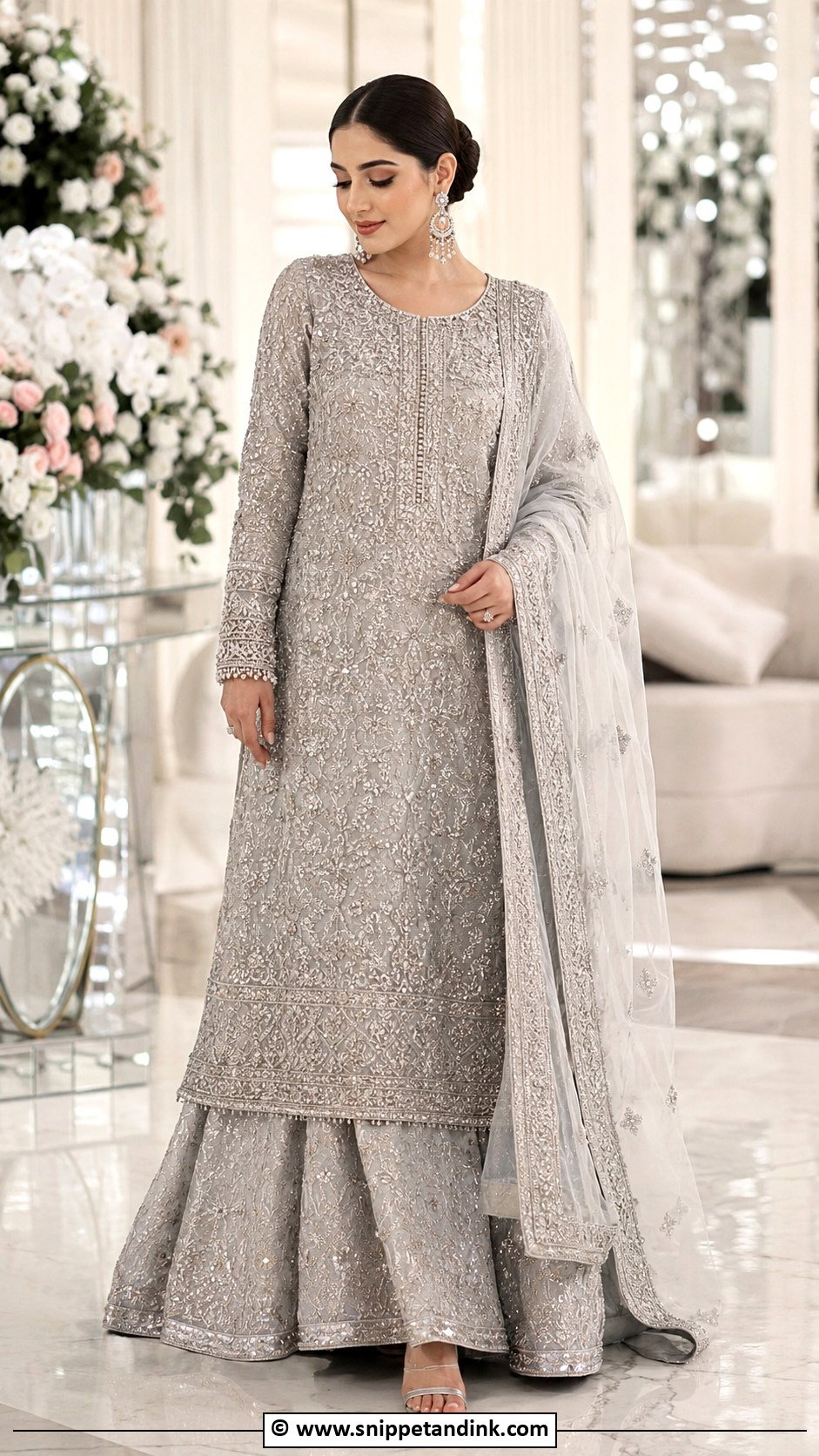
A long shirt over a silver lehenga gives modest coverage on top with a festive skirt below. Choose a soft, matte silver rather than a high-shine one; metallic fabrics bounce flash and can blow out to plain white in photos. Sequins, crystals and threadwork add sparkle in small doses, and a matching dupatta with a delicate border ties it together. Diamond-look jewelry, silver heels and a sleek hairstyle suit an evening nikkah or formal venue.
8. Gold Nikkah Gharara With Ivory Kameez
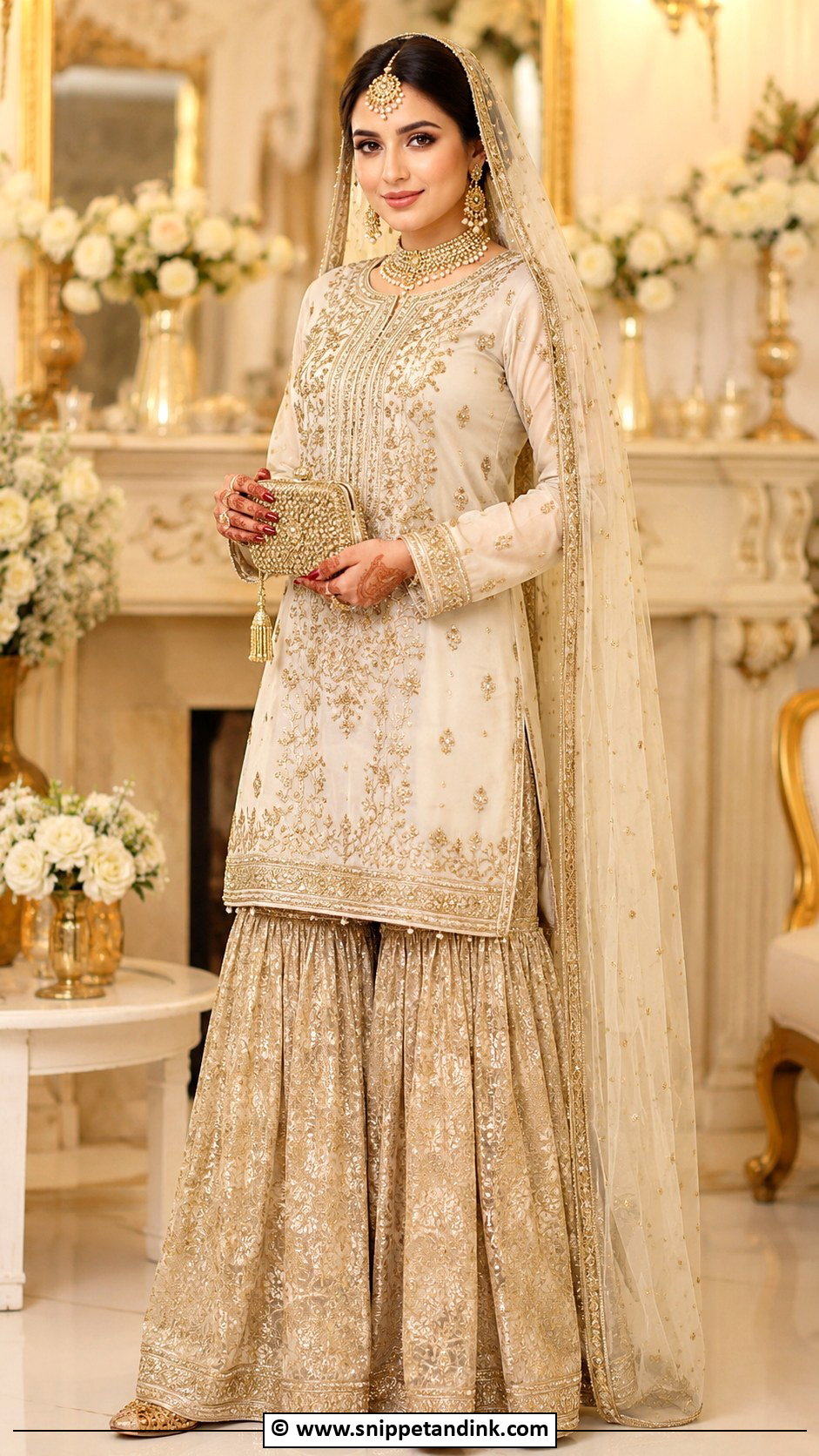
Ivory on top and gold below gives you richness without losing the calm nikkah palette. The ivory kameez keeps the face area soft while the gold gharara carries the bridal depth. Look for antique gold embroidery, gota or delicate zardozi, and soften the whole outfit with an ivory or champagne dupatta. The two pieces need to look intentional together, so I ask for one embroidery motif repeated on both. Kundan jewelry, a small clutch and gold khussas or heels finish it for a family-centered ceremony.
9. Mint Green Nikkah Sharara With Net Dupatta
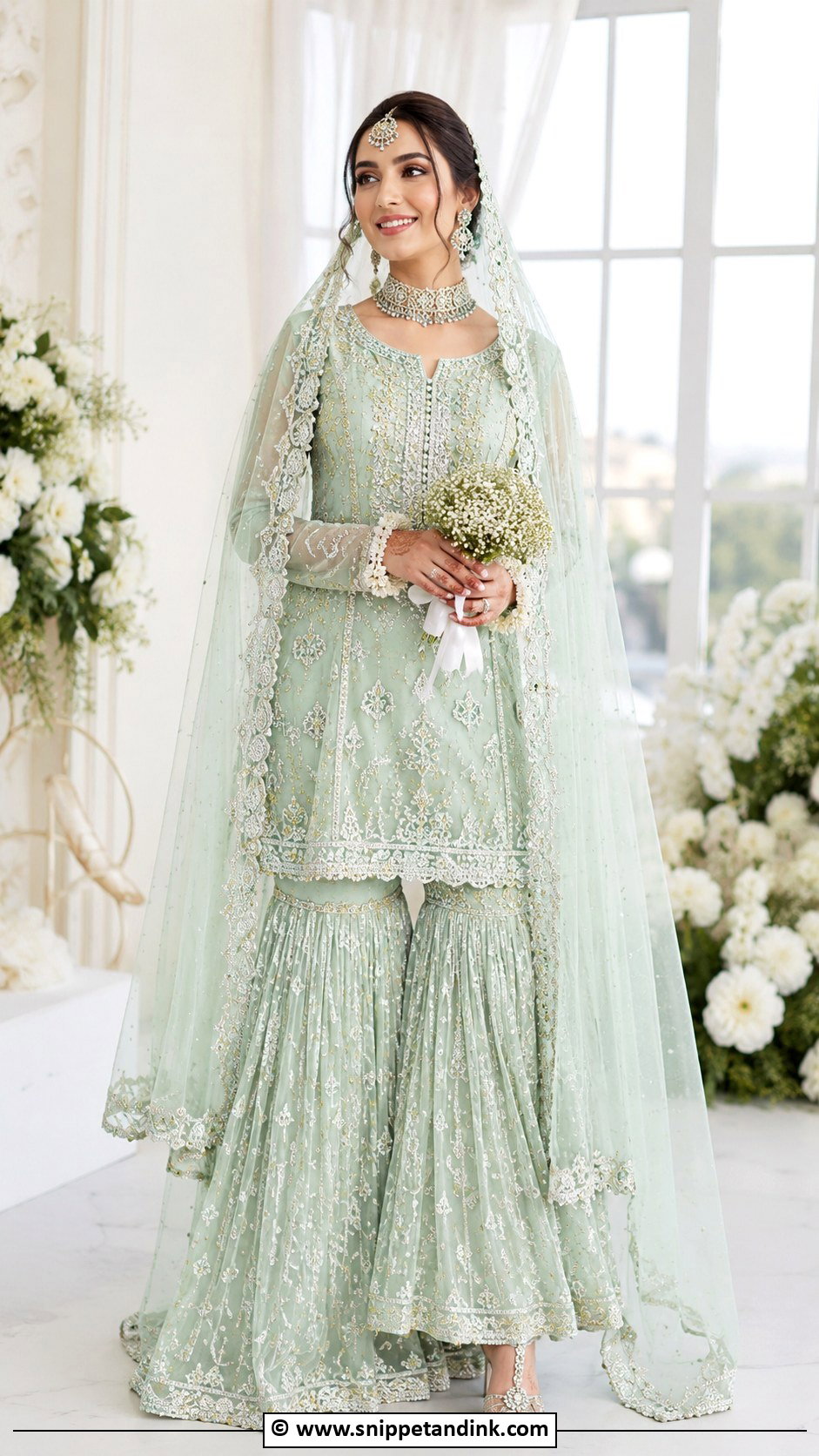
Mint is a fresh, youthful option for a Pakistani Nikkah dress, especially in daylight. A mint sharara under a lightly embroidered kameez is easy to carry, and a net dupatta with lace, pearls or fine sequins gives a delicate finish. Silver jewelry sharpens mint; pearls soften it further. Mint can wash out very fair skin at close range, so I like a peachy blush and well-defined lashes to bring the face forward. Glossy lips complete it.
10. Powder Blue Nikkah Maxi With Silver Work
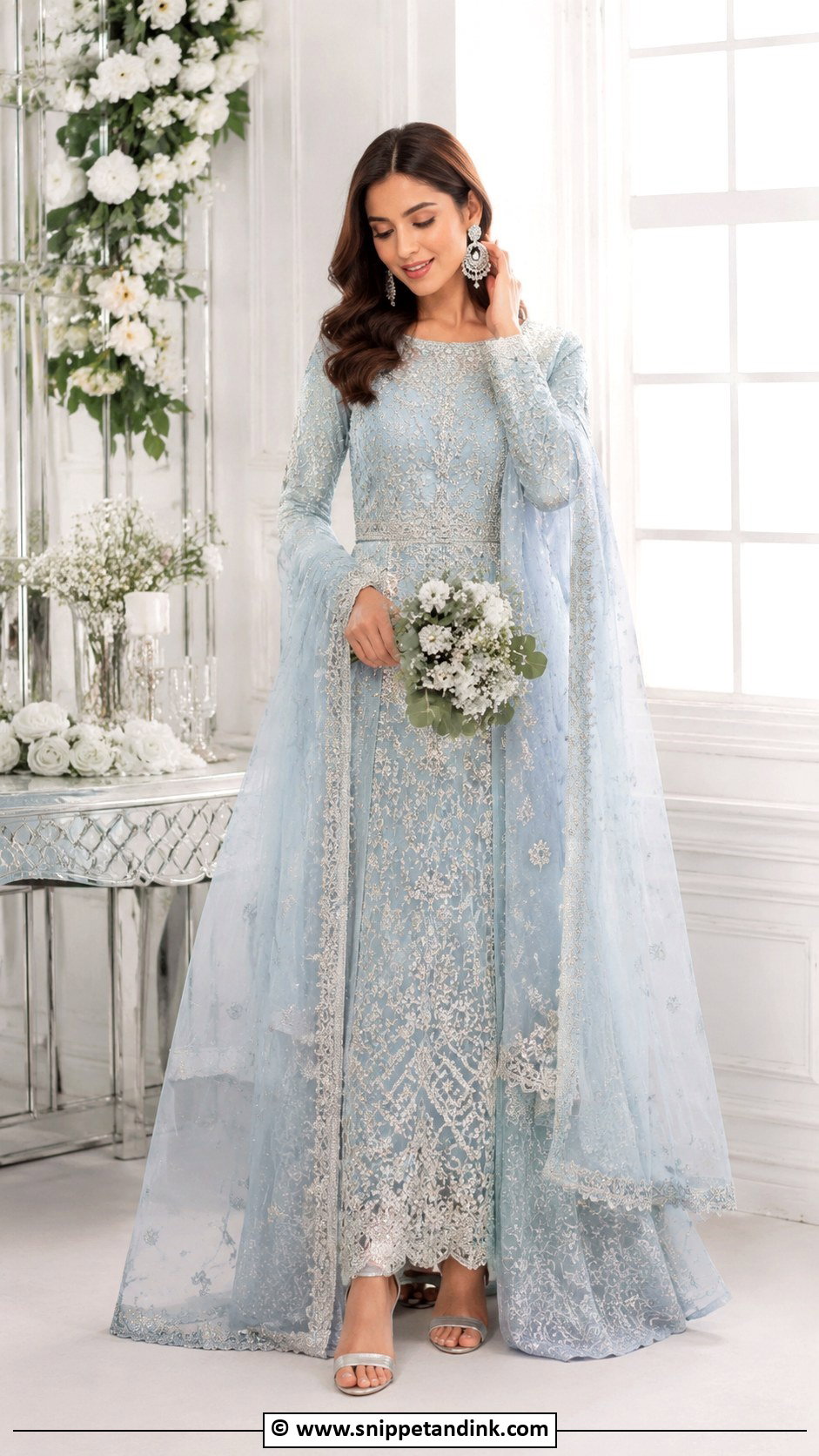
Powder blue is peaceful and quietly unusual for a nikkah. A long maxi with full sleeves and a lightly flared skirt, worked in silver, crystals or pearls, keeps it modest. Add a matching dupatta, or an ivory one for contrast. Pale blue can look cold under fluorescent strip lighting in community halls, so for an indoor ceremony I’d lean toward a warmer sky blue. Silver heels, delicate earrings and a bracelet are enough, with soft waves or a low bun; it shows best in natural daylight.
11. Peach Nikkah Lehenga With Matching Choli
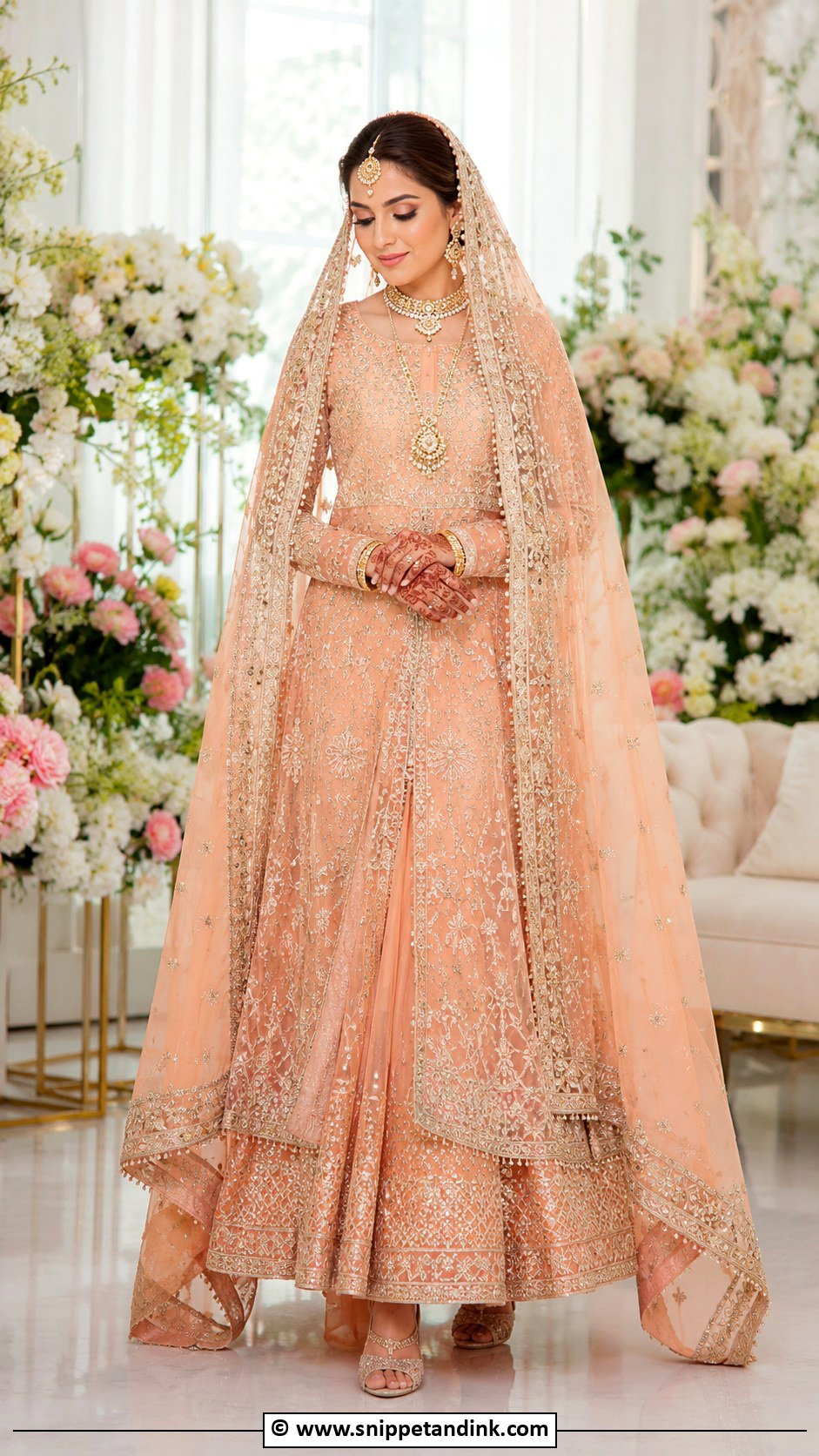
Peach warms most skin tones without being too bright for the ceremony. A lehenga with fine embroidery and a matching choli that covers comfortably gives a soft, romantic feel, with a longer dupatta over the head for tradition. Gold, pearl or kundan all work, depending on how formal the event is. A choli that’s comfortable standing can gape when you lean forward to sign, so I fit it with the bride seated and leaning slightly. Coral makeup and fresh skin suit a spring or summer nikkah.
12. Cream Nikkah Pishwas With Heavy Border
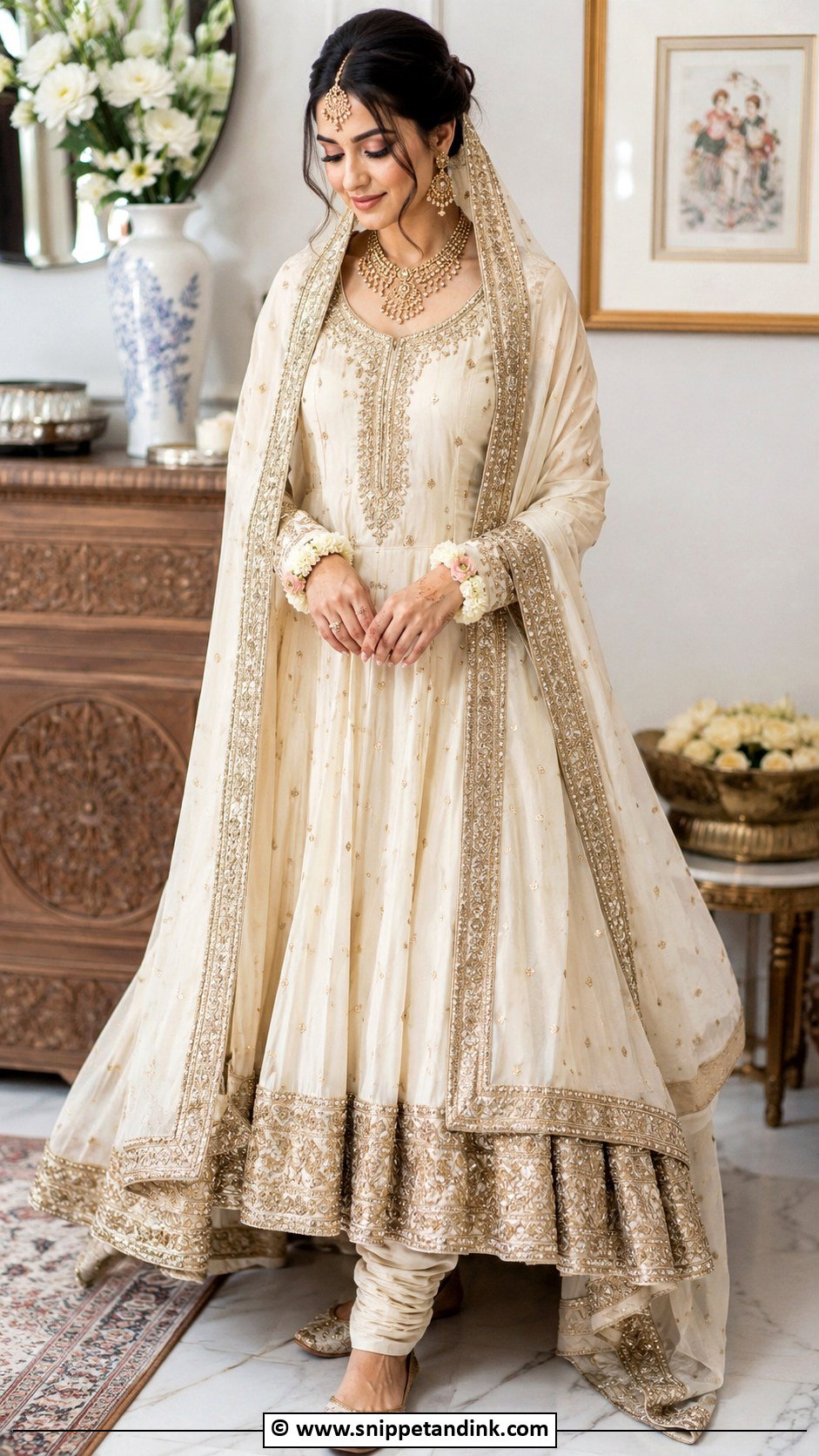
A heavy border on a cream pishwas puts all the drama at the hem, leaving the bodice and skirt simple and comfortable for sitting and greeting guests. Carry the embroidery along the hem, sleeves and dupatta edges, and wear churidar or straight pants underneath. A heavy border also anchors the skirt so it falls straight when you stand, which is useful on a windy terrace. Antique jewelry, khussas and a neatly pinned dupatta suit a home nikkah or an intimate venue.
13. Beige Nikkah Gown With Embroidered Dupatta
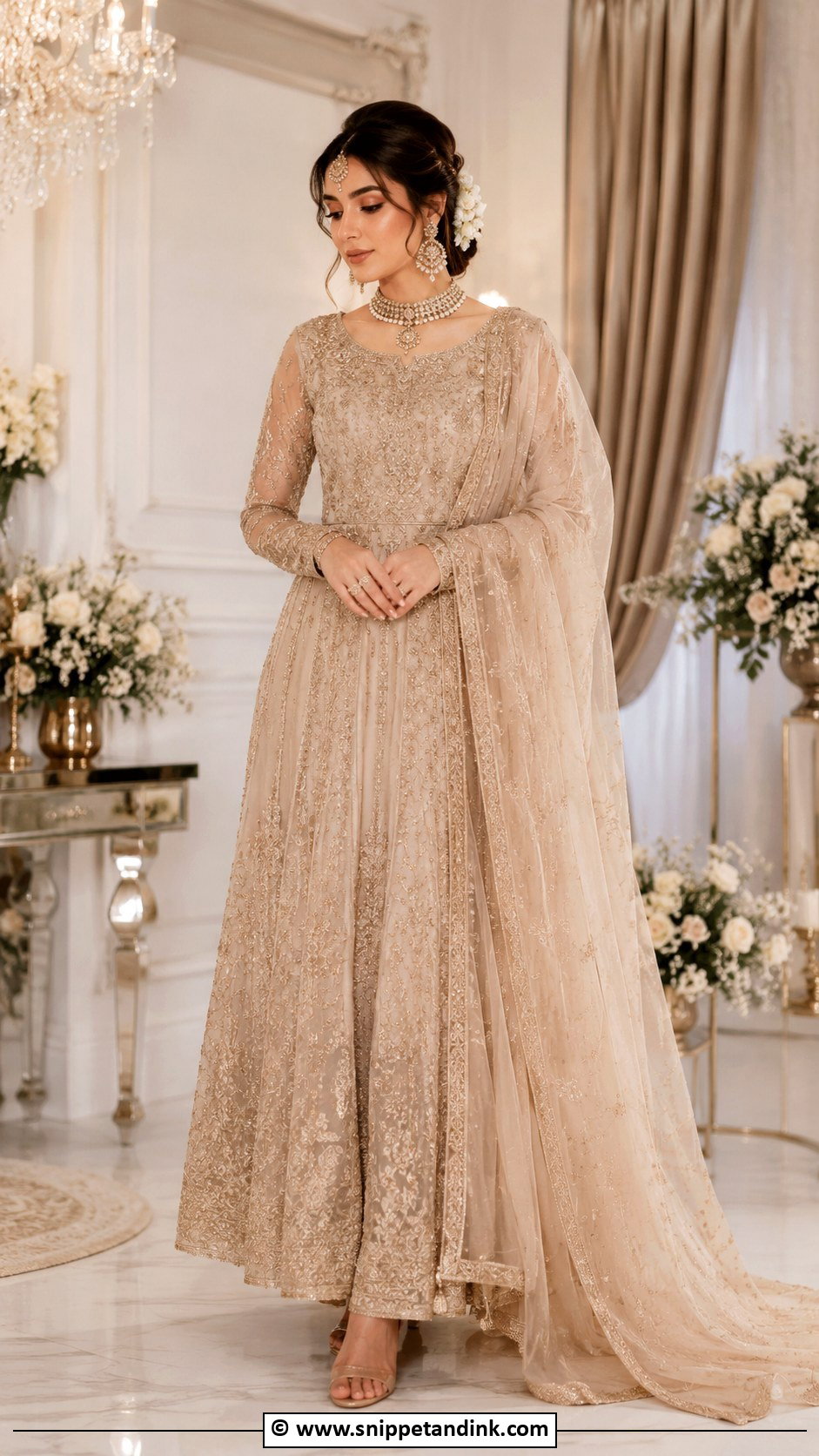
A beige gown suits brides who like western cuts but want Pakistani detailing. Look for long sleeves, a defined waist and delicate embroidery across the bodice and hem. The dupatta is what makes it feel right for a nikkah; an embroidered organza or net one styled over the head or across both shoulders does the job. Gowns usually zip at the back, so I make sure the dupatta pins don’t sit over the zip pull, which makes changing later a two-person job. Pearl or polki jewelry and soft brown, bronze or pink makeup finish it for a formal indoor ceremony.
14. Dusty Rose Nikkah Sharara With Kundan Jewelry
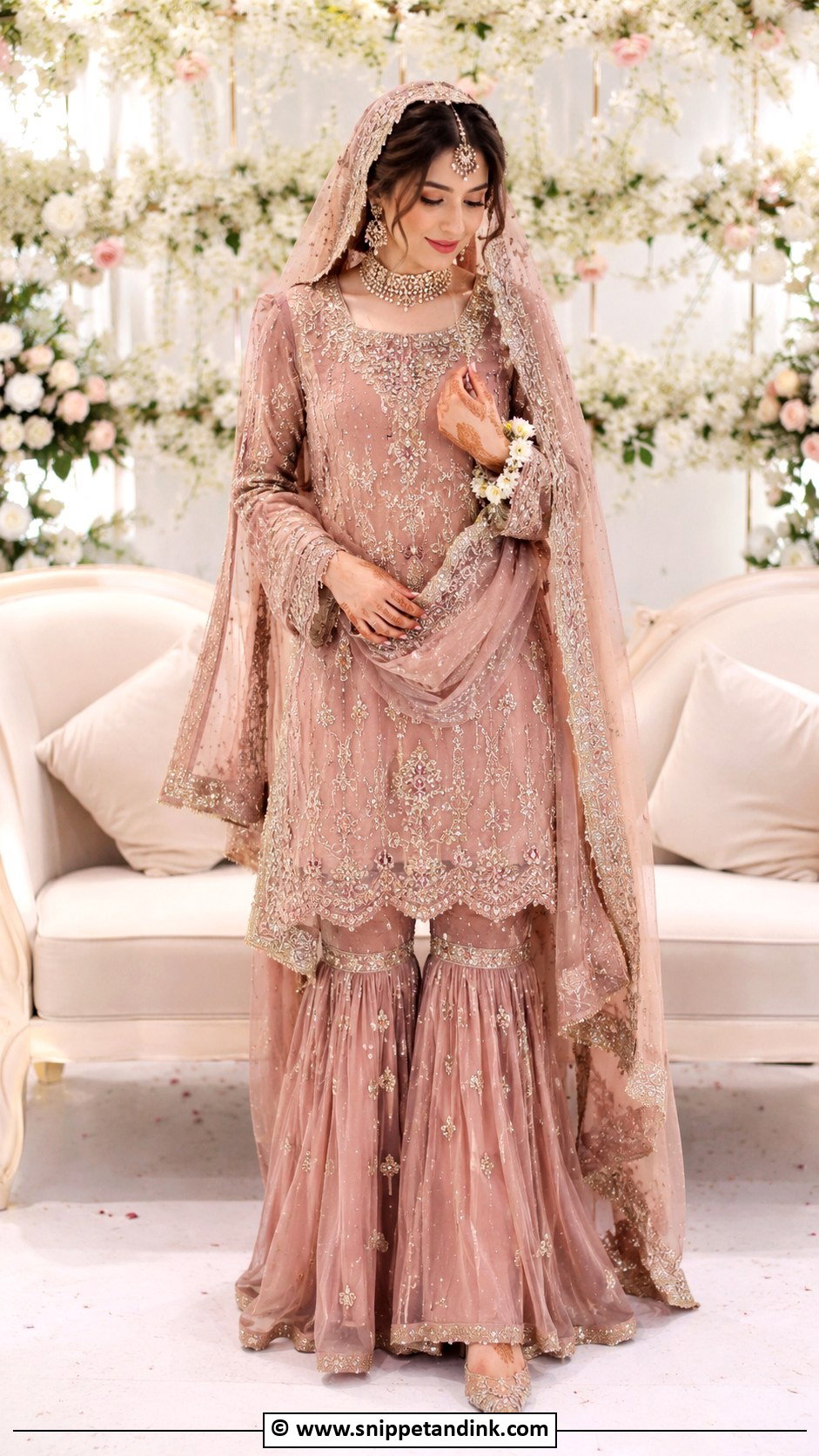
Dusty rose is romantic without being sugary. A dusty rose sharara with a matching kameez, embroidered in antique gold, silver or champagne, keeps a traditional feel, and a bordered dupatta worn over the head keeps it ceremonial. Kundan warms the muted pink nicely. Muted tones depend on contrast, so I keep at least one element, often the jewelry, noticeably brighter than the fabric. A soft bun, fresh makeup and embellished heels suit day or evening.
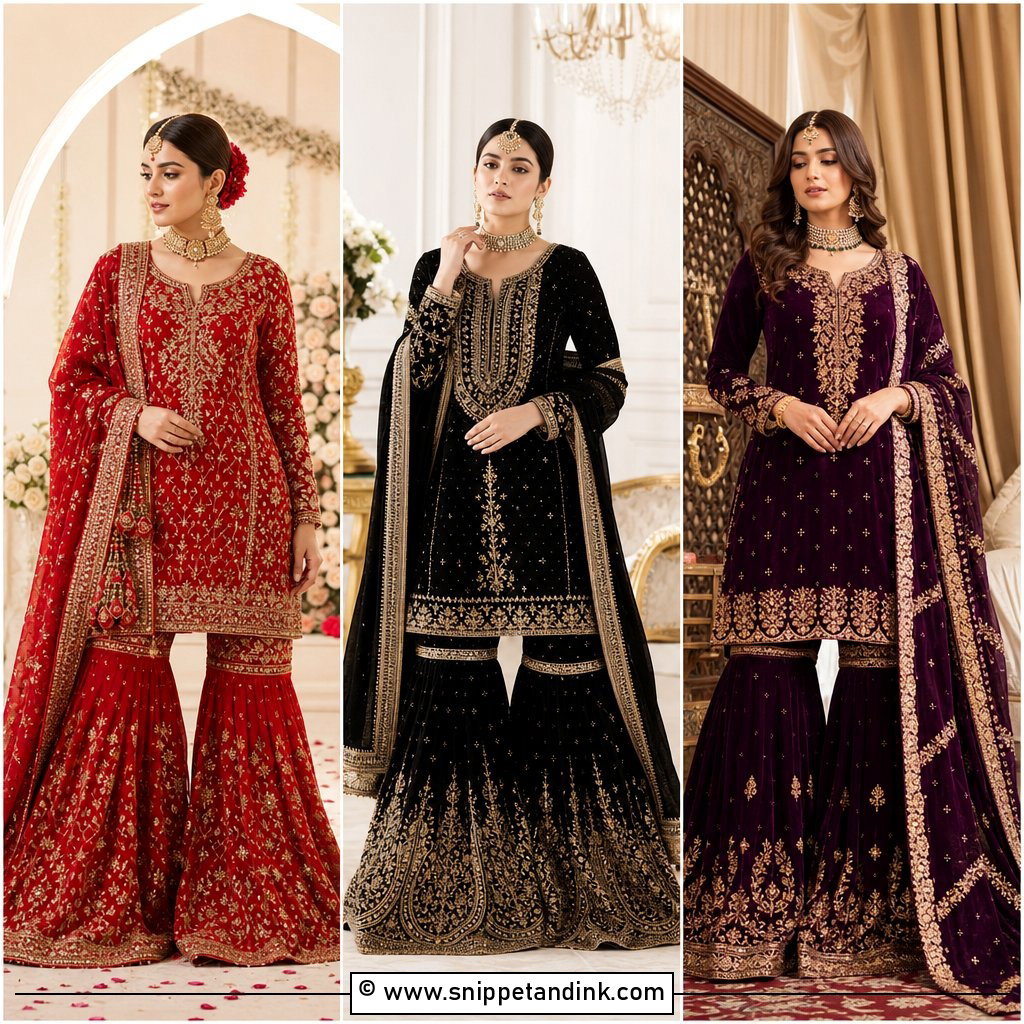
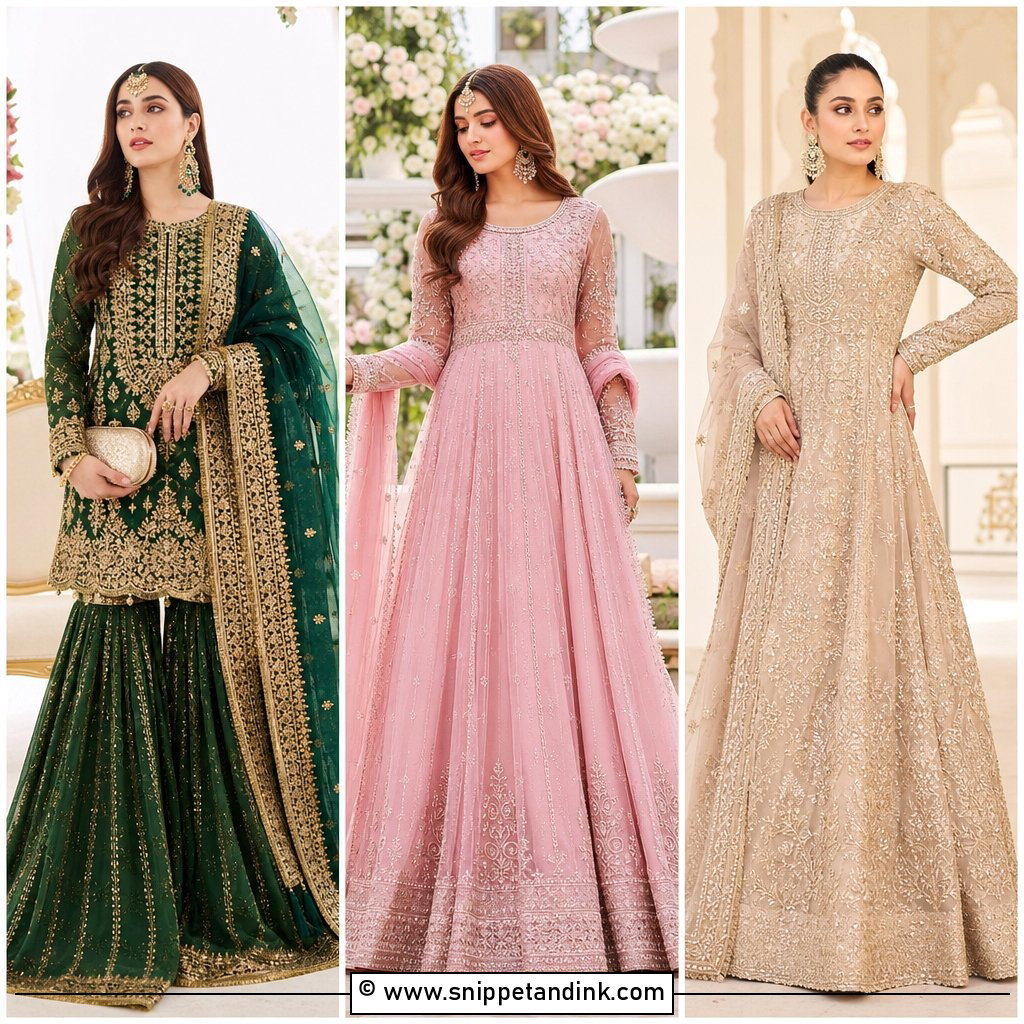
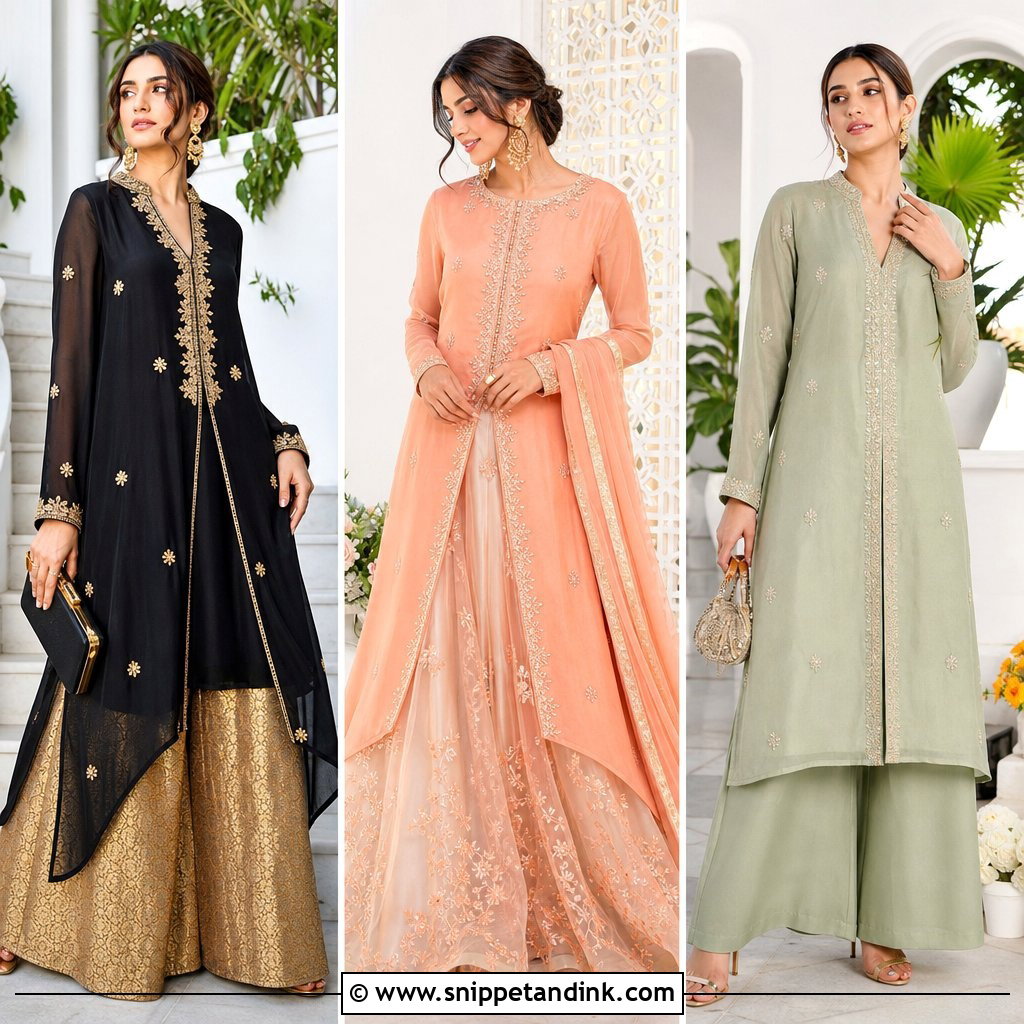
15. Lilac Nikkah Dress With Organza Lehenga
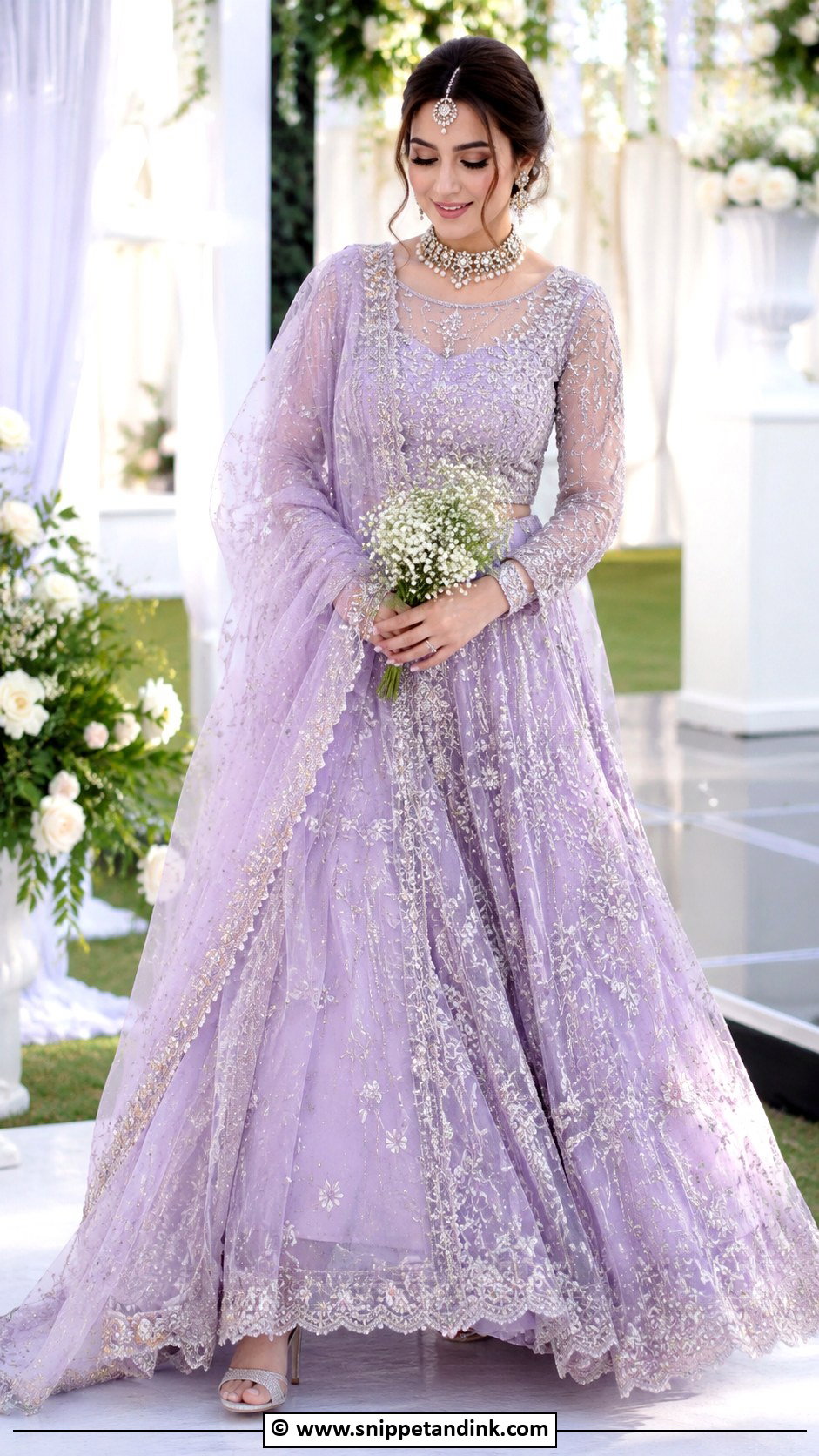
Lilac is the slightly unexpected pastel, soft but noticeable. An organza lehenga in lilac with a matching blouse and dupatta looks airy, and light silver, pearl or white-thread embroidery keeps it delicate. A modest neckline and sleeves make it suitable for the ceremony. Lilac is notoriously difficult for cameras and can photograph blue, so I tell the photographer about it and suggest a quick test shot in the actual light. Silver jewelry, soft pink makeup and crystal heels complete it.
16. White Nikkah Saree With Embellished Blouse
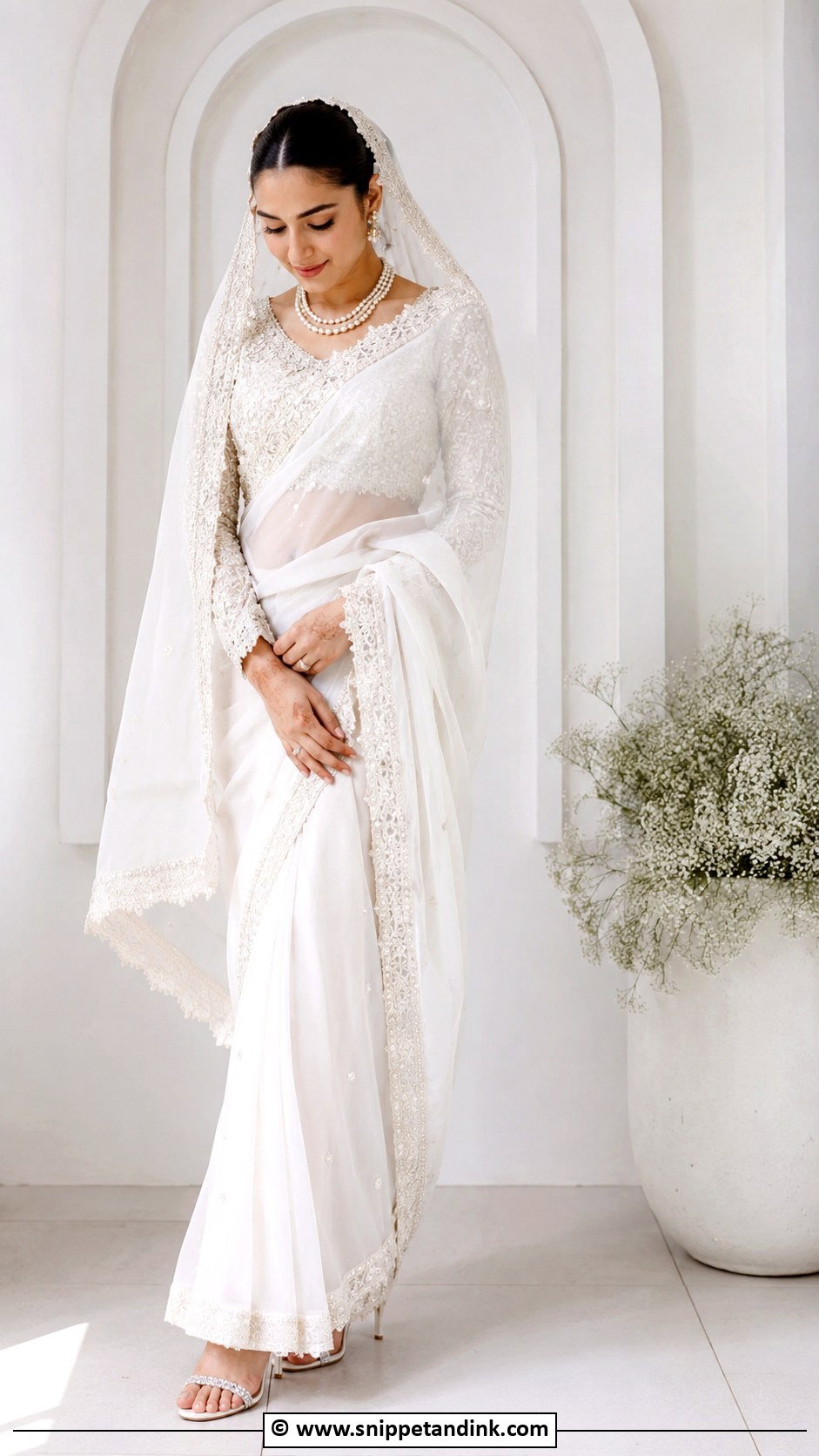
A white saree is lighter and simpler than most nikkah outfits, and the pallu doubles as a head covering. Choose chiffon, organza or silk with a delicate embroidered border, and an embellished blouse with modest sleeves and a comfortable neckline. Pin the pallu at the shoulder and again at the crown so it doesn’t slide when you bow your head. Pearl or diamond-look jewelry, a sleek bun, fresh makeup and simple heels suit brides who already wear sarees with ease.
17. Ivory Farshi Gharara Nikkah Outfit
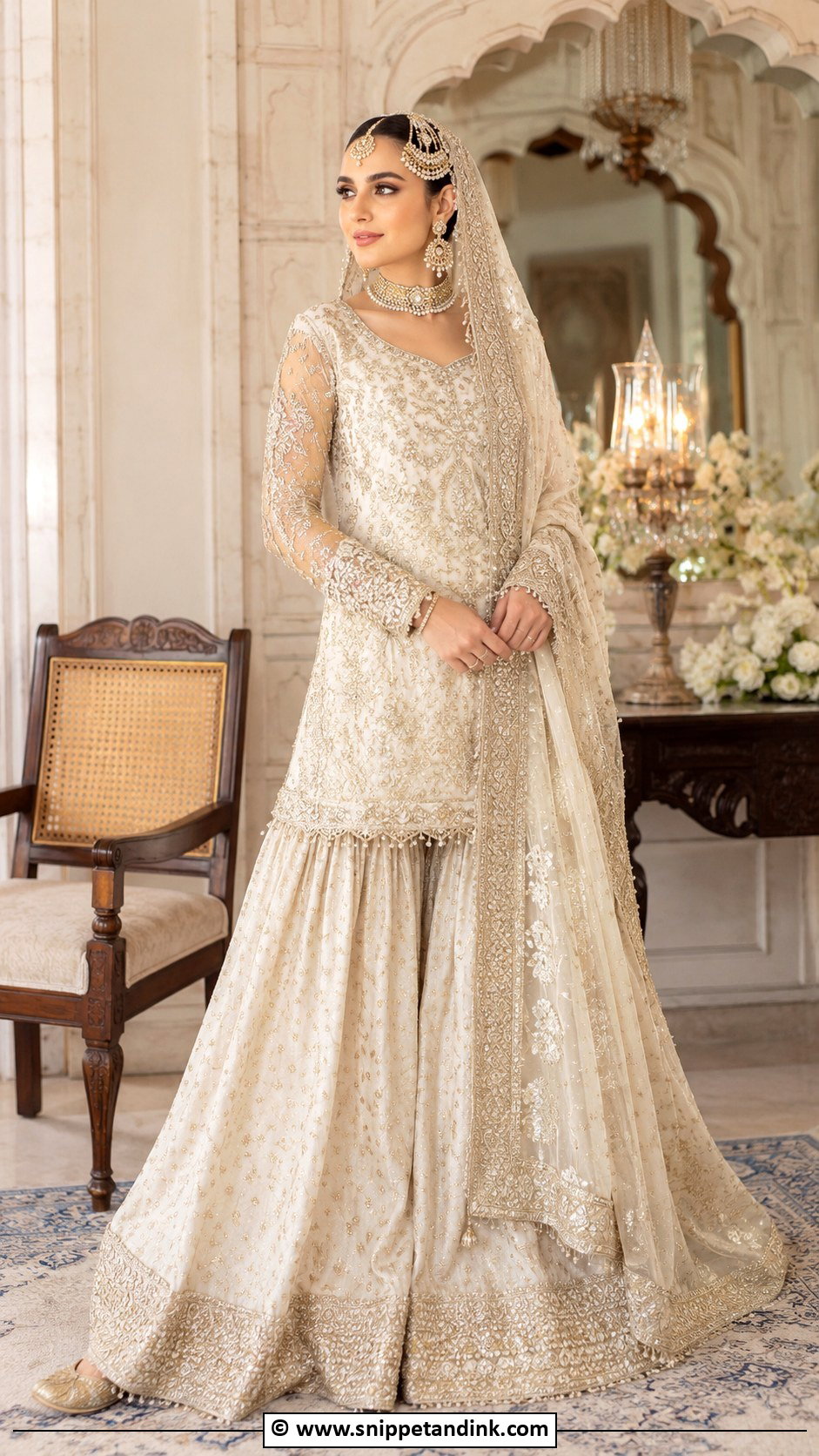
An ivory farshi gharara brings old-world Pakistani grandeur to a formal nikkah. The flare is so wide it grazes and pools on the floor, so pair it with a short or mid-length kameez with detailed embroidery and a heavily bordered dupatta over the head. With that much volume, keep the jewelry to a choker, earrings and perhaps a passa. A farshi is hard to manage on stairs and in narrow aisles, so walk the route from the dressing room to the stage once beforehand. Soft glam makeup and classic khussas finish it.
18. White And Gold Nikkah Dress With Double Dupatta
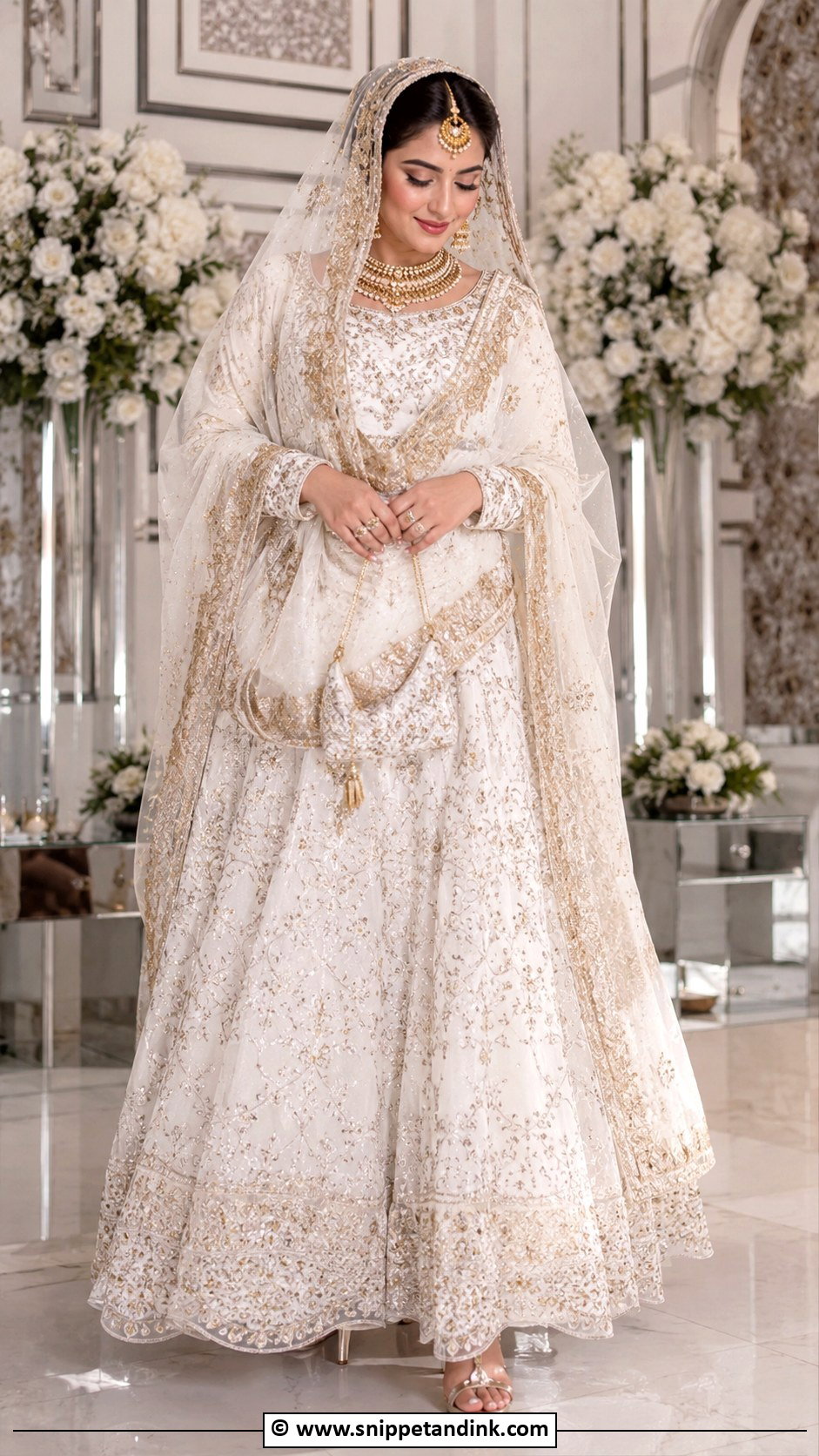
White with gold embroidery and double dupatta styling feels rich and ceremonial. The main outfit can be a lehenga, pishwas or sharara, with one dupatta over the head and the second across the shoulders or arms. Two dupattas add weight and heat quickly, so I keep both in light net or organza and pin the shoulder one firmly so it doesn’t drag. Gold jewelry, soft brown eyes and nude lips suit this traditional, layered look.
19. Tea Pink Nikkah Maxi With Lace Dupatta
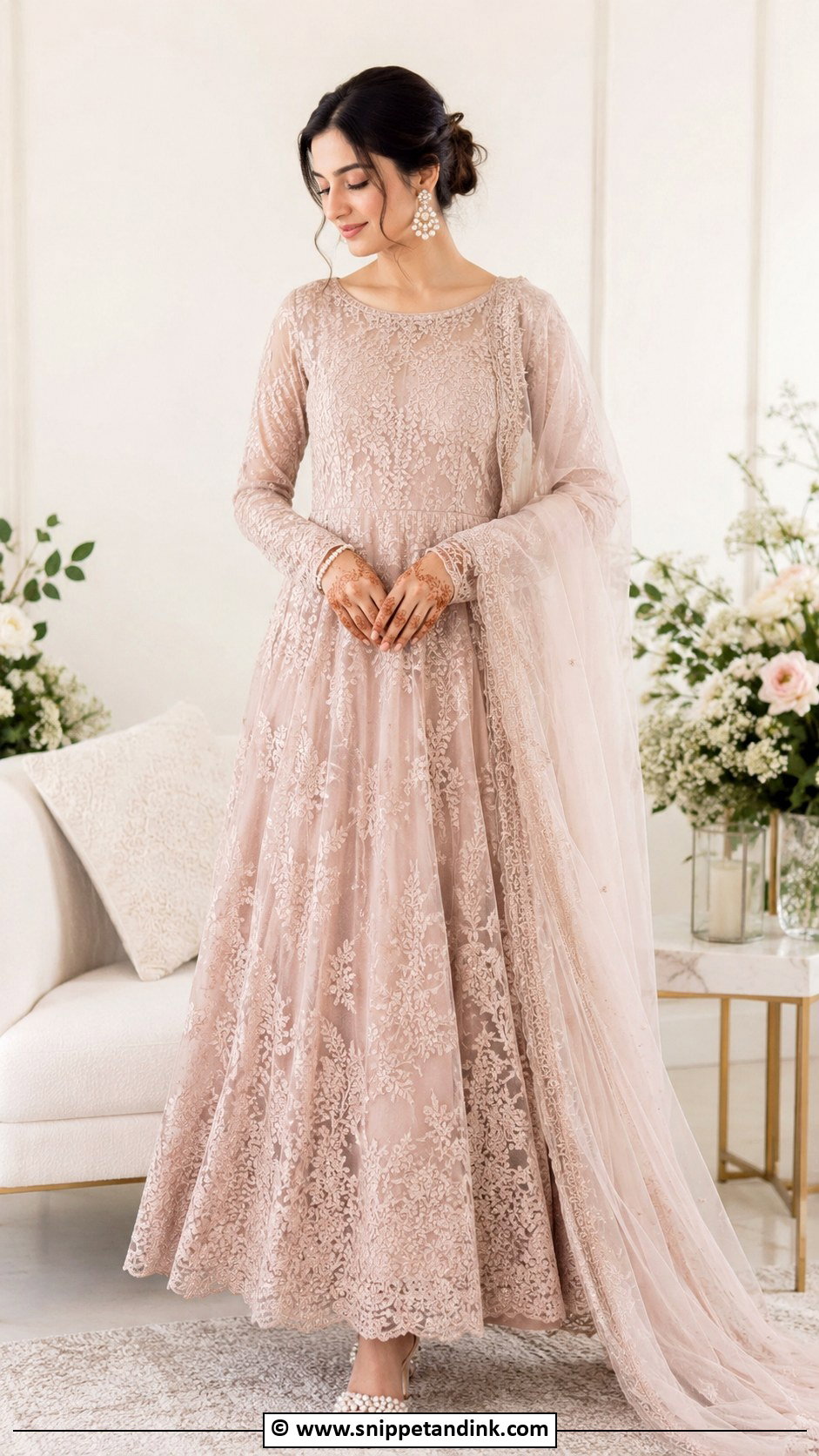
Tea pink is one of the most forgiving colors I know for skin, and a tea pink maxi is easy to carry. Lace panels, pearls or subtle sequins add texture, and a lace dupatta keeps it delicate. Scalloped lace edges catch on rings and bangles, so I check the finish of the scallops before the ceremony. Pearl jewelry, pink-toned makeup and soft waves or a bun suit an intimate nikkah, a home ceremony or a daytime celebration.





20. Off White Nikkah Lehenga With Red Dupatta
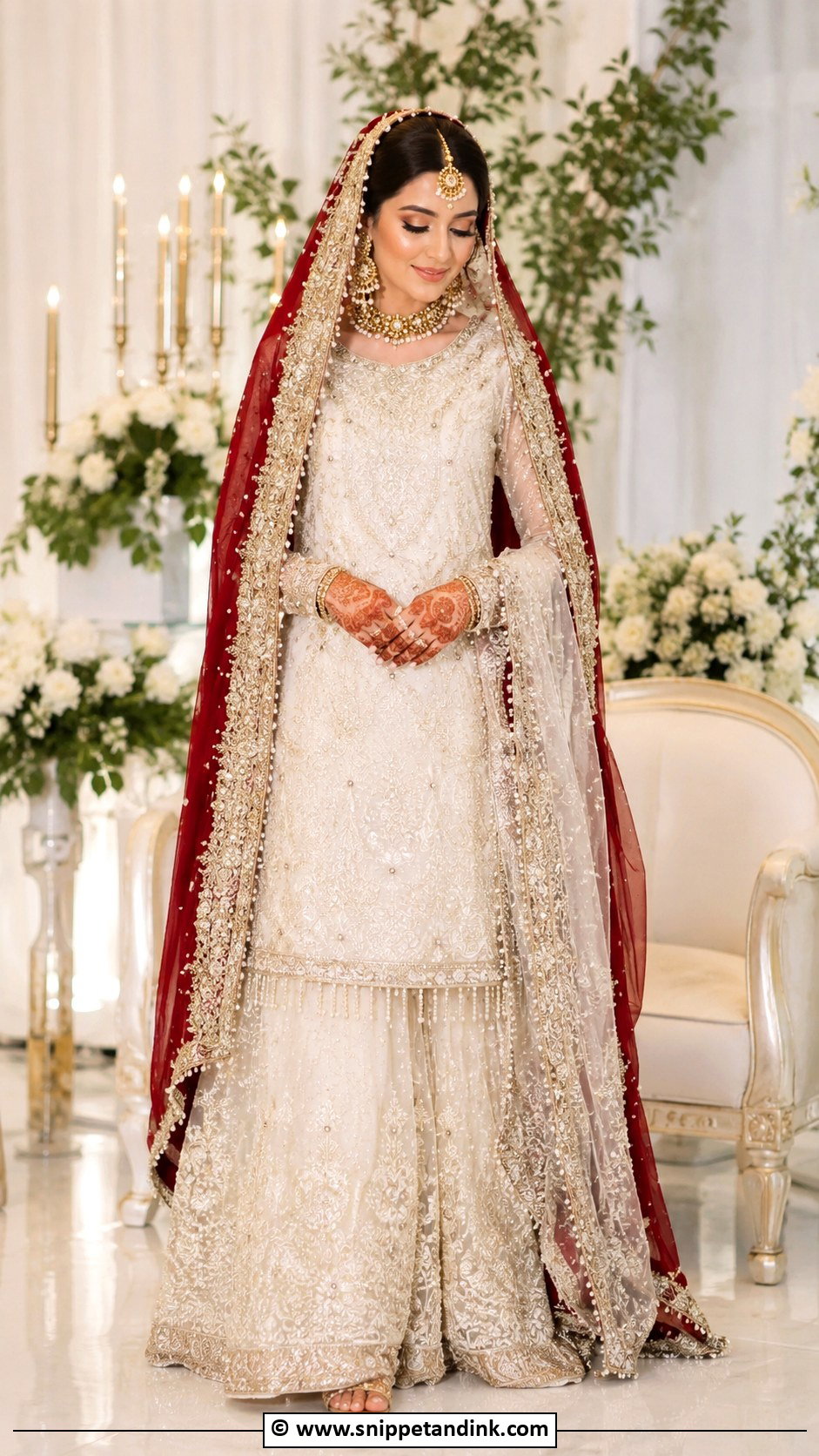
An off-white lehenga with a red dupatta nods to the traditional bridal red while keeping the nikkah outfit light. The lehenga stays soft with white, gold or pearl embroidery, and the red dupatta over the head adds depth and color right where it frames the face. Use gold or kundan jewelry. A red lip works, though a rose lip is gentler next to so much red near the face. Red dye can transfer onto off-white when it’s damp, so in hot weather I keep a layer of tissue between the dupatta and the shoulder seam.
21. Ivory Kurta With Lehenga And Heavy Dupatta
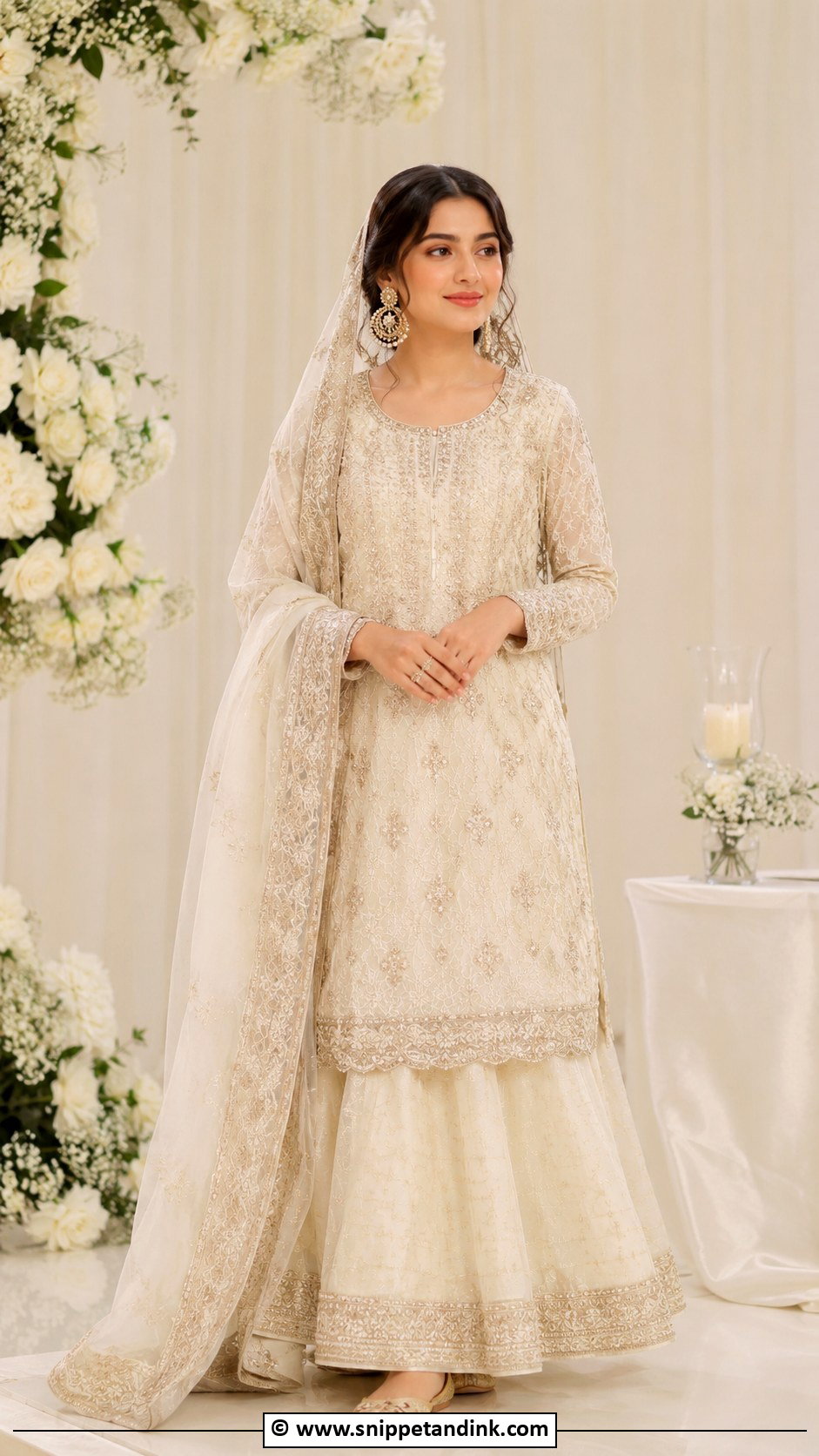
A long ivory kurta over a lehenga gives a plain, modest front with a festive lower half. Let the dupatta carry the statement, with embroidery, pearls, sequins or gota along the border, styled over the head or pinned on one shoulder. I’d keep the kurta slightly A-line rather than straight; a straight kurta over a full lehenga tends to bunch at the hips when you sit. Statement earrings, soft makeup and comfortable heels or khussas complete it.
22. Sage Green Nikkah Gharara With Pearl Work
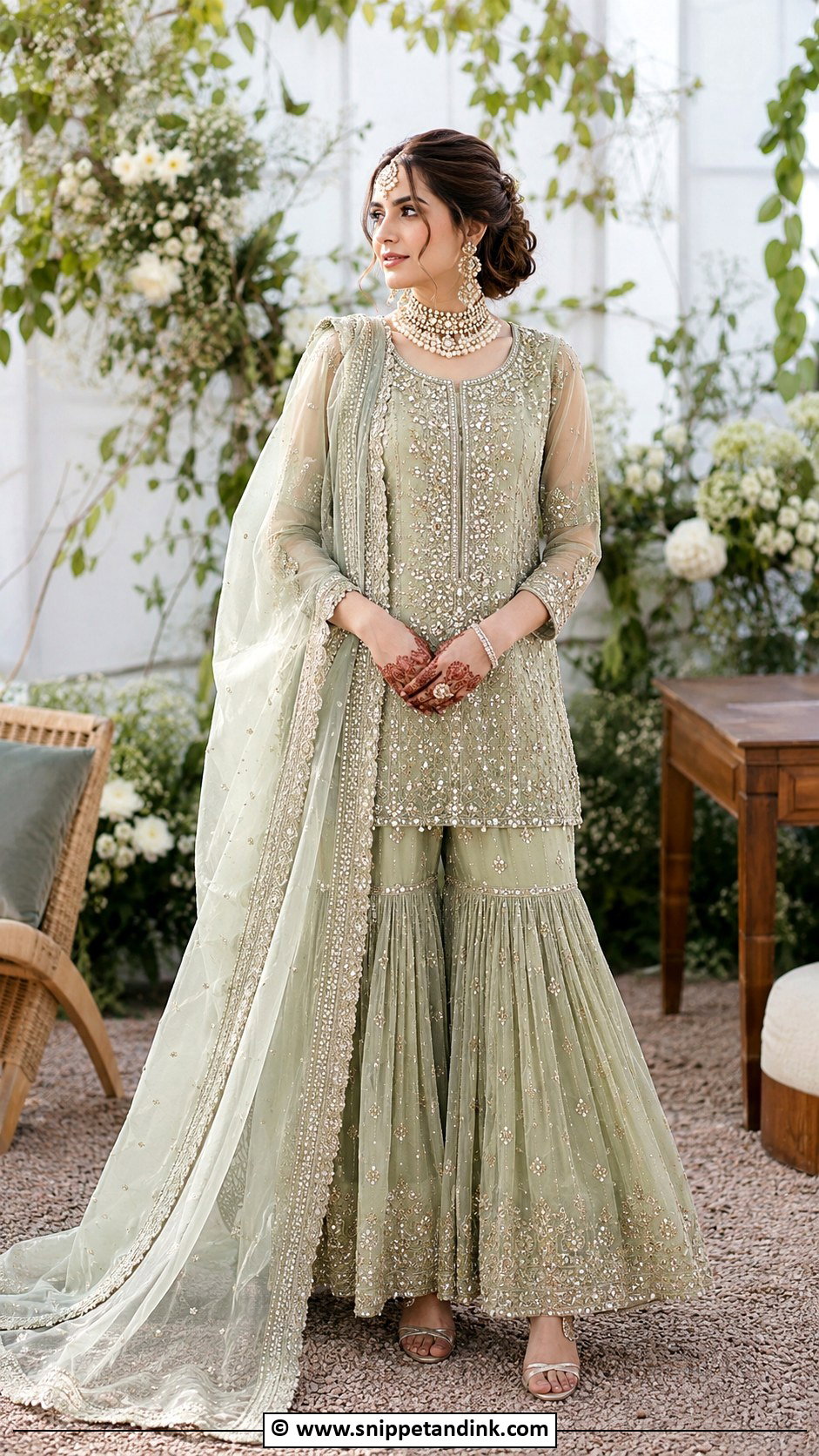
Sage is the pastel for brides who find mint or blush too sweet. A sage gharara with pearl work under a delicately embroidered short kameez looks fresh and still traditional, and a matching dupatta with soft borders keeps it cohesive. Pearls suit the muted green best. Sage has grey in it, so it can look dull in overcast light; I’d brighten the makeup with peach blush and a glowing base. It suits a garden or daytime nikkah.
23. White Angrakha Nikkah Dress With Churidar
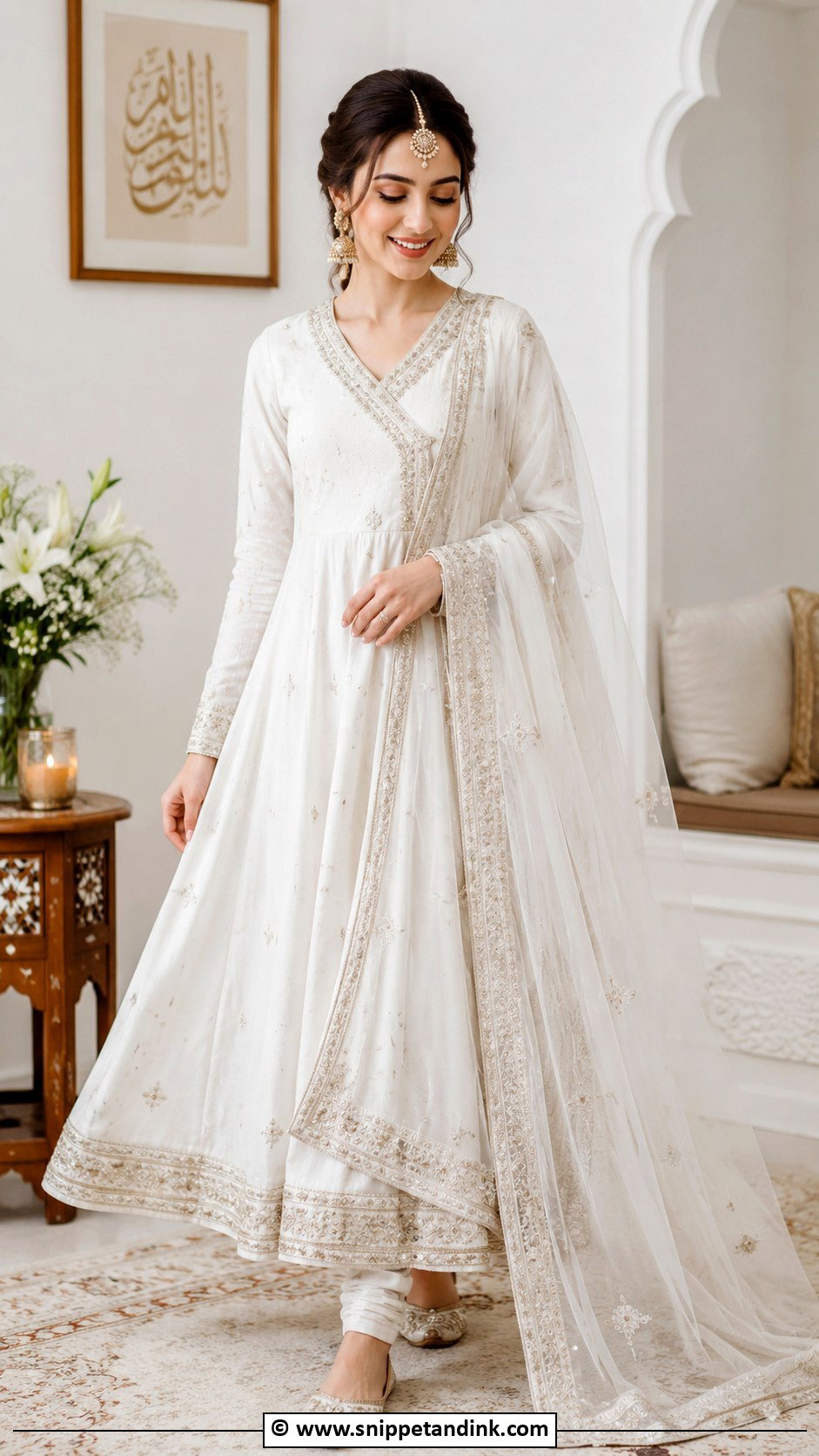
The white angrakha’s wrap bodice draws clean diagonal lines, and the flare adds movement. Pair it with churidar, embroider the neckline, sleeves and hem, and add a light organza or net dupatta. A wrap can shift when you sit cross-legged on the floor for the ceremony, so I add a discreet snap at the inner tie. Jhumkas, a small tikka and embroidered khussas finish it, and it stays comfortable through a long seated nikkah.
24. Champagne Gharara With Long Organza Shirt
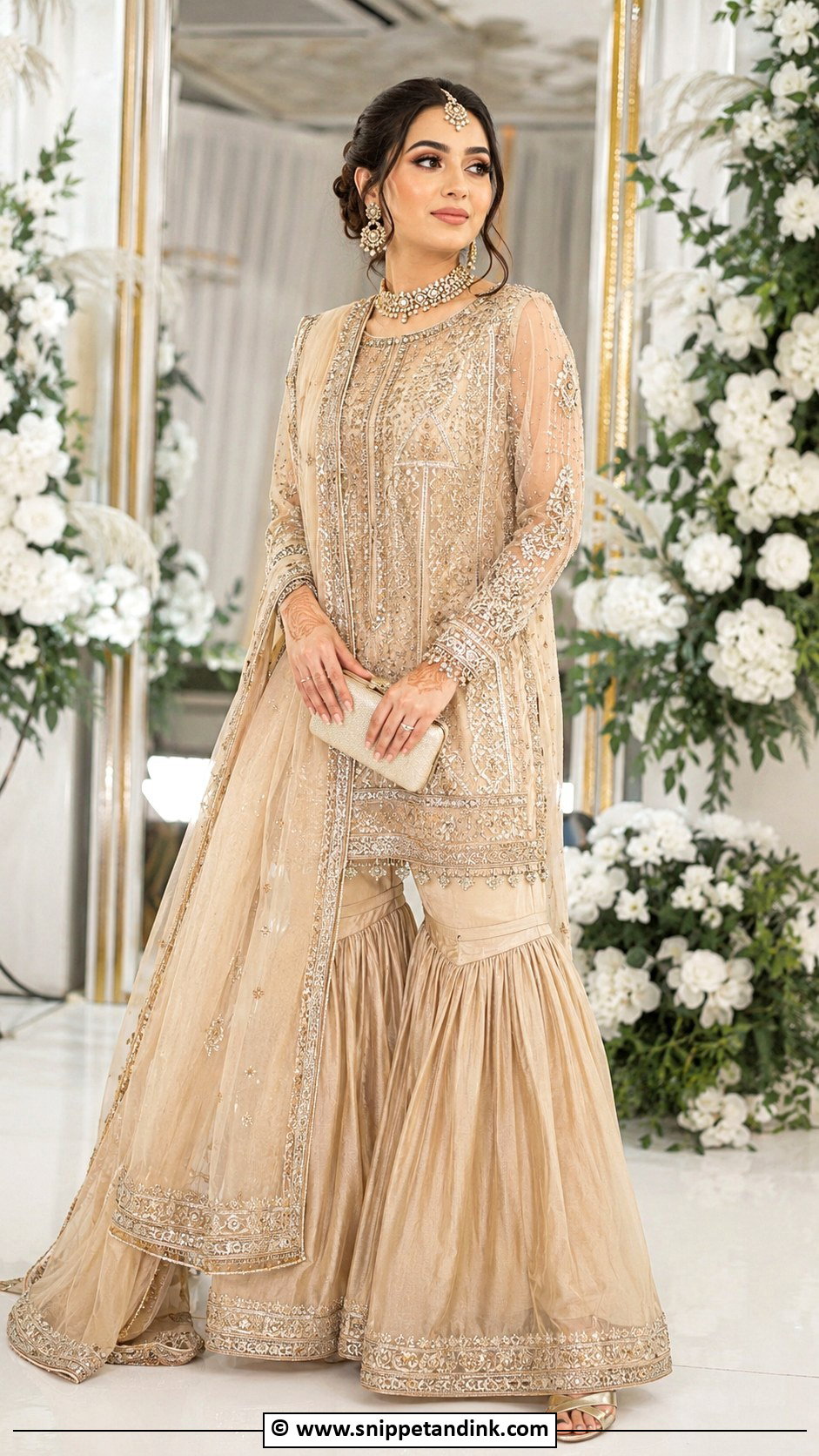
A long organza shirt over a champagne gharara gives a layered look, soft coverage on top and a traditional shape beneath. Embroidery in dull gold, ivory or pearl keeps it refined, and a matching bordered dupatta goes over the head or shoulders. Organza is sheer, so the gharara’s waistband can show through a long shirt; I ask for an inner slip cut to the shirt’s length. Kundan jewelry, soft glam makeup and metallic heels suit a formal evening nikkah, where the shimmer catches the light.

25. Pale Yellow Nikkah Dress With Gota Work
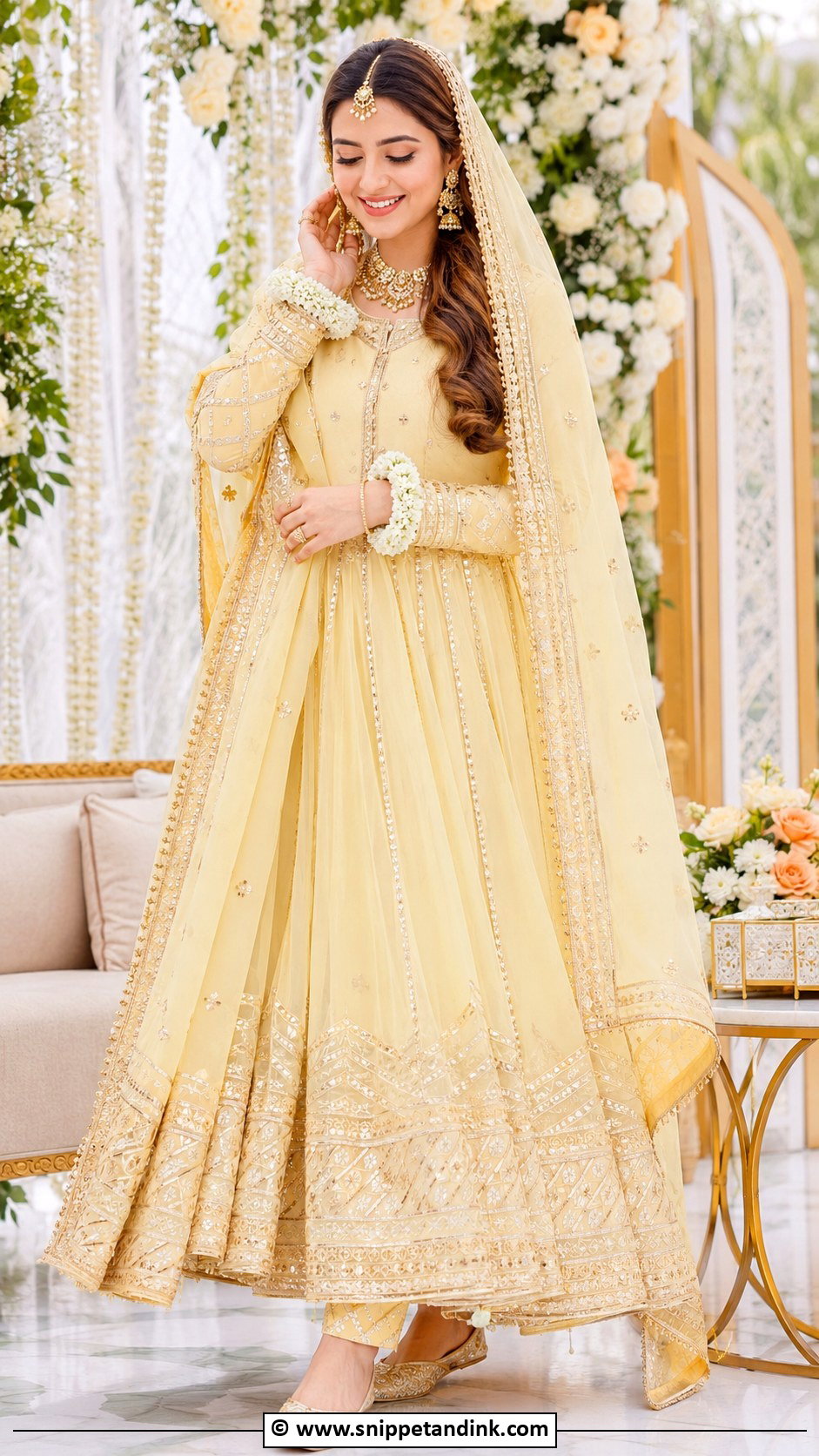
Pale yellow gives a soft glow at a daytime nikkah. Choose a lehenga, sharara or pishwas with fine gota work, and keep the shade creamy rather than bright so it doesn’t read as a mehndi outfit. Gold jewelry, a matching dupatta and peach makeup suit it, with gold-embroidered khussas. I check pale yellow against the bride’s teeth and eyes in daylight; a too-lemony yellow can make both look duller.
26. White Velvet Nikkah Outfit For Winter
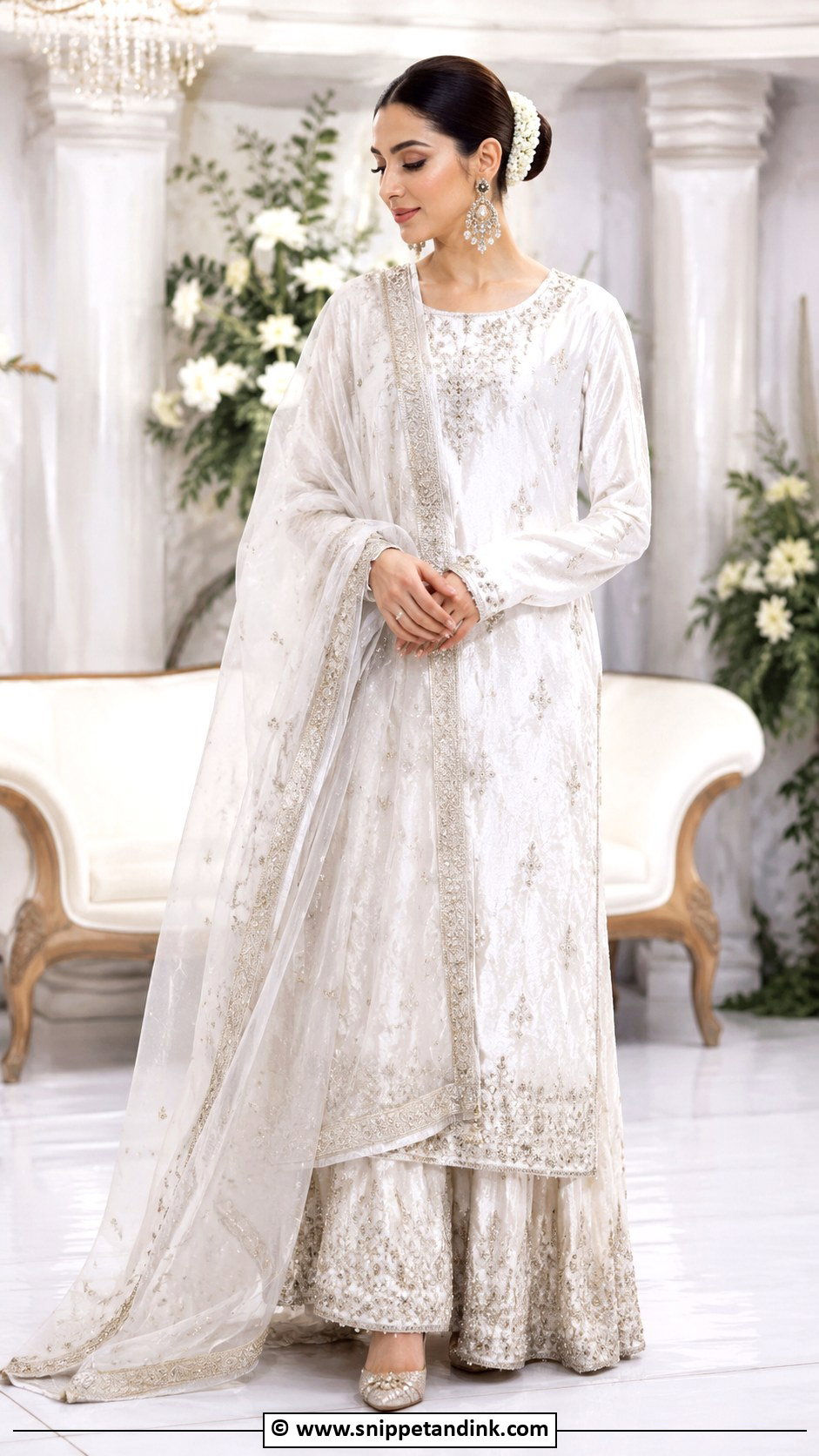
White velvet is the winter answer: warm, rich and luxurious without needing much embellishment. Choose a long shirt with a lehenga, gharara or straight pants, embroidered in silver, gold or pearls, and keep the dupatta in lighter organza or net. White velvet marks easily, so I keep the bride’s hands away from the front until her makeup is set, and I avoid seating her on dark upholstery that sheds. Statement earrings, a sleek bun and closed-toe embellished heels suit a cold-weather evening ceremony indoors.
27. Ivory Jacket Lehenga Nikkah Dress
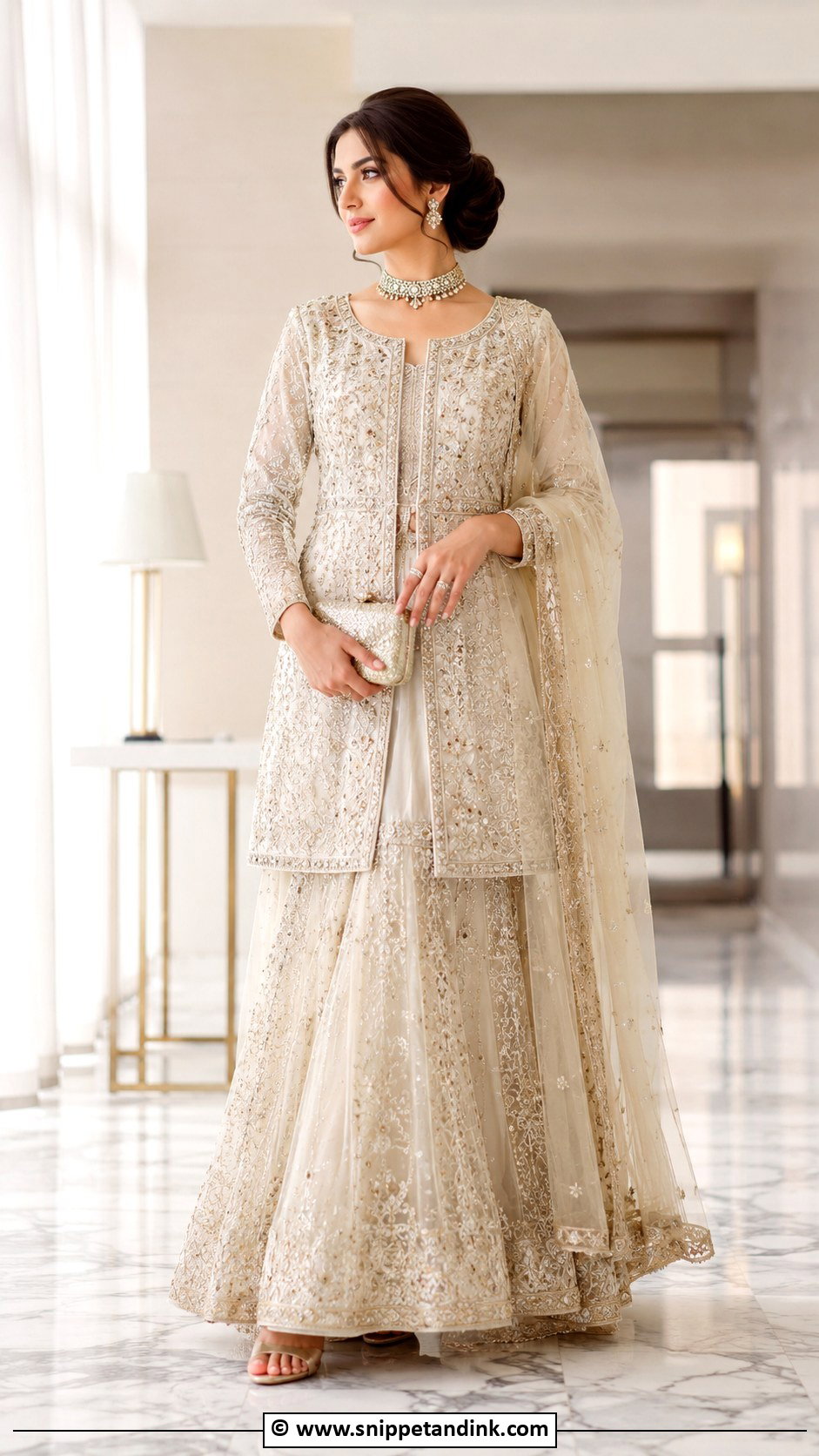
An ivory jacket over a lehenga replaces the usual choli and dupatta with structure and coverage. A long or mid-length jacket with delicate handwork, pearls or sequins does most of the work, and a light dupatta can still go over the head for the ceremony. I fit the jacket with the arms raised, because a tight armhole on a structured jacket makes every hug a struggle. Studs, a choker and a small clutch suit a hotel or modern venue.
28. Soft Pink Pishwas With Gold Dupatta
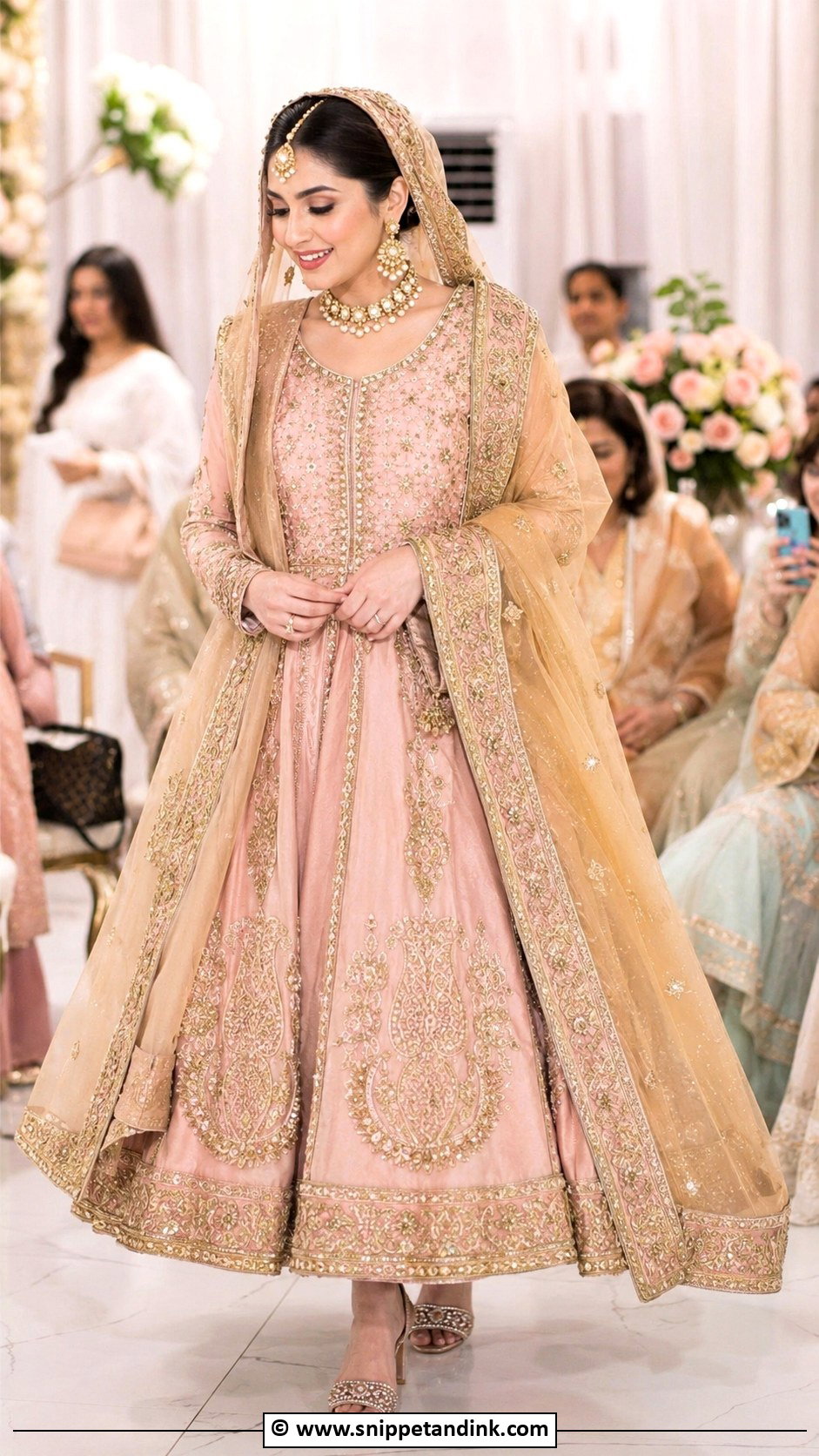
A soft pink pishwas with a gold dupatta puts the heavier detail in the dupatta and keeps the bodice and sleeves gently embroidered, which keeps the outfit easy to wear. The pishwas flares gracefully, and the gold adds a traditional bridal finish. A heavy gold dupatta is the piece most likely to slip, so I pin it at the crown with two or three hidden pins before it goes anywhere near the shoulder. Gold or kundan jewelry, fresh makeup and a neat bun with soft face-framing pieces suit an intimate daytime nikkah.
29. All White Nikkah Suit With Embroidered Trousers
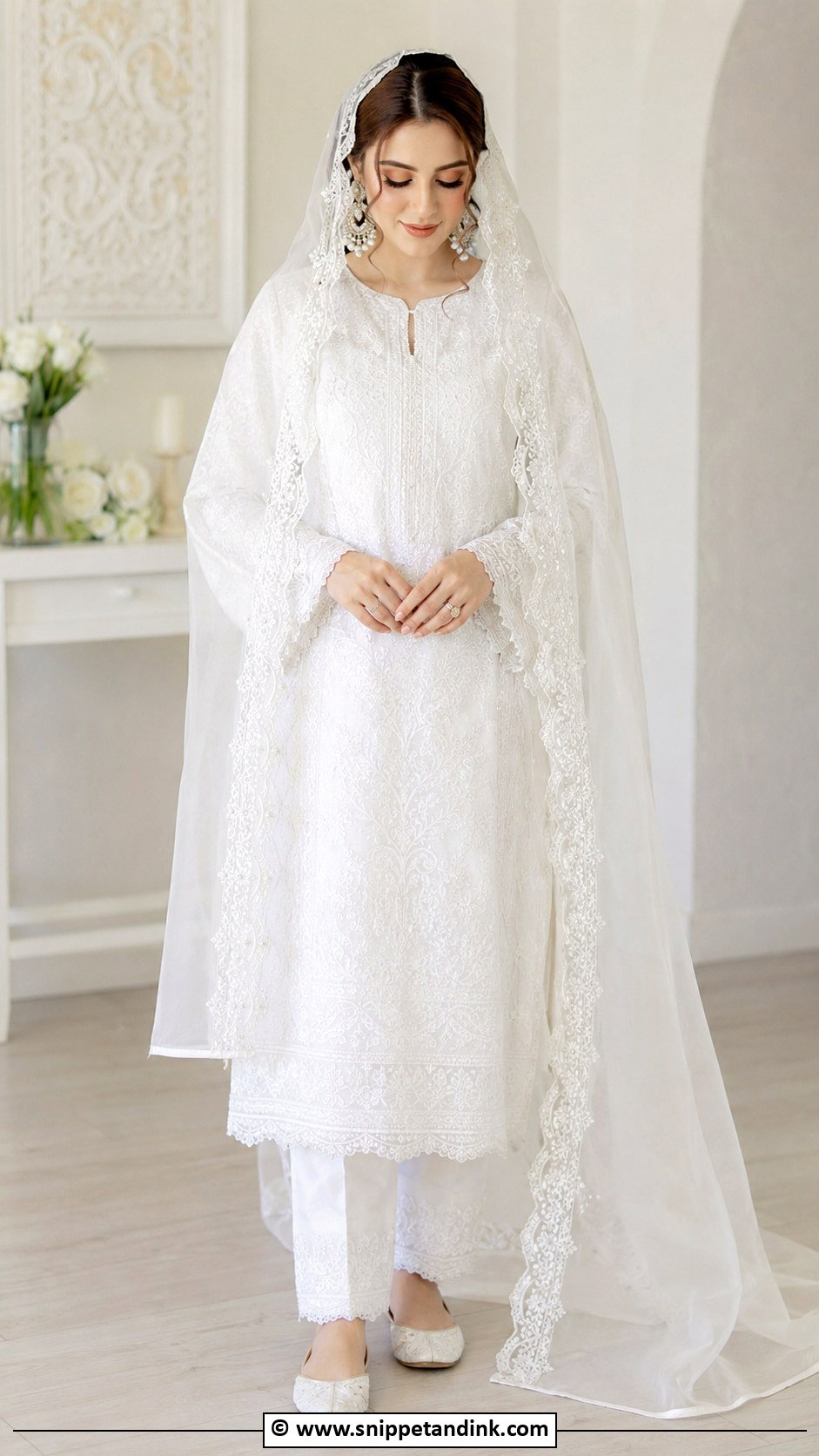
An all white Nikkah suit is the minimal option, and it’s my usual suggestion for a mosque or a small home ceremony. A long embroidered kameez over embroidered straight trousers or cigarette pants is easy to wear, and the dupatta should be the special piece, with lace, pearls or scalloped edges. All-white outfits rely on texture rather than color, so mix thread embroidery with pearls to give the eye something to rest on. Pearl earrings, soft makeup and white or silver khussas complete it.
30. Red And Ivory Nikkah Lehenga For Traditional Bride
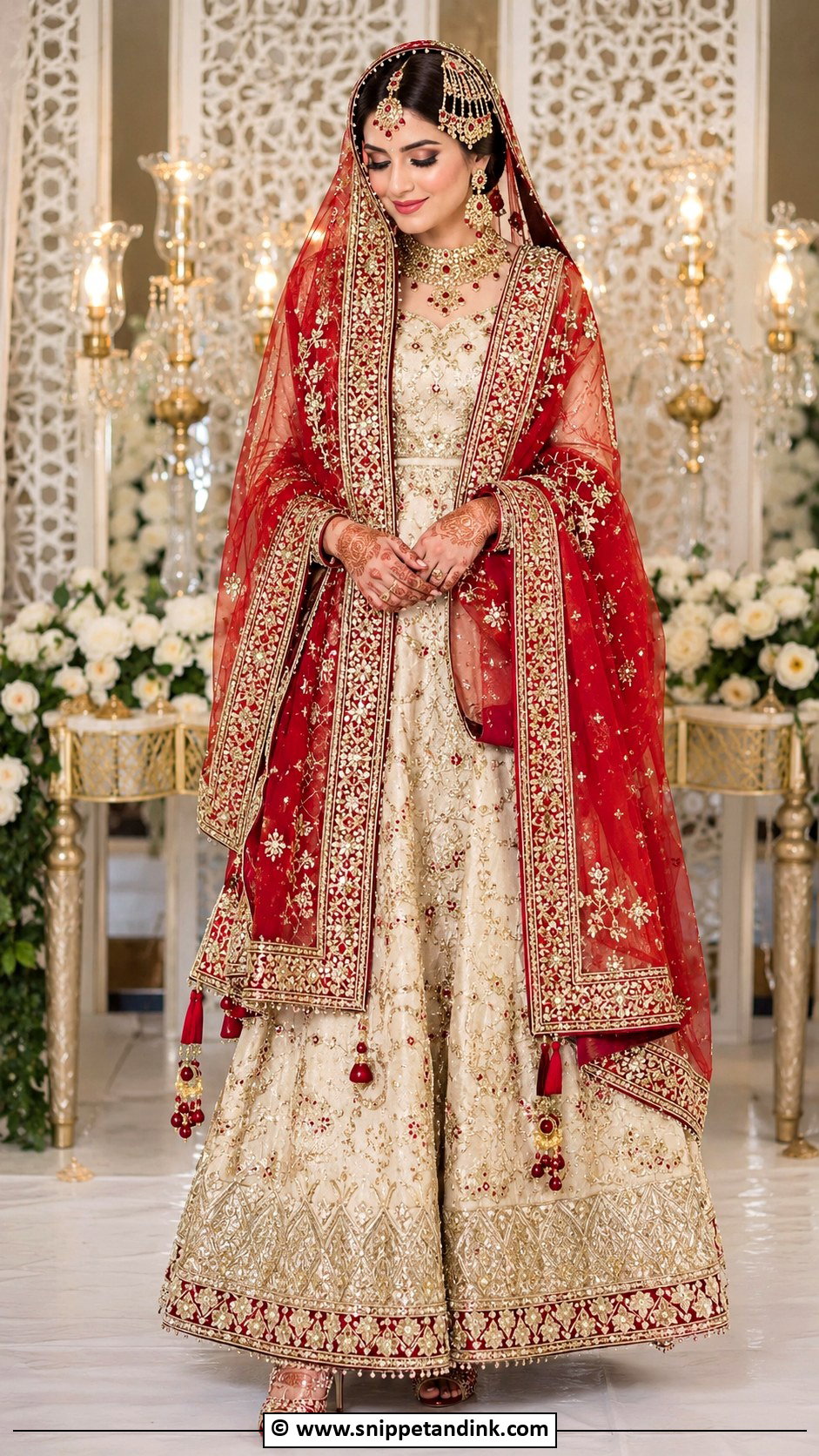
Red and ivory honors the traditional bridal red in a softer form. Choose an ivory lehenga with red embroidery, a red dupatta or a red blouse, so the look stays rooted in Pakistani bridal culture while still suiting a nikkah. Gold jewelry, kundan or a classic matha patti complete it. Some families prefer the bride to save full red for the barat; keeping red to one piece respects that while still giving grandmothers the color they hoped to see. Defined eyes and a soft red or rose lip suit it.
A Head Covering That Stays Put Through the Vows
The dupatta over the head is the part of a nikkah outfit that causes the most trouble, because you’ll bow your head, sign, hug relatives and stand up again many times. I build it from the hair up.
- Start with a firm base: a low bun or a small padded donut at the crown gives the pins something to grip.
- Pin the dupatta at the crown first with two or three U-pins pushed into the bun, then add one pin at each side behind the ears.
- Bring the front edge forward to frame the face evenly, and check both sides in a mirror while seated, not standing.
- Secure the shoulder drape to the shirt with a small brooch or safety pin on the inside seam, away from any embroidery.
- If the dupatta is slippery chiffon or satin, a cotton under-scarf or a strip of grip fabric under the crown stops it creeping back.
Practice once at the final fitting with the real jewelry. A matha patti or tikka has to sit either under or over the dupatta, and deciding that on the morning wastes time you won’t have.
A Nikkah Outfit You Can Sit, Pray and Sign In
The right nikkah outfit feels personal, modest and comfortable for a ceremony you’ll spend mostly seated. Some brides look their best in a classic white lehenga, others in a blush gharara, a champagne maxi, a pastel pishwas or red and ivory together. Settle the fabric, fit, dupatta styling and jewelry balance before you chase the heaviest design. Then put the whole outfit on, sit on the floor or a low sofa, bow your head and pick up a pen. If nothing pulls, slips or digs in, you’ve found it.
You'll Like These Ideas:




Leave a Reply