
A modest bridal look only comes together when the gown, the hijab, the veil and the shoes are planned as one outfit rather than bought separately. That’s how I approach every hijabi bride I dress: we start with how much coverage she wants and how she wants to feel moving in it, then build outward. The ideas below run from satin A-lines and pearl capes to embroidered abayas, kaftans, lehengas and tailored suits. One rule I repeat at almost every fitting: a plain gown can carry an embellished hijab, but an ornate gown nearly always wants a clean, simple wrap.
Building a Hijab Base That Holds a Veil, Crown or Cape
Nearly every problem I fix on a wedding morning starts underneath. A bridal hijab looks smooth only when the layer below it is doing the work, so I treat the underscarf as part of the outfit, not an afterthought.
- Use a snug cotton or jersey underscarf with some grip. Satin hijabs slide on satin caps, so avoid matching slippery fabrics against each other.
- Pin the hijab to the underscarf, not to the hair. Straight pins or small magnetic pins at the temples and nape hold well; heavy safety pins pull fine chiffon out of shape.
- Attach the veil comb into the underscarf at the back of the crown, angled slightly upward so its weight pushes into the base instead of dragging the wrap.
- A crown or tiara needs two anchor points through to the base layer. If it rests on top unpinned, it will tilt the first time you bend for a hug.
- Bring the exact hijab, veil and headpiece to your dress fitting. Necklines and wraps change how each other sit, and it’s much easier to adjust a collar than to rework a wrap.
If your hijab stylist and dress stylist are different people, share photos of both before the day. I’d rather spend ten minutes on a message than twenty minutes repinning at the venue.
1. White Satin A-Line Dress With Bridal Hijab
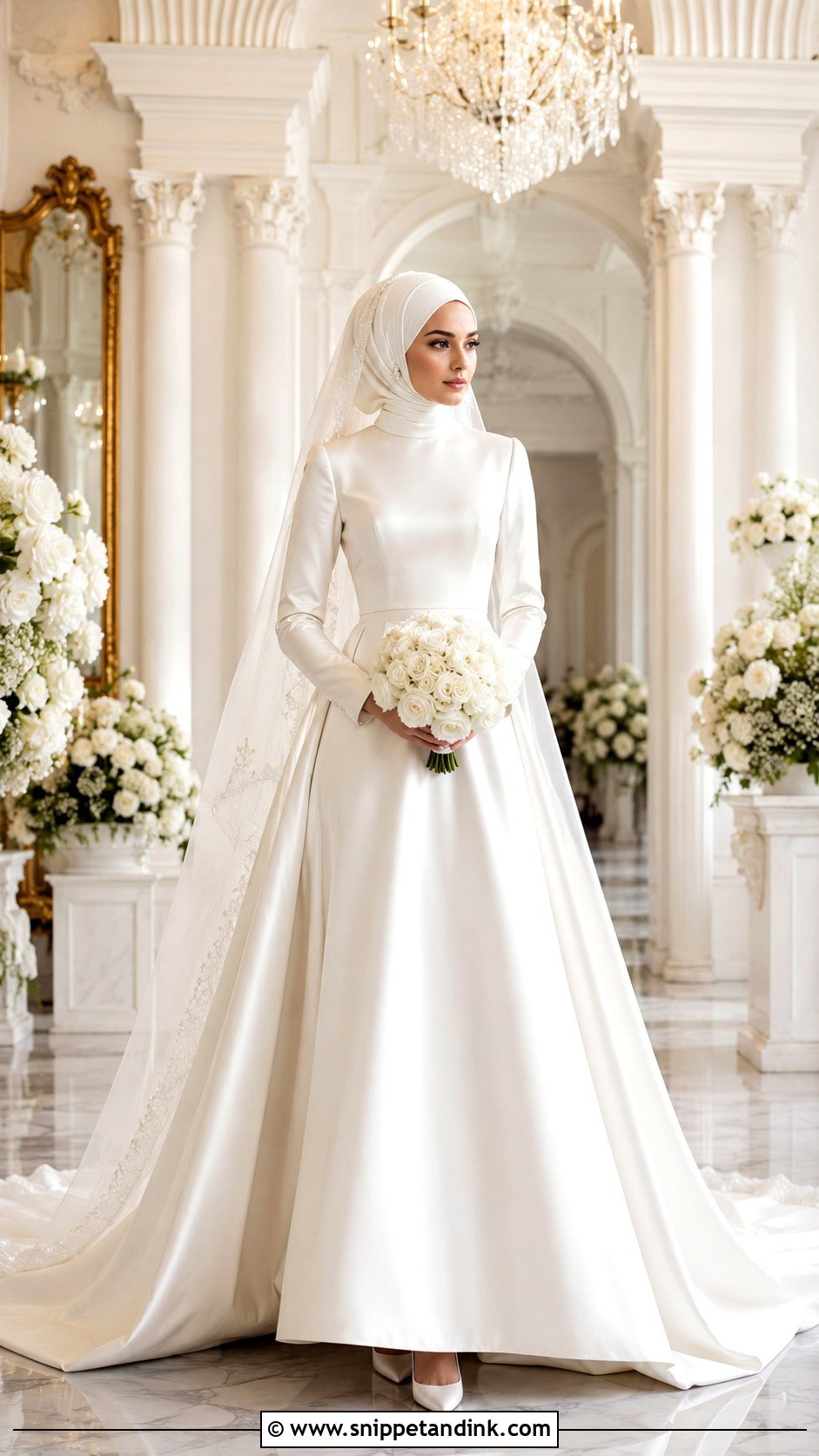
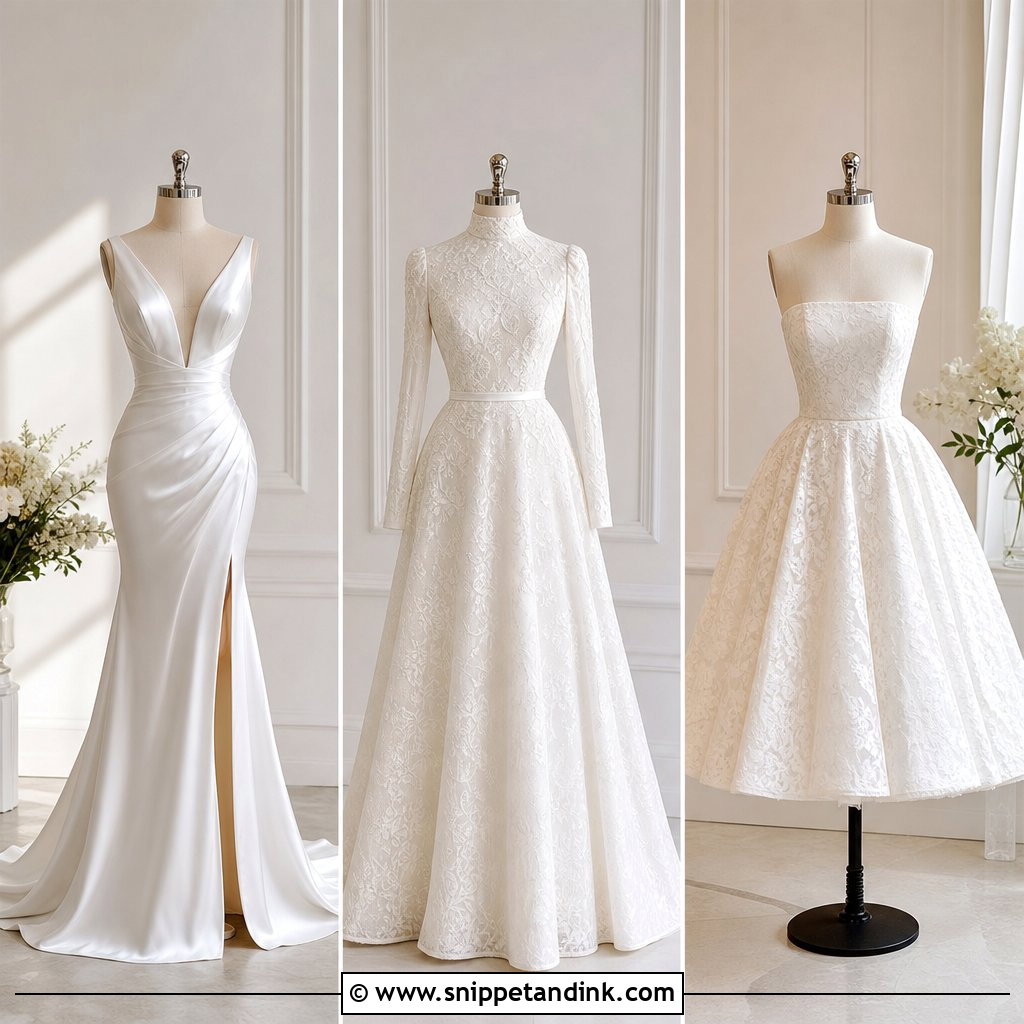
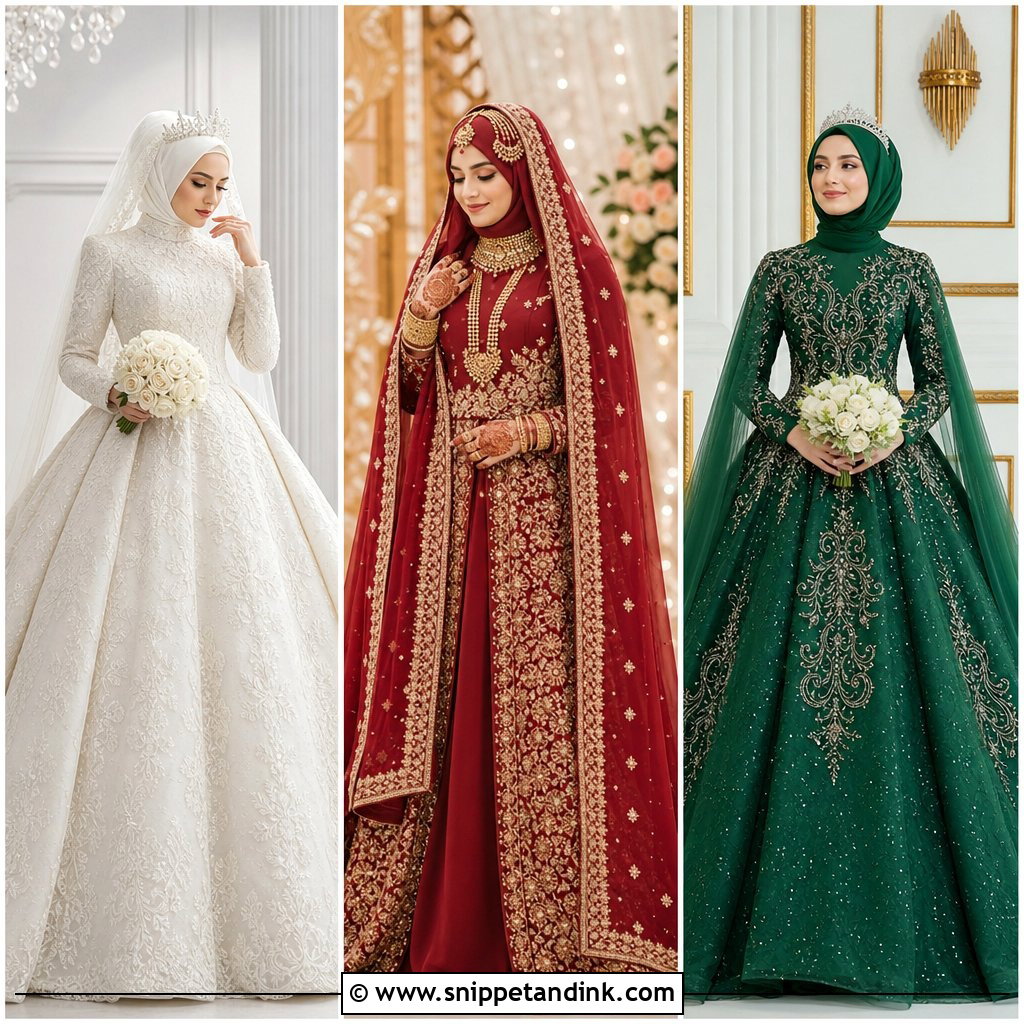
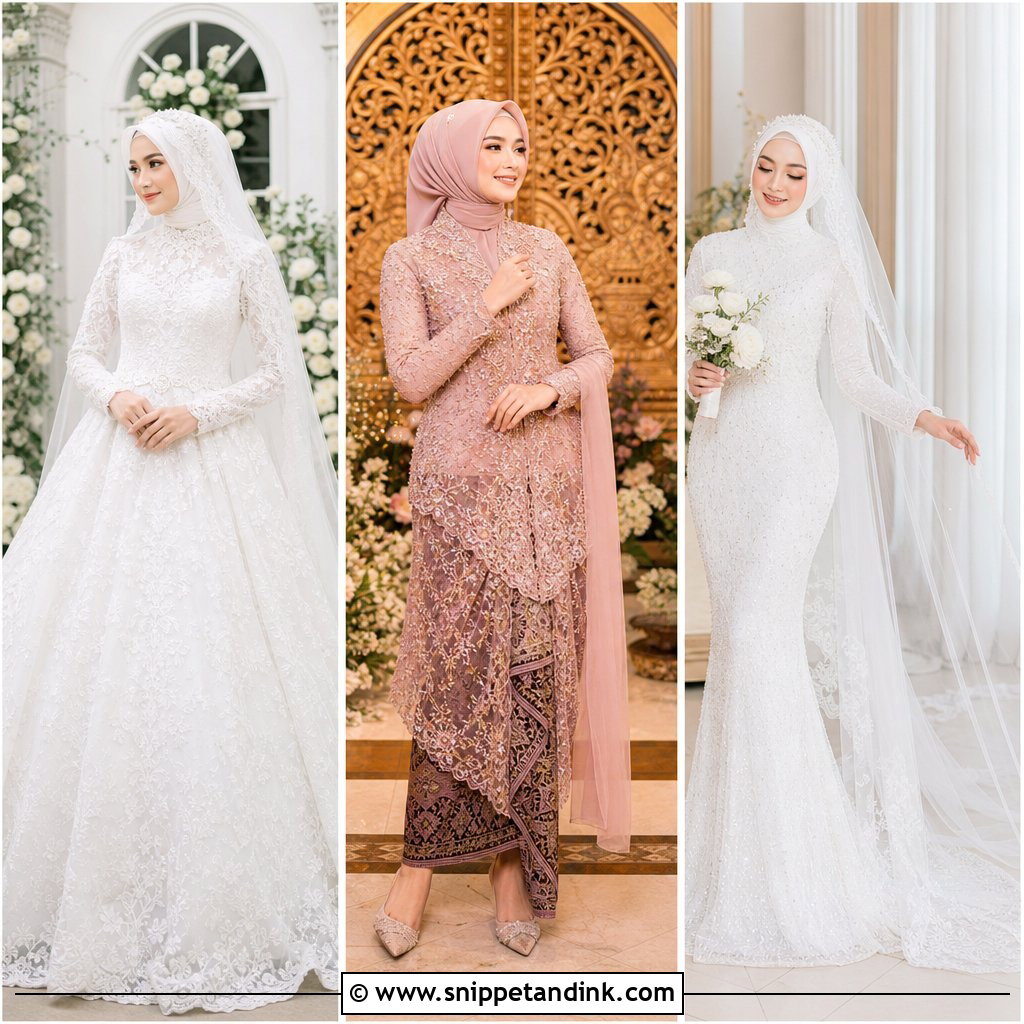
Satin is the fabric I reach for first when a bride wants a classic shape, because it holds a long sleeve and a high neck without clinging. Look for a fitted waist that releases into a full A-line skirt, then match the hijab in smooth ivory satin so the two surfaces catch light the same way. A cathedral veil can sit behind the wrap without crowding the face. Satin is already reflective, so I keep jewelry to pearl studs and let the fabric do the shining. My one warning: satin shows every crease from sitting in a car, so steam it at the venue, not at home.
2. Lace Ball Gown With Pearl Bridal Hijab
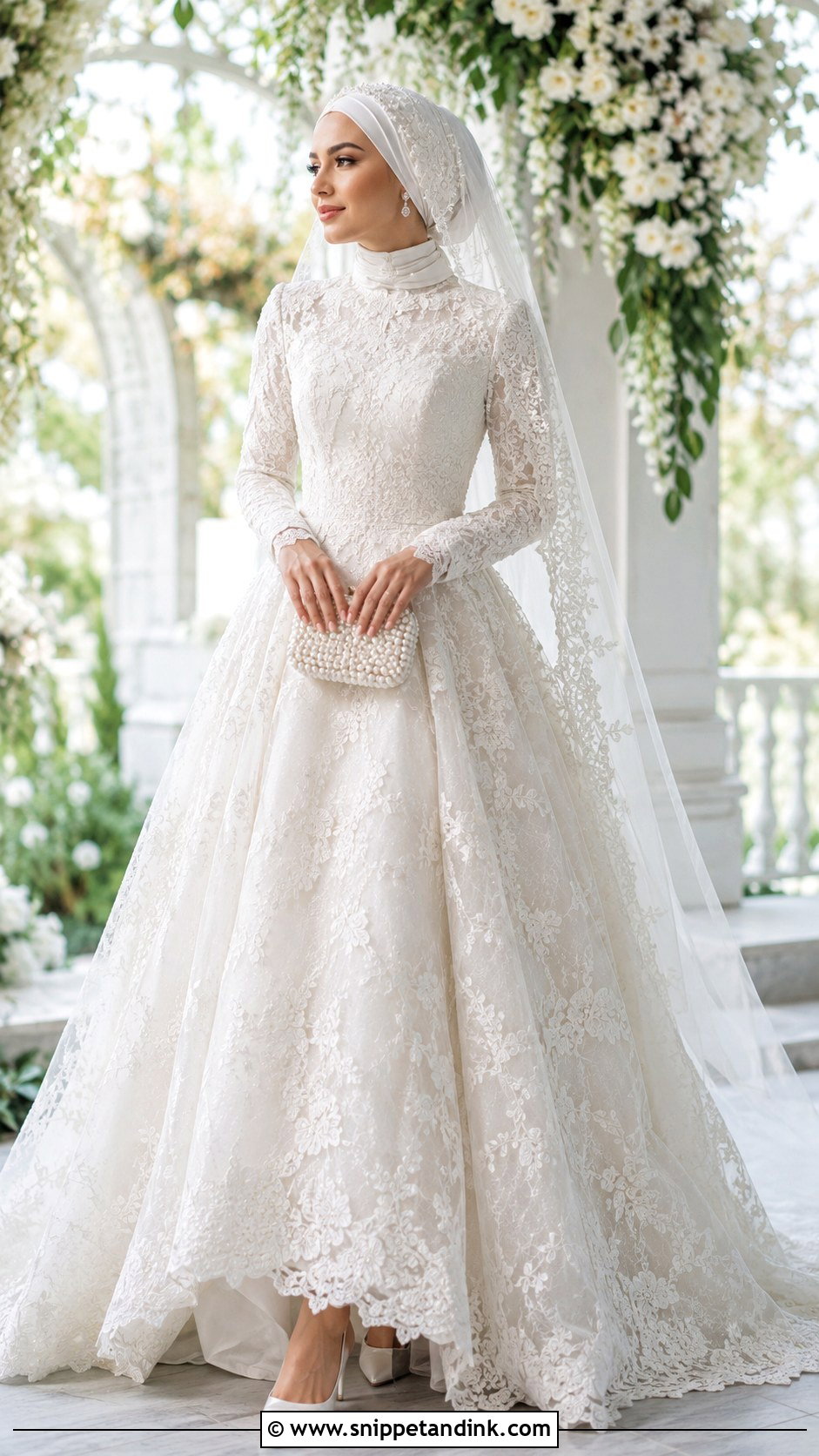
Lace gives a ball gown texture without needing any skin on show. Check that the bodice is properly lined and that the appliqué carries down into the skirt, otherwise the top and bottom read like two different dresses. I’d pair it with a matte chiffon hijab dotted with a few pearls near the crown and sides, placed so they frame the face rather than covering the whole scarf. The lace-edged veil goes behind the hijab, which keeps those pearls visible. Keep makeup soft here; heavy contour fights with busy lace in close-up portraits.
3. Minimalist Crepe Dress With Simple Bridal Hijab
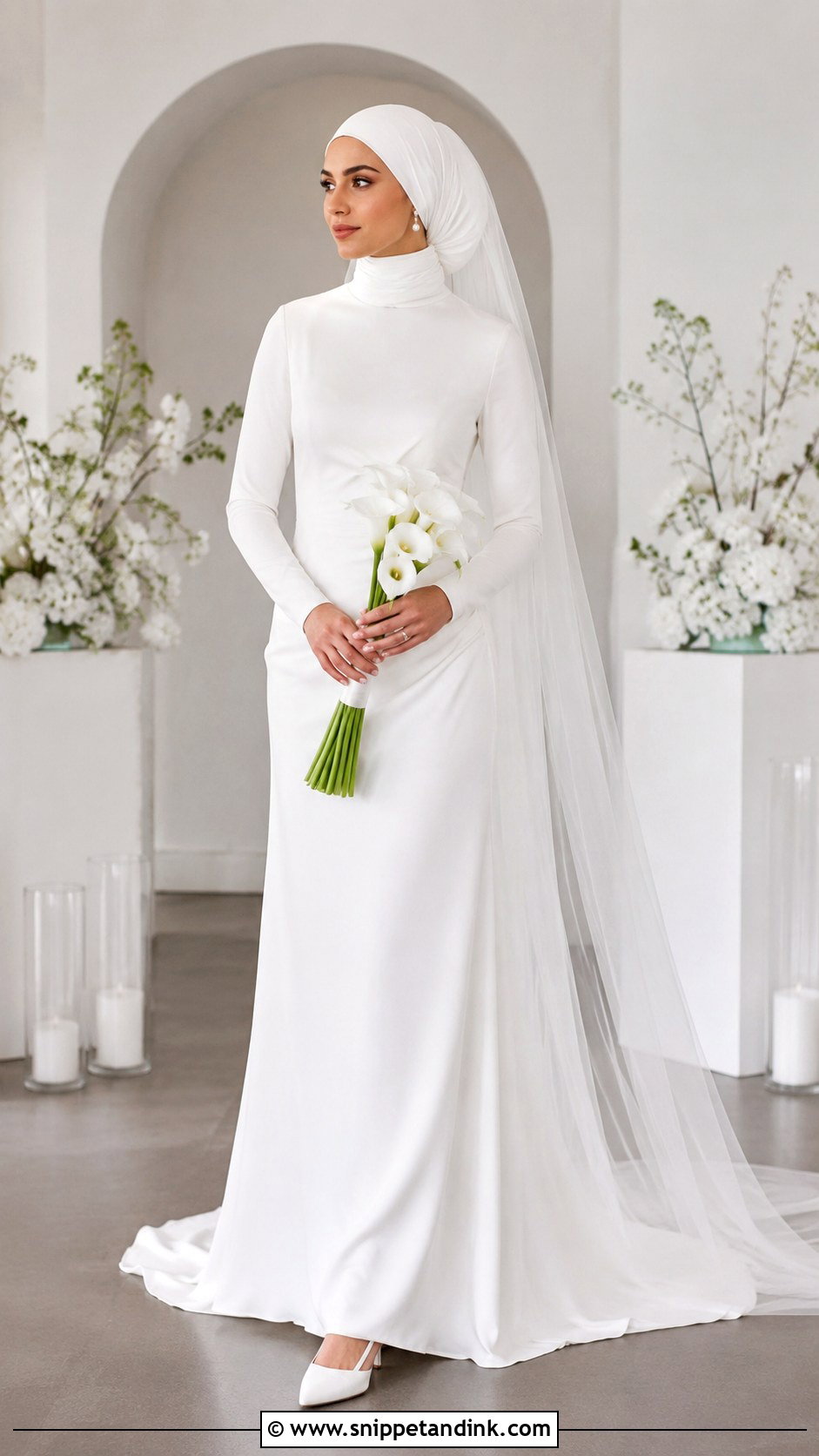
Clean lines can feel every bit as bridal as heavy embroidery. A long-sleeved crepe dress with a bateau neckline and a gently flared skirt is the shape I suggest to brides who hate fuss. The hijab should be opaque chiffon or matte silk in exactly the same white, wrapped with as few folds as possible so nothing breaks the line. A plain fingertip veil moves well and won’t add weight. Crepe is unforgiving of a visible underscarf edge, so get that seam sitting flat before anything else. It suits courthouse ceremonies and intimate nikah celebrations especially well.
4. Beaded Mermaid Dress With Satin Bridal Hijab
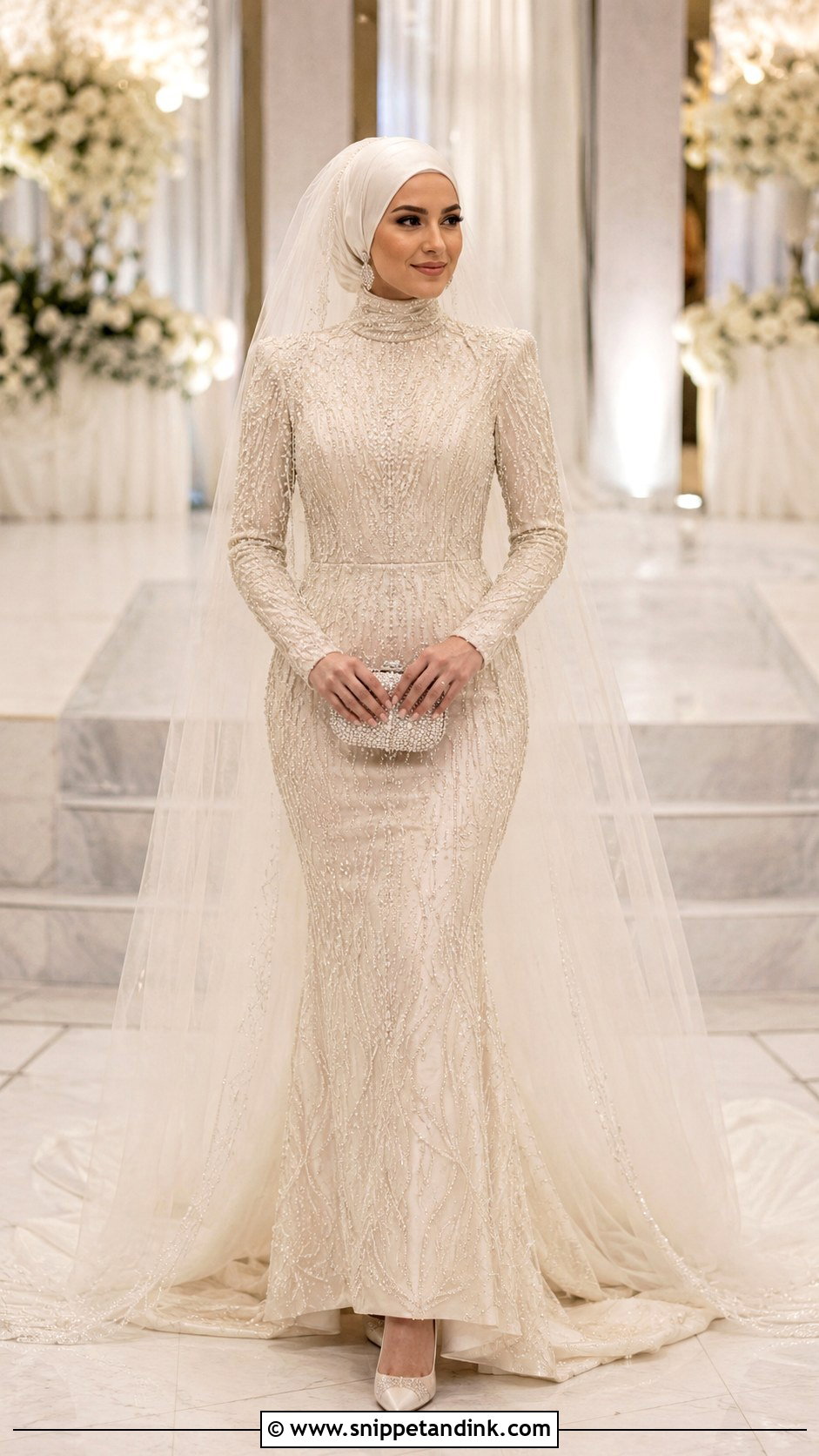
A modest mermaid gown is doable, but only with full lining, long sleeves and a high neck, and only if you can actually walk in it. Fine beadwork tracing the body before the hem flares out gives the glamour; a plain ivory satin hijab with a little volume at the back gives the beading somewhere quiet to sit. That volume also makes a smooth base for a long sheer veil. I always make the bride sit, climb two steps and walk across the room at her final fitting, because a fitted knee seam is where these dresses fail.
5. Princess Wedding Dress With Layered Bridal Hijab
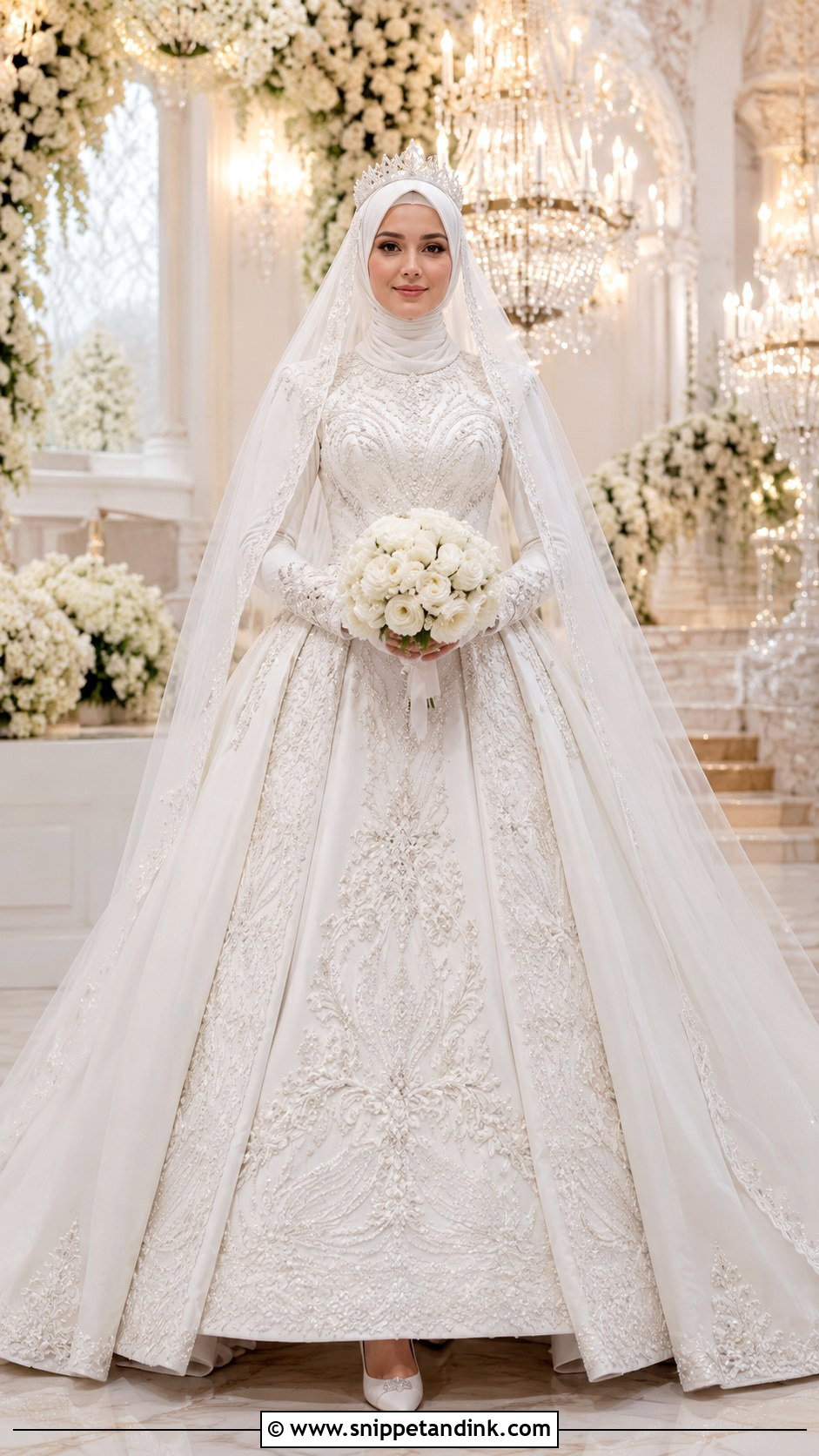
Generous coverage and drama aren’t opposites. A princess wedding dress with a structured long-sleeved bodice and a layered skirt fills a large venue on its own. Wrap a soft chiffon hijab close to the face and add a fine lace or tulle drape at the back; a cathedral veil can run past the train for the entrance. Hide low block heels under the skirt. I’d skip ornaments around the crown entirely, since the skirt and veil already give the eye more than enough to look at.
6. Pearl Cape Dress With Bridal Hijab
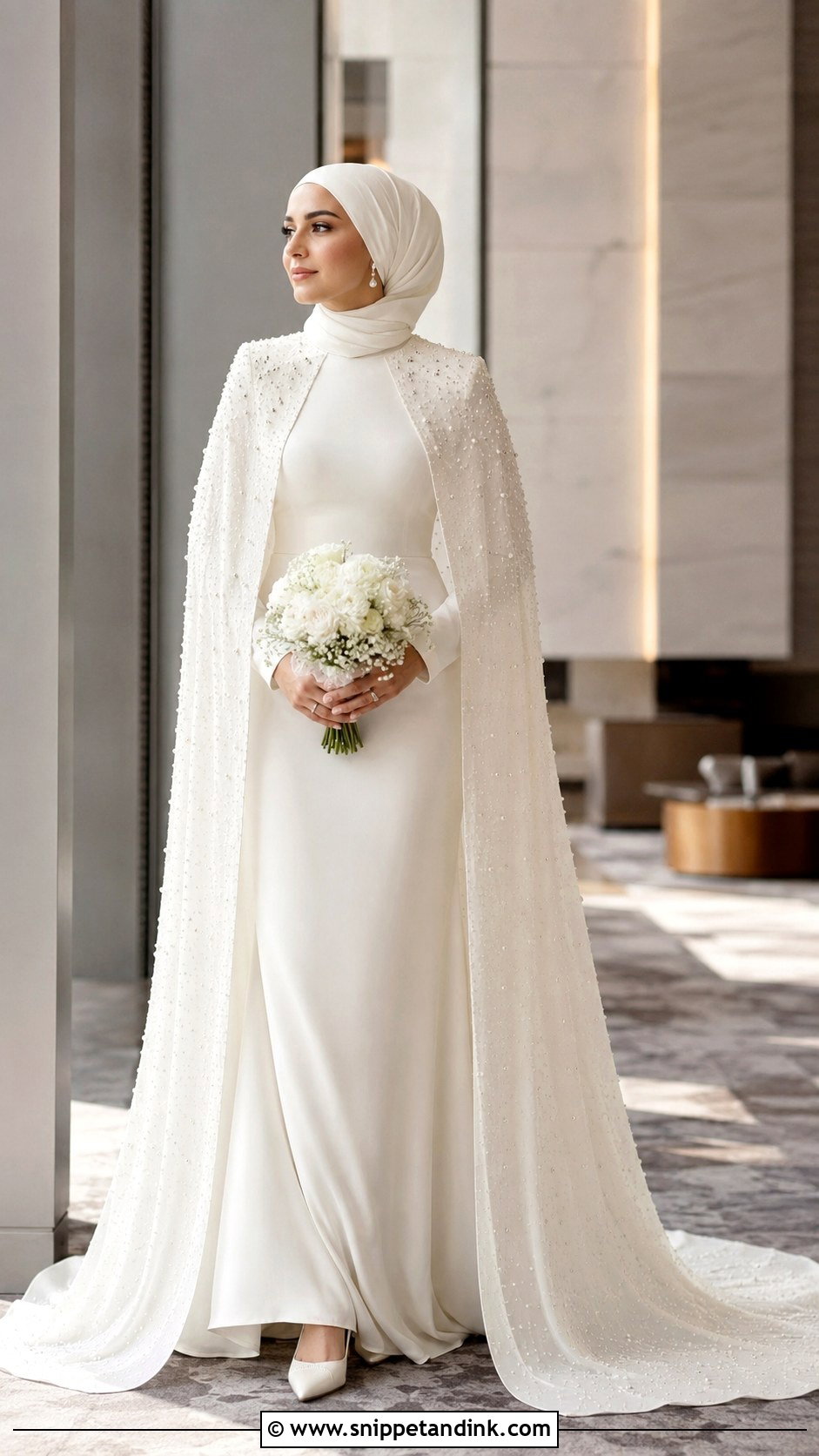
A pearl cape gives you coverage and movement in one piece, which is why I like it for brides who find a veil fussy. Underneath, keep to a column or softly flared gown with long sleeves and a high neckline. Because the cape falls from the shoulders and behaves like a veil, a separate head veil is optional; a very short layer is plenty. A compact, matte hijab that matches the gown stops the head from competing with the pearls. Check the cape’s weight on your shoulders for an hour, as heavily beaded ones pull the neckline back.
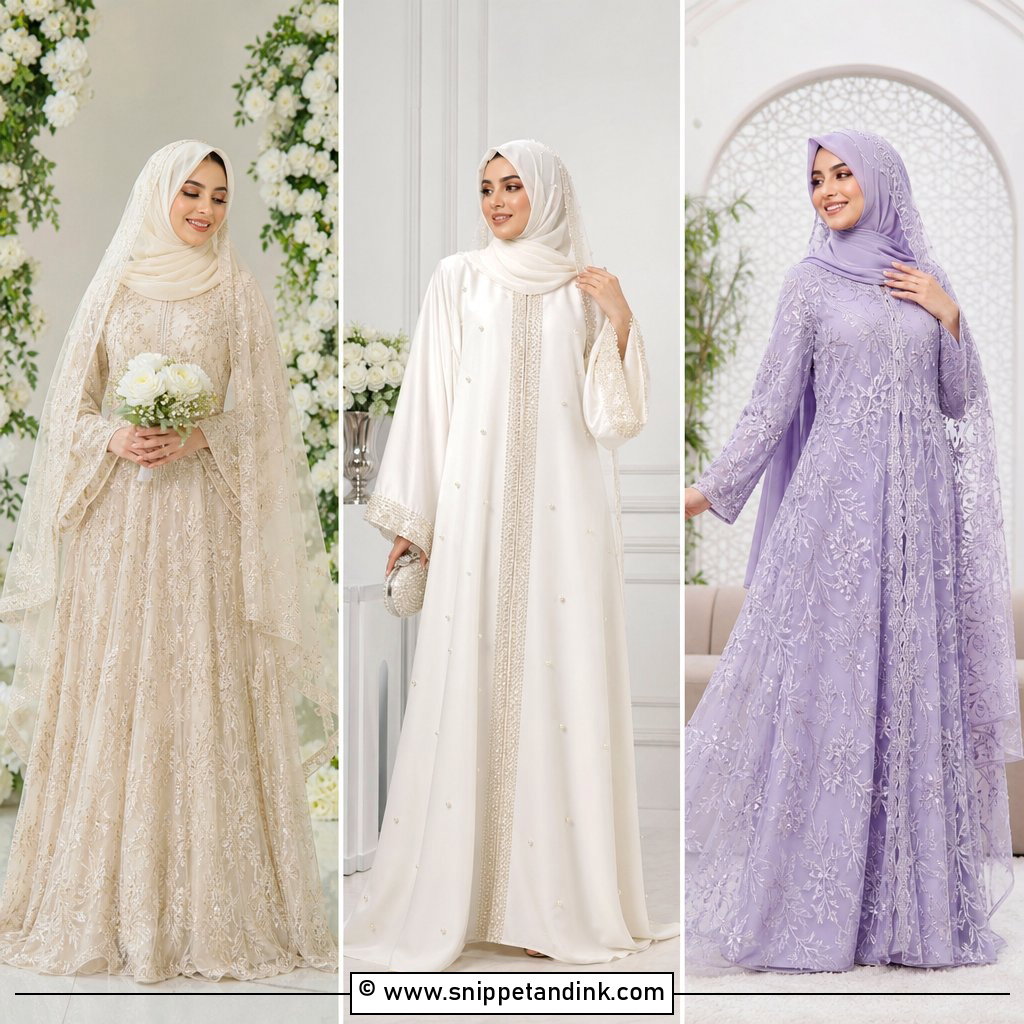
7. Embroidered Bridal Abaya With Matching Hijab
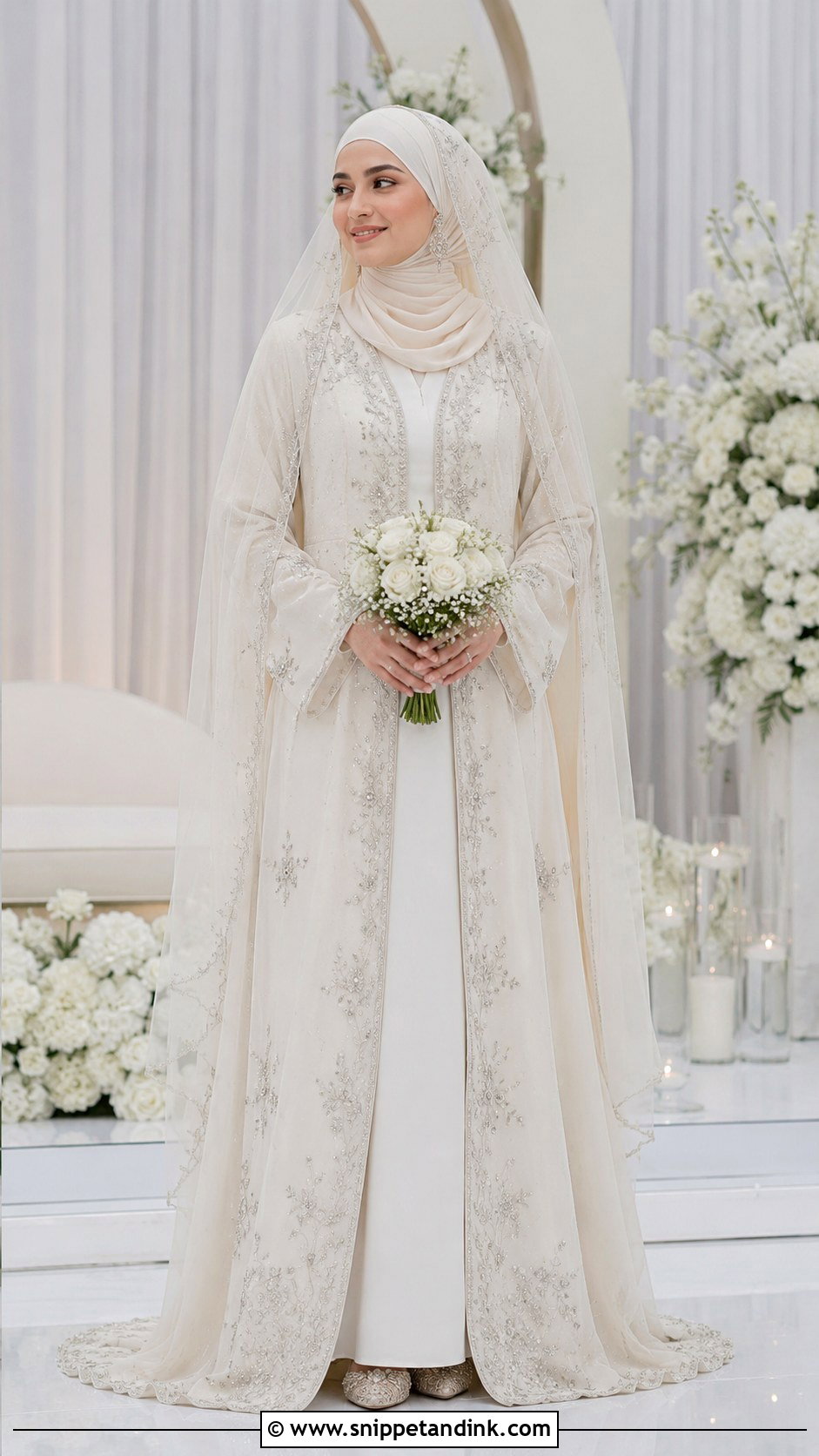
An embroidered bridal abaya is the piece I suggest most for a nikah or a second look, since it’s formal without feeling restrictive. Choose white, ivory or champagne with opaque lining and embroidery along the sleeves, shoulders and front opening, worn over a matching inner dress. Echo the thread color in small gold or silver earrings. The practical detail people forget is the front closure: I add discreet hooks or snaps so the abaya doesn’t swing open while you greet guests or bend for photos.
8. White Bridal Kaftan With Gold Hijab Details
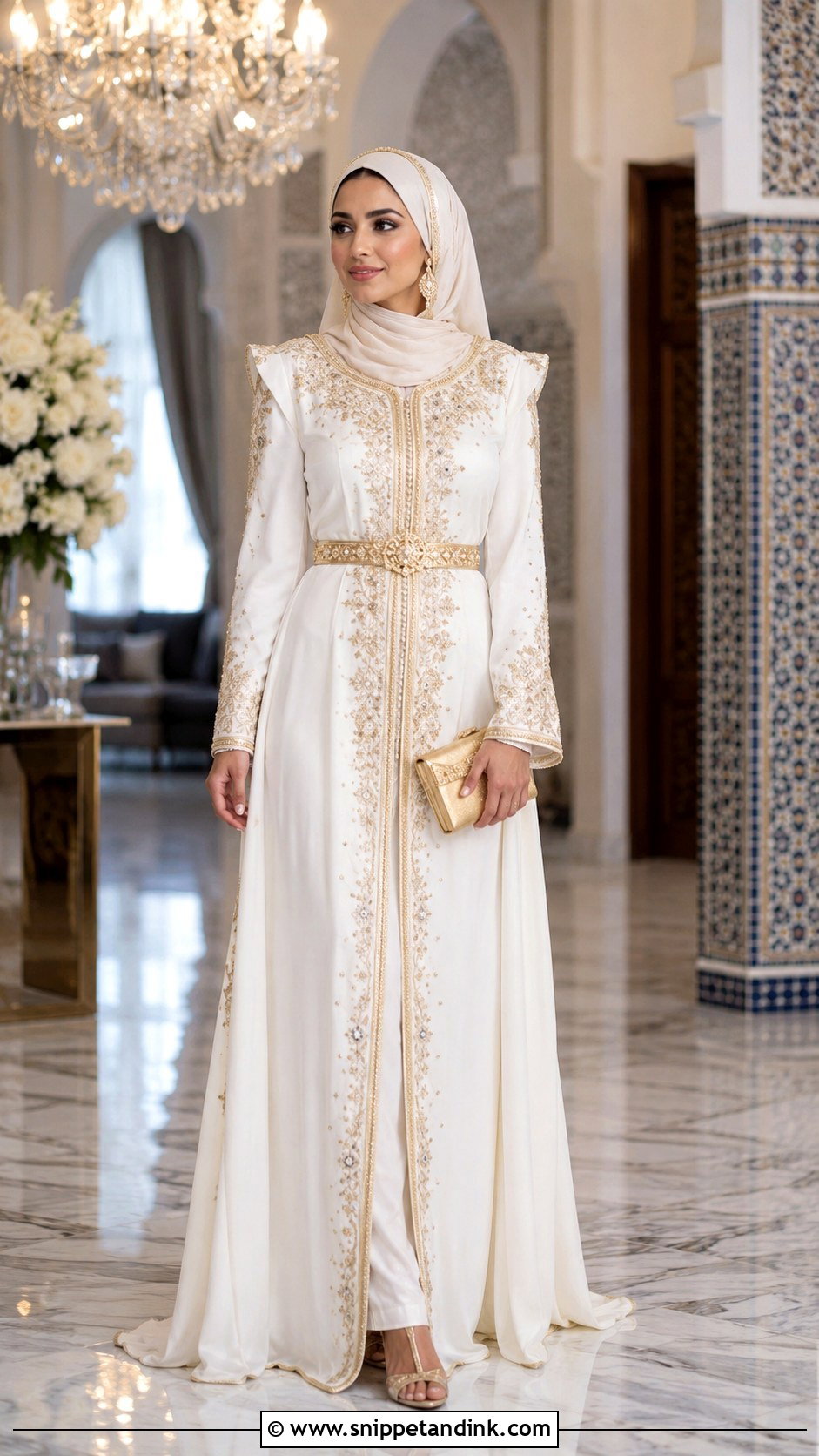
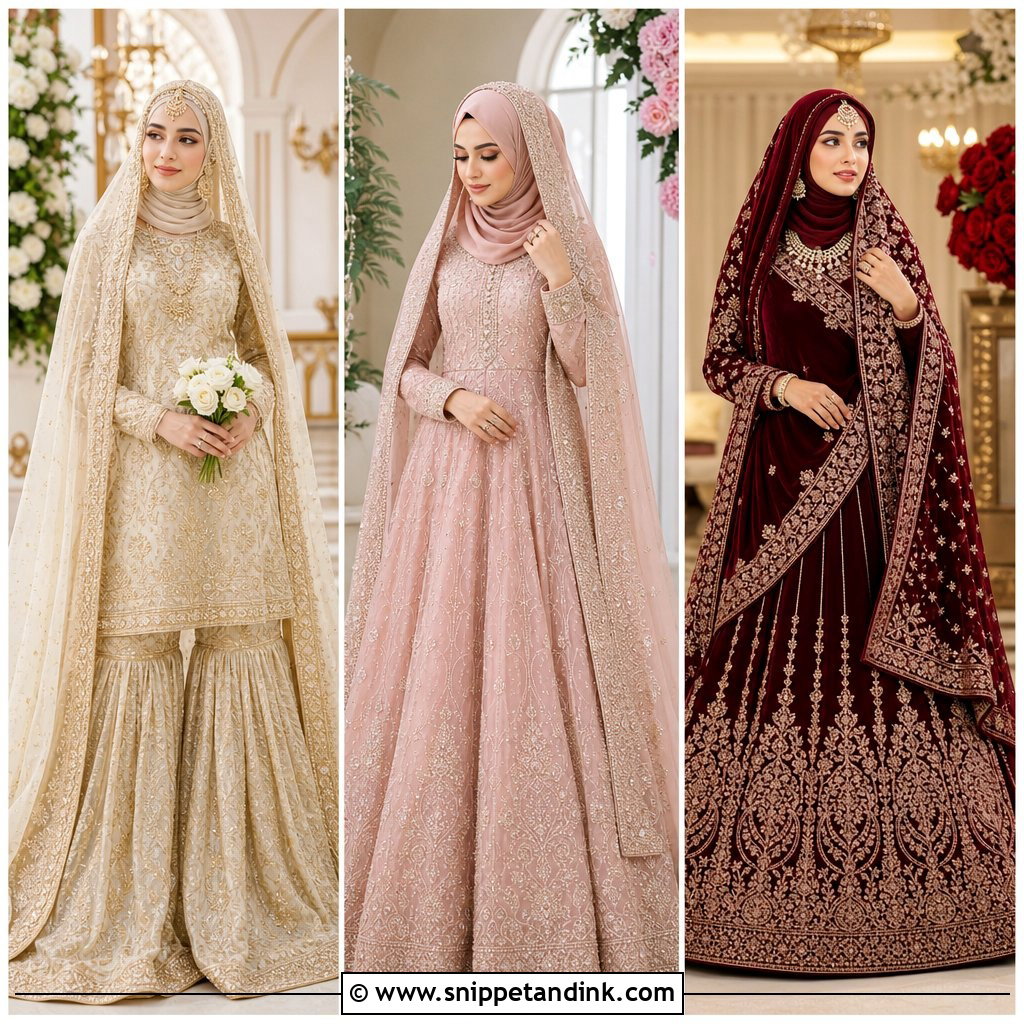
A kaftan’s loose shape is forgiving, so the ceremony comes from the detail: gold embroidery at the neckline, cuffs and center panel, and a belt to define the waist without losing the flow. Pair it with an ivory hijab edged in a narrow gold border, or pin a small brooch securely at the side. Heavy embroidery means the veil should be plain lightweight tulle, not another decorated layer. Ask about the lining before you buy. A kaftan lined in polyester gets hot fast indoors, while cotton or silk lining breathes through a long henna night or reception.
9. Ivory Lehenga With Bridal Hijab
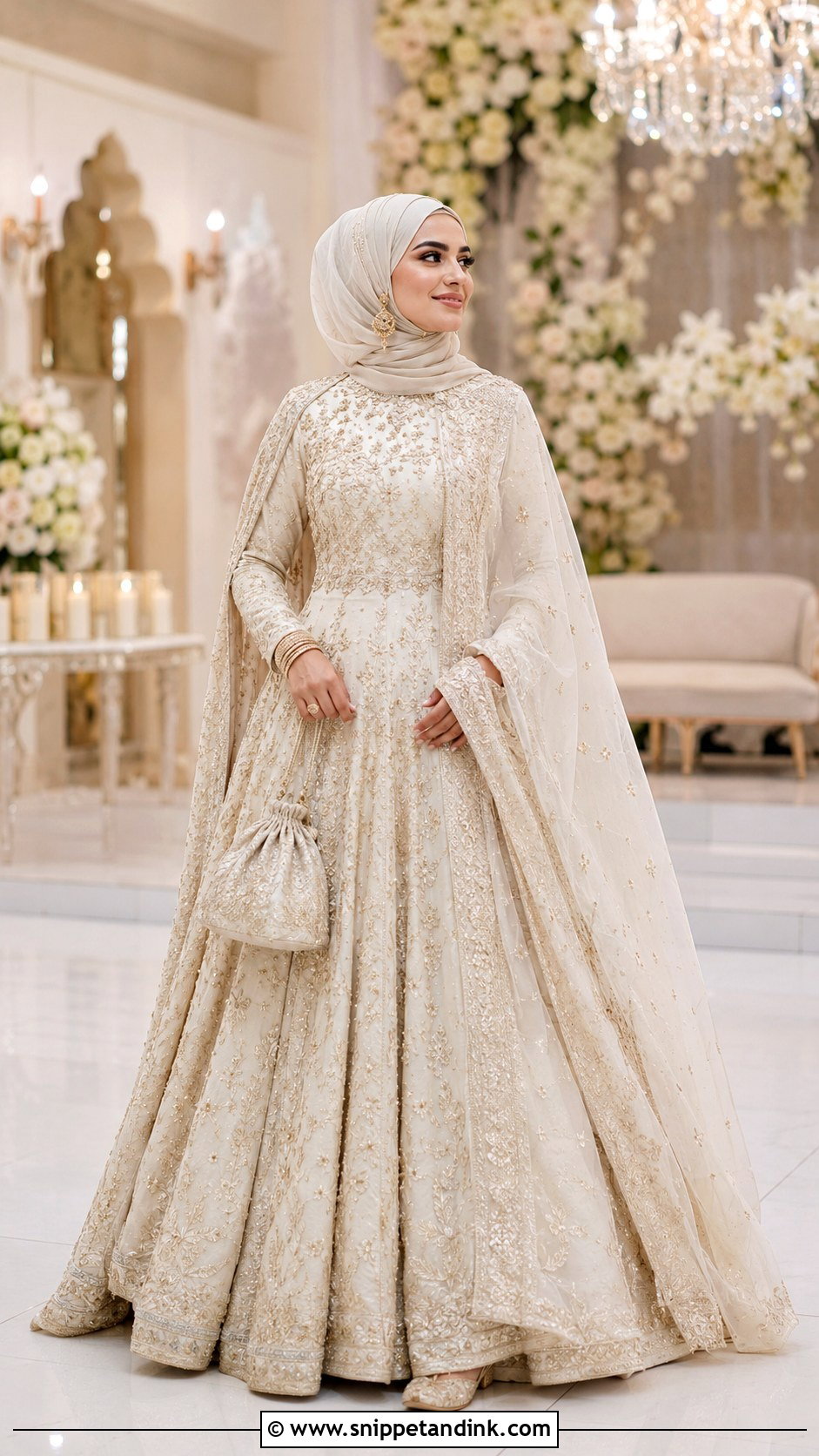
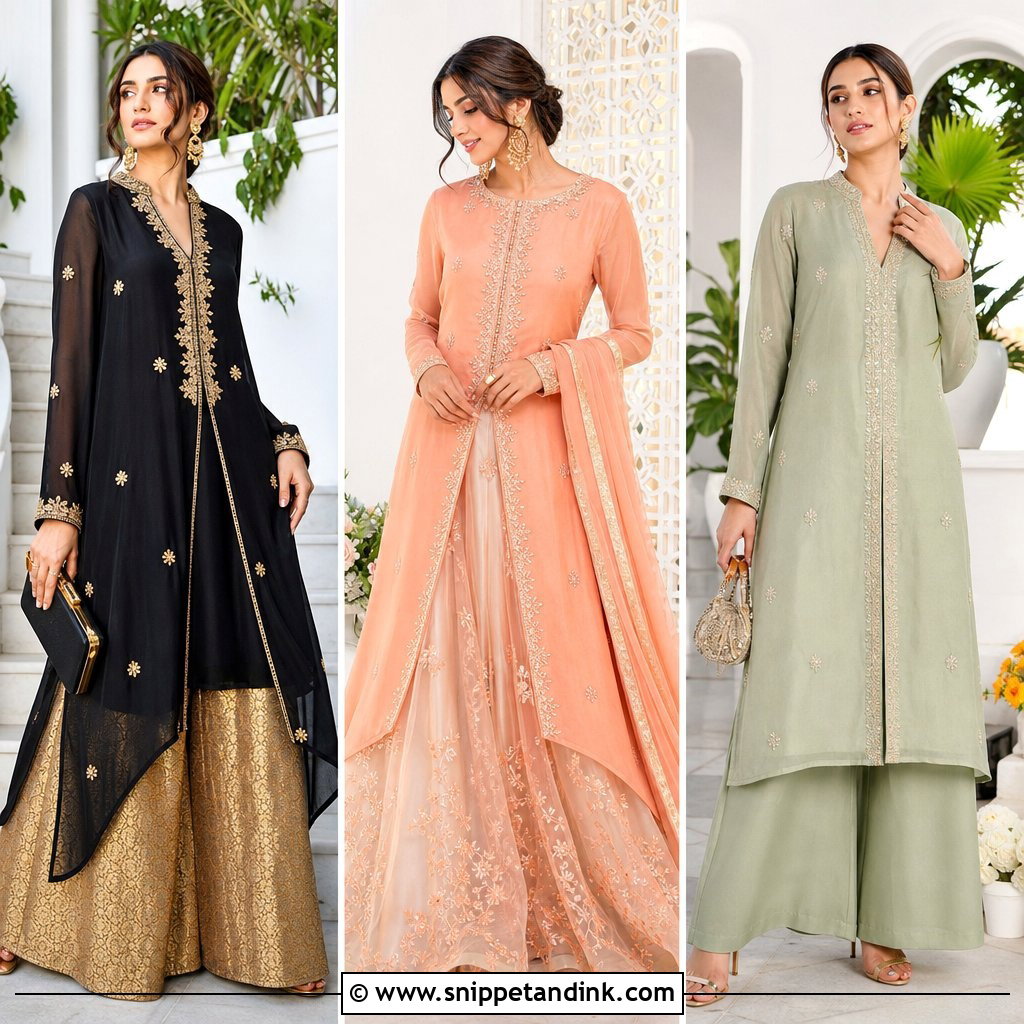
An ivory lehenga adapts to full coverage more easily than people expect. Start with a high-neck, full-sleeve blouse long enough to meet the skirt, and add a lined cape or long jacket if you want more. The order matters: wrap the chiffon hijab first and secure it, then drape the dupatta over the head and one shoulder on top, never instead of it. I pin the dupatta to the hijab underneath, not to the hair, so it can’t drag the wrap back. Lightweight fabrics stop the neck from getting bulky under all those layers.
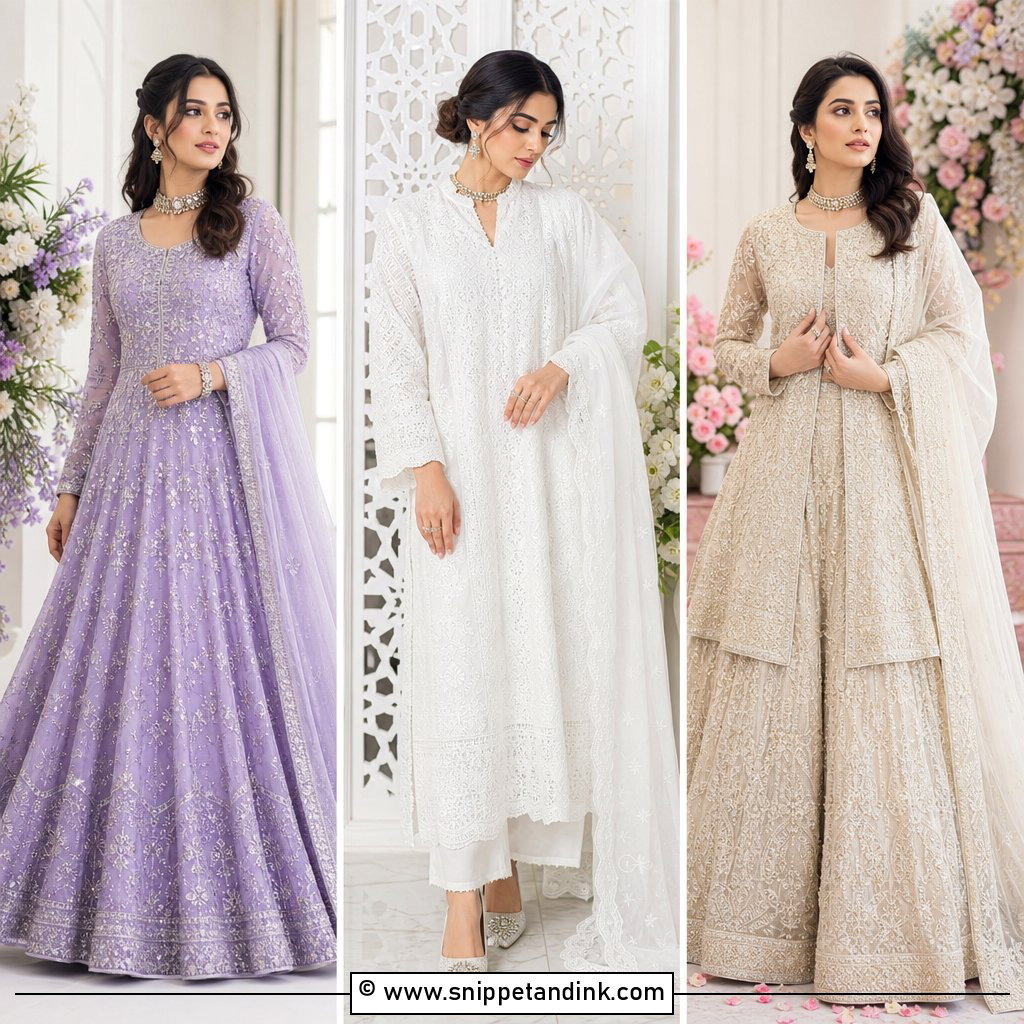
10. Pastel Sharara With Bridal Hijab
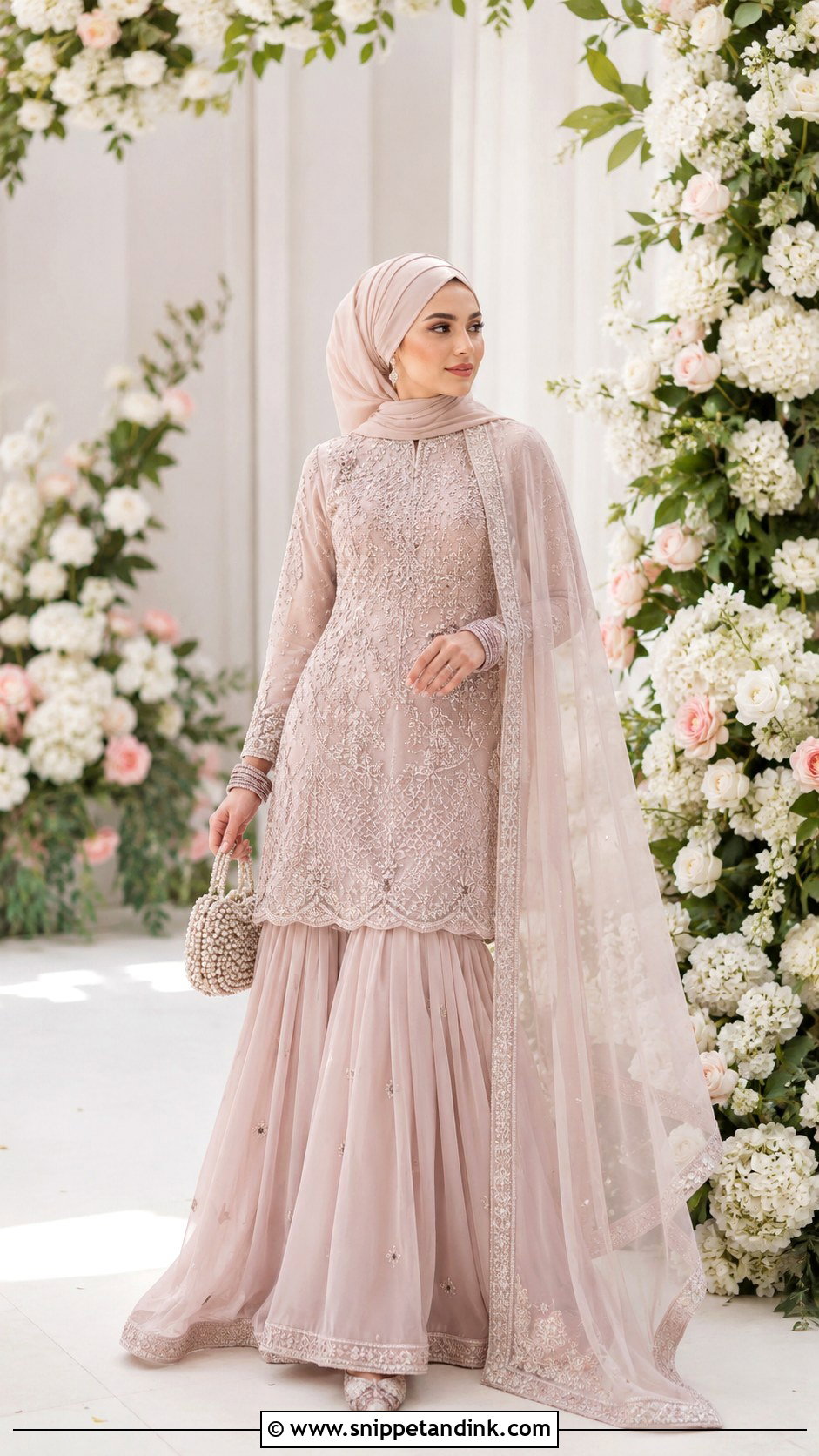
Not every bride wants white, and a pastel sharara in blush, powder blue, sage or lilac is a relaxed choice for a daytime nikah. Wide flowing pants go under a long high-neck tunic with full sleeves. A matching chiffon hijab keeps it cohesive, while a sheer dupatta can fall from the crown or sit over one shoulder. Since the shoes show beneath the pants, they need to be finished: embellished pointed flats or comfortable block heels. I limit the palette to one pastel and one metal, which keeps the outfit from looking like a bridesmaid set.
11. Turkish Bridal Gown With Crown Hijab
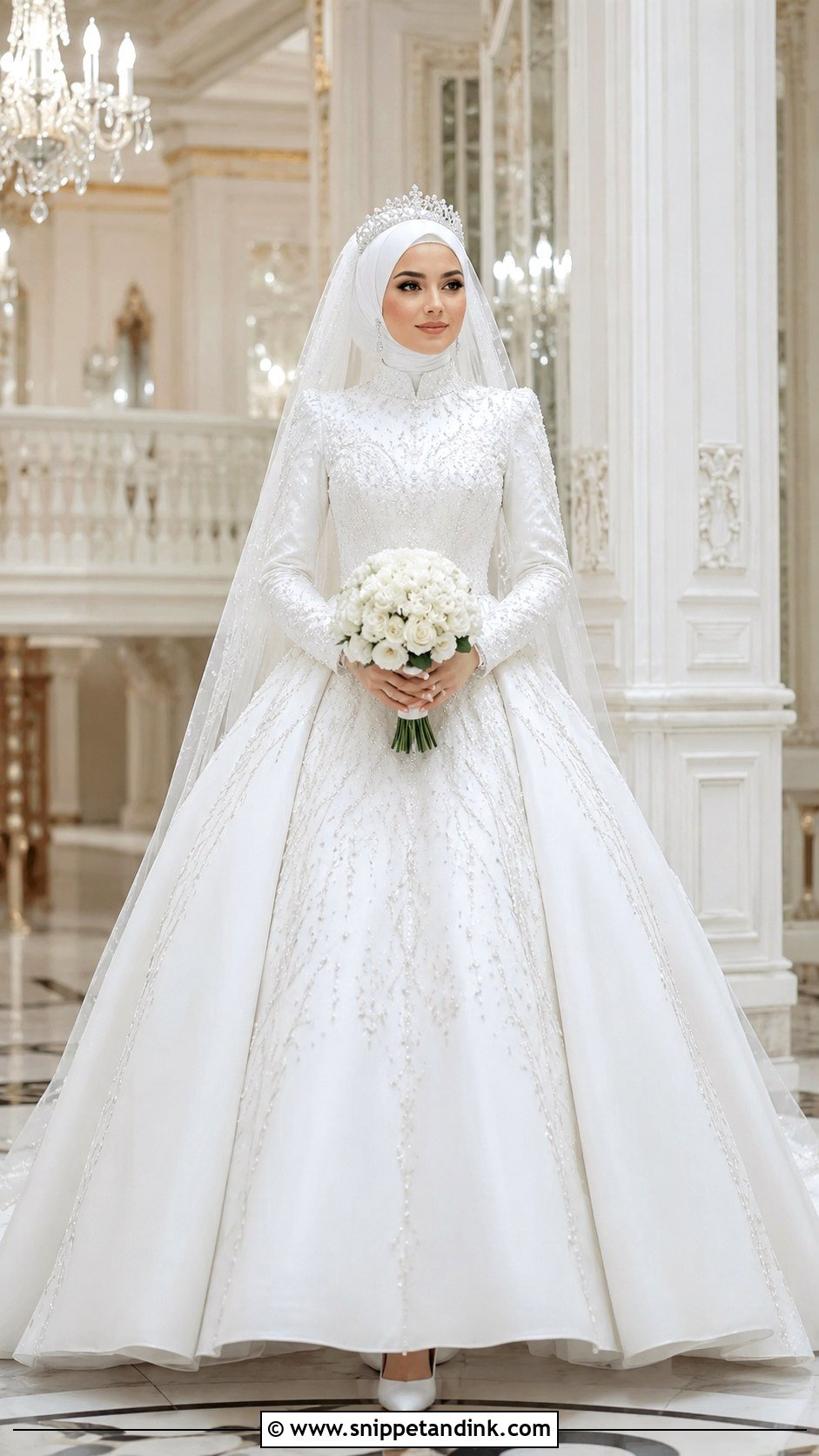
Turkish-inspired bridal looks are built around a crown, and the crown is where things go wrong. Start with a long-sleeved white dress, a fitted waist and a full skirt, then wrap an opaque satin hijab smoothly around the face. The crystal crown sits on top and the long veil goes behind it so the facial frame stays clear. A crown pinned only to satin will slide, so I secure it through to the underscarf with bobby pins or a hidden comb. Wear all three together for at least an hour before the day to check for pressure points.
12. Lace Cape Gown With Chiffon Bridal Hijab
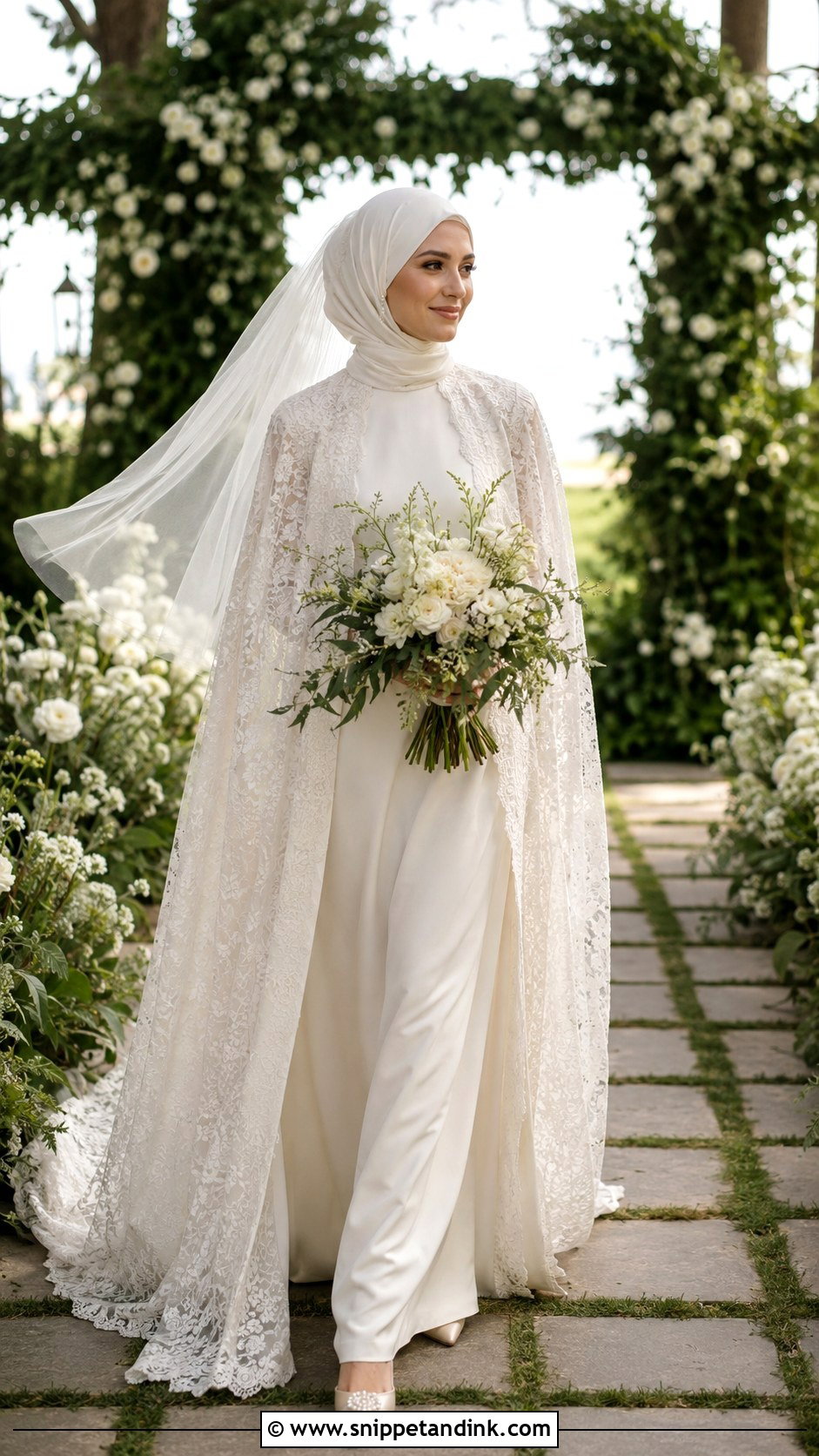
A lace cape over a simple crepe or satin gown gives airy coverage that looks soft in daylight. The two whites need to match, and the cape must allow you to lift your arms, because you’ll hug a lot of people. Under that much lace, a plain chiffon hijab keeps the face from looking busy. If you also want a veil, it has to sit beneath the cape without bunching at the shoulders; when it can’t, I’d drop it. A loose white bouquet suits the flowing shape far better than a tight round one.
13. High-Neck Tulle Gown With Bridal Hijab
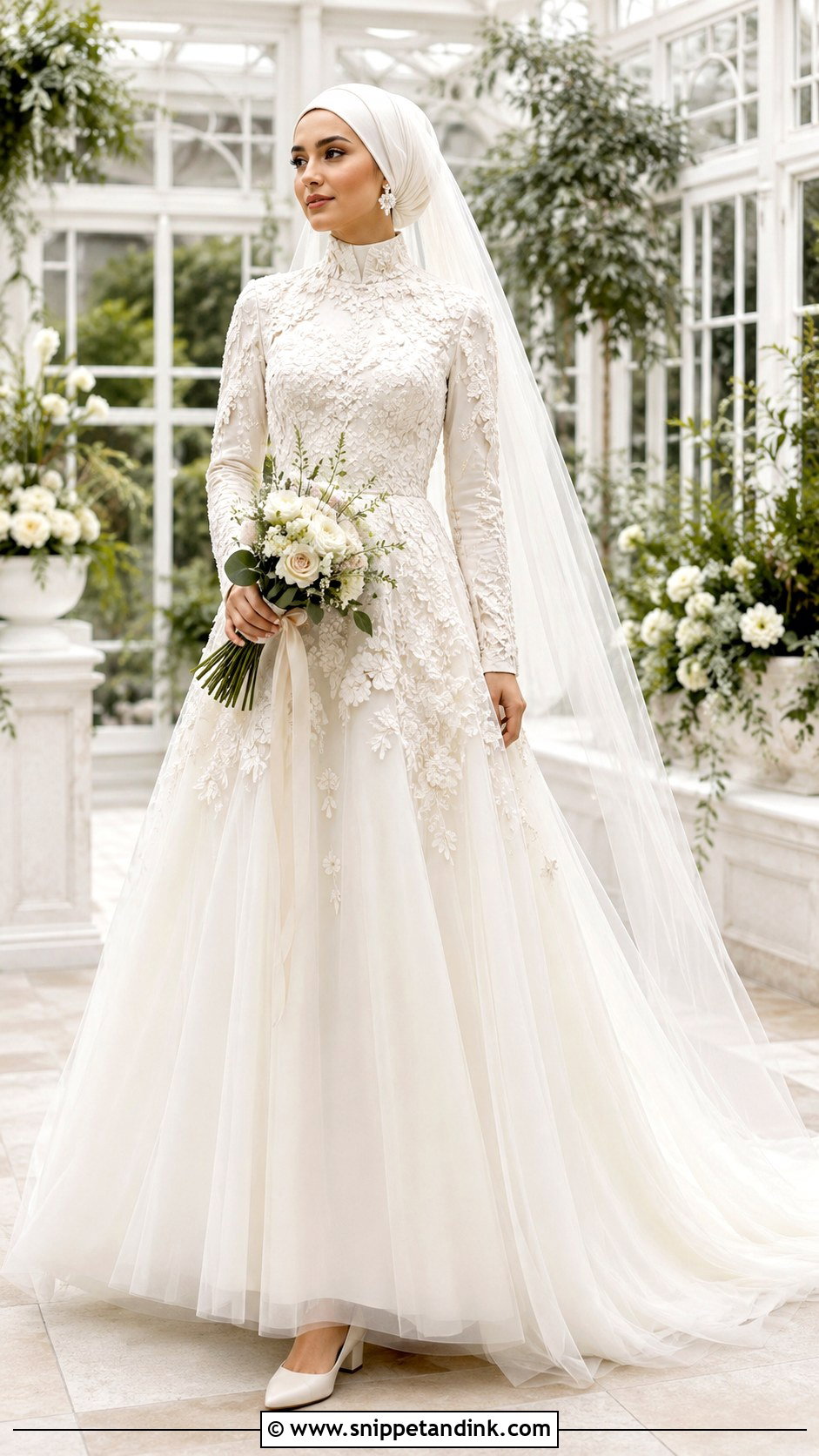
Tulle looks weightless, but a modest tulle gown depends on its lining. Look for a high neckline, long sleeves and an A-line or softly gathered skirt with fine floral appliqué drifting from the bodice onto the tulle. The hijab should match the lining, not the tulle itself, since the lining is the color you actually see. Keep the face frame narrow and finish with a plain tulle veil just longer than the skirt. Avoid a large crown here; it argues with the appliqué.
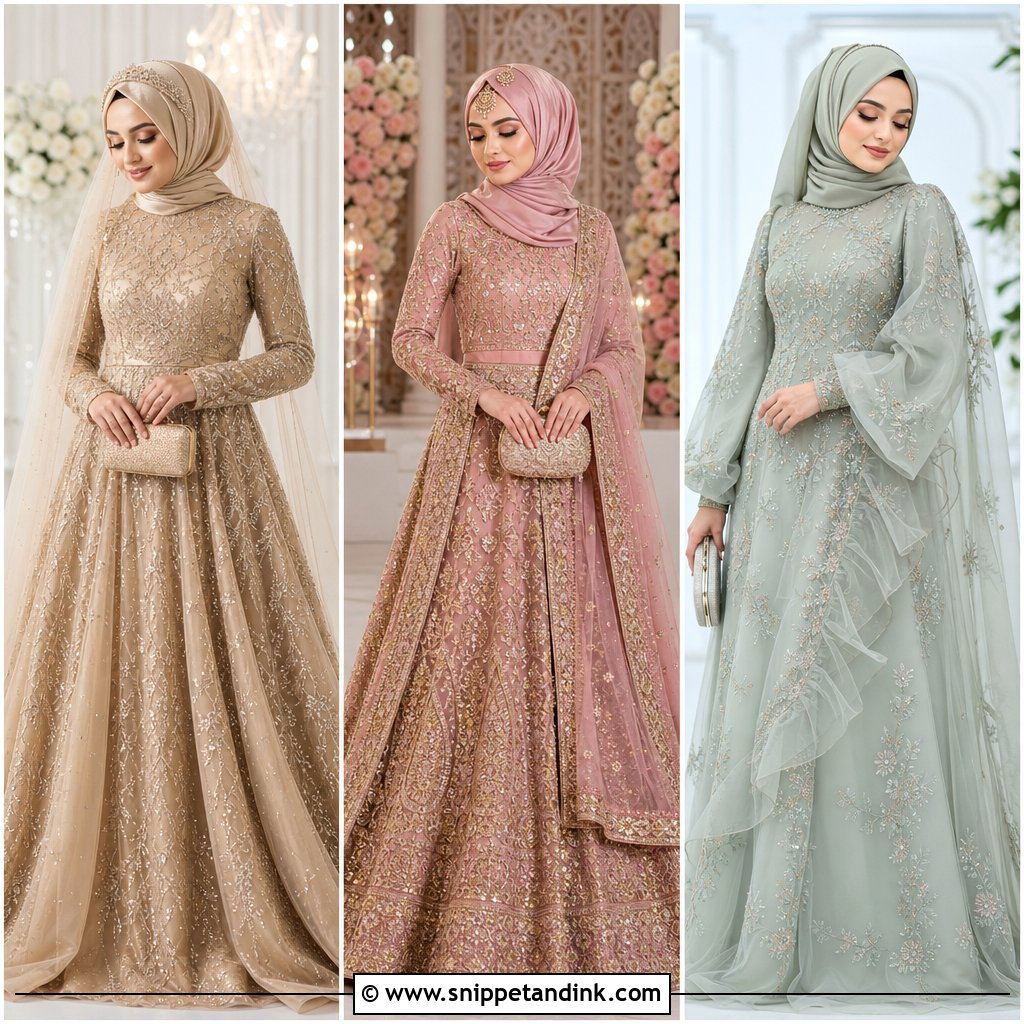
14. Champagne Wedding Dress With Tonal Hijab
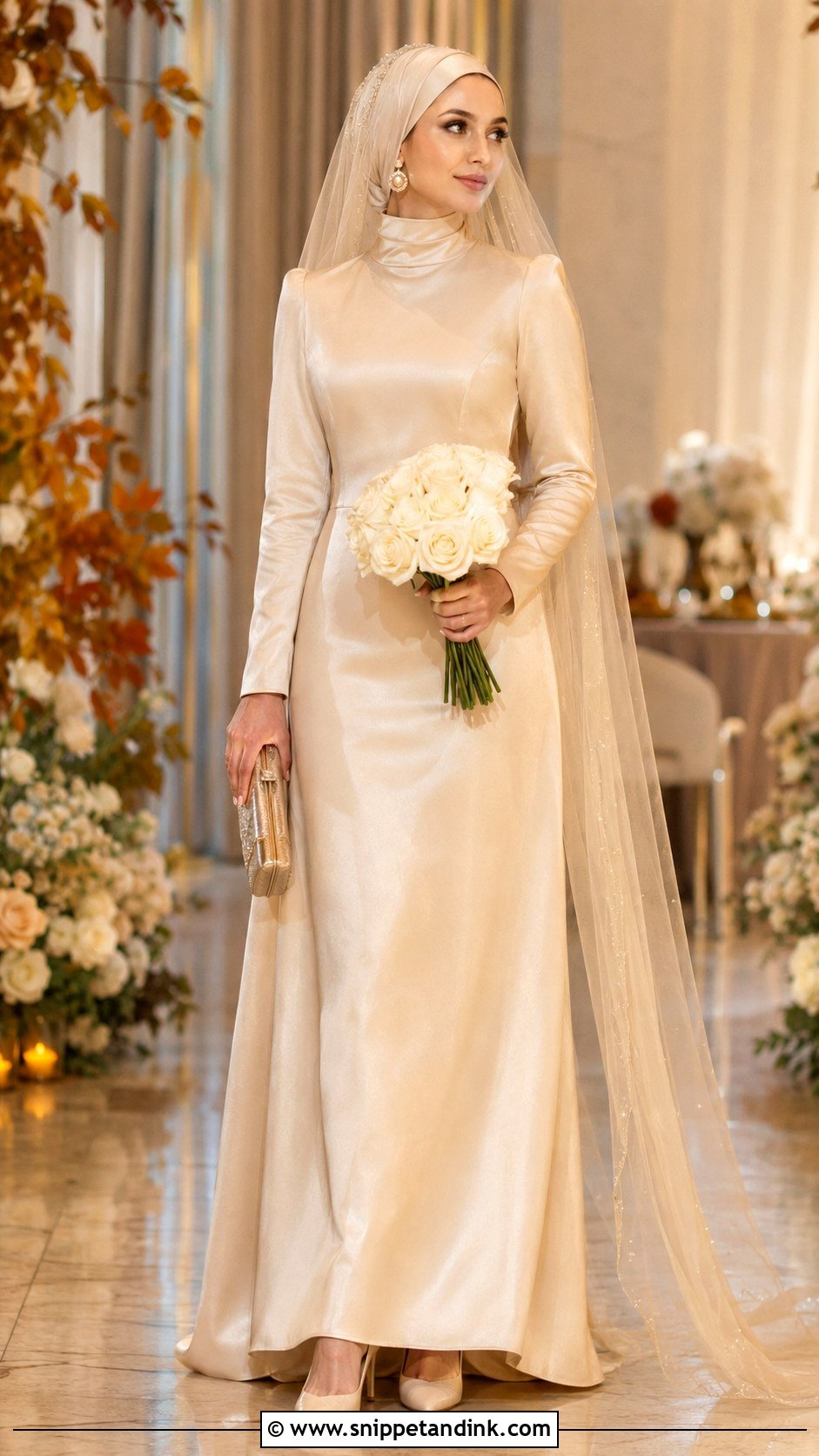
Champagne flatters many brides more than bright white, especially warmer skin tones. A long-sleeved satin or embroidered gown with a high neckline and warm ivory lining is the starting point. The tricky part is matching the hijab: champagne shades vary a lot between dye lots, so I take fabric swatches outside and then into indoor light before committing. A pale gold veil adds depth only if it stays sheer, otherwise the whole outfit goes yellow in photos. Nude or champagne pumps and pearl-and-gold earrings finish it calmly.
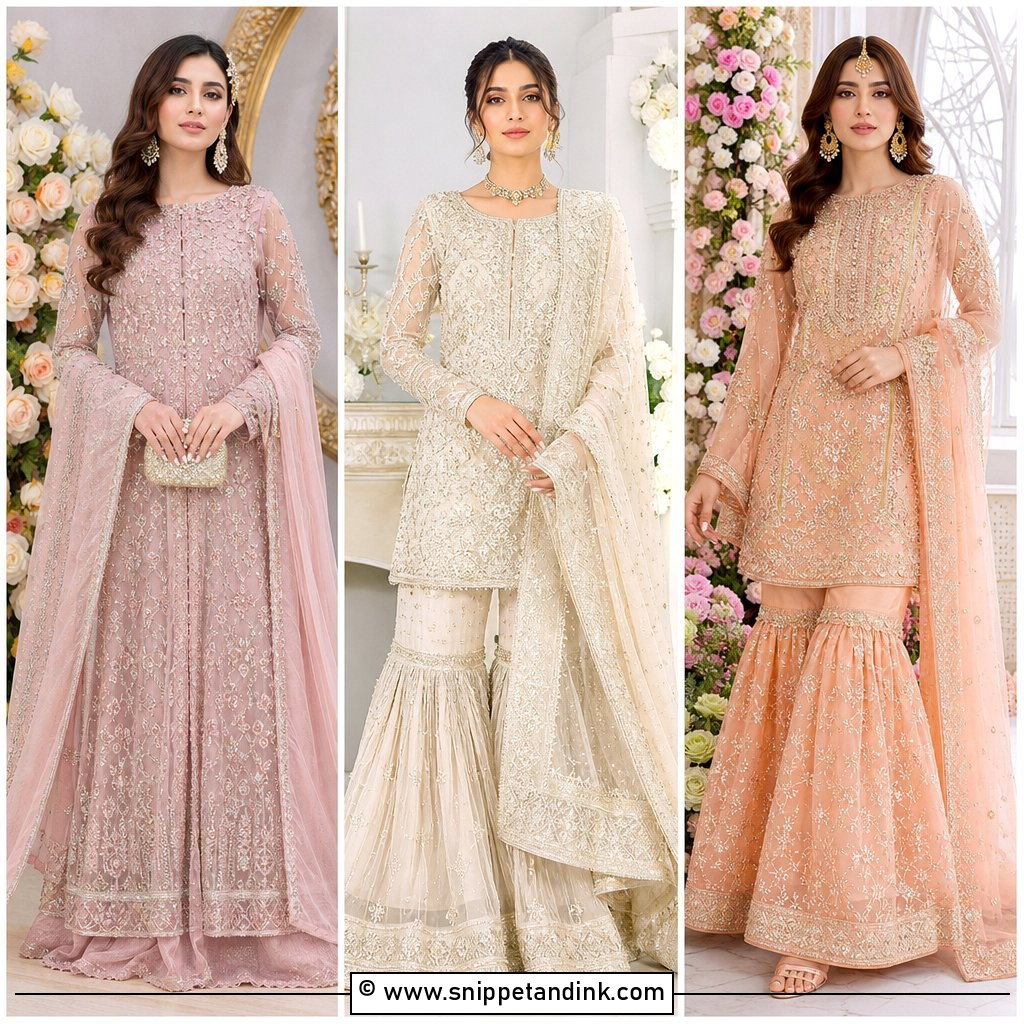
15. Floral Appliqué Dress With Bridal Hijab
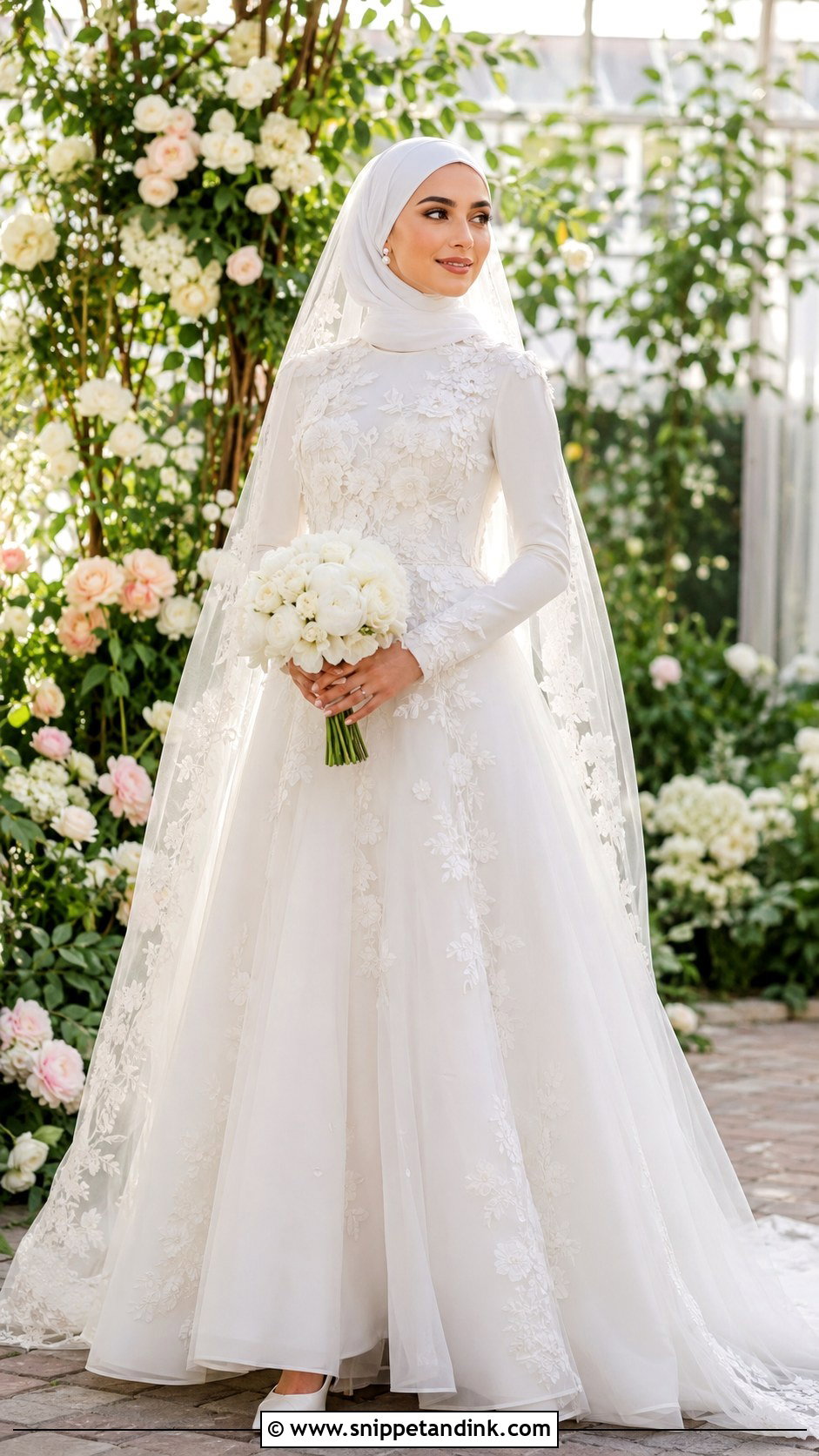
Three-dimensional appliqué rewards a close look, but it needs editing. I prefer the flowers concentrated across the bodice, sleeves and upper skirt, thinning toward the hem so the dress doesn’t drag. A plain chiffon hijab gives the face a clean frame against all that texture. Put just a few matching appliqués near the veil’s hem rather than covering it, and repeat one floral motif instead of mixing shapes. Raised flowers can snag on a chiffon wrap, so check where the hijab ends meet the shoulders.
16. Bridal Pantsuit With Draped Hijab
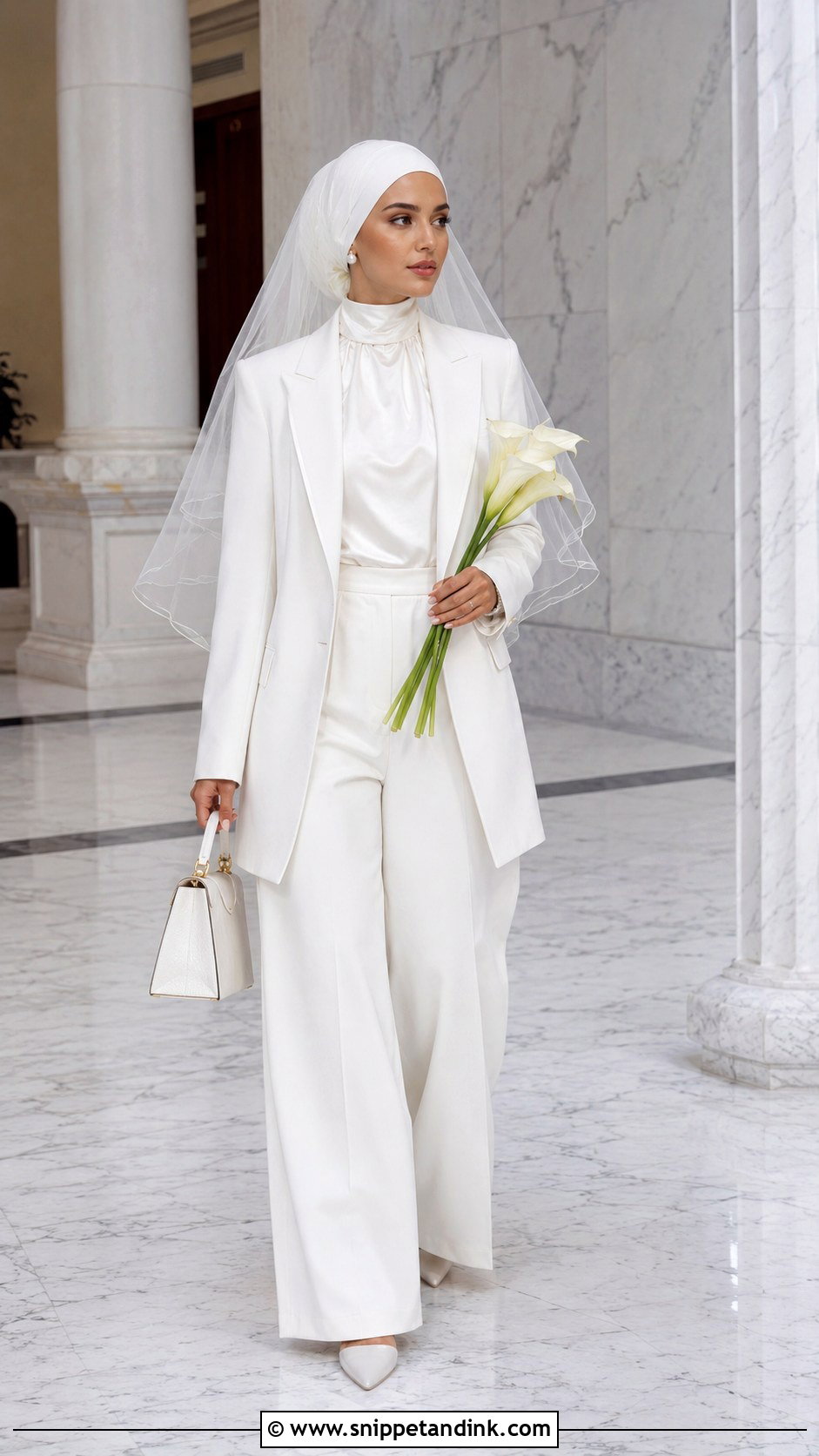
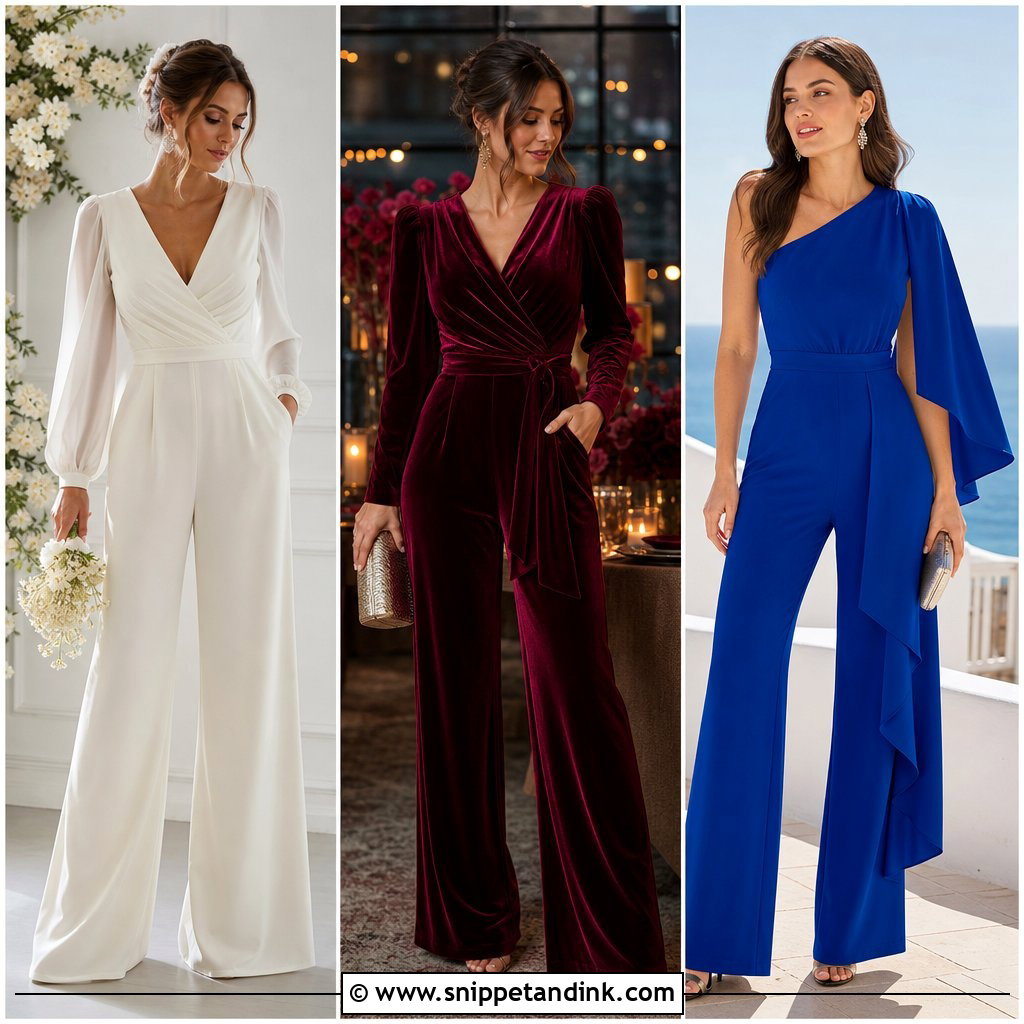
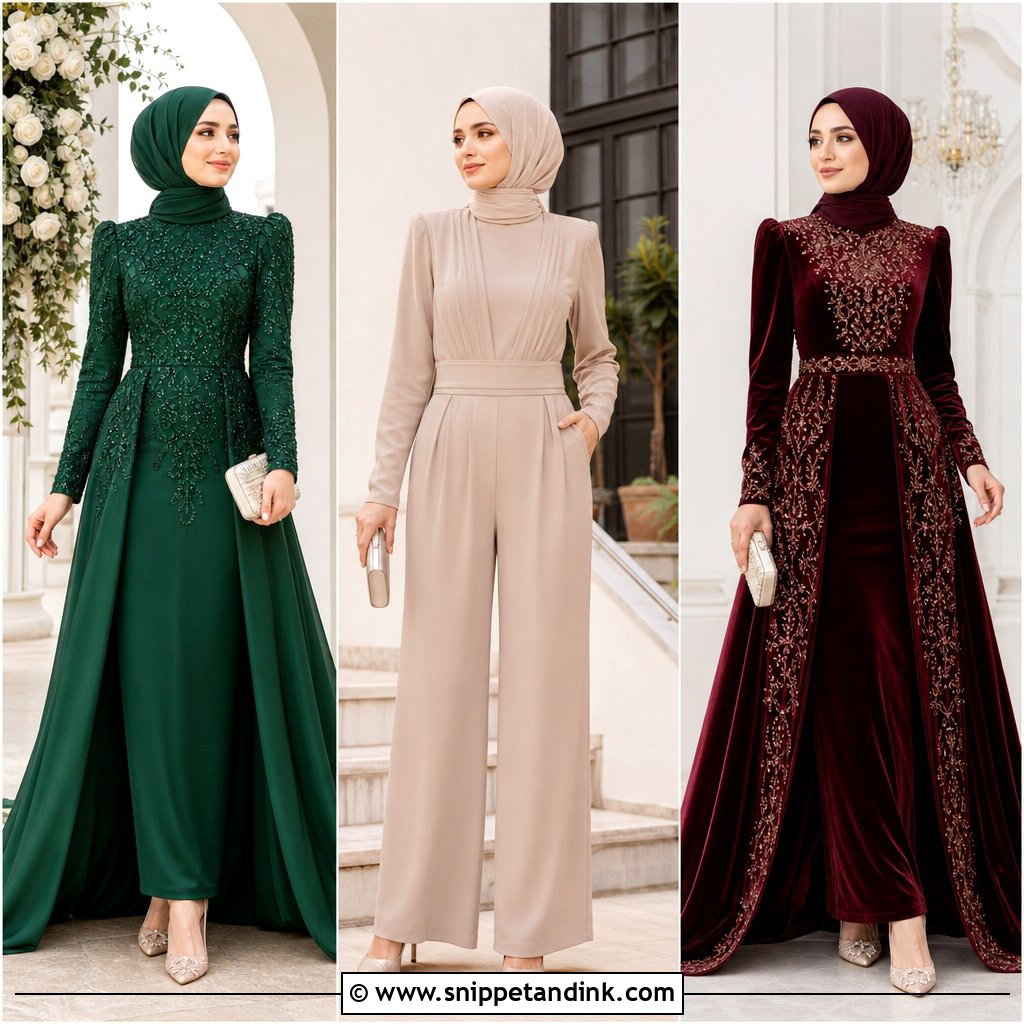
A white pantsuit is a confident choice and one of the most comfortable things a bride can wear. Wide-leg trousers with an opaque lining and a long blazer that covers the hips, over a high-neck satin blouse or tunic, gives a smooth modest base. A draped silk or chiffon hijab in matching ivory and a short shoulder veil make it read as bridal. Tailoring is everything here: I always hem the trousers and set sleeve lengths while you’re wearing the exact wedding shoes, since half an inch of heel changes the break.
17. Pleated Wedding Dress With Bridal Hijab
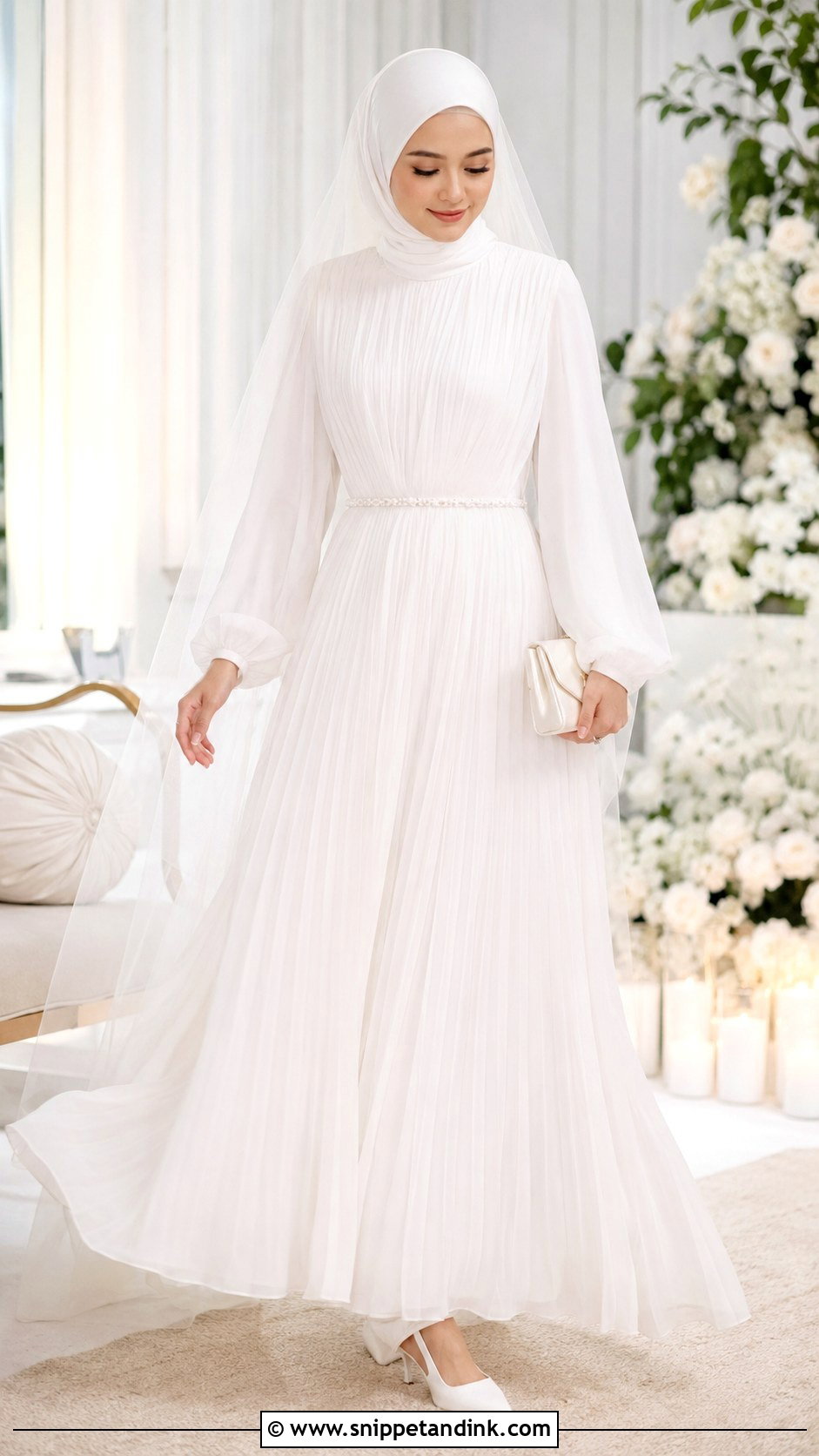
Fine pleats give movement without any embellishment, and in chiffon or light crepe they stay cool in warm weather. A floor-length dress with a high neck, bishop sleeves, a defined waist and a pleated skirt is the shape. Wrap a simple chiffon hijab securely with minimal volume and let a narrow pearl belt be the one decorative detail. A fingertip veil is enough because the skirt already moves. Pleats crush in storage, so hang the dress upright and never fold it into a suitcase for a destination wedding.
18. Velvet Winter Dress With Bridal Hijab
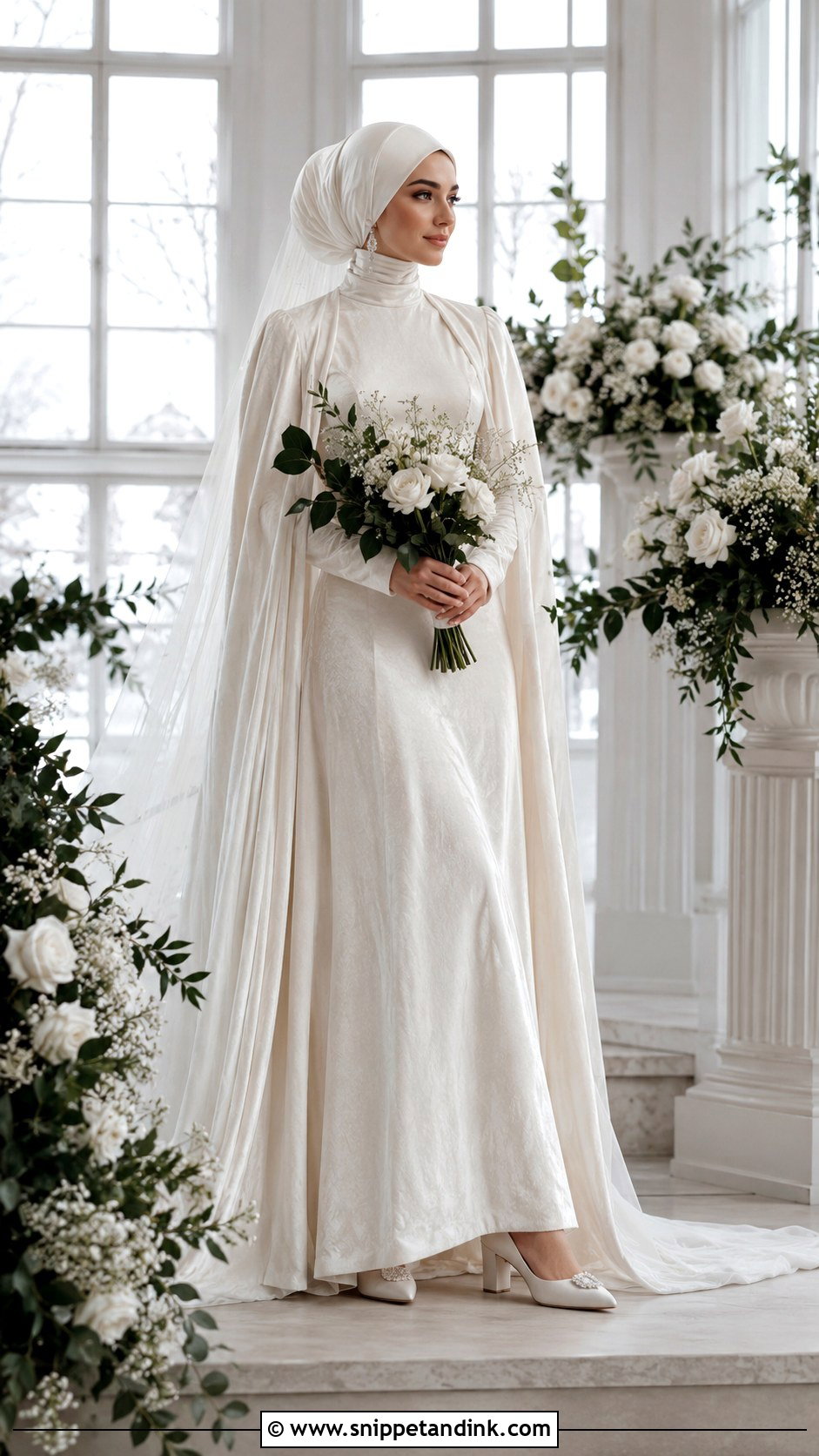
Velvet suits a winter wedding, though a full velvet gown is heavy and warm indoors. I often suggest a crepe dress with velvet only on the bodice or cuffs, which gives the seasonal richness without the weight. Look for ivory, cream or soft champagne with a high neck and long fitted sleeves. A smooth satin hijab and a plain tulle veil balance the deep pile. Velvet photographs darker than it looks in person because it absorbs light, so test it under the venue’s lighting before deciding on the shade.
19. Silver Embroidered Dress With Gray Bridal Hijab
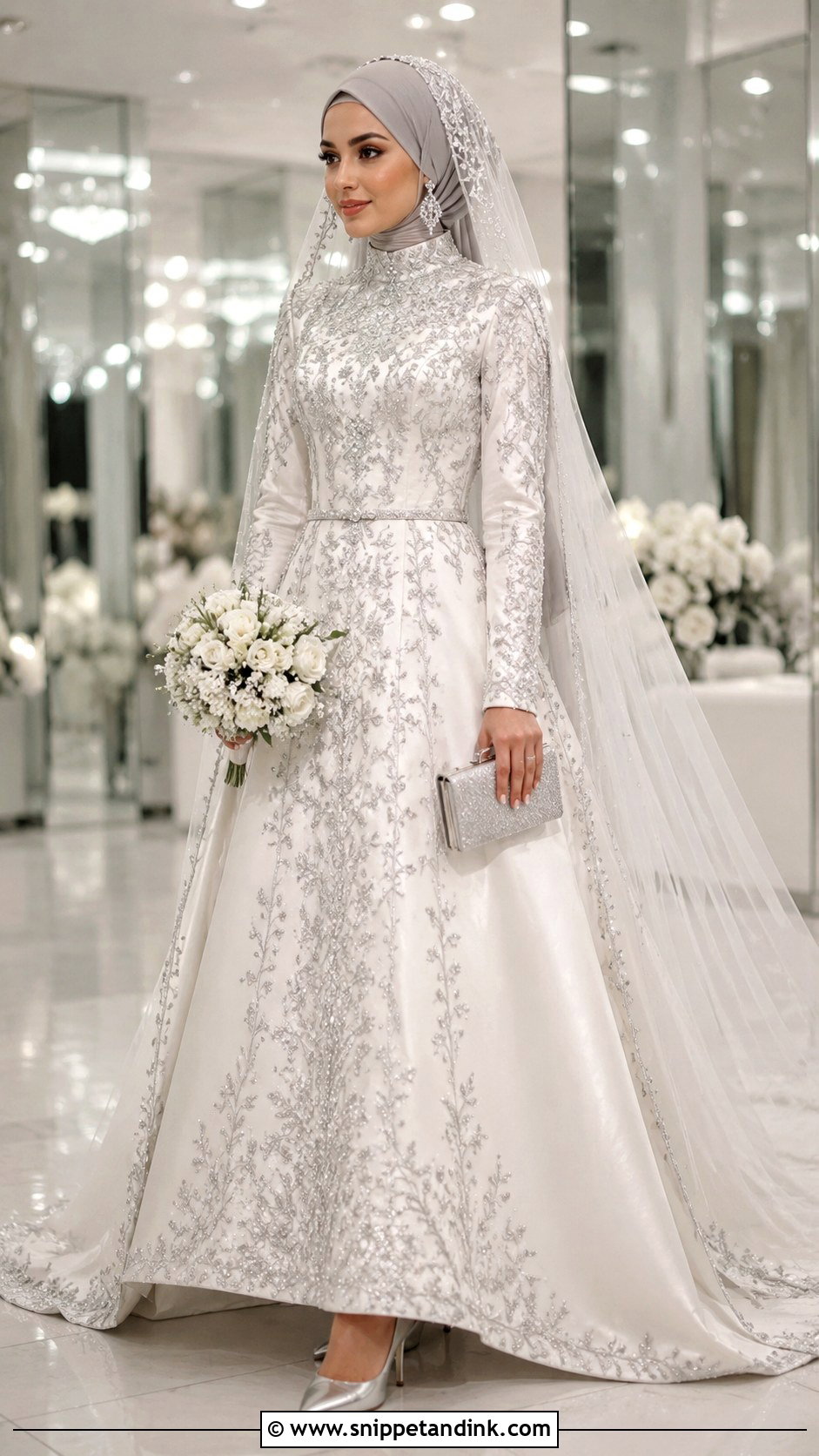
Silver embroidery gives a cool-toned bridal look that still feels formal. Start with a white or pale gray gown with full sleeves, a high neckline and silver threadwork across the bodice and cuffs. A light dove-gray hijab defines the face without the hard contrast of a darker scarf, and a sheer white veil with a narrow silver edge links scarf and dress. Keep the bouquet mostly white. Lay every metal piece side by side before the wedding; bright silver, pewter and gray rarely match as well as you’d assume.
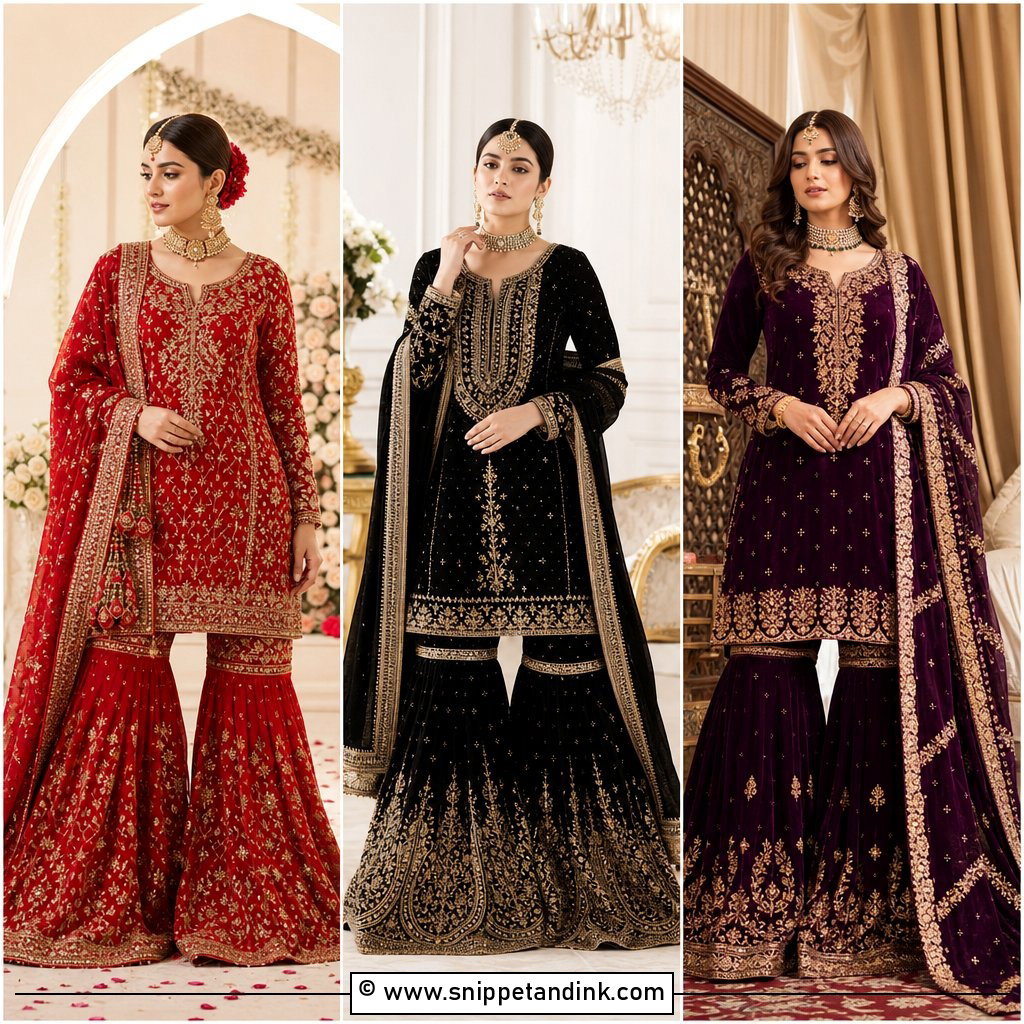

20. Modest Bridal Jumpsuit With Cape Hijab
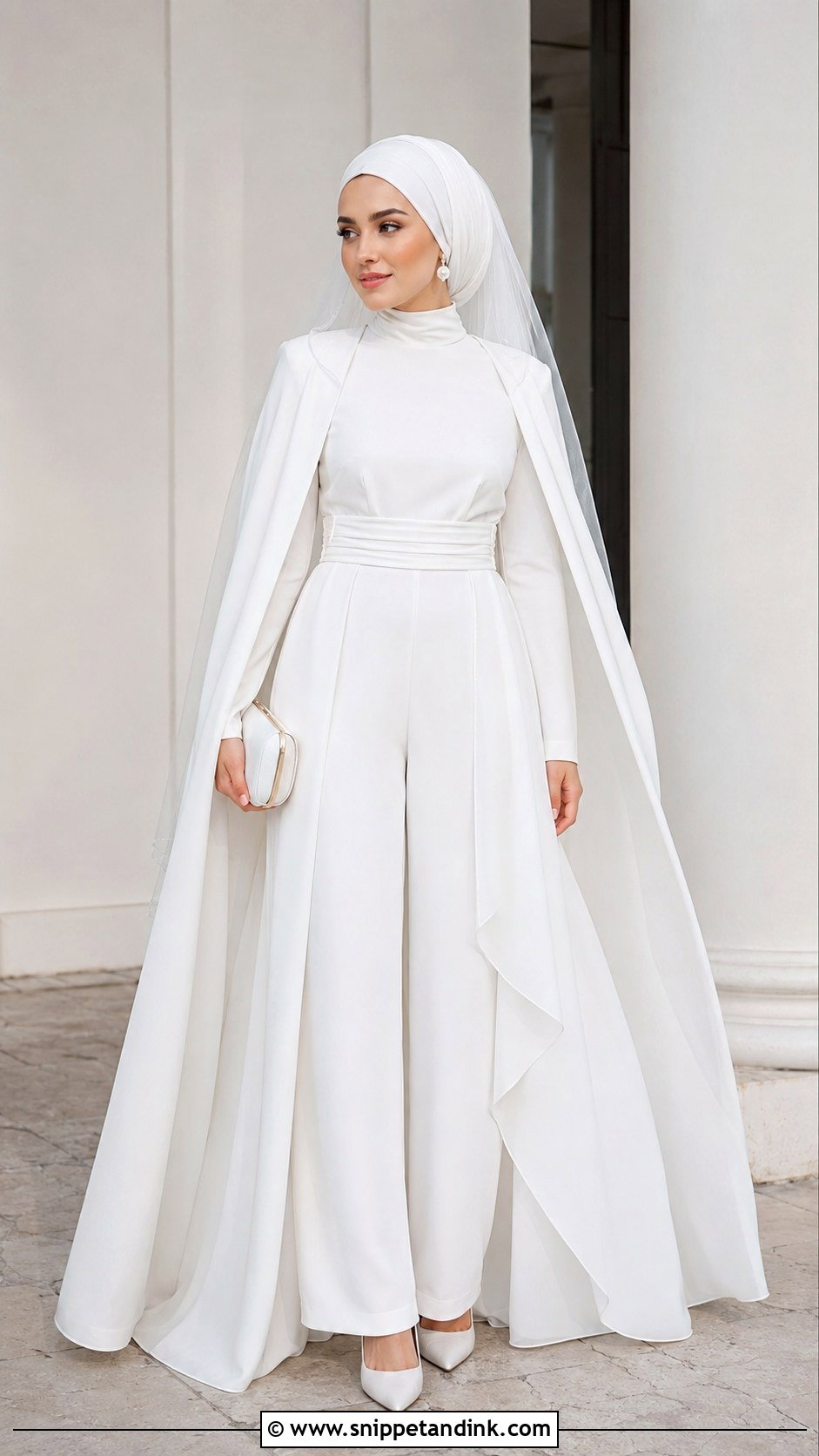
A modest jumpsuit gives freedom of movement that no gown can match. Look for wide legs, long sleeves, a high neckline and a defined waist. An attached overskirt or detachable cape adds drama and extra coverage at the back. Pair it with a smooth white chiffon hijab and a lightweight veil placed beneath the cape attachment. Pointed pumps lengthen the wide-leg line. Have it hemmed precisely, because wide trousers plus a cape or train is how brides catch a heel.
Opacity, Heat and Prayer in a Fully Layered Outfit
Coverage that looks complete in a fitting room can turn sheer under a photographer’s flash. Before ordering, I hold every fabric, hijab included, up to a bright lamp and take a phone photo with flash on. If you can see skin or the outline of the underscarf, ask for an extra lining or a thicker weave.
Staying comfortable for a long day
Long sleeves, a lined dress and two head layers trap heat. Choose breathable linings, keep a small fan and blotting papers with your bridesmaid, and plan a quiet ten minutes between ceremony and reception to reset pins. Chiffon wraps loosen as the day goes on; a quick re-tuck at the temples keeps the frame neat for evening photos.
Planning around wudu and prayer
If you will pray during the celebration, think about it at the design stage. Very tight cuffs with many buttons are hard to roll back, so I often suggest a slightly looser sleeve or a discreet zip at the wrist. Agree with whoever helps you dress on where you’ll change into a prayer layer and how long it takes, so the timeline already has room for it.
Wear It Once Before the Wedding Day
The bridal outfit you remember is the one that felt secure from the first photo to the last dance. Gowns, cultural clothing, tailoring, hijabs, veils and shoes can all form a complete look once you decide on coverage and silhouette first. Then match colors and textures under the venue’s real lighting, and let either the hijab or the dress carry the decoration, not both. Wear the whole ensemble at least once before the day: walk, sit, kneel, raise your arms. Whatever slips or pinches at home will slip and pinch at the wedding.
You'll Like These Ideas:


Leave a Reply