
Black reads as dramatic and polished next to the reds and pinks that usually fill an Indian wedding, and at an evening reception, cocktail night or sangeet it can look properly festive under sequins and metallic embroidery. The catch is cultural. Many families consider black inauspicious for the religious rituals, so I always tell clients to check the invitation or ask the couple before wearing it to the main ceremony. What makes black celebratory rather than somber is detail: zari, mirrors, a jewel-toned dupatta, gold jewelry and well-finished footwear. The twenty outfits below run from silk sarees to cape lehengas, each with notes on how it wears through a long night.
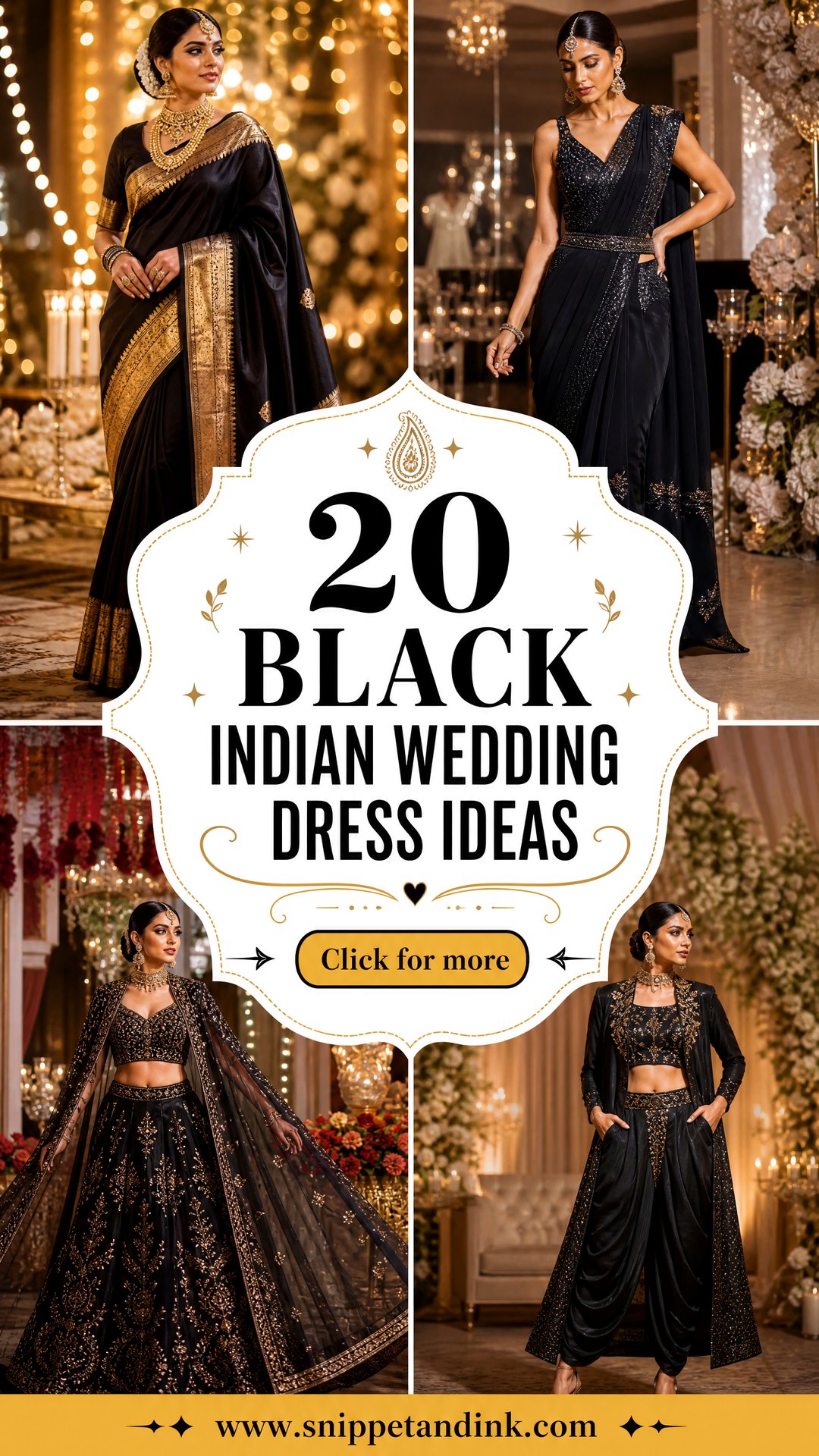
Will Black Upset Anyone at the Ceremony?
In many Hindu families black is still linked with mourning or bad luck, and it’s usually avoided at the haldi, the pheras and other ritual moments. Attitudes vary a lot by region, generation and family, and some households are completely relaxed about it, especially after dark. I never guess on a client’s behalf. As a guest, this is how I’d handle it:
- Read the invitation for a dress code or color theme. Many couples now give one for each function.
- If nothing is stated, ask the couple or a close relative directly. A short message a few weeks ahead is far better than an awkward look on the day.
- Save black for the sangeet, cocktail night or reception, and wear a brighter color to the ceremony itself.
- If you’re unsure but love the outfit, a strong contrasting dupatta in red, pink or gold softens the effect considerably.
When the bride wants black
A bride in black is still unusual, and most who choose it keep it for the reception or cocktail evening. If that’s your plan, raise it with your parents and in-laws early, so it becomes a conversation rather than a surprise in the family album.
1. Black Sequin Lehenga
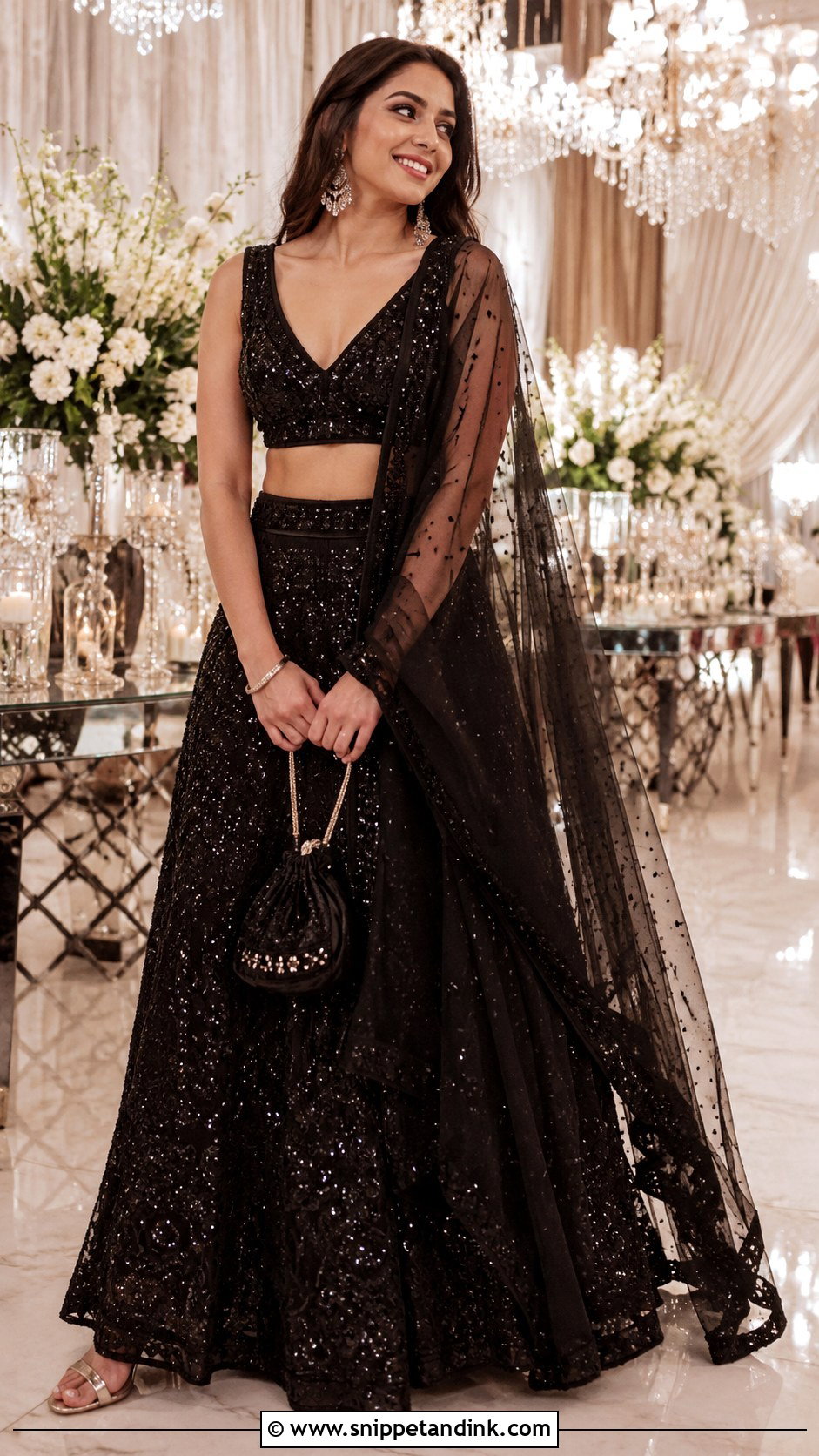
Sequins on a lehenga skirt look best spaced, not packed. Dense sequin coverage gets heavy, scratches your inner arm and anyone you dance with, and makes the skirt swing stiffly. For a reception or sangeet, I’d pair a flowing, evenly sequinned skirt with a fitted short-sleeve blouse and a light net dupatta with a narrow metallic border. Champagne, silver or gunmetal accents sit well against black and keep you clear of bridal territory. Crystal drops, stacked bangles, metallic block heels and a compact potli finish it. Sleek hair or loose waves, soft metallic lids and a rose lip balance the shine.
2. Black Silk Saree With Gold Border
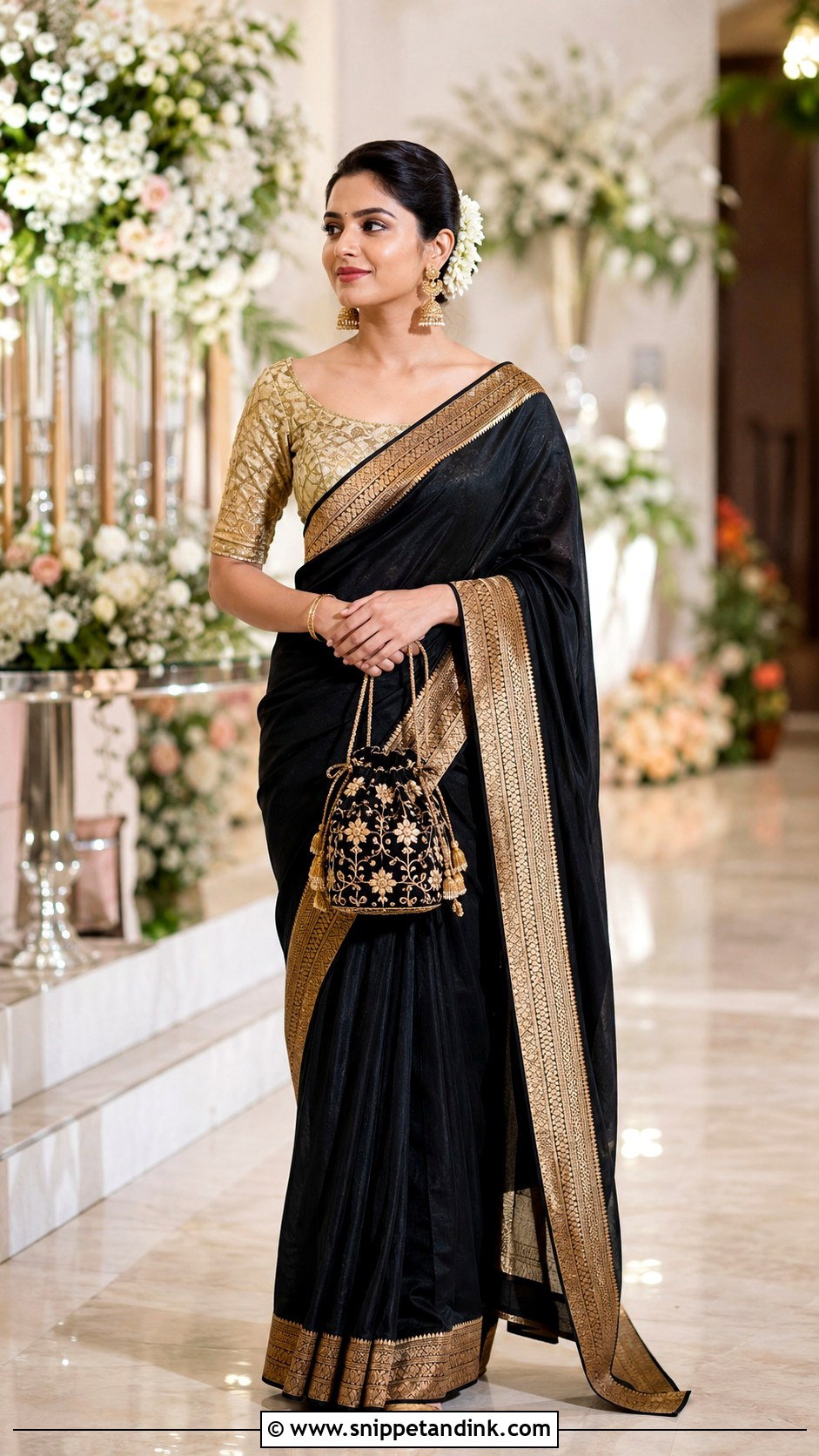
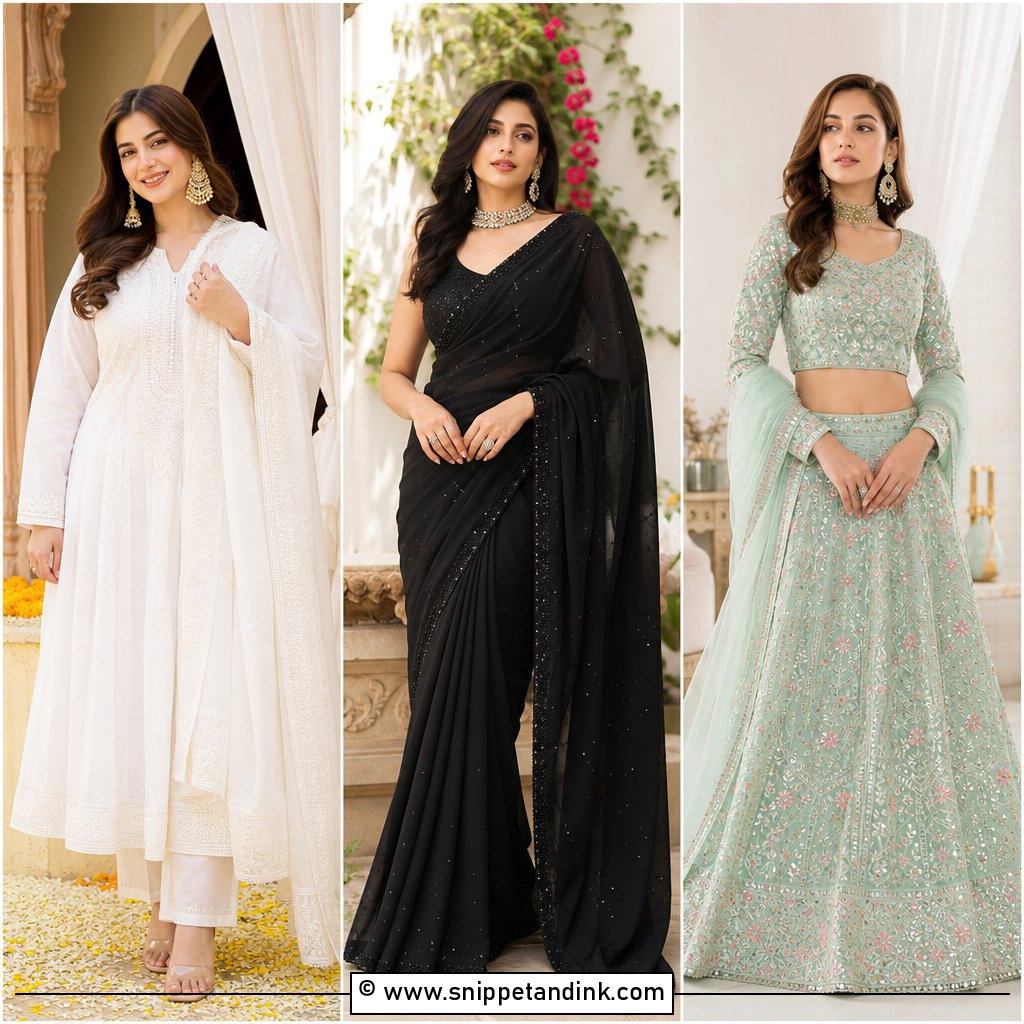
Black silk with a gold zari border is the most classic option here, and the one I’d pick for a formal reception full of older relatives. Choose a clean border, small woven motifs or a traditional pallu, and let a fitted gold brocade blouse put brightness near your face so the black doesn’t drain you in photos. Antique gold jhumkas, a matching bracelet and an embroidered black potli complete it. Gold sandals or low block heels are kinder than stilettos over a long evening. A low bun with fresh flowers suits it where the occasion allows, with defined liner and a berry lip.
3. Black Velvet Lehenga
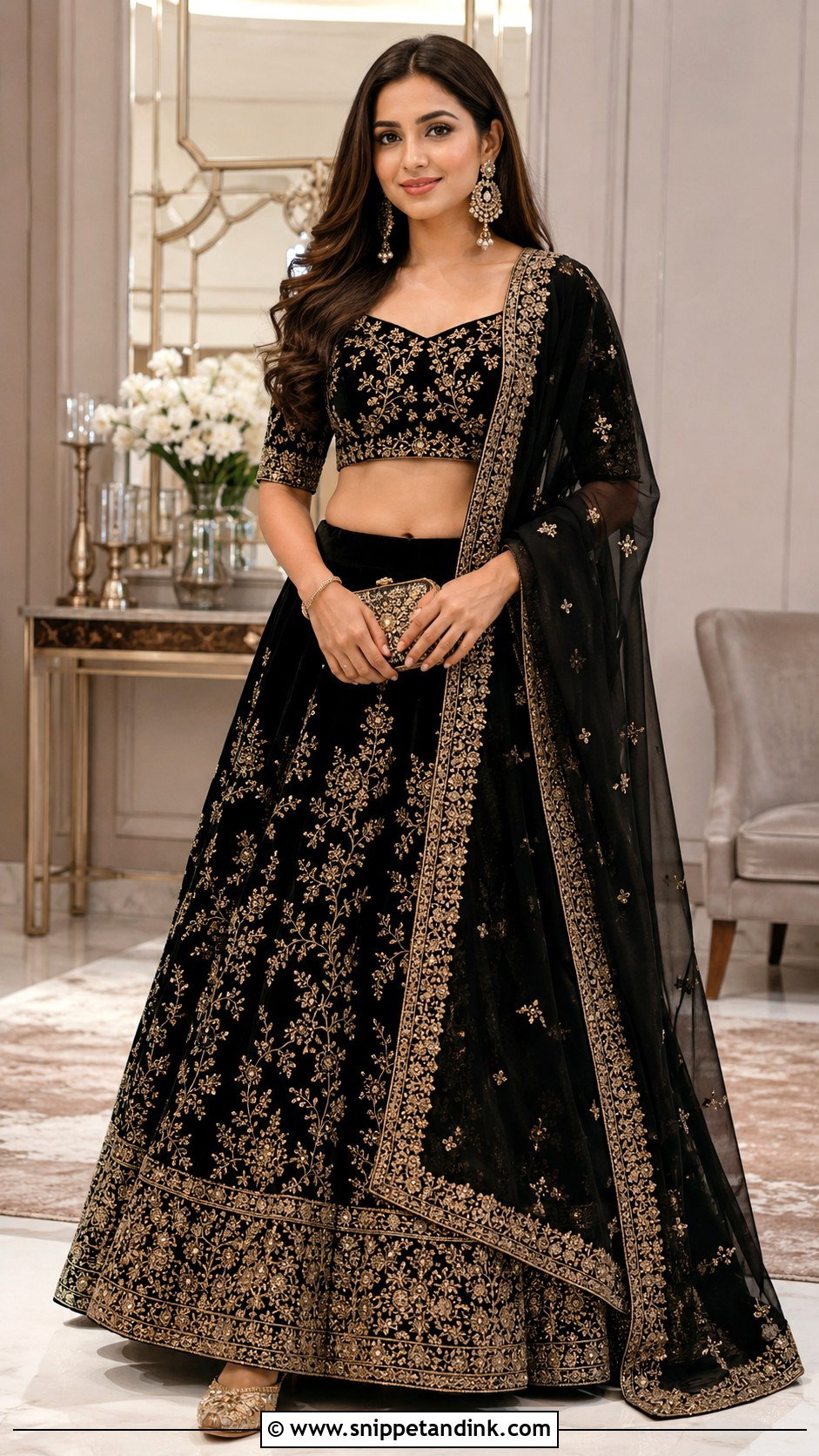
Velvet only makes sense in cool weather; in a packed banquet hall in summer it becomes the outfit you count the minutes in. For a winter wedding, though, a structured black velvet skirt with gold zardozi or placed floral embroidery has real weight and formality. Match it with a velvet blouse with elbow sleeves. The rule I follow is one heavy fabric per outfit, so the dupatta should be soft net or organza. Antique gold earrings, one statement ring and a small embroidered clutch are enough. Platform heels or embellished juttis depend on the skirt length, and a low ponytail keeps the neckline visible. Warm neutral makeup with a touch of gold highlight suits the fabric.
4. Black Anarkali With Gold Embroidery
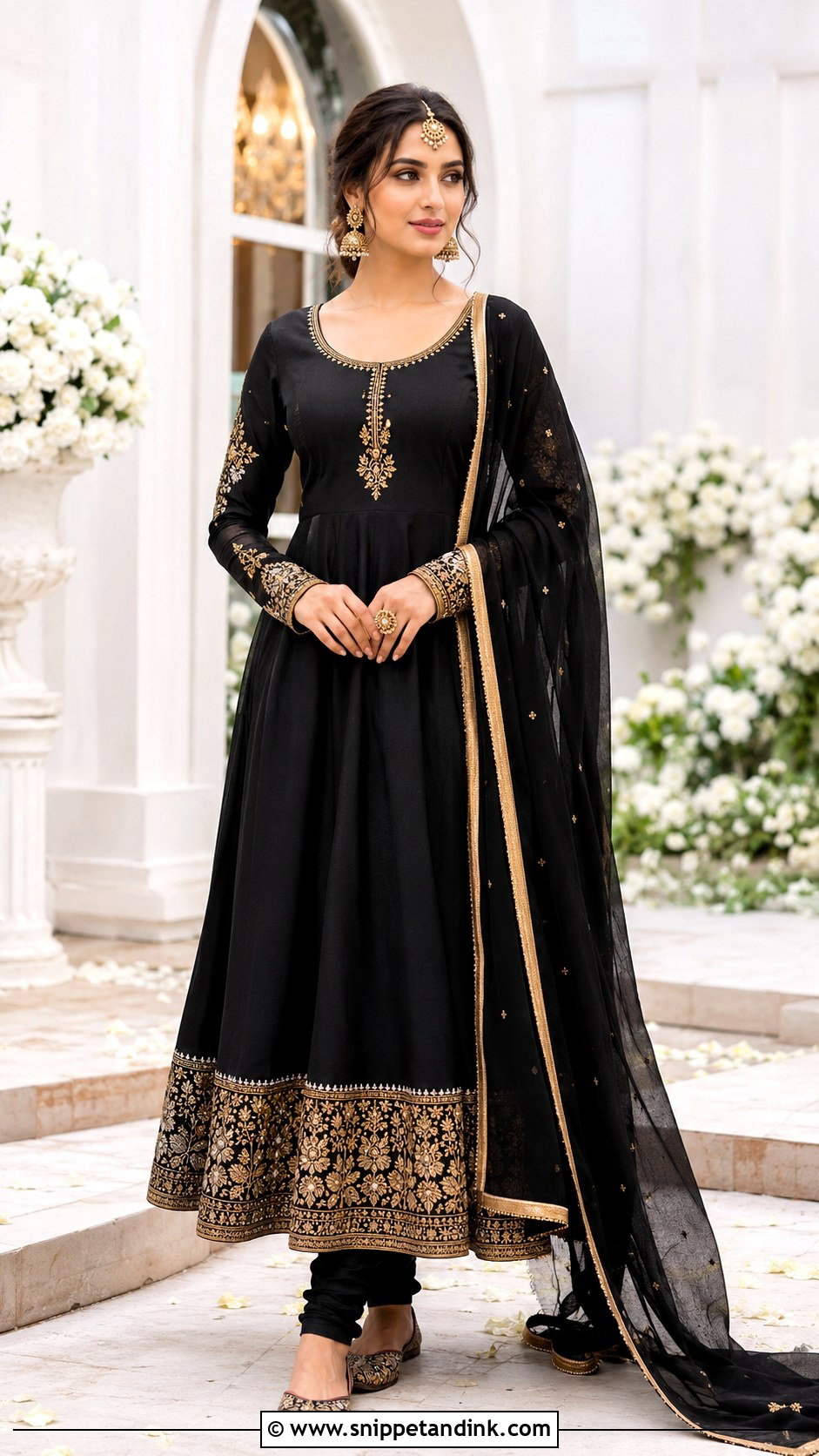
An Anarkali gives coverage and freedom of movement in one piece, which is why I suggest it to guests who’ll be on their feet all night. Gold embroidery around the neckline, sleeves and hem lifts the black, and a defined waist or paneled bodice stops the long flare looking bulky. Slim churidars and a sheer black dupatta edged in gold complete the traditional version, with jhumkas, a fine maang tikka and embroidered juttis. Motif scale matters. Petite women usually look better in smaller motifs and a slightly raised waist, while taller women can carry broad borders. A side-parted bun or smooth waves, kohl and a muted red lip finish it.
5. Black Sharara Set
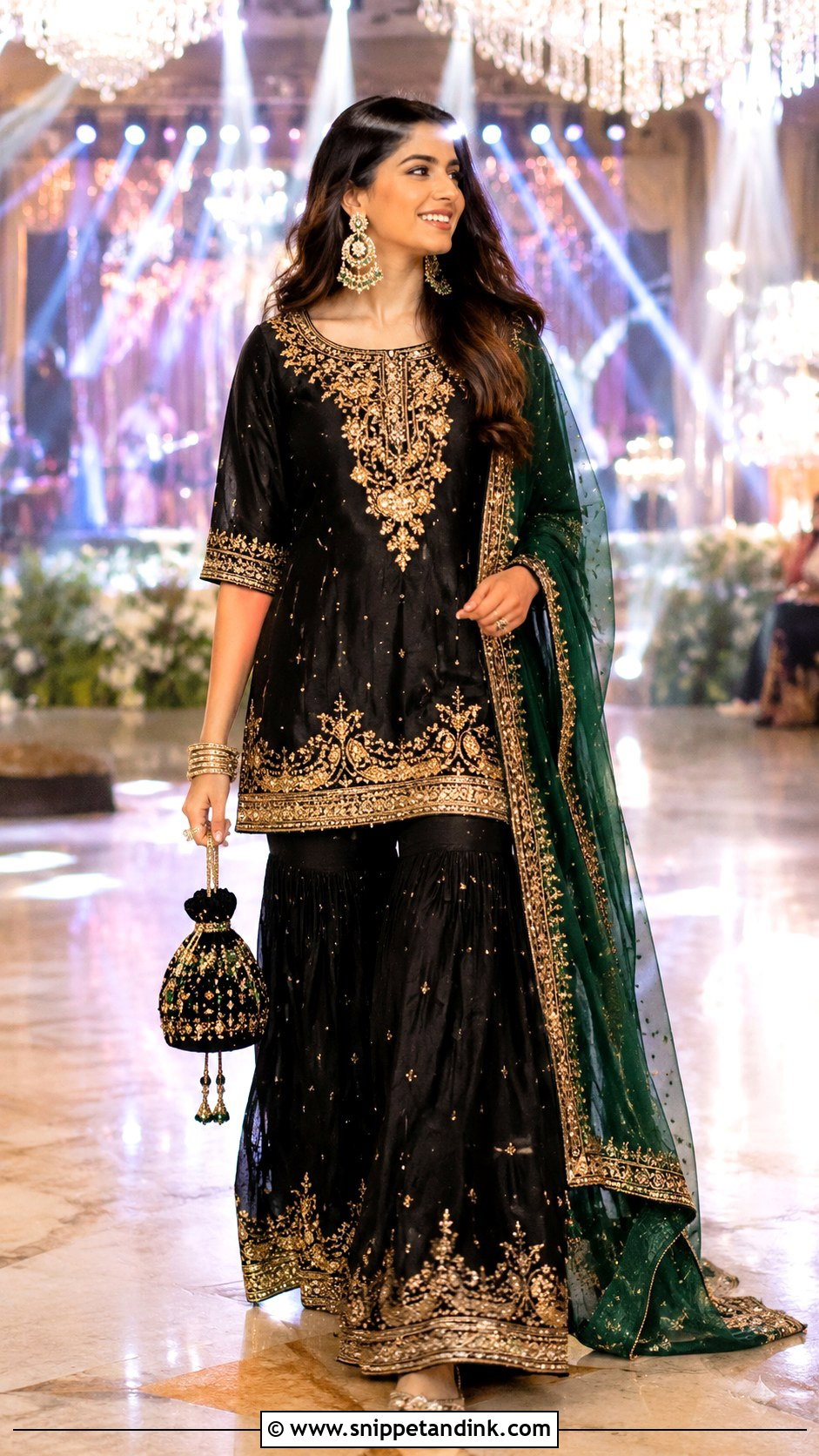
Shararas are the easiest black outfit to dance in. A short embroidered kurti ending near the upper hip, over wide-flared sharara pants in georgette, crepe or light silk, gives you movement without a heavy skirt to manage. Gota, scattered sequins or mirrors keep the black festive, and a jewel-toned dupatta in emerald, magenta or deep blue adds color if it feels too dark. On a dance floor, cushioned juttis beat heels every time. Chandelier earrings, metallic bangles and a wristlet that leaves your hands free complete it, with a braided ponytail or soft curls and a bright lip.
6. Black Gharara Suit
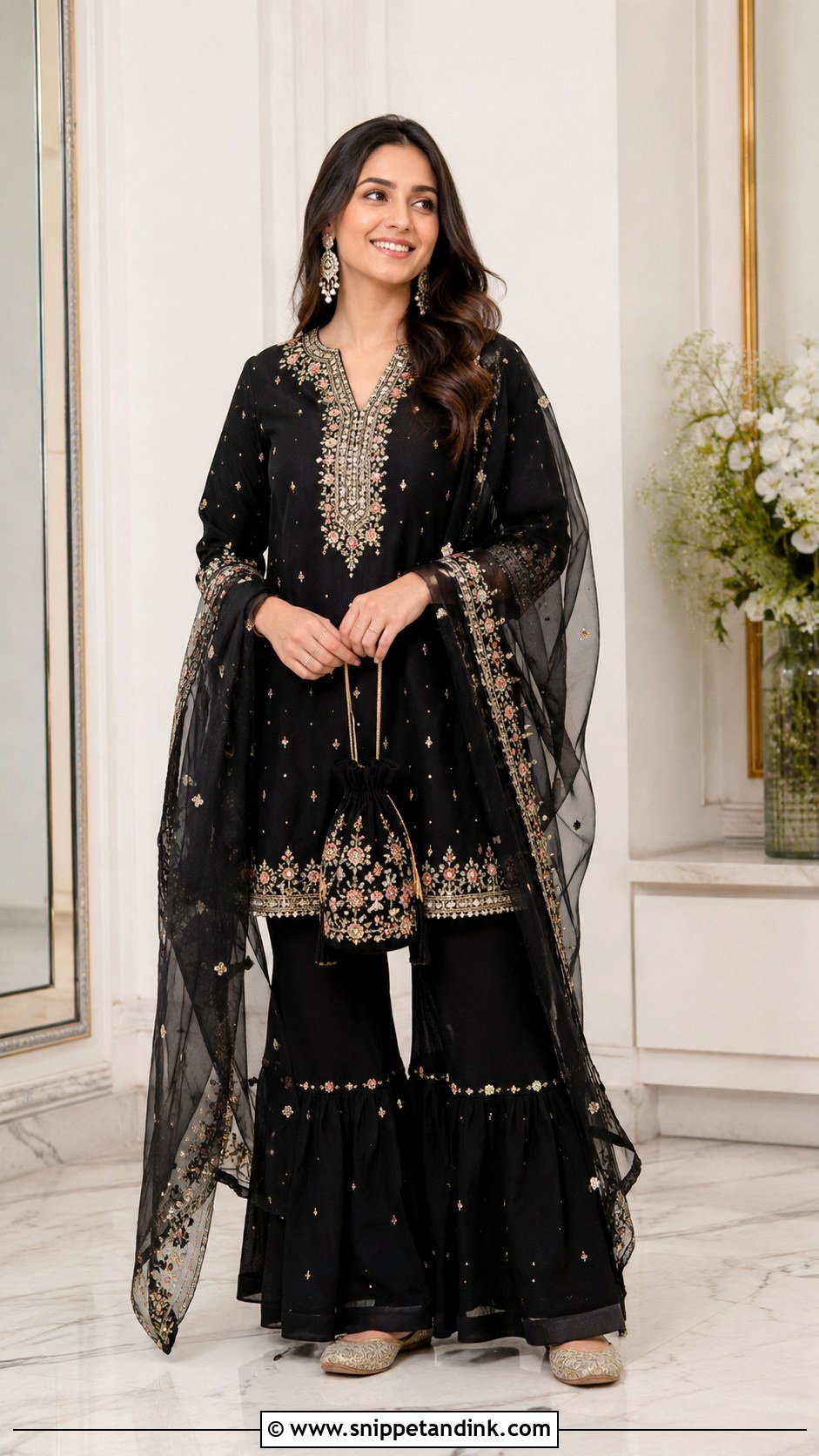
The fitted knee is what separates a black gharara suit from a sharara: the pants hug the thigh and flare from the knee, usually with gota or embroidered bands at the join. That knee seam is where I see the most tailoring mistakes. If it sits too high or too low, the flare breaks in the wrong place and the legs look shorter, so have it marked while you stand in the shoes you’ll wear. A knee-length kurta with a defined neckline and detailed cuffs goes over it, and a tissue, net or organza dupatta keeps the layers light. Pearl-and-gold earrings, a compact embroidered bag and low juttis suit it, along with a neat center-parted bun and softly defined eyes.
7. Black Pre-Draped Saree
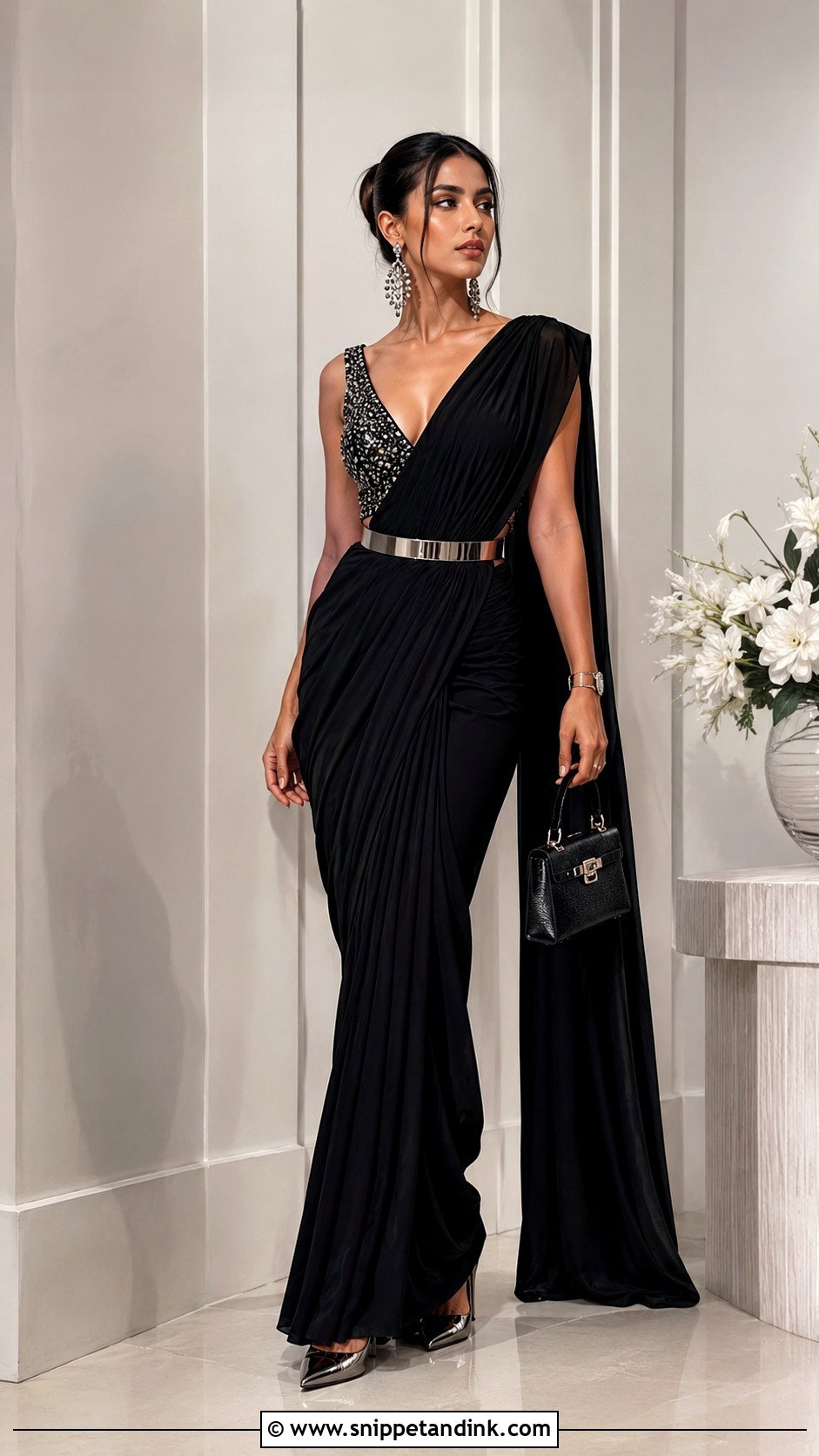
A pre-draped saree is my answer for guests who love the saree line but haven’t draped one in years. Fluid crepe, satin or georgette with stitched pleats and a secured pallu gives the traditional shape without twenty minutes of pinning in a hotel room. An embellished blouse in silver, gold or black beadwork dresses it up. A waist belt defines the shape and holds the drape, but match its metal to the blouse work or it looks like an afterthought. Statement earrings, a slim bracelet, pointed metallic heels and a structured mini bag finish it. A sleek ponytail and luminous skin suit the modern mood of a cocktail evening.
8. Black Indo-Western Gown
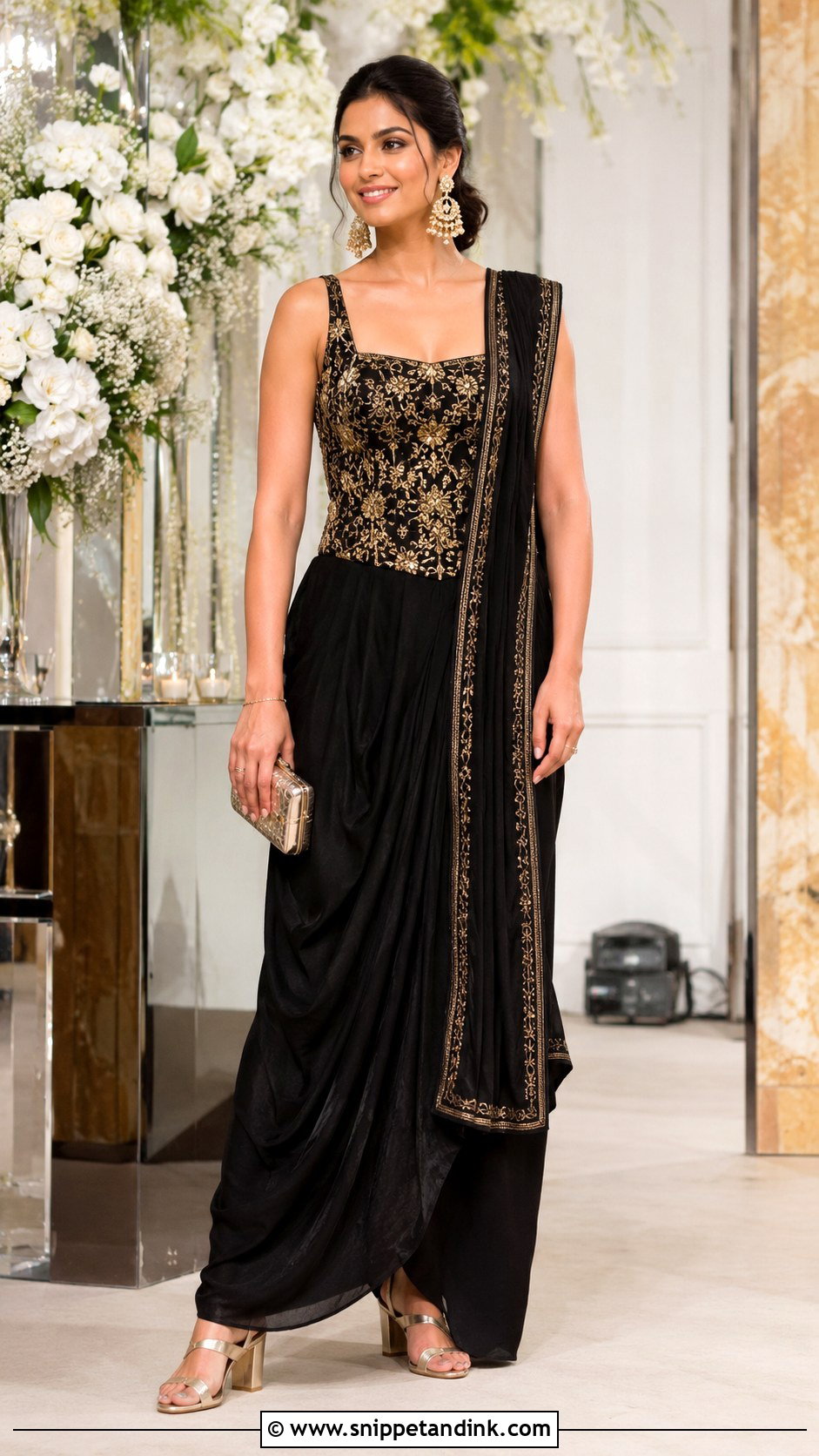
A black Indo-Western gown suits a celebration where the dress code mixes Indian and Western formal. What keeps it from looking like any evening gown is the Indian detail: embroidery, a draped skirt, a choli-style bodice or an attached dupatta panel in gold or tonal beadwork. Before buying, sit down in it, because draped skirts often pull tight across the lap. Polki-inspired earrings, a metallic clutch and block-heeled sandals finish it, and if the neckline is embroidered I’d leave the necklace at home. A smooth bun or side-swept waves, softly smoked eyes and a neutral berry lip keep the long line clean.
9. Black Cape Lehenga
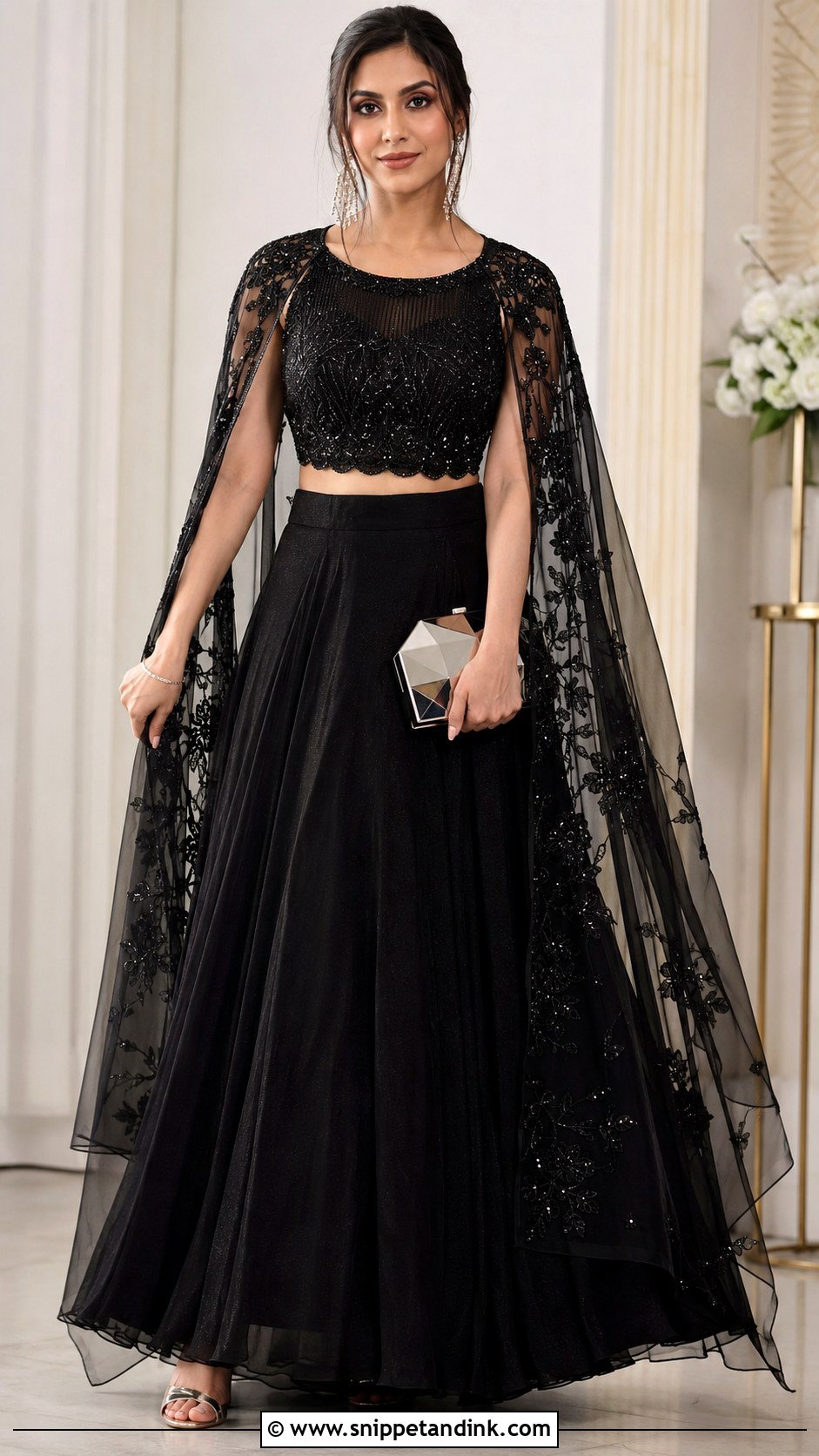
A cape replaces the dupatta on a black lehenga, which is half its appeal: nothing to keep re-pinning all night. Start with a clean flowing skirt and fitted blouse, then add a sheer embroidered cape from the shoulders or neckline. I check two things. It should be light enough to move, and short enough that nobody steps on it in a crowded hall. Tonal sequins, metallic florals or fine beading suit it. With that much detail on the shoulders, keep the rest spare: crystal earrings, a cocktail ring, simple metallic sandals and a smooth box clutch that won’t snag the net. A high ponytail shows off the neckline, with luminous makeup.
10. Black Peplum Lehenga
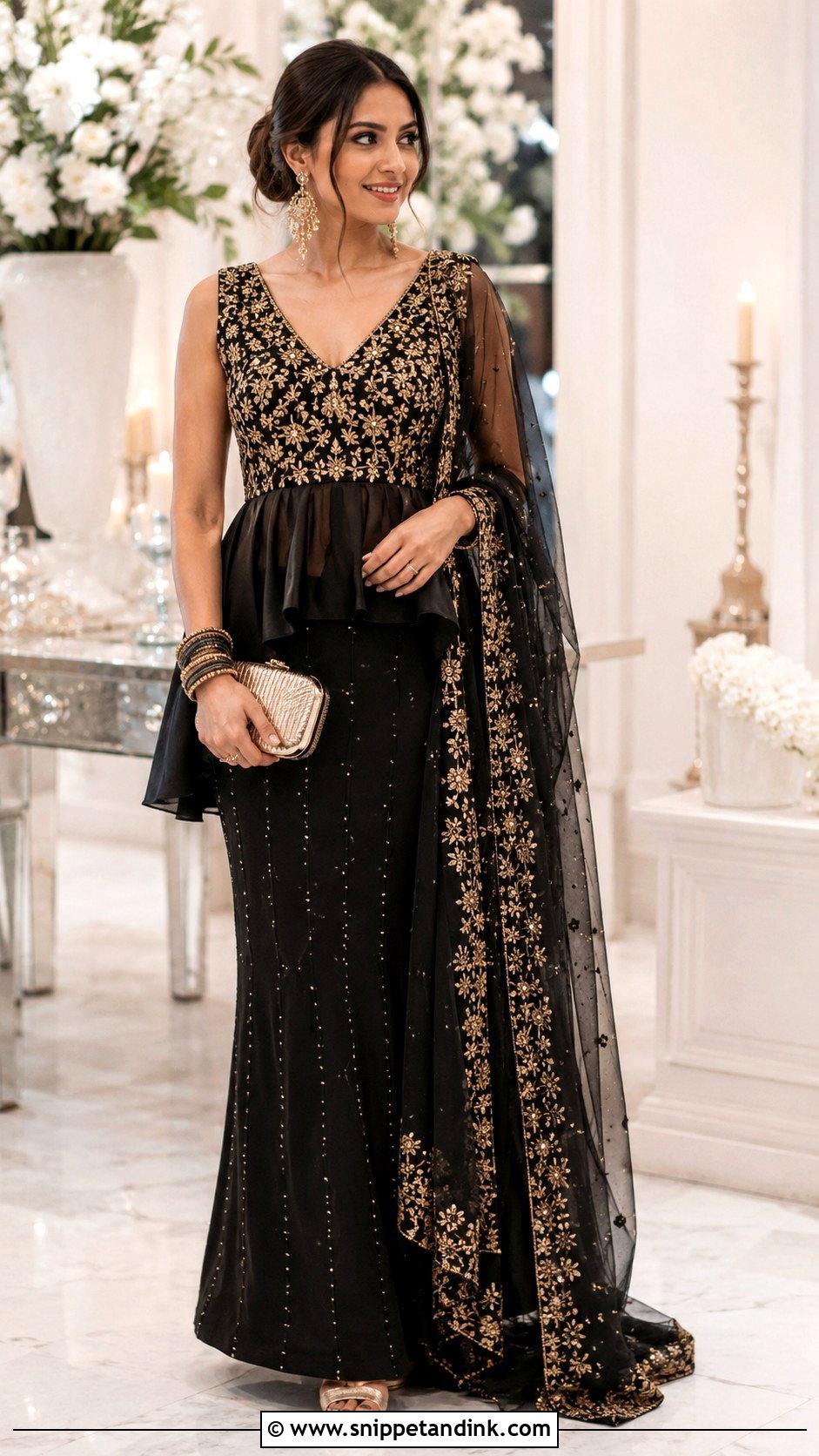
A peplum blouse flares just below the waist, giving shape and covering the midriff a cropped choli leaves bare. I balance it with a streamlined skirt rather than a very full one, or the volume stacks up at the hip. Embroidered cuffs, a detailed neckline and metallic motifs keep it festive. Skip the dupatta for a contemporary reception, or add a sheer one for a more traditional evening. Long earrings, stacked bangles, juttis or block heels and a small oval clutch complete it. Soft curls or a polished bun both work, with defined lashes and a rose or berry lip.
11. Black Mirror Work Lehenga
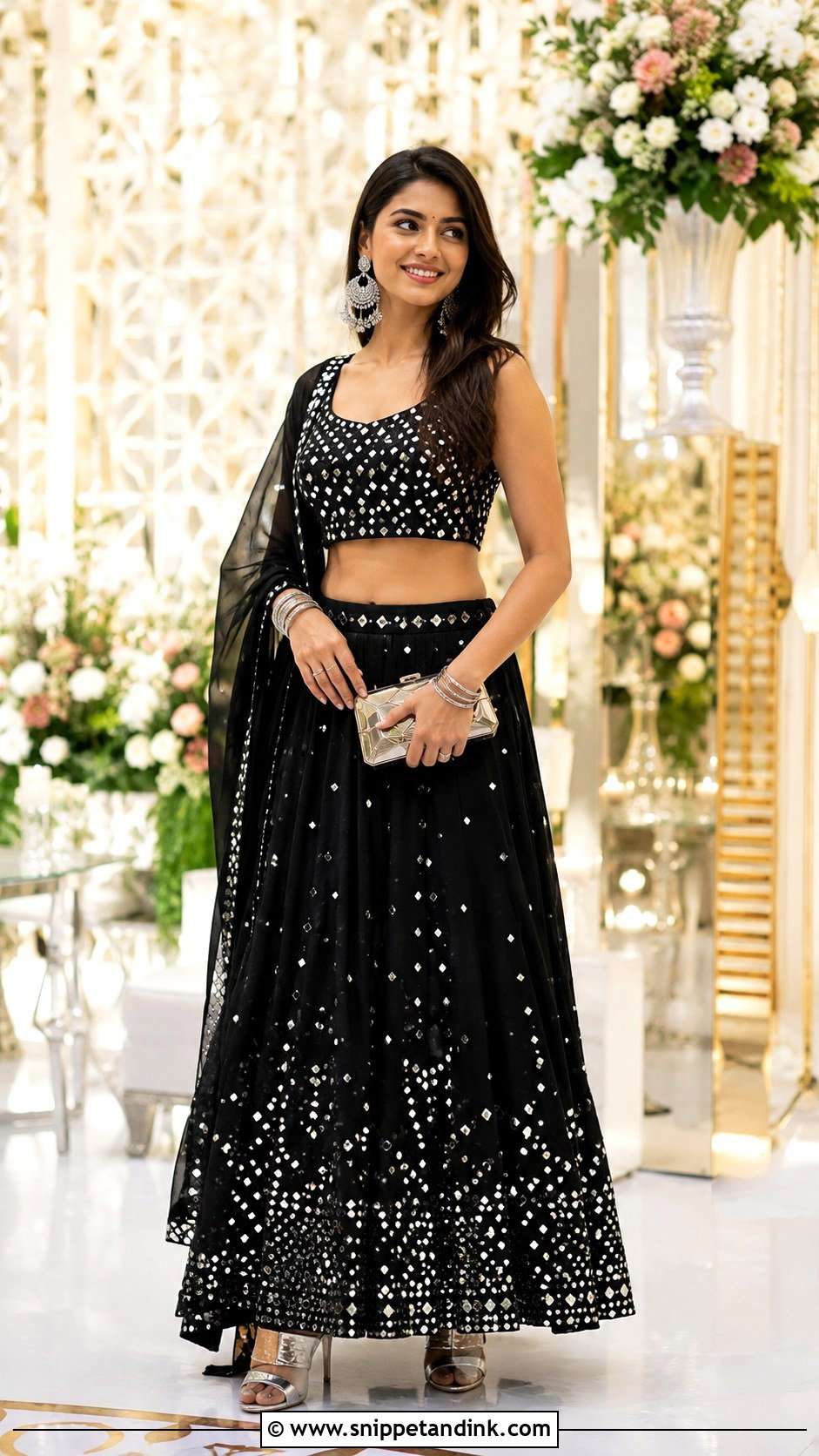
Under bright event lighting, a black mirror work lehenga throws sparkle every time you move. Look for small mirrors stitched firmly in geometric or floral patterns on a light georgette base, because mirror work adds real weight and a heavy base fabric doubles it over a long sangeet. Before the event, run your fingers around the edge of each mirror; loose thread there means a mirror on the dance floor by midnight. A plain or lightly bordered dupatta keeps the mirrors in focus. Silver jhumkas, slim bangles, reflective block heels and a smooth metallic clutch coordinate without catching. A braided updo keeps hair out of the embellishment, with kohl and a soft pink lip.
12. Black Organza Saree
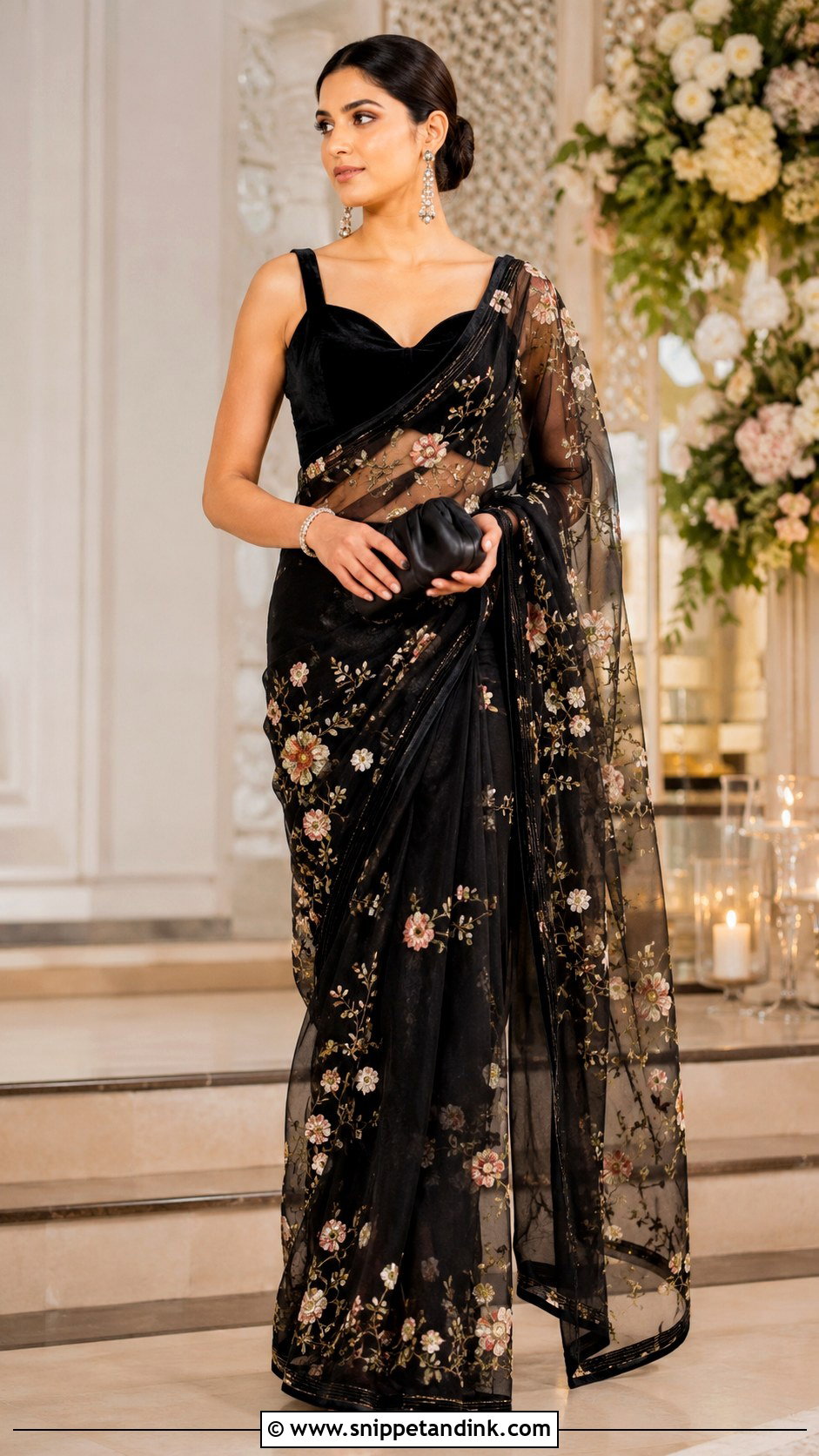
Organza is crisp, which is both its appeal and its difficulty. A black organza saree holds a light, architectural shape, but its pleats spring open if they aren’t pinned firmly, and the pallu creases the moment you sit on it. I’d have it pressed and professionally draped, then pinned at the shoulder and waist. Delicate floral embroidery, a metallic border or scattered sequins show clearly against the sheer fabric. A sleeveless velvet blouse, a silk elbow-sleeve style or a beaded high neck all suit it. Pearl drops, a slim bracelet, understated heels and a small satin clutch complete it, with a neat bun and a deep rose lip. Keep it for indoor receptions, since a breeze lifts organza easily.
13. Black Banarasi Saree
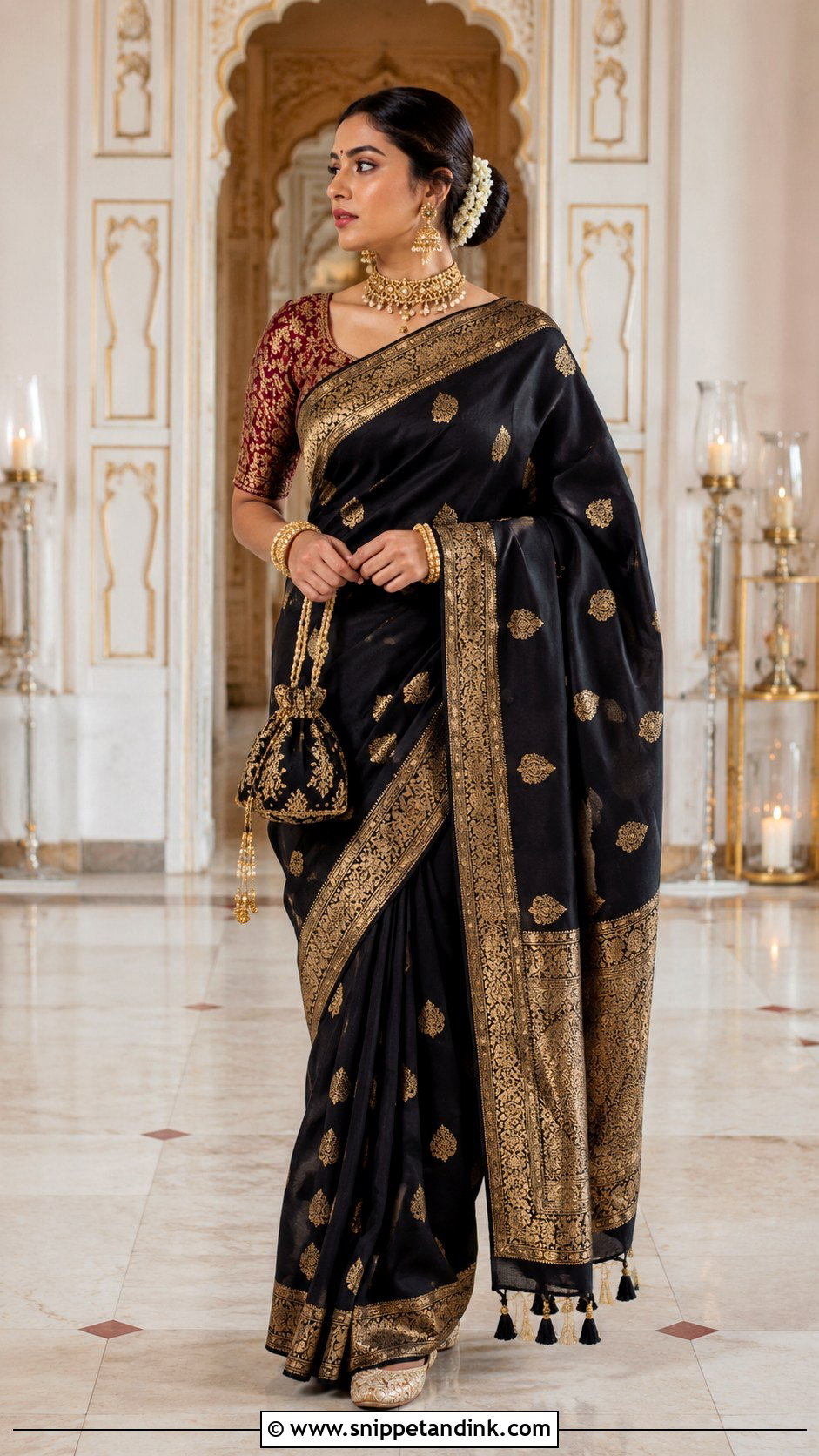
Handwoven zari gives a black Banarasi saree a ceremonial weight that printed fabric can’t imitate. Look for gold or antique zari florals, paisleys or small butis, and pair a contrasting brocade blouse in maroon, emerald or muted gold to bring color to the face. Banarasi silk holds pleats well, so clean pleats and a visible pallu let the weave speak. Temple jewelry, gold bangles, a potli and stable juttis or heels complete it, with a low bun, fresh flowers, kohl and a red-brown lip. Because it looks so ceremonial, this is the outfit where I’d most want the couple’s go-ahead before wearing black to a ritual.
14. Black Palazzo Suit
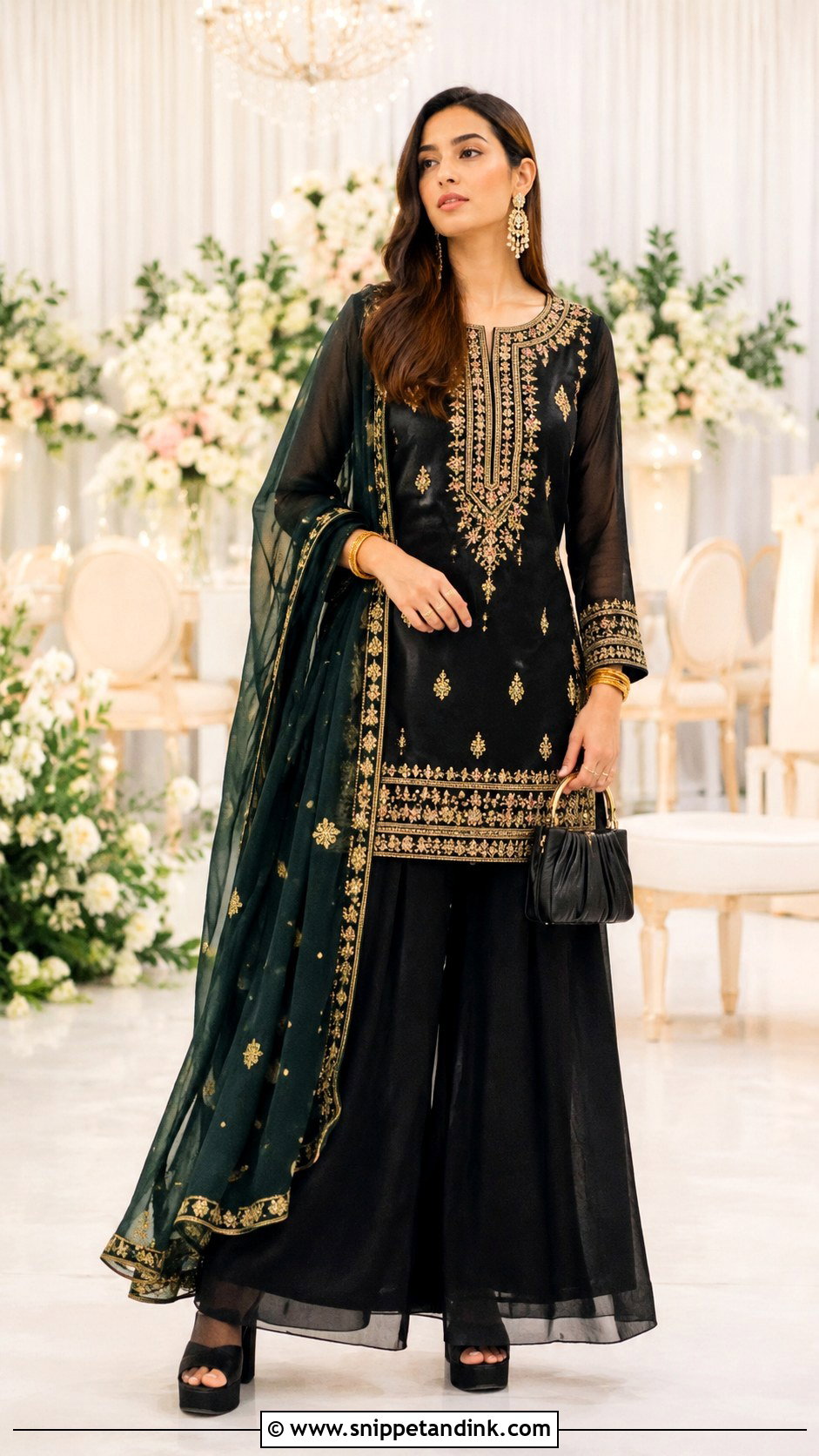
Of everything here, a palazzo suit is the most comfortable formal option for a long evening. Wide crepe or georgette trousers with a straight embroidered kurta, knee-length or slightly shorter, keep the volume balanced. A sheer dupatta with gold edging or colorful threadwork brightens the black. The hem needs care: have the trousers hemmed while you wear the exact shoes you’ll dance in, so they graze the floor without catching. Long earrings, slim bangles, mostly hidden platform sandals and a structured mini bag finish it. Side-swept curls and a rich pink lip suit a sangeet or pre-wedding dinner.

15. Black Jacket Lehenga
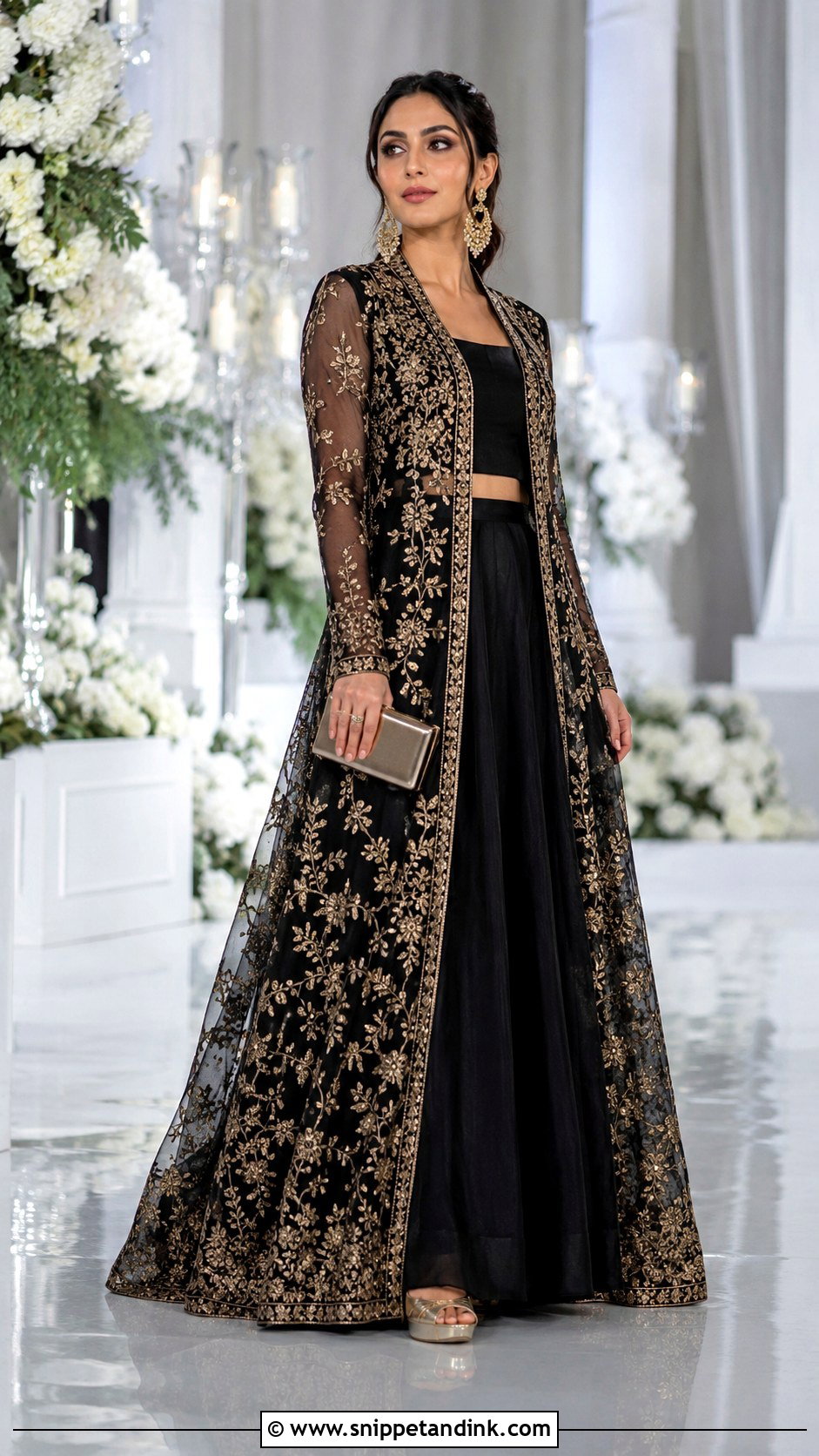
A long embroidered jacket over a black lehenga gives extra coverage and a formal line, which helps when the venue is cold with air-conditioning or the crowd is conservative. Keep the skirt and blouse simple and let the open-front jacket, in sheer net, organza or light silk, carry the gold embroidery and beaded cuffs. I prefer it ending near the skirt hem for one long, unbroken length. Skip the dupatta unless the event calls for one; three layers bury the shape. Statement earrings, a slim ring, metallic heels and a smooth box clutch that won’t snag the embroidery complete it, with a sleek bun and neutral makeup.
16. Black Dhoti Pant Set
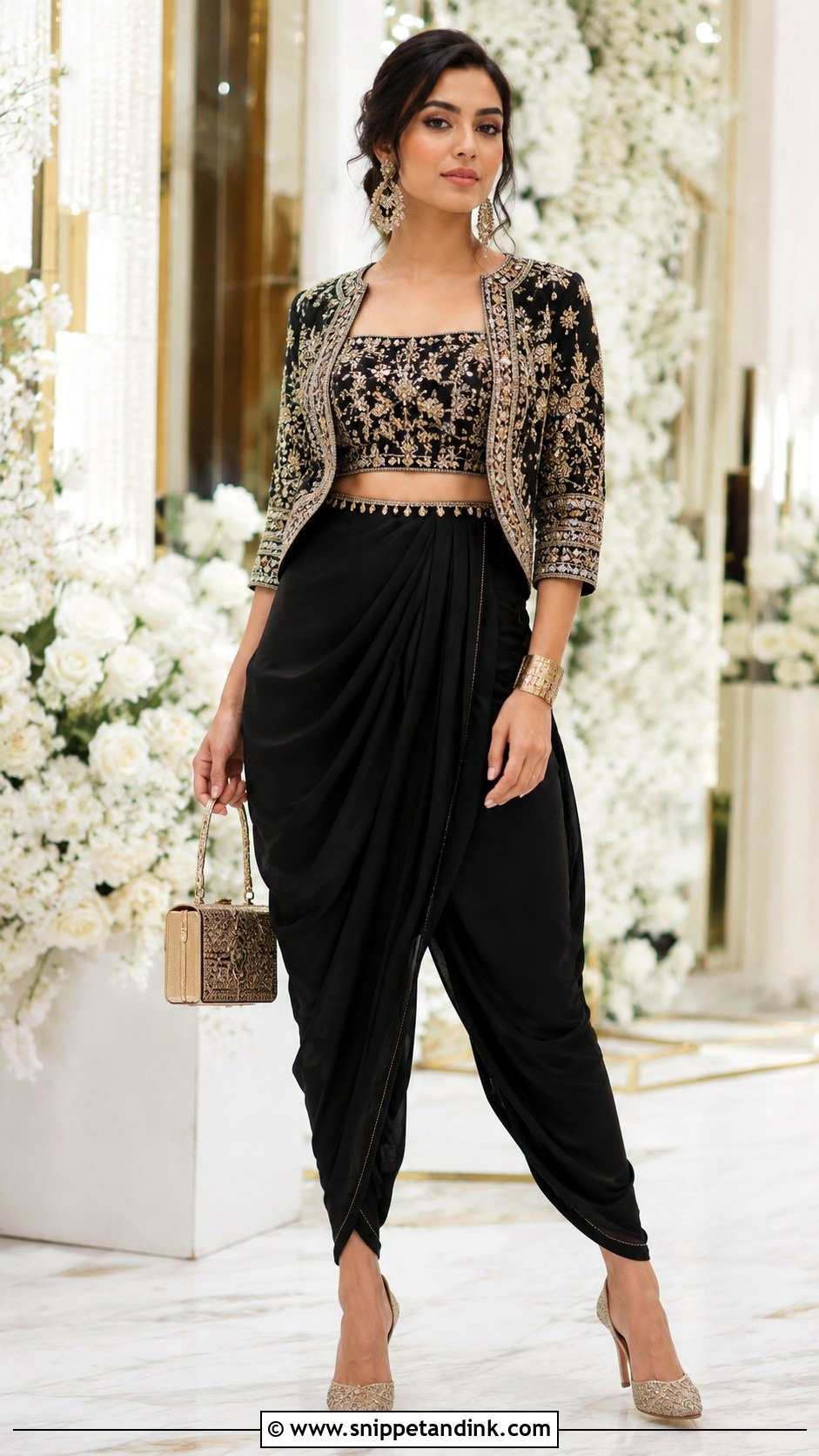
A black dhoti pant set gives an artistic Indo-Western outfit with plenty of room to dance. Pair soft dhoti pants with a fitted embroidered crop top, or a longer asymmetrical kurta for more coverage, and add a short jacket, shoulder cape or dupatta panel for wedding formality. Gold threadwork or colorful florals keep the black from looking plain. Fit is where these go wrong: they should sit at your natural waist and drape, not bunch at the ankle, which cuts the leg short. Bold earrings, a cuff, heeled juttis or ankle-strap sandals, a high ponytail and sharp liner suit the modern proportions.
17. Black Ruffle Saree
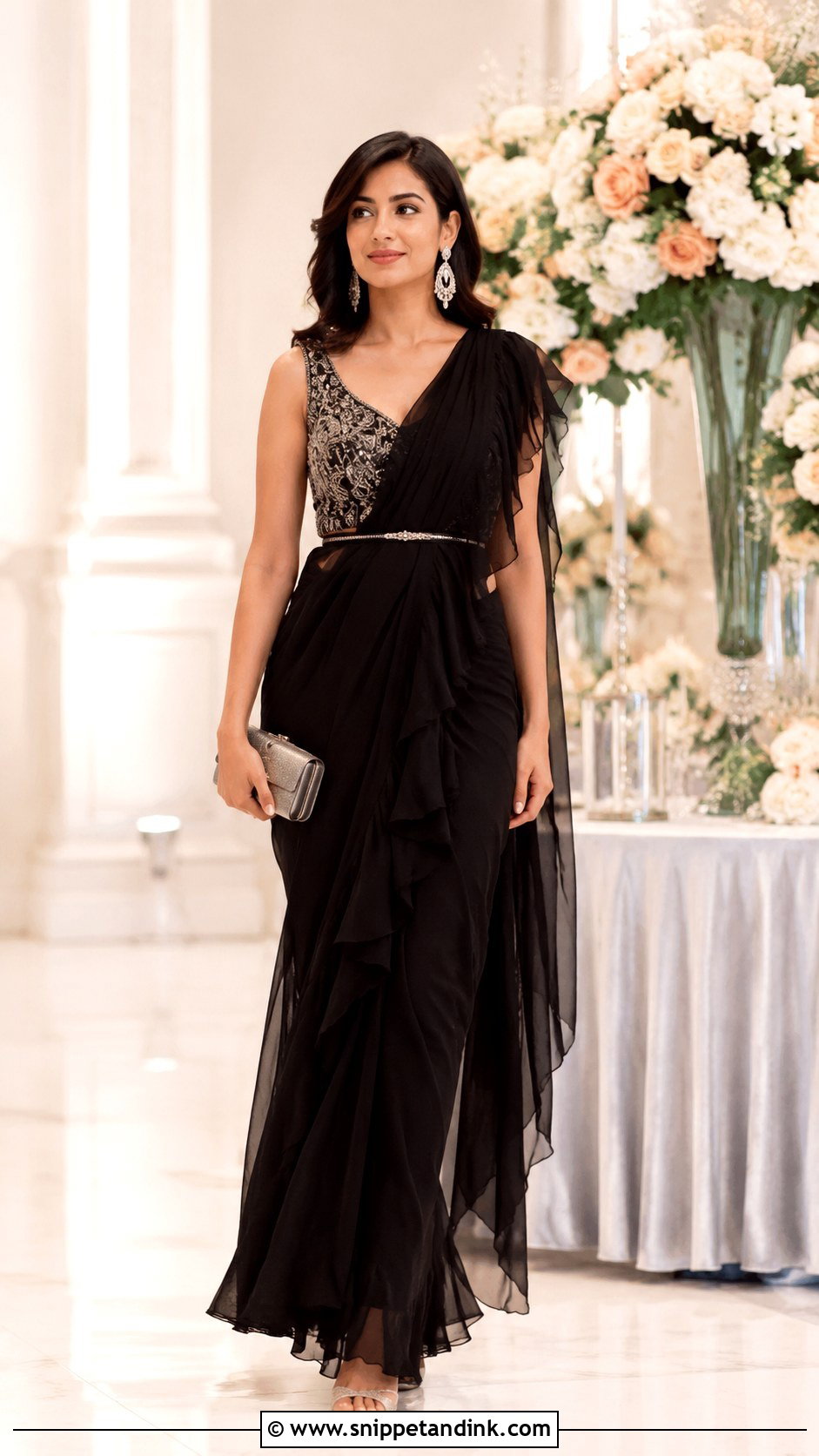
Ruffles on a saree add movement, so the base fabric has to be light. Chiffon or georgette keeps the layered edge floating; anything heavier turns bulky at the hips. A structured blouse with beadwork, sequins or metallic embroidery gives the soft drape something firm to sit against. I’d add a belt to anchor the ruffled pallu, which otherwise slides off the shoulder mid-dance. Shoulder-grazing earrings, a slim bracelet, simple high heels and a smooth compact clutch that won’t catch the layers complete it, with a polished ponytail or big waves and a rosy lip for a cocktail party.
18. Black Embroidered Salwar Suit
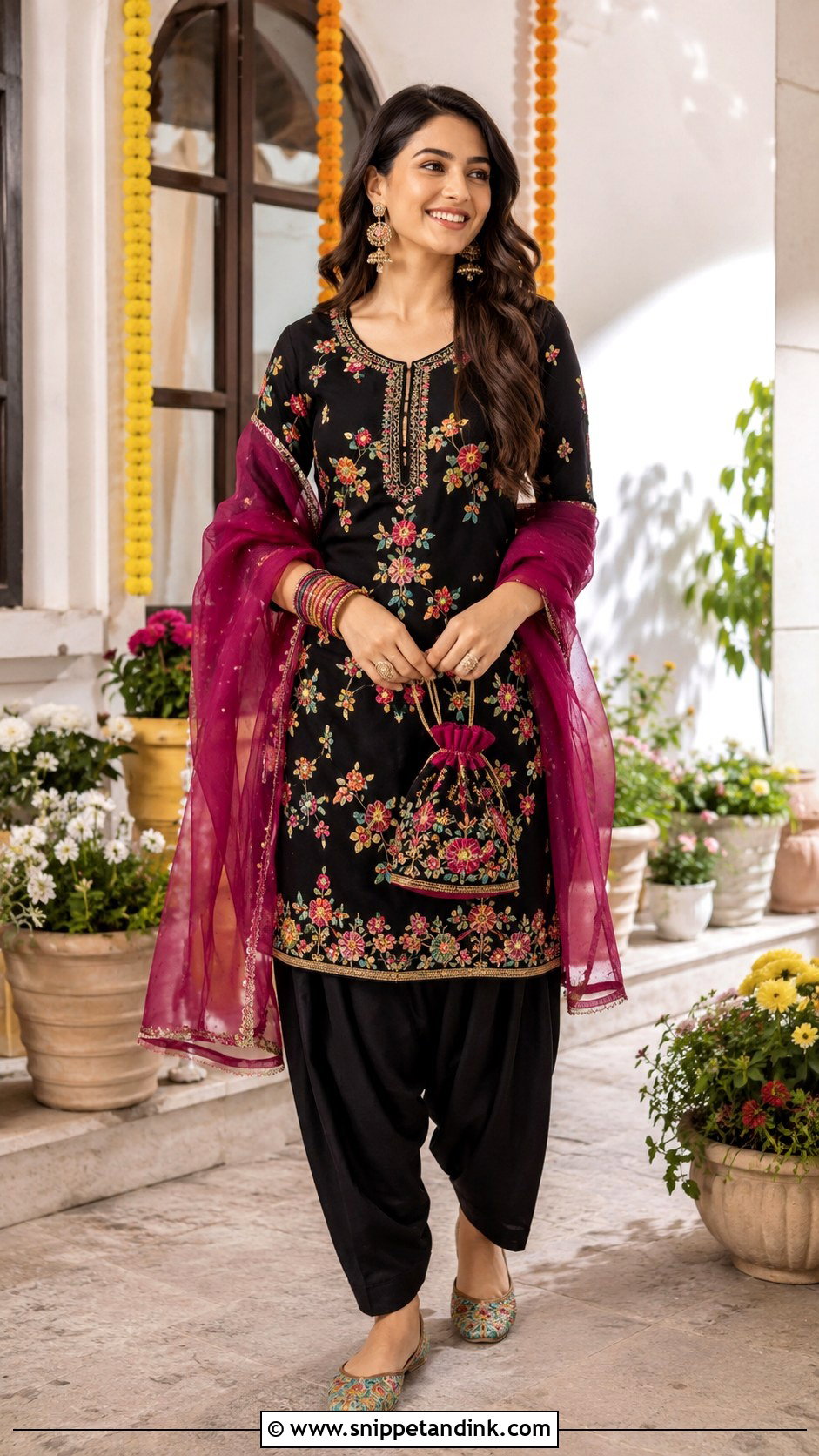
A salwar suit is the modest, comfortable choice, and the one I’d hand to a guest attending several family functions in a row. A tailored kameez over relaxed pants, with gold resham, colorful florals or small sequins at the neckline and cuffs, brightens the black base. Pick a kameez length that balances the pants and still lets you sit cross-legged if part of the ceremony happens on the floor. A contrasting dupatta in magenta, teal or mustard adds warmth. Jhumkas, coordinating bangles, cushioned juttis and a potli in one of the accent colors complete it, with a loose braid or low bun and a natural pink lip.
19. Black Mermaid Lehenga
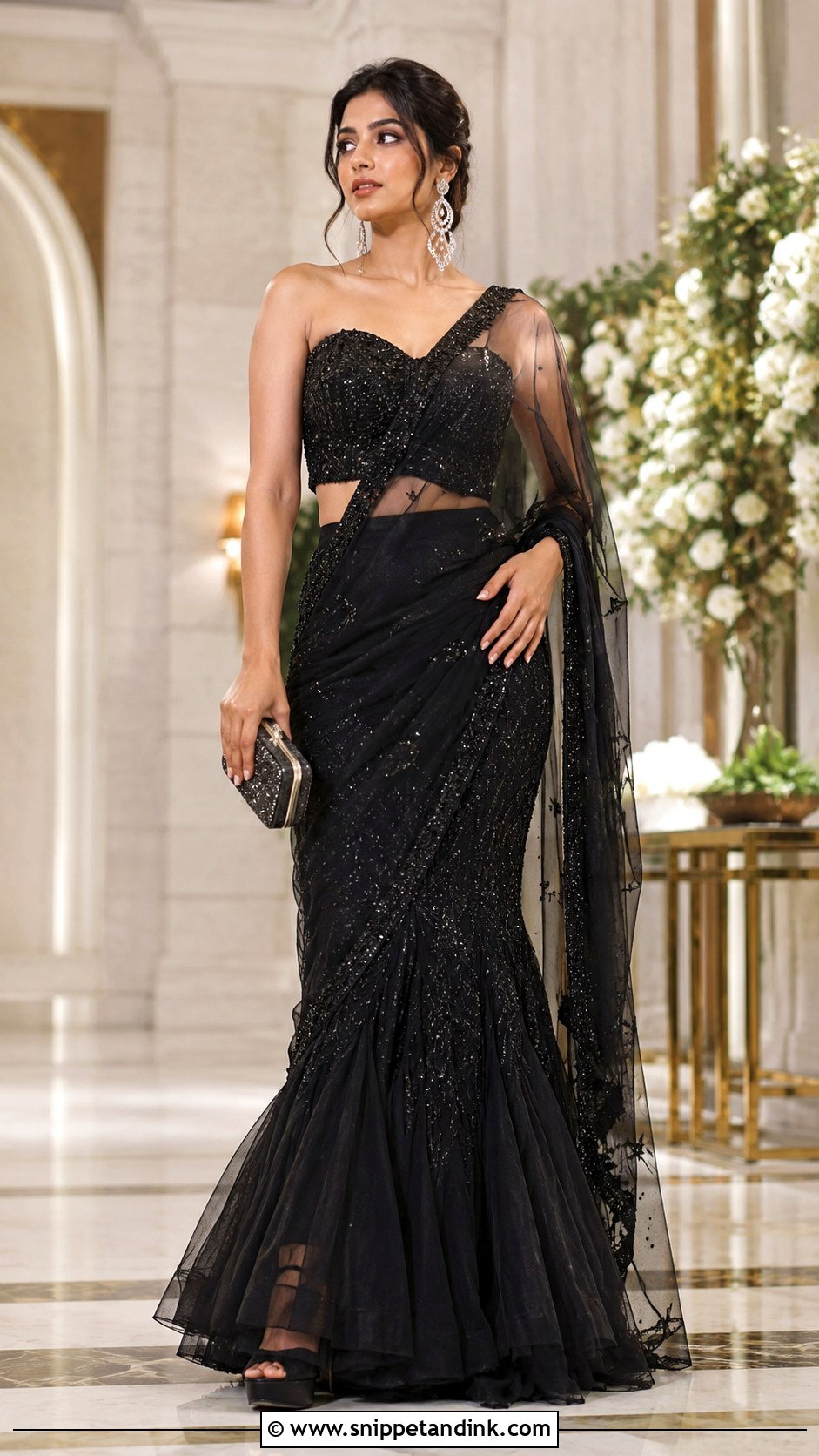
A mermaid lehenga follows the body through the hips and flares near the knee, so you get drama without a full skirt’s volume. The trade-off is movement. Stretch-friendly fabric and enough flare to climb stairs are essential, and I test both, plus sitting, at the fitting. A structured blouse and a sheer dupatta over one shoulder complete the shape. Vertical embroidery, tonal sequins or beaded panels lengthen the line. Crystal earrings, a delicate bracelet, hidden platform heels and a sleek clutch keep it refined, with side-swept waves or a low ponytail and a deep berry lip.


20. Black Fusion Jumpsuit With Dupatta
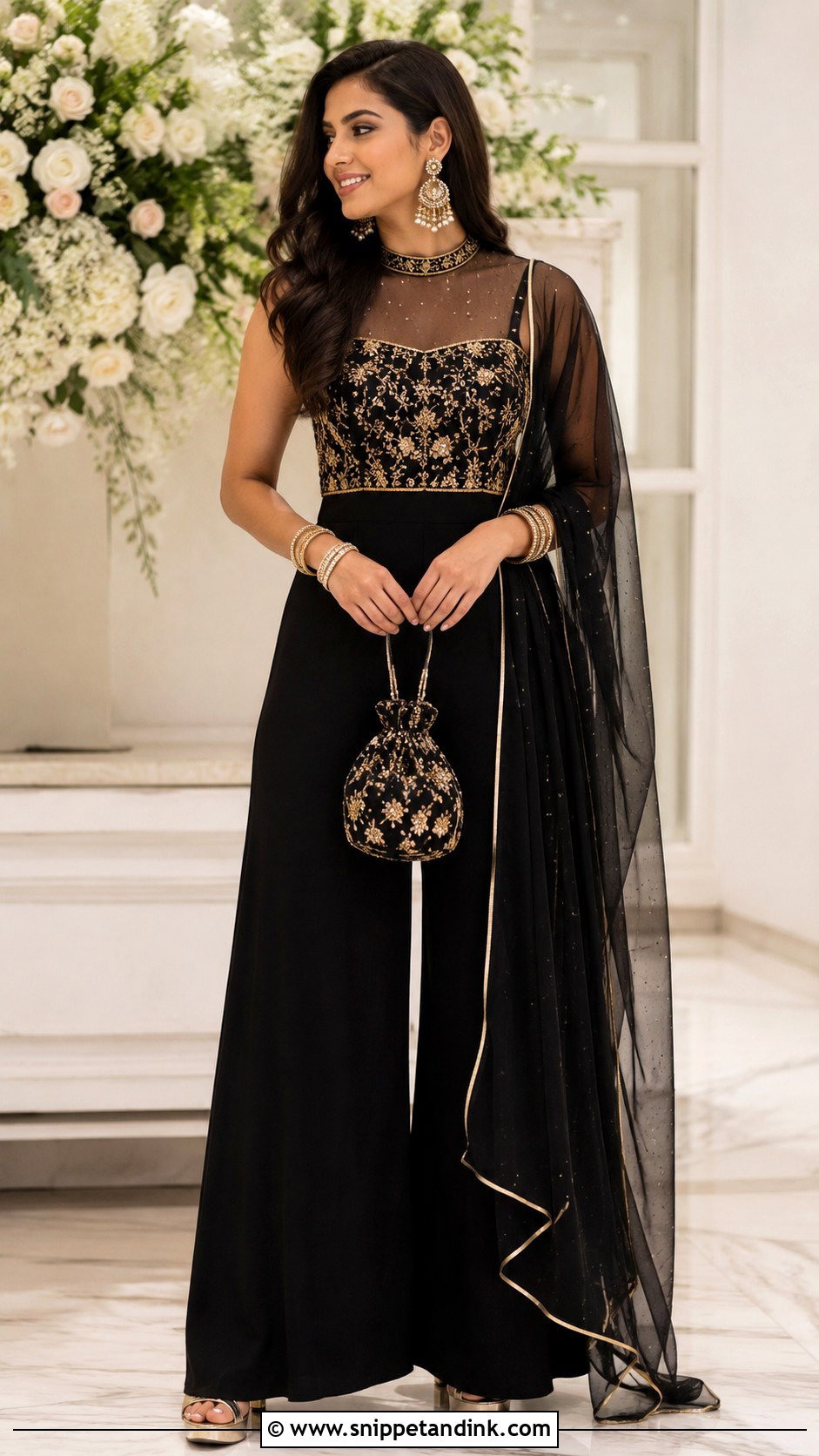
A jumpsuit suits a guest who prefers one-piece dressing, and an Indian finish is what makes it wedding-ready. Look for a wide-leg cut with an embroidered bodice, defined waist and modest neckline, then add a detachable dupatta, draped shoulder panel or light cape with gold edging or colorful threadwork. One honest drawback: a one-piece means undressing fully for every bathroom trip, so check for a zip you can reach on your own. Bold jhumkas, slim bangles, platform heels matched to the trouser length and a structured potli complete it, with a smooth ponytail, metallic eyes and a rose-brown lip.
Zari Tarnishes and Mirrors Scratch: Putting These Outfits Away
Almost every outfit on this list carries metal in some form: zari thread, sequins, mirrors, gota. Each one needs a little care after the wedding, or it dulls before you get the chance to wear it again.
- Air the outfit for a day before storing it. Trapped perspiration discolors silk and speeds up tarnish on metallic thread.
- Wrap heavy lehengas and sarees in soft muslin or old cotton, never plastic, and lay tissue between embroidered layers so mirrors and sequins don’t rub.
- Refold silk sarees along different lines every few months, because silk weakens and can split along a crease that never moves.
- Spray perfume before you dress and let it dry; alcohol and oils mark zari.
- Send it only to a dry cleaner who handles embroidered Indian wear, and point out every stain.
The step that always runs late
Blouse stitching is where I see timelines slip most. Book the tailor as soon as the fabric arrives and allow for at least one trial and one alteration. A blouse that pulls at the armhole spoils the drape of even an expensive saree, and black shows every strained seam under flash.
Black Belongs at the Sangeet; Ask Before the Pheras
Sequined lehengas, silk sarees, Anarkalis, shararas and fusion jumpsuits each strike a different balance of comfort and formality, and all of them rely on metallic embroidery, a colorful dupatta and good jewelry to keep black from looking somber. Match the outfit to the event first: black is far easier to wear to a sangeet, cocktail party or evening reception than to a religious ceremony. Then weigh the season, the venue and the family’s traditions. Leave proper time for the blouse and hems, and the black will look like a confident celebration choice rather than a cautious one.
You'll Like These Ideas:






Leave a Reply