
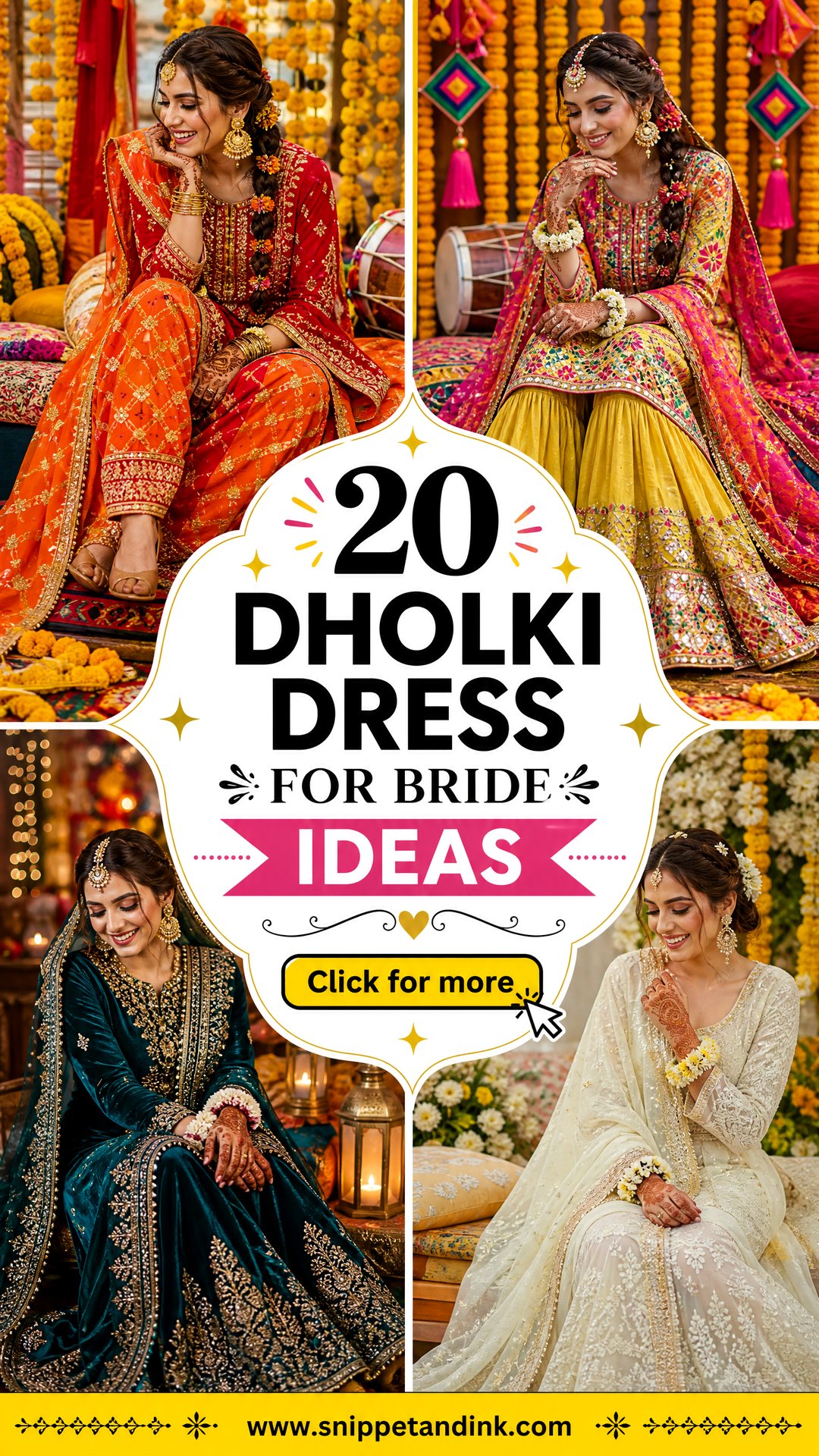
A dholki is the one pre-wedding event where the bride is expected to sing, clap, sit on the floor and dance with her cousins for hours, and the outfit has to cope with all of it. It should feel festive and clearly bridal, yet stay a step below the mehndi and barat looks so it doesn’t steal their thunder. When I dress a bride for her dholki, comfort on the floor comes first, then colour, then shine. The twenty outfits below cover yellow shararas, multicolour lehengas, angrakhas, a saree, simple separates and a look built around a family dupatta, each with jewellery, shoes, hair and makeup suggestions. Adjust the colours and the amount of embellishment to suit a small home gathering or a bigger evening event.
An Evening on Floor Cushions Asks a Lot of an Outfit
Most dholkis are spent sitting on a gadda or floor cushions around the dholak, getting up to dance, then sitting down again. Before a bride falls for any outfit, I ask her to sit cross-legged in it, stand up without using her hands, and twirl twice. A surprising number of pretty outfits fail that test.
- Length: calf or ankle length is easier than floor length, which you’ll step on each time you rise. Shararas and ghararas should end just above the floor in flat khussas.
- Weight: dense zardozi and heavy mirror work pull on the shoulders over three or four hours. Save the heaviest embroidery for the barat.
- Fabric: cotton silk, chiffon, georgette and light organza breathe in a crowded room. Velvet suits winter only.
- Dupatta: pin it at the shoulder with a small brooch pin so you can clap and dance without holding it. A cape blouse or a pinned drape frees both hands.
- Shoes: khussas or flat juttis are the norm. You’ll likely kick them off to sit, so choose a pair that slips back on easily.
If you’re likely to play the dholak or the spoon on its side, give your sleeves a thought too. Wide cuffs and long bell sleeves catch on the drum, while three-quarter or fitted sleeves stay out of the way.
1. Mustard Yellow Sharara Dholki Dress
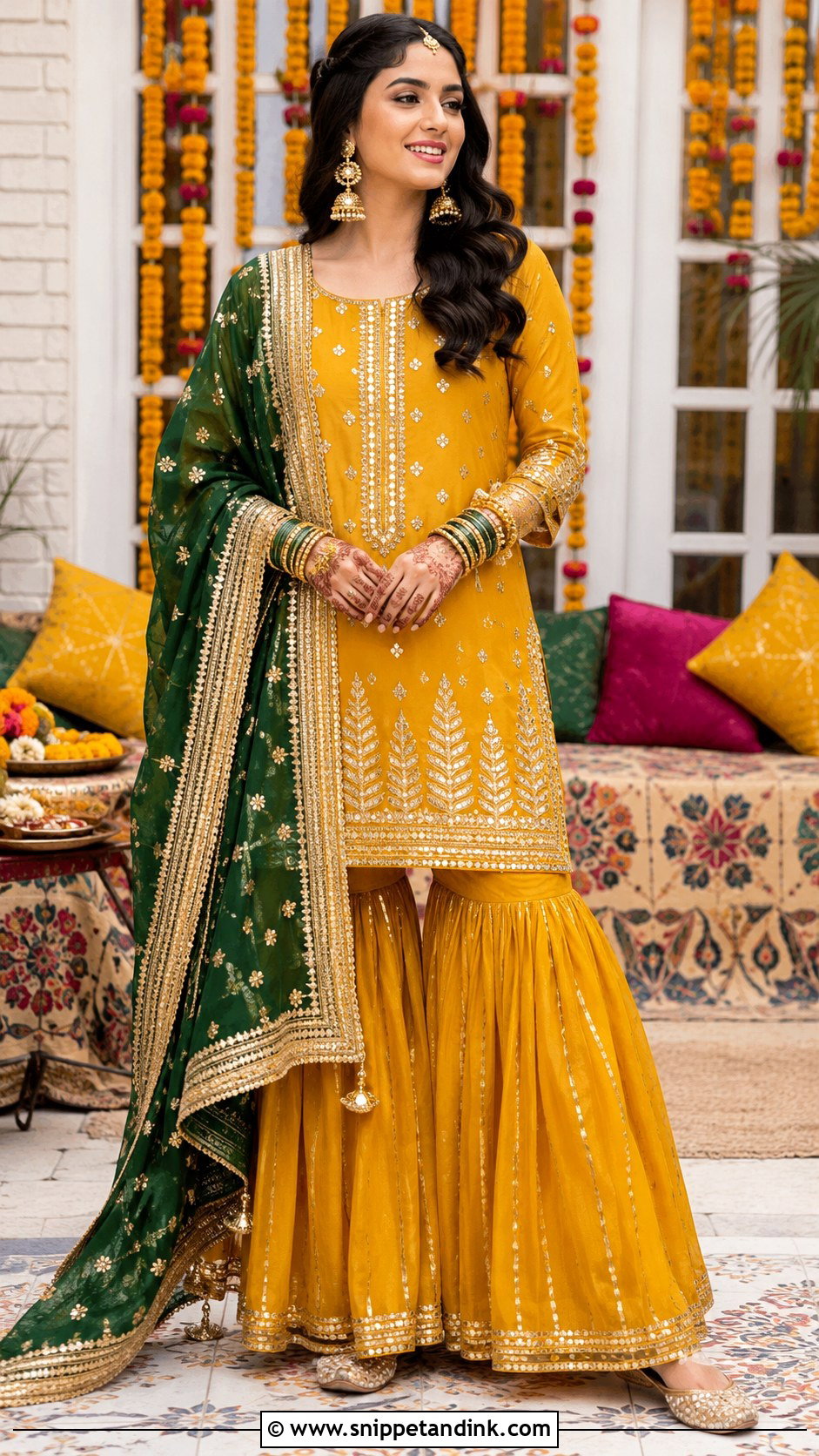
Mustard is the classic dholki colour, and a mustard yellow sharara wears easily on most skin tones. Keep the kurta knee-length with light gota patti at the neckline, cuffs and hem; heavier gota stiffens the fabric and makes sitting cross-legged awkward. A wide sharara swings well when you dance. A green, pink or orange dupatta adds contrast without weight. Gold jhumkas, stacked bangles and embroidered khussas finish it. For makeup, peach blush and a pink lip keep it young, and a low braid with a few small flowers holds up far better through dancing than open waves.
2. Multicolor Gota Patti Lehenga Dholki Dress
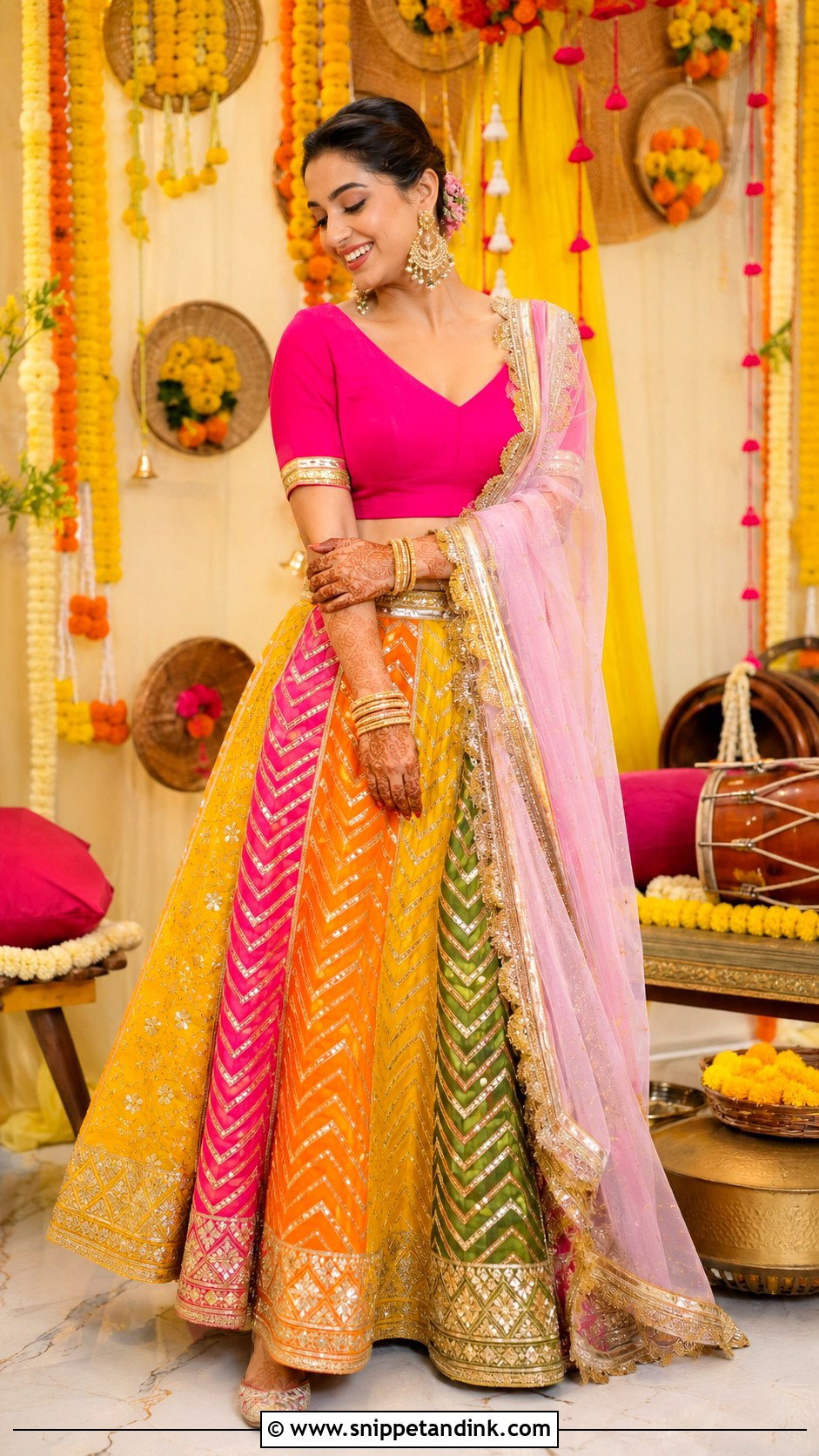
A paneled lehenga in pink, orange, yellow and green with narrow gota borders captures the noise and fun of a dholki straight away. Busy skirts need a calm top, so I pair this with a fitted short blouse in one solid colour picked from the panels. A light net dupatta with a thin gold edge marks you out as the bride without burying the skirt. Gold chandbalis and coloured bangles suit it. Soft gold eyeshadow sits well with all those colours, and a braided bun keeps hair off the neck once the room heats up.
3. Green Angrakha Dholki Dress
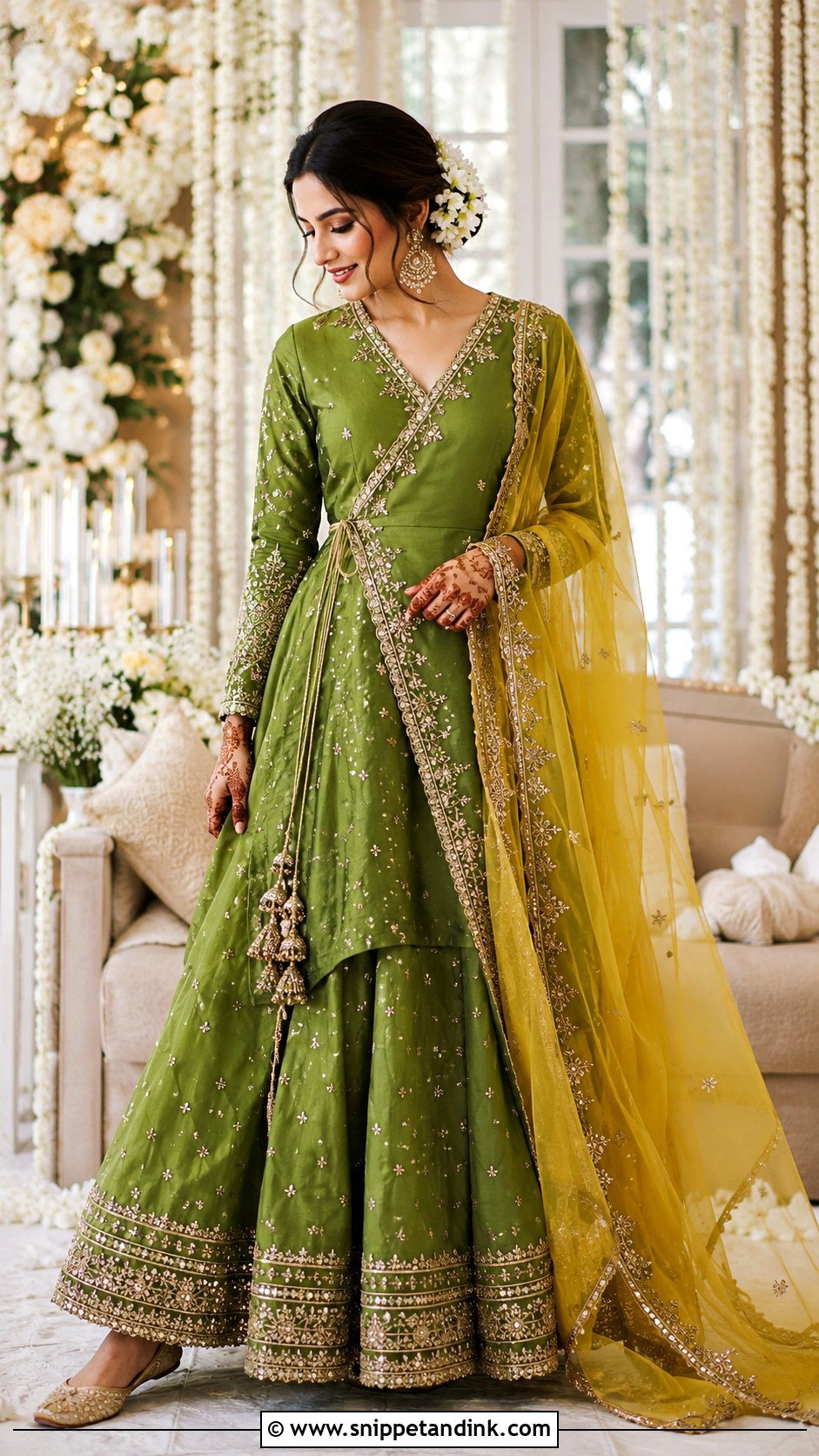
An angrakha’s wrap bodice defines the waist, and its tassel ties swing when you move, which is half its charm. Pair it with straight trousers or a lightly flared lehenga. Emerald, leaf green and parrot green each read differently; I hold the fabric up to a bride’s face in daylight before choosing, because some greens can make skin look sallow under warm lamps. Gold piping or small mirror accents add enough occasion without bulk. A yellow organza dupatta, antique gold earrings and a centre-parted low bun with a gajra make it feel properly bridal.
4. Pink Peplum Gharara Dholki Dress
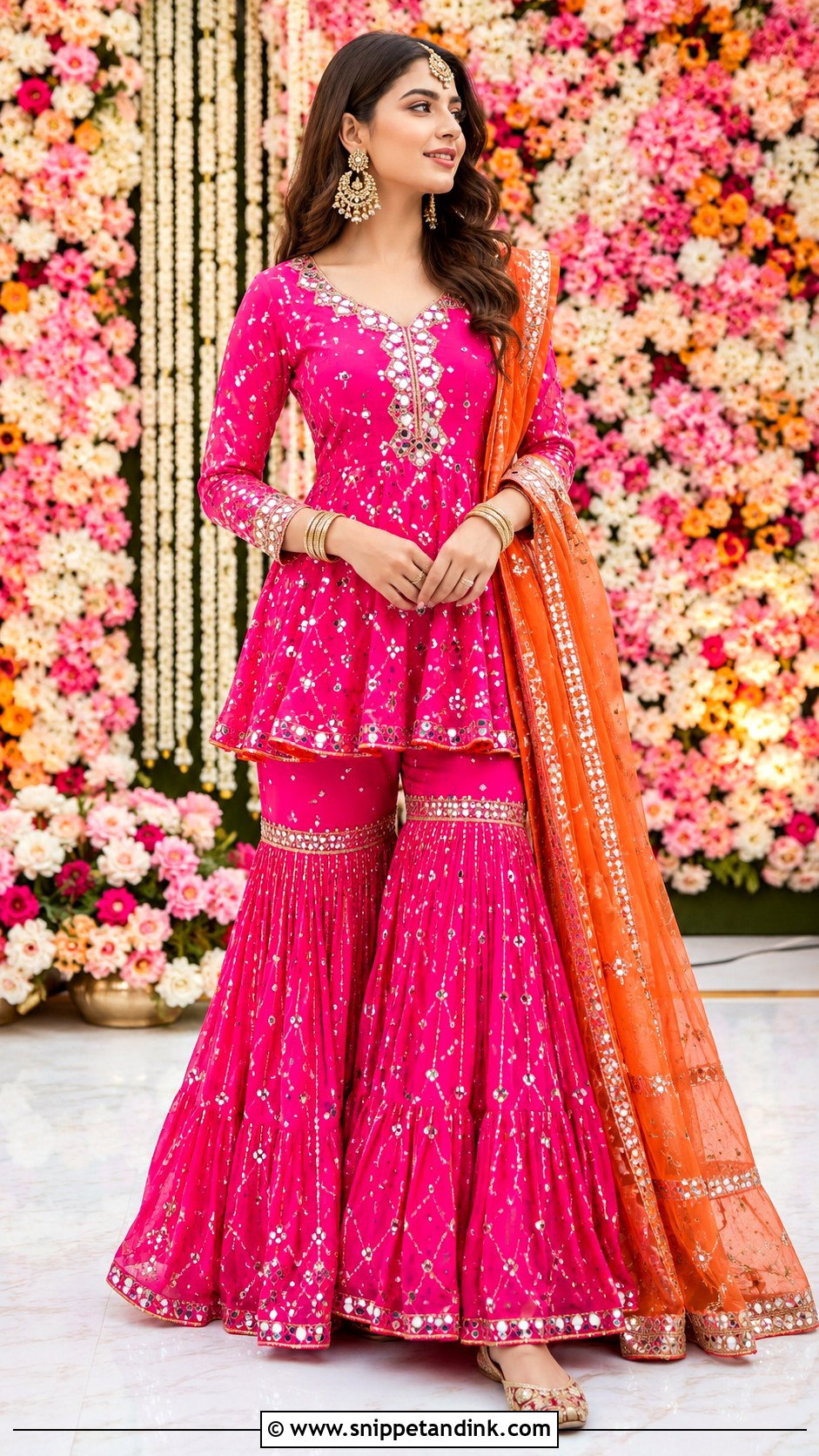
Structure plus swing is what makes a pink peplum and gharara so good for dancing. The peplum should fit neatly at the waist before flaring over the gharara’s knee joint. Rani pink is bold; blush or rose pink is softer. Mirror work, dabka or gota lines on the peplum and the knee panels add sparkle where the eye naturally lands. An orange or lime dupatta brightens it further. A high ponytail with soft curls keeps the neckline clear, though I’d only recommend it to brides comfortable with a lot of movement at the back of the head; it swings into everyone during a dhol circle.
5. Orange Anarkali Dholki Dress
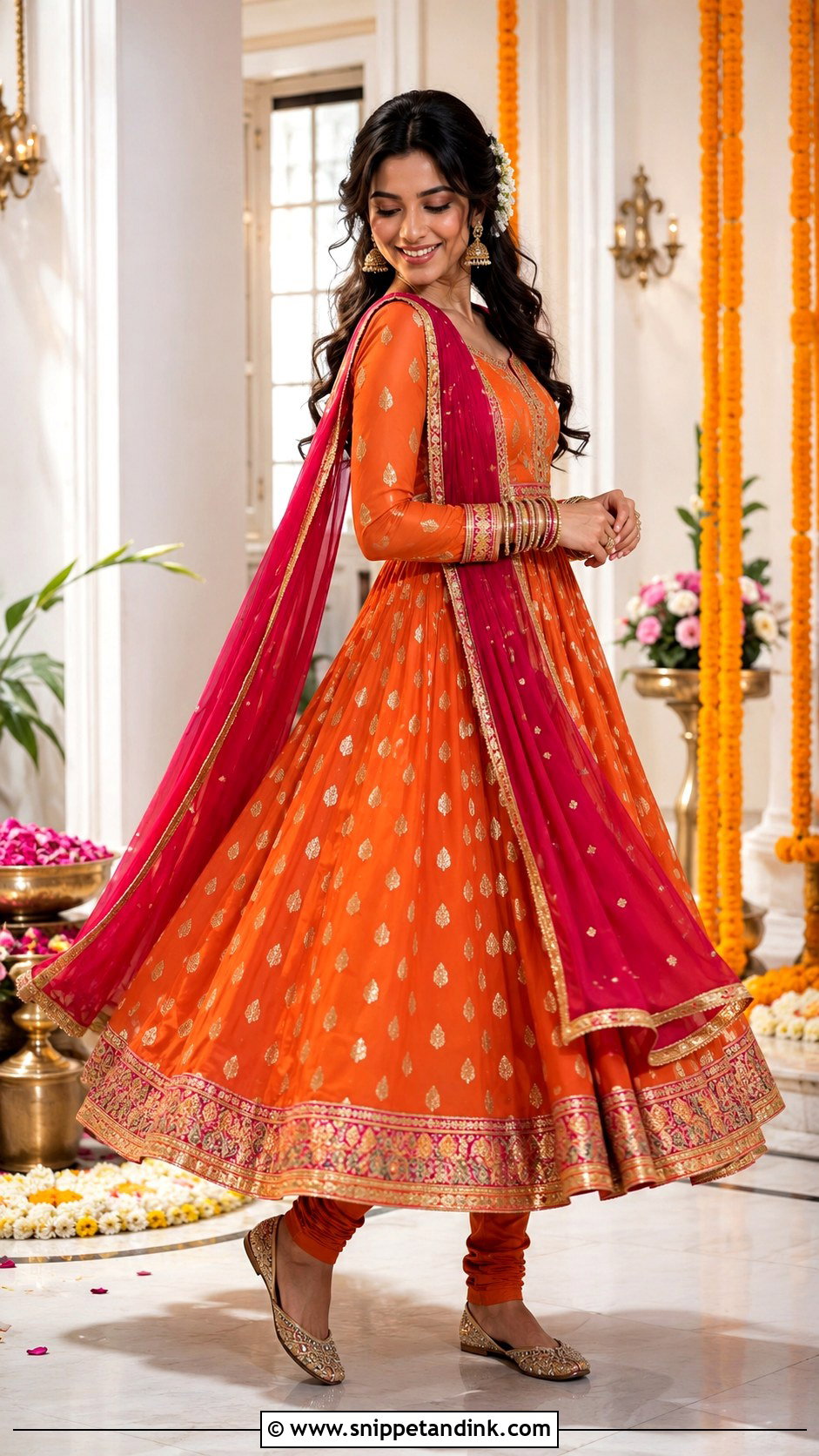
Picture an orange Anarkali opening out as the music starts. It gives coverage, comfort and real movement, and I’d choose cotton silk, chiffon or light organza over heavier silks so the skirt actually flares. Calf-length is easier for floor seating than floor-length, which you’ll be stepping on every time you stand up. Gold motifs at the neckline and hem are enough. Churidar underneath, a magenta or green dupatta over one shoulder, gold jhumkas and embellished flats complete it. Bronze makeup and a coral-pink lip suit the warmth of the orange.
6. White And Yellow Floral Dholki Dress
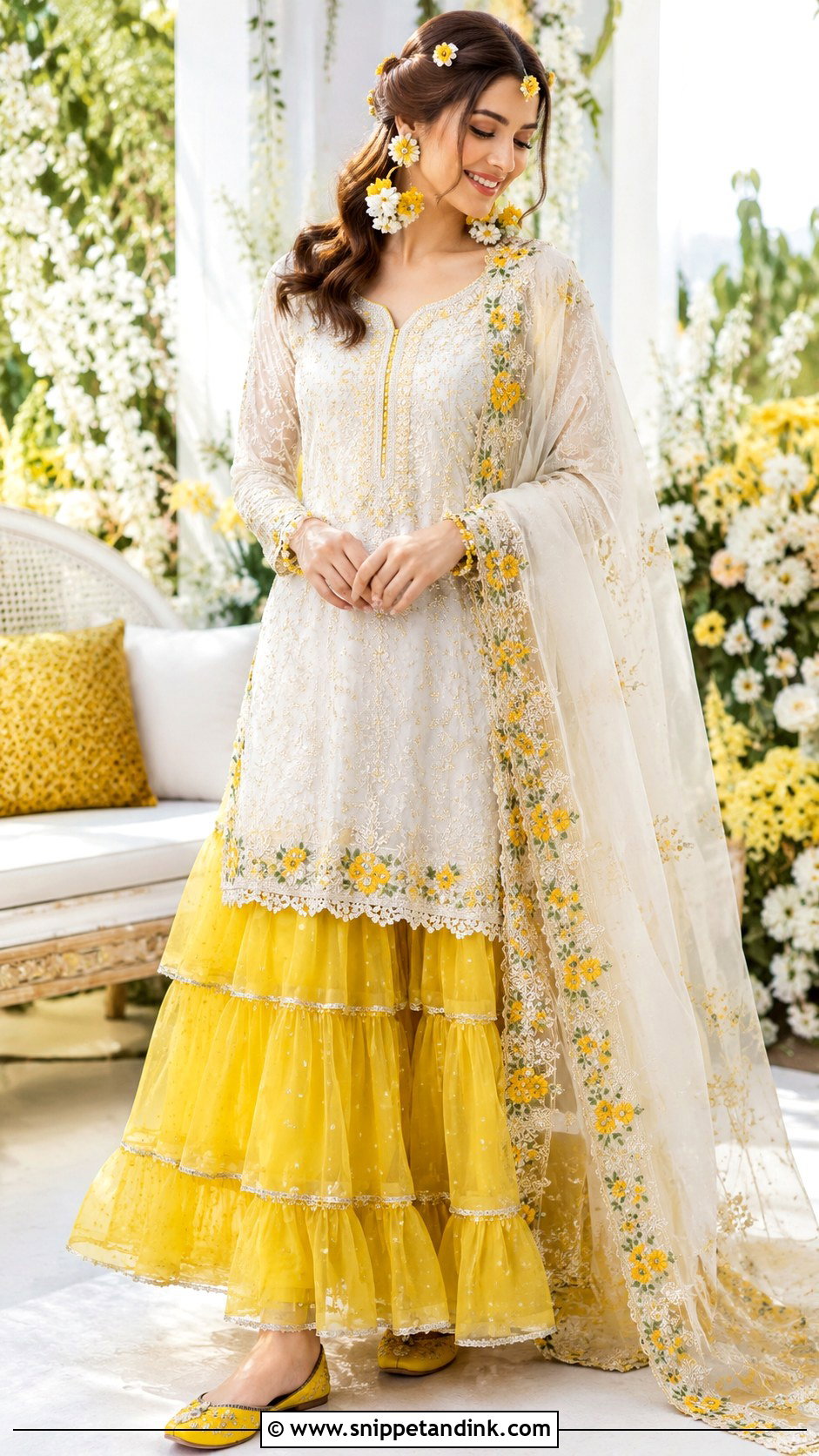
Ivory with yellow suits a daytime dholki, especially in a garden or on a sunny terrace. Start with an ivory kurta carrying yellow threadwork or small appliqués, over a flowing yellow sharara or a tiered skirt. A sheer white dupatta edged in floral lace keeps everything light. Here I’d swap heavy gold for floral earrings and a small floral tikka. One warning about ivory at a dholki: haldi, mehndi and turmeric-laced sweets are often around, and ivory shows every mark, so keep a stain pen in your bag.
7. Mirror Work Lehenga Dholki Dress
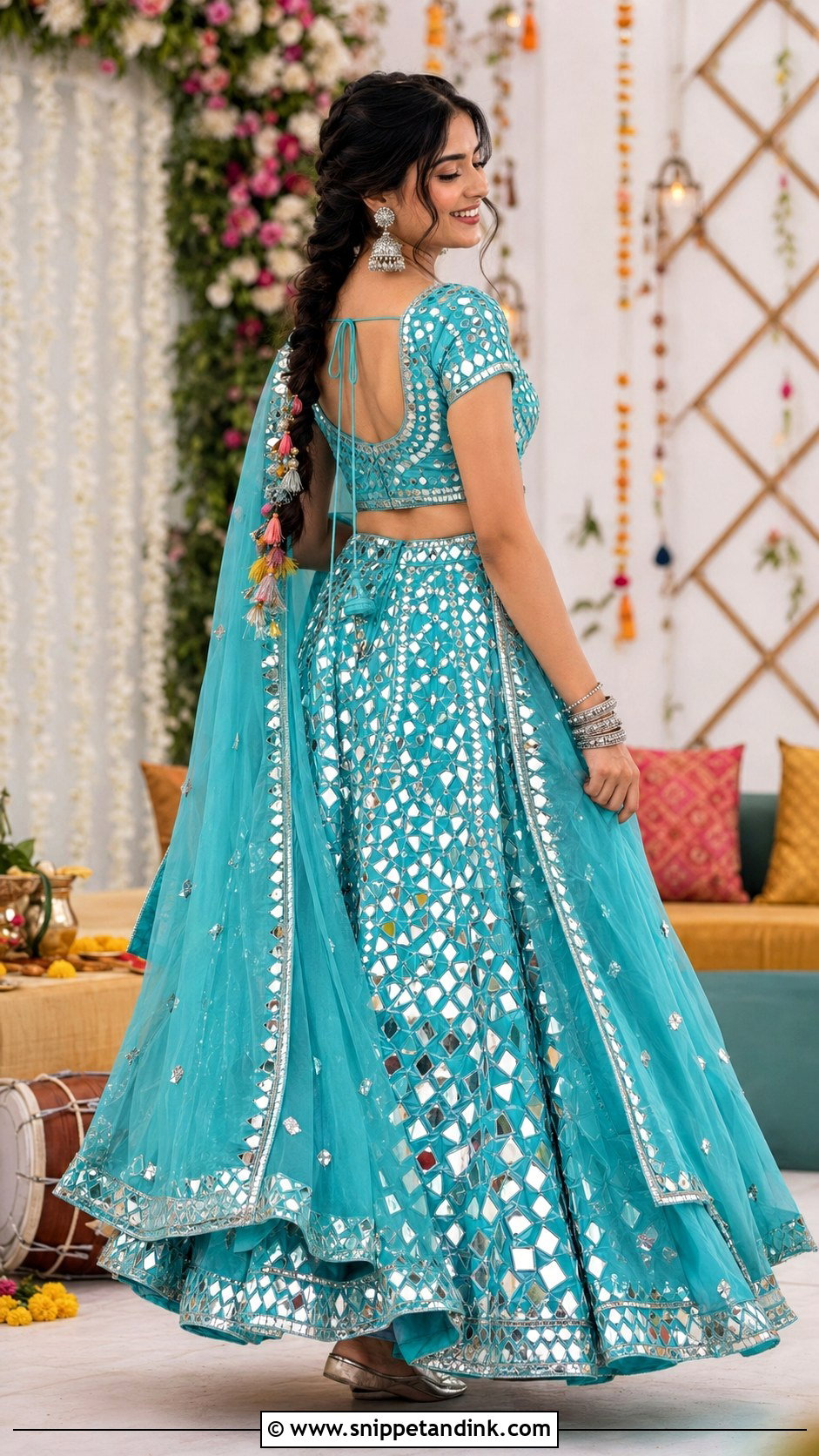
Mirror work catches every light in the room, which makes it a natural evening dholki choice. Pick a strong base, such as yellow, turquoise, hot pink or orange, with mirrors laid out in an orderly pattern rather than scattered at random. I keep the dupatta plain so the skirt does the talking. Moderate volume matters here: a heavily layered lehenga is exhausting to dance in, and mirrors add weight. Silver jhumkas suit the mirrors better than gold. A sleek braid with coloured tassels adds fun, and a muted rose lip stops the whole look tipping into too much.
8. Red And Orange Dhaka Pajama Dholki Dress
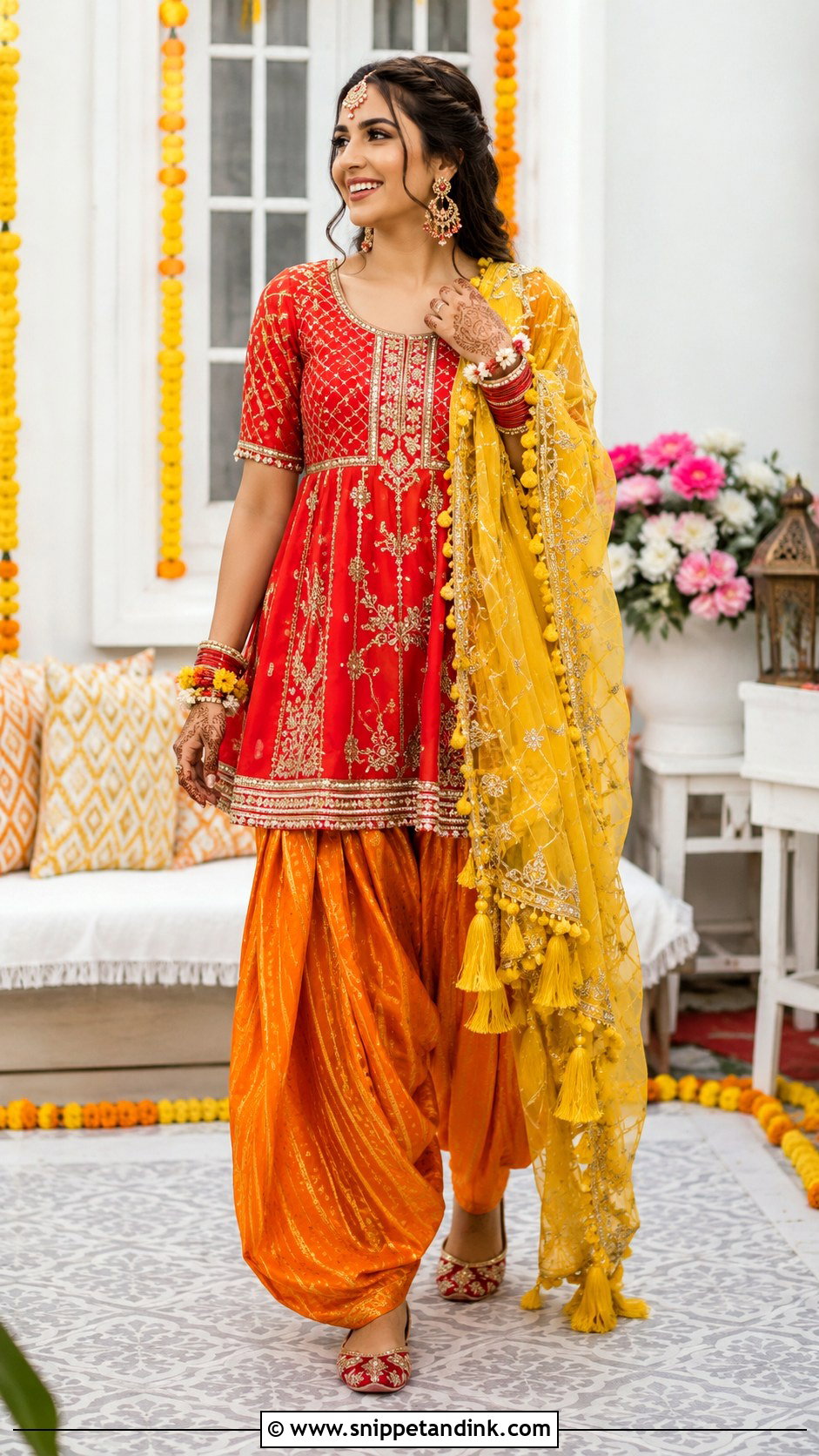
Pleated Dhaka pajamas already carry a lot of volume, so everything above them should stay tailored. A short red kurta over an orange pajama, or the reverse if you want the brighter shade near your face, gives a bold, festive pairing. Narrow gota lines or small floral embroidery are better than dense bridal work, which fights with the pleats. A tasseled yellow dupatta connects the two colours. Kohl-lined eyes, warm blush and a rosy-red lip suit the strong palette, and a braided updo keeps the shape neat.
9. Lime Green Pishwas Dholki Dress
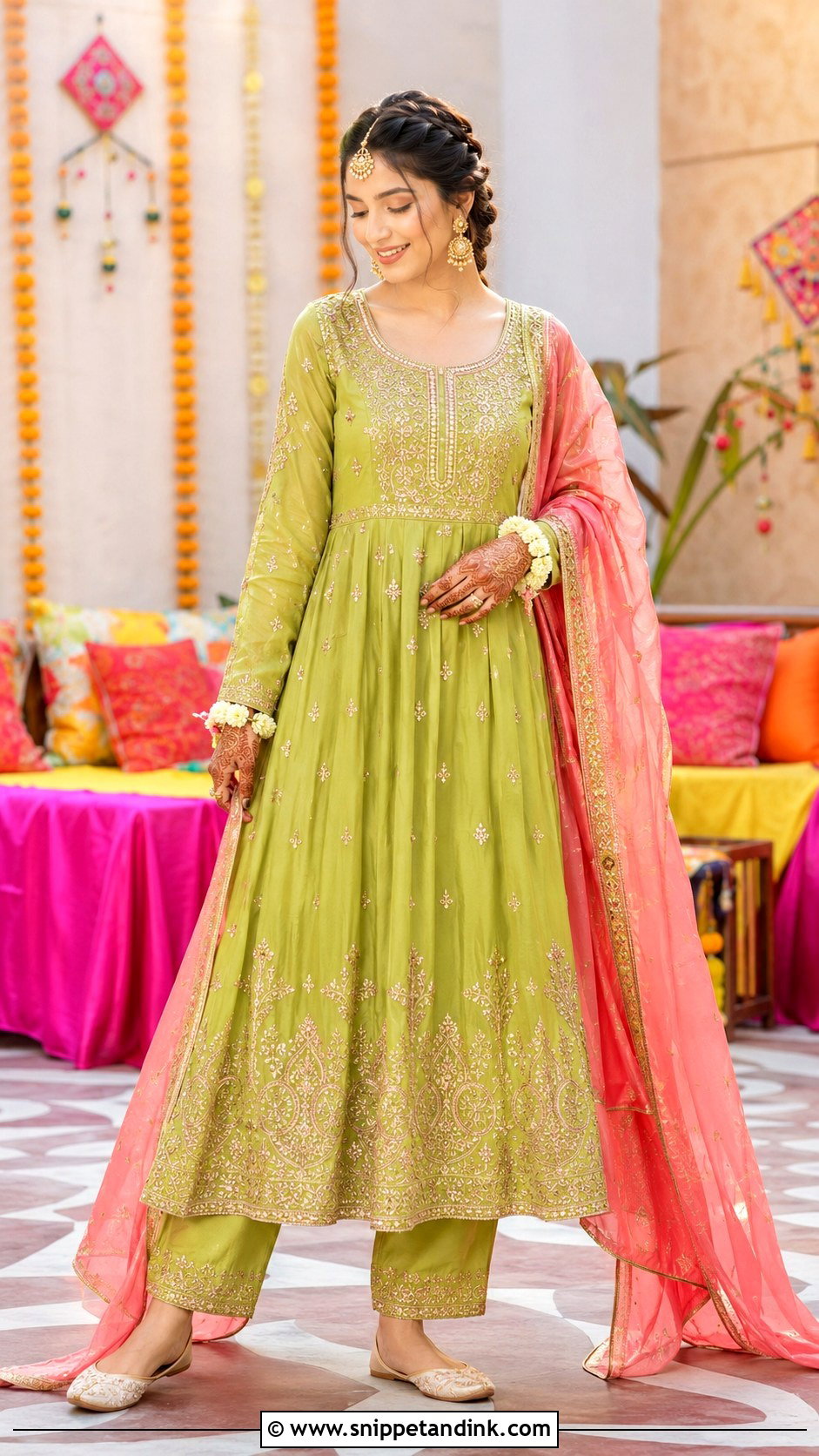
Lime green gives the pishwas a fresh, modern energy. Look for a fitted bodice and a skirt that opens into soft gathers, with comfortable sleeves you can clap in. Delicate gold embroidery or tiny mirrors are enough; heavier work dulls the colour. Lime is unforgiving on some skin tones, so I’d add a pink or orange dupatta close to the face to warm things up. Gold drops and a fine tikka keep it bridal. Keep the lip a pink-nude so it doesn’t compete with that vivid green.
10. Fuchsia Kurta Palazzo Dholki Dress
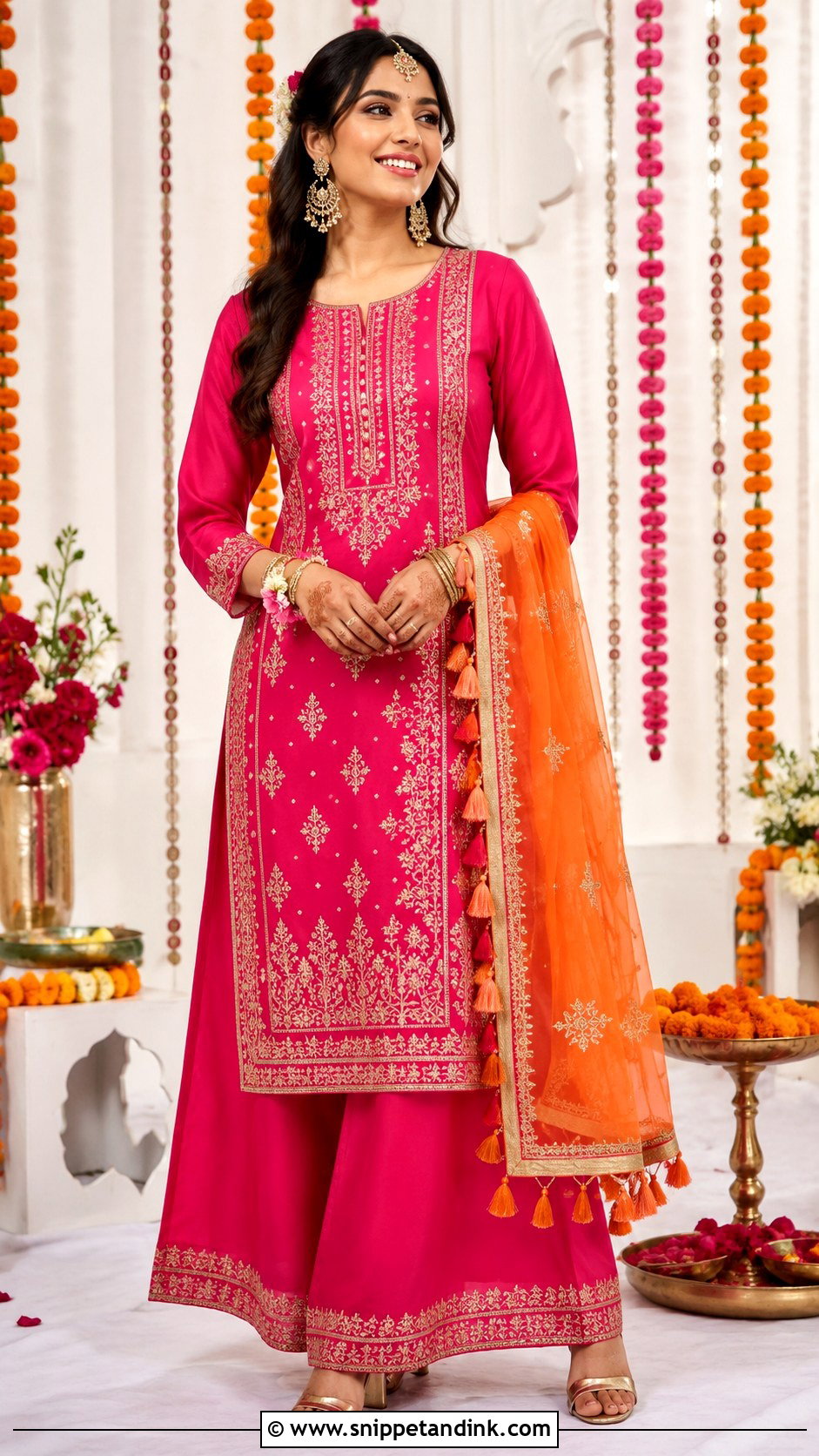
Do you want something cleaner than a flared outfit that still looks special in photos? A fuchsia kurta with wide-leg palazzo pants gives length and lets you move freely. Keep the kurta straight or slightly A-line, with gold embroidery concentrated at the neckline and cuffs. Palazzos in a stiff fabric balloon when you sit cross-legged, so I’d choose a fluid crepe or georgette for them. An orange, yellow or green tasseled dupatta adds a second colour. A sleek low ponytail and berry-pink lipstick give it a contemporary finish.
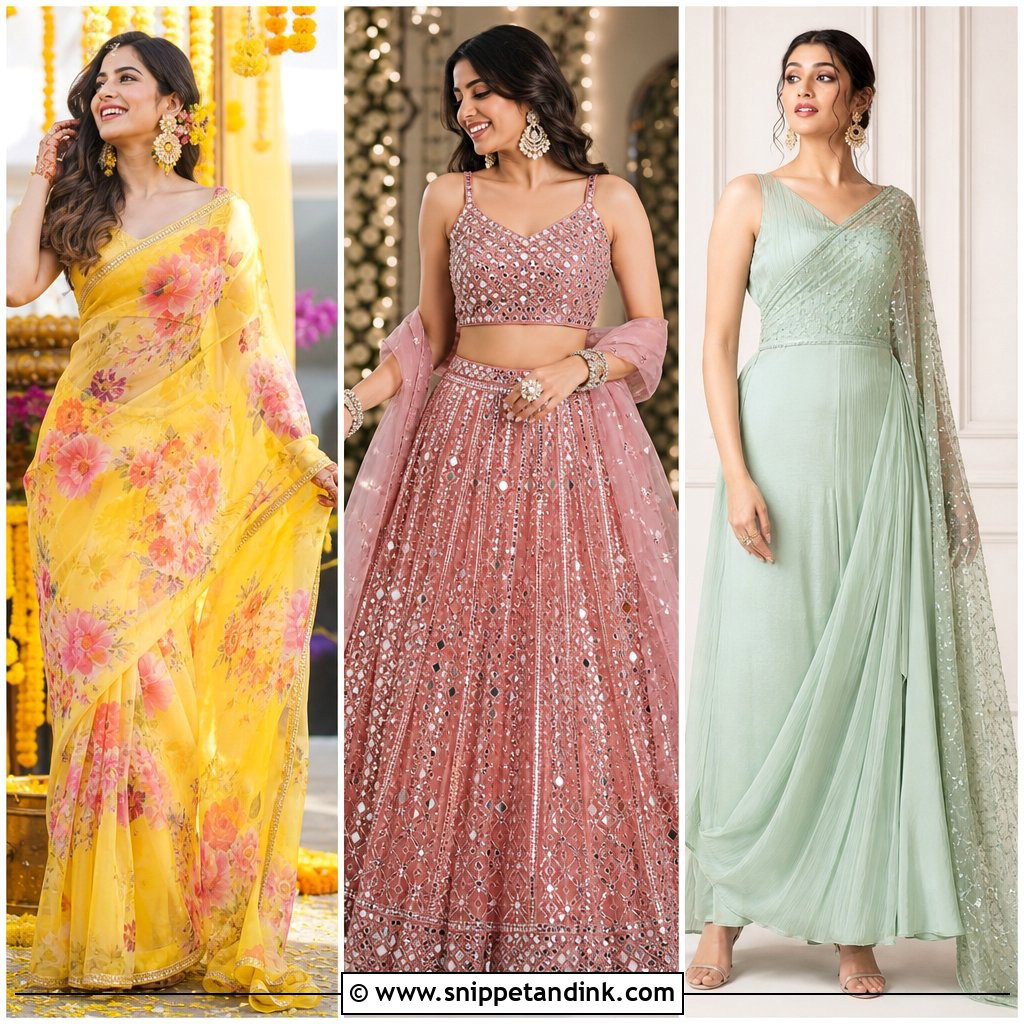
11. Pastel Yellow Organza Dholki Dress
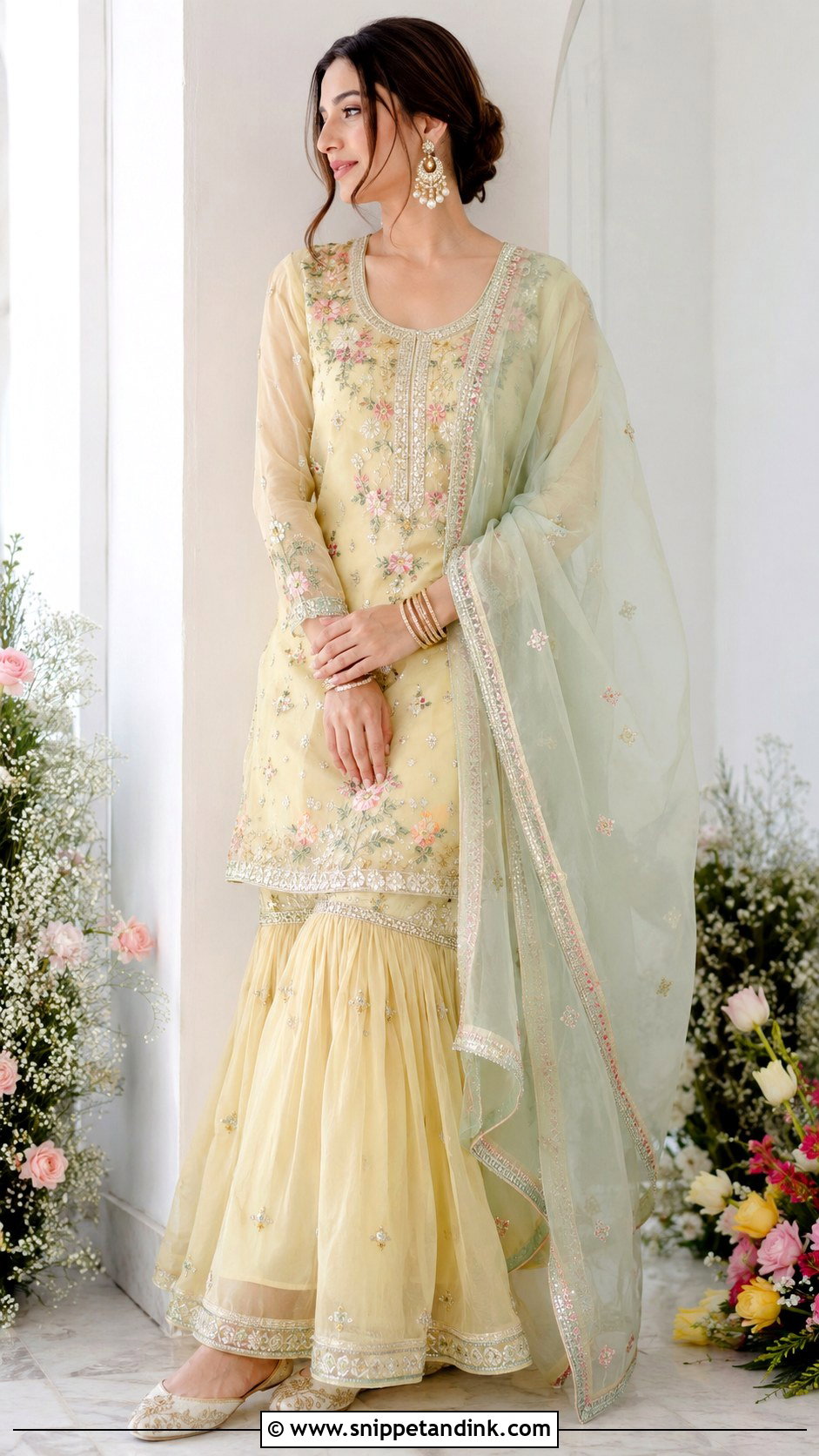
Soft pastel yellow is a good answer for brides who find mustard too loud. An organza kurta with floral embroidery, pearls or fine gota, over straight pants or a gentle sharara, keeps it refined. A mint, blush or ivory dupatta holds the pale palette together. Organza has natural body, so too many layers make it stand away from you and crunch when you sit. One layer plus a soft lining is usually right. Pearl and kundan earrings and a polished low bun suit the quieter mood.
12. Bandhani Lehenga Dholki Dress
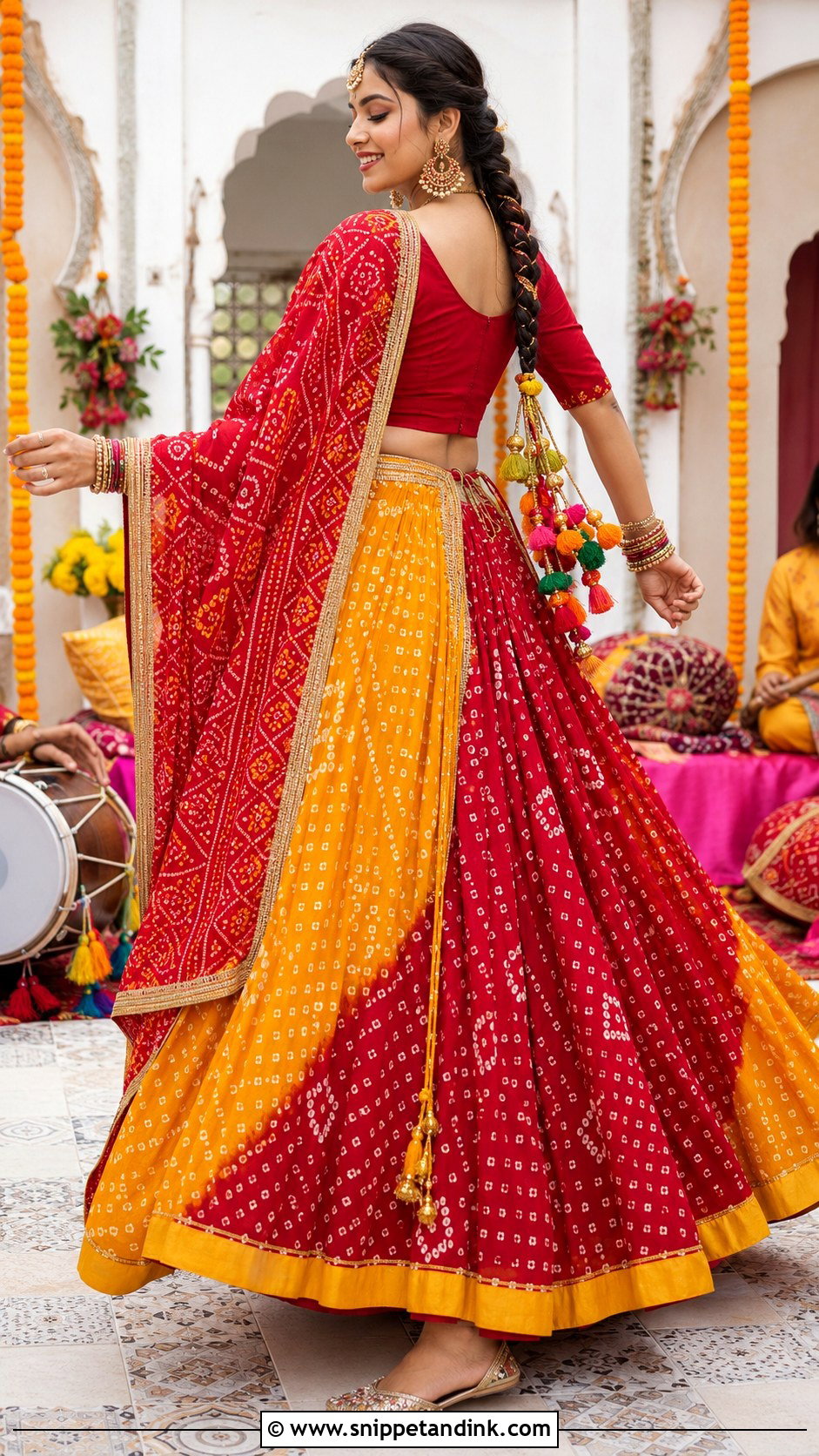
Bandhani carries pattern and colour that suit a folk-flavoured evening. Choose a red, yellow, green or magenta skirt with the classic dotted pattern and a broad gota border, and calm it with a solid blouse. A Bandhani dupatta works too, as long as the dots are smaller and less dense than the skirt’s, or the two patterns blur together in photographs. Oxidised or antique gold jewellery and a braid finished with paranda-style tassels lean into the traditional feel. Kohl-lined eyes and a soft red lip keep it bridal but relaxed.
13. Phulkari Kurta Sharara Dholki Dress
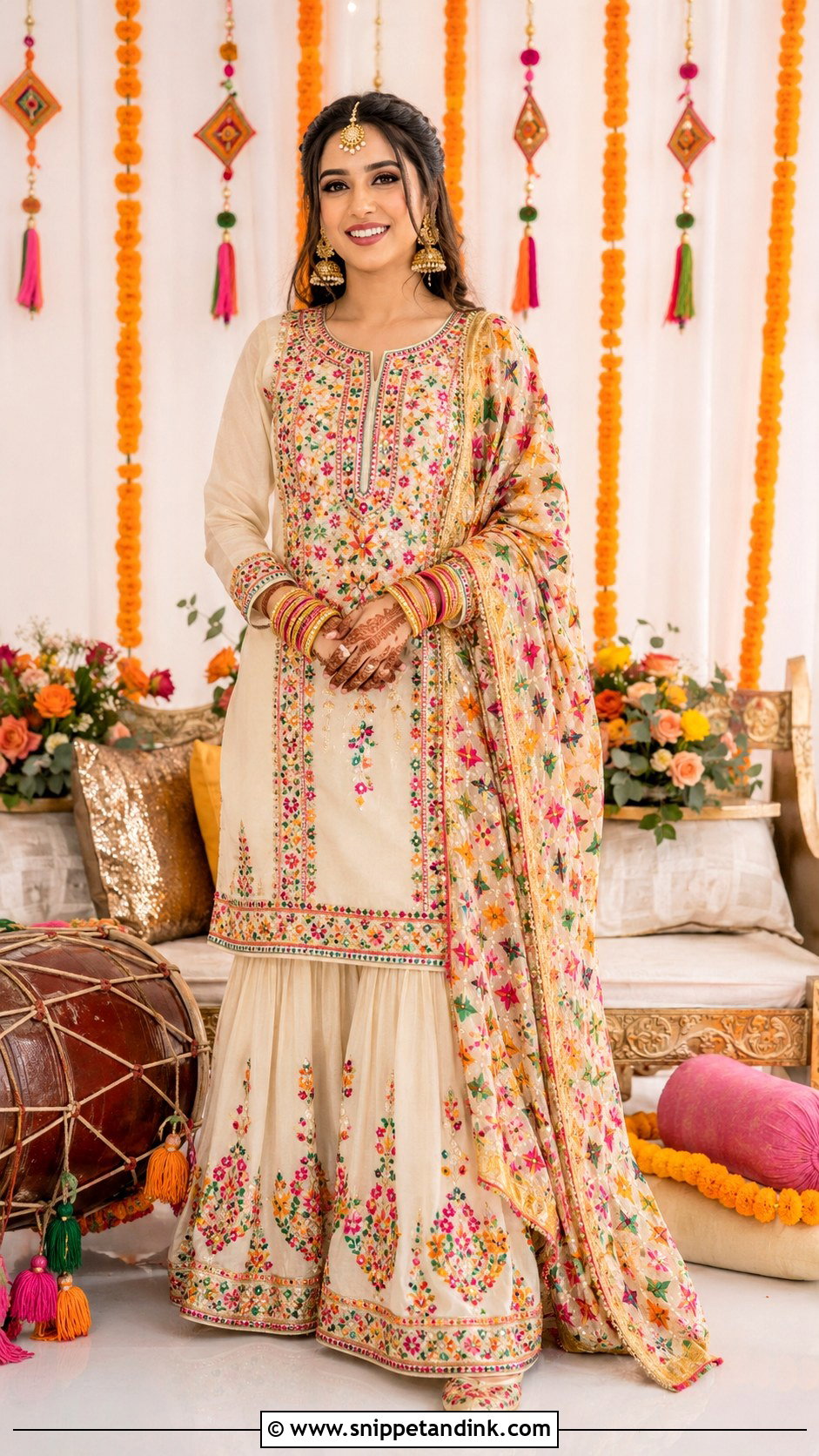
Phulkari’s bright threadwork can turn a simple kurta and sharara into a proper bridal dholki look. Use a solid yellow, ivory, green or red base so the embroidery stands out, and place it at the neckline, sleeves and front panel rather than everywhere. A coordinated Phulkari dupatta finishes it. Genuine hand Phulkari is dense and fairly heavy, so I’d put it on the dupatta or the kurta, not both, if you plan to dance much. Gold jhumkas, a subtle tikka, embroidered khussas and a loose side braid suit the handcrafted character.
14. Teal Velvet Winter Dholki Dress
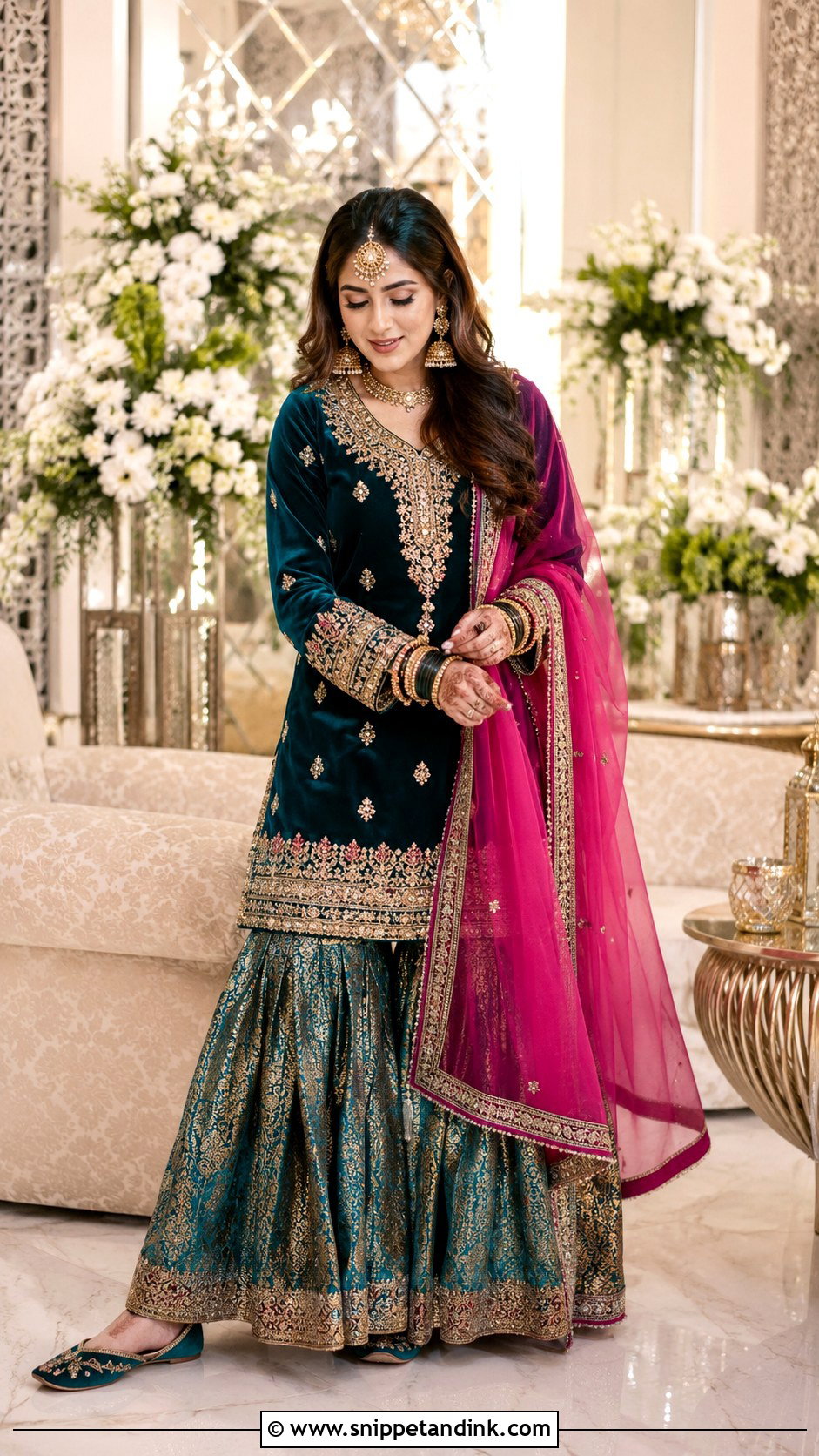
Winter dholkis call for richer fabric, and teal velvet supplies that without needing much embellishment. A short velvet kurta with light gold borders over a brocade gharara, silk trousers or a lehenga in teal, gold or deep magenta looks warm and seasonal. A light organza dupatta stops the outfit from becoming heavy. Velvet marks where it’s crushed, so I advise brides not to sit on the hem of the kurta for long stretches. Antique gold, velvet khussas, smoked eyes and a berry lip complete it. Keep the layers few; heated indoor rooms get warm quickly.

15. Ivory Chikankari Dholki Dress
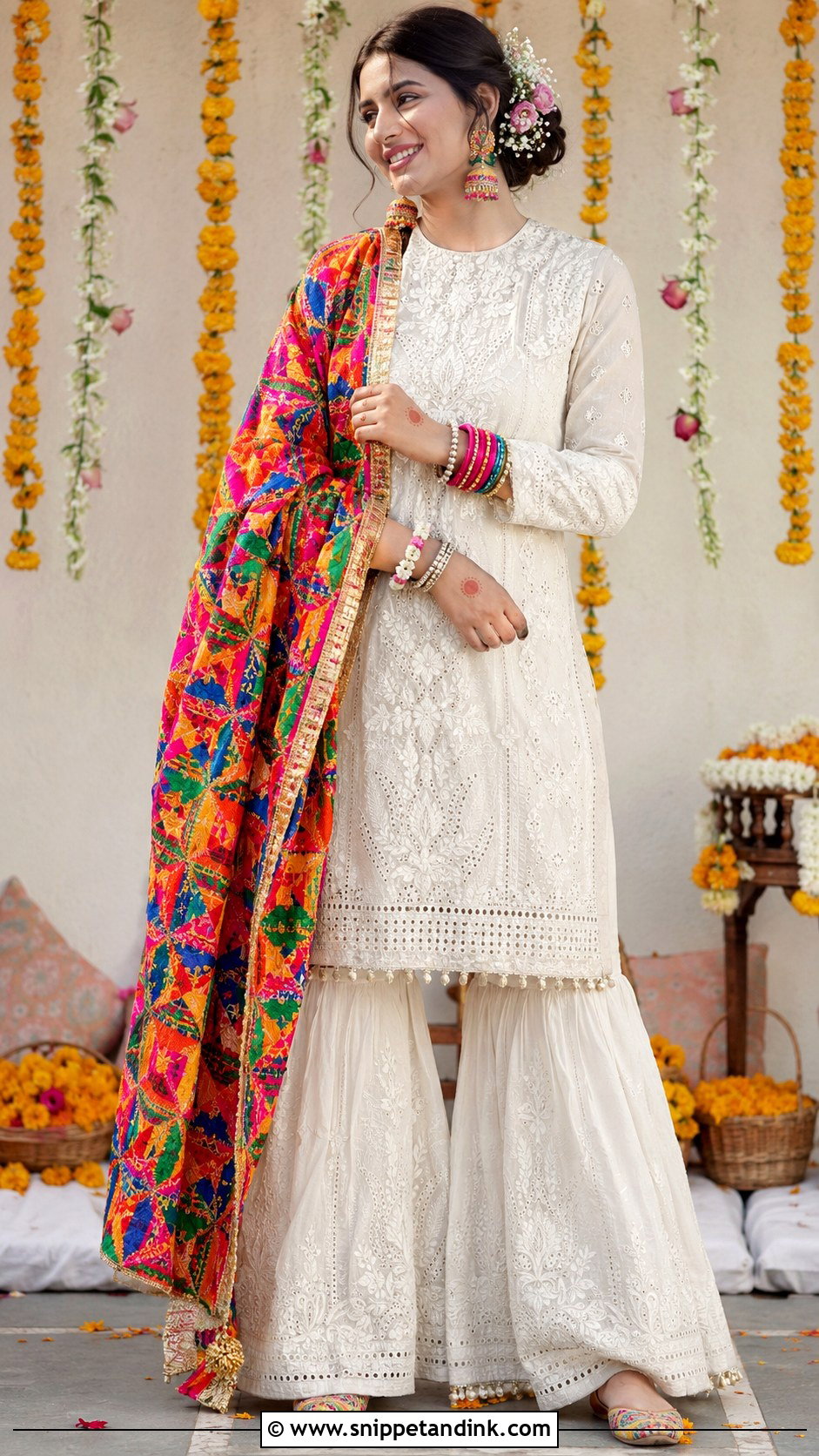
Ivory Chikankari is a calm base that a colourful dupatta turns dholki-ready. Pair the embroidered kurta with a matching sharara or wide palazzos, then add a vivid Bandhani, Phulkari or mirror-work dupatta in yellow, pink, orange or green. That dupatta is what separates you from guests in simpler white kurtas, so I’d make it the brightest thing you wear. Repeat its shades in the jhumkas and khussas. A neat bun with fresh flowers suits an intimate daytime gathering. Fine Chikankari is delicate, so keep bangles with sharp edges away from the sleeves.
16. Magenta Saree Dholki Dress
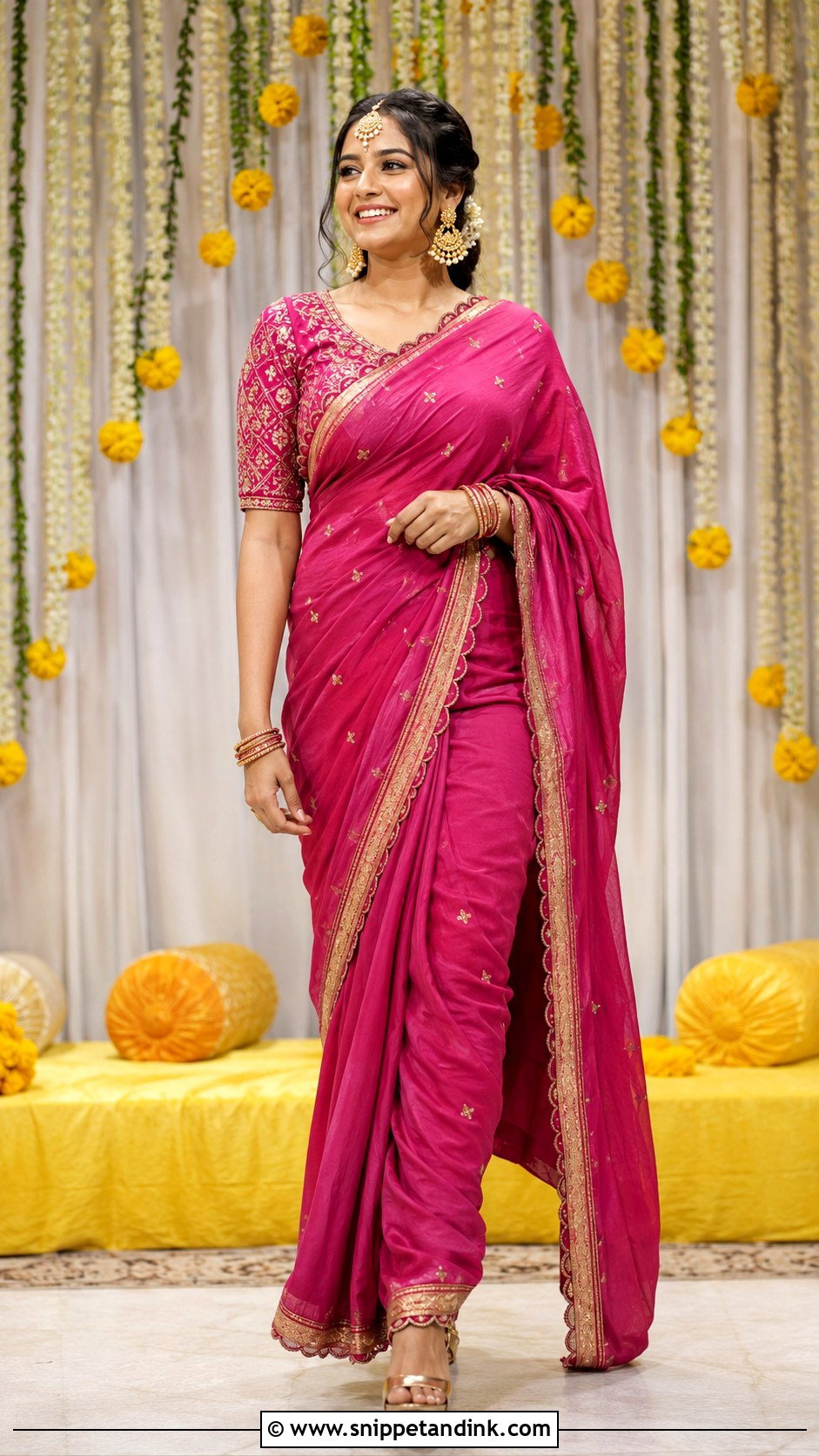
A magenta saree stands apart from the usual sharara and lehenga. Pick chiffon, georgette or soft silk; they pleat easily and move well. A gold-edged saree with an embroidered blouse gives enough festive detail. The practical issue is the pallu during dancing, so I pin it at the shoulder and again discreetly at the waist so it stays put through the dhol songs. Block heels are safer than stilettos with a saree hem. A low bun with flowers suits the drape, and a berry or rose-pink lip finishes it.
17. Cape Blouse Lehenga Dholki Dress
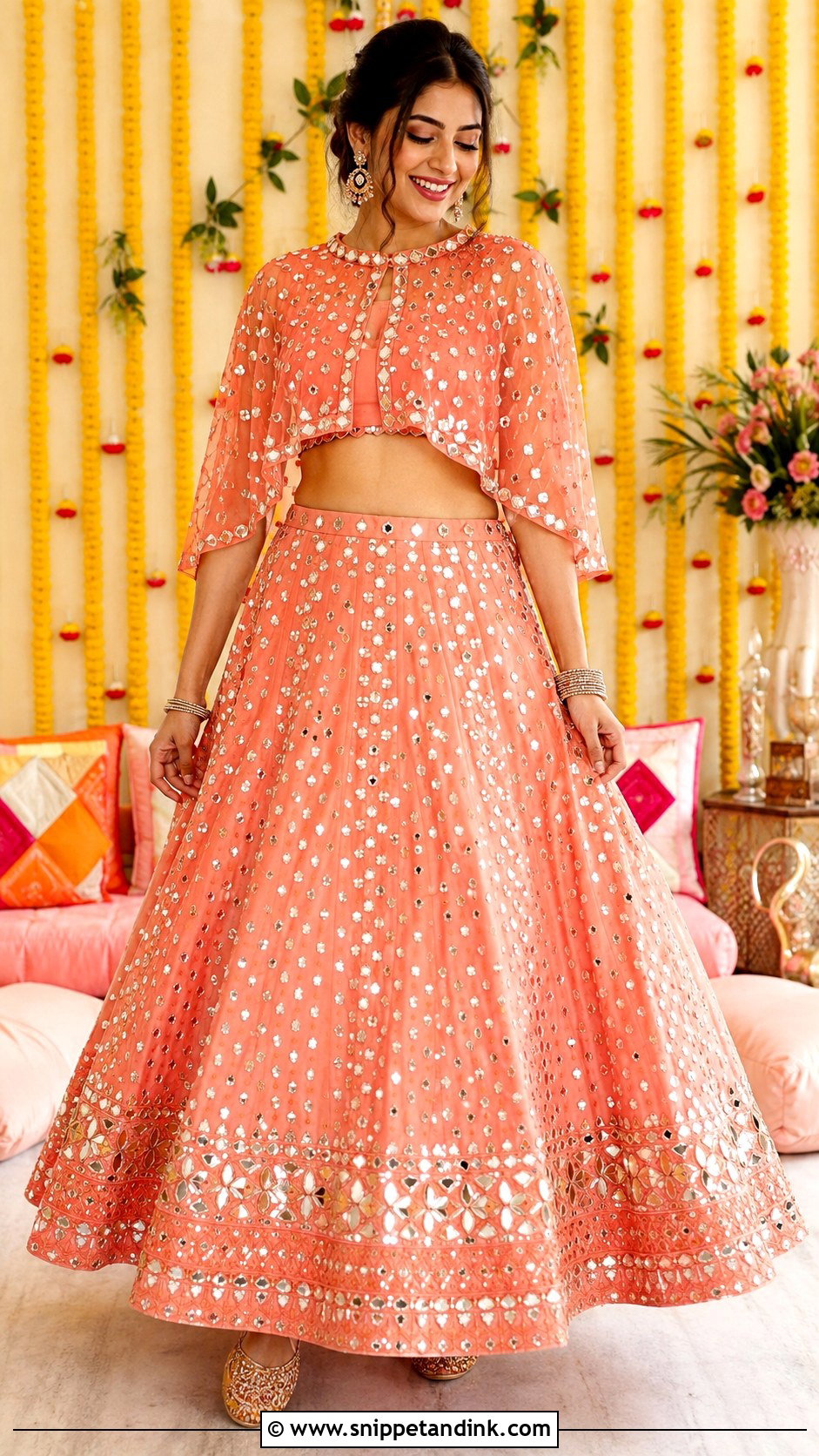
A cape blouse with a lehenga looks modern while staying light enough for a dholki. Choose a plain or lightly embroidered skirt in yellow, coral, green or pink and add a sheer cape blouse with mirror work, florals or an embellished border. The cape can stand in for the dupatta, which is the real advantage: nothing to keep adjusting all evening. Keep hair sleek in a low ponytail or smooth waves so the cape stays visible. I’d skip a heavy necklace, since it tangles with the cape’s neckline.
18. Short Frock Churidar Dholki Dress
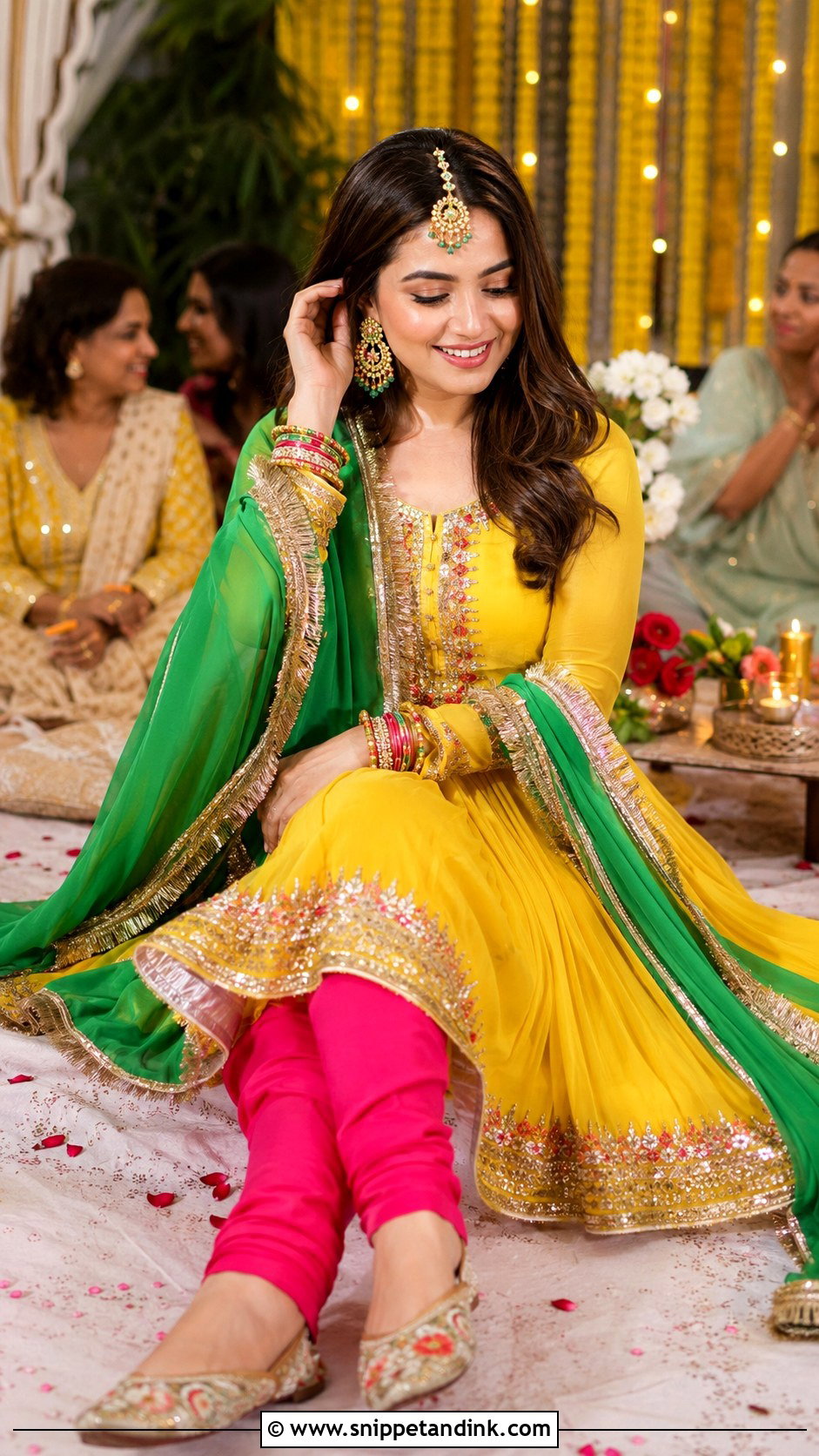
A short frock worn with churidar trousers has a young, traditional feel that suits a smaller home dholki. Pick a flared frock in bright yellow, orange, pink or green with gota at the neckline, sleeves and hem. Fitted churidar balances the volume above. The shorter length is the practical win: you can sit on floor cushions and get up again without stepping on your own hem. Pin a light dupatta at one shoulder. A bouncy ponytail and a coral lip stain keep it fresh and easy.
19. Color Block Three-Piece Dholki Dress
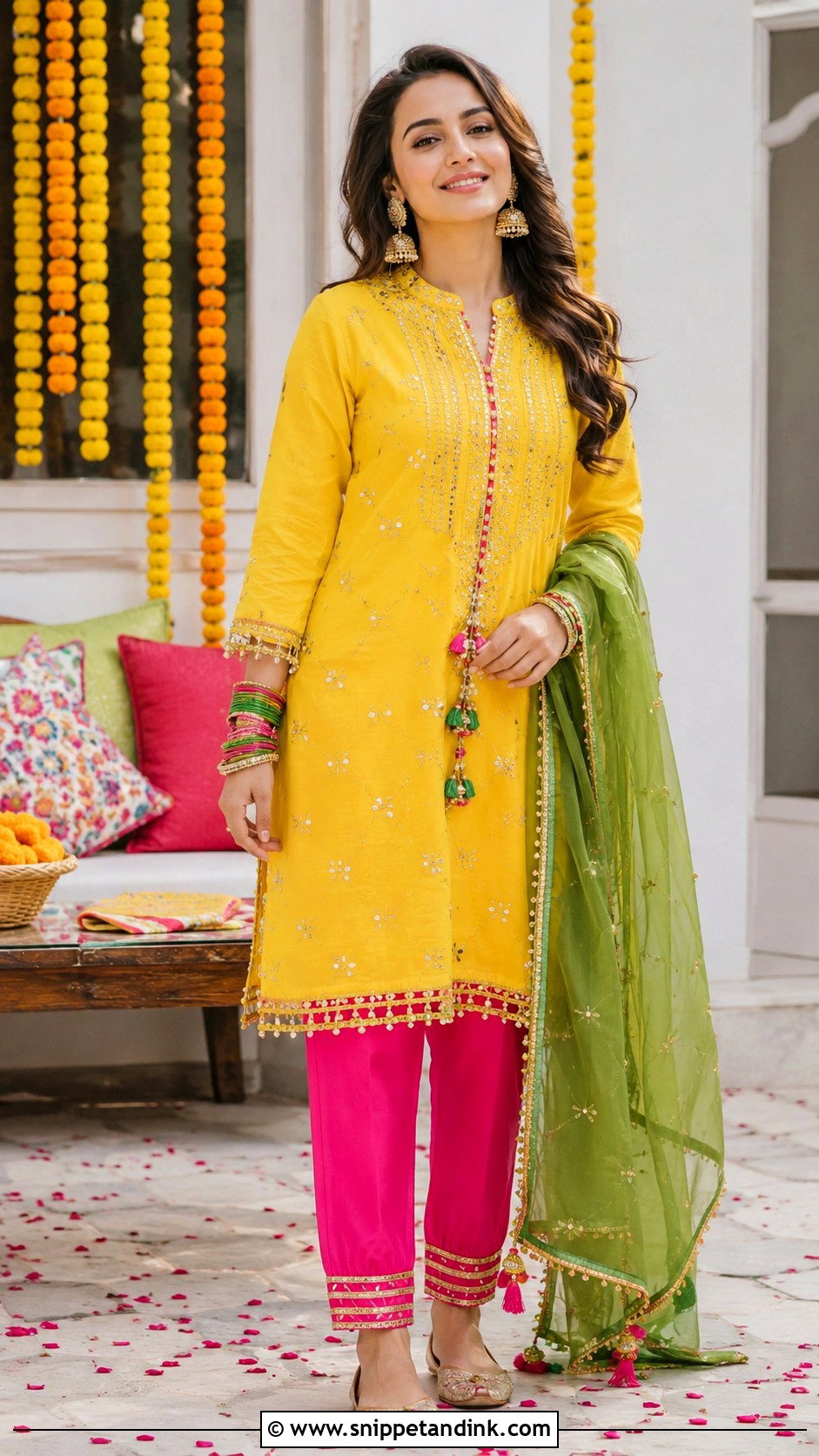
Colour blocking works for brides who like bold combinations with clean shapes. Build three pieces in strong contrasting shades: a yellow kurta, pink trousers and a green dupatta, or orange, turquoise and magenta. Keep the cut simple and let the colours be the design. Small gota borders or tassels can link the pieces. I’d test the trio together in daylight before the event; three strong colours can look harmonious on hangers and loud on a person. Neutral metallic khussas and a soft rose lip ground the palette.


20. Heirloom Dupatta Dholki Dress
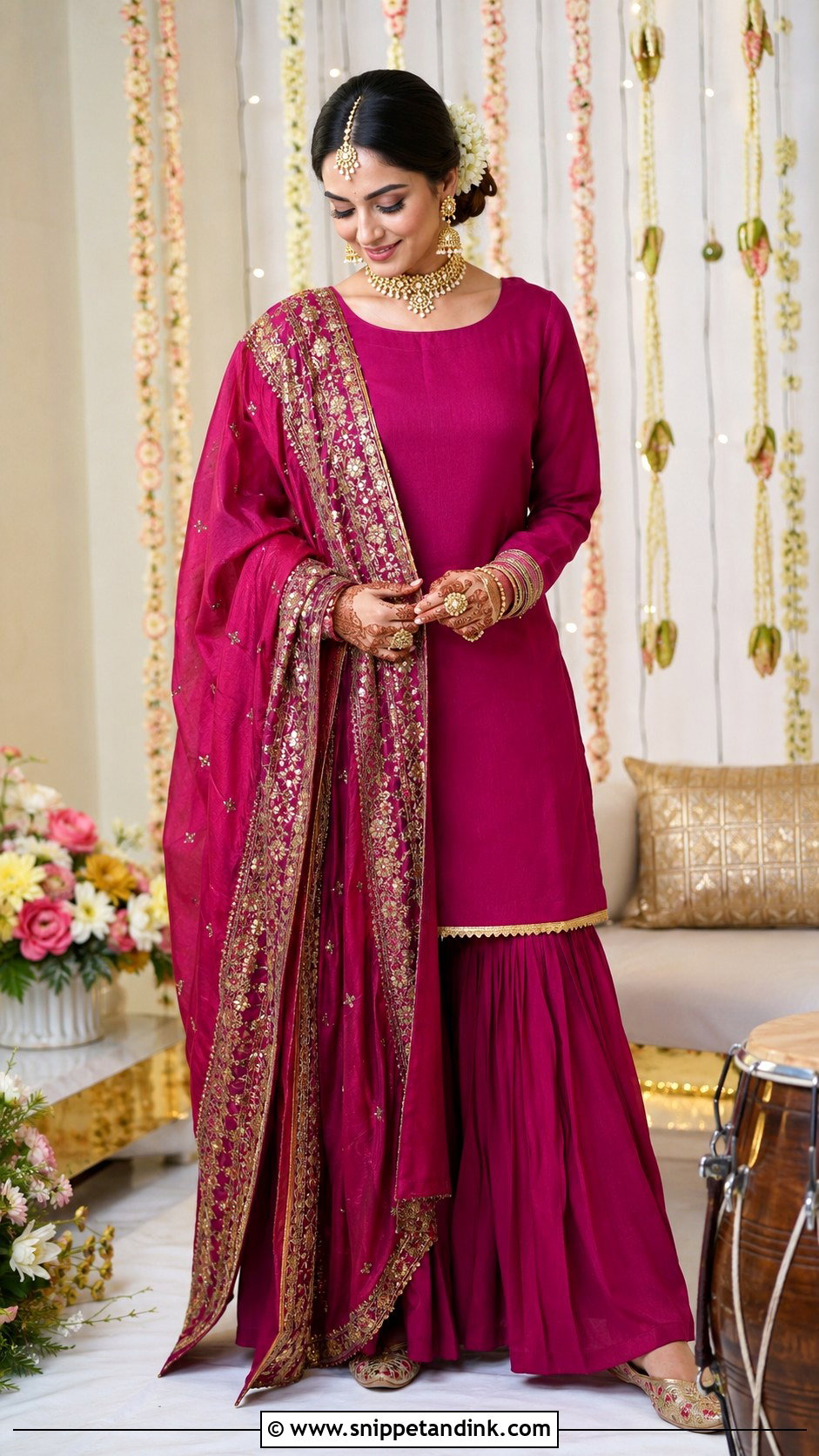
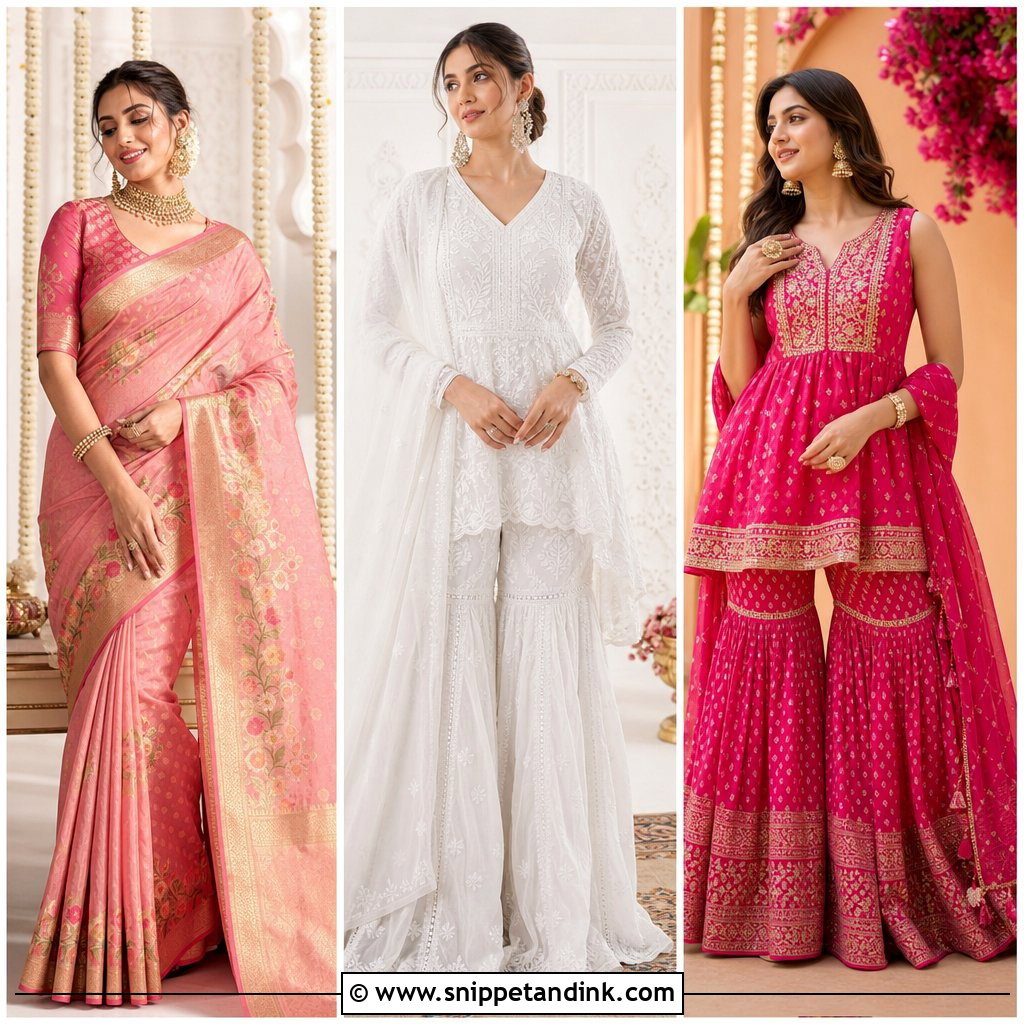
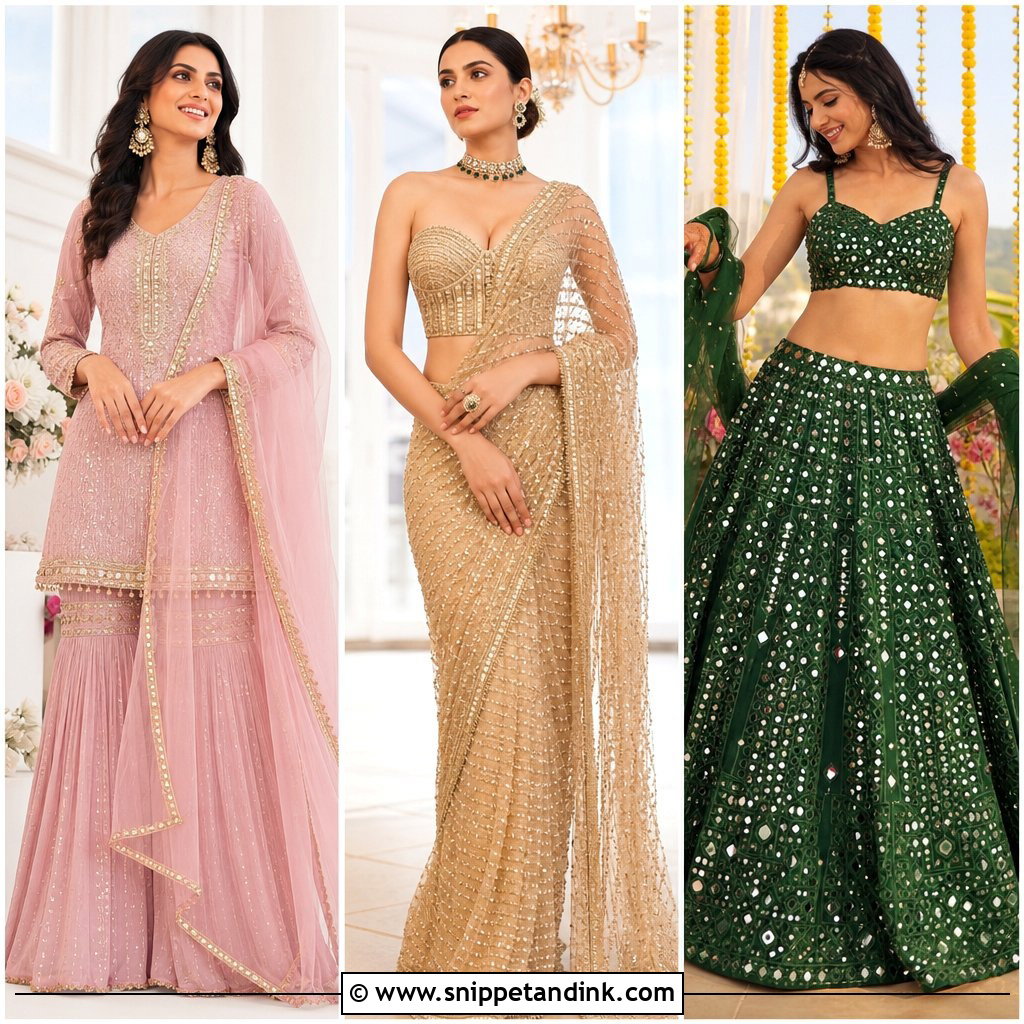
An heirloom dupatta brings family history into the dholki. Pair your mother’s or grandmother’s embroidered dupatta with a new solid-colored kurta and sharara, lehenga or gharara, choosing one shade from the old textile for the main outfit so the combination looks intended. Older embroidery is fragile. Have loose borders secured by a tailor or restorer before the event, and drape it gently over a shoulder or across both arms rather than pinning through the old fabric. Traditional jewellery, a centre parting and softly defined makeup suit the piece.
Does Your Dholki Colour Clash With the Mehndi Look?
Many families hold several events within a week, and the photos end up side by side in the album. I plan the dholki outfit alongside the mehndi and barat outfits so each event looks distinct. If the mehndi is yellow and green, I’d steer the dholki toward pink, orange or teal. If the barat is red, a red-heavy dholki can make the wedding look less special by comparison.
Jewellery follows the same logic. Keep your heaviest set for the wedding itself and wear lighter jhumkas, bangles and a small tikka at the dholki, so the bridal jewellery still feels like a reveal.
After the dholki
Hang the outfit to air overnight before packing it away; a warm room full of people leaves fabric damp with sweat. Gota and metallic thread can tarnish, so wrap those pieces in a plain cotton or muslin cloth rather than plastic, and keep them away from perfume. Spot-clean any oil or sweet stains quickly, then send embroidered pieces to a dry cleaner who handles bridal wear rather than washing them at home.
Comfort on the Floor, Colour in the Photos
Those two things matter most at a dholki. From mustard shararas and mirror-work lehengas to sarees and heirloom dupattas, every look here can be adjusted for your body, the venue, the season and your family’s customs. Choose breathable fabric, manageable embellishment, secure draping and shoes you can sit and dance in for hours. Let the jewellery and makeup support the outfit without making it as formal as the wedding day itself. Above all, wear colours that still look like you.
You'll Like These Ideas:



Leave a Reply