
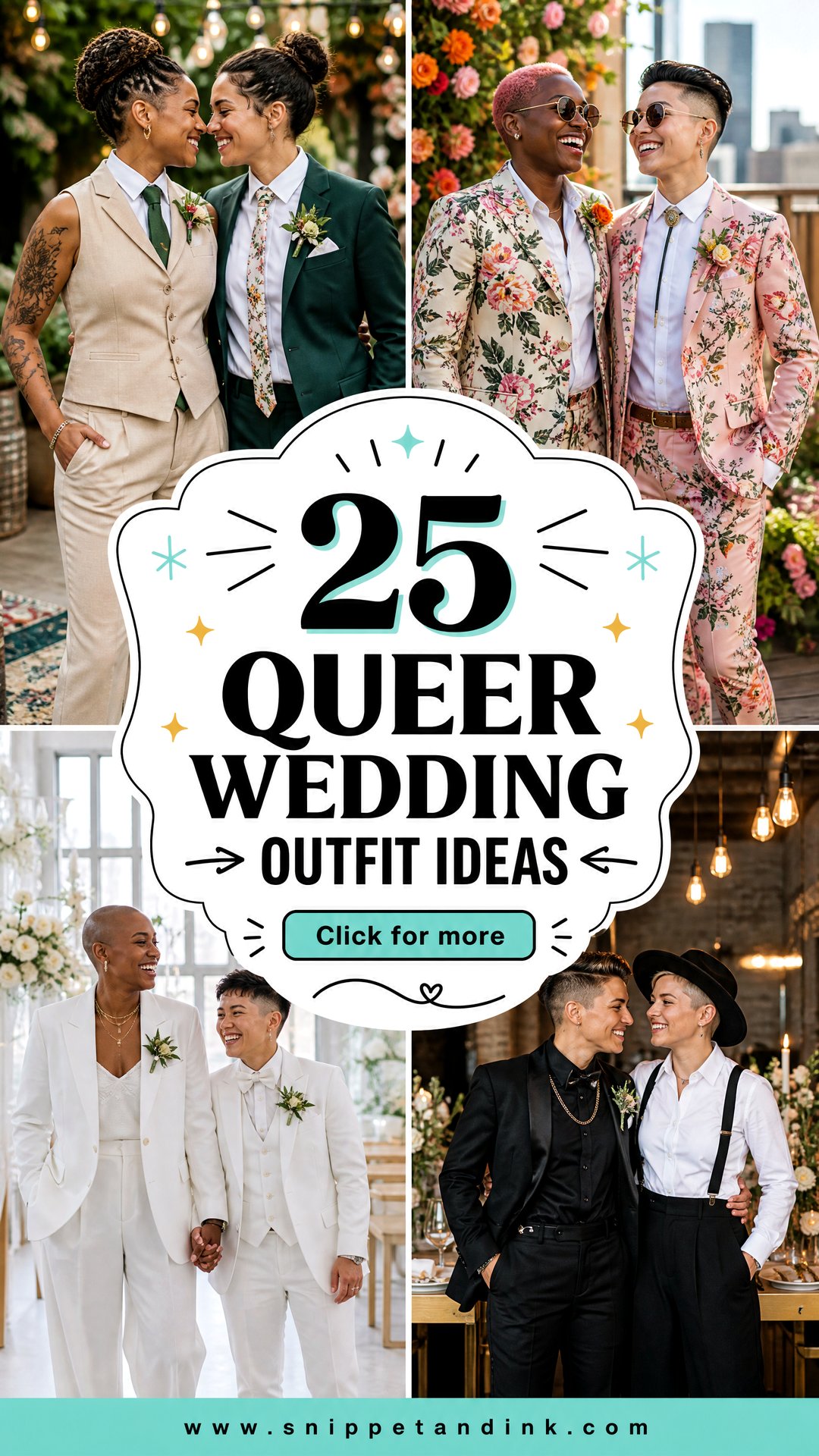
The clients I enjoy dressing most for queer weddings are the ones who arrive with no rule about what they should wear, only a feeling they want to have. Some want a suit cut softer than any menswear department sells; some want a slip dress worn with loafers; some want a jumpsuit because they’re done negotiating between the two. This year I’m seeing a lot of colored tailoring, guest looks that aren’t dresses, sleek slip shapes, jewel tones and relaxed suiting. Couple, wedding party or guest, the same order works: check the dress code and the venue, think about the season, then decide what you’ll feel like yourself in at hour eight. The 25 outfits below start from those questions.
Tailoring That Was Cut for Someone Else’s Body
Most suits are cut on a men’s or women’s block, and a lot of queer clients fall happily between the two. The most common fitting problems I see come from that, and most are fixable if you know what to ask the tailor.
- Shoulders first. Buy for the shoulders and let everything else be altered. A tailor can take in the waist and shorten sleeves easily; reshaping the shoulders rarely works.
- Chest and hips. A men’s jacket that fits the shoulders may pull across the chest or hips. Ask about letting out the side seams, or choose a relaxed cut with more room built in.
- Trouser rise. Women’s trousers often have a short rise, men’s a straighter seat. Sit down in both before deciding; the one that doesn’t dig in when seated is the right block for you.
- Binders and shapewear. If you’ll wear a binder, bring it to every fitting and plan breaks in the day. A jacket fitted over it should button without strain, and a slightly looser shirt keeps you cooler.
Allow at least four to six weeks for alterations before the wedding, longer in peak season, and one final try-on with your shoes and undergarments.
1. Queer Wedding Suit Outfit
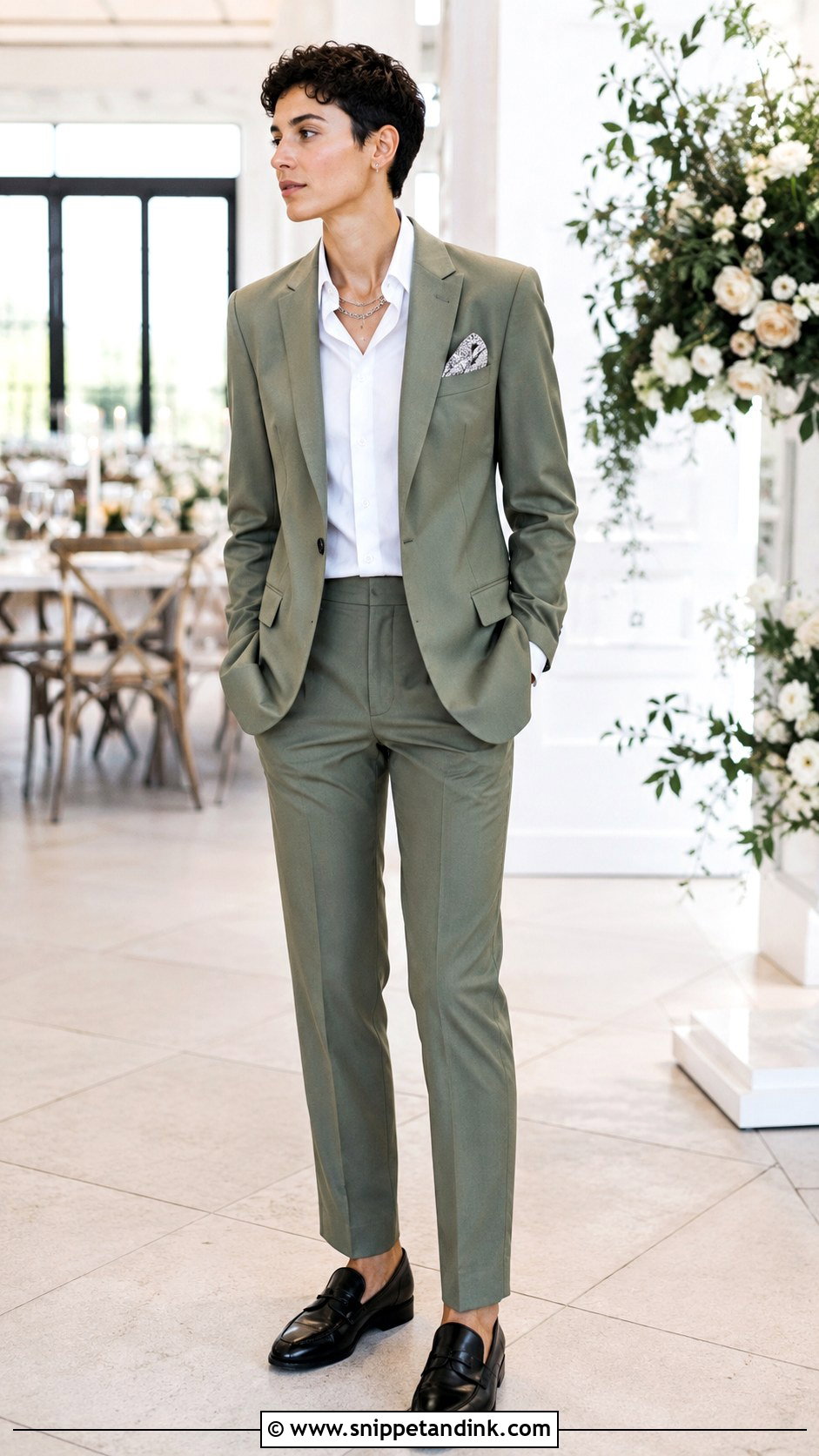
A suit is the most flexible of all queer wedding outfit choices, because the same jacket reads masc, femme or androgynous depending on what you put under it and on your feet. A relaxed blazer with straight trousers, a crisp shirt and loafers is the base. Cream, sage, lavender or blush softens it; charcoal, navy or burgundy sharpens it for evening. Fit is where most off-the-rack suits fail, and the first thing I check is the shoulder seam. It should end at your shoulder bone, because a tailor can fix a waist and a hem cheaply but rebuilding shoulders is expensive and rarely right.
2. Queer Wedding Tuxedo Outfit
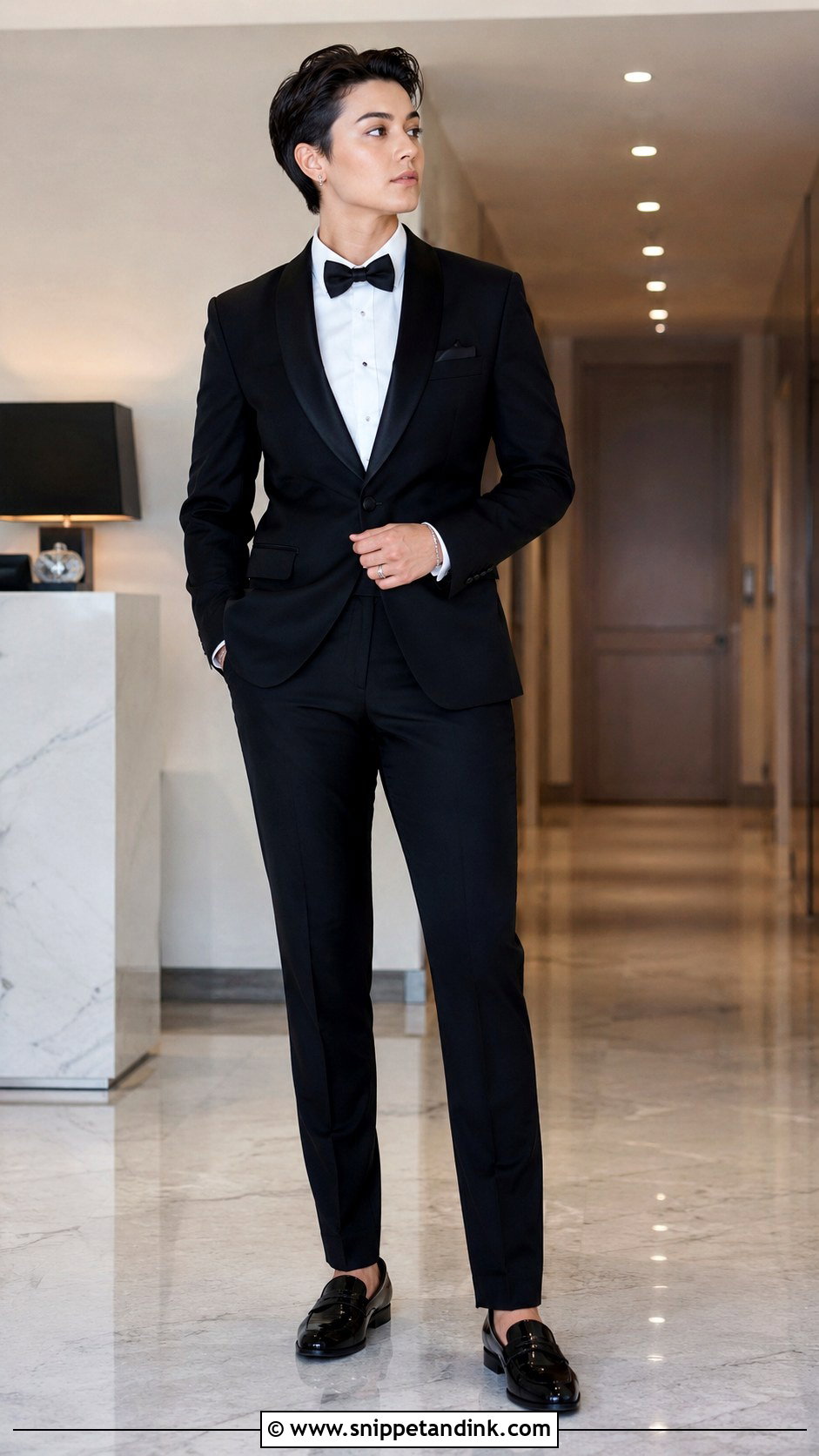
I love a tux on someone who’s never been allowed to wear one. Black, white, midnight or a jewel-tone tux with satin lapels with tailored trousers and a clean dress shirt is the frame; a bow tie, slim tie, open collar or silk scarf at the neck sets the tone. If the full uniform feels stiff, a soft silk blouse under the jacket changes the whole mood and drops the cummerbund without anyone missing it. Patent loafers or velvet slippers suit a hotel ballroom far better than the shoes that came with a rental.
3. Queer Wedding Jumpsuit Outfit
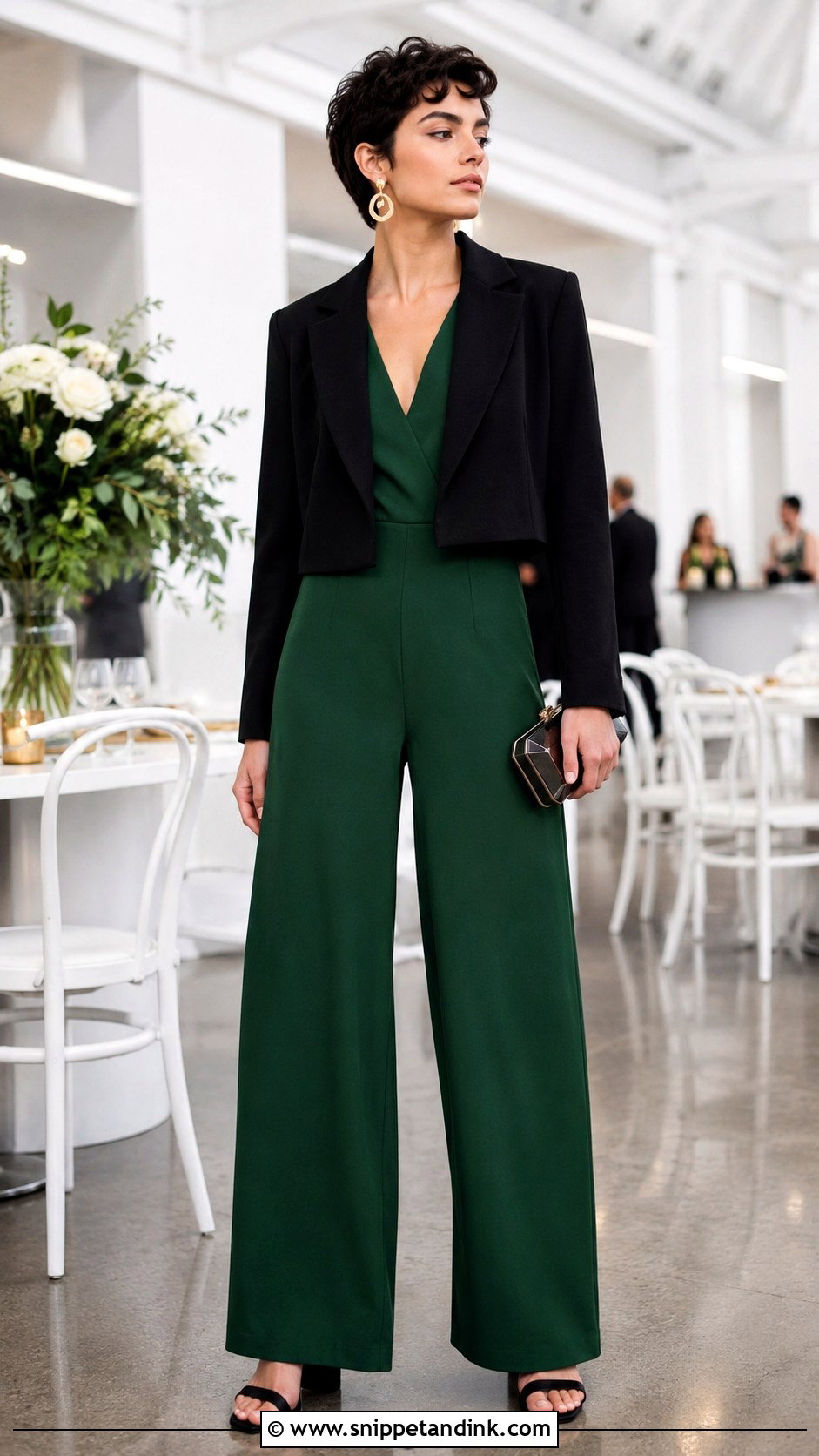
Jumpsuits solve the dress question in one piece, but they bring a problem nobody mentions until the reception: the bathroom. Check how it opens. A back zip you can’t reach alone, or a halter that has to come fully undone, gets old fast. Crepe holds its shape best; a wide leg and a defined waist suit most bodies. Black is easy, while cobalt, emerald, rust or plum feel more like a wedding. A cropped blazer dresses it up for a formal ceremony, and block heels or platform loafers keep you on the dance floor.
4. Queer Wedding Vest And Trouser Outfit
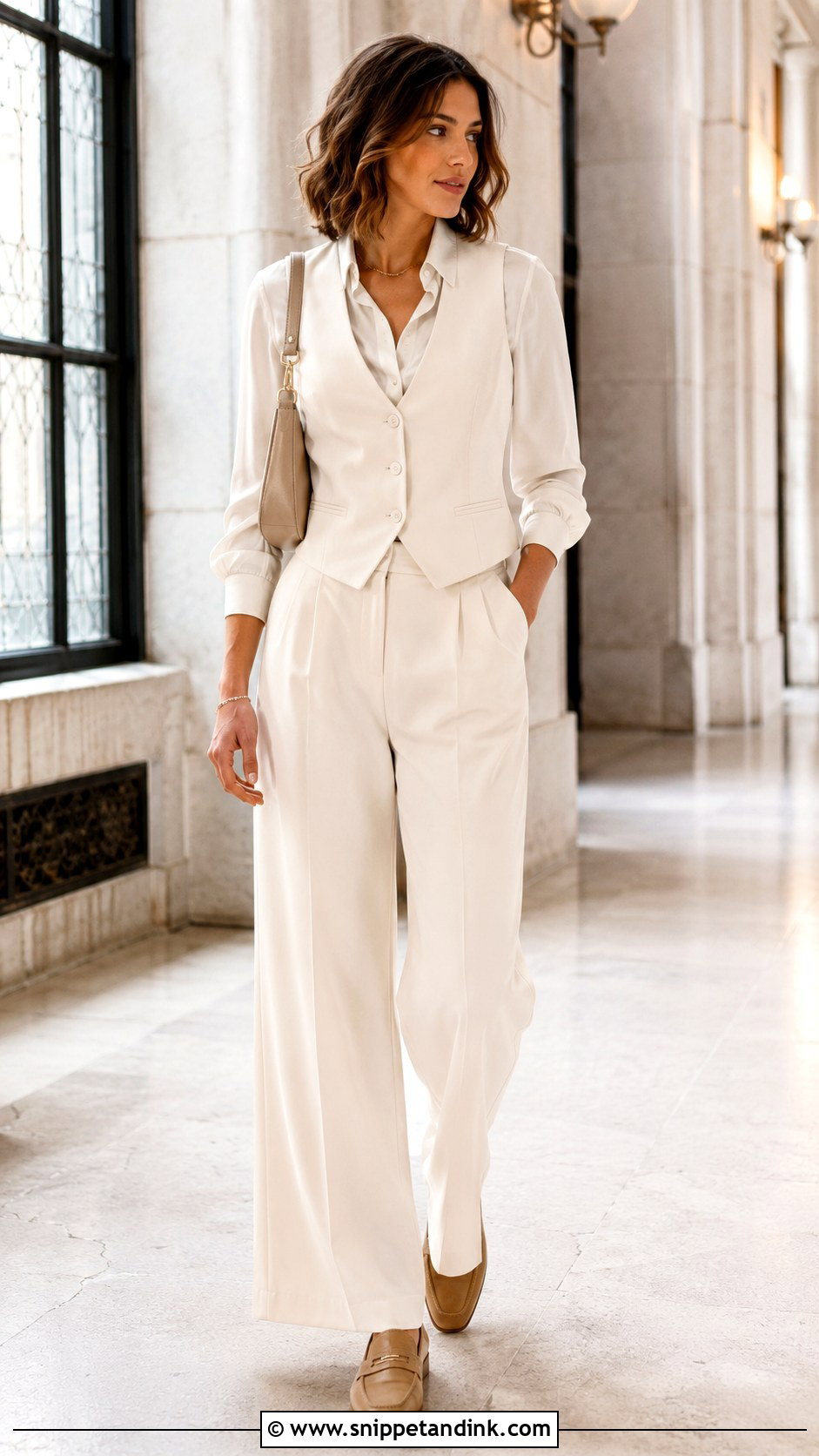
A waistcoat with matching wide trousers is the outfit I suggest to people who run hot. You get the formality of tailoring without the jacket. Wear a shirt under it for a church or a family-heavy crowd; worn alone, it’s better at a relaxed or warm-weather wedding where the setting allows it. Linen for daytime, wool or crepe for evening. The vest has to fit closely through the back, or it gapes at the armholes when you sit. Loafers, a small shoulder bag and a fine chain keep it neat for a courthouse or a modern reception.
5. Queer Wedding Blazer Dress Outfit
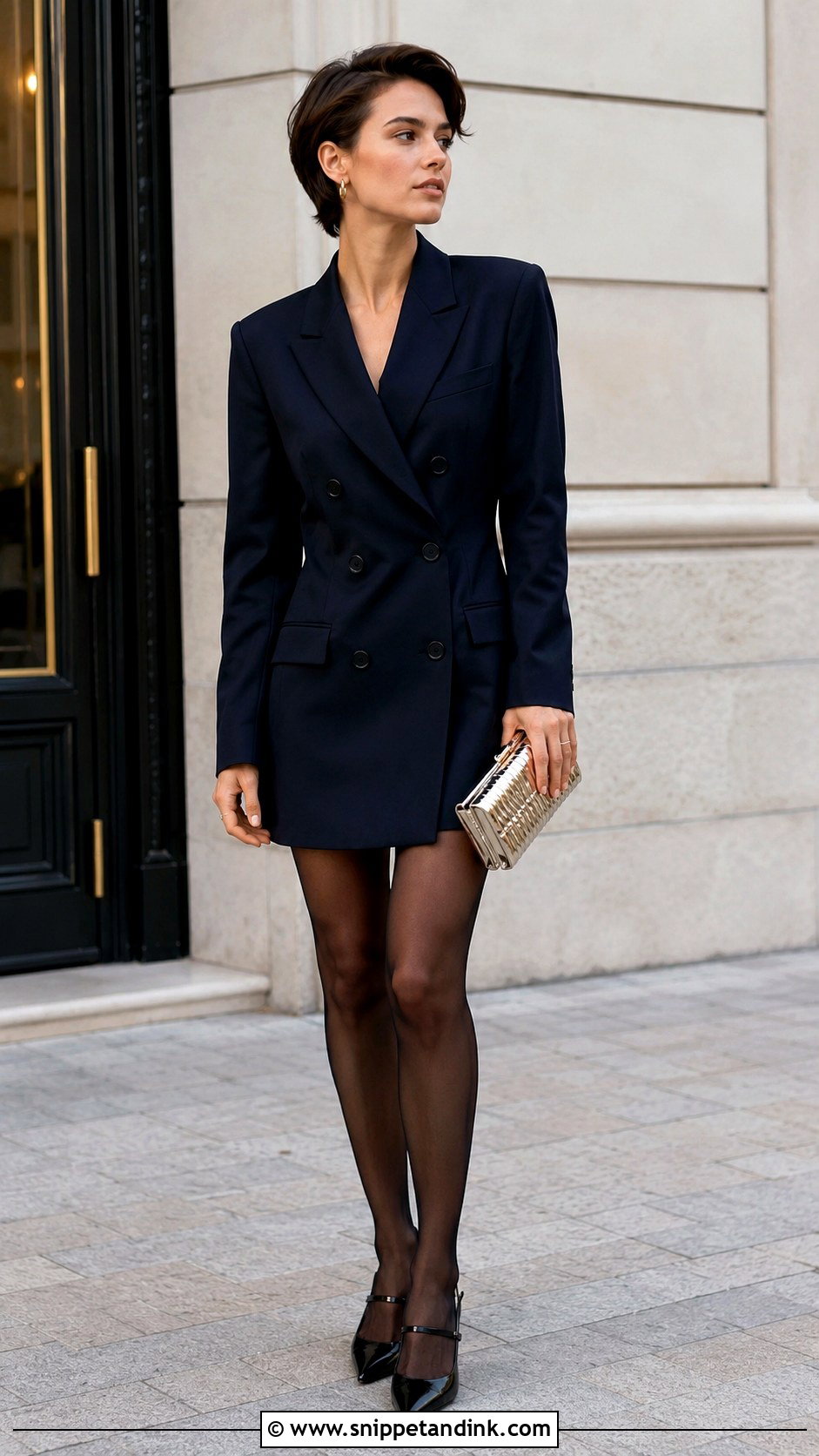
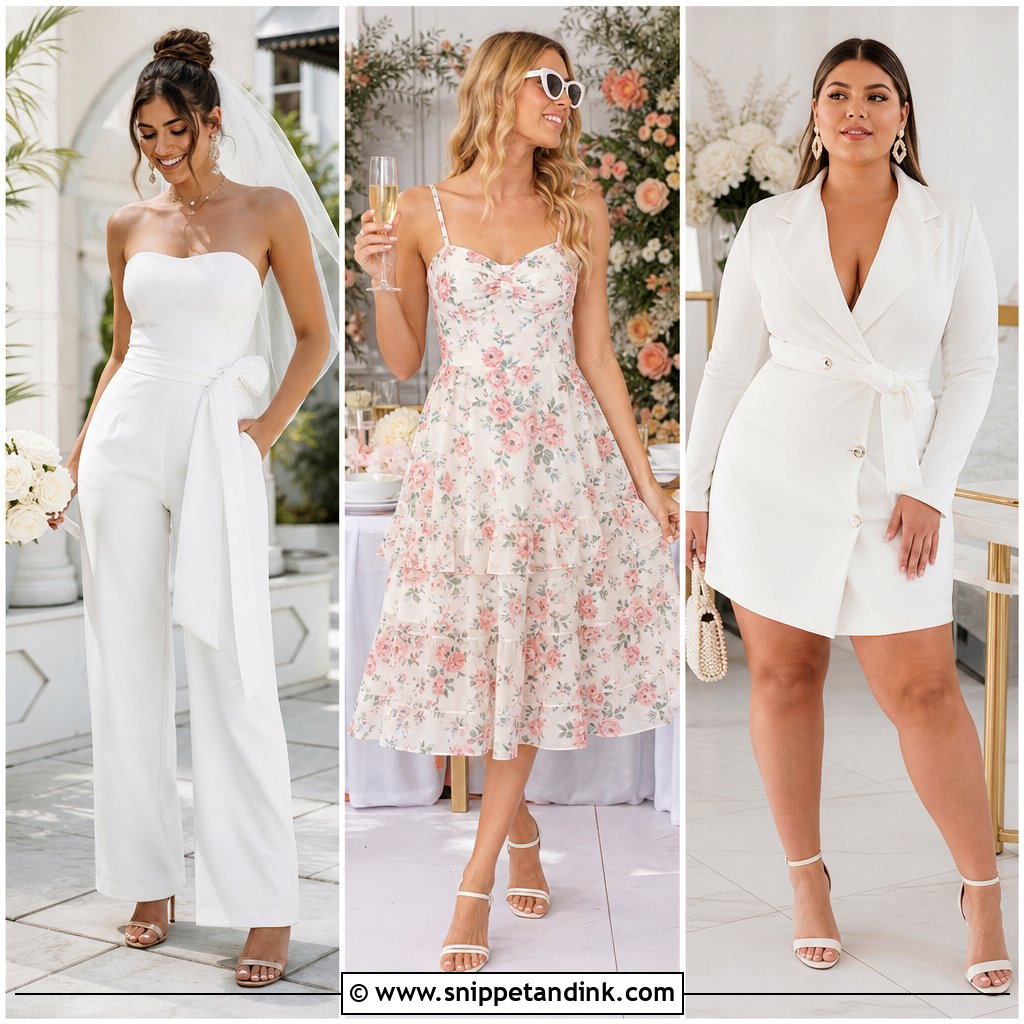
A blazer dress is structured on top and gives you legs underneath, which makes it a favorite with clients who like both. Double-breasted in black, ivory, forest or navy is the classic. Sit down in it before you buy: blazer dresses ride up more than you’d think, and a hem that’s fine standing can be too short at a dinner table. Sheer tights carry it into autumn; bare legs and sleek shoes suit summer. When the buttons and lapels are strong, leave the jewelry small.
6. Queer Wedding Two Piece Set Outfit
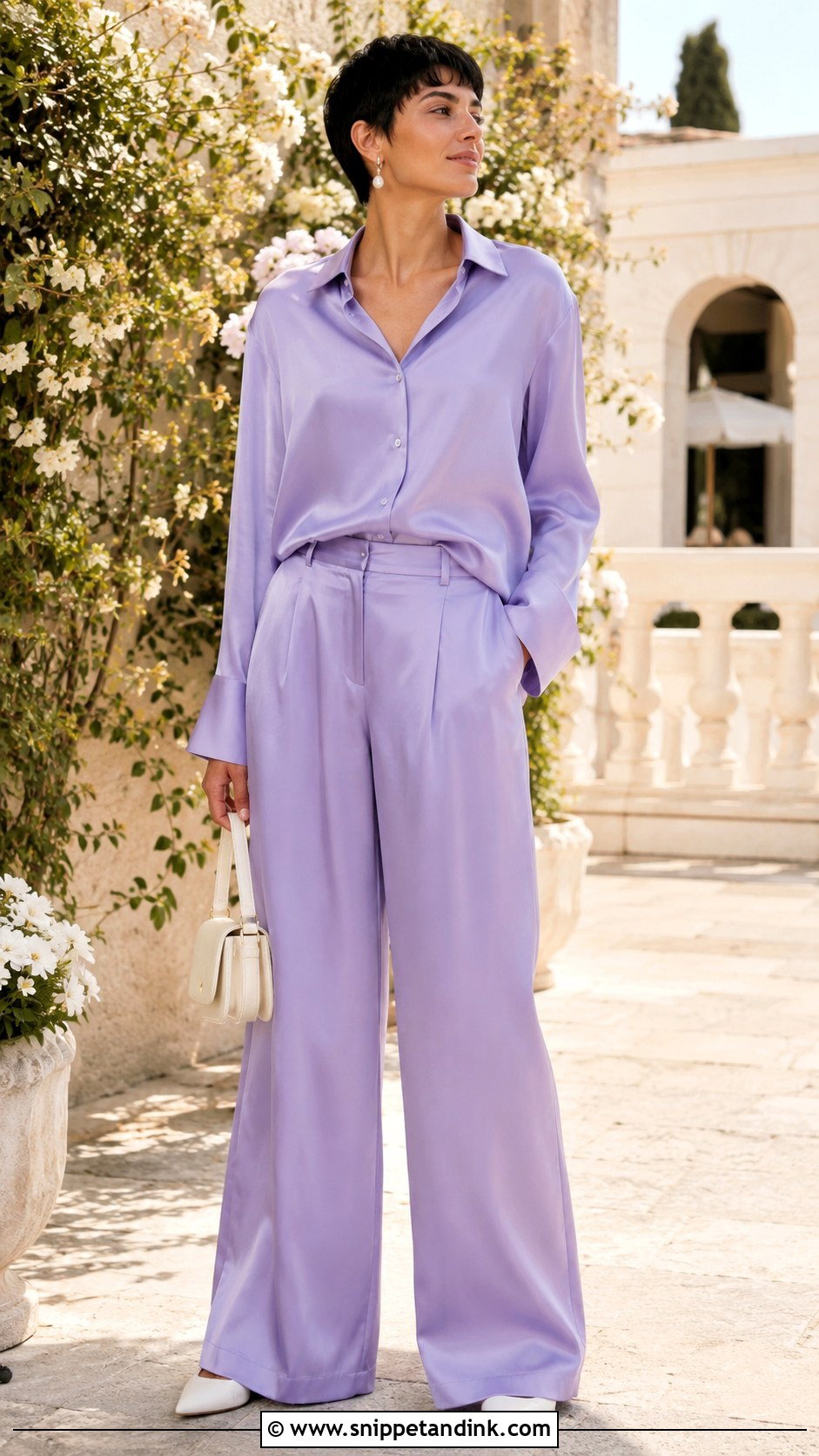
Matching sets look planned with almost no effort, and they’re usually kinder to wear than formalwear. A satin shirt and trousers, a cropped jacket with a midi skirt, or a vest and wide-leg pant all work. Fabric decides the formality: satin and metallic texture for evening, pastel crepe or linen for a spring afternoon. One thing I always point out is that sets are a smart buy, because you’ll wear the pieces separately for years. Clean shoes, a structured bag and one statement piece finish it.
7. Queer Wedding Slip Dress Outfit
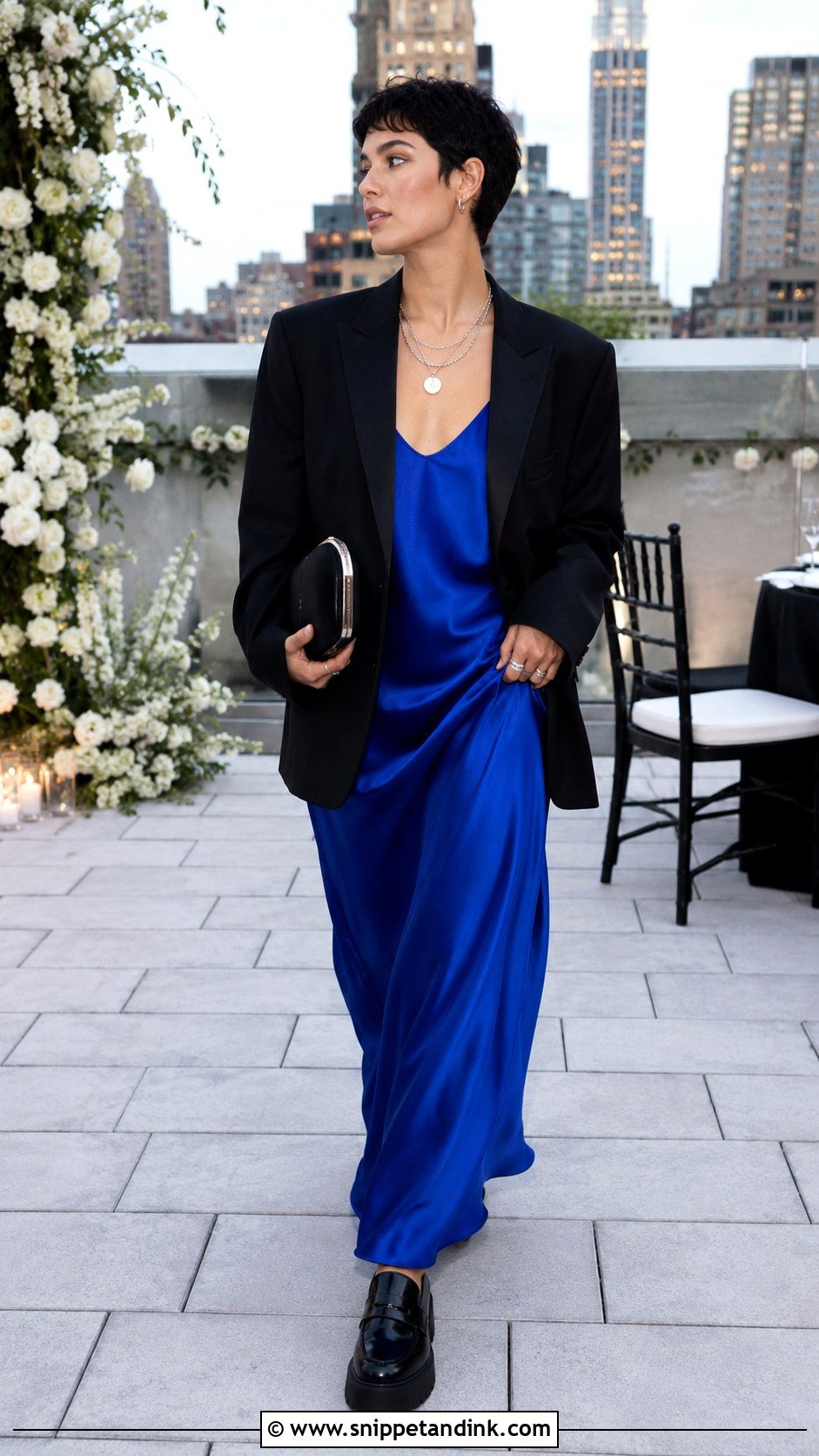
A slip dress on its own can read fragile, so I usually ground it with something structured. An oversized suit jacket, lace-up boots or loafers turn it from delicate into deliberate. Cobalt, chocolate, olive, silver or deep red all look strong in bias-cut satin. Satin does show every line and every crease from sitting, so try it seated, and choose a heavier weight if you can. For more coverage, a sheer long-sleeve top underneath is a good trick. It suits rooftops and summer cocktail weddings best.
8. Queer Wedding Midi Dress Outfit
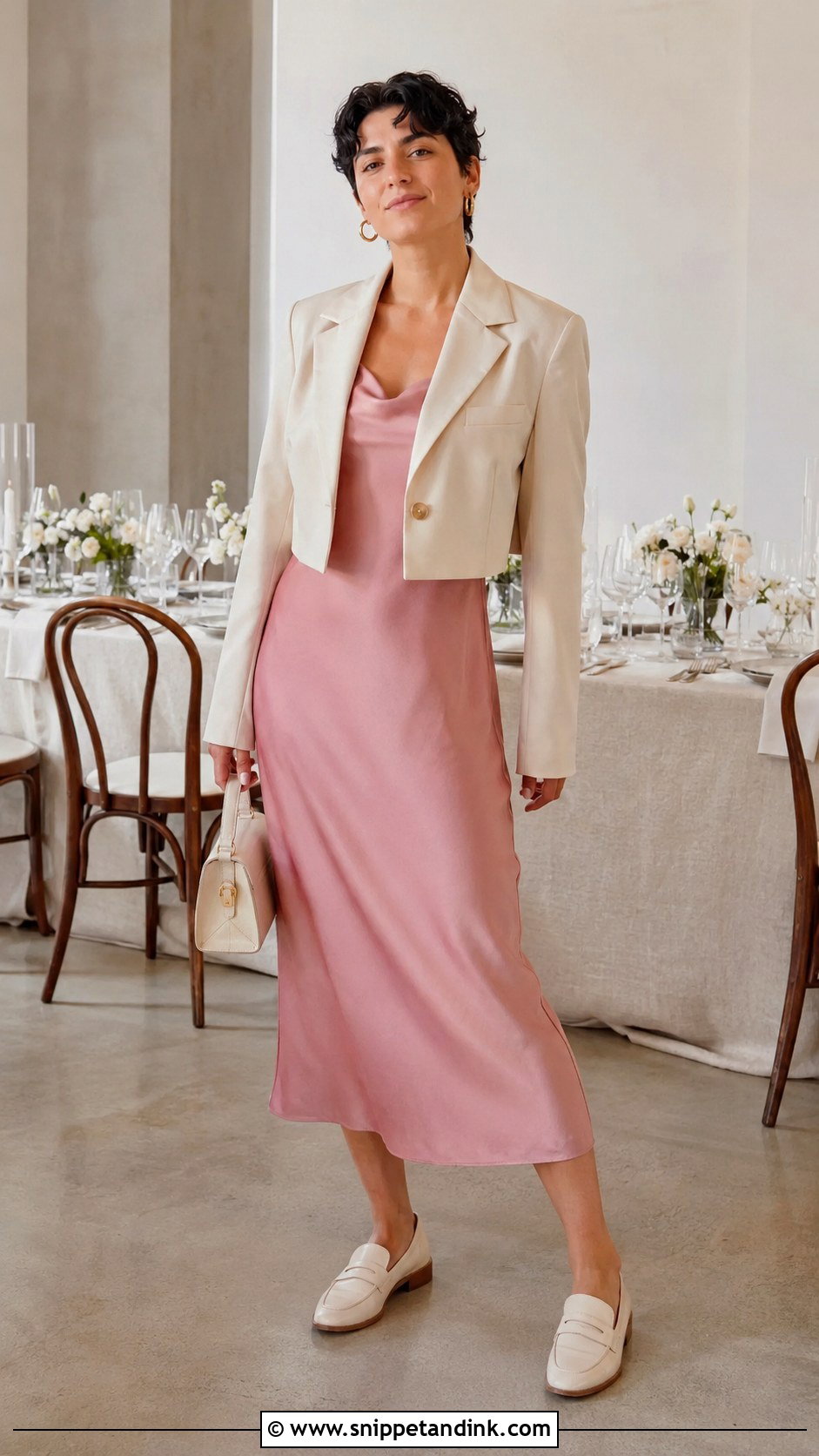
Midi dresses are the safe pick, and safe isn’t a criticism. The interest comes from the cut and what you pair it with: a bias satin midi, a square neck, a pleat or a wrap. To pull it away from the obviously feminine, I add a boxy blazer or chunky loafers; to lean into softness, pearls and a metallic heel. The midi length is practical for garden venues because it clears damp grass, and you can sit, dance and climb steps in it all day without hitching anything.
9. Queer Wedding Maxi Skirt Outfit
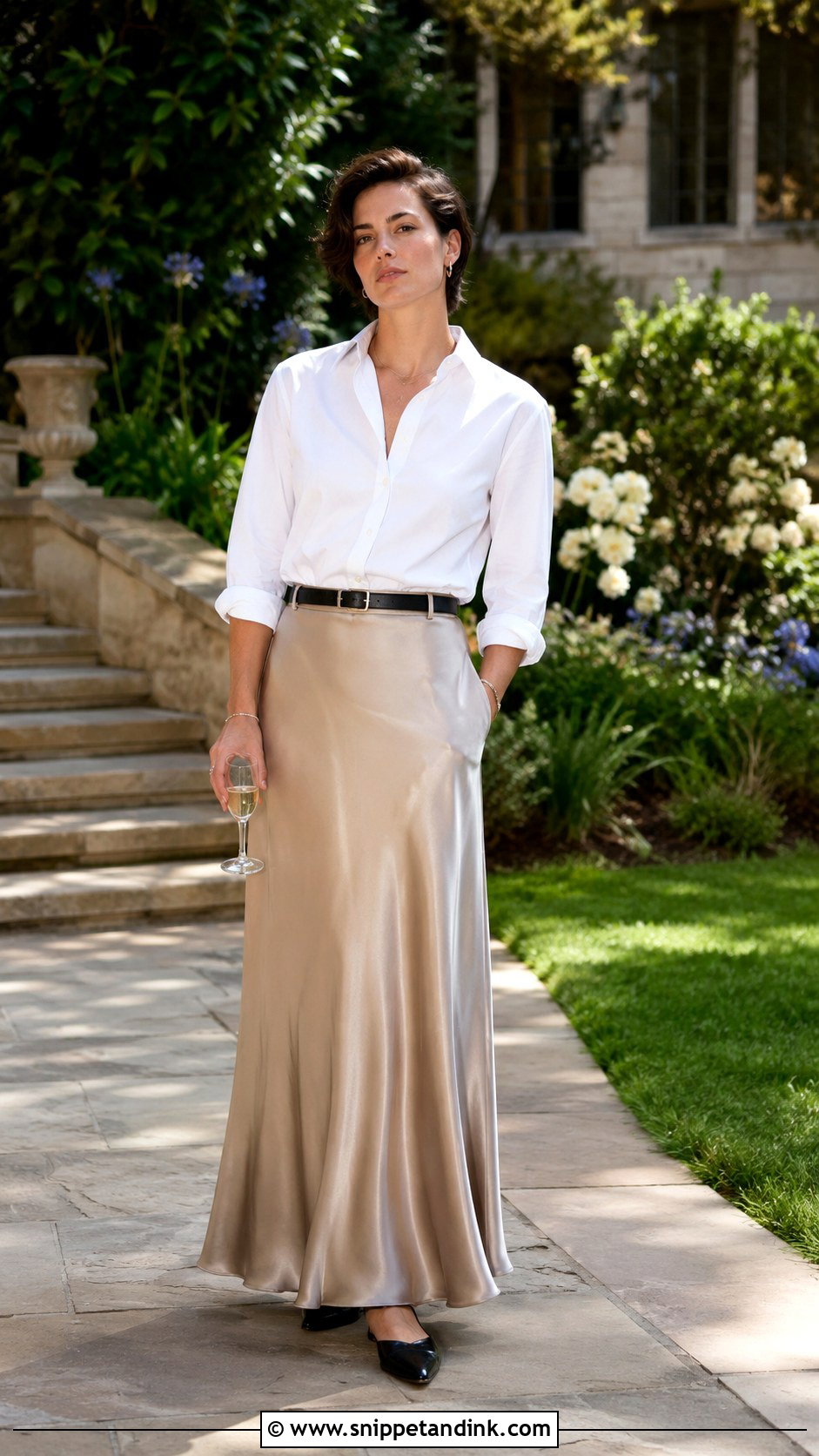
A maxi skirt with a tailored top is one of my favorite ways to dress someone who wants drama without a gown. Satin, tulle, pleats or a straight column skirt all pair well with a crisp shirt, a fitted vest or a cropped blazer. Tuck the top cleanly and keep the waistline sharp; once it goes baggy at the middle, the outfit slides toward casual. One color top to toe looks especially polished. Check the length with your actual shoes on, because a maxi that drags catches heels on stairs.
10. Queer Wedding Wide Leg Pants Outfit
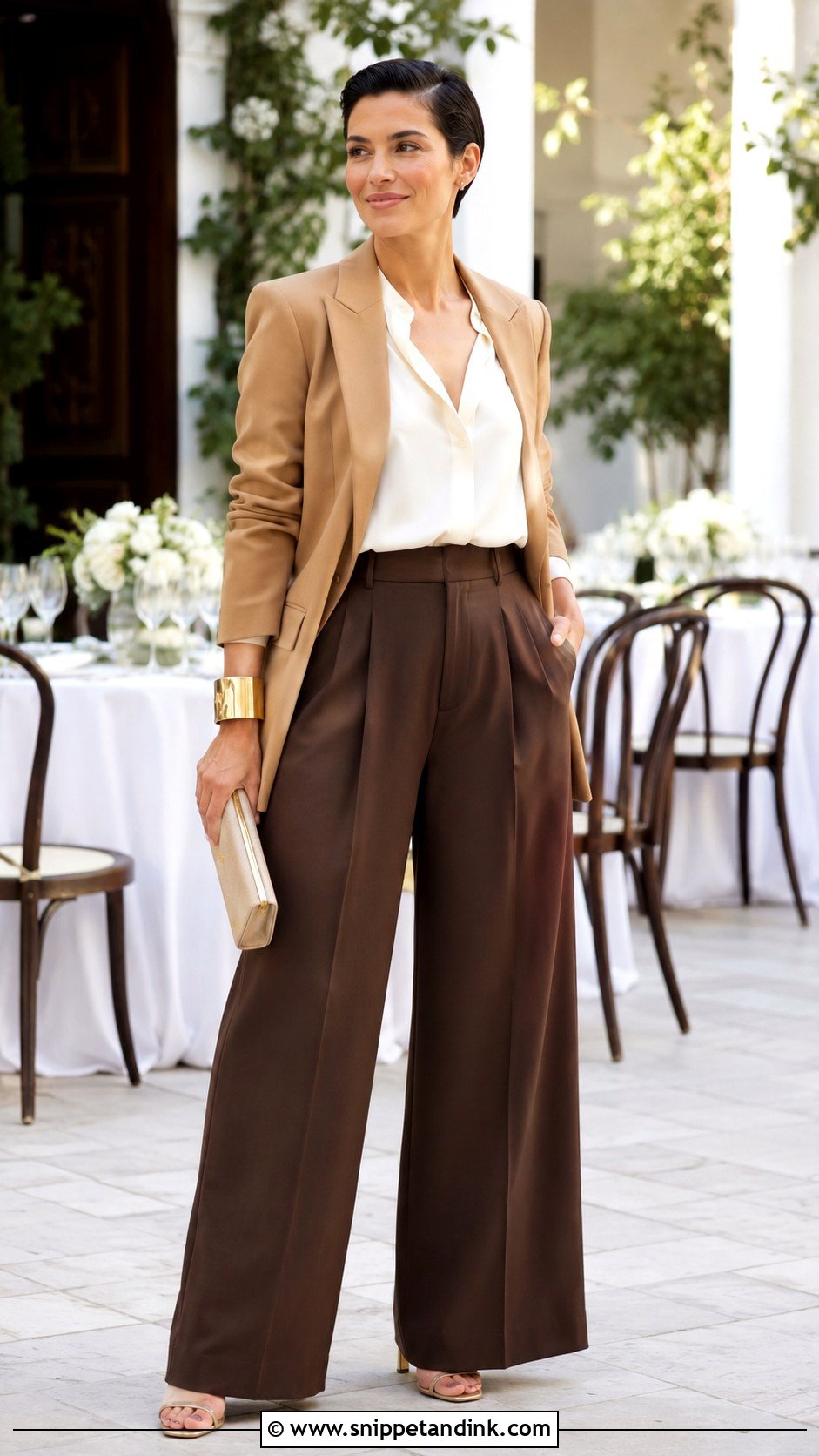
Wide-leg trousers move across many gender expressions with almost no adjustment. High-waisted satin, crepe, linen or light wool, paired with a silk blouse, a tank and blazer, or a tailored vest. My rule with very wide legs is a clean, slightly pointed or sleek shoe, otherwise the hem swallows your feet and you look shorter than you are. Hem them for the shoes you’ll actually wear, just skimming the floor. They’re a good choice for outdoor weddings where a short hem would blow around or a tight dress would be miserable.
11. Queer Wedding Colorful Suit Outfit
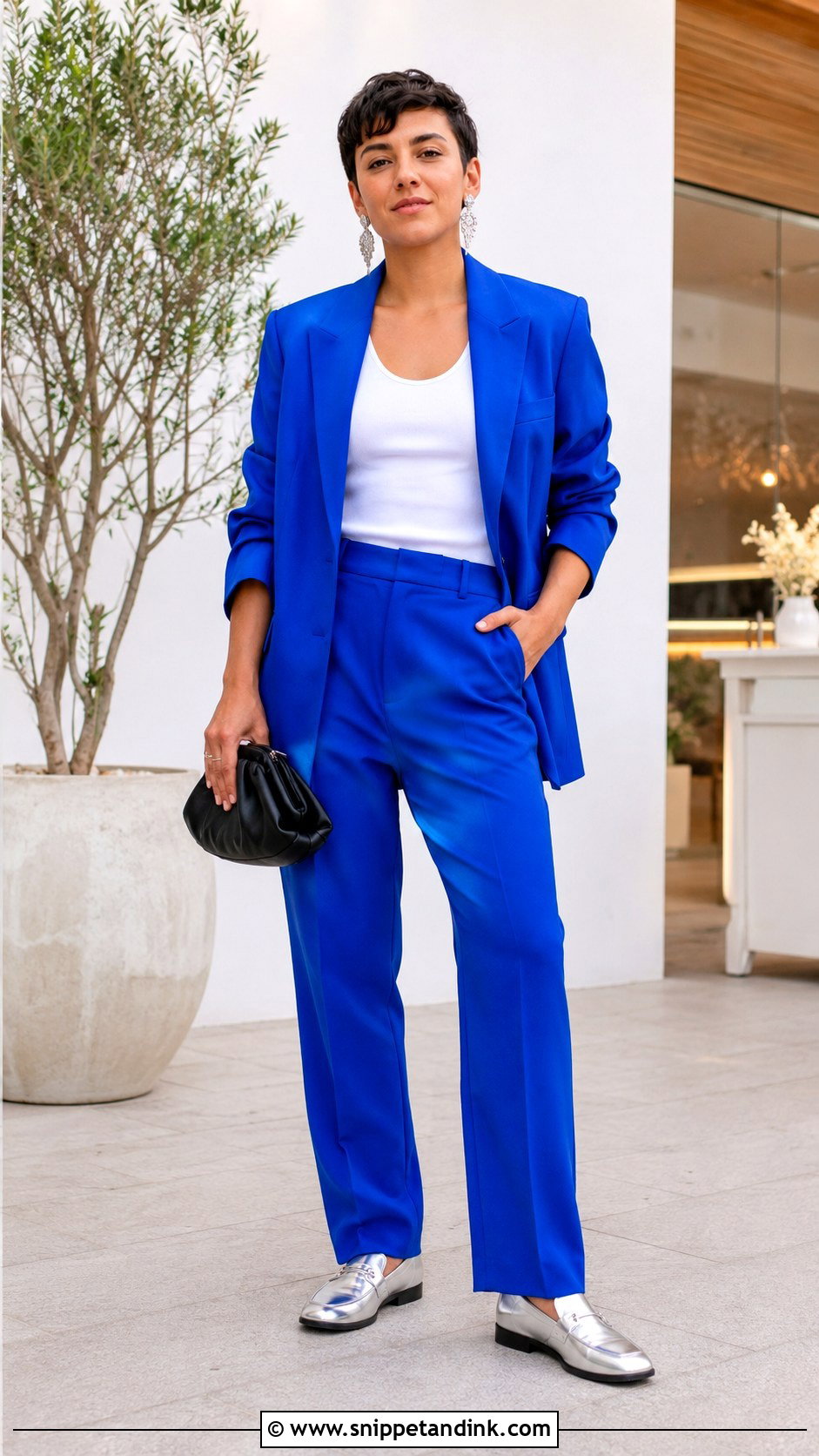
A colored suit says celebration without needing a single accessory. Cobalt, magenta, emerald, marigold, lavender or mint all work, as long as the cut is clean; a bright color on a sloppy fit is what tips it toward costume. Underneath, keep it plain with a simple shirt or a tonal tank. Neutral shoes calm a bright suit, while matching shoes make a stronger fashion statement. I like one accessory that ties back to the wedding palette, a pocket square or earrings, and then letting the suit carry the rest.
12. Queer Wedding Floral Suit Outfit
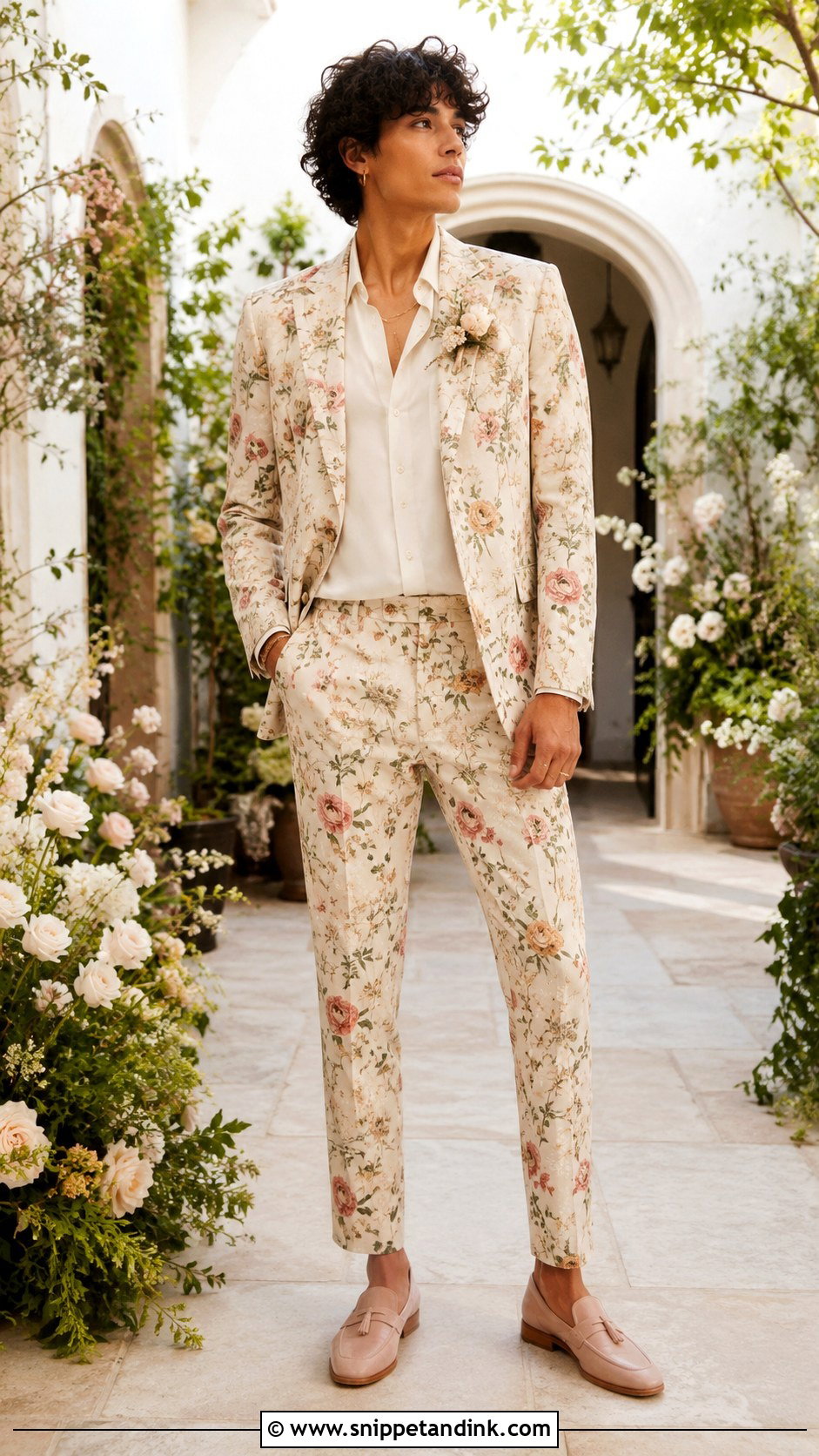
Floral suits belong at garden weddings and spring ceremonies. If a full print feels loud, wear the floral jacket with plain trousers, or choose a jacquard where the flowers are woven tone on tone, which shows up close and stays quiet across a room. Cream, blush, sage, navy or black grounds are easier to wear than very busy backgrounds. Keep the shirt plain. Prints also hide small spills and creases better than solids, which is a real advantage at an outdoor reception.
13. Queer Wedding Velvet Suit Outfit
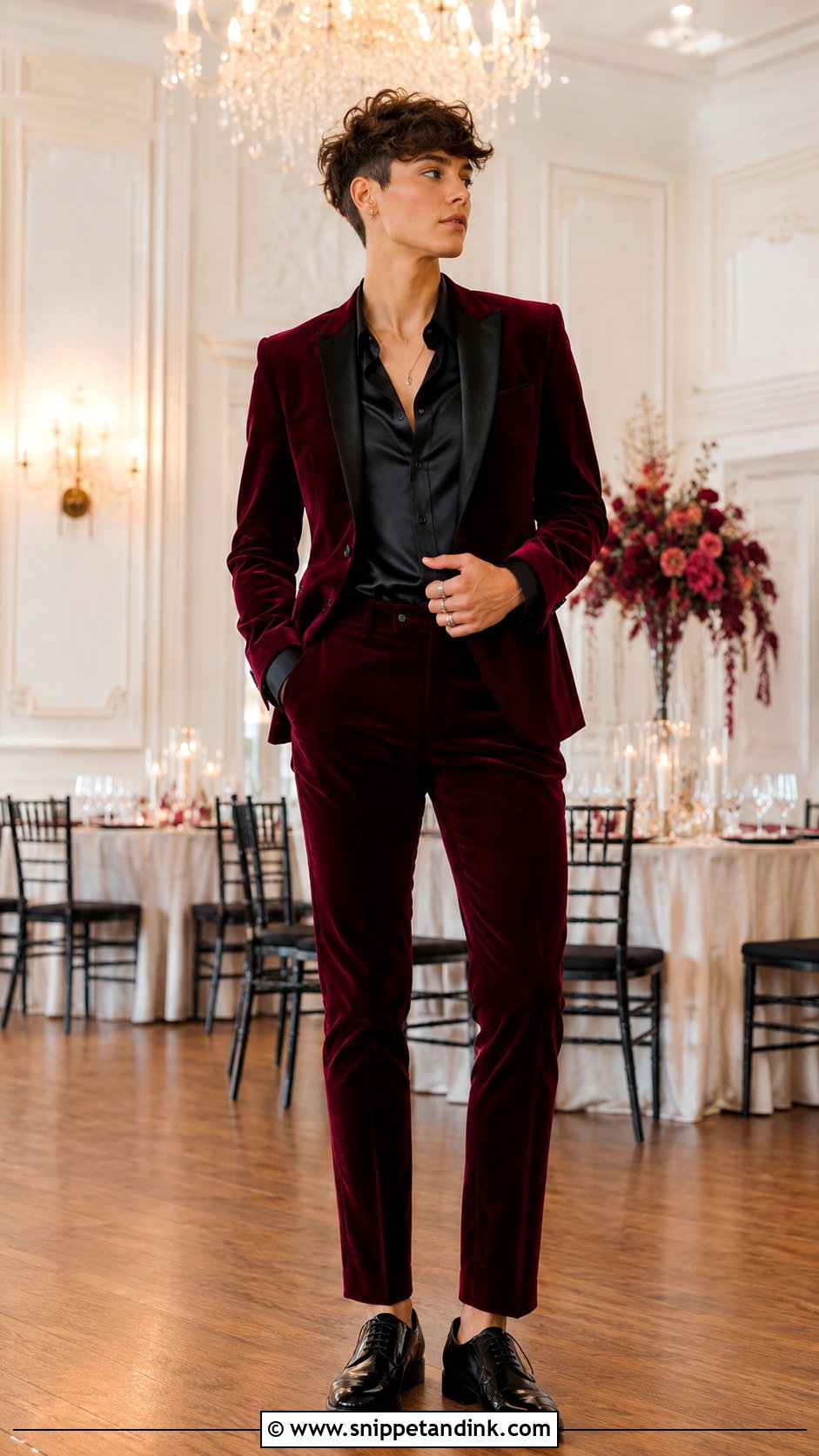
Velvet is a cold-weather fabric, full stop. In a warm summer marquee it’s sweltering, but at an autumn or winter evening wedding it looks rich and feels comfortable. Black, burgundy, emerald, navy, plum or chocolate, worn with a satin shirt or a fine knit. Velvet crushes where you sit and lean, so hang it in a steamy bathroom the night before rather than ironing it, which flattens the pile for good. Keep accessories few, since the fabric is already doing the work, and choose patent shoes or velvet loafers for a black-tie optional crowd.
14. Queer Wedding Linen Suit Outfit
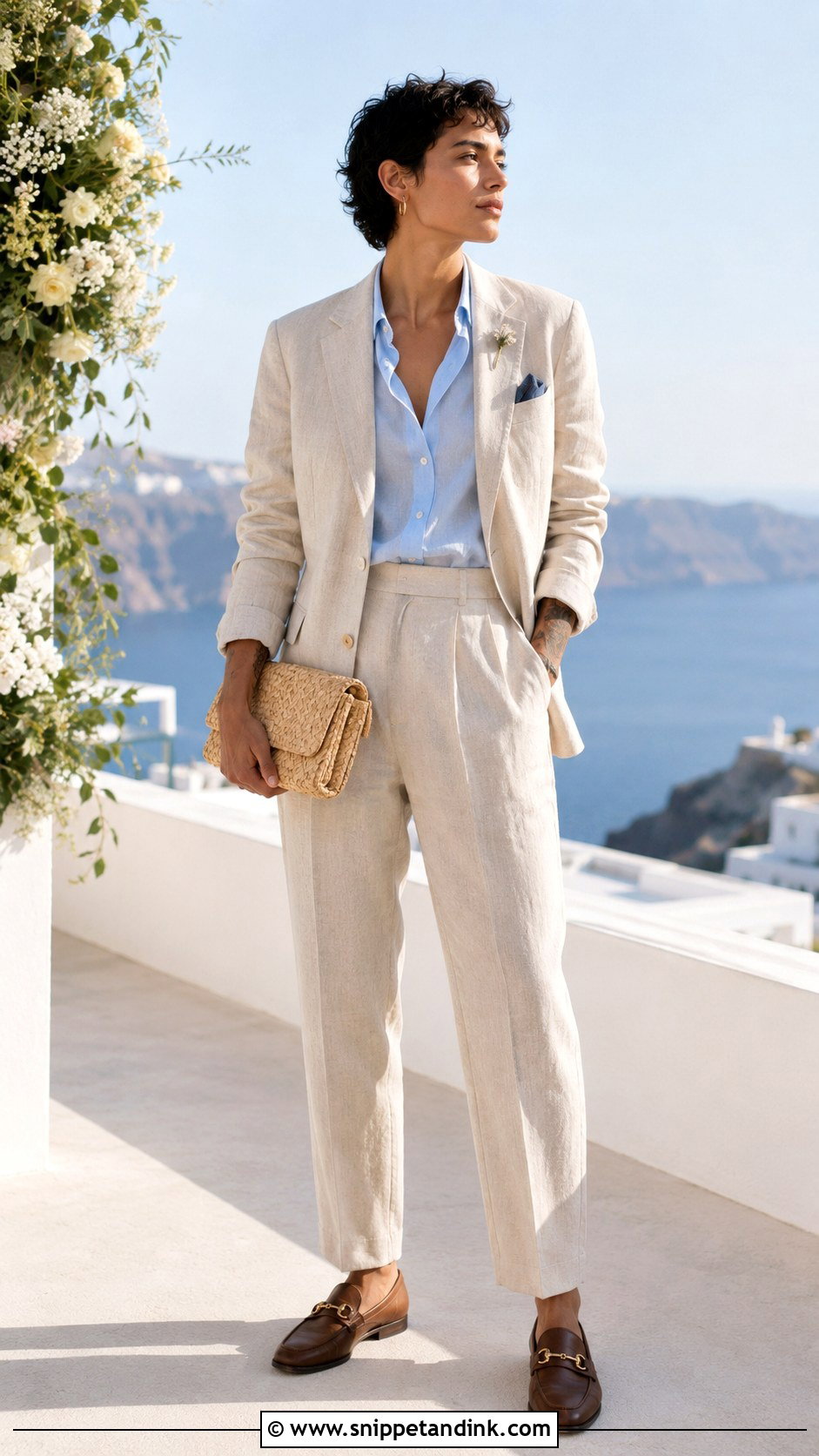
Linen is the right answer for a beach, a courtyard or a hot destination wedding, as long as you accept that it will crease. I tell clients to stop fighting it: a linen suit that looks lived in by the reception is meant to. A linen and wool or linen and silk blend wrinkles much less if that bothers you. Cream, tan, sage or soft blue keep it airy. A relaxed blazer with pleated trousers, a breathable shirt or silk tank and loafers or dress sandals finish it. Espadrilles only if the dress code is genuinely relaxed.


15. Queer Wedding Black Dress Outfit
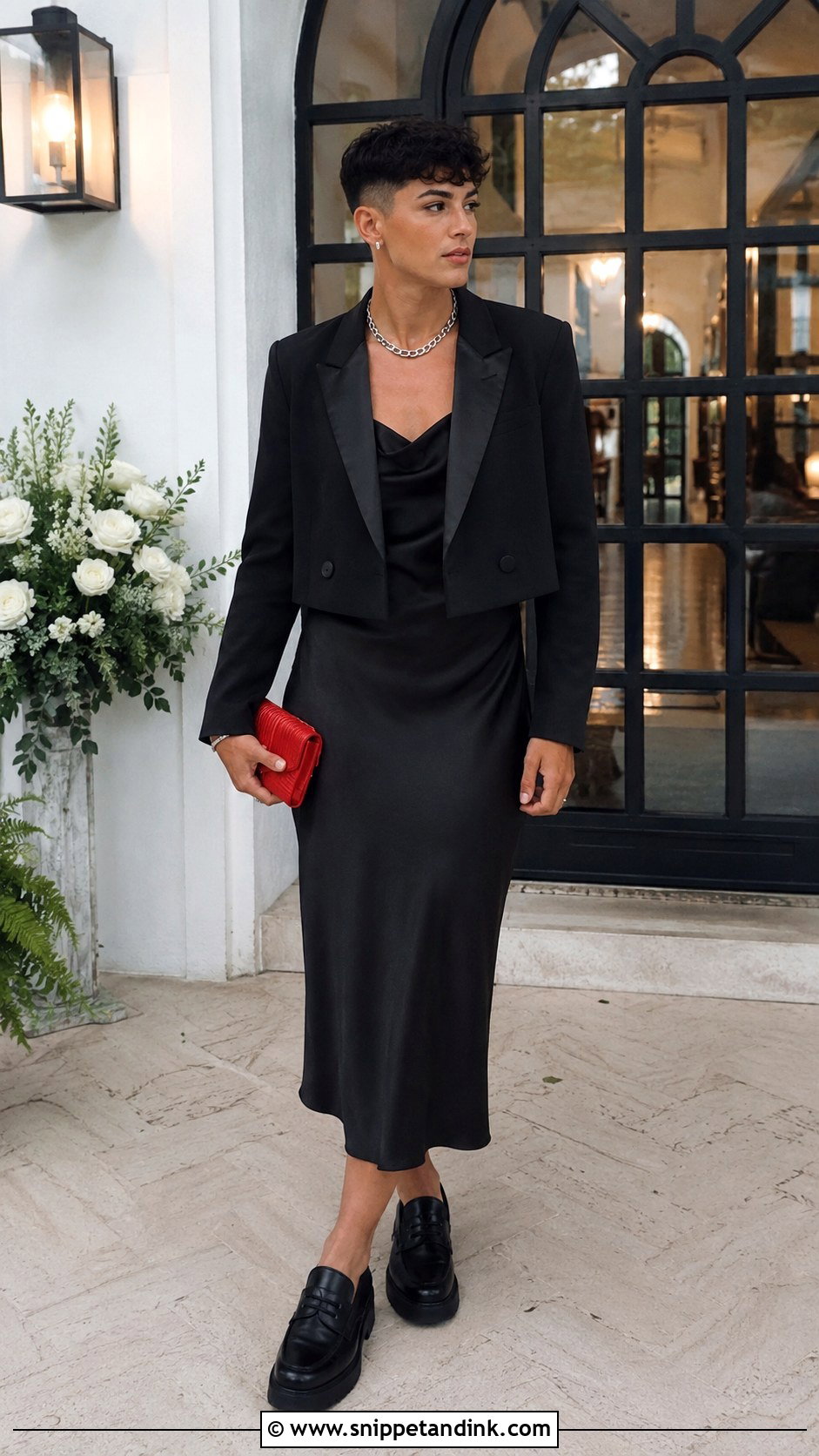
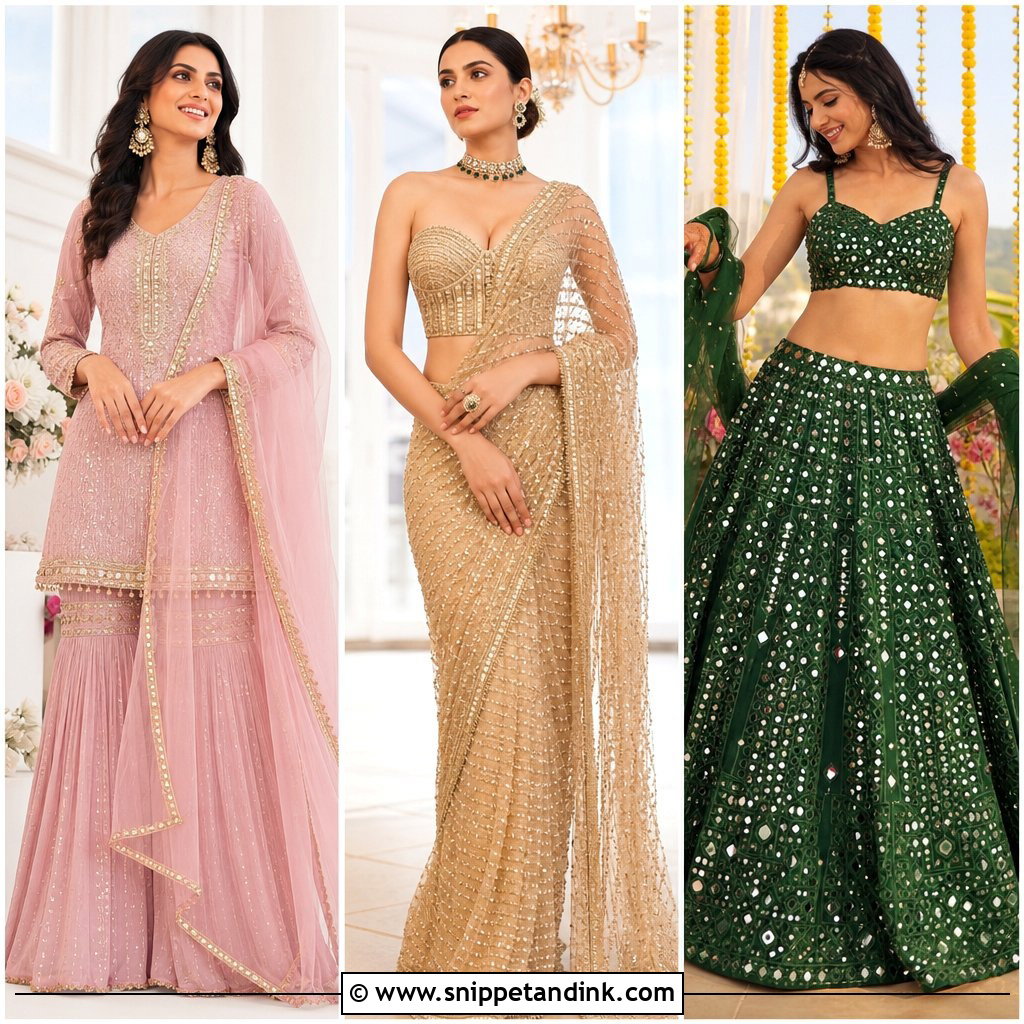
Black at a wedding is fine at most evening events today, but read the room first. Some families still see it as mourning, especially at a daytime or religious ceremony, so I’d ask the couple if you’re unsure. To keep it festive, add metallic shoes, colored earrings or a bright clutch. A satin midi, a structured column or a one-shoulder maxi work best. Styled with chunky loafers, a cropped tux jacket or layered chains, it moves toward a more queer-coded look that suits city venues and cocktail dress codes.
16. Queer Wedding White Suit Outfit
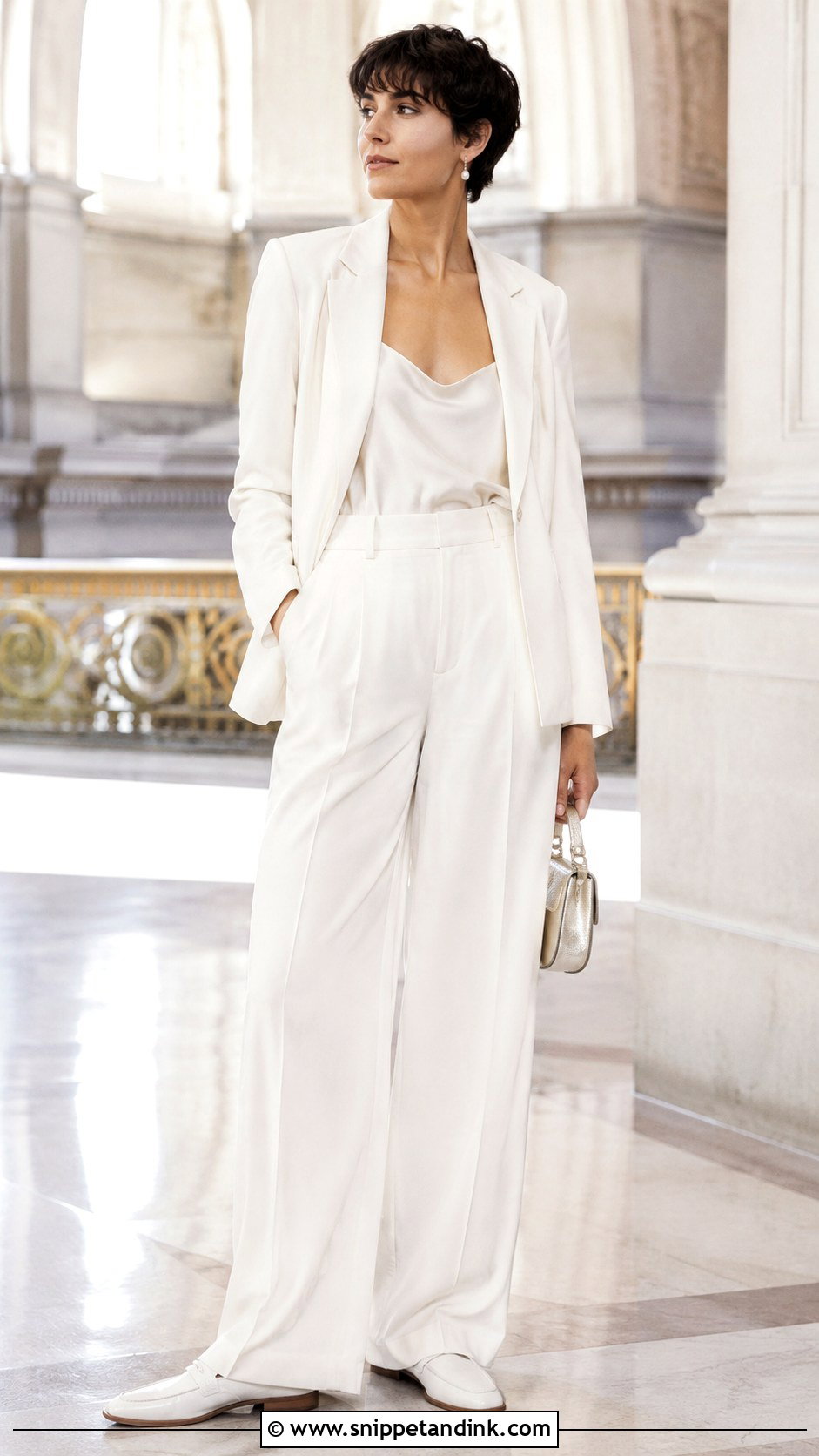
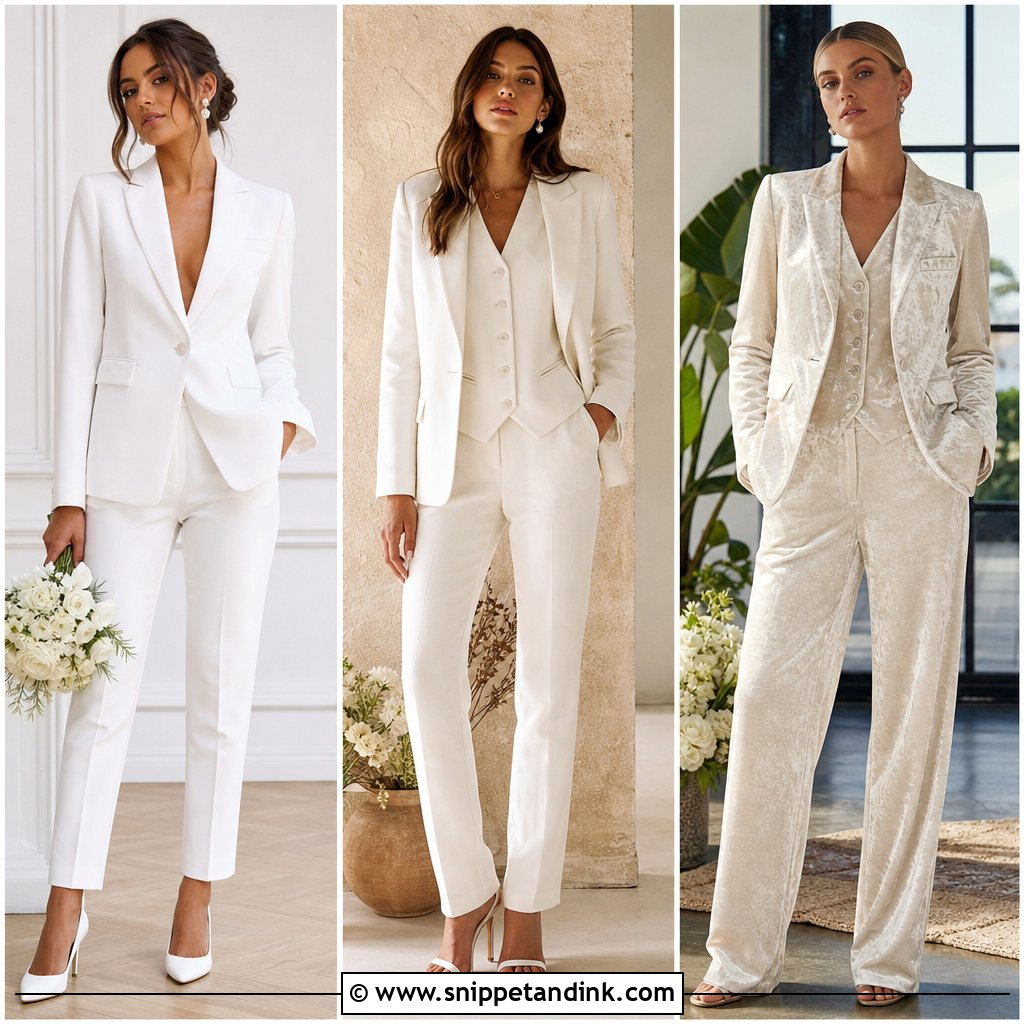
A white suit is a showstopper, and that’s exactly the problem for guests. Unless the couple has said white is welcome, leave it for them. For the couple, the wedding party or a courthouse ceremony, ivory, cream or pearl white with a silk shirt, a vest or a lace top looks fresh and confident. Get it fully lined, because unlined white fabric shows pockets and seams in flash photos. Pearls soften it; a black bow tie sharpens it. Carry a stain pen, since a white suit and red wine meet at almost every wedding.
17. Queer Wedding Skirt Suit Outfit
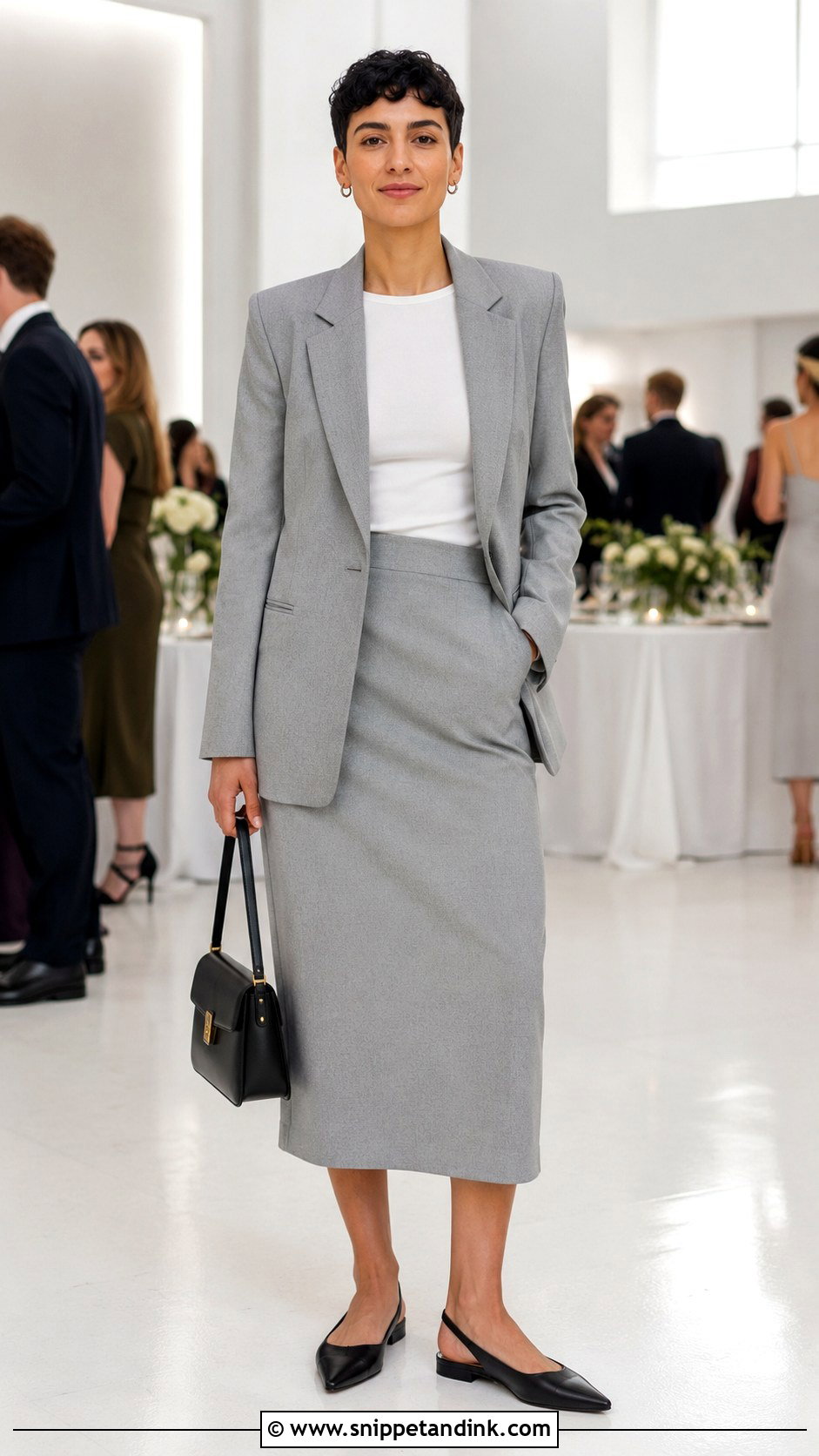
A skirt suit lets you change the gender balance entirely through what’s below the knee. The same blazer and midi skirt look one way with slingbacks and quite another with loafers or boots. Tweed suits daytime, satin reads dressier, and crepe works year round. Under the jacket, try a button-down, a fitted shell or a vest. Check that the skirt has a proper vent or pleat; a narrow pencil with no vent makes stairs and dancing a struggle.
18. Queer Wedding Button Down And Trousers Outfit
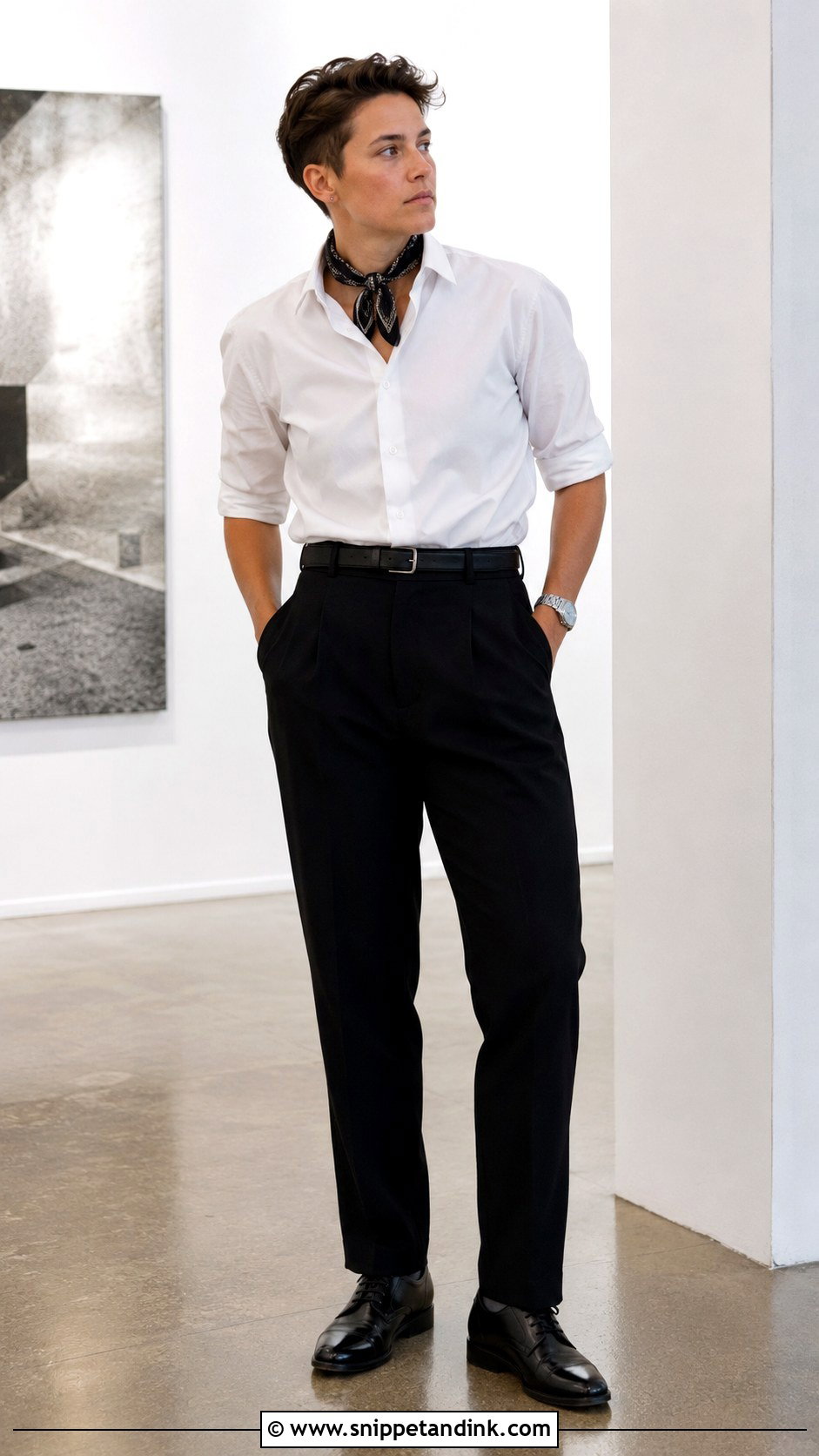
A shirt and good trousers is the outfit for people who hate fuss, and it only looks underdressed when the details are sloppy. Pressed wool, satin or crepe trousers, a sharp shirt, a clean tuck and polished shoes are the baseline. I’d steer you to a shirt with a longer back hem, which stays tucked when you dance and reach. A silk scarf, suspenders or a statement bag adds personality. If the dress code is dressier than you expected, a vest or blazer over the top fixes it in seconds.
19. Queer Wedding Bow Tie Outfit
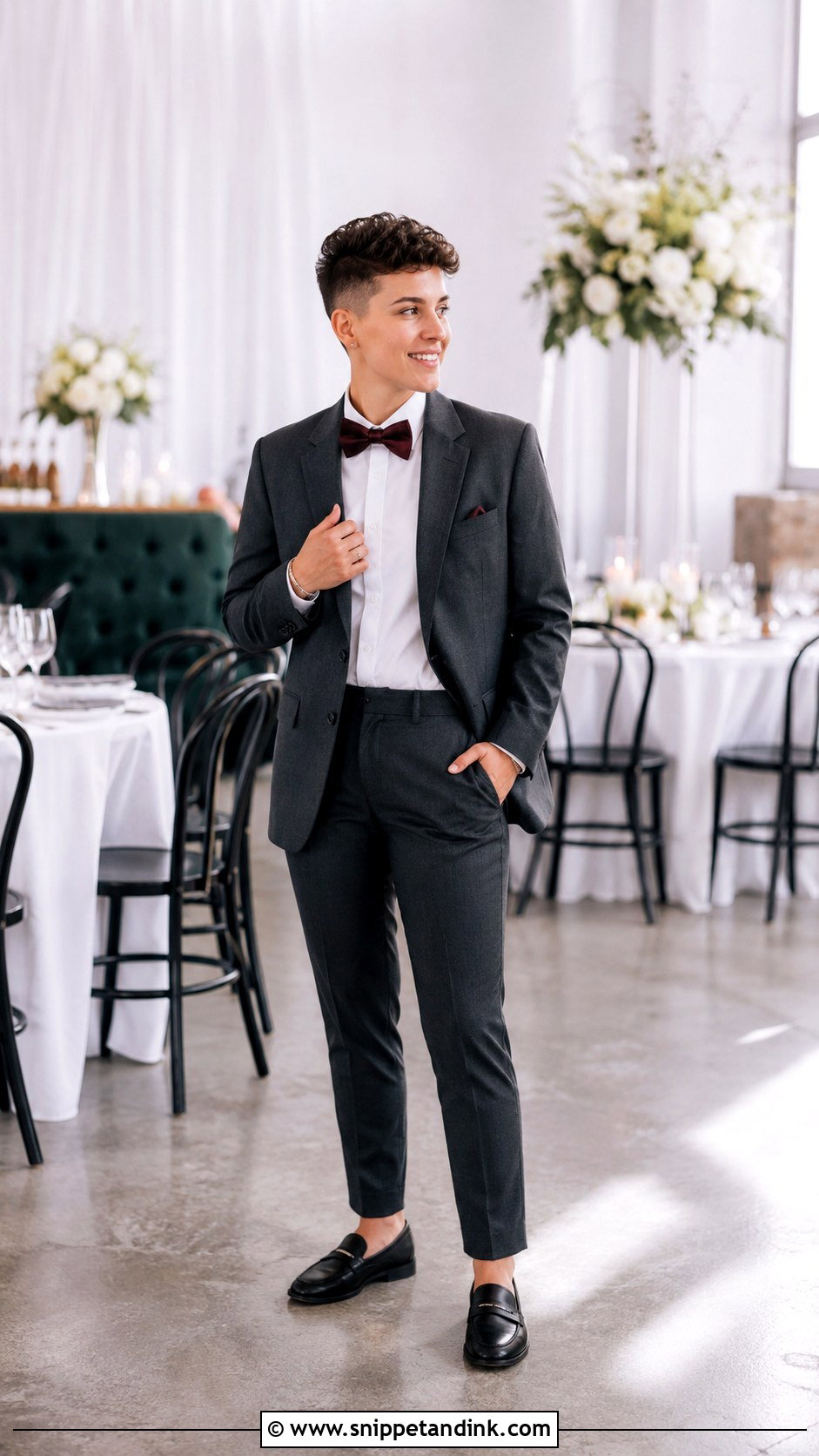
A bow tie is a small piece with a lot of personality. Black for formal; velvet, satin, floral or plaid when you want it to talk. Keep the balance: a bright tie wants a plain suit, and a neutral outfit lets the tie take over. A self-tie sits more naturally than a pre-tied one and can hang undone late at night, which looks great in candid photos. It’s a neat way to add a masc-leaning detail without wearing a full tux, and it suits wedding party members and cocktail guests alike.

20. Queer Wedding Kilt Outfit
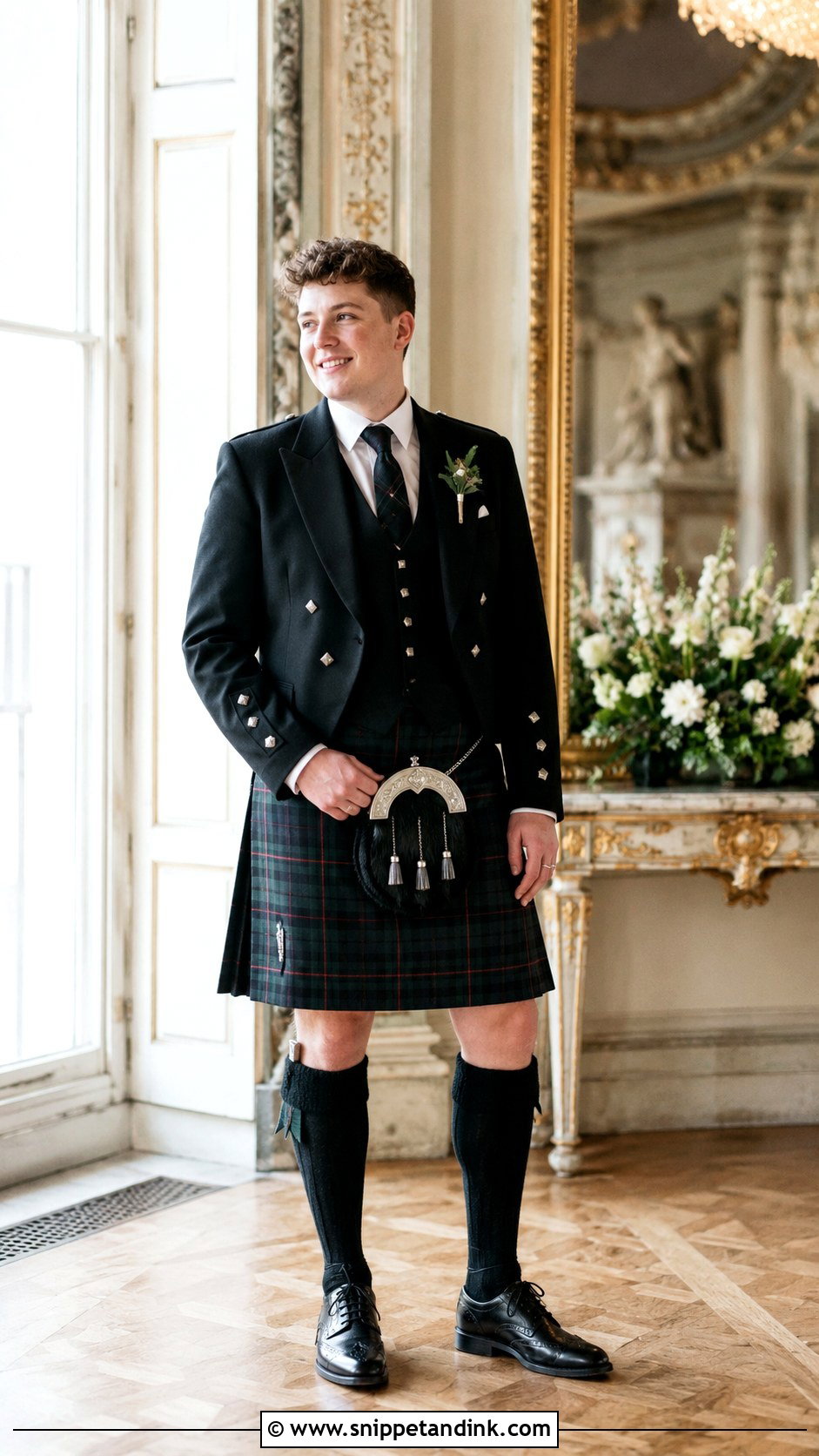
A kilt carries real meaning for anyone with family ties to it, and it suits anyone who wants formalwear outside the trousers-or-dress choice. Pair a dress kilt with a tailored jacket, crisp shirt, waistcoat, knee socks and polished shoes. A traditional tartan, a solid dark kilt or a modern pleated version all work depending on the formality. Hire kilts are measured at the waist and the length should hit the middle of the kneecap, so get measured properly rather than ordering by trouser size. Keep the accessories tidy.
21. Queer Wedding Cape Outfit
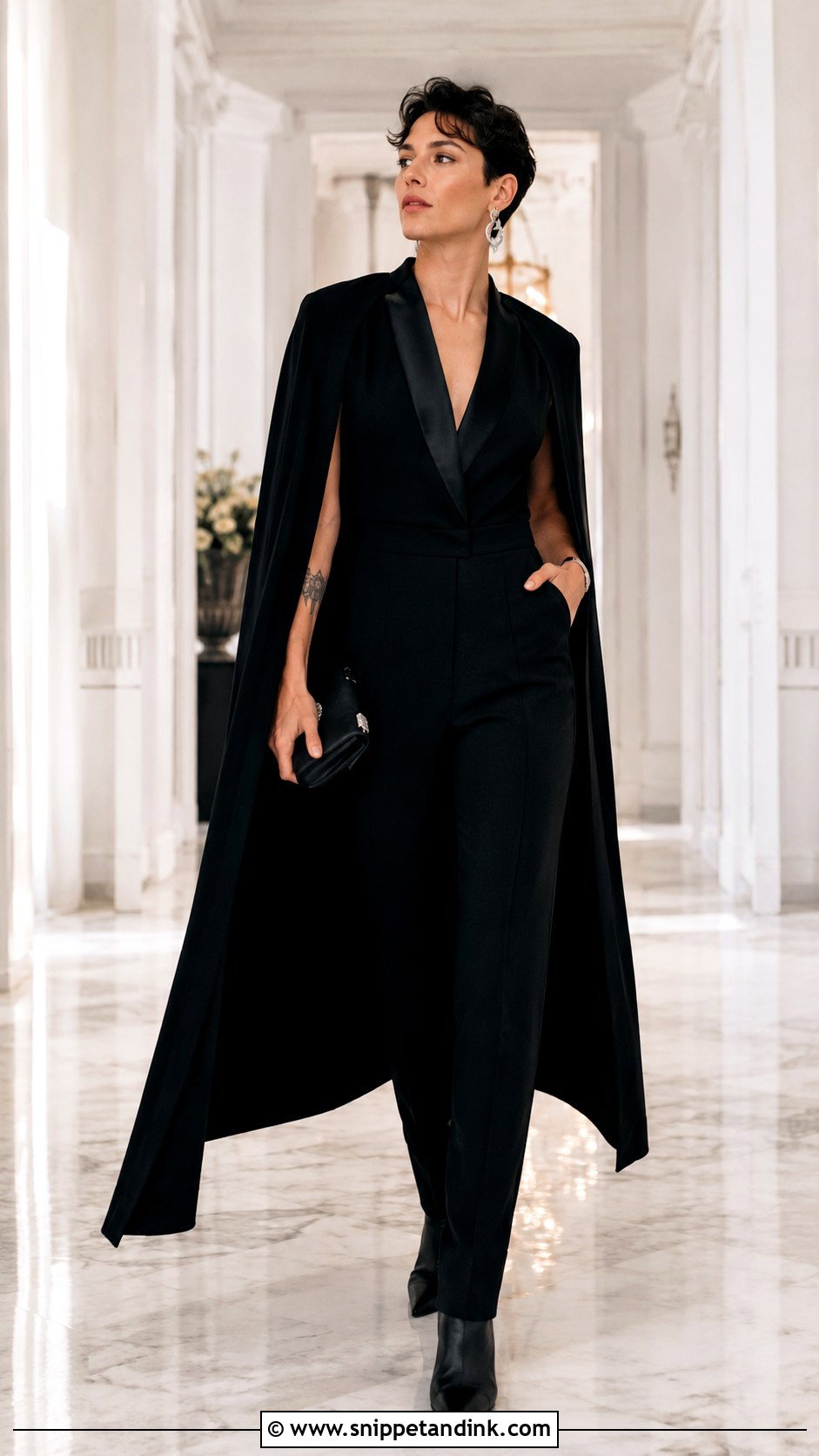
A cape gives you an entrance, and it works best over something very simple. A tailored jumpsuit with a cape overlay, a suit with a detachable cape or a plain dress with a shoulder cape all look strong in black, ivory, cobalt or emerald. Ask whether it detaches before you commit: capes look wonderful walking in and get in the way the moment you try to eat or hug. Sleek shoes and very little jewelry keep the line clean. It suits the couple, a wedding party member or a guest at a fashion-forward wedding.
22. Queer Wedding Monochrome Outfit
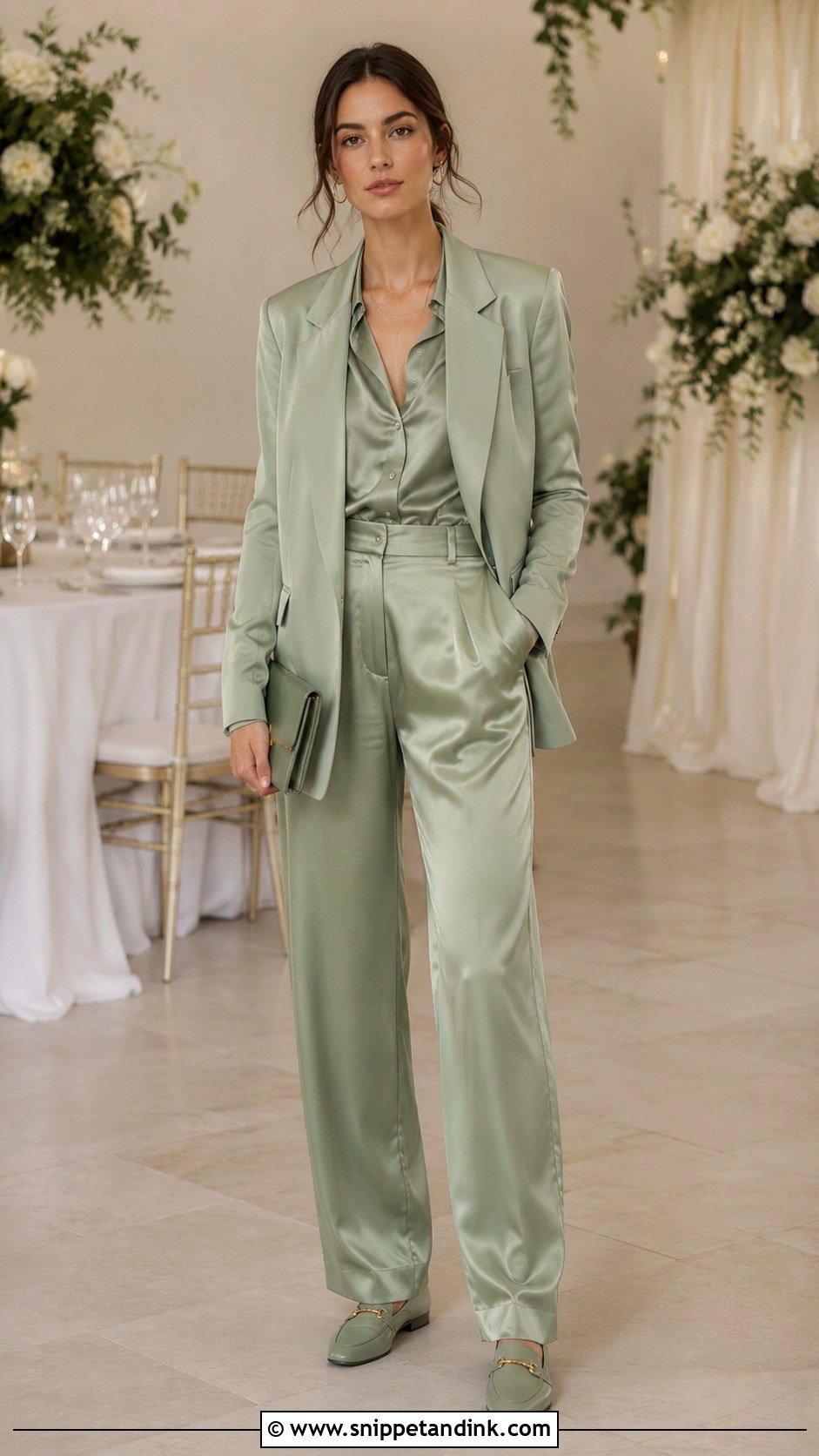
Head-to-toe one color always looks deliberate. All black, cream, navy, sage, burgundy or chocolate work; the trick is mixing textures so it doesn’t look flat, like satin trousers with a matte blazer or a crepe dress with patent shoes. Shades of one color don’t have to match exactly, and a slight tonal difference often looks richer in photos. Choose one metal, silver or gold, and repeat it in your jewelry, belt and bag. It suits anyone who prefers clean lines to prints.
23. Queer Wedding Metallic Outfit
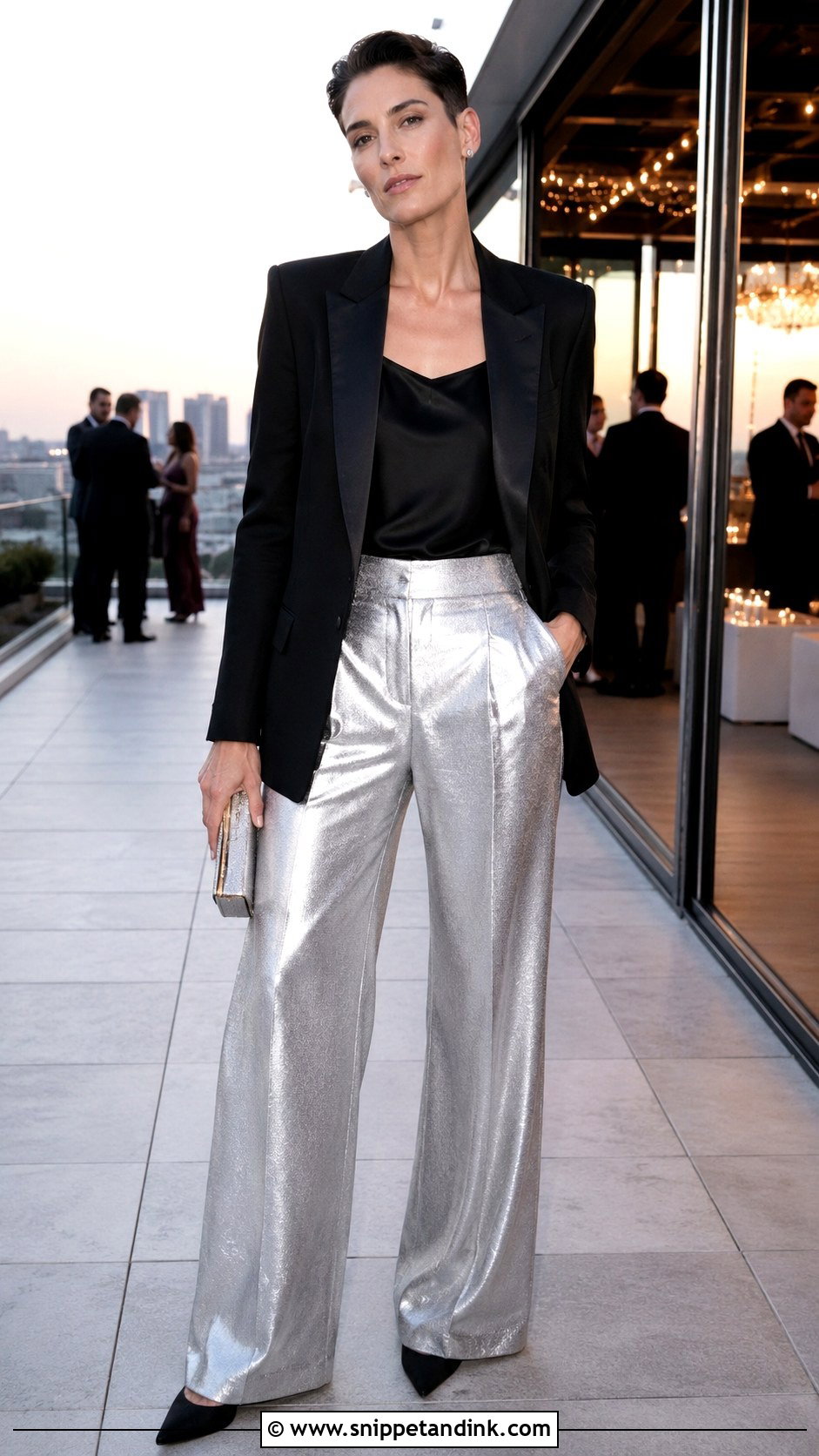
Metallics belong at evening weddings, art spaces and rooftops. My rule is one shiny piece: silver trousers, a bronze slip skirt, a gold blazer or a pewter jumpsuit, grounded with black, white, navy or chocolate. Too much shine at once and the camera flash turns it into a glare. Metallic fabric can be scratchy at the seams, so check the lining. It’s a good alternative if you want to look festive but don’t like bright color, and it works across every gender expression.
24. Queer Wedding Garden Party Outfit
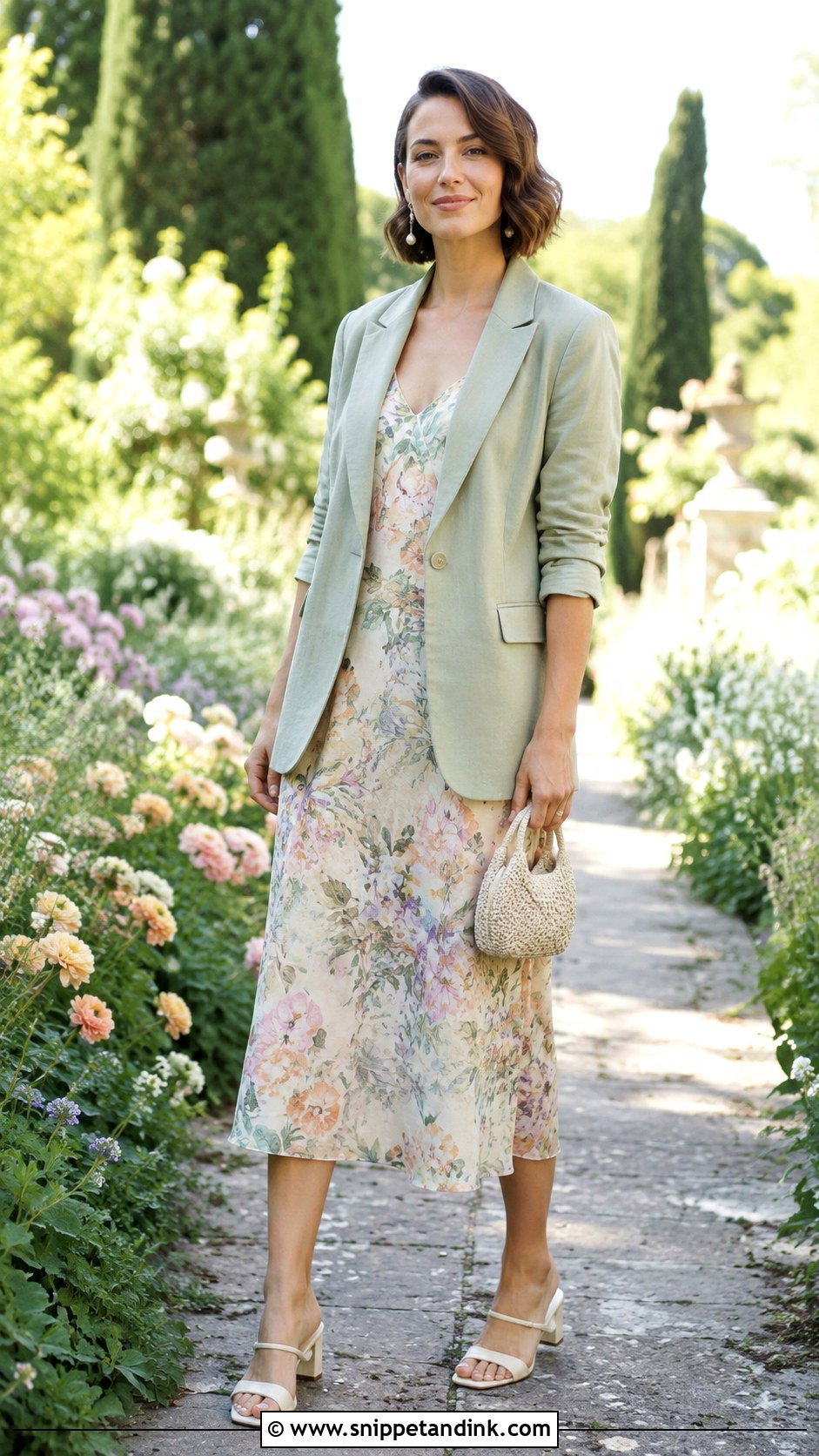
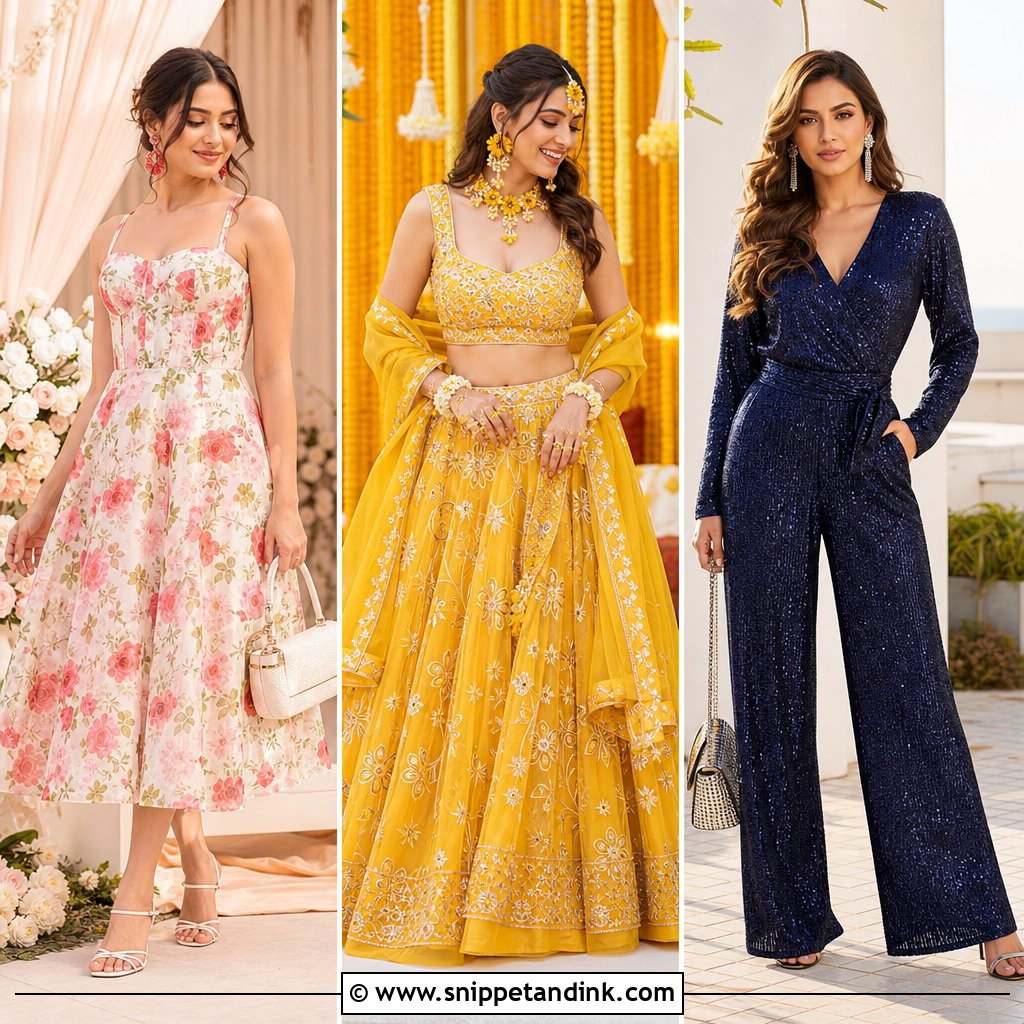
A garden party wedding outfit has to survive grass, gravel and a drop in temperature after sunset. A floral midi with loafers, a pastel linen suit, a pleated skirt with a soft blouse or wide trousers with a printed shirt all fit. Thin stilettos sink into lawns, so I send clients out in block heels, flats, loafers or wedges. Sage, lavender, butter yellow, sky blue or rose suit daylight. Bring a light blazer or shawl, because gardens cool quickly once the sun goes down.
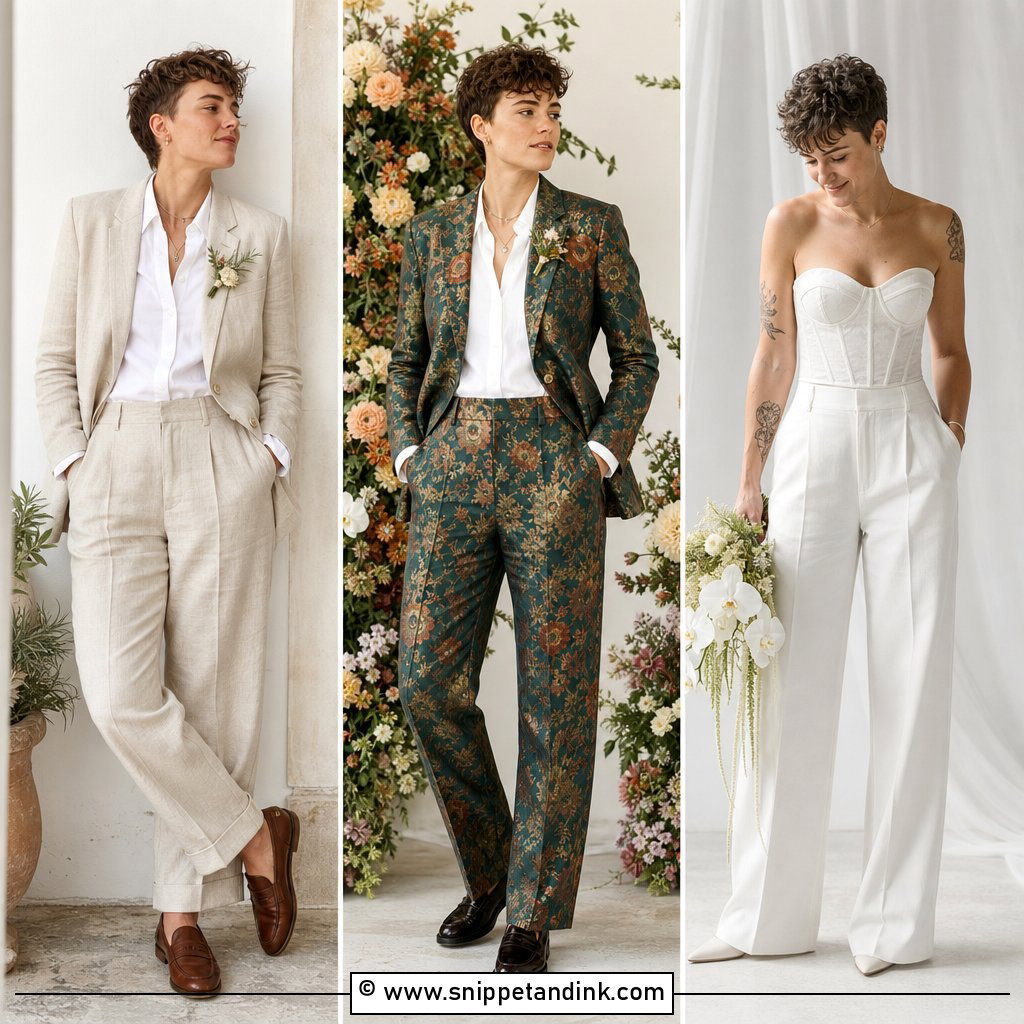
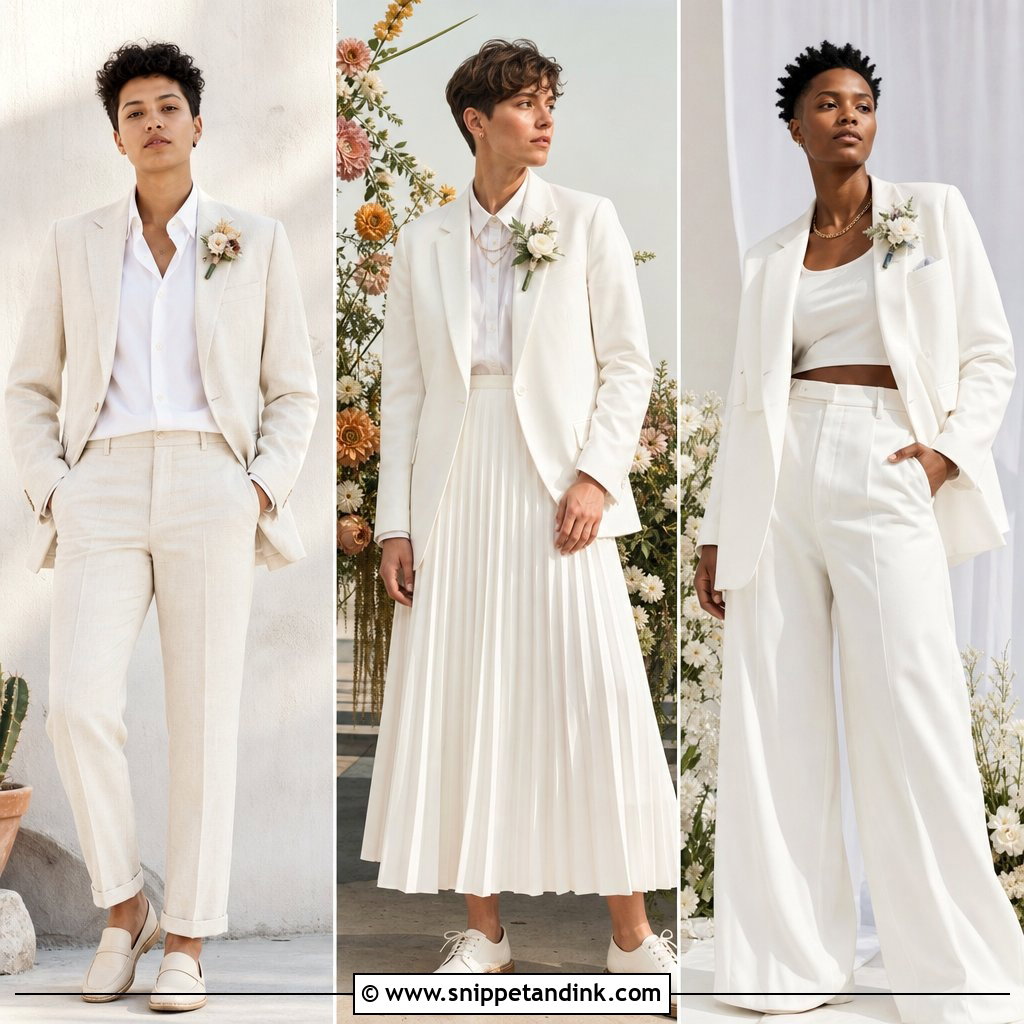
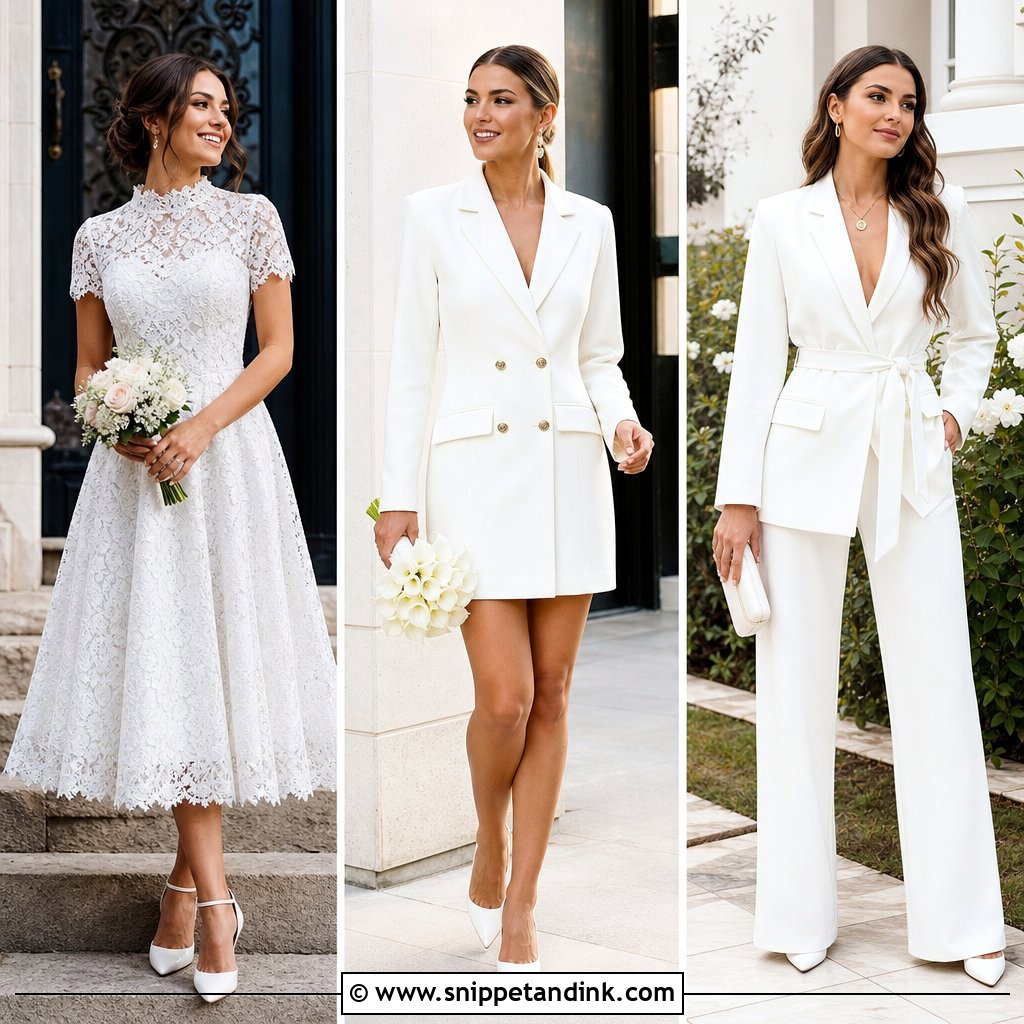
25. Queer Wedding Courthouse Outfit
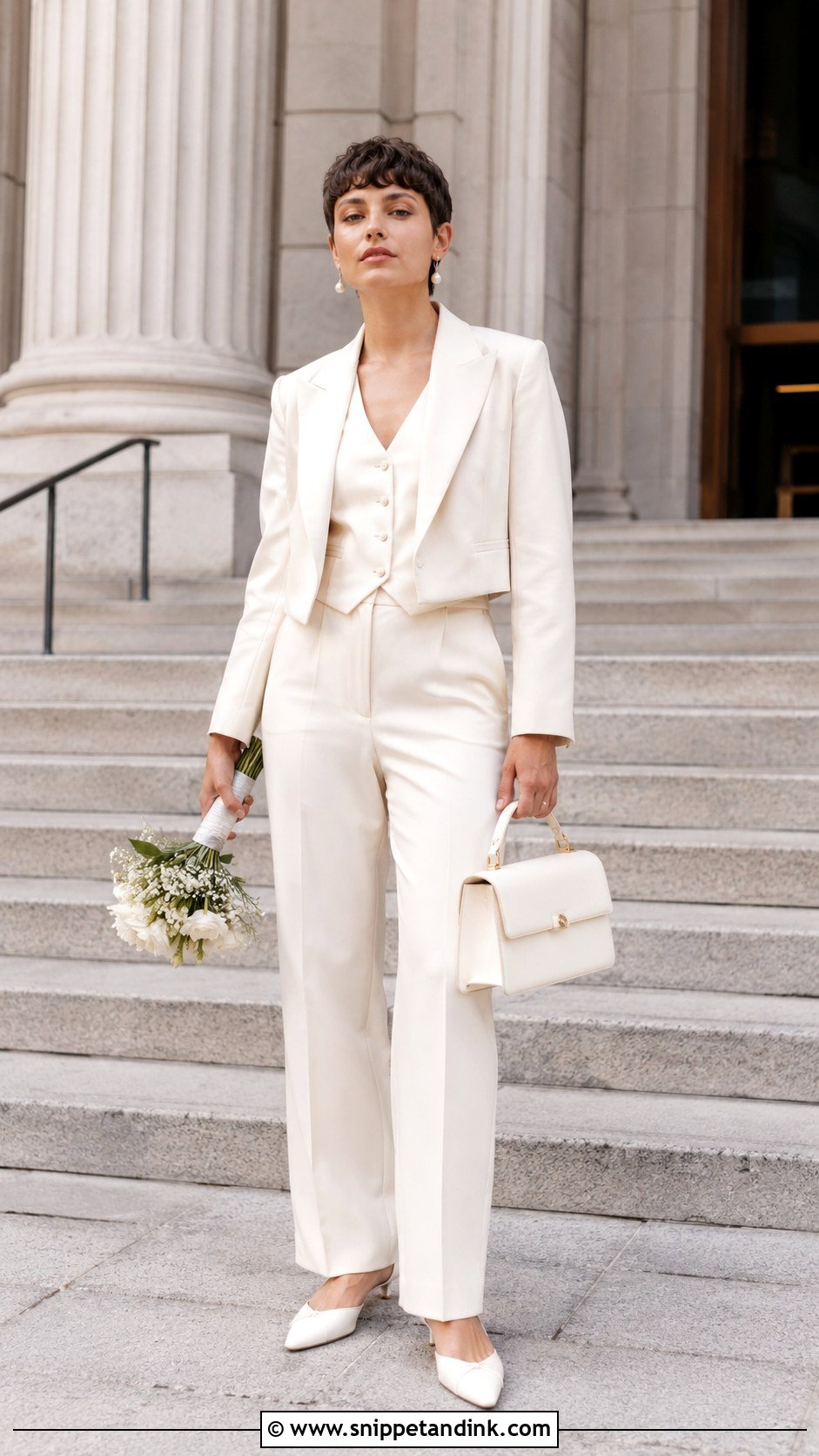
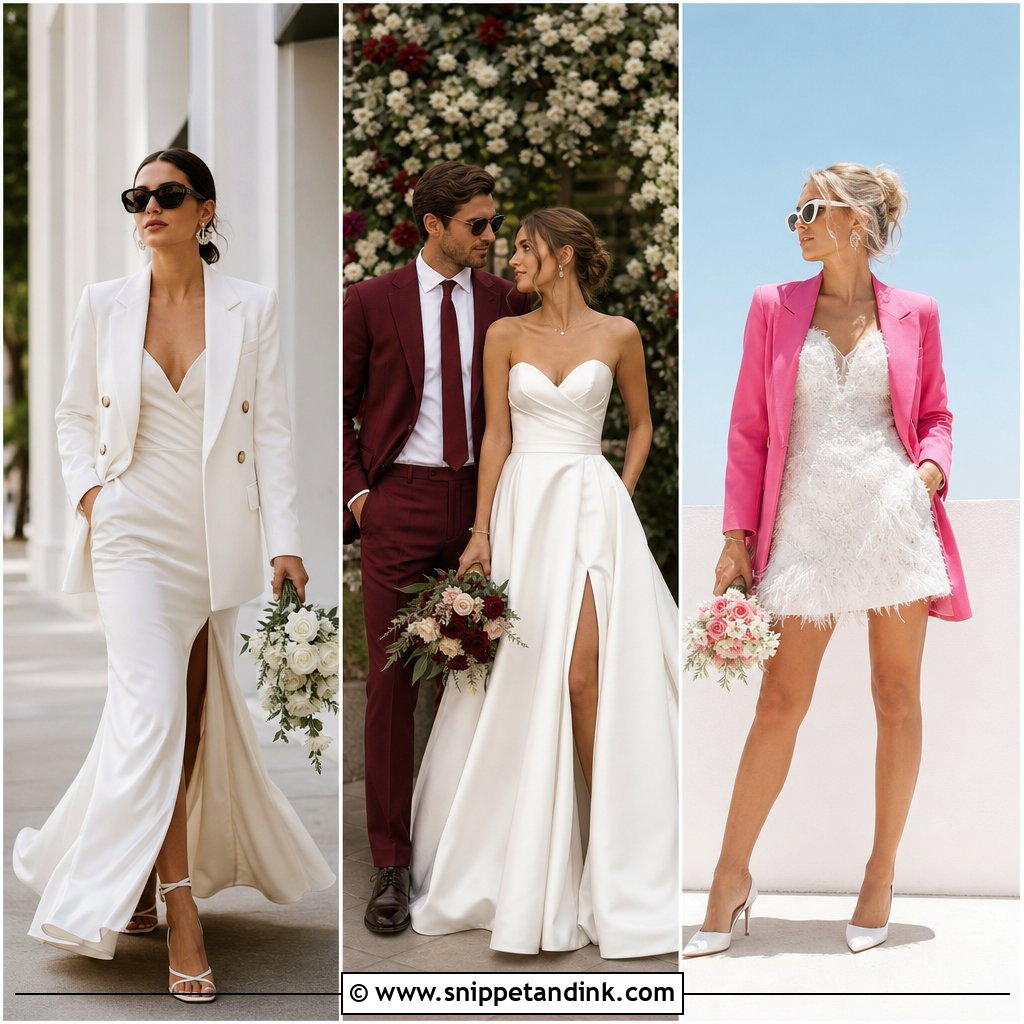
Courthouse weddings are where understated pieces do best. For the couple, a white suit, a cream jumpsuit, a slip dress with a blazer, a vest set or a midi skirt suit. For guests, polished separates or relaxed tailoring. Most registry rooms are small and brightly lit, so clean lines and one meaningful detail, like a small bouquet, sculptural earrings or a silk scarf, matter more than volume. Wear something you can walk the city steps in, sit in and stand for photos in.
How Two Partners Can Coordinate Without Matching
When both partners are dressing up, the question I’m asked most is whether to match. Identical outfits can look sweet, but they often flatten two very different people into one look. I’d rather the outfits talk to each other.
- Share one thing, not everything: the same color in different garments, or the same fabric cut two ways.
- Keep the formality level equal. A tux next to a linen shirt looks like one person forgot the dress code.
- Repeat a small detail, such as matching boutonnieres, the same metal in jewelry or one shared accent color.
- Stand side by side at a final fitting or send each other photos against a plain wall. Colors that look close alone can clash next to each other.
If you’re shopping separately, agree on a palette and a formality level early and leave the rest to each other. The surprise of seeing what the other person chose is half the fun.
A Suit Can Be Soft and a Dress Can Be Sharp
None of these looks has to sit in one category. A suit can be soft, a dress can be sharp, a jumpsuit can be formal and a skirt can feel powerful. Start with the dress code, the season, the venue and what you’re comfortable in, then build out from there. Fit, fabric, shoes and accessories are what finish an outfit, so spend your budget and your tailor’s time there. Whether you lean toward color, tailoring, fluid shapes or minimal pieces, dress for how you want to feel when you look back at the photos.
You'll Like These Ideas:



Leave a Reply