
The baraat is the day a Pakistani bride is most looked at, and red is still the color most families expect. Red has been tied to Pakistani bridal wear for generations, but the shape underneath it has opened up: lehengas sit alongside ghararas, shararas, maxis, peshwas and even sarees. I treat the shade as the first real decision. Deep maroon velvet and bright crimson organza are both red, yet they suit different skin tones, seasons and venues. After that, it’s the embroidery, how the dupatta is set, the jewelry and shoes you can stand in for hours. Here are twenty baraat outfits with the practical points I go over with brides for each.
What Dabka, Naqshi, Kora and Tilla Mean on a Bridal Quote
Atelier quotes and fitting notes are full of embroidery names, and each one changes the weight, cost and look of the outfit. These are the terms I explain most often:
- Zardozi: the umbrella term for metal-thread embroidery, often combining several of the techniques below.
- Dabka: fine coiled metal wire cut into short lengths and stitched down, giving a raised, textured gleam.
- Kora: a thicker, crinkled coiled wire used to outline motifs and add relief.
- Naqshi: very small metallic stitches worked closely together, giving a fine, almost grainy glitter.
- Tilla: flat metallic thread couched on top of the fabric, lighter and softer than wire work.
- Gota: metallic ribbon folded or appliquéd into borders and motifs.
- Resham: silk or silky thread embroidery, used for color and softness between the metal.
The more raised wire work an outfit has, the heavier and scratchier it gets. If you’re worried about comfort, ask for more tilla and resham in the areas that touch your arms and waist.
1. Classic Red Bridal Lehenga
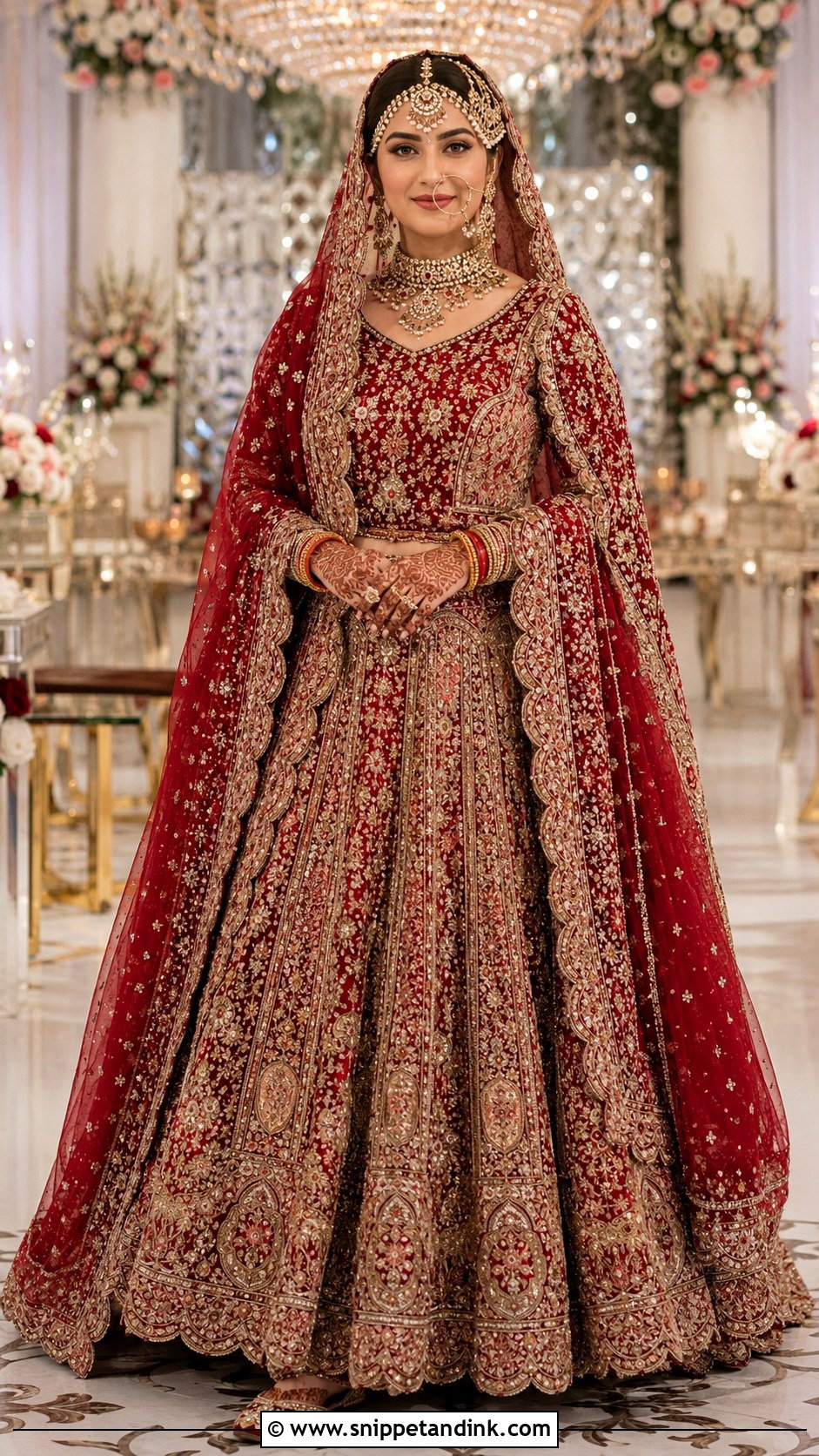
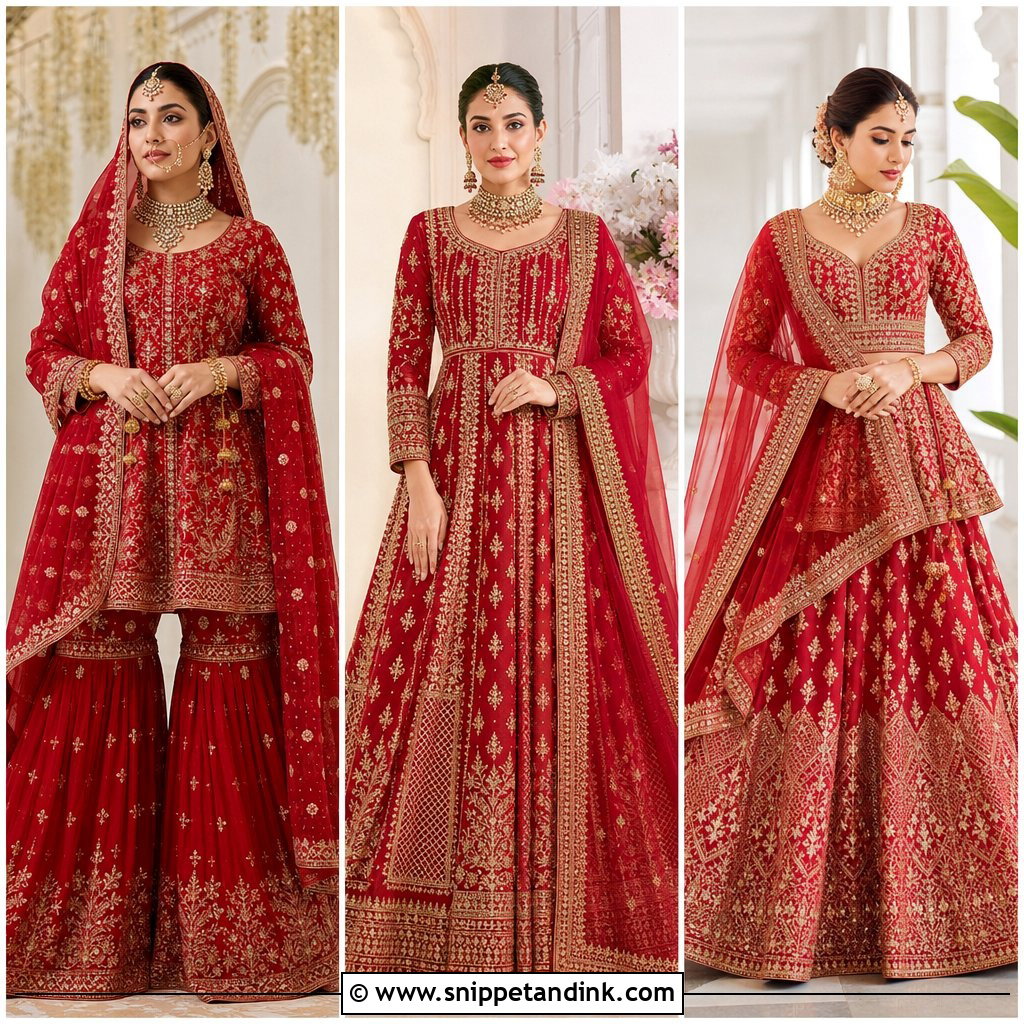
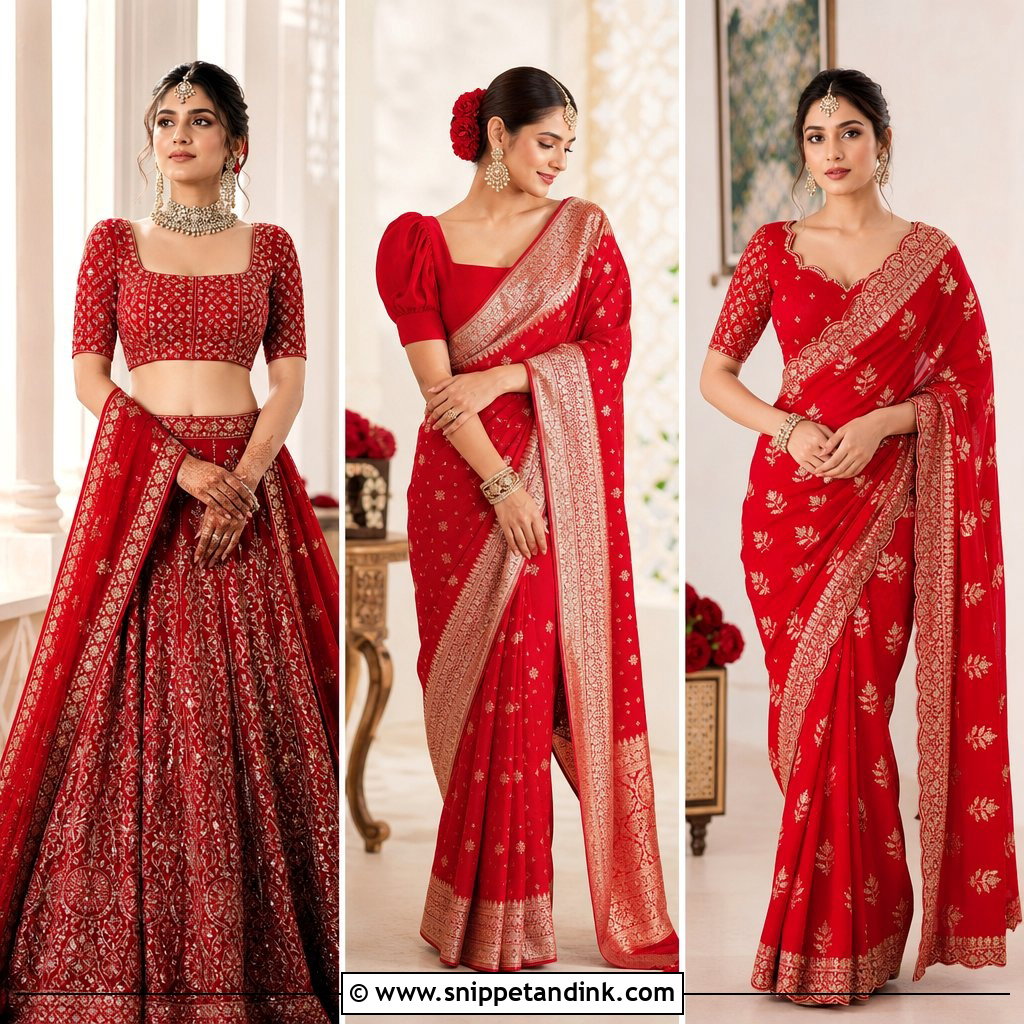
The full red lehenga is the look most mothers have in mind. I’d ask for a balanced mix of zardozi, dabka, naqshi and resham with some breathing space between motifs; a skirt worked edge to edge gets heavy fast and loses its pattern from a distance. A fitted blouse with a modest neckline keeps it structured. Set a scalloped red dupatta on the head and a lighter net one across a shoulder, and finish with gold kundan, a matha patti, stacked bangles and embroidered khussas. If the skirt is dense, keep the blouse plainer. Ask the atelier for a soft can-can layer under the skirt, which holds the flare and keeps the embroidery from dragging on your legs.
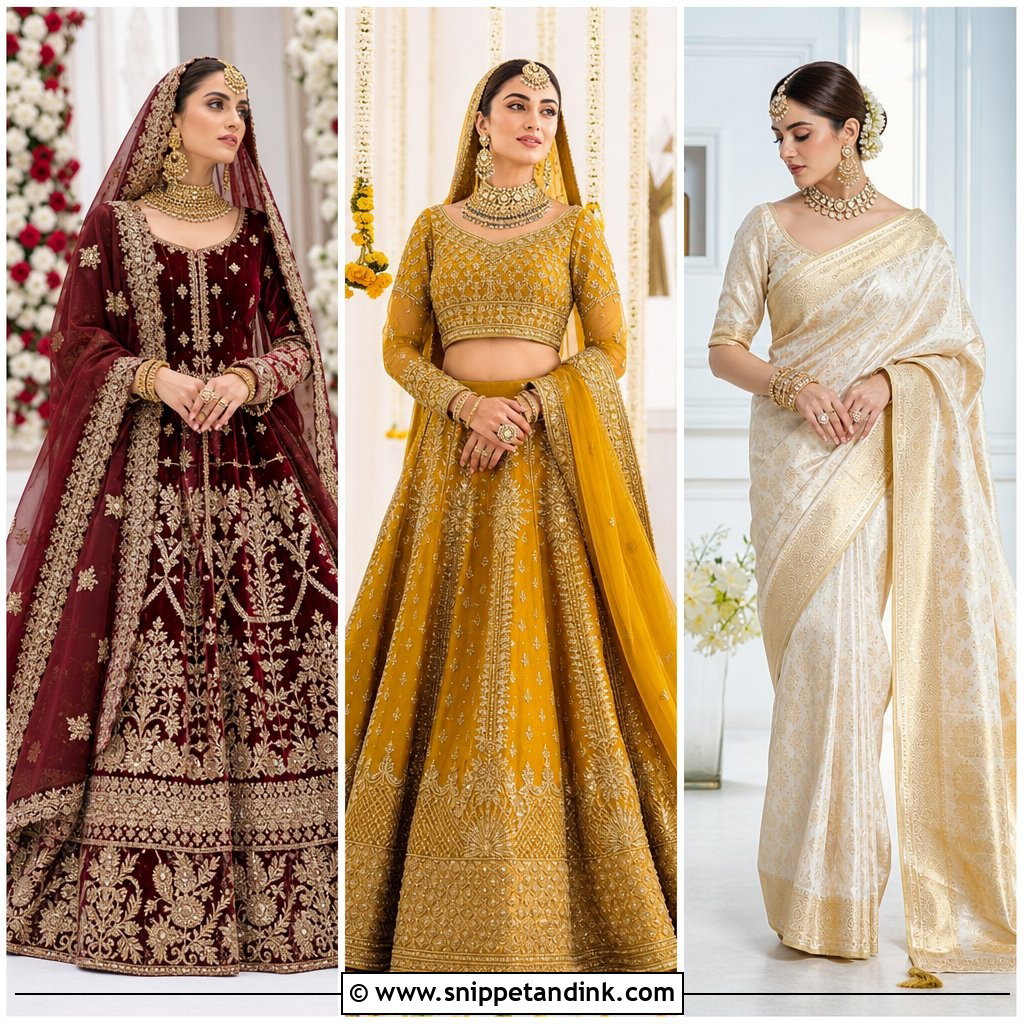
2. Deep Maroon Velvet Bridal Lehenga
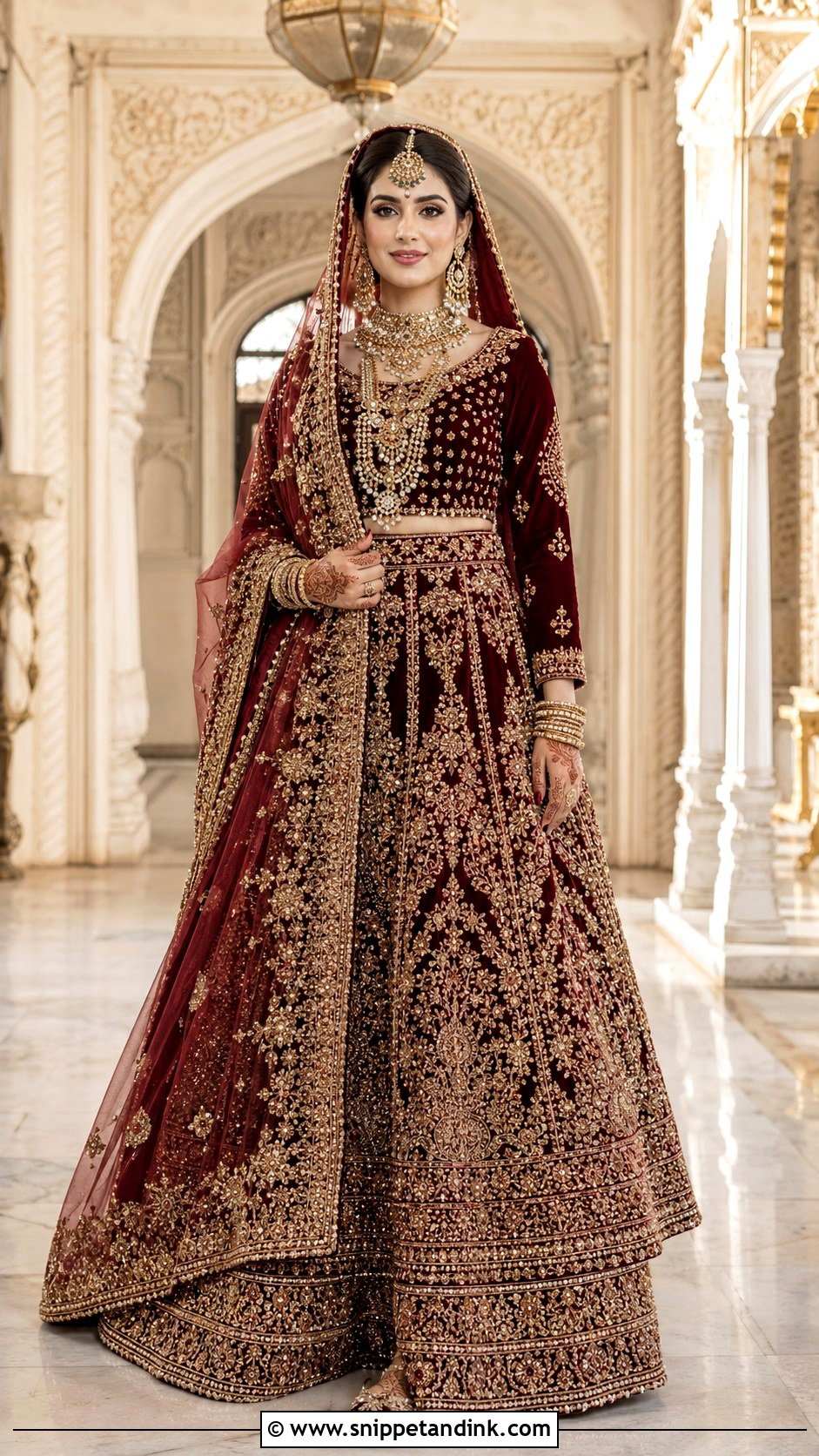
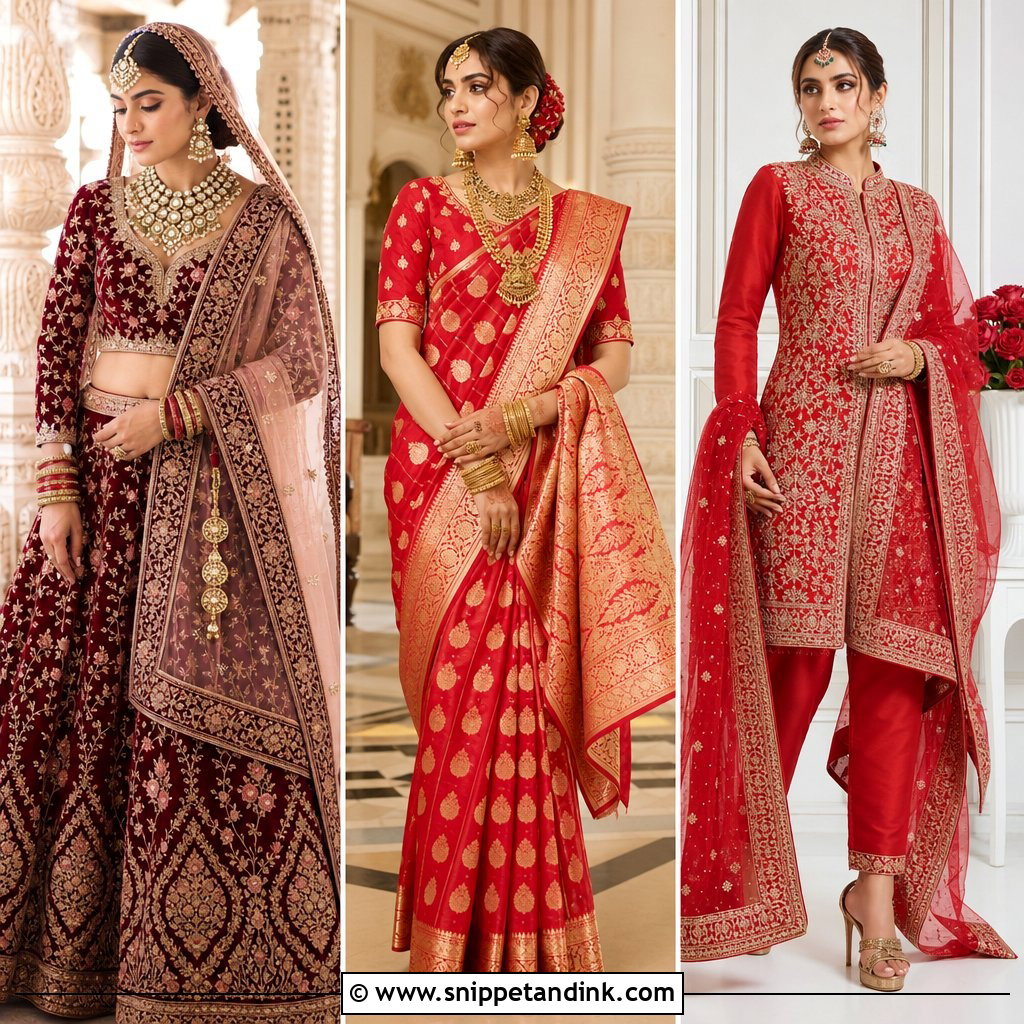
Velvet suits a December baraat, and a deep maroon velvet bridal lehenga takes antique gold embroidery better than almost any fabric. Choose a paneled skirt with decorated borders, a fitted velvet blouse and a light organza dupatta, because velvet on velvet becomes very heavy. Antique gold jewelry, a centered tikka and a low bun suit the mood, and cushioned maroon khussas stay hidden. Put the densest work at the hem, neckline and sleeves so the plain velvet can show its pile. Velvet is warm. In a packed marquee with lights and heaters on, a maroon velvet bride gets hot quickly, so ask for a cotton lining and keep a small fan with your bridesmaid.
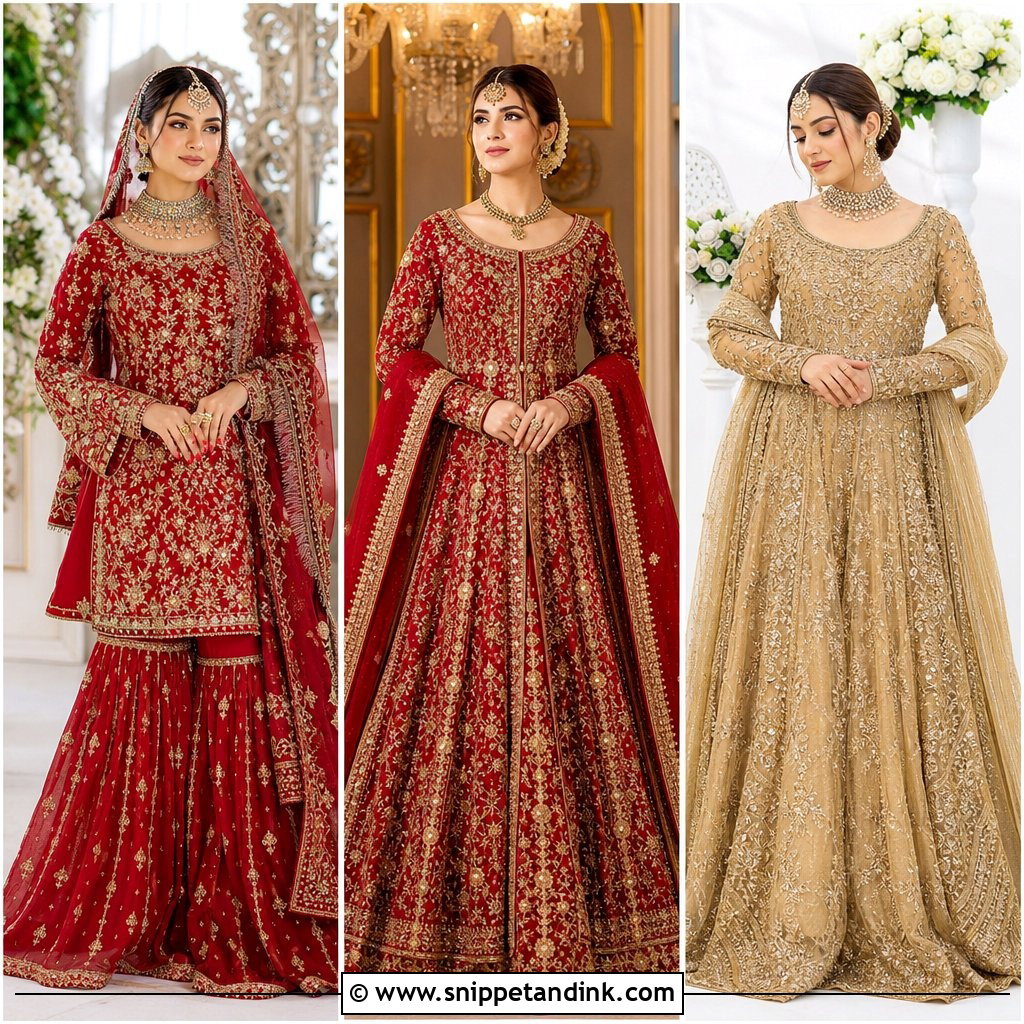
3. Red Farshi Lehenga With Long Shirt
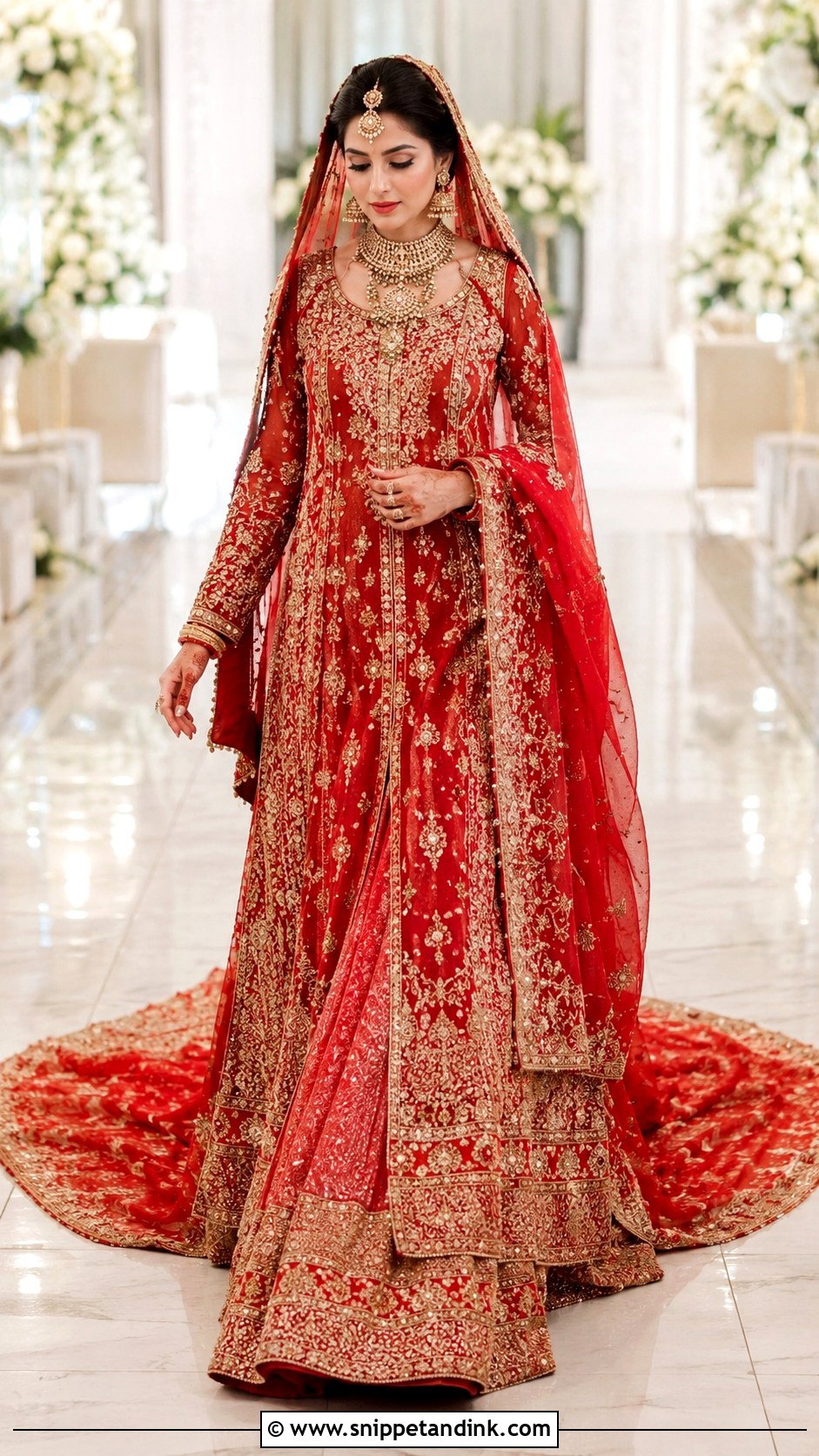
A farshi lehenga is longer than you are tall, pooling past the feet into a short trail at the back. Pair it with a straight knee-length shirt with worked borders, fitted sleeves and side slits that show the lehenga beneath. A sheer dupatta with a wide edge frames the face without hiding the shirt. Add jhumkas, a layered necklace, bangles and discreet platforms. Practice is not optional here. I have brides walk forward, turn and sit in the finished outfit, holding the skirt correctly at the side seams, before the day. The waist must be secure and the trail measured to your height in your shoes, or you’ll step on the front with every stride.
4. Red Bridal Gharara With Short Kameez
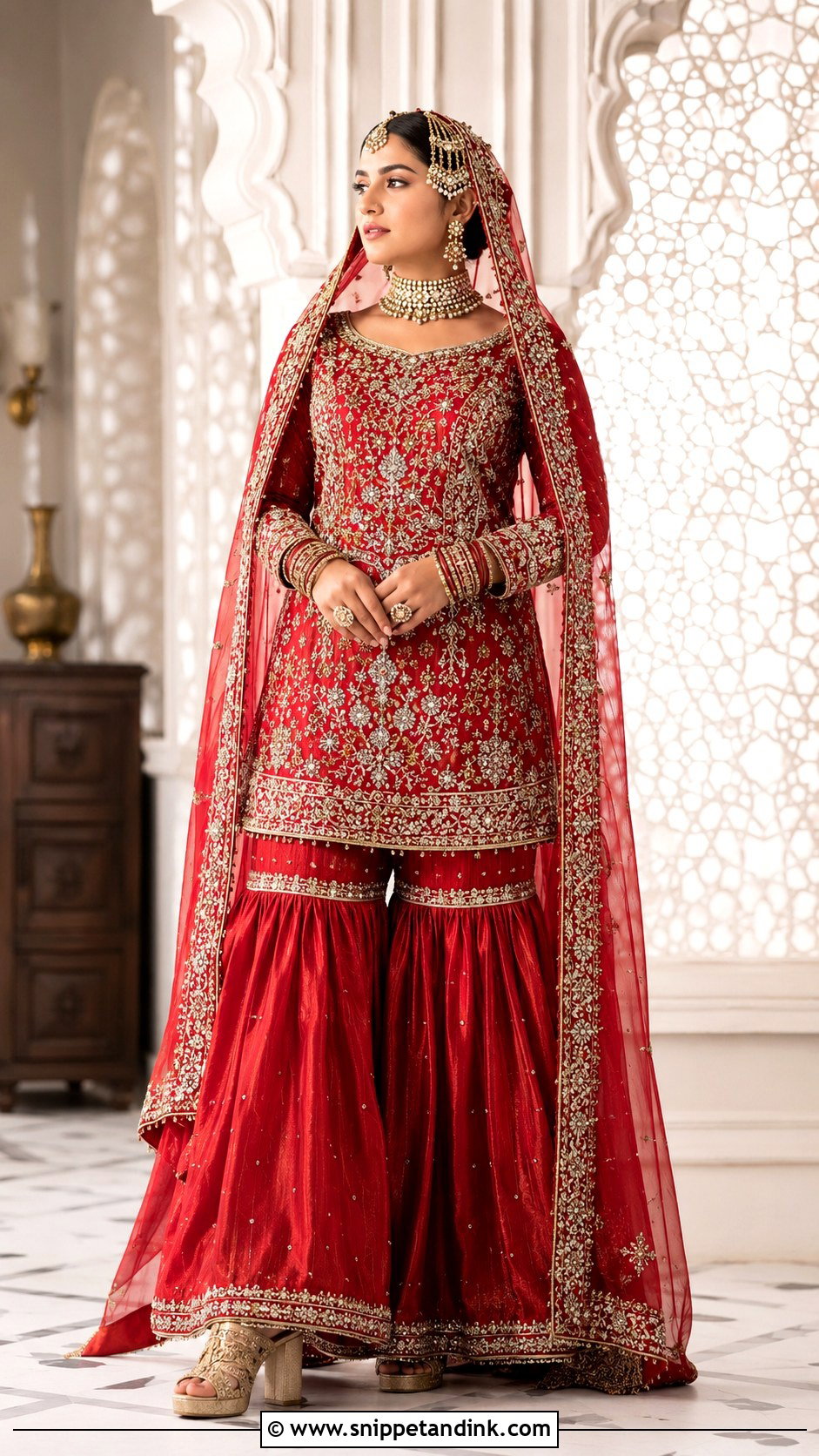
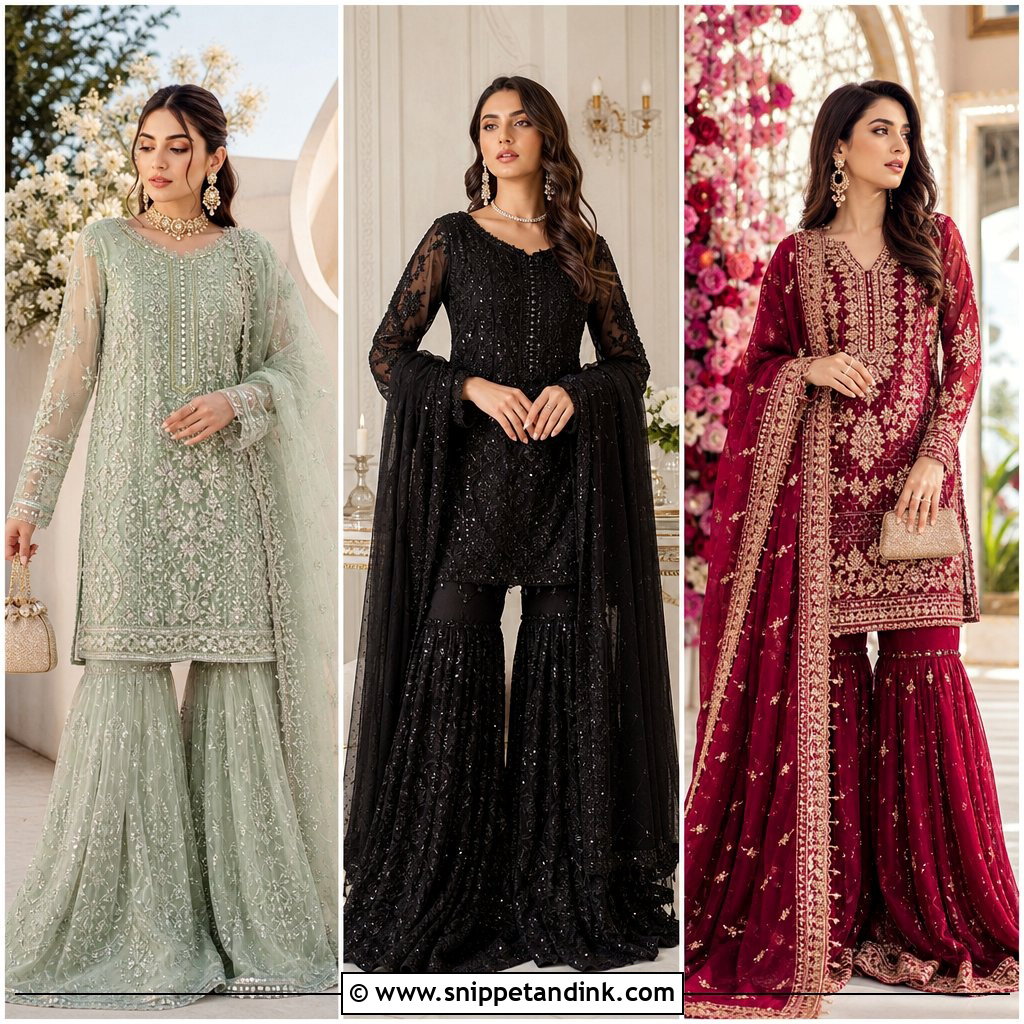
A red bridal gharara is fitted to the knee, joined with an ornate band and then flares, and that join gives it its walk. Choose a kameez ending around the upper thigh with a worked neckline, fitted sleeves and decorated hem. Tissue or jamawar suits kora, dabka, zari and gota work well. A red net dupatta on the head, a choker, matching earrings and a jhoomar or passa to one side finish it, with embroidered block heels beneath. Keep the kameez and gharara in closely related reds. I place the knee band just above the knee; set too low, it bites into the leg when you sit on the stage.
5. Red Farshi Gharara With Gold Embroidery
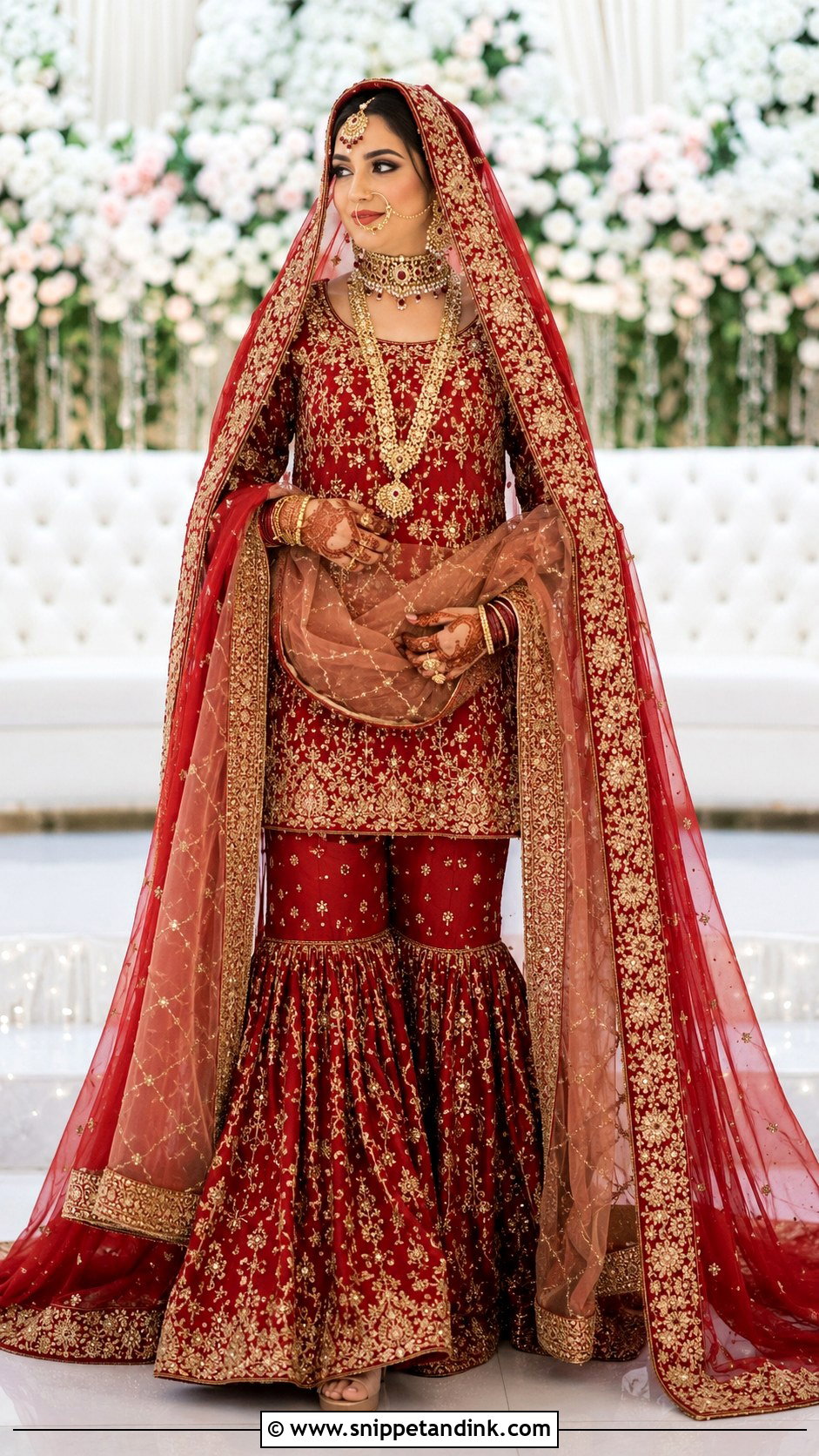
The farshi gharara combines a defined knee seam with yards of fabric below it that spread across the floor, which makes for a dramatic entrance. A fitted short shirt balances the volume, and antique gold embroidery adds depth without fighting the red. Set one dupatta on the head and a lighter one over the arms, then add a choker, long necklace, nath and gold bangles. The lower fabric must be soft enough to drape. Stiff tissue below the knee stands out like a tent instead of trailing. Hidden platforms and a secure waistband make walking and turning manageable, and someone should be assigned to settle the fabric each time you sit.
6. Red Bridal Sharara With Peplum Top
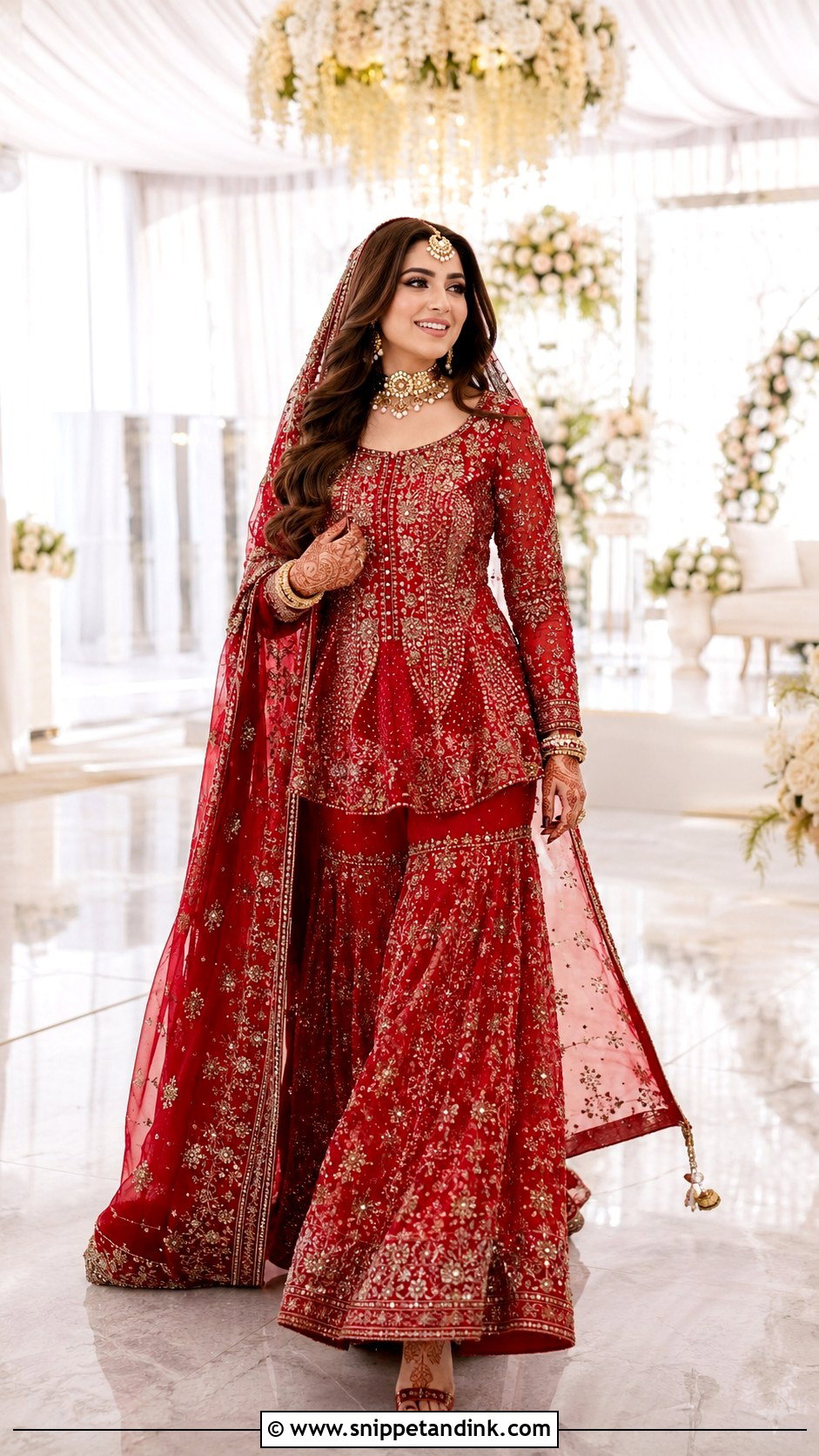
Peplum over sharara is a good pairing for a bride who wants to move freely. Choose a bodice that flares gently from the waist rather than puffing out, and a sharara with wide legs and its heaviest embellishment at the lower border, where the weight helps it swing. A sheer red dupatta with small bootis keeps it airy and leaves the peplum visible. Add a kundan choker, medium earrings, a tikka and red heels. Keep the peplum ending around the upper thigh. Brides who find a big lehenga exhausting usually find this far easier, because each leg carries its own fabric.
7. Red Bridal Peshwas With Lehenga
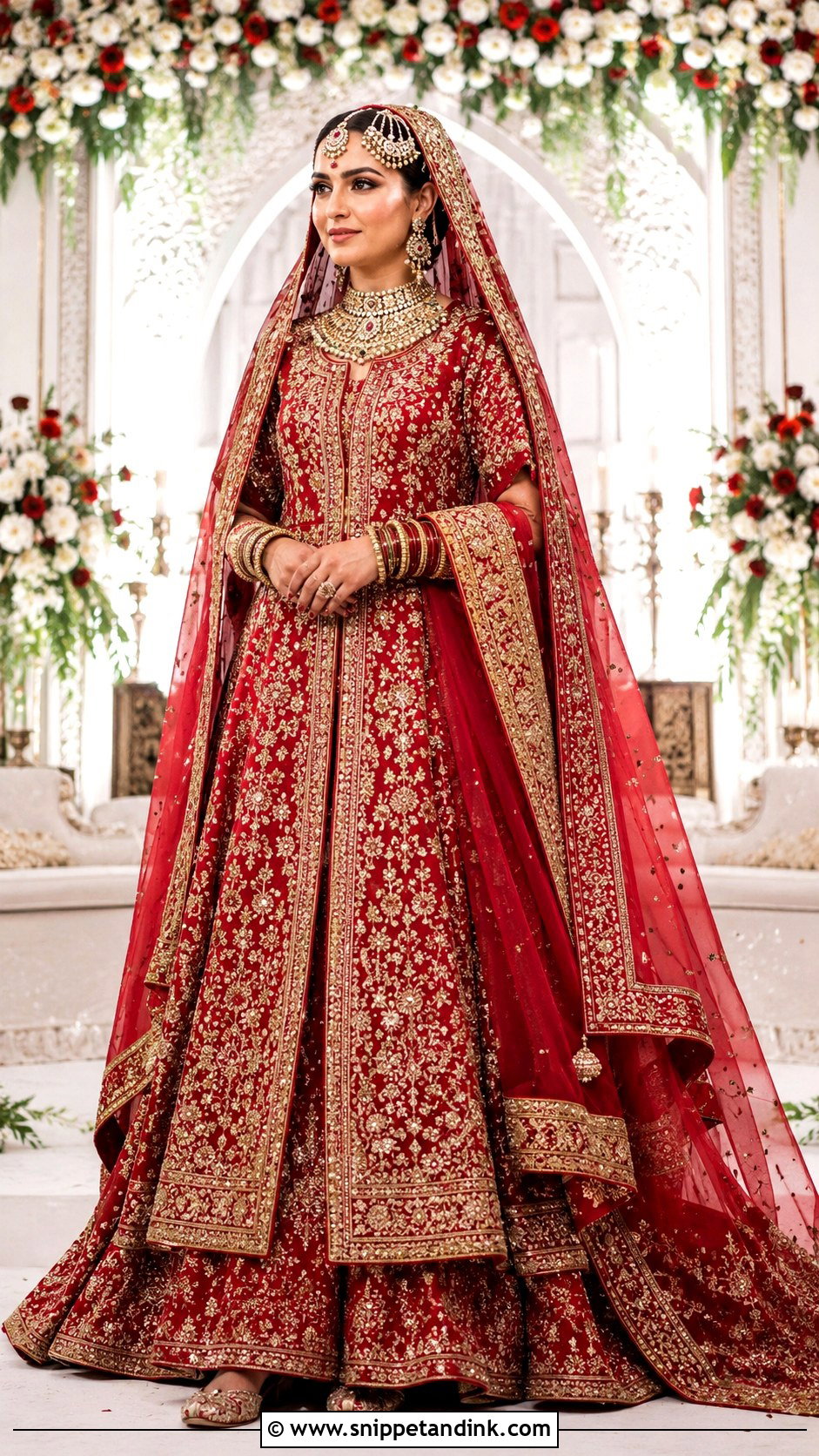
A peshwas is a long, flared frock with a fitted bodice and many panels, and worn over a coordinated lehenga it gives both length and volume. Ask for embroidery that grows heavier toward the hem, which pulls the panels down and makes them swing. A square, round or soft curved neck frames a statement necklace. Set a bordered dupatta on the head, a sheer drape on one arm and gold khussas, with a sleek bun and matha patti. The two layers must have matching flare. If the lehenga is fuller than the peshwas allows, the fabric bunches at the hips and the outline is lost.
8. Red Anarkali Bridal Dress
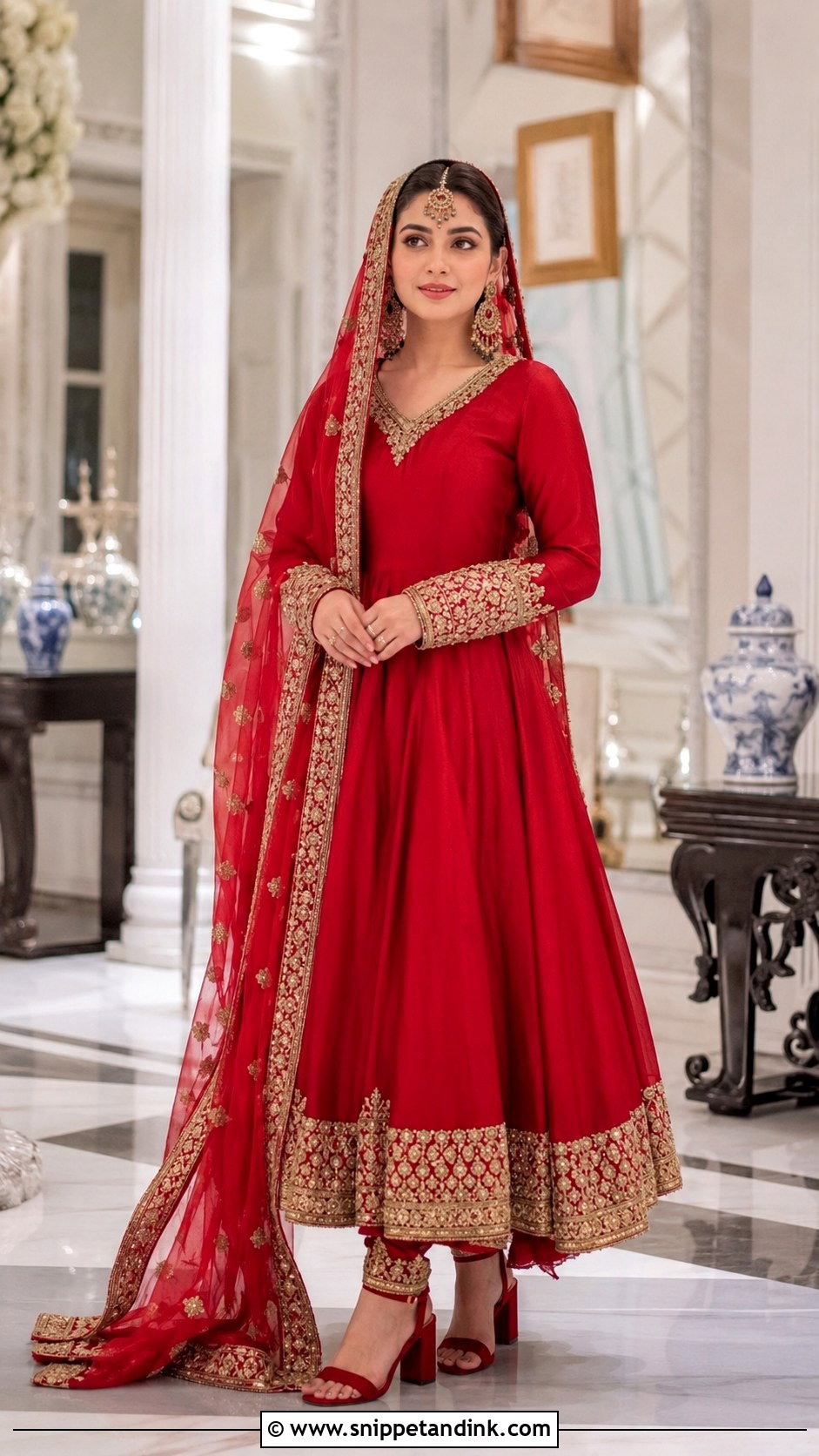
A floor-length red anarkali is one continuous flowing line, lighter than a lehenga and easier to sit in. Choose a fitted bodice, a defined waist and enough panels for movement, with gold florals at the neckline, cuffs and hem. Wear churidar or a simple underskirt beneath, depending on the construction. A red organza dupatta, statement earrings, a tikka and comfortable block heels complete it. A slightly raised waist lengthens the body. Keep the dupatta narrow at the front so the bodice stays visible. My check at fittings: twirl once. If the hem lifts evenly all round, the panels are cut well.
9. Red Long Shirt With Bridal Lehenga
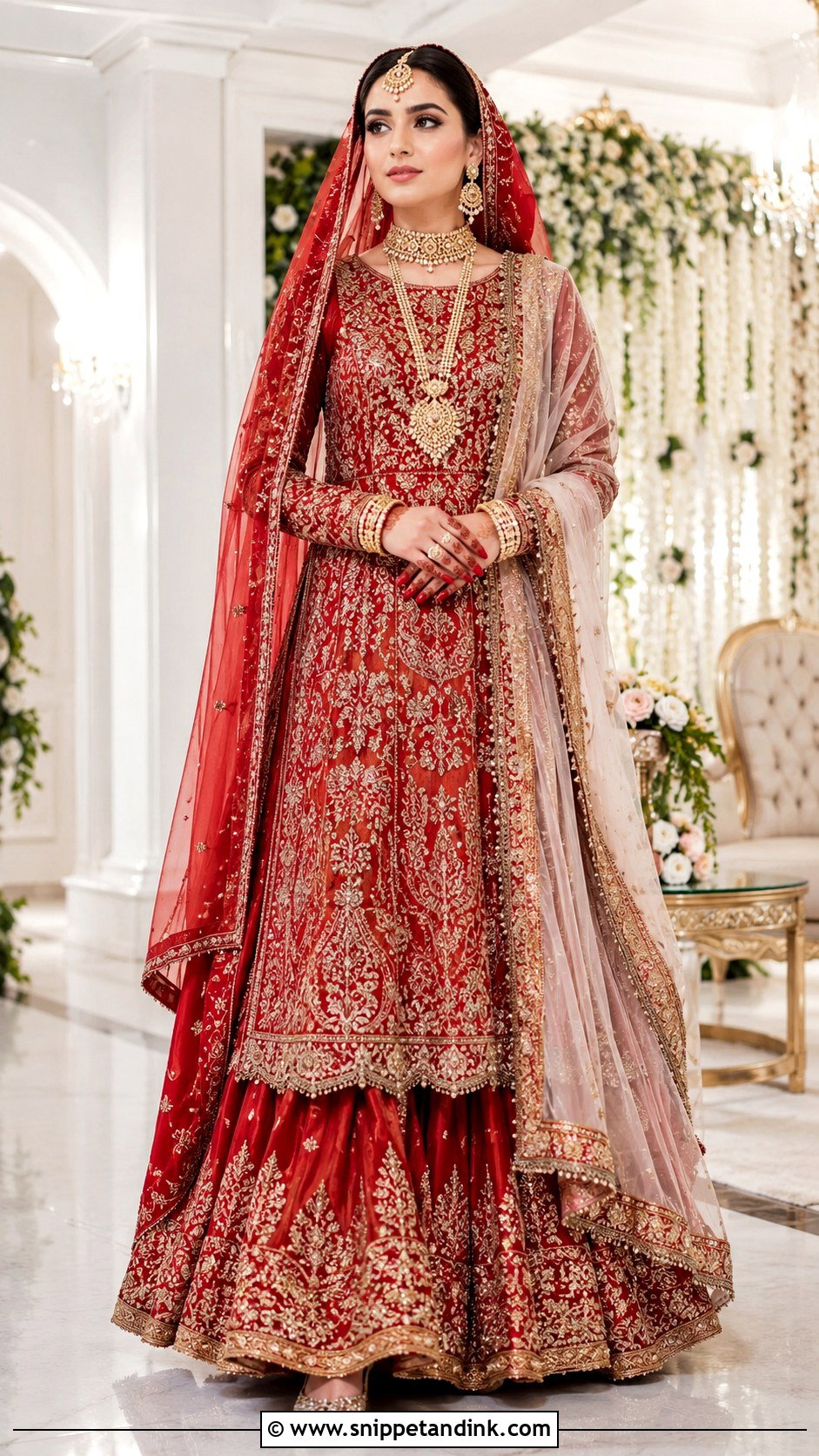
A long shirt over a bridal lehenga is the modest choice that still has all the grandeur. Choose a straight or gently flared shirt falling below the knee, with side slits so you can walk, and pair it with a full lehenga with complementary borders and scattered motifs; the embroidery should relate without matching exactly. A net dupatta on the head and a lighter shoulder drape add depth, with a choker, long necklace, earrings, bangles and embellished heels. For more coverage, choose full sleeves and a higher neckline. Vertical embroidery down the shirt panels stops a long outline from looking heavy. Make sure the slits are long enough to step up onto the stage.
10. Red Peplum Bridal Lehenga
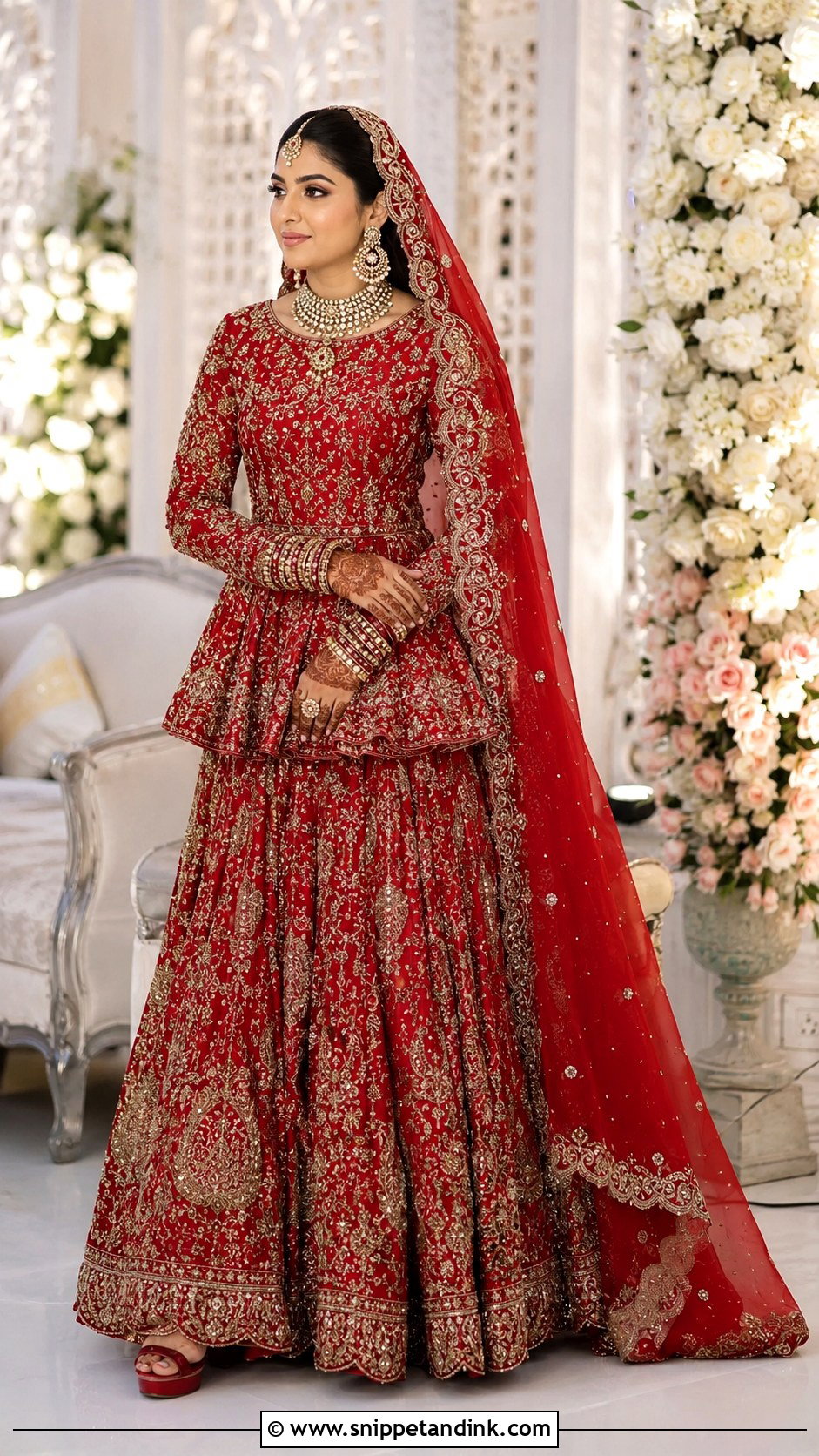
A red peplum bridal lehenga replaces the short choli with a fitted top that flares softly over the skirt and covers the midriff. Pair it with a paneled lehenga with a wide worked hem and lighter motifs higher up. A red dupatta on the head keeps it firmly in classic Pakistani bridal territory, with kundan earrings, a layered choker, bangles and embroidered platforms. Don’t make both pieces voluminous. I keep the peplum controlled and the skirt full, and put the detailed work at the neckline, waist and peplum edge, where it shows off the cut.
11. Red Bridal Gown With Train
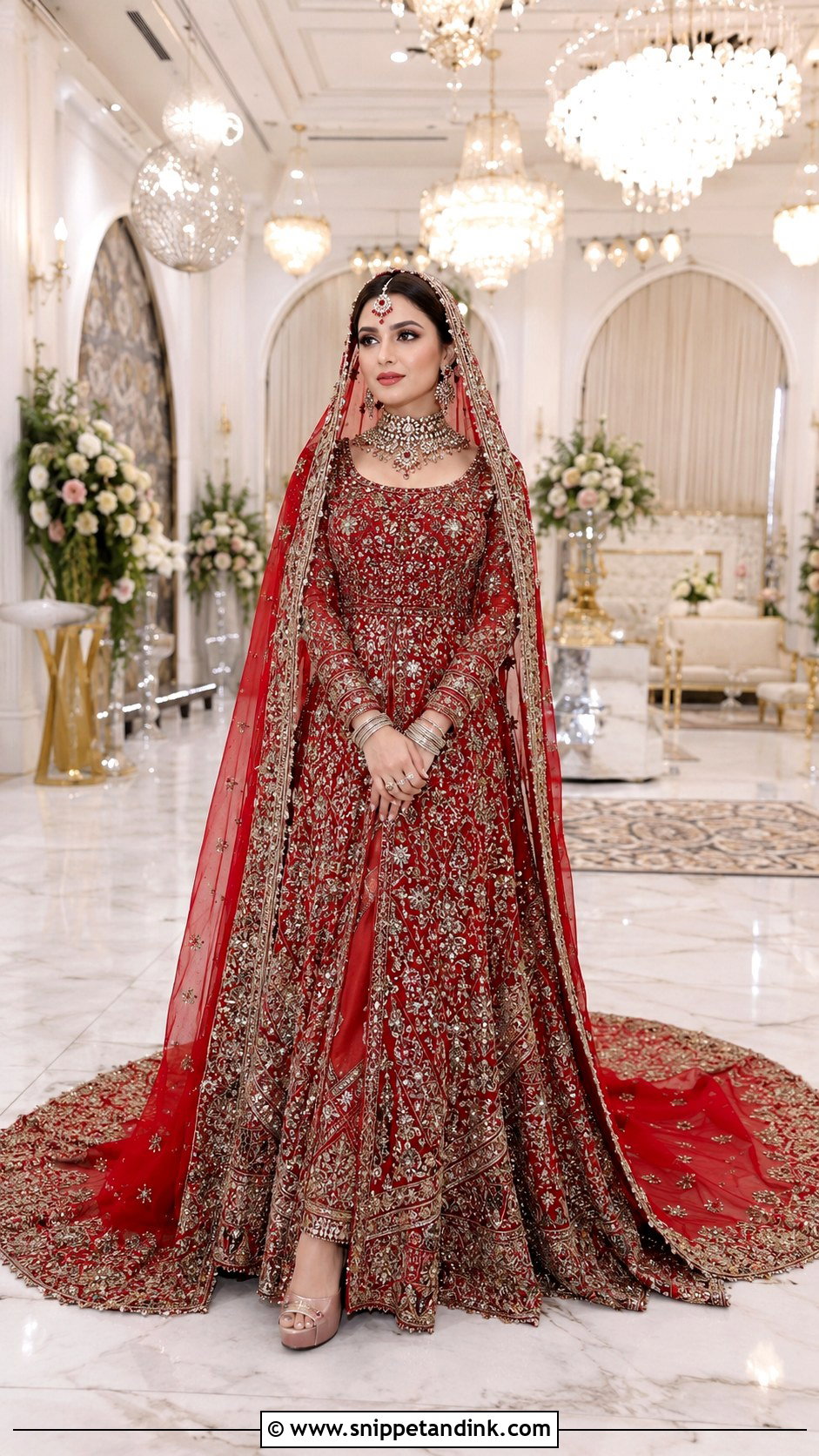
A red gown with a train brings a Western outline to the baraat while keeping Pakistani handwork in the sleeves, borders, florals and panels. Choose a fitted bodice and a skirt with a manageable train that can be lifted or bustled after the entrance. Keep the red veil or dupatta separate rather than stitched on, so it can be set and reset. A statement choker, studs, a centered tikka and platform heels finish it. Ask for a hidden wrist loop under the train. Jewelry needs restraint here, because the gown’s shape already says a lot at the neckline and shoulders.
12. Red Bridal Saree With Embellished Blouse
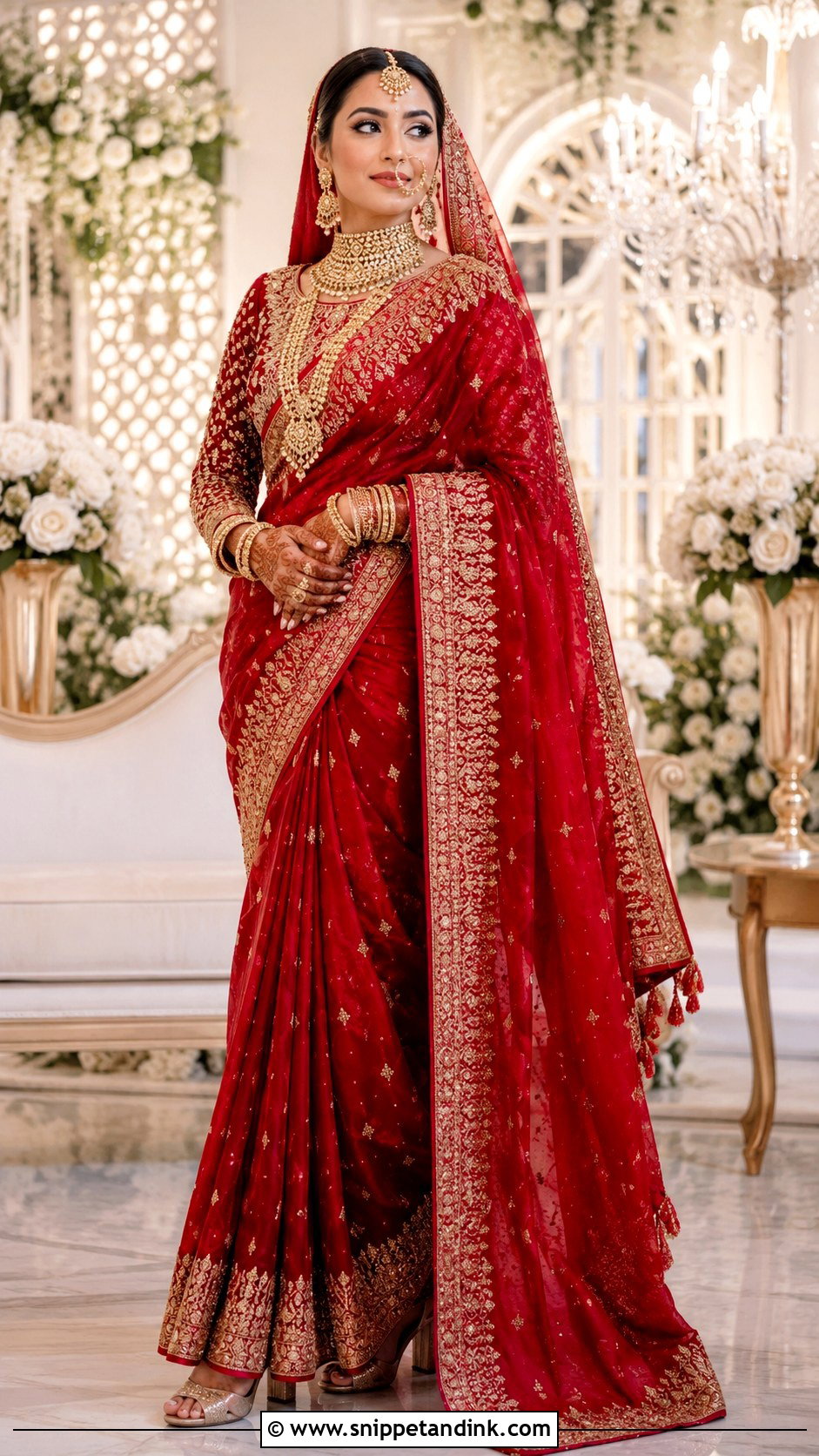
A red bridal saree is the less common choice at a Pakistani baraat, and that’s part of its appeal. Velvet or tissue suit winter, while silk and organza work in warmer months. A heavily worked blouse with full or elbow sleeves gives it baraat-level formality. Pin the pleats firmly and set the pallu over the head or across one shoulder, with a separate veil if you want more coverage. A choker, long necklace, nath, bangles and steady block heels finish it. Get your saree draped by someone experienced, and do a movement test: sit down, stand, hug, climb a step. Heavy embroidered pleats pull loose faster than plain silk.
13. Red Angrakha Bridal Peshwas
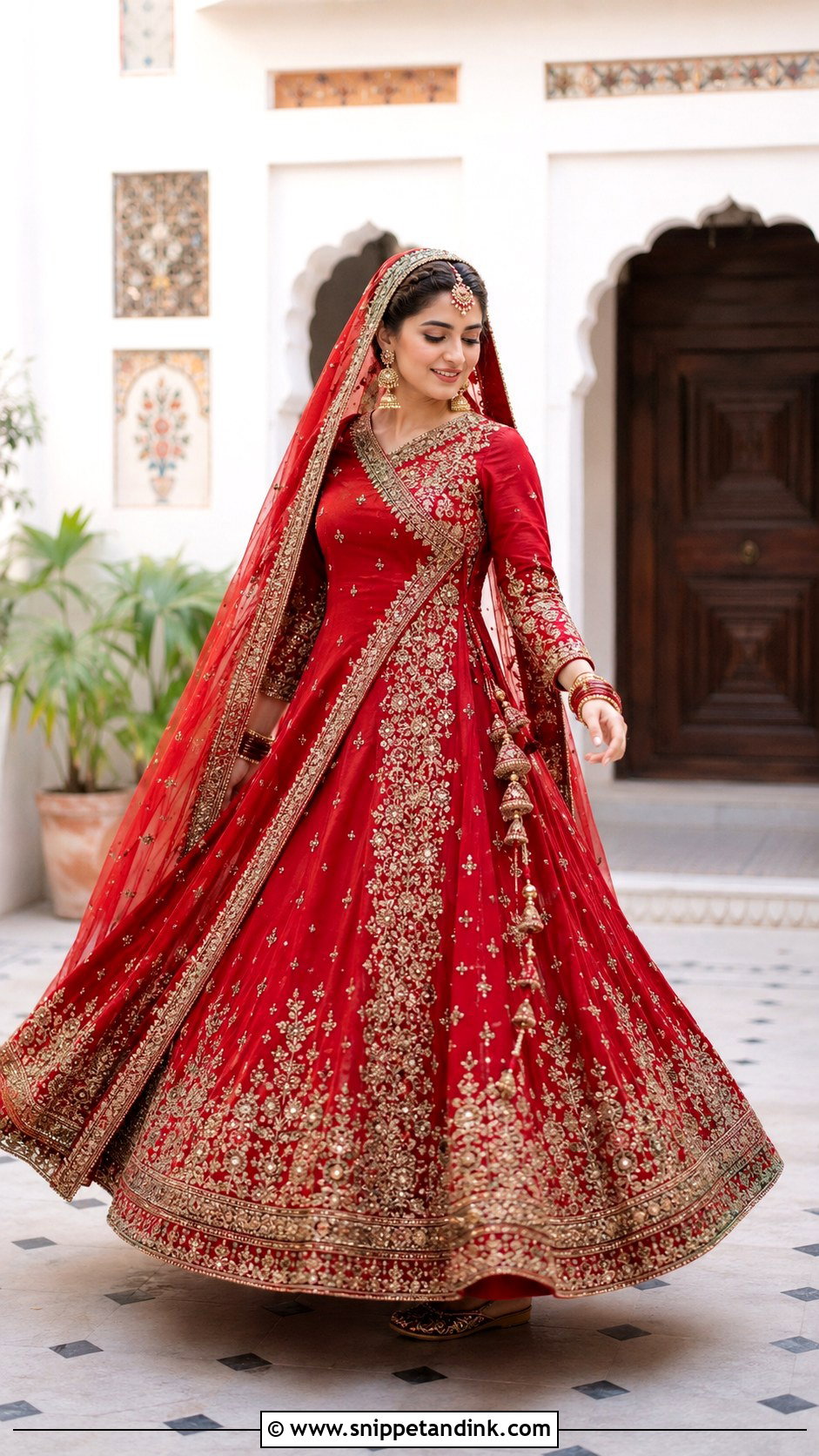
The angrakha is a wrap bodice that crosses diagonally and ties at the side, and on a red peshwas that diagonal line catches the eye. Follow it with gold embroidery that continues around the sleeves and hem, over a flared skirt. Wear a plain underskirt or lightly worked lehenga so the outer layer leads. A soft net dupatta on the head, jhumkas, a tikka and embroidered khussas complete it. Bridal embroidery adds real weight to the wrap, so check that the side closure is reinforced with hooks behind the tassels. Ties alone will gape. With a detailed neckline, wear one strong necklace instead of layers.
14. Red Jacket Lehenga Bridal Dress
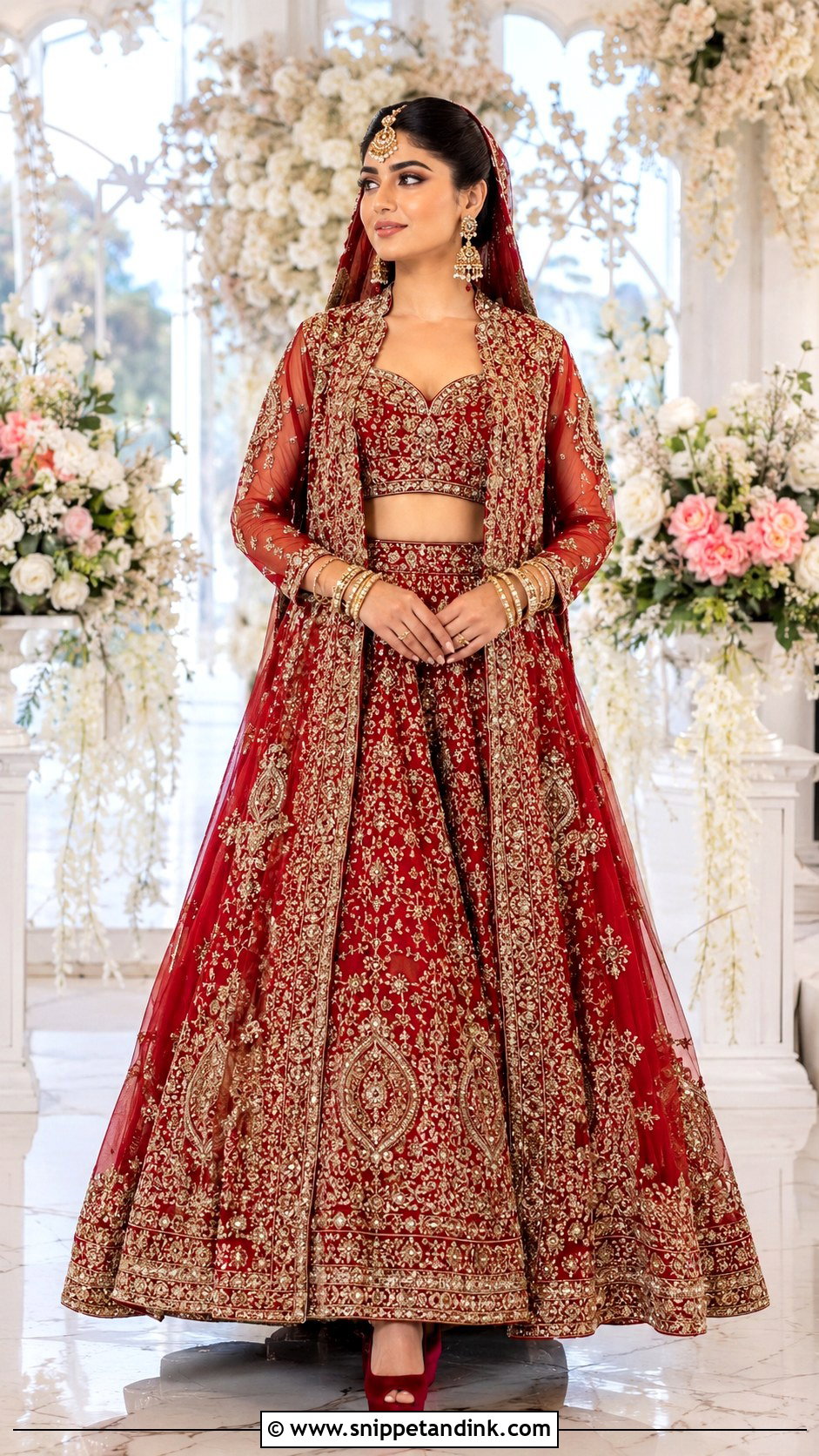
Layering an open jacket over a blouse and full lehenga gives a regal outline that also looks current. The jacket can hang open or fasten near the neck, depending on how much coverage you want. Sheer organza keeps it light; velvet makes a structured winter outfit. Keep the dupatta narrow so the top half isn’t buried under layers. Statement earrings, a centered tikka, bangles and platform heels complete it. Link the jacket and skirt through shared motifs or borders. Side slits let the lehenga show and let you walk and sit. Try the jacket with your arms raised, because a long embroidered jacket can pull the dupatta off the shoulder.
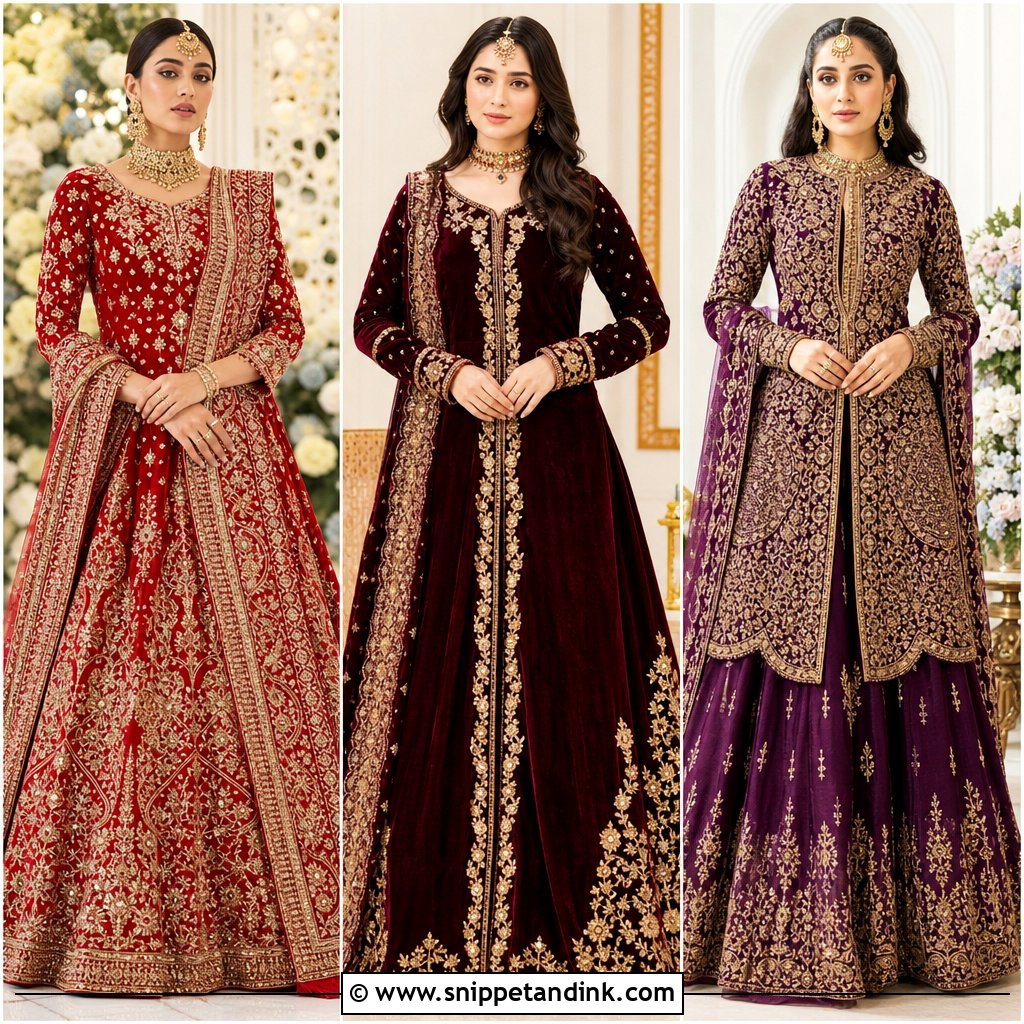
15. Red Bridal Lehenga With Double Dupatta
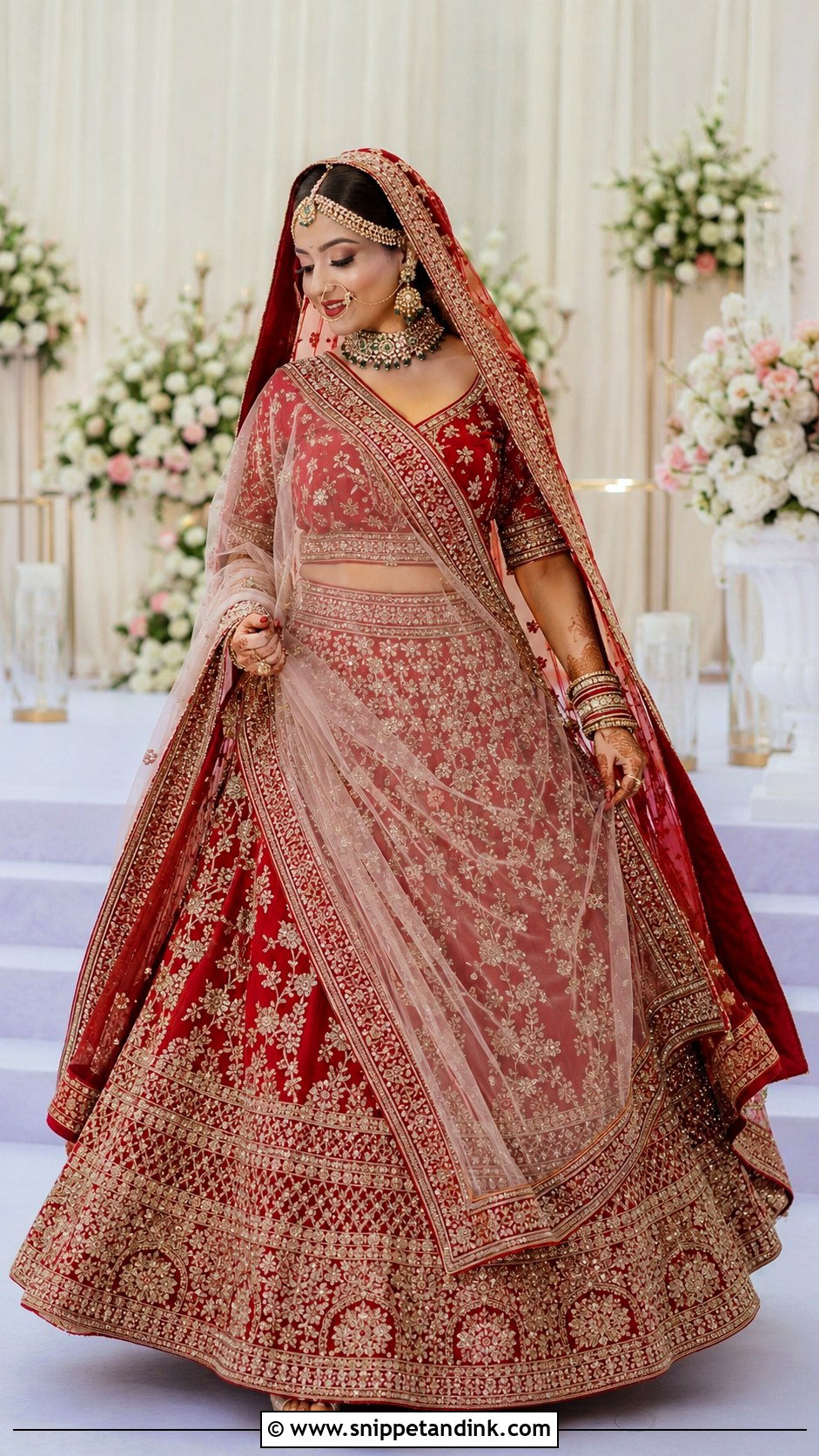
Two dupattas are traditional at the baraat: the heavier embroidered dupatta on the head and a lighter net or organza one across the shoulder or arms. Both can be red, and a slight difference in tone adds depth. Keep the lehenga full and the blouse fitted so the drapes don’t swallow your shape. A matha patti, choker, earrings, nath, bangles and embroidered heels finish it. Pin each dupatta separately with small pins rather than attaching one to the other. The weight spreads better, and when the head dupatta needs resetting before the rukhsati, the second one stays put.
16. Red And Ivory Bridal Lehenga
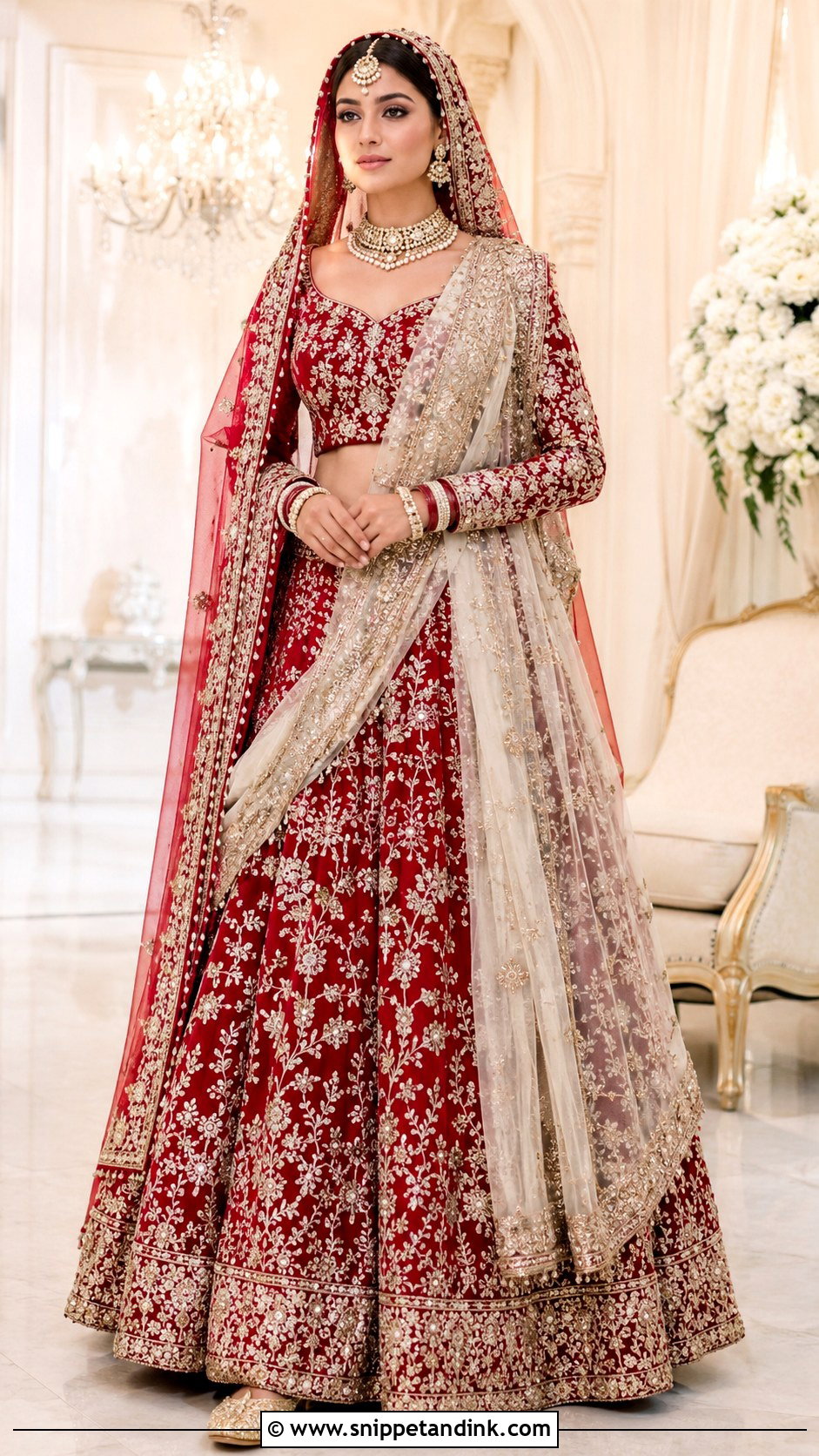
Ivory softens red without taking away its bridal weight. Choose a red lehenga with ivory floral embroidery and a red or ivory blouse depending on how much contrast you want. An ivory dupatta on one shoulder brightens it, and a red veil on the head keeps it clearly bridal. Pearl-accented kundan, ivory and red bangles mixed together and gold shoes connect the colors. Repeat the ivory in several places, at the borders, sleeves, neckline and jewelry, so the contrast looks planned. Keep the largest areas red. Ivory near the hem picks up every mark from the stage floor, so I’d keep it higher on the outfit.
17. Red And Green Bridal Lehenga
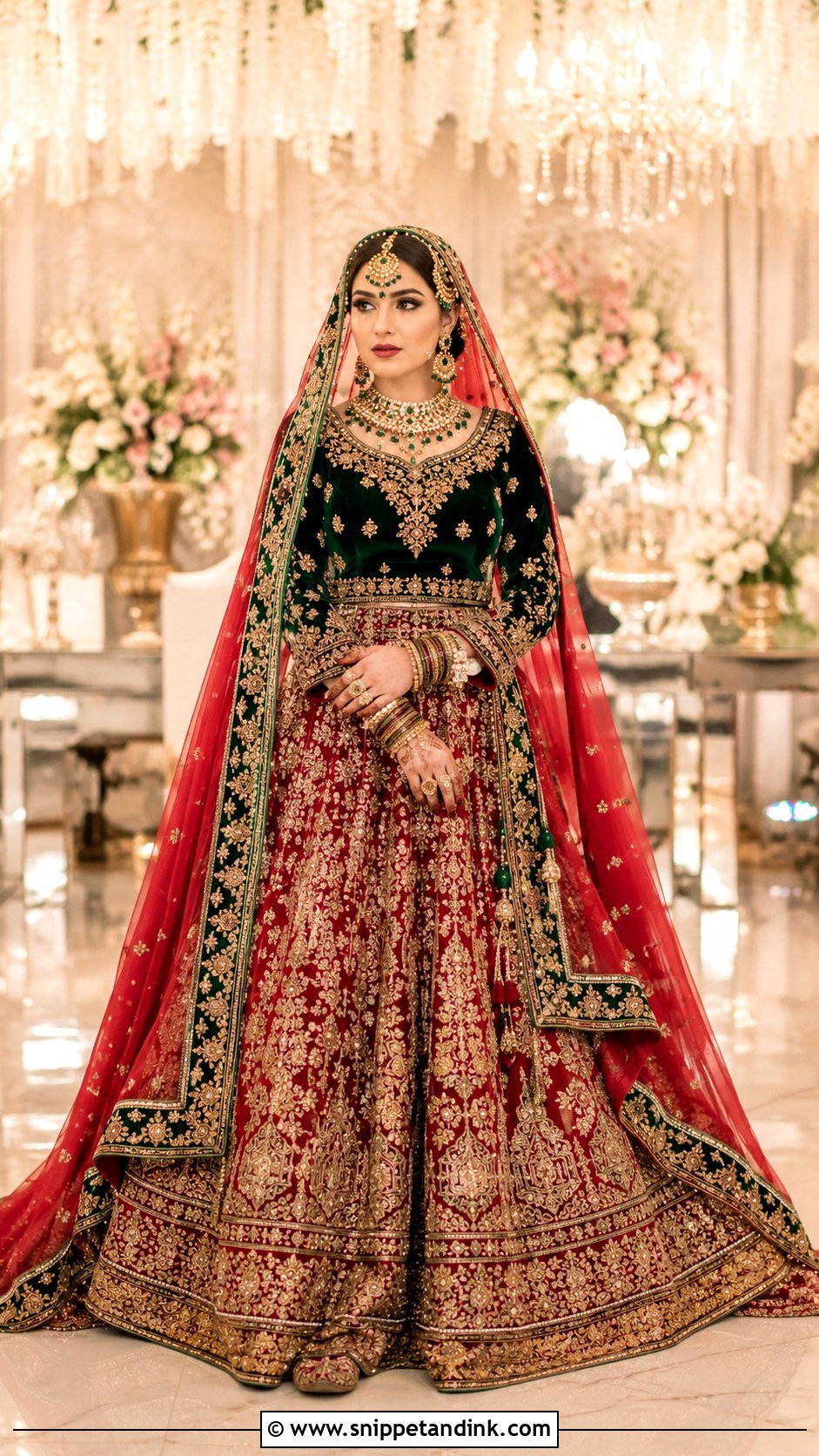
Red and green is an old, rich pairing in Pakistani bridal dress. Let red lead, and bring in emerald or bottle green through the dupatta border, blouse details, skirt panels or jewelry. A green velvet blouse with a red lehenga is bold; a red blouse with green embroidered accents is subtler. Gold kundan with green stones, a matha patti, bangles and embroidered khussas suit it. Choose one main green element and echo that same shade in smaller places, never several different greens. Antique gold embroidery bridges the two colors. Check both greens together under warm light, where bottle green can read nearly black.
18. Red Tissue Bridal Lehenga
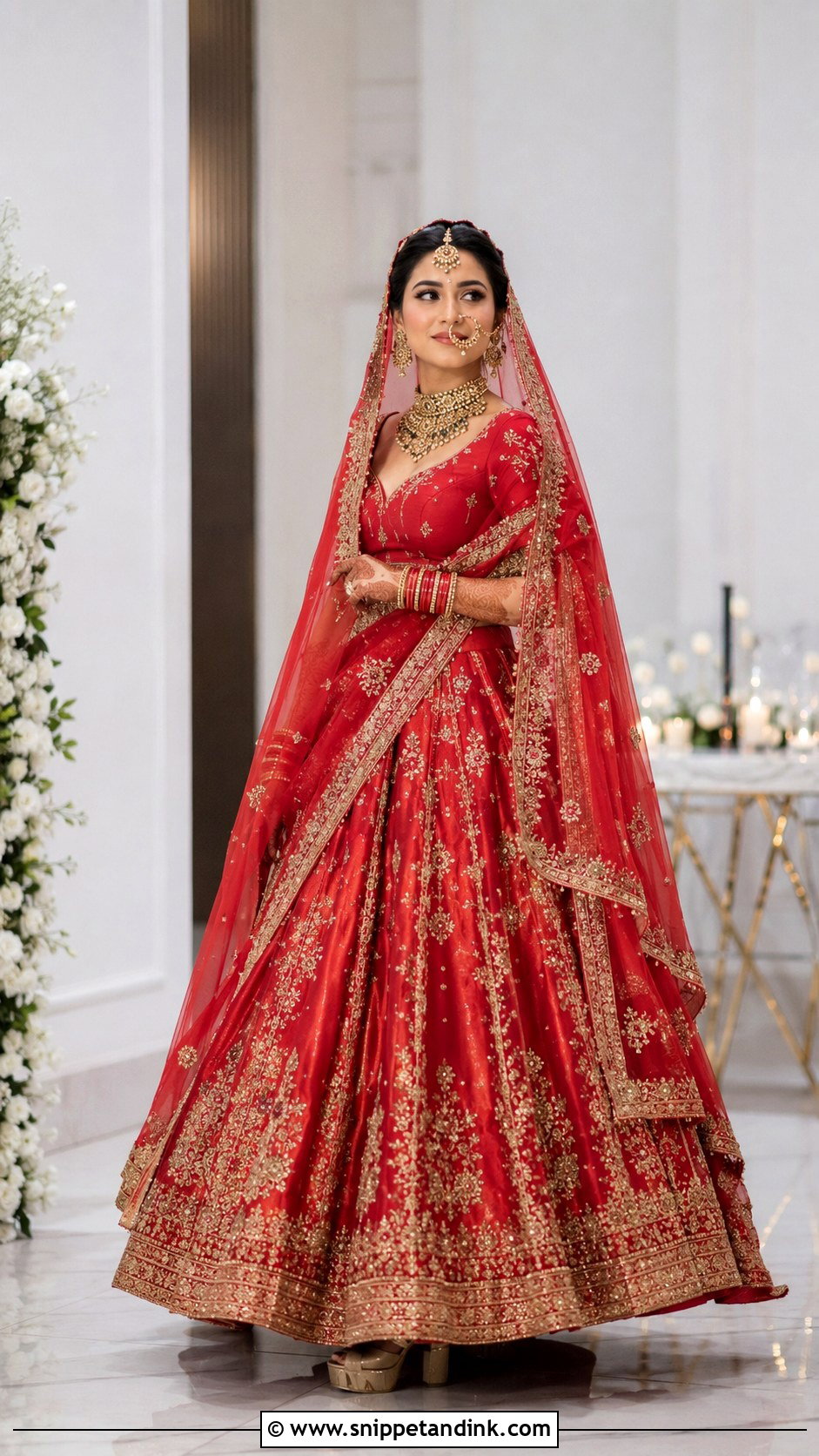
Tissue is woven with metallic yarn, so it has a soft sheen and holds a structured shape. A red tissue lehenga reflects light across gold embroidery and borders. Pair it with a blouse in matching tissue, raw silk or velvet for contrast, and an organza dupatta with a defined border so the head drape stays light. Traditional gold jewelry, a nath, stacked bangles and cushioned heels complete it. Tissue is crisp and scratchy against skin, so the lining must be soft, breathable and firmly attached. Since it already holds volume, skip extra layers. Place the embroidery along the panels and hem to bring out the sheen without making everything glint.
19. Red Organza Bridal Lehenga
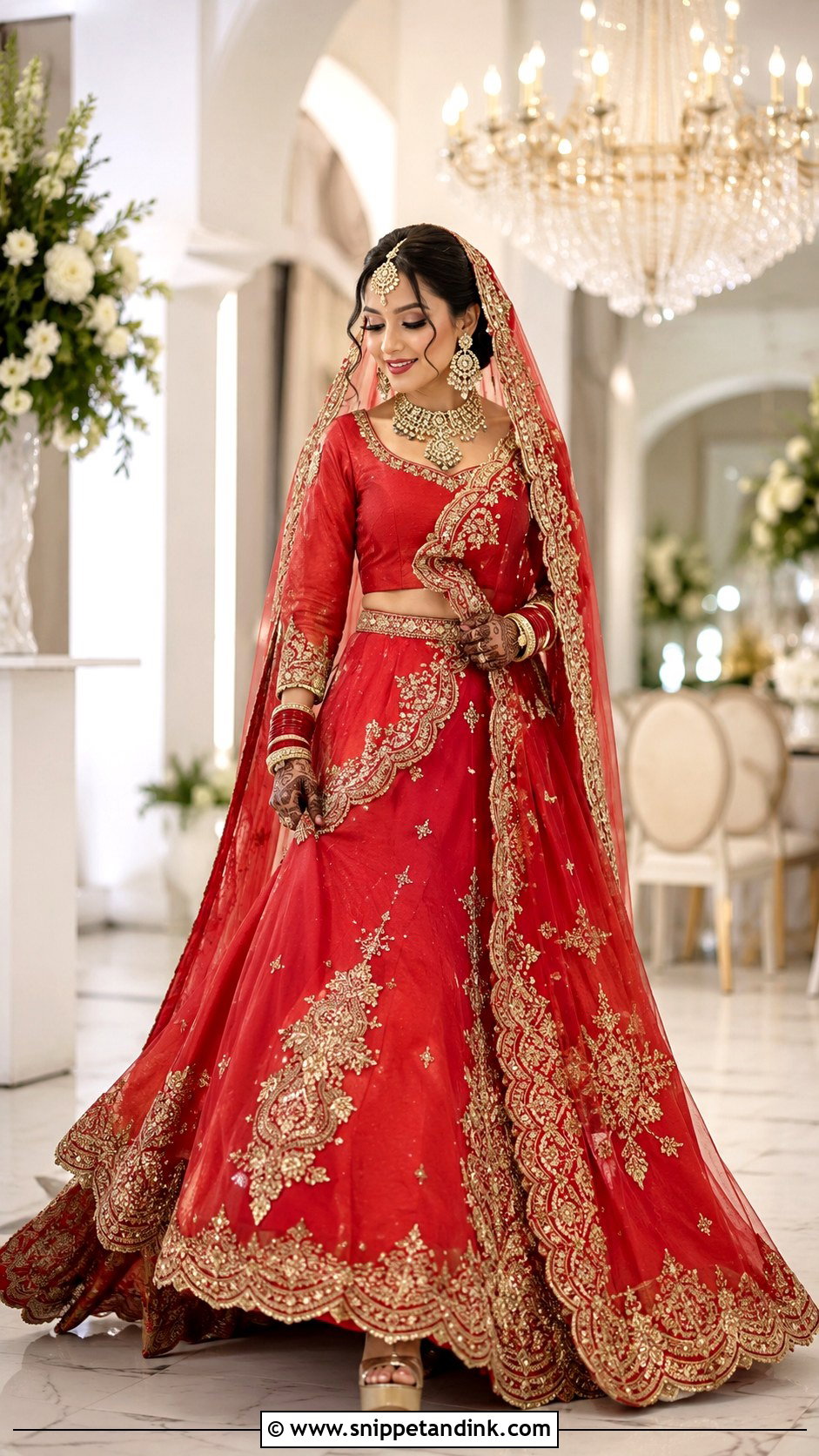
Organza gives volume with very little weight, which matters for a bride who’ll be standing and sitting for hours. Several lined layers build a full skirt. Choose fine gold embroidery, appliqué or ornate borders that let the airy texture show, with a structured raw silk blouse for support and contrast. A matching organza dupatta on the head, kundan jewelry, a sleek bun and steady platforms complete it. Organza is see-through, so the lining must match the red closely or a pinkish layer shows through. It also creases, and I steam the skirt on the day rather than the night before. A wide hem border helps the light fabric hang straight.
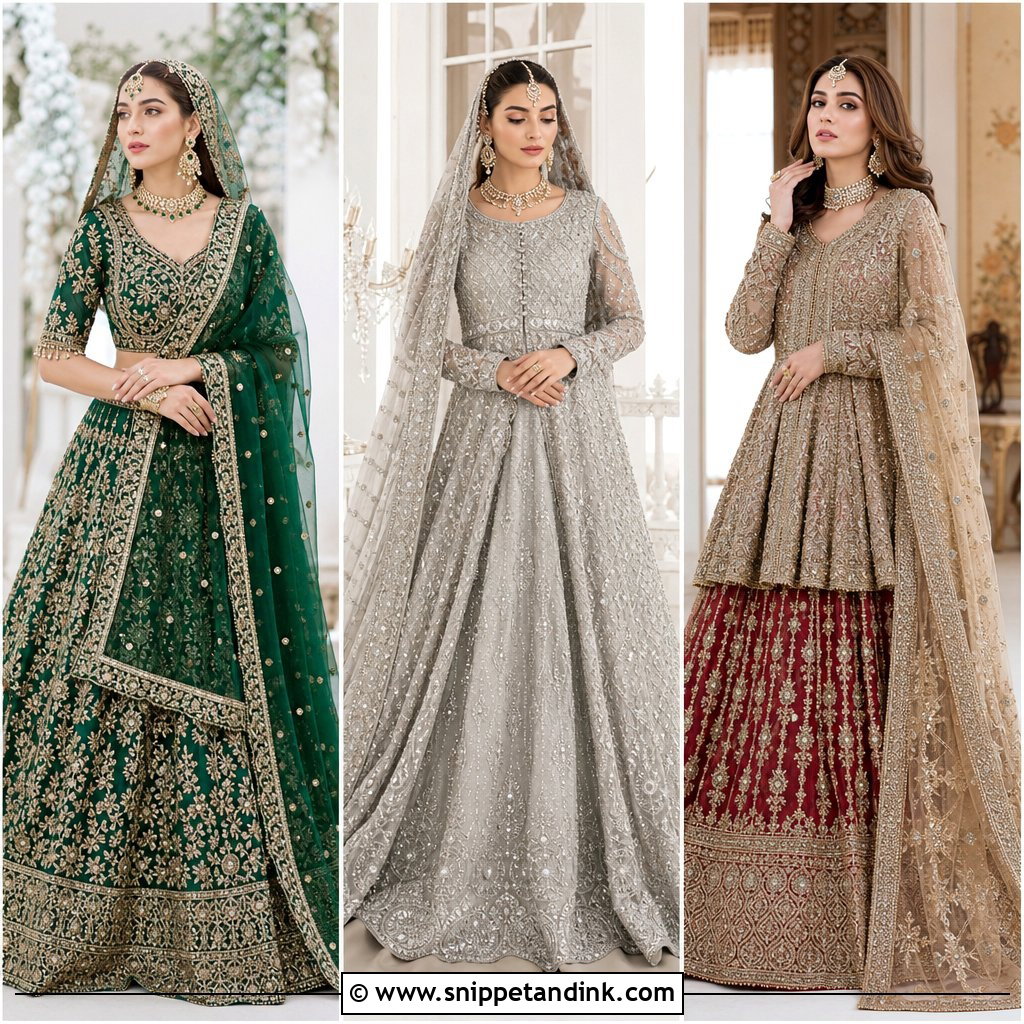
20. Minimal Red Bridal Lehenga
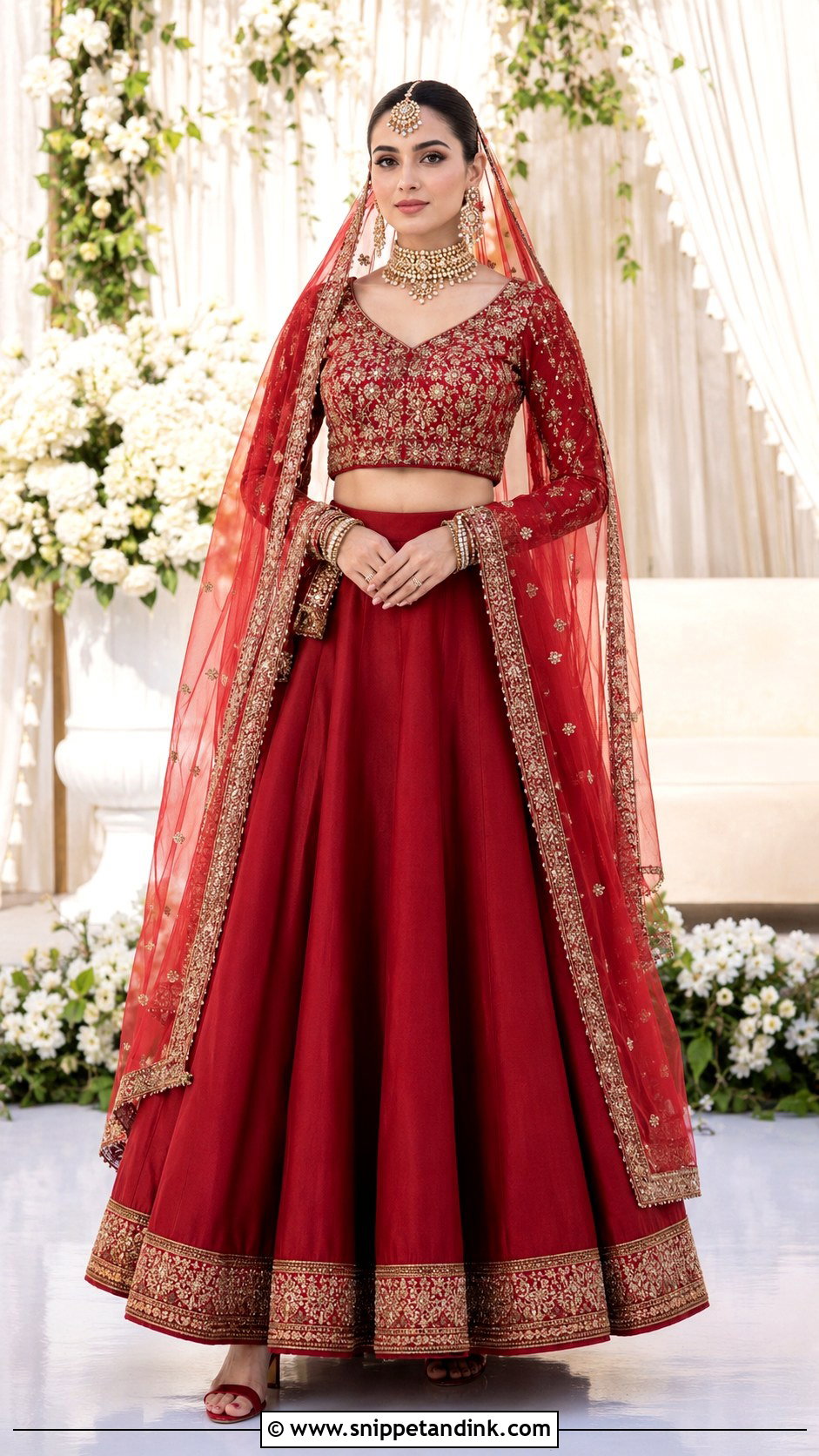
A baraat dress can be bridal without dense embroidery. Choose a clean paneled skirt with one ornate border, a tailored blouse with focused neckline work and a sheer dupatta with small motifs. Raw silk, velvet or structured organza gives a simpler design enough presence. A statement choker, earrings, bangles, a tikka and elegant heels bring the formality back up. With less embroidery, the color and jewelry carry more of the look. Minimal outfits hide nothing, so tailoring decides whether it reads intentional or unfinished: precise waist placement, smooth lining and a hem that falls evenly all round.
How Long Hand-Embroidered Baraat Wear Takes
A heavily worked bridal outfit is embroidered by hand on frames, panel by panel, and good ateliers book out in wedding season. I advise brides to place the order around six months ahead and to treat four months as a minimum for custom work. If the outfit is coming from Pakistan to a bride living abroad, add time for shipping and customs, and make sure a local tailor who has worked with heavy embroidery can do the final adjustments.
Give the atelier your measurements taken by a tailor rather than at home, and ask for one fitting with the blouse before embroidery is finished. Once the work is done, the blouse can only be let out as far as its seam allowance allows.
Hours on the Stage in a Heavy Lehenga
Brides spend much of the baraat seated on the stage for photos and greetings, often for hours. Plan for that. A full embroidered lehenga with two dupattas can weigh several kilos, most of it sitting on your hips and head.
- Ask for a wide, soft waistband or a built-in belt under the lehenga so the weight rests on the hips rather than cutting in.
- Have the head dupatta set by your makeup artist with pins anchored into the hairstyle, not just the hair surface.
- Name one person to settle your skirt and dupatta every time you sit, stand or move between stage and photos.
- Keep a small kit with safety pins, a needle and red thread, and blotting papers for the stage lights.
Walk Your Baraat in It Before the Day
Your baraat outfit comes down to taste, comfort, season and the feel of the event. The classic lehenga carries that sense of grandeur, while a gharara, sharara, peshwas, saree or jacket outfit says something more personal. Before the outfit is finished, test it with both dupattas, the jewelry, shoes and hairstyle together. Walk, sit, turn and lift your arms to find fit problems while there’s still time to fix them. Look at the red in daylight and under the venue lighting. Then pick the outfit you can move in comfortably from the entrance to the rukhsati.
You'll Like These Ideas:


Leave a Reply