
Most brides I dress arrive with one color in mind and leave thinking about weight, movement and how many outfits the week really needs. Deep red still anchors the ceremony for many families, yet ivory, heritage silk sarees, sculpted blouses and pre-draped cuts have become just as common, and the mehndi, sangeet and reception now each get their own look. The outfits below are complete looks, from dupatta placement to footwear. As you read, keep asking two questions: how long will I sit in this, and how far will I walk?
Ordering a Bridal Lehenga Early Enough for Three Fittings
Embroidered bridal wear is slow work. A made-to-order lehenga or a hand-worked saree blouse usually needs several months from order to delivery, and heavy zardozi takes longer still. I plan backwards from the wedding so there is room for at least three fittings plus a final try-on with every accessory.
- First fitting: blouse shape only. This is when the neckline, sleeve length and support are fixed, before embellishment makes alterations difficult.
- Second fitting: the skirt with its can-can and lining. I check the flare, the hem length in your wedding shoes and the weight on your hips after ten minutes of standing.
- Final fitting: everything together, including dupattas, jewelry and the hairstyle if you can. Sit on a low stool for a few minutes, since you’ll sit that way at the mandap or stage.
- Leave at least two weeks between the final fitting and the wedding for small fixes and steaming.
Ask how heavy the finished lehenga will be. A densely worked skirt can sit hard on the waistband for hours, and that is where brides feel it most by evening. A good tailor can spread the load with a wider waistband or fewer underskirt layers, but only if you ask before the work is finished.
1. Red Bridal Lehenga With Double Dupatta
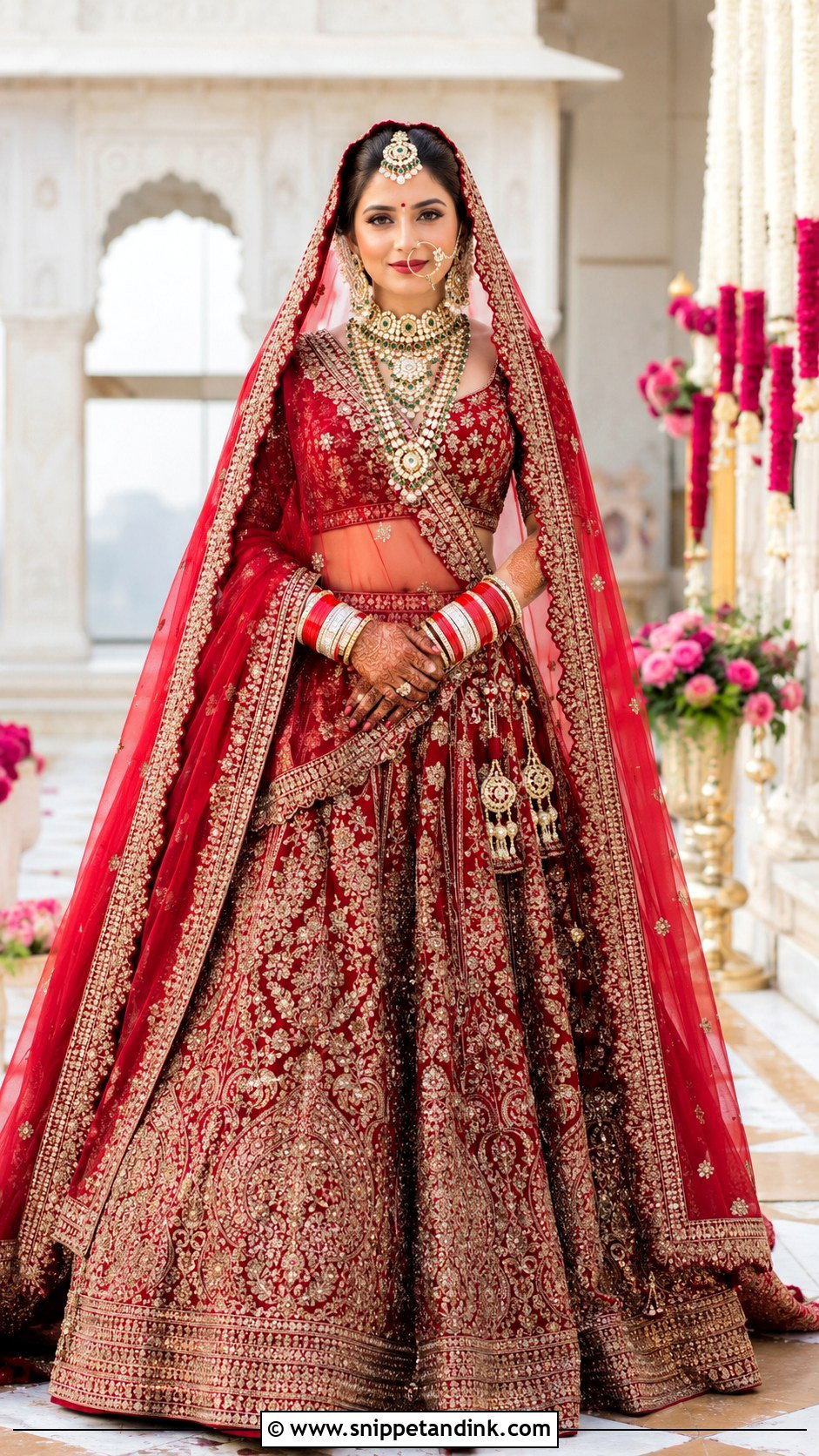
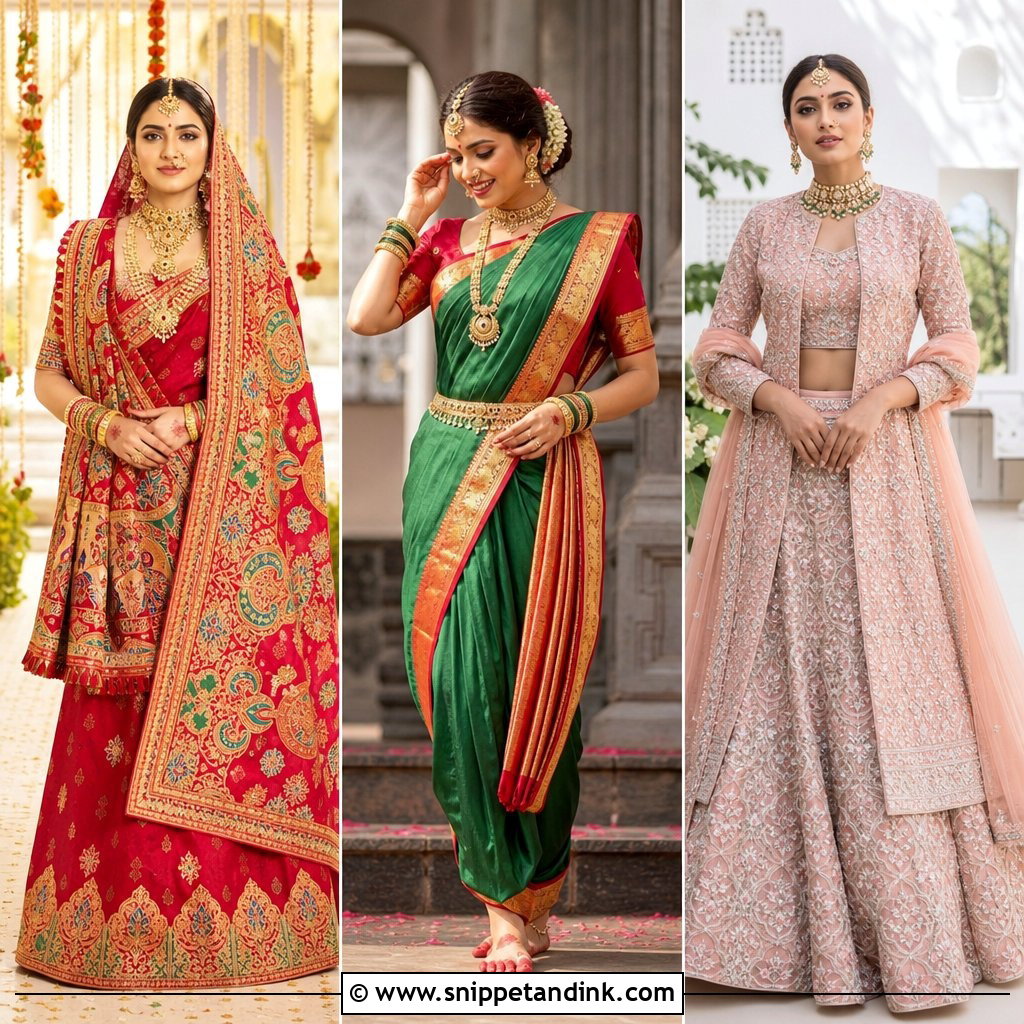
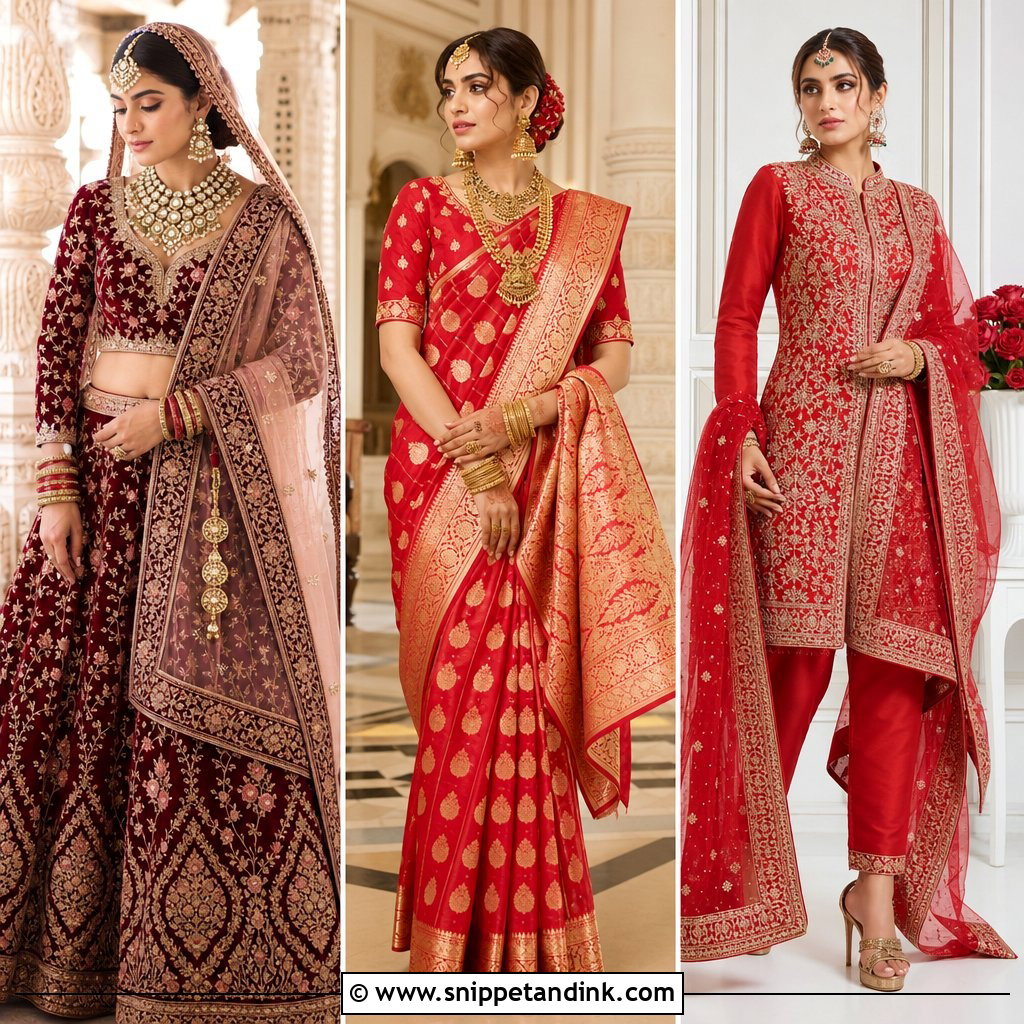
Two dupattas give a red bridal lehenga its ceremonial depth: one over the head, the second crossed diagonally over the torso so the blouse work still shows. Crimson, vermilion and ruby all carry zari, zardozi, dabka or fine sequins well. The thing I check first is the combined weight of those two dupattas, because a heavily bordered pair pulls at the hairline and the shoulder for hours. I ask for the head dupatta in soft net with a lighter border. Keep the jewelry in the same red-and-gold family (choker, long necklace, matha patti, bangles, juttis) and the embroidery stays the star.
2. Maroon Velvet Bridal Lehenga
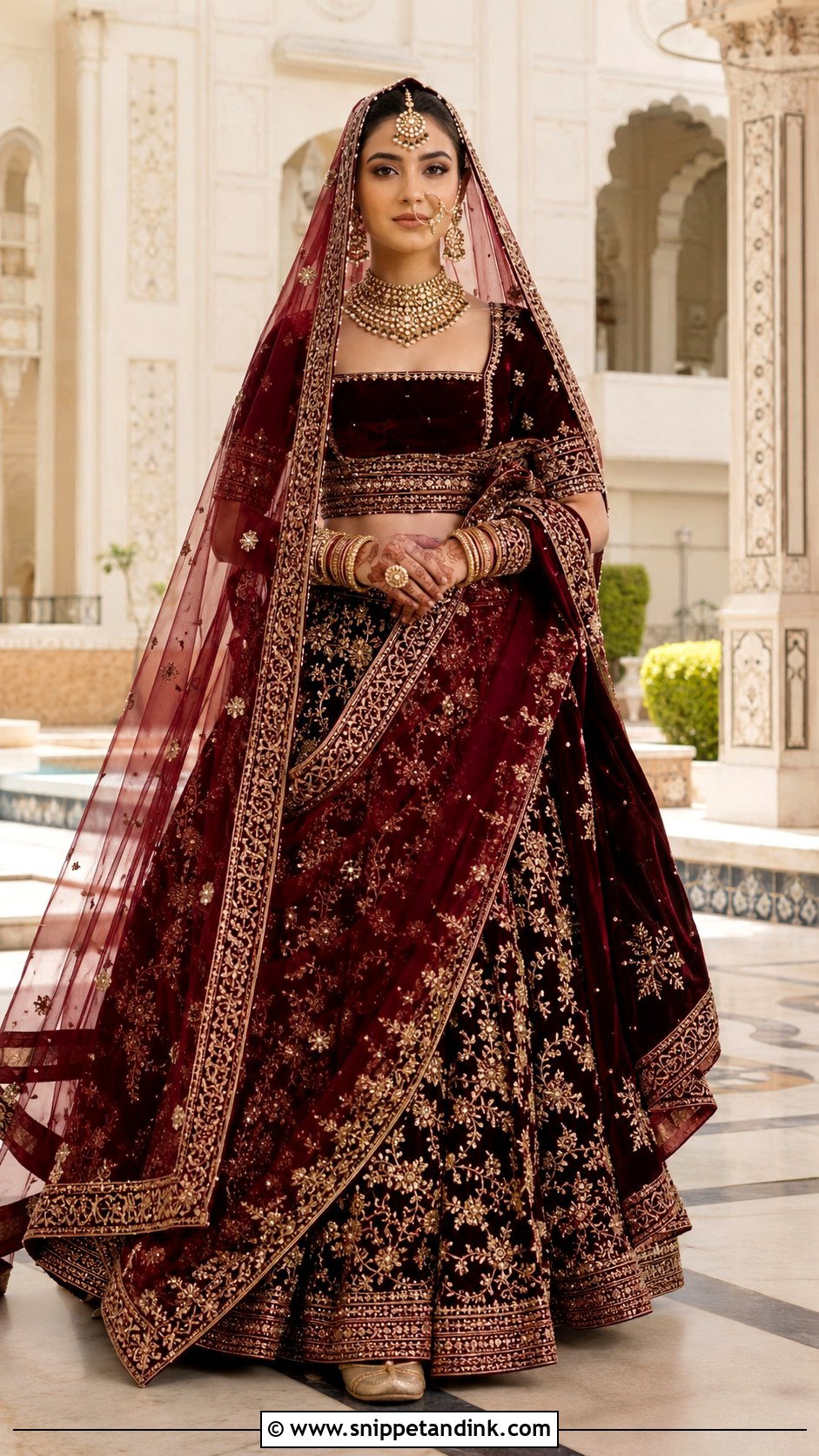
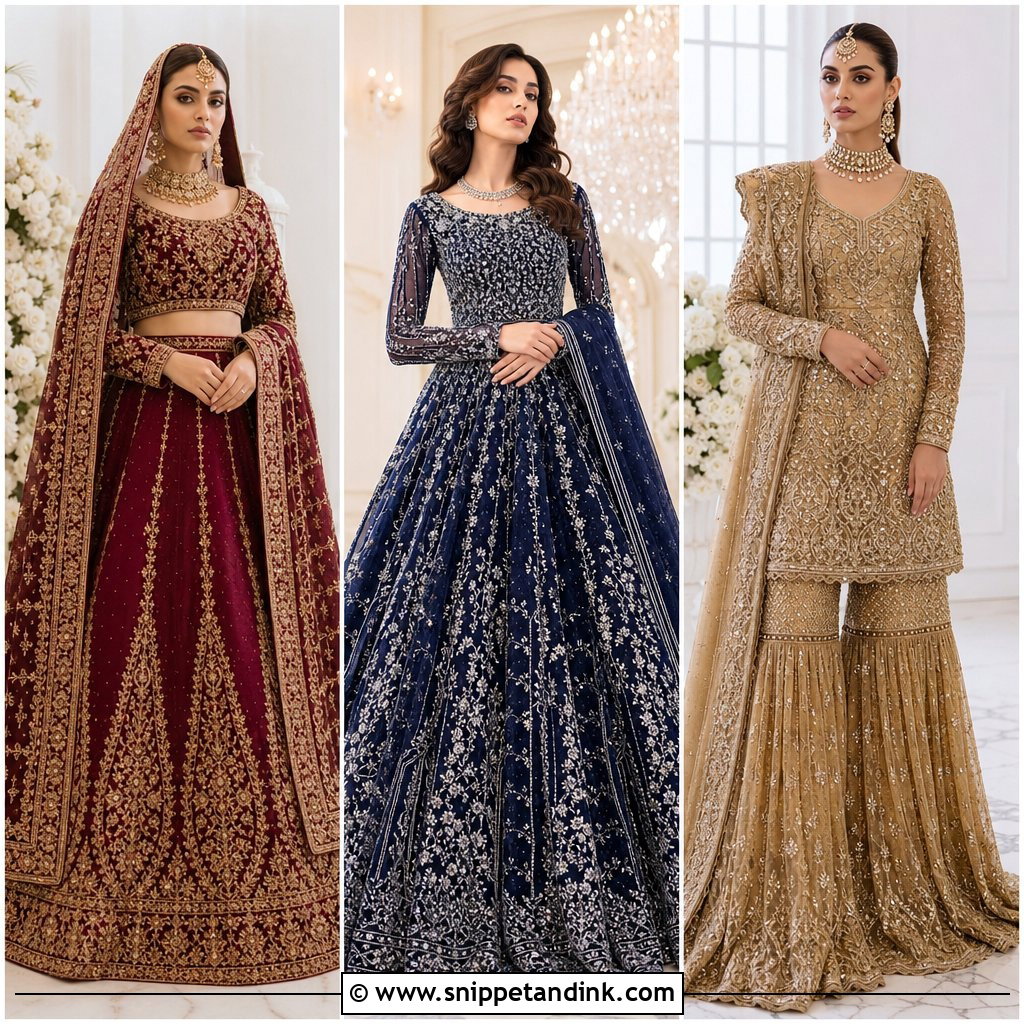
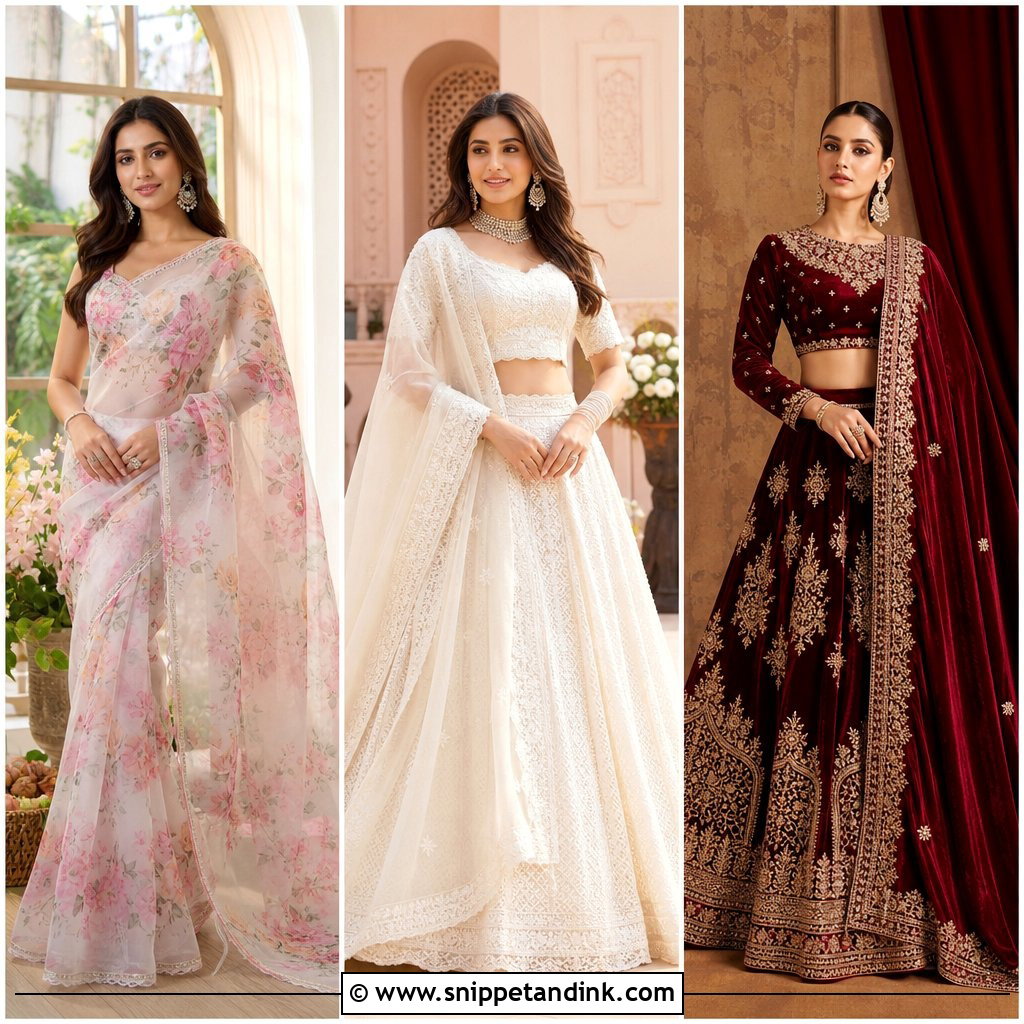
Velvet belongs to winter. In a warm marquee it traps heat against the body within the first hour, so I only suggest a maroon velvet lehenga when the evening is genuinely cool. The pile absorbs light, which is why antique-gold embroidery reads so richly on it without extra sparkle. Keep the flare moderate, since velvet adds bulk at the hip faster than silk does. A structured blouse with a square or sweetheart neck frames layered necklaces, and a light net dupatta over the head stops the whole outfit from feeling heavy. Platform juttis help, because velvet hems catch under flat soles.
3. Ivory Bridal Lehenga With Pearl Embroidery
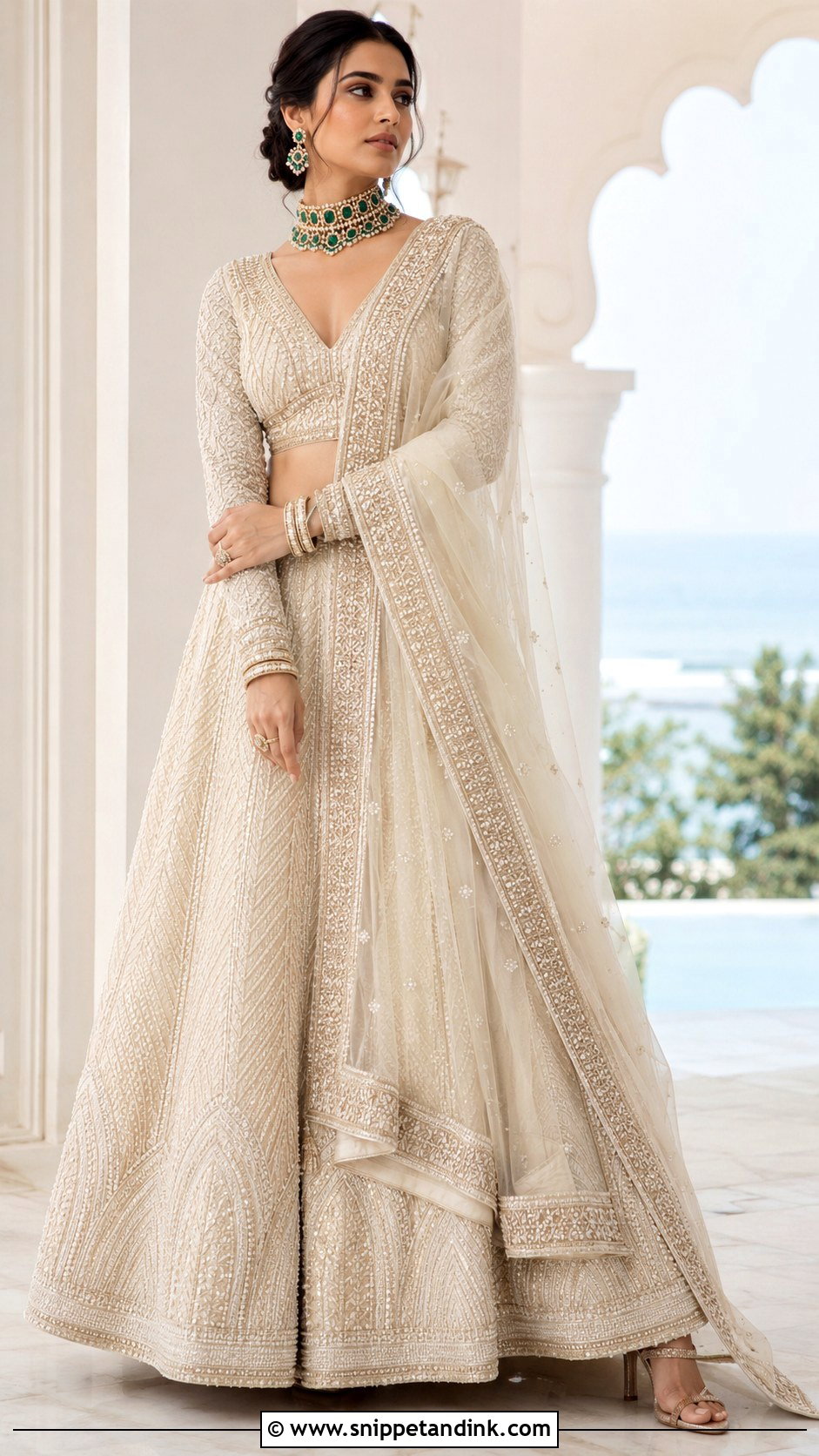
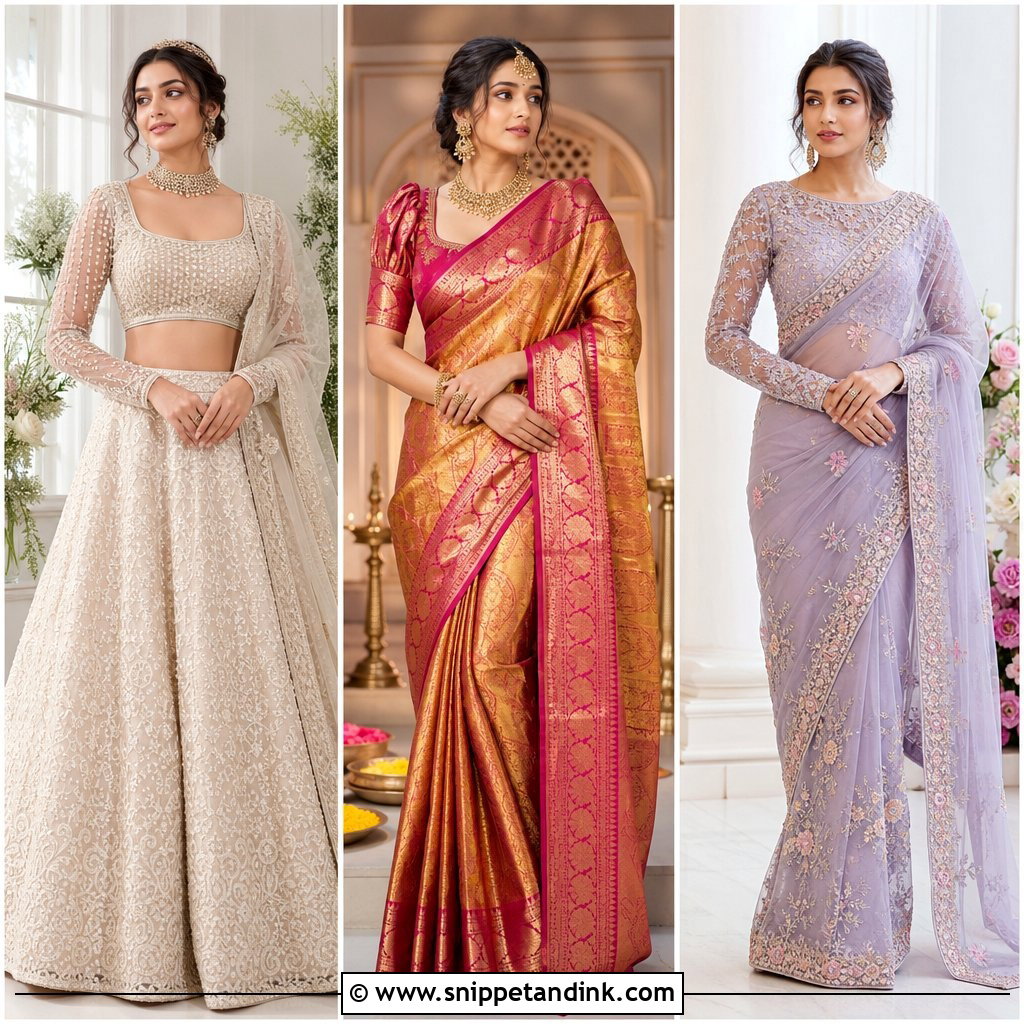
Ivory can look washed out in photos unless the embroidery has enough contrast, so I look for pearl work, silver thread or crystal that stays visible against the pale base. Full sleeves or a sculpted neckline give the palette some shape. Insist on a dupatta with a clear border; a plain ivory one simply disappears in a wide shot. Emeralds add contrast, while pearls or diamonds keep it tonal, and champagne heels or embroidered flats blend in underneath. It suits daylight and destination ceremonies. One honest caution: some families avoid white or ivory for the main rituals, so talk to them before you order.
4. Blush Pink Floral Bridal Lehenga
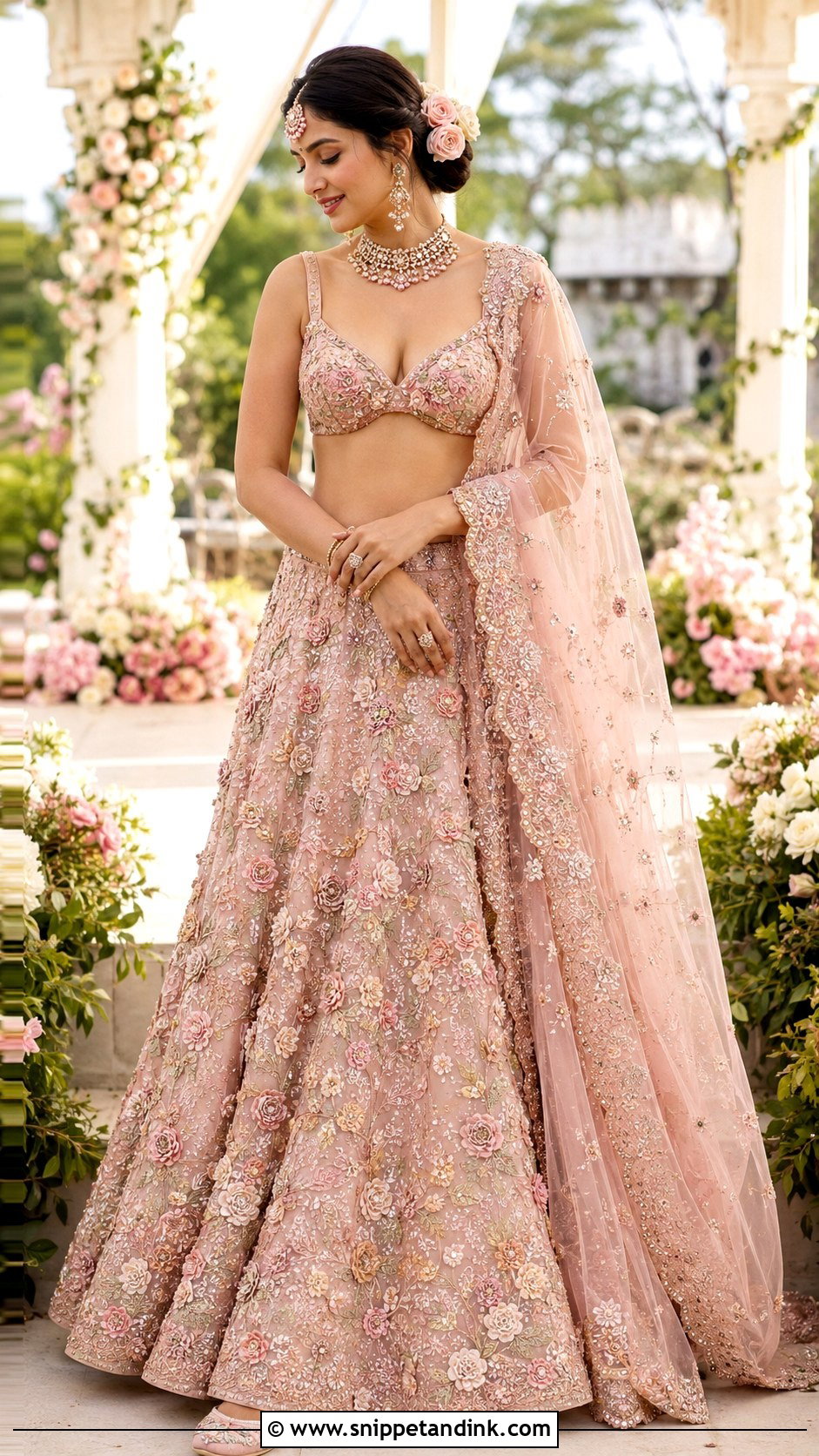
A garden ceremony is where blush pink makes sense. Dimensional flowers, resham thread and soft botanical motifs keep it romantic without the formality of red. I’d keep the blouse clean, because floral skirts get crowded fast. When the skirt holds several colors, pull just one into your accessories, perhaps rose gold, pearl drops or pastel juttis. Fresh flowers in a low bun are fine as long as they sit away from the fabric; petals bruise and leave marks on pale net.
5. Pastel Blue Bridal Lehenga With Cape
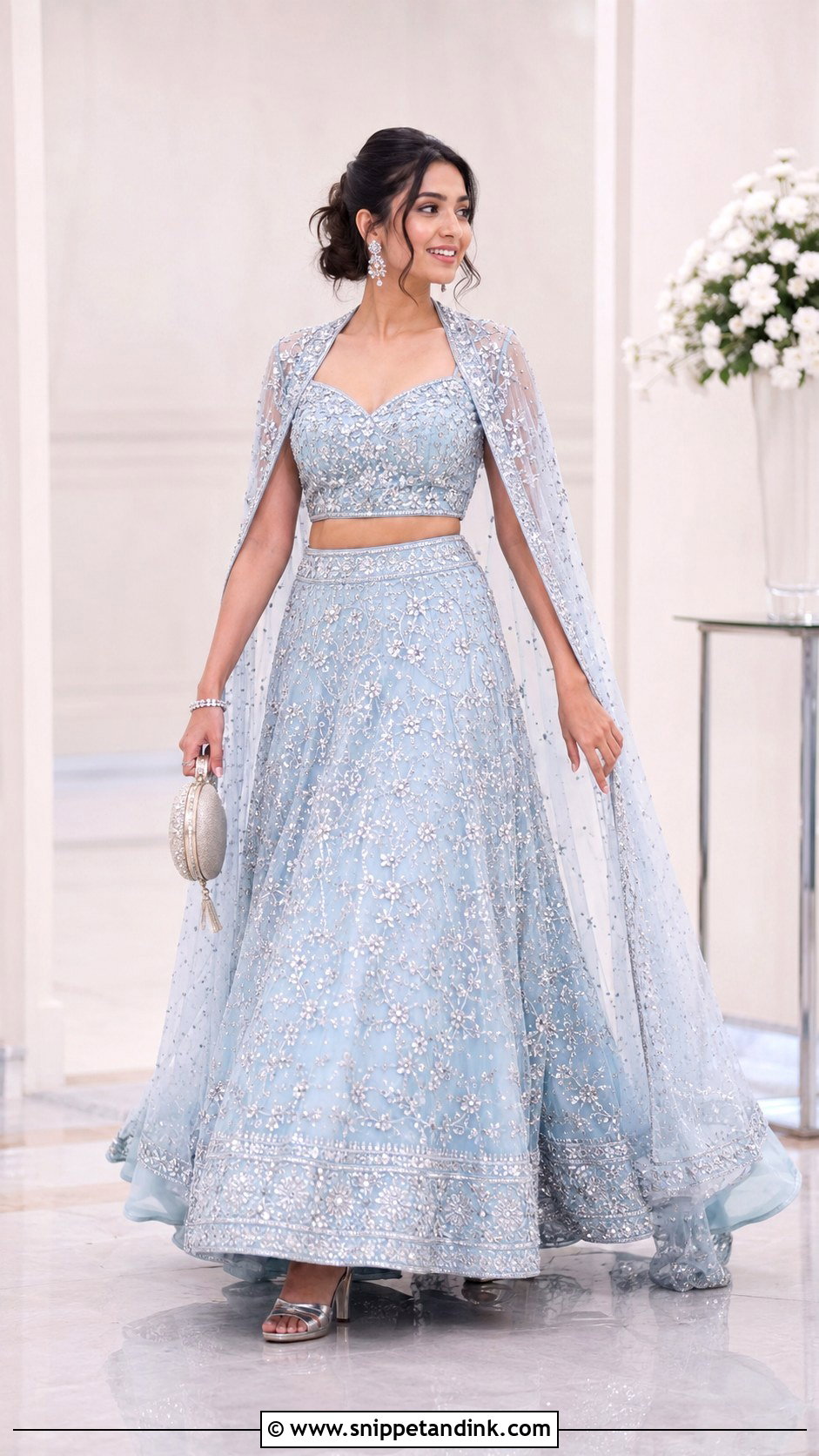
The cape does the job of a dupatta here, which frees both arms for the sangeet floor. Start with a fluid pastel blue lehenga in silver embroidery or tonal sequins, a fitted sleeveless or short-sleeved blouse, then a sheer embellished cape falling past the waist. My rule at fittings is to have the cape stitched or hooked to the blouse at the shoulders, because a cape that only rests there slides back the moment you raise your arms. If the cape neckline is heavily worked, skip the necklace. Cool-toned makeup and silver accents suit pale blue.
6. Gold Bridal Lehenga With Corset Blouse
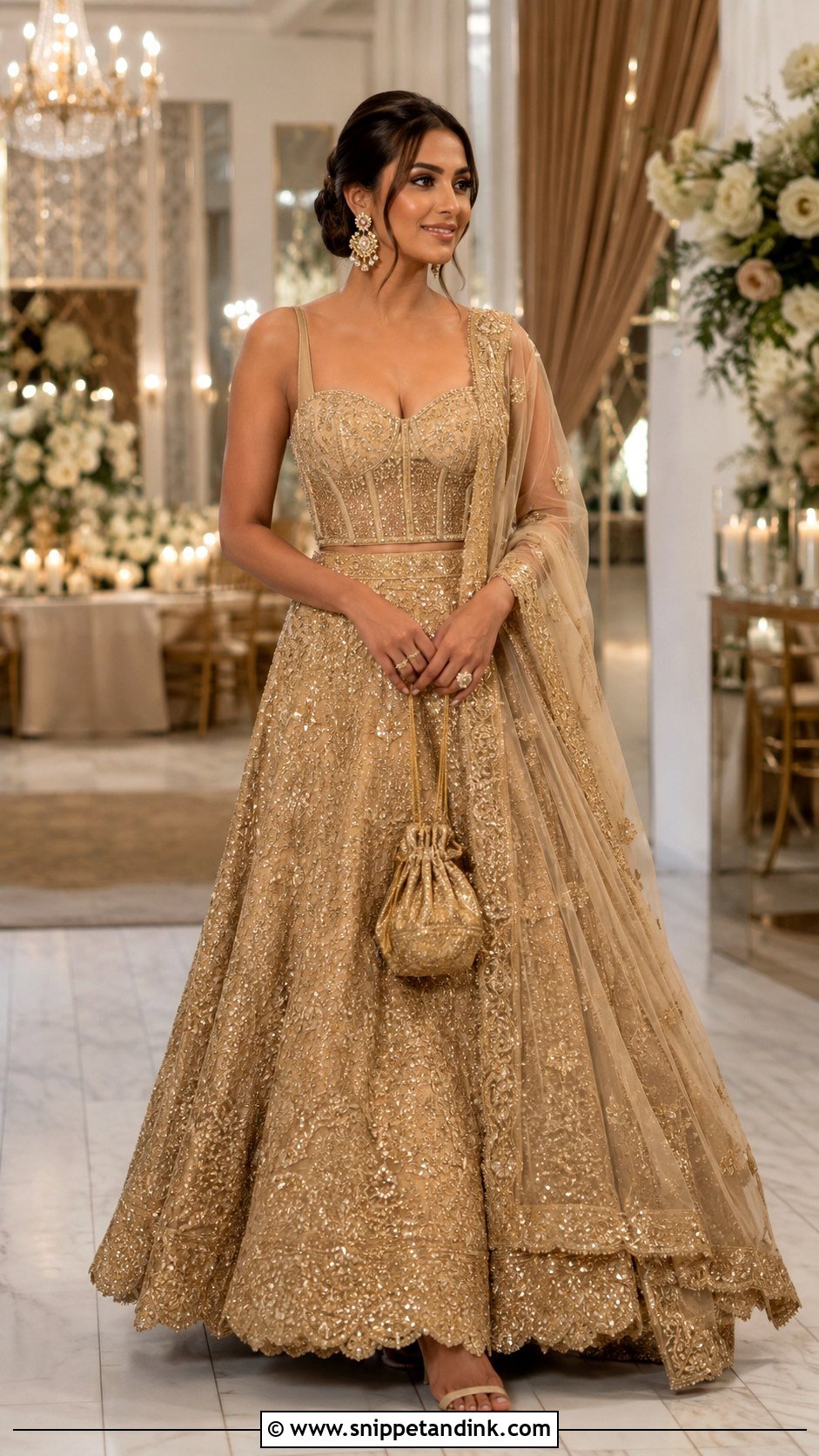
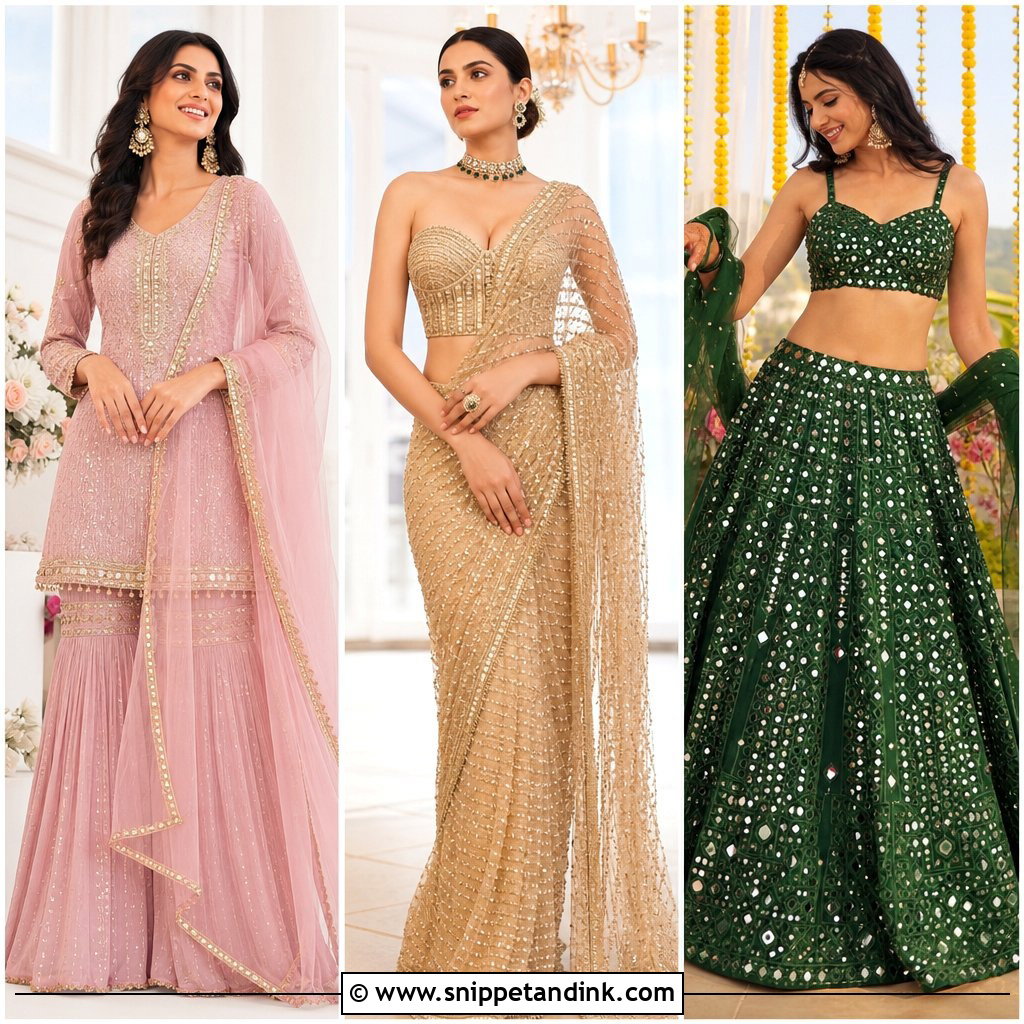
Can a lehenga feel glamorous and still unmistakably Indian? A gold skirt with a corset-style blouse manages it, provided the bodice is built with proper boning and lining rather than simply cut tight. A tight blouse without structure wrinkles across the ribs the moment you sit. Tonal beads and restrained crystal on a flowing skirt contrast nicely with that sculpted top. Drape a soft net dupatta over one shoulder so the blouse stays visible. Add kundan earrings, a statement ring and a small potli. I hold every gold piece against the fabric in daylight before the wedding, because yellow gold and rose-toned zari clash more than you’d expect.
7. Emerald Green Bridal Lehenga With Gold Embroidery
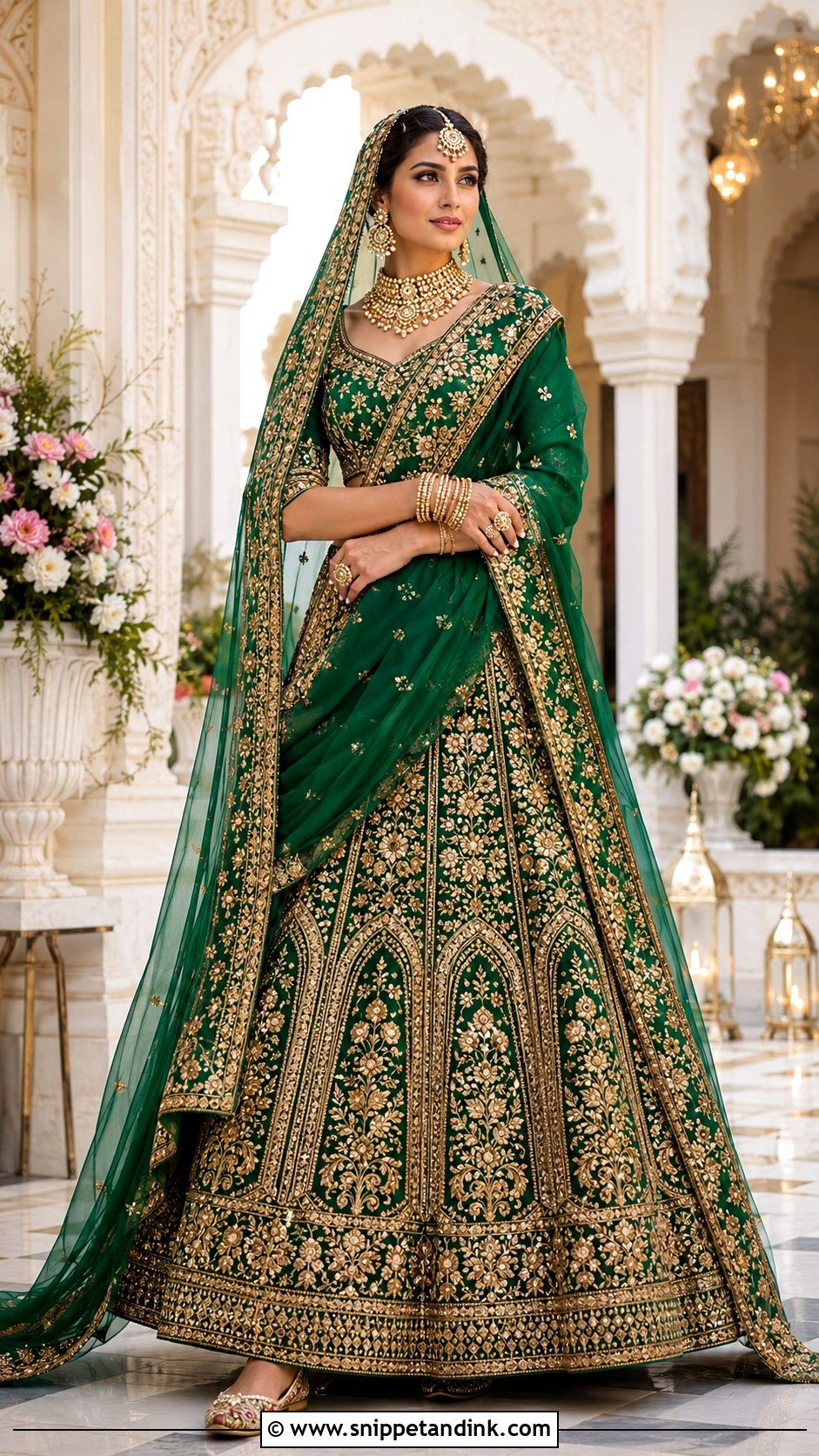
Emerald gives you richness without red or pink. Silk, raw silk or velvet all carry antique-gold borders well, and an elbow-length sleeve keeps the look classic. A matching green dupatta over one shoulder pairs nicely with a lighter contrasting veil on the head. Polki, a maang tikka and a red lip bring warmth. Deep green turns almost black under dim tungsten light, so it suits evenings where the venue is well lit. If the fabric is heavy, I ask the tailor to drop one underskirt layer; you will sit through rituals far more comfortably.
8. Purple Bridal Lehenga With Ombre Dupatta
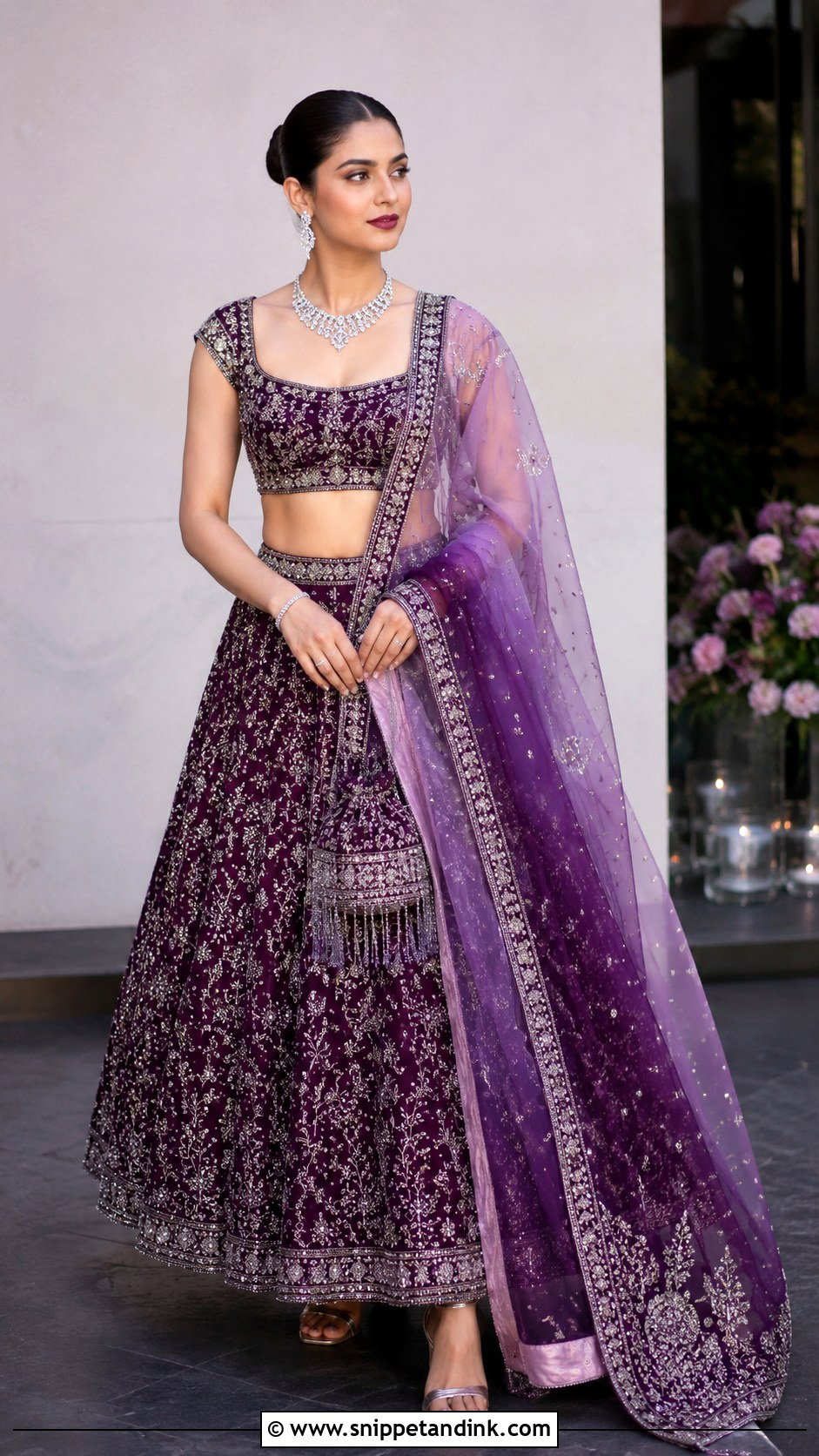
An ombre dupatta only works if people can actually see the gradient. I secure it at the shoulder and again at the wrist so the lavender-to-plum fade runs the length of the arm instead of bunching. Aubergine and plum suit winter; violet and berry feel lighter for spring. Let the blouse repeat whatever finish the skirt uses, silver or antique gold. Pair it with berry-toned makeup and either diamonds or polki, never both, and keep other colors out of the picture so the fade stays the focus. Purple reads deepest at night, which makes it a strong sangeet or reception option.
9. Banarasi Silk Bridal Saree
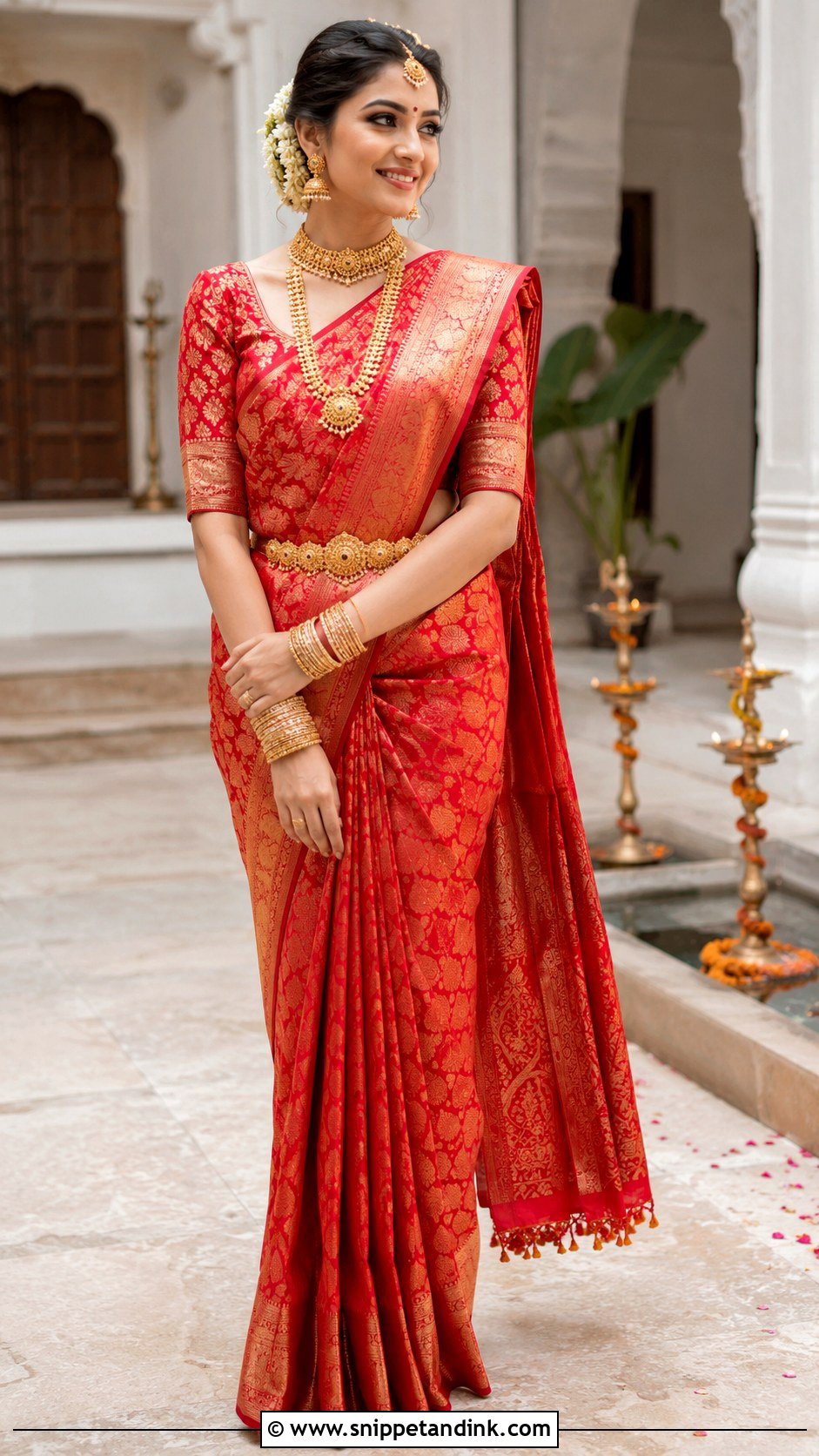
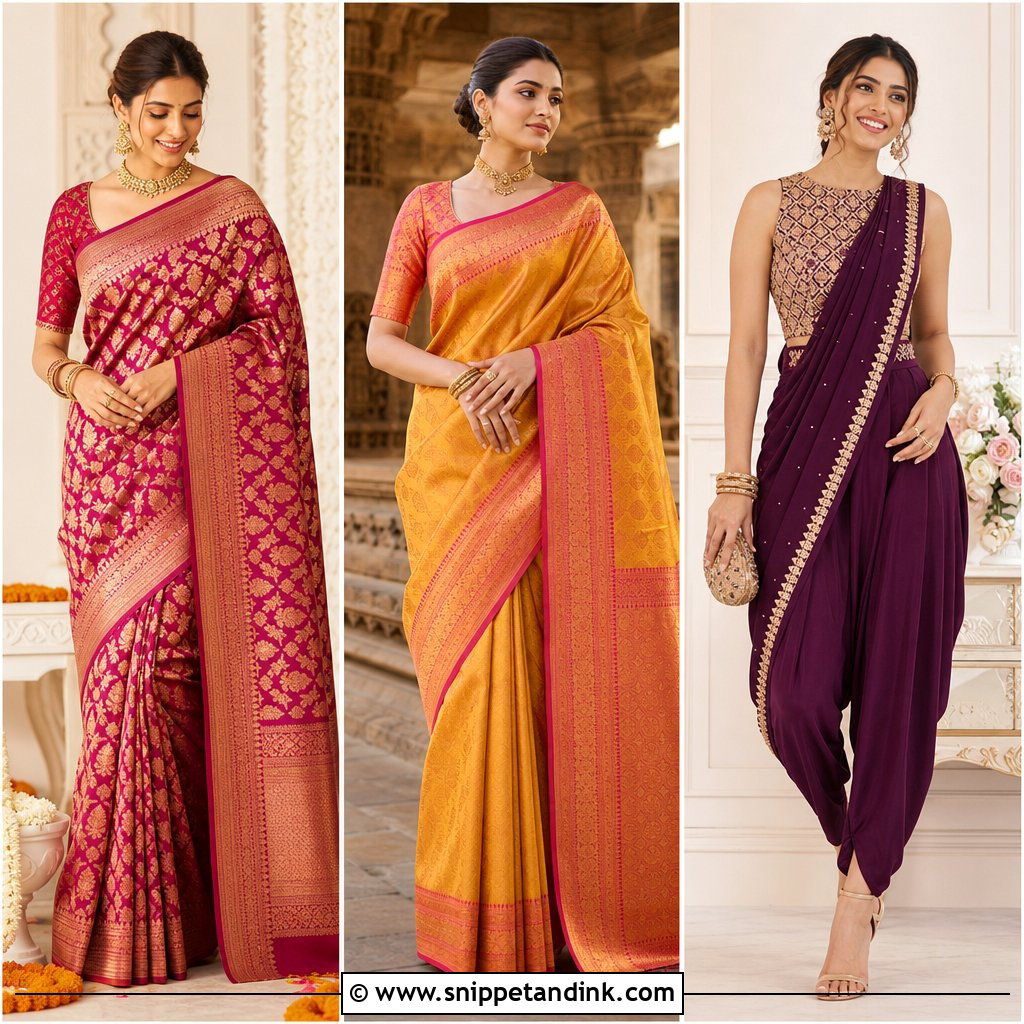
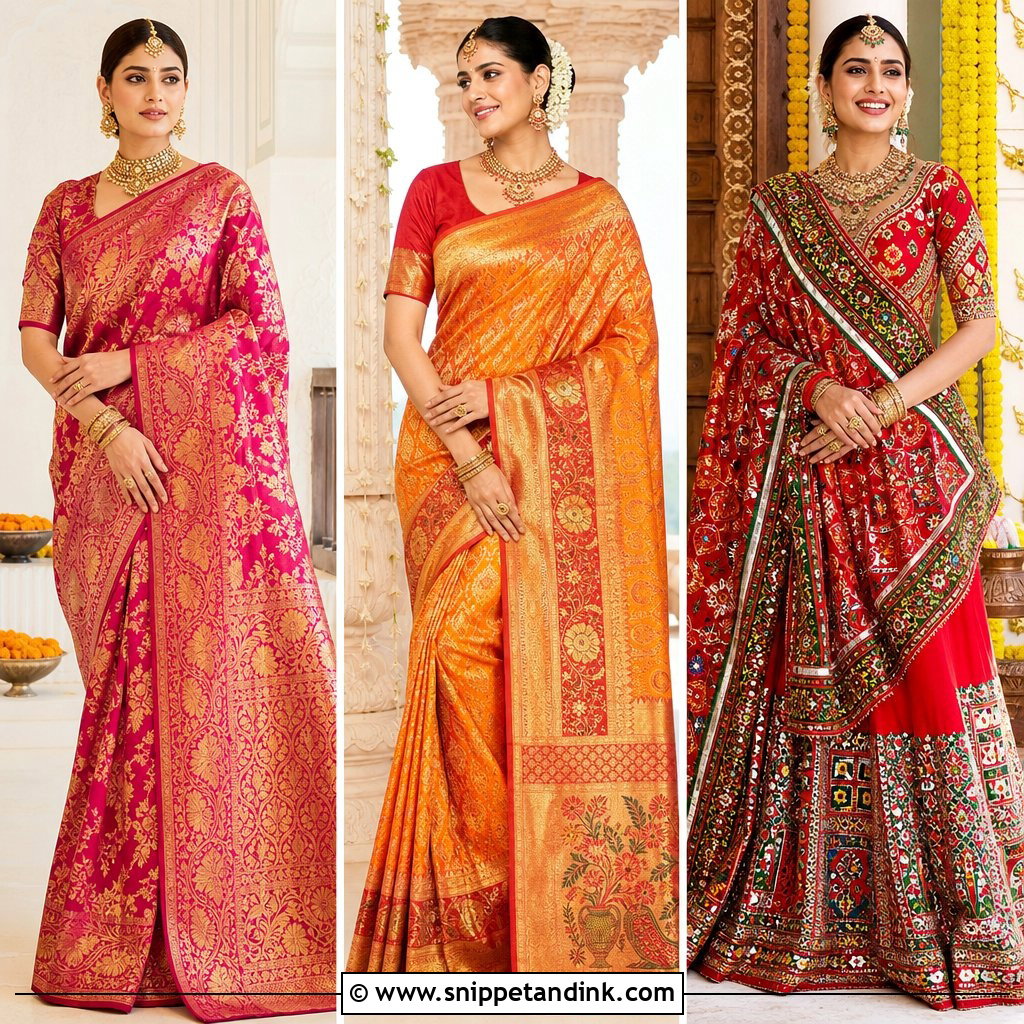
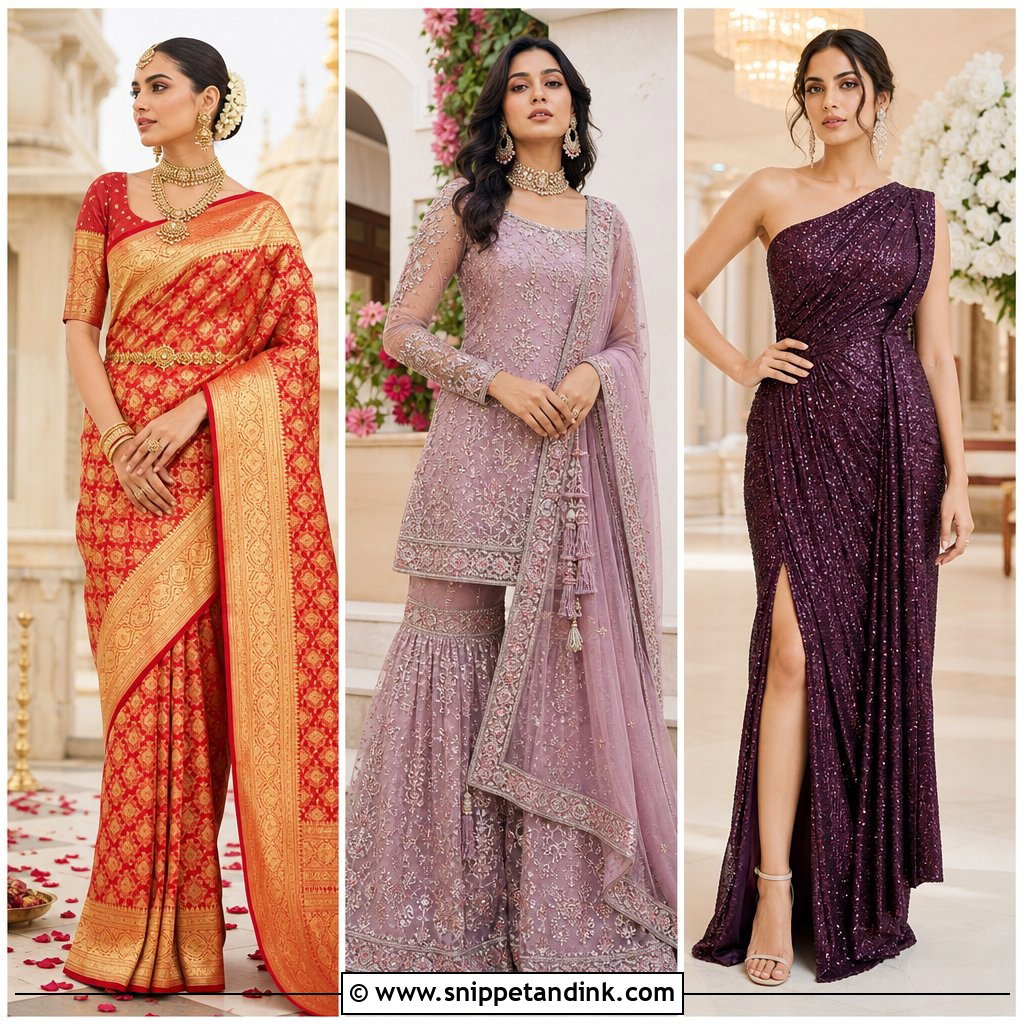
Woven silk has a glow that embroidery can’t copy. A Banarasi bridal saree in red, maroon, magenta or rust carries zari woven into the cloth itself, so the drape matters more than the decoration. I pin the pleats at the waist and the pallu at the shoulder with small safety pins hidden behind the fold, because pure silk is slippery and shifts during long rituals. A fitted brocade blouse with elbow sleeves suits it, along with a choker, long necklace and waist belt. If a veil is customary, choose light net or organza so the weave isn’t hidden. Stored well, this saree can be worn again for decades.
10. Red Kanjeevaram Bridal Saree
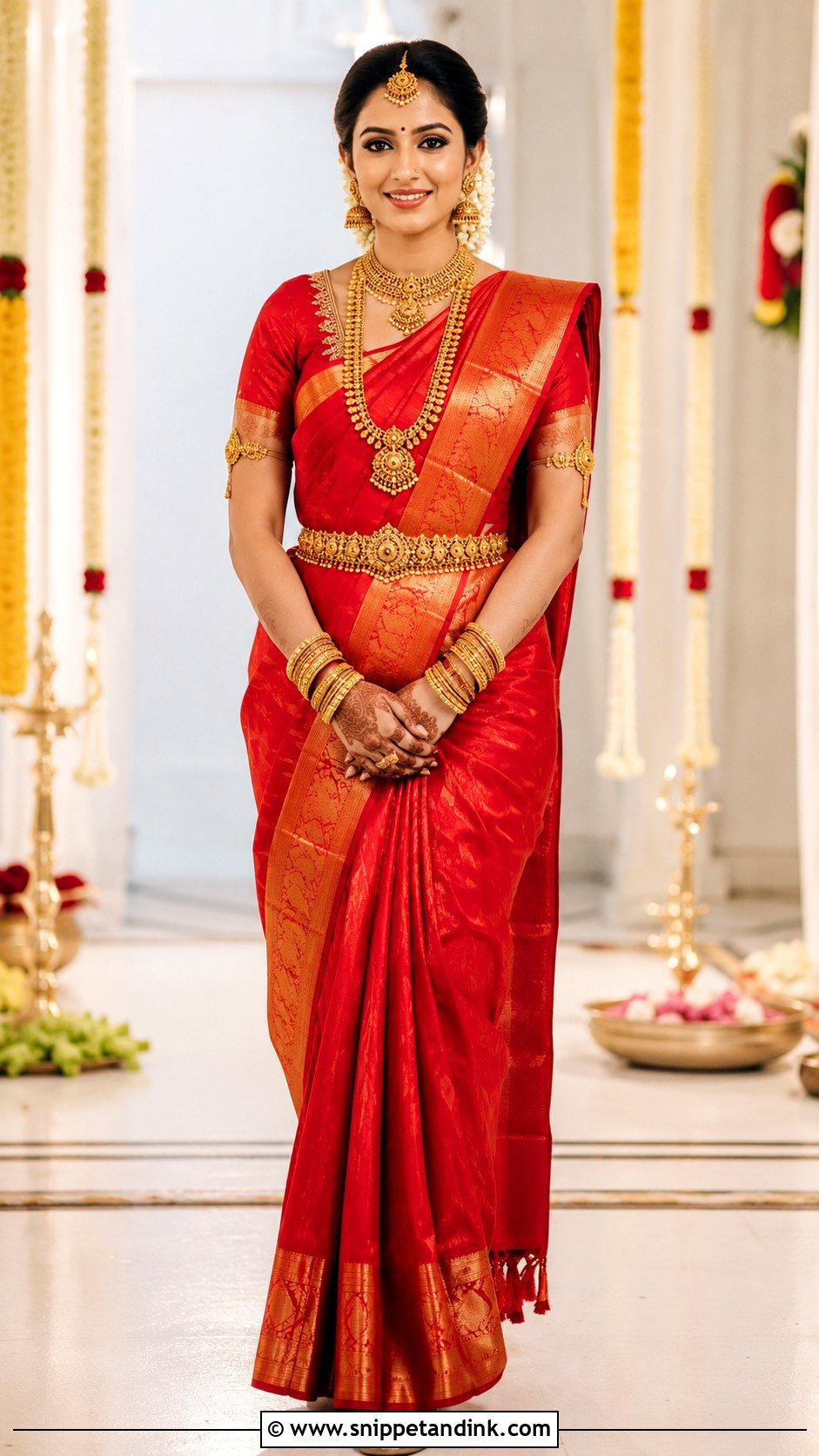
Weight is the first thing I warn people about with a red Kanjeevaram bridal saree. The heavy silk plus temple jewelry, armlets and a waist belt add up, so comfortable flat sandals are not optional. Pick a red that suits your gold: scarlet for bright yellow gold, crimson for antique pieces, or red with green contrast borders. A structured silk blouse in red, gold or the border shade completes it. Jasmine in the braid or bun is traditional. I always pleat a Kanjeevaram once at a trial, because the stiff border needs practice to fall evenly at the hem.
11. Paithani Bridal Saree With Traditional Jewelry
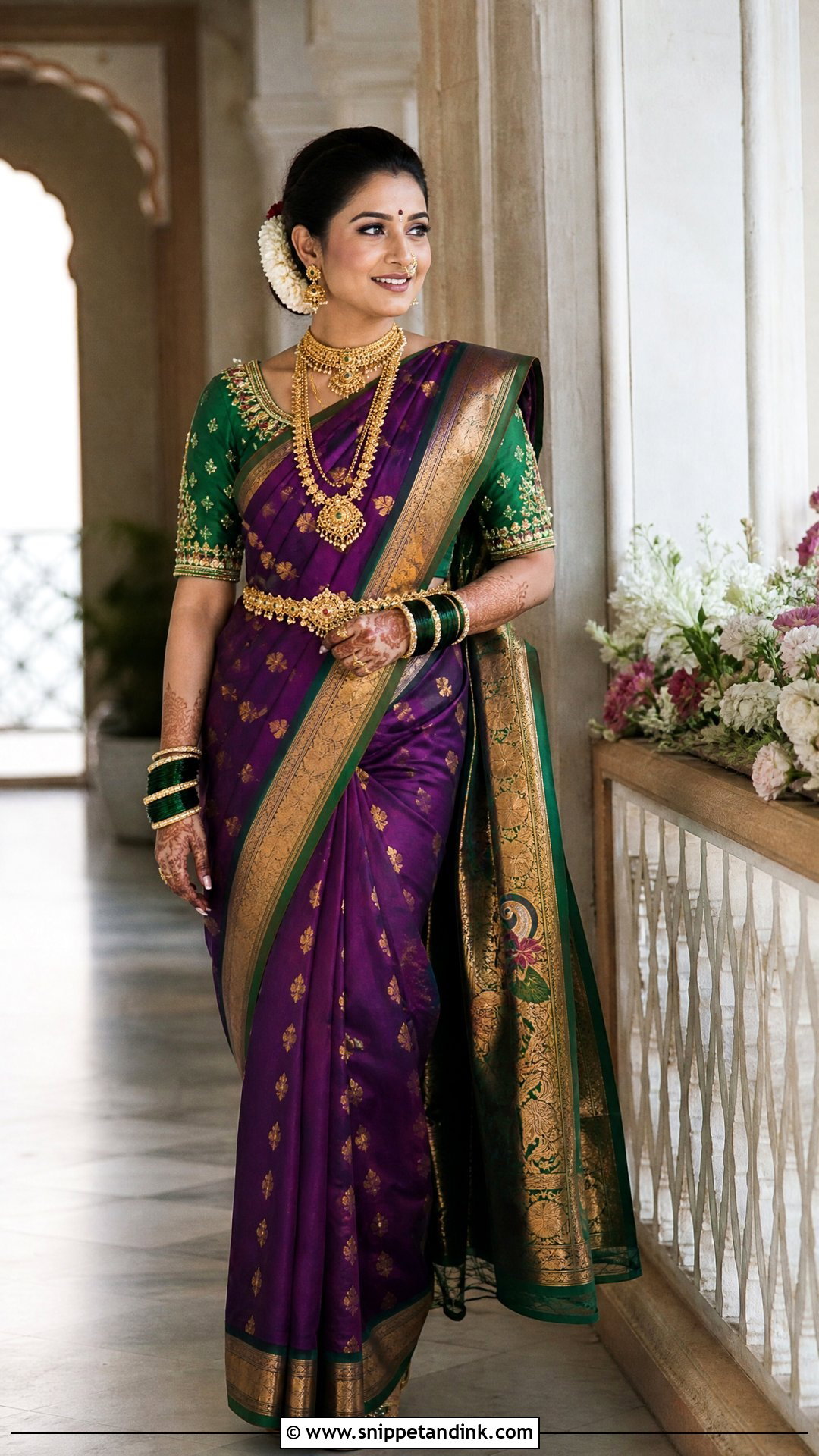
A Paithani is recognized by its pallu, so everything else should stay quiet. Peacock blue, magenta, green and purple are classic for a colorful Maharashtrian bridal outfit, and the blouse usually picks up one shade from the border in a short sleeve. The nauvari drape needs discreet pins at the waist and between the legs to hold through walking. Finish with a nath, layered gold necklaces, green glass bangles and a crescent bindi, plus a bun with fresh flowers and low gold sandals. I’d leave out a big handbag or heavy veil entirely.
12. Pre-Draped Bridal Saree With Embellished Blouse
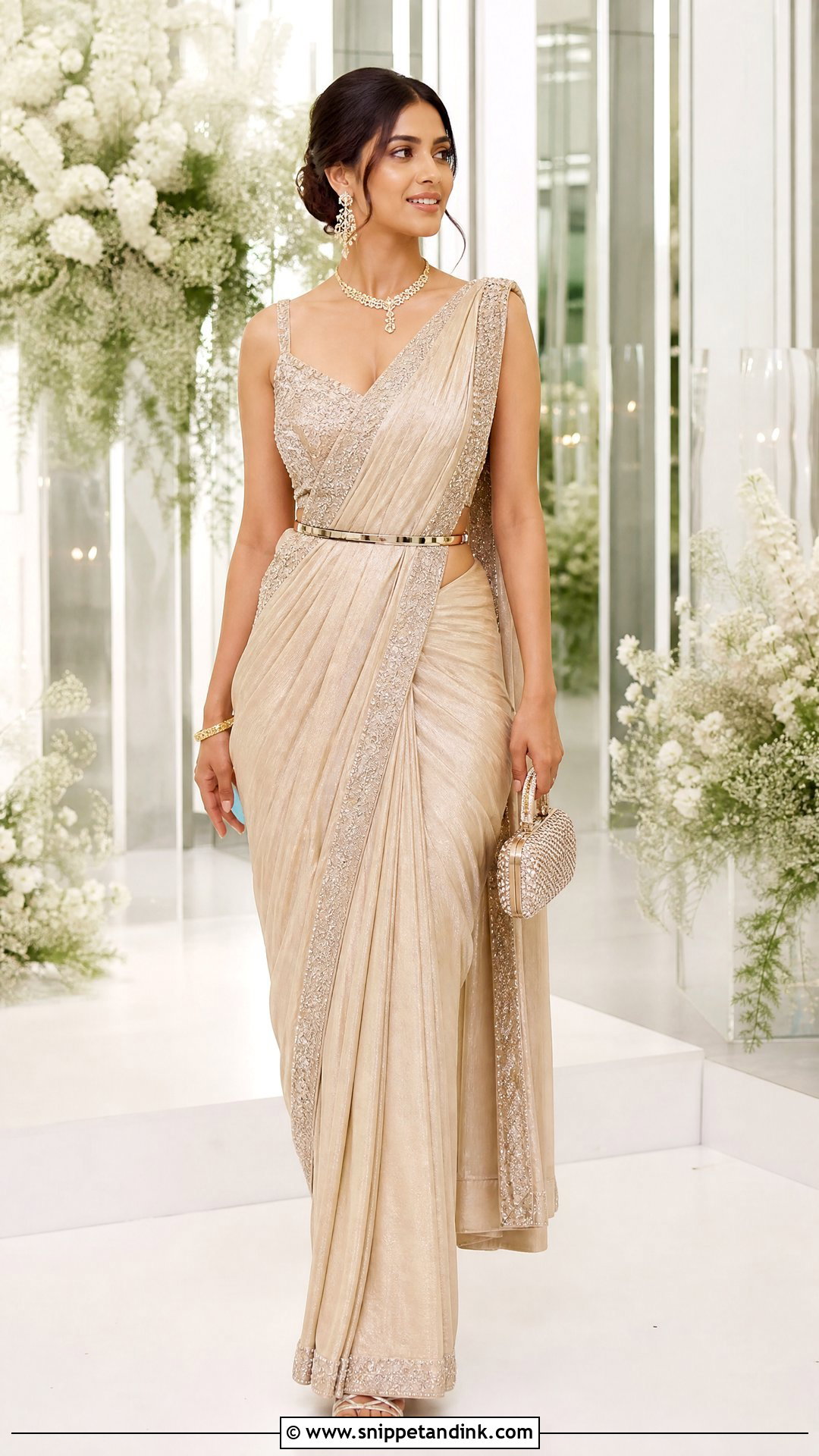
Pre-draped sarees exist for the bride who loves the saree line but doesn’t want to re-tuck pleats all evening. Look for stitched pleats, a defined waist and a pallu that hooks or stitches in place. A belt helps hold the drape while you dance. Blouses here can go further: crystals, pearls, sculpted sleeves. Have the hem finished while you wear the exact shoes for the night. Even half an inch off means it either drags or looks short. A sleek hairstyle keeps the silhouette clean, which is why I like it for receptions and destination events.
13. Bridal Saree Gown With Draped Pallu
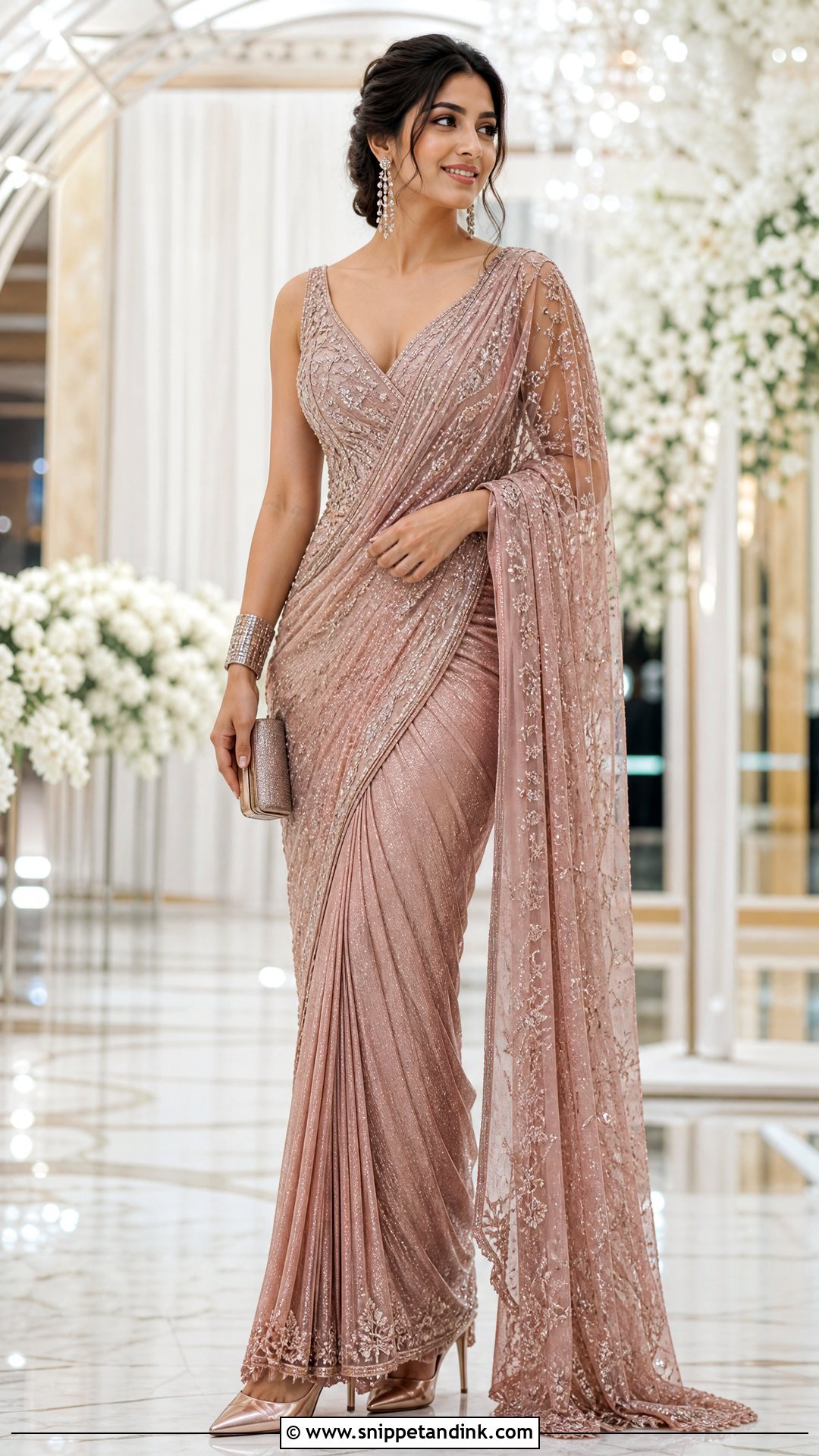
A saree gown gives the saree impression with the security of a one-piece dress. Look for a fitted bodice, a draped skirt and an attached pallu that falls naturally from the shoulder. Champagne, rose gold, deep blue, emerald and wine all suit evening receptions. I look for embellishment that follows the drape lines; scattered all over, it flattens the shape. Shoulder-grazing earrings, a cuff and pointed heels finish it. Don’t add a separate dupatta unless the gown was designed for one, because there’s usually nowhere to anchor it.
14. Bridal Anarkali With Embroidered Dupatta
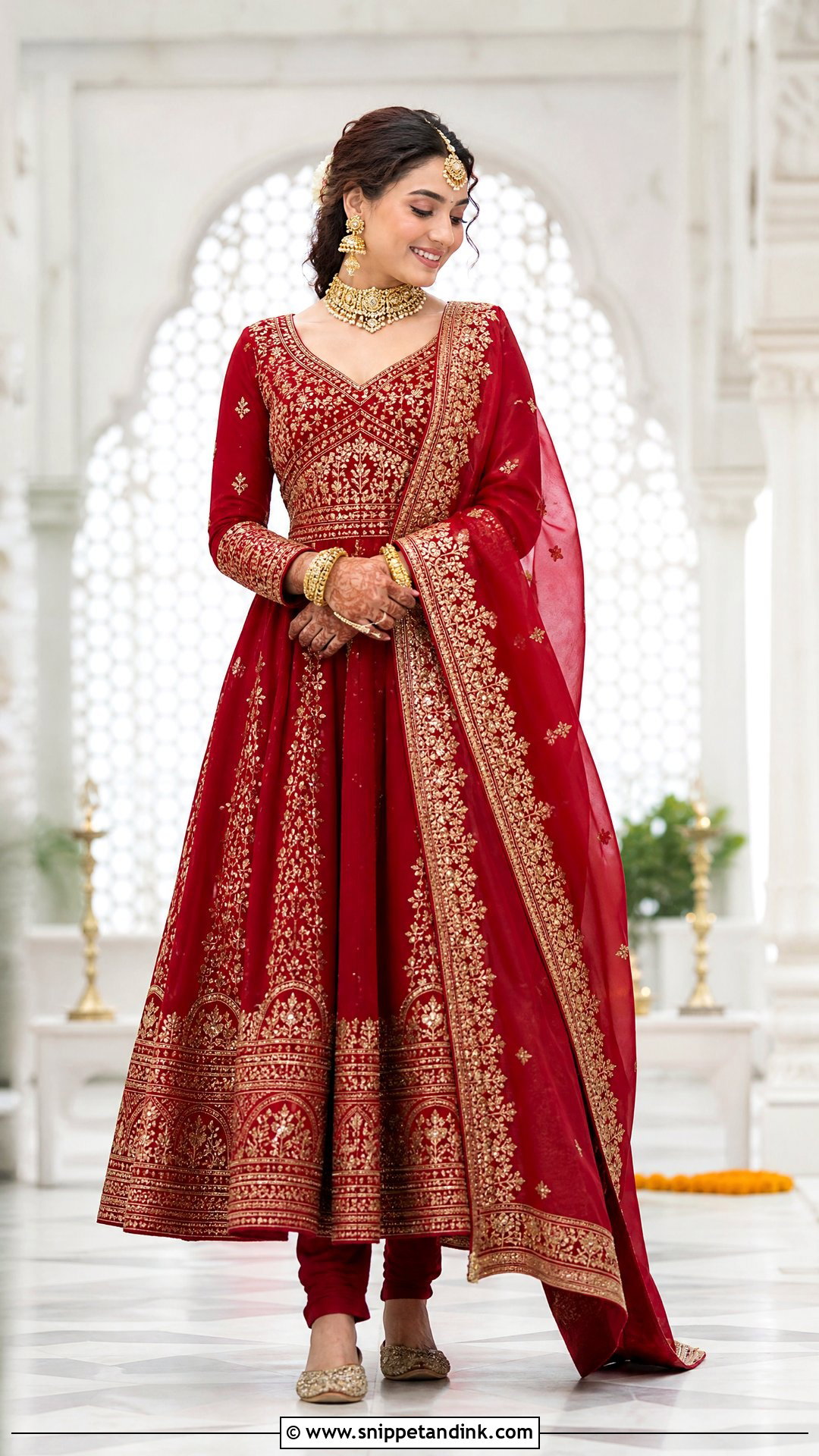
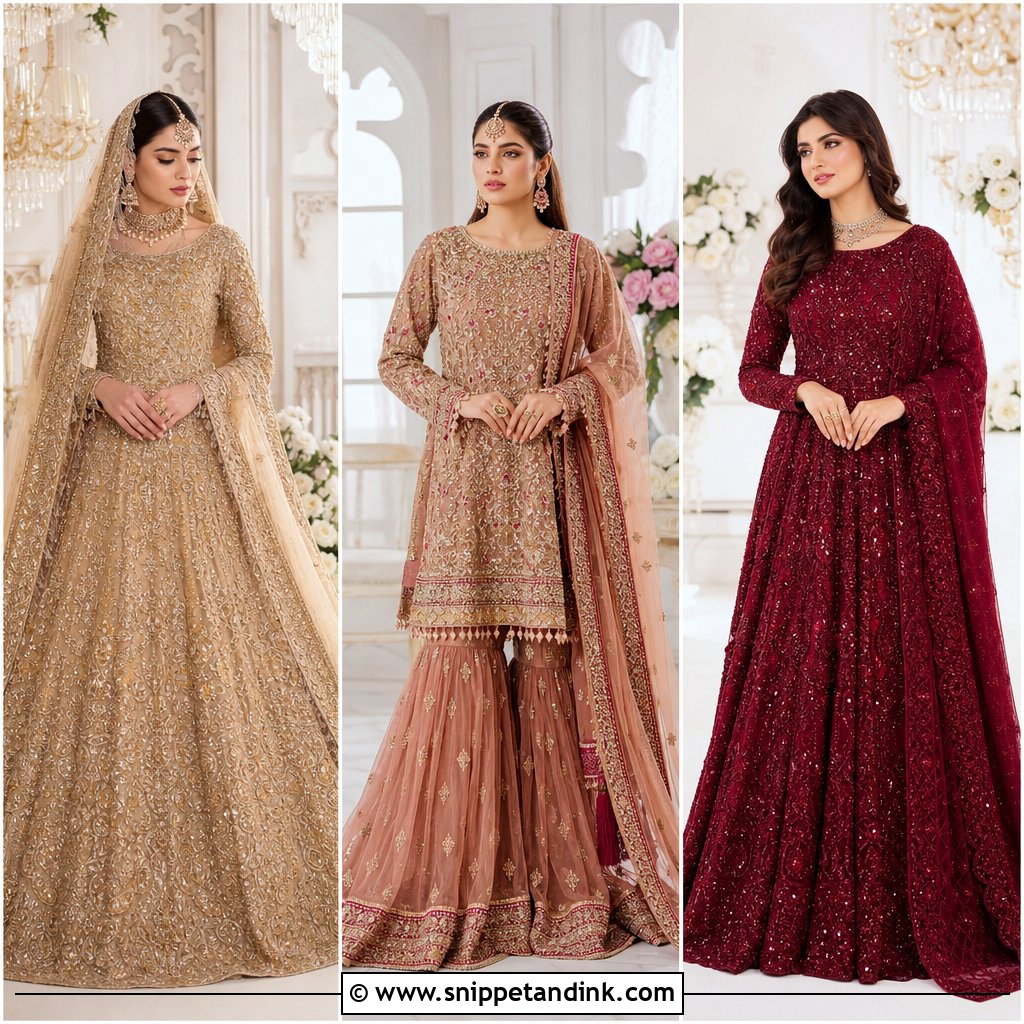
An Anarkali offers more coverage than most lehengas, which matters for many nikah ceremonies. Concentrate the embroidery at the neckline, sleeves and hem so the dress moves instead of hanging stiff. The flare is where I tailor most carefully: petite brides look swamped in a full circle, while taller brides can carry the volume. Wear a coordinating churidar or narrow pants underneath and an embroidered dupatta over the head or one shoulder. Check that the lining is cotton or another breathable fabric, and walk a flight of stairs at your fitting to see where the hem catches.

15. Bridal Sharara With Short Kurti
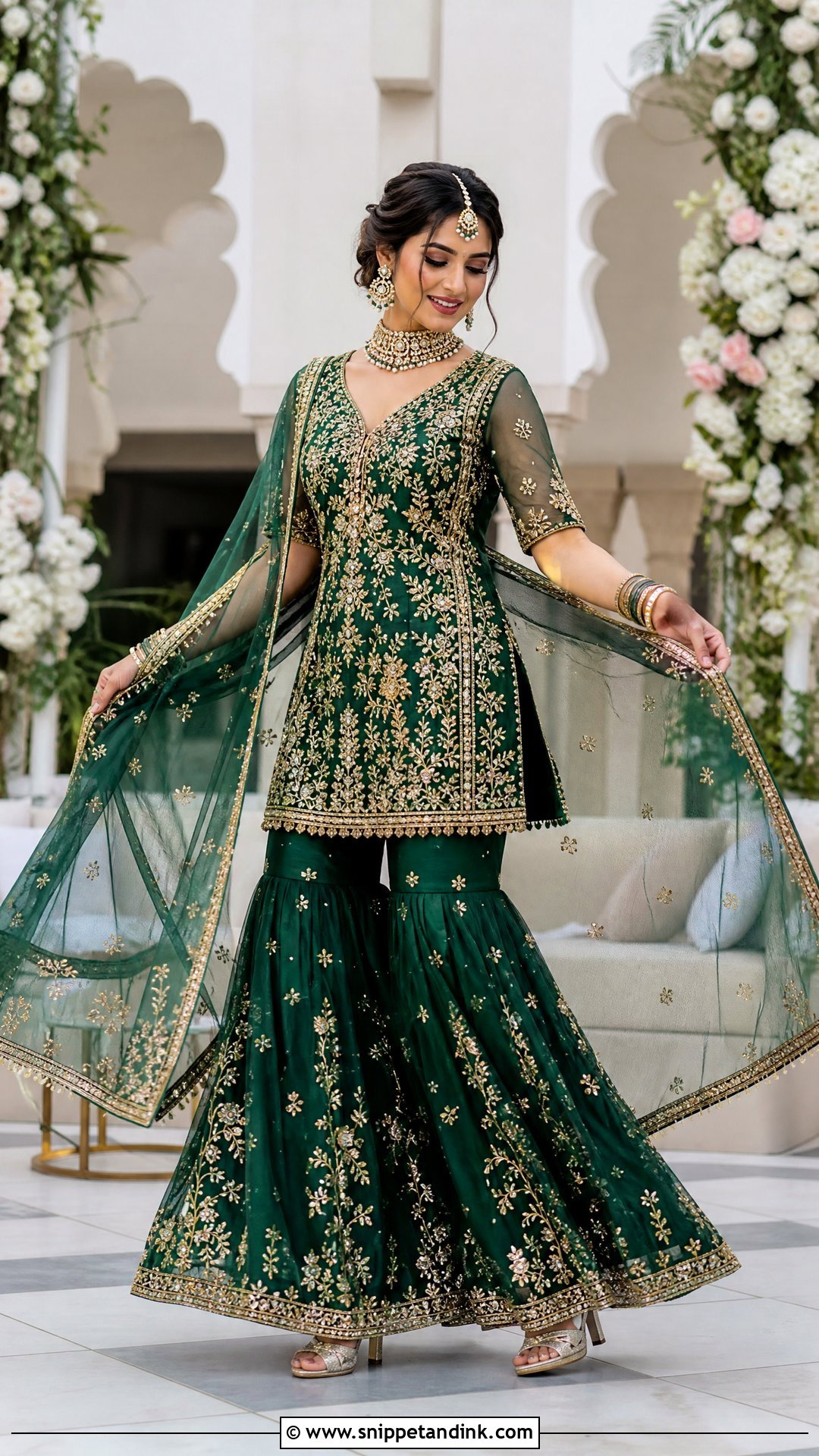
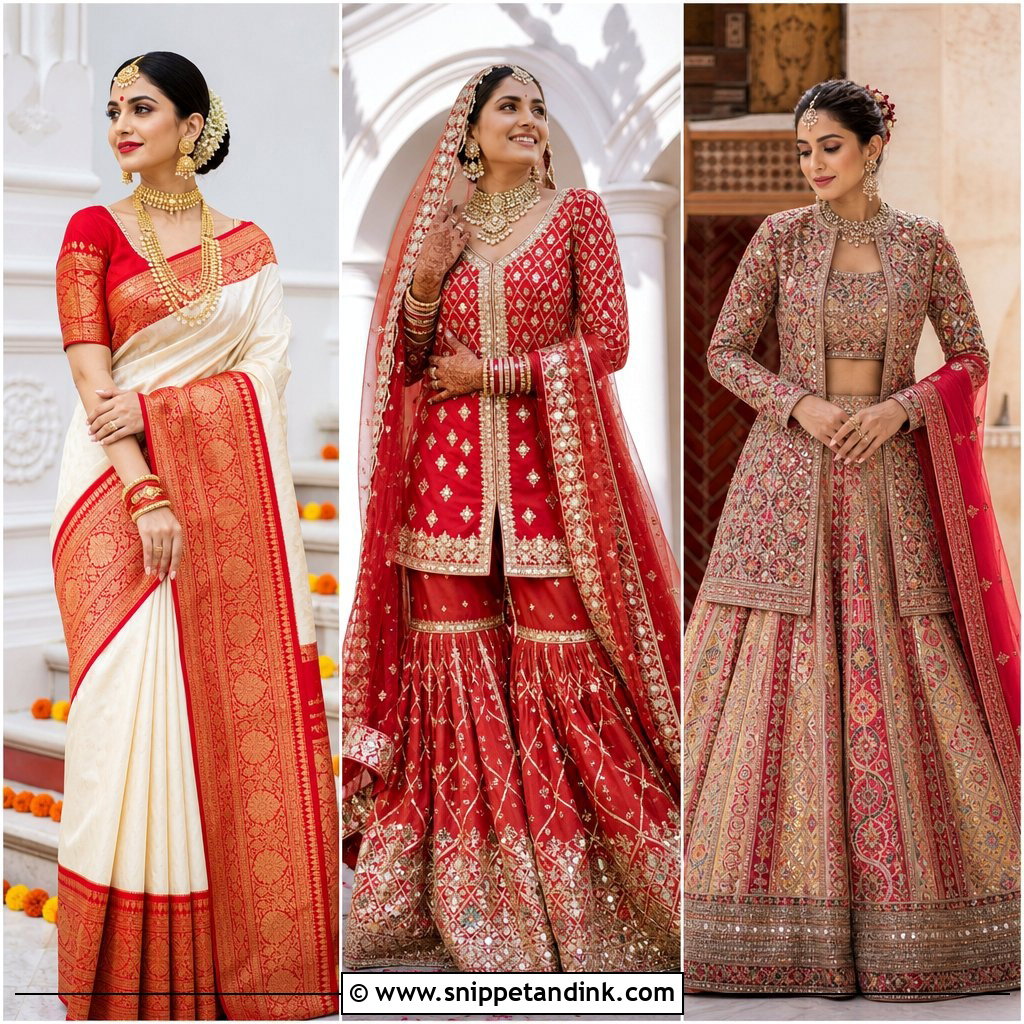
Wide sharara pants give you all the volume of a skirt but are easier to walk in, which is why a bridal sharara with a short kurti suits a long nikah or mehndi. Silk, georgette or brocade pants pair with a fitted embroidered kurti ending near the hips. I keep the kurti hem structured, because a soft hem collapses against all that fullness. Pin a sheer dupatta over one shoulder, or let it rest across both arms for portraits. Jewel tones read formal; ombre and pastels suit daytime. Block heels or juttis keep you steady.
16. Bridal Gharara With Long Kurta
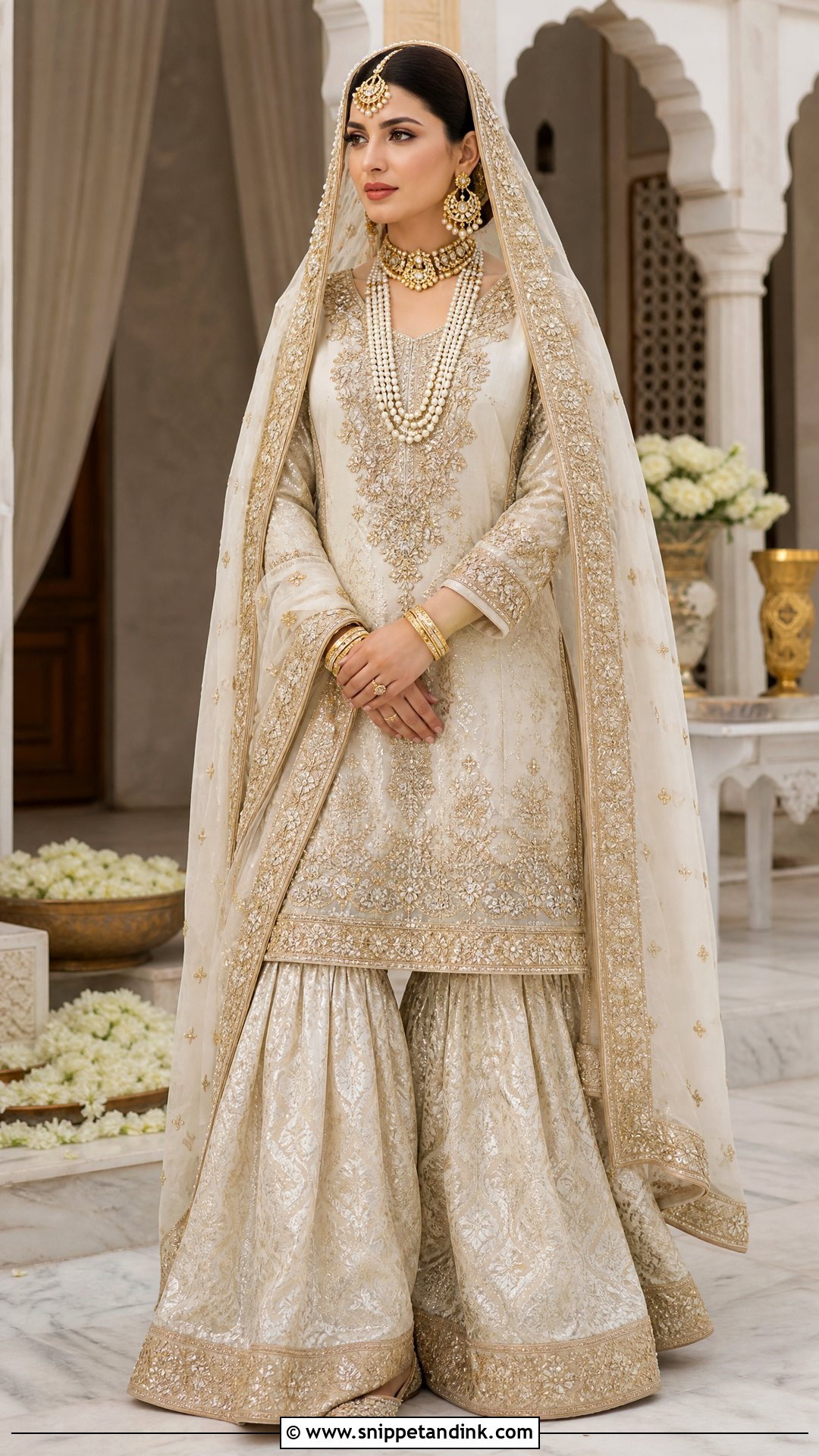
The distinctive shape of a gharara depends entirely on the knee joint, the gathered band where the trousers flare. If it sits too low, the leg looks short; too high, it bunches when you sit. I mark that height with the bride standing in her shoes. Silk, brocade, tissue and georgette keep the outfit formal, paired with a long or knee-length embroidered kurta. A bordered dupatta over the head works for the ceremony, and moving it to one shoulder lightens the look for a reception. Pair it with a passa and jhumkas. Ivory and gold feel refined, while maroon and bottle green feel richer.
17. Bridal Lehenga With Long Jacket
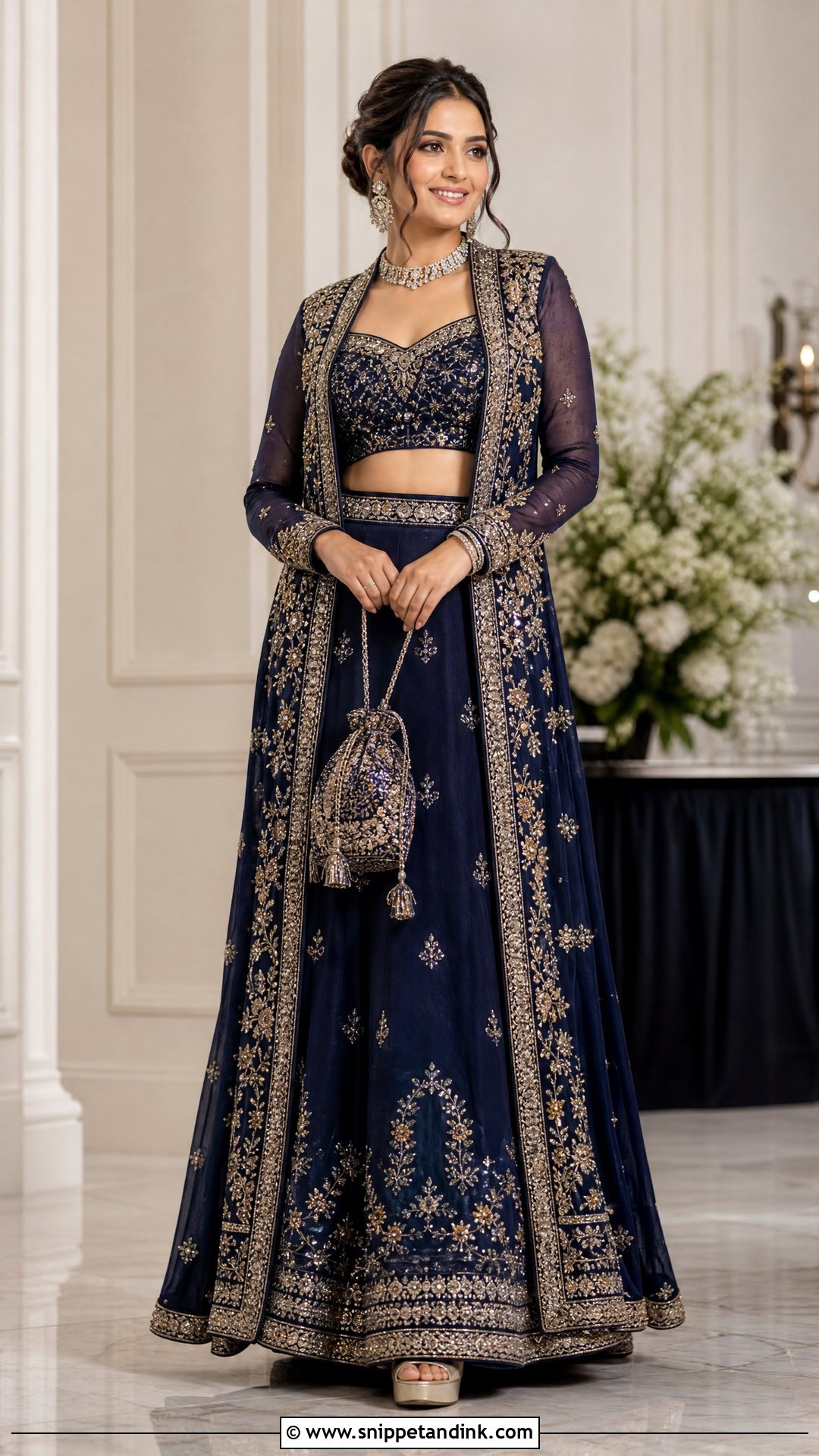
A long jacket adds coverage and structure, and it replaces a second dupatta, which many brides find easier. Choose a moderately flared skirt and a fitted blouse in one color family, then an open-front embroidered jacket reaching the calf or ankle. If the jacket is heavily worked, lighten the skirt embroidery. At fittings I test one thing every time: walk, sit and close the jacket. Beadwork on the lehenga snags on jacket linings more often than you’d think. Red, ivory, midnight blue and champagne suit cool-weather receptions indoors.
18. Ruffled Bridal Lehenga With Draped Dupatta
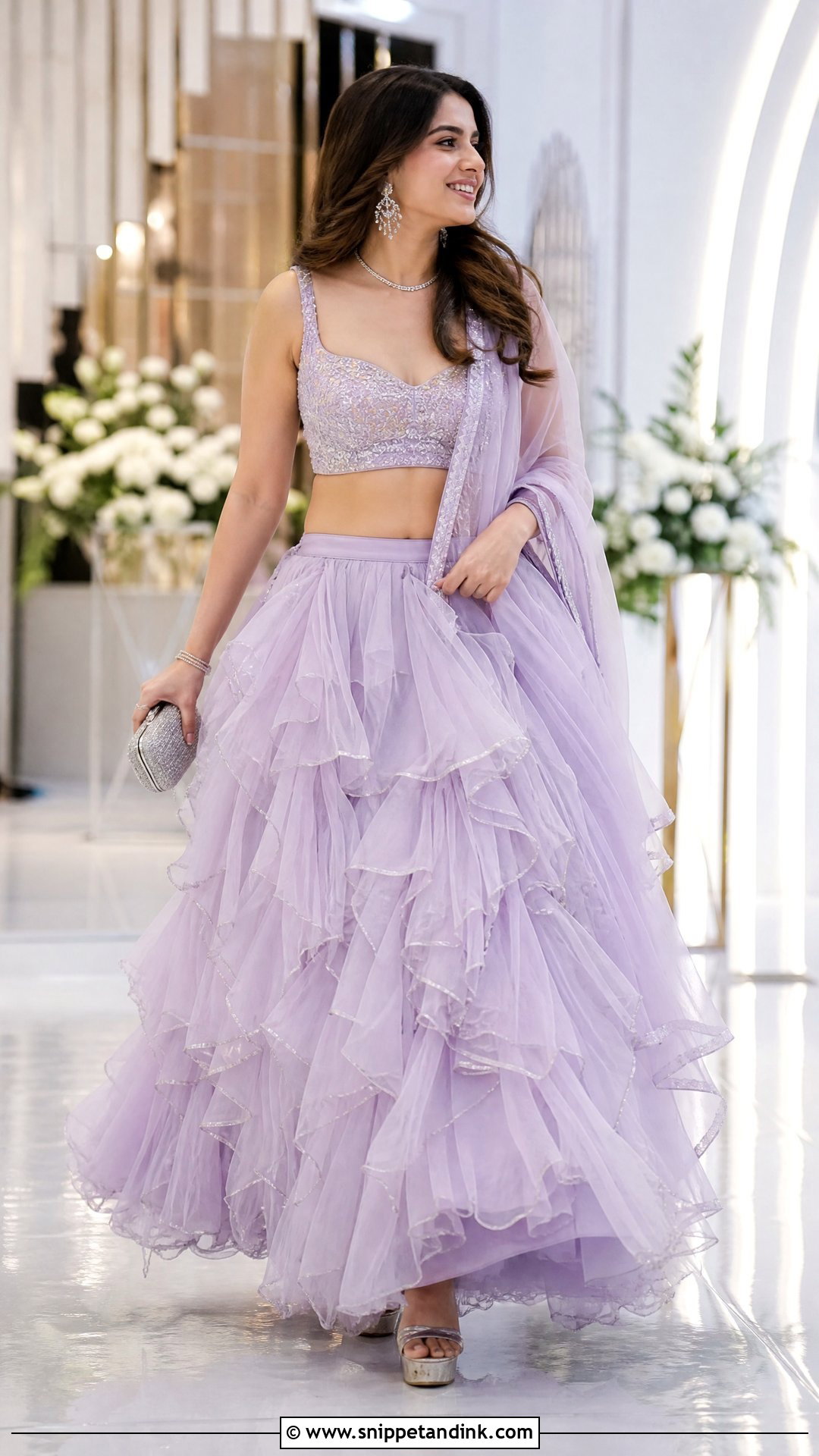
Ruffles bring movement, but too many layers turn a lehenga into a cake. I look for controlled tiers that start below the hip rather than at the waist. A clean fitted blouse balances the volume, and a pre-stitched dupatta crossing the bodice adds one more flowing line. Pastel pink, powder blue, lilac, champagne and coral suit the playful mood. Keep jewelry slim, maybe crystal earrings and a fine necklace, because the skirt is already moving. It’s a dancing outfit, so save it for the sangeet or reception.
19. Floral Bridal Lehenga For Mehndi
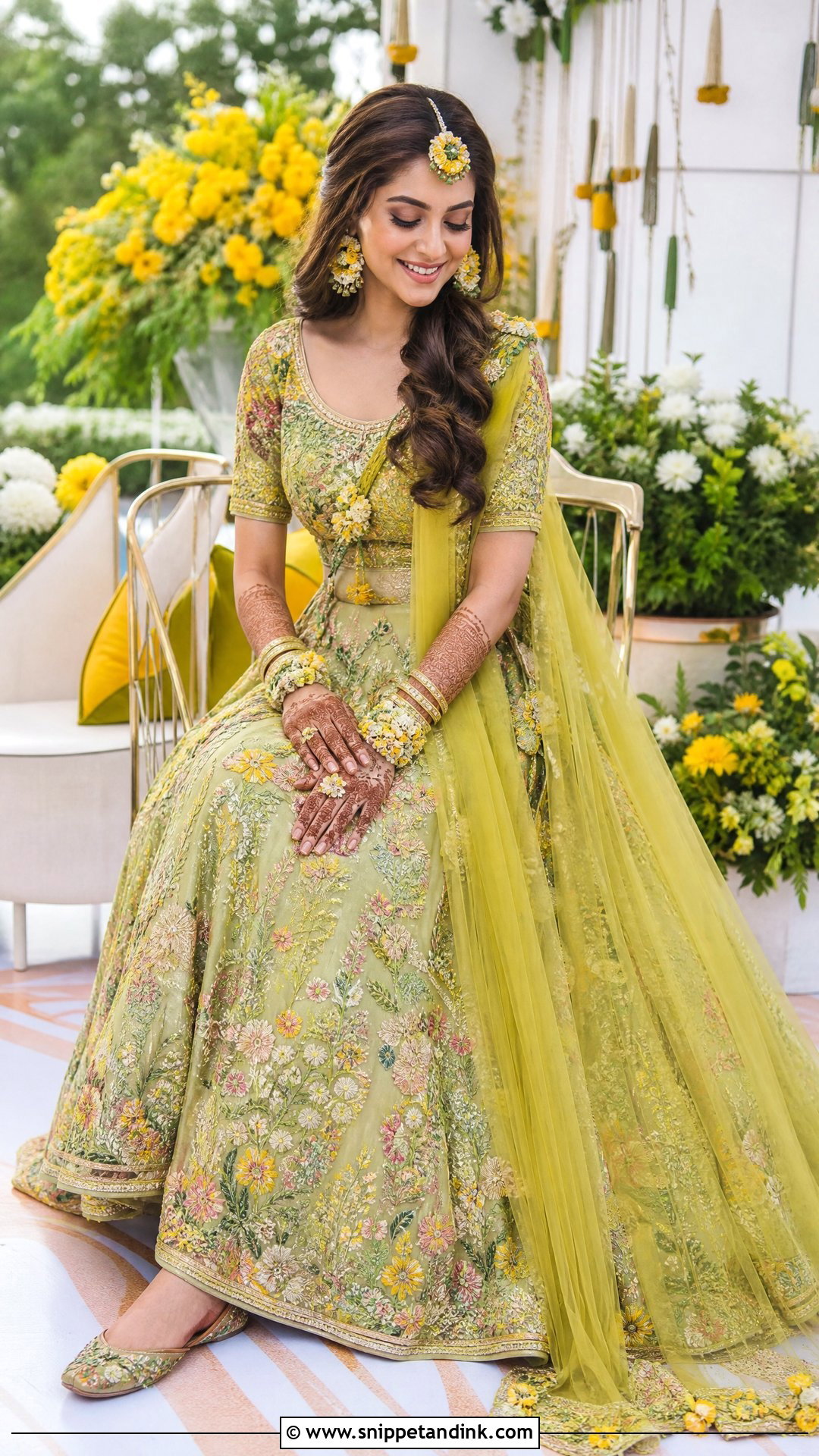
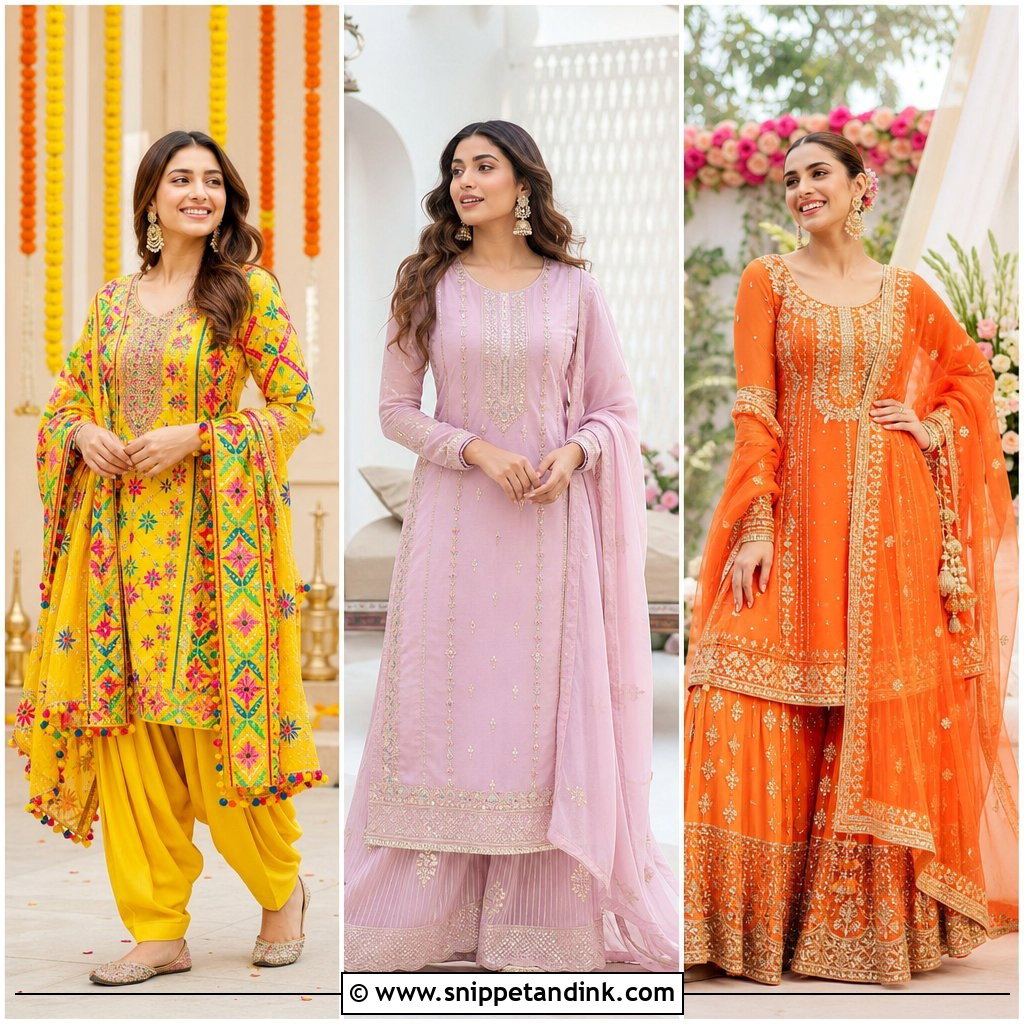
For a daytime mehndi, color and comfort matter more than grandeur. A floral bridal lehenga for mehndi can be printed silk, embroidered flowers or mirror work in green, yellow, coral or pink. The practical detail I always raise is the dupatta: pin it away from the hands, and skip long tassels near the wrists, because the mehndi artist needs clear arms and wet paste smudges onto anything that brushes it. Any sleeve length works as long as it ends above the wrist. You’ll sit for hours, so keep the skirt light.



20. Metallic Bridal Lehenga For Reception
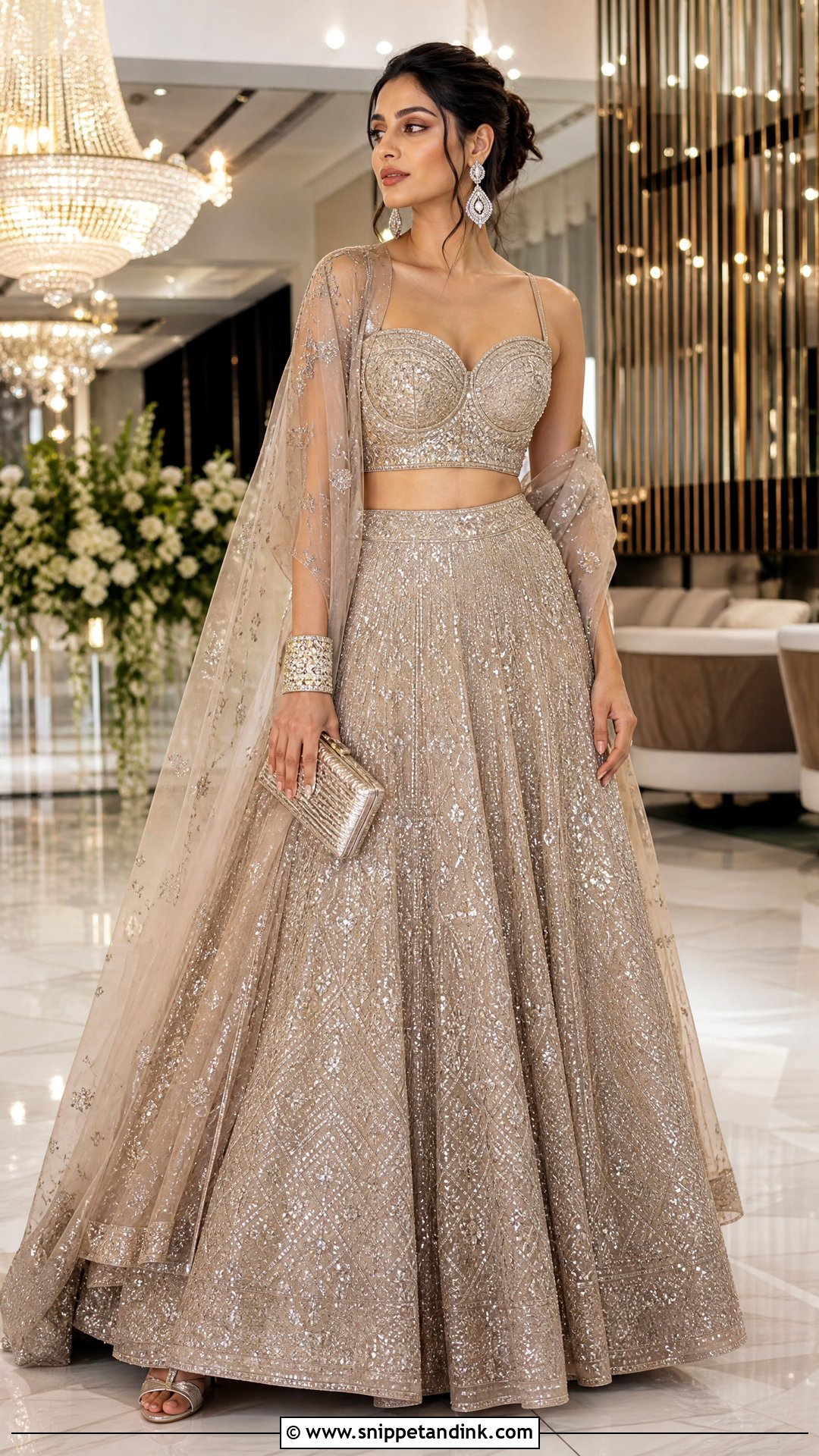
Under evening lights a metallic lehenga does the work of a necklace. Pick one metal, whether silver, pewter, champagne, bronze or muted gold, and don’t mix them. A sculpted blouse and streamlined skirt keep the shine controlled, and you can skip the dupatta if the neckline allows. The test I insist on is a flash photo at the fitting. Some metallic sequins bounce flash back as white blobs that wipe out the embroidery, while matte zari holds its detail. Keep the necklace minimal if the collar is beaded, and wear the hair sleek.
Folding Away a Zardozi Lehenga So It Lasts
What happens after the wedding decides whether the outfit can be worn again or handed down. I tell brides to air the lehenga on a padded hanger for a day before storing it, so body moisture and perfume evaporate. Spot stains from food or henna should go to a dry cleaner who handles embroidered silk, and soon, because old stains set.
How I store heavy embroidery
- Wrap the garment in soft cotton or muslin, never sealed plastic. Silk needs air, and trapped humidity causes mildew and yellowing.
- Lay acid-free tissue between folded layers and over the embroidered panels so metal thread doesn’t rub against the fabric.
- Store it flat in a box rather than hanging it long term. A heavy skirt stretches at the waistband when it hangs for months.
- Refold along different lines every few months. Zari cracks and tarnishes along creases that stay in one place.
- Keep mothballs off the fabric. If you use them, place them in a cloth pouch inside the cupboard, not touching the outfit, since the chemicals can discolor metallic thread.
Velvet needs its own care. Never press it flat. Steam it from the inside so the pile stays raised, and store it with the minimum number of folds.
Let the Ritual, Not the Trend, Pick Your Outfit
Red still carries traditional grandeur, heritage sarees honor regional weaving, and pastels, capes, jackets, shararas and pre-draped sarees give you modern options for the events around the wedding. Before you commit, weigh the season, the venue, the length of the rituals and the fabric weight. Bring your actual shoes, jewelry and underlayers to every fitting so you see the whole outfit, not just the garment. Pick the outfit that feels like yours and lets you move, sit and eat through the day.
You'll Like These Ideas:




Leave a Reply