
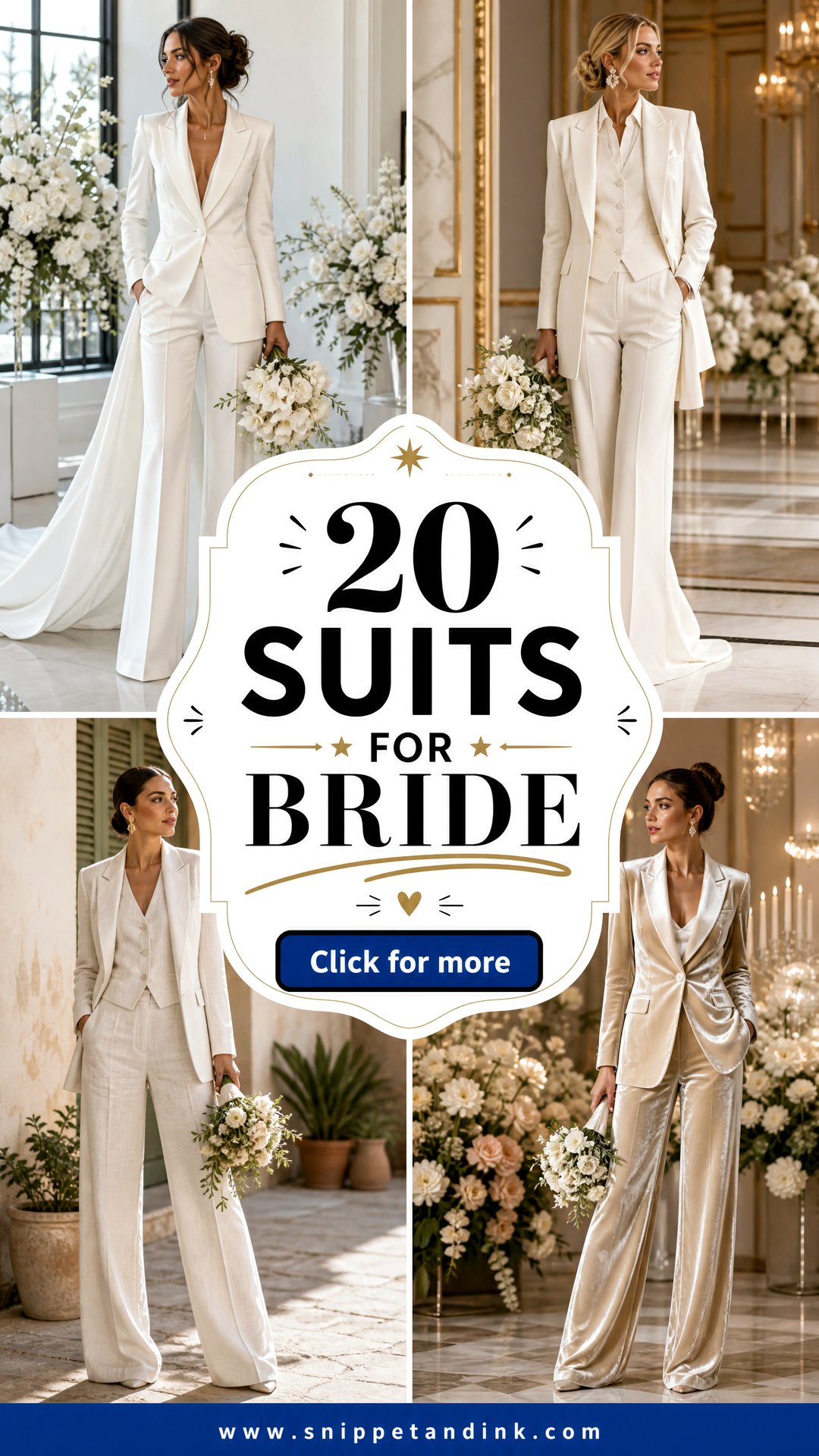
A bridal suit gives you the polish of wedding clothes with far more freedom to move, sit and dance. I style suits for courthouse ceremonies, formal weddings, destination trips, receptions and after-parties, and the difference between a suit that looks bridal and one that looks like office wear almost always comes down to two things: fabric and alterations. Structured cloth gives definition; fluid cloth gives movement. Sleeve length, shoulder placement, trouser hems and waist shaping finish the job. The twenty looks below cover a range of figures, ages and tastes, each with the shoes, jewelry and veil or hairpiece I’d put with it.
Who Looks Happiest in a Bridal Suit
I don’t push suits on anyone, and they aren’t for every bride. In my experience, the brides who love their suit most share a few things.
- They’re getting married somewhere a large skirt would be awkward: a registry office, a small restaurant, a rooftop or a city hall with crowded steps.
- They already feel like themselves in tailoring, and wear trousers or blazers often in everyday life.
- They want to dance, travel between venues, or sit comfortably through a long dinner without managing a train.
- They’re planning a second outfit and want a quick change between ceremony and party.
If you’re drawn to a suit but worried it won’t feel bridal enough, borrow detail from gowns: a veil, satin, lace, pearls, or an overskirt for the ceremony. And if you’ve only ever dreamed of a full skirt, a suit as a reception outfit lets you have both.
Before you decide, try on at least one well-cut ivory suit in a bridal shop, not just a work suit in a department store. The fabric and finishing are different, and seeing yourself in a proper bridal version, with heels and your hair pulled back, usually tells you within a few minutes whether this is your look.
1. White Tailored Bridal Suit
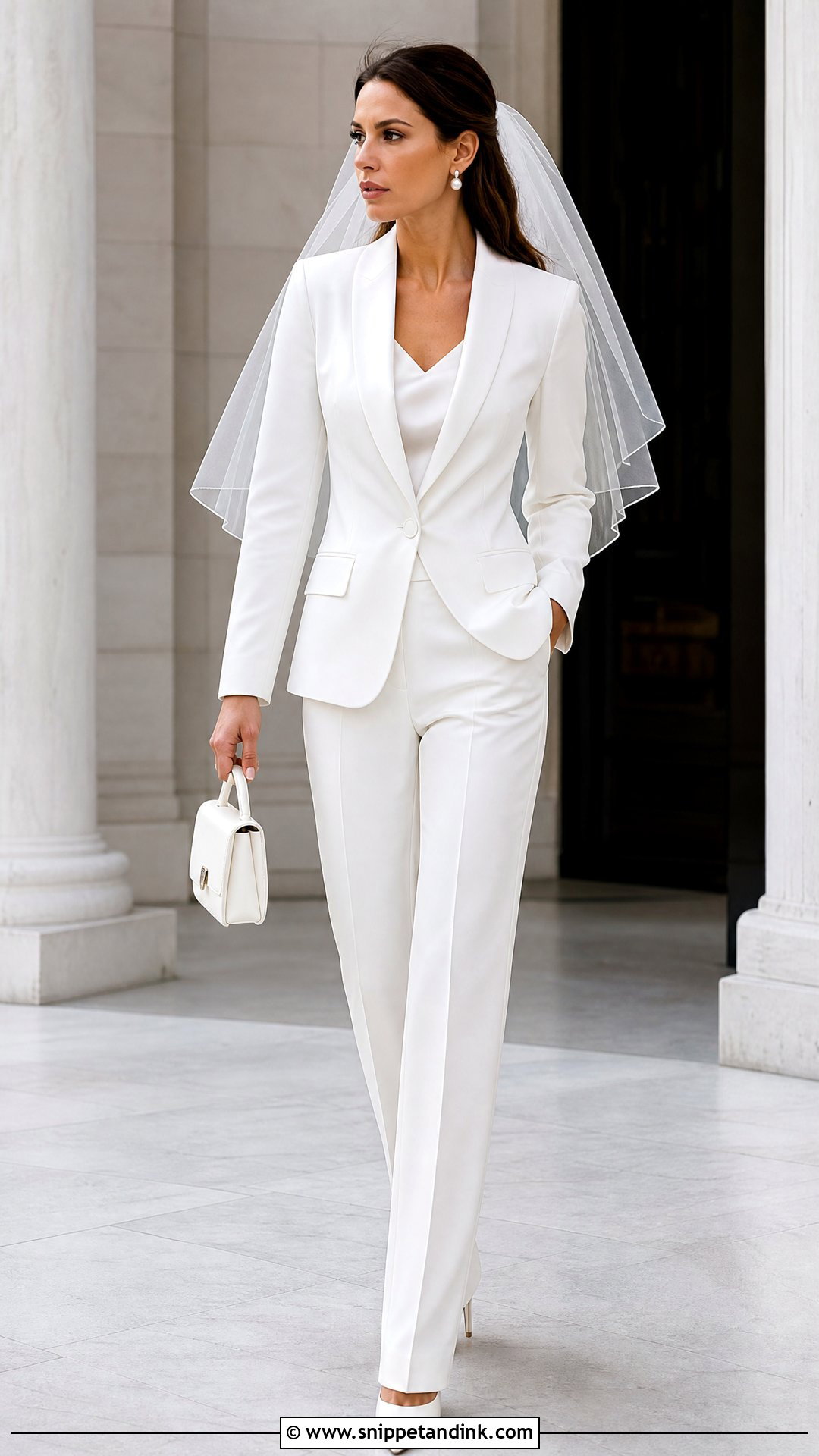
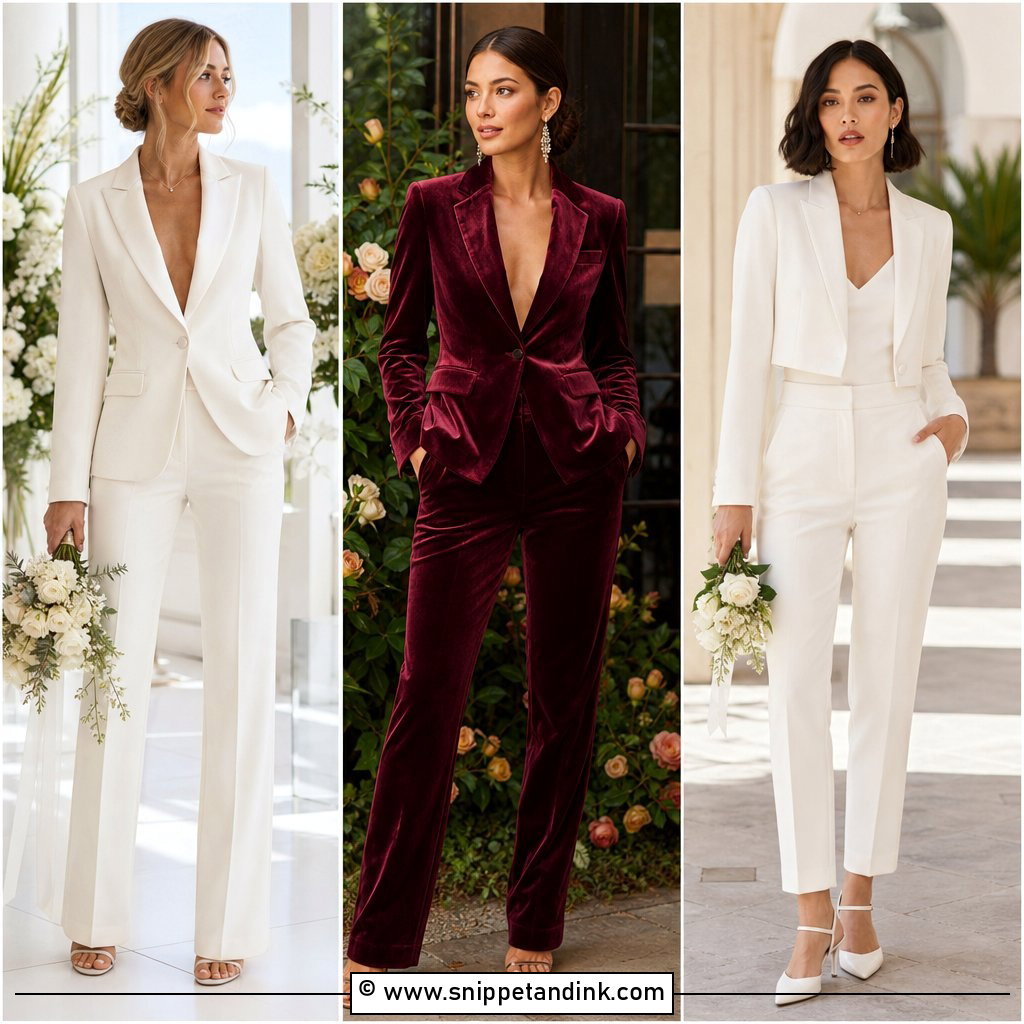
Start here if you’re not sure suits are for you. A single-breasted white blazer that follows the shoulders and lightly shapes the waist, straight-leg trousers, a silk camisole and pointed pumps make the simplest version of the look. For more coverage, swap the camisole for a crepe shell or satin blouse. Height changes the hem: petite brides often look best in cropped trousers with low-vamp shoes, while taller brides can carry a longer break over the shoe. Buy the shoes before the first alteration appointment, never after. A fingertip veil and a low bun soften the tailoring.
2. Ivory Double-Breasted Bridal Suit
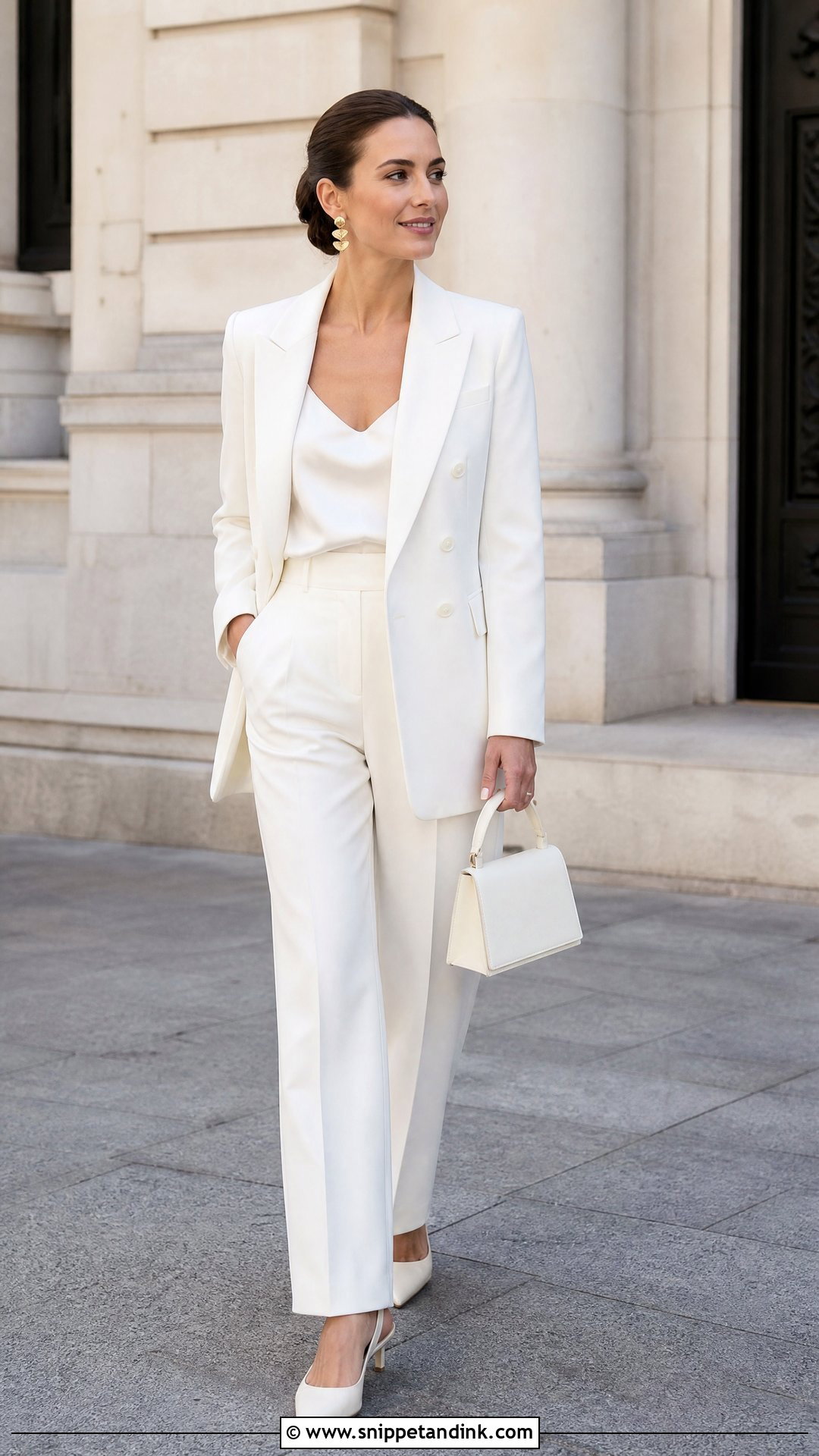
Double-breasted jackets have more fabric across the front, so they suit brides who want structure and a formal city feel. Look for smooth lapels, well-placed buttons and light waist shaping, over high-rise trousers that lengthen the leg. A simple silk tank keeps it from looking like a boardroom outfit. If the jacket feels boxy, I ask the tailor to take in the side seams rather than going down a size, since a smaller size narrows the shoulders and pulls the sleeves. Fuller-busted brides often prefer it worn open over a fitted base layer. Ivory slingbacks and a sleek ponytail finish it.
3. Satin Tuxedo Bridal Suit
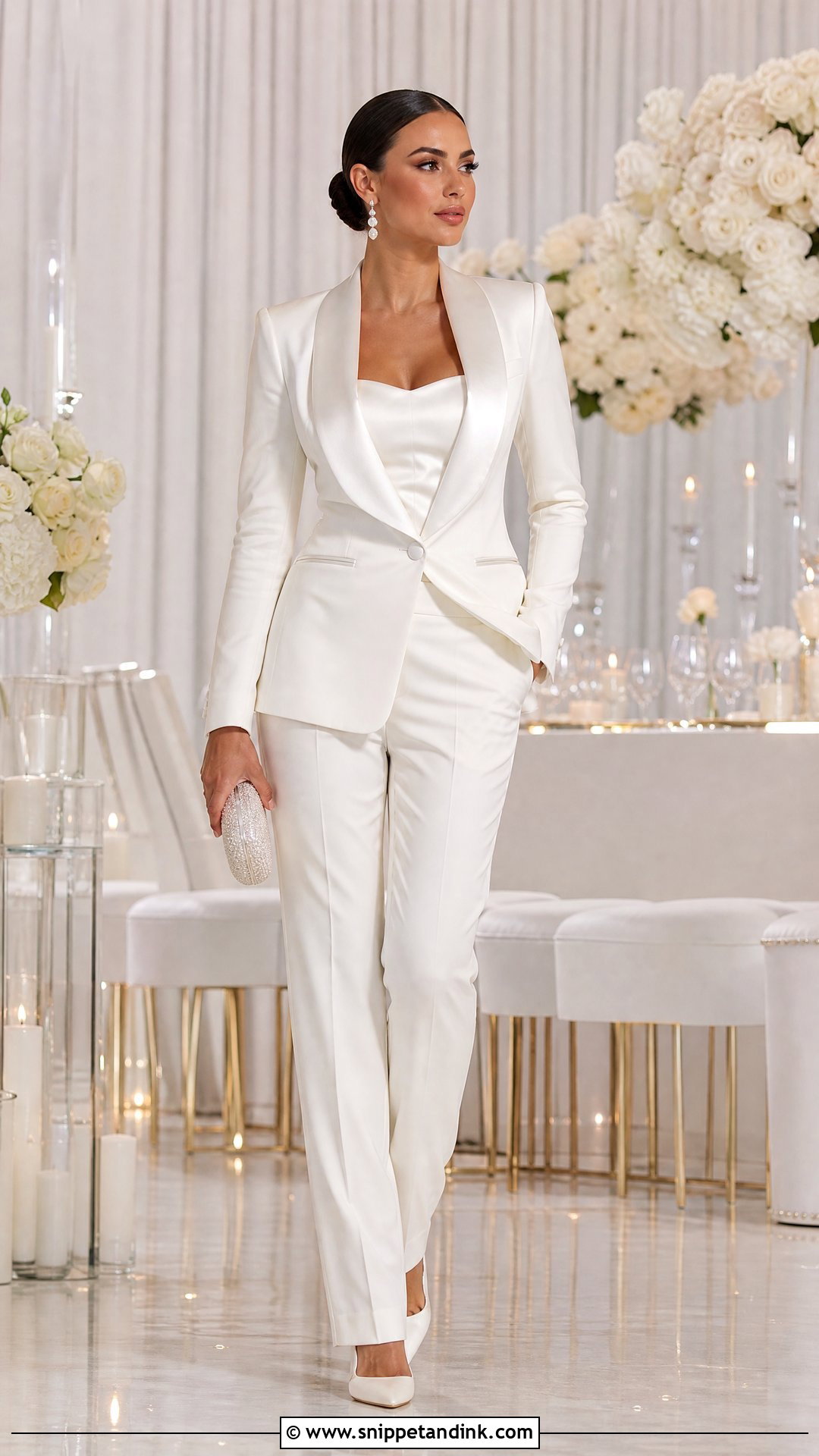
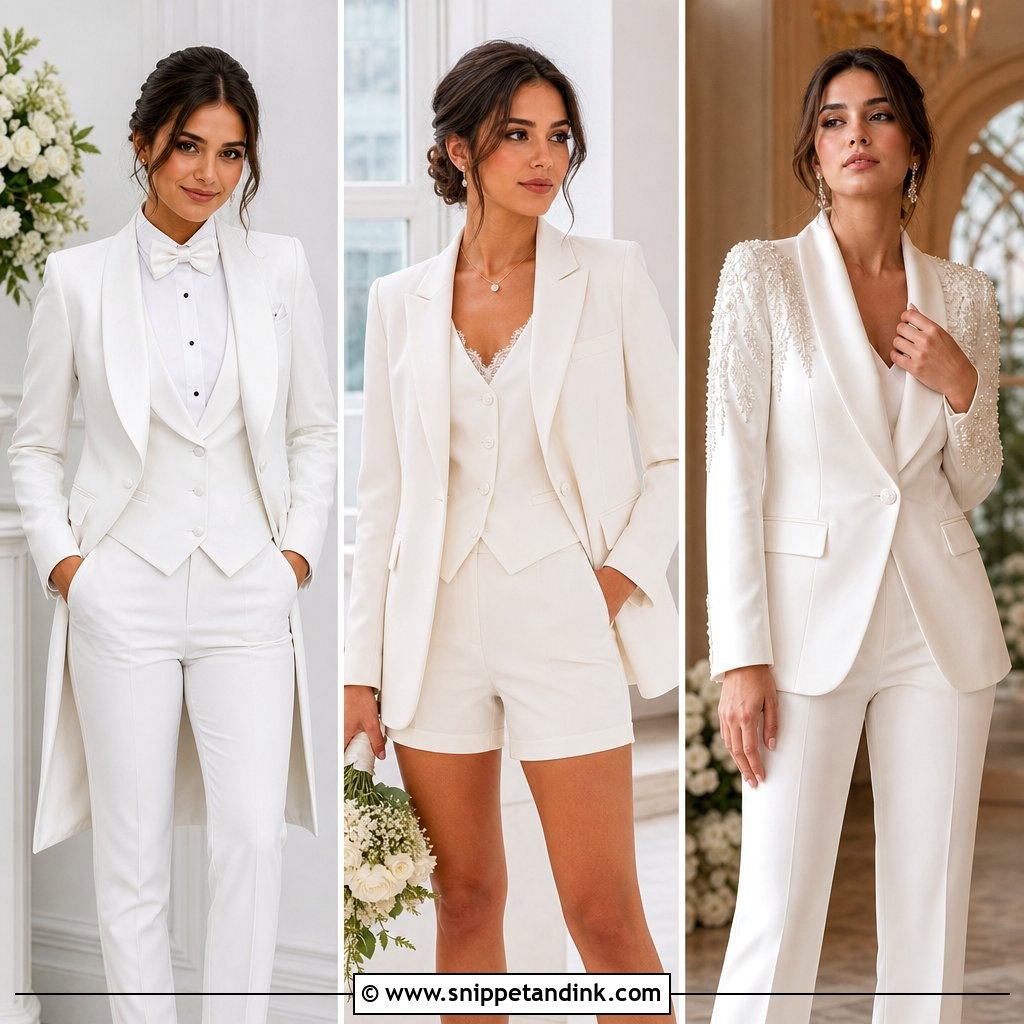
The satin trim is what makes a tuxedo, and under evening lights that contrast between matte suiting and glossy lapels gives depth without any embellishment. Choose a white or soft ivory tuxedo jacket, matching trousers, and a smooth corset-style top or silk camisole. A neat bow tie nods to the classic tux; an open neckline is softer. Satin pumps should match the lapel sheen rather than the matte fabric. The trousers should just skim the shoes. If they pool at the ankle, the satin stripe down the side of a tuxedo trouser will ripple, and that shows in every full-length photo.
4. Lace Bridal Suit
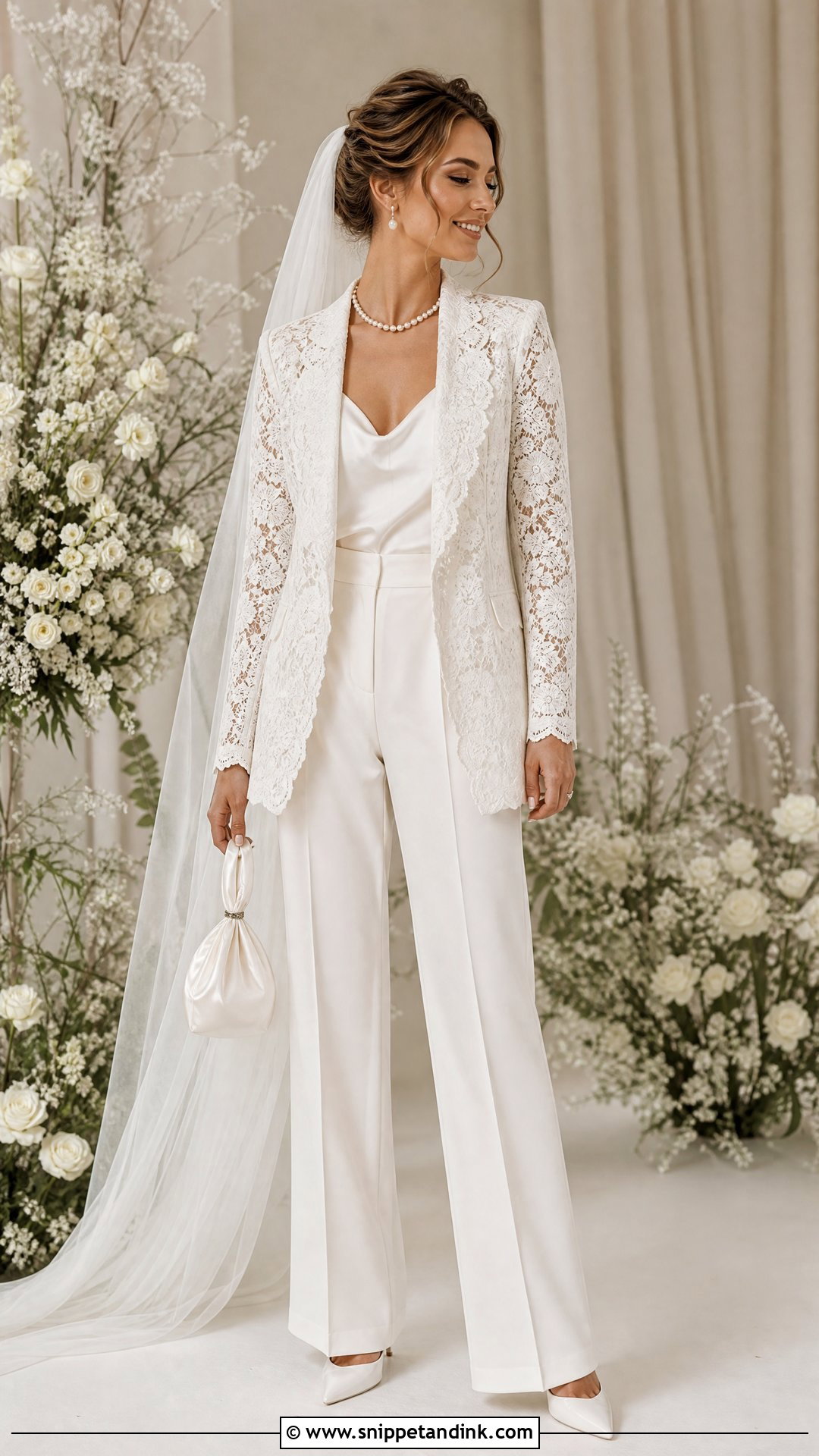
Lace brings the texture people expect from a wedding dress into a suit. You can go fully lace, jacket and trousers, or put a lace jacket over smooth crepe pants, which I usually prefer because it keeps the outfit from looking like upholstery. A plain satin camisole underneath lets the pattern show. Ask for the lace jacket to be lined if you want coverage, or keep just the sleeves sheer. Pair it with a plain tulle veil, as lace on lace starts to look crowded. Pearl jewelry and soft waves suit the romantic fabric.
5. Cape Blazer Bridal Suit
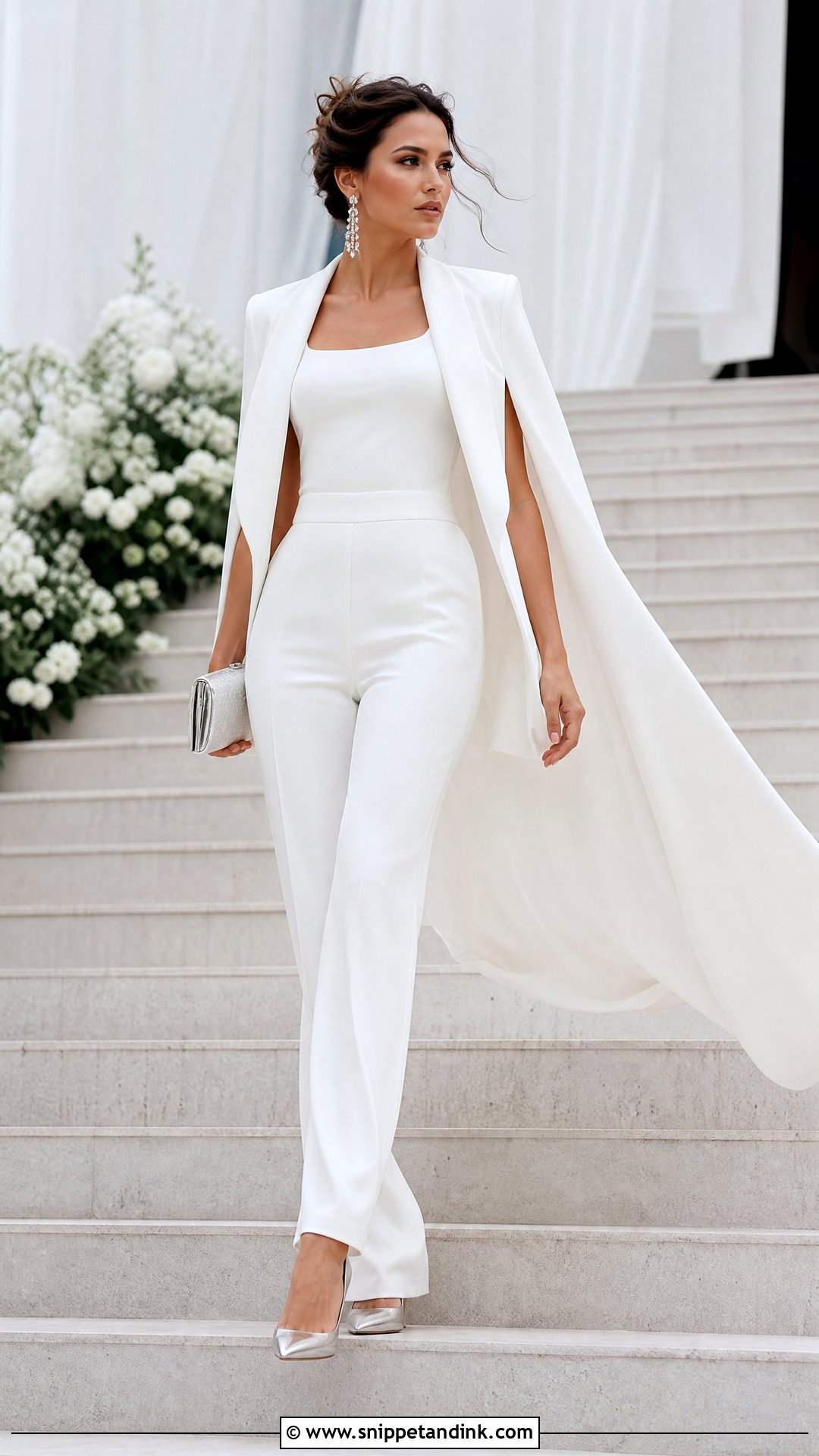
A cape gives you the drama of a train without anything to step on. It should fall from structured shoulders and move cleanly behind you. Hold a bouquet at the fitting, because a cape cut too long covers the hands and swallows the flowers. High-waisted straight or flared pants and a fitted sleeveless top keep the lower half clean. The cape gives arm coverage without true sleeves, which brides who dislike sleeves appreciate. Skip the long veil; a minimalist headband or small comb keeps the shoulders visible, and a sleek bun does the same.
6. Corset Top Bridal Suit
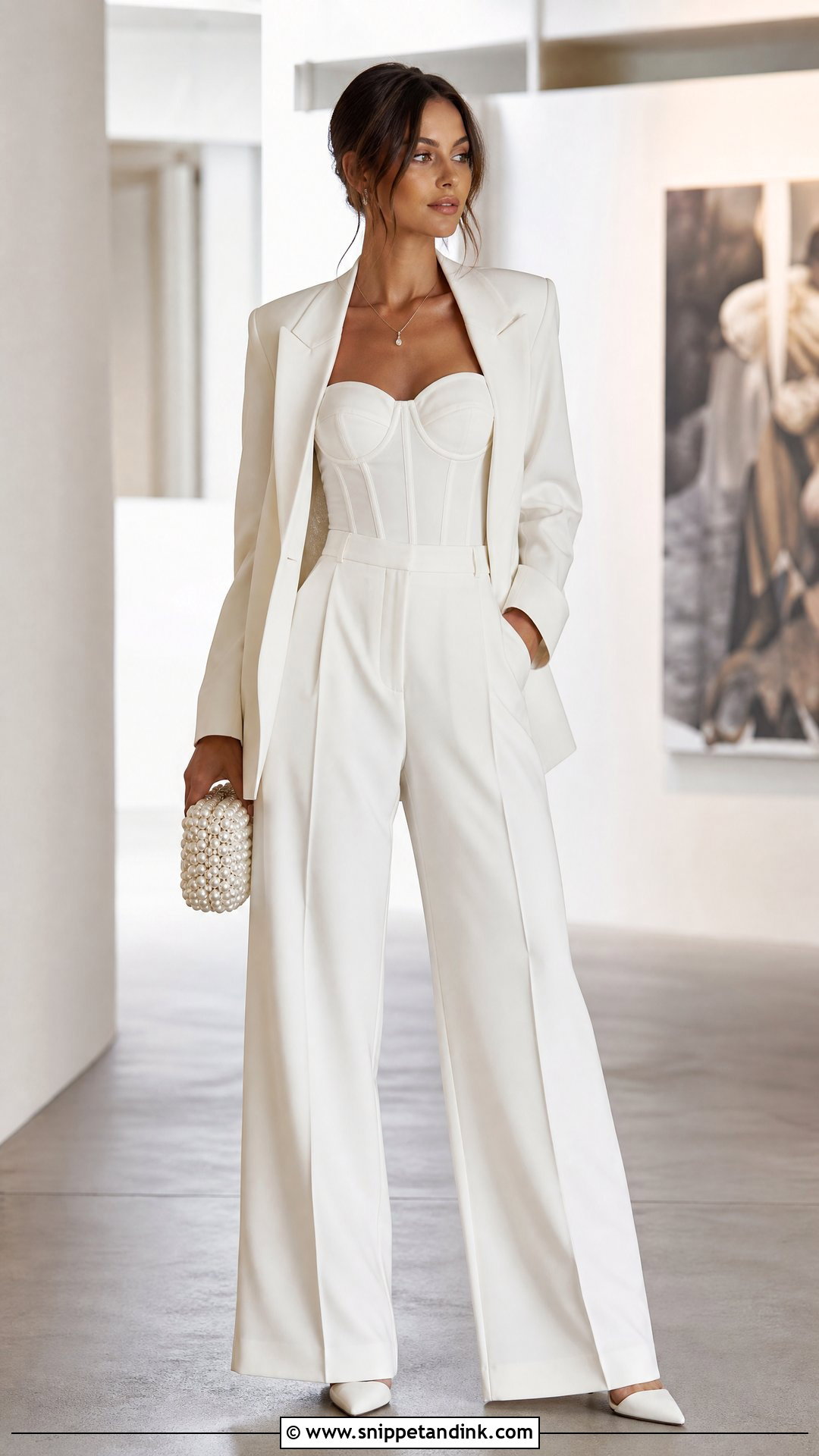
The corset does the structural work in this suit, so it has to be properly fitted. A bridal corset or structured bustier should support without stopping you from breathing deeply or eating dinner. Layer it under an open single-breasted blazer with high-rise wide-leg trousers, and make sure the corset hem meets the waistband so no skin shows between them unless you want it to. Brides wanting more coverage can choose a longline corset with wider straps. One detail I always check: the blazer should still close comfortably over the corset, even if you plan to wear it open.
7. Three-Piece Bridal Suit
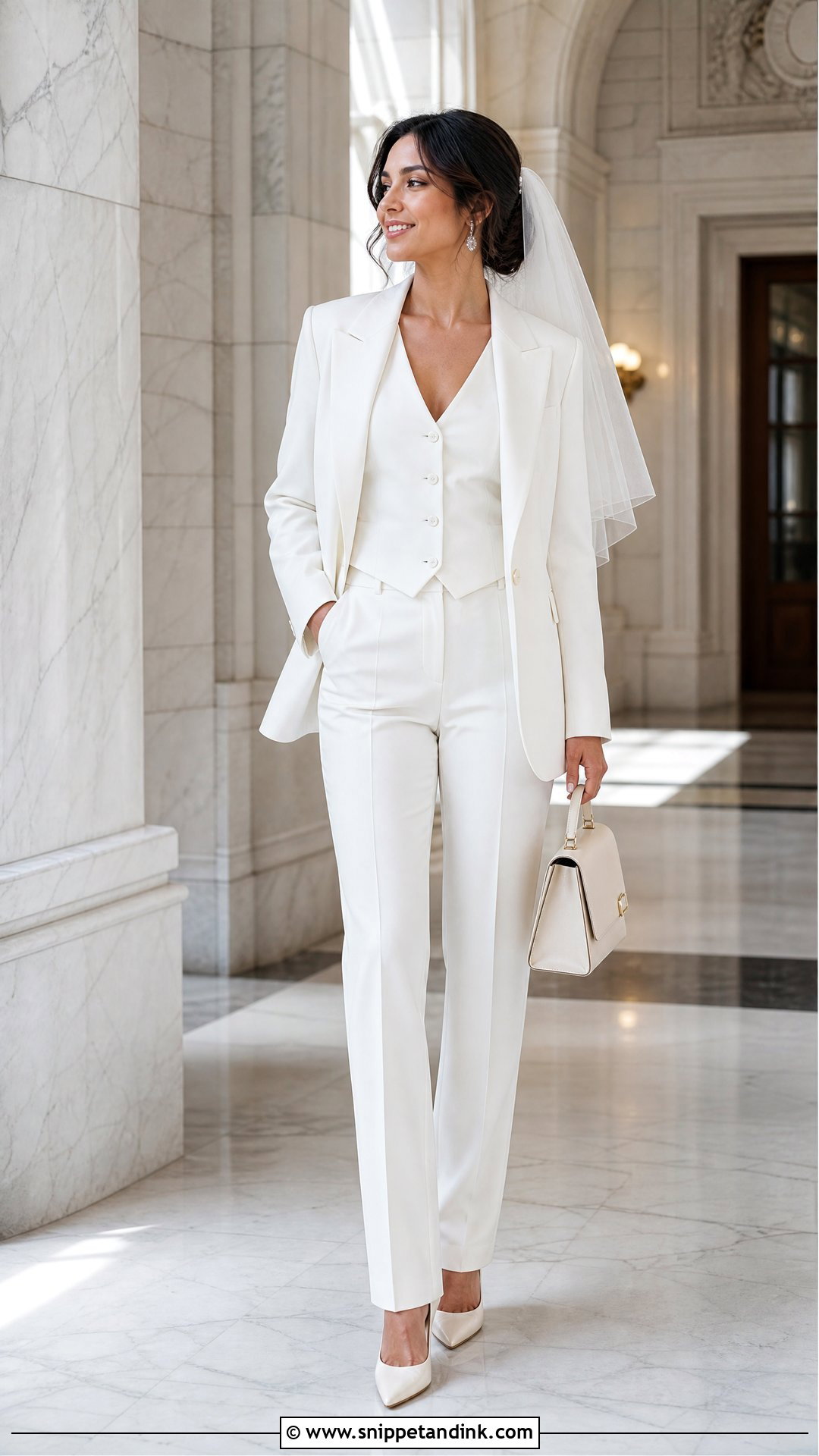
The three-piece is the most practical bridal suit there is, because it’s really two outfits. Wear the vest, blazer and trousers together in white or cream for the ceremony; take the jacket off for the reception. A halter-cut vest reads modern, while a classic buttoned waistcoat leans toward menswear. The vest is the piece that matters. Sit down in it at your fitting and look at the buttons, because if they strain when you’re seated, it needs letting out. High-rise trousers stop a gap between vest and waistband. A short veil or comb keeps the neckline visible.
8. Wide-Leg Bridal Suit
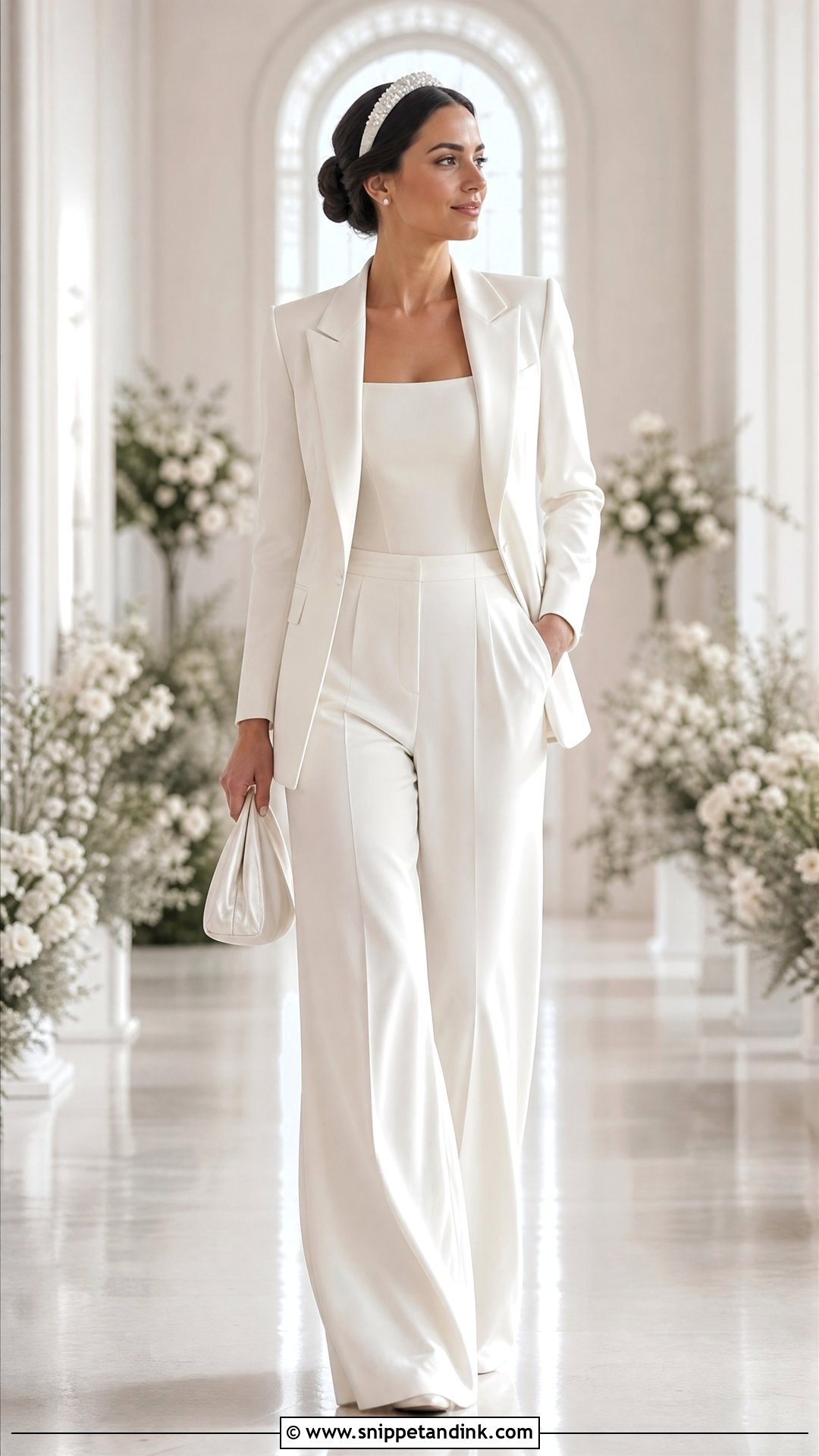
Wide-leg trousers move almost like a gown when you walk. Pair them with a fitted blazer and a smooth bodysuit, with platform heels hidden under the hem. Lightweight crepe swings; heavier fabric holds a stronger shape. If you prefer less structure on top, a softly draped tie-waist jacket works too. I bring this up at every consultation: the hem should nearly reach the floor without dragging, and that only happens if you bring your exact wedding shoes to every fitting. A change of half an inch in heel height shows. Pearl studs and a narrow headband keep it clean.
9. Slim-Fit Bridal Suit
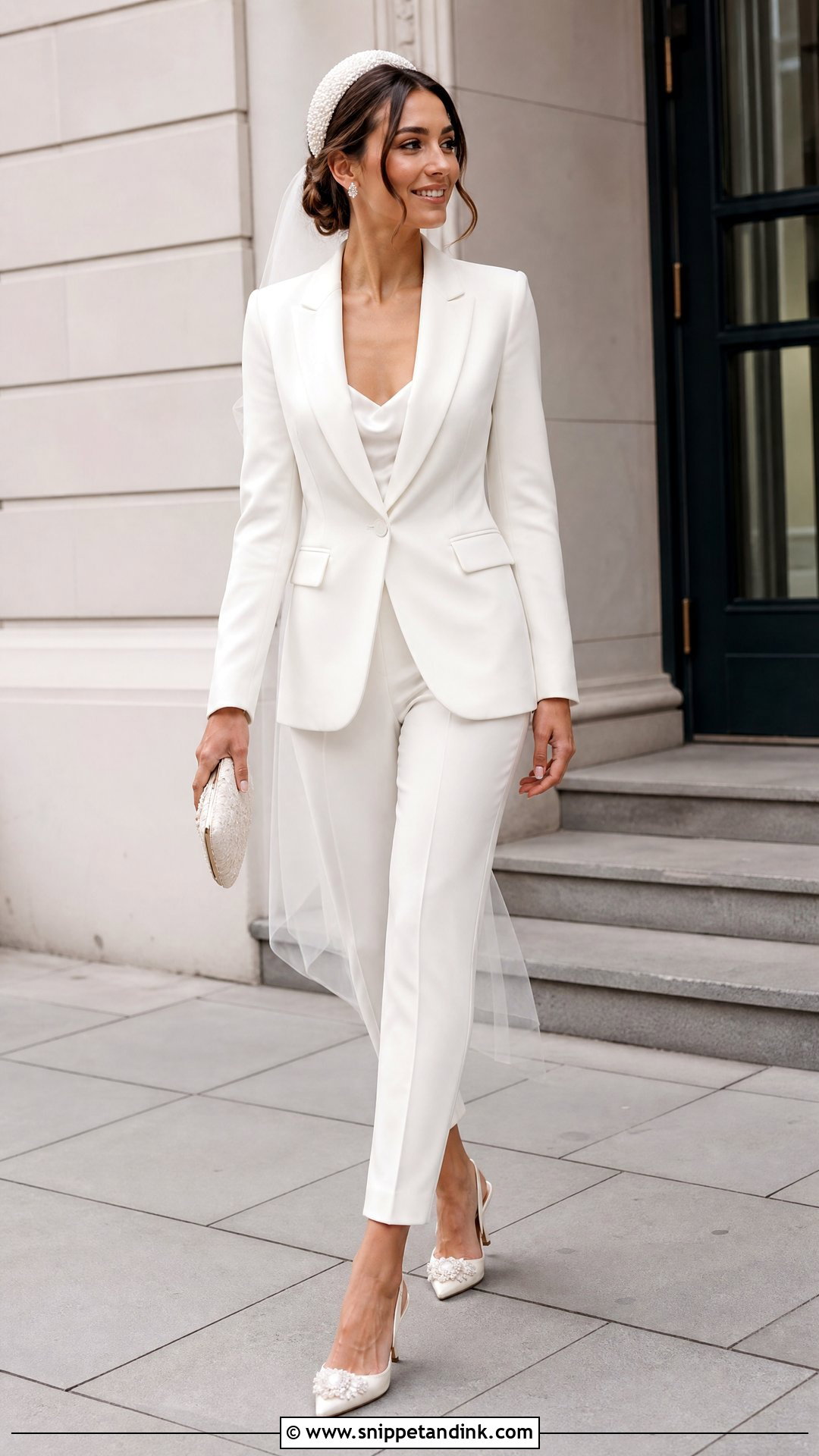
Slim tailoring is sharp, but it gives you nowhere to hide a poor fit. Choose a gently shaped blazer and tapered ankle trousers that follow the body without gripping it, over a satin shell or fitted mock-neck top. The ankle-length hem shows off your shoes, so this is the suit for embellished or metallic heels. Tailoring has to be precise at the shoulders, upper arms, hips and trouser rise. At the fitting, sit, bend and climb a step, since slim trousers pull across the thigh in ways you won’t notice standing still. A sleek ponytail keeps the lapels clear.
10. Oversized Bridal Suit
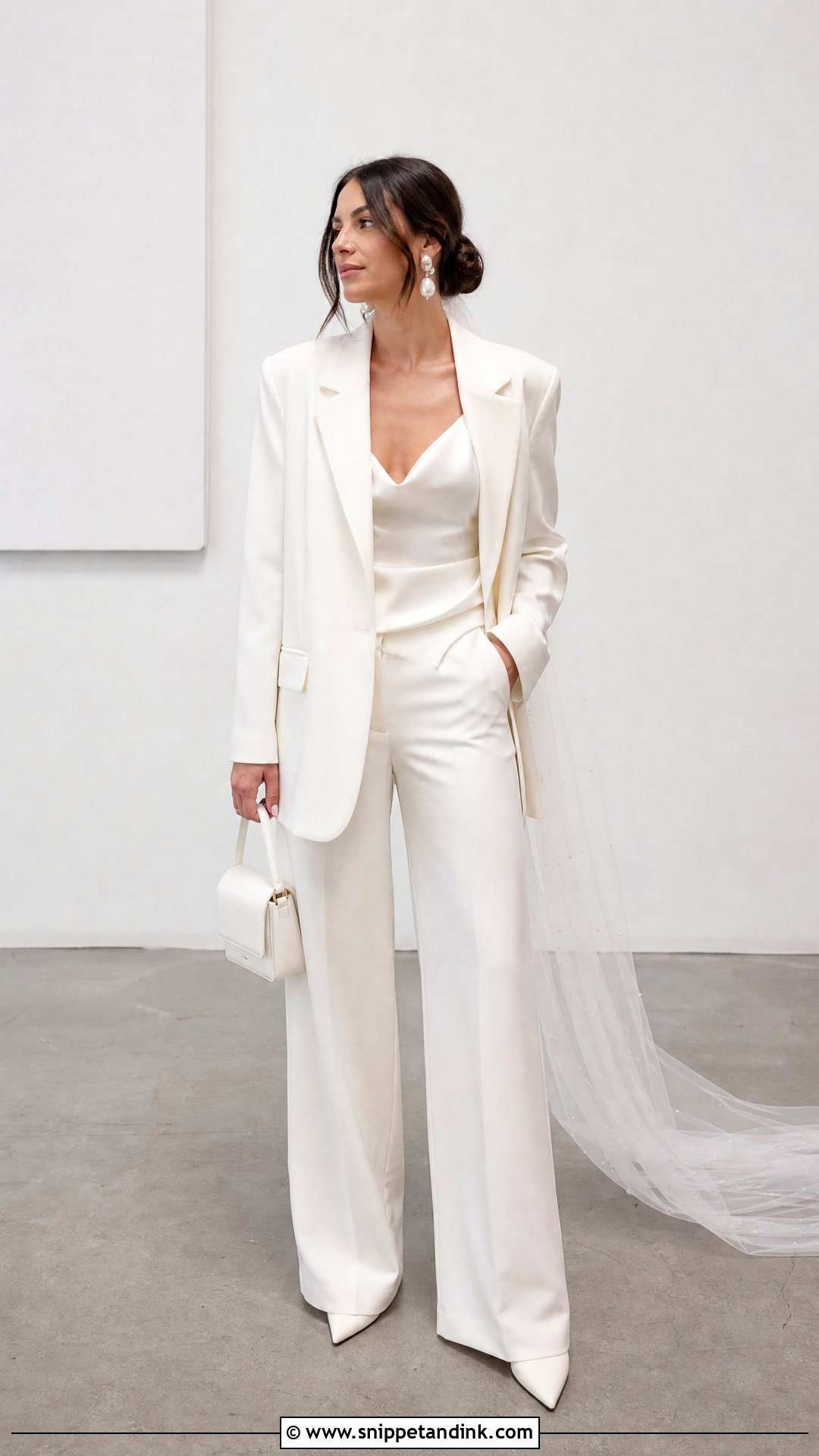
Oversized tailoring is deliberate volume, and the risk is that it simply looks like you bought the wrong size. The way I tell the difference is the shoulders: on an oversized blazer, they’re designed to extend past your own, while on a too-big blazer they droop and collapse. Pair a long, roomy blazer with fluid full-length trousers and a fitted bodysuit for definition underneath. Have the sleeves professionally shortened rather than rolled for formal photos. Fasten one button or add a narrow matching belt if you want a waist. It’s an easy fit for a courthouse or gallery wedding.
11. Peplum Bridal Suit
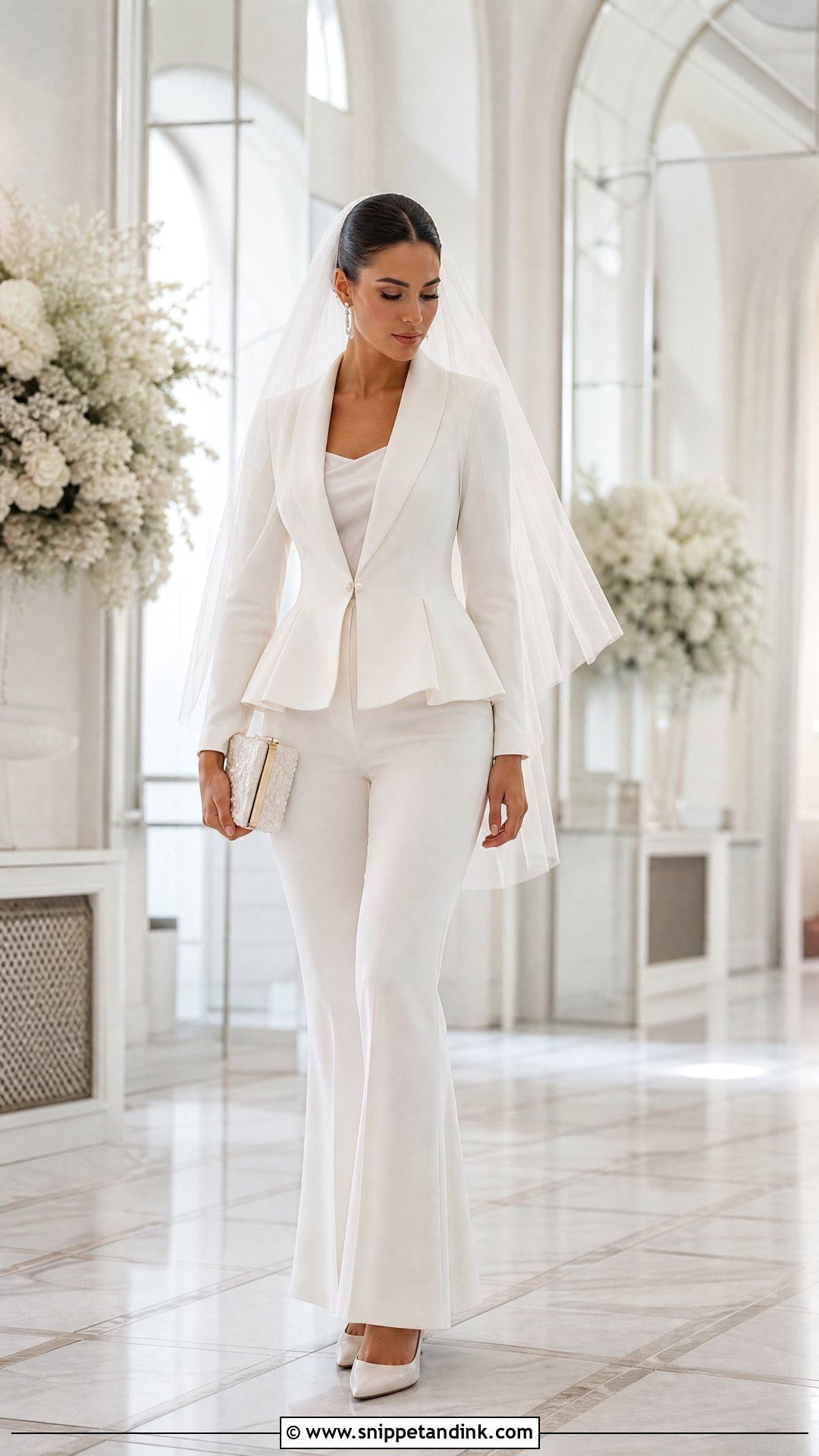
The peplum adds a flare at the waist, which gives shape to a structured outfit. It should begin at your natural waist and lie fairly flat over the hips; if it sticks out stiffly, the interfacing is too heavy. Straight-leg or lightly flared trousers balance it. Some peplum jackets are designed to be worn buttoned as the top itself, which saves you a camisole. Longer torsos suit an extended jacket, and petite brides look better with a short peplum. Pointed pumps, pearl drops and a fingertip veil complete it.
12. Midi Skirt Bridal Suit
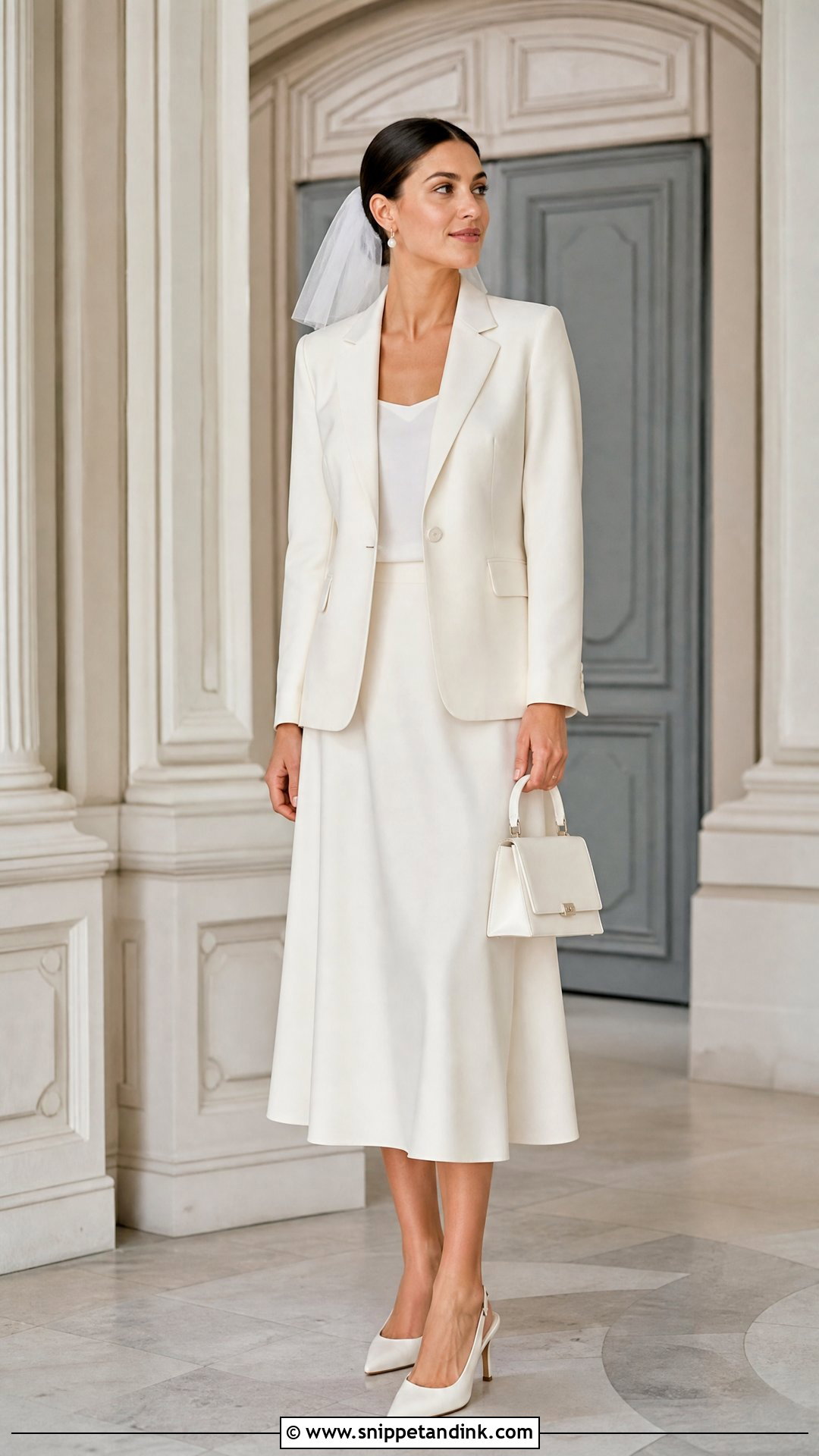
A midi skirt bridal suit has a vintage feel and is easy to personalize. A tailored blazer with a matching A-line, pencil or softly pleated midi skirt makes the base. A pencil skirt is sharper; an A-line moves better through the hips. On a pencil skirt, I check the back vent before anything else, since a vent that’s too short makes stairs and car doors difficult. A cropped blazer shows the waist, and a longer one gives coverage. Keep both pieces in the same fabric and ivory so they read as one outfit, then add slingbacks and a small veil or pillbox-style headpiece.
13. Mini Skirt Bridal Suit
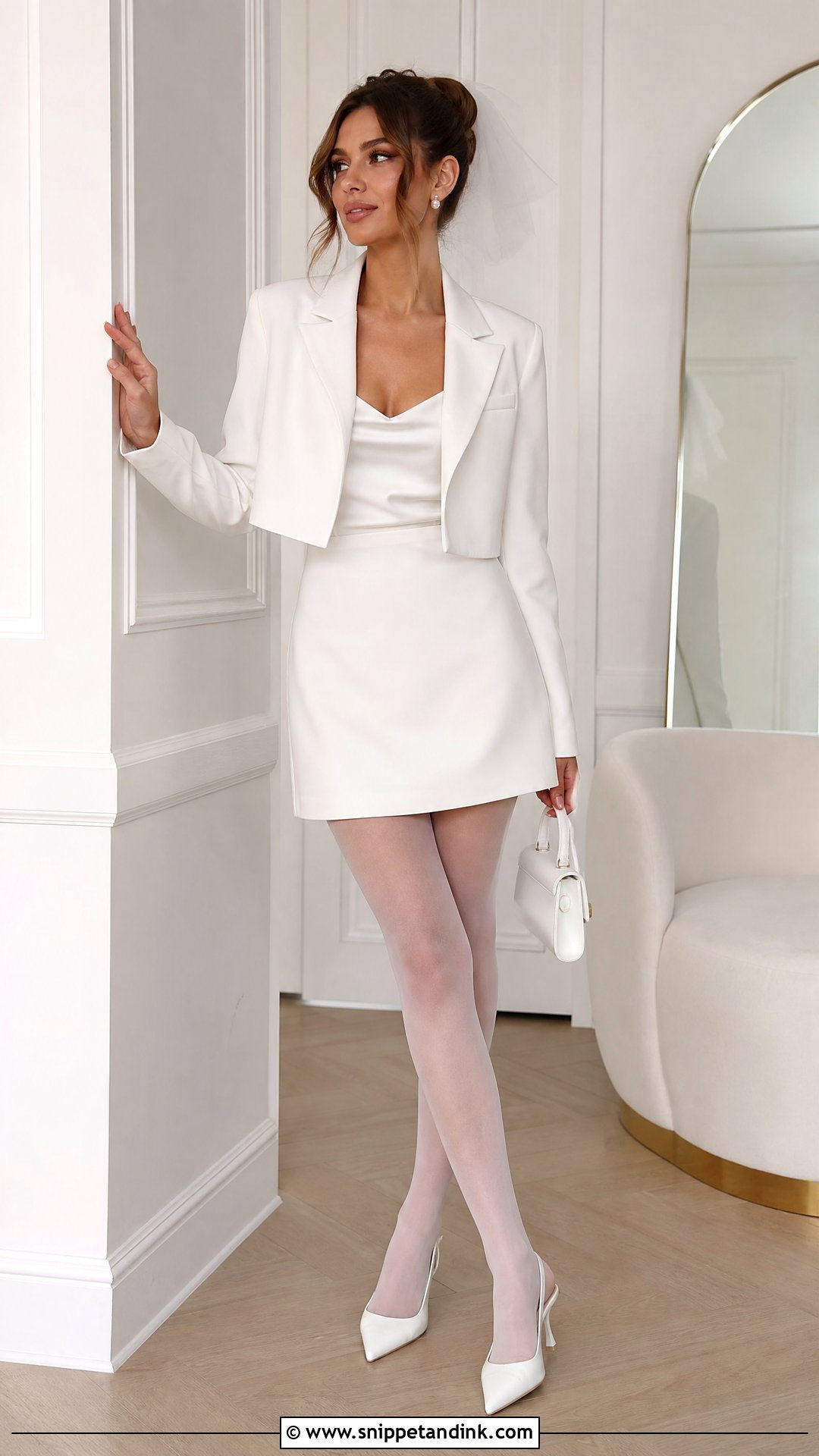
A mini skirt suit is playful and works for a civil ceremony, a welcome party or a reception change. Pair a structured cropped blazer with a matching high-waisted mini and a satin camisole. Sheer white tights help in cold weather. A straight or subtle A-line skirt balances the jacket better than a full one. The length is the hard part. I ask brides to sit, dance a little and climb into a car at the fitting; if the hem needs constant tugging, go longer. A hem just above the knee is the less revealing option. Slingbacks and a short veil make it bridal.
14. Bridal Shorts Suit
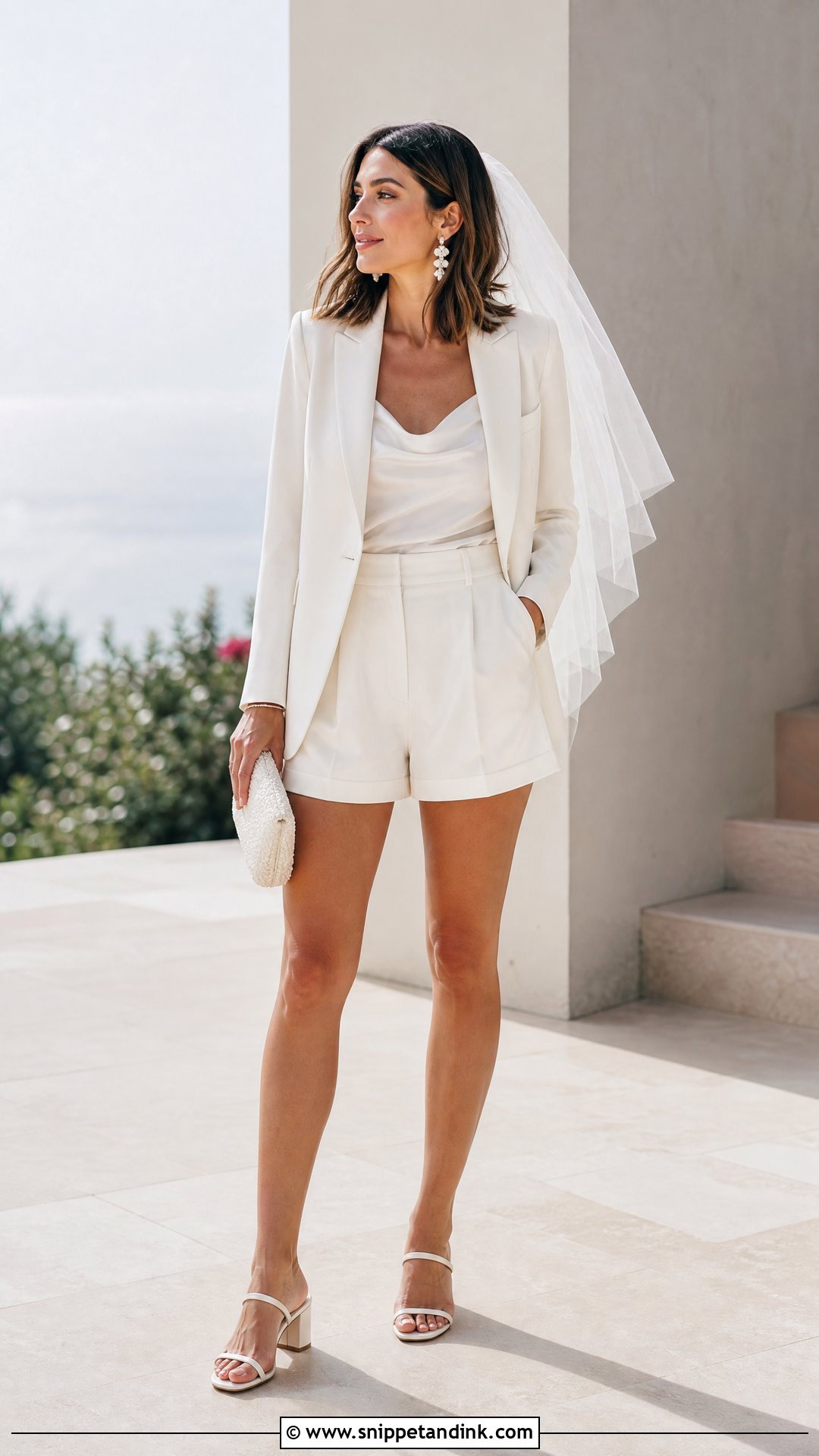
For warm weather and relaxed celebrations, a bridal shorts suit lets you move without restriction. Tailored high-waisted shorts with a coordinating blazer, over a silk tank or structured bustier, look formal as long as the shorts have enough length and room through the leg. Too short or too tight, and they read as holiday clothes. Linen blends are airy, while crepe is smoother and more structured. Check that blazer and shorts meet at the waist without an awkward gap. Slingbacks, block-heel sandals or flats can all work depending on the ground you’ll stand on.

15. Linen Bridal Suit
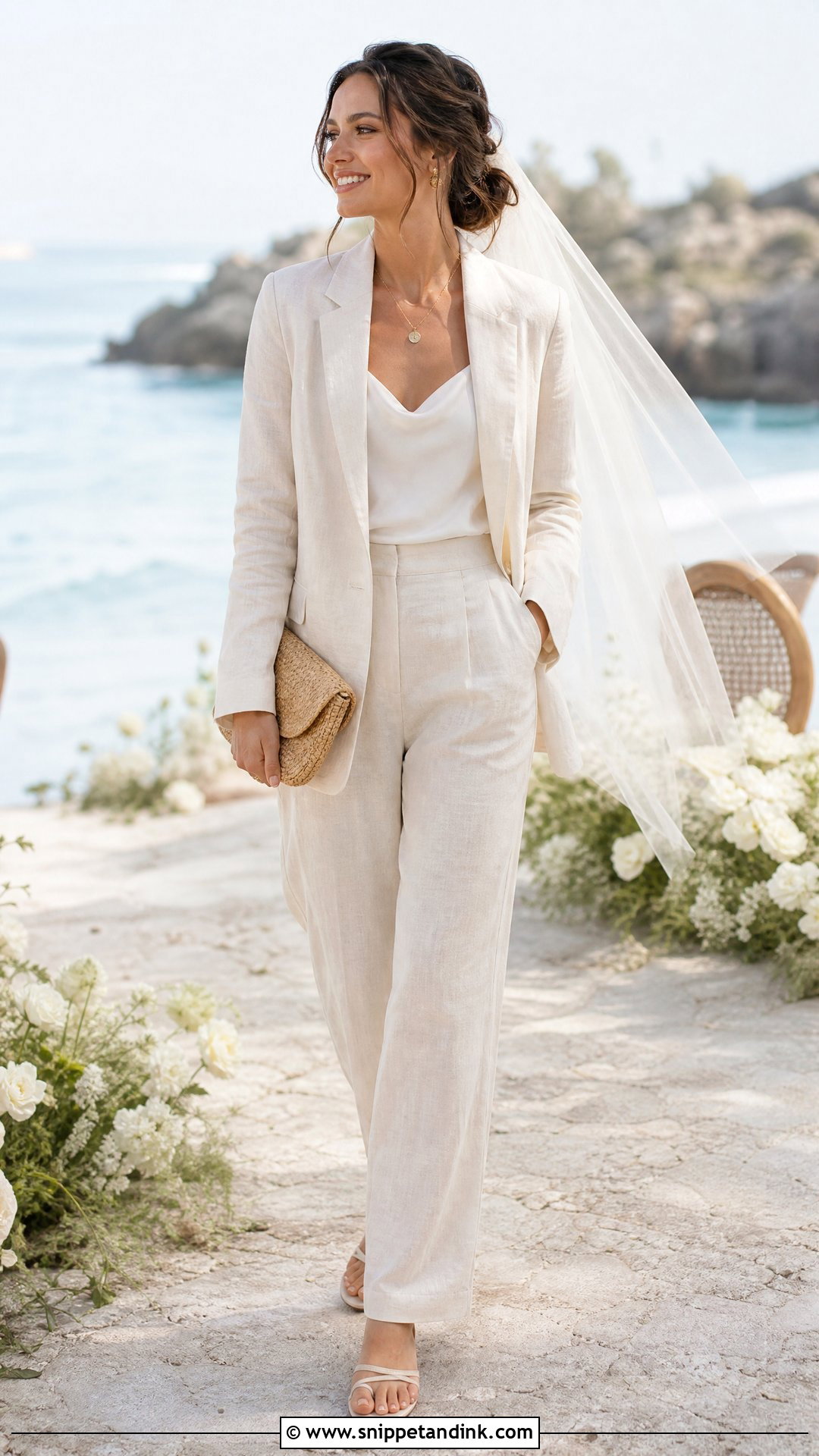
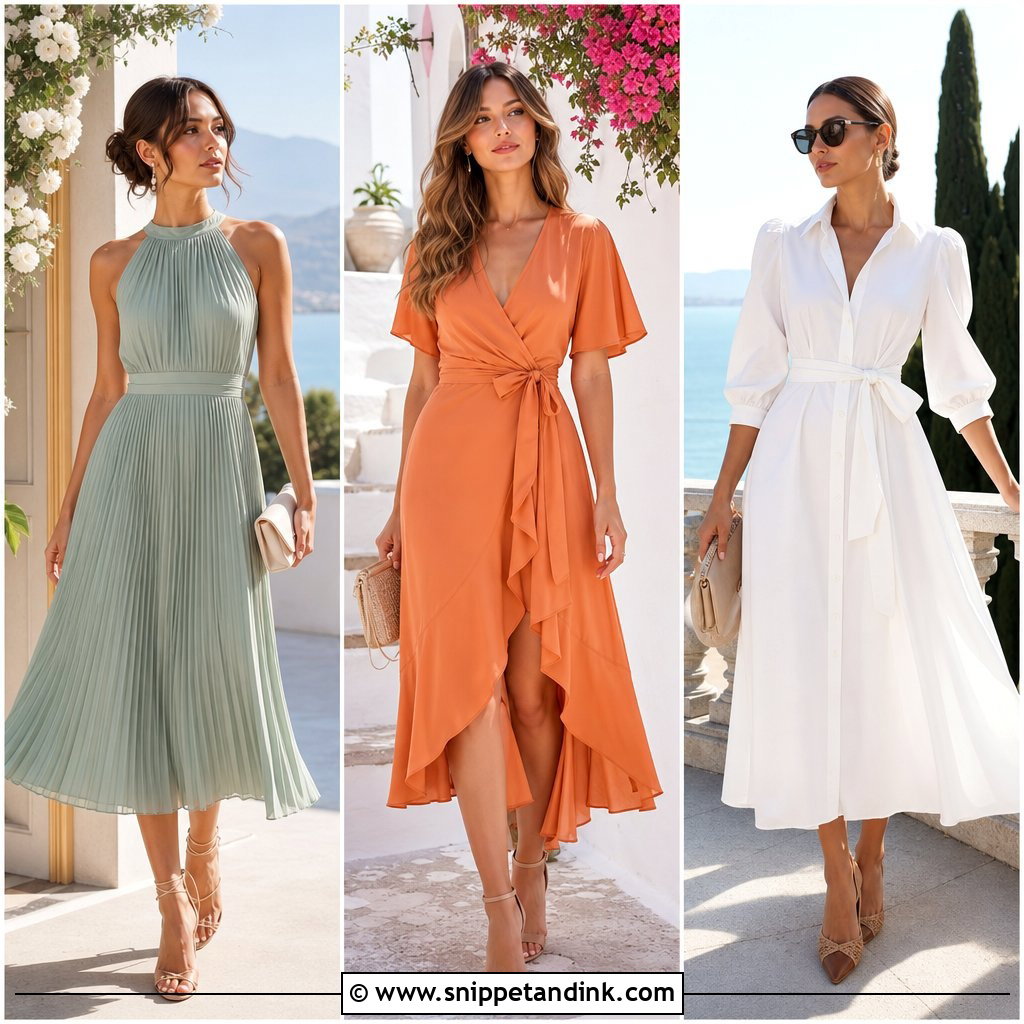
Linen looks natural at a beach or garden wedding, but unlined linen can be see-through and creases fast. A lined linen or linen-blend blazer solves most of that. Pair it with relaxed straight-leg trousers and a silk or cotton-blend camisole in a close shade. Cream and natural ivory suit linen’s texture better than bright optic white, which can look harsh against it. Lightly padded shoulders make the suit more formal, while an unstructured jacket feels casual. Steam it as close to the ceremony as you can, and pack it loosely. Low block heels or leather sandals keep you steady on uneven ground.
16. Velvet Bridal Suit
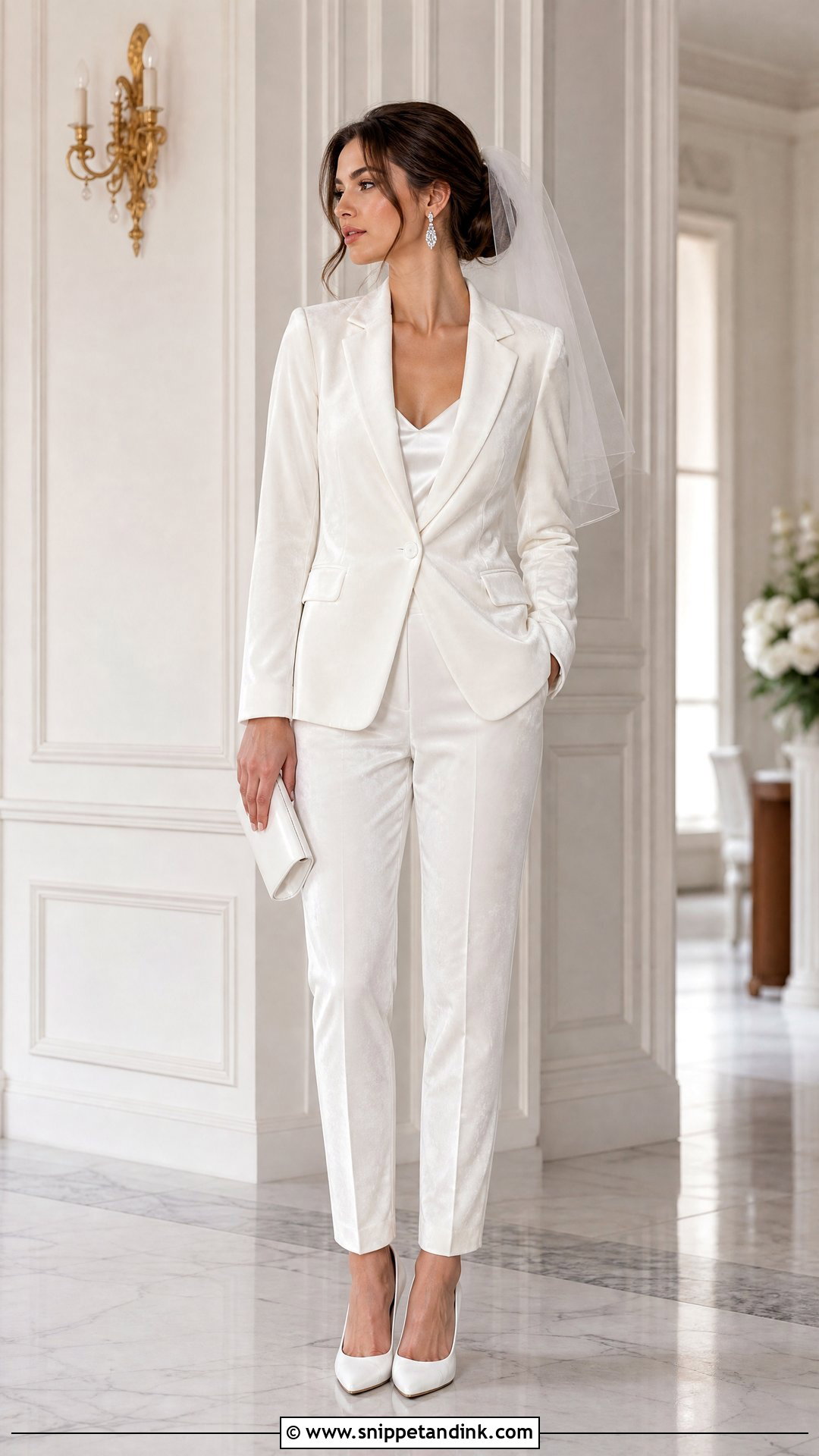
Velvet is a fall and winter fabric with real warmth and depth. Winter white, ivory or soft champagne in a tuxedo or single-breasted cut, with matching trousers and a satin camisole, gives a subtle contrast between the fabrics. Wide-leg trousers create movement and tapered pants look sharper. The nap is the thing to watch. Velvet pile lies in one direction, and if the jacket and trousers are cut differently, one will look a shade darker in photos. Keep accessories minimal and wear your hair up so it doesn’t hide the shoulder line.
17. Pearl Embellished Bridal Suit
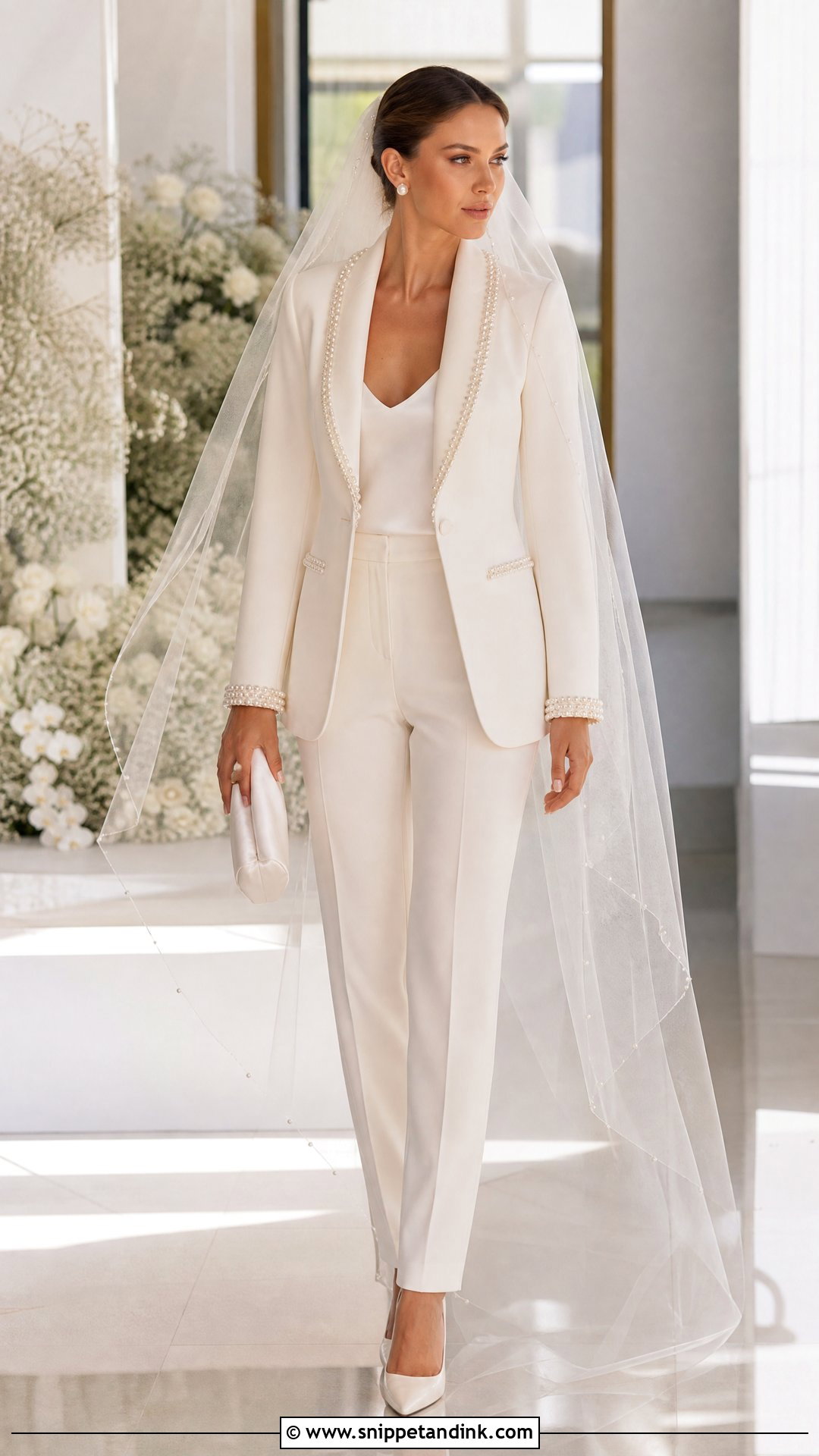
Small pearls along the lapels, cuffs or buttons make a plain suit unmistakably bridal. Put them on the blazer only, with plain matching trousers, a smooth camisole and pointed pumps, and let pearl studs repeat the theme quietly. Sewn pearls catch on veils and hair, especially at the shoulders, so I go over every one before the day and secure anything loose. If you prefer something subtler, pearl buttons alone carry the idea. A fingertip veil lets the jacket stay visible.
18. Crystal Bridal Suit
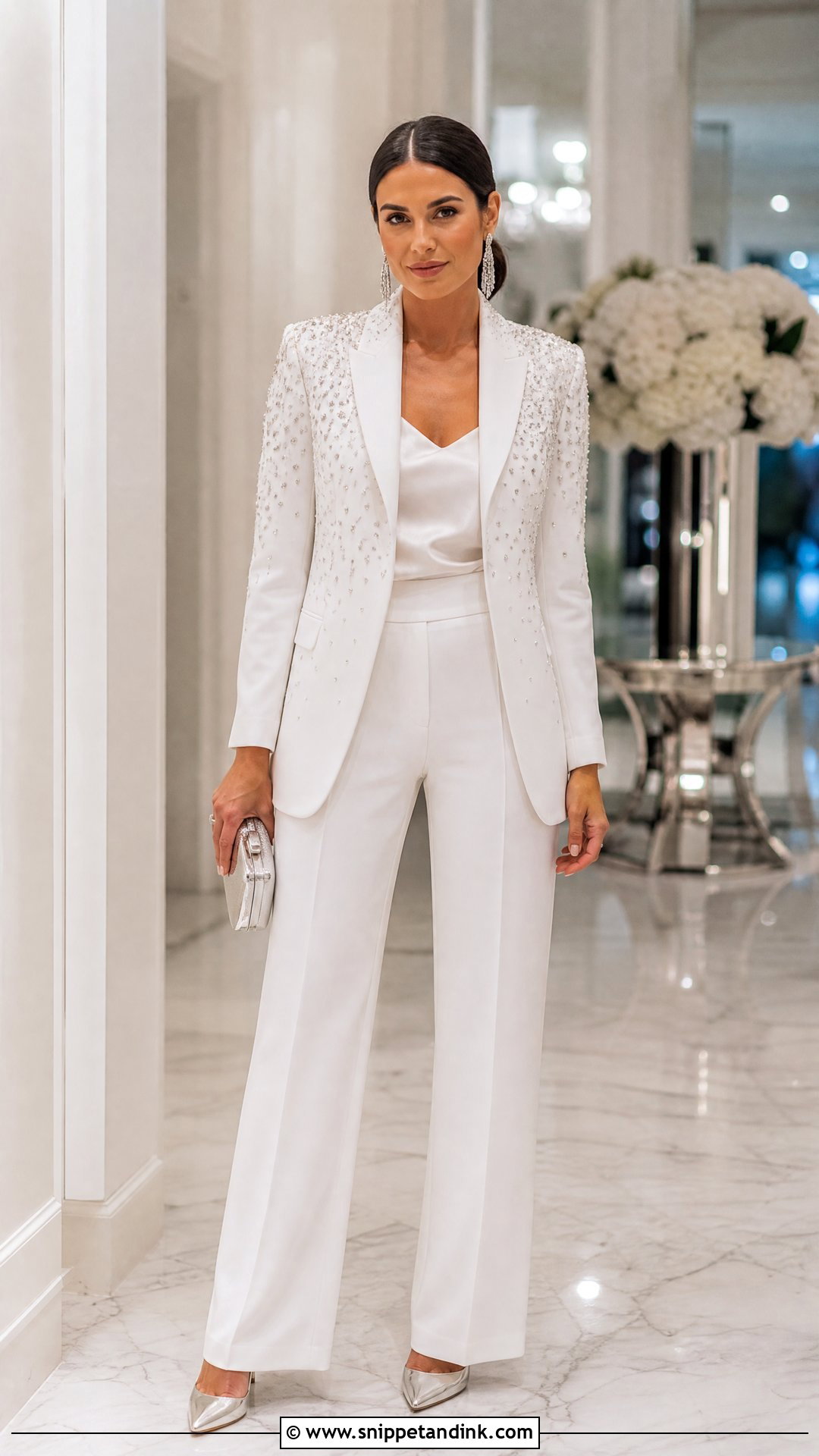
Crystals give you sparkle without a heavily decorated gown. Choose a blazer with scattered crystals, beaded lapels or an embellished collar, and balance it with plain crepe trousers and a simple satin top. Look at the embellishment under bright light and with a phone flash before you buy, because crystals read stronger in photos than in a fitting room. The inside matters too. Beading on the lining side can scratch, so ask for a smooth interior lining. For the reception, take off the jacket to show a subtly beaded camisole. A polished bun keeps the collar clear.
19. Bridal Suit With Detachable Overskirt
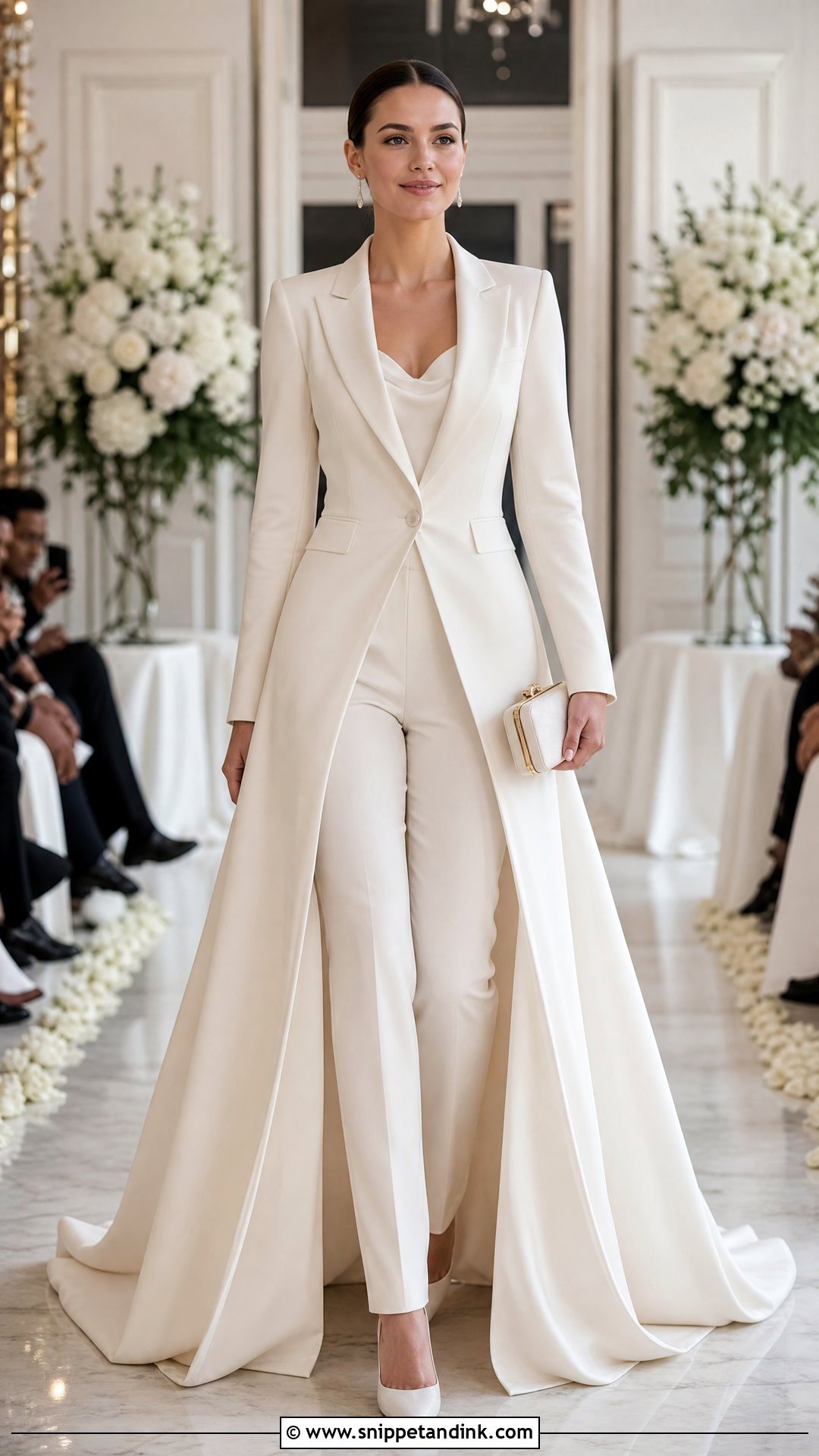
A detachable overskirt gives you the entrance of a gown and the ease of trousers afterward. Wear a fitted blazer, tailored pants and a silk top, and add a light open-front overskirt at the waist for the ceremony so the trousers still show. Remove it for the reception. How it attaches is the key fitting question. Hidden hooks or snaps on a waistband are cleaner than a bulky belt or ties. Walk, sit and turn in it at the fitting, and practice taking it off so a bridesmaid can do it in a minute. Keep the blazer simple so it doesn’t compete with the volume.
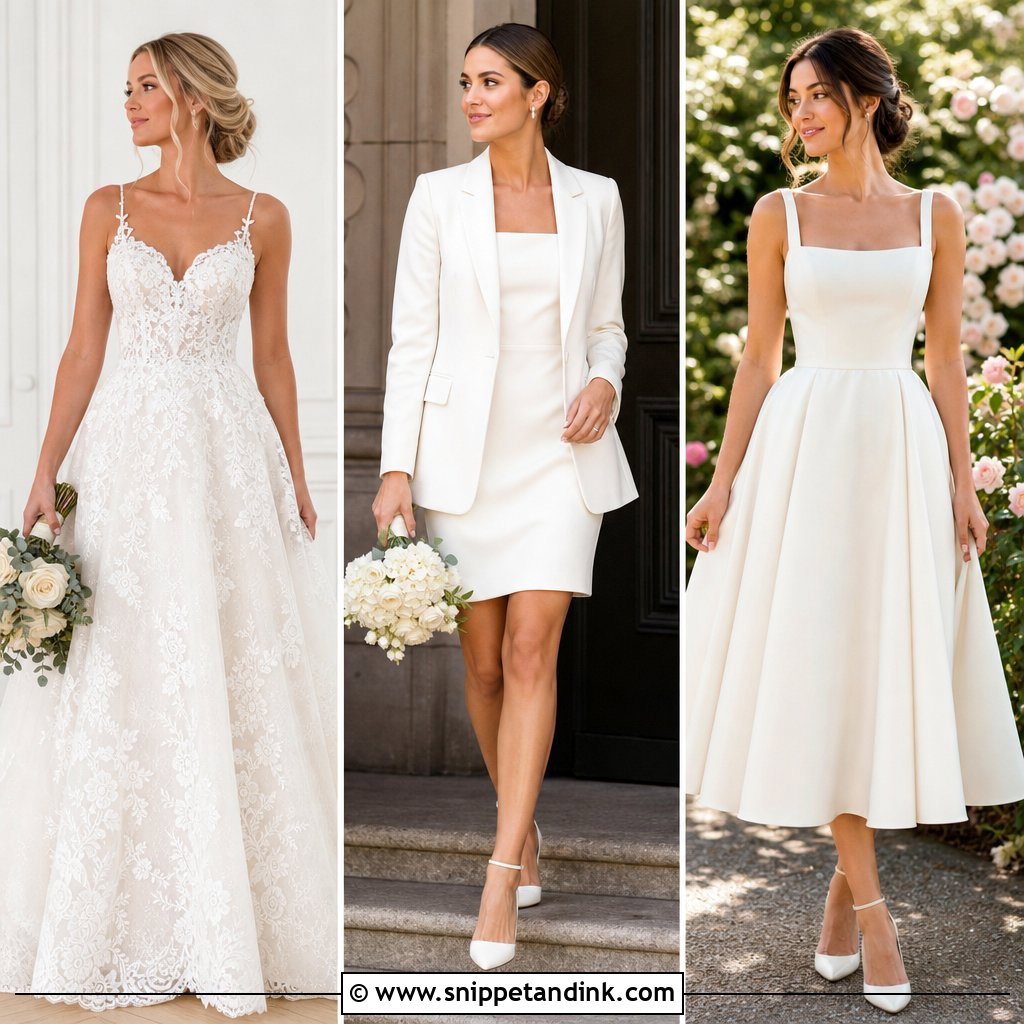

20. Pastel Bridal Suit
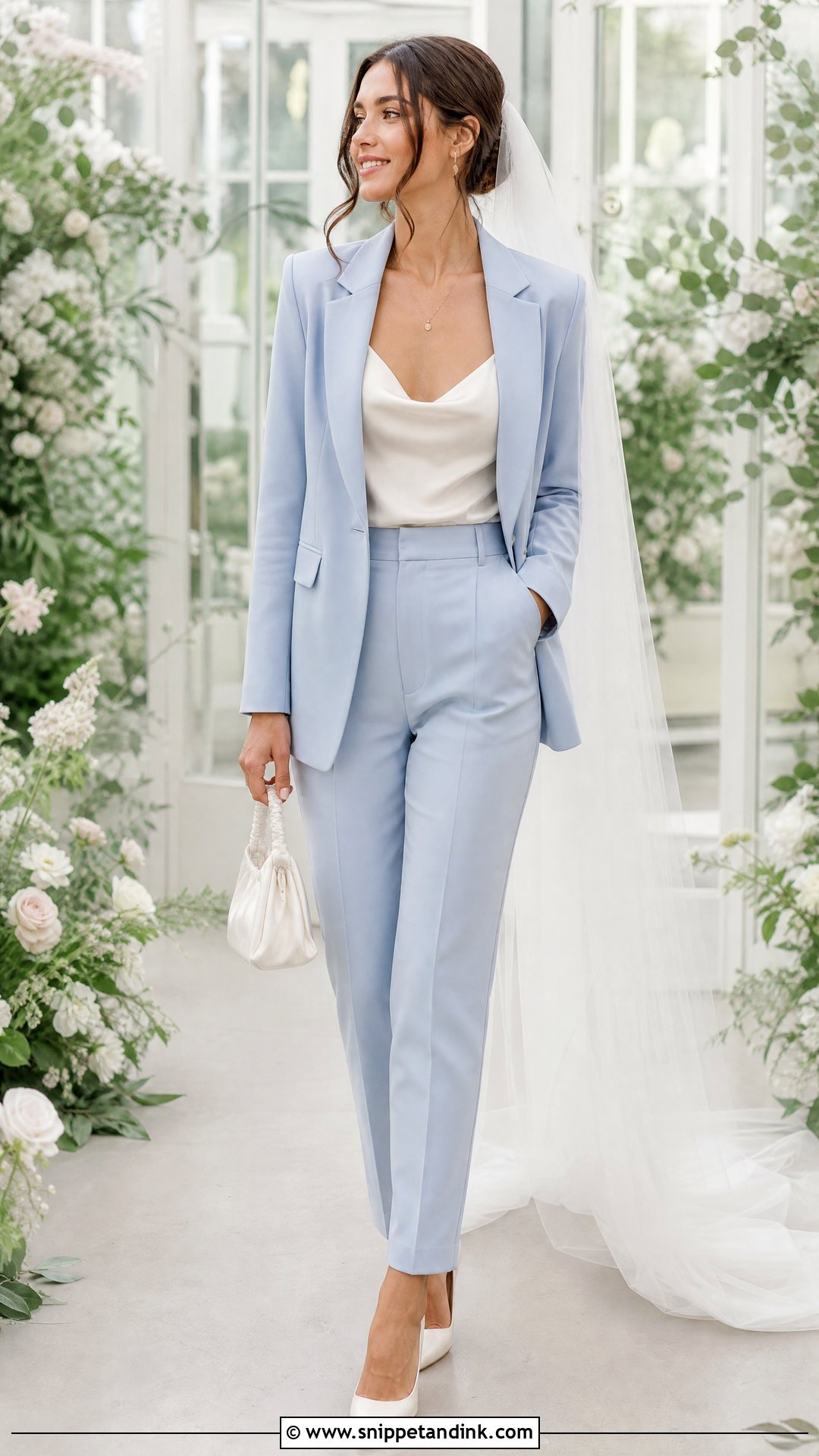
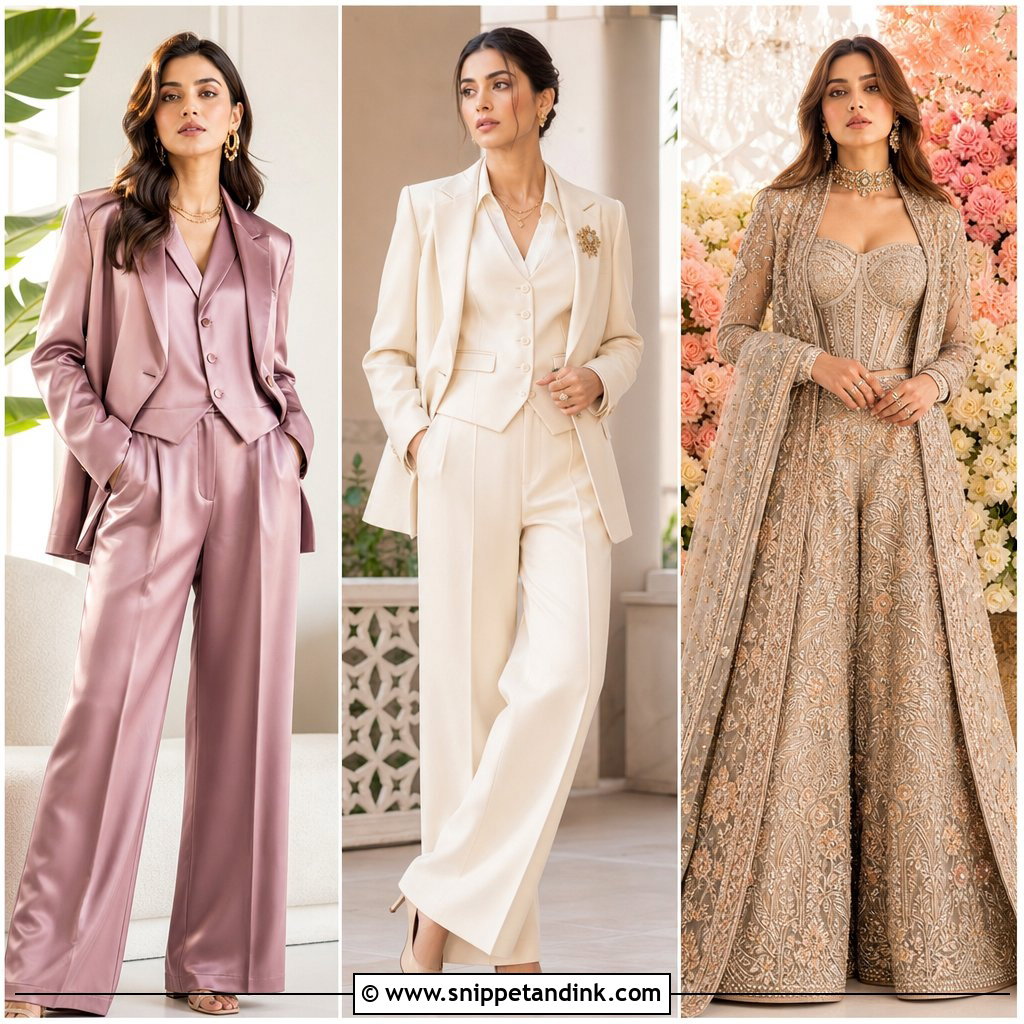
A pastel bridal suit adds personality while keeping the formality of tailoring. Blush, powder blue, pale lavender and muted sage are gentle alternatives to white. Pair a single-breasted blazer with matching high-waisted trousers and a neutral silk camisole, then use ivory pumps and a small satin bag to tie it back to bridal colors. Pastels shift with light, so I always look at the fabric outdoors and indoors before ordering; some lavenders turn gray under warm indoor bulbs. A tonal veil looks fashion-forward, while an ivory veil gives contrast. Precise alterations keep it from looking like workwear.
The Bouquet, Veil and Shoes That Suit Tailoring
Accessories chosen for a gown can look odd with trousers, because a suit has straighter lines and less volume to balance them.
Veils
Sleek hair gives a veil comb nothing to grip, so I have the hairstylist build a small hidden anchor, a tiny bun or crossed pins, where the comb will sit. Fingertip and shoulder lengths work best with most suits. A cathedral veil can look striking over wide-leg trousers, but it needs someone to manage it on stairs.
Flowers
A huge round bouquet hides the jacket, which is the best part of the outfit. A compact posy, a single-variety armful held to one side, or a few long stems suit tailoring better. Ask your florist to keep stems short and wrapped so they don’t snag a satin lapel.
Shoes
Pointed toes lengthen the leg under trousers; rounded toes shorten it. Match the shoe to the suit’s ivory, not to a generic white, and wear the shoes around the house for a few evenings before the day so they’re broken in before your hems are finalized.
Tailoring Wins Over Trend Every Time
The right suit depends on the setting, the season, how much coverage you want and how you want to feel. A sharp tuxedo suits a formal evening; linen, shorts or relaxed tailoring feel natural at a warm destination. Lace, pearls, crystals, capes and overskirts add ceremony detail while keeping the comfort of separates. Whichever you choose, the fit through the shoulders, waist, trouser rise and hem is what makes it look bridal. Bring your shoes and underlayers to every alteration appointment, keep the accessories focused, and you’ll have a suit that looks considered from every angle.
You'll Like These Ideas:



Leave a Reply