
Pakistani weddings ask one bride to dress for four or five separate events, and each has its own rules. The Barat usually calls for red and the heaviest handwork you’ll wear all week, the Nikah leans softer, often a pishwas in white or a pastel, and the Mehndi is where yellow ghararas and mirror work belong. Walima is the place for something lighter. When I sit down with a bride, I ask about fabric weight, how the dupatta will be pinned and how many hours she’ll be on her feet before we talk about color at all. The ideas below run from the classic Barat lehenga through to a modern reception gown, with notes on what each one asks of the person wearing it.
Planning a Wardrobe for Mayun, Mehndi, Nikah, Barat and Walima
Most brides I dress need four or five outfits, and the mistake I see most often is ordering them one at a time. The Mehndi outfit ends up heavier than the Barat, or two events land in almost the same pink. I map them together first, on one sheet, starting with the heaviest.
- Barat: the heaviest handwork and the deepest color. Order this first, since dense zari and dabka take the longest to embroider.
- Nikah: usually softer, often white, ivory or a pastel. Think about how long you’ll be seated and whether the dupatta covers your head for the ceremony.
- Mehndi and Mayun: yellow, green and orange, light enough to dance in, with sleeves that stay clear of the henna.
- Walima: a contrast with the Barat. If the Barat is red and gold, go pastel, silver or a gown here so the two days don’t blur together in the album.
Custom bridal pieces with heavy hand embroidery commonly need several months, plus time for at least two fittings. I’d allow three to six months for the Barat outfit and ask the designer directly, because workshops fill up ahead of the main wedding season. Ready-to-wear Mehndi and Walima pieces can come later, as long as you leave room for alterations.
What I ask for at every fitting
Wear the actual shoes and the actual jewelry. Sit on a low sofa, raise your arms, step up onto something. Have someone pin the dupatta exactly the way it will be pinned on the day. Most fit problems only show up once the outfit moves.
1. Red Pakistani Bridal Lehenga
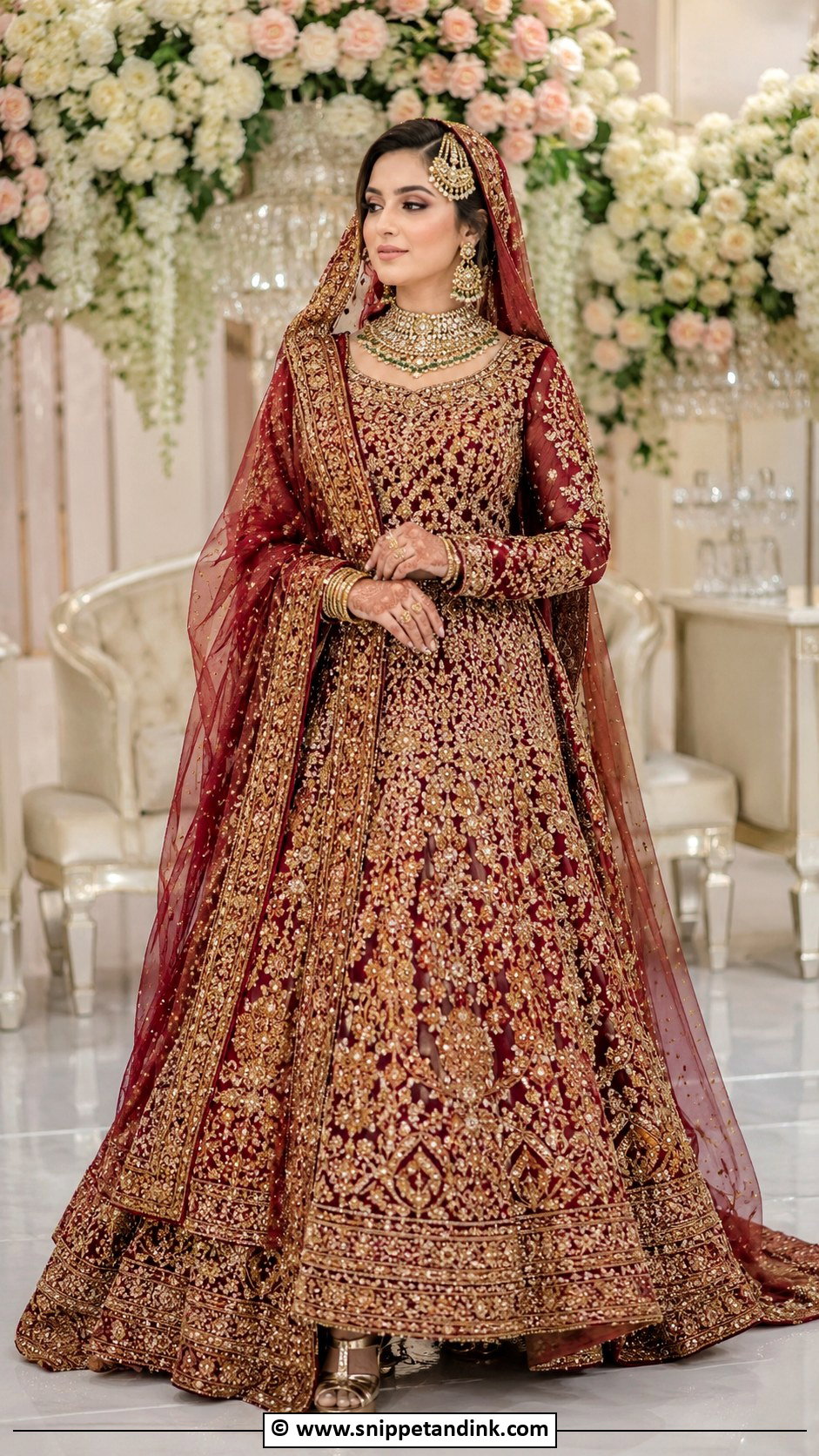
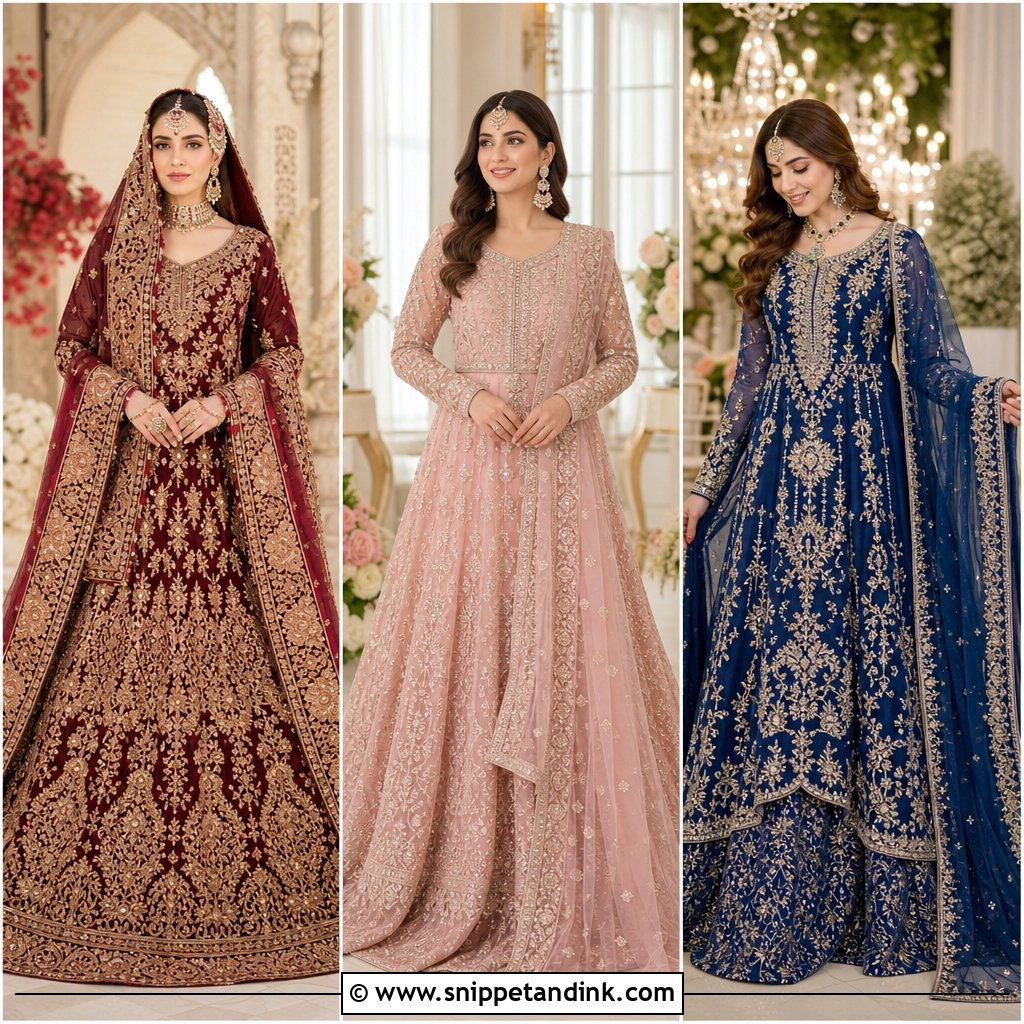
A red Pakistani bridal lehenga is still the default for the Barat, and for good reason: red holds its depth under hall lighting where paler shades wash out. Zari, dabka, tilla and resham work give it richness on their own, so you rarely need extra layers on top. The first thing I check is the weight of the skirt at the waistband. A heavily worked lehenga drags on the hips, and a structured choli or long kameez helps spread that load. Add a deep maroon or matching dupatta, kundan jewelry, a matha patti and embellished heels, then keep the makeup to defined eyes and a classic lip so your face isn’t competing with the outfit.
2. Maroon Pakistani Bridal Lehenga
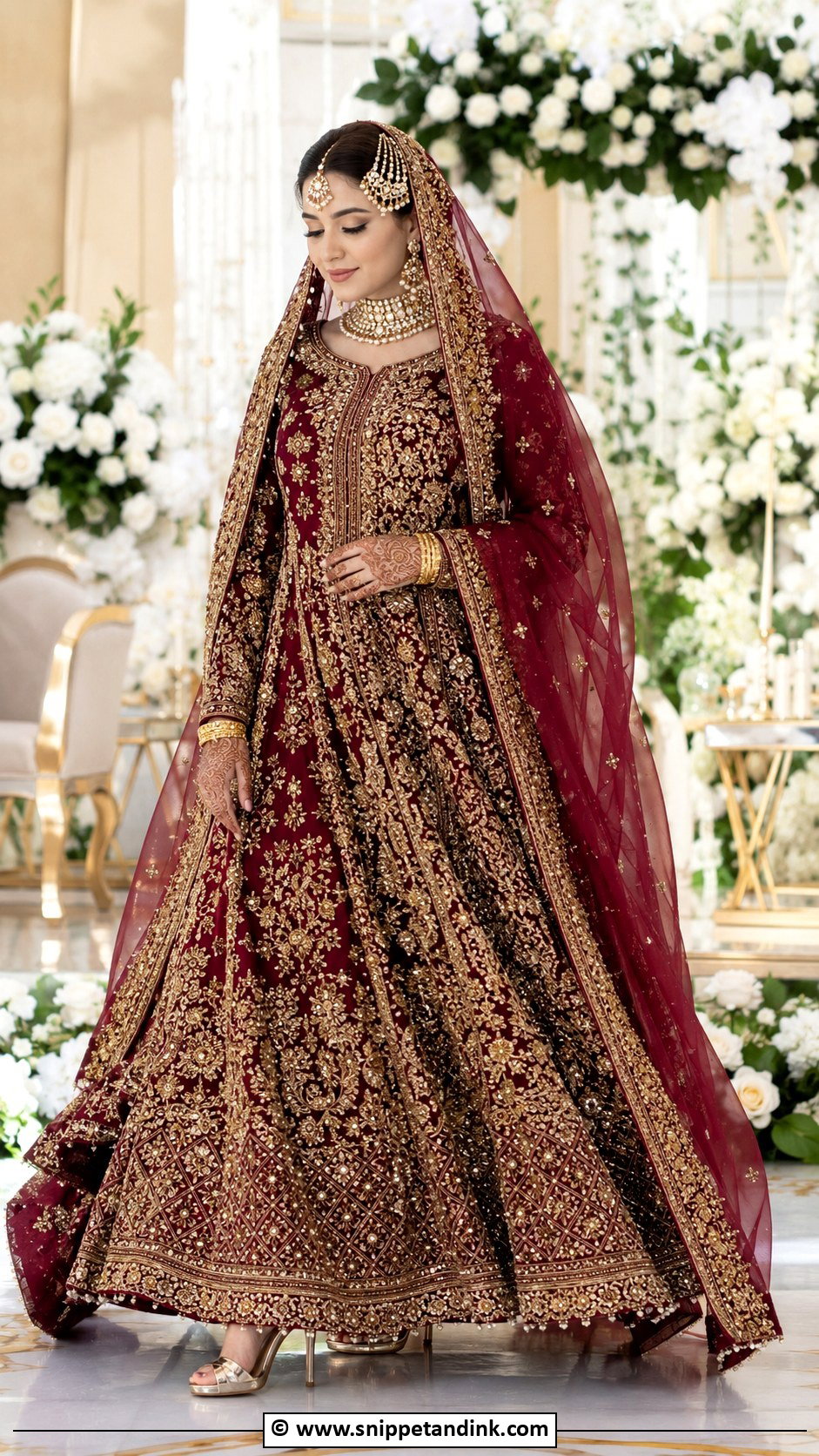
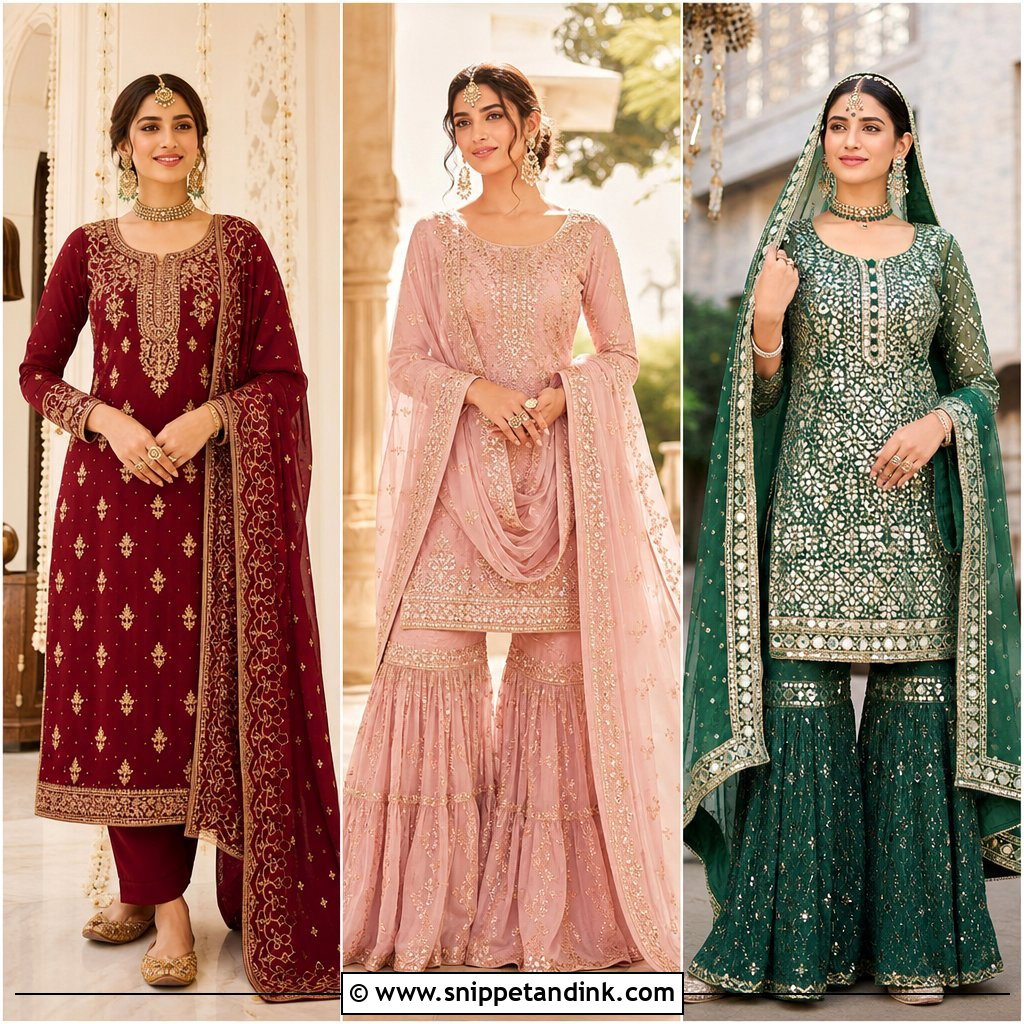
Maroon carries the same Barat weight as red with a darker, more grown-up finish, and I often suggest it to brides who feel bright red overwhelms them. Antique gold embroidery sits well on it because the contrast is quieter than yellow gold. Velvet borders and a full flared skirt add structure, and a long shirt with side slits keeps the silhouette distinctly Pakistani. With a double dupatta, pin the heavier one to the head and let the lighter one fall over the shoulder, or the neckline disappears under fabric. Polki, a choker, a passa and soft gold heels finish it. In a dim hall, deep maroon can read almost black on camera, so ask your photographer to check the fabric early in the evening.
3. Gold Pakistani Bridal Lehenga
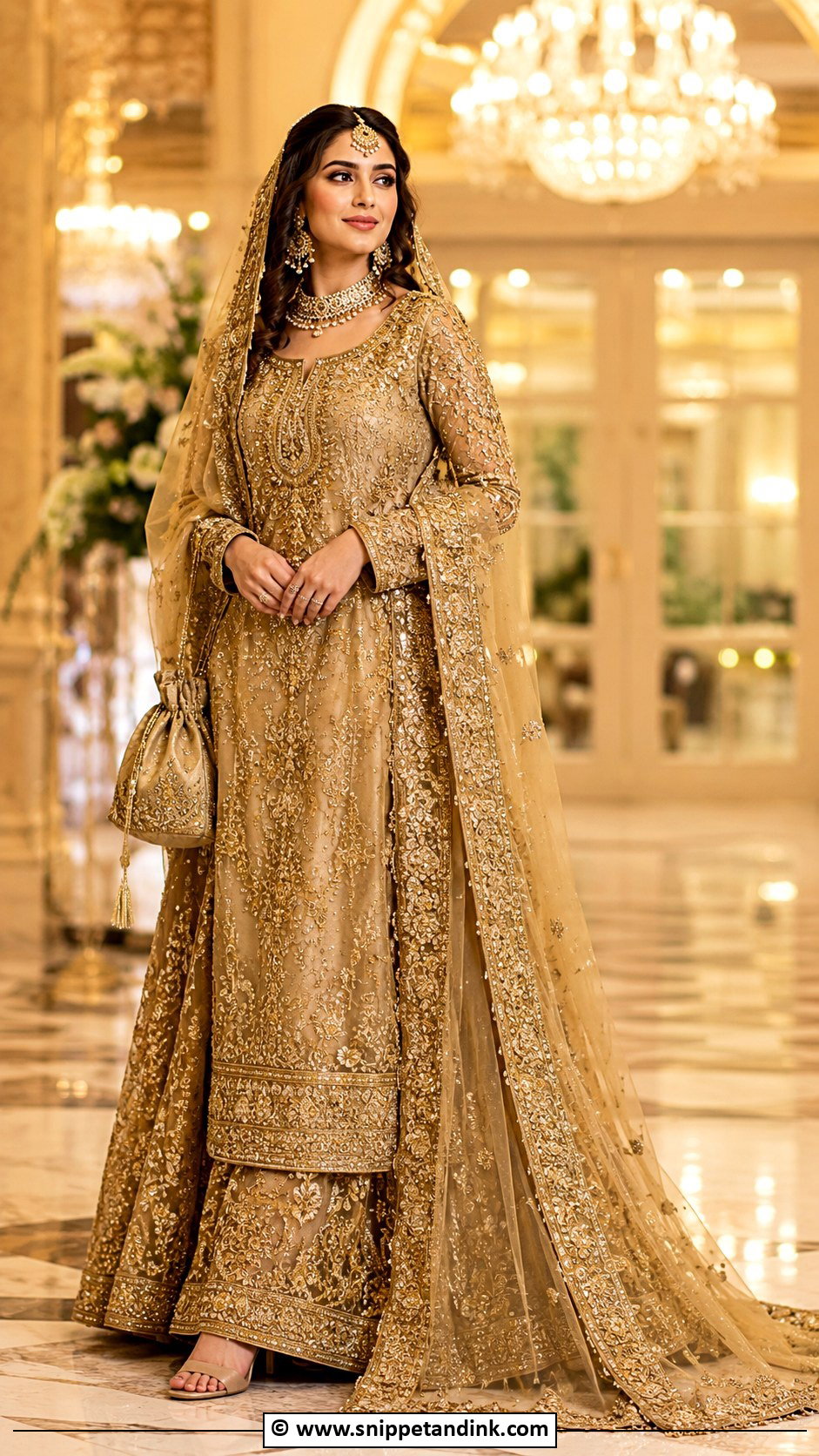
Gold is the hardest color to get right because the shade has to suit your skin and the venue light at the same time. Champagne gold sits well on cooler skin, antique gold on warm and olive tones, and pale gold can go flat under fluorescent tubes. I hold a swatch to the bride’s face in daylight and again under indoor bulbs before she commits. A fully worked lehenga with a long organza or tissue shirt reads refined rather than flashy, and a sheer dupatta with a heavy border frames the face. Kundan or jadau, nude heels and a structured potli are enough. The outfit already throws light, so the makeup should stay polished, not heavy.
4. Ivory Pakistani Bridal Lehenga
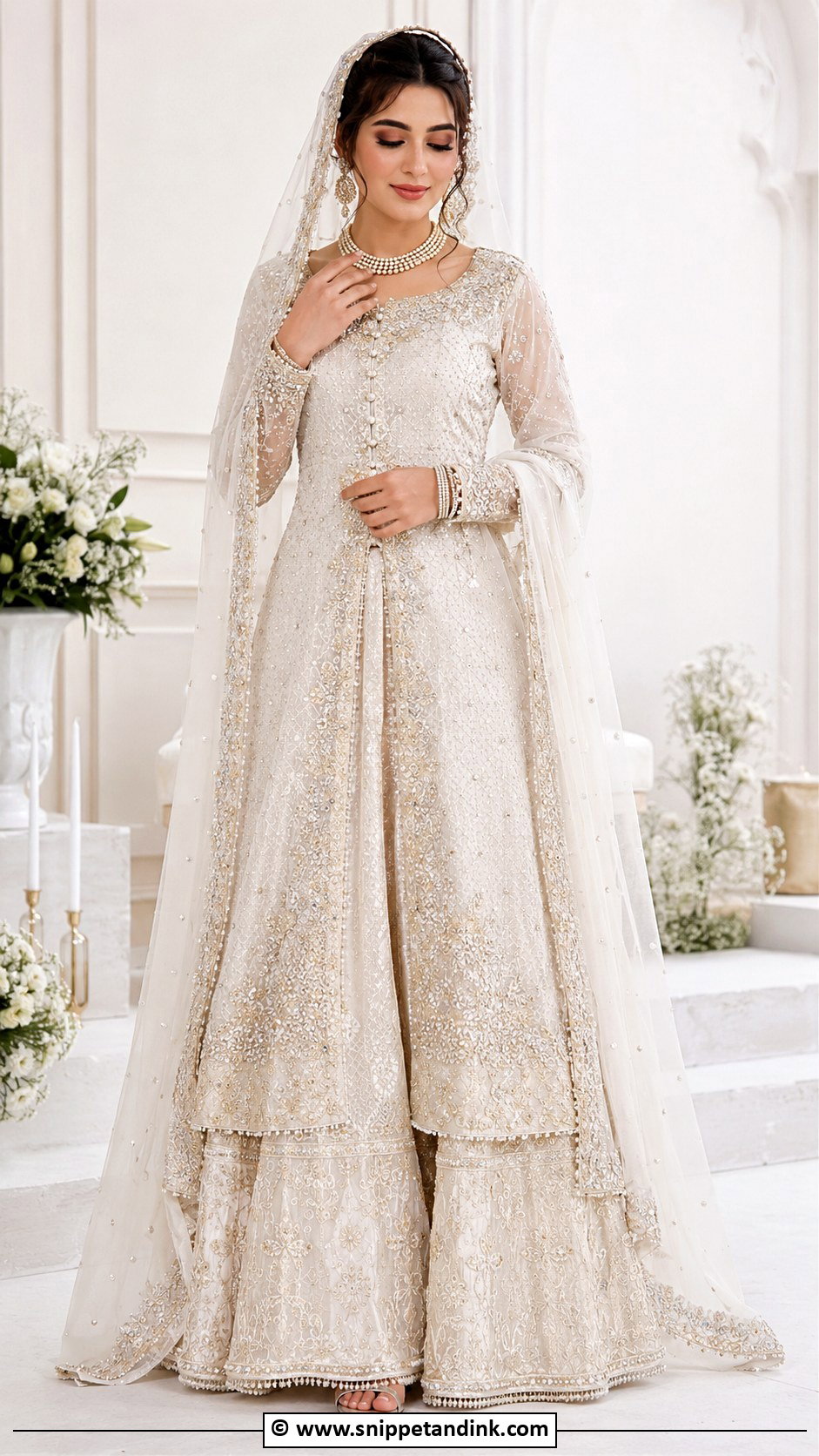
Ivory needs texture or it looks unfinished on a bride. A plain ivory panel turns into a flat white block in photographs, so I look for silver, gold, pearl or pastel handwork that casts tiny shadows. A long peshwas-style shirt over a lehenga gives movement and modest coverage for a Nikah or daytime Walima. Ivory also marks easily: henna on the cuffs and foundation on the neckline are the two things I watch most closely on the day. A soft net dupatta, pearl jewelry, delicate bangles and metallic heels keep it light, and a neat bun gives the dupatta setting something firm to grip.
5. Pastel Pakistani Bridal Lehenga
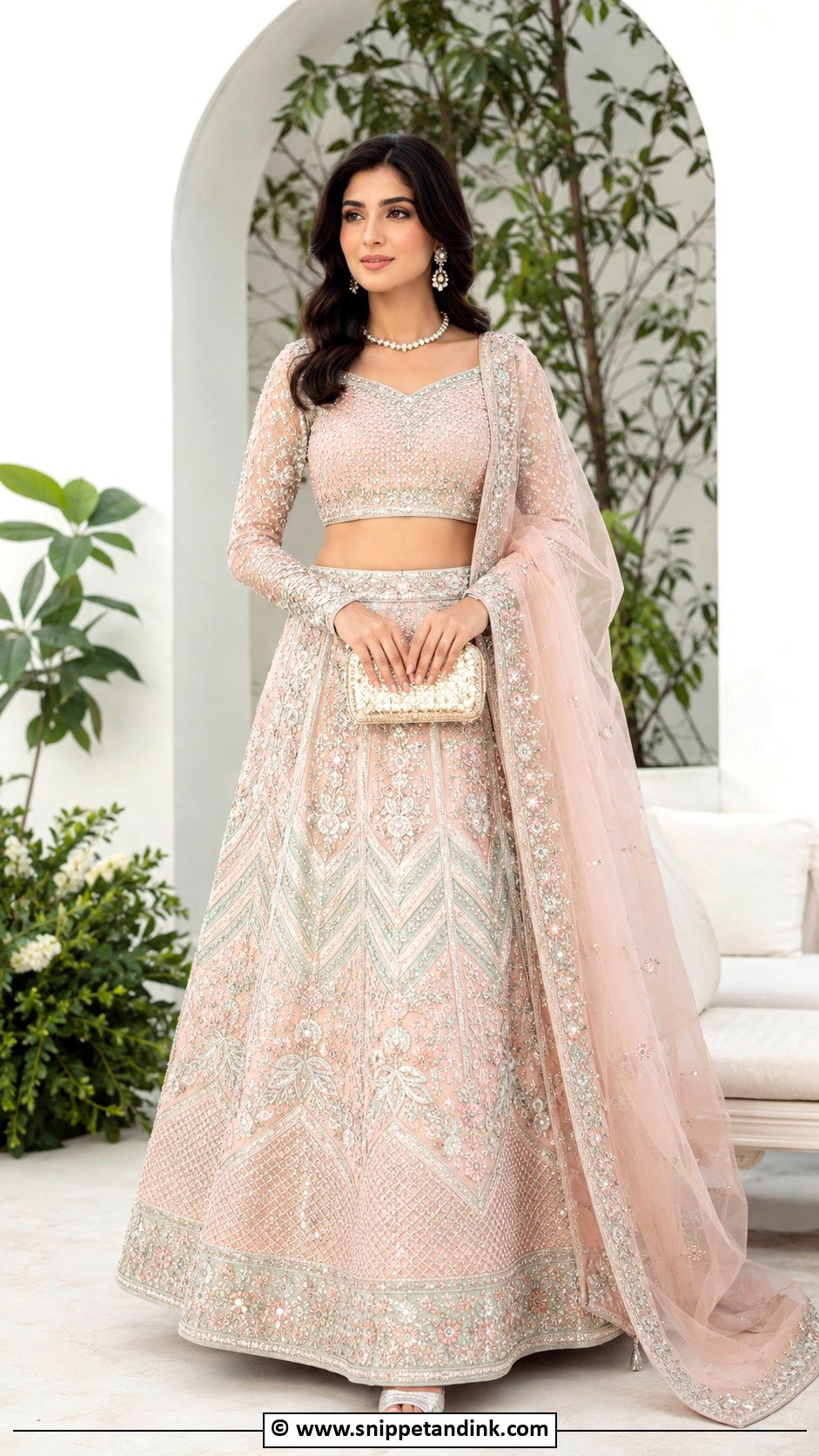
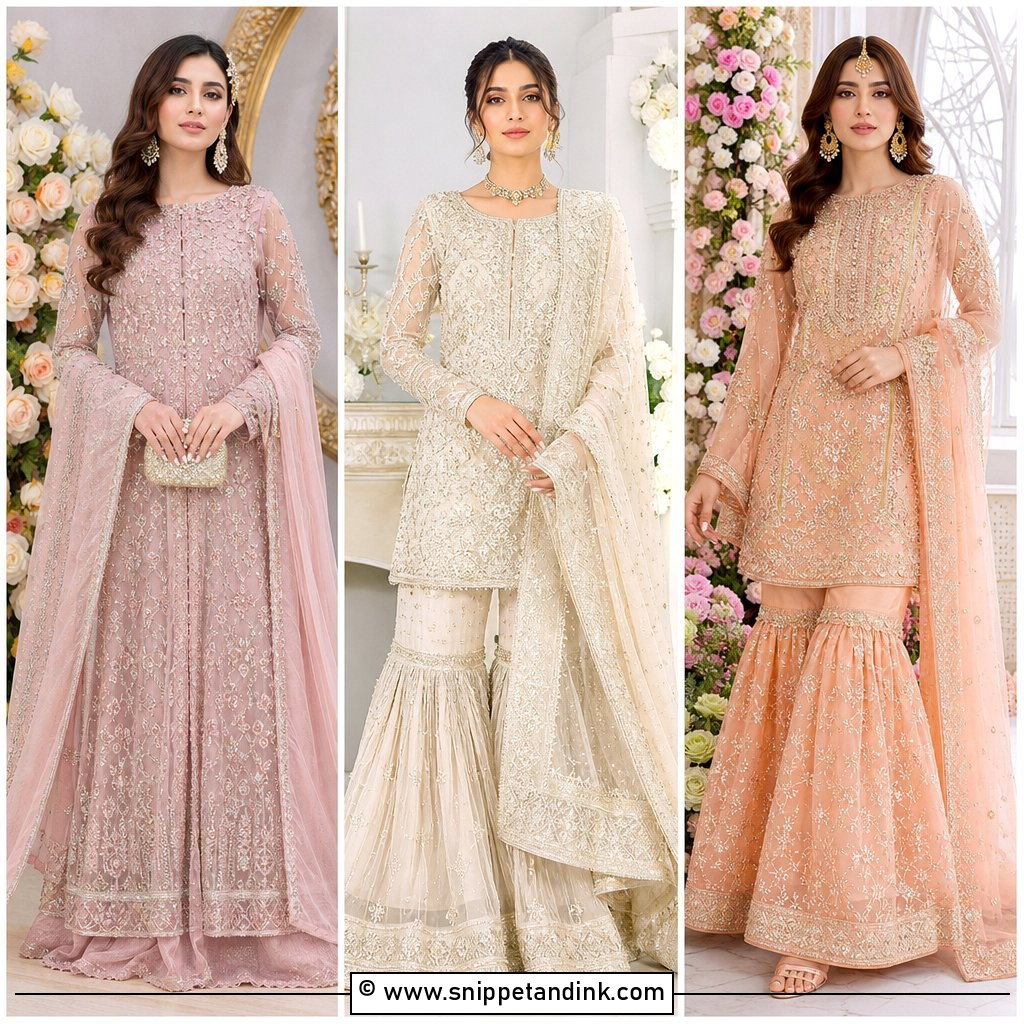
Pastels such as powder pink, mint, lavender, peach and ice blue have become the usual palette for Nikah and Walima events, and they behave very differently from jewel tones. In daylight they glow. Under yellow indoor bulbs some of them, lavender and ice blue in particular, shift grey or muddy, so I ask where and when the event is before a bride settles on a shade. Fine embroidery, pearls and 3D floral appliqué add softness, and a matching blouse with a sheer dupatta keeps everything in one color family. Silver or champagne heels and restrained jewelry let the color do the work.
6. White Nikah Pakistani Bridal Dress
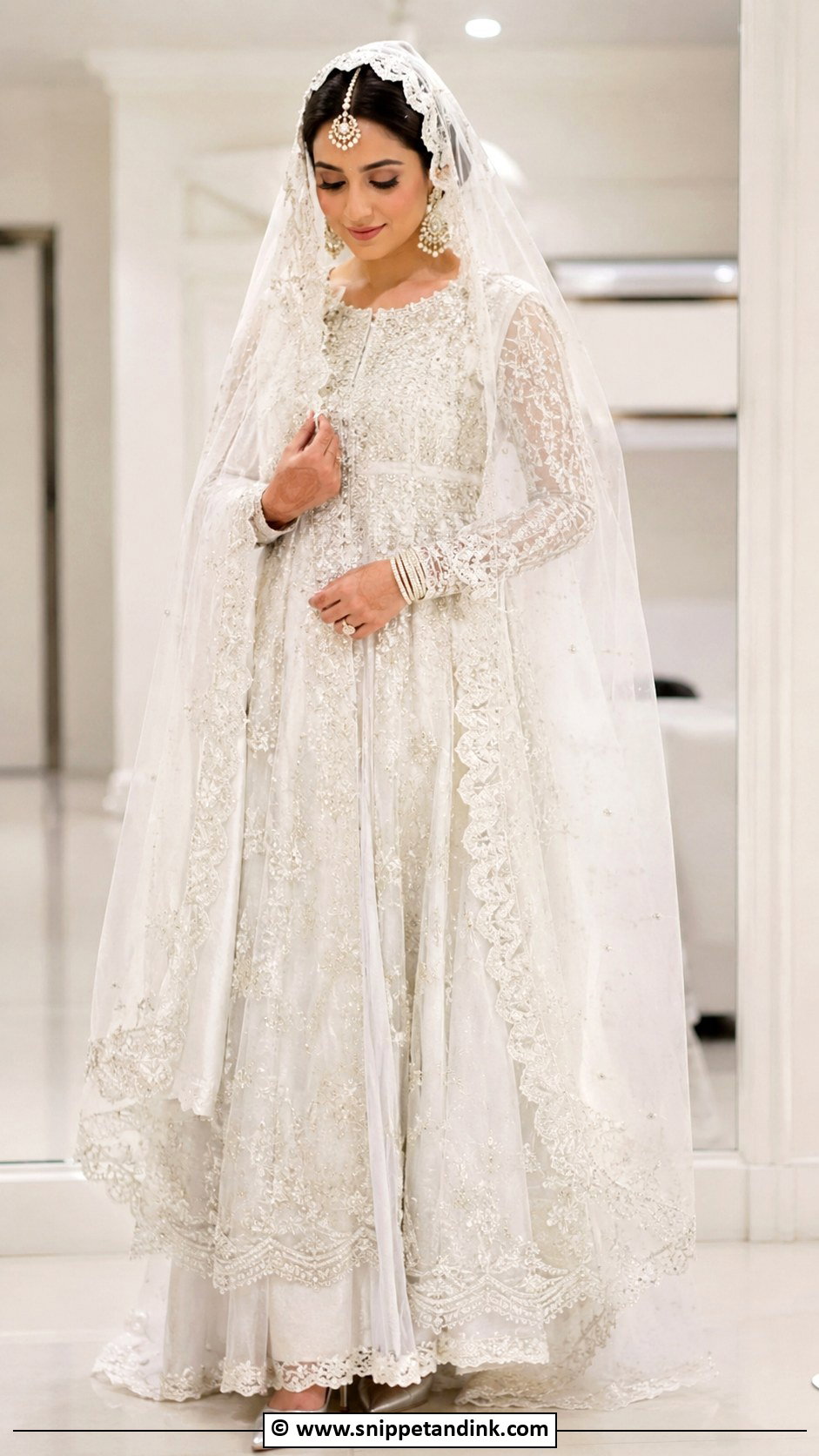
White for the Nikah has a quiet, devotional feel, and it’s one of the easier outfits to sit in through a long ceremony. A white pishwas, a long shirt with sharara or a maxi all work. What decides it for me is how the fabric behaves when the bride sits on a low sofa for an hour: organza holds its shape, while chiffon settles and pools around you. Silver, pearl or champagne embroidery adds richness without breaking the calm, and a sheer dupatta with a scalloped border sits neatly around the face. Pearl jewelry, a light tikka and pointed heels finish it, with glowing skin and defined lashes. Smaller, intimate Nikah settings suit it best.
7. Green Pakistani Bridal Gharara
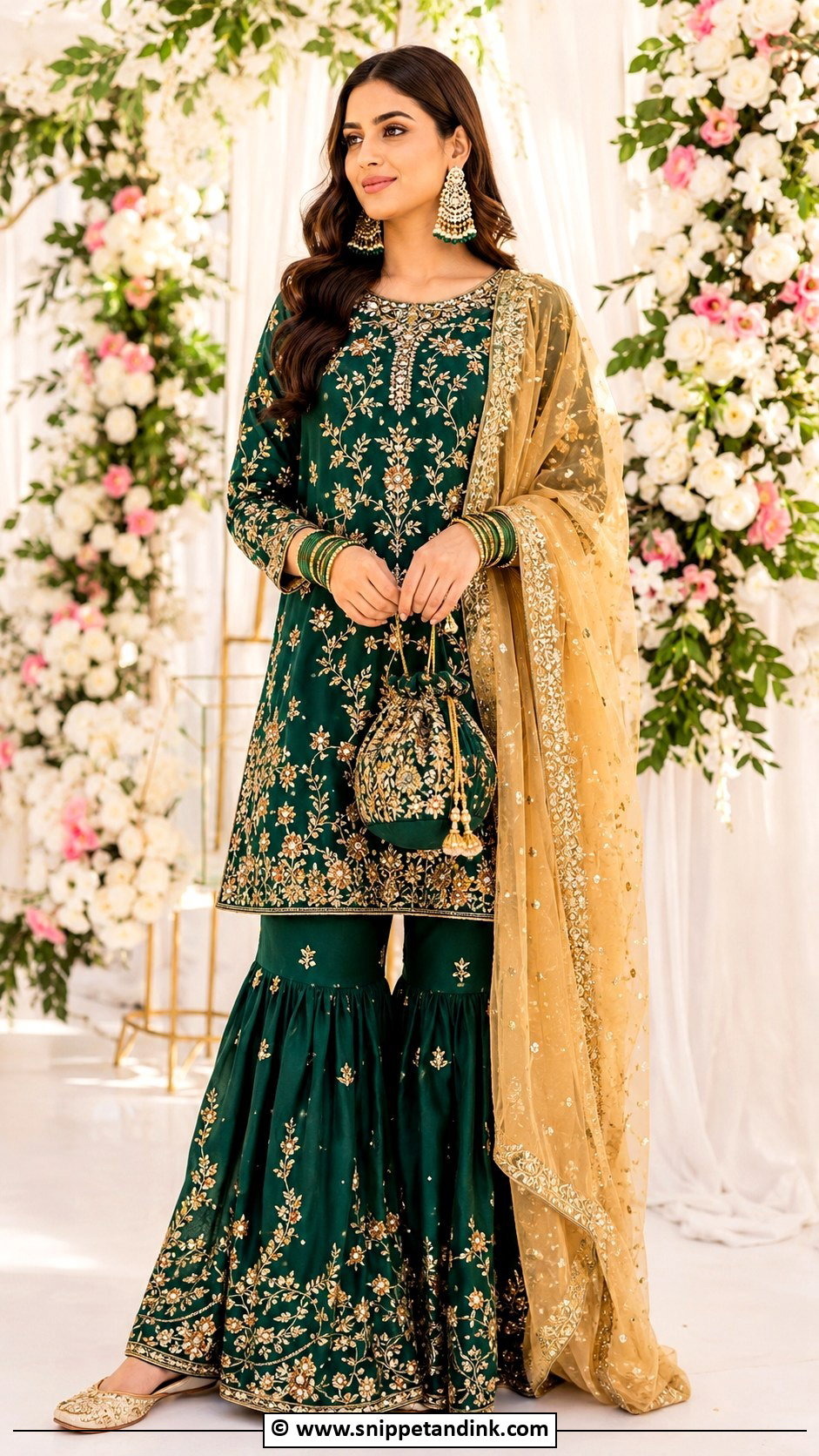
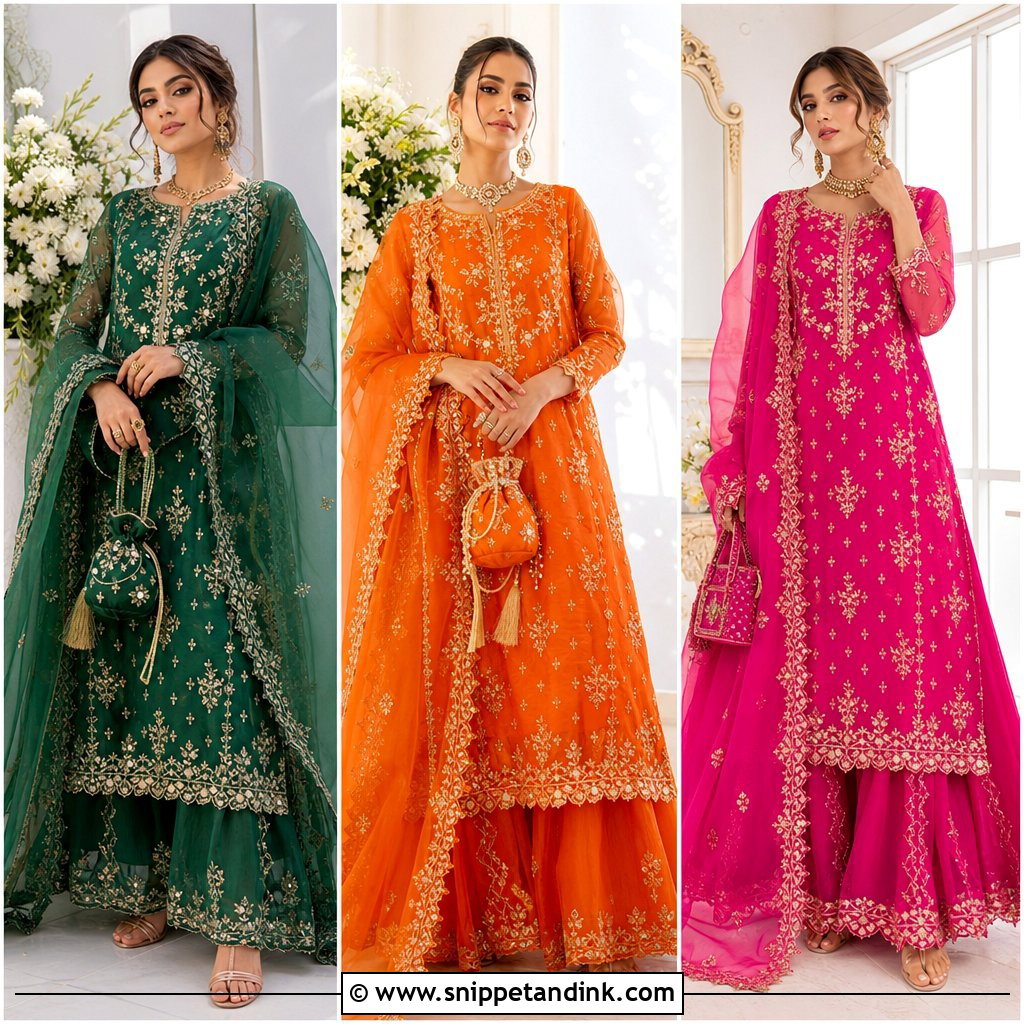
Green ghararas are a natural fit for the Mehndi, and the shade changes the mood more than people expect. Emerald and bottle green read formal; mehndi green and sage feel relaxed. The gharara’s join at the knee is where I look first, because a gota band placed too low there makes the leg look shorter. A short or mid-length kameez keeps the proportions classic. Gota, mirror work, zari or dabka all suit the event, and a contrasting dupatta in yellow or gold brings energy. Jhumkas, bangles, khussas and a potli complete it. Of everything in this list, it’s among the easiest to dance in.
8. Yellow Mehndi Pakistani Bridal Lehenga
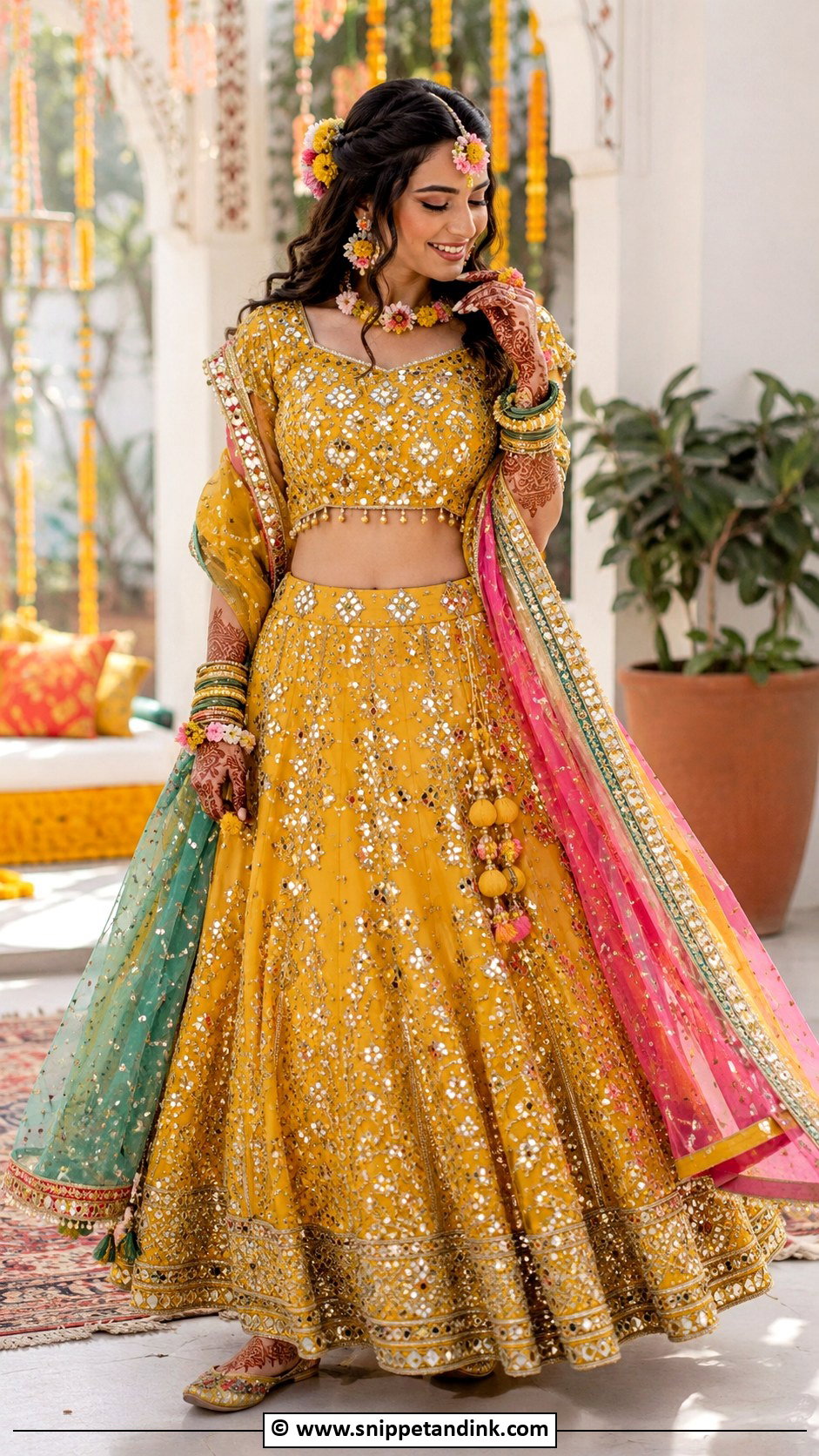
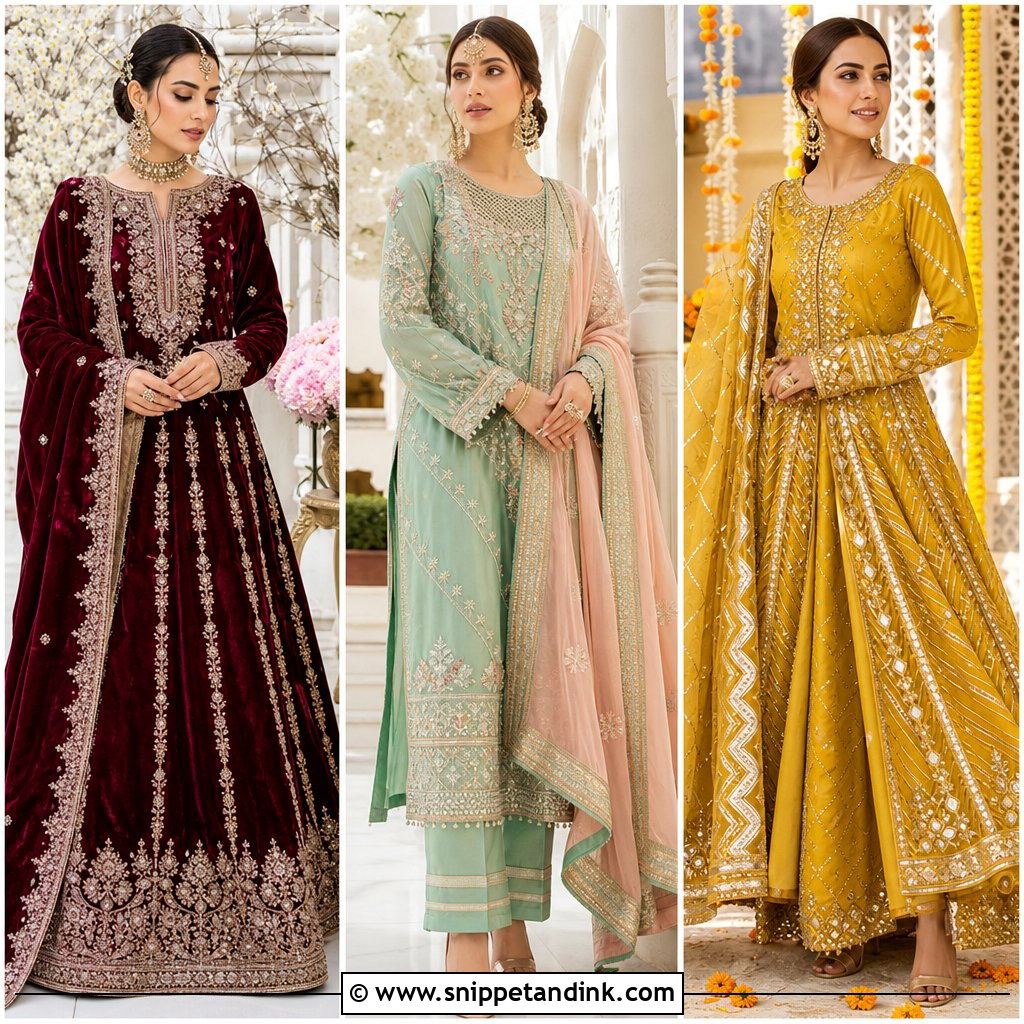
A yellow Mehndi Pakistani bridal lehenga is the traditional pick for the pre-wedding function, anywhere from mustard through marigold to butter yellow. My one warning: yellow fabric shows henna paste and the oil used on it straight away, so keep sleeves short or three-quarter and the dupatta pinned well clear of your hands while the paste dries. Mirror work, gota patti and thread embroidery suit the occasion. A short choli or peplum with a pink or green dupatta keeps it playful, and floral jewelry weighs almost nothing, which matters when you’re dancing. Pick the lightest lehenga you can; you’ll be moving all evening.
9. Orange Mehndi Pakistani Bridal Sharara
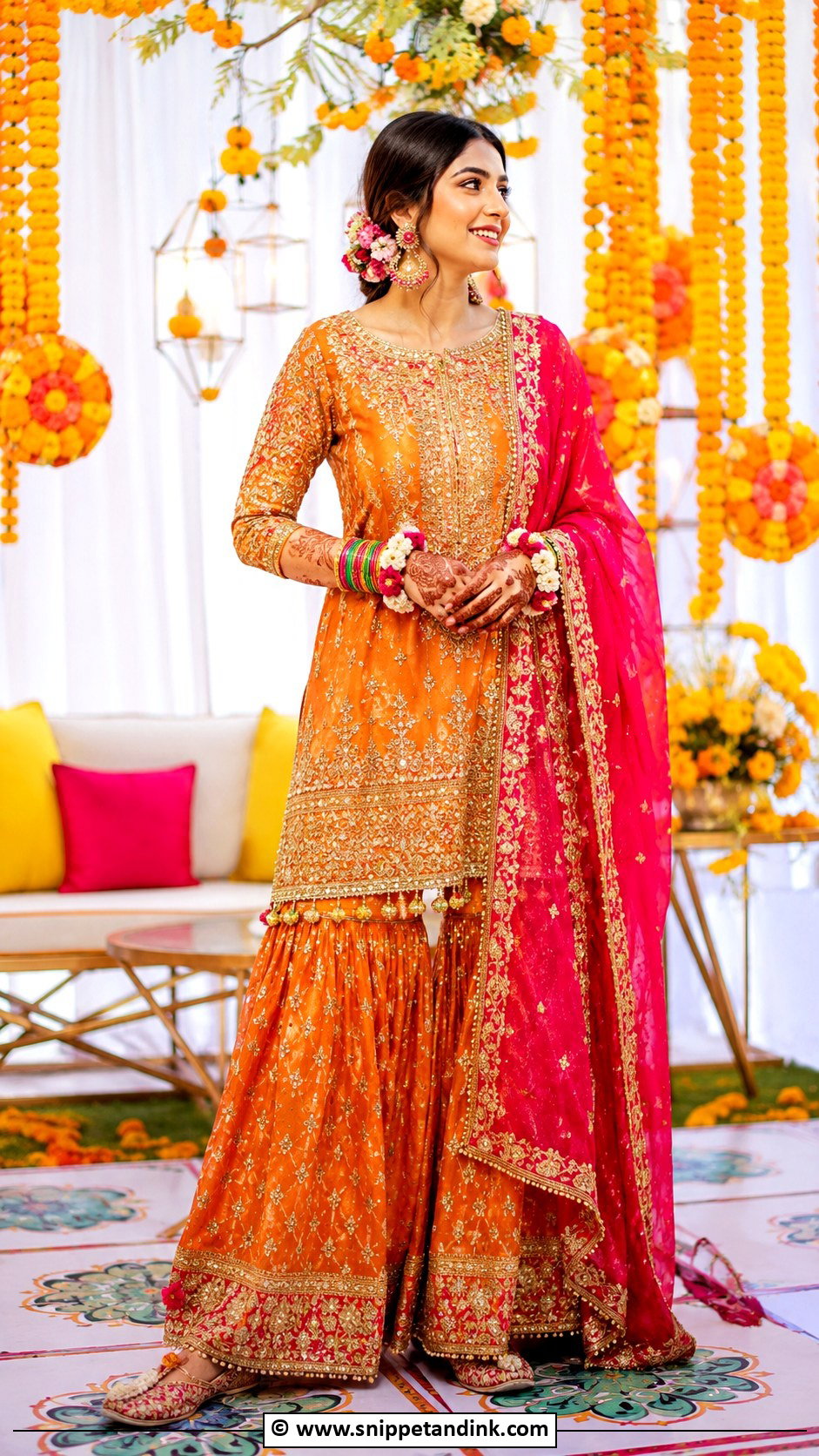
Orange is a confident Mehndi color, and it holds its brightness under evening lights where softer shades fade. A short kameez or angarkha top over a wide sharara gives the legs room, so you can climb onto a stage or sit on floor cushions without hitching the fabric. Gota, mirror work or colorful thread embroidery suit it. I’d add a rani pink or green dupatta for contrast, statement earrings and stacked bangles. Then think about shoes: block heels or khussas, never stilettos, because a lot of Mehndi events end up on lawns and in garden marquees where thin heels sink.
10. Pink Pakistani Bridal Pishwas
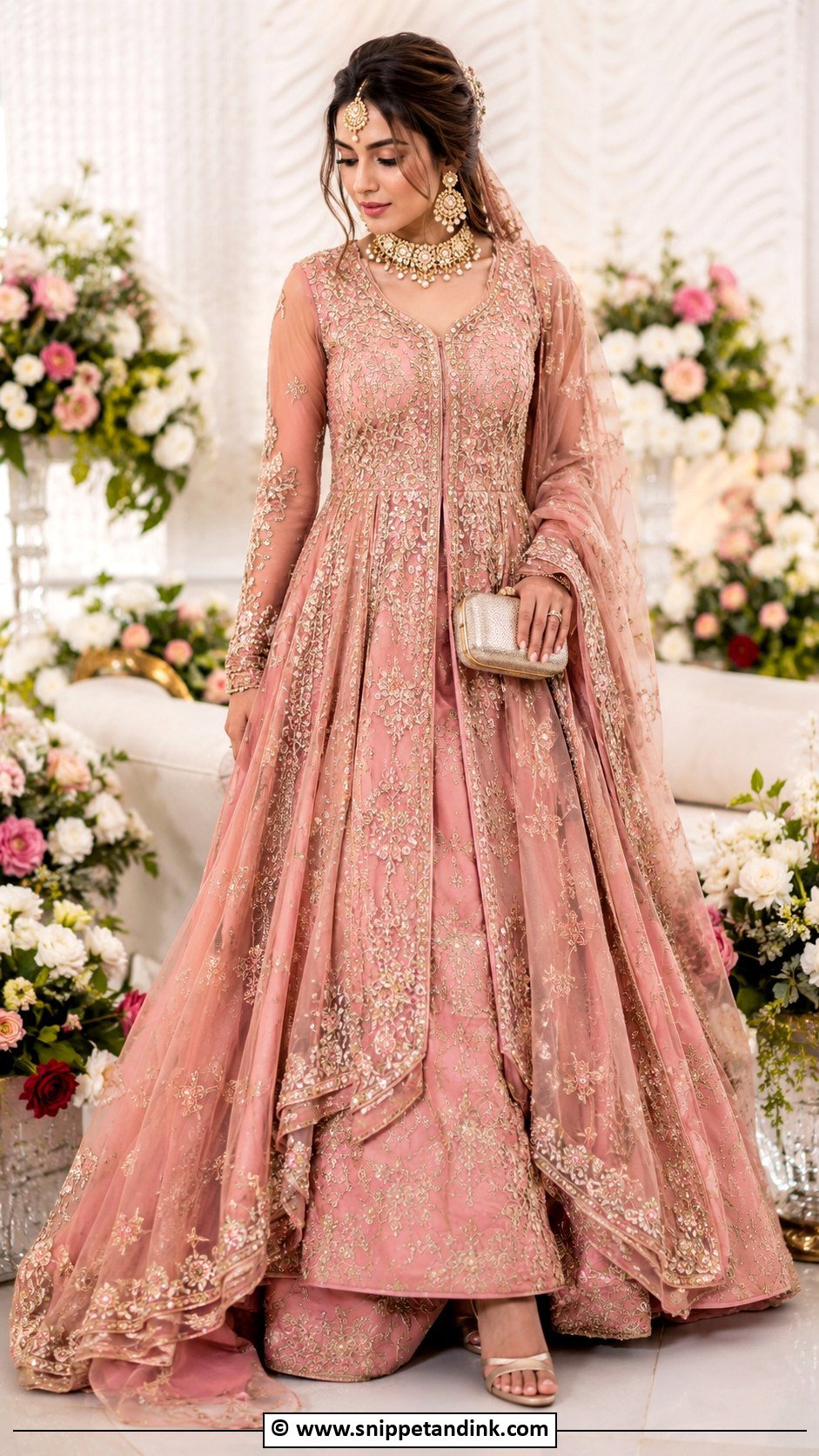
A pishwas is the flared, frock-style kameez with a paneled skirt, and pink is the shade I’m asked for most for a Nikah or Walima. Blush reads soft; rose pink is more festive. It flatters so many figures because of the fitted bodice and panels that start just under the bust, so at the fitting I check that seam sits exactly where it should. A little too low and the shape turns boxy. Delicate embroidery on the neckline, sleeves and hem is enough. Pair it with a churidar or lehenga base, a sheer dupatta, pearl or kundan jewelry and soft heels. Comfort is its real selling point.
11. Peach Pakistani Bridal Maxi
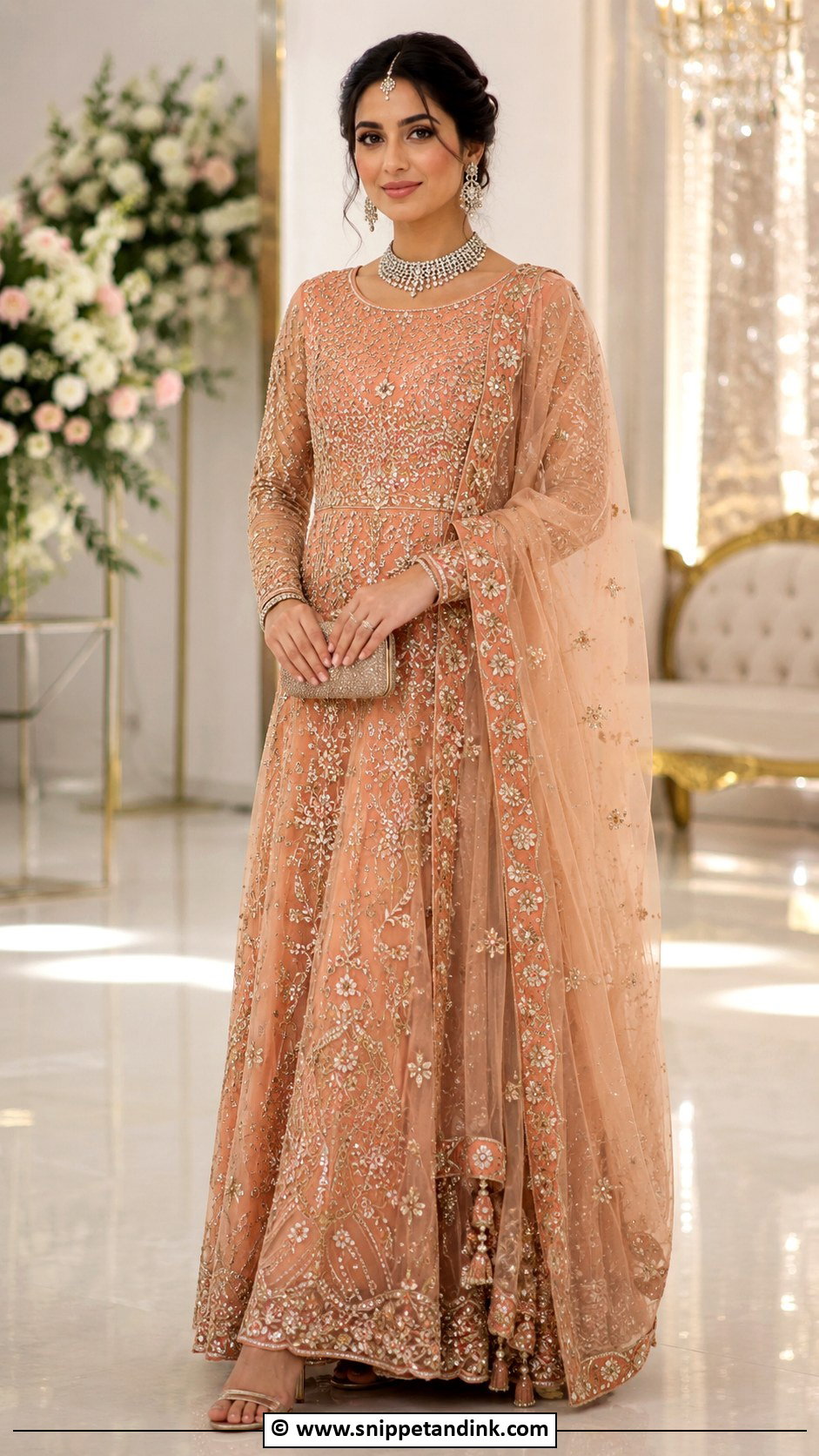
Peach sits between pastel and warm color, which is why it works for a daytime Walima and an evening reception alike. A floor-length maxi with sequin, pearl or crystal detailing has enough sparkle for the night without looking out of place at lunch. I prefer a slightly structured bodice here; peach in a fully soft cut can start to look like a bridesmaid dress. The dupatta can go over one shoulder or be pinned over the head for a more traditional finish. Diamond-style jewelry, metallic heels and a sleek clutch keep it modern, and peach is very forgiving with glowy makeup and a polished low bun.
12. Mint Green Pakistani Bridal Dress
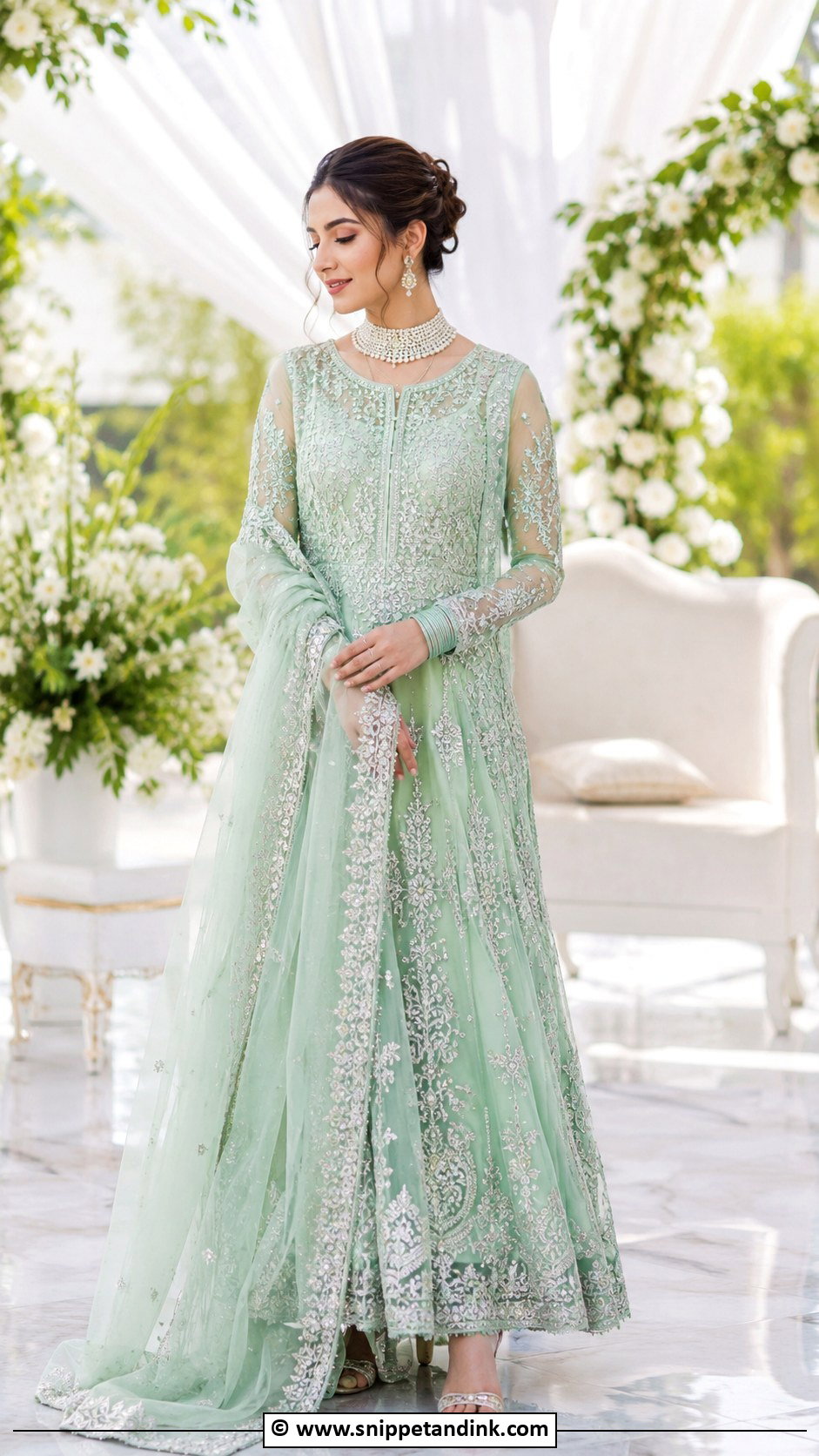
A mint green Pakistani bridal dress feels cool and fresh, which makes it a good daytime Nikah or Walima choice. A mint pishwas, lehenga or long shirt with sharara works in organza, net or tissue. Silver, pearl and white embroidery keep the color clean. Gold on mint can look slightly brassy, so I usually steer brides away from that pairing. A matching dupatta with a detailed border, pearl bangles and silver heels finish it, and natural makeup with soft waves suits it. You get bridal presence without the visual weight of a red outfit.
13. Powder Blue Pakistani Bridal Gown
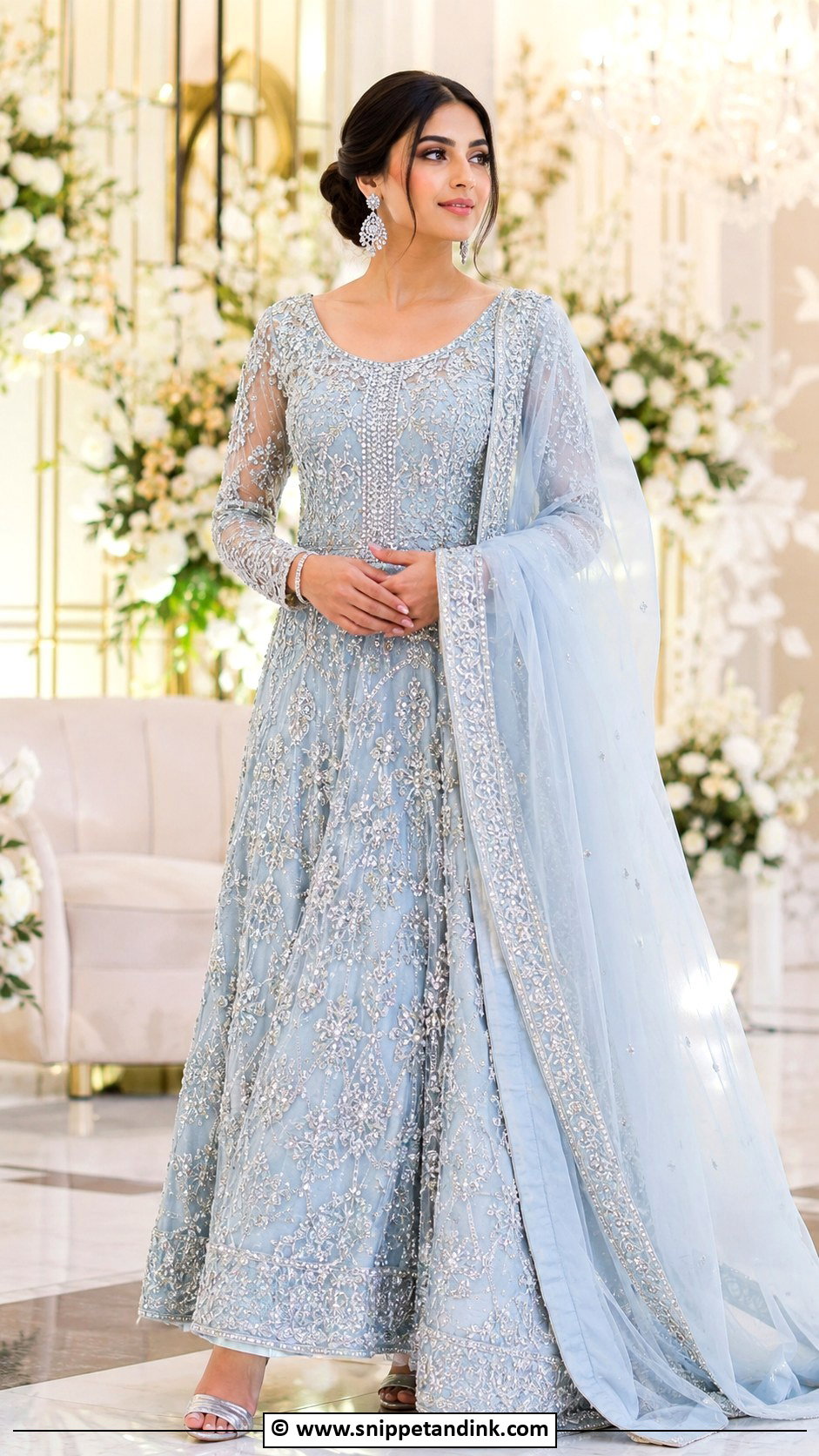
Powder blue is a calm Walima choice, especially in a ballroom where chandeliers bounce cool light around the room. A gown with long sleeves, a flowing skirt and silver or pearl embroidery reads modern. I always suggest a detachable dupatta: you wear it for the entrance and the family photographs, then take it off for dinner. Crystal jewelry, a sleek bracelet and silver or nude heels are enough, and a soft updo shows off the neckline and earrings. Keep the makeup luminous with soft liner and a muted lip, because a strong lip on blue pulls attention away from the dress.
14. Lavender Pakistani Bridal Lehenga
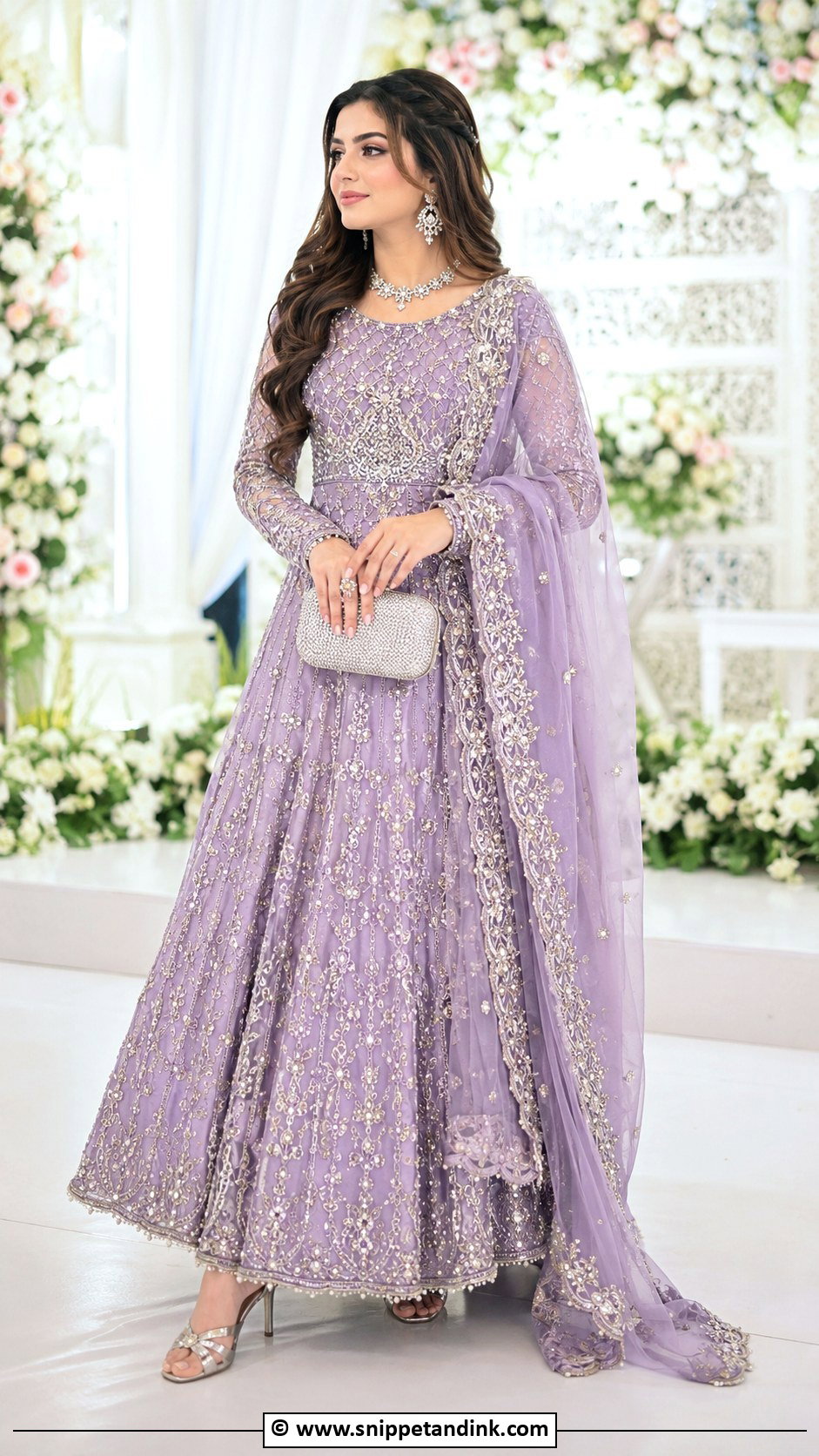
Lavender is the shade I’m most careful with, because it behaves differently in every light. In daylight it looks soft and modern; under warm bulbs it can turn greyish or pink. Before a bride orders lavender for a Walima or engagement, I ask her to photograph the swatch at the venue at the hour of the event. Silver, pearl or pastel embroidery keeps the finish delicate. A long shirt keeps it traditional, while a shorter blouse makes it more contemporary. Add a sheer dupatta with embroidered borders, diamond-style jewelry and silver heels. Soft pink makeup suits it far better than bronze.
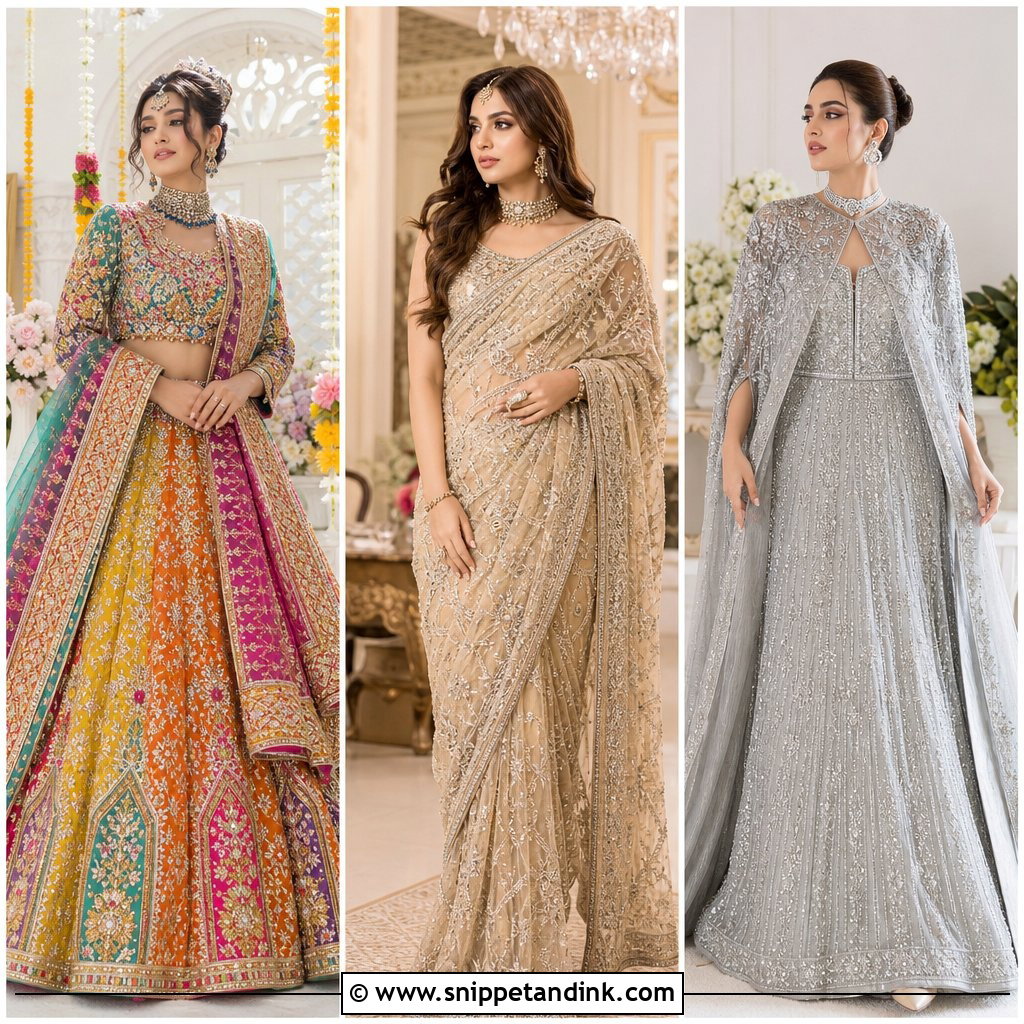
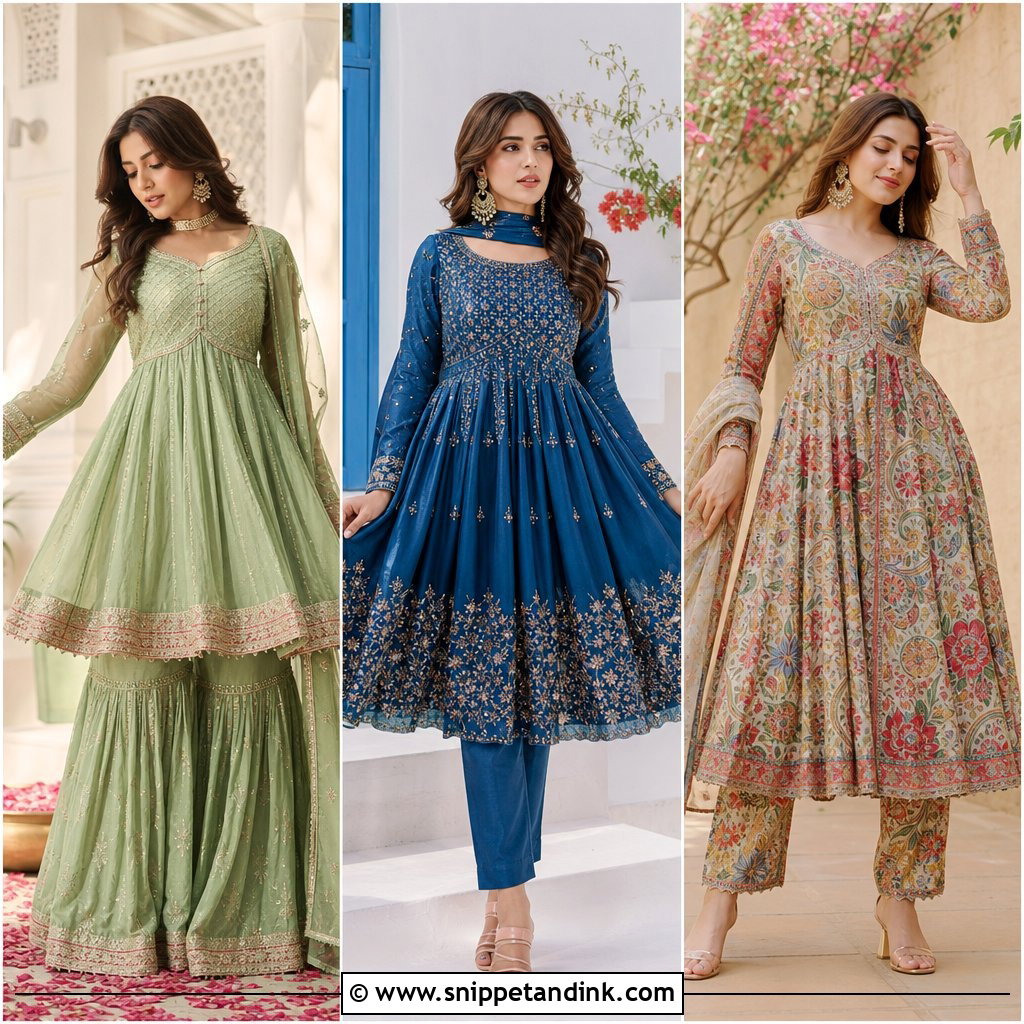
15. Black Pakistani Bridal Velvet Lehenga
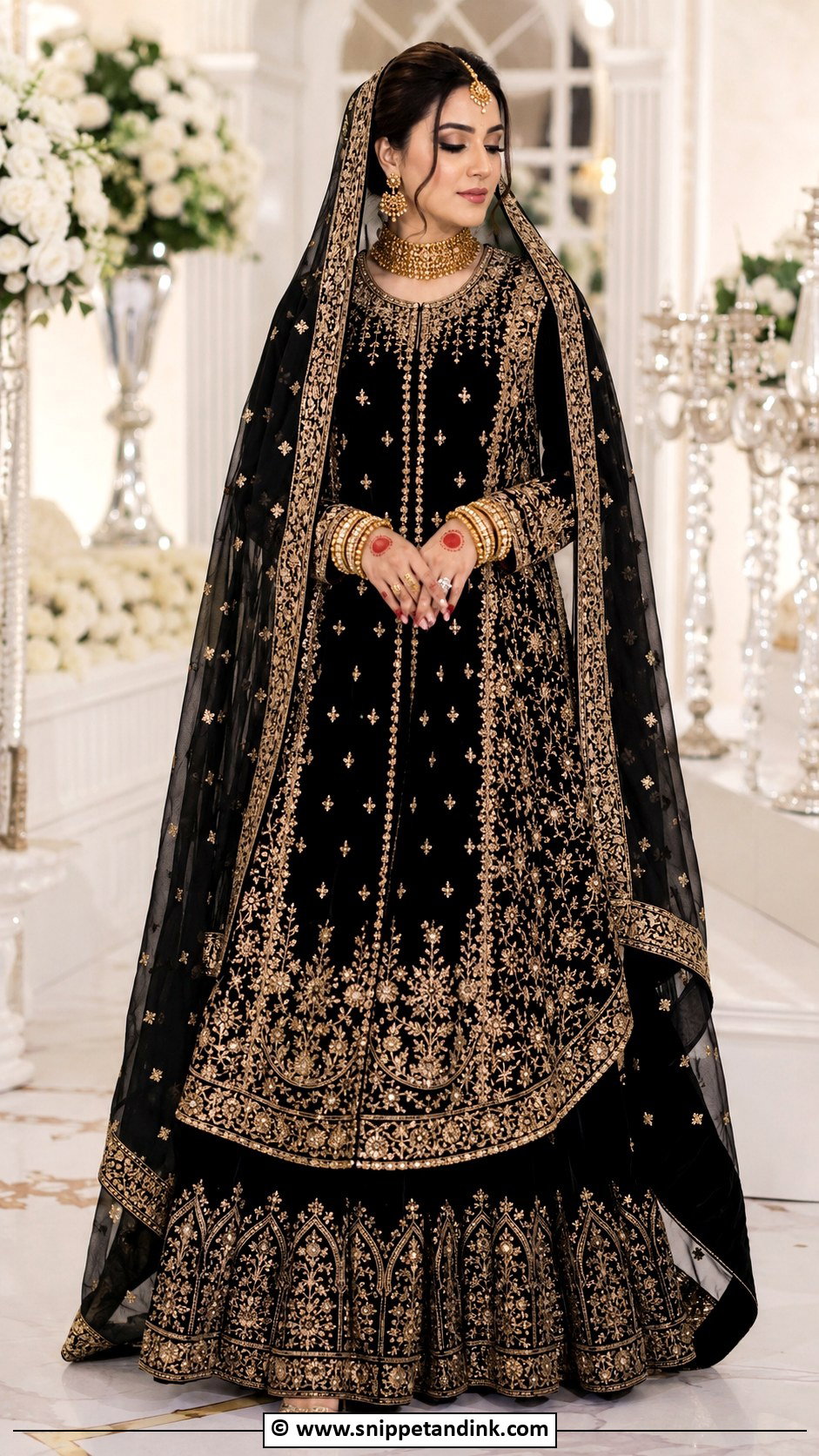
Black velvet is the most dramatic outfit here and also the most divisive, since some families still frown on black at a wedding. Check with your elders before you order. For a winter reception or a formal bridal dinner, though, it’s hard to beat. Antique gold, copper or deep maroon embroidery looks rich against the pile, a long shirt over a flared lehenga keeps it modest, and a heavily bordered dupatta softens the black near the face. Gold jewelry and stacked bangles are enough. Velvet shows every stray fiber and crushed patch, so a lint roller goes in my kit for exactly this outfit.
16. Red Pakistani Bridal Gharara
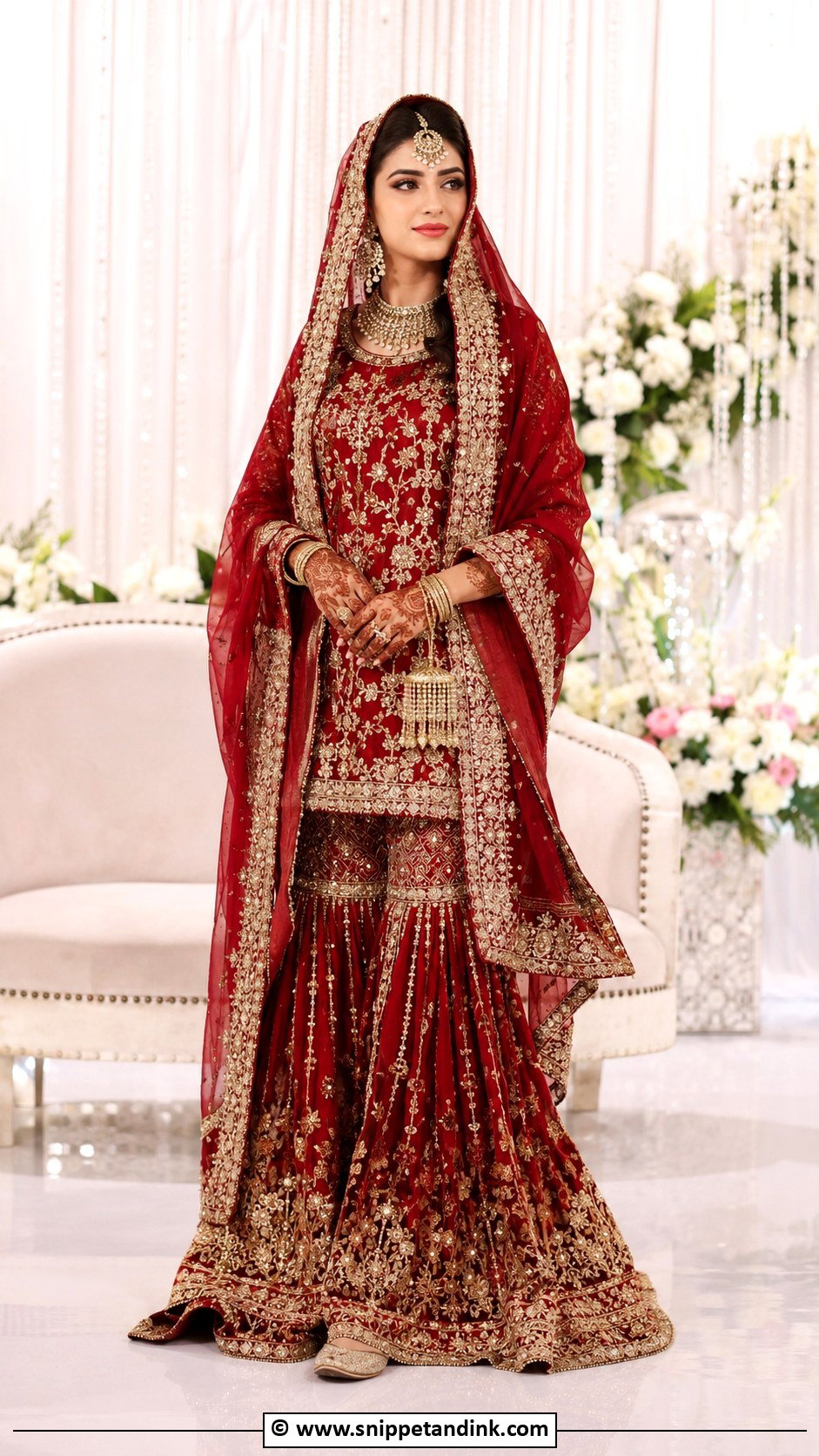
A red gharara carries strong heritage appeal; it’s the silhouette many brides know from their mothers’ wedding albums. A short kameez over a heavily flared gharara, with a wide embroidered border on the dupatta, is the classic pairing, and zari, gota, dabka and resham give it depth. Practically, I like that the volume sits below the knee, so the waist carries less weight than it would in a heavily worked lehenga and a long seated ceremony is easier. A passa, jhumkas, bangles and khussas or low heels finish it for a Nikah, Barat or family-centered event.
17. Farshi Gharara Pakistani Bridal Dress
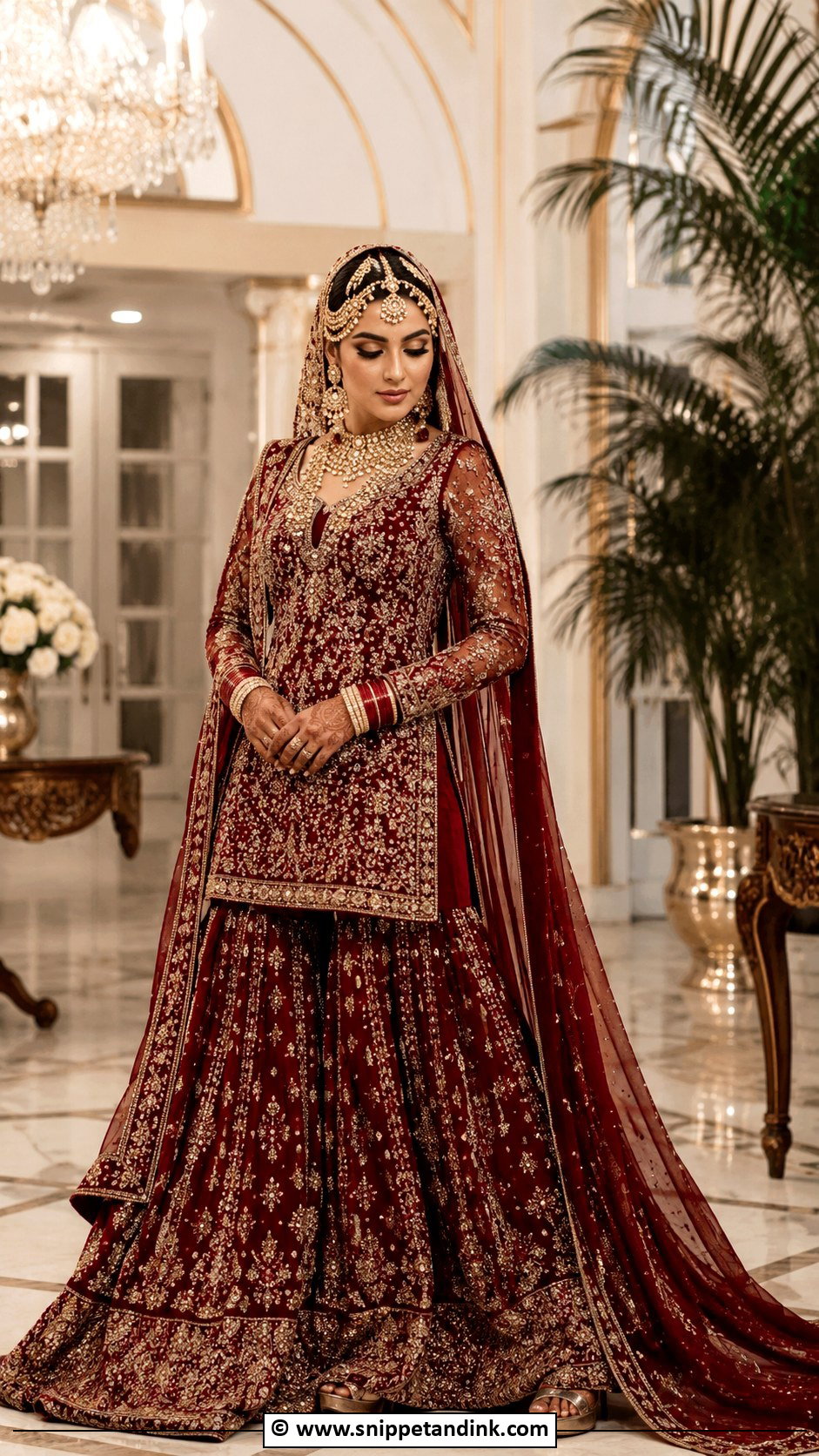
The farshi gharara is the most regal piece in the list. The flare literally sweeps the floor, and walking in it is a skill. I tell brides to practice at home in the actual outfit, nudging the hem forward a little with each step, and to decide in advance who will lift the back on stairs. Deep red, maroon, gold or emerald give the most impact, and a short, heavily embroidered kameez balances the wide lower half. Style the dupatta over the head or across the shoulders so the full silhouette stays visible, with kundan, a matha patti and bangles. Save it for a formal indoor ceremony; outdoors, that hem picks up everything.
18. Pakistani Bridal Sharara With Long Shirt
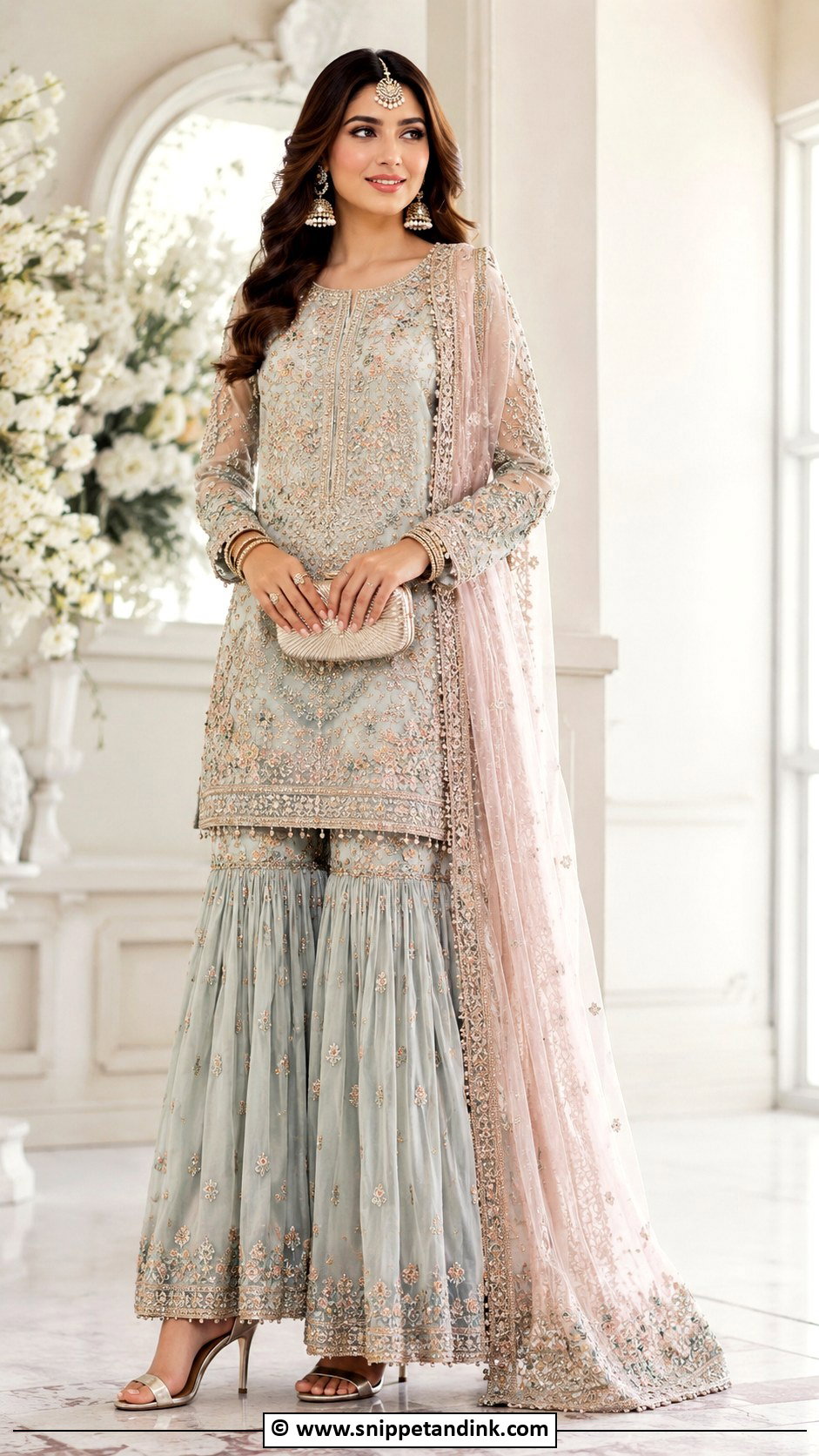
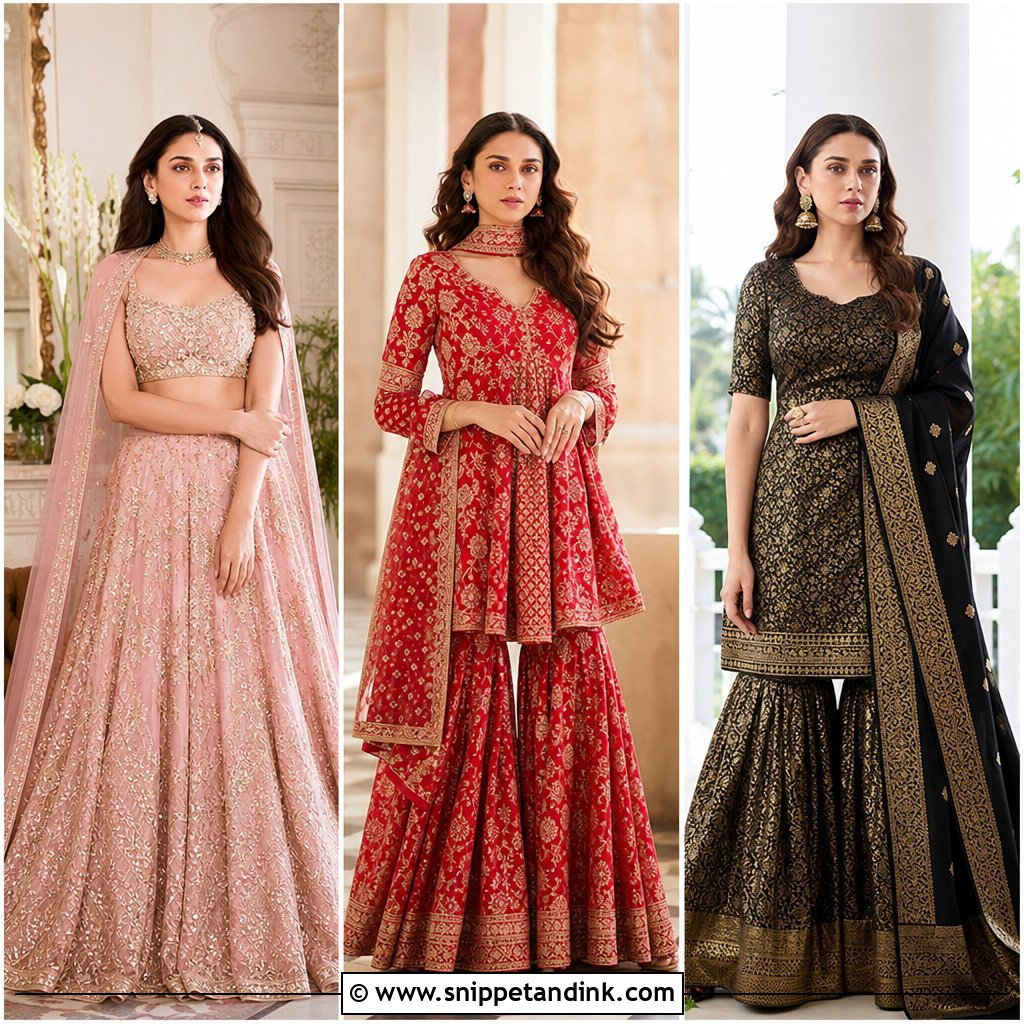
A long shirt over a sharara is one of the most wearable combinations for a Nikah, Mehndi or Walima. Side slits let the sharara’s flare move, and the length gives coverage plus a long vertical line that helps shorter brides in particular. Soft pastels read refined; jewel tones look festive. I’d add jhumkas, bangles, a clutch and heels or khussas you can genuinely stand in. Ask your tailor to finish the sharara hem just clear of your shoes. If it drags, you’ll step on it every time you get up from a sofa.
19. Pakistani Bridal Angrakha Dress
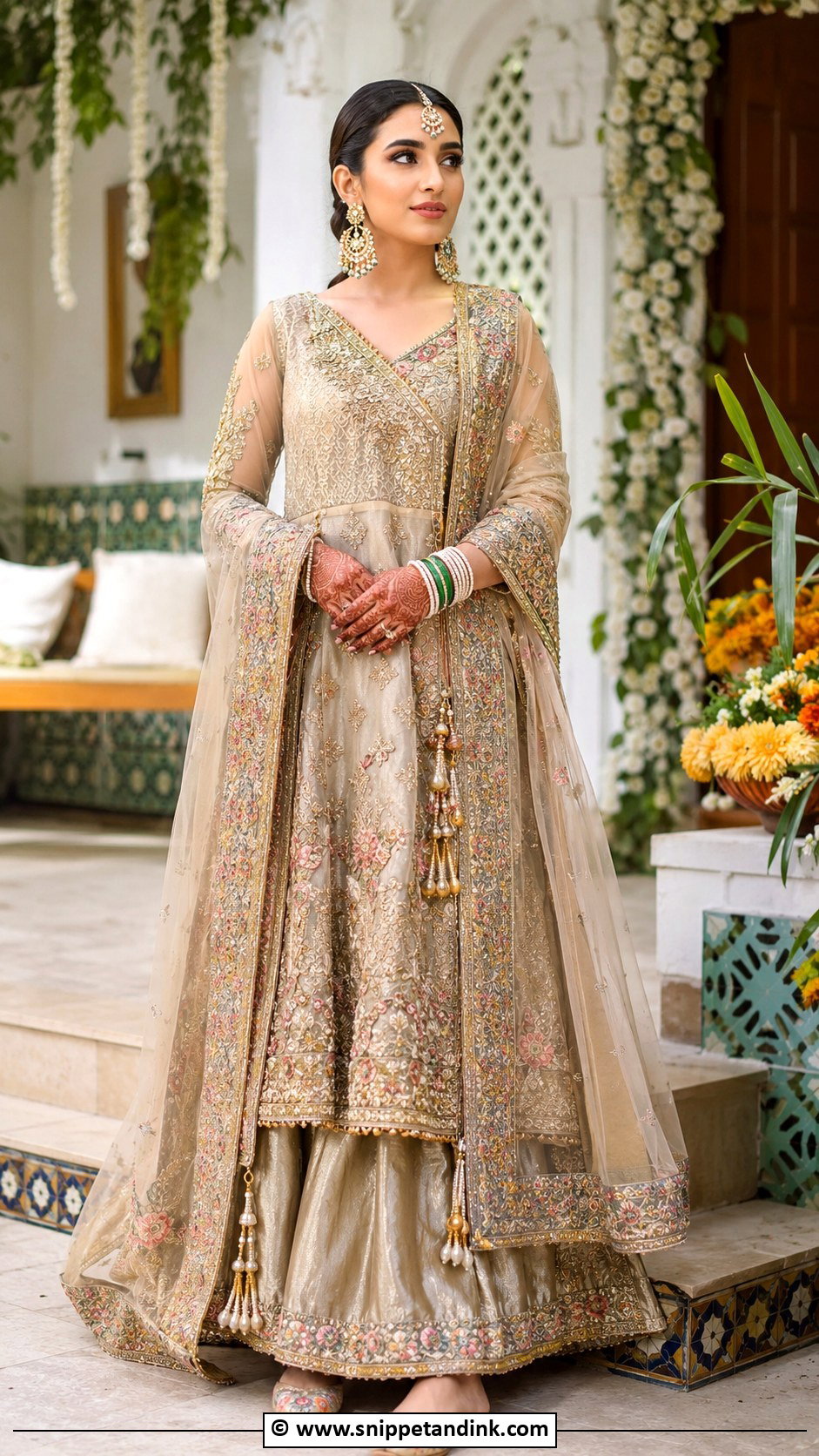
The angrakha’s overlapping front is a construction detail as much as a design one, and on the traditionally tied versions it lets the fit be eased slightly on the day. Tassels, borders and embroidery along the overlap give it character. An angrakha pishwas over a lehenga or churidar makes a complete bridal look in ivory, pink, green, mustard or maroon. Because it defines the waist and then flows, it suits most figures. Keep the ties double-knotted and tucked away, since a tassel caught in a bangle is a common snag. A sheer dupatta, traditional earrings, a tikka and embroidered khussas finish it for a Mehndi or Nikah.

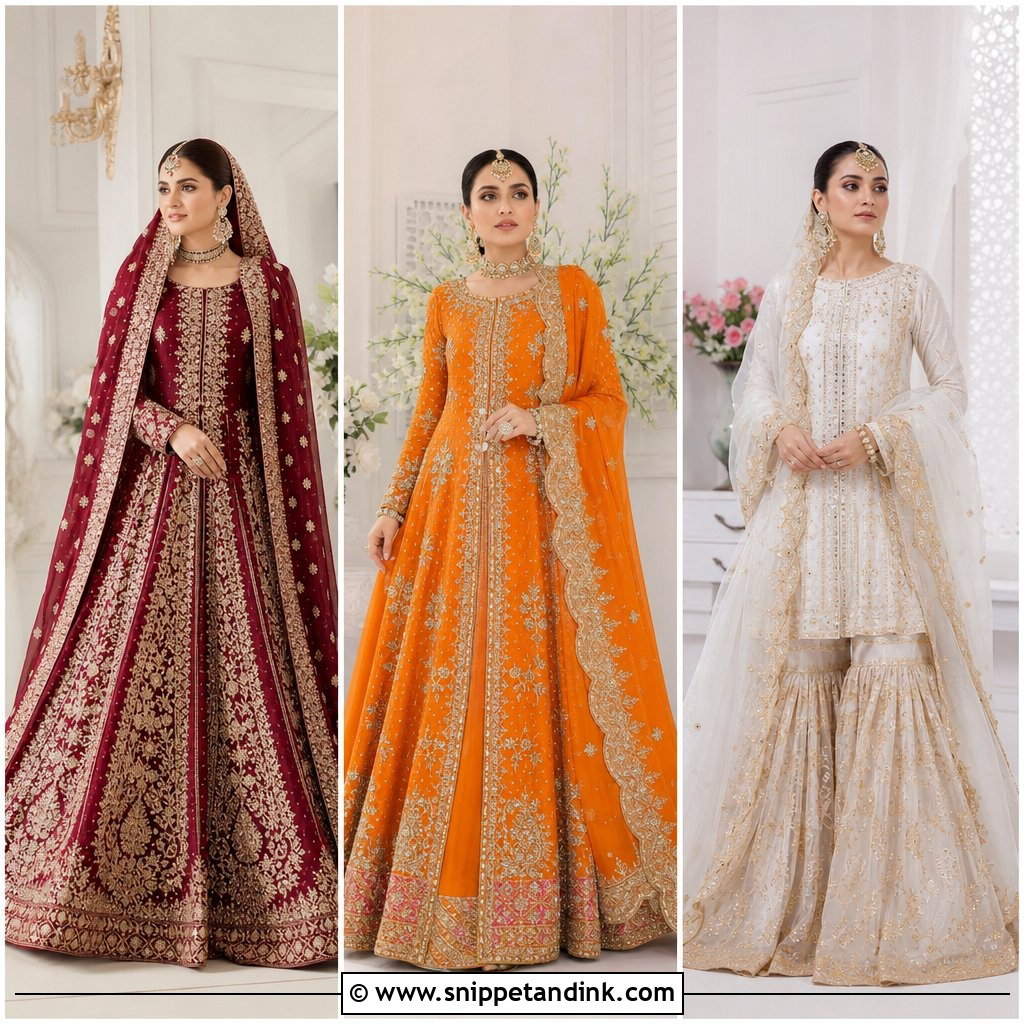

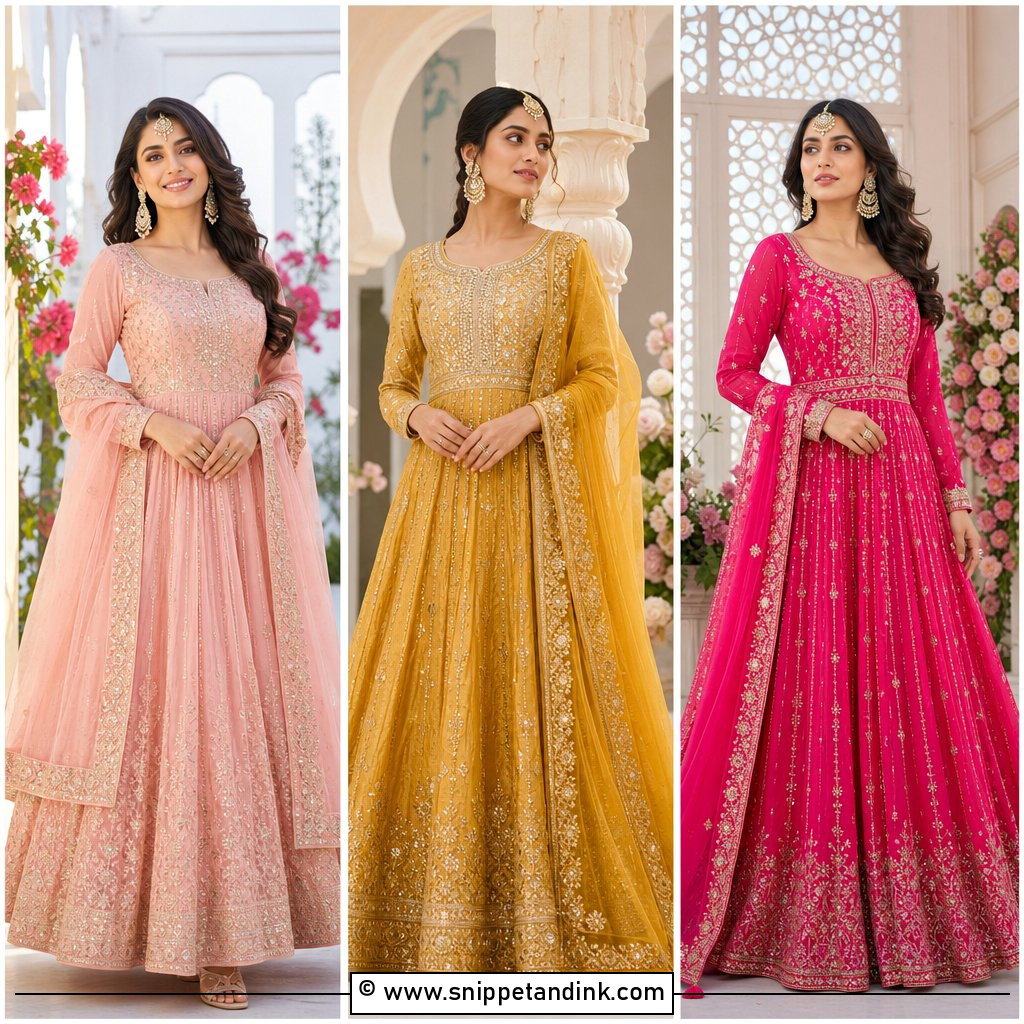
20. Pakistani Bridal Anarkali Dress
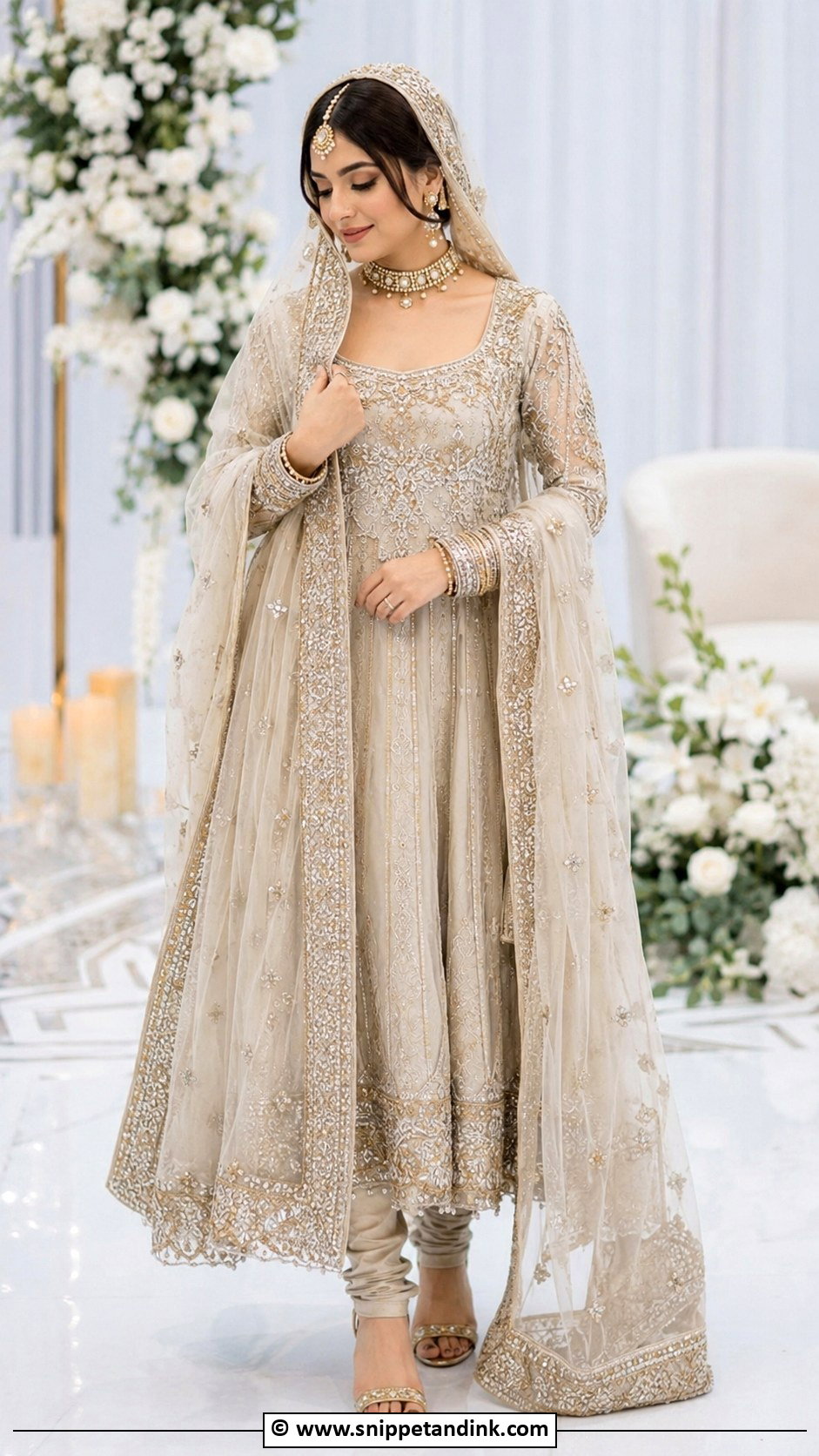
The Anarkali is the one I suggest when a bride wants volume without a separate skirt. The fitted top and flared lower half create shape in one piece, which also means one less waistband to manage through a long day. Organza, net, silk and tissue all suit it, with embroidery along the bodice, sleeves and hem, over a churidar or slim trouser with a detailed dupatta. Match the jewelry to the embroidery tone. Check the weight at the fitting: a heavily embellished Anarkali hangs from the shoulders, and a wide neckline can start to dig in after a few hours.
21. Pakistani Bridal Pishwas With Lehenga
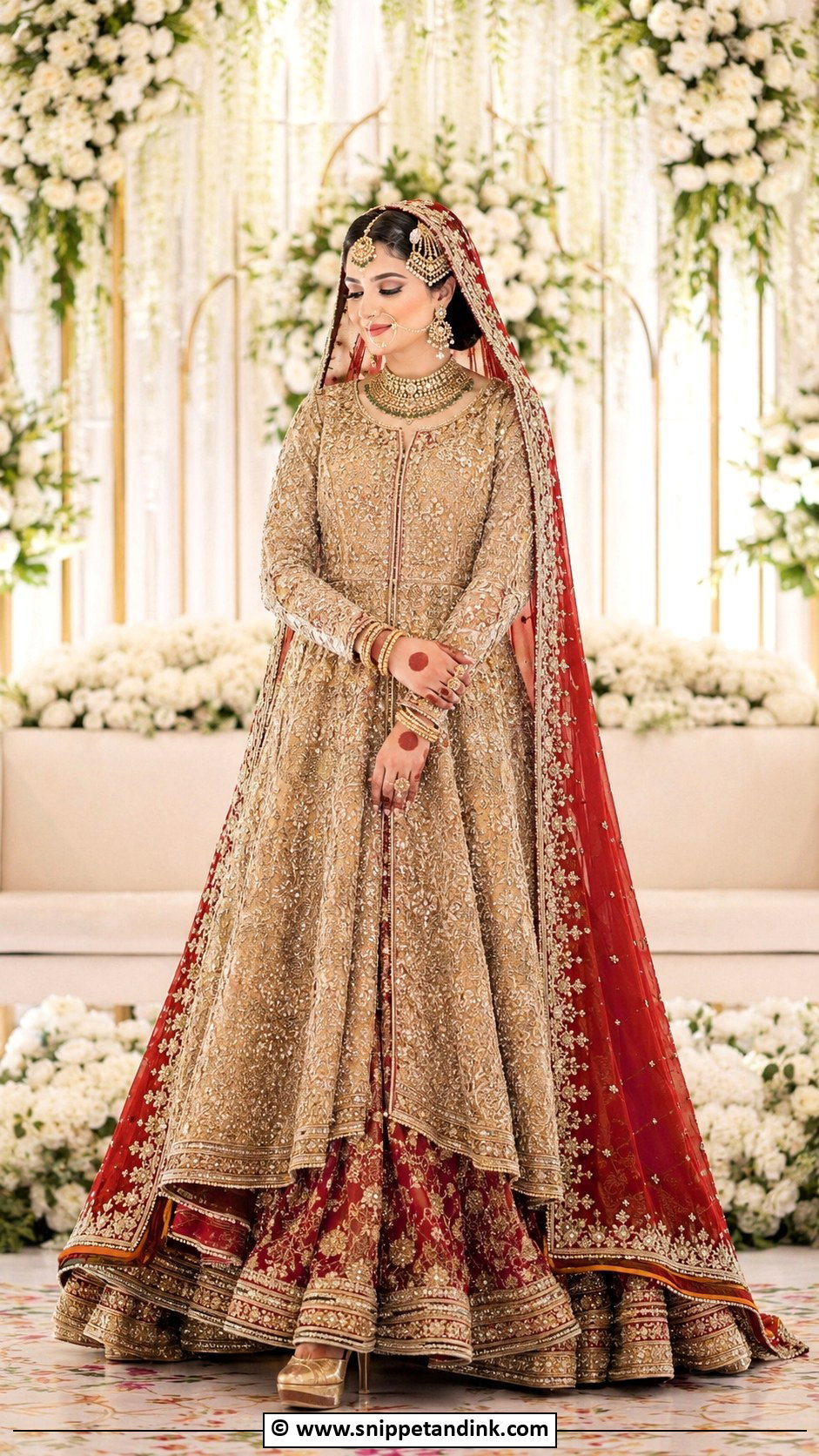
A pishwas over a lehenga gives the flow of a gown with real fullness underneath, which makes it one of the most complete looks for a grand ceremony. Paneled embroidery and a fitted bodice give it shape. The practical issue is layering: two full skirts add up, so I ask for a lighter lining in the lehenga and add a can-can only if the pishwas genuinely needs lift. Red, ivory, gold, blush and sage all work. A heavy-bordered dupatta over the head gives the traditional finish, with kundan jewelry, bangles and metallic heels.
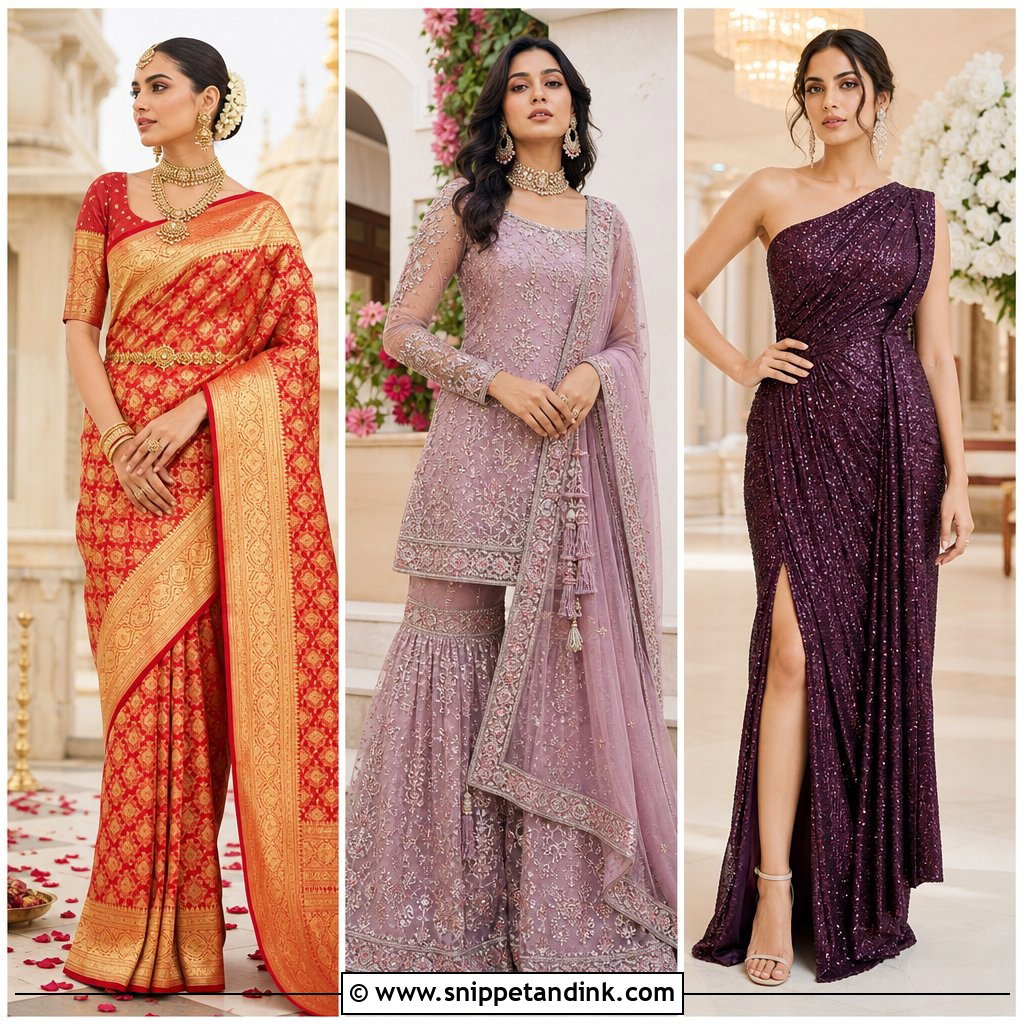
22. Pakistani Bridal Saree
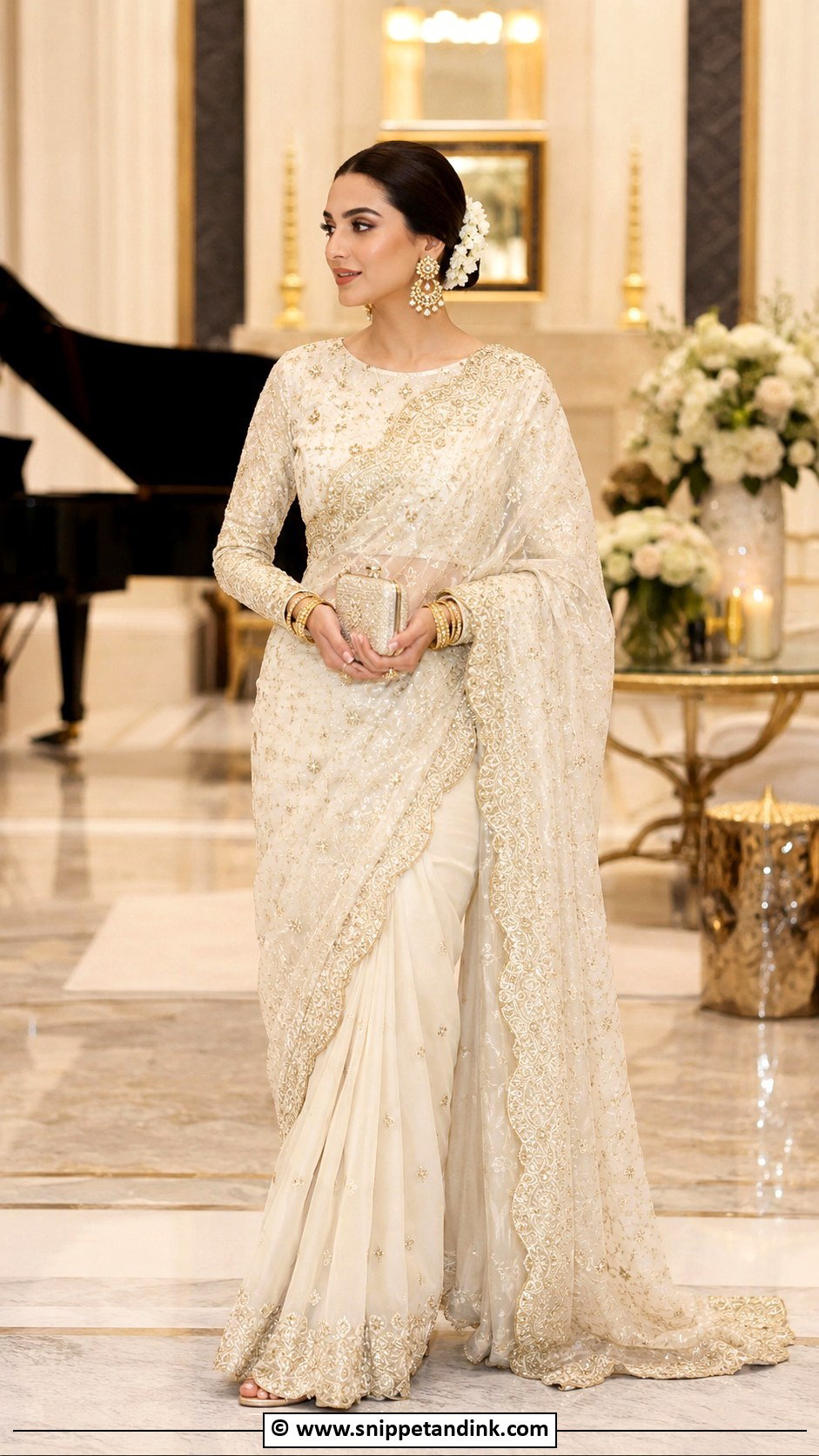
A saree is the most streamlined option here, suited to a reception, Walima or formal Nikah. Tissue, silk, chiffon and organza all carry heavy borders well, and a longer blouse with sleeves gives a more modest Pakistani finish. What makes or breaks a bridal saree is the pleating, so I recommend having it pre-stitched, or draped on the day by someone experienced, with pins hidden at the shoulder and through the pleats. Gold, ivory, champagne, blush and emerald are strong colors. A low bun and glowing makeup keep it polished, and statement earrings carry the jewelry.
23. Pakistani Bridal Tissue Dress
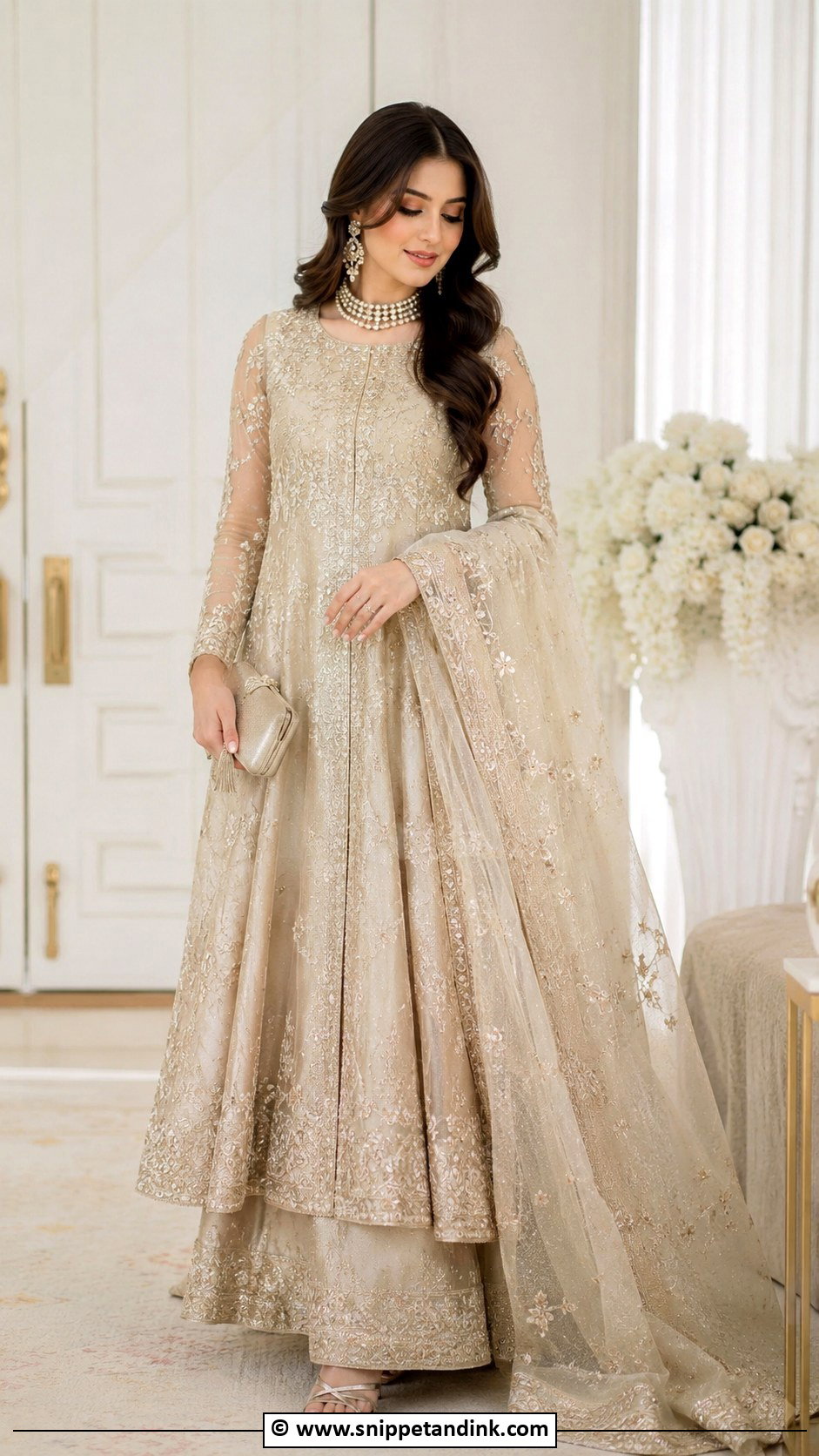
A Pakistani bridal tissue dress has a metallic sheen woven into the fabric itself, so it shines without relying on sequins. A tissue lehenga, pishwas or long shirt with sharara works in gold, champagne, ivory or pastel. Tissue creases sharply and those creases hold, so I steam it on the morning of the event and keep the bride standing as much as possible until she reaches the venue. Fine embroidery at the hem, sleeves and dupatta border is all the detail it needs. Pearl or kundan jewelry, metallic heels and a neat clutch finish it. Keep the dupatta placement clean so the sheen stays visible.
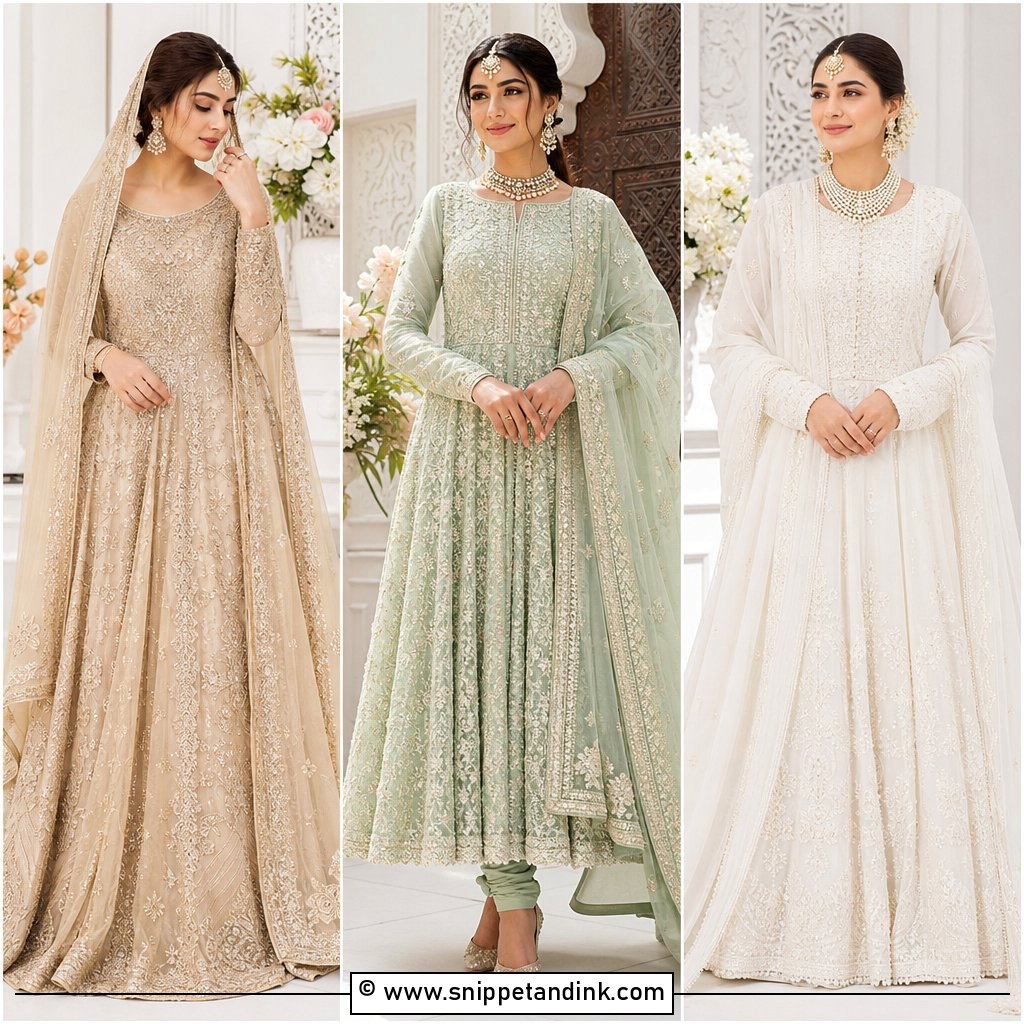
24. Pakistani Bridal Organza Dress
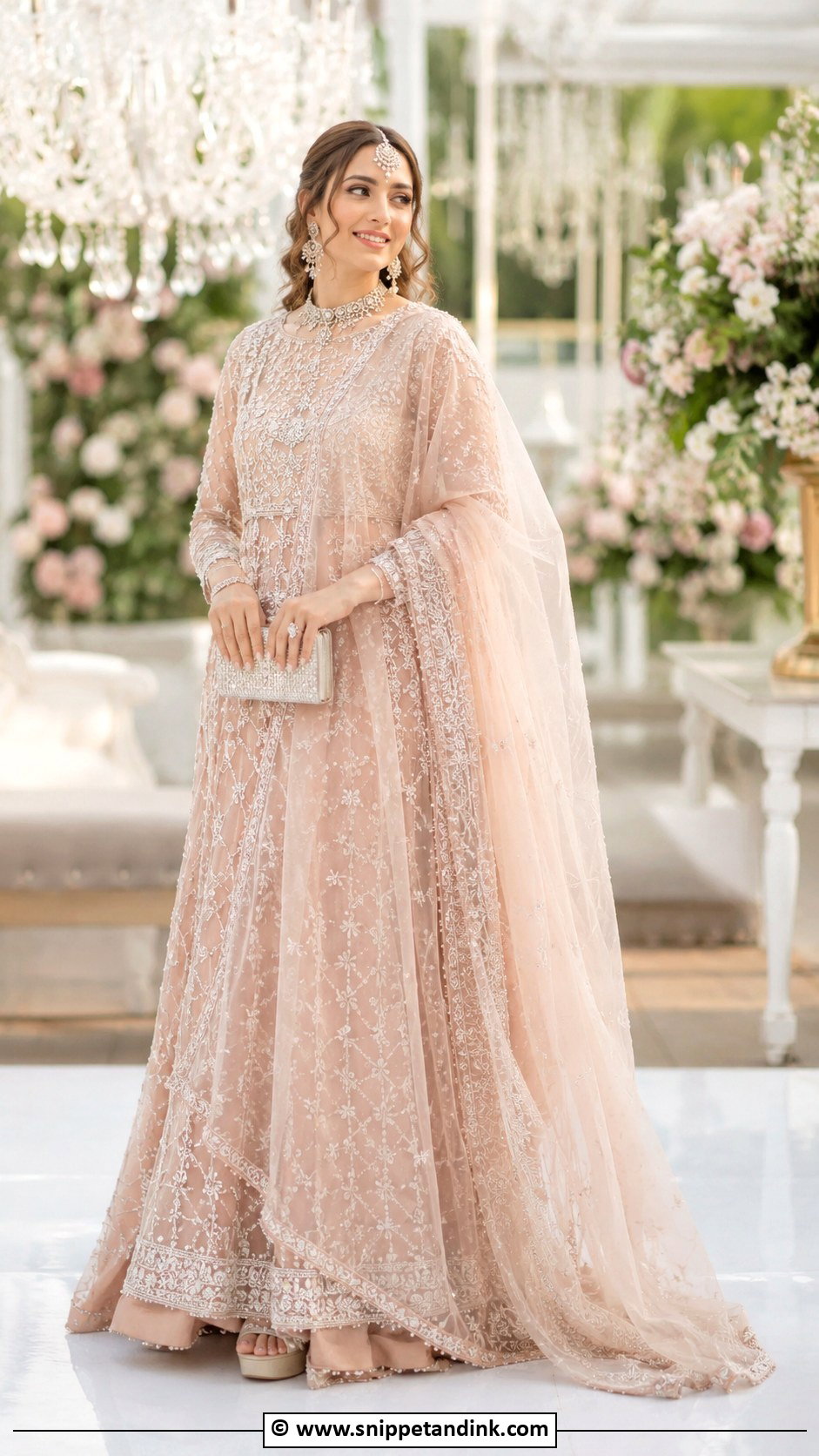
Organza is light but crisp, which is how it gives volume without much weight. It suits pishwas, lehenga, maxi and long-shirt shapes, and soft colors such as ivory, mint, peach and powder blue sit well in it. The catch is that organza exaggerates any tailoring fault. A seam that pulls shows straight away because the fabric won’t drape over it, so I check every seam line at the final fitting. Pearl, sequin, tilla or resham embroidery suit it, with delicate jewelry and a structured clutch. It’s my first suggestion for daytime ceremonies and garden venues.
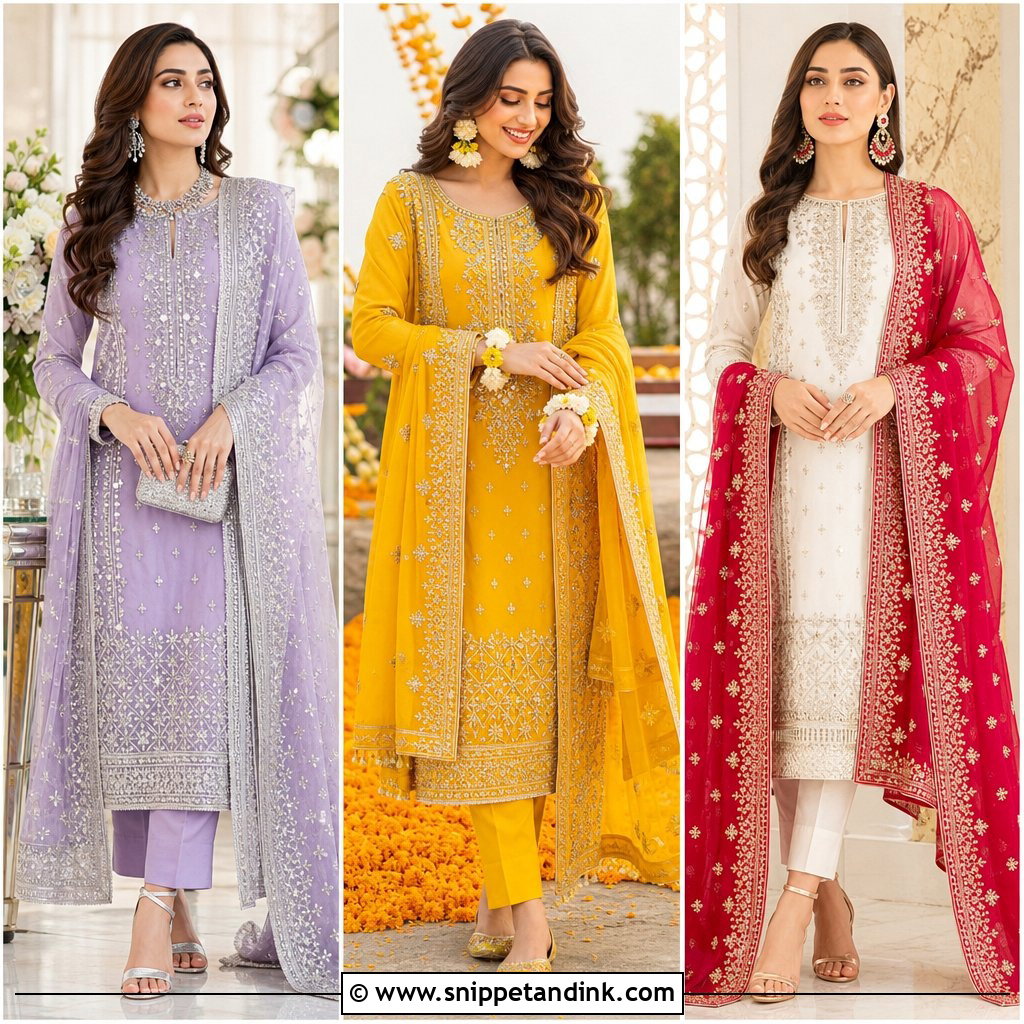
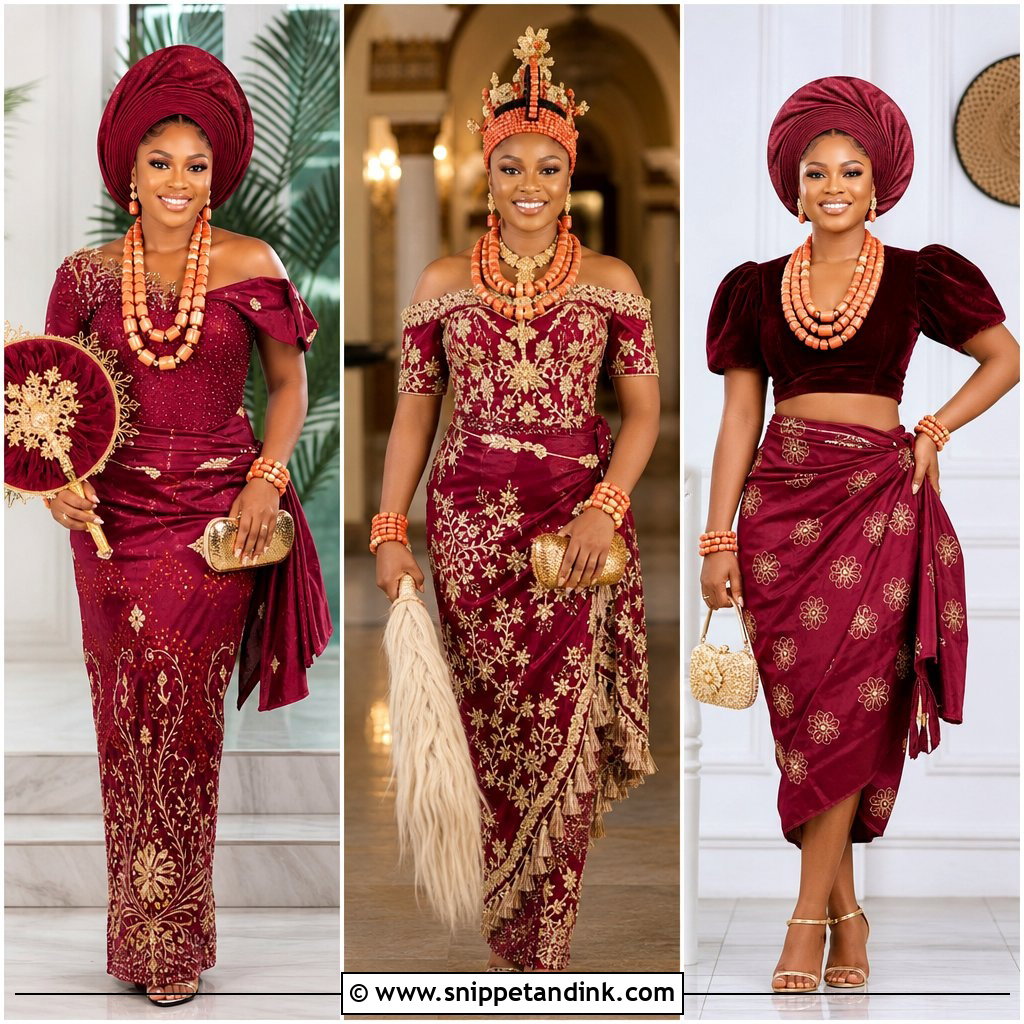
25. Pakistani Bridal Velvet Dress
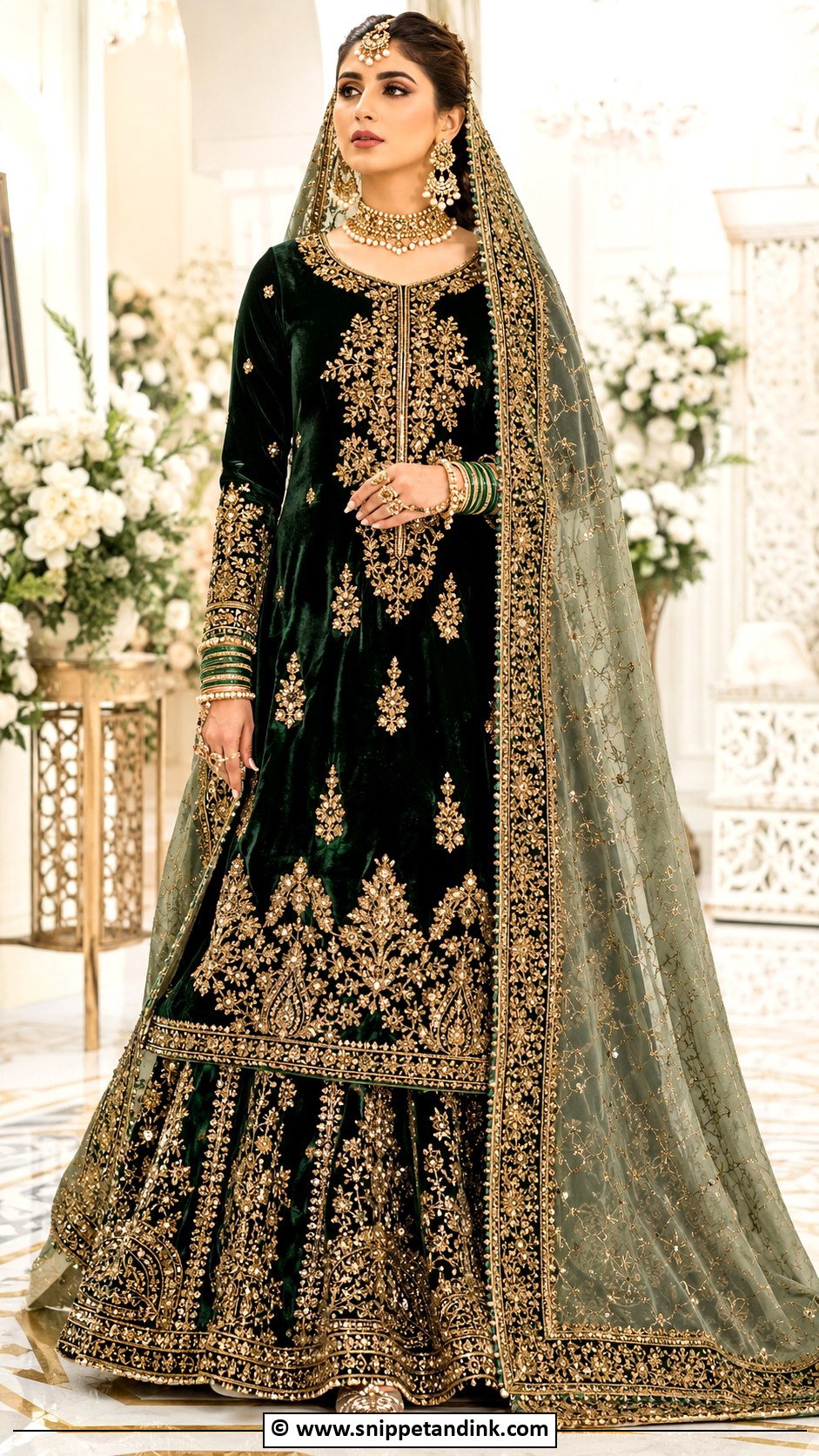
Velvet looks rich even with restrained embroidery, which is why it suits winter weddings and evening events. A velvet lehenga, long shirt with gharara or pishwas in maroon, emerald, navy or deep red pairs well with antique gold work. It’s warm and heavy, though, and I’d only recommend it for cool weather or a venue with reliable air conditioning. Balance the weight with a net or organza dupatta rather than a second velvet one, and finish with kundan jewelry, bangles and closed-toe embellished heels. Never press velvet flat; it crushes the pile. Steam it instead.
26. Pakistani Bridal Chiffon Dress
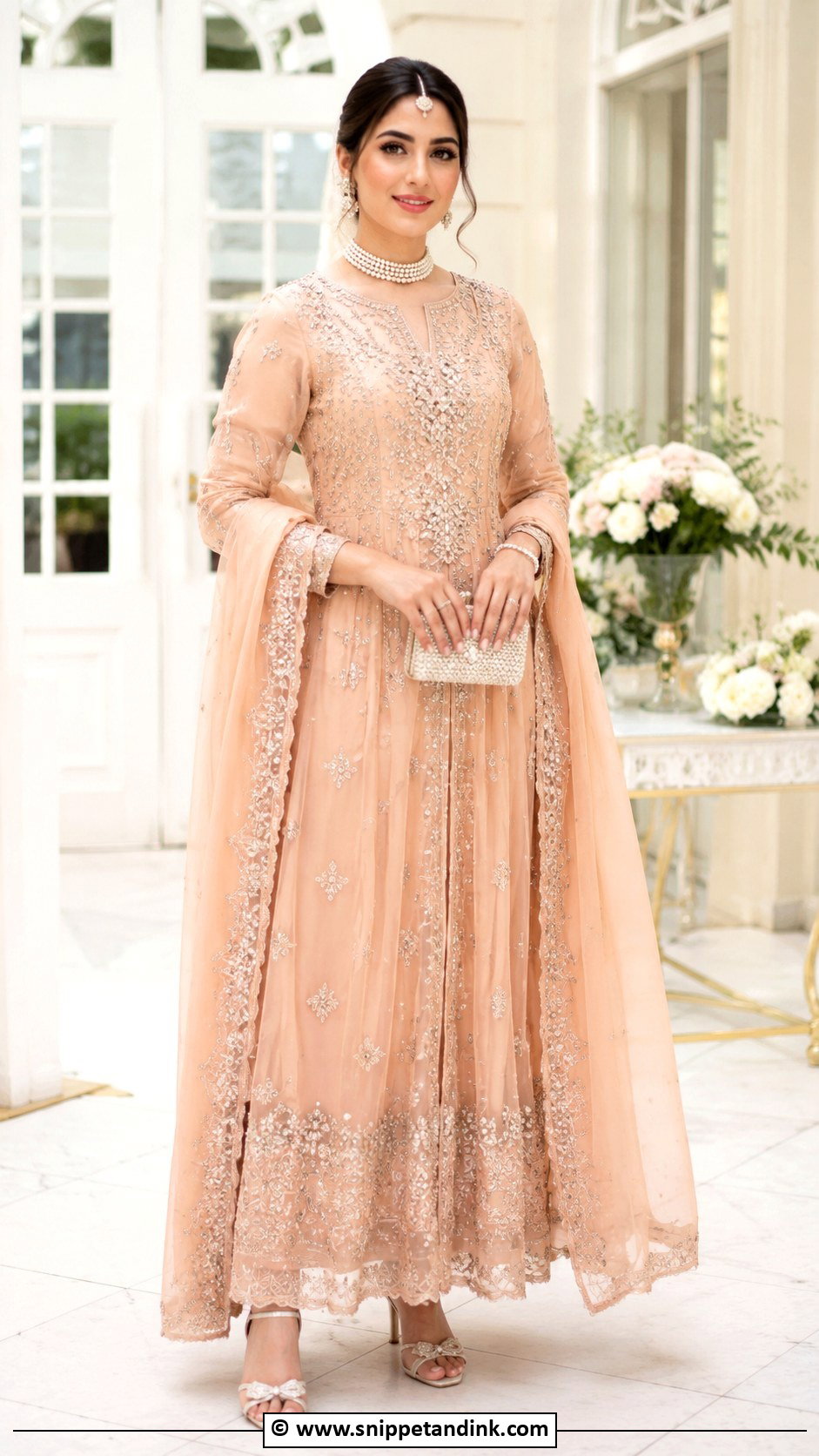
Chiffon is the lightest fabric here and the most comfortable over a long day. A chiffon maxi, pishwas or long shirt with sharara suits a Nikah, Walima or smaller event. Because it drapes rather than holds a shape, it moves well but can cling, so I check the lining’s length and weight at the fitting. Ivory, peach, soft gold and pastel tones all work. Pearl jewelry, slim heels and a delicate clutch keep it light, and an embroidered dupatta border adds the bridal weight that chiffon lacks on its own.
27. Pakistani Bridal Jacket Lehenga
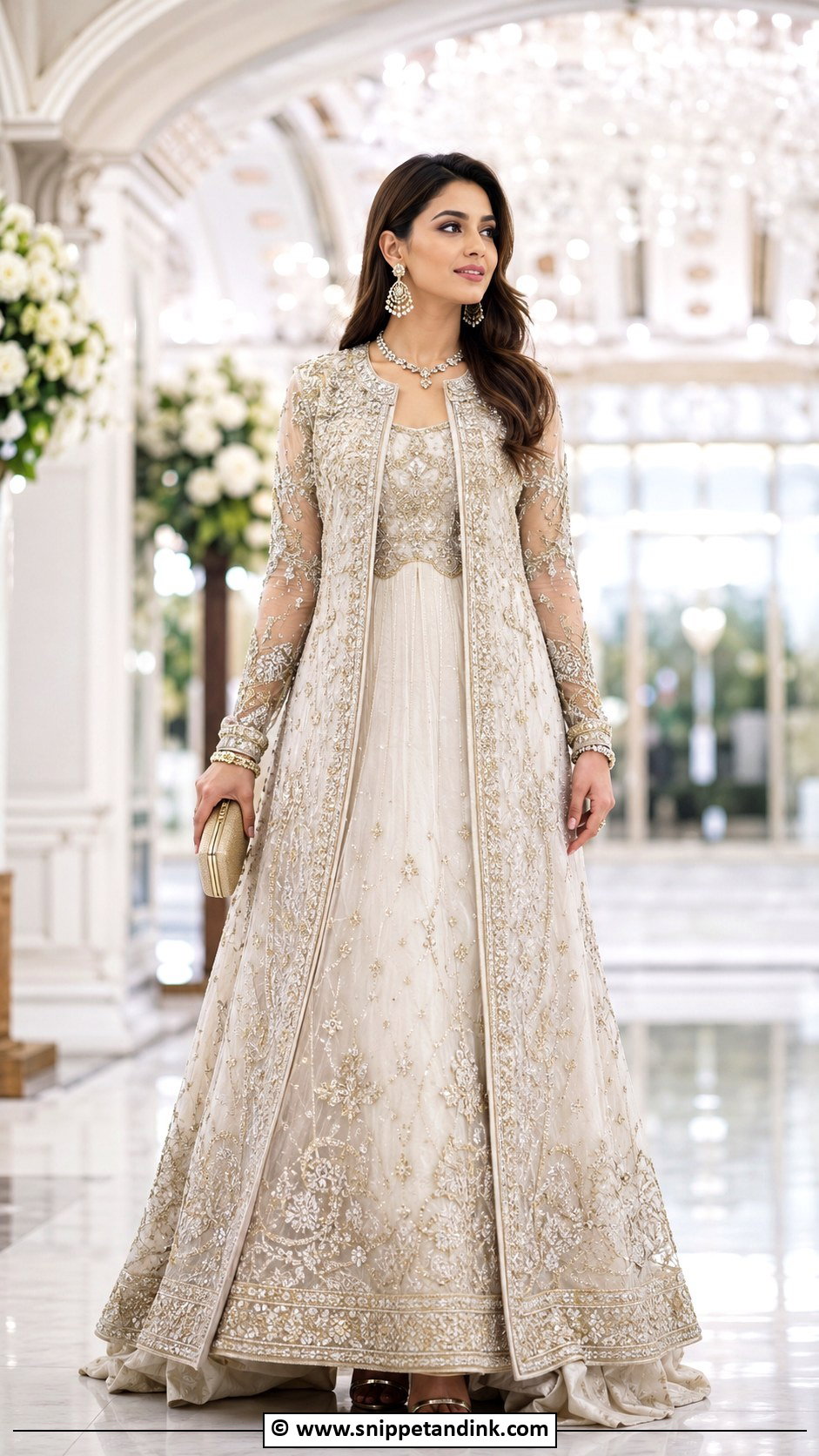
A jacket lehenga gives structure and coverage without relying on a heavy dupatta. The jacket can be waist-length, long or floor-length, and I usually point petite brides toward the longer versions, since a waist-length jacket can cut the body in half visually. An embroidered jacket over a blouse or inner shirt carries the drama on its own. Ivory, gold, blush, maroon and emerald all work, with statement earrings, a sleek necklace and heels. It sits best at a reception or Walima and has a contemporary, designer feel.
28. Pakistani Bridal Cape Dress
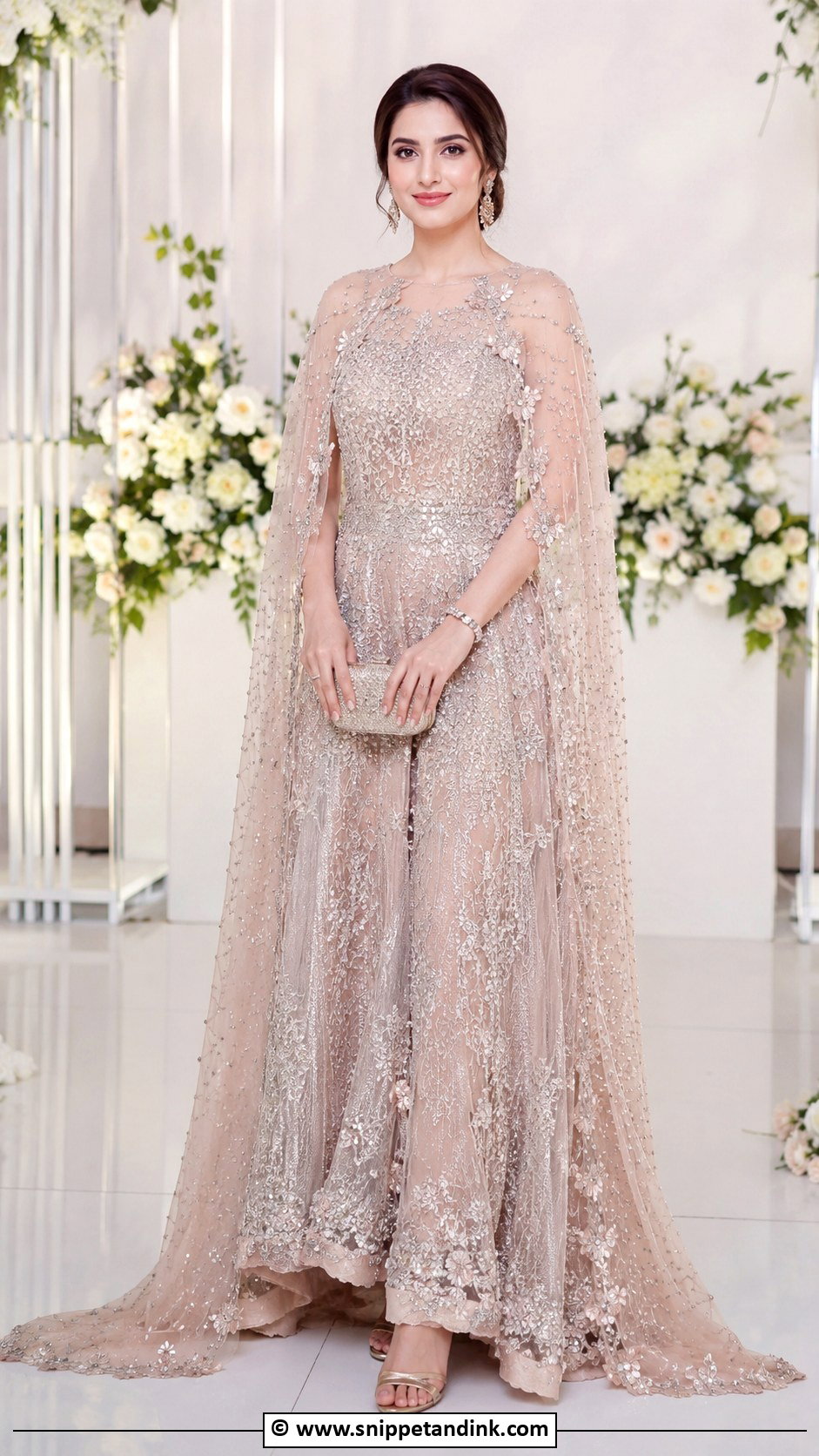
A cape gives a soft statement over a lehenga, gown or sharara and is easy to carry. Embroidered net, organza or chiffon capes add movement without hiding the outfit, and pastel or ivory bases with pearl and sequin work suit them. Check where the cape attaches. A cape fixed only at the shoulders shifts every time you hug a relative, so I like it tacked at a second point at the back. Since the cape already acts as a layer, keep the dupatta minimal or skip it if your family is comfortable with that. Drop earrings, a bracelet and heels finish it for a reception, Walima or engagement.
29. Pakistani Bridal Peplum Lehenga
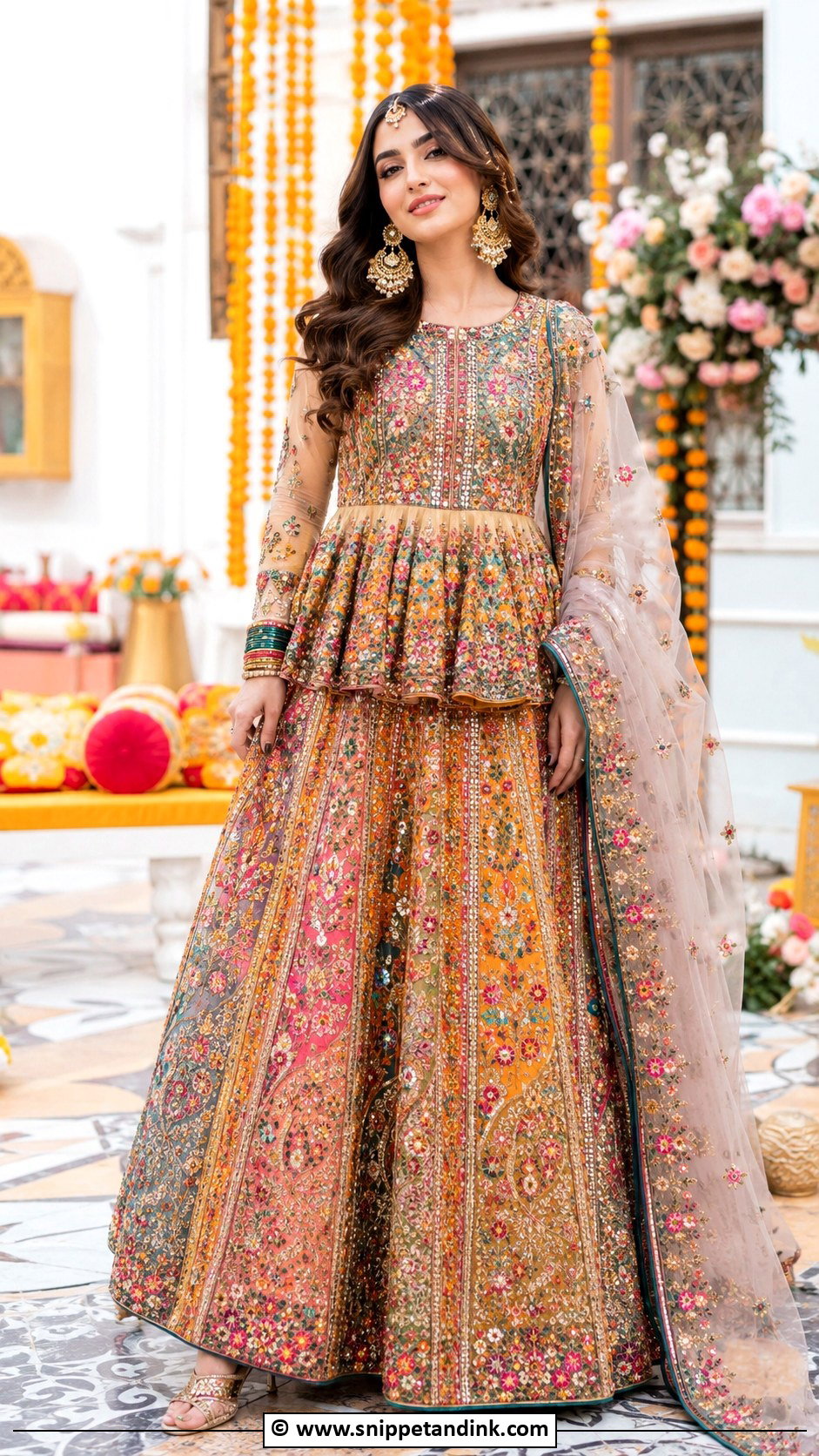
A peplum top defines the waist and gives more coverage than a short blouse, which is why it suits so many shapes. Paired with a full lehenga and dupatta, it works for a Mehndi, an engagement or even a colorful Barat, with mirror work, gota, resham or dabka chosen to match the event. Bright colors feel festive; pastels read soft. The one thing I watch: the peplum flare should start at your natural waist. Set too low, it widens the hips. Statement earrings, bangles and comfortable heels finish it.
30. Pakistani Bridal Short Shirt Lehenga
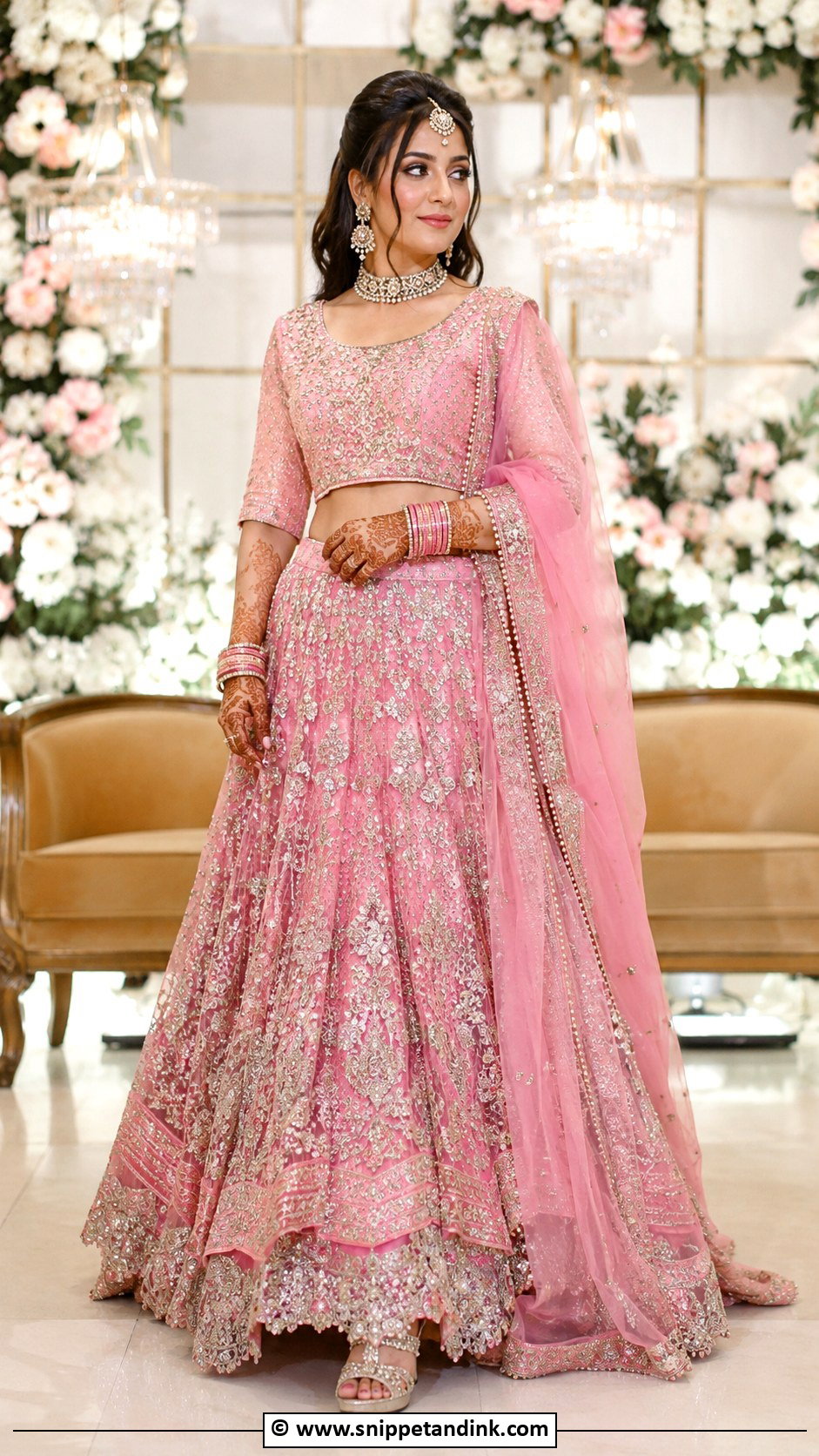
A short shirt over a lehenga is the classic, youthful Pakistani bridal shape. Because the shirt stops at the hip, the lehenga’s embroidery and flare are on full display, so this silhouette rewards a skirt with strong border work. Red, maroon, pink, green and gold all work, with a choker, earrings, tikka and bangles. I’d suggest it for a Mehndi, or for a Barat bride who likes a festive shape. One test at the fitting: raise both arms. A short, heavily worked shirt can ride up and show the waistband.
31. Pakistani Bridal Long Shirt Lehenga
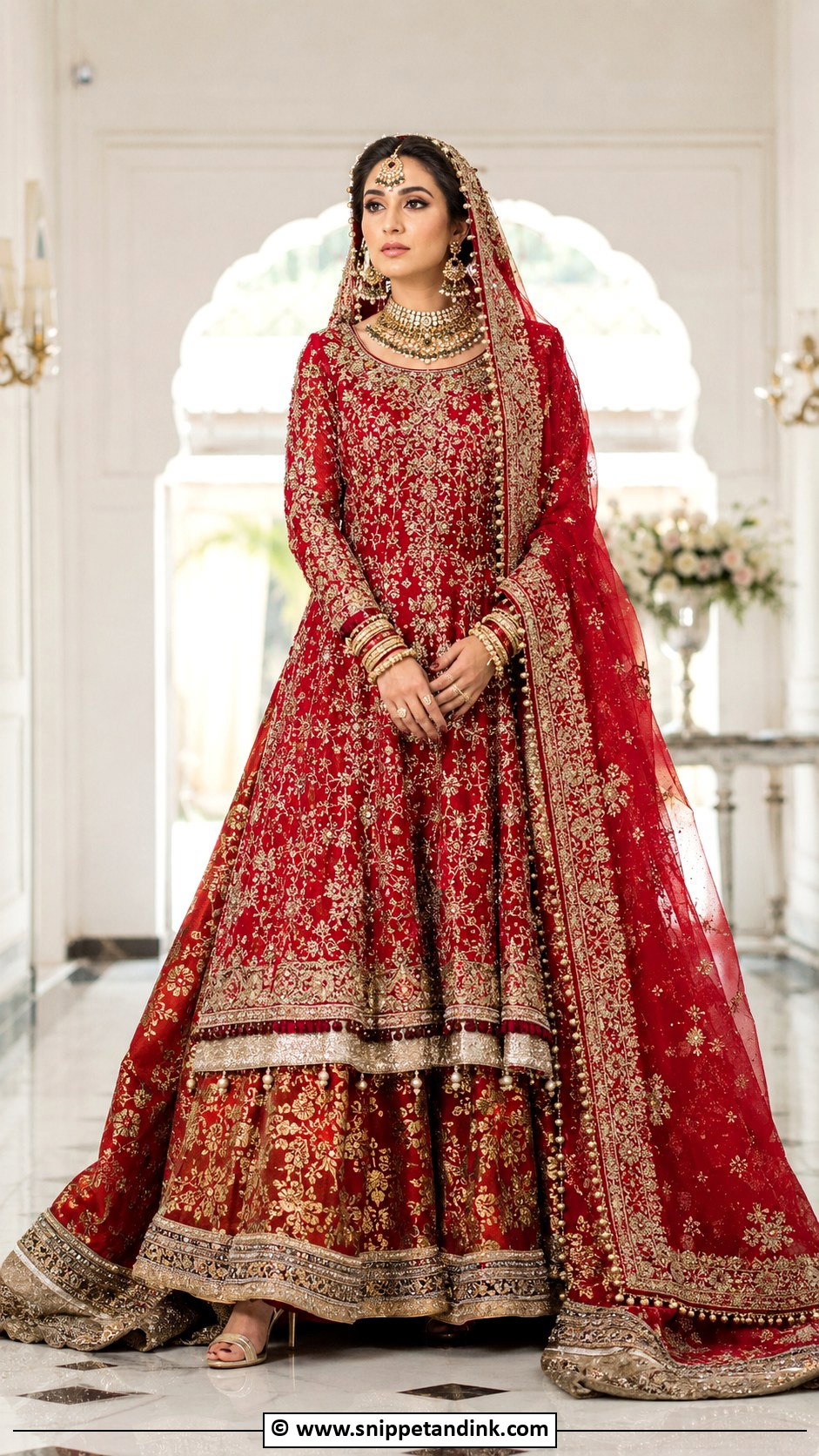
A long shirt over a lehenga creates an unbroken line, and it’s the more modest and more traditional of the two shapes. Straight or slightly flared shirts with embroidery on the front, sleeves, hem and side panels look rich over a voluminous lehenga, finished with a heavily bordered dupatta in red, maroon, gold, ivory or pastel. The side slits need to be cut high enough for you to climb stairs and step onto a stage, which I check by having brides step up onto a low stool during the fitting. It suits the Barat and other formal ceremonies.
32. Pakistani Bridal Double Dupatta Look
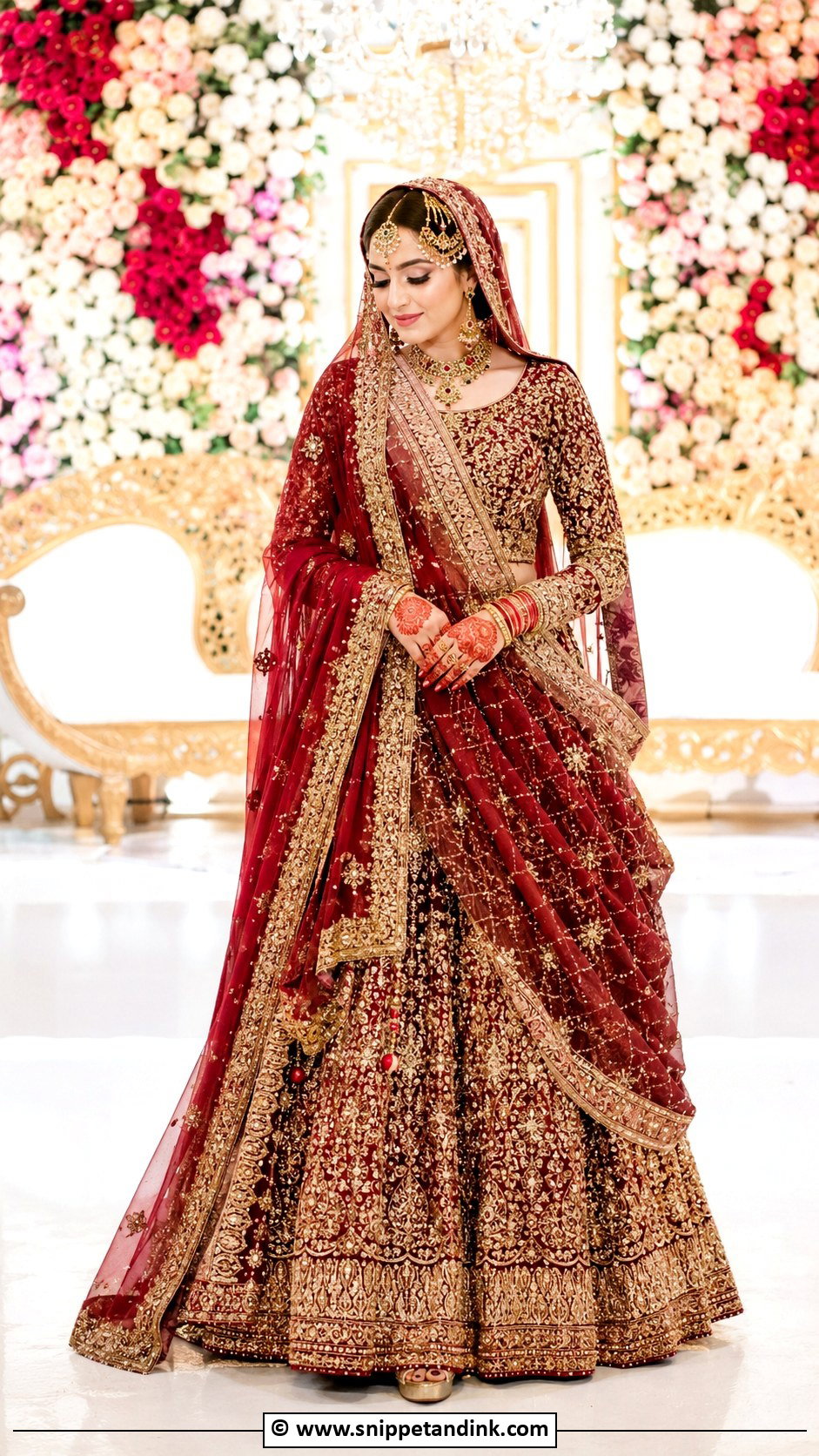
A double dupatta makes an outfit feel more regal at once. One is pinned over the head; the second drapes across the shoulder or around the body, over a lehenga, gharara or pishwas. I always pair one heavy, bordered dupatta with one light sheer one, because two heavy ones pull the head back and leave you with a headache by the end of the night. Red with gold, ivory with blush and maroon with champagne are classic pairings. The head dupatta needs firm anchoring into the bun with U-pins, plus small safety pins at the shoulder, and the matha patti then sits over it. It shows up well in portraits.
33. Pakistani Bridal Heavy Dupatta Look
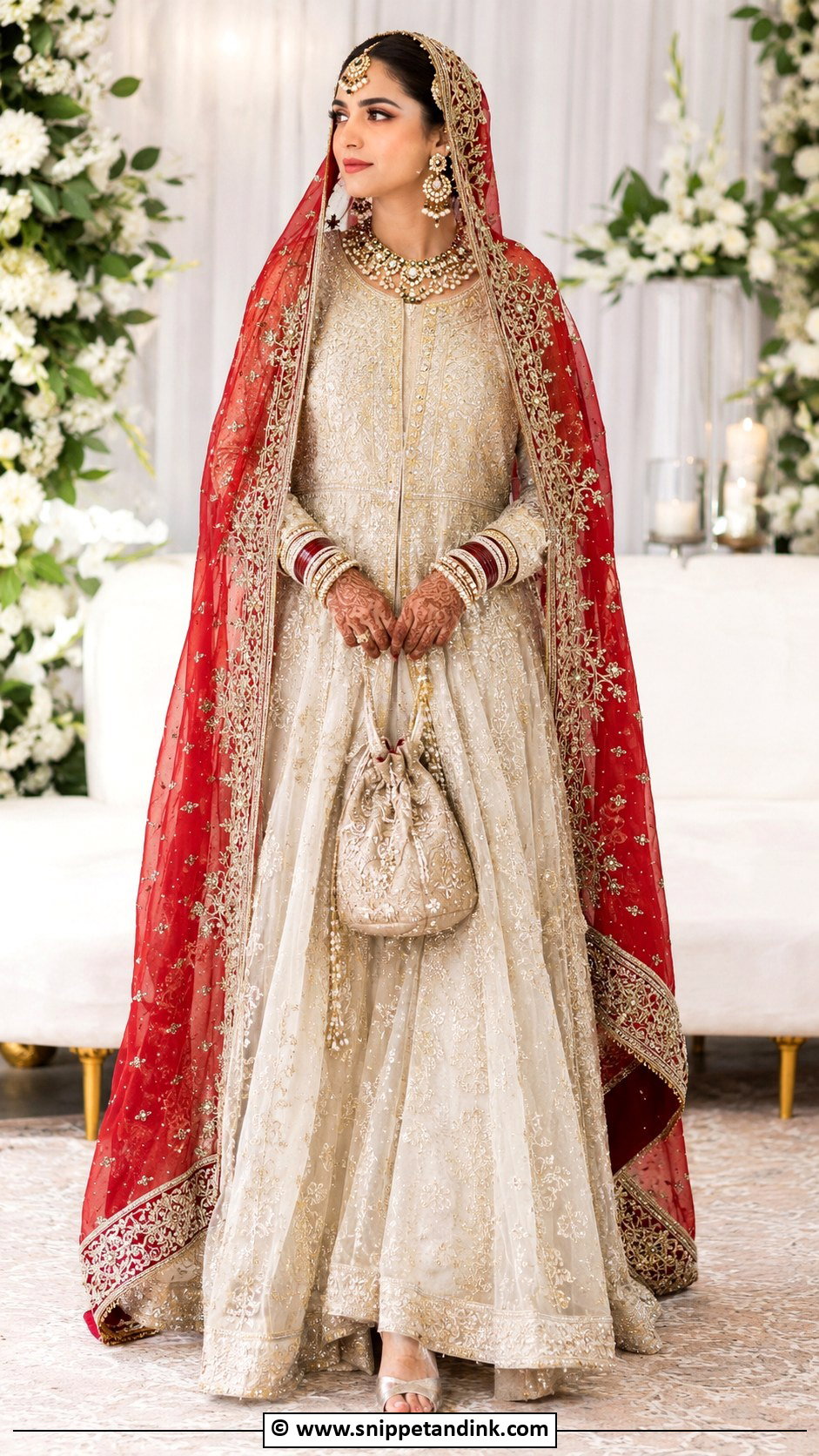
A heavy dupatta can carry an otherwise simple outfit. Wear a lehenga, gharara, or pishwas with a richly embroidered dupatta in net, organza, velvet or tissue, styled over the head to frame the face and jewelry. Plan for the weight. A heavily worked dupatta needs a secure base, which means a firm bun and pins placed before the hair is finished, not after. Keep the outfit underneath well fitted so the whole look doesn’t turn bulky, and keep the jewelry to kundan and bangles. It suits the Nikah and Barat, where the dupatta carries cultural meaning as well as visual weight.
34. Pakistani Bridal Minimal Dress
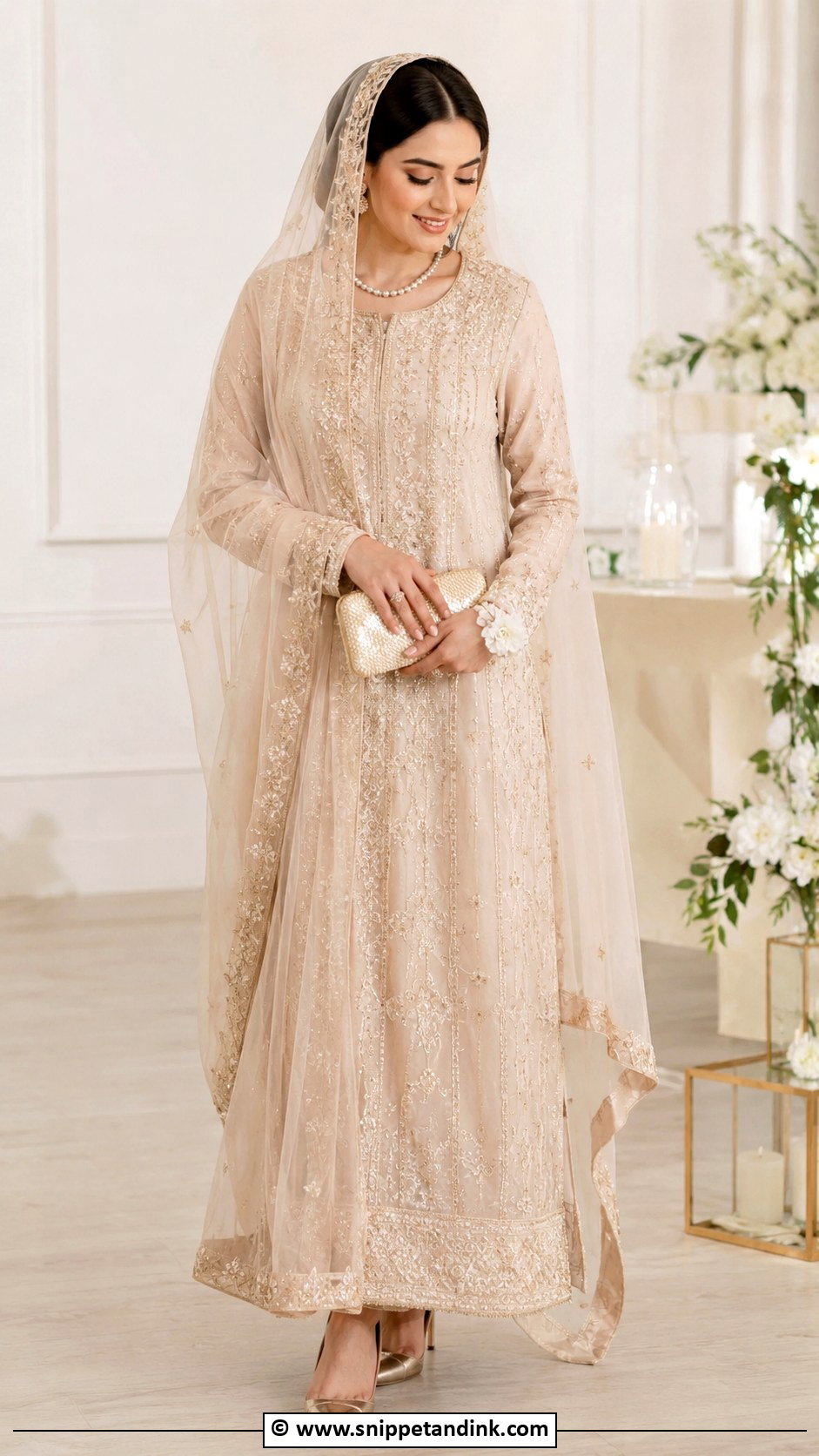
Minimal does not mean plain. It means good fabric, sharp tailoring and selective embroidery, and the tailoring matters more here than anywhere else because there’s no heavy work to hide a fault. An ivory, blush, champagne or mint pishwas, maxi or long shirt with fine handwork suits an intimate Nikah or a civil ceremony. Add a soft dupatta, pearl jewelry, slim heels and a small clutch, with fresh, polished makeup. Look closely at the inside seams before you buy. On a simple outfit, quality shows.
35. Pakistani Bridal Modern Reception Gown
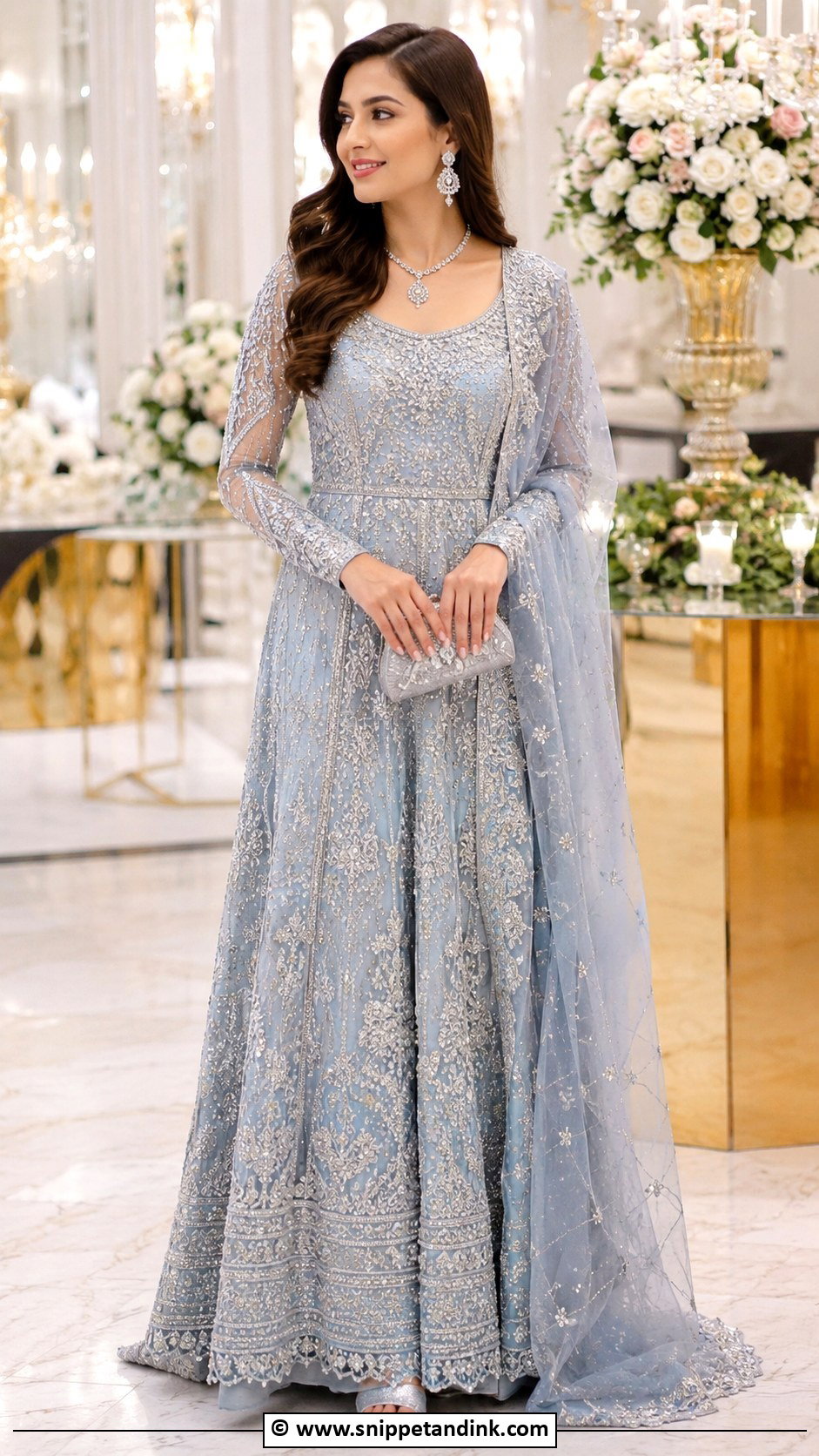
A modern reception gown suits the Walima when you want the evening to feel different from the Barat. A floor-length gown with Pakistani embroidery, long sleeves and a soft dupatta keeps it rooted in tradition, in champagne, silver, blush, powder blue or ivory. A fitted bodice over a flowing skirt makes for an easy entrance and lets you move between tables without gathering fabric in your hands. Crystal jewelry, heels and a sleek clutch finish it, and a polished bun or soft waves both suit the neckline.
Carrying Several Kilos of Zari Through a Long Barat
A heavily embroidered Barat lehenga with its dupatta can weigh several kilos, and most of that hangs from your waist and your head. Brides tell me afterward that the weight, more than the heat, was what wore them out. A few things genuinely help.
- Ask for a wide, padded waistband with a hook-and-bar as well as a drawstring, so the skirt rests on the hips instead of cutting in.
- Have the dupatta pinned into a firm bun base before the final hair styling, and keep the head jewelry as light as you’re happy with.
- Plan bathroom trips with one helper who knows how the outfit comes apart. Two minutes of planning saves twenty in a small restroom.
- Eat something before the rukhsati, sitting down in the outfit. Brides skip meals in heavy clothes and feel faint by the end of the night.
Storing Zari and Velvet Once the Wedding Is Over
Metallic thread tarnishes with damp, and plastic garment bags trap moisture right against it. After the wedding, have each outfit cleaned by someone who handles embroidered bridal wear, then wrap it in clean white muslin or cotton and keep it in a dry cupboard, folded loosely or laid flat.
Refold heavy pieces every few months along different lines, because embroidery cracks along a crease that sits in one place for years. Velvet should lie flat with tissue in the folds so the pile isn’t crushed. If the outfit might be worn again or handed down, that small effort keeps the gold bright.
Matching Each Outfit to the Event It Has to Last Through
A red Barat lehenga, a soft Nikah pishwas, a bright Mehndi sharara and a pastel Walima gown can all feel equally bridal. What decides it is how each one is cut, how much it weighs and whether you can sit, walk and eat in it. Start with the event and the hours you’ll spend in the outfit, then fabric and embroidery placement, then color tested in the venue’s real light. The outfit you remember fondly is usually the one you’d forgotten you were wearing by the second hour.
You'll Like These Ideas:






Leave a Reply