
The cake cutting is usually over in ninety seconds, and couples are often surprised by how few frames from it they actually love. The good ones nearly always share three things: a cake that looks right at close range, a bite that isn’t forced, and two people who have something to do with their hands. I treat the moment as a tiny scene rather than a formality. Many couples now favor vintage piping, fresh fruit, pressed flowers and textured buttercream, and if you look at the wedding cake trends of the past couple of years, nearly all of them reward a slow close-up. Here are twenty cake styles paired with the way I’d shoot each one.
Where the Cake Table Sits Decides Half Your Photos
Most cake photos I’d call disappointing weren’t ruined by the cake or the couple. They were ruined by the table: shoved against a wall, parked in front of a bright window, or tucked in a dark corner beside the fire exit sign. Talk to your planner or venue before the day and ask for a spot with these things going for it.
- Space on both sides. I need to shoot from your side and from the guests’ side, and a table flat against a wall gives me one angle.
- No window directly behind it. Backlight turns the two of you into silhouettes and the cake into a white blob.
- Side light if possible. A window to one side, or a lamp, gives piped and textured frosting real shape.
- A clean background. Move stacked chairs, coat racks and exit signs out of the line behind the cake.
- Height that suits you. If the table is very low, a pedestal stand stops everyone from bending over in the frame.
Then let your photographer know when the cutting will happen. If it’s announced without warning while I’m outside with the families, the moment goes by without me. A two minute heads-up from your planner or DJ is all it takes.
1. Vintage Heart Wedding Cake Bite Photo
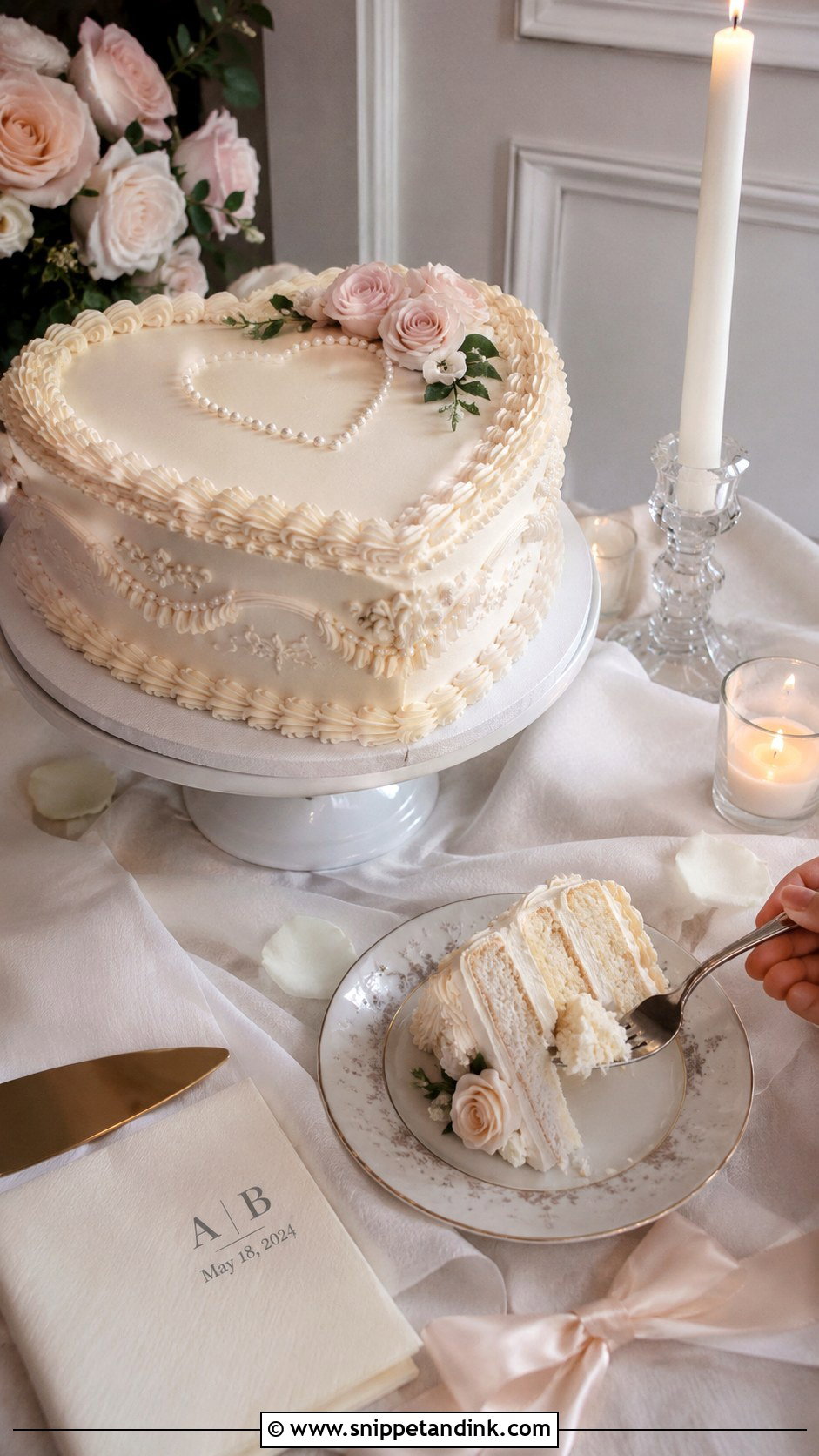
A heart cake does a lot of the storytelling on its own, so the couple barely needs to pose. Usually it’s one or two tiers with shell borders and a short piped message. I like it raised on a pedestal stand, because the extra height lets me frame the cake and both faces without shooting down on anyone. One of you holds a small fork, the other leans in. Candlelight and pearls nearby suit the vintage piping well, but watch that a candle isn’t sitting right behind a head.
2. Two Tier Wedding Cake Feeding Photo
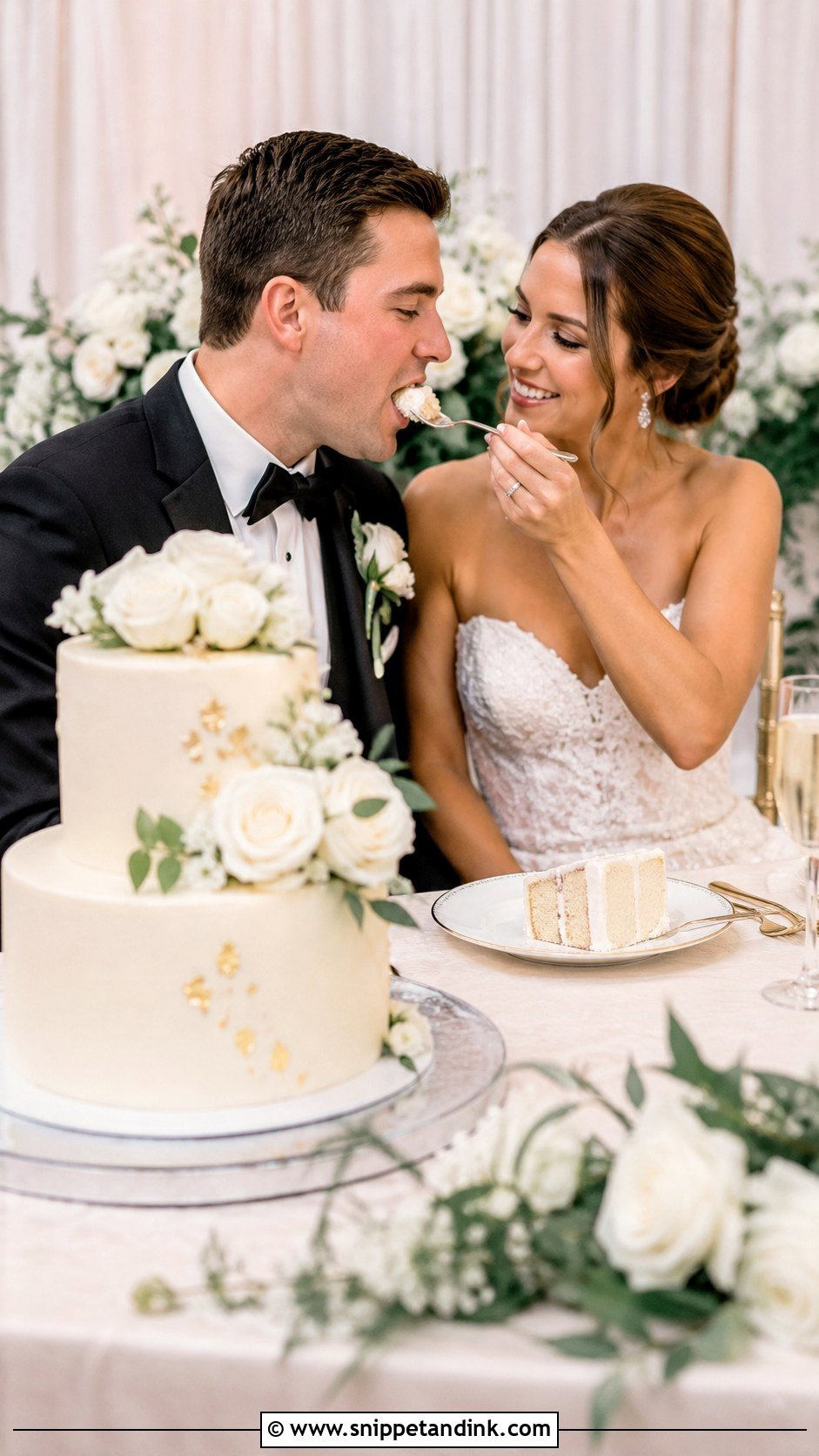
Two tiers is the height I find easiest to work with: tall enough to fill the background, low enough that your faces stay near the cake. The nicest frames come just after the first slice is cut, when the formal part is over and you relax. Look at each other, not at me. A careful fork bite or a fingertip of frosting gets a real laugh more often than any instruction I can give.
3. Lambeth Wedding Cake Eating Photo
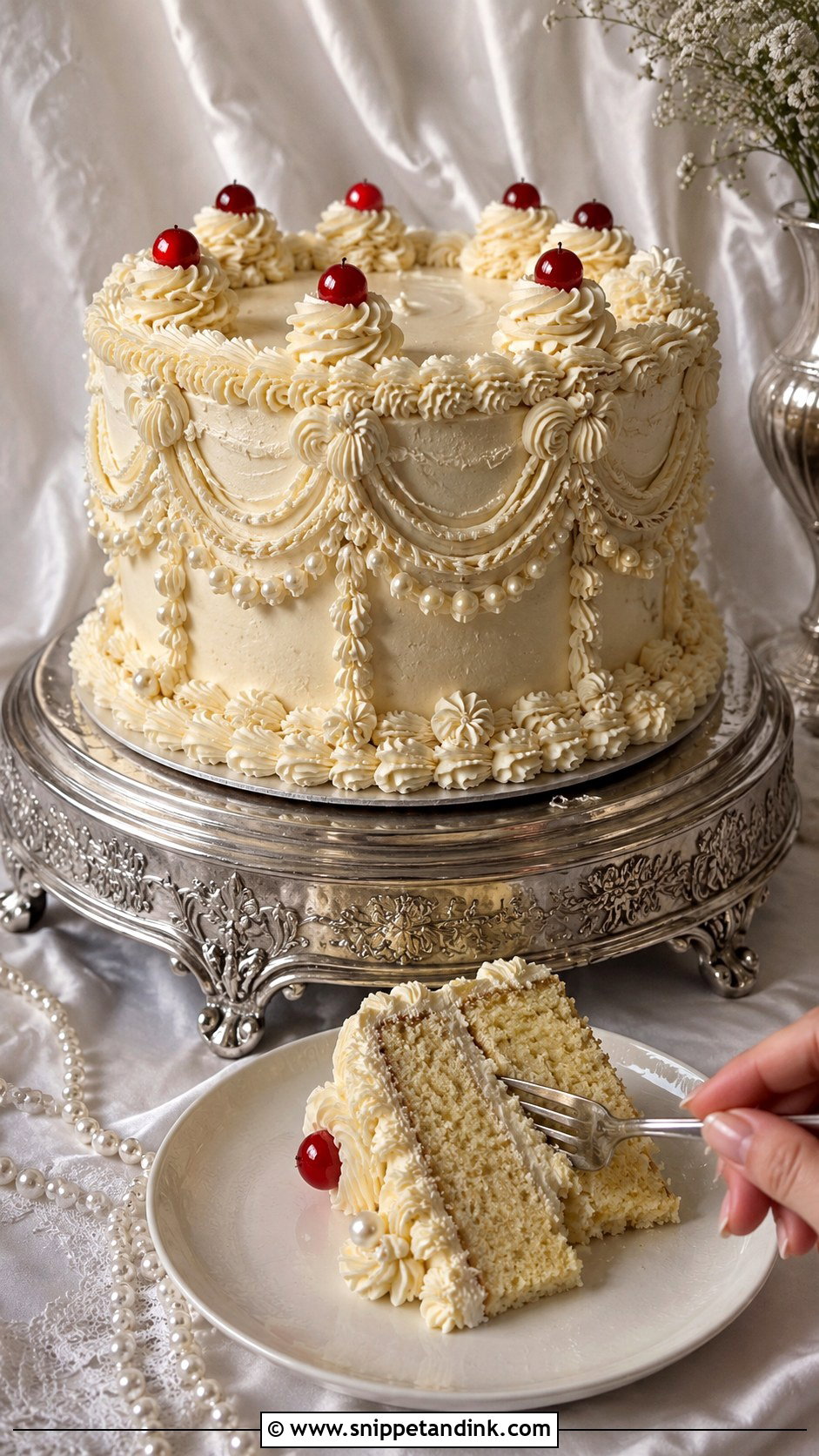
Lambeth piping is made for close-ups. Every shell and swag throws a tiny shadow, so the cake looks sculpted in side light and flat in head-on flash, which is why I’ll move a light or ask to turn the table before the cutting. Cut from a back or side portion so the decorated front stays intact for the frame. Slow down here. Ornate buttercream beside a small, careful bite is the contrast that makes the picture.
4. Pressed Flower Wedding Cake Slice Photo
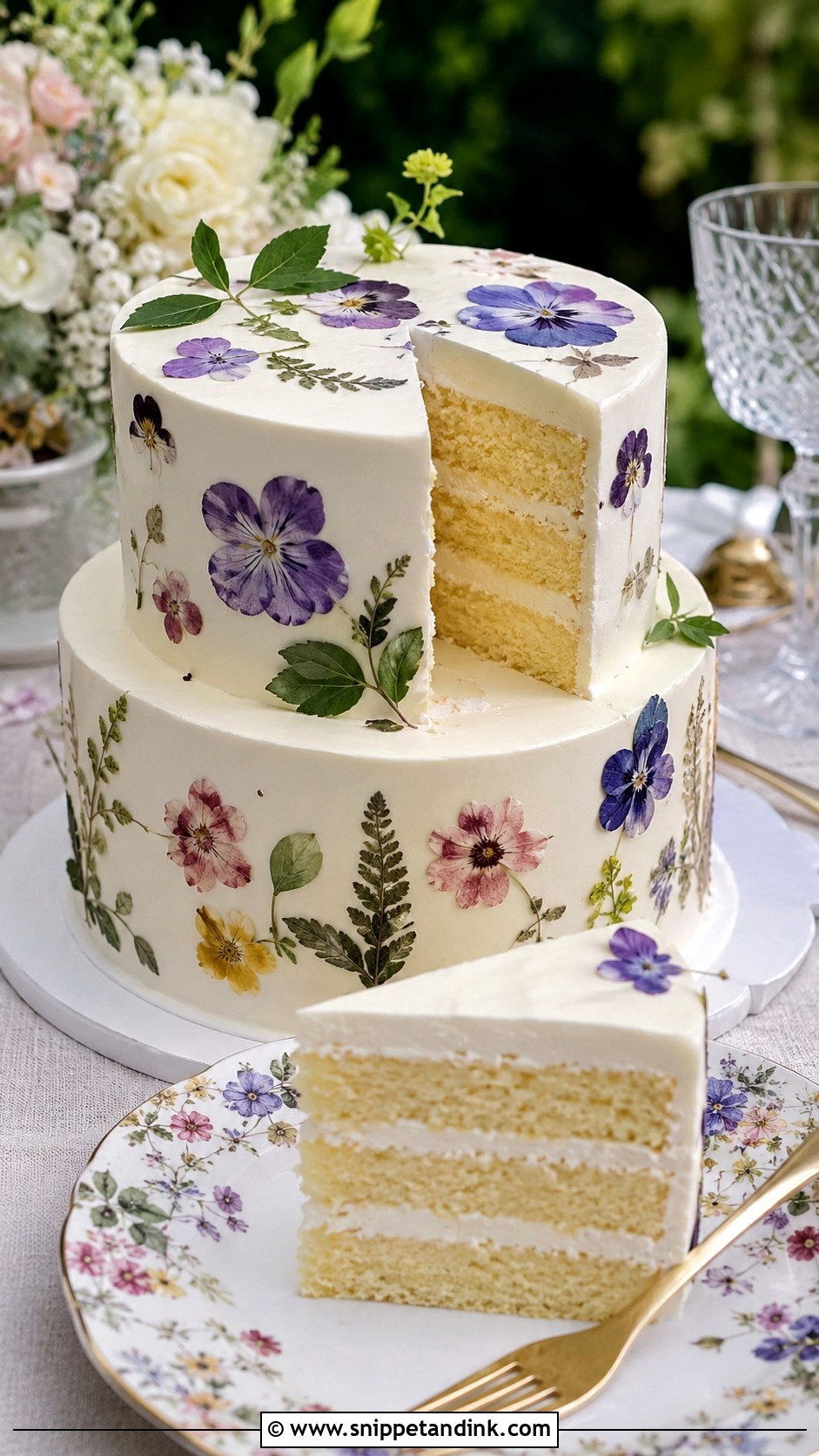
Pressed flowers only read well in soft daylight; under a hot spotlight the petals lose their color and the buttercream turns yellow. If your pressed flower wedding cake is in a dim room, ask whether the table can sit near a window. I plate a clean slice on a floral plate beside the whole cake, which gives me two subjects to move between: the cake, then the two of you sharing that first forkful.
5. Pearl Wedding Cake Fork Bite Photo
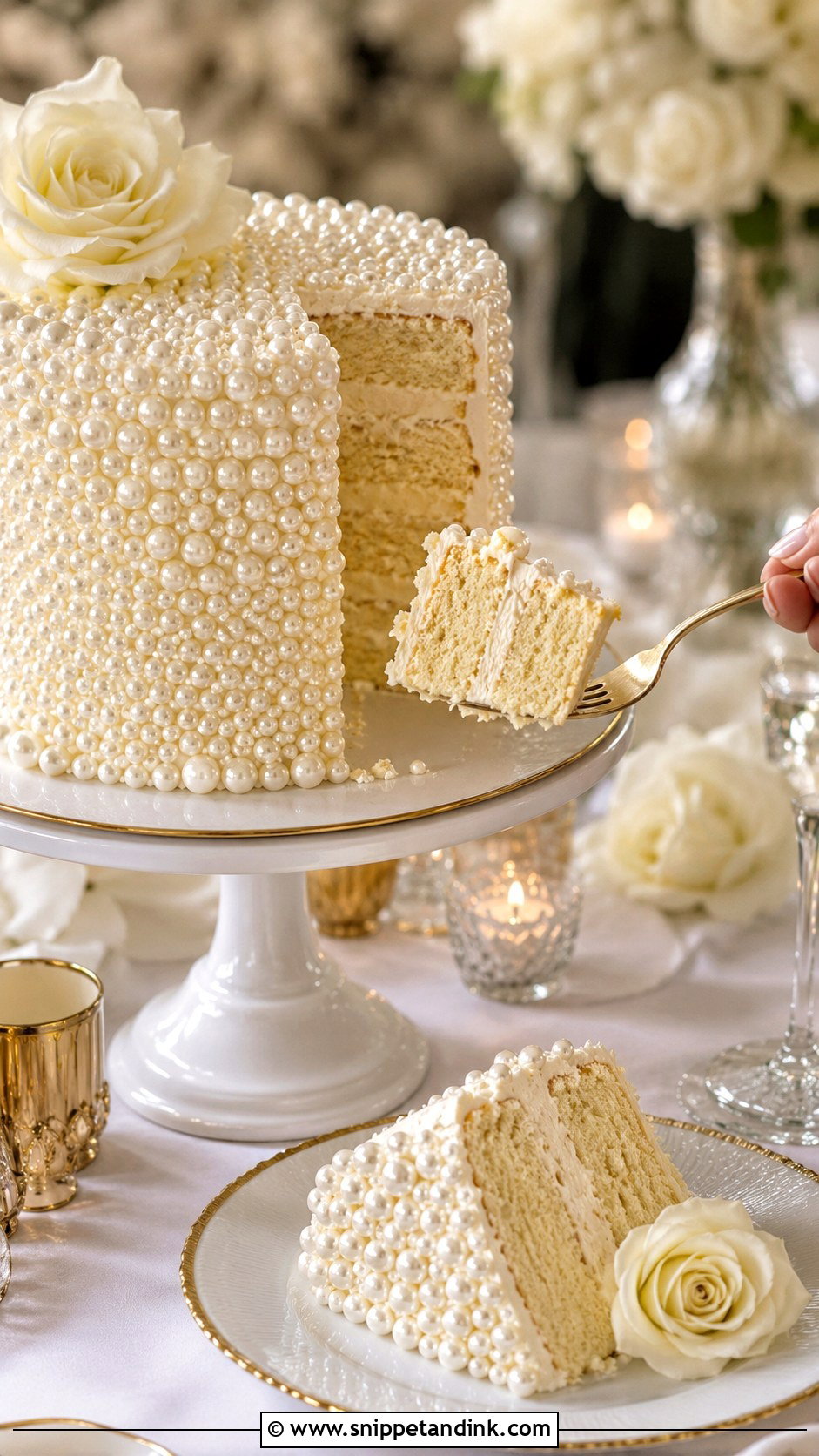
Edible pearls are small, so they only register in the photo if light hits them from the side. Placed along piped borders or scattered over smooth buttercream, they give me little highlights that pair naturally with satin linen and gold. For the shot itself I keep the bite tiny, partly for grace and partly because I’m usually focusing on hands and the fork at this distance, and a big mouthful fills the frame in the wrong way.
6. Fresh Berry Wedding Cake Bite Photo
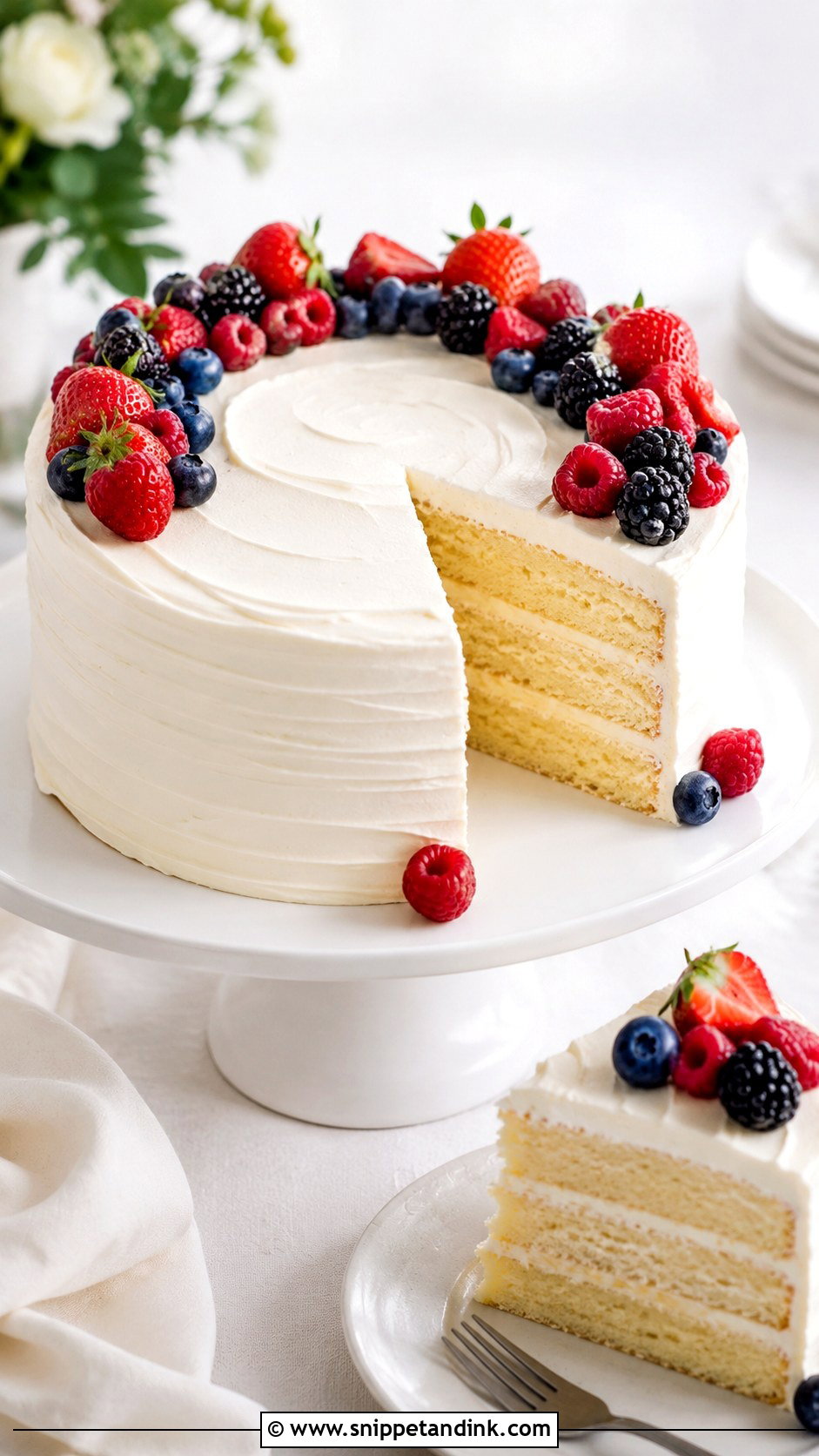
Fruit adds color without anyone needing to build decoration, and berries in particular come out rich and saturated on camera. Ask for a forkful that includes a visible berry with a little frosting on the edge, so the bite connects to the cake. I keep the full cake in the background of that frame. A few loose berries on the linen near the plate help, but only a few; more than a handful looks like a spill.
7. Chocolate Wedding Cake Eating Photo
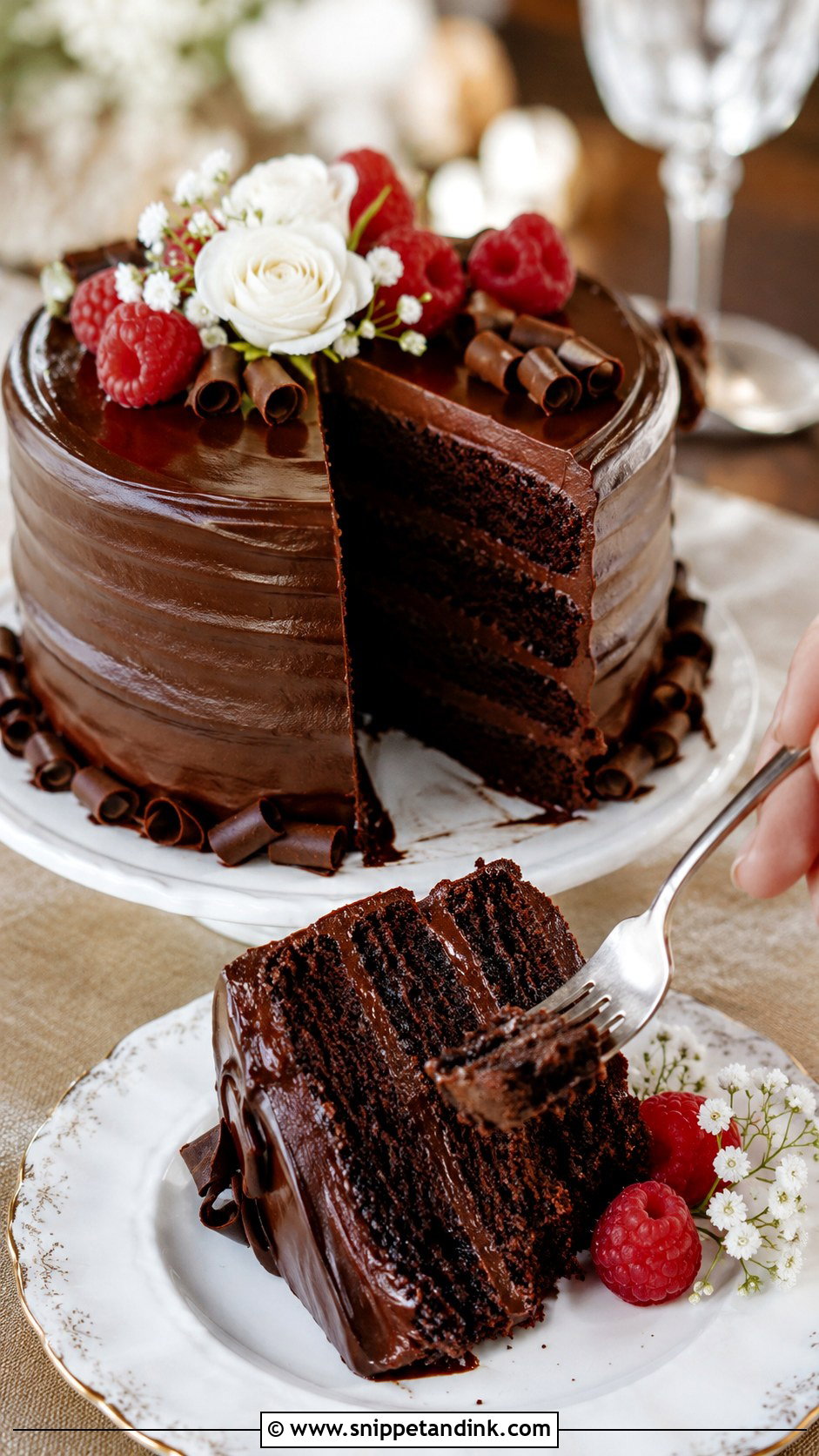
Dark chocolate is harder to photograph than people expect. Ganache has a shine that turns into a white glare under direct flash, and dark crumb can go muddy in dim light. I bounce the flash or use a light from the side so the shine looks like texture. White flowers or gold accents keep it bridal rather than birthday. The upside is the expressions: a rich chocolate bite tends to get a very honest reaction.
8. Single Tier Wedding Cake Picnic Photo
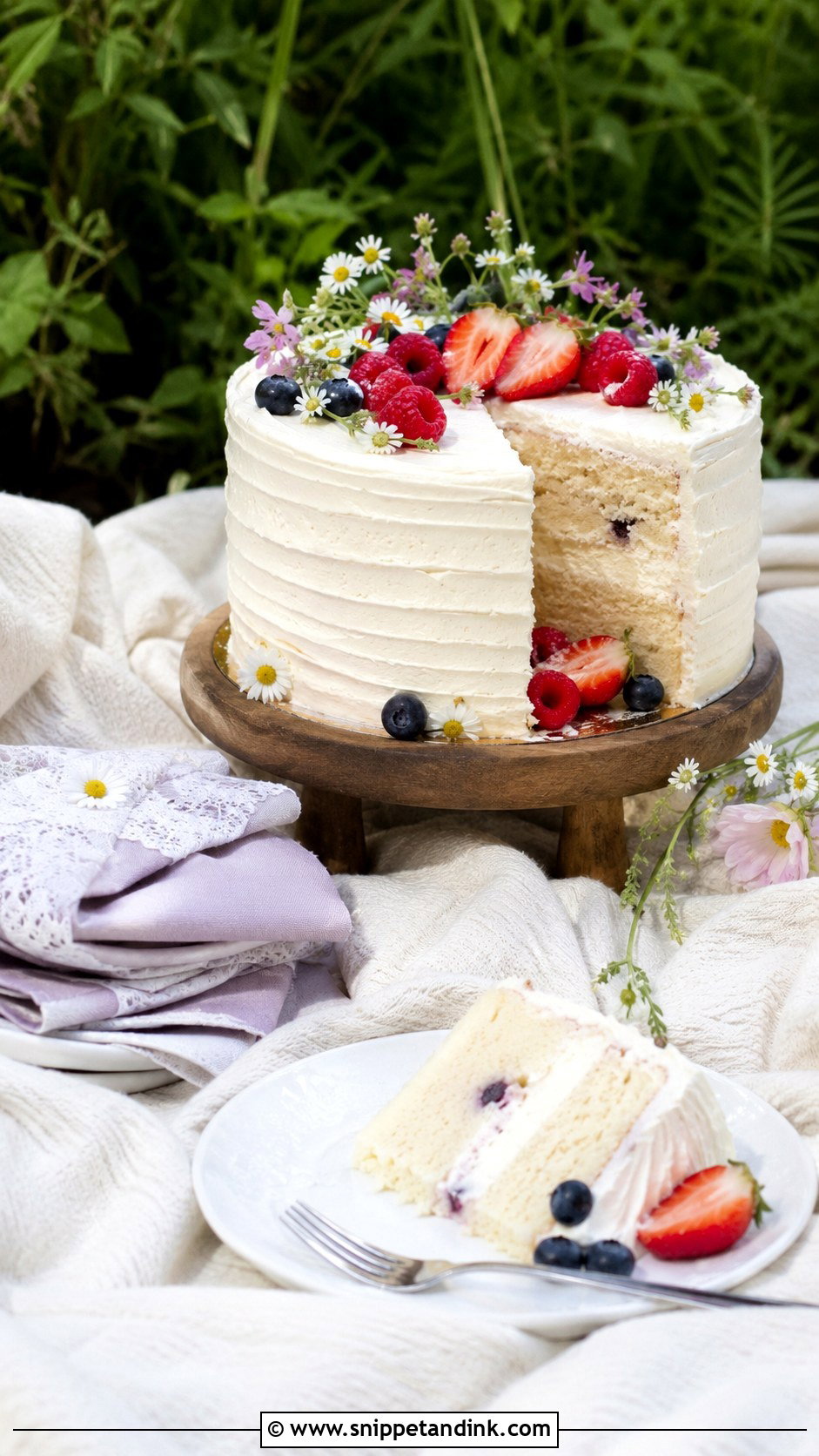
A single tier on a picnic blanket is one of the easiest setups I shoot, because there’s no crowd, no DJ countdown and no rush. Set the cake on a low stand so it doesn’t sit in the grass, add napkins and a plate, and sit close together. Golden hour gives soft, warm light from a low angle, which flatters textured buttercream and skin at the same time. Bring something to keep ants off the cake while you set up.
9. Mini Wedding Cake Couple Bite Photo
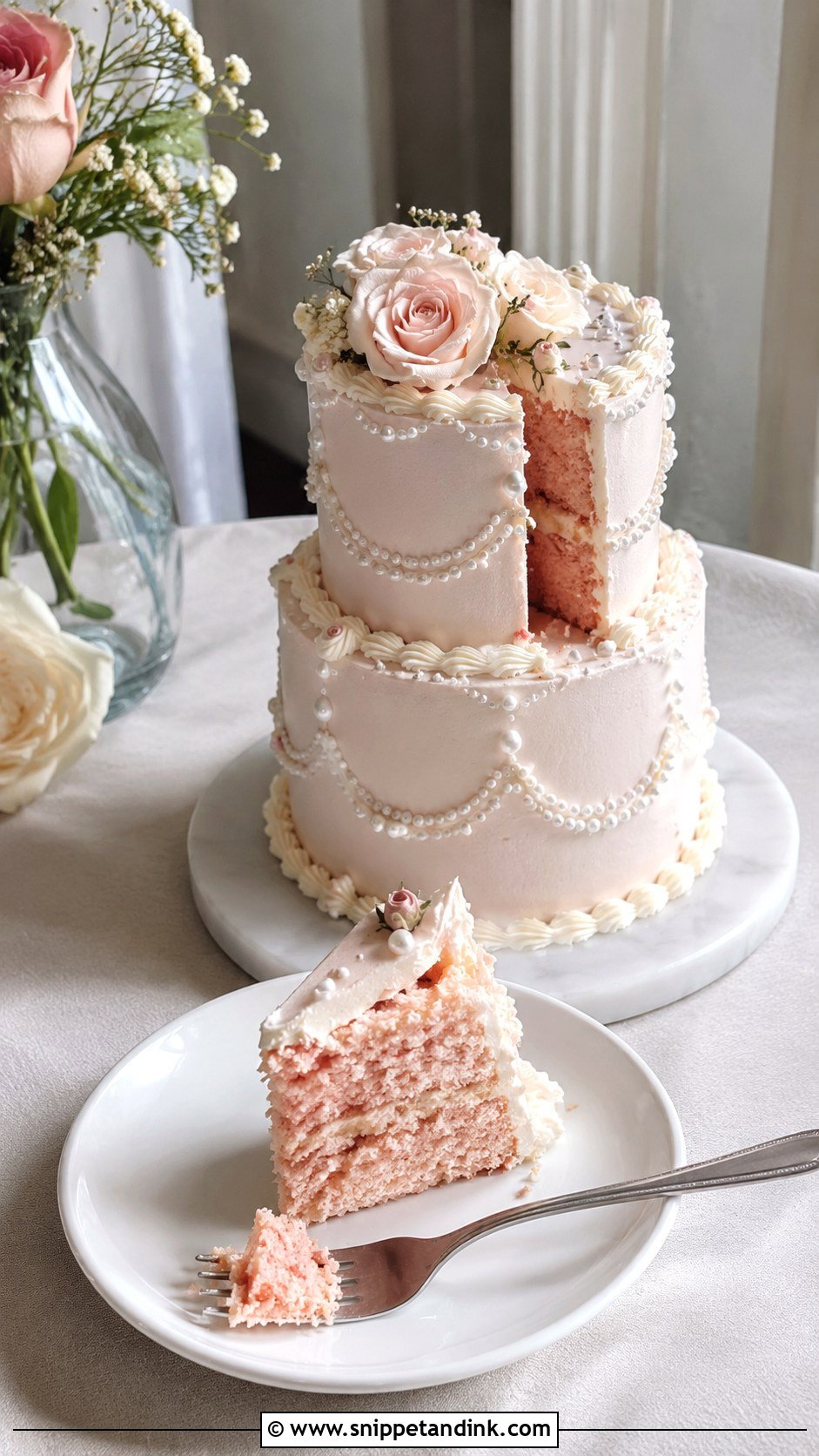
A four to six inch cake is small enough that the two of you can hold the plate together, which solves the what-do-I-do-with-my-hands problem straight away. One or two tiny tiers, smooth frosting, a few small flowers or pearls. At a courthouse or private vow celebration, the trick is keeping the background clean, otherwise a mini cake just disappears in the frame. A plain stand and a simple backdrop are enough.
10. Floral Wedding Cake Feeding Photo
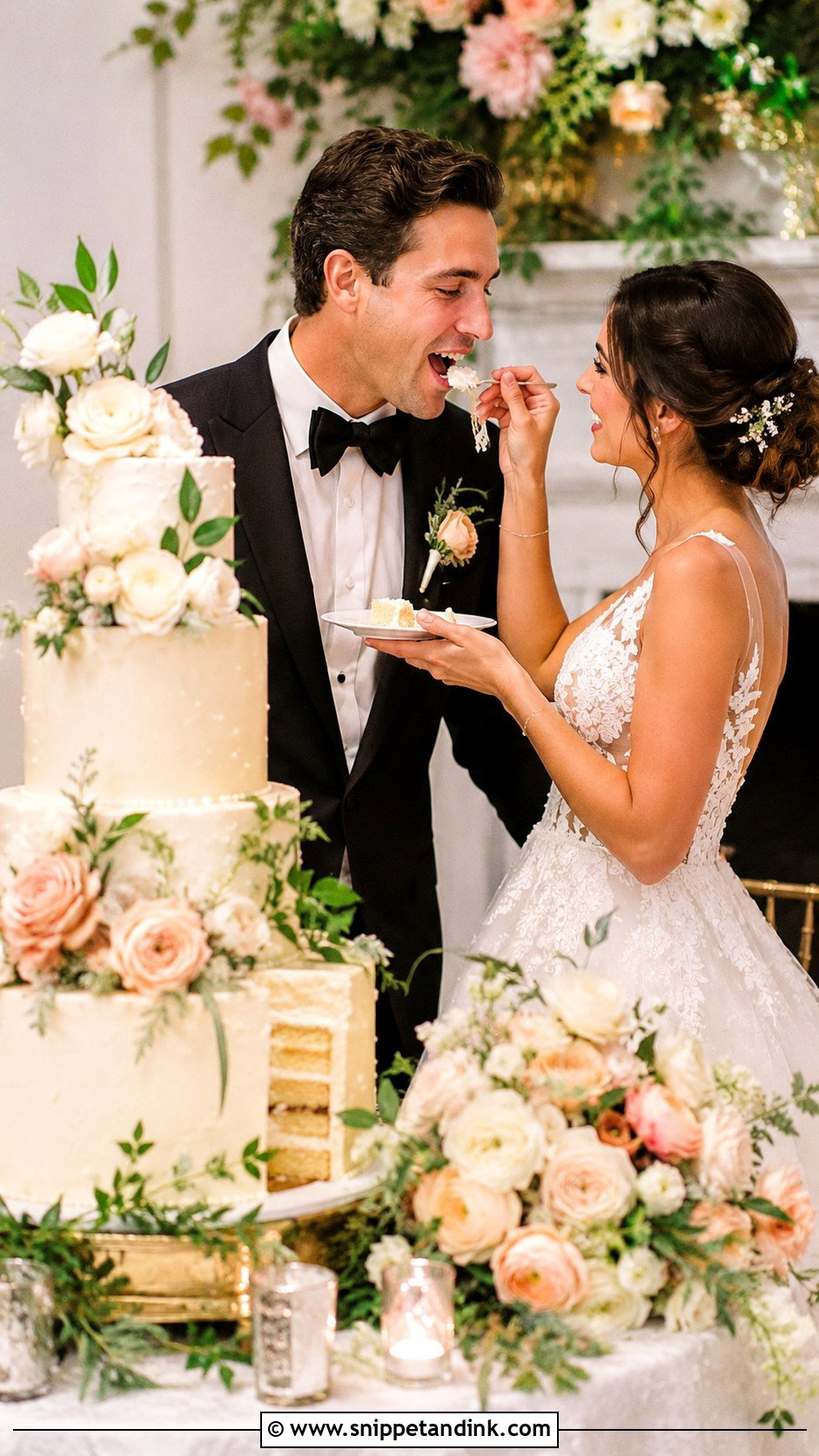
If the flowers on the cake repeat your bouquet, the cake photos tie straight back to the rest of the album. I ask the baker or florist to cluster the blooms rather than scatter them, which gives me a clear focal point. One of you holds the fork, the other rests a hand on an arm or shoulder; that contact is what stops the frame from looking staged. Angle your bodies toward each other with the cake between you, not in a line facing the camera.
11. Square Wedding Cake Bite Photo
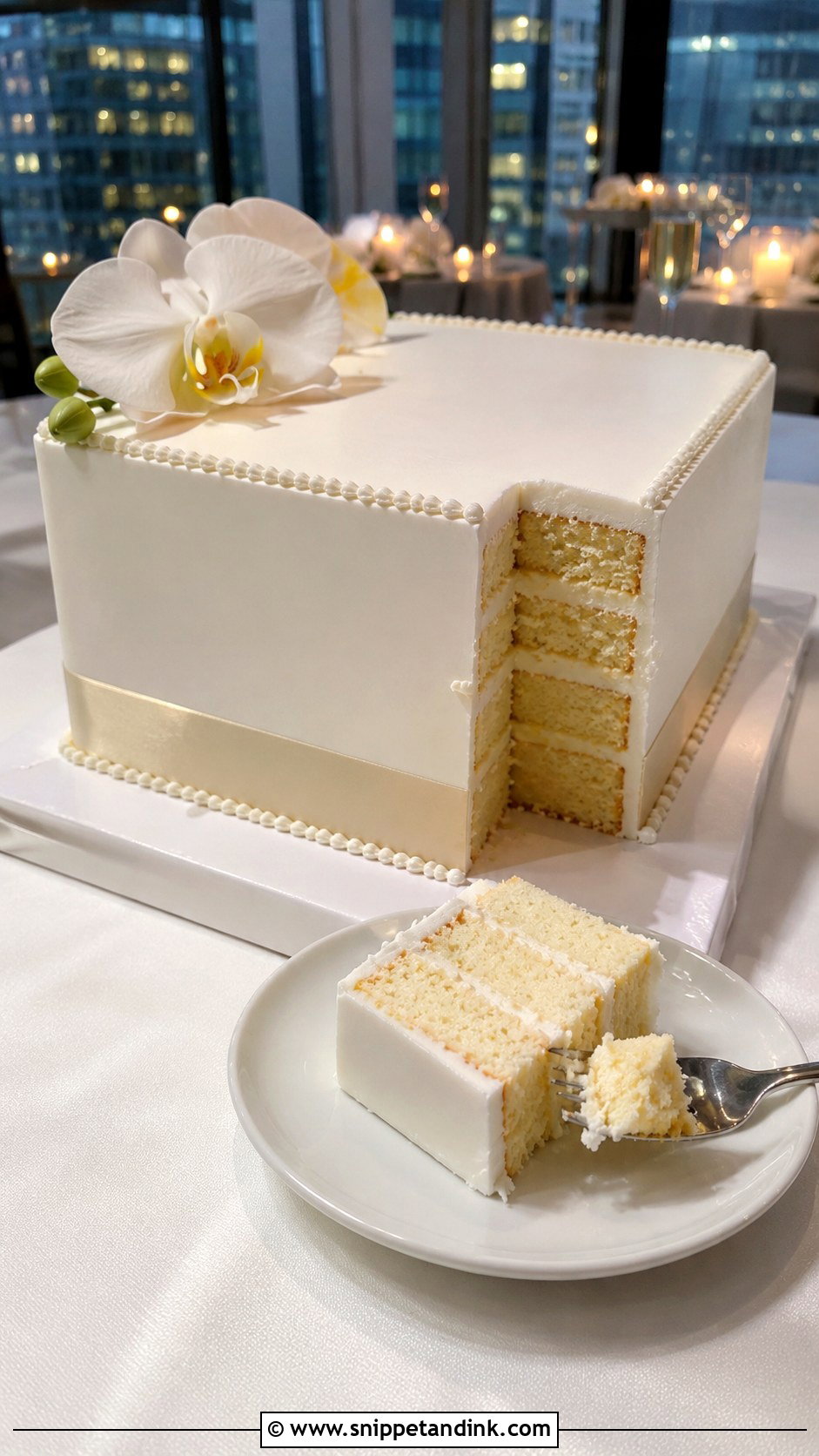
Square cakes give me straight lines, and straight lines make a modern composition easy. Smooth buttercream or fondant with very little decoration suits the shape best. Cut from a corner and the slice comes out crisp and graphic on a plain plate, with the full cake behind it. The one thing to watch is lens distortion: shoot a square cake too close with a wide lens and the edges bow, so I step back and zoom in.
12. Pearl Bow Wedding Cake Eating Photo
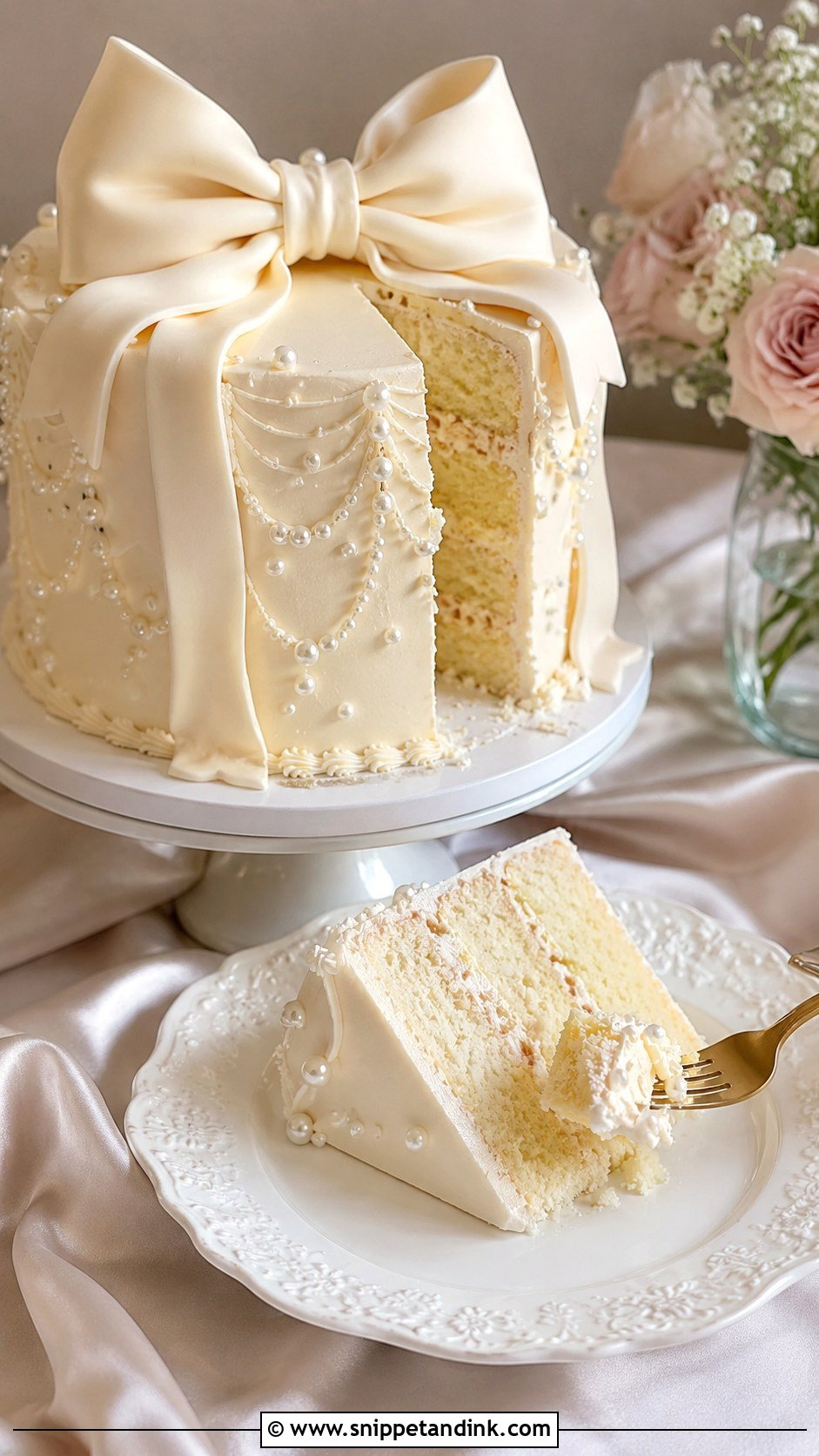
A bow is a front-facing detail, so the cake has to be turned to the camera before anything else happens. Ivory, blush and pale champagne all hold up; a stark white bow can blow out in bright light and lose its folds. I place the couple slightly to one side of the bow rather than in front of it. One offers the fork, the other holds the plate, and soft linen keeps the background quiet.
13. Naked Wedding Cake Slice Photo
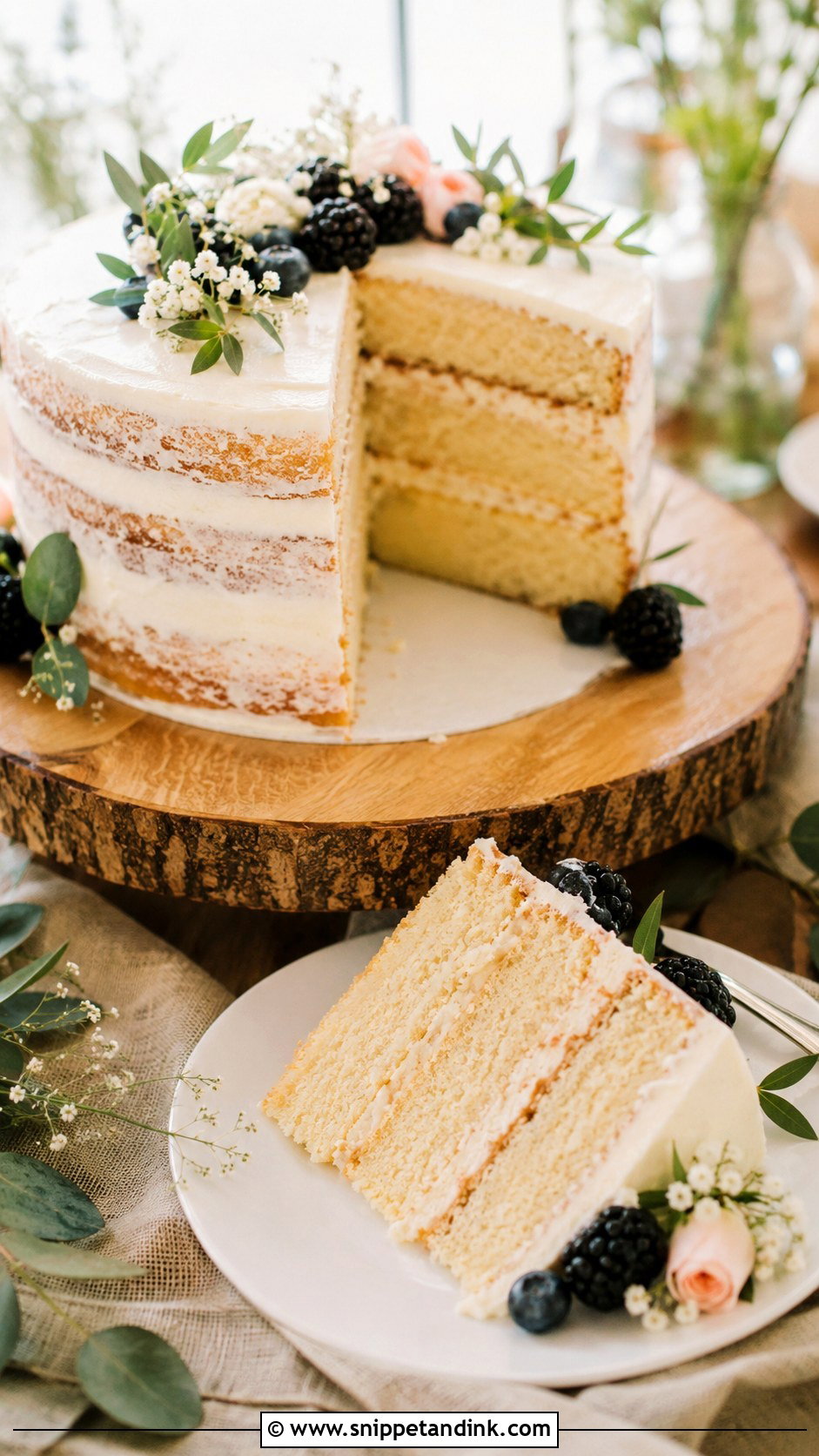
Naked cakes sell themselves in a slice photo, because the layers are already on show. Cut generously so the cream, berries or curd are visible, and share the bite straight from the plate. One honest caution: an unfrosted sponge dries out and its edges darken if it sits out for hours, especially outdoors. If your cake is on display all afternoon, ask the baker about timing so it still looks fresh when you cut it.
14. Monogram Wedding Cake Fork Photo
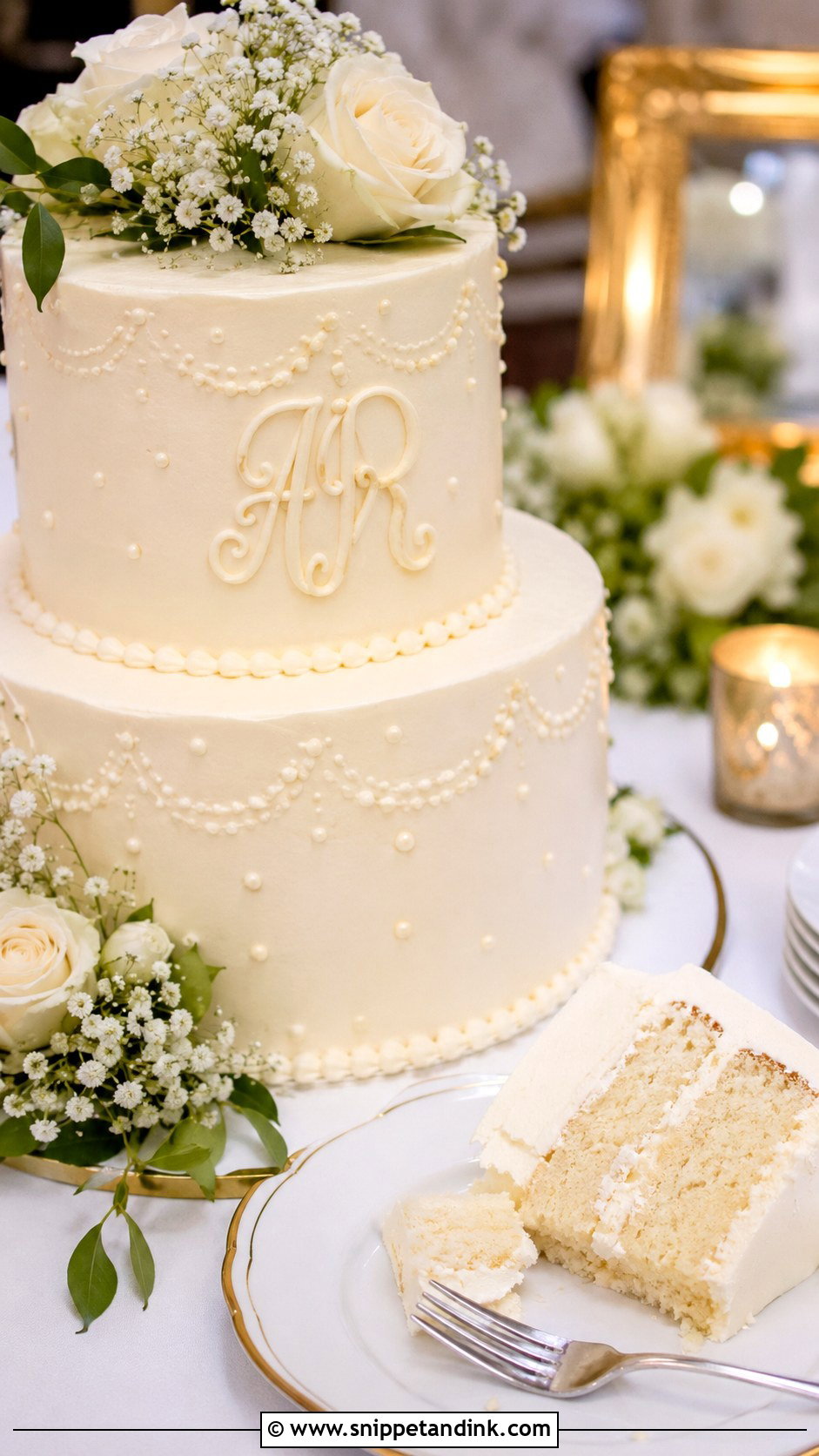
Monograms only work in the photo if they face the lens, which sounds obvious until someone turns the cake for the knife. Piped, embossed or a small topper, your couple’s initials need a smooth surface, so two tiers of buttercream or fondant suit them best. Share a bite from a plated slice off to the side and the initials stay readable in every frame.
15. Cupcake Wedding Cake Feeding Photo
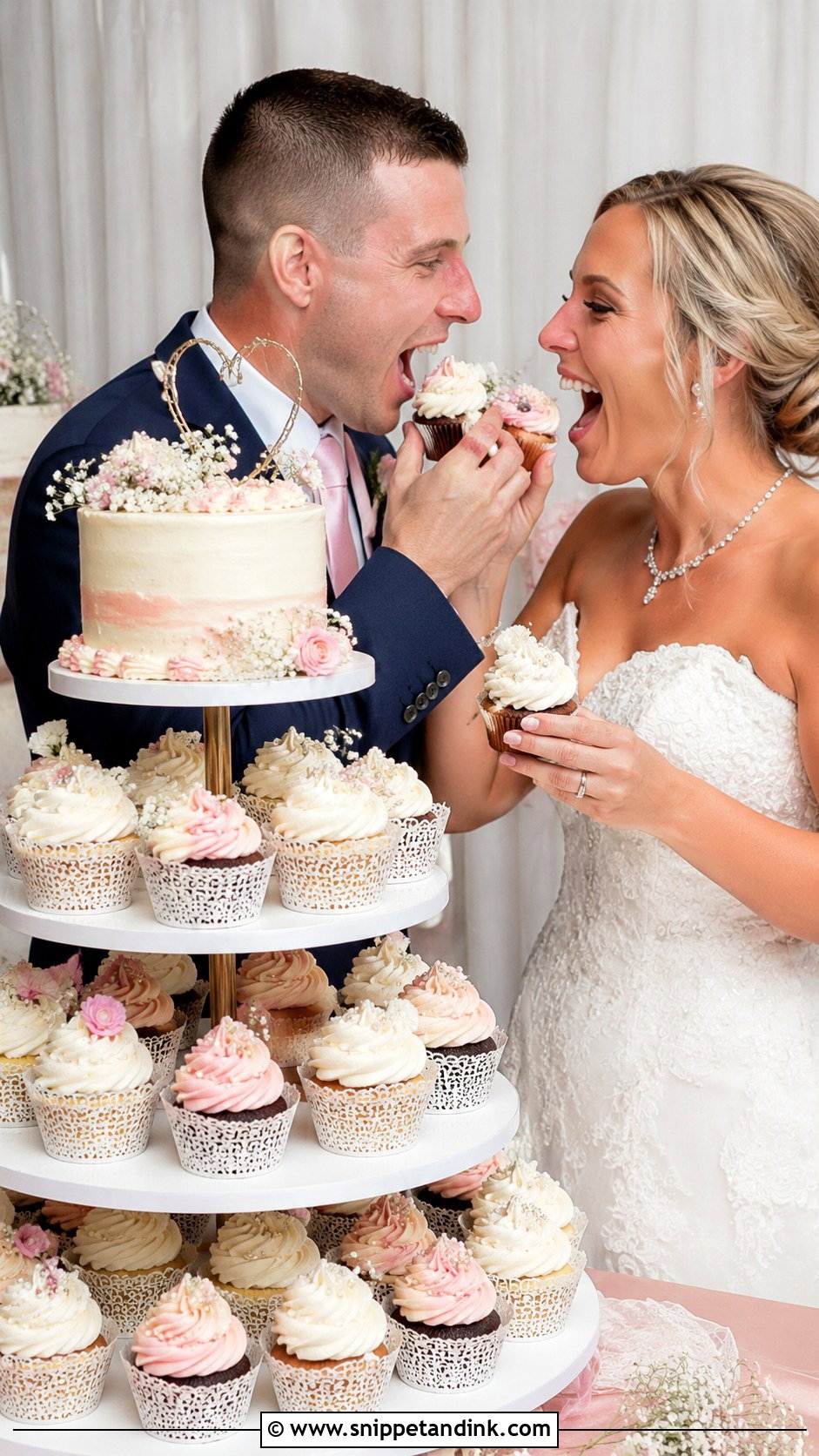
A cupcake wedding cake is the easiest version for nervous couples, because a cupcake is already in your hand. You can both bite at once, or one of you can offer a frosted piece of the small cutting cake on top. Matching frosting colors keep the tower from looking busy in a wide shot. The practical bonus: guests can take cupcakes the moment I’ve finished, so there’s no waiting for slicing.
16. Drip Wedding Cake Bite Photo
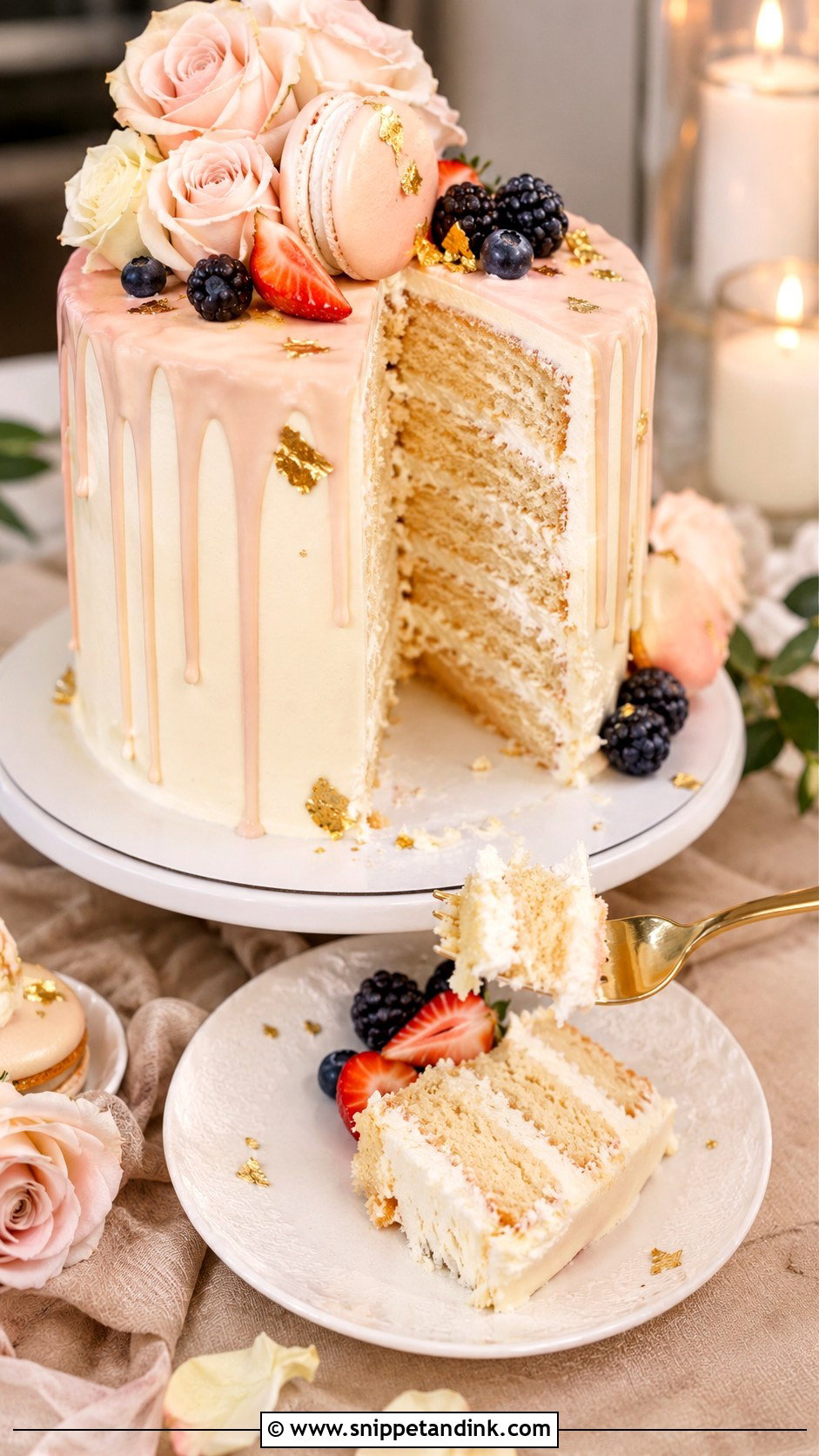
Drips catch light along their edges, which is why a drip wedding cake photographs with so much movement. White chocolate, caramel, blush glaze or dark chocolate all work if the frosting underneath is smooth. I shoot from an angle where the front drips are visible and cut the slice from the back. In a warm room a drip can keep creeping, so take the detail shots early, before the cutting, while the drip lines are still crisp.
17. Fruit Topped Wedding Cake Eating Photo
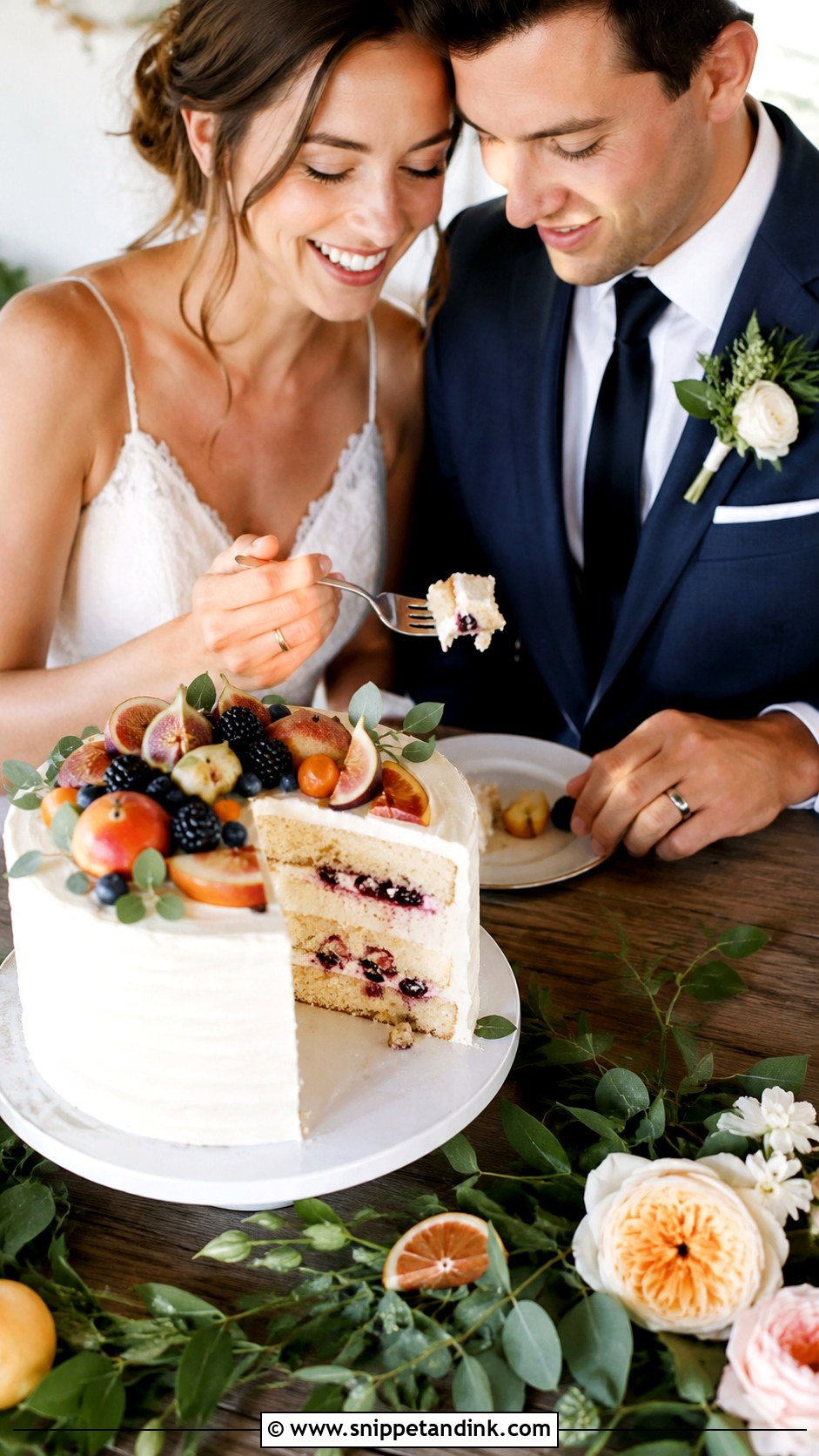
Fruit on top changes with the season: figs and cherries late summer, citrus in winter, berries most of the year. For the photo, cut a slice that includes some of the fruit, otherwise the bite looks unrelated to the cake. A sweetheart table works as well as the dessert table here, and it’s usually better lit. Ask the baker which fruits hold up; cut peaches and figs brown or weep faster than whole berries.
18. Textured Buttercream Wedding Cake Bite Photo
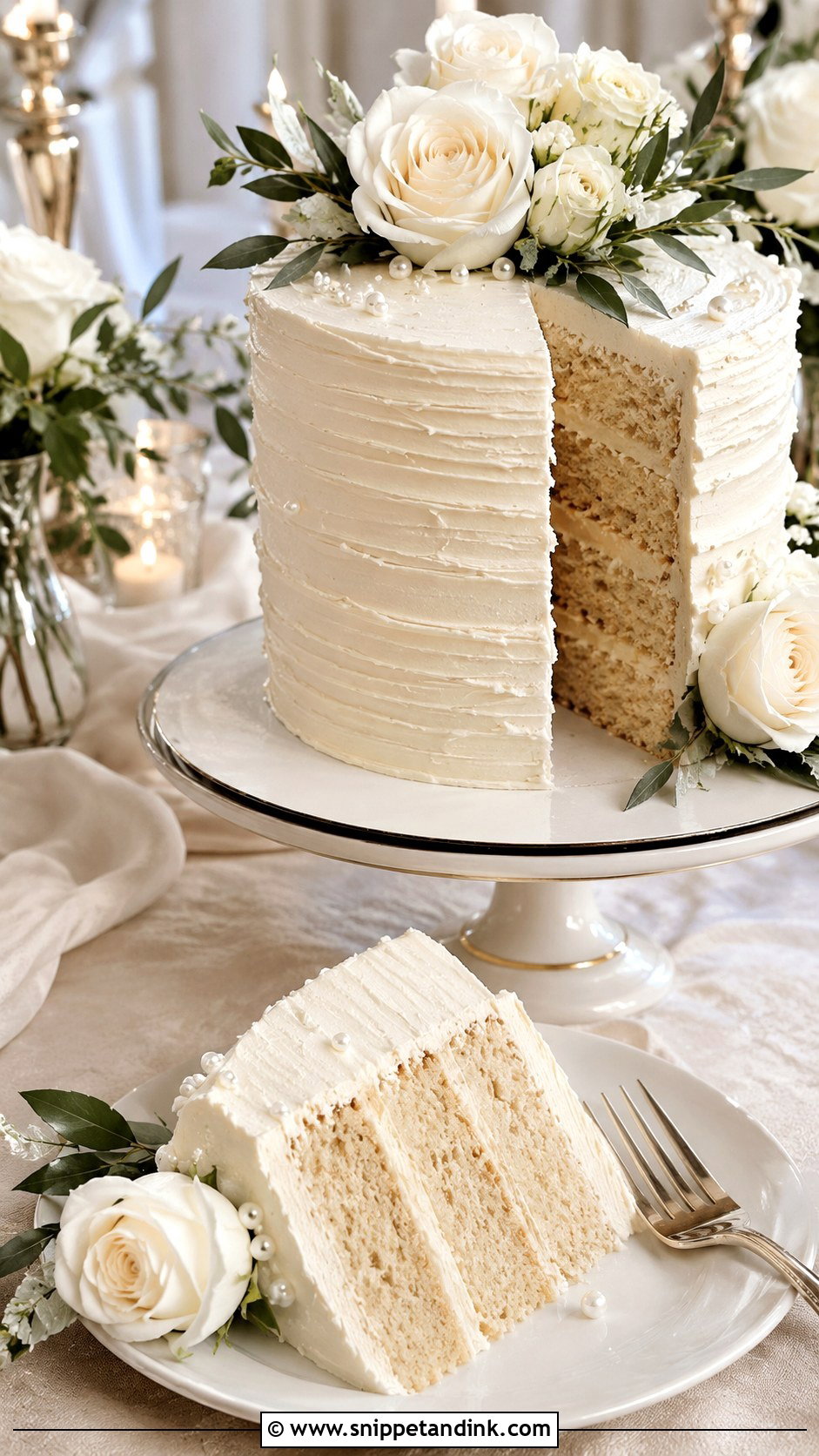
Texture is my favorite thing to light. Ridged, brushed or swirled buttercream gets depth from a light at the side and looks completely flat in front light, so I’ll often place the couple on the side of the cake away from the main light and let the texture fill the foreground. A tidy fork bite reads better here than smeared frosting, which hides the very texture you chose.
19. Sheet Wedding Cake Slice Photo
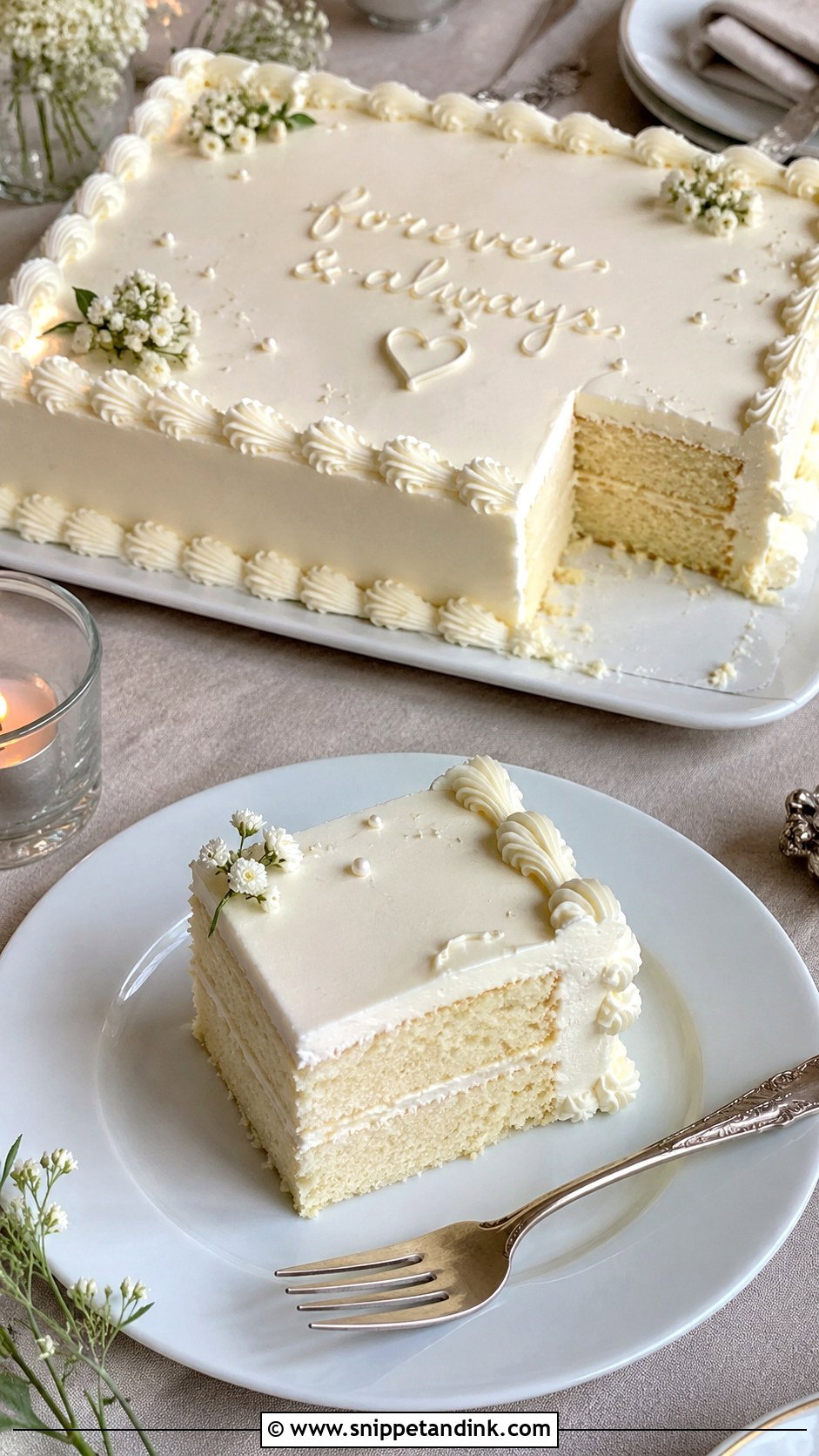
Sheet cakes get underestimated, and they photograph far better than their reputation suggests. A rectangle with smooth frosting, piped borders and a few fresh flowers looks warm in a family-style reception. Cut a square slice for the first bite, serve it on a nice plate and keep the full cake behind you. Linen and a couple of candles do the rest. A clean, generous square slice is what makes this one work in a photo.
20. Heart Shaped Wedding Cake Smash Photo
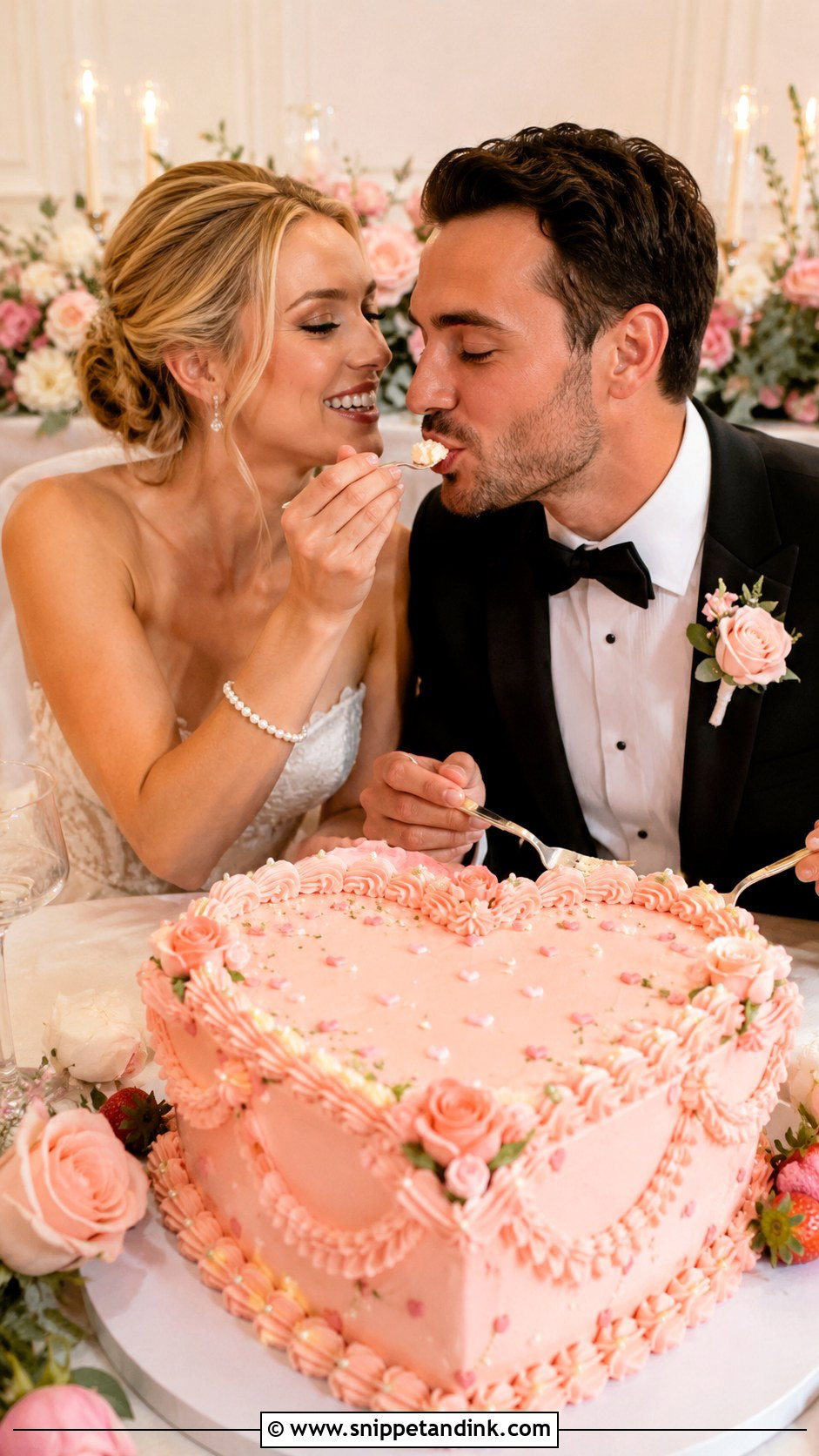
Smash photos are where I see the most regret, usually from whoever got the frosting in their eyelashes. A heart cake keeps things playful without chaos: smooth buttercream, piped border, a few flowers. Instead of a full smash, try a dab of frosting on the nose, crossed forks over the cake or a shared laugh mid-bite. I want the whole heart shape visible in the frame, so keep the cake to one small tier you can lean over easily.
Smash, Nibble or Fork? Agree Before the Knife Comes Out
This is a real conversation to have, ideally weeks before, not with a slice already in hand. Some couples love a messy smash. Others would be quietly furious to have frosting pushed into their makeup in front of two hundred guests. Both are fine. The bad photos come from one of you planning a smash and the other not knowing.
If you’re going for it
Keep the frosting to the chin and nose, away from eyes and lashes. Have damp napkins or wipes on the table before the cutting, not somewhere across the room. Brides wearing a light dress should lean forward over the plate, so anything that falls lands on the table rather than the bodice. And let your makeup artist know if you’ll need a touch-up straight after.
If you’d rather keep it neat
Use a small dessert fork, not the cake server, and cut a slice thin enough to lift in one go. Feed each other slowly; a hand cupped under the fork reads as tender and catches any crumbs. I usually shoot a burst here, so the sweetest frame tends to be the one just after the bite, when you both start laughing.
What Makes a Cake Photo Worth Printing
A cake eating photo is really a photo of the two of you, with the cake setting the mood. A heart cake leans romantic, chocolate leans indulgent, a mini cake reads intimate and fruit feels relaxed. Decide on the smash question together, keep your hands busy with a fork or a plate, cut from the back, and look at each other rather than at me. Those small choices matter more than the cake style, and they’re what turn a minute and a half at the table into a frame you’ll keep.
You'll Like These Ideas:


Leave a Reply