
Put a cake on a pedestal and people walk toward it. The stand adds height, gives the frosting a frame and makes even a plain cake look planned. When I map out a reception, the pedestal is one of the details I settle with the baker early, because its width, strength and finish affect the cake design as much as the décor. Some couples want a tall white cake on a classic stand; others want vintage piping, fruit, pearls, color or something sculptural. Below are twenty pedestal pairings I’d happily put in a room, with the practical checks I make for each.
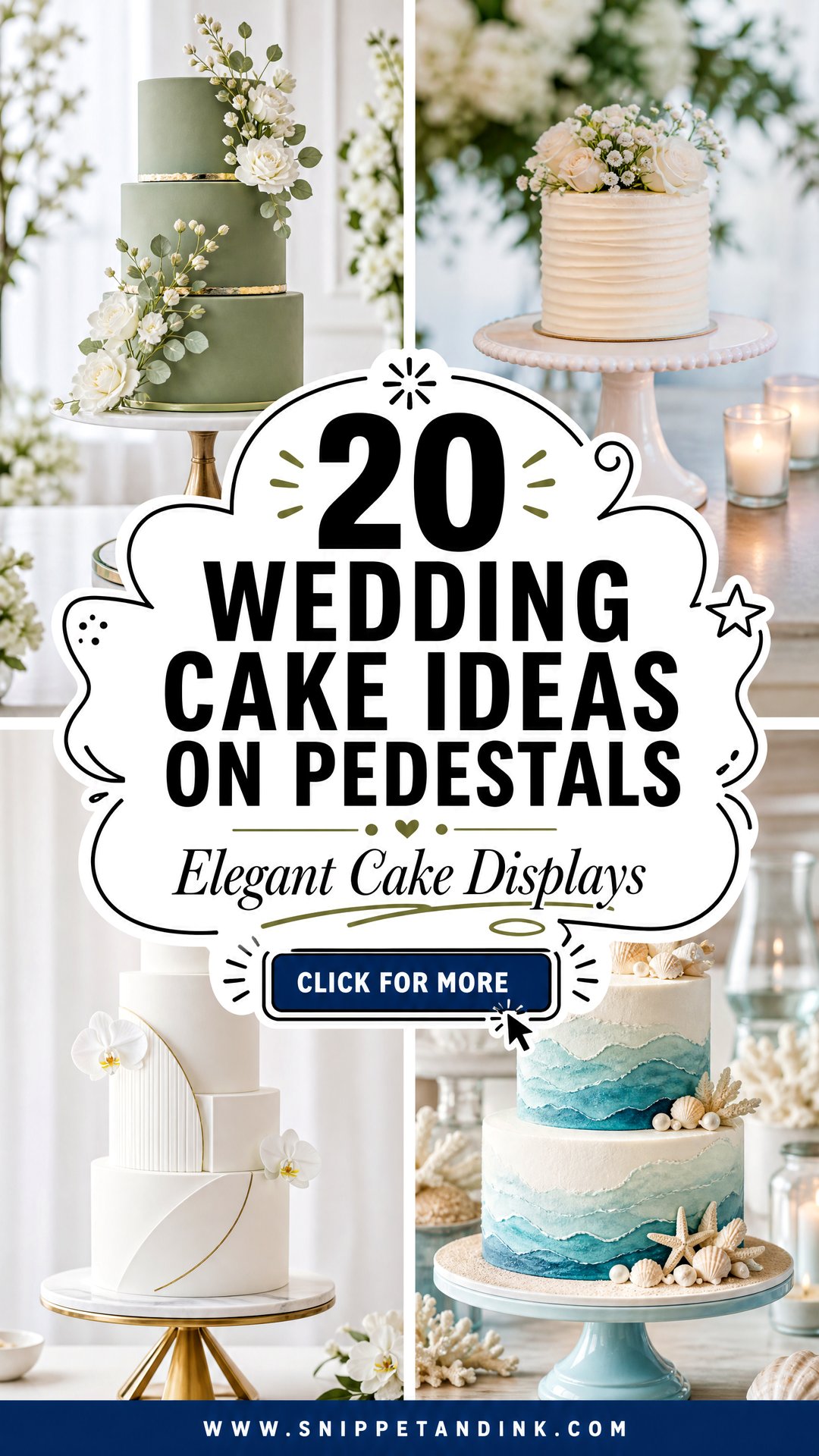
Sizing a Pedestal So the Tiers Don’t Wobble
Most of the stands couples fall in love with online are made for a single cake, not a three tier wedding cake. Before anything is ordered, I go through these checks with the baker:
- Width: the top plate should be a couple of inches wider than the bottom tier’s board, so nothing overhangs and there is room for a ring of flowers.
- Strength: glass and thin ceramic stands are fine for one or two tiers. For anything heavier, I want metal, solid wood or a stand the baker supplies and has used before.
- Height: a pedestal adds several inches to the total. Check it against the backdrop and the photographer’s angle, and remember someone has to cut the cake at that height.
- Stability: the base should be wide and flat, and the stand needs to sit on a level table, not a wobbly folding one.
If you’re buying a stand yourself, send its exact measurements to your baker before they design the cake. I’d rather adjust the tier sizes than discover at setup that the bottom tier doesn’t fit.
1. White Tiered Wedding Cake on Pedestal
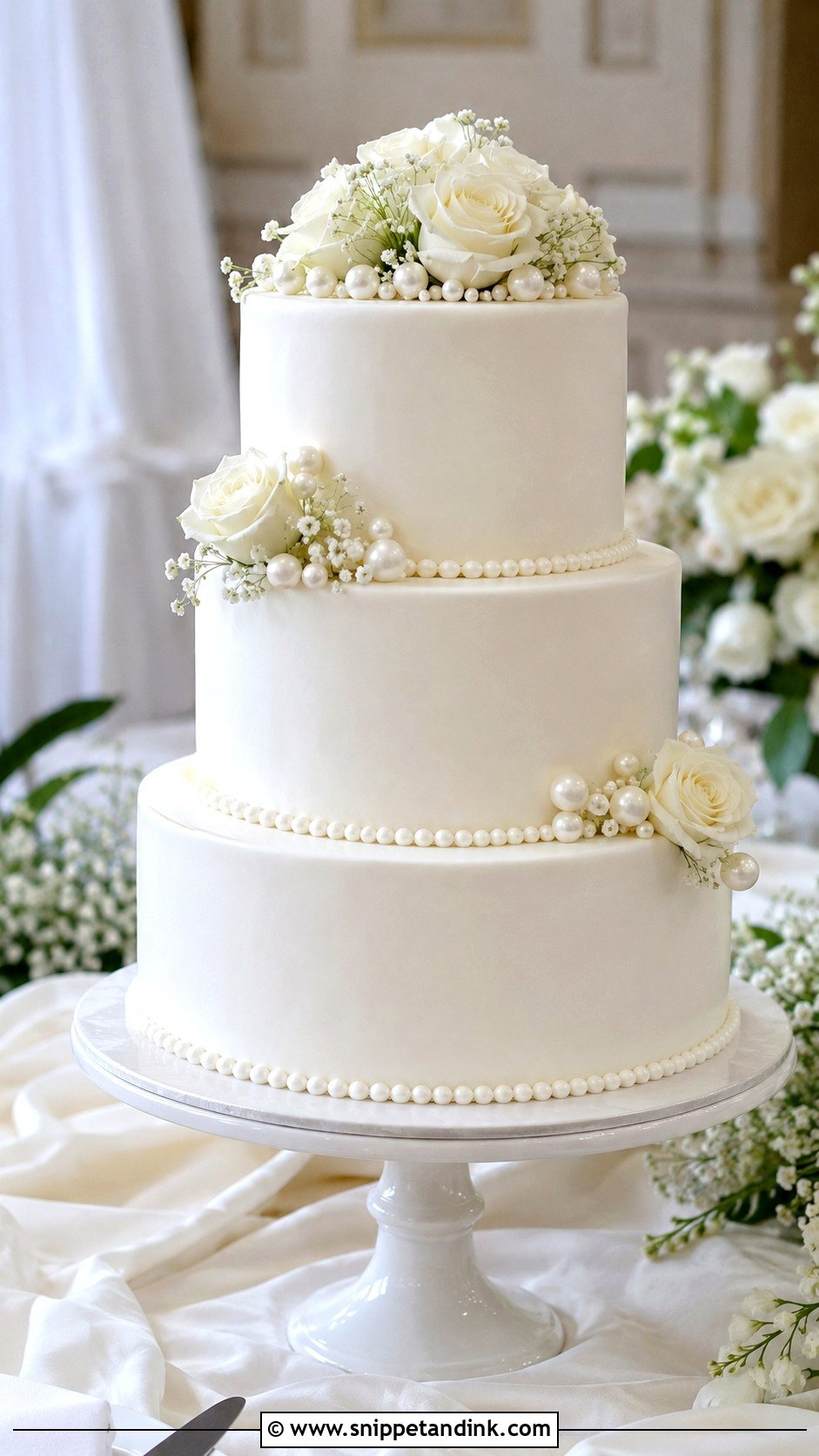
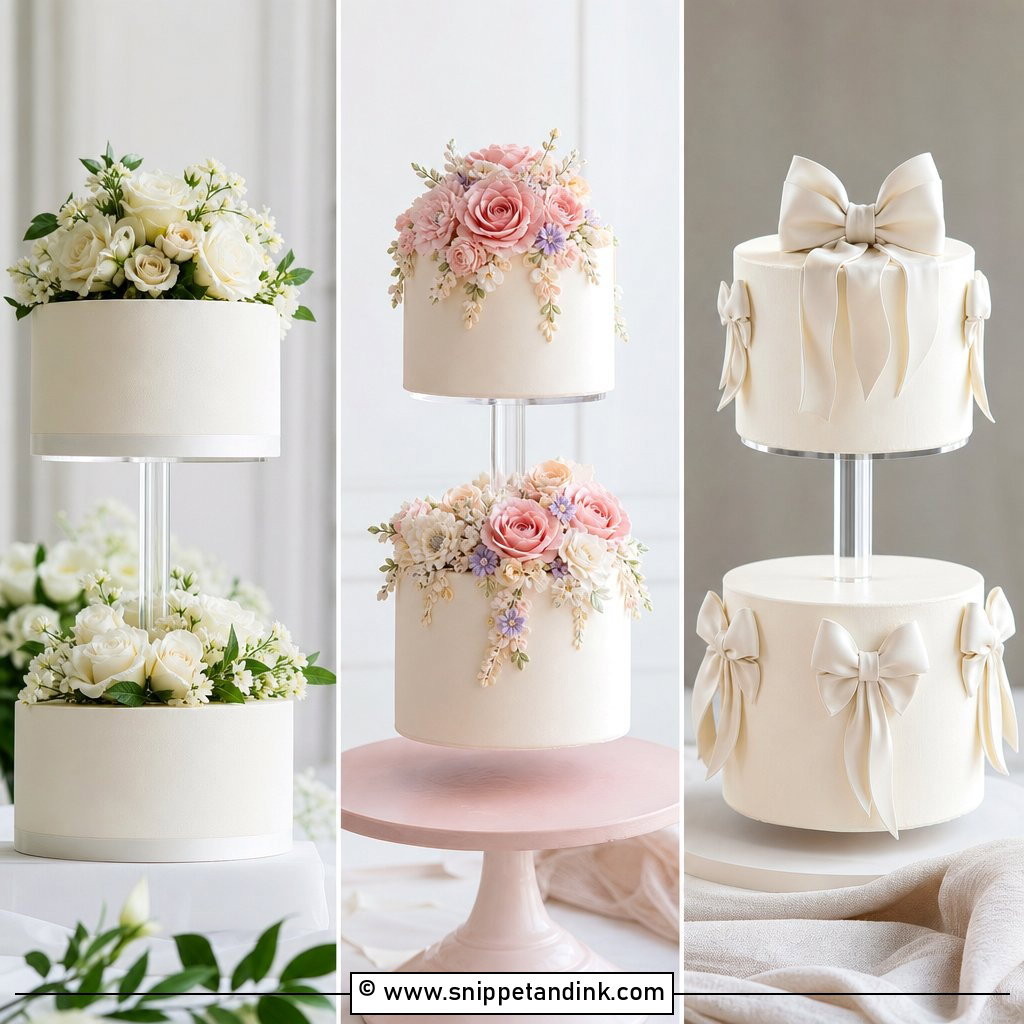
White tiers on a pedestal fit a ballroom, a chapel, a barn or a gallery without any adjustment, which is why I suggest them when a couple can’t decide. Smooth buttercream or fondant keeps it formal, and the stand gives height so the cake doesn’t need heavy decoration. Ask for a stand slightly wider than the bottom tier; one that is too narrow makes the cake look like it is perched. A ring of white roses, orchids or ranunculus around the base finishes it.
2. Vintage Wedding Cake on Pedestal
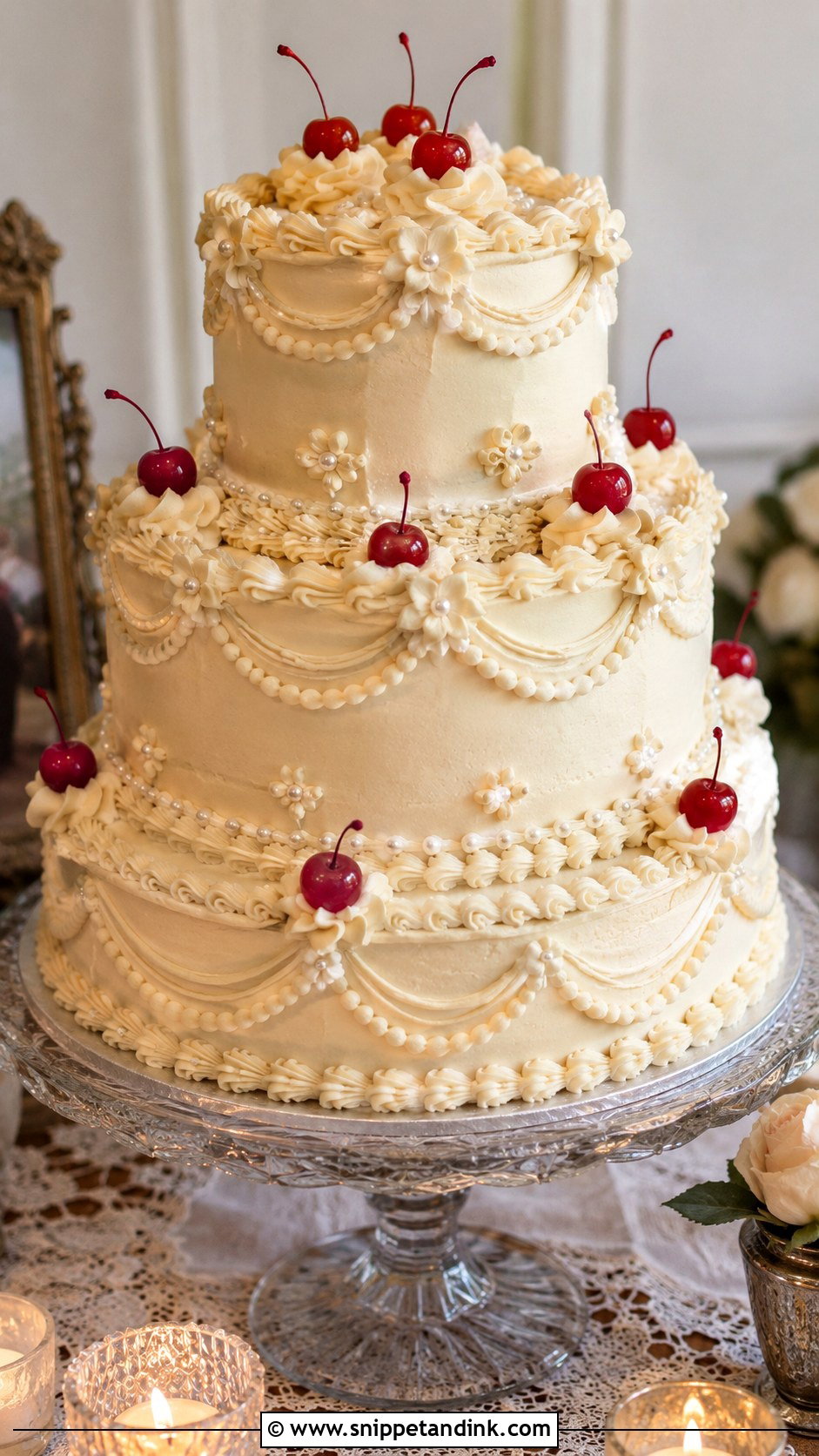
Vintage cakes need the right stand or they tip into costume. Shell borders, piped swags, pearl dots and buttercream ruffles look deliberate on a cut-glass, silver or ceramic pedestal. I keep the cake height moderate so guests can see the piping at eye level. Ivory, blush, pale blue and champagne all suit it, and a few cherries or sugar pearls add the finishing note. Candlelight makes those ridges throw small shadows, which is when this style looks its best.
3. Floral Wedding Cake on Pedestal
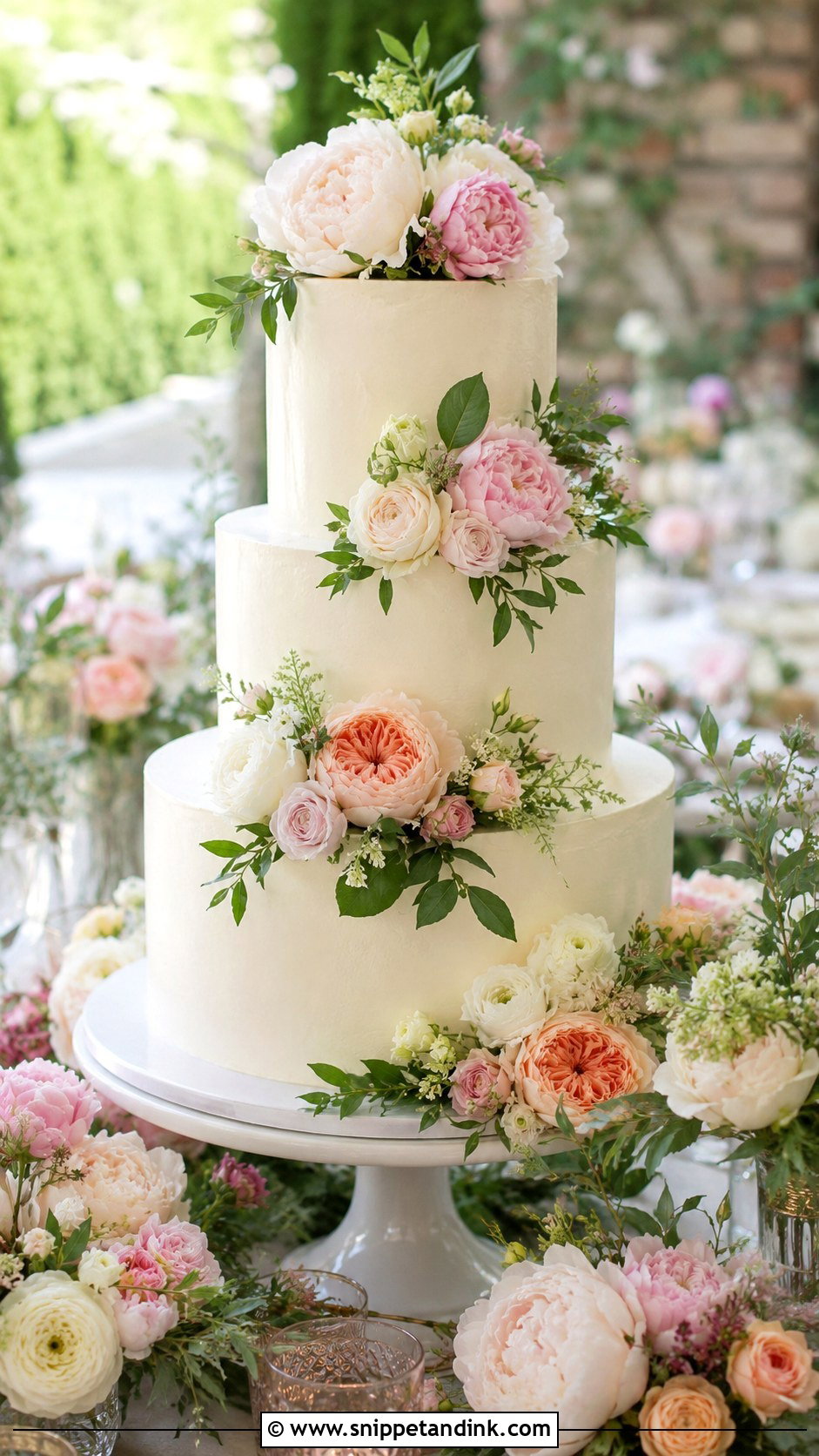
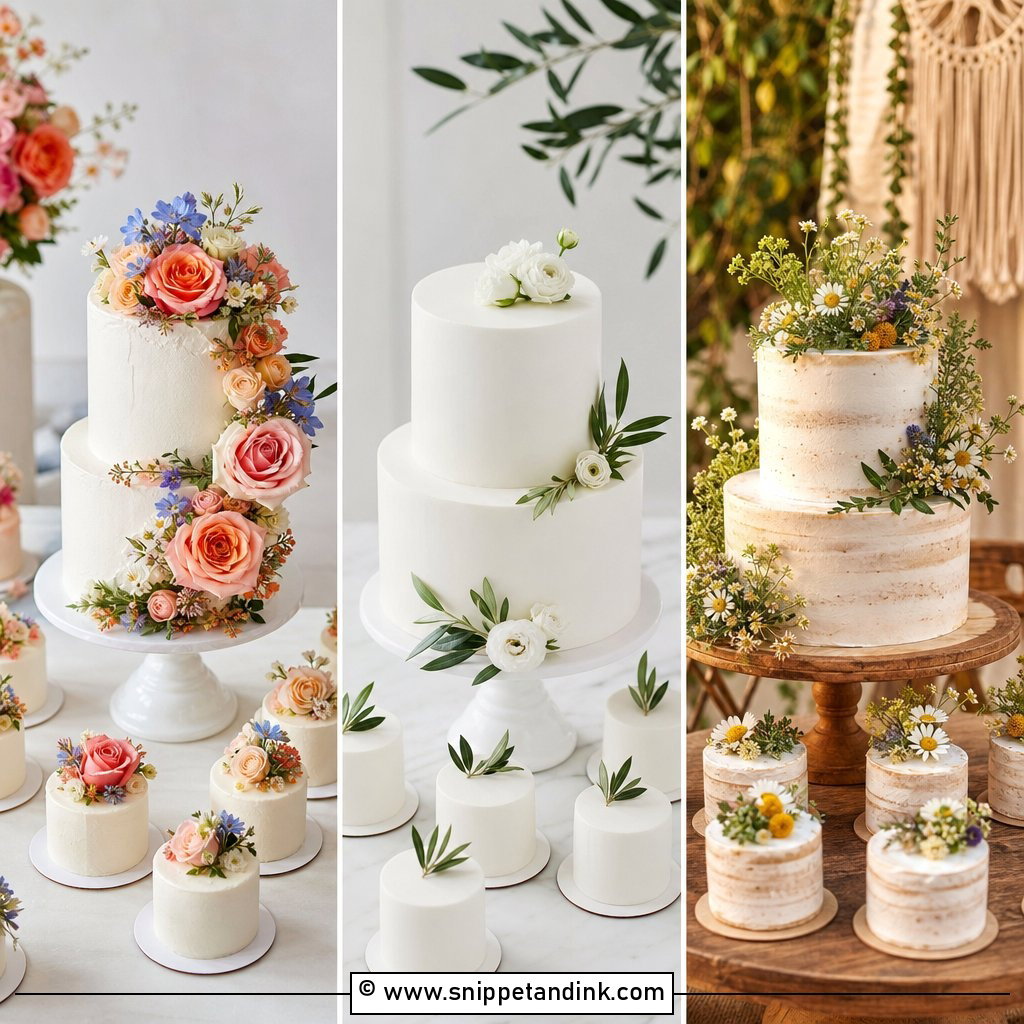
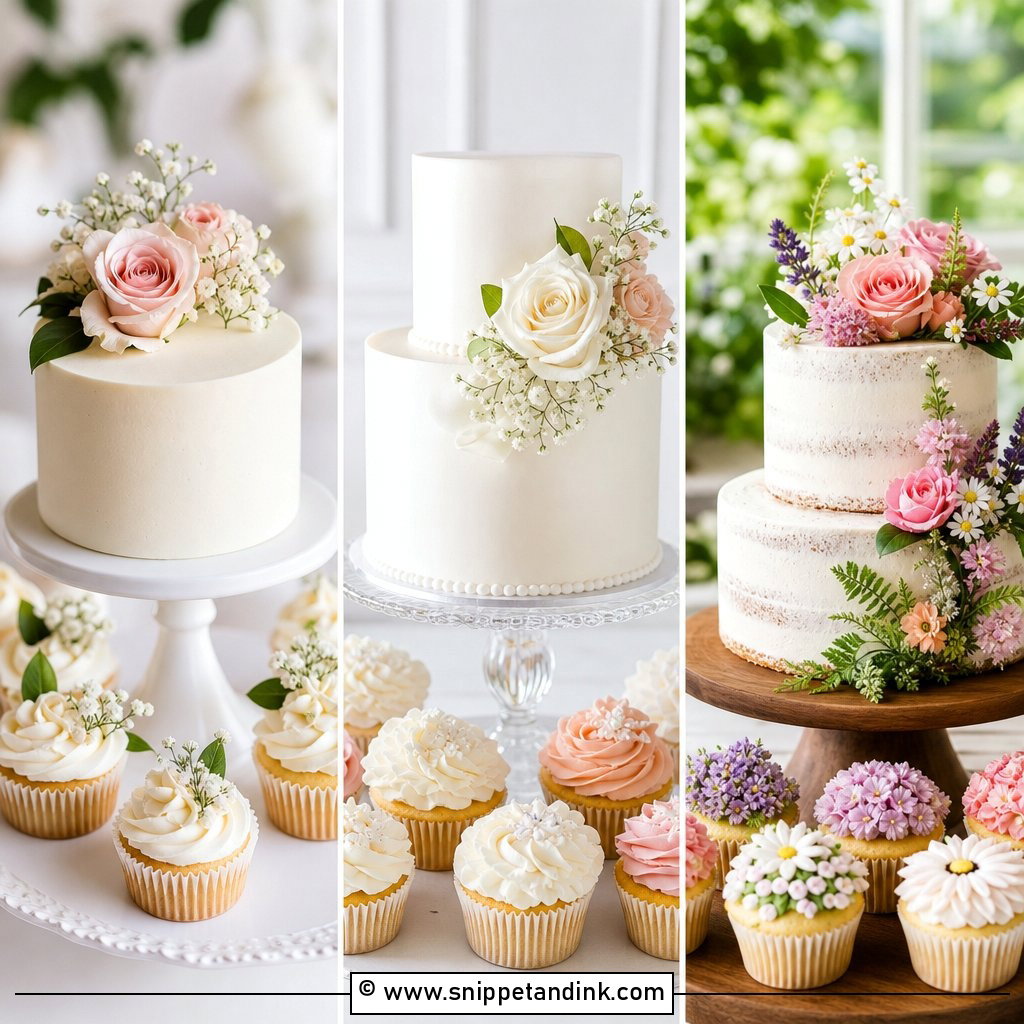
A raised stand gives flowers somewhere to go: trailing over the edge, clustered at one side or framing the base, all without hiding the cake. Ivory buttercream with garden roses, peonies or lisianthus is the classic version. Sweet peas are toxic, so if a couple wants them, I ask the florist to keep them around the stand rather than on the tiers. Coordinate colors with the bouquet and keep greenery trimmed. On a pedestal, loose greenery hangs down and gets brushed by every passing guest.
4. Buttercream Wedding Cake on Pedestal
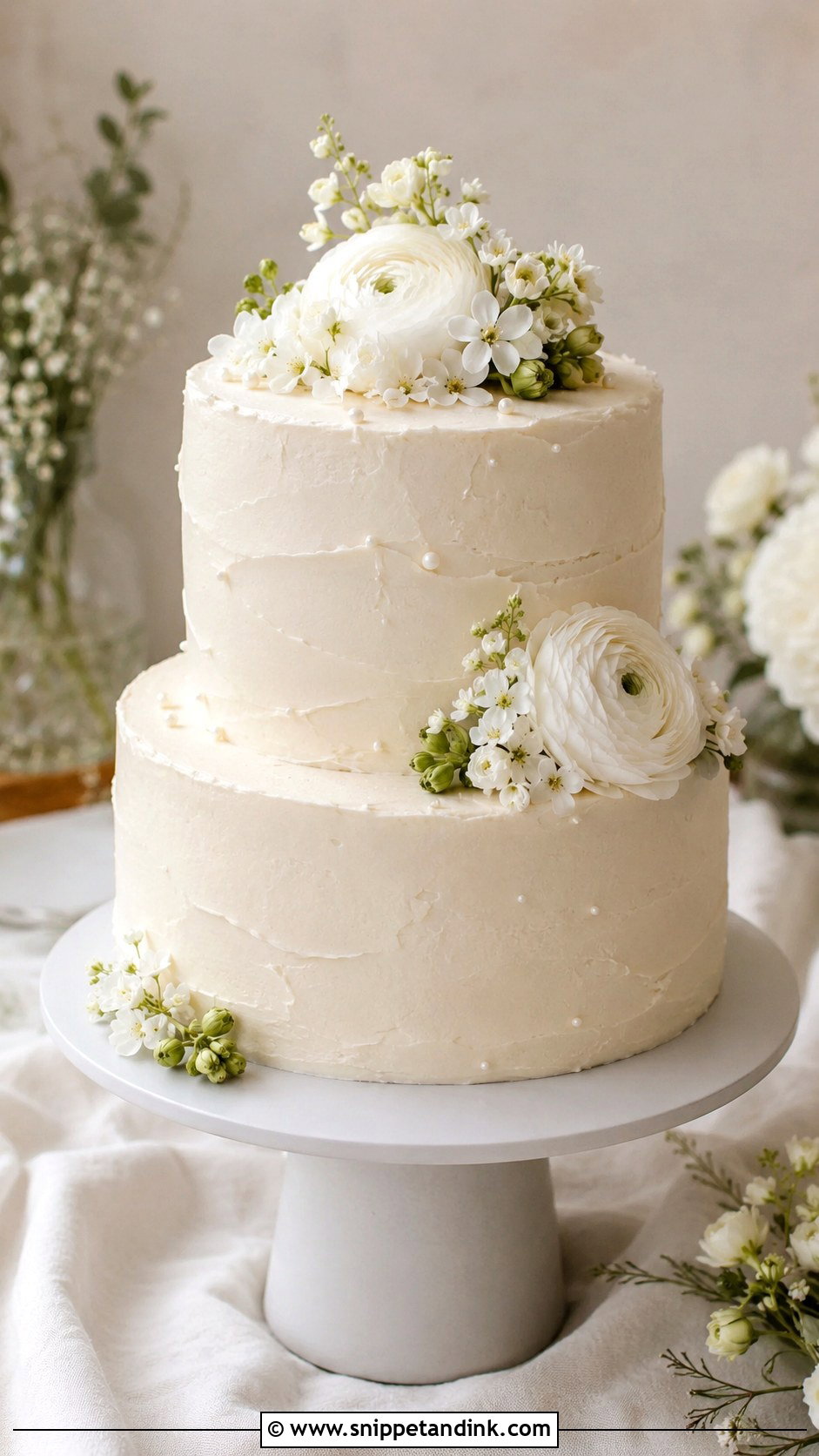
Buttercream on a pedestal can go smooth and sharp, softly textured with spatula marks, or loose and rustic. A white ceramic or wood stand shows that texture best. It takes almost any flavor, vanilla bean, lemon, almond or chocolate, and most guests prefer eating it over fondant. My one check is the room. Buttercream softens in warm rooms and near candles, so I keep pedestal cakes out of direct sun and away from heaters and open flames.
5. Pearl Wedding Cake on Pedestal
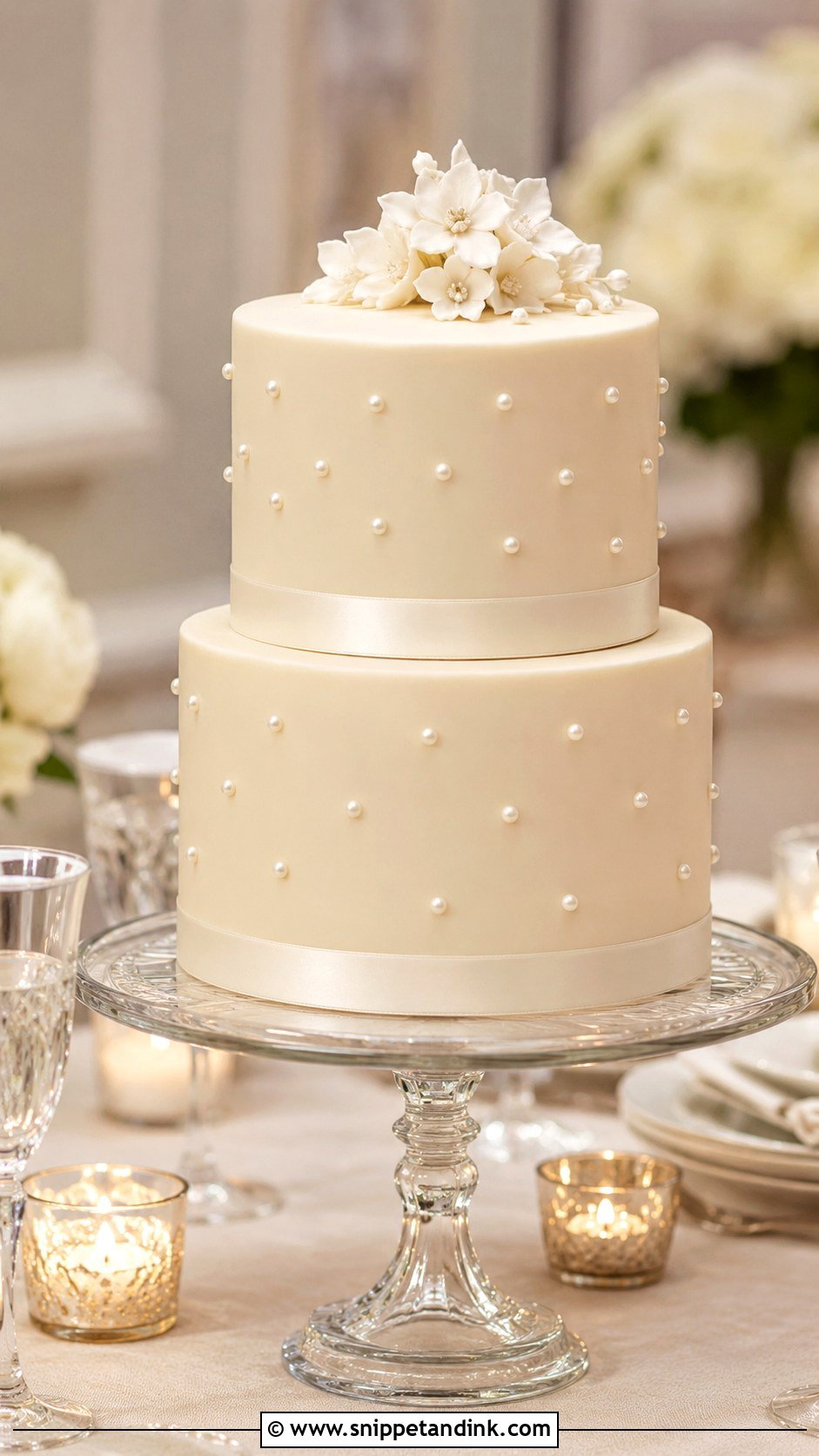
Pearls only work if people can see them, and a pedestal lifts them right into view. Bakers scatter edible pearls over buttercream or set them in neat lines around each tier. I keep the cake white, ivory or champagne and the stand glass or a mother-of-pearl finish. Satin linens, simple florals and warm candlelight around it are enough. One practical note: hard sugar pearls are crunchy, so I let the caterer know they’re there.
6. Gold Wedding Cake on Pedestal
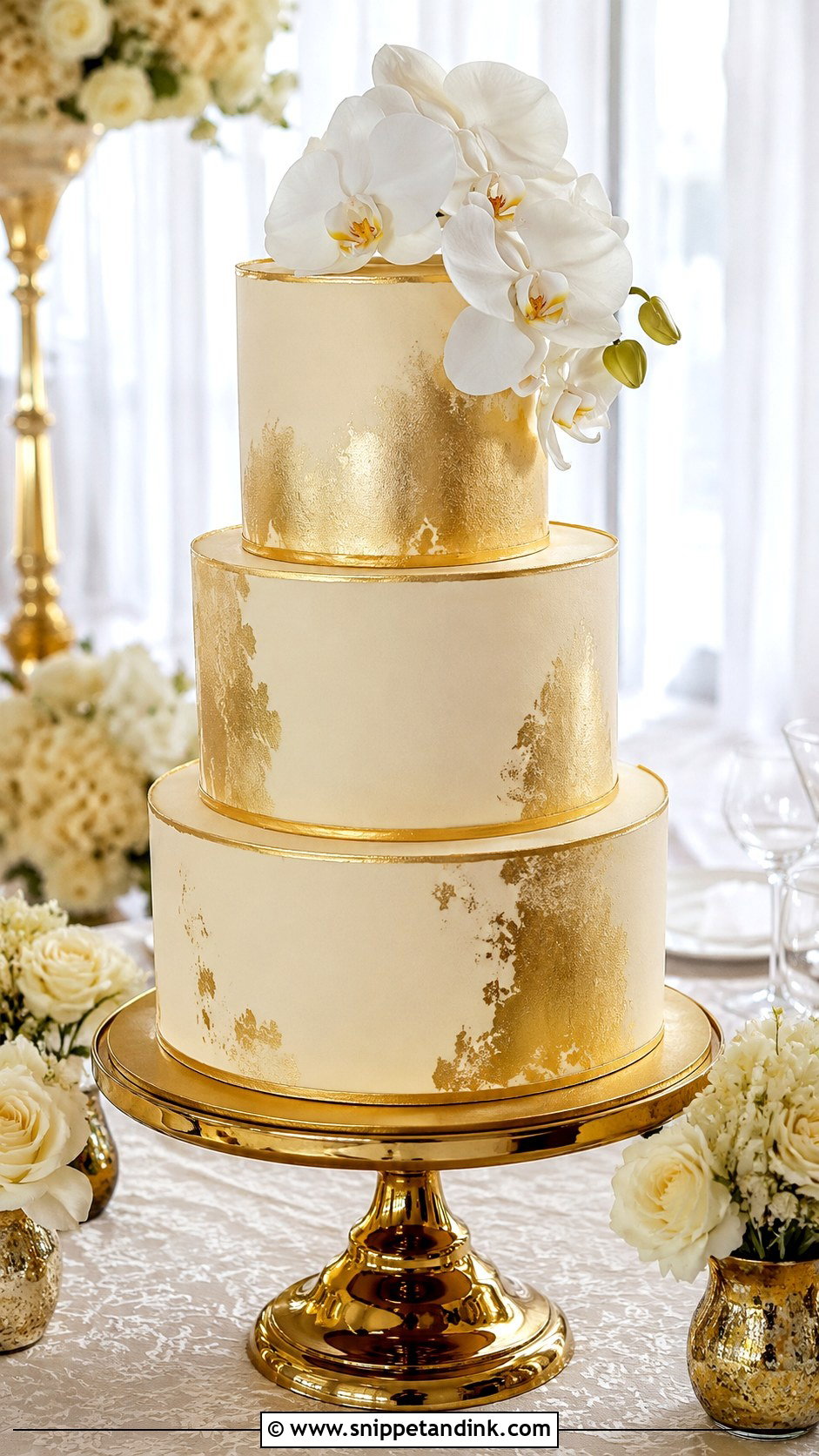
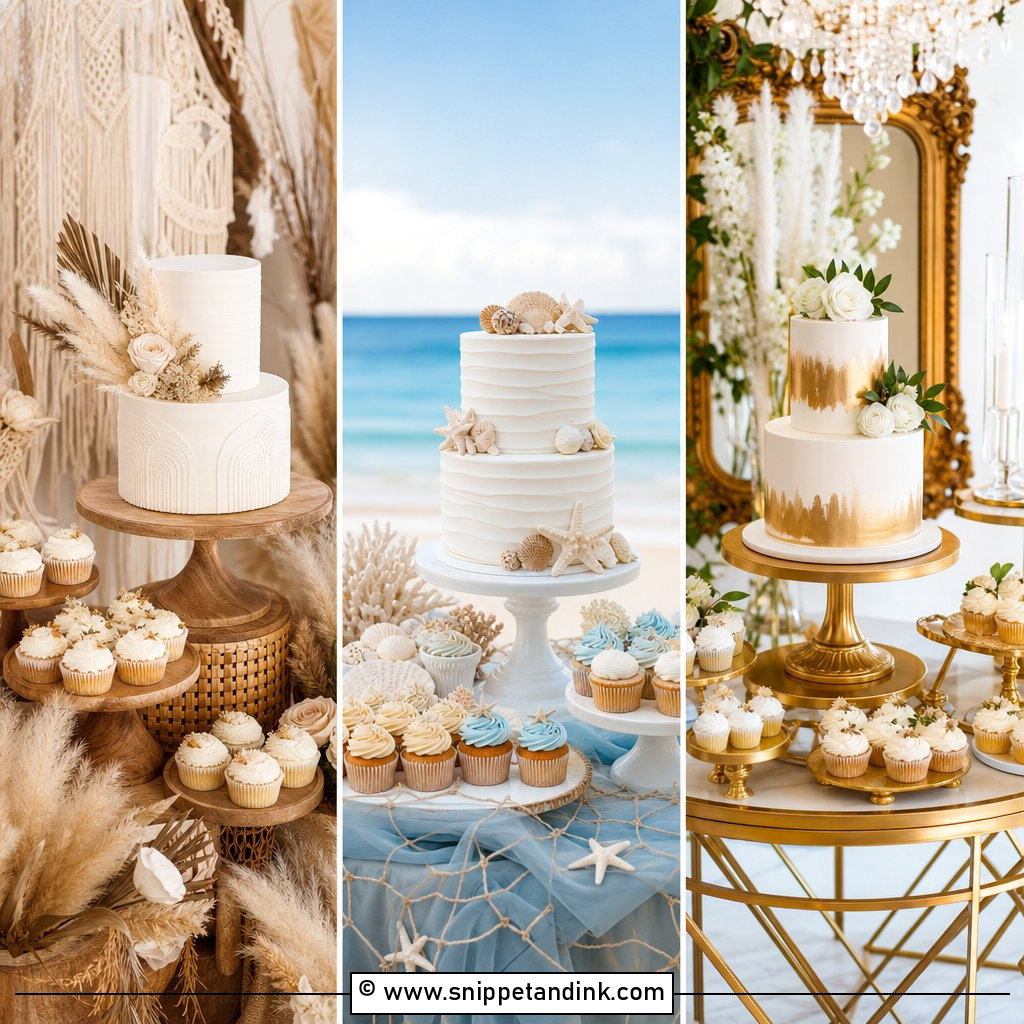
Gold works best in small doses: a painted bottom tier, a thin metallic edge, gold leaf flecks or a brushed finish. White with gold reads classic; a champagne cake looks warmer. A gold pedestal matches everything together, while a white stand makes the metallic details stand out more. I keep the flowers minimal. Under ballroom lighting, gold photographs warm and bright, and too many other details just compete with it.
7. Black And White Wedding Cake on Pedestal
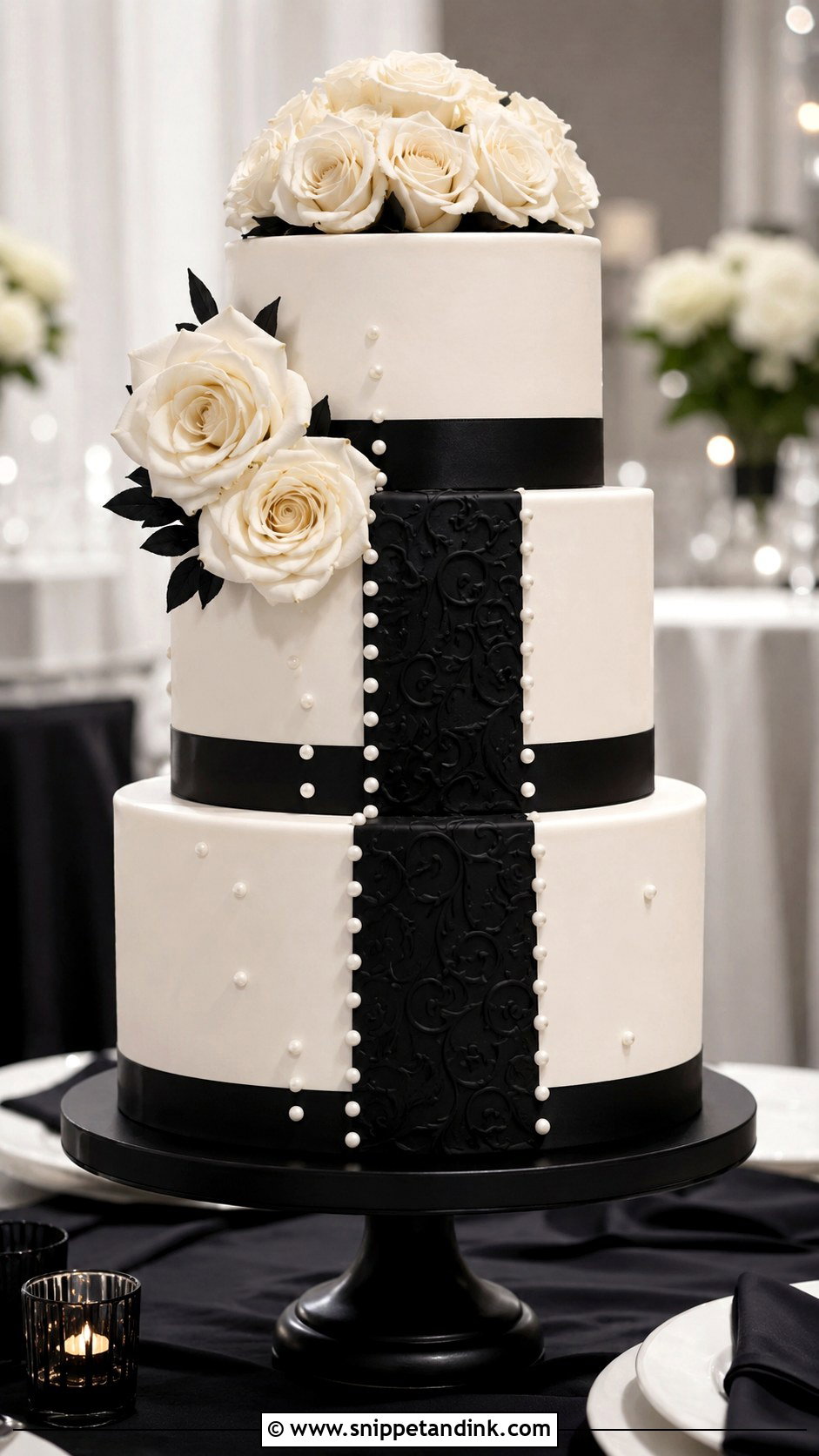
Black and white is the sharpest contrast you can put on a cake table, and it suits black-tie dress and a modern room. White tiers with black ribbon look classic; black fondant tiers with white flowers are more dramatic. The stand should stay quiet so the cake doesn’t look heavy: white marble, clear acrylic or matte black. Very dark icing takes a lot of coloring, which can stain mouths, so I usually advise keeping black to the outside details.
8. Blue Wedding Cake on Pedestal
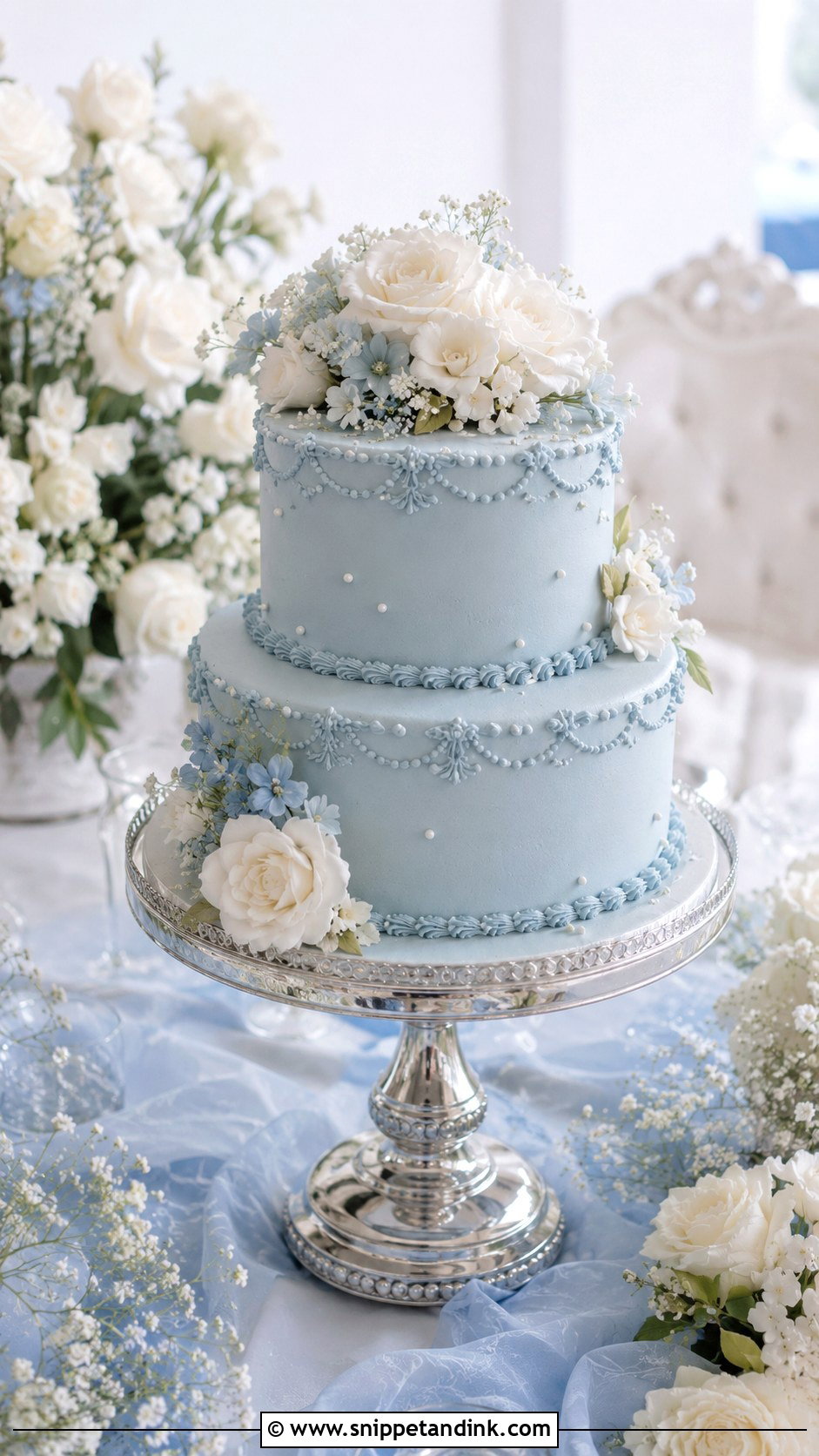
Blue tends to vanish against a white tablecloth, and that is where the pedestal helps: it separates the cake from the linen. Pale blue suits coastal and garden weddings; dusty blue sits well beside gray, white and silver. Smooth buttercream, fondant panels or vintage piping all take the color. I balance it with white flowers or sugar blooms and choose a white, glass or silver pedestal to keep the display light.
9. Green Wedding Cake on Pedestal
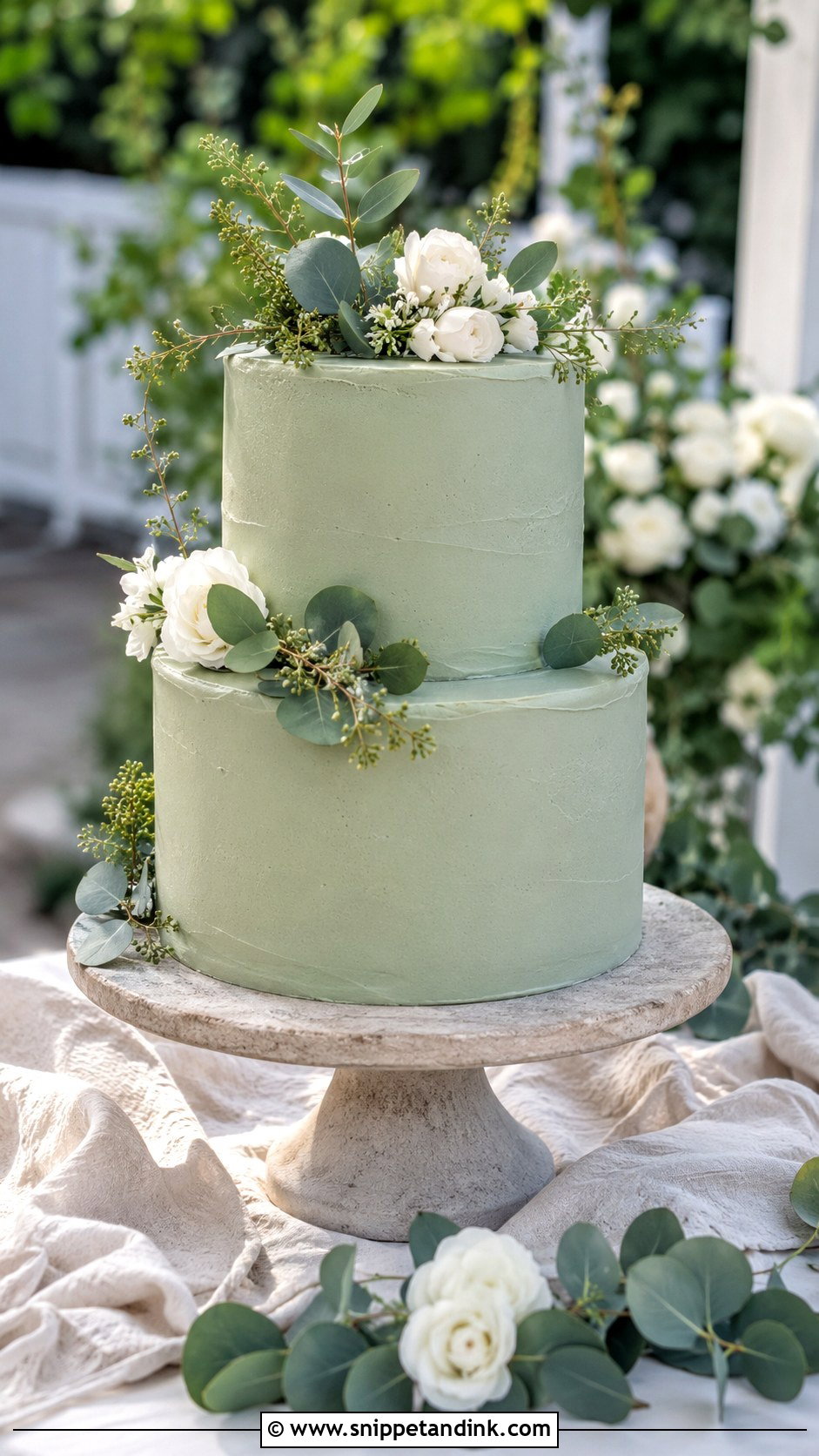
Sage, olive, pistachio, and eucalyptus tones look calm at an outdoor reception. Smooth green buttercream reads minimal; pressed greenery or white flowers soften it. Here the stand sets the mood more than usual: stone feels organic, wood feels rustic, and white keeps it crisp. I like pairing it with herb sprigs on the tables and a greenery garland along the cake table edge. Ask your baker for a color sample in daylight, because green shades shift a lot under indoor lighting.
10. Square Wedding Cake on Pedestal
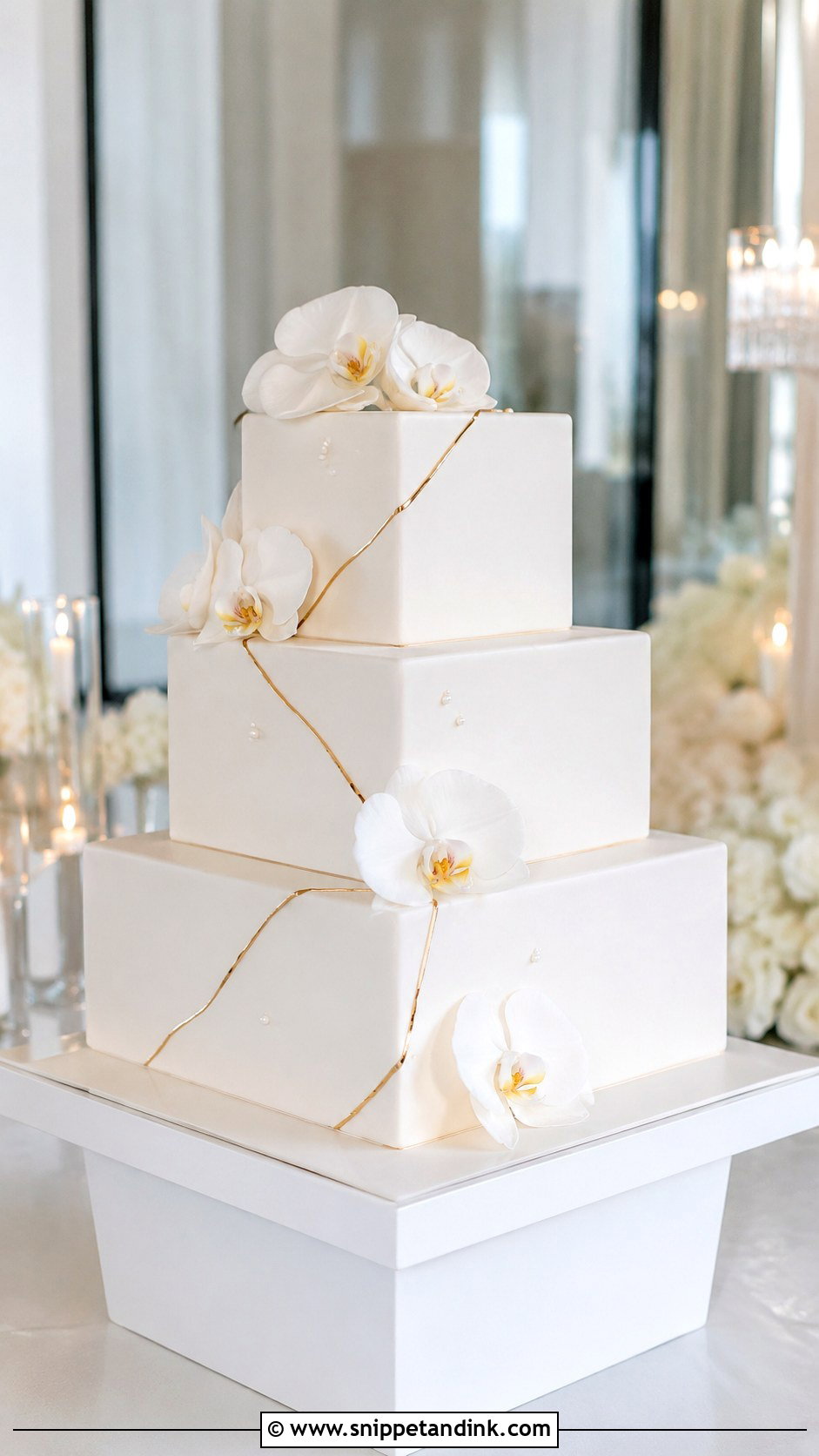
Square tiers look architectural, but a square cake on a round pedestal needs the stand to be wide enough that the corners don’t hang over the edge. I check the stand diameter against the corner-to-corner width of the base tier, not its side. Fondant or sharp buttercream, white, ivory or soft gray, with orchids or a thin metallic line, keeps it modern. It suits a city venue or a contemporary room.
11. Round Wedding Cake on Pedestal
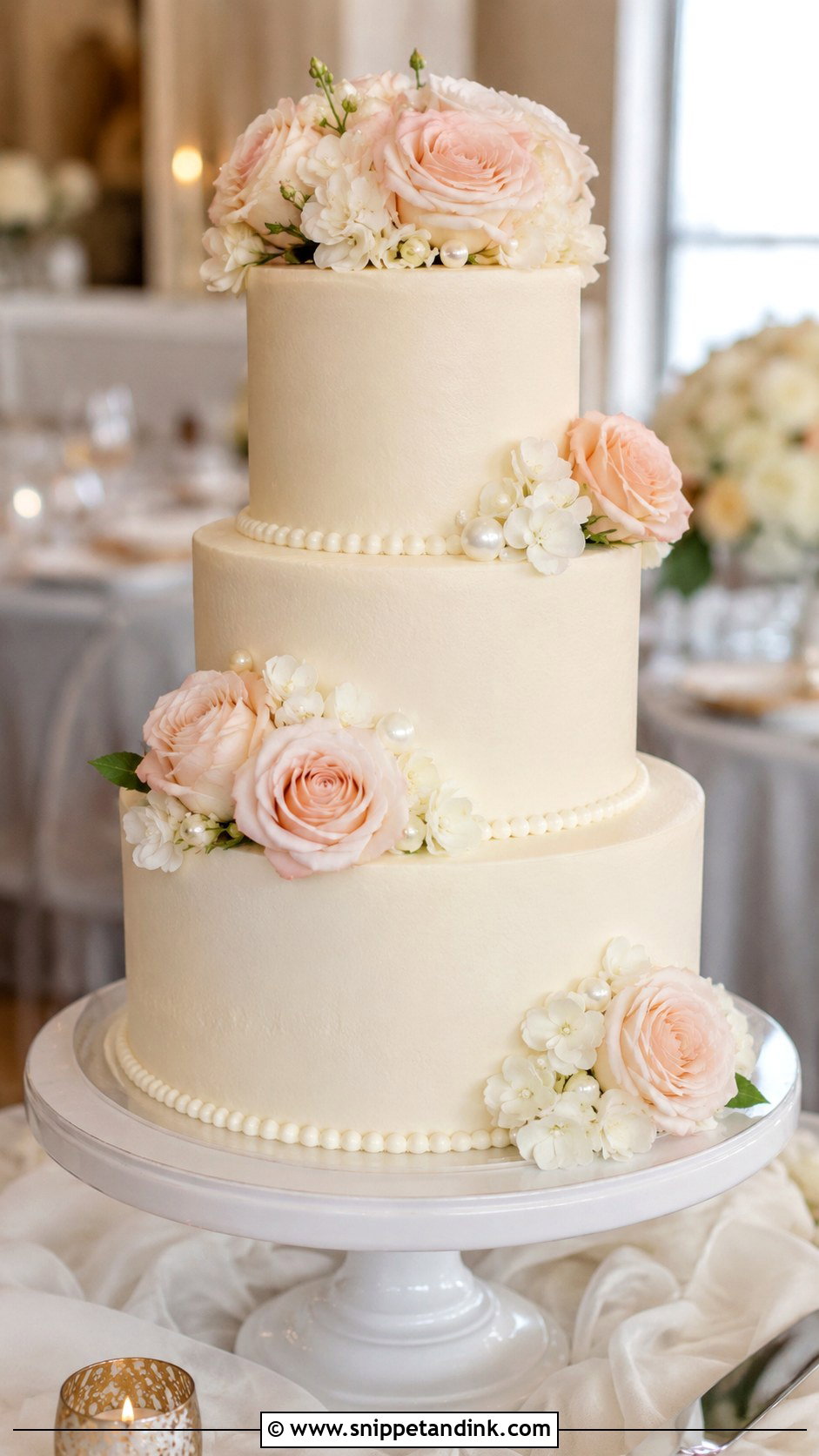
Round tiers on a round pedestal is the pairing I’d call foolproof. The shapes echo each other, so the display looks complete with very little styling. Smooth and minimal, flowers between tiers, textured buttercream, pearls or ribbon all work. The stand also helps a modest cake hold its own on a long table. Whatever the guest count or the venue, round is the easiest to adapt to your colors.
12. Small Wedding Cake on Pedestal
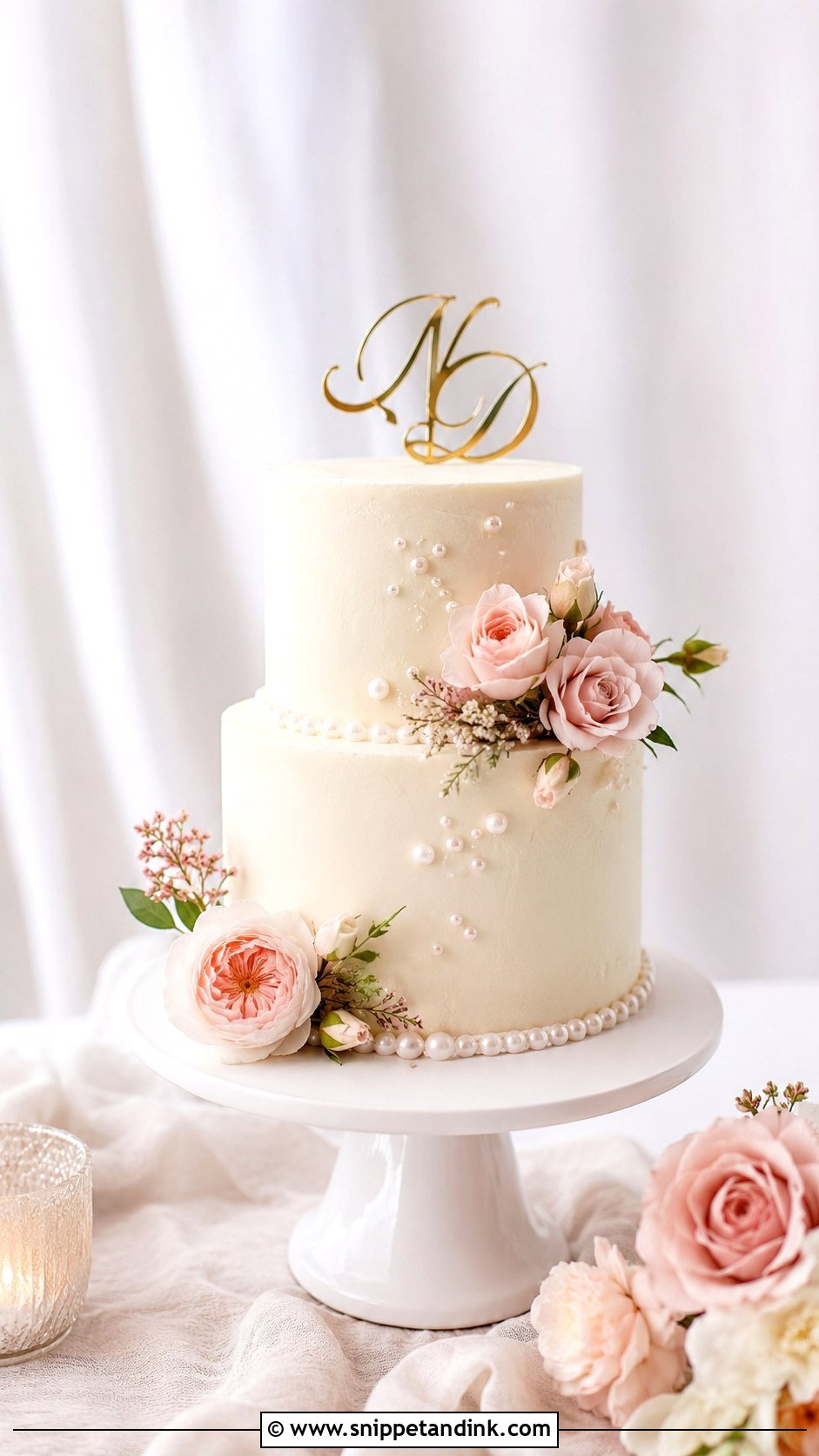
Without a stand, a small cake can disappear on a big table. A pedestal gives a one or two tier cake the height to feel like a centerpiece, which makes it a smart choice for elopements, micro weddings or a dessert spread with other sweets. Small cakes are seen up close, so a detailed finish, vintage piping, fresh flowers, texture or a topper, pays off. The stand still needs to be sturdy and slightly wider than the cake board. It is also one of the most budget-friendly ways to get a proper cutting moment.
13. Tall Wedding Cake on Pedestal
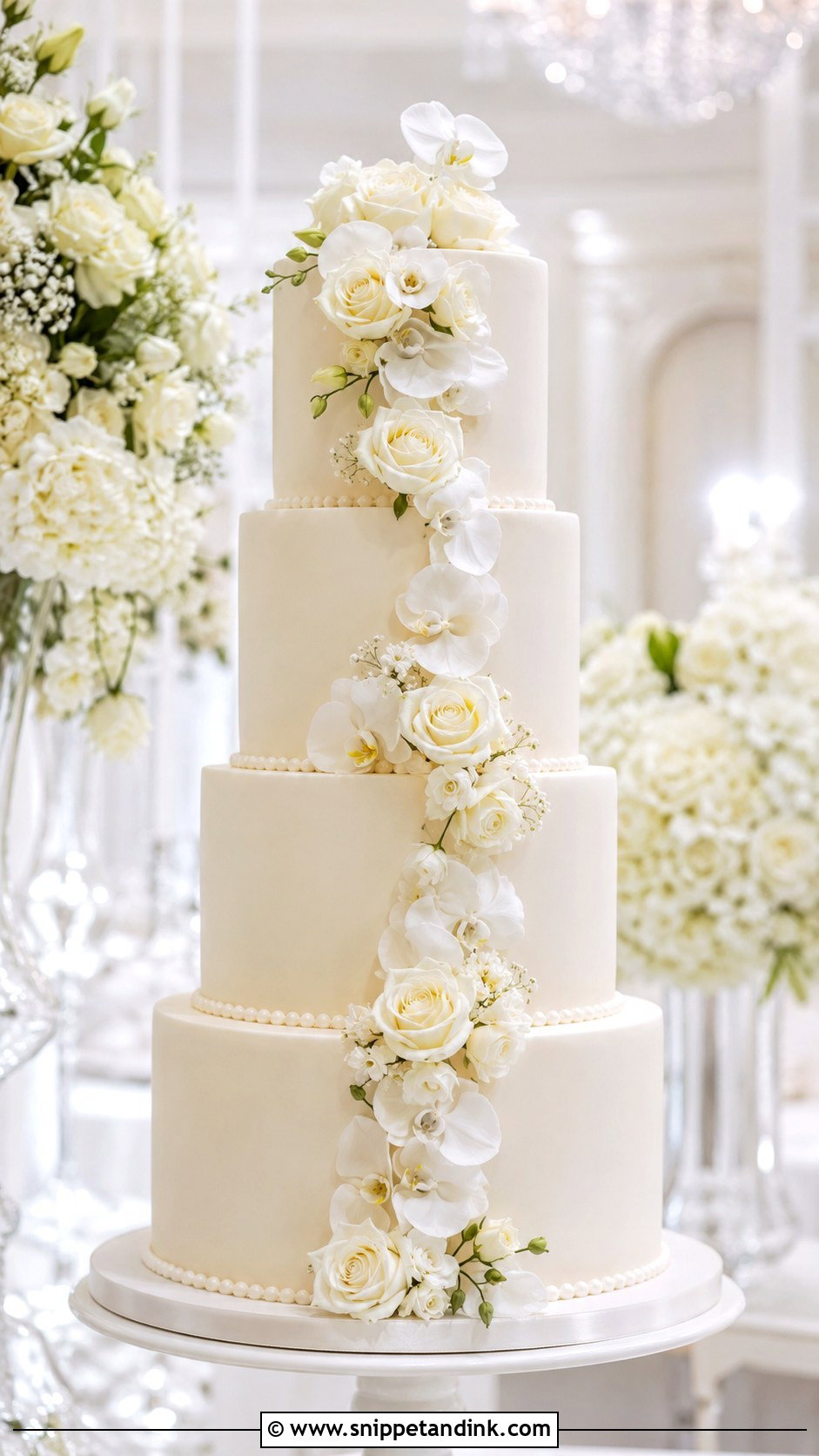
Tall cakes on tall stands add up quickly. Before I approve the pairing, I check the combined height against the backdrop, any low beams or chandeliers, and the sightline from the head table. The pedestal has to carry real weight, so for four or more tiers I want metal or solid wood, not decorative glass. Leave some tiers plain so the design can breathe. Place the table where guests can see it, but out of the main walkway.
14. Rustic Wedding Cake on Pedestal
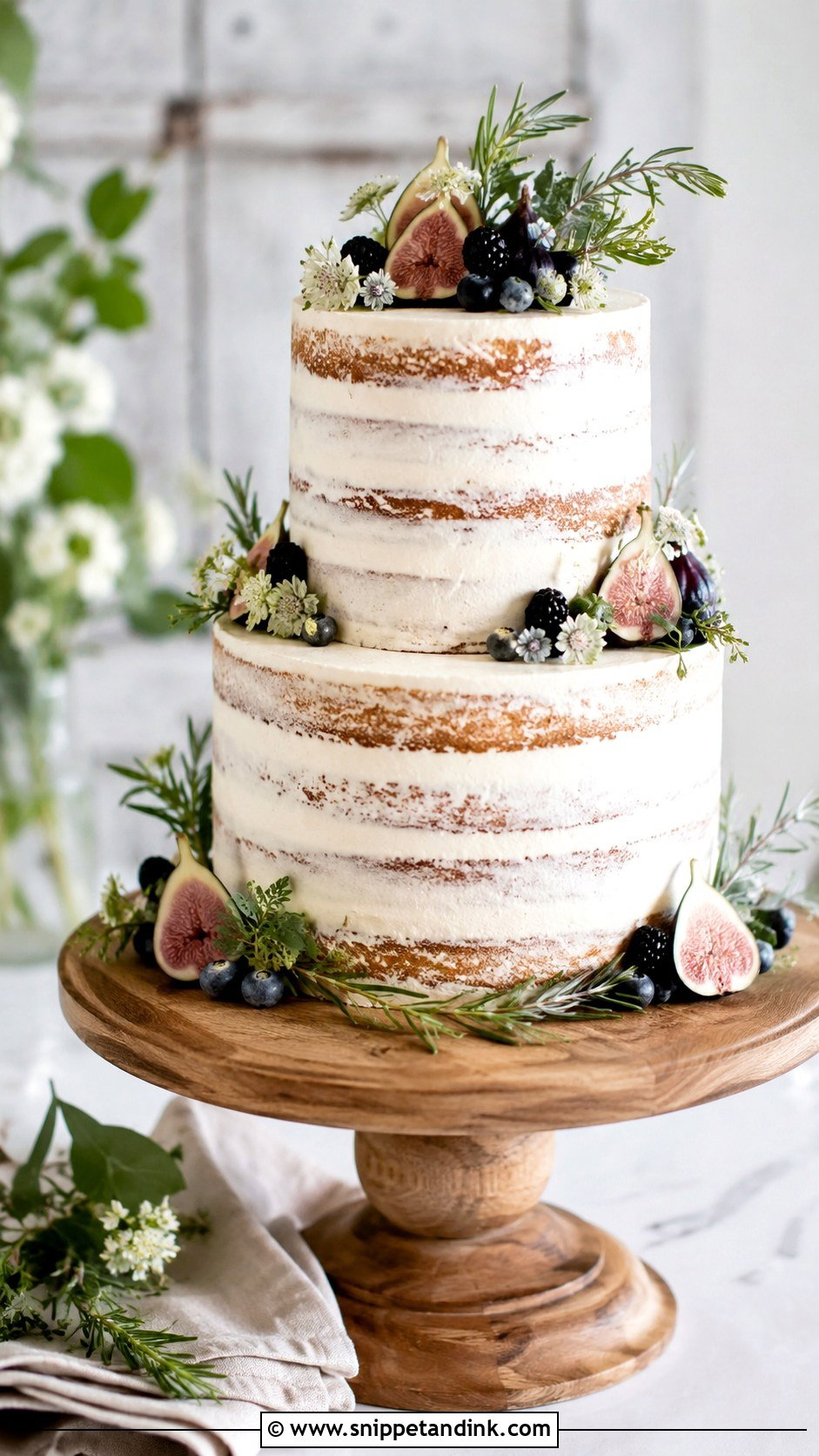
Semi-naked frosting, rough buttercream, loose flowers and a wood pedestal are the expected combination. Stone or white ceramic stands make the same cake look more refined, which I like at a vineyard or a well-dressed tent. Figs, berries, herbs and small blooms bring the season in. I tell bakers to keep the finish slightly imperfect; too neat and it loses the handmade feel. Barns and countryside venues suit it best.
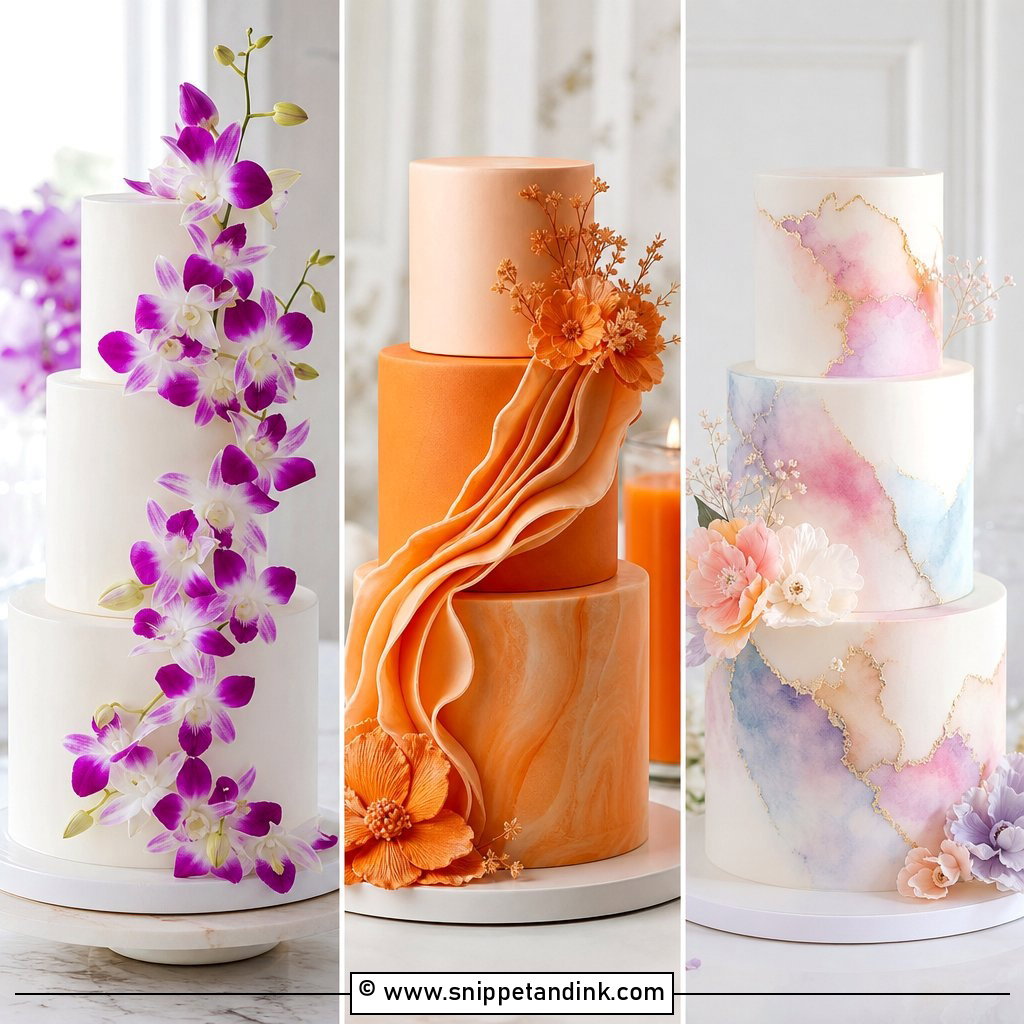
15. Modern Wedding Cake on Pedestal
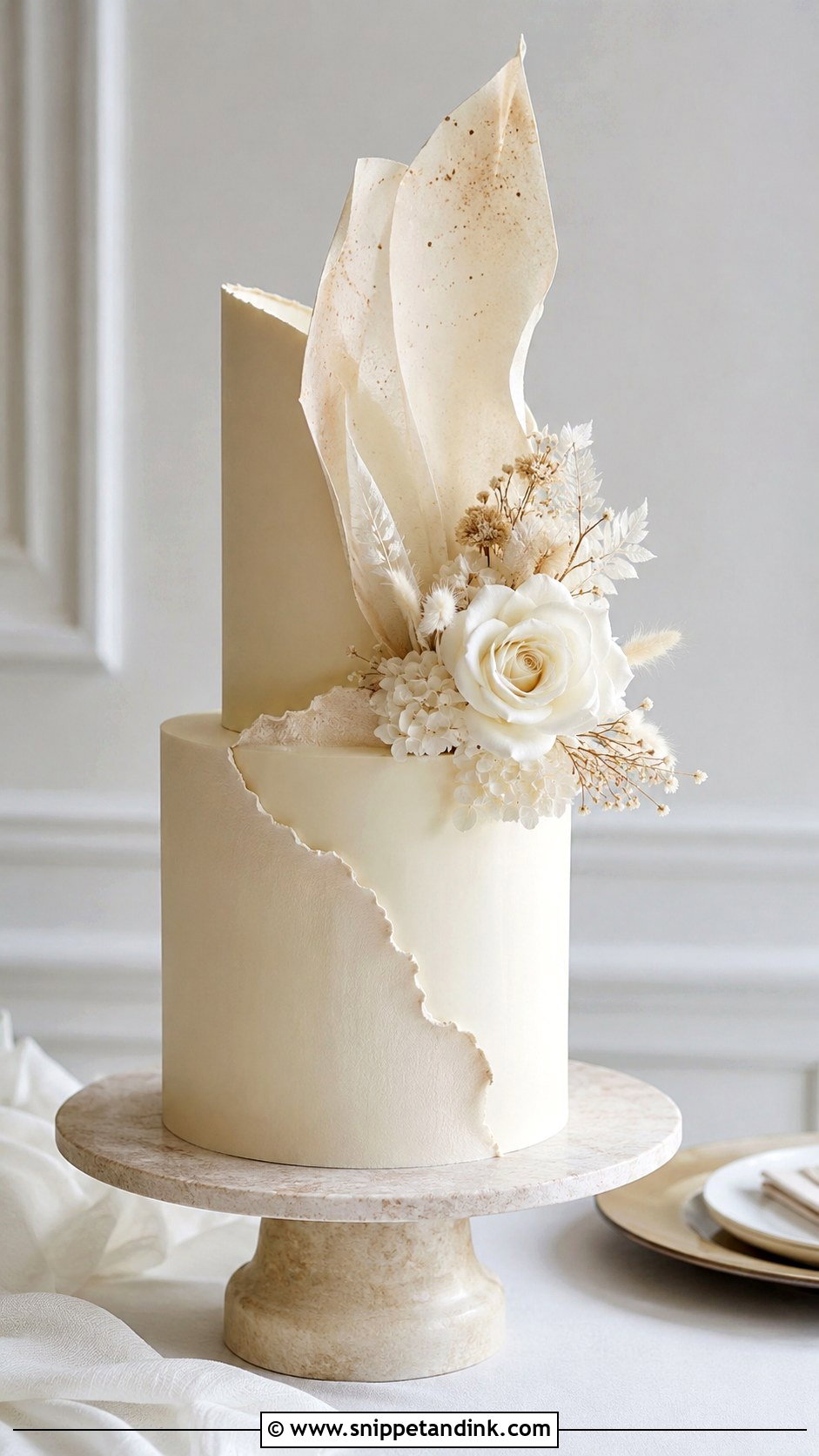
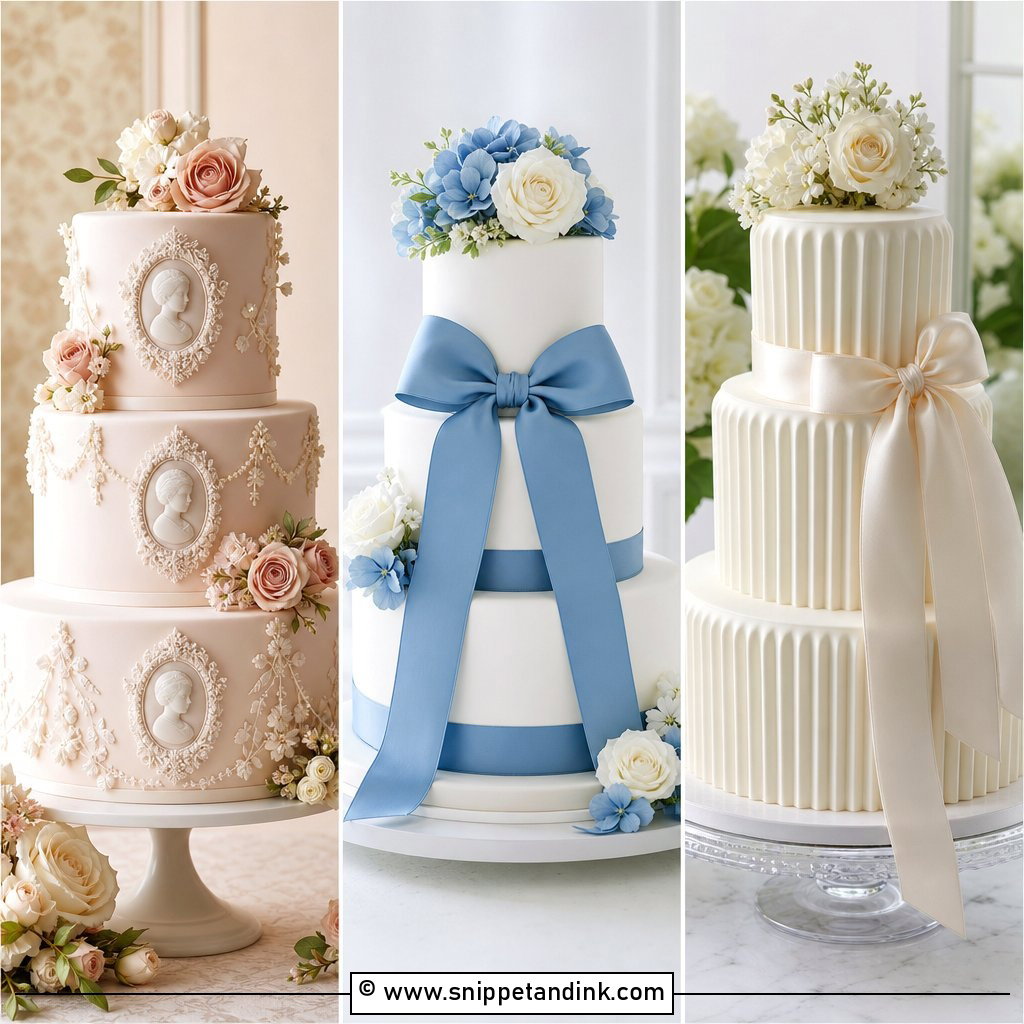
Modern cakes rely on clean shape, strong lines and empty space. Smooth buttercream, sculptural tiers, one floral cluster or a subtle texture, on a matte white, acrylic, stone or metal pedestal. Neutrals are safest, though black, sage, terracotta or soft beige accents work too. The table around it matters as much as the cake, so I clear everything except the cake and a knife. Rooftops and gallery spaces suit it well.
16. Coastal Wedding Cake on Pedestal
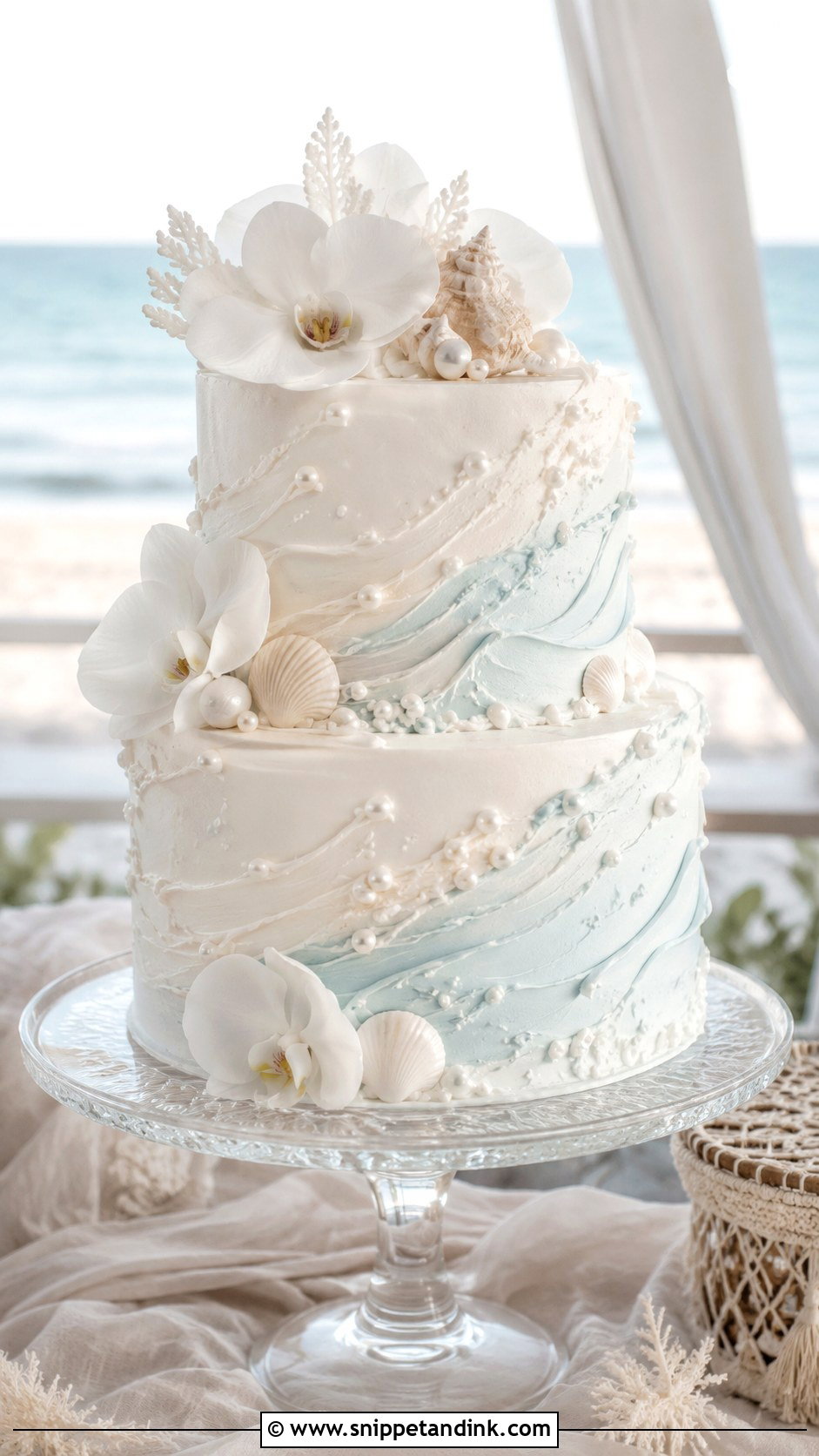
A coastal wedding cake works best as a hint of the sea, not a theme party. Soft white buttercream, pale blue details, a shell-like texture and a few sugar shells, edible pearls or white orchids are enough. A white pedestal, clear glass or light wood suit it. Near the water I always ask about wind, because a cake on a raised stand catches it more than one sitting on the table, and humid sea air softens buttercream.
17. Garden Wedding Cake on Pedestal
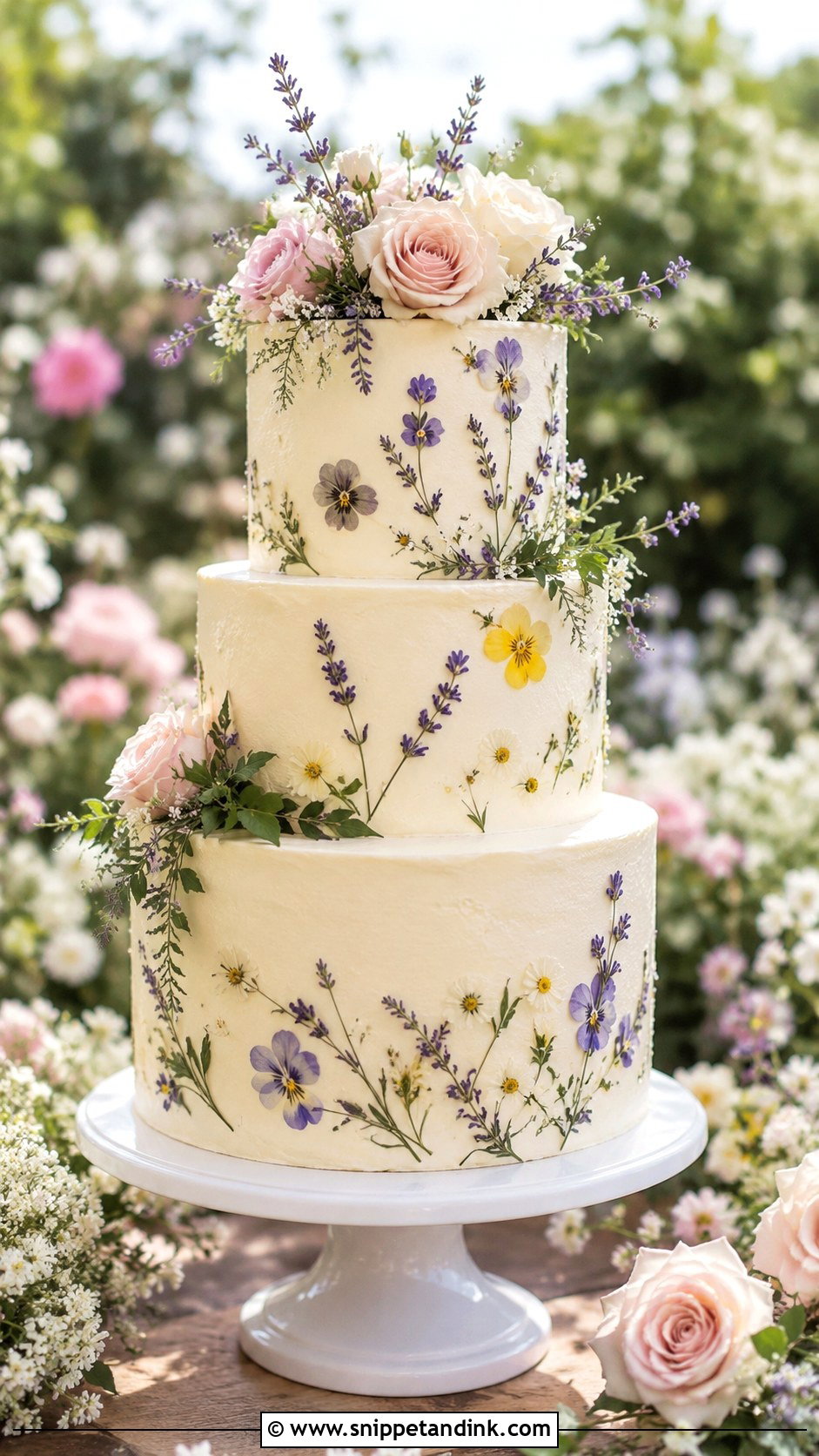
In a garden, the pedestal lifts the cake above the surrounding flowers so it reads as part of the setting rather than another arrangement. Soft buttercream with pressed edible flowers, painted florals or a short cascade works well, in ivory, blush, lavender, sage or pale yellow. Small clusters at the base connect it to the tables. Outdoors, I want the stand on a level table in shade, with a cover ready for insects until the cutting.
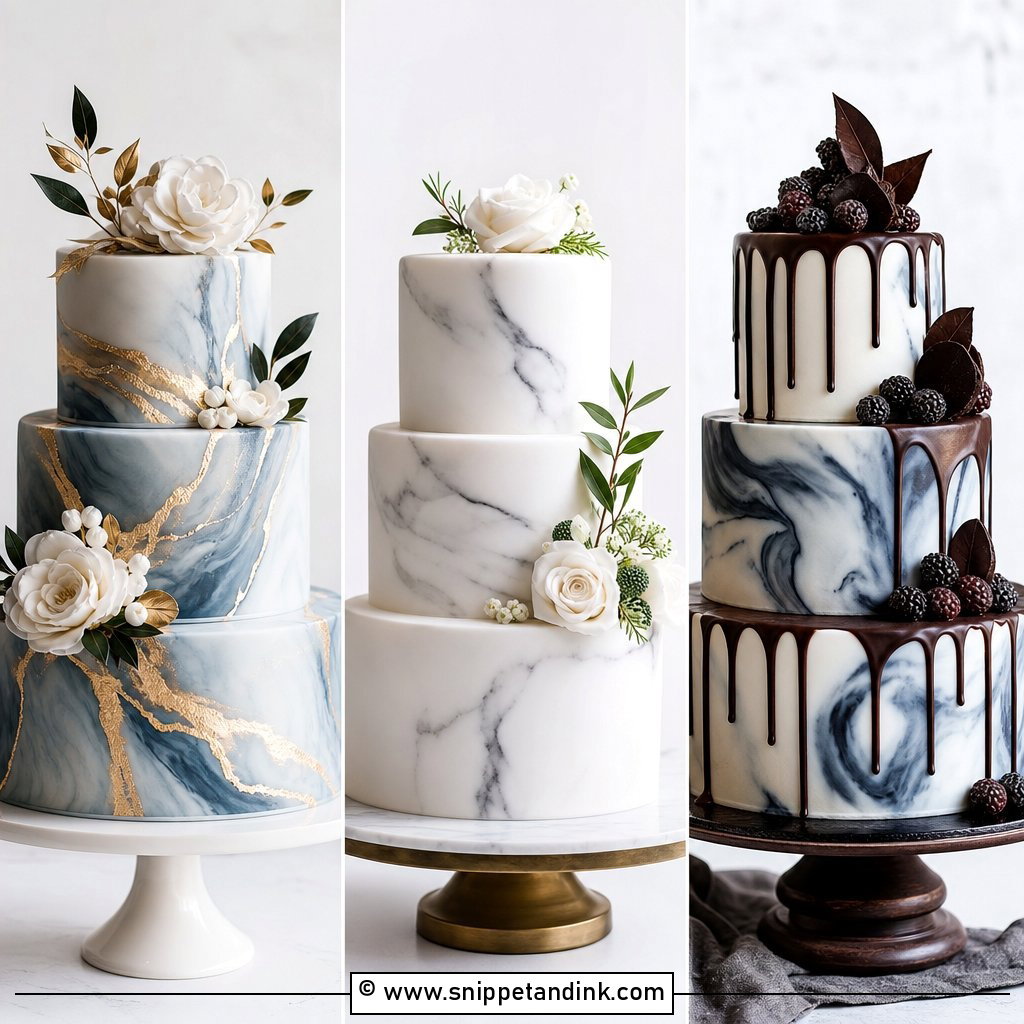
18. Marble Wedding Cake on Pedestal
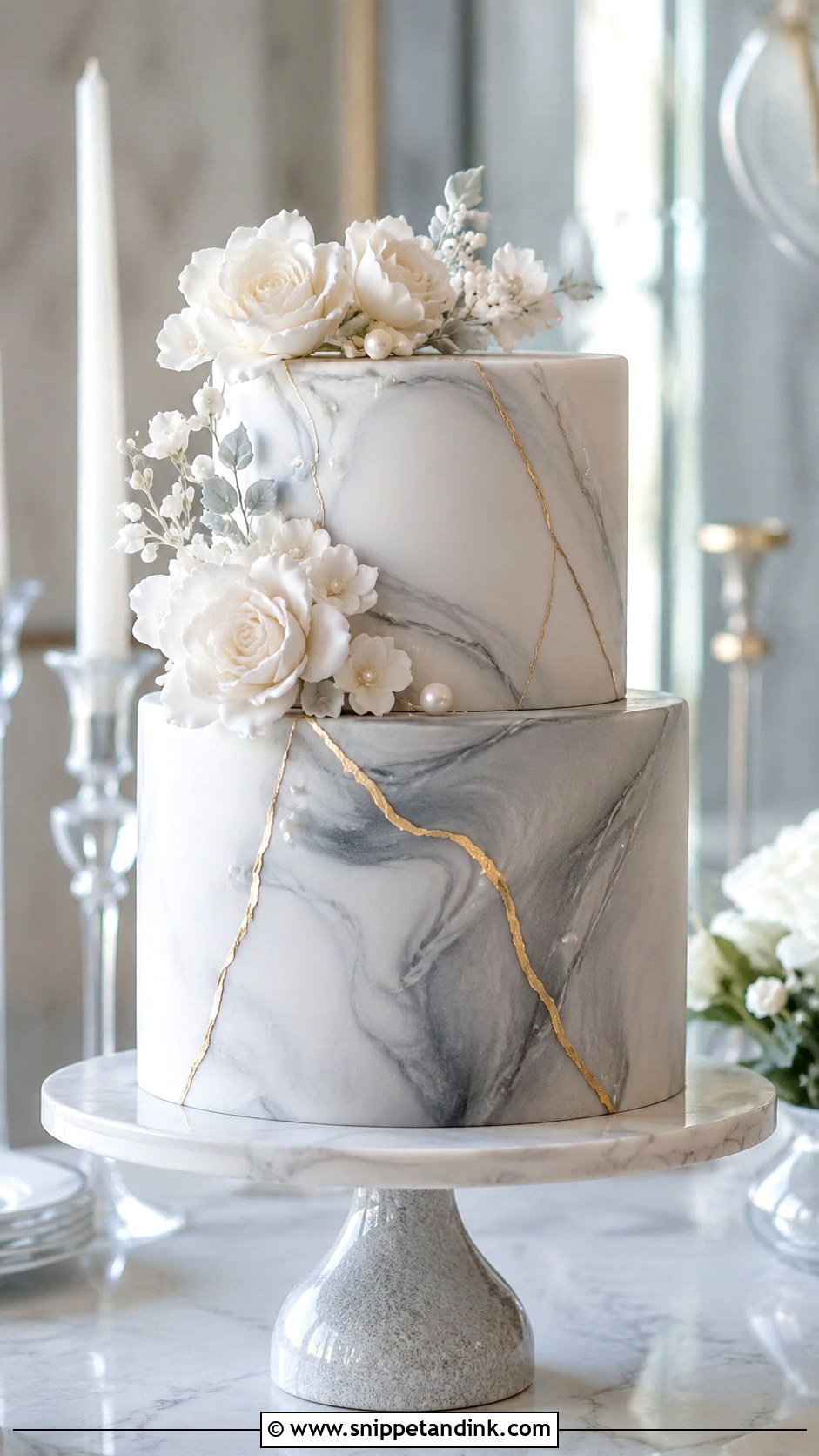
Marble is already a pattern, so the stand and decorations should stay quiet. Gray and white, blush and ivory, or sage and cream can be matched to the palette. A stone or white pedestal looks cohesive; gold makes it dressier. A few sugar flowers, a thin gold line or one small cluster is plenty. It sits naturally in a hotel ballroom or a modern venue.
19. Fruit Wedding Cake on Pedestal
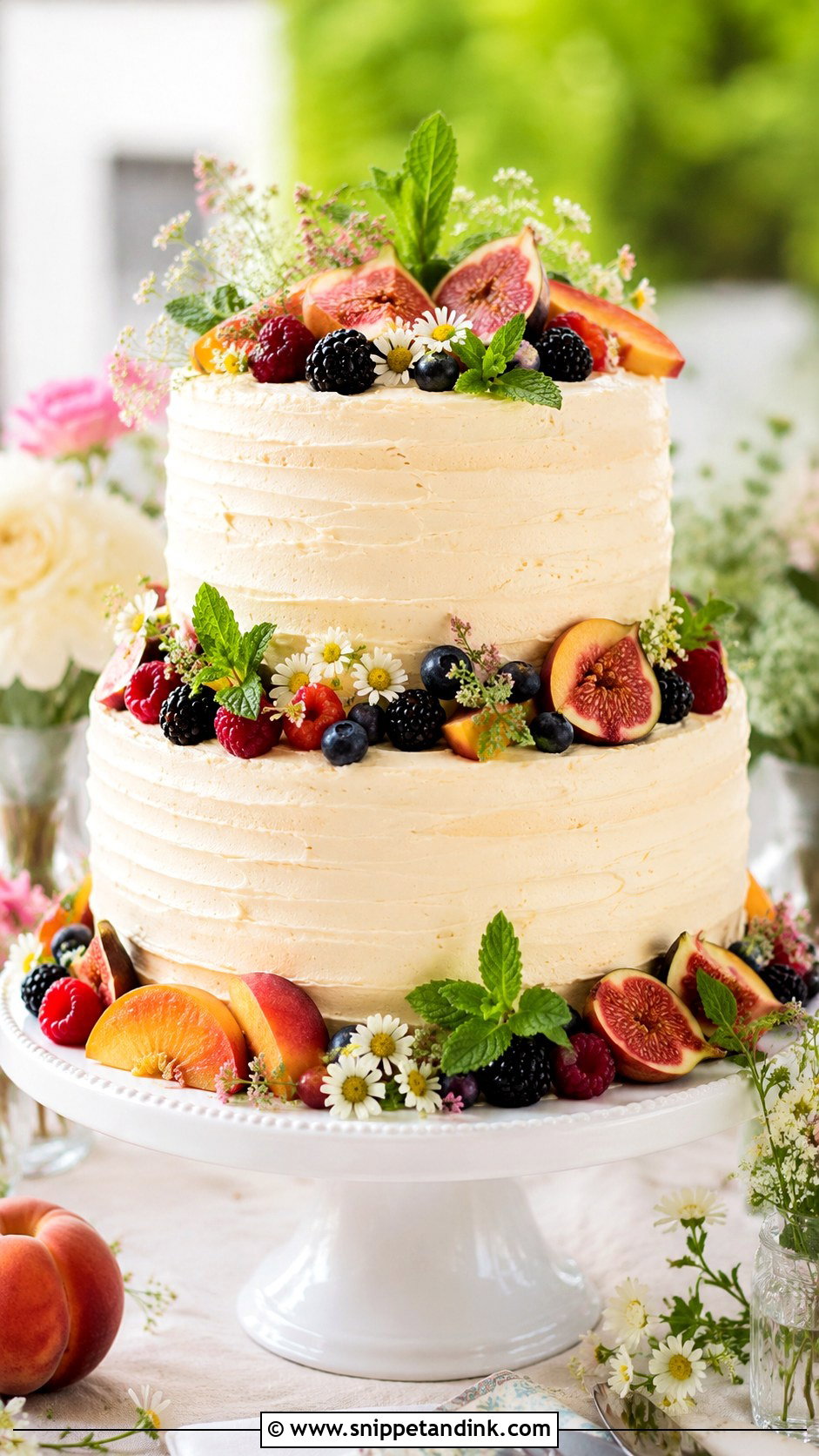
Fruit looks random unless the palette is narrow, so I ask couples to pick one pairing: figs and grapes, berries and cream, citrus slices, or peaches with flowers. Buttercream suits fruit better than fondant. Cut fruit leaks juice onto frosting after a few hours, so I schedule the baker to add it as late as possible. On a pedestal the fruit stays visible from every side. White, wood or stone stands all work for a summer or brunch reception.

20. Single Tier Wedding Cake on Pedestal
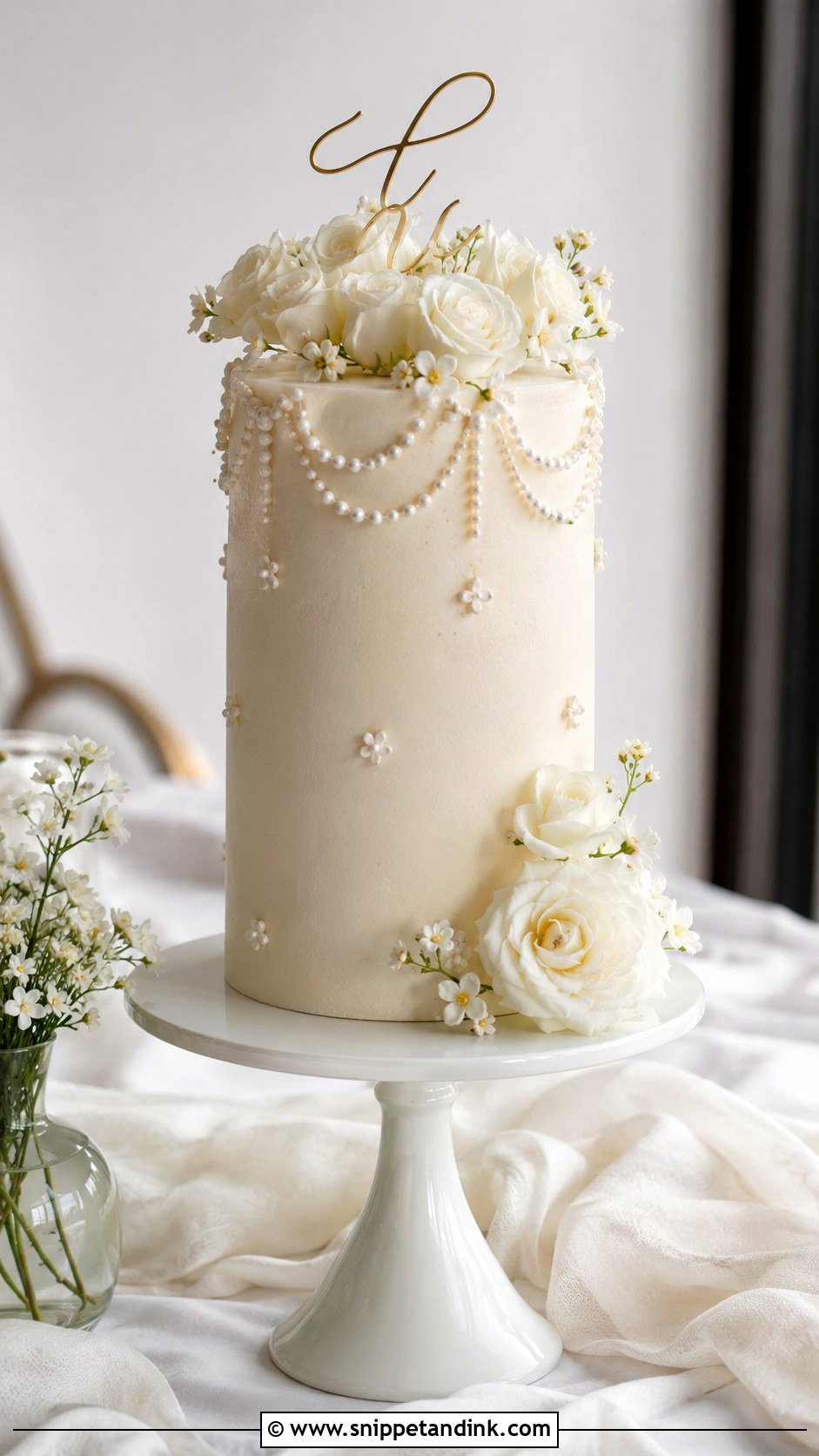
A single tier wedding cake on a pedestal can hold its own against a tiered cake if the proportions are right. I ask for a taller-than-standard tier, then smooth buttercream, vintage piping, flowers, pearls or a small topper. The stand makes it easier to photograph and puts the cutting at a comfortable height. Elopements, courthouse lunches and backyard receptions with several other sweets suit it well.
The Stand Has to Get Home Too
This is the detail that falls through the cracks at the end of the night. Many bakers lend their stands for a deposit and expect them back within a few days, and rental companies count every piece on pickup. If nobody has been told who is responsible, the stand gets left at the venue, packed into the wrong car or thrown out with the floral waste.
I put the stand on the end-of-night checklist with a name next to it, usually a planner’s assistant or a trusted relative. The caterer needs to know too, because they often clear the cake table while the dancing is still going. Ask them to wipe the stand, box it with any cake boards and keep it with your gifts.
If you own the pedestal and want to reuse it, glass and marble stands should go home wrapped in a towel or bubble wrap. They chip easily when stacked in a crate with vases.
A Cake Is Only as Steady as Its Stand
The reason pedestal cakes look polished is that the display is part of the design from the start. The stand sets the height, defines where the cake lives on the table and makes the details easier to see in photos. Whichever direction you choose, a white tiered cake, vintage buttercream, a colored modern cake or a single tier, match the pedestal to the cake’s weight, width and mood. Then keep the table around it clear, place flowers and candles with care, and let the cake be the one thing everyone looks at.
You'll Like These Ideas:








Leave a Reply