
More and more of the couples I bake for want a white cake and a table of cupcakes rather than one towering cake. It makes sense. You still get the cutting moment, guests get a choice of flavors, and cake-and-cupcake displays are easier to serve than slicing six tiers. The white cakes people ask for now are warmer and more textured than the stiff fondant versions of years ago, with edible pearls, pressed flowers and soft buttercream. Below are twenty ideas for the cake, the cupcakes and the two together, plus what I’ve learned about making them look like one set.
How Many Cupcakes Do You Need Next to the Cake?
This is the first question I ask couples who want both, because the split between cake and cupcakes decides the budget, the display size and how much ends up left over.
Start from the cutting cake
A small cutting cake is usually there for the photo, the two of you and the top table. Decide whether it will also be served to guests. If it will, count those slices first, then cover the rest of the guest list with cupcakes.
Then count the cupcakes
A common rule of thumb is about one standard cupcake per guest, with a small cushion for people who come back for a second flavor. Mini cupcakes are a different story; most guests eat two or three. If there’s also a dessert table, late-night food or a heavy meal, you can trim the count. Every wedding crowd is different, so treat these as starting points and talk them through with your baker.
Flavors are the other half. Three or four is plenty for most guest lists. Too many and the display looks patchy, because each flavor needs enough cupcakes to fill its own section of the stand.
1. White Wedding Cake With Pearls
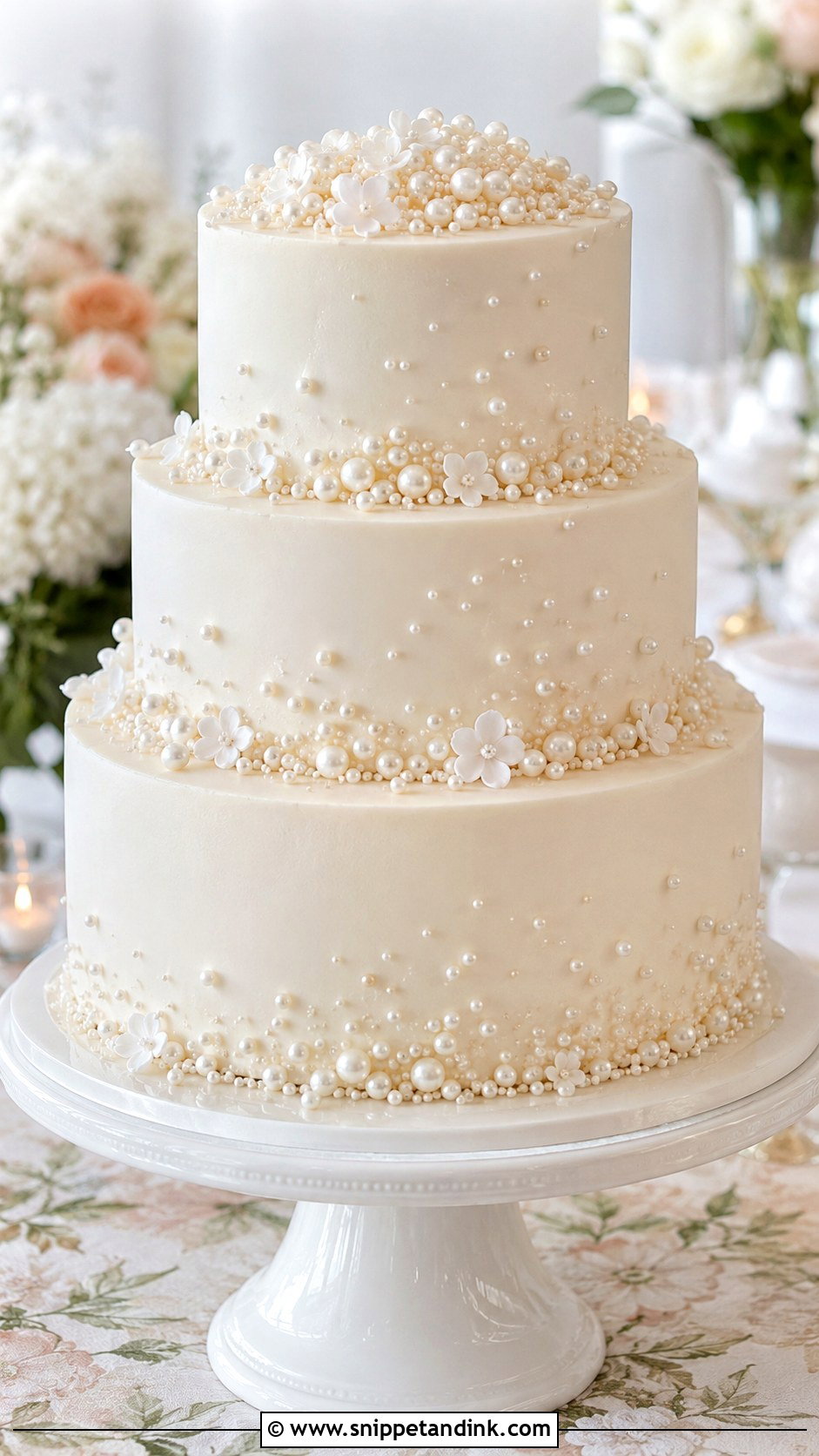
Pearls add polish without weight. I scatter edible pearls in loose clusters, or line them neatly along the base of each tier, and mixing two or three sizes keeps the pattern from looking stamped on. They catch the light best on ivory buttercream or a satin-finish fondant. Put the same pearls on the cupcakes and the table instantly looks coordinated. Vanilla bean, almond or champagne sponge suits it.
2. White Wedding Cake With Fresh Flowers
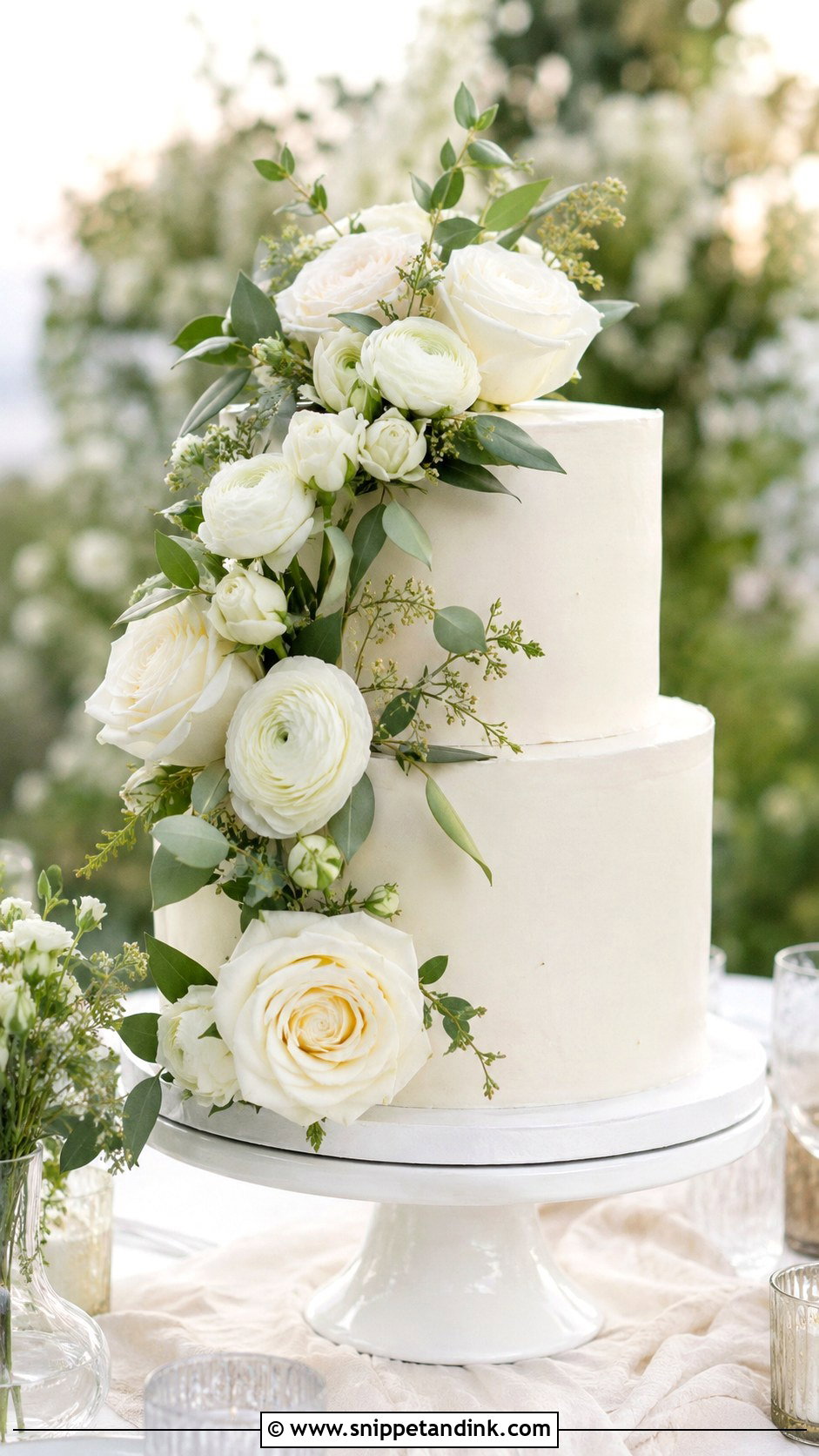
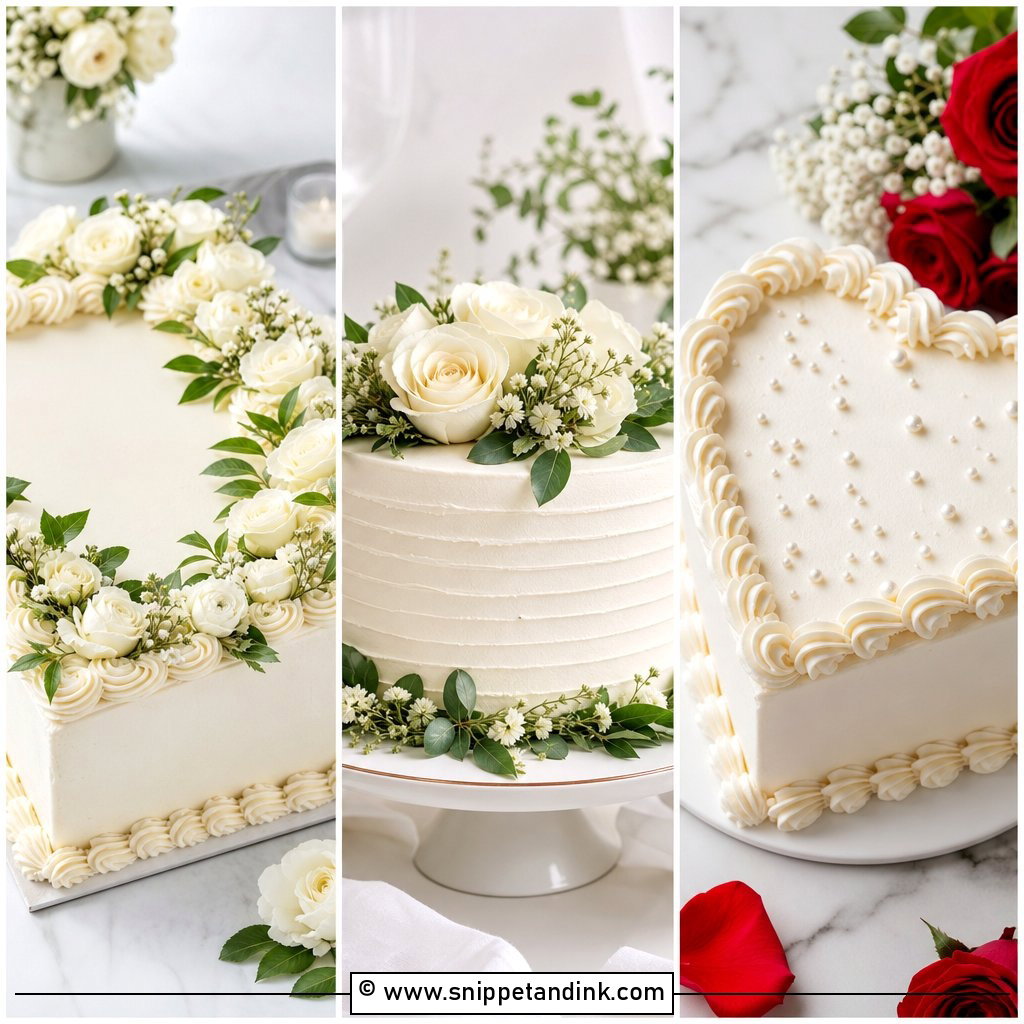
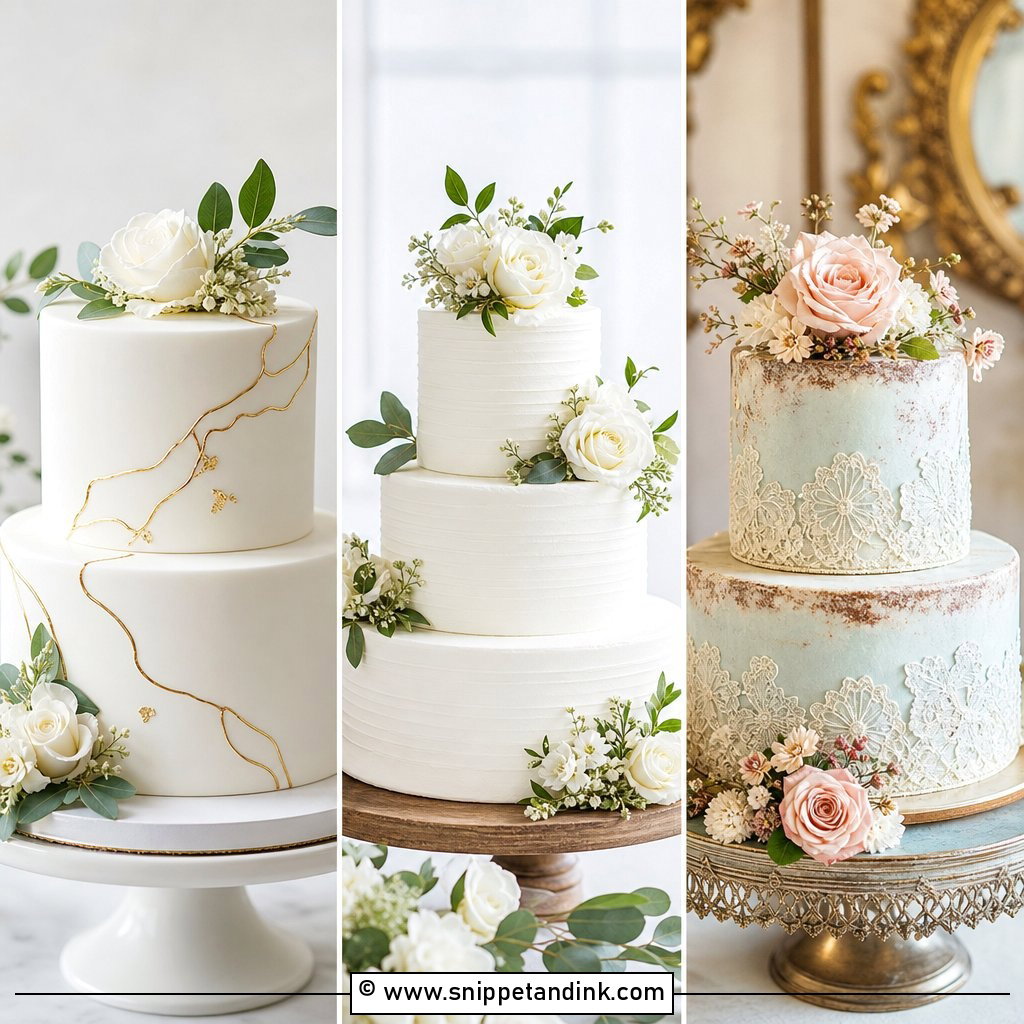
Fresh flowers are the quickest way to bring a plain white cake to life. I like blooms in white, cream, blush and pale green, because pure white flowers on pure white icing tend to merge in photos. Roses, ranunculus and lisianthus all sit well on a cake. Baby’s breath is pretty but not food-safe, so it stays off the icing or behind a barrier, and every stem gets taped and placed in a pick. Smooth or lightly textured frosting leaves the flowers in charge.
3. White Wedding Cake With Buttercream Texture
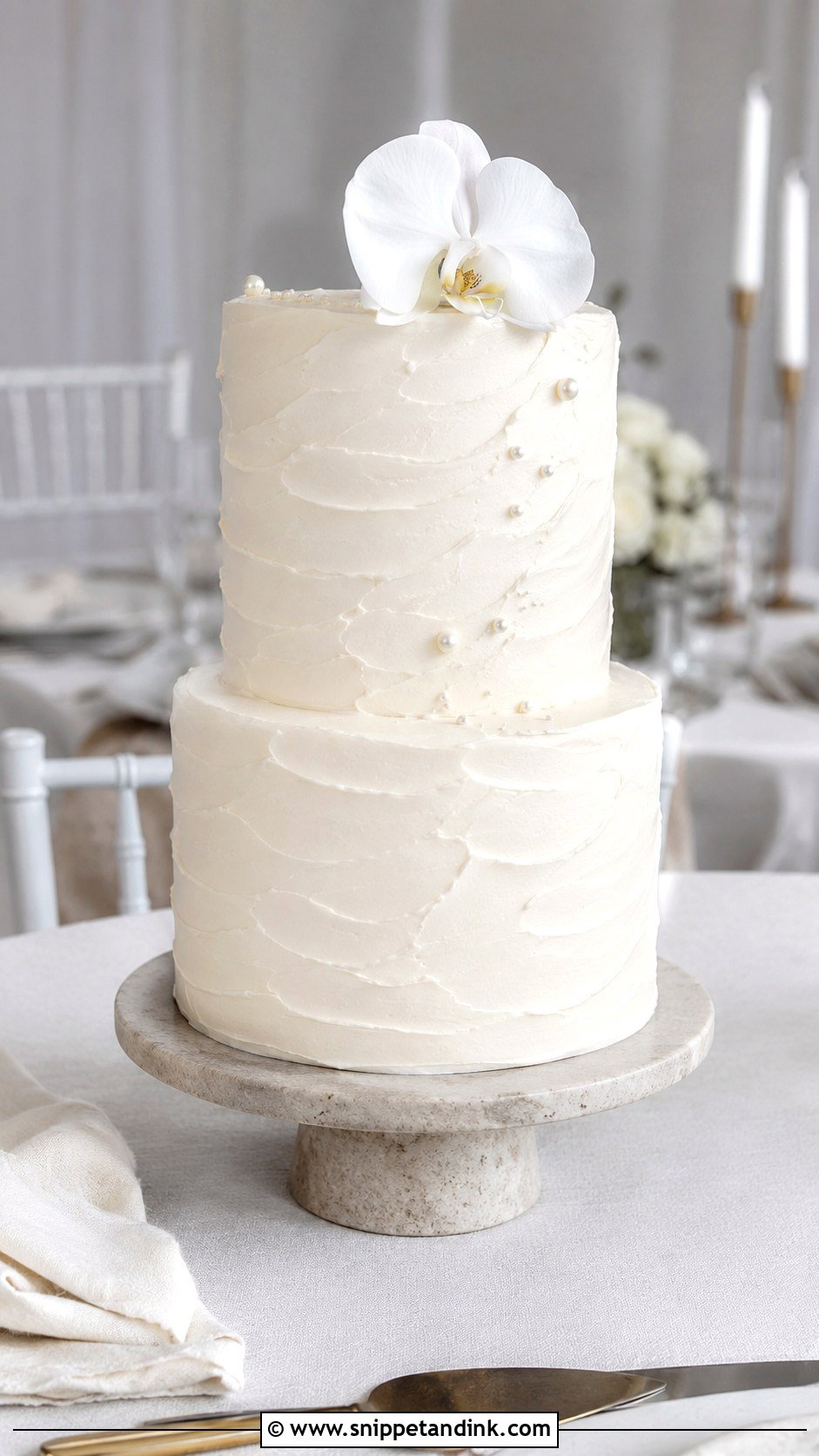
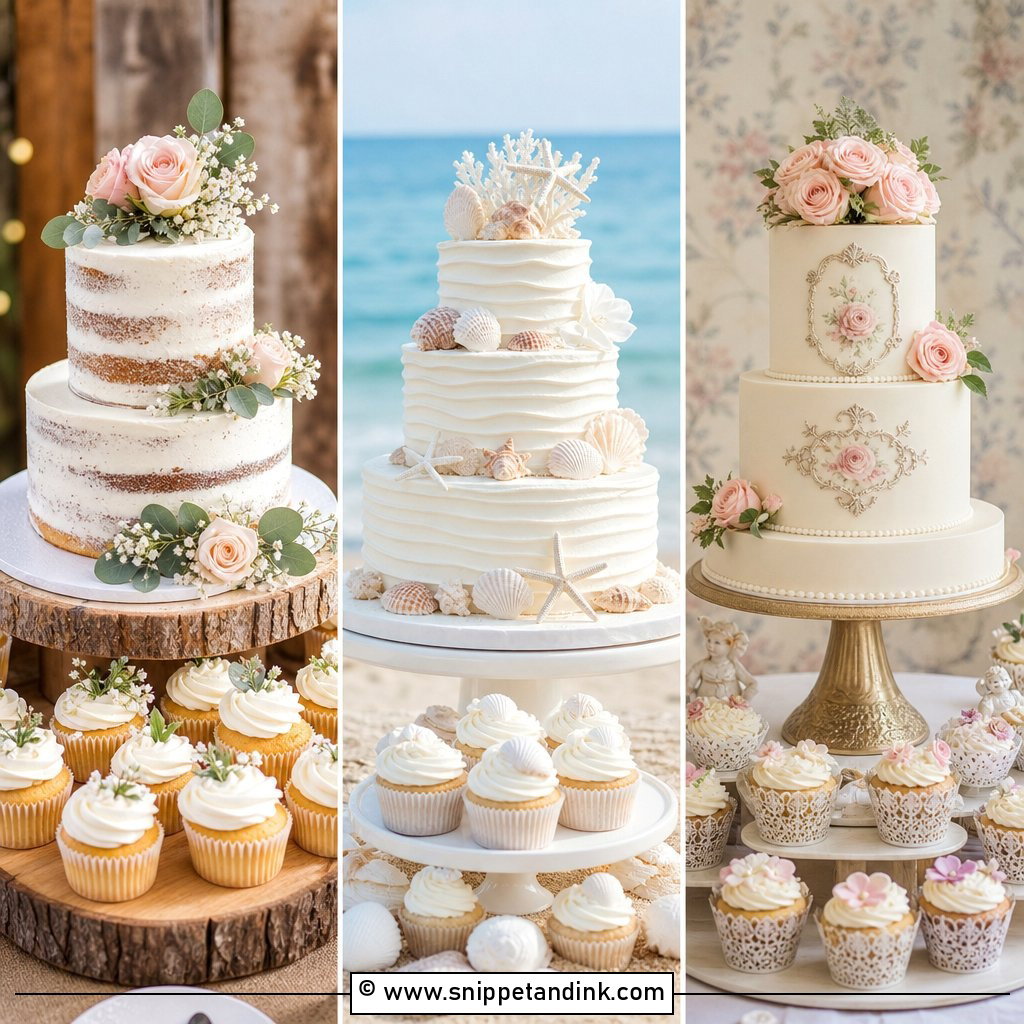
Texture is my favorite way to make an all-white cake look handmade and expensive at once. I use a palette knife for soft waves, a comb for horizontal ridges or a sponge-dabbed stucco finish. It’s more forgiving than a razor-sharp smooth coat, which helps on a warm day when perfect edges are hard to hold. Every ridge throws a shadow, so the cake has depth without color. Lemon elderflower or coconut cream keeps the inside light.
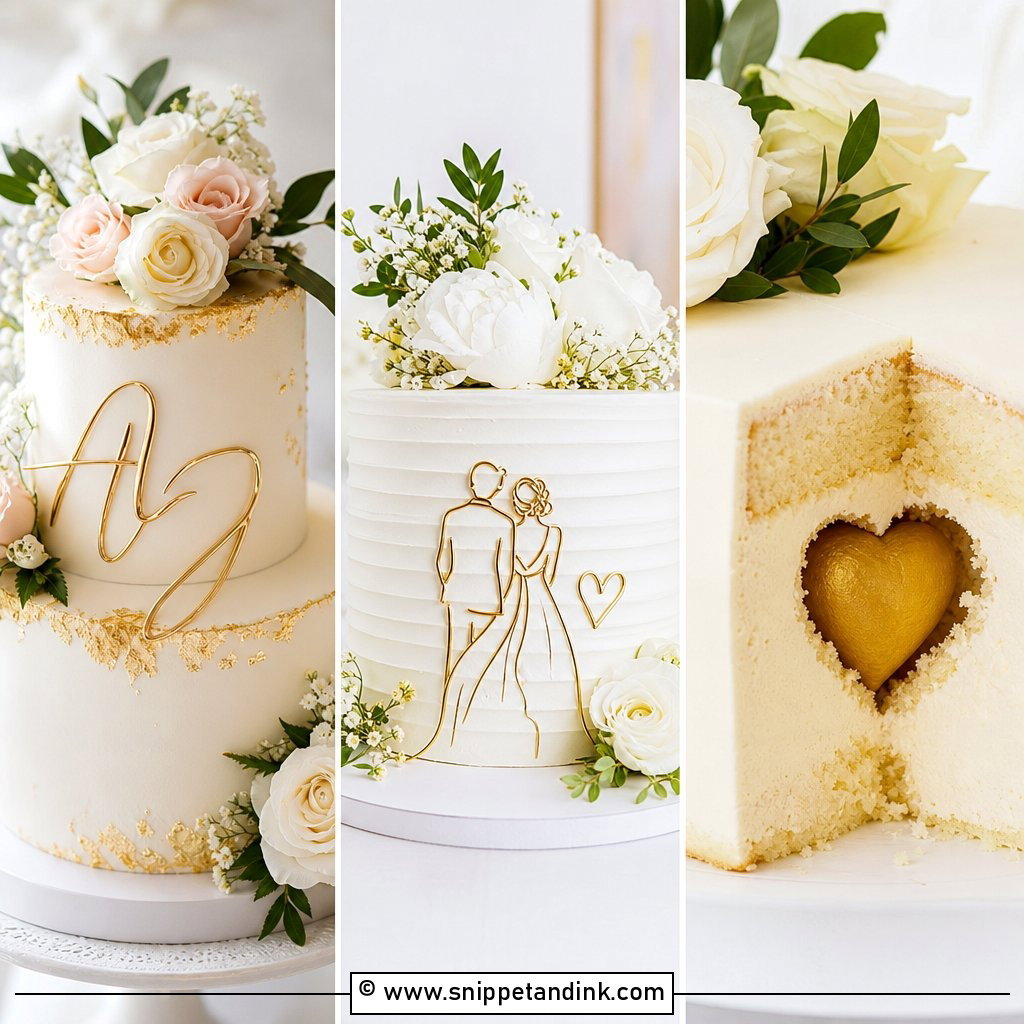
4. White Wedding Cake With Gold Accent
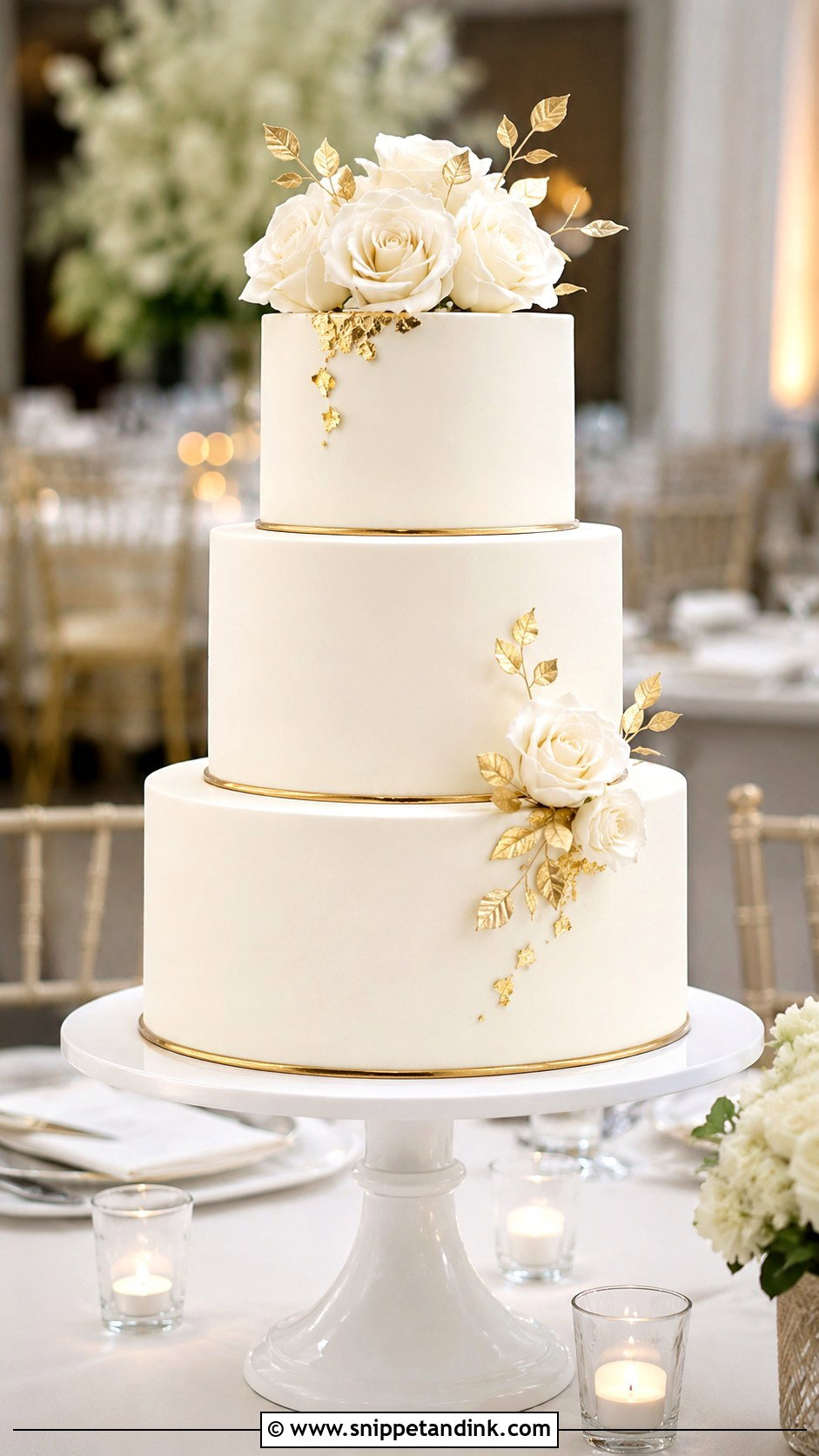
A little gold goes a long way on a white cake. A painted edge on one tier, a few flakes of leaf or a fine line where two tiers meet is enough to feel luxurious. Edible gold leaf is fragile and sticks the moment it touches icing, so I map out its placement first. It suits evening, hotel and formal receptions. Inside, almond, white chocolate ganache or vanilla with raspberry all pair well with the metallic finish.
5. White Wedding Cake With Sugar Flowers
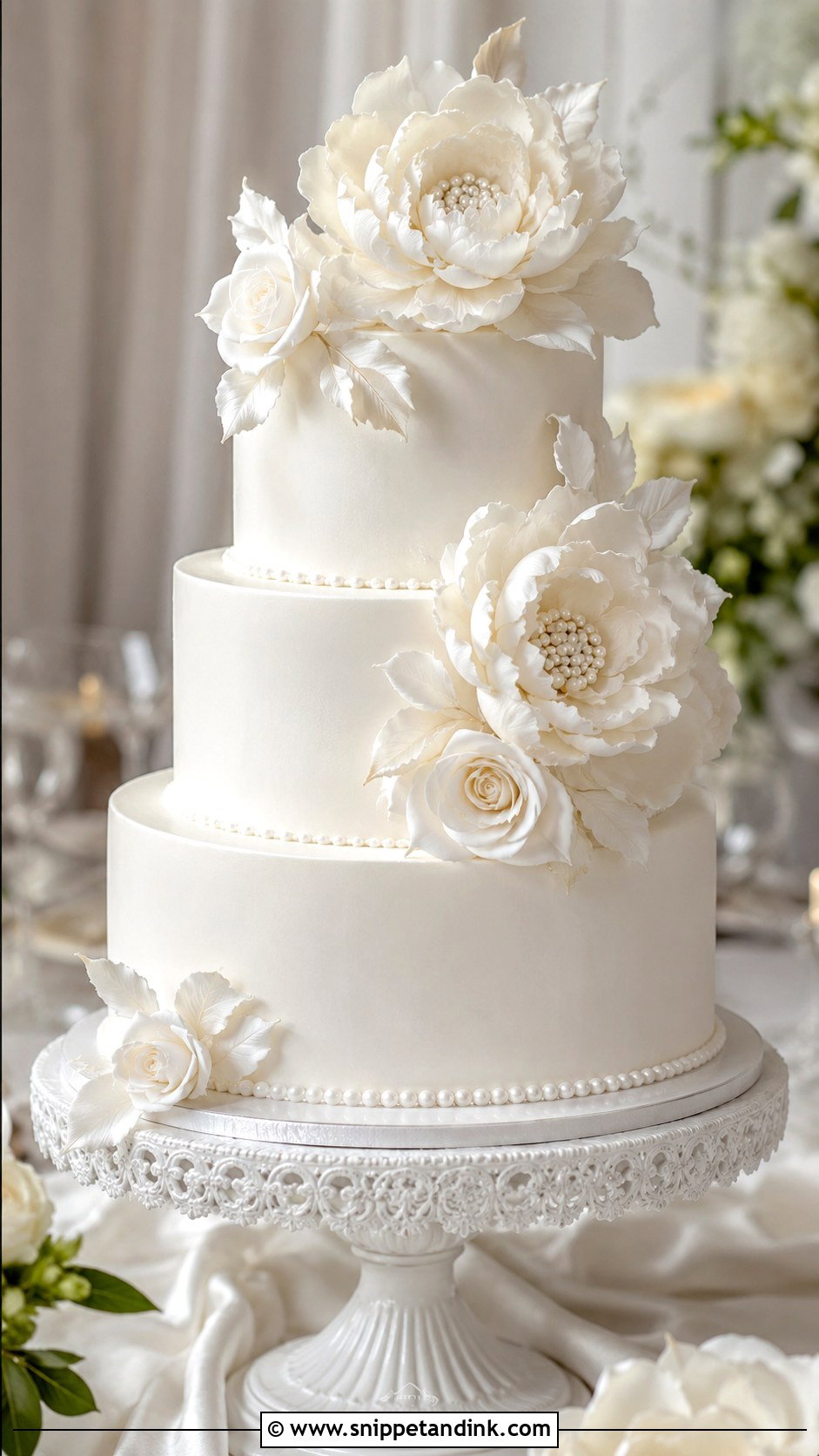
Sugar flowers are the answer when you want flowers that look identical at the cutting as they did at the first photo. Each petal is rolled, shaped and dried by hand, so they can be made in any variety, and white roses or peonies with pale ivory centers look lifelike on a white cake. They don’t wilt in summer heat, though very humid rooms can soften them. Many couples keep one afterward. Plan for the time they take; detailed sugar flowers are ordered weeks ahead.
6. White Wedding Cake With Lace
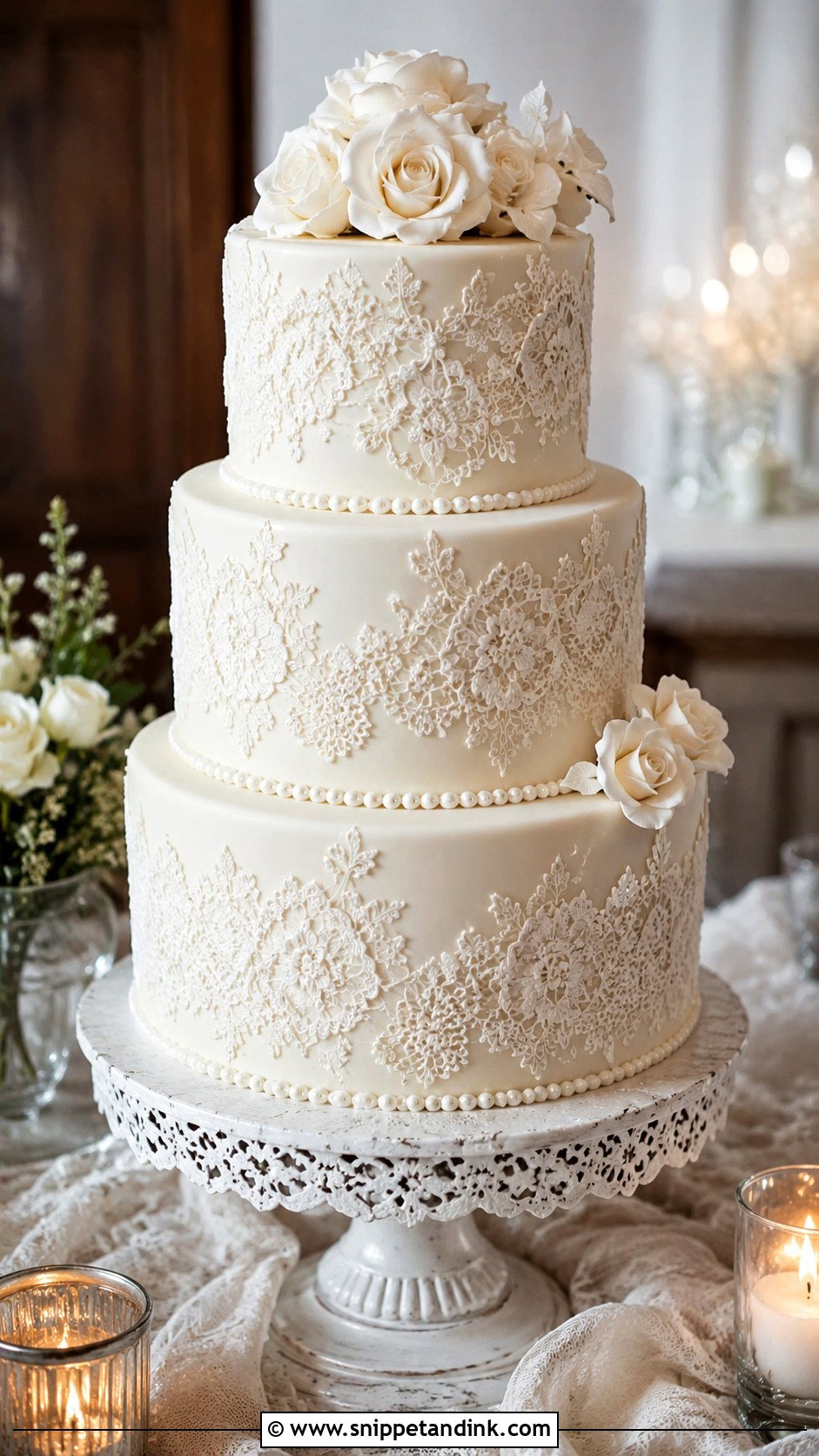
Lace makes the most sense when it echoes the bride’s dress, so I ask for a close photo of the gown and borrow a motif. It can be piped in royal icing, cut as fondant appliqué or stencilled over buttercream; I pick based on how fine the pattern is. One or two lace tiers is enough. Pearl borders or a few white roses sit naturally beside it. Chapel weddings and vintage receptions suit this cake.
7. White Wedding Cake With Ruffles
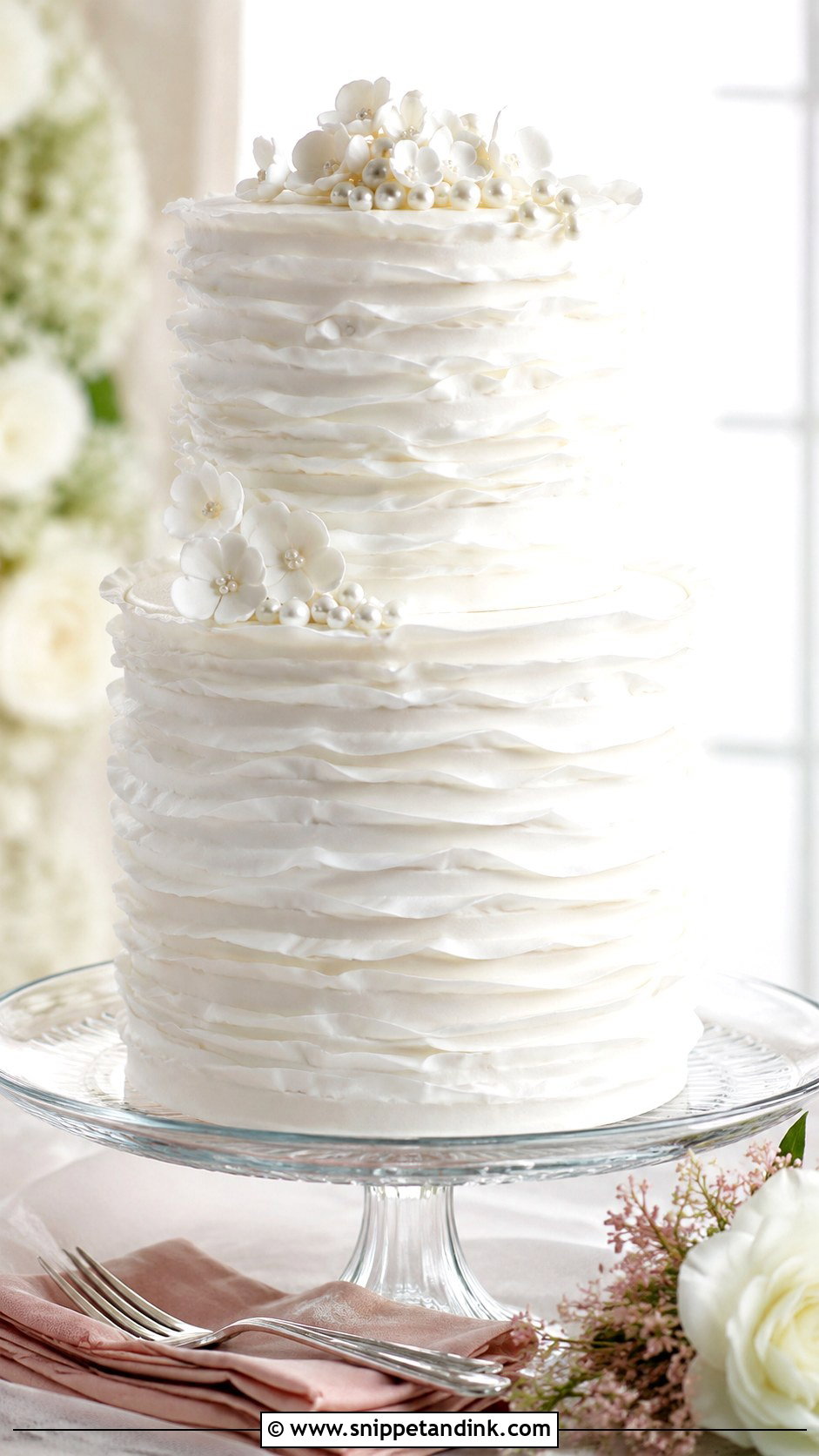
Ruffles add movement without color, and how they’re arranged changes the mood. Loose, layered ruffles look like fabric; tight even rows look modern. Buttercream ruffles are soft and creamy, while fondant ruffles hold a sculpted shape and handle a warm room better. Two tiers suit an intimate dinner; a tall ruffled cake fills a big room. A couple of sugar flowers adds texture if you want more.
8. White Wedding Cake With Pressed Flowers
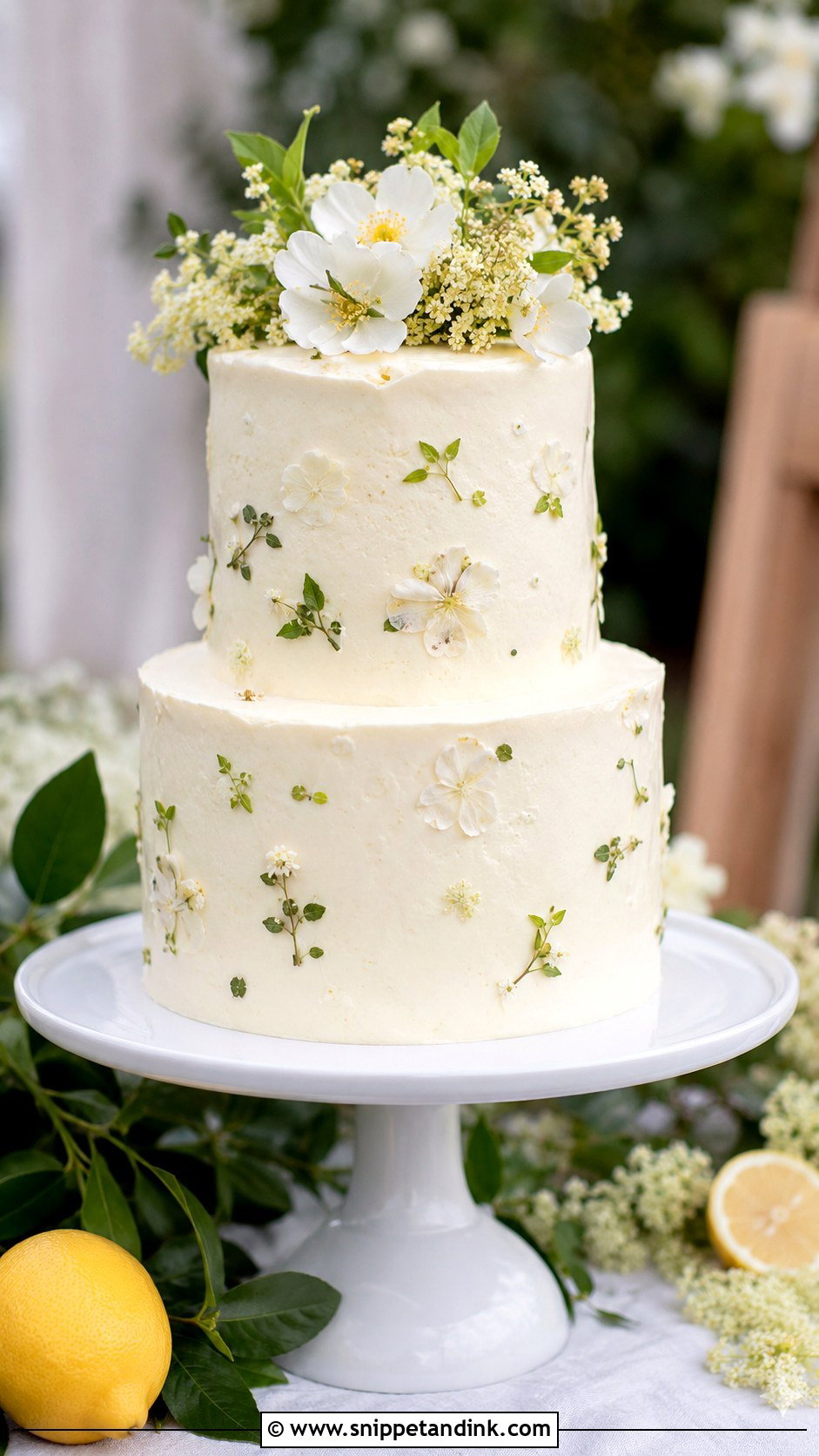
Pressed flowers are flattened, dried edible blooms such as violas, pansies and cornflowers, laid flat against the icing like a botanical print. For a white theme, I choose pale petals and tiny leaves. They’re delicate: moisture from buttercream can dull their color over a few hours, so I apply them as late as I can, and fondant gives them a drier surface. Every flower has to be grown as edible, not just picked from a garden. Lemon or honey cake suits the garden feel.
9. White Wedding Cake With Bow
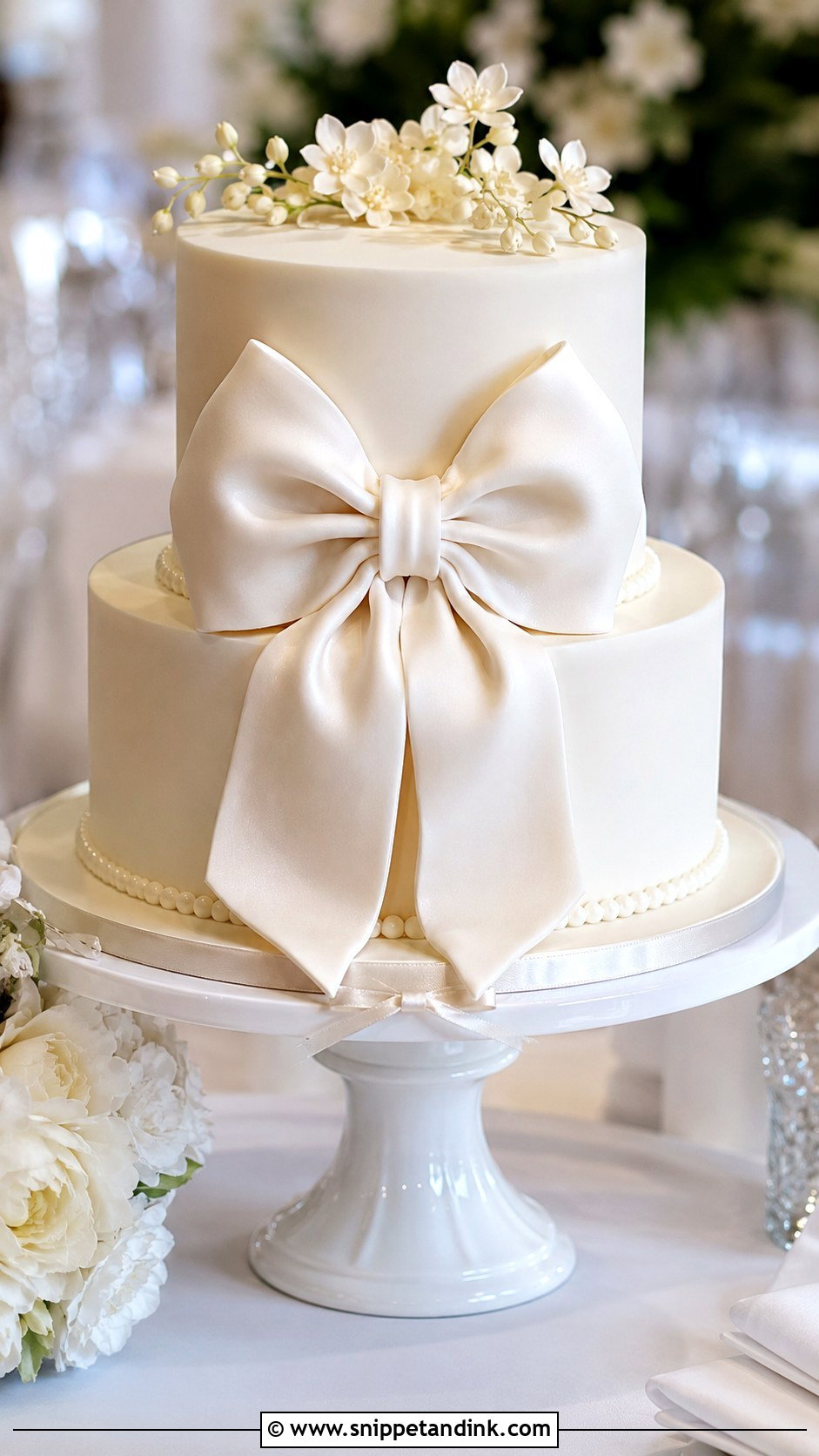
A bow is having a moment, and on a white cake it reads tailored rather than sweet. I make it from fondant or sugar paste so it holds its loops; a real silk ribbon can work too, backed so it never touches the icing directly. One large bow on the front of a smooth two-tier cake looks modern. Thin ribbon-like bands around each tier look softer. It suits courthouse celebrations, bridal brunches and formal receptions alike.
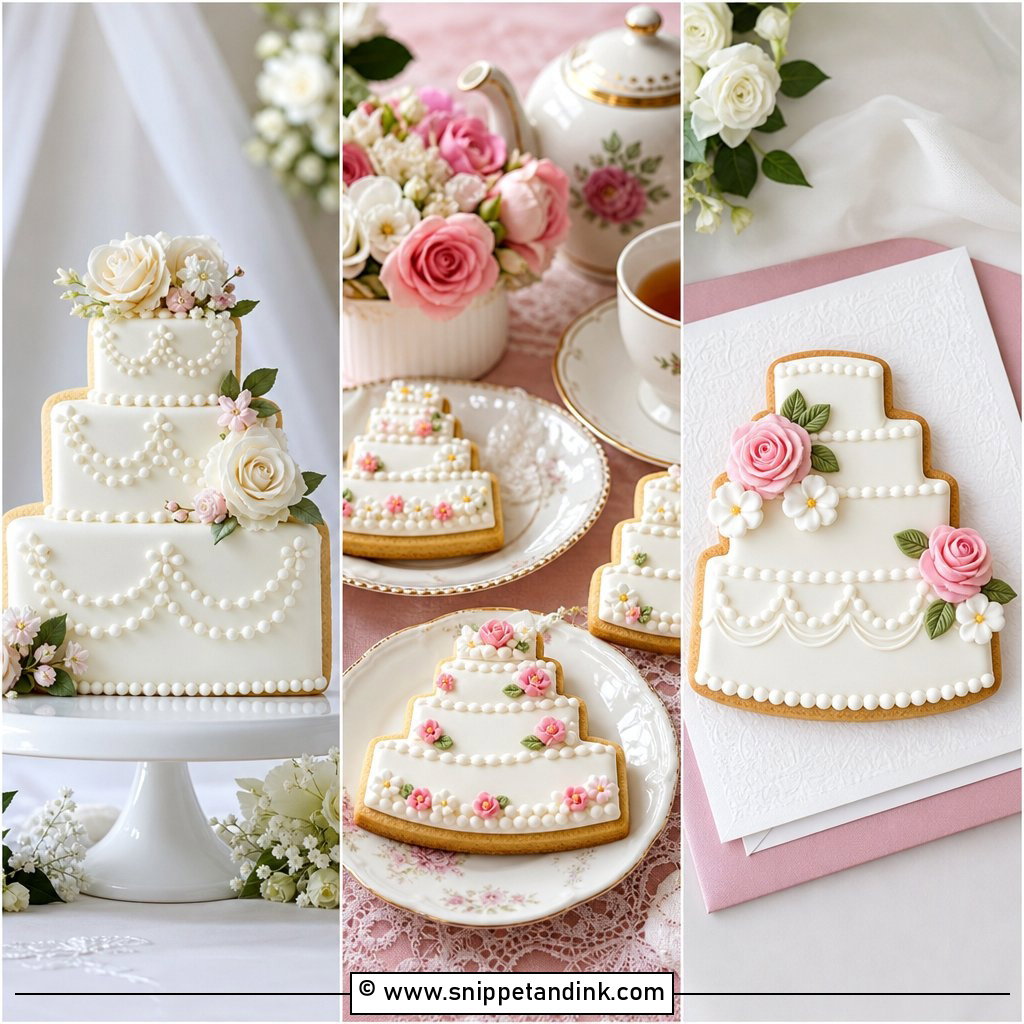
10. White Wedding Cake With Lambeth Piping
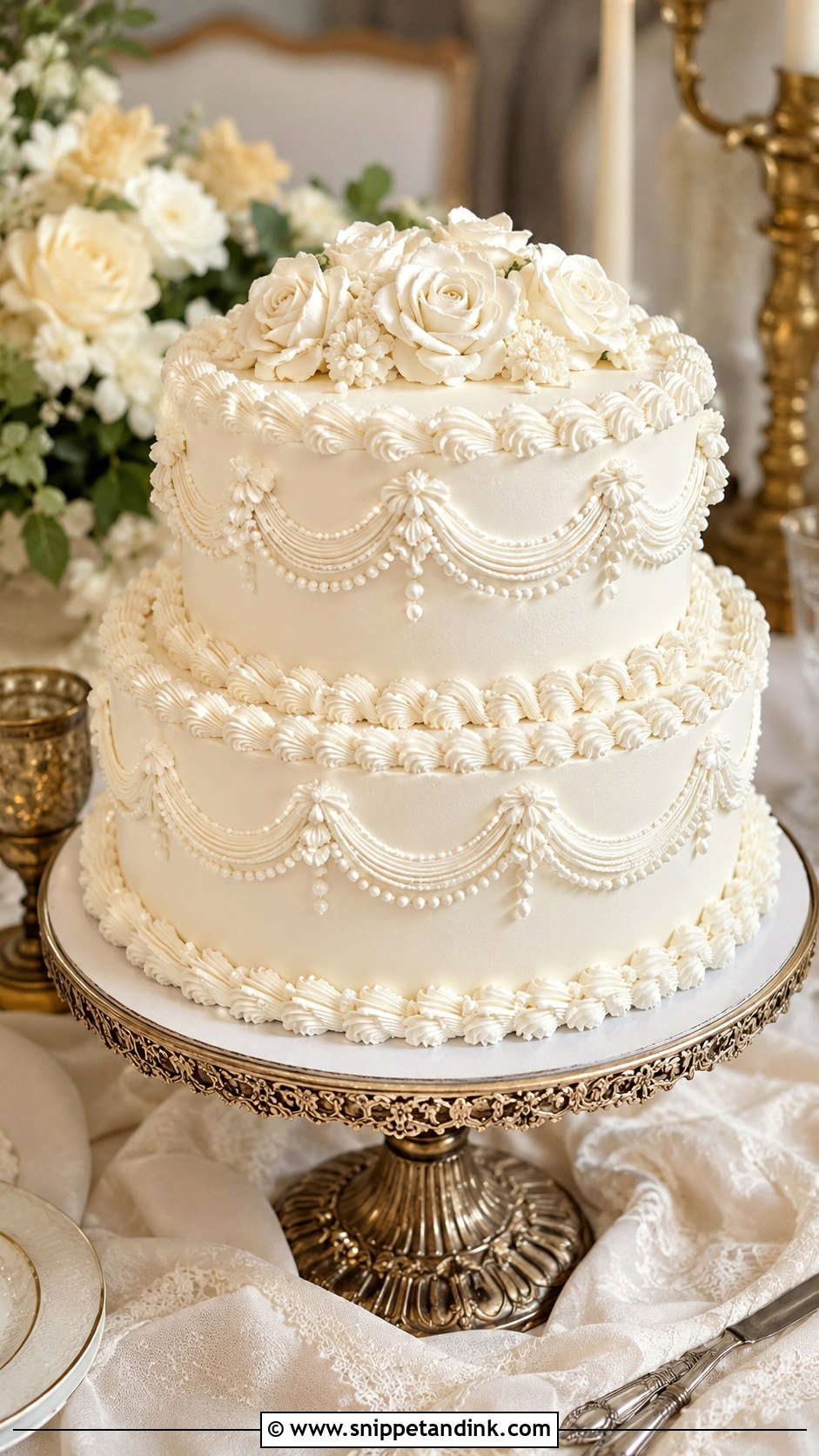
Layered Lambeth piping stacks shells, swags, pearls and scrolls into a dramatic white-on-white cake, and it’s back because it looks wonderful in photos. It’s also slow work, so I often suggest it as a small cutting cake surrounded by simpler cupcakes, which gives you the vintage look without the cost of piping five tiers. Keep the icing clean so the detail reads as detail, not clutter. Vanilla bean or white chocolate raspberry suits it.
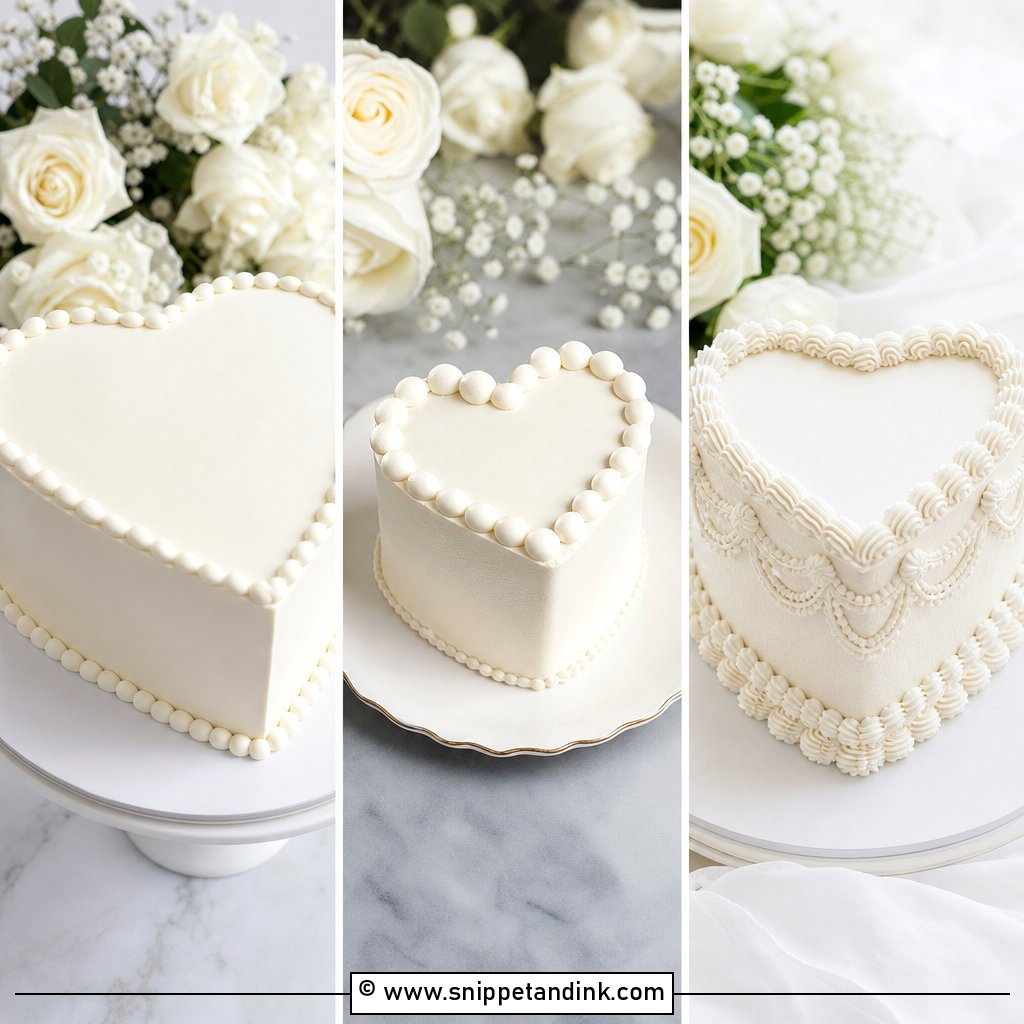
11. White Wedding Cake With Minimalist Finish
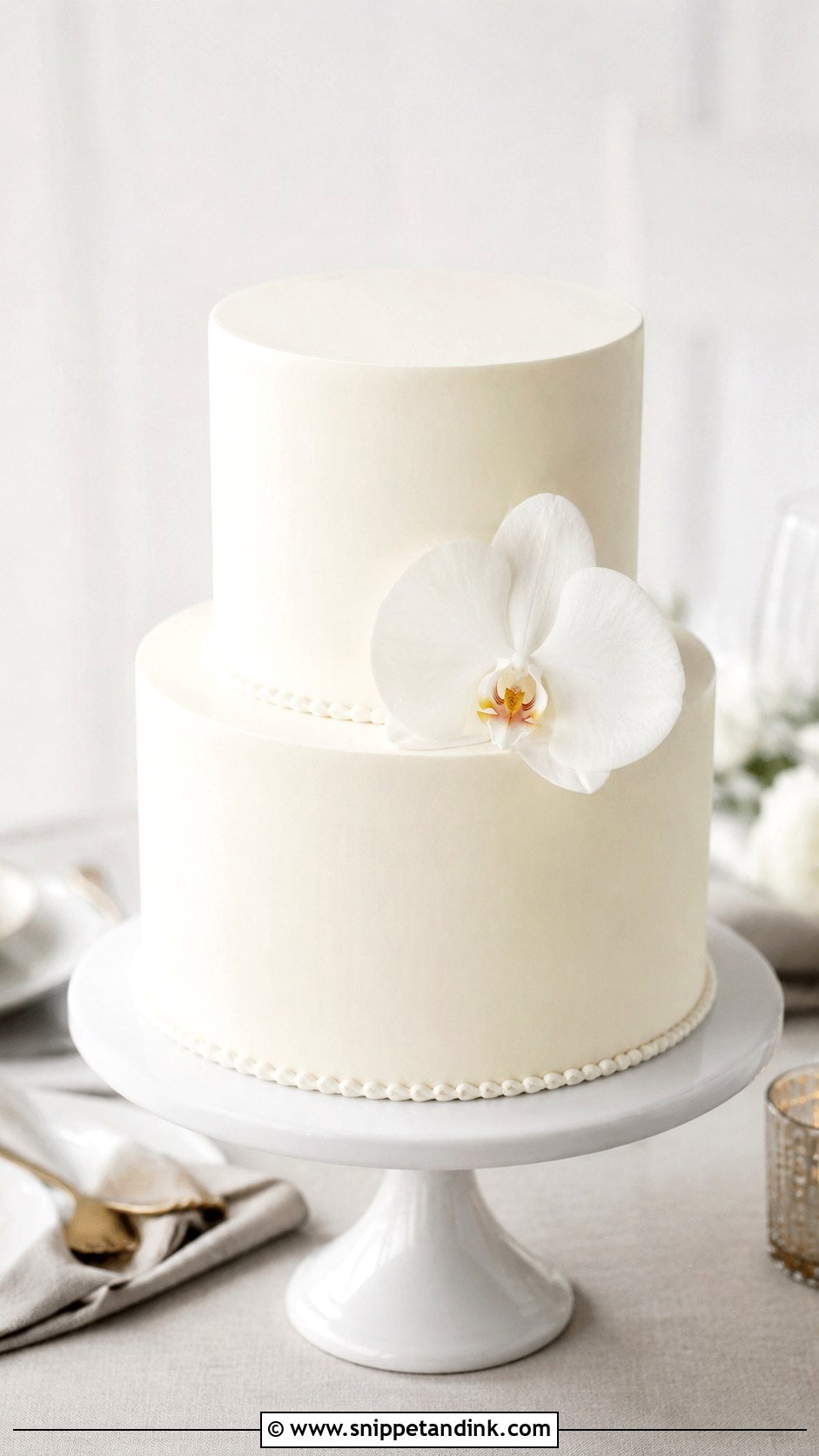
Minimal cakes are the hardest to get right, because nothing hides an uneven edge or a bubble in the icing. I spend most of the time on the finish: sharp top edges, perfectly straight sides, then one detail such as a single flower or a thin pearl border. A slightly warm ivory looks softer than bright white on a plain cake. Give it a filling with real flavor, such as lemon curd or raspberry cream, so the inside makes up for the quiet outside. Modern venues and small weddings suit it.
12. White Wedding Cake With Floral Cascade
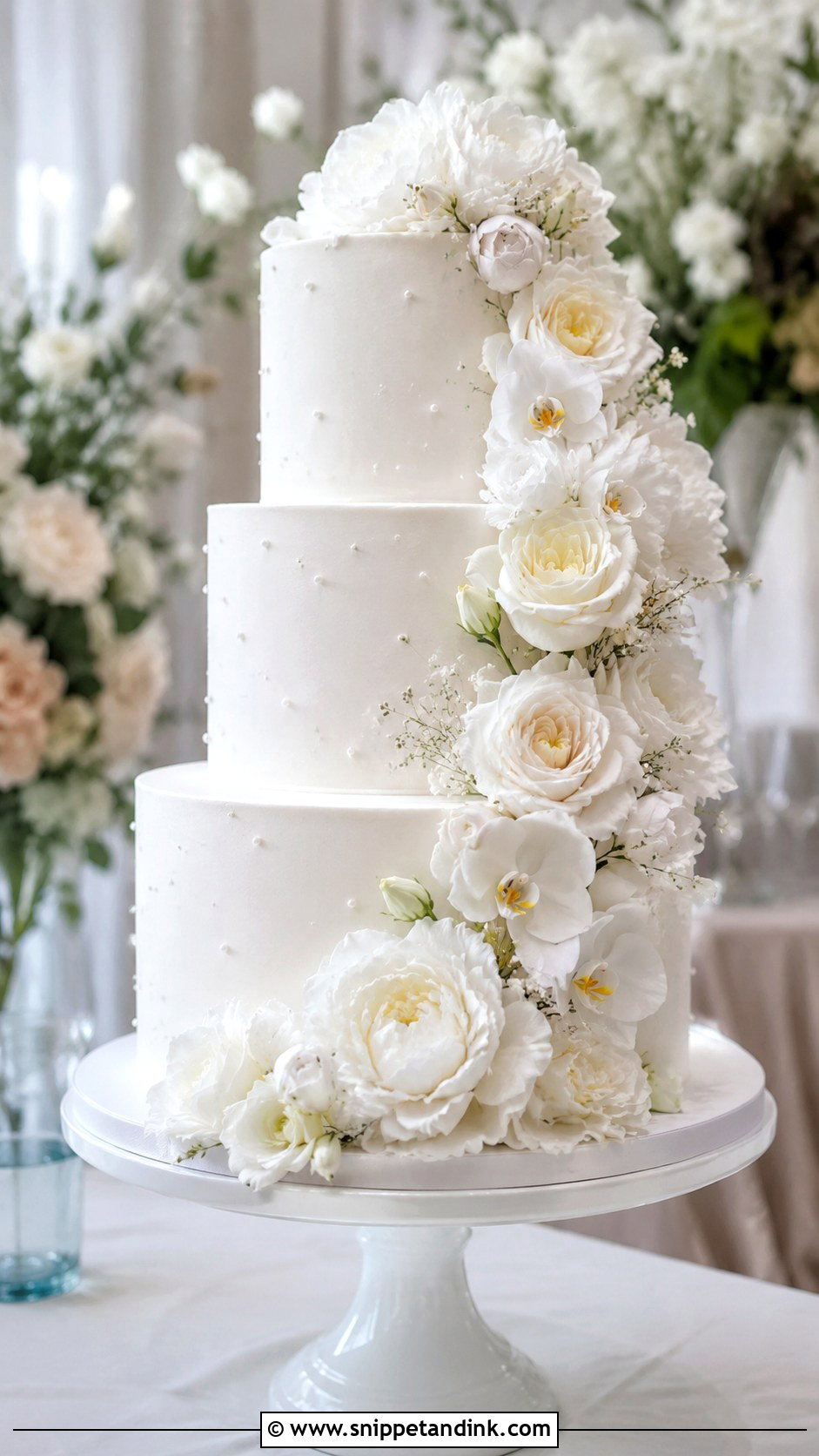
A cascade gives a white cake a diagonal line of flowers falling from the top tier down one side. It needs height to work, which is why I prefer it on three tiers or more. White roses, orchids and small fillers keep it bridal. I often mix fresh and sugar flowers, using sugar wherever a bloom has to touch the icing. Smooth or lightly textured frosting keeps the cascade looking deliberate. Romantic receptions and formal dinners suit it.
13. White Wedding Cake With Square Tiers
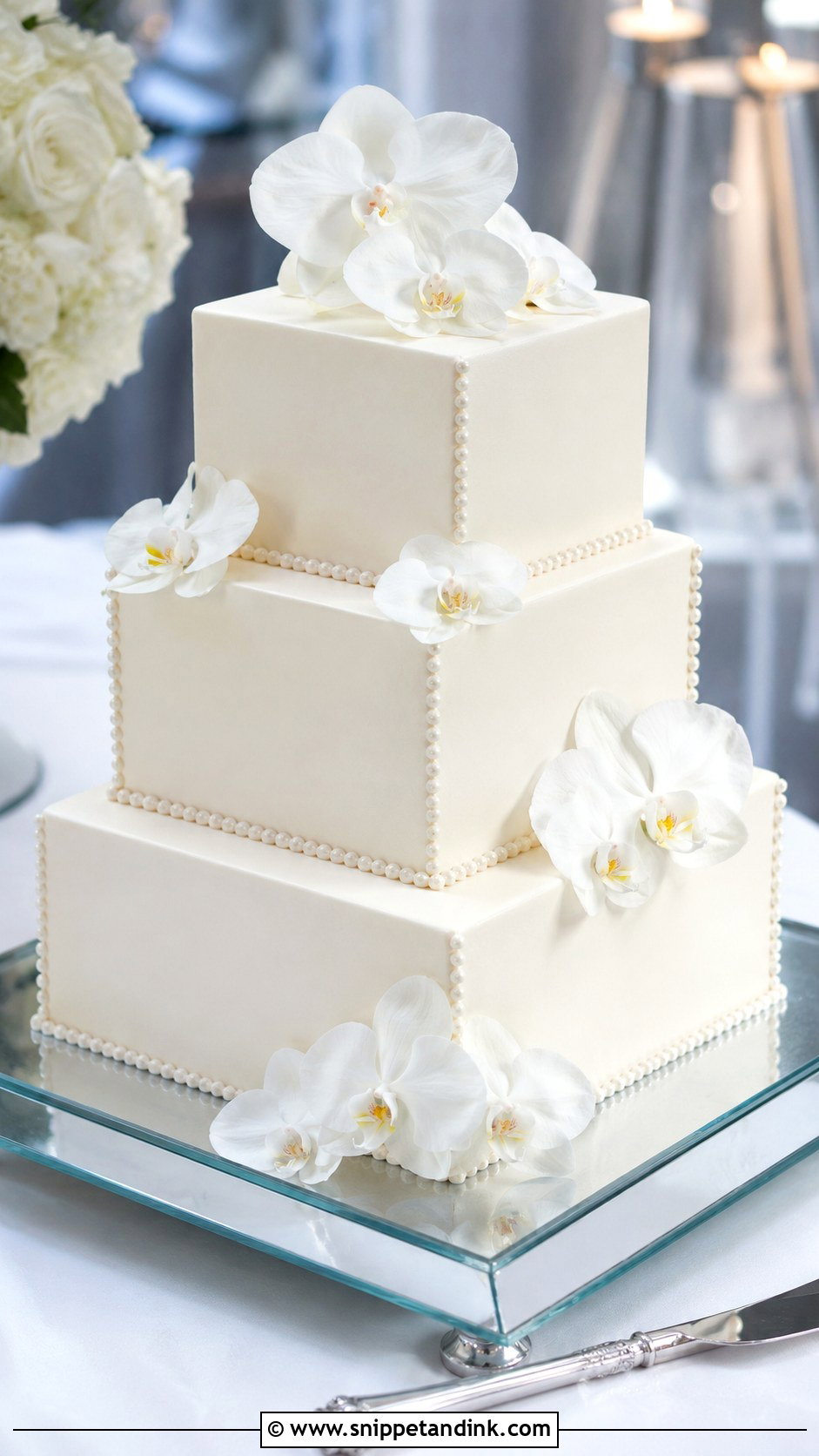
Square tiers look crisp and architectural, and they serve neatly, which helps with a big guest list because every slice comes out the same size. The corners need sharp fondant or a very patient buttercream finish. To keep it bridal, I add white orchids or a thin piped line along the edges. Hotel and gallery venues suit the shape. Vanilla almond or champagne with strawberry filling pleases most guests.
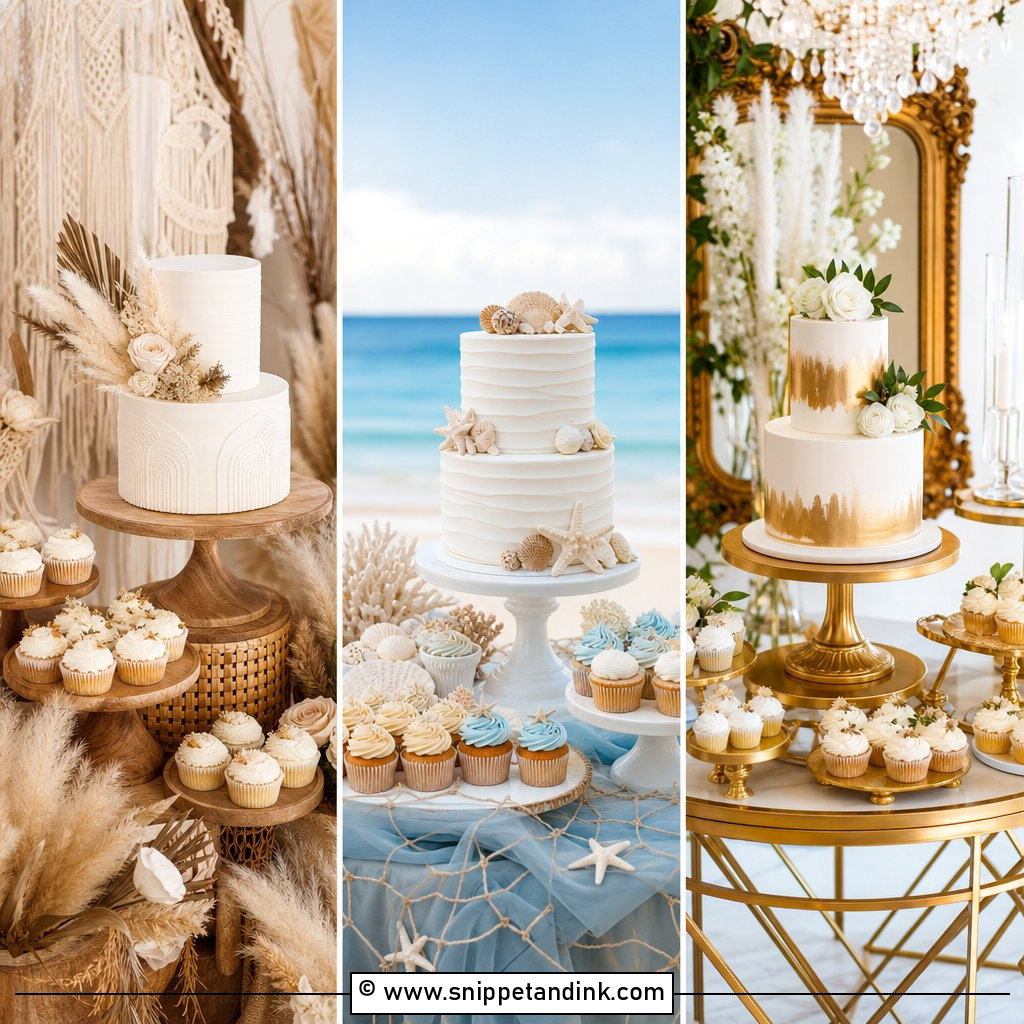
14. White Wedding Cake With Cupcake Tower
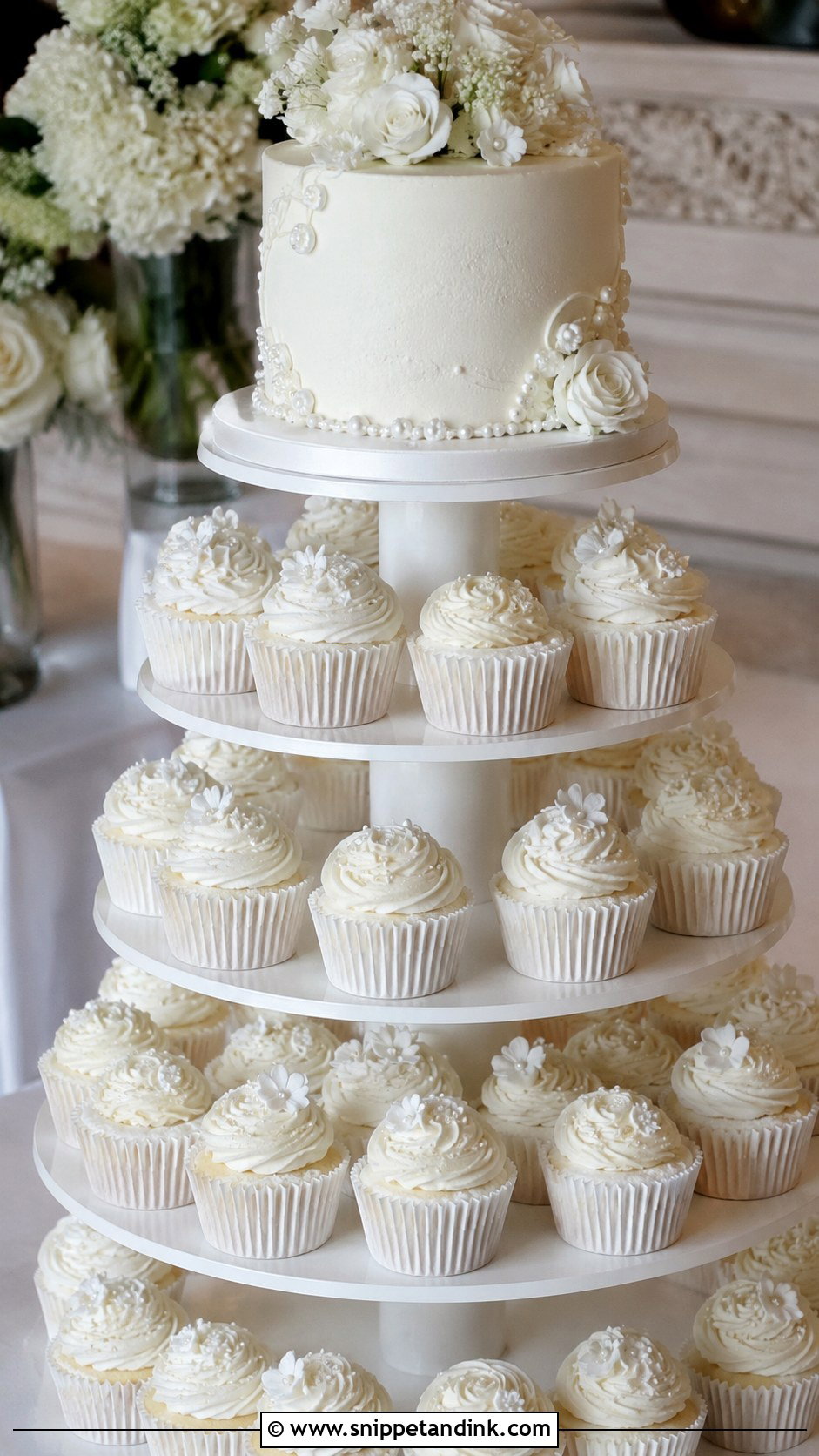
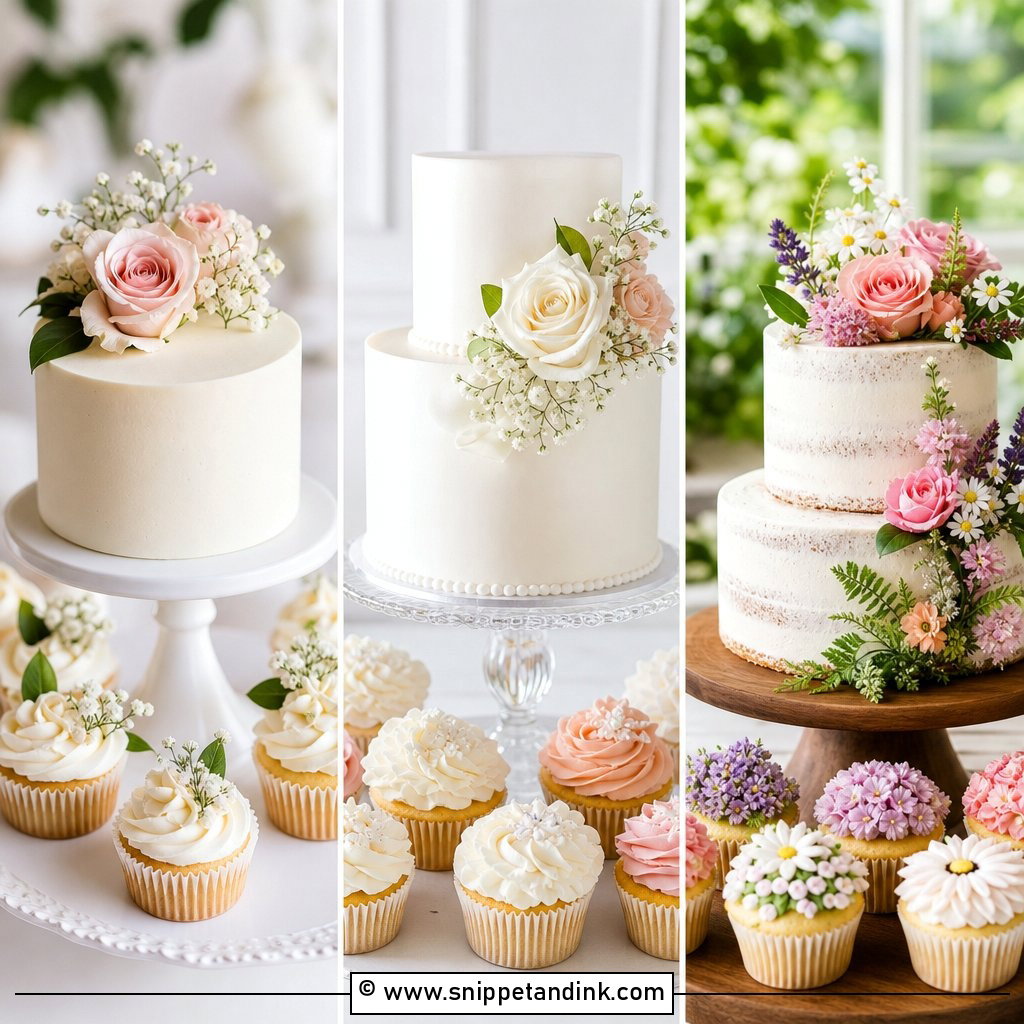
A small cake on top and a cupcake tower underneath gives you the cutting photo and a dessert guests can simply pick up. The cake sits on the top tier of the stand, with cupcakes arranged in tidy rings below. Since the cupcakes all wear the same white frosting, you can fill them with several flavors and the tower still looks uniform. Matching swirls, pearls or tiny monogram toppers tie the two together. Make sure the stand is rated for the weight of the cake on top.


15. White Wedding Cupcakes With Pearls
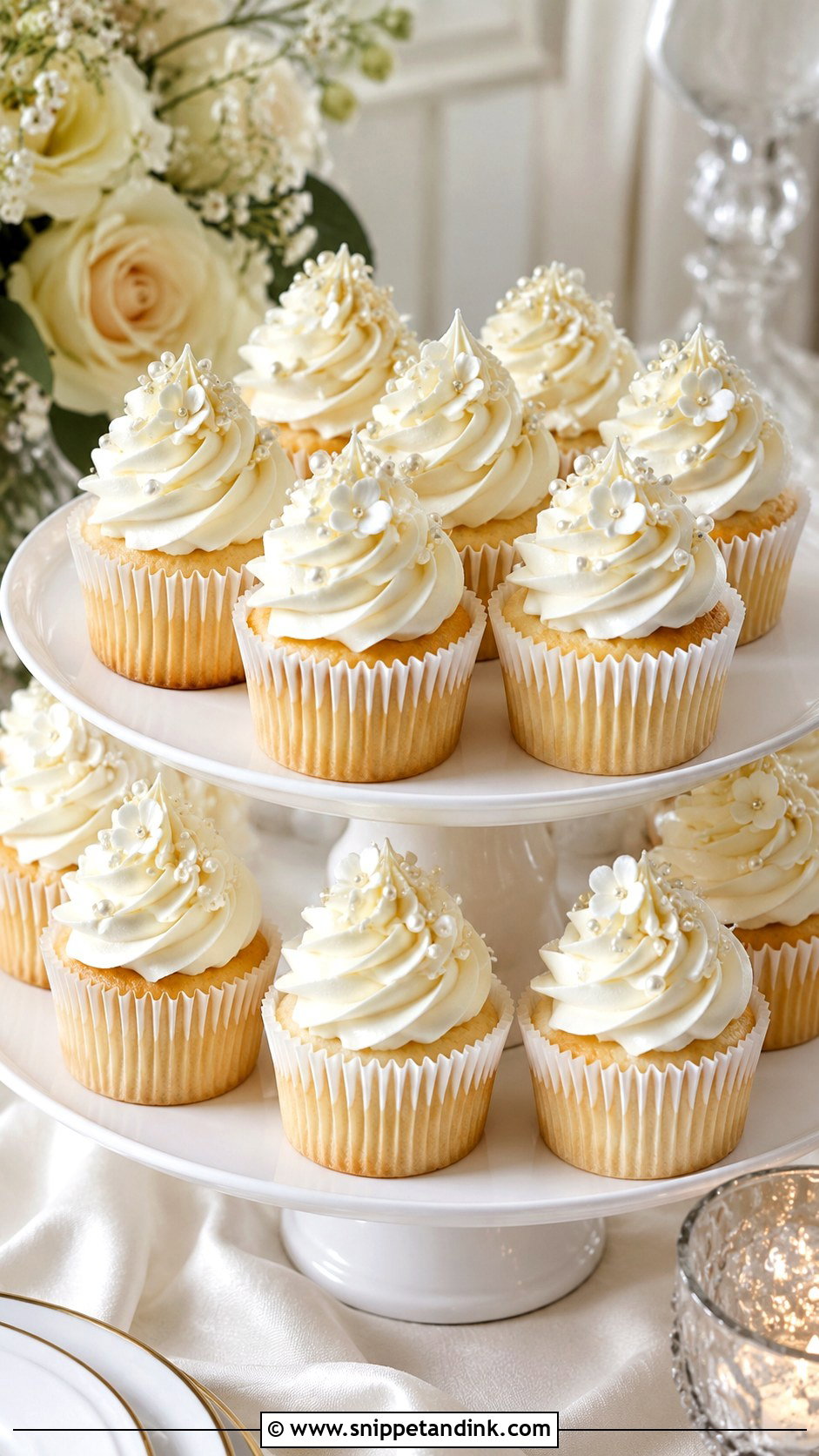
Pearls are the simplest way to make cupcakes look like they belong to the wedding cake. I top each one with a tall swirl, a smooth dome or a flat fondant disc, then add a few pearls in the same size as on the cake. A white tiered stand makes them look orderly. They work at bridal showers, reception dessert bars and as late-night sweets. Choose white, ivory or soft gold liners, preferably greaseproof so they stay bright.
16. White Wedding Cupcakes With Buttercream Flowers
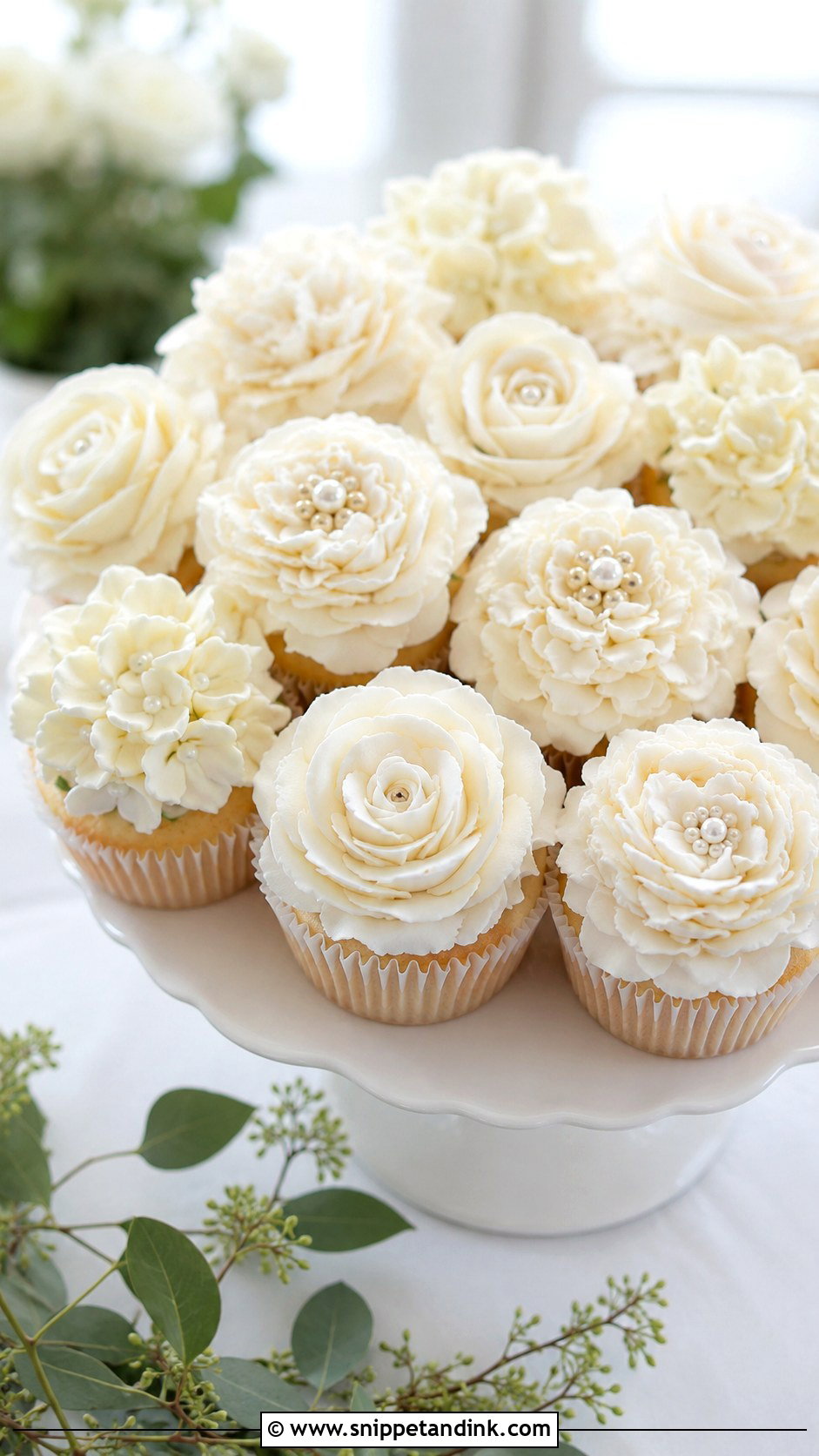
Piped buttercream flowers turn each cupcake into a tiny bouquet. I pipe roses, ranunculus or hydrangea clusters straight onto the cupcake in white and ivory, and grouped together they look like a single arrangement. Hydrangea is the quickest to pipe; a full rose takes longest. Stands at different heights make the display look fuller. They sit well beside a small white cutting cake. Vanilla, lemon and almond all work underneath.
17. White Wedding Cupcakes With Lace Toppers
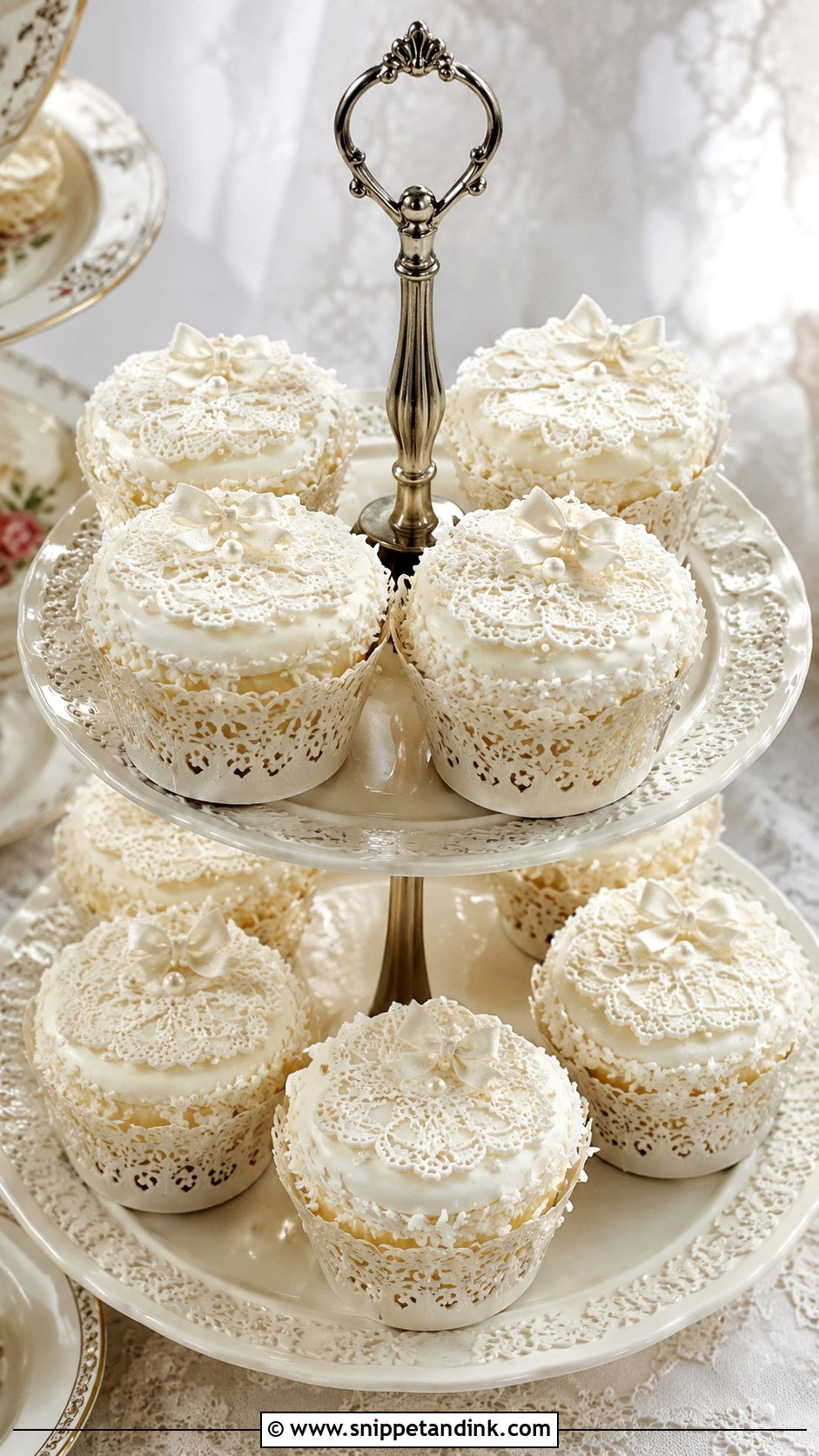
Lace toppers are thin discs of fondant, piped royal icing or edible printed lace set on top of each cupcake. They need a smooth frosting base underneath, or the pattern looks wrinkled. Printed edible lace is the fastest for large quantities but can curl in humid air, so I add it on the day. Finish with a pearl or a tiny sugar flower. They suit lace gowns and candlelit vintage venues. Vanilla bean or coconut keeps the flavor classic.
18. White Wedding Cupcakes With Mini Roses
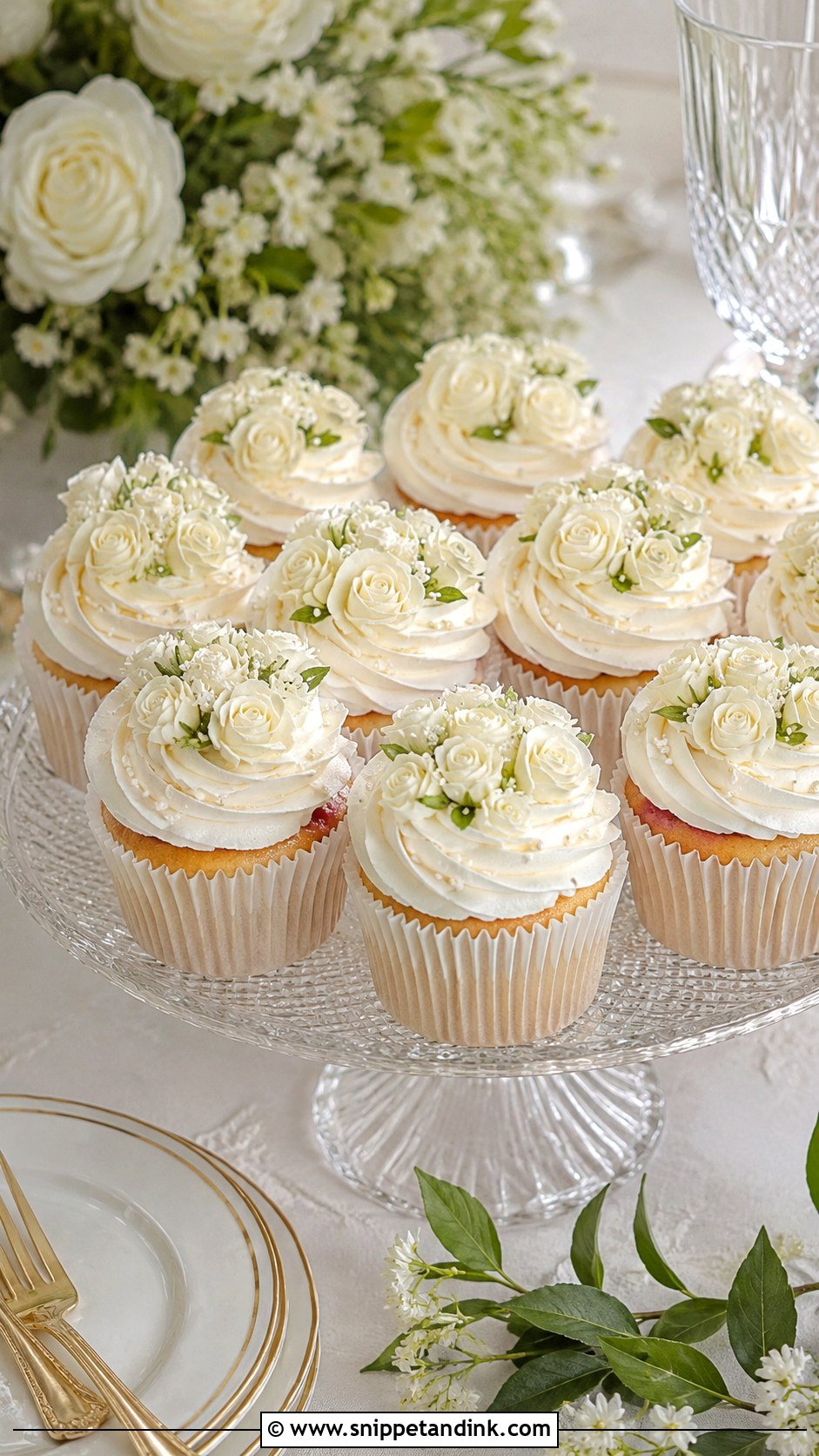
One small piped rose on each cupcake is simple and pretty, and it’s my suggestion when a couple wants cupcakes at each place setting. I pipe them with a petal tip, sometimes in clusters of three with tiny leaves. Without tall swirls, they also travel and stack in boxes far more easily. Pearl sprinkles and ivory wrappers suit them. Pick flavors guests reliably enjoy, like vanilla raspberry or lemon cream.
19. White Wedding Cupcakes With Silver Accent
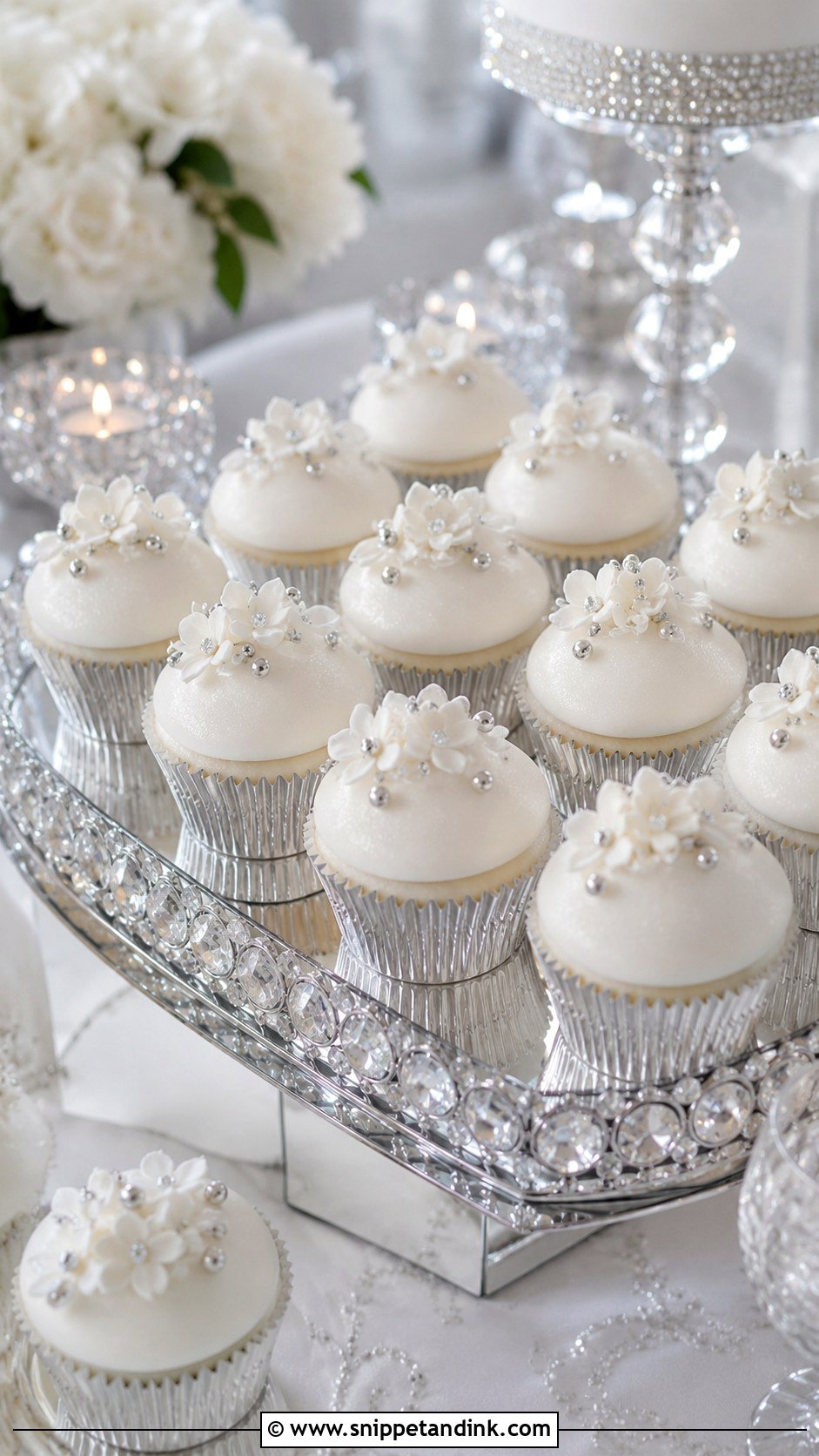
Silver keeps a cupcake table cool and crisp, especially at black-tie receptions or venues with lots of glass and crystal. It can come from silver dragées, a light dusting of edible shimmer or a slim metallic topper. Hard dragées can be tough on teeth, so I use them sparingly and tell the caterer. White frosting makes the silver look sharp. Mirrored trays or clear stands add extra shine.
20. White Wedding Cupcakes With Cake Cutting Display
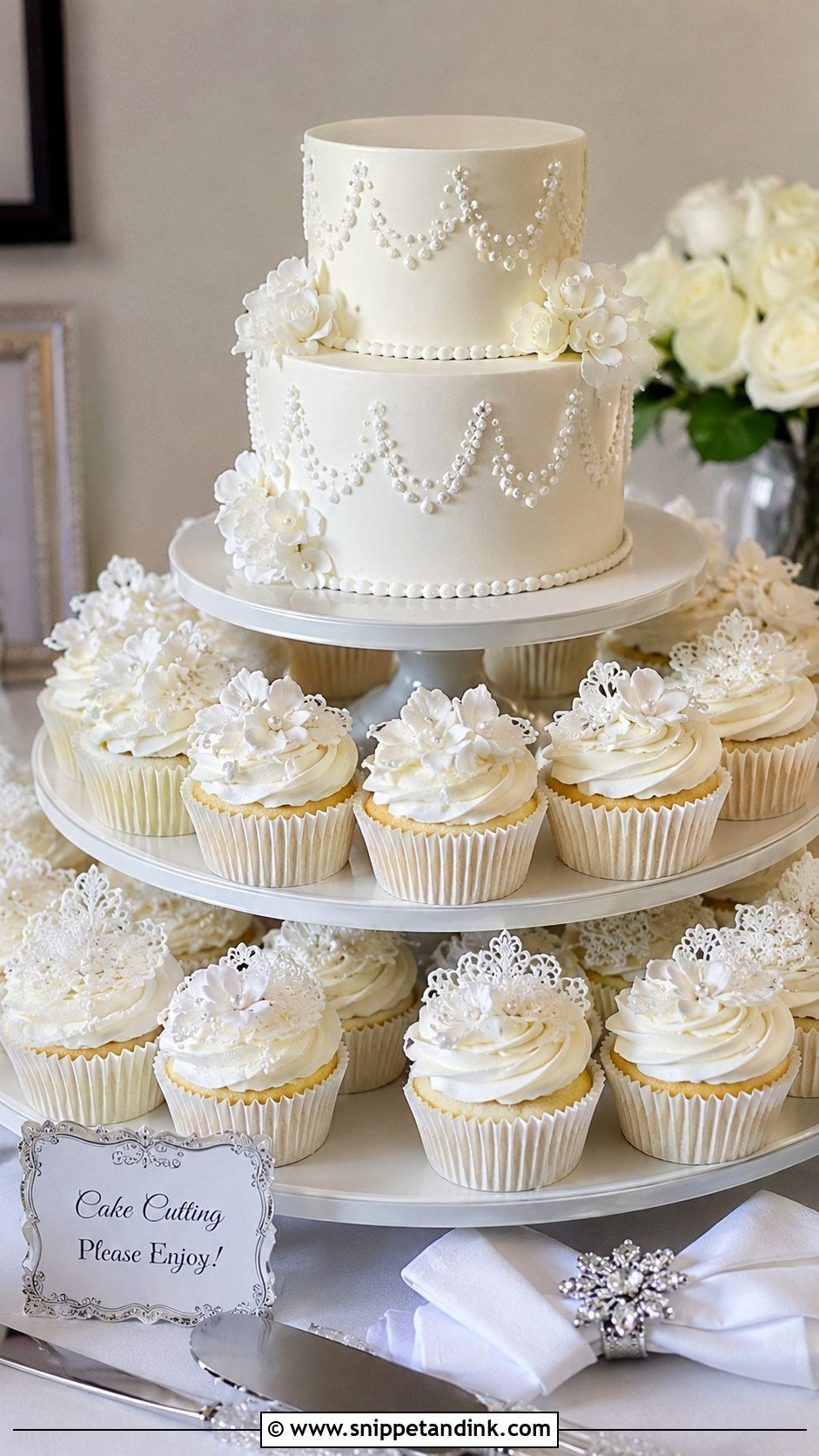
A small white cutting cake in the center with matching cupcakes around it makes a full cake cutting display without the cost of a large tiered cake. You still get the traditional photo of the two of you with the knife, and dessert service is just a matter of handing out cupcakes. I repeat one detail from the cake on every cupcake, such as pearls or a sugar flower, so the table looks connected. Offer several flavors and label them clearly.
Cupcakes Dry Out Faster Than a Cake, So Bake and Display Them Differently
A tiered cake is sealed by its icing on every side. A cupcake has a whole paper wall exposed, so it loses moisture faster and shows small problems sooner. A few habits keep the table looking as good at the end of the night as at the start.
- Bake close to the day. I bake cupcakes the day before at the earliest and frost them on the day, so the sponge stays soft.
- Use greaseproof or foil-lined liners. Ordinary paper soaks up butter and turns blotchy, and in humid weather it can peel away from the cake.
- Match the white. Cake and cupcakes should be frosted from the same batch of buttercream; a separate batch can come out a shade warmer or cooler, and the difference shows next to each other.
- Travel in inserts. Swirled cupcakes go in boxes with cupcake inserts and get loaded onto the tower at the venue, never stacked on the stand beforehand.
- Keep the stand out of the sun. A full tower of buttercream swirls will slump much faster than a smooth cake in a warm spot.
If the cutting cake has fondant and the cupcakes don’t, ask your baker to hold a cupcake against the cake at the tasting. Fondant and buttercream are rarely exactly the same white, and a tiny adjustment early saves a mismatched table later.
Same White, Same Detail, One Table
Whichever style you lean toward, what makes a cake and cupcakes look planned is repetition: the same white, one shared detail and a sensible spread of flavors. A tiered cake with flowers or piping suits a traditional wedding. A small cutting cake with cupcakes suits couples who’d rather have choice and easy serving. Bring your favorite two or three ideas to the tasting, along with your guest count, and we’ll work out the balance between cake and cupcakes from there.
You'll Like These Ideas:



Leave a Reply