
The cake gets about four minutes of attention at most weddings: a quick frame when it arrives, then the cutting, then it’s gone. That’s a shame, because it can do a lot of work in the gallery, as a detail photo, a reception centrepiece, a prop in a couple portrait and a record of something you spent months choosing. When I plan cake photos, I’m thinking about three things: where the light comes from, what sits behind the cake, and what the two of you are doing beside it. The poses below cover full cake portraits, cutting moments, close details and the candid bits in between, and they suit everything from classic tiers to small modern cakes. Use them to build your own short list for the cake table.
Placing the Cake Table for the Camera, Not Just the Room
Most cake photos are decided before I arrive, by whoever placed the table. Venues often push it into a corner or against a wall beside the kitchen door, which is easy for service and hard for pictures. If you can, walk the room with your planner and check four things.
- Space behind the table. You need room to stand behind the cake for the cutting, at least an arm’s length, more if the dress has a train.
- What’s in the background. Exit signs, fire extinguishers, the DJ’s cables and the bar queue all end up in the frame.
- Where the light comes from. A table beside a window is ideal for daytime detail shots; under a single spotlight is the hardest place to shoot.
- Heat. Not in direct sun, not beside a radiator, and not under a hot uplight that softens buttercream within the hour.
I also ask bakers which side of the cake is its best face, because there is almost always one. Turn that side toward the room, not the wall.
1. Wedding Cake Cutting Pose
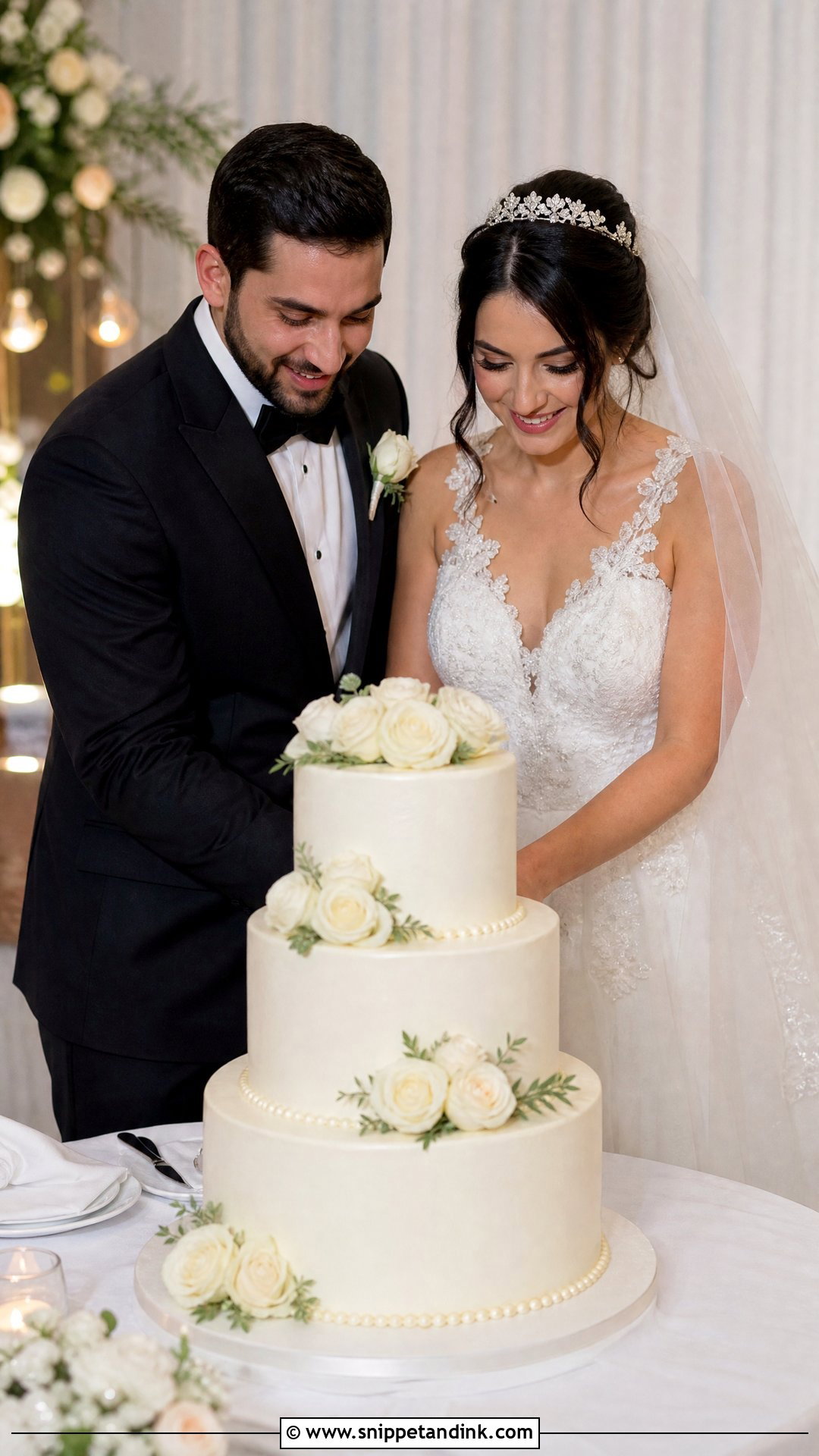
Everyone expects the wedding cake cutting pose, and it’s also the one I see go wrong most often, usually because the couple stands beside the cake and hides half of it. Stand behind the cake instead, so your hands, faces and the full height all stay in frame. Hold the knife together and lean in slightly toward each other. I take one straight-on frame and then step in for the hands. Clear the table of anything but flowers, candles and linen first. Tiered white buttercream reads especially clearly here because its outline holds even in dim reception light.
2. Wedding Cake First Look
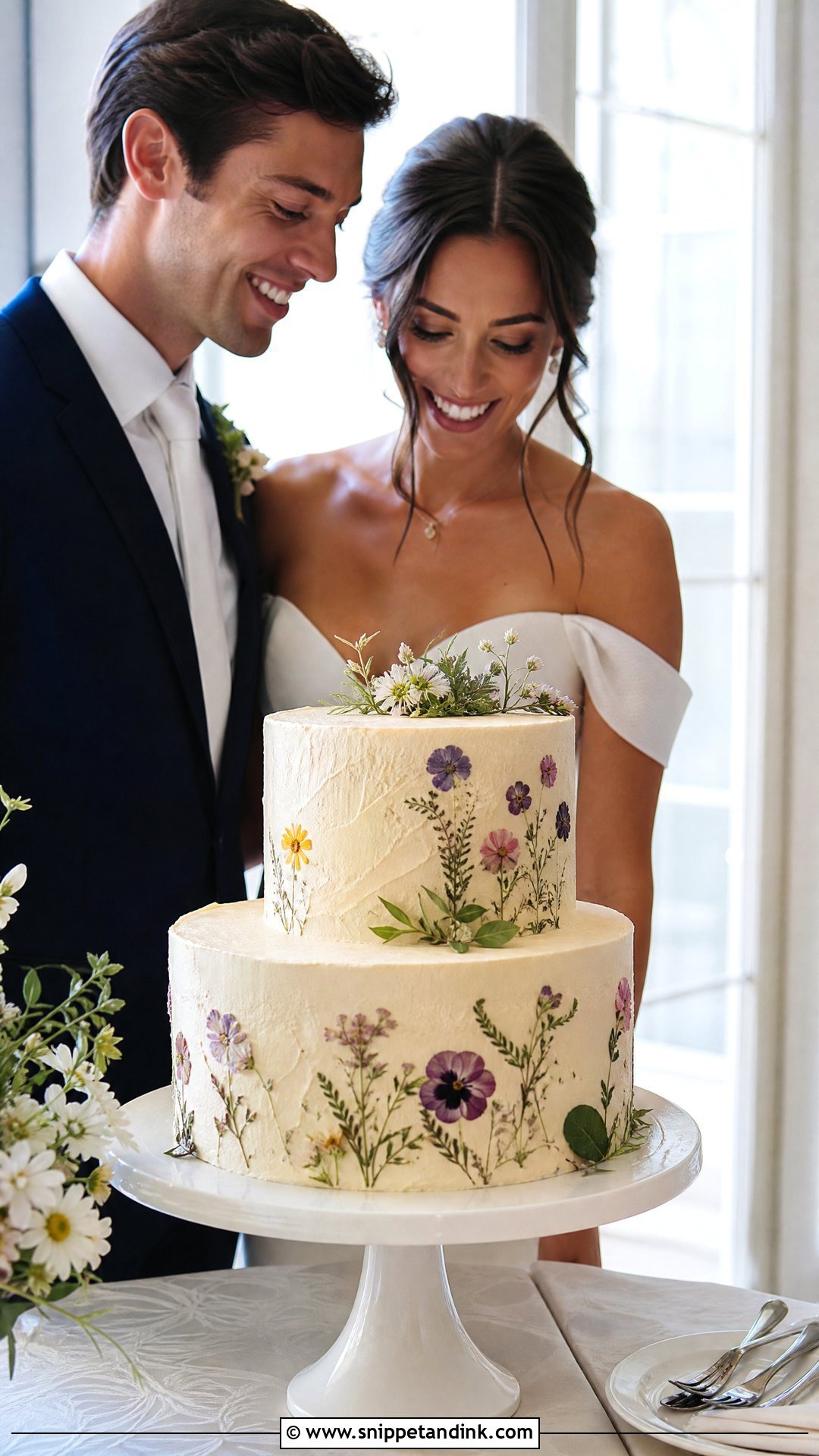
A first look at the cake gives me genuine reactions, which are always better than anything I can direct. Before guests come in, bring the two of you to the finished table and let you see it together. It means more when the cake has custom details, such as pressed flowers, monogram piping, pearls or your wedding colors. I stand off to one side so I can get your faces and the whole cake in one frame. Don’t perform for me; just look. It suits garden cakes, vintage Lambeth cakes and tall floral designs set against a styled backdrop.
3. Wedding Cake Table Pose
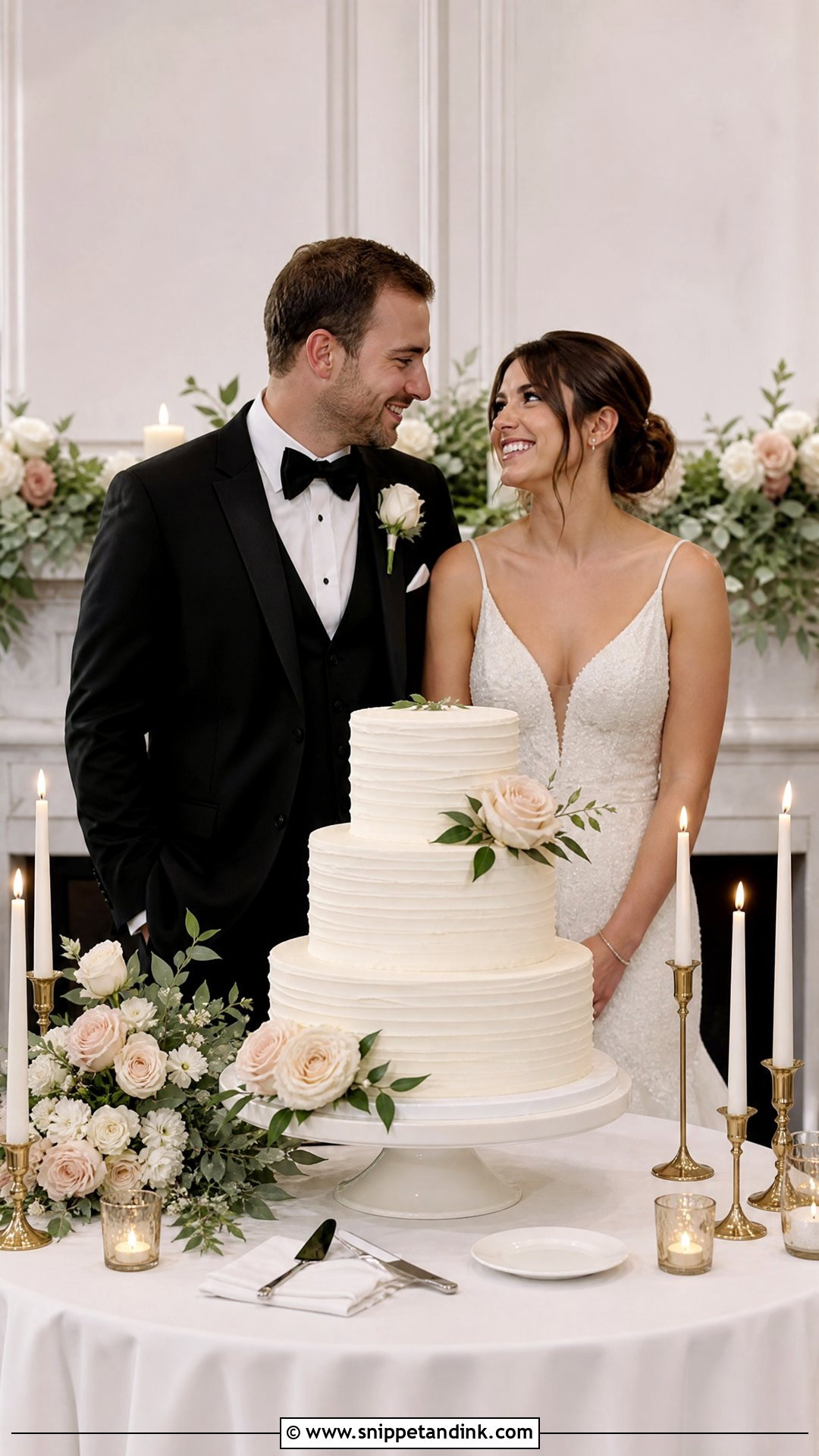
This is the frame that shows how the cake fits the room. I build it from the table outward: the stand, a pressed linen, flowers, framed signs and maybe a few candles, then the two of you behind it holding hands or sharing a small smile. Creased linen is the detail that ruins it most often, and it’s visible in every wide shot, so ask your planner to steam the cloth after setup. Keep the table balanced and nothing in front of the tiers. Couples planning their own weddings save these images more than almost any other cake shot. An ivory cake with fresh flowers suits it well.
4. Wedding Cake Detail Shot
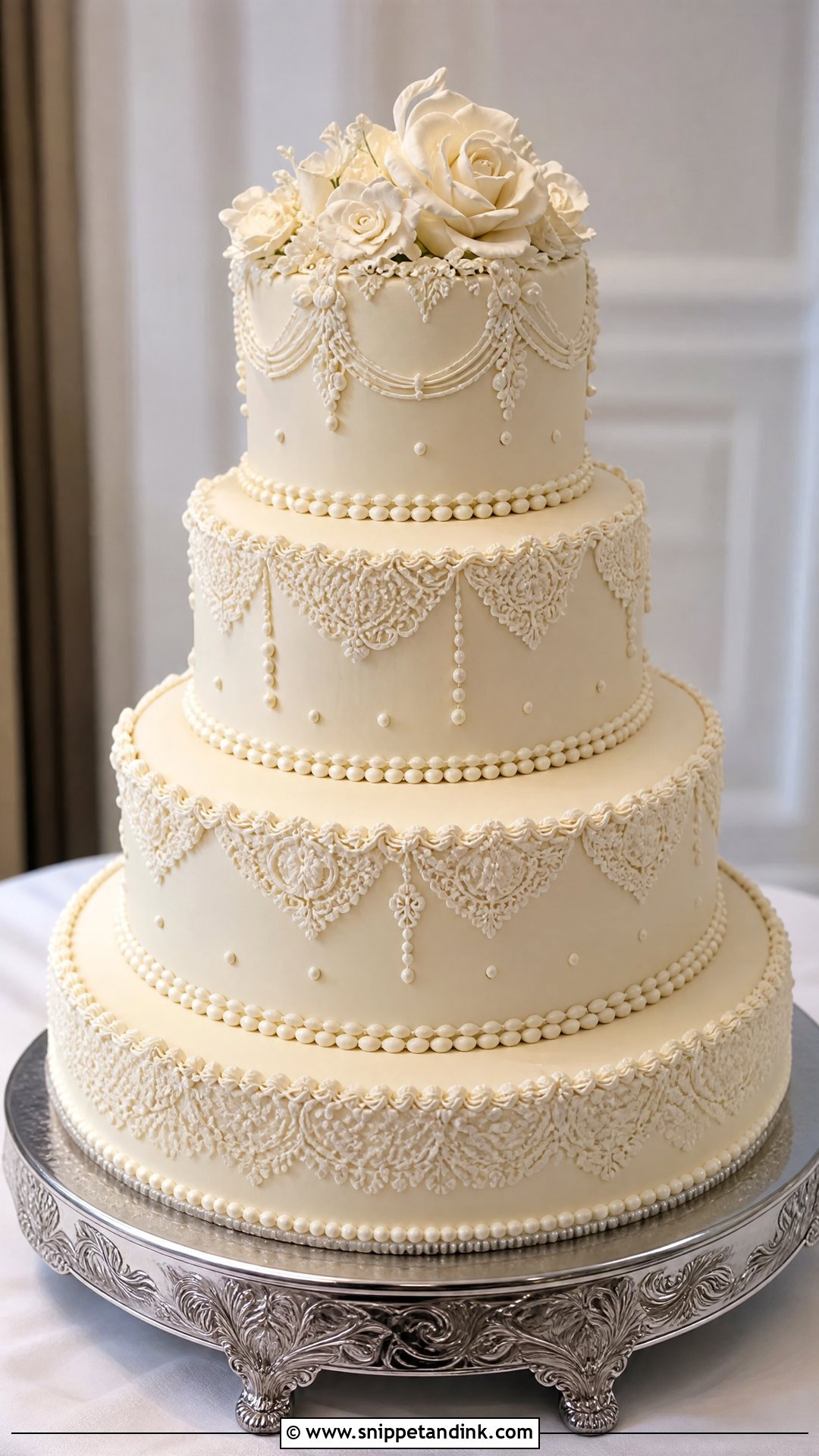
Close-ups are where the baker’s work actually shows: buttercream ridges, sugar flowers, pearl borders, hand-piped lace and fine fondant details. I photograph them before the cake is cut and before the room gets dark, ideally with daylight from a window at the side. Light coming from straight on flattens frosting; side light gives every ridge a shadow. A simple background, softly blurred, keeps the eye on the texture. Vintage, floral and textured buttercream cakes need this shot most, because their small details disappear in the wide reception photos.
5. Wedding Cake Kiss Pose
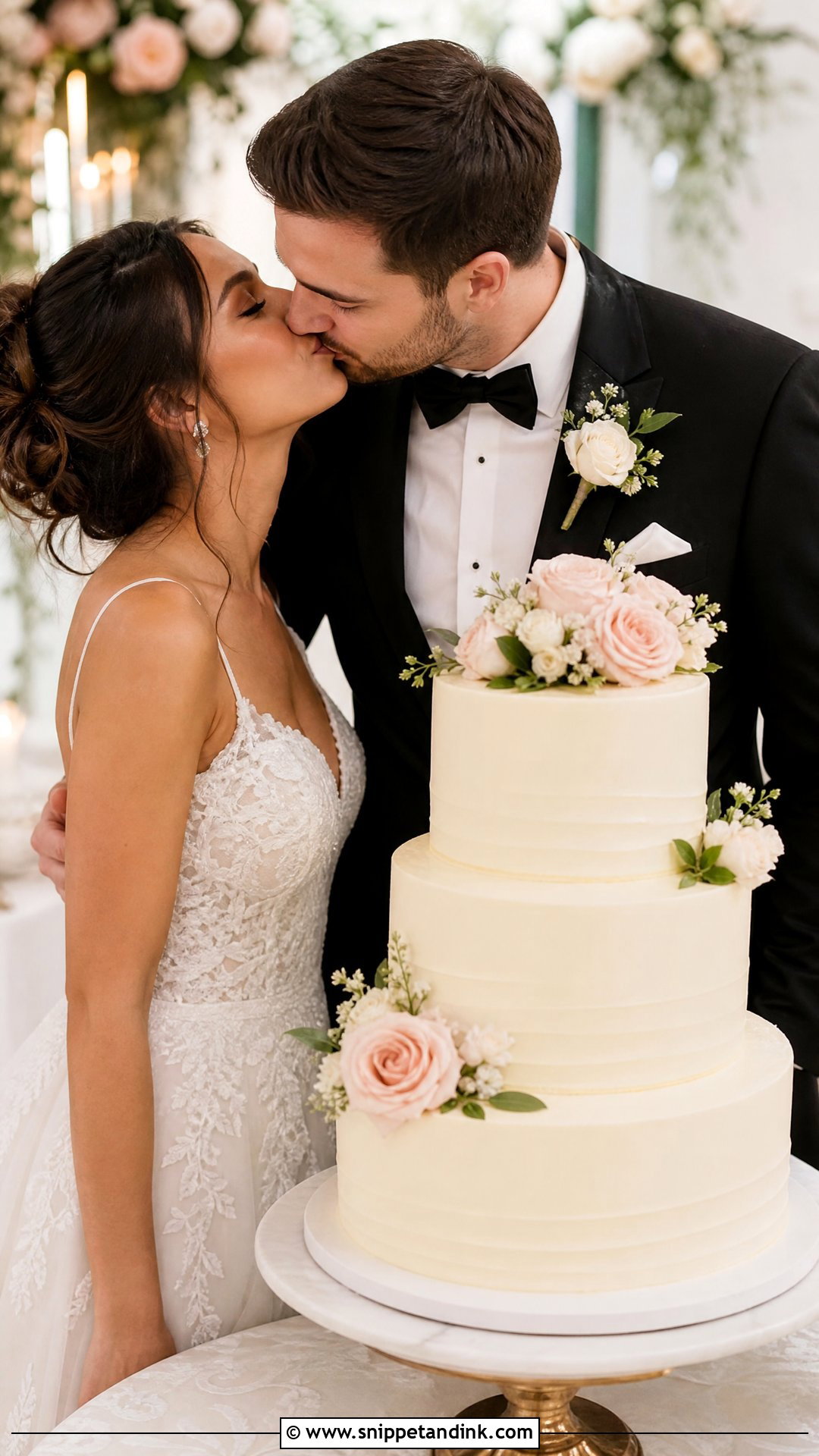
A quick kiss beside the cake gives a romantic frame without anyone feeling posed. Stand close, kiss softly, and let the cake sit in the foreground or between you. I shoot from a slight angle so both the tiers and your faces show. It works best fast and light; if we hold it for more than a second or two, it stiffens. Don’t push the cake too far to one side, since it’s still part of the picture. The wedding cake kiss pose suits a white tiered cake with soft blush flowers, which frame the moment gently.
6. Wedding Cake Hands Pose
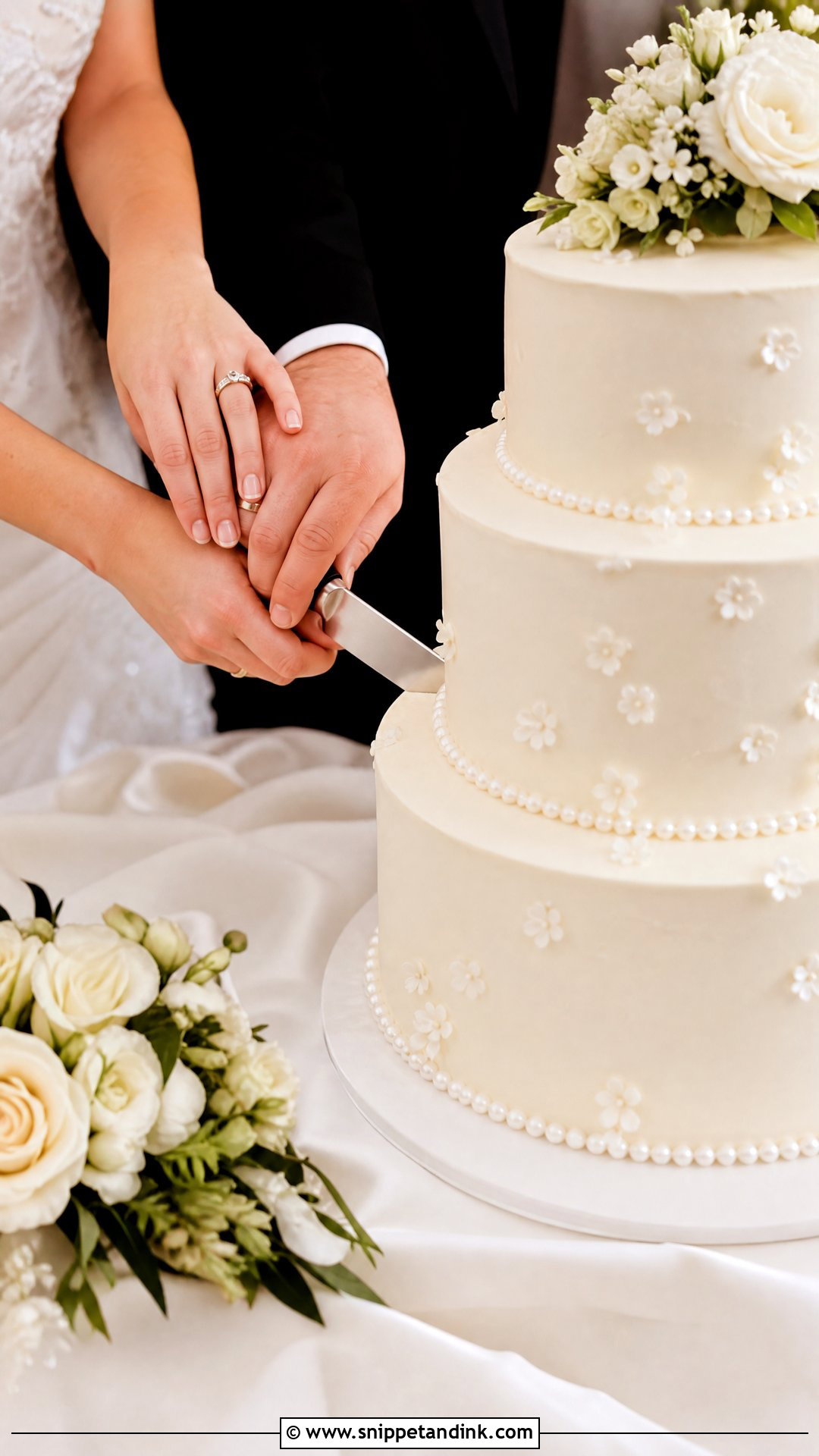
Hands tell the cutting story in a quieter way: the knife, your rings, a ribbon from the bouquet and the frosting texture, all in one tight frame. These end up in albums more often than couples expect. Place your hands neatly, and angle the knife toward the cake rather than the camera, which looks threatening in a photo. Before I take it, I check that rings are turned with stones facing up. There should be some texture or decoration near the cutting spot, so a smooth fondant cake with pearl trim or a buttercream cake with floral accents gives me something to work with.
7. Wedding Cake Feeding Pose
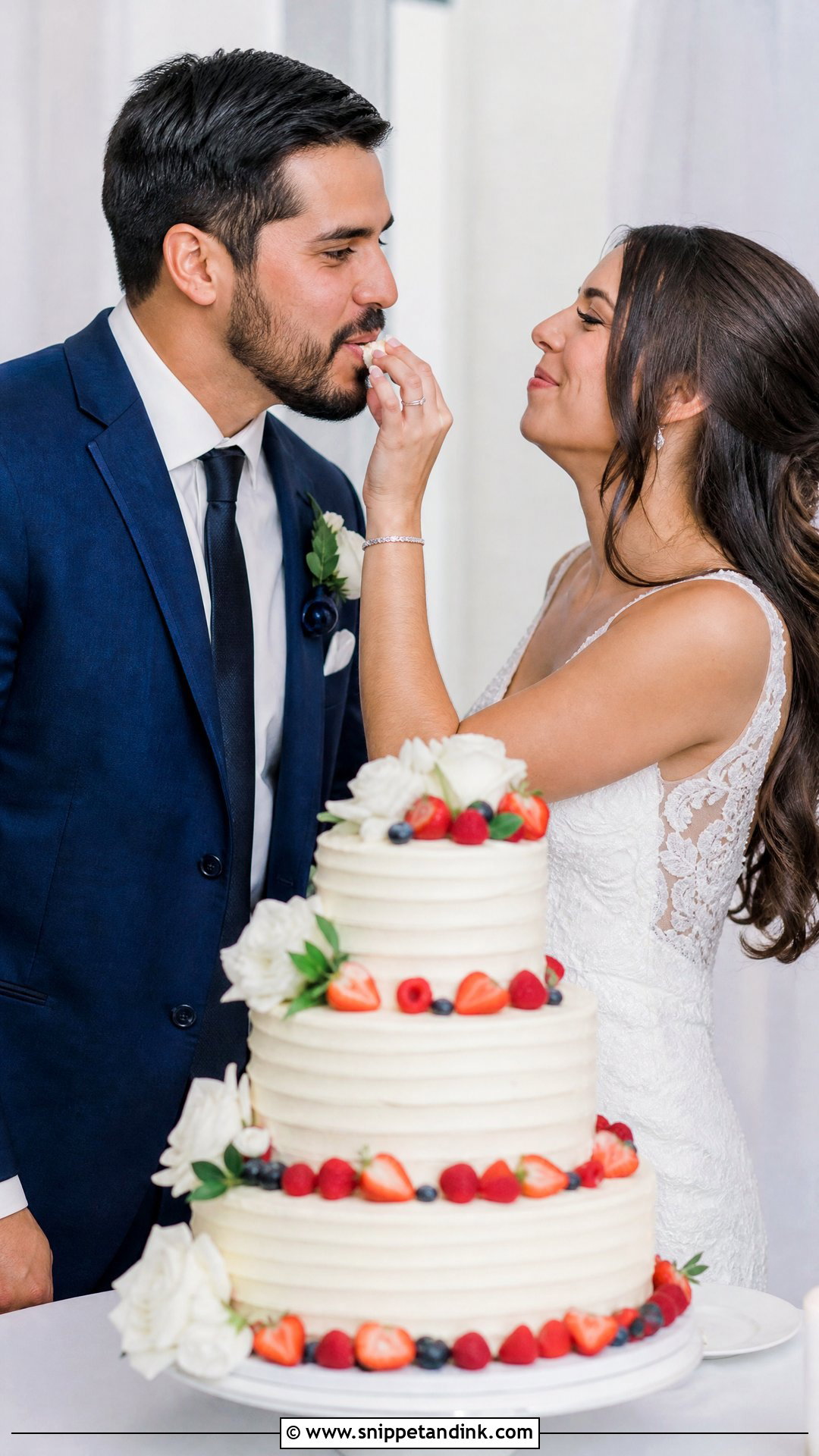
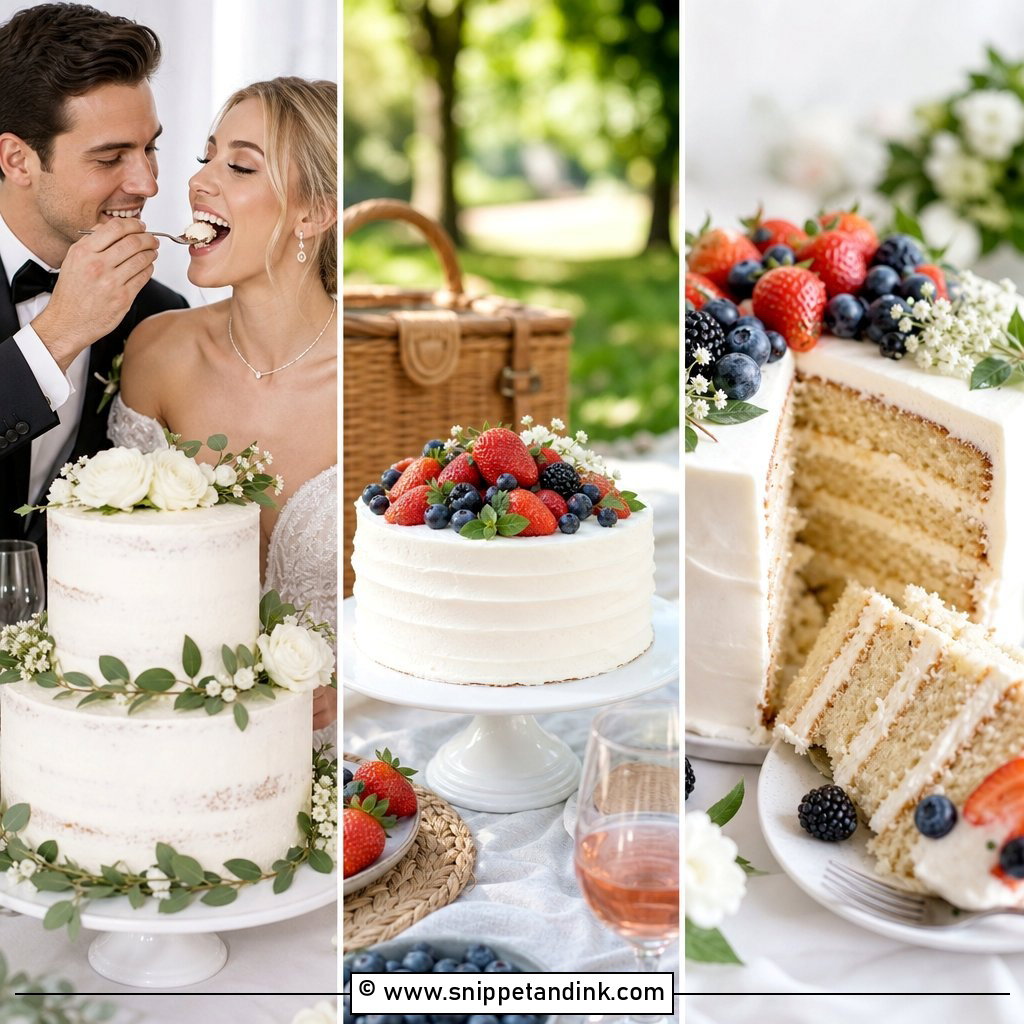
Feeding each other can be sweet, silly or simple, depending on the two of you. For a clean frame, each hold a small fork or a bite-sized piece and stay close to the table. Smile, but skip the mess unless you both genuinely want it. I take a tight shot of the bite and then a wide one with the whole cake. Timing matters: after the cut but before guests crowd the table with phones. A vanilla buttercream cake with fresh berries gives the image a warm, happy feel.
8. Wedding Cake Toast Pose
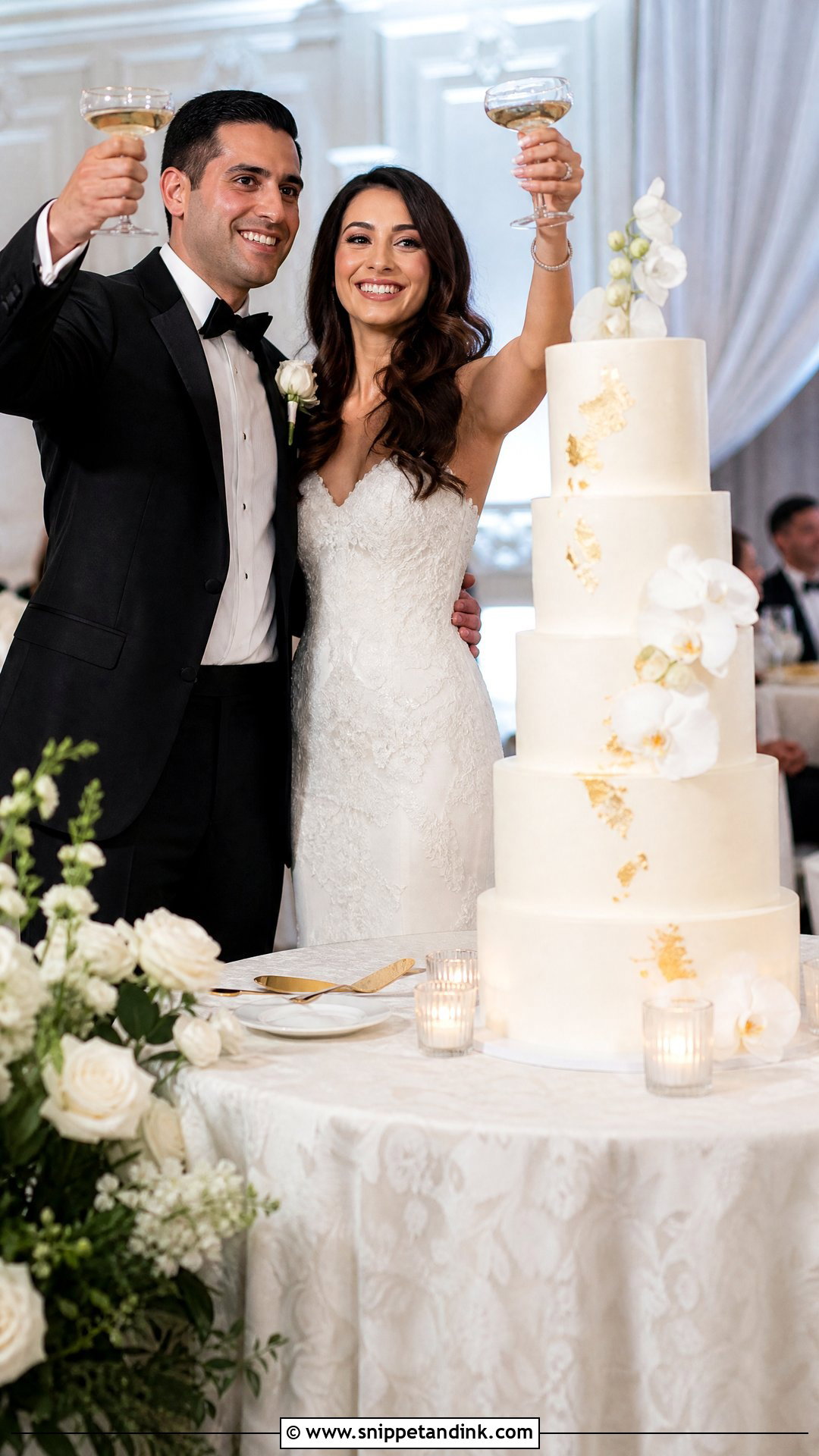
A toast beside the cake adds celebration without much staging. Stand near it with sparkling drinks, raise your glasses, and look at each other or at me. I ask couples to keep glasses at chin height or lower, otherwise they cover faces and the cake’s top tier. Right before or right after the cutting is the moment, especially under warm reception lights. The cake stays the centrepiece while you bring the movement. A tall ivory cake with gold accents and white flowers suits this polished frame.
9. Wedding Cake Portrait Pose
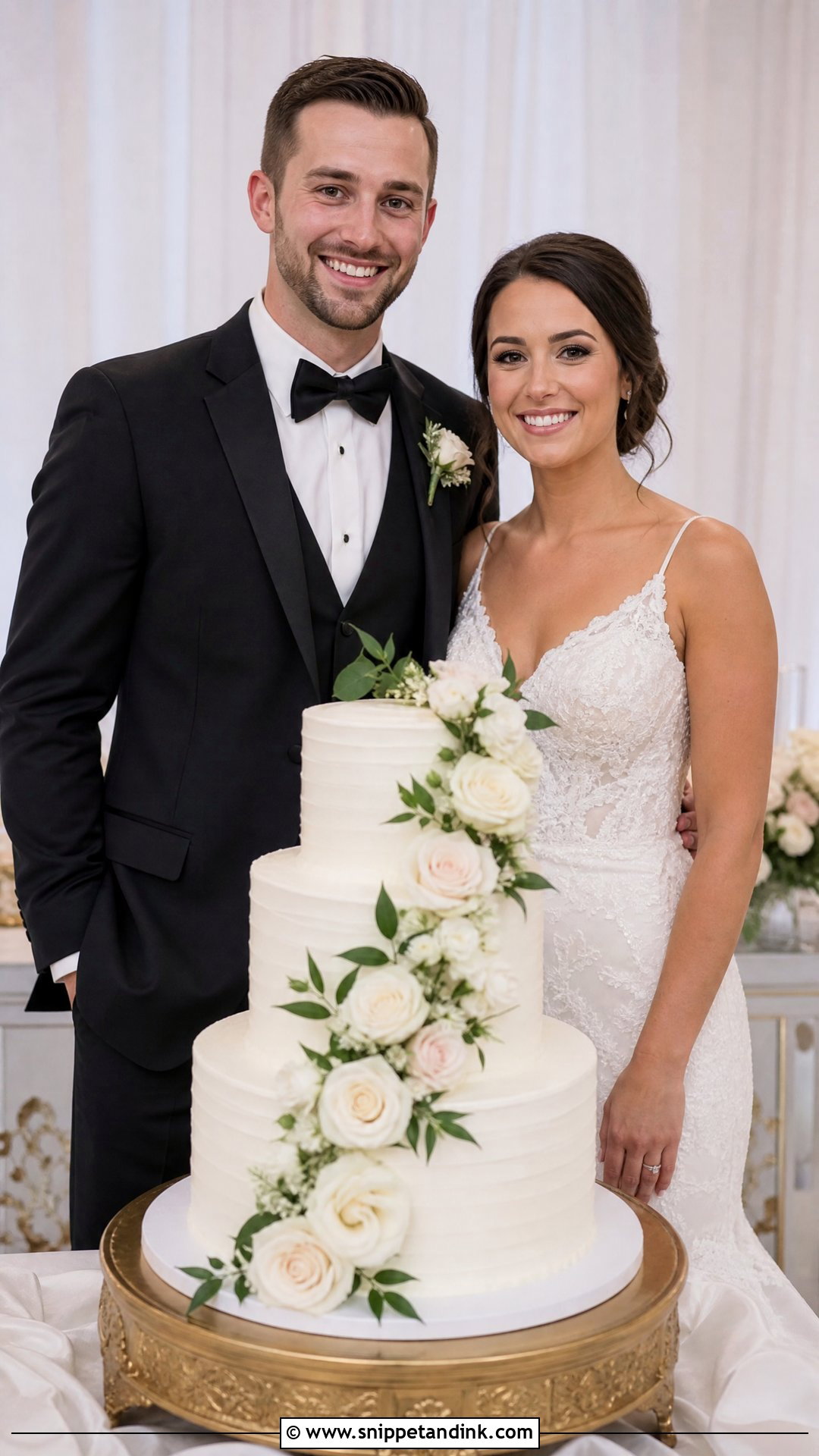
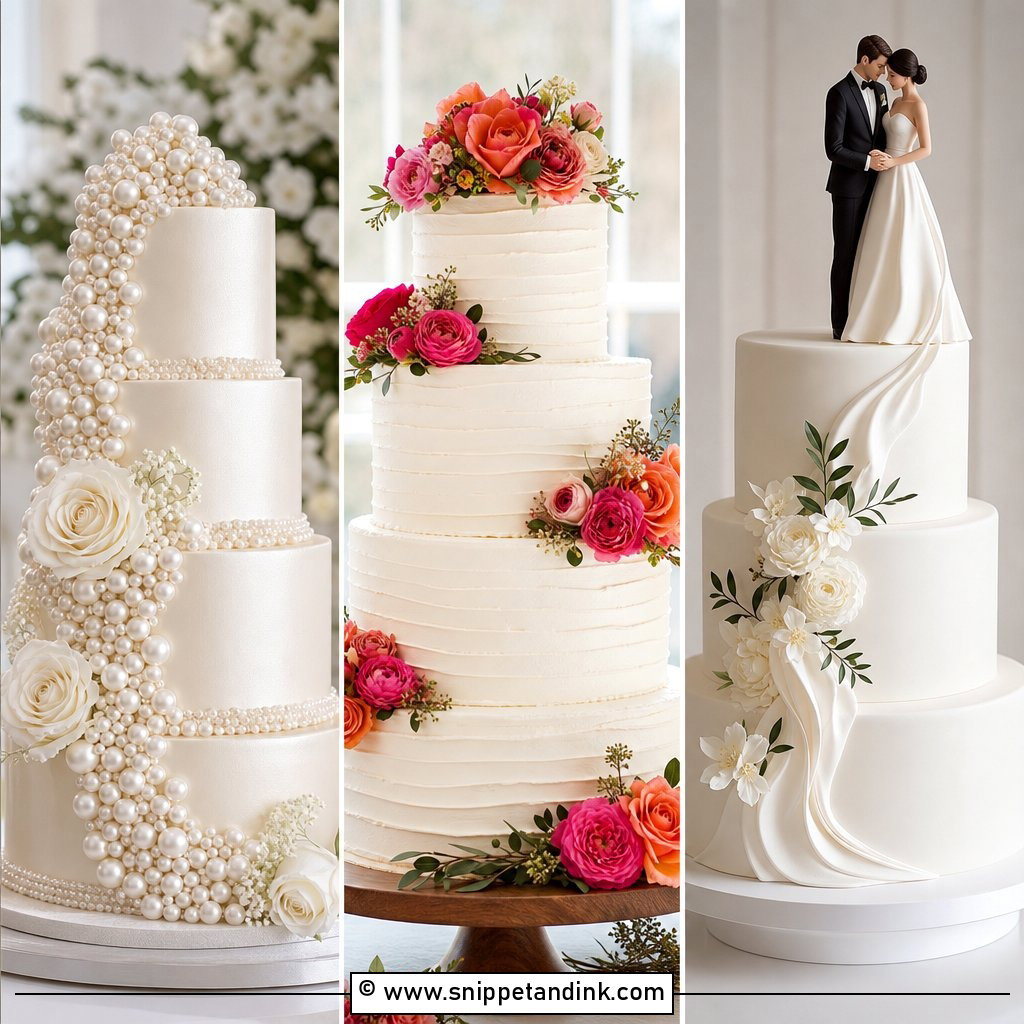
Some cakes deserve to be in a formal portrait, and when they’re a major design feature I treat them that way. You stand beside or behind the cake facing the camera, relaxed but upright. Before shooting, I straighten the linen, remove stray plates and glasses, and look for exit signs or stacked chairs behind you. A symmetrical cake with balanced flowers suits this frame best. Three tiers of buttercream with cascading roses work well because the vertical lines echo your posture and give the portrait a calm structure.
10. Wedding Cake Ring Shot
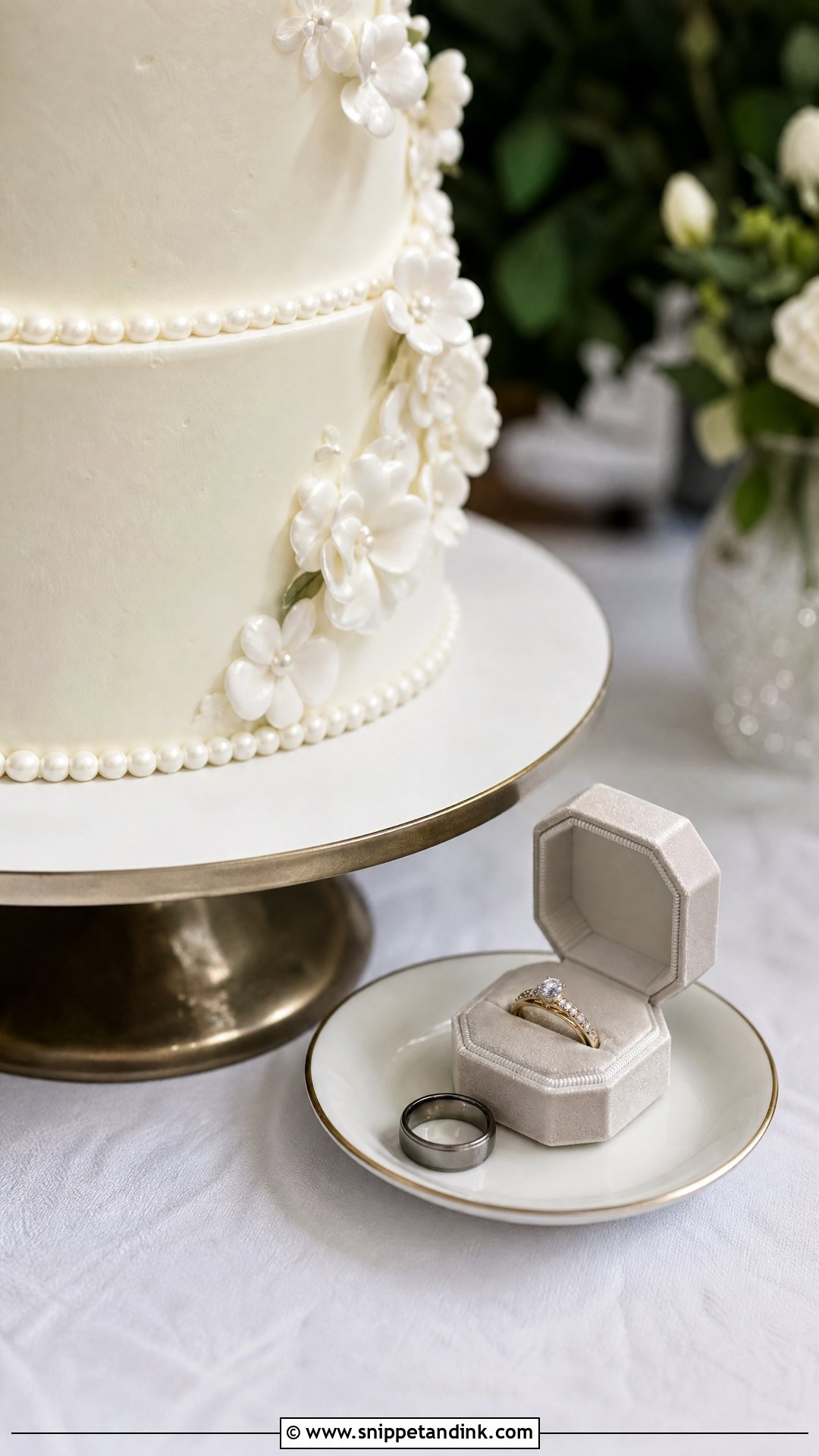
The cake makes a soft, pretty background for ring photos, but the rings never go on the frosting itself. They leave marks, they pick up butter, and they can sink. I set them on the edge of the cake stand, in a ring box, on a flower beside the tiers or on a styled plate, with the cake softly blurred behind. That way I capture texture, pearls and your colors in one frame. A macro lens lets me get close without touching anything. Smooth ivory buttercream with pearl details makes a refined backdrop.
11. Wedding Cake Bouquet Pose
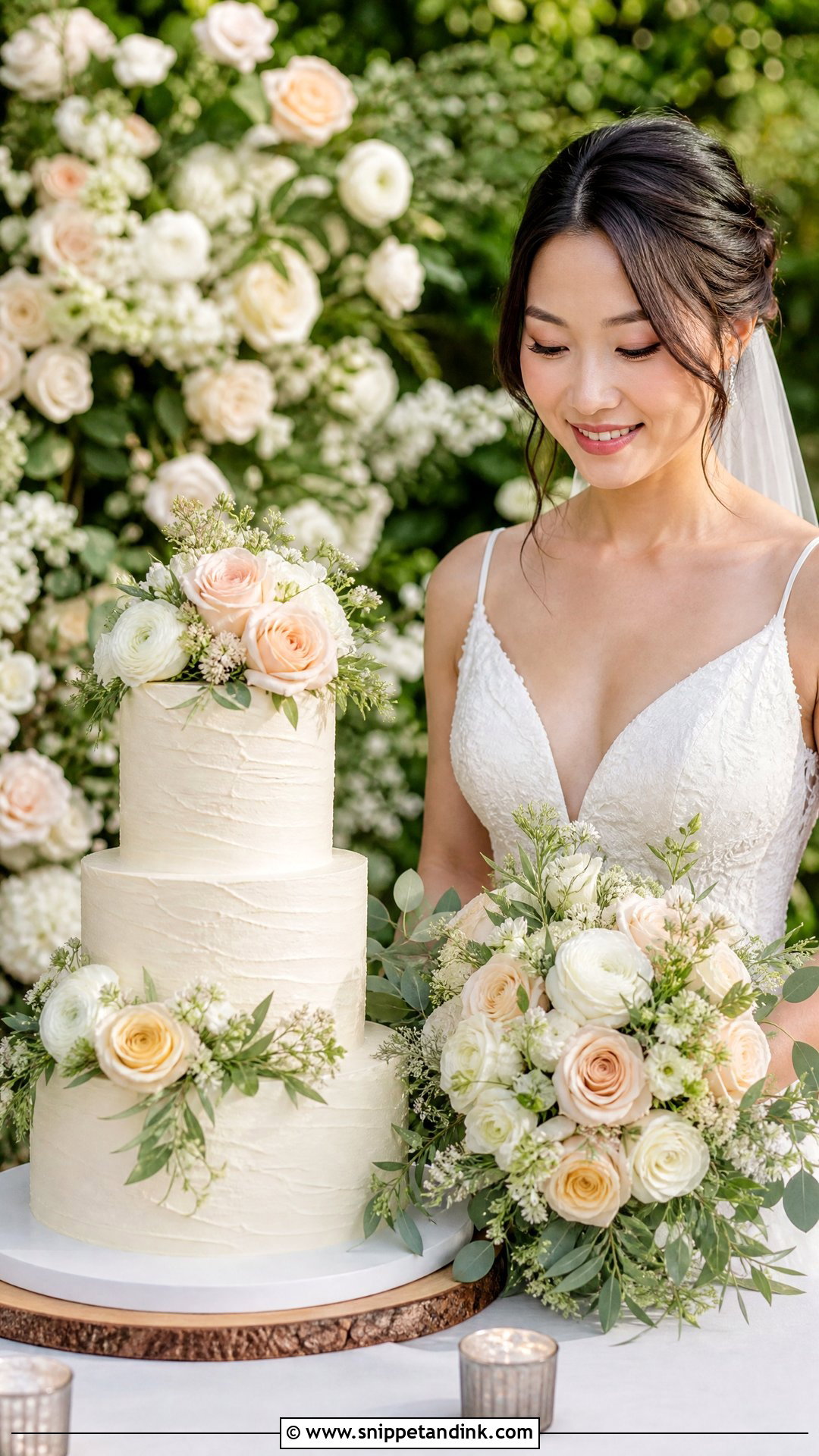
Bringing the bouquet to the cake ties the florals together in one frame. You can hold it beside the cake, rest it gently on the table, or stand together with the bouquet framing the tiers. It helps when the cake flowers and bouquet coordinate, even if they aren’t identical. I keep the bouquet slightly to one side so it doesn’t block the cake. A garden cake with fresh roses, ranunculus and greenery sits especially well beside a bouquet in the same palette. Check the bouquet stems are dry first; a wet stem on a linen cloth leaves a mark that shows.
12. Wedding Cake Veil Pose
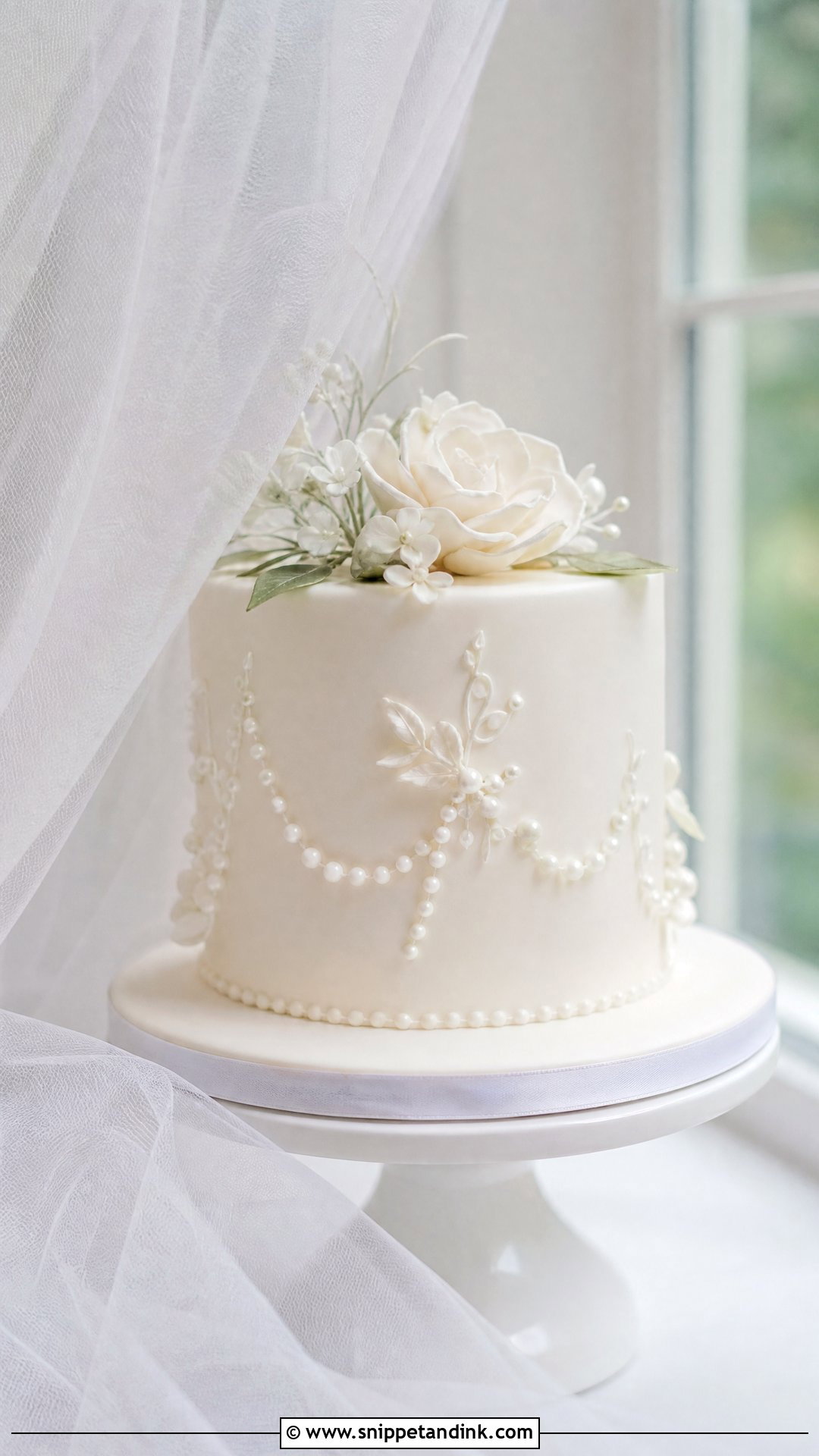
A veil adds softness and movement around the cake. You stand near it while the veil drapes behind you, catches the light, or frames one side of the display. It should never cover the cake, and it should never touch the frosting, because tulle picks up buttercream instantly and won’t come clean. Natural light near a window or open doorway makes the fabric glow. A smooth white fondant cake with sugar flowers keeps the image airy and clean. If there’s any breeze, I ask someone to hold the veil’s edge just out of frame.
13. Wedding Cake Staircase Pose
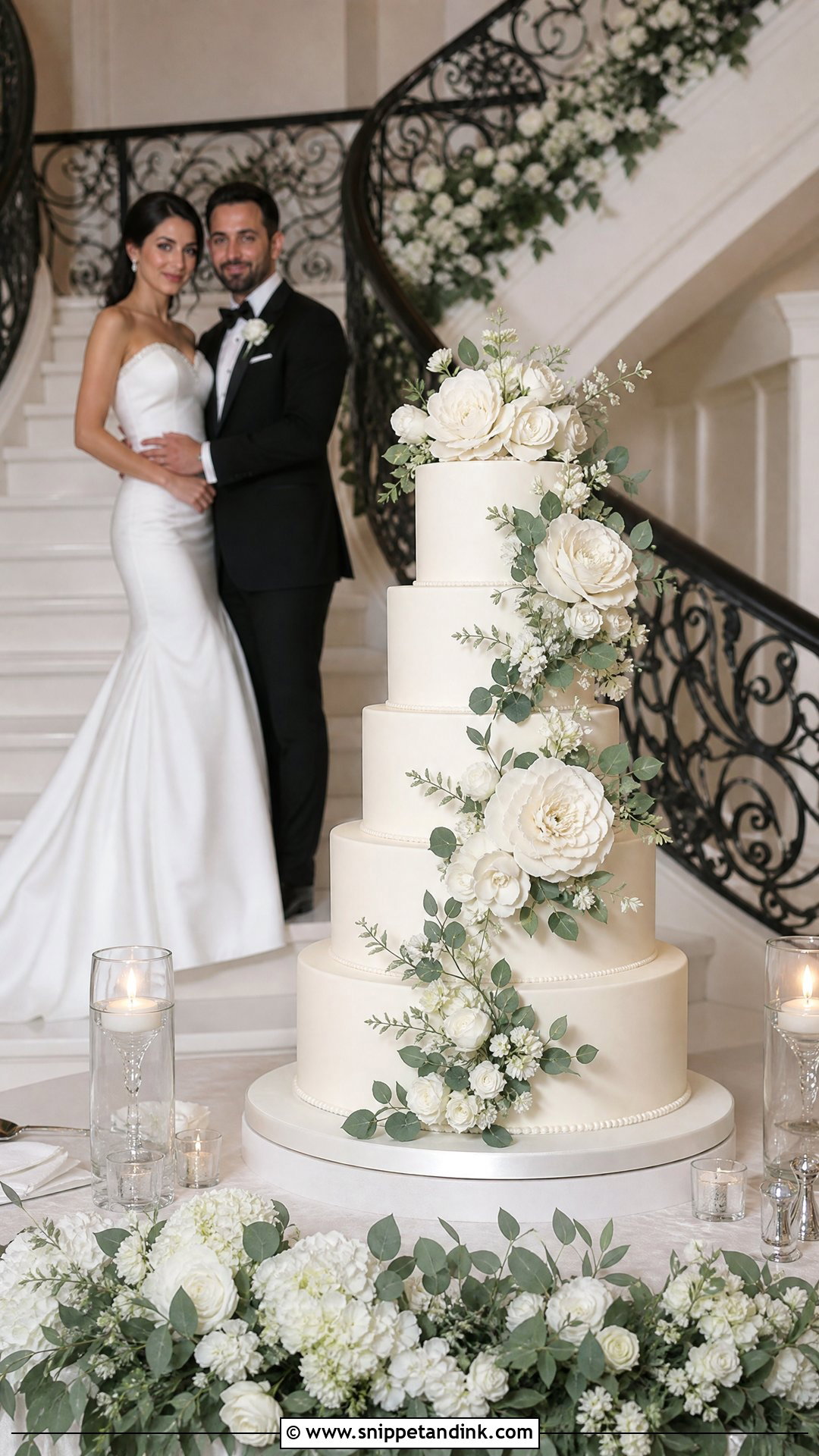
If your venue has a grand stair, a terrace or a split-level reception room, use it. I set the cake on a styled table near the bottom of the stairs and ask you to stand one or two steps behind it, which gives height without a very tall cake. Straight-on gives symmetry; shooting slightly from below feels more editorial. The practical worry is traffic. A cake table near a staircase gets bumped, so it needs to be stable and placed away from the main walking route. A tall ivory cake with sculptural flowers and soft greenery suits the setting, with the banister doing the framing.
14. Wedding Cake Window Light Pose
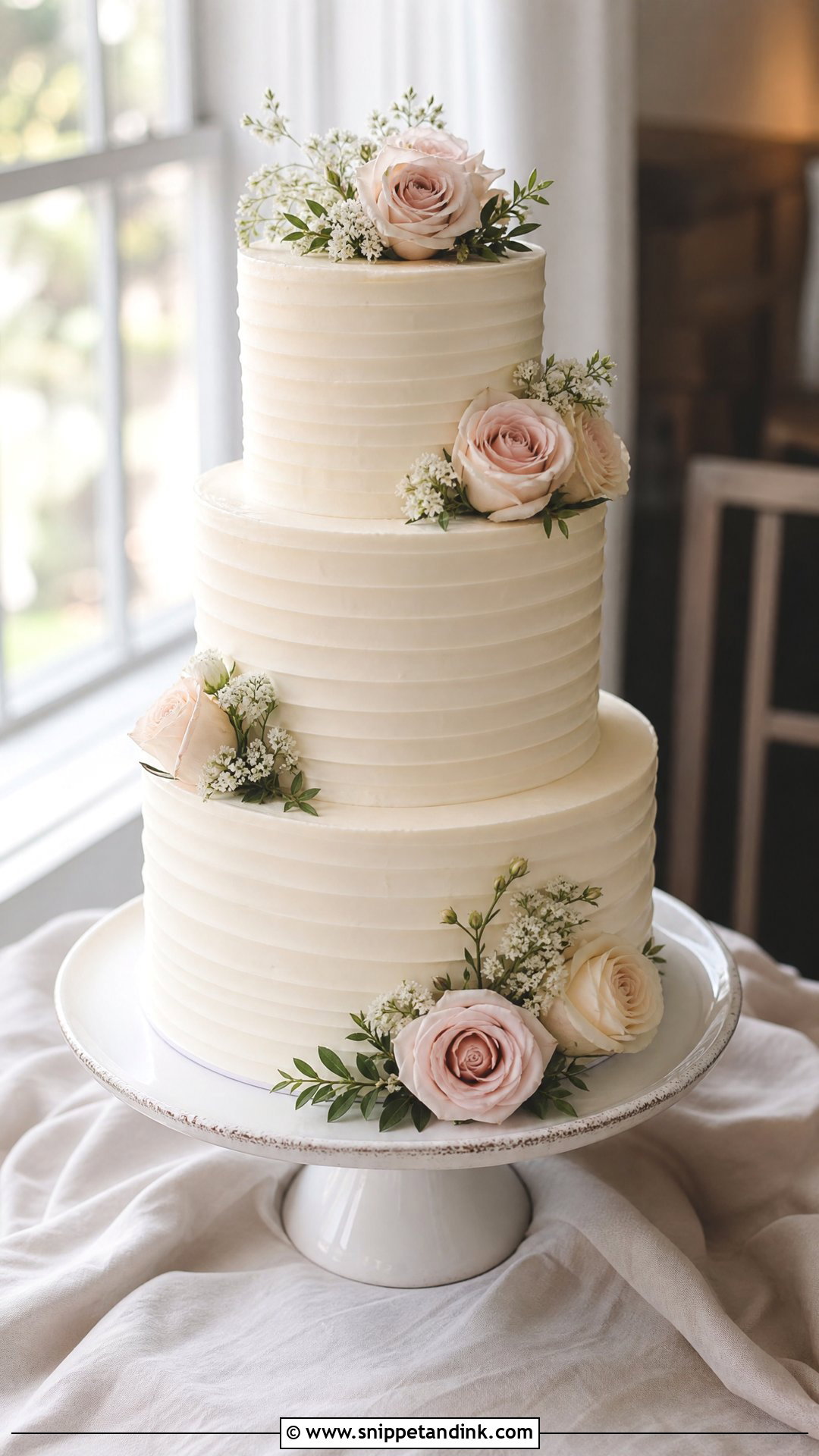
Window light is the easiest way I know to make frosting look soft and expensive. Put the cake near a large window and photograph it from the side or front as the light falls across the tiers. You can stand close, hold hands or just share a quiet look. I do this before guests enter, while the room is still untouched. Harsh direct sun is the one thing to avoid; it carves hard shadows across white icing and blows out the highlights. Textured buttercream with pale flowers shows the benefit most, since side light picks out every ridge and petal.
15. Wedding Cake Outdoor Pose
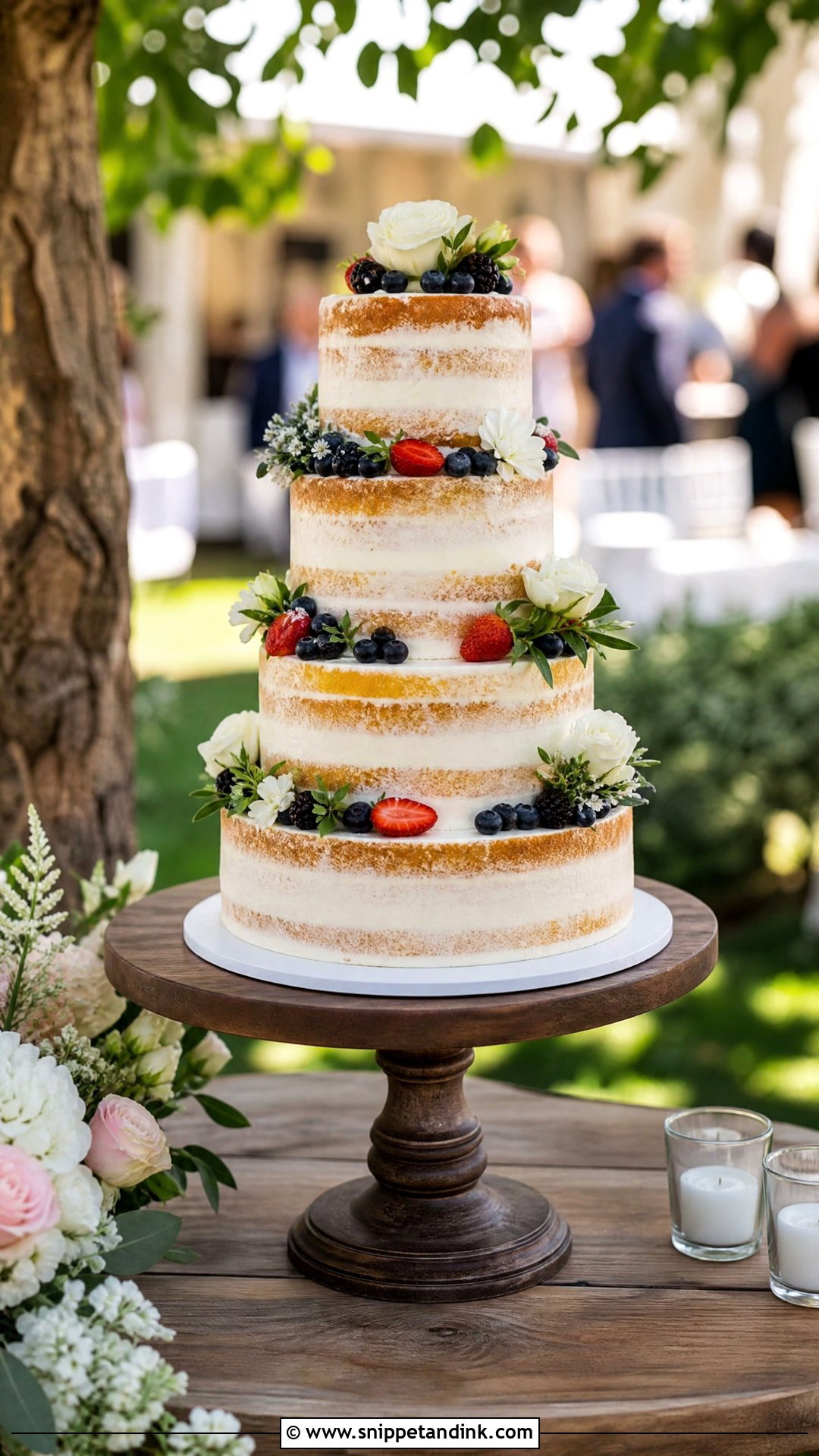
Outdoor cake photos feel fresh and open as long as the setting is controlled. The cake should be under a covered patio, a garden arch or a shaded table, because full sun melts buttercream and wind knocks over toppers. Uneven ground is the other hazard I check for, since one wobbly table leg is enough to tilt a tiered cake. You can stand behind it, smile, cut the cake or share a bite. I include real scenery but keep trees and guests from overwhelming the frame. A semi-naked cake with fresh berries and greenery suits a garden or backyard setting naturally.
16. Wedding Cake Sparkler Exit Pose
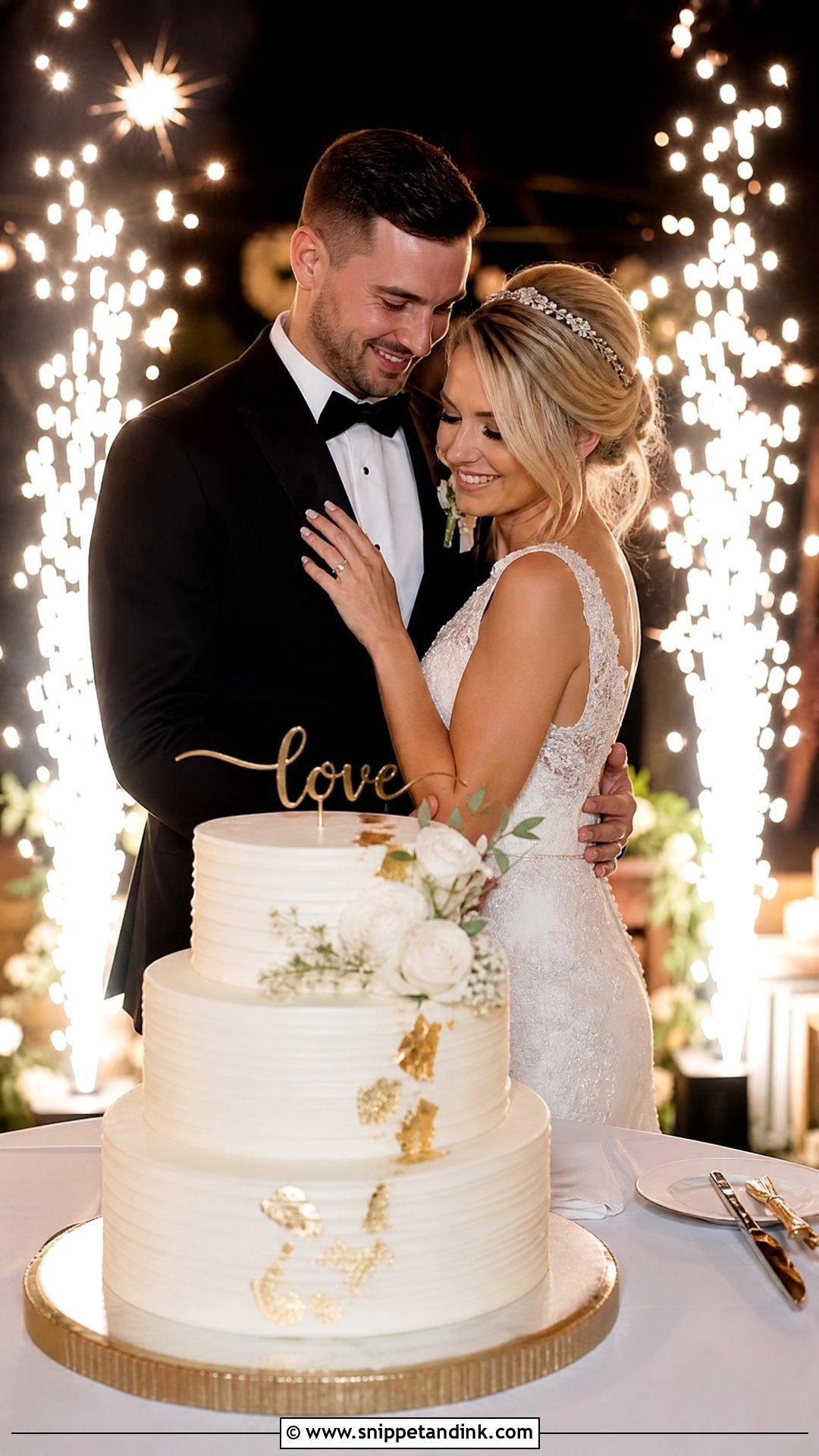
Sparklers and cake don’t mix, so this frame is about distance. The cake stays on a secure table in front, while guests with sparklers create a glowing backdrop well behind it. You stand by the cake, hold each other or look at the camera. I use a slower shutter here to catch the light trails, which means you need to stay still for a moment. Keep every sparkler away from the cake, the linens and the flowers. A white buttercream cake with metallic accents catches the warm glow and ties the scene together.
17. Wedding Cake Black And White Pose
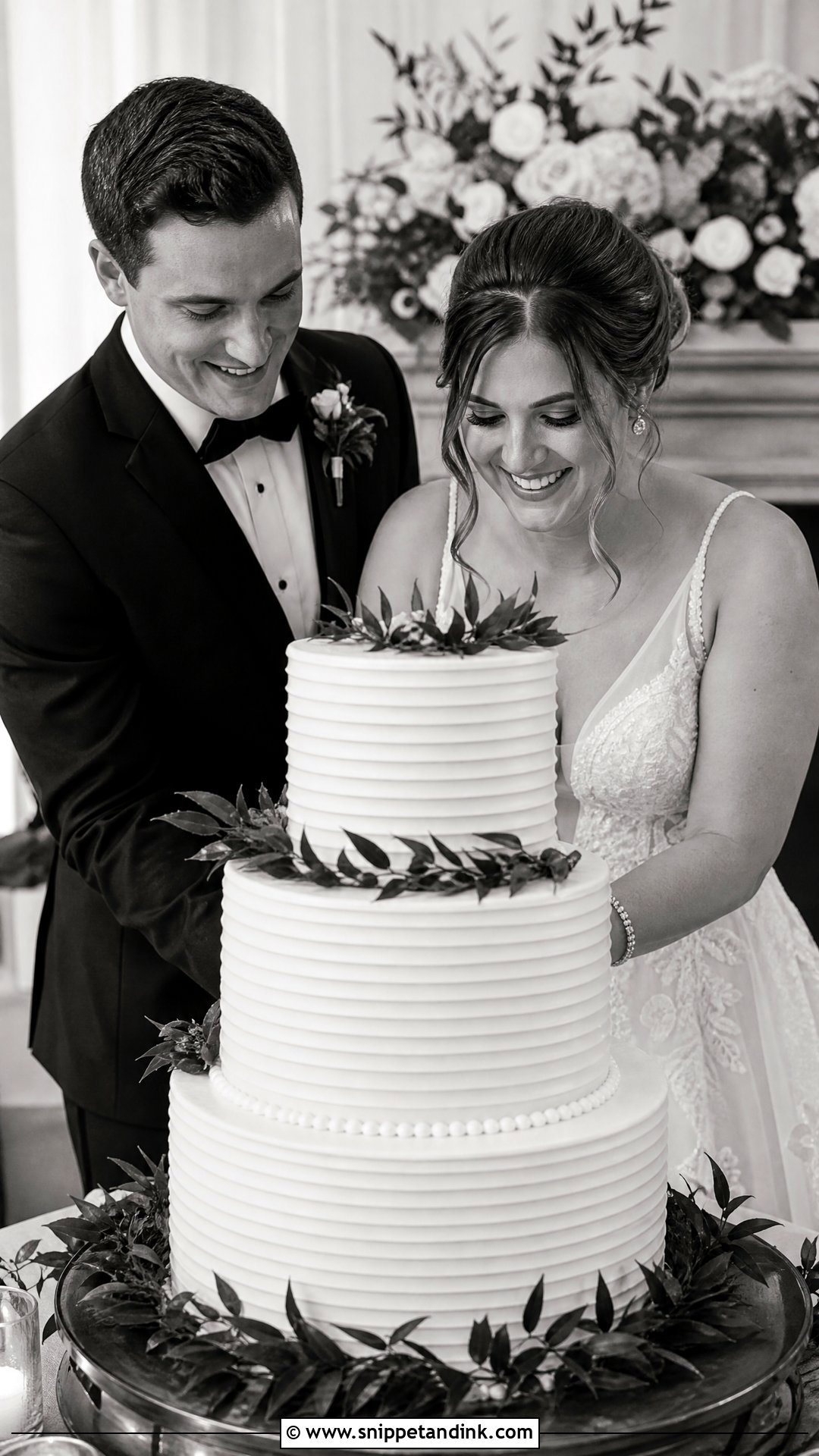
Black and white strips away color, so the cake has to carry the frame with shape, clean lines and texture. You can stand behind it formally, cut the first slice or share a quiet laugh. Contrast is everything in monochrome; a white cake against a white wall becomes a grey blur, so I look for a darker background behind it. Piped borders, ribbed buttercream, pearls and dark greenery all translate well. A classic ivory tiered cake with elegant piping gives the picture an old-photo feel without looking dated.
18. Wedding Cake Flat Lay Pose
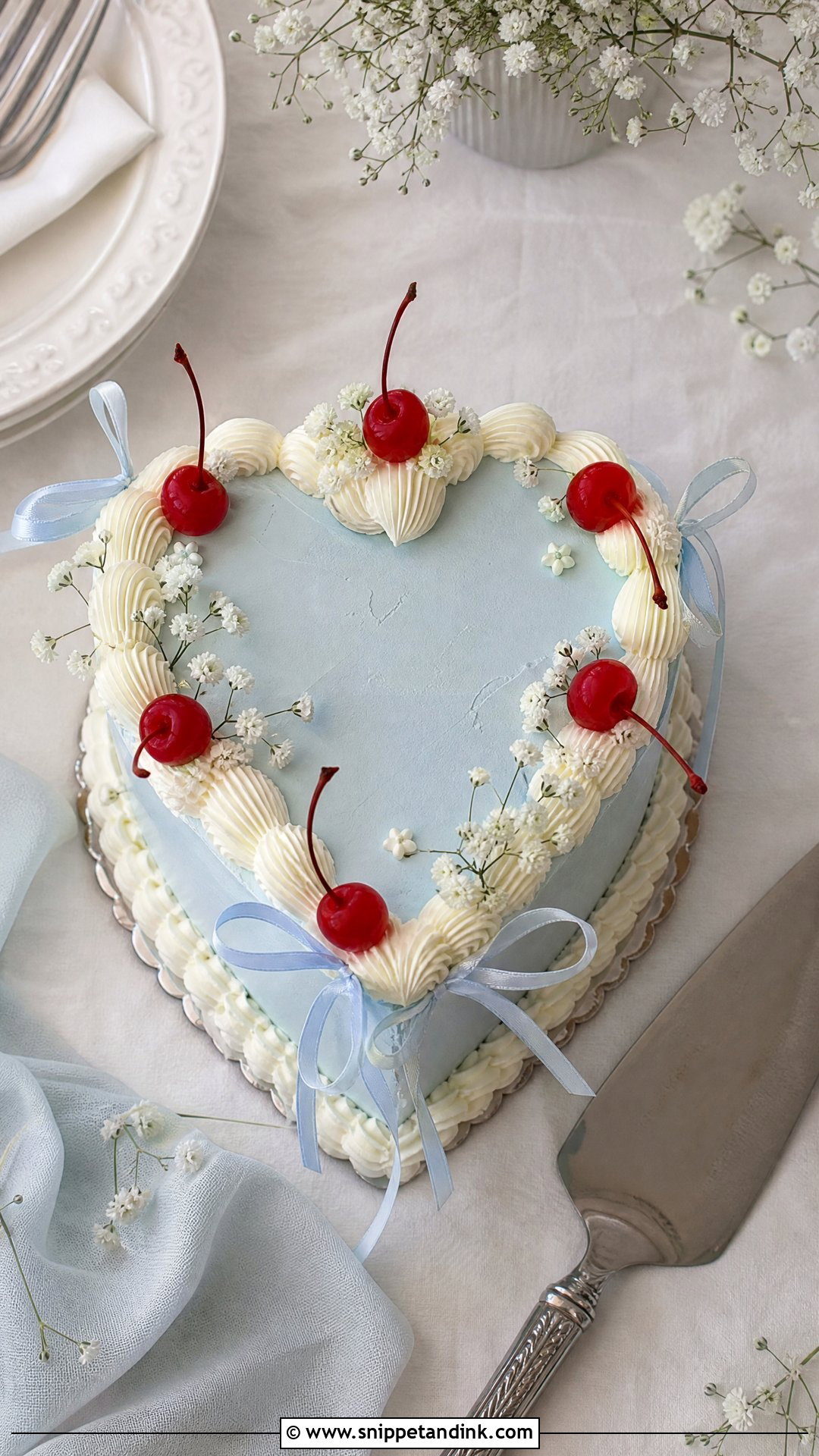
Flat lays only work with smaller cakes: mini tiers, dessert table cakes or a single tier. I shoot from directly above, arranging the cake with the serving knife, flowers, a menu card, linen and perhaps your hands reaching in. Neatness is the whole skill. Every extra prop takes attention from the cake, so I usually remove one or two more than feels comfortable. Standing on a chair to shoot straight down is common, so it needs a stable table at a reachable height. A petite heart-shaped cake with vintage piping, cherries, and ribbon details makes a charming flat lay on a clean table with soft flowers.
19. Wedding Cake Side Profile Pose
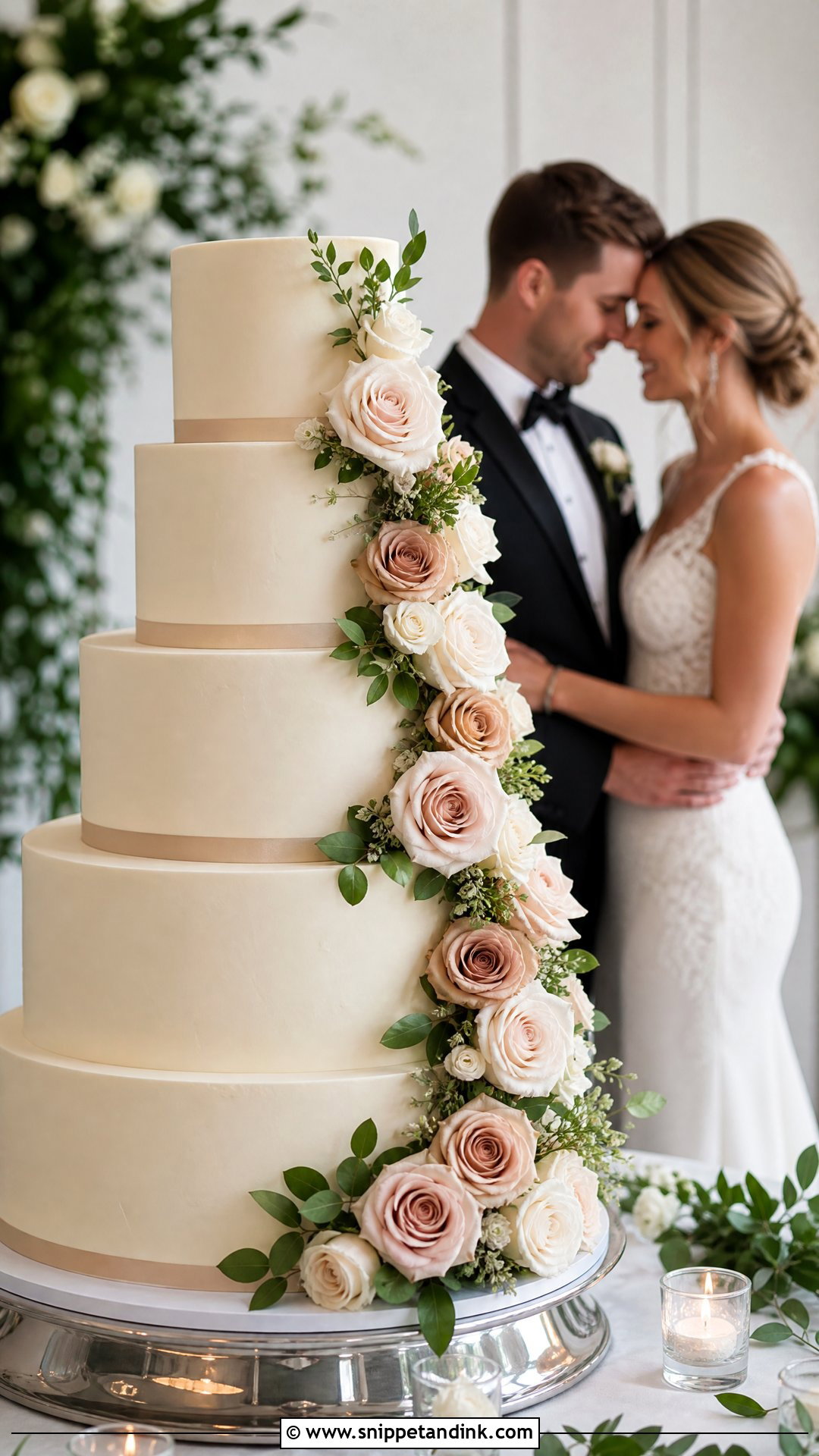
Shooting from the side shows the cake’s height, layers and silhouette, and it suits tall cakes, asymmetrical designs and cakes with a cascade. You stand slightly behind the cake facing each other, which layers the composition. I keep the camera level with the middle tier; shoot from above or below and tall cakes start to look like they’re leaning. When a cake has one dramatic side, this is the angle that does it justice. A four-tier cake with smooth buttercream, diagonal flowers and soft ribbon looks elegant in profile.
20. Wedding Cake Topper Pose
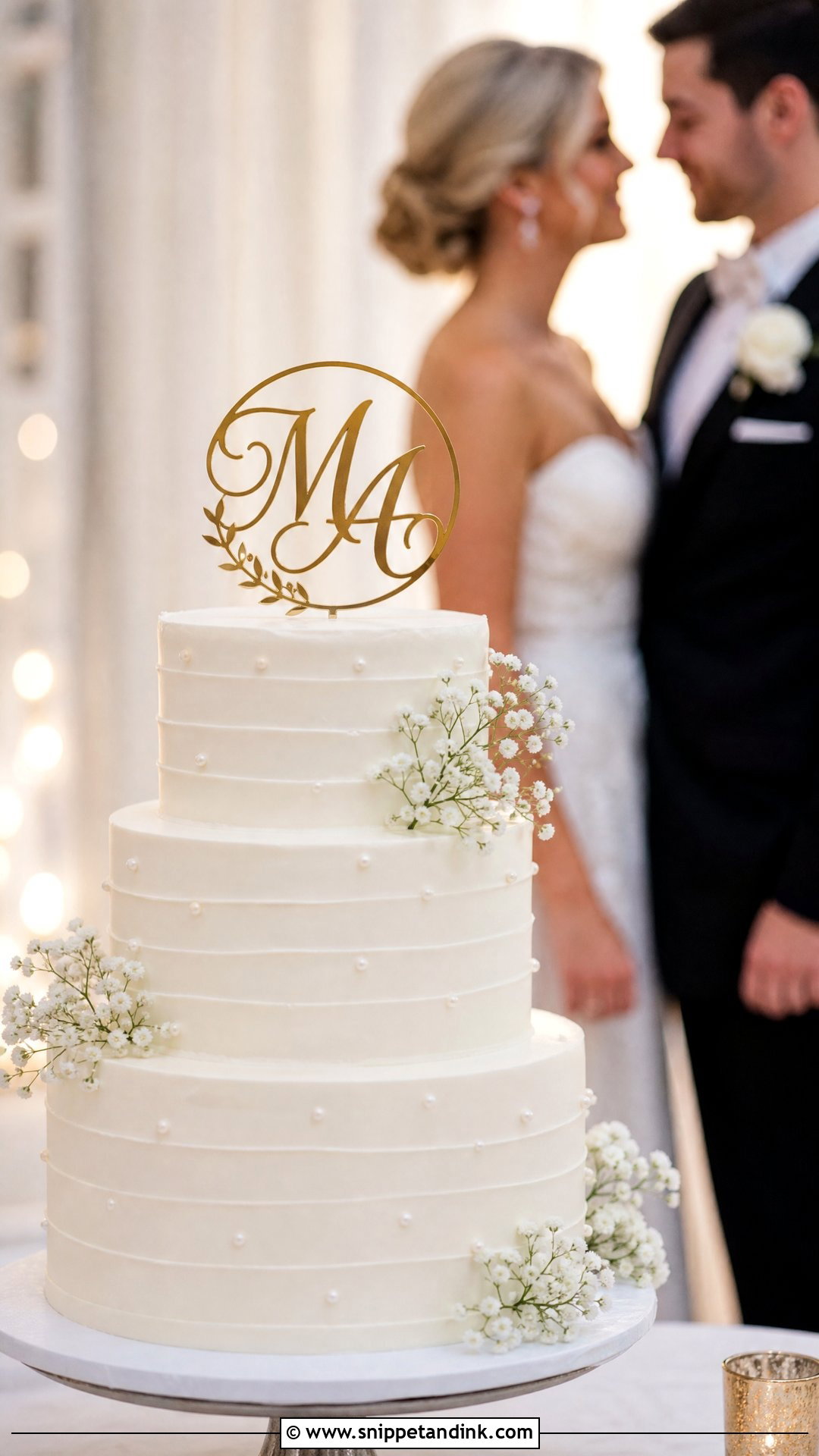
The topper is often the most personal part of the cake: a monogram, a sugar bow, a small floral crown, a custom figurine or a script topper. I photograph it clearly while including enough cake to feel complete, with the two of you softly blurred behind, holding hands or looking at it together. The angle should be level with the top tier or a little above it. Acrylic and mirrored toppers reflect lights and the photographer, so I shift slightly to the side until the glare is gone. A simple white cake with a gold monogram topper and smooth frosting lets the detail stand out.
21. Wedding Cake Dessert Table Pose
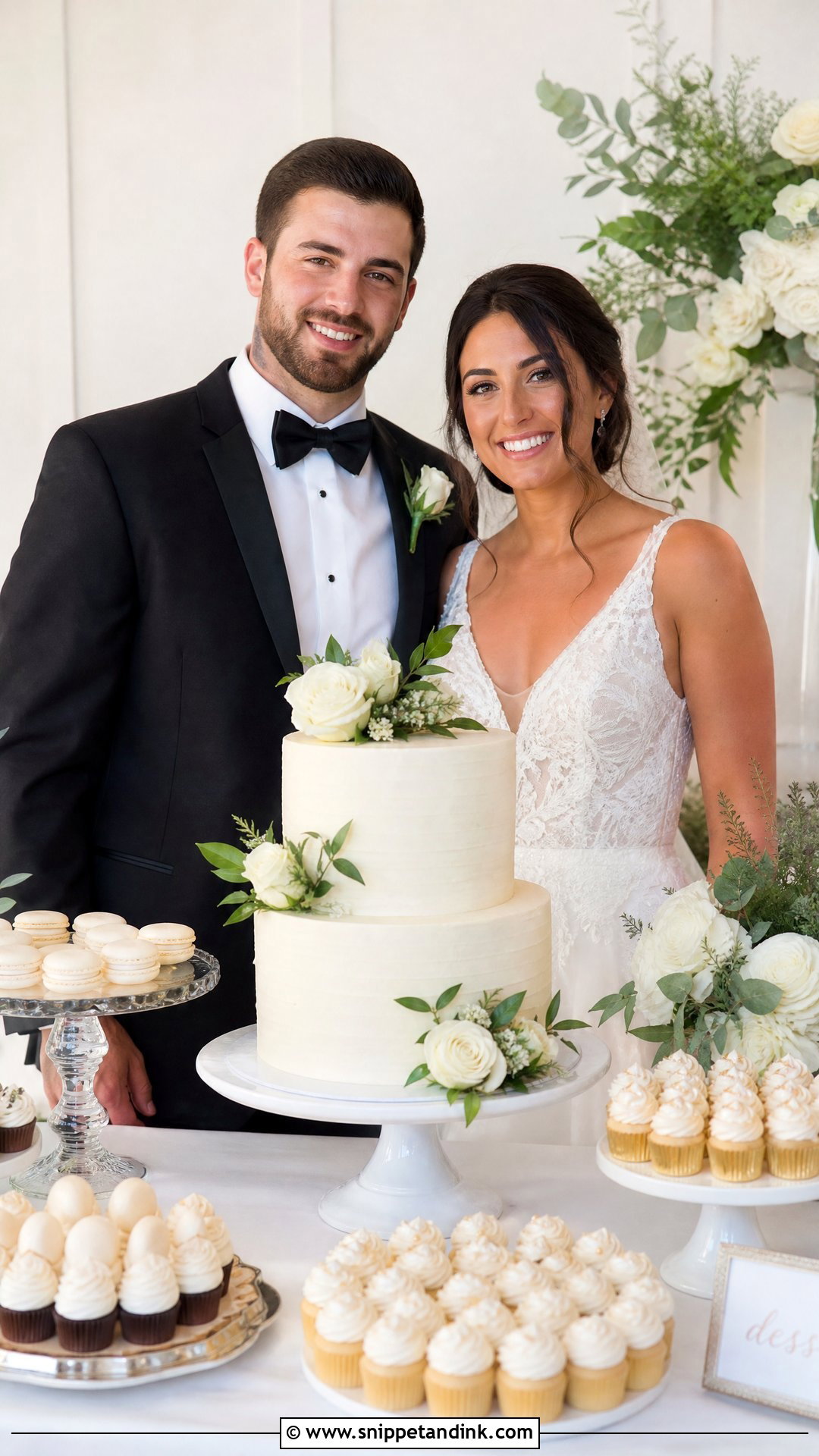
A wedding cake dessert table gives me a bigger scene to work with when you’re serving more than one sweet. The cake should sit at the centre or the highest point, with cupcakes, macarons, cookies or mini cakes around it. You can reach for a bite together behind the table or pose with the full spread. A tight color palette keeps the frame from looking chaotic. Photograph it before the first guest takes anything, because gaps in a dessert table show immediately. A two-tier buttercream cake with matching mini desserts looks generous.
22. Wedding Cake Vintage Pose
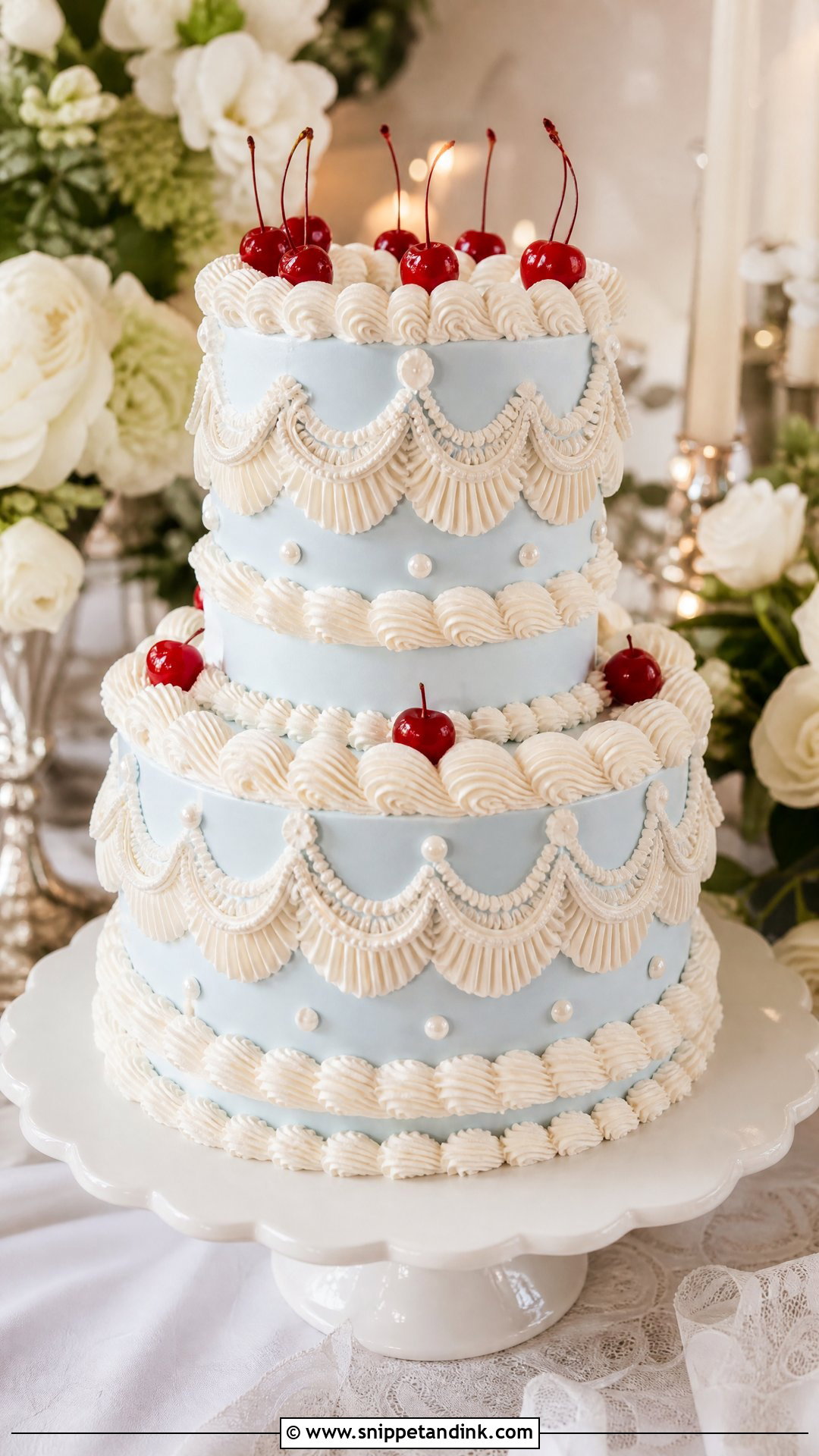
Ornate piping, heart shapes, soft colors, pearls, cherries and lace-inspired details all call for a vintage frame. You can stand close holding the knife together, or sit beside the cake table for an old-fashioned reception portrait. A scalloped stand, draped linen and soft flowers support the mood, but nostalgic shouldn’t mean cluttered. I keep the background plain and let the piping carry the picture. A vintage Lambeth wedding cake in pale blue or ivory with white borders and small red cherries gives a playful, romantic photo that feels current and classic at once.
23. Wedding Cake Minimalist Pose
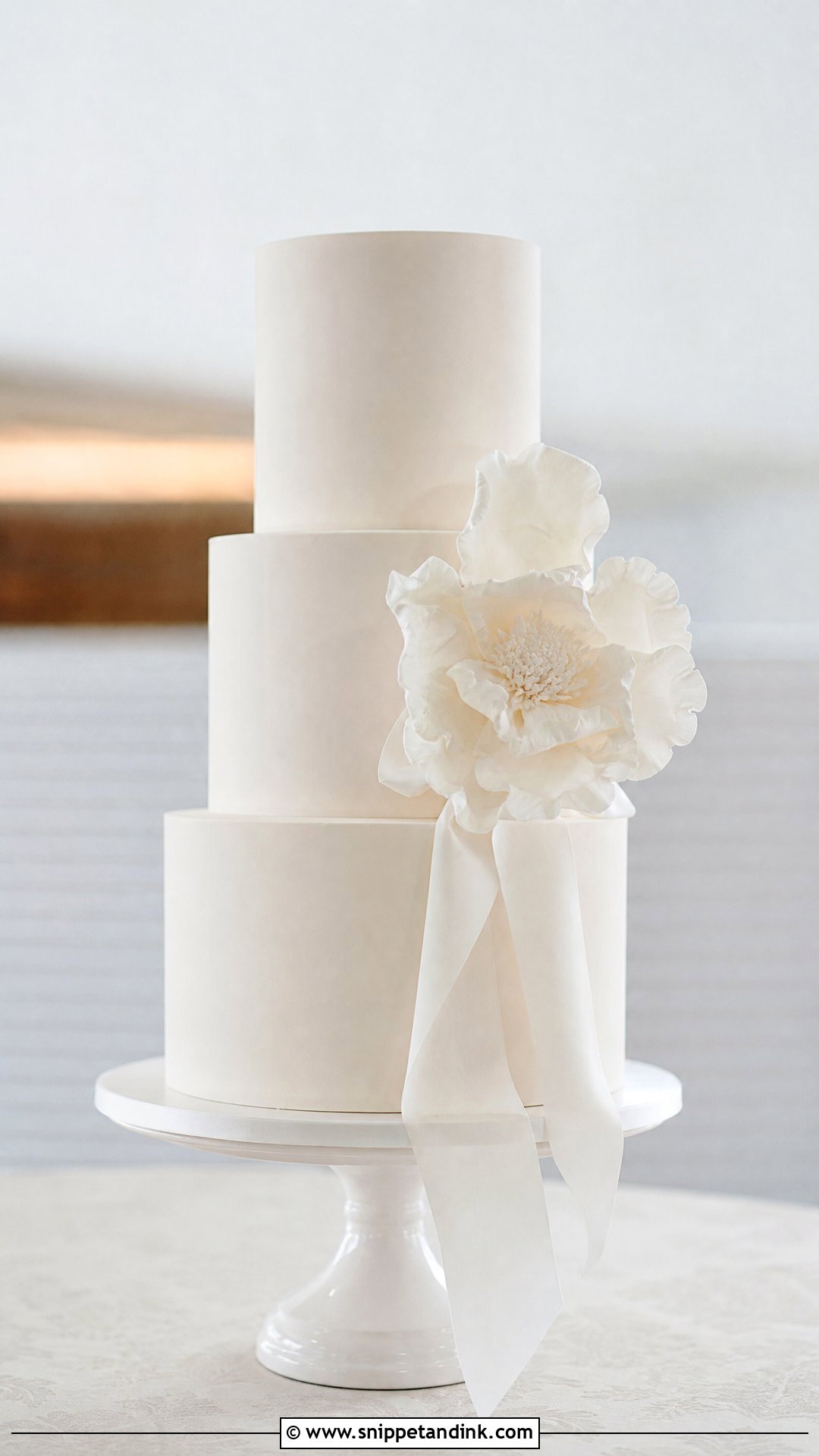
Minimal frames prove a plain cake can hold a photo on its own. A clean background, one good cake stand and almost no props. You stand beside it relaxed, hold hands or lean in for a quiet smile. I focus on symmetry, empty space and soft light. The catch: minimal shows everything, so a flawless finish matters. Any dent or air bubble in the icing will be the first thing you notice. A smooth white cake with one oversized sugar flower or a single ribbon gives a calm, modern image.
24. Wedding Cake Candid Laugh Pose
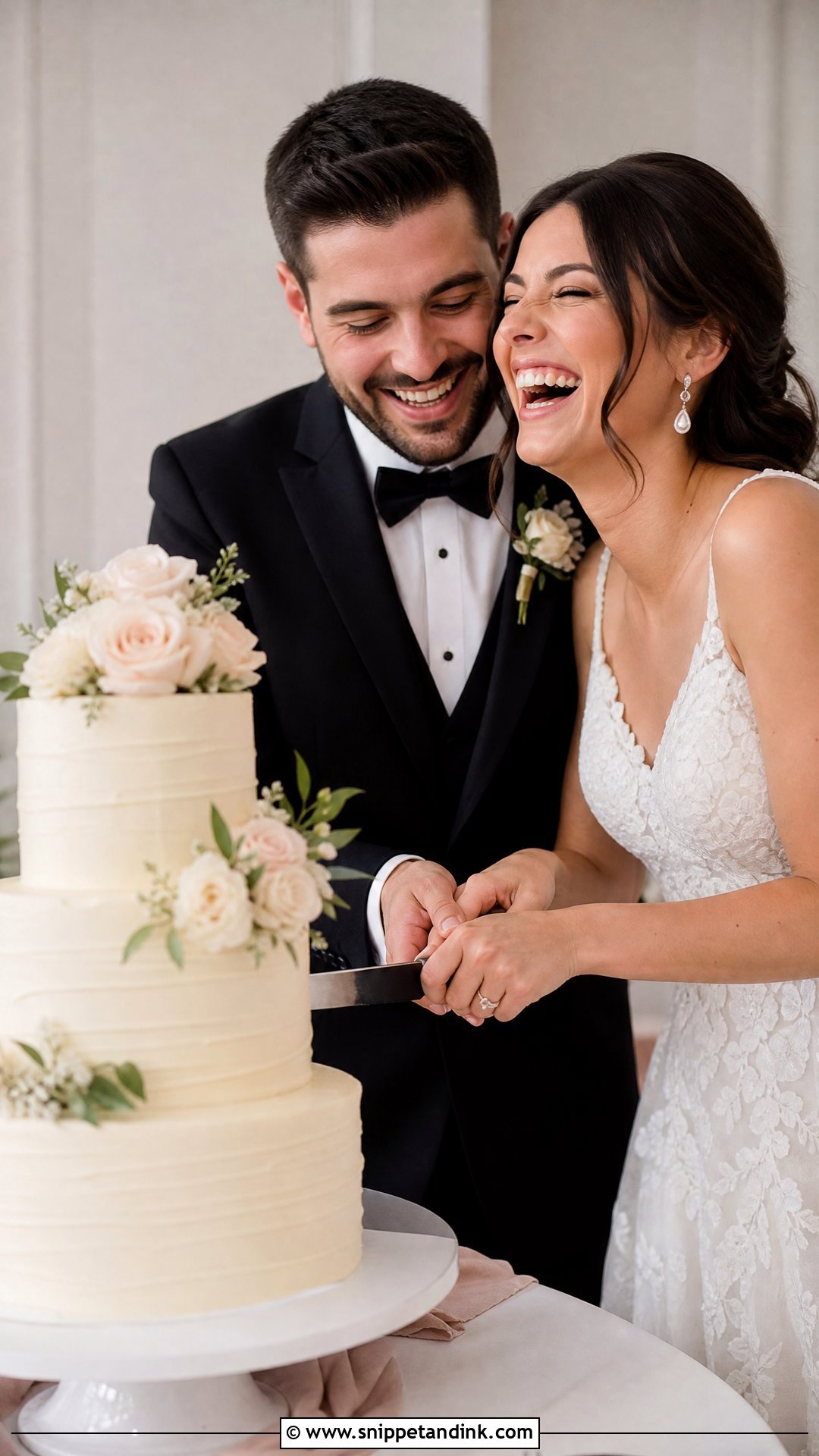
My favorite cake photos are rarely the posed ones. Instead of asking you to smile, I’ll ask you to talk, tease each other, or react naturally with the knife in hand. The best expressions usually come in the second after the first cut or the first bite, so I’m already shooting before you look up. You need to feel comfortable and the table needs to be ready. The cake should stay fully visible even when the moment is spontaneous. Soft buttercream with fresh flowers adds warmth, and your laughter does the rest.
25. Wedding Cake Night Reception Pose
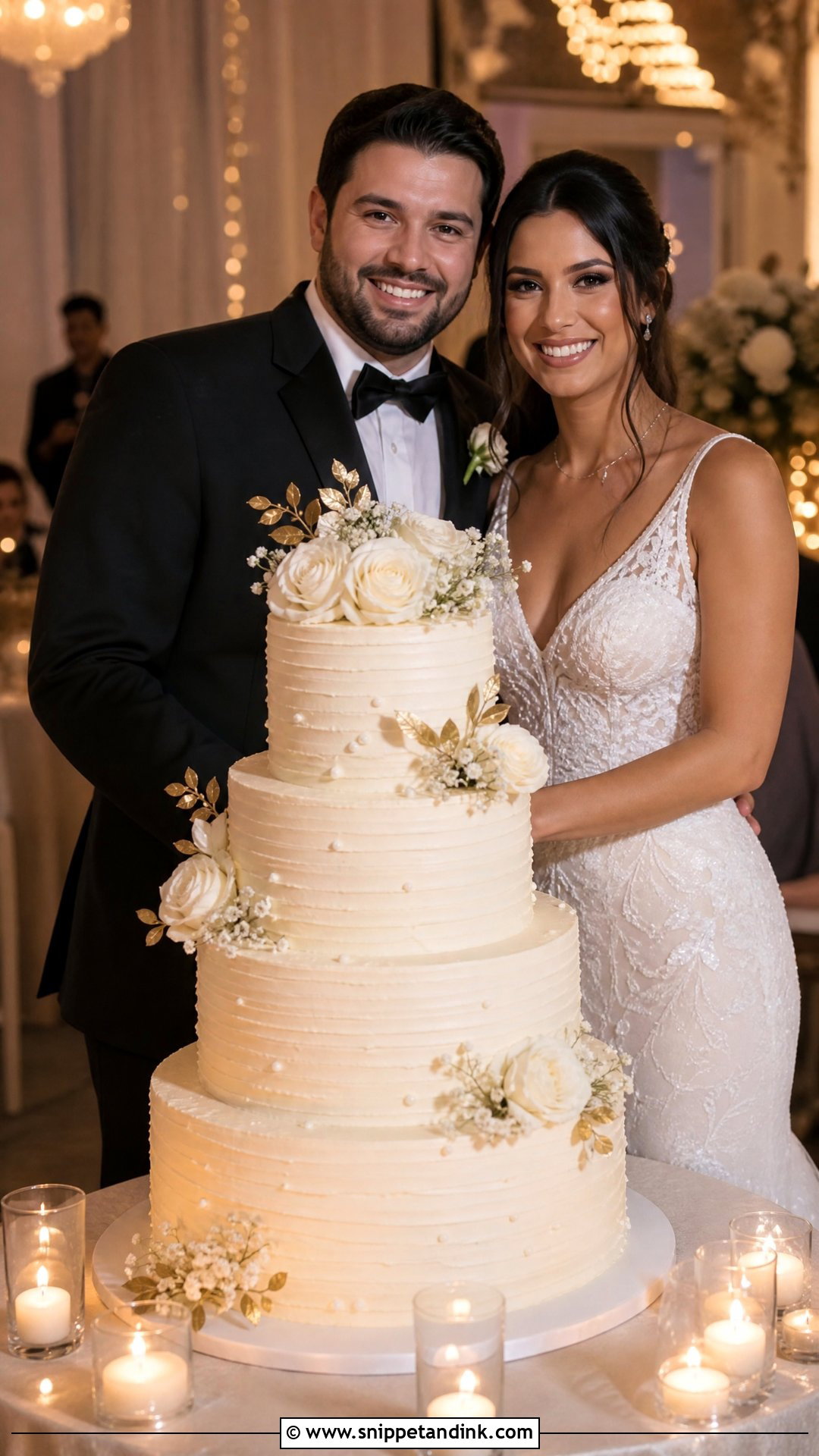
Evening light gives the cake a warm, dramatic finish. I use candles, soft reception lighting or a gentle bounced flash to keep the cake bright without making the room look harsh. You can cut the cake, hold each other, or stand behind the glowing table. Keep open flames well away from frosting, flowers and fabric; a tealight tucked against a linen runner is how small accidents start. The aim is a sharp cake with the background falling away into soft focus. A tiered ivory cake with gold details, buttercream texture and white flowers glows under evening light.
A Short Cake Shot List and When Each Frame Happens
You don’t need all 25 ideas. Pick five or six, write them down and give them to your photographer, so nobody is guessing. Here’s how I’d fit them into the day.
- Straight after setup, before guests enter: the full cake, two or three close-ups, and window-light frames if there’s daylight.
- During cocktail hour, if the couple portraits run near the reception room: five minutes for a portrait or first look beside the cake.
- Just before the cutting: the table styled shot, with glasses and plates cleared.
- The cutting itself: wide, then hands, then the feeding or the laugh, all within a couple of minutes.
- After dark: one evening frame with candles, only if the cake is still whole.
Where to cut
Ask your baker which spot to cut. It’s usually the back of the bottom tier, so the front stays intact for photos, and if some tiers are styrofoam dummies, the cut has to happen in a real one. Agree on it in advance and you won’t end up hacking into the side that faces the camera.
Clear the Plates Before the Knife Comes Out
Cake photos do more than document dessert. They show the reception, your style and the details that took months to settle. A good list covers a full cake portrait, close details, a couple pose, the cutting, a candid reaction and the styled table. Through all of them, the cake should be whole, well lit and easy to see. Small changes, such as moving the table toward a window or clearing away glasses, make an enormous difference. From vintage to minimal, the same handful of habits turns one sweet moment into pictures worth keeping.
You'll Like These Ideas:


Leave a Reply