
The cakes I’m asked to make now are rarely a default white tower. Couples come in with a venue photo, a swatch from the bridesmaid dresses and a flavor they’ve loved since childhood, and the cake gets built from those. Some want clean and minimal, others vintage piping, a riot of fruit or a bold color. Whatever the look, a wedding cake has two jobs: it has to survive several hours on display, and it has to taste good enough that people finish the slice. Below are twenty styles I make regularly, with notes from the kitchen on what each one asks of the weather, the stand and the schedule.
Sizing Tiers to Your Guest Count Before Picking a Style
Style comes after size in my planning, because the number of tiers decides which designs are even possible. Wedding cake is cut into narrow fingers, roughly one inch by two inches and as tall as the tier, which is smaller than a party slice. Using that cut, these are the rough servings I work from for round tiers about four inches tall:
- 6 inch: about 12 portions
- 8 inch: about 24 portions
- 10 inch: about 38 portions
- 12 inch: about 56 portions
So a 6, 8 and 10 inch stack feeds around 70 guests, and adding a 12 inch base takes you past 120. Square tiers give more per inch. If you want a tall look for a small guest count, ask about a dummy tier: a decorated foam layer that adds height without adding cake. For a big crowd on a budget, a modest display cake plus plain sheet cake cut in the kitchen is common and nobody at the tables can tell.
On timing, I’d contact bakers six months ahead for a busy season date, and leave the final design and guest count until about a month out. Sugar flowers and hand-painting need extra days in the schedule, so mention them early.
1. Classic White Wedding Cake
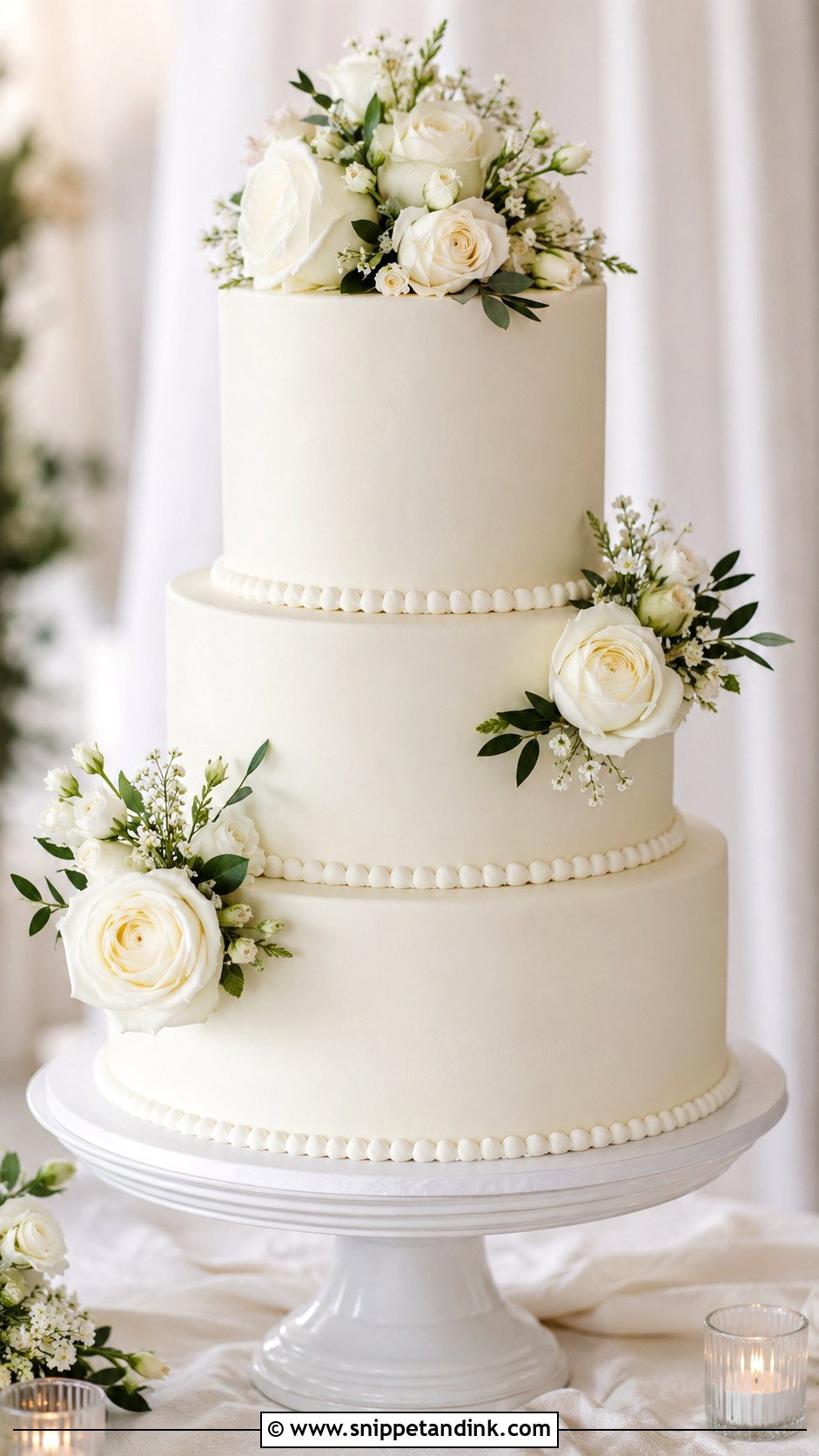
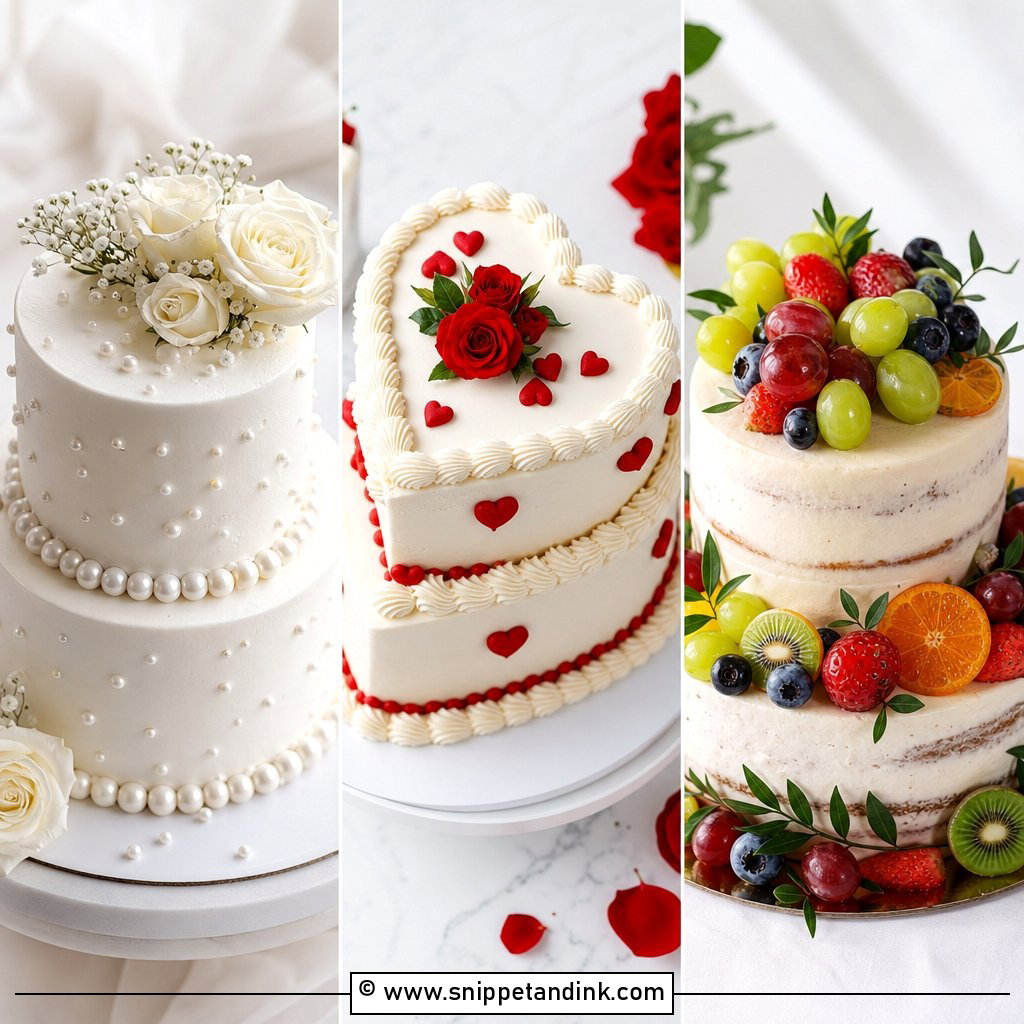
White never really leaves. It suits almost any venue, dress and flower palette, but plain white can read as unfinished, so the detail carries the weight: smooth ivory buttercream or fondant, crisp stacked tiers, then pearl piping, a few sugar roses or a satin ribbon. Vanilla bean, almond, lemon and white chocolate raspberry all sit comfortably under it. One practical note from my side: pure bright white buttercream needs a touch of violet coloring to cancel the natural yellow of butter, so ask your baker which of the two you’re getting, ivory or true white, because next to a white dress the difference shows.
2. Vintage Wedding Cake
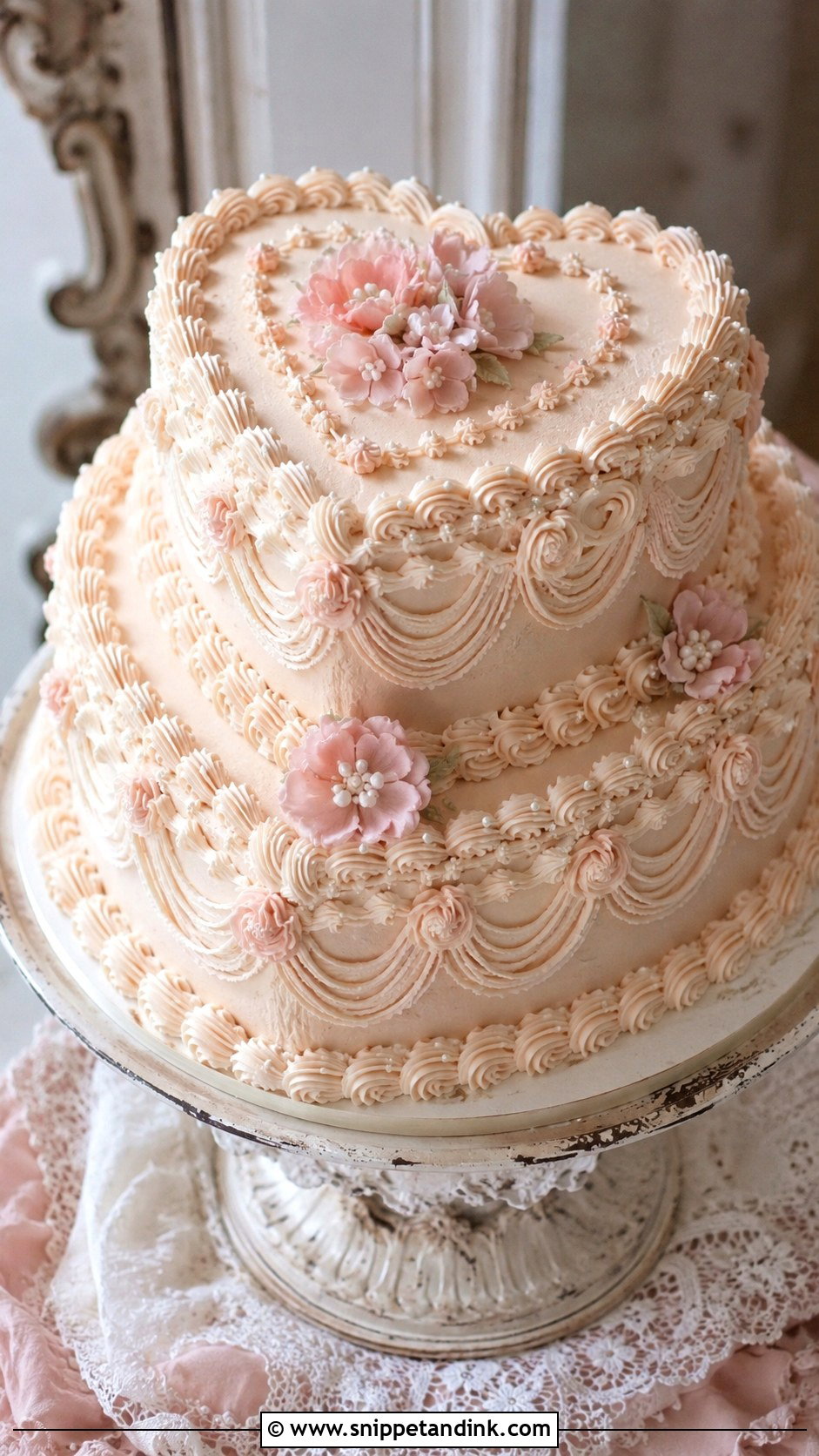
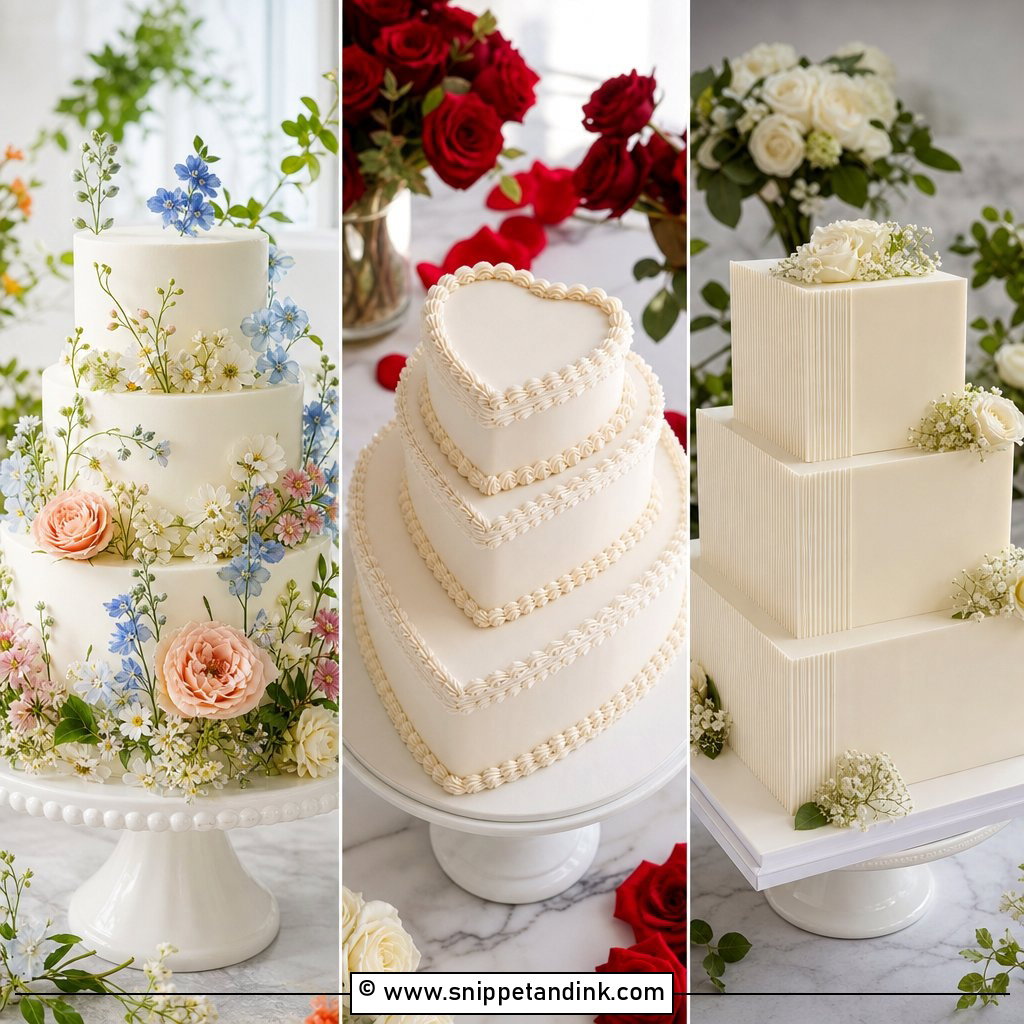
Vintage cakes are all about piping: heart-shaped tiers, shell borders, overpiped swags, rosettes and tiny pearl dots, usually in ivory, blush, pale blue or butter yellow. They work as a single showpiece for a small wedding or as a tall tiered cake. Vanilla, strawberry, almond and a champagne-style sponge are common pairings. The handmade look is the charm, and it’s also why this style takes longer to decorate than most. Every swag is piped by hand. In warm rooms, I use a firmer buttercream so those ridges don’t slump before the cutting.
3. Floral Wedding Cake
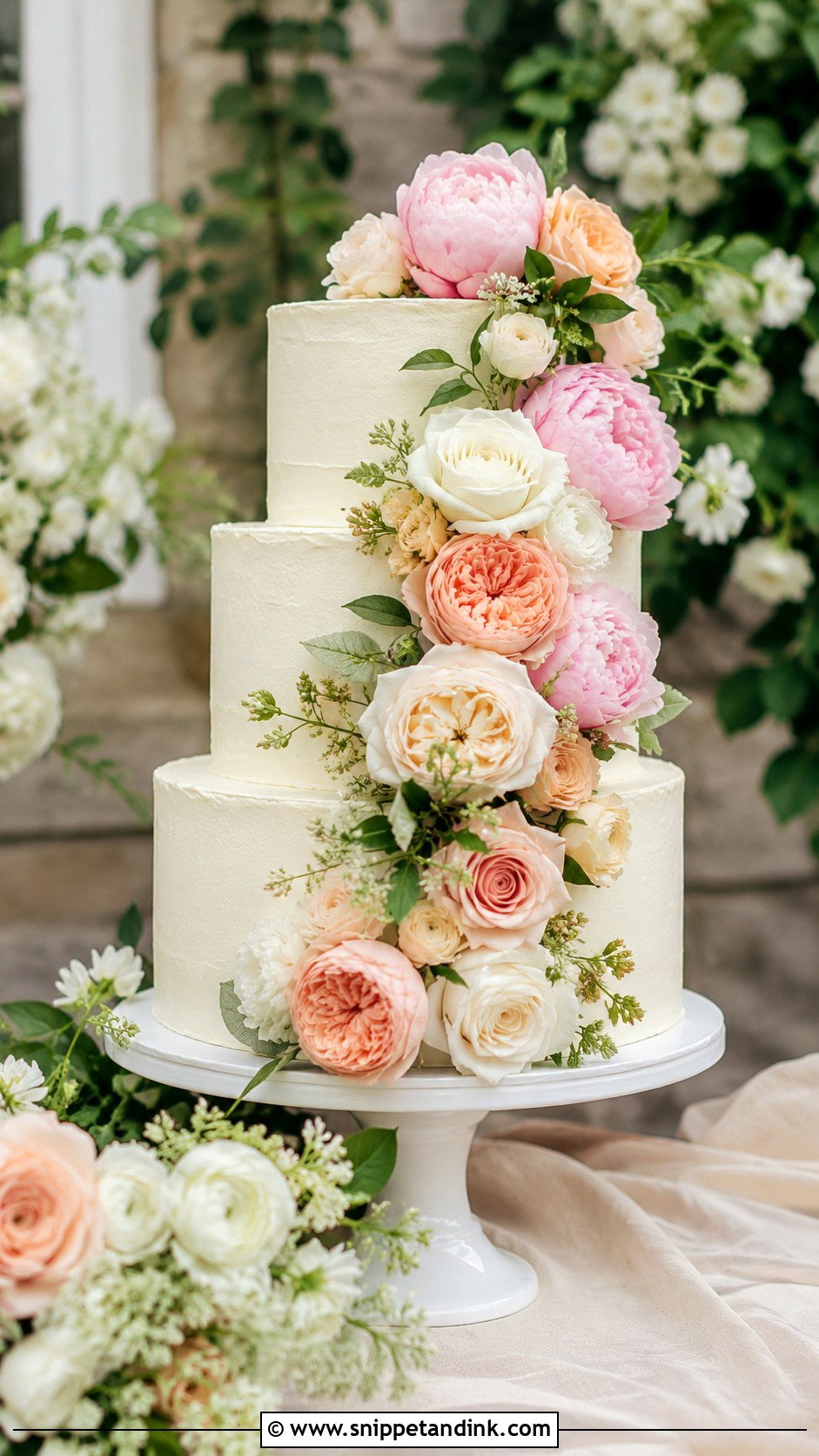
Floral cakes tie the dessert to your bouquet and centerpieces. Fresh blooms give a loose garden feel; sugar flowers give more control and won’t wilt. Roses, peonies, ranunculus, orchids, sweet peas and pressed edible petals are the usual palette. With fresh flowers, I always wrap stems in floral tape and insert them through a straw or pick so stem and sap never touch the sponge, and I check that every flower is unsprayed and non-toxic. Keep the base simple, buttercream for a relaxed wedding or fondant for a formal one, and let the flowers lead. Vanilla bean with berry, lemon elderflower, almond and coconut all suit spring and summer.
4. Textured Buttercream Wedding Cake
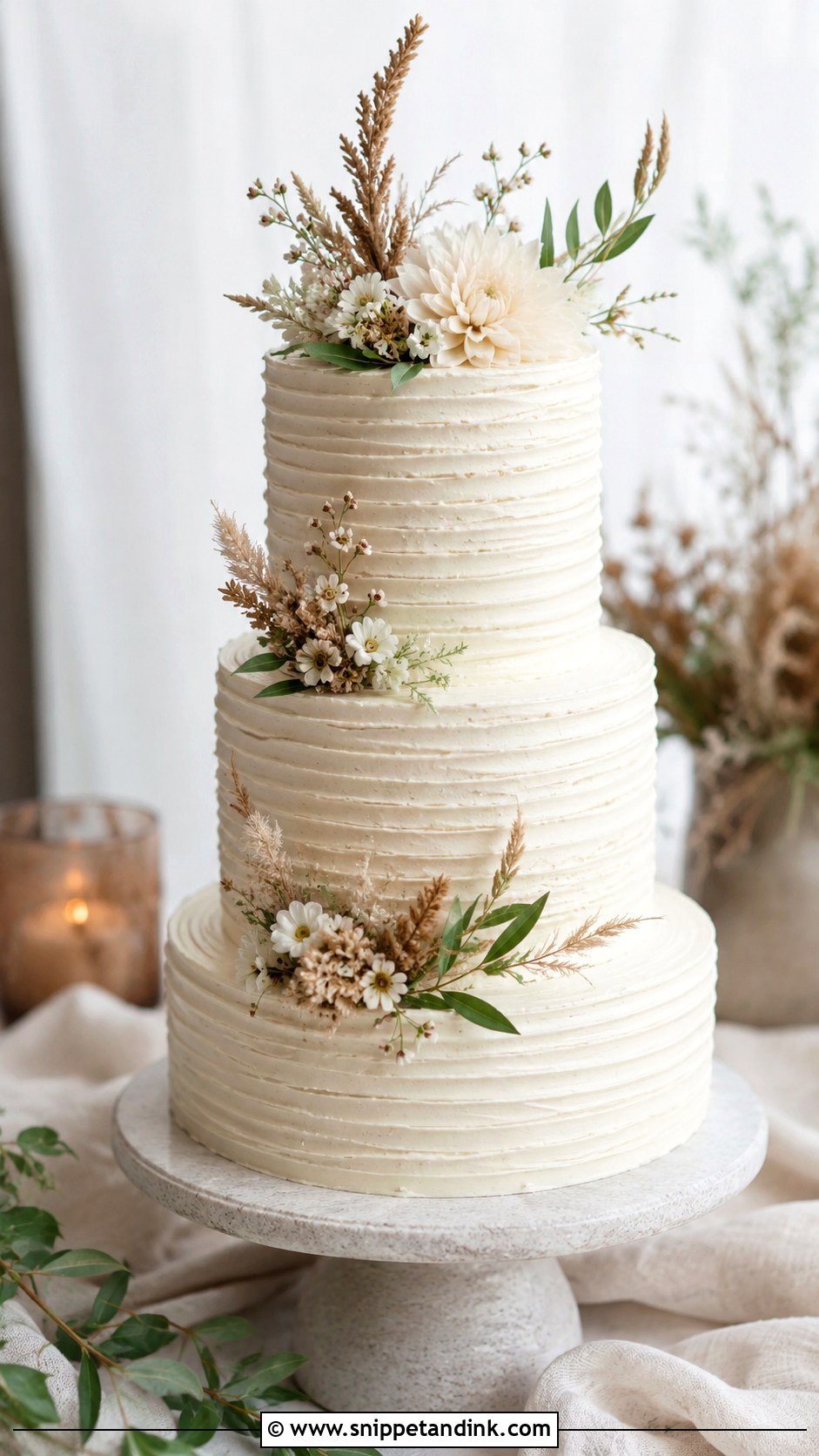
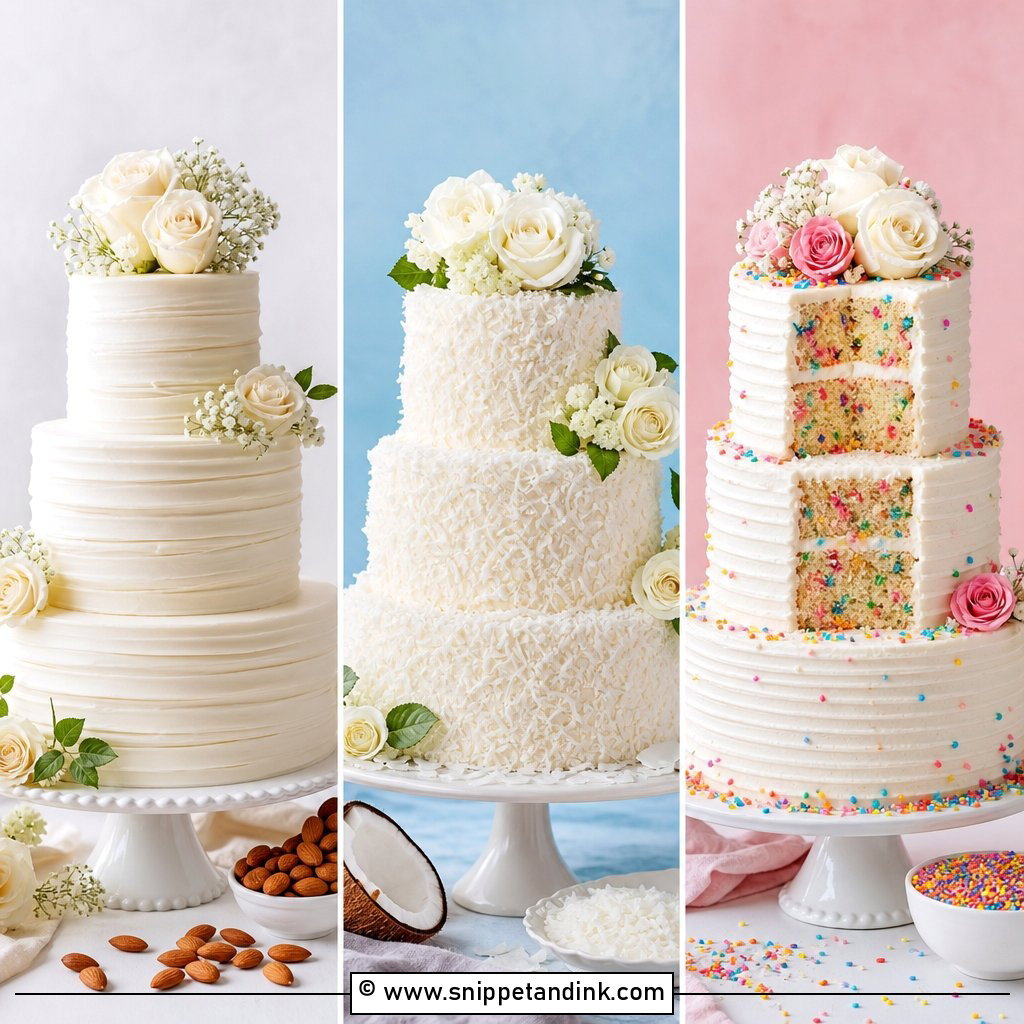
Texture is the friendliest finish for a nervous couple, because it hides small bumps that a perfectly smooth cake would show. Horizontal combed lines, palette-knife strokes, stucco or soft ruffles all read as handmade but deliberate. Cream, beige, ivory and soft pastels suit it, finished with a few fresh flowers, dried grasses or fruit. Vanilla, lemon, carrot and berry sponges pair well with buttercream. If your venue is warm, palette-knife texture with deep peaks is the version I’d warn you about; the tips soften first.
5. Minimalist Wedding Cake
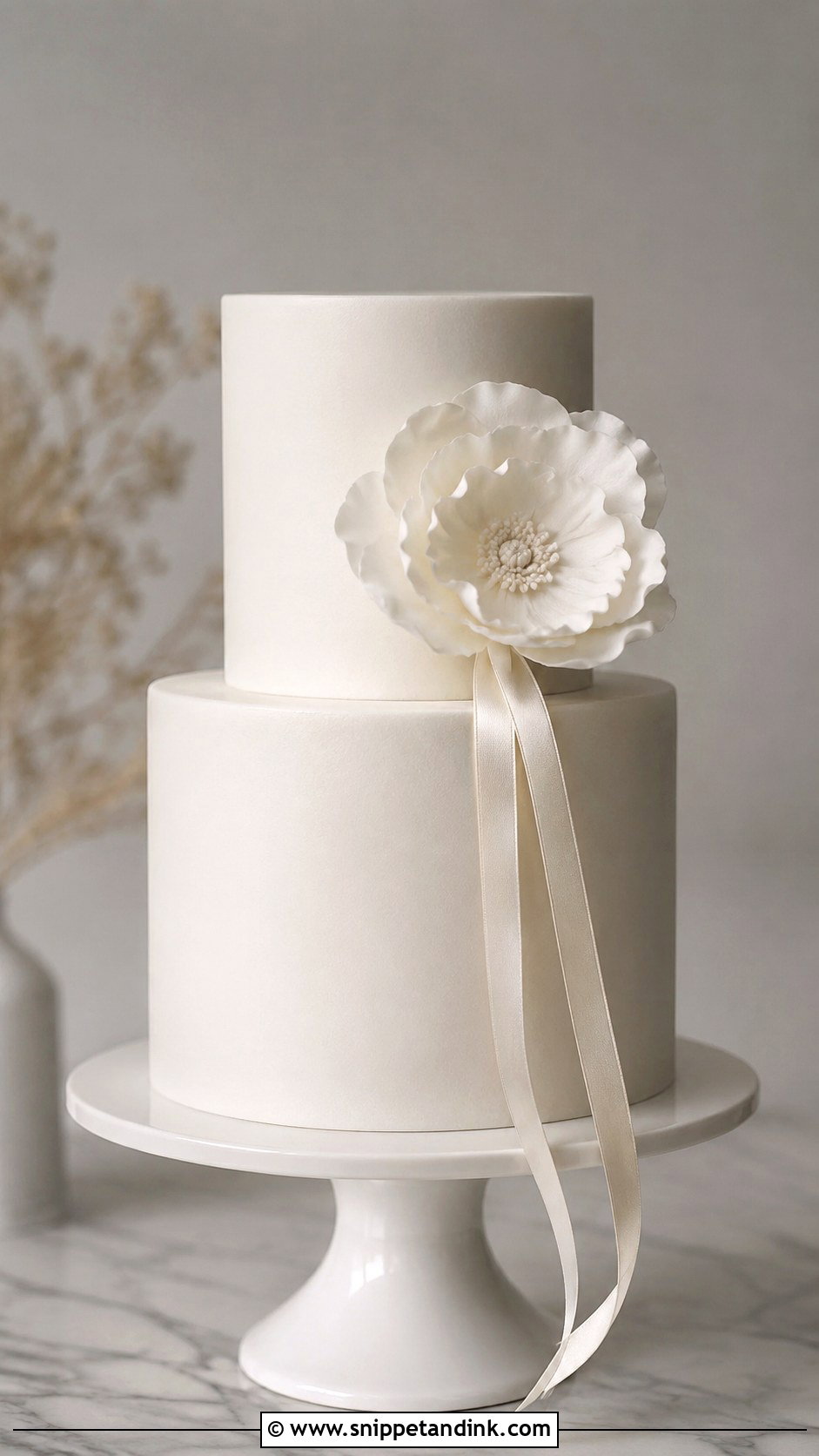
Minimal cakes look easy and are among the hardest to make. Clean tiers, smooth frosting and razor-sharp top edges leave nowhere to hide a lean or a dent, so the baker’s skill is fully on show. One strong detail does the rest: a single sugar flower, a silk ribbon, a small cluster of calla lilies or a soft buttercream wave. Keep the palette to white, ivory or one muted accent. Since the outside is restrained, I’d spend the budget inside: vanilla bean, almond, lemon, or dark chocolate with espresso buttercream suit galleries, rooftops and small modern weddings.
6. Rustic Wedding Cake
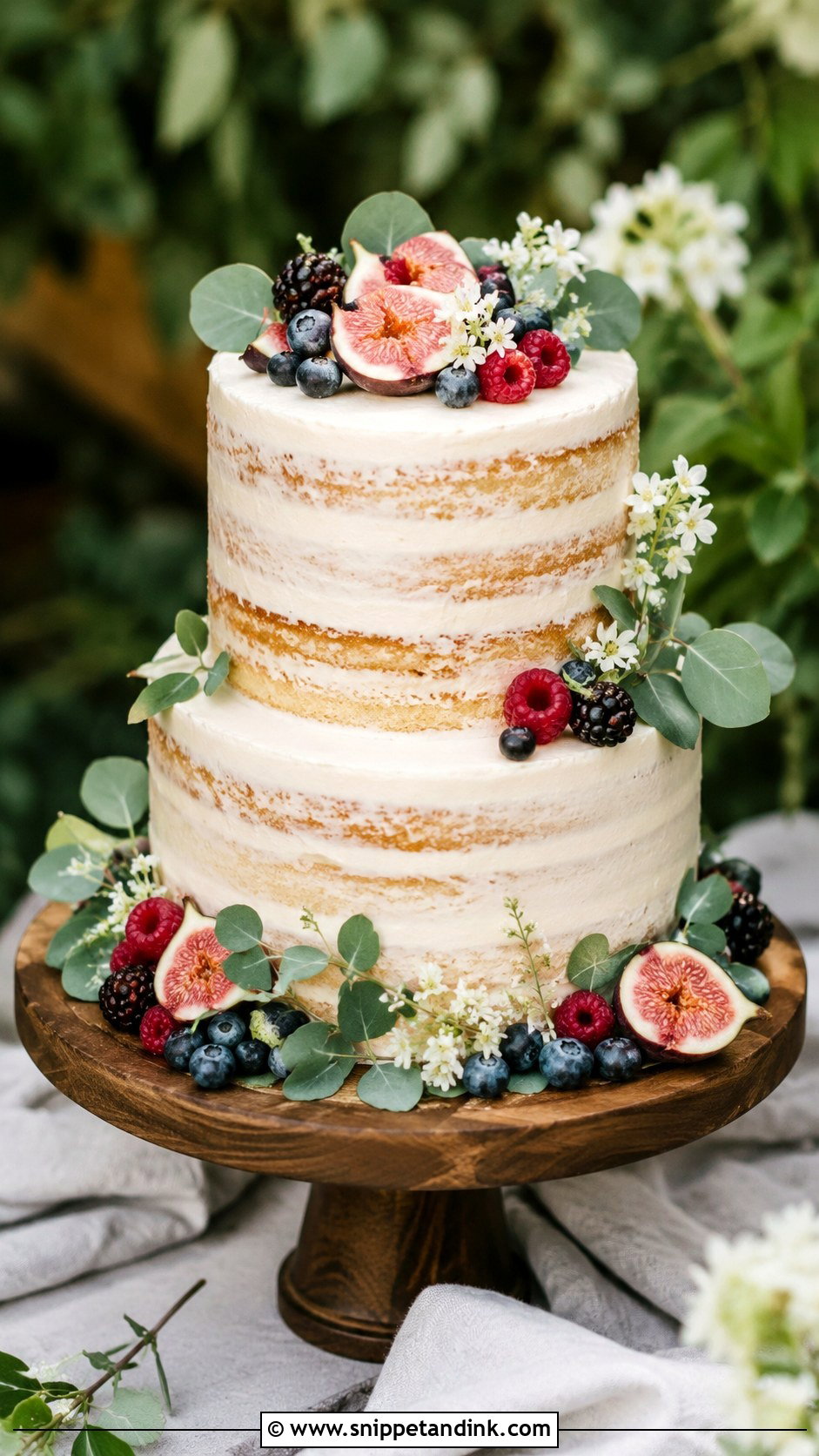
Barns, gardens and outdoor receptions suit a rustic cake. Semi-naked frosting, uneven buttercream edges, greenery, berries, figs or simple flowers build the look. The aim is handmade, not messy. Carrot, spice, vanilla berry, apple cinnamon and lemon blueberry all suit the mood, and a wooden stand or ceramic platter finishes it. The catch with a semi-naked finish is that the exposed sponge dries out faster than a fully coated cake. I crumb-coat and assemble it as close to delivery as I can, and I’d never leave one sitting uncovered in an outdoor breeze for hours.
7. Pearl Wedding Cake
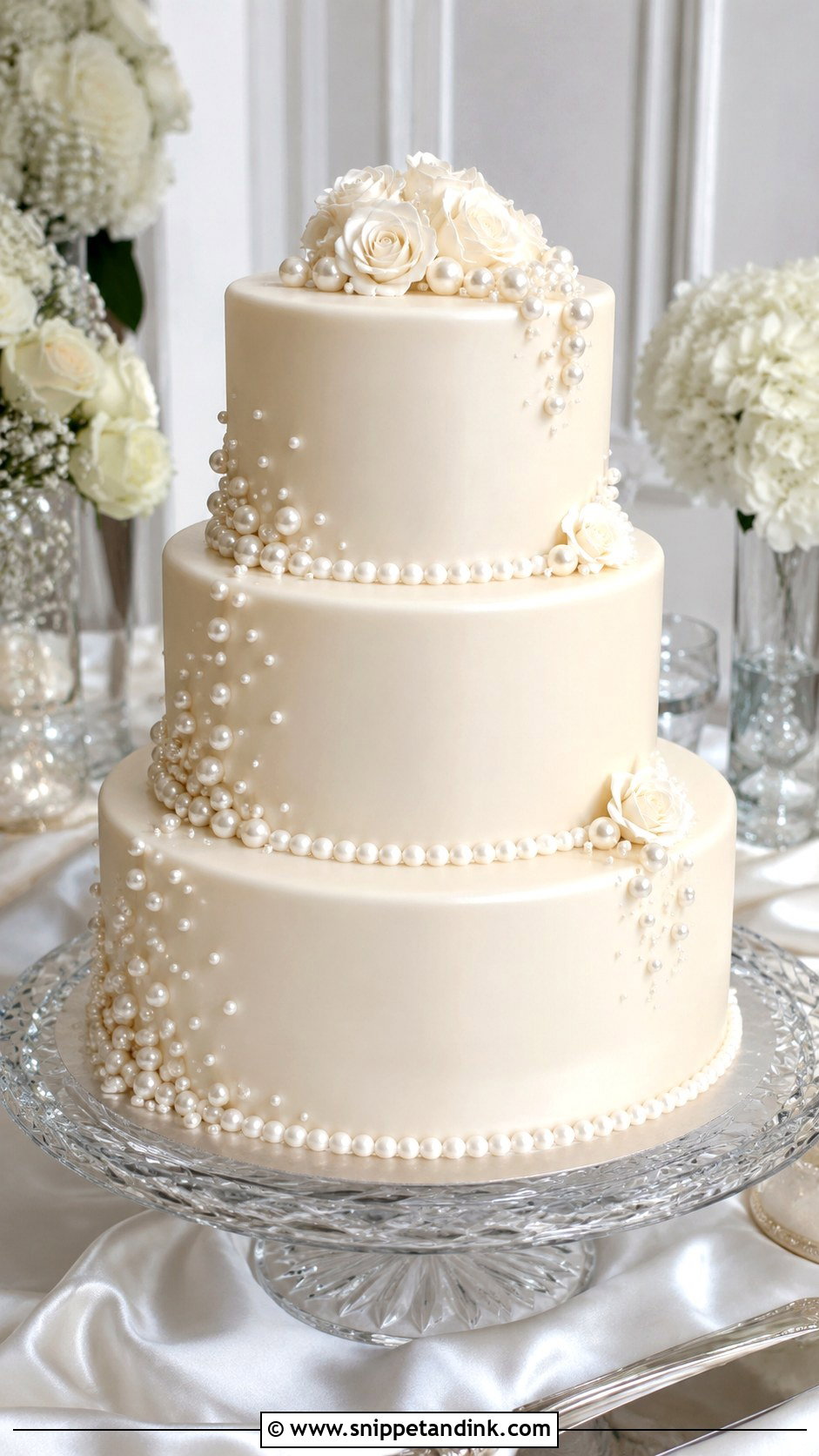
Pearls give a bridal finish with very little else. Edible pearls can be dusted lightly over smooth buttercream, set in neat borders or run in a flowing line down the tiers, in white, ivory, champagne or pale pink. Satin ribbon, sugar roses or tiny piped detail round it out. Vanilla bean, almond, coconut, white chocolate and raspberry cream are good flavors underneath. Restraint matters: a hundred pearls look busy, and the hard sugar ones are something guests bite into unexpectedly, so I keep them on borders and accents rather than the whole surface.
8. Bow Wedding Cake
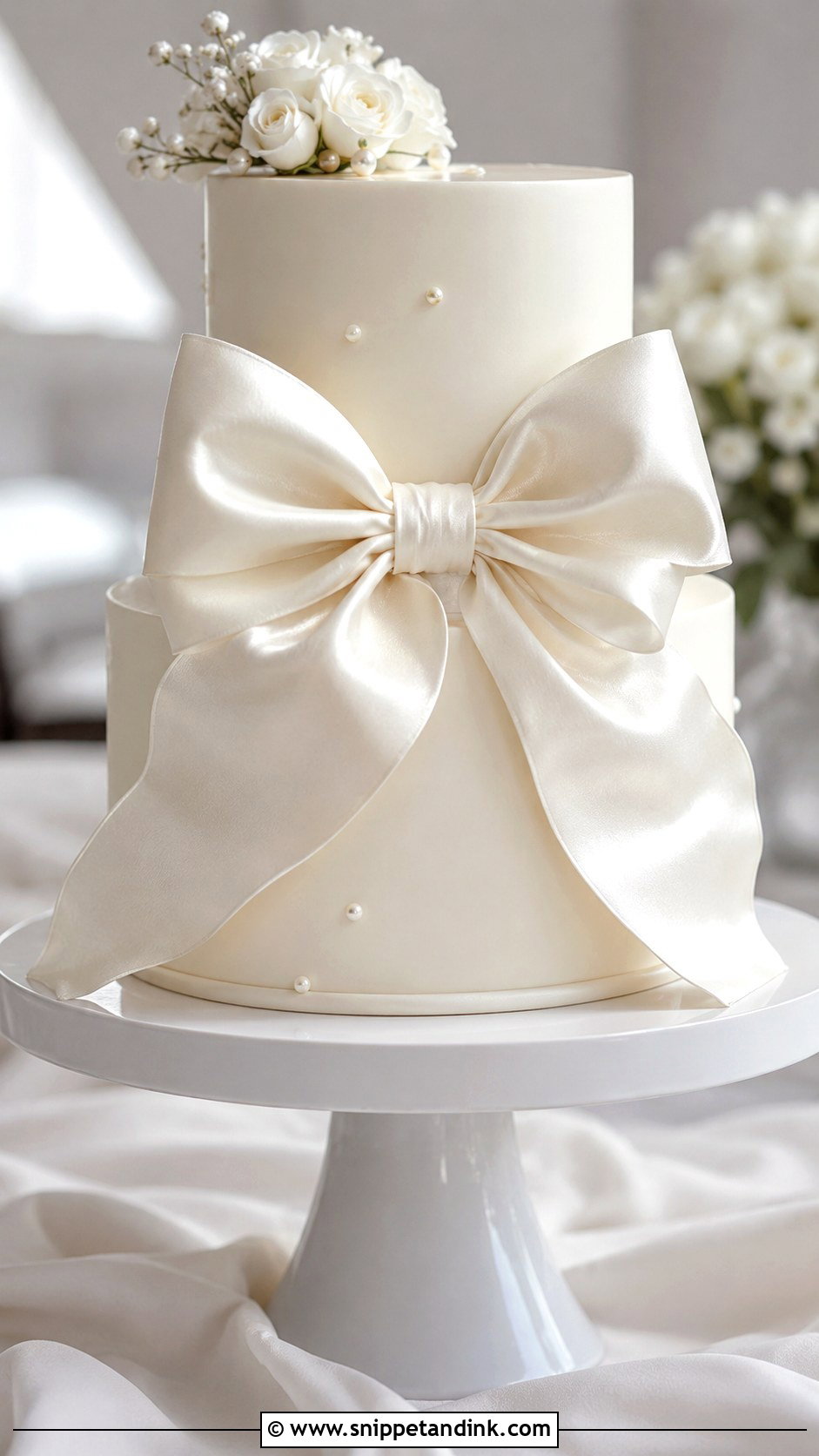
Bows bring a fashion note. The bow can be fondant, sugar paste, wafer paper or real ribbon wrapped around the cake. One oversized bow on a smooth white tier looks chic; small bows on each tier feel sweeter. If you go with real fabric ribbon, it needs a strip of acetate or parchment behind it, because buttercream grease will bleed through satin and leave a dark stripe within an hour. Keep everything else plain so the bow stays the focus, with vanilla, almond, strawberry or lemon inside.
9. Square Wedding Cake
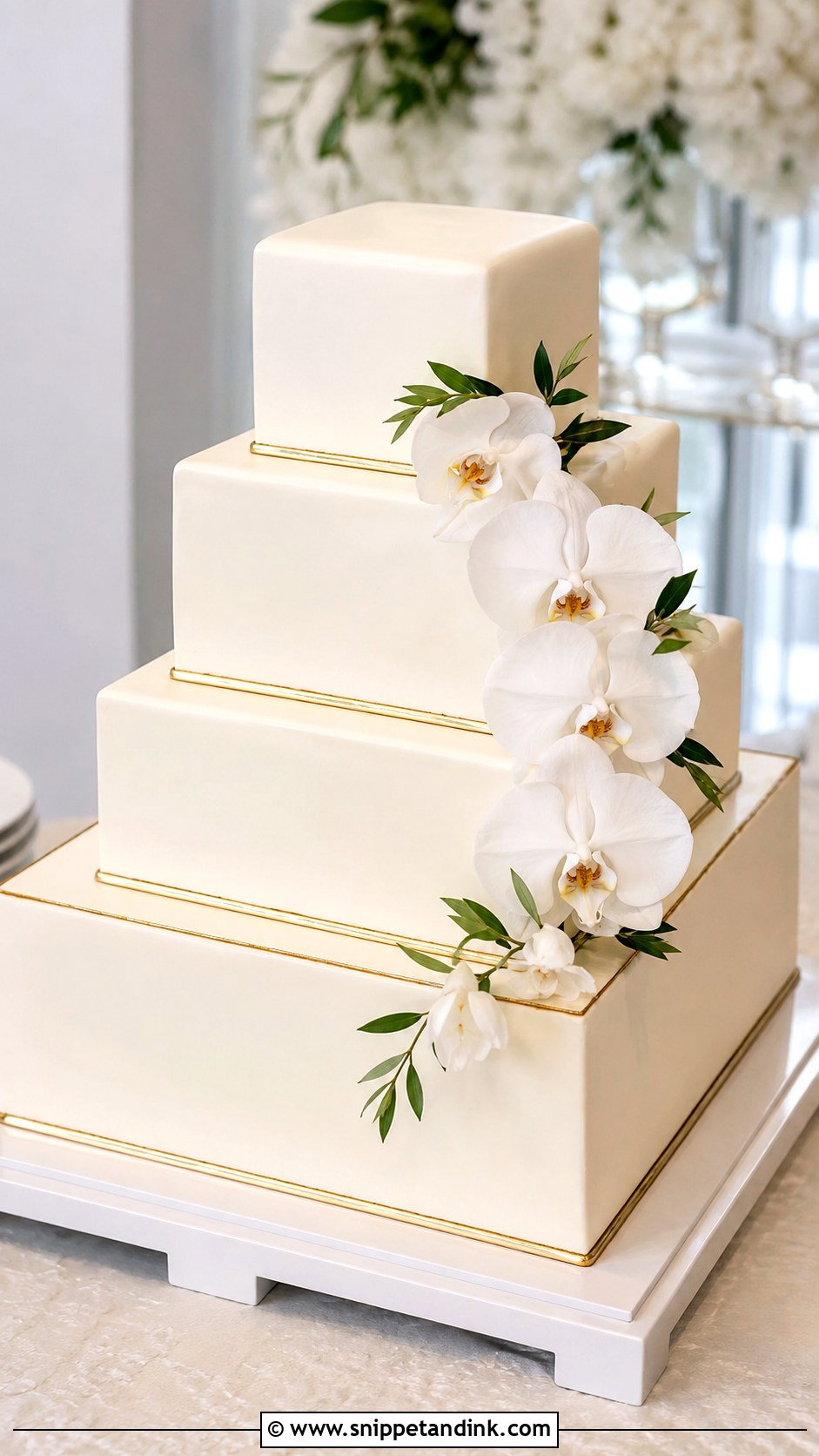
Square tiers look architectural and crisp, especially in smooth fondant or sharp buttercream. You can stack all squares, alternate square and round, or make one large square for a smaller guest count. Florals, metallic edges, pearls or texture soften the corners. Square cakes also serve more portions than round ones of the same width, which is handy when budget is tight. The corners are where they suffer, though: they’re the hardest part to keep sharp, and the first spot to scuff in transport. Vanilla bean, chocolate ganache, lemon and red velvet all hold that structure well.
10. Tall Tiered Wedding Cake
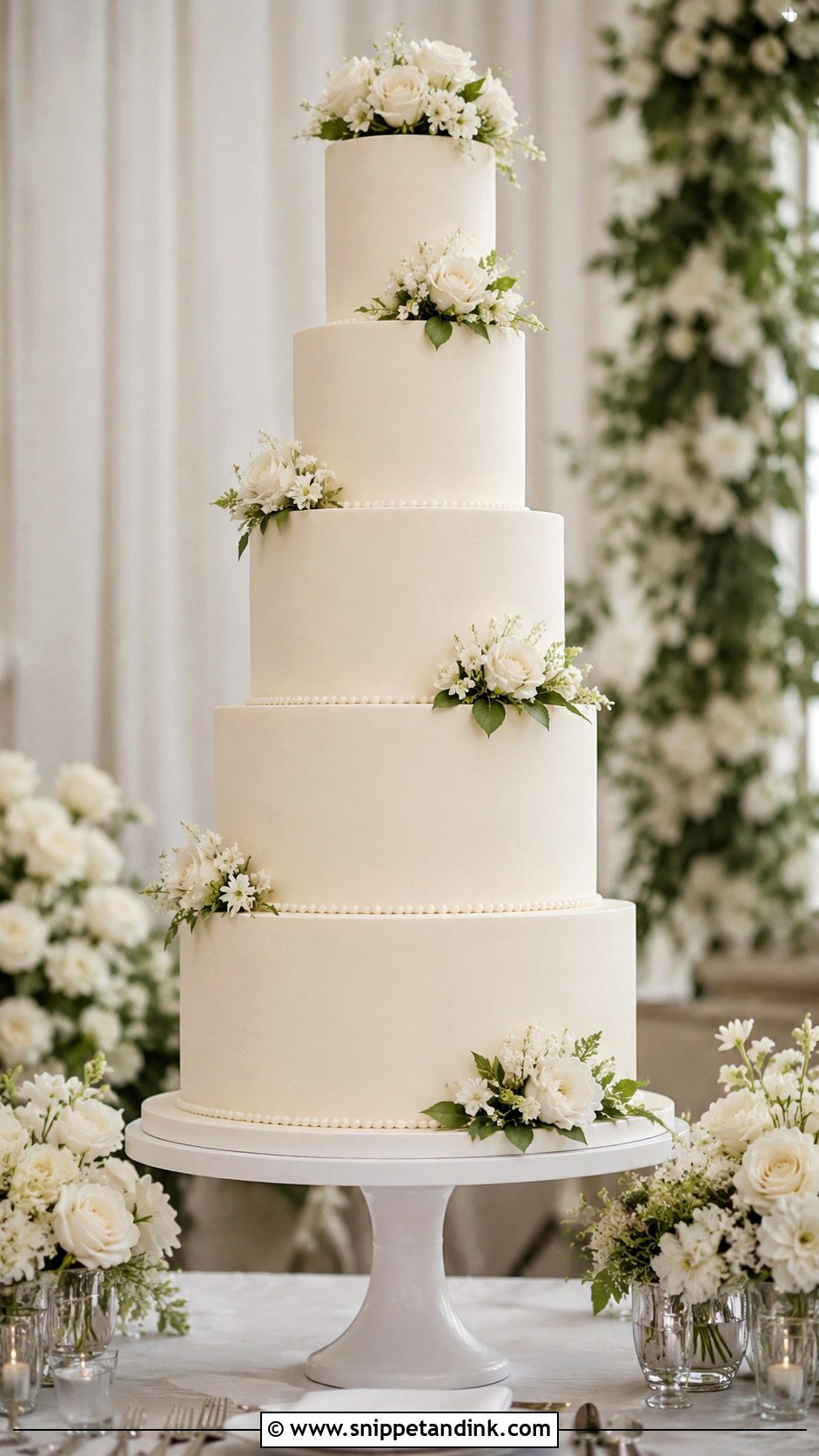
Height does the impressing on its own, so a tall cake needs restraint everywhere else. Smooth white tiers with small floral clusters feel classic; texture or color accents make it more modern. Ballrooms and hotel venues with high ceilings swallow a short cake, and that’s where this one earns its place. Structurally, every tier above the base sits on its own board with dowels underneath, and very tall cakes get a central rod. Dense sponges and firm fillings such as vanilla, almond, chocolate, lemon and red velvet stack better than mousses or soft creams. Ask your baker how it travels: some tall cakes are stacked on site.
11. Small Wedding Cake
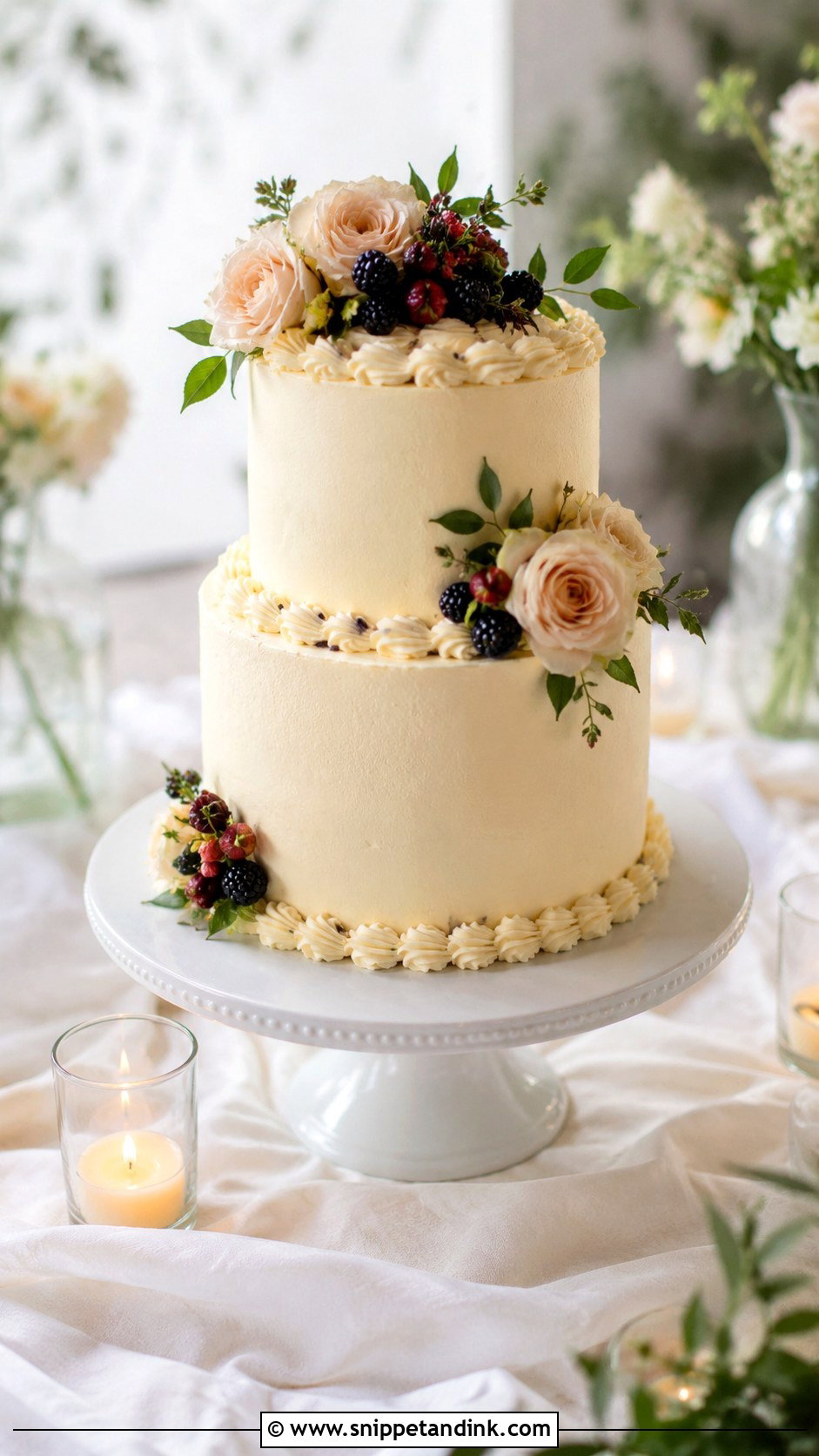
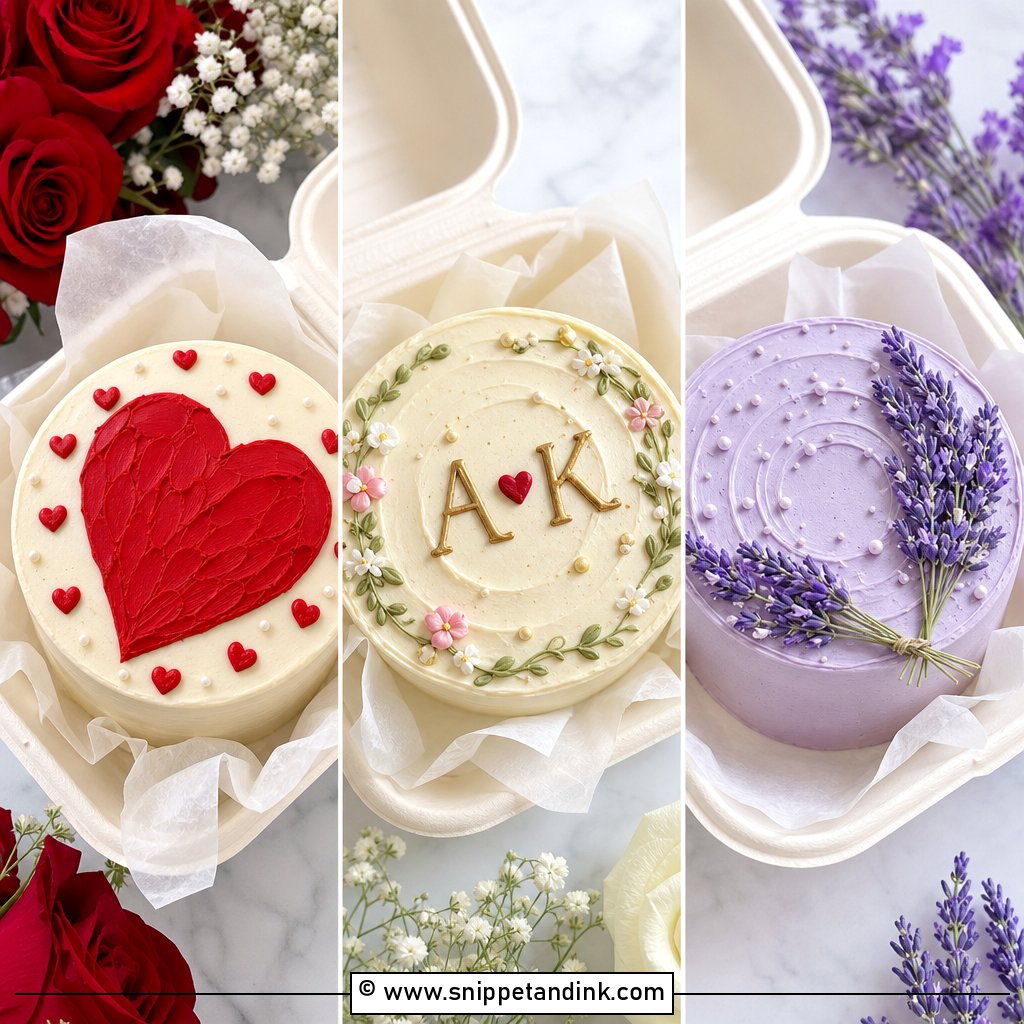
A small wedding cake suits elopements, micro weddings and couples serving a dessert table alongside it. One or two tiers can still feel special with smooth buttercream, fresh flowers, vintage piping, fruit or a strong color. The money shifts from size to finish and flavor: lemon raspberry, chocolate fudge, vanilla bean, coconut and pistachio all shine. Presentation matters more than with a big cake. A raised stand, linen, candles and flowers around the base turn it into a centerpiece rather than something that looks forgotten on a long table.
12. Pressed Flower Wedding Cake
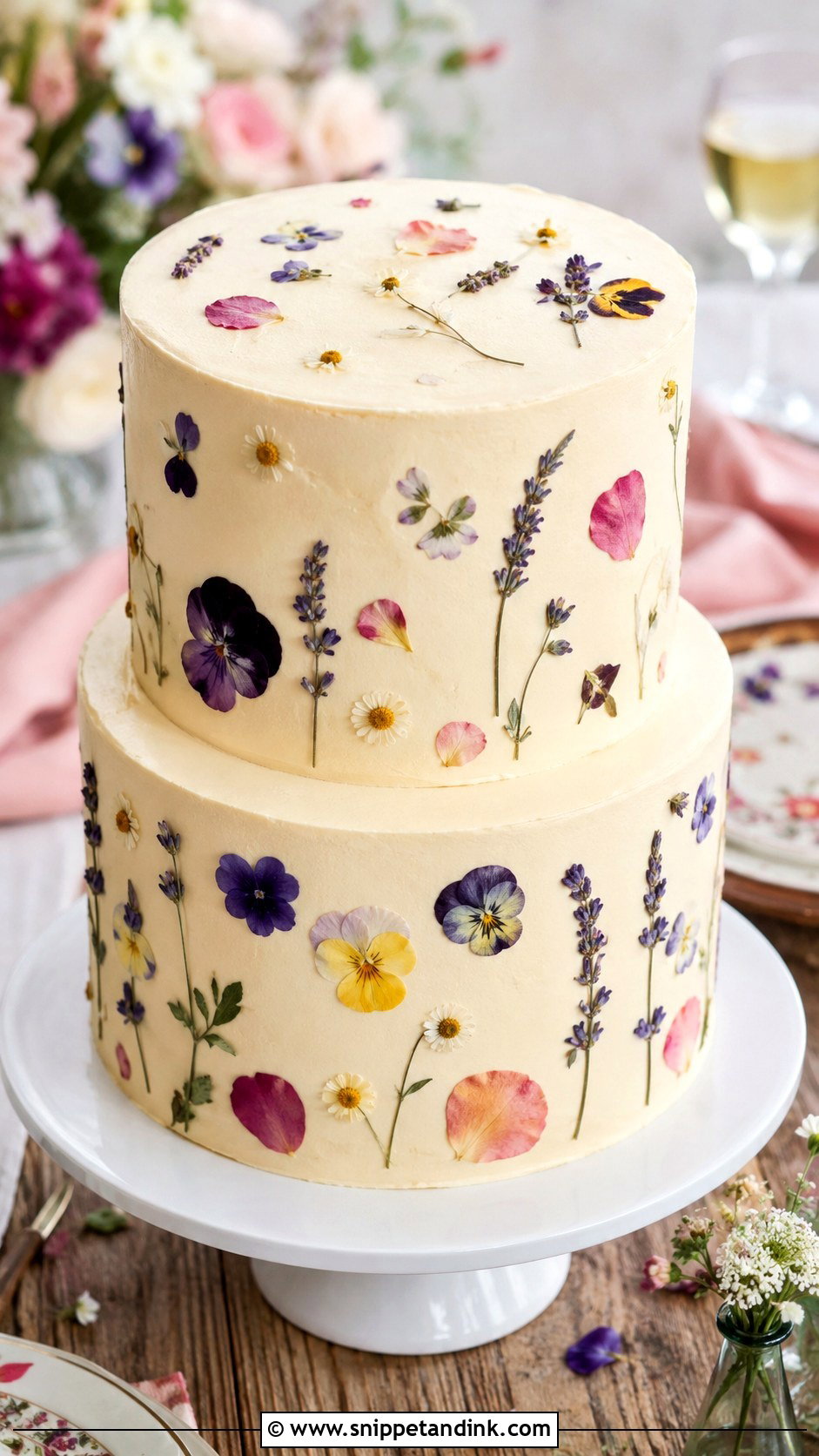
Pressed flowers give a delicate meadow look. Edible pressed flowers sit flat against smooth buttercream or fondant in loose clusters, patterns or full coverage. Pale frosting lets them read: think ivory with lavender, pansy, rose petals, cornflower or chamomile. Lemon, honey, vanilla, almond and elderflower suit the feel. I only use flowers grown for eating, never florist stock, which is often sprayed. Pressed petals also fade under strong sun, so I’d keep this cake out of a bright window until the cutting.
13. Hand Painted Wedding Cake
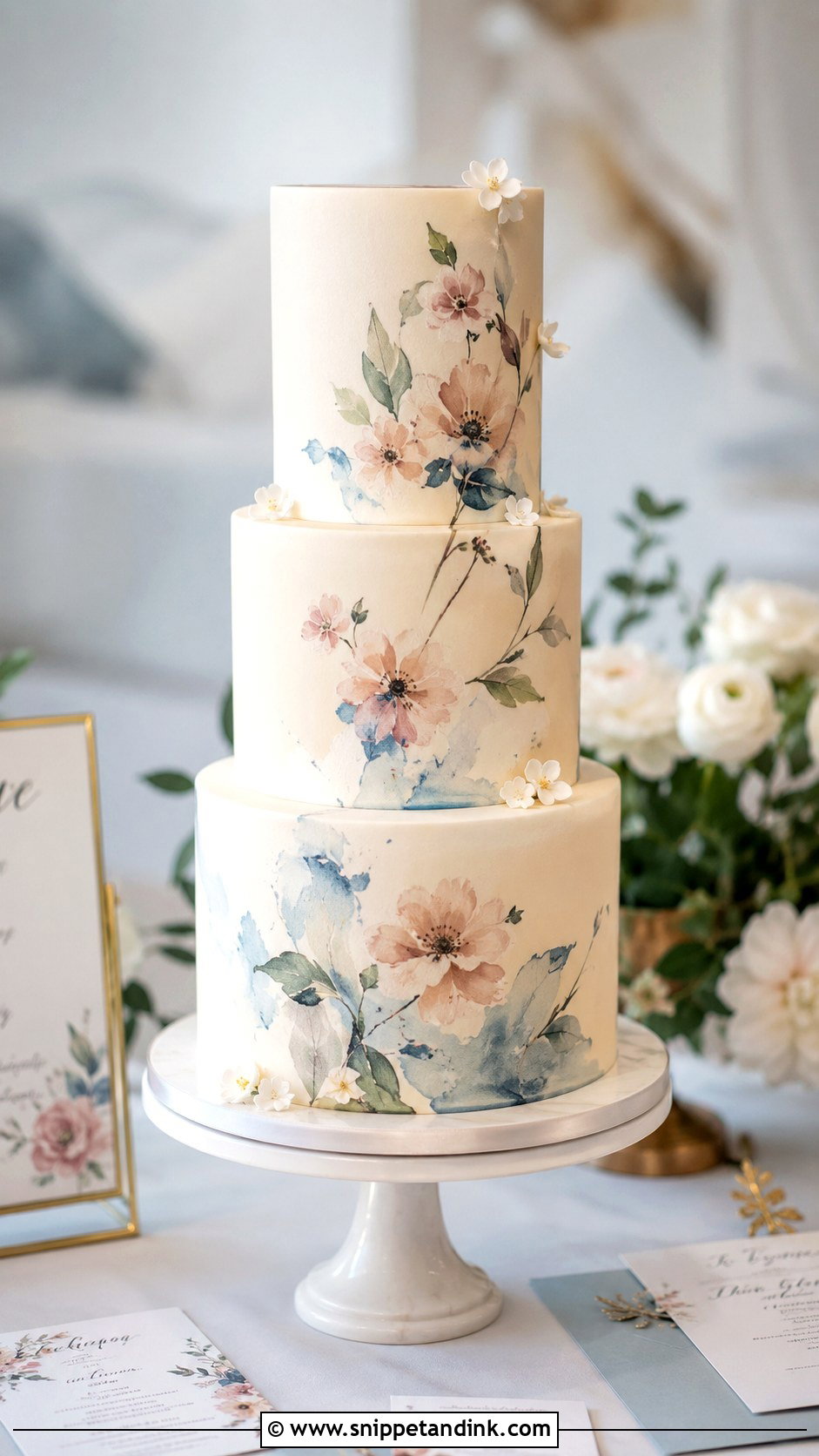
A hand-painted cake is edible artwork: watercolor flowers, greenery, loose brushstrokes, a sketch of your venue or a pattern lifted from your stationery. Fondant is the better canvas because it’s smooth and dry; painting on buttercream works but chills and softens unevenly. Soft blue, blush, sage, ivory and gold accents suit it. Keep other decoration minimal so the painting is visible. If you’re bringing artwork from your invitations, send it to the baker early. Painting tiers by hand takes real time and is usually done the day before.
14. Fruit Wedding Cake
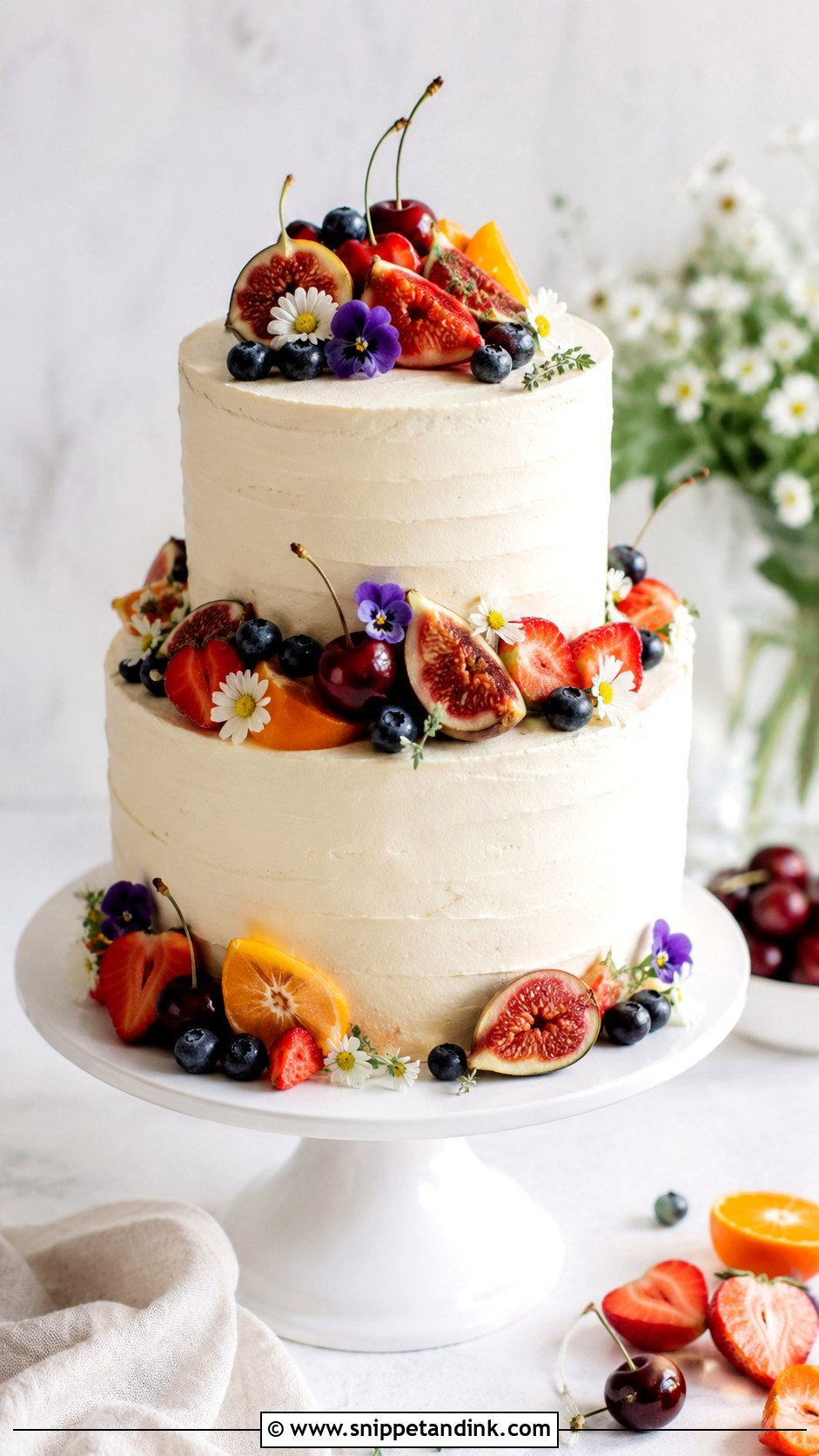
Fruit makes a cake look generous without much sugar work: berries, figs, citrus slices, cherries, peaches, grapes or pomegranate, depending on season. It suits naked cakes, smooth buttercream and tall tiers. Classic pairings include vanilla with strawberry, lemon with blueberry, almond with cherry and chocolate with raspberry. Cut fruit weeps, so I add it at the venue rather than before transport, and I glaze cut surfaces so they stay bright. Clean clusters always look better than a random scatter.


15. Chocolate Wedding Cake
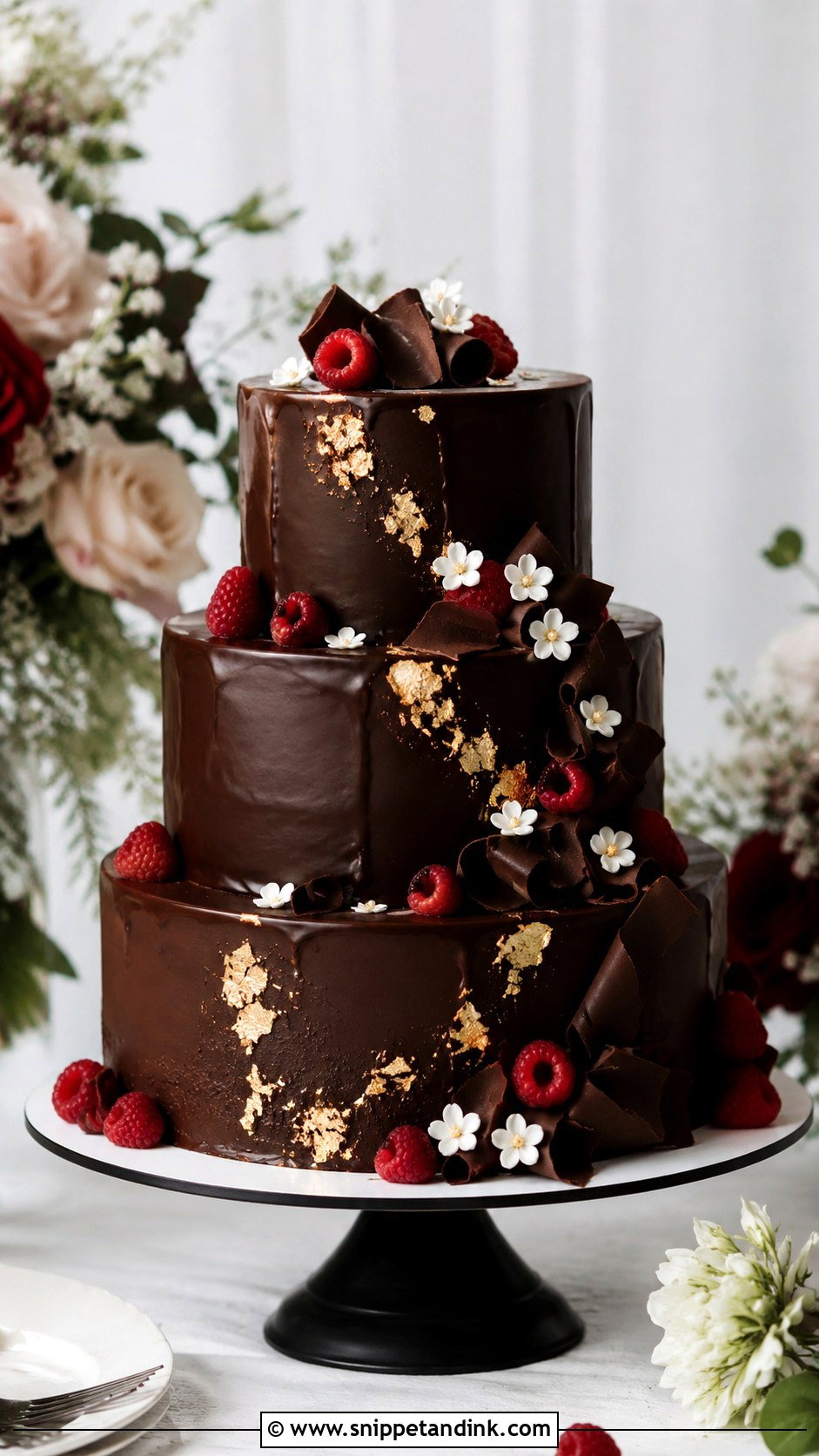
A chocolate wedding cake doesn’t have to look dark. You can have smooth ganache, chocolate buttercream, ivory frosting hiding chocolate layers, or a drip finish, dressed with berries, gold leaf, sugar flowers or curls. Chocolate fudge, mocha, chocolate raspberry, salted caramel and hazelnut are the usual favorites. Ganache is my preferred coating in summer; it sets firmer than buttercream and gives the sharpest edges under fondant. Expect guests to come back for seconds.
16. Colorful Wedding Cake
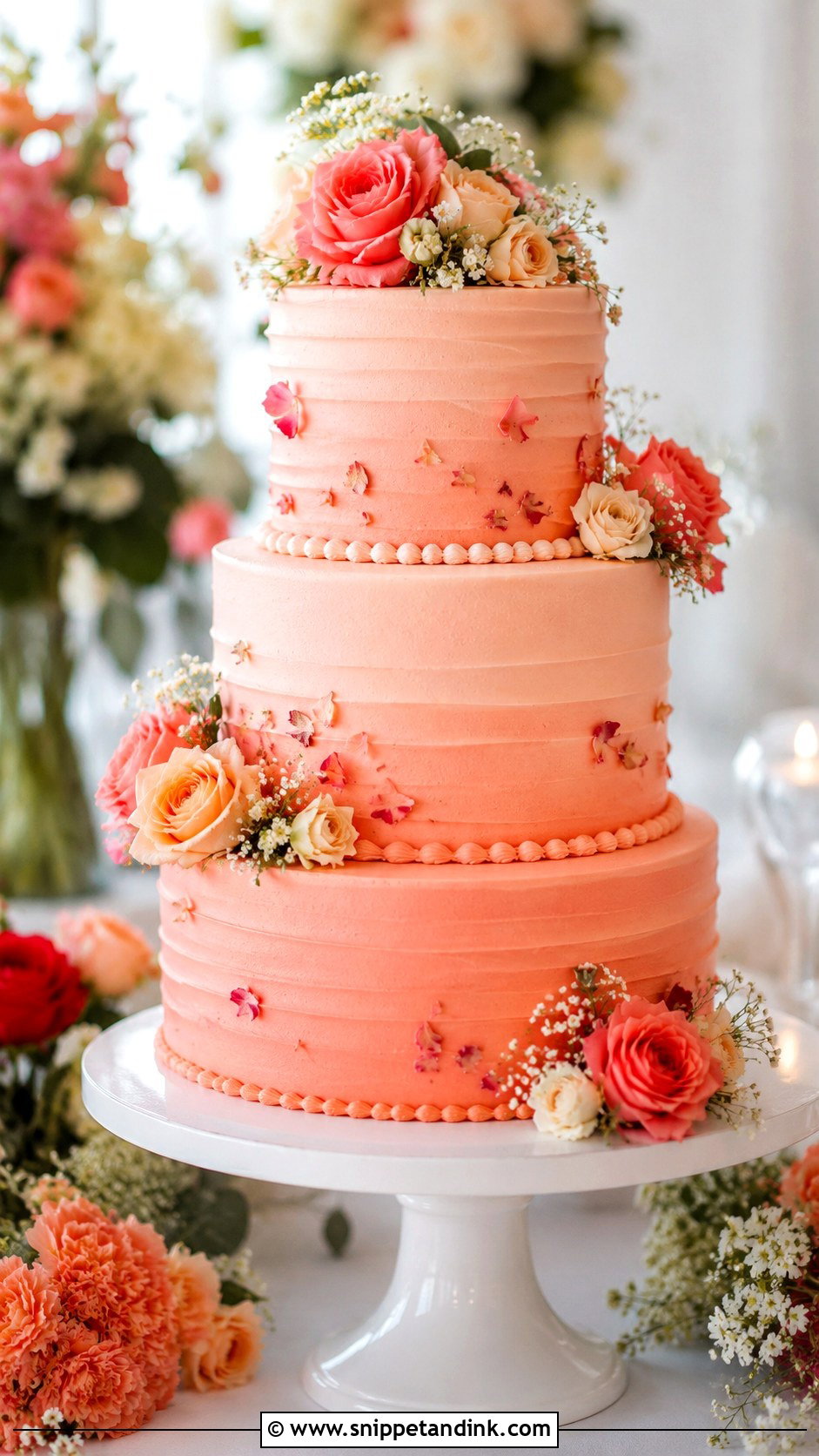
Color makes a cake feel personal. It can be soft, like blush, sage, lavender or dusty blue, or loud, like coral, yellow, emerald or berry. Pull the shade from something real: your flowers, invitations, bridesmaid dresses or linens. Smooth buttercream, painted detail, ombré tiers or colored piping all carry it. Deep shades take a lot of coloring to reach in buttercream and can taste slightly bitter, and they will stain teeth and fingers, so I usually keep very dark colors to accents. Strawberry, lemon, pistachio and blueberry flavors can echo the palette.
17. Black And White Wedding Cake
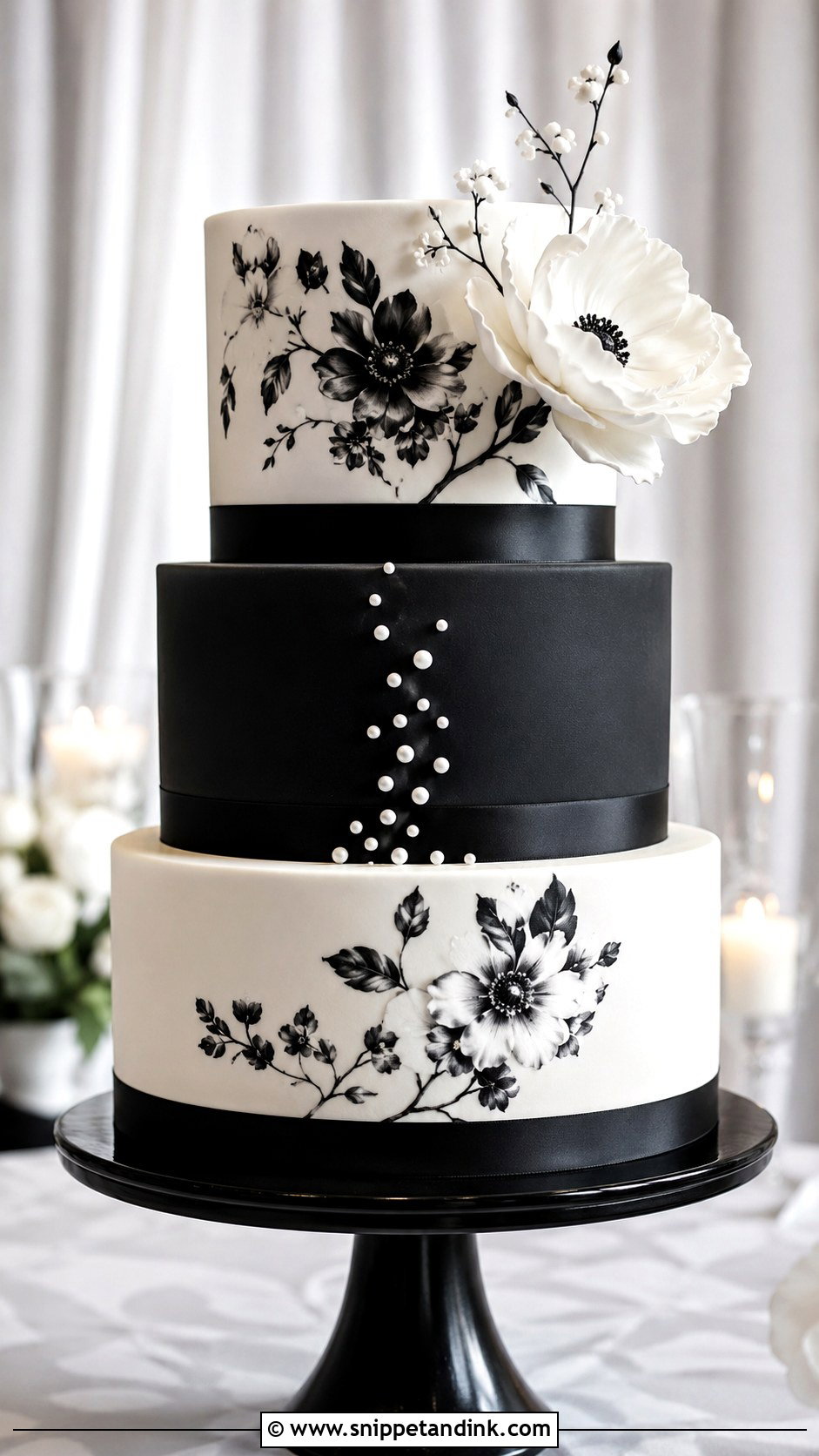
Monochrome suits formal receptions and city weddings. Most black and white cakes I make are white with black ribbon, piping or painted florals; the bolder version has one black tier with white sugar flowers or pearls. Black cocoa gives a naturally dark sponge, and chocolate, vanilla, almond and raspberry fillings all work. Contrast is unforgiving, so every line must be clean, and the cake needs bright, even light. Under warm candlelight, black reads as dark brown and white turns yellow.
18. Gold Wedding Cake
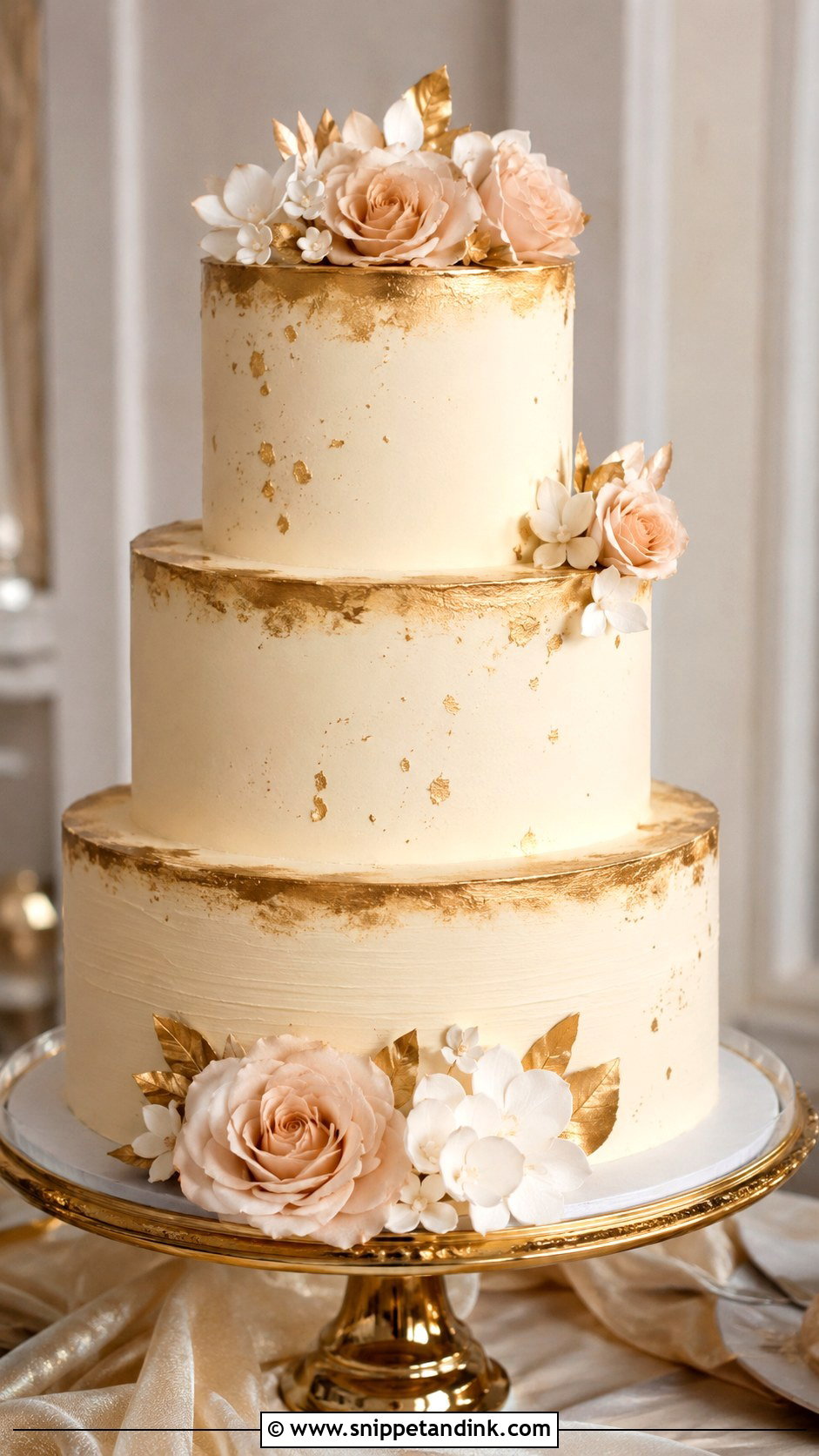
Gold adds warmth and celebration with very little else: painted edges, brushed texture, edible leaf, thin bands or touches around flowers. It pairs with ivory, white, blush, emerald, navy and deep berry. Use it sparingly; a full gold tier can look heavy. Vanilla bean, almond, chocolate caramel, coconut and lemon cream all fit. Check that your baker uses edible gold, not dust labeled non-toxic or for decoration only, which isn’t meant to be eaten. Under warm reception light, a little gold goes a long way.
19. Garden Wedding Cake
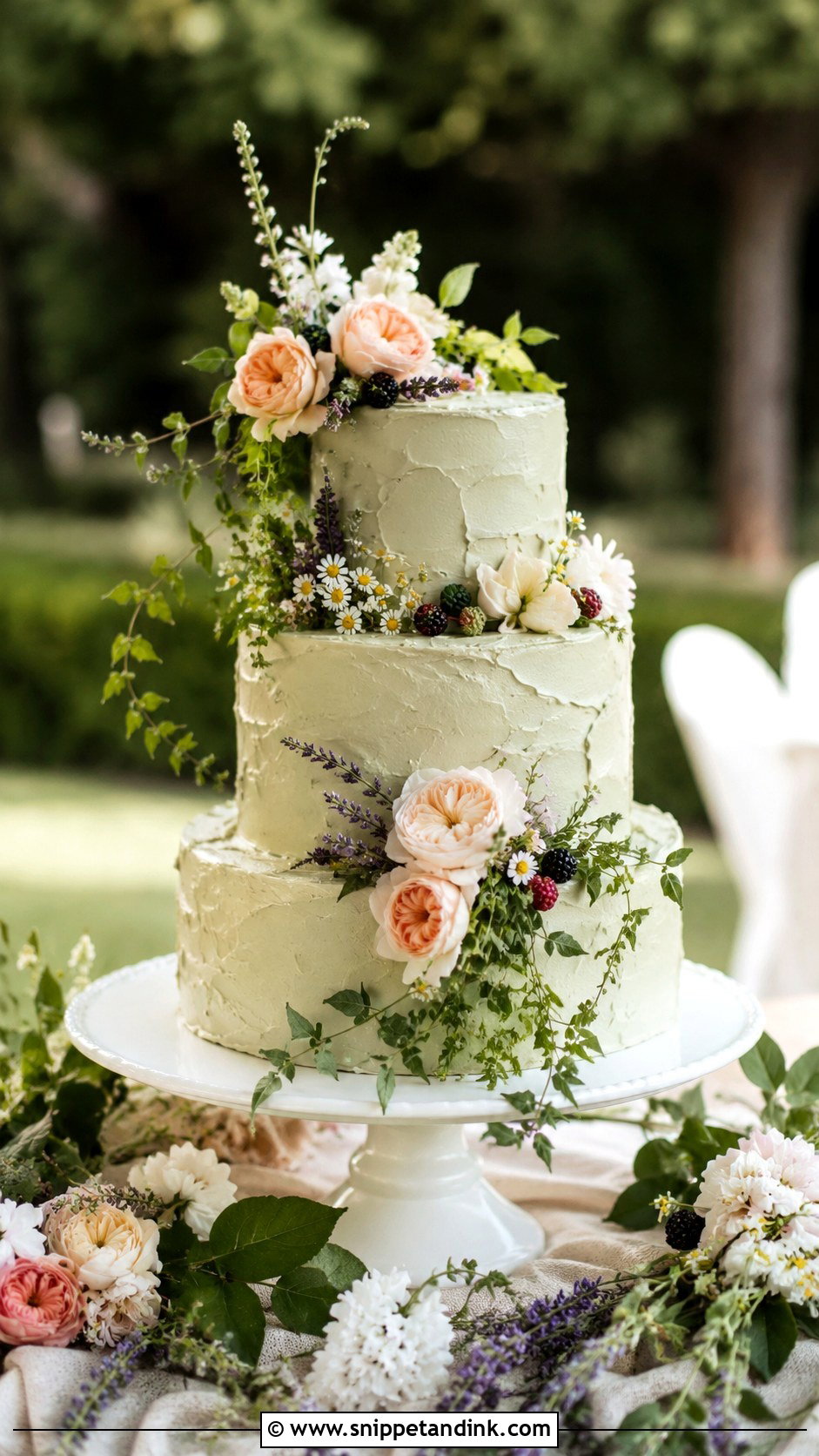
Garden cakes are looser than formal floral ones: soft buttercream, scattered clusters, trailing greenery and fruit, with roses, lavender, chamomile, herbs, berries or small seasonal blooms. Pale green, ivory, blush and butter yellow suit it, as do lemon, honey, vanilla, strawberry and pistachio sponges. Surround the base with flowers or set it on linen or a simple white stand. Outdoors, though, I’d always want it in shade with a cover until the cutting; insects find sugar fast, and full sun melts buttercream in well under an hour on a hot day.

20. Modern Sculptural Wedding Cake
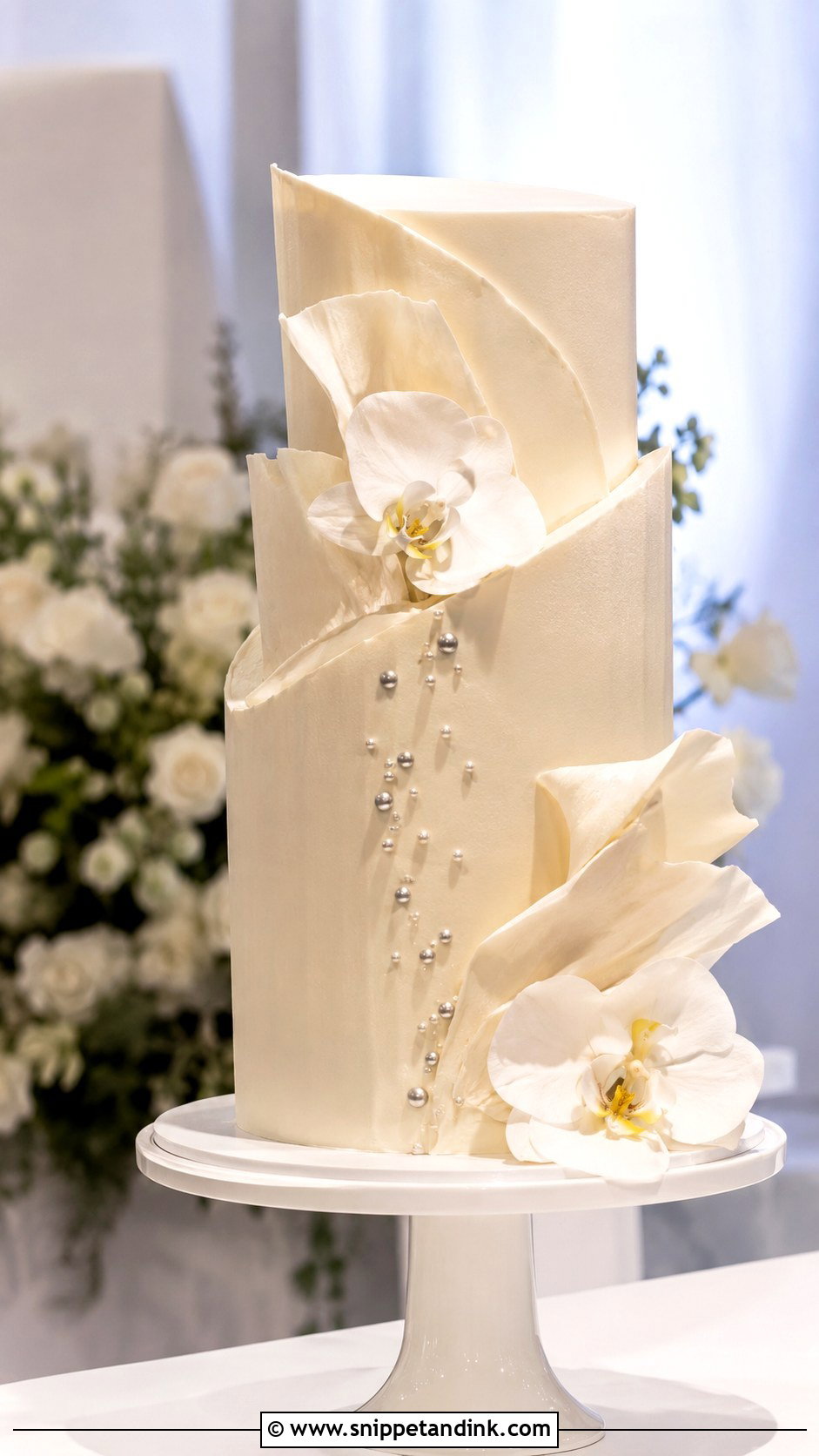
Sculptural cakes treat the cake as a design object: curved tiers, offset stacking, pleated buttercream, wafer-paper waves or clean geometry. A tight palette of white, ivory, taupe, blush or soft gray keeps attention on the shape. Inside, vanilla bean, yuzu citrus, matcha, pistachio and chocolate espresso all suit the modern feel. Offset and cantilevered tiers need hidden internal support, so I’d only order one from a baker who can show you previous structural work. Wafer paper also softens in humidity, which matters at summer or coastal venues.
What Heat, Travel and a Late Cutting Do to Each Finish
Most cake disasters happen between the bakery and the cutting, not in the kitchen. A few things I explain to every couple:
Buttercream in a warm room
Butter starts to soften well before a room feels hot to guests. Meringue-based buttercreams taste lighter but are the first to slump; firmer recipes and ganache under the coating hold better. If your reception is outdoors in summer, I’d want the cake indoors or under solid shade, set out as late as possible, and I’d steer you toward smooth finishes over tall piped peaks.
Fondant and the cold-to-warm move
A chilled fondant cake carried into a humid room gathers condensation, the same way a cold glass does. It looks wet and can make colors run. The fix is patience: let it come up to room temperature slowly in its box and don’t wipe the beads off, or you’ll smear the surface.
Fresh decoration and timing
Cut fruit, fresh flowers and pressed petals all go on as close to the reception as possible. If the cutting is planned late in the evening, tell your baker; a cake that has to look perfect at ten at night is built and finished differently from one cut straight after dinner. Also agree who receives it at the venue and where the table sits, away from heaters, speakers and direct sun.
Bring These Answers to Your First Cake Tasting
Classic, vintage, minimal, rustic, sculptural or covered in flowers, the right cake comes down to guest count, venue, season, flavor and how formal the day feels. Before you book, gather a few photos showing the shape, finish, colors and decoration you like, and note what you don’t. Then ask your baker the honest question: what will hold up in my weather, on my timeline, with my serving plan? Go to a tasting if you possibly can. I’d rather redesign a cake around a flavor you love than make something that looks right and tastes forgettable.
You'll Like These Ideas:








Leave a Reply