
Most of my 2025 consultations open with a phone full of saved cakes and the same question: which of these will actually work for us? The direction this year is warm and personal. Soft buttercream, sculpted tiers, fresh fruit, vintage piping, pearls, bows, pressed flowers, domes and tall tiers all turn up again and again. Below are twenty of the styles I’m making most, each with a flavor I’d pair it with and the practical catch that comes with it, from how it travels to how long it can sit on a table.
Reading a Saved Cake Photo the Way a Baker Does
An inspiration photo tells me less than couples expect. Before I quote from a screenshot, I look for the things the picture hides, and it helps if you look for them too.
- Scale. Many styled photos use small cakes shot close up, or tall cakes with dummy tiers. Ask how many people the cake in the picture would actually serve.
- Color. Edited photos shift tones a lot. Butter yellow on a screen can be a much brighter yellow in real buttercream, so bring a fabric swatch or a napkin instead of relying on the photo.
- Setting. A cake shot in a cool studio may not hold up in a summer tent. Tell your baker where the cake will stand and for how long.
- Labor. Sugar flowers, Lambeth piping and hand-painting are priced on hours, not size. A small cake covered in detail can cost more than a plain tall one.
I’d rather see three photos with a note on what you like in each, the color in one and the piping in another, than twenty saved cakes with no explanation. It gives me something to design from instead of something to copy.
1. Lambeth Wedding Cake
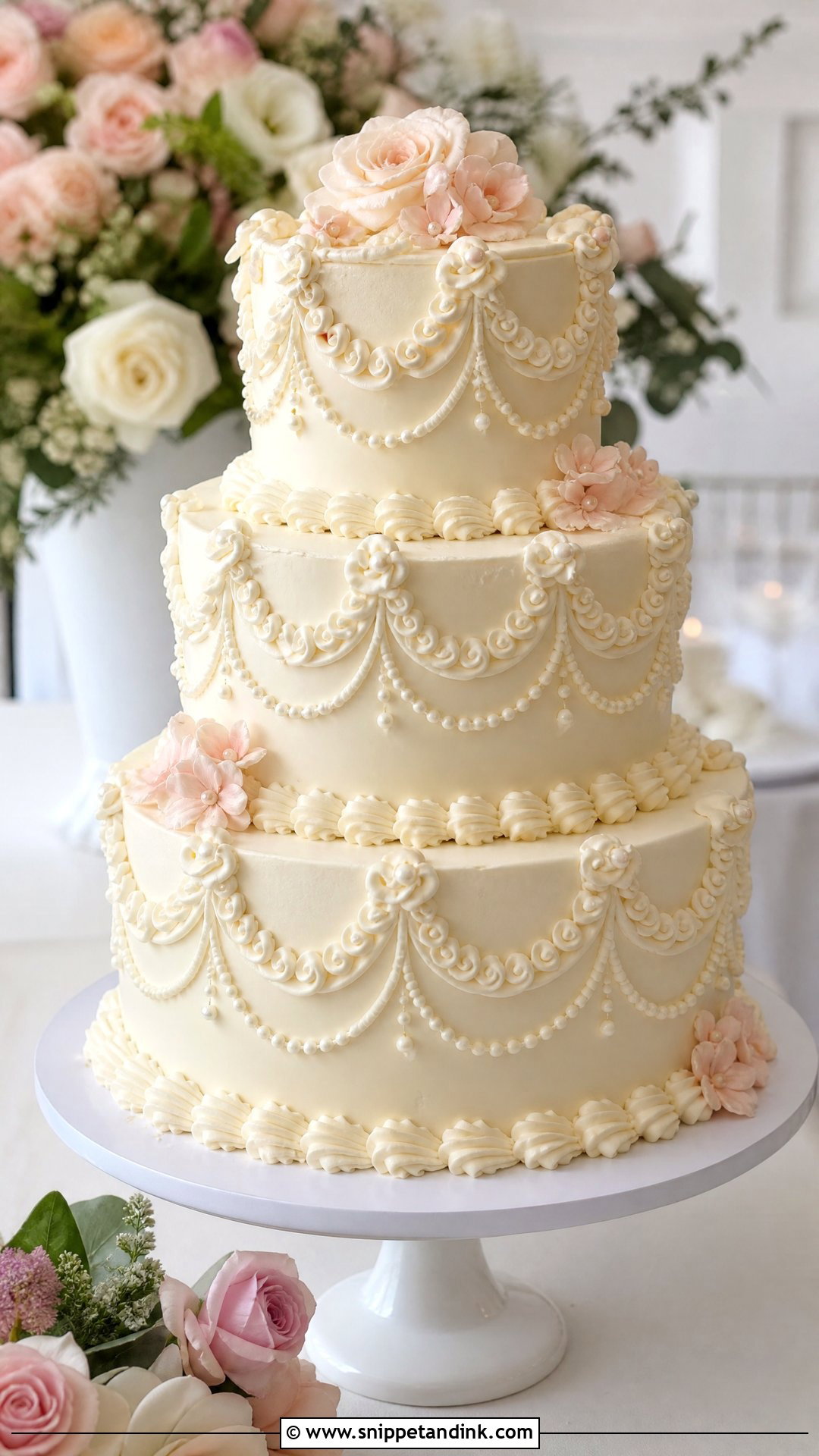
Lambeth piping looks freshest this year in a tint: ivory, blush, butter yellow or a soft blue rather than stark white. The technique hasn’t changed. Layer upon layer of shells, swags and over-piped scrolls are built up in buttercream, and I chill the cake firm between layers so the weight of the swags doesn’t drag. Balance is what separates a good one from a crowded one, so I leave the top edge and a band of each tier calmer than the rest. Vanilla bean, almond, lemon or a champagne-style sponge all suit it.
2. Pearl Wedding Cake
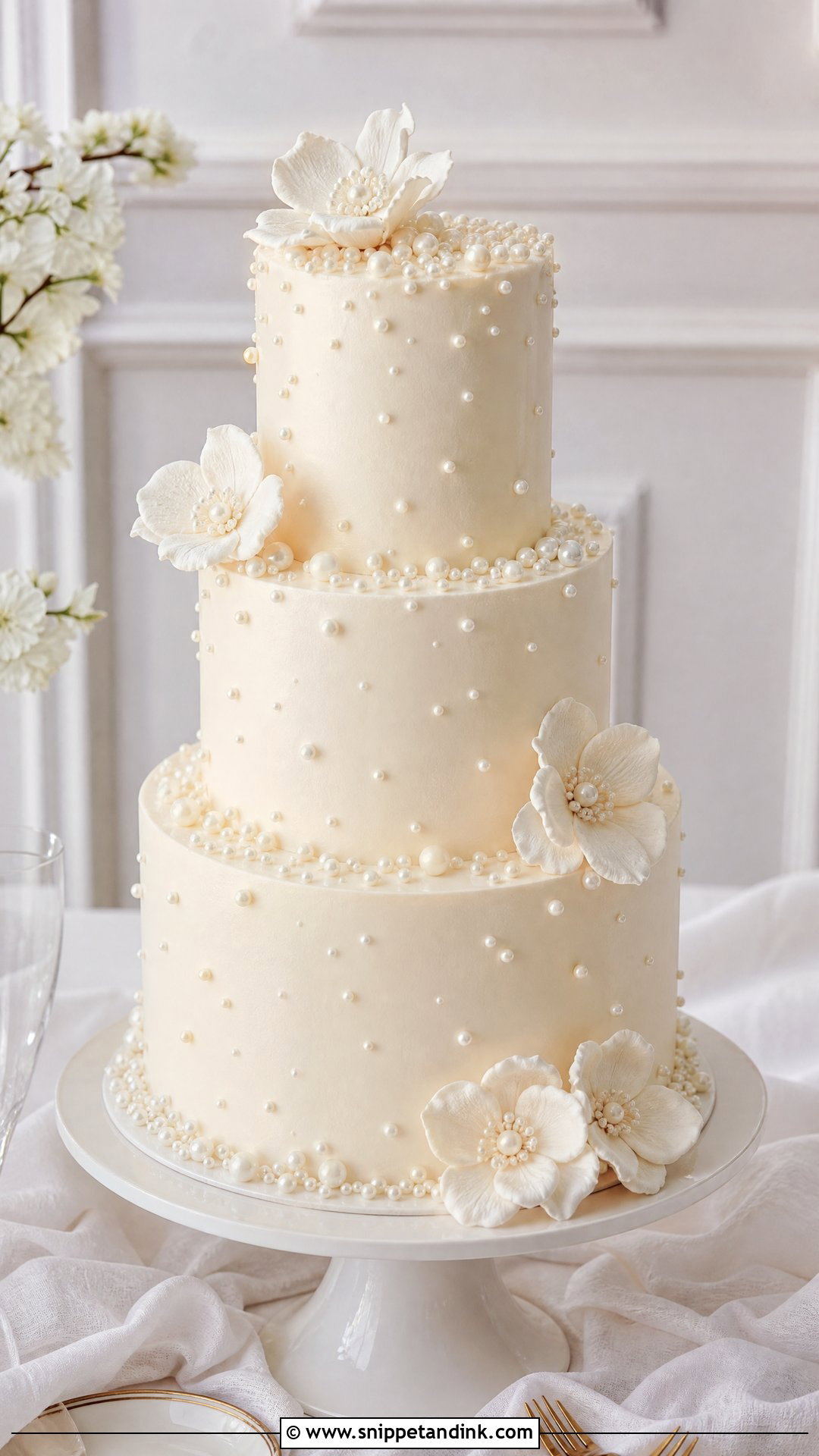
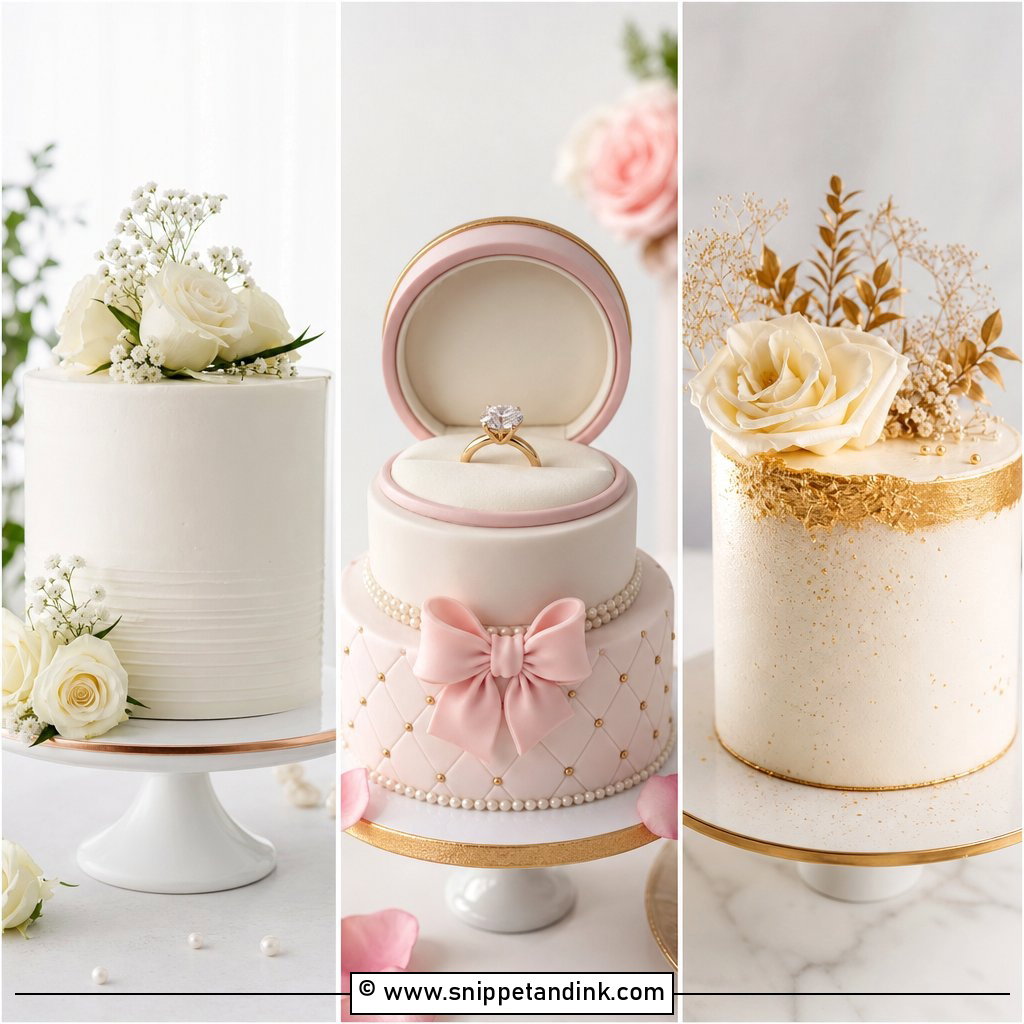
Pearls are the quietest way to dress a cake. I place them with tweezers while the buttercream is still slightly tacky, so they sink in just enough to stay put through delivery. They look most modern on square or tall cylindrical tiers, where a straight line of pearls emphasizes the shape. Creamy white, ivory or pale blush are the colors I’d keep to. Inside, coconut or white chocolate with raspberry makes a nice change from vanilla.
3. Bow Wedding Cake
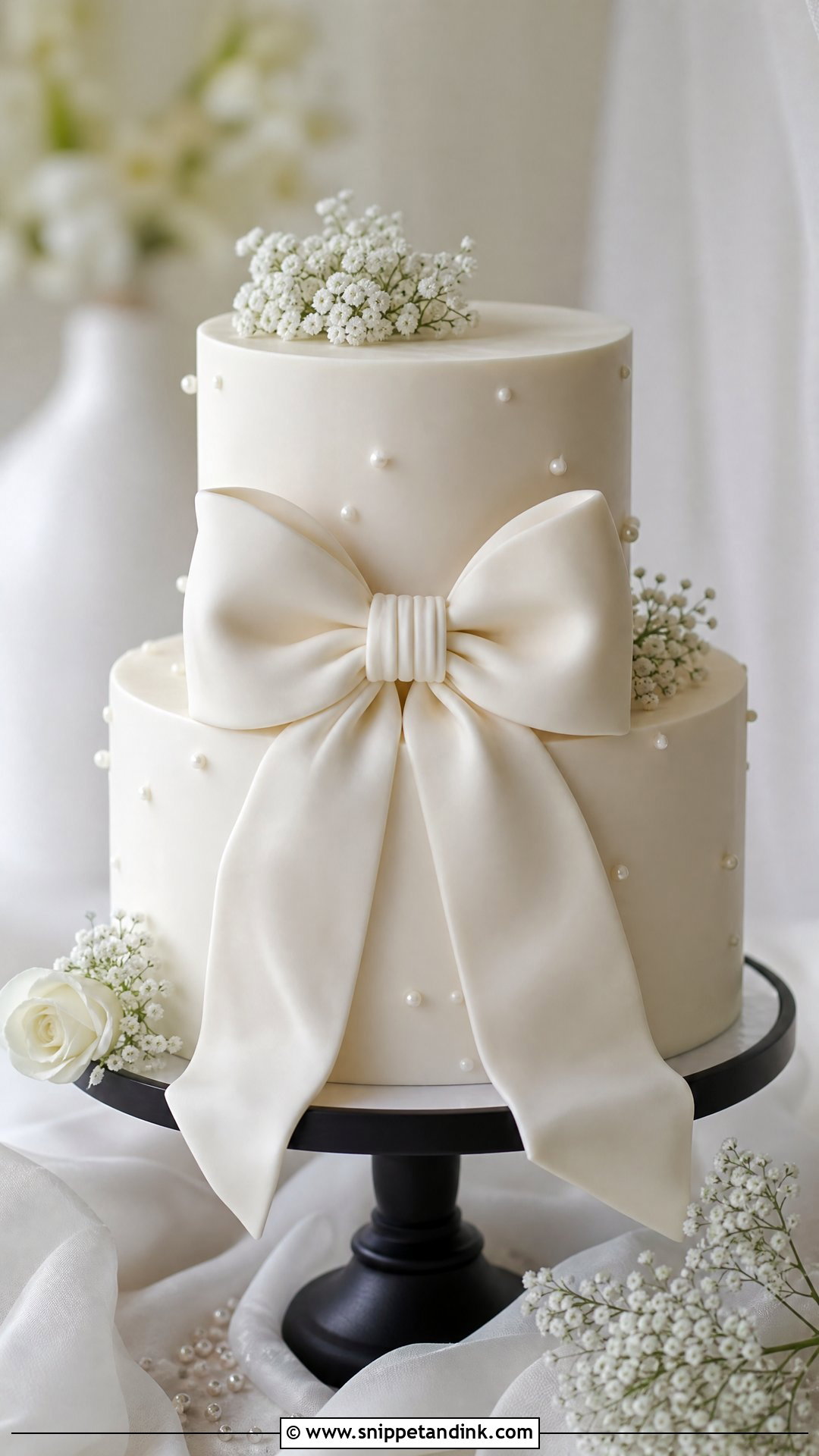
One big bow or a pattern of tiny ones, never both. That’s my rule for this trend. Fondant and sugar paste hold a crisp loop; wafer paper drapes more like fabric but wilts in humid air, so I’d avoid it for a summer outdoor table. Real ribbon is fine if there’s a barrier underneath it so buttercream fat doesn’t stain it. The rest of the cake should stay smooth and pale, with the bow as the single decoration. It suits indoor receptions and bridal brunches especially well.
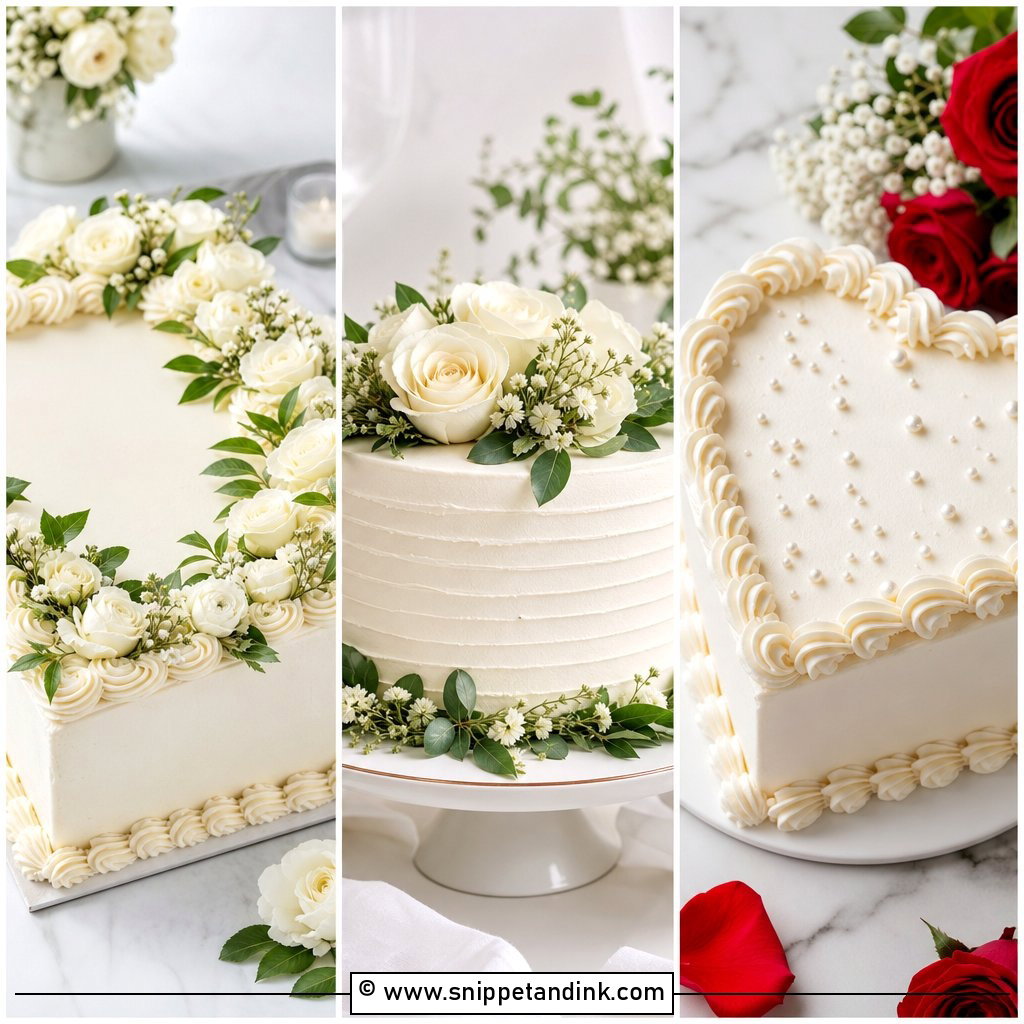
4. Floral Wedding Cake
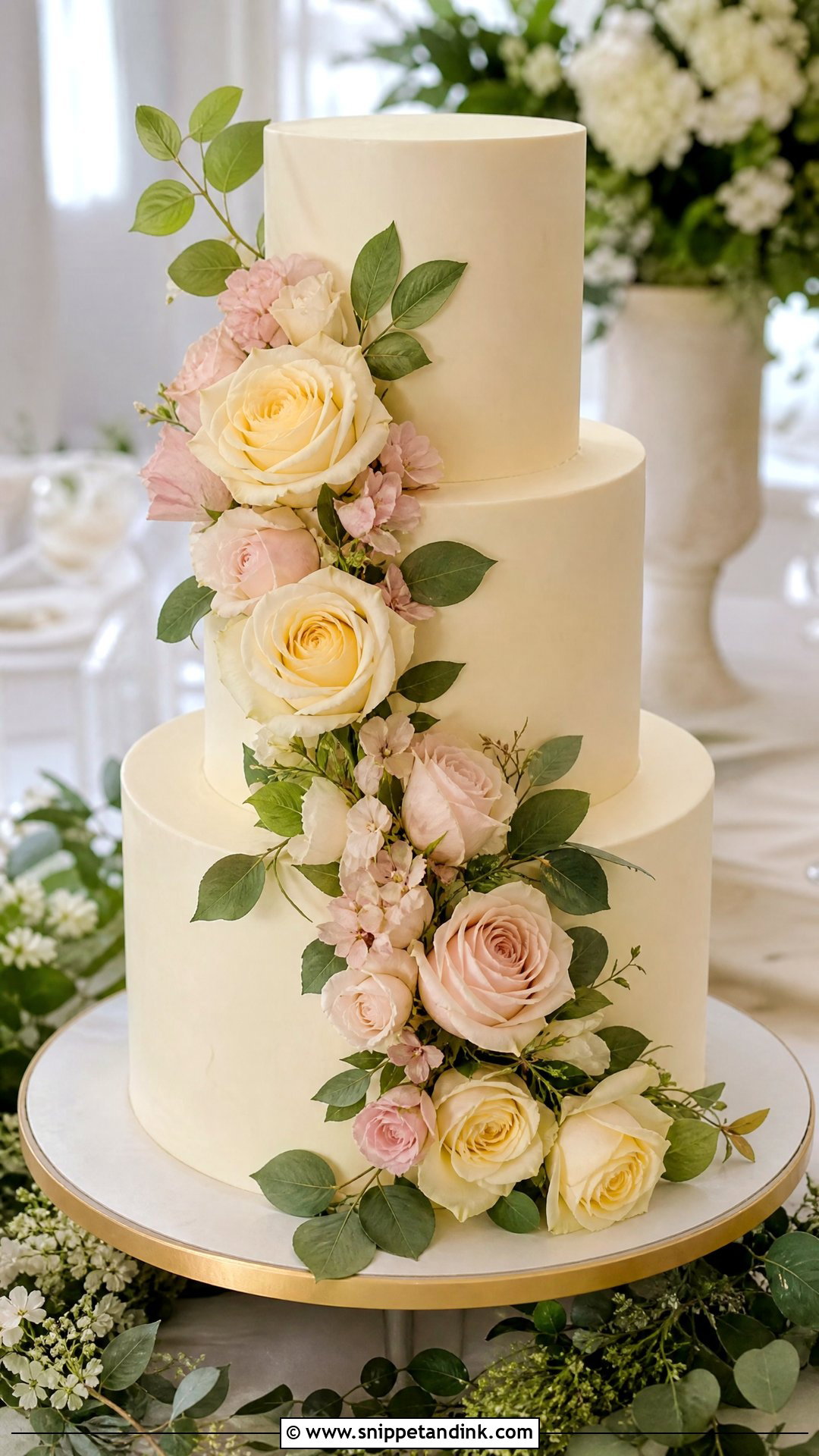
Floral cakes in 2025 have more breathing room: one trail, a pair of clusters or a band of color rather than flowers on every inch. Fresh, sugar, pressed and piped flowers can all play this role. If you’re using fresh, the florist and I need to talk early, because only certain blooms are safe near food and the stems must be wrapped and sleeved before they go anywhere near the cake. Lemon elderflower, vanilla berry, pistachio and almond all sit well under flowers.
5. Buttercream Wedding Cake
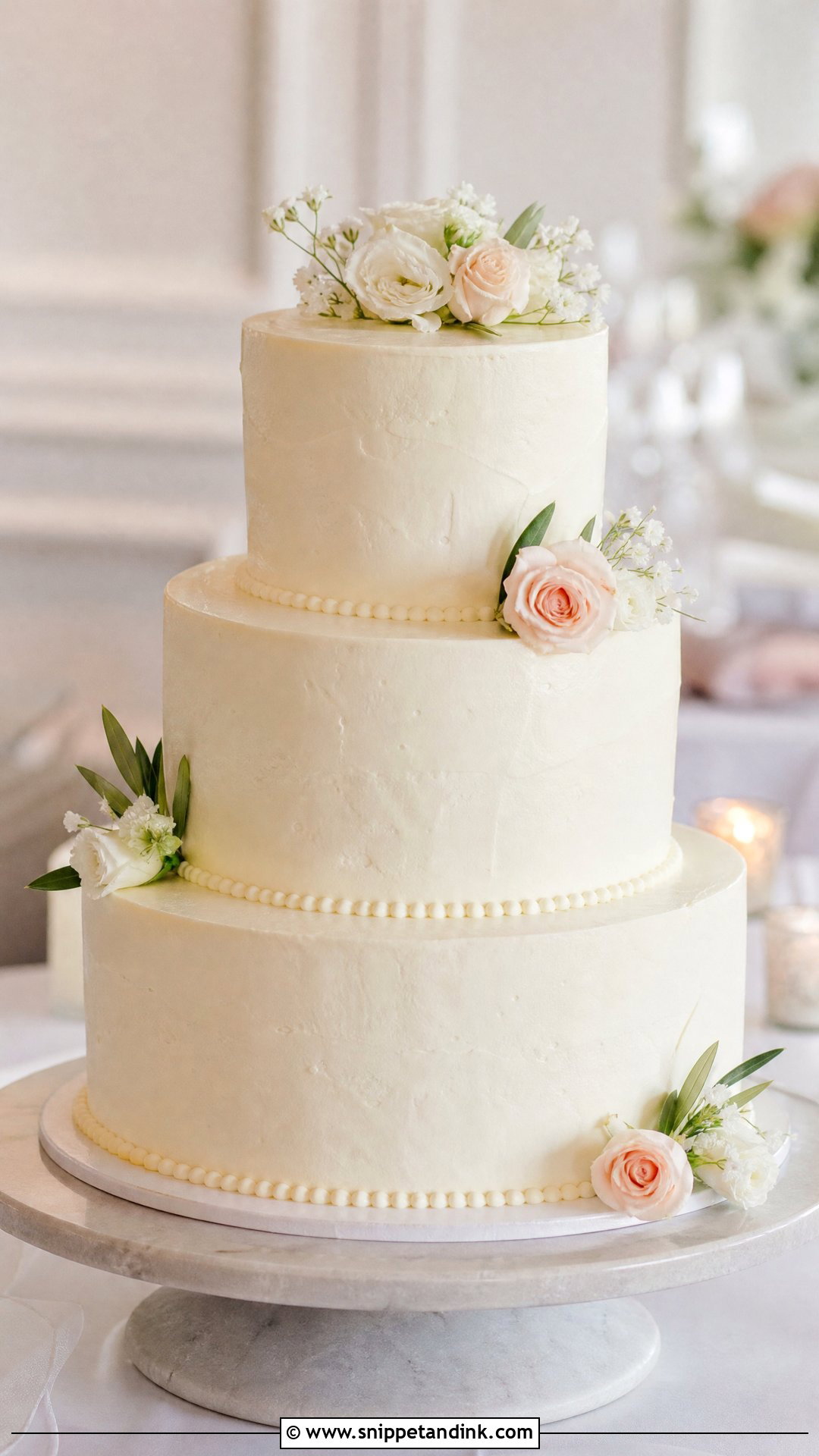
Buttercream is still what most couples order, and for good reason: it tastes better than fondant to most guests and it can be finished smooth, rustic, textured or vintage. Its weakness is heat. I keep buttercream cakes chilled until shortly before display and ask venues to set the cake table away from windows and heaters. It pairs with almost any flavor, from classic vanilla to carrot, lemon, chocolate and strawberry.
6. Textured Wedding Cake
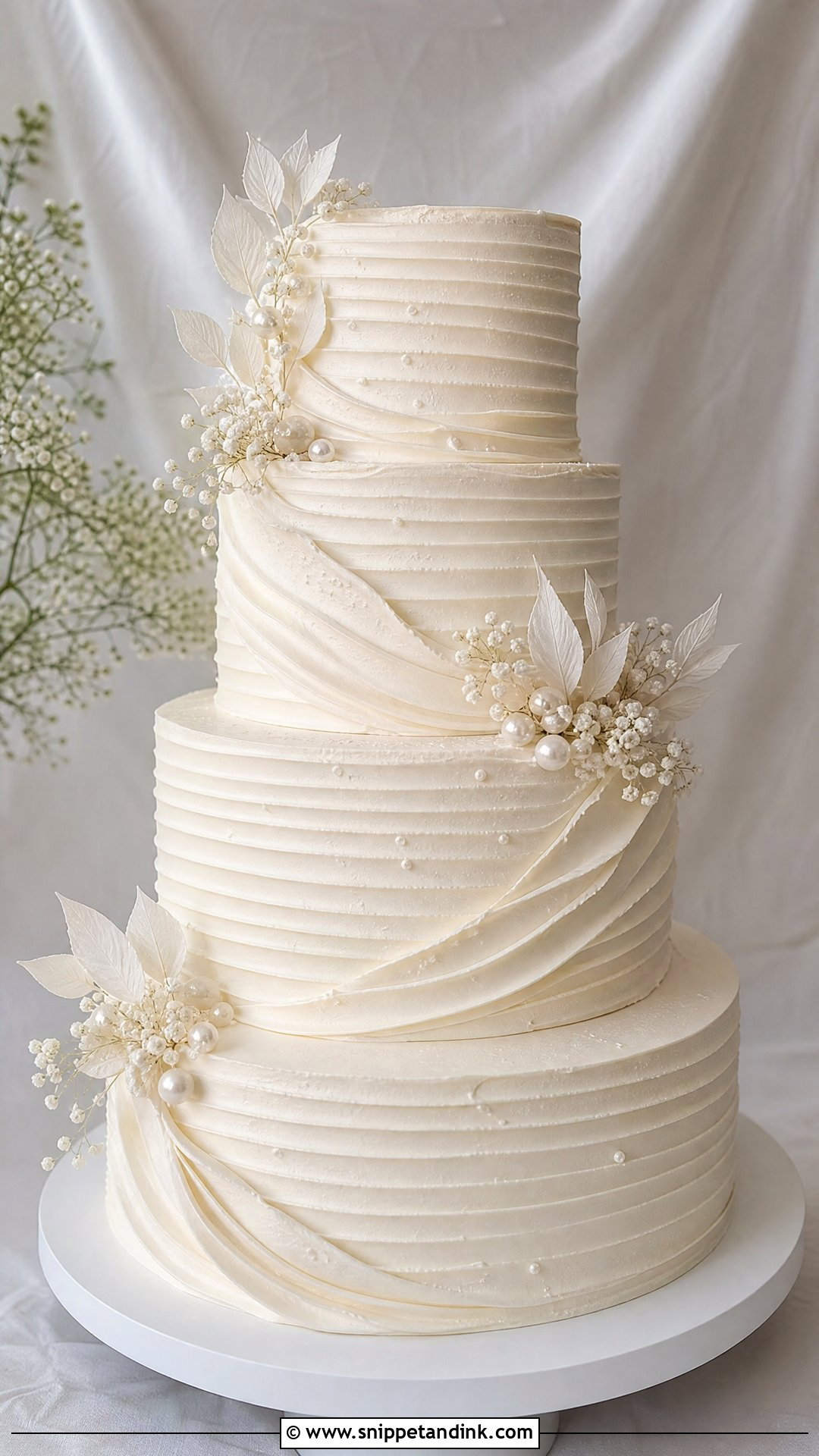
Texture hides small imperfections, which makes it a practical choice as well as a pretty one. Ribbed buttercream is made with a textured scraper; stucco is applied rough with a palette knife and then lightly smoothed. White reads clean, while beige or blush makes the texture feel warmer and more artistic. I’d add only a few flowers or sugar leaves. Mocha is a flavor I love with this finish, along with vanilla almond and citrus.
7. Vintage Wedding Cake
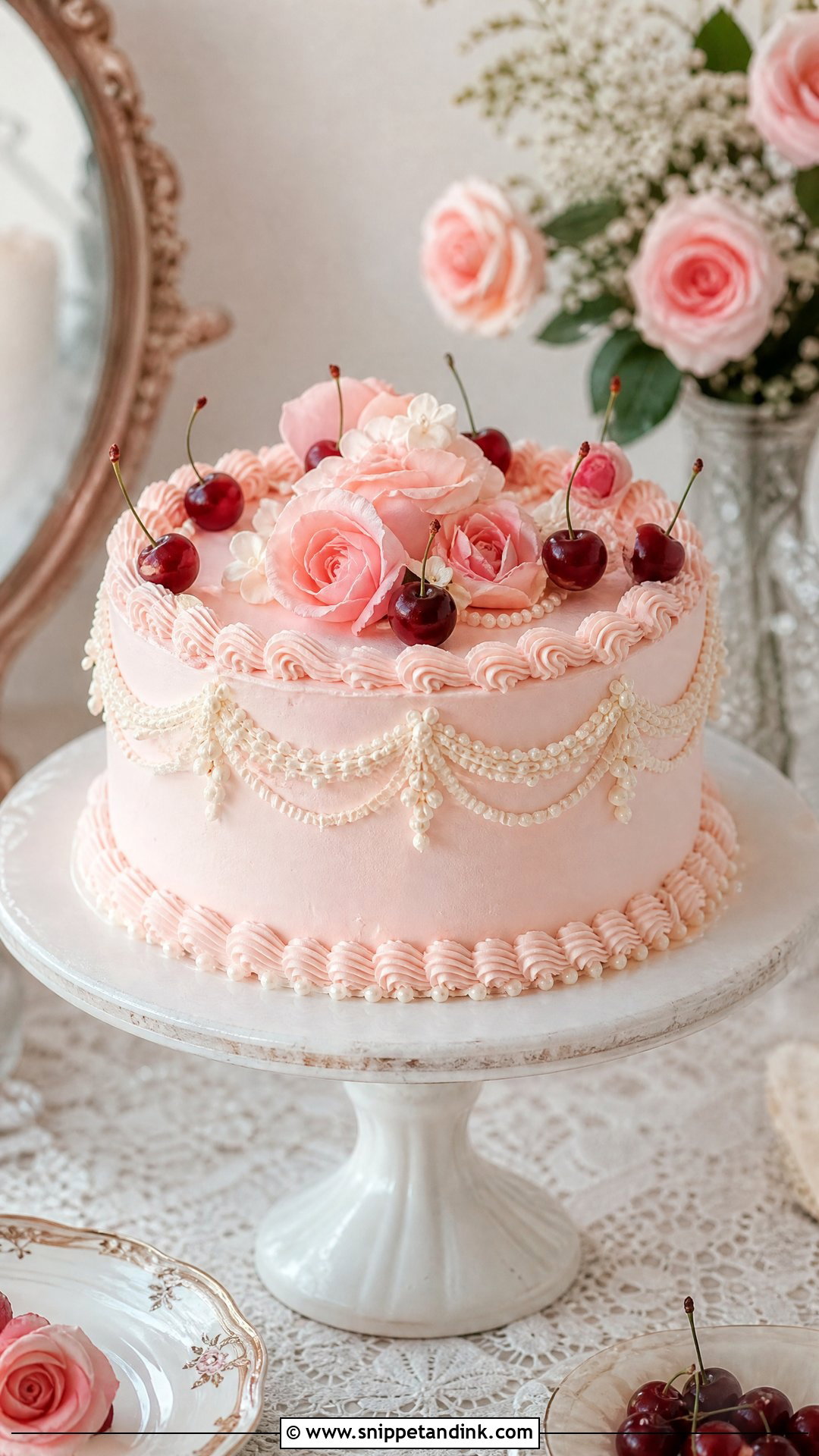
Vintage cakes came back with scalloped edges, piped borders, glossy cherries and sometimes heart-shaped tiers. The update is color: buttercream yellow, sage, dusty pink or powder blue in place of bright white. They suit courthouse weddings, restaurant receptions and retro parties. Neat piping is everything here, since a wobbly border looks careless rather than charming. Strawberry or chocolate buttercream inside feels right for the period.
8. Minimalist Wedding Cake
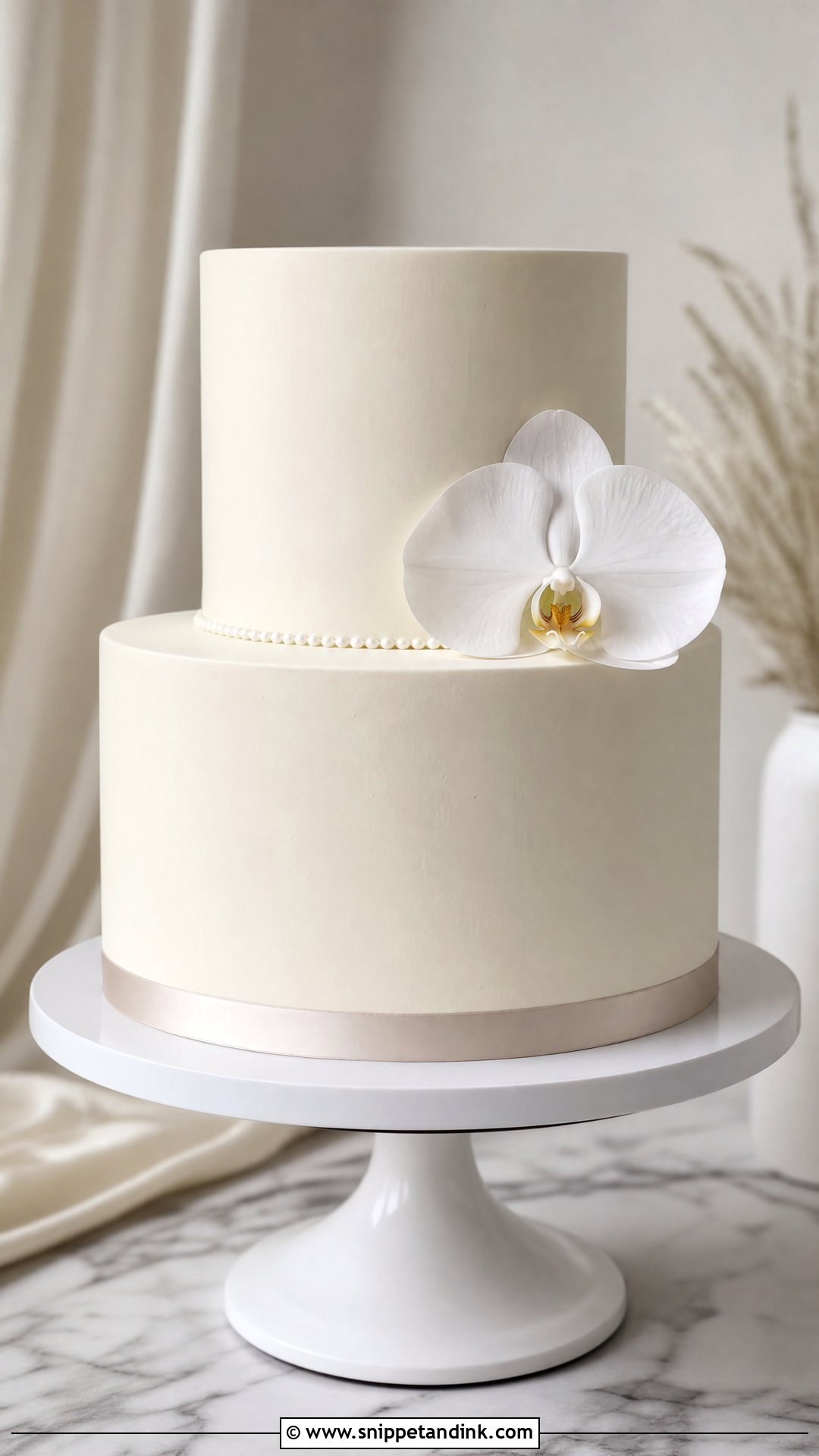
A minimalist cake depends on proportion: tiers that step down evenly, sharp edges and a perfectly smooth coat. That’s harder than it sounds and something I’d judge any baker on before booking. One detail finishes it, perhaps a single flower, a silk-style sugar ribbon, a small monogram or a thin pearl border. Warm tones like oat, cream or pale beige feel more inviting than stark white, which can look cold under evening lighting.
9. Colorful Wedding Cake
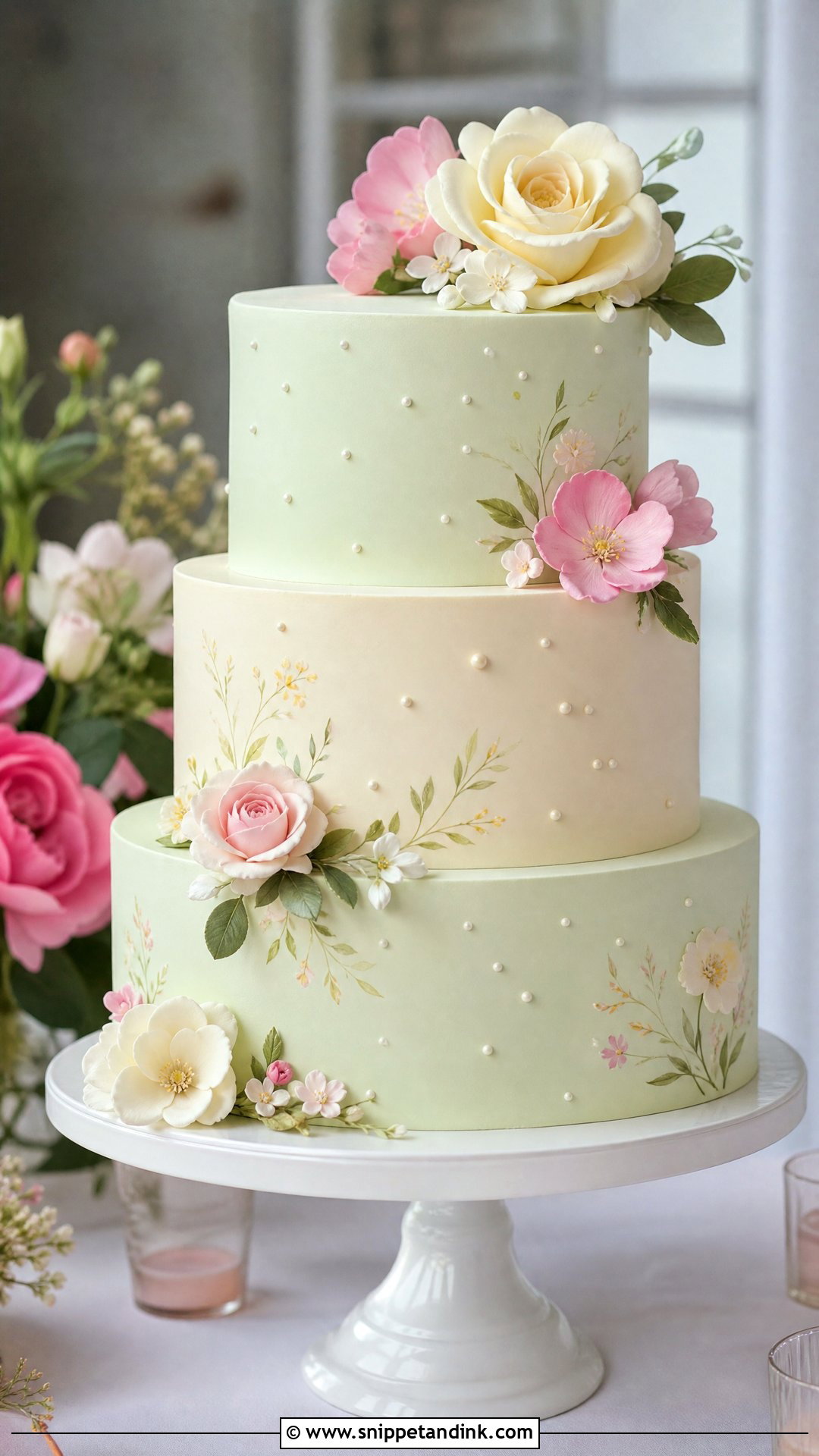
Color is back, but softer: butter yellow, pastel pink, sage, powder blue, lavender, peach and terracotta. It can cover the whole cake or appear in painted details, piping or a single colored tier. Deeper shades take a lot of gel coloring, which can leave a bitter aftertaste, so I steer couples toward pastels for full coverage and save bold colors for accents. Tie the shade to your décor, and if you want a surprise, a funfetti-style sponge inside a pastel cake always gets a reaction.
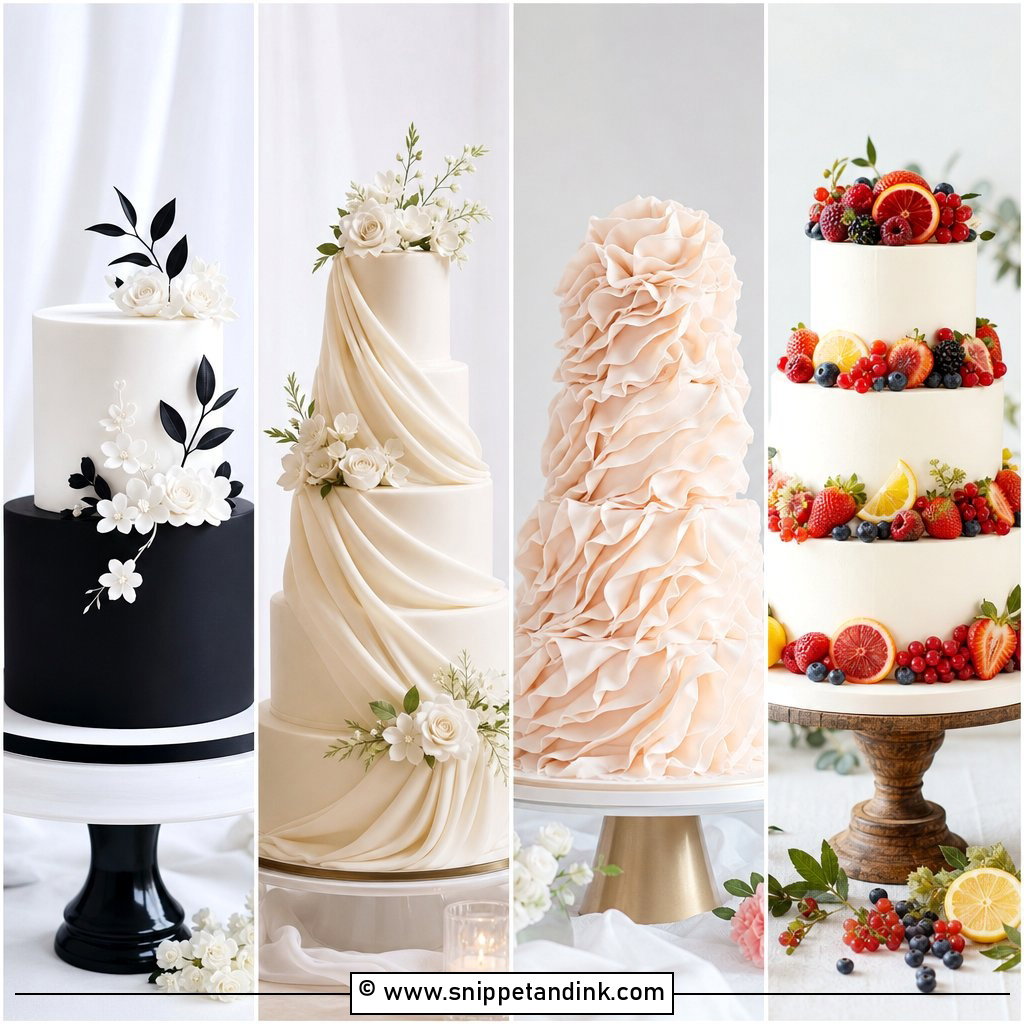
10. Fruit Wedding Cake
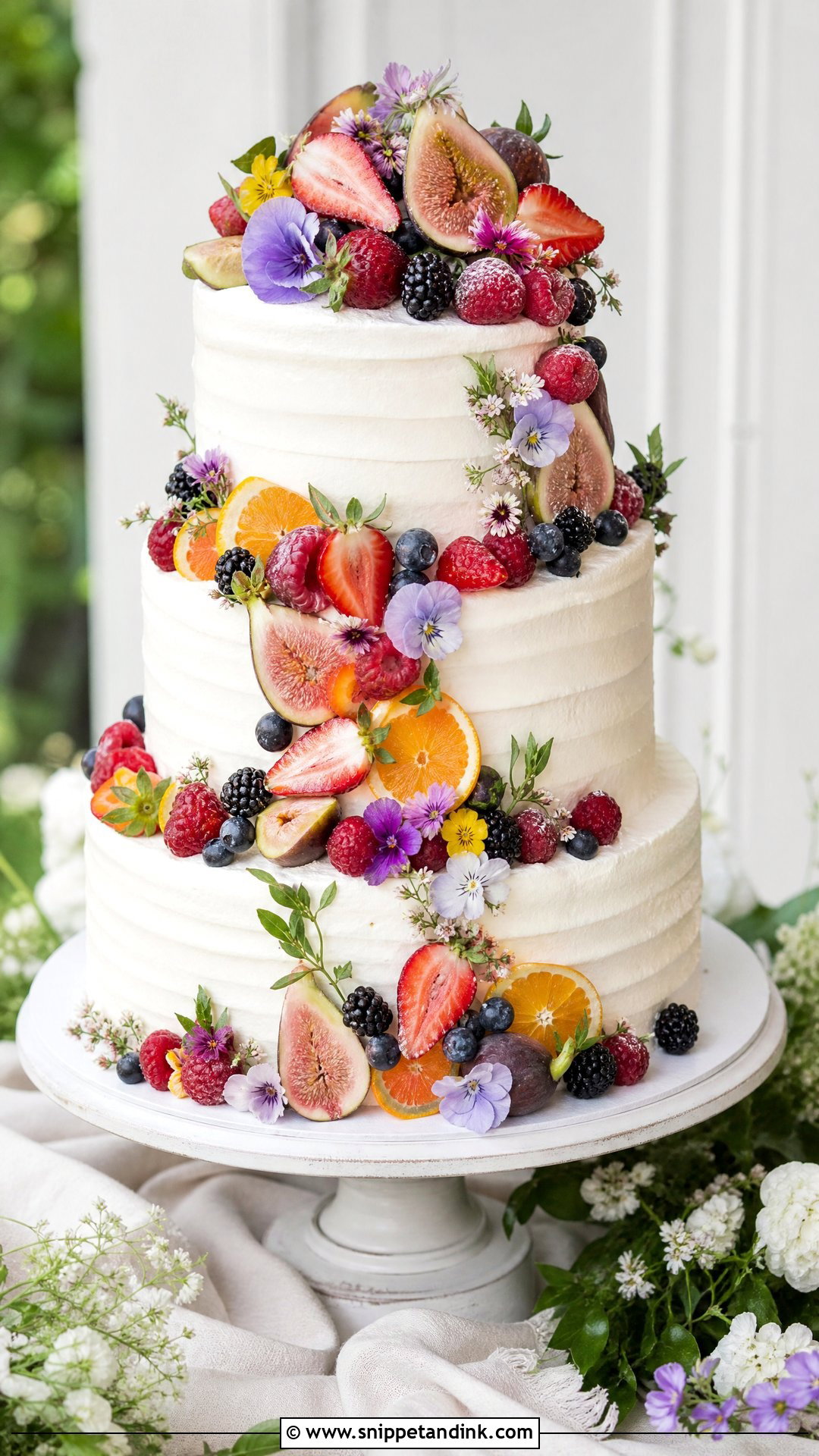
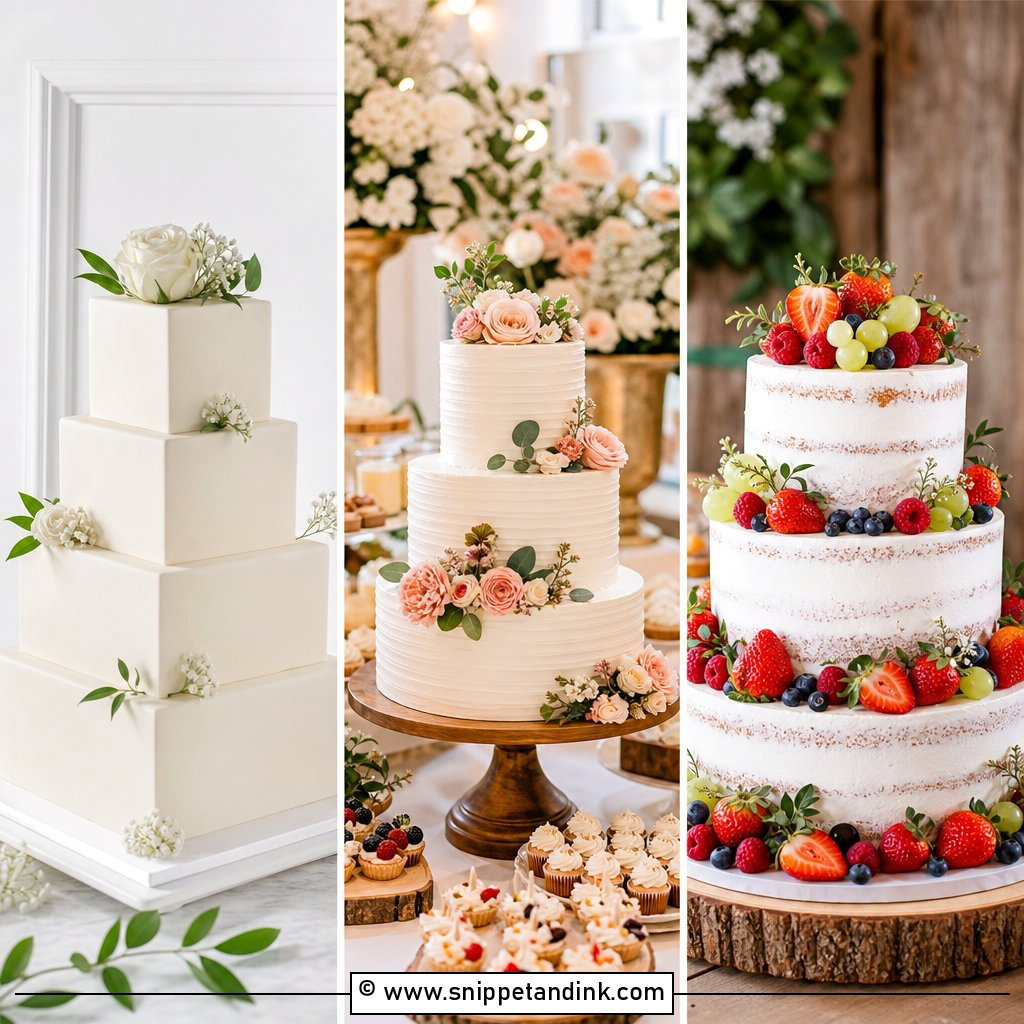
Fruit-topped cakes look abundant and suit warm-weather receptions, garden parties and brunch weddings. The catch is that cut fruit weeps juice and berries soften within hours. I add fruit at the venue as late as possible and glaze it lightly so it keeps its shine. Whipped cream and mascarpone frostings taste lovely with fruit but need refrigeration, so for a long display I’d use a light buttercream instead. Lemon, vanilla, almond, olive oil and berry sponges all pair well.
11. Semi Naked Wedding Cake
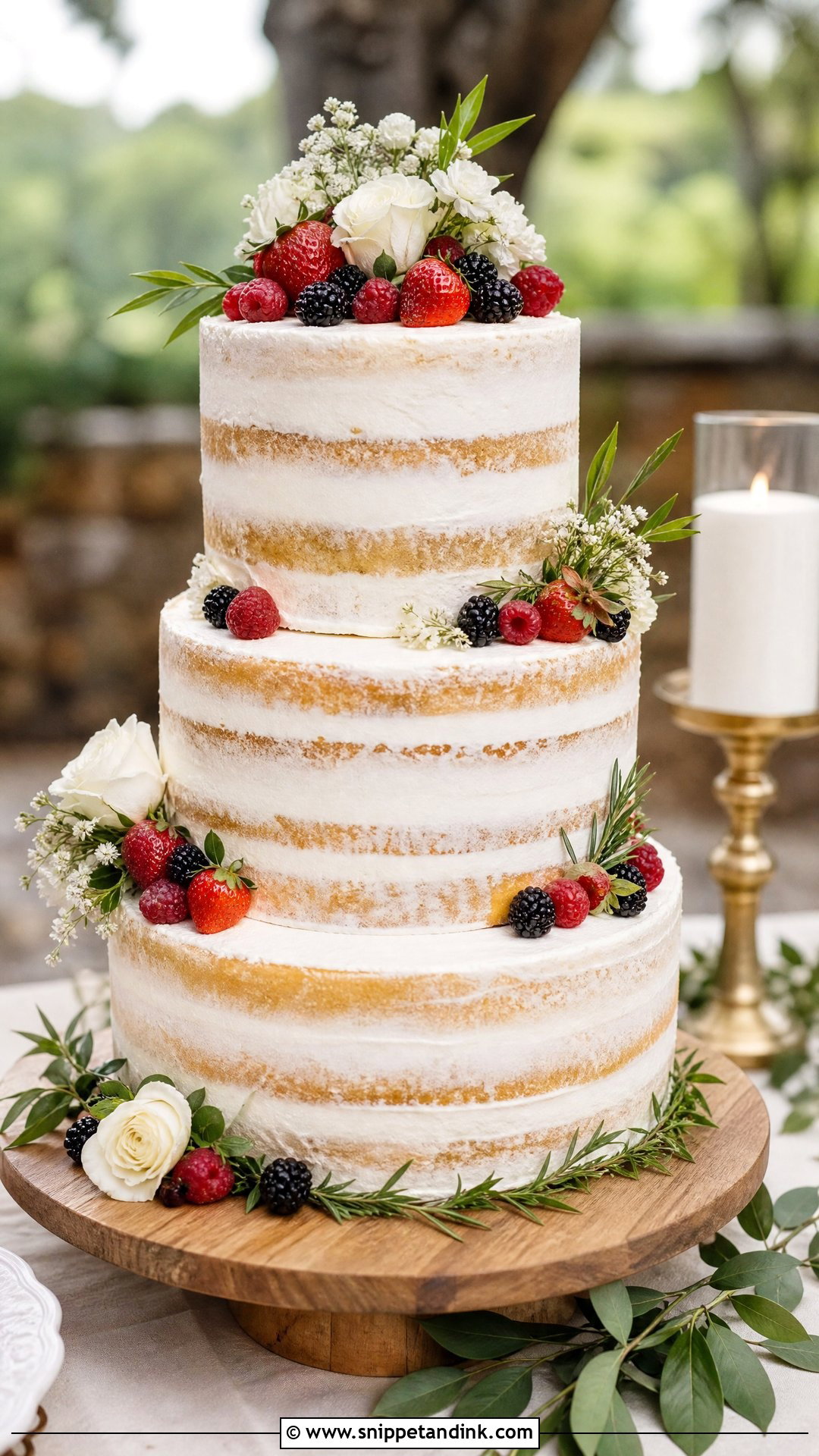
A semi naked cake shows the sponge through a thin scrape of frosting, so the crumb, color and evenness of the layers are on display. Exposed sponge dries out faster, which means this cake should be finished as close to serving as possible and kept out of sun and air conditioning drafts. Tall, clean tiers with refined florals or seasonal fruit keep it from looking unfinished. It suits barns, vineyards and gardens. Carrot, chocolate and lemon sponges each give a different look through the frosting.
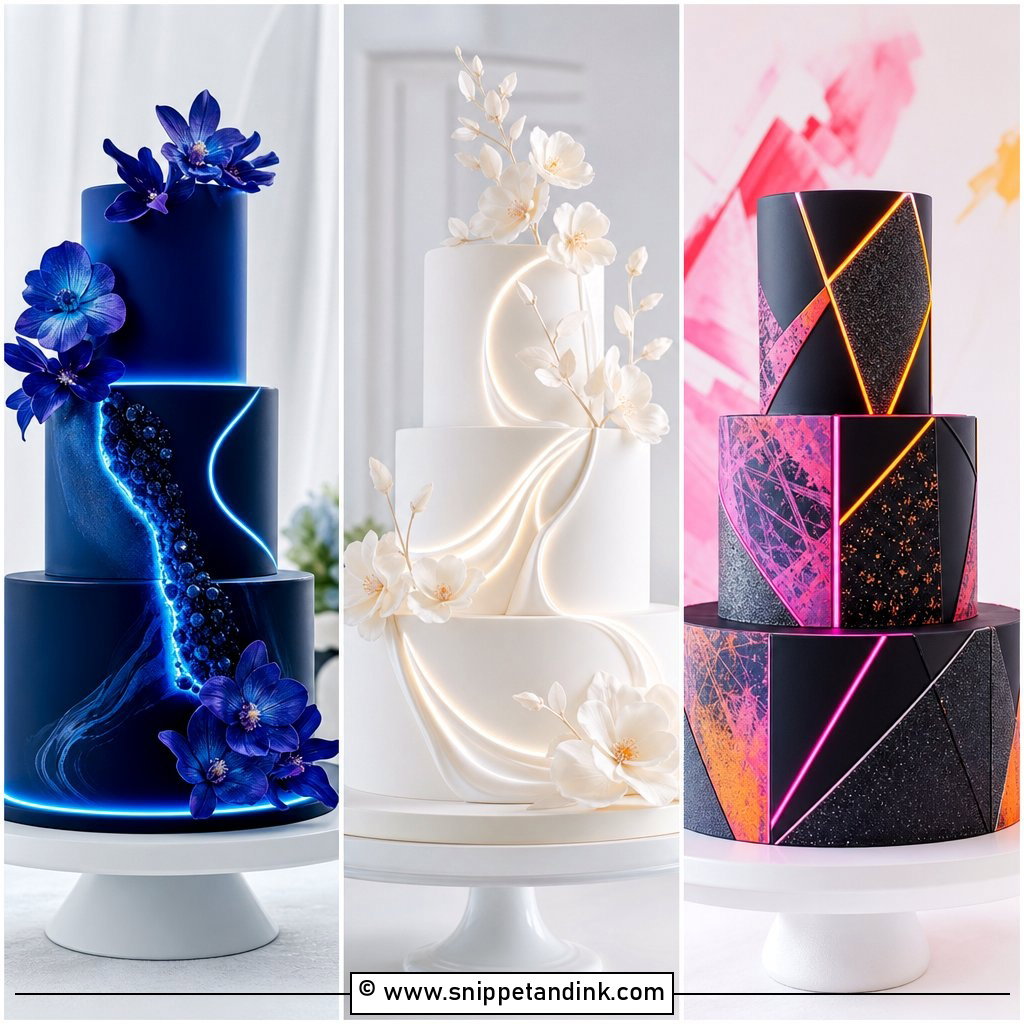
12. Black And White Wedding Cake
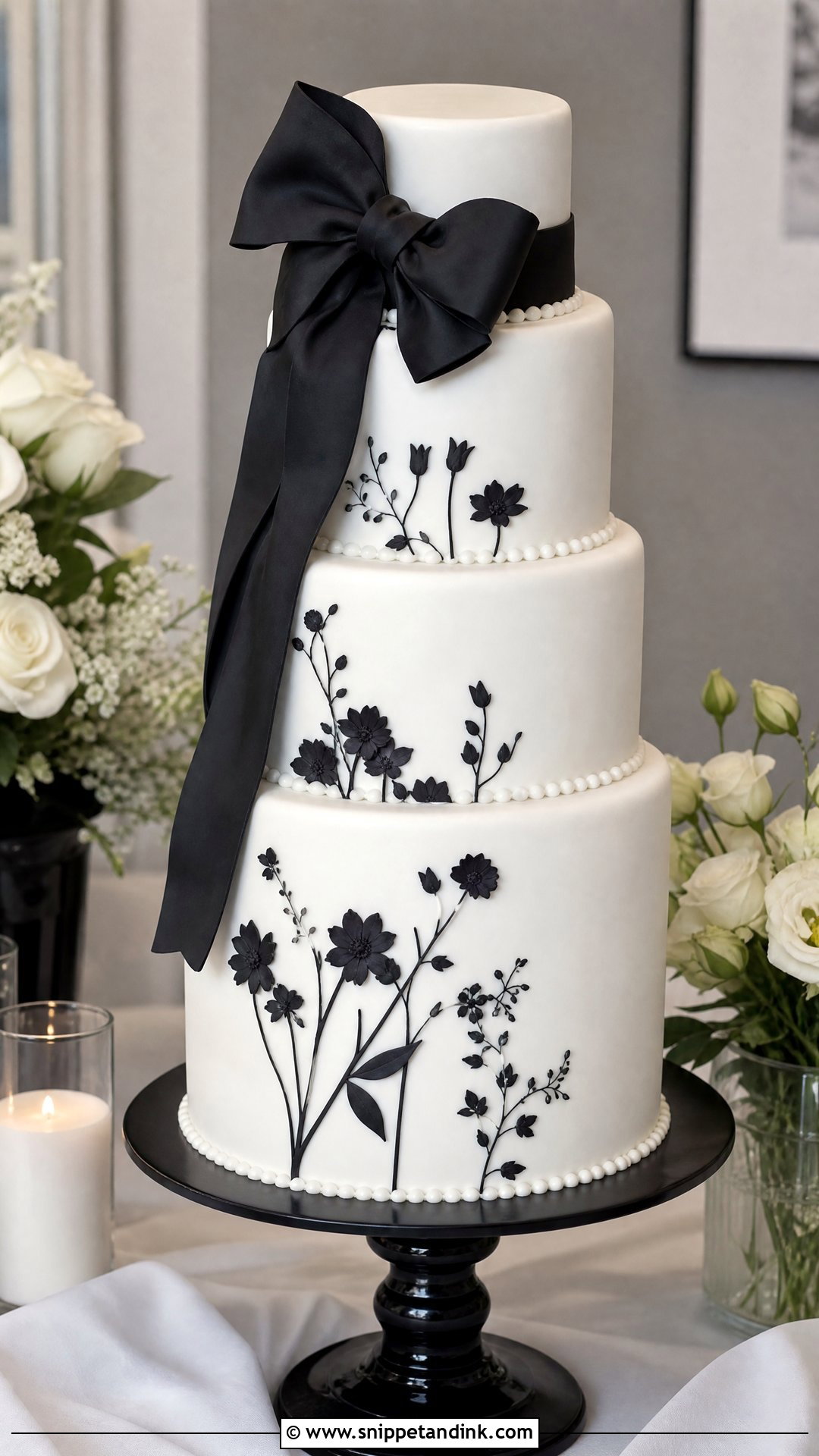
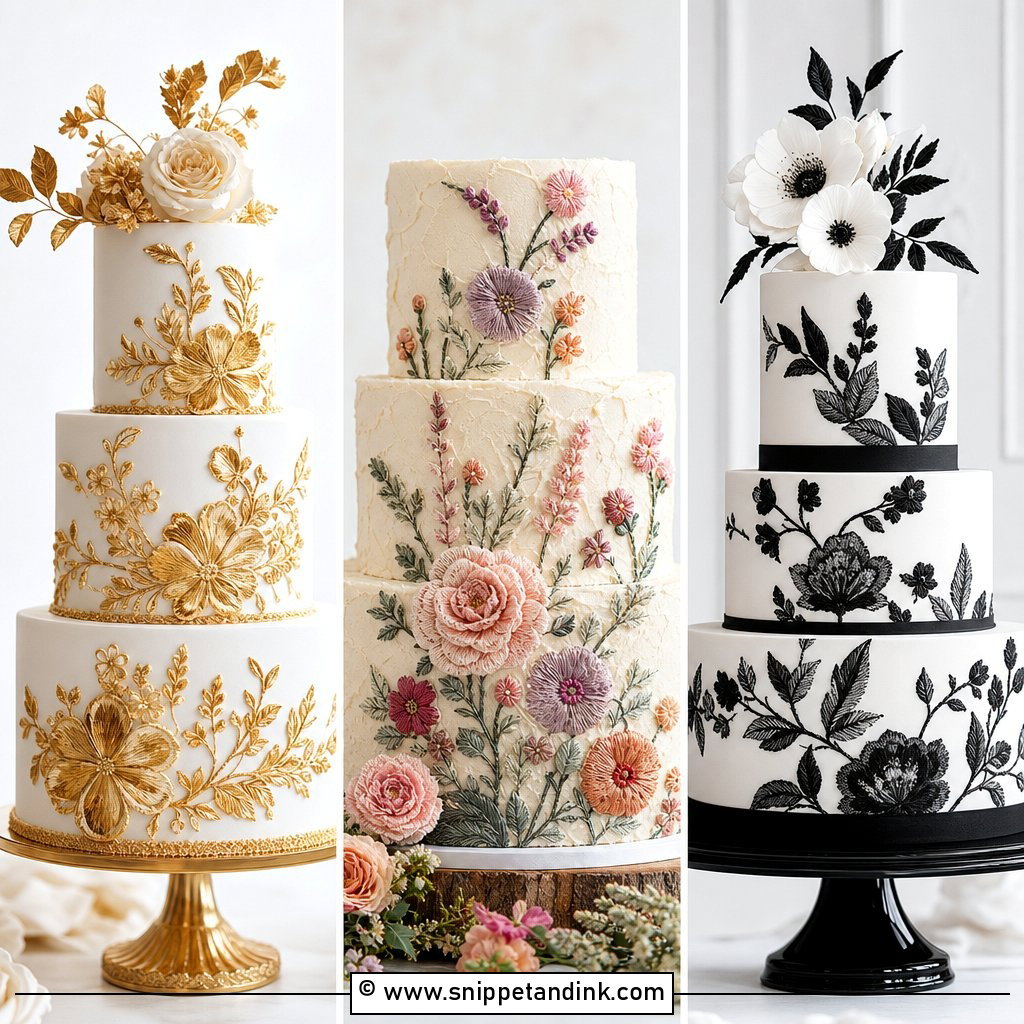
Black works best as a single strong idea: thin piping, a black bow, painted edges, floral silhouettes or one black base tier under ivory upper tiers. Black icing needs a lot of coloring and can stain lips and teeth, so I keep it to the outside details rather than whole tiers of black buttercream wherever possible. Black cocoa sponge gives a dark interior without dye. Espresso and cookies and cream are fun flavor choices for an evening wedding.
13. Square Wedding Cake
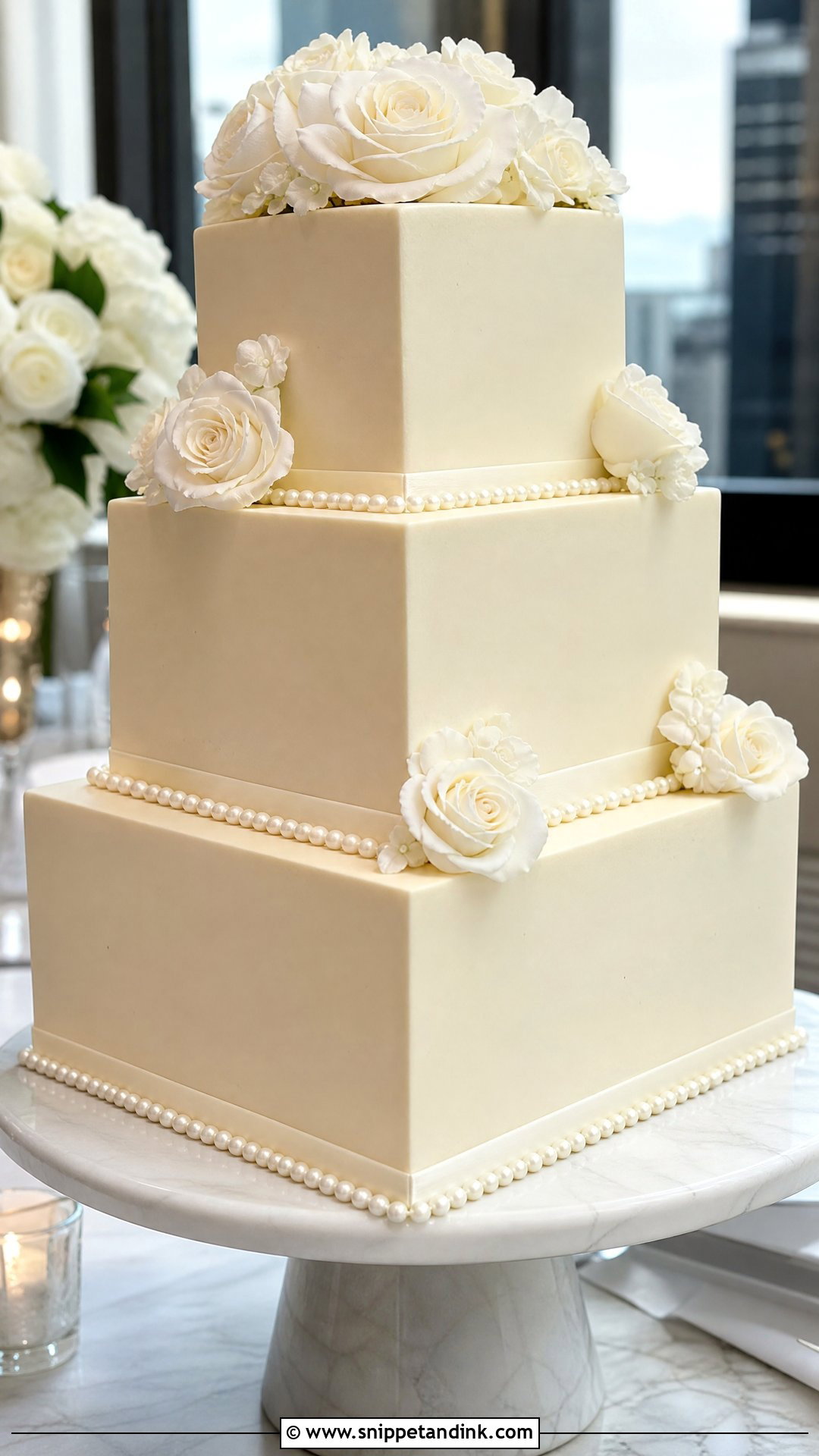
Square tiers are harder to make than round ones, mainly because sharp corners show every bit of uneven frosting. When they’re done well, they look architectural, especially for city and museum venues. Smooth buttercream, pearl borders and sculpted bows suit the clean lines. A sturdy sponge like almond, vanilla bean or chocolate keeps the corners from slumping. Square tiers also yield more servings than round ones of the same width, which is useful for larger guest lists.
14. Dome Wedding Cake
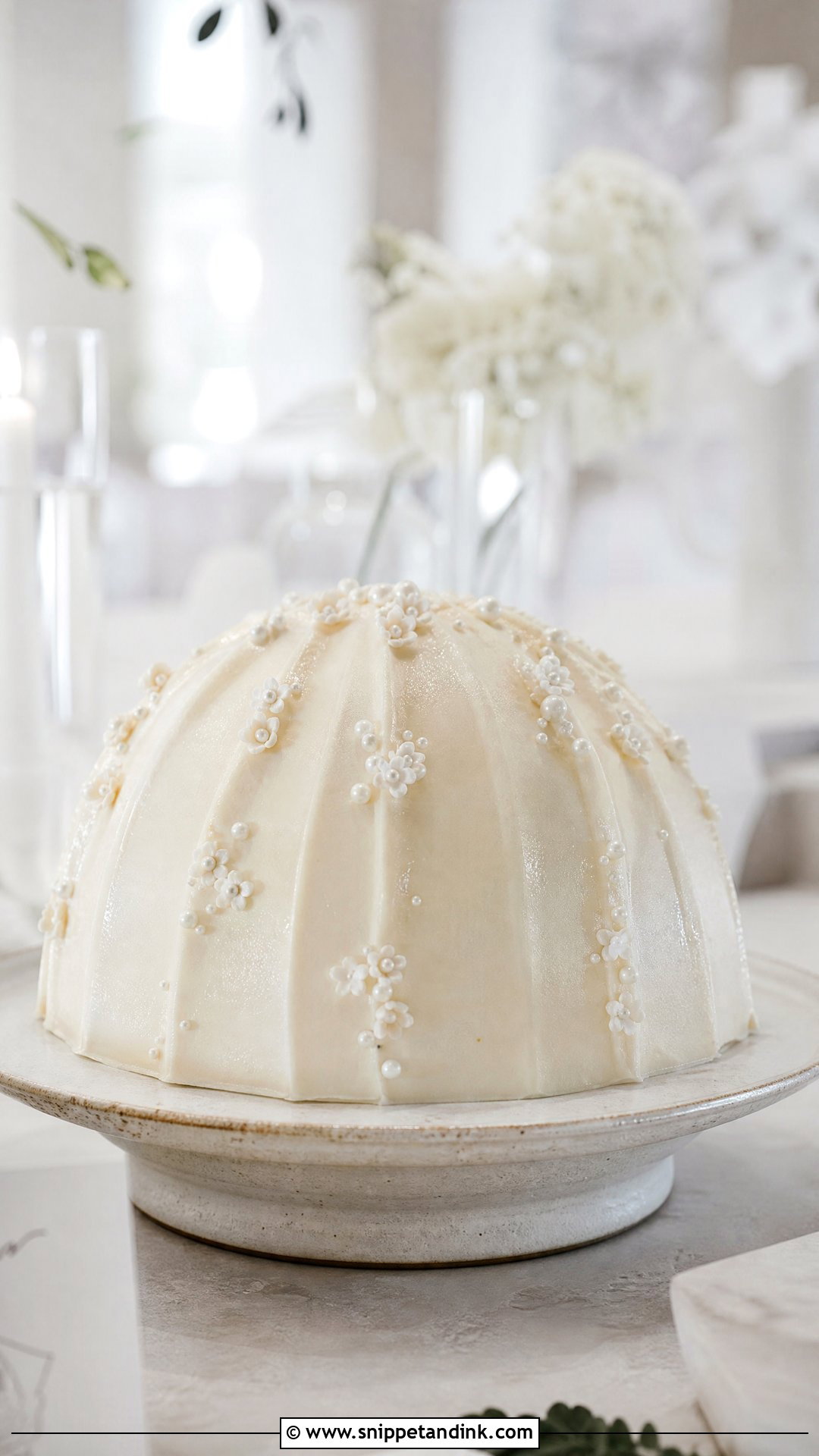
A dome wedding cake has a rounded top that feels sculptural and a little unexpected. Domes are usually built in a bowl-shaped pan or carved, then covered in smooth buttercream, a mirror glaze or fondant. They work best as a single-tier cutting cake or as one piece of a dessert table, since stacking on a dome isn’t practical. Keep the decoration minimal so the shape stays clear. Vanilla cream, lemon, coconut or pistachio suit its soft profile.

15. Tiered Wedding Cake
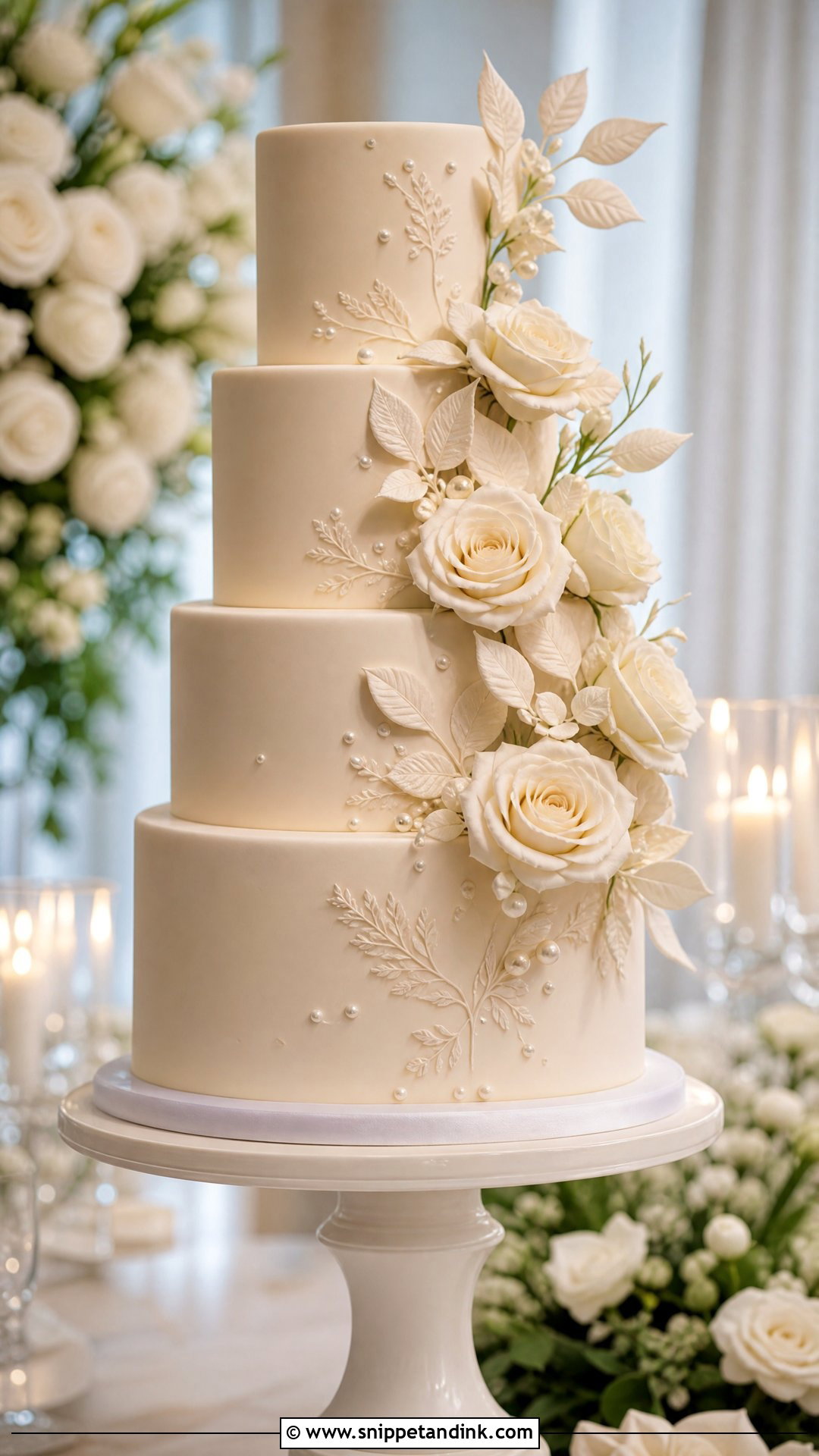
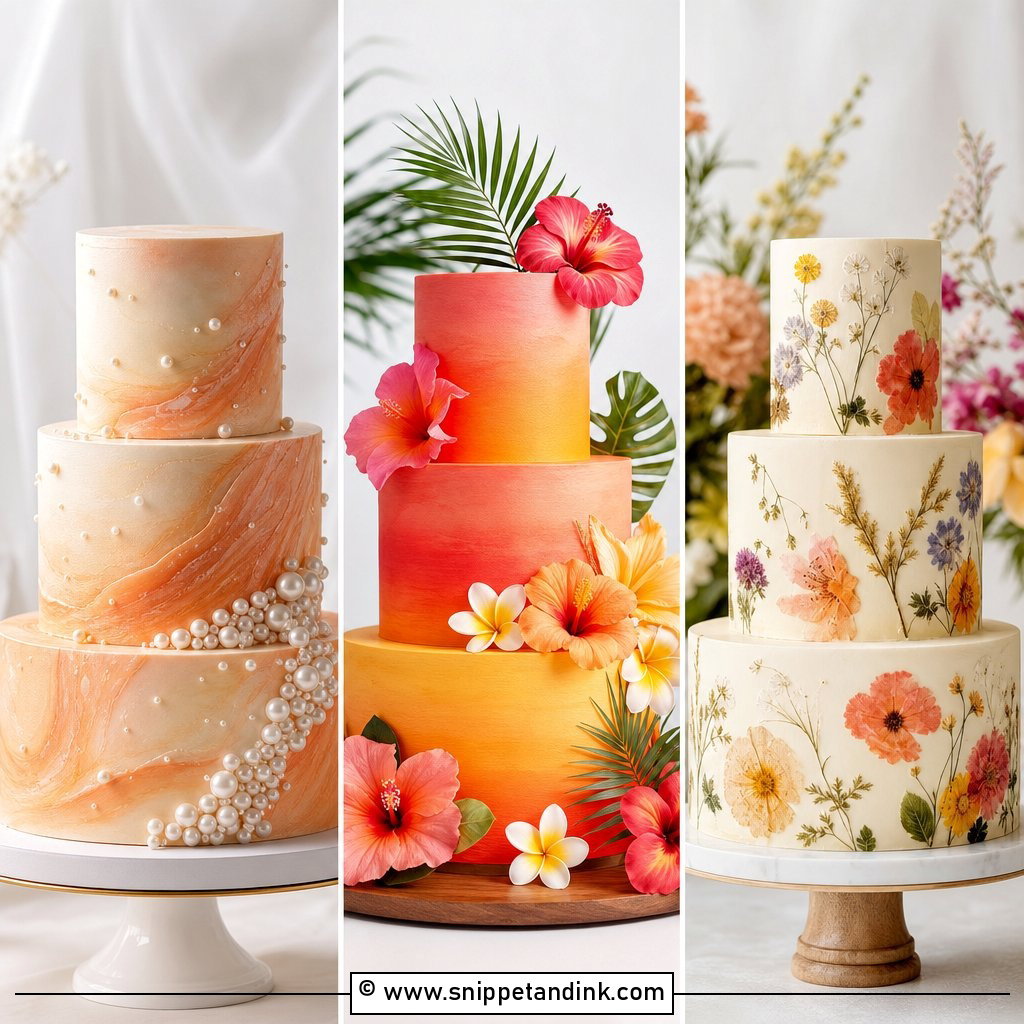
A tiered wedding cake is still the centerpiece most couples picture, and this year it’s looser: varied tier heights, asymmetric flowers and soft texture. Three tiers suit many medium weddings, while four or five suit a grand ballroom. Every stacked cake needs dowels or supports in each tier and a cake board beneath, and I always ask how long it’ll stand on display before cutting. Vanilla raspberry, chocolate ganache, lemon curd, almond cream and red velvet are the flavors I bake most.
16. Small Wedding Cake
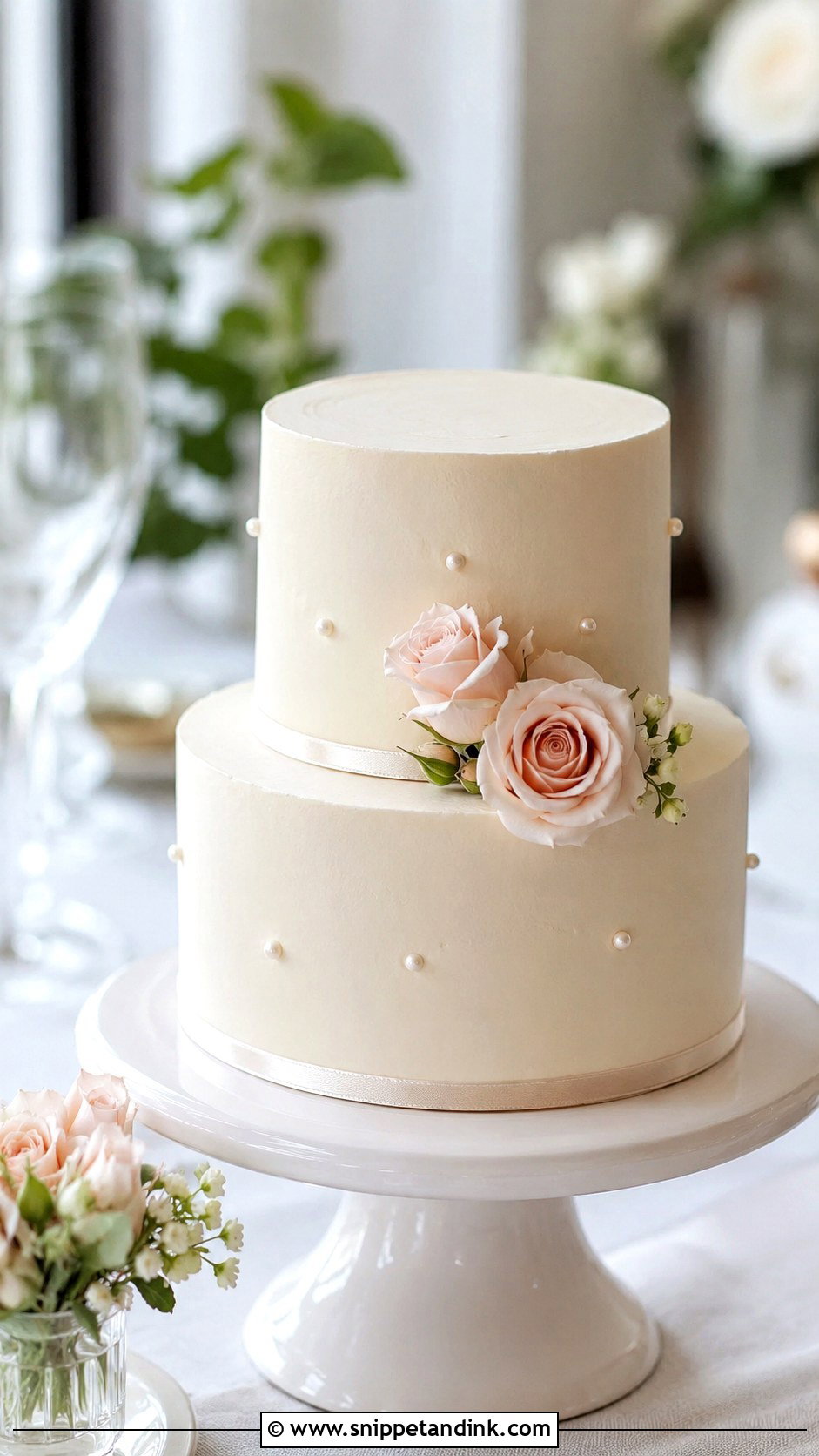
Small cakes give couples room to spend on detail rather than size. For intimate weddings, elopements, or couples serving a dessert bar alongside cake, a one or two-tier cake with tall proportions looks deliberate. Heart-shaped vintage piping, tiny floral tiers and pearl-covered finishes all work at this scale. Display matters more on a small cake. A footed stand, a few flowers and candles keep it from looking lost on the table.
17. Sheet Wedding Cake
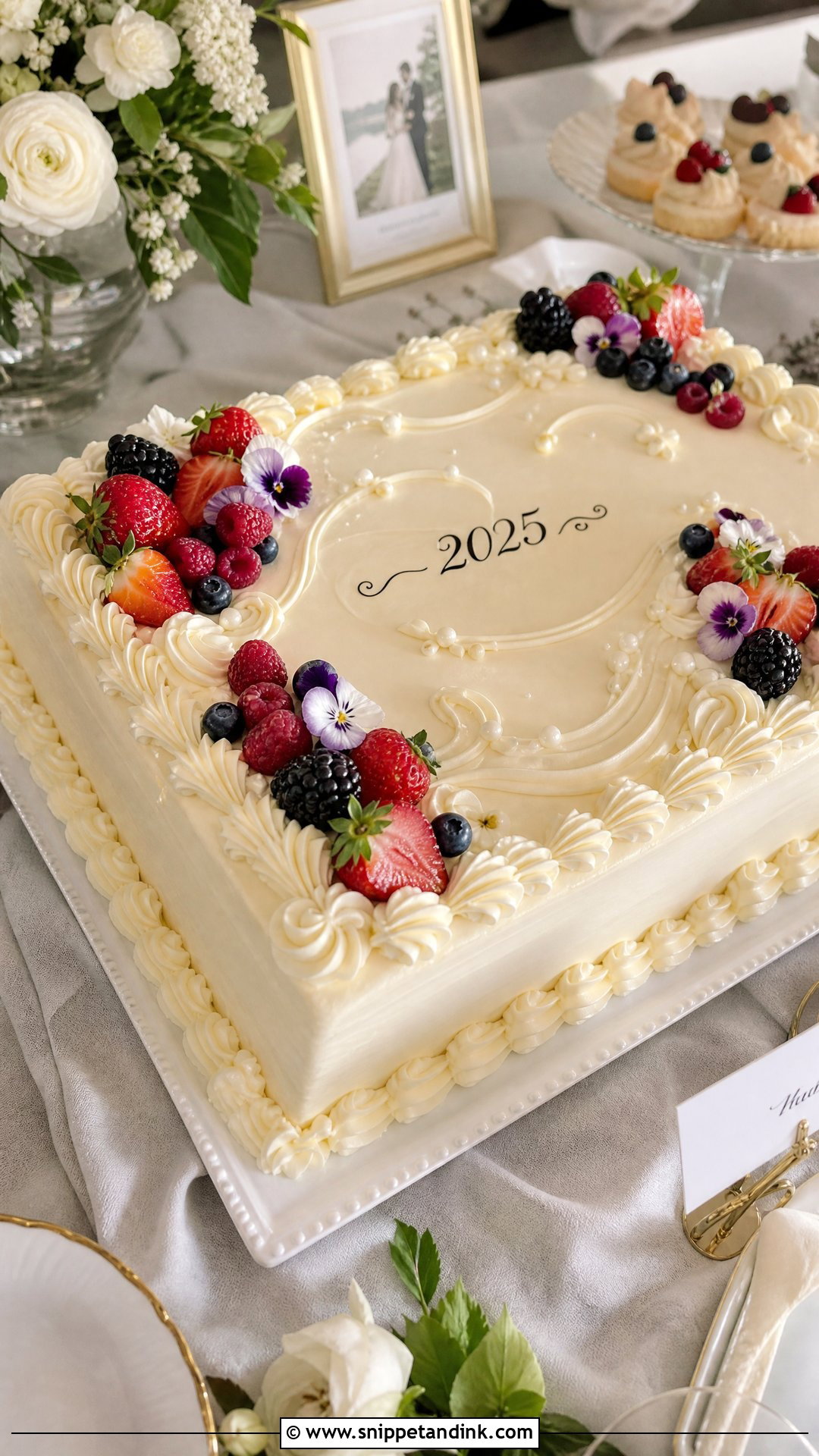
A sheet wedding cake is the most efficient way to serve a crowd, and decorated properly it earns its place on the table. Piped buttercream, fresh berries, edible flowers or frosting waves all work across a large rectangle. Choose a sponge that slices cleanly, like vanilla, chocolate, lemon, almond or carrot. If you still want a traditional cutting photo, I’d add a small cutting cake beside it.
18. Pressed Flower Wedding Cake
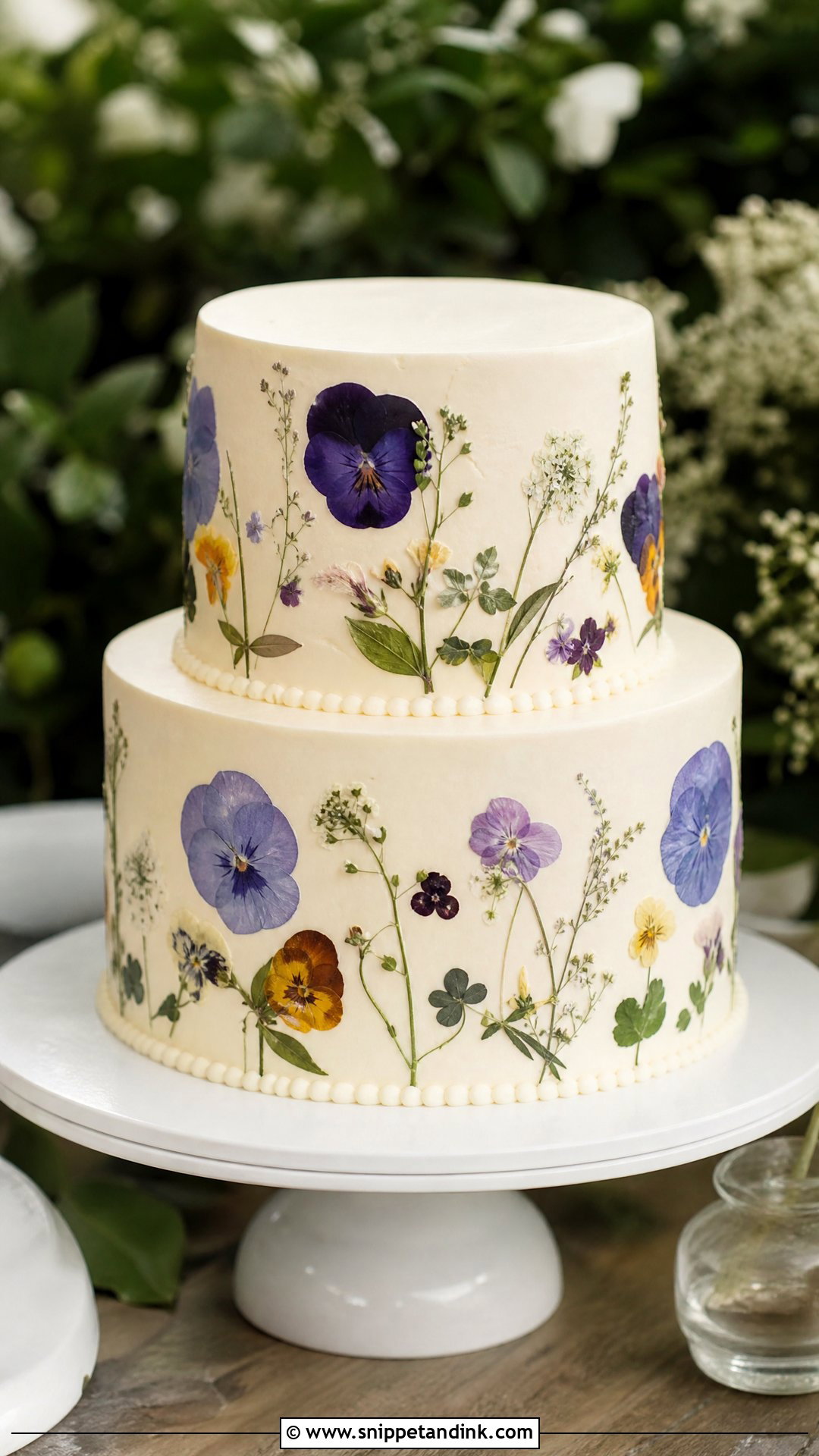
Pressed flowers are pressed specifically for cake, using edible varieties like violas, pansies and herb flowers. They lie flat on smooth frosting and look painted on. I apply them to chilled buttercream so they stick without sliding, and I keep the cake out of direct sun because pressed petals fade. Ivory frosting with a pale yellow sponge and soft botanical colors suits spring weddings. Lemon, honey, lavender and almond complement the floral look without overpowering it.
19. Heart Wedding Cake
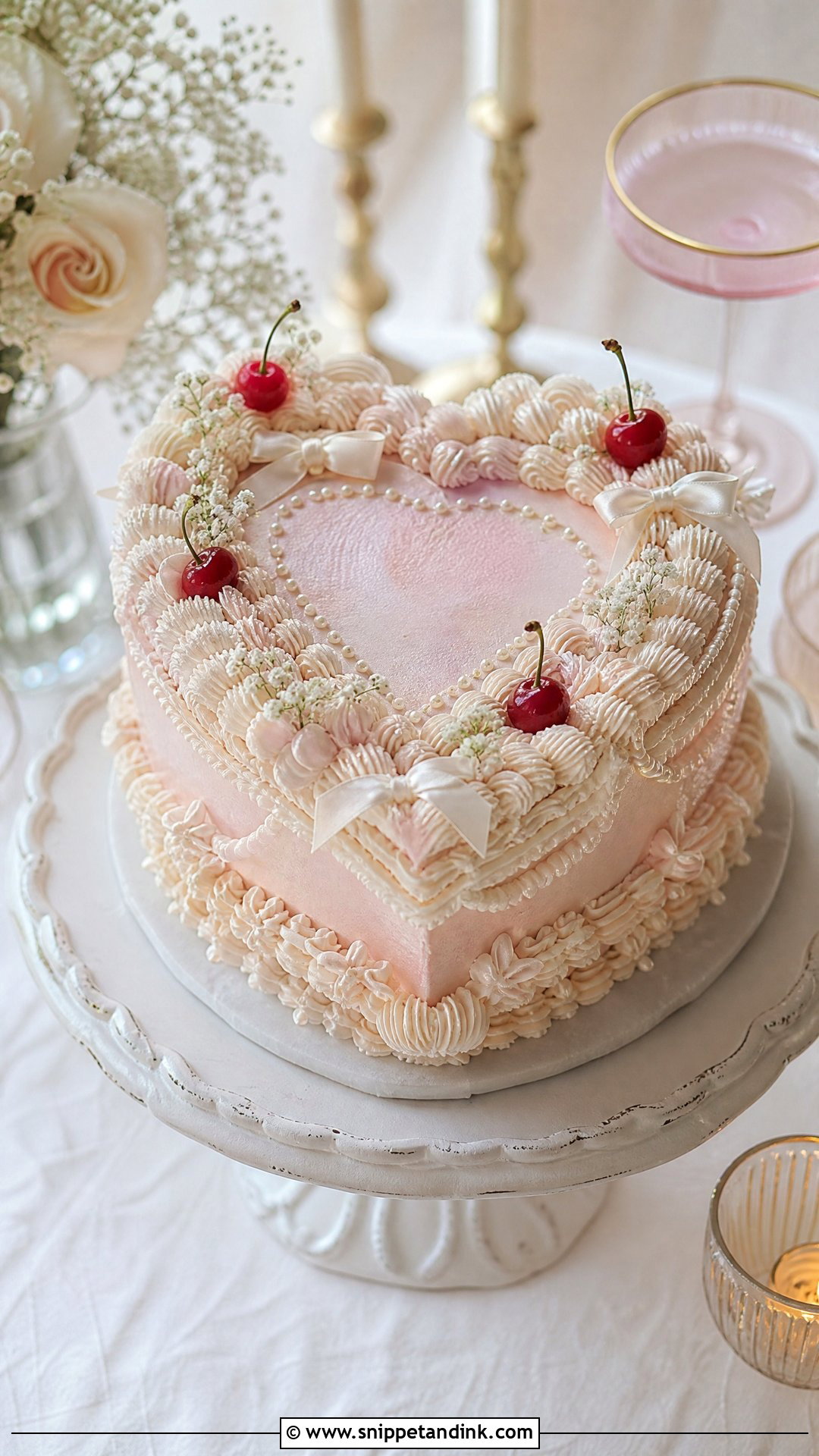
Heart cakes are mostly single-tier and work well for elopements, courthouse weddings and smaller receptions. Vintage piping, pearls, cherries or a small bow all suit the shape. Keep the color soft, perhaps ivory, blush, pale blue or butter yellow. Viewed from above, the shape is clearest, so if you’re planning a flat-lay photo, ask the baker to keep the top decoration minimal. Strawberry, chocolate or red velvet suit its sweet personality.



20. Dessert Table Wedding Cake
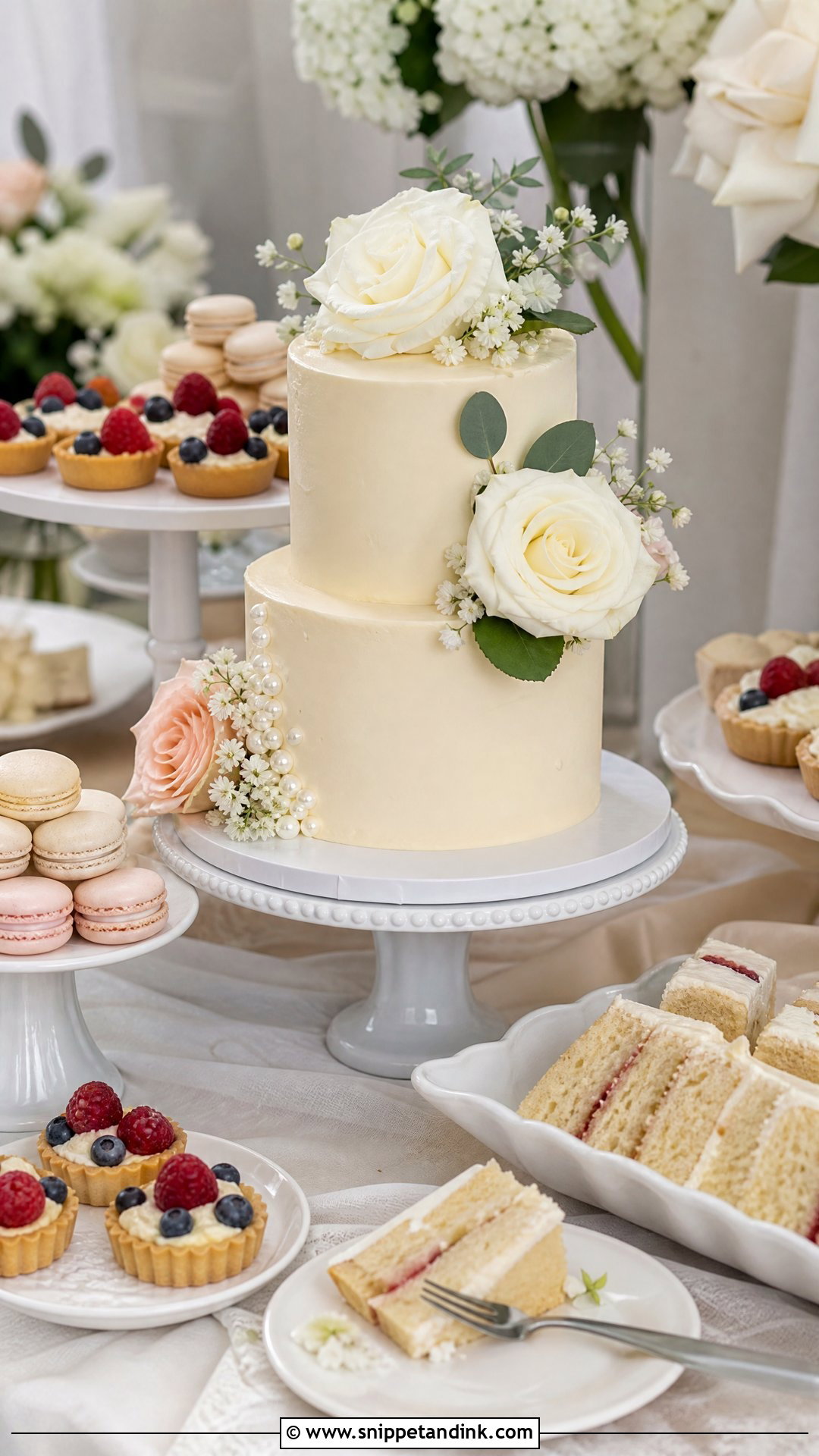
A dessert table wedding cake anchors a larger spread of cupcakes, mini tarts, macarons, cookies or cake bars. The main cake can be smaller, and a two-tier cake is usually enough. Coordinate colors and flower touches across the table, and use stands at different heights so nothing gets lost. On flavor, I’d keep the cake simple, such as vanilla, lemon or chocolate, so it doesn’t compete with the richer sweets around it.
Three Hours on the Cake Table Before Anyone Cuts It
A cake often stands on display for three or four hours before cutting, and not every style on this list is happy with that. Fondant over ganache, crusting buttercream and square or tiered cakes with sturdy sponges are the most forgiving. Semi naked cakes dry out at the exposed edges, fresh fruit weeps, and whipped cream or mascarpone frostings need refrigeration and are best served soon after they’re set out.
If your timeline has a long gap between the ceremony and the cutting, I’d either choose a more stable finish or ask the venue to keep the cake in a cool room and bring it out shortly before dinner. A display cake with a kitchen sheet cake behind the scenes is another honest option.
The top tier and your first anniversary
Saving the top tier is a lovely tradition, but a year in the freezer is hard on any cake. If you’d like to try, chill it until the frosting is firm, wrap it tightly in several layers of plastic wrap and foil, and thaw it slowly in the fridge. Many couples now order a small fresh replica from their baker for the anniversary instead, which tastes the way it did on the day.
Trends Fade, but Guests Remember the Flavor
Trends in 2025 cakes lean toward personality and texture, but a trend is only worth following if it suits the couple. Lambeth piping, pearls and tall tiers suit some weddings; a small cake, a fruit-covered centerpiece or plain buttercream suits others. Decide your palette and pick a few photos you love, then bring them to your baker along with your venue, guest count and season. The cake people remember is the one that tasted as good as it looked.
You'll Like These Ideas:






Leave a Reply