
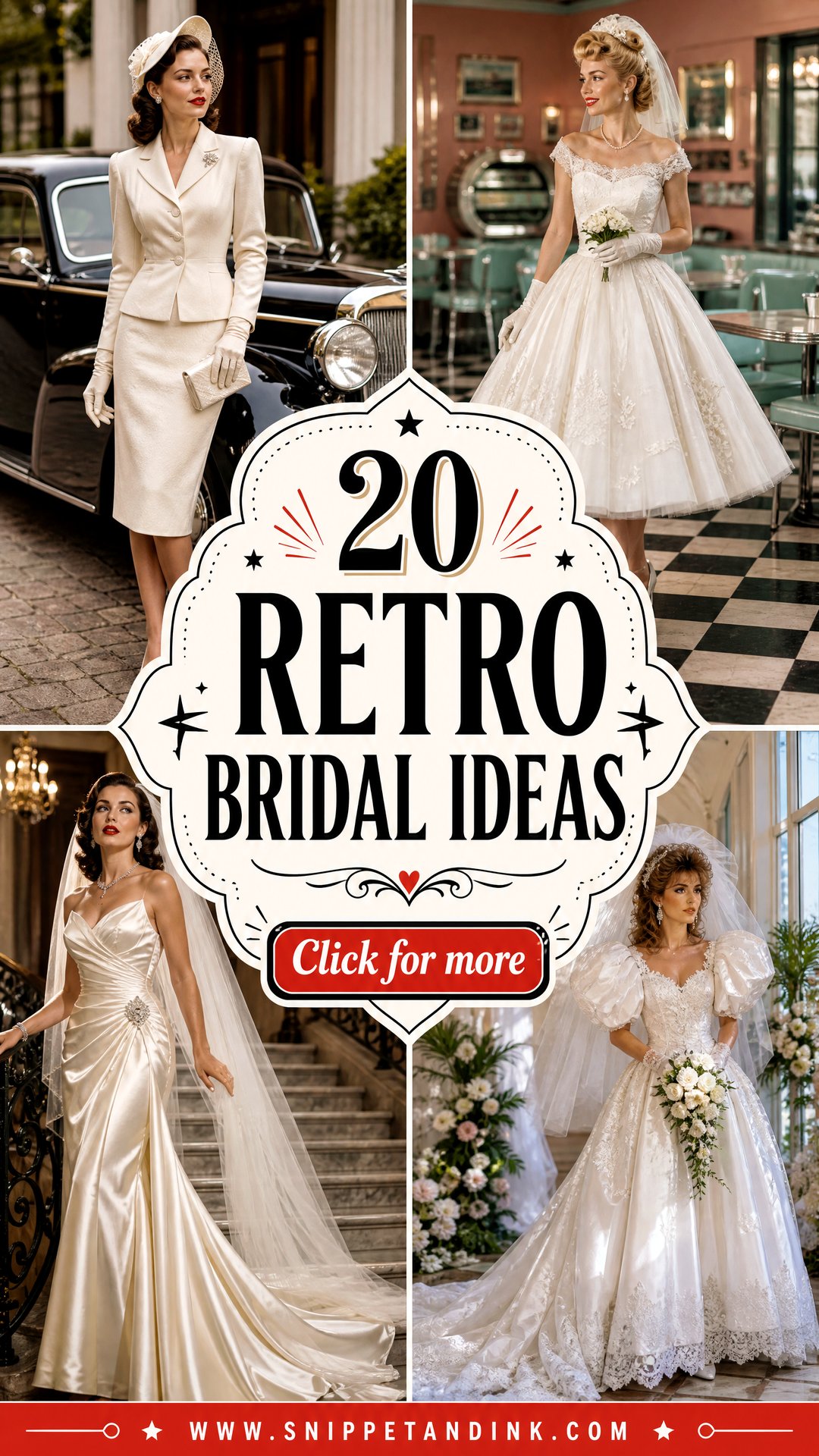
Period dressing is the area where I see brides either look extraordinary or look like they’re off to a themed party, and the difference is usually restraint. You might love geometric 1920s beading, the polished tea-length dresses of the 1950s, a clean 1960s mini or the romantic lace of the 1970s. Designers keep returning to all of them because they give a bride more character than a standard strapless gown. My rule is one era per outfit, carried mostly by the silhouette, with modern fabric, fit and makeup holding it in the present. The twenty looks below follow that rule, from the shoes up.
Where Retro Ends and Costume Begins
When a vintage-inspired look goes wrong, it’s almost never the dress. It’s that the hair, makeup, shoes, veil and bouquet all come from the same decade, played at full volume. Real people in old photographs didn’t look like that, and nobody at your wedding will either.
I build these looks with the era carried by two or three things, usually the silhouette plus one accessory, and let everything else be modern. Finger waves with a contemporary column gown look sharper than finger waves with a beaded flapper dress, a cloche and long pearls.
Each Decade Expects Its Own Underpinnings
- 1920s and 1930s: a smooth slip and invisible underwear, since these dresses hang straight or cling.
- 1950s: a petticoat for volume and a bra that shapes the bust, or the bodice looks deflated.
- 1960s: structure lives in the dress itself, so lighter underwear works.
- 1970s: soft, unstructured fabric, which means skin-tone layers under sheer lace.
- Victorian and Edwardian: a smooth, close bodice line rather than a modern push-up.
Bring the underwear to the first fitting. A seamstress fits the dress to what’s beneath it, and switching later changes everything.
1. 1920s Retro Bridal Beaded Dress
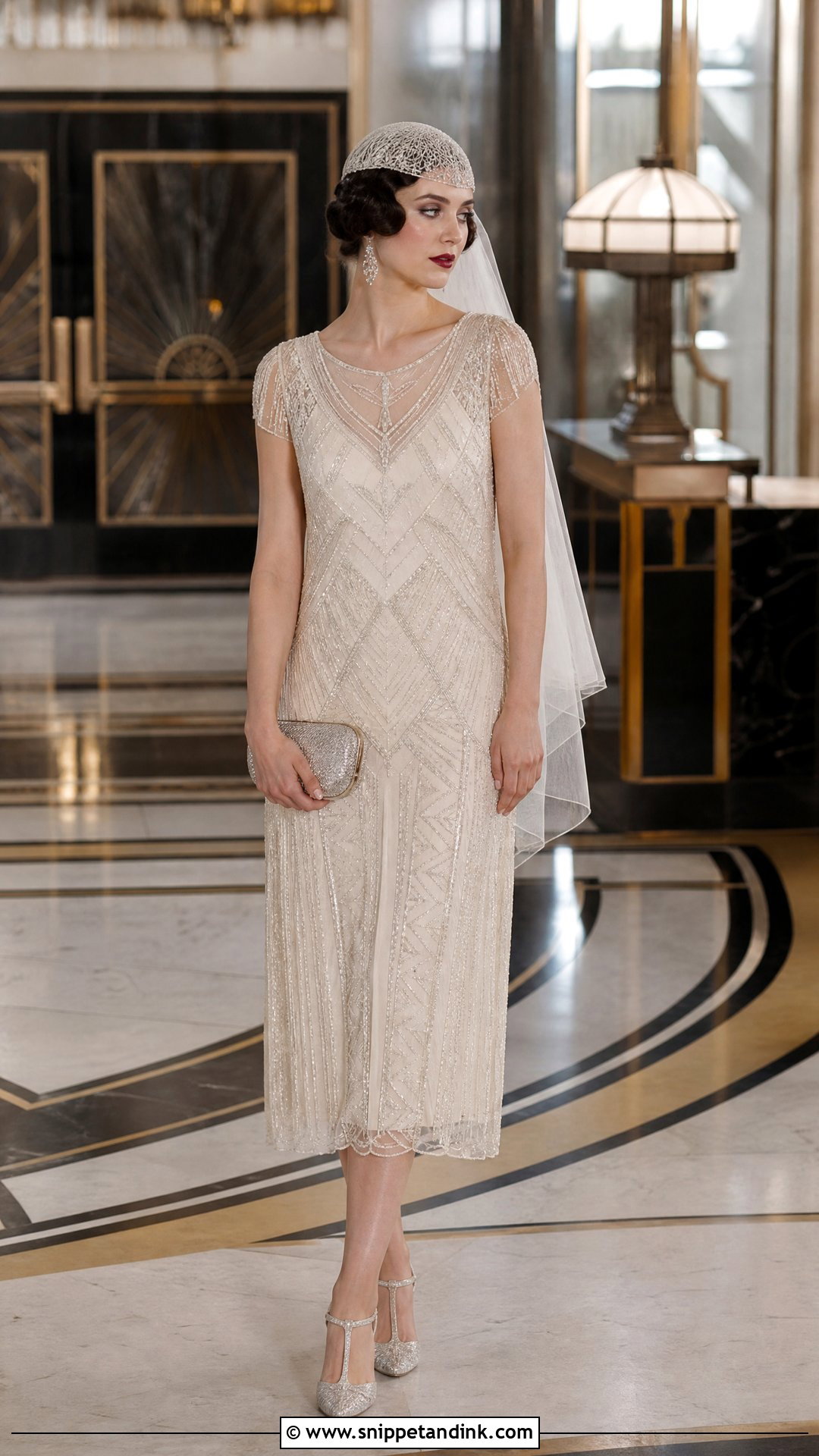
Beaded drop-waist dresses are heavy, often much heavier than they look on the hanger, and that weight pulls on the shoulders by evening. Wider straps or a lined bodice spreads the load. Ivory or soft champagne with geometric beading, small sequins or pearl embroidery is right for the decade. The straight shape should still let you walk, sit and dance; if the hip is snug, beads pop off at the seams. Low T-strap heels, small crystal earrings, a metallic clutch and a beaded cap veil or slim jeweled band. Finger waves, defined brows and a compact bouquet of roses or callas.
2. Art Deco Retro Bridal Column Gown
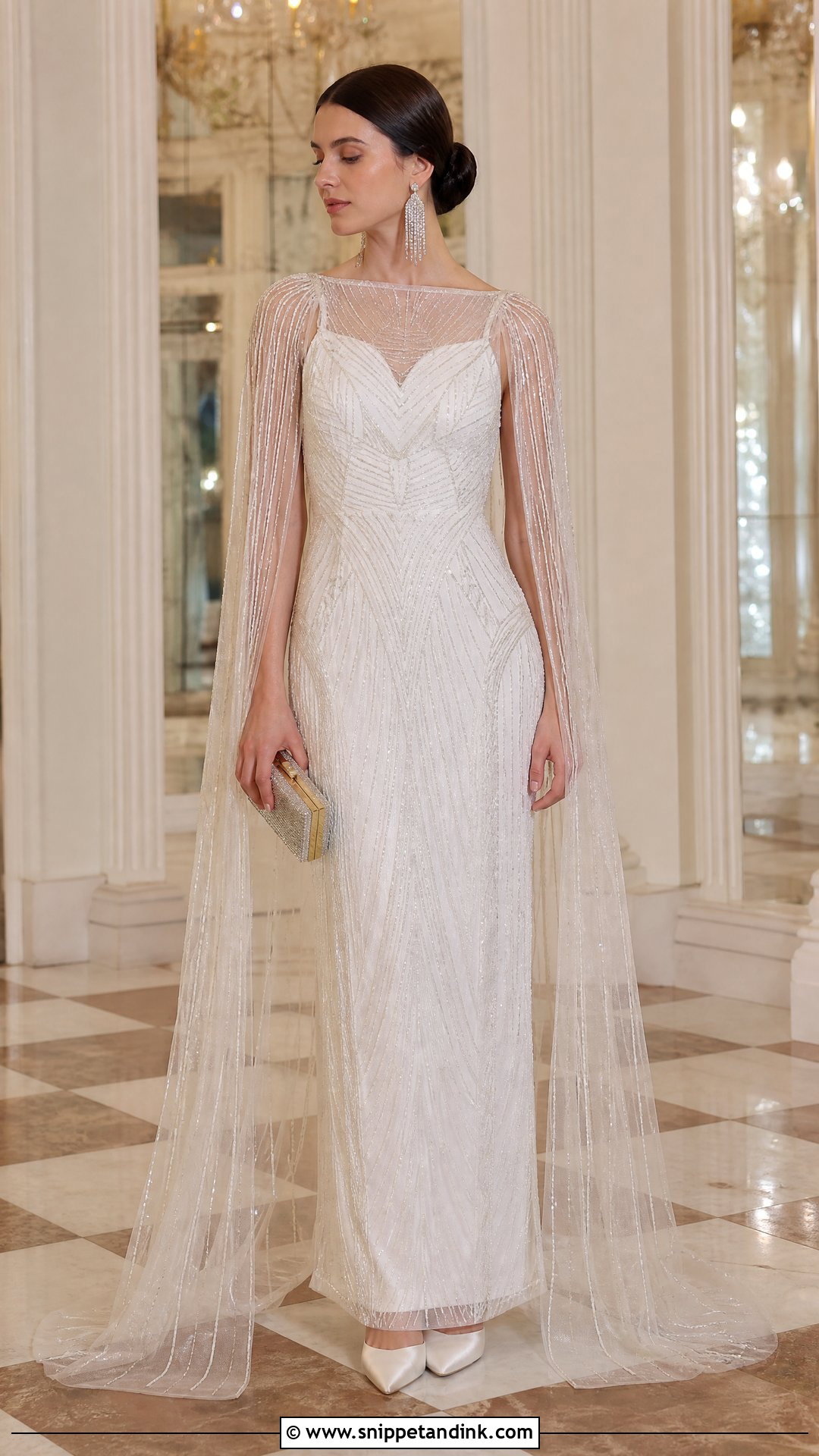
Art Deco is all about symmetry. On a column gown, fan motifs or linear crystal work have to line up at the center seam, and that’s the first thing I inspect on a sample; off-center beading looks cheap. The fit should skim rather than grip, so you can walk. Pointed satin pumps, chandelier earrings and a box clutch, then a long sheer cape or a narrow cathedral veil that doesn’t hide the beadwork. A smooth low bun with one crystal comb, luminous skin and a berry lip. It belongs in a ballroom, a historic hotel or a museum.
3. 1930s Retro Bridal Bias-Cut Satin Gown
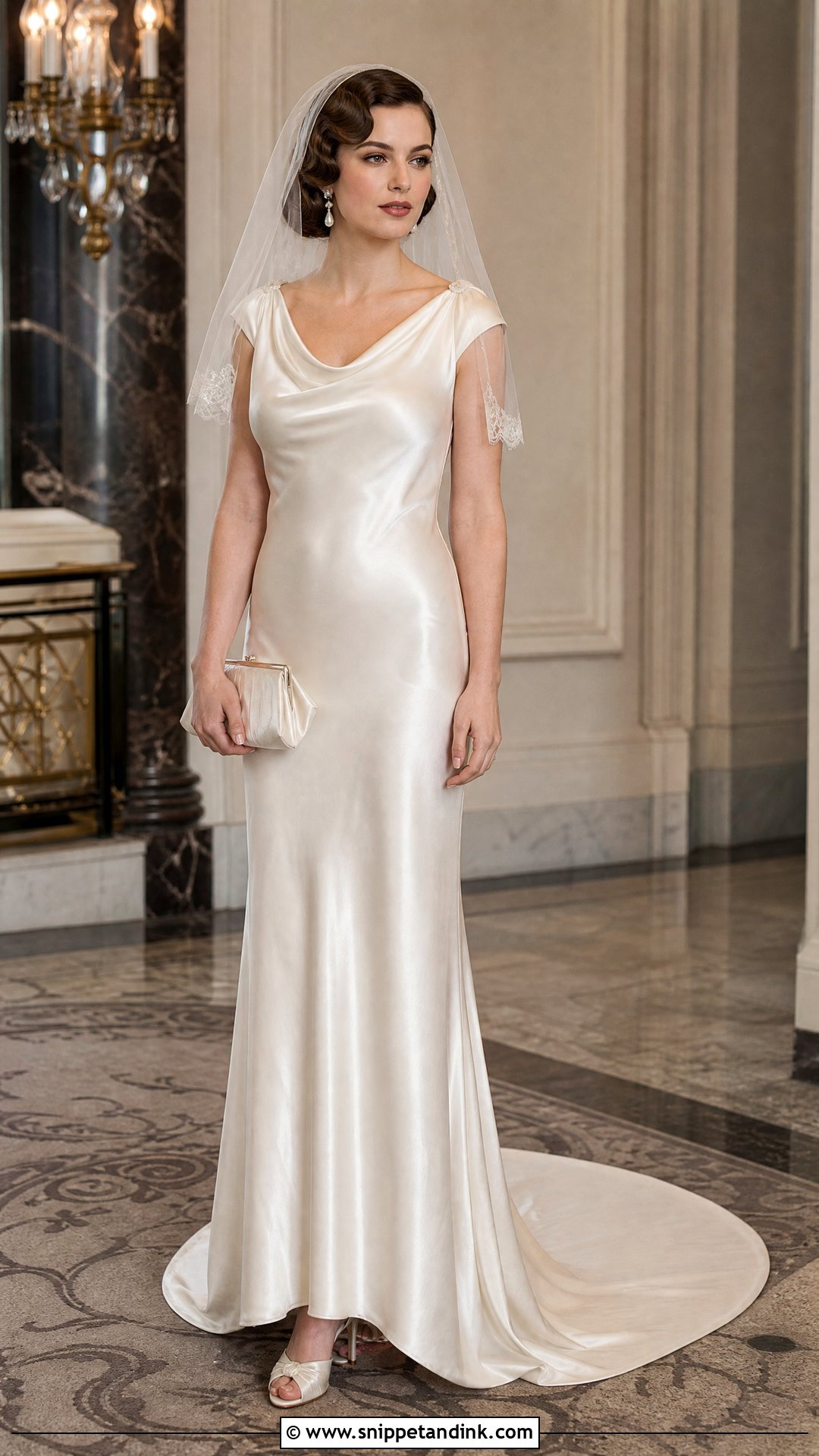
Bias-cut satin is the most honest fabric on this list: it shows everything. Underwear lines, a slight hip asymmetry, even a seam allowance pressed the wrong way. That’s why the fitting and the undergarments matter more than the dress itself here. A softly draped neckline, fitted waist and skirt that falls over the hips, ideally in silk with a short sweep train. Peep-toe heels, pearl drops, and a fingertip veil under glossy side-parted waves. A satin capelet for warmth. Pair it with a muted red lip and keep the rest of the face quiet.
4. 1940s Retro Bridal Long-Sleeve Gown
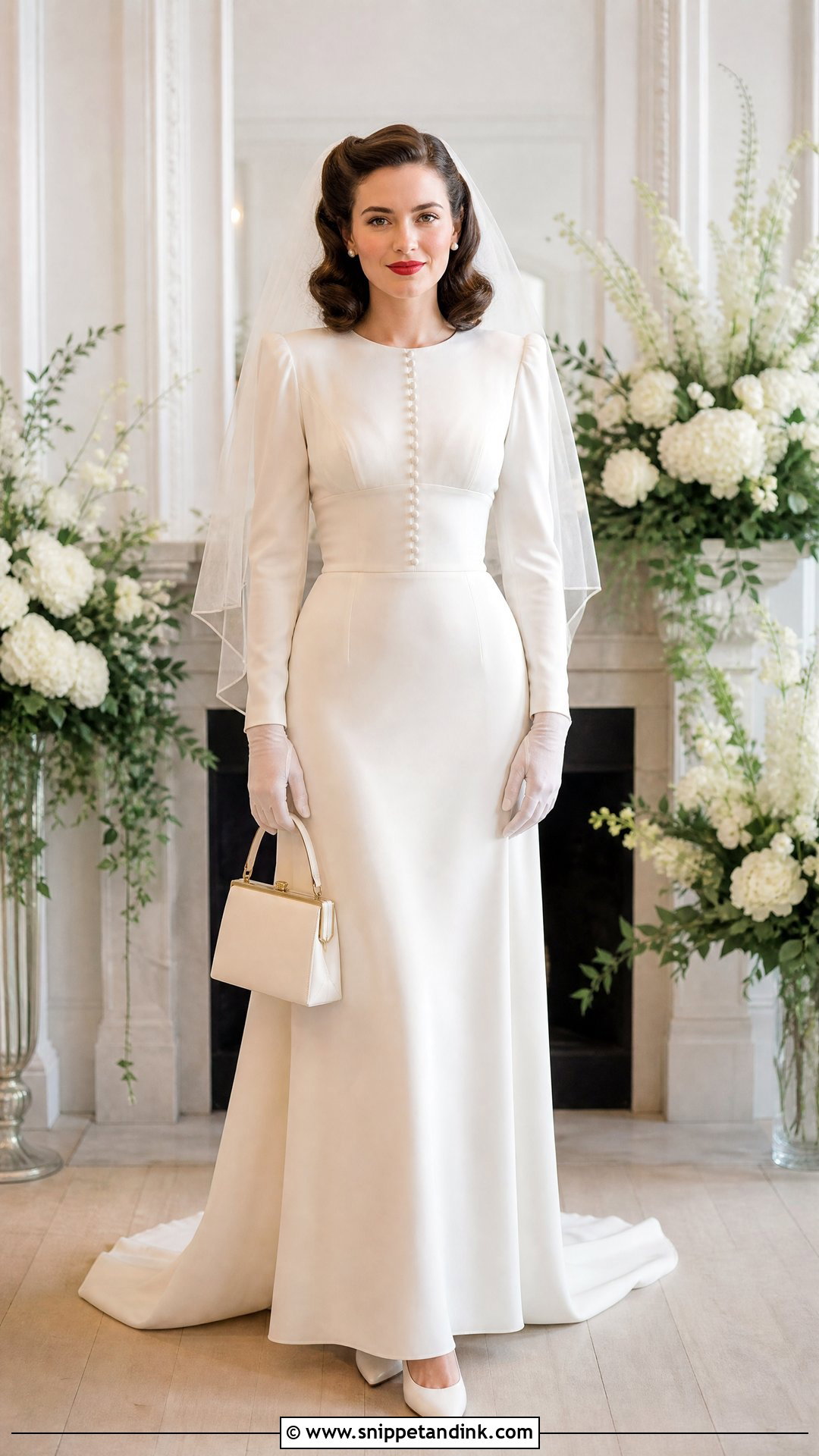
Wartime brides dressed practically, and the long-sleeve gowns of the era show it: matte crepe or light satin, a defined waist, structured shoulders, a skirt that moves without a petticoat. Covered buttons at the cuffs or down the back are the detail I’d keep. A strong shoulder makes a necklace look crowded, so stop at pearl studs. Closed-toe pumps, a top-handle bag, and a shoulder-length veil with rolled waves or a neat low updo. A gathered bouquet of white flowers with a trailing ribbon suits it.
5. 1940s Retro Bridal Skirt Suit
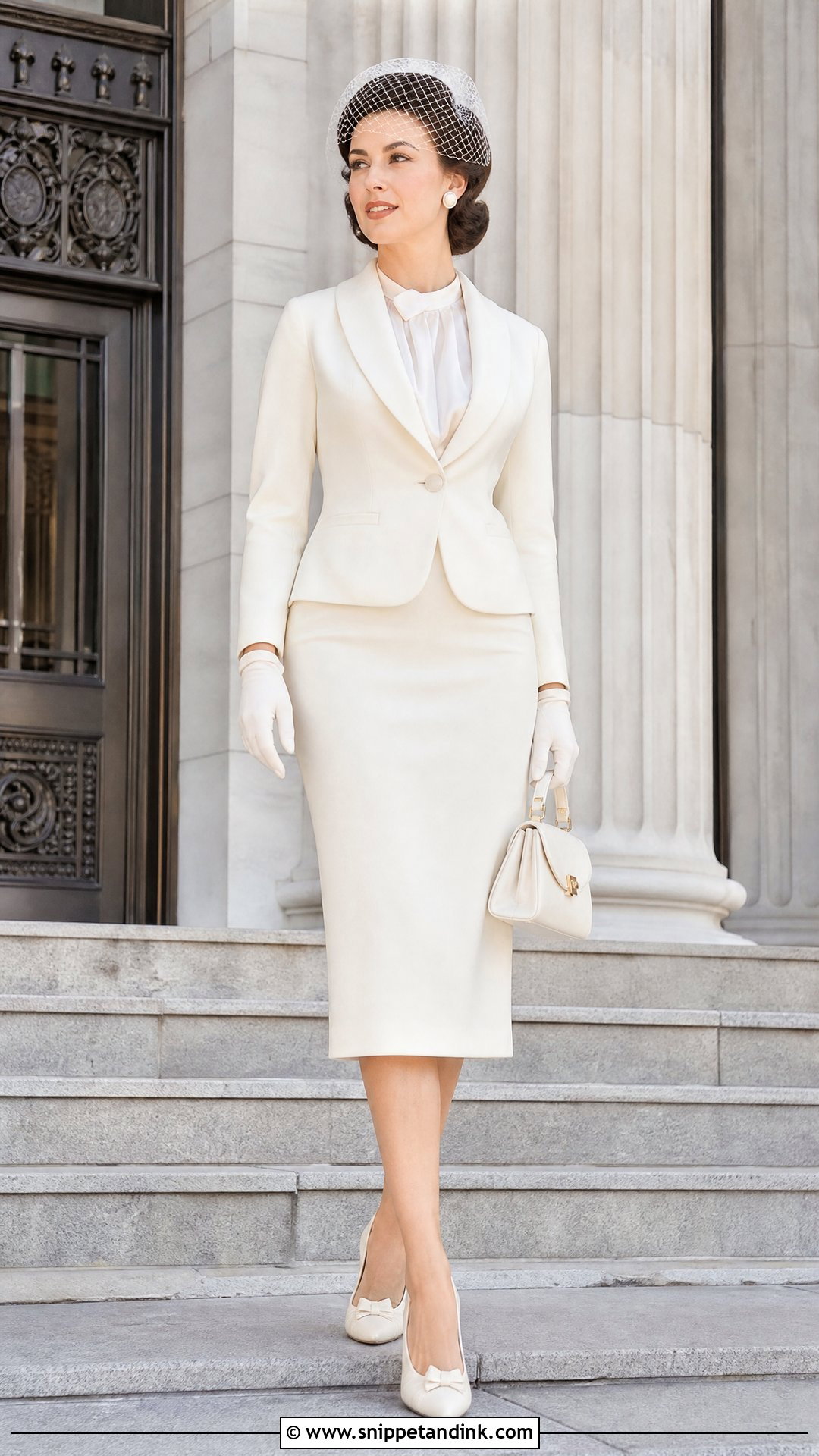
Not everyone wants a gown, and the 1940s had a ready answer: the bridal skirt suit. An ivory jacket with a shaped waist over a midi pencil skirt suits a courthouse or a small civil ceremony. The jacket’s waist seam must hit your real waist, or the whole thing looks boxy. A silk camisole or modest blouse beneath, then low pumps, pearl earrings, short gloves and a compact bag. A birdcage veil or tilted hat gives the period note. Take off the veil and gloves at the reception and you’re instantly more relaxed.
6. 1950s Retro Bridal Tea-Length Dress
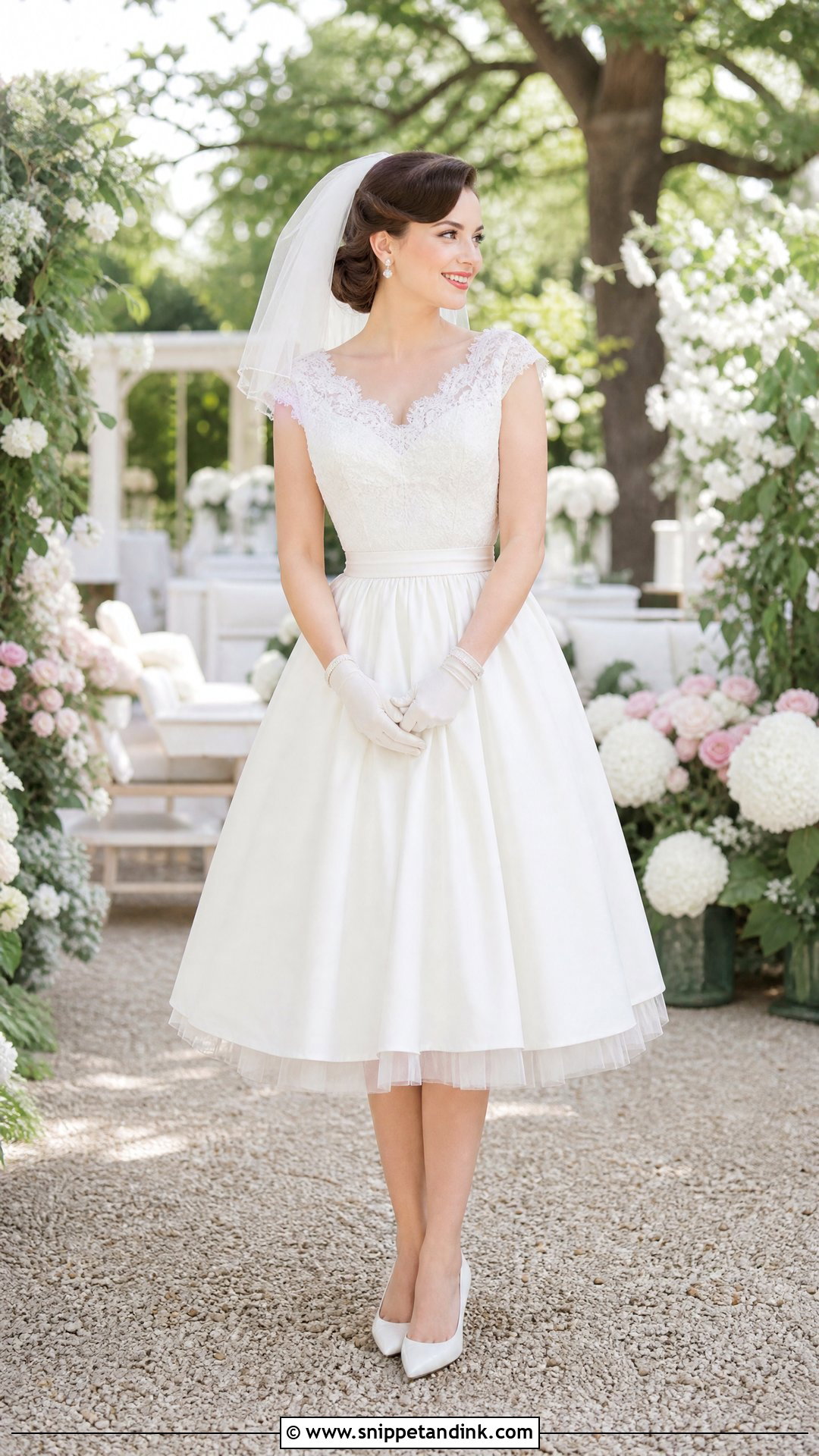
Tea length is where your shoes become the second star. A 1950s-inspired gown with a fitted bodice, nipped waist and full skirt in lace, satin or embroidered organza needs a petticoat to sit right. One layer of soft tulle or crinoline is usually plenty; three looks costumey and makes sitting at dinner awkward. Pointed pumps or ankle straps, pearl earrings and wrist-length gloves. A short veil balances the hem, and a narrow belt defines the waist. Great for daytime, gardens and a reception built around dancing.
7. 1950s Retro Bridal Satin Ball Gown
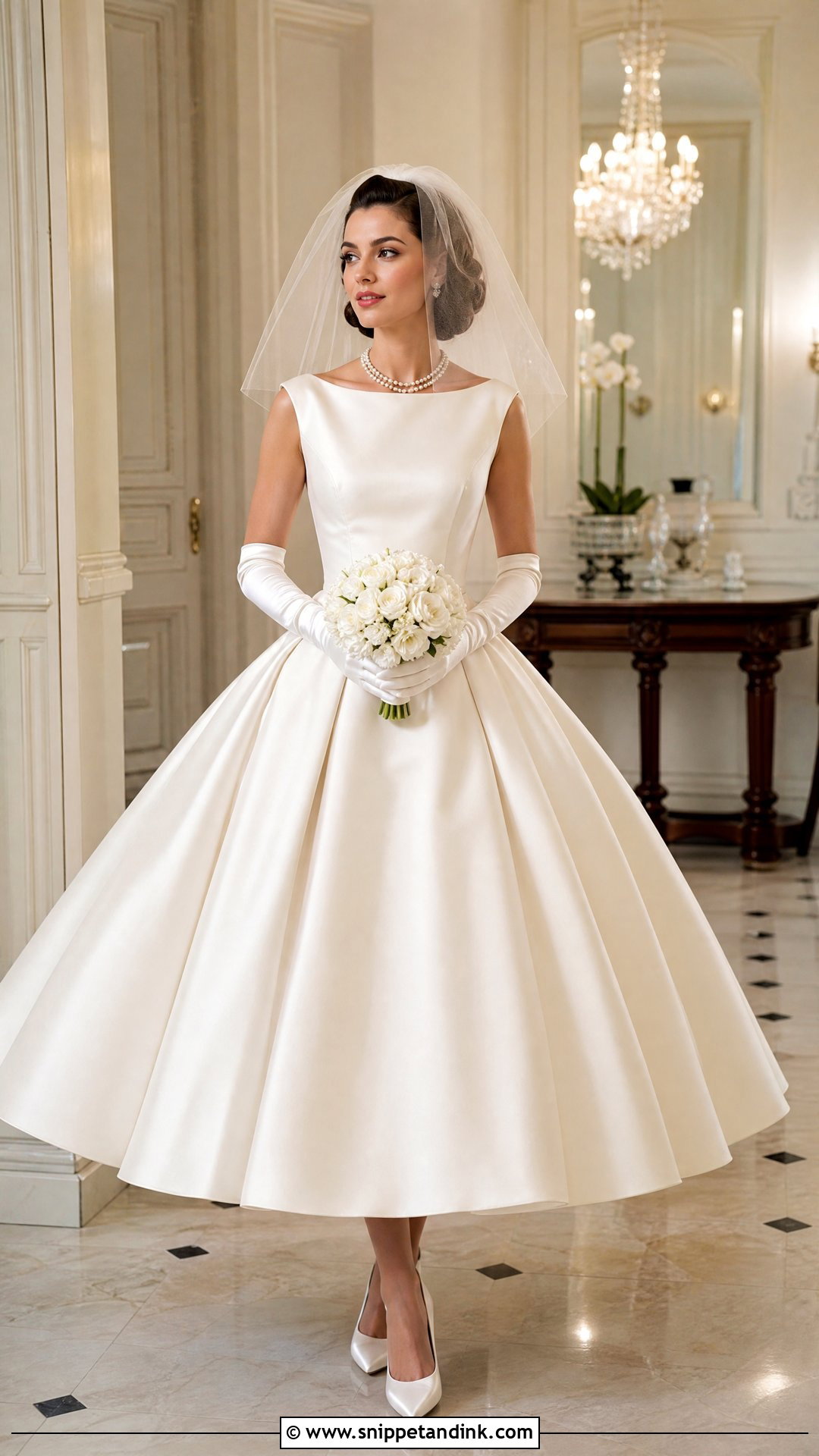
A full satin skirt sounds as good as it looks; that soft rustle is part of the appeal. The gown needs a sculpted bodice, natural waist and a light underskirt to hold the width. Bateau and sweetheart necklines both suit it. Elbow-length gloves look beautiful but come off before the ring exchange, so have someone ready to hold them. Keep the fingertip veil ending above the widest part of the skirt. Most important: hem it while wearing the final shoes and underskirt, because the underskirt changes the length by more than you’d think.
8. 1950s Retro Bridal Pencil Dress
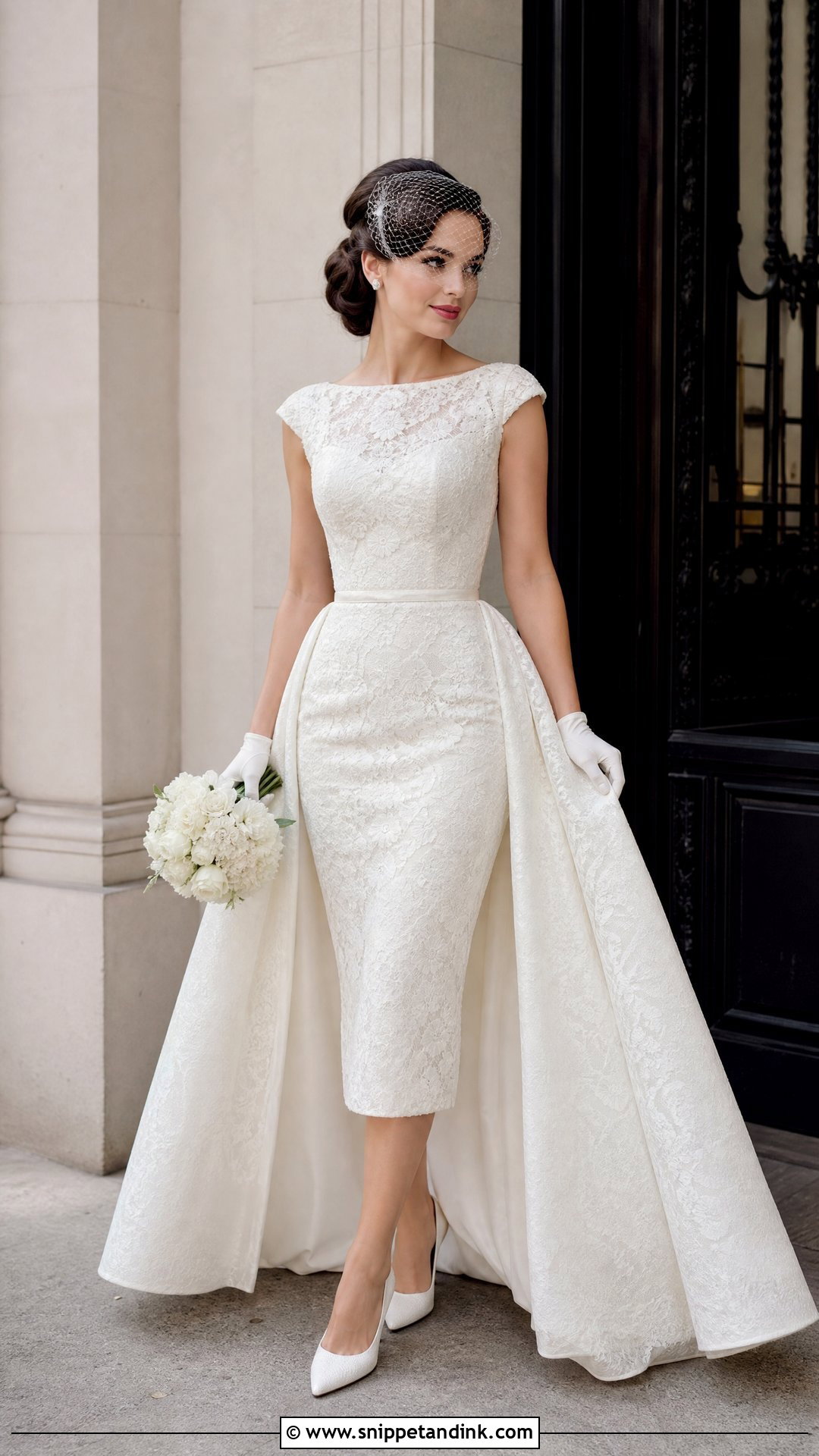
The pencil dress is the 1950s for brides who don’t want volume. A bateau neck, covered shoulders and a midi hem in substantial crepe, satin or lace suits a city wedding. I always ask for a back vent; without one, you’ll take tiny steps all day and struggle on stairs. Sit down at the fitting, too, because a close cut rides up. Kitten heels, pearl studs, short gloves and a birdcage veil over a softly curled updo. Add a removable overskirt if you want ceremony drama.
9. 1960s Retro Bridal Mini Dress
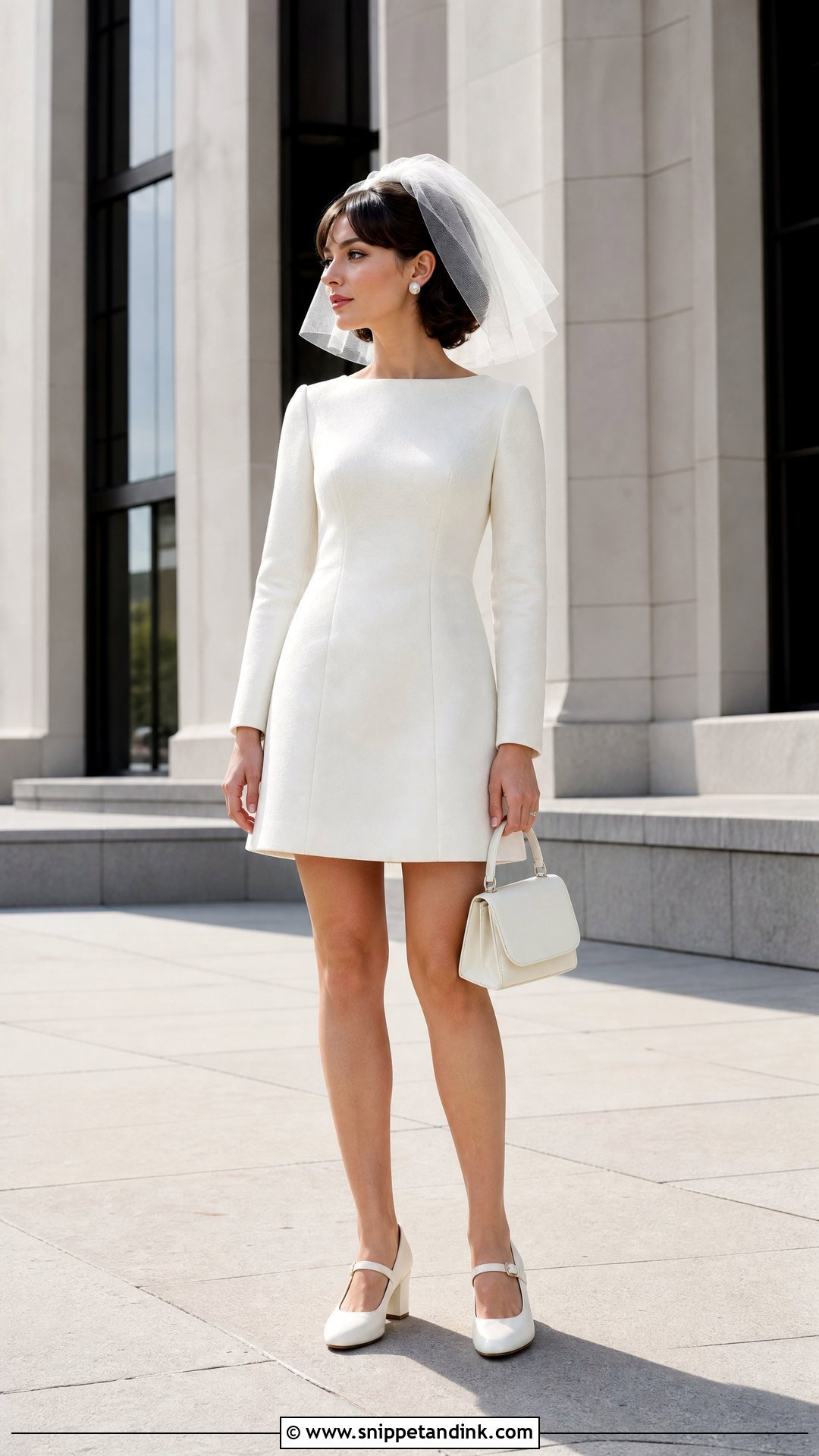
Youthful and quick to wear, the 1960s mini suits a courthouse ceremony or an evening change. A structured A-line with a high neck and clean seams in ivory crepe or jacquard keeps it bridal. Because the cut is stiff, the hem stands away from the leg when you sit, so try it on a low chair. Block heels, slingbacks or Mary Janes, pearl buttons and a small top-handle bag. A bubble veil, padded headband or simple bow, with smooth hair flipped at the ends or a high ponytail. A matching swing coat adds coverage.
10. 1960s Retro Bridal A-Line Dress
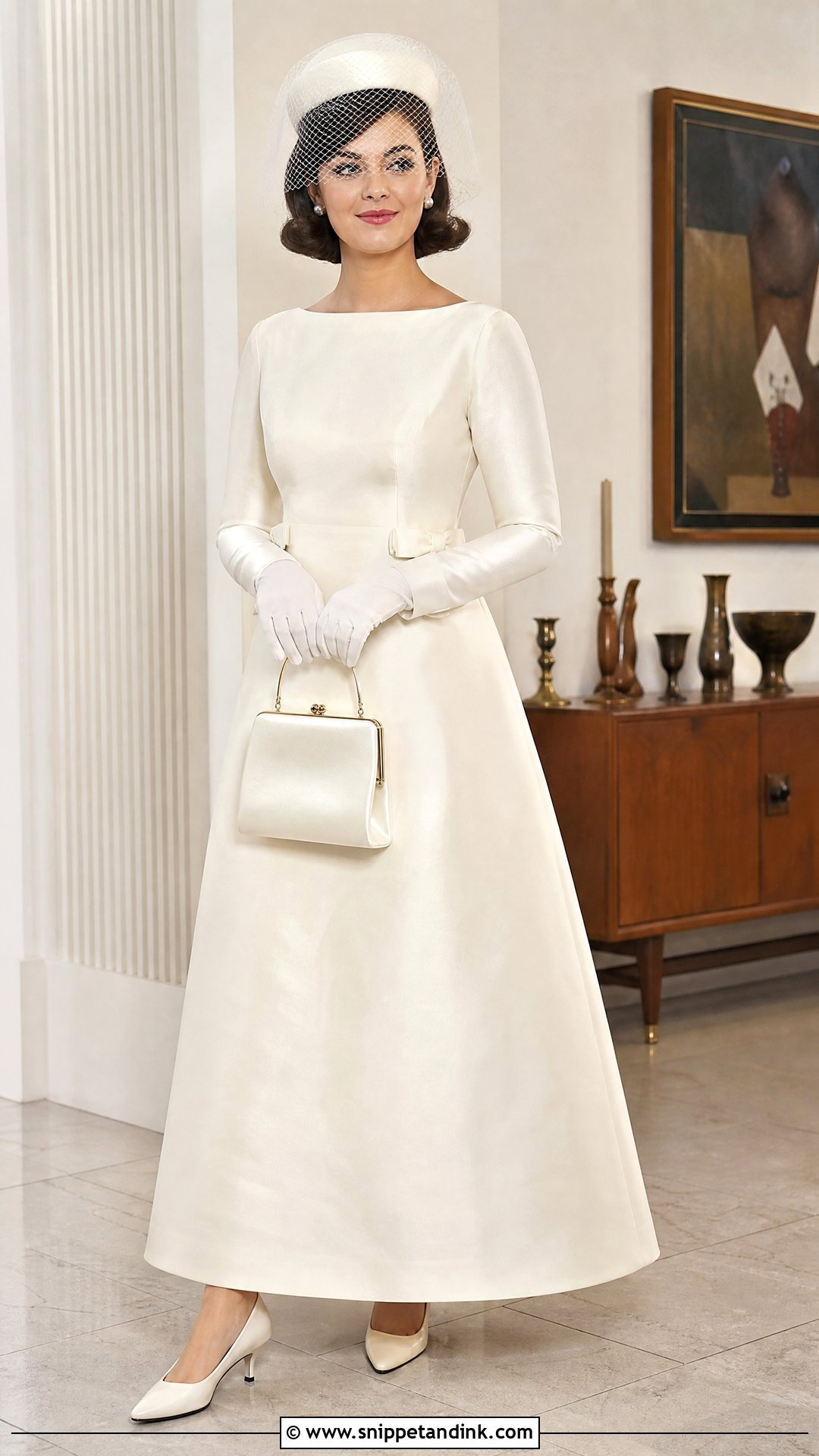
What makes a 1960s A-line bridal dress look current is how little is on it. A fitted bodice, bateau neckline and gently flared skirt, at knee or ankle length, in smooth fabric or a subtle floral jacquard. A pillbox hat with a short veil is the clearest period reference, and it needs a low chignon or rounded bob underneath to anchor its combs. Kitten heels, pearl earrings and a small structured bag, with white gloves if you’re marrying in the daytime. Resist adding more.
11. 1960s Retro Bridal Empire-Waist Gown
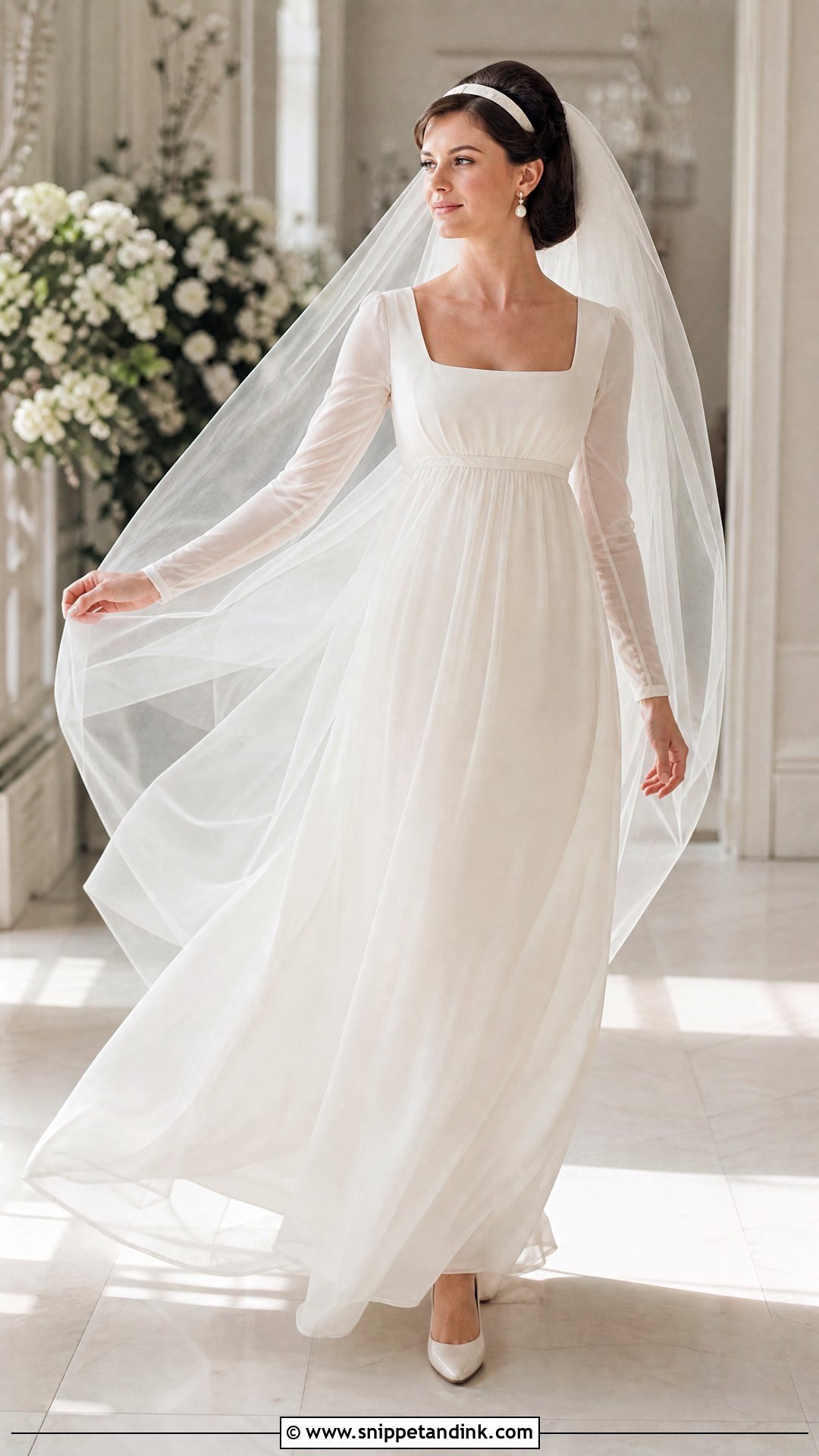
An empire waist sits just under the bust, so it skims everything below and suits a wide range of figures. That same placement means the bust fit has to be exact, because there’s nowhere for a loose bodice to hide. Chiffon, silk crepe or light satin falling to the floor; a square or modest scoop neckline with narrow sleeves. A long veil on a simple headband lengthens the body. Low heels, pearl drops and brushed waves or a relaxed half-up style finish it.
12. 1970s Retro Bridal Boho Lace Gown
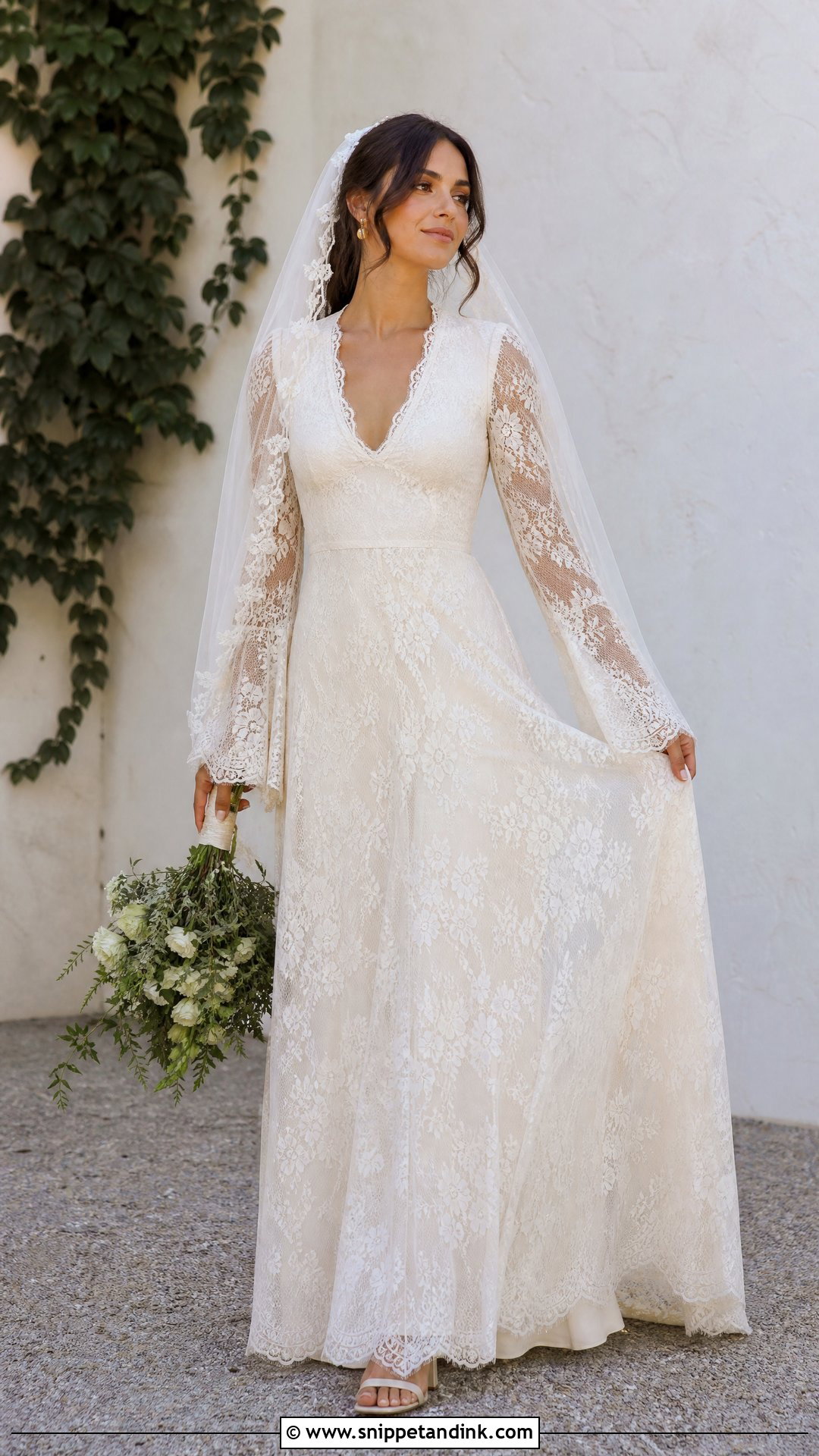
Seventies lace gowns are as much about movement as about the lace. An ivory gown with a fitted bodice, gentle A-line skirt and sheer bell or bishop sleeves feels right. Check the lining color carefully: a lining slightly off from your skin or the lace makes the sleeves look grey in photos. Block-heel sandals, small gold earrings and a pendant, with a floral comb or lace-edged veil over loose waves. For outdoor ceremonies, choose a shorter train; long lace trains pick up grass and seeds within minutes. A loose bouquet with greenery and wispy stems.
13. 1970s Retro Bridal Prairie Dress
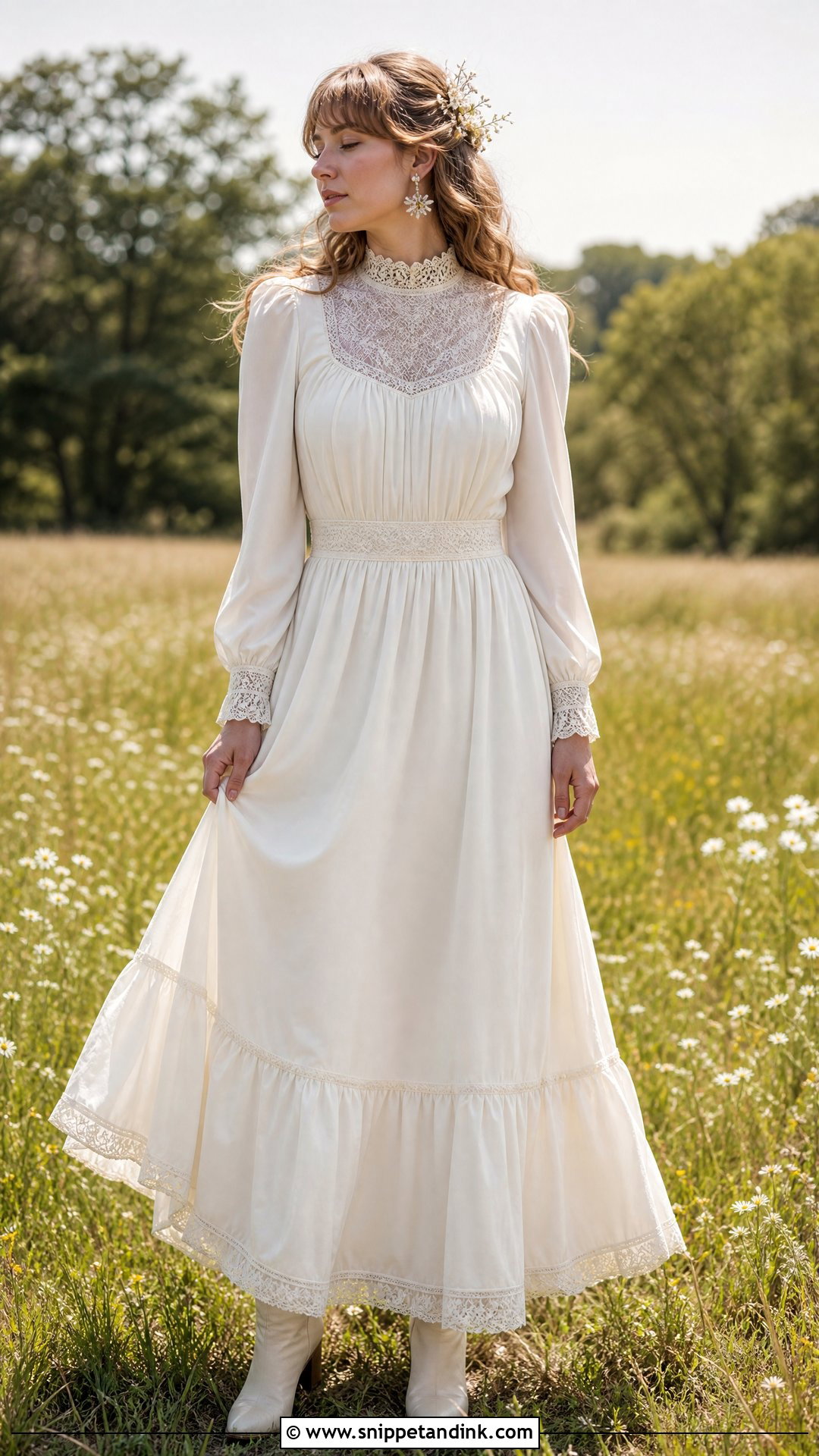
Prairie dresses sit closest to costume of anything here, so tailoring is what saves them. A high neck, gathered bodice, lace trim and long sleeves can look shapeless unless the shoulders and waist are fitted closely. Cotton lace, dotted tulle or chiffon keeps it light. Ivory block heels or ankle boots, depending on the hem and the ground. Small floral earrings, and a narrow ribbon tied around a low ponytail or half-up style. I’d skip the veil and use a floral comb; the neckline already gives plenty of detail.
14. 1970s Retro Bridal Bell-Sleeve Jumpsuit
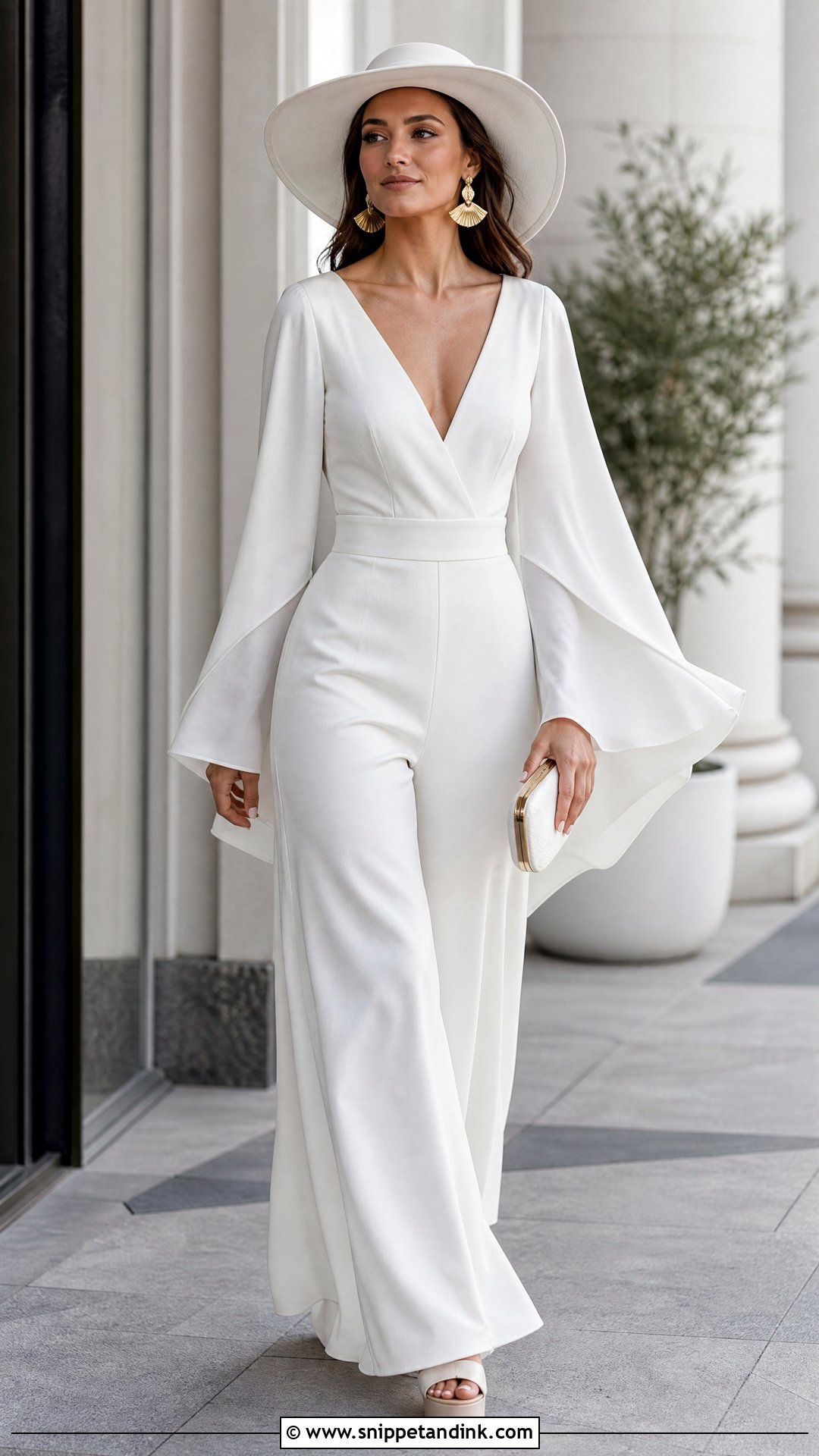
Bell-sleeved jumpsuits in ivory crepe are a bold, fun way to borrow the 1970s. A fitted waist, wide-leg trousers and a V-neck or high halter work best. Have the trousers hemmed so they almost touch the floor with your platforms on; any longer and you’ll catch a heel on the stairs. Watch the sleeves at dinner, too, since wide bells drag through plates. Sculptural gold earrings, a compact clutch, and a wide-brim hat or sleek headband instead of a veil. A removable chiffon cape adds ceremony volume.



15. Old Hollywood Retro Bridal Satin Gown
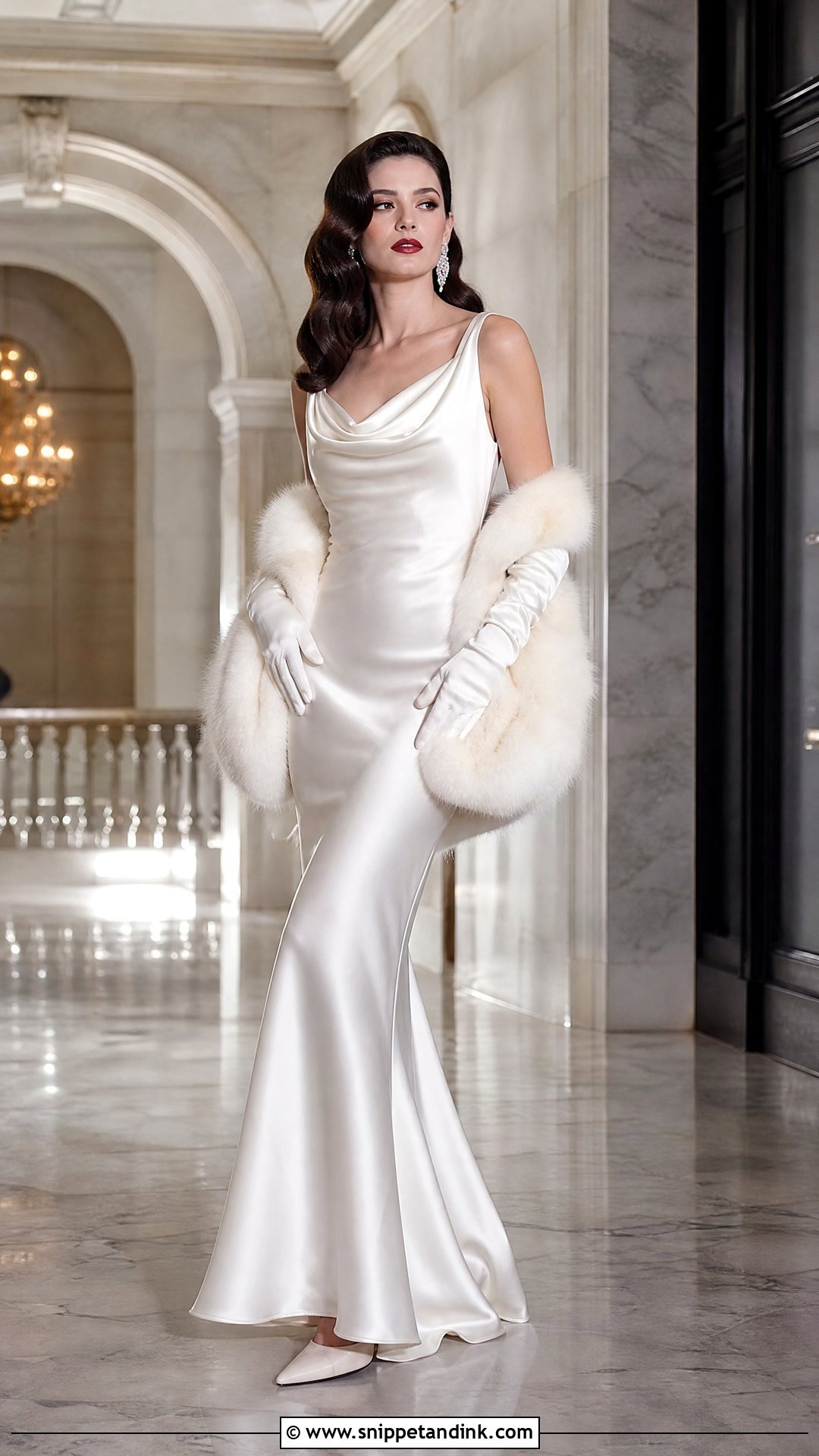
Old Hollywood glamour is about smoothness. Satin cut into a fitted column or gentle mermaid with a draped neckline and modest train shows every crease, so steaming on the morning and smooth, invisible underwear are not optional. Long gloves, crystal earrings and pointed pumps make it formal; a faux-fur stole or satin wrap covers you in cooler weather. Side-parted waves and a red or rose lip do the rest. Take the long veil off after the ceremony to show the neckline and hair. Made for grand indoor evenings.
16. Retro Bridal Courthouse Pantsuit
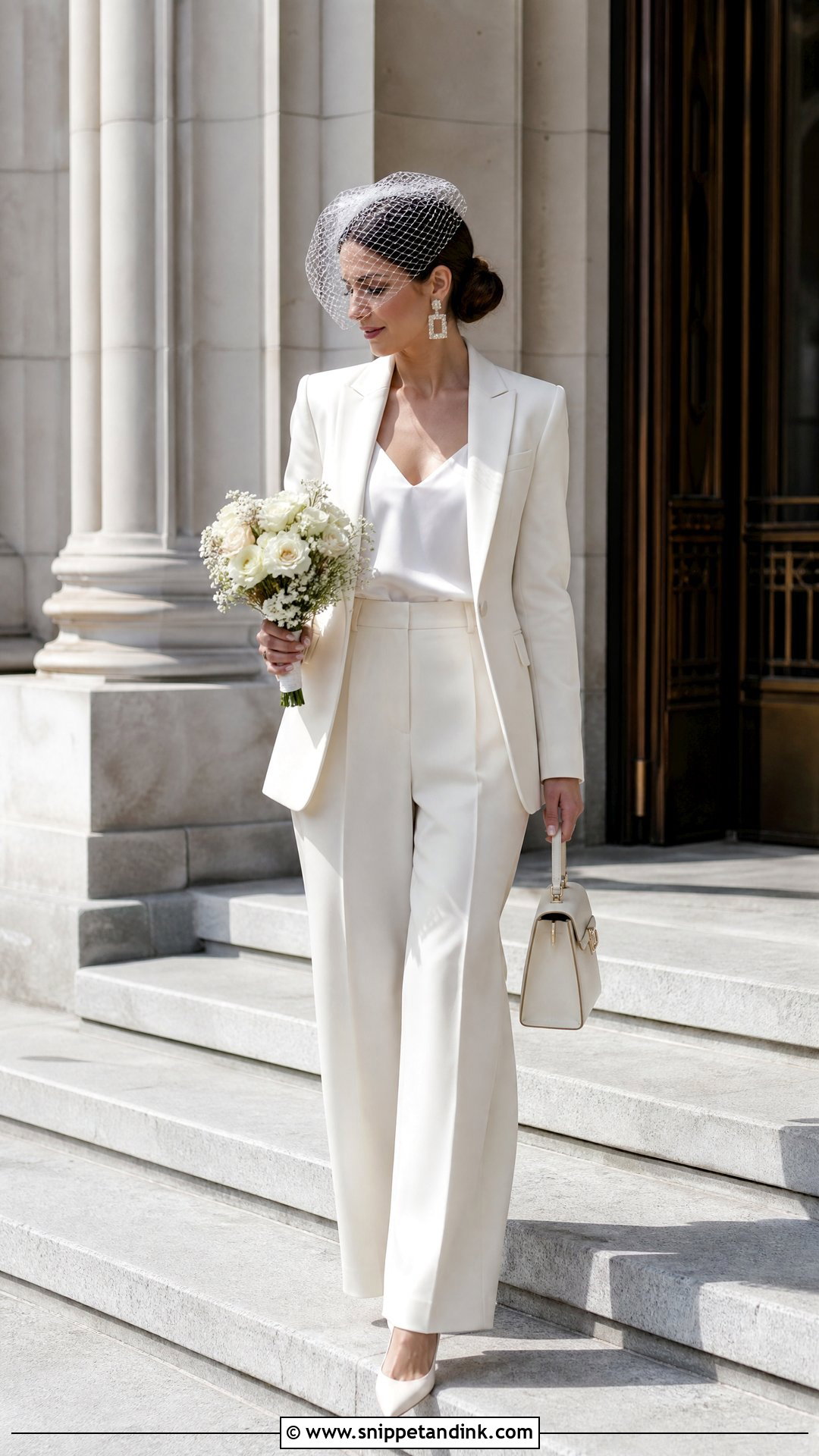
A white pantsuit borrows the sleek tailoring of the 1970s and suits a courthouse or city wedding. High-waisted wide-leg trousers and a shaped blazer, with a silk shell, lace blouse or fitted camisole underneath. Hem the trousers with the final shoes on, and button the blazer while seated to make sure it doesn’t pull across the stomach. Platform sandals or pointed pumps, geometric earrings and a structured bag, plus a short birdcage veil. Draping the blazer over your shoulders softens it for photos, and you can wear both pieces separately afterward.
17. Victorian Retro Bridal High-Neck Gown
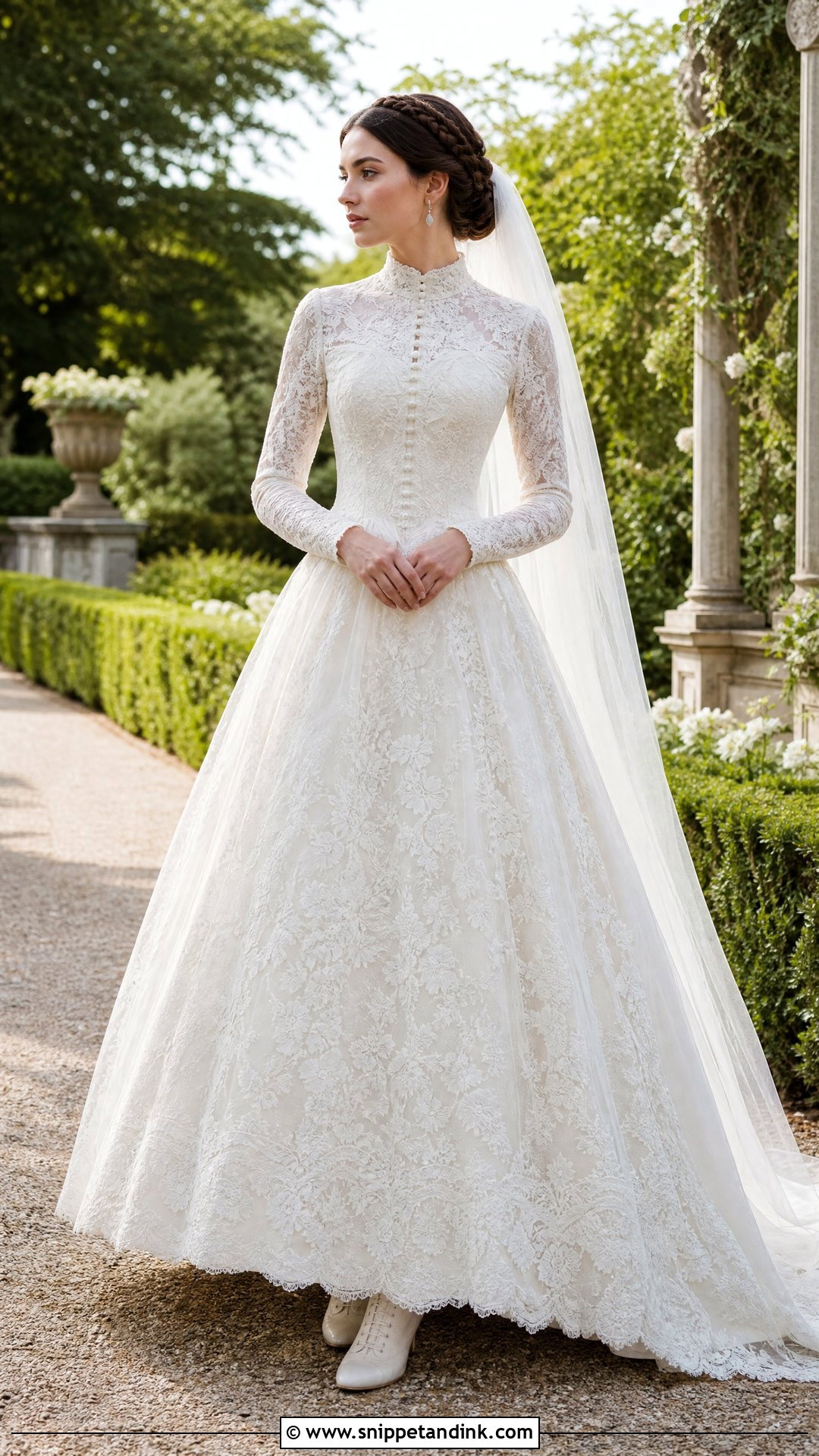
High necks and dense lace make a Victorian-inspired retro bridal look dramatic, and the danger is piling on every historical detail at once. Choose a fitted gown with long sleeves, covered buttons and a full A-line skirt, and let that be enough. Ivory lace over a smooth lining shows the pattern clearly. A high collar that’s even slightly too tight is miserable after an hour, so I fit it with two fingers of room. Buttoned ankle boots or pumps, small drops and a low braided bun to keep the neck visible. A plain long veil gives contrast.
18. Edwardian Retro Bridal Lace Ensemble
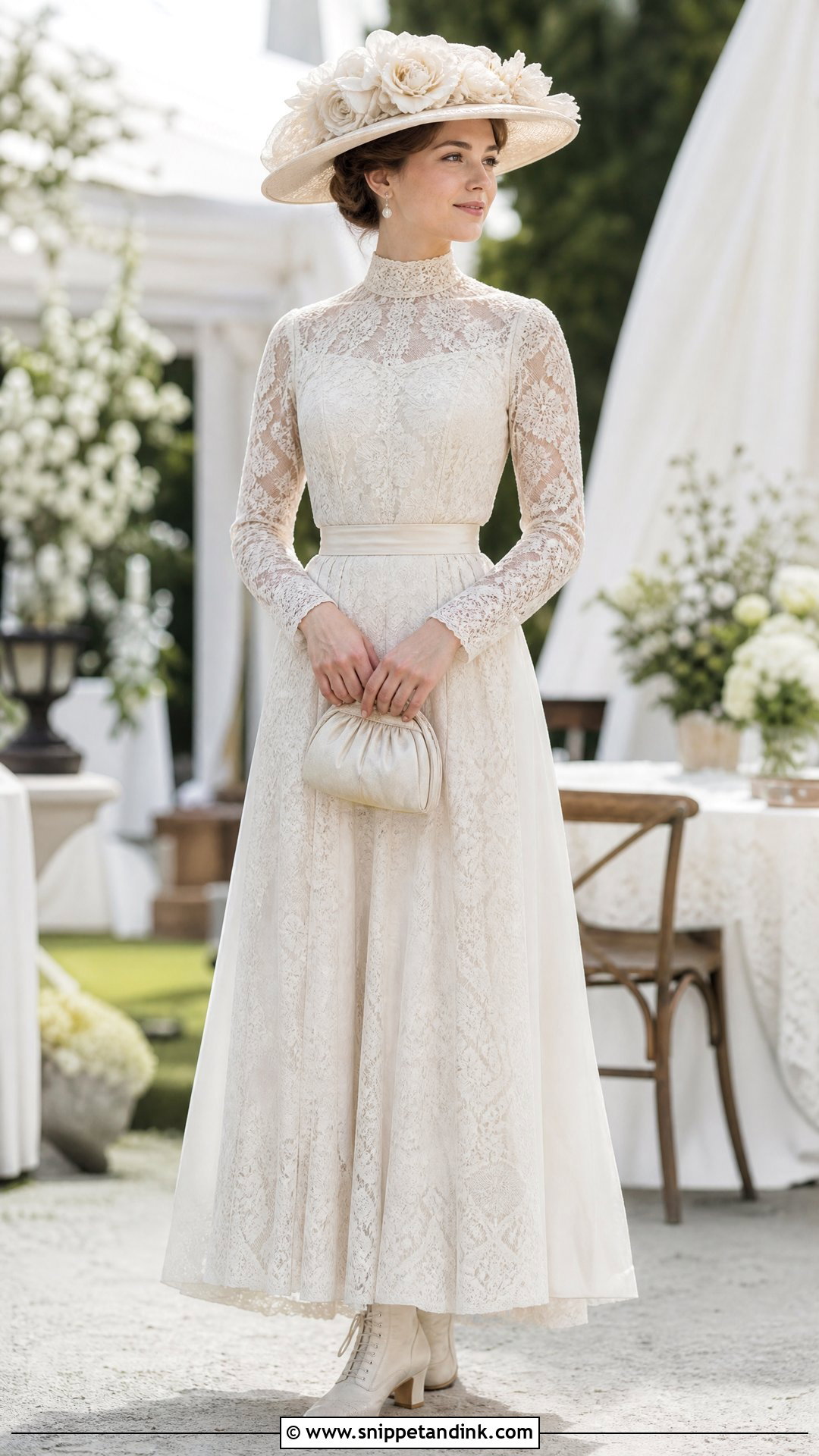
Separates are the most adaptable way to wear Edwardian style, since the blouse and skirt can be fitted independently. A long ivory skirt with gentle volume, a matching high-neck lace blouse with slightly puffed sleeves and covered buttons, and a narrow satin waistband to join them. Make sure the blouse is long enough to stay tucked when you lift your arms. Low-heeled lace-up boots, pearl earrings, and either a wide-brim hat for outdoors or a simple chapel veil. Keep the bouquet small so it doesn’t hide the waist.
19. 1980s Retro Bridal Puff-Sleeve Gown
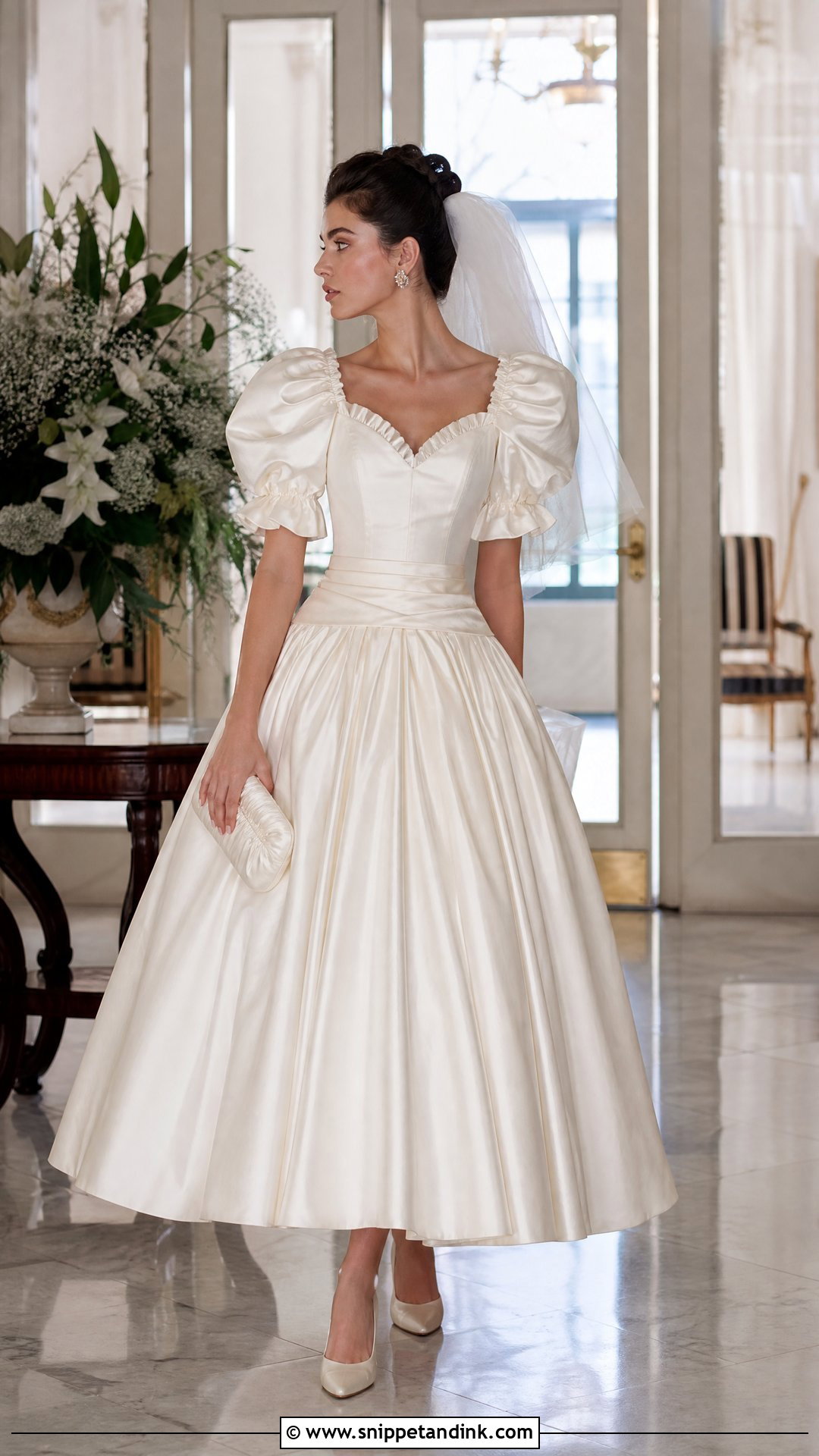
The 1980s is all proportion. A 1980s bridal gown with statement puff sleeves needs a simple neckline, a fitted bodice and plain fabric, or it tips into dated. Crisp satin, taffeta or organza holds the sleeves without internal netting. Classic pumps, crystal studs, a small satin clutch and a fingertip veil, which won’t add width at the shoulder. A polished updo rather than big period hair. Removable sleeves are a smart option if you want to dance freely later.
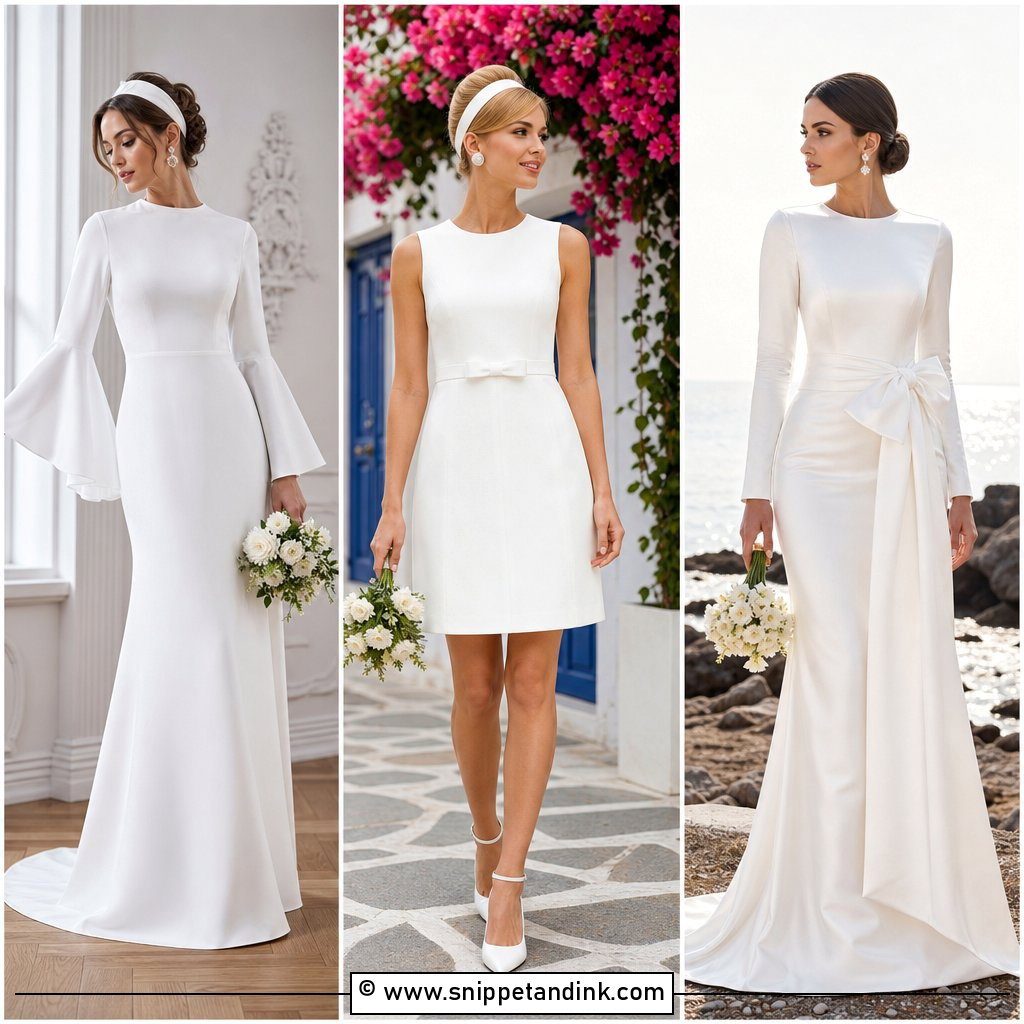
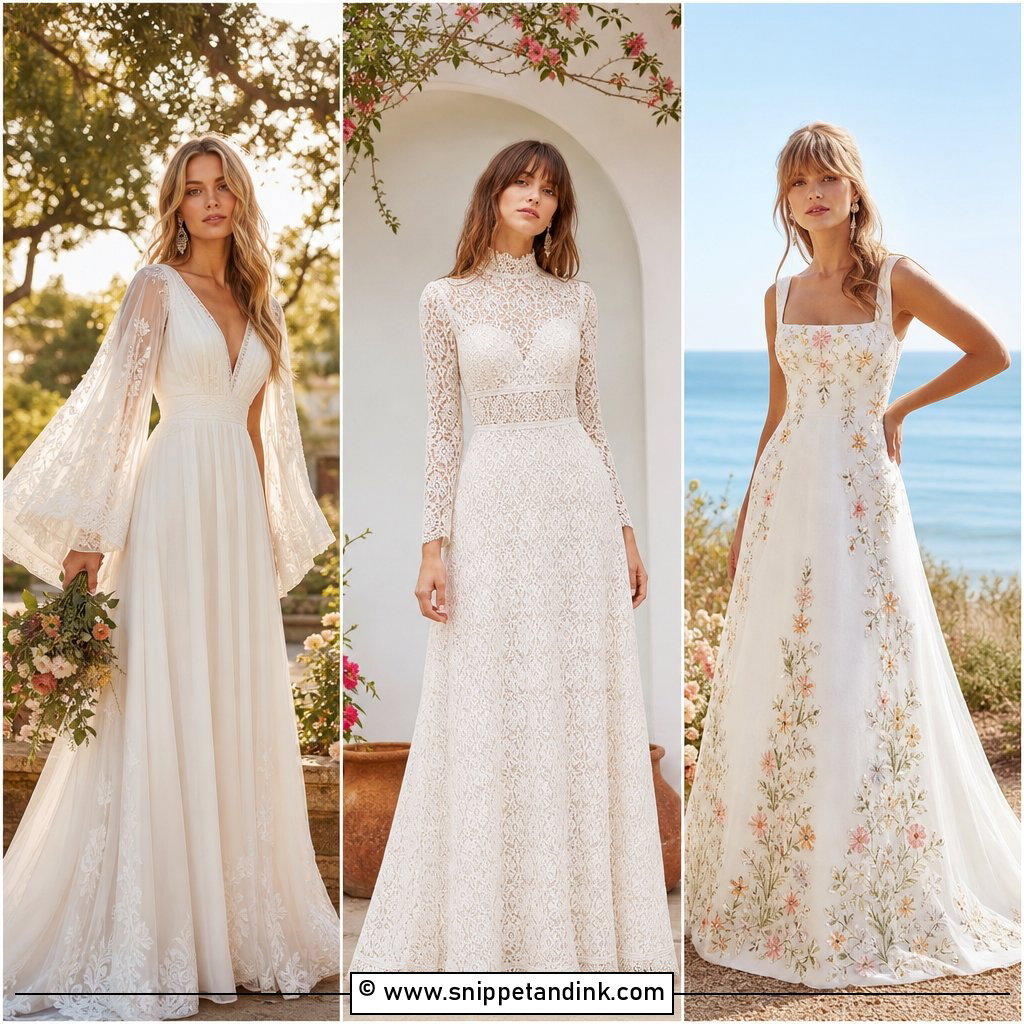



20. 1990s Retro Bridal Slip Dress
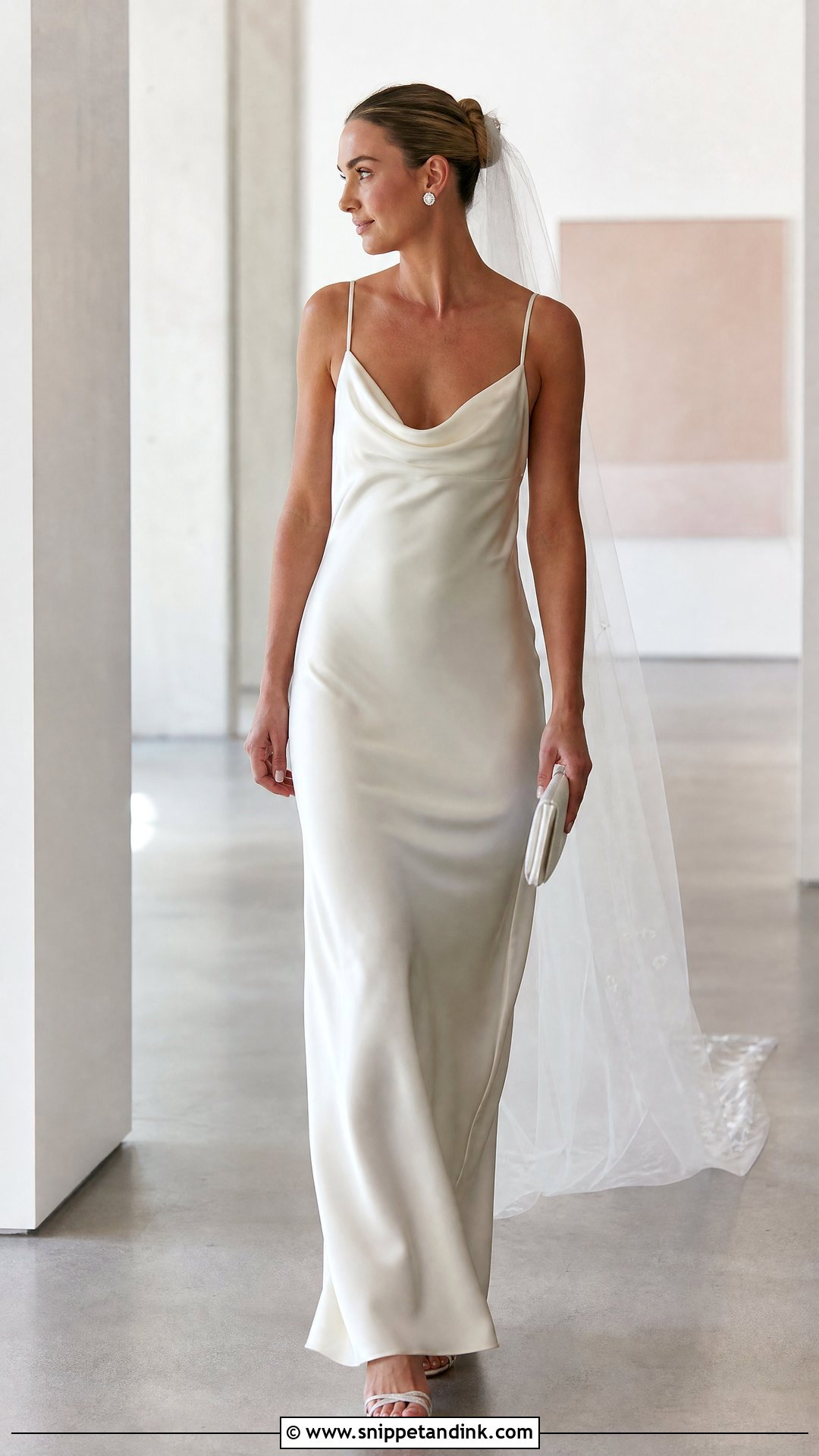
The 1990s slip is the simplest dress here and the hardest to fit. Ivory silk or satin with a draped neckline, narrow straps and a clean column skirt should skim the waist and hips without any pulling, and that takes a skilled seamstress. Strappy heels, small crystal studs and a slim clutch. A sheer cathedral veil makes a striking contrast with the plain gown; a short one is more relaxed. Sleek bun or smooth blowout, fresh makeup. A long satin coat or tailored blazer adds coverage.
Genuine Vintage or a New Dress in an Old Style?
A dress that was actually made in the 1950s has a charm no reproduction matches, and plenty of brides want that history. It also comes with real limits, and I’d rather you know them before you fall for one.
- Sizes don’t translate. Older garment sizing runs much smaller than today’s labels, so go by measurements, never the tag.
- Old silk weakens. Pre-war silk can split along folds and under the arms, and heavy beading on fragile chiffon often tears the fabric it’s sewn to.
- Letting out is limited. Many vintage gowns were sewn with narrow seams, so there may be almost nothing to release.
- Stains darken with age. Yellowing at the underarms and along old fold lines may only partly lift with specialist cleaning.
If you buy true vintage, hold it up to a window to check for thin patches, look inside every seam, and have a seamstress who works with old garments look it over before you commit. If any of that sounds stressful, a well-made reproduction gives you the same silhouette in sturdy modern fabric, in your size, with room to alter.
One Era, Worn Lightly
A retro wedding outfit works when the past shows up in the shape and the details while the fit, fabric and face stay current. From beaded 1920s gowns and 1950s tea-length dresses to tailored suits and minimalist 1990s slips, there’s a decade for nearly every venue and figure. Start with the silhouette you feel most yourself in, then add accessories from the same era sparingly. Good alterations, the right undergarments and shoes you can walk in matter more than accuracy. One clear historical reference is enough to make the look yours.
You'll Like These Ideas:



Leave a Reply