
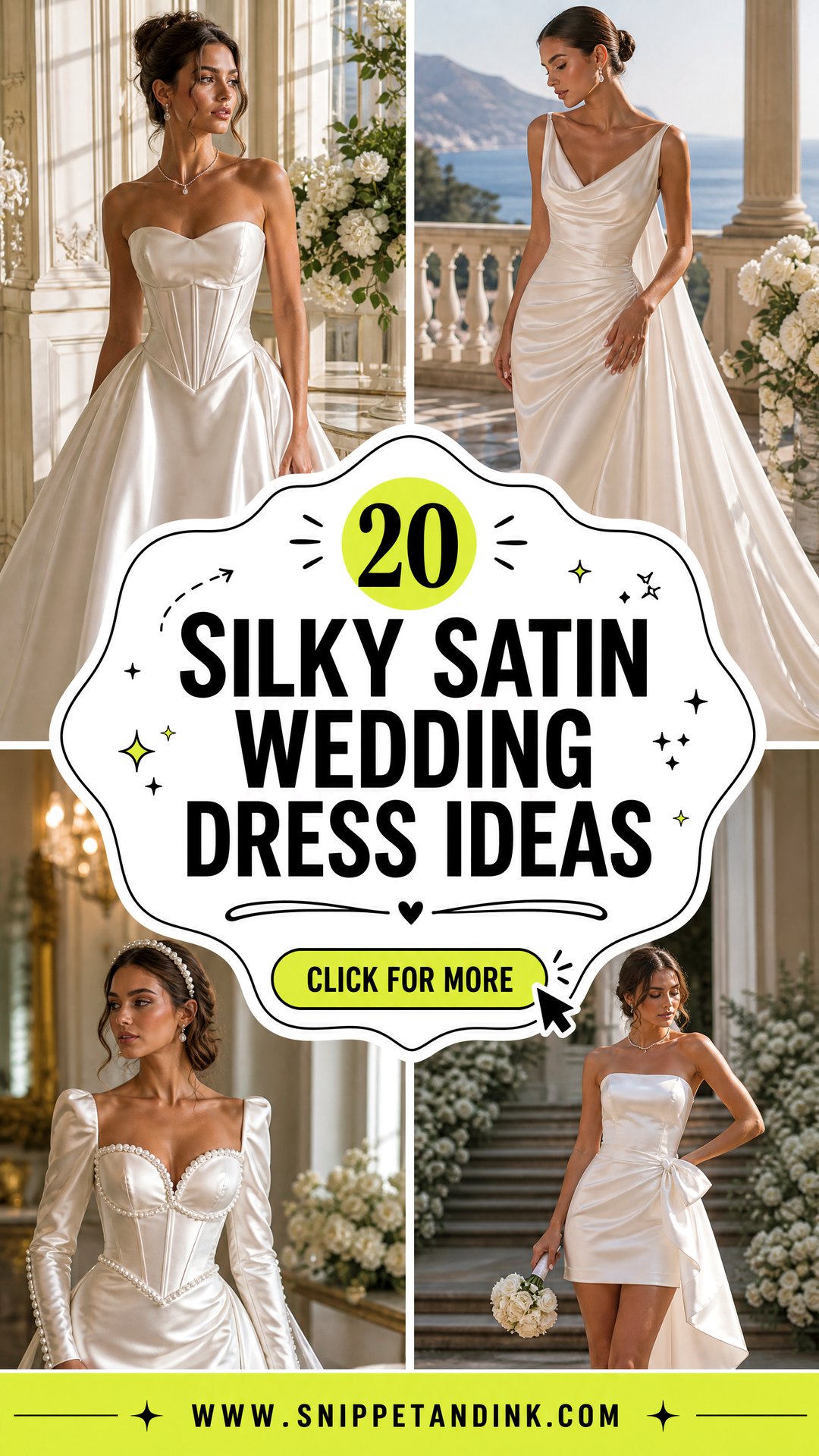
Satin is the fabric I see brides fall for and then get nervous about, usually at the same fitting. It reflects light, so it makes a plain silhouette look finished, but that same shine shows every seam, every pull at the zip and every line underneath. A heavy satin can hold a dramatic skirt on its own; a fluid one will skim the body and move with you. Below are twenty ways to wear it, from bias-cut slips to ball gowns and a short reception mini, with the styling I’d pair with each and the fit checks I’d make before anything gets hemmed.
Satin Weights and What Each One Does to a Silhouette
Satin isn’t a fiber, it’s a weave. The threads float over several others before tucking under, which is what gives one side that smooth shine. So a silk satin, a polyester satin and a crepe-back satin can all be called satin and behave completely differently. The first thing I do with a bride is put two or three weights in her hands, because the weight decides which shapes on this list will work.
- Duchess satin is heavy and dense. It holds a ball gown, a basque waist or a sculpted bow on its own and creases less than lighter weights, but it’s warm to wear in summer.
- Charmeuse is light and fluid, the slip-dress fabric. It drapes on the bias and moves with you, and it also shows every line underneath and marks easily with water.
- Crepe-back satin has a matte crepe on one side and shine on the other. It sits between the two and forgives a little more, which suits A-lines and draped styles.
- Polyester satin resists creasing better than silk and costs less, but it can look glassier in flash photos and breathes less in a hot room.
My rule of thumb: the more structure the design needs, the heavier the satin should be. If a gown you love is shown in a light satin with a full skirt, ask how the skirt is supported, because something underneath is doing that work and it changes how the dress feels by evening.
1. Simple Slip Satin Wedding Dress
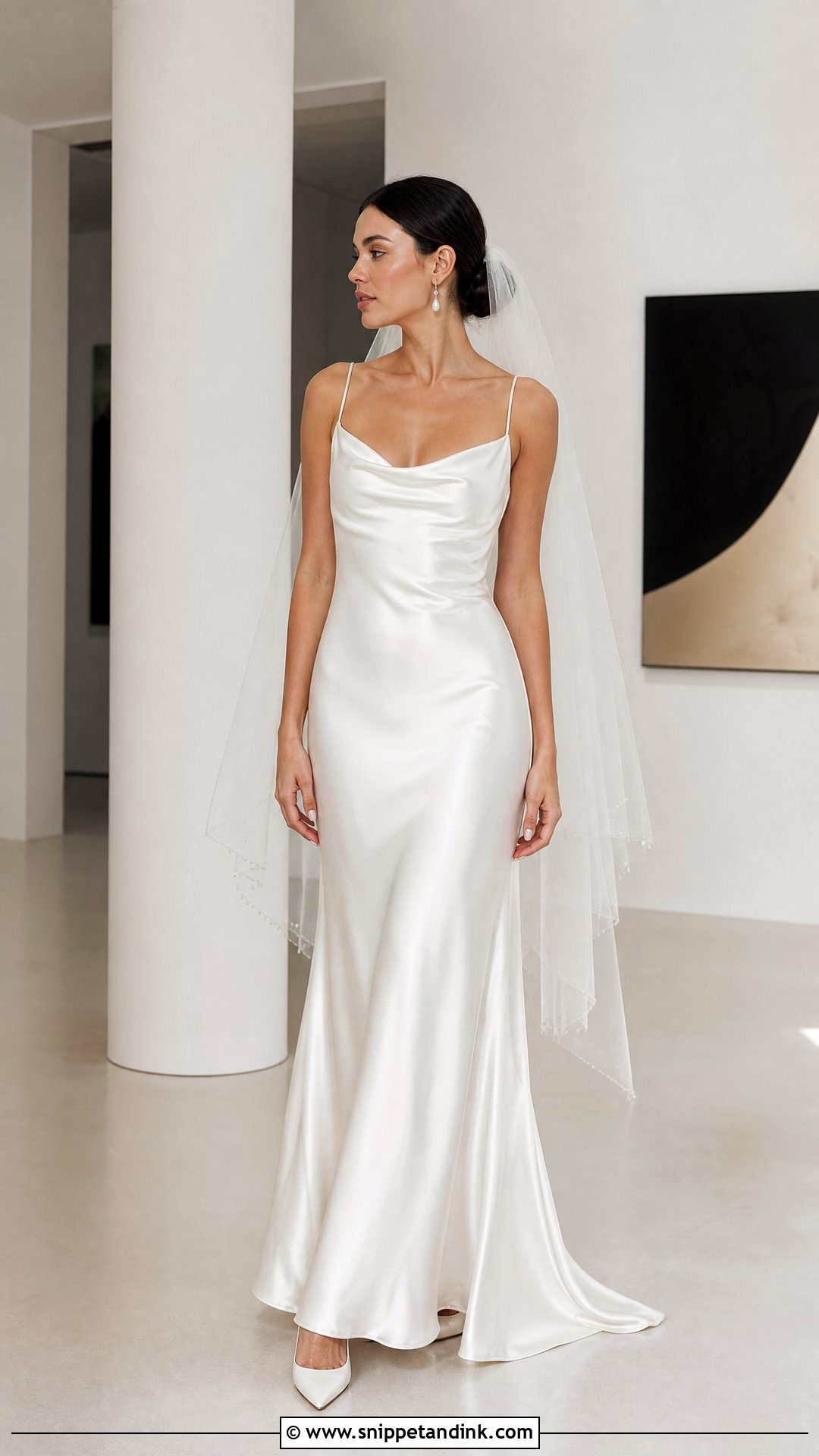
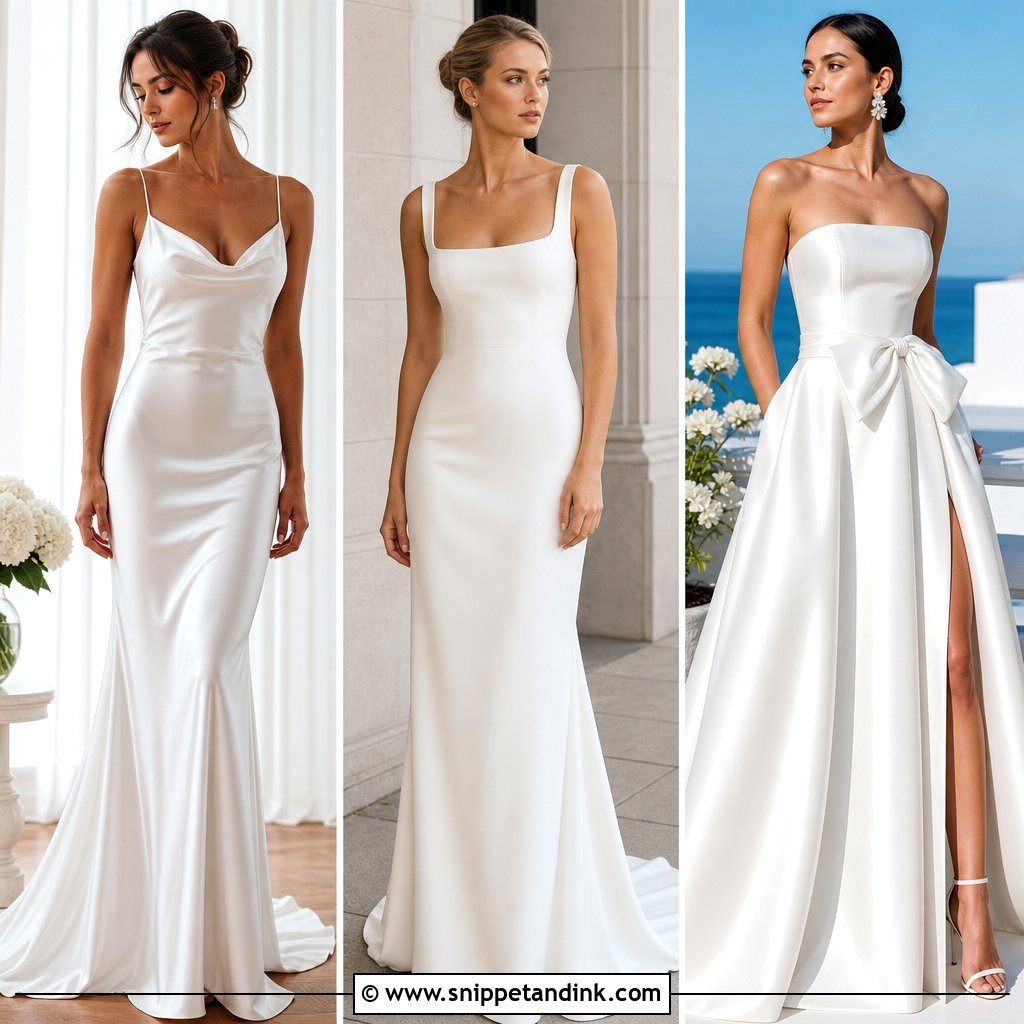
The slip is the hardest satin dress to fit well, precisely because there’s nothing on it. A bias cut drapes diagonally across the grain, which is why it skims instead of clings, but it also grows slightly when it hangs, so I always let a slip rest on the hanger for a day before the final hem. Keep the straps slim and the neckline soft, then add a low back or a short train if you want some ceremony to it. Pointed ivory pumps, pearl drops, a fingertip veil with a narrow satin edge and a smooth low bun finish it. Underneath, wear smooth, close-fitting pieces in your skin tone; lightweight satin shows the edge of anything else. It suits a gallery, a rooftop or a small destination wedding where the room isn’t competing with you.
2. Strapless Satin Ball Gown Wedding Dress
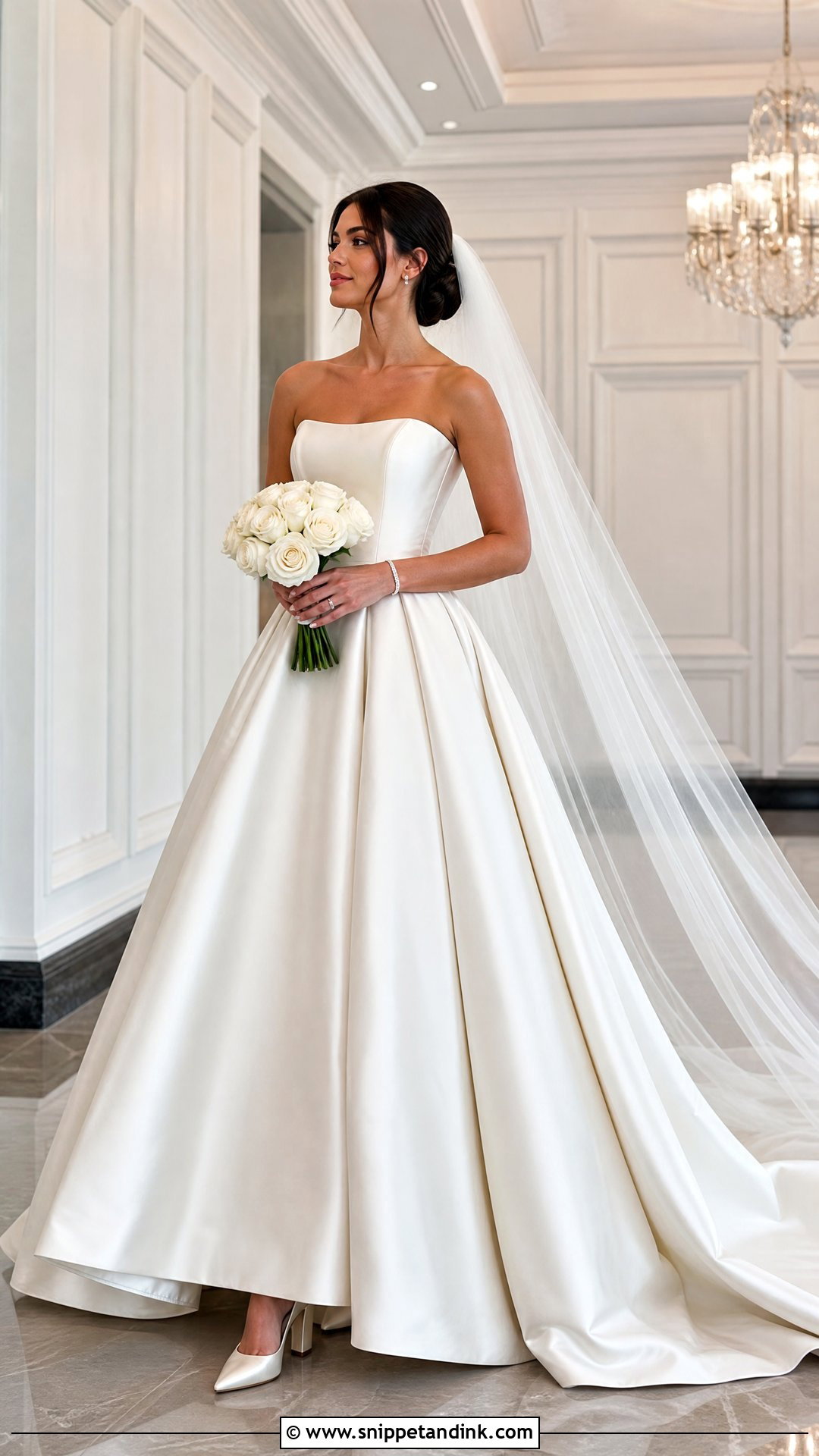
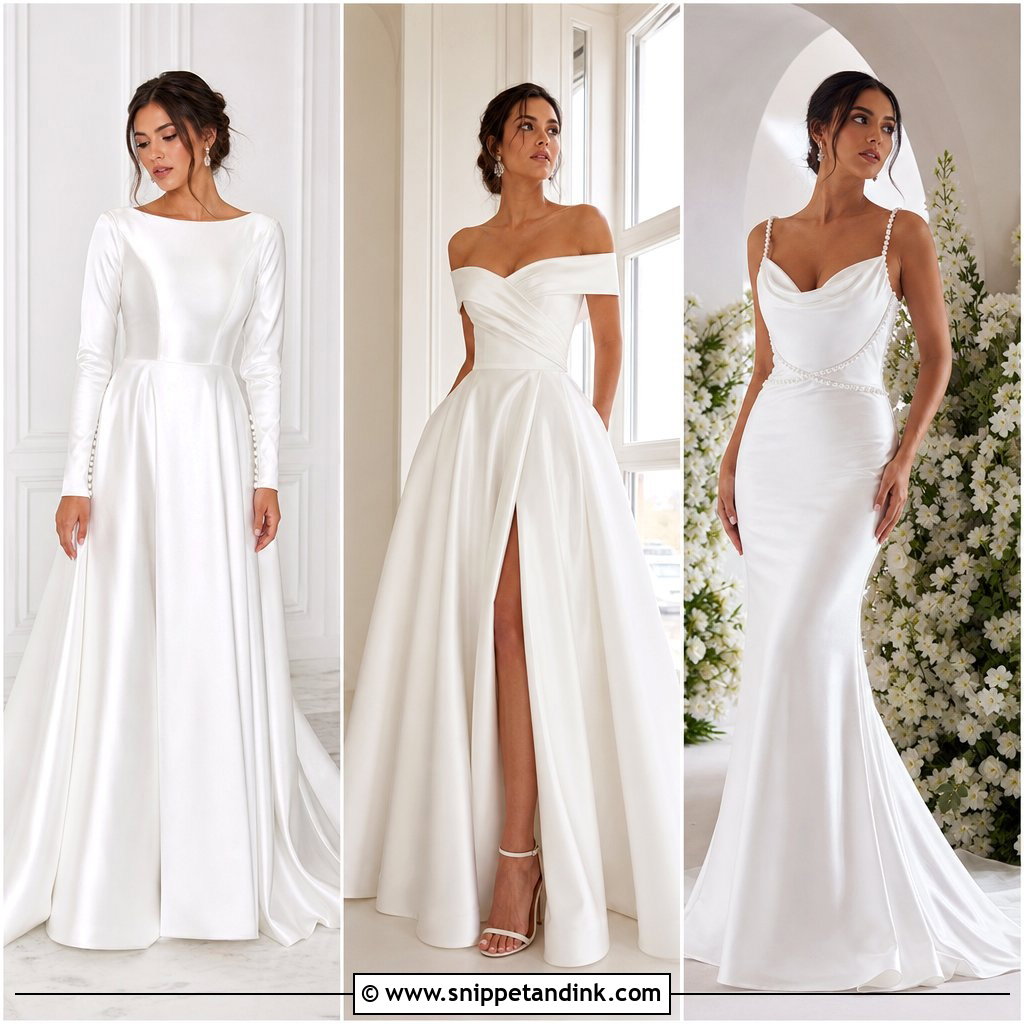
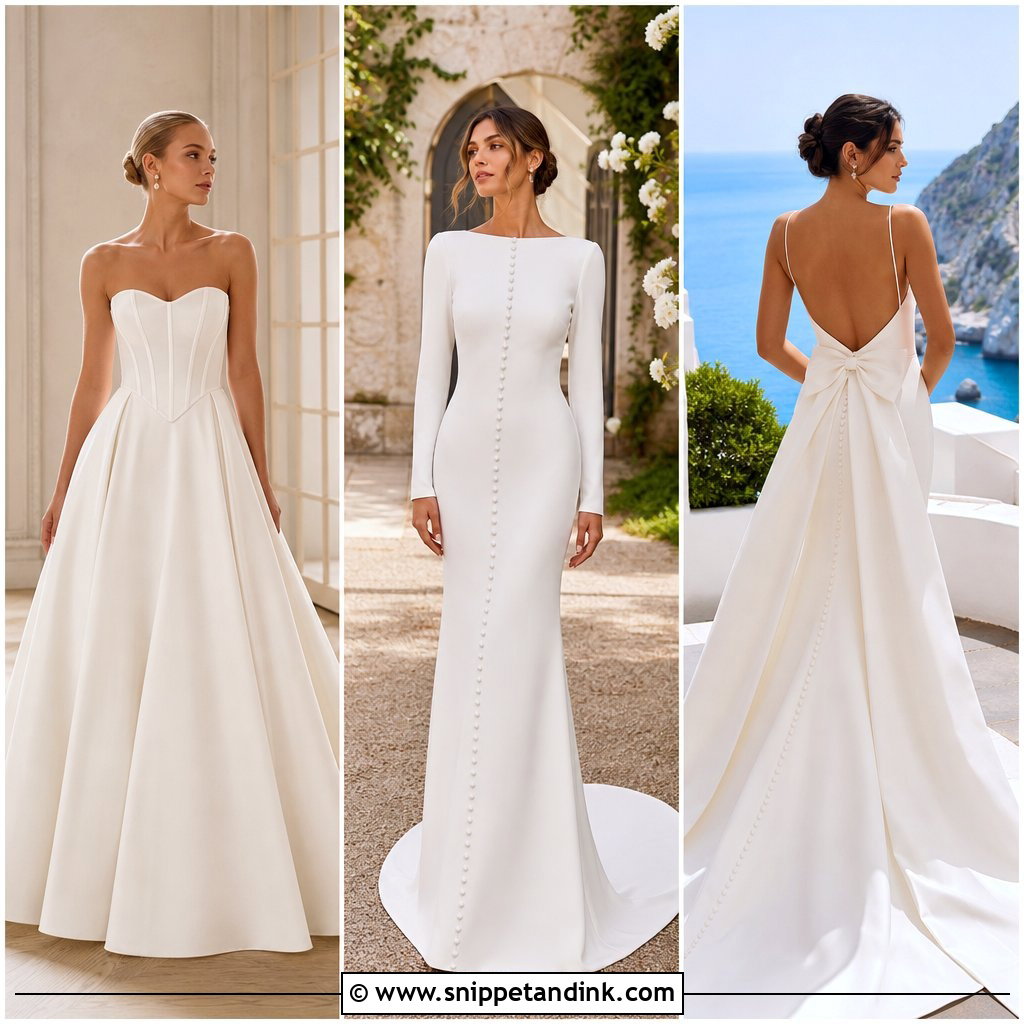
A strapless satin ball gown lives or dies on its inside. Before I look at the skirt, I check the boning and whether there’s a waist stay, a grosgrain band sewn inside that anchors the bodice so the neckline doesn’t creep down every time you lift your arms. The pleats should fall cleanly from the waist without bunching at the hips. An ivory cathedral veil carries the drama further, especially over a long train. Crystal studs, a fine tennis bracelet and block heels hidden under the skirt keep you steady, and a polished chignon shows off the shoulders. Petite brides can ask the shop to reduce the skirt’s petticoat layers; you keep the shape without disappearing into it.
3. Cowl Neck Satin Wedding Dress
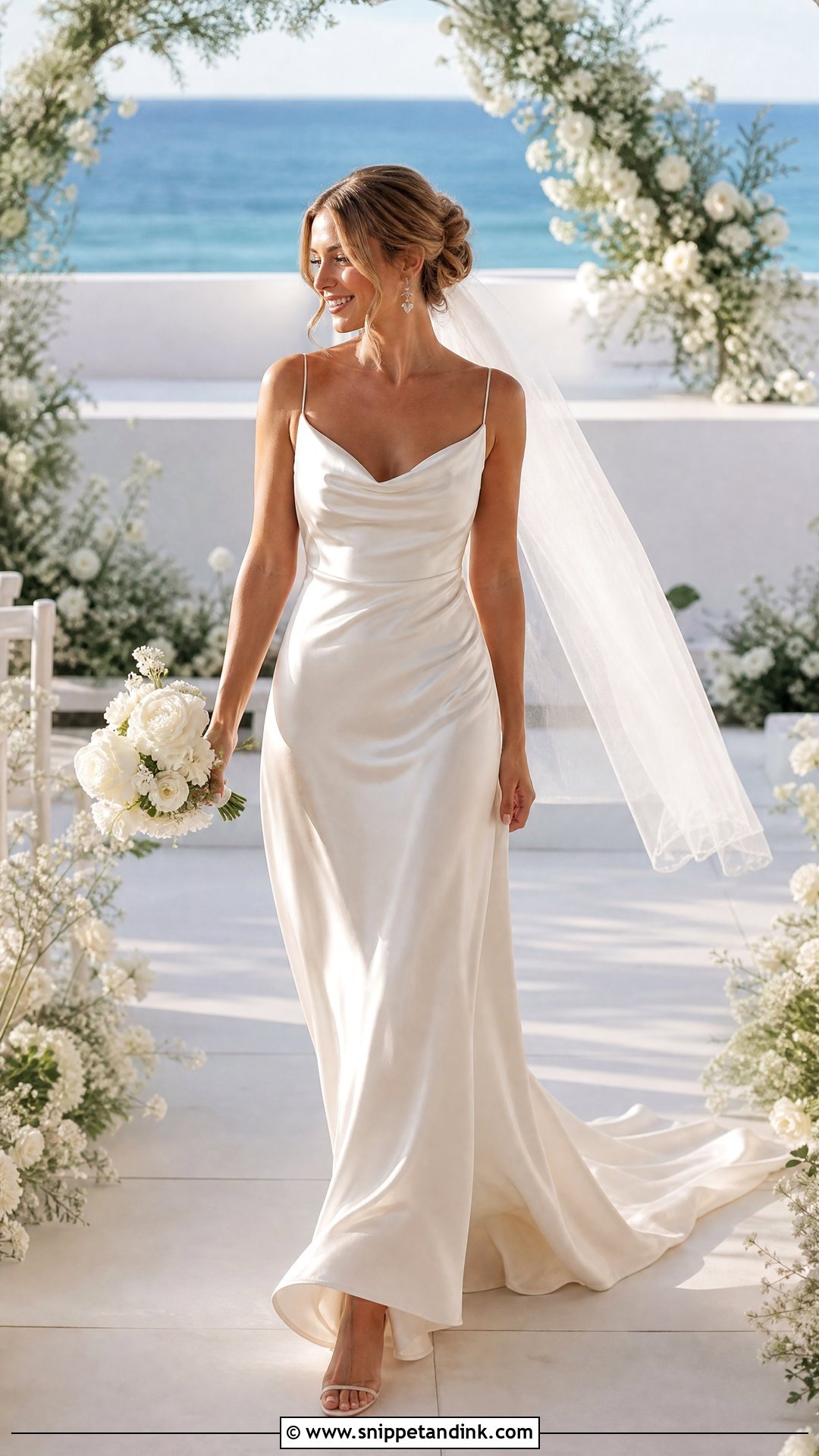
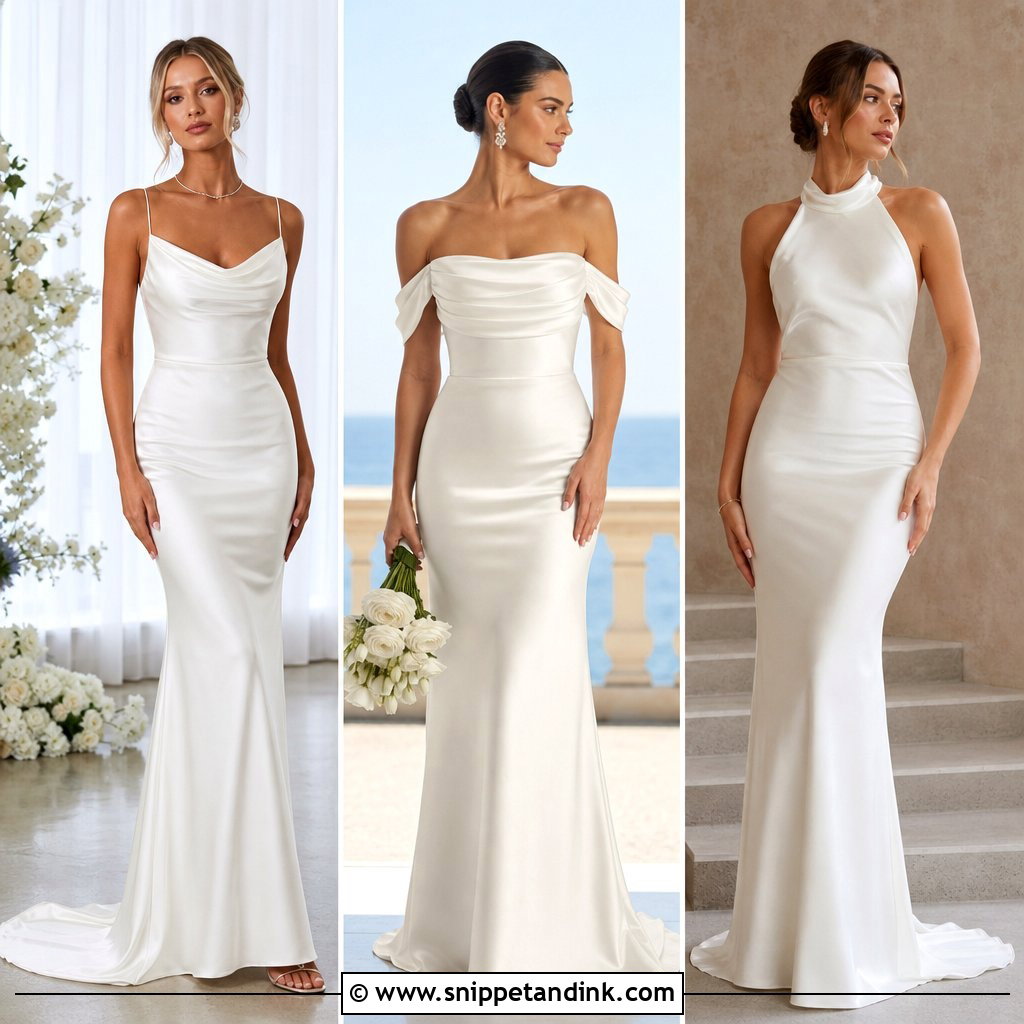
A cowl is just a bias-cut drape that falls into folds, and the depth of those folds is what I adjust most at fittings. Too deep and it gapes when you lean to sign the register; too shallow and it looks like a mistake. Narrow straps and a defined waist keep it from reading as loungewear. I’d pair it with strappy ivory heels, teardrop earrings and a light chapel veil tucked under a loose updo, and a fine back necklace if the dress opens low behind. Keep the bouquet to white flowers and greenery. Bend forward in the mirror at your fitting; that’s the moment a cowl shows what it’ll do all day.
4. Off Shoulder Satin Wedding Dress
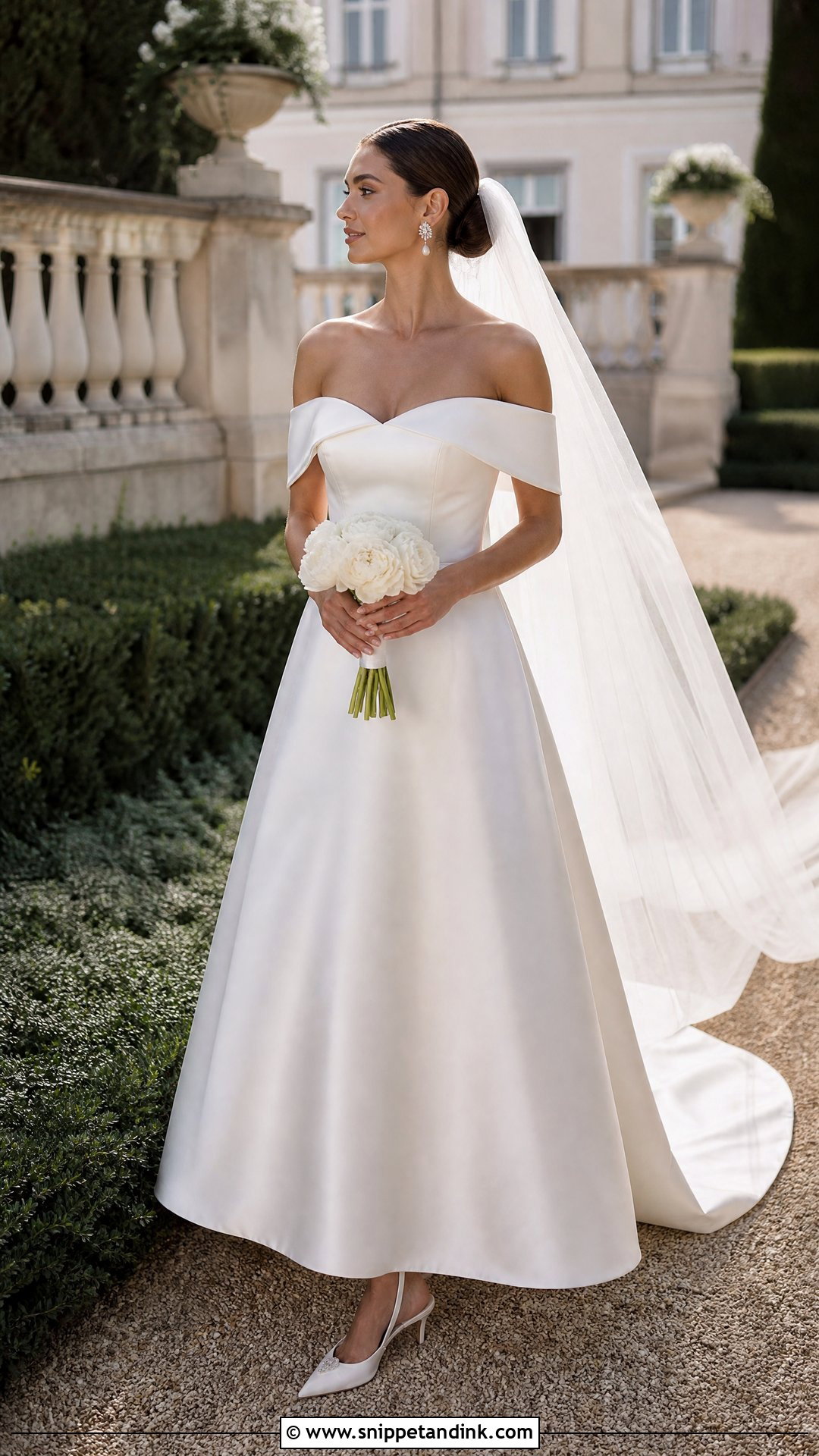
Off-shoulder bands frame the collarbones in a way satin does particularly well, because the folded fabric catches light along the edge. The question I ask every bride is whether the bands are holding anything up or just sitting there. If the bodice is boned and does the work, you can dance; if the bands carry weight, you’ll be hitching them by the speeches. A softly flared A-line skirt balances the shoulder line. Pearl-and-crystal earrings, slingbacks and a long sheer veil starting below a sleek bun are enough. Skip the necklace when the neckline has sculpted folds, and the satin gets to be the detail.
5. Long Sleeve Satin Wedding Dress
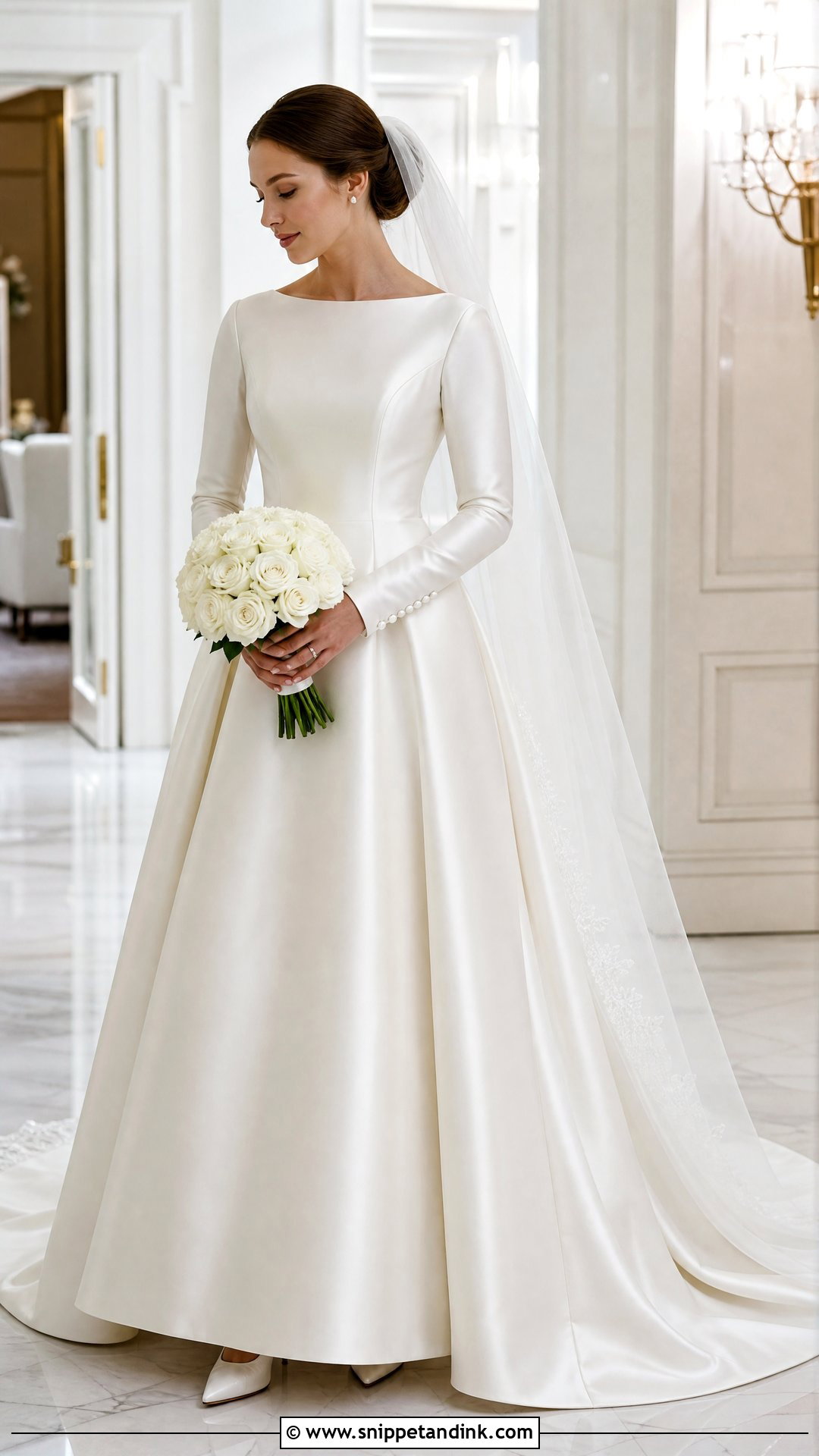
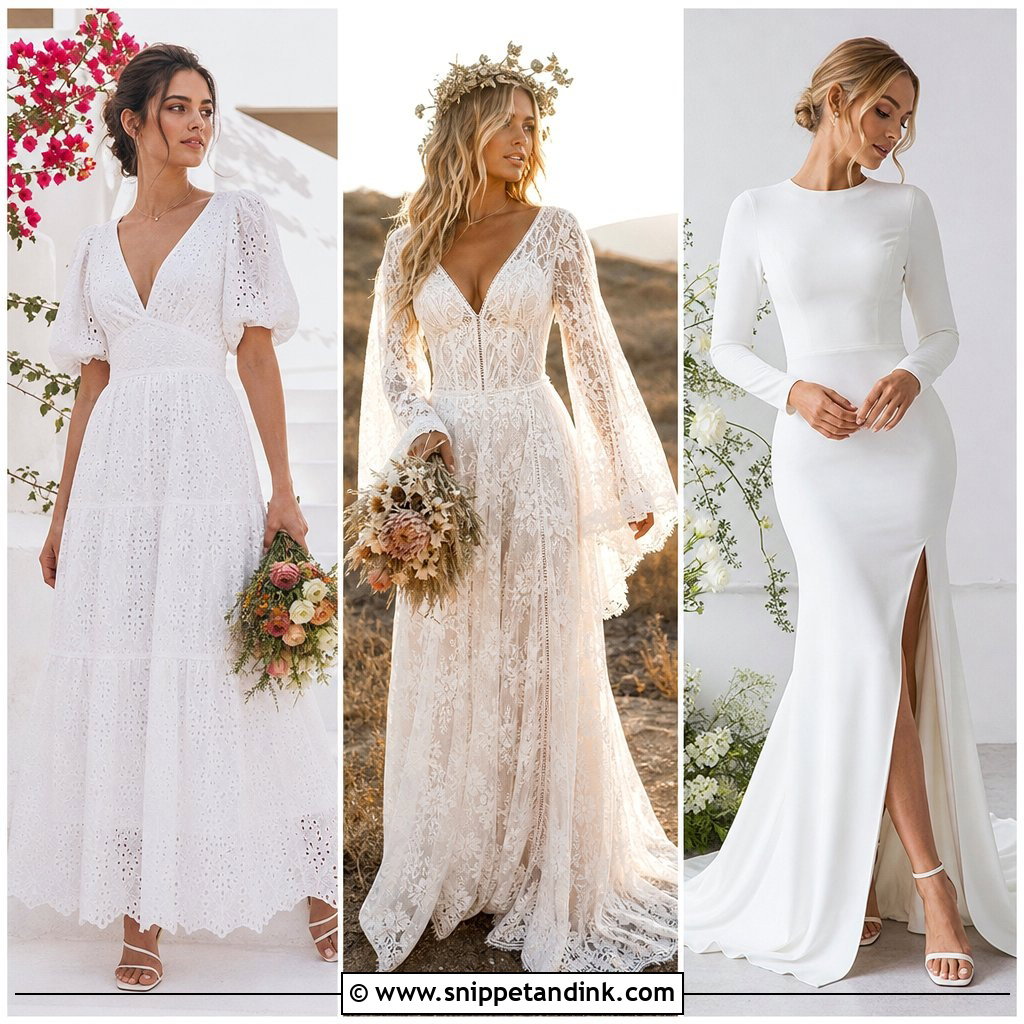
Long satin sleeves are where I see the most comfort complaints, so I test them first. Heavy satin has no give, and a sleeve cut slim from shoulder to wrist can stop you raising a glass, never mind hugging anyone. Ask whether the sleeve has a little stretch in the lining or shaping at the elbow. Covered buttons at the cuff look traditional; gathered sleeves are softer and more forgiving. A V-neck or bateau neckline stops the top half feeling heavy. Closed-toe pumps, pearl studs, a chapel veil and a neat low bun finish it, and a tailored cape gives you an outdoor layer for a winter hotel, museum or older venue.
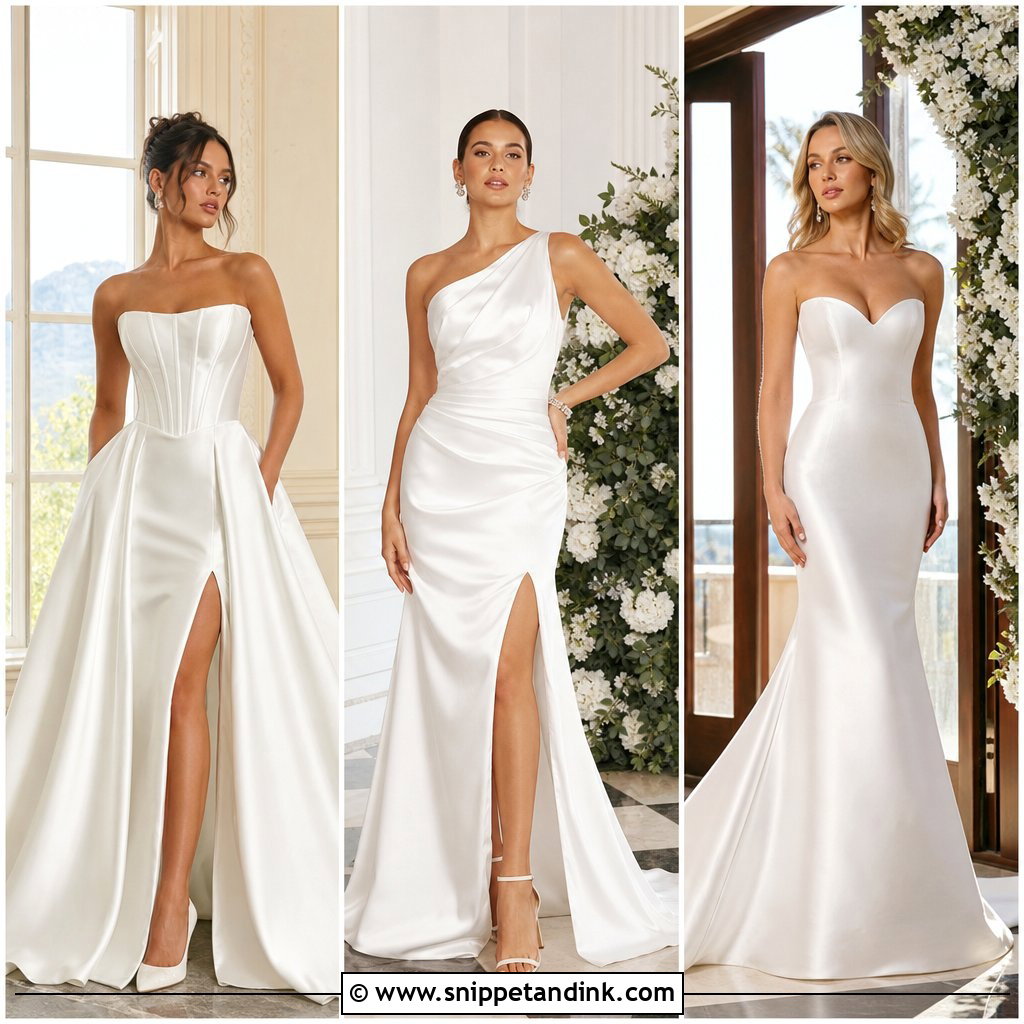
6. Satin Mermaid Wedding Dress
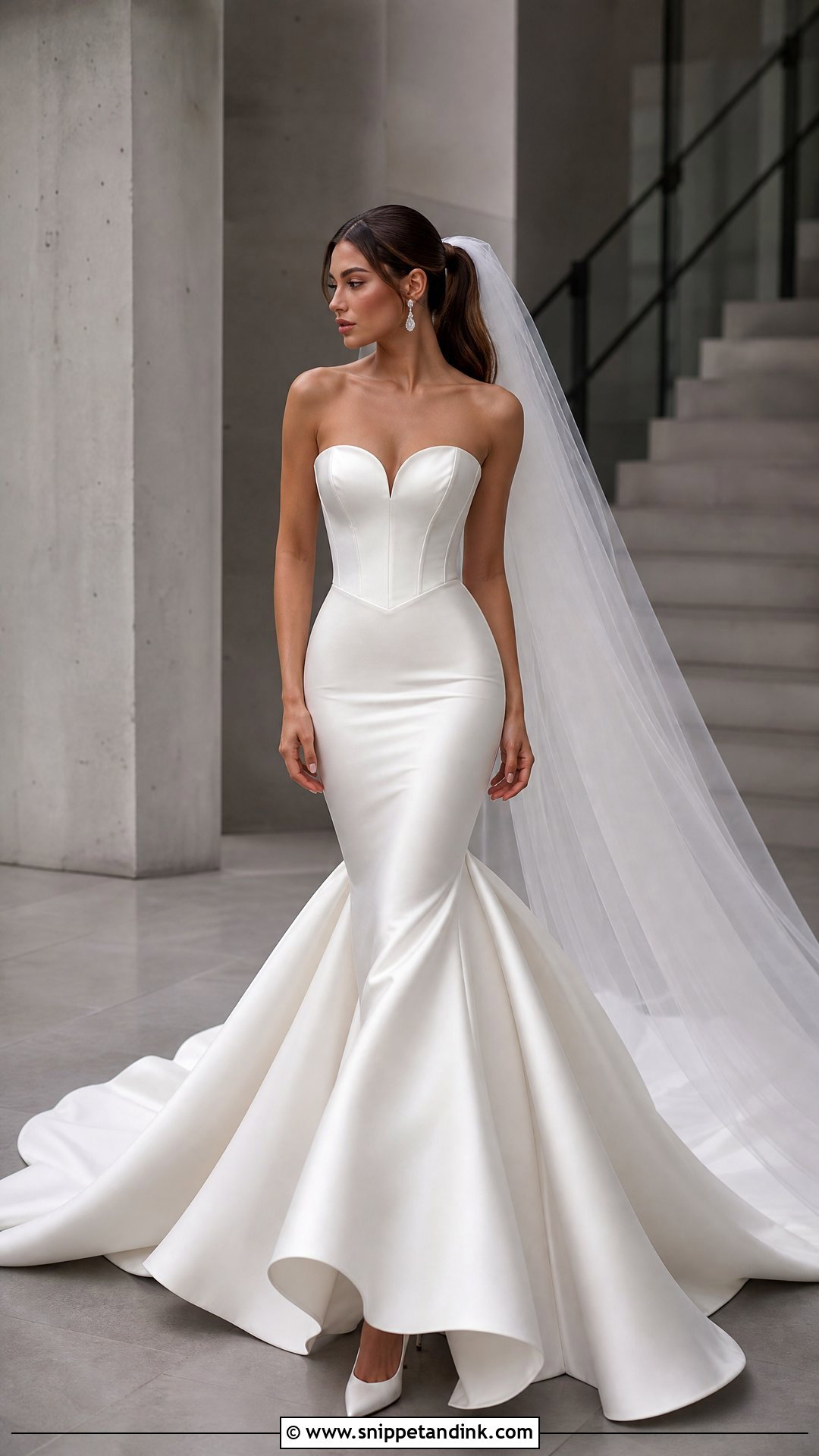
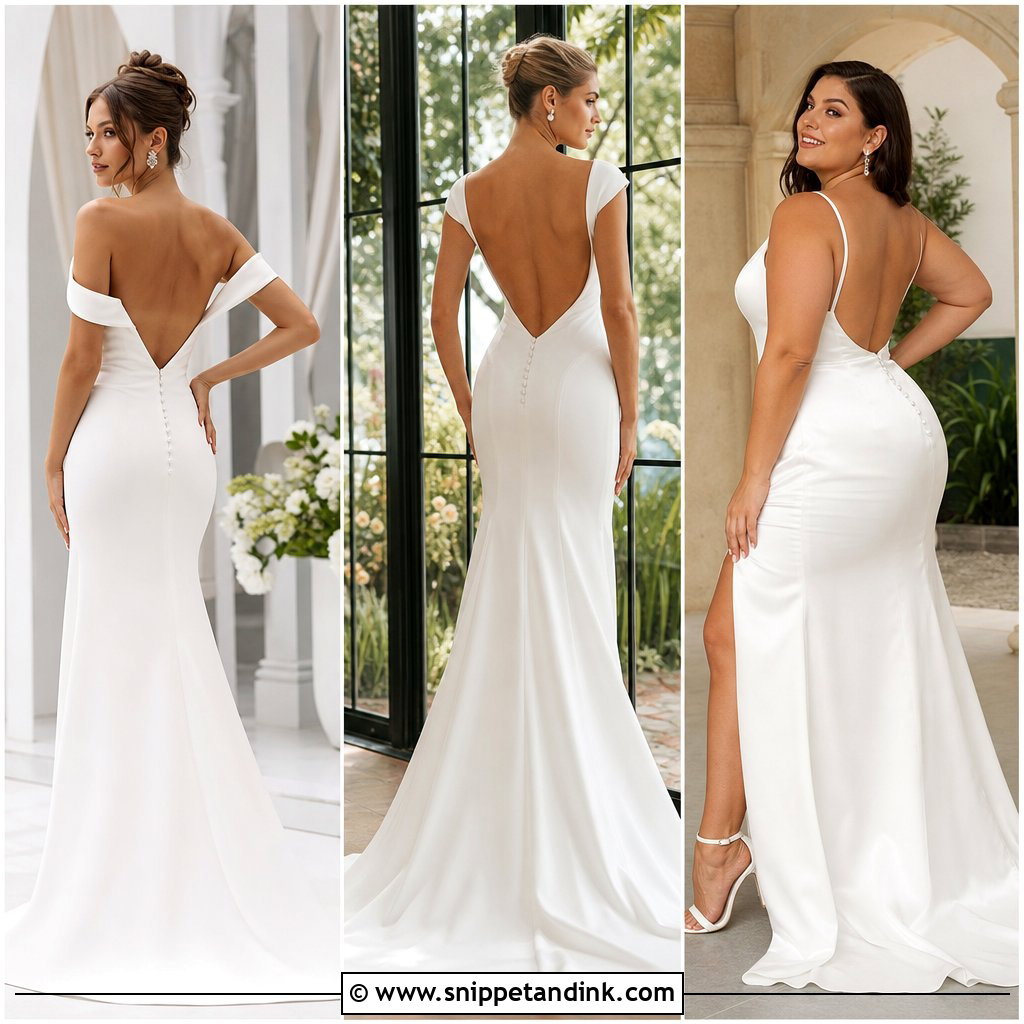
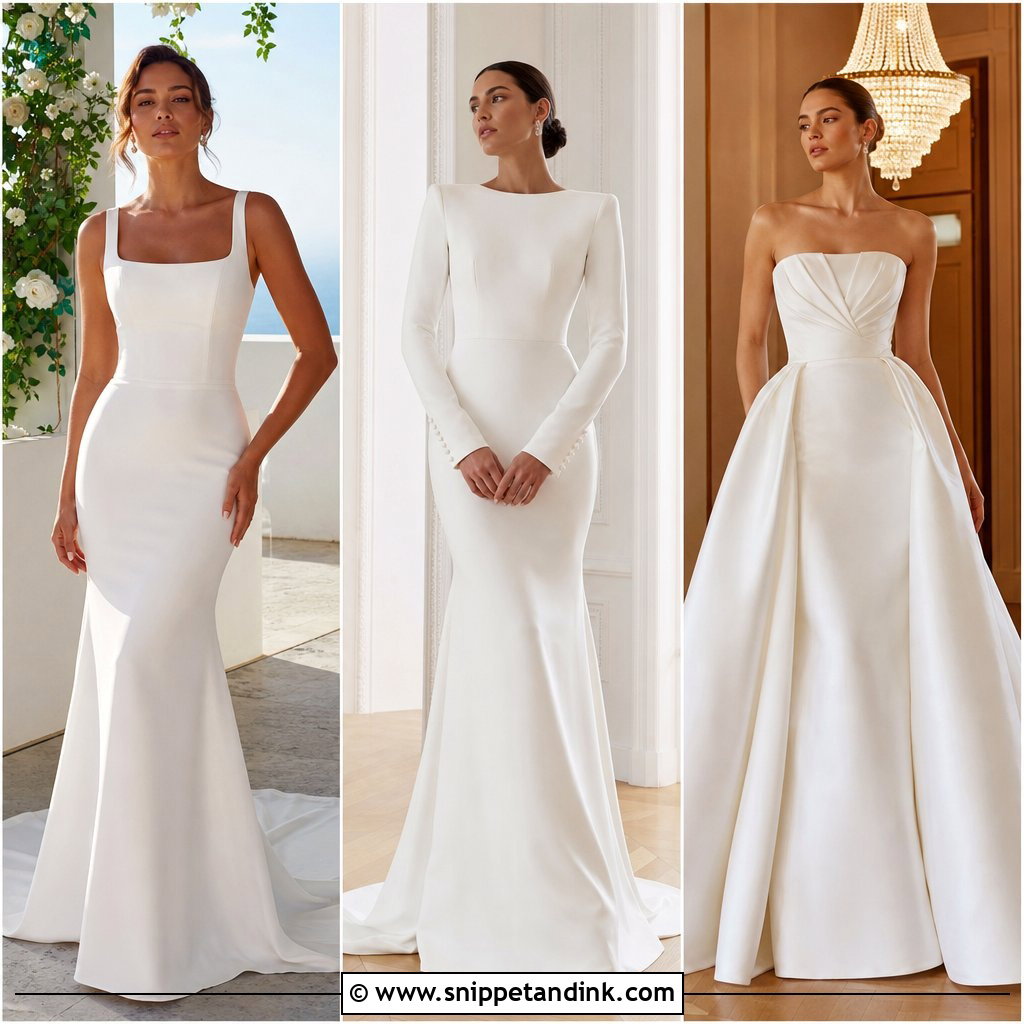
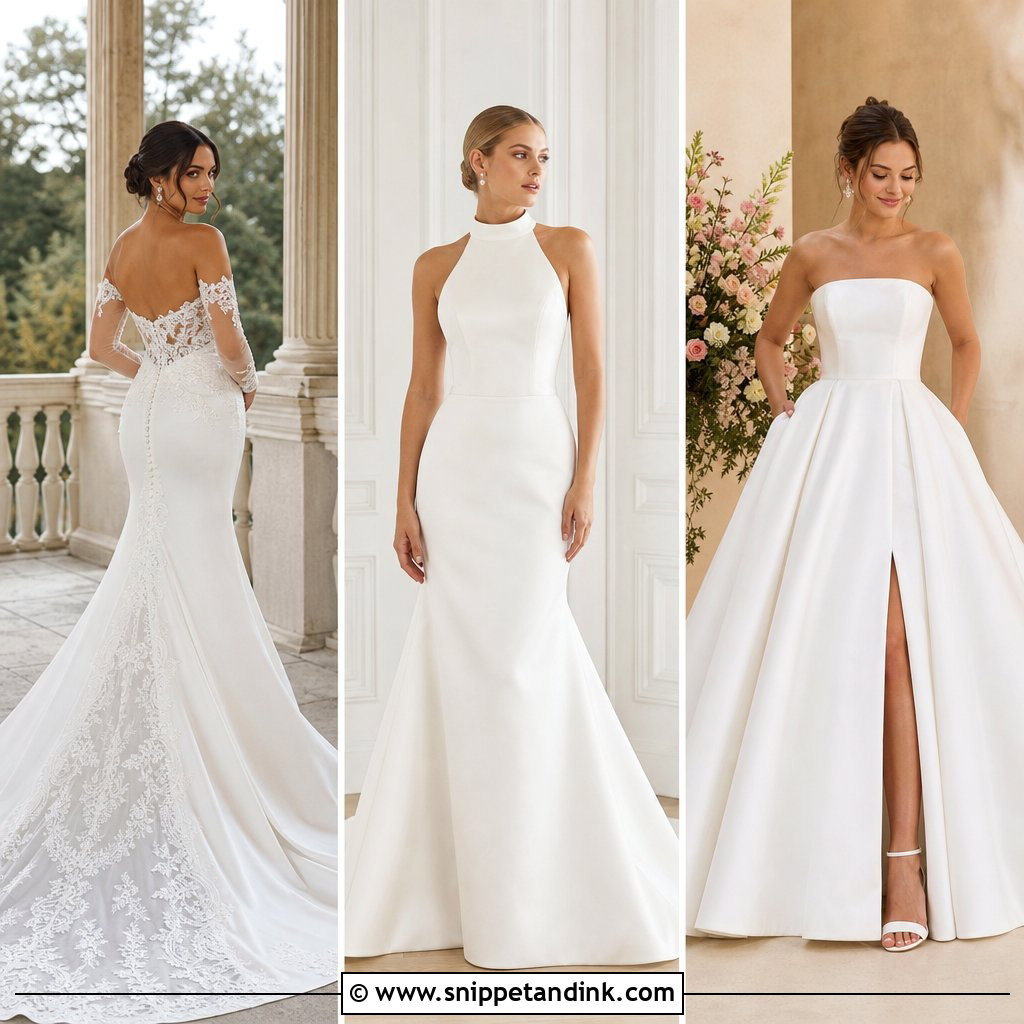
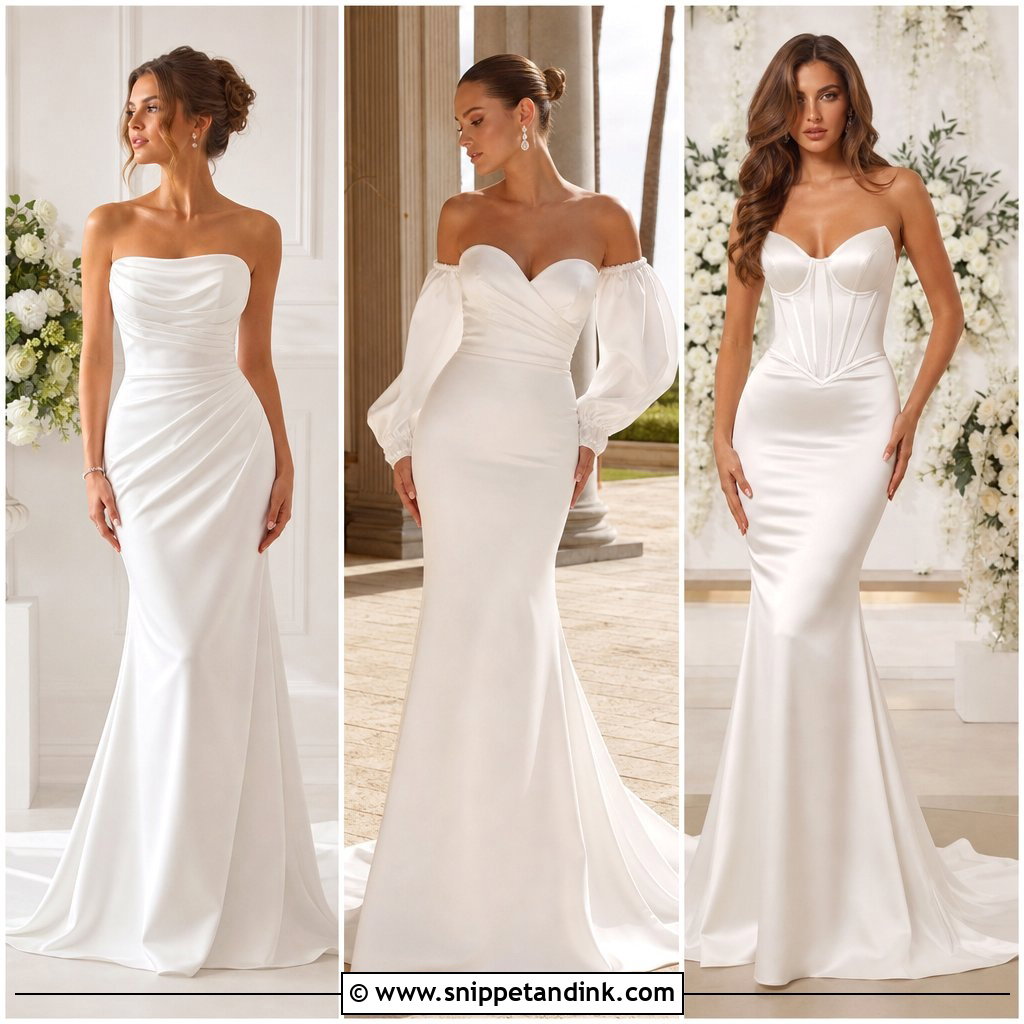
On a mermaid, satin shows the tailoring more honestly than any other fabric. Lace and beading hide a seam that’s slightly off; smooth satin turns it into a visible ripple across the hip. I look for curved panel seams and decent boning, then check where the flare starts: right at the knee looks sharpest, but a few inches lower is where most brides can still take a full step. Sit, climb a stair and dance at your fittings, not just stand. A long veil, simple drops, pointed pumps and a sleek ponytail or sculpted bun keep the line clean. For extra drama, a sweeping train or detachable back panel does more than added embellishment would.
7. A Line Satin Wedding Dress
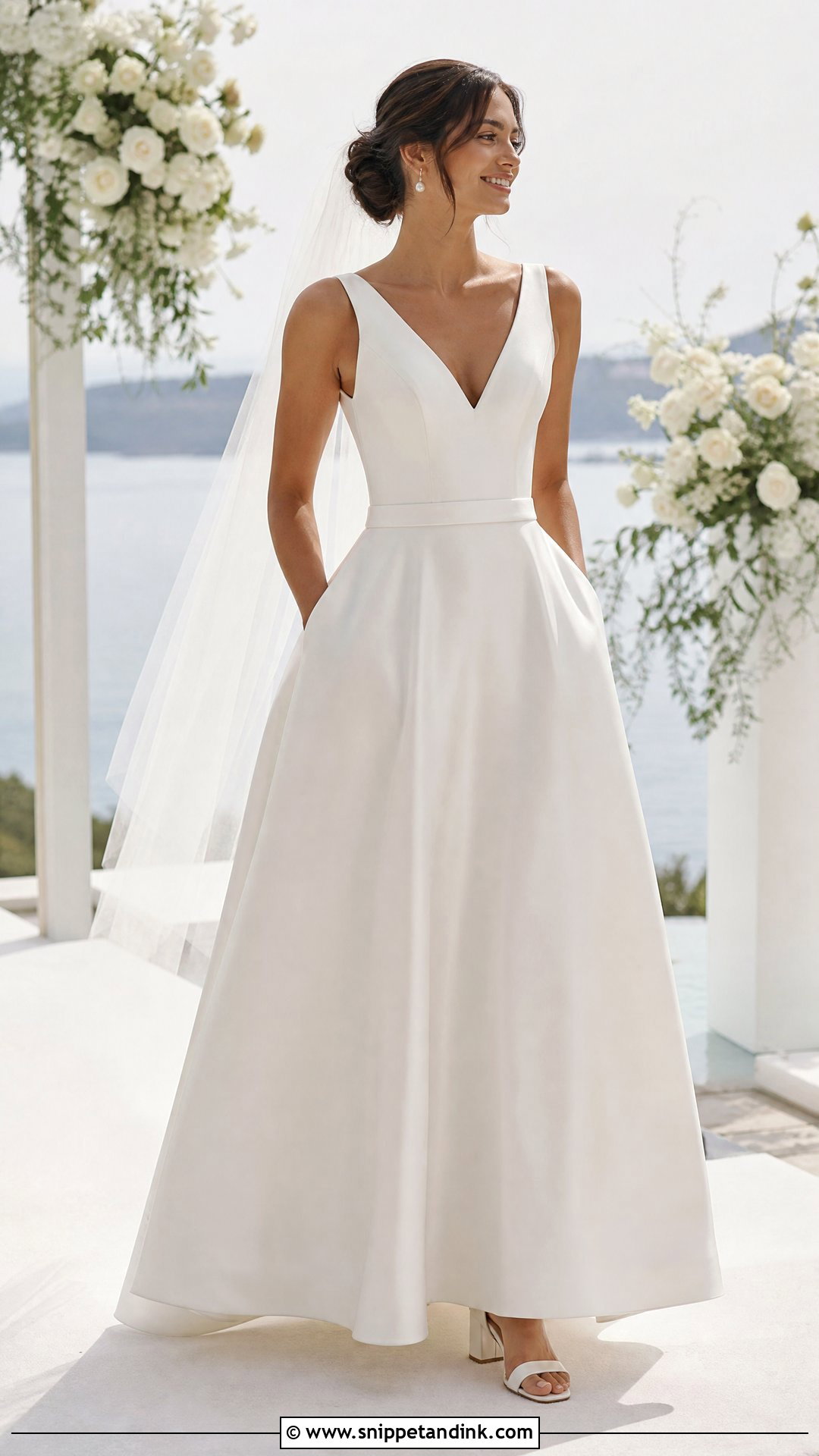
The A-line satin wedding dress is the shape I reach for when a bride isn’t sure yet, because it moves more than a mermaid and asks less of you than a ball gown. A V or scoop neck lengthens the upper body, and seams or a slim satin band set the waist. Pockets are worth having only if they lie flat; in stiffer satin, a pocket can push the skirt out at the hip. Pearl earrings, a soft tulle veil, mid-height block heels and a low textured bun keep it relaxed. It’s the most venue-proof shape on this list.
8. Square Neck Satin Wedding Dress
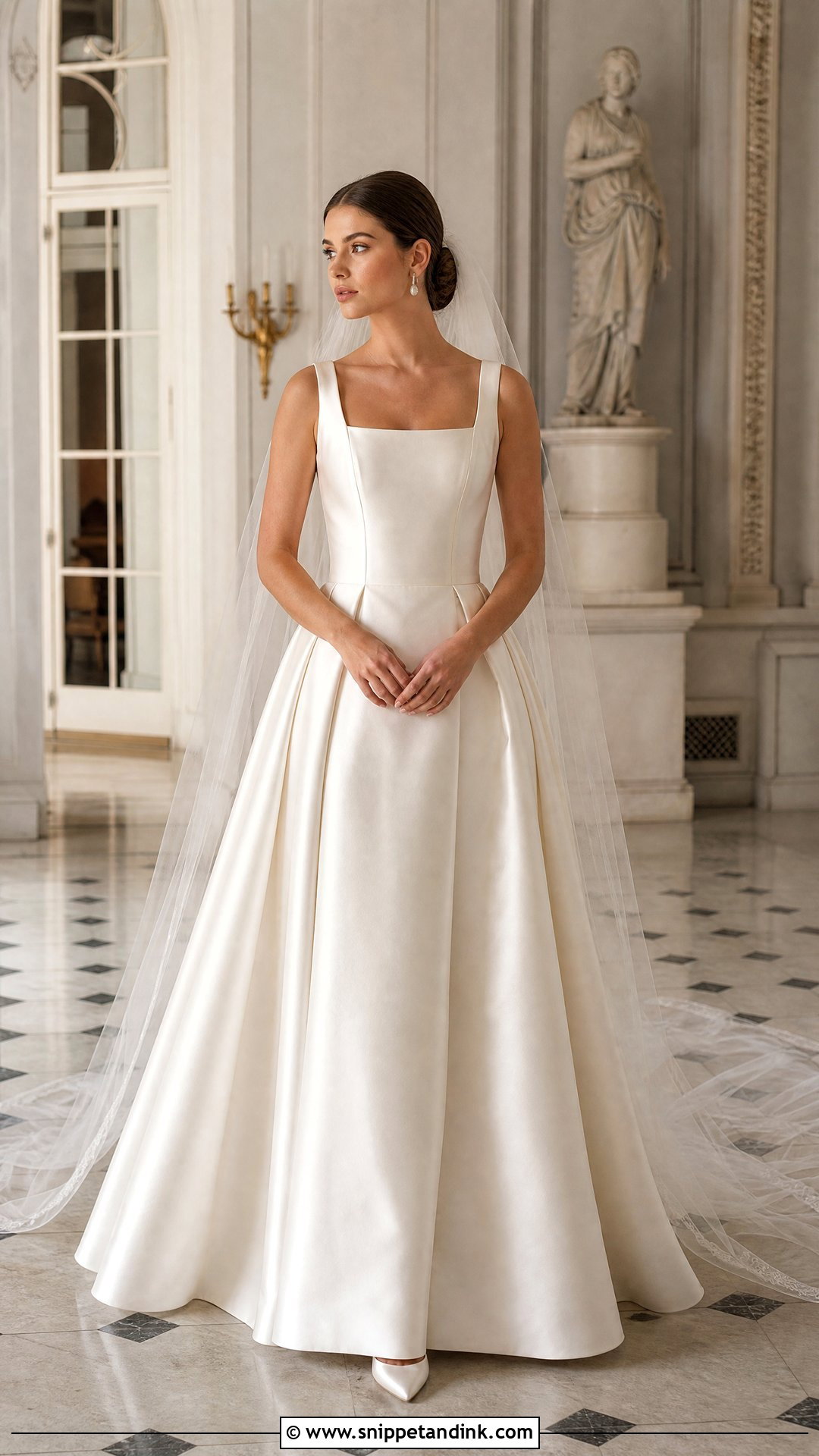
A square neckline looks tailored and slightly vintage, and it’s the one I check with the bride’s arms raised. If the edge lifts off the chest when you wave or hug, it needs taking in at the side seams, not the front. Wide straps, short sleeves or a sleeveless fitted bodice all suit it, and a softly structured A-line skirt keeps the proportions even. Small pearl hoops, ivory pumps and a sheer cathedral veil without a heavy border are plenty. A pendant can work, but keep it clear of the neckline’s edge so the two lines don’t fight. Hair goes into a center-parted low bun or smooth waves tucked behind the ears.
9. Halter Neck Satin Wedding Dress
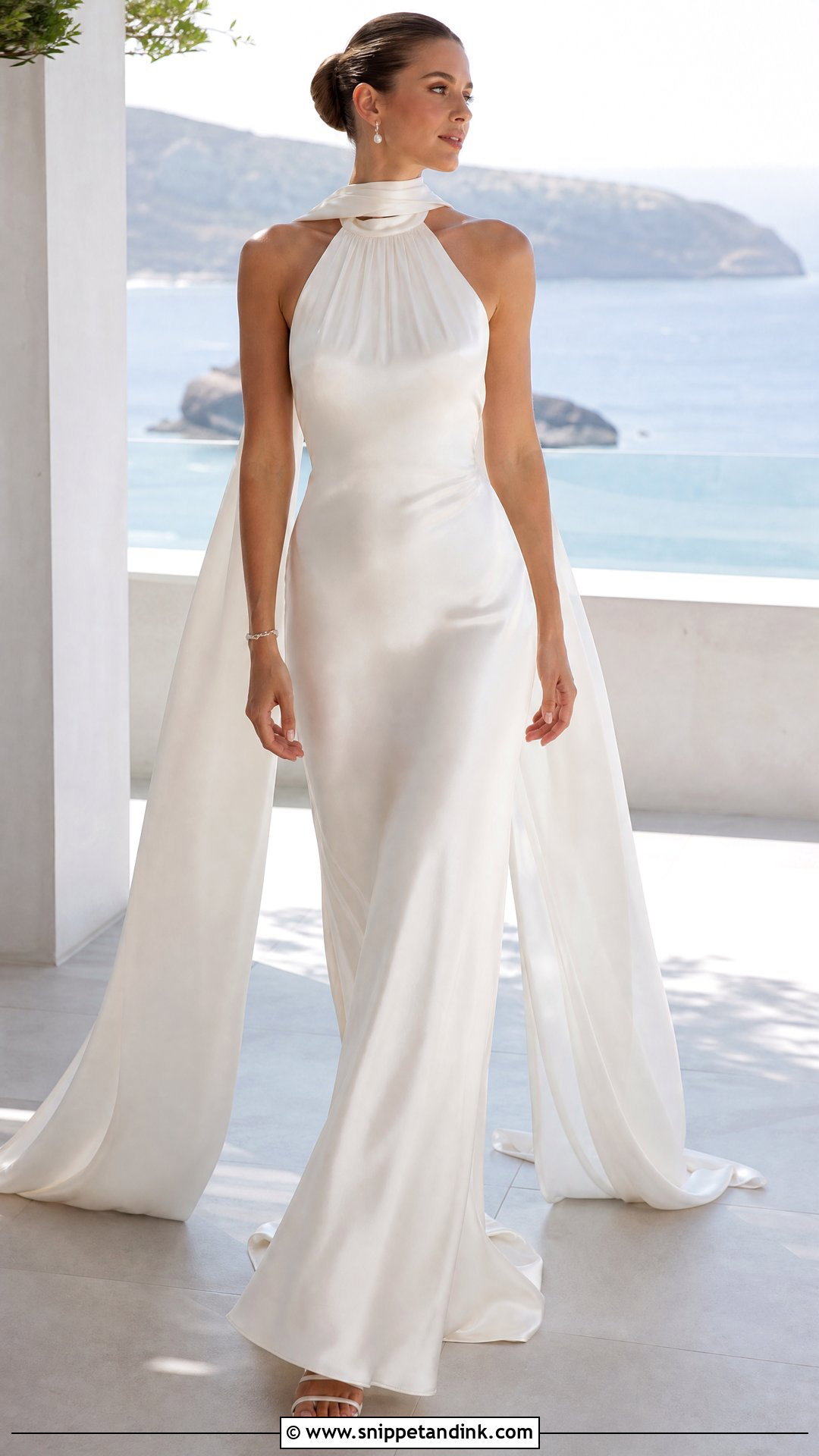
Halters draw the eye straight up through the shoulders, which makes them a strong choice for brides with defined arms and a weak one if you’d rather not have your back on show all evening. A gathered halter softens it; a high, structured one looks sharper. A low back keeps the silhouette light from behind. I’d skip the necklace entirely here and wear minimal drops, a slim bracelet, strappy heels and a veil set under an updo. For something less traditional, swap the veil for a long satin scarf pinned securely at the back of the neck. It belongs in a modern room, on a coast or at a destination wedding.
10. One Shoulder Satin Wedding Dress
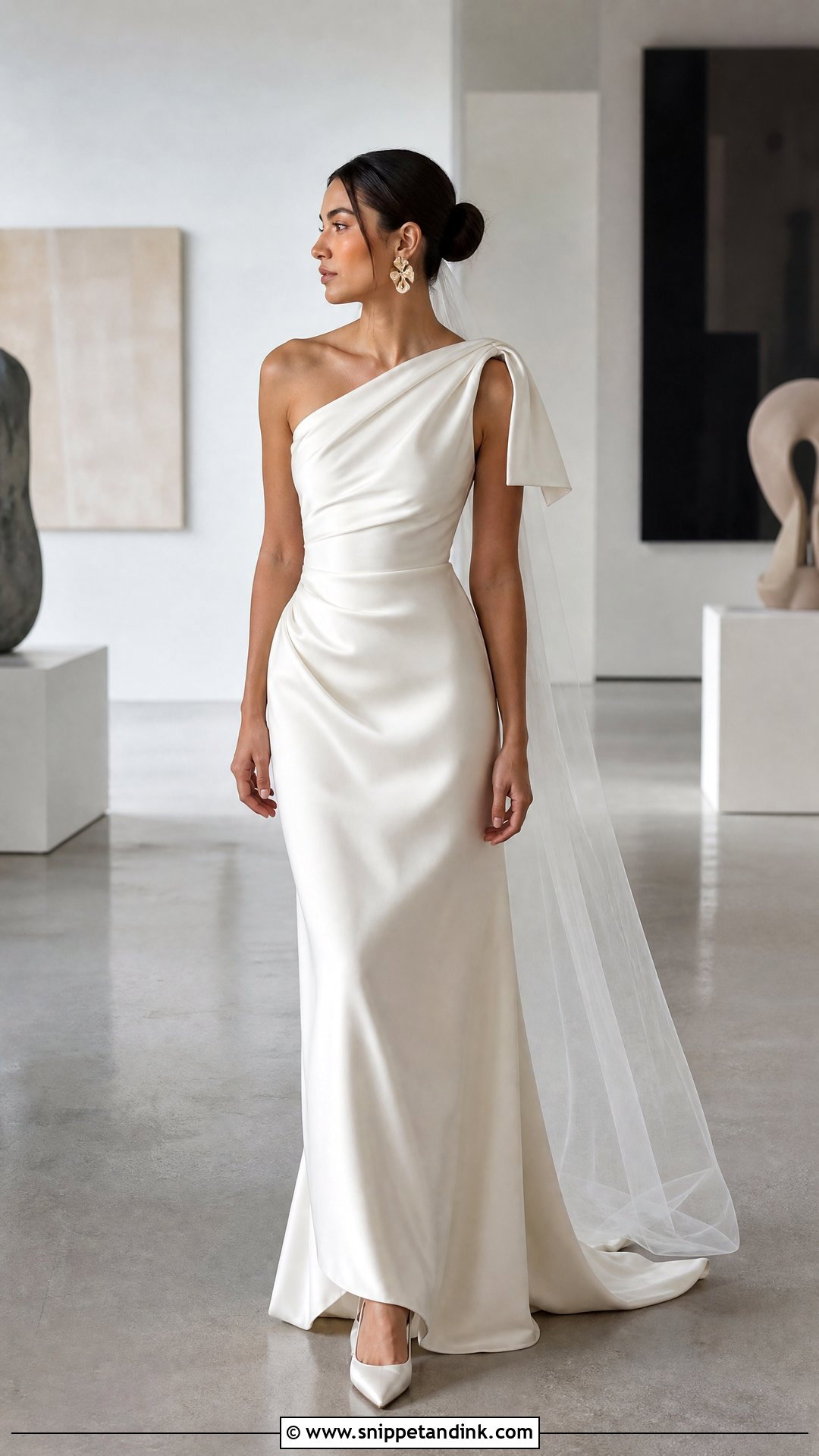
With a one-shoulder gown, the strap is decoration and the bodice is the engineering. I always check that it holds up on its own, because if that single shoulder is carrying the weight, it’ll drag the neckline sideways within an hour. The strap can be slim or draped into a soft fold, over a straight skirt, an A-line or a gentle fit-and-flare. Wear one statement earring on the bare side, a sleek bun, pointed pumps and a simple veil set low at the back. Keep bracelets quiet. It sits most naturally in a museum, a rooftop or a stylish restaurant.
11. Corset Satin Wedding Dress
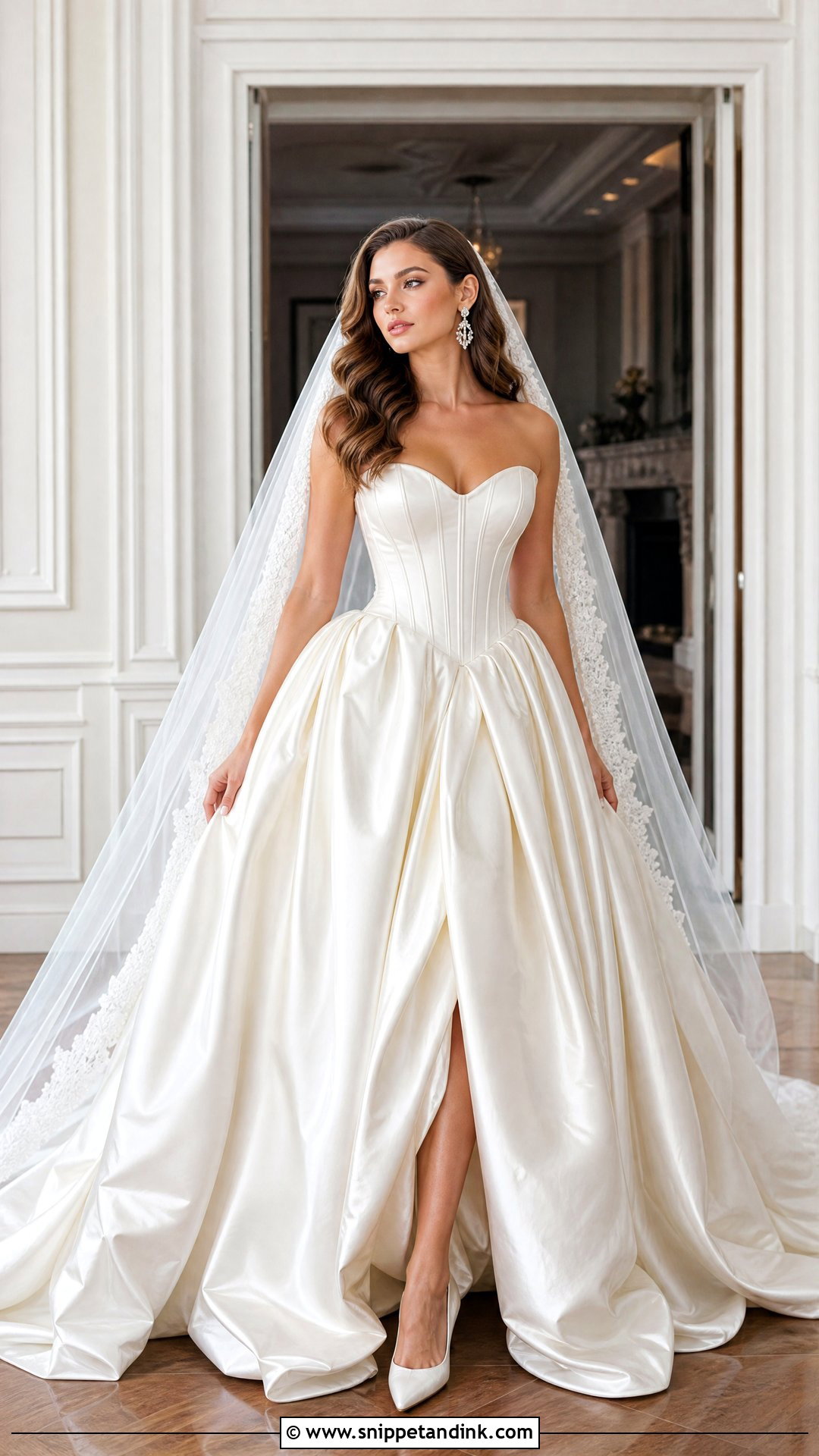
A corset satin wedding dress gives you a defined waist, but satin will show whether the corset was built well. Look at the seams from the side: they should curve smoothly without ridges where the boning sits. Supportive cups make a real difference if you’re going strapless. A lace-up back lets me adjust the fit on the morning if you’ve lost or gained a little; a zip with buttons looks cleaner but can’t be tweaked. Pair it with a full or gathered skirt, a cathedral veil, delicate crystal earrings, satin pumps and a tidy bun or soft vintage waves. And breathe deeply and sit down at the final fitting; if you can’t, it’s too tight.
12. Basque Waist Satin Wedding Dress
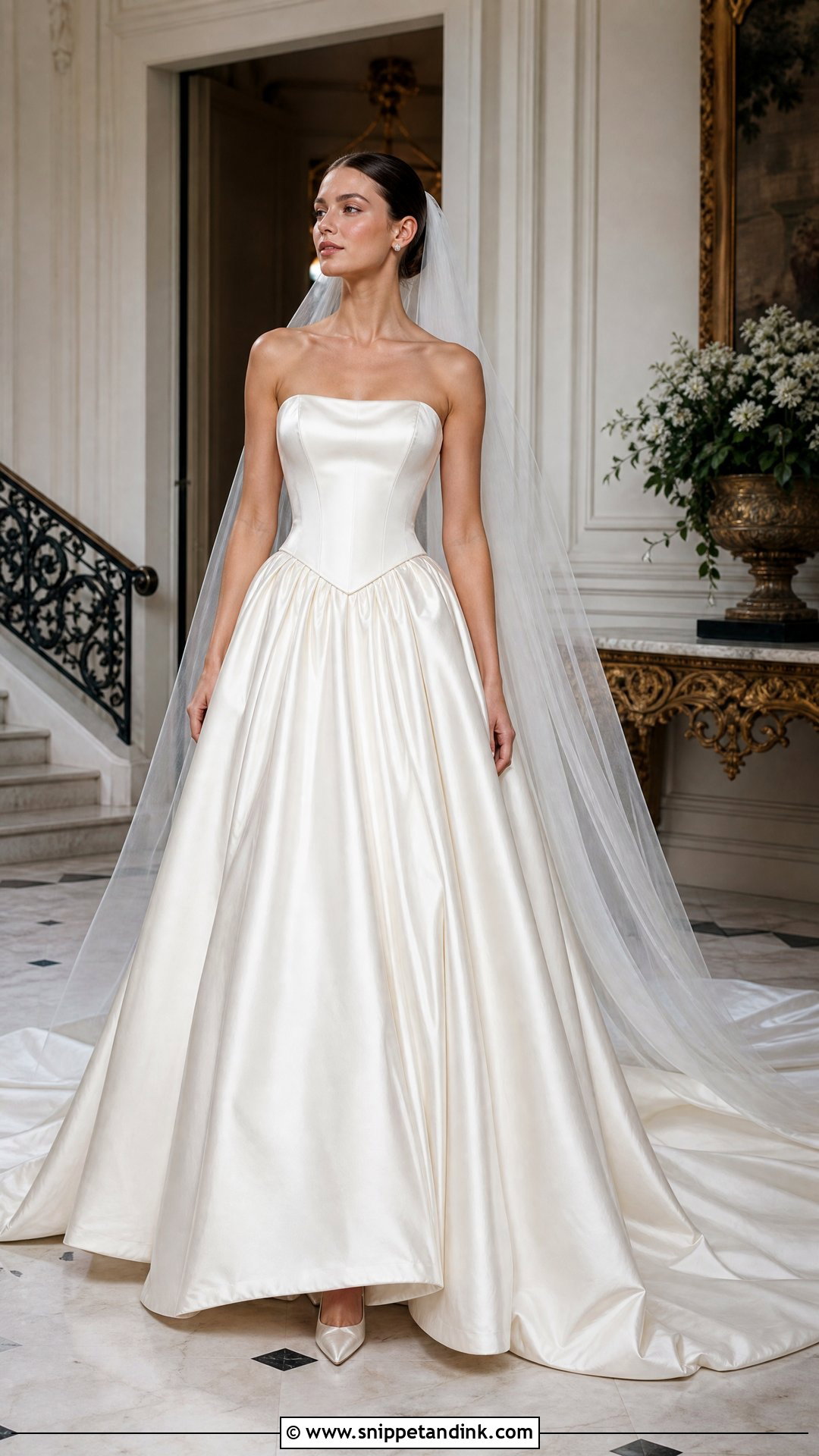
A basque waist dips into a V or U below the natural waistline, which lengthens the torso and lets a full skirt start without a hard horizontal line. The point of that V has to land in the right place on your body, and this is where I see off-the-rack gowns go wrong most often. If your torso is short, ask for a shallower dip; a deep one can make you look as if you’re folding at the hips when you sit. Keep the rest calm: a plain cathedral veil, pearl studs, pointed satin shoes, a structured bouquet and a sleek updo. Ballrooms and older mansions suit it best.
13. Draped Satin Wedding Dress
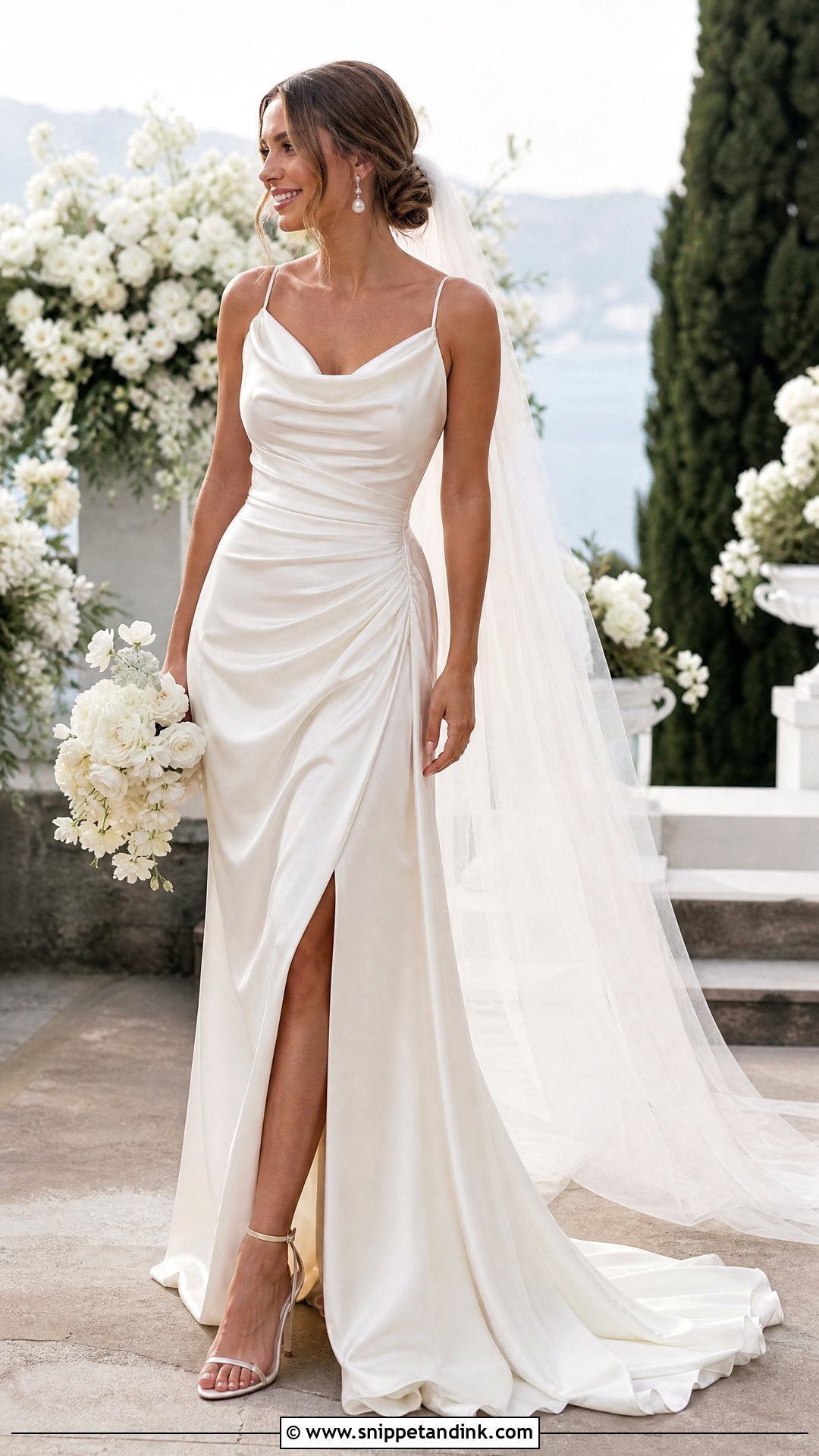
Gentle draping is more forgiving than any other treatment on this list, because the folds break up the reflection that makes satin unkind to soft stomachs and hips. Diagonal folds across the waist, gathers at one hip or a draped neckline all work. What I watch is where the folds start and stop; a drape that ends at the widest point of the hip widens it. A side train or a subtle slit can continue the line. Slim slingbacks, pearl drops and a light veil that doesn’t cover the drape are enough, with loose waves or a relaxed low knot.
14. Satin Wedding Dress With Bow
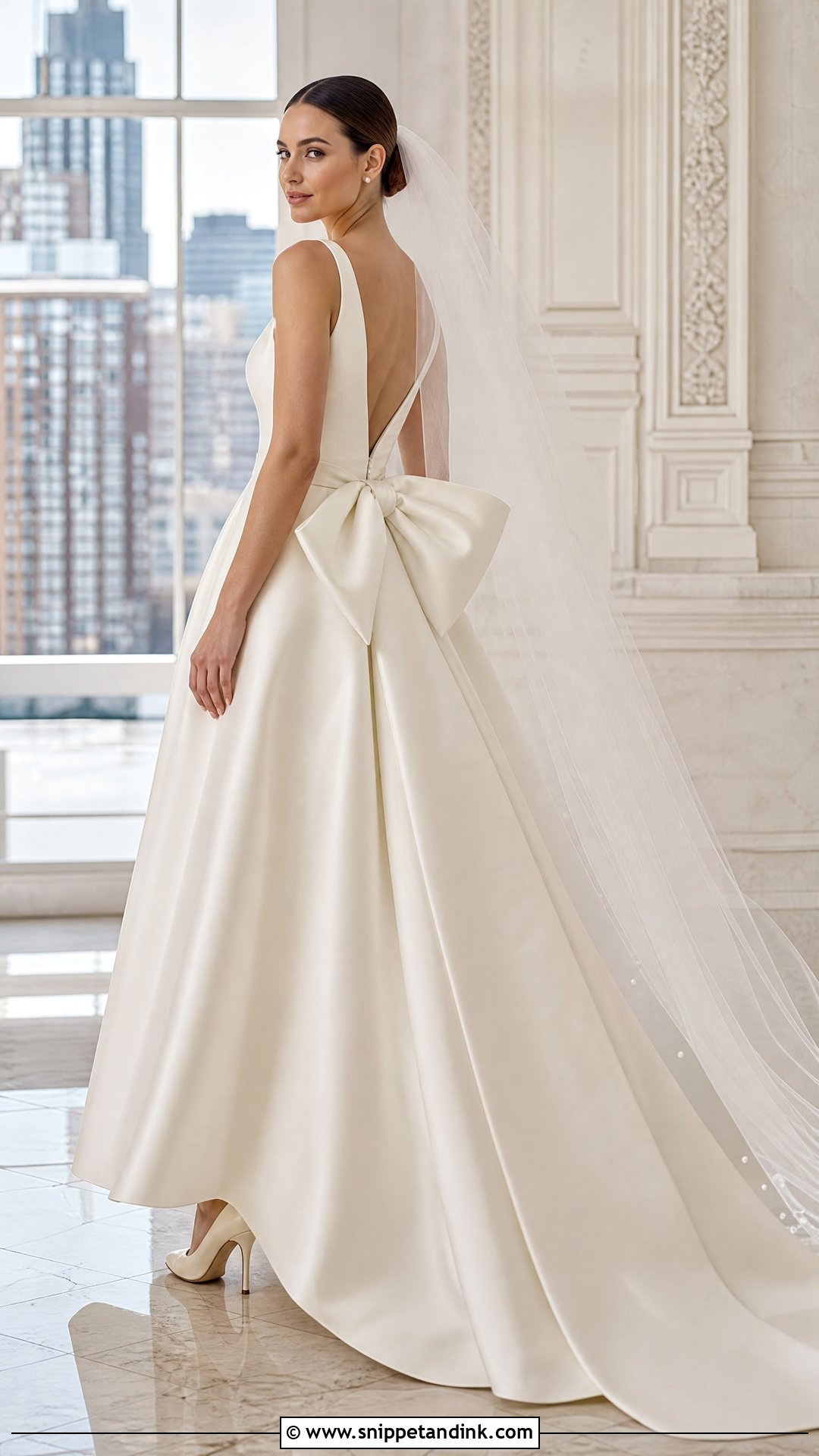
Bows look sweet on a hanger and heavy on a body if they’re built wrong. An oversized back bow with long tails flowing into the train is dramatic, but I check its weight before anything else, because a heavy bow pulls the back of a satin bodice down and you’ll feel it during the vows. A smaller waist bow is quieter and marks the narrowest part of you. Everything else should be plain: pearl studs, clean ivory pumps and a sheer veil you can take off after the ceremony. Wear your hair up in a smooth bun so a bow across the upper back stays visible from behind.
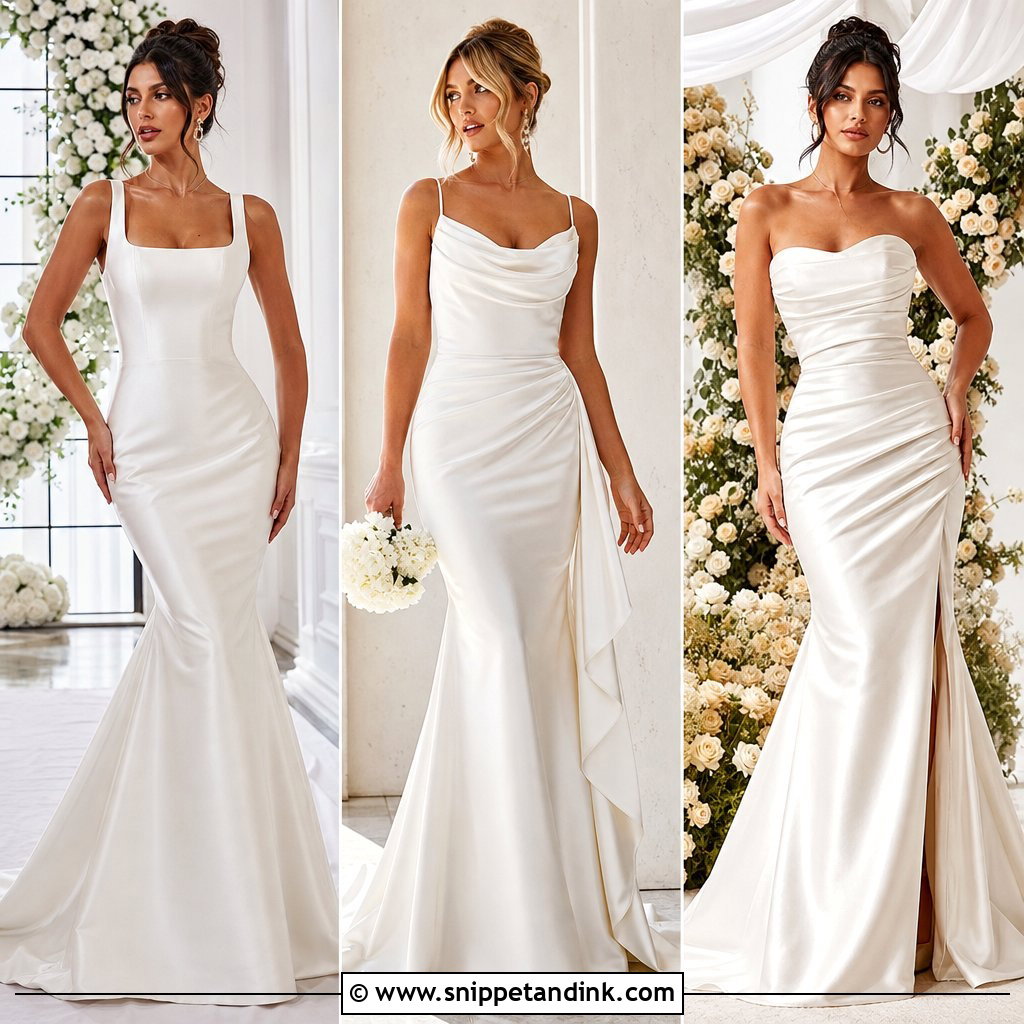
15. Satin Wedding Dress With Detachable Overskirt
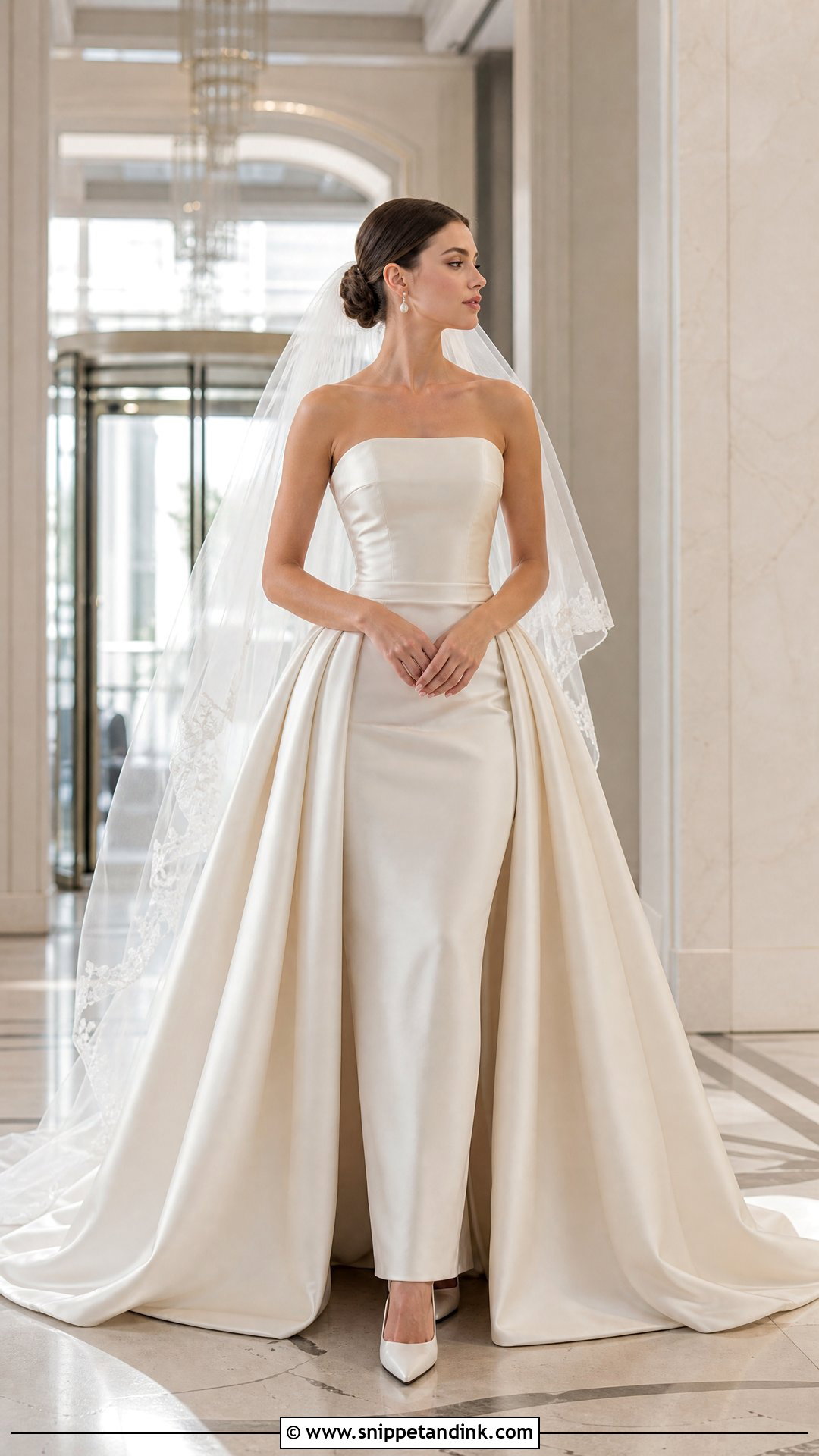
A detachable satin overskirt gives you two dresses for one budget. You walk in with volume, then unclip it to reveal a column, a mermaid or a mini dress for the reception. The attachment should sit flat at the waist, hidden under pleats or a narrow belt; hooks that show through satin are the giveaway I look for at fittings. One thing people forget: the overskirt and the dress should come from the same bolt, or the two whites can read differently under flash. Ceremony styling is a cathedral veil, pearls and pointed pumps; afterwards, statement earrings and block heels. Get a bridesmaid to practise taking it off and on before the day, not in the venue toilets.
16. Satin Wedding Dress With Cape
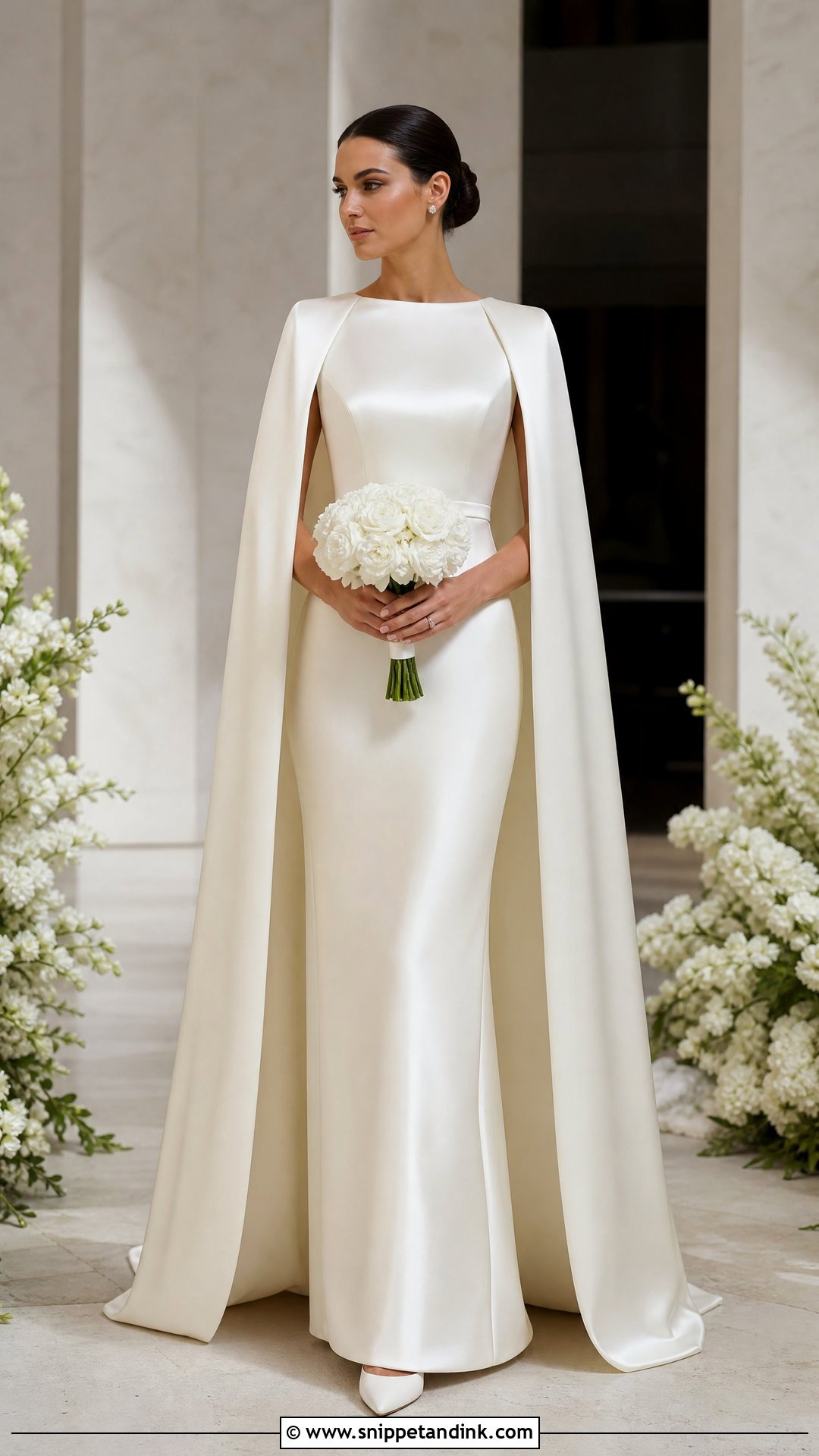
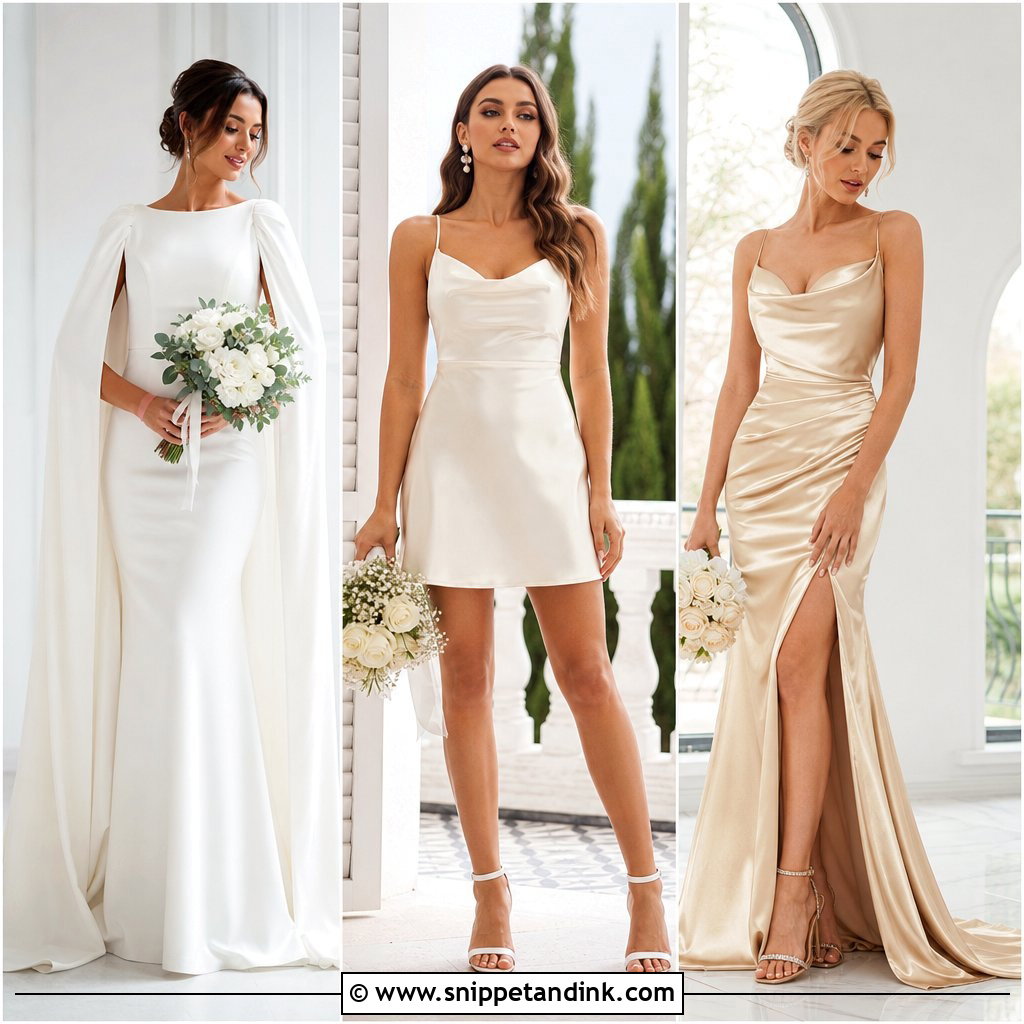
A cape changes the whole outline from behind, which is where most guests see you during the ceremony. Sheer floor-length capes feel light; a structured satin cape looks architectural and cleaner. Under either, I’d keep the gown plain, a column or A-line with little surface detail, otherwise the layers compete. You rarely need a veil as well, since the cape already gives movement and coverage at the back. The fastening matters most: it should hook at the shoulders or neckline with its own hidden loops, so lifting it off doesn’t drag the dress. Crystal studs, closed-toe pumps and a sleek updo complete it, and taking the cape off for the reception gives you a simpler second look.
17. Satin Wedding Dress With Pearl Details
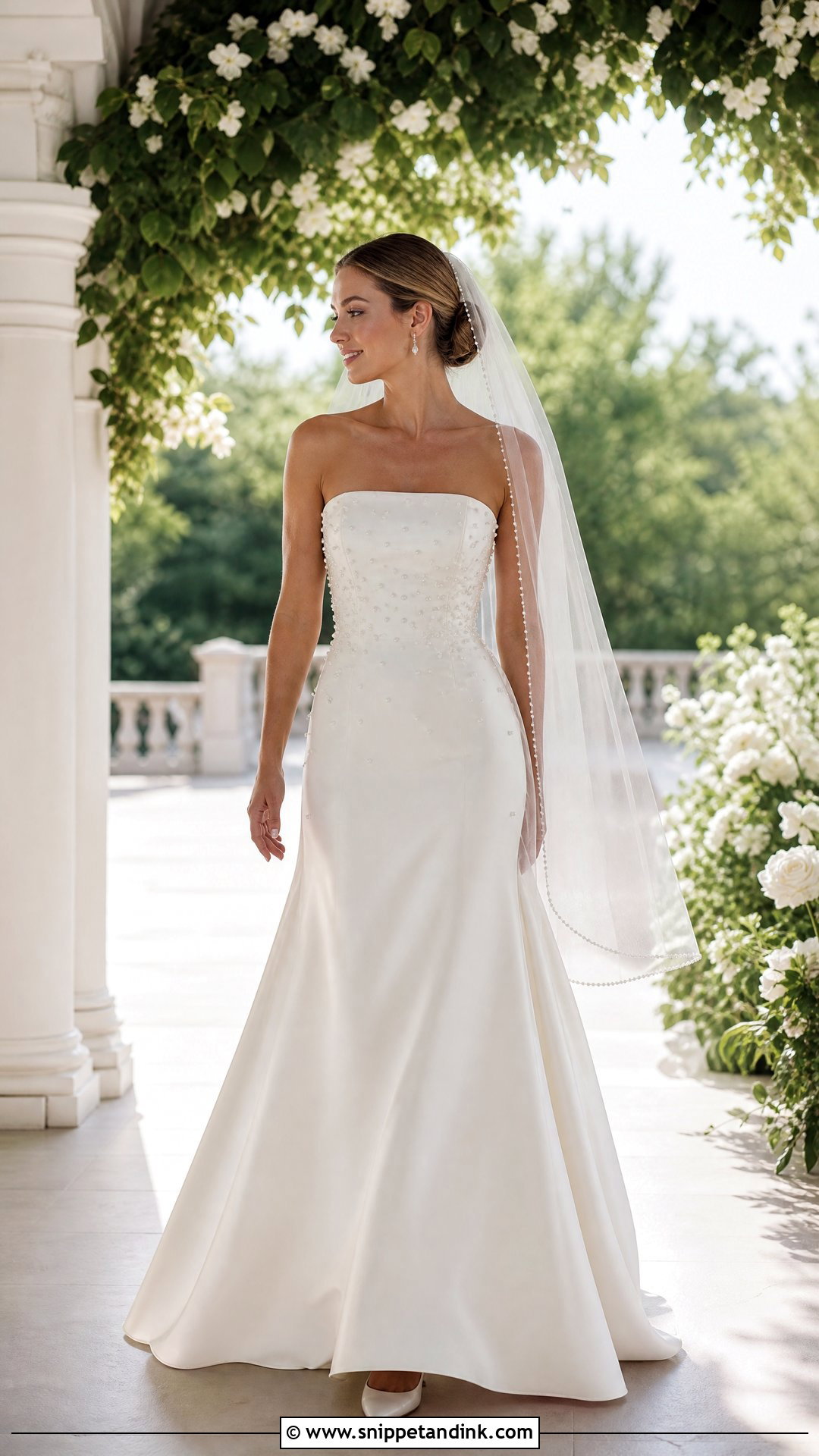
Pearls add texture to satin without dulling it, as long as they’re scattered rather than spread everywhere. Along the neckline, straps, waist or back is plenty, over a fitted bodice and softly flared skirt. Leave the pearl necklace out if the neckline is already beaded; repetition makes it look busy. Pearl earrings, simple ivory heels and a veil edged with a few matching pearls tie it together, with a low bun or a waved bob. Before the day, run your fingers along every beaded line. Hand-sewn pearls can work loose on satin, and I’d rather catch a loose thread at the fitting than find the pearl on the dance floor.
18. Tea Length Satin Wedding Dress
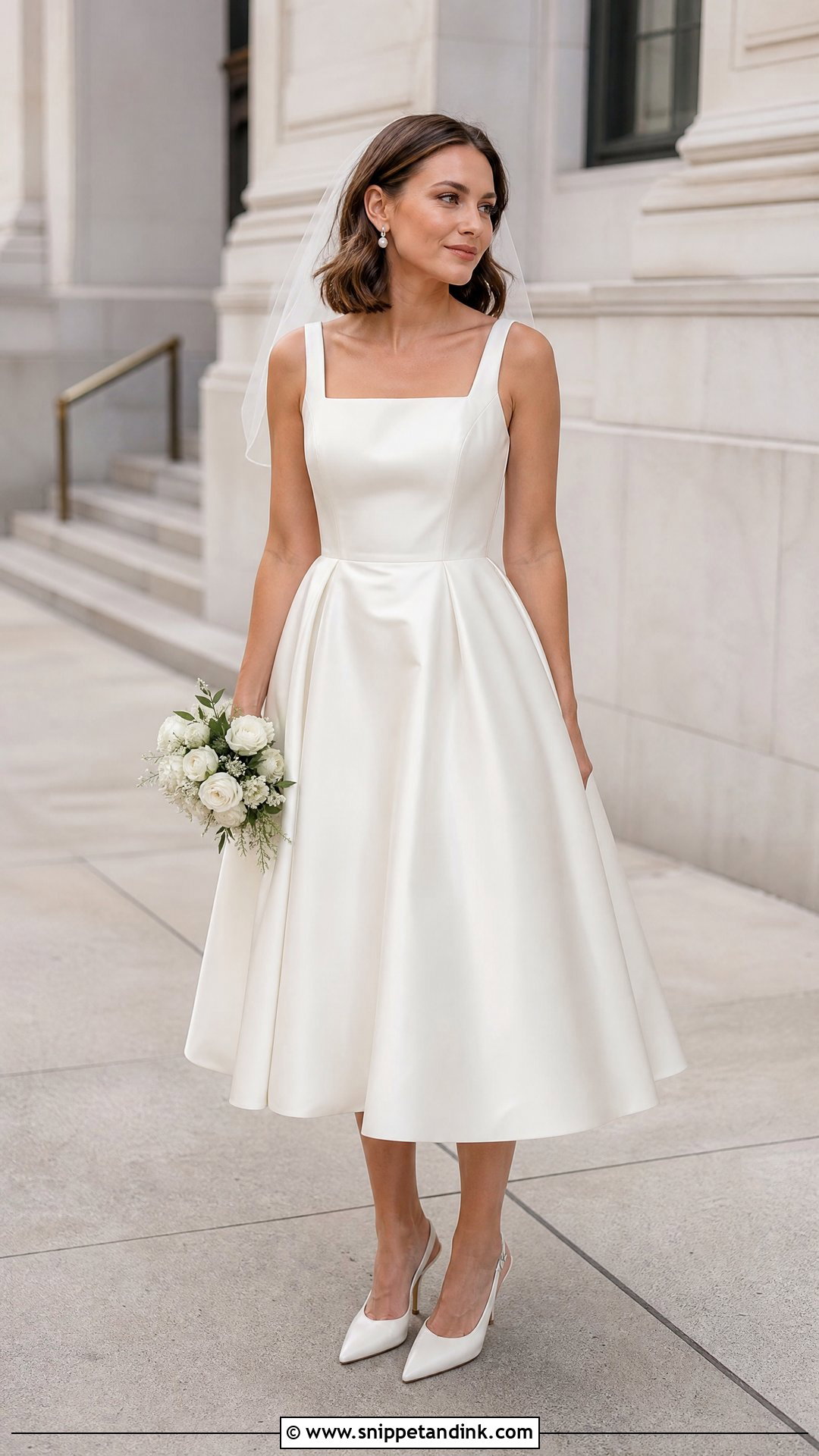
Tea length lands somewhere between the knee and the ankle, so your shoes become half the outfit. Pointed slingbacks, low block heels and polished flats all suit it, and this is the one dress where I’d actually pick the shoes first. The skirt needs some body; soft satin at this length can collapse and look like a nightdress, so look for a petticoat or a heavier weave. Pearl earrings, short gloves if you like them, and a shoulder-length veil or a structured bow add the vintage note. A neat bun, curled bob or classic ponytail suits the shorter shape. It’s a natural fit for a courthouse, a brunch reception or a second dress for dancing.
19. High Slit Satin Wedding Dress
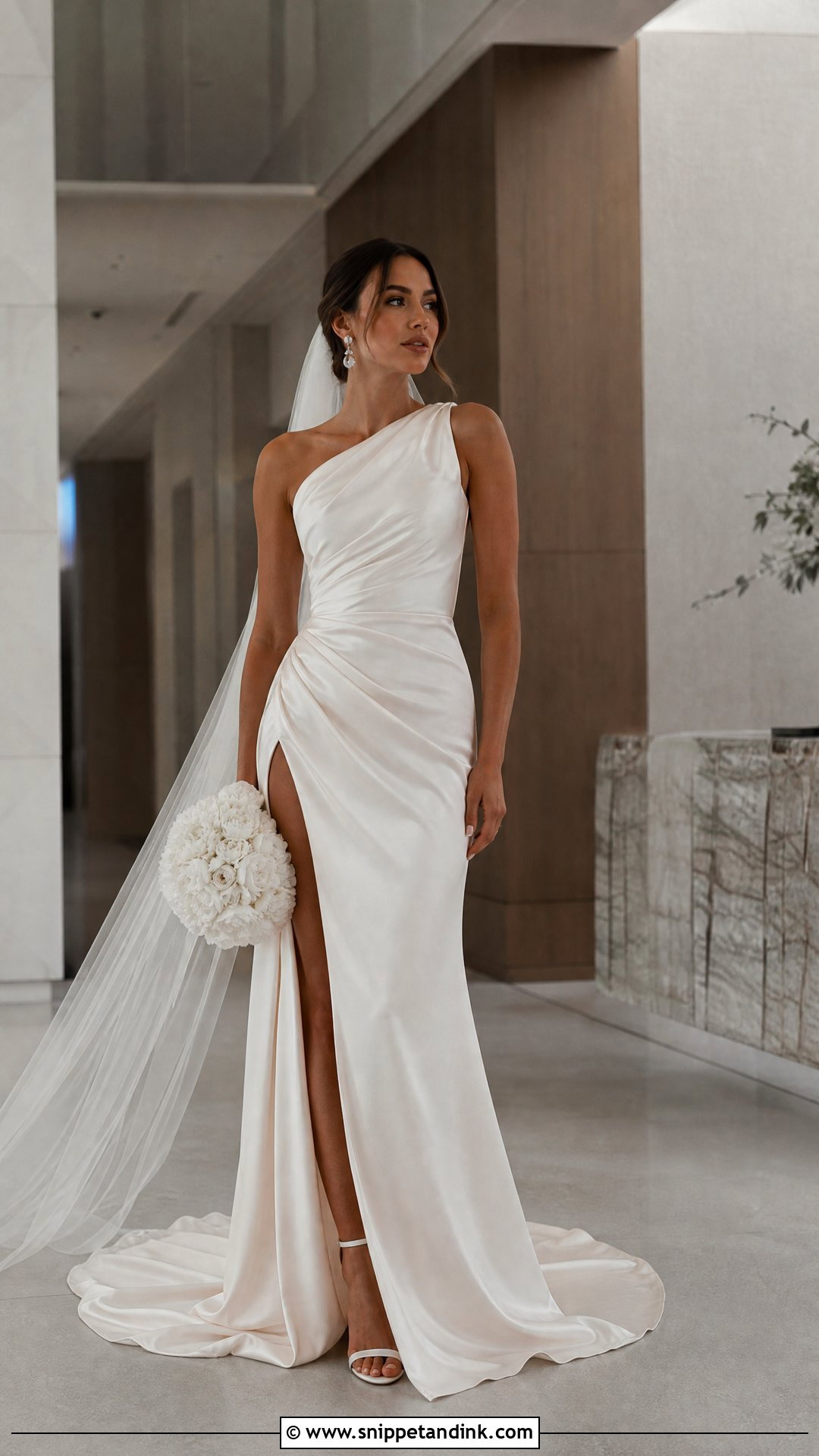
A high slit looks confident when everything else about the dress stays clean. Put it slightly to one side rather than dead center; a center slit opens when you sit and is very hard to manage on stairs. A strapless or one-shoulder bodice gives the contrast, and ankle-strap heels, small statement earrings and a long plain veil finish it. Keep the bouquet compact so it doesn’t cover the skirt’s line. At alterations I have brides walk, sit and climb steps in front of a mirror, and if the slit shows more than they want, a discreet modesty panel or a strip of fashion tape solves it. It’s an evening dress at heart, best in a modern hotel or at a destination wedding.
20. Satin Mini Wedding Dress
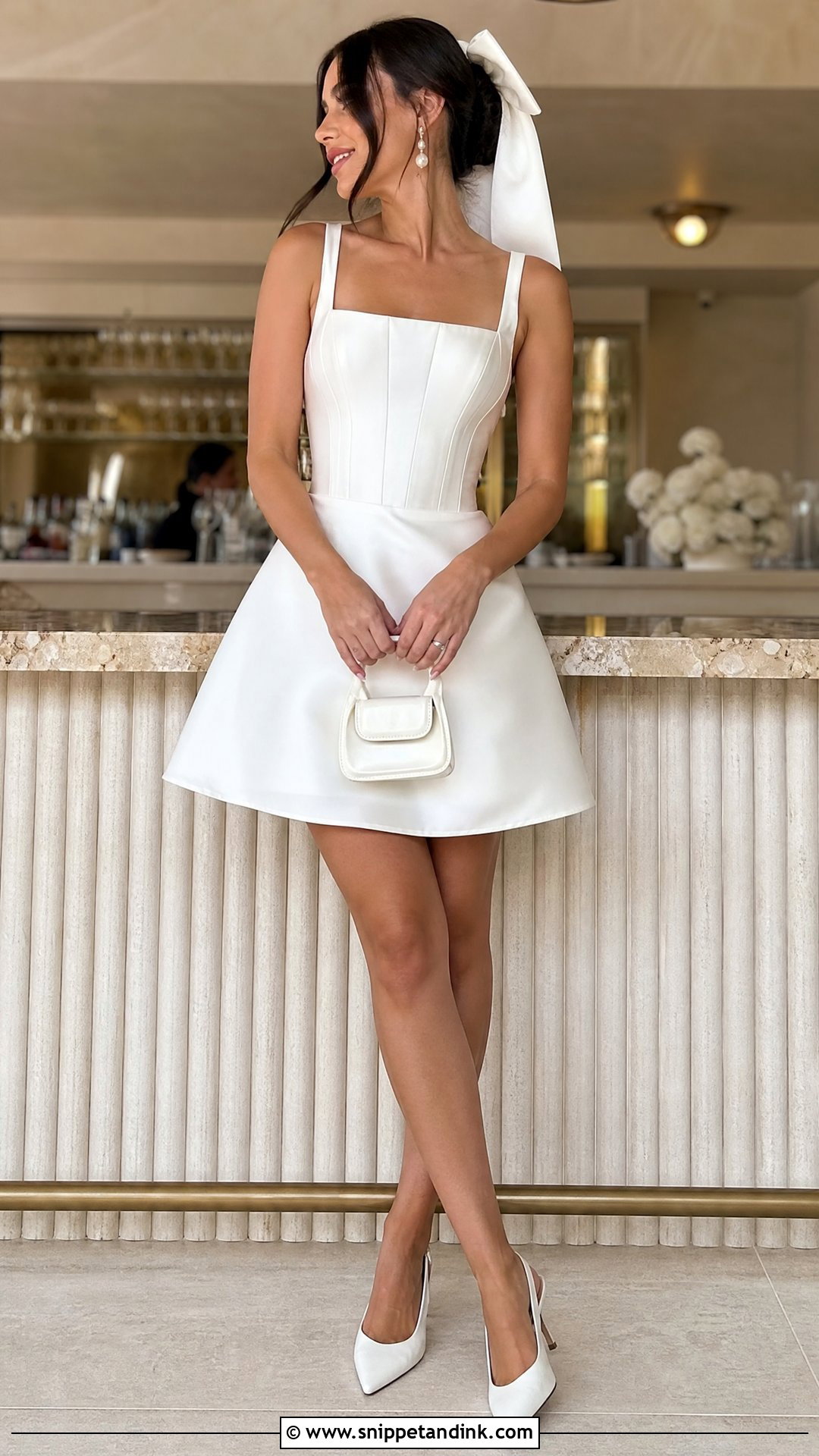
A satin mini is the dress for a courthouse, a reception entrance or a change after dinner. Satin at this length shows creases quickly, so I’d choose a structured bodice and a slightly heavier weight that holds its shape when you’ve been sitting. A subtle A-line reads classic; a fitted mini looks sharper. Slingback pumps, pearl drops and a short veil, an oversized hair bow or a neat headband are all you need, plus a small top-handle bag for lipstick and your phone. Fitted shorts underneath make dancing easier. With this much leg showing, your shoes finally get to be part of the look.
Creases, Water Spots and the Satin Morning Routine
Satin’s two enemies on the day are creasing and water. I plan for both, because neither can be fully undone once you’re in the dress.
Getting it to the venue smooth
Have the dress pressed or steamed professionally a few days before, then hang it full length in a breathable garment bag, never folded into a car boot. Lay it flat across a back seat if you must. On the morning, a handheld steamer held a few inches away, moving constantly and working from the inside of the skirt, takes out travel creases. I don’t let anyone iron satin at the venue; direct heat can leave a permanent shine mark.
Sitting and spills
Lighter satins crease across the lap the first time you sit for any length of time, so in the car I lift the back of the skirt and sit on the lining. Water is worse than people expect: on silk satin, a single raindrop or a splash of sparkling water can dry into a ring. Blot, never rub, and leave it. Keep makeup on before the dress goes on, and put a scarf over your face while it slides down.
After the wedding
Get it to a cleaner who handles bridal gowns within a few weeks, even if it looks clean. Sugar from champagne is invisible at first and yellows later. Store it flat or loosely folded in acid-free tissue in a box, not on a hanger, where the weight of the skirt will slowly stretch the shoulders.
One Last Test in the Fitting Room Mirror
Whichever silhouette you settle on, judge it moving rather than standing still. Walk, sit, raise your arms, and look at the dress from the side under daylight, because that’s how satin will behave all day. Fabric weight, the boning inside, where the seams fall and how well your alterations are done matter more than the photo that drew you in. Then style it to support the neckline instead of crowding it. Slip, ball gown, cape or mini, a satin dress that fits properly will look finished in every photo.
You'll Like These Ideas:





Leave a Reply