
Mikado is the fabric I reach for when a bride wants the dress itself to hold a shape. It’s a tightly woven, heavyweight cloth with a low sheen, closer to a matte glow than to the shine of satin. That body lets it carry crisp pleats, a fitted bodice, a long train or a big skirt without collapsing. It also gives bows, sleeves and appliqués something solid to sit on. The styles below run from strapless ball gowns to minis and detachable overskirts, and for each one I’ve noted what the fabric does well and where it can catch you out.
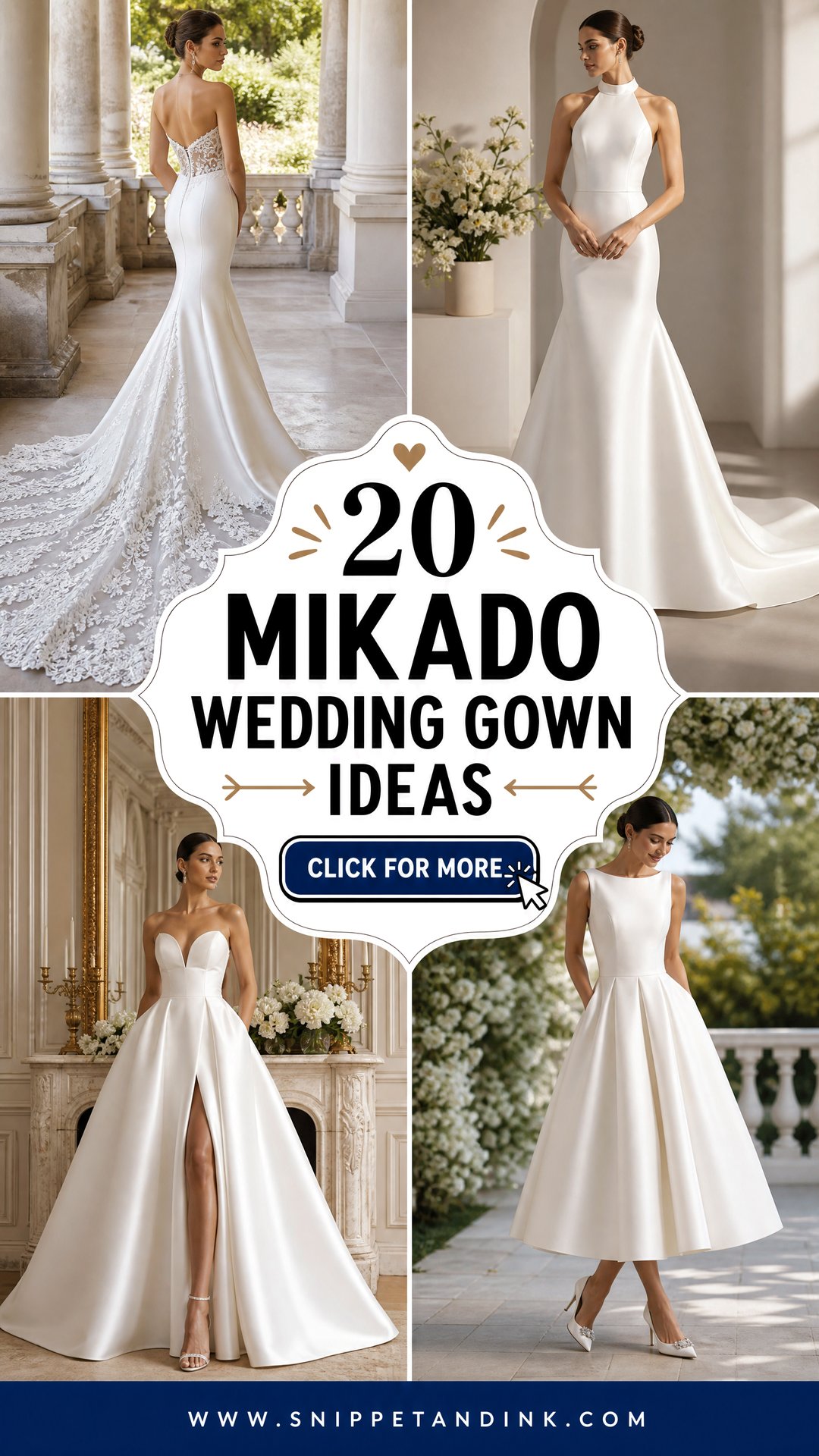
Silk Mikado or Polyester Mikado? How the Two Feel in Your Hands
The word mikado describes the weave, not the fiber, so two dresses with the same label can behave very differently. Silk mikado has a soft, low glow and a dry, slightly papery hand. Polyester mikado looks similar on a screen but often reads shinier in person and feels smoother, almost slick. Blends sit in between. Price usually follows the fiber, though it varies a lot by designer.
In the shop, I do three quick tests. Hold a fold of the skirt between your fingers for a few seconds and let go. Silk relaxes slowly; polyester springs back faster but can keep a sharp line where it was creased. Look at the fabric under daylight from a window, not the boutique spotlights, because shine is the most obvious difference. Then check the weight by lifting the hem. Mikado is warm and heavy whatever it’s made of, which matters for a July garden ceremony.
Alterations are less forgiving
Tightly woven fabric can show old needle holes when a seam is let out, so ask your seamstress how much room there is before you order a size down. Taking in is usually fine. Pressing has to be done with care too, since a hot iron on the face of the cloth can leave a shine mark.
1. Strapless Mikado Ball Gown
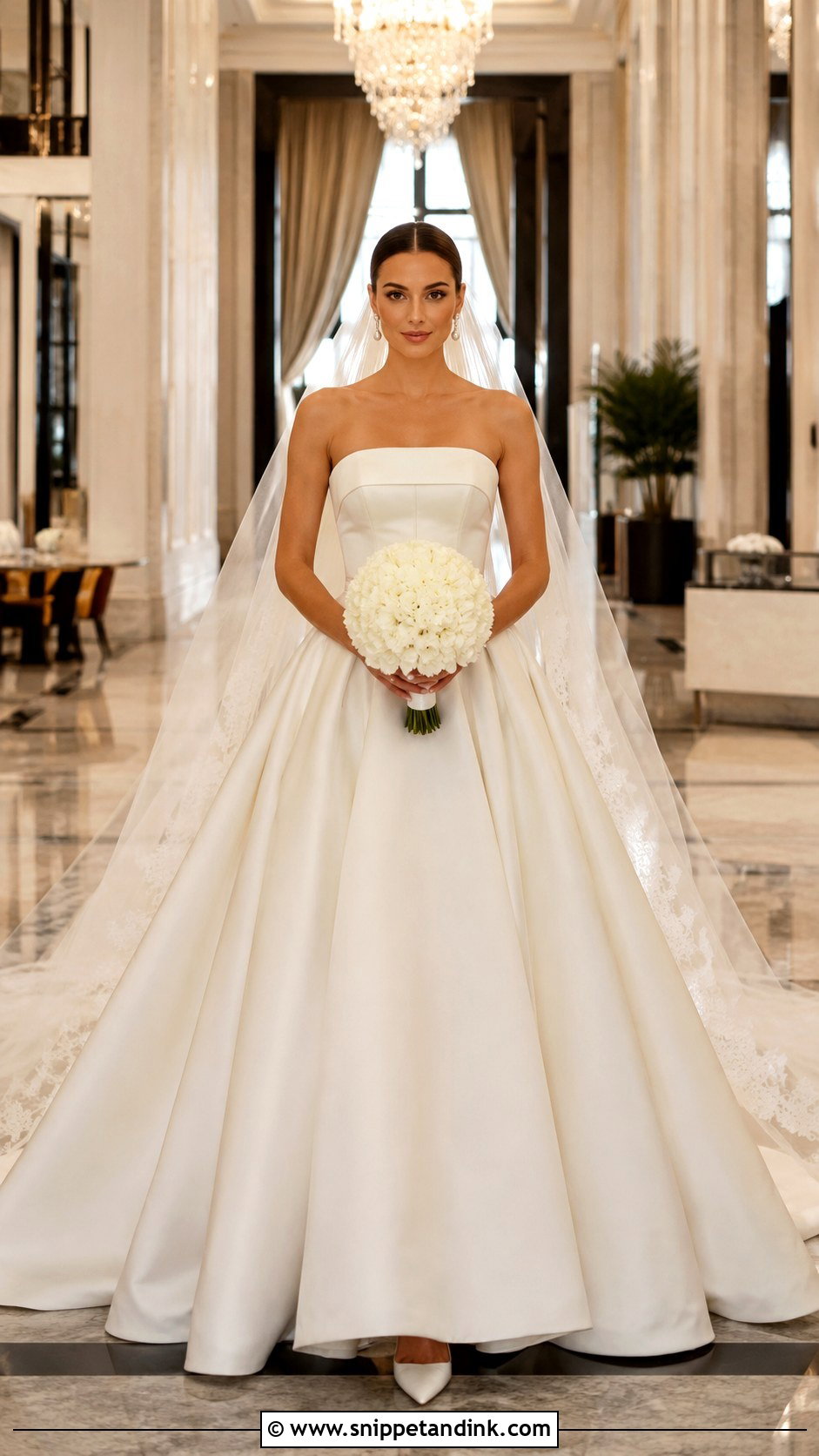
The strapless ball gown is mikado at its most classic. Internal corsetry is non-negotiable here: the skirt is heavy, and without boning the bodice gets dragged down by it. A straight or gently curved neckline keeps things clean, and box pleats give the skirt volume you can control. A cathedral veil, pearl drops, pointed ivory pumps and a smooth low bun keep the shoulders clear. Go smaller on the bouquet than you think; the skirt is already wide. Ballrooms and grand hotels suit it because it needs floor space.
2. Off-the-Shoulder Mikado Wedding Gown
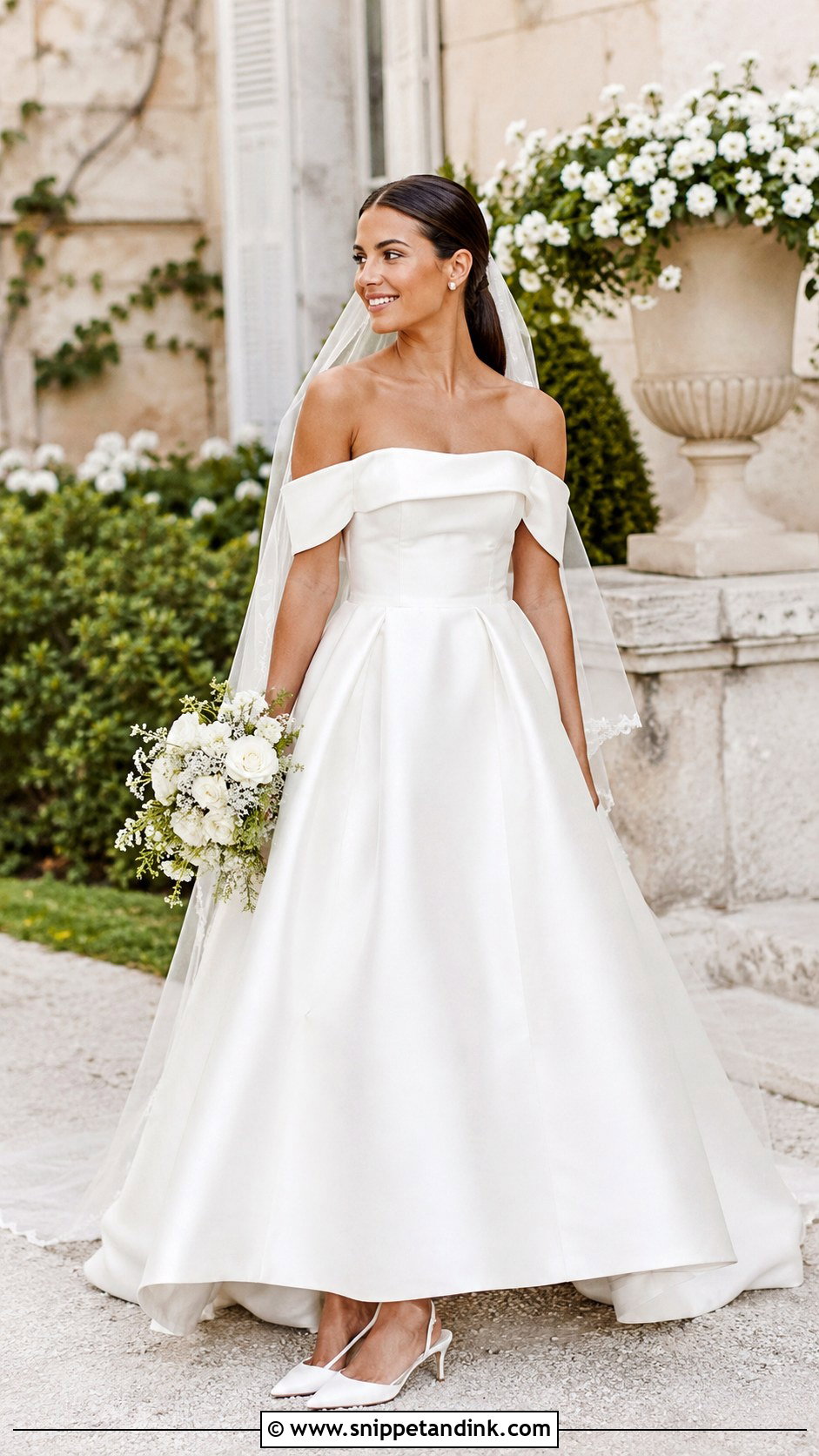
Folded off-the-shoulder straps soften mikado without hiding its structure. Because the fabric is stiff, the fold stands slightly away from the arm instead of clinging, which is part of the charm. Pair it with a fitted bodice and an A-line or full skirt to balance the wide neckline. A fine pendant, pearl studs, a swept-back chignon, pointed slingbacks and a plain-edged fingertip veil finish it, with white flowers and greenery. I check the fold at every fitting. Stiff fabric can form a sharp ridge across the upper arm if the band sits too low.
3. Square Neck Mikado A-Line Gown
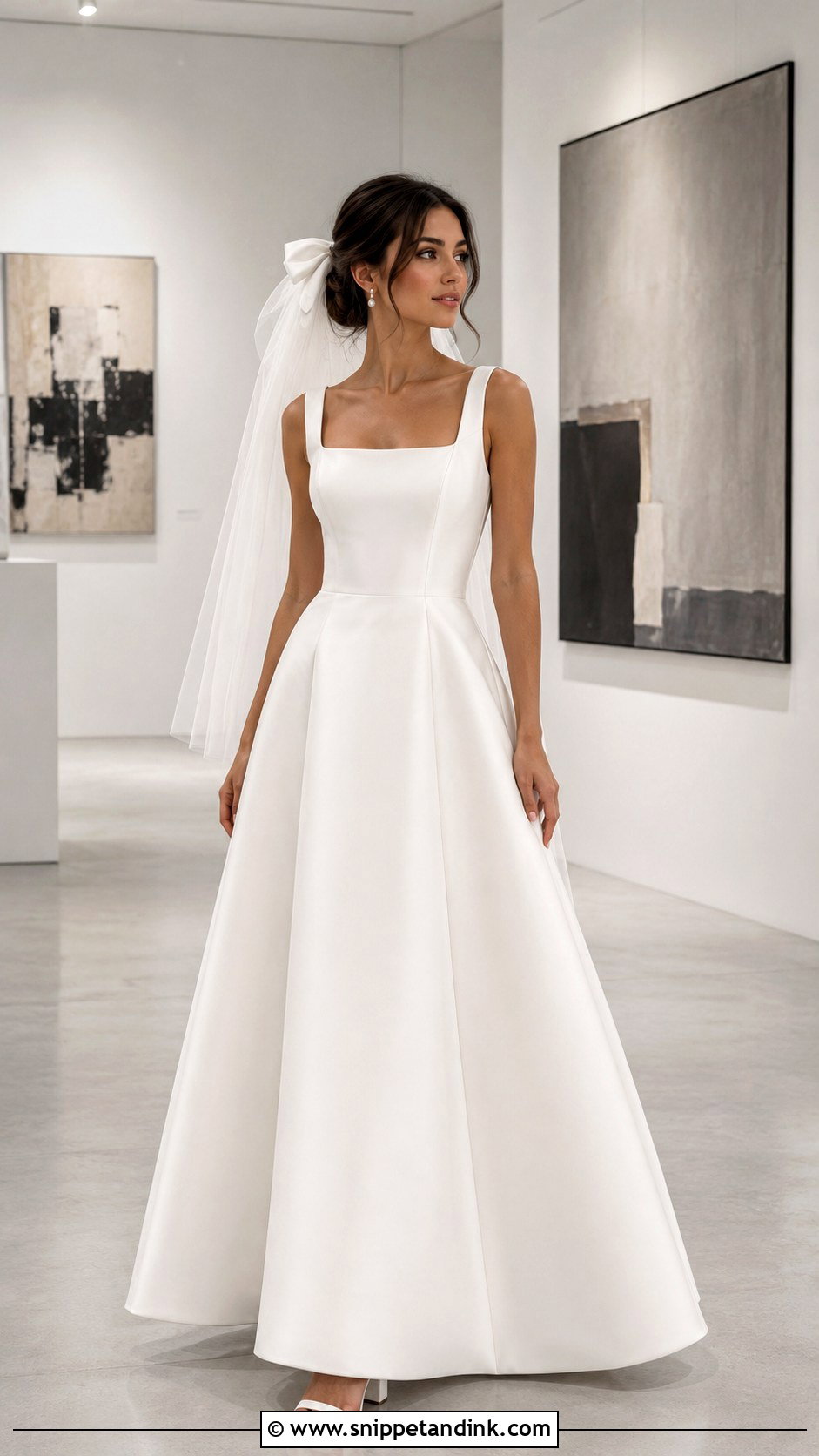
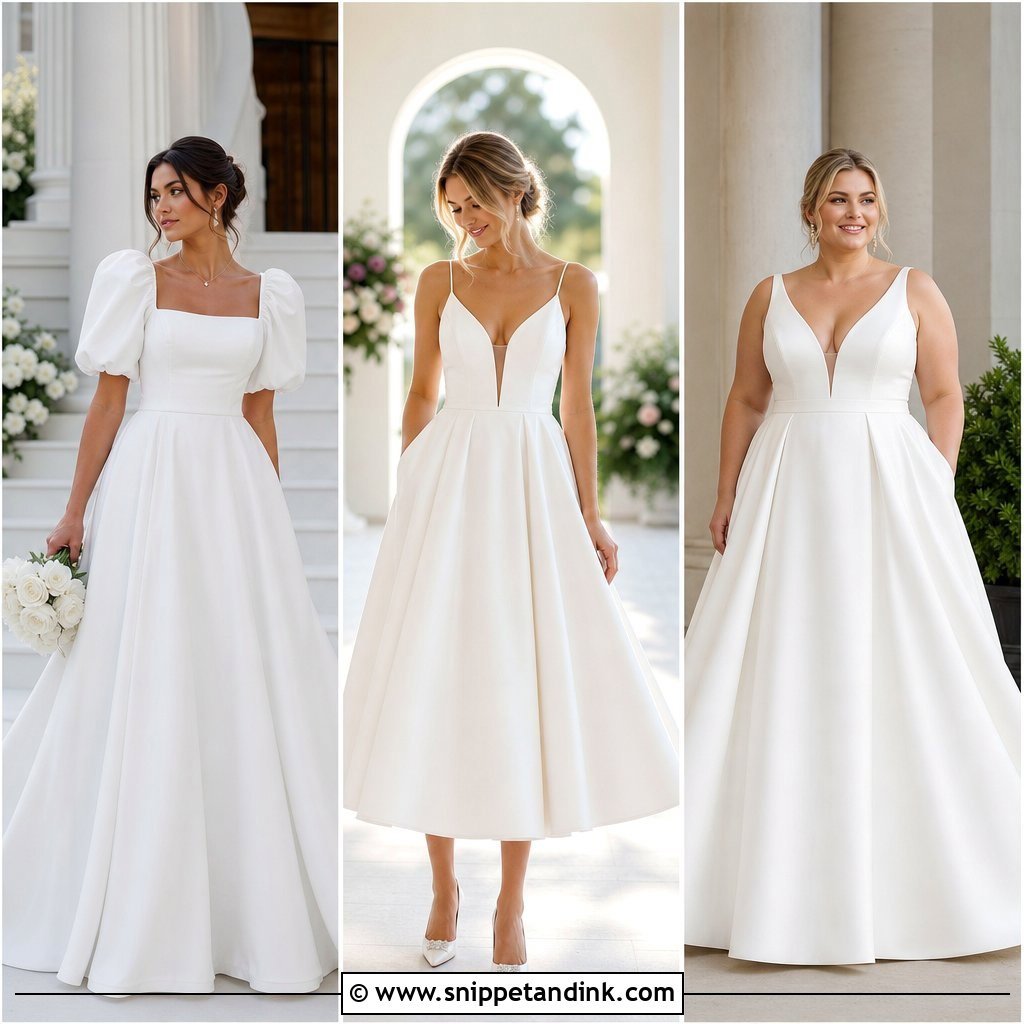
Square necks and mikado are a natural match, since the fabric keeps the corners sharp all day. Wider straps carry the support, and princess seams with a skirt falling straight from the natural waist keep the proportions calm. Pearl earrings, a tennis bracelet and a structured white clutch suit it, with a sleek bun or soft waves tucked back. Block-heel sandals are fine if the hem only flashes the shoe now and then. A chapel veil or a sheer bow veil finishes it. Expect minimalist venues and city weddings to show it at its best.
4. Sweetheart Mikado Basque Waist Gown
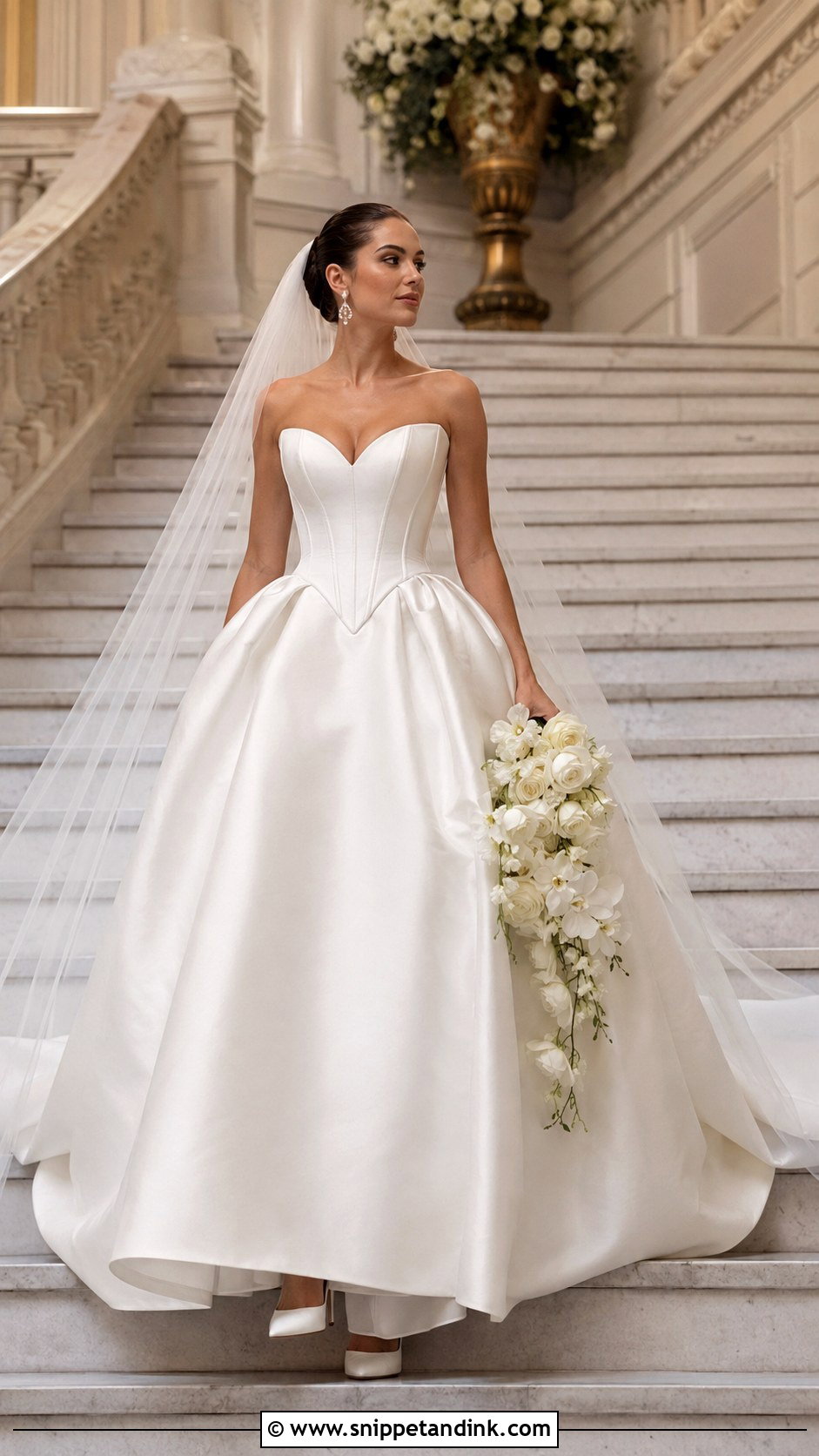
A sweetheart neckline over a basque waist is one of the most romantic shapes you can cut from mikado. The point lengthens the torso before the skirt opens out, and the curve at the bust softens the stiff fabric. Basque waists and corset bodices are popular again, which is why this traditional cut feels current. A long plain veil, crystal earrings, satin pumps and a polished updo keep focus on the neckline and waist, and a gentle cascade bouquet echoes the long bodice. On mikado the point stays crisp, so fit it carefully; if it’s even slightly long, it pokes forward when you sit.
5. Long Sleeve Mikado Wedding Gown
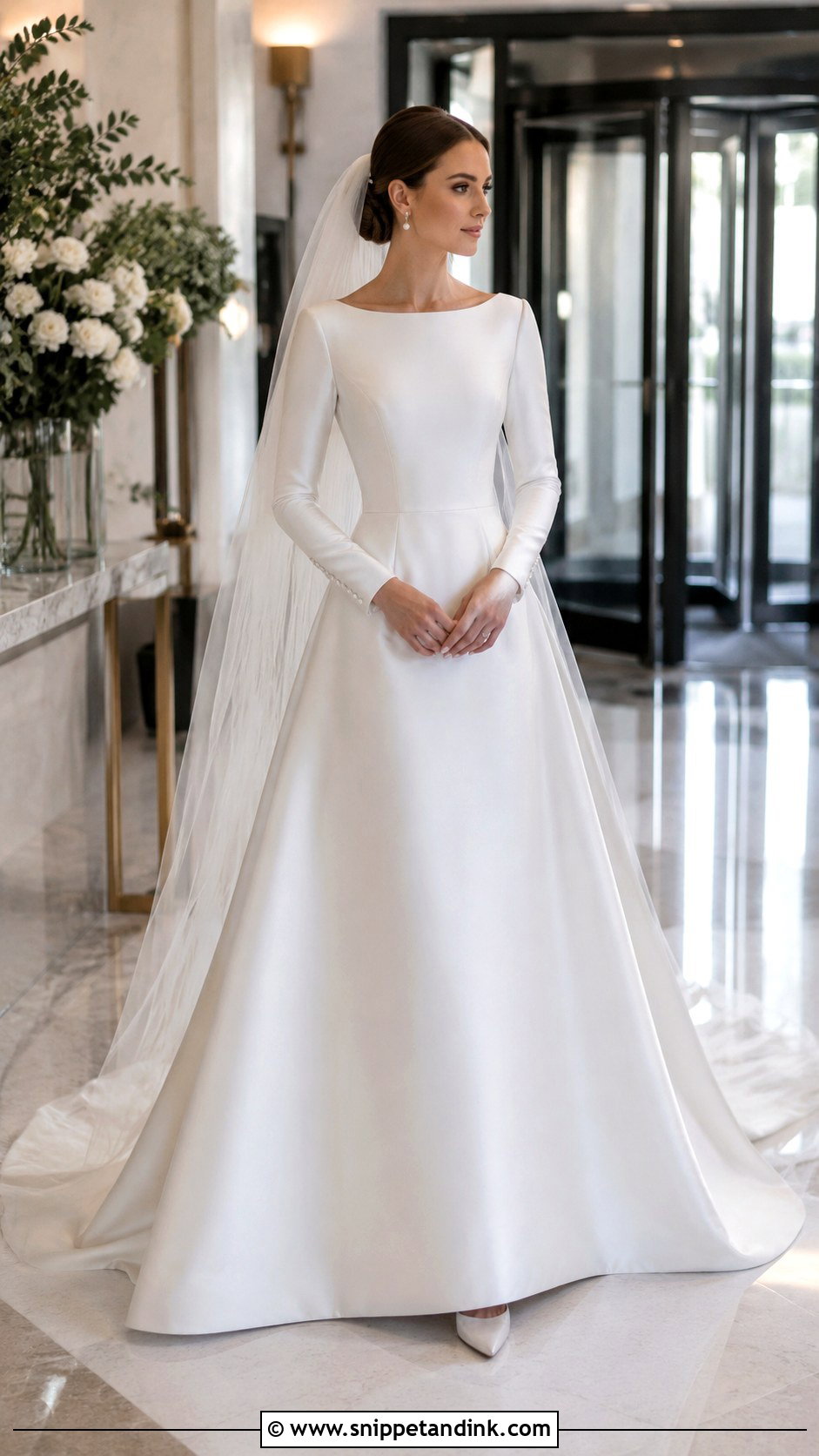
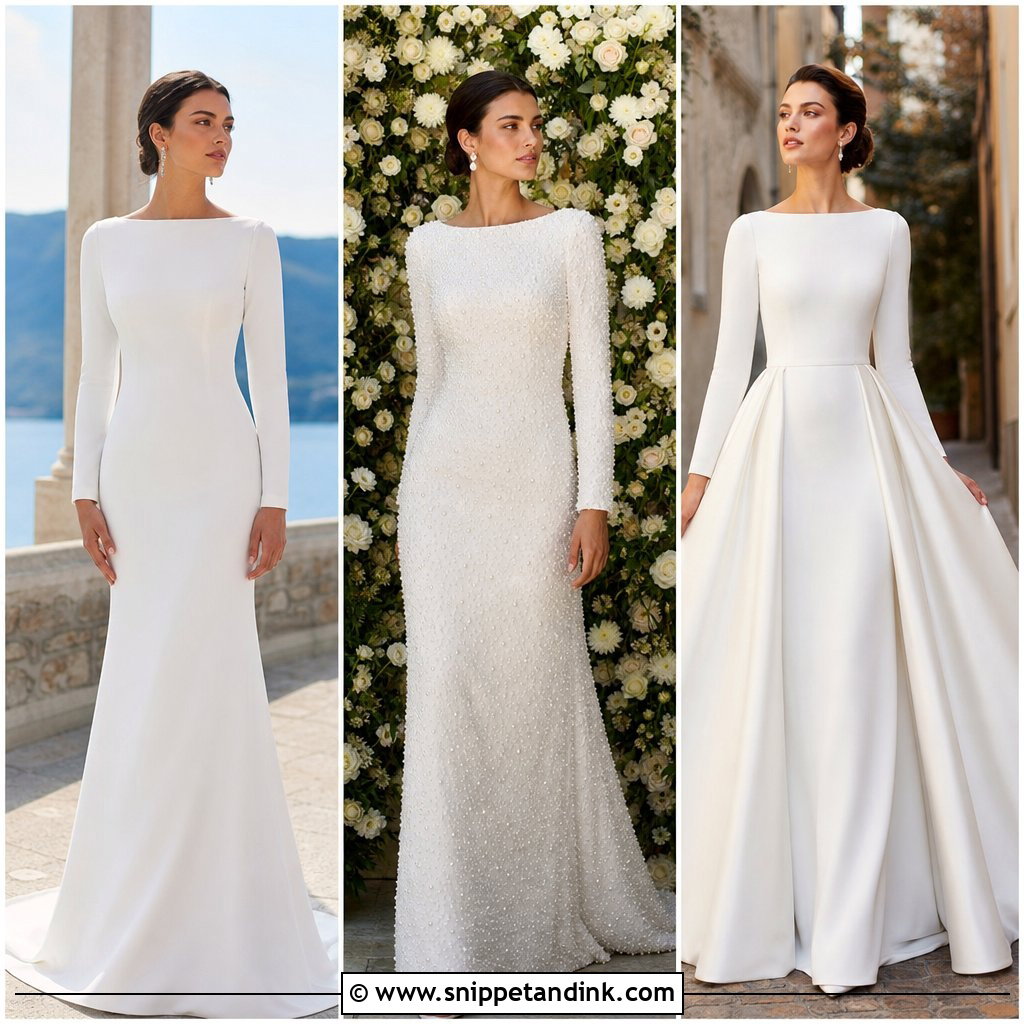
Mikado sleeves have more body than lace or crepe, so they look tailored and keep their line. That same stiffness means they need extra room at the elbow, or you’ll feel it the first time you lift a glass. A bateau, square or shallow V-neck stops the covered look from feeling closed in. Keep the skirt a restrained A-line. Pearl buttons, small diamond studs, closed-toe pumps and a smooth low bun suit it, with a chapel veil to soften. For winter portraits outdoors, a structured white coat over the top works well. Museums and winter hotels are its natural home.
6. Mikado Mermaid Wedding Gown
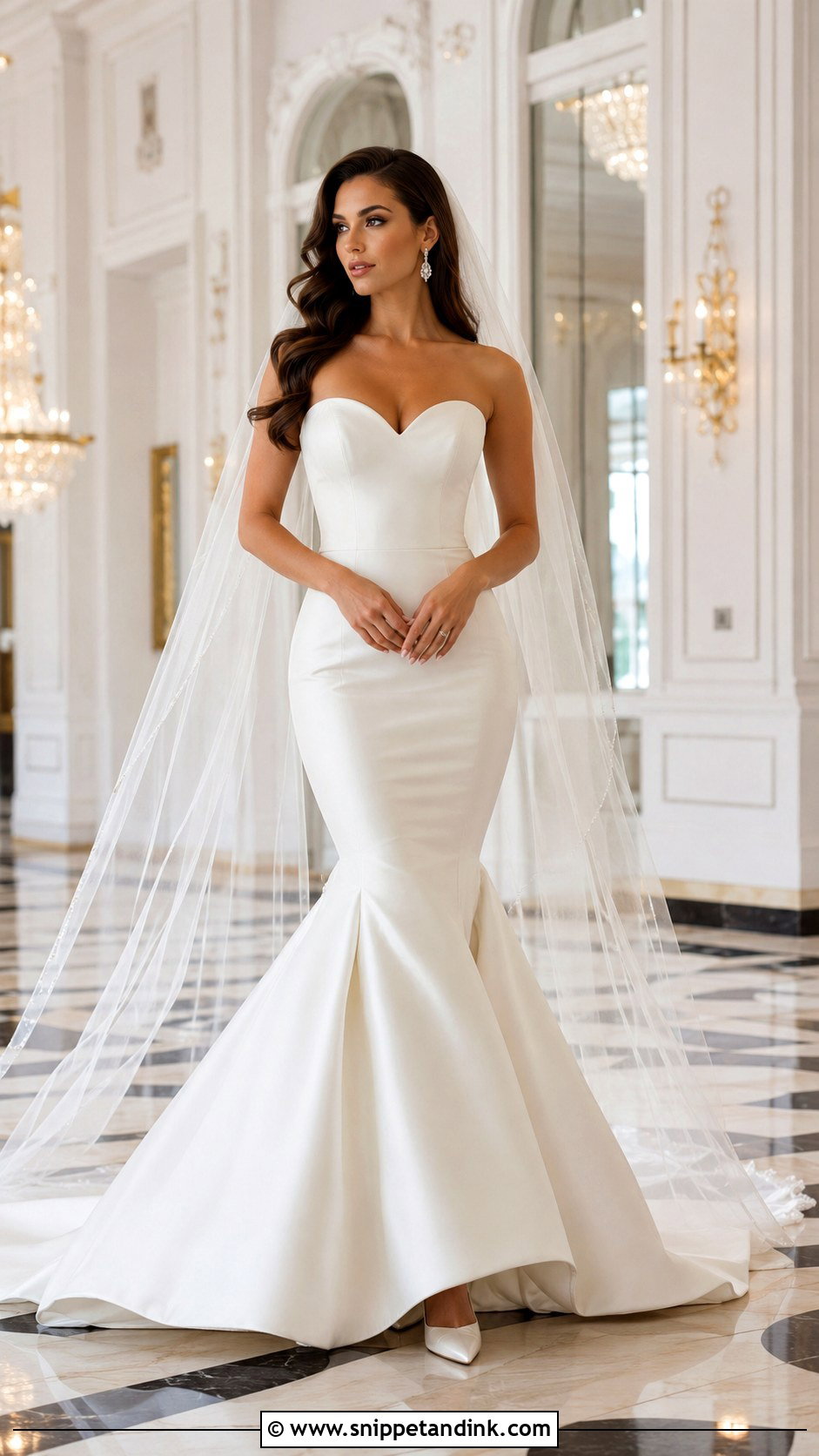
Mikado gives a mermaid a sculpted, almost architectural finish; it won’t ripple the way crepe does. The trade-off is that it doesn’t stretch at all. Every curve has to come from seaming, so the fitting is where this dress is made or ruined. A strapless scoop or sweetheart neckline pairs well with the flare. Pointed pumps, drop earrings, a veil reaching just past the train and loose Hollywood waves finish it, with a compact round bouquet. Practice stairs. A stiff knee flare doesn’t fold out of the way the way softer fabrics do.
7. Mikado Trumpet Gown With Lace Train
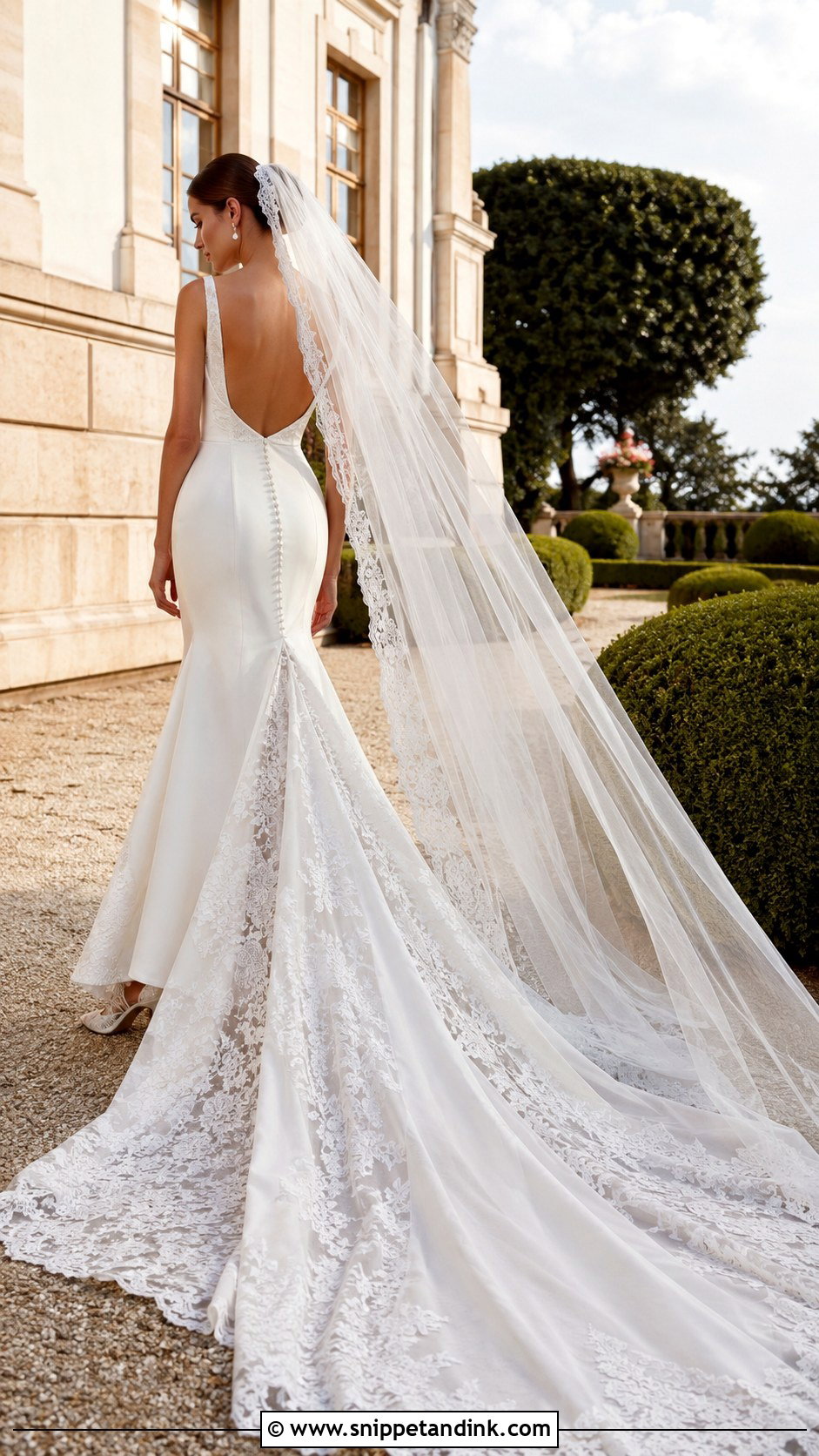
Can’t pick between mikado and lace? A trumpet gown with a lace train lets you have both. Keep the bodice and hips smooth, then let lace panels or appliqués begin where the skirt starts to flare and run through the train. It shows up in aisle photos without crowding the front. Lace-edged shoes, pearl earrings, a sheer cathedral veil and a half-up style keep it soft, with white flowers and light greenery. The join between the two fabrics is the part I’d inspect. Lace stitched to mikado should lie flat, with no puckering where the heavier cloth pulls.
8. Mikado Drop Waist Ball Gown
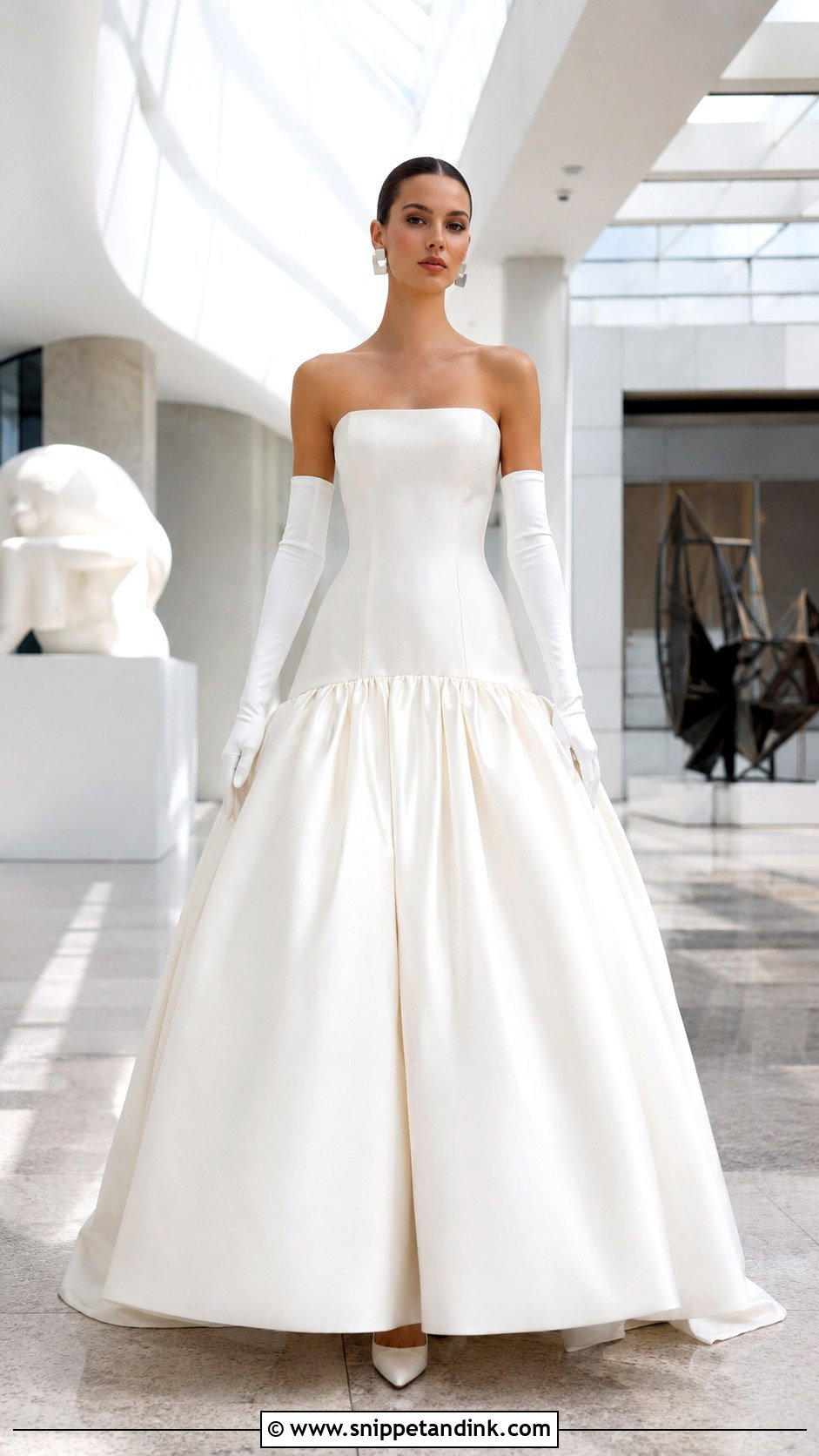
A drop waist puts the fullest part of the skirt below the natural waist, so the bodice reads long and fashion-led. It’s a shape that keeps showing up in bridal collections next to corset details, and mikado holds the low seam neatly. Choose a fitted bodice with a straight or softly scooped neckline. Add opera-length gloves for the ceremony and take them off for the reception. Pointed satin heels, geometric earrings, a sleek bun and a simple chapel veil finish it. One honest note: a dropped seam shortens the leg line, so I’d skip it if you’re petite and want height.
9. Mikado Wedding Gown With Oversized Bow
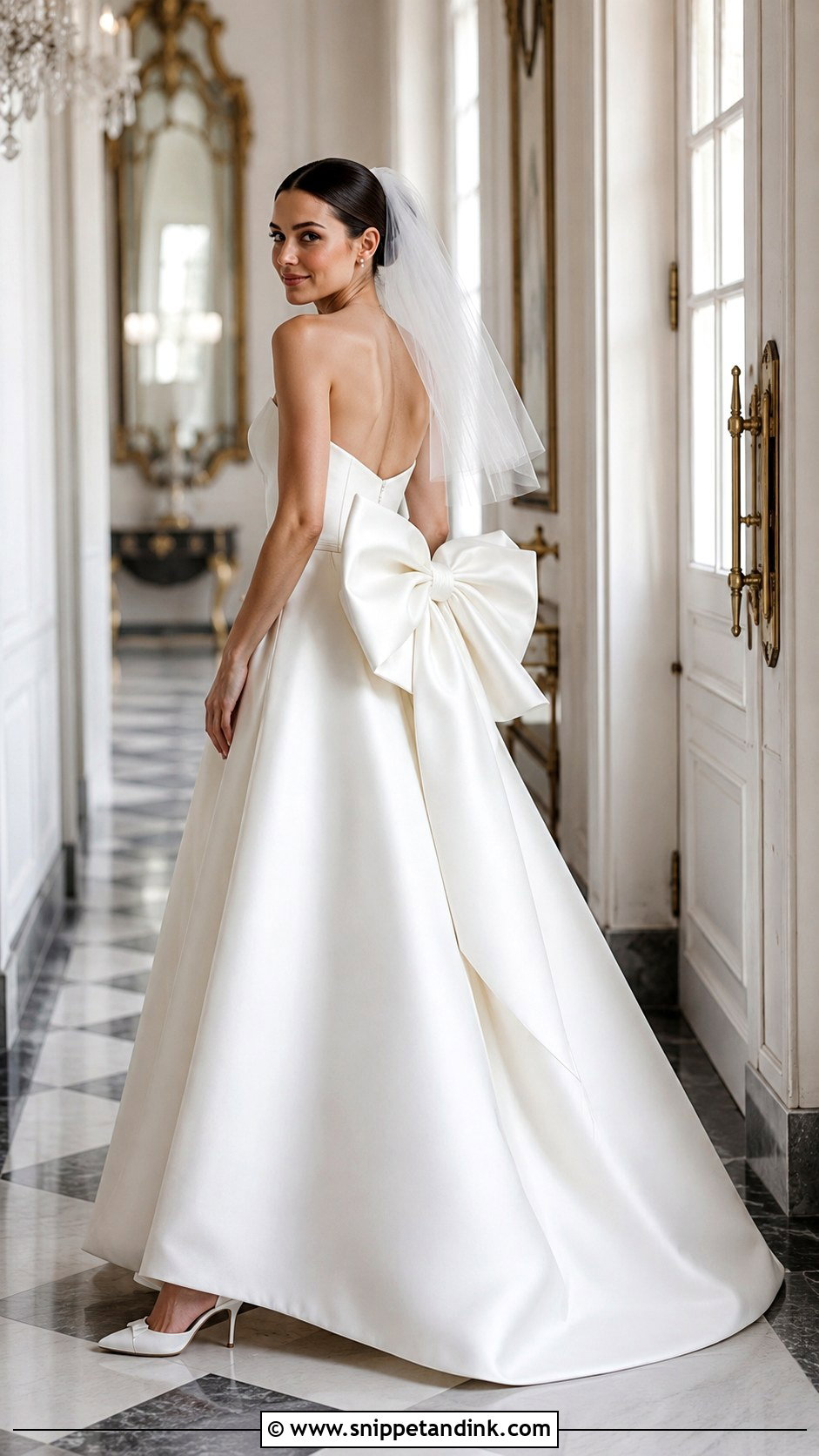
One sculptural bow on a plain mikado gown gives it a clear focal point. Place it at the back waist to frame the silhouette, or on one shoulder for something more directional. This is where mikado earns its place, because a bow in softer fabric droops by mid-afternoon. Keep the rest quiet: a strapless bodice, defined waist and smooth A-line. Bows have been everywhere in recent bridal collections, and they work best as the only detail. Pearl studs, pointed heels, a neat bun and a compact bouquet keep the back on show. End the veil above the bow, or let it fall behind without decoration.
10. Mikado Wedding Gown With Pockets
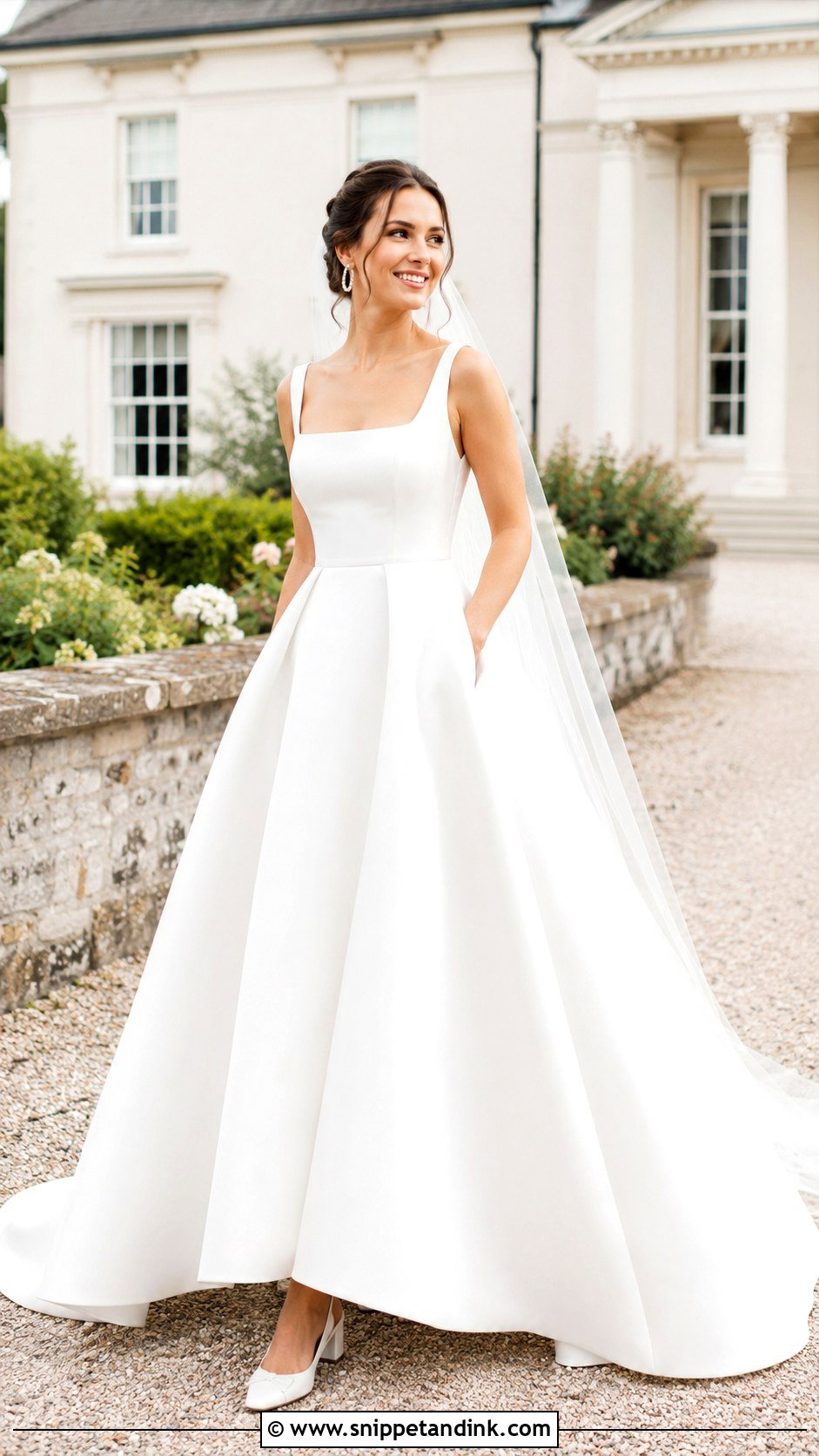
Pockets suit mikado better than almost any other fabric, because the stiff skirt hides them completely. They sit best in an A-line or ball gown skirt. Choose a square-neck, strapless or V-neck bodice for the support and coverage you want. A hand resting in a pocket makes portraits look relaxed. Pearl hoops, a simple veil, low block heels and a loose low bun suit it. I’d keep pockets for a lip balm and nothing heavier, though; a phone drags the skirt and leaves a visible bulge in the line. Estate, barn and garden weddings all suit it.
11. Minimalist Mikado Column Gown
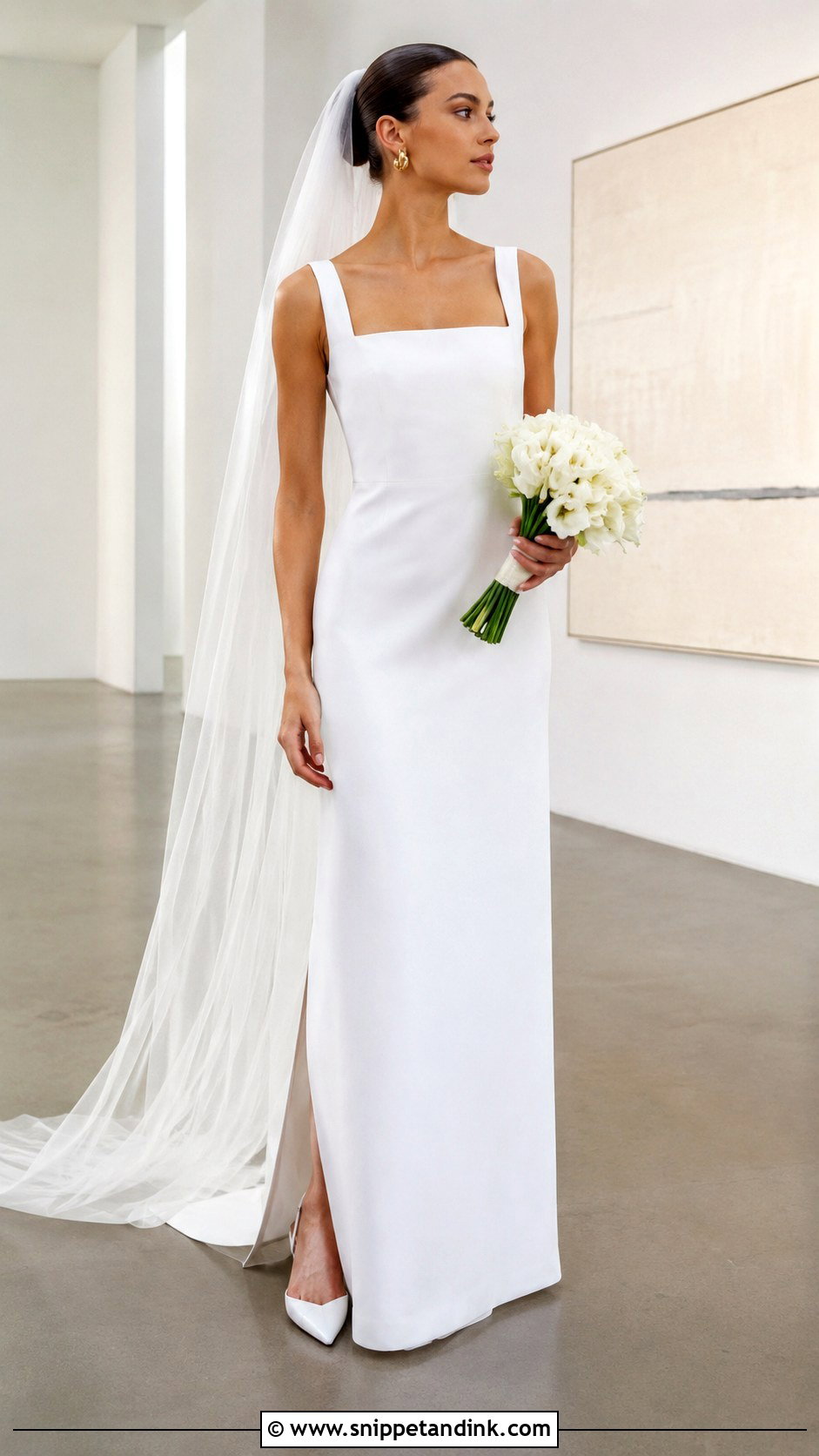
A column of mikado has nowhere to hide a mistake, which is exactly why it looks expensive when the tailoring is right. The line runs narrow from shoulder to floor, with a straight neckline, wide straps or a bateau neck. A back slit is essential for walking, since the fabric won’t give. Sculptural earrings, a smooth bun, pointed slingbacks and a small structured bag suit it. Choose a sheer floor-length veil or a short blusher over anything embellished, and carry a single-variety bouquet. Courthouses, restaurants and small city ceremonies are where it feels most at home.
12. One-Shoulder Mikado Wedding Gown
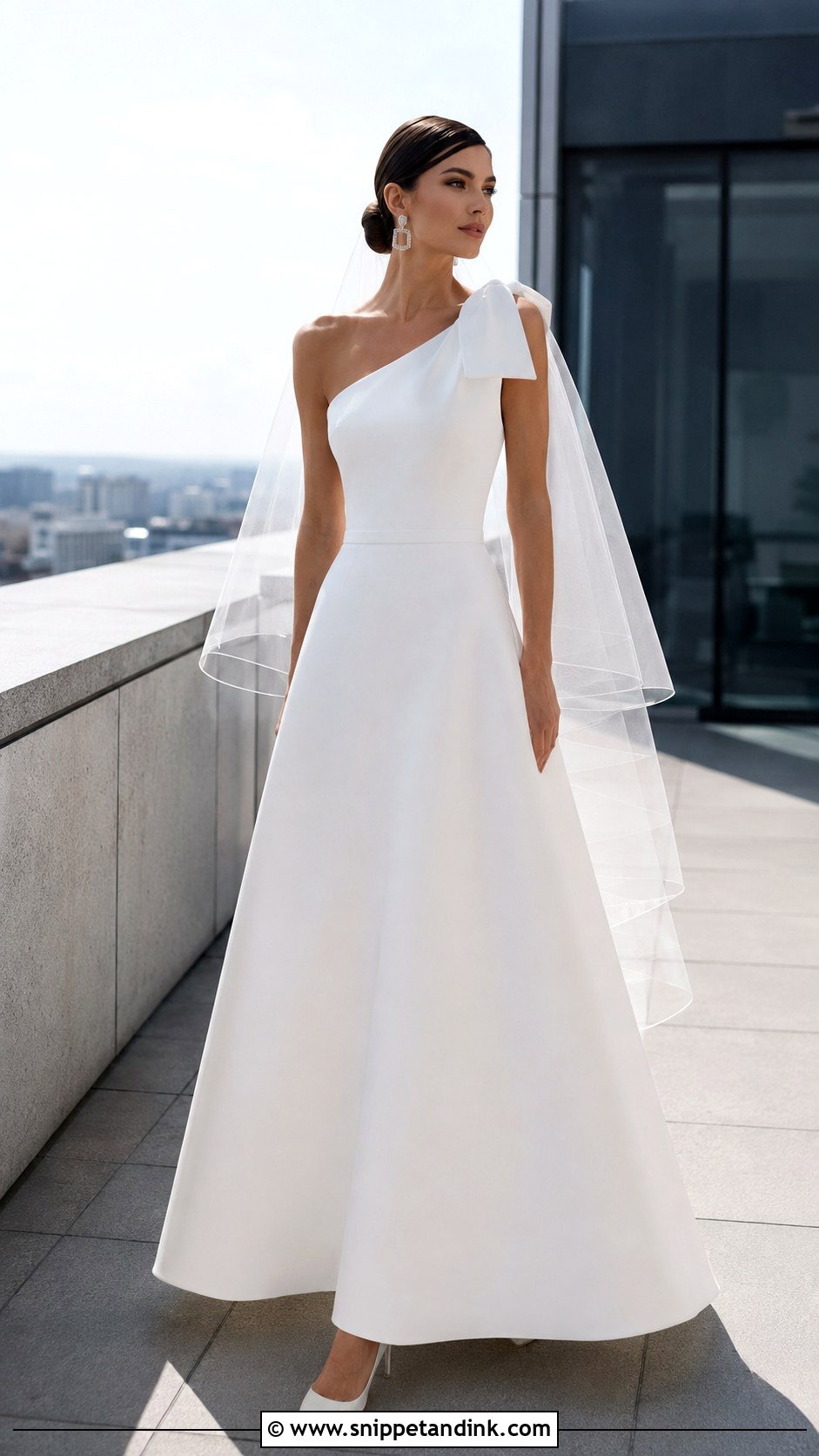
One shoulder, one clean side: an asymmetric neckline makes mikado look editorial. The strap can be draped, folded or built into a sculptural shape, since the fabric will hold whatever it’s given. Balance it with a fitted waist and an A-line skirt rather than extra ornament. Skip the necklace and wear statement earrings, with a sleek ponytail or side-parted bun. Metallic or ivory pointed pumps, a plain fingertip veil set below the hair and a long narrow bouquet complete it. Check the single strap for weight. Mikado is heavy, and a skirt pulling on one shoulder all day can leave it sore unless there’s a hidden inner strap or boning.
13. Halter Neck Mikado Wedding Gown
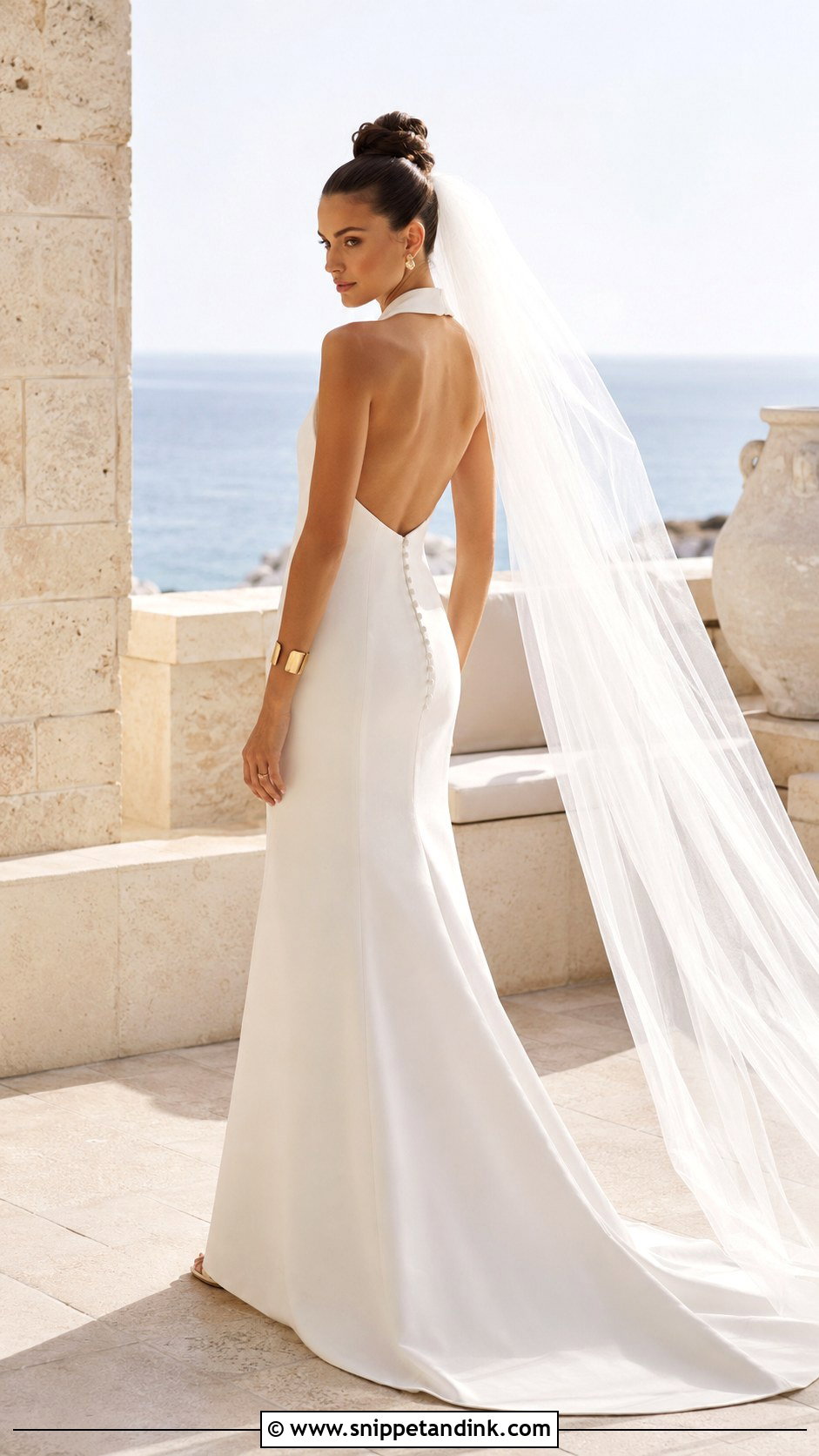
A halter neck lifts the eye and covers more than strapless while still showing the shoulders. In mikado the halter band stays crisp. A narrow A-line or fit-and-flare keeps proportions balanced, and an open back stops the top from feeling heavy. Small earrings, a cuff bracelet, no necklace and a high bun or polished ponytail keep the shape visible. Minimal sandals, a soft tulle veil under the hair and a compact bouquet finish it. The neck strap is the thing to test. A stiff band can rub the back of the neck, so ask for a softer lining or a slightly wider strap.
14. Split Hem Mikado Ball Gown
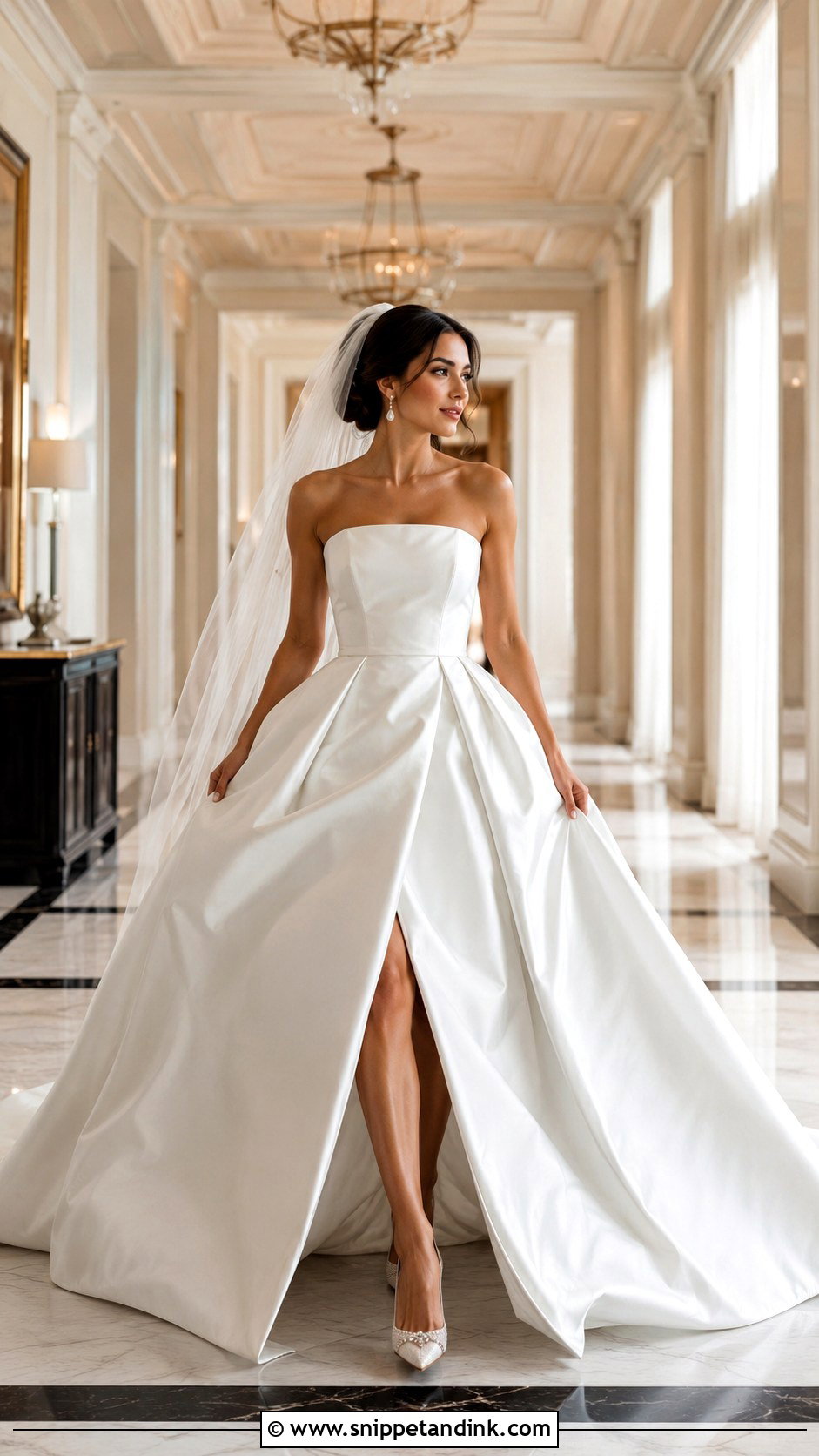
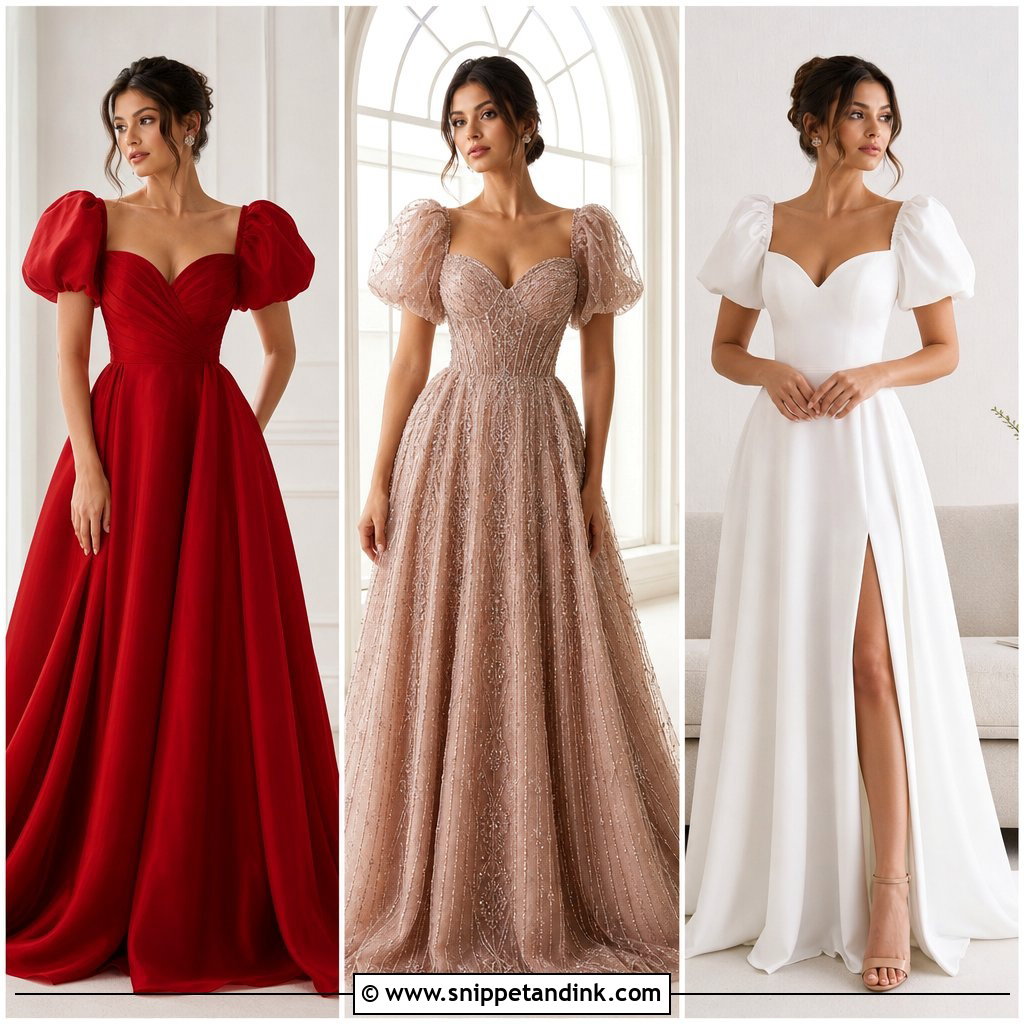
A thigh-high split gives a mikado ball gown movement and a bit of attitude. Build the opening into the seams so it falls closed when you stand and opens as you walk; a split cut into the middle of a panel tends to gape in stiff fabric. Pair it with a secure strapless or square-neck bodice and a defined waist. Your shoes will show, so pick embellished pumps, bow heels or ankle-strap sandals. Pearl drops, a sleek bun, a plain cathedral veil and a structured bouquet keep it balanced. Sit, take stairs and walk in it during alterations to check how high the split rides.


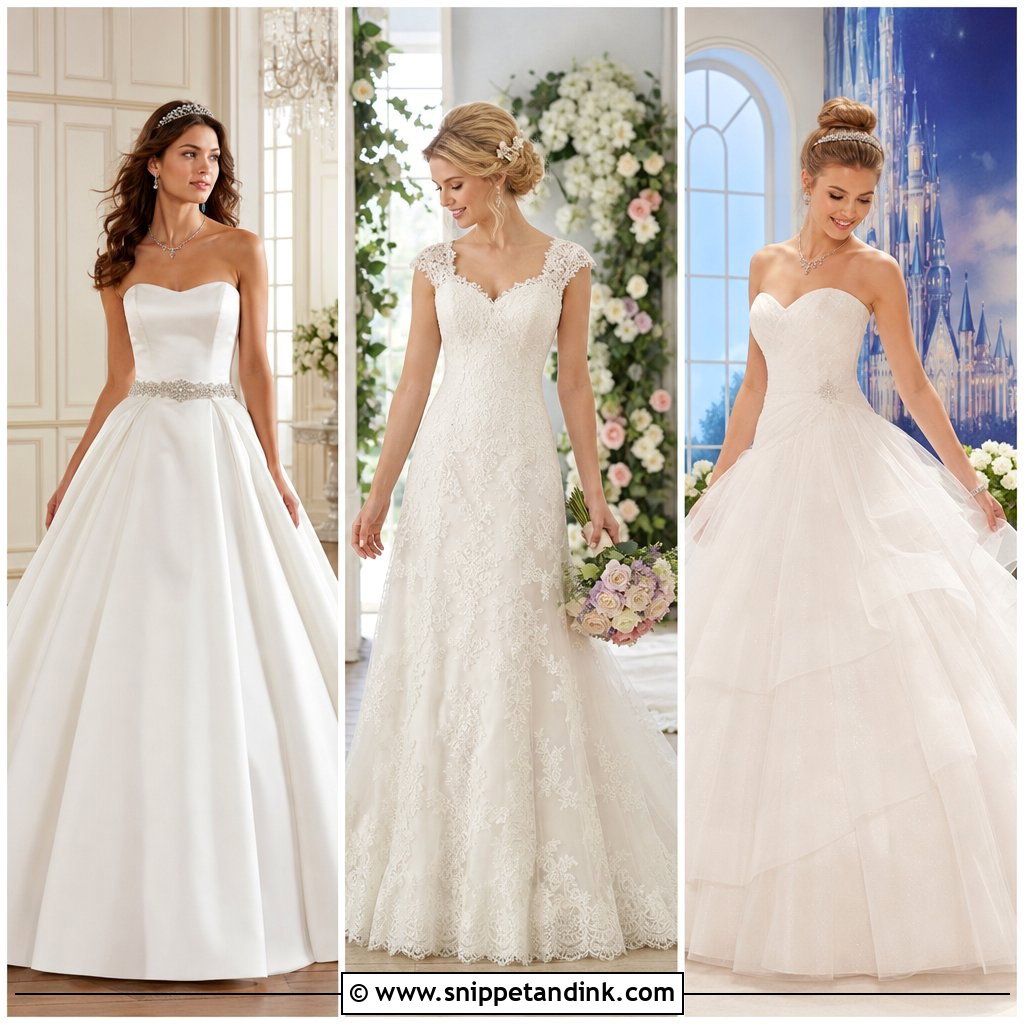
15. Mikado Wedding Gown With Detachable Sleeves
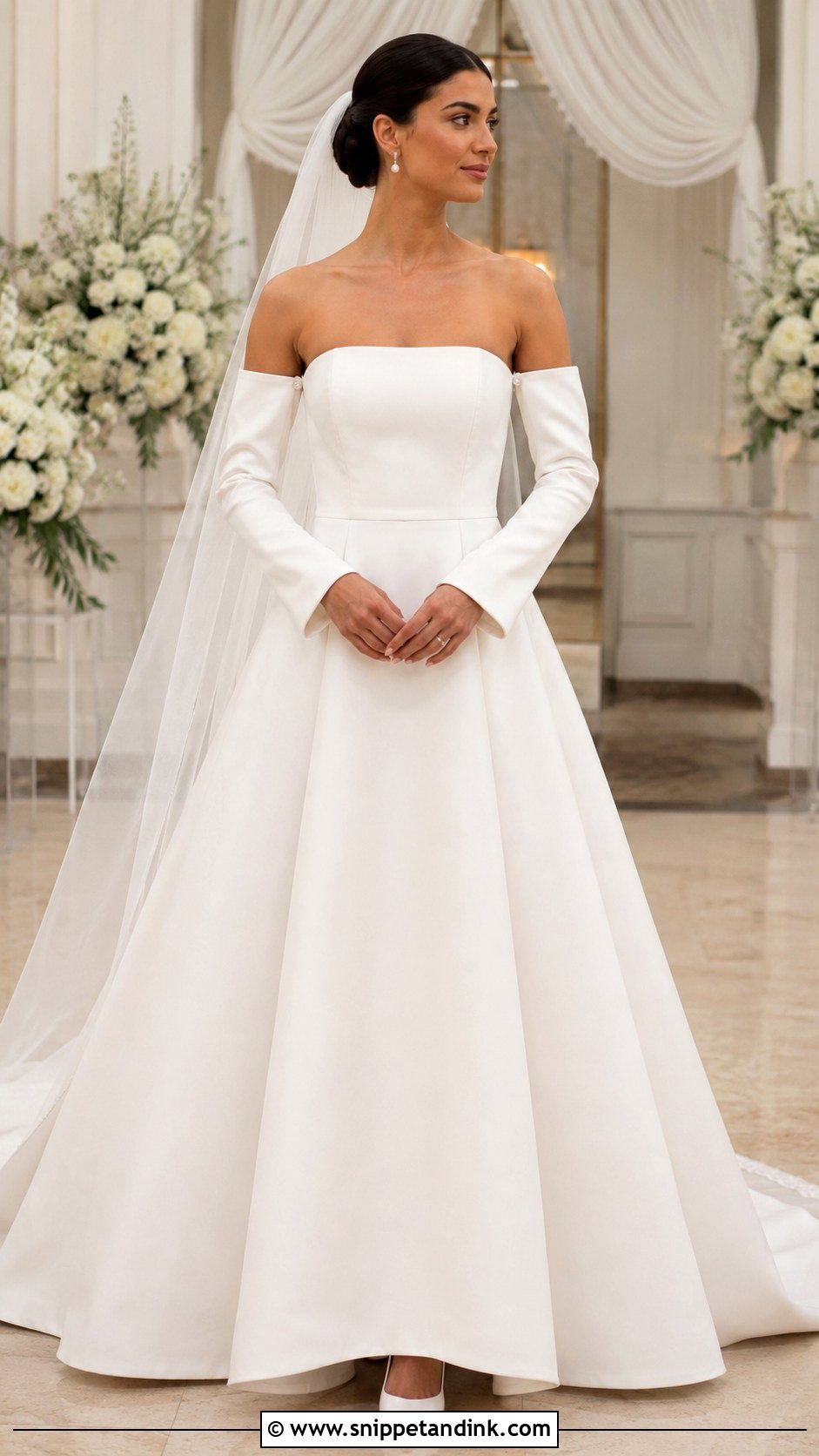
Detachable sleeves turn one mikado gown into two looks. Start the ceremony with long fitted sleeves, off-the-shoulder cuffs or soft puffs attached to a strapless bodice, then take them off before the reception. The attachment points need to sit flat and stay invisible afterwards, which is harder on mikado because stiff fabric shows small loops and snaps. A long veil, pearl earrings and closed-toe pumps for the ceremony; a decorative comb and brighter earrings for the party. A low bun works for both. It’s a smart choice if the ceremony and reception happen in very different temperatures.
16. Mikado Wedding Gown With Overskirt
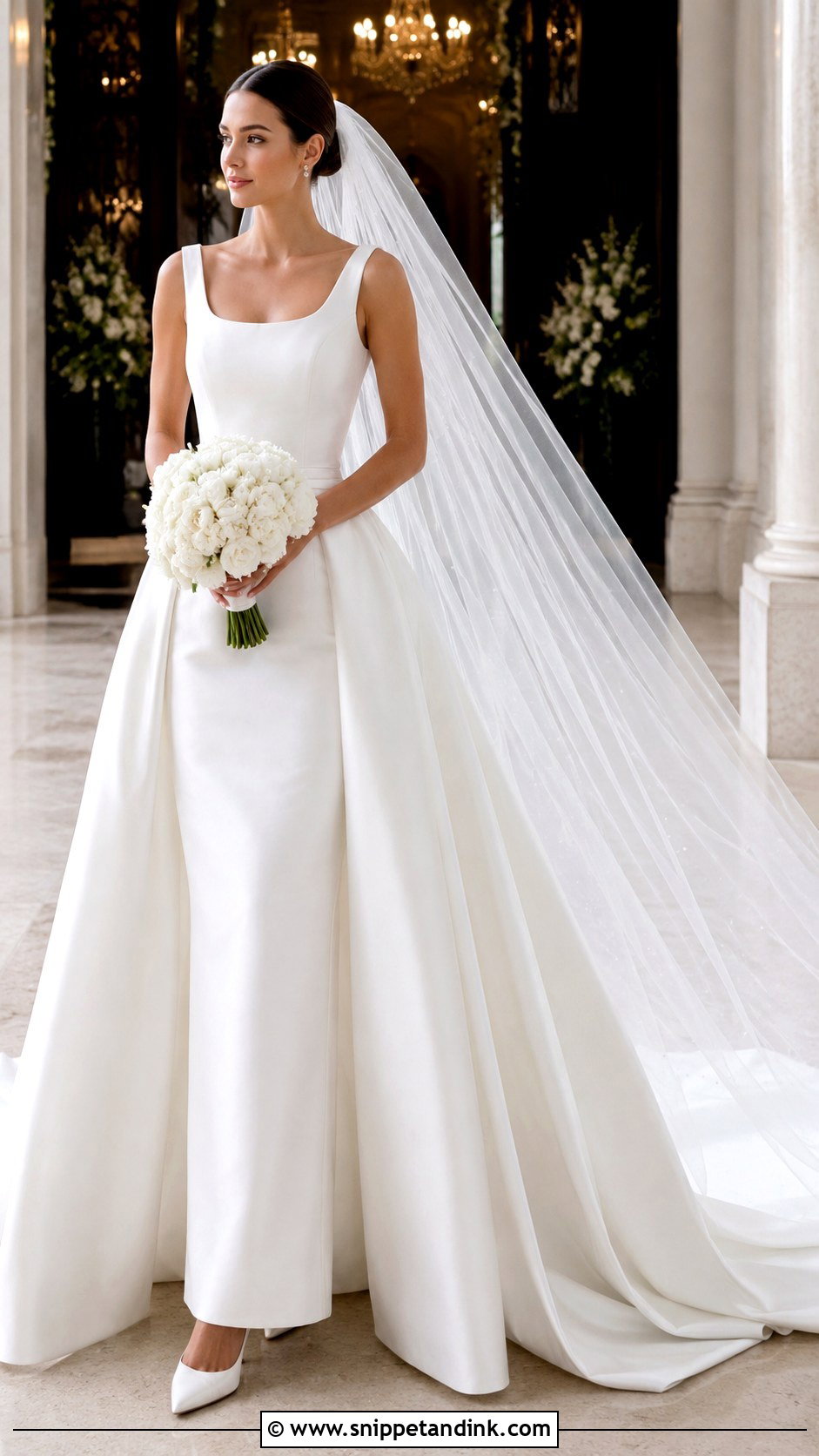
An overskirt in mikado gives the aisle drama without a second dress. Wear it over a fitted column, trumpet or mini for a big A-line shape, then unhook it after portraits. The overskirt waistband has to line up exactly with the waist of the base dress, or you’ll see a step at the side. A cathedral veil, crystal studs and pointed pumps suit the ceremony; a sleek ponytail or jeweled pin suits the reception. Keep the bouquet simple. Mikado overskirts are heavy, so ask for sturdy hooks, and plan where it will hang once it’s off; laid over a chair, it creases badly.
17. Pleated Mikado A-Line Gown
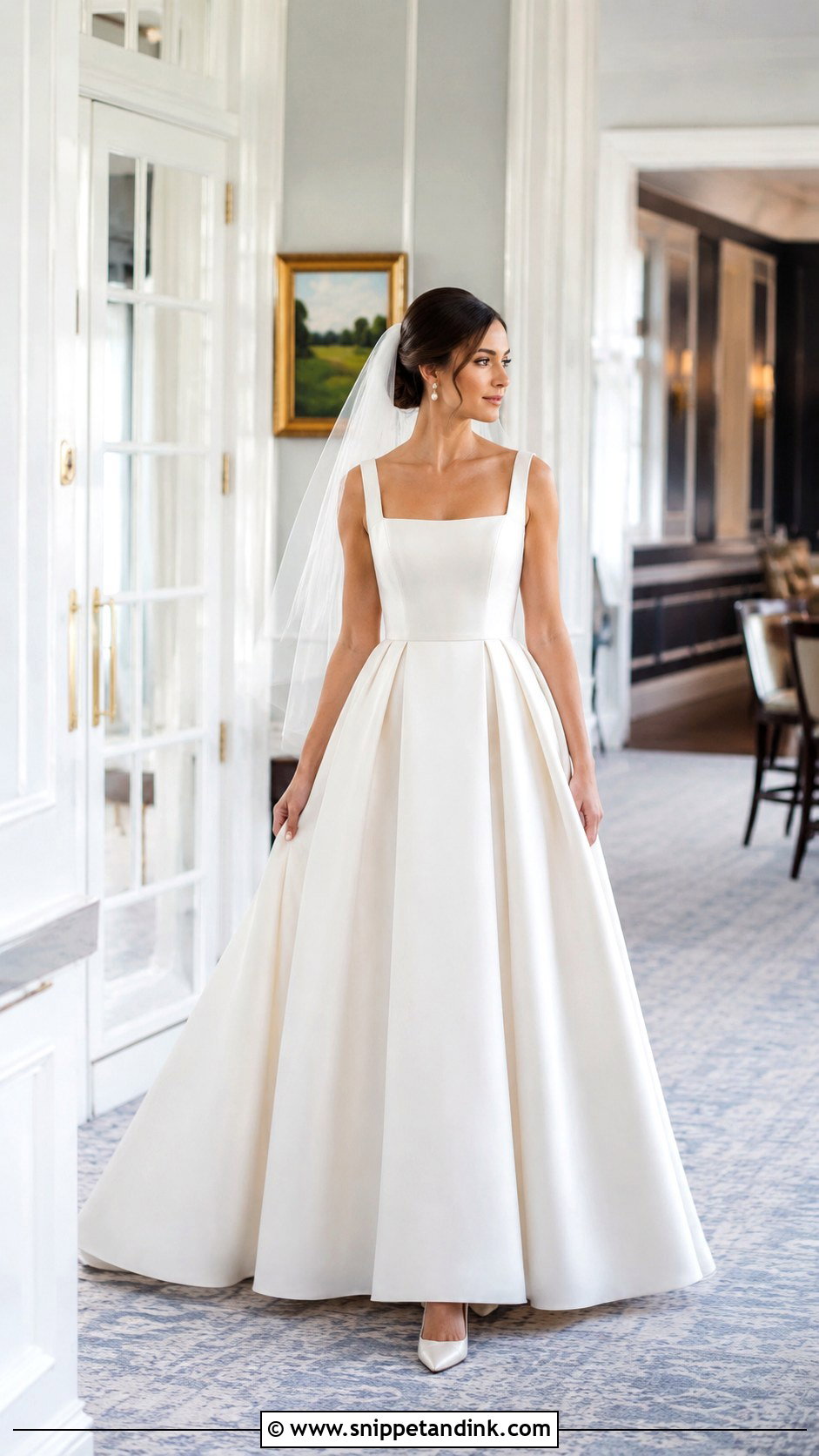
Pleats are what mikado does best. Box pleats look architectural, while wide inverted pleats keep the front flat and release volume to the sides, which I often prefer for a less rounded hip. A fitted scoop or square-neck bodice defines the waist. A narrow belt can mark the join, but an unbroken waist seam usually looks more modern. Pearl earrings, a fingertip veil, pointed pumps, a soft low chignon and a rounded bouquet finish it. Watch the pleats when you sit. On mikado they can crush into a hard fold if the skirt bunches under you, so smooth it as you sit down.
18. Tea-Length Mikado Wedding Gown
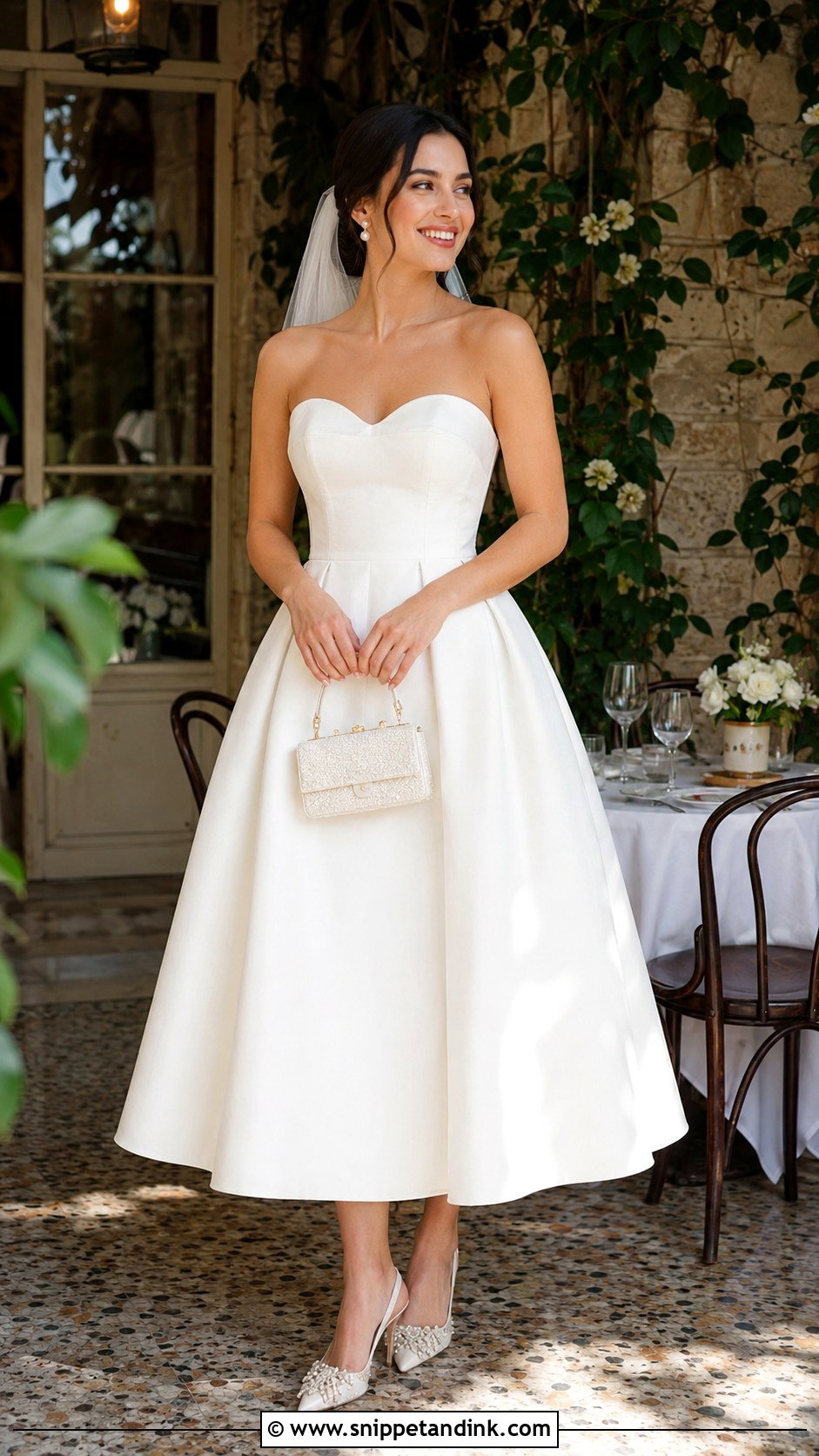
Tea-length mikado holds its bell shape while you walk and dance, which makes it feel cheerful. The hem falls between knee and ankle. A bateau, sweetheart or square neckline gives it vintage proportions, and the shoes matter: pointed slingbacks, embellished pumps or smart block heels. A short veil, pearl earrings and a small top-handle bag complete it, with a waved bob or neat bun. Courthouses, daytime parties and restaurant receptions suit it. It also works as a second dress after a formal ceremony.
19. Mikado Mini Wedding Gown
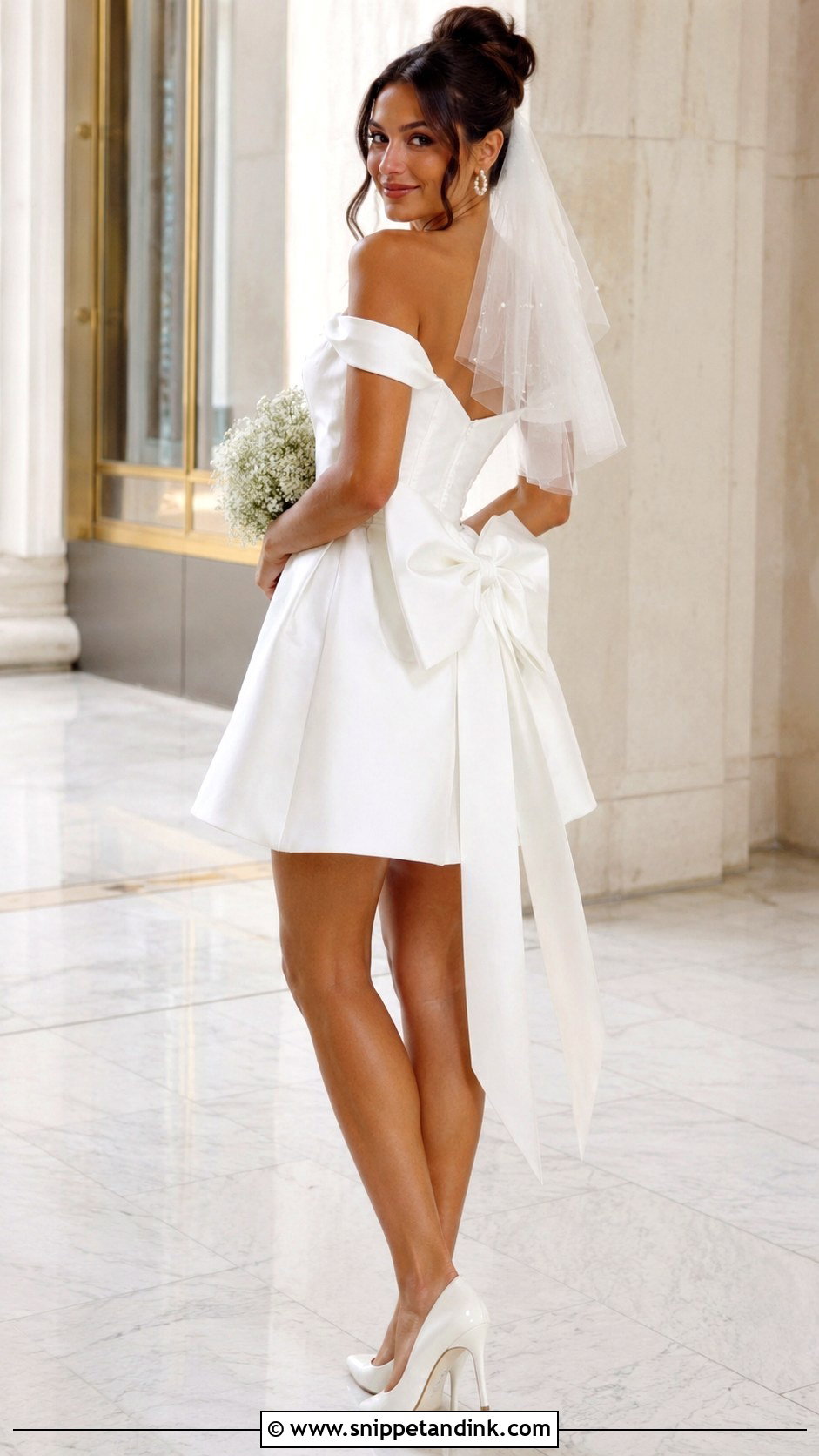
A mikado mini is bridal in a short, modern way, and the fabric’s stiffness is what keeps it from looking like a party dress. A structured A-line, a fitted shift or an off-the-shoulder shape all work. Pick one statement detail, such as crystal straps, a big back bow or a removable train. Pointed pumps, sheer white tights in cold weather and a small structured bag suit it, with pearl hoops or studs. Finish with a short veil, a bow headpiece or a sleek ponytail. It’s at home at a civil ceremony, the rehearsal, the dance floor or the send-off.


20. Floral Appliqué Mikado Wedding Gown
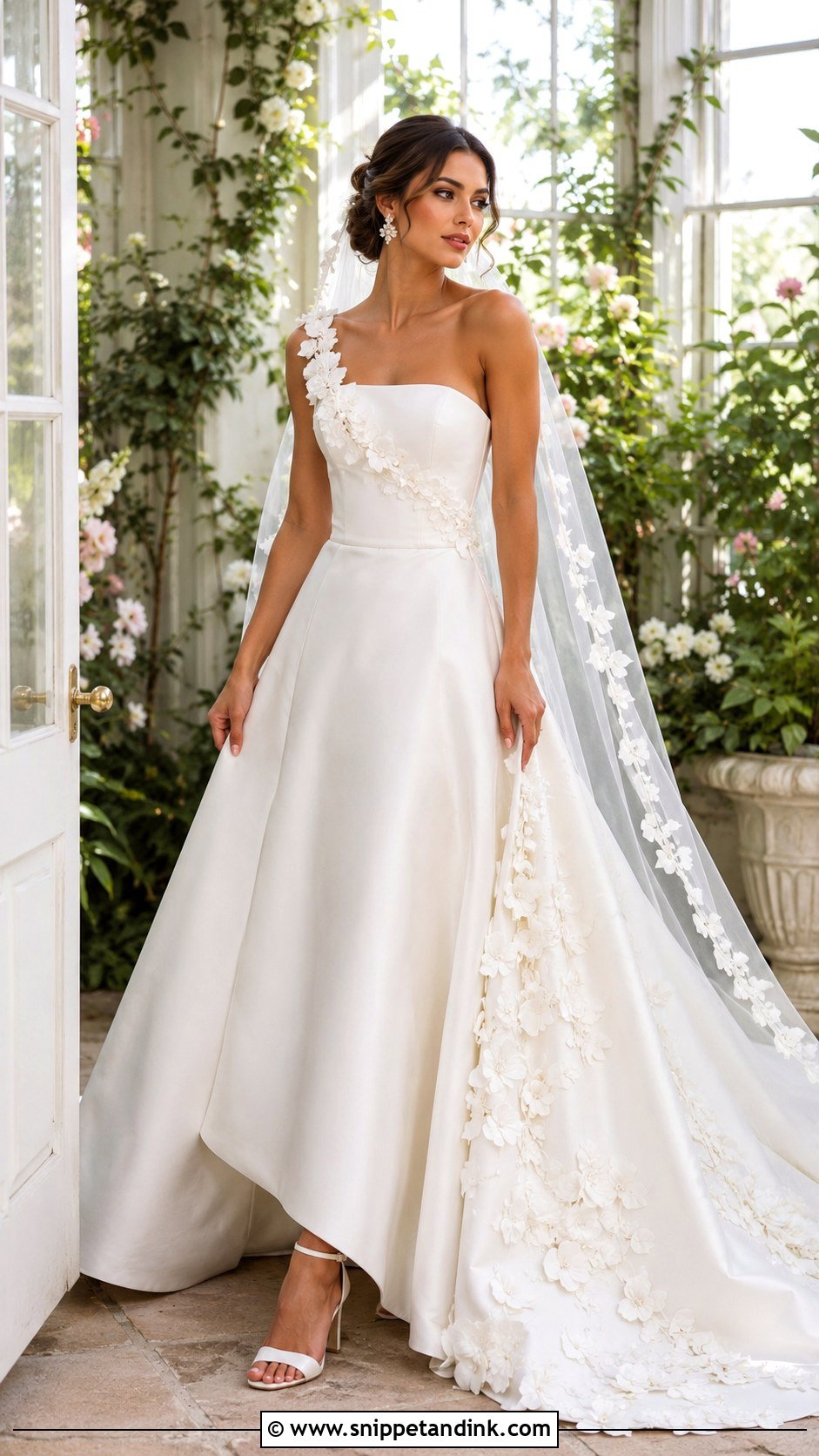
Dimensional flowers soften mikado’s smooth surface. I’d place them around the neckline, across one shoulder or along the train, rather than everywhere, so the fabric still shows. A strapless A-line or fitted bodice gives a plain base for flowers in organza, lace or matching mikado. Floral earrings, plain satin heels and a sheer veil with a few matching flowers near the edge finish it, with a relaxed updo and a soft bouquet. Flowers cut from mikado itself keep their petals lifted; organza ones flatten faster when crushed in a car. Gardens, conservatories and spring weddings suit it.
Creases, Rain and the Morning Steam
Mikado holds shape, but it holds creases too. A skirt packed tightly into a garment bag for a long drive can arrive with fold lines that need real work. Ask the shop to stuff the bodice and pleats with tissue, and hang the bag from the dress’s own hanging loops rather than the shoulders, so the weight of the skirt doesn’t stretch the bodice.
- Steam from the inside of the skirt, holding the head a little away from the fabric.
- Never press the face of the cloth with a hot iron; use a pressing cloth on the reverse if a seam needs it.
- Avoid spraying water on silk mikado. Drops can dry into rings that are hard to remove.
- Keep a clean white cloth nearby for spills and blot, never rub.
If rain is forecast, plan the walk from car to door with a large umbrella and someone holding the train off wet ground. After the wedding, take the gown to a cleaner who works with bridal silk, and store it flat or loosely folded in acid-free tissue inside a breathable box, away from plastic. Mikado that sits in a sealed bag for years can yellow along the folds.
Is a Structured Fabric Right for Your Day?
The right mikado gown pairs real structure with details that sound like you. Ball gowns and basque waists bring formal drama; columns, minis and tea-length cuts feel more modern. Necklines, sleeves, bows, appliqués, splits and removable layers let you adjust from there. When trying on gowns, walk, sit, raise your arms and look at the fabric from every side in daylight. Think about the venue, the temperature and the weight of the skirt as well as the look. Let your accessories support the shape of the dress, then build the rest of the outfit around it.
You'll Like These Ideas:






Leave a Reply