
Jacquard gets its pattern from the loom, not from anything stitched or glued on top, so the design is part of the fabric itself. That changes how a dress behaves: it holds a shape without much boning, it doesn’t shed beads, and the motif shows up as light and shadow rather than sparkle. I reach for it with brides who want texture and structure but find lace too busy and crystals too much. It works on ball gowns, sleek A-lines, tea-length vintage cuts and minimal sheaths. Below are 25 ways to wear it, with what I watch for in fittings and styling on each.

Silk, Polyester or a Blend? Reading a Jacquard Label
Jacquard describes how the fabric is woven, not what it is made of. Two jacquard gowns that look alike on a hanger can feel completely different by the end of the day, so I always check the label before anything else.
- Silk jacquard breathes, has a soft, deep sheen and drapes better, but it marks with water and costs more.
- Polyester jacquard holds its shape well and resists creasing, but it traps heat. For a summer or outdoor wedding, that matters.
- Silk and synthetic blends sit in between and are common in bridal fabrics.
- Brocade and damask are close relatives. Brocade often has a raised, sometimes metallic pattern; damask is usually reversible and flatter. Both are woven, just with different structures.
Feel the weight as well. A heavy jacquard suits a winter ballroom; a lightweight one is better for spring or a long outdoor day. If you can, wear the sample for twenty minutes in the shop to see how warm it gets.
1. Floral Jacquard Wedding Dress With Pearl Veil

Floral jacquard on an ivory A-line already reads romantic, so the accessories should cool it down rather than add sweetness. A pearl veil brings light near the face, and a clean neckline, strapless, square or bateau, keeps the woven flowers from fighting the veil’s pearls. I’d keep the pearl spacing on the veil sparse; dense pearls next to a busy floral weave look cluttered from a few feet away. Satin pointed heels and white roses or peonies finish it for spring or a garden venue.
2. Strapless Jacquard Wedding Dress With Satin Gloves

Strapless jacquard is where the fabric’s natural body really pays off: a corset-style bodice in a heavy jacquard holds itself up with less internal structure than a soft satin needs. Satin gloves give it a formal, black-tie finish. Match the glove shade to the dress under daylight, not shop lighting, because satin often reads brighter than an ivory jacquard. Crystal studs and a sleek bun keep it refined for a ballroom or winter evening.
3. Jacquard Ball Gown Wedding Dress With Cathedral Veil

A ball gown skirt is the widest canvas a jacquard pattern gets, so the motif reads clearly in damask, florals or baroque-inspired motifs. The fitted bodice keeps the volume in check. With a bold pattern, choose a cathedral veil with a plain cut edge, since a lace-trimmed edge lying across a damask train is one pattern too many. One honest note: a full jacquard ball gown is heavy. I’d do a practice walk of at least ten minutes at a fitting to see how your back and shoulders feel.
4. Jacquard A Line Wedding Dress With Block Heels

If you need a dress for a long day, this is it: an A-line skims waist and hips, and jacquard’s structure keeps the skirt shape without layers of petticoat. Block heels help on lawns, terraces and old stone floors. A soft tulle veil and small floral comb balance the woven texture. It flatters many body types because it supports without squeezing. Before the wedding, sit in it for a few minutes; stiffer jacquards can form a hard fold across the lap, and a lighter weave avoids that.
5. Square Neck Jacquard Wedding Dress With Low Bun

A square neckline frames the collarbones and suits both straps and sleeves. Because the fabric already brings texture, I’d keep the hair smooth, a low bun rather than a textured updo, so there’s one pattern in the picture and not two. Small pearl earrings and a narrow bracelet are enough. One fitting note: square necks in stiff fabrics can stand off the chest at the corners, so make sure the seamstress shapes the neckline closely to you. Museum, estate and city venues all suit it.
6. Long Sleeve Jacquard Wedding Dress With Velvet Shoes

Long sleeves in jacquard are warm, which makes this a fall and winter dress almost by default. The sleeves can be fitted, gently puffed or softly structured. Velvet shoes in ivory, champagne, blush or pale blue add a second texture without competing. Check arm movement carefully: a stiff woven sleeve set into a narrow armhole will stop you hugging anyone or lifting your bouquet high, so ask for a little ease at the elbow and armhole. A low chignon and short veil leave the sleeves on show.
7. Jacquard Mermaid Wedding Dress With Crystal Earrings

Mermaid cuts rely on fabric to hold the shape through the hips and the flare, and jacquard does that well. The dress hugs the bodice and hips, then flares near the knee. In a structured weave, it looks sculpted. Crystal earrings add light near the face, and a pulled-back hairstyle keeps the line clean. I’d be honest about the trade-off: a fitted jacquard mermaid restricts your stride and makes sitting awkward, so plan for a bustle or a reception change if you’ll dance a lot.
8. Jacquard Mini Wedding Dress With Bow Heels

Short jacquard reads fresh rather than traditional, which makes it a smart pick for a civil ceremony or a reception change. A fitted bodice with a slight A-line skirt or a tailored shift both work. Bow heels and pearl studs add the bridal note. With a mini, I look closely at the scale of the motif; a large repeat on a small dress can be cut off awkwardly at the hem, so choose a small, all-over pattern or check where the motifs fall before buying.
9. Jacquard Tea Length Wedding Dress With Mary Jane Heels

Mary Jane heels and a jacquard tea-length wedding dress bring a vintage note to a modern bride. The hem falls between knee and ankle, so the shoes show. Floral jacquard suits this cut especially well. Choose ivory or blush Mary Janes, a short veil and pearl earrings; soft pink makeup keeps it gentle, though a red lip is an option. Tea length in a stiff fabric can bell out more than you expect, so check the side profile in a full-length mirror.
10. Jacquard Corset Wedding Dress With Simple Veil

A corset bodice with visible boning, a dipped waist or a straight neckline is easy to build in jacquard because the fabric doesn’t wrinkle between bones the way a thin satin can. With the bodice carrying so much detail, keep the veil plain and airy. It works with ball gown, A-line and fit-and-flare skirts. At the fitting, breathe in deeply and sit down; a corset that’s comfortable standing can press on the ribs when seated at dinner.
11. Jacquard Wedding Dress With Off Shoulder Sleeves

Off-shoulder sleeves soften the structure of jacquard at the neckline, while the fabric keeps the bodice crisp. A fitted bodice with gentle skirt volume balances best. Wear a delicate necklace only if the neckline is plain; otherwise drop earrings are enough. Off-shoulder sleeves in heavy fabric tend to slip if they aren’t anchored, so I’d ask for a hidden elastic or a boned band. Satin heels, a loose updo and a fingertip veil suit garden estates and classic indoor ceremonies.
12. Jacquard Wedding Dress With Detachable Overskirt

Two dresses in one: a full jacquard detachable overskirt for the ceremony, then a lighter sheath, mini or slim A-line underneath for the party. Keep accessories clean so both looks share them. The fastening is the detail I’d test: heavy jacquard overskirts pull on their hooks, so they need a strong waistband and preferably a bridesmaid who has practiced taking it off. A simple veil and pointed heels suit both stages.
13. Jacquard Sheath Wedding Dress With Cap Veil

With no flare to distract from it, a sheath puts the woven texture front and center. A cap veil adds a vintage note and stays light. Slim heels, pearl earrings and a small bouquet keep it polished for a city wedding, gallery ceremony or intimate dinner. Sheaths in jacquard don’t stretch, so I’d allow a little ease through the hips; walking and sitting in a tight woven sheath creates horizontal pull lines that show in photos.
14. Jacquard Wedding Dress With Puff Sleeves

Jacquard holds a puff sleeve’s volume better than most fabrics, so the sleeve keeps its shape all day instead of deflating. Short, elbow or long sleeves all work depending on season. Balance them with a fitted waist and a clean skirt. Skip heavy necklaces next to dramatic sleeves and wear small earrings. Natural makeup and a smooth veil keep it from tipping into costume. It suits spring weddings, gardens and anyone drawn to a slightly vintage look.
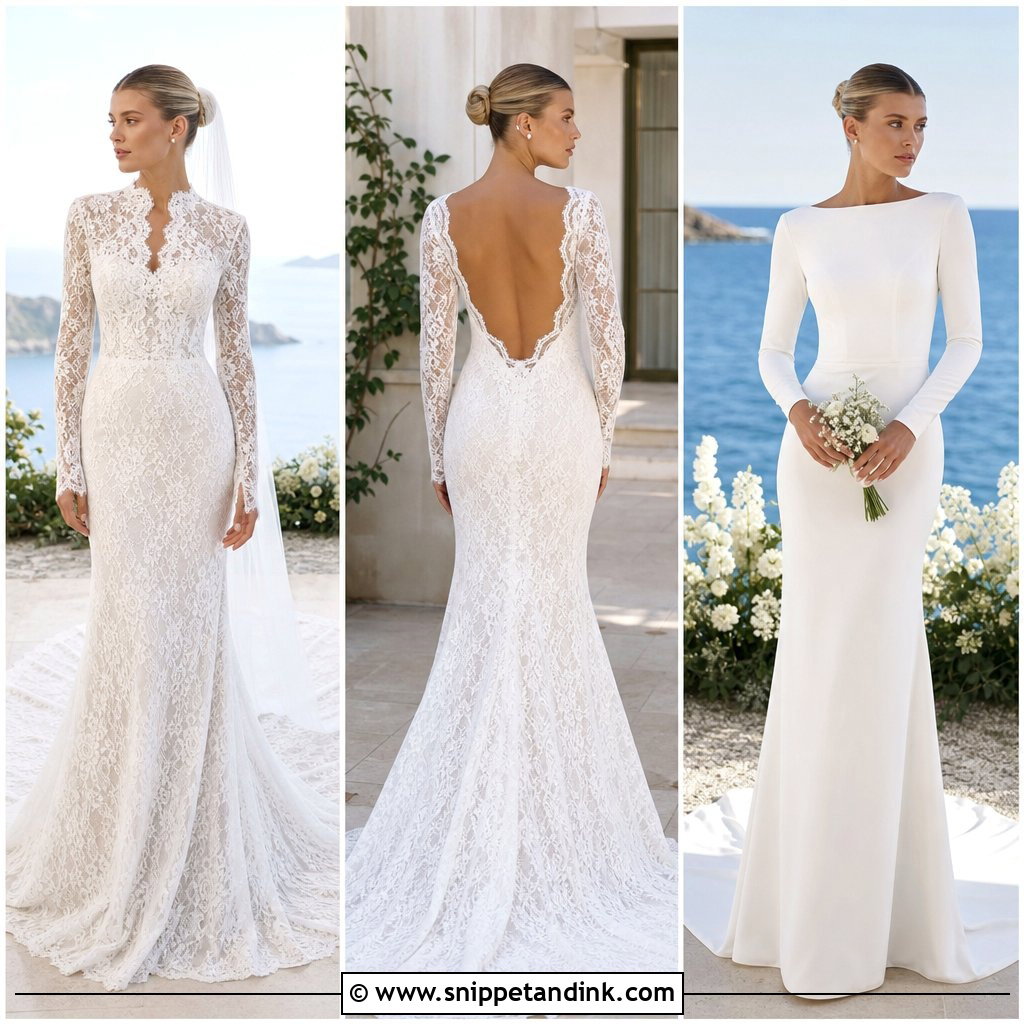
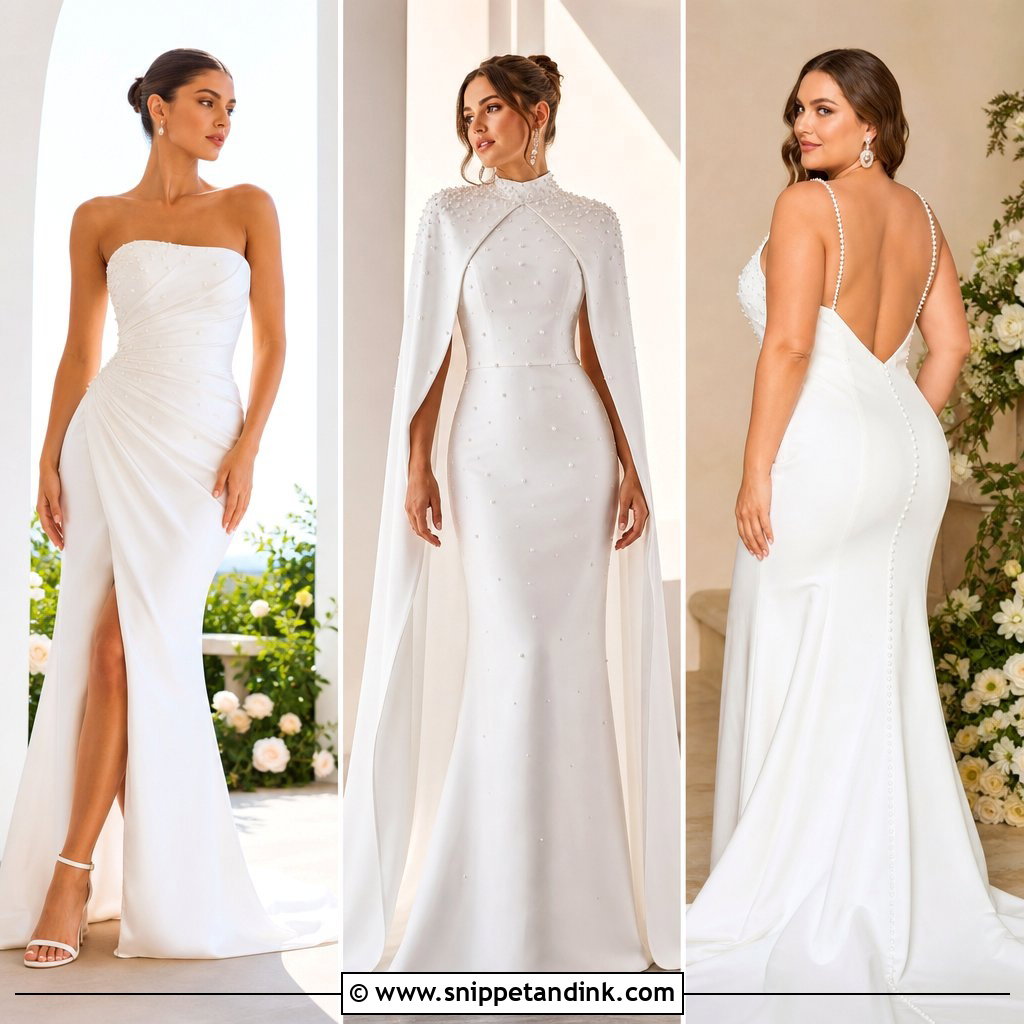
15. Jacquard Wedding Dress With High Neck And Low Heel

Covered necklines are where jacquard shines, because the pattern keeps a high neck interesting without any jewelry. A slim A-line or sheath suits it. Low heels keep you comfortable through standing and greeting guests. With a high neck, I’d add a discreet back opening or a button closure if one isn’t there, since getting a stiff fabric over styled hair is a real risk to the hairdo. Simple pearl studs, a sleek bun and a plain veil keep the neckline clear.
16. Jacquard Wedding Dress With Open Back

Keep the front simple, a square, bateau or high neckline, and let an open back carry the detail. A floral or damask weave makes the dress rich from every angle. Wear the hair low or swept to one side so the back stays visible. Underwear is the practical question here, so have bra cups built in. A sheer veil that lifts easily for photos, delicate earrings and slim heels suit summer weddings and indoor receptions.
17. Jacquard Wedding Dress With Blue Shoes

Blue shoes are a classic something-blue, and against ivory jacquard they look fresh rather than gimmicky. Soft blue satin pumps, block heels or slingbacks all work. Keep the rest simple: pearl earrings, a white bouquet and a clean veil. The shoes pair with A-line, tea-length, mini and ball gown silhouettes. A tip from fittings: bring the shoes when the hem is set, because a pale blue shoe peeking out looks intentional only if the hem length shows it deliberately.
18. Jacquard Wedding Dress With Statement Bow

One bold bow suits jacquard because the fabric is stiff enough to hold the bow’s loops without wiring. Place it at the back waist, on a shoulder or as part of a detachable train. Since the fabric already has texture, stop at one bow. Plain satin heels, small earrings and a smooth veil keep the look focused. I’d check how the bow sits when you sit down; a large back bow can crush against a chair, so ask whether it can be removed for the reception.
19. Champagne Jacquard Wedding Dress With Gold Accessories

Champagne is softer than bright white and flatters many skin tones, and in jacquard it makes the woven pattern look richer. Gold earrings, a fine bracelet and metallic heels tie it together. Match the veil to the dress, ivory or champagne, so it blends rather than looking bright against it. It suits fall weddings, evening receptions and classic interiors. Do look at champagne in both daylight and warm evening light before deciding, since it can go grey in shade on some complexions.
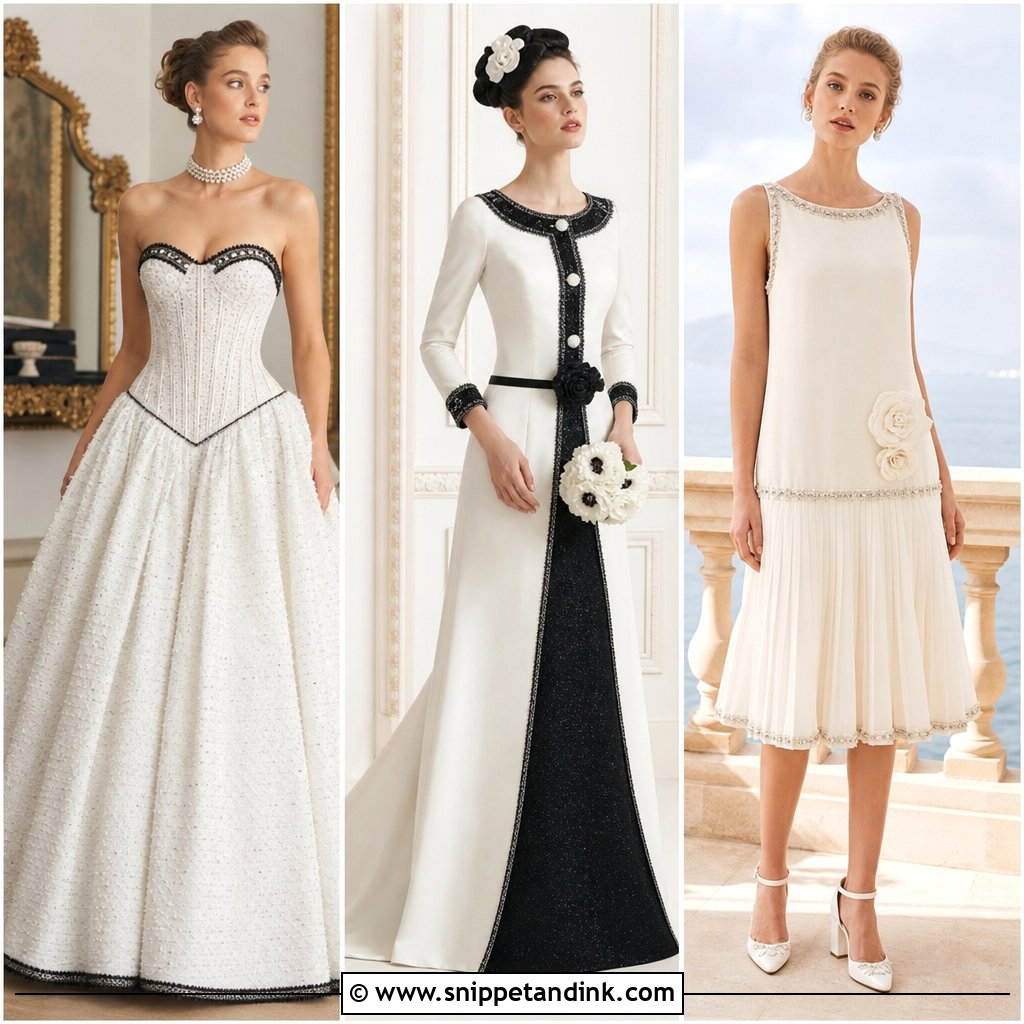
20. Ivory Jacquard Wedding Dress With Floral Crown

A floral crown softens structured jacquard and adds a natural note. A simple A-line or off-shoulder gown keeps the crown from looking busy. Small white flowers, greenery and a touch of blush suit ivory jacquard. Ask your florist to use blooms that hold up out of water for hours, since soft petals wilt quickly against warm hair. Low block heels or delicate sandals and loose waves suit garden ceremonies and spring weddings.
21. Jacquard Wedding Dress With Short Train

A sweep or chapel train gives a bridal finish without the work of a long one. The woven pattern looks good trailing behind, especially in photos from the back. Jacquard trains are heavier than tulle, so even a short train needs a sturdy bustle; I’d ask for an over-bustle with several points rather than a single hook that strains the fabric. Classic heels, a fingertip veil and delicate earrings suit both indoor and outdoor venues.
22. Jacquard Wedding Dress With Sleeveless Bodice

Bare arms help jacquard feel lighter and cooler, which makes a sleeveless bodice useful for warm-weather weddings. A square, V-neck, halter or bateau neckline all suit it. A fitted waist and A-line skirt make a classic shape. Even sleeveless, jacquard is warmer than chiffon or organza, so for a July outdoor ceremony I’d ask about the fiber content and lining. A long veil, small earrings and slim heels finish it.
23. Jacquard Wedding Dress With Pearl Headband

A pearl headband adds detail near the face and makes a veil optional. Smooth hair, a low bun, sleek waves or a soft half-up style, keeps it neat. A simple A-line or sheath in jacquard pairs best. Make sure the headband’s pearls match the dress’s undertone, warm ivory pearls with ivory jacquard, cool white with bright white. Headbands can press behind the ears after a few hours, so wear it for an afternoon before the day. It suits civil ceremonies and indoor weddings.
24. Jacquard Wedding Dress With Tulle Cape

Instead of a veil, a sheer tulle cape gives movement as you walk. It can attach at the shoulders, neckline or back. Choose sheer tulle so the jacquard pattern shows through. Pair it with sleeveless, strapless or square-neck gowns. The cape adds coverage for a religious ceremony and comes off for the reception. Attach it with snaps sewn into the seams rather than pins, which can leave visible holes in tightly woven jacquard.
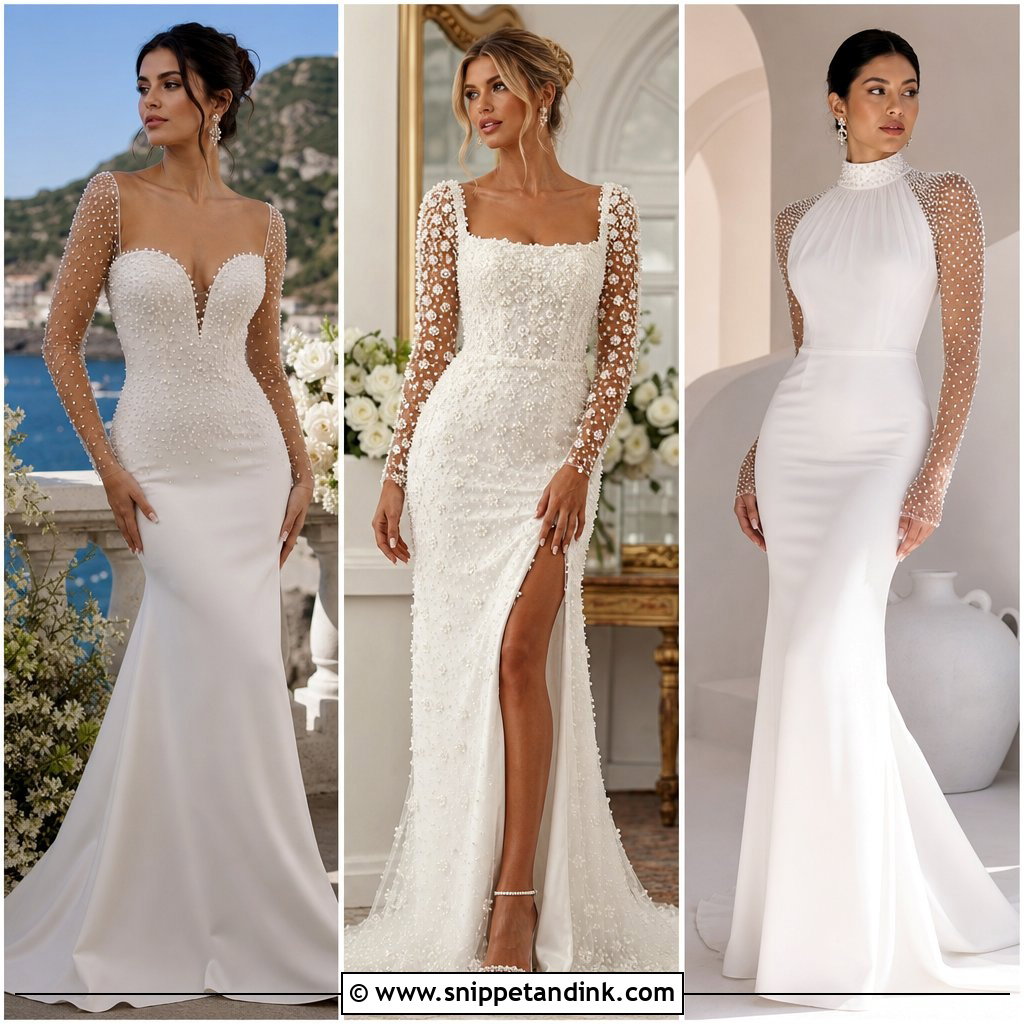
25. Jacquard Wedding Dress With Satin Bridal Flats

Satin bridal flats keep a jacquard dress refined while sparing your feet. Tea-length, A-line, sheath or even a soft ball gown with a re-cut hem all work. Remember to hem the dress for the flats, not a heel, or you’ll trip on the front all day. Pearl earrings, a short veil and a neat bouquet finish it. Flats suit outdoor weddings, city ceremonies and anyone who simply doesn’t want heels.
Why Jacquard Alterations Need Extra Time
Woven patterns make alterations slower and trickier. When a seamstress takes in a side seam, the motifs on either side have to line up, and a tight weave shows old needle holes if a seam is let out. That means fewer second chances.
- Order close to your size, since jacquard has less room to let out than many fabrics.
- Allow more time for fittings than you would for a plain satin dress, and book a seamstress who has worked with patterned fabric.
- Ask how the hem will be finished. A large motif cut through at the hem can look accidental.
How Woven Texture Reads on Camera
The pattern in jacquard shows through light and shadow, so it can disappear under flat, direct light and come alive with side light. Ask your photographer to use window light or a low evening sun from the side for close-ups of the dress. Ivory-on-ivory patterns are the most subtle; if you want the weave to show clearly in photos, a slight sheen or tonal contrast in the motif helps.
Let the Weave Lead and Keep Everything Else Quiet
Jacquard does its own decorating through texture and shape, so it rarely needs beads or sparkle. It can be grand as a ball gown, quiet as a sheath, playful as a mini or romantic with sleeves and a veil. Pick accessories that support the pattern rather than compete with it: clean shoes, soft veils, a few pearls and balanced hair. Get the fit right, and the fabric will carry the rest.
You'll Like These Ideas:


Leave a Reply