
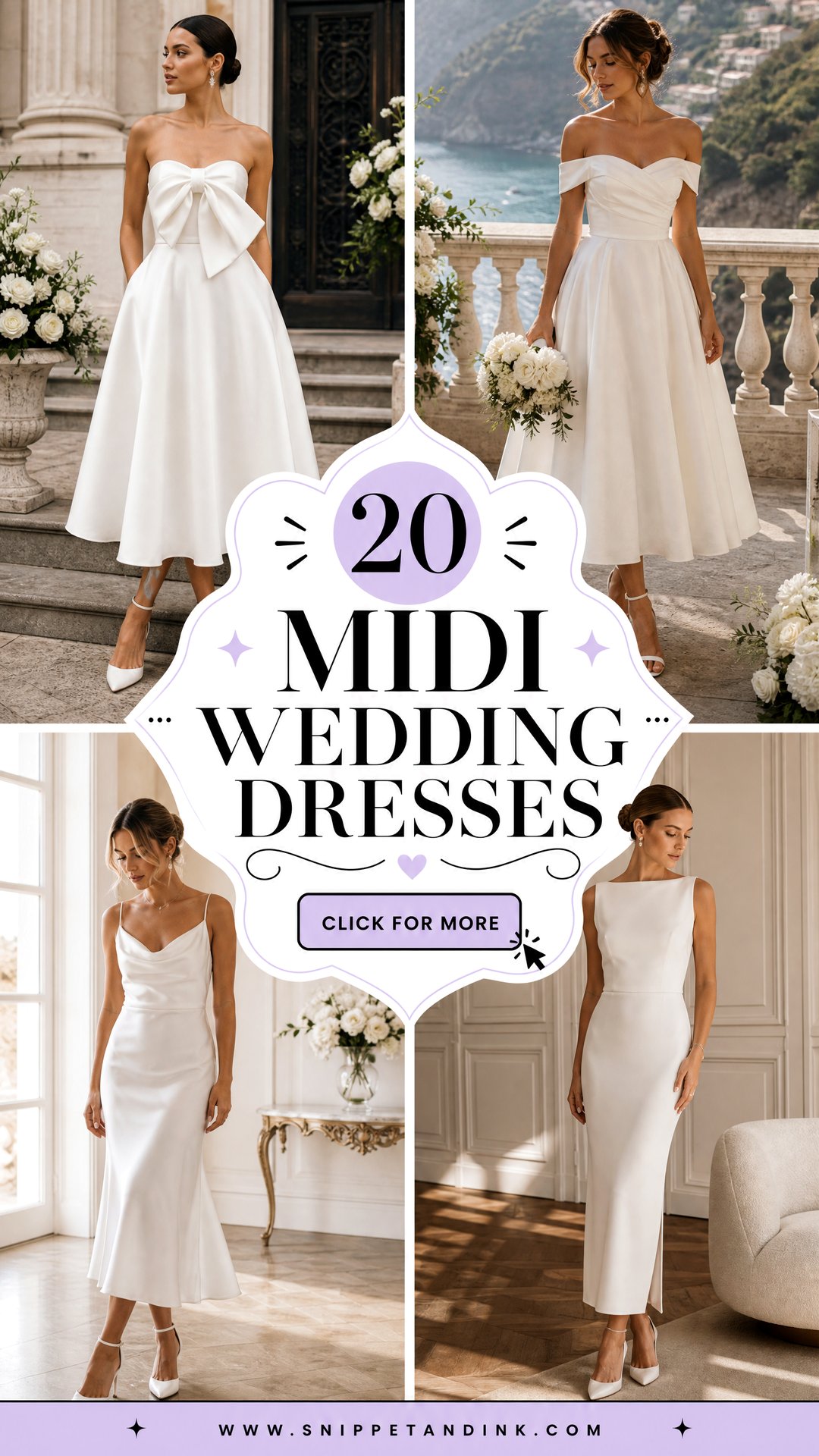
Brides who come to me asking for a midi dress usually want two things at once: something that feels like a wedding dress, and something they can actually live in for twelve hours. A hem that skims the calf gives you both. You walk freely, you greet guests without gathering your skirt, and your shoes finally get seen. The shape suits courthouse ceremonies, gardens, destination trips and receptions. Satin, crepe, embroidered tulle and vintage lace all come in this length, so there’s a version for nearly every bridal aesthetic and body type. What makes it look finished is the styling around it. Below are twenty dresses, each with the accessories, shoes and layers I’d put with them.
Sample, Made-to-Order or Ready-to-Wear Changes Your Timeline
Midi dresses reach brides through three very different routes, and the route sets your deadline far more than the style does. I ask which one a bride is considering before we talk about necklines.
- Made-to-order bridal: the dress is cut once you order, usually in your size from a bridal designer. Production commonly takes several months, and it varies a lot by designer and season, so I treat six months before the wedding as comfortable and anything under four as a question to ask the shop directly.
- Ready-to-wear or contemporary labels: many midi styles sit here. They ship in weeks, which makes them useful for short engagements and courthouse dates, but the fit is standard sizing, so alterations are almost certain.
- Samples and off-the-rack: you take the dress home that day or soon after. It may show some wear from try-ons, so check the hem, underarms and zip, and budget for cleaning as well as fitting.
Whichever route you take, leave time for alterations. Most fittings run over two or three appointments spread across several weeks, and the final one should fall close to the wedding so the fit reflects your body as it is then. For a midi, that last appointment is also where the hem is confirmed with your real shoes.
1. Satin A-Line Midi Wedding Dress
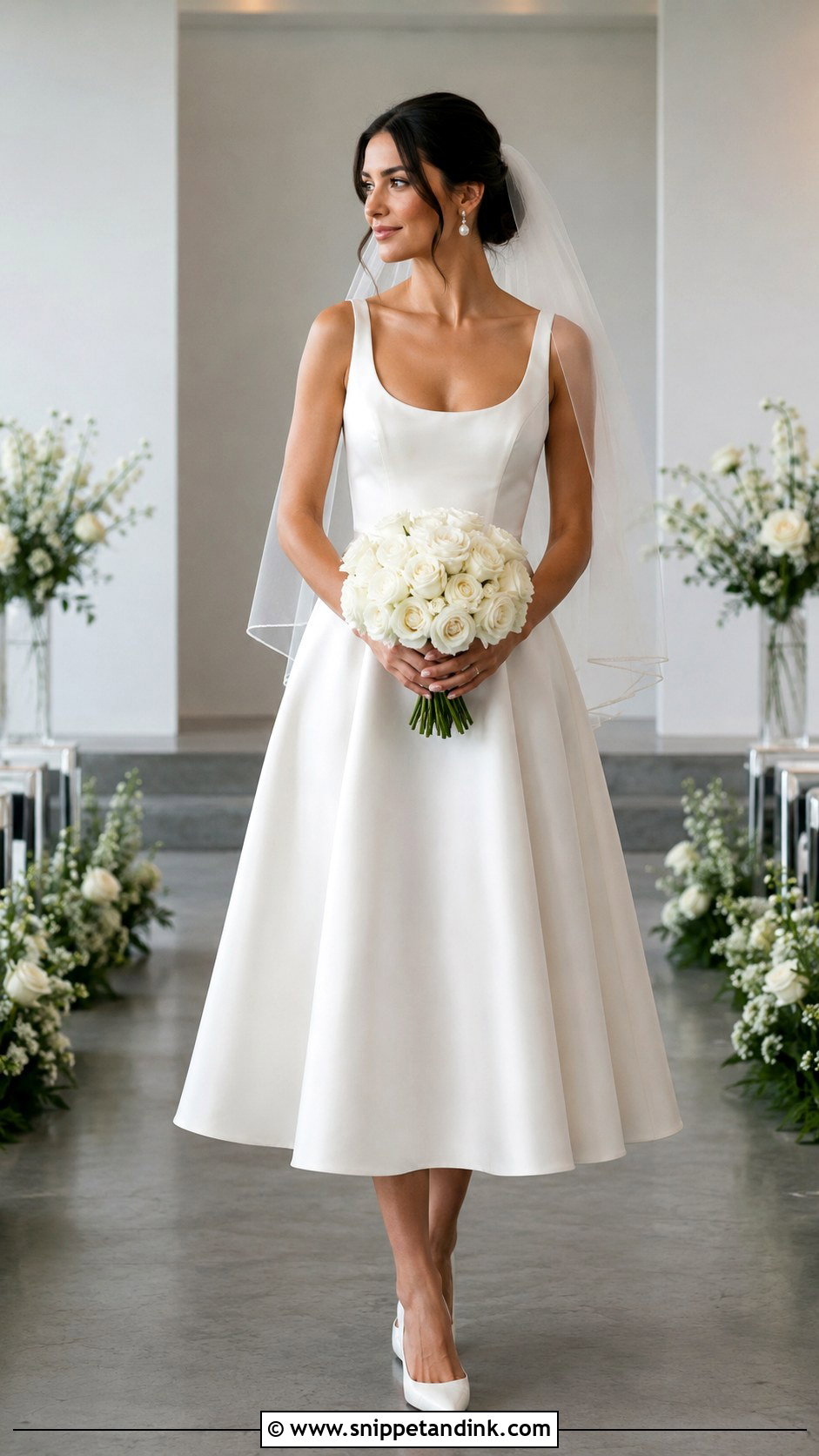
If you’re unsure where to start, start here. Smooth satin with a softly flared skirt looks classic without tipping into formal, and the A-line moves easily over the hips, which is why it flatters so many figures. Wide straps or a gentle scoop neckline give support without a strapless bra. Pointed ivory pumps, pearl drops and a compact satin clutch, or a small bouquet of white roses and greenery, finish it. A fingertip veil suits the ceremony. For a cool evening, I’d add a cropped ivory jacket that stops at the natural waist so the skirt’s flare stays visible.
2. Lace Long Sleeve Midi Wedding Dress
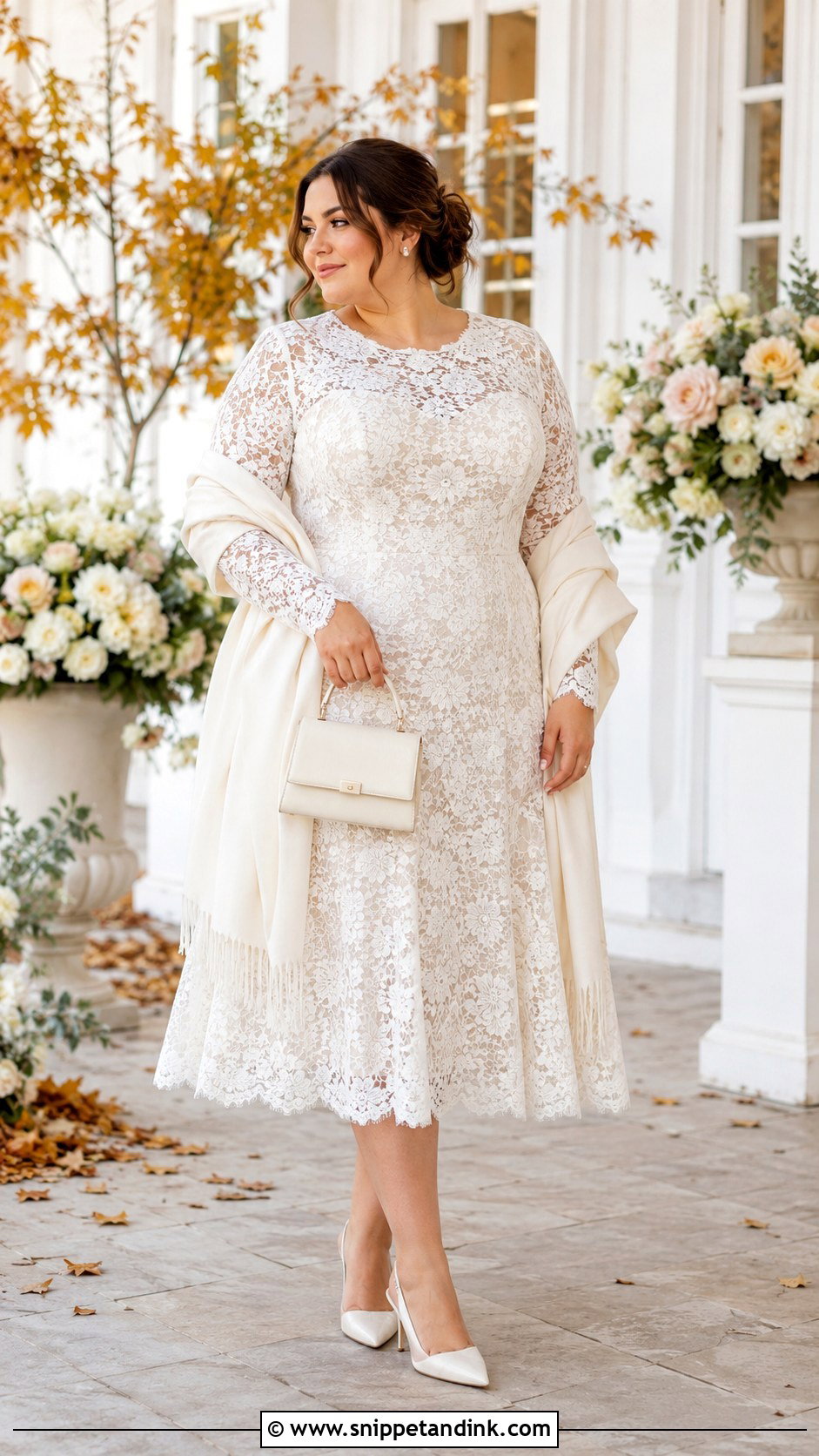
Lace sleeves give coverage while the rest of the dress stays light. The lining is what makes or breaks it: a fitted lining under floral lace lets the pattern show clearly without the dress feeling see-through. A defined waist and gently flared skirt balance the covered arms, and a bateau or V-neck keeps the top open. I’d style it with ivory slingback heels, a structured mini bag, pearl studs, a low chignon and a narrow comb veil. In autumn or winter, a soft cream wrap adds warmth. If you love vintage dresses but want something you can move in, this is the one I’d try first.
3. Strapless Bow Midi Wedding Dress
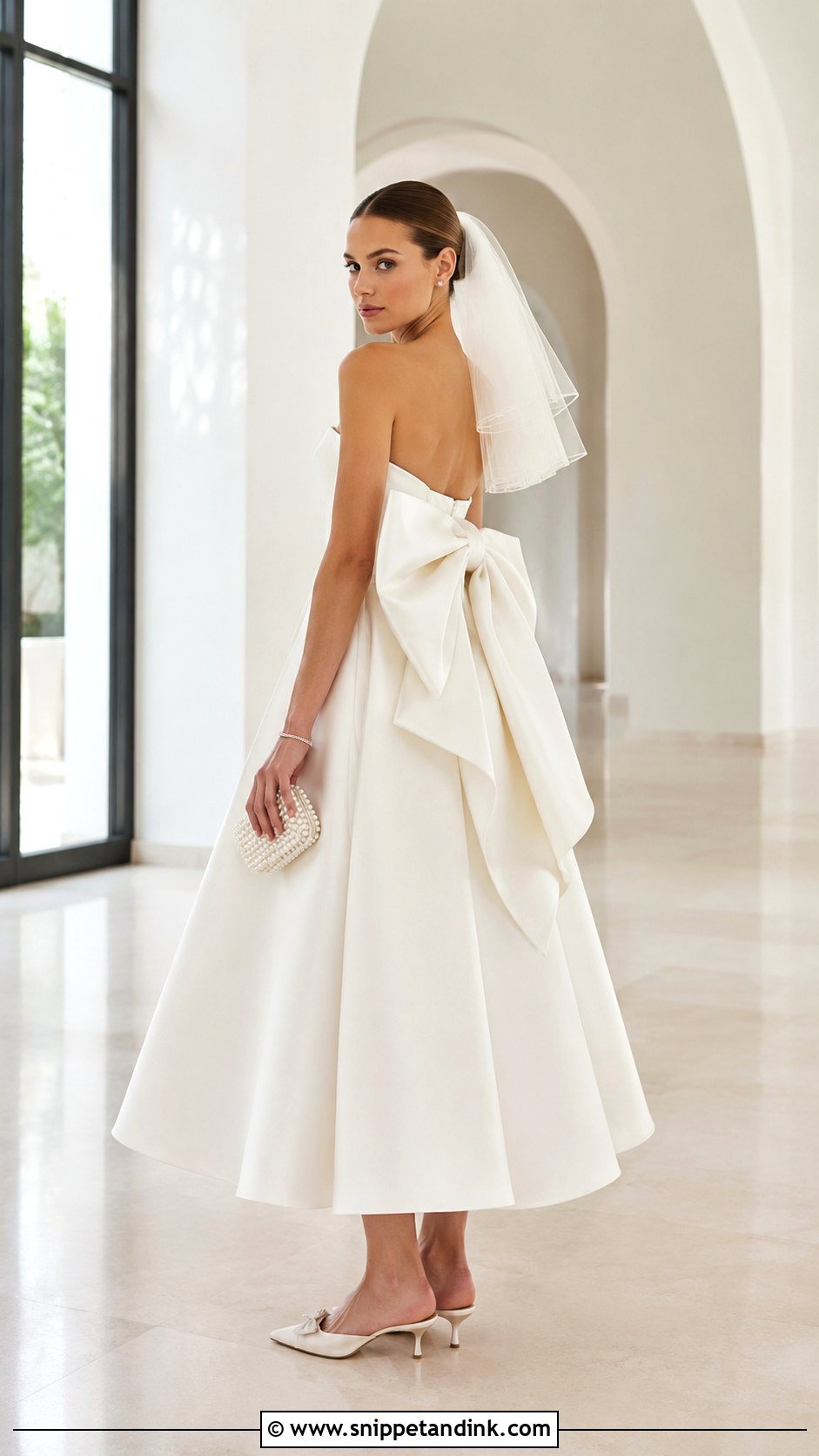
A sculptural bow only looks deliberate when the fabric under it can carry the weight. That’s why I’d choose mikado or heavy satin, with a properly boned bodice, for this strapless midi. Decide where you want the eye to go and place the bow there, at the waist, across the neckline or down the back. Pointed kitten heels or sleek ankle-strap sandals are the comfortable choice for a long day. Small diamond studs, a slim bracelet, a neat bun and a short veil keep everything else quiet, with a small pearl clutch and a compact white bouquet. A strapless bodice should stay in place when you lift your arms; if you find yourself tugging it up at the fitting, it needs taking in.
4. Square Neck Midi Wedding Dress
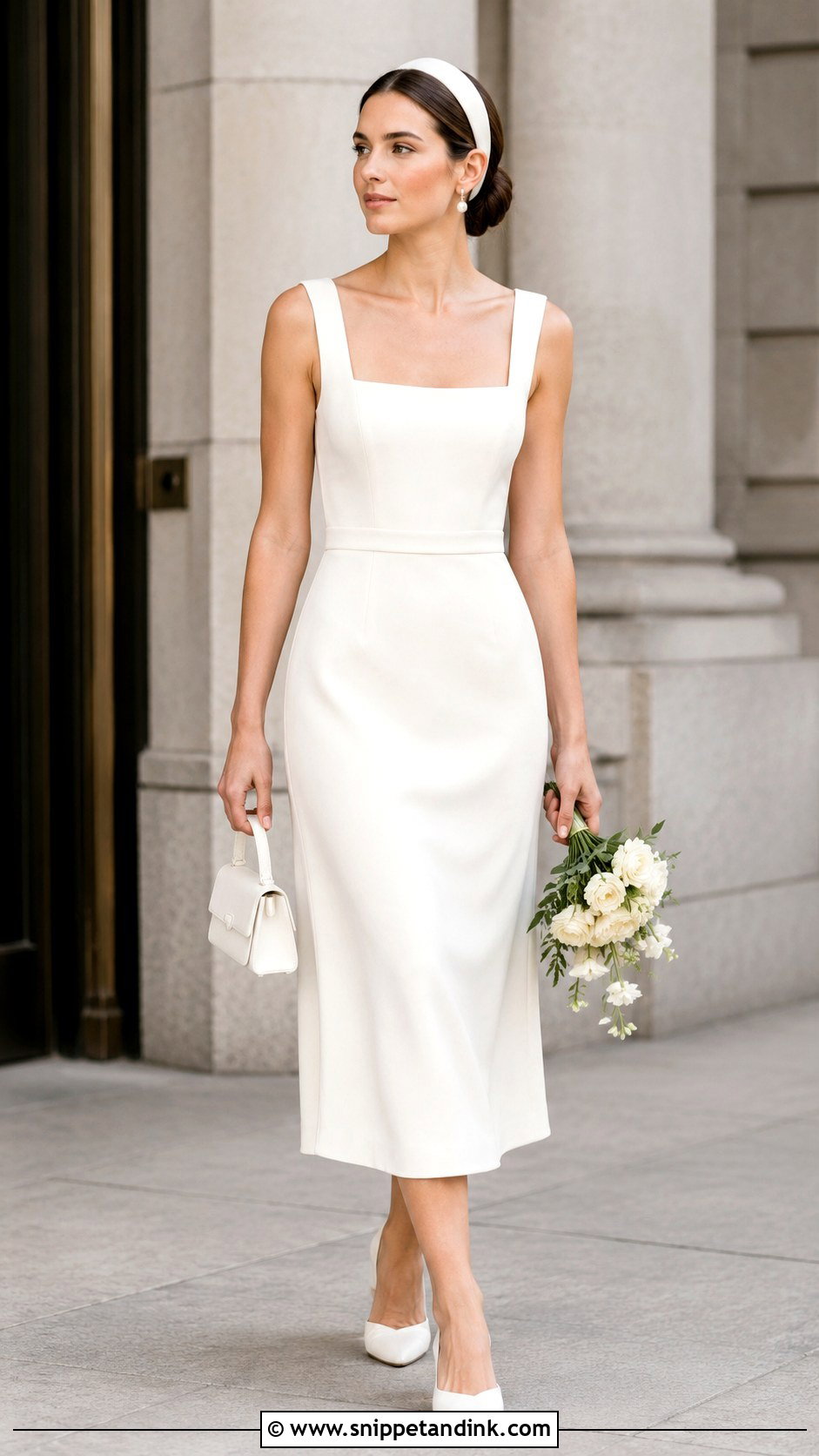
Princess seams do the work in this dress. They run from the bust to the hem and shape the crepe without a single bead, which is why a square neck midi can look so sharp on a minimalist bride. The angular neckline frames the collarbones, and it sits best with wide straps or short fitted sleeves. Low block-heel pumps, a structured top-handle bag and pearl or crystal earrings suit it, with a sleek ponytail or smooth low bun. I’d swap the veil for a satin headband or a small bow. It moves from ceremony to dinner to dancing without any changes.
5. Floral Embroidered Midi Wedding Dress
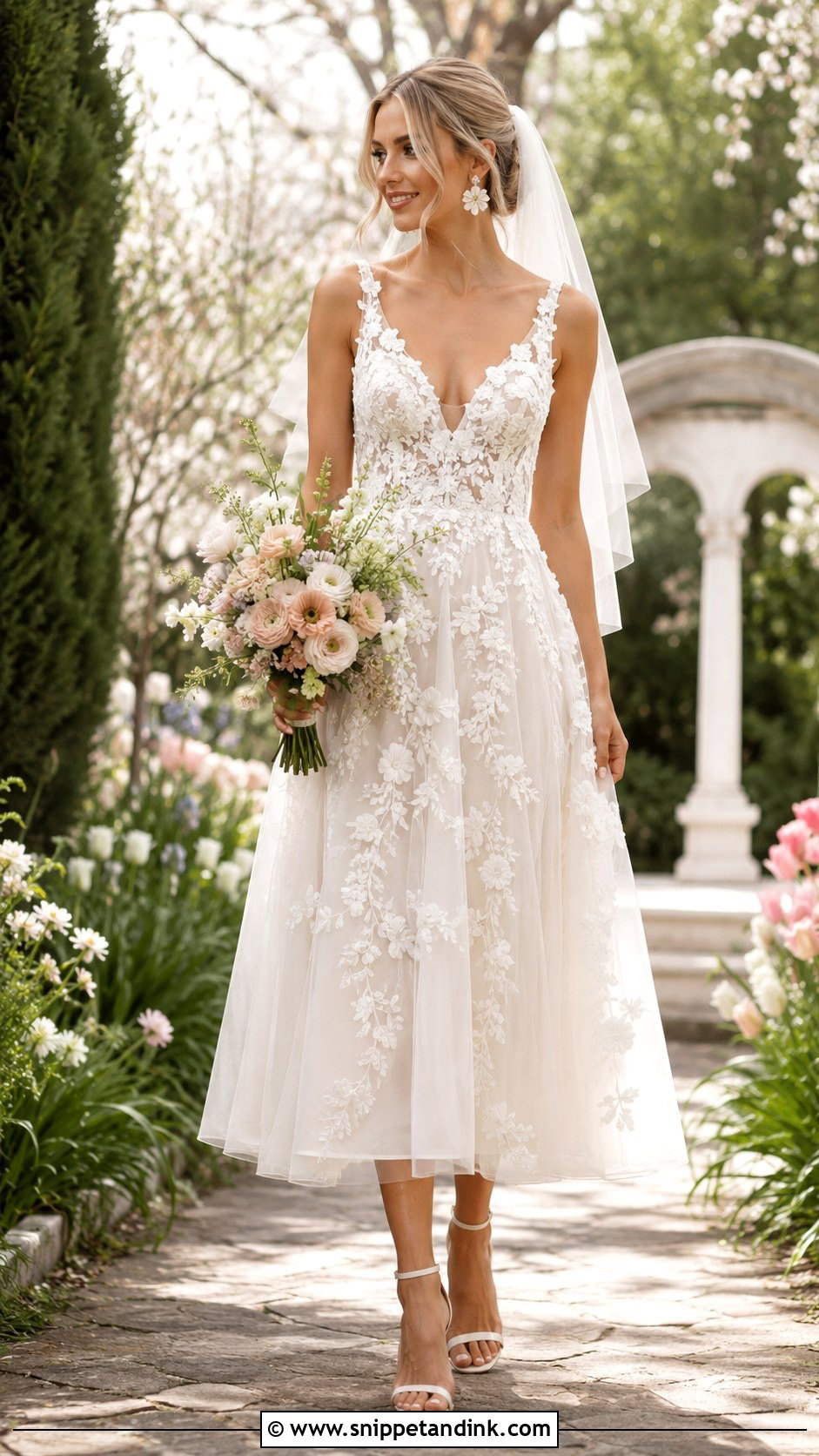
Scattered flowers over tulle keep raised embroidery feeling light; dense coverage makes it heavy and a little stiff. A nude or ivory lining behind the tulle decides how strongly the embroidery stands out, so ask to see both. A fitted waist stops the textured fabric from overwhelming a smaller frame. Keep the shoes plain, simple ivory sandals, since decorated footwear fights the flowers. Tiny flower earrings, a delicate bracelet and a compact bouquet of seasonal blooms finish it, with a short tulle veil. One thing I warn about: raised embroidery snags on beaded bracelets and lace gloves, so keep jewelry smooth near the skirt.
6. Puff Sleeve Midi Wedding Dress
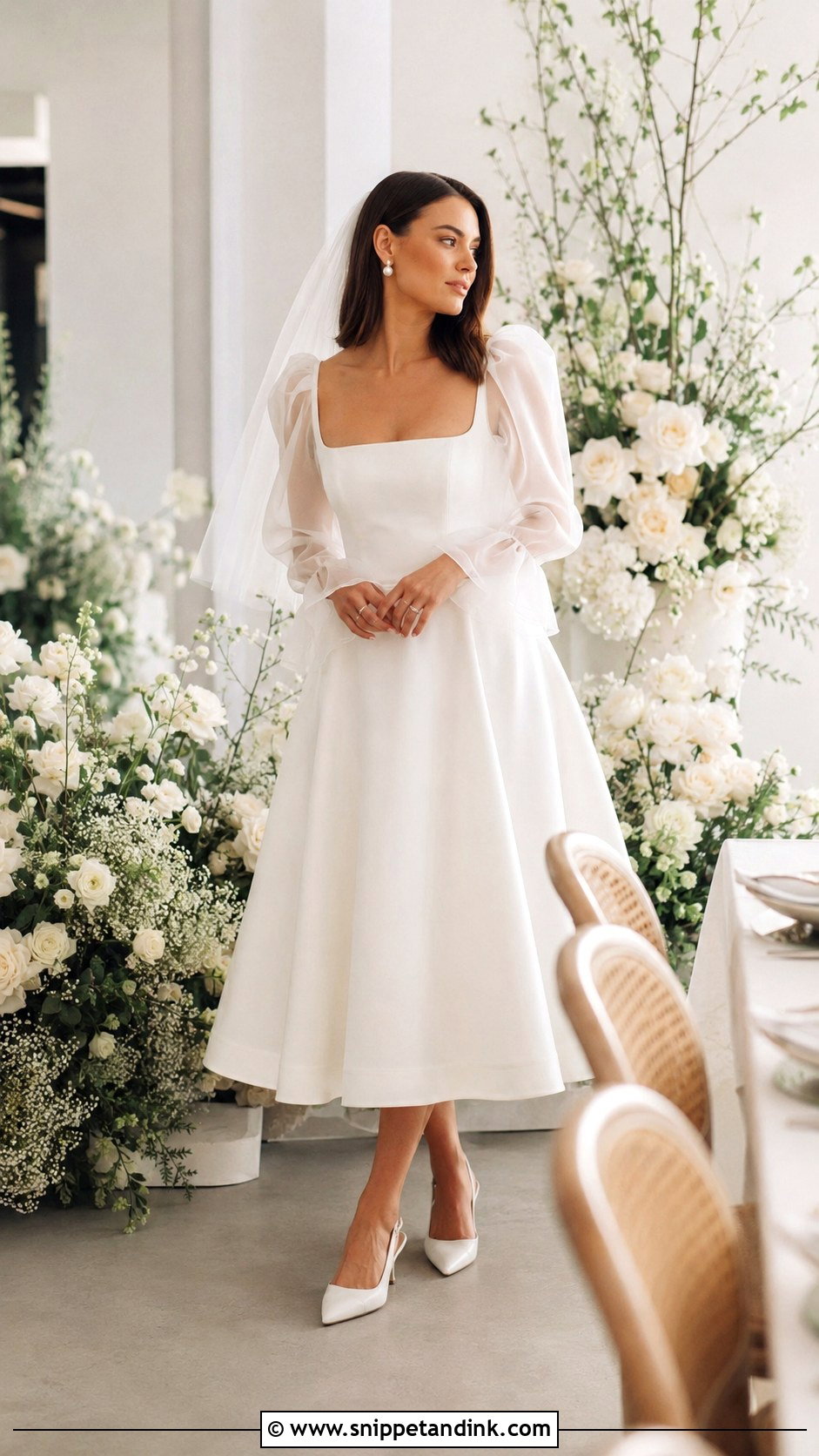
Puff sleeves need a fitted waist underneath, or the whole dress turns boxy. Sheer organza gives a soft, light puff; structured satin holds a bolder shape. Pair them with a plain A-line or column skirt, never a full ruffled one, so it stays refined. Pointed pumps or slingbacks lengthen the visible leg. Pearl studs, a fine pendant and a small satin bag are enough, with hair in a low ponytail or loose bun. A shoulder-length veil finishes it without adding width. If your shoulders are already broad, choose a smaller puff that sits lower on the arm.
7. Off The Shoulder Midi Wedding Dress
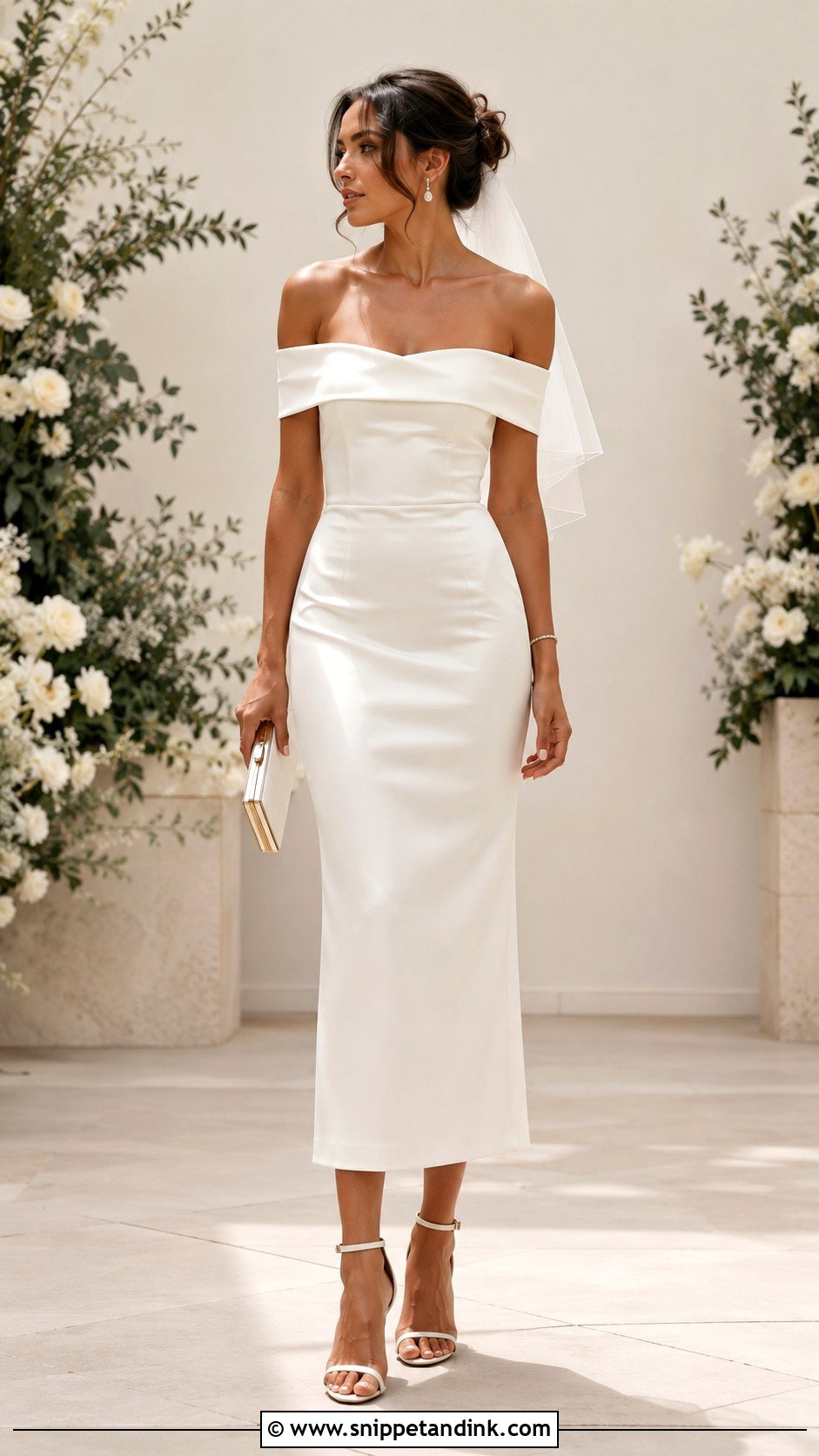
An off-the-shoulder neckline frames the shoulders and collarbones, and a folded satin band or soft drape gives it shape. Support is the issue. I won’t put a bride in this neckline without internal boning and a bodice that holds on its own, because the band alone can’t keep the dress up. Ankle-strap heels and a small box clutch in ivory or pearl suit it. You don’t need a necklace; drop earrings and a slim bracelet are better. Sweep the hair back or into a loose bun, and tuck a short veil underneath the style so the neckline stays open.
8. Cowl Neck Midi Wedding Dress
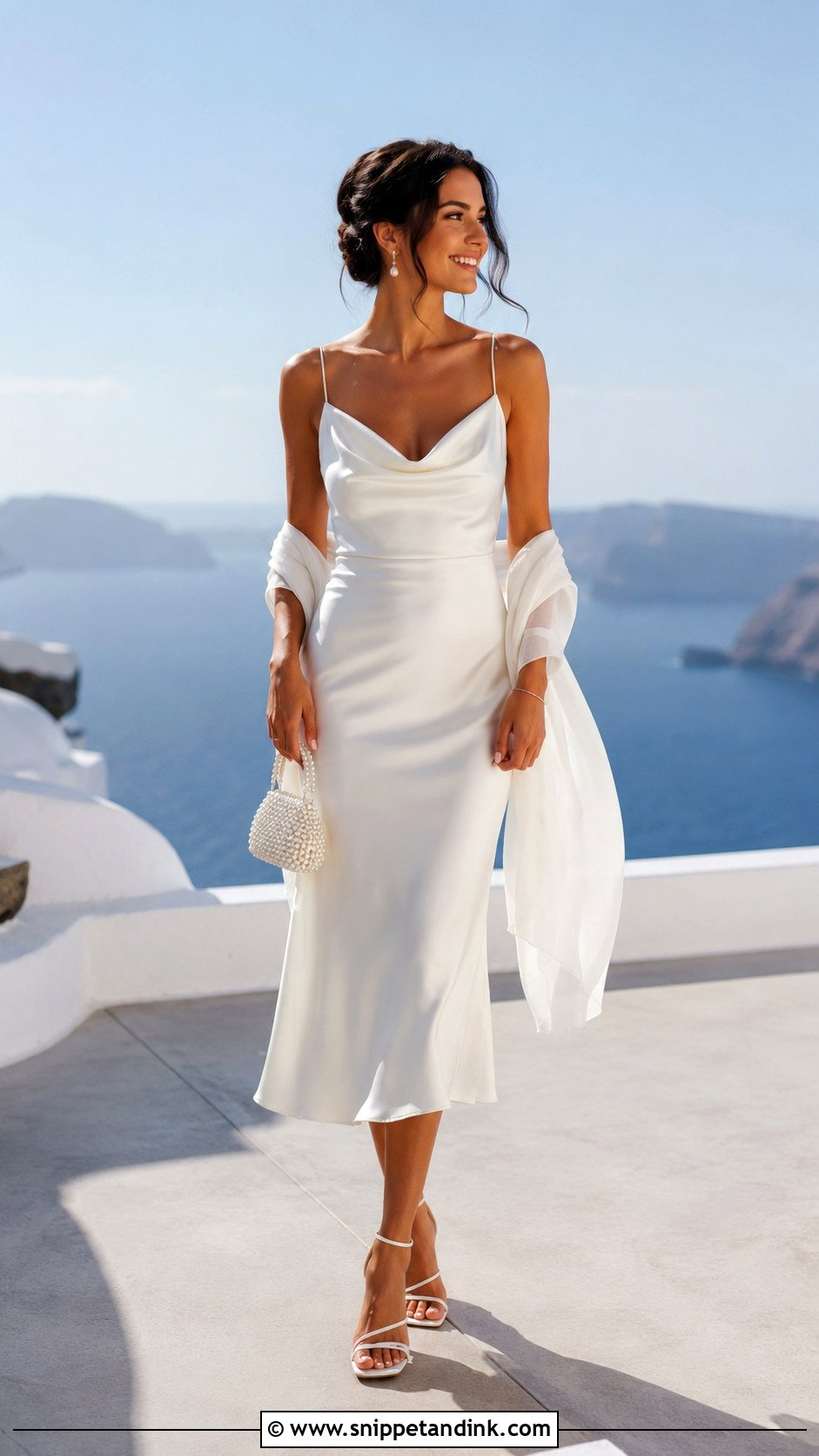
Few dresses are as comfortable as a cowl neck satin midi dress. The draped neckline sits softly on narrow straps, and a bias-cut skirt follows the body without stiffness. That same softness means satin shows everything beneath it, so I’d sort out smooth, supportive underwear before the first fitting. Minimal strappy sandals, a pearl mini bag and delicate earrings suit it, with a low bun or side-parted waves. A light chiffon wrap or cropped ivory blazer adds coverage for a religious ceremony. In heat or at a destination wedding, it’s what I’d want to be wearing at the last dance.
9. Halter Neck Midi Wedding Dress
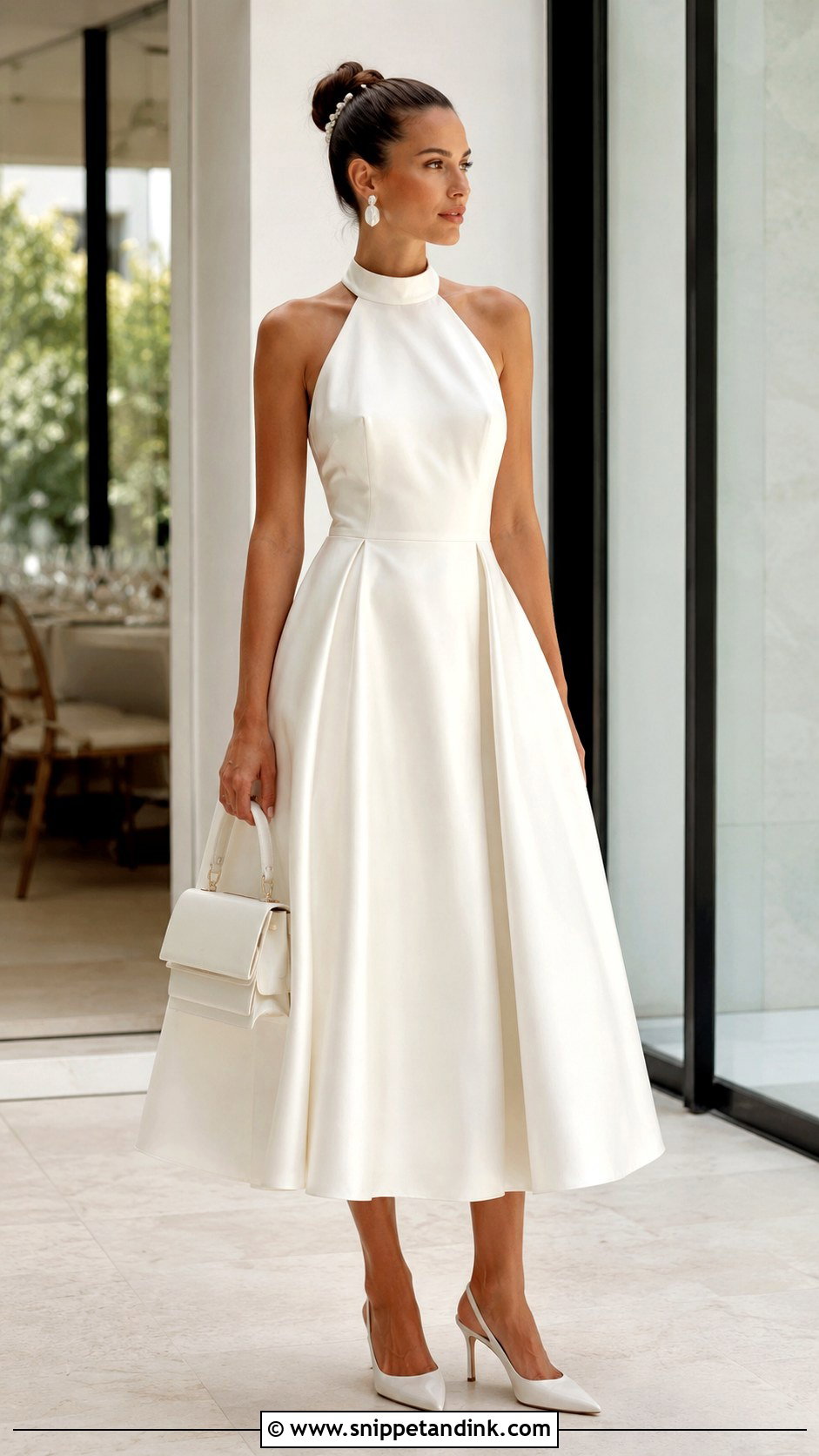
Halter necks show off the shoulders and give a sleek line through the upper body. A high-neck satin halter looks polished; a gathered chiffon one is more relaxed. Under either, an A-line skirt keeps the proportions balanced and lets you walk and dance. Pointed slingbacks, sculptural studs and a small structured bag suit it. Skip the necklace. A high bun or smooth ponytail shows the halter properly, and a narrow birdcage veil or pearl comb adds the ceremony detail. Be aware that the halter strap carries some of the dress’s weight at the back of the neck. If it presses after an hour at the fitting, ask for a wider strap or added bust support.
10. Corset Midi Wedding Dress
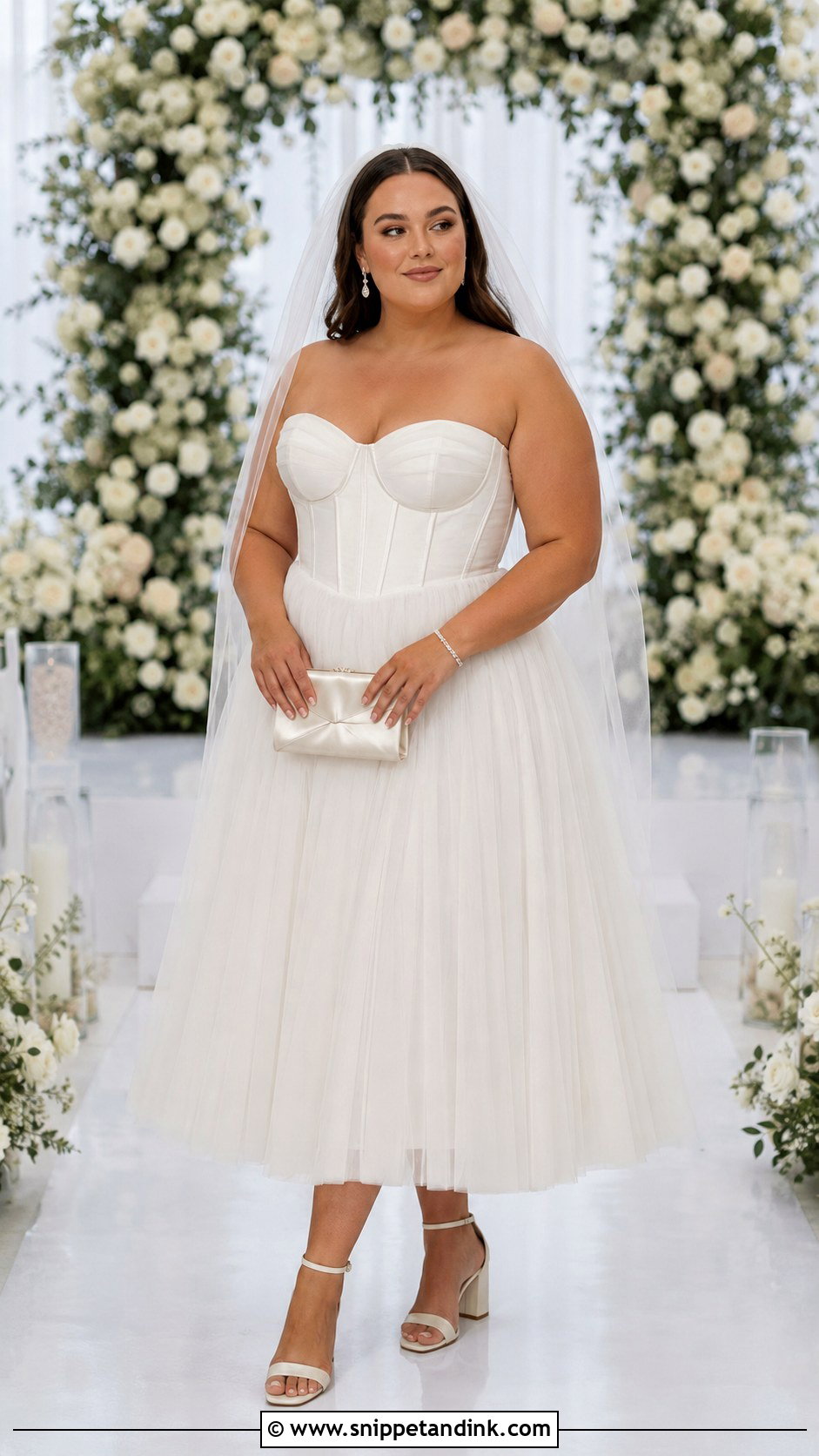
A corset midi wedding dress pairs firm structure with a soft calf-length skirt. Look for supportive boning, secure cups and a neckline that lets you breathe and lift your arms. A softly pleated satin or tulle skirt gives an hourglass outline. Block-heel sandals make sense if you’ll be standing on lawns or paving for hours. A fine tennis bracelet, small drop earrings and a satin clutch are enough, with a waist-length veil and a low bun with face-framing pieces. Sit in it for ten minutes at the fitting. A corset that feels fine standing can dig in at the hip bones when you sit for dinner.
11. Tea Length Tulle Midi Wedding Dress
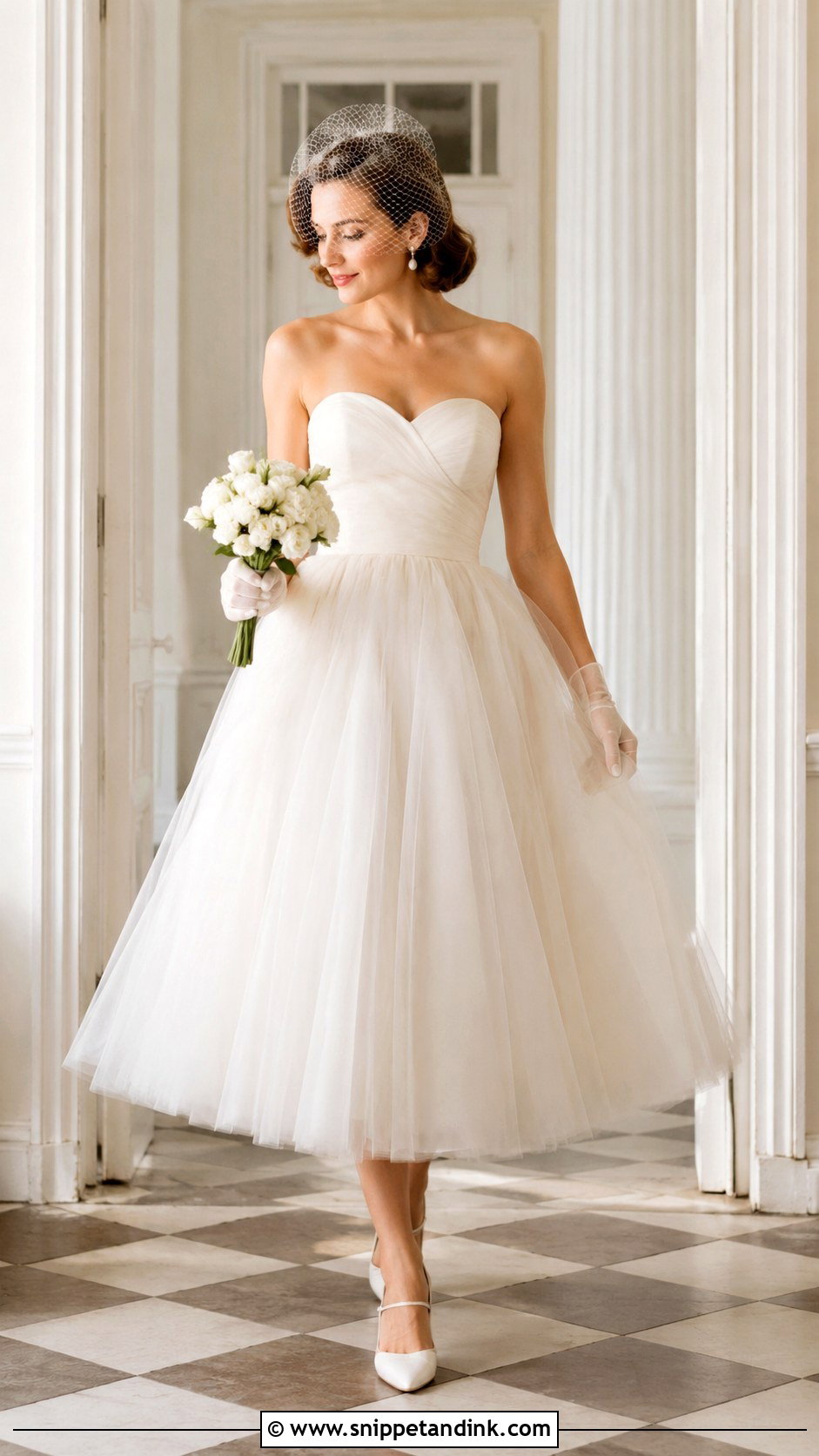
Tea-length tulle has that recognizable vintage swing, and it depends on the fitted bodice and natural waist to keep the full skirt in check. A sweetheart or scoop neckline suits it, and a smooth lining stops the skirt from feeling bulky. This hem shows your shoes, so pick pointed pumps, slingbacks or bridal Mary Jane shoes you genuinely love. Pearl earrings, short gloves and a small bouquet give it a retro touch, and a birdcage or shoulder-length veil suits the proportions far better than a long train. Fuller tulle skirts take up room in cars, so plan how you’ll sit on the way to the venue.
12. Minimal Crepe Midi Wedding Dress
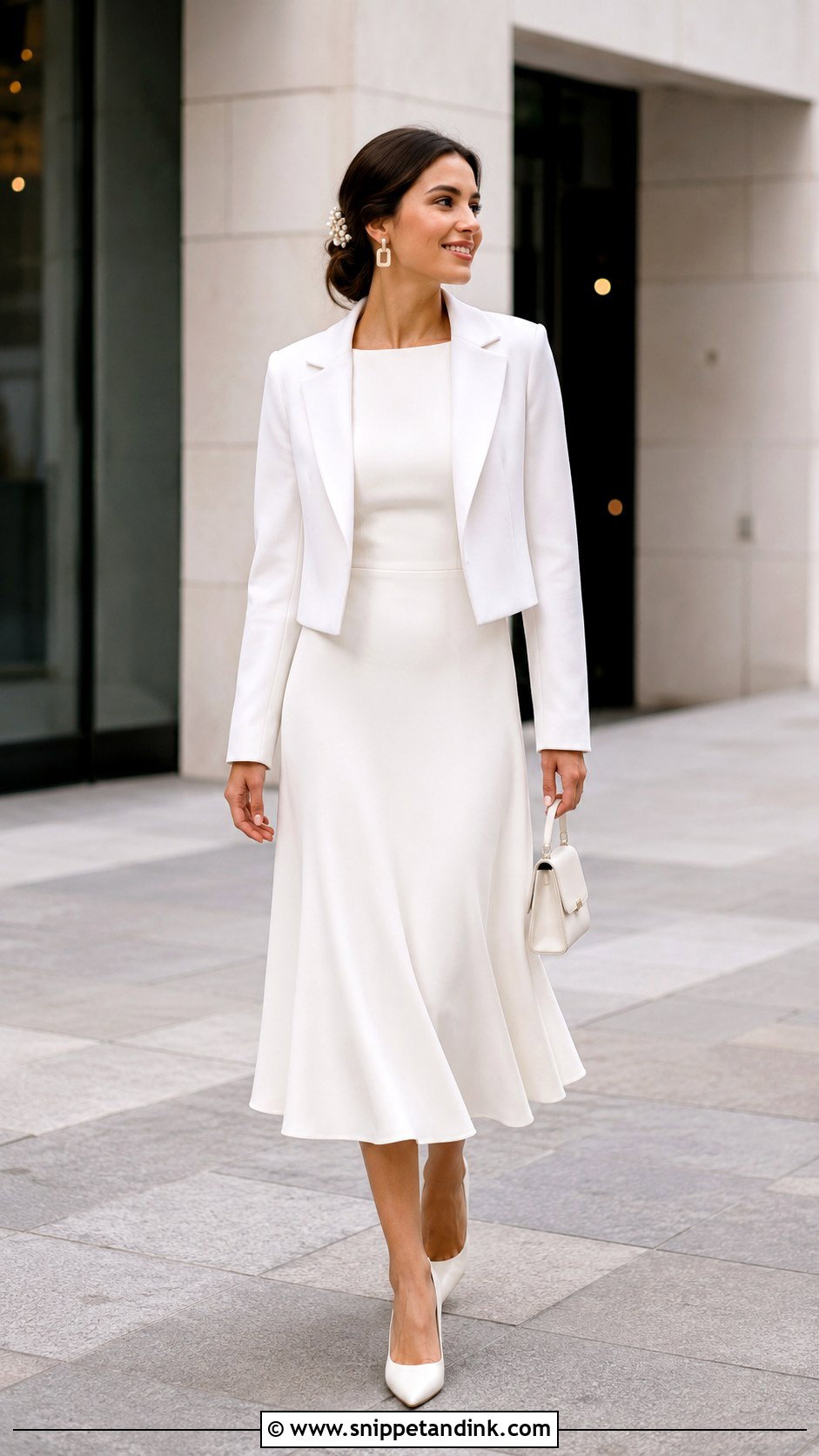
Plain crepe hides nothing, so this dress lives or dies on tailoring. Without lace, beading or volume, the defined waist and the line of the skirt are all there is to look at, which is exactly its appeal for a bride who loves simplicity. A boat, square or high neckline gives the fabric purpose. Ivory pointed pumps, geometric earrings and a structured mini bag suit it, with a sleek bun and fresh makeup. A short blazer covers you for arrival photos and comes off for the ceremony. Instead of a big veil, I’d use a narrow tulle one or a single pearl pin.
13. One Shoulder Midi Wedding Dress
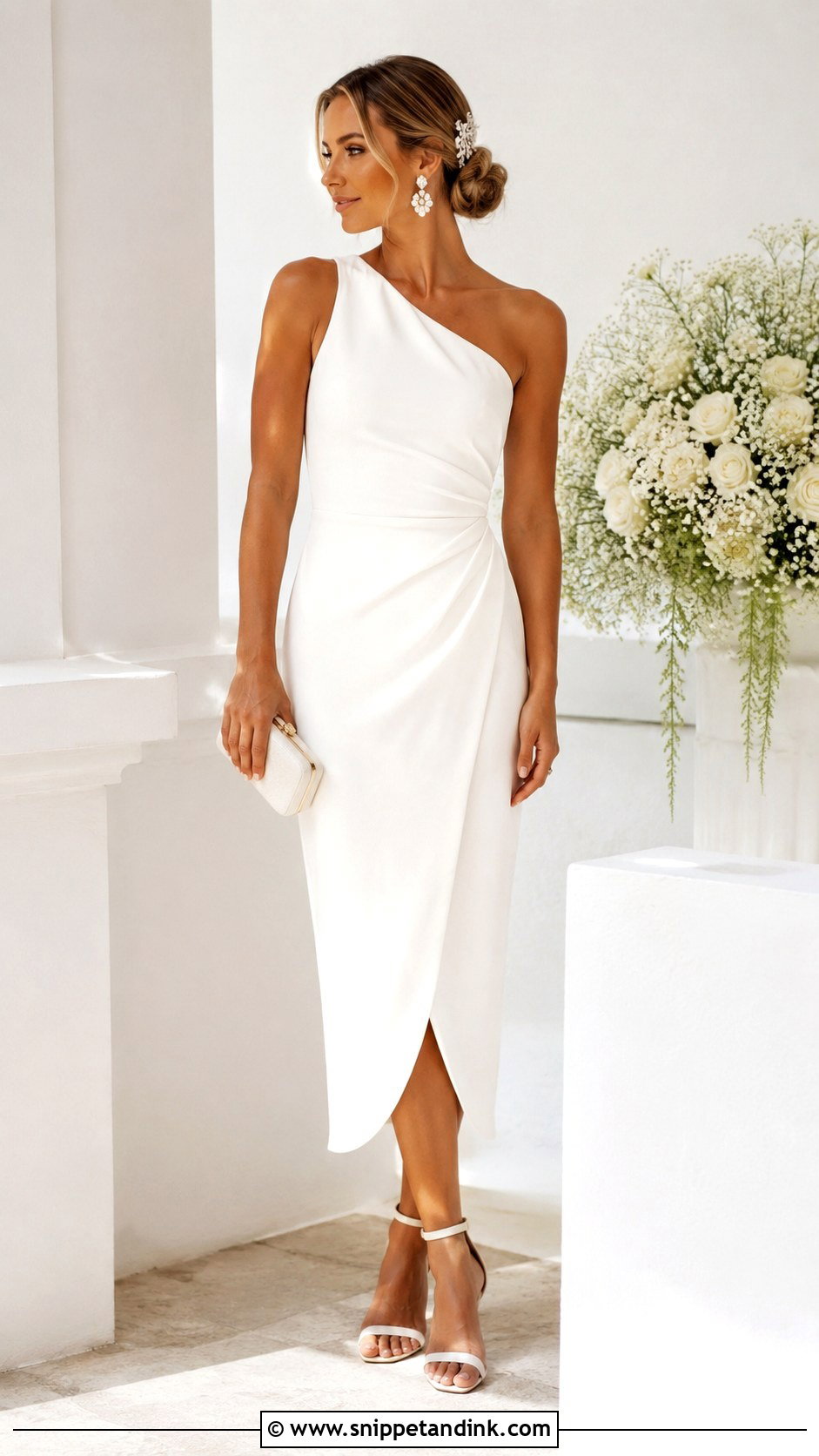
An asymmetric neckline is the quickest way to make a midi look fashion-led without decoration. A one-shoulder bodice in satin or structured crepe pairs with a fitted or softly flared skirt. Keep everything else streamlined: sleek ankle-strap sandals or pointed pumps, and a compact clutch with minimal hardware. A single statement earring on the bare side looks striking, though a matching pair is the more traditional route. A low side bun or swept-back ponytail shows off the shoulder. Most veils fight this neckline, so I’d choose a sculptural comb or small bow. Check that the single strap doesn’t slide when you raise the opposite arm.
14. Wrap Midi Wedding Dress
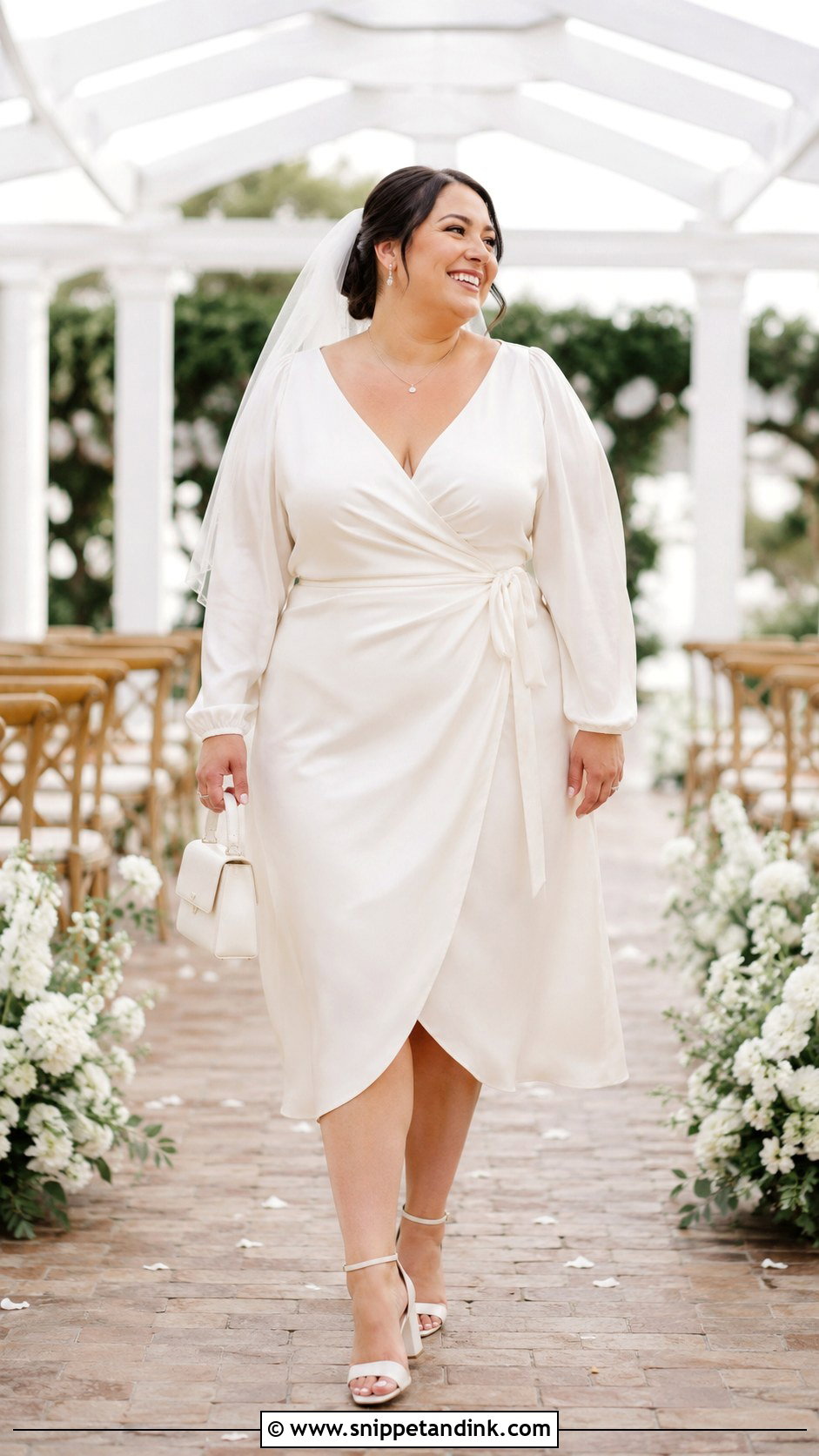
Wrap dresses adjust at the waist, and the V-neck makes the upper body look longer. The overlapping skirt lets you move easily. Satin or crepe gives a formal finish; lightweight chiffon suits an outdoor party. The weak spot is coverage: I always have the bride sit, cross her legs and climb a step, because that’s when an underfastened wrap opens. Supportive block heels, a small top-handle bag and delicate drop earrings suit it, and a simple pendant fills the neckline. Wear soft waves or a low textured bun, with a short veil anchored by a small comb.

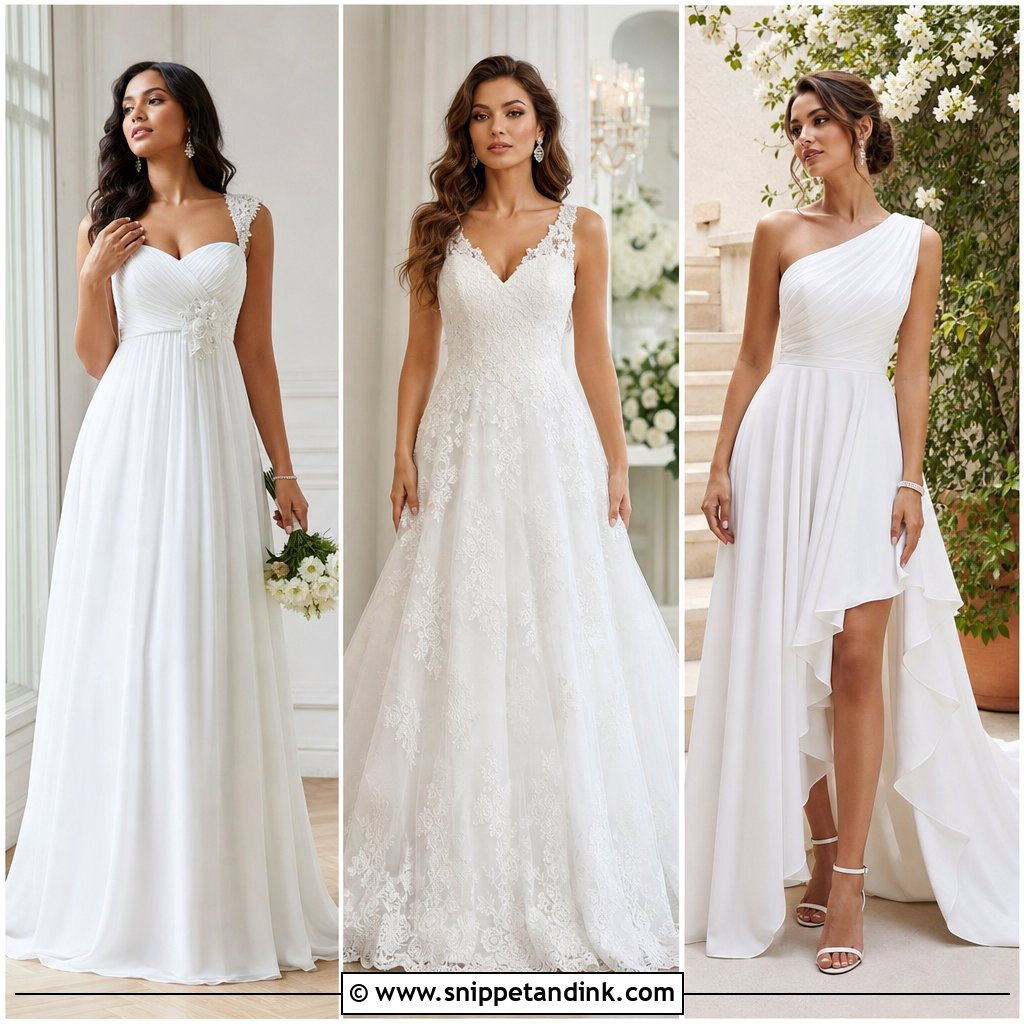

15. Pleated Midi Wedding Dress
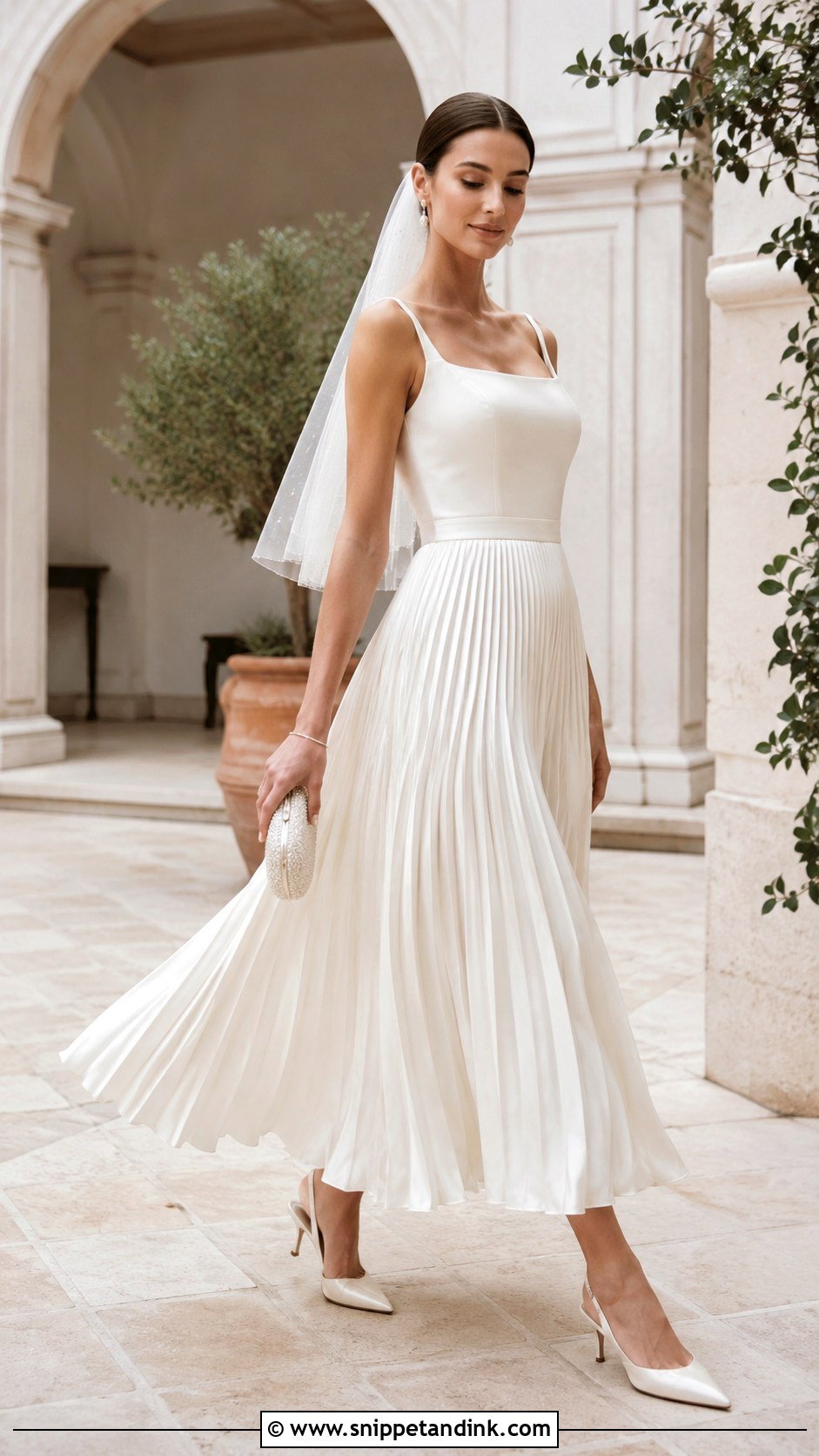
Pleats bring movement while keeping the outline neat. A pleated skirt with a simple fitted bodice gives definition at the waist and volume below it. Satin pleats look structured; chiffon pleats swing more freely. Slim slingbacks and a pearl or crystal clutch suit it, with small earrings, a fine bracelet and a smooth low bun. A fingertip veil moves alongside the skirt. Pleats are fussy to care for. Pressed pleats can lose their line if they’re hung badly or crushed in a car, so I’d hang the dress by its loops, let the skirt fall freely and steam it lightly from a distance the day before.
16. High Neck Lace Midi Wedding Dress
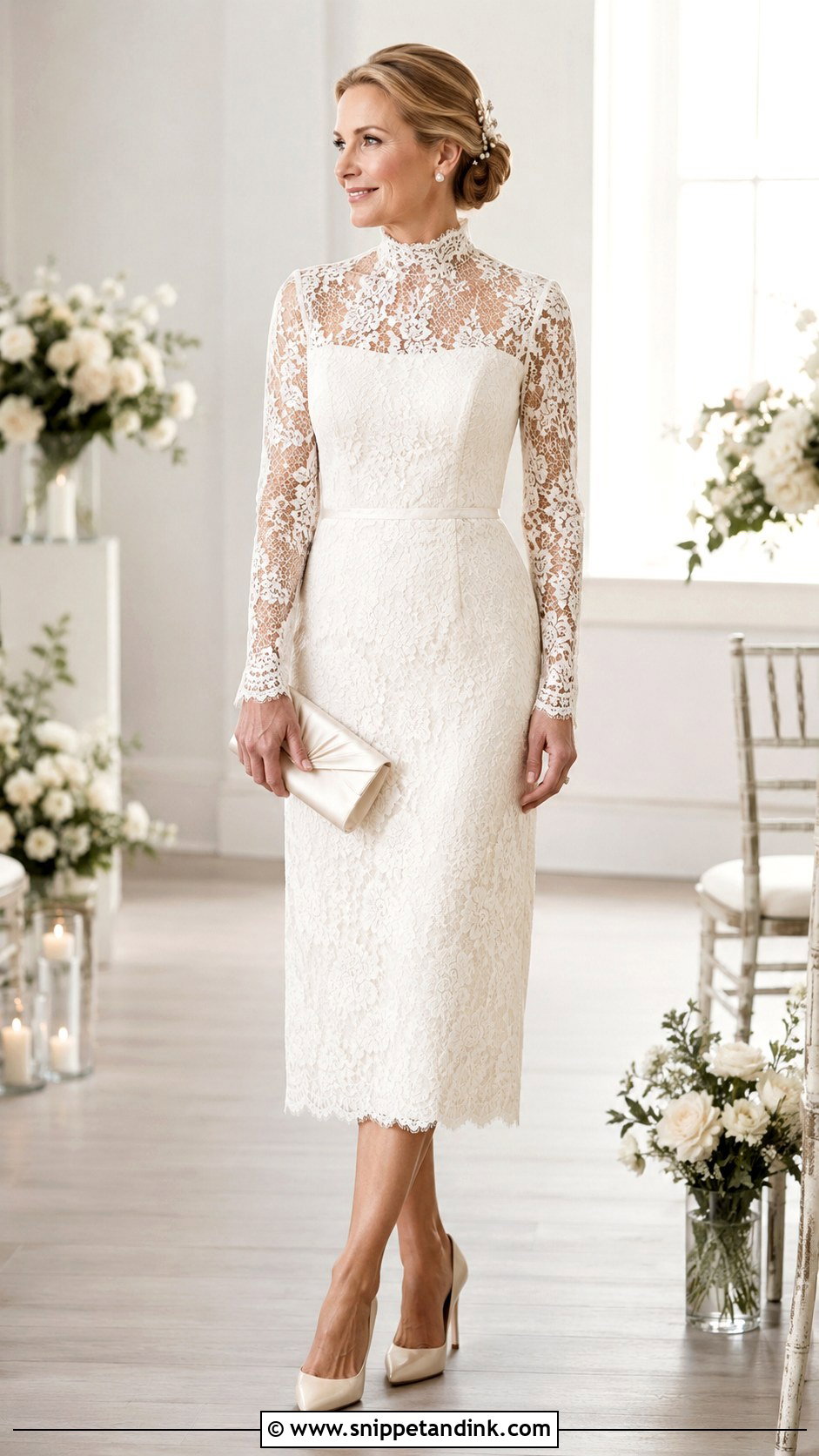
This one gives both coverage and detail in a single shape. A lined bodice with sheer lace at the collar and a defined waist stops the high neckline from feeling heavy. Sleeveless versions look balanced and fresh; fitted lace sleeves feel more traditional. Pointed ivory pumps, pearl studs and a smooth satin clutch suit it. The lace collar is your necklace, so leave the jewelry box closed. A polished bun shows the collar, with a small comb veil beneath it or a few pearl pins. Lace at the throat can itch on sensitive skin, so wear it for an hour before you decide.
17. Drop Waist Midi Wedding Dress
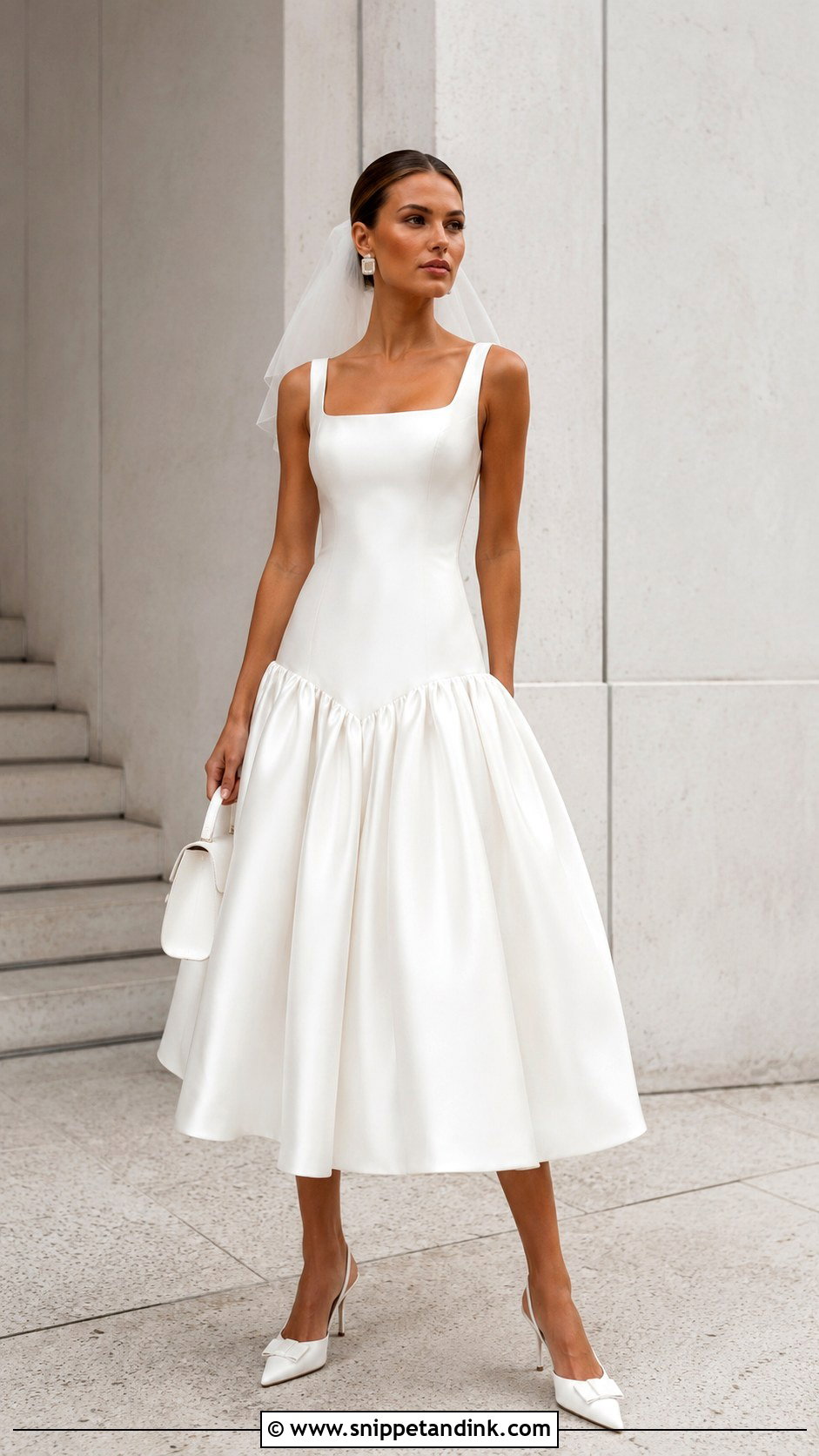
A long sculpted torso opening into a fuller skirt is the signature of the drop waist, and it suits brides who find natural-waist gowns predictable. Structured satin, mikado or crepe holds the elongated shape. A strapless or square neckline keeps the top half clean. Pointed slingbacks, bold studs and a compact top-handle bag finish it, with a smooth ponytail or neat bun. Keep the veil short so it ends above the fullest part of the skirt; otherwise you stack too many horizontal lines. I’d only recommend this shape if your torso is average or long. On a very short torso the dropped seam can sit almost at the hip bone and cut the leg line.
18. Ruffle Midi Wedding Dress
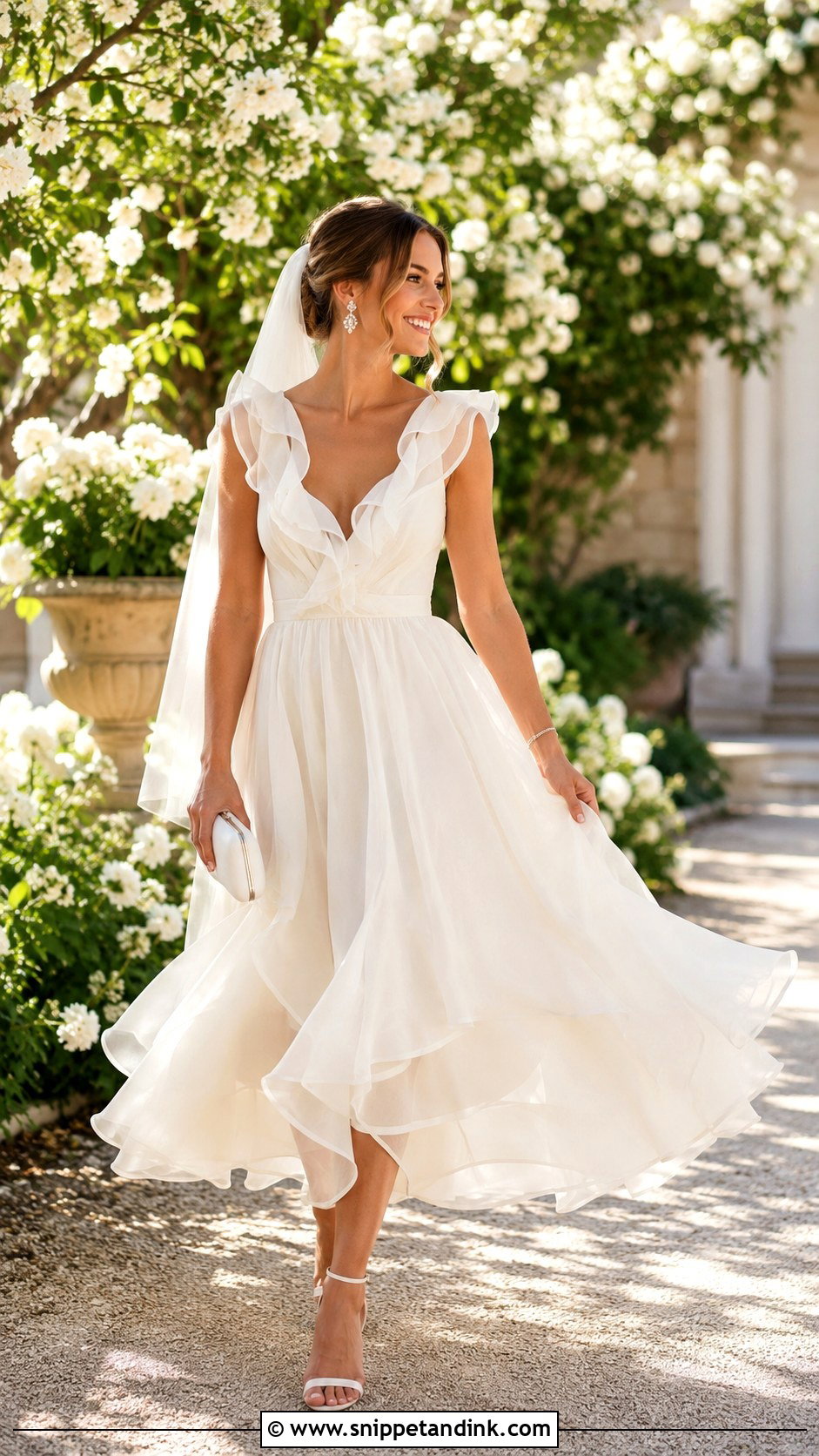
Pick one ruffle, not three. A ruffled neckline, a tiered skirt or a soft shoulder detail each works alone; combined, they swamp the bride. Lightweight organza, chiffon and tulle let ruffles move instead of standing stiffly. Simple ivory sandals or plain pointed pumps balance the decoration, with small crystal earrings, a slim bracelet and a smooth clutch. A loose bun or softly pinned waves suit the mood. Keep the veil plain and fairly short. Ruffles made from cut edges can fray where they rub against the bouquet arm, so ask whether they’re finished with a rolled hem.
19. Sequin Midi Wedding Dress
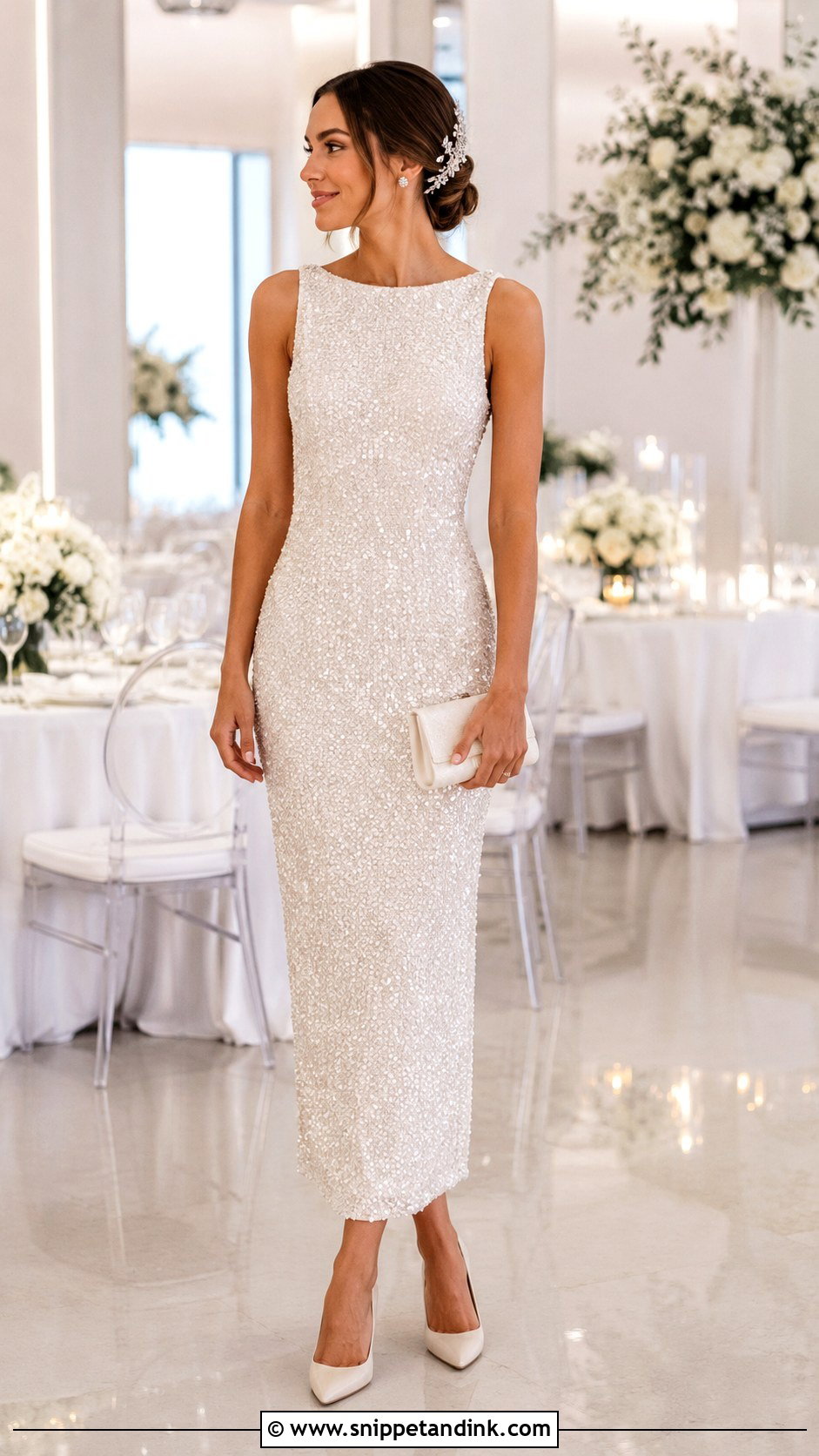
Sequins bring sparkle to a reception, an evening ceremony or an outfit change. Ivory, pearl or silver-toned sequins over a comfortable lining look sophisticated in a plain column or A-line. Since the dress reflects so much light, I keep the shoes smooth, satin pumps or minimal ankle straps, never glitter. A plain ivory clutch and small crystal or polished metal earrings are enough, with a sleek ponytail, bun or glossy waves. Skip the elaborate veil for a short tulle one or a jeweled comb. Check the seams inside: sequins sewn right up to the seam allowance scratch the arms and inner wrists over a long night.
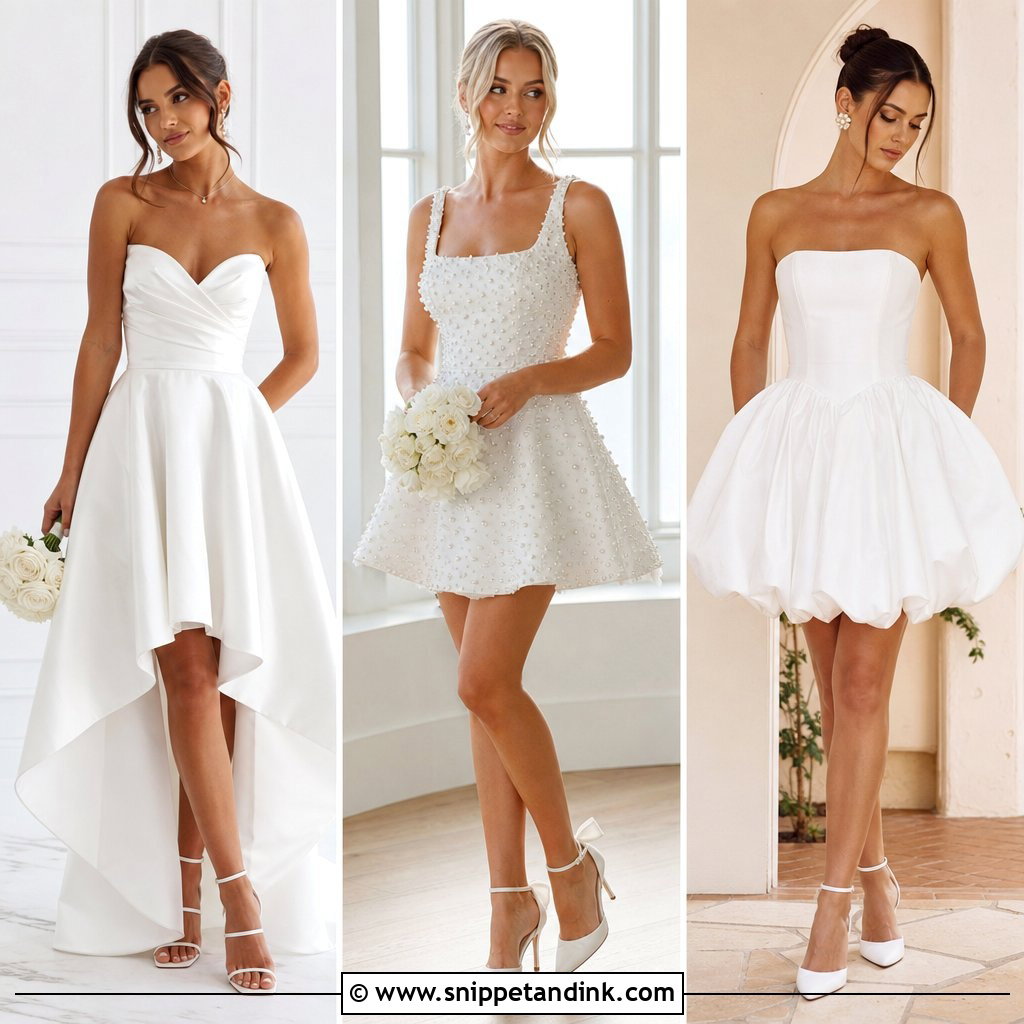
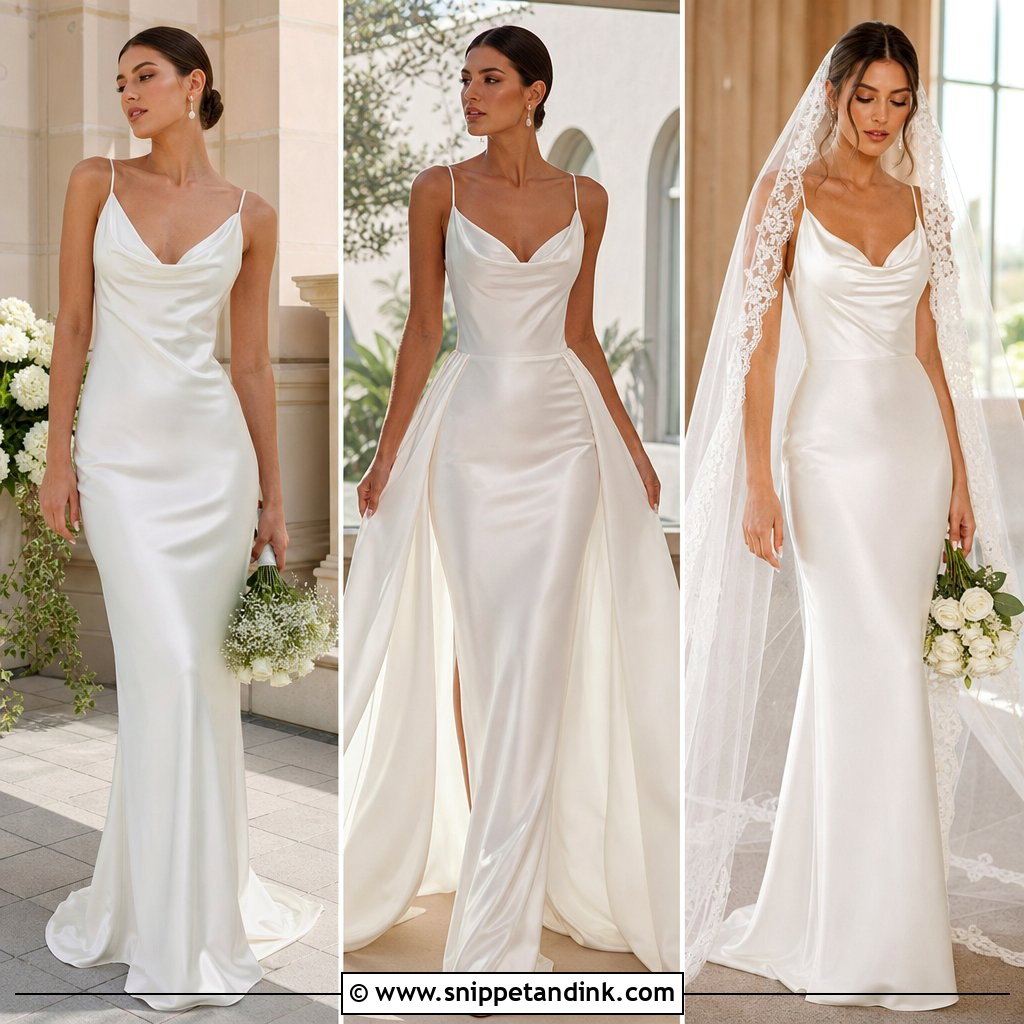
20. Bridal Blazer Midi Wedding Dress
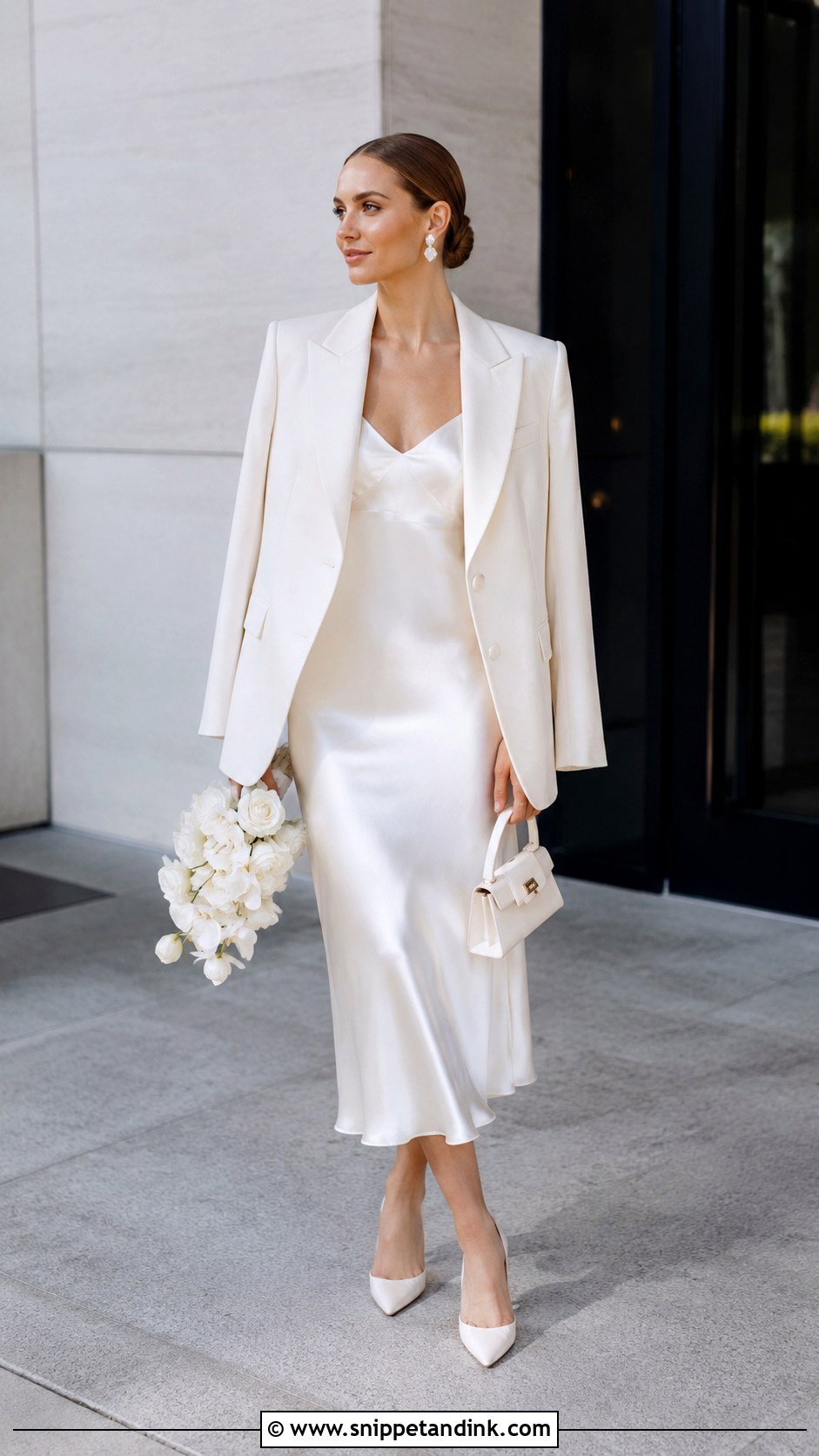
Layering a tailored blazer over a simple midi gives it structure and a cooler-season option. Start with a satin slip dress, a fitted crepe column or a clean A-line, then add a cropped or waist-length ivory blazer. The jacket must not end at the widest part of the skirt, or it cuts you in half visually. Pointed pumps, sculptural earrings and a structured mini bag suit it, with a smooth low bun or neat ponytail. Wear the blazer for arrival and the ceremony, then take it off for the reception. Match the ivories in daylight, since jacket and dress fabrics rarely come from the same bolt.
Bras and Slips for Halter, Cowl and Strapless Necklines
This list covers more neckline types than most, and each asks for something different underneath. Getting it wrong is the most common reason a dress that fitted in the shop looks off on the day. These are the pairings I reach for.
- Strapless, bow and corset bodices: often no bra at all if the dress has boning and built-in cups. If you need more lift, ask for cups sewn in rather than wearing a strapless bra that can slip.
- Halter and one-shoulder: a convertible or low-back bra, or adhesive cups. Bring it to every fitting so the strap position is set around it.
- Cowl neck and slip dresses: smooth, seam-free underwear in a tone close to your skin rather than white, which shows through ivory satin.
- Sheer lace and tulle: a full slip or a lining check in daylight, because shop lighting hides transparency that a camera flash finds.
Rewearing a Midi Dress After the Wedding
One quiet advantage of this length is that many of these dresses can go out again. The crepe column, the slip, the wrap and the blazer look are the easiest to rewear for anniversaries, parties or a summer dinner, especially paired with colored shoes or a different jacket. Some brides have an ivory dress professionally dyed afterwards. It works best on natural fibers like silk and cotton; polyester satin and many linings resist dye, so the result can be patchy, and a dyer should test a hidden seam first. Get the dress cleaned promptly after the wedding either way, since sugary drinks and body oils can turn into yellow marks after a few months in storage.
The Mood Comes From Fabric, the Comfort From Fit
A good midi bridal look is a well-chosen shape plus thoughtful styling from head to toe. Satin, lace, crepe, tulle and embroidery each set a different mood, while the calf-length hem keeps you comfortable and shows your shoes. Think about the venue, the season, how much you’ll move and how formal the day is before you choose. Then add jewelry, shoes, outerwear and hair pieces for balance, rather than every bridal detail at once. Above all, wear the dress you forget you’re wearing when you walk, sit and laugh. That’s the one that will feel like yours.
You'll Like These Ideas:





Leave a Reply