
More brides are asking me for structure than at any point I can remember: clean seams, real boning, a defined waist, fabric that holds a shape on its own. It reads polished, and it doesn’t have to lose any romance. Below are 25 full looks rather than single details, covering basque waists, corsets, mikado ballgowns, tailored sheaths, square necklines, sleeves, bows, lace, separates and reception changes. For each I’ve added the veil, shoes and jewelry I’d put with it and the fitting detail I’d watch. Formal, garden, minimal or fashion-led, you should be able to picture the whole outfit.
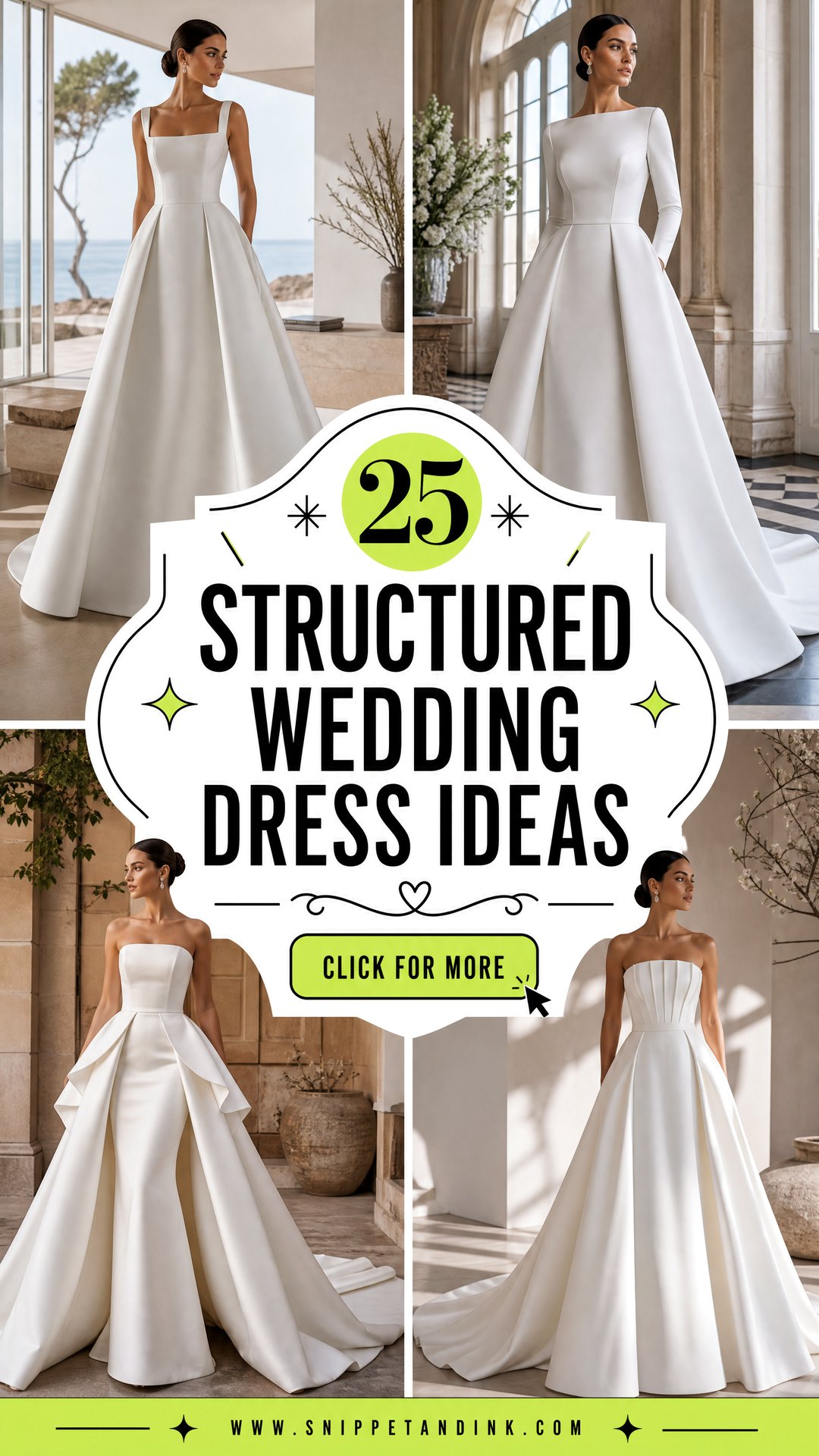
Mikado, Taffeta, Duchess Satin: How Each Fabric Behaves
Structured gowns live or die by their fabric, and the names on the tag don’t tell you much until you’ve worn them for a few hours. Here’s what I tell brides about each one at the fitting.
- Mikado: heavy, with a soft sheen and a firm hand. It holds sharp folds and big skirts better than anything else, but it’s warm and the weight adds up in a full ballgown.
- Taffeta: crisp, lighter than mikado and slightly noisy when you move. Good volume without bulk, though it creases sharply if folded.
- Duchess satin: smooth, dense and glossy. It drapes more than mikado while keeping structure, and it shows every seam, so tailoring has to be precise.
- Crepe: matte with a little weight. It gives shape through seams rather than stiffness and suits sheaths and minimal cuts.
- Organza: sheer and stiff, light as air. It adds volume over another fabric but rarely works on its own as a bodice.
Ask the shop for a fabric swatch you can take home. Crumple it in your hand for ten seconds, then let go. How quickly the creases drop out tells you a lot about how the gown will look after a car ride and a seated dinner.
1. Basque Waist Wedding Dress
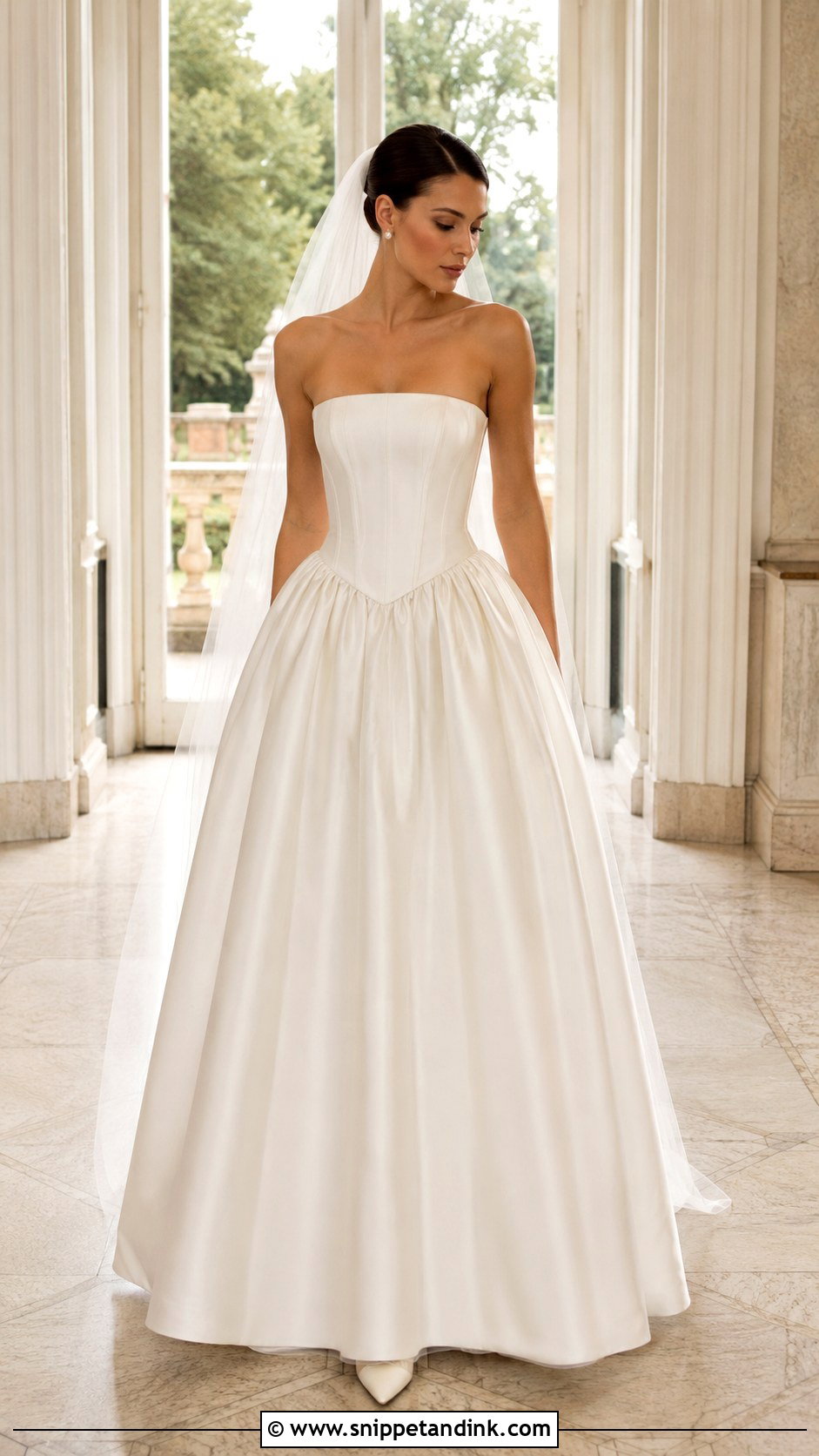
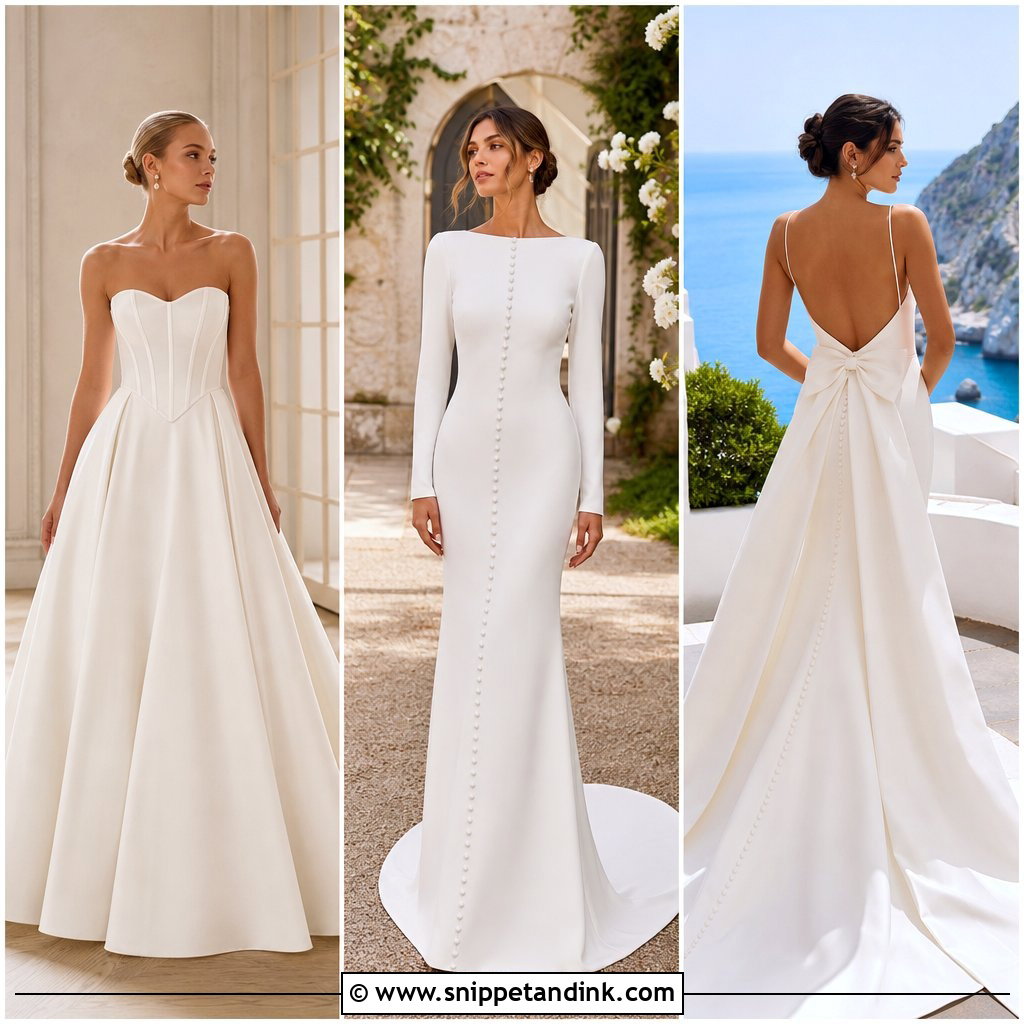
The basque point is the most flattering waistline I fit, because the V dips below the natural waist and lengthens the torso. It needs fabric with body, so mikado, satin or taffeta, or the point softens into a curve by the reception. A softly full skirt makes the waist look smaller still. Keep the top plain: pearl studs, a low bun, a long plain veil and pointed ivory heels. Check the point when you sit; if it digs into your lap, it’s cut a touch too deep.
2. Corset Ball Gown Wedding Dress
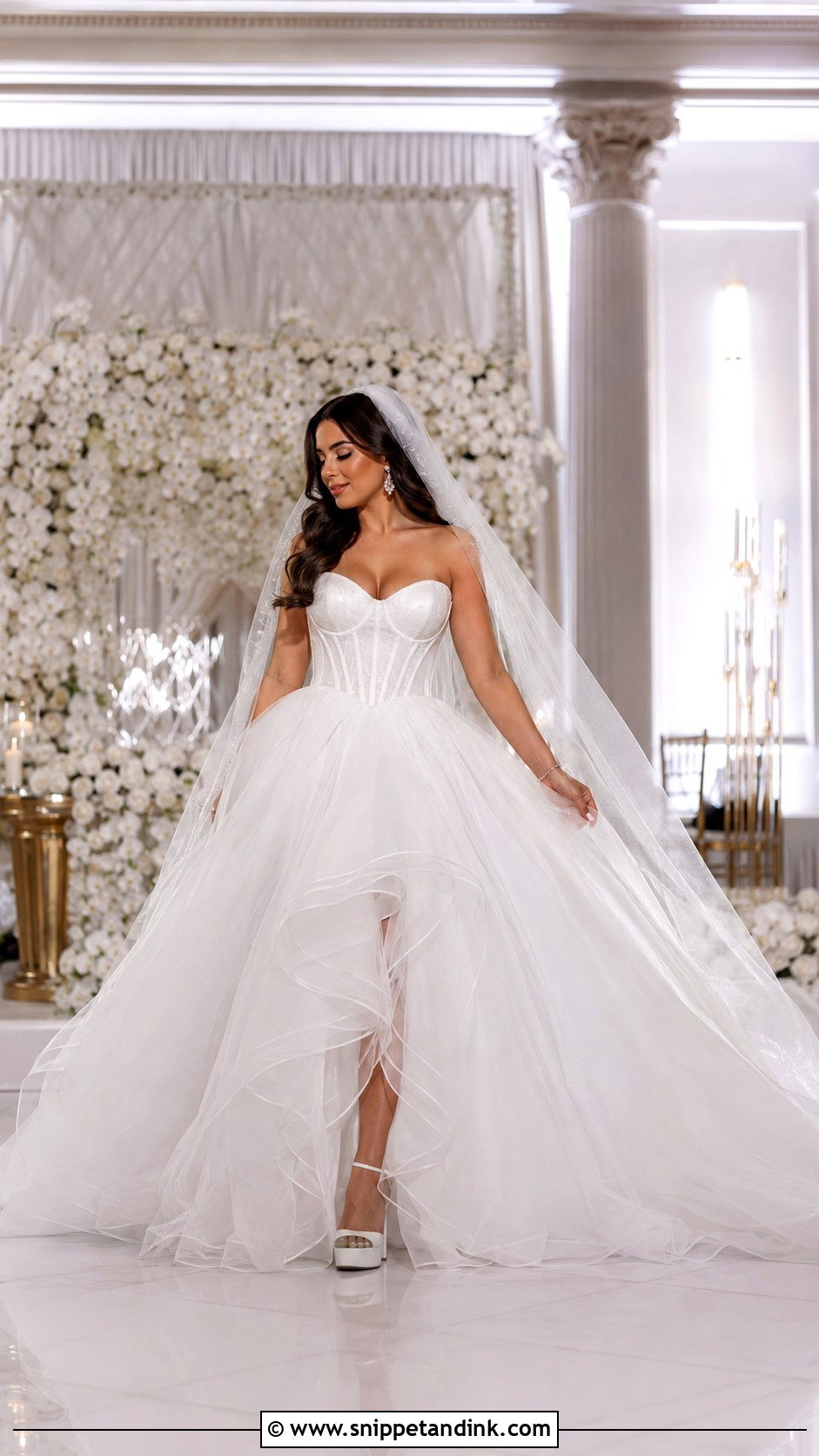
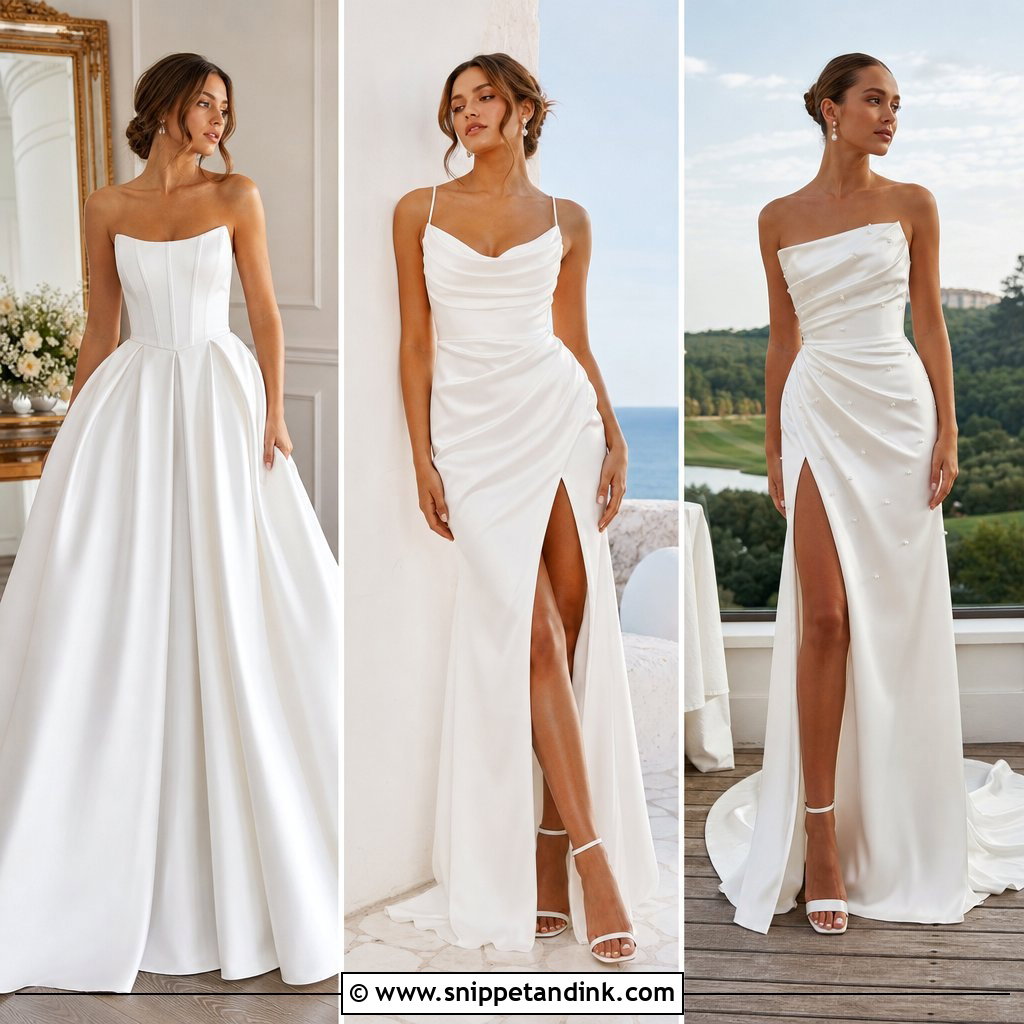
Corset plus ballgown is the classic big-aisle look, with modern support built in. The bodice defines; the skirt moves. I’d look for a secure waist seam and a skirt of organza, mikado or layered tulle, then ask how much the whole gown weighs, since a full mikado ballgown can be surprisingly heavy by evening. A strapless or sweetheart neckline shows the corset. Cathedral veil, drop earrings and satin platforms for comfort under all that skirt. Estates and formal rooms suit it.
3. Drop Waist Wedding Dress
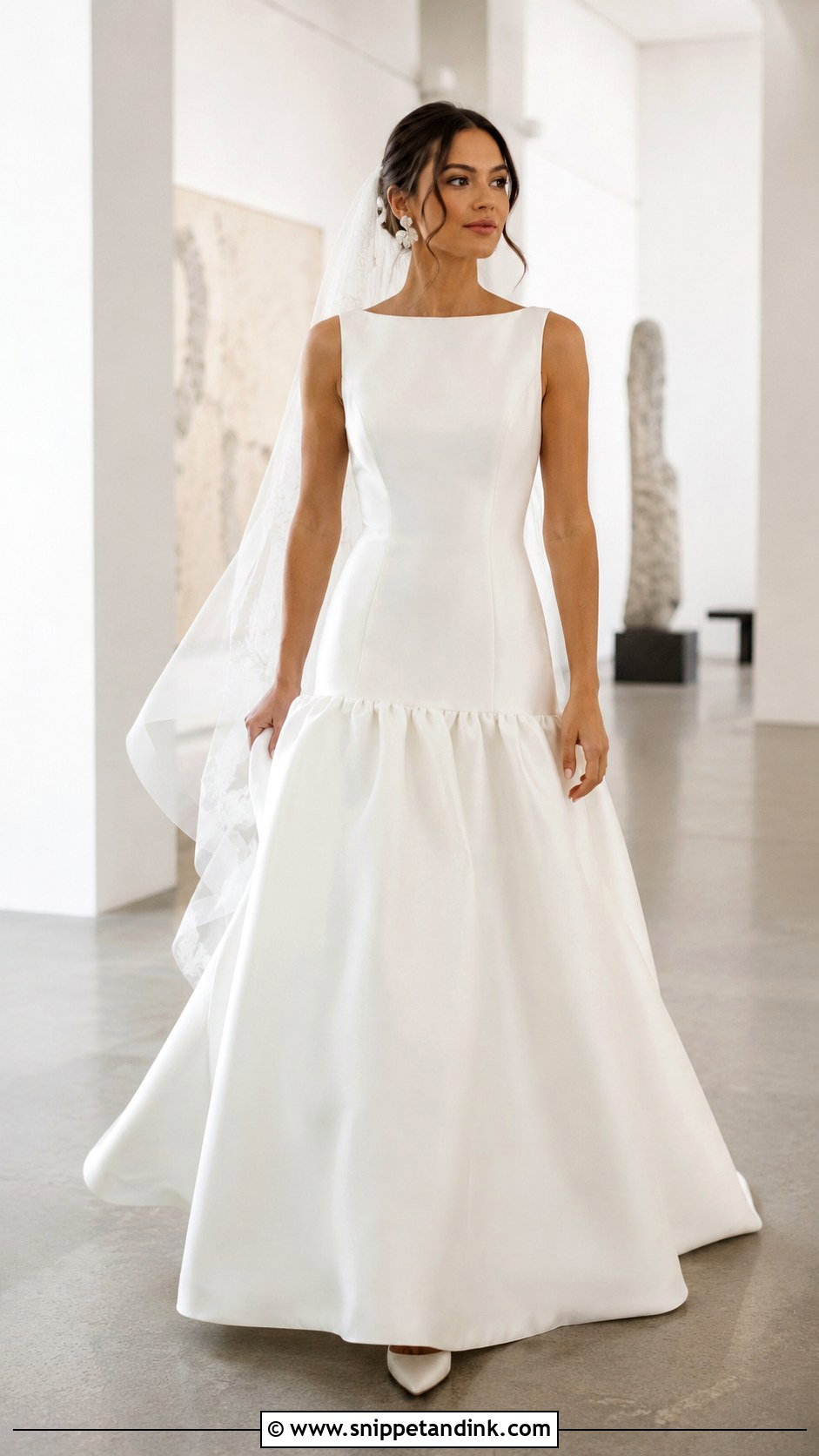
A drop waist moves the skirt seam down to the hips and stretches the bodice longer. It mixes vintage influence with a lean modern line. The fabric has to be structured but not clingy, or every crease across the hips shows. I’d usually pair it with a clean A-line or soft ballgown skirt. On a short torso I’d test it carefully, since it can shorten the legs. A simple veil, sculptural earrings and closed-toe heels finish it.
4. Mikado Satin Wedding Dress
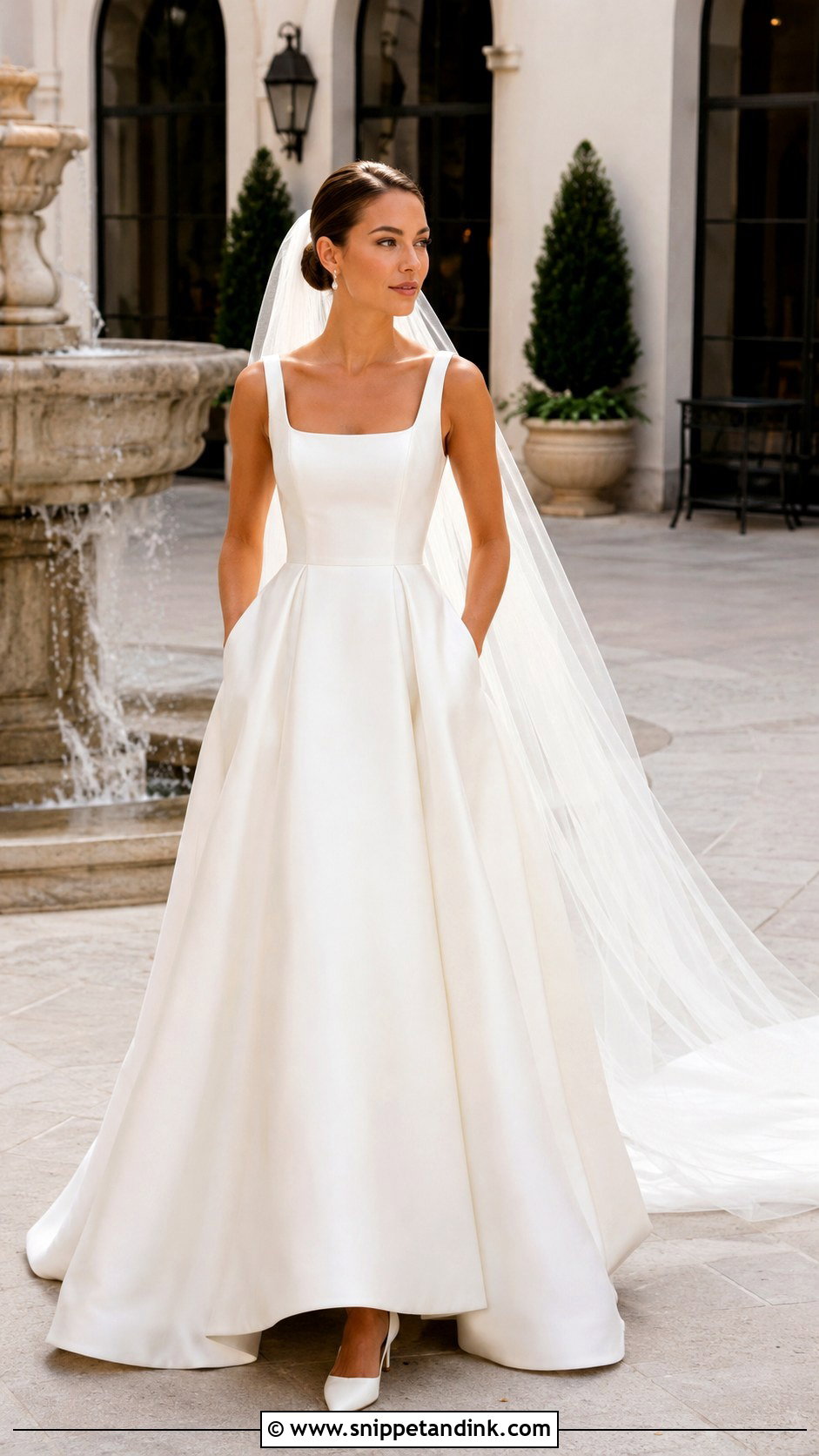
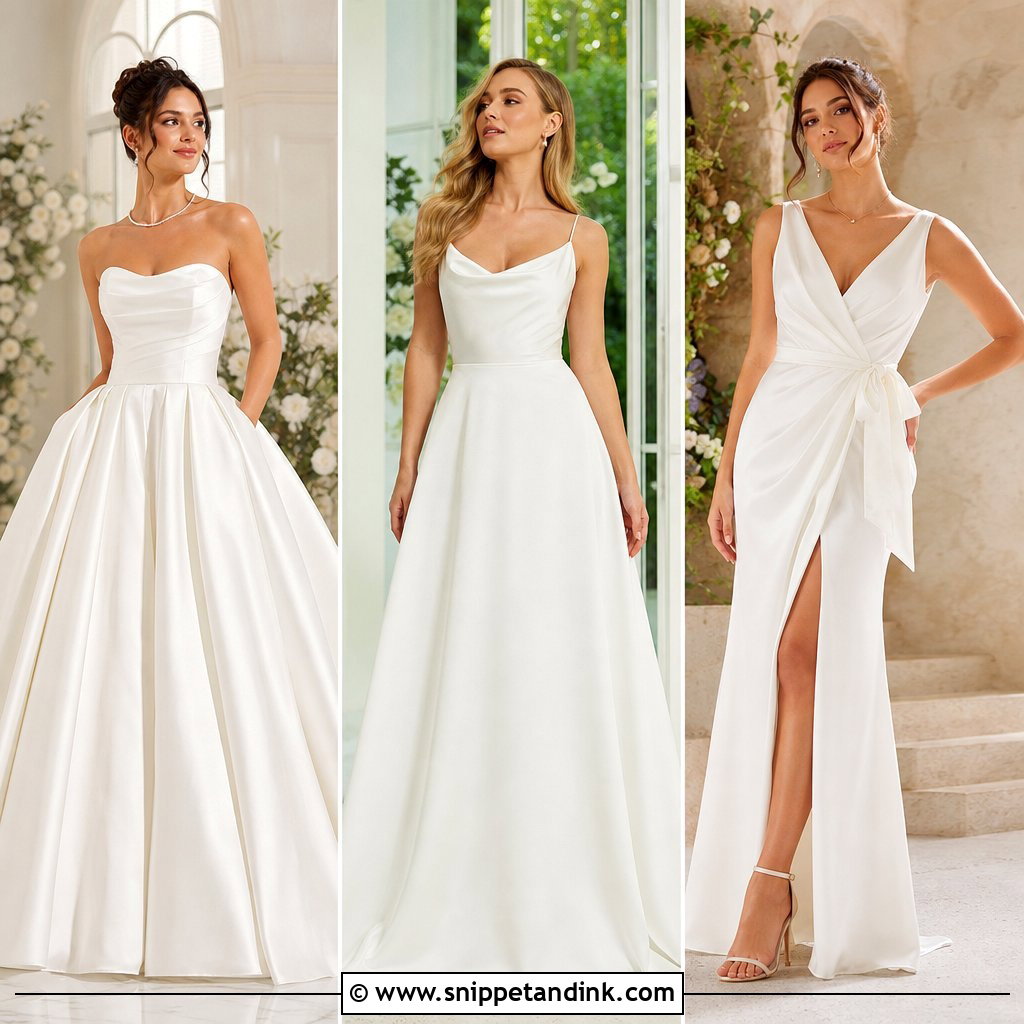
Mikado satin holds pleats, seams and volume so well that a simple gown looks expensive. It has a soft sheen and real body. I’d try a mikado A-line with a fitted bodice, a square neck and hidden pockets, styled with pearl earrings, a clean veil and ivory slingbacks. White roses or calla lilies keep the bouquet as crisp as the fabric. Mikado photographs sharply, which also means any wrinkle shows, so hang it as soon as you arrive at the venue.
5. Square Neck Wedding Dress
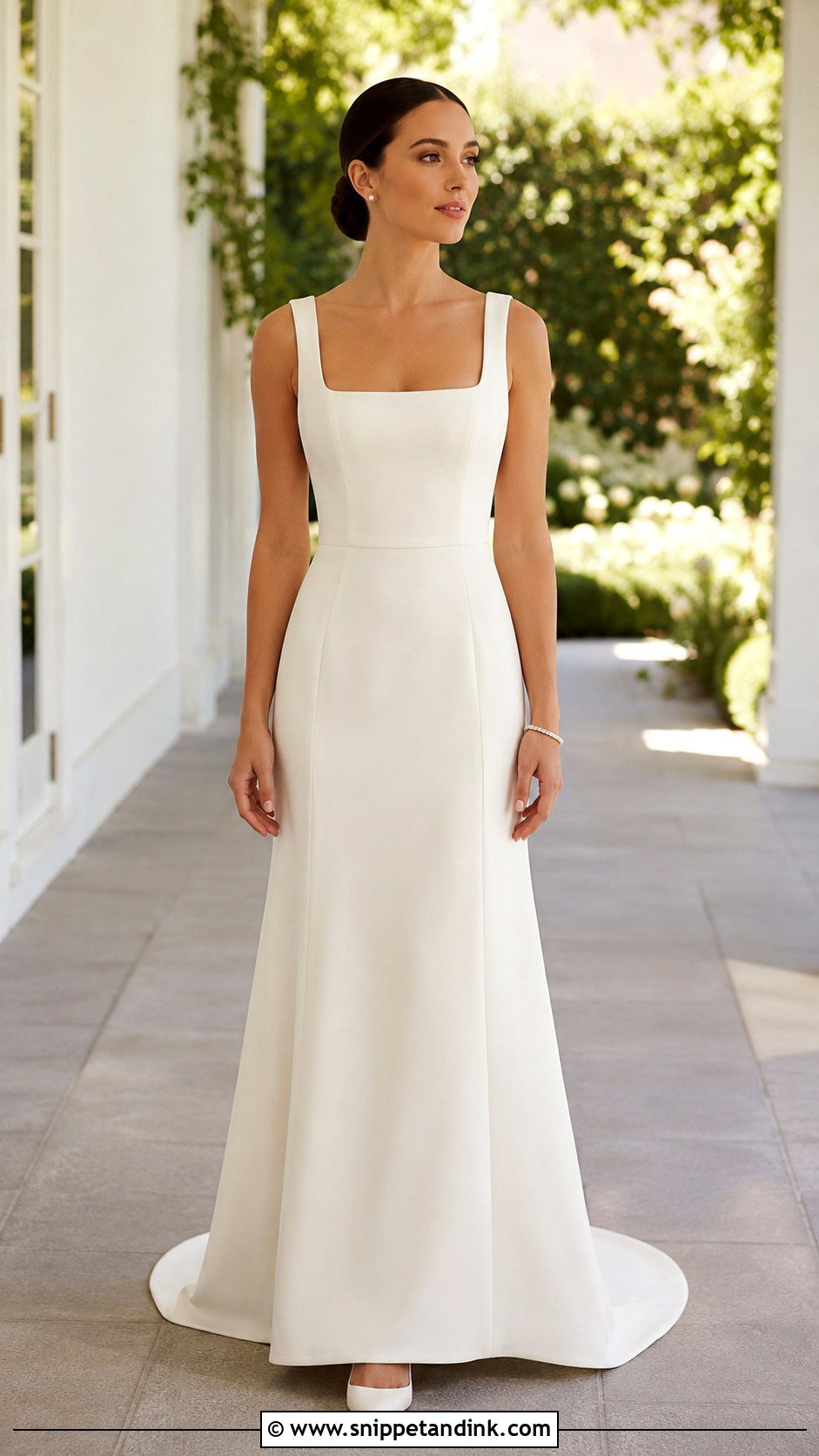
A square neck gives the upper body a tailored frame, especially with wide straps or a fitted bodice. Crepe, mikado or satin with princess seams shape the body without boning. A slim A-line or column skirt keeps it sophisticated. I’d check that the corners sit level and flat when you lift your arms, as square necklines tend to gape at the corners on smaller busts. Low chignon, pearl studs and a plain bracelet. Block heels if there’s grass.
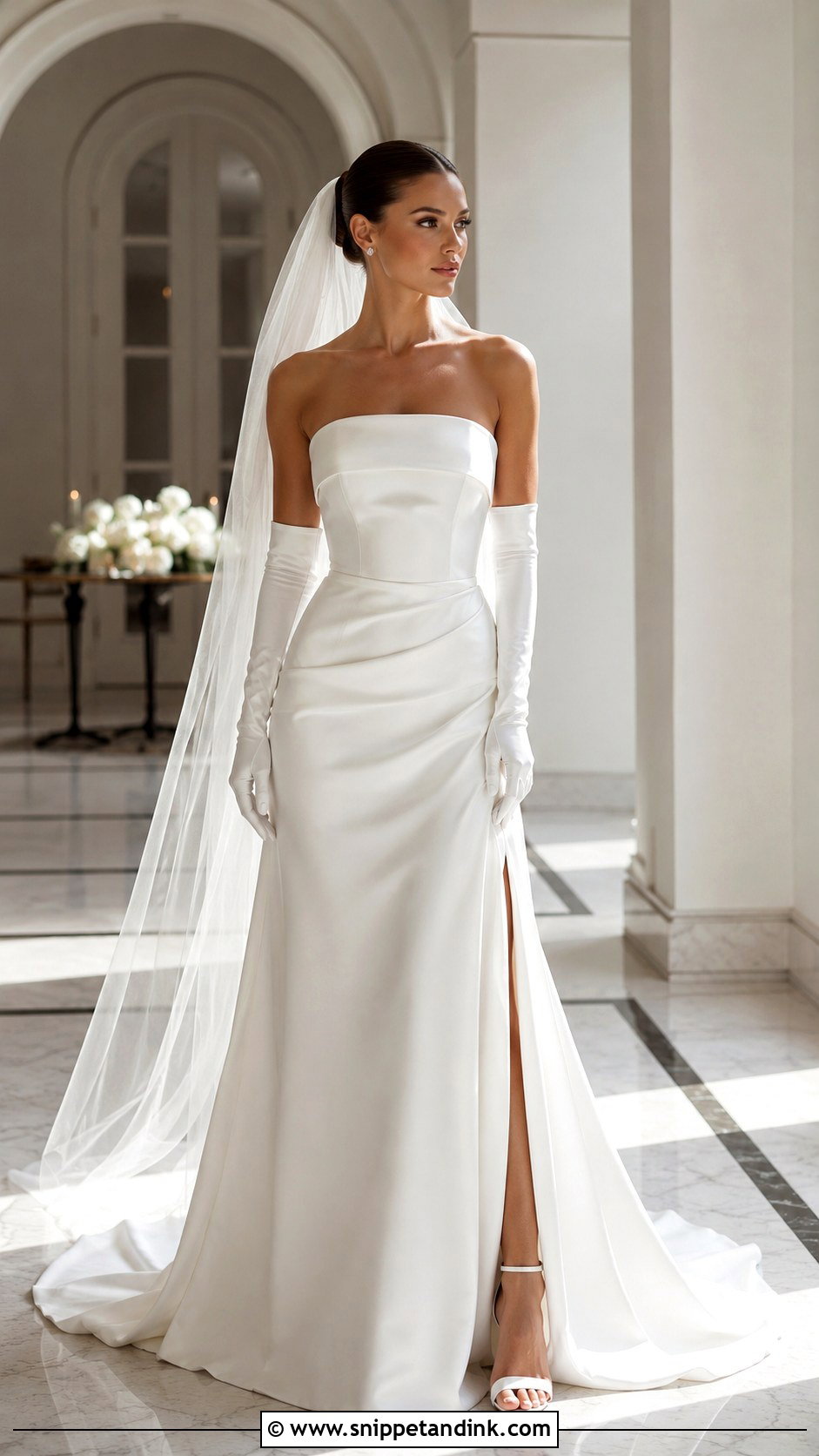
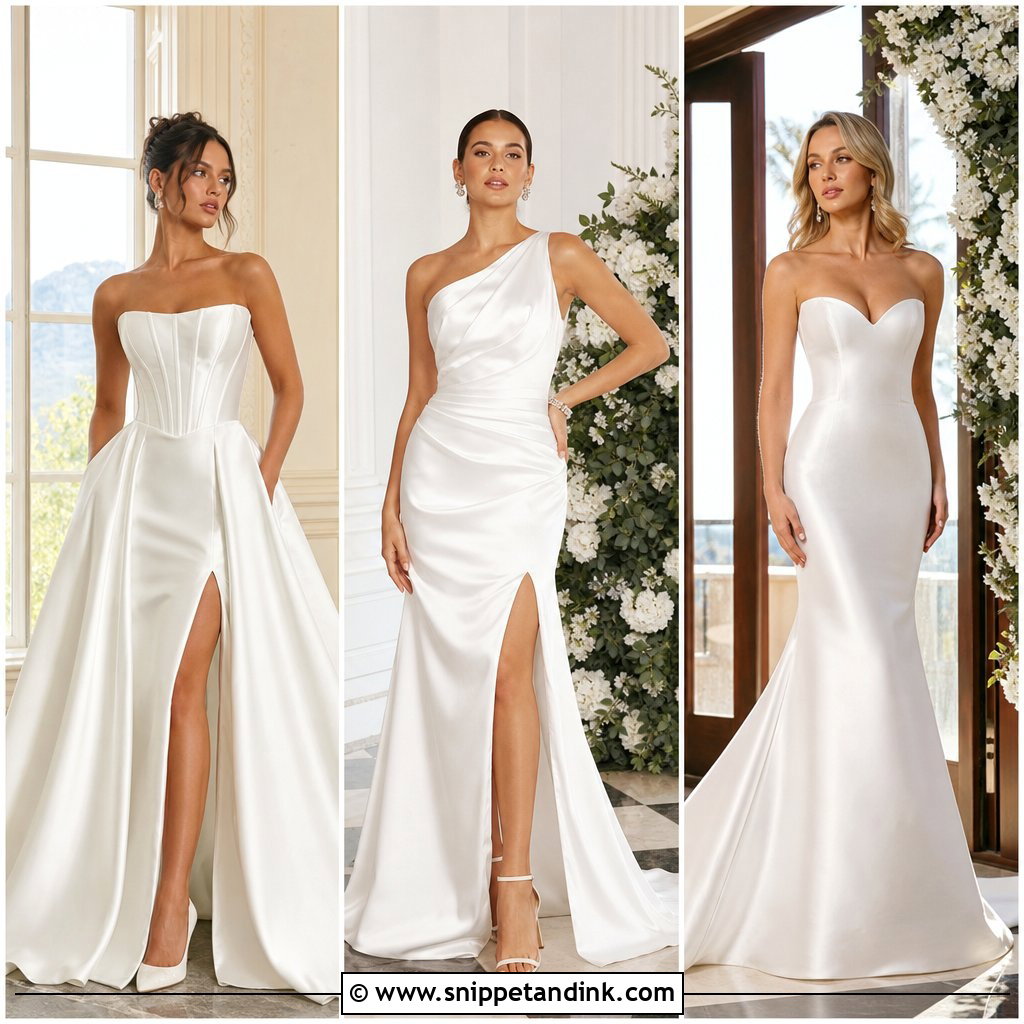
6. Strapless Structured Wedding Dress
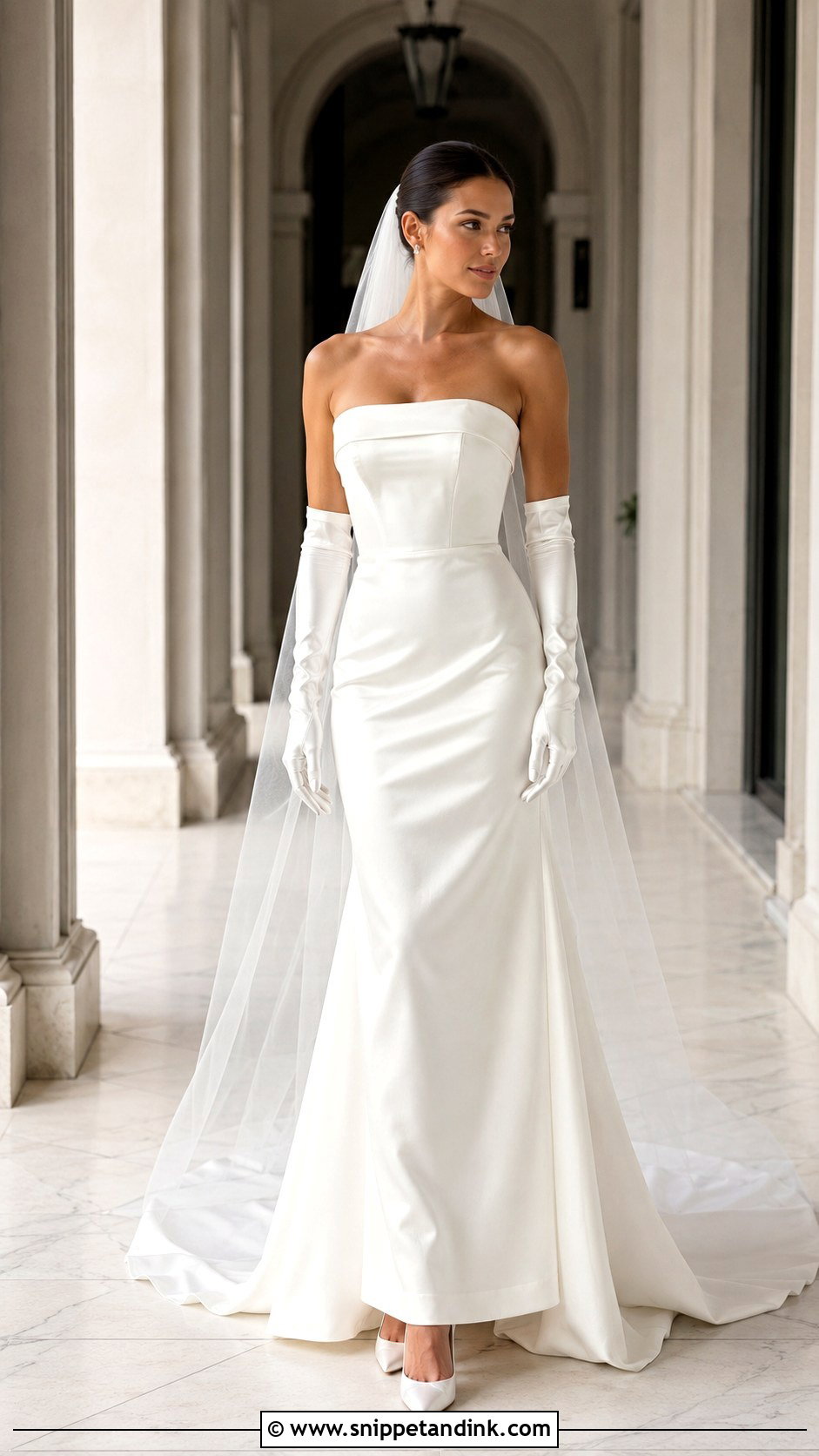
A structured strapless needs three things: a strong internal corset, a clean neckline and fabric heavy enough not to wrinkle. Straight-across reads modern, a curve softer. Pair the bodice with a slim skirt for a city wedding or a full one for a formal ceremony. Long gloves add fashion; a plain veil keeps it bridal. Crystal studs and satin heels finish it. I’d test a hug and an overhead reach in the fitting room before you sign.
7. Off Shoulder Wedding Dress
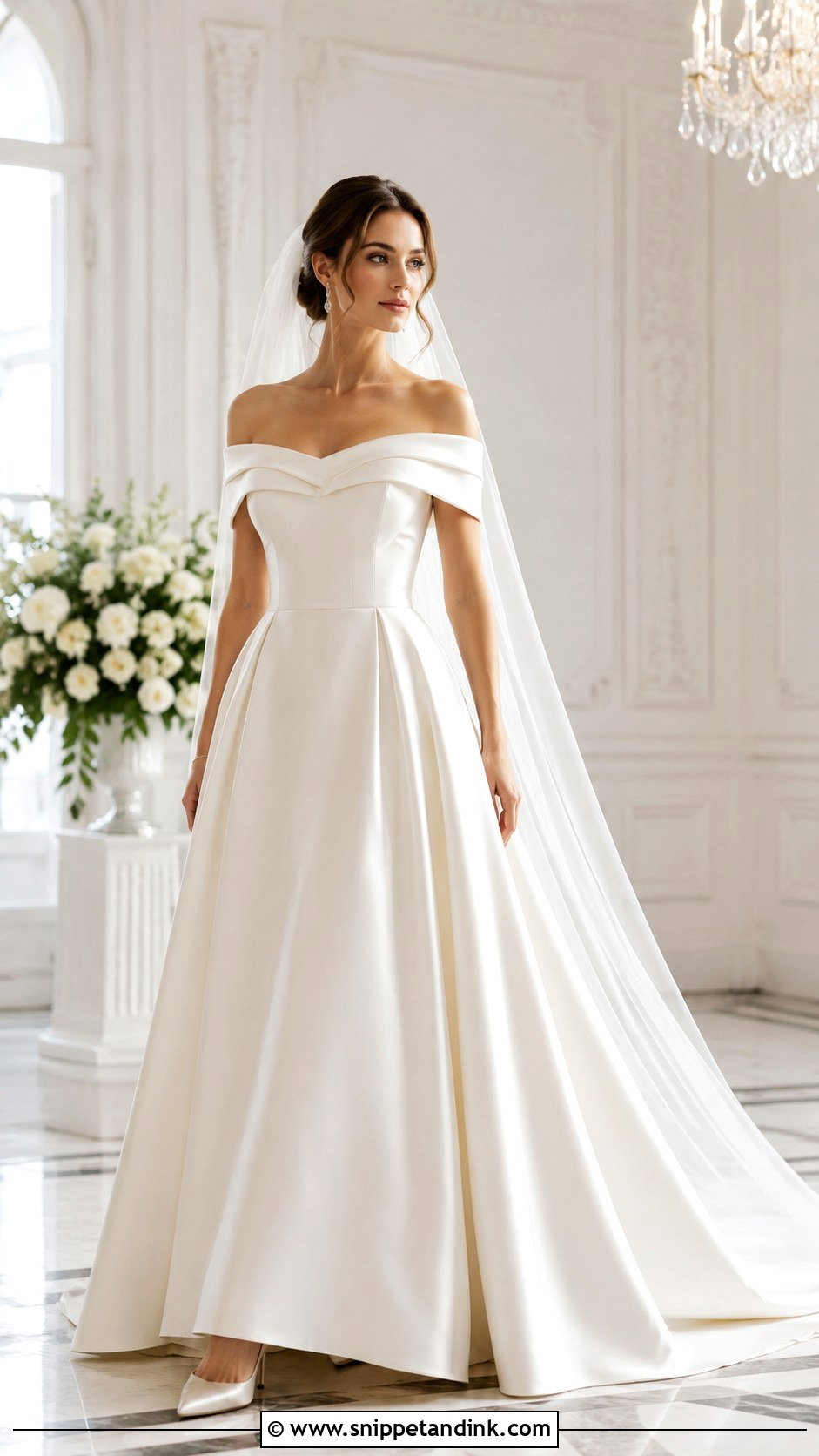
Off-shoulder necklines can look loose on soft gowns, but structure fixes that. Folded satin bands, shaped sleeves or a corseted waist keep it defined. A ballgown skirt is dramatic, a fitted skirt modern. My usual check is arm movement: the band shouldn’t ride up when you reach forward. Swept-back hair, small drops and a long veil set low at the back of the head. Ivory heels and a neat bouquet.
8. Long Sleeve Structured Wedding Dress
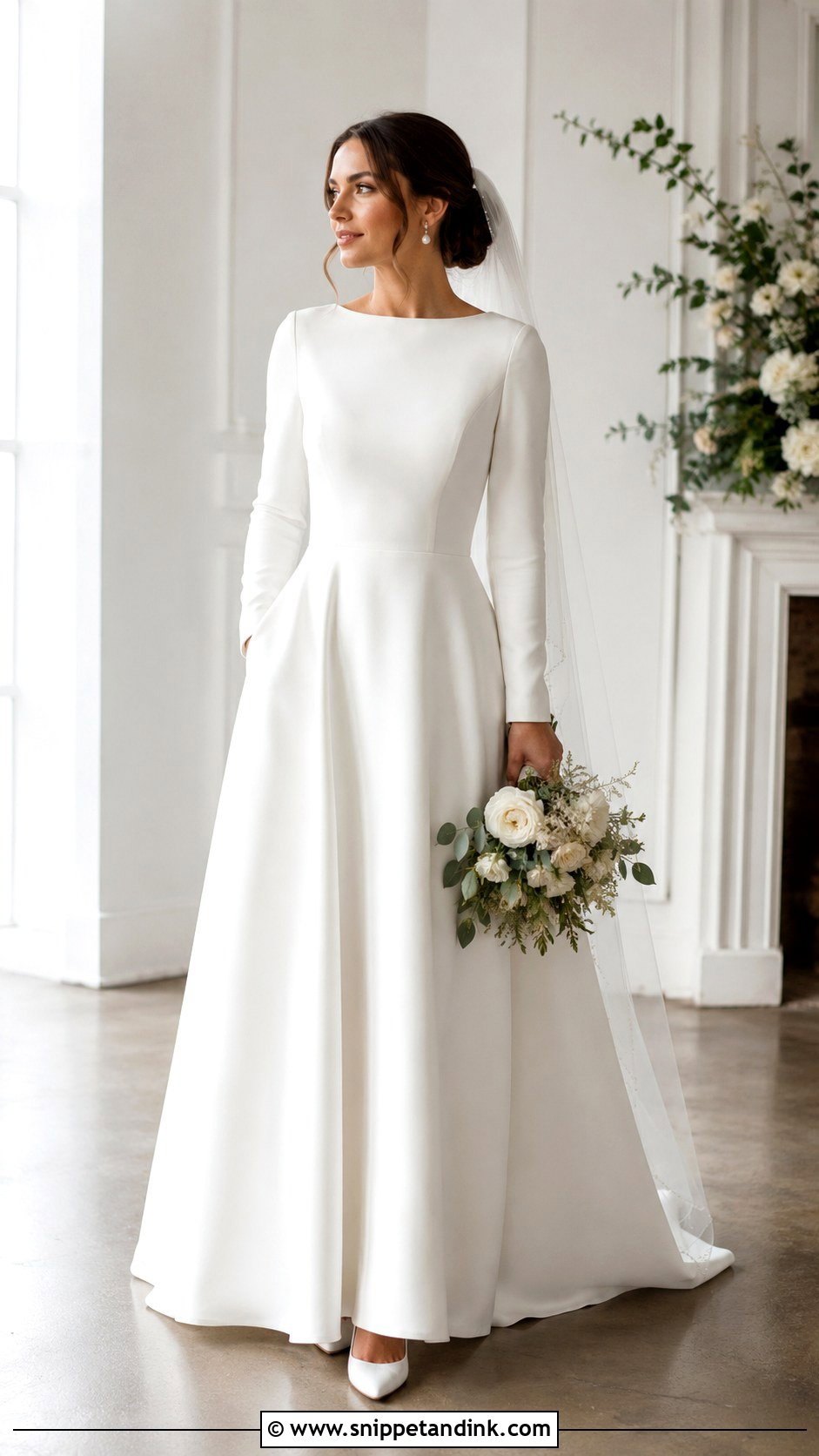
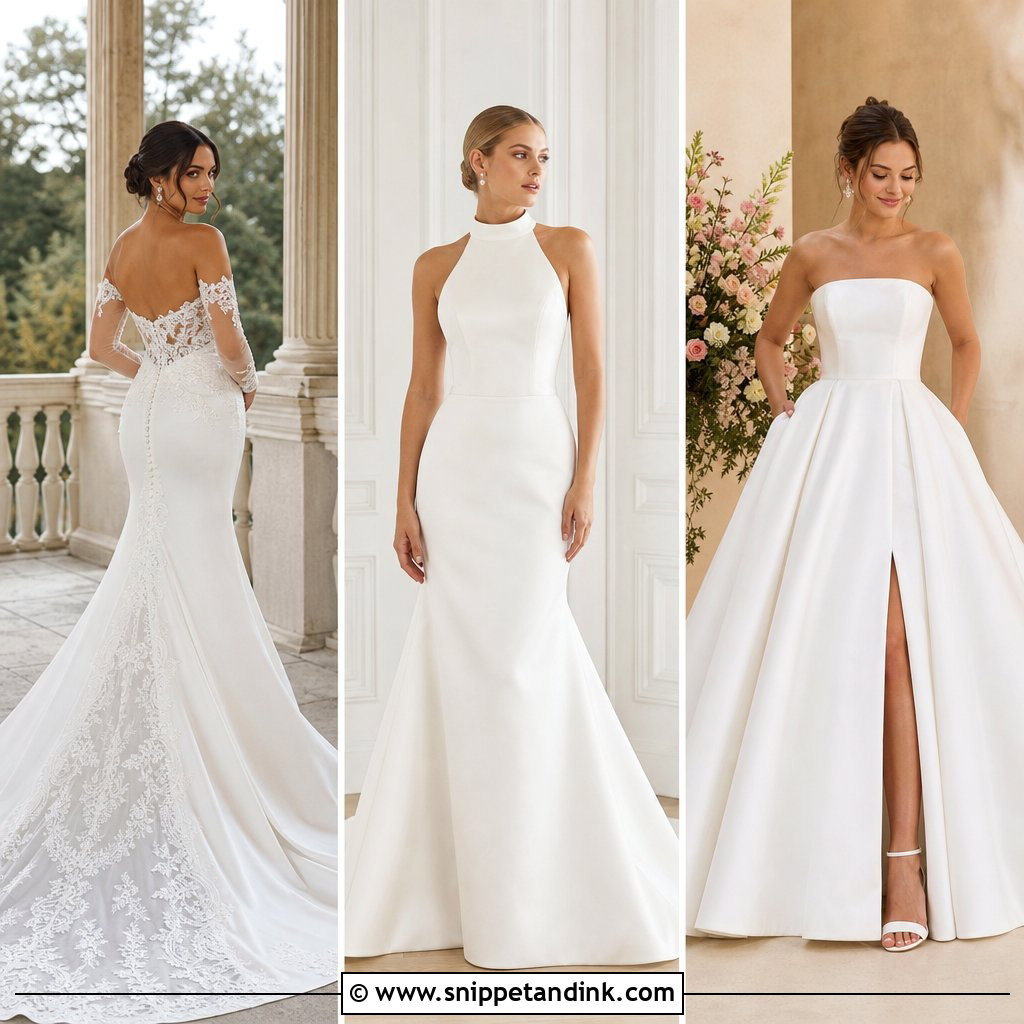
Structured sleeves only look tailored if the shoulder seam sits exactly on your shoulder point. A centimeter out and the whole bodice looks borrowed. Crepe, lace or satin sleeves all work. A high neck feels regal; square or bateau feels modern. A clean bun, pearl earrings and closed-toe heels suit it. Lace sleeves need a plain veil; a plain gown can take a textured one. Autumn, winter and evening ceremonies suit it.
9. High Neck Wedding Dress
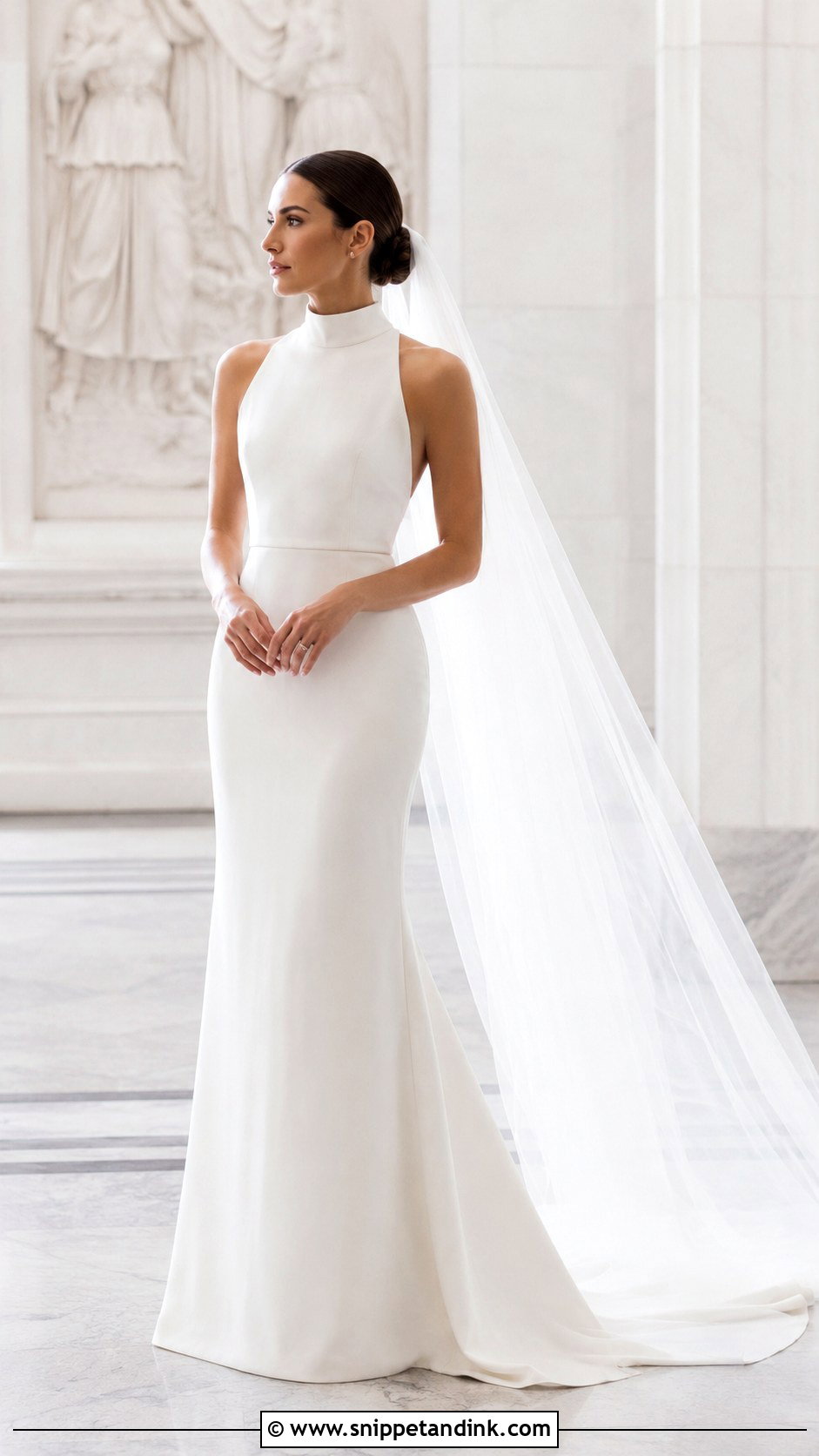
High necks create a tall, statuesque line. The structure comes from the clean collar, fitted bodice and a smooth vertical line down the body. Crepe is sleek, mikado more shaped, lace over a firm lining romantic. A fitted skirt with a small train looks refined; an A-line softer. Hair goes up, earrings stay small, and the veil attaches below the crown so it doesn’t fight the collar. No necklaces. For modest coverage, it’s my first suggestion.
10. Structured Lace Wedding Dress
Floppy lace and structured lace are different dresses. What I’d look for is appliqué over a supportive bodice, a defined waist and a firm skirt lining. A corset top with floral lace and an A-line skirt keeps the romance but adds shape. Only add a lace-trim veil if it truly matches the pattern; a mismatched lace looks worse than none. Pearl earrings, soft waves and ivory heels finish it.
11. Minimalist Crepe Wedding Dress
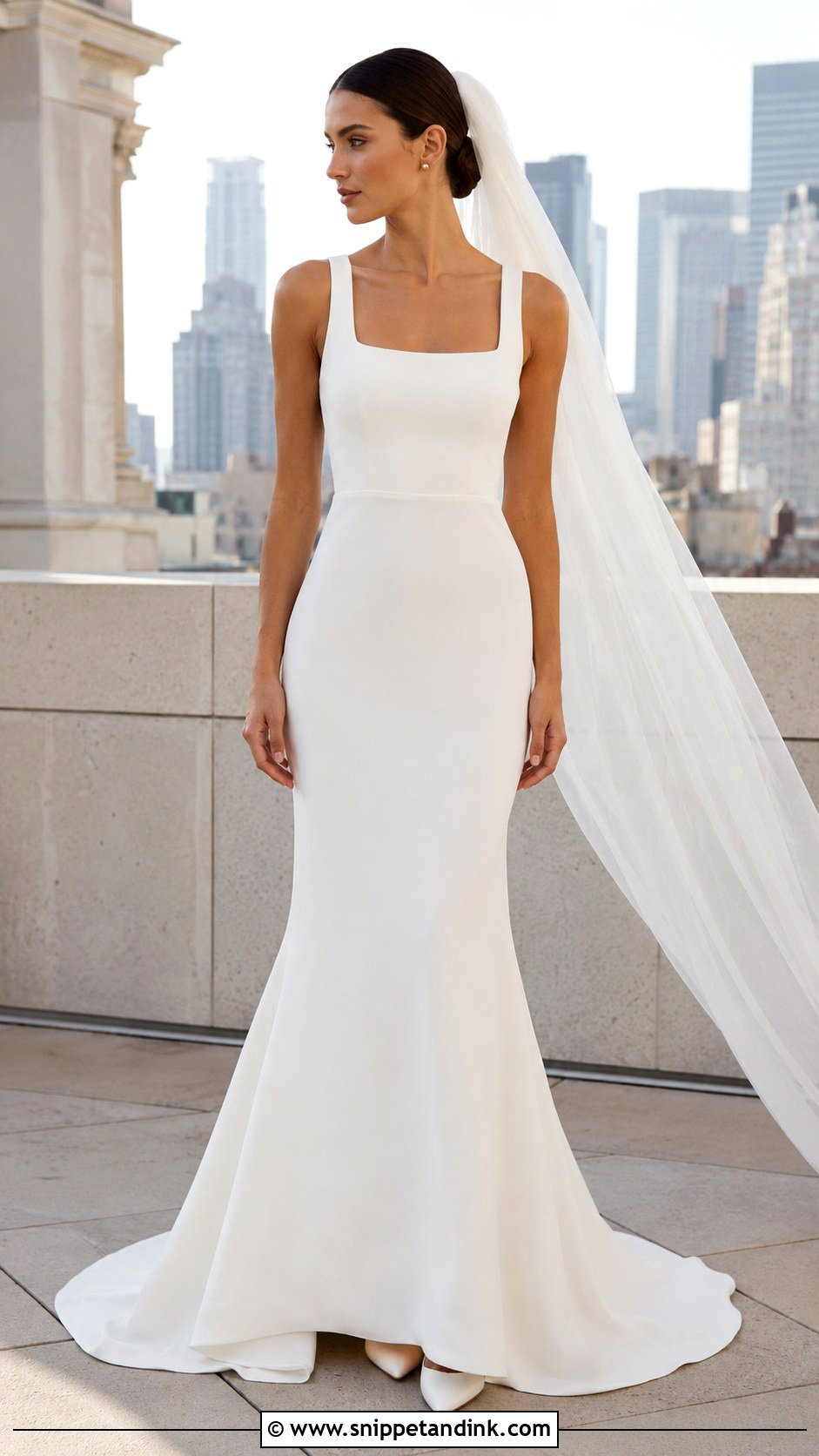
Structure doesn’t have to be dramatic. Crepe skims the body and looks sharp when tailored, and a square neck, fitted waist and quiet shaping seams are enough. A back slit, buttons or a small train add interest. Sleek hair, gold or pearl studs, pointed ivory pumps and a plain chapel veil. Courthouses, galleries and rooftops suit it. With so little detail, I’d spend the money on alterations rather than accessories.
12. Structured A Line Wedding Dress
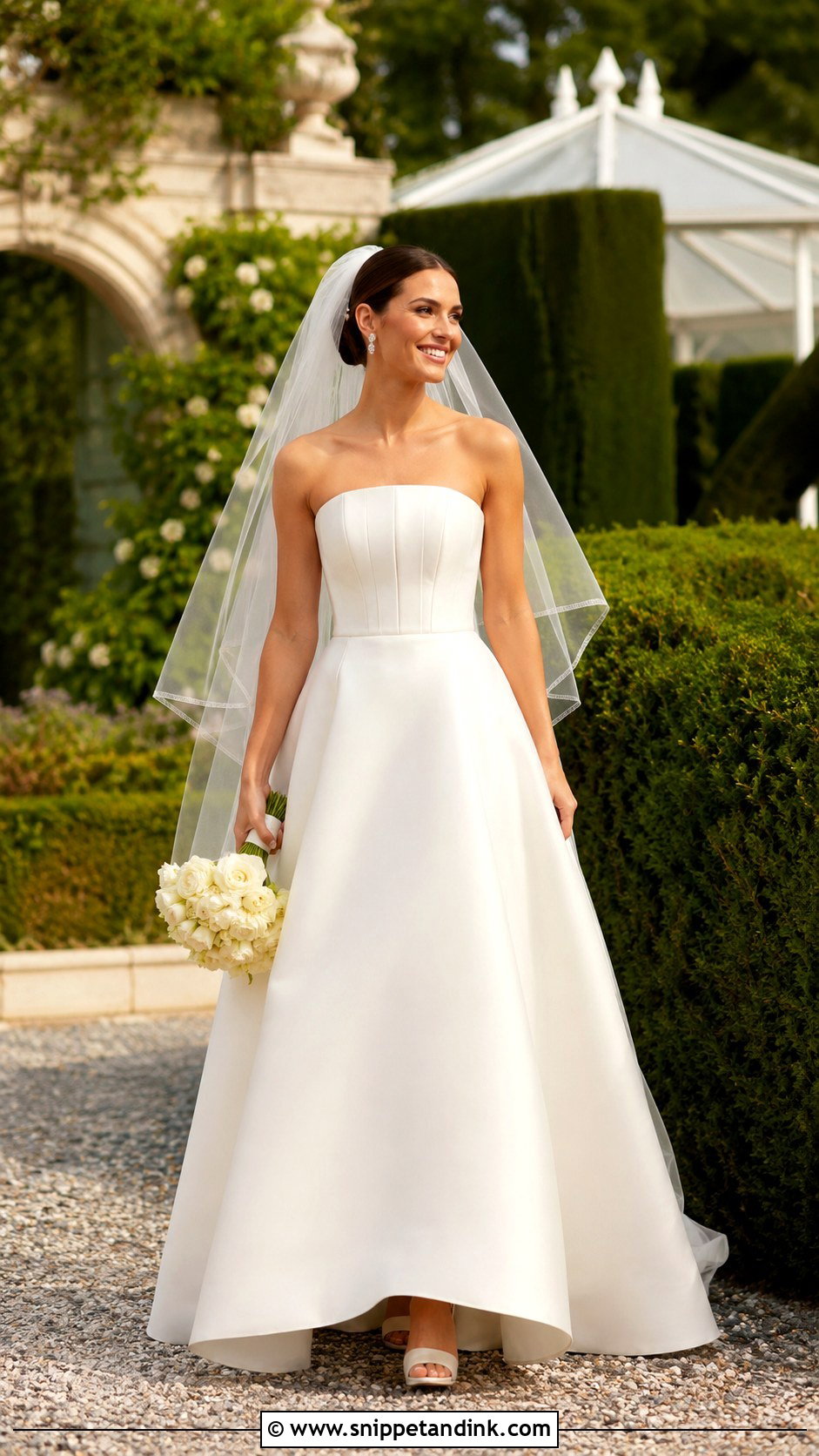
Of all the silhouettes in this list, the structured A-line suits the most body types and venues. Boning or princess seams define the waist, and the skirt flows away in mikado, satin, organza, or taffeta. It moves without being wide. A fingertip veil, classic earrings and block heels or pumps suit it. If you’re unsure where to start, try this first, then compare everything else against it.
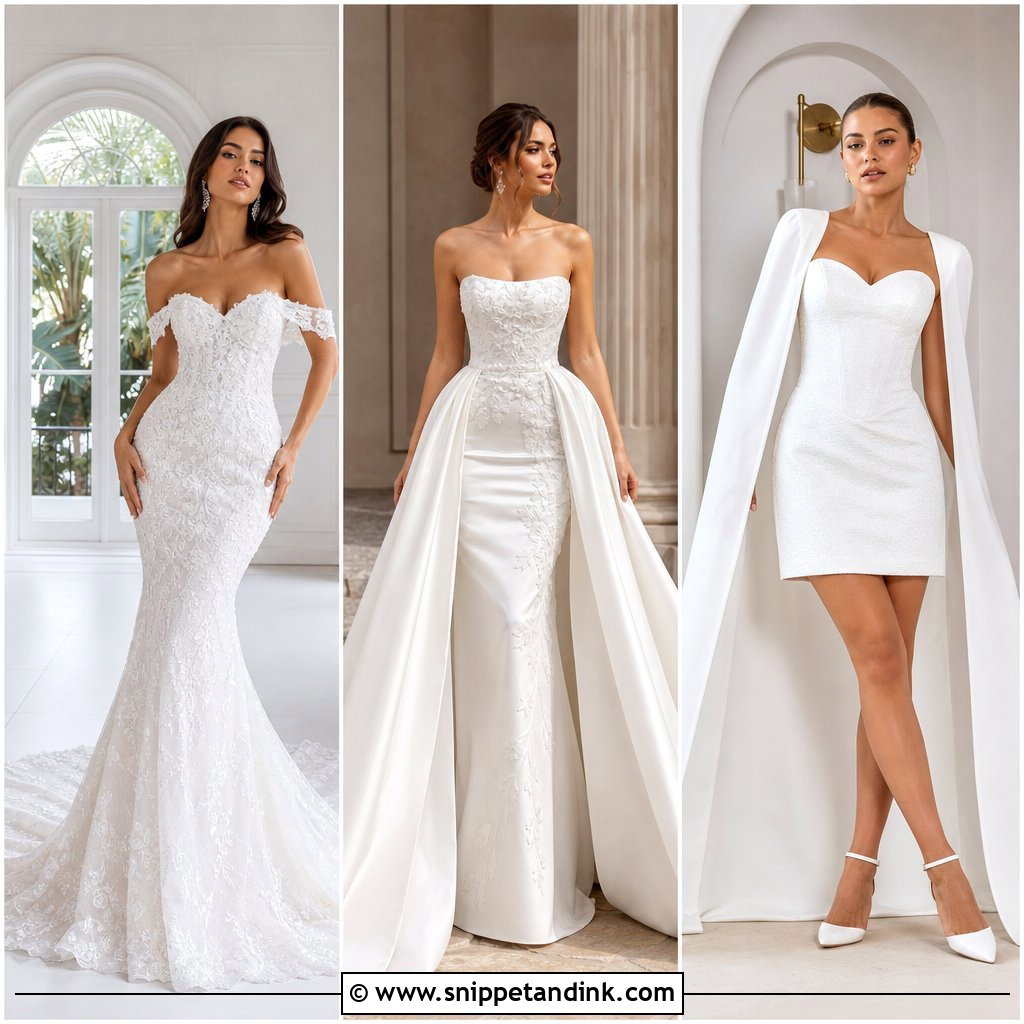
13. Structured Mermaid Wedding Dress
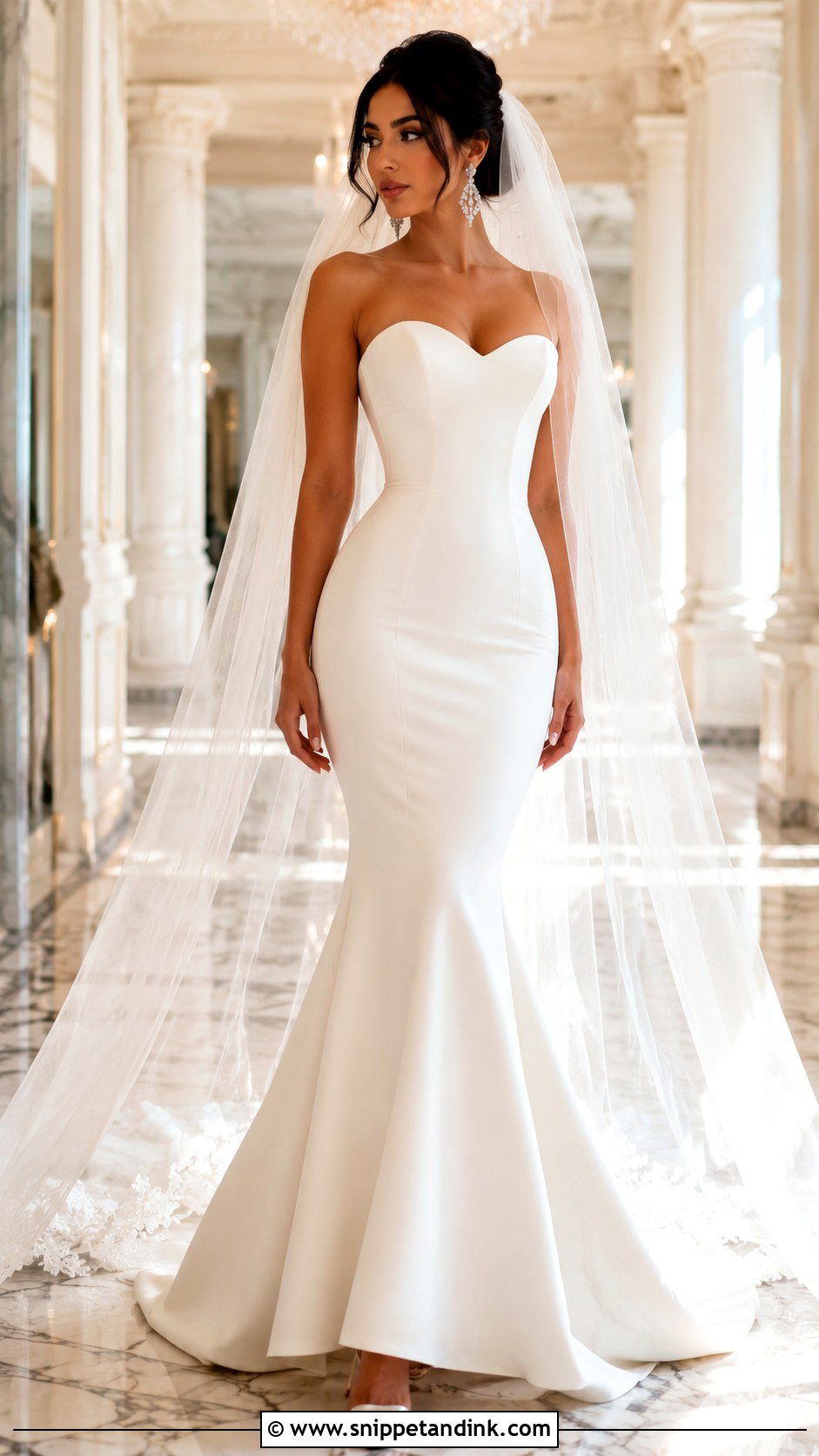
Strong tailoring through the bodice, waist, hips and thigh gives a dramatic hourglass shape. The flare must sit where you can walk; too low and you’ll shuffle. Crepe, satin or lace over firm lining hold the line. Strapless is bold, long sleeves more formal. A sleek veil, statement earrings and heels with some height balance the fitted skirt. I’d keep the bouquet narrow so it doesn’t hide the waist.
14. Structured Sheath Wedding Dress
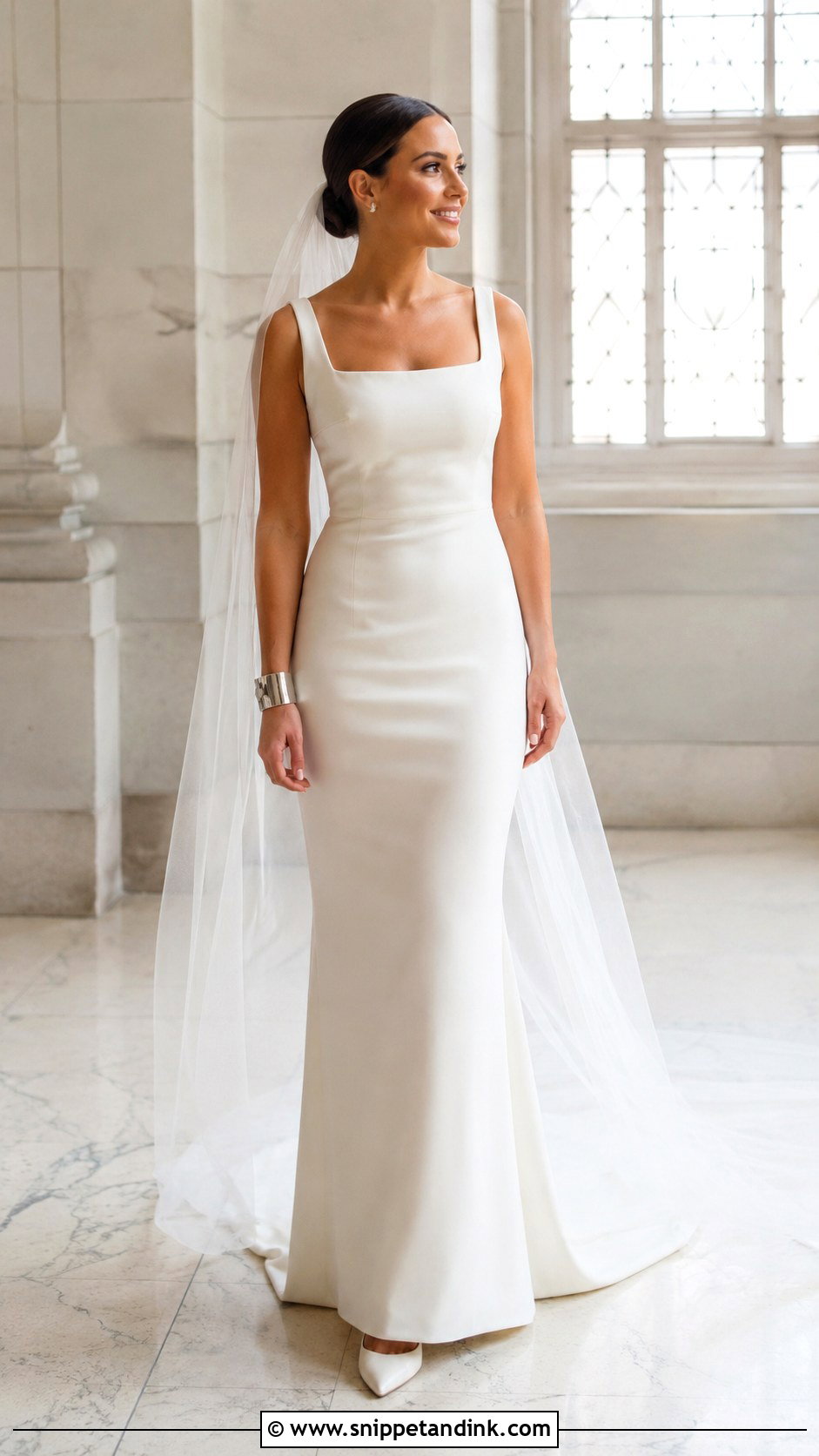
A structured sheath is not a slip. It uses seams, lining and stable fabric to make a smooth slim shape that doesn’t cling. Try crepe with a square neck, low back and small train. Add a long veil for the ceremony and take it off for a clean reception look. Simple earrings, a cuff and pointed heels finish it. This one depends entirely on fit, so I’d book an extra fitting rather than skip one. City weddings and small celebrations suit it.
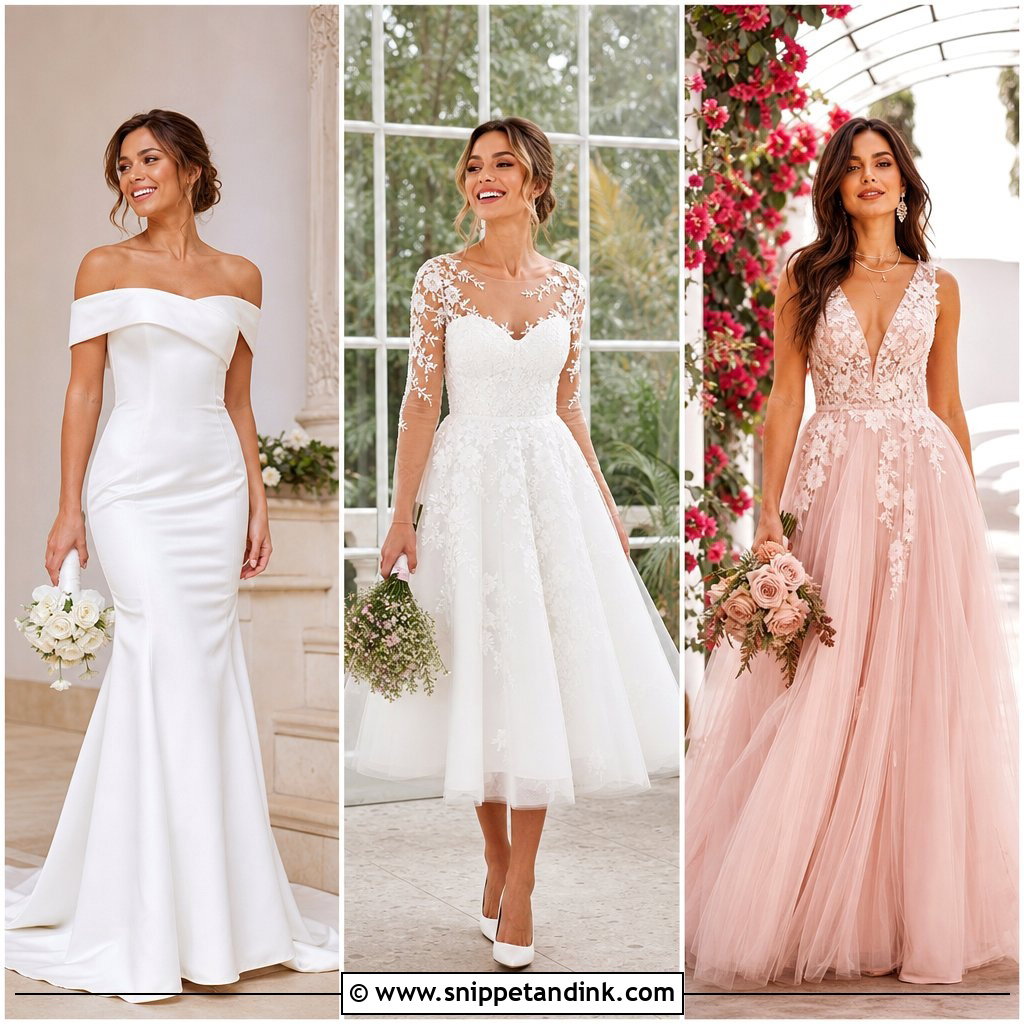
15. Structured Mini Wedding Dress
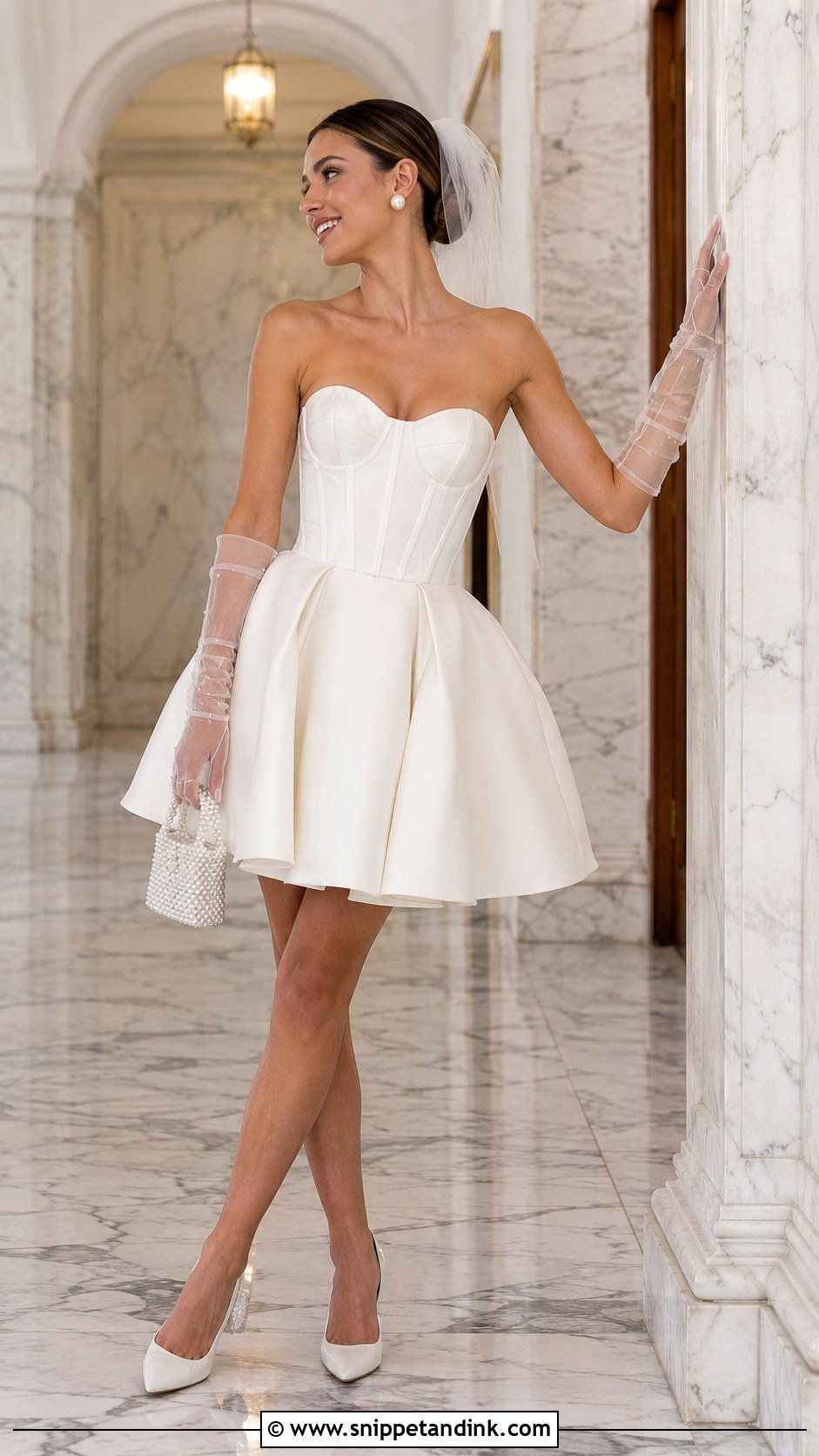
A structured mini is fun for a courthouse ceremony, shower, after-party or reception change. Mikado, crepe or satin with a corset bodice, square neck or sculpted skirt keeps it bridal rather than casual. Sheer gloves, pearl earrings and white pumps help, and a short veil or bow headband adds personality. I check the hem while seated; minis ride up more than people expect. Keep the fit sharp.
16. Two Piece Structured Wedding Dress
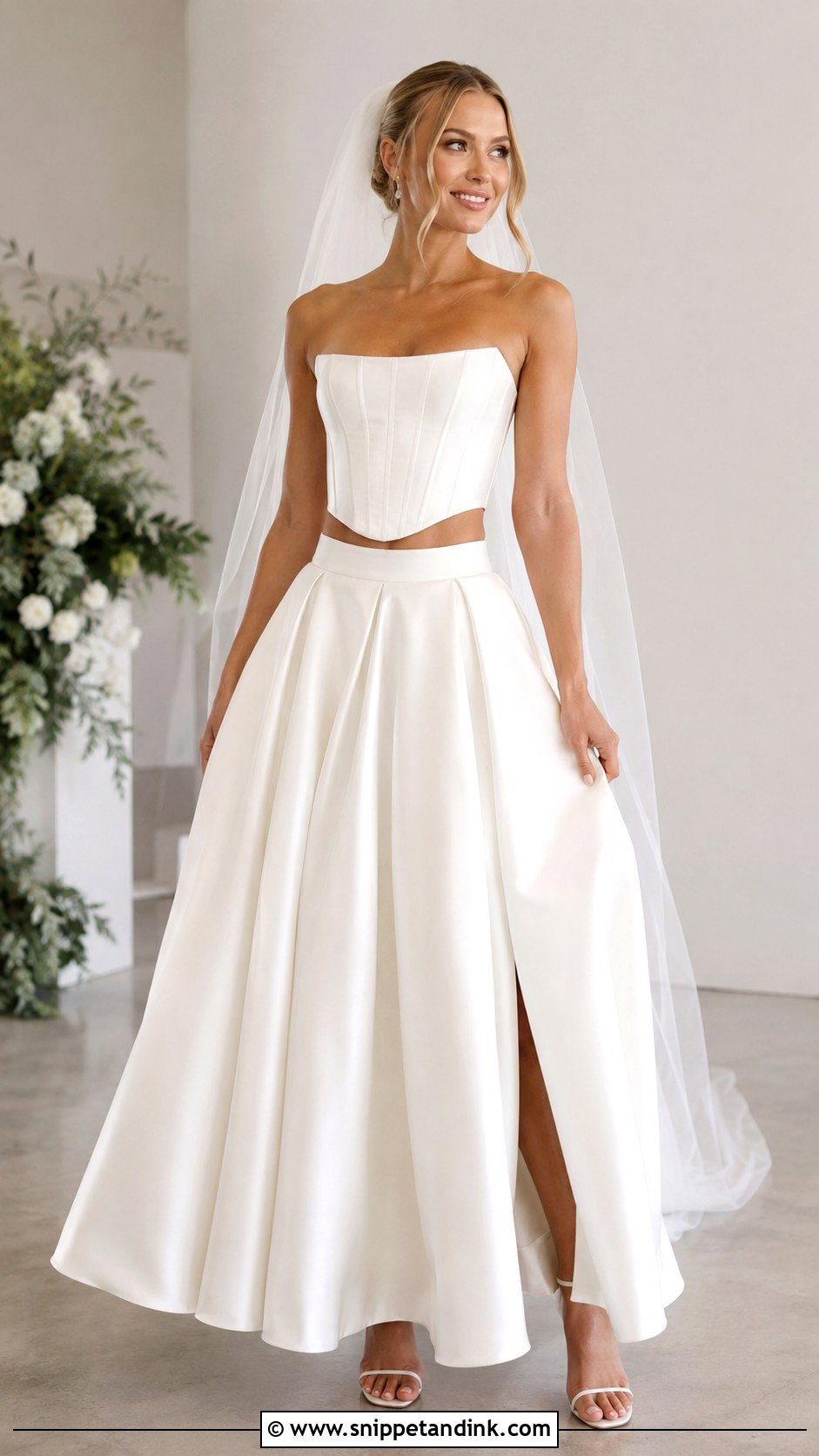
Separates make alterations easier, which is my favorite thing about them. A corset top with a high-waist skirt is the classic version. Matching fabric gives a one-piece effect, while satin with tulle gives texture. The top must fit securely and the skirt sit flat at the waist without gaping, so I’d have both fitted together. A simple veil, small earrings and heeled sandals or pumps suit it. Creative venues and brides who want flexibility love it.
17. Structured Wedding Dress With Bow
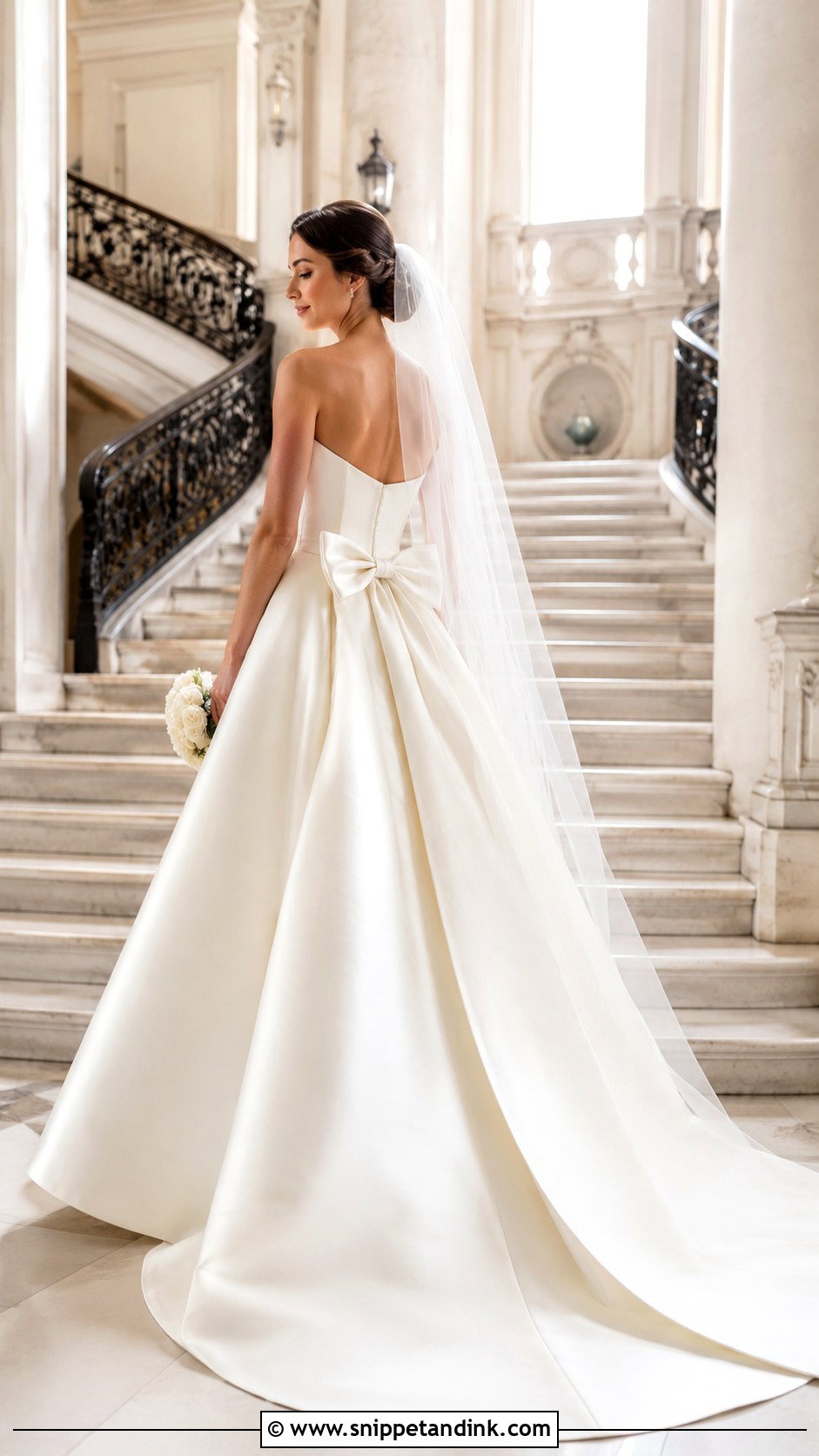
A bow can sit at the back waist, shoulder, neckline or train, and it has to look planned, not oversized for the sake of it. Mikado or satin holds a bow’s shape best. I’d try a fitted bodice with a full A-line skirt and a back bow that runs into the train. Minimal jewelry, a plain veil and classic heels. Make sure the bow is sewn on firmly enough that a hug won’t twist it sideways.
18. Structured Wedding Dress With Overskirt
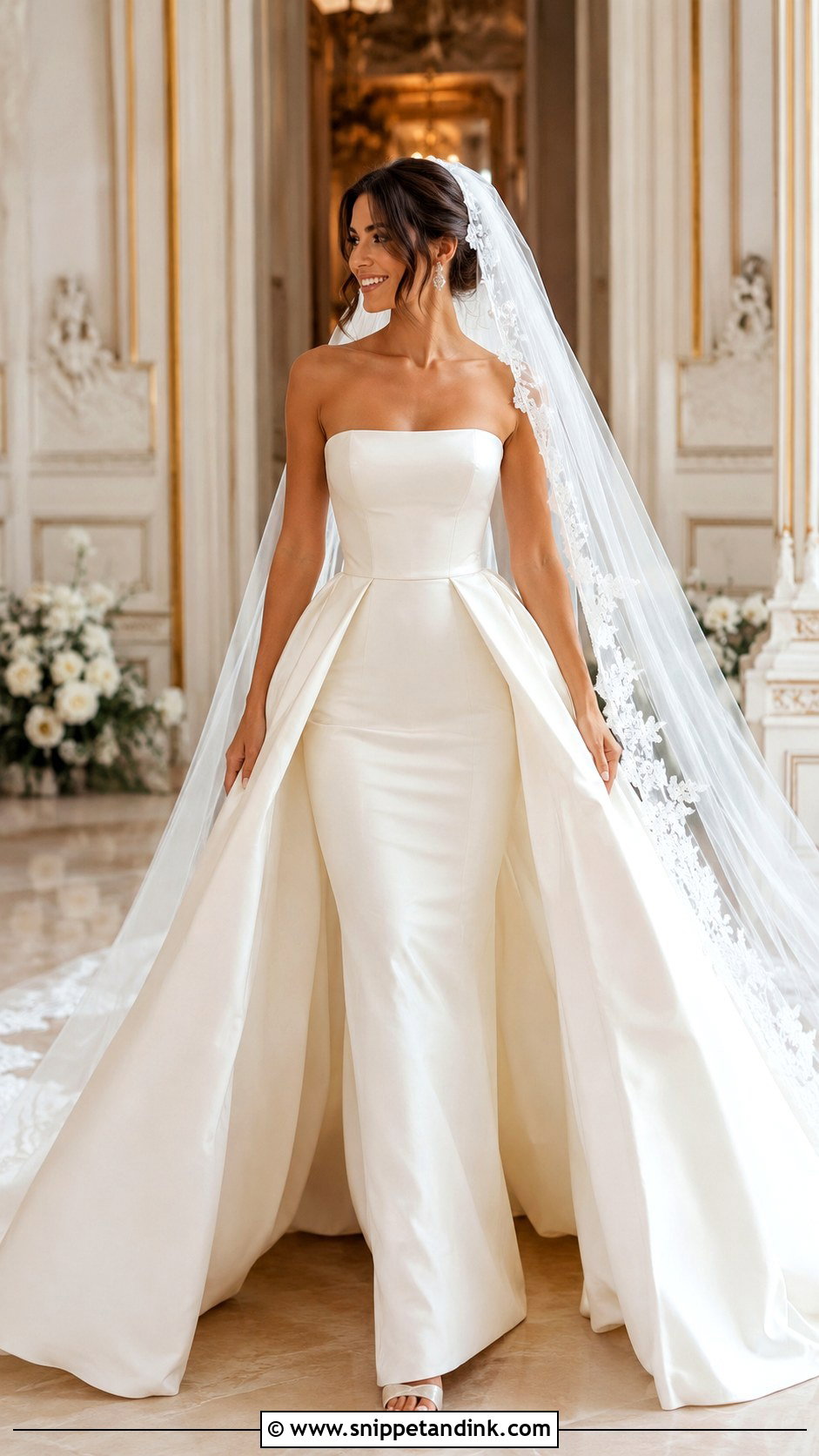
With a structured wedding dress with an overskirt, you get volume and formality for the aisle, then a sheath, mermaid or mini underneath for the party. The overskirt needs body, so mikado, organza or taffeta. The waist attachment must be smooth; any lump shows on the fitted dress later. Cathedral veil and classic earrings for the ceremony, statement earrings or a shorter veil afterward.
19. Structured Wedding Dress With Detachable Sleeves
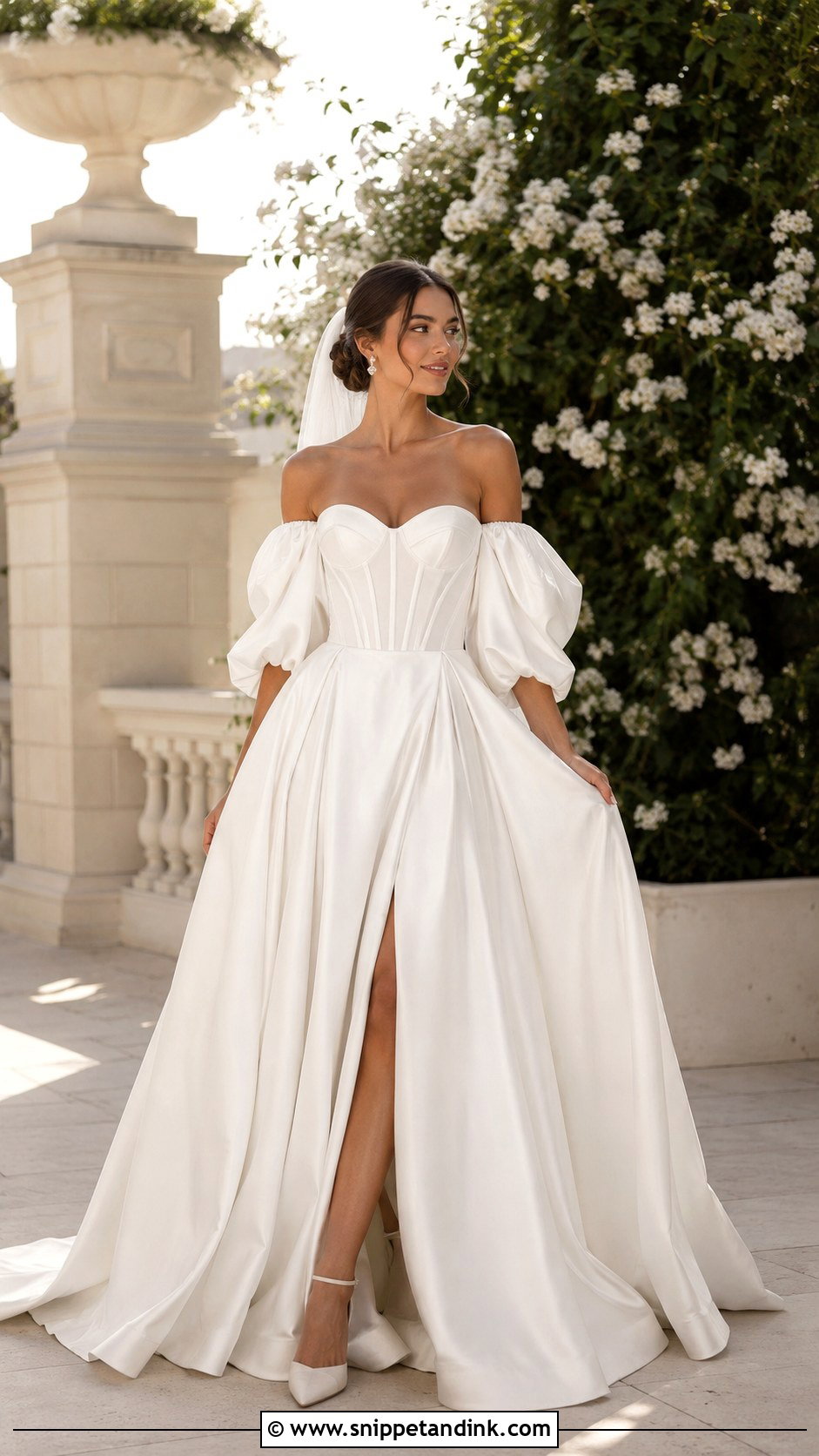
Sleeves on, sleeves off. A structured wedding dress with detachable sleeves covers you for the ceremony and frees you for dancing. Puff, fitted lace or off-shoulder satin sleeves all work, as long as they attach cleanly. Pair them with a corset bodice or a sculpted neckline. A simple veil and refined earrings are plenty, since the sleeve change is already the detail. Ask whether the sleeves can be fitted separately; they often need their own adjustment.


20. Pleated Bodice Wedding Dress
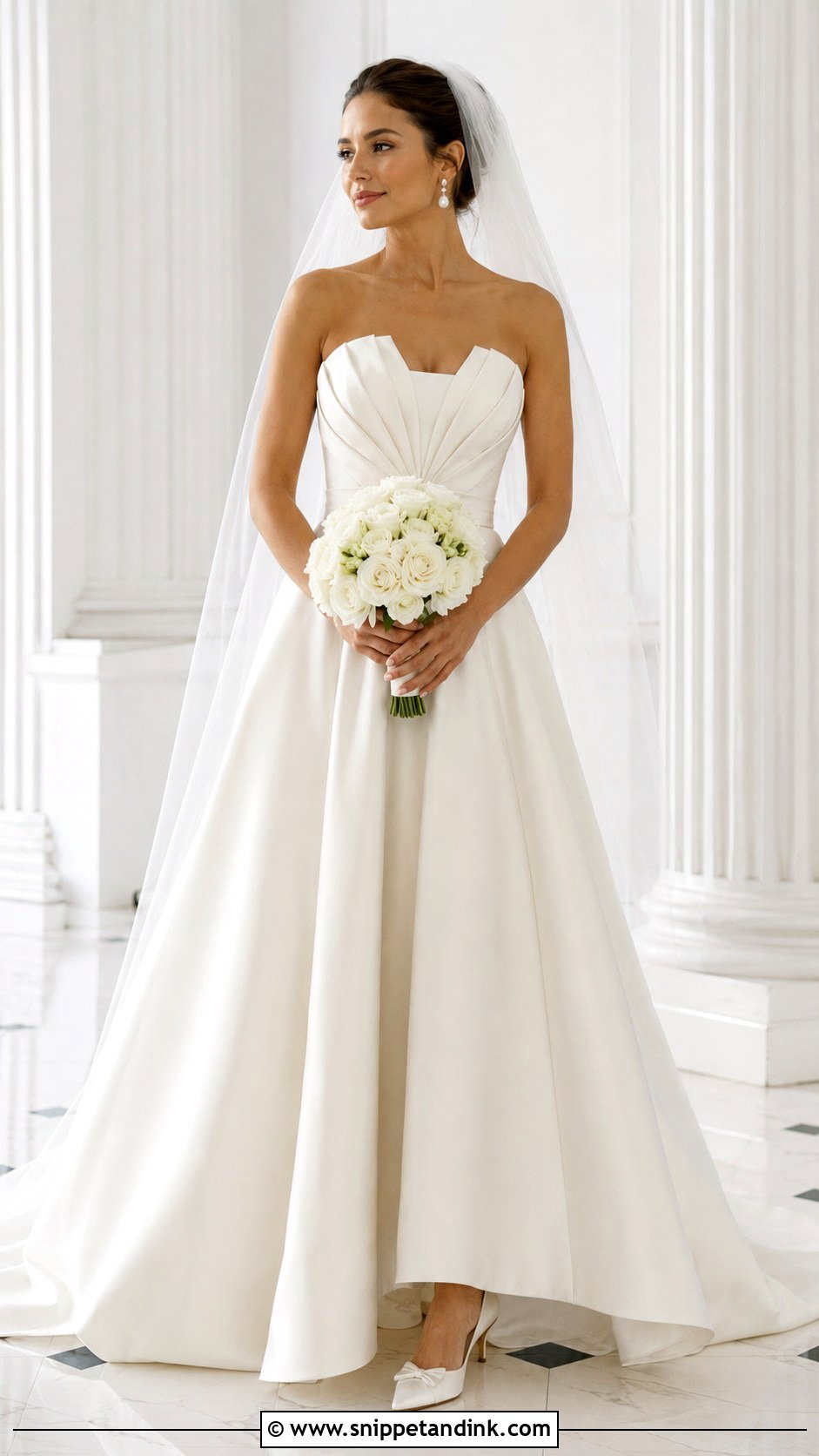
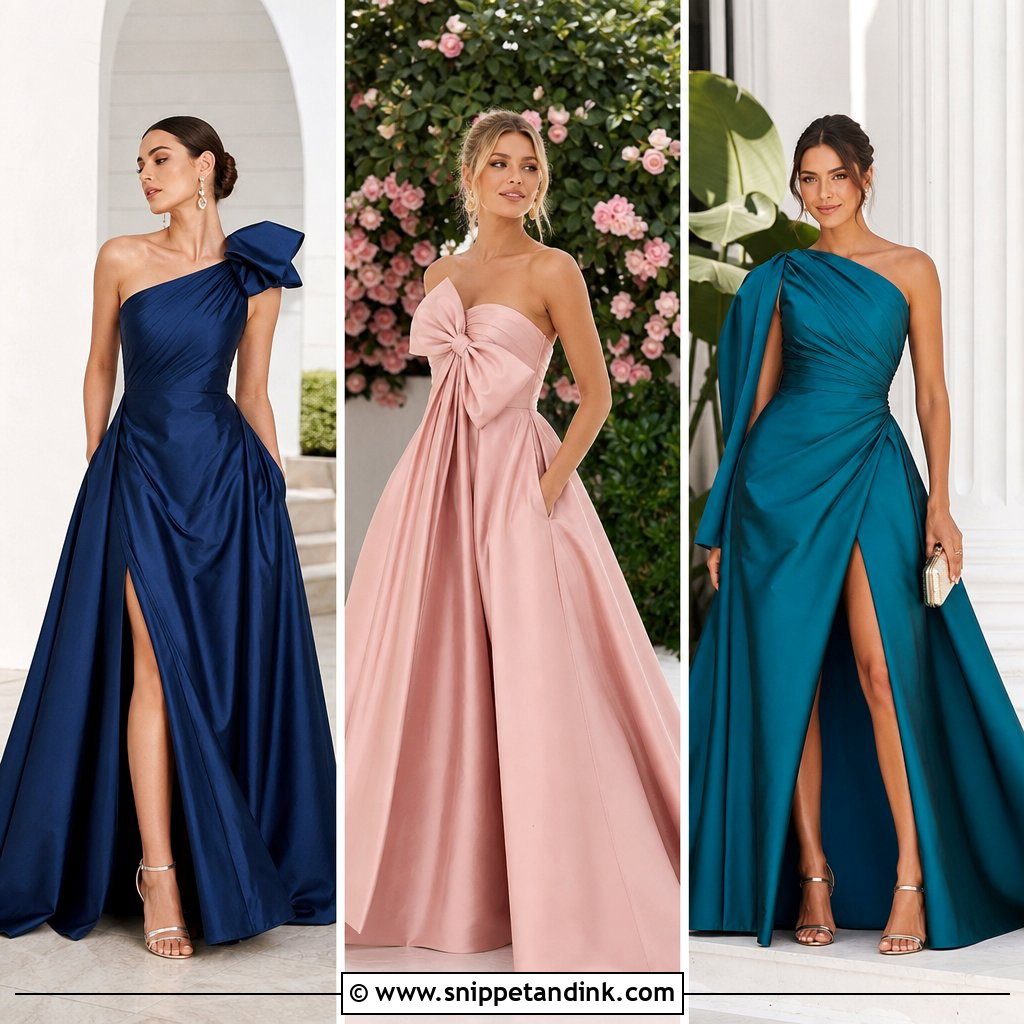
Pleats across the bust or folding into the waist add texture without lace or beads. They need boning beneath, or the folds sag into loose fabric within a couple of hours. An A-line or ballgown skirt balances the bodice. Pearl earrings, a clean veil and satin heels. If the folds are strong, keep the bouquet simple. I’d ask for the pleats to be stitched down at the waist seam so they don’t shift when you sit.
21. Sculptural Wedding Dress
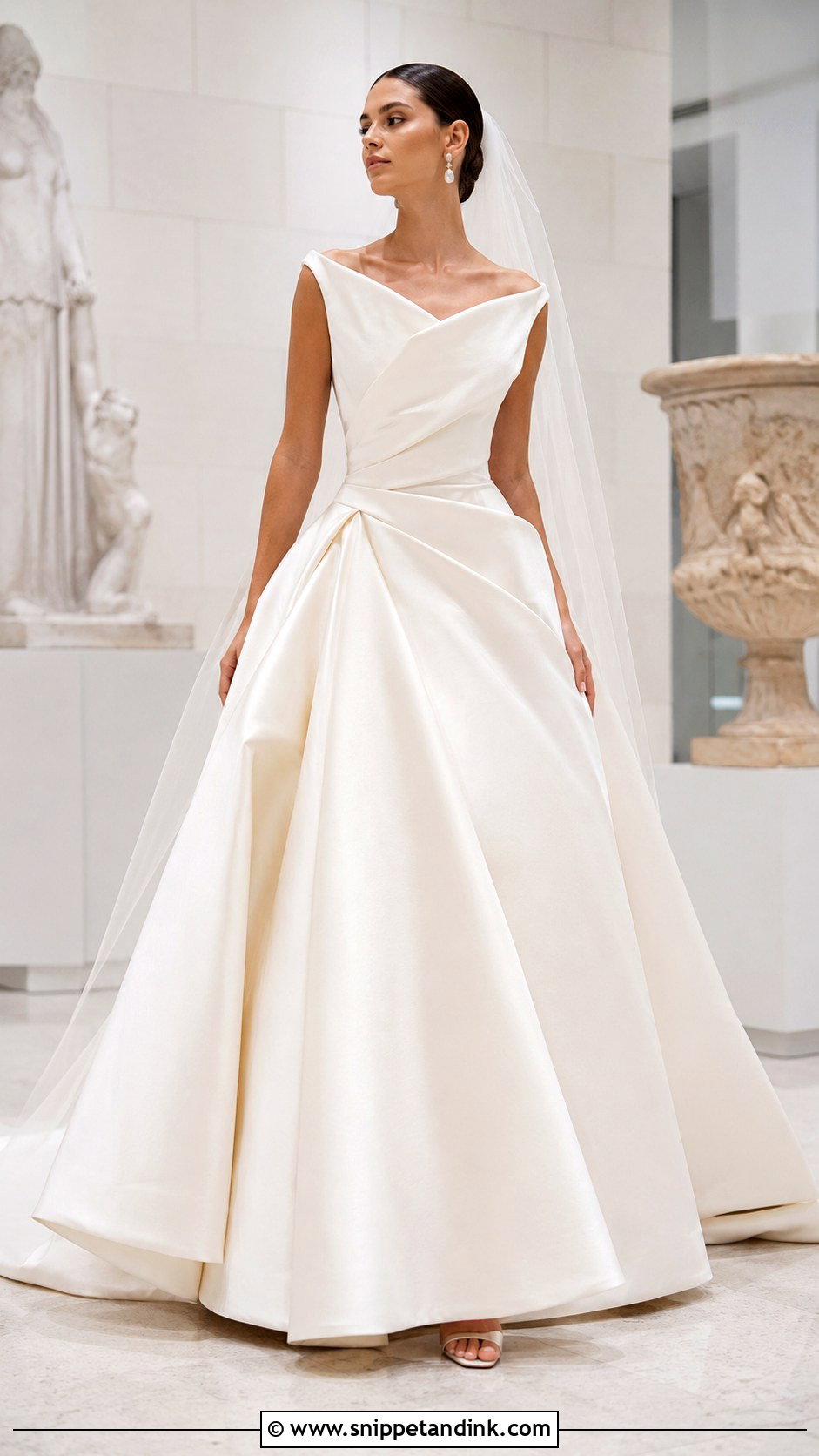
Sculptural gowns are about fashion impact: architectural folds, curved seams, a dramatic neckline, a peplum or controlled volume. Mikado, taffeta or duchess satin hold the design. Sleek hair, modern earrings and simple heels keep it clean; a plain veil softens it without hiding the cut. Museums, hotels and modern spaces suit it. I’d test sitting and car rides, since sculpted shapes can crush and need a minute to recover.
22. Structured Taffeta Wedding Dress
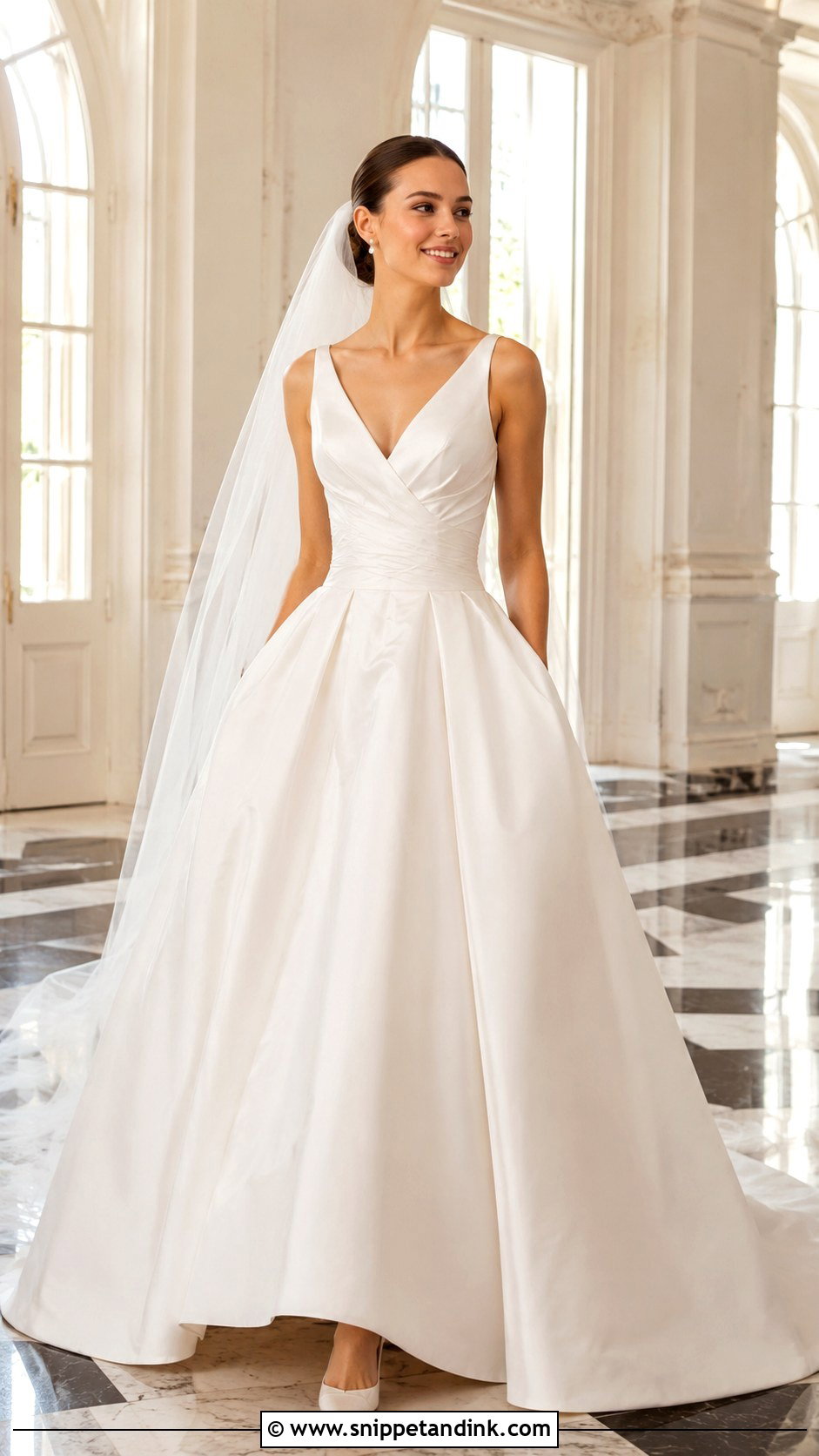
Taffeta has a crisp hand and a soft rustle when you walk. It’s lighter than mikado but firm enough for volume, pleats and sculpted skirts. A taffeta ballgown is dramatic; a taffeta A-line feels fresh. A smooth veil, pearl or crystal studs and ivory heels suit it. Taffeta creases sharply and doesn’t forgive folding, so it travels on a hanger and gets steamed on the day.
23. Structured Satin Column Wedding Dress
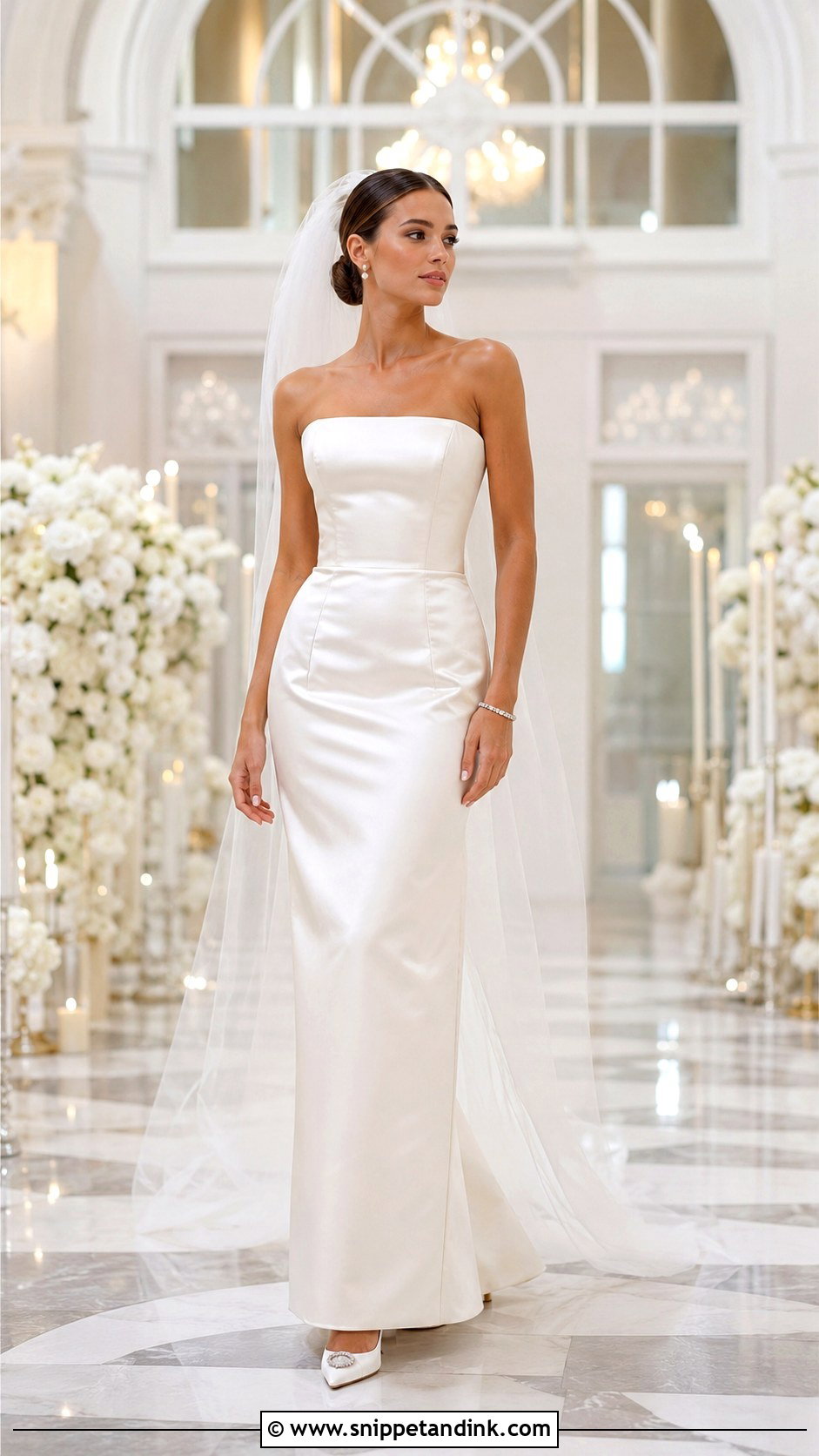
A satin column looks long and sleek, with a bit of red-carpet feeling. It needs internal support, a defined waist and a skirt that falls straight without pulling across the hips. Strapless, square or one-shoulder necklines all work. A long veil, polished waves, pointed heels and pearl earrings or a fine tennis bracelet suit it. Satin shows underwear lines, so fit it over exactly what you’ll wear.
24. Structured Tea Length Wedding Dress
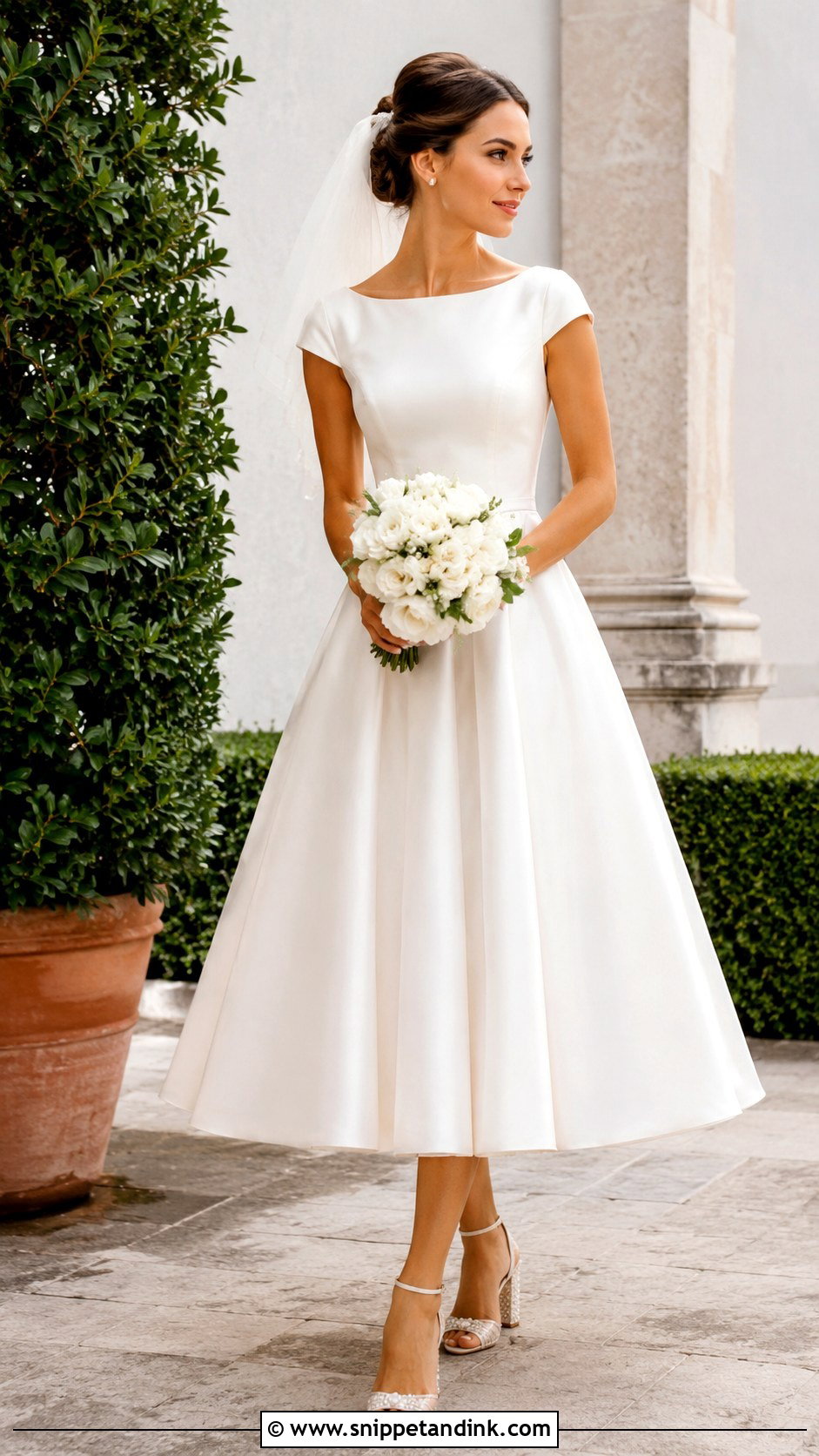
Tea length shows your shoes, so pick ivory pumps, slingbacks or embellished block heels you actually like looking at. A fitted bodice with a full tea-length skirt gives a classic hourglass without the weight of a floor-length gown. Mikado, satin or tulle over a structured underskirt hold the shape. A short veil, pearl studs and a neat updo finish it. Walking and dancing are much easier, which is why courthouse, brunch and garden brides like it.




25. Structured Pearl Wedding Dress
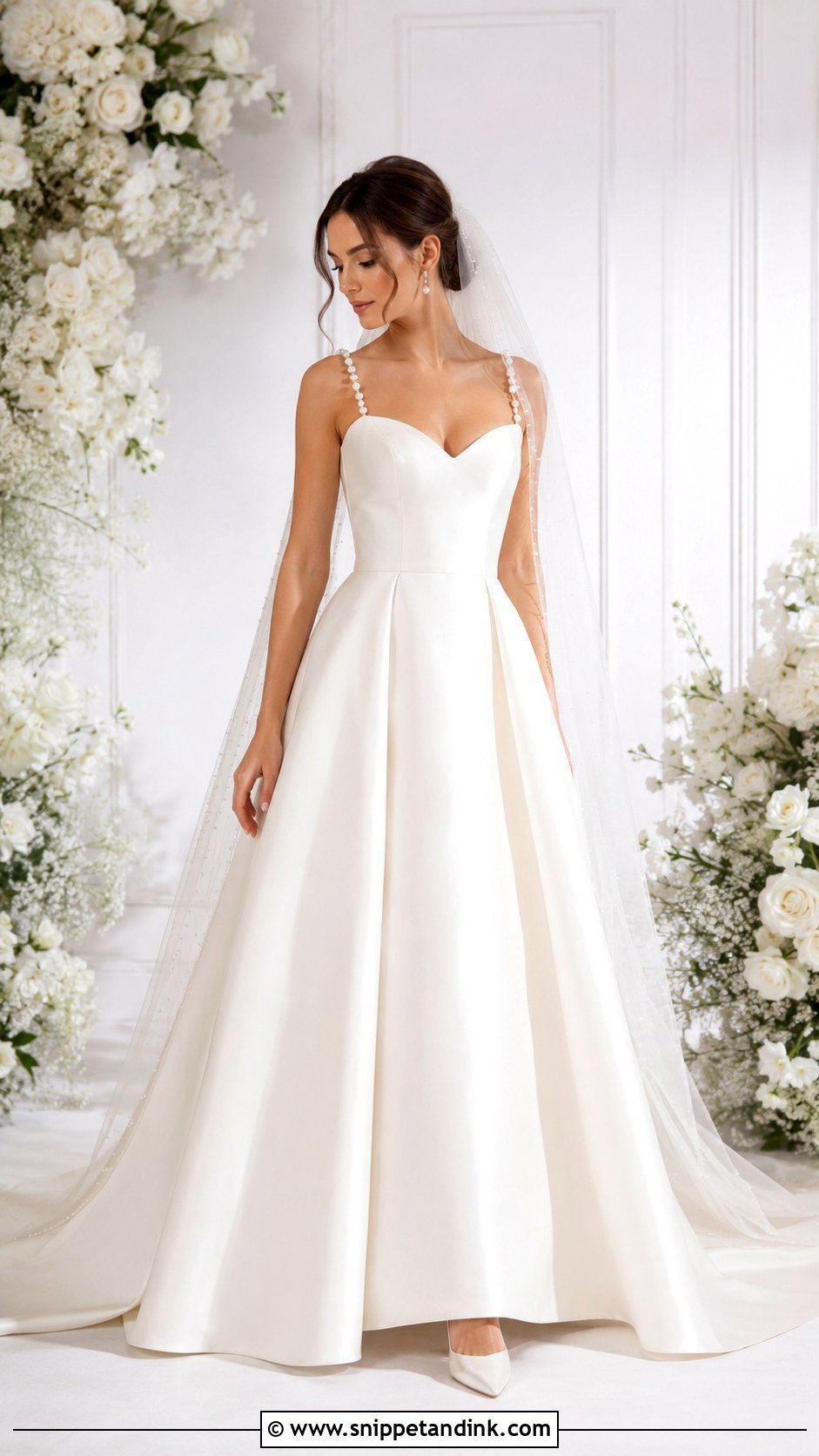
Pearls give a structured gown soft shine instead of sparkle. A corset gown, sheath or A-line with pearl straps, buttons or scattered accents over firm fabric works best, with a simple outline so the pearls aren’t busy. Pearl earrings, satin heels and a plain or pearl-edged veil suit it, with a sleek bun or soft waves. Pearl buttons down the back take time to fasten, so build ten minutes into the getting-ready schedule and keep a button hook nearby.
Wearing Heavy Structure in Summer Heat
Brides often fall for a mikado or duchess satin gown in a cool shop in February and then marry outdoors in July. It can work, but it needs planning.
Structured fabrics don’t breathe much, and boned bodices sit close against the skin. I’d ask whether the lining is a natural fiber; a cotton or silk lining feels far cooler than polyester. Dress shields sewn discreetly into the underarm protect satin and silk from sweat marks, which are hard to remove and show in photos.
On the day, keep the gown off until the last possible moment, and get ready somewhere air-conditioned. Plan outdoor portraits for early evening, when the light is softer and the heat lighter, and have someone hold a small fan and a parasol between shots. If the ceremony is in full sun, a lighter overskirt or a reception change into crepe or organza is a sensible backup, not a compromise.
A Gown That Holds Its Shape So You Don’t Have To
A structured gown can be dramatic, minimal, romantic, vintage or modern, depending on fabric, neckline, waistline and styling. Basque waists, corsets, mikado skirts, lace over firm lining, detachable sleeves and sculptural details all build a strong outline. Before you commit, think about comfort, movement, alterations and the venue, then add the veil, shoes, jewelry and bouquet. A well-built dress does the holding for you, which leaves you free to enjoy the day.
You'll Like These Ideas:






Leave a Reply