
A Pakistani bridal outfit is a set of parts: shirt, bottom, dupatta, jewelry and shoes, and every one of them has to suit the function and the venue. Most pieces are multi-layered and heavily hand-embellished, which is exactly why comfort deserves a seat at the table from the start. You’ll walk, sit on a stage, pose for portraits and greet relatives for hours. The twenty outfits below run from red baraat lehengas and ghararas to pishwas, sarees and walima gowns. I’ve written each the way I’d talk a bride through it at a first appointment: what makes it work, and what I’d check before you commit.
Where the Budget Goes Across Three or Four Bridal Outfits
Brides often lose sleep trying to make every function equally grand. I’d rather you split the money unevenly and on purpose. The baraat outfit is photographed the most, from the most angles, and it usually carries the heaviest handwork, so it deserves the largest share.
- Baraat: the investment piece. Spend on handwork, a quality lining and proper fittings.
- Nikkah: lighter work, but good fabric. You’ll be seated close to people and the camera, so finishing matters more than embellishment.
- Walima: a gown, maxi or saree can be less costly than a lehenga and still look formal.
- Mehndi: the easiest place to save. Gota and mirror work are relatively inexpensive, and a lighter outfit is more fun to dance in.
One trick I use often: buy the jewelry to suit the baraat and walima together, in a metal and stone colour that works for both. Gold kundan with green or red stones can cross several outfits, which frees money for the dress itself.
1. Red Pakistani Bridal Lehenga
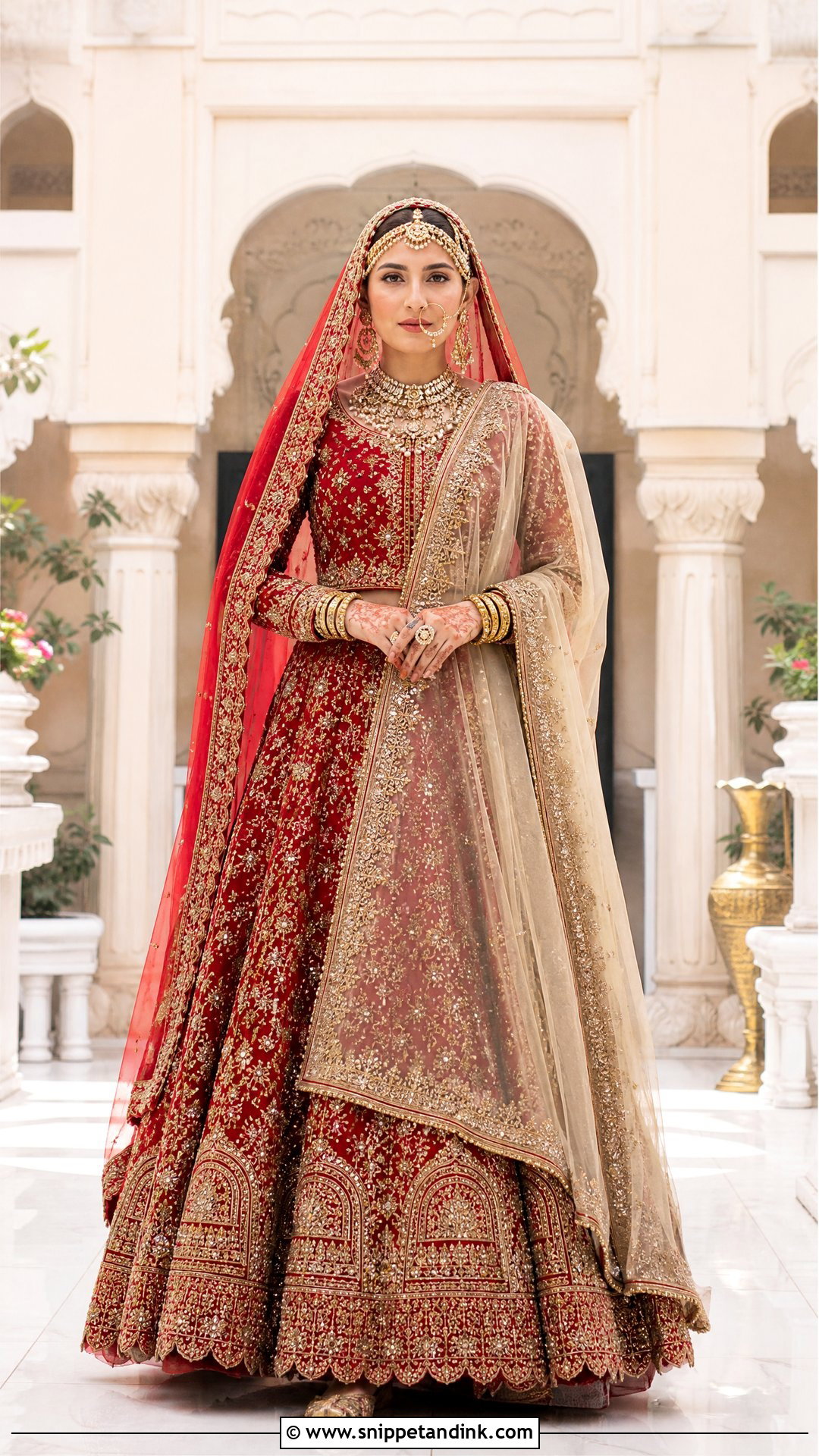
Red on the main day is a decision most brides make without much debate, and it holds up. A full raw-silk skirt with gold zardozi, dabka, sequins and a worked border sits under a fitted long blouse or modest choli. A heavily bordered red dupatta covers the head, with a lighter one across a shoulder. Gold jewelry, from the matha patti to jhumkas, necklace, bangles and nath, completes it. Under a skirt this heavy, khussas beat heels every time. I always tell the makeup artist to warm the lip rather than match the fabric’s red exactly; an exact match flattens the face.
2. Maroon Velvet Bridal Lehenga
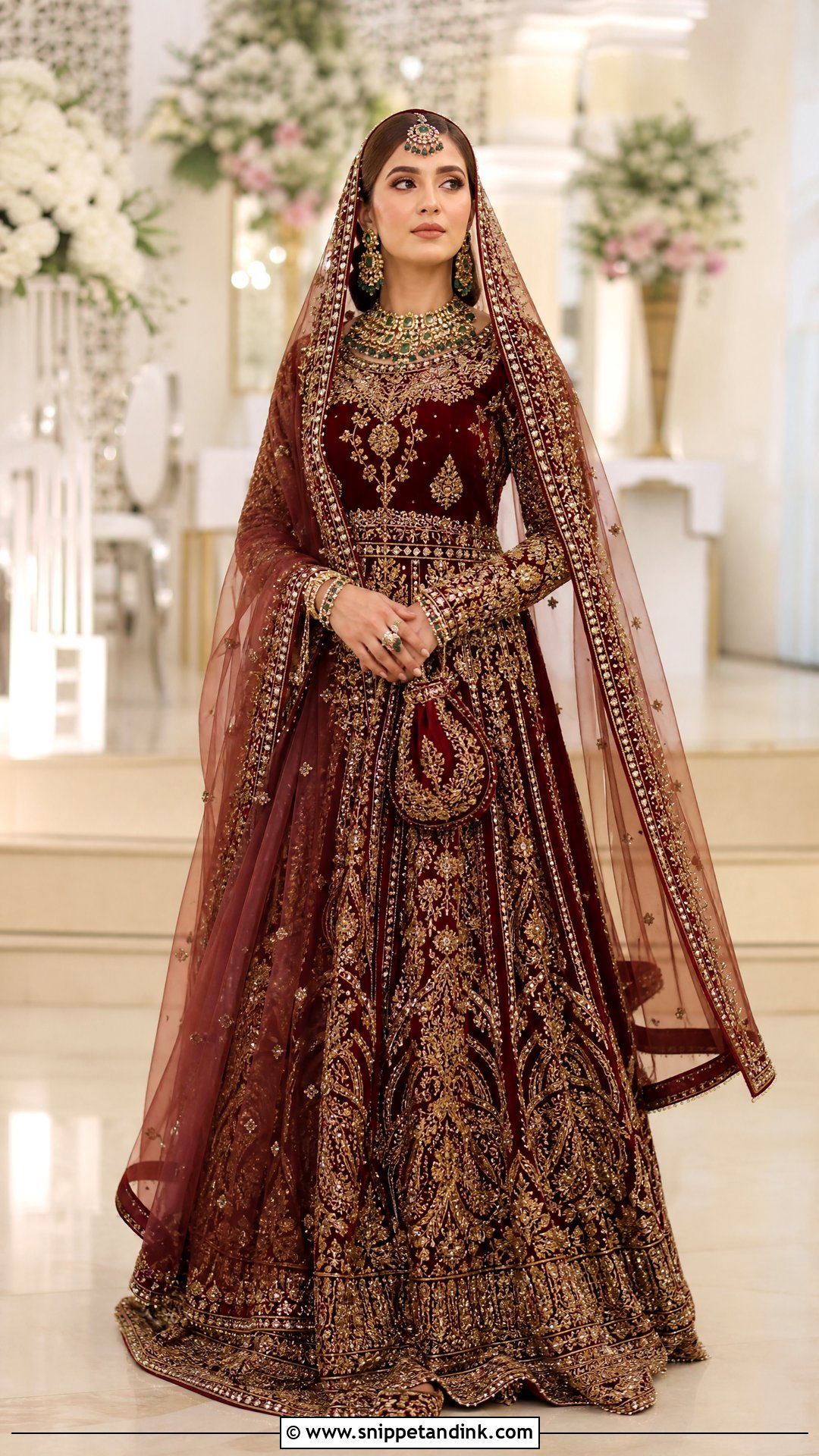
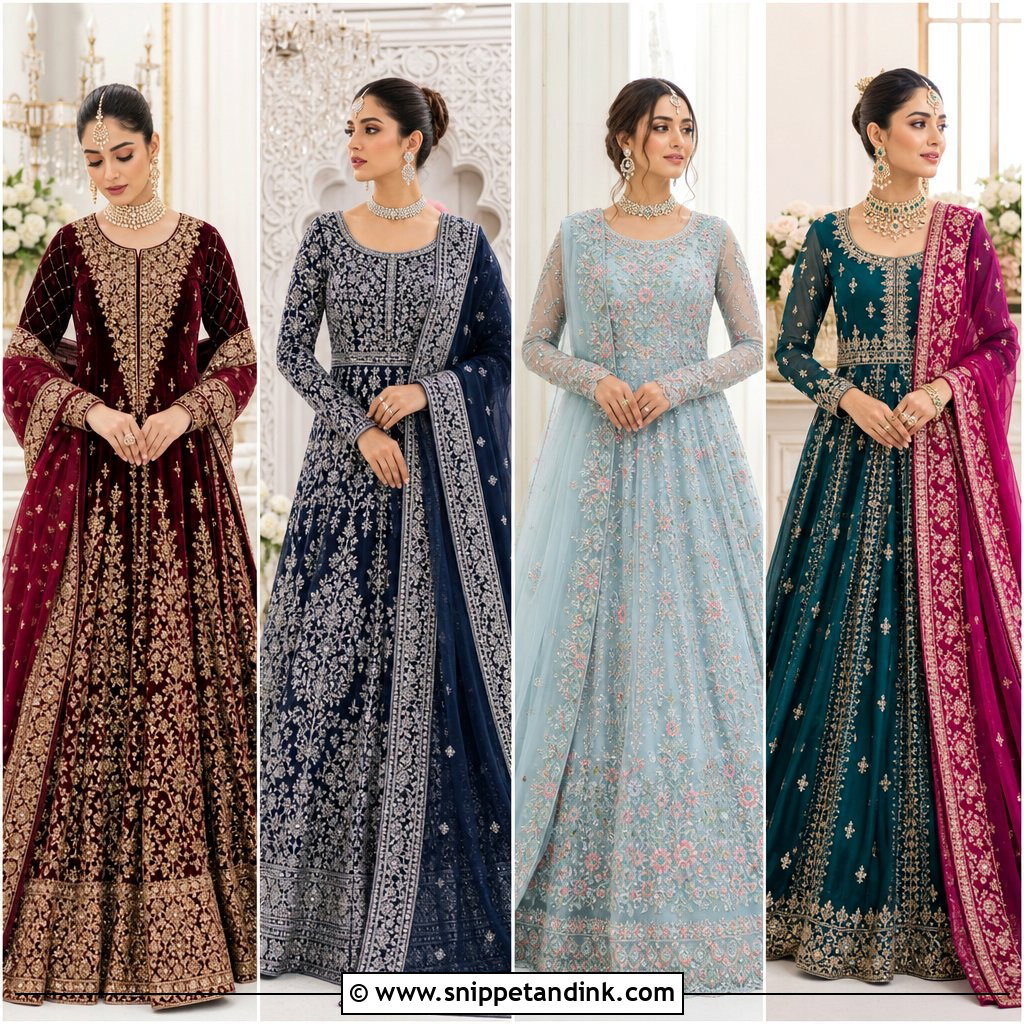
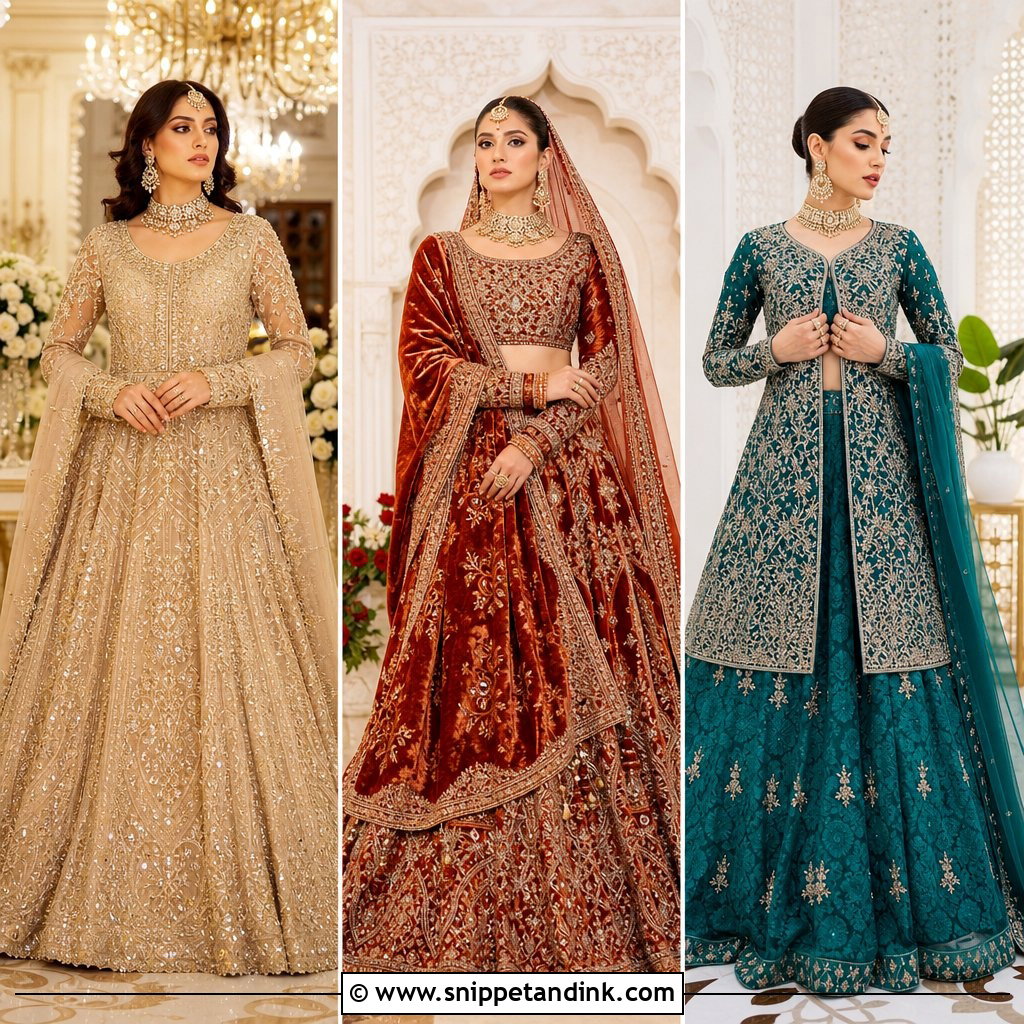
Maroon velvet is made for evening and cool weather. It takes antique gold tilla, kora, dabka and pearls well, and the deep pile gives the embroidery real contrast. Keep the lehenga’s volume controlled, because velvet is heavy on its own. A long-sleeved blouse and a fine net dupatta soften the face. Antique gold suits maroon; a few emerald stones add contrast. Velvet marks easily where it’s pressed, so I steam it on a hanger rather than ironing and keep the bride standing between the car and the stage where possible. A low bun, velvet khussas and a potli finish it.
3. Gold Farshi Gharara Bridal Dress
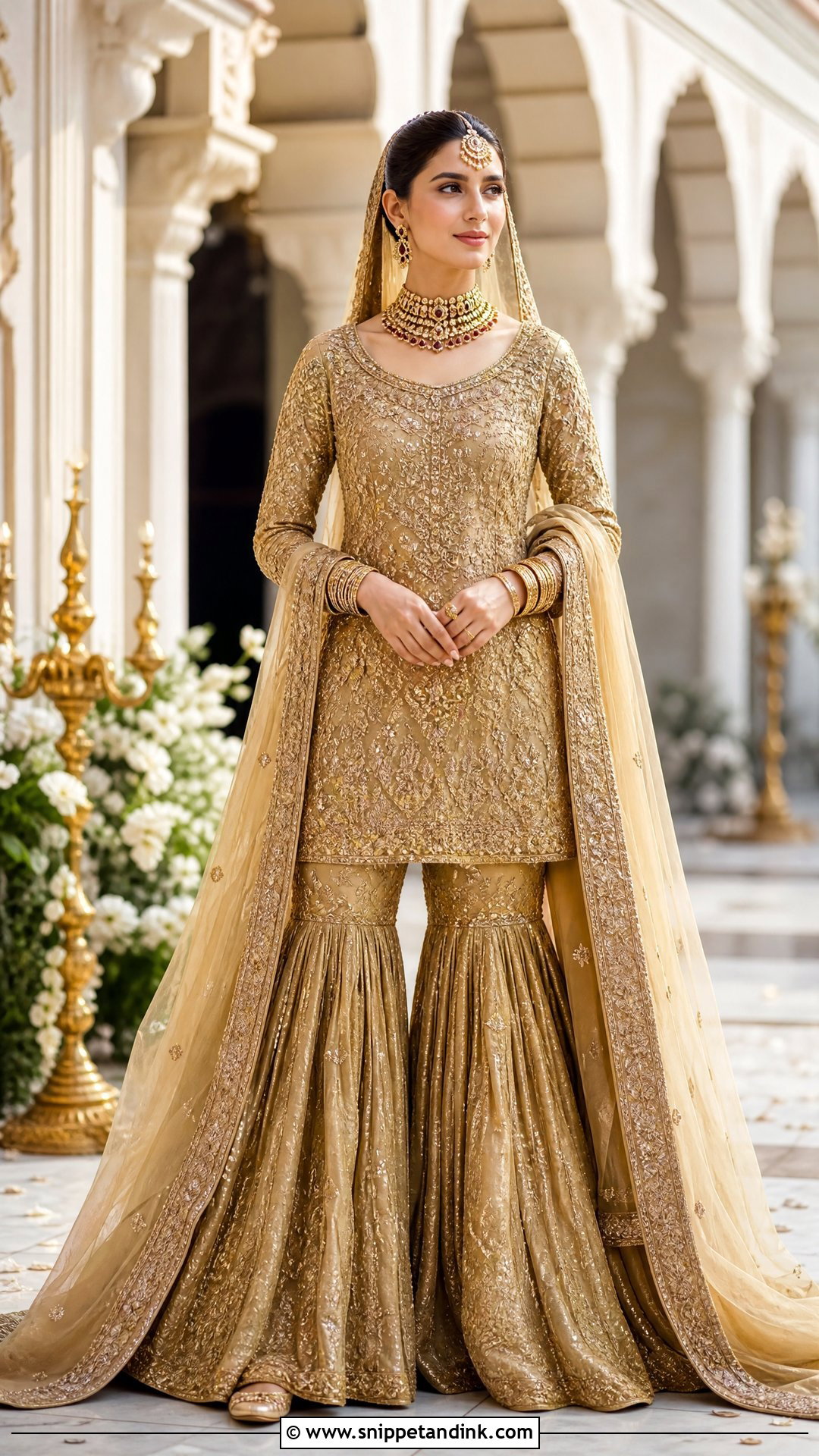
The farshi gharara is one of the most distinctive Pakistani bridal shapes: fitted through the thigh, seamed at the knee and spreading into long panels that sweep the floor. In gold, keep the knee-length shirt to fine gold-on-gold embroidery; big motifs fight the gharara for attention. A scalloped organza dupatta stops the single colour from looking flat. Kundan, stacked bangles and a side jhoomar suit it, with metallic khussas hidden under the hem. Walking in a farshi takes practice, and so does sitting down gracefully. I’d do both at home in the finished outfit before the day, and I’m fussy about the knee seam sitting exactly at the knee.
4. Ivory Nikkah Pishwas Bridal Dress
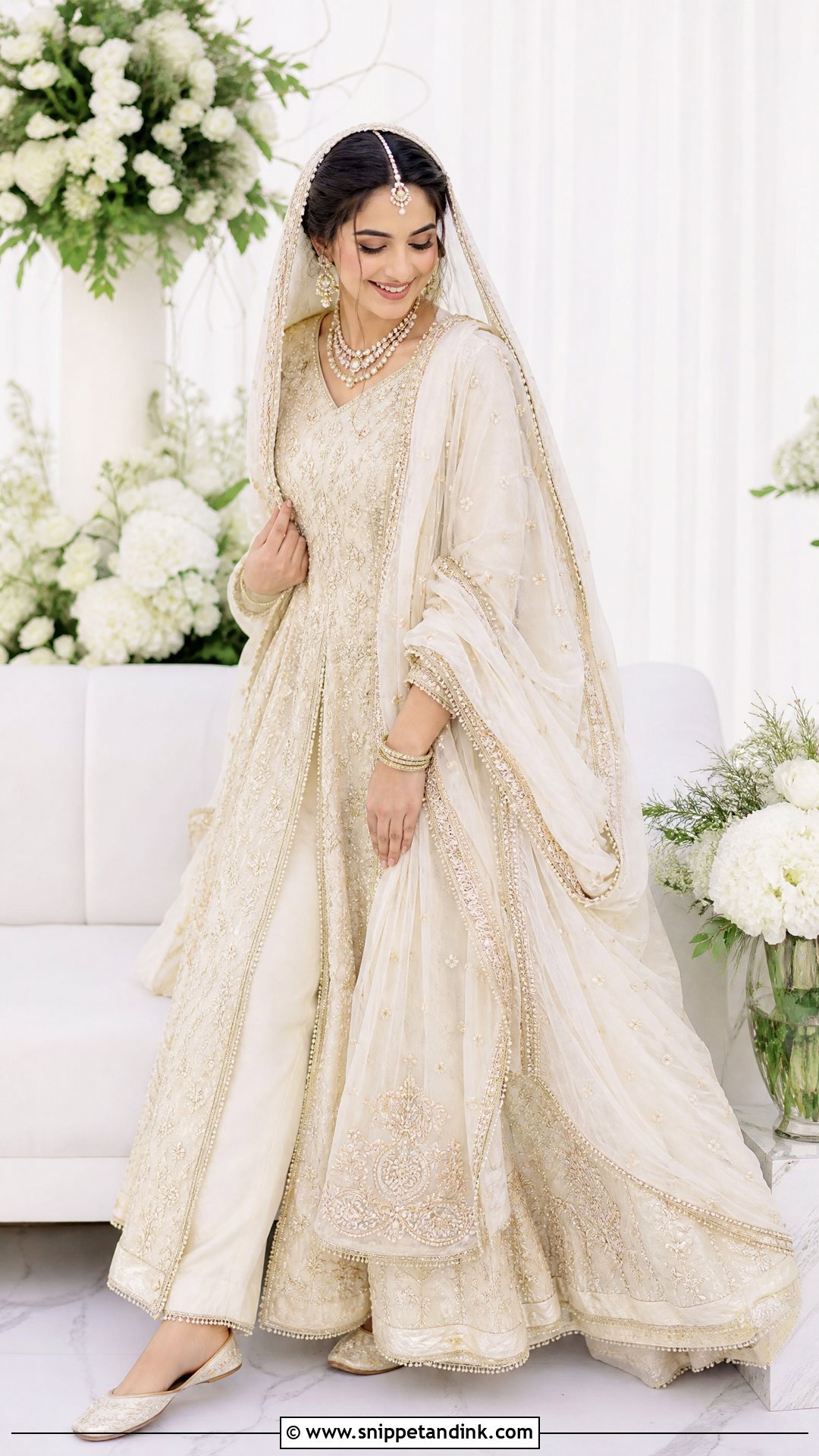
Ivory suits the calm of a daytime Nikkah. A floor-length pishwas with a fitted bodice, raised waist and flowing panels gives movement and coverage, and pearl, silver or pale gold work at the neck, cuffs and hem keeps it bridal. A matching organza dupatta with a fine border sits over the head without hiding the dress. Pearl drops, a slim tikka, a layered necklace and ivory flats finish it, with rosy cheeks and a muted pink lip. Pishwas is a favourite for Nikkah dressing in soft neutrals and pastels, and I can see why: it’s forgiving to sit in, and the panels fall neatly in seated photographs.
5. Blush Pink Walima Bridal Gown
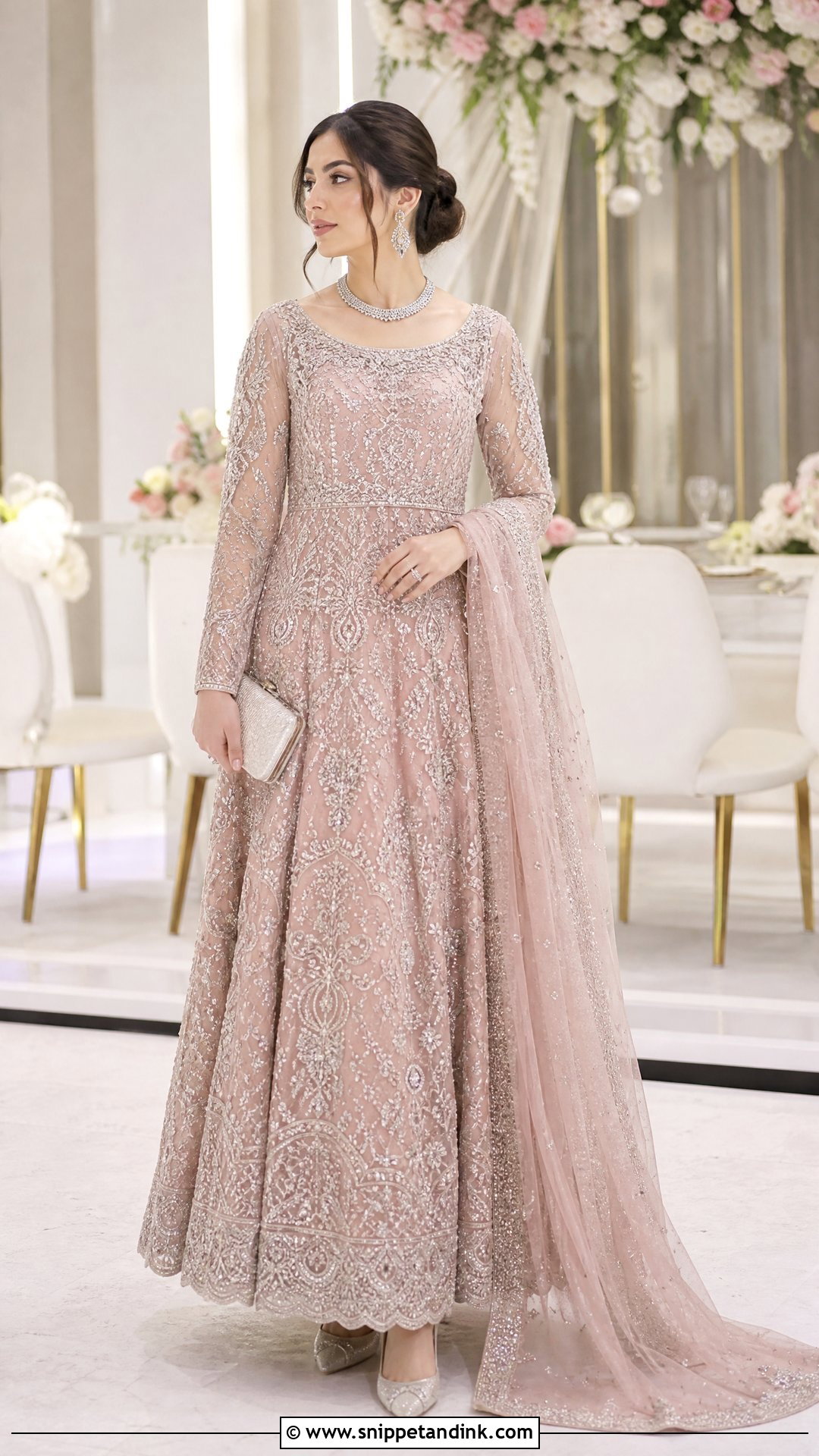
Blush pink in a streamlined gown suits a Walima. An A-line or soft flare with a structured, fully lined bodice and delicate floral embroidery is the shape I’d look for. Silver thread, crystals, pearls and clear sequins add depth without clutter. A long sheer dupatta draped over one arm can stand in for a head covering where the family is comfortable with that. Diamond-style jewelry, pointed heels and a silver clutch complete it. Loose waves or a low bun both work. Blush shows makeup transfer badly, so I ask brides to step into this gown before foundation goes on, or wear a face cover while dressing.
6. Emerald Green Mehndi Sharara
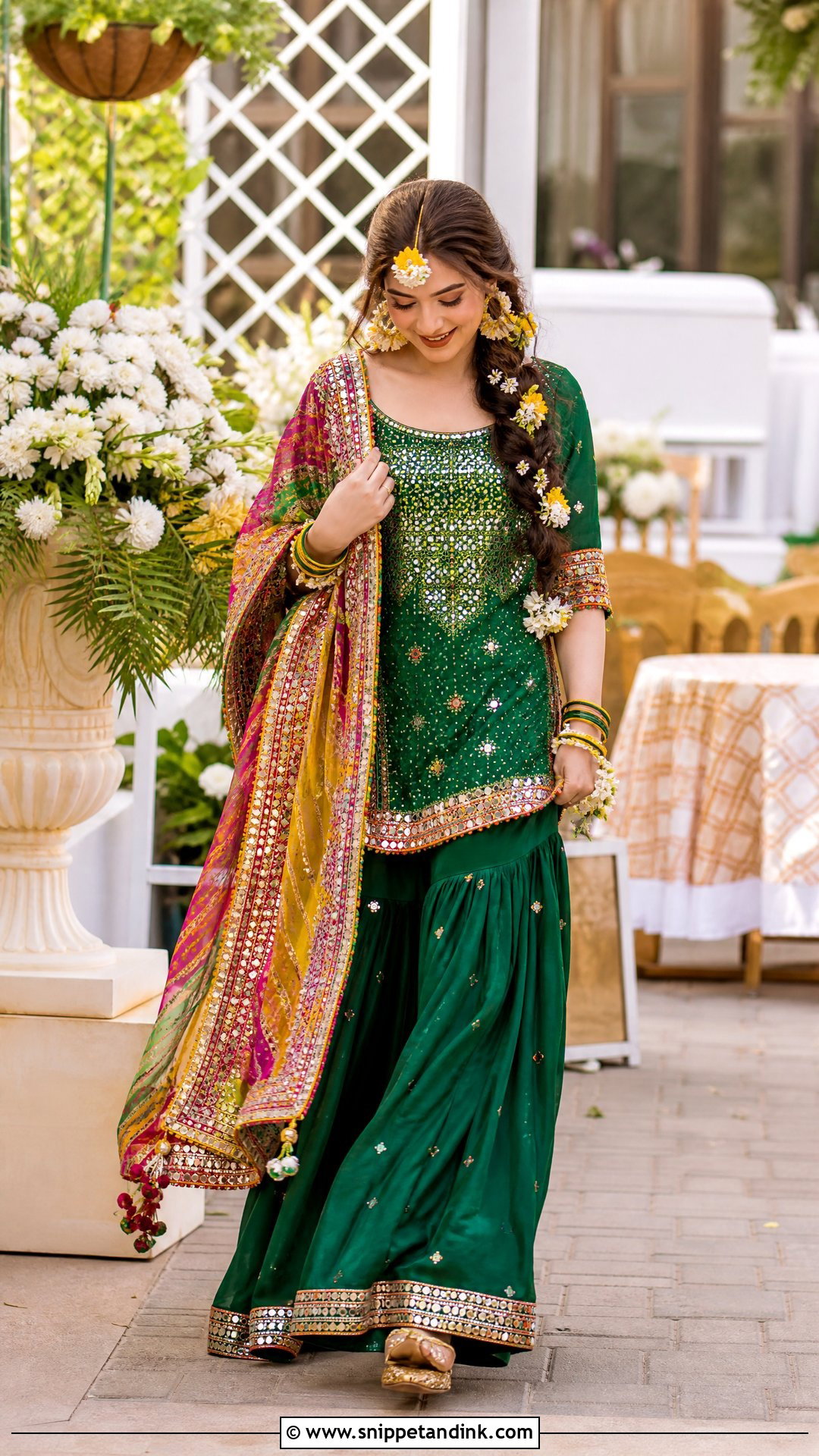
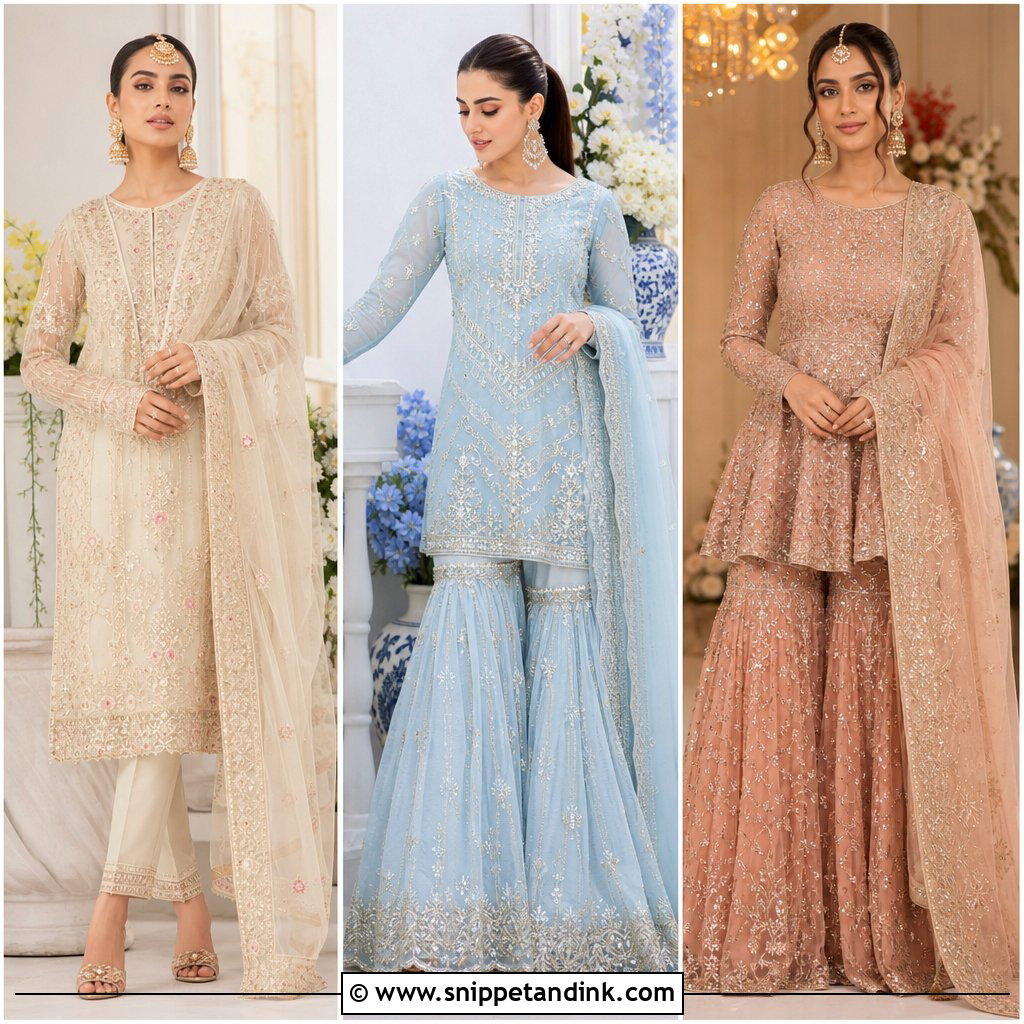
Emerald brings strong colour to a Mehndi without the weight of a layered lehenga. A flowing sharara with wide legs under a short worked kurti, with a lime, yellow or hot-pink dupatta for contrast, is the formula. Mirror work, gota, coloured thread and small tassels suit the night. Floral or multicoloured jewelry, bangles and gold khussas complete it, with a flower-trimmed side braid. Shararas are back in Pakistani wedding dressing, especially for Nikkah and Mehndi. My one practical demand: the sharara hem must clear the floor in flat shoes, or you’ll be stepping on it all night while dancing.
7. Mustard Yellow Mehndi Lehenga
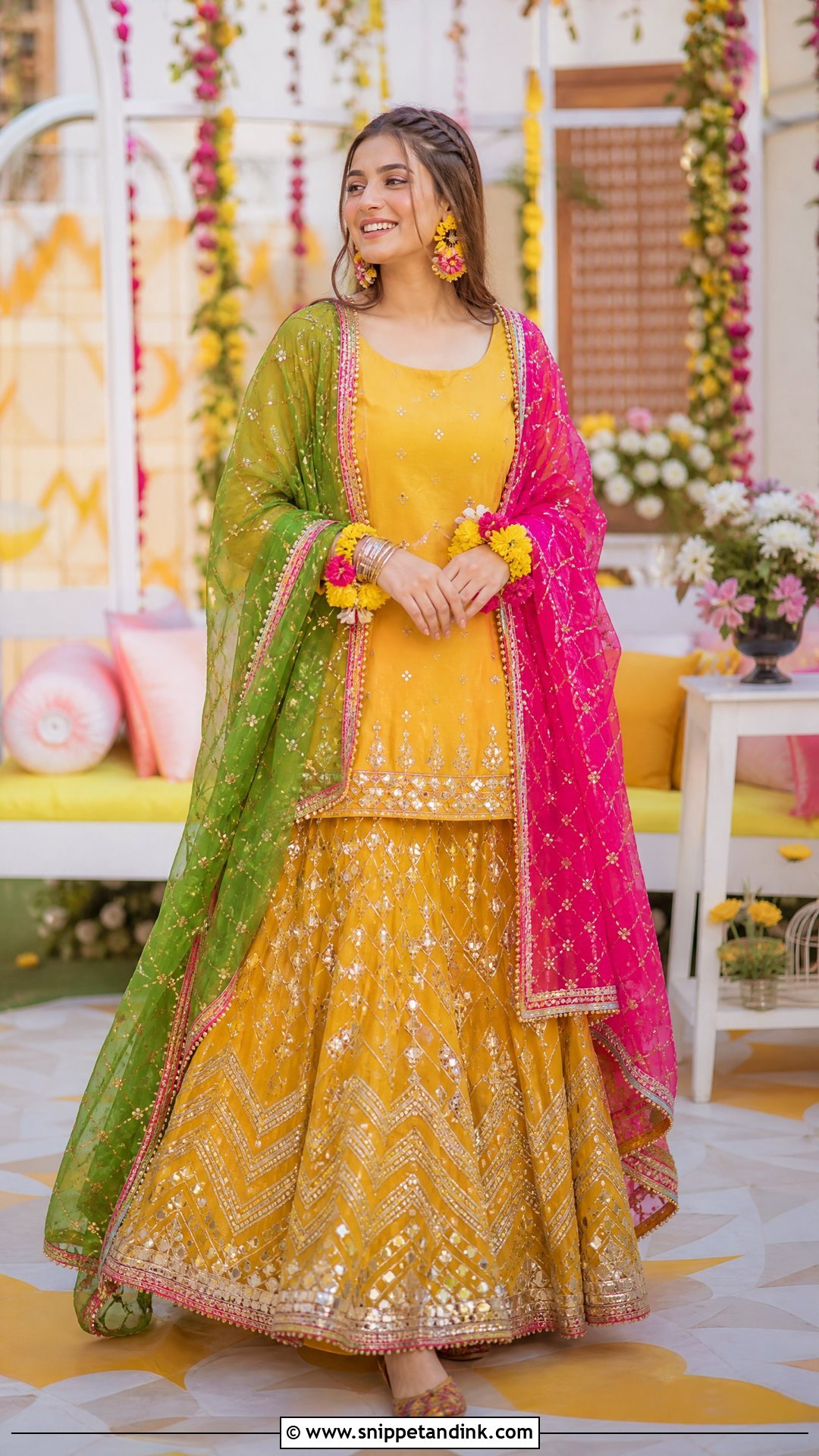
Mustard yellow is cheerful for a daytime Mehndi. A lightweight lehenga with gota borders, mirror details and small pink, green and orange florals sits under a modest short blouse, with a hot-pink organza dupatta. Add a green one over the shoulder if you want more colour and coverage. Floral earrings and matha patti, bangles and embroidered flats suit it. I keep this skirt noticeably lighter than the baraat lehenga, with one soft underlayer at most; at a Mehndi you’ll be sitting on floor cushions and getting up repeatedly, and a heavy skirt makes every rise a struggle.
8. Champagne Bridal Maxi Dress
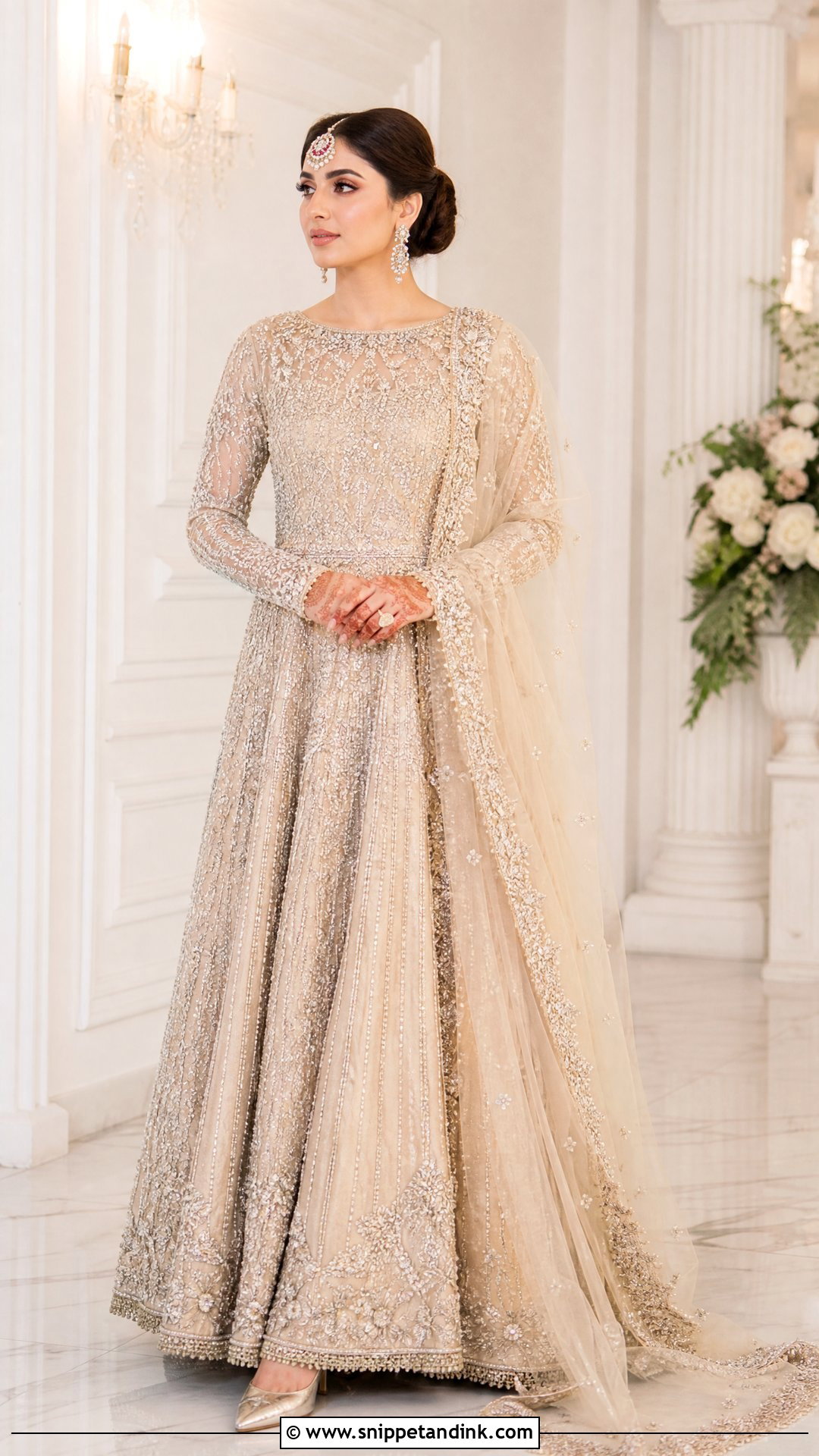
Champagne maxis are a quieter reception choice with a long, clean line. Fitted sleeves, a defined waist and a controlled flare beat a stiff oversized skirt here. Tonal beadwork, pearls, silver thread and fine crystal lines add richness without changing the soft colour. A sheer champagne dupatta with a narrow worked border, a crystal necklace, drop earrings, a small headpiece and pointed metallic heels complete it. Many brides now choose this shape for the Walima because it’s lighter than a structured lehenga and photographs cleanly. In a single neutral, I mix a couple of metallic tones, say pale gold with silver, so the outfit has visible depth.
9. Silver Gray Walima Lehenga
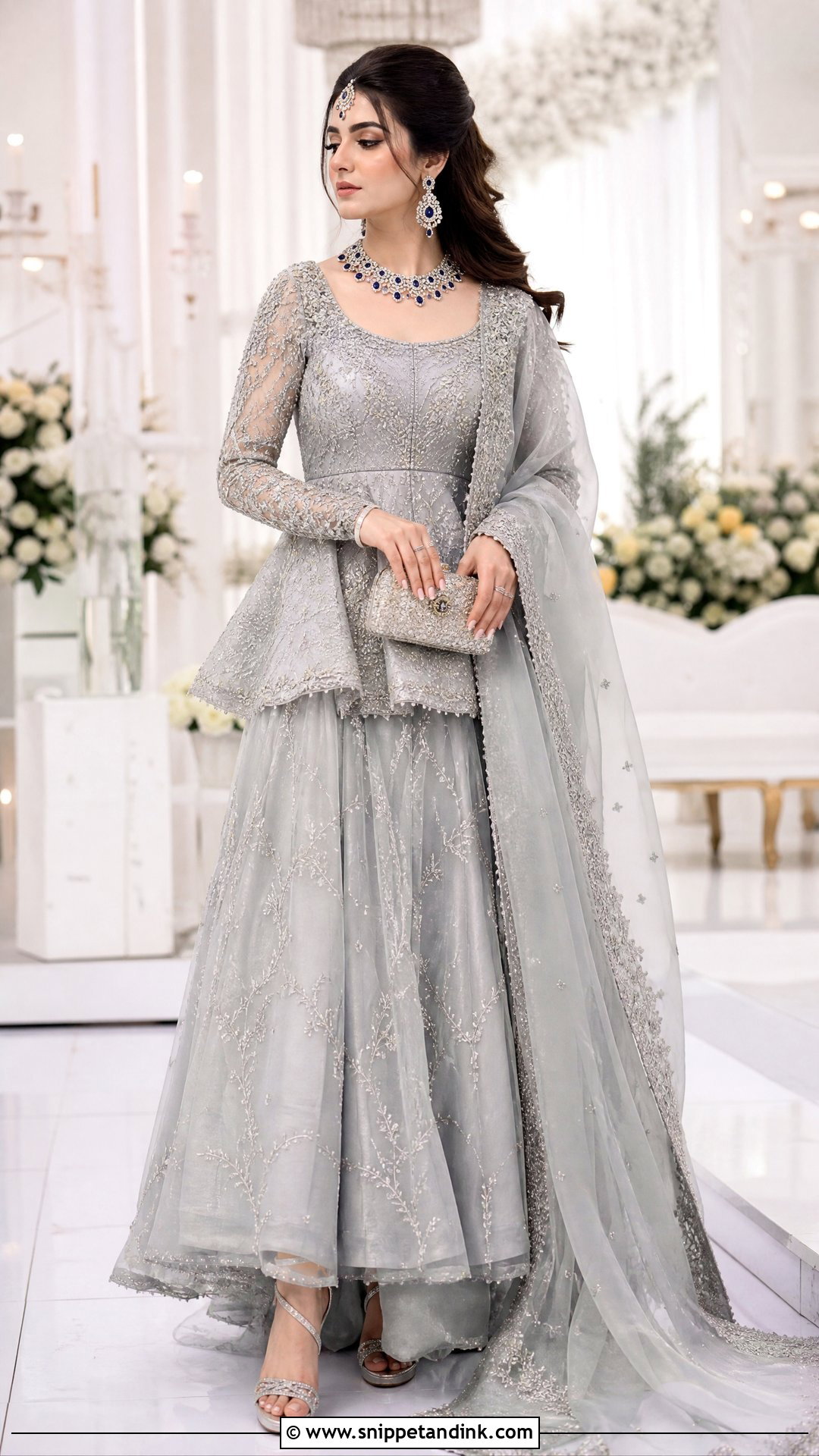
Silver gray is cool and polished for a formal Walima. A fluid net or organza lehenga over an opaque silk lining carries silver threadwork, crystals, beads and pale blue accents. A long blouse or structured peplum gives coverage and defines the waist. A light gray dupatta can go over the head or across both arms. Diamond-style jewelry with pale blue stones suits the palette, plus silver heels and a small clutch. Gray can drain the face, which is why a rose-toned lip and soft smoky eyes matter here. I also avoid mirror-finish embellishment on gray; under flash it throws glare spots.
10. Pastel Blue Organza Pishwas
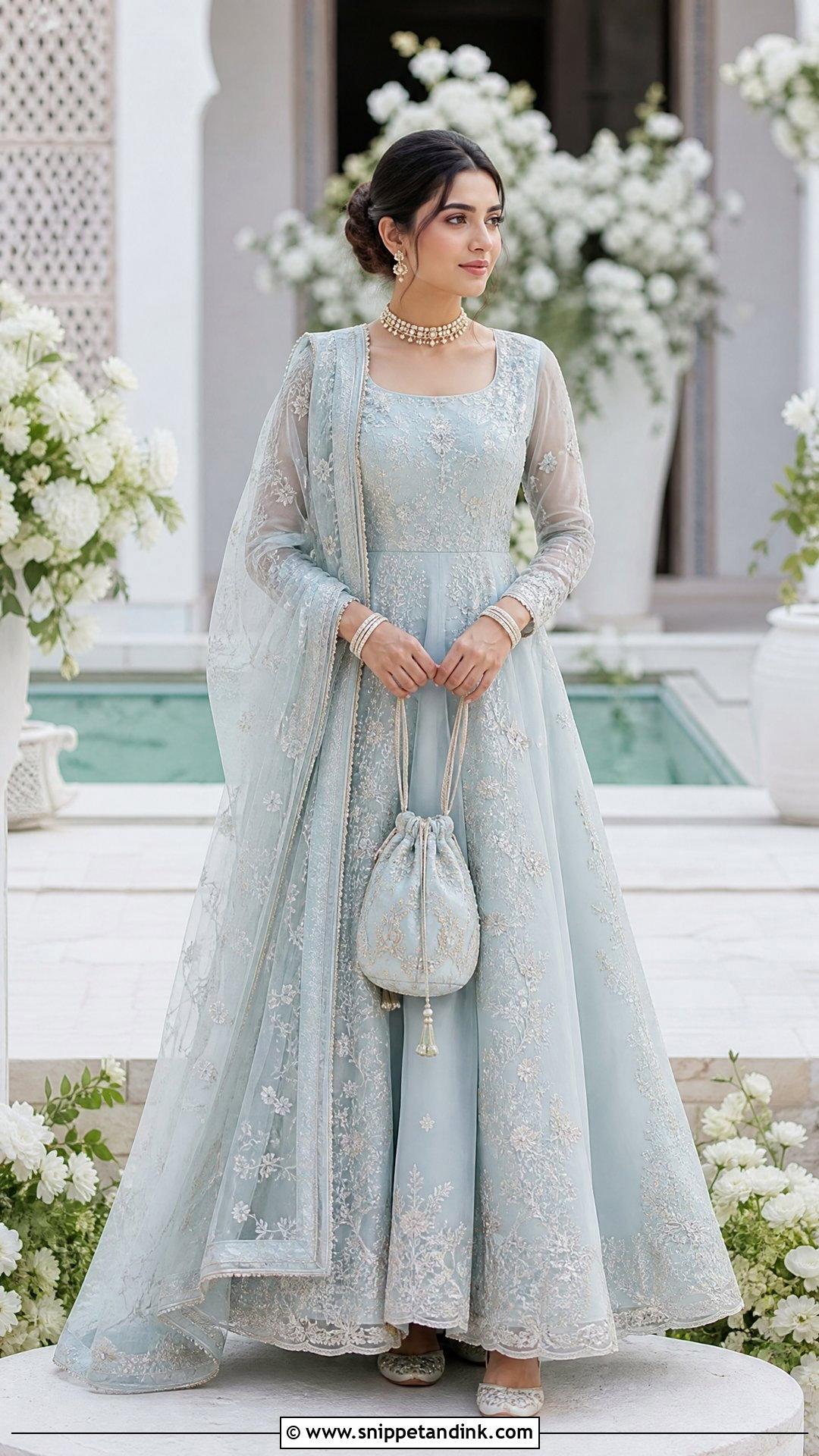
Pastel blue organza makes a pishwas airy for a daytime reception or Nikkah. A fully lined design with a fitted top and many flowing panels suits the fabric. White, silver and pale gold florals frame the neck and continue lightly into the skirt. A matching organza dupatta with scattered motifs and a clean border completes it, with pearls, silver bangles, embroidered flats and a potli. Organza already holds volume, so I resist extra stiff underskirts; they push the panels out like a lampshade. A soft bun with face-framing pieces, or loose waves if the head stays uncovered, both suit it.
11. Deep Plum Angrakha Bridal Dress
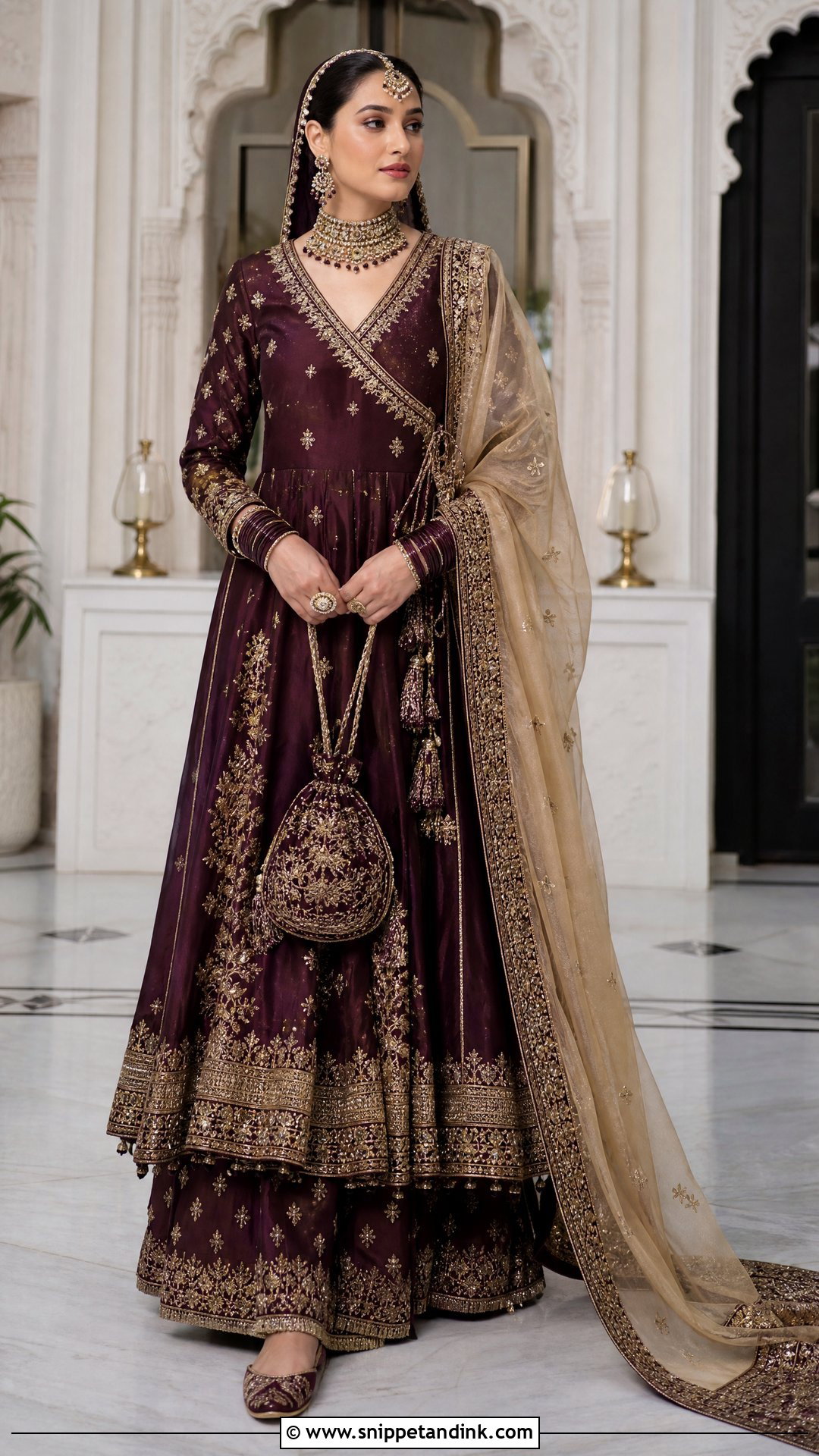
Deep plum suits the angrakha’s wrap shape. A long bodice that ties at one side and opens into a wide paneled skirt carries antique gold along the diagonal neckline, sleeves and hem, which traces the cut rather than hiding it. A matching lehenga or straight inner skirt gives full coverage, and a muted gold dupatta adds contrast. Antique jewelry, plum and gold bangles, khussas and a potli finish it, with a centre-parted low bun. Wraps shift across the torso as you move, so I add hidden hooks and a press stud inside; without them the line drifts off-centre by the end of the evening.
12. White And Gold Bridal Gharara
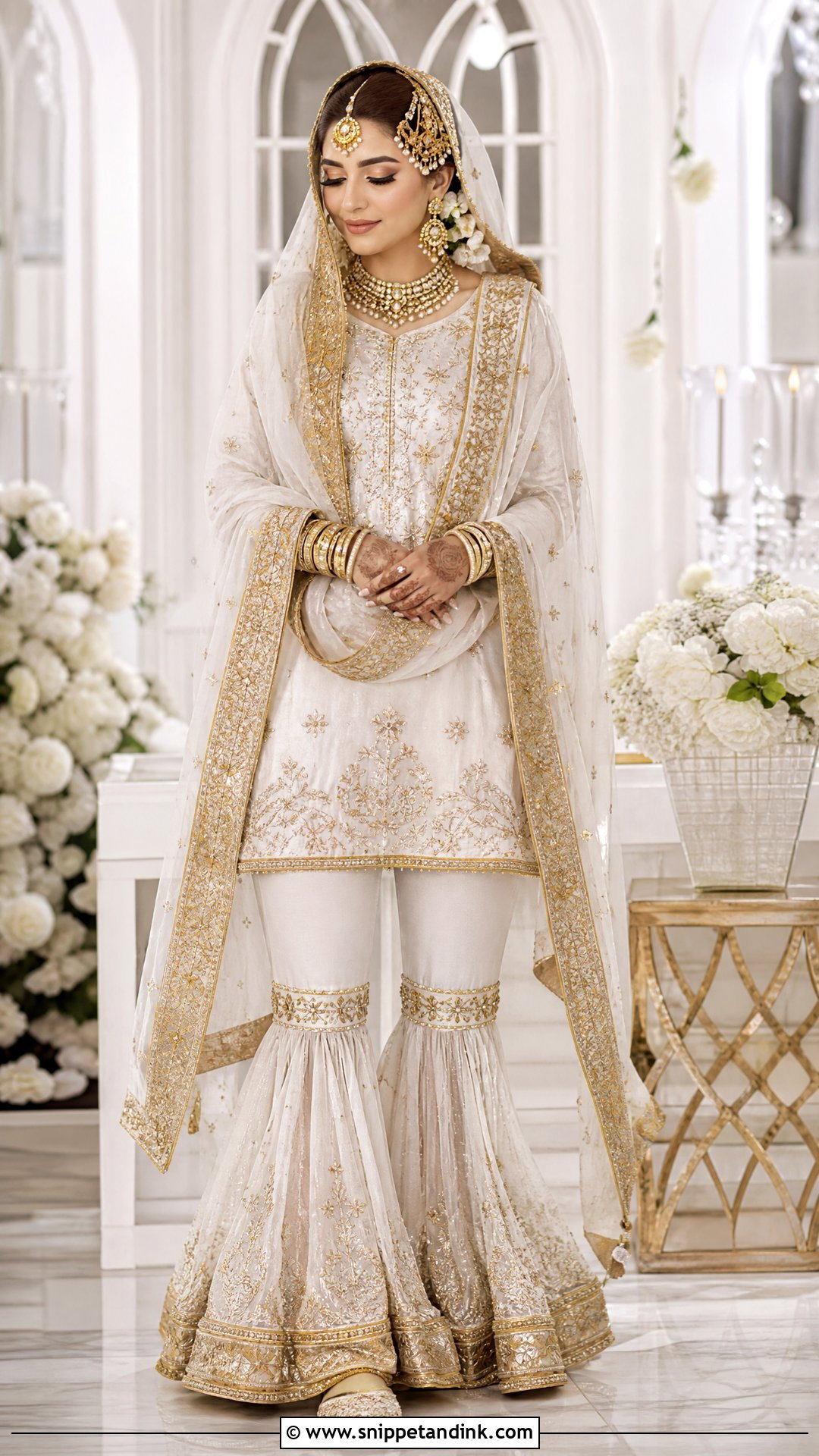
White and gold is a classic combination for a formal Nikkah. A traditional gharara with fitted thighs, defined knee bands and wide flares sits under a straight white shirt with dense gold work at the neck, sleeves, side openings and hem. A light net dupatta with a broad gold border adds ceremony without hiding the outfit. Kundan, a gold jhoomar, bangles and ivory-gold khussas complete it, with a neat bun and warm neutral makeup. People mix up ghararas and shararas, but the gharara’s fitted top and gathered knee joint are its whole identity, so the knee placement must be tailored correctly or it looks like a sharara with a seam.
13. Coral Floral Bridal Lehenga
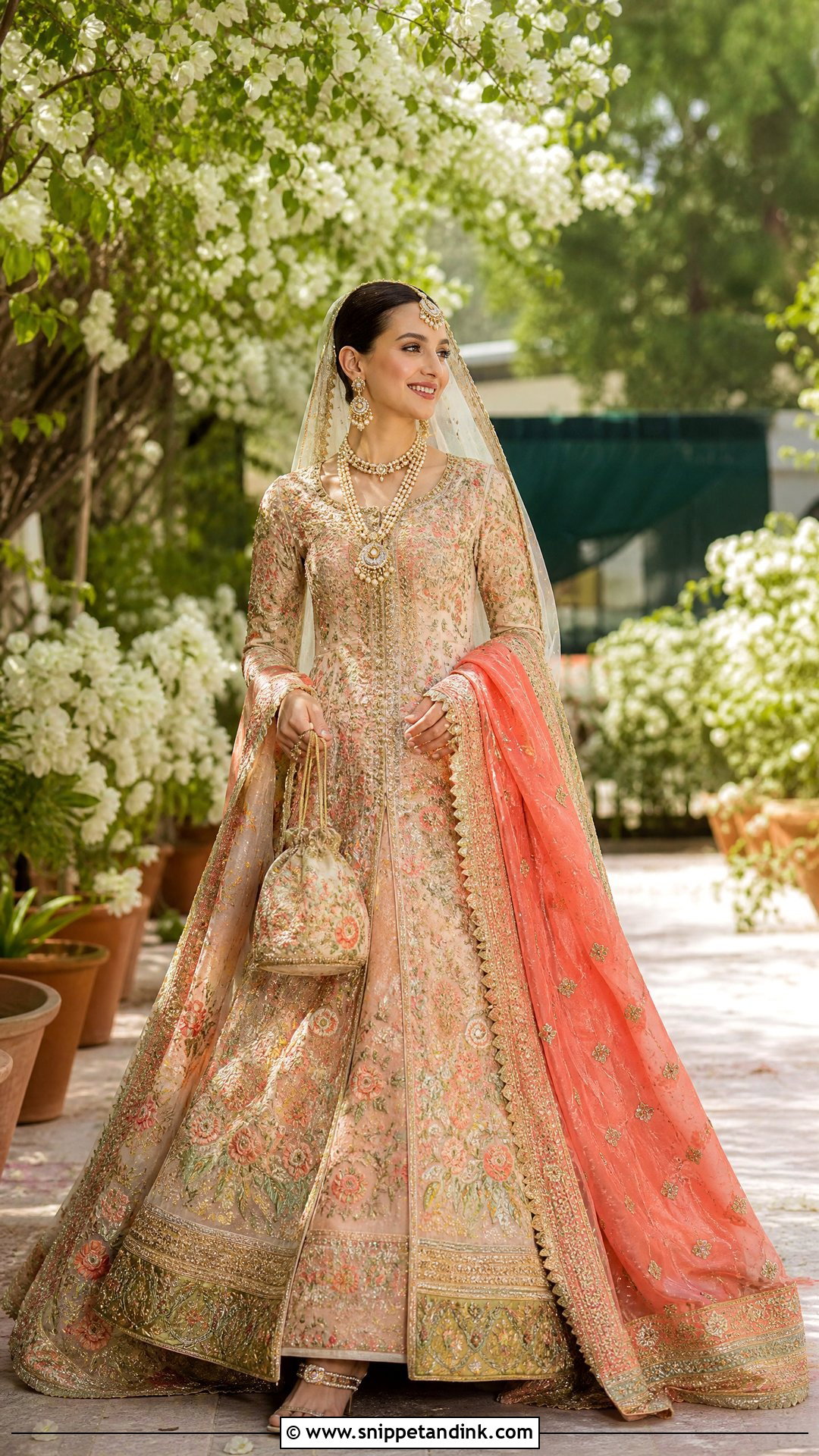
Coral is a warmer, less expected alternative to pink. A silk or organza skirt with embroidered flowers in ivory, peach, muted green and antique gold pairs with a long blouse that repeats the florals at the neck and cuffs. A sheer coral dupatta with a second ivory veil layers it. Pearl and kundan jewelry, gold heels and a floral potli suit it, with soft waves and peach makeup. Coral can skew orange in strong sun, so I’d look at the fabric outdoors as well as indoors. Florals like this are made for garden venues and daytime photography, where the lighter motifs suit the setting.
14. Rust Raw Silk Bridal Lehenga
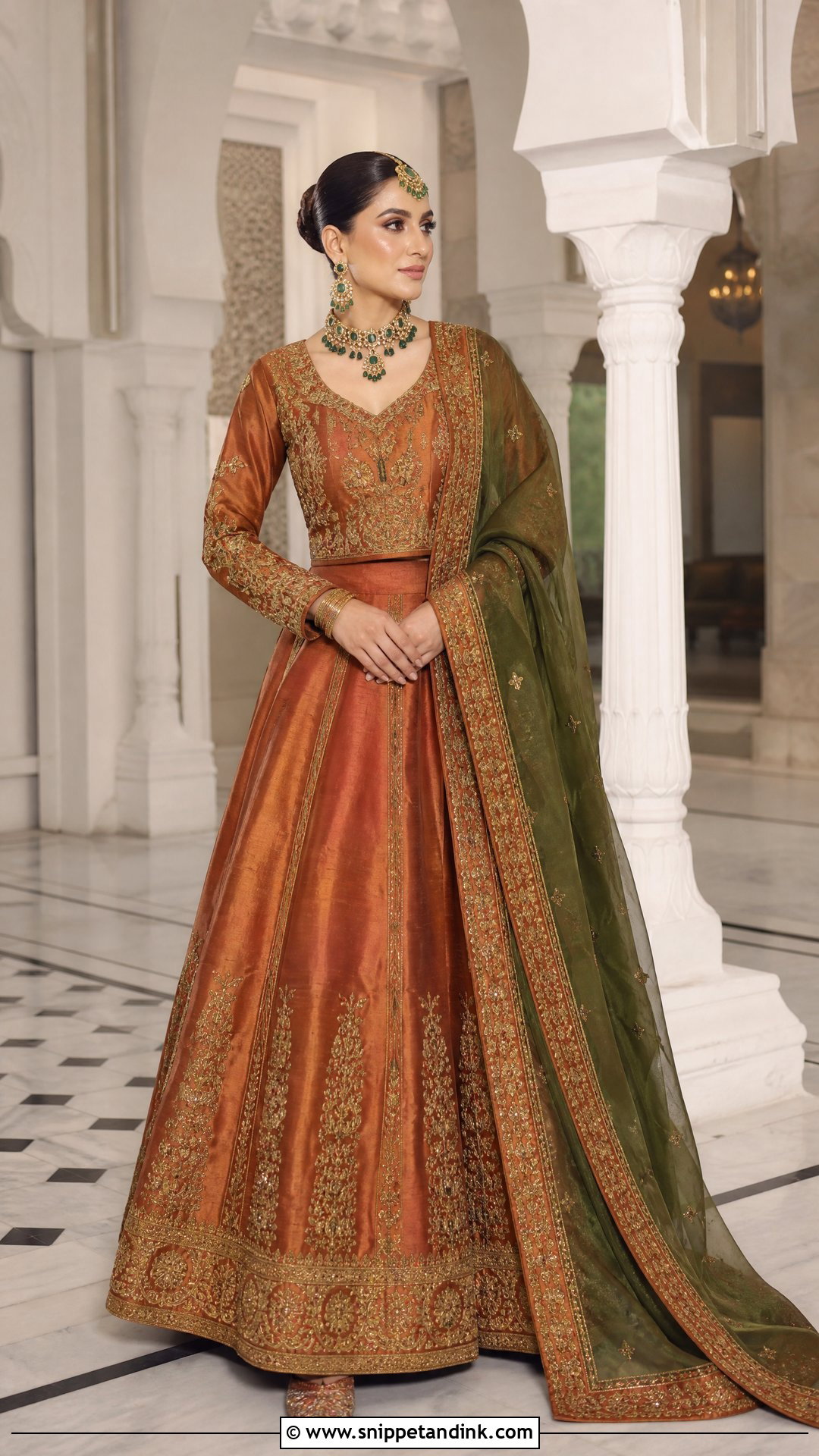
Rust raw silk is earthier than maroon and warmer on most skin tones. A structured lehenga with a wide worked border and smaller motifs across the upper skirt takes antique gold, copper and muted green beautifully. A long rust blouse and an olive or muted gold dupatta complete the colours, with antique jewelry, green stones and copper bangles. Raw silk holds its own shape, so the skirt looks substantial without many underskirts. Rust is the colour I’d always check under the venue’s actual lighting; it reads orange under cool LEDs and brown under warm bulbs.
15. Mint Green Bridal Sharara
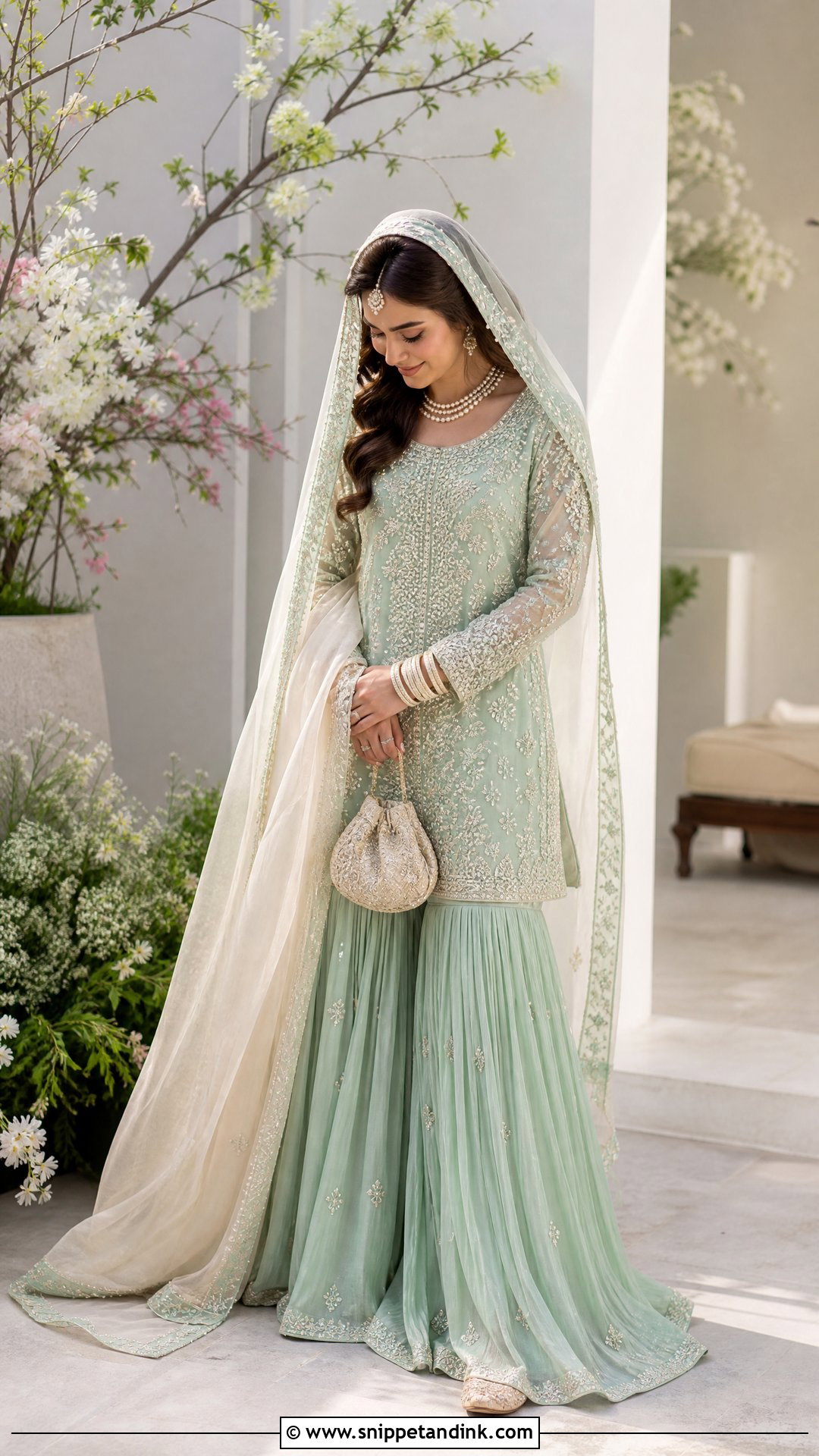
Mint green makes a delicate bridal sharara for a spring or summer Nikkah. Wide silk or chiffon trousers sit under a knee-length worked shirt, with ivory thread, pearls, sequins and pale gold borders. A matching net dupatta goes over the head; a second ivory one rides on an arm. Pearls, a small tikka, ivory bangles and embellished flats complete it, with natural makeup and a rosy lip. Keep the trouser volume flat at the waist. With sheer outer fabrics, every lining seam and closure shows through, so I ask the tailor to match lining colour exactly and finish seams cleanly.
16. Navy Blue Bridal Saree
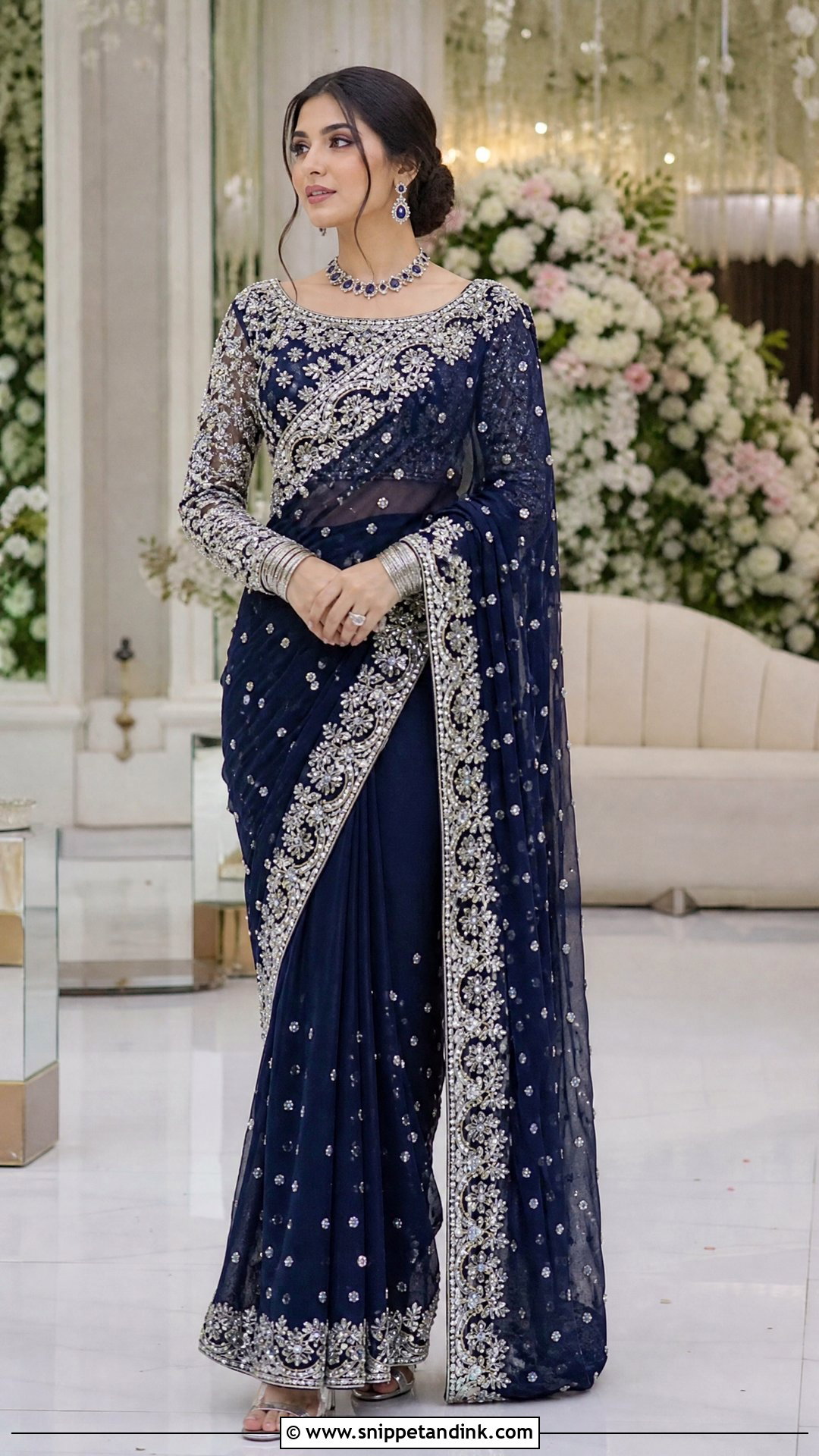
A navy saree gives the bride a sleek alternative to volume. Silk, chiffon or net with silver work, crystal detail and a substantial border reads well in photographs. A long or elbow-sleeved blouse with a secure neckline and matching embellishment completes it. Settle the pallu on the shoulder and pin it firmly so it holds all reception. Silver jewelry, sapphire-coloured stones, bangles and comfortable metallic heels suit the colour, with a low bun, defined eyes and a muted berry lip. Sarees are less common among Pakistani brides but have a place at receptions and Walimas. If you’ve never worn one for hours, practise walking and sitting in it at least twice.
17. Magenta Banarasi Bridal Lehenga
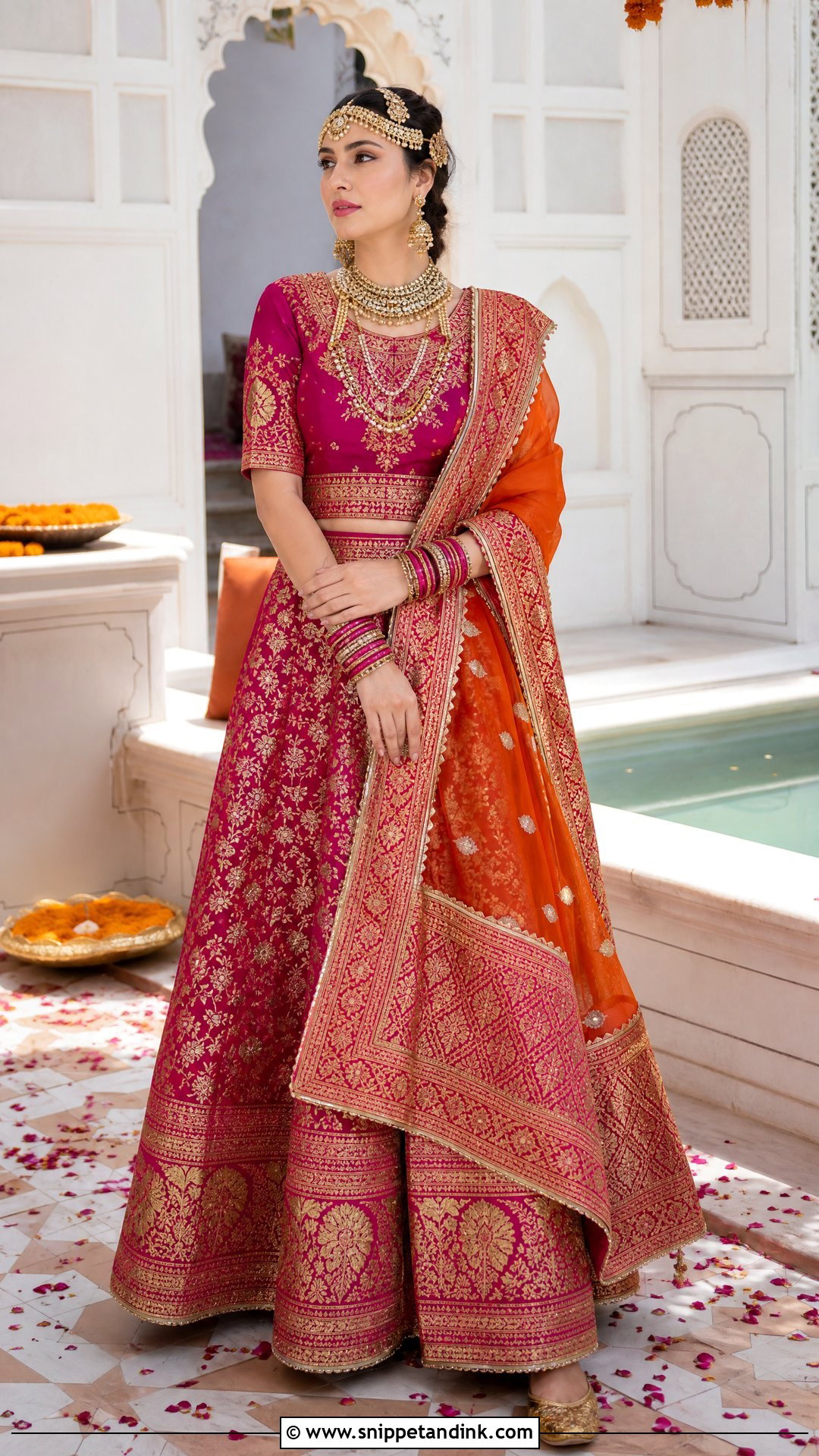
Banarasi fabric has its pattern woven in, which gives a magenta lehenga real structure. Choose a skirt with traditional gold motifs and a broad hem, and resist covering the weave with extra embroidery. A plain raw-silk blouse with detailed sleeves and neckline balances it. An orange, red or deep purple dupatta brings layered festive colour. Gold jewelry, a matha patti, bangles and khussas finish it, with a braided bun or smooth centre part. Woven brocade is heavier than it looks and less forgiving at the seams, so I keep added work to the waistband and borders only.
18. Peach Peplum Sharara Bridal Dress
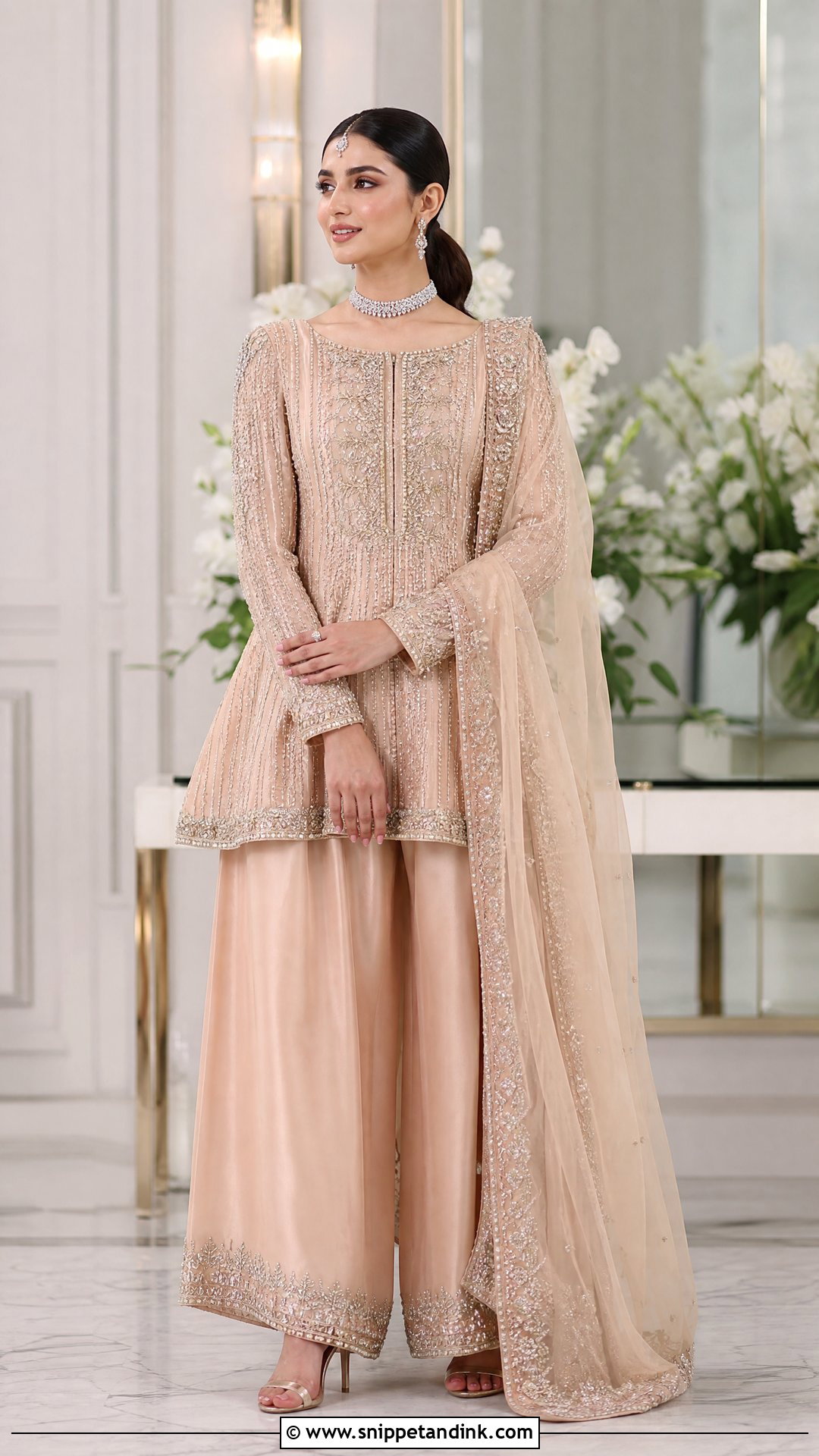
Peach peplum with a sharara pairs modern tailoring with a traditional bottom. The peplum top fits through the bodice and flares gently at the waist, over a wide silk sharara with embroidered borders near the hem. Silver, pearl and pale gold work keep the peach soft. A sheer dupatta on one shoulder, crystal jewelry, a slim headpiece and metallic heels complete it, with a low ponytail or soft bun. The proportion I check is simple: the peplum should end above the point where the sharara is widest. If they overlap, the two pieces stop reading as one outfit.
19. Heirloom Red Bridal Pishwas
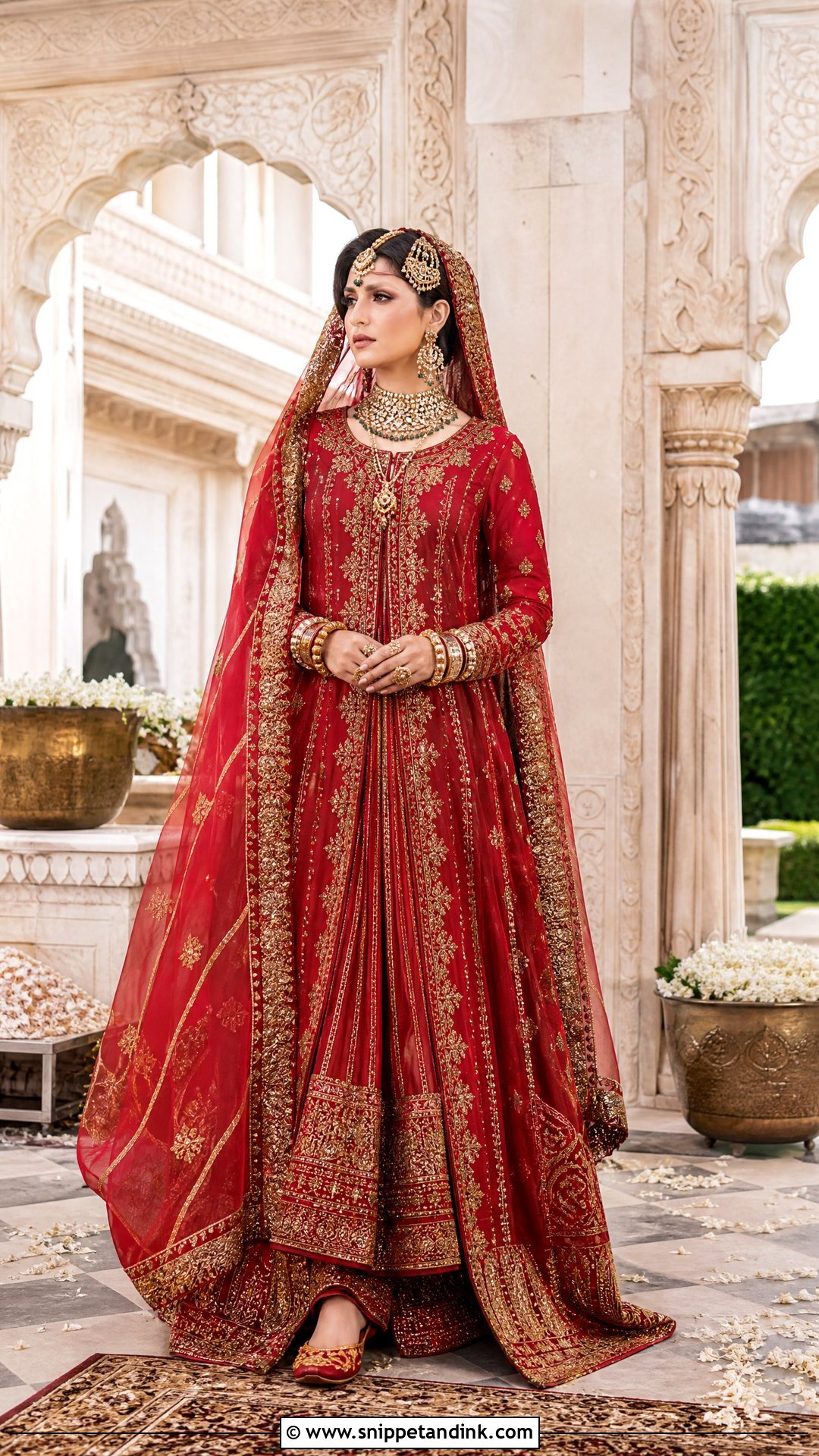
A red pishwas built around family craftsmanship suits a bride who wants heritage and coverage. A long paneled dress with antique gold embroidery, vintage borders and motifs taken from a family garment sits over a red churidar or lehenga. An old family dupatta can be worked in if the fabric is still sound. Kundan, bangles, a jhoomar and red khussas complete it. Keep hair and makeup restrained so the old textile leads. New lining, reinforced seams and adjusted sleeves can make an older piece wearable again, but always have delicate fabric assessed by an experienced tailor or restorer first.
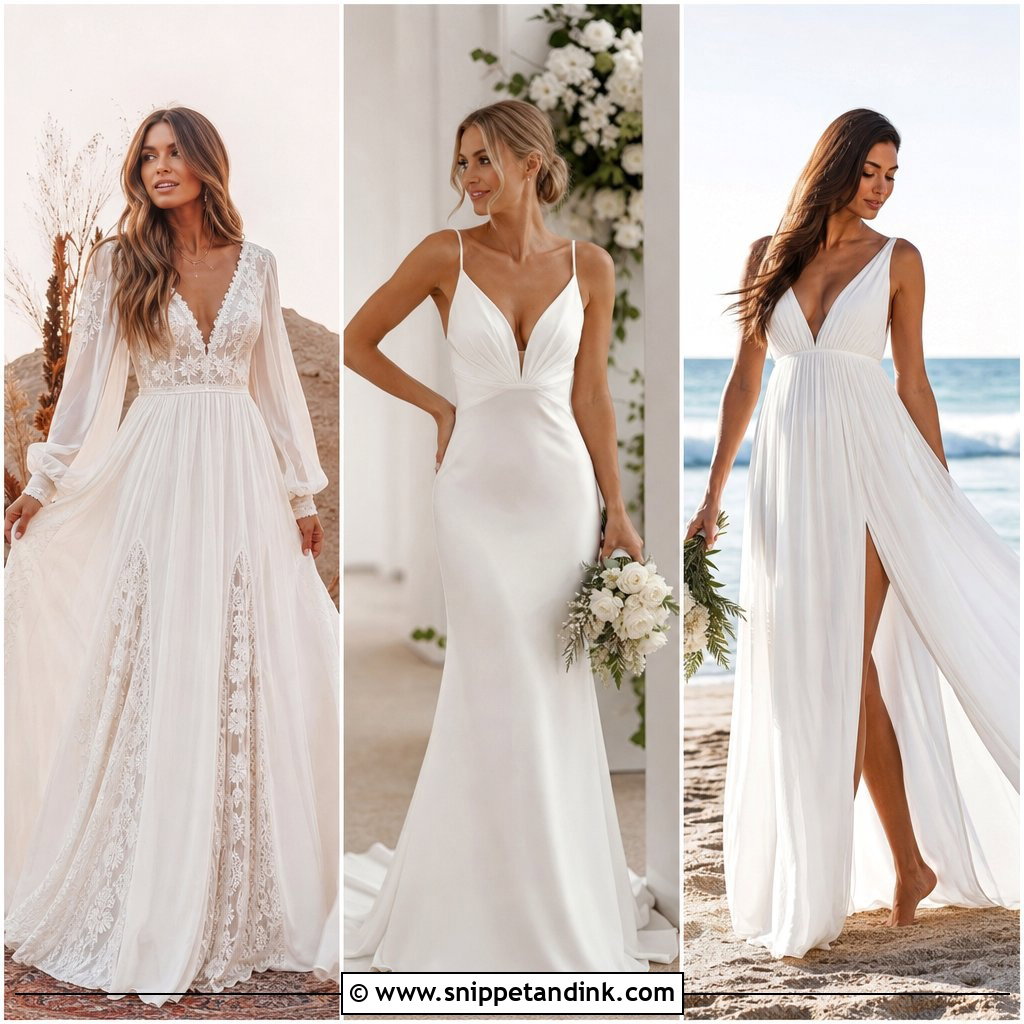
20. Teal Bridal Jacket Lehenga
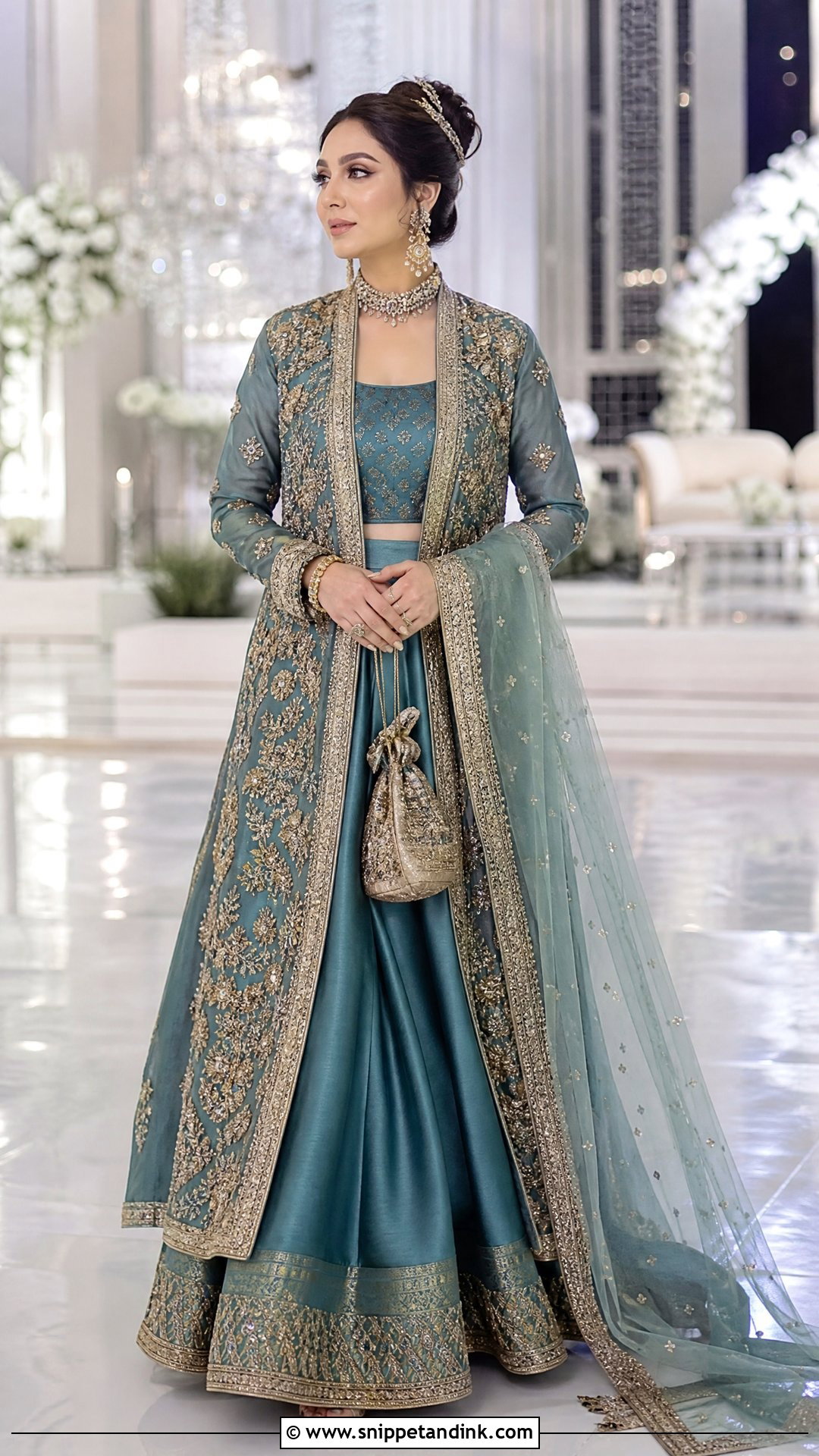
A teal jacket lehenga suits a reception and still carries traditional work. Start with a full silk lehenga in teal or deep turquoise, a fitted blouse and a long open-front jacket with gold, silver or multicoloured work at the opening, sleeves and hem. Keep the skirt decoration lighter so the layers don’t compete. A simple net dupatta over one arm, statement earrings, a necklace, metallic heels and a potli finish it. The jacket length should change with your height; on petite brides I end it a little higher so the skirt still shows, and I make sure the front panels stay open enough to show the waist.
Wearing Your Mother’s Bridal Outfit Again
Plenty of brides ask me about re-wearing an ammi’s or nani’s joda, and it can be done with care. Before anyone cuts a thread, lay the outfit out in daylight and look closely at the fold lines. Old silk and net weaken where they’ve been folded for years, and that’s usually where a garment tears first.
What can and can’t be saved
- Relining is almost always possible and makes an old outfit far more comfortable against the skin.
- Letting seams out depends on how much allowance was left. Older pieces were often cut close, so extra width may have to come from a matching panel.
- Tarnished zari rarely comes back to its original shine. Many brides embrace the softer, antique tone rather than fight it.
- Brittle net dupattas may only survive being carried or draped lightly, not pinned to the hair all night.
If the whole outfit won’t take a long day, I’d use one piece. An old dupatta over a new lehenga, or old borders stitched onto a new shirt, carries the family meaning while the new garment takes the strain. Never wash or dry-clean a vintage piece before a specialist has seen it.
Ceremony First, Then Silhouette, Then Everything Else
Every outfit here, from Mehndi shararas to red baraat lehengas and soft Walima gowns, is only right if it suits the bride wearing it. Start with the ceremony, the season and the silhouette you’re drawn to. Then think about fabric weight, embroidery placement, dupatta styling, shoes and jewelry. Book fittings in the exact undergarments and shoes you’ll wear, and move around properly in the finished piece. Trends are a starting point. The outfit you choose should still feel like yours when you look at the photographs years from now.
You'll Like These Ideas:


Leave a Reply