
Sleek bridal style today isn’t only about gowns. Alongside satin columns, lace and sculpted corsets, I now dress brides in minis, jumpsuits, separates and suits, often with a removable layer so the ceremony look turns into something lighter for dancing. Basque and drop waists, visible boning and unusual necklines are everywhere. What hasn’t changed is the brief I give every client: the outfit has to suit your proportions and your venue, and you have to be comfortable in it for the whole day. Shoes, veil, jacket and alterations come into it from the start. Here are twenty looks, from quiet to bold.
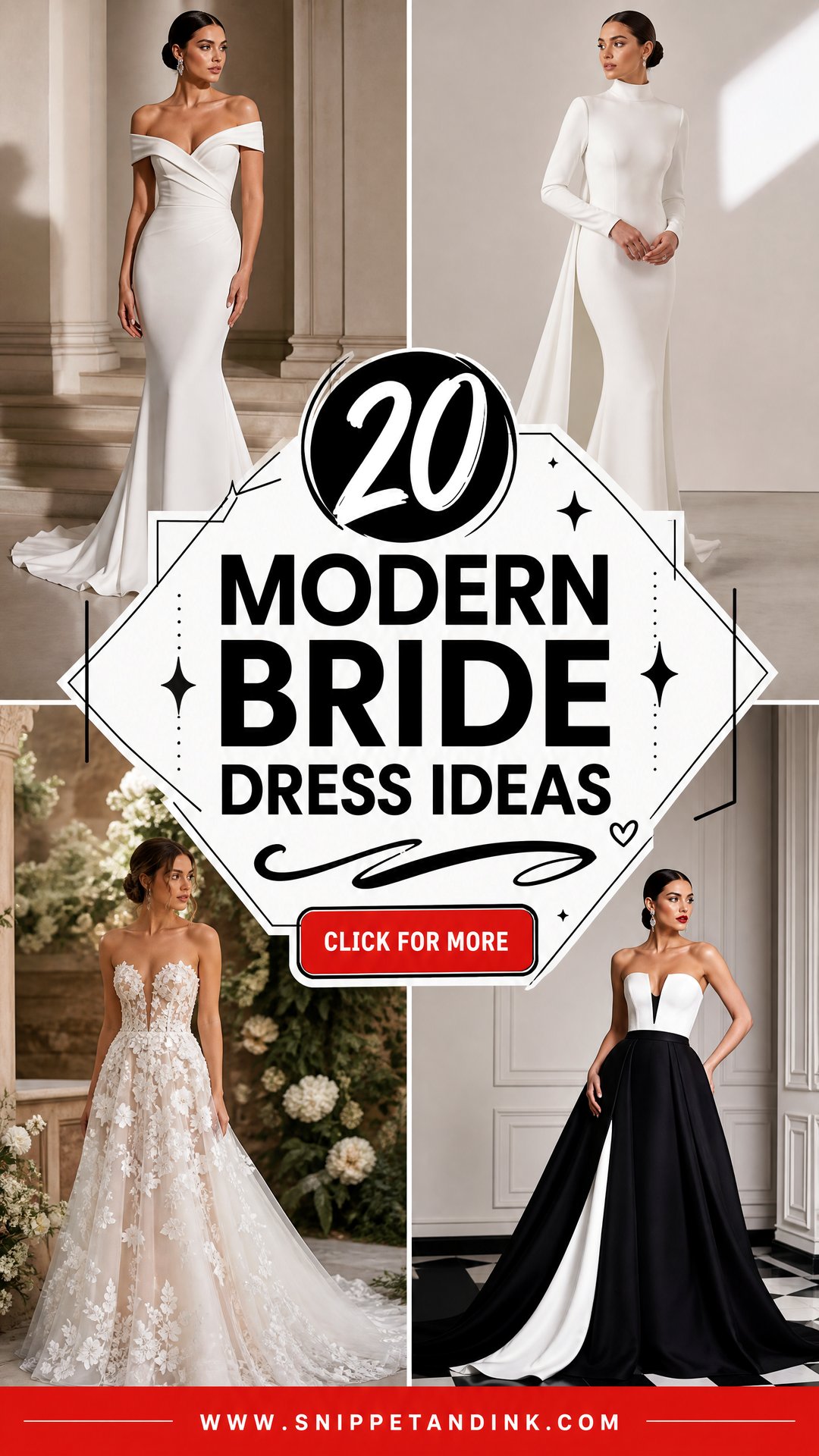
Matching the Silhouette to Where You Say Your Vows
Before I pull a single dress, I ask where the ceremony is and what rules come with it. A sleek look that’s perfect in a loft can be wrong for a church, a beach or a registry office in January.
Religious ceremonies
Many places of worship expect covered shoulders, and some ask for covered arms. Detachable sleeves, a cape or a bolero let you meet that and still change for the reception. Check with the officiant early instead of guessing.
Civil and courthouse weddings
Rooms are small and the ceremony is short, so tea length, minis, suits and slim columns make sense. A cathedral train has nowhere to go.
Beach, garden and destination venues
Sand and grass catch long trains, and heat punishes heavy satin and boning. Crepe, chiffon and light silk travel better and recover from creases faster. If you’re flying, ask whether the gown can go in the cabin; I’d never check a wedding dress.
Whichever setting you have, tell your stylist at the first appointment. It rules out whole categories of dress in minutes and saves you falling for something the venue simply can’t handle.
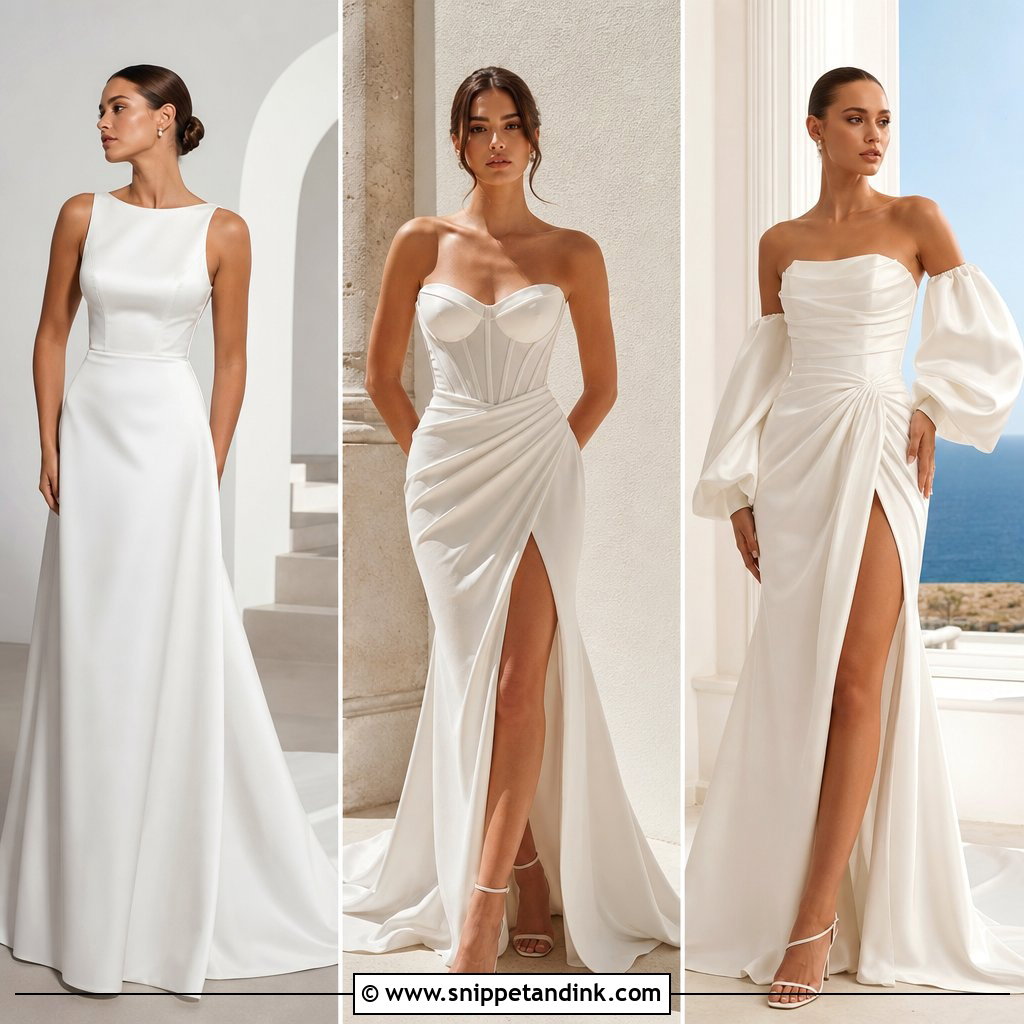
1. Minimalist Satin Column Wedding Dress
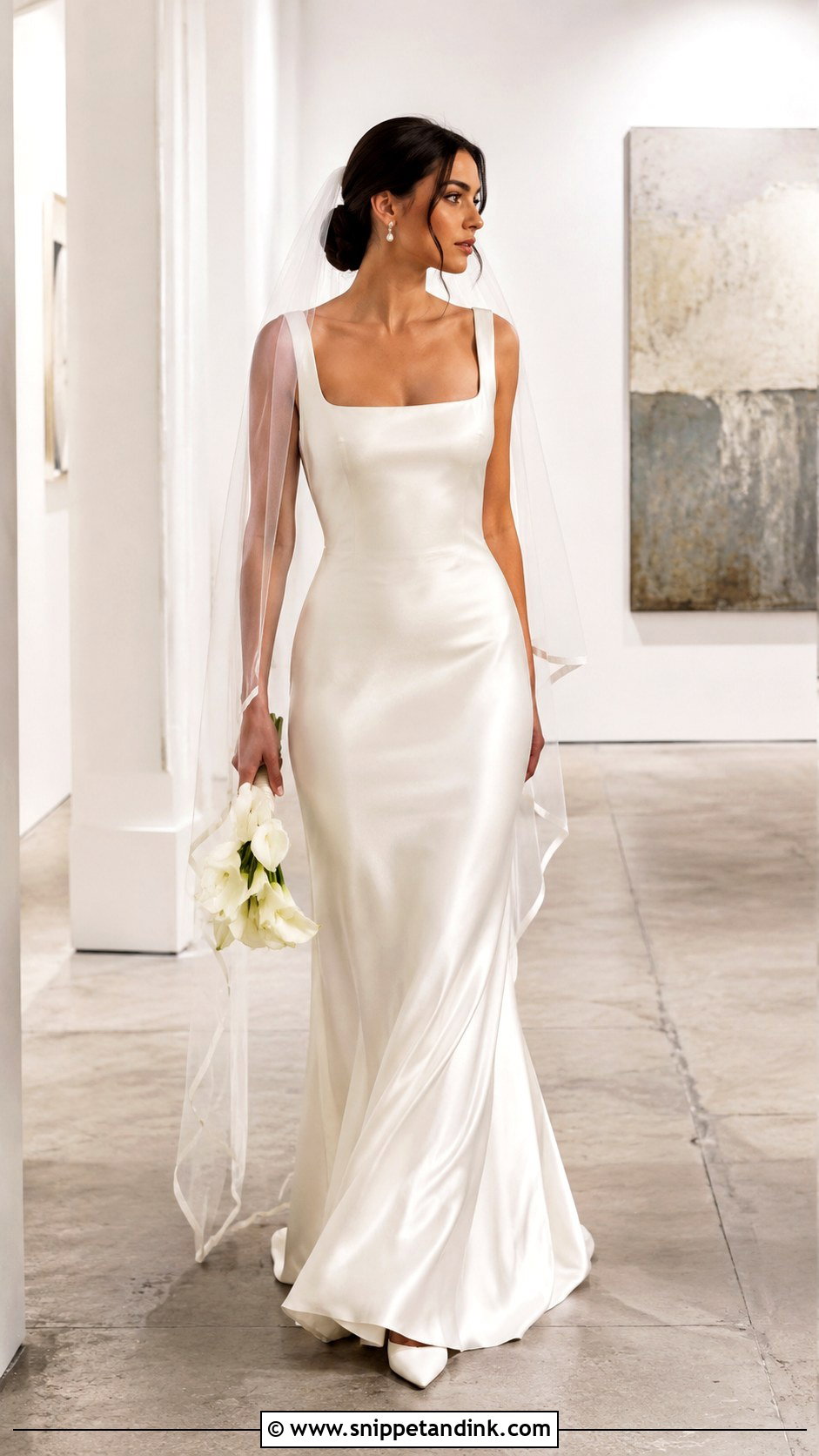
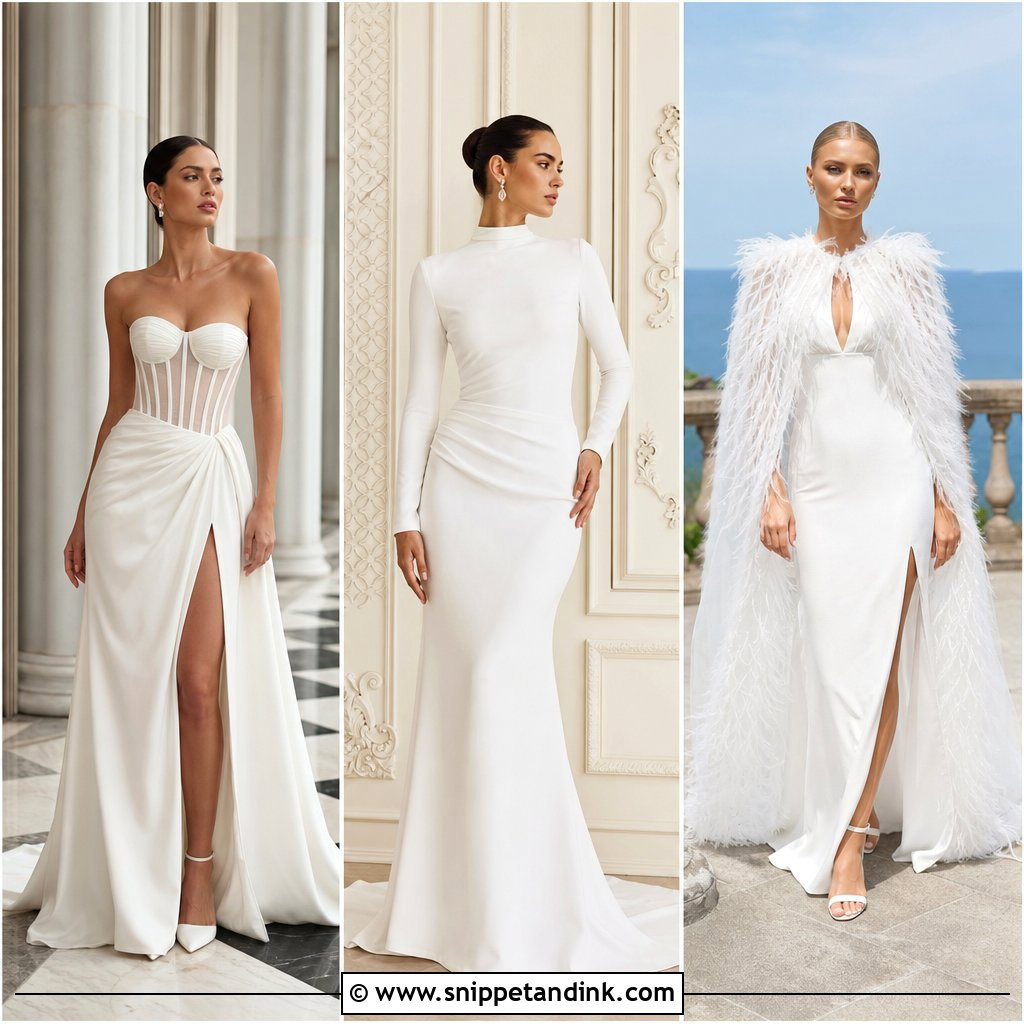
Smooth satin reveals every line and every alteration, so I’d budget for precise hemming and invisible underwear before anything else. Fluid silk satin follows the body; a heavier satin with a little structure is kinder if you don’t want every curve on show. Square, scoop or draped necklines all keep a column fresh, and subtle seaming or soft ruching at the hip gives definition. Pointed ivory pumps, pearl drops and a fingertip veil are all it needs for a hotel, gallery or courthouse.
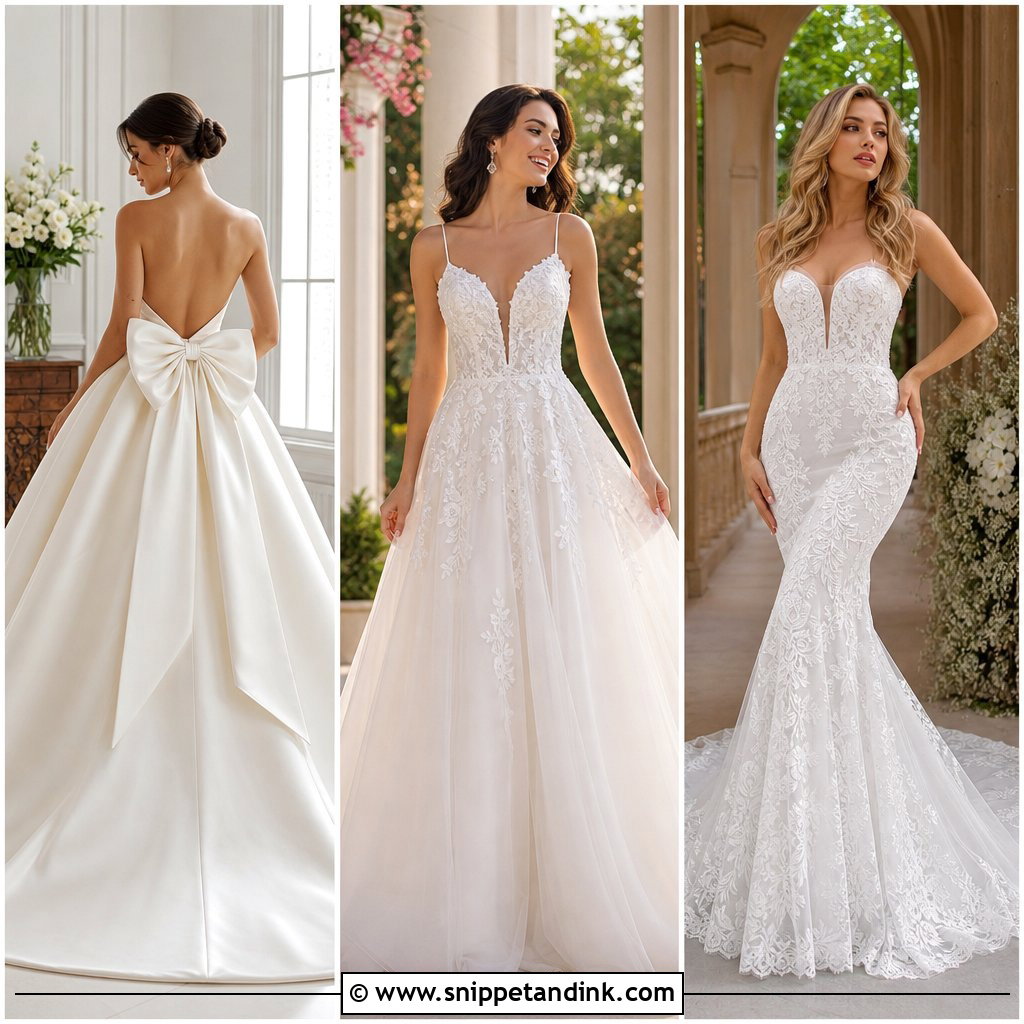
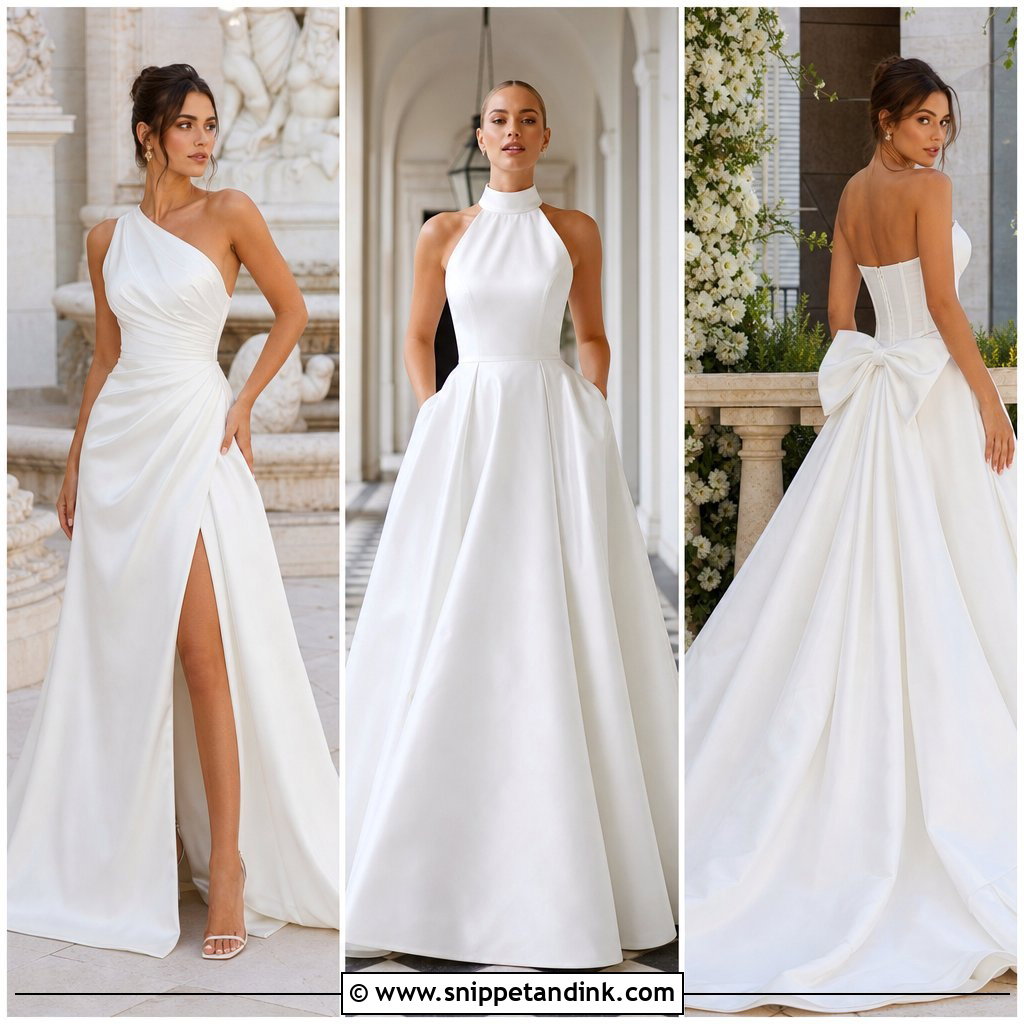
2. Basque Waist Ball Gown Wedding Dress
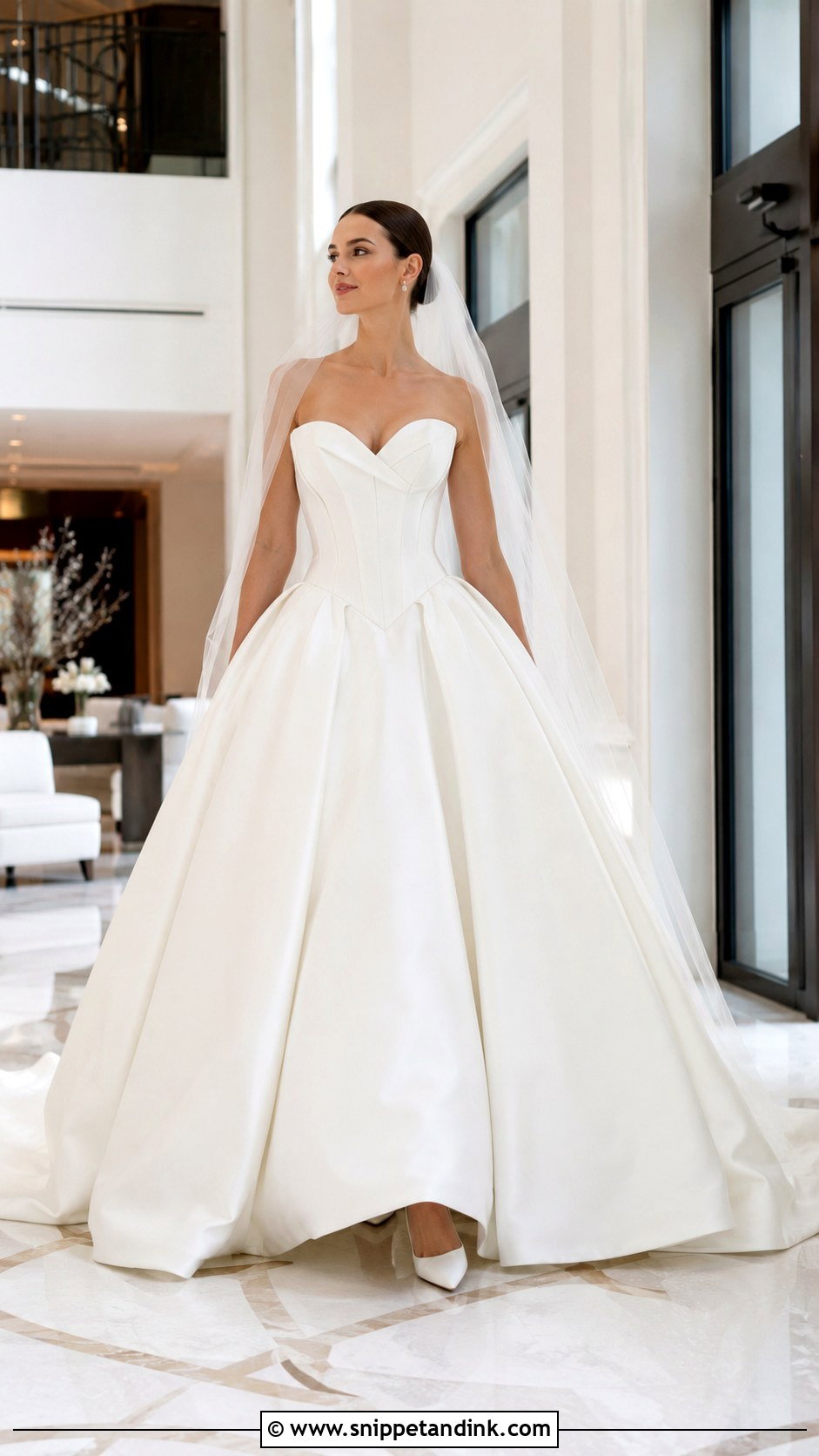
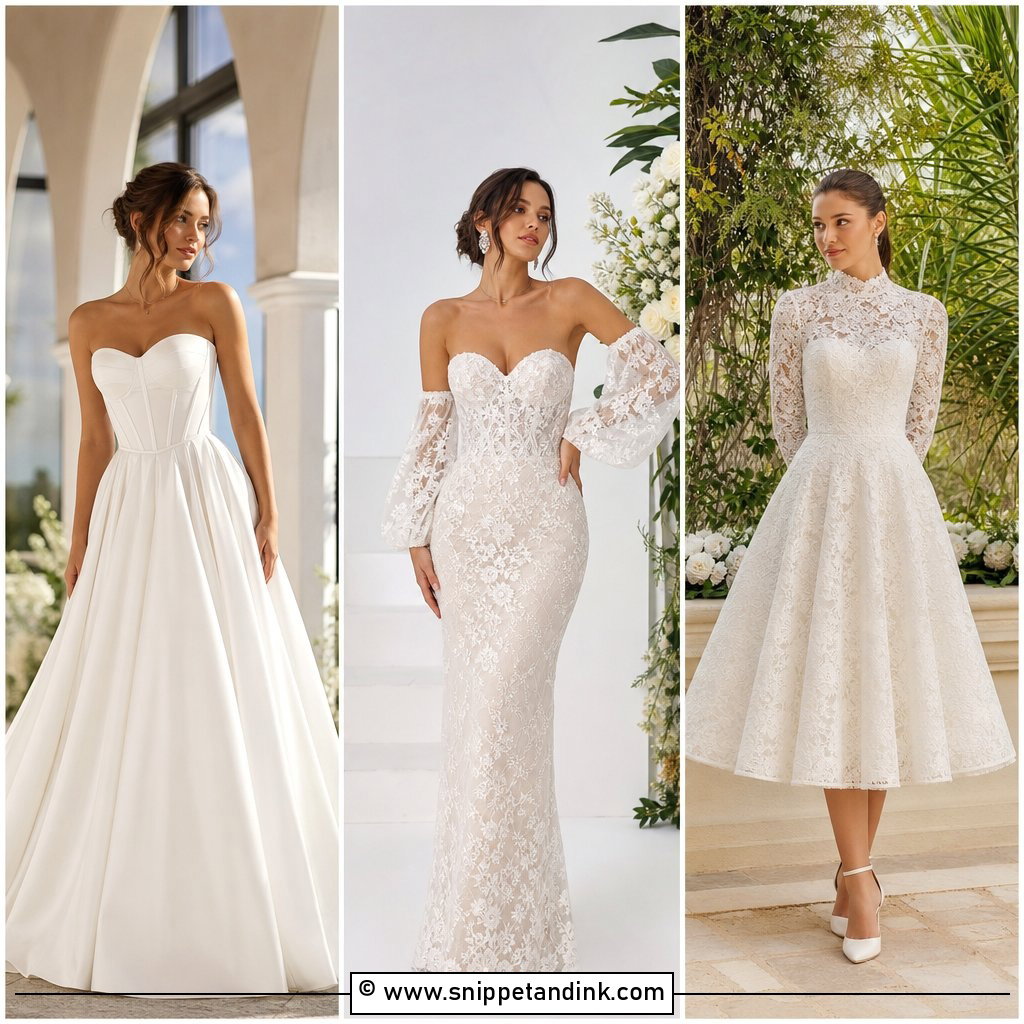
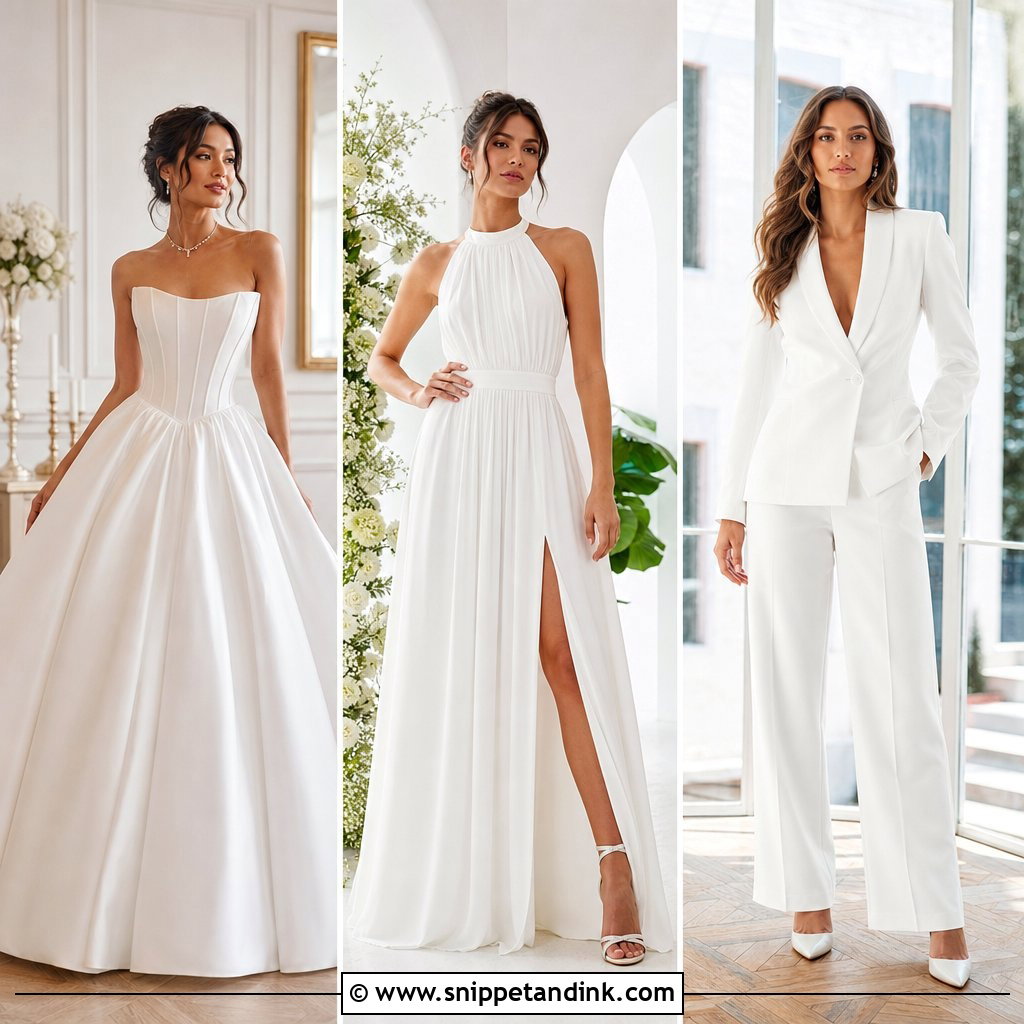
A basque waist ball gown lengthens the torso with its V-shaped waistline before the skirt opens up. On a shorter torso, though, a deep V can overpower, so I have those brides try two or three waist depths side by side. Mikado or satin gives the architectural version; lace is softer. Ask whether the internal corsetry can be adjusted at fittings, because some can and some can’t. A cathedral veil, pointed pumps, delicate earrings and a smooth bun keep the bodice in focus.
3. Drop Waist Corset Wedding Dress
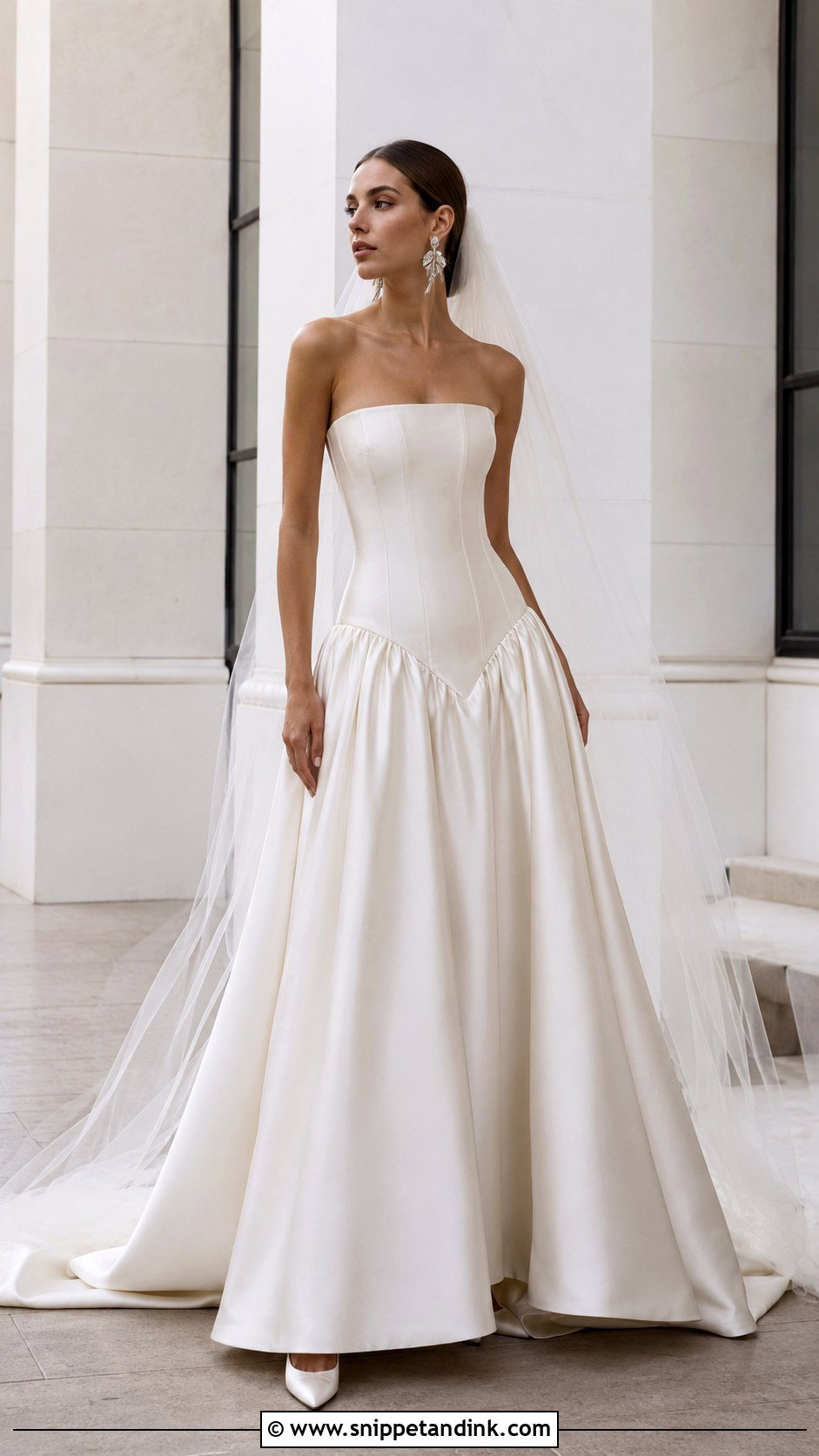
Where the skirt starts is the whole question with a drop waist. Set the seam too low and it restricts your stride; too high and it looks like a normal waist that slipped. I mark it while the bride walks, not while she stands still. Lined exposed boning reads bolder, opaque corsetry more refined. A strapless neckline with a sheer veil and hair tucked behind the ears keeps it sleek. Closed-toe heels for the ceremony, flats for later.
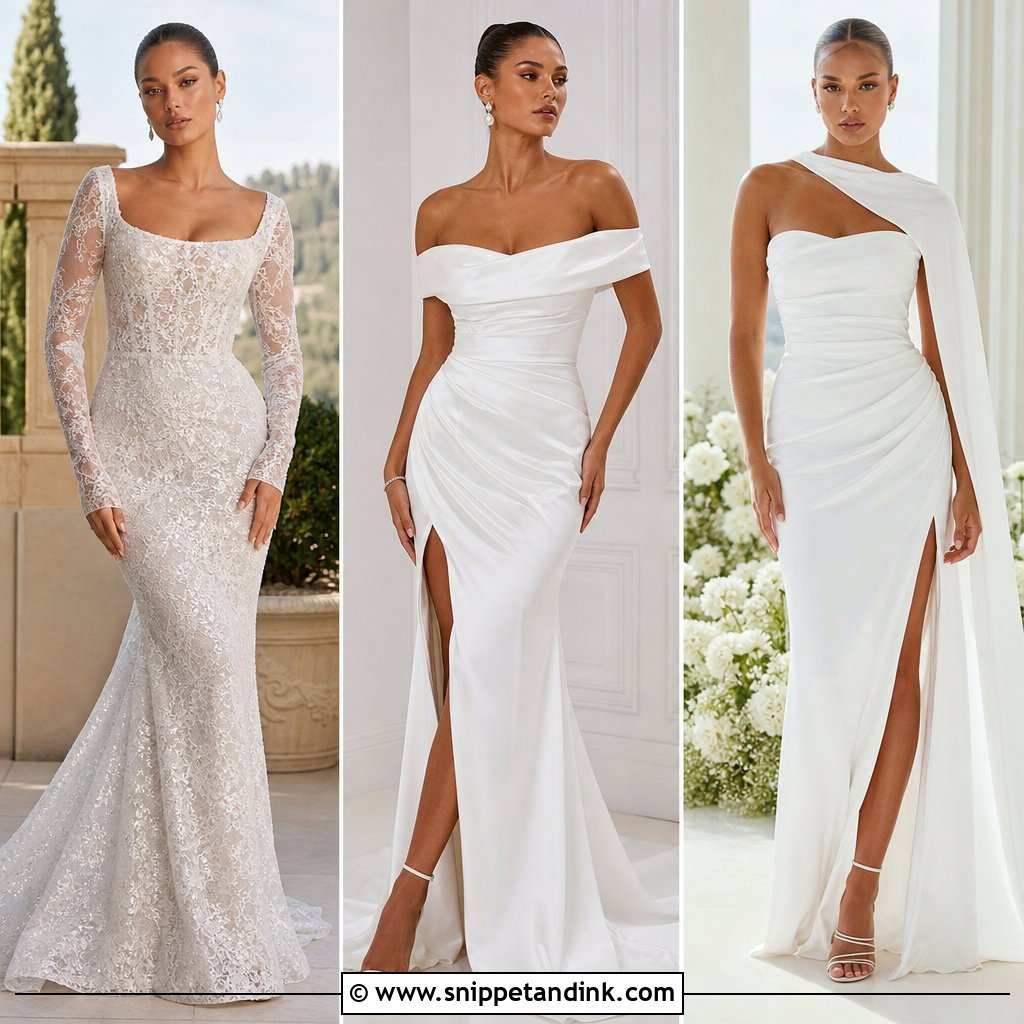
4. Long Sleeve Lace Wedding Dress
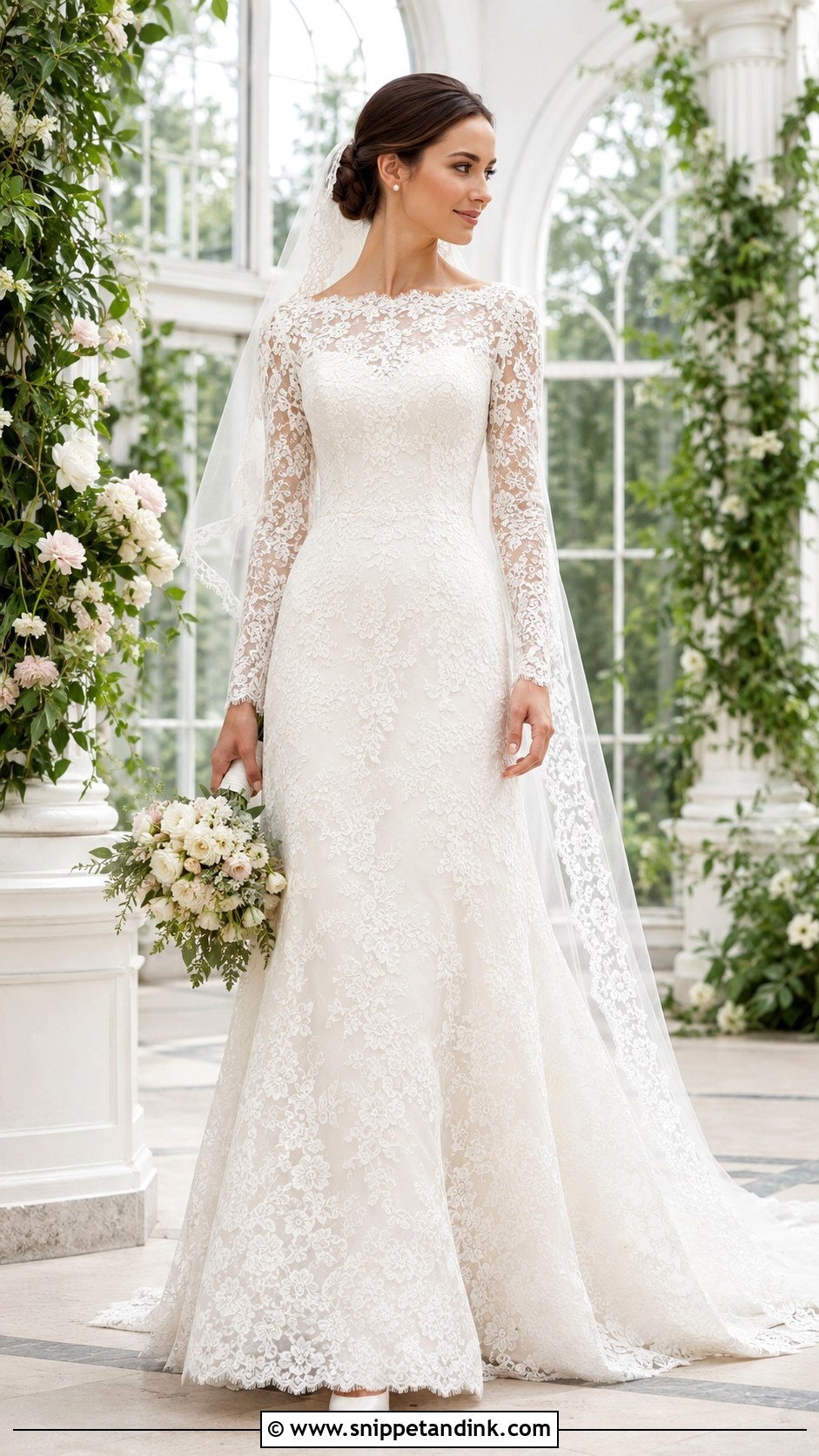
Lace sleeves feel romantic, and they’re the first thing to pull when you move. I always ask brides to lift both arms, sit and mimic a slow dance in the fitting room. If the lace strains across the upper back, the sleeve head needs more ease. A fitted sheath, soft A-line or restrained ball gown works, with lace placed consistently across bodice and sleeves. Pearl studs, satin pumps and a veil edged in matching lace finish it. Keep bracelets off; they snag.
5. Square Neck A-Line Wedding Dress
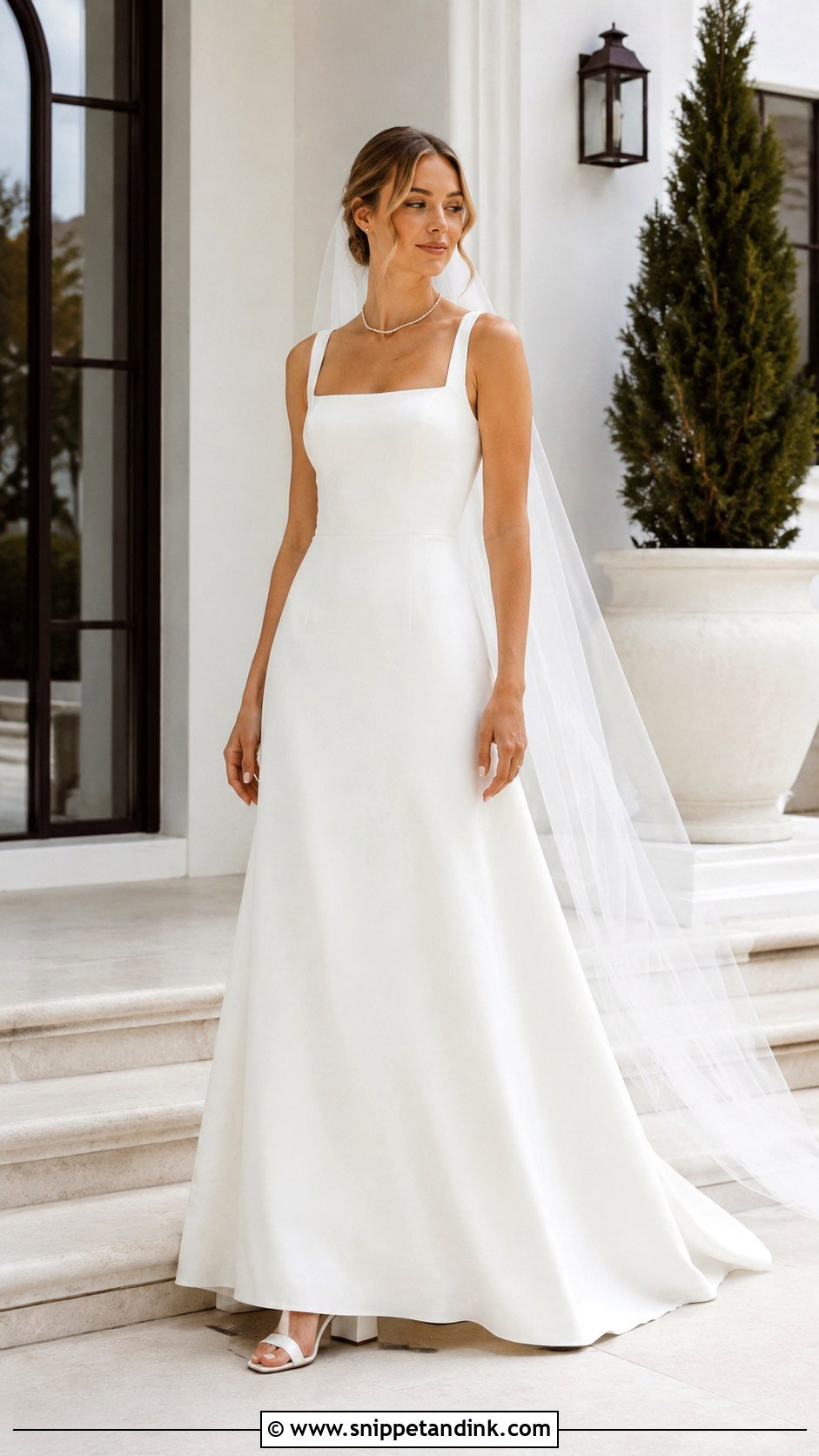
Of all the shapes here, the square neck A-line asks the least of you. The neckline frames the collarbone, the skirt falls gently from the waist, and you can walk and sit without thinking about it. Crepe or satin looks minimal; a subtly textured floral fabric adds depth. If it has wide straps, I ask the tailor to place them so a bra stays fully hidden. A single-strand necklace, block heels and a chapel veil suit both indoor and garden ceremonies.
6. Off The Shoulder Mermaid Wedding Dress
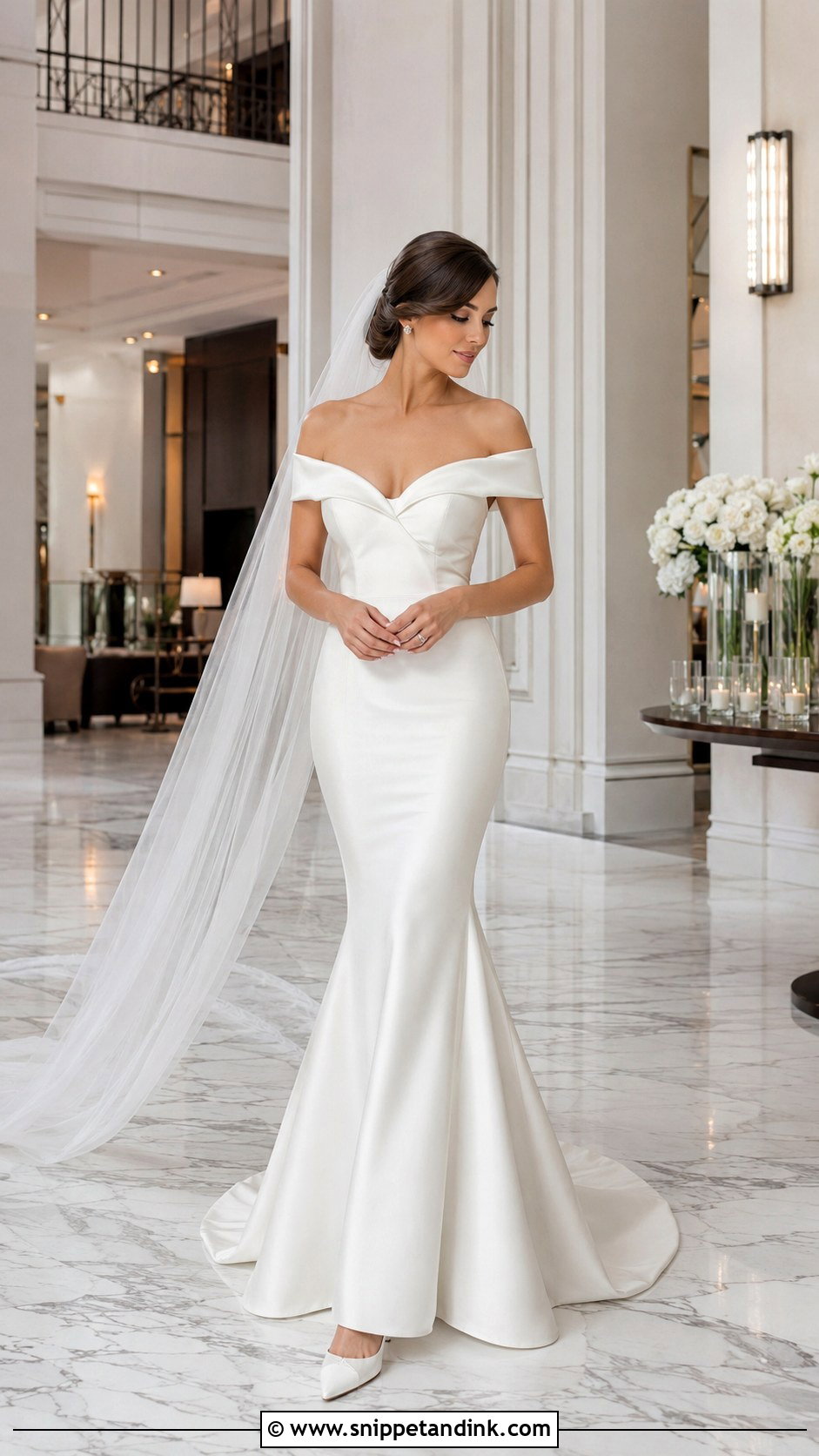
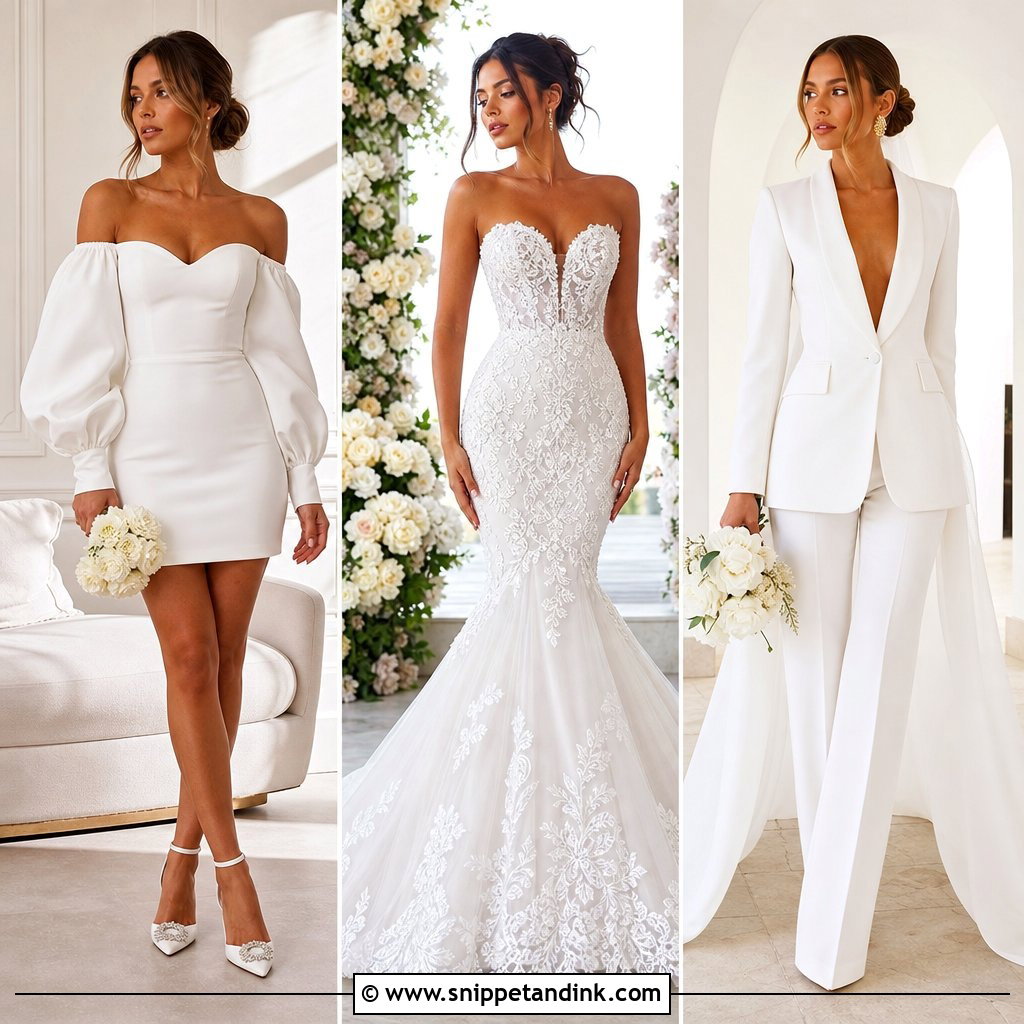
Mermaid gowns are glamorous and they ask a lot of your knees. The fit has to be secure through the waist and hip before the flare, and that flare position decides how freely you walk and climb steps. I make brides practice stairs at the fitting. An off-shoulder band adds a second restriction, since it limits how high you can lift your arms. Stretch crepe looks clean; lace adds romance. A side-parted updo keeps the shoulders clear.
7. High Neck Crepe Wedding Dress
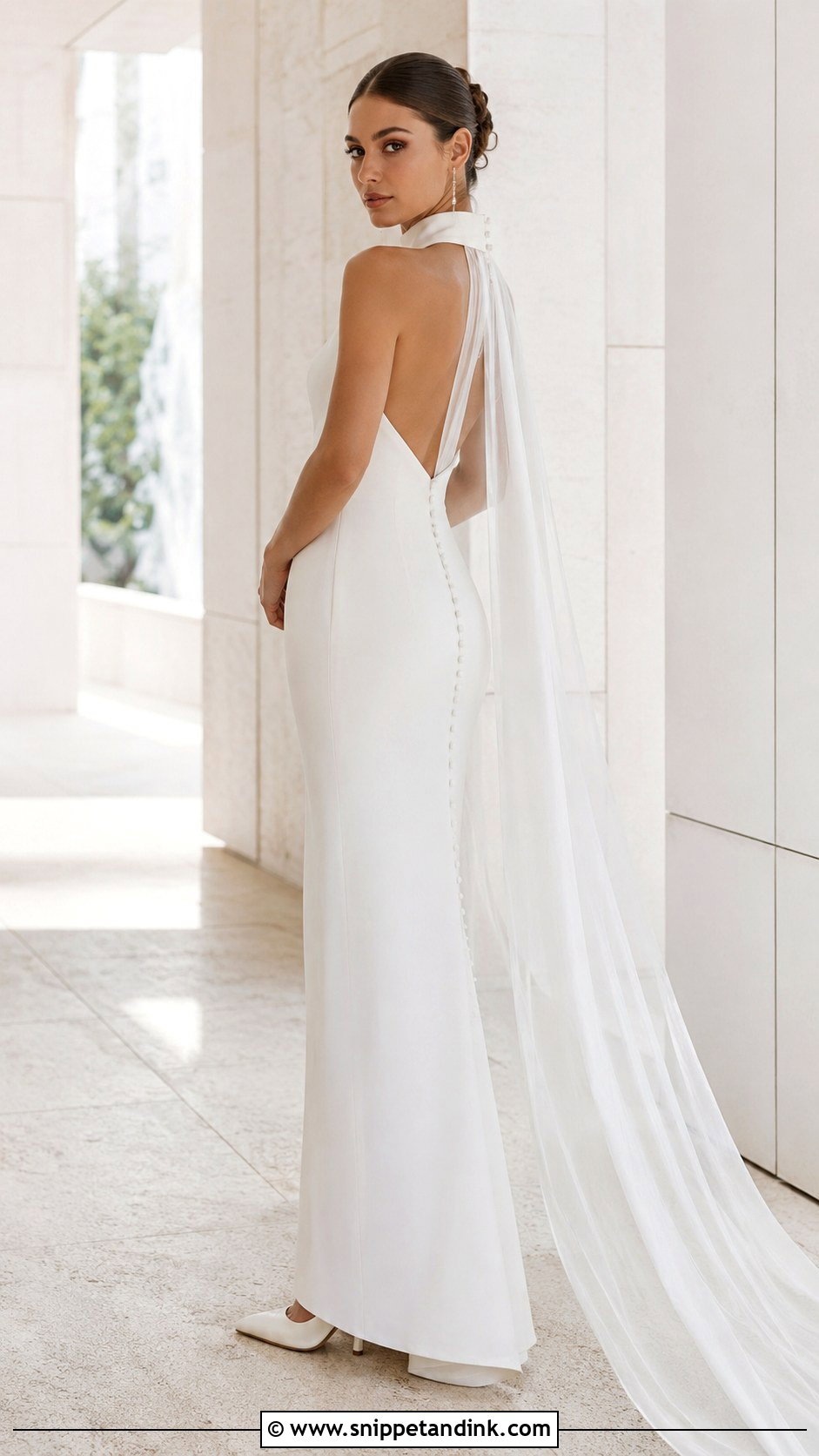
Crepe with a high neckline looks striking with almost no decoration, but the collar has to be right. I check it while the bride turns her head fully left and right; a collar cut even slightly tight will rub by the end of the ceremony. Covered buttons down the back or an open back adds interest without cluttering the front. Instead of a traditional veil, a sheer cape veil fixed at the shoulders keeps the neckline untouched. Slim drop earrings and a low bun are enough.
8. Strapless Floral Appliqué Wedding Dress
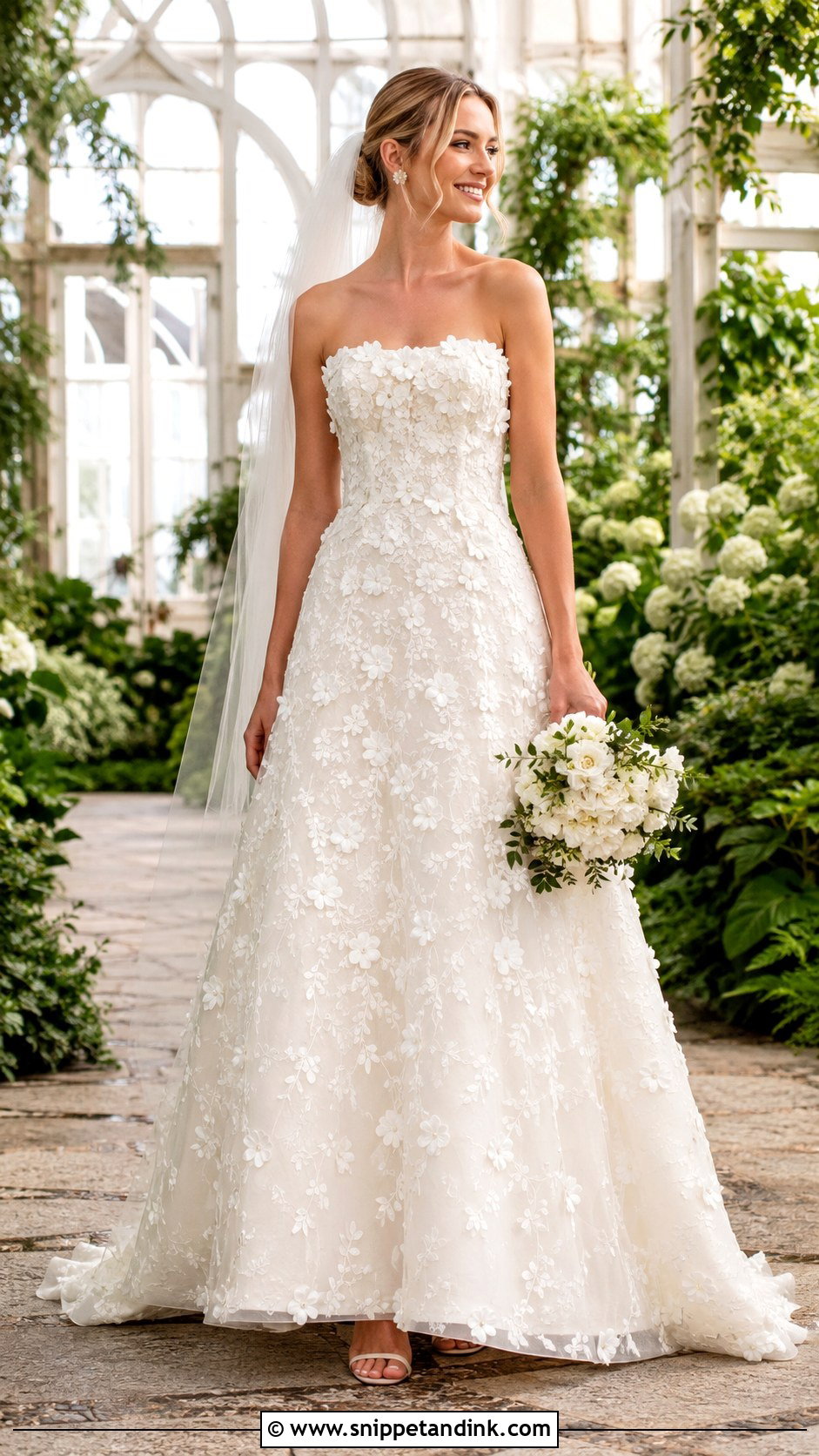
Appliqué flowers look best when they spread gradually from the bodice into the skirt instead of sitting in a solid block. On a strapless gown, the inner support has to be strong enough that you never hitch it up in photos. Look closely at the edges of each appliqué, because loose petals catch on veil tulle. Keep accessories quiet (floral studs, neutral heels, a plain veil) and wear a soft updo or half-up style.
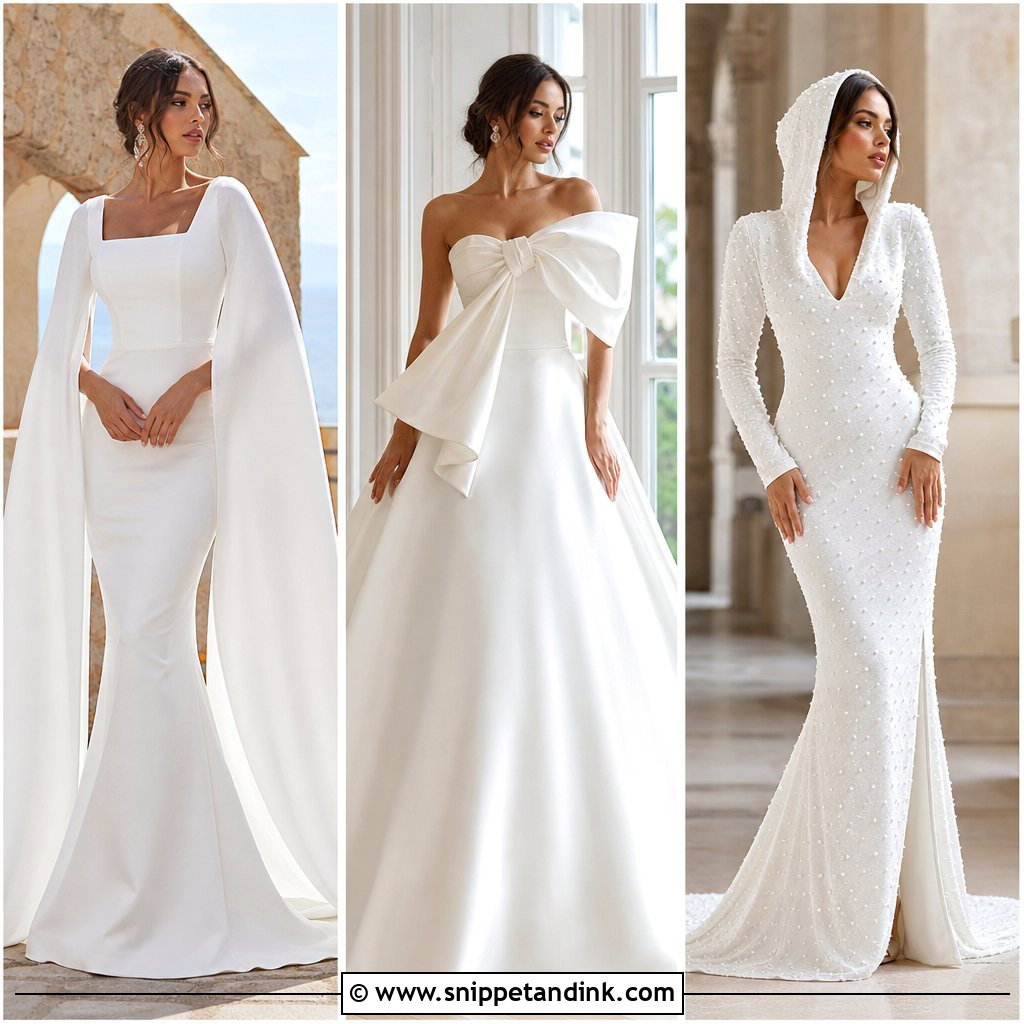
9. One Shoulder Draped Wedding Dress
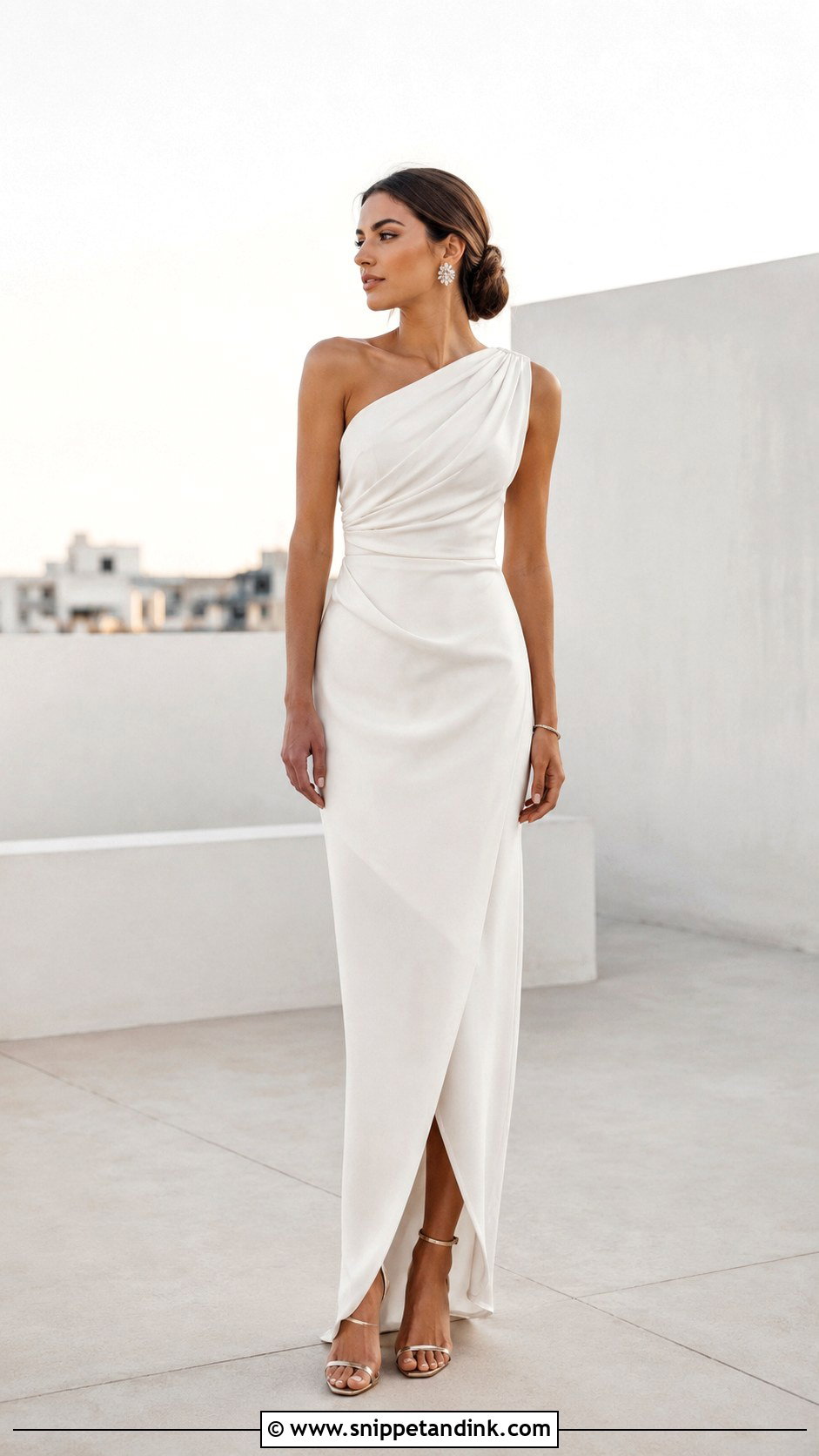
Drape needs fabric that actually falls. Fluid crepe, satin or silk jersey hang naturally across a one-shoulder bodice; stiffer cloth just looks folded. The shoulder seam should feel firm without pressing into the skin, and I test that by having the bride lift her bouquet arm for a while. Wear a slim bracelet on the bare arm, small statement earrings and a low side bun. If there’s a train, a wrist loop or a solid bustle makes the reception easier.
10. Pearl Embellished Sheath Wedding Dress
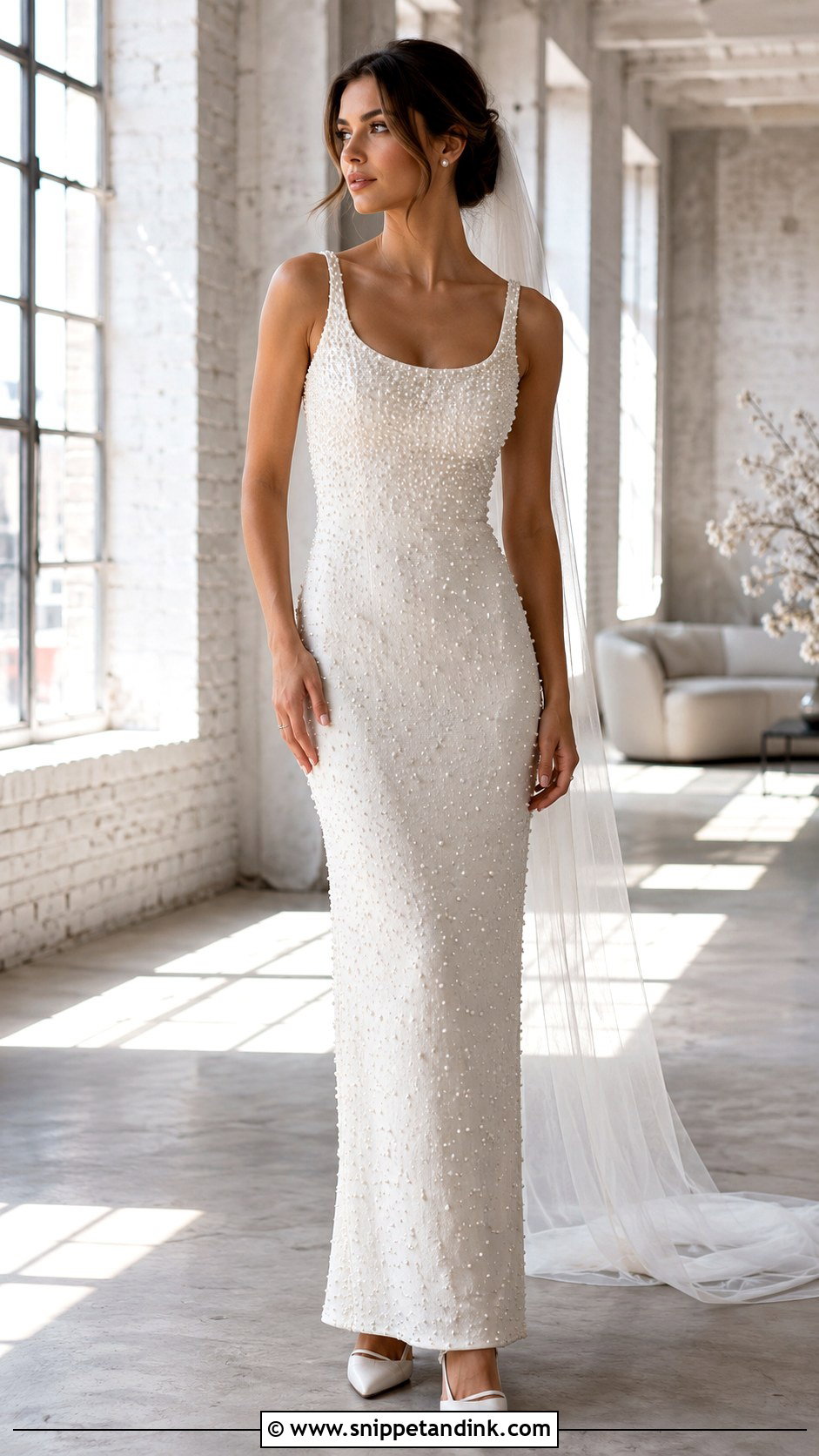
I prefer pearls scattered over tulle, crepe or lined mesh to dense beading from neck to hem; scattered pearls give texture without weight. Before buying, I turn the bodice inside out and run my hand over the lining. Pearl stitching that comes through scratchy will irritate your skin by evening. Pair with pearl earrings, satin slingbacks and a plain veil, and wear your hair up so it doesn’t tangle in the beads.
11. Bridal Slip Wedding Dress
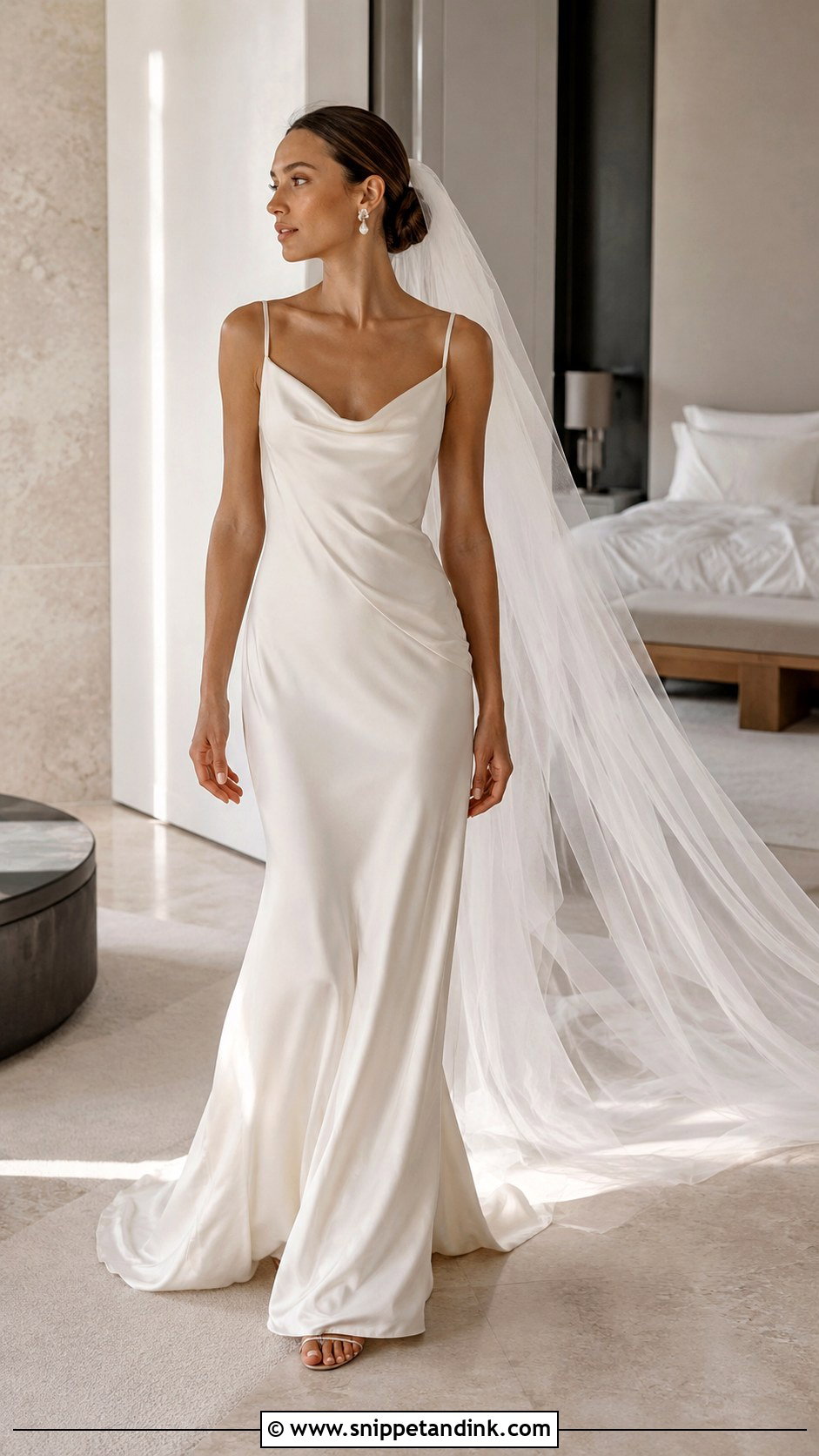
A slip dress only looks relaxed when the fabric has enough weight to fall rather than cling. Silk charmeuse, heavier satin and crepe do this; thin polyester satin shows every ripple. Look for a bias cut with a cowl, scoop or straight neckline and tailored straps. Bring your undergarments to every fitting, because lightweight fabric reveals lines instantly. A long sheer veil gives contrast, and a tailored blazer or removable cape covers you for the evening.
12. Tea Length Wedding Dress With Heels
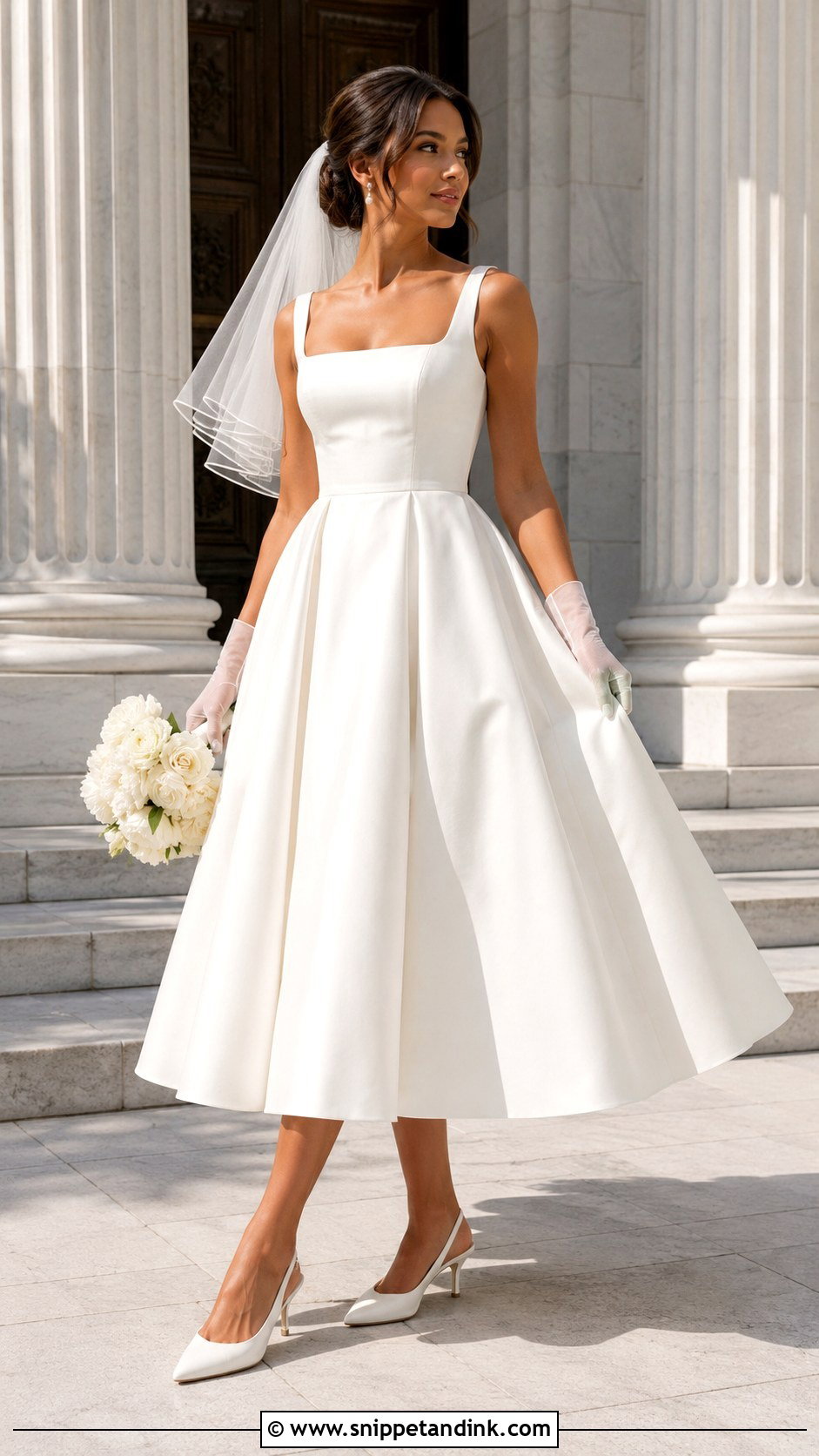
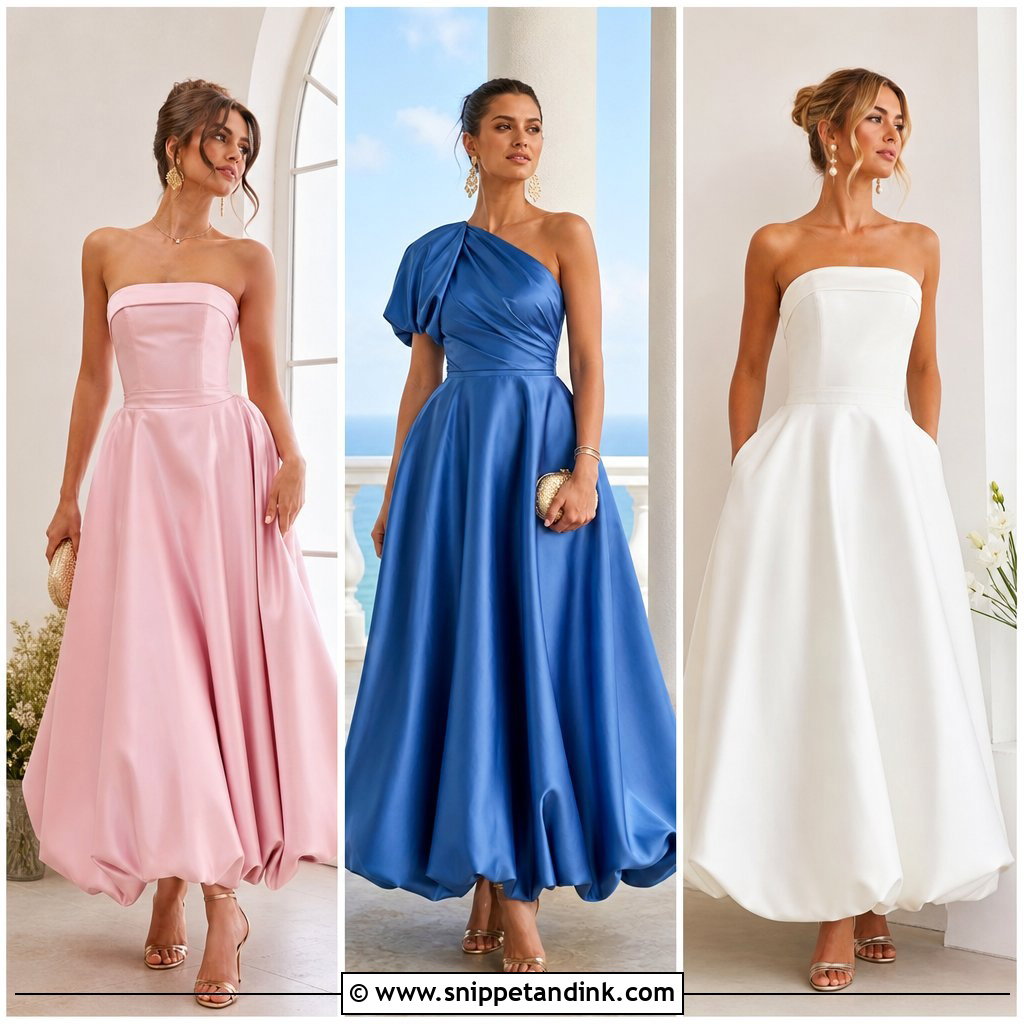
Tea length shows your shoes, so the hem position is a styling choice and a tailoring one. A fitted bodice with a full midi skirt, or a clean column between knee and ankle, both work in satin, mikado or structured crepe. I hem it at the narrowest part of the calf, which is usually the most flattering point. Pointed pumps or slingbacks, short gloves and a compact veil suit it. Too many retro details at once can tip it into costume.
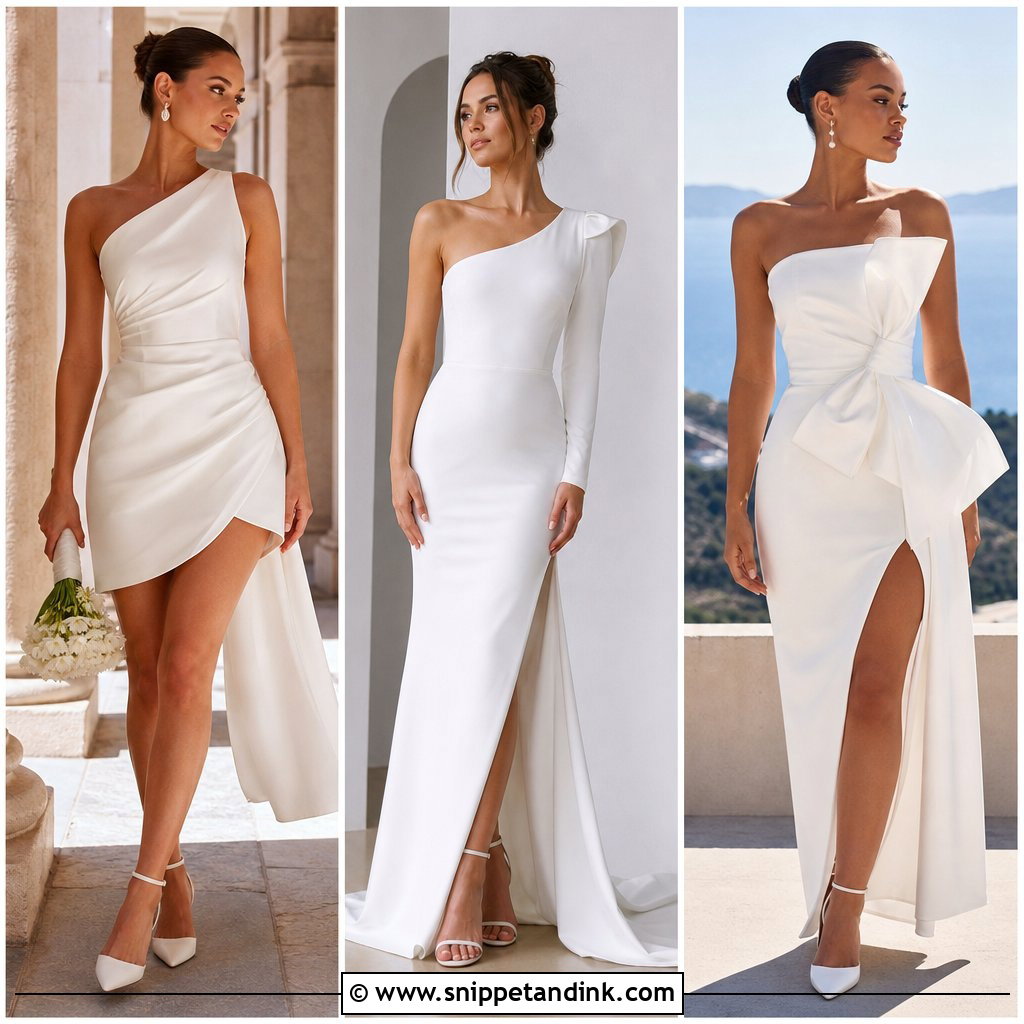
13. Modern Bridal Mini Dress
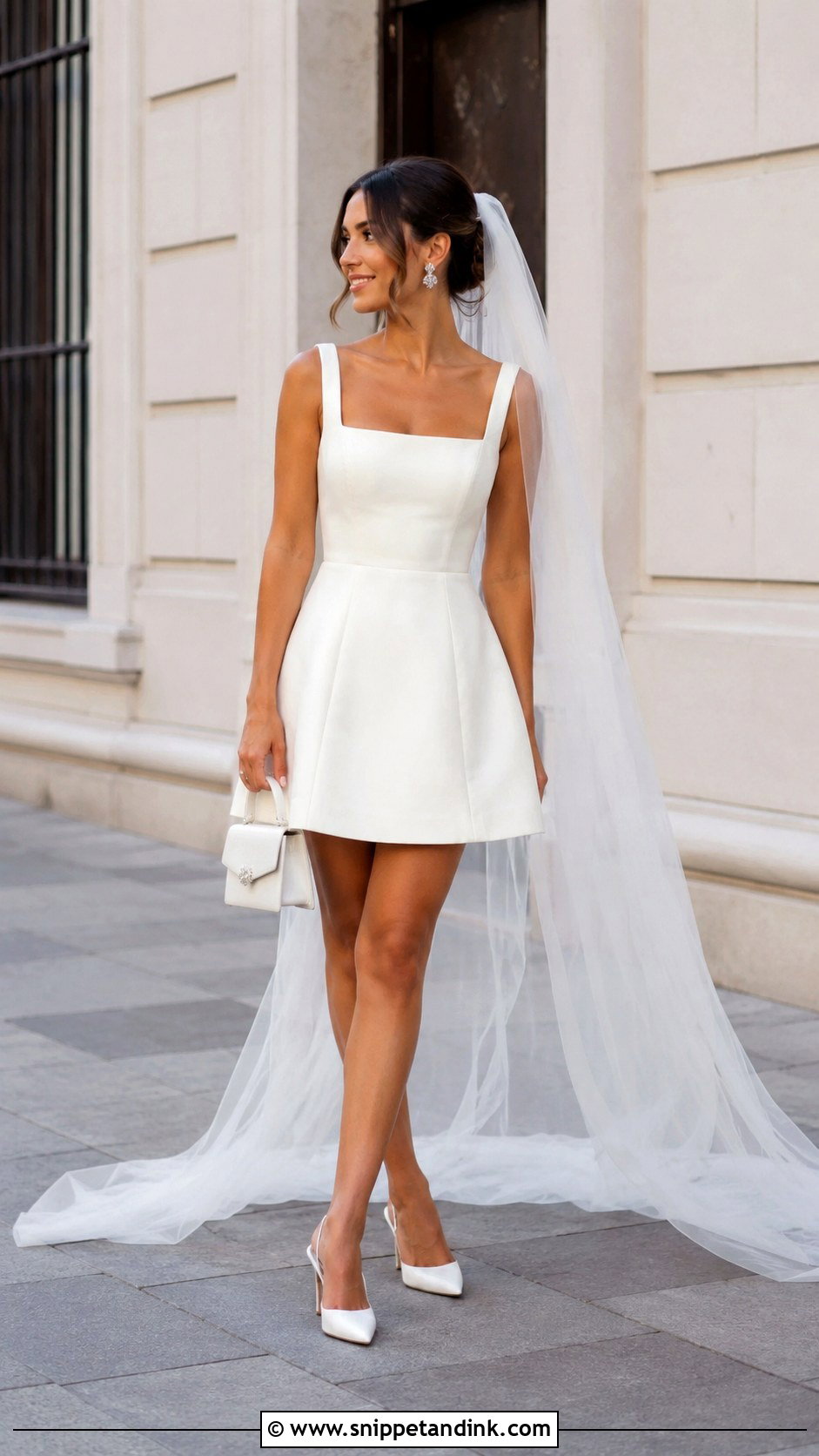
Minis need strong construction to look bridal and not like a party dress. A tailored shift, structured A-line or fitted square-neck dress with some waist definition does that. A short veil reads clearly bridal; a long one is a deliberate contrast. Long sleeves or an oversized white blazer give coverage. I always have clients sit down in a mini at the fitting, and if they’re unsure, tailored shorts sewn beneath a fuller skirt solve it.
14. Bridal Jumpsuit With Detachable Skirt
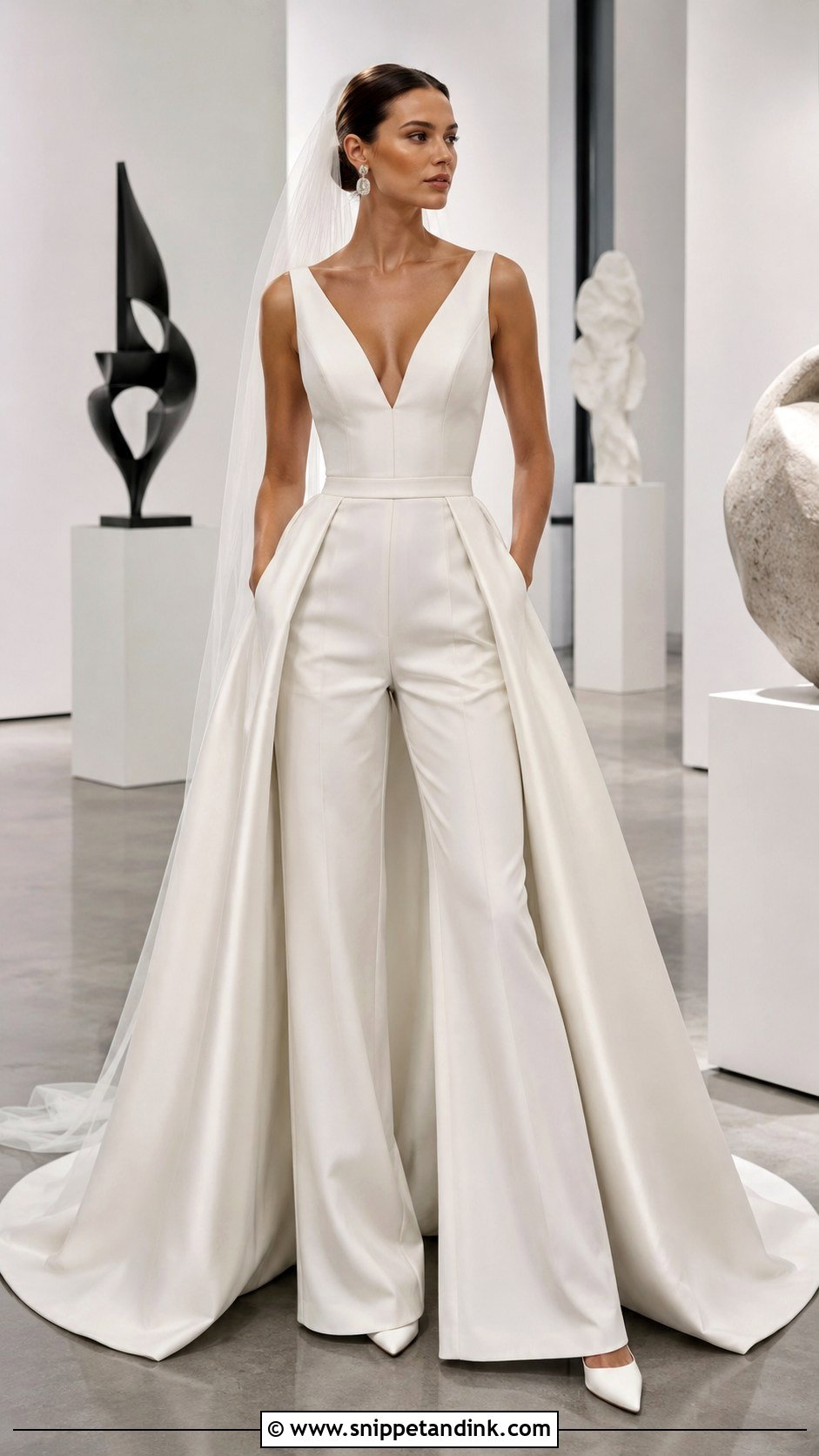
A bridal jumpsuit with a detachable skirt gives you a gown entrance and trousers for the party. The trap is fit: a jumpsuit that’s even slightly loose through the shoulders or crotch looks borrowed, so tailoring has to be sharp at the shoulders, waist and hem. The overskirt should fasten securely and come off without three people helping. Pointed pumps, bold earrings and a minimalist veil keep it clean.

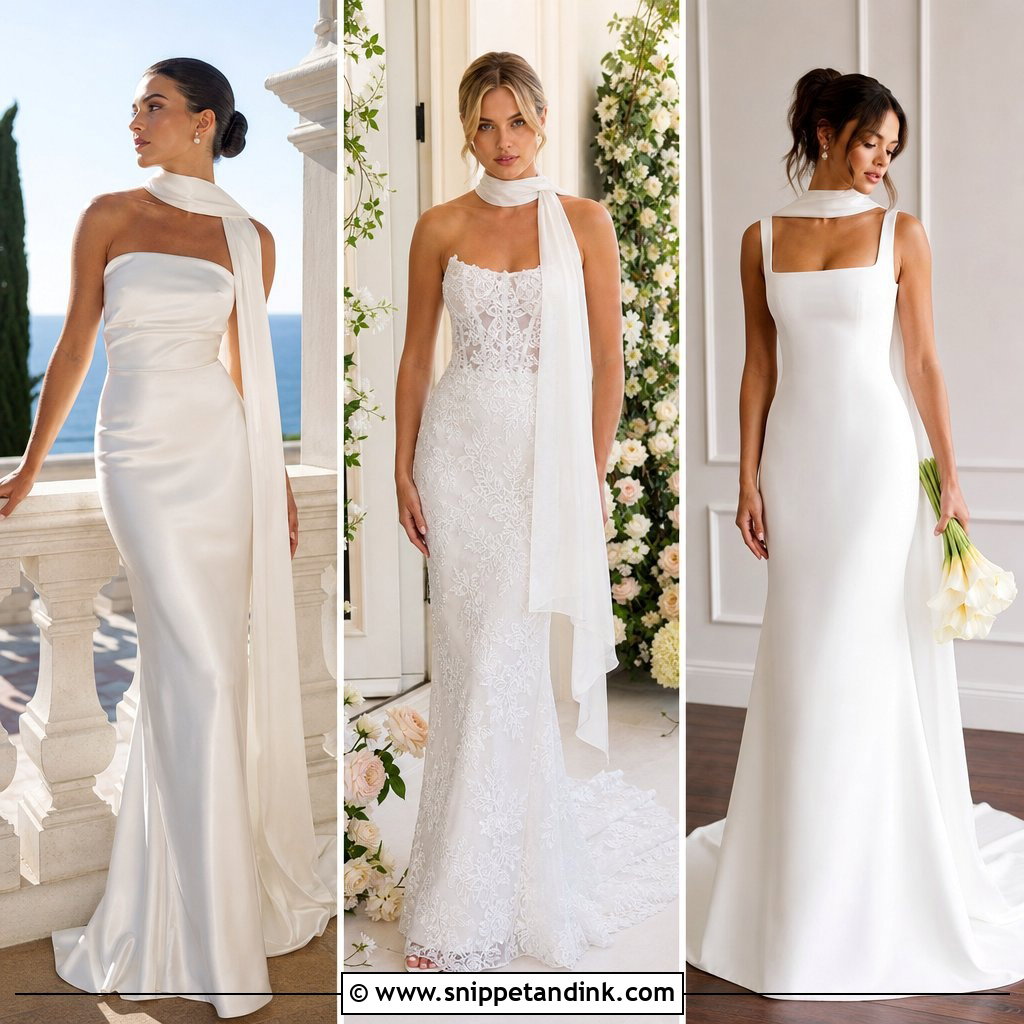
15. Two Piece Bridal Skirt Set
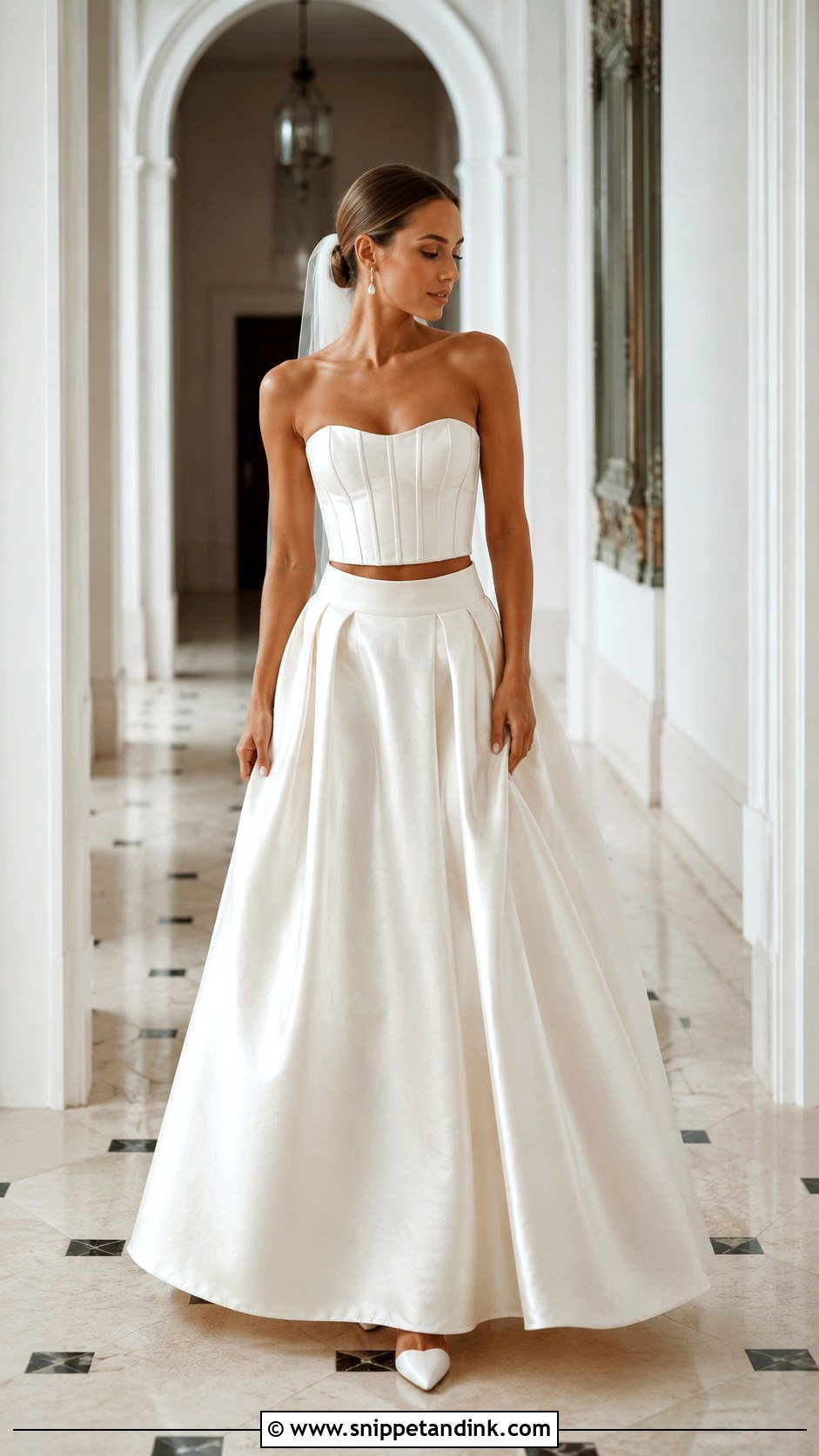
Separates let a tailor fit the top and skirt independently, which suits brides whose top and bottom sizes differ. Pair a corset, square-neck top or structured cropped blouse with a high-waisted skirt in exactly the same shade; mismatched whites look obvious in photos. A sliver of skin is fine, but I’d have the tailor add a discreet hook or button tab to stop the top riding up. A full satin skirt is dramatic, a crepe column cleaner.
16. Wedding Dress With Detachable Sleeves
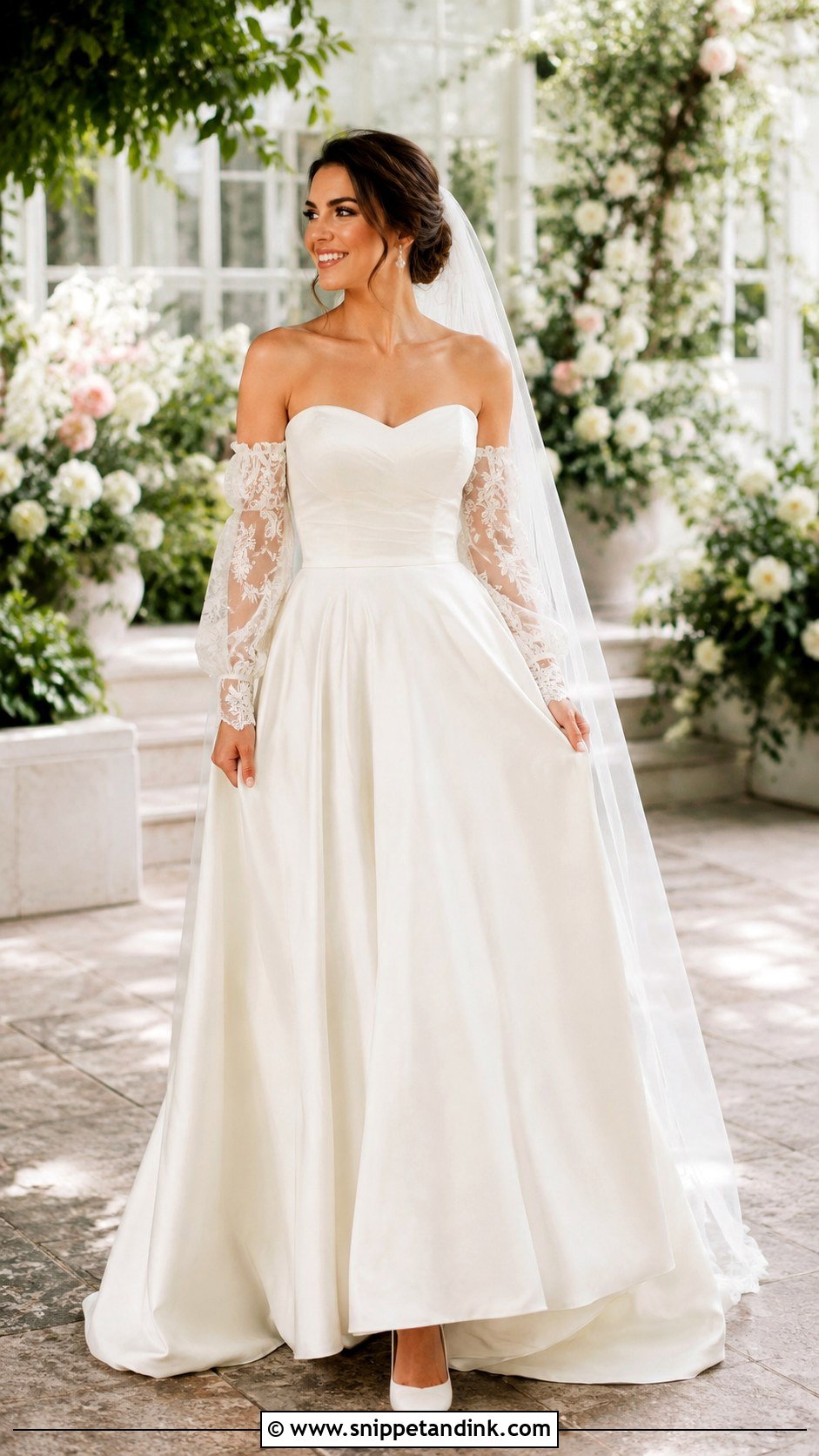
Detachable sleeves let one gown look covered for a ceremony and strapless for the reception. They attach near the armhole, usually with hooks, snaps or elastic loops, and I insist the bride or her helper practices removing them before the day. Sheer lace, puffed organza or fitted crepe sleeves all work. Choose a veil that won’t catch on the fastenings. The sleeves should stay put without restricting your shoulders when you hug.
17. Cape Sleeve Wedding Dress
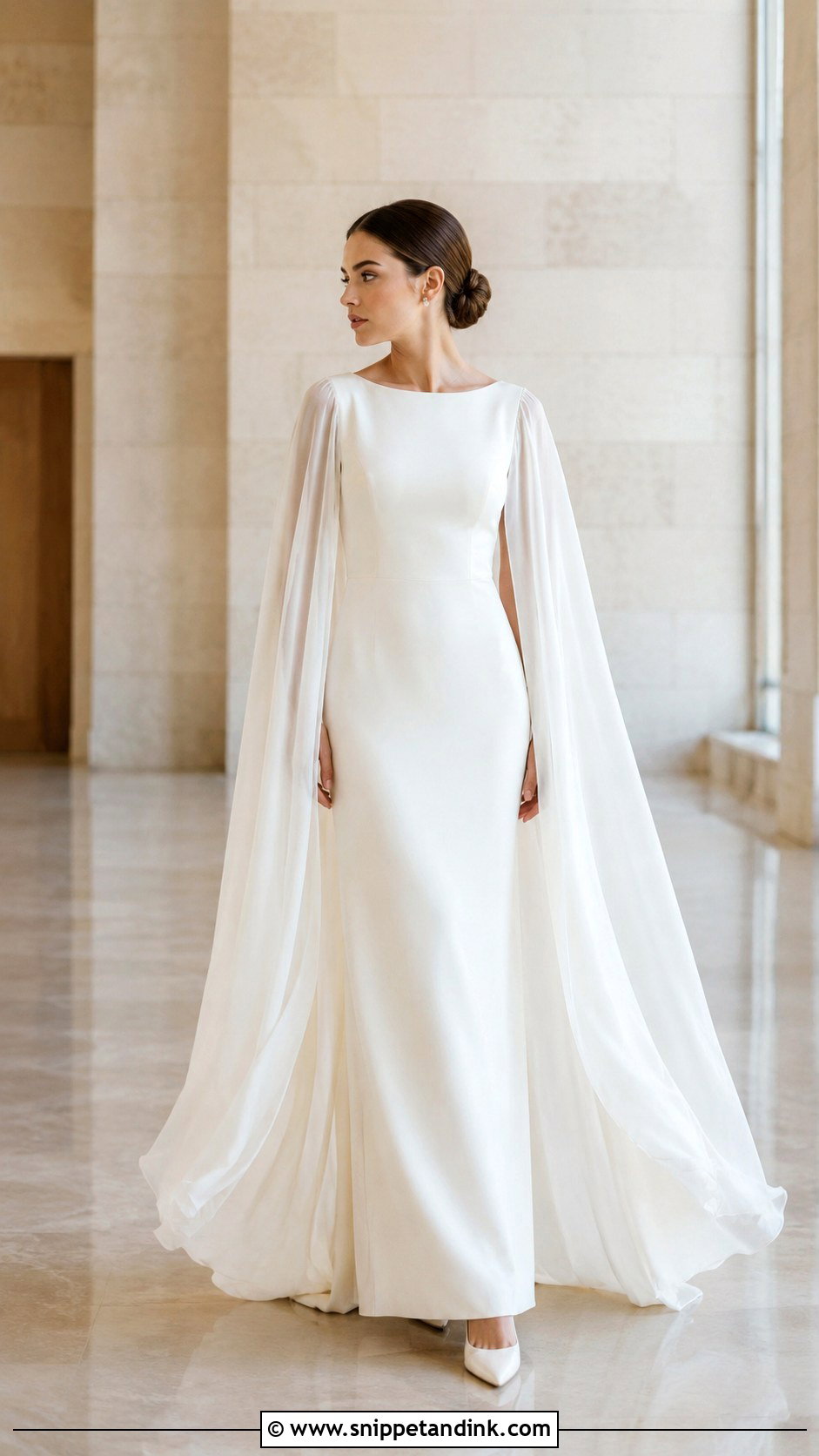
On a simple column or A-line, a cape becomes the main feature. Chiffon floats, while crepe or satin looks more architectural. I test capes outdoors whenever possible, because a breeze shows quickly whether the attachment pulls the neckline backward. If the cape runs into a train, skip the veil; with a shoulder-length cape, a short plain one works. Small earrings, pointed pumps and a sleek bun keep the upper body clean.
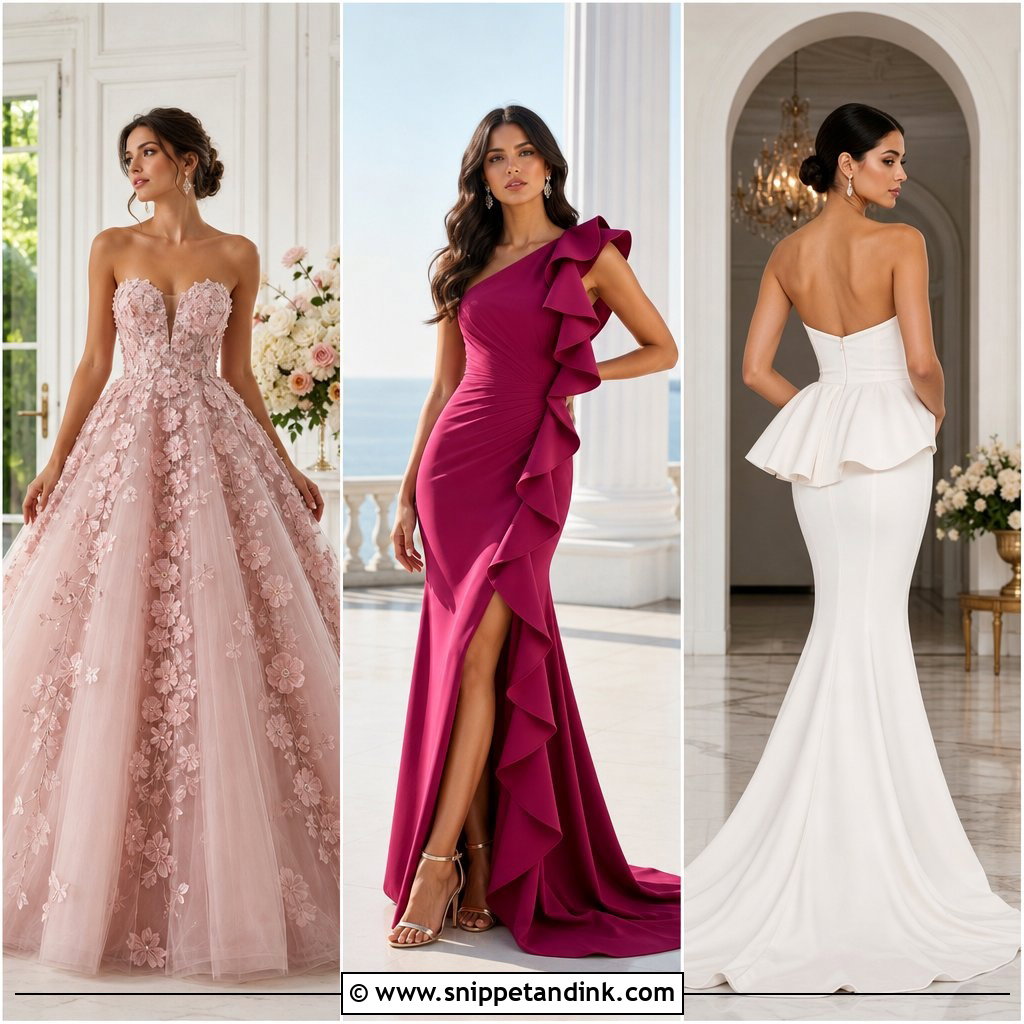
18. Colored Floral Wedding Dress
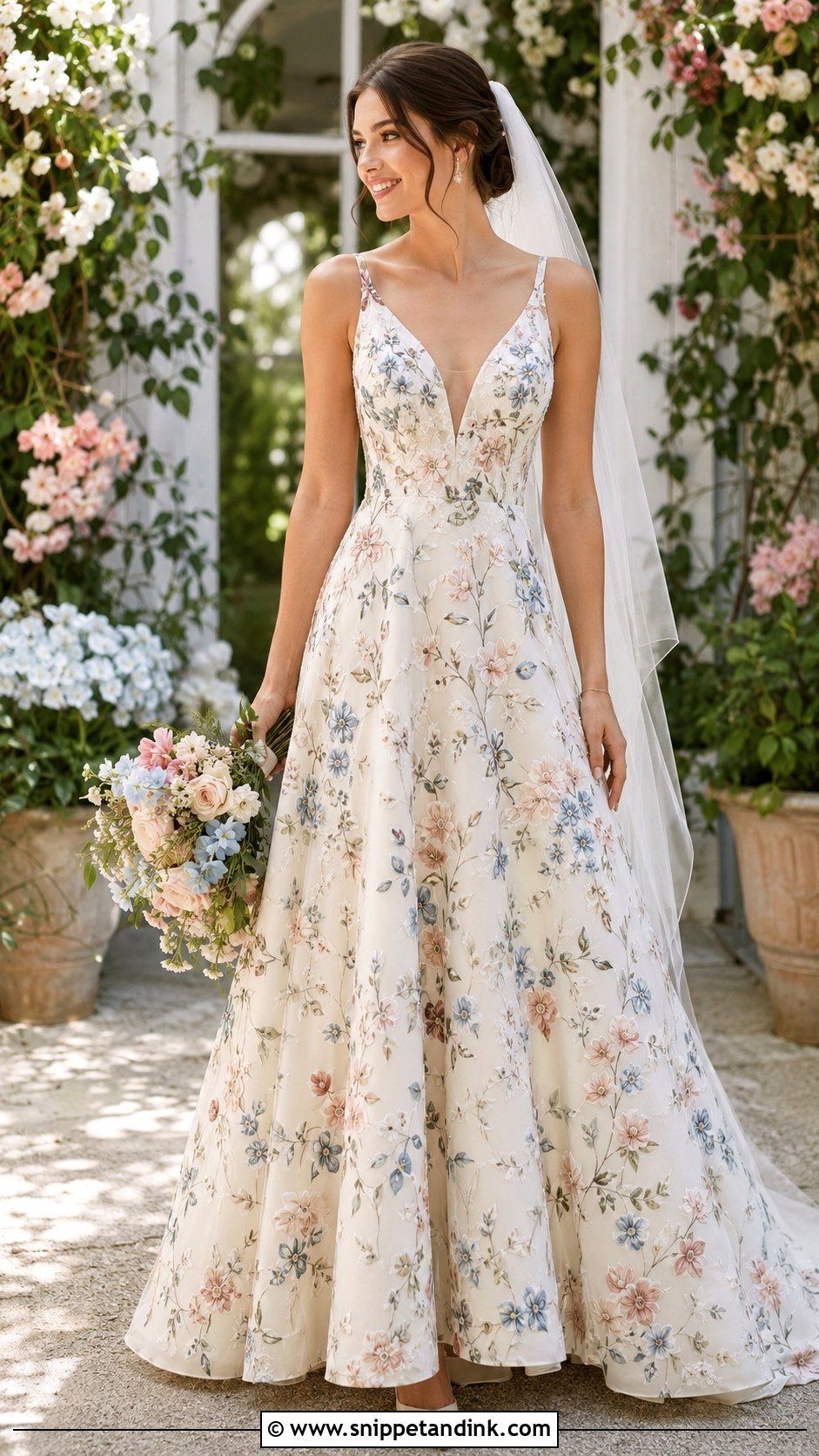
Color in bridal is more forgiving than people fear, as long as it sits over ivory. Soft blue, blush, lavender or botanical embroidery all read as bridal on a structured bodice and full A-line. I ask for fabric samples before choosing accessories, since embroidered and printed colors shift between daylight and indoor light. Ivory or muted shoes, delicate earrings and a plain veil keep it calm, and a bouquet with mostly greenery won’t fight the pattern.
19. Black And White Wedding Dress
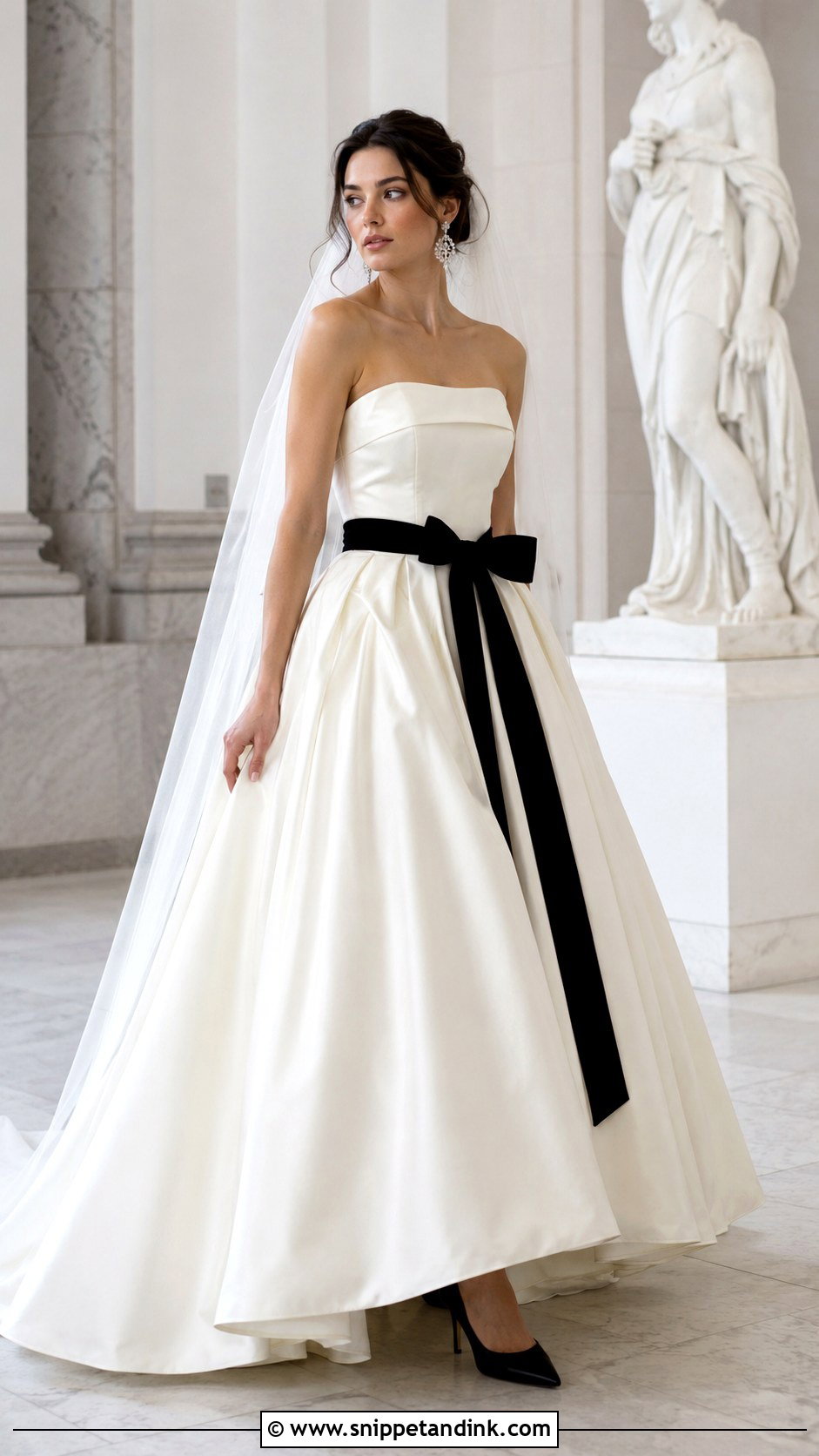
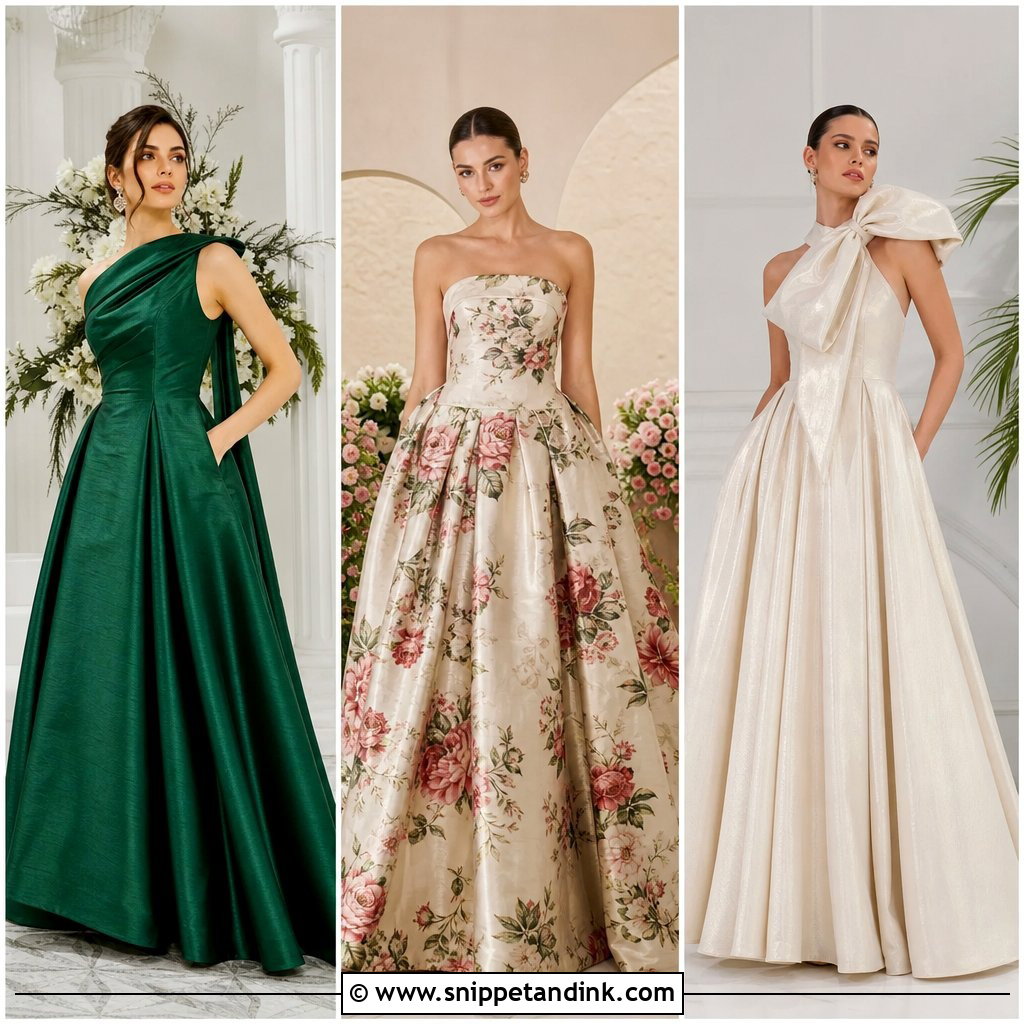
Black accents work when there are only one or two of them. A velvet waist bow, narrow trim, gloves or an oversized back detail on an ivory column, A-line or ball gown is plenty. I check any removable black bow or sash from front, side and back, because placed slightly wrong it cuts the silhouette in half. Black pointed pumps, crystal earrings, a plain ivory veil and a sleek updo suit museums, lofts and formal hotels.
20. Modern Bridal Suit With Veil
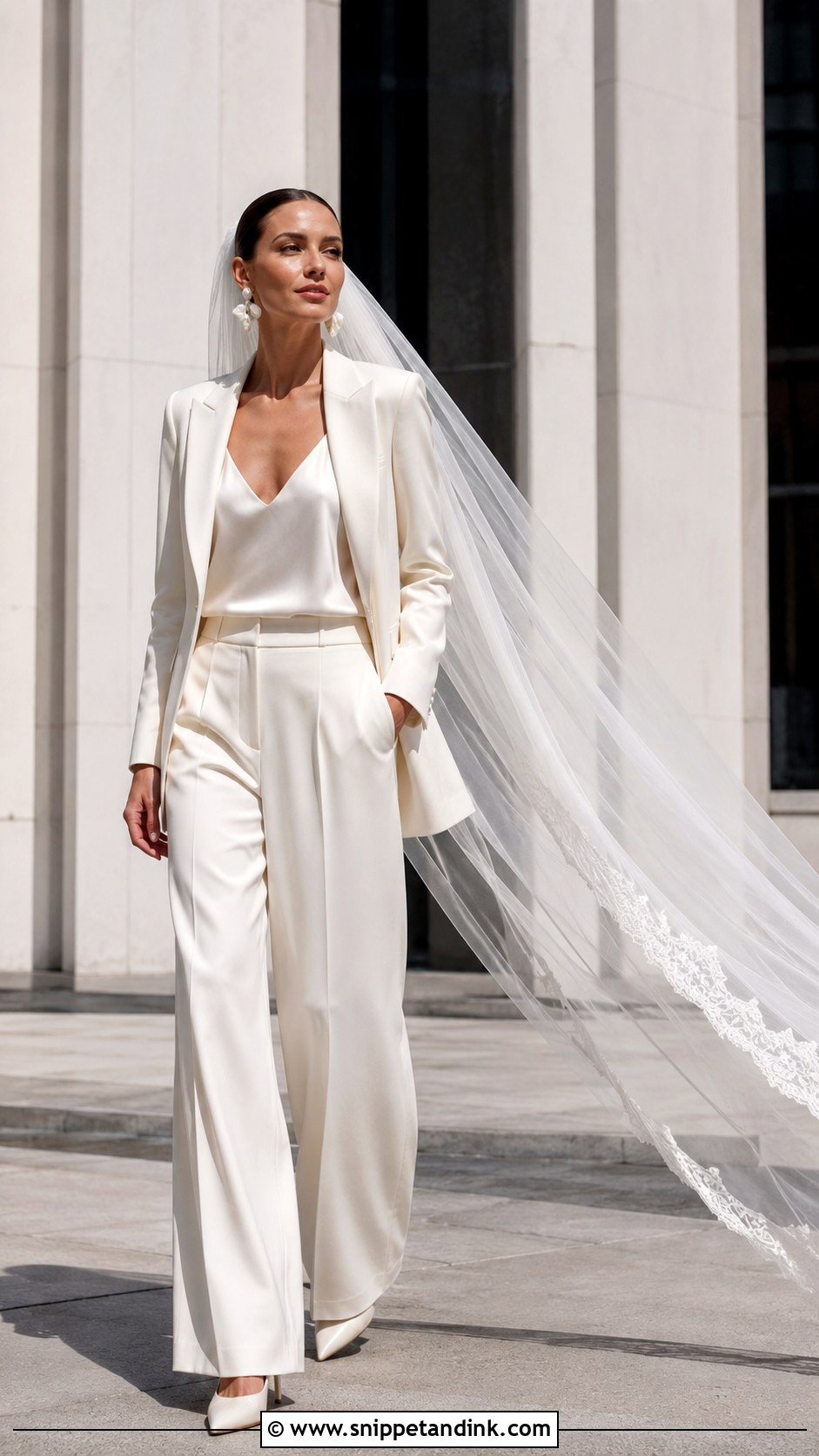
A modern bridal suit lives or dies on tailoring. The trouser hem should just meet the shoe without dragging, and the blazer should close without pulling across the bust. Ivory crepe, satin or light wool in a single-breasted cut, with a camisole, corset top or high-neck shell underneath, sets the coverage. Petite brides often do better in a cropped jacket; a softly shaped blazer suits curvier figures. A long veil adds the ceremony drama.
When a Zip Breaks or Red Wine Lands on Ivory
Something small goes wrong at most weddings. It’s rarely a disaster if someone knows what to do, so I brief a bridesmaid on these before the day.
- Broken zip: a needle, ivory thread and a few small safety pins will close a gown for the night. A zip that splits below the slider can often be walked back with pliers.
- Snapped bustle loop: carry a length of ribbon and tie the train up from the inside.
- Spills: blot with plain water and a white cloth, working inward. Never rub, and never use colored napkins or wipes with fragrance.
- Makeup on the neckline: let foundation dry, then brush it off gently with a clean dry cloth before touching it with water.
- Torn hem: fashion tape or a quick tack stitch holds until the dancing ends.
Put all of it in one small pouch with a handheld steamer if the venue allows. The person holding it should know the gown, its closures and where the bustle points are.
Your Outfit Should Keep Up With You
Columns, ball gowns, suits, minis and convertible separates are all modern bridal options now, and none is more correct than another. I start with whatever silhouette makes a bride stand up straighter, then check fabric, fit, neckline and construction against her day. Shoes you can stand in, jewelry in proportion and accessories that support the clothes come next. Leave proper time for alterations and movement tests. The outfit should look right in the venue and still feel comfortable when the last song plays.
You'll Like These Ideas:





Leave a Reply