
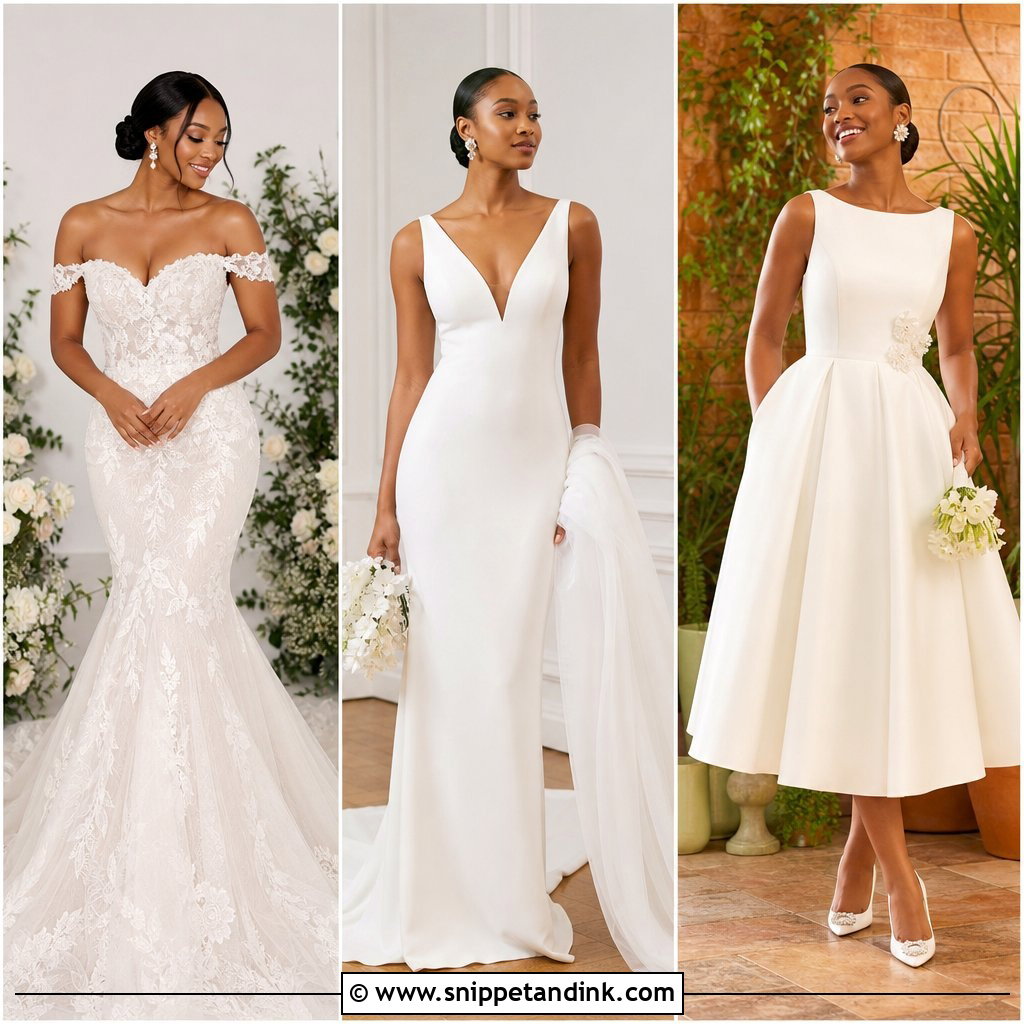
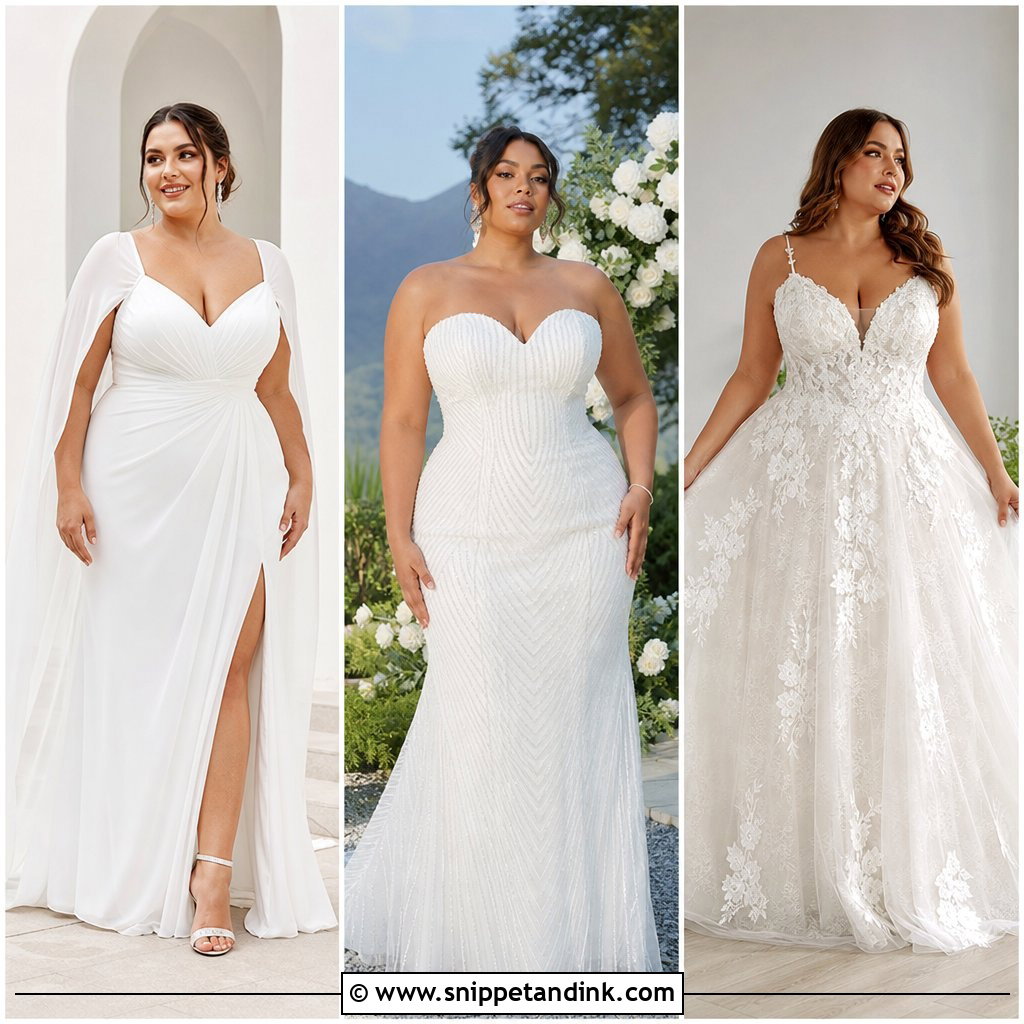
Sleek dresses get dismissed as plain until a bride puts one on and sees how much the cut is doing. I’ve grouped twenty of them here, from fluid satin slips and structured crepe gowns to a couple of minis and a pared-back ball gown, and paired each with the shoes, jewelry and veil I’d reach for. Alongside the styling you’ll find the fit checks that matter for each shape, since a minimalist dress shows a loose strap or a short hem far faster than a lace one. Venue, season, comfort and body shape all come into it, and so does the question of what you’ll change into for the party.
Reading a Sample Gown That Isn’t Your Size Yet
Most bridal shops carry one sample of each design, and it rarely fits. On a beaded gown that hardly matters. On a sleek dress, the fit is the design, so a sample clipped at the back can make a beautiful cut look sloppy. Here’s how I help brides see past that.
- Ask the consultant to clip the back firmly and to show you a side view. A column or sheath clipped properly looks completely different.
- Bring heels near the height you’ll wear. Hem length changes how a straight skirt falls, and flats make every column look too long.
- Wear a smooth nude strapless bra, or ask what support the gown has built in. Visible straps and lines distract from the cut.
- Look at the photos on your phone afterward, not only the mirror. Plain fabric reads differently on camera, and you’ll spot pulling at the seams.
- Ask what the dress is made of. Two gowns can look alike on a hanger, but crepe, satin and mikado behave very differently once you move.
If you’re between sizes, the shop will usually order the larger and take it in, since letting a gown out is often impossible. Alterations on a minimalist gown can look minor and still take several fittings, so ask for an estimate early and expect it to vary by seamstress.
1. Satin Column Wedding Dress With Pearl Earrings
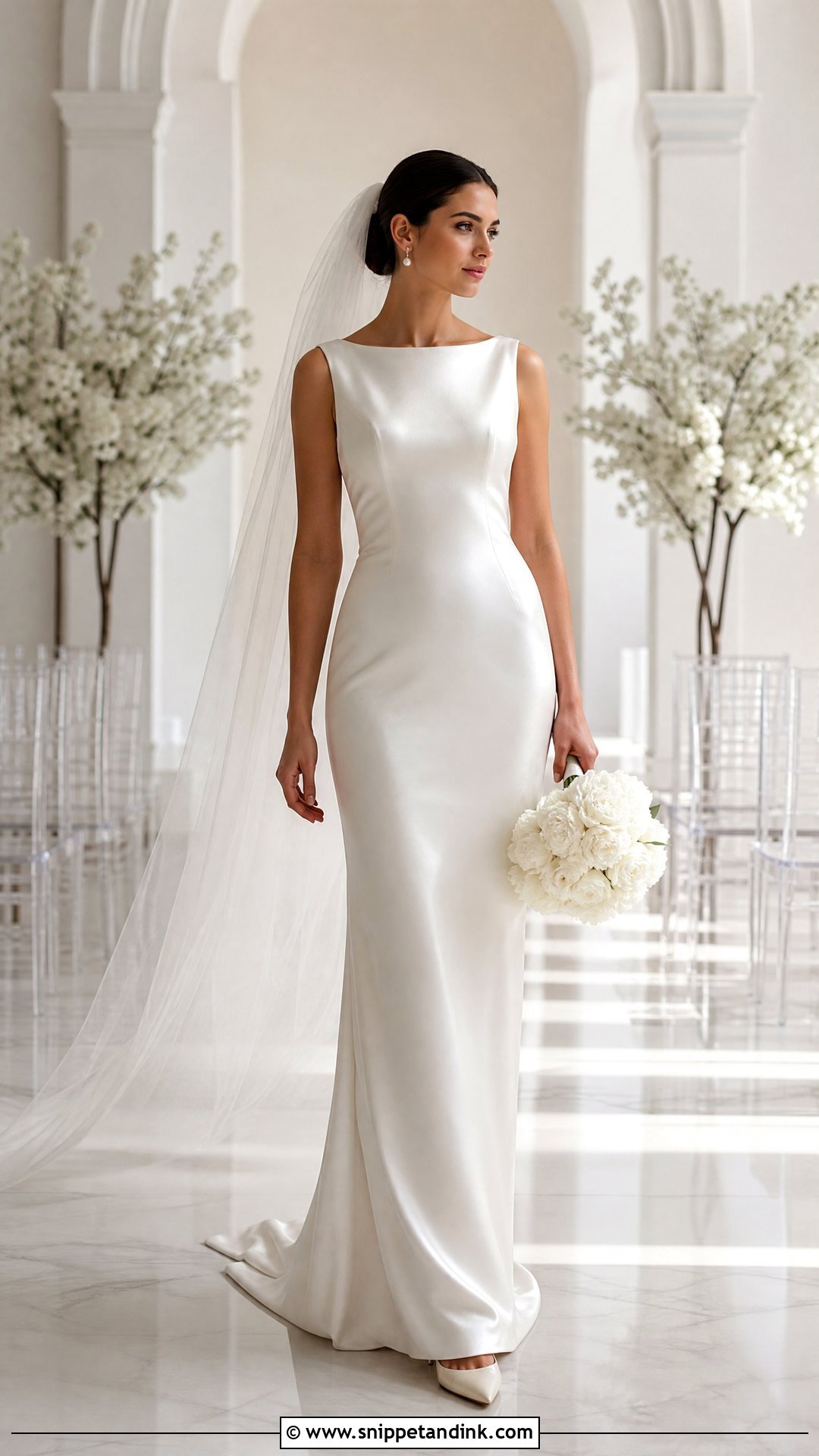
Heavier satin is the whole secret to a column that looks expensive. Thin satin clings and shows every line, while a substantial weight skims past the hips and hangs straight. A gently structured bodice gives support without bulk, and the straight skirt keeps the outline long. I’d finish it with pointed ivory pumps, small pearl earrings and a satin clutch, plus a low bun that leaves the neckline and shoulders clear. A sheer fingertip veil with a raw or plain edge is enough. Get the hem set while you’re standing in your actual wedding shoes; on a column, half an inch too long means you’ll be stepping on it all night.
2. Square Neck Crepe Wedding Dress With Low Heels
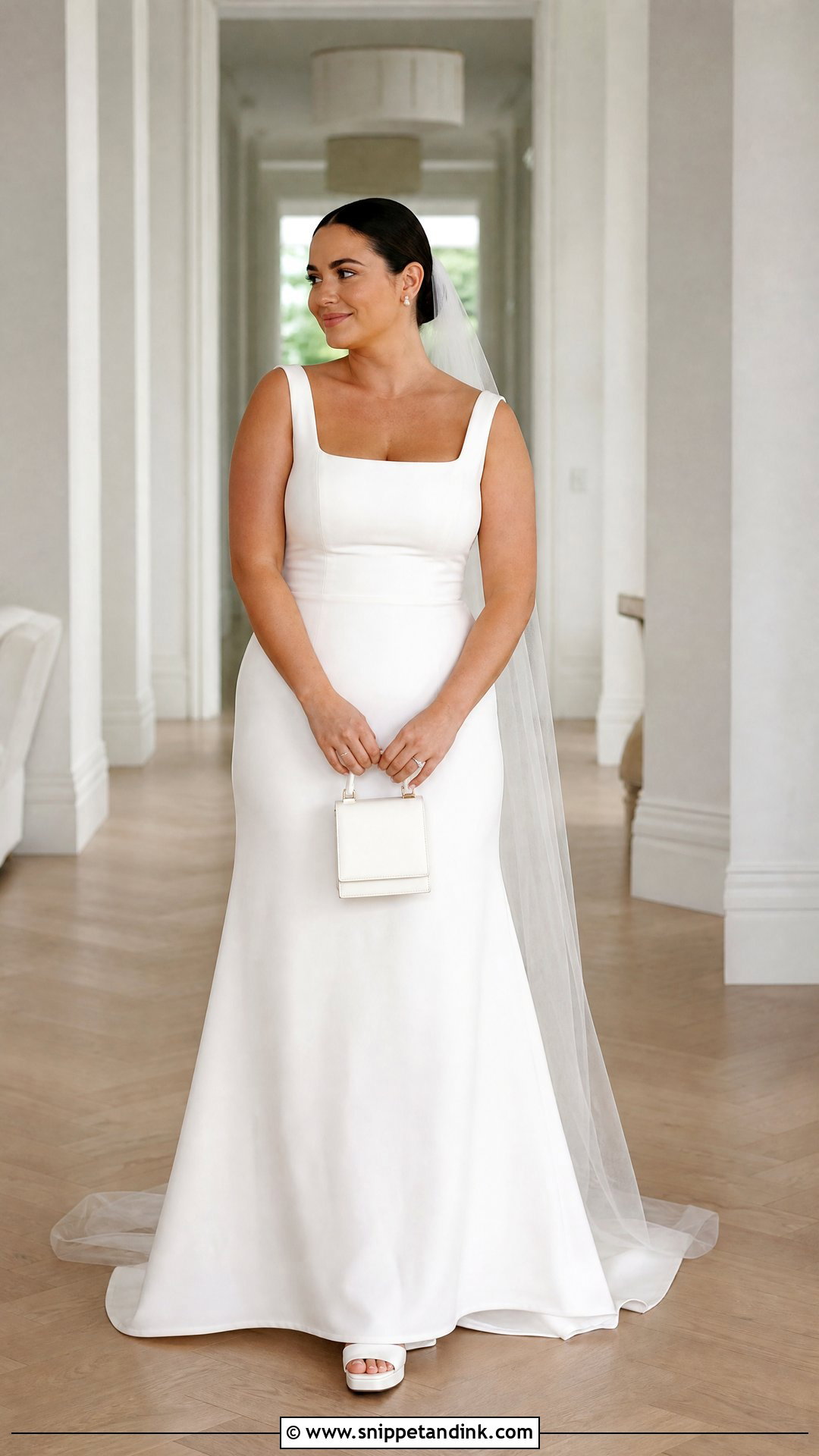
Crepe and a square neckline make a good pair because the matte surface keeps the geometry crisp in bright light, indoors or out. Watch the corners of the neckline: they should lie flat when you lean forward, and wider straps help with that. A gently flared skirt lets you walk freely without adding much volume. Low block heels, a structured mini bag and small diamond or crystal studs keep it neat. I like a center-parted chignon here, with a chapel-length veil that is either completely plain or edged in a narrow satin trim echoing the gown’s lines.
3. Strapless Sheath Wedding Dress With Long Veil
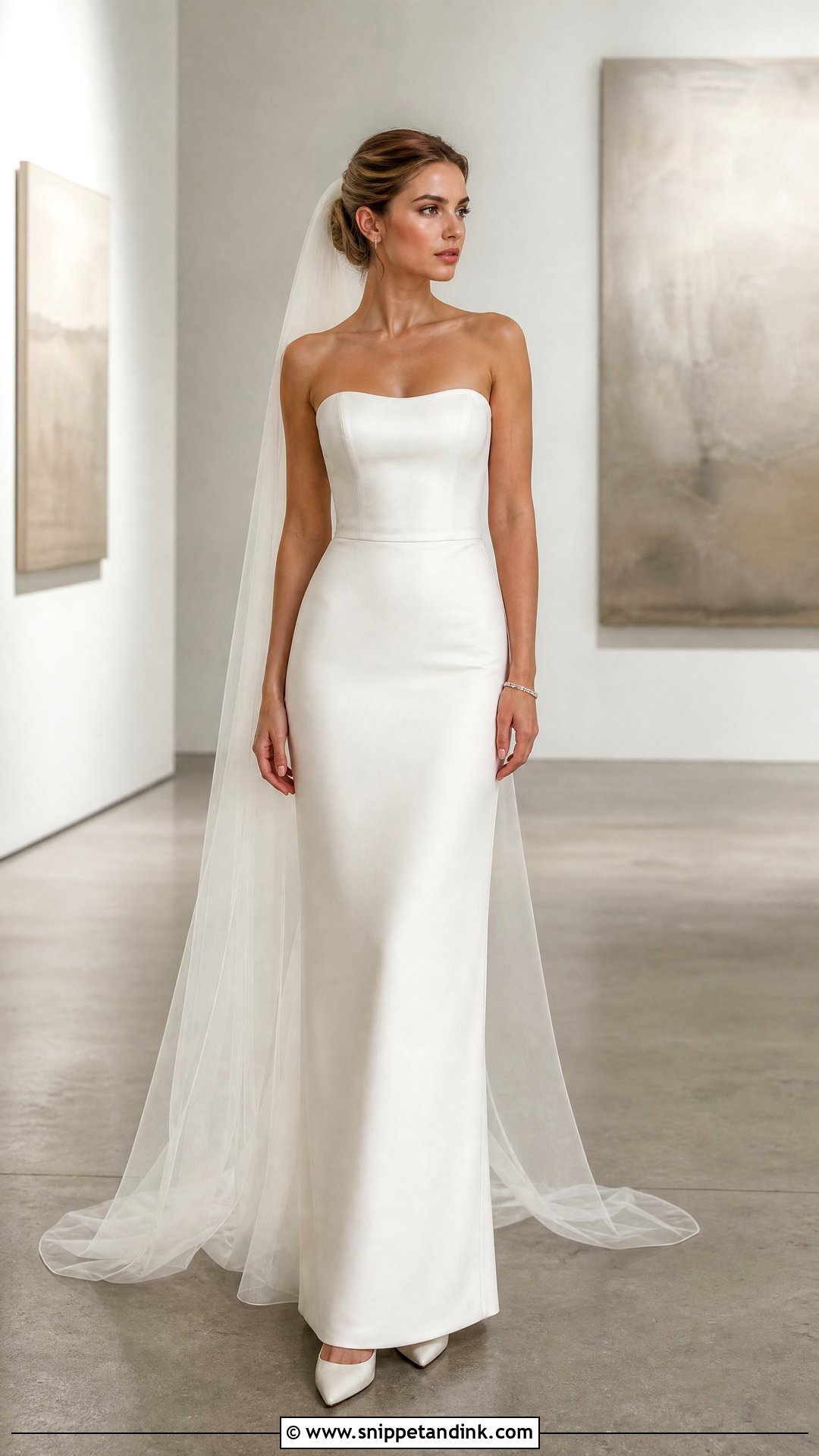
A strapless sheath wedding dress stands or falls on its internal structure. Before I let a bride fall for one, I have her lift her arms and twist; if the bodice slips, the boning or fit is wrong, and no amount of tape fixes that for twelve hours. A softly curved neckline tends to flatter more bodies than a dead-straight edge. A narrow skirt with a small back slit keeps walking easy. Pointed heels and a fine bracelet are better here than a heavy necklace, and a long plain veil adds movement behind the fitted shape. A polished updo or smooth waves behind the shoulders, plus a small bouquet that doesn’t hide the bodice, round it off.
4. Cowl Neck Slip Wedding Dress With Minimal Sandals
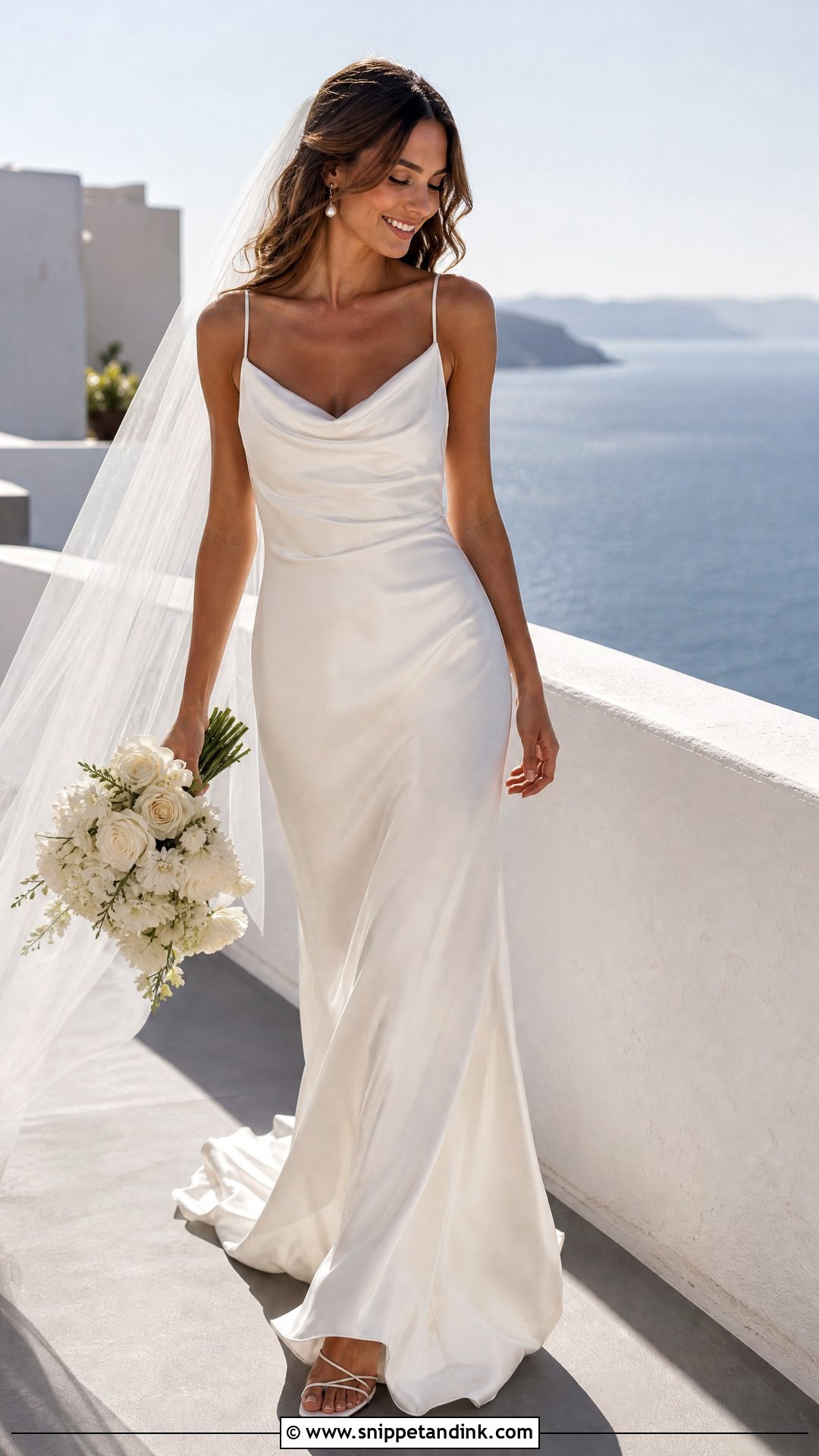
Bias-cut satin is fluid but unforgiving, which is why a cowl neck slip needs more planning than it looks. The cowl can open when you bend, so I ask the seamstress to tack it, and I check that the straps adjust and the skirt is lined. Support around the bust is a personal call; some brides want a built-in cup, others go without. Slim ivory sandals, a small top-handle bag and fine drop earrings suit this ’90s-inspired bridal outfit, with loose waves or a low knot and a light silk veil. Satin shows alteration marks and undergarment lines clearly, so look at the final hem and fit in daylight, not just under the shop’s lights.
5. Off Shoulder Wedding Dress With Pointed Pumps
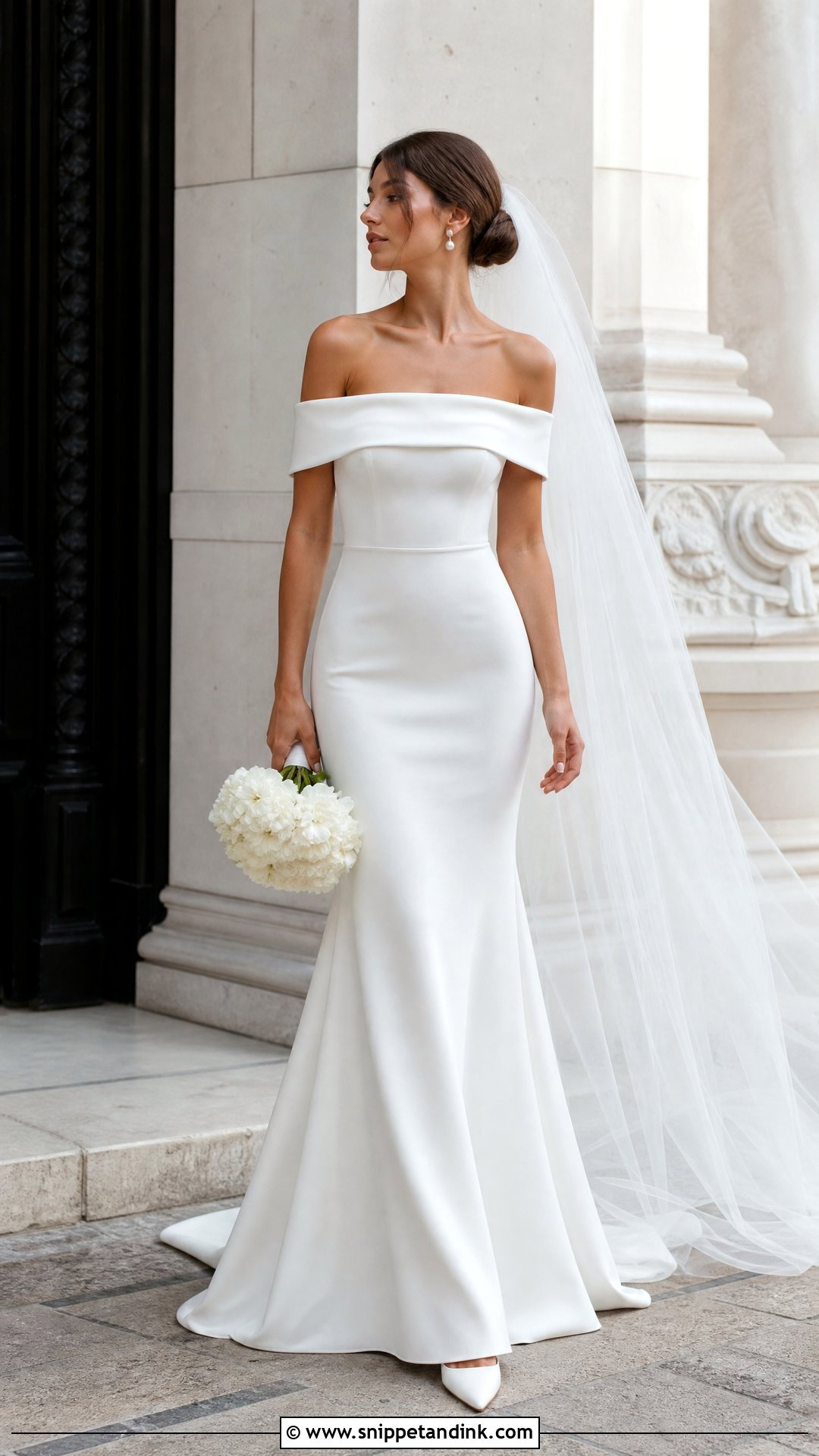
Off-the-shoulder necklines are about one test: raise your arms and see if the band stays put. A folded or softly draped band with some grip at the back holds; a loose one slides all day. Crepe on the bodice with a straight or lightly flared skirt keeps this sleek. Pointed pumps lengthen the line and medium pearl drops give a little movement near the face. I’d wear the hair in a low bun to show the shoulders, or sweep controlled waves to one side. Cathedral veils suit a formal room; a shorter veil is easier at a small venue. Leave necklaces off so nothing crowds the collarbone.
6. Halter Neck Wedding Dress With Statement Earrings
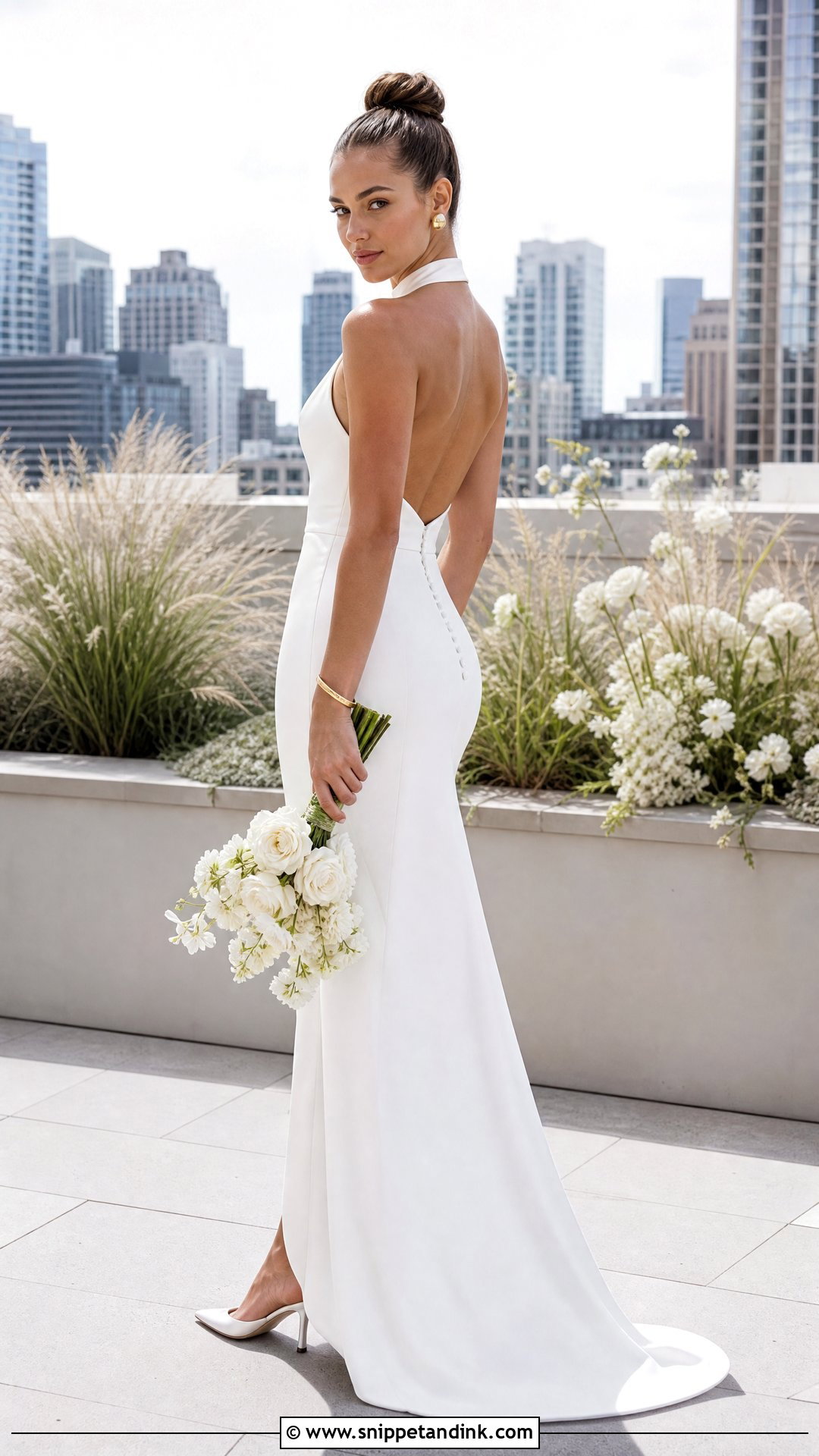
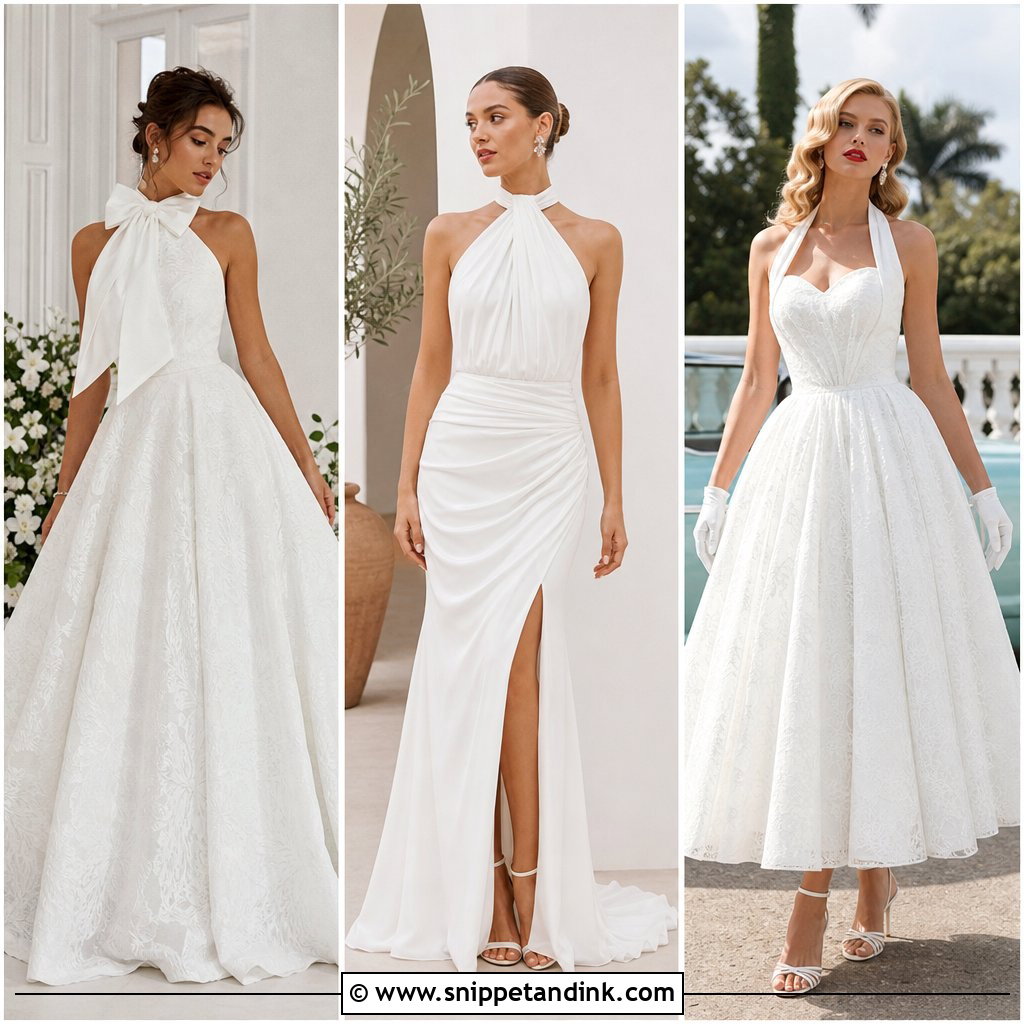
Halters pull the eye upward and give very clean coverage across the front, with the shoulders on show. The weight of the bodice hangs from the neck, though, so I check comfort after an hour, especially if the skirt is heavy. Smooth crepe, satin or stretch fabric with a fitted waist and straight skirt keeps it modern, and an open back adds contrast. Skip the necklace and put the effort into sculptural earrings instead. Low pointed heels, a narrow bracelet and a compact clutch are plenty. A high bun or sleek ponytail echoes the vertical line, and any veil should attach beneath the hairstyle so the halter stays visible.
7. Long Sleeve Crepe Wedding Dress With Closed Toe Heels
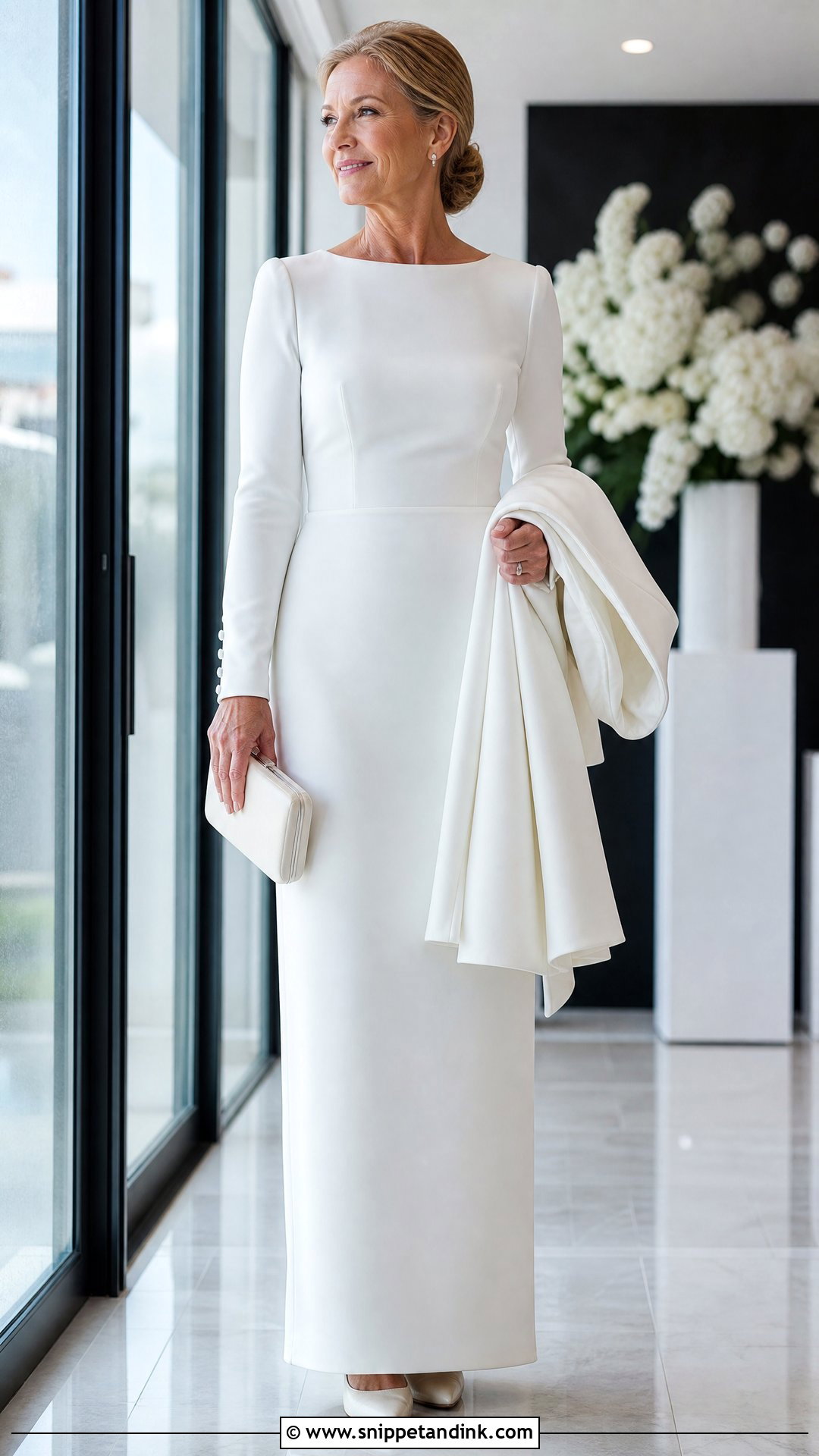
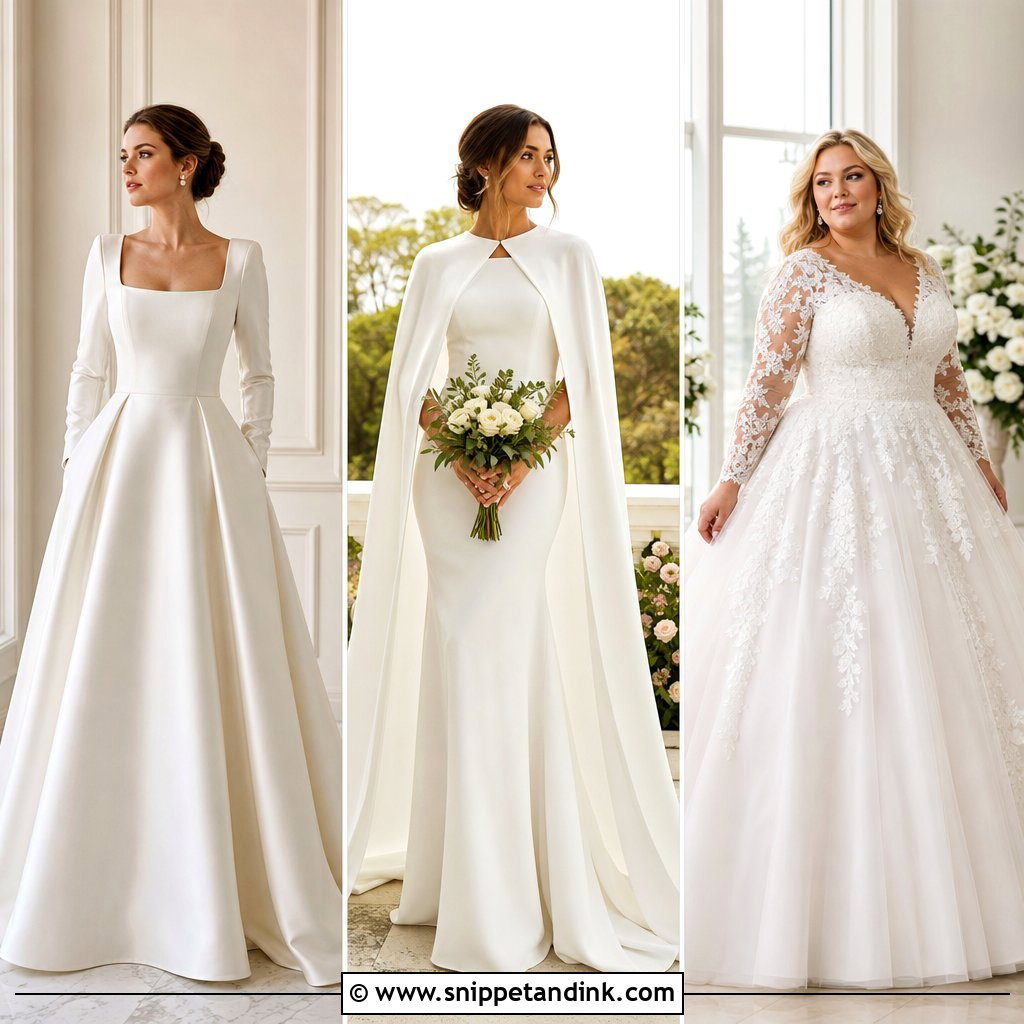
For a cold-weather wedding, long sleeves on crepe give you coverage without fuss. The thing I check is the armhole: cut too low or too tight, it stops you lifting your arms to hug anyone. A fitted bodice and straight skirt keep it streamlined, and covered buttons at the cuffs or down the back add detail without breaking the minimalist line. Closed-toe ivory heels, small earrings and a smooth clutch suit it. A neat chignon keeps the high neckline from looking crowded. Pack a tailored white coat for moving between locations, and plan for the floor-length veil to come off before the reception.
8. Bateau Neck Wedding Dress With Short Veil
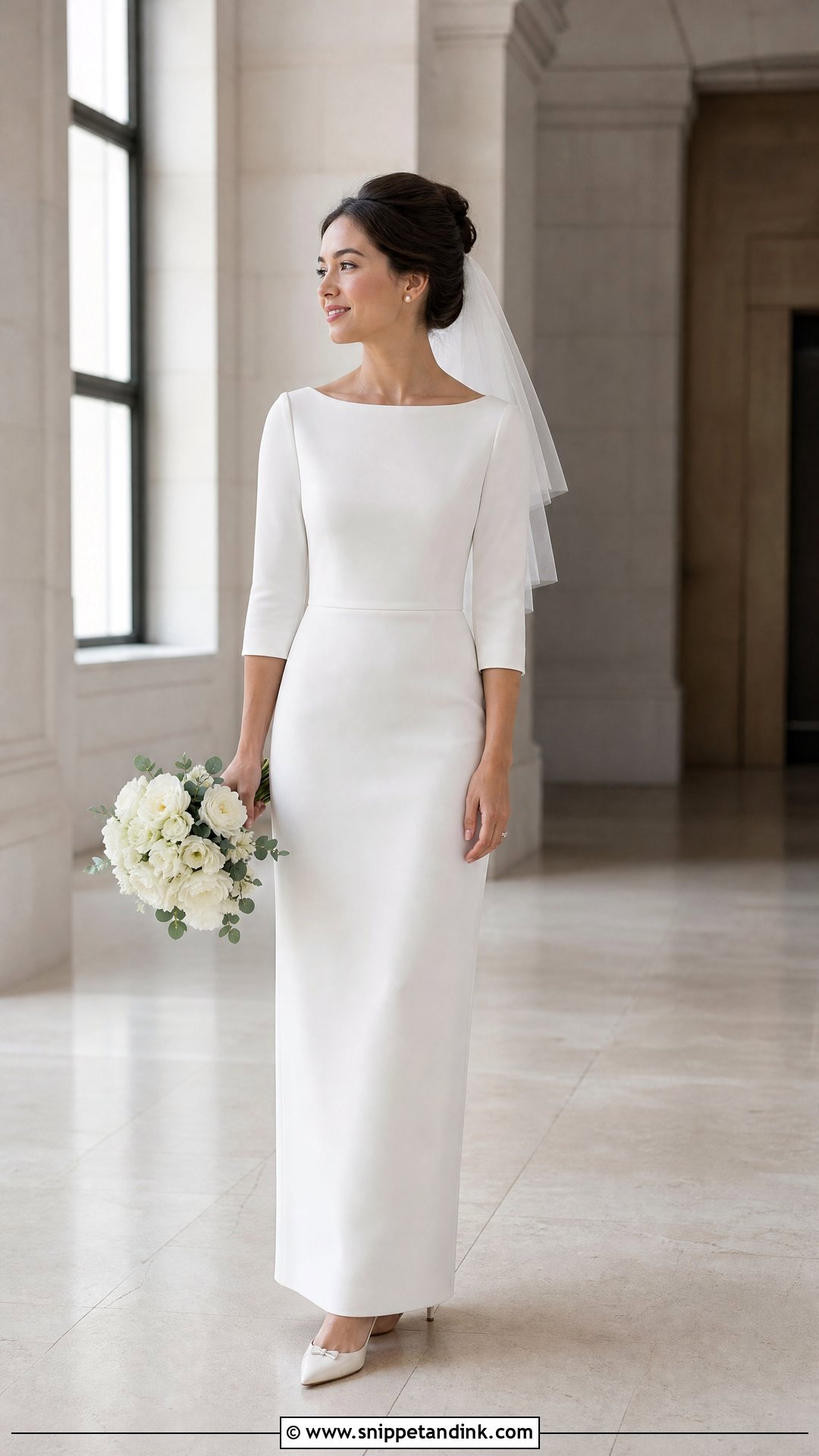
A bateau neckline runs straight across the collarbone and suits most shoulder shapes, though it can make a very full bust look wider, so I check that in a side mirror. Three-quarter sleeves or a sleeveless fitted bodice both work. Dense crepe or a silk blend holds the shape without looking stiff, and a narrow waist seam with a column skirt keeps it long. Kitten heels, pearl studs and a small rectangular clutch match the slightly vintage mood. Try a short veil or a clean birdcage, and a French twist, smooth bun or tucked-under bob. If the front is modest, a low back or buttons give people something to see as you walk the aisle.
9. Scoop Neck Wedding Dress With Delicate Jewelry
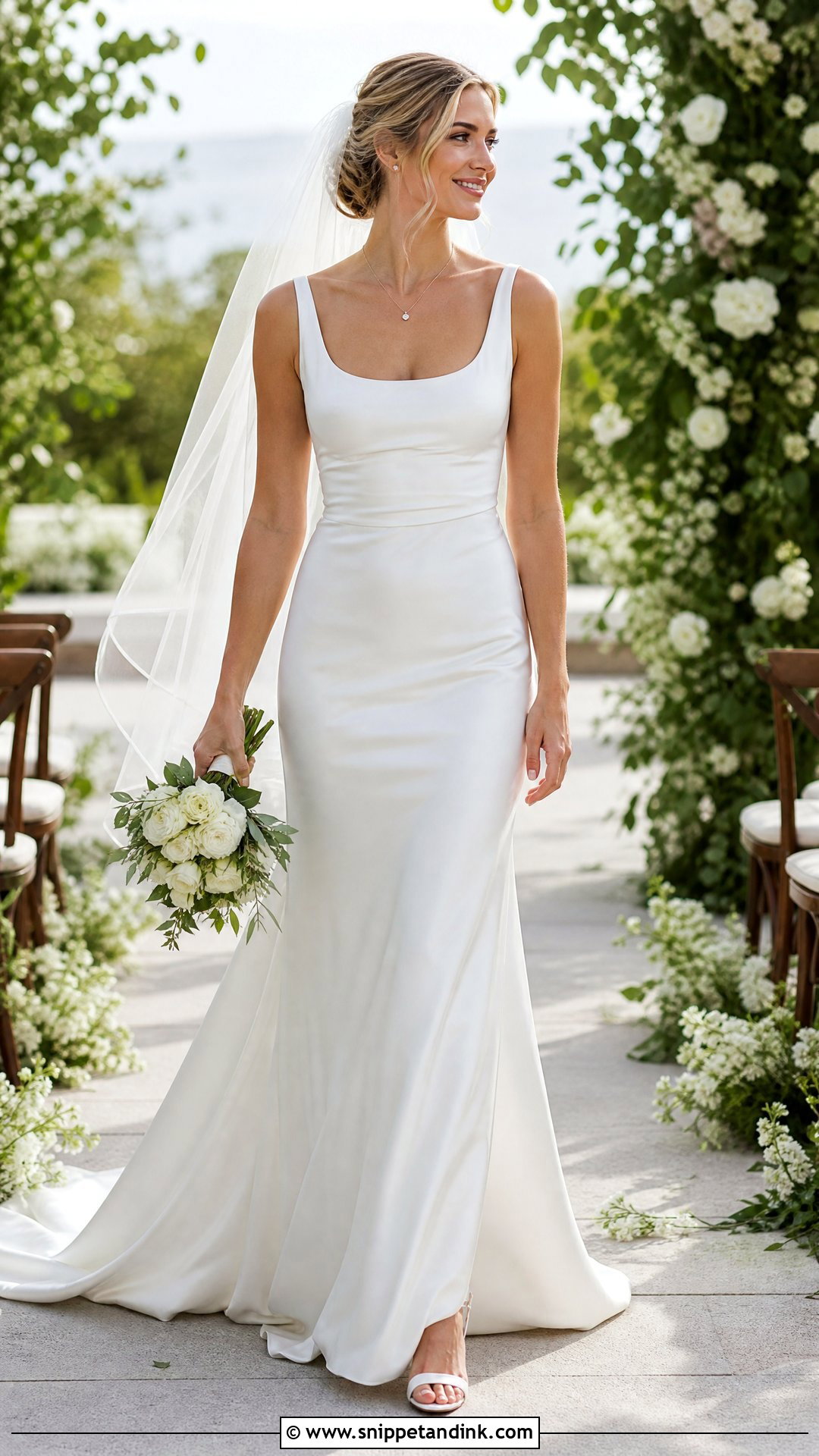
Scoop necks are easy to personalise because the depth can be raised or lowered at alterations. That makes them good for brides who aren’t sure how much coverage they want. Wide straps and a fitted waist give support, and a straight satin skirt falls cleanly to the floor. I’d add slim slingbacks, a fine pendant and tiny studs. A low ponytail or softly pinned waves keep it relaxed, and a sheer waist-length veil gives a light ceremony layer. Strap placement is the fiddly part: too wide and they slip off the shoulders, too close and they cut in, so sit and move in it before signing off.
10. Basque Waist Wedding Dress With Satin Pumps
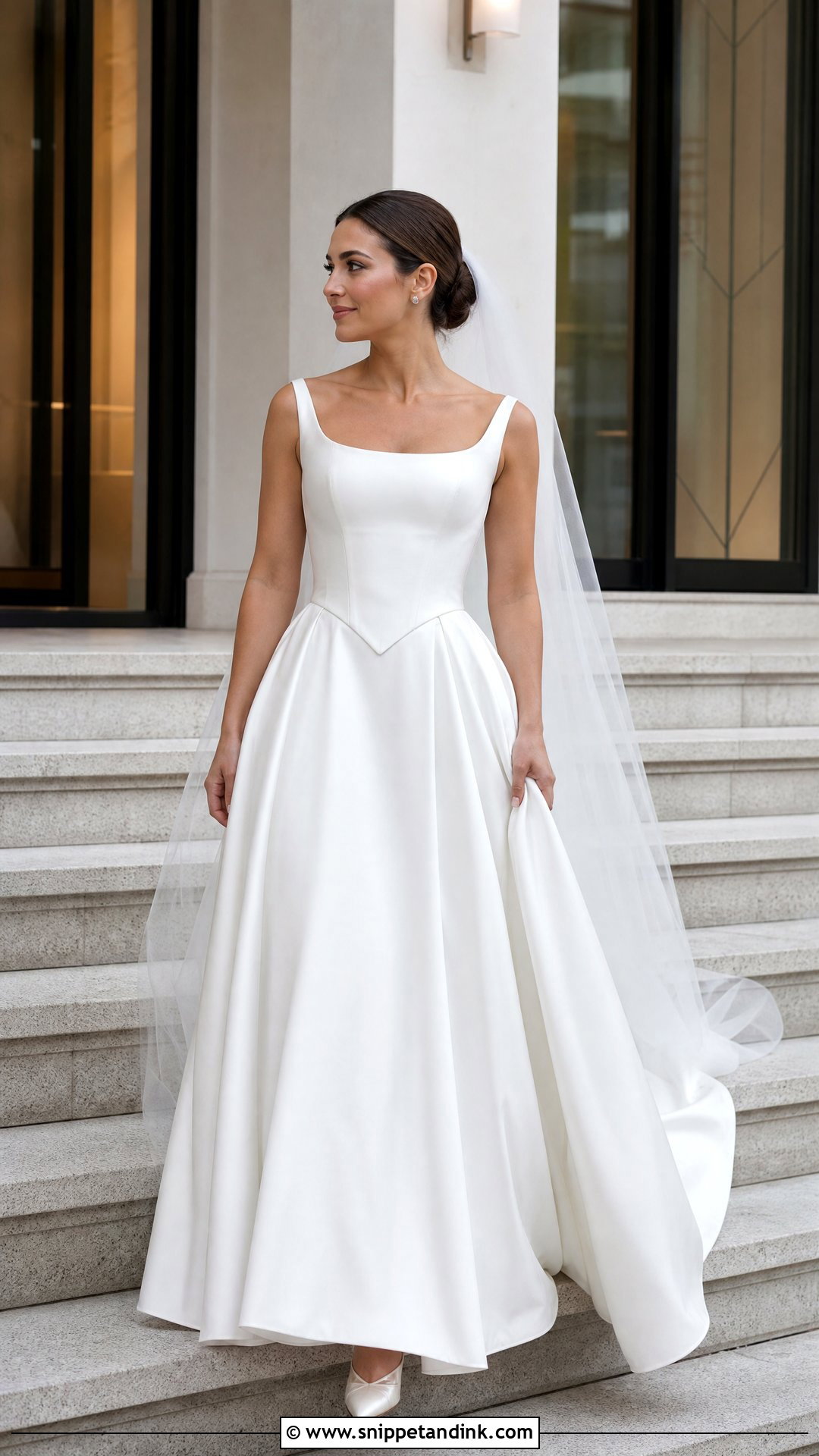
A pointed basque waist gives shape without ornament. Go for a smooth corseted bodice with supportive seams and a satin skirt that hugs the hips before opening slightly near the hem. The waist becomes the focal point. Satin pumps, pearl-and-crystal studs and a simple veil under a low bun suit it, along with a small bouquet that leaves the bodice visible. At fittings I check the point both standing and seated, because the tip of a basque can press into the stomach when you sit. The skirt should start where it flatters your proportions; set too low, it shortens the torso.
11. One Shoulder Wedding Dress With Metallic Heels
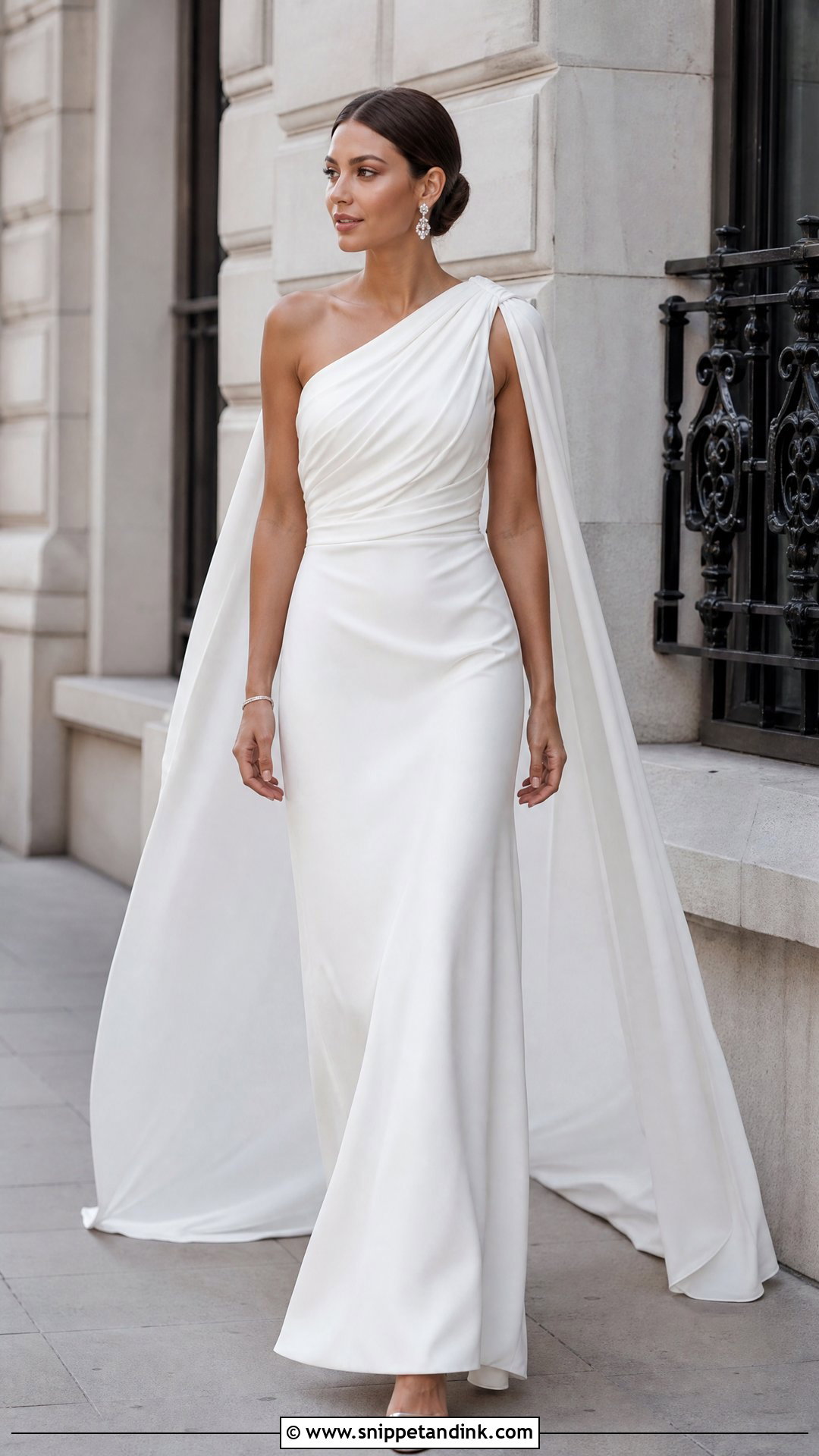
Asymmetry does the decorating here. A one-shoulder gown suits a rooftop or a city ceremony and needs a secure internal structure, because one strap holds the whole bodice. A softly draped shoulder detail with a column or narrow A-line skirt keeps the balance. I put earrings on the bare side only and skip any necklace, which interrupts the diagonal. Understated metallic heels and a slim bracelet finish it. Hair goes into a side-parted bun or smooth ponytail. Instead of a veil, I sometimes suggest a light shoulder cape that comes off after the ceremony, which gives you a second look with no extra dress.
12. Draped Waist Wedding Dress With Simple Accessories
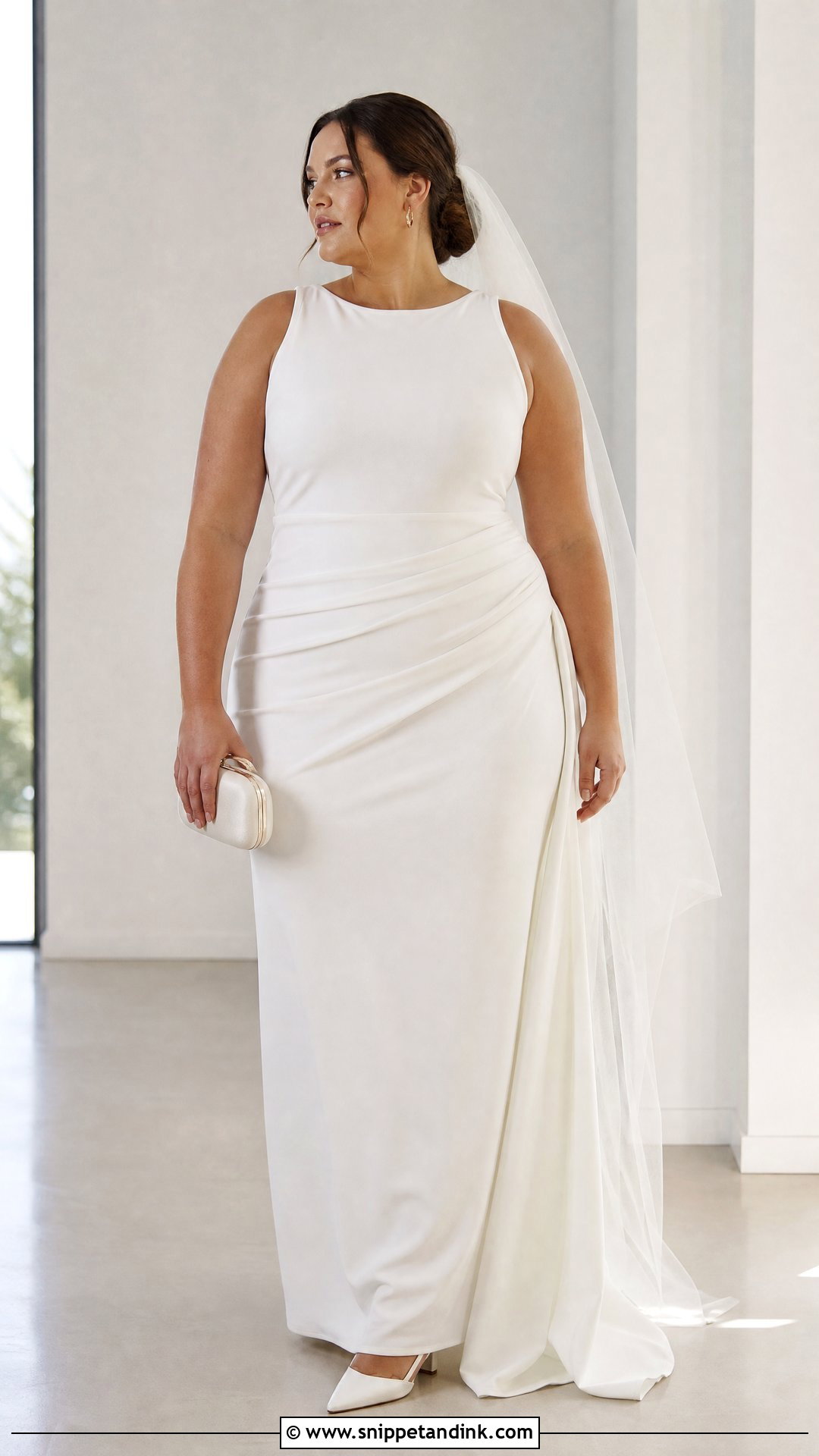
Draping at the waist softens a sleek dress and hides a little more than a plain sheath, which many brides appreciate after a three-course dinner. I look for diagonal pleats that flow into the skirt rather than bulky gathers. Matte crepe keeps them crisp; silk satin makes them softer and more fluid. Pointed slingbacks, small hoops and an ivory or pearl clutch suit it. A low textured knot works with the movement of the fabric, and a narrow veil with no lace keeps the pleats in view. Always look at a draped dress from the back and sides, because where the folds land changes the whole proportion.
13. Cape Sleeve Wedding Dress With Pearl Pumps
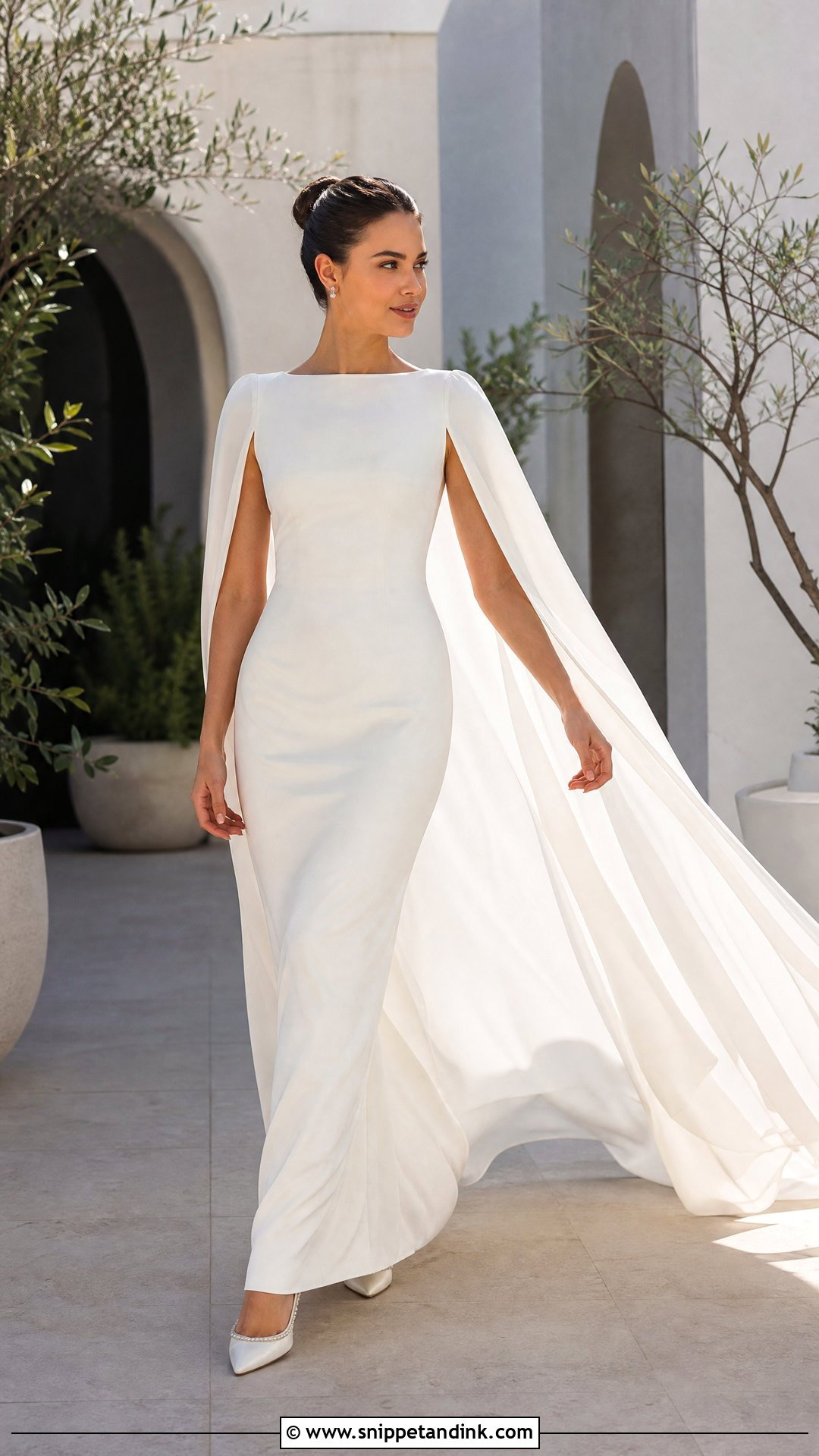
Cape sleeves bring their own ceremony drama, so I rarely add a veil. The panels should fall from the shoulders or upper back and frame the gown rather than cover the waist. Pearl-trimmed pumps, understated studs and a simple ring or bracelet are enough, with a smooth bun that shows the attachment point. Choose a fabric that resists wrinkling if you’re travelling between locations, since a creased cape is very visible. At fittings, walk, turn and hold your bouquet; light capes can wrap around the arms or catch on the flowers, and it’s better to discover that before the aisle.
14. Backless Satin Wedding Dress With Drop Earrings
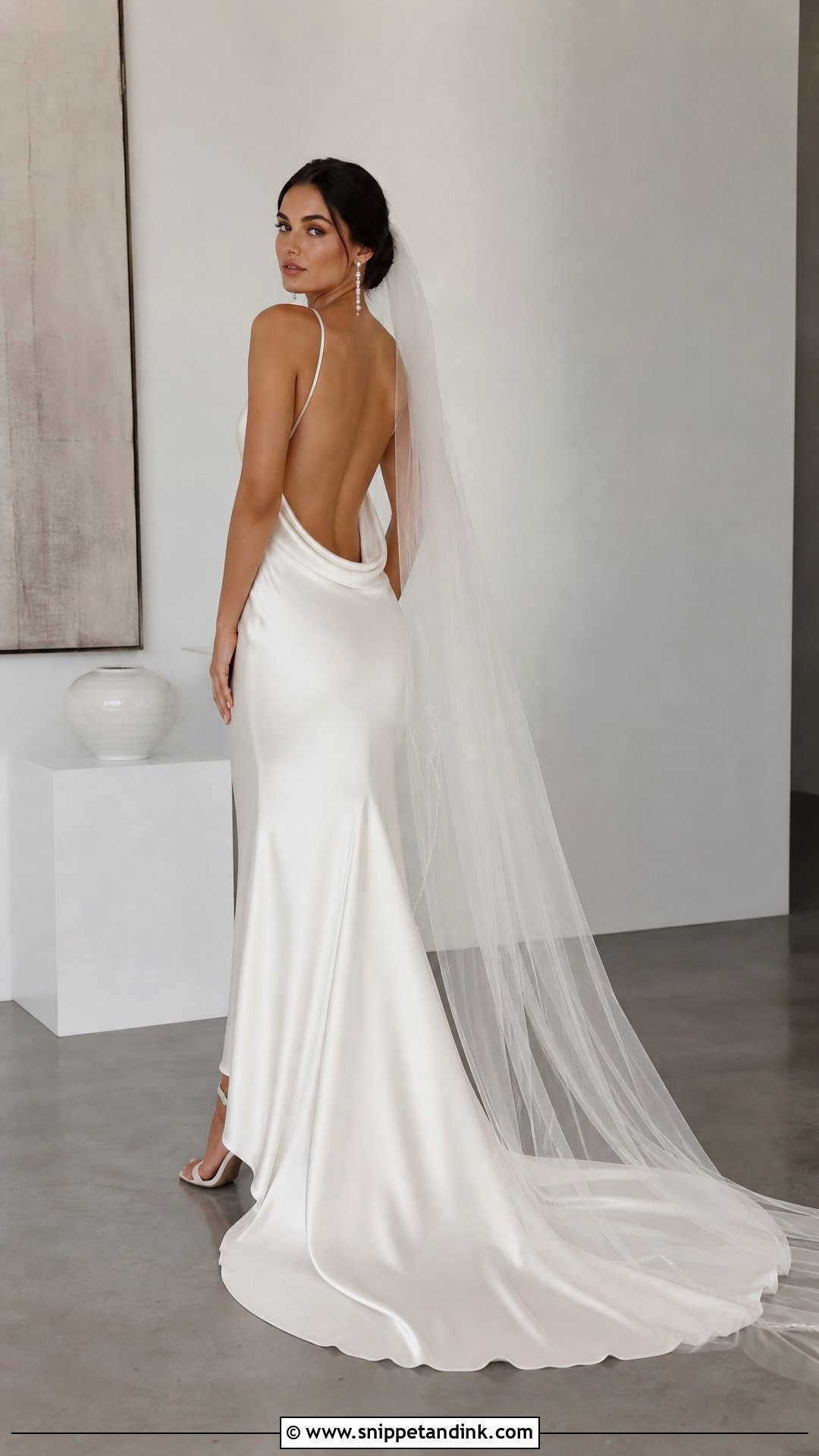
From the front, a backless satin wedding dress looks almost severe. Then you turn around. The depth of the back decides the support you need, and it’s the first thing I ask about, because a deep back rules out most bras. Secure shoulder straps, well-placed side seams and sewn-in cups are more reliable than tape on a long day. A softly fitted skirt or small train keeps it graceful. Long drop earrings and a low bun placed above the opening show the back off. A ceremony veil should be sheer enough to see through. Bring your undergarment options to every single fitting.
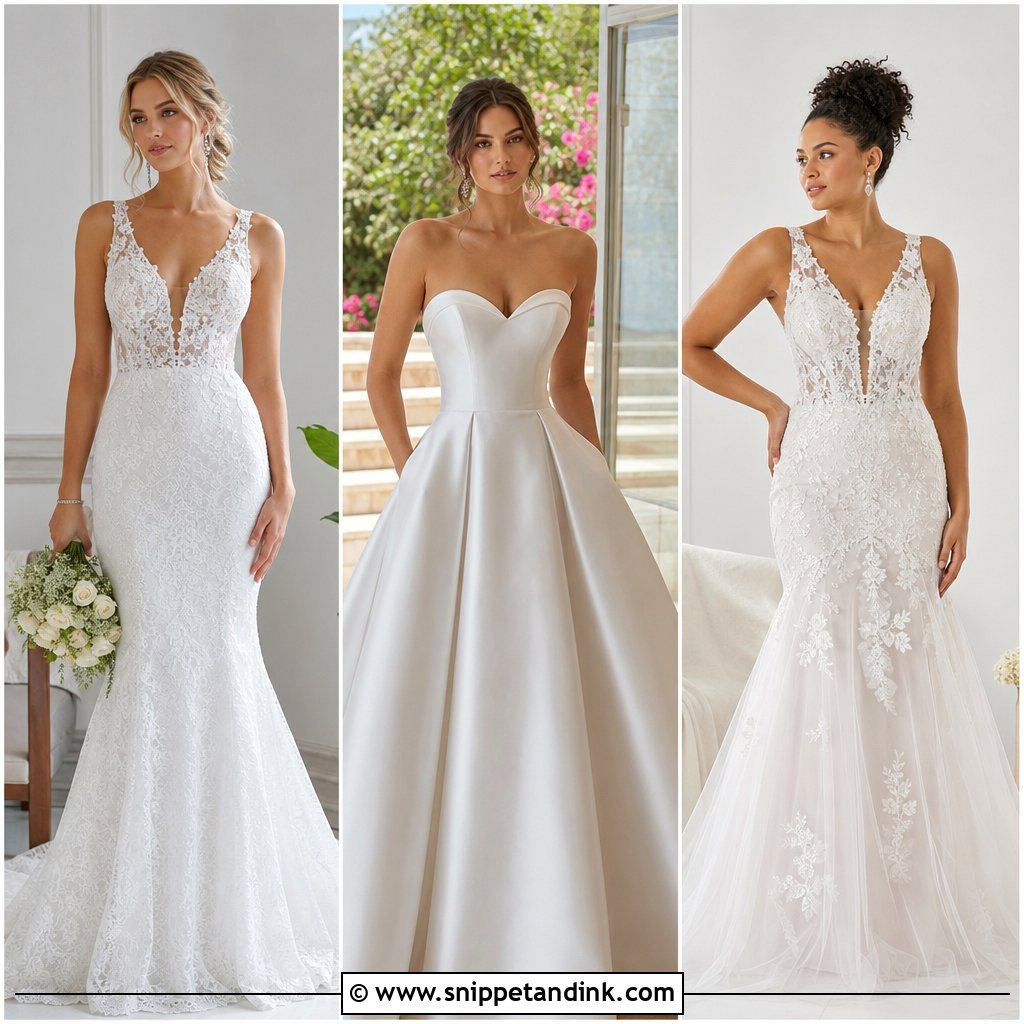
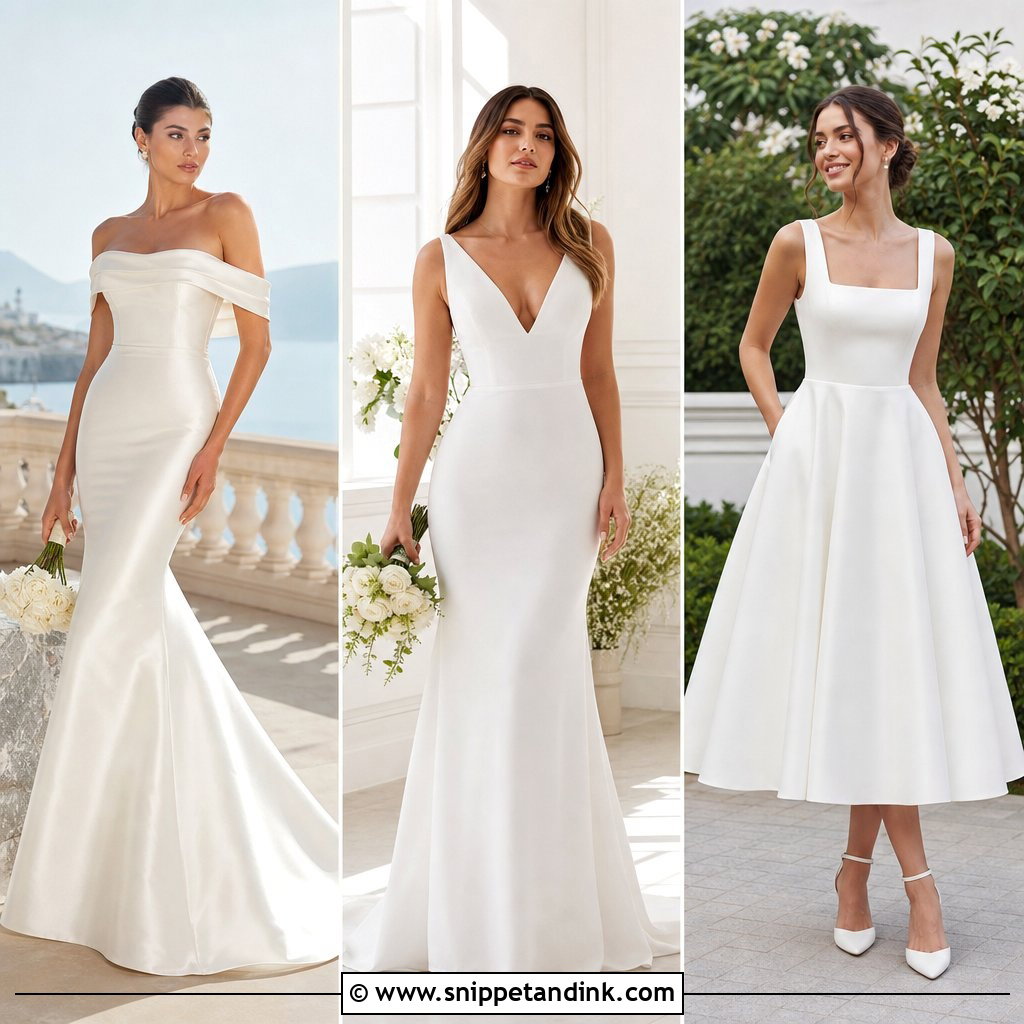
15. Minimalist Mermaid Wedding Dress With Crystal Studs
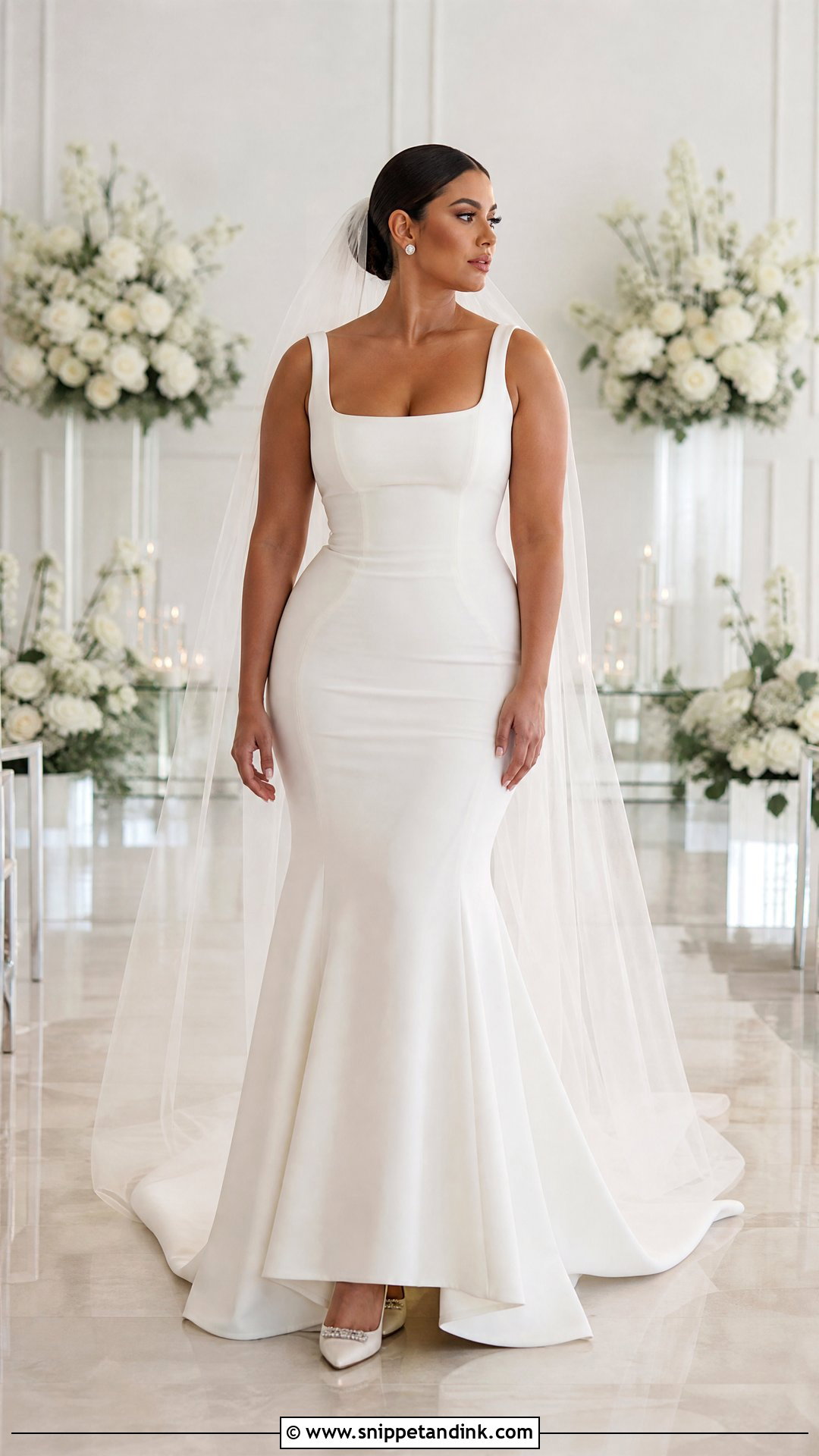
A minimalist mermaid relies on seaming, and good seaming is the difference between a smooth curve and a dress that twists on the hips. I want the flare to start at or just above the knee so the bride can take a real stride; set too low and you’ll be shuffling. Crepe follows the body without shine. Square, scoop or strapless necklines all work, depending on support. Pointed heels, crystal studs and a narrow bracelet are enough. A low bun and a plain cathedral veil add movement behind the flare. At the final fitting, sit down fully and take long steps, and ask for a secure bustle for after the ceremony.
16. Fitted Wedding Dress With Detachable Overskirt
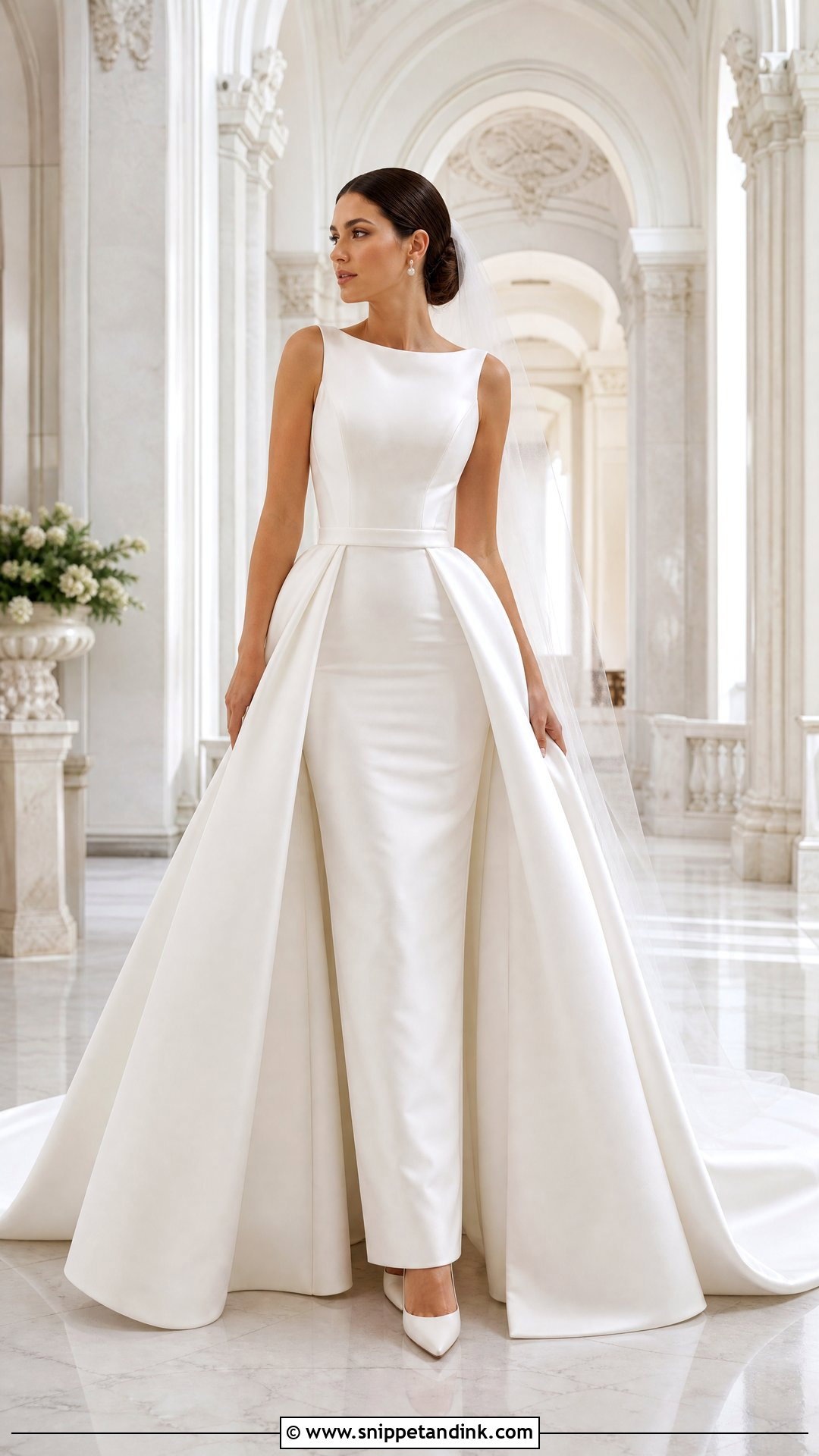
A detachable overskirt turns one gown into two looks. For the ceremony, a structured satin or mikado overskirt with a long train sits over a smooth sheath; after photographs, it comes off for a lighter dress you can dance in. Keep the base gown simple so the change looks planned. Pointed pumps, small pearl earrings and a low polished bun work for both. A plain veil can come off with the overskirt. Practise every fastening with the person who’ll help you. The waistband should line up cleanly with the gown underneath and stay flat, with no bumps where hooks or snaps sit.
17. Tea Length Wedding Dress With Slingback Heels
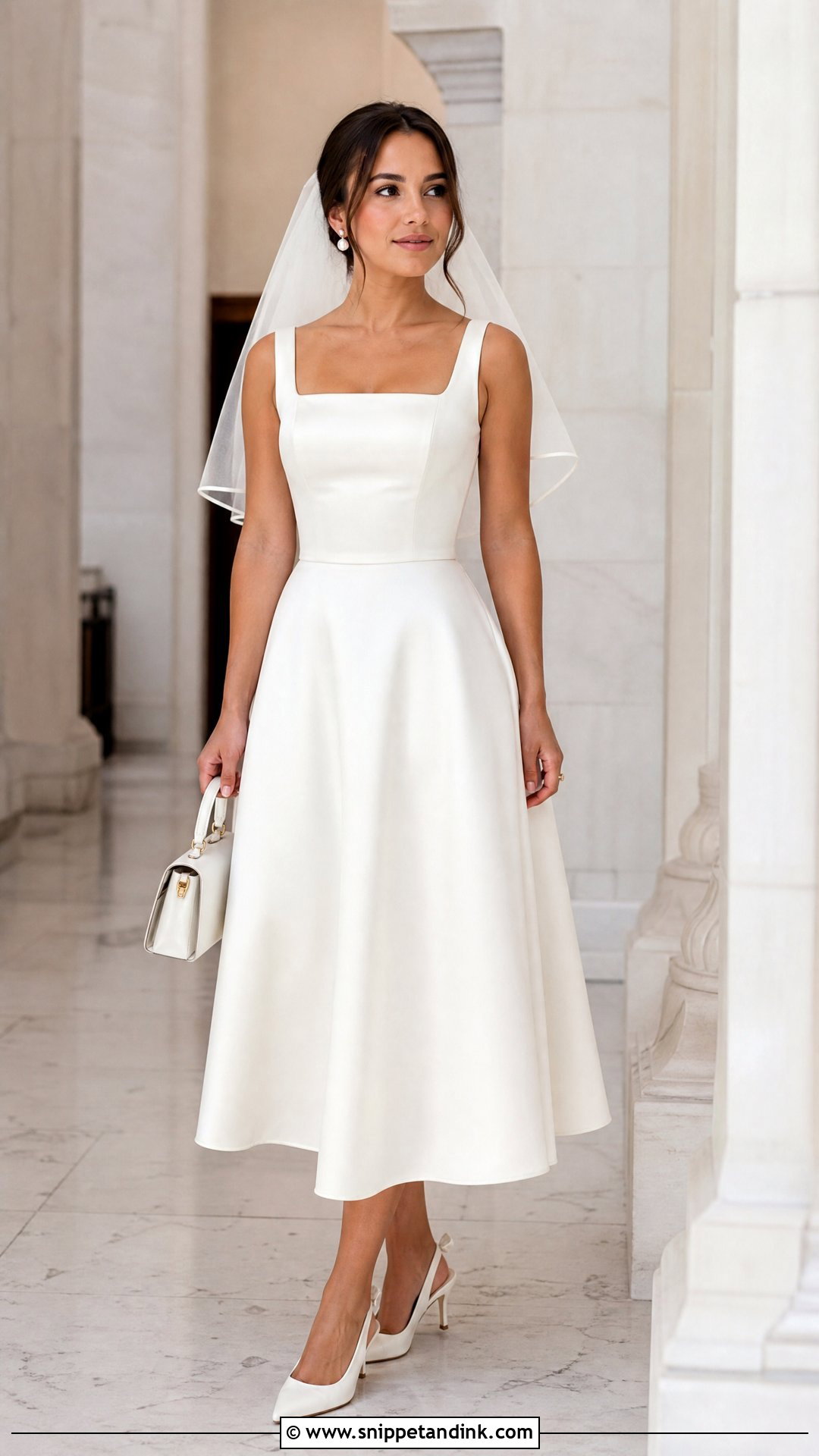
Tea length puts your shoes into the outfit, so I treat them as part of the dress from the first fitting. A structured satin or crepe dress with a fitted bodice and a hem between the lower calf and ankle holds its shape. Square or folded strapless necklines read modern. Pointed slingbacks, pearl earrings and a small top-handle bag suit it, plus a short veil. Loose waves soften it; a sleek bun sharpens it. Check the hem in your chosen shoes, because the hemline should avoid cutting across the widest part of your calf. That small detail makes a surprising difference to how long your legs look.
18. Sleek Mini Wedding Dress With Bow Heels
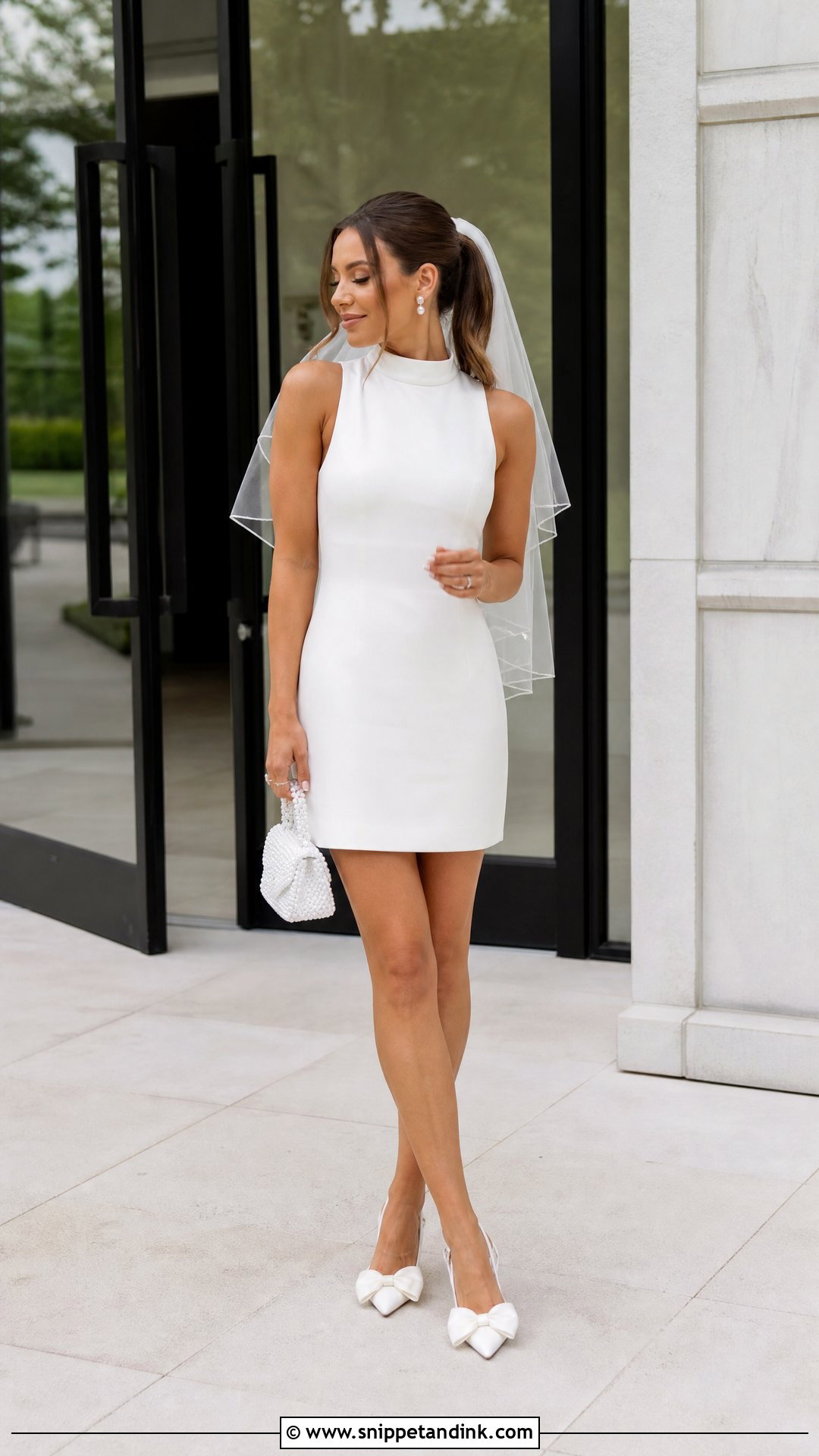
Minis are the most fun to style and the easiest to get wrong. A tailored shift, a fitted crepe mini or a structured satin dress all need enough length for you to sit and bend comfortably, and I test that on a low chair, not a stool. High necklines feel polished; strapless feels more festive. Bow-detailed heels, pearl studs and a compact bag suit a courthouse ceremony or a reception change. A short veil adds fun without overpowering the small silhouette. A smooth ponytail or shoulder-length waves finish it. Because legs and shoes are on show all day, choose heels you’ve already worn for a few hours.
19. Sleek A Line Wedding Dress With Block Heels
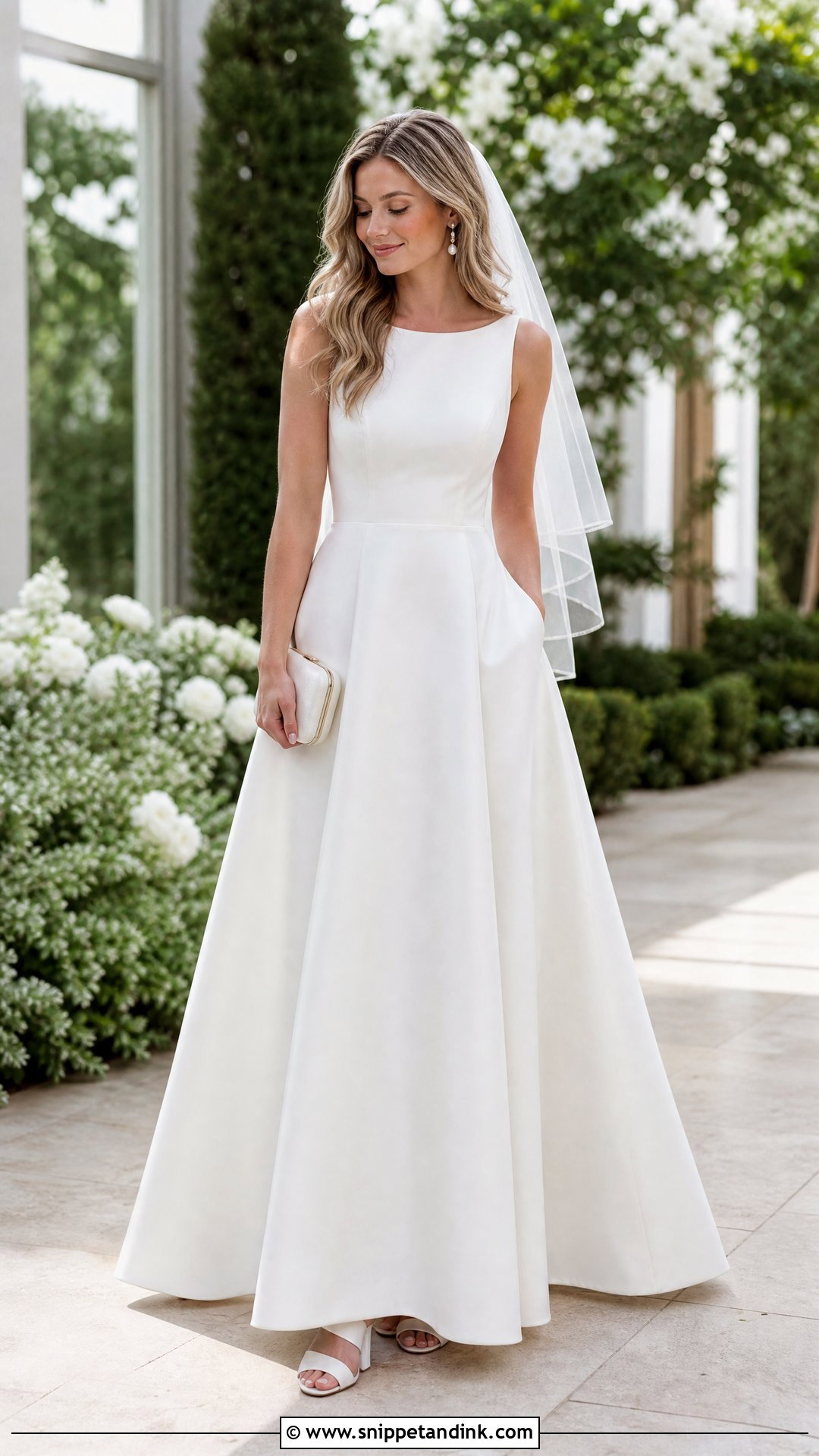
An A-line stays sleek as long as the skirt falls rather than puffs. A fitted bodice with minimal seams and a satin, crepe or mikado skirt opening gently from the waist gives you comfort without volume. Block heels give stability on grass or old floors, and small drop earrings and a structured clutch keep it simple. A mid-length veil suits a relaxed day; a longer one adds formality. Hair in a low bun or brushed-out waves. I do love pockets in this shape, but I check they lie flat, because a pocket bag lined in the wrong fabric shows through satin as soon as you use it.
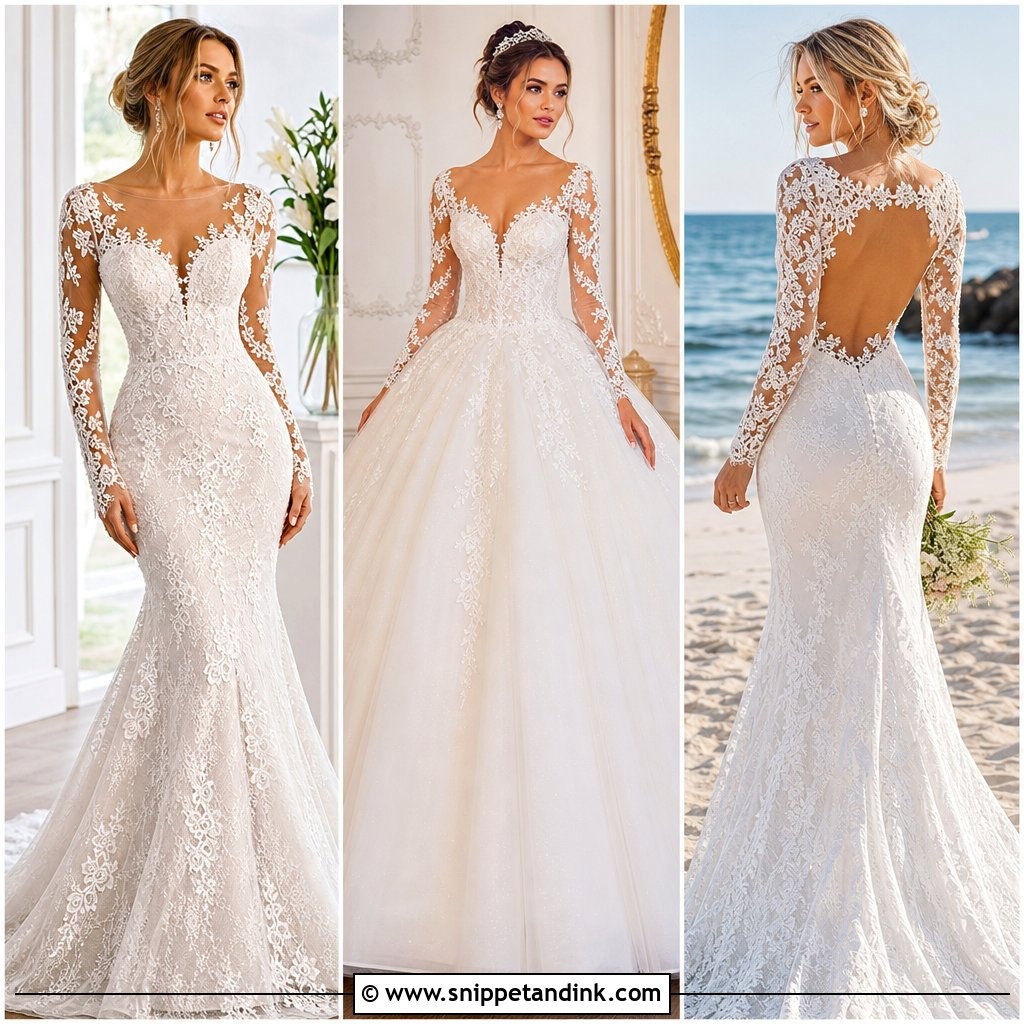
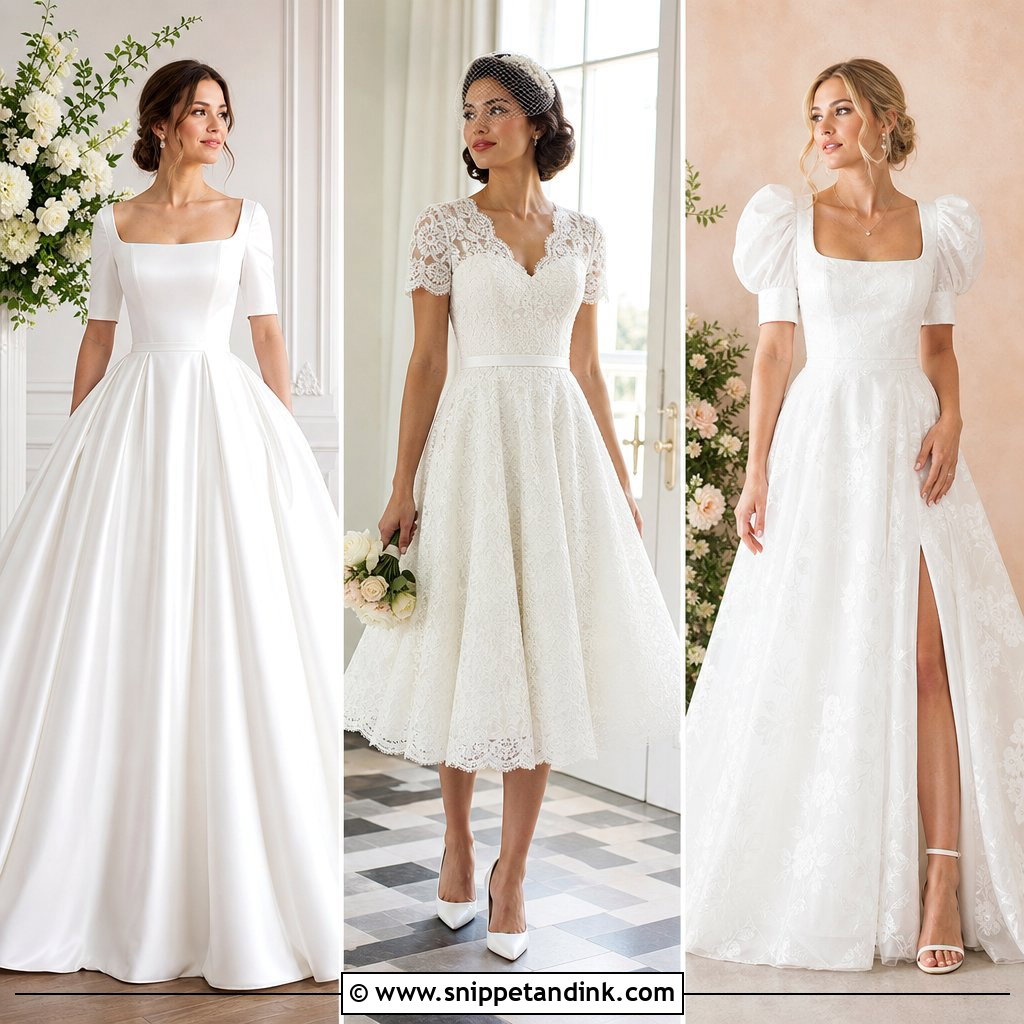
20. Minimalist Ball Gown Wedding Dress With Classic Pumps
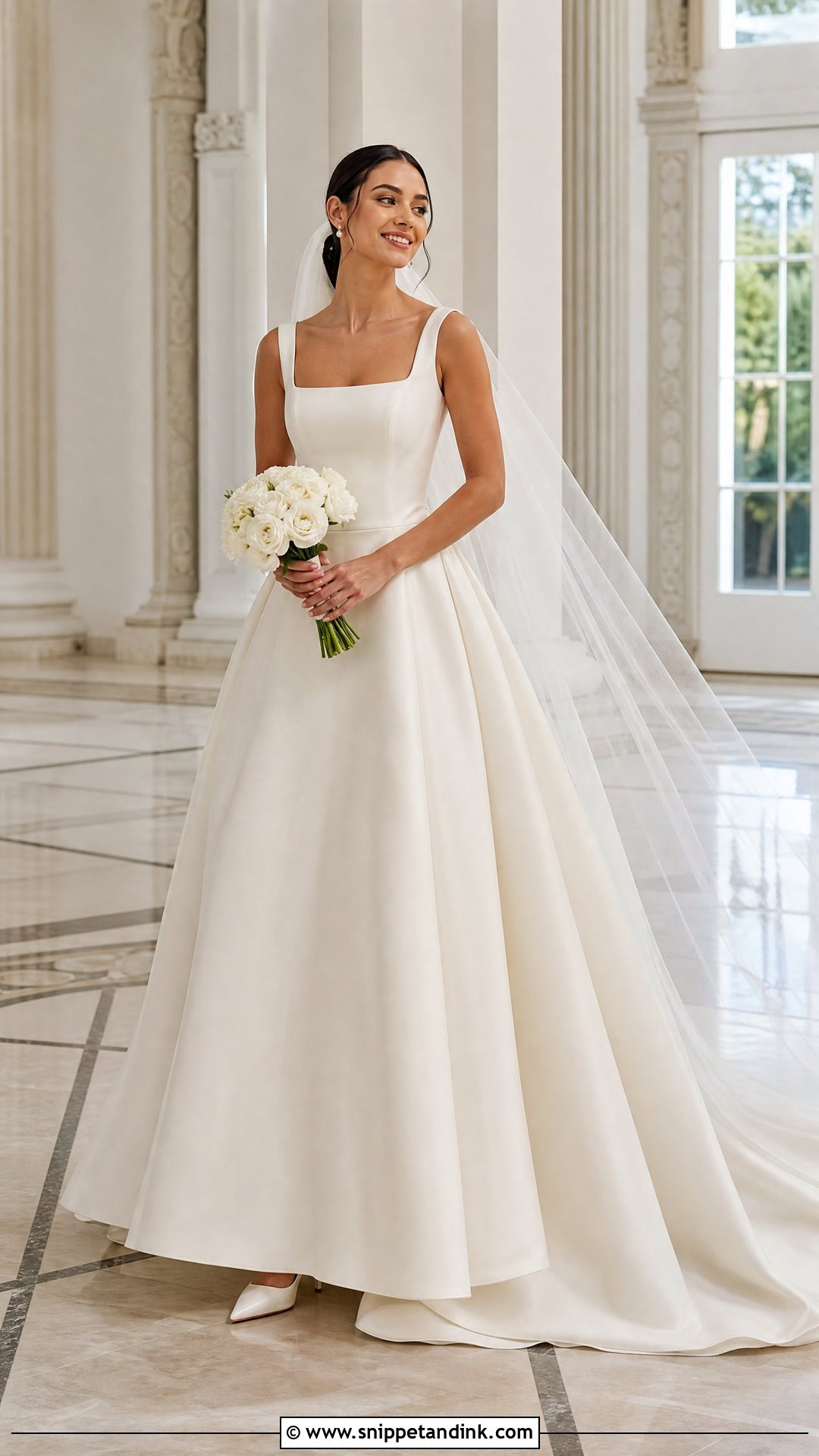
Volume can still feel minimalist when it comes from fabric weight and a sharp waist. Mikado holds its shape with very little gathering, which is why I favour it for a clean ball gown. Pair a strapless or square-neck bodice with that skirt, classic ivory pumps, pearl earrings and a structured bouquet. A long plain veil extends the line, and an elegant bun leaves the bodice on show. Make sure the skirt has proper support underneath, often a petticoat or built-in crinoline, and that it bustles easily. The test is simple: dramatic when you stand still, and still manageable through dinner, photos and the dance floor.
Cover-Ups and Layers That Don’t Ruin the Line
A strapless crepe column in a cold church, or a long-sleeve gown in a hot courtyard: weather catches out more minimalist brides than fit does. The trick is to plan the layer with the dress, not the week before.
For cold ceremonies and winter evenings
A cropped wool or crepe bolero keeps the waist visible, which matters on a sleek gown. A long tailored coat in ivory or camel looks intentional in portraits. Faux-fur stoles suit structured satin but can shed onto crepe, so I test them against the fabric first.
For heat and outdoor receptions
In heat, the risk is perspiration marks on silk and satin. I’d choose a breathable crepe, keep a pack of blotting papers and dress shields in the bridal kit, and plan shade for the receiving line. A sheer organza cape protects bare shoulders from sun without hiding the cut.
Whatever you choose, take the layer to your last fitting. Sleeves on a coat can crush cap sleeves or a cowl, and the seamstress can tell you whether it’ll mark the fabric.
Bring One Wildcard Silhouette to Every Appointment
A sleek dress is never just the plainest one. It needs proportions that suit you, construction that holds, fabric that stays comfortable and accessories that support it rather than compete. The twenty ideas above cover formal rooms, small ceremonies, city weddings and both warm and cool seasons. Try at least one silhouette you’d never have picked from a photo; it’s often the one that surprises you. Walk, sit and look from every angle, and take your shoes and undergarments to every alteration. The right dress is the one in which you still look like yourself.
You'll Like These Ideas:




Leave a Reply