
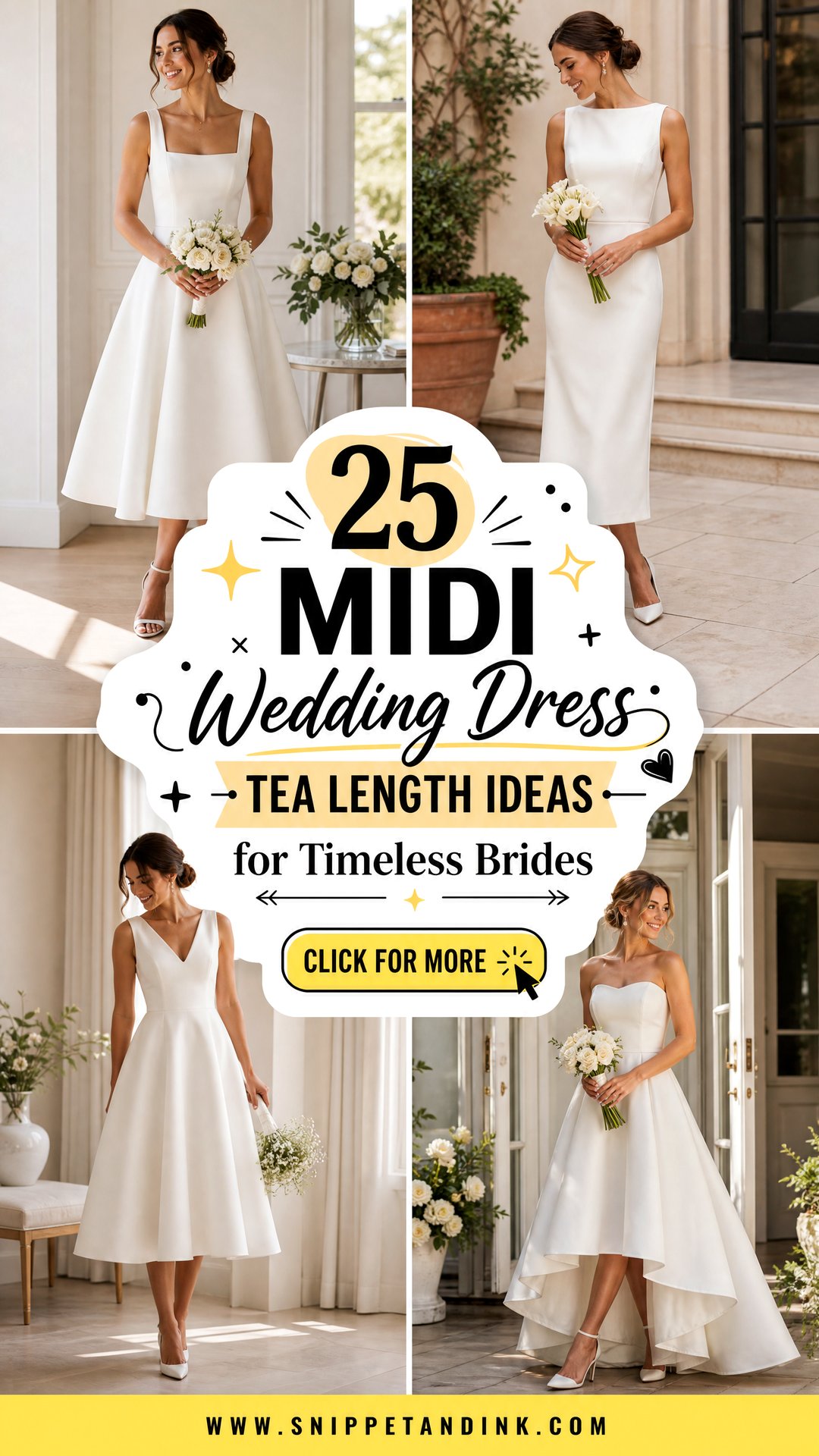
Tea length had its first big run in the 1950s, when a full skirt ending mid-calf was the smart choice for a daytime wedding, and it has never really gone away. A midi or tea-length dress falls somewhere between knee and ankle, so you get the shape of a proper bridal gown without a train to manage. Courthouses, gardens, destination ceremonies and receptions all suit it, and so do brides who simply want to move freely. Today’s versions run from satin fit-and-flare to lace sleeves, tulle skirts and spare crepe. I’ve styled each of the twenty-five below as a full look, with shoes, veil and jewelry, and noted what to watch for at a fitting.
Petticoats and the Shape Hidden Under a Tea-Length Skirt
Most full-skirted tea-length dresses get their outline from what’s underneath. A petticoat is what makes a 1950s skirt stand away from the legs instead of hanging flat, and it changes how you sit, how you walk and even which shoes look right.
Which underlayer does what
- Soft tulle petticoat: gentle lift, light enough for summer, and it squashes down easily when you sit.
- Stiff net or organza crinoline: far more volume and a crisp outline, but warmer and scratchy against bare legs, so look for one with a soft lining layer.
- Hooped petticoat: rarely right at this length. The hoop tips forward when you sit and can show beneath the hem.
The petticoat should stop a little above the dress hem, a couple of centimetres is usual, so it never peeks out as you walk. Buy it before your first fitting and wear it to every one after that. Your seamstress can only set the hem correctly with the final volume in place.
Sitting is the part nobody rehearses. A full petticoat rises at the front when you sit, so practise sweeping the skirt under you from behind on the way down. In a car, gather the layers up and in first, then lower yourself onto the seat.
1. Satin Tea Length Wedding Dress
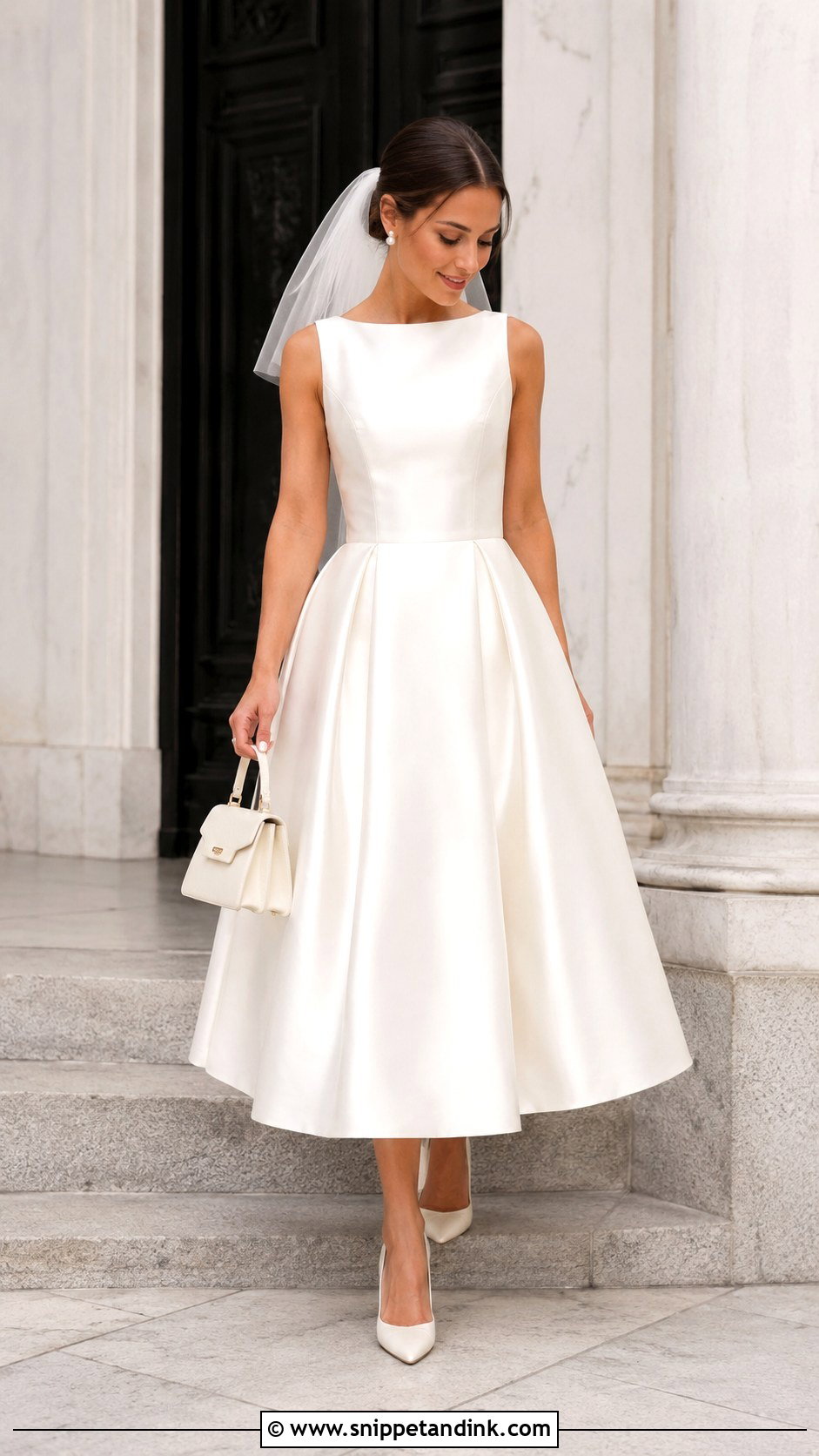
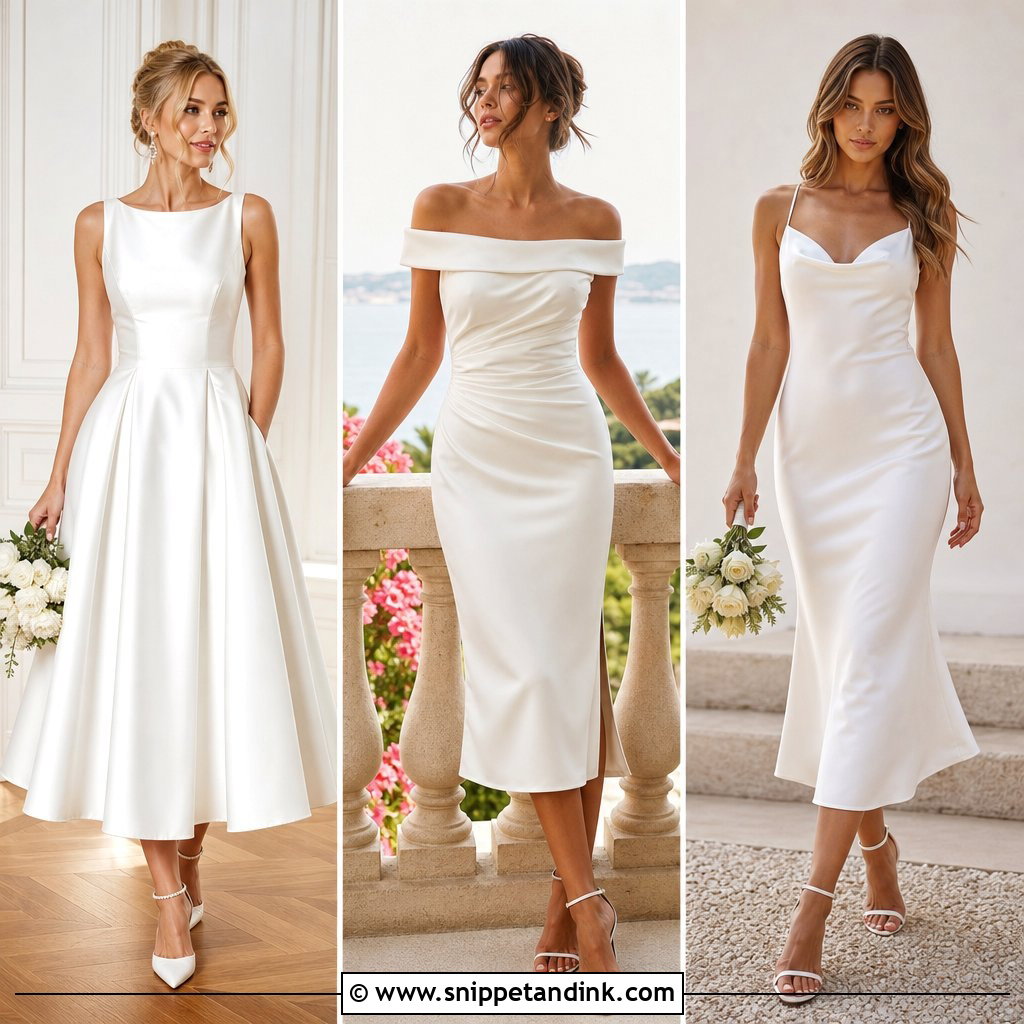
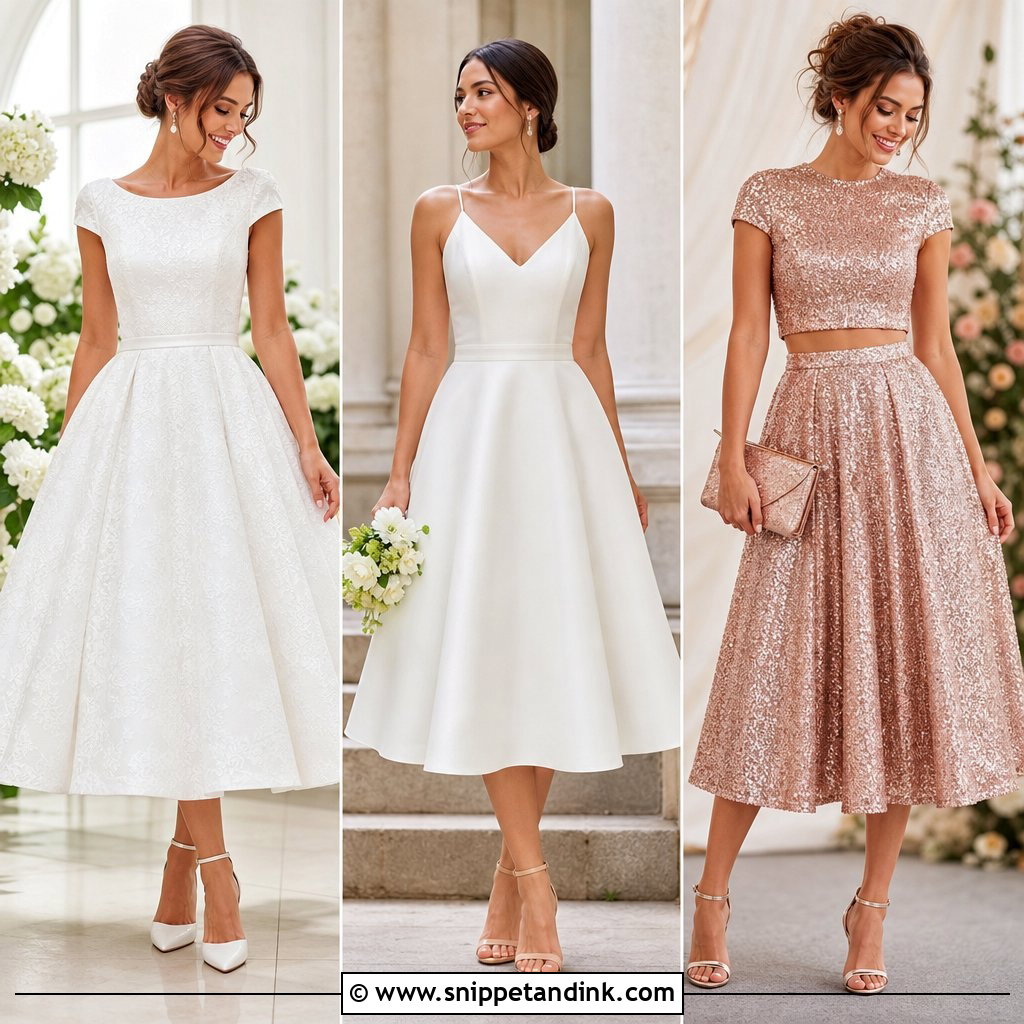
Start with satin if you want shine without beading. A structured bodice, a defined waist and a full A-line skirt that stops at mid-calf is the shape most people picture when they hear the words tea length. What I check first is the weight of the satin: thin polyester satin shows every pucker at the waist seam, while a heavier duchess satin holds the skirt out on its own. Pointed ivory pumps or slingbacks lengthen the leg. Add a short veil, pearl studs and a small top-handle bag, and for more drama, a satin bow at the back or a slim waist belt. Makeup can stay fresh, with soft blush, defined lashes and a classic lip.
2. Lace Tea Length Wedding Dress
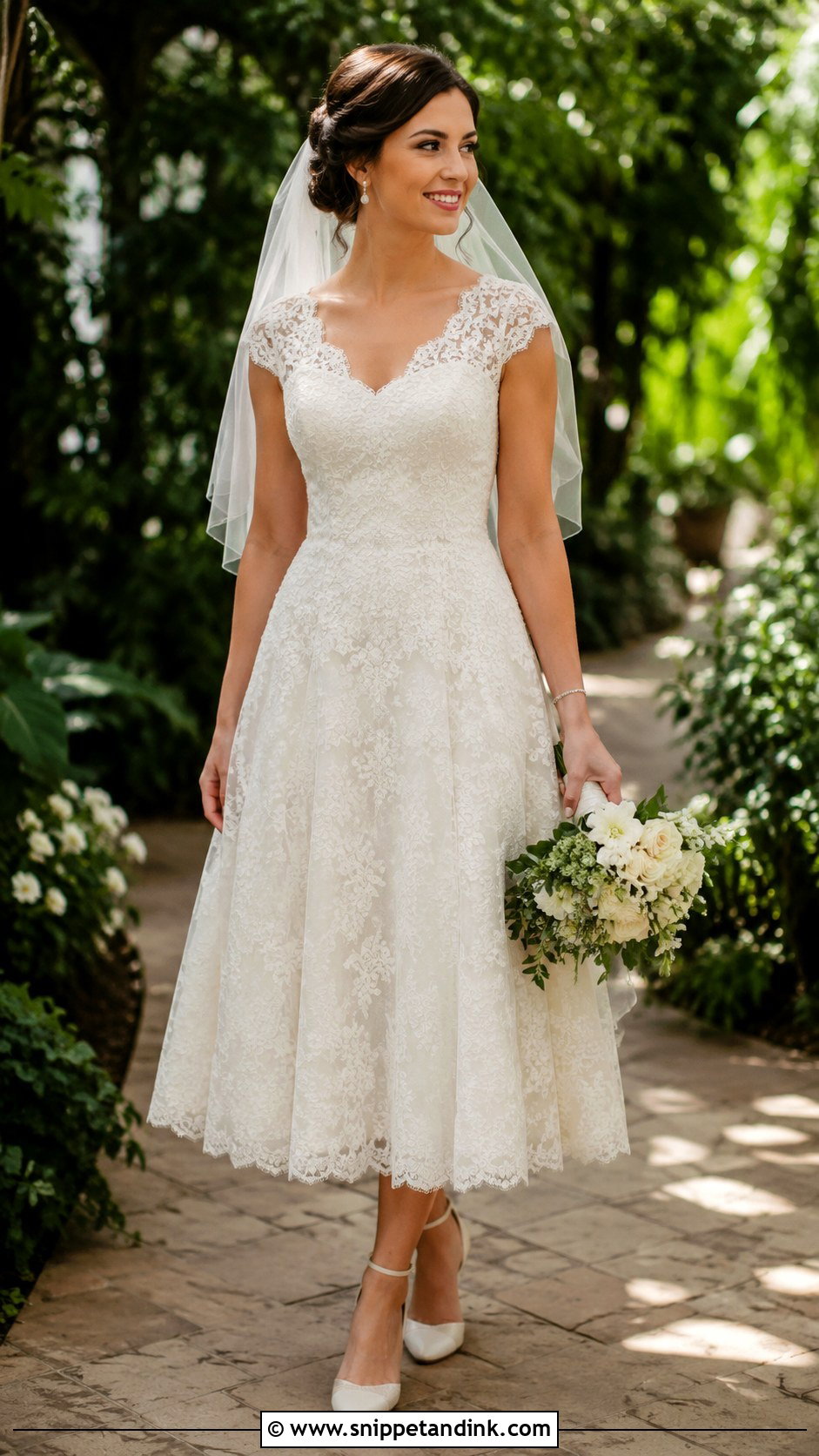
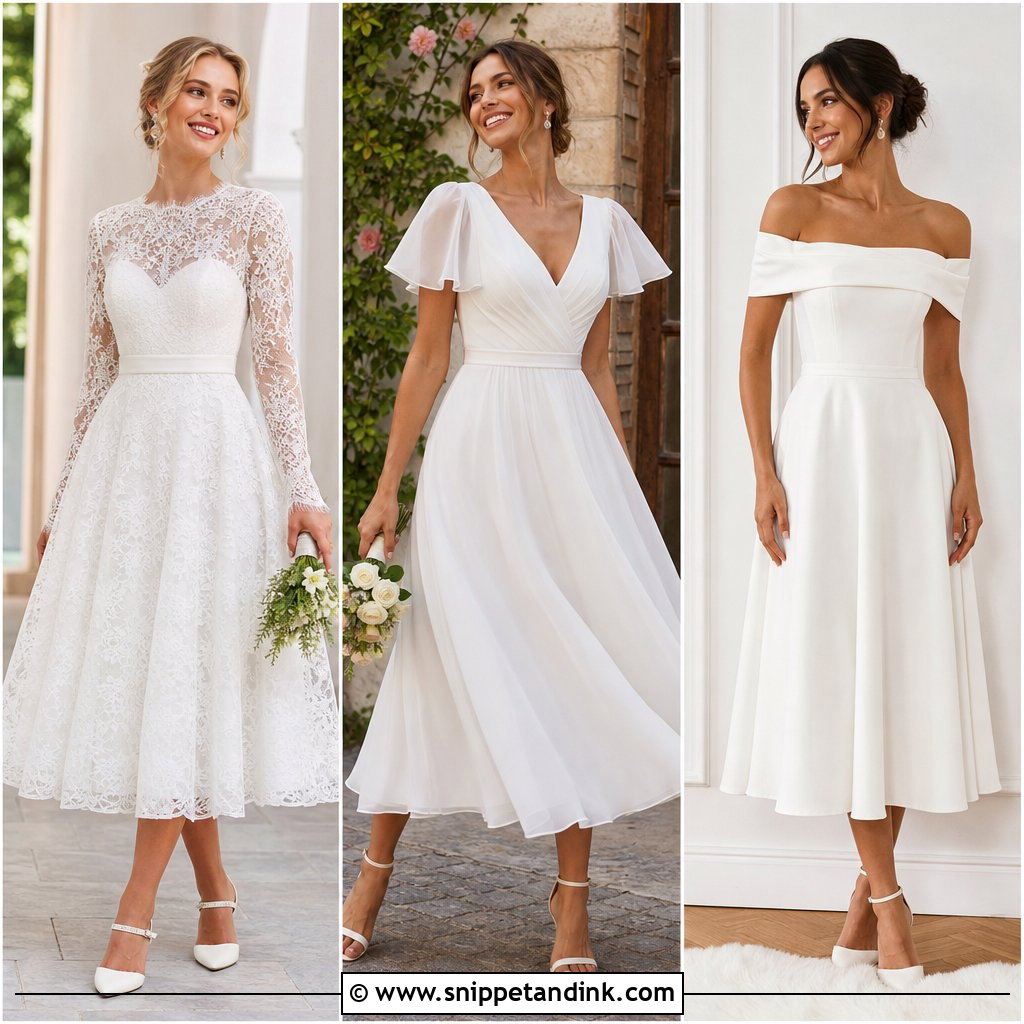
Lace over a smooth lining is the most romantic option here and the least formal. A fitted bodice, a gently flared skirt and perhaps cap sleeves or a scalloped neckline give it character. Ask what the lining is made of, because a cheap shiny lining under good lace shows through as a sheen in flash photos. Ivory block heels, pearl drops and a fingertip veil balance the shorter hem. If the lace is heavily patterned, hold back on everything else. A soft updo or half-up style shows off the neckline at a garden or a small venue.
3. Tulle Midi Wedding Dress
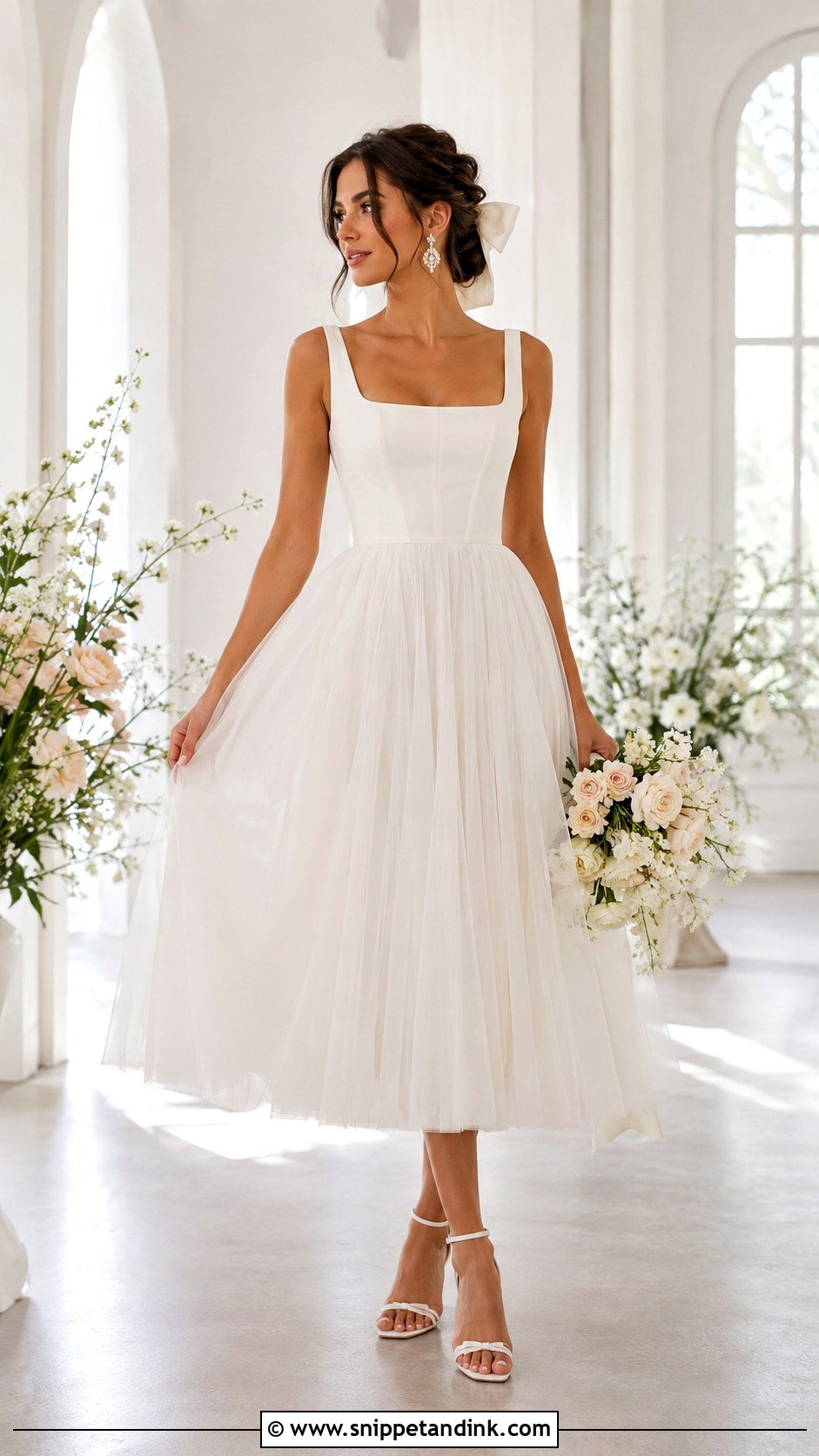
Tulle gives you the floating skirt, but at tea length the volume has to stop somewhere. Too many layers on a small frame read as a ballet costume; I’d rather see three or four soft layers over a fitted bodice than a stiff, full skirt. Ankle-strap heels, a small hair bow and crystal studs keep it light. A sheer veil blends into the skirt, while a pearl headband looks more current. Leave out big jewelry, because the skirt already brings plenty of movement. Spring weddings and garden venues are where it looks most at home.
4. Off Shoulder Midi Wedding Dress
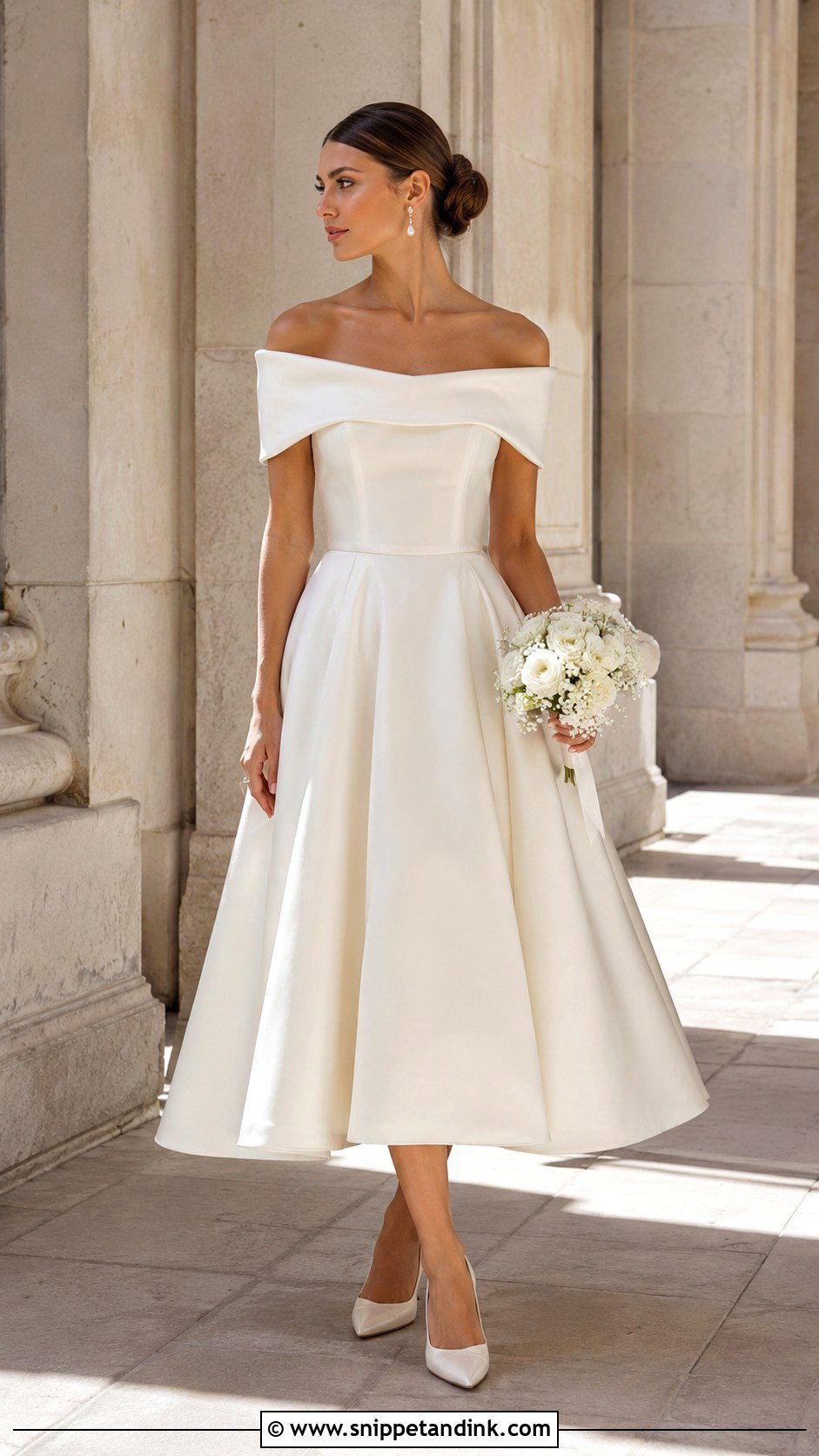
With an off shoulder midi wedding dress, the neckline does the work and the shorter hem keeps everything light. Satin, mikado, crepe and lace all suit, so choose by venue: mikado for a formal room, lace for a garden. The usual problem is a neckline that creeps up onto the shoulders through the day, and silicone grip tape inside the band holds it down. A fitted bodice and softly flared skirt keep the shape balanced. Drop earrings, a low bun and pointed heels finish it, with a short veil or sheer gloves for a classic note. You get to show the shoulders without the worry of a strapless bodice.
5. Long Sleeve Tea Length Wedding Dress
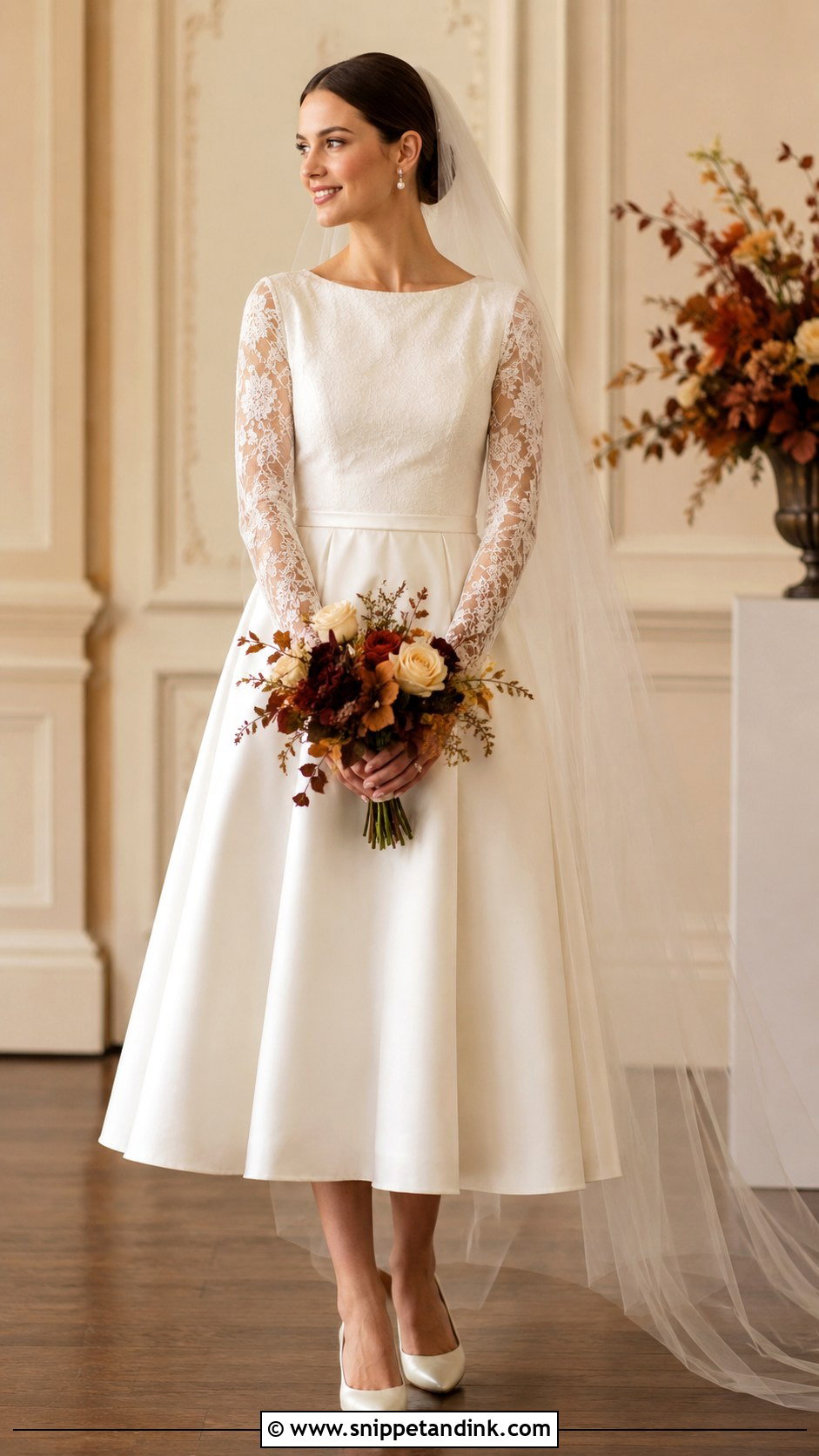
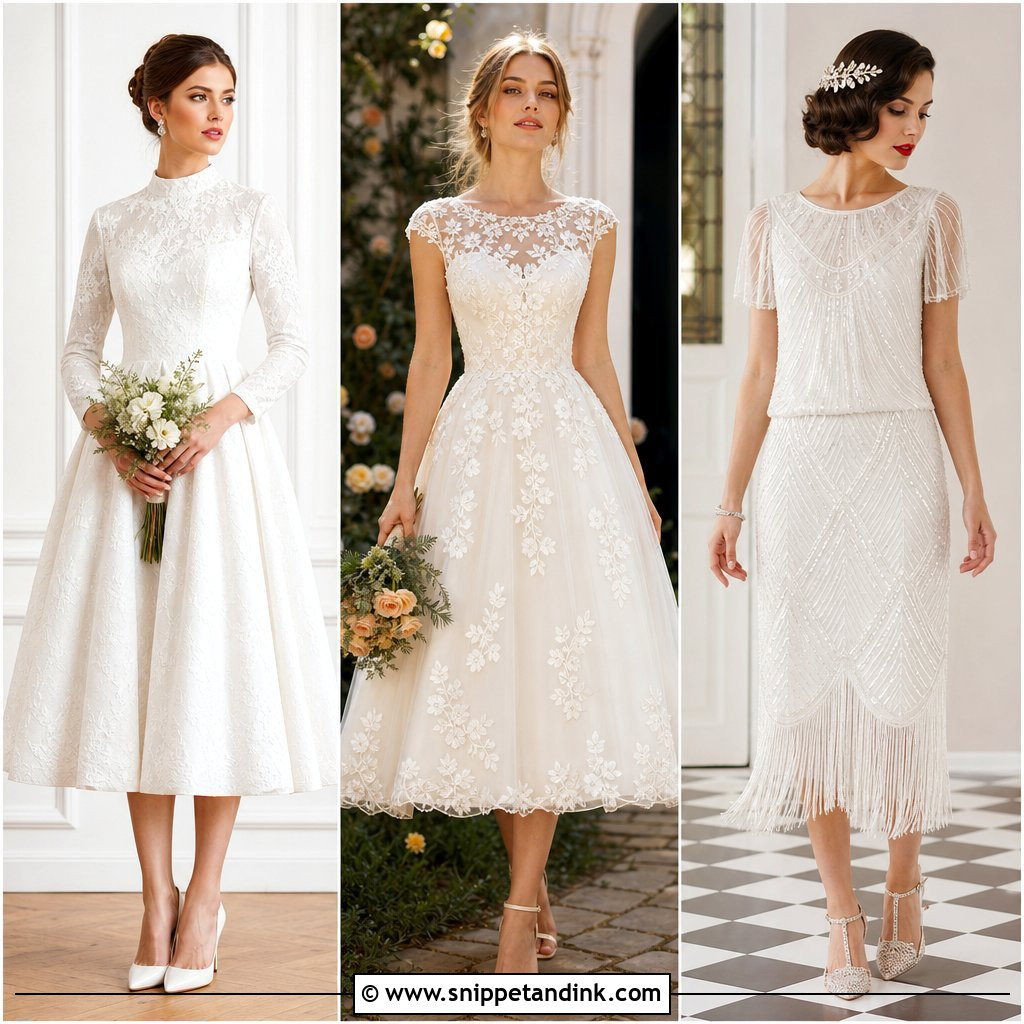
Long sleeves and a tea-length hem make a neat winter pairing, because the coverage moves to your arms while the skirt stays light. Lace, mesh, satin, crepe and chiffon all work. Sheer sleeves need one test: bend your elbow and reach forward. If the sleeve pulls at the seam, it will tear on the first big hug, so ask for a little more ease. Closed-toe heels, pearl earrings and a sleek veil finish the look. When the sleeves are embroidered, keep the shoes and jewelry plain, and wear a soft low bun for a fall or winter courthouse date.
6. Square Neck Midi Wedding Dress
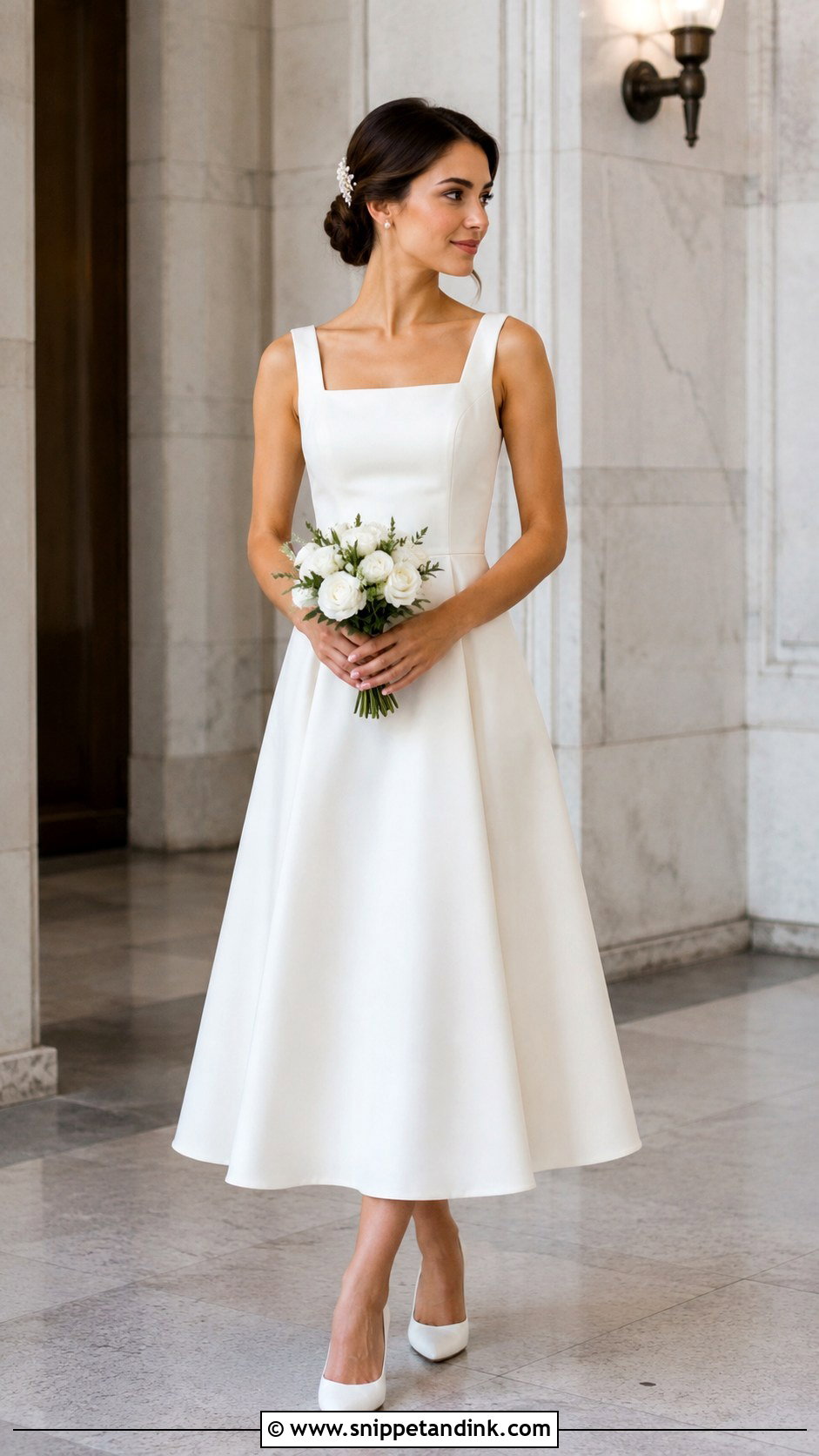
Square necklines suit a wide range of bust sizes because the straight line gives the upper body structure. Wide straps, a fitted waist and an A-line or column skirt keep it clean, and crepe or satin holds the corners crisp. On a fuller bust, I ask for the neckline to be cut slightly higher so the corners don’t gape when you lean in. Minimal heels, pearl studs and a small veil or comb are enough. Skip the necklace or keep it very fine. Sheer gloves or a structured mini bag add polish for a rooftop or courthouse ceremony.
7. Strapless Tea Length Wedding Dress
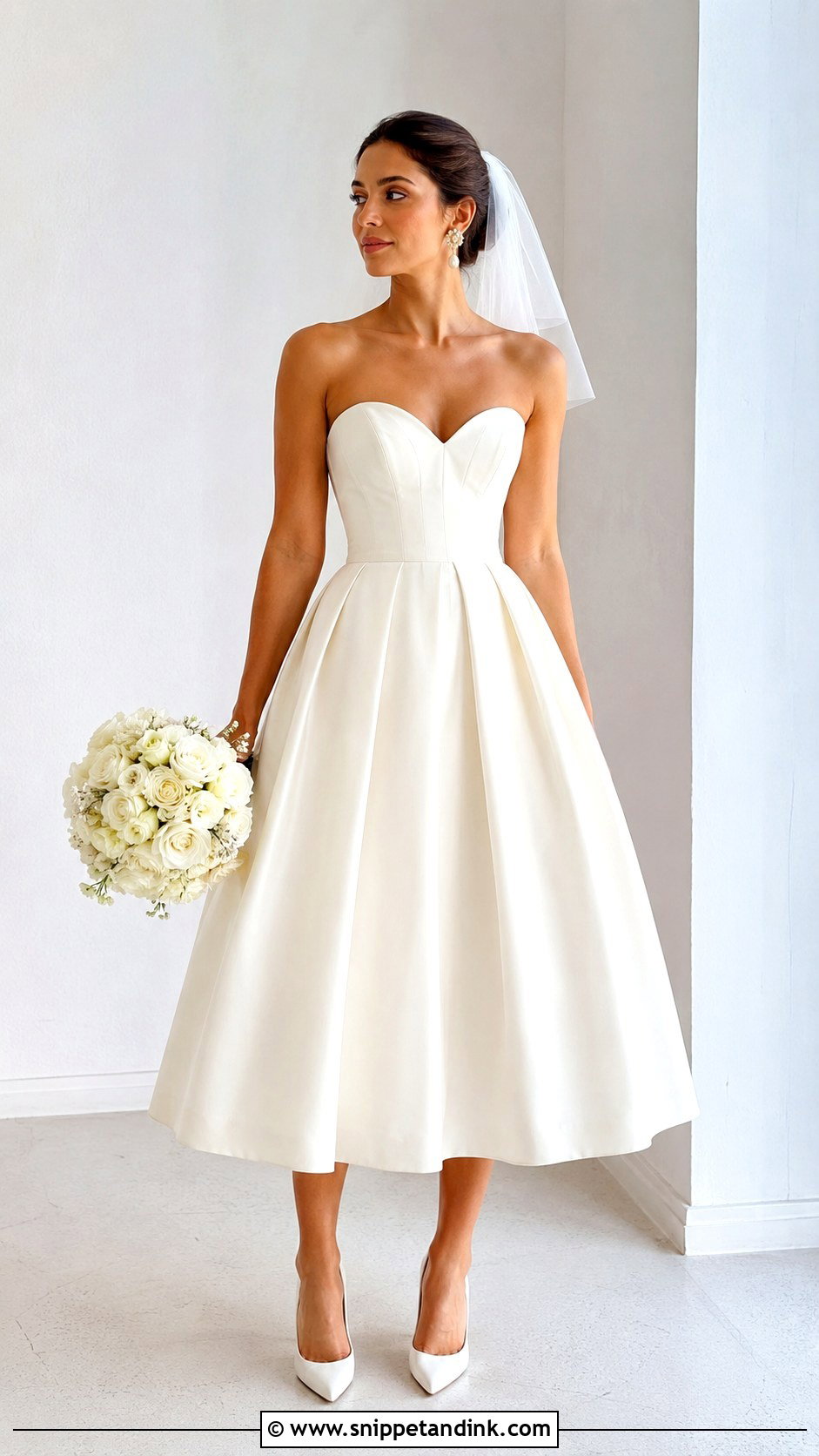
The whole question with strapless is support. If you plan to dance, the bodice needs boning plus an inner waist stay, a grosgrain band fastened at your waist that anchors the dress so the top doesn’t slide down. A sweetheart neckline reads romantic, a straight one cleaner. Pair a short veil with statement earrings and good pumps, and let a fitted bodice over a full skirt give you the hourglass line. If the ceremony calls for covered shoulders, wear a cropped bridal jacket or sheer wrap, then take it off for the party.
8. Simple Crepe Midi Wedding Dress
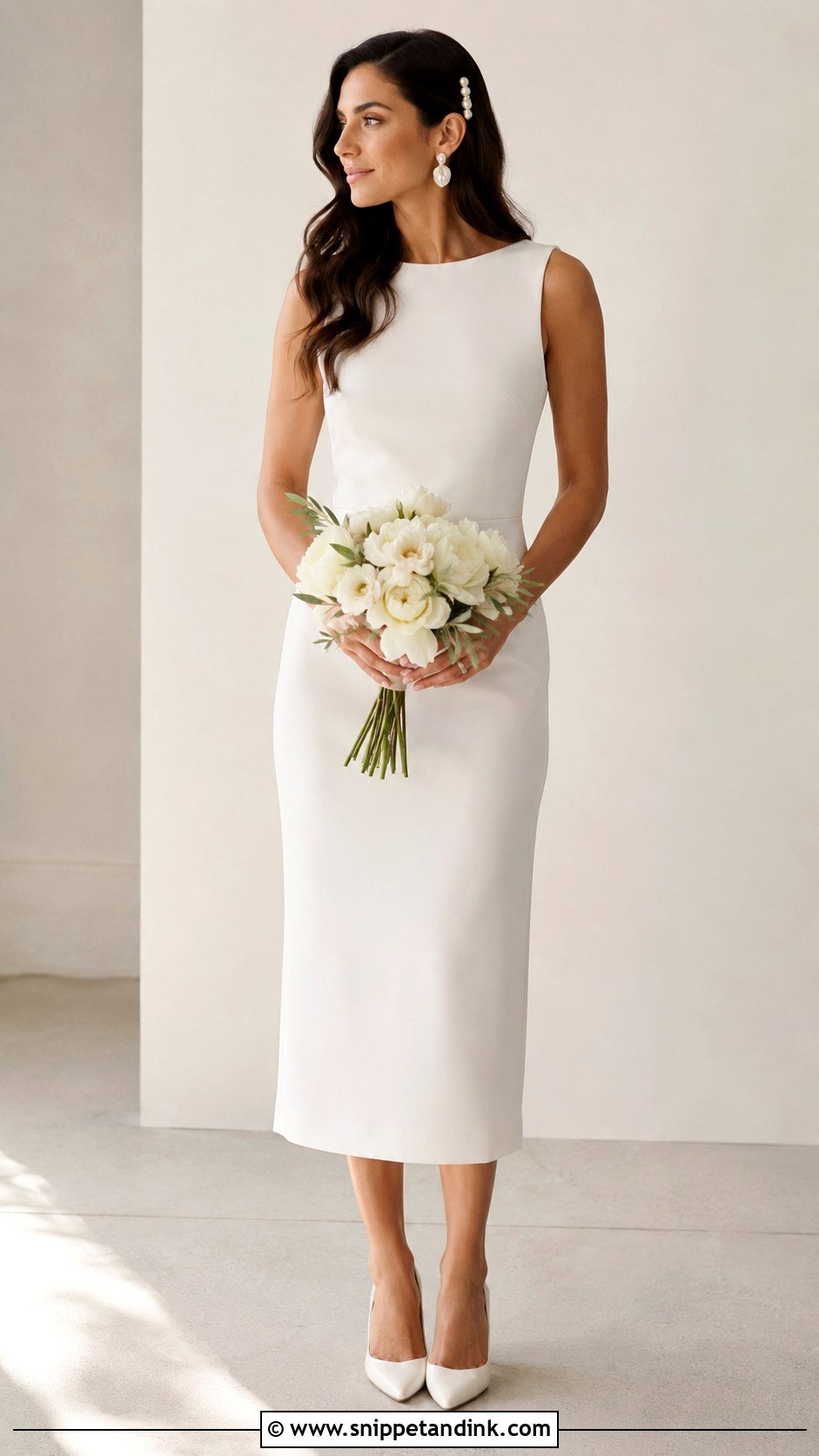
Of every fabric on this list, crepe hides the least, so fit matters most. A simple crepe midi wedding dress drapes well and holds structure without stiffness, but any tailoring error at the bust, waist or hem shows straight away. A sheath, column or soft A-line with few seams is the usual shape. Pointed pumps, sculptural earrings and a sleek low bun suit it. Wear a short veil, or skip it and use a pearl clip. I’d put it in a courthouse, a modern restaurant or a second look, where it reads understated and still unmistakably bridal.
9. Bow Back Tea Length Wedding Dress
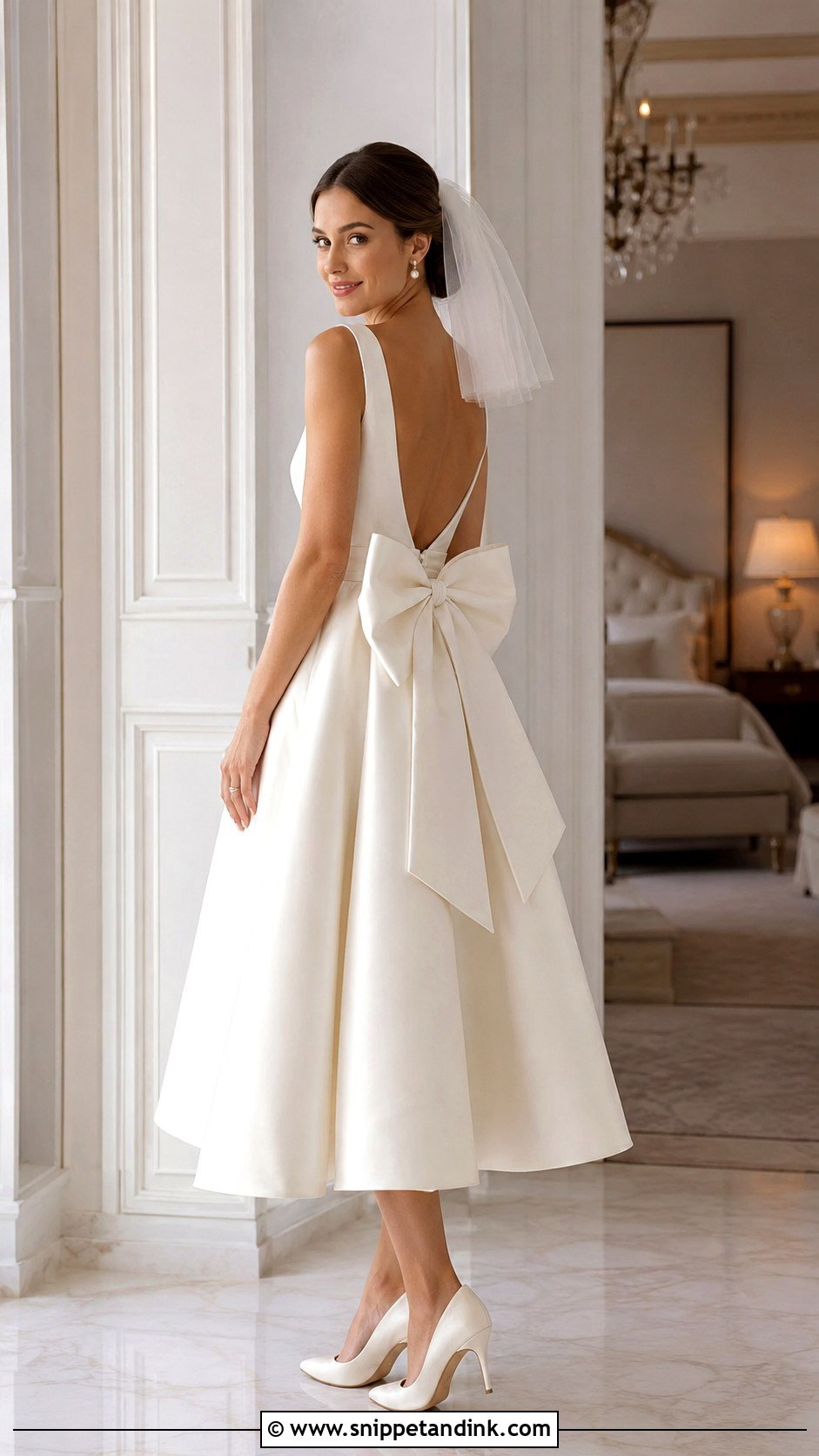
A big bow at the back gives guests something to look at during the vows, when your back is turned to them. Satin or mikado over a structured bodice will hold an oversized bow; soft fabrics let it flop by the afternoon. Make sure the veil is short or sheer enough not to cover it. Classic heels, pearl earrings and a soft, simple bouquet are all you need. Keep the rest unadorned so the bow stays the one standout detail, at a garden, a hotel or a civil ceremony.
10. Vintage Tea Length Wedding Dress
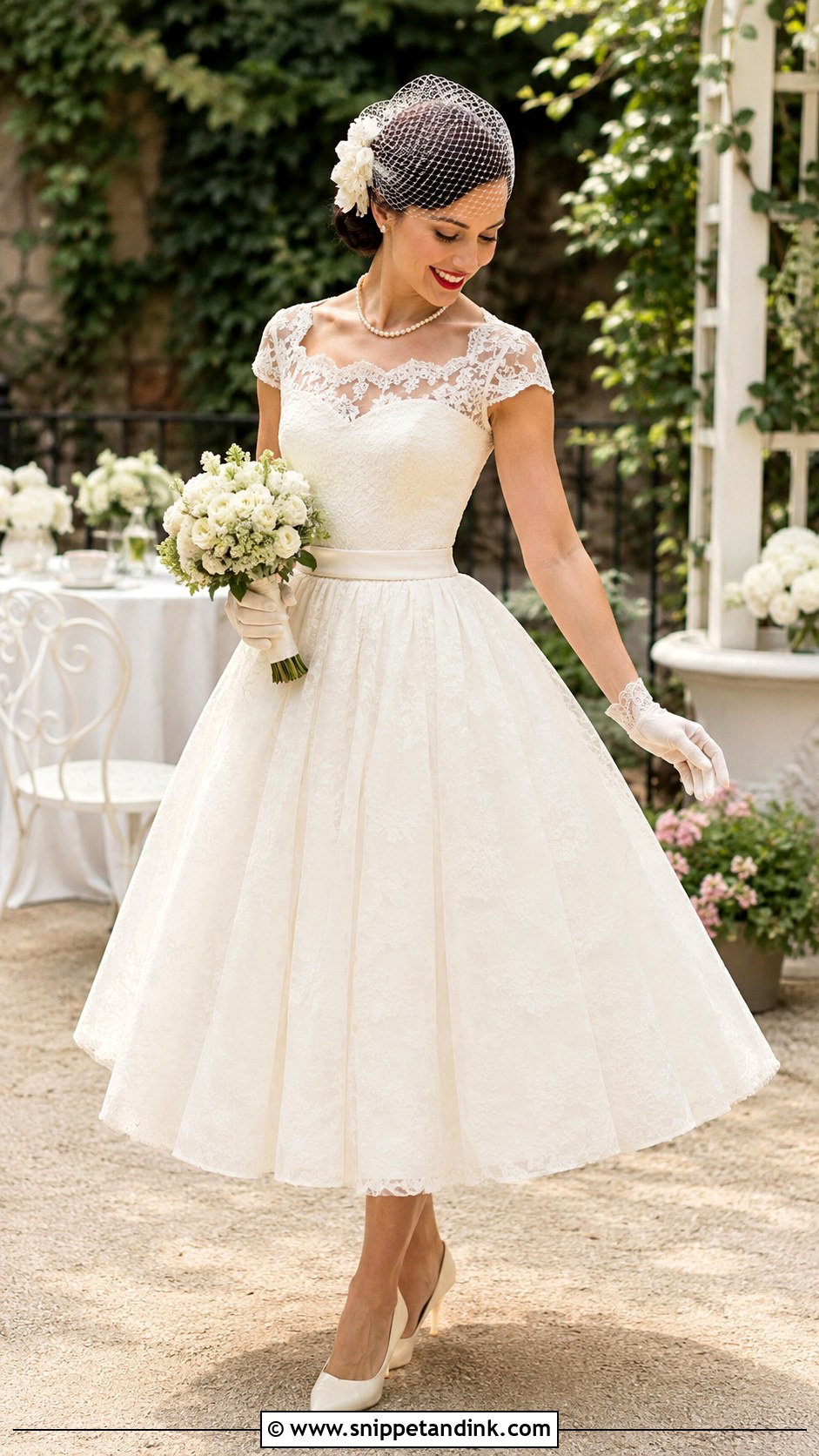
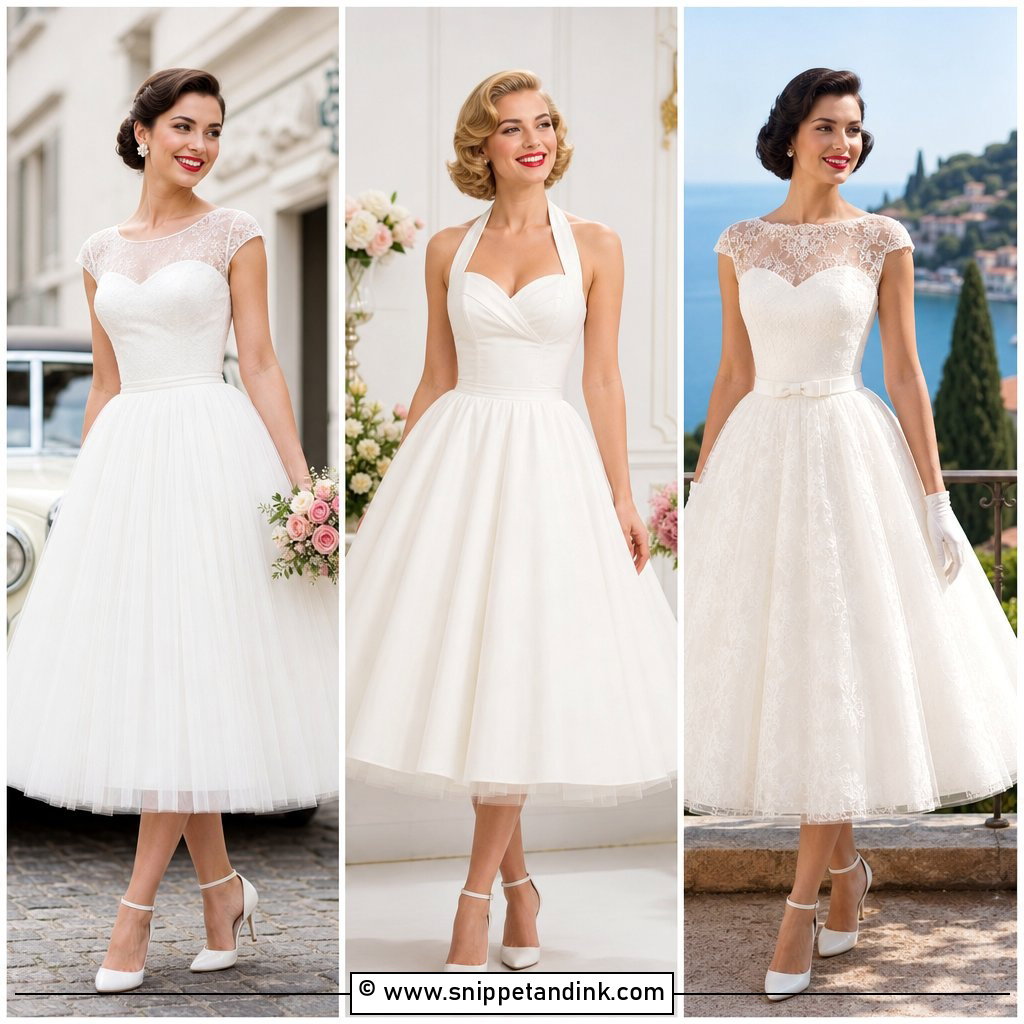
1950s dressing is where tea length came from: a fitted bodice, a nipped waist, a full skirt and a hem high enough to show the shoes. Lace, satin, tulle and organza all suit. If you’re buying genuine vintage, expect older sizing to run much smaller than modern labels, and check the underarms and zip seams for weak fabric before you pay. Ivory pumps and pearls go with a birdcage veil or short blusher veil. A red lip is the classic choice, though soft rose suits brides who never normally wear red. Pick one retro detail, gloves or the veil, and keep the rest modern so it doesn’t tip into fancy dress.
11. Courthouse Midi Wedding Dress
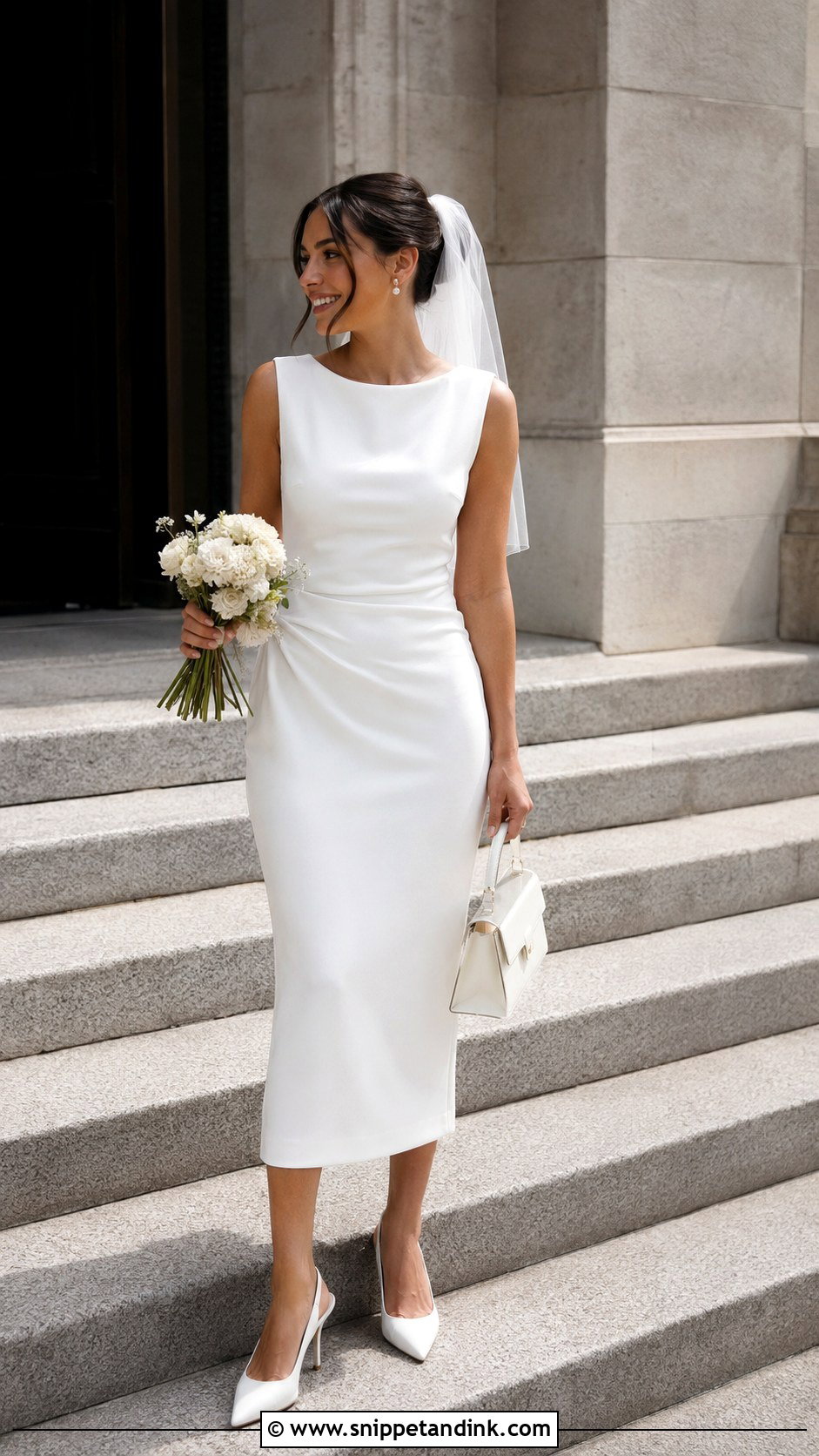
For a courthouse, I care about two things: can you walk up stone steps in it, and does it still look crisp after an hour of waiting? A tailored white midi in crepe, satin or a structured cotton blend passes both tests. A square neckline, wrap shape or fitted sheath all work. Slingback heels, a small bouquet, pearl studs and a structured handbag complete it, with a short veil, bow headband or comb for the bridal touch. Choose shoes you’ve already worn for a full afternoon. Elegant without fuss is the aim.
12. Garden Wedding Tea Length Dress
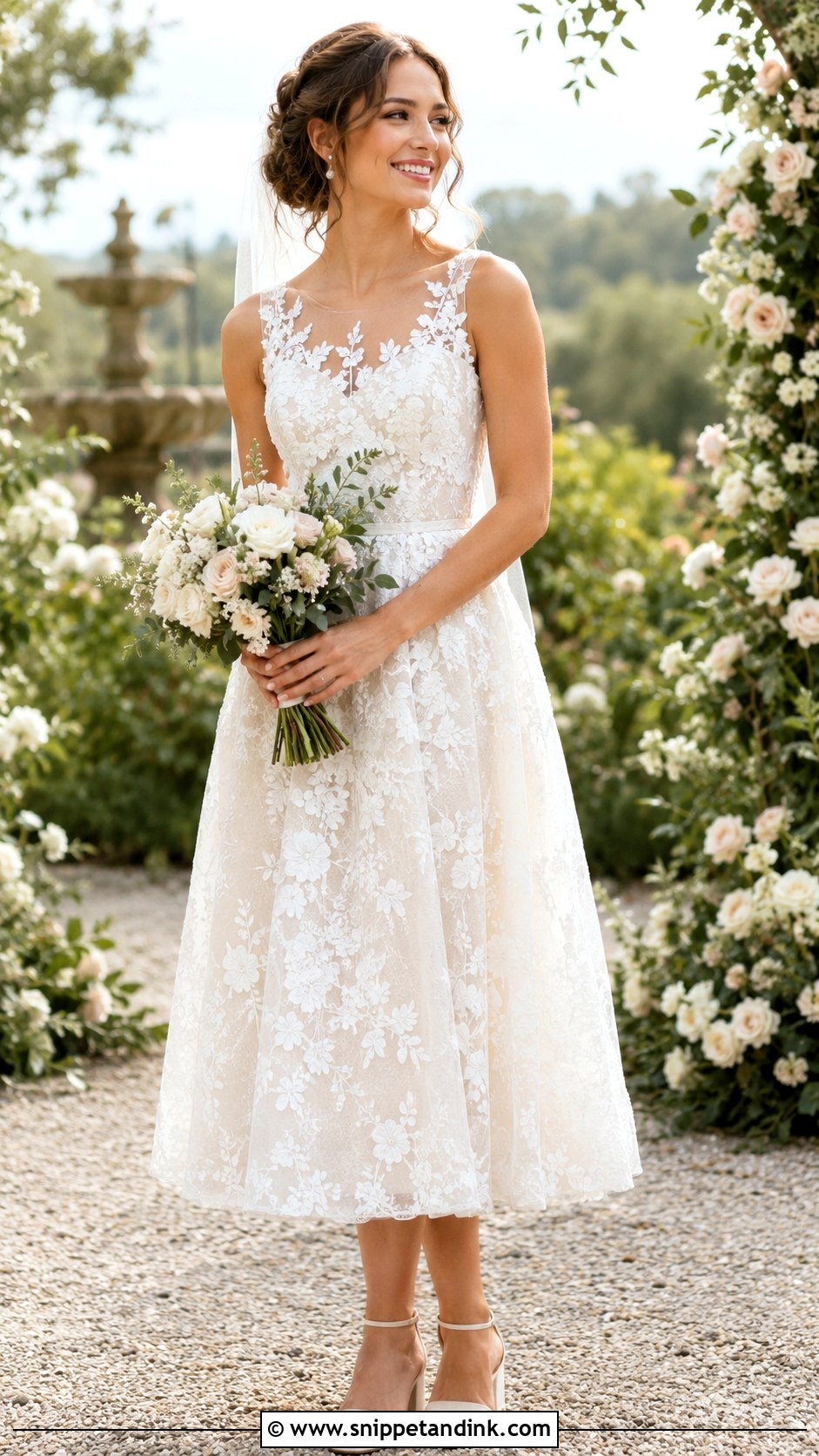
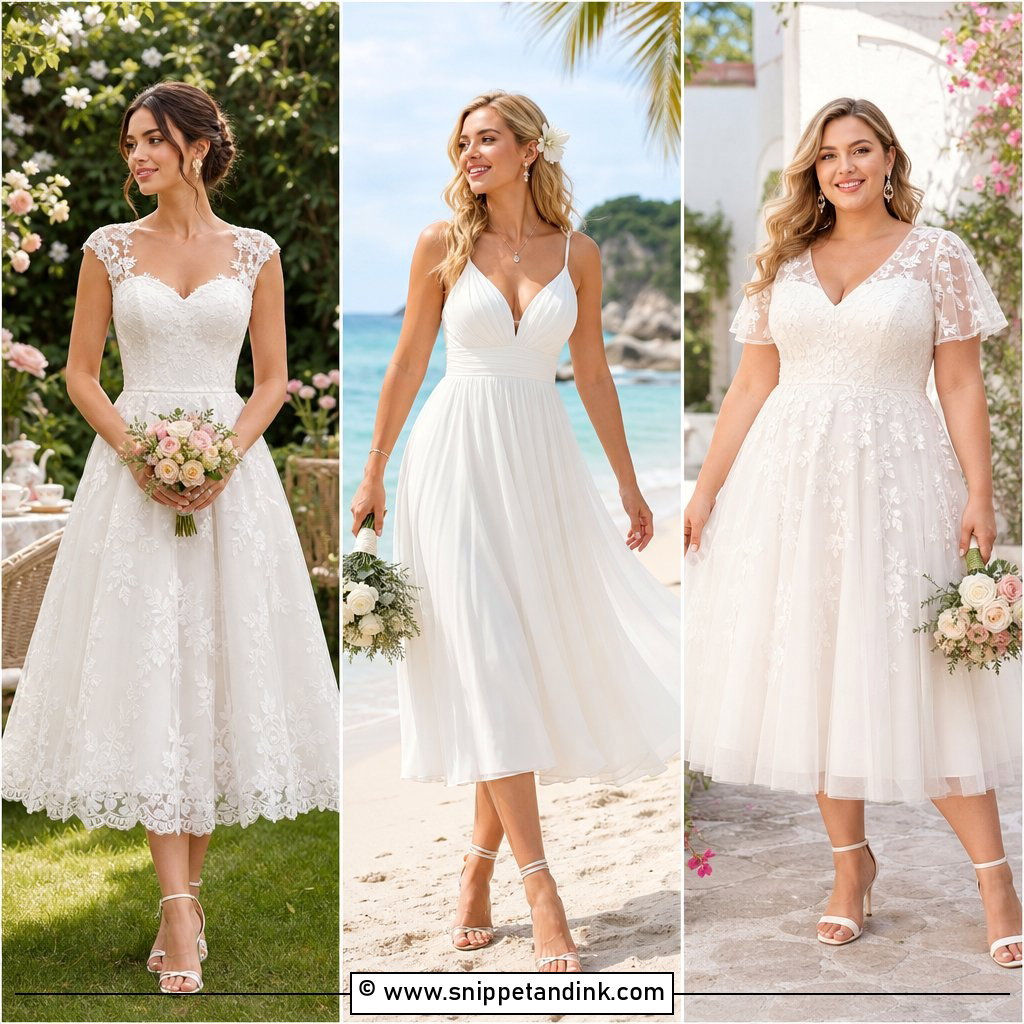
Grass is the enemy of a skinny heel, so garden brides should start with their shoes: block heels or low sandals. Then pick fabric that breathes, such as tulle, chiffon, organza or lace, and a floral lace overlay or embroidered bodice to tie in with the setting. A tea-length hem also stays clear of damp lawn and grass stains, which a floor-length gown collects all afternoon. Pearl earrings, a loose updo and a small veil or floral comb suit it, with natural makeup and a fresh bouquet.
13. Beach Midi Wedding Dress
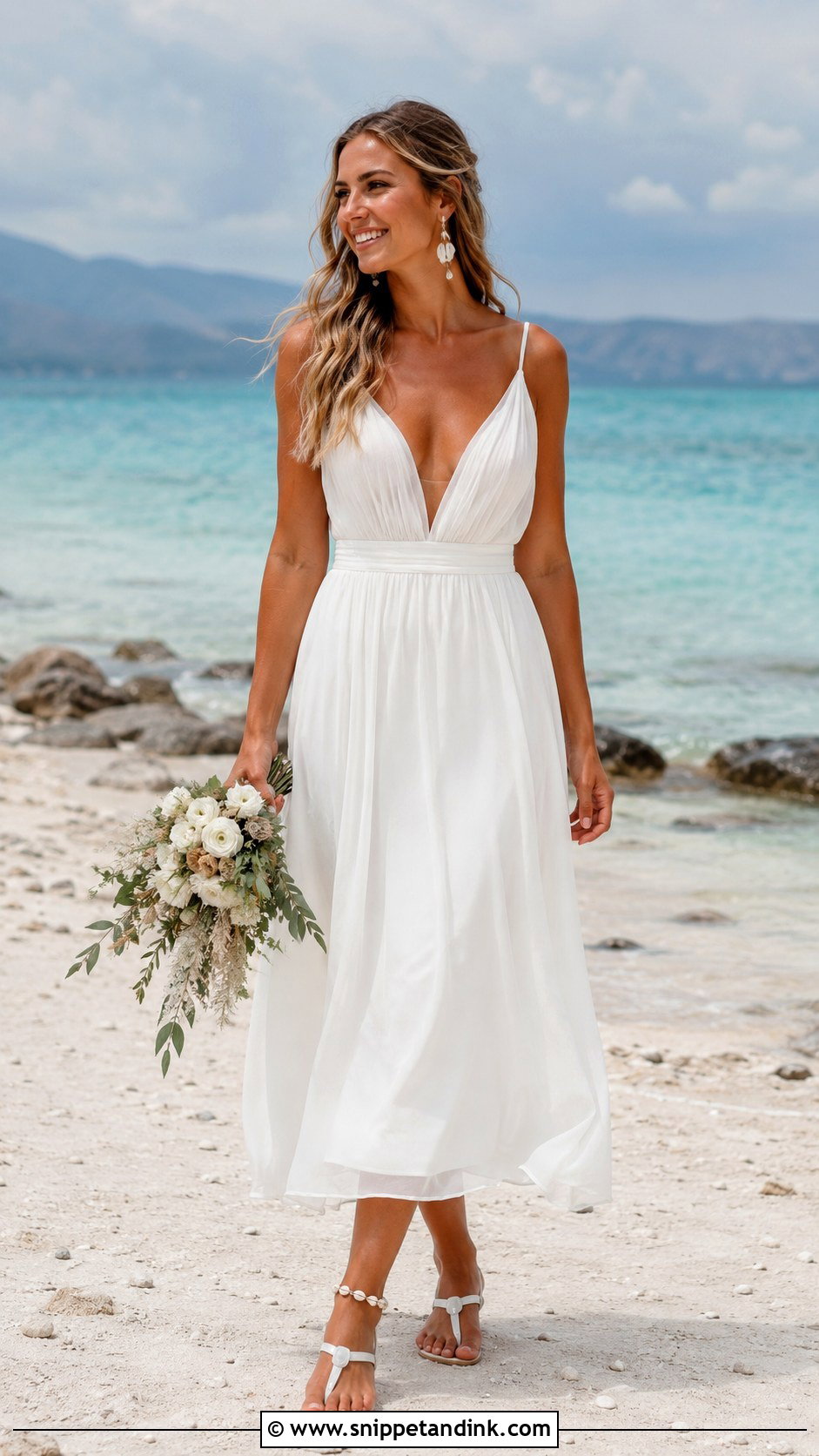
On sand, heavy satin and stiff petticoats are a mistake, since they hold heat and collect grit. Lightweight crepe, chiffon, cotton lace or a soft satin slip are better, in a slip shape, wrap bodice or flowing A-line. Flat sandals, pearl anklets, shell earrings and loose waves keep it relaxed. Instead of a long veil that will wrap itself around your face in a sea breeze, choose a small hair clip, soft scarf or a short sheer veil. The shorter hem keeps you out of wet sand at the waterline.
14. Plus Size Tea Length Wedding Dress
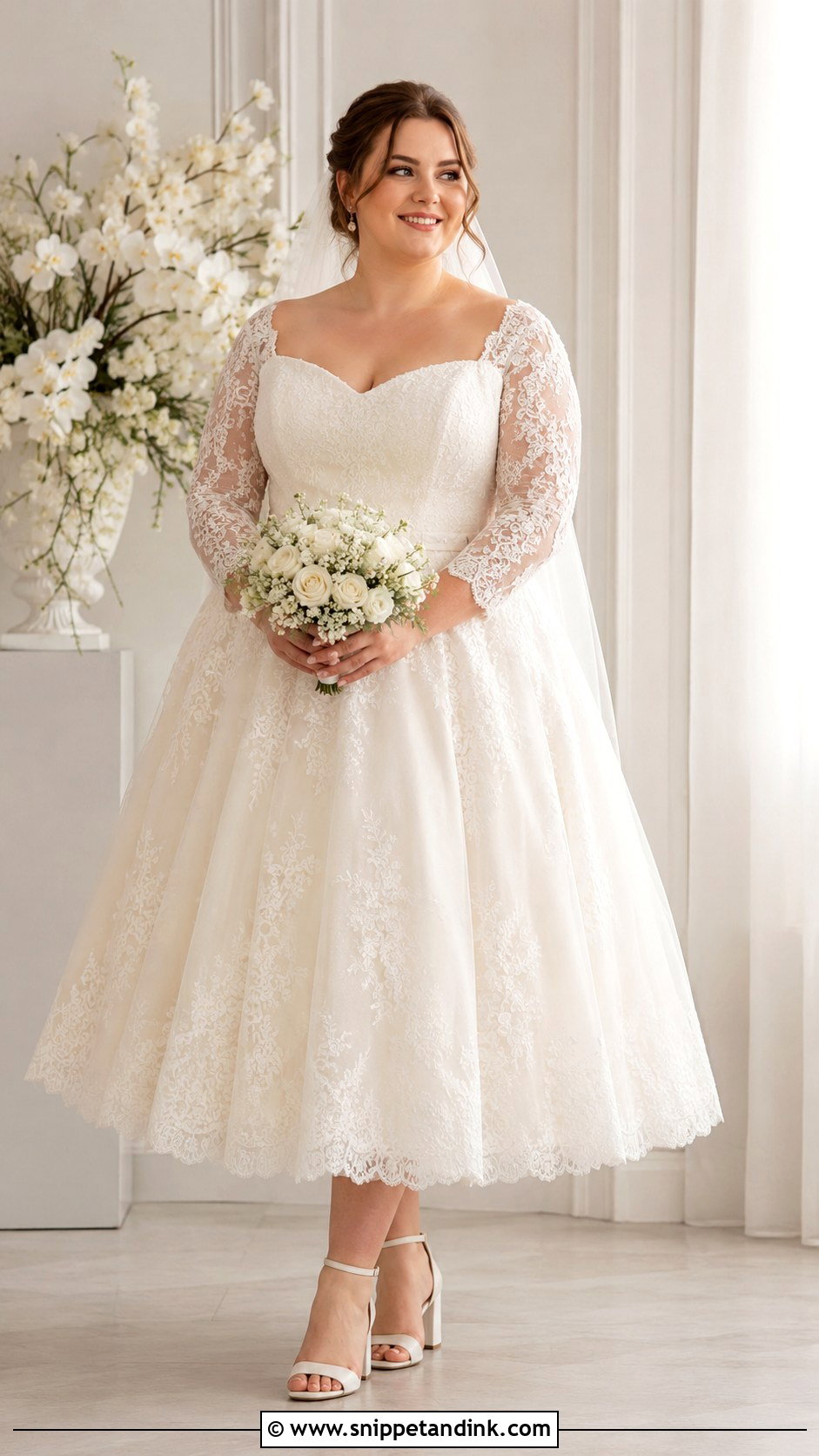
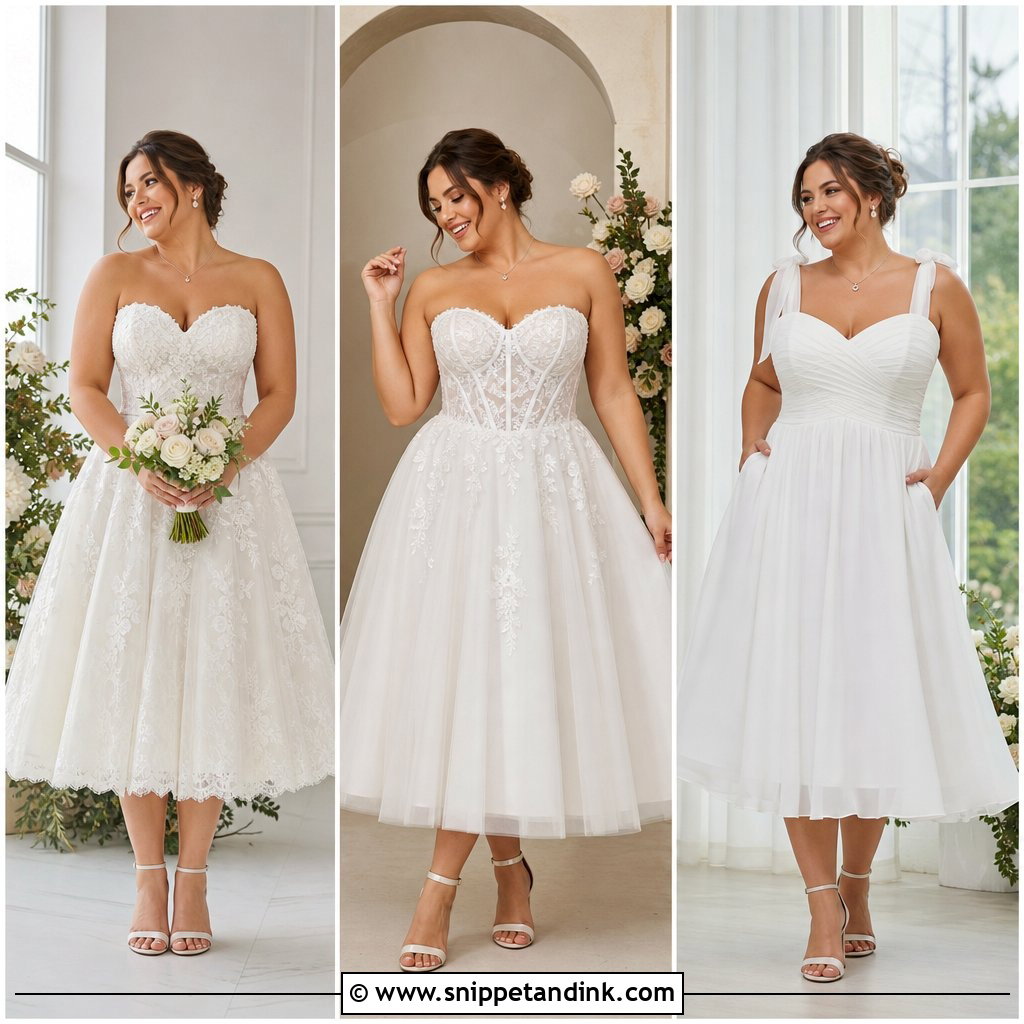
For plus size brides, the bodice construction matters more than the skirt shape. Ask about the inside: a built-in cup, light boning and wide, comfortable straps mean you aren’t relying on a separate bra to hold everything. A-line, wrap and fit-and-flare skirts are easy to wear, and lace sleeves, square necklines and satin skirts all feel bridal. Block heels, pearl earrings and a veil that suits the mood finish it. Sit, walk and dance at the fitting before you agree to anything. It isn’t about hiding; it’s about fit, movement and proportion.
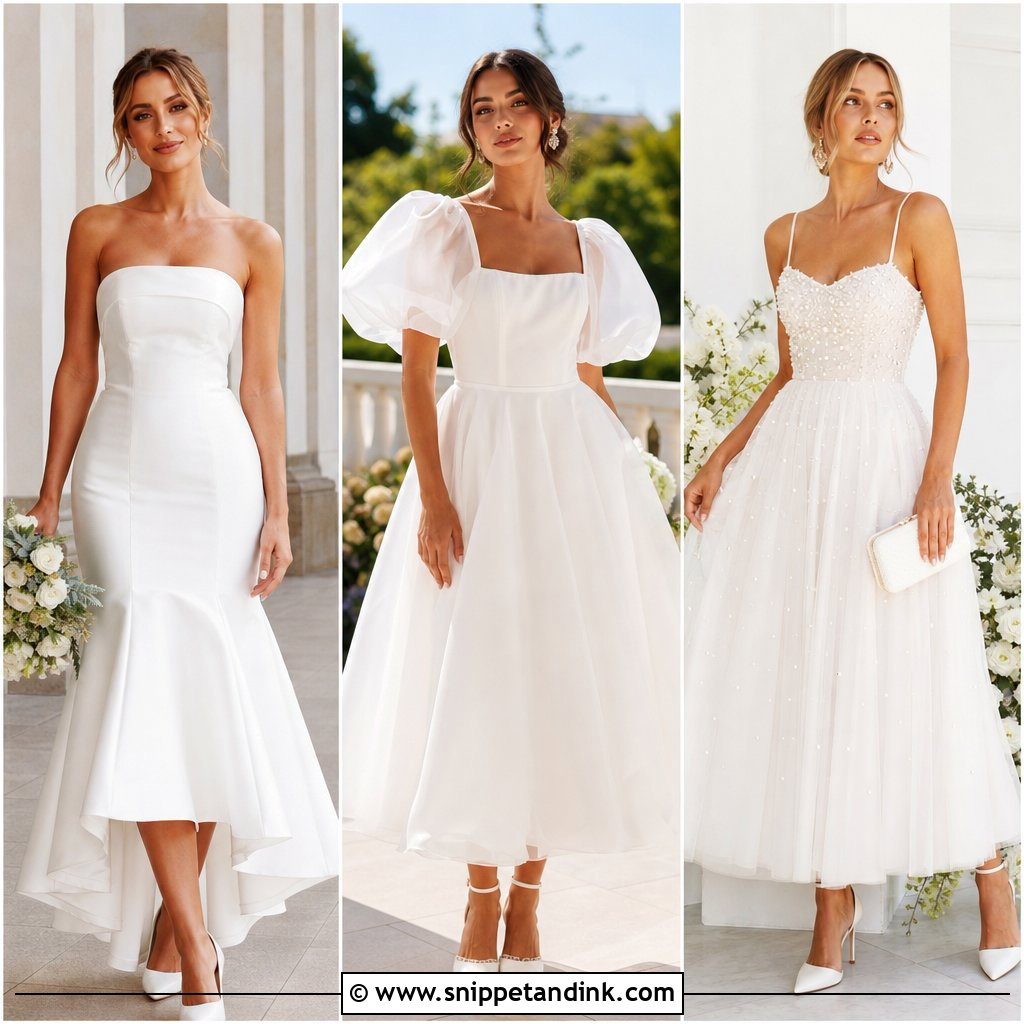

15. Petite Tea Length Wedding Dress
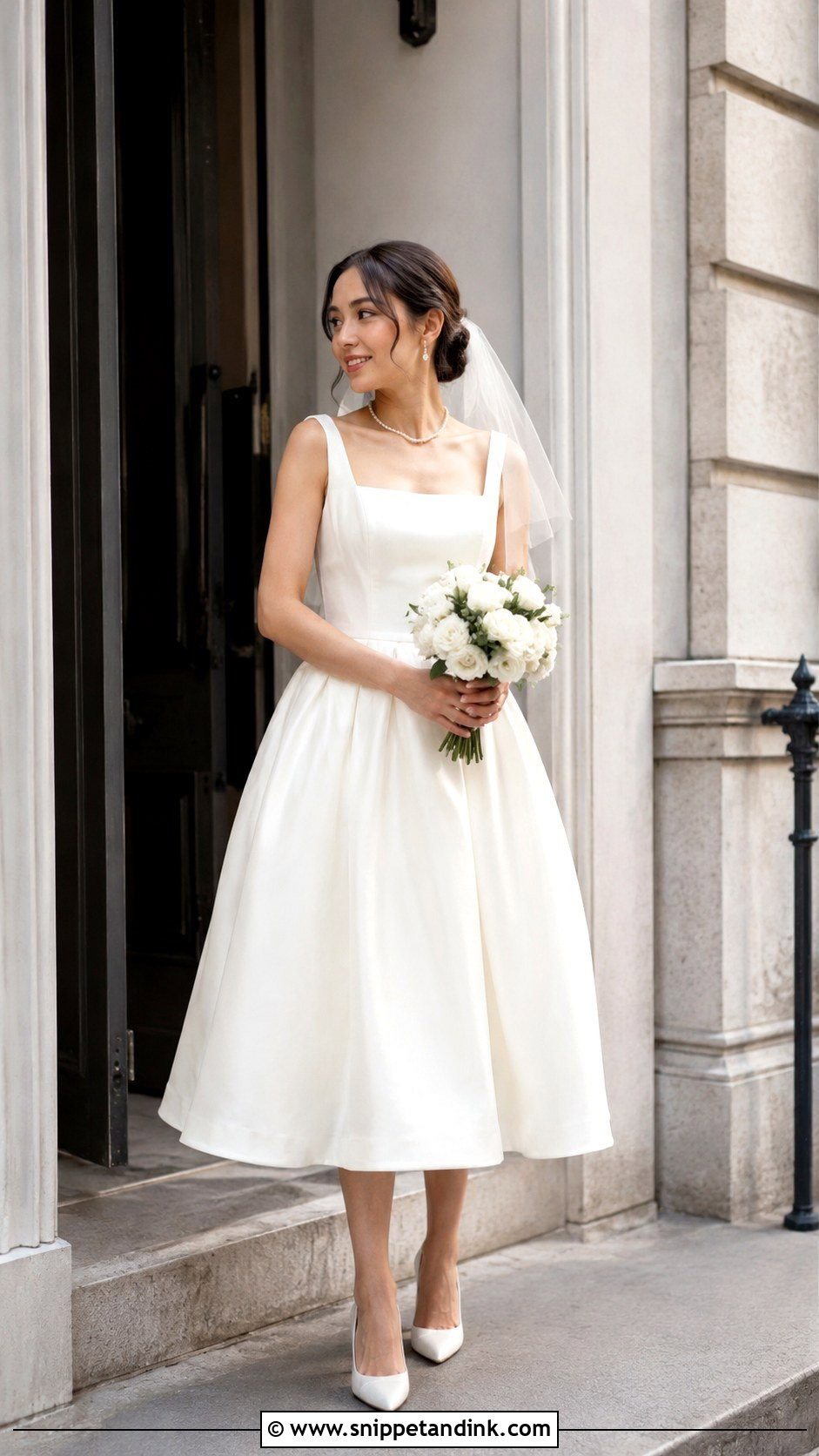
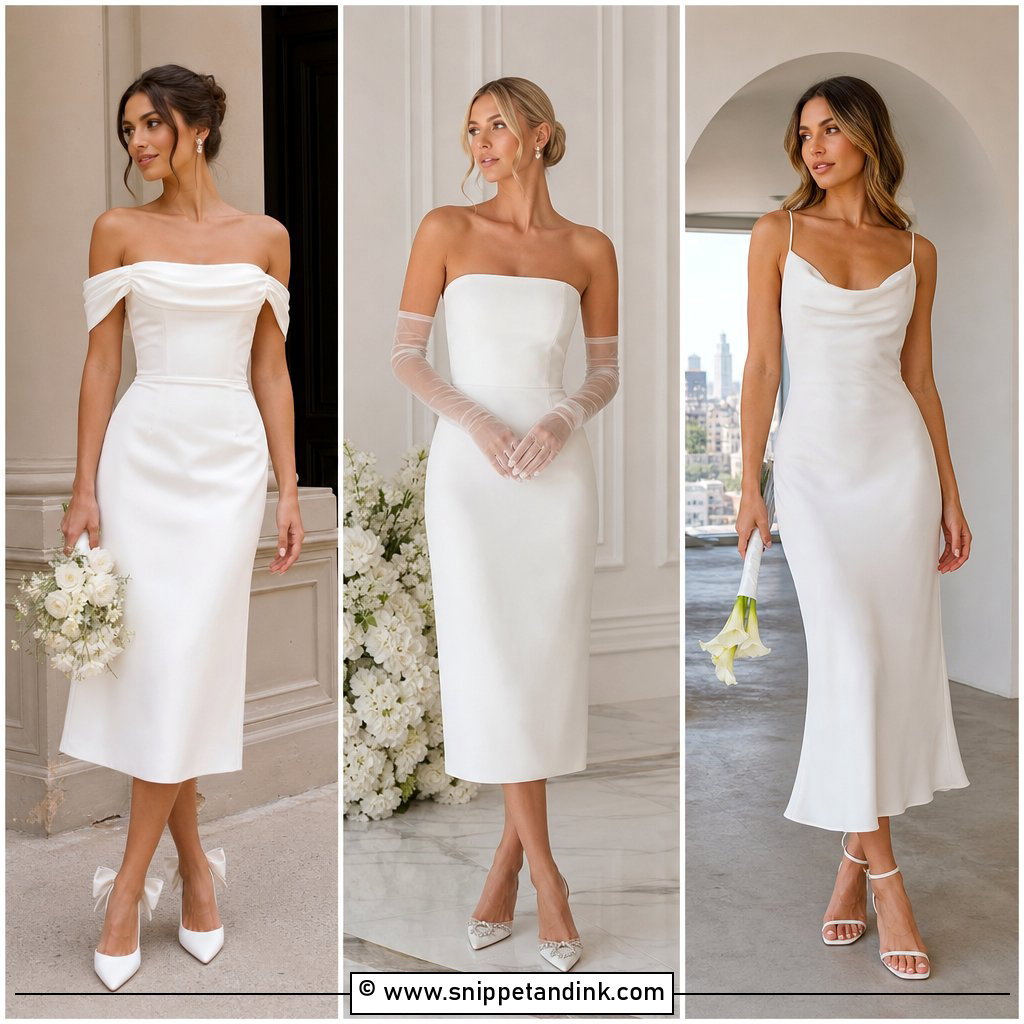
Petite brides have the narrowest window with tea length. A hem just below the knee or at mid-calf usually works, while one that lands near the ankle can shorten the frame. A fitted bodice and a slightly higher waistline make the legs look longer, and pointed heels or nude-ivory shoes extend the line further. Keep accessories small: little pearls, a fine bracelet, a short veil. Oversized bows and heavy skirts swamp a short frame unless the proportions are re-cut, which is a much bigger alteration than a simple hem.
16. Minimalist Midi Wedding Dress
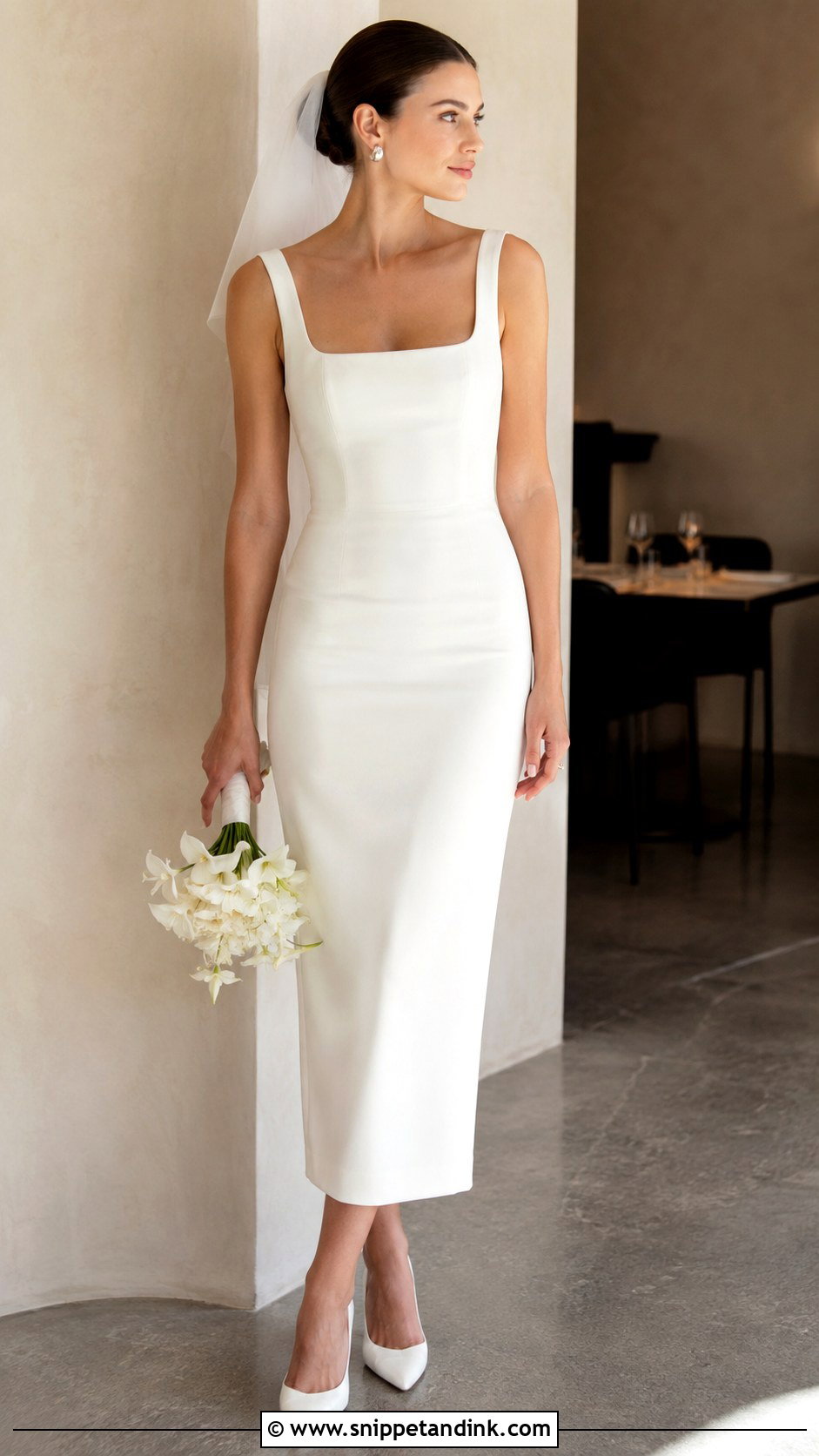
With almost no embellishment, the fabric and the tailoring carry everything. A white or ivory column, square neck, high neck or strapless bodice all feel modern. Hold a swatch up to a window before you order, because in a plain dress a cheap fabric is obvious in daylight with nothing else to distract from it. Sleek pumps, sculptural earrings and a smooth bun or polished waves keep it sharp. A simple veil softens it, and a structured blazer pushes it toward fashion. Each accessory should look chosen rather than added.
17. Pearl Detail Tea Length Wedding Dress
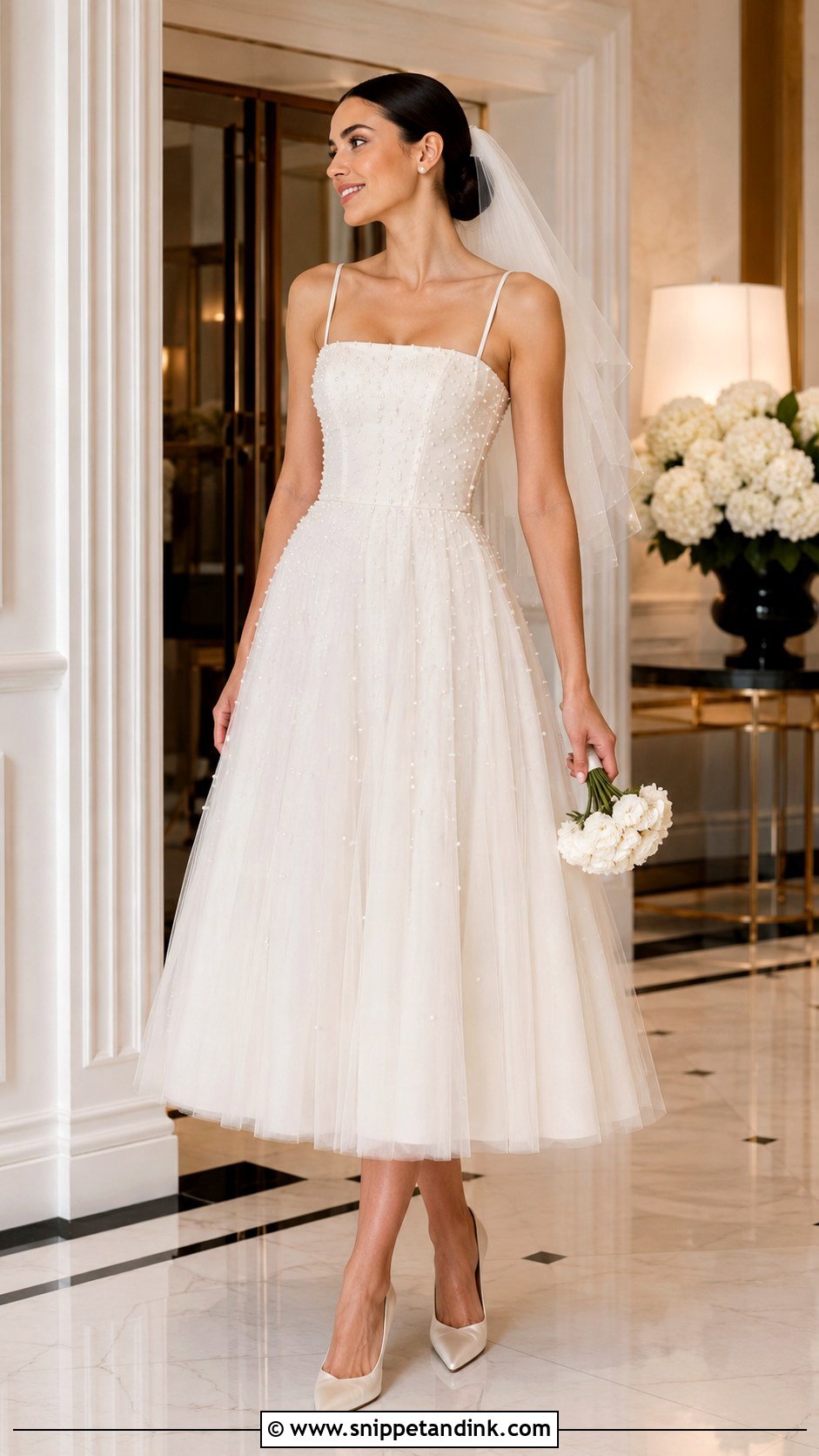
Pearl detailing adds texture quietly, on the bodice, sleeves, straps, neckline or scattered across the skirt. Light accents look refined; pearl-covered tulle makes a statement and adds weight, so check how the skirt hangs. Ask whether the pearls are hand-sewn, since glued pearls can pop off after a day of hugging. Simple satin heels and pearl studs suit it, but stop there rather than stacking more pearl accessories on top. A smooth bun and short veil keep it polished for a classic hotel or indoor wedding.
18. Floral Applique Midi Wedding Dress
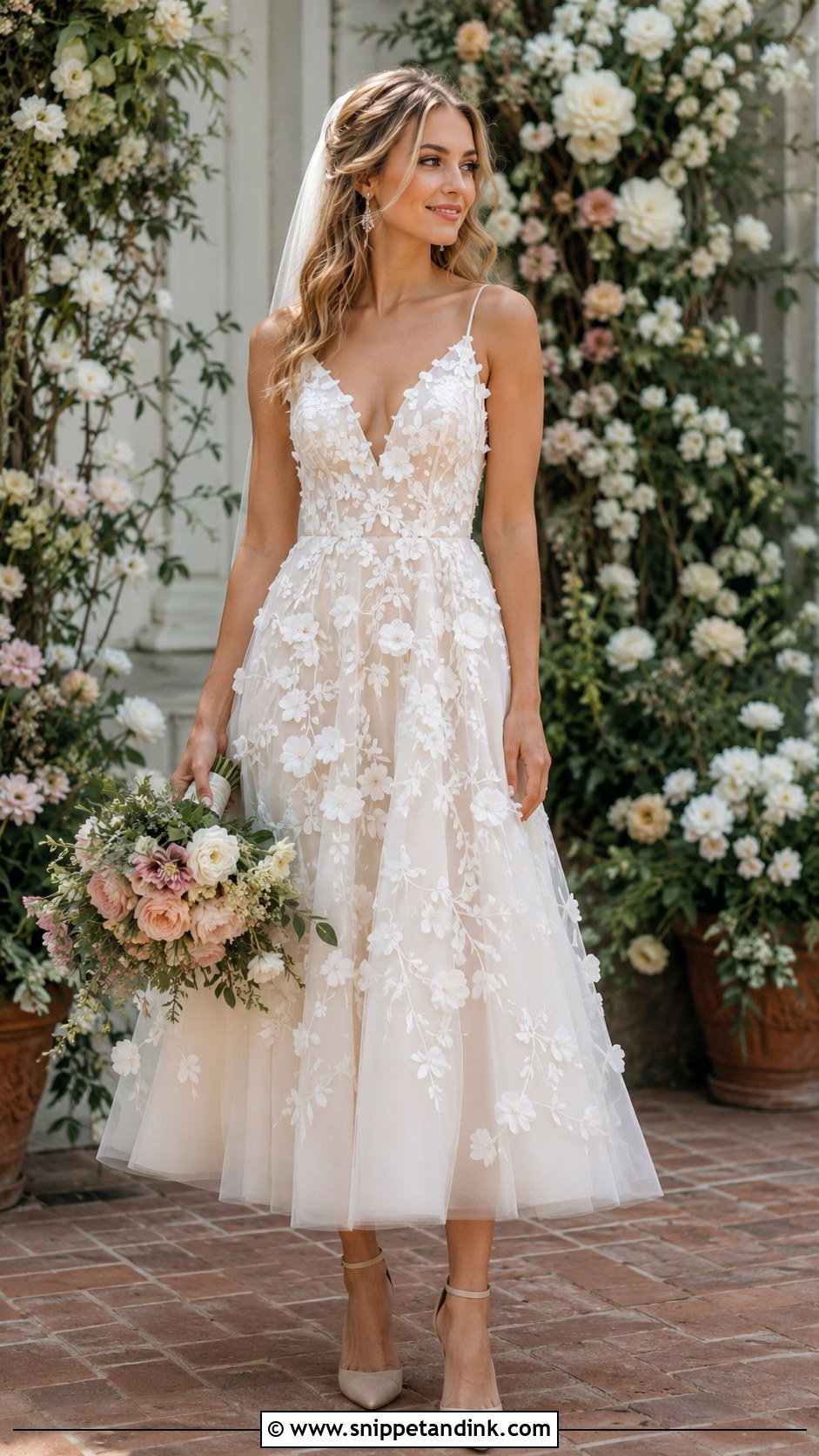
Raised flowers make a simple silhouette feel special without any sparkle. Appliques along the bodice, hem or sleeves, or scattered over tulle, suit spring and garden weddings. Nude or ivory heels, small earrings and a delicate veil finish the look. One clash I watch for: a bouquet full of small blooms competes with a busy applique, so pair a bold dress with a simpler bunch. A soft updo or loose curls fit the mood.
19. High Low Midi Wedding Dress
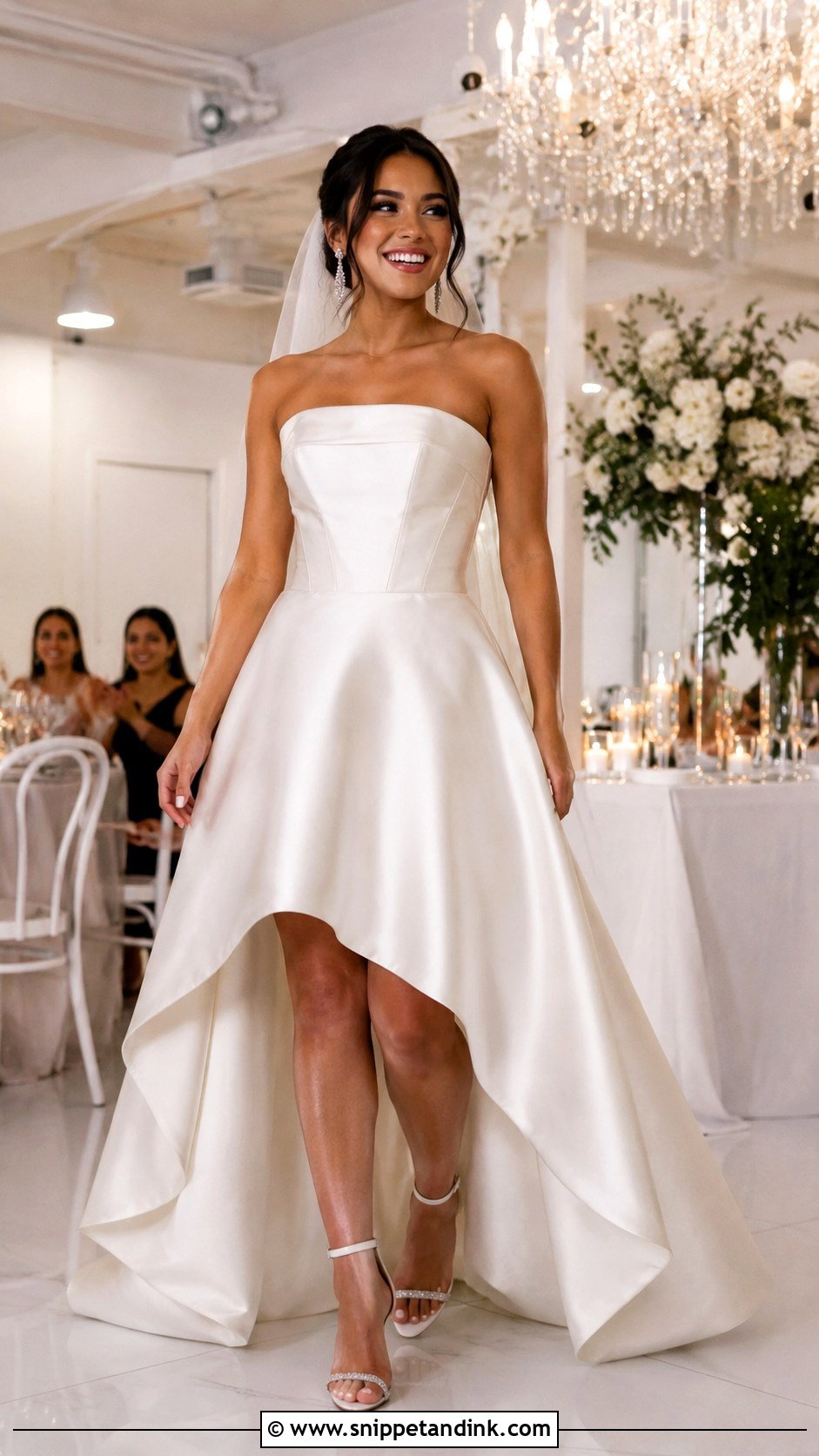
A high-low hem shows your shoes at the front and leaves some length behind, so you get a little drama without a train to bustle. The shoes are on full display, which means they should be worth seeing. Structured satin, tulle or organza keeps it formal; soft chiffon makes it casual. Look closely at the sides, where the hem steps down. A well-cut one curves smoothly, while a cheap one drops at a sudden angle. Keep the jewelry clean with drop earrings and a slim bracelet, and consider a longer veil to balance the back if the dress is plain.




20. Puff Sleeve Tea Length Wedding Dress
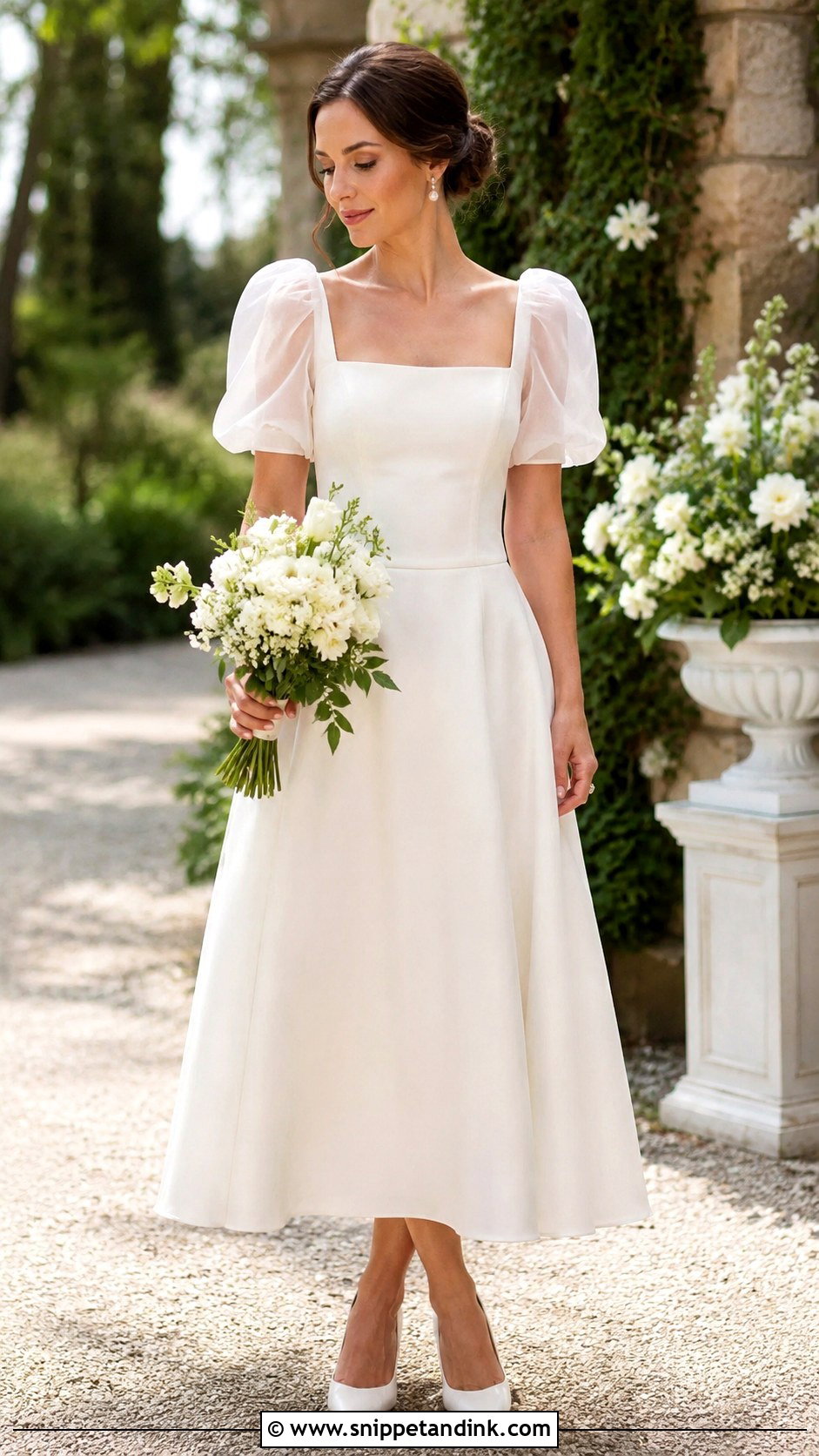
Puff sleeves are as much about your shoulders as your style. On narrow shoulders they add shape; on broad shoulders, a softer, smaller puff keeps things in proportion. Sheer puffs look delicate, structured ones dramatic. A fitted bodice and clean midi skirt balance the volume, and simple heels, small pearl earrings and a neat hairstyle keep the attention on the sleeves. Garden weddings and intimate receptions suit it.
21. Halter Midi Wedding Dress
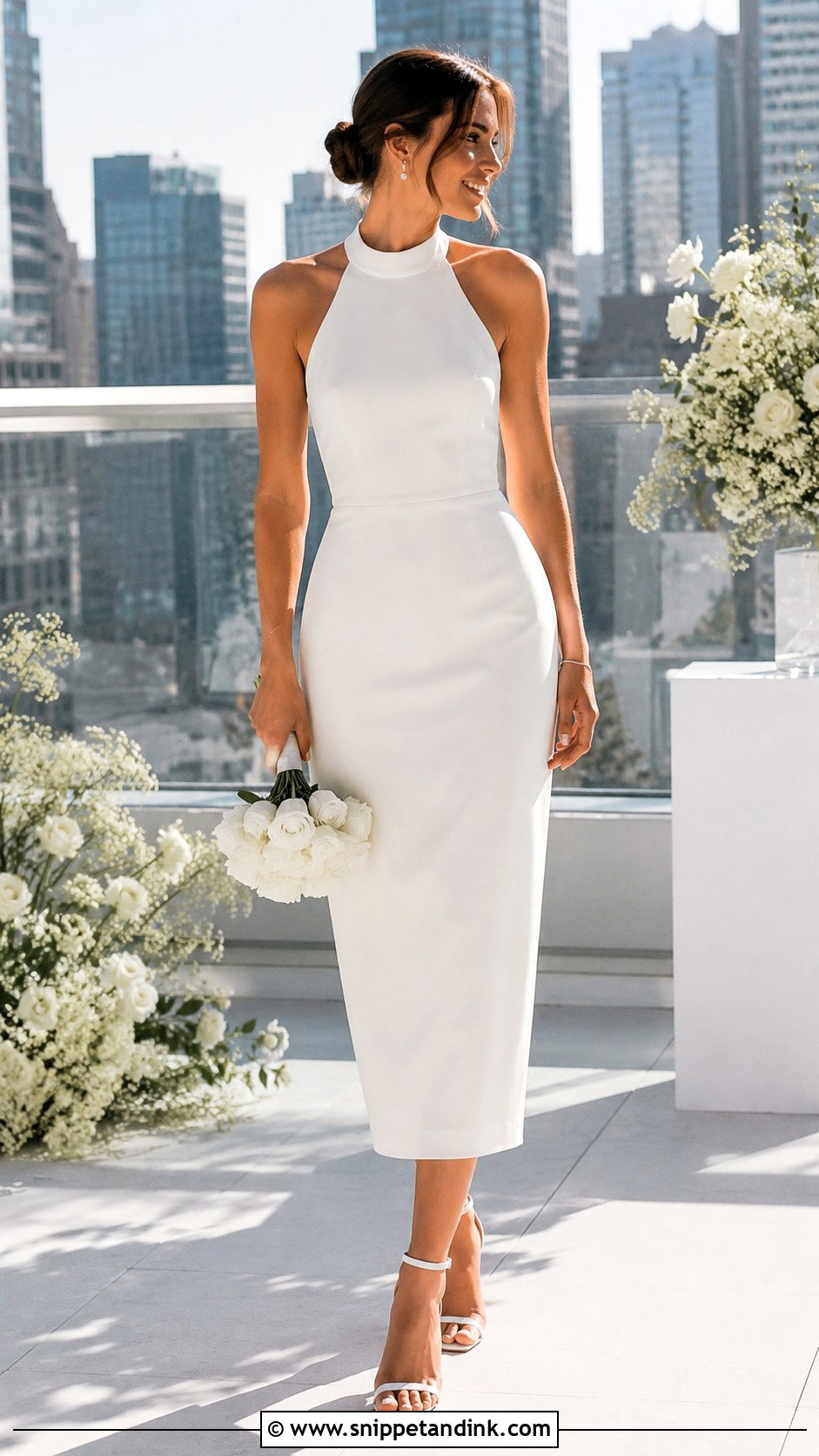
Halter necklines draw a clean vertical line through the upper body and suit brides with strong shoulders. A fitted crepe column reads minimal; a halter A-line moves more. Since the neck carries the dress, try your hair before deciding, because a heavy bun at the nape can press on the halter tie all day. Skip a necklace in favor of delicate earrings, a bracelet and strappy heels. A low bun set slightly higher, a sleek ponytail or tucked waves show the shape best at a rooftop, beach or modern reception.
22. V Neck Tea Length Wedding Dress
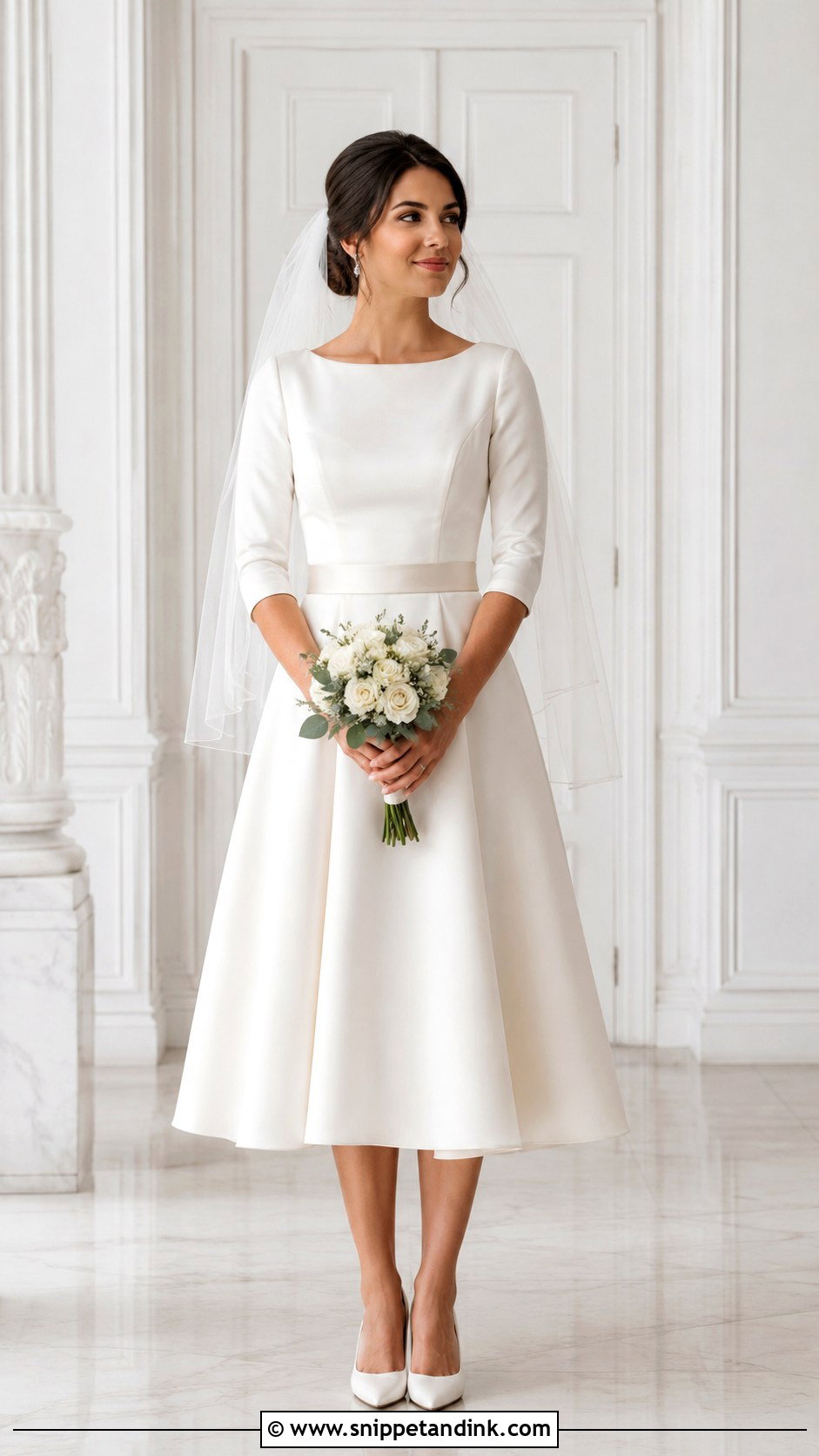
A V neckline draws the eye up and lengthens the torso, which is why it suits so many brides. A soft V gives modest coverage; a deeper V needs secure structure. On a fuller bust, supportive straps and a firm bodice matter more than how deep the V goes. A-line skirts, wrap bodices and lace overlays all pair well, with pendant earrings, low heels and a soft veil. I test a deep V by asking the bride to bend and pick something up from the floor; if it gapes, a hidden mesh panel solves it.
23. Belted Midi Wedding Dress
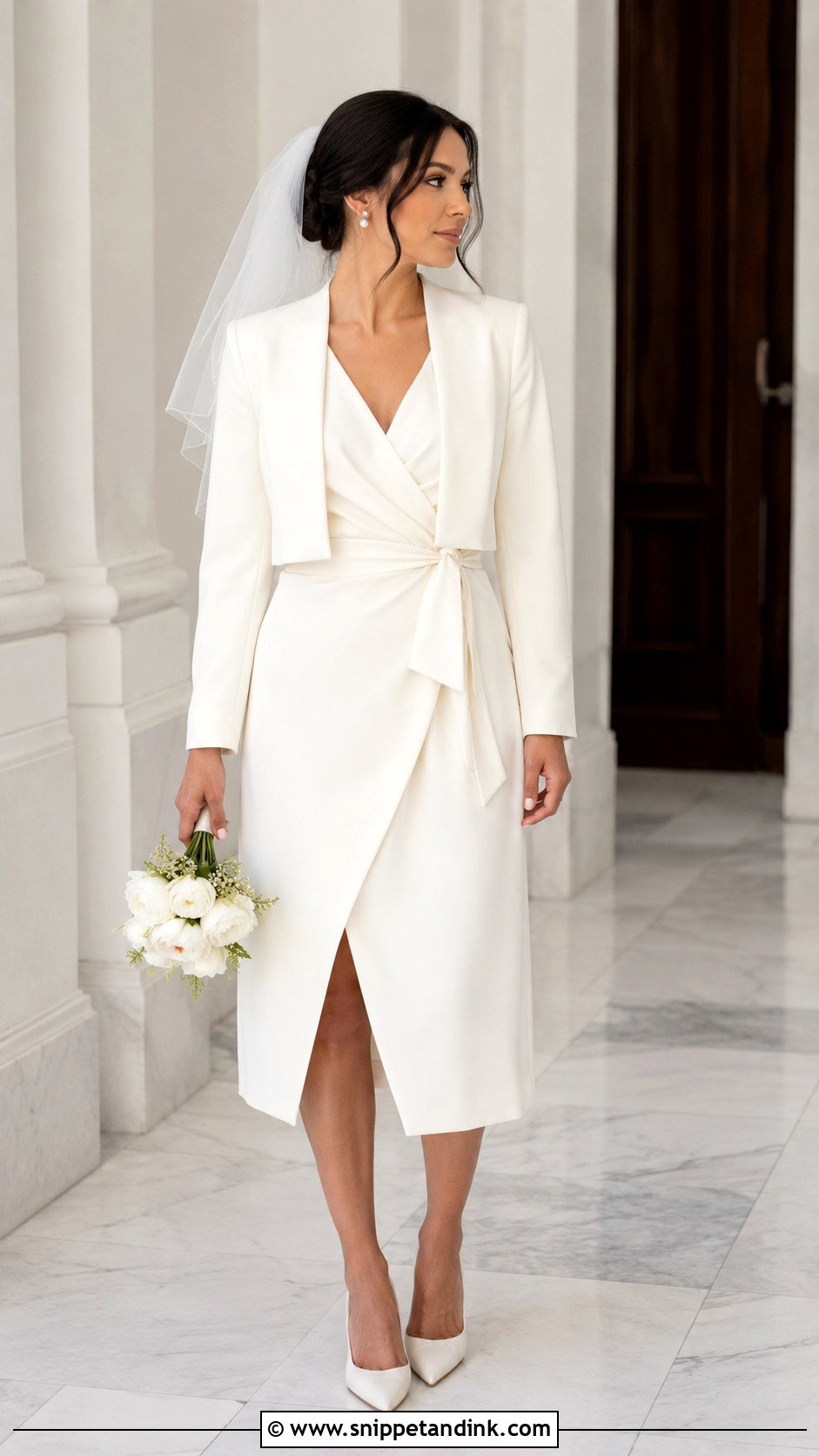
A belt is the fastest way to give a simple dress a waist. Satin, pearl, crystal, a bow-tie belt or one cut from the dress fabric all work, and it suits A-line, fit-and-flare and shirt dress silhouettes. Wear it at your natural waist, the narrowest point, and have it tacked at the side seams so it can’t twist when you sit. Classic pumps, simple earrings and a neat veil complete it. A sparkly belt calls for quieter jewelry; a plain one can take a statement earring or hair comb.
24. Reception Tea Length Wedding Dress
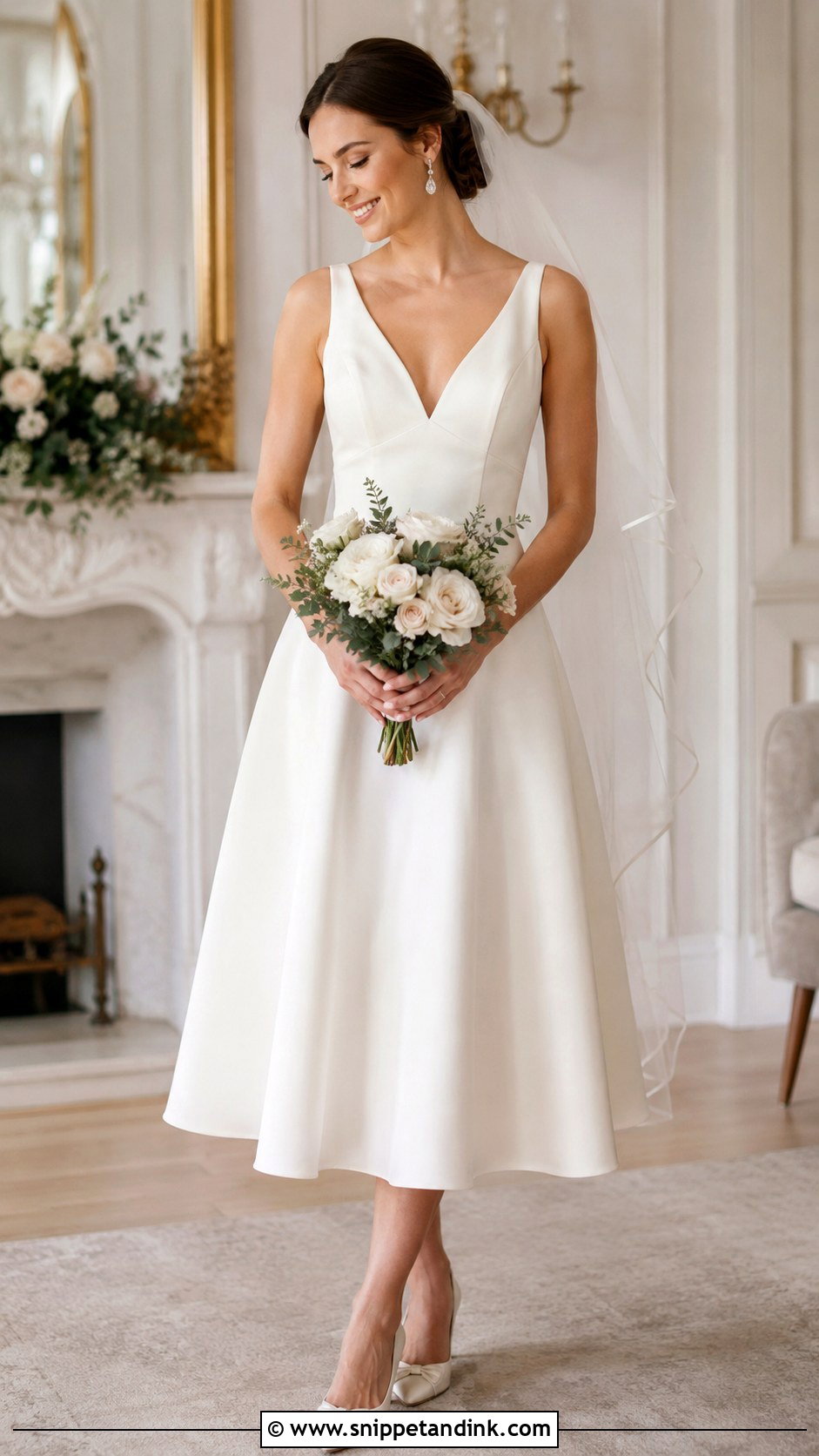
A reception dress has one job: let you walk, dance, sit and hug a room full of people. Satin, tulle, crepe and lace all work if the fit is secure. Changing into a shorter hem after a formal ceremony gown feels like a release. Comfortable heels, sparkly earrings and a mini bag for touch-ups finish it, and you can trade the veil for a bow or hair clip. Do a full spin in front of the mirror at your fitting, because reception photos catch you mid-movement and you’ll want to know what the skirt does.
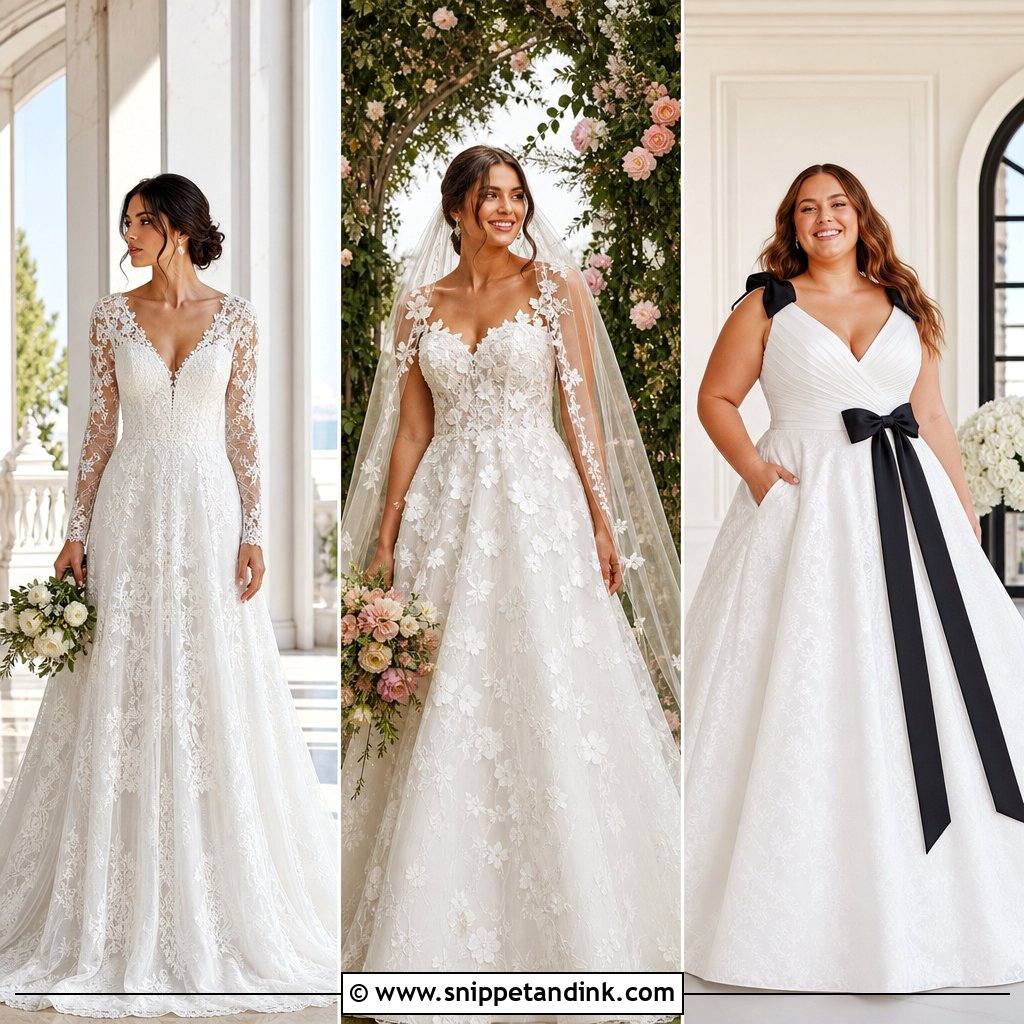

25. Civil Wedding Tea Length Dress
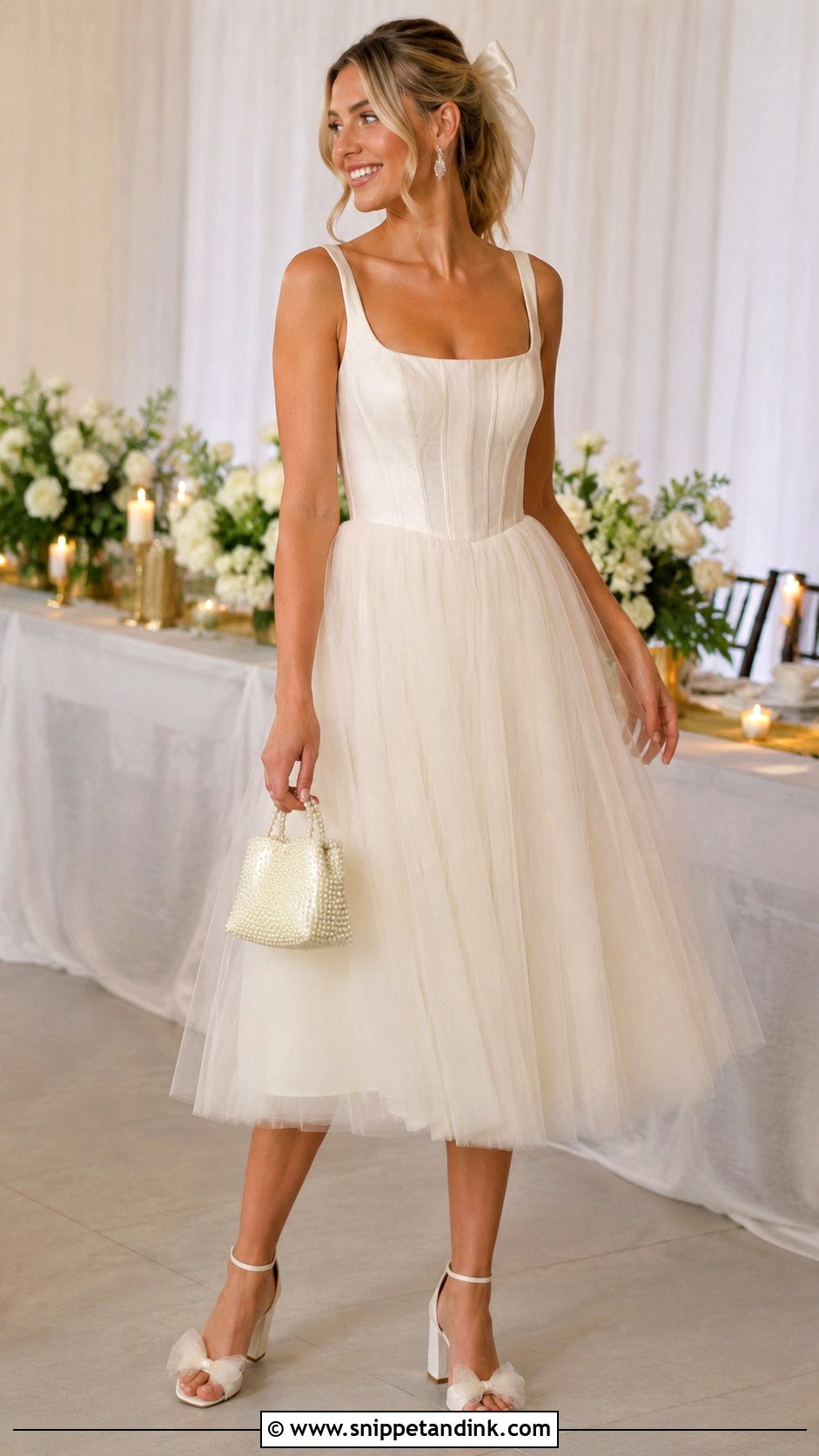
A civil wedding tea length dress should look elegant without being overdone, since registry rooms are often small and plainly furnished. Ivory, white, champagne or soft blush in a tailored cut all work, from a wrap midi or satin A-line to a crepe sheath or lace tea dress. Refined heels, pearl earrings and a small bouquet are enough. A blazer, cropped jacket or short veil makes it feel more ceremonial. In a plain room your accessories do most of the bridal work, so give them real thought.
Veil Lengths That Suit a Hem Above the Ankle
The veil and the hem should never end on the same line. When both stop at mid-calf, the outfit looks sliced in two. Stay well above the hem, or if you want length, go clearly past it.
- Birdcage or blusher: covers the eyes or face only and reads directly vintage, the natural partner for a 1950s shape.
- Shoulder or elbow length: my default with tea length, because it ends well above the waist and never fights the skirt.
- Fingertip: workable with a fuller skirt, since it lands around the hip.
- Chapel or cathedral: only for deliberate contrast. It trails on the ground behind you while your shoes show at the front, which some brides love and others find odd in photos.
Ordering Made-to-Order Versus Buying Off the Rack
Shorter bridal dresses are often sold ready-to-wear, which means you can buy within weeks of the date. Made-to-order is slower. Many designers quote several months from order to delivery, and that’s before alterations begin, so ask for the delivery date in writing and leave room for two or three fittings after it arrives.
Ready-to-wear has its own catch. It’s cut for a standard figure, so expect work at the bust, waist and hem. Take it to a seamstress the week you buy it, not the month before the wedding, in case the fix needs more fabric than the seams allow.
Why a Shorter Hem Still Feels Like a Wedding Dress
Tea length stopped being only the vintage option a while ago. A shorter hem can feel every bit as bridal as a full gown, as long as the fit, the fabric and the shoes suit where you’re marrying. Start with how you’ll move through the day, then let the veil, jewelry and hair follow. Of the twenty-five above, the right one is whichever you forget you’re wearing by the second hour.
You'll Like These Ideas:




Leave a Reply