
Modest bridal wear has never offered more range than it does now. Satin ball gowns styled with hijab, embroidered lehengas, pearl-trimmed abayas, cape dresses and plain crepe columns all sit comfortably in a covered wardrobe. When I style a bride who wears hijab, the dress and the hijab are planned together from the first appointment, because a neckline that looks right on a hanger can bunch, gape or fight the drape of the scarf once both are on. Sleeves, lining and how the fabric behaves when you sit on the floor or raise your arms matter as much as the silhouette. Each idea below comes with the details I’d check before buying.
Can a Standard Bridal Gown Be Made Modest?
Often yes, and it widens your choices a lot. Most bridal shops carry far more strapless and sleeveless gowns than covered ones, but a skilled bridal seamstress can add a great deal to an existing design. Bring this list to your first fitting:
- Sleeves can be added in lace, tulle or the gown’s own fabric. Ask the shop if they can order extra matching fabric from the designer.
- A high neckline or illusion yoke can be built above a sweetheart bodice.
- Sheer panels and lace can be backed with a skin-tone or ivory lining for full coverage.
- A detachable bolero or cape covers shoulders for the ceremony without changing the dress.
- Lowering a back neckline is easy; raising a very low back is much harder, so start from a higher back if you can.
These changes take time, because extra fabric may need ordering. I’d tell the shop you need modest modifications at the very first appointment, so they can confirm what is possible before you commit to a gown.
Matching the hijab to the dress
Take a small fabric swatch from the gown when you shop for the hijab. Bridal whites range from bright white through diamond white and ivory to champagne, and next to your face the slightest mismatch shows. Chiffon and georgette drape softly and stay put with pins; jersey is the most comfortable for long days and slides least; silk looks luxurious but slips and needs an underscarf with grip.
1. Satin Muslim Wedding Dress With Hijab
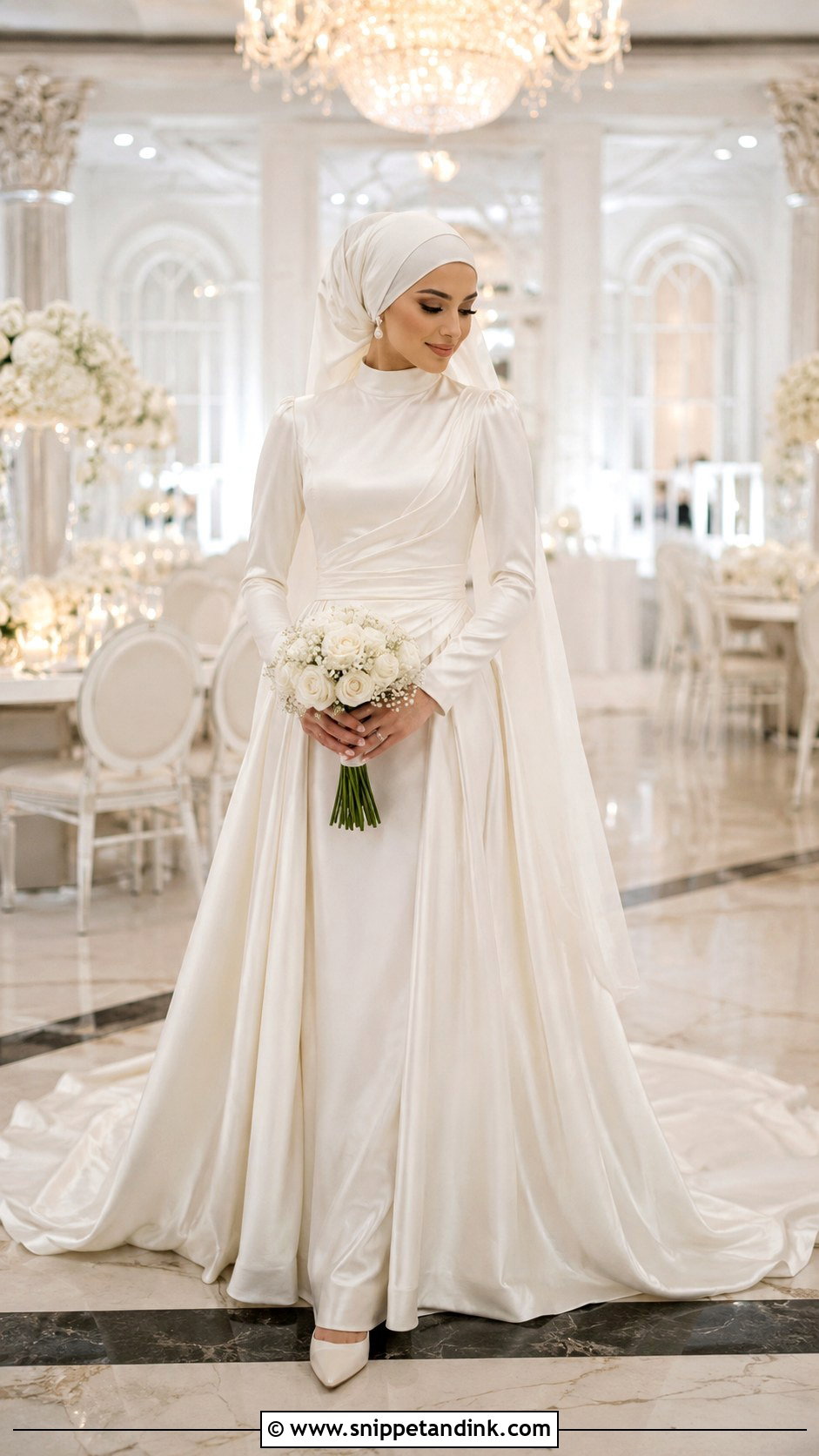
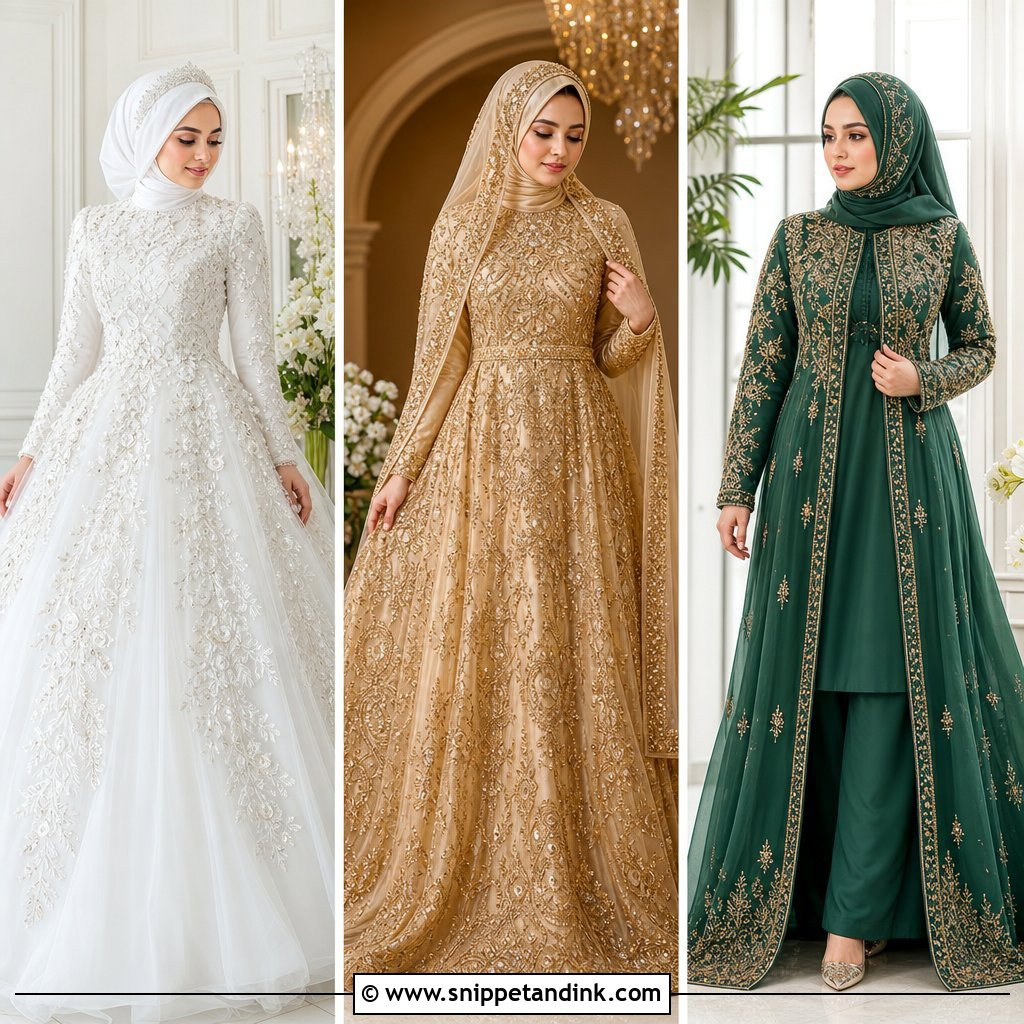
Satin gives a covered gown its glow without any sparkle at all. A long-sleeve satin dress with a high neck, fitted bodice and full A-line skirt is the most classic version, and it holds its shape in a large hotel ballroom. The fabric I’d pair with it for the hijab is soft chiffon rather than more satin: two slippery satins rub against each other and the scarf slides all evening. Match the shade carefully, since ivory satin beside a white chiffon hijab looks grey in photos. Closed-toe heels, pearl earrings and a small bouquet finish it.
2. Lace Muslim Wedding Dress With Long Sleeves
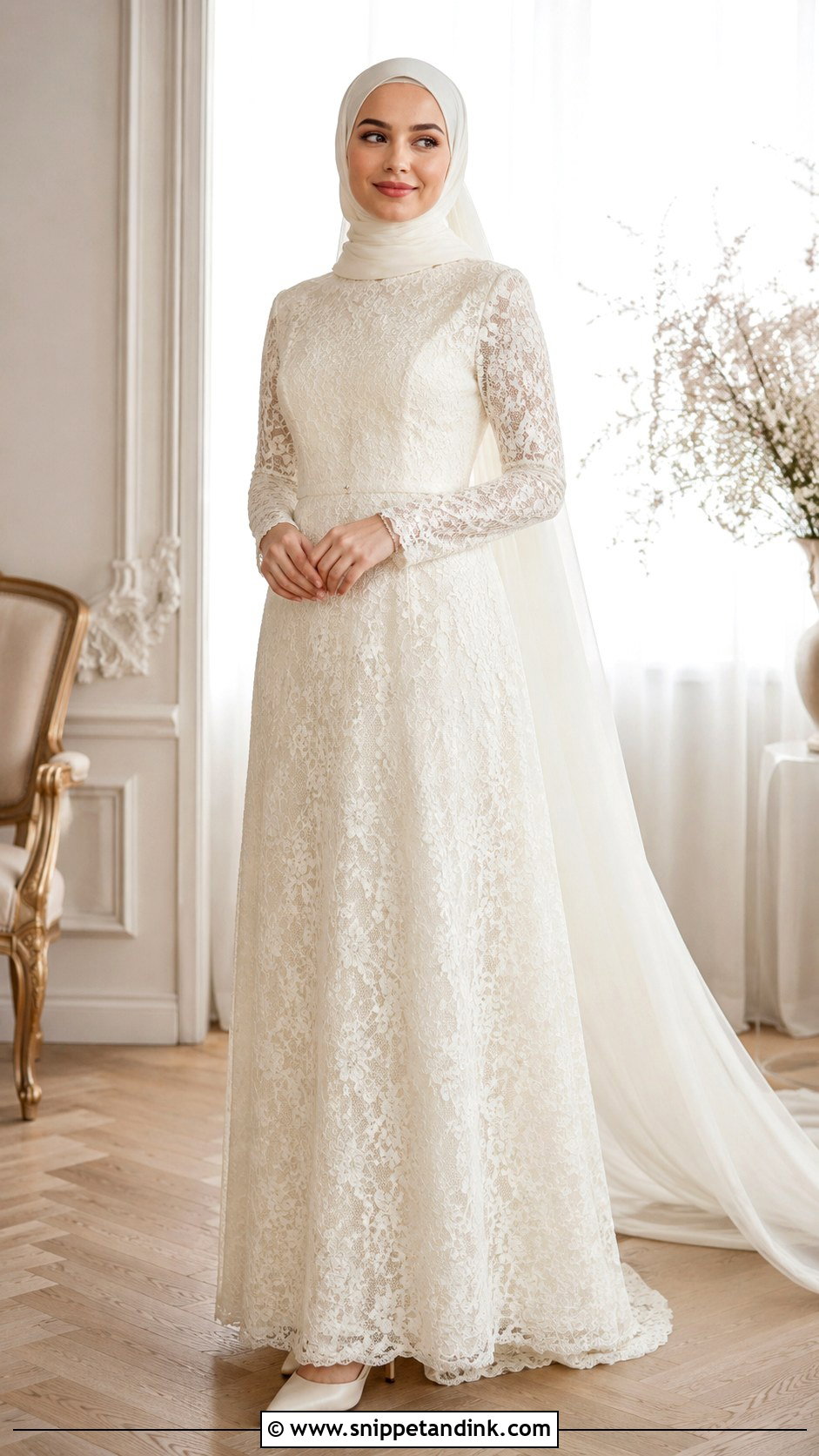
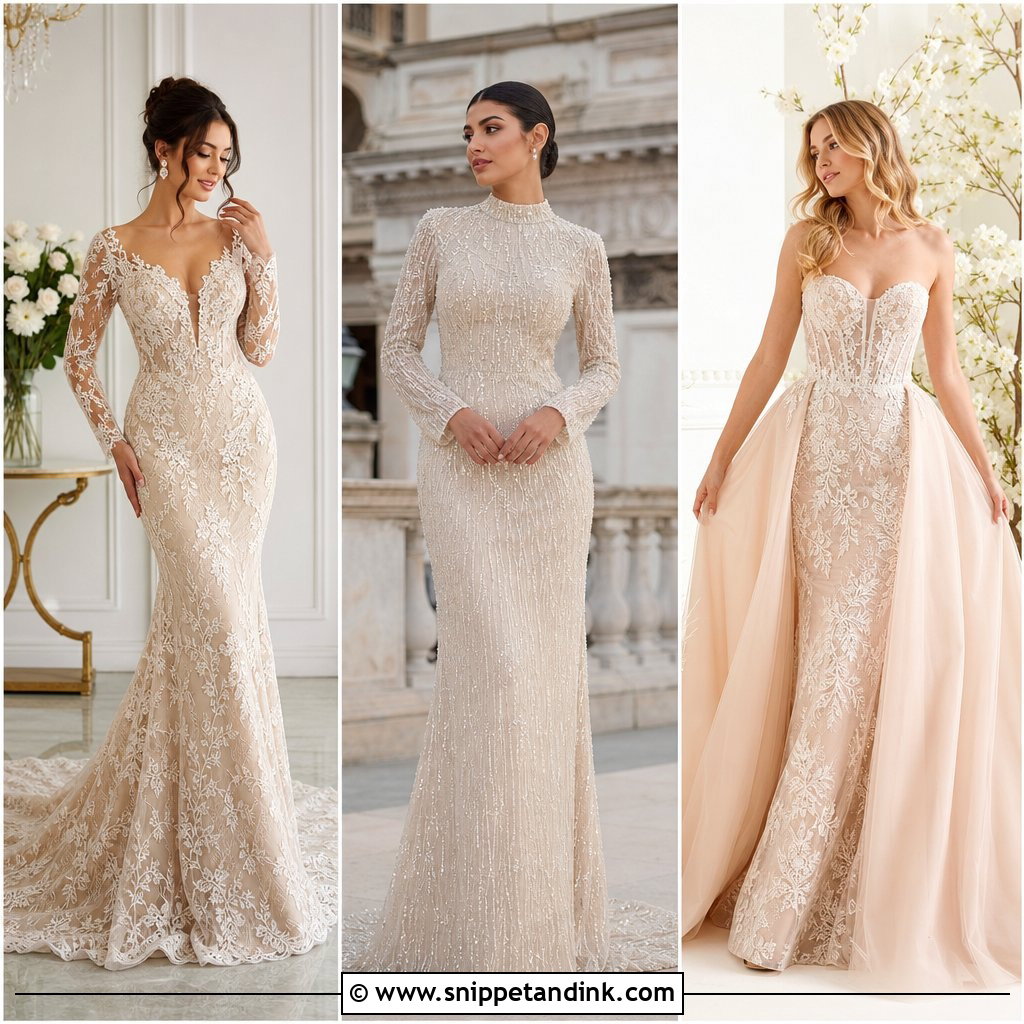
Lace sleeves look romantic, but lace is full of holes, so a covered version depends entirely on the lining. Ask for the bodice to be fully lined and the sleeves backed with a skin-tone or ivory mesh, and check it in daylight, because a lining that seemed solid in the shop can show through outdoors. Scalloped cuffs and floral lace with light beading suit a high neckline that tucks neatly under the hijab. A plain chiffon hijab lets the lace lead, and a flowing skirt keeps family greetings easy.
3. Modest Ball Gown Muslim Wedding Dress
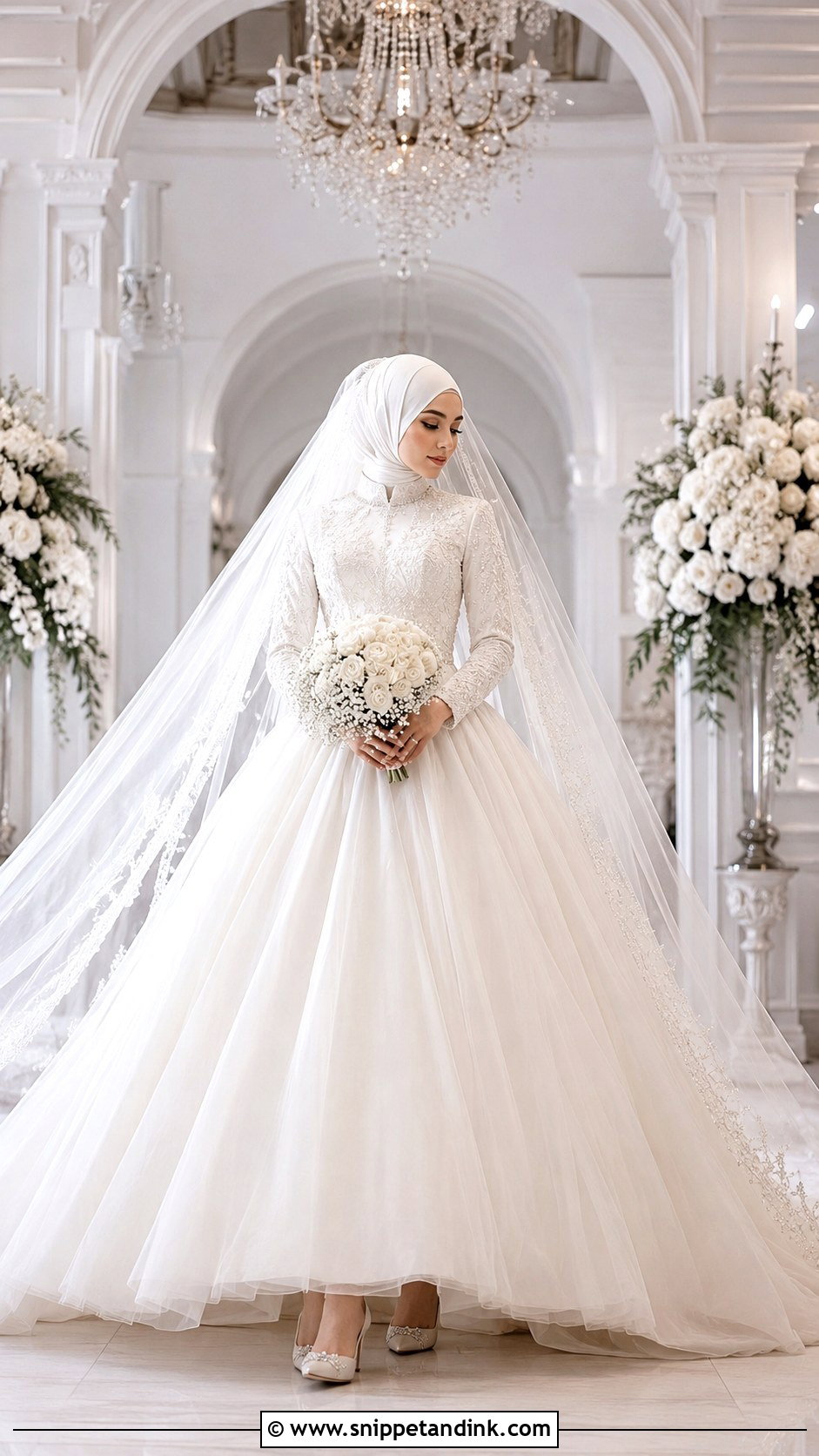
A covered ball gown makes a grand entrance, and the structure does most of the work: a firm bodice, long sleeves, a high neck and a full skirt in tulle, mikado, satin or organza. With that much volume below, a smooth, neatly pinned hijab keeps the top from looking crowded. The weight is real, so I steer brides toward a lower, wider heel and a hoop or layered petticoat that holds the skirt away from the legs. A cathedral veil or long cape adds drama for a large hall.
4. Simple Muslim Wedding Dress
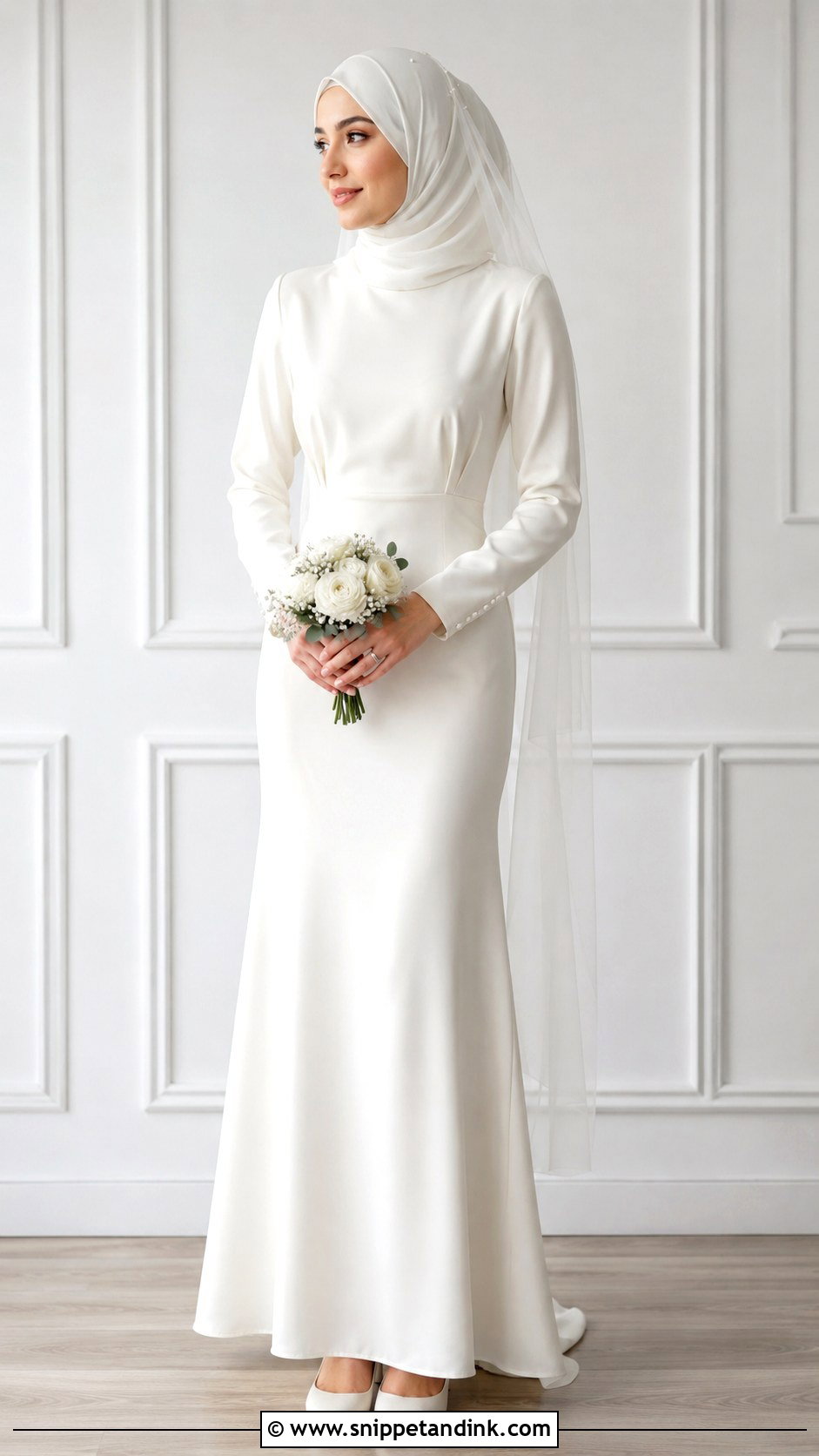
Simplicity puts the pressure on fabric and fit. A long-sleeve crepe or satin gown with a high neck and gentle waist shaping has nothing to distract from a poor seam, so I spend more fitting time on these than on embroidered dresses. In return it’s light, easy to sit in and calm in photos. A matching ivory hijab with pearl pins and a minimal veil is enough. It suits brides who dislike heavy gowns and want to feel like themselves all day.
5. Muslim Wedding Dress With Cape
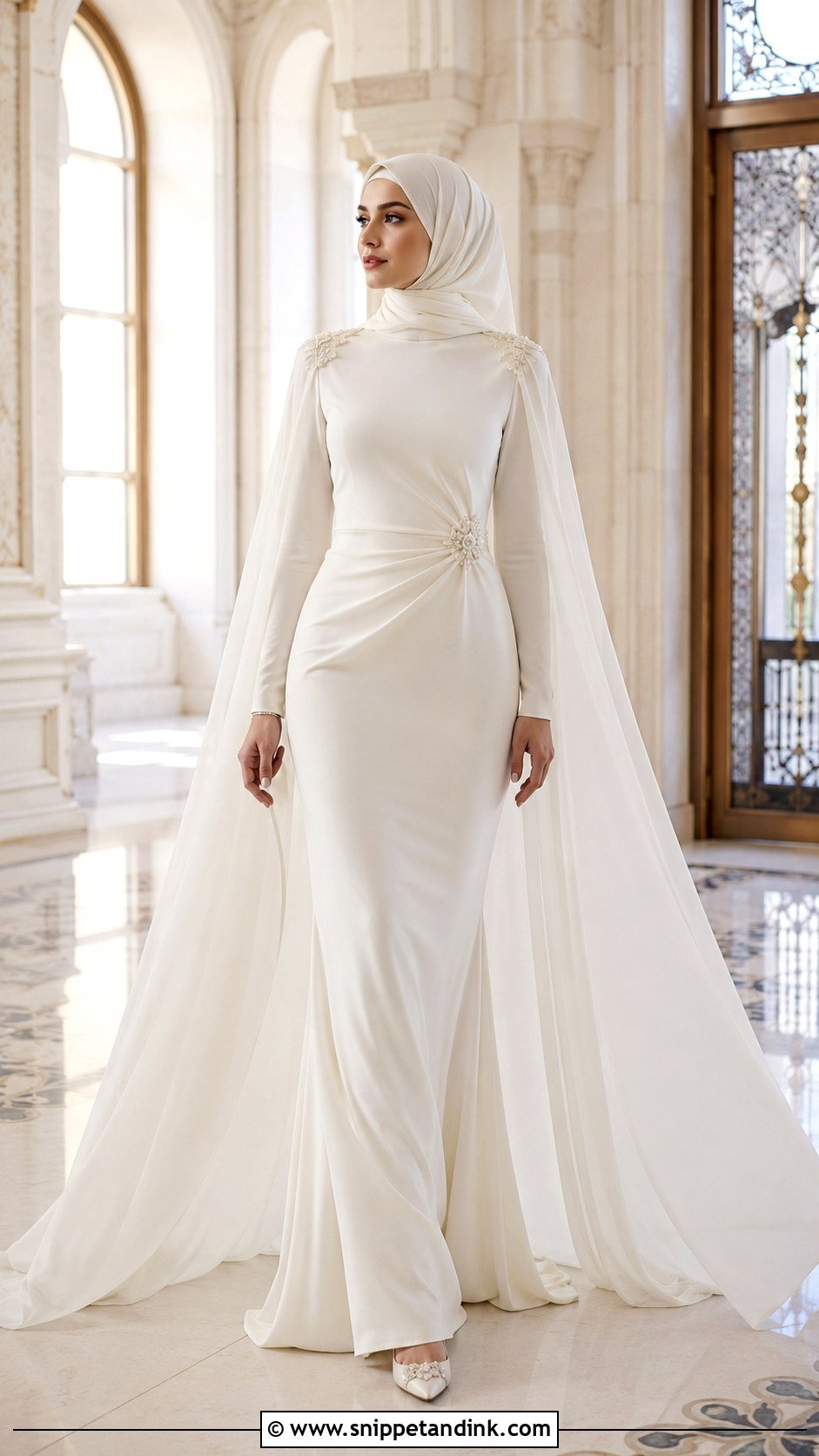
A cape gives coverage over the shoulders and arms and replaces the veil in one piece. Over a high-neck, long-sleeve gown, a detachable cape in soft tulle, chiffon or crepe falls from the shoulders and moves with every step. Attach it at the shoulder seams rather than the collar, because a cape hooked at the neck pulls back on the hijab as it drags. Keep accessories minimal, pin the hijab sleek, and let the cape be the moving part.
6. Embroidered Muslim Wedding Dress
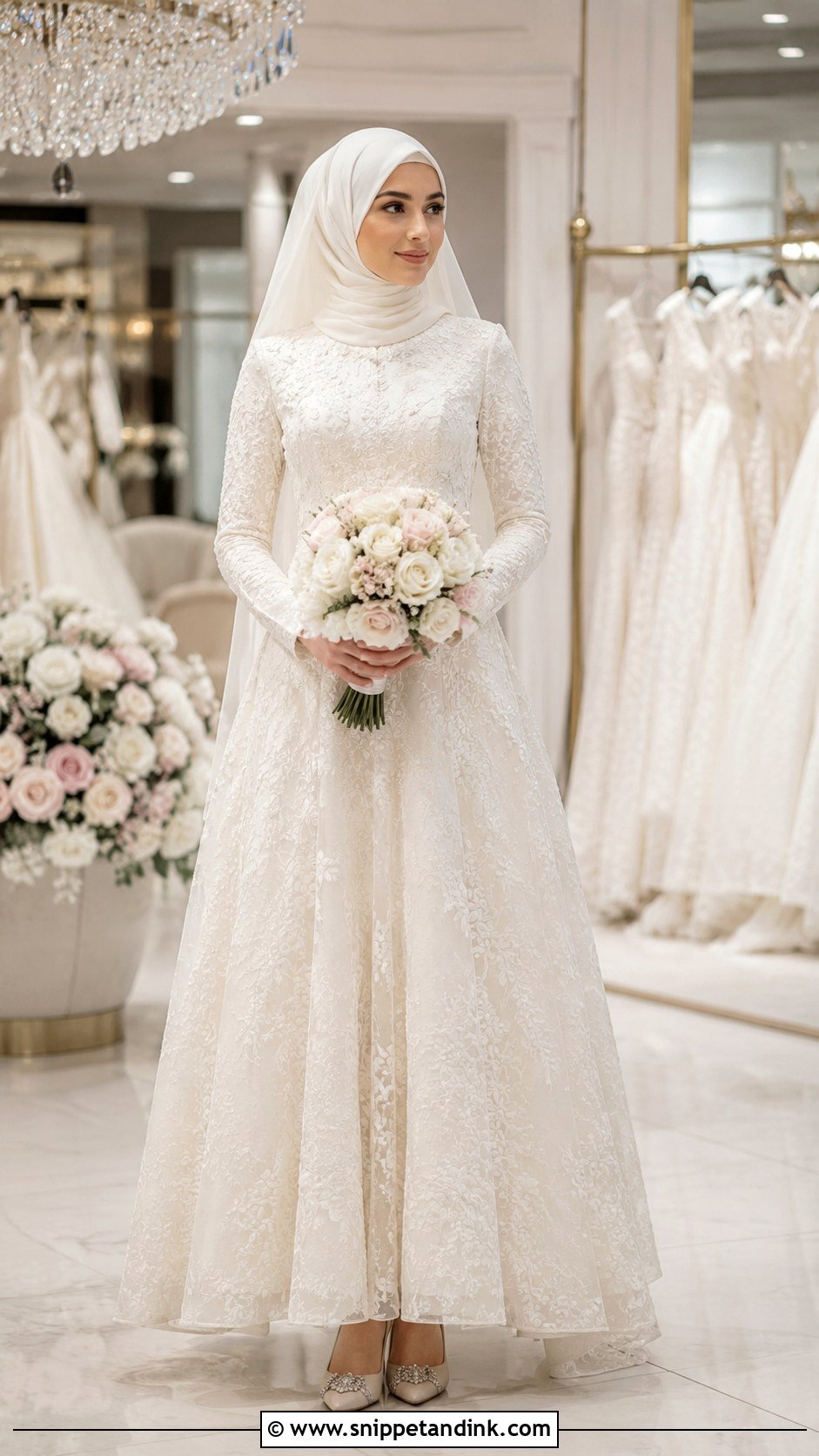
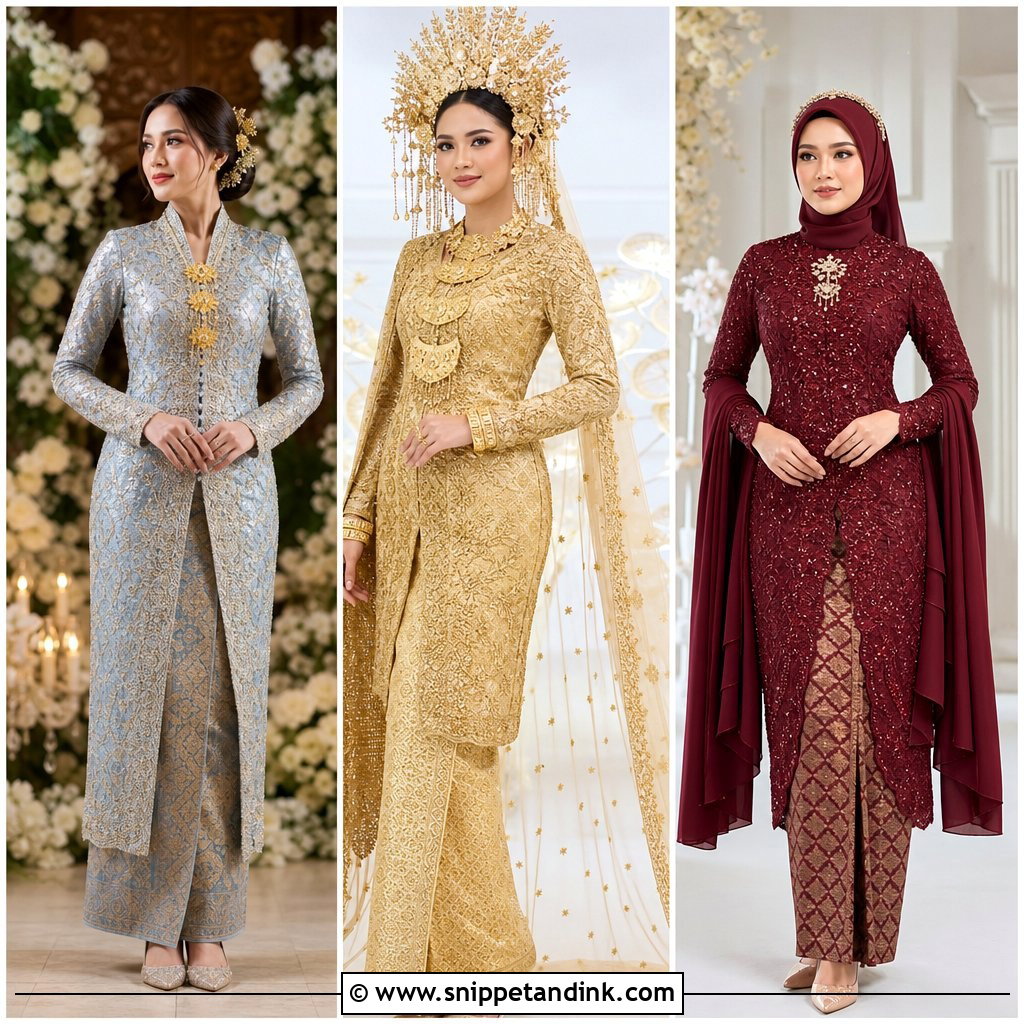
Embroidery is where a covered gown can carry culture and craft. It can run across the bodice, sleeves, hem or the whole dress; tonal ivory thread reads modern, and gold or silver reads traditional. Dense hand embroidery adds weight to sleeves, which then pull down on the shoulders over a long day, so try the sleeves on with your arms raised. Choose a plain hijab to avoid competing patterns, and keep the clutch and heels quiet.
7. Muslim Wedding Dress With Detachable Train
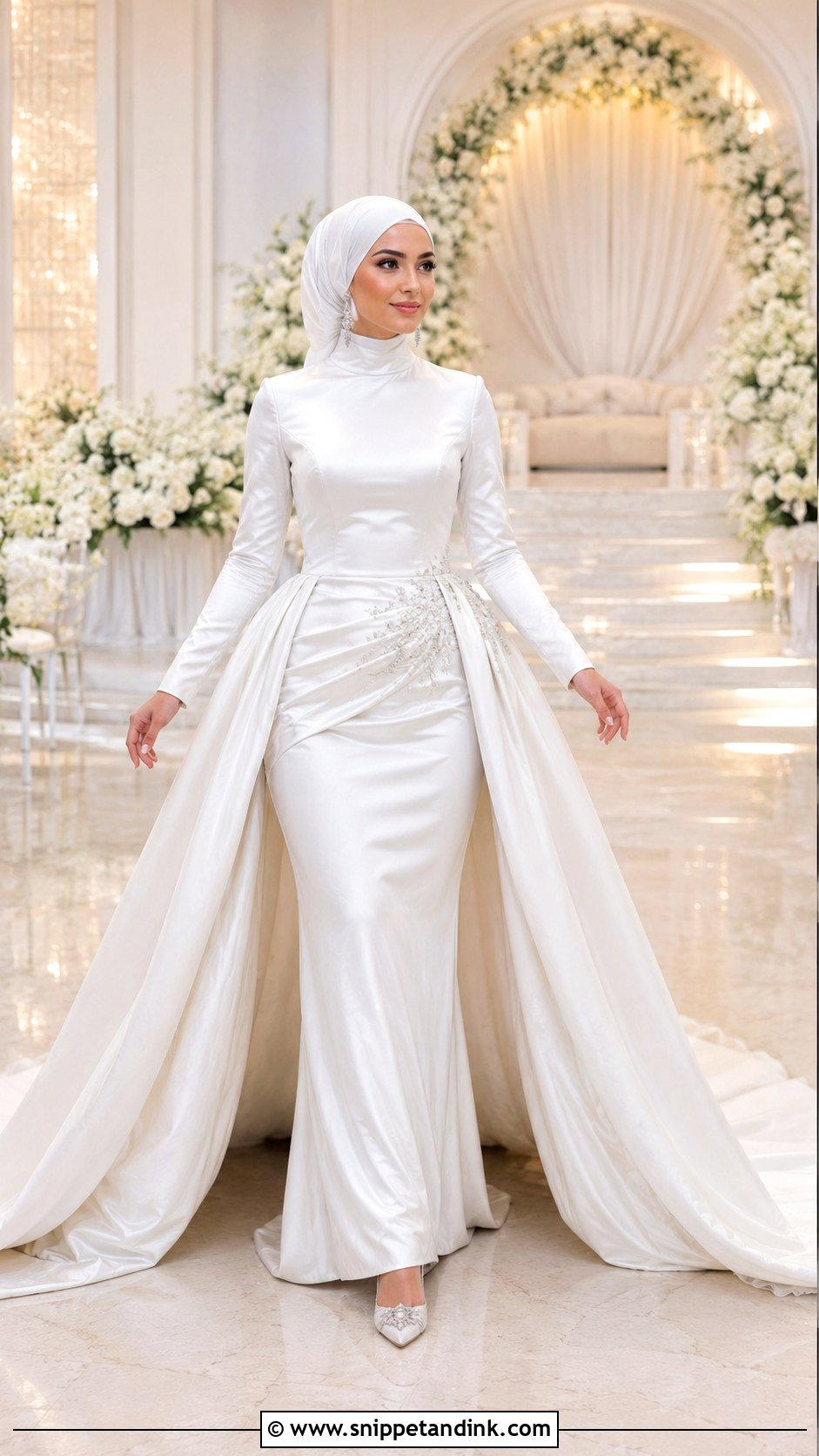
A detachable train lets you have the ceremony drama without carrying it all day. On a modest long-sleeve gown, I prefer trains that attach at the waist with hidden hooks; shoulder trains can tug at the neckline and disturb the hijab when someone steps on them. Satin, tulle and organza all work. Have whoever helps you practice unhooking it in advance so the change takes moments. Crystal heels, a long veil and delicate jewelry complete it.
8. Pearl Muslim Wedding Dress
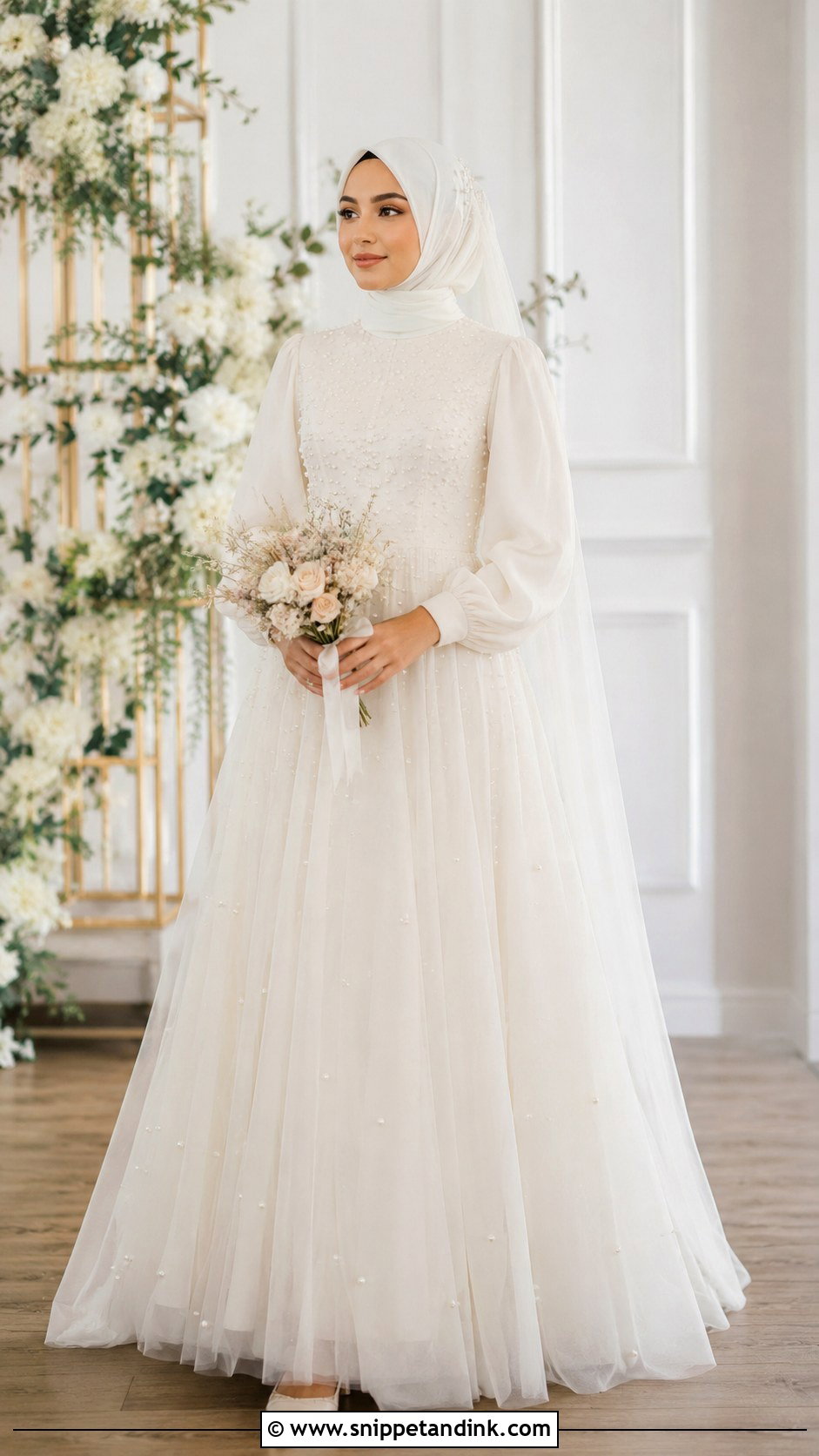
Pearls catch light softly, which suits brides who want shine without sequins. They can be scattered over tulle, run along the sleeves or trace the neckline and cuffs. On a high neck, watch for pearls placed exactly where the hijab is pinned, since they snag chiffon and make a smooth wrap harder. A plain chiffon hijab with pearl pins ties it together, and simple shoes and a small bouquet keep the pearls from feeling crowded.
9. Muslim Wedding Dress With Overskirt
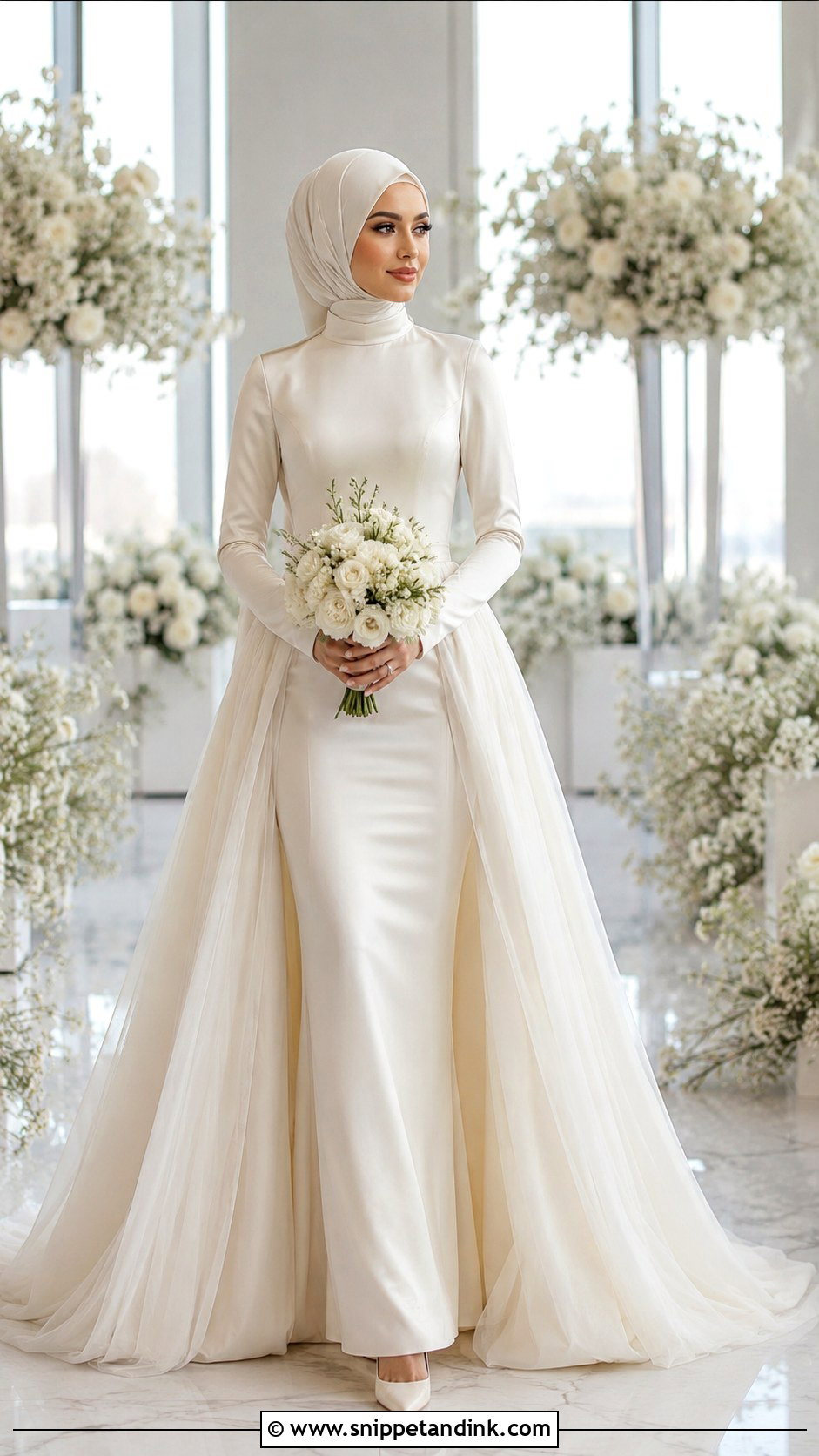
An overskirt gives you volume for the ceremony and a lighter dress for the reception. Under it sits a sleek long-sleeve gown; over it, a removable tulle, satin or organza skirt that has to match the base fabric closely, or the join shows in every photo. I check the waistband closure most carefully, since a heavy satin overskirt needs firm hooks to stay level. A smooth hijab and fitted bodice keep the top balanced against all that fabric below.
10. Crepe Muslim Wedding Dress
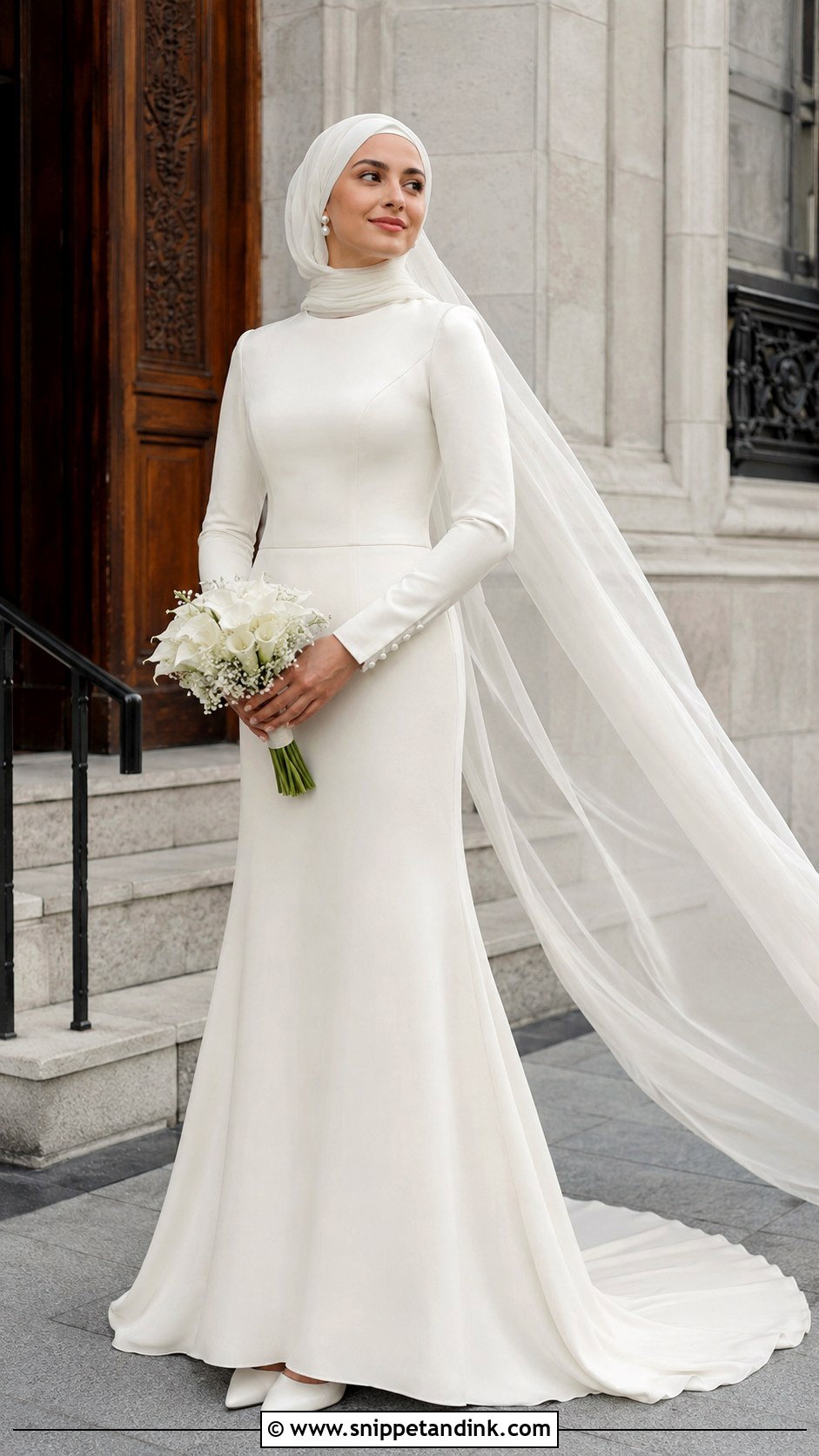
Crepe drapes in a soft matte line and hides creases well, which makes it ideal for a covered gown worn across a long day. A high neck, long sleeves and subtle waist shaping are all it needs. The contrast between matte crepe and a slightly sheer chiffon hijab looks gentle and balanced in person. Choose a heavier crepe for a modest fit, because thin crepe clings at the hip once you sit. Pearl earrings, closed-toe heels and a simple veil keep it clean for a city or civil ceremony.
11. Tulle Muslim Wedding Dress
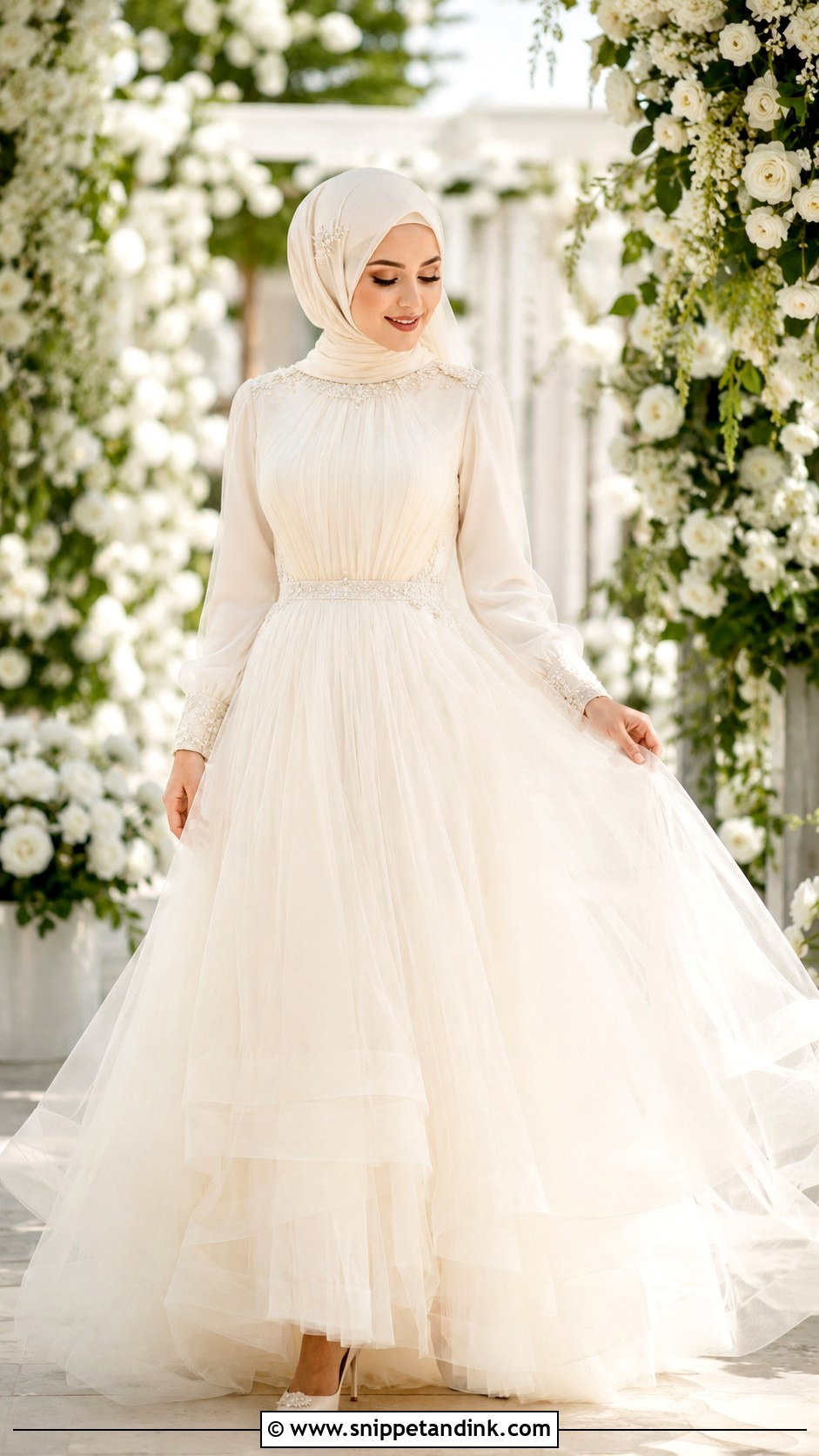
Tulle brings movement and lightness, and it’s the fabric most likely to be see-through, so a fully lined bodice and lined or double-layered sleeves are essential for full coverage. Light embroidery or tiny pearls add detail without weight. A chiffon or jersey hijab stays comfortable over hours. Keep tulle away from rough garden paths and stone steps, where it snags. Pearl pins and simple heels suit the softness of the dress.
12. Muslim Wedding Dress With High Neck
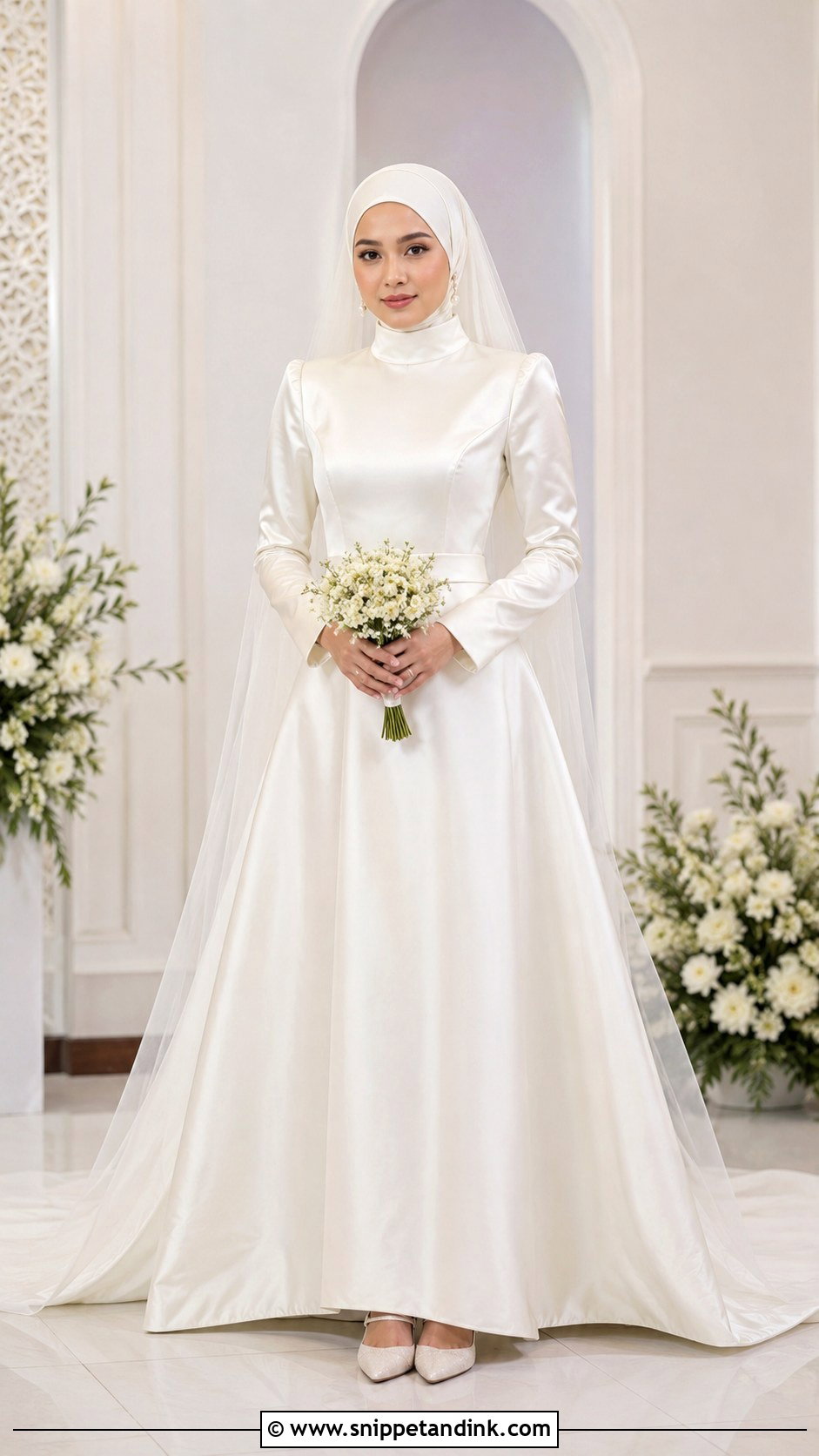
A high neck is the easiest starting point for hijab styling, since the coverage is built in and the face is framed cleanly. Satin reads classic, crepe modern and lace romantic. Decide early whether the hijab will sit over or under the collar. Over it, the collar should be slim so the scarf lies flat; under it, the collar needs a little room so it doesn’t press against the pinned fabric at the throat. Add a veil only if it leaves the neckline clear.
13. A Line Muslim Wedding Dress
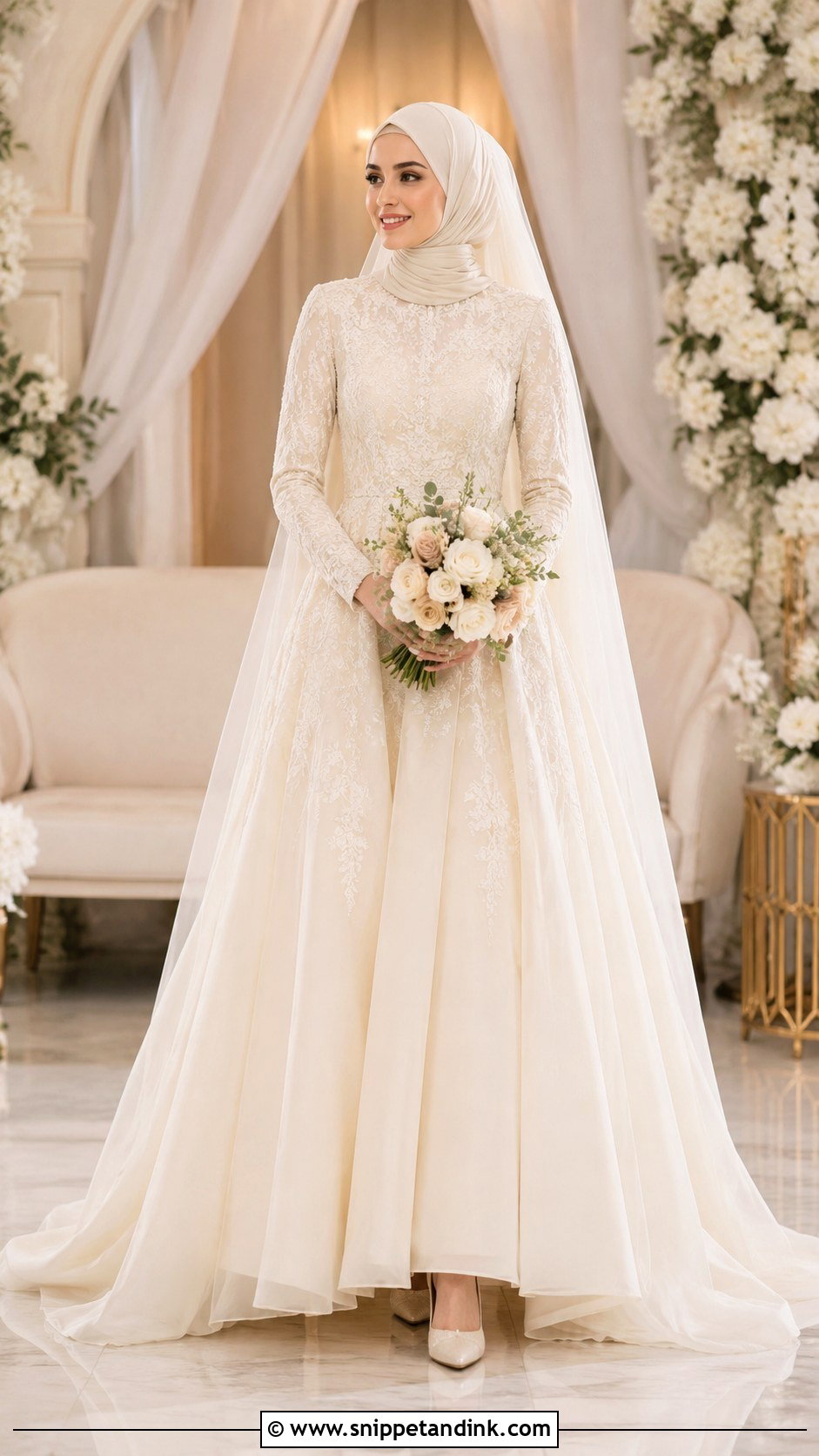
The A-line suits more figures than any shape I fit, defining the waist and then falling away from the hips without clinging. That loose skirt also matters practically: it lets you sit on a low seat or floor cushion during a nikah without the fabric pulling tight across the thighs. Satin, chiffon, lace and tulle all work. A soft hijab, medium heels and a simple veil keep the proportions balanced.
14. Mermaid Muslim Wedding Dress
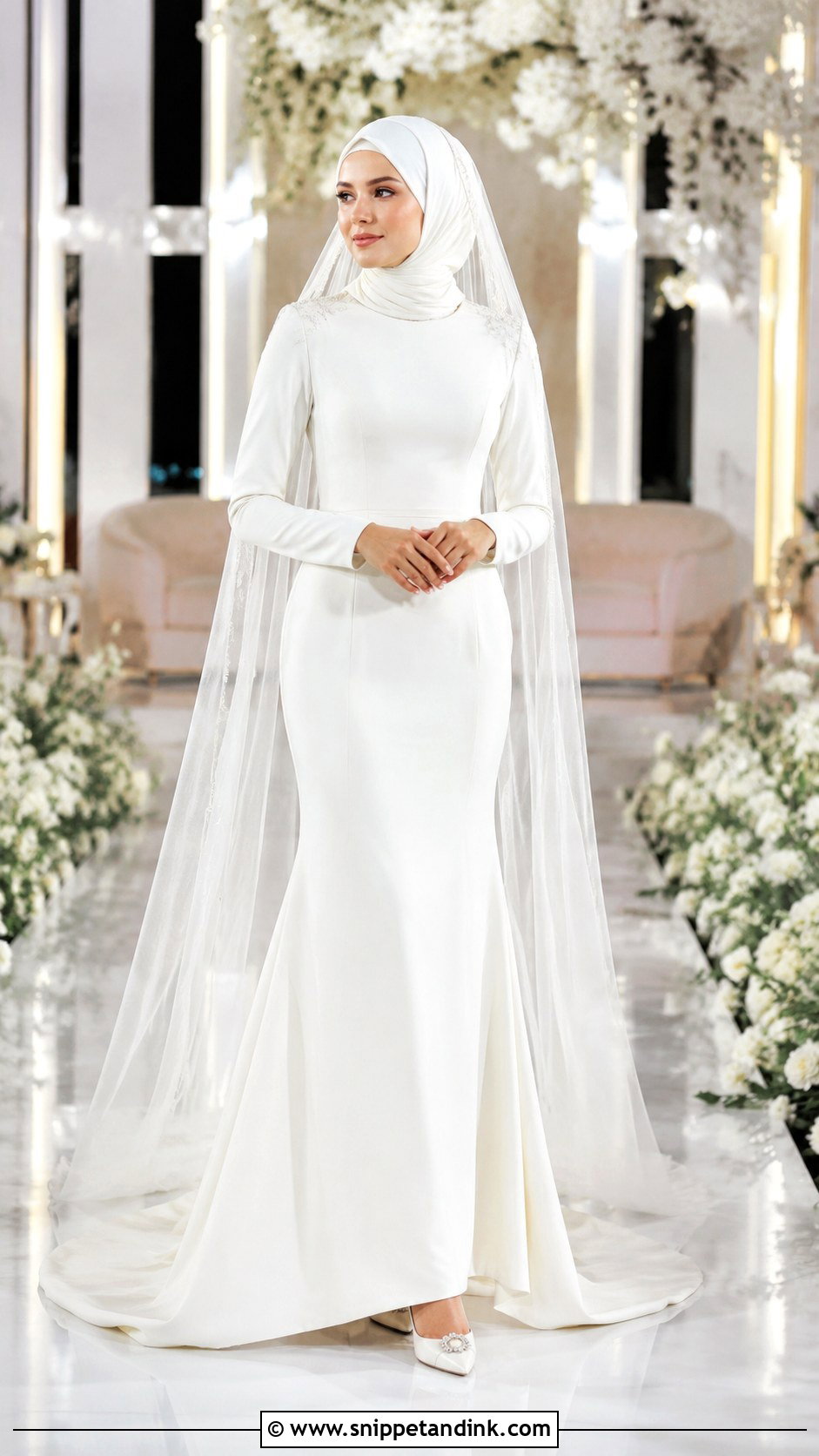
A mermaid can stay modest, but the cut has to skim rather than cling. I look for long sleeves, a high neck and a flare starting at the knee or lower thigh, in a structured crepe, lace or satin that won’t hug every curve. A mermaid restricts your stride and makes sitting awkward, so walk and sit in it before deciding. A long veil or cape softens the fitted line and adds coverage. A smooth hijab and simple jewelry let the silhouette speak.
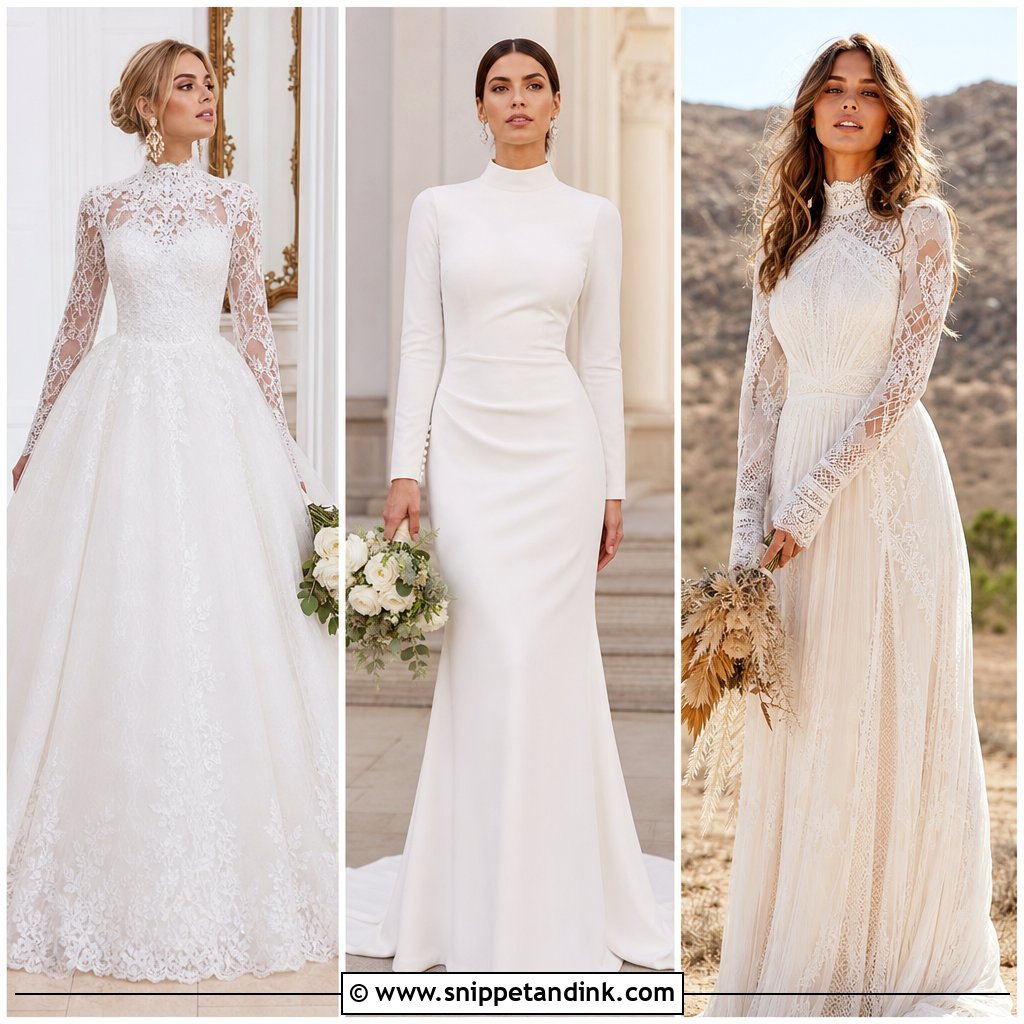


15. Muslim Wedding Dress With Bridal Abaya
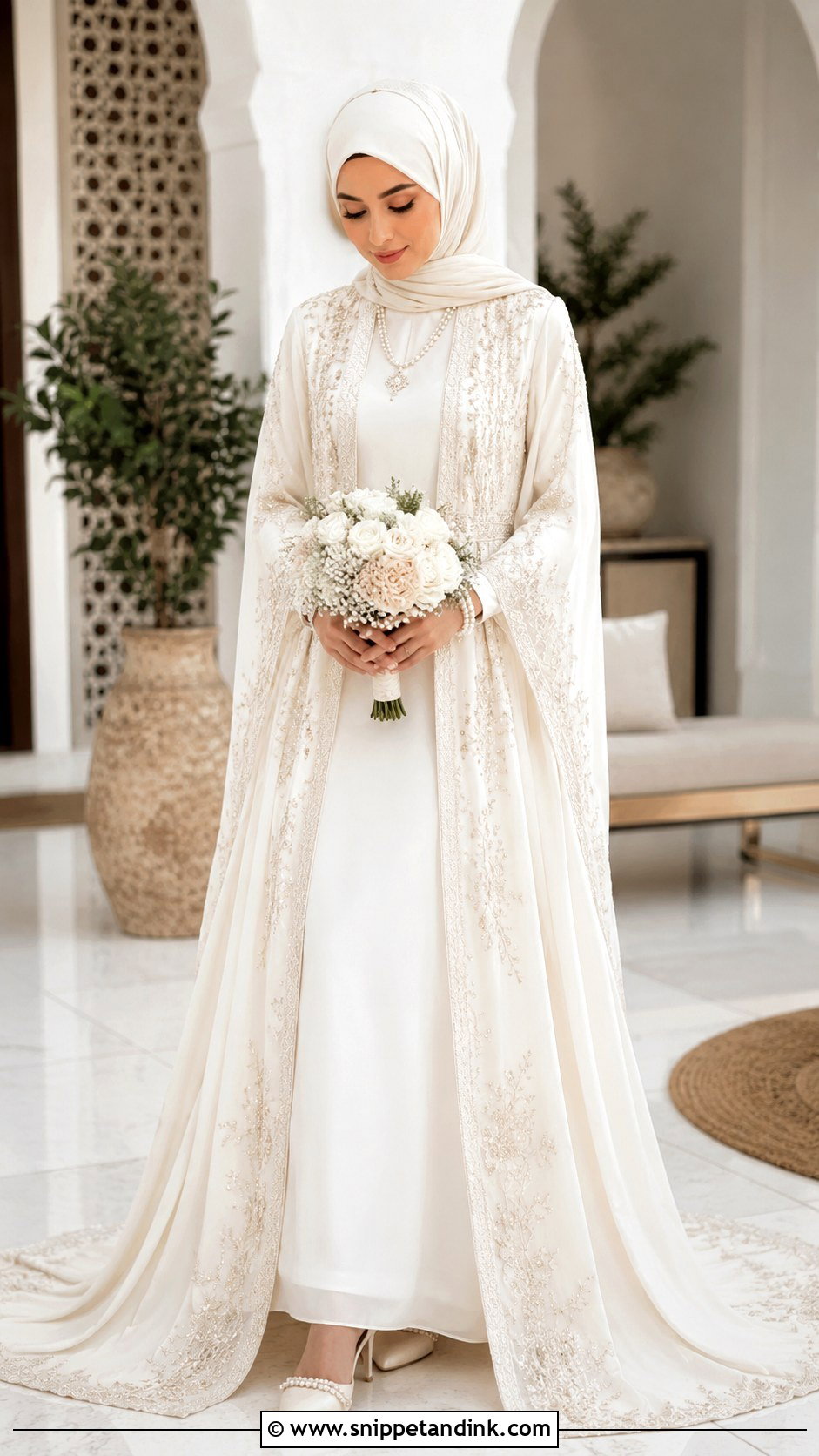
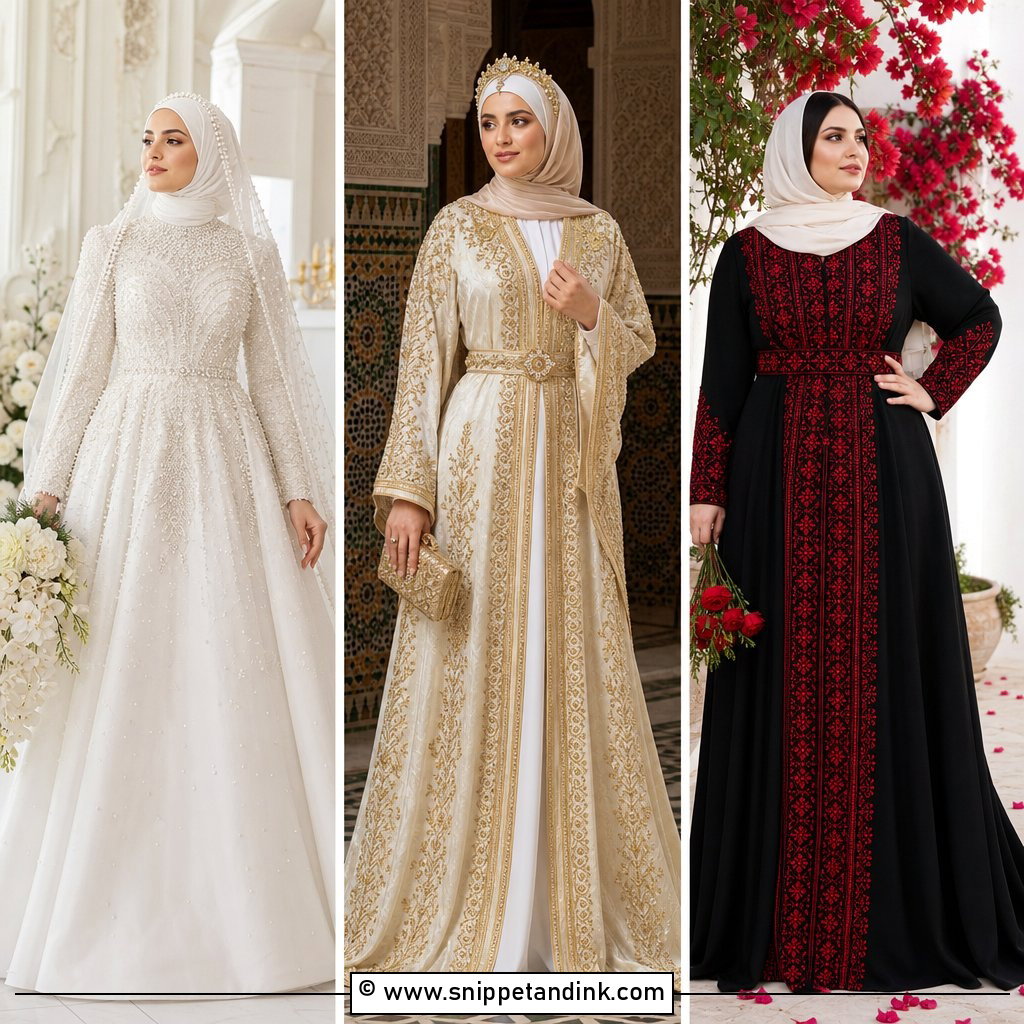
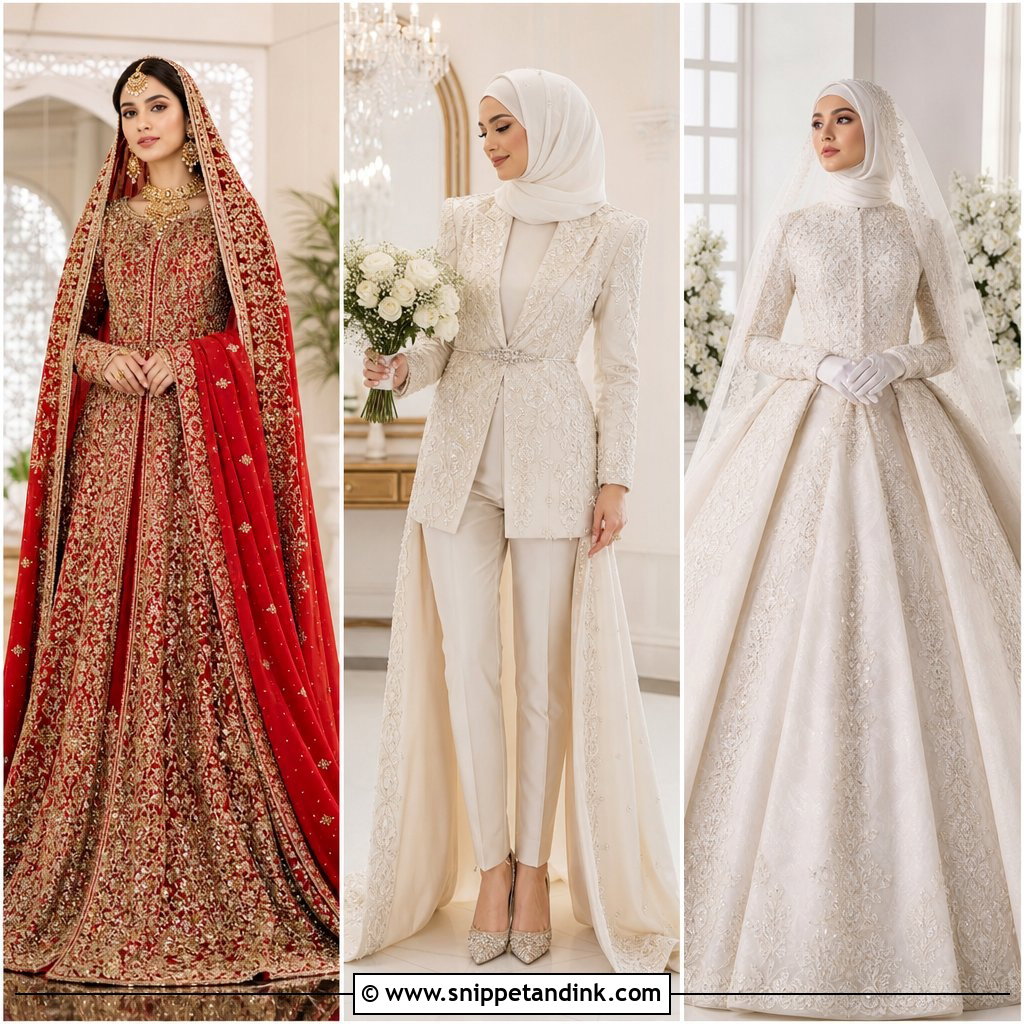
A Muslim wedding dress with bridal abaya layers a simple white or ivory gown under an embroidered or beaded abaya with flowing sleeves. Because the abaya provides the coverage, the dress underneath rarely needs major alterations, which saves time and money. Choose a light abaya fabric. Two full layers in a warm mosque or hall can become uncomfortable fast. A matching hijab, closed-toe heels and gold or pearl accents suit it well, especially for a nikah.
16. Muslim Wedding Dress With Lehenga
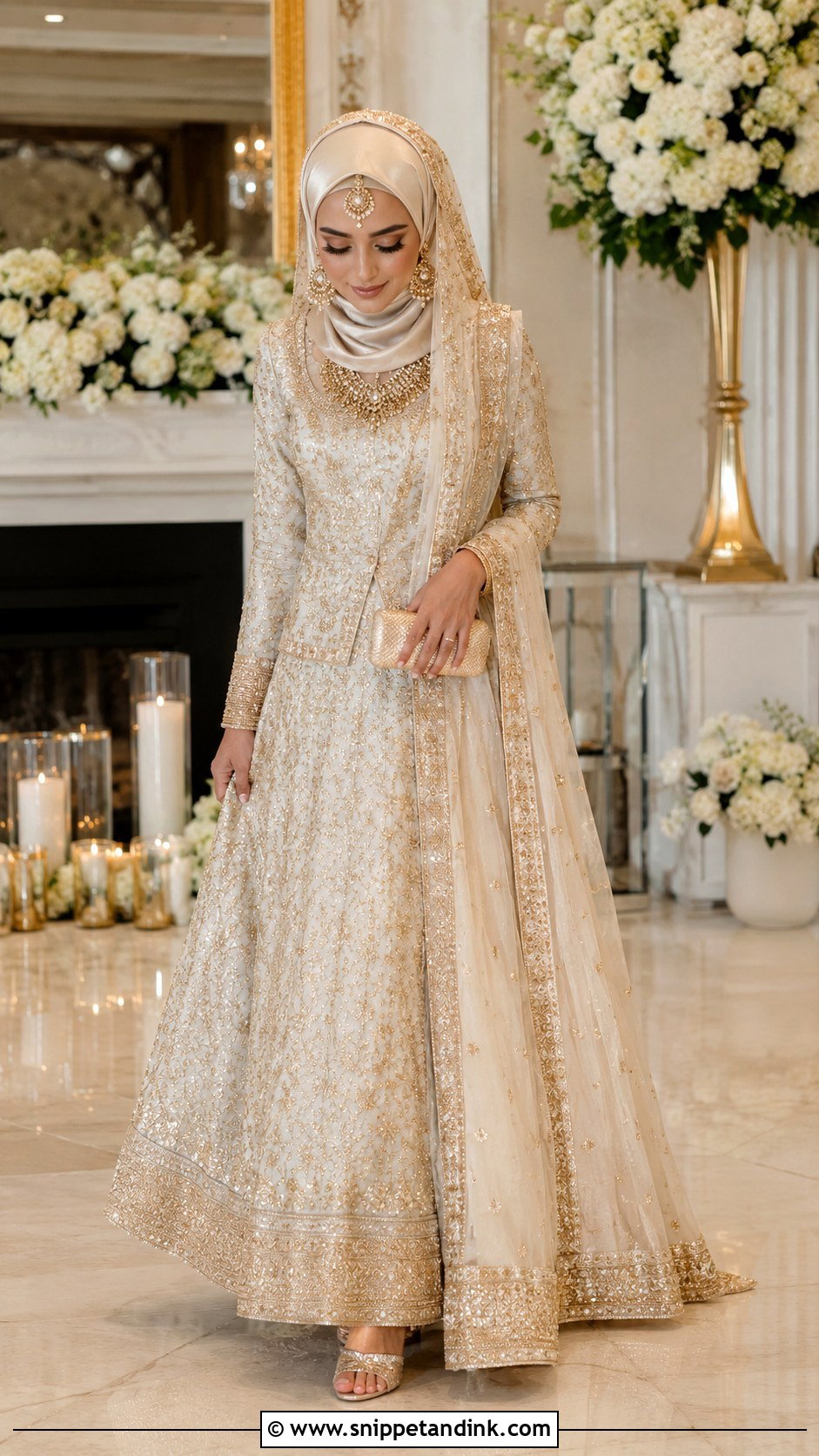
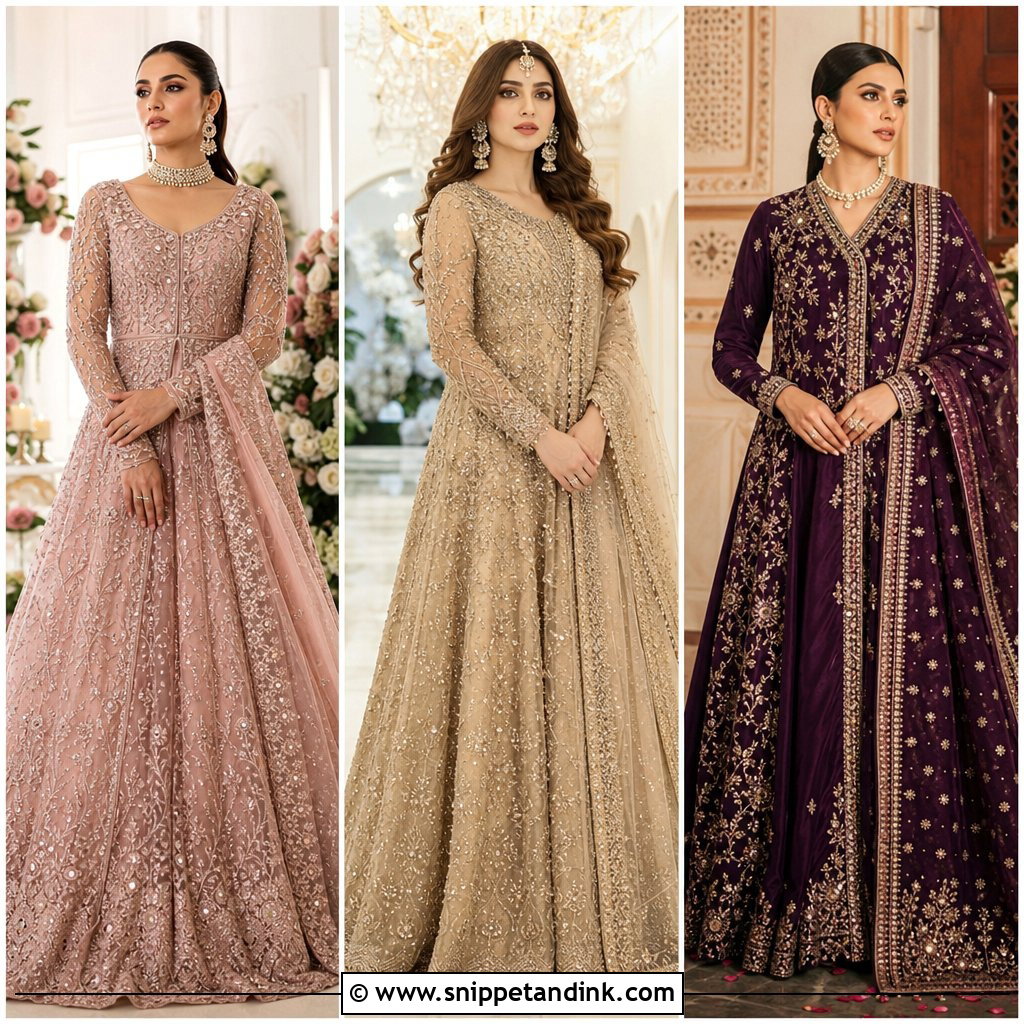
For South Asian brides, a lehenga brings color, embroidery and tradition into a covered look. A modest bridal lehenga pairs a long skirt with a covered blouse and a dupatta styled over or with the hijab. Ask for long sleeves, a higher neck and a blouse long enough to meet the skirt when you raise your arms. Ivory, champagne, blush, gold, sage, red or maroon can all work depending on the event. The dupatta is the piece that shifts most, so pin it with hidden pins at the shoulder and the crown of the hijab.
17. Muslim Wedding Dress With Sharara
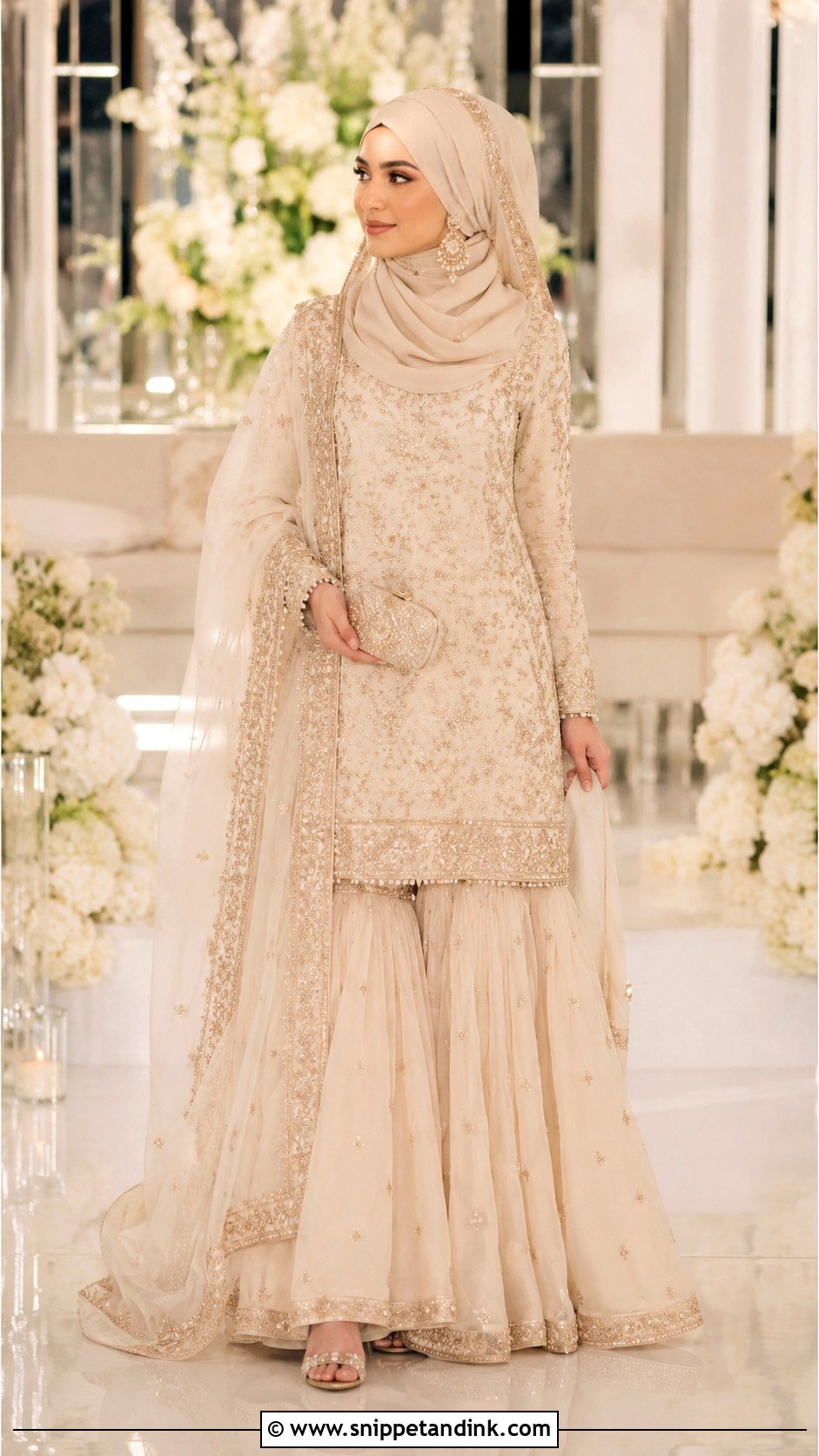
A Muslim wedding dress with sharara pairs wide-leg pants with a long embellished kameez, and it’s far easier to walk, sit and climb a stage in than most gowns. Choose a high- or boat-neck kameez with long sleeves and embroidery that ties into the sharara. The kameez length decides the look: knee length or longer keeps it formal. Drape the dupatta over one shoulder or around the hijab, and wear block heels or embellished flats for a long day of mehndi, nikah or walima.
18. Muslim Wedding Dress With Gharara
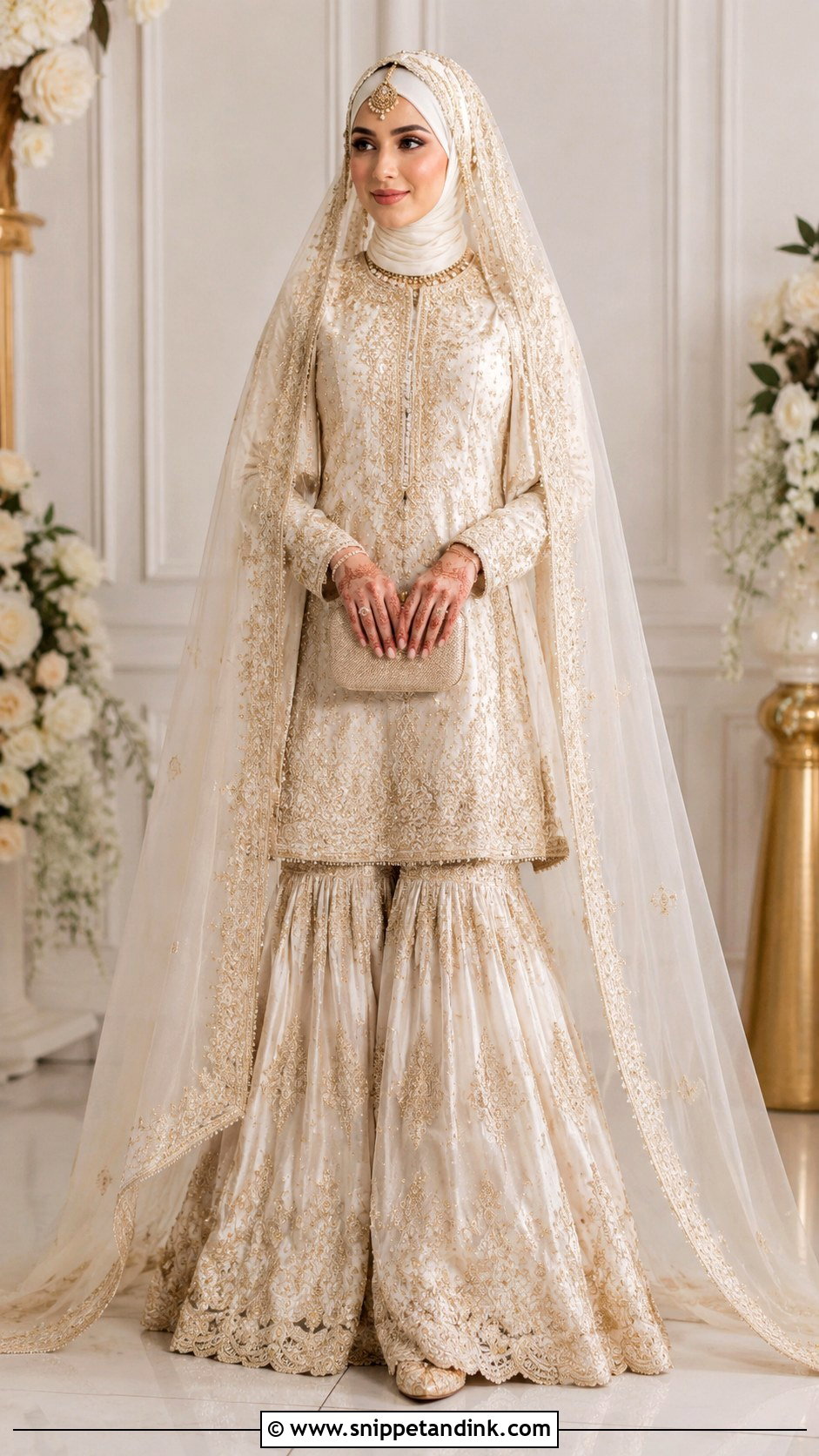
A Muslim wedding dress with gharara is fitted to the knee and then flares, usually with a joint at the knee decorated by an embroidered band. That flare is heavy, so hold the hem when climbing steps. A long kurti or peplum top gives coverage, and long sleeves, a higher neckline and a coordinated dupatta make it hijab-friendly. Ivory and gold look bridal, while pastels feel lighter. Wrap the hijab neatly under the dupatta and finish with classic jewelry.
19. White Muslim Wedding Dress
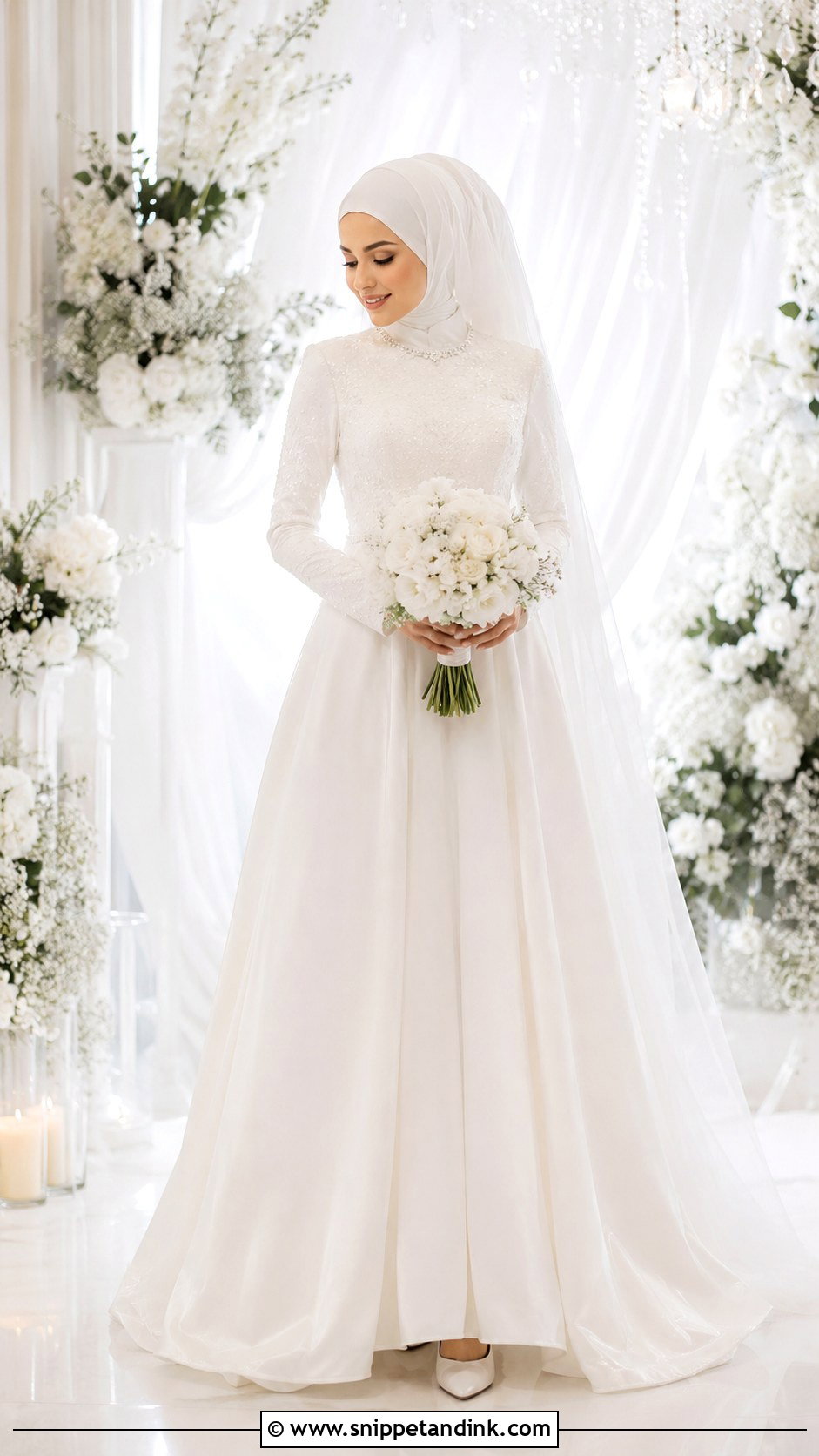
White remains the most traditional bridal color for many brides, and it suits almost any hijab fabric. A long-sleeve gown with a high neck and full lining works in satin for formality, lace for romance or crepe for a minimal look. The thing I always do is hold the hijab fabric against the dress in daylight. Whites vary from blue-white to warm ivory, and a mismatch is far more obvious next to the face than anywhere else. Pearl accessories add softness, and a textured veil livens up a plain gown.
20. Champagne Muslim Wedding Dress
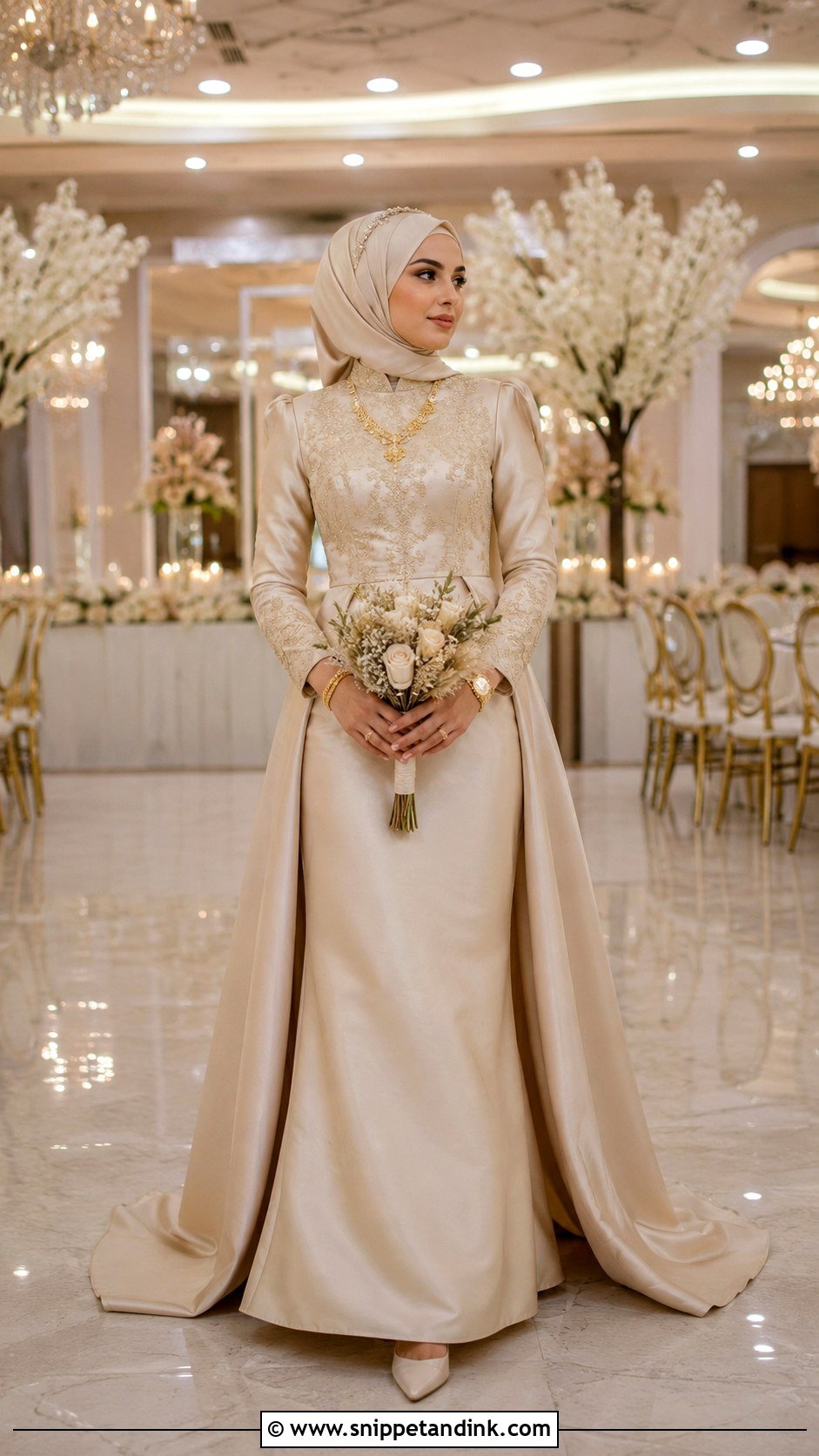
Champagne gives you the bridal feel of white with more warmth, and it flatters many skin tones that pure white washes out. Choose a modest gown with long sleeves, a high neck and subtle shimmer or embroidery. A matching champagne hijab makes one continuous column of color, while ivory accessories keep it bridal. Gold jewelry, satin heels and neutral flowers all suit it. Keep dark accessories away from it so it stays light, especially in warm evening lighting at a hotel reception.
21. Blush Muslim Wedding Dress
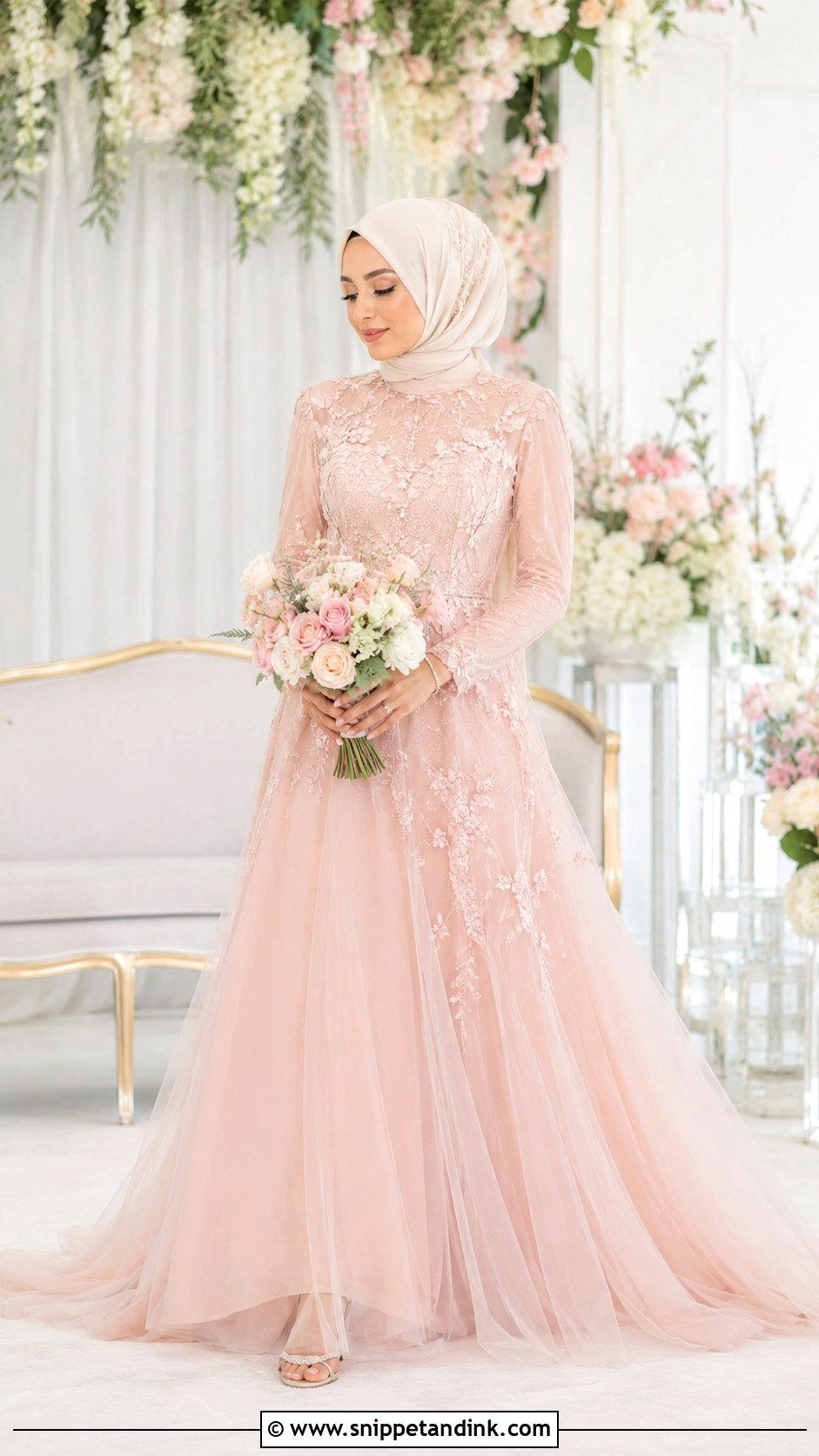
Blush adds a little color while staying soft. A long-sleeve gown in blush tulle, satin or embroidered lace with a high neck and flowing skirt is the shape I’d start with. The hijab choice changes the effect. A blush hijab gives a tonal, gentle look, while ivory adds contrast and frames the face more clearly. Delicate pearl or rose-gold pieces suit it, and it looks best in a bright hall or a spring garden.
22. Gold Muslim Wedding Dress
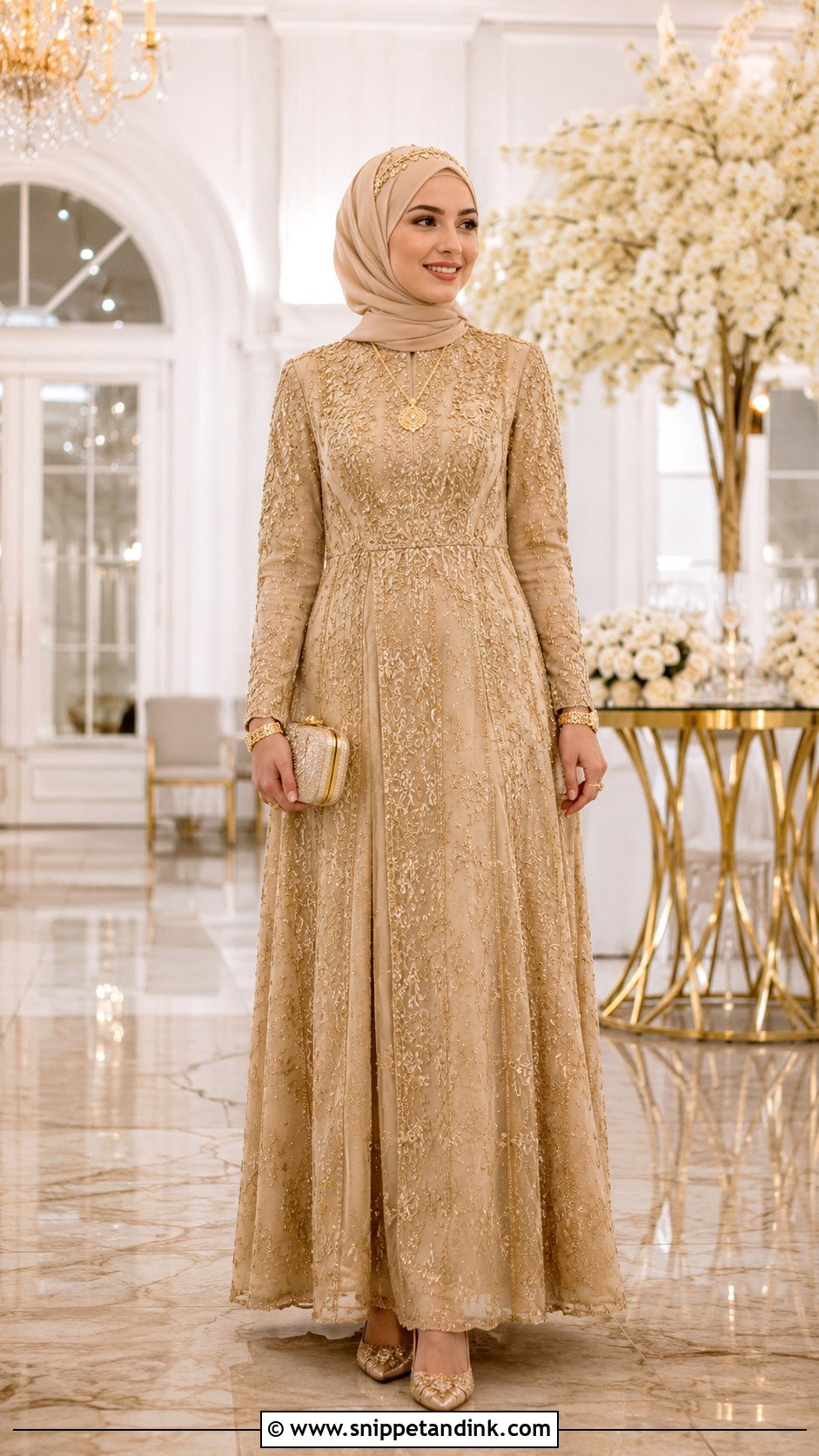
A gold Muslim wedding dress looks rich and celebratory, and the modern versions use pale gold, soft gold or ivory with gold embroidery rather than a mirror-shiny fabric. It works as a covered gown, a lehenga or an abaya-style dress with long sleeves. A neutral hijab balances the metallic work. With this much gold in the outfit, I’d wear one main jewelry piece, usually earrings or a tikka, and leave the rest out. It’s a natural choice for a walima or formal reception.
23. Floral Muslim Wedding Dress
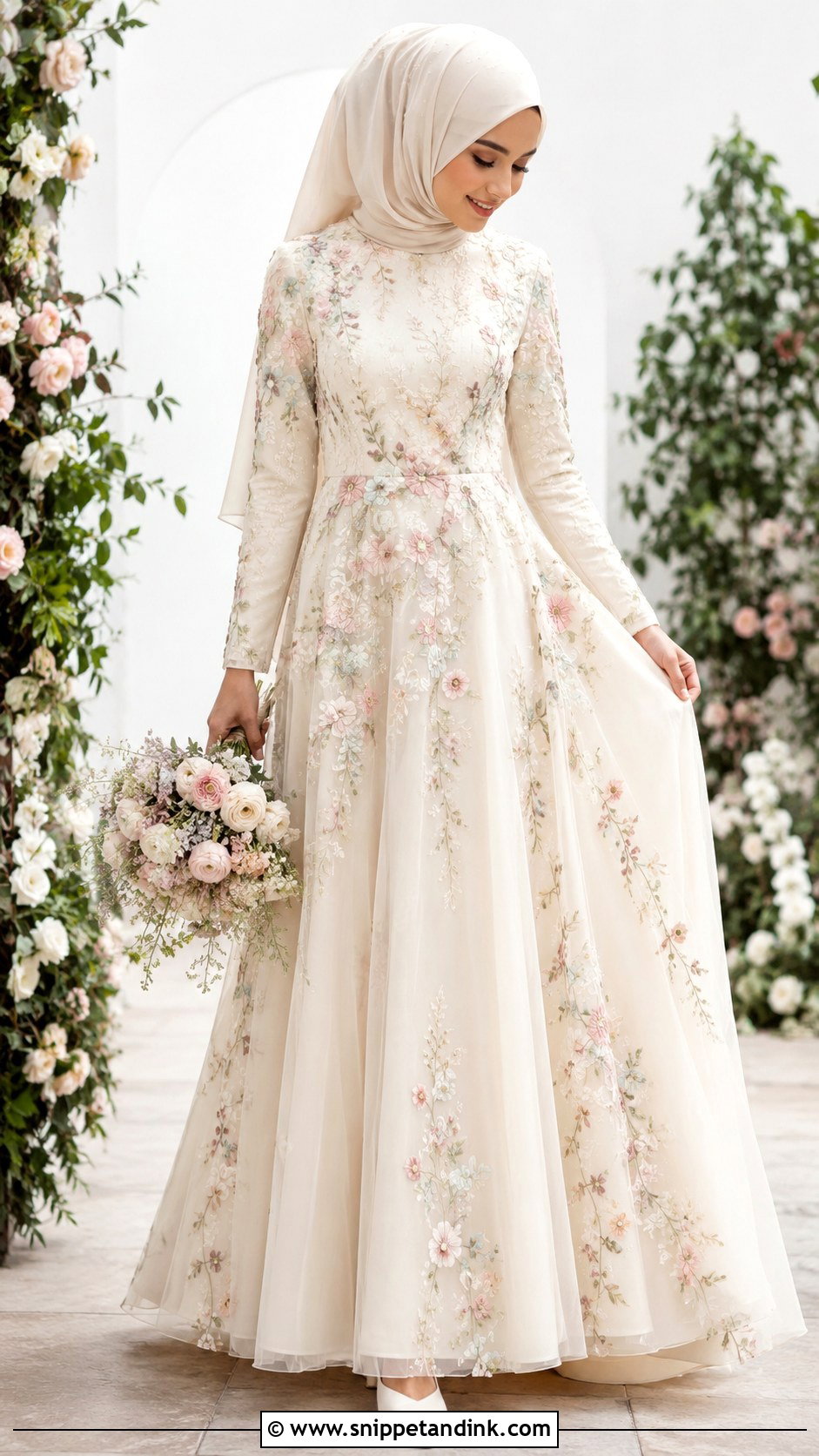
Floral embroidery, applique or printed jacquard can make a covered gown feel personal without any sparkle. A high neck, long sleeves and a flowing skirt make a calm base. Ivory florals feel classic; pastel ones lighter. Raised applique petals flatten easily under a dupatta or cape, so if you plan to layer, keep the flowers lower on the skirt. A plain hijab lets the pattern breathe, with pearl pins and simple heels. It suits daytime and garden weddings.
24. Minimalist Muslim Wedding Dress
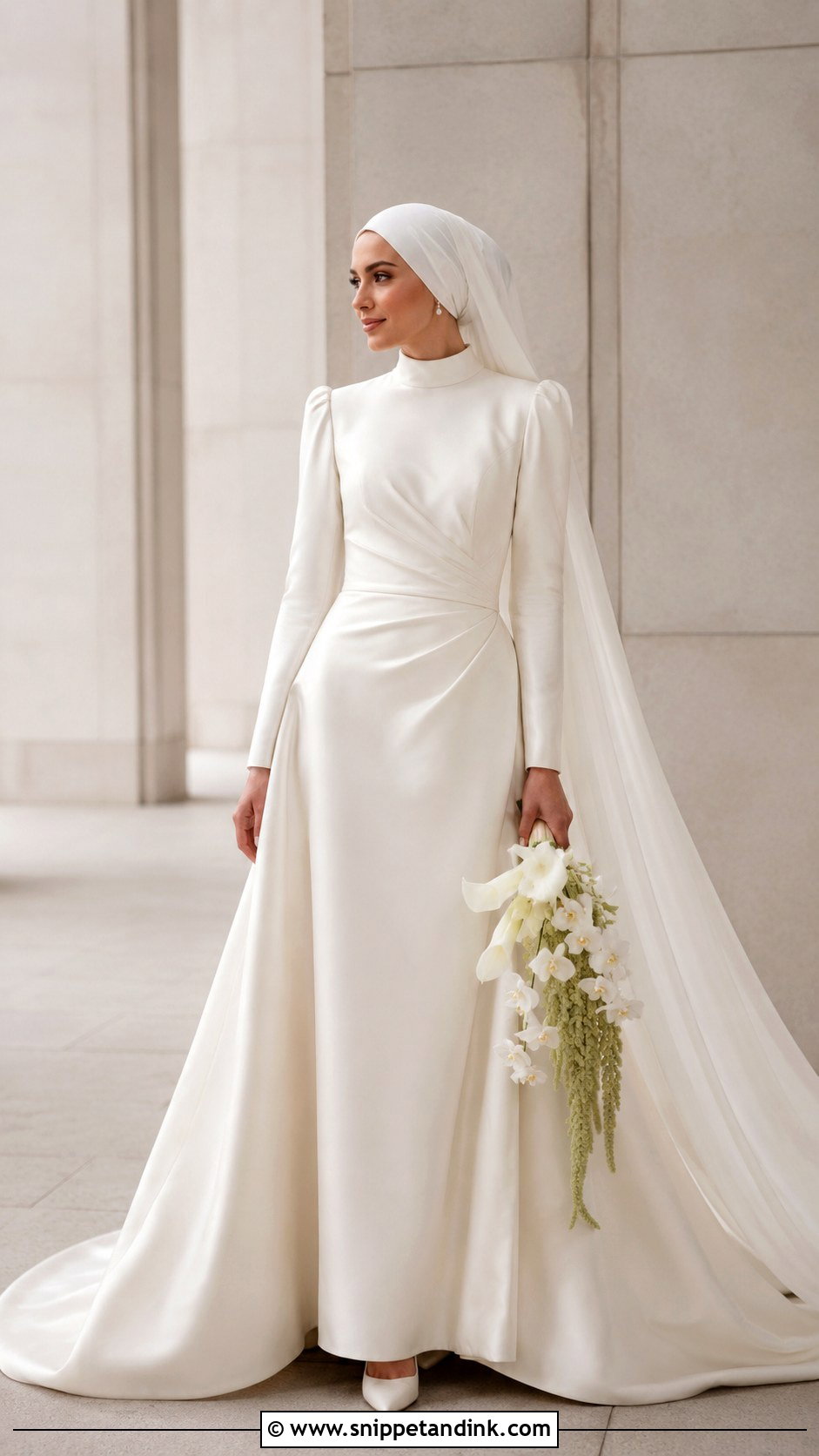
A minimalist gown depends on fit more than anything else, because crepe, satin or mikado with no embellishment shows every seam. Long sleeves, a high neck and a smooth skirt need careful tailoring, especially at the shoulders, where a covered gown often pulls if the sleeve is set too tight. A sleek hijab, pointed heels and a sculptural bouquet keep it modern, and a long veil or cape adds impact for the ceremony. It suits a small or city wedding and dates very slowly.
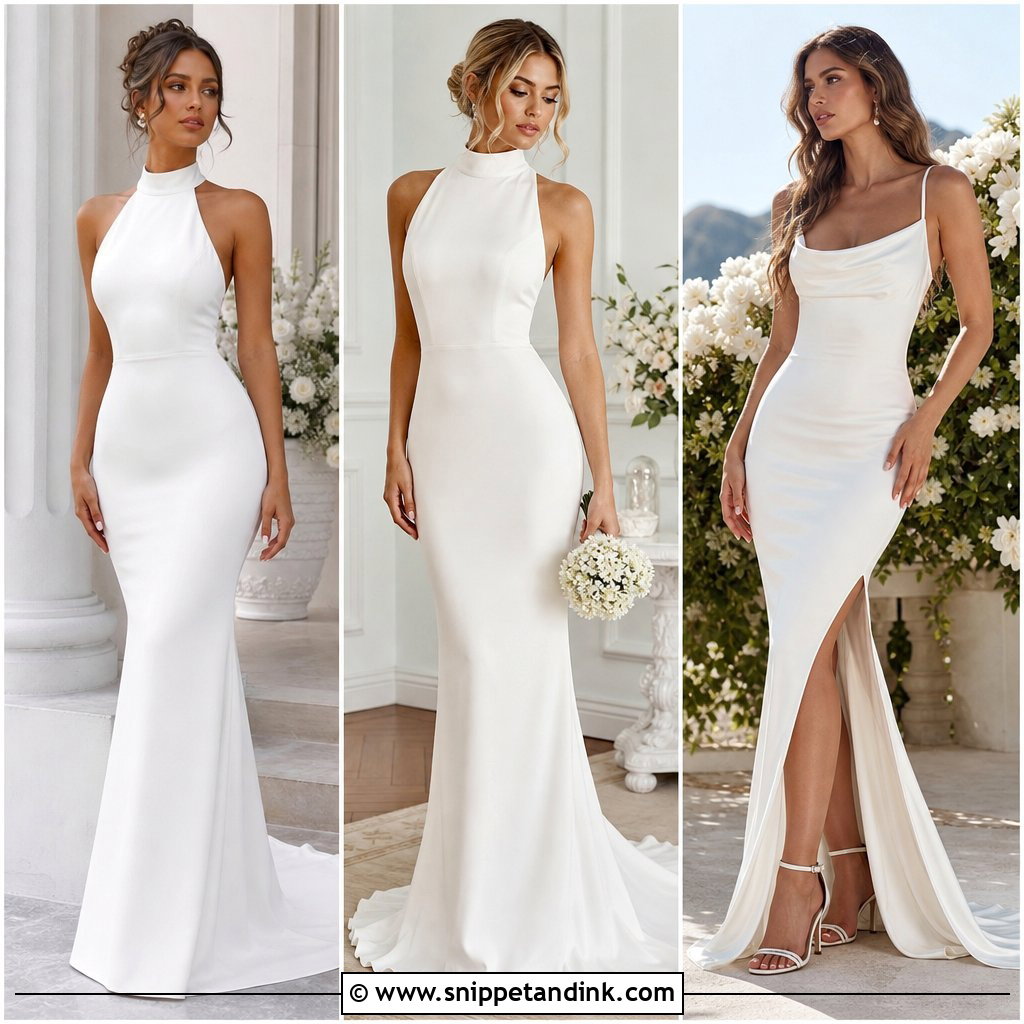
25. Vintage Muslim Wedding Dress
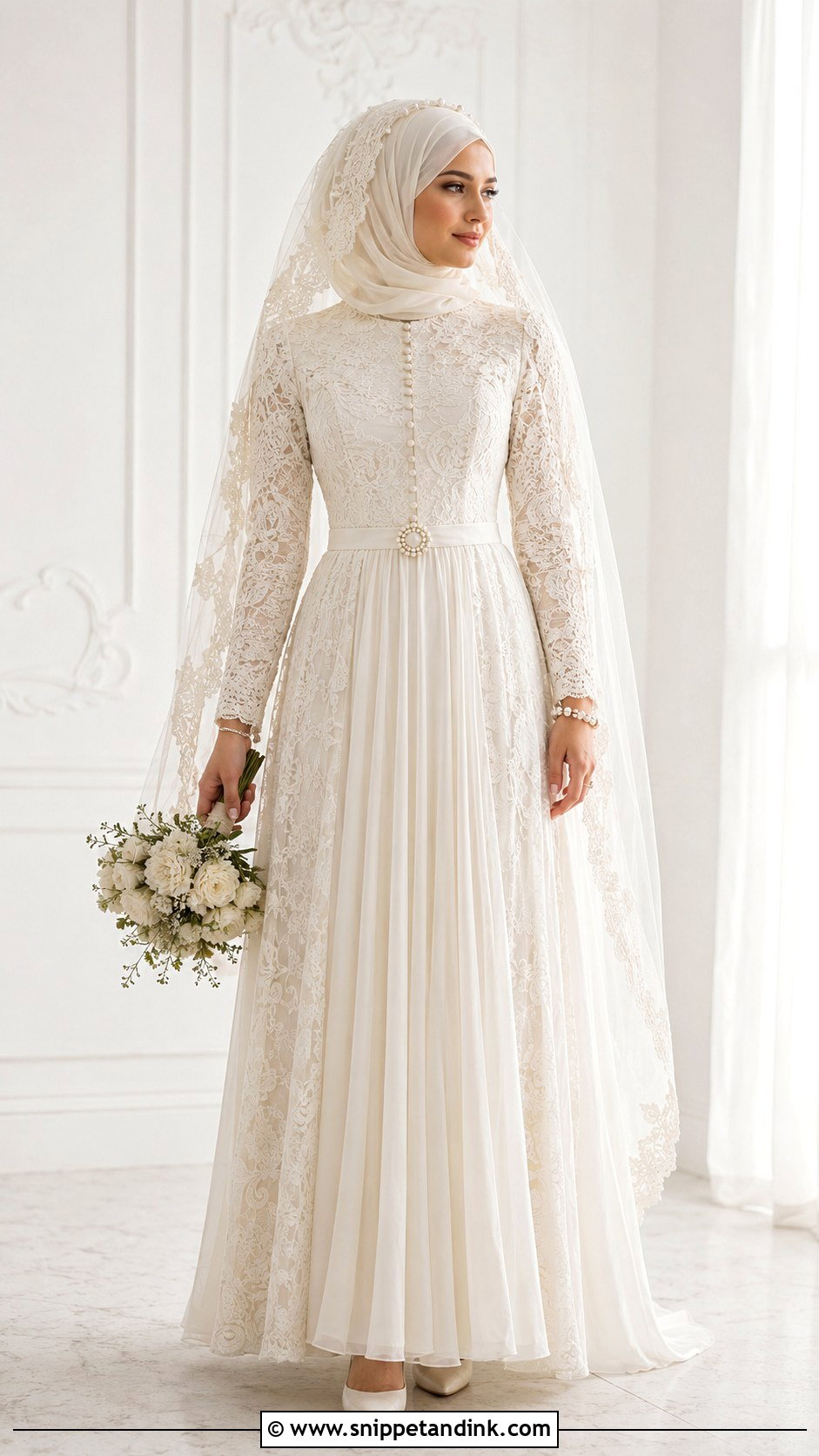
Vintage details sit naturally in modest dressing: lace sleeves, pearl buttons, high necks, soft pleats and embroidered bodices were all standard in older bridal styles. The aim is a modern covered dress with a few classic notes, not a costume. Full length usually feels more formal and modest than tea length, though tea length can suit a small daytime event worn with opaque tights. A chiffon hijab, pearl accessories, closed-toe heels and a vintage-style veil complete it.
Nikah at the Mosque, Walima in a Ballroom
Many brides wear several outfits across the wedding events, and each one has different practical demands. Thinking them through first saves you from a beautiful dress that doesn’t suit the room.
- For a nikah at a mosque, choose something you can sit in comfortably, sometimes on a floor cushion, with a loose skirt and full coverage. Big trains and wide hoops can be awkward in a prayer hall.
- For a walima or reception, the formal gown, lehenga or gold outfit usually comes out, along with heavier jewelry.
- For mehndi, the outfit should be easy to move in and kept clear of wet henna on your hands, so I avoid long fitted sleeves or fragile fabric at the cuffs.
Two more details are worth planning. If you’ll pray during a long wedding day, choose sleeves you can push up or unbutton easily for wudu, and know where you can freshen your hijab afterward. And if any of your events are women-only, many brides remove the hijab there, which means the hair, neckline and back of the dress will be seen. Plan a hairstyle for that part of the day too.
Plan the Hijab and the Gown as One Outfit
The right modest dress comes from your comfort, your coverage needs, your venue and your own taste. Some brides feel most themselves in a plain satin gown; others want the richness of a lehenga, sharara or embroidered abaya. Plan the hijab, sleeves, neckline, shoes and jewelry as one outfit, and try it all on together before the final fitting. A modern Muslim bridal look works when it’s covered in the way you want, moves easily and still looks like you.
You'll Like These Ideas:







Leave a Reply