
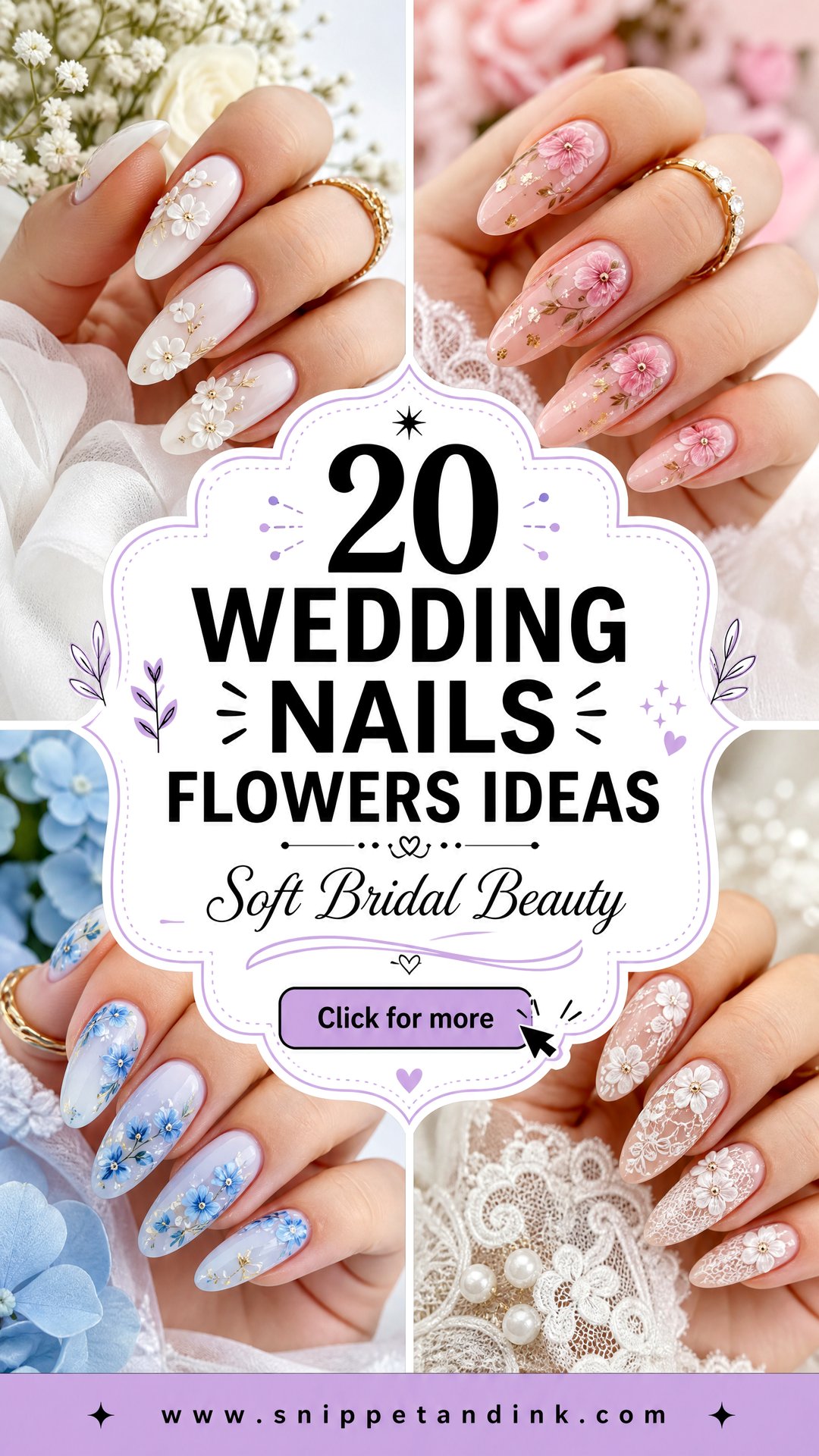
Floral art is the bridal request I enjoy most, because it’s the one that can actually connect the hands to the rest of the day: the bouquet, the lace on the dress, the flowers on the tables. It also has the widest range of techniques of anything I paint. Tiny white blooms on sheer pink, sculpted 3D petals on almond nails, pressed flowers under clear gel, floral French tips: each behaves differently over a long wedding day. Below are twenty floral sets, with notes on scale, placement and wear, which matter far more with flowers than with plain colour.
Turning Your Bouquet Into Nail Art
The strongest floral sets I’ve painted borrow from the bouquet without copying it. A bouquet has dozens of flowers; a nail has room for two or three tiny ones. So when a bride shows me her florist’s mood board, I pick out one or two shapes and one colour and simplify them.
- Choose the flower with the clearest outline. Roses, daisies, cosmos and baby’s breath translate well. Ranunculus, peonies and hydrangea are mostly texture, so I suggest them with a few loose strokes rather than a literal copy.
- Take colour from the smallest flowers or the greenery, not the biggest bloom. A sage stem or a pale lavender sprig on the nail looks more refined than a large blush peony.
- Ask your florist for the final colour list before your trial. Bouquets often change after the first mock-up, and a nail colour matched to an old mood board can clash on the day.
If your venue is already full of flowers, I’d keep the nails to white or nude florals. Matching everything can look heavy in the photos.
1. White Floral Wedding Nails
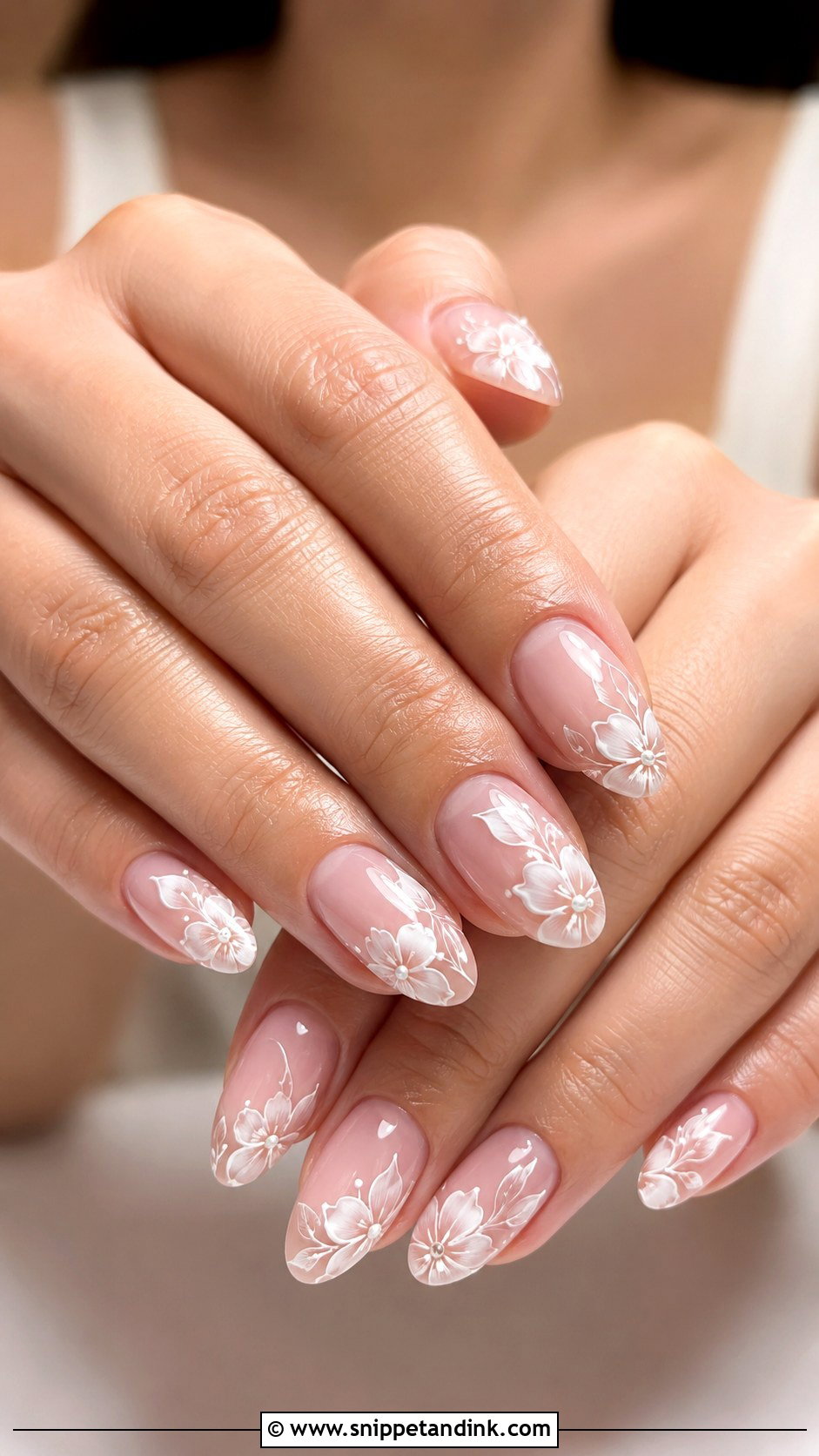
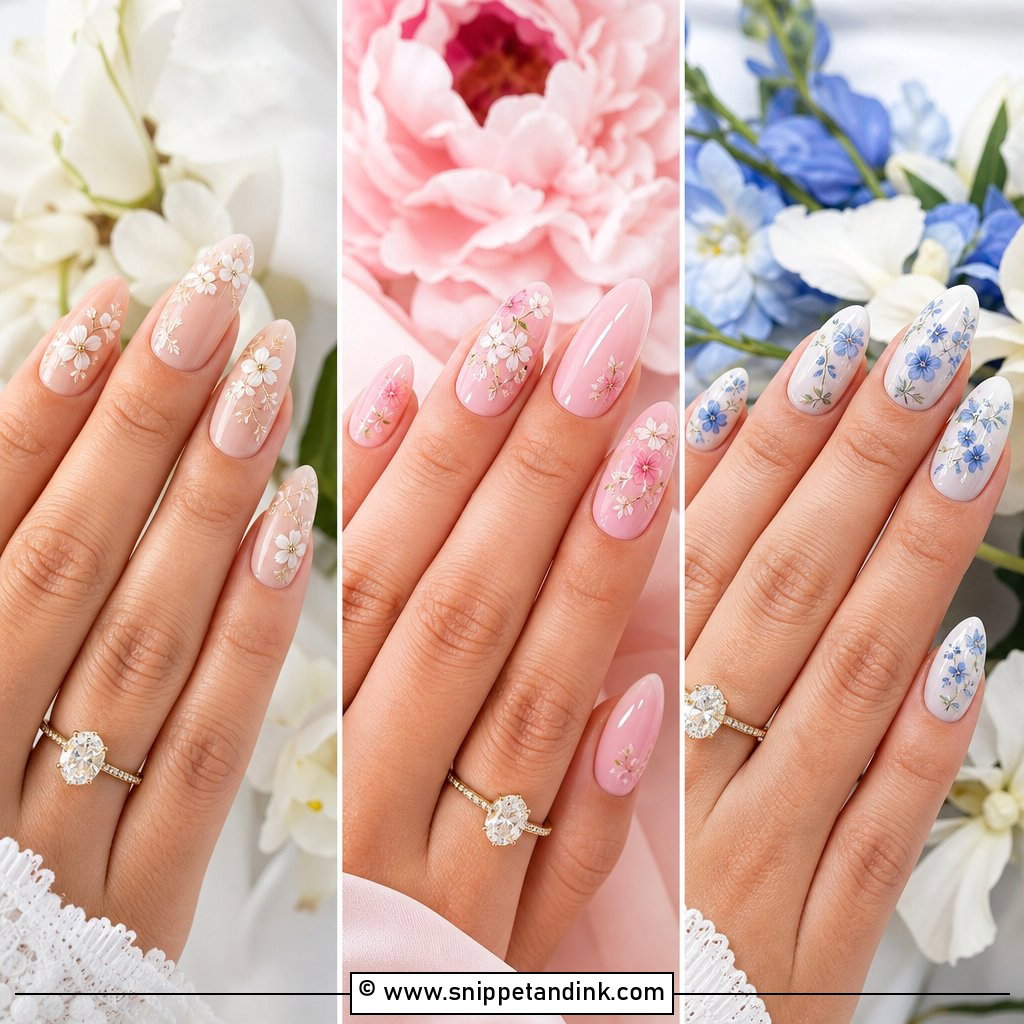
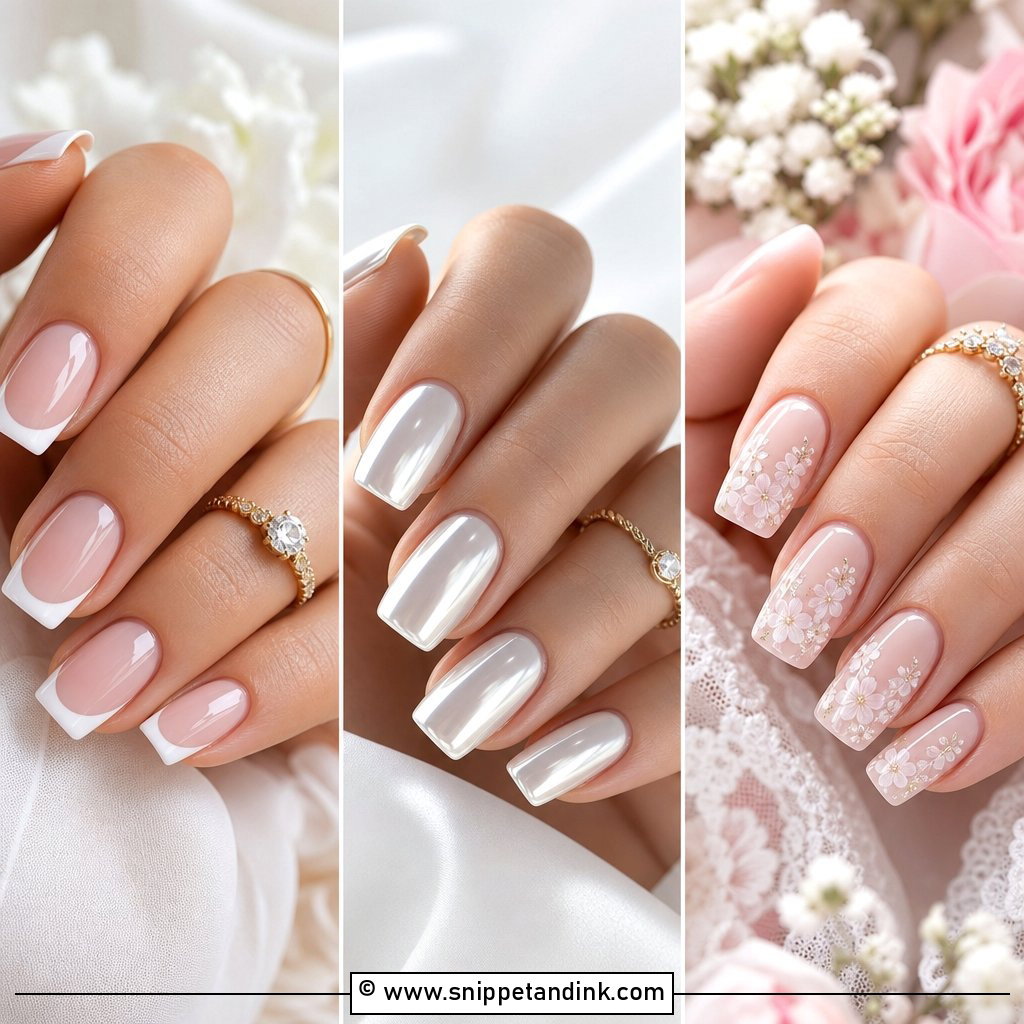
White florals on a sheer nude or milky pink base are where most brides start, and for good reason. They read as detail without adding colour. I paint the petals as thin outlines with a tiny dot centre rather than solid shapes, which keeps them light. The design sits comfortably on almond, oval, or short square nails. If your gown has lace, embroidery or floral appliqué, I’ll borrow a petal shape from it. Keep the scale small; the ring should still be the first thing anyone looks at.
2. French Tip Floral Wedding Nails
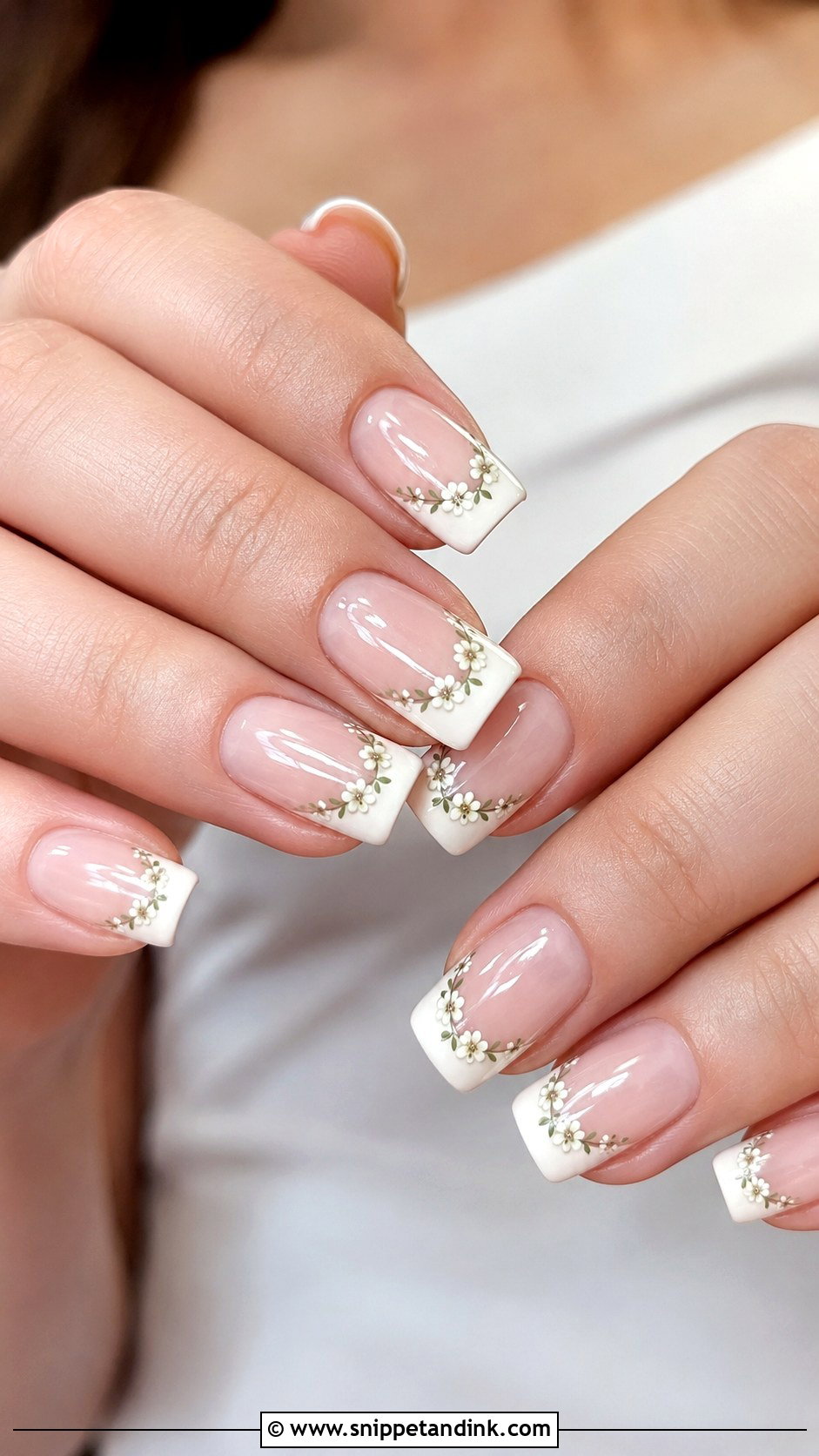
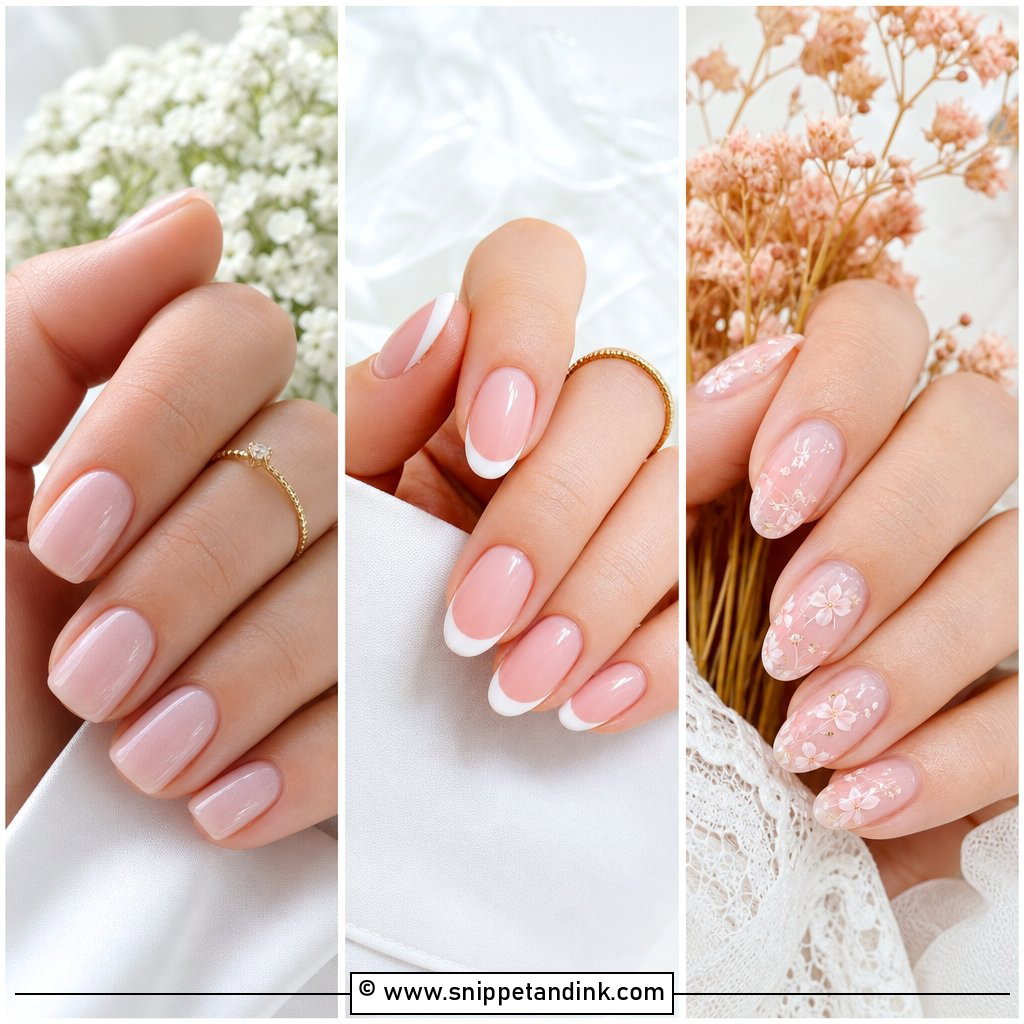
Adding flowers to a French keeps a traditional manicure but makes it yours. The base stays sheer pink, beige or nude; the tip can be white, ivory or blush. I tuck small flowers along the smile line so they look like they’re growing from the tip. Almond and square frame this best. On all ten nails it gets busy fast, so I usually put the flowers on two nails per hand and leave the rest as a clean French.
3. Pink Floral Wedding Nails
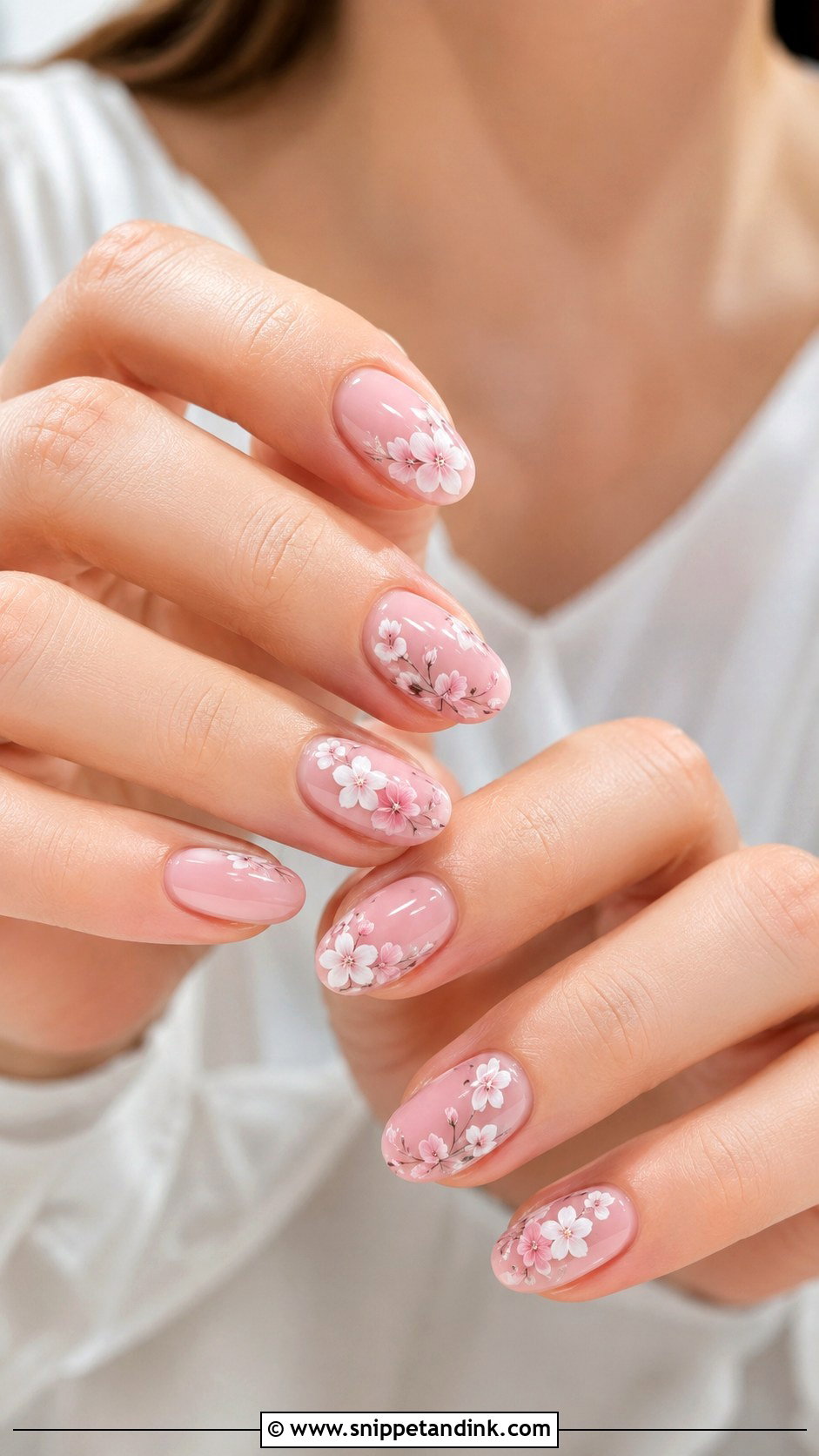
Pink florals look sweetest when the base is soft: baby pink, blush or a rosy nude, with tiny white or pale pink flowers on top. Bright pink bases overpower the art. A mix of solid pink nails and floral accents gives the set some rhythm without making every nail compete. I check the pink against the bouquet if I can, because a blush nail beside a coral bouquet can look accidentally mismatched in photos. Gloss keeps it fresh; a pearly shimmer adds softness.
4. Milky White Floral Wedding Nails
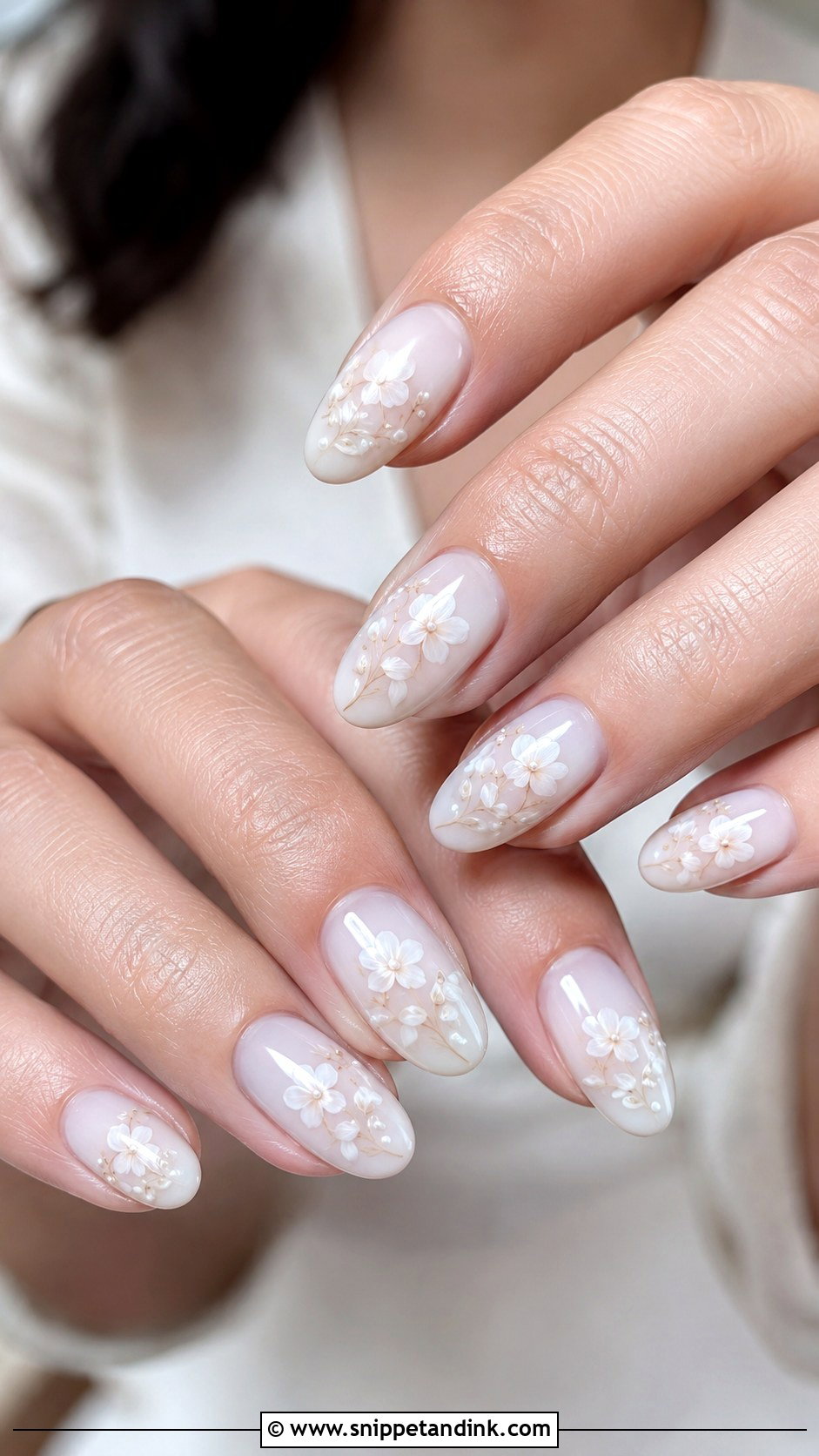
On a milky white base, florals look almost like they’re printed on fabric, because the translucent white softens everything sitting on it. I paint white petals with fine beige stems and finish with tiny pearl dots. It’s the floral set I suggest to minimalist brides who still want a detail. The flowers need space between them, otherwise the soft base turns cloudy and the art loses its edges. Oval, almond or short rounded all suit it.
5. 3D Flower Wedding Nails
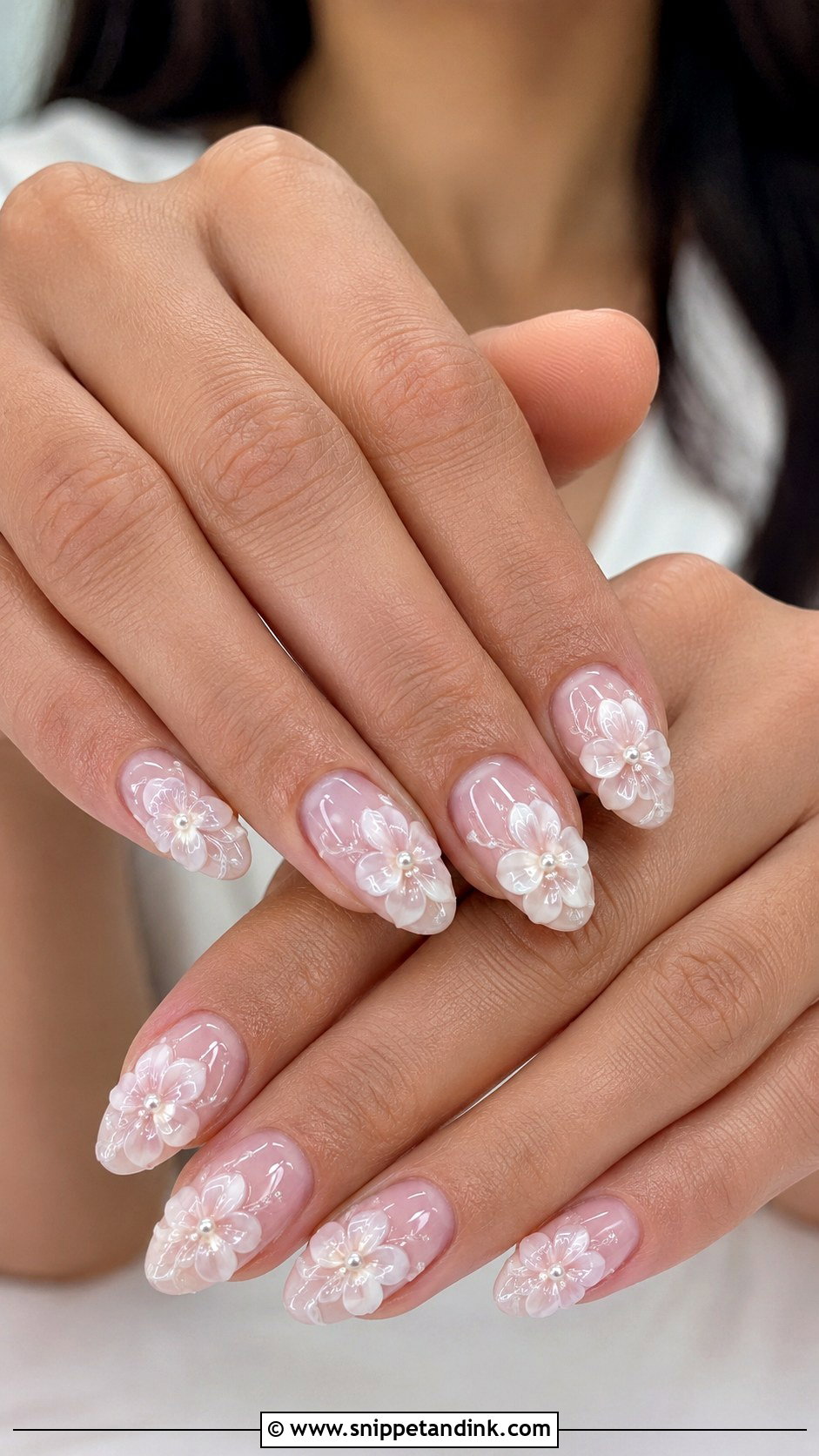
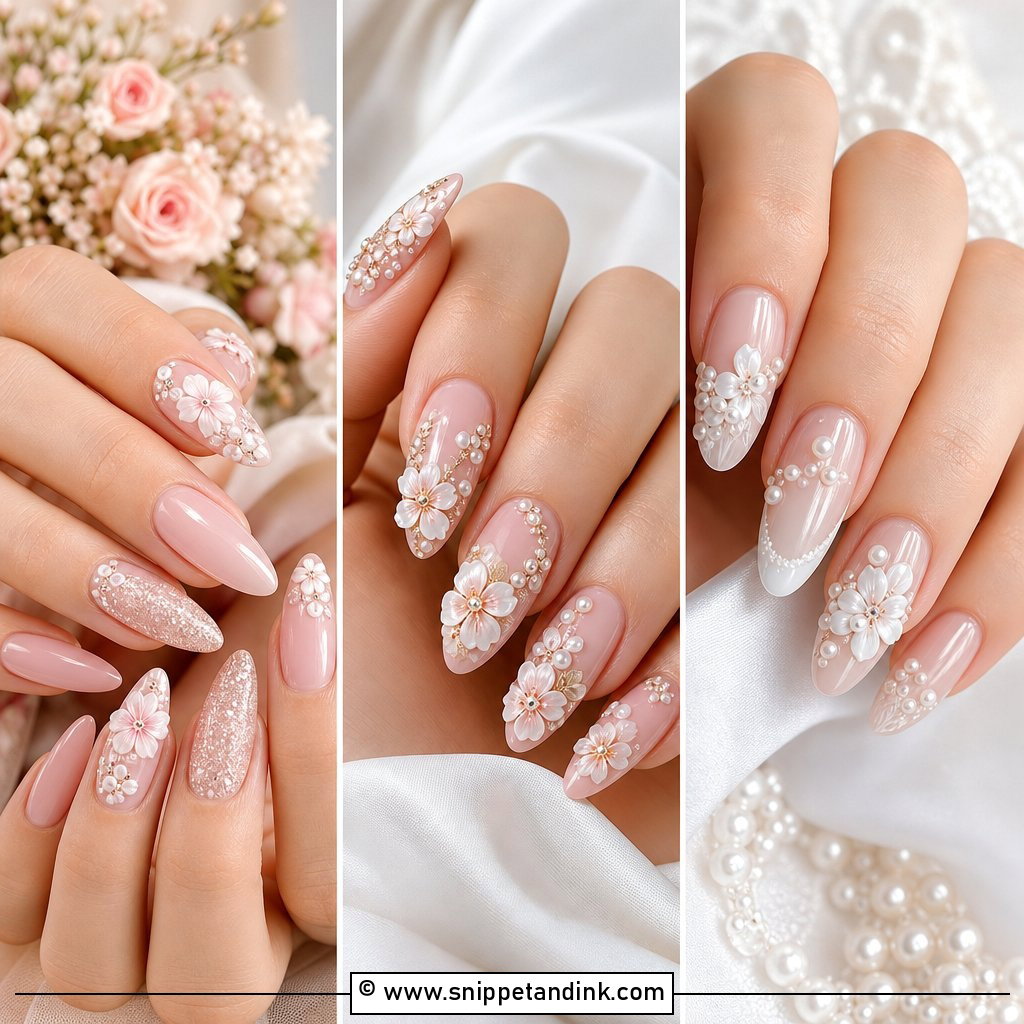
3D petals are sculpted from gel or acrylic and stand off the nail, so they catch light and look real up close. They also catch hair, lace and veil netting. That’s why I keep 3D flowers small, place them near the cuticle or on one accent nail, and build them low and rounded rather than tall. The base should be simple, sheer pink, nude or milky white, so the flowers are the feature. A crystal or pearl tucked into the centre is plenty of extra shine.
6. Pressed Flower Wedding Nails
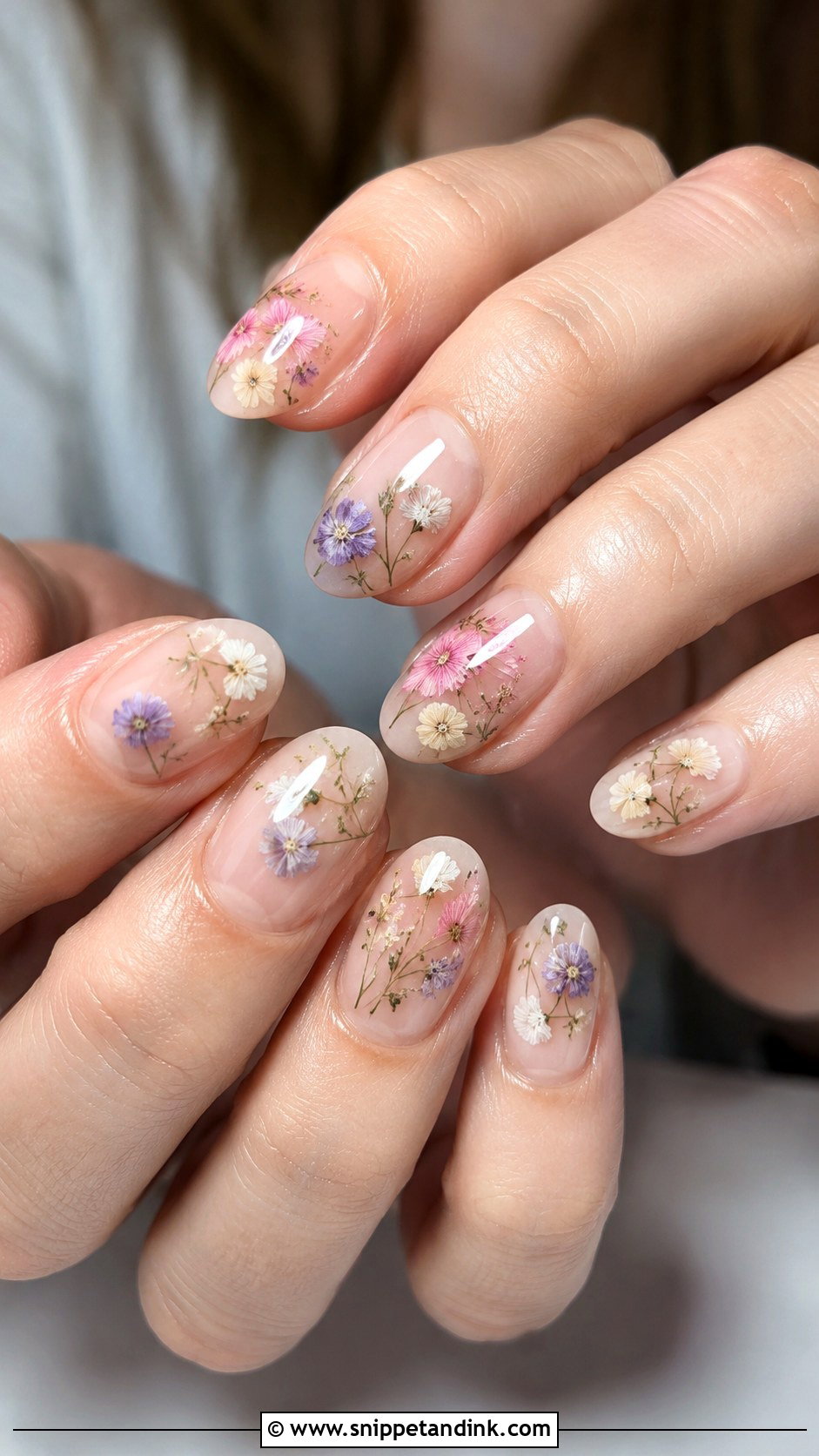
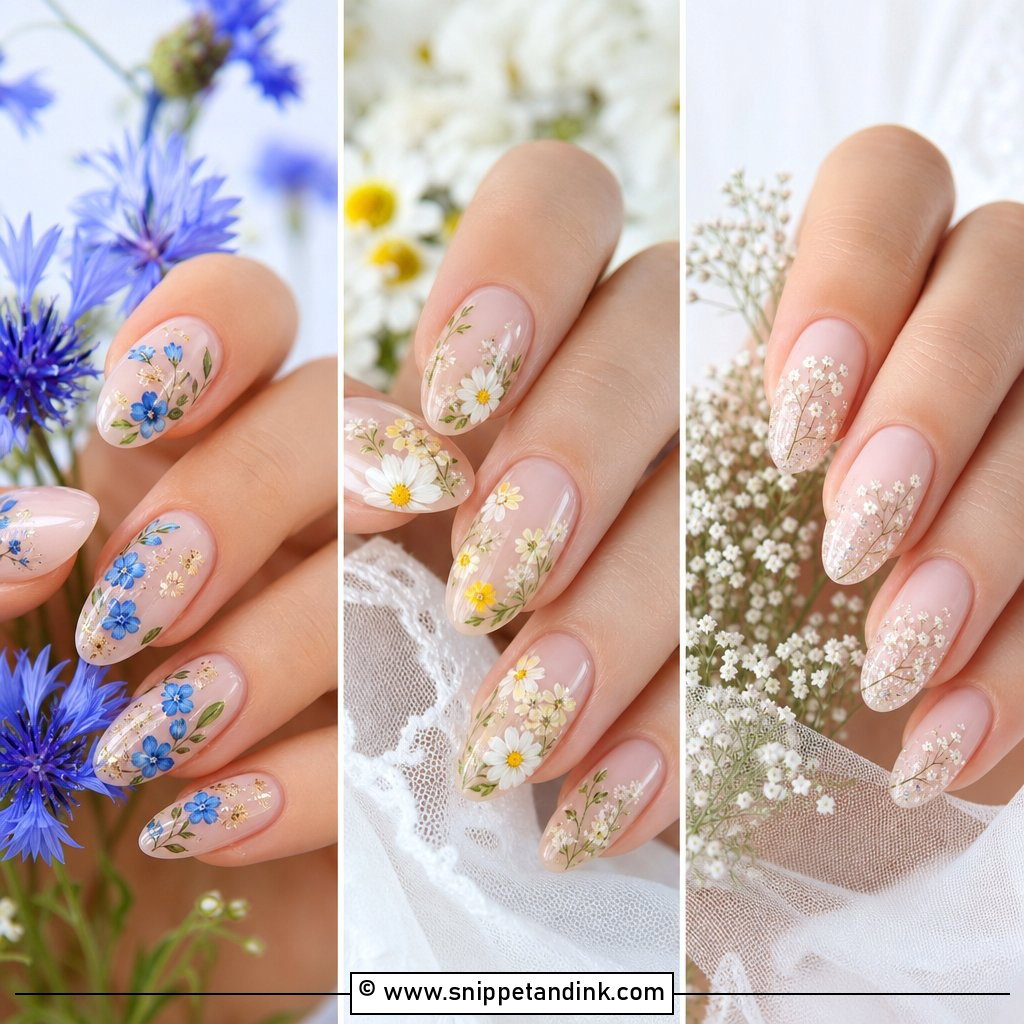
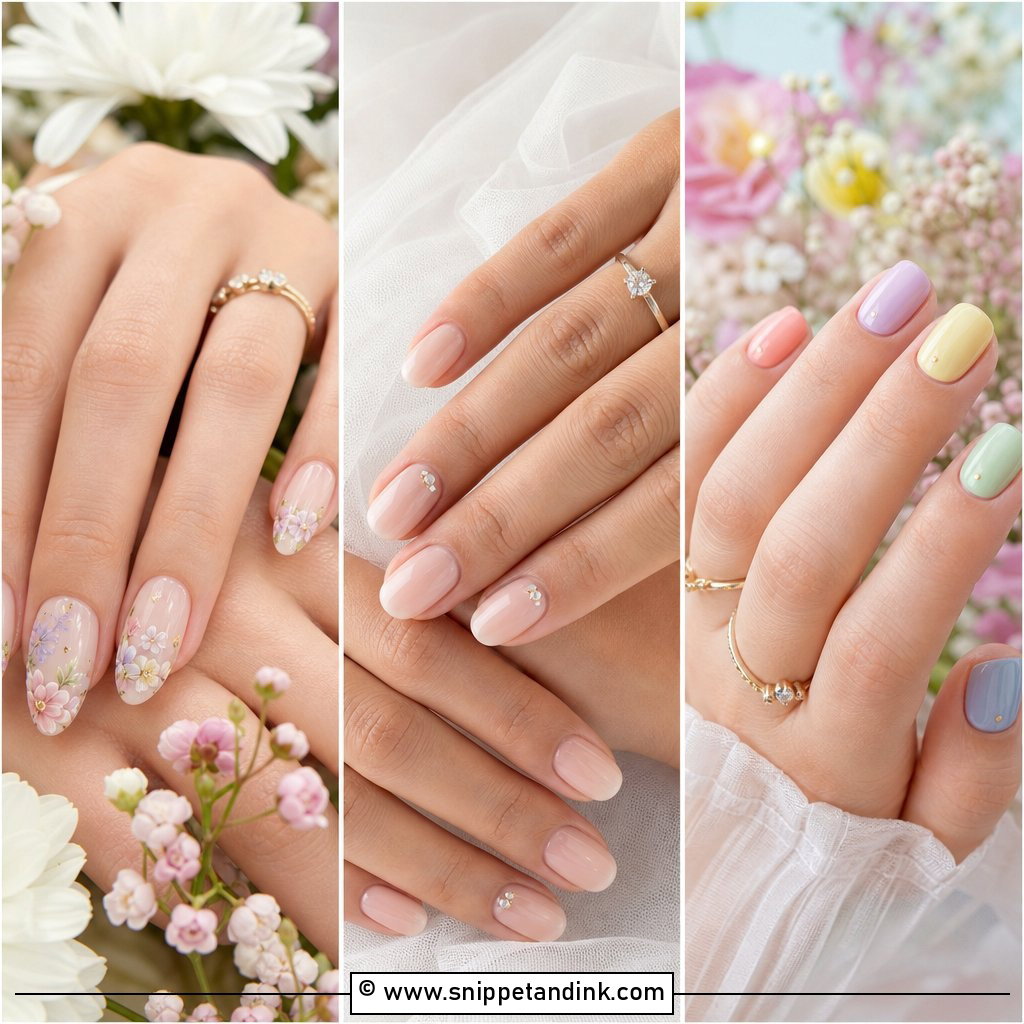
Pressed flower nails use real dried petals sealed under clear or sheer gel. White, blush, lavender, yellow and soft blue flowers all press well; thick or fleshy flowers don’t, because they won’t lie flat. The petals have to be completely encapsulated, with gel over every edge, or they lift and turn brown at the tip within days. Clear, nude or jelly bases keep the flowers visible. Almond and oval give the most room, though a single tiny bloom on a short nail is charming. It suits meadow and wildflower weddings.
7. Nude Floral Wedding Nails
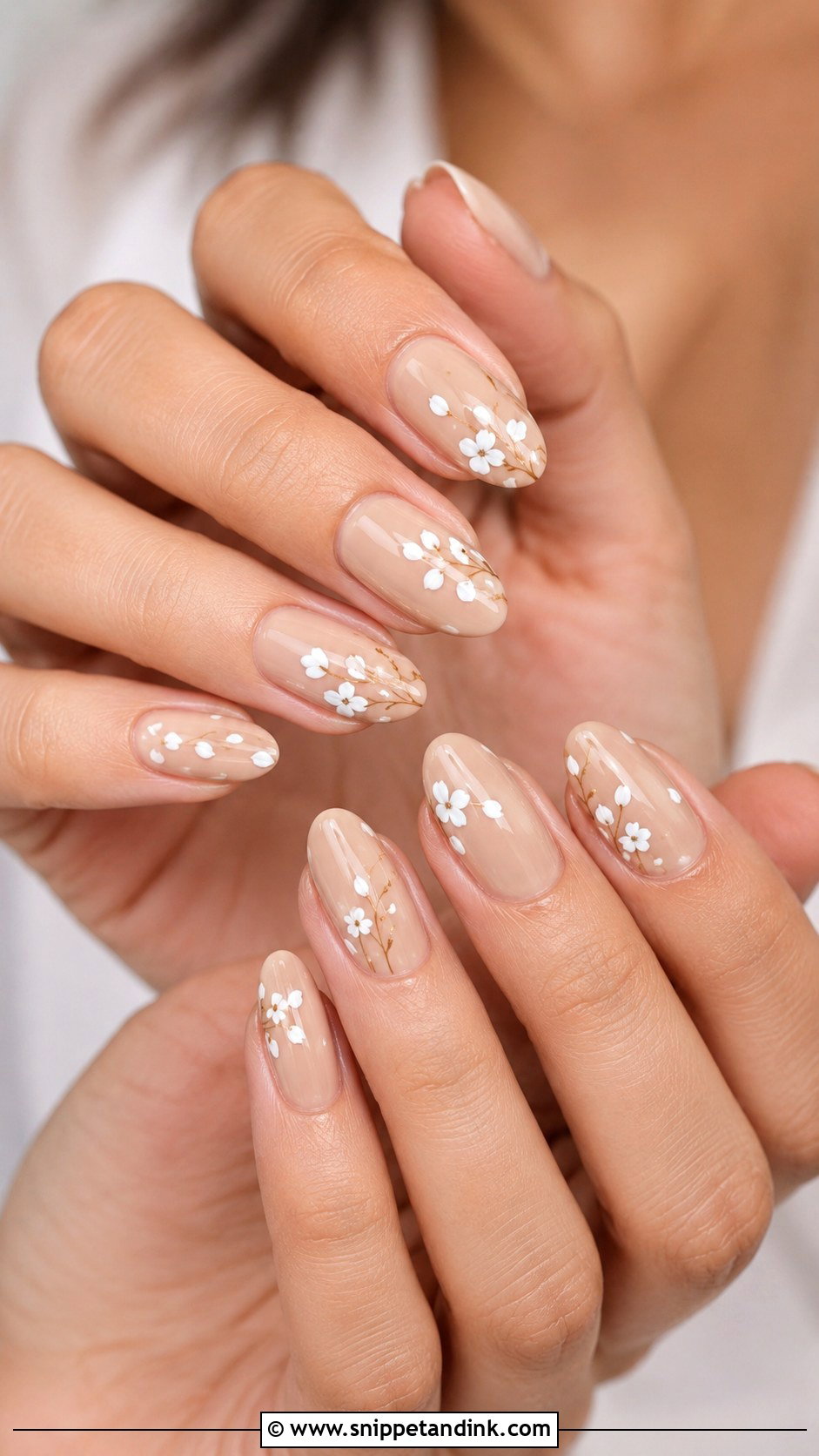
A nude base with a few florals is the most adaptable set on this list. It works with simple satin and with heavily beaded gowns alike. I choose the nude for the skin tone first, anywhere from pale beige to warm caramel or soft taupe, then add white flowers, or blush or champagne petals for warmth. Placement keeps it light: a cluster in one corner, a vine down one side, or a few scattered blooms. Nude bases are also kind to growth, since the gap at the cuticle barely shows.
8. Pearl Floral Wedding Nails
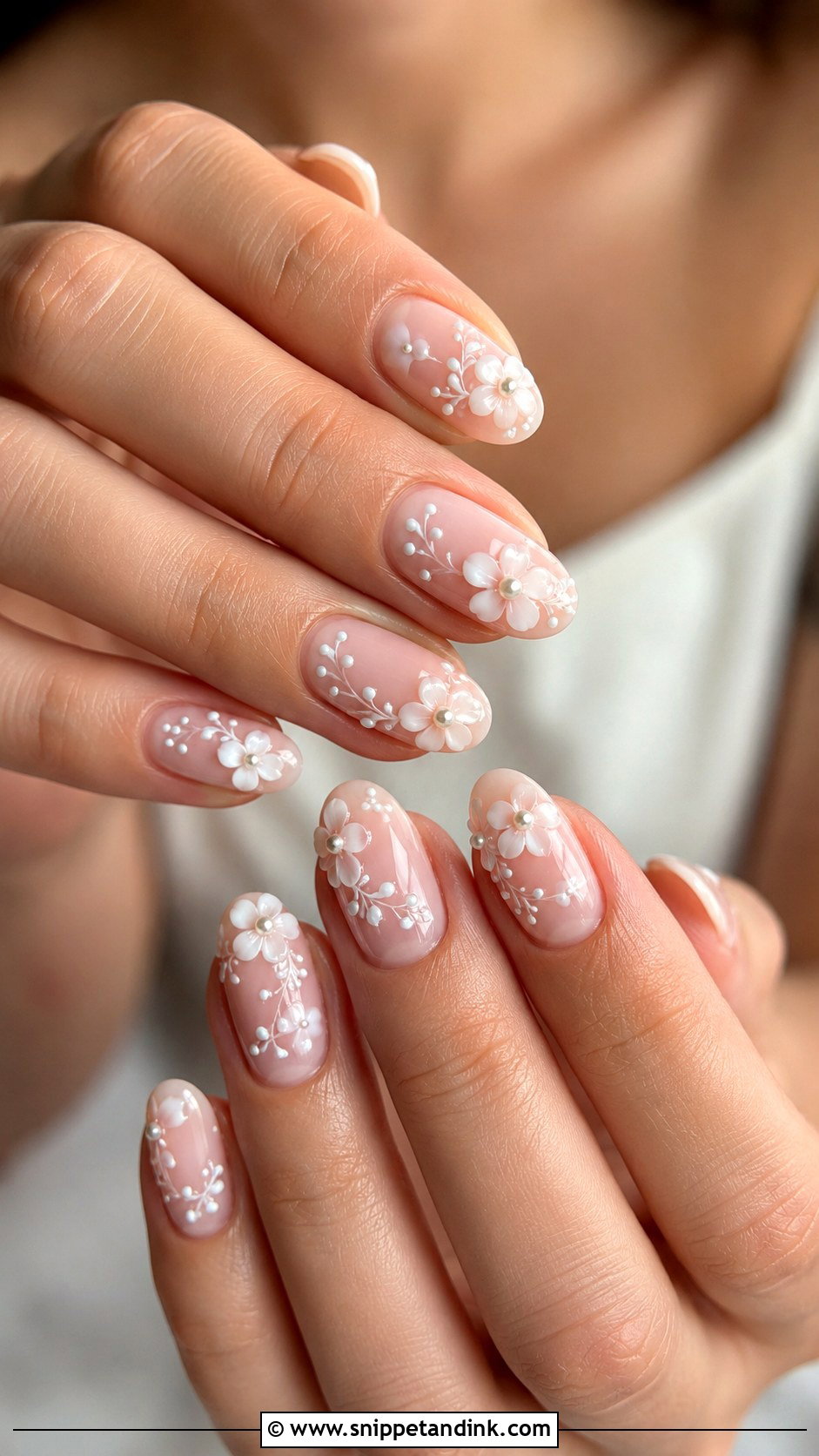
Pearls and flowers together can tip into fussy, so I use the pearl as the centre of the flower rather than an extra decoration around it. A sheer pink, milky white or nude base, small painted petals, and one tiny pearl in the middle of each bloom. Every pearl is set in a small bead of builder gel and sealed; loose pearls are the first thing to vanish on a long day. Almond and oval suit this set. It ties in neatly with pearl earrings or a pearl-edged veil.
9. Chrome Floral Wedding Nails
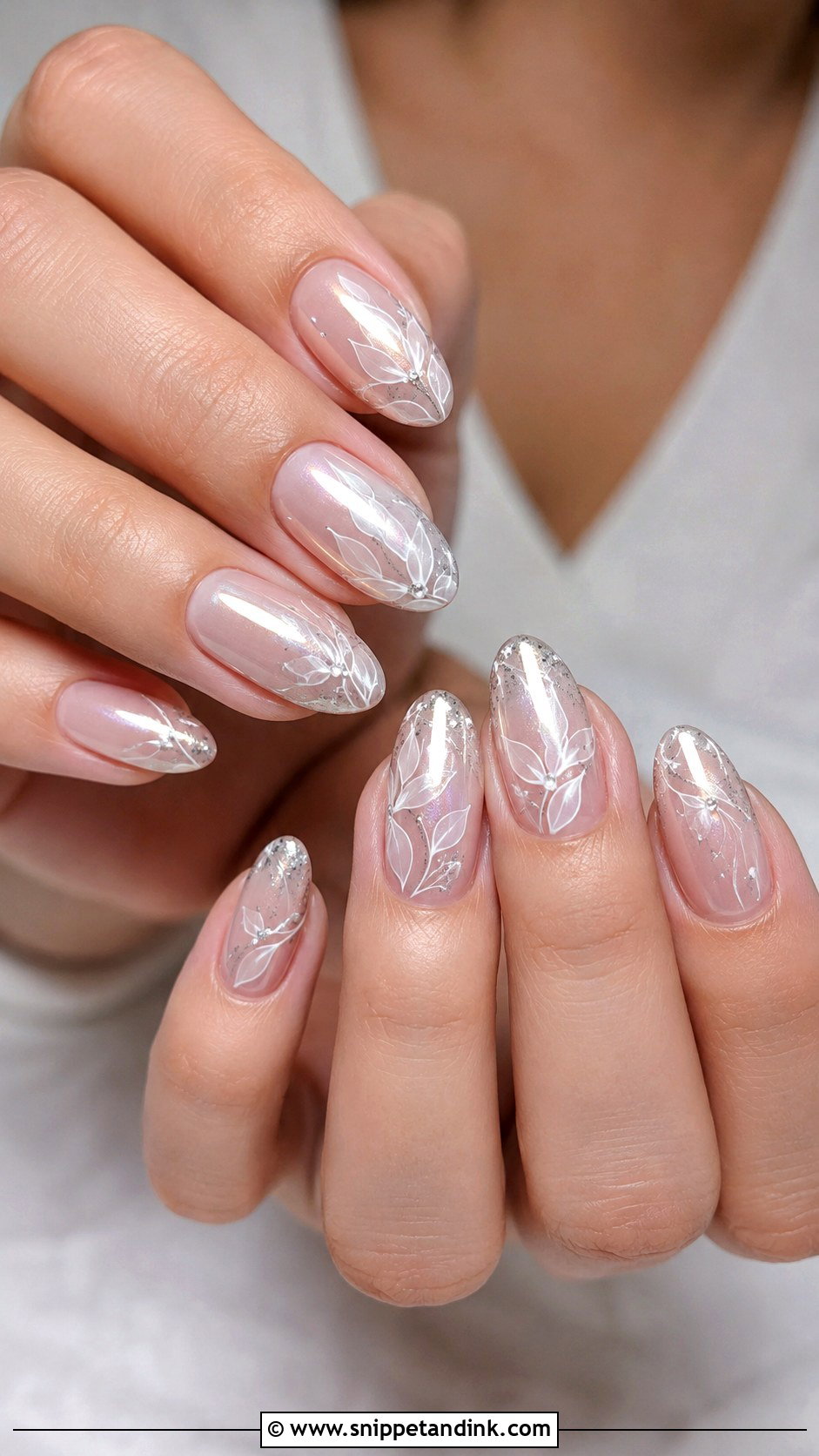
Chrome and florals take careful layering. A pearly chrome glaze over a nude, blush or milky base goes on first, then the flowers are painted on top in white, silver or soft pink, then sealed. If the flowers go under the chrome, they look blurred. Pearl chrome keeps it delicate; mirror chrome with florals tends to look busy and shows scratches. This suits minimalist gowns, satin and modern bridal styling.
10. Blue Floral Wedding Nails
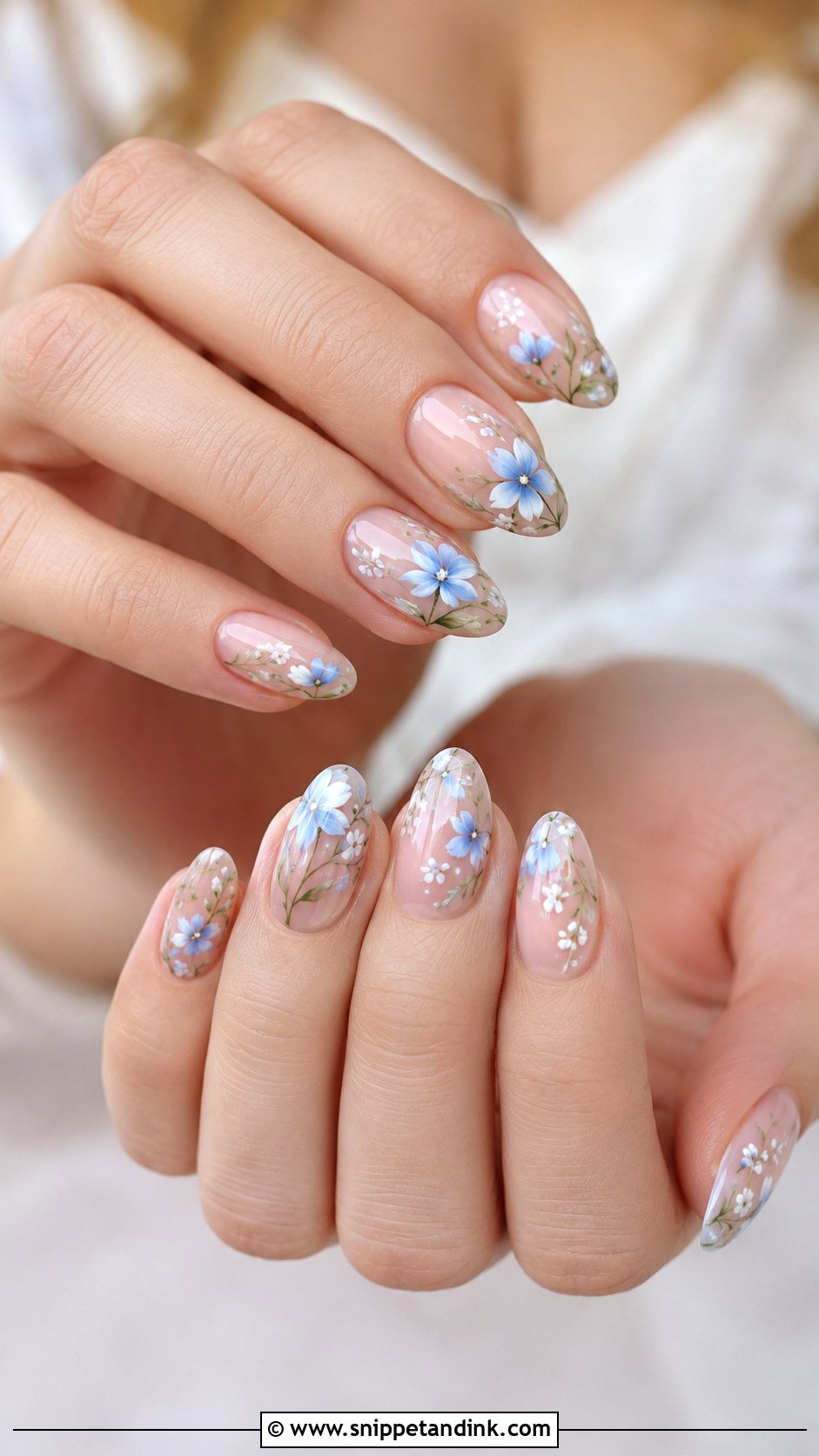
Blue florals are the subtle way to wear “something blue.” Powder blue, pale sky blue or blue-grey petals work as the flower colour, as a French tip, or as a light accent beside white flowers. A sheer nude base keeps it soft. In photos, pale blue can look almost grey under warm reception lights, so I usually choose a shade a touch more saturated than you’d expect. Spring, summer and coastal weddings suit it best.
11. Gold Floral Wedding Nails
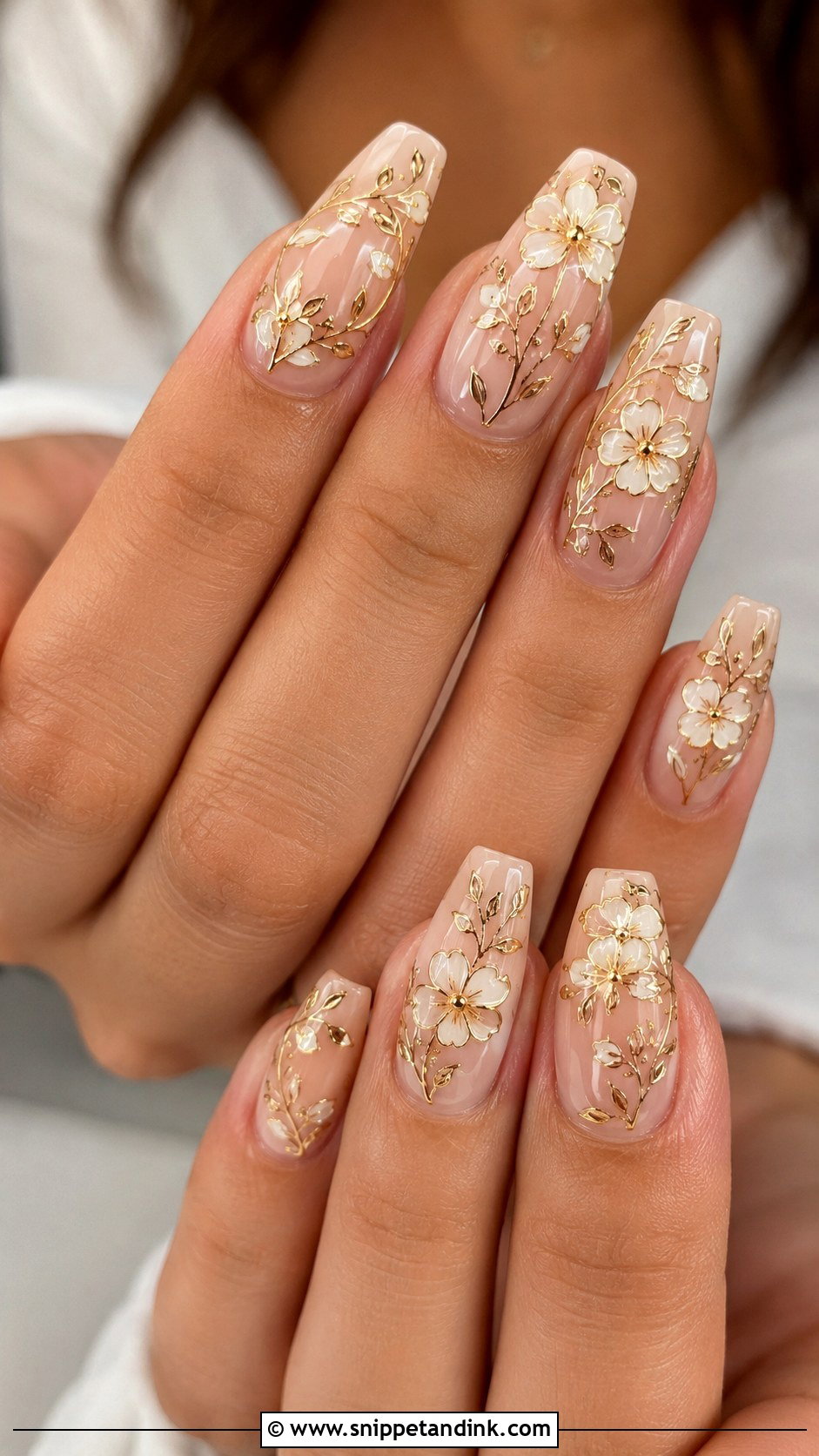
Gold floral line art suits brides wearing gold jewelry, and it works better as outline than as fill. On a nude, blush or ivory base, I paint fine gold stems and petal outlines, or press in a fleck of foil at the centre. Thick gold flowers look like costume jewelry; thin lines look like engraving. Almond and coffin give the design room. Pairing gold outlines with a few white flowers keeps it bridal rather than festive.
12. Lace Floral Wedding Nails
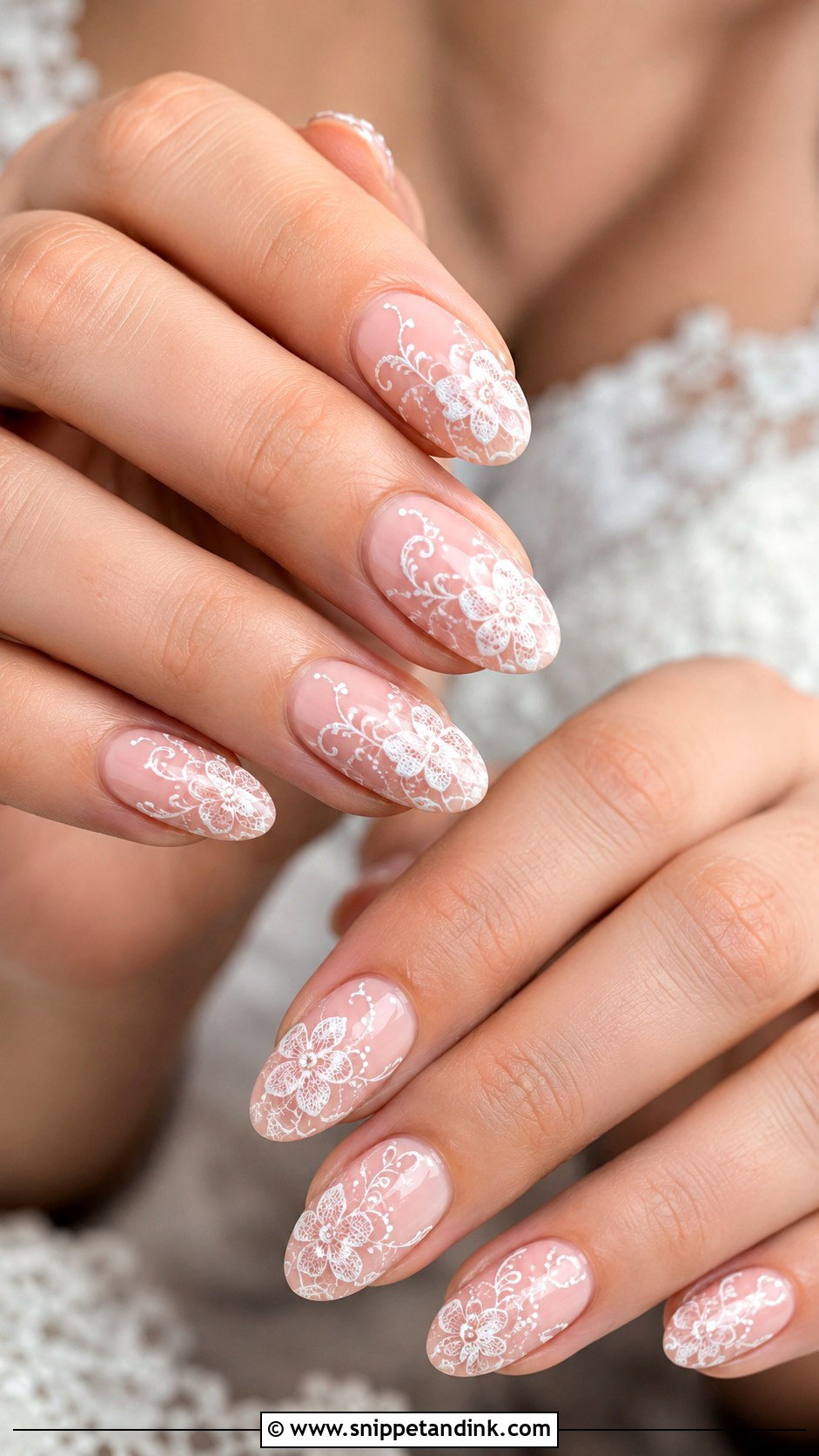
Lace florals are fine white linework that mimics fabric: tiny petals, dots, thin lines and soft swirls on a sheer pink, nude or milky white base. It takes patience and a very fine liner brush. Longer almond or oval nails give the pattern room, but I can simplify it for short nails by keeping it to a lace edge along the tip. If your gown has floral lace sleeves or an embroidered veil, bring a close-up photo and I’ll echo its motif.
13. Daisy Wedding Nails
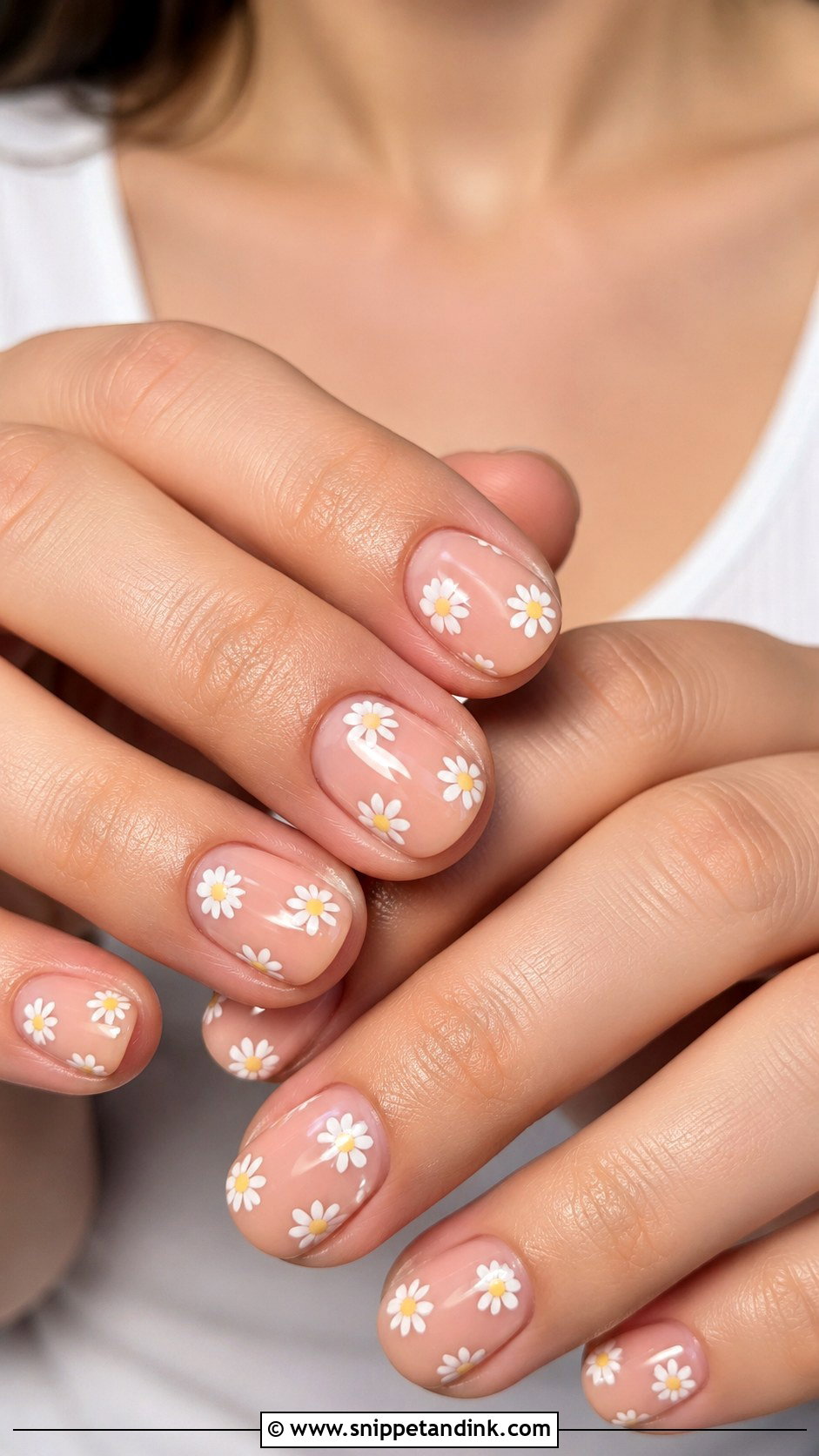
Daisies are the most cheerful flower here, and the least formal. Small white daisies with yellow centres on a sheer pink, nude or clear base stay light and fresh. They suit outdoor ceremonies, spring weddings and relaxed bridal styles; with a formal black-tie gown they can look out of place. I place them near the cuticle, scatter them, or tuck them into a French tip. On short round nails they look sweet; on almond, more grown-up.
14. Rose Floral Wedding Nails
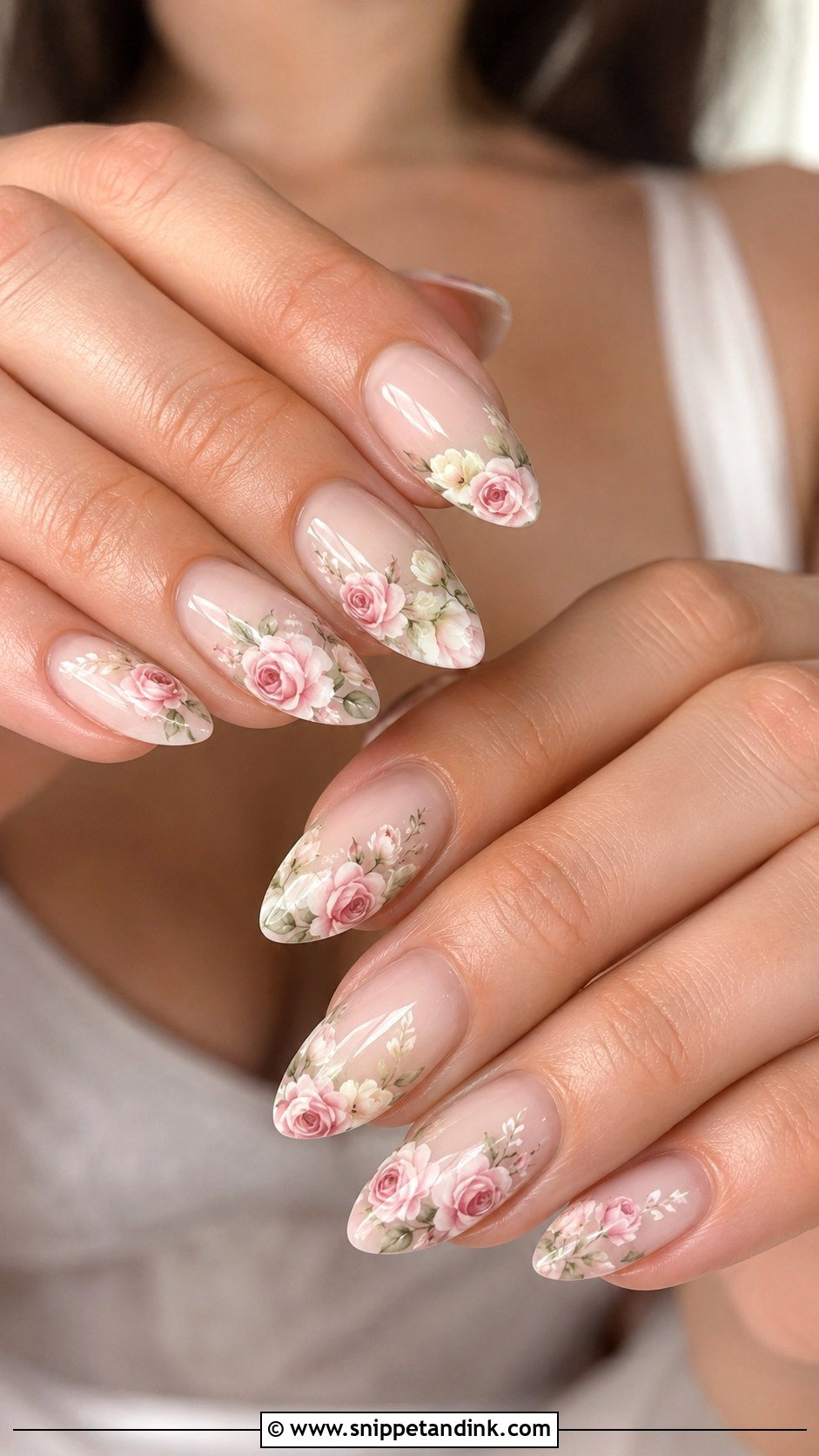
Roses on nails are about scale. A full painted rose needs space, so I either paint tiny roses with two or three swirled strokes or use soft watercolour petals that suggest a rose without the detail. Soft pink, ivory, blush and dusty rose shades on a nude or milky base keep it delicate. If roses are in your bouquet, this is the most direct way to connect the two. Almond, oval and coffin all suit it, and a small green leaf or pearl finishes the bloom.
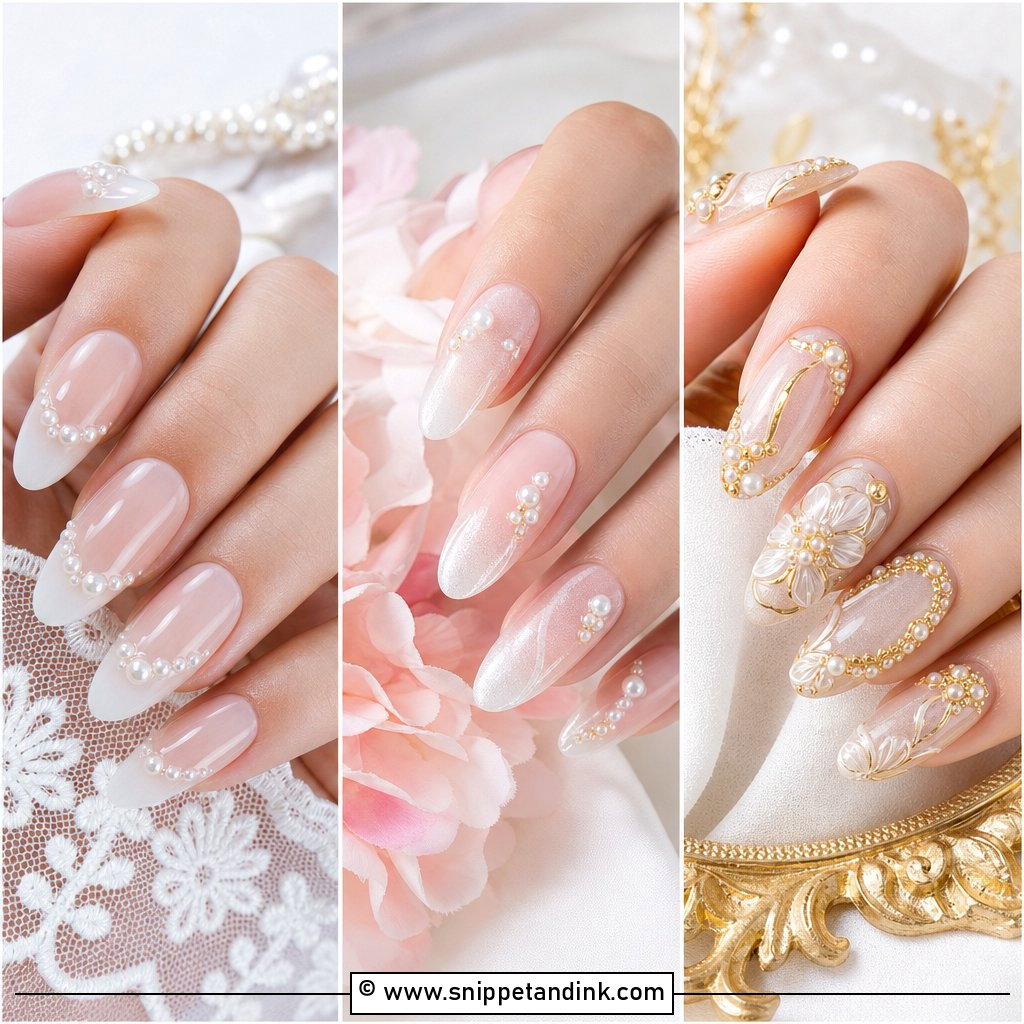
15. Baby Breath Wedding Nails
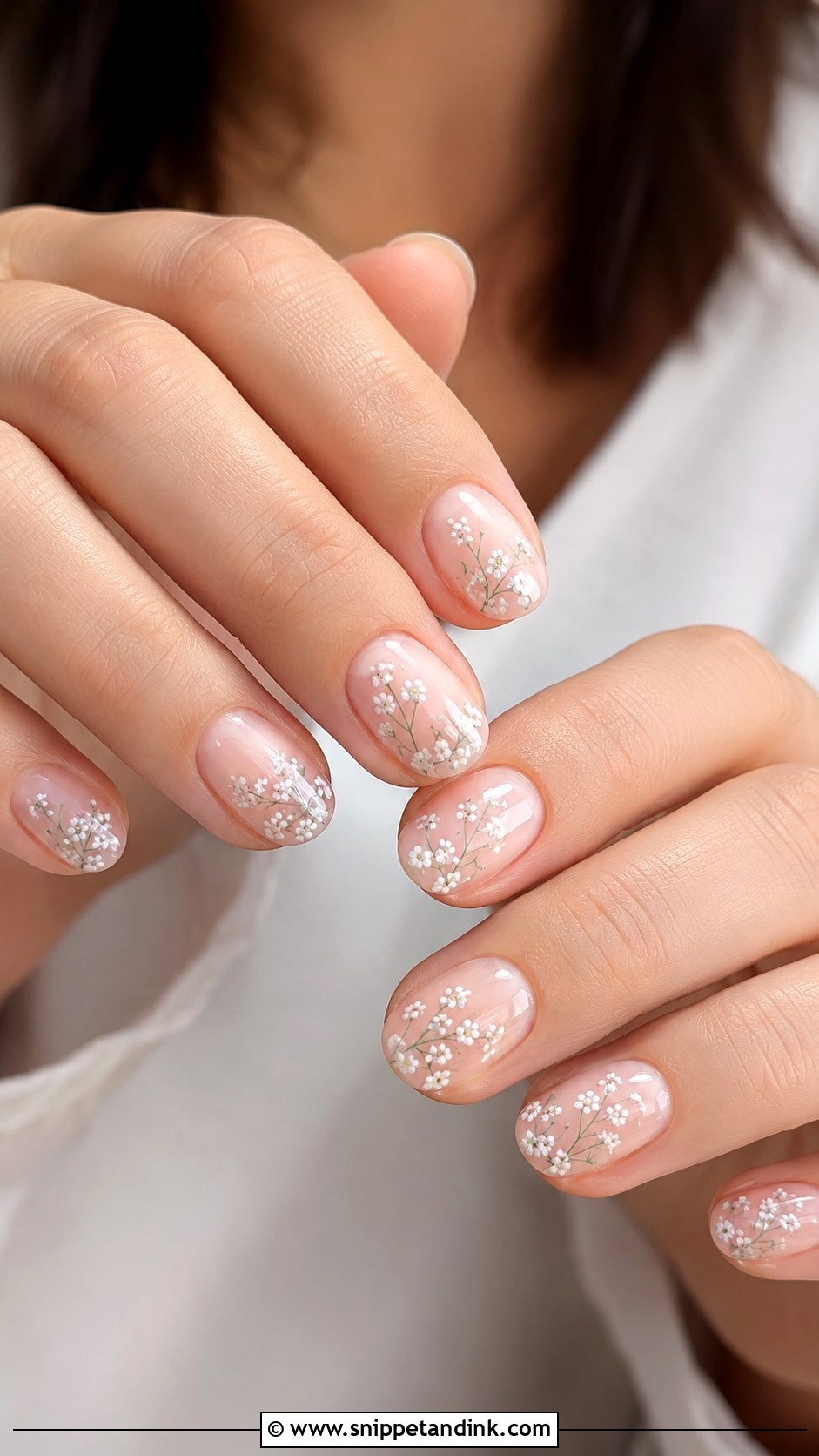
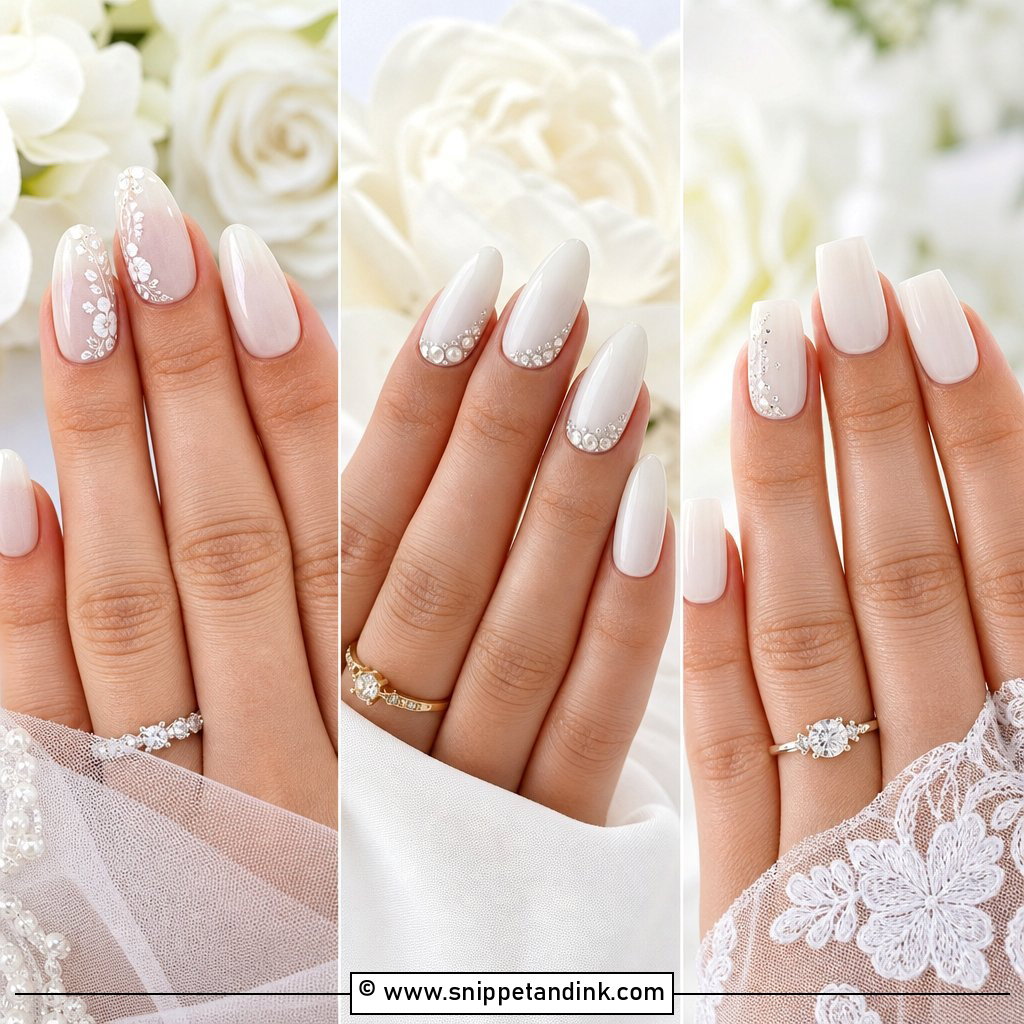
Baby’s breath nails are made of dots. Tiny white dot clusters on thin green or beige stems over a sheer nude or milky base give an airy spray that echoes the real flower. It’s one of the quickest floral designs to paint, and one of the most forgiving to wear, because a small chip in a dot cluster disappears. Oval and almond let the stems curve naturally; short nails make it look understated. It pairs naturally with baby’s breath bouquets and simple veils.
16. Floral Ombre Wedding Nails
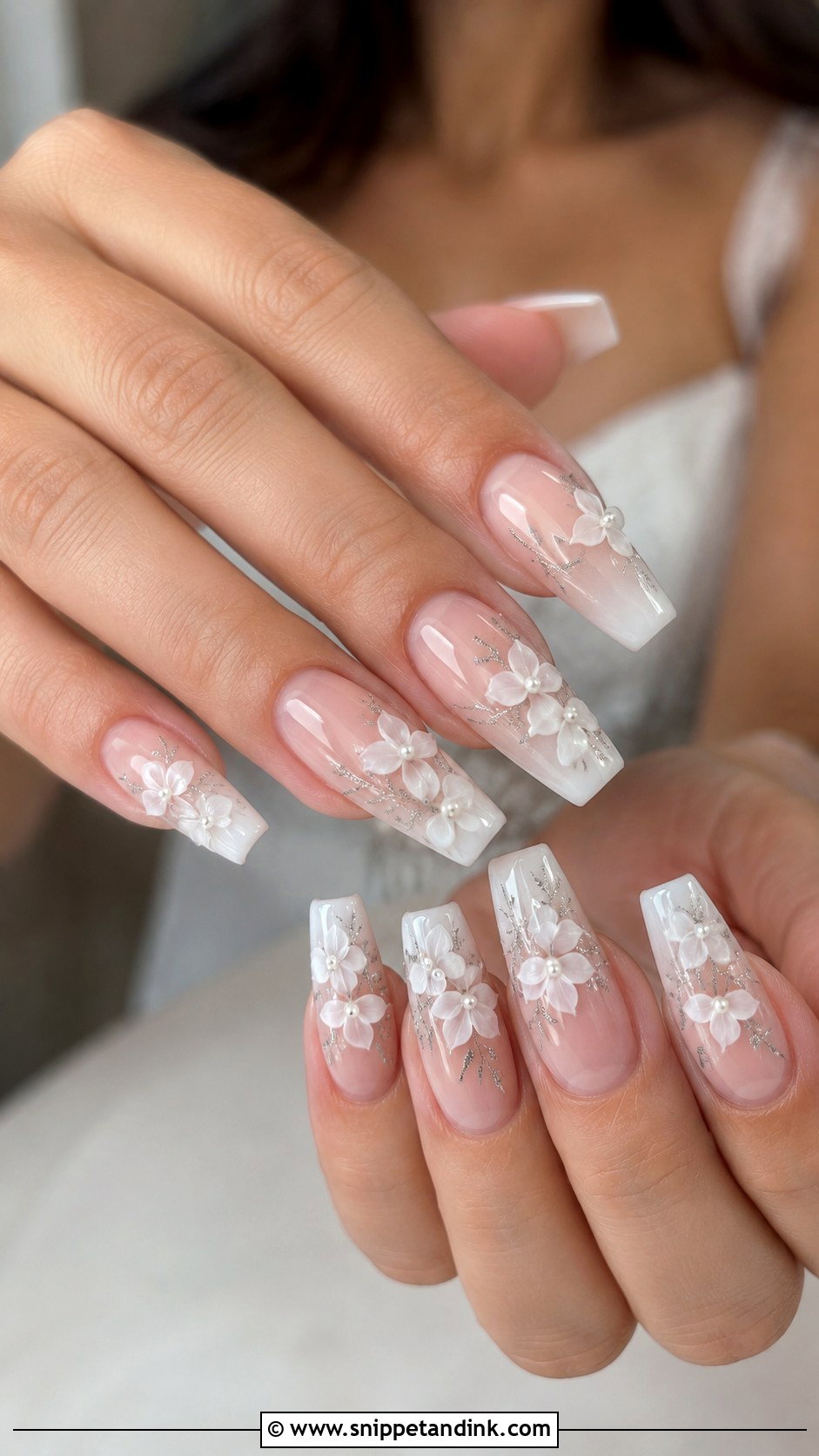
Floral ombre layers flower art over a soft fade: nude to white, pink to white, or milky to blush. The ombre needs to be fully cured and topped before I paint, so the flowers sit crisply on the gradient rather than bleeding into it. It’s more detail than plain ombre but less contrast than flowers on a solid base. Almond and coffin make the fade look longer. White flowers, pearl centres or a fine silver accent all suit the blended base.
17. Short Floral Wedding Nails
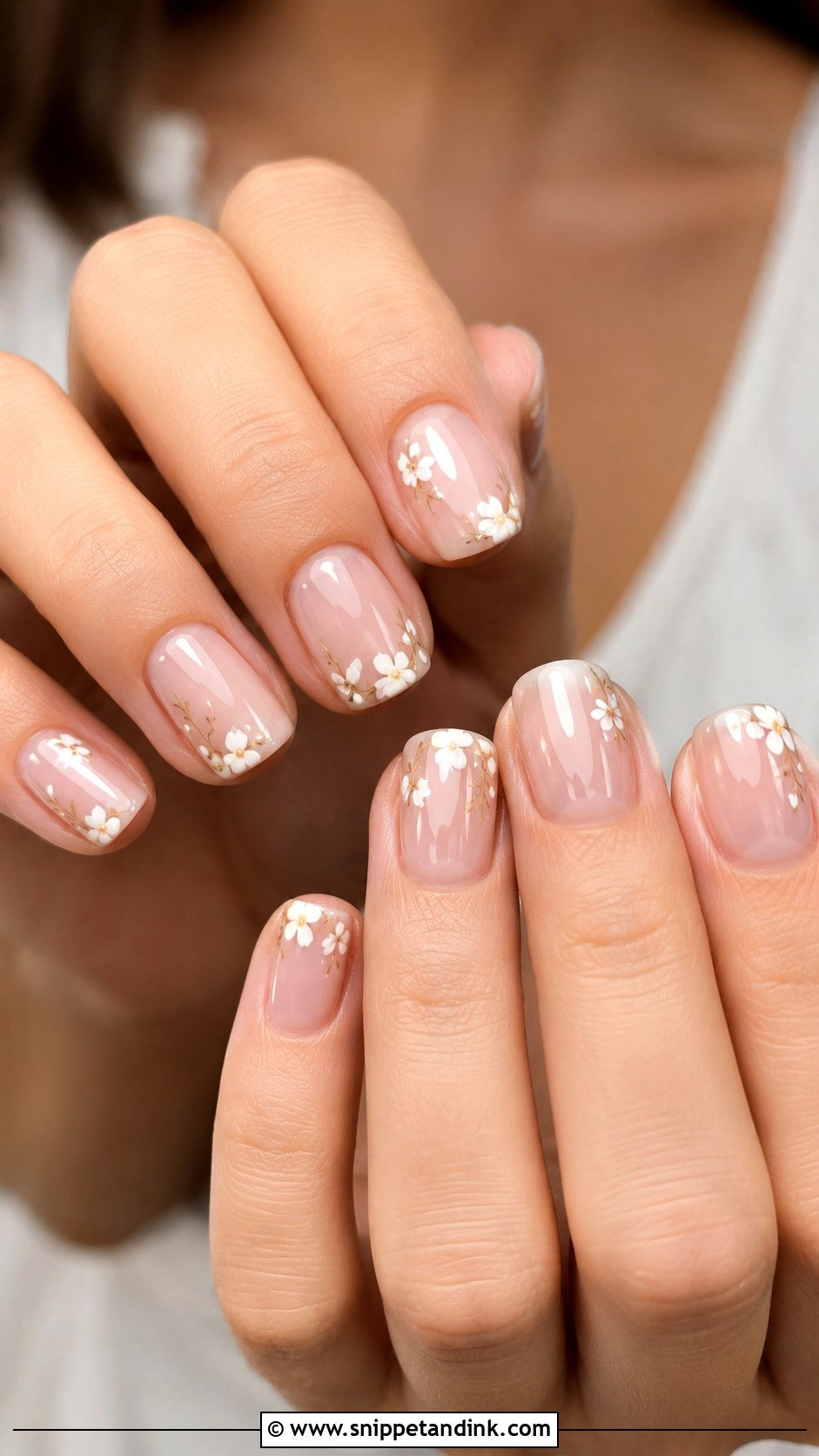
You don’t need extensions for floral art. Short oval, round or soft square nails take tiny flowers well if I scale them down and place them on one side of each nail or on a few accent nails. On a sheer pink, nude or milky base, small petals, fine stems and dot details keep it from crowding. Short nails are also the most practical for the ceremony, reception and a honeymoon of luggage and swimming.
18. Almond Floral Wedding Nails
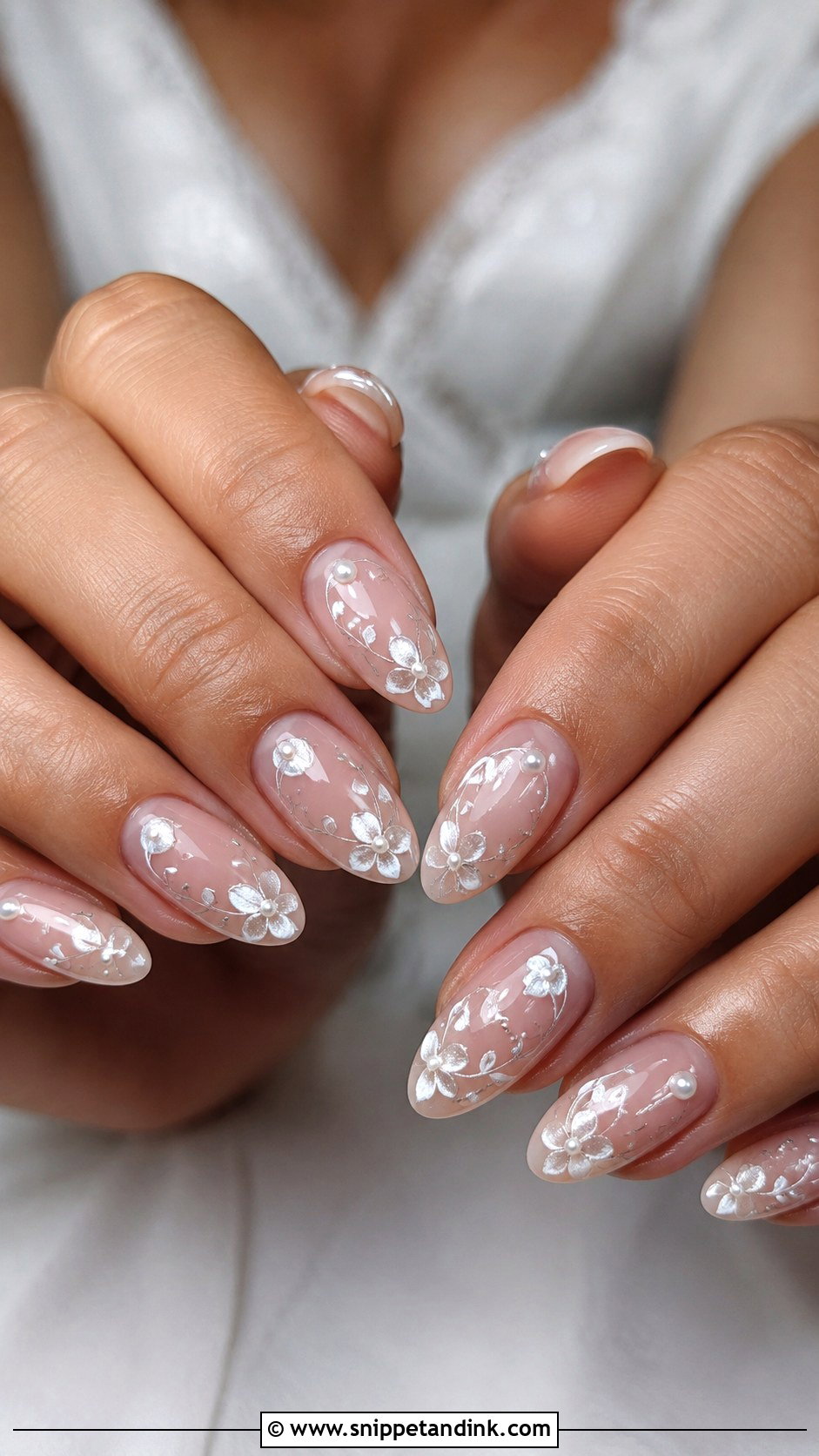
Almond floral wedding nails give flowers the most space to flow. The tapered shape lengthens the fingers and the rounded tip leaves room for vines to curve naturally. A sheer nude, blush or milky white base is the safest bridal background. White flowers read classic, pink flowers more romantic, gold details warmer. Almond also takes French tips, chrome and small 3D flowers without looking crowded. If your natural nails are thin, I’d reinforce the tip before adding any 3D art.
19. Square Floral Wedding Nails
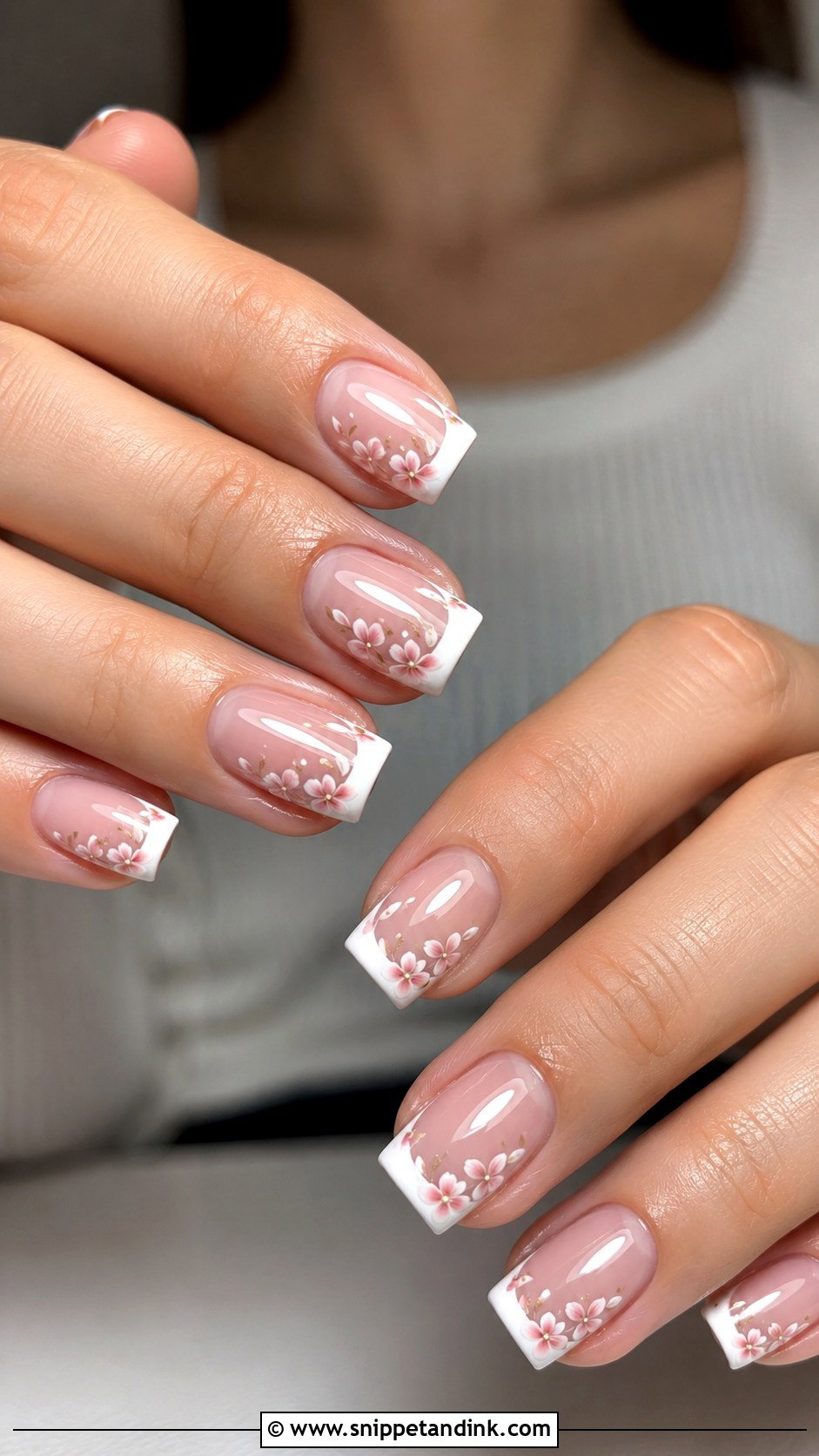
Square nails give floral art a tidier frame. I place small flowers near the corners or along a French tip on a nude base, and soften the corners slightly so they don’t snag fabric. White florals keep it classic; blush or pastel petals add colour. Thin edges, neat cuticles and gloss are what make it look finished. Because it’s understated, this is also the floral set I suggest most for bridesmaids and guests.
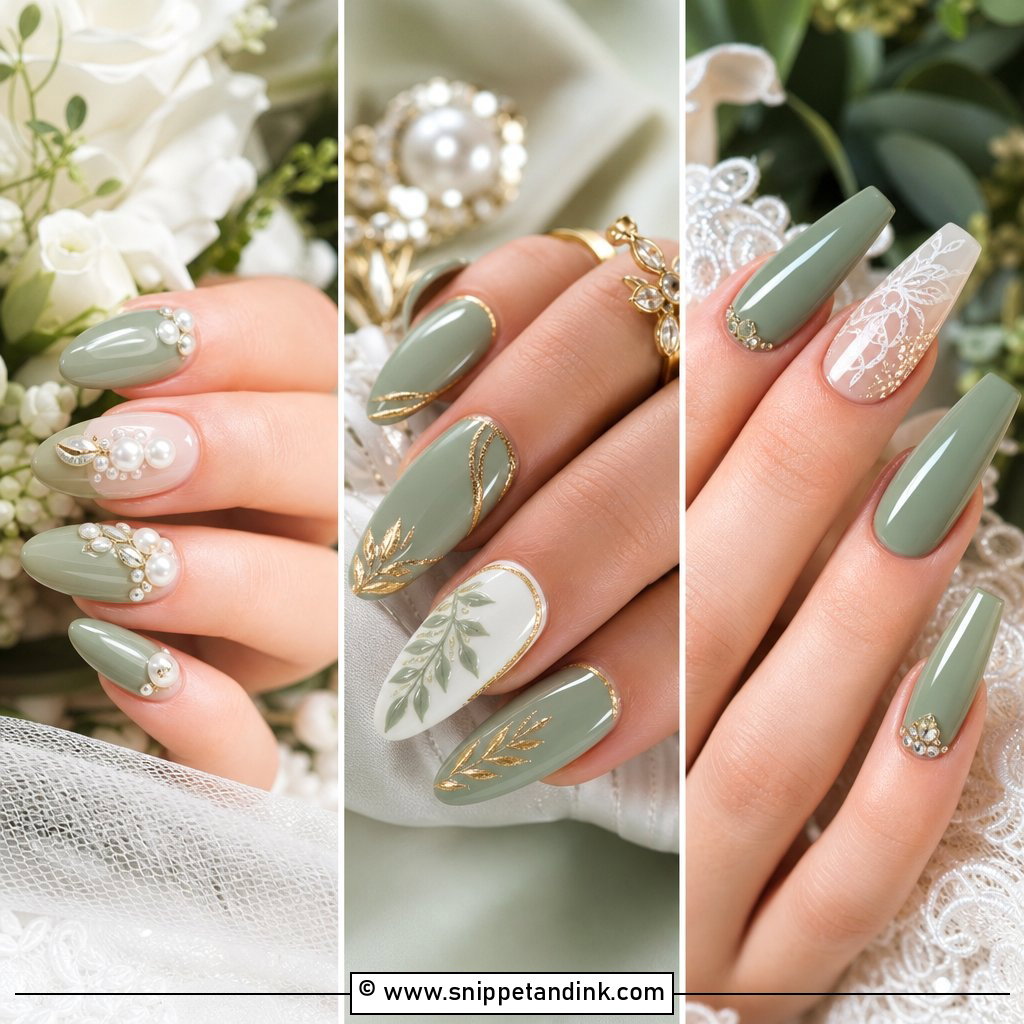
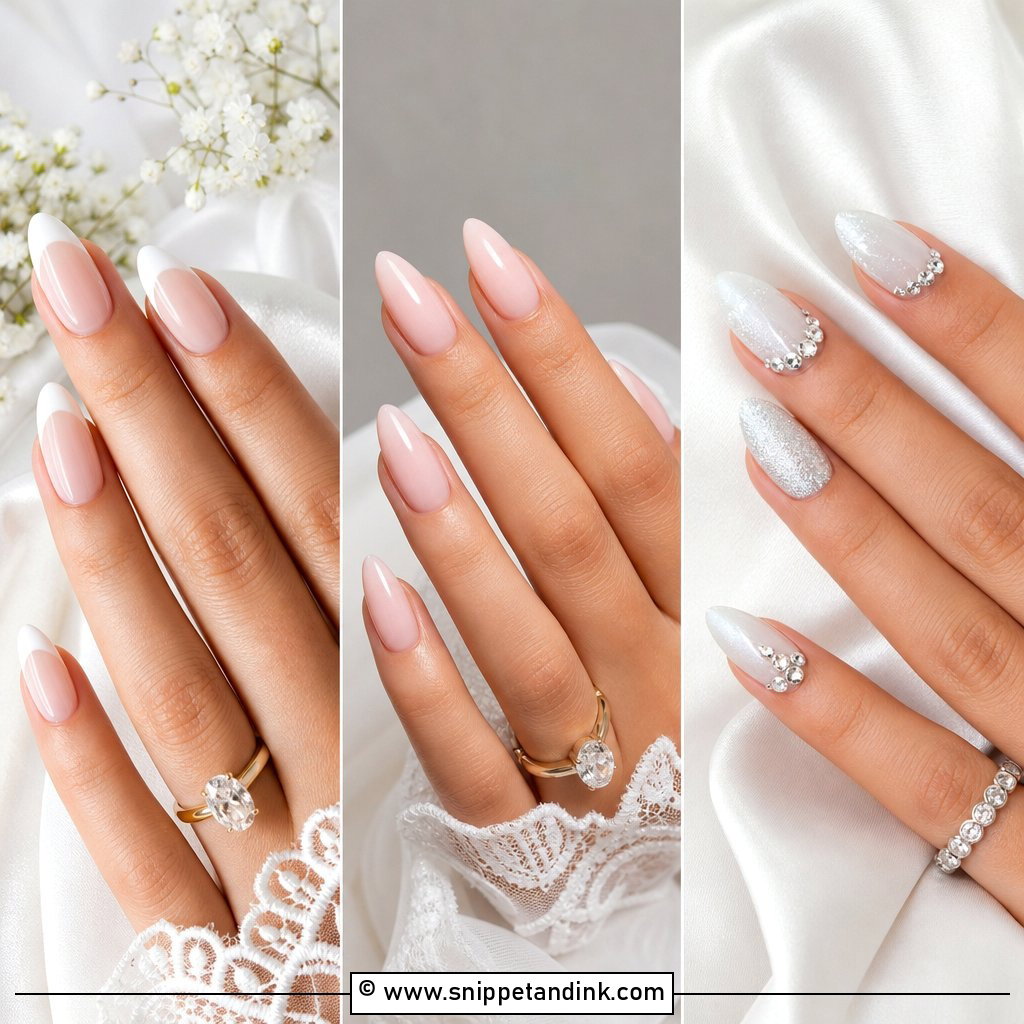
20. Garden Floral Wedding Nails
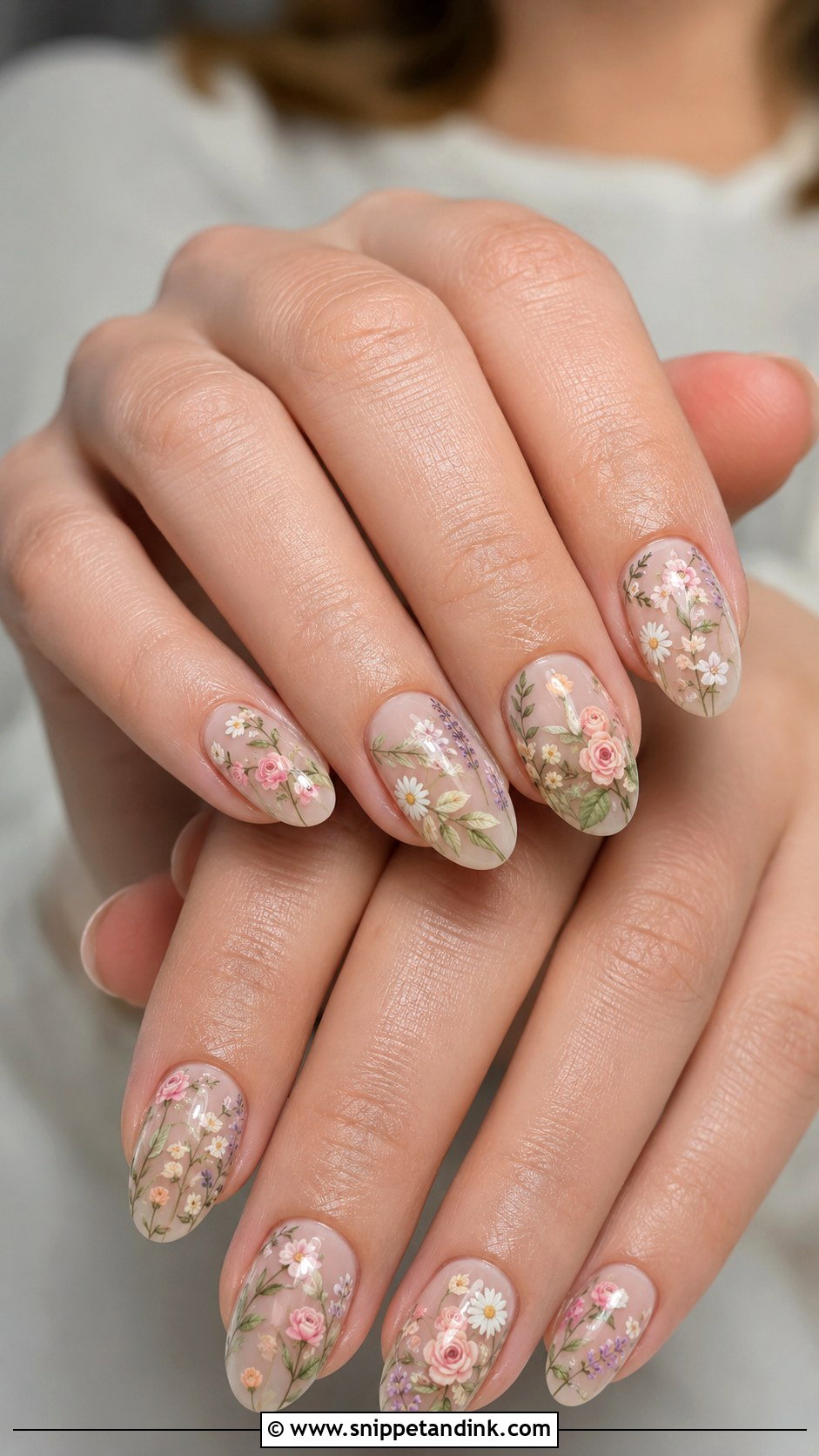
Garden nails are the fullest floral design: tiny roses, daisies, leaves, vines and scattered blooms across a nude or sheer pink base. Palette is everything here. Ivory, blush, sage, lavender, and pale peach keep it romantic; strong brights quickly make it look like a summer holiday set. I’d keep the fullest art to two nails per hand and let the others carry a single bloom. Outdoor ceremonies and flower-filled receptions suit it best.
How Floral Art Holds Up Over a Long Day
Painted flowers are flat and sealed under top coat, so they wear as well as plain colour. Textured flowers are another matter, and they need a bit more planning.
3D petals
Raised art catches on hair, lace and veil netting, and the edges collect lint over a few days. I build petals low and rounded, and I’d avoid them entirely if you plan to wear long hair down with a cathedral veil.
Real pressed flowers
These are delicate until sealed. Once fully encapsulated in gel they wear like any other set, but a lifted edge lets water in and the petal discolours. Book them close to the wedding, no more than three days before.
Using petals from your own flowers
Pressing petals properly takes one to three weeks, so your actual bouquet can’t go on your wedding nails. What you can do is ask your florist for a spare stem early and press it, or press flowers from your bouquet afterward for a post-wedding set.
Detailed floral sets also take longer in the chair, often an extra half hour to an hour. Allow for that when you plan the appointment, and don’t book it for the morning of the wedding.
Fewer Flowers, Clearer Photos
Floral wedding nails can be as quiet as a single white bloom or as full as a garden set, and the right level depends on your dress, bouquet and how much detail you already wear. White flowers, floral French tips, nude bases and milky polish stay classic; pressed flowers, 3D petals, chrome or blue accents make it more personal. Whichever you pick, scale and spacing decide how it looks in a ring close-up. Bring your inspiration photos, be honest about the nail length you can live with, and leave some bare nail between the flowers.
You'll Like These Ideas:


Leave a Reply