
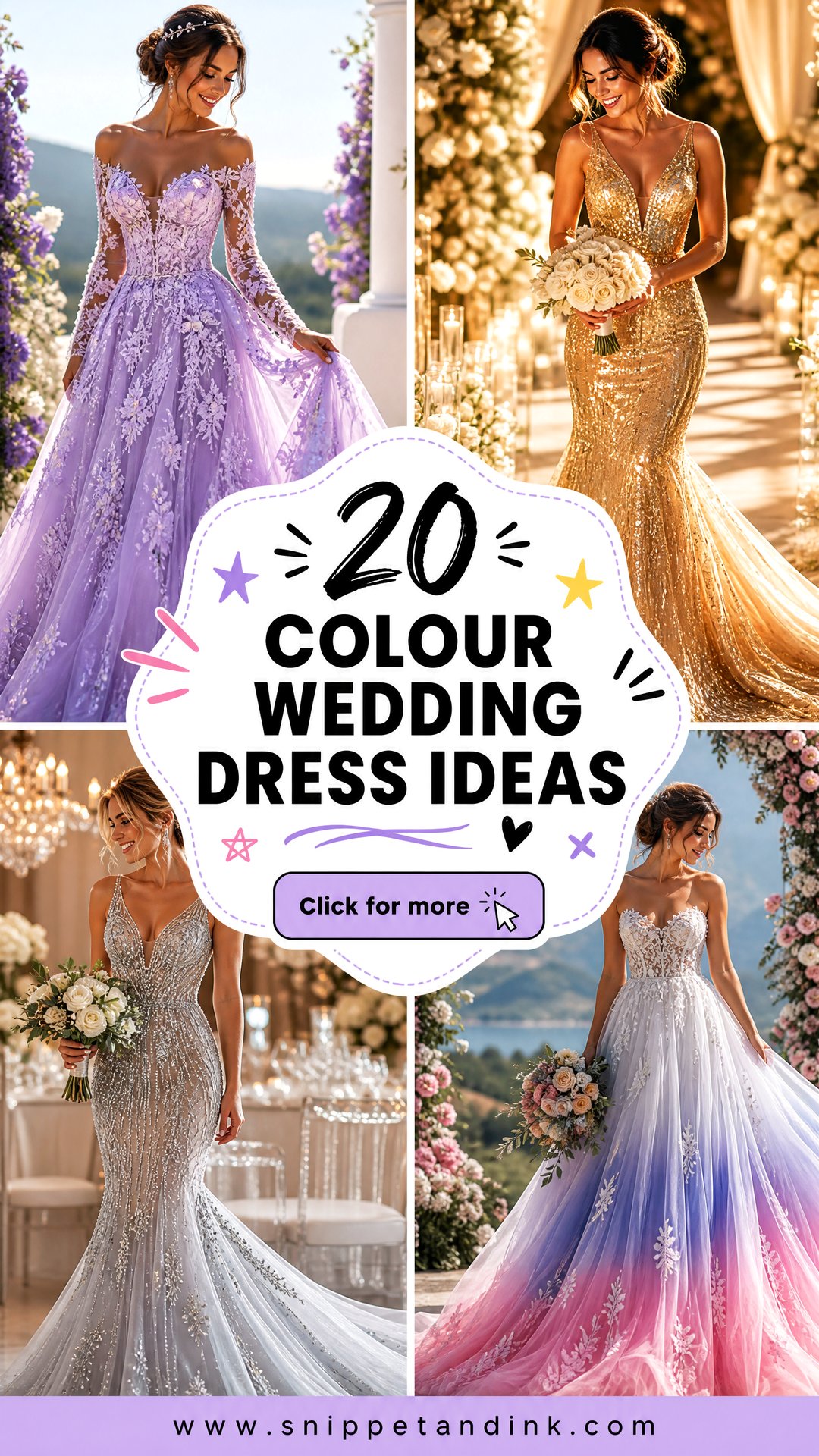
A colored bridal gown asks one question white never does: how will this shade look on your skin, in your venue’s light, in photos taken years from now? I’ve found that brides who answer that early end up happiest. Below are twenty colours, from barely-there blush, champagne and powder blue through to black, red, emerald and navy, plus embroidered, ombré and metallic gowns that bring colour in without committing to one solid shade. With each, I’ve noted the fabric that suits it and where it tends to go wrong.
Testing a Colour Against Your Skin, Not the Mannequin
A colour that looks wonderful on a hanger can drain your face. The quickest way to test is with a swatch or the gown itself held right under your chin, in daylight from a window, with little or no makeup on. Watch your skin rather than the fabric. If it looks brighter and evenly toned, the shade suits you. If shadows under the eyes deepen or the skin looks grey or yellow, move on.
- Cool undertones, where veins look bluish, usually suit blush, lavender, powder blue, silver and navy.
- Warm undertones, where veins look greener, tend to suit champagne, peach, butter yellow, gold and coral.
- Neutral undertones can wear most of this list, so choose by venue and season instead.
- Deep jewel tones such as emerald and burgundy flatter a wide range of skin, which is why they’re a safer bold choice than bright yellow.
Then think about hair. Very pale shades sit close to fair blonde hair and can blur the outline of your face, while strong colours frame dark hair sharply. Neither is wrong, but you should see it before you order.
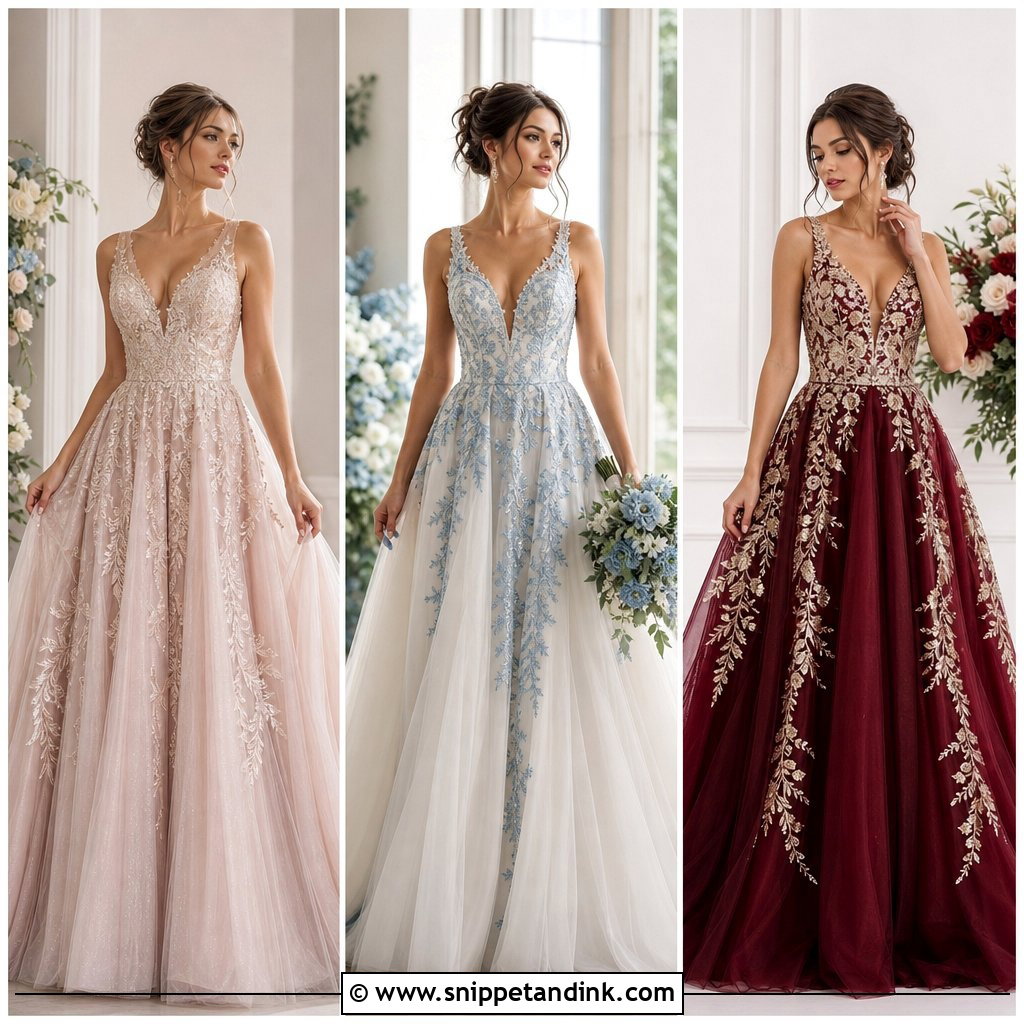
1. Blush Pink Wedding Dress
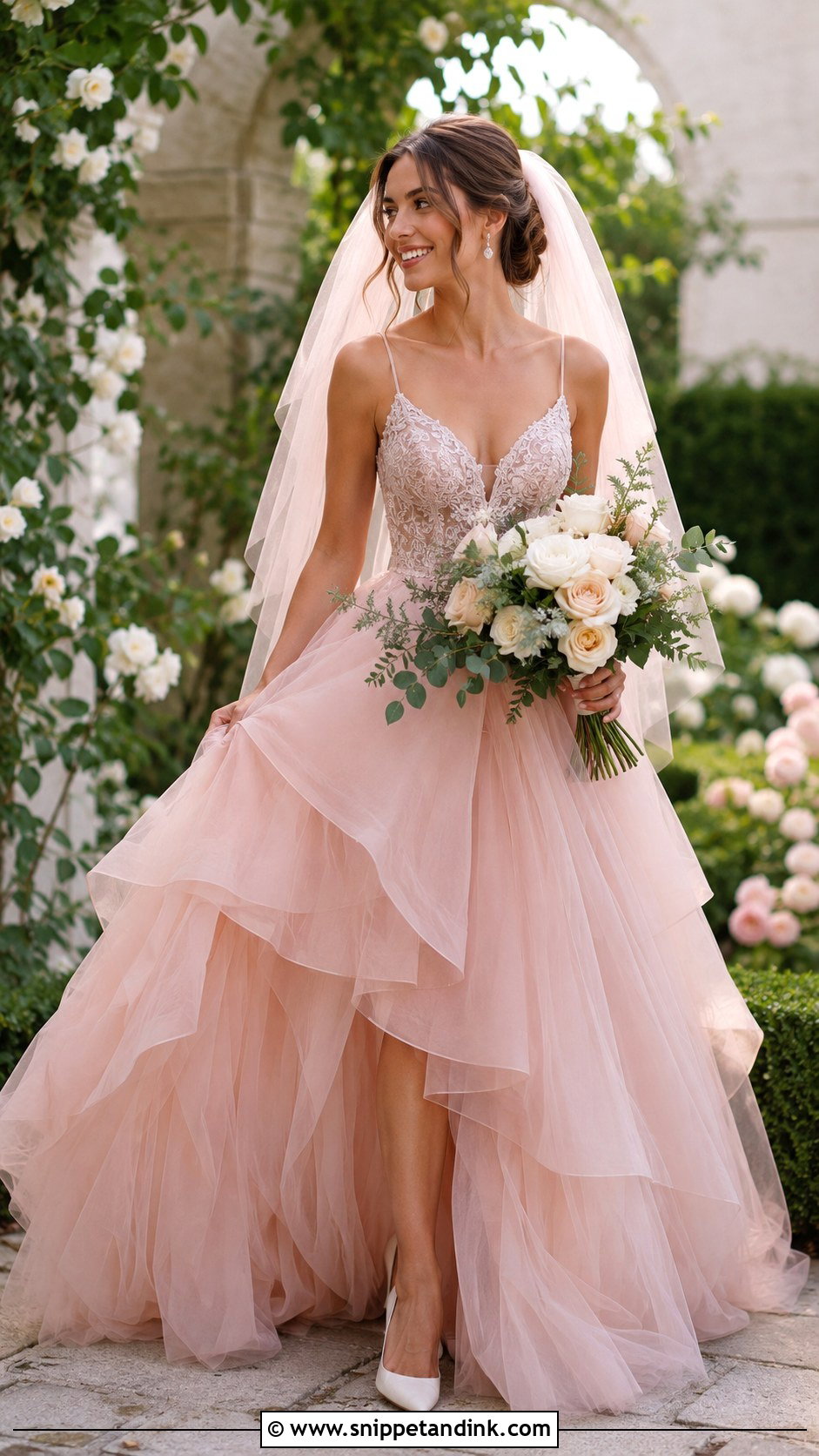
Blush is the gentlest step away from ivory, and the trick that makes it visible is layering. Pale tulle over a slightly deeper pink lining gives the skirt depth; a single layer of blush tulle over white often just looks off-white in photos. A structured bodice with lace appliqués and a sweeping train keeps it formal for a ballroom or garden. Ivory pointed pumps, pearl drops and a sheer blush veil suit it, with cream roses and pale greenery. A plain satin bodice gives a more modern version. Check blush in daylight against your face, as some shades turn sallow on olive skin.
2. Champagne Satin Wedding Dress
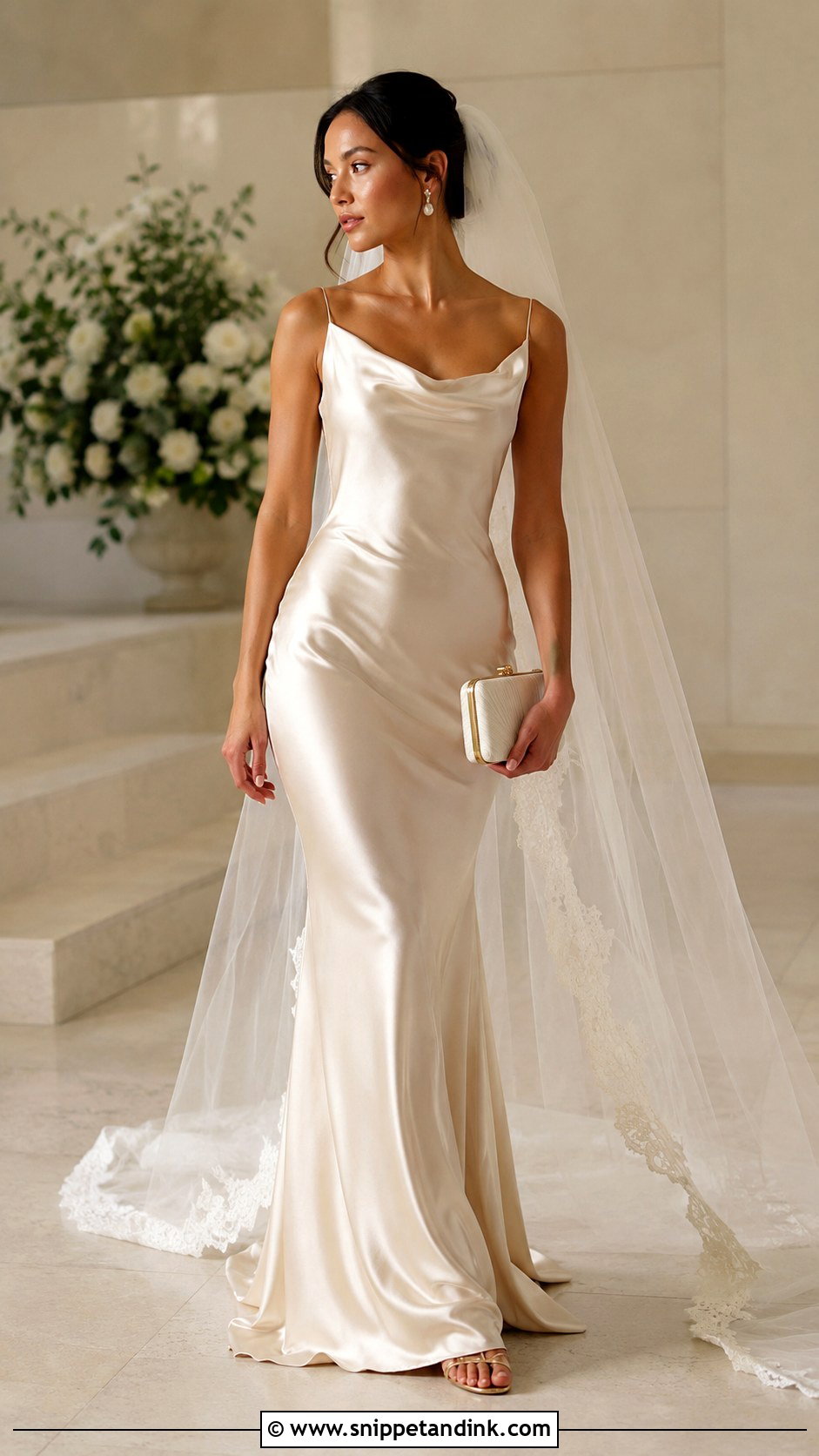
Champagne satin warms the skin in a way stark white rarely does. A bias-cut slip suits a small ceremony; an A-line or fit-and-flare gives a more traditional shape. Choose satin with a soft sheen. High-shine satin bounces flash and reads almost white in photos, losing the very colour you chose. Gold sandals, small pearl earrings and a cream clutch go with it, and a cathedral-length ivory veil makes a gentle contrast. A detachable satin cape adds coverage for the ceremony. White flowers and greenery keep the palette calm.
3. Powder Blue Tulle Wedding Dress
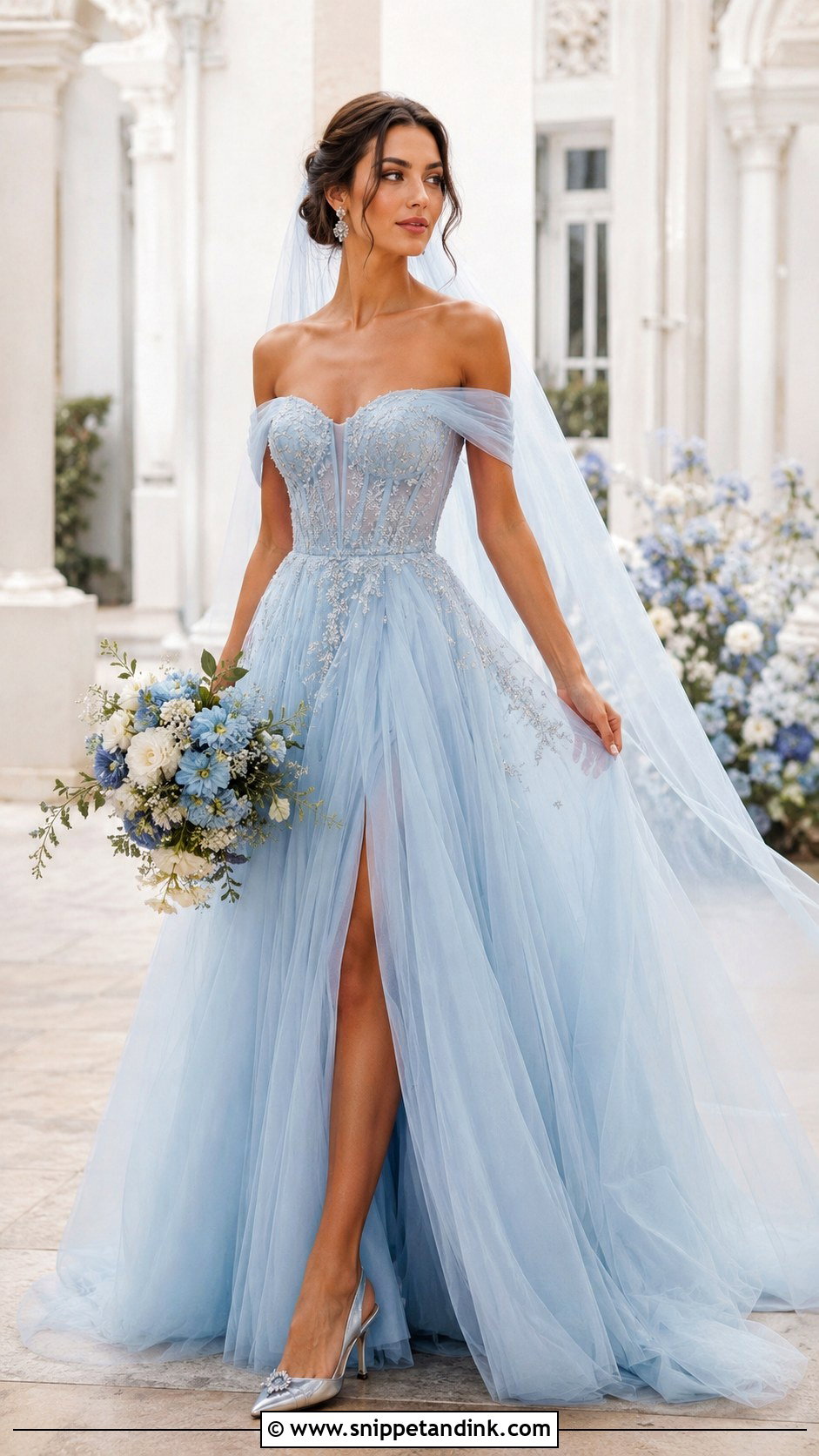
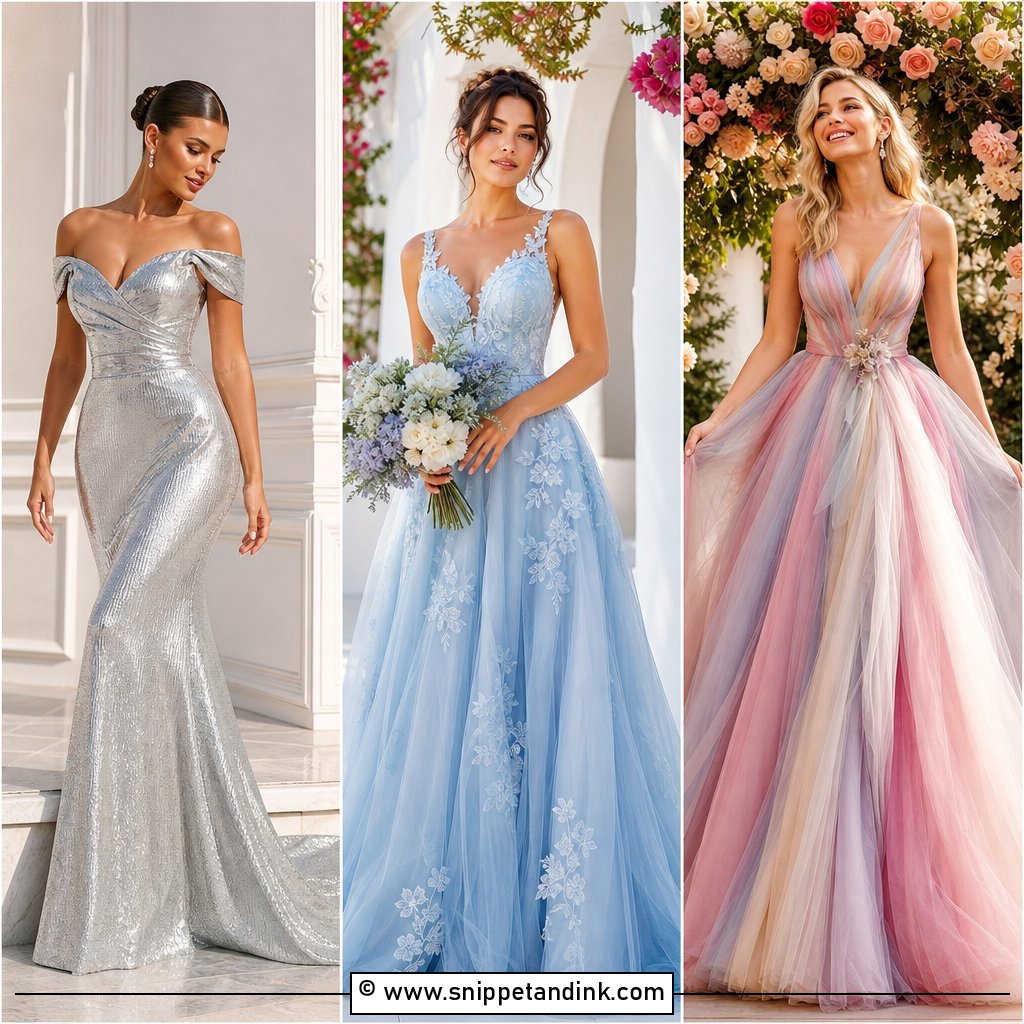
Powder blue tulle moves beautifully outdoors, and a powder blue wedding dress looks at its best in an off-shoulder or strapless ball-gown cut. Pale blue does have a weakness. Under warm indoor bulbs it can turn grey or slightly green, so if your reception is lit with candles and tungsten, look at the fabric under similar light first. A bodice with fine silver beading brings light to the face. Silver slingbacks, crystal earrings and a hair comb keep things cool-toned. Choose a blue veil to tone in or ivory for contrast. White peonies, soft blue flowers and eucalyptus suit spring.
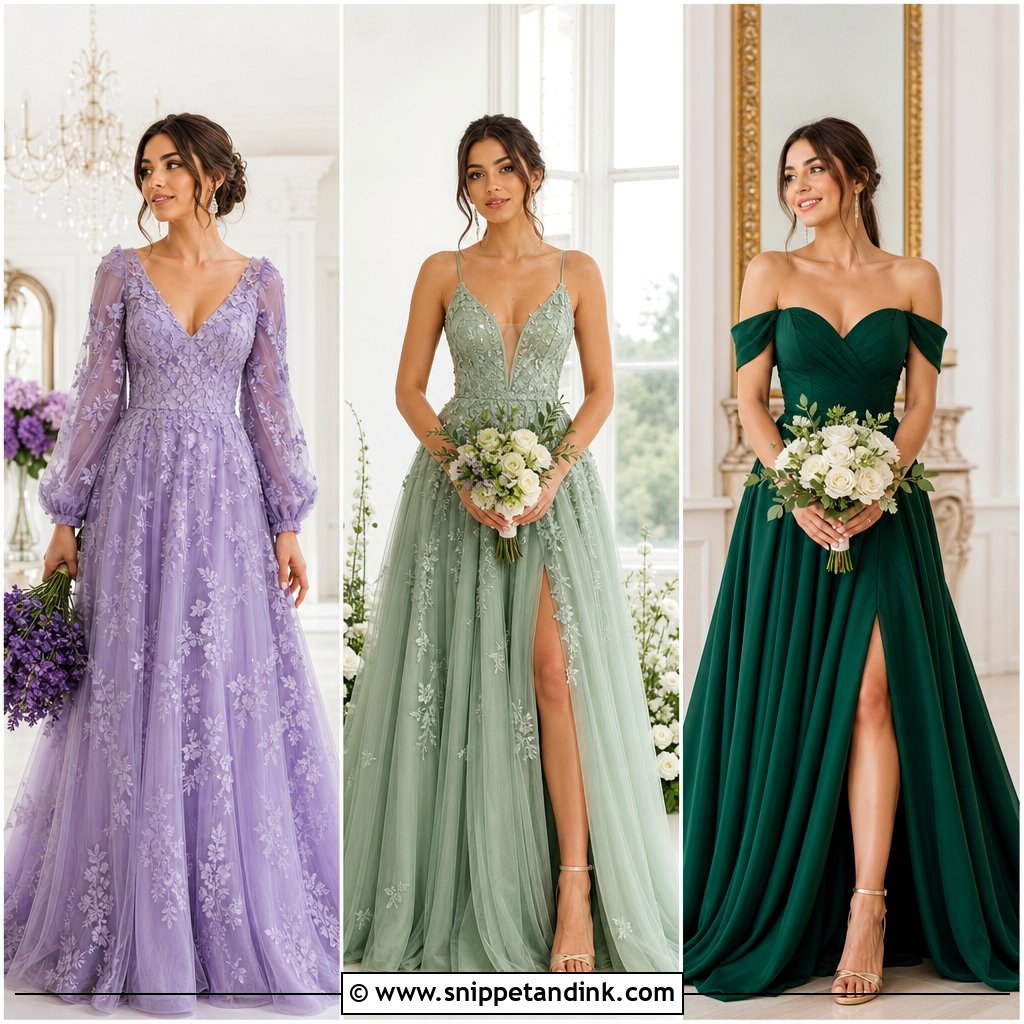
4. Sage Green Chiffon Wedding Dress
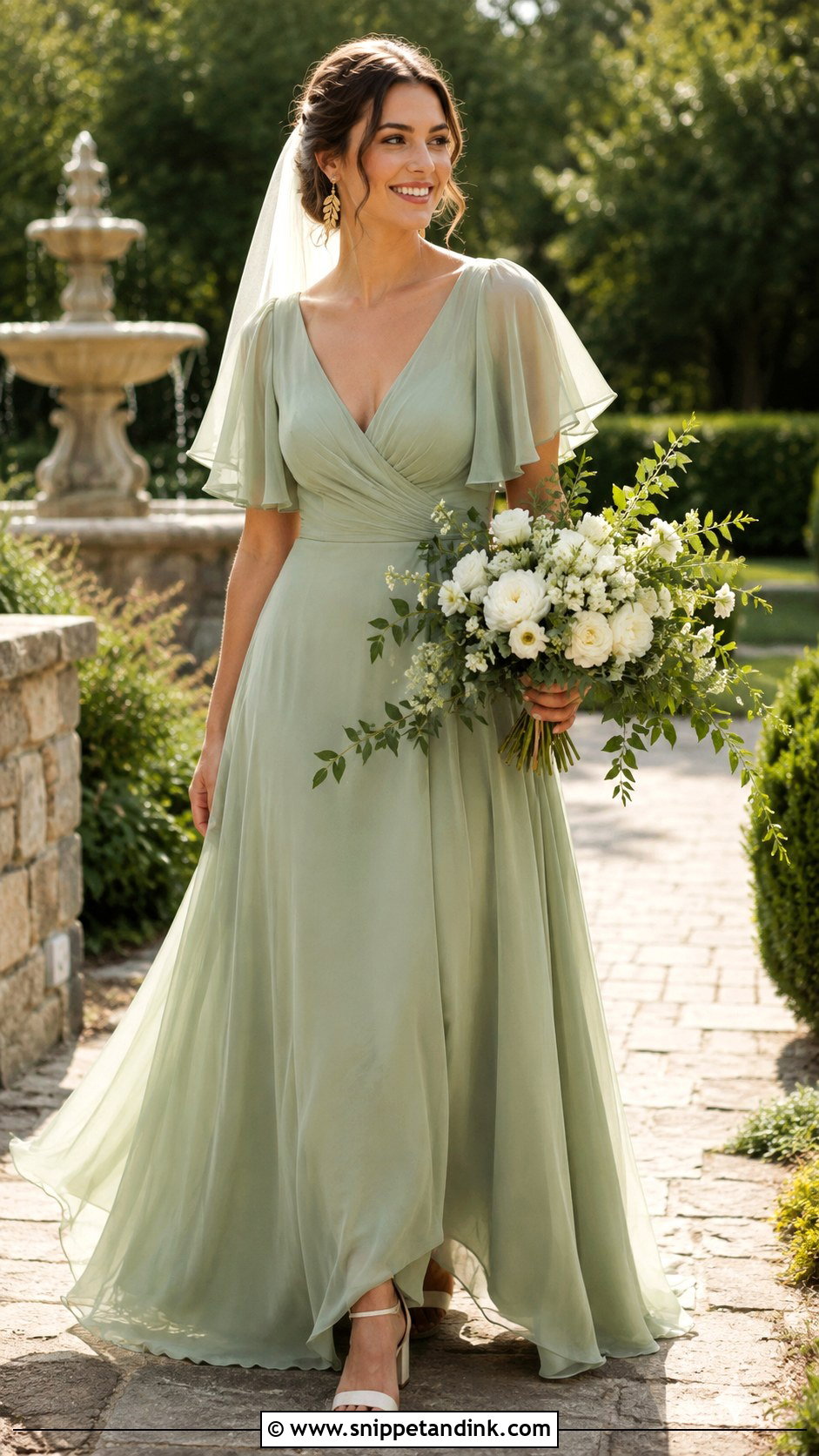
Sage looks at home among trees and hedges, which is exactly where it can disappear. In a green garden, ask your photographer to find a stone wall or open sky behind you for portraits. A flowing chiffon gown with a defined waist, flutter sleeves and an A-line skirt keeps it light, and a lightly pleated bodice adds texture. Ivory block-heel sandals, gold leaf earrings and a plain cream veil suit it. With a low neckline, a fine gold pendant works better than a statement piece. A removable chiffon cape gives cover for the ceremony.
5. Lavender Lace Wedding Dress
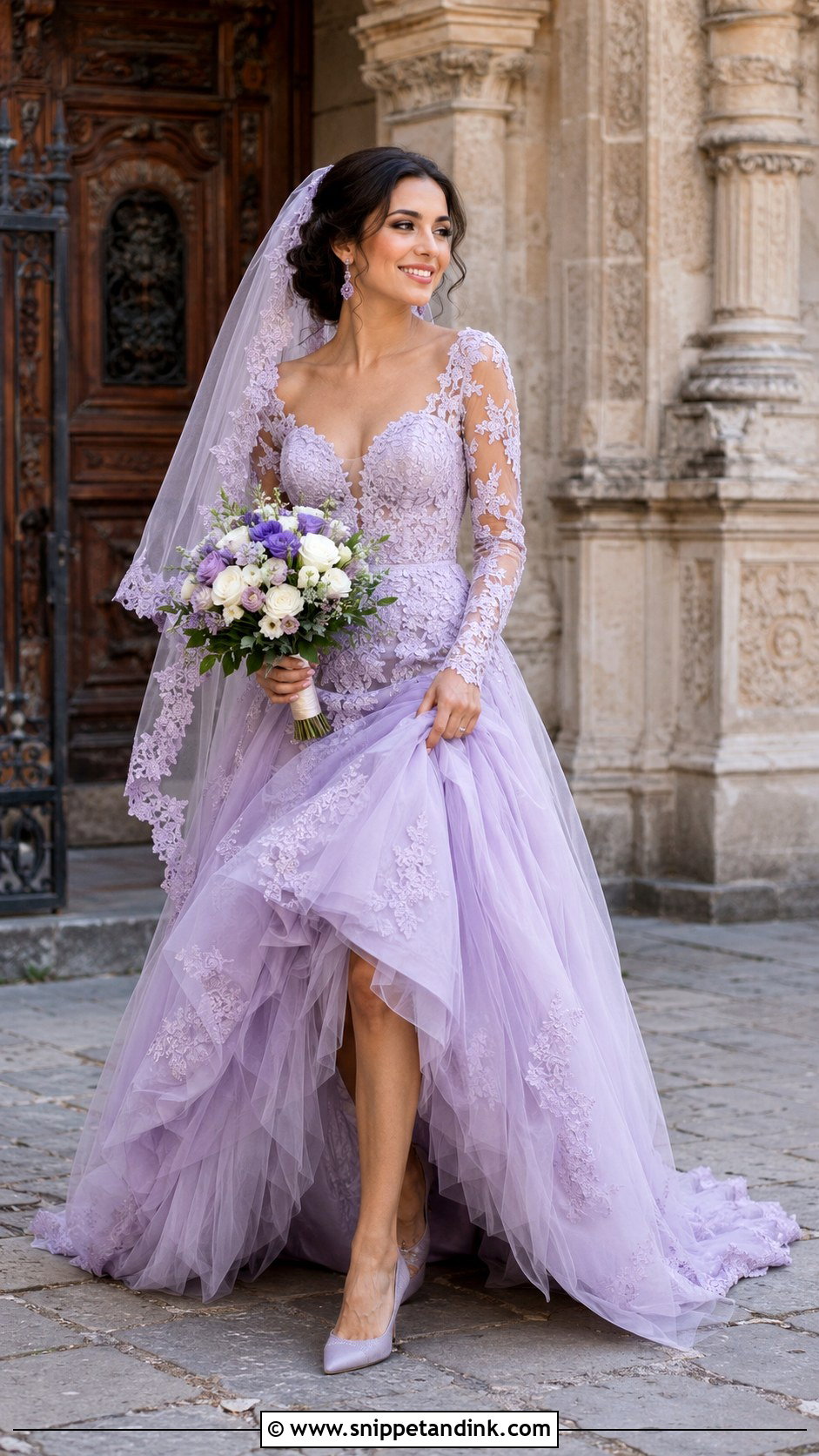
Would a soft purple suit you better than white? A lavender lace wedding dress keeps the detailed texture of traditional bridalwear. A fitted lace bodice over a flowing tulle skirt with a lavender lining works well, and three-dimensional appliqués at the neckline and train add depth. Lavender is one of the colours most affected by camera white balance, swinging bluer or pinker depending on light, so ask your photographer to shoot a reference frame of the fabric early in the day. Silver or pale grey heels, amethyst-toned earrings and a lace-edged veil finish it, with long sleeves or a tulle cape for cooler weather.
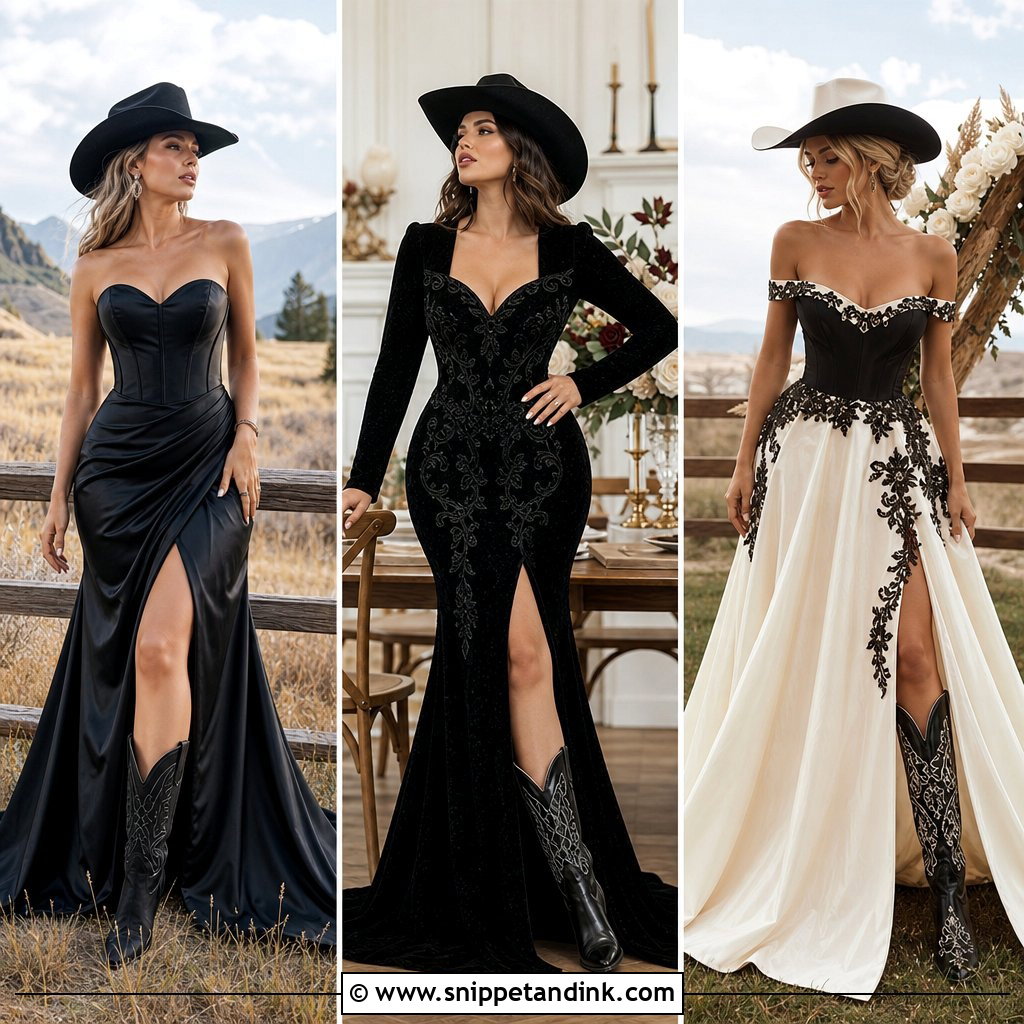
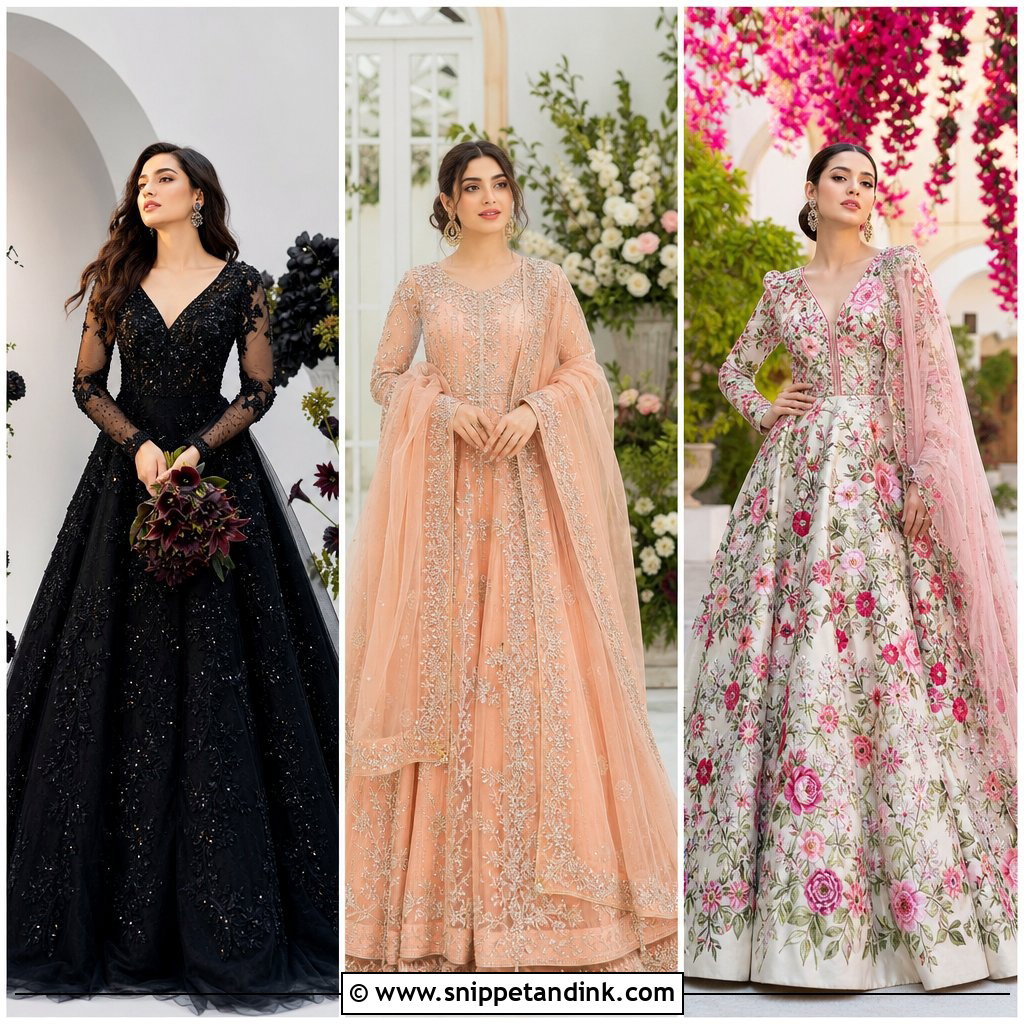
6. Black Long Sleeve Wedding Dress
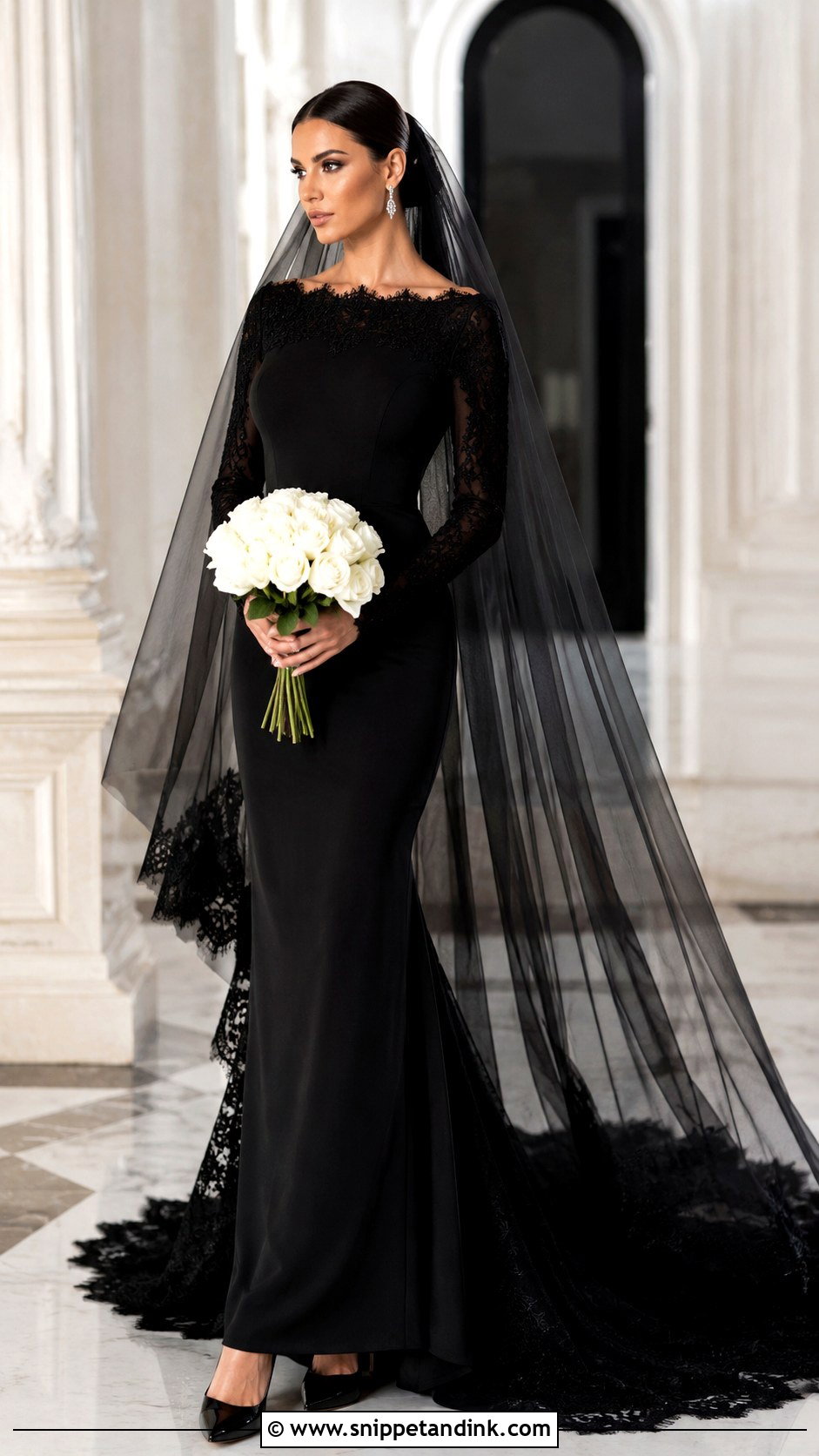
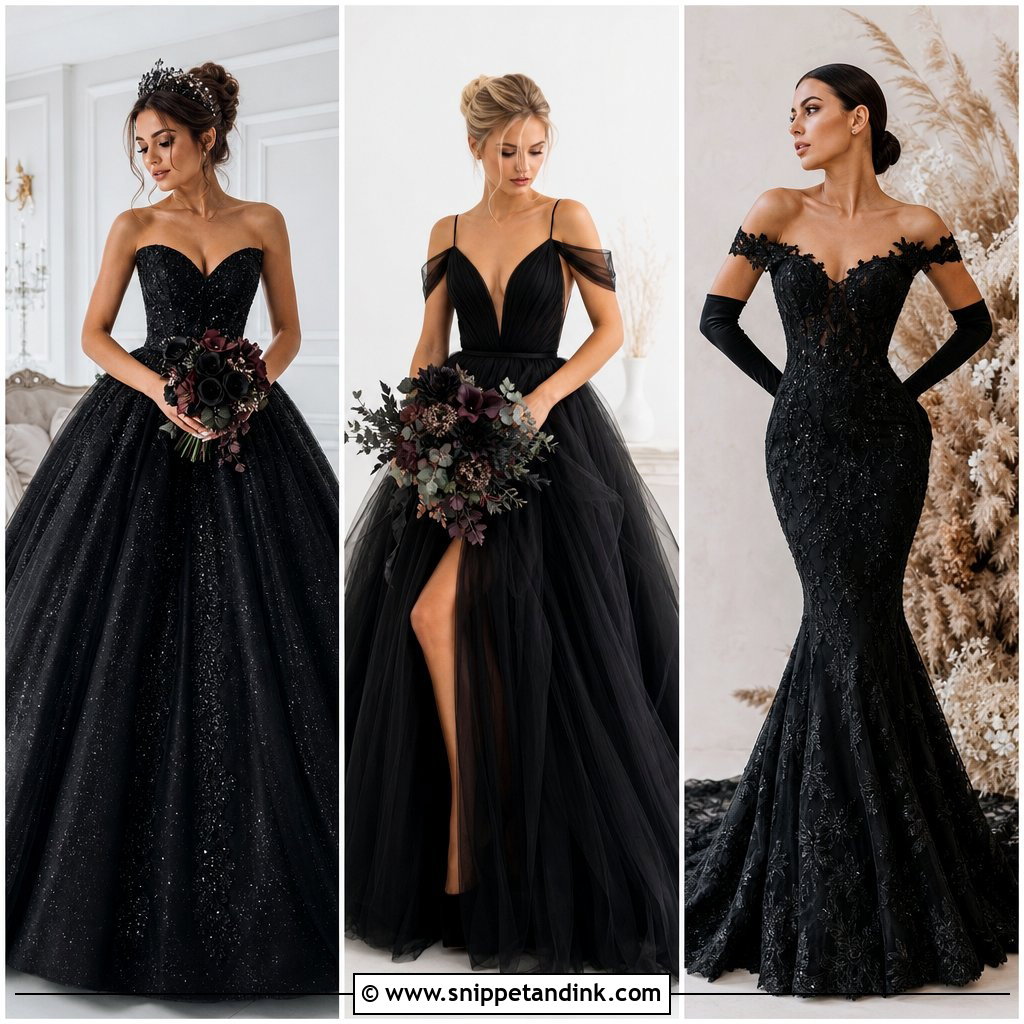
Black needs texture or it photographs as a flat silhouette. That’s why I steer black brides toward lace, sheer sleeves or a crepe with a visible weave rather than plain matte fabric. A long-sleeve gown with a fitted waist, a dramatic train and a square or bateau neck looks formal. Black satin pumps, crystal drops and a structured mini bag work. A black cathedral veil goes full drama; a sheer ivory veil gives striking contrast. White roses lift the whole picture. Keep makeup fresh rather than dark to match. Ask your photographer how they handle black fabric; good ones expose for the dress to keep the lace detail.
7. Red Satin Wedding Dress
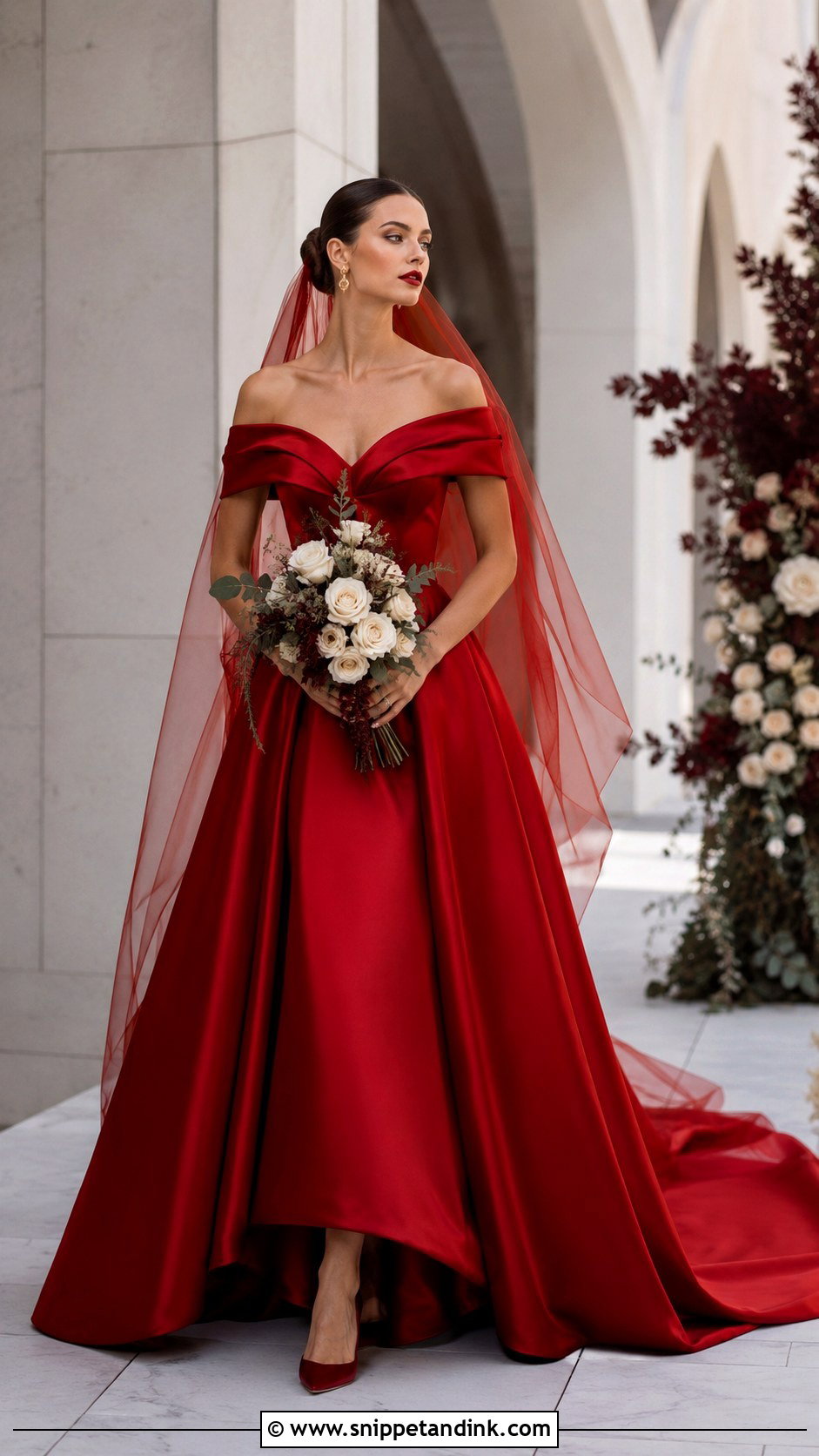
Red satin is confident and unforgiving in the same breath. Every drop of water or sweat shows on it, and darker spots under the arms are visible on saturated red. Dress shields in the bodice are worth having. A clean A-line with an off-shoulder neck lets the shade lead, and a fitted column with a detachable overskirt gives you two looks. Nude or red heels, simple gold earrings and a fine bracelet are enough. Choose a sheer red veil to match or ivory to soften. Cream flowers with dark leaves keep the bouquet from fighting the dress. Red looks richest against neutral stone and plain ballroom walls.
8. Emerald Green Velvet Wedding Dress
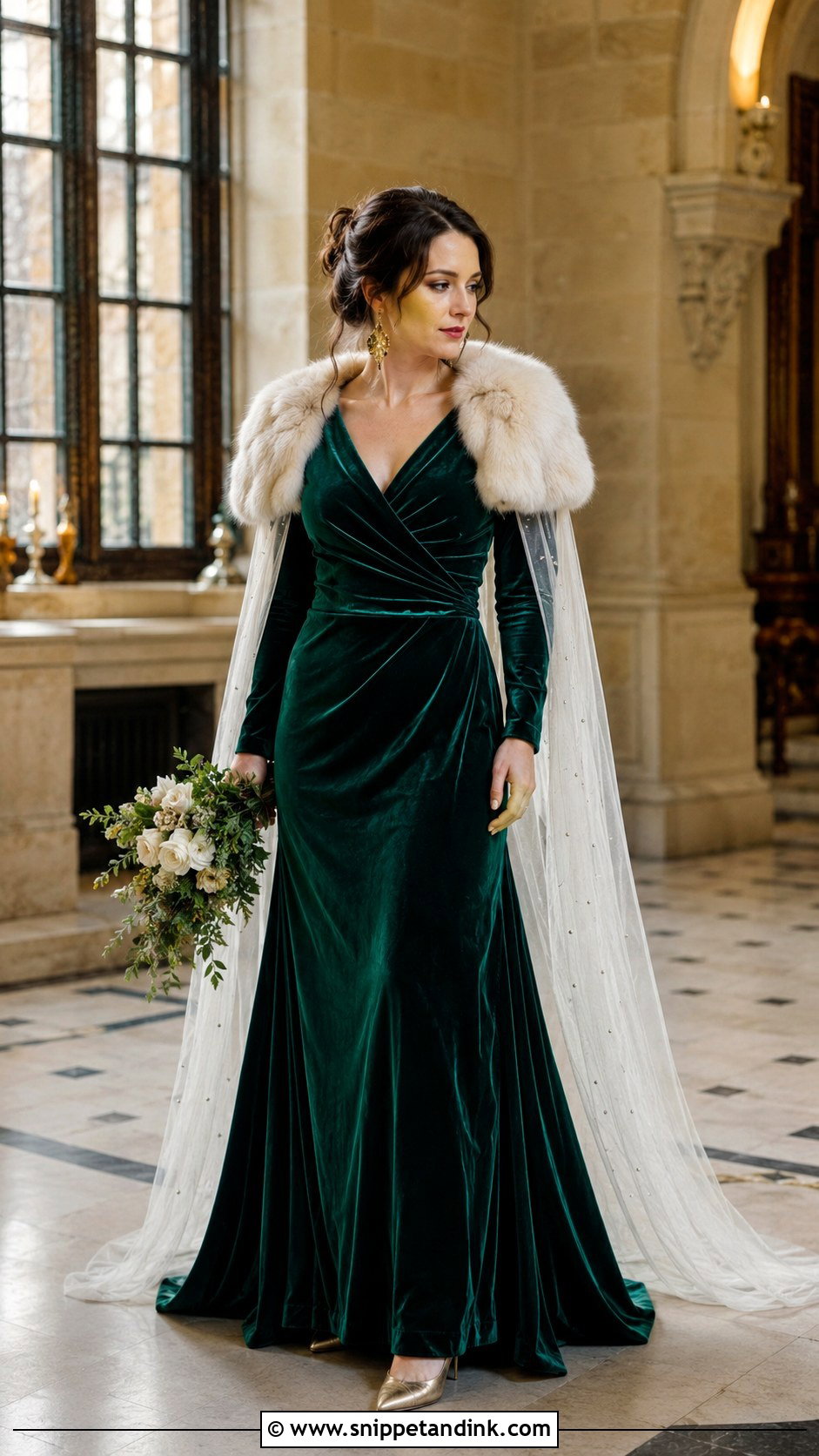
Emerald velvet is a winter fabric through and through, and it’s the one I’d least want a bride to wear in summer heat. A floor-length gown with long sleeves, a defined waist and a gently flared skirt suits its weight, and a wrap bodice stops it looking stiff. Velvet marks where it’s been pressed, so it should travel on a hanger, never folded, and you should avoid leaning on it before photos. Gold pointed shoes, a matching clutch and fine drop earrings finish it. A cream faux-fur stole adds warmth. A sheer shoulder cape can take the place of a veil.
9. Gold Sequin Wedding Dress
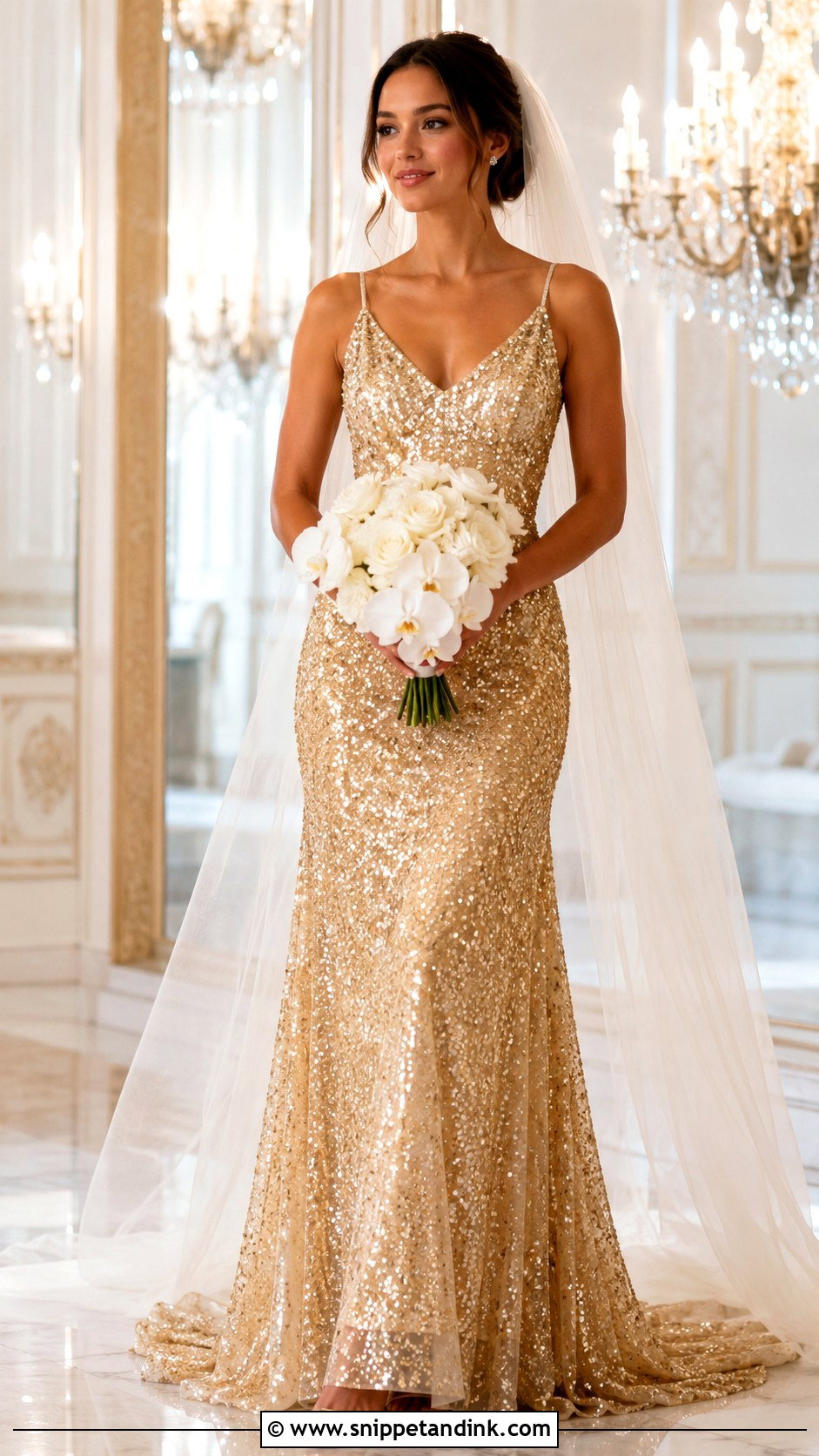
Gold sequins can look costume-like unless the base underneath softens them. A champagne lining does that, filling the tiny gaps between sequins with warmth instead of skin or white. A fitted bodice and gently flowing skirt let the sequins catch light without adding bulk. Simple gold sandals, small crystal studs and a neutral satin clutch are all it needs, with a plain ivory veil for contrast or a sheer floor-length cape instead. Sequins scratch the inner arms after hours of hugging, so ask whether the sleeves or bodice edges are lined.
10. Silver Beaded Wedding Dress
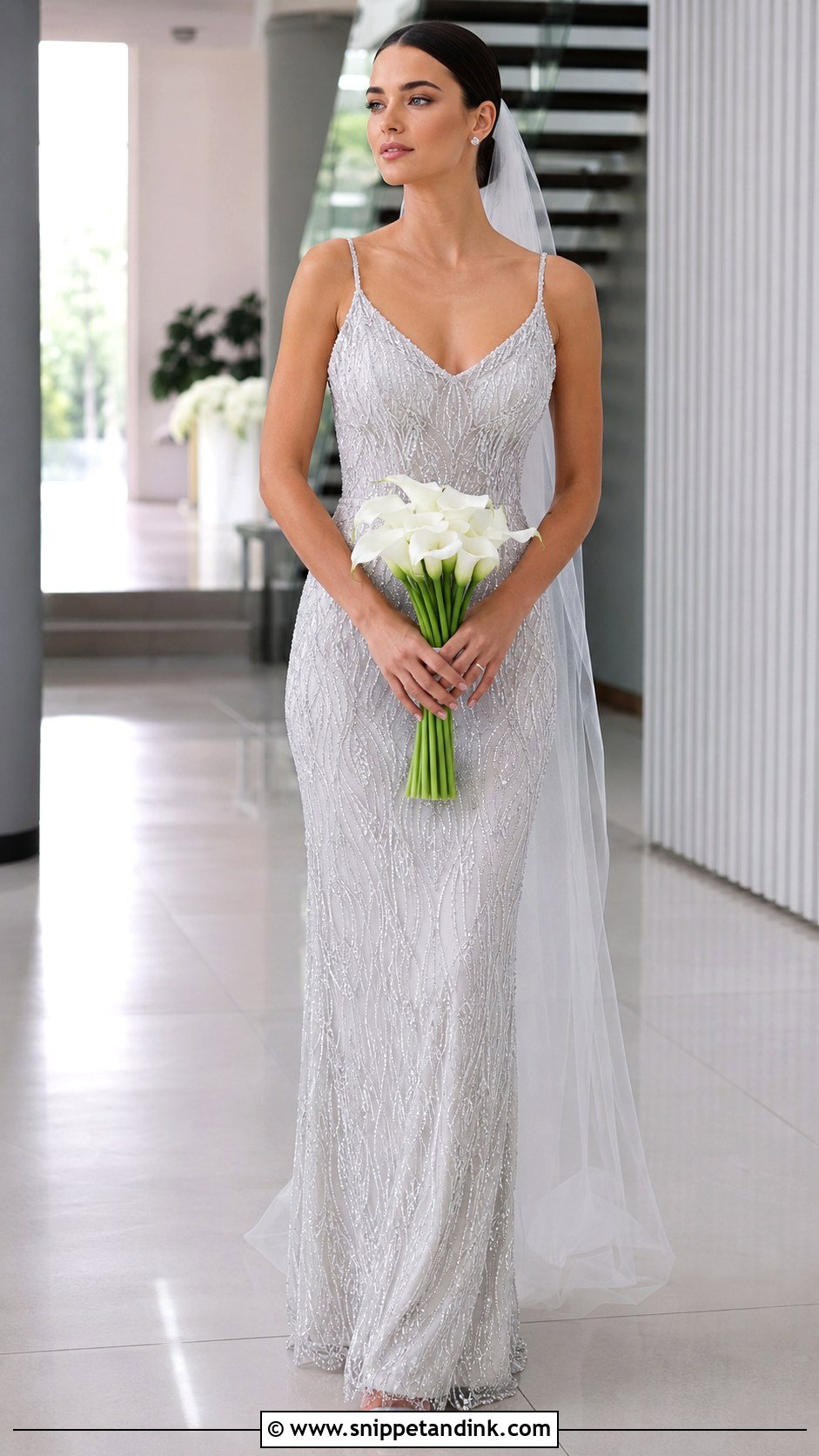
Silver beading turns a plain column or sheath into something luminous, but the weight adds up. A heavily beaded gown can be surprisingly heavy, which pulls on the shoulders and makes a long day tiring. Hold the dress up in the shop before you try it on. A light grey or ivory lining keeps the detail visible. Silver slingbacks, crystal studs and a sleek metallic clutch suit it, and an unembellished veil stops the accessories competing. For a winter evening, a pale grey wrap or beaded cape adds warmth. Structured white flowers such as calla lilies echo the clean lines.
11. Dusty Rose Wedding Dress
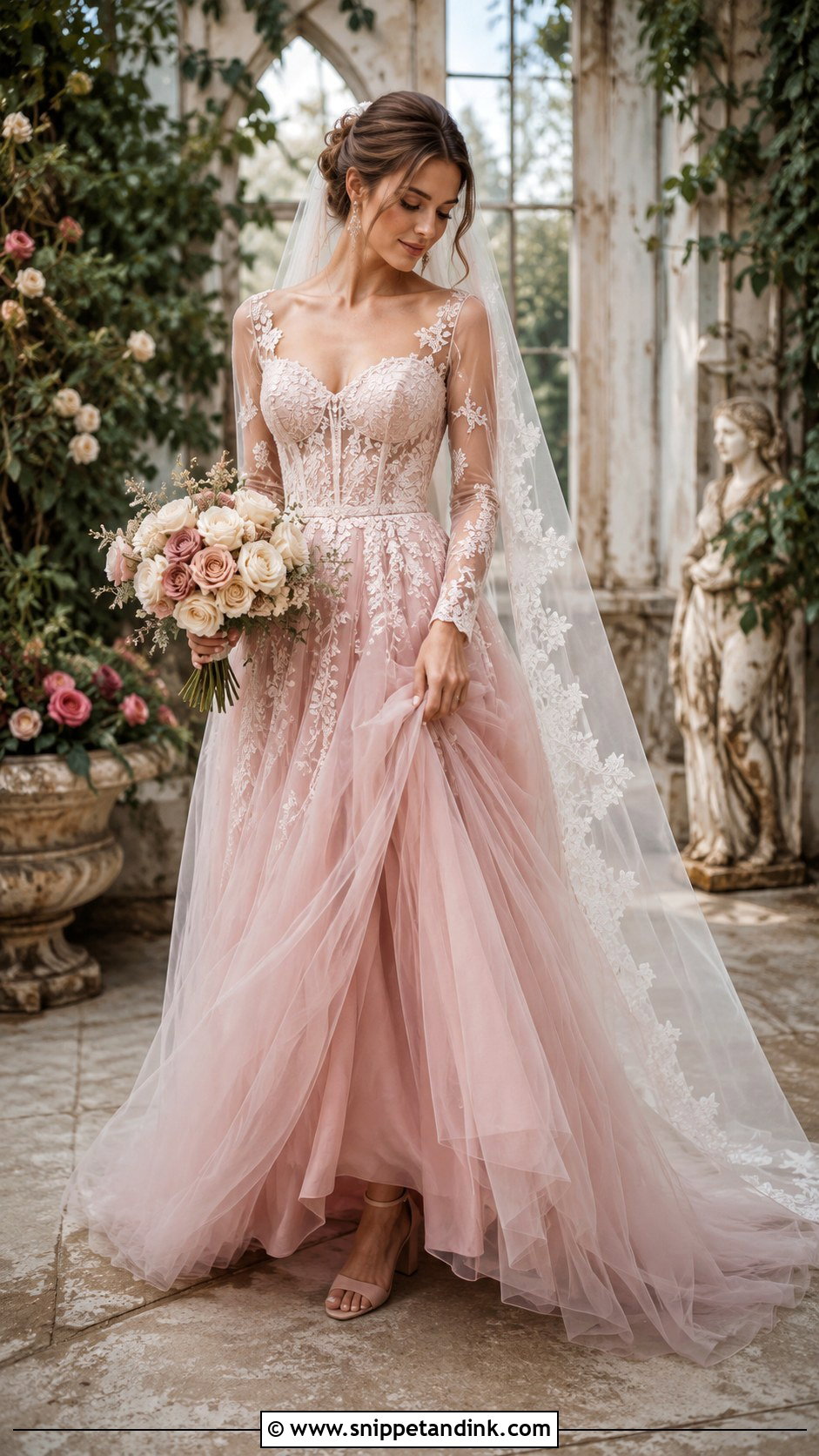
Dusty rose has enough grey in it to read as colour in photos where pale blush might wash out. I pair it with vintage details: a corset-style bodice, soft lace sleeves and a layered tulle skirt. Nude block heels, rose-gold earrings and a small satin bag suit it. An ivory veil with scattered floral appliqués brings in a traditional note. Cream roses, muted pink flowers and soft greenery tie the bouquet to the dress, and a ribbon around the stems can match the gown exactly. It suits barns, gardens and restored older venues.
12. Peach Organza Wedding Dress
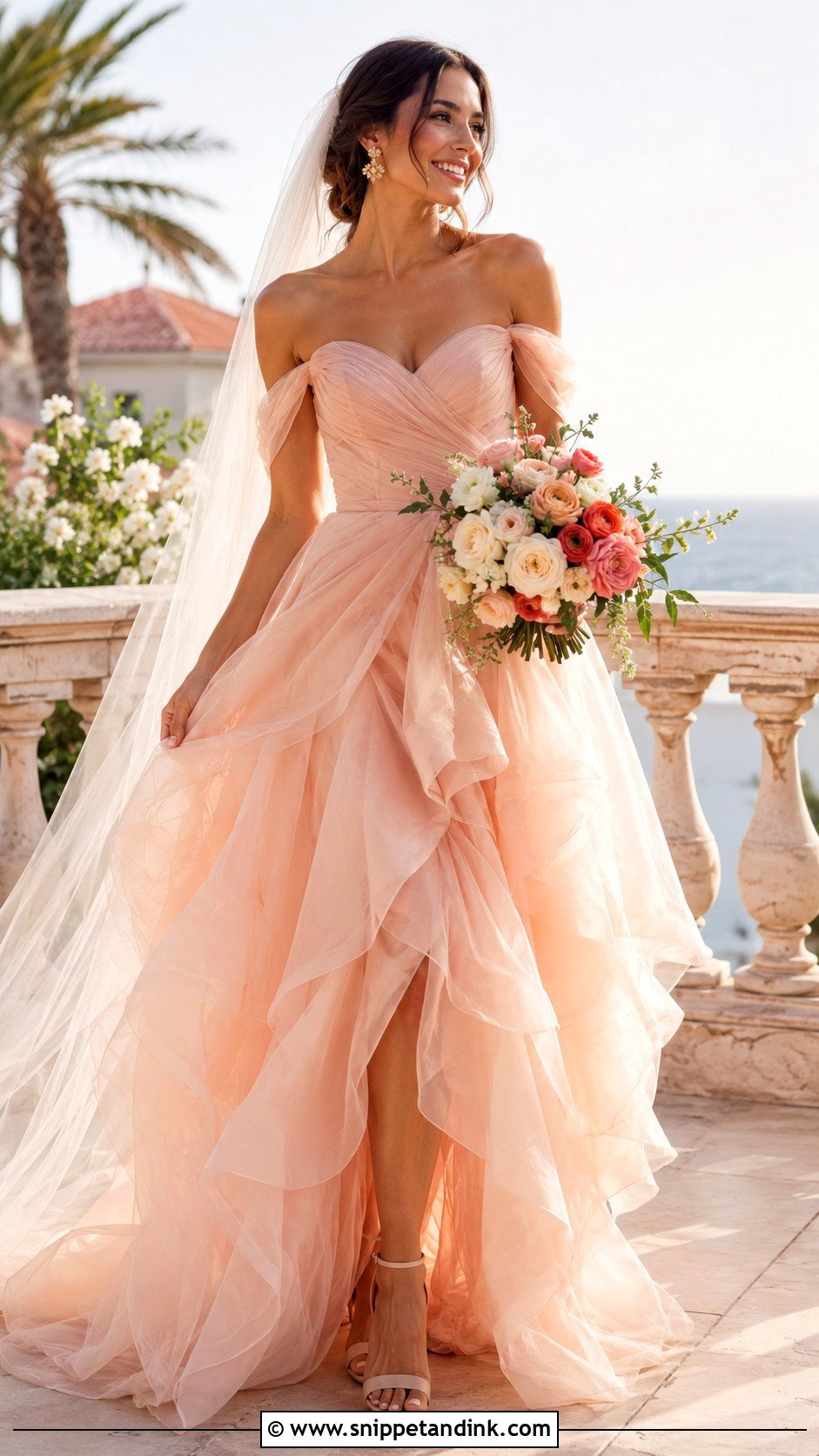
Organza is sheer and crisp, so layered peach organza shows several tones as it moves, deeper where layers overlap and paler at the edges. That crispness also means it creases when you sit and doesn’t fully relax again until steamed. A layered A-line or ball-gown cut with a softly draped neckline or off-shoulder sleeves suits it. Nude heels lengthen the line, and gold earrings with a slim bracelet add warmth. A sheer ivory veil or detachable peach organza cape finishes it. Keep accessories light so the translucent layers stay the focus at a warm-weather terrace or garden.
13. Pale Yellow Wedding Dress
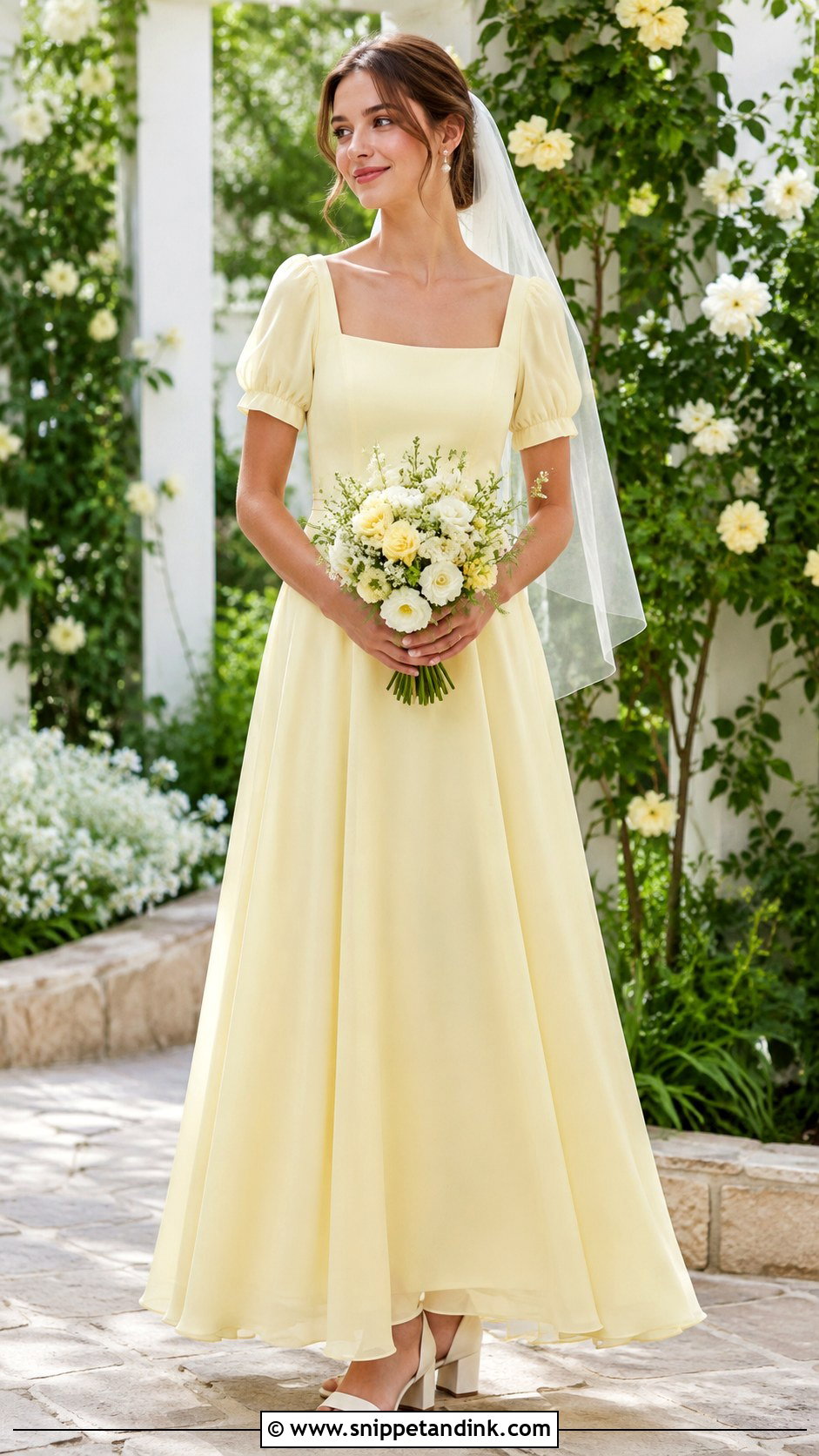
Yellow is the colour I’m most careful with, because the wrong shade makes many skin tones look tired. A soft butter-yellow shade is far kinder than a saturated lemon. Chiffon, silk and fine tulle let it look delicate. A square-neck A-line with short puff sleeves feels charming; a strapless satin gown feels more formal. Ivory heels, pearl earrings and a cream veil keep it bridal. Small yellow blooms among white flowers connect the bouquet without matching too closely. Outdoors, a wide skirt and block heels make grass and gravel easier.
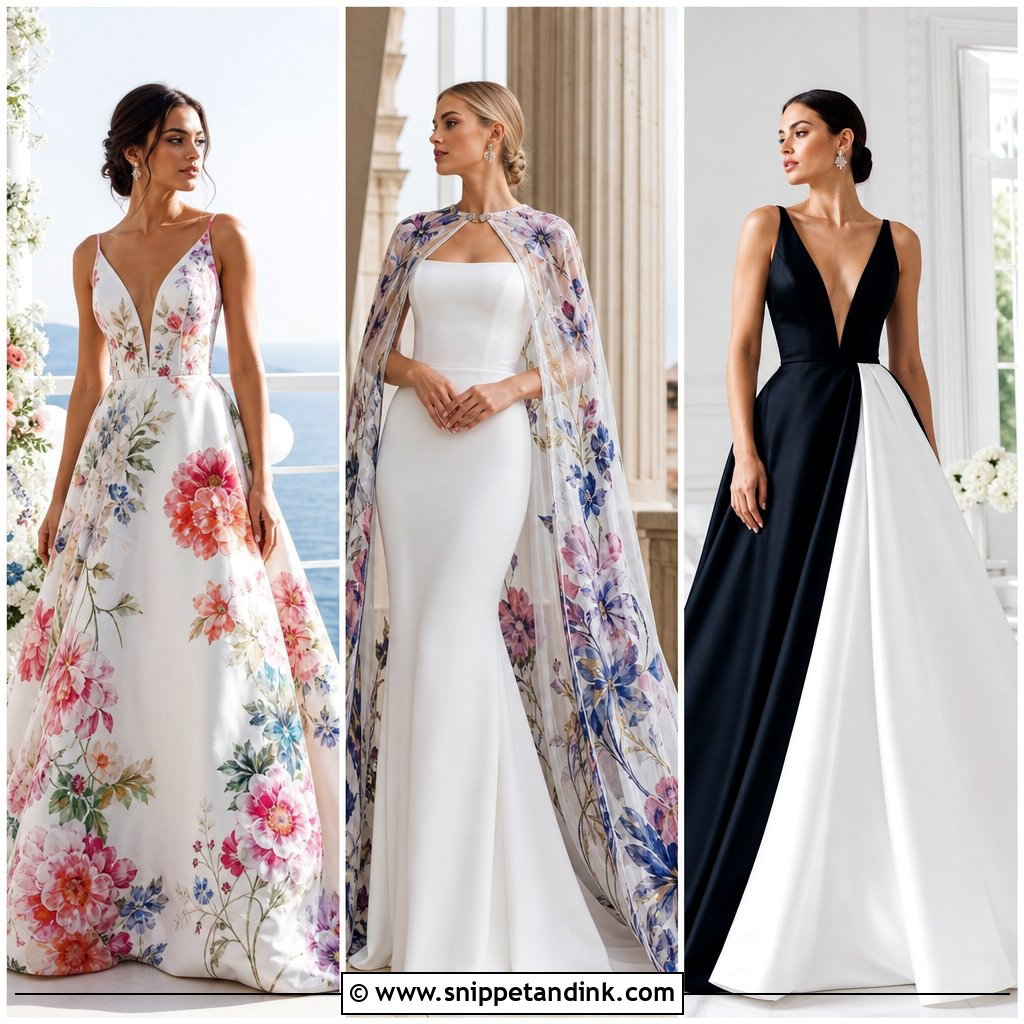
14. Navy Blue Wedding Dress
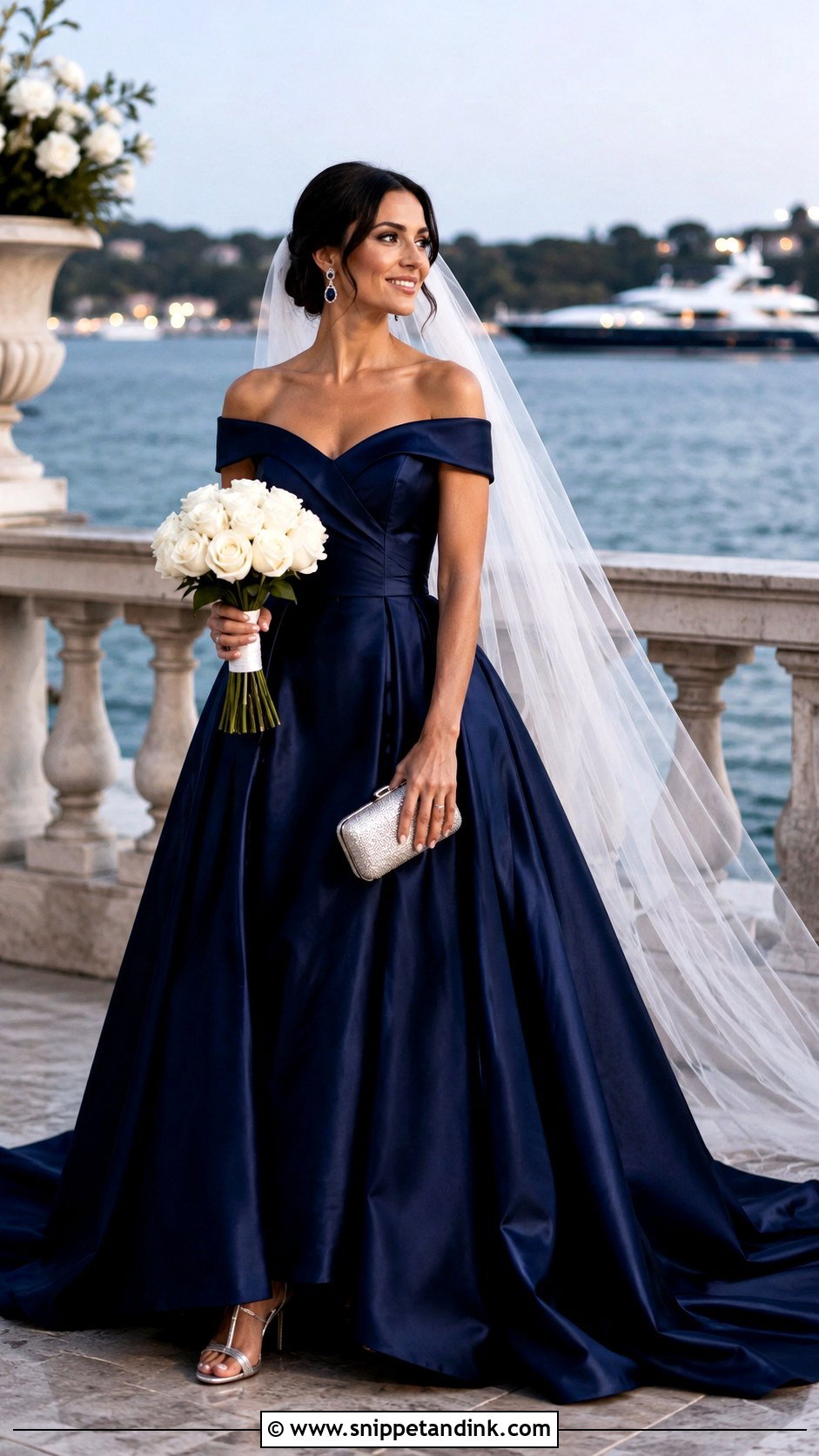
Navy gives you the drama of black with less severity, and it keeps detail better in photos because it reflects a little more light. A structured satin ball gown is the formal choice; fitted crepe is more streamlined. An asymmetric neck, off-shoulder sleeves or a detachable overskirt make the dark colour feel bridal rather than evening wear. Silver heels, sapphire-toned earrings and a small metallic clutch suit it. A navy veil gives a striking monochrome; ivory frames the dress with contrast. White roses or anemones with little greenery look sharp against it, especially at waterfront and cool-season weddings.

15. Burgundy Wedding Dress
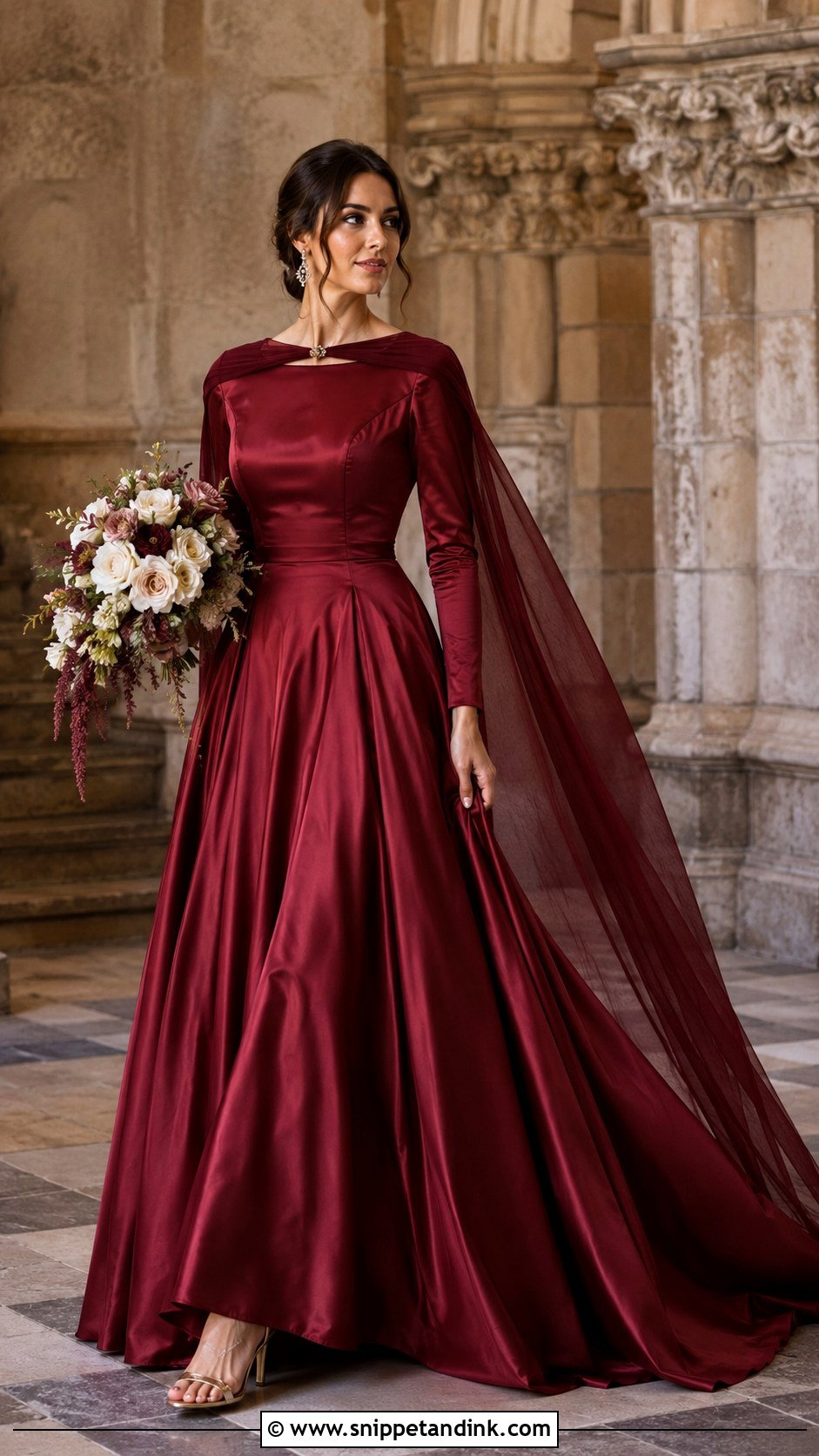
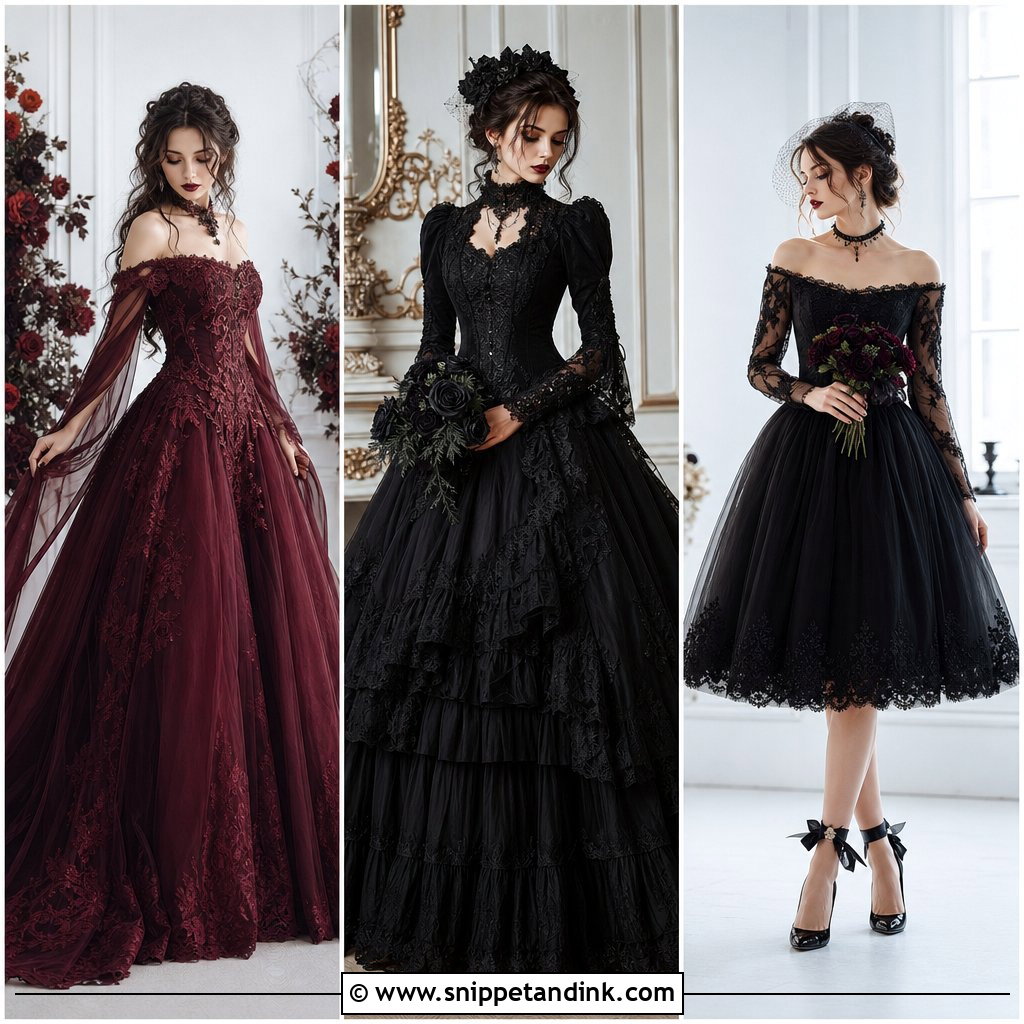
Burgundy carries a strong sense of occasion and suits historic, wood-panelled venues. Velvet or satin with a fitted bodice and a full floor-length skirt are the classic forms, with long sleeves for winter or an off-shoulder neckline for balance. Burgundy velvet absorbs a lot of light, so in a dim room it can read almost black. Ask for some extra light at the ceremony if colour matters to you. Gold heels, a fine necklace and small drop earrings suit it. A cream wrap or sheer burgundy cape gives coverage. Ivory and muted pink flowers with dark greenery soften the contrast.
16. Lilac Wedding Dress
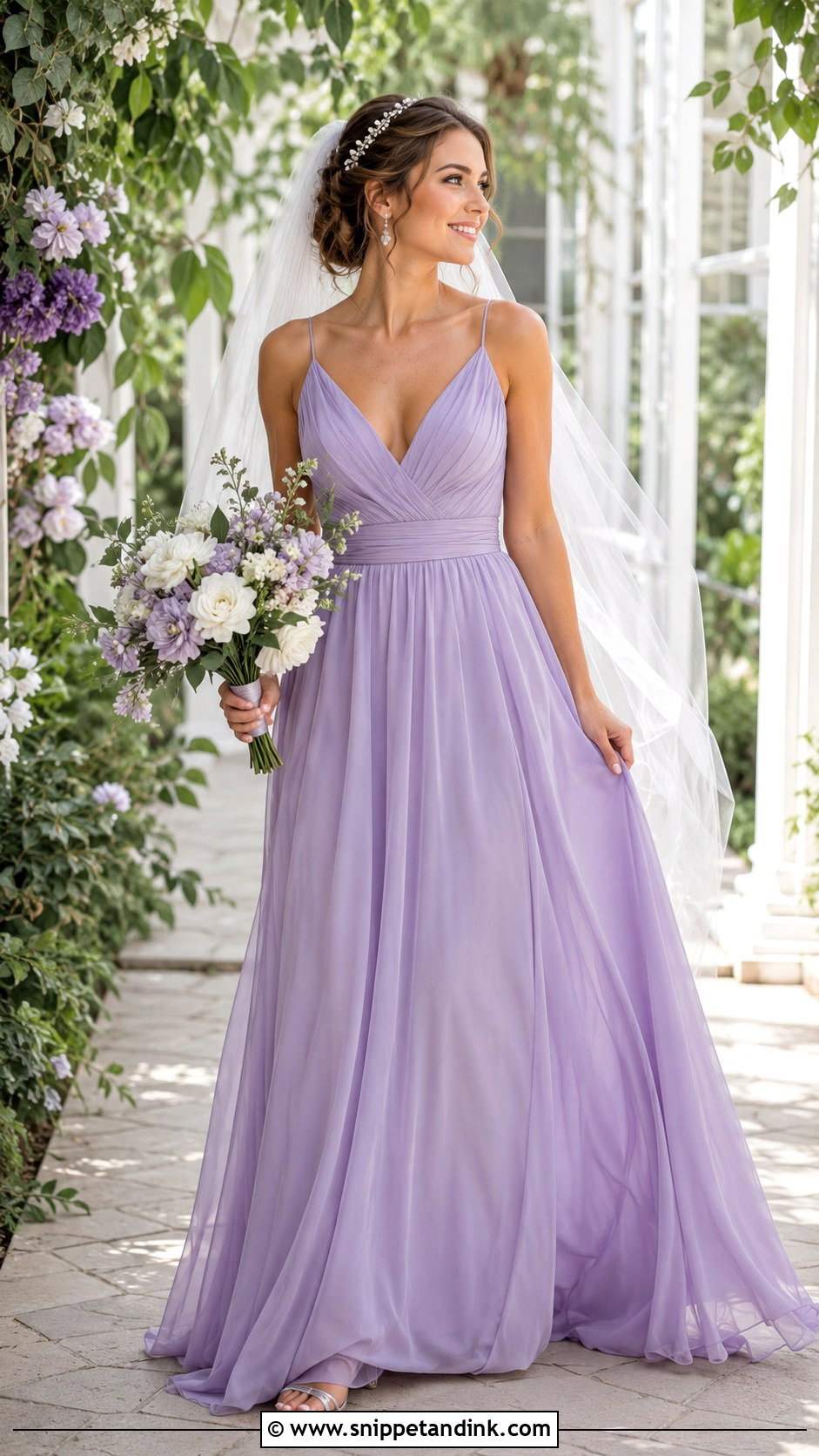
Lilac sits between pink and purple and has a slightly playful character. A pleated chiffon gown makes it look weightless; lilac tulle over an ivory base gives a more traditional silhouette and a paler overall shade. Silver sandals, pearl-and-crystal earrings and a delicate hair vine suit it. An ivory veil keeps it clearly bridal, while a matching lilac veil reads as one continuous colour. White flowers with pale purple blooms work. Resist adding other pastels to the scheme. Lilac looks most refined when it’s the only soft colour in the picture.
17. Colorful Floral Wedding Dress
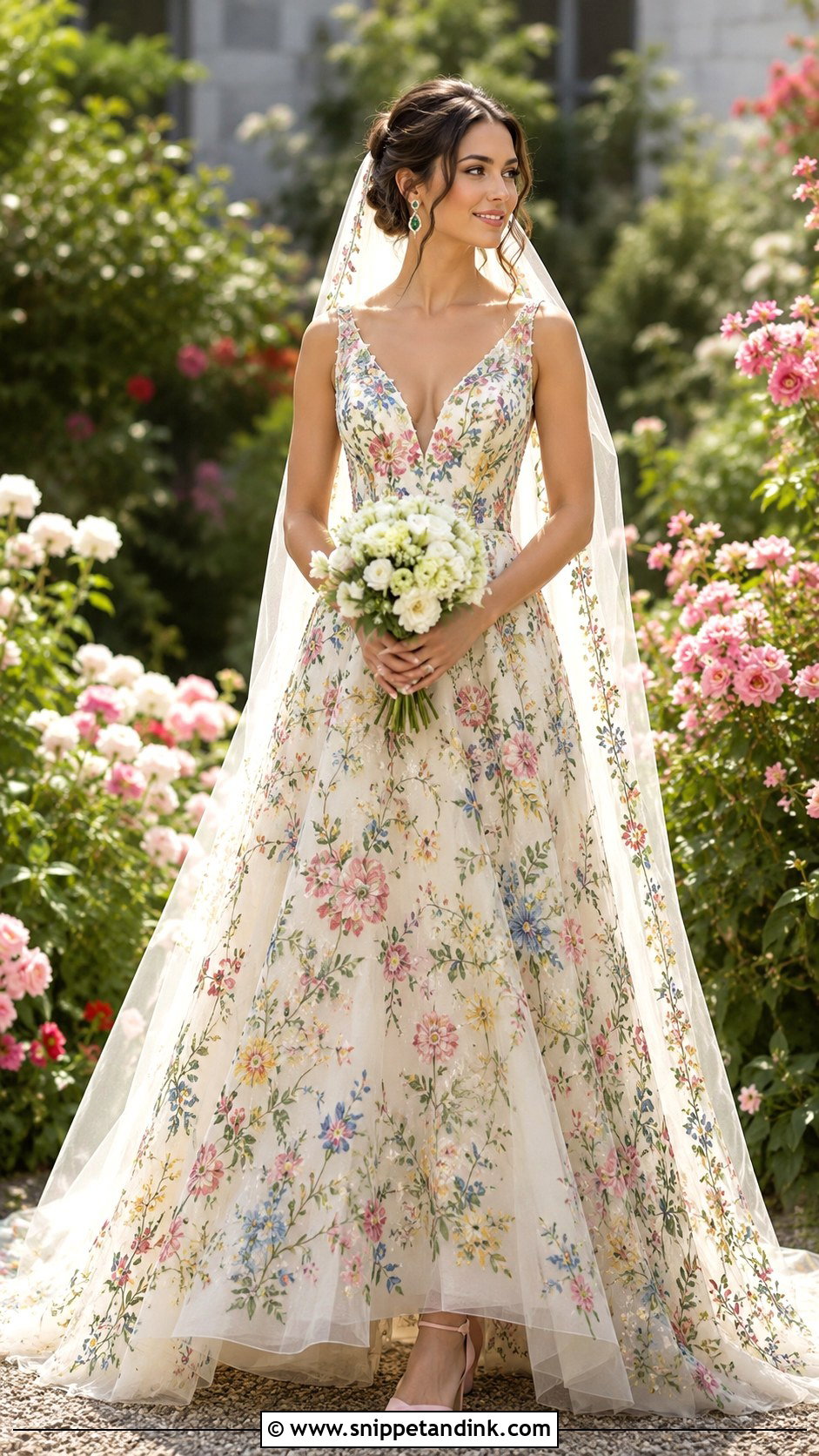
Can’t settle on one shade? Embroidered flowers over an ivory, blush or champagne base give you several. An A-line silhouette leaves room for the pattern to run from bodice to train. Pull one colour from the embroidery into a single accessory, such as green stone earrings or a blue hair comb, and leave the rest neutral. A plain veil with a narrow floral border is plenty, since a patterned veil over a patterned dress becomes noise. A bouquet of white flowers and greenery stops the overall picture tipping into busy. Garden ceremonies suit this best.
18. Ombré Wedding Dress
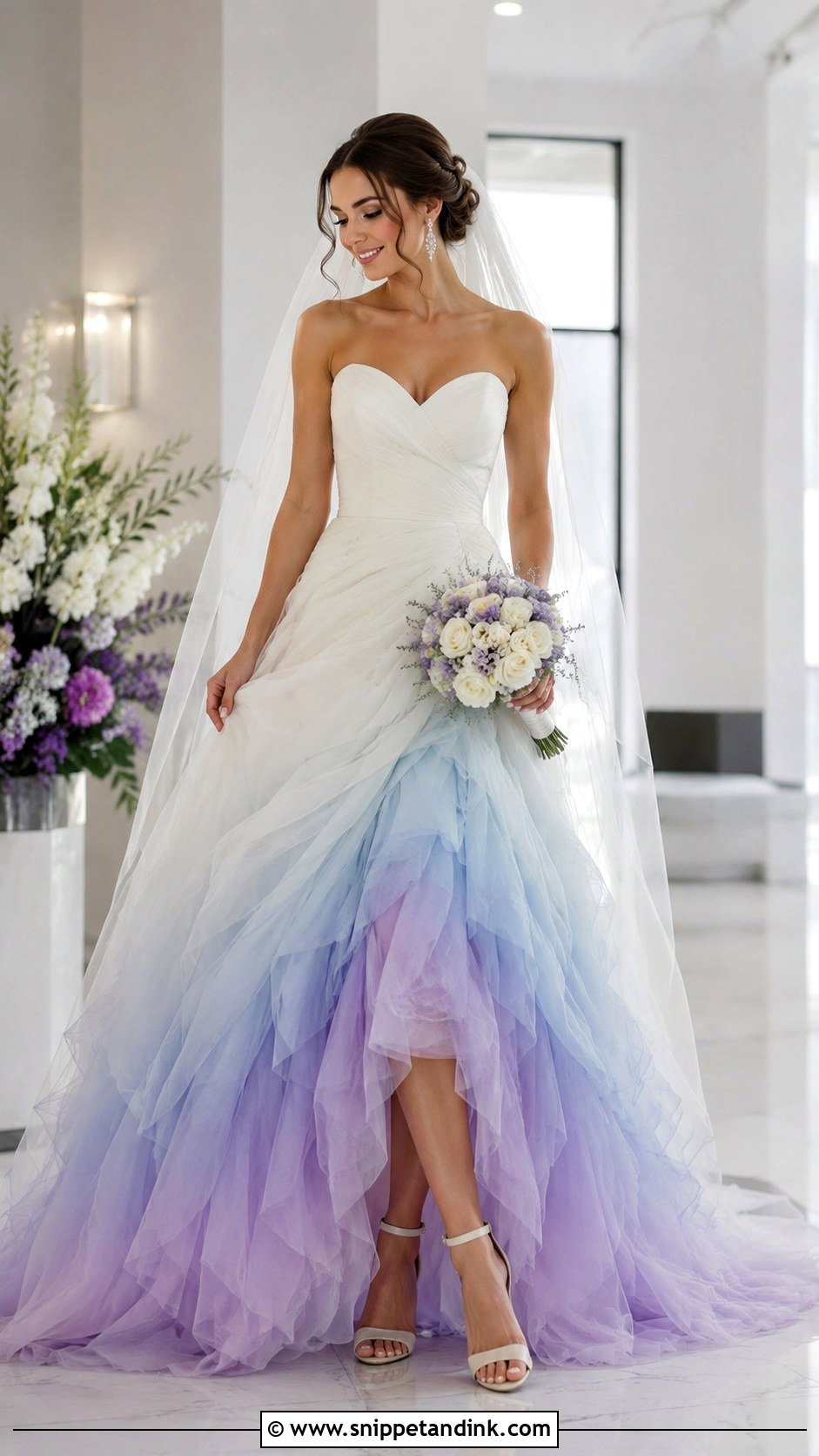
An ombré wedding dress is a halfway house between white and colour: ivory near the face, deepening toward the hem. Keeping white at the top is the clever part, because the face is lit by the ivory while the skirt carries the colour. Tulle, chiffon and organza show the fade best. Ombré is usually dyed by hand, so the gradient on yours won’t exactly match the sample. Ask to see a photo of the actual gown before it ships. Keep the bodice plain and wear neutral heels, small crystal earrings and an ivory veil. Include blooms in the bouquet that match the hem.
19. Rose Gold Wedding Dress
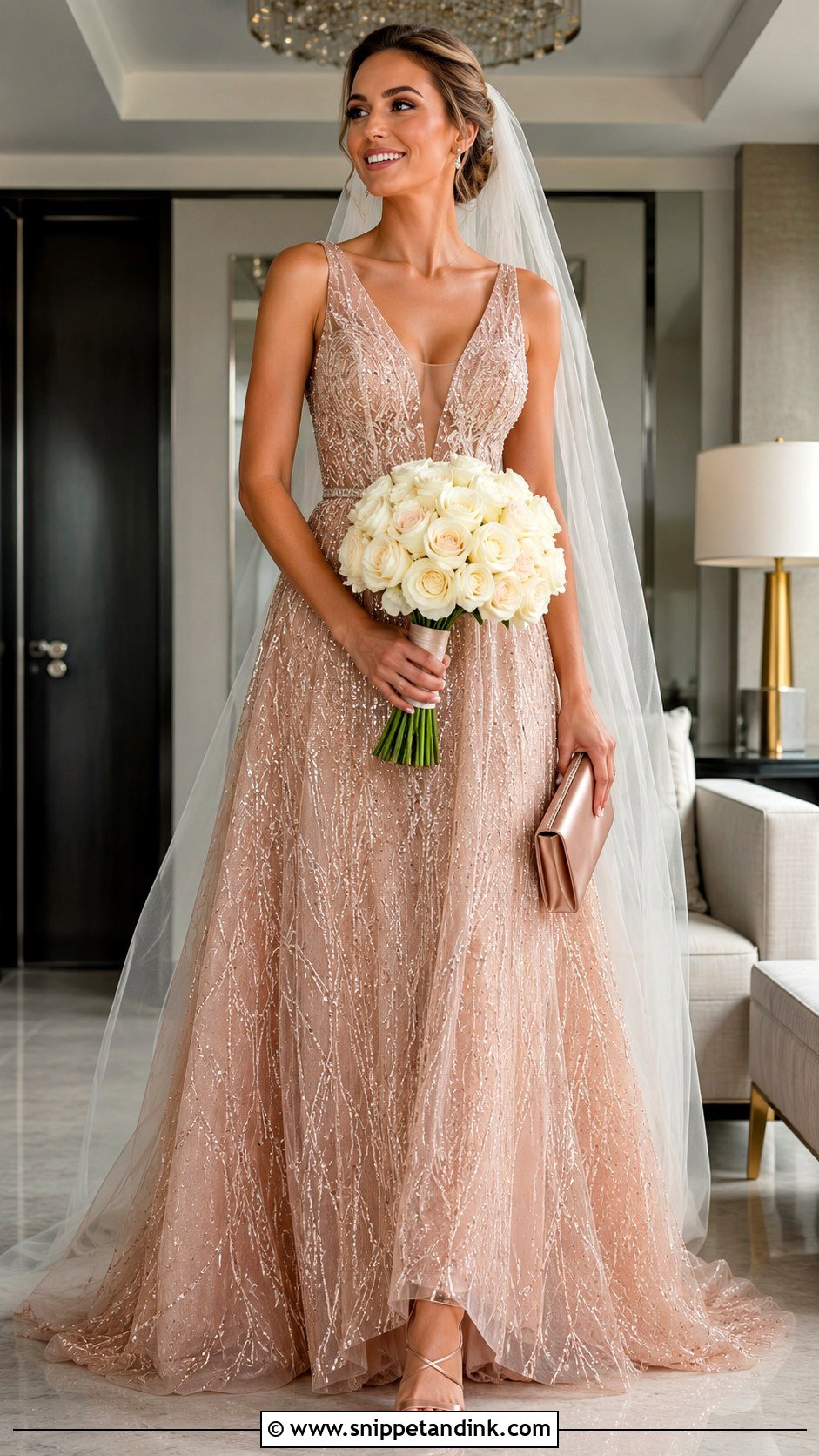
Rose gold blends the softness of pink with metallic shine. Sequins, beading or shimmering tulle over a nude or blush lining give it a smooth, warm base, in a fitted A-line or column cut. The lining shade makes a bigger difference than people expect. A nude lining reads skin-toned and modern, while blush pushes it pinker. Rose-gold sandals, small crystal earrings and a satin clutch are enough. Choose a plain ivory veil or sheer blush cape with no extra sparkle. Cream roses and pale greenery balance the metallic warmth.
20. Coral Wedding Dress
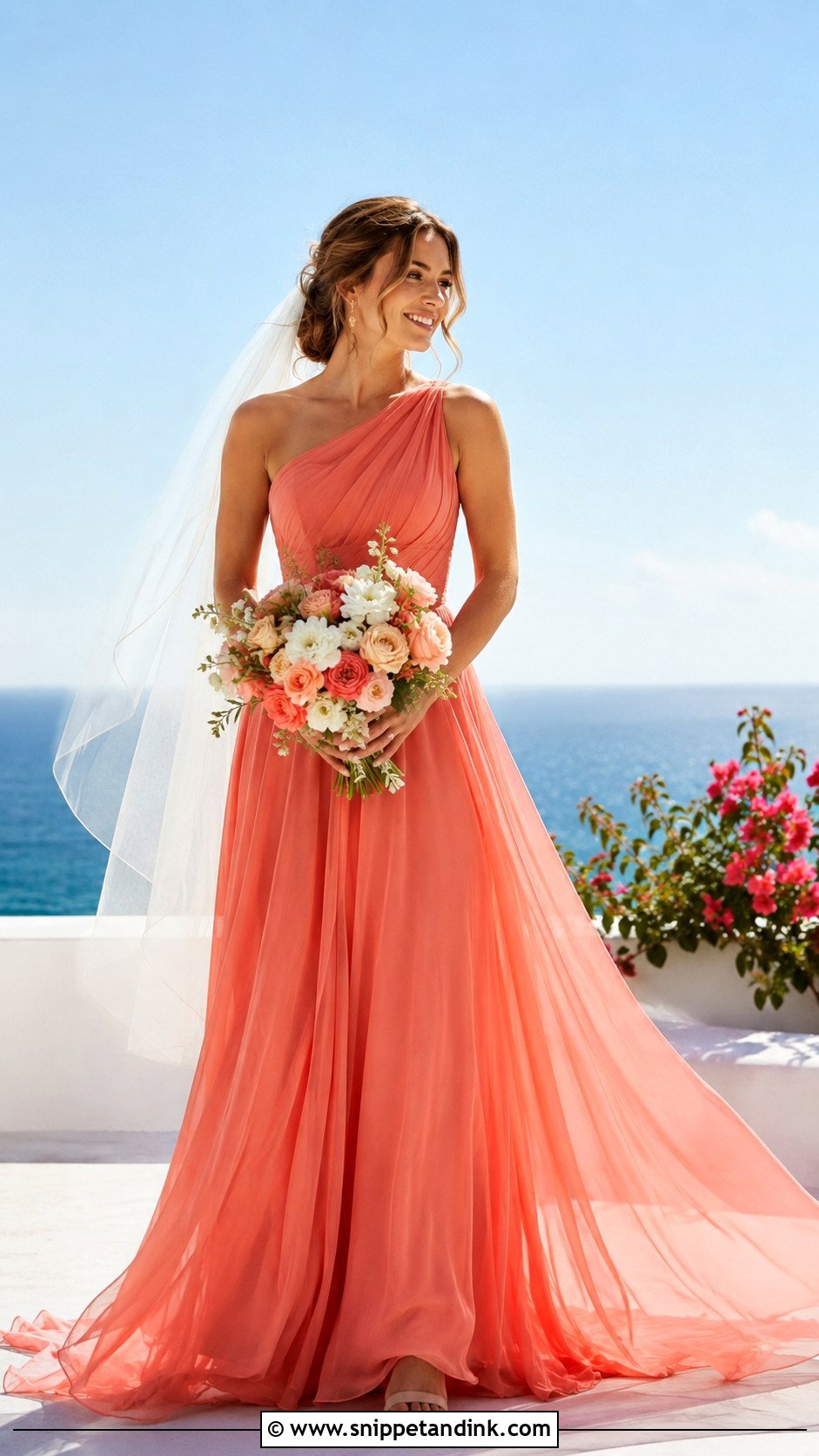
Soft coral is wearable; neon coral rarely is. Chiffon, silk or organza in a softened shade keep it romantic. A one-shoulder A-line looks modern and a draped off-shoulder design more traditional. Coral can clash with red-toned skin flushed from heat or dancing, so outdoors, a slightly pinker coral is often more forgiving than an orange one. Nude sandals, gold hoops or drops and a compact cream bag go with it, plus a sheer ivory veil that lightens the brighter colour. White, peach and coral flowers with greenery balance the bouquet at a coastal or summer garden ceremony.
Why the Gown That Arrives Can Differ From the Sample
With white gowns, the shade you order is mostly the shade you get. Colour is less predictable. Fabric is dyed in batches, called dye lots, and two batches of the same named shade can differ slightly. Shop samples have also been under bright lights for months, which can fade them a little. So the gown made for you may come out a touch deeper, paler or warmer than the one you tried on.
Ask for a swatch cut from your actual production fabric before the gown is made, or at least before final alterations. If you’re ordering a separate veil, cape or overskirt in the same colour, order everything together so it comes from one batch. And tell your tailor the dress is coloured, so they match thread and any added lining rather than reaching for white.
Cleaning a coloured gown afterwards
Coloured silks and velvets can bleed or fade with the wrong treatment, so take the gown to a specialist cleaner and point out the colour and fabric. Store it away from sunlight, which fades saturated dyes long before it yellows white fabric.
Look at Your Colour in Three Kinds of Light Before Saying Yes
A coloured gown works when the shade belongs to you and your setting, not just because it’s unexpected. Softer tones such as blush, champagne, sage, and powder blue step gently away from white, while jewel tones, black, red and metallics make a bolder statement. Before deciding, look at the fabric in daylight and indoor light, hold it next to your accessories and photograph it on your phone from a few angles. Let the veil, shoes, jewellery and bouquet support the colour you chose rather than compete with it.
You'll Like These Ideas:






Leave a Reply