
A coloured wedding dress usually starts with a bride who has never felt like herself in stark white. Coloured gowns now run from blush and champagne through emerald, black and red to full floral prints, and most bridal designers will make at least some styles in a shade. The colour has to suit three things at once: your skin, your venue’s light and the season. What keeps it reading as bridal is everything around it, meaning a proper silhouette, good fabric, considered shoes and restrained accessories. I’ve grouped the shades below with the pairings and the fitting-room checks I’d use for each, so you can work out which of these Non White Wedding Dress Colour Ideas fits your day.

Hold the Fabric Under Your Chin Before Anything Else
Before a bride tries on a single coloured gown, I do a quick drape test. It takes ten minutes and saves weeks of second-guessing.
- Stand by a window in daylight, with clean skin or your usual light makeup, and hair pulled back.
- Hold each swatch or sample right under your chin, so the fabric reflects onto your face.
- Watch your skin, not the fabric. The right shade evens out redness and brightens your eyes; the wrong one shows shadows under the eyes and makes skin look grey, yellow or flushed.
- Compare warm and cool versions of the same colour, such as peach blush against mauve blush, side by side.
- Repeat under a warm indoor bulb, since most receptions are lit warm.
Bring a friend who’ll be honest, and take phone photos of each drape. The camera often shows the difference more clearly than the mirror.
Then think about the room
Your venue’s light counts as much as your skin. A barn lit with string bulbs warms every colour, so cool shades like lavender and grey can turn muddy there. A white-walled gallery or a beach at noon does the opposite and can make pale pastels look almost white. If you can, visit the venue at the hour of your ceremony with a swatch in your bag and look at it in that light.
1. Blush Pink Wedding Dress
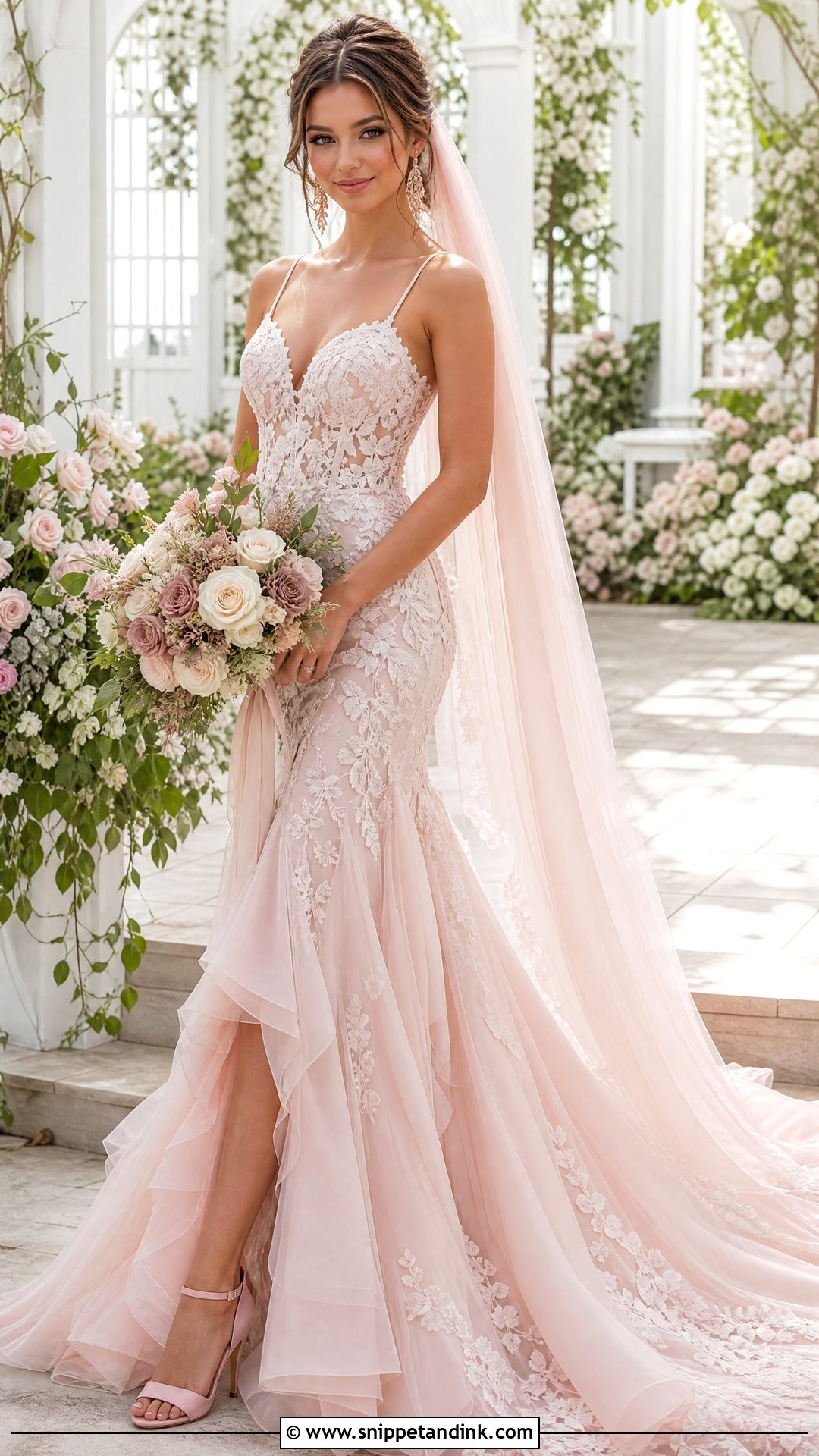
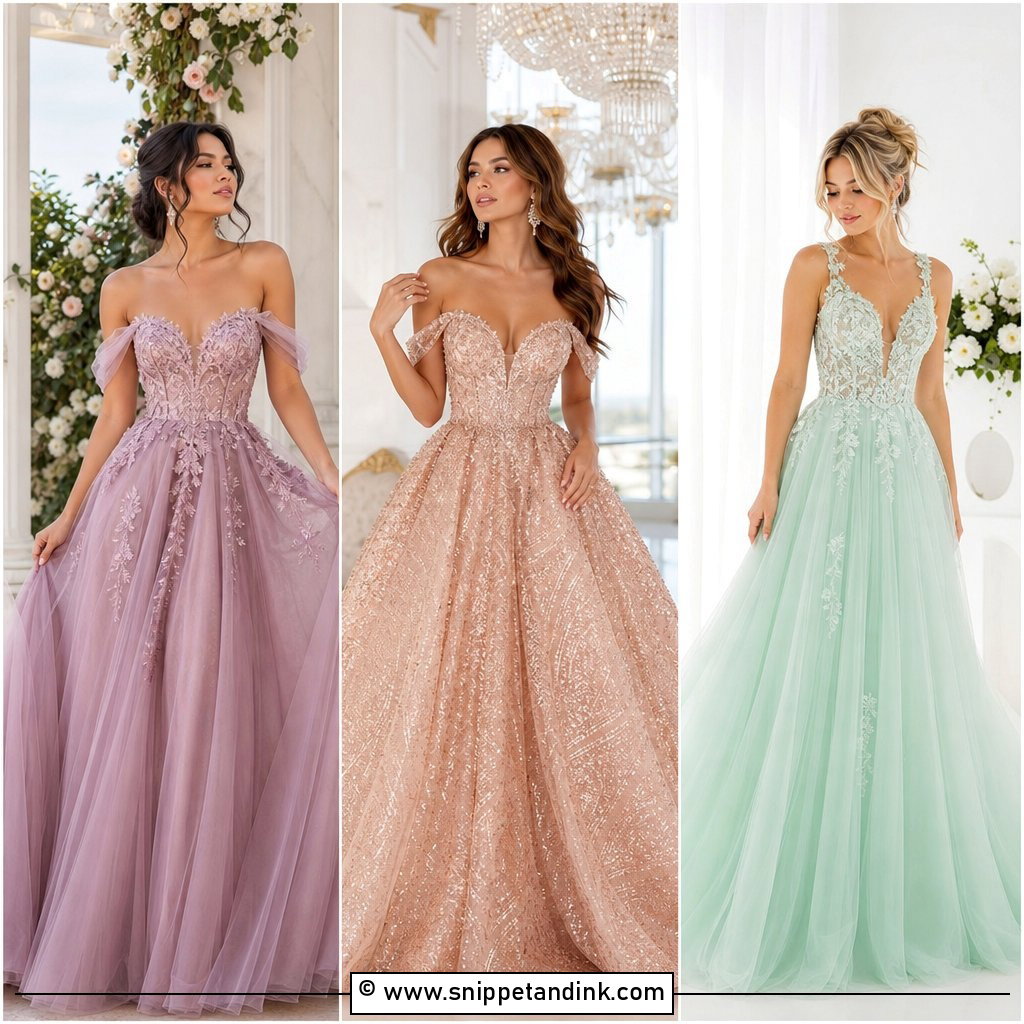
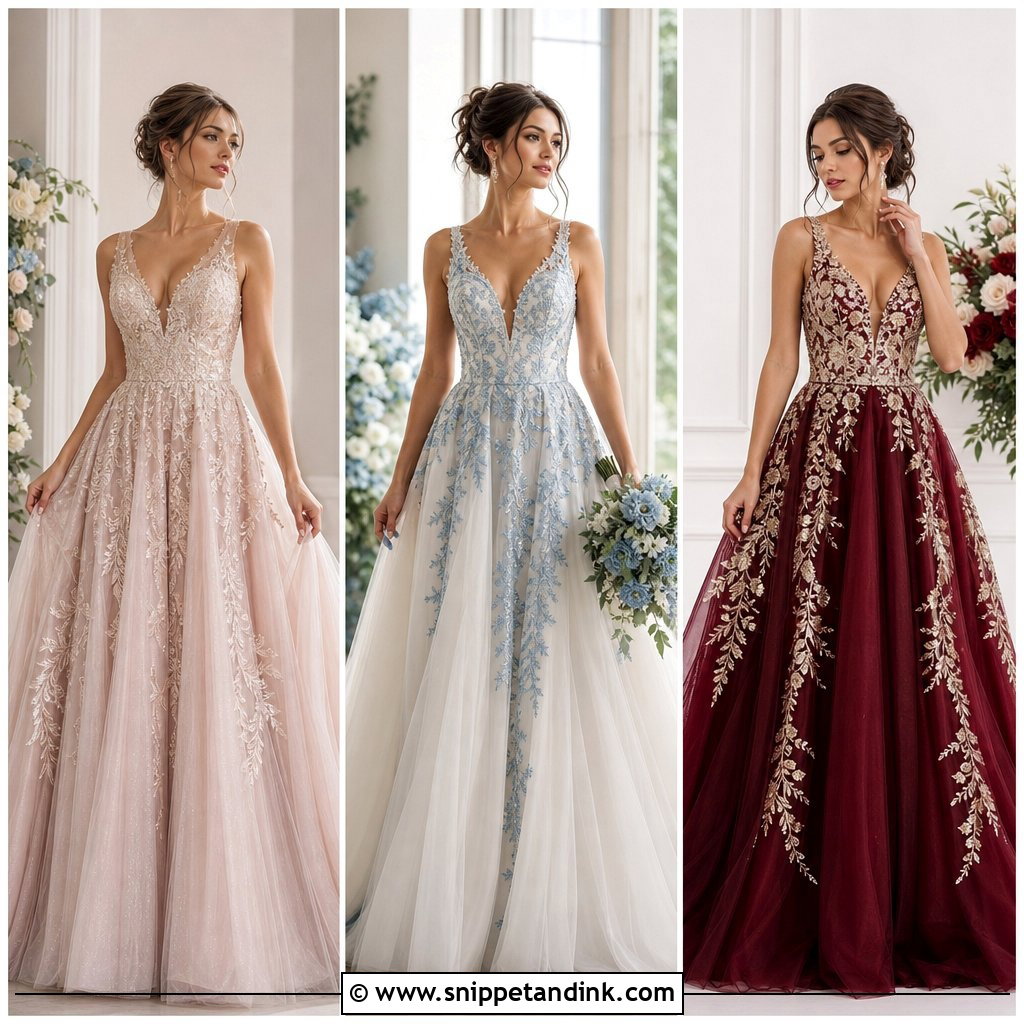
Blush is the gentlest step away from white, and also the trickiest to get right on skin. A floor-length tulle gown with a structured bodice, a few floral appliqués and a flowing train keeps the classic bridal shape. Some blushes lean peach and some lean cool mauve, and the wrong one makes the dress disappear into your complexion so you look washed out from across the room. I always hold two or three blush swatches under a bride’s chin by a window before we choose. Rose-gold earrings, a slim bracelet and nude or pale pink heels suit it, with a sheer blush veil and a bouquet of cream, dusty pink and muted green.
2. Champagne Wedding Dress
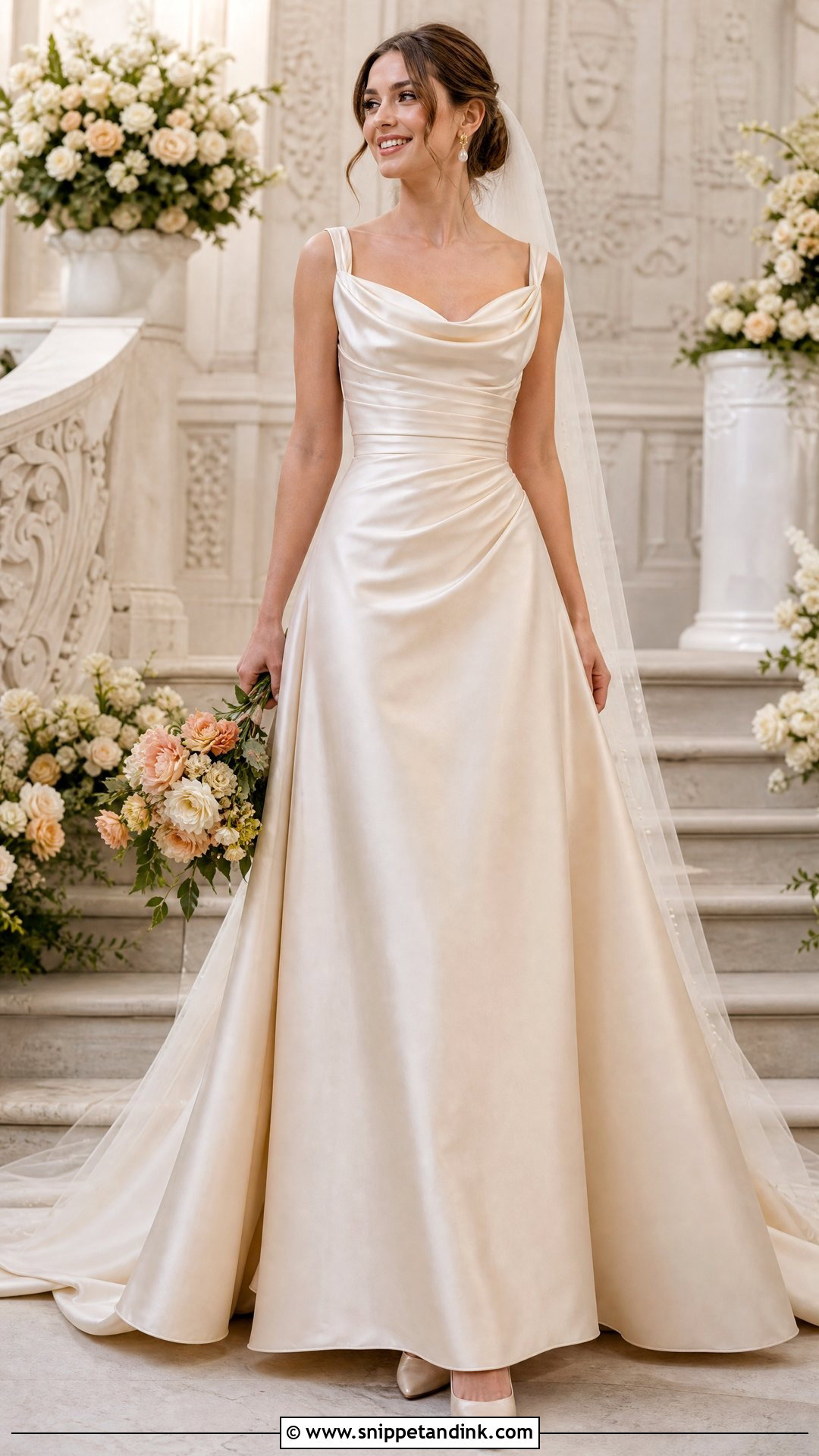
Champagne sits closest to traditional bridal colour, but the name covers everything from pale beige to a deep gold. That range is why I bring swatches to the fitting alongside the bride’s own jewellery: a yellow-gold necklace can make a pinkish champagne look dull, while it flatters a warmer one. A satin A-line catches the light well, and a softly draped neckline with a fitted waist and a moderately full skirt keeps the colour polished. Gold drop earrings, champagne satin pumps and a pearl-trimmed clutch suit it. An ivory veil gives a slight contrast. Candlelit ballrooms and autumn venues bring out its warmth.
3. Dusty Rose Wedding Dress
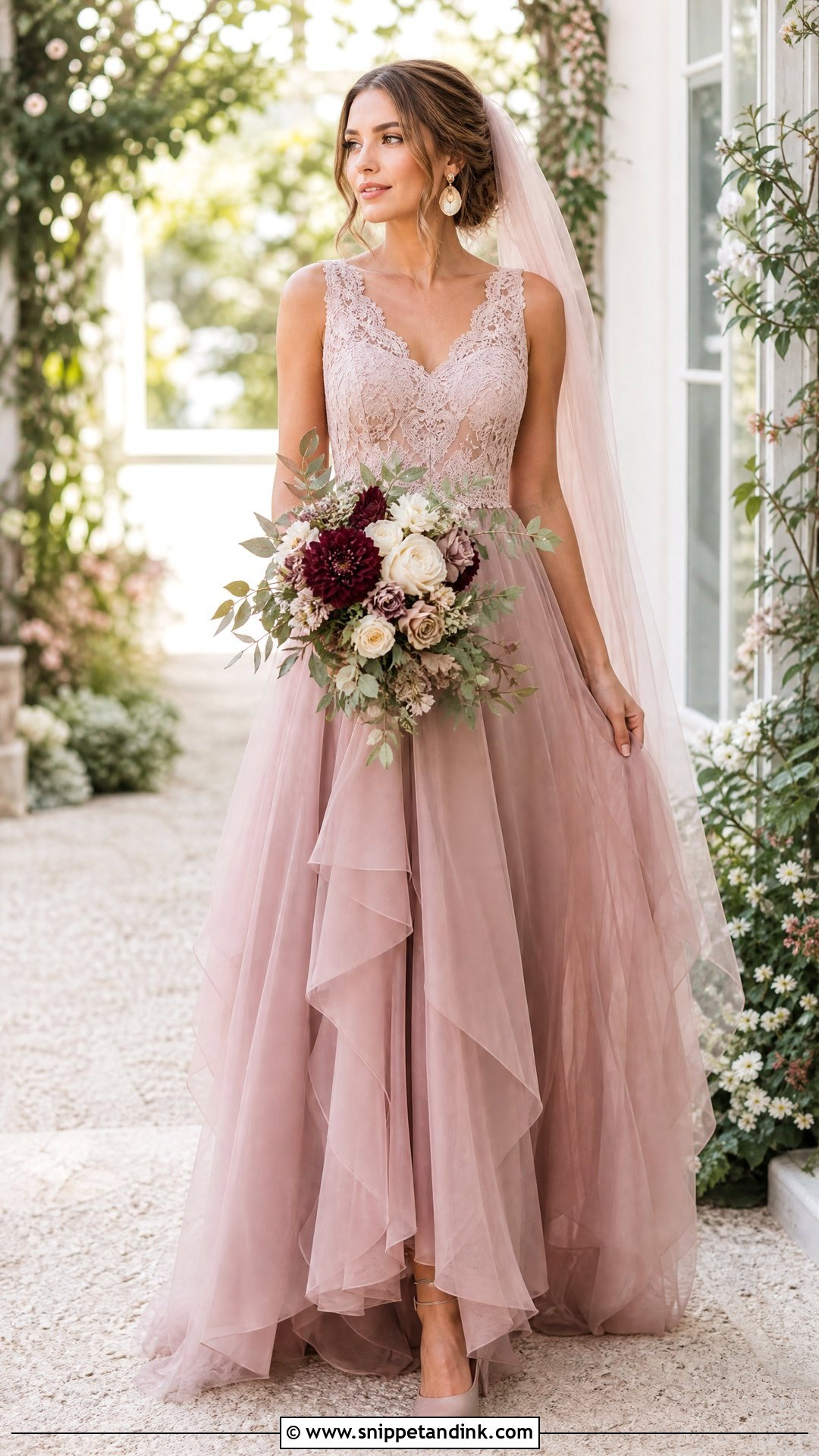
Dusty rose has a muted depth, so it needs a light fabric to stop it feeling heavy. A long chiffon gown with a fitted lace bodice and a softly layered skirt does that, because the chiffon moves and lets light through. Brushed-gold earrings, a simple comb and taupe pointed heels suit the shade. You can match the veil for cohesion or choose a neutral one for contrast. Burgundy, cream and soft green flowers deepen the palette for late summer and fall. Tell your makeup artist the dress colour early. A rosy cheek with a neutral lip usually works; a bright pink lip fights the dress.
4. Light Blue Wedding Dress
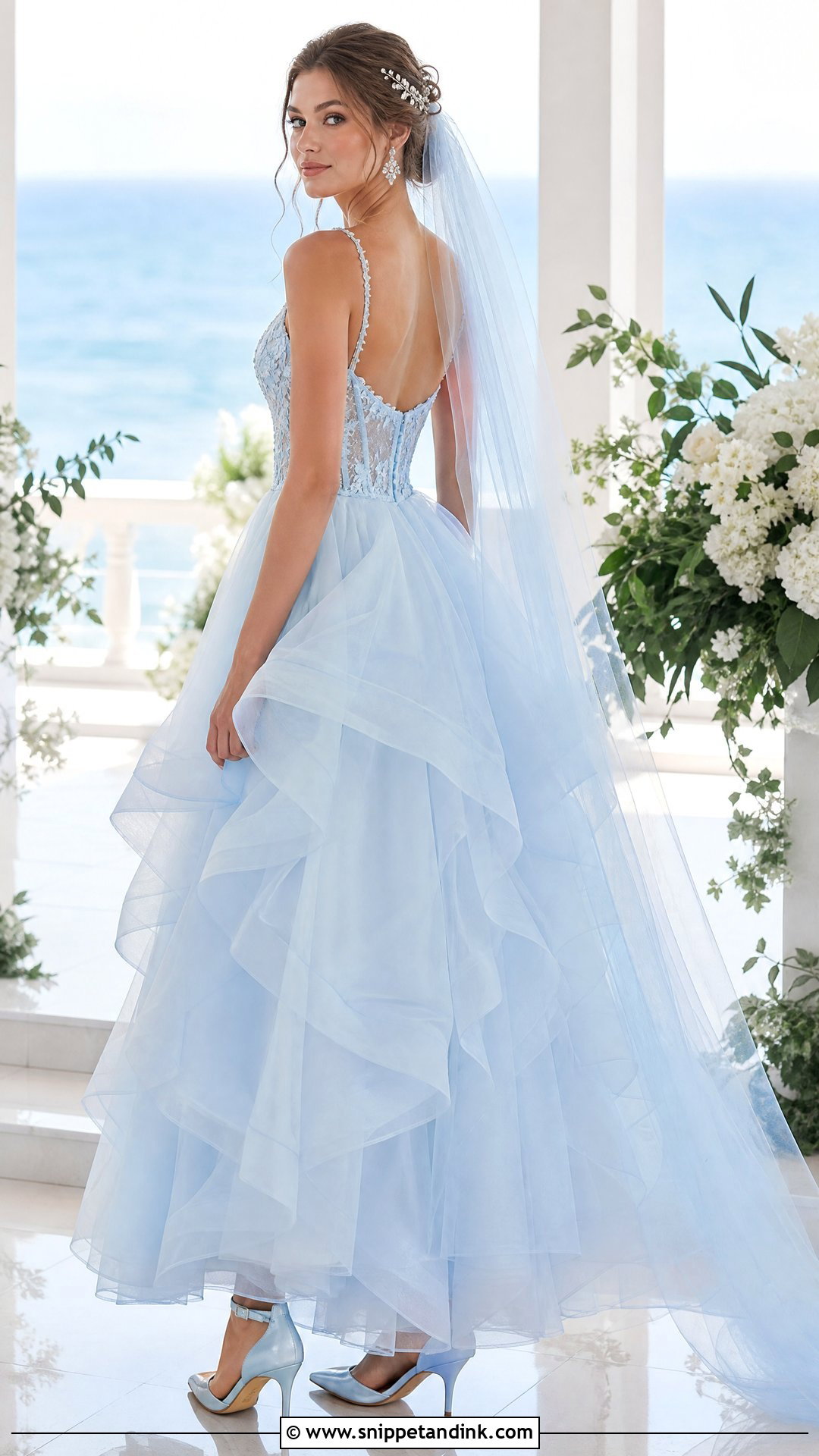
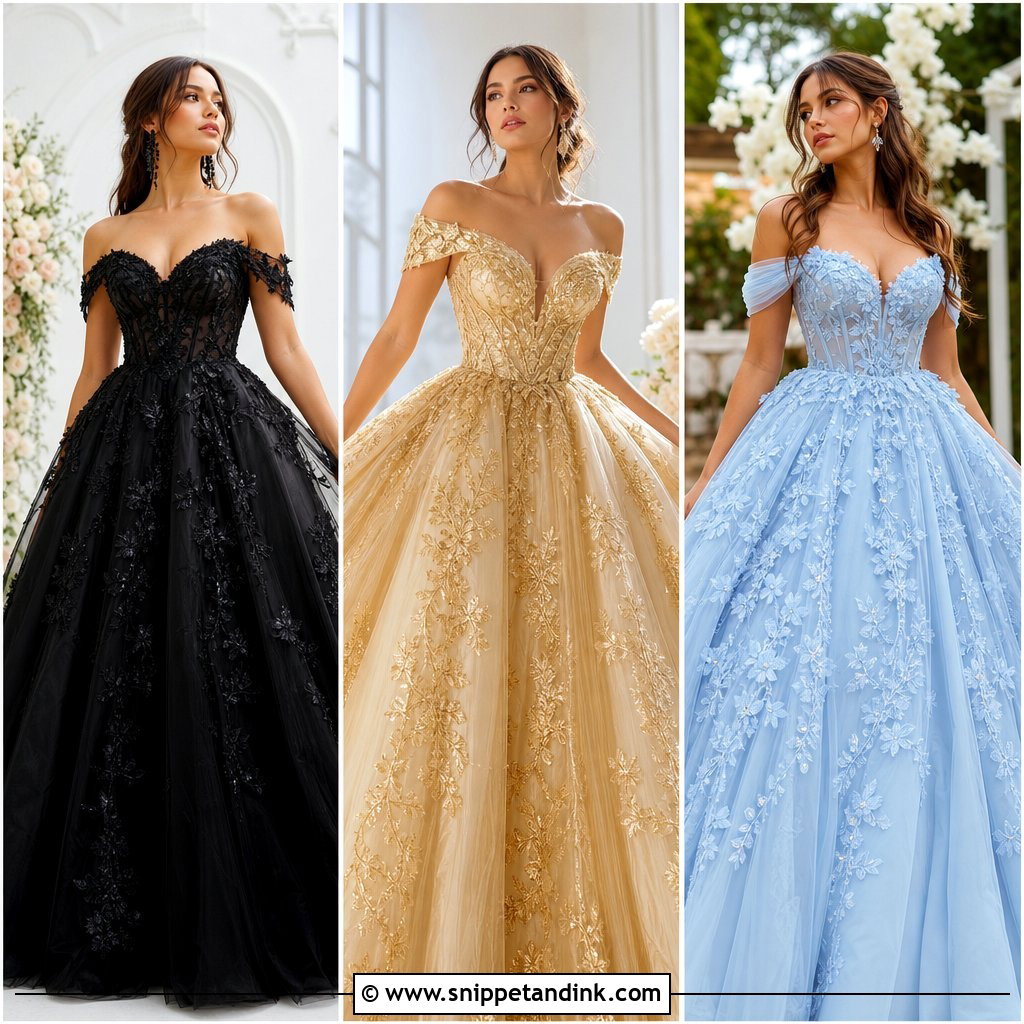
Light blue feels airy and plainly different from white. A blue organza ball gown with a fitted bodice, fine straps and layers of light fabric is the full version, and silver earrings, crystal pins and pale blue heels stay in the same cool family. A bouquet of white flowers with a little greenery keeps it fresh in spring gardens and coastal settings. If a full blue gown feels like too much, I’d suggest a pale blue lining under neutral lace. The colour shows through the gaps and gives depth in photos, and you keep the texture of a traditional gown. Blue also shifts toward grey under warm indoor bulbs, so check it in the light your reception will have.
5. Lavender Wedding Dress
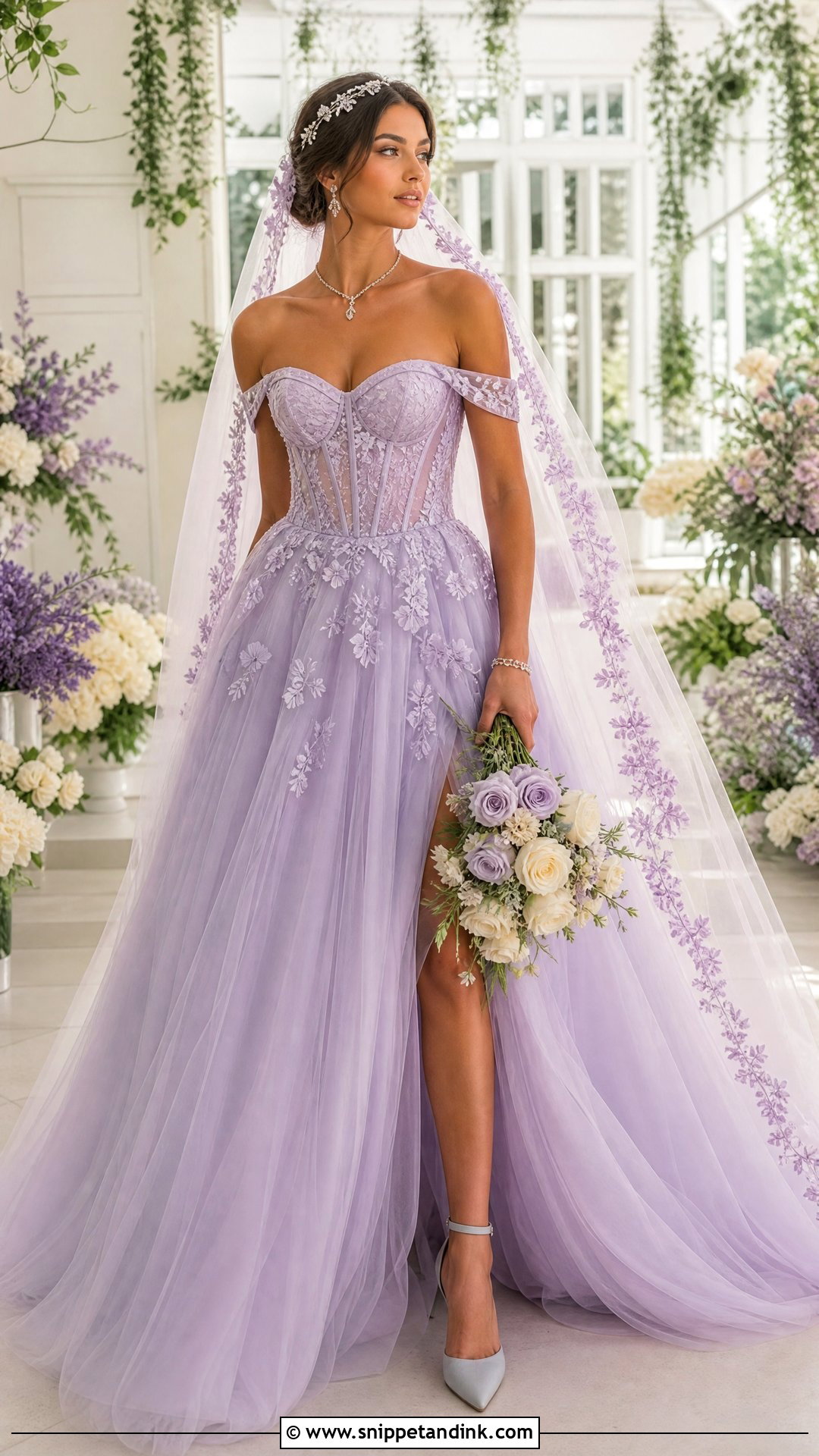
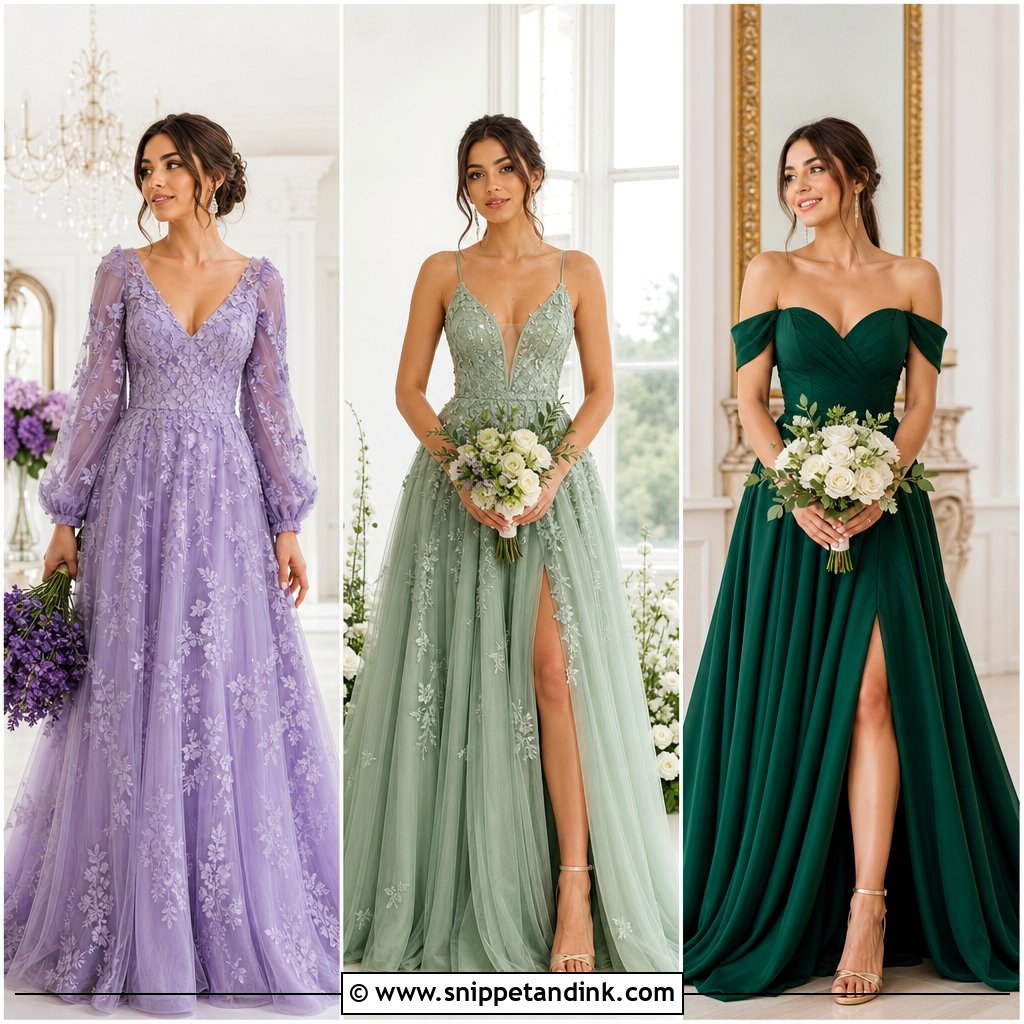
Soft lavender has a dreamy quality that still wears well as an adult colour, provided the cut is grown-up. A corset-style bodice, off-the-shoulder sleeves and a layered tulle skirt give the pastel a formal presence. Silver or white-gold jewellery, light grey heels and a fine crystal headband keep the accessories cool. A veil with a lavender edge repeats the colour without matching everything. Purple dyes are notoriously sensitive to light: lavender can read pinker under warm lamps and bluer in shade. View the gown in daylight and in something close to your venue lighting before you commit. Cream, lilac and pale green flowers suit it in spring.
6. Sage Green Wedding Dress
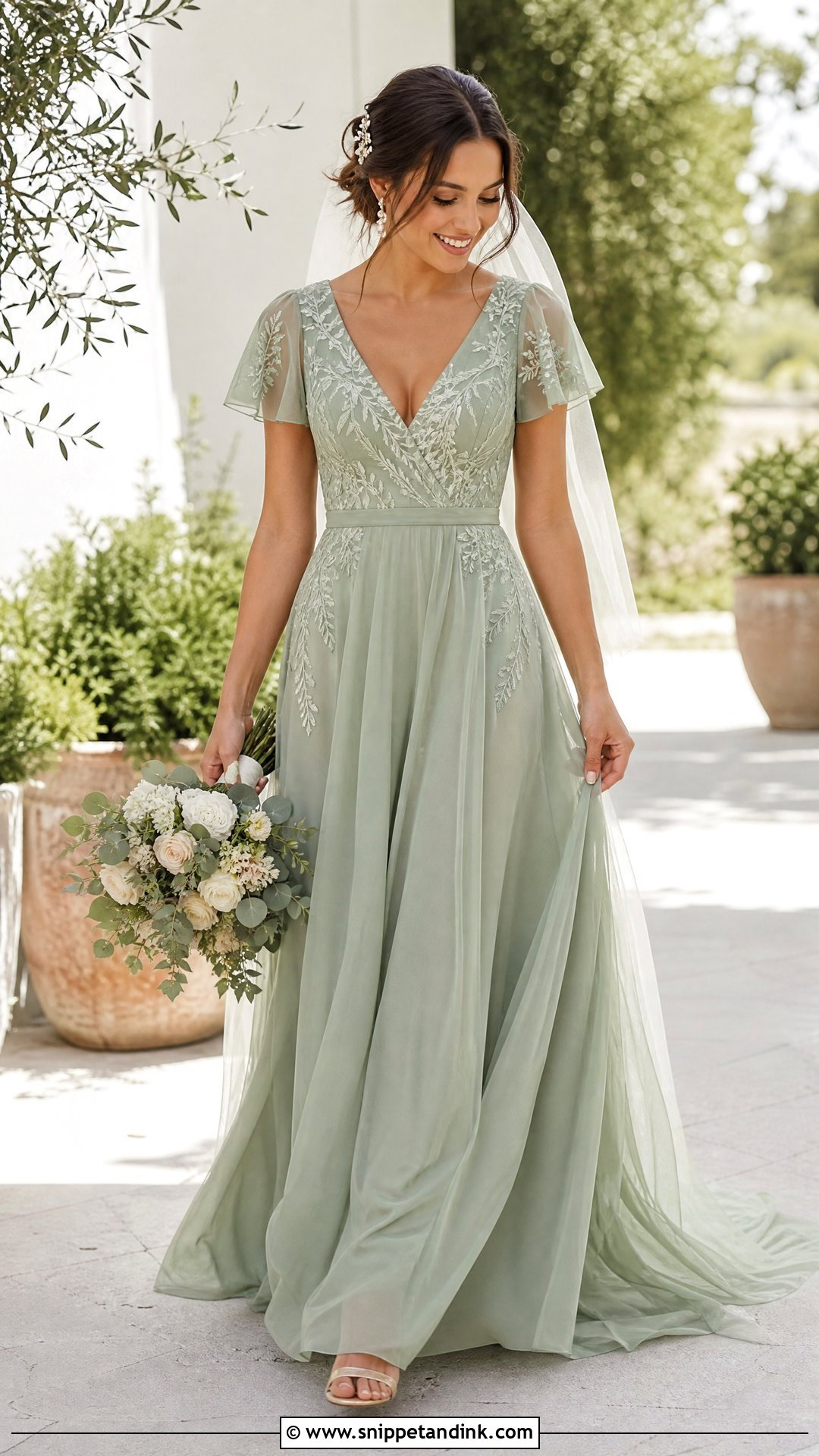
Sage is one of the easiest colours to wear, because its grey undertone softens the green and suits a wide range of complexions. A flowing chiffon or soft tulle gown with a defined waist, flutter sleeves and a little botanical embroidery suits outdoor and rustic venues. Pearl earrings, light gold sandals and a small gold comb finish it. Where I see sage go wrong is over-matching. A sage veil, sage shoes and a eucalyptus bouquet all in the same tone flatten into one block. A neutral veil and cream flowers with darker green foliage give each piece its own edge.
7. Gold Wedding Dress
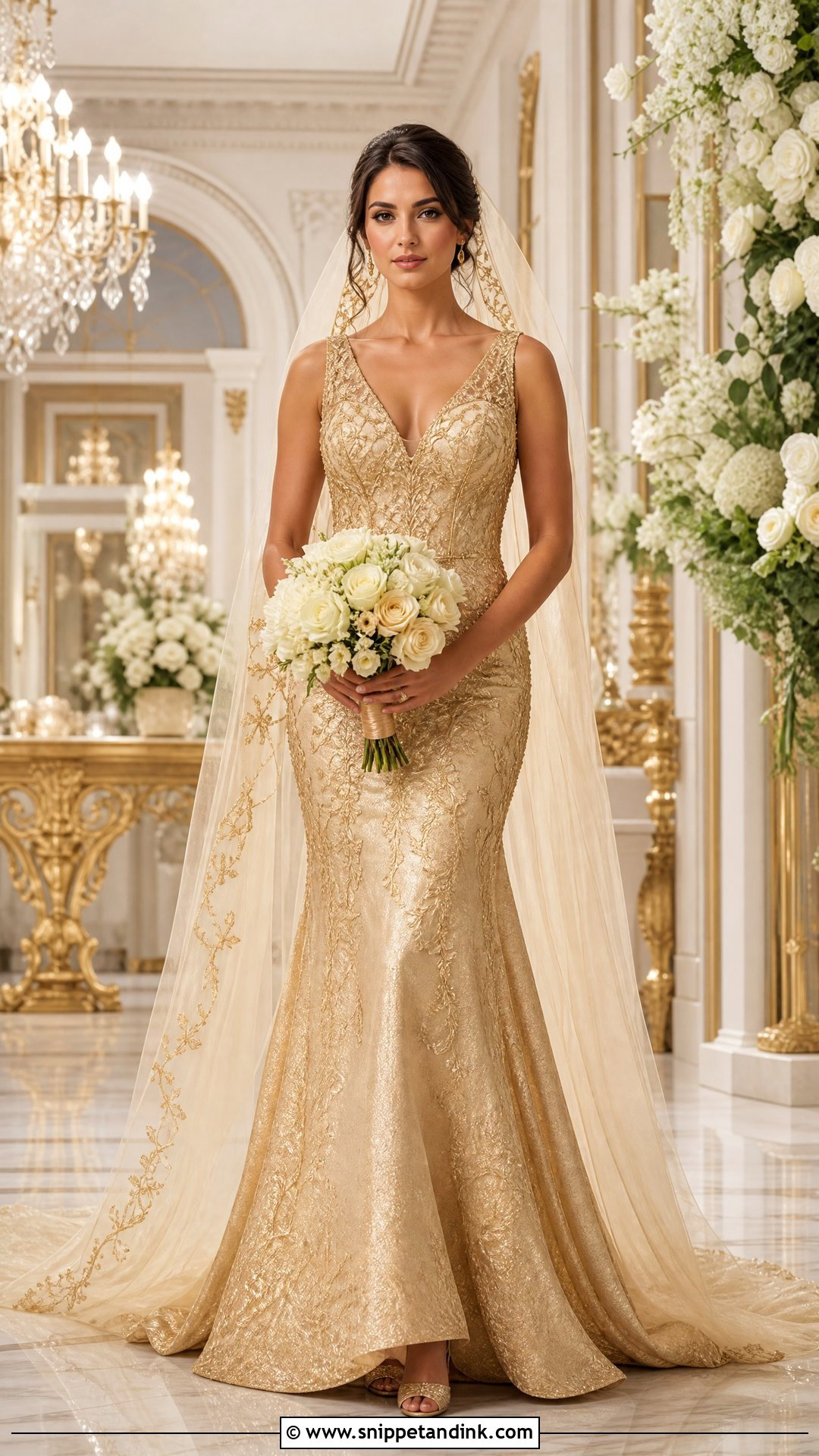
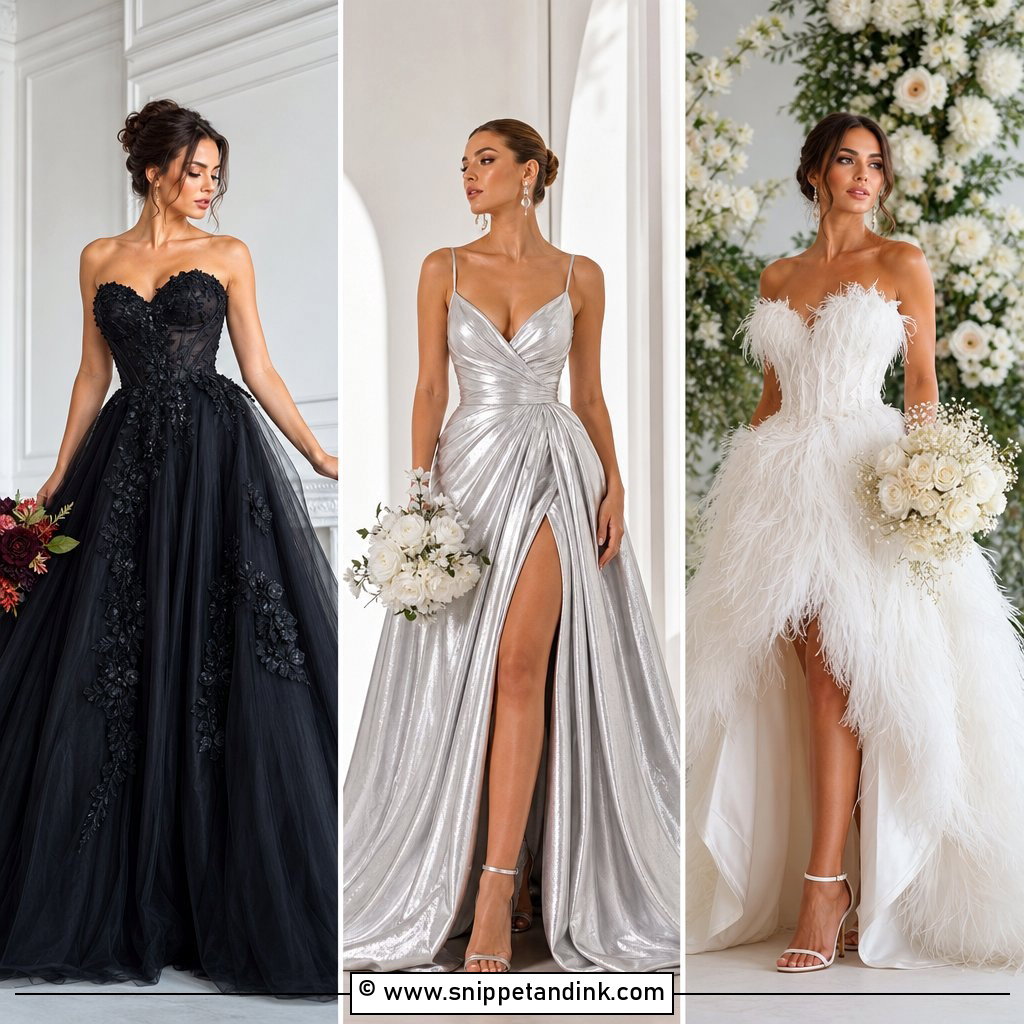
Gold makes an entrance, and the risk is looking like a stage costume. A floor-length gown with metallic embroidery, a fitted bodice and a gently flared skirt is the shape. I’d choose a soft, brushed gold over a high-shine one, because very reflective gold fabric flares under flash and photographs as bright patches. Simple gold earrings, neutral metallic heels and a smooth low bun with a minimal comb are enough. Skip the heavy necklace if the bodice is beaded. A sheer champagne veil and cream flowers add softness. Formal evenings, ornate interiors and festive cultural ceremonies are where gold belongs.
8. Silver Wedding Dress
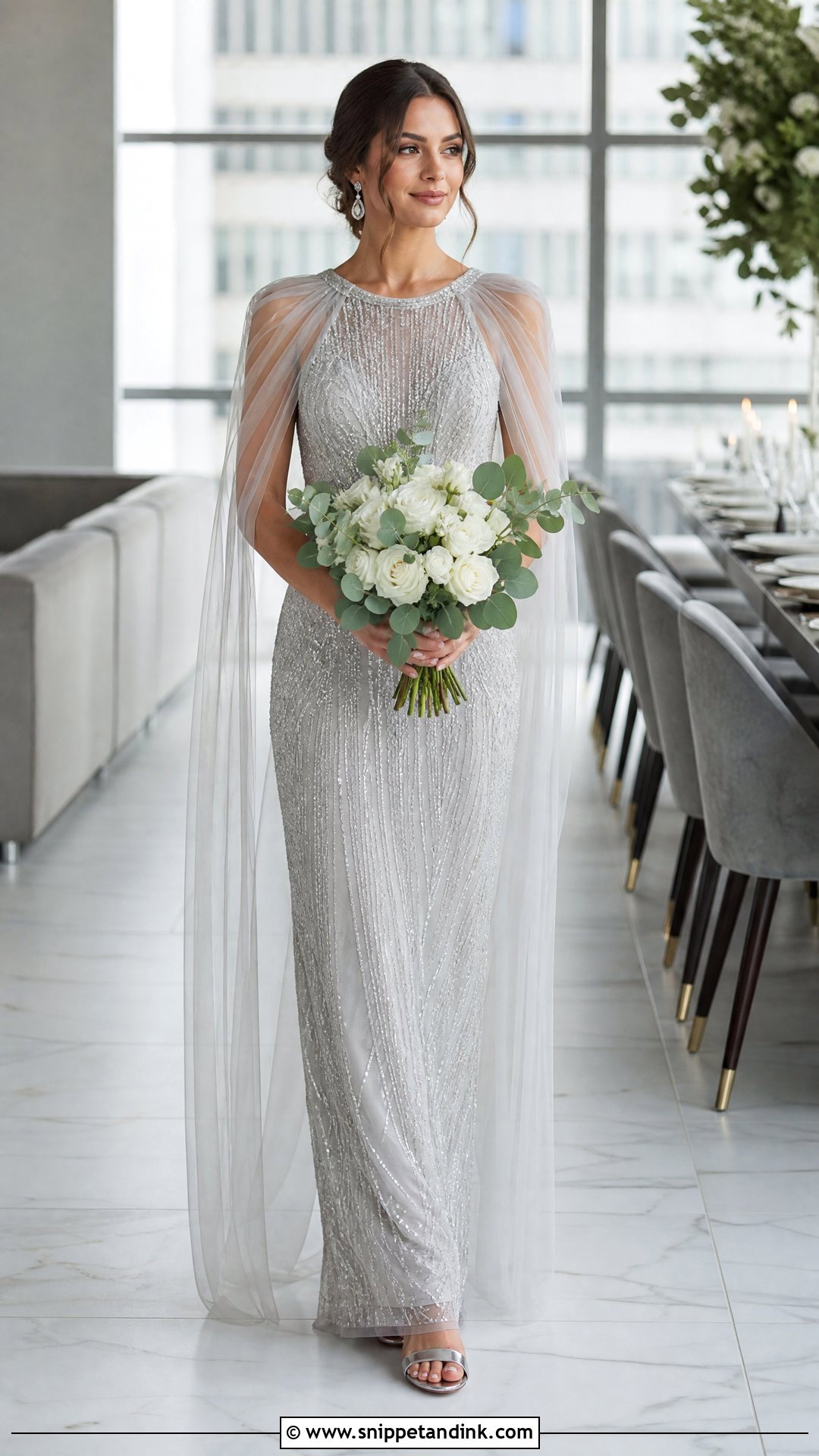
Silver takes bridal shimmer in a cooler direction. A column or fit-and-flare gown covered in fine silver beading reads more refined than large sequins, which can look like a party dress. The beading adds real weight, so I check the shoulder straps and inner waist stay are carrying it rather than letting it drag on the bodice. Crystal studs, silver slingbacks and a small clutch suit it, with a light grey tulle cape or a barely tinted veil. White flowers and dusty green leaves keep the bouquet fresh. It sits well in modern venues and winter weddings. One or two coordinated sparkly pieces look better than five competing ones.
9. Black Wedding Dress
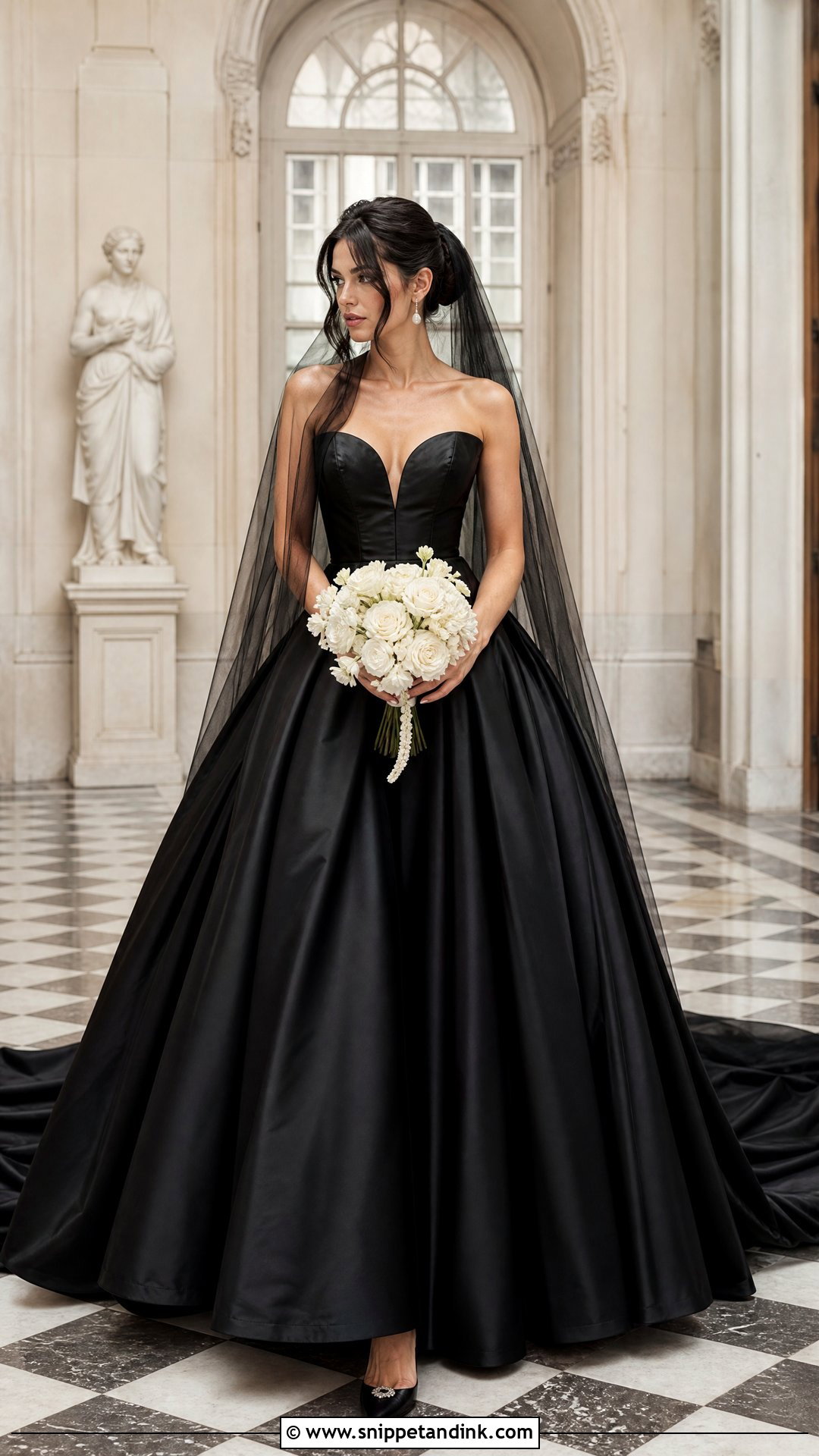
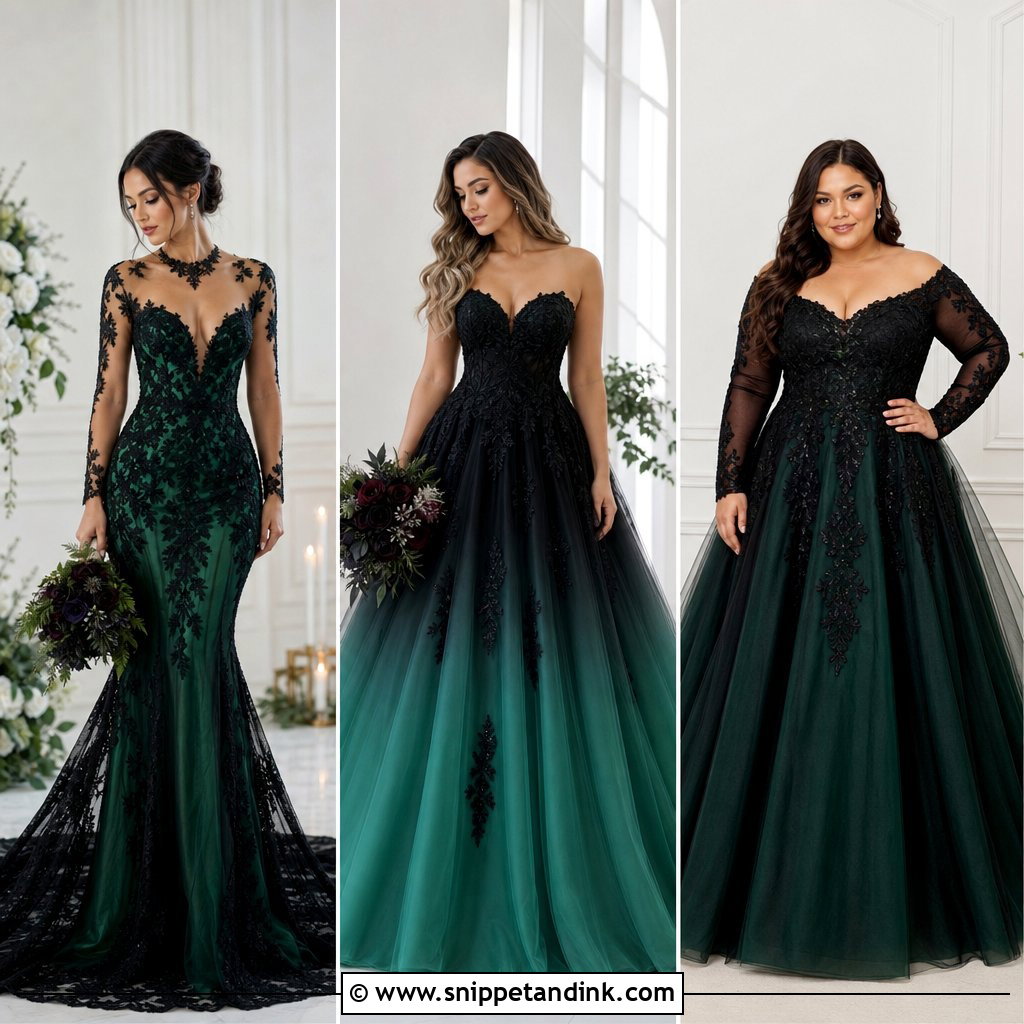
Black works as bridal when the shape is unmistakably a wedding shape. A black satin ball gown with a structured neckline, a fitted waist, a full skirt and a chapel train will never be mistaken for a cocktail dress. Black pointed heels, pearl drop earrings and a sheer black veil with a clean edge complete it, and ivory flowers give strong contrast. For something softer, black lace over a charcoal or nude lining shows the pattern. Black satin shows every crease and every speck of lint, so I pack a lint roller in the getting-ready kit for black gowns. Formal evening venues and historic interiors suit it.
10. Red Wedding Dress
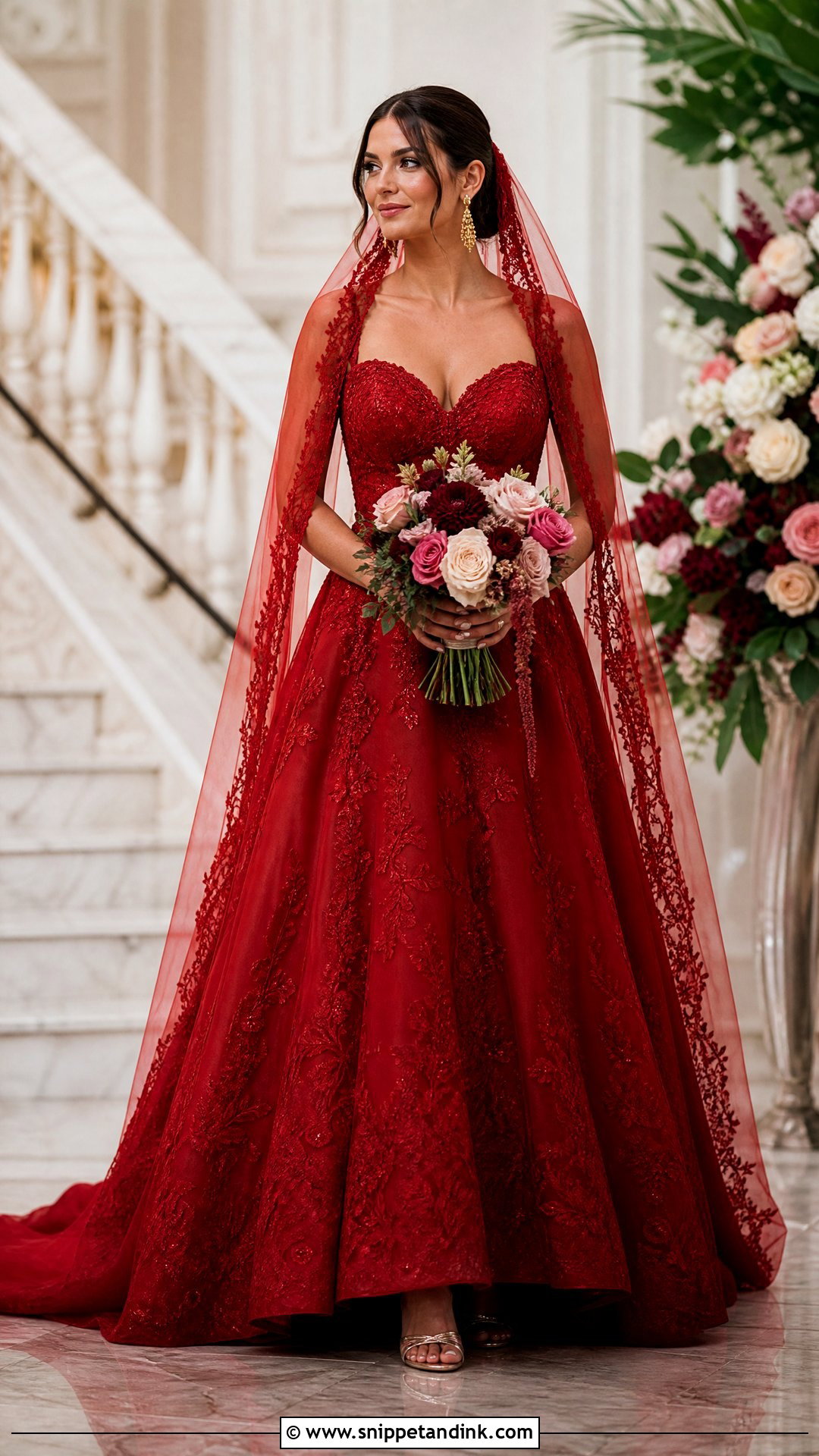
Red is a bridal colour in many cultures, and for some brides it carries family tradition as much as personal taste. A rich red gown with a fitted bodice, a defined waist and a sweeping A-line skirt needs little decoration. Shade is the decision that matters. Clear red is vibrant, blue-based crimson is dramatic and warm scarlet reads energetic, and each flatters different skin. Hold them against your face without makeup first, then again with your planned lip colour. Gold earrings, red or metallic heels and a long red or softer veil finish it. With colour this strong, I keep the neckline and hair controlled: a sleek bun and one meaningful piece of jewellery.
11. Burgundy Wedding Dress
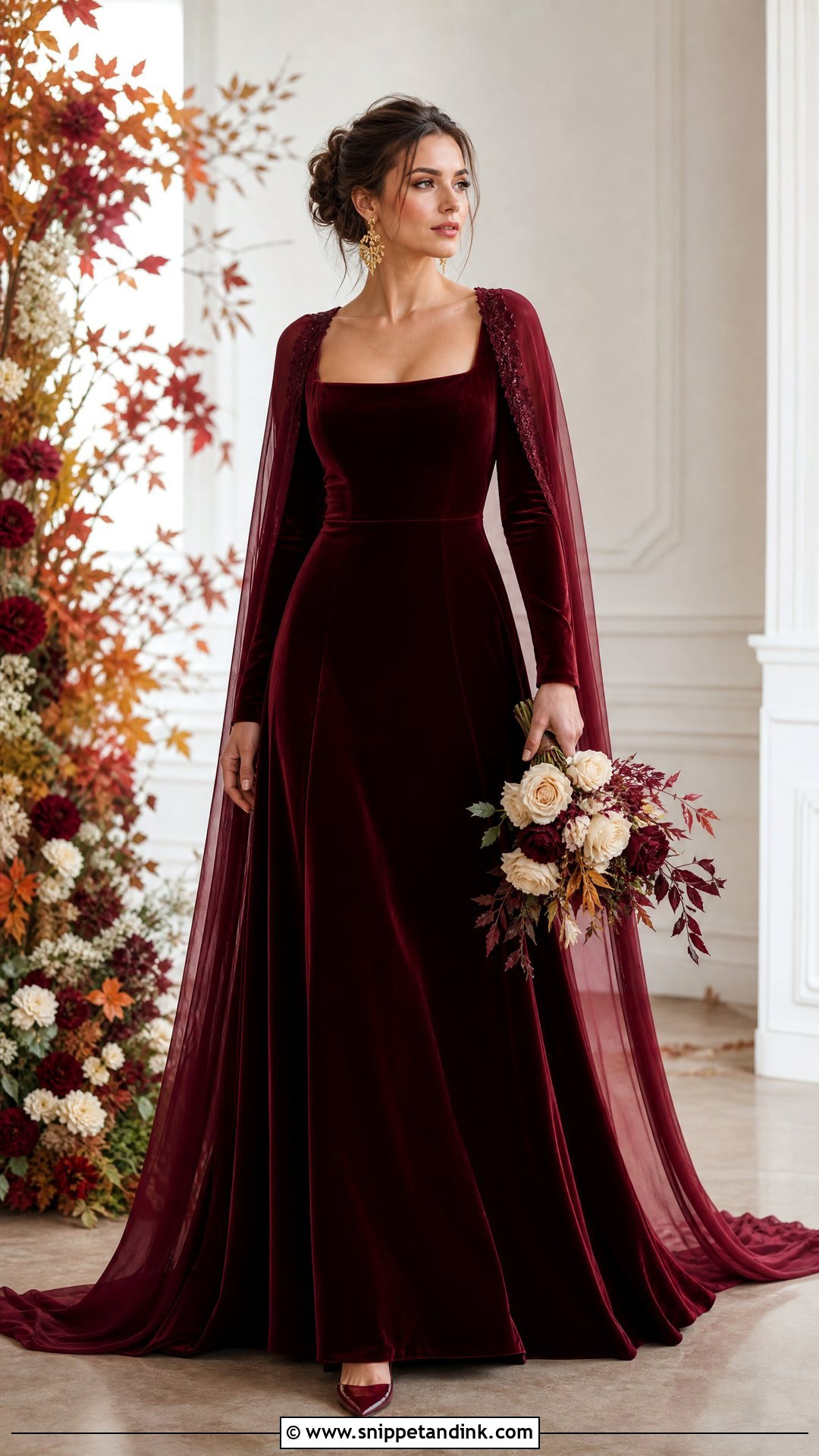
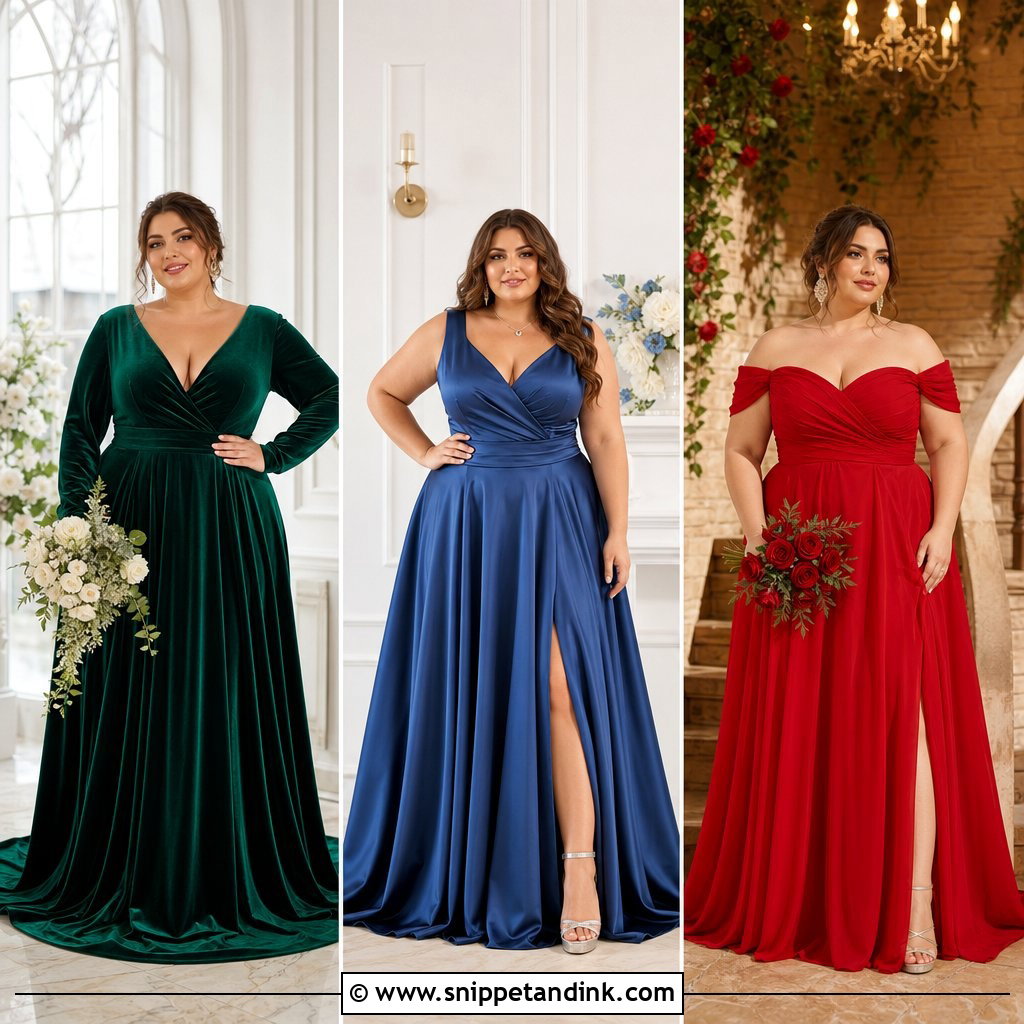
Burgundy belongs to fall and winter. Velvet or satin with long sleeves, a square neckline and a softly flared skirt gives it structure, so the dark colour doesn’t swallow the wearer. Antique-gold earrings, burgundy heels and a fine gold headpiece suit it, and a sheer cape can replace the veil while still showing the back of the gown. If you choose velvet, check the pile under different lights. Burgundy velvet can look almost black from one angle and wine-red from another, which is part of its appeal but surprises some brides in photos. Mix cream into the bouquet with the berry tones so the whole outfit doesn’t go heavy.
12. Emerald Green Wedding Dress
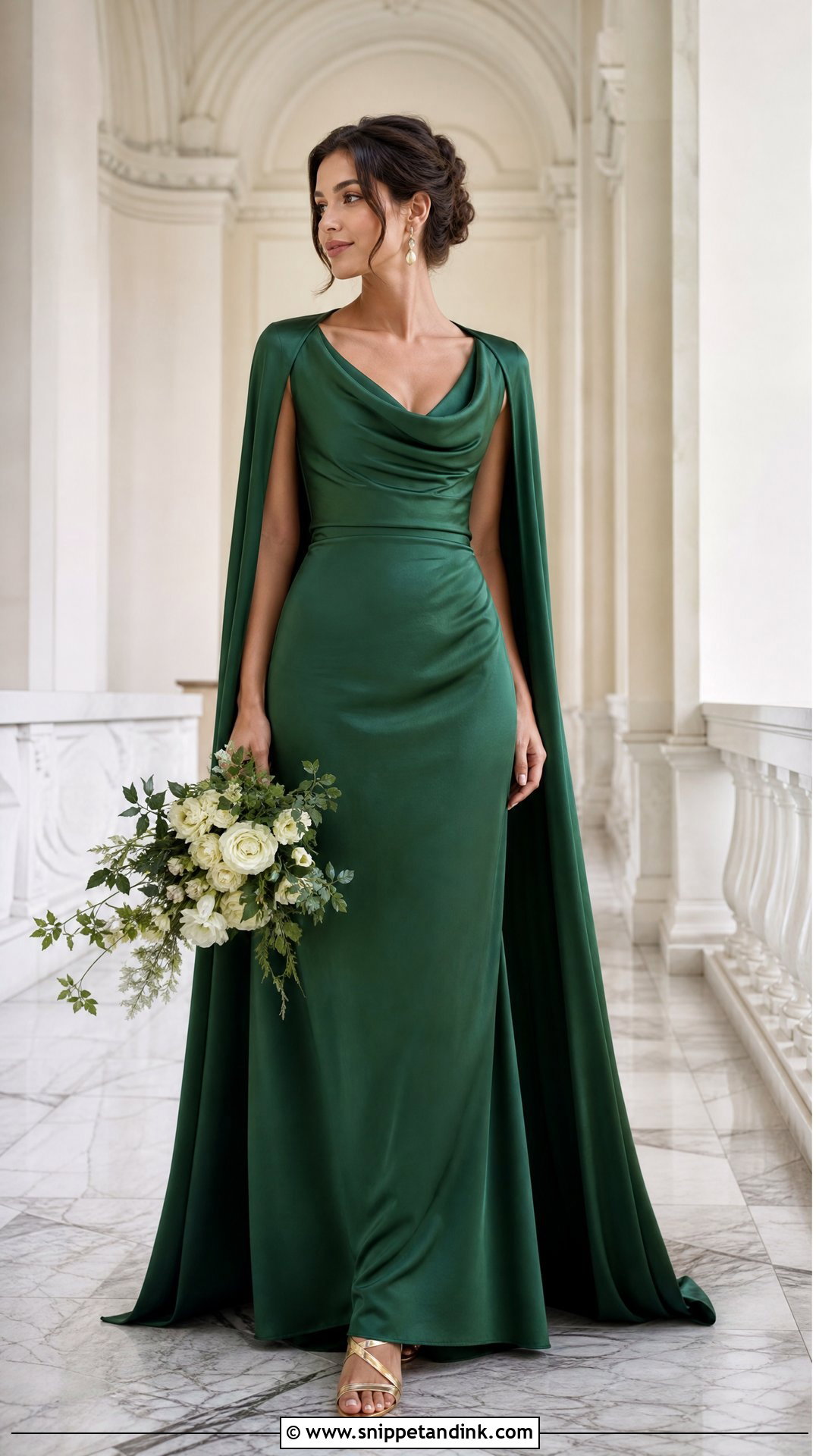
Emerald is a jewel tone that holds its own in formal settings. Silk or satin with a draped neckline, a fitted waist and a full-length skirt shows the colour’s depth as the fabric folds. Gold drop earrings, metallic heels and a slim bracelet suit it, and a detachable green cape gives you an entrance without hiding the shape. Be careful with the bouquet. A mostly green arrangement disappears against emerald, so I build it around cream flowers and use greenery only at the edges. Smooth hair and glowing skin finish it for an evening or winter wedding.
13. Navy Blue Wedding Dress
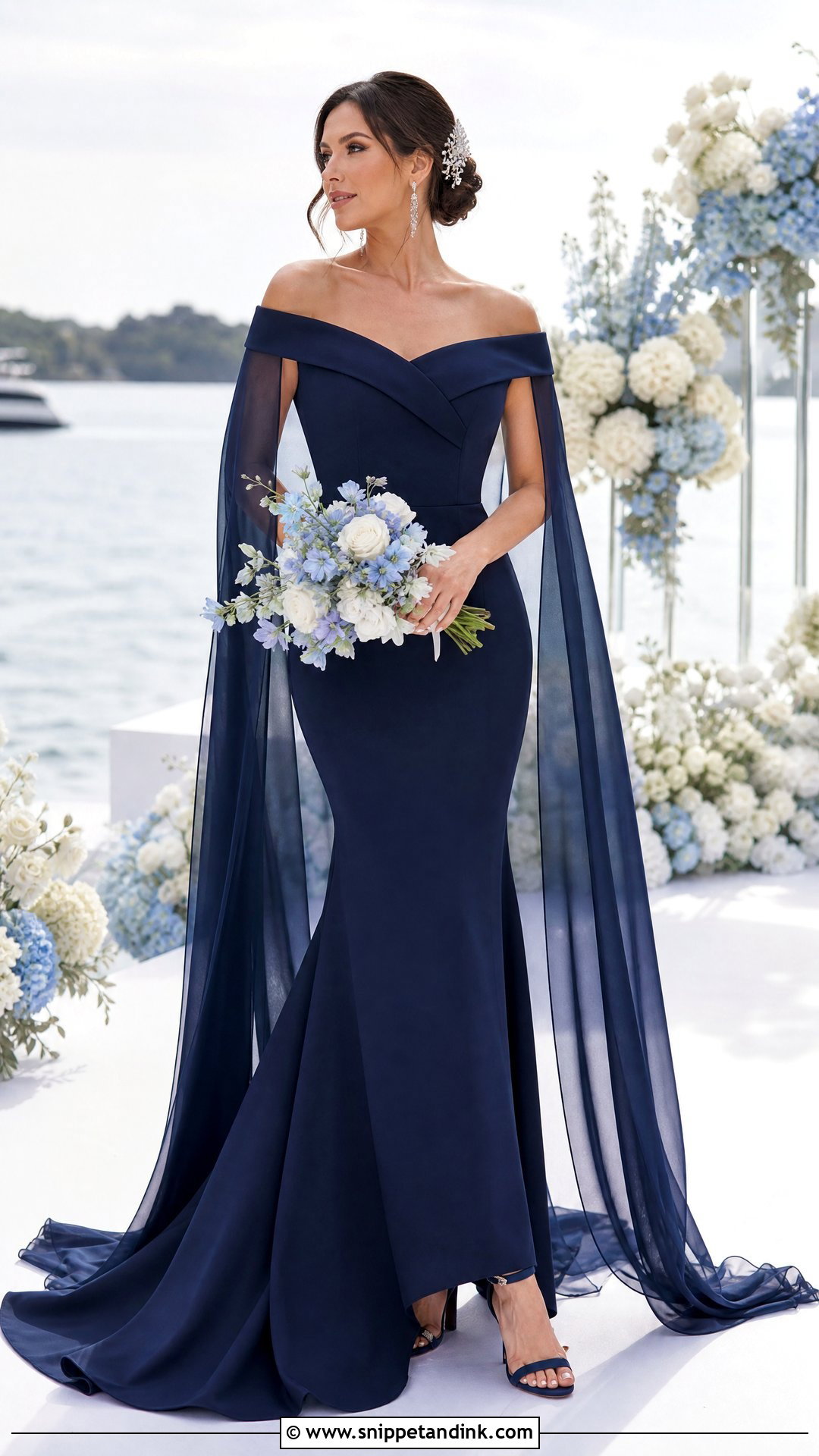
Navy gives you colour without brightness. A navy crepe dress with an off-the-shoulder neckline, a fitted waist and a long trumpet skirt has a clean finish, with a modest train for ceremony. Silver earrings, navy satin heels and a crystal comb suit it, along with a sheer navy cape or a blue-tinted veil. Here’s the catch I always mention: very dark navy can photograph almost black, especially in dim evening light. A fabric with some sheen keeps the blue visible on camera, and white and pale blue flowers help the photographer find the colour. Waterfront venues and hotel ballrooms suit it year-round.
14. Peach Wedding Dress
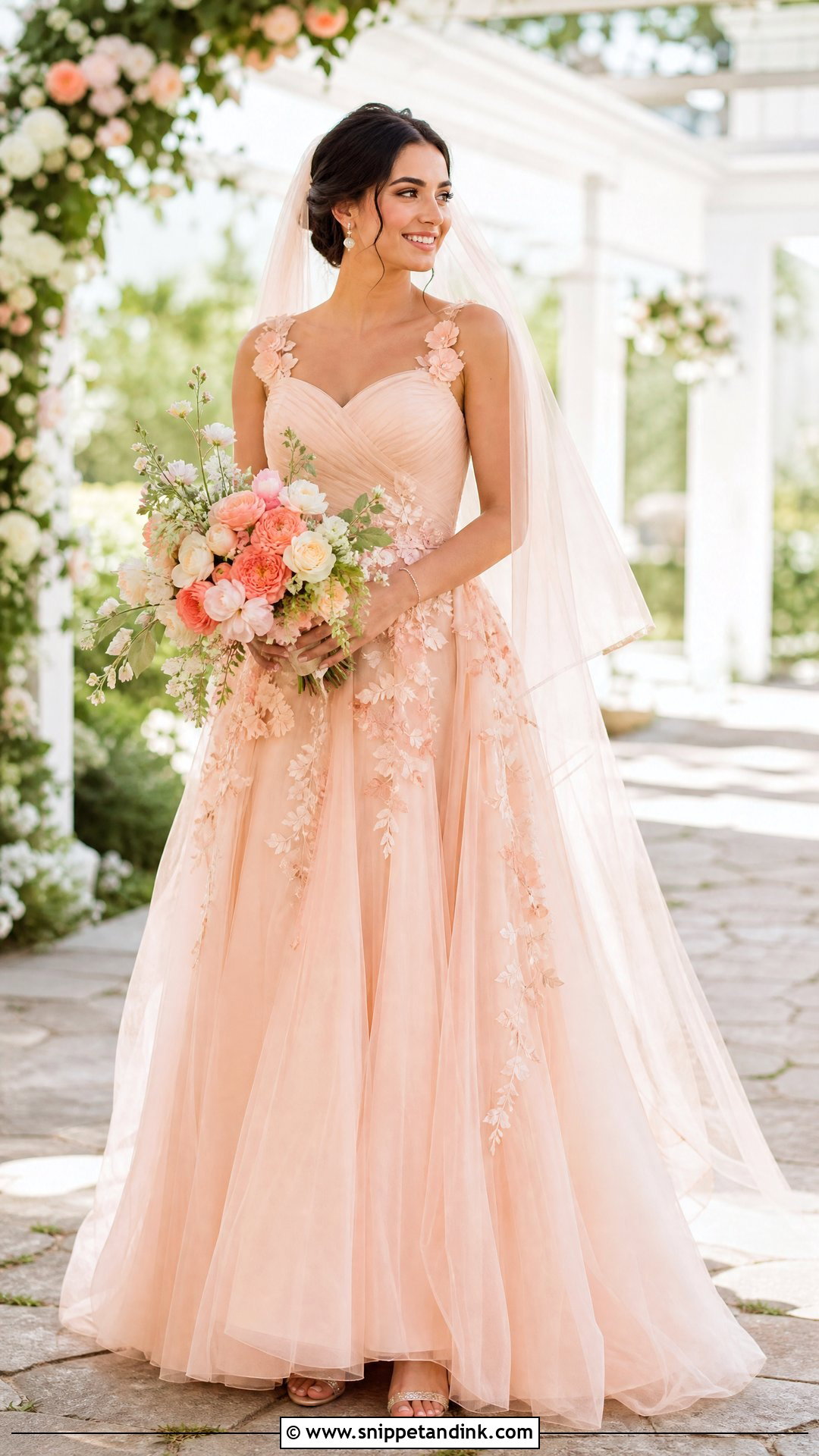
Peach glows in daylight, which makes it a natural choice for spring and summer. A flowing chiffon or organza A-line with a softly gathered bodice and a few floral appliqués suits the warmth. Peach runs from barely tinted to almost orange, and the right one gives gentle contrast with your skin rather than matching it exactly; too close and the dress and your arms blur together. Pale gold sandals, pearl earrings and a fine bracelet suit it, with a peach or ivory veil. Cream, coral and blush flowers finish the look. A touch of peach blush on the cheek ties it together, as long as nothing matches the dress too precisely.


15. Terracotta Wedding Dress
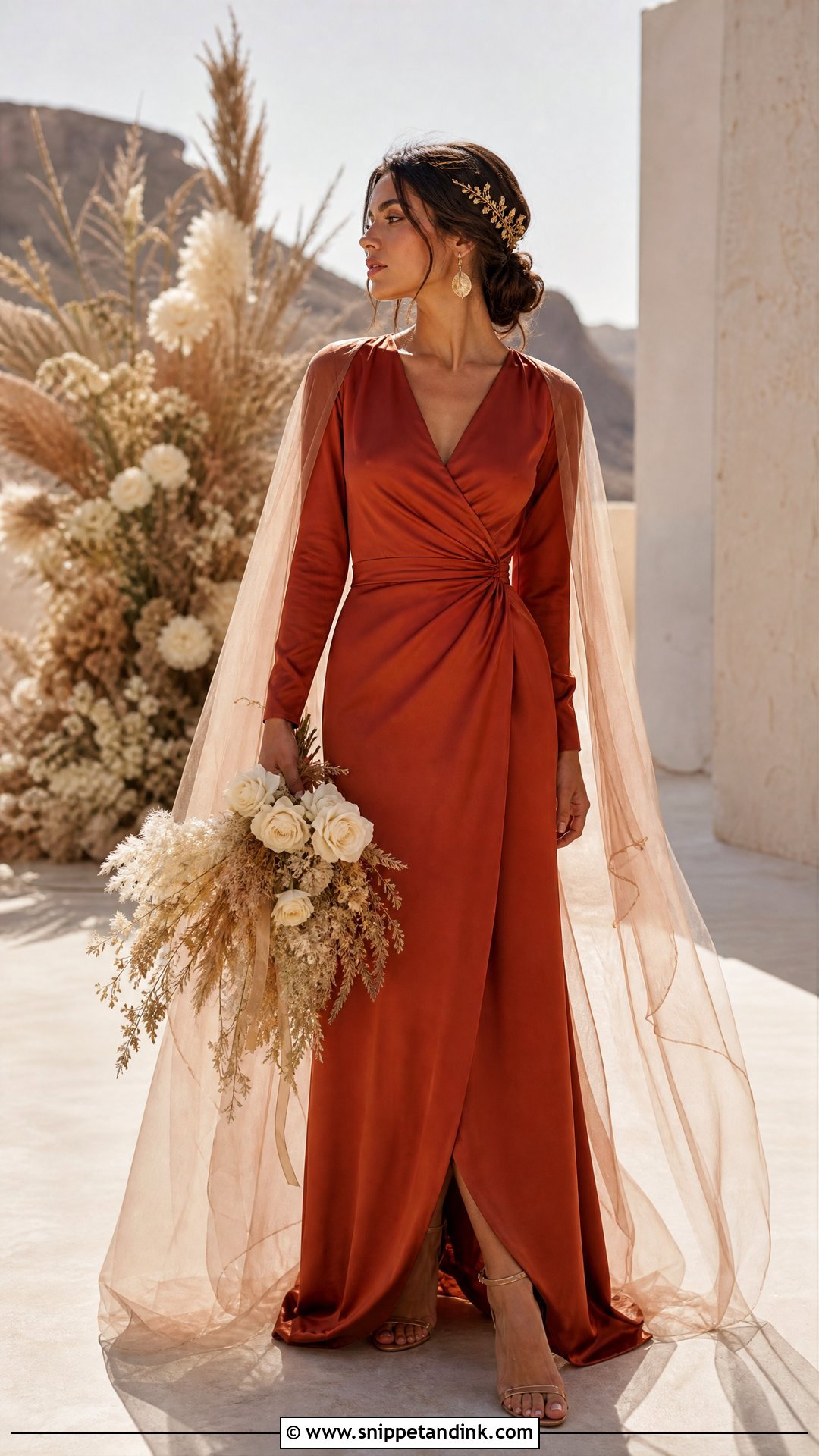
Terracotta suits desert, outdoor and autumn weddings, and it needs a formal cut to avoid looking casual. A satin wrap gown with long sleeves, a defined waist and a fluid skirt works well. Brushed-gold earrings, tan or bronze heels and a textured comb suit it, and a neutral tulle cape adds bridal drama. Pair it with cream flowers, dried grasses and muted foliage. Terracotta has strong orange and brown undertones, so I steer brides away from bright yellow gold, which looks brassy next to it; antique metals sit more comfortably. Let the dress stay the richest colour in the outfit.
16. Floral Wedding Dress
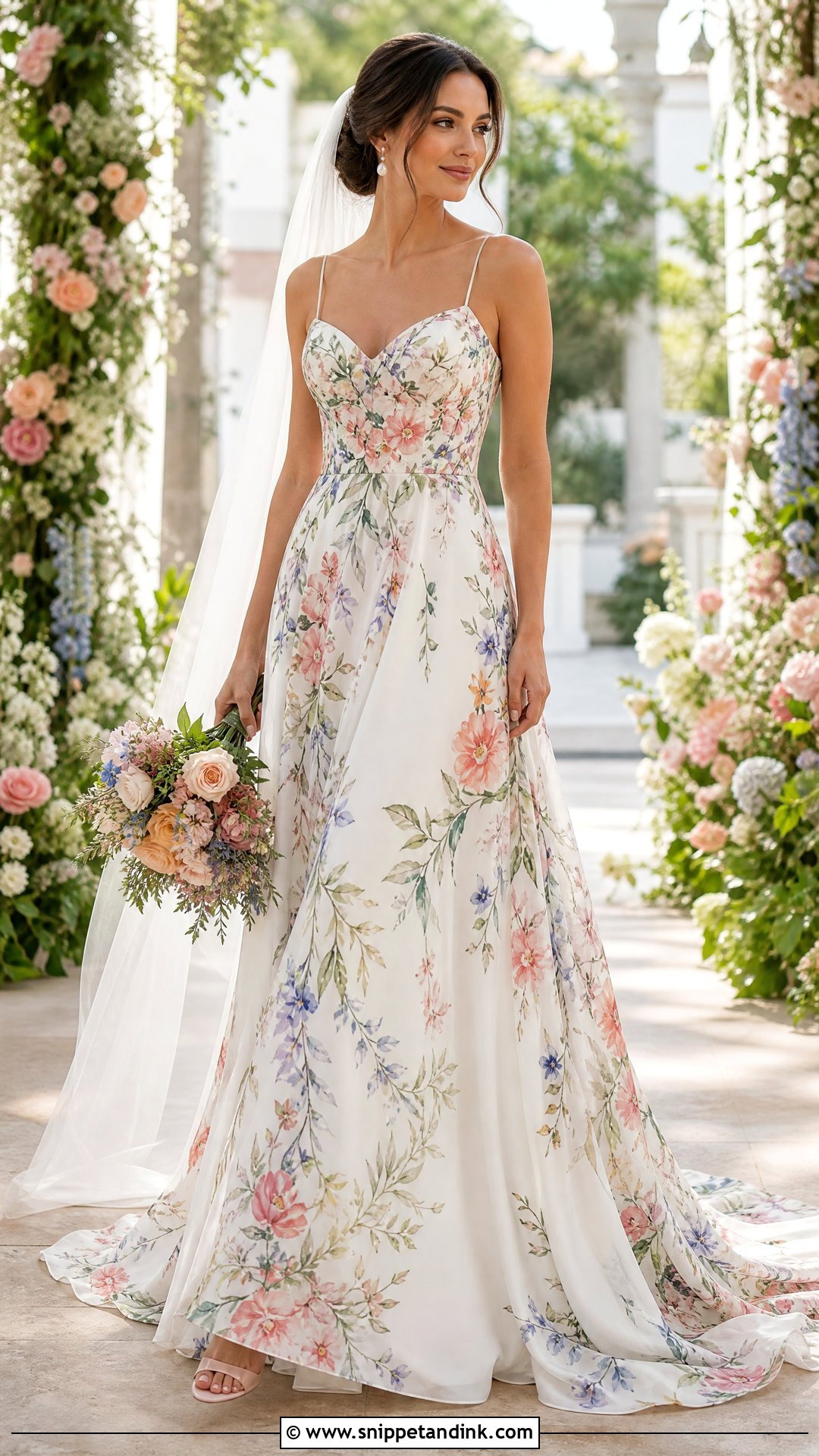
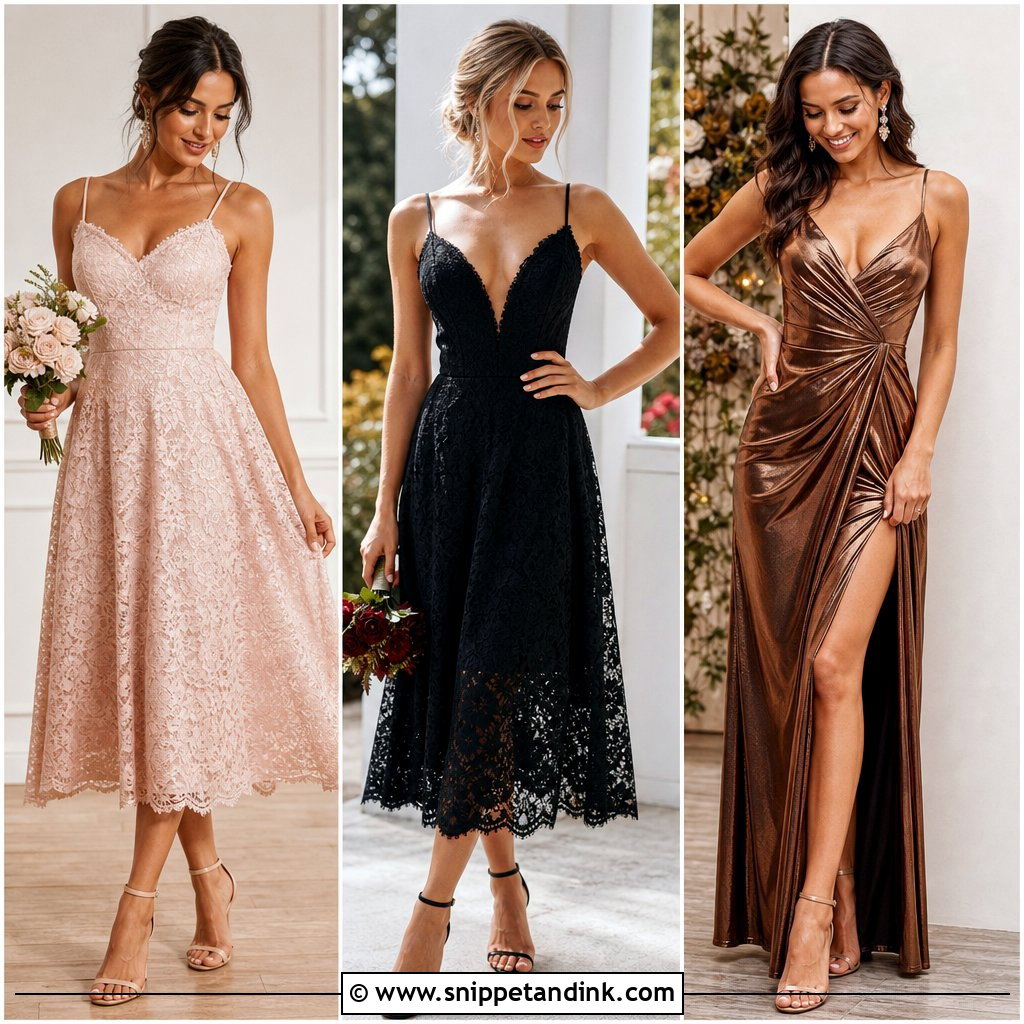
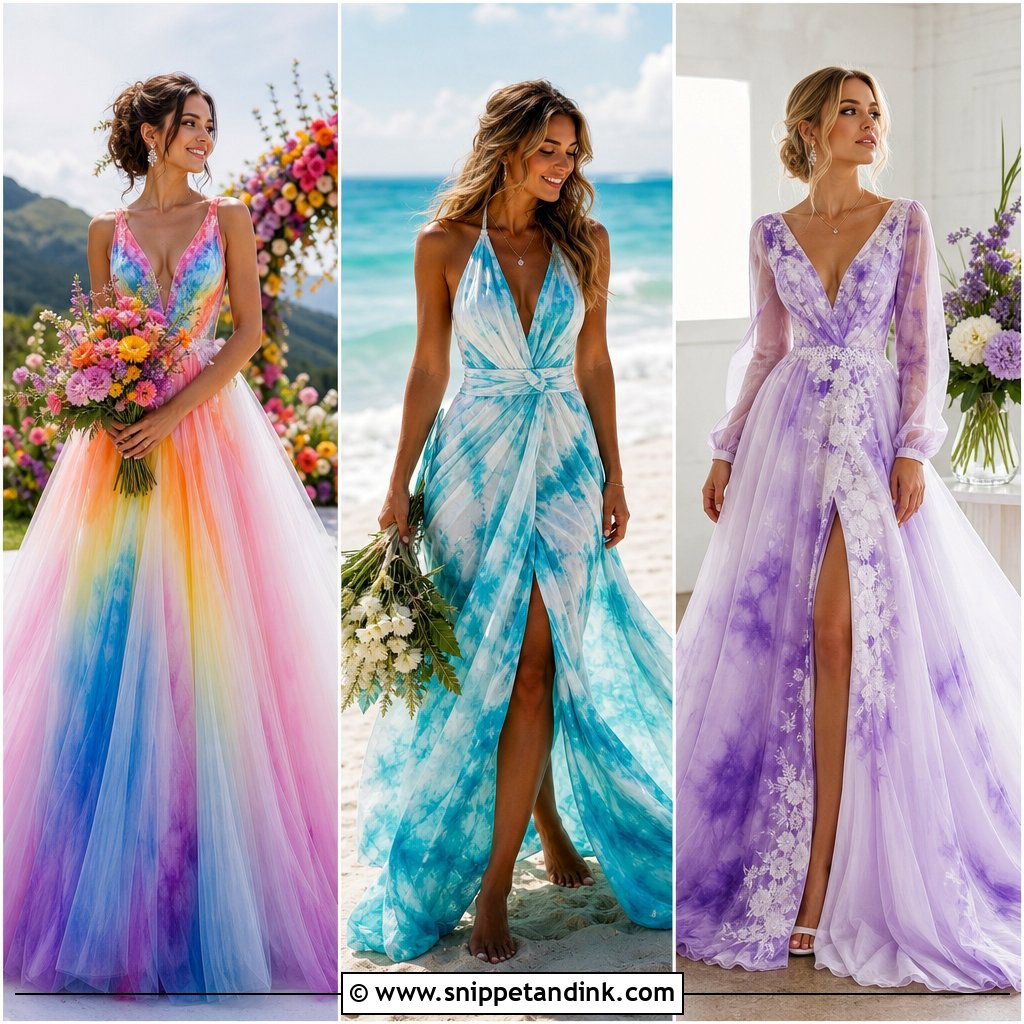
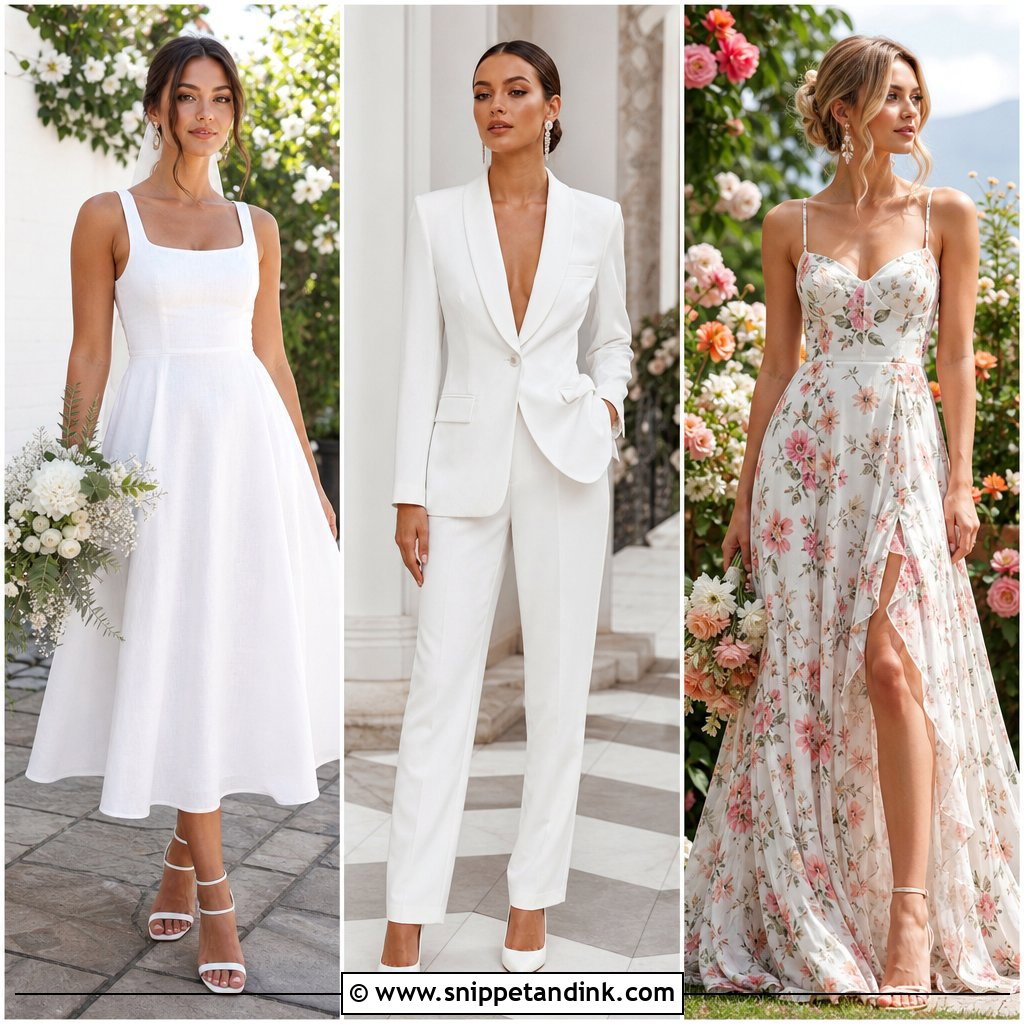
Can a print feel fully bridal? It can, if the shape is formal. A floor-length floral gown with a fitted bodice and a flowing skirt with a train reads as a wedding dress even with watercolour flowers on a pale base. Take one quiet shade from the print for your shoes, such as blush, blue or sage, and keep jewellery to pearl studs or small gold earrings. Leave the veil plain. The bouquet should repeat two or three colours from the print, not compete with it. When a printed dress is altered, I check that the largest flowers still sit where the designer placed them and that the pattern lines up across the seams.
17. Multicolor Embroidered Wedding Dress
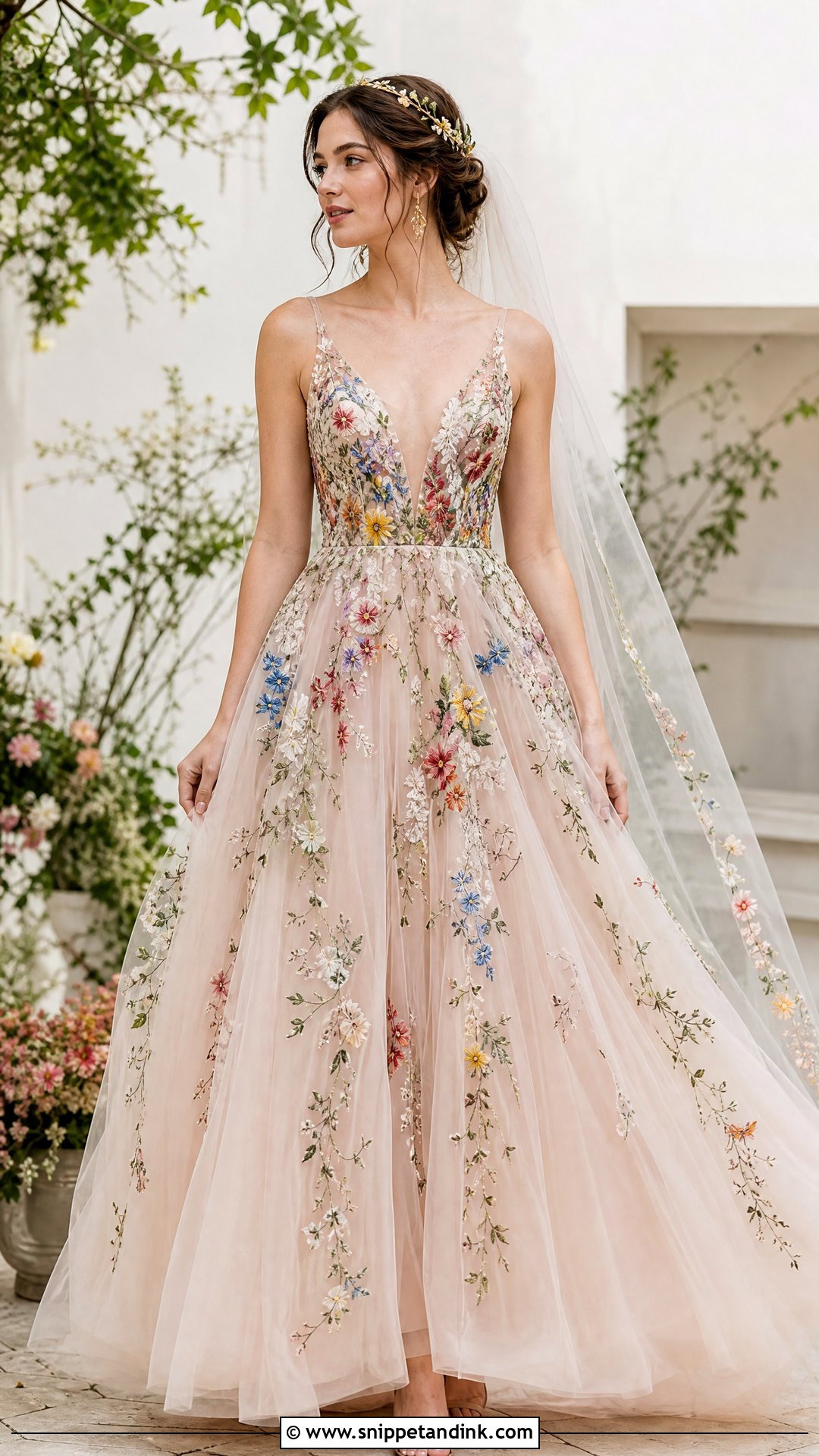
Colourful embroidery lets you wear several favourite shades without committing to one. The base is usually nude, pale blue or light blush, with embroidered flowers across the bodice and skirt, and a fitted top with a full tulle skirt and a train keeps it ceremonial. Neutral heels, small gold earrings and a fine hair vine echoing one motif suit it. Choose a plain veil, or one with only a little embroidery at the edge. The bouquet repeats a few thread colours, not all of them. Heavily embroidered tulle is weighty, and I check whether the waistband is strong enough to carry the skirt before we take anything in.
18. Gray Wedding Dress
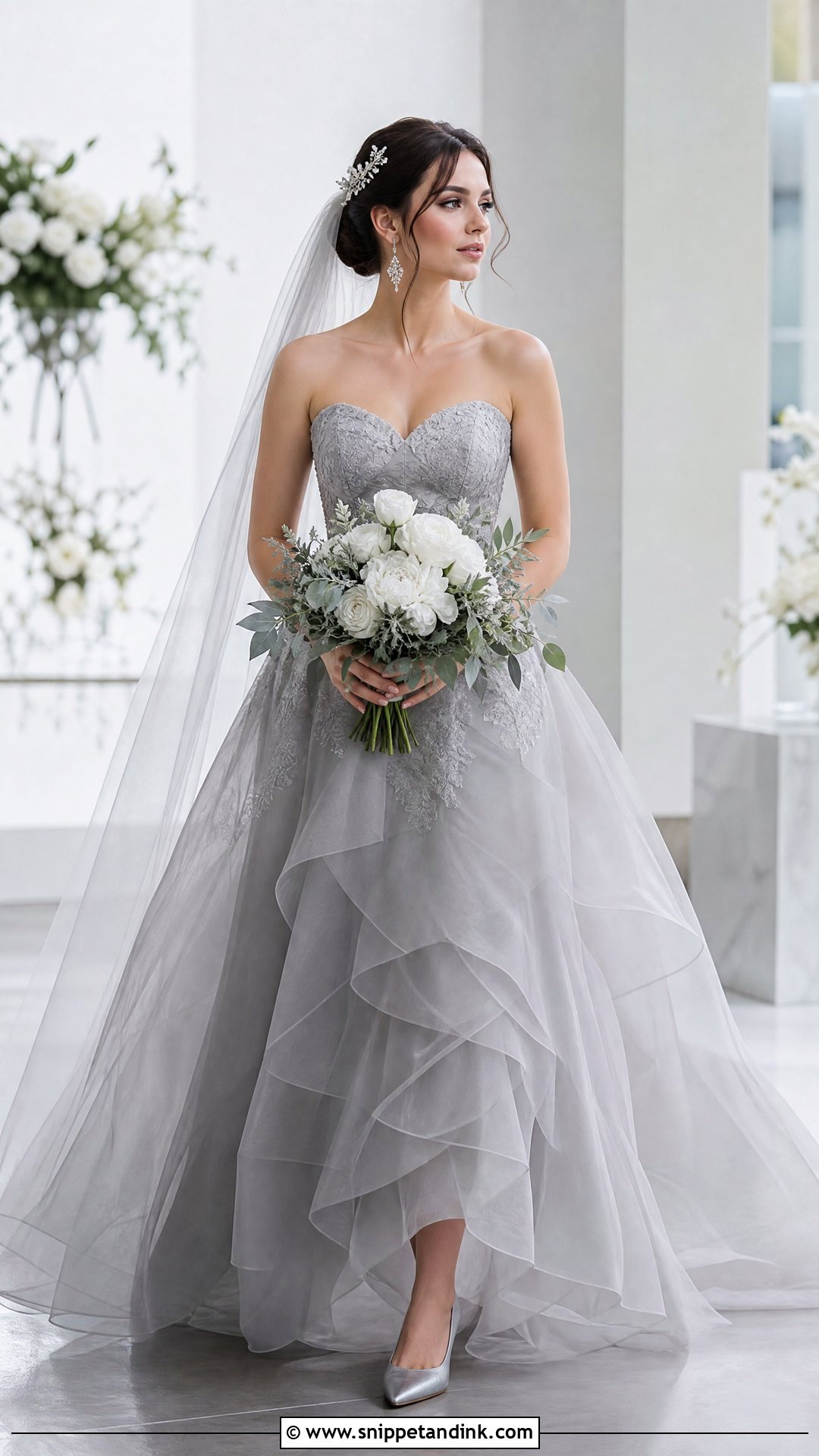
Grey is a cool neutral that needs texture, or it goes flat. A silver-grey tulle gown with a structured bodice, a little lace and a layered A-line skirt adds that texture through volume. Crystal earrings, metallic grey pumps and a slim silver hairpiece suit it, with a lighter grey veil or a clear cape. White flowers and dusty green foliage brighten the outfit. The undertone matters most: blue-grey reads crisp, lavender-grey romantic, and warmer dove gray softer. I look at grey right up against the bride’s face, because the wrong undertone gives skin a slightly ashen cast.
19. Mocha Brown Wedding Dress
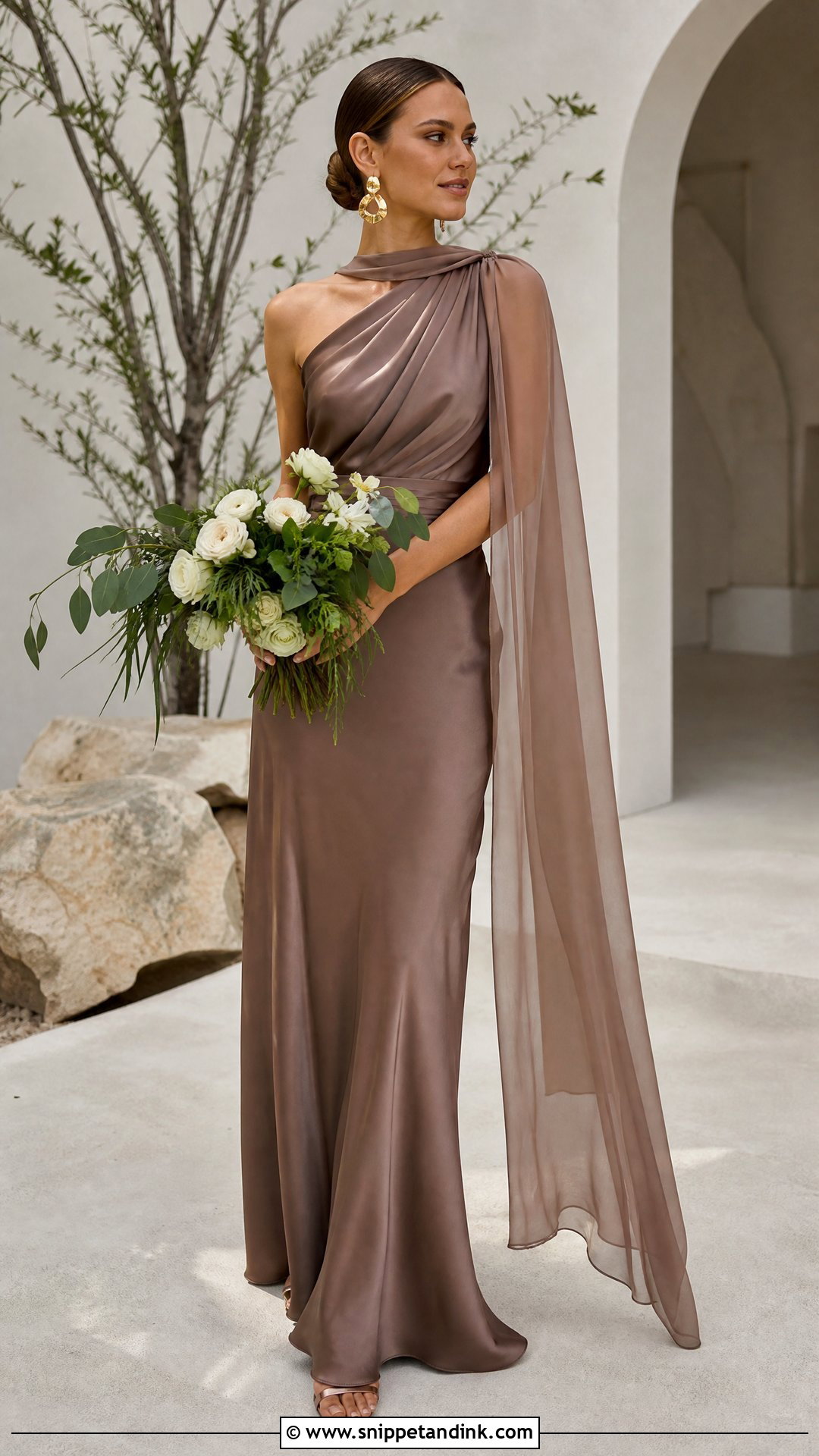
Mocha brown is warm and understated, and it needs a fluid cut to look intentional. A silk gown with a softly draped neckline, a fitted waist and a bias-cut skirt that falls close to the body does that. Bronze sandals, sculptural gold earrings and a satin bow or metallic comb suit it. Rather than chasing an exact brown veil, which is hard to match, I’d suggest a sheer taupe cape. Cream flowers and deep green leaves stand out clearly against brown. Without bridal details, mocha can look like a plain evening gown, so keep the finishing touches sleek but deliberate.

20. Pale Yellow Wedding Dress
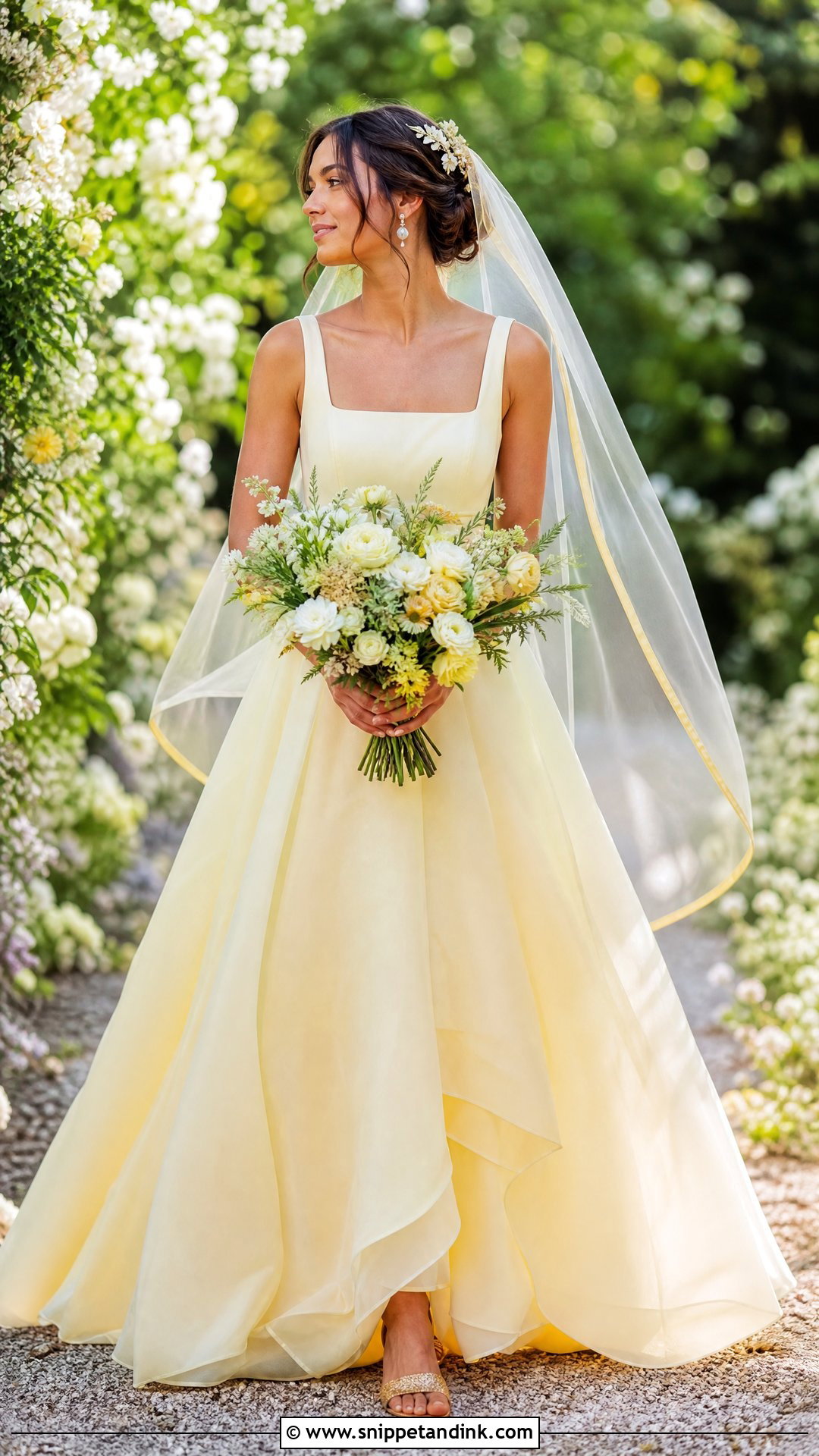
Pale yellow looks best in daylight, where it glows rather than going sallow. A butter-yellow organza gown with a fitted bodice, a soft square neckline and a full skirt catches natural light. Light gold heels, pearl earrings and a small floral comb suit it, along with a clear veil with a pale yellow edge. Keep the bouquet muted with cream, yellow and soft green. Yellow is the shade I test most carefully against a face. Lemon, butter and golden undertones each flatter different skin, and on some complexions a cool lemon makes the skin look slightly green. Spring gardens and daytime summer celebrations suit it.
Dye Lots, Veils and a Bridal Party in Matching Shades
Colour brings a problem white gowns rarely have: getting separate pieces to match. Dyed fabric varies slightly from batch to batch, and two blushes from different makers almost never agree.
- Order a coloured veil or cape from the same maker as the gown where you can, and ask whether it can be cut from the same dye lot.
- If you can’t, choose a neutral or clear veil. A near-match looks worse than an obvious contrast.
- Keep your bridesmaids clearly different from your shade, either darker, lighter or in another colour, so you don’t blend into the line-up.
- Bring a physical swatch to your florist and makeup artist. Photos on a phone screen don’t show true colour.
Coloured fabric fades
After the wedding, keep a coloured gown out of direct sunlight, which bleaches dyes unevenly, especially on silk. Have it cleaned by someone who handles coloured silks, and ask them to spot-test before treating any stain, because some dyes run when wet.
The Shade That Makes You Look Rested, Not Washed Out
The right colour is the one that makes you look like yourself on a good day. Your complexion, venue, season and flowers all count, but they shouldn’t overrule what you actually love. Whatever shade you pick, the rest of the outfit is what makes it bridal: a formal fabric, a considered silhouette, good shoes, restrained jewellery and a deliberate veil or cape. View every fabric sample in daylight and under light like your venue’s before you decide. If I could give one instruction, it would be to judge the colour against your face first and against the mood board second.
You'll Like These Ideas:





Leave a Reply