
An artsy wedding dress is the one where you can see someone’s hand in it: a painted petal, a fold pinned by eye, thread in a colour nobody else chose. That’s what the brides who come to me for these looks are after. Some want something soft and painterly, others bold, sculptural or delightfully unconventional. The test I use is simple. You should feel more like yourself in it, not like you’ve been cast in a play. Below are twenty dresses with their shoes and finishing pieces, plus what each one needs at the fitting, so you can picture the whole outfit and how it will behave on a long day.
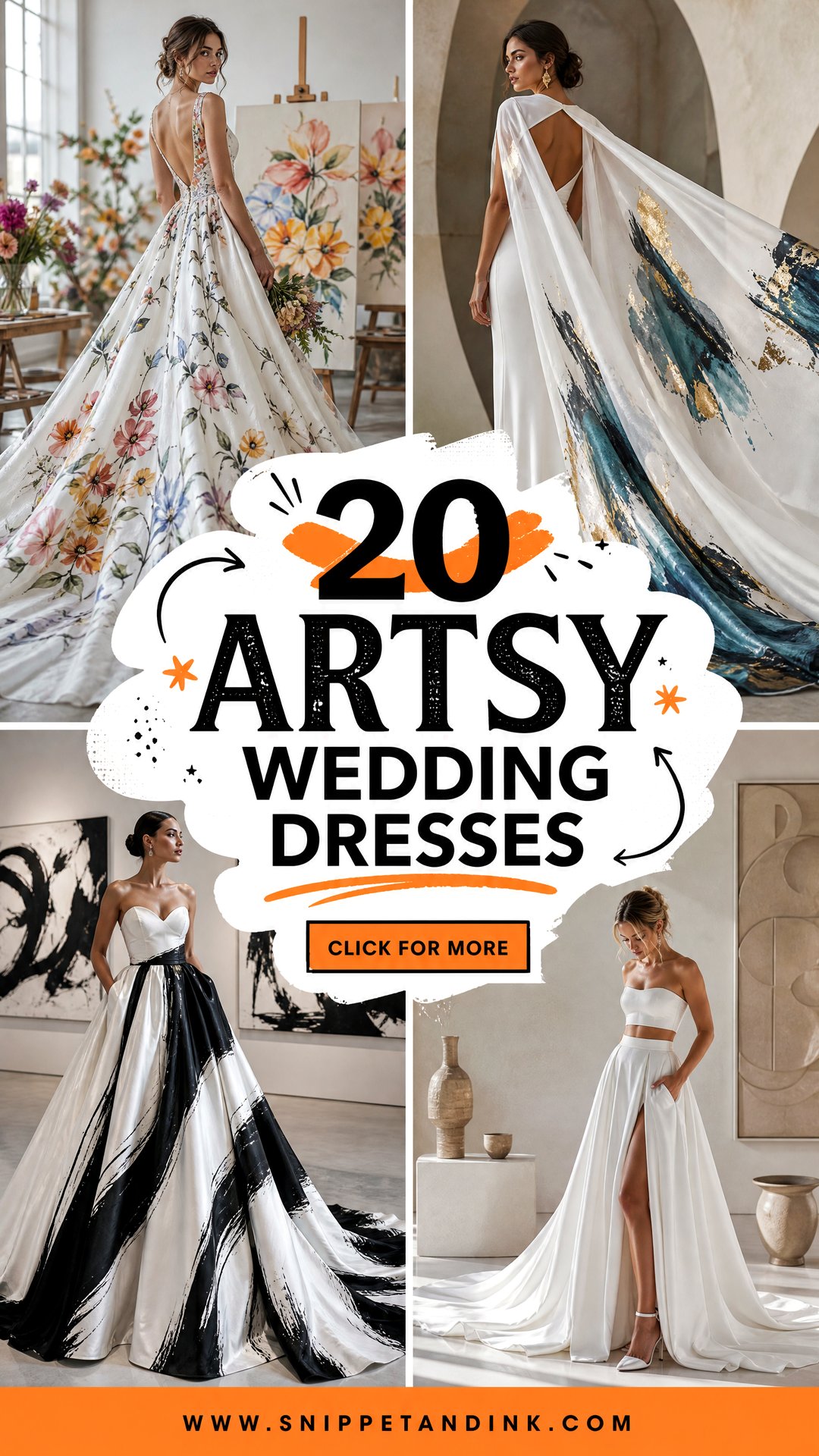
Commissioning a One-Off Piece From an Artist
Several of the dresses below are made, or finished, by an artist rather than a bridal factory: painted skirts, custom embroidery, hand-dyed ombre. That’s a different kind of order from buying a sample gown, and it needs a different timeline. I treat it like any commission.
- Settle the base dress and its fit first. Paint or embroidery goes on after the major alterations, or the design ends up in the wrong place on your body.
- Ask for a sketch placed on a photo of you in the dress, then a test swatch on the actual fabric.
- Allow time. Hand painting and embroidery usually take weeks, and the artist needs the finished dress in hand before starting.
- Agree in writing what happens if a colour comes out wrong, and whether there’s a fitting after the art is added.
Bring the swatch to your hair and makeup trial and to the florist. Everything else in the outfit should be chosen around the art, not the other way round.
1. Sculptural Satin Wedding Dress
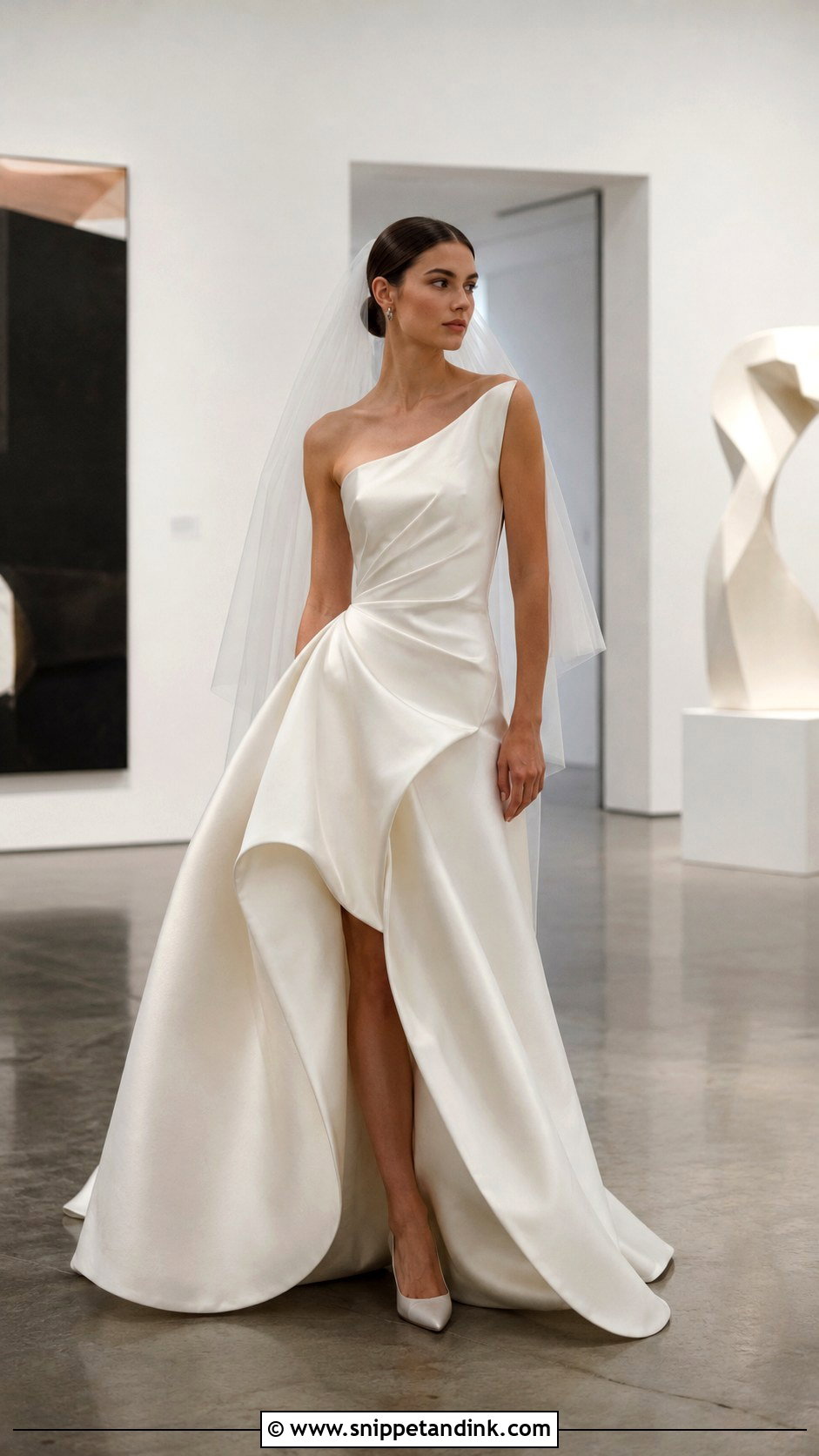
Shaped satin is the gallery piece of bridal. Curved folds, a sculpted neckline or an architectural skirt over an asymmetric bodice and fitted waist look striking, and a soft ivory or pearl tone keeps your eye on the shape. The neckline acts as the necklace here, so I leave the throat bare. Pointed satin pumps, small metal earrings and a sleek low bun are enough. Ask the seamstress to protect the folds while still letting you sit; the shape is usually built on an inner structure that can be eased a little without anyone seeing. A wrist-length veil adds movement but doesn’t cover anything important.
2. Hand-Painted Floral Wedding Dress
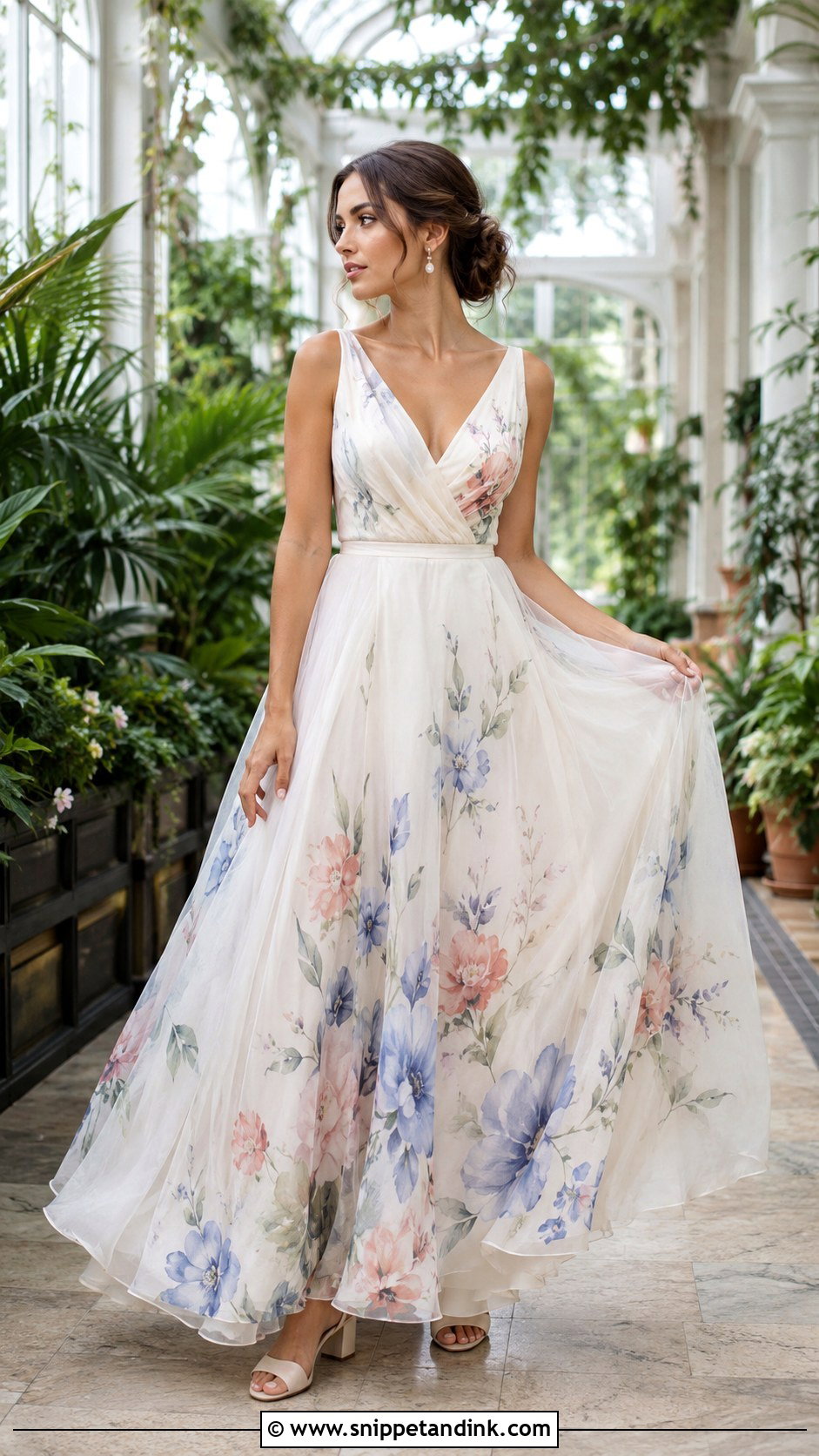
A hand-painted floral wedding dress is a garden you can wear. Watercolour-style flowers along the skirt, train or bodice look best with some bare fabric around them. Pale blue, lavender, coral and leaf green all sit well on ivory silk or organza. I always ask the artist how the paint was fixed. Heat-set textile paint is far more forgiving than anything that sits on the surface, and that answer tells you how carefully it needs to be pressed and cleaned. Pearl earrings, ivory block heels and a loose twisted updo finish it, with a bouquet in one or two of the painted colours.
3. 3D Floral Wedding Dress
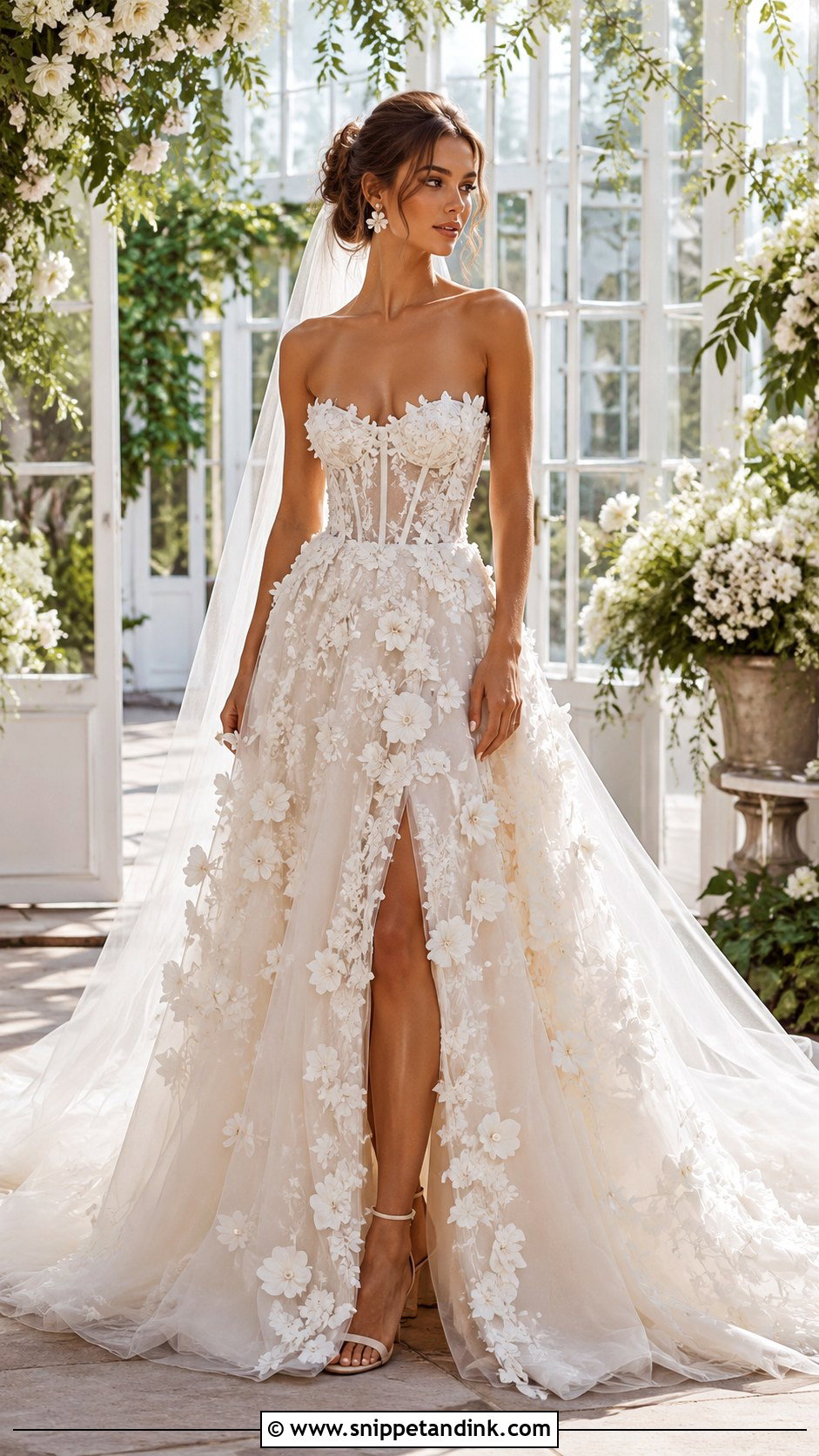
Raised petals catch light and shadow from every side. The flattering version starts small on the bodice and grows toward the skirt, so the volume sits low. A fitted corset over a light A-line keeps it balanced, or bigger blooms at one shoulder or along the train add drama. Barely-there sandals, floral studs and a clean veil under softly pinned hair suit it, with a small bouquet. Petals crush in transit and in the car, and they don’t recover by themselves. Ask whoever dresses you to lift each one gently with cool steam held well back before the ceremony. A sheer floral cape adds coverage if you need it.
4. Asymmetrical Draped Wedding Dress
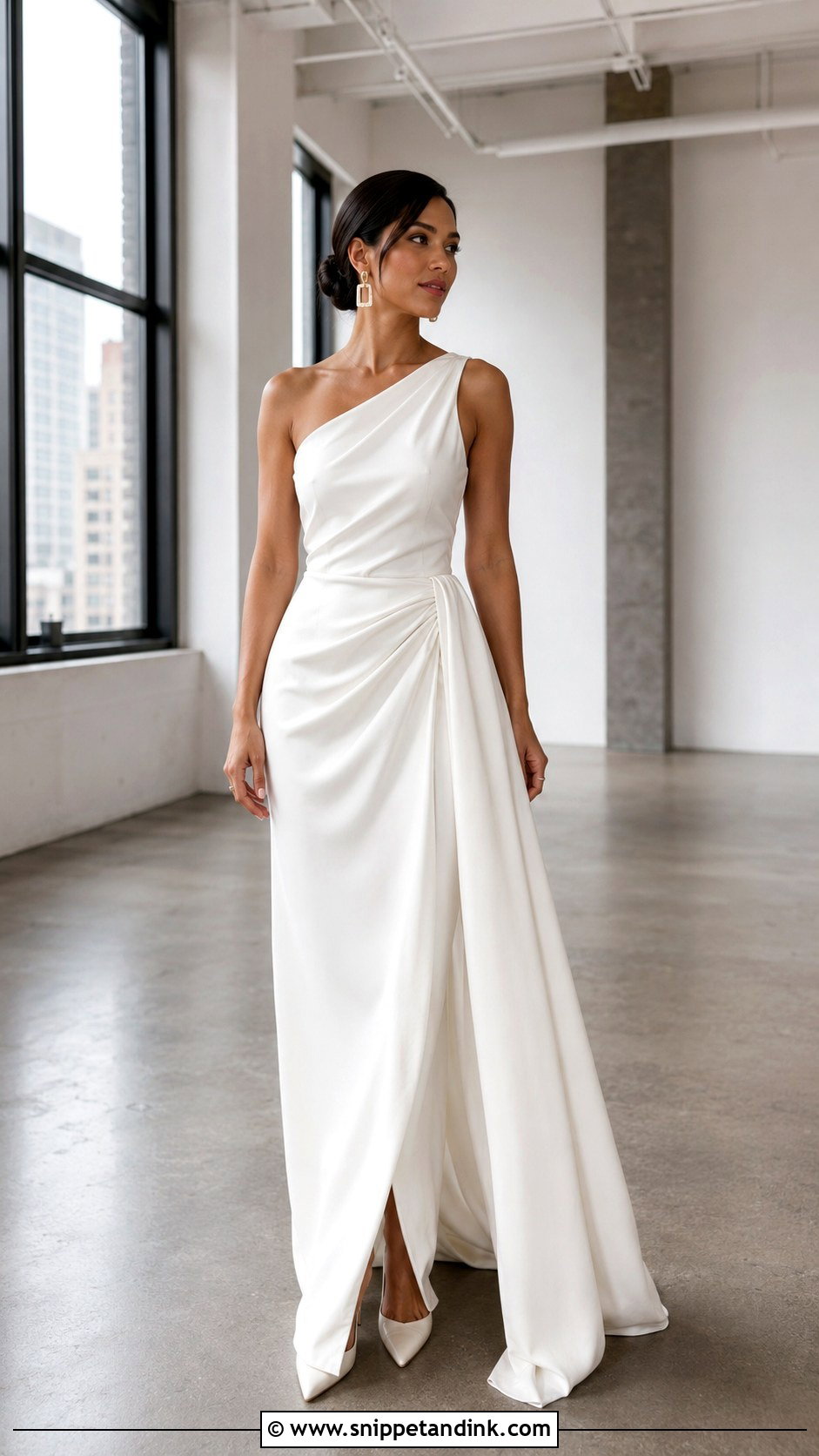
Draping that runs on a diagonal, from one shoulder or gathered on one hip, pulls the eye across the body and moves well in photographs. Fluid crepe looks soft; crisp satin holds a stronger shape. Geometric earrings, pointed pumps and a compact clutch keep the outfit polished, with a sleek ponytail or side-parted bun. A long side panel is the thing to test. I have brides climb steps and turn quickly, because a loose panel can catch under a heel. A fingertip veil works, or swap it for a modern metal hairpiece if you prefer a cleaner line.
5. Colorful Embroidered Wedding Dress
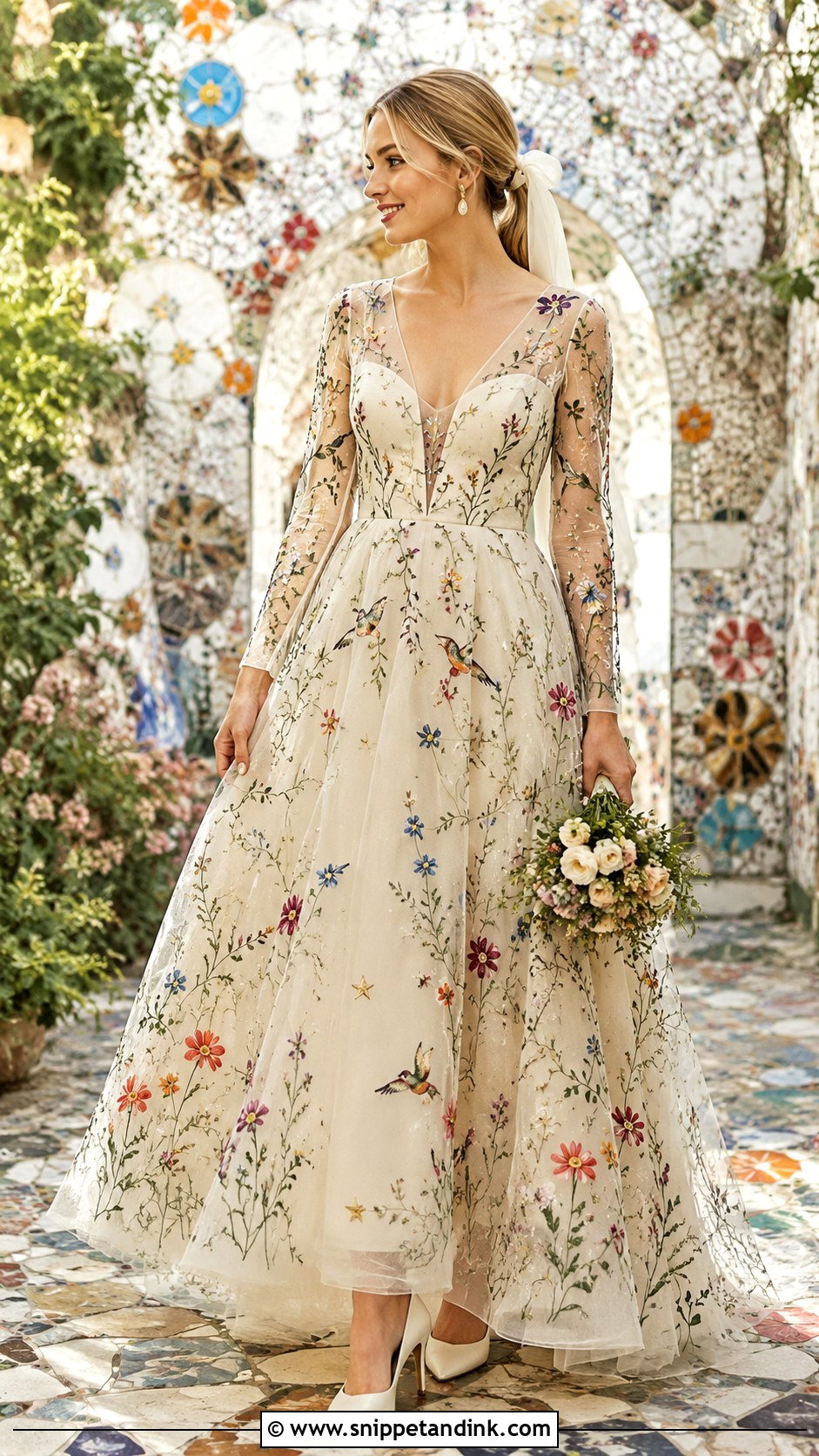
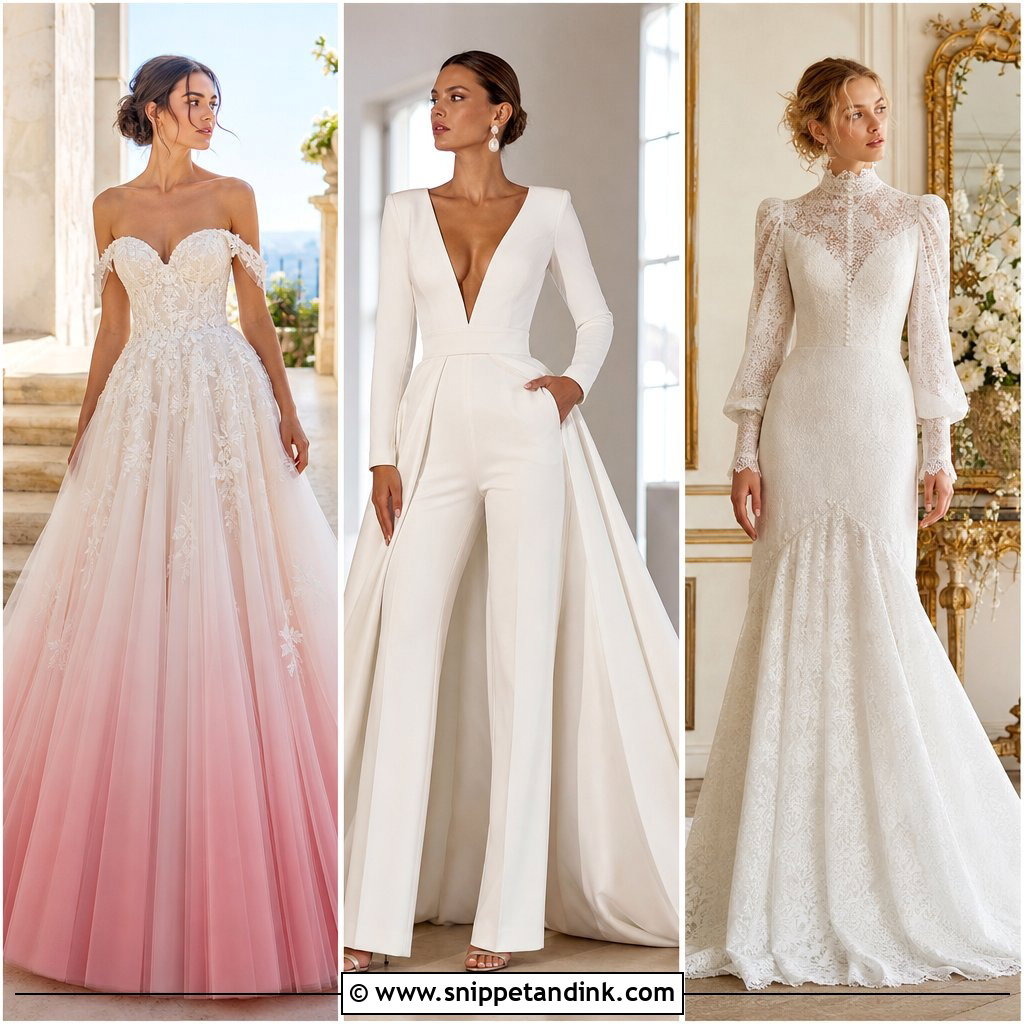
Colourful embroidery turns a familiar silhouette into a personal record: wildflowers, birds, vines, stars or abstract shapes stitched across sheer tulle. Choose motifs with a reason behind them, such as your venue’s garden, your heritage, a favourite painting or a shared memory. A lined bodice makes bright threads read clearly. Ivory heels, delicate drops and a ribbon around a low ponytail are enough. Keep the bouquet to fewer varieties. Coloured thread on sheer tulle shows its backside, so ask to see the reverse of the work; neat knots and short tails matter when light shines through the skirt.
6. Pleated Architectural Wedding Dress
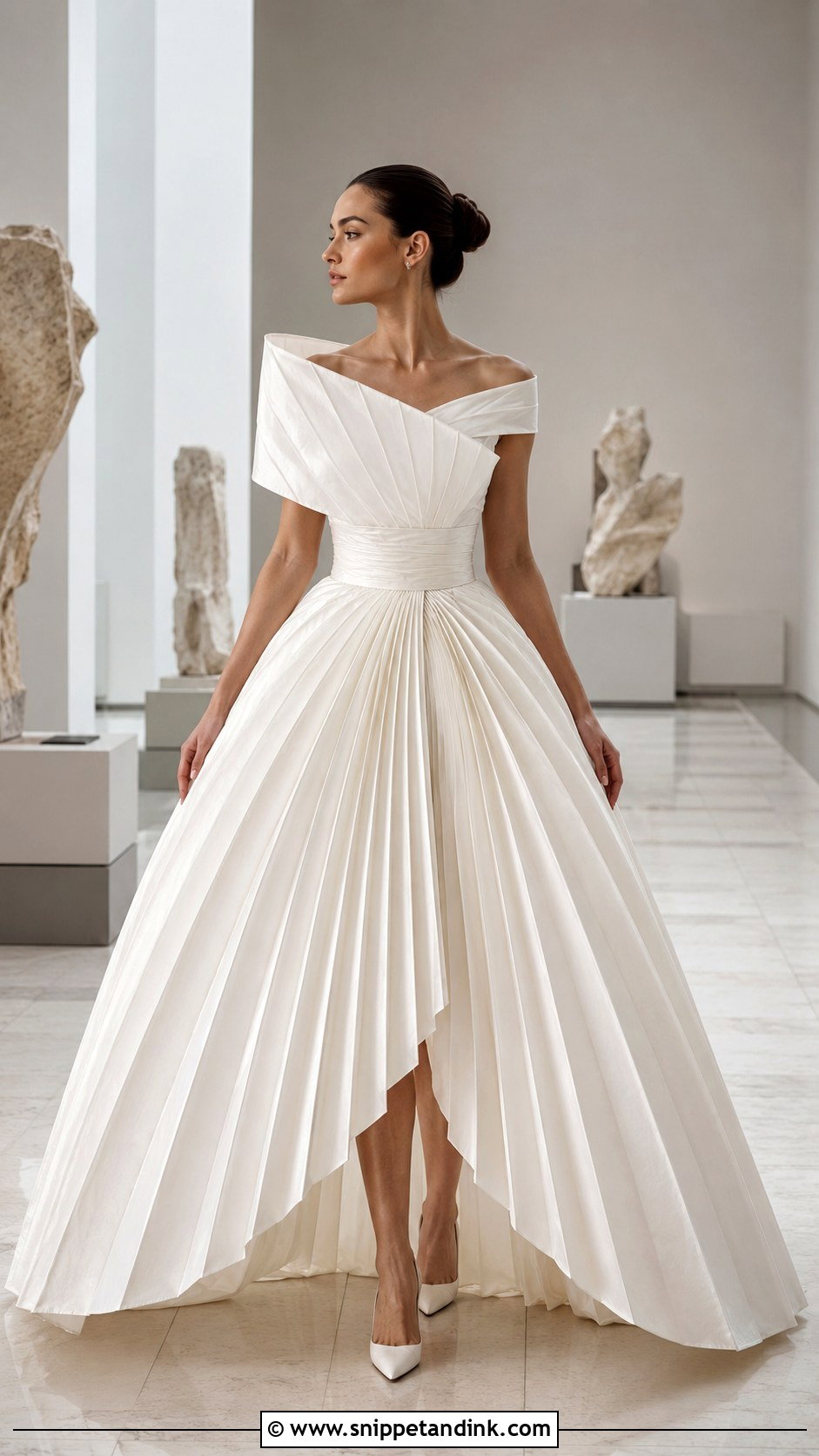
Pleats bring rhythm and shadow to a plain fabric. A pleated architectural wedding dress might have a folded neckline, a fan at the waist or precise skirt panels. Organza pleats hold volume; chiffon pleats fall softer. Minimal earrings, streamlined heels and a smooth bun keep attention on the folds. A long elaborate veil flattens them, so I’d choose a short structured veil or a comb. Walk in several directions at the fitting and watch whether the pleats spring back into line or stay creased where your legs pushed through.
7. Wedding Dress With Artistic Cape
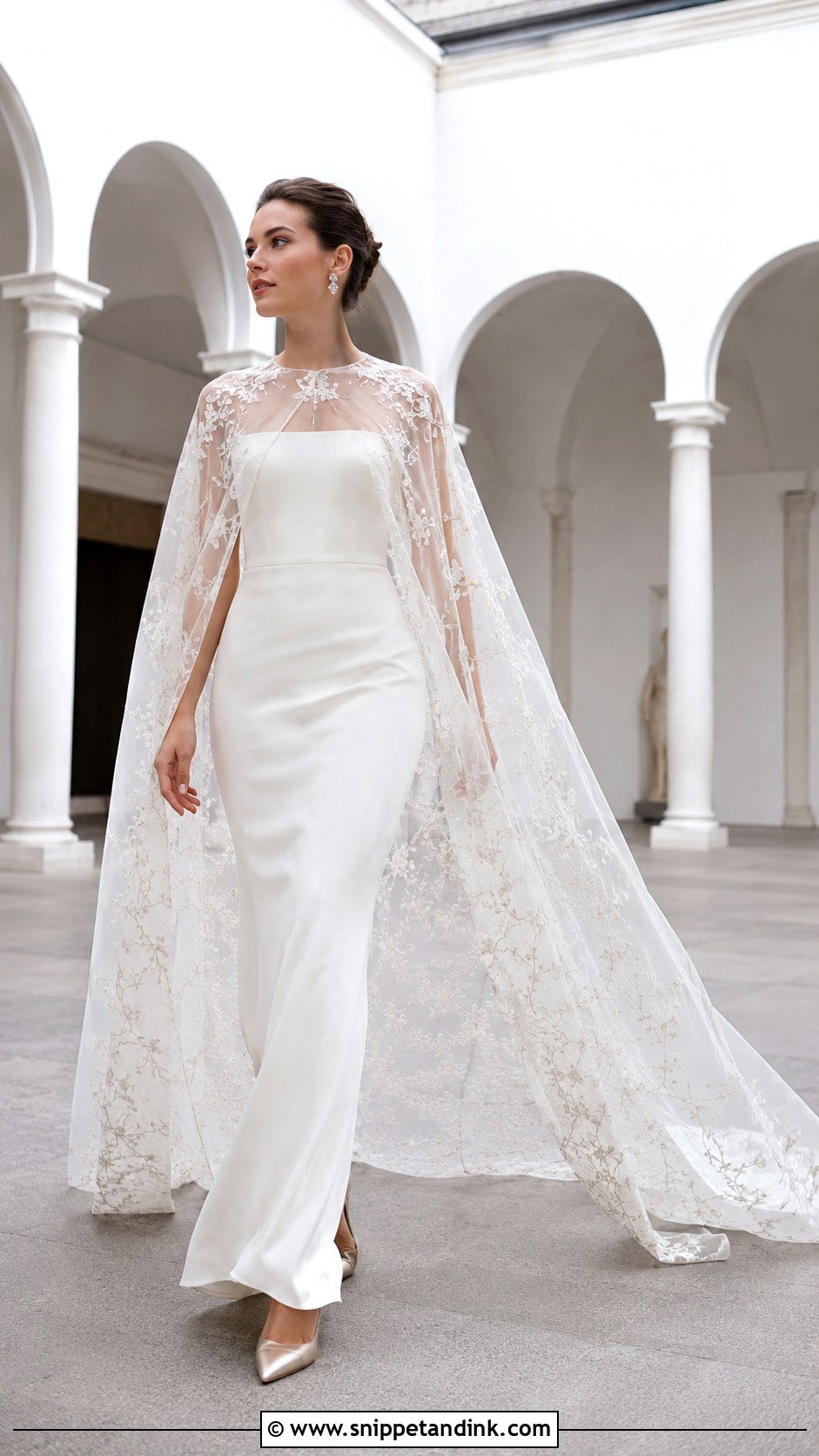
A cape gives you the ceremony feeling of a veil without anything on your head. Sheer tulle, embroidered organza or soft pleated chiffon over a clean column or fitted crepe dress keeps the outfit from getting heavy. Capes can attach at the shoulders, neckline or wrists, and each changes how it moves. Wrist attachments flutter when you raise your arms, which is lovely in photos and awkward at dinner. Metallic pumps, small crystal earrings and a polished updo show the attachment points. Outdoors, keep the length short enough not to drag, and choose a removable one so you can eat and dance freely.
8. High-Low Tulle Wedding Dress
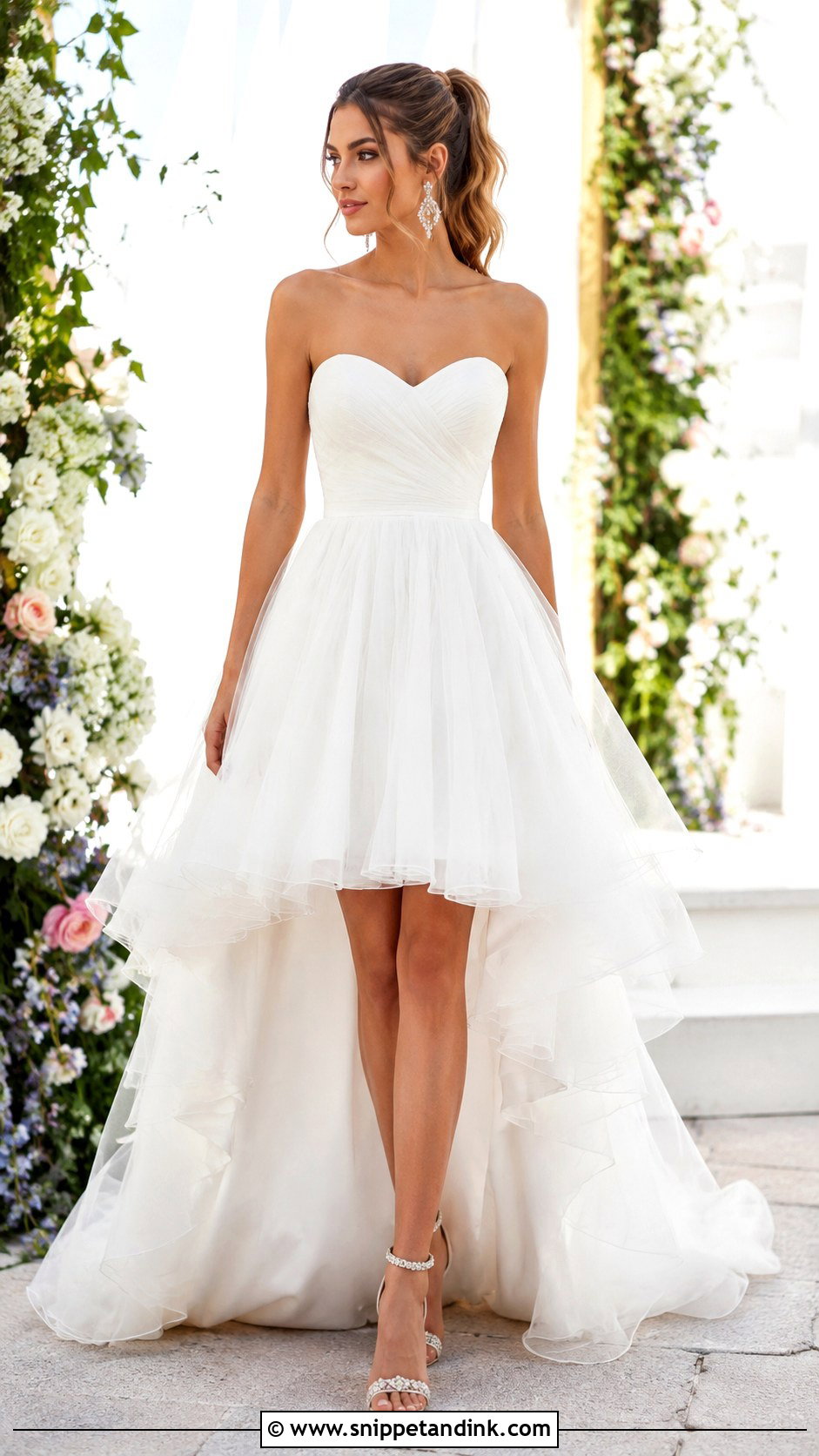
High-low tulle shows your shoes at the front and keeps the sweep at the back. A gently curved hem looks much better than a sharp step down. Embellished ankle-strap heels, statement earrings and a neat shoulder-length style or high ponytail suit it. Your shoes are on display for hours, so they need to be both special and comfortable for standing. A fitted bodice anchors all that air. One thing I watch: layered tulle at the back tends to flip up and over in wind, so for a garden I’d ask for a slightly heavier bottom layer. Skip a long veil; it fights the hemline.
9. Corset Organza Wedding Dress
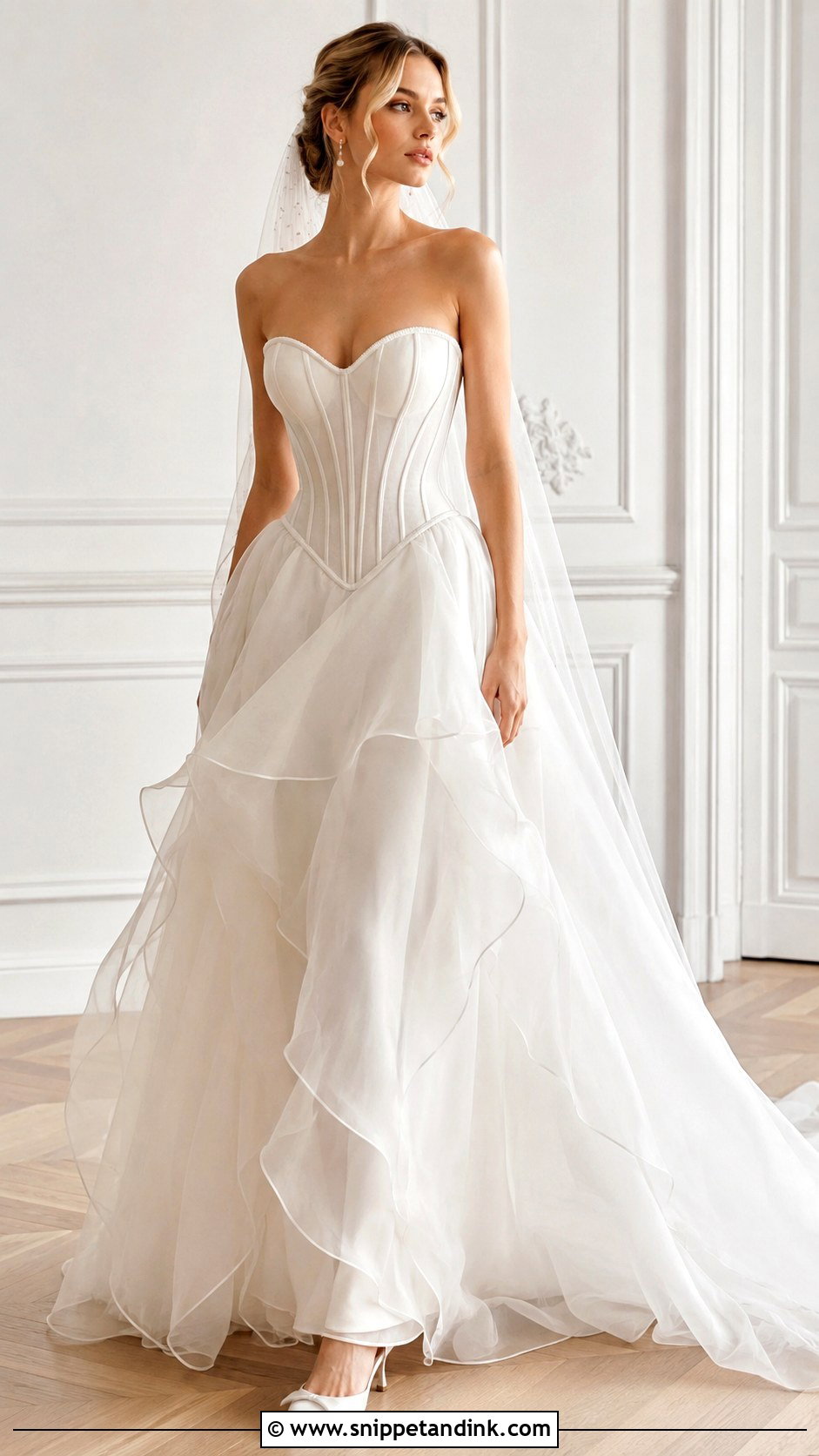
Visible corsetry against floating organza sets structure against softness. Curved seams and a Basque waist over cloud-like layers at the hip look modern. Ask for enough lining to give the coverage you want, and keep the skirt light rather than stiff if you plan to dance. Pearl drops, low satin heels and a delicate veil just past the train suit it, with a romantic updo and open shoulders. During alterations I ask brides to sit and take a full deep breath. If the corset stops that, it’s too tight. A well-made one supports you without restricting your breathing.
10. Metallic Jacquard Wedding Dress
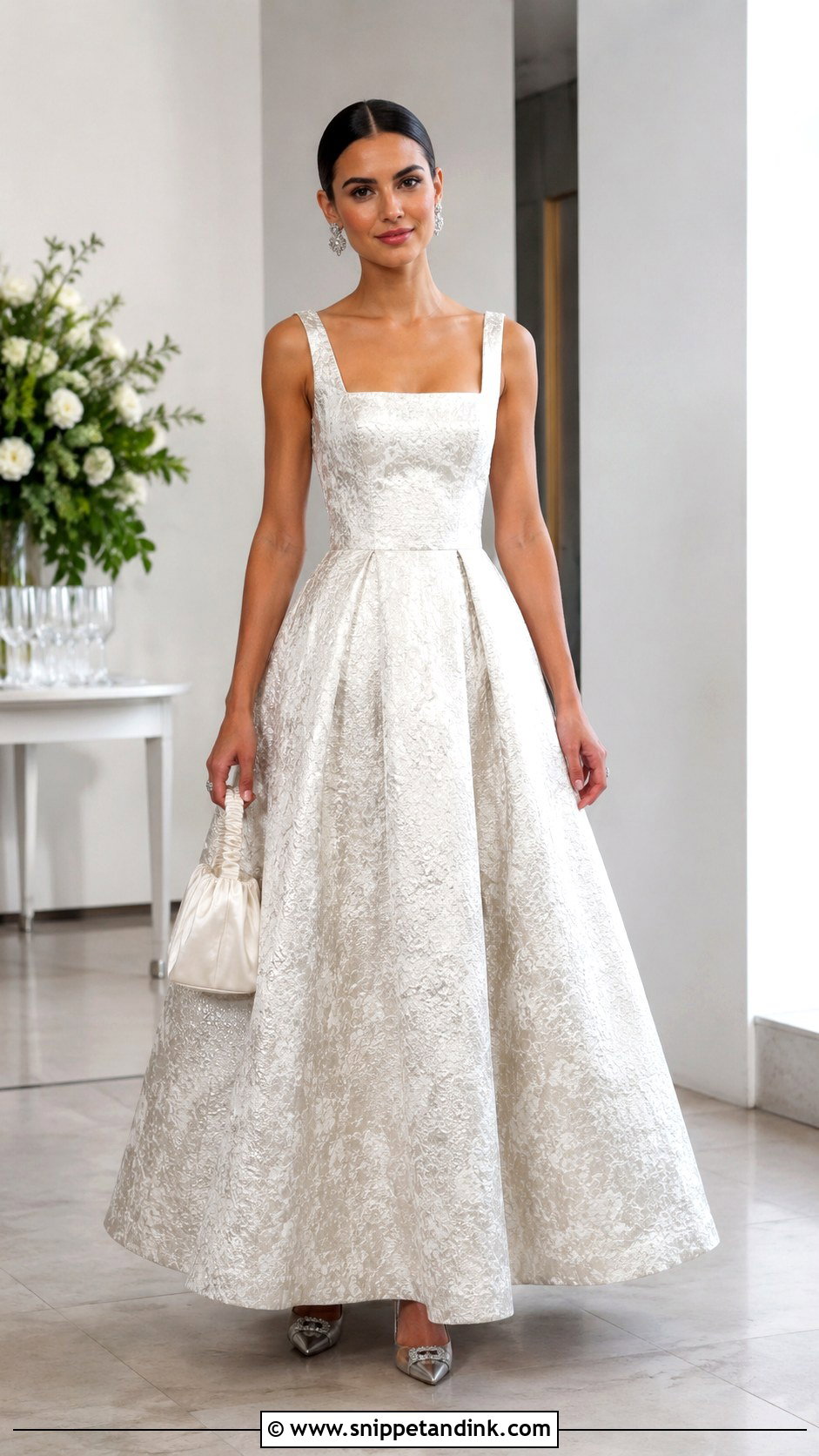
Metallic jacquard gets its shine from the weave, not from beads stitched on top, so nothing snags or falls off. Ivory with silver, pale gold or soft champagne all look refined. A structured A-line or column shows the pattern clearly. Simple metallic heels, sculptural earrings and a compact ivory bag suit it, with a centre-parted bun or brushed waves. Jacquard is heavy and warm, which matters in summer or over a long day. A square neck or sleeveless bodice lightens it. I’d also check how the pattern lines up at the side seams; a good maker matches it.
11. Crochet Lace Wedding Dress
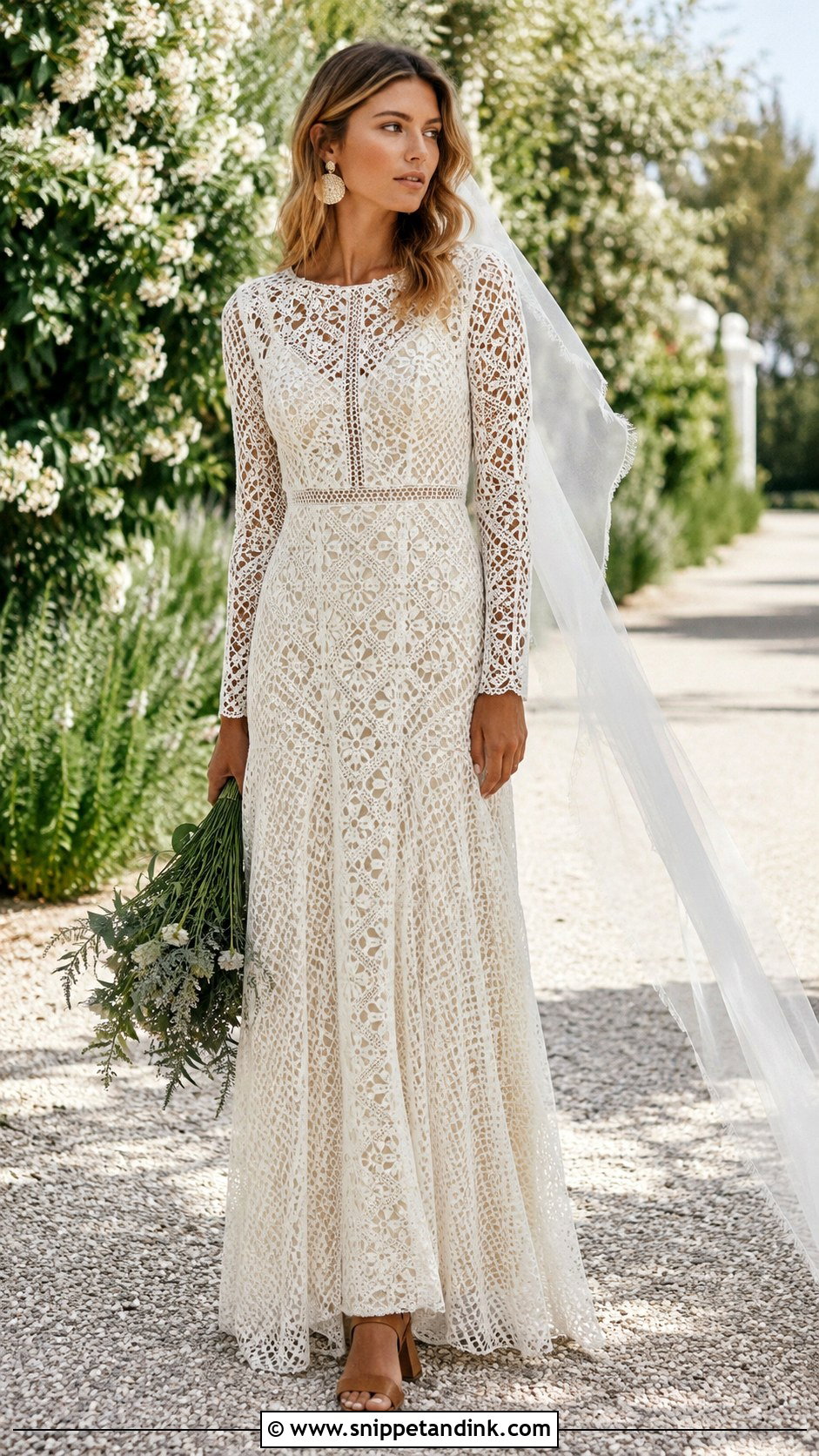
Crochet-style lace shows the craft in every stitch. A crochet lace wedding dress looks balanced with long sleeves, a lightly shaped waist and a fluid skirt lined in soft ivory. Geometric patterns feel modern; botanical ones lean bohemian. Leather block-heel sandals, hammered metal earrings and loose waves complete it, with a raw-edge veil. Openwork snags on bark, brambles and rough stone, so outdoors I’d confirm the lining is secure and the hem is protected. Pick undergarments in the lining’s tone, not white, or they’ll show through the gaps.
12. Wedding Dress With Oversized Bow
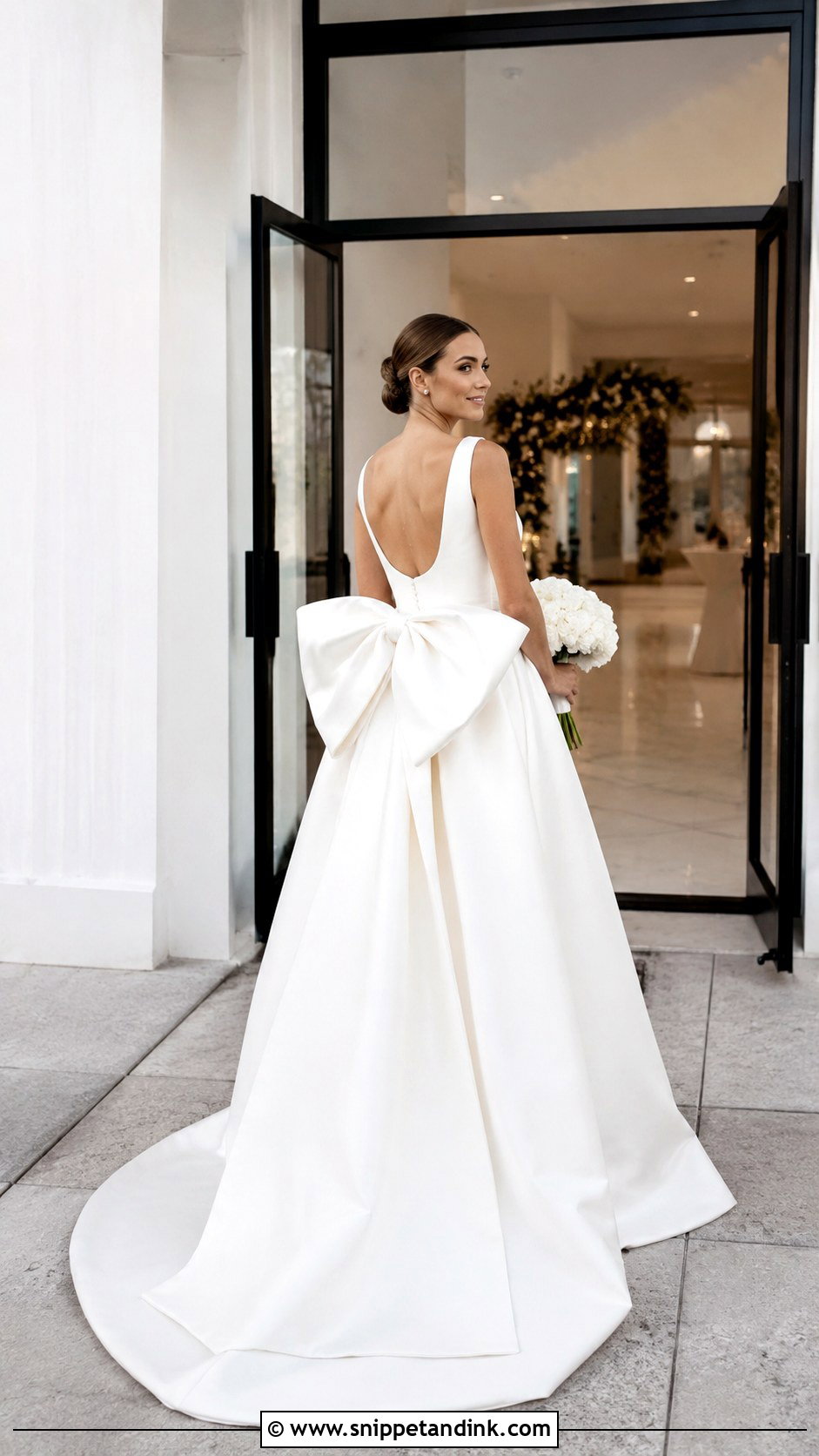
An oversized bow turns a plain dress into a statement, and where it sits decides the mood. A bow at the shoulder looks fashion-led, one at the waist shapes the body, and a large back bow is the drama you see walking away down the aisle. Mikado, satin or structured crepe holds the loops up. Pointed pumps, small studs and a sleek bun keep the rest clean. With a back bow, a cathedral veil hides it, so go shorter. Sit in it at the fitting. If the bow detaches, take it off for the reception and lean back in your chair.
13. Painted Hem Tea-Length Wedding Dress
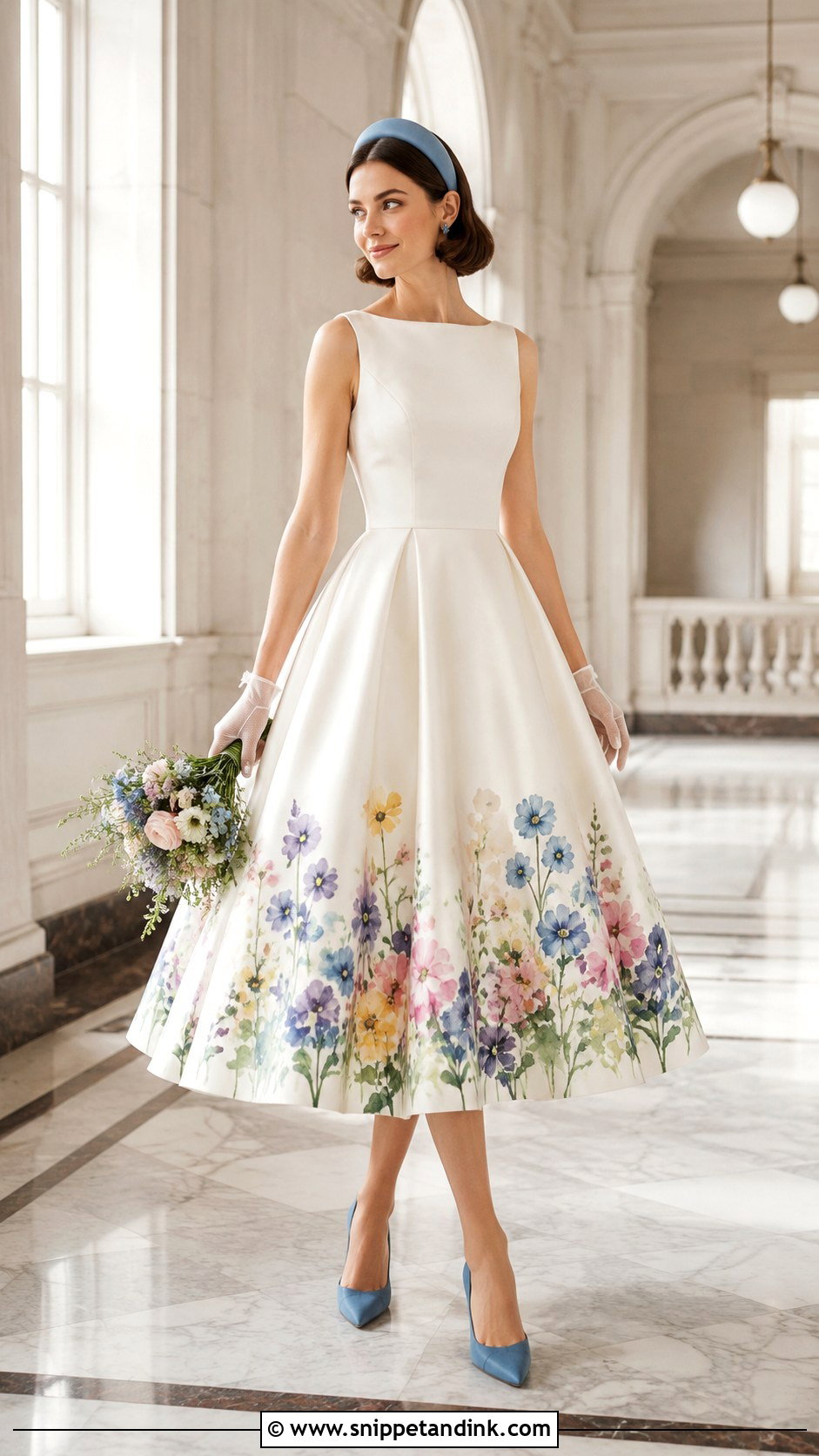
Paint concentrated at the hem turns a tea-length skirt into a moving illustration. Flowers, brushstrokes or abstract colour near the bottom keep the bodice calm. A fitted top over a full mid-calf skirt gives a vintage shape. I pick the shoes after the painting, matching one shade from it, so coloured pumps look chosen rather than random. Small earrings, short gloves if you like them and a birdcage veil or structured headband suit it. The exact hem point matters a lot at this length: an inch higher or lower changes how long your legs look. Try a few with the shoes on.
14. Black and White Wedding Dress
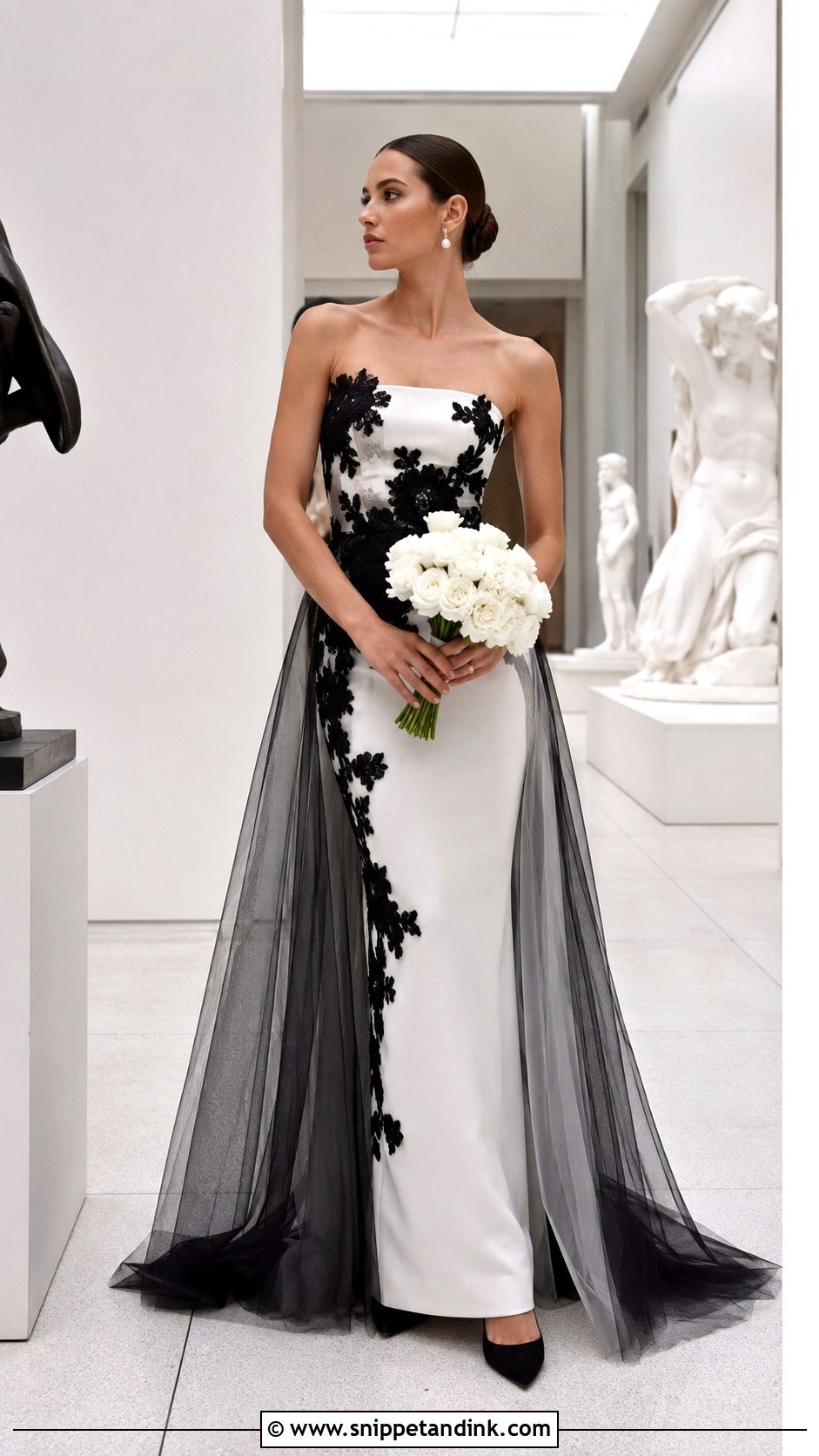
Black and white is strong contrast with bridal white still in charge. A white column with black floral appliqués, a black ribbon waist or a black tulle overlay works; reversing it with a black gown and ivory details is bolder. Black pointed heels, pearl earrings and a white bouquet suit it, with sleek hair. Keep the veil plain if the skirt is patterned. Black near white can transfer dye if it gets wet, so I ask whether the black trim is colourfast before it’s stitched to ivory fabric. Use the black deliberately and in a few places, not everywhere.
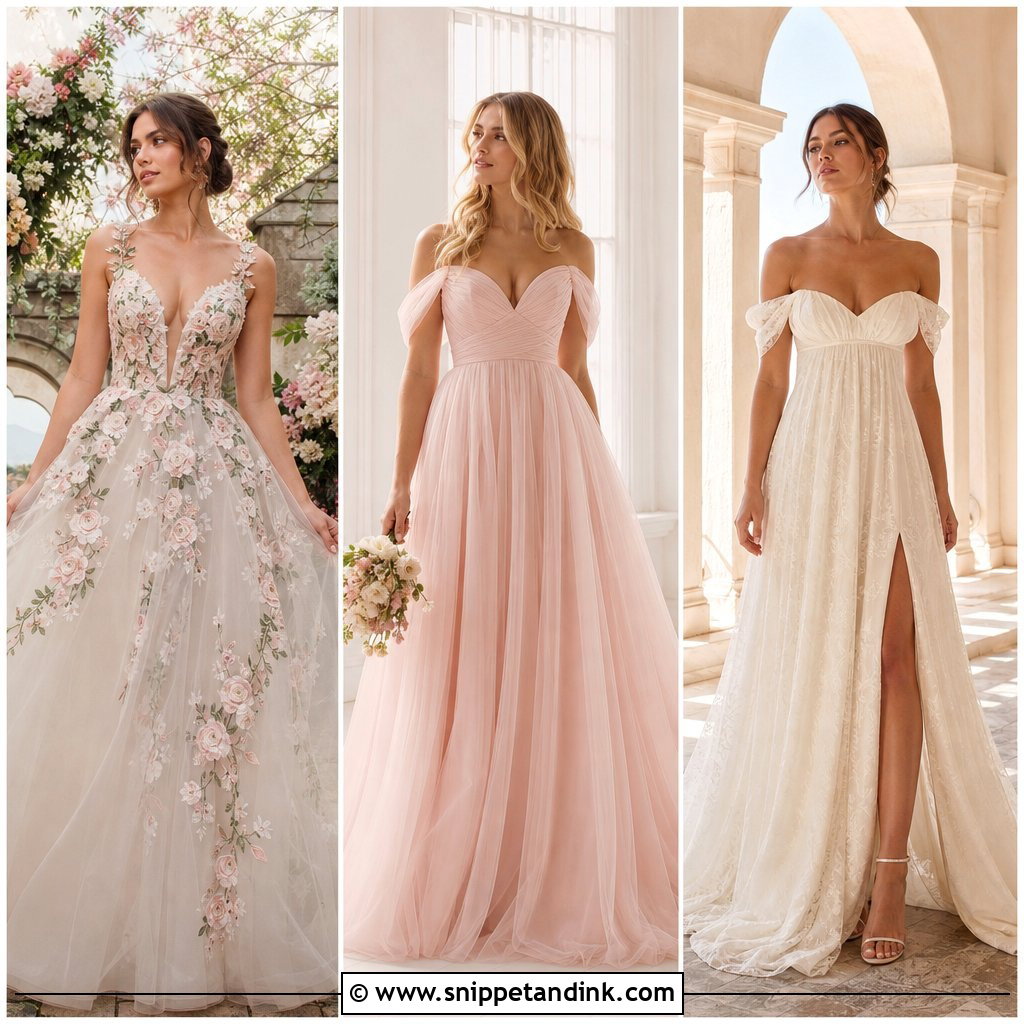


15. Sheer Overlay Slip Wedding Dress
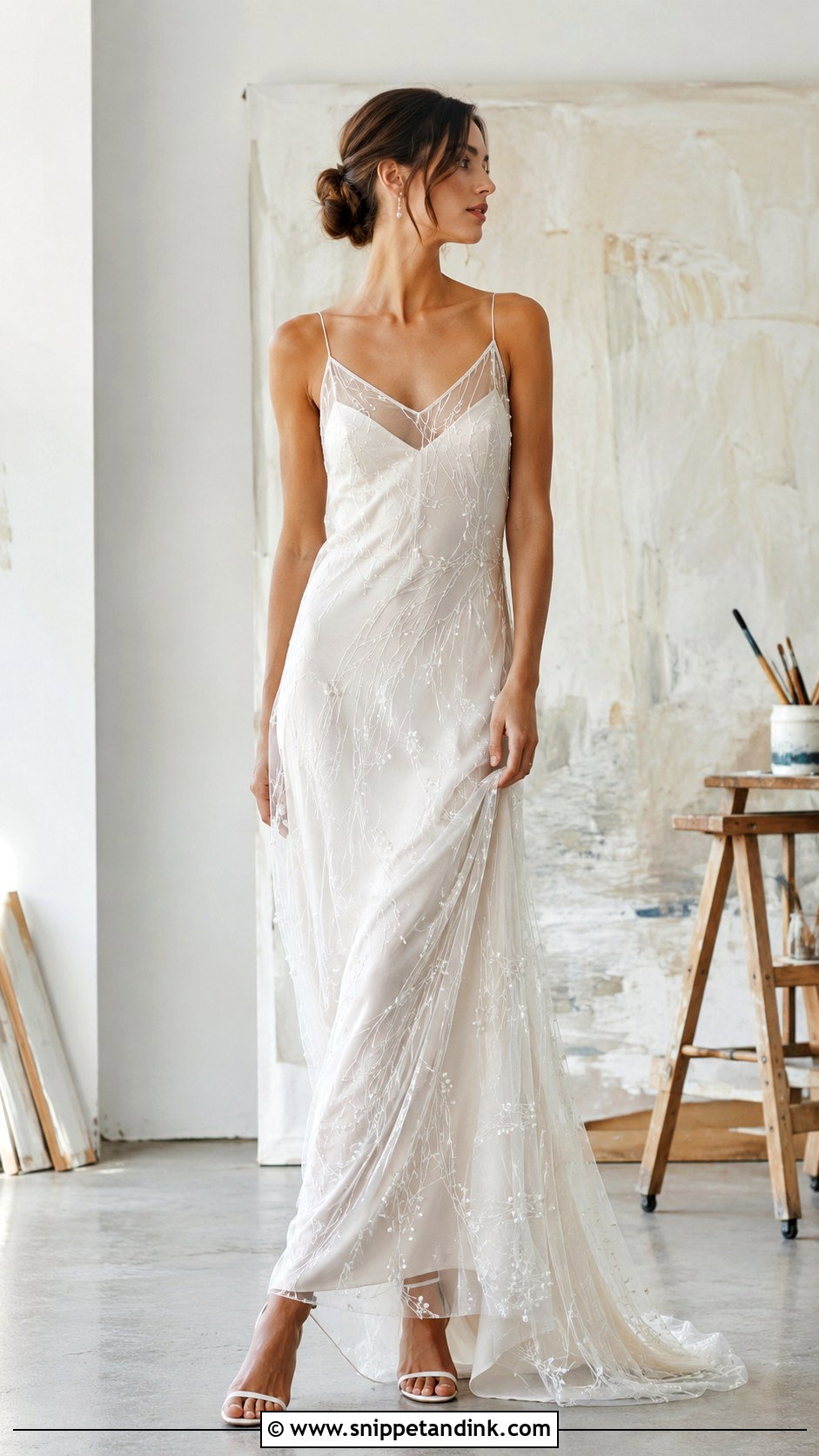
A sheer overlay gives a plain slip texture and movement. Start with an opaque silk or satin base that fits smoothly, then add tulle with embroidery, scattered pearls, fine pleats or hand-drawn motifs. The layers should relate to each other without matching. Slim heels, delicate earrings and a low twisted bun complete it, and a light veil should be plainer than the overlay. Wear the overlay for the ceremony and take it off for the party. At fittings, I check both layers together while walking, because a loose overlay twists around a satin base and bunches at one hip.
16. Puff-Sleeve Wedding Dress
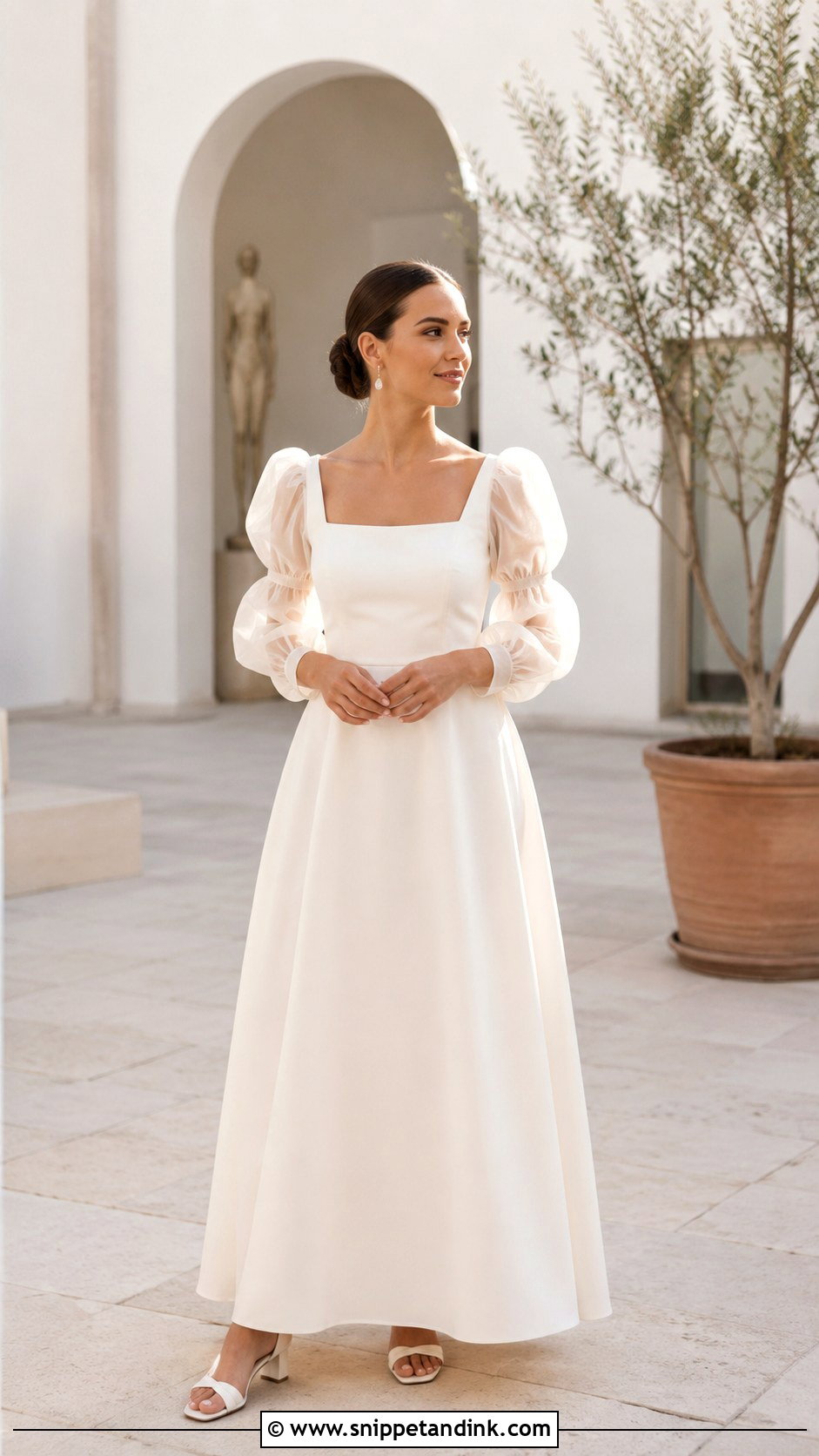
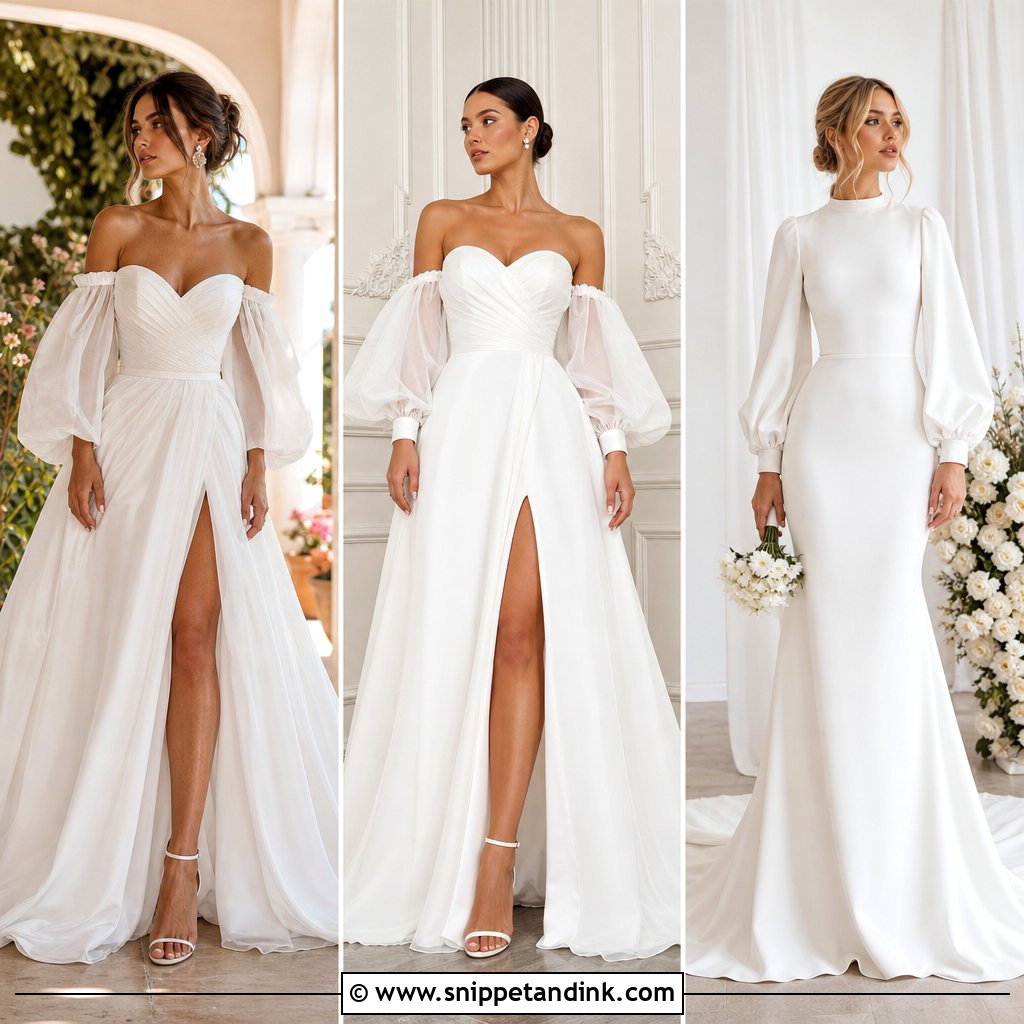
Big sleeves frame the upper body and become the focal point. Sheer organza puffs look light; structured satin ones look like a runway. A square neck and a simple A-line or column keep them in proportion. Low block heels, drop earrings and hair pulled off the shoulders suit it. Puff sleeves crush when you hug, sit in a car or wear a coat, so ask whether they have a net or organza support inside to bring them back up. Detachable sleeves give you flexibility. Raise your arms and hug at the fitting. A shoulder-length veil adds bulk exactly where you don’t want it.
17. Wedding Dress With Detachable Overskirt
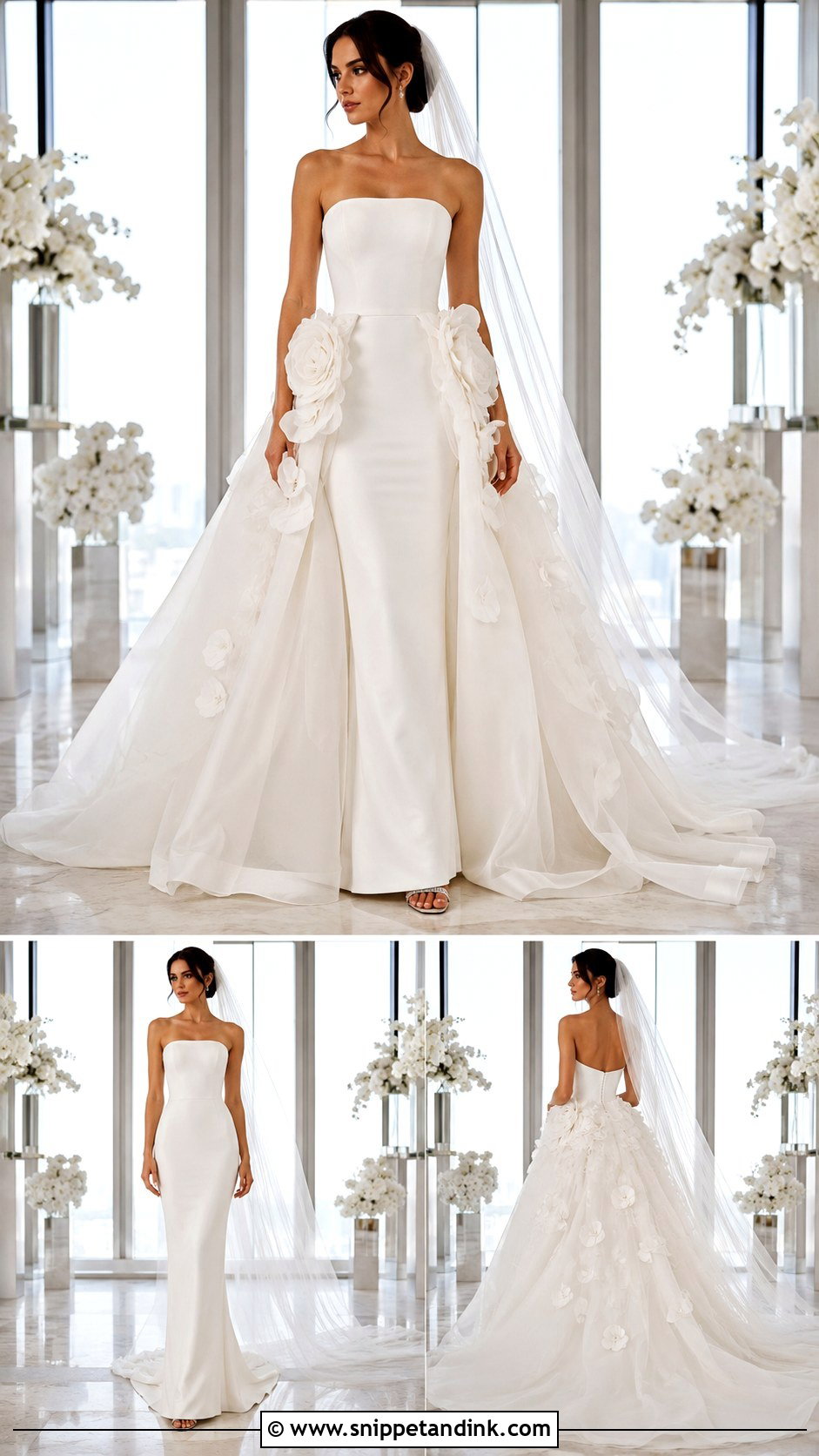
A detachable overskirt gives you two outfits. A fitted column, mini or slim A-line base takes a dramatic tulle, organza or satin overskirt for the ceremony, painted, flowered, pleated or cut with an asymmetric train. Wear the full look with a long veil, refined heels and quiet earrings. When the overskirt comes off, add a bold cuff or statement earrings so the base looks like a deliberate second outfit. I ask tailors to hide the attachment points and use a fastening one person can release in under a minute. It should stay secure walking but come off without a fight.
18. Watercolor Ombre Wedding Dress
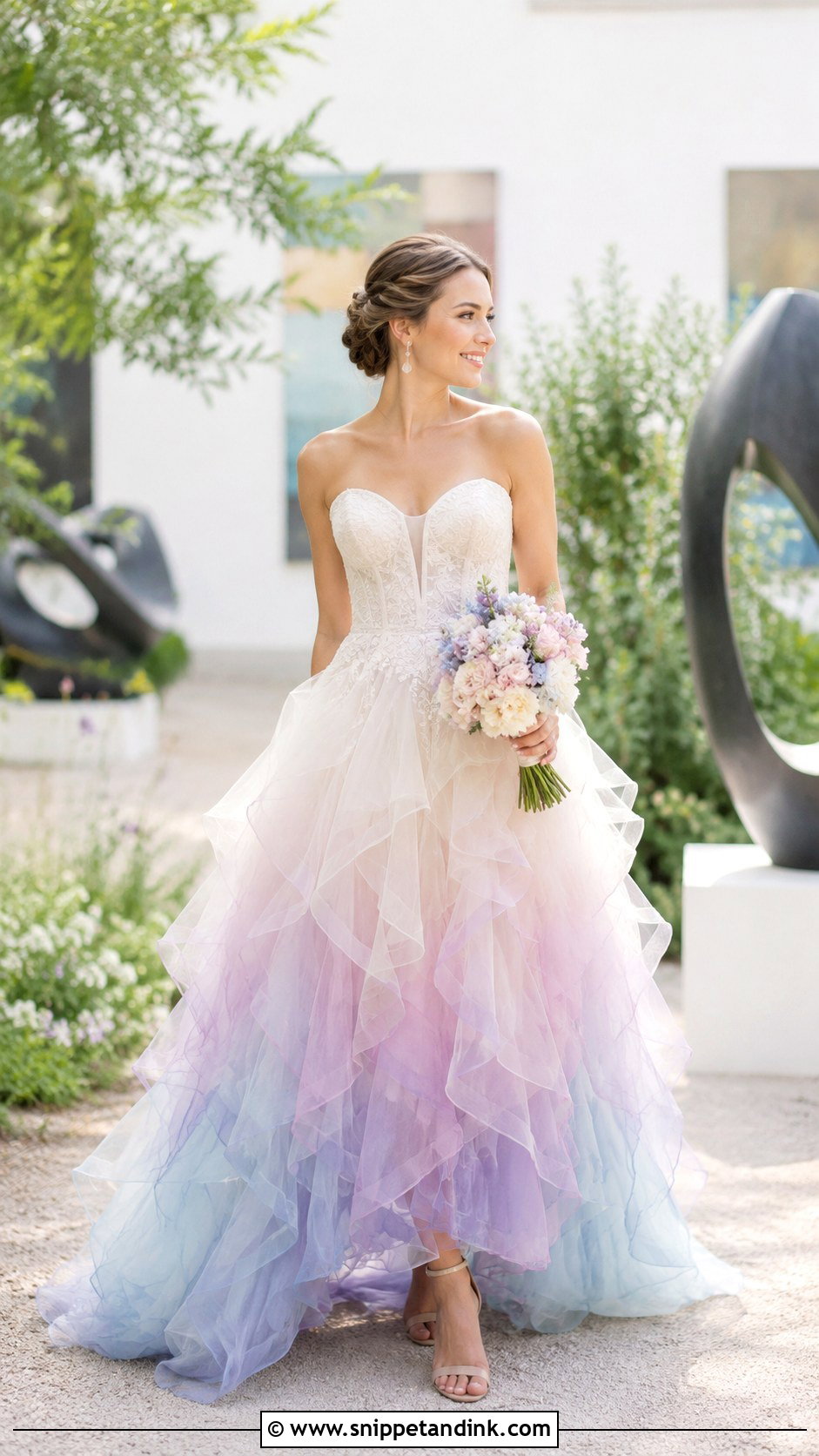
A watercolor ombre wedding dress brings colour in as a gradual fade rather than a pattern. Ivory can melt into blush, blue, lilac, peach or several shades near the hem. Chiffon, silk organza and layered tulle carry the colour best. Neutral heels, clear earrings and simple hair keep the gradient centre stage. Pick bouquet colours from the lightest part of the skirt, not the darkest. The fitting is the risk: taking up the hem cuts off part of the gradient, so the dress may have to be shortened from the waist instead. Settle where the colour should start before any cutting.
19. Two-Piece Bridal Wedding Dress
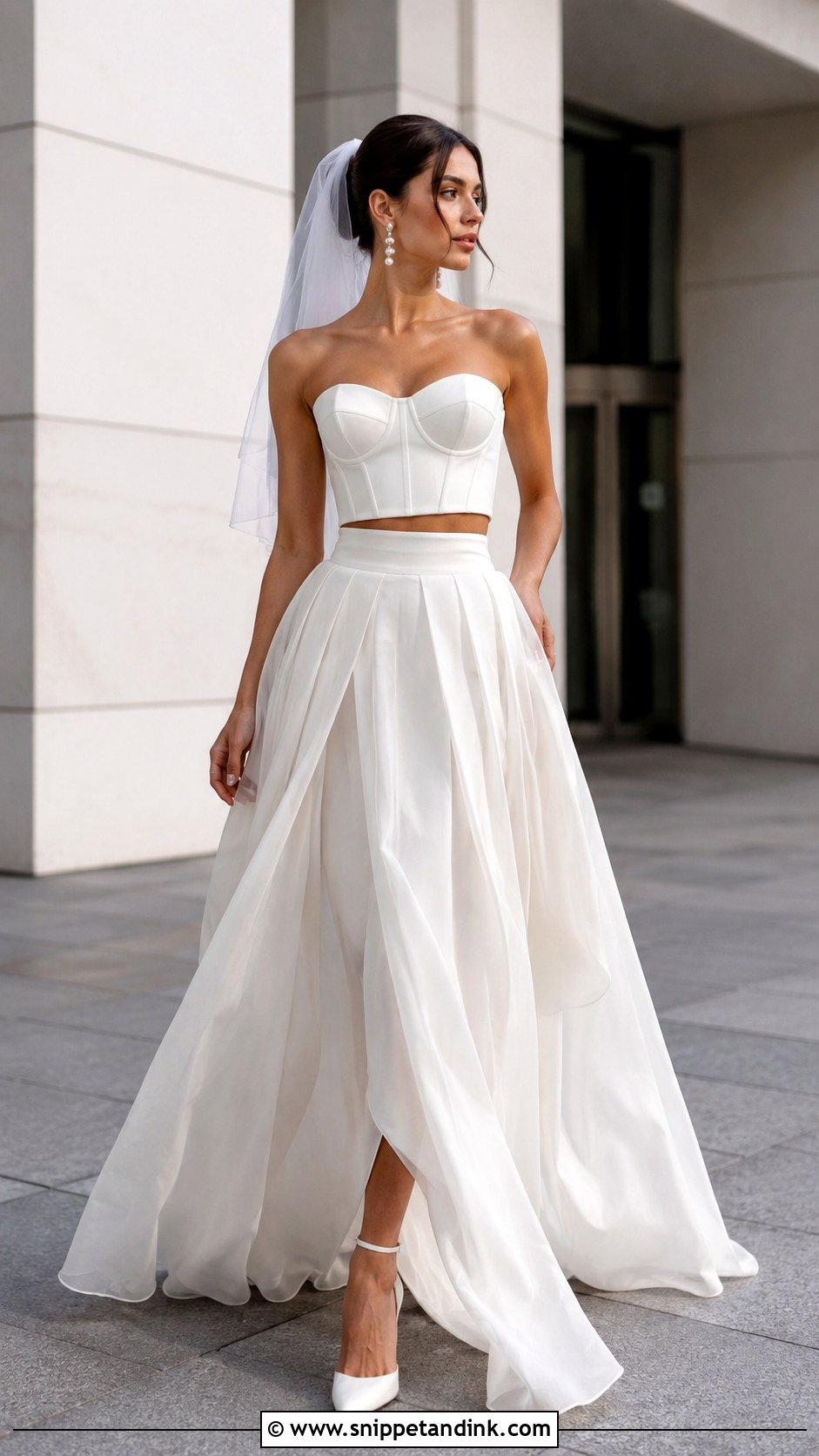
Two-piece sets give you room to experiment. A sculptural corset, embroidered crop top or draped blouse over a matching high-waisted skirt can show a sliver of skin or overlap fully. Mixing textures, satin with pleated organza or lace with smooth crepe, looks artistic. Streamlined heels, modern earrings and a short veil or comb finish it. Stay within one colour family so the pairing looks chosen. Raise your arms and sit at the fitting to see how the pieces move together. Hooks, grip tape inside the waistband and well-placed fasteners stop the top from creeping up.
20. Bubble Hem Mini Wedding Dress
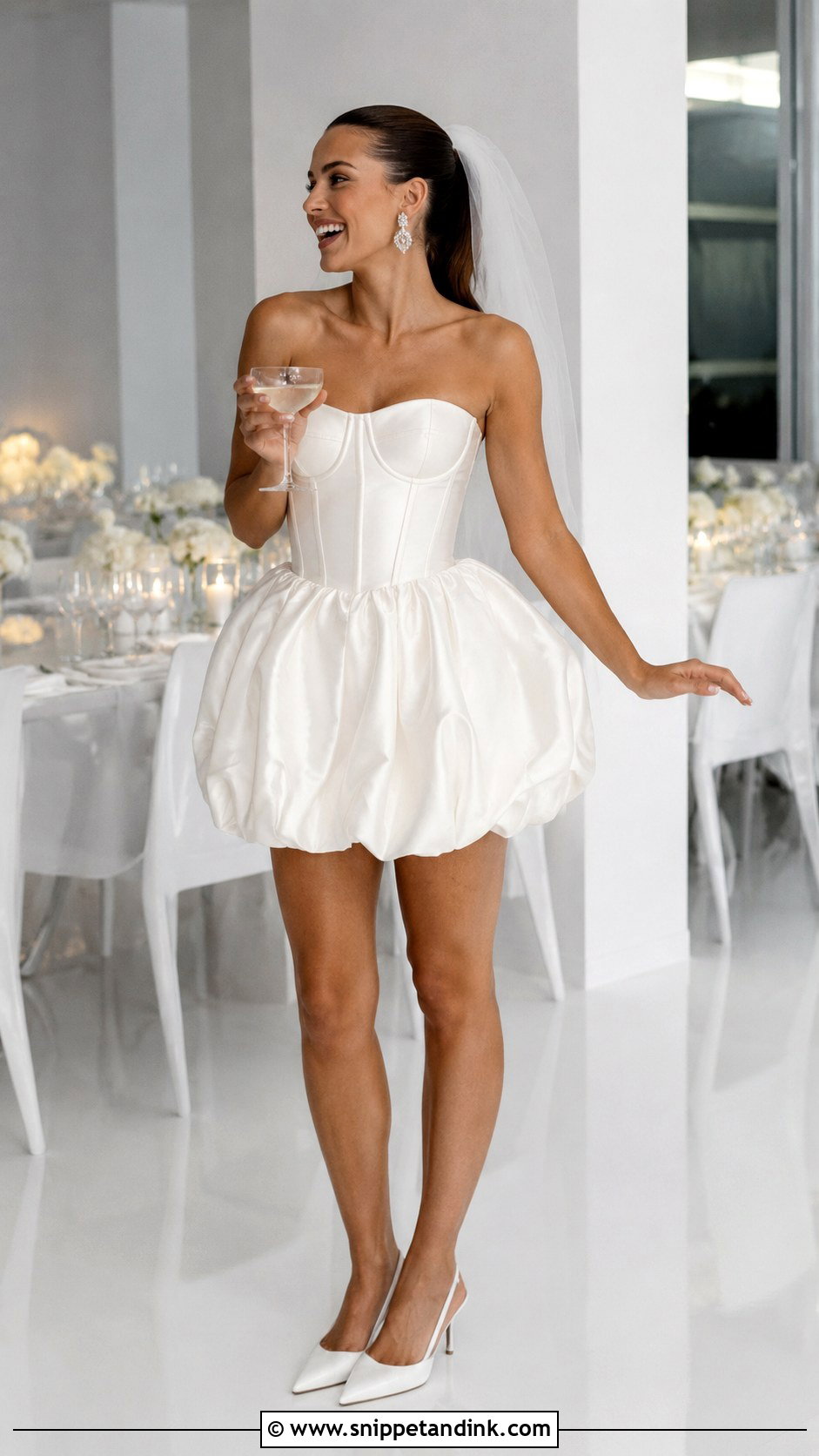
A bubble mini is pure fun for a ceremony, reception or small city wedding. The rounded skirt gives volume over a fitted corset or clean high neck. Crisp taffeta or structured satin keeps the bubble round. Sheer tights if you like, pointed slingbacks, bold earrings and a short veil that ends above the shoulders suit it, with a polished ponytail or compact bun. Your legs and shoes are on show, so wear shoes you love. Sitting in a bubble skirt makes it puff up in front; try it on a low chair. A sheer cape or long sleeves add coverage, and pockets fit without spoiling the shape.
Painted and Dyed Fabric Needs Gentler Handling Than White Satin
Art on a dress is beautiful until it meets water, a hot iron or a careless cleaner. A few habits protect it on the day and afterward.
On the day
Keep drinks, rain and damp grass away from painted and ombre areas, because water can make some dyes and paints bleed into the surrounding fabric. If something spills, blot it straight away with a dry white cloth and leave it alone. Rubbing spreads both the stain and the colour. Wet hands, fake tan and perfume also mark pale fabric next to painted work.
Small repairs
Ask the artist for a tiny pot of the exact paint or a length of the thread before the wedding. A scuffed petal or a pulled stitch near the hem can then be touched up by someone careful, instead of waiting weeks for the original maker to fit it in.
Cleaning and storage
Take the dress to a cleaner who handles bridal and couture, and tell them exactly which parts are painted, dyed or embroidered with coloured thread. Ask them to test a hidden spot first. Store it away from light, folded in acid-free tissue in a breathable box, because sunlight fades hand-applied colour long before it yellows white silk.
Which Detail Do You Keep Saving?
The bridal look people remember is the one that looks like the person wearing it. Colour, shape, texture and construction can each carry that. You might wear a hand-painted gown, a sculptural satin dress, an embroidered two-piece or a bubble mini. Whatever you choose, plan it as a whole outfit, with shoes, accessories, hair and any extra layers. You also need to walk, sit, eat and dance in it. Before shopping, save a wide range of images, then notice which detail keeps turning up. That repeated detail is usually the dress you’re really looking for.
You'll Like These Ideas:




Leave a Reply