
A colorful bridal gown tends to look most personal when the color is one you already reach for in everyday clothes. Bridal designers now cut champagne, blush, blue, green, black and printed gowns with the same fitted bodices, full skirts, lace and trains as white ones, so the shape still says “bride” even when the shade doesn’t. What makes a colored gown work is the rest of the look. Shoes, jewelry, flowers, hair pieces and any cover-up should support the color instead of matching it piece by piece. Below are 20 shades, from pale pastels to black and metallics, with how I’d style each one.
Hold the Swatch Under Your Chin, Outdoors
With a white gown, the main color decision is ivory versus bright white. With color, the gown sits right next to your face all day, and the wrong undertone shows in every close-up. So before I let a bride order a colored dress, we test it properly.
- Ask the boutique for a fabric swatch, or hold the sample itself up under your chin.
- Stand by a window or step outside in daylight, without makeup if you can, and look at your skin, not the dress.
- If your skin looks brighter and even, the undertone suits you; if it looks gray, sallow or blotchy, try the next shade along.
- Take a phone photo in shade and one under warm indoor light, since pale tints can shift noticeably between the two.
As a rough guide, warm skin usually suits golden, peachy and earthy shades, and cool skin suits blue-based pinks, lilacs and silvers. Plenty of people sit in between, which is why the mirror test beats any chart.
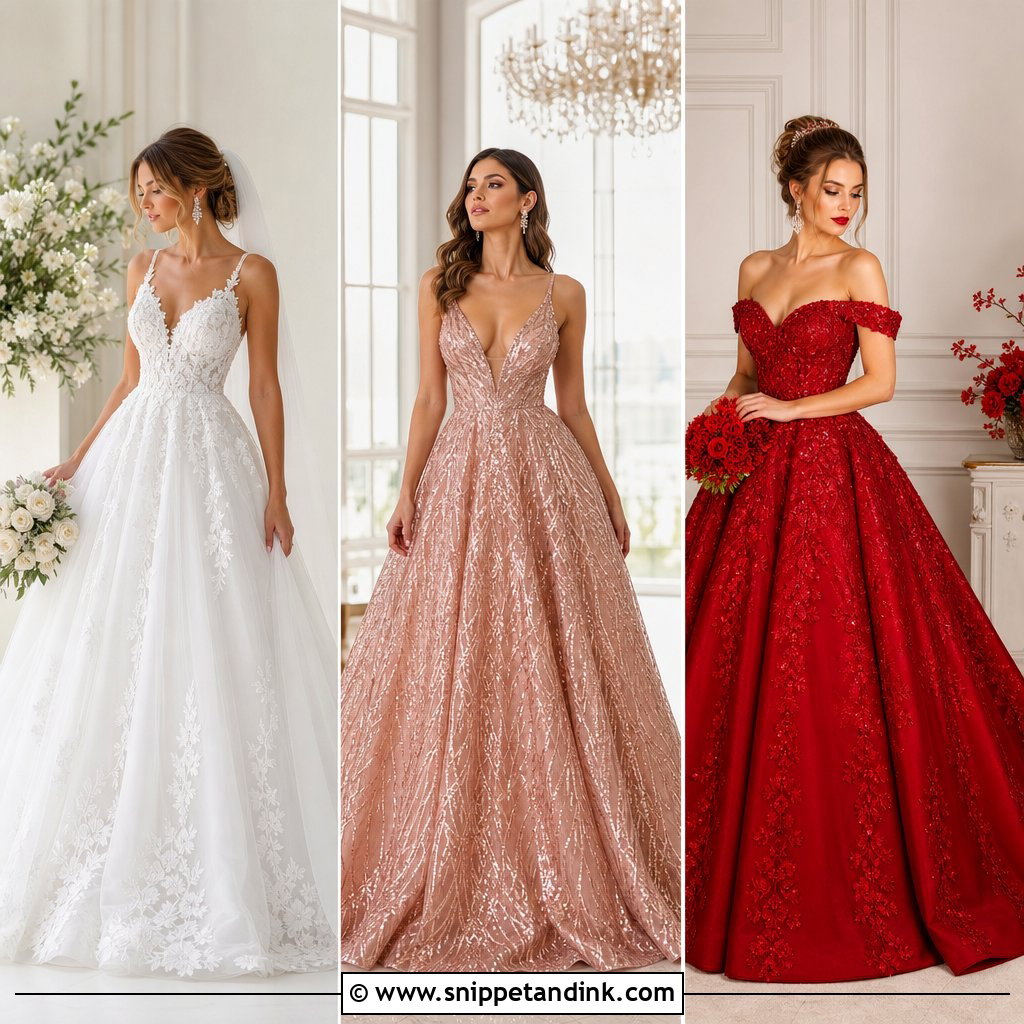
1. Blush Pink Wedding Dress
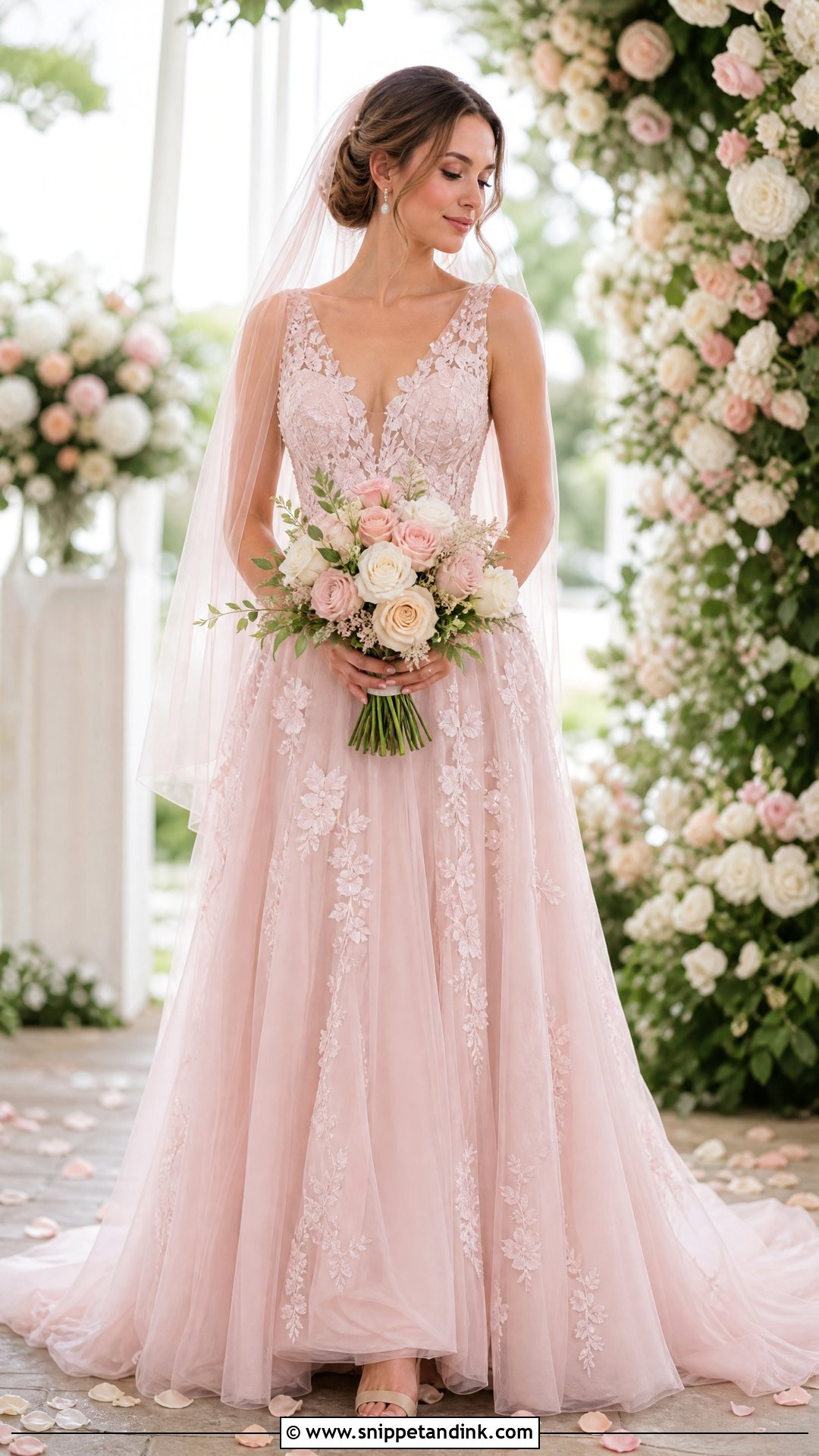
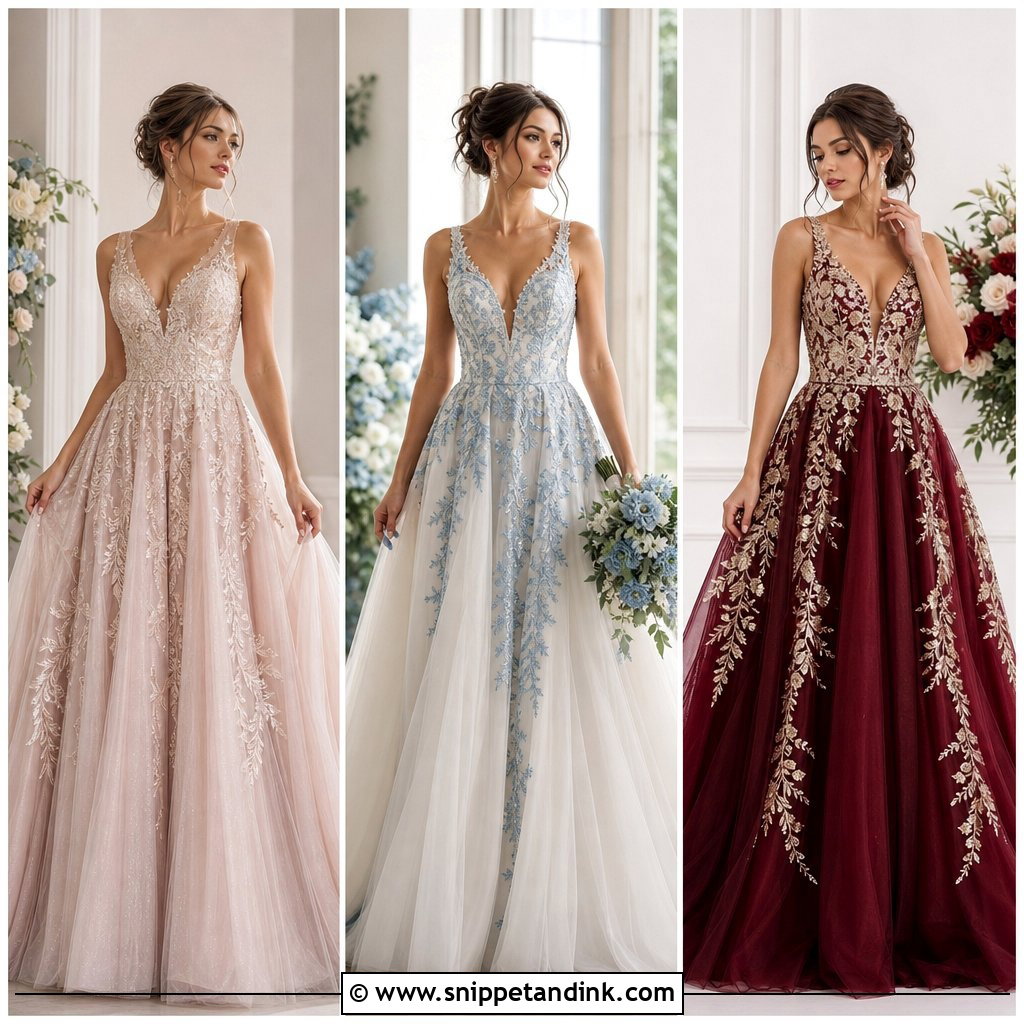
Blush is the easiest step away from white, and also the trickiest to judge. Very pale blush can disappear into ivory under warm reception light, so look at it outdoors and in a dim room before ordering. An A-line tulle gown with a fitted bodice and floral appliqués suits garden ceremonies, ballrooms and spring weddings. Champagne heels, pearl drops and a slim rose-gold bracelet keep it soft. A blush veil blends in; an ivory one adds a little contrast. Cream roses, pale pink flowers and greenery, soft waves or a loose low bun, and rosy makeup with a muted pink lip finish it without everything matching exactly.
2. Champagne Wedding Dress
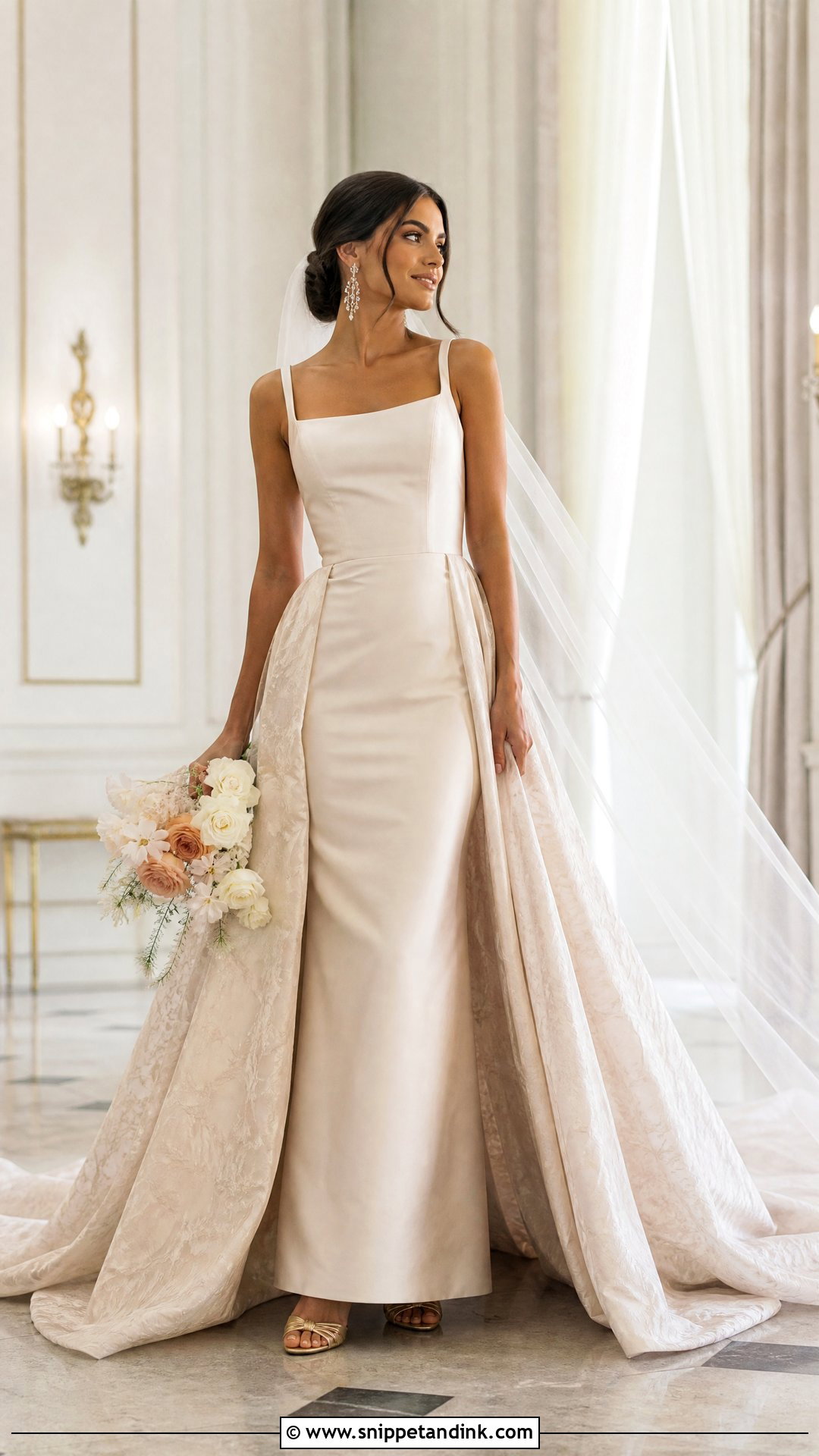
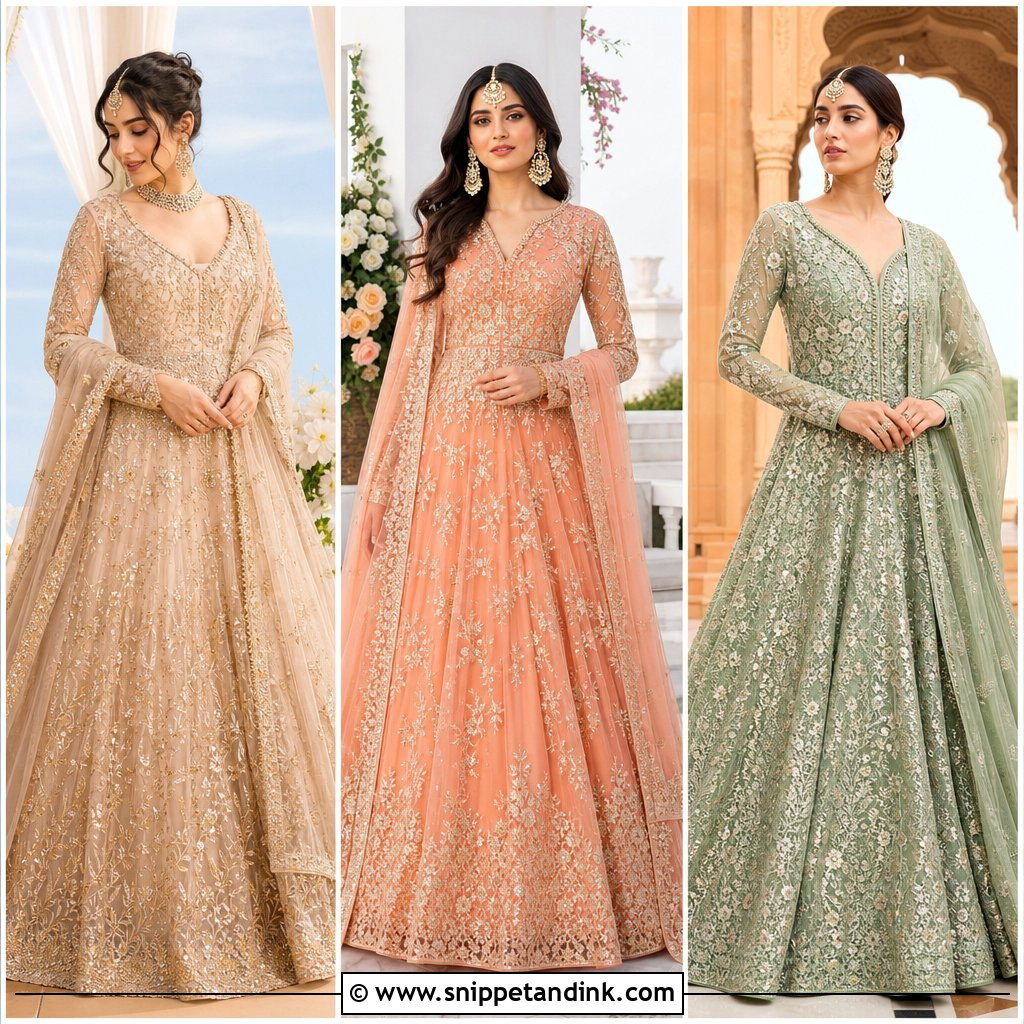
Champagne is the color I suggest to brides who want warmth but still want to look classically bridal, because it sits right next to ivory. The undertone matters. Champagne with more gold flatters warm skin; a paler, pinker champagne suits cooler skin better. Look for satin, lace or soft beading, and consider a fitted column with a detachable overskirt for two looks in one. Gold sandals, crystal earrings, a structured clutch and a champagne cathedral veil keep it cohesive. Ivory roses, dried grasses and muted peach make a good bouquet. A polished chignon shows off the neckline, and bronze eyeshadow with a peach lip picks up the glow.
3. Powder Blue Wedding Dress
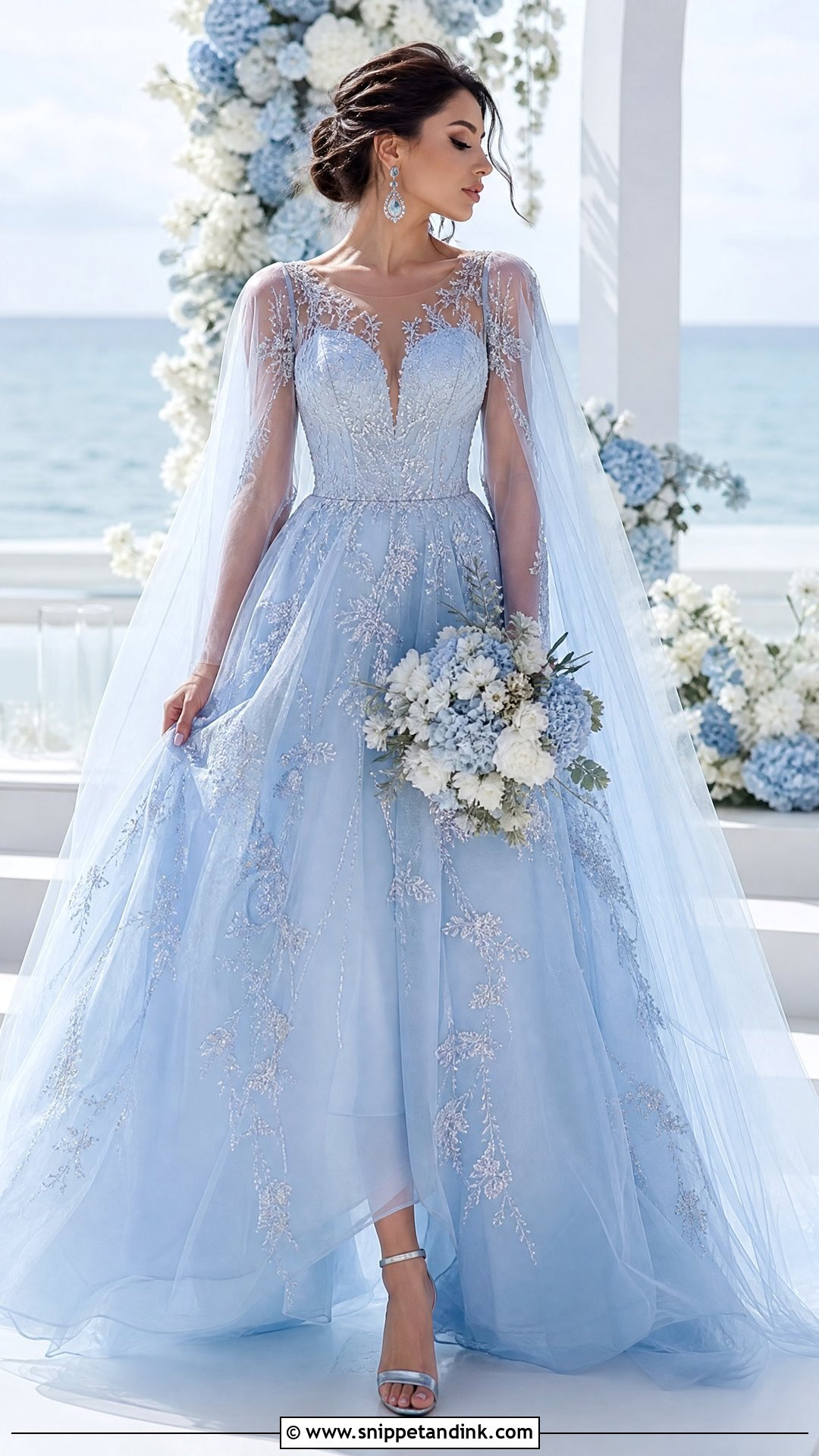
Powder blue is light enough to feel bridal and different enough that no one mistakes it for white. Airy chiffon or organza over a structured bodice suits a coastal, garden or summer ceremony, and silver embroidery or pearl buttons add detail. On camera, pale blue can drift toward gray in shade, so a little sheen in the fabric helps it hold its color. Silver heels, aquamarine earrings and a pale blue veil or tulle cape keep the palette cool. White flowers, blue delphiniums and eucalyptus tie the bouquet in. Soft curls or a braided updo with pearl pins, and cool-toned makeup with a pink-nude lip, finish it.
4. Lavender Wedding Dress
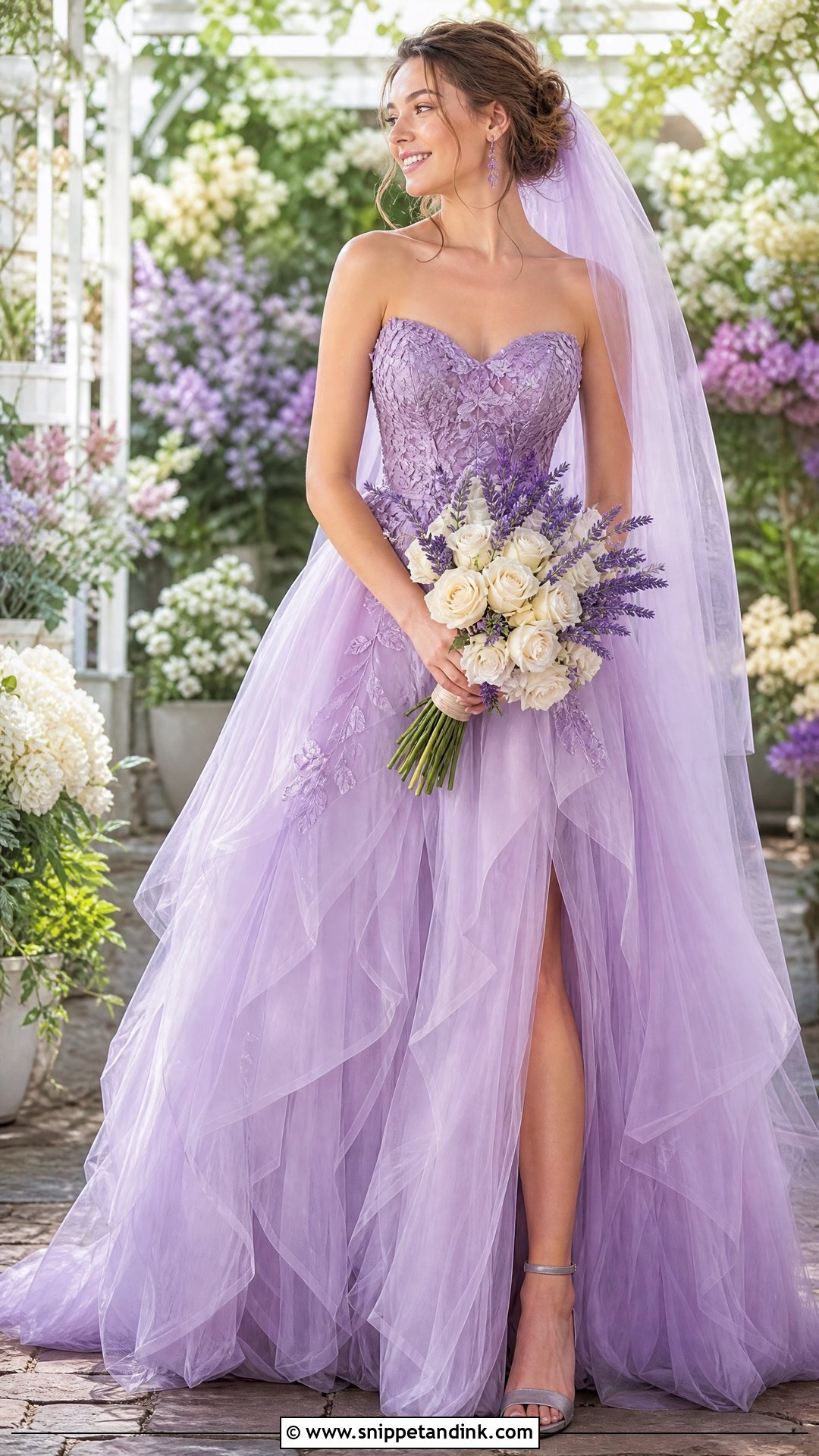
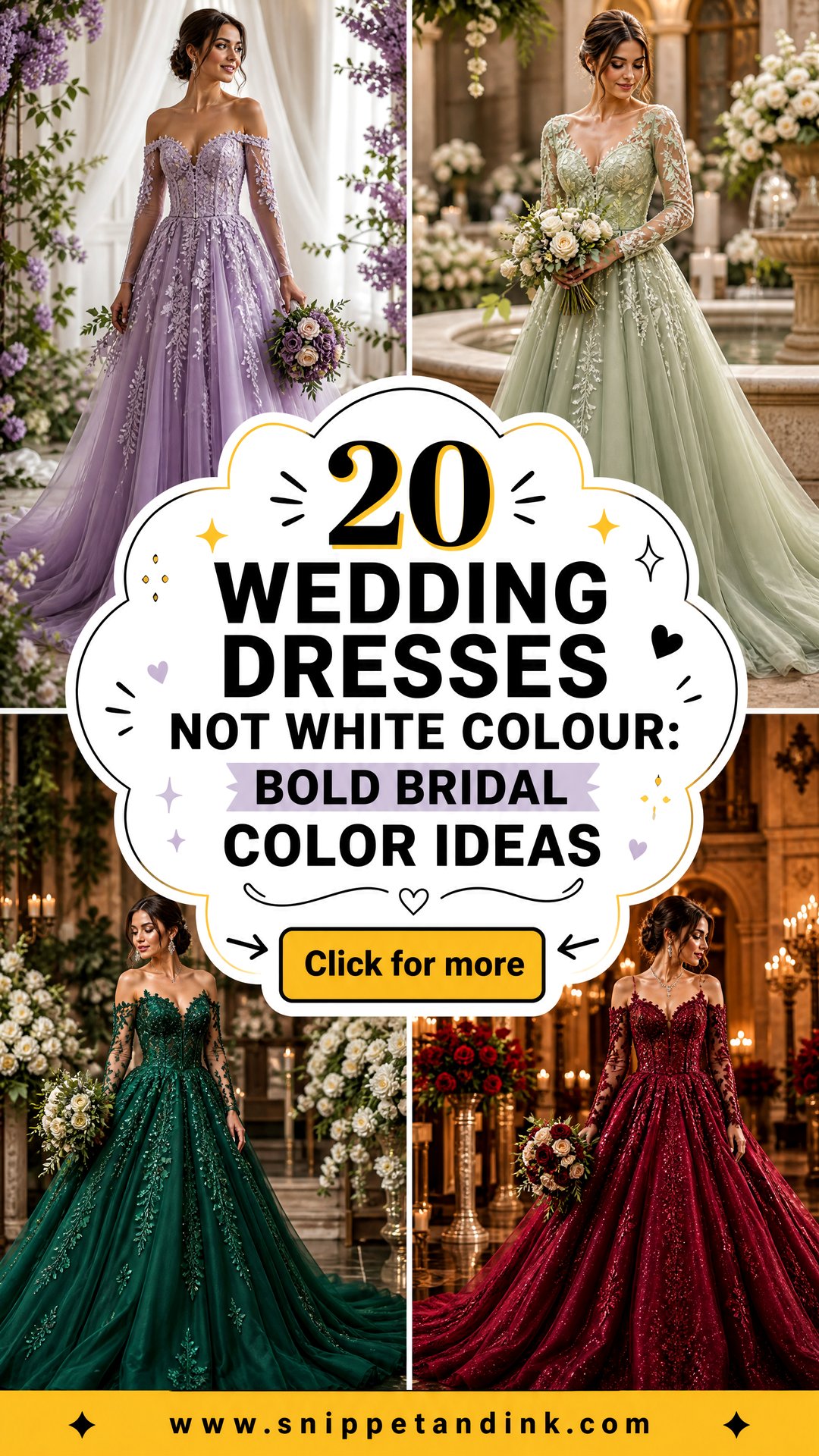
A flowing lavender gown moves well and reads whimsical without trying hard. A layered tulle ball gown gives drama; a chiffon A-line is lighter. Lavender is sensitive to fabric, so I’d always see a swatch in daylight; the same dye can look lilac in tulle and almost blue-gray in satin. Lilac, silver or muted green embroidery adds depth. Silver or pewter heels, amethyst earrings and a crystal comb suit it. A lavender veil blends straight into the dress, and a light gray cape works for cooler evenings. Cream roses, lavender sprigs and greenery, with rosy makeup and a mauve lip, complete it.
5. Sage Green Wedding Dress
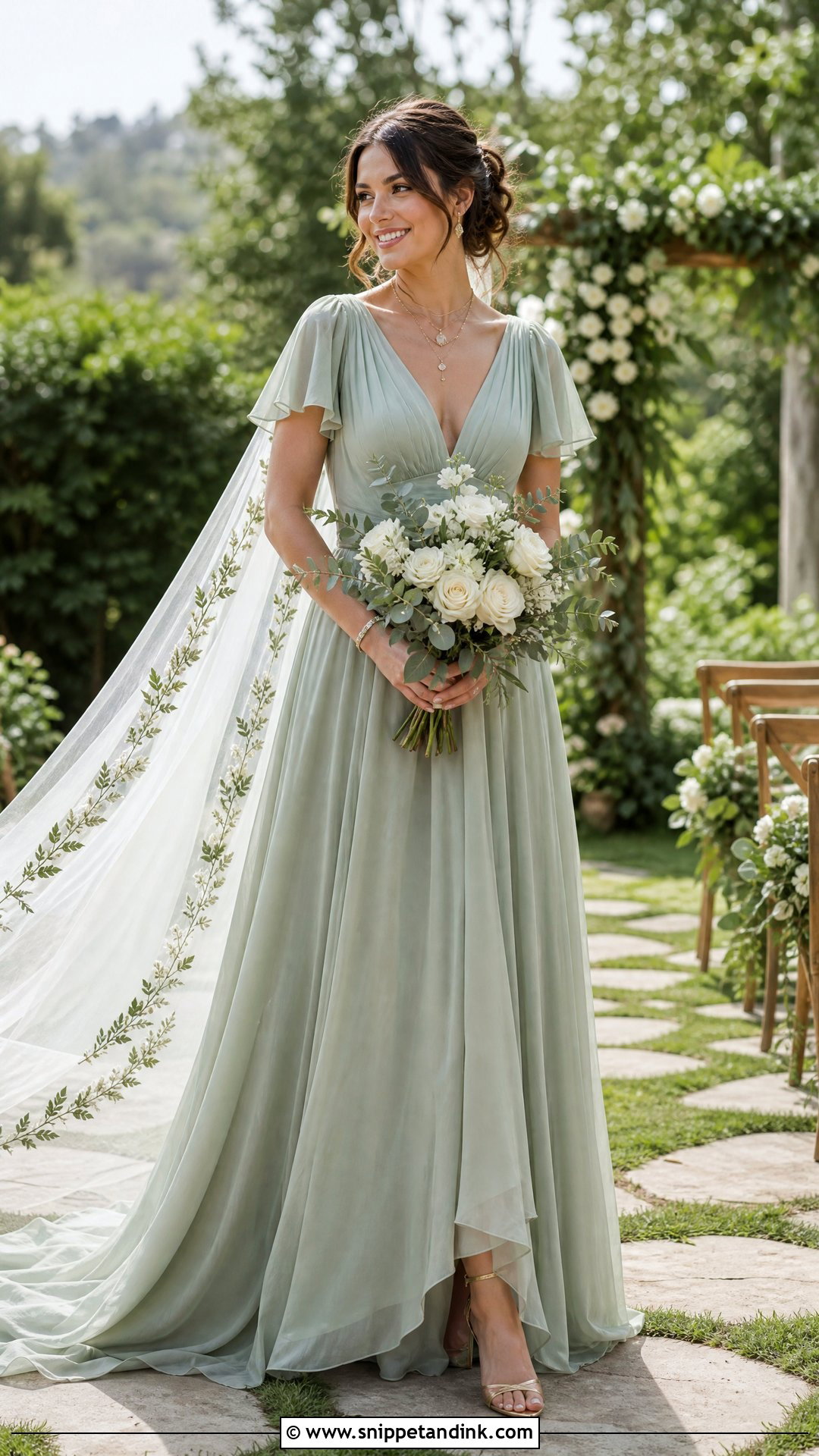
Sage green feels calm and belongs outdoors. For a relaxed ceremony, a chiffon gown with flutter sleeves, a defined waist and a pleated skirt; for formality, sage satin with a corset bodice and a long train. Muted greens can turn drab against sallow or olive skin, so hold the fabric up to your face in natural light before you decide. Gold jewelry warms it up, and nude or champagne heels keep attention on the gown. A sheer cape, a botanical hair vine or a veil embroidered with small leaves adds detail. Ivory flowers, eucalyptus and pale peach roses, a textured low bun and warm peach makeup finish it.
6. Black Wedding Dress
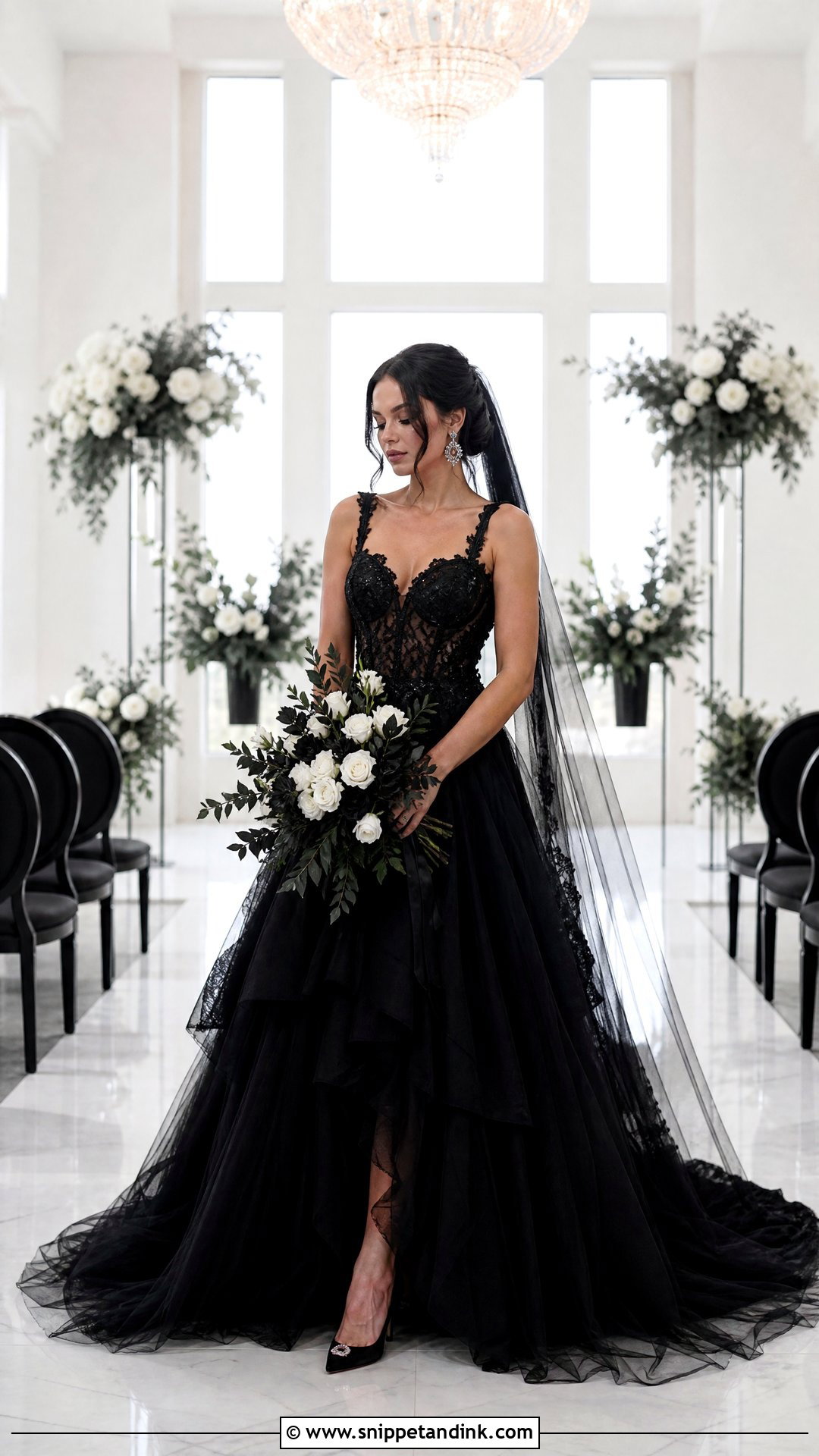
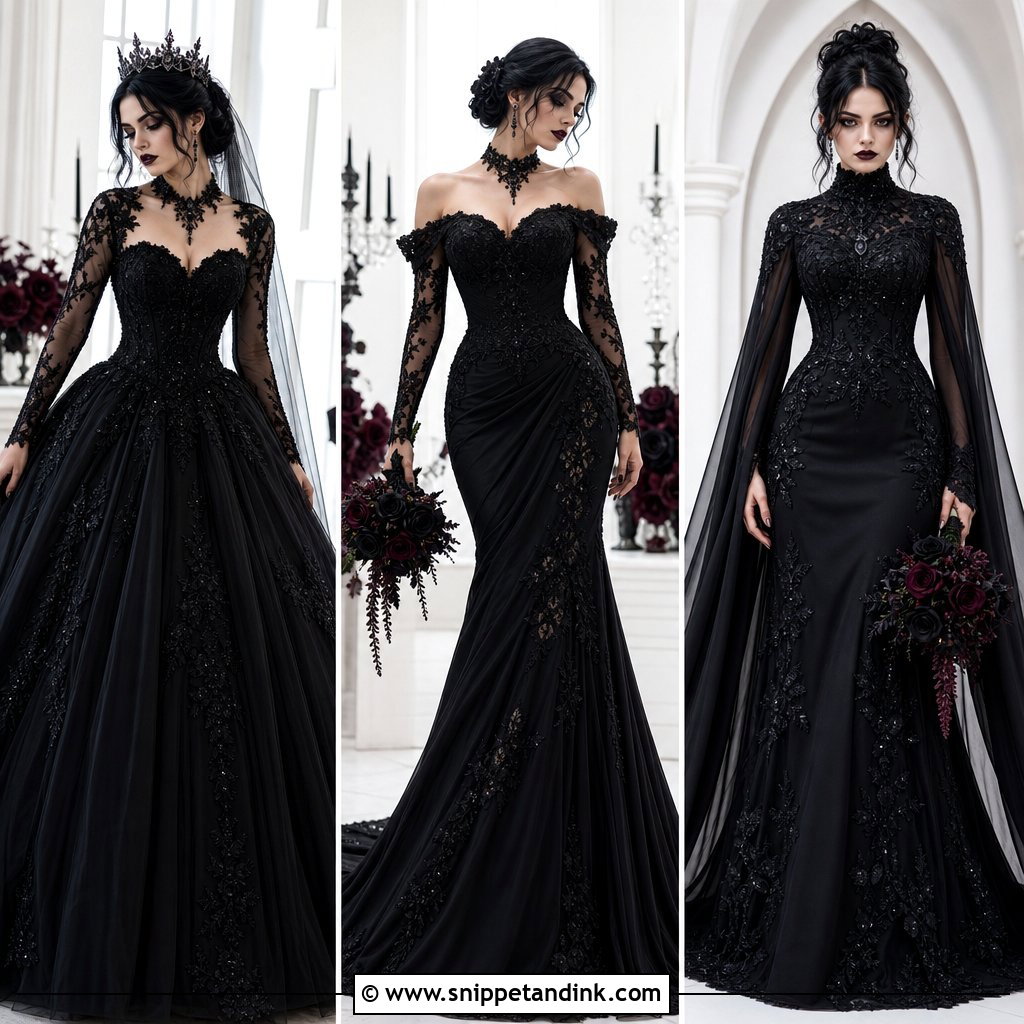
Black can look completely bridal, as long as the gown is cut like a wedding dress and not an evening dress. That means a full-length skirt, a sculpted bodice, lace sleeves or a real train. Black tulle over satin gives depth, and a little crystal beading keeps it from looking flat in photos, since dark fabric loses detail under strong flash. Pointed black heels, diamond or crystal earrings and a long black veil suit it, with white roses and deep greenery for clean contrast. A smooth bun, polished waves or a sleek ponytail work. Defined eyeliner and a berry, red or neutral lip set how dramatic you go.
7. Red Wedding Dress
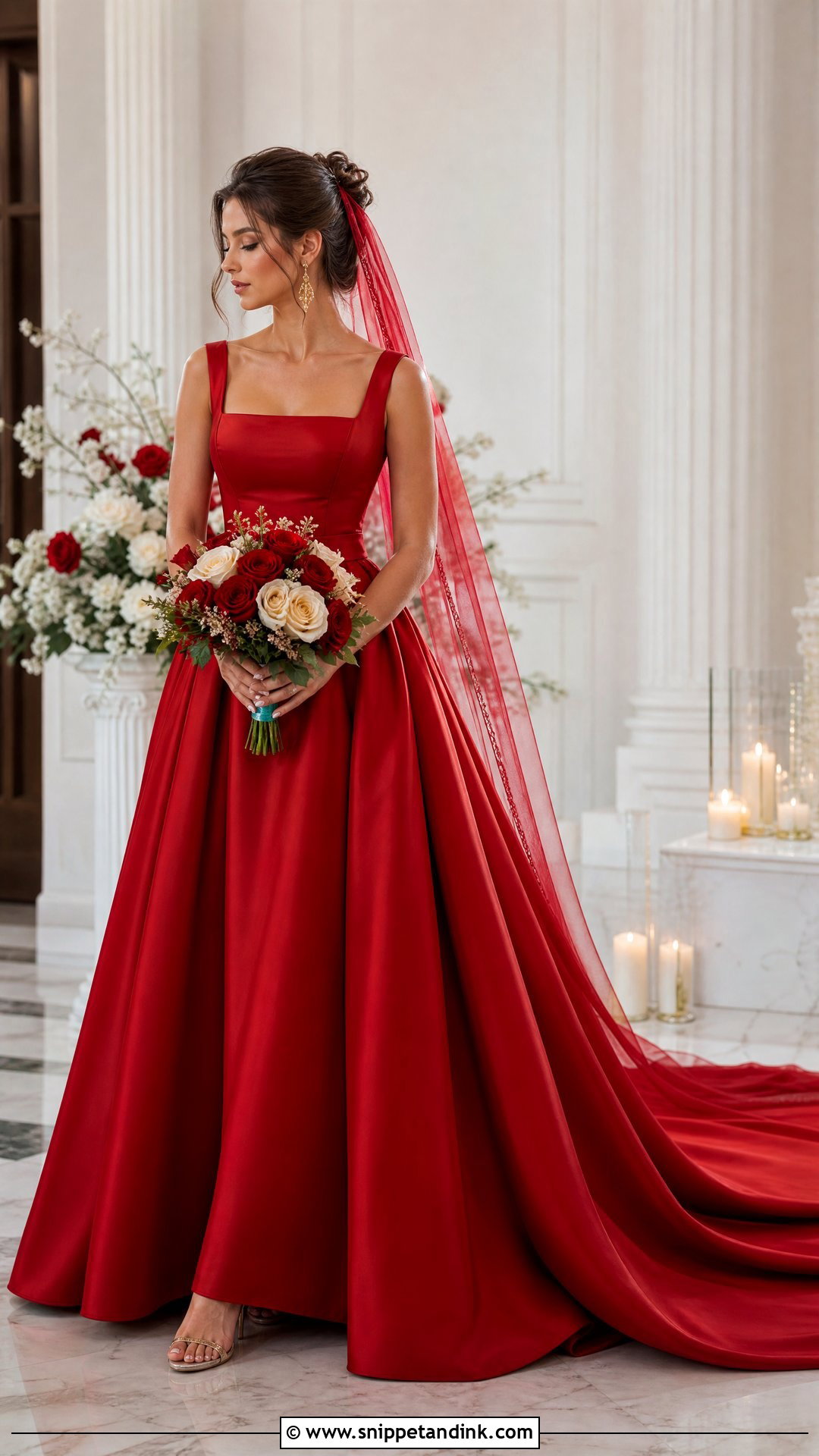
Red is traditional for brides in several cultures, and in any setting it’s the color everyone’s eye goes to first. A satin A-line with a structured neckline and a sweeping train keeps it classic; lace, embroidered tulle or jacquard adds texture. Reds vary a lot. Blue-reds suit cool skin, orange-reds suit warm skin, and the difference shows most around the face. Gold heels, delicate gold earrings and a simple bracelet keep the color central. A red veil is a bold statement; a sheer neutral cape is softer. Carry cream flowers, red roses or mostly greenery, wear a clean updo, and match the lip to the dress or go neutral.
8. Gold Wedding Dress
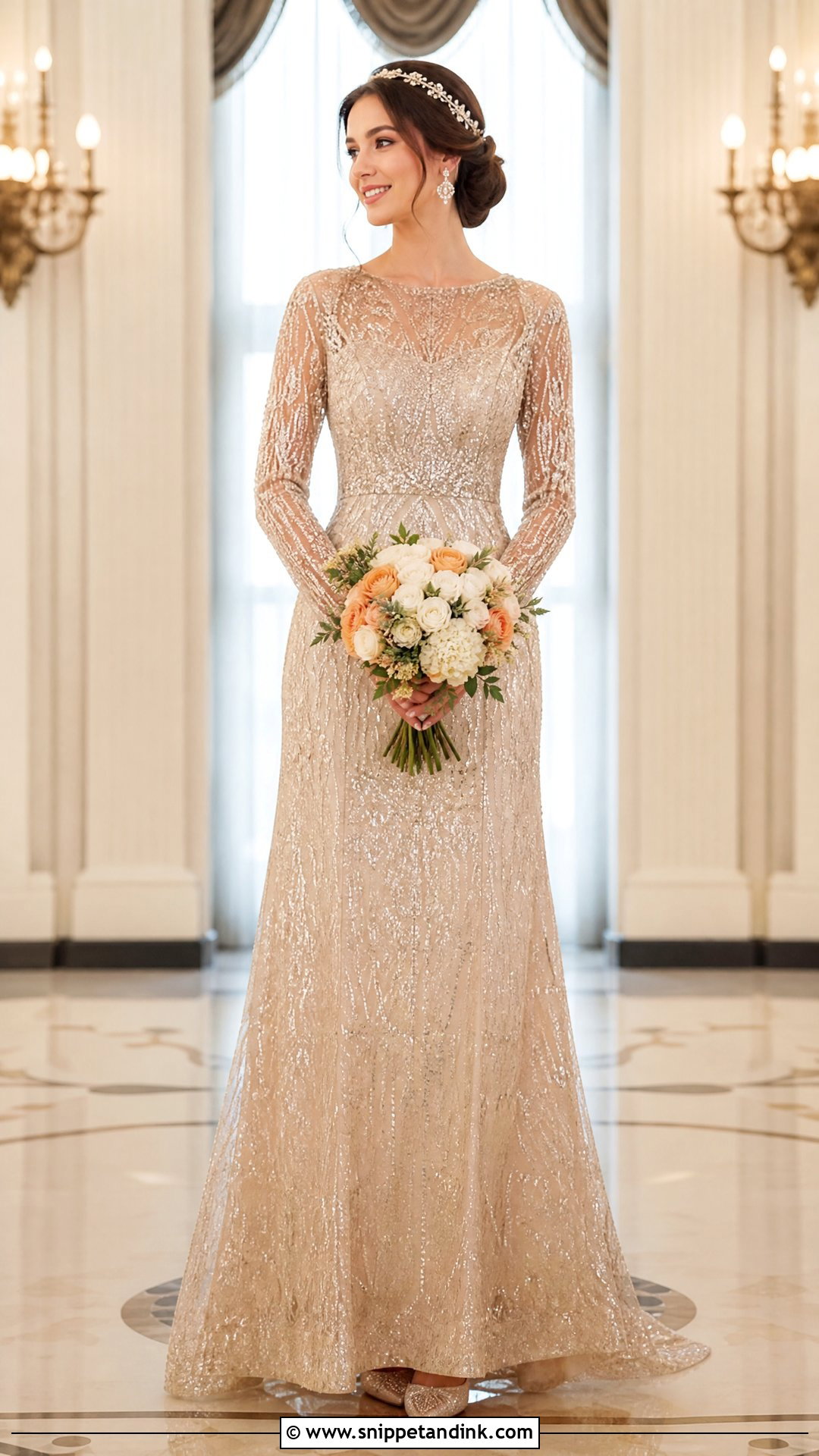
Gold works best when it’s soft. Antique gold, pale metallic tulle or fine sequins look rich, while a very reflective lamé can bounce flash and blow out in photos. A fitted gown with long sleeves and a gentle flare feels refined; a gold ball gown suits a ballroom. Since the dress is already the jewelry, keep the rest small: neutral metallic heels, diamond studs and one simple hair accessory. Ivory flowers with greenery or peach accents calm the metallic surface. A low bun or side-swept waves, warm luminous makeup and a nude lip complete it.
9. Silver Gray Wedding Dress
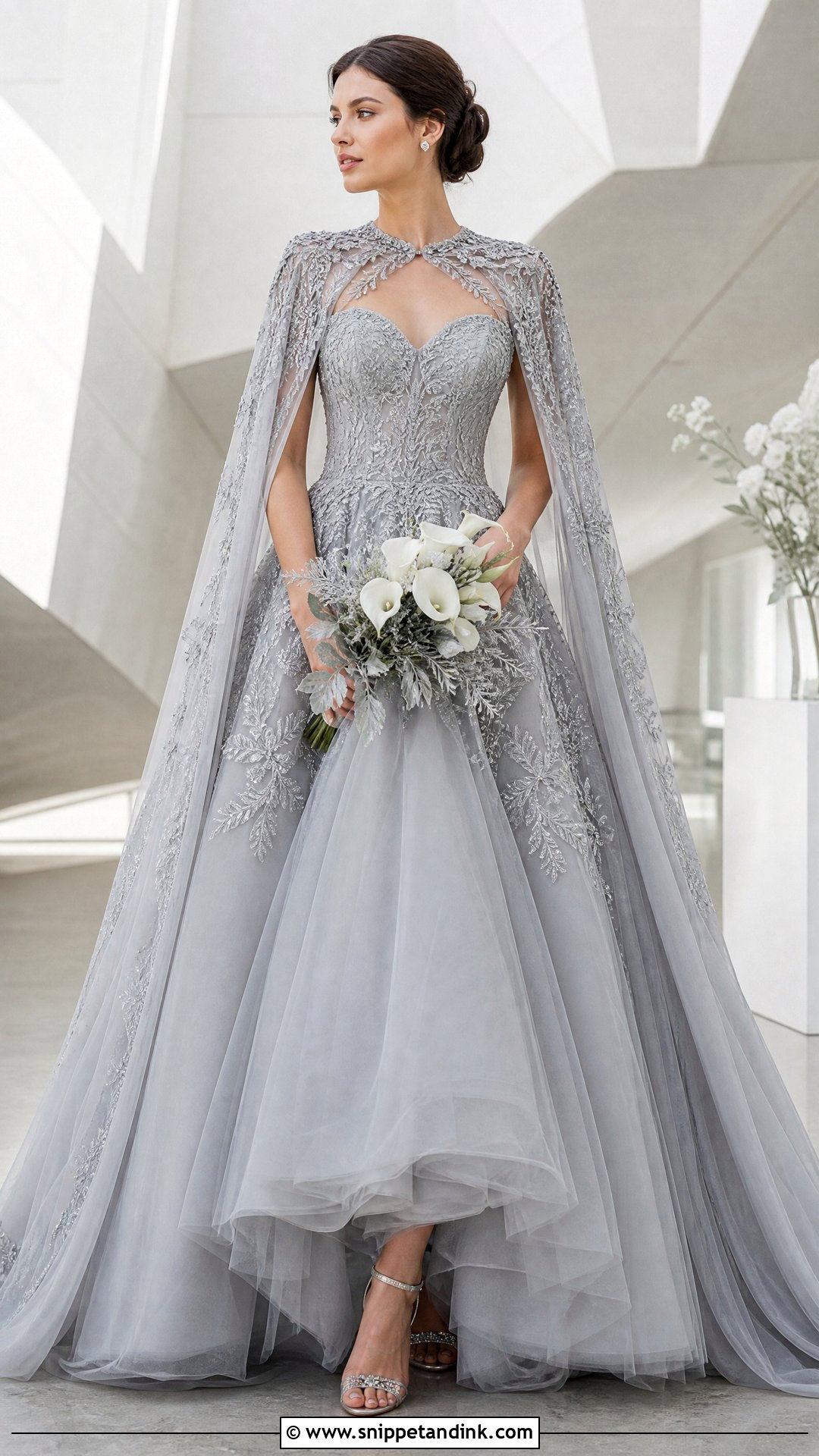
Silver gray looks modern and cool without the weight of black. A layered tulle gown with silver embroidery, a sleek satin column or an architectural neckline all suit it, and crystal embellishment gives the fabric a soft glow in both daylight and lamplight. Gray needs some brightness near the face, or it can make skin look tired. Silver heels, diamond studs and a fine tennis bracelet, plus a pale gray veil or sheer embellished cape, carry the color. White calla lilies, ivory roses and silvery greenery make the bouquet. A smooth chignon with a crystal comb and rose-toned lips finish it.
10. Floral Wedding Dress
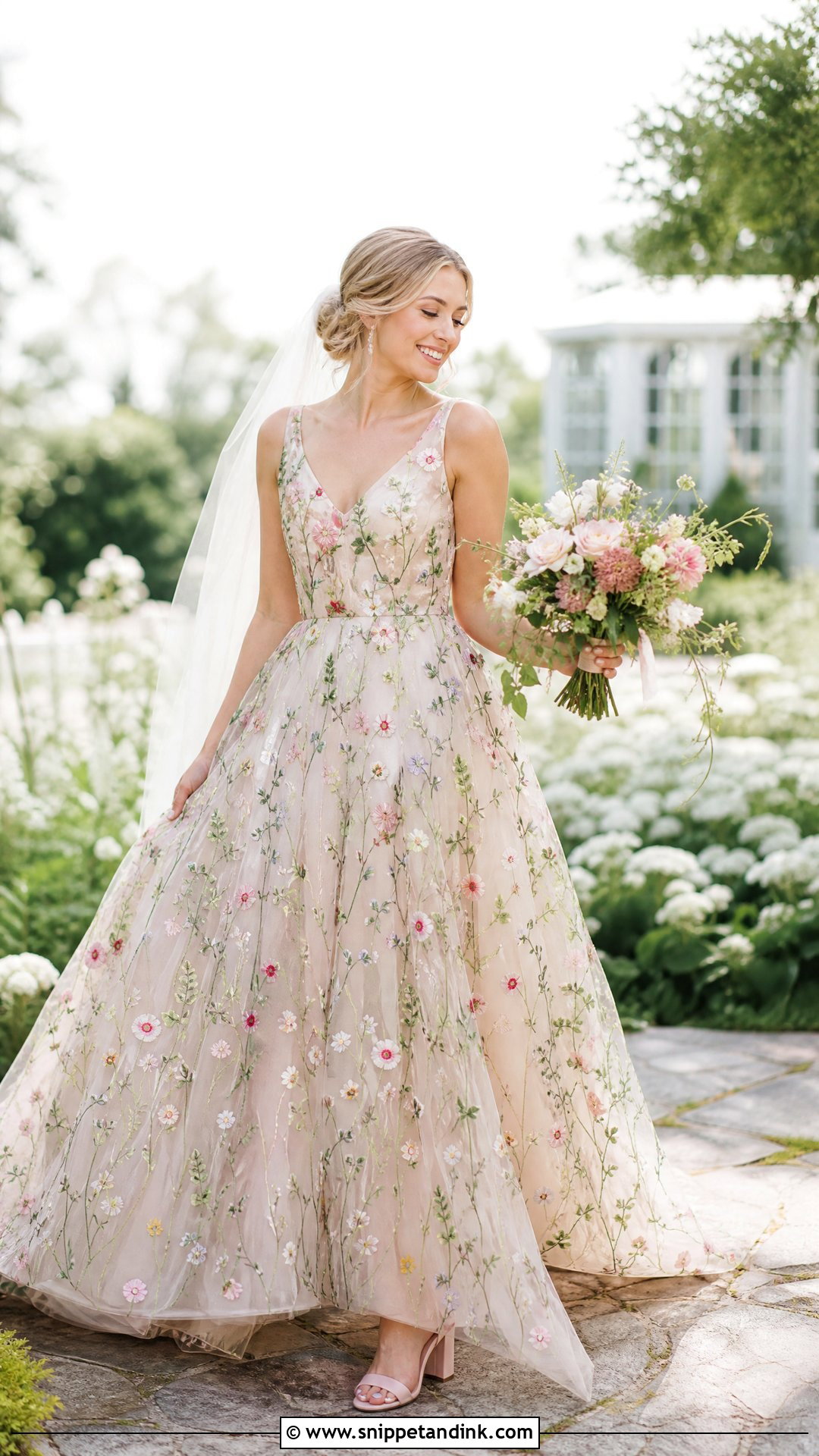
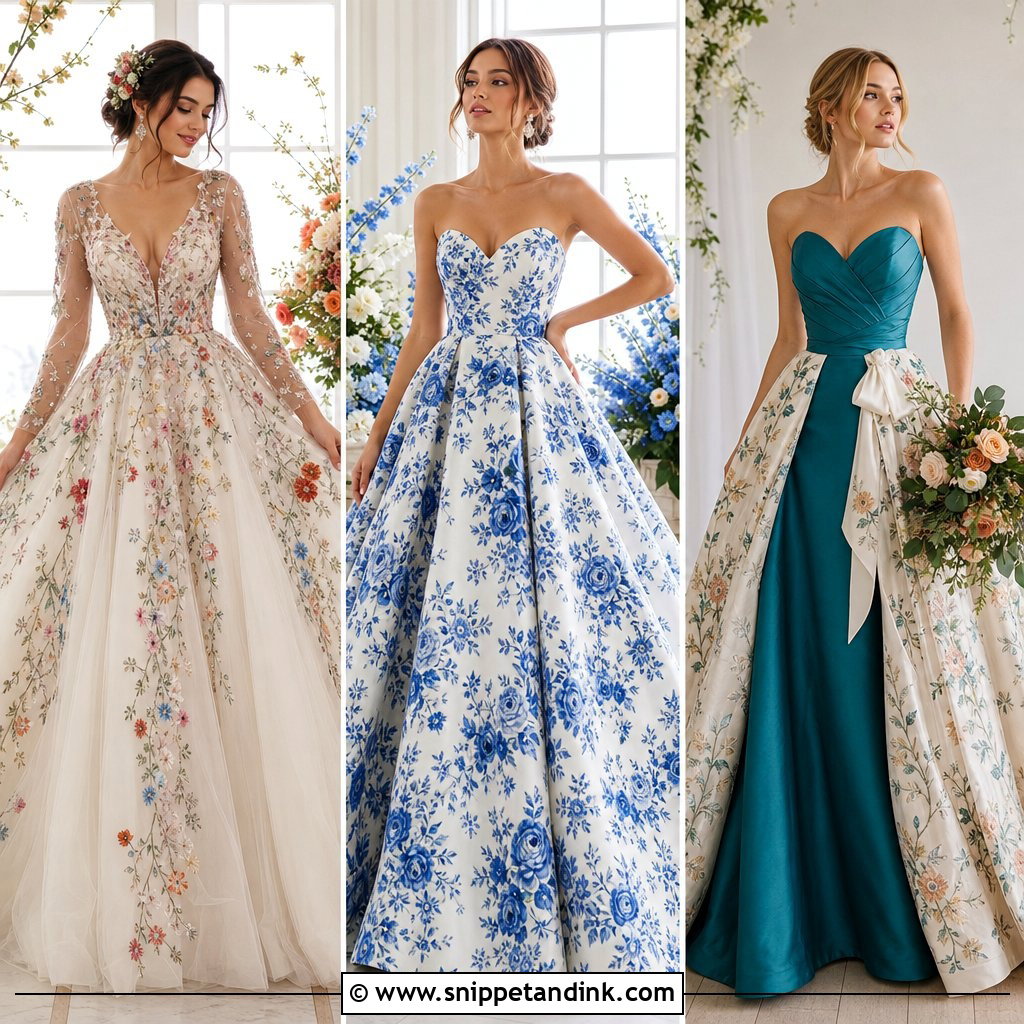
Embroidered flowers over a blush, blue or champagne base give you several colors in one dress. A fitted bodice and full tulle skirt keep the print bridal; a flowing A-line feels more relaxed. With this much going on in the gown, I pick shoes in one quiet color lifted from the embroidery, such as pale pink, sage or champagne, and keep jewelry to pearl earrings and a thin bracelet. A plain veil lets the flowers show; an embroidered one is bolder. The bouquet should repeat two or three of the dress colors at most, and soft hair and natural makeup stop the whole thing feeling crowded.
11. Dusty Rose Wedding Dress
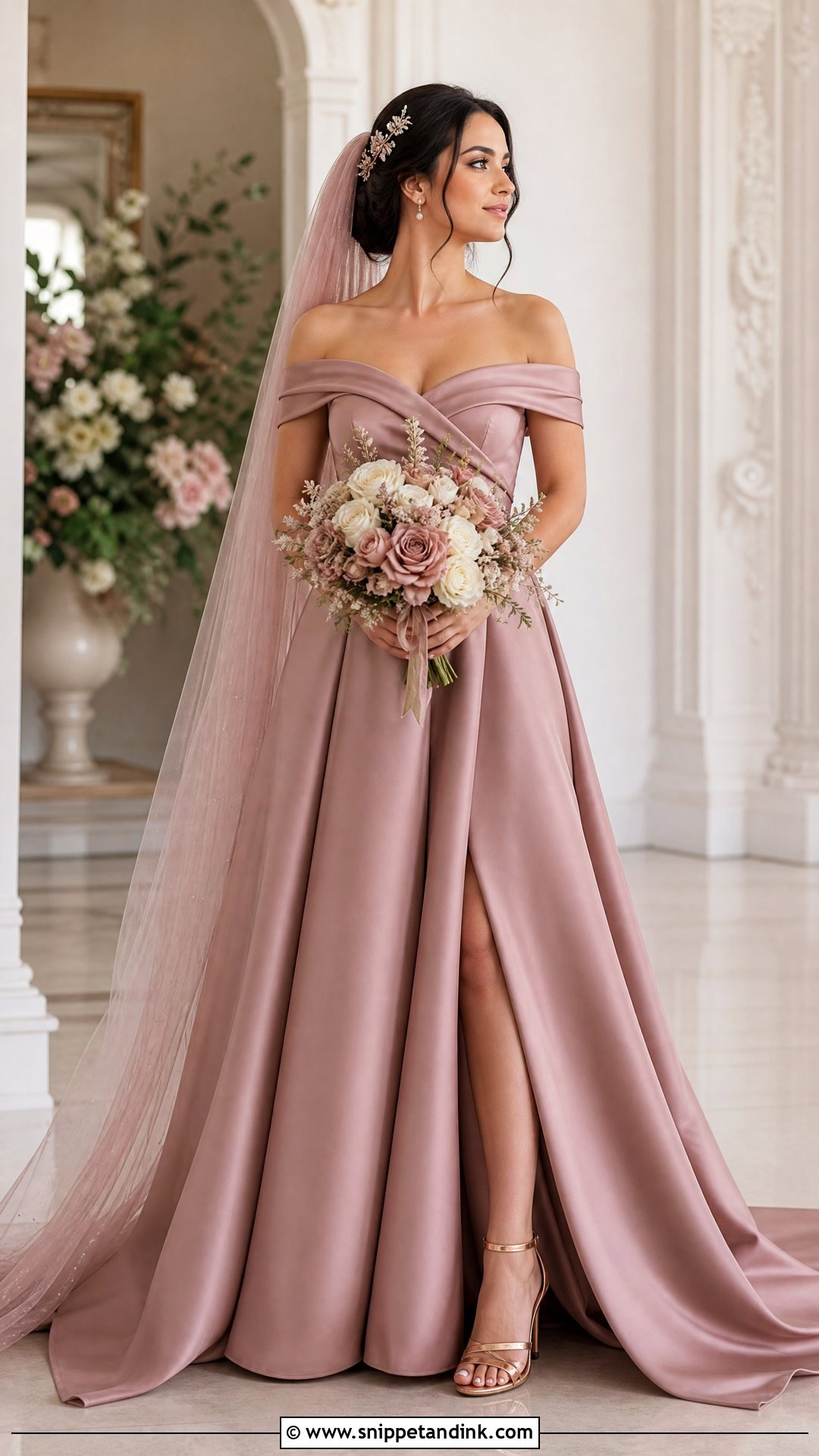
Dusty rose has more depth than blush, with a gray tone that suits many skin tones well. It works in velvet for cold weather, chiffon for warm, and satin for a smooth formal finish. An off-the-shoulder A-line with a defined waist and a flowing train is a good shape for it. Rose-gold heels, pearl earrings and a small floral comb suit the color. A mauve veil deepens it; a champagne cape adds warmth. Cream roses, dusty pink flowers and eucalyptus echo the gown without going fully monochrome. Wear loose waves for a relaxed setting, a low twisted bun for formality, and rosy neutral makeup with a muted berry lip.
12. Peach Wedding Dress
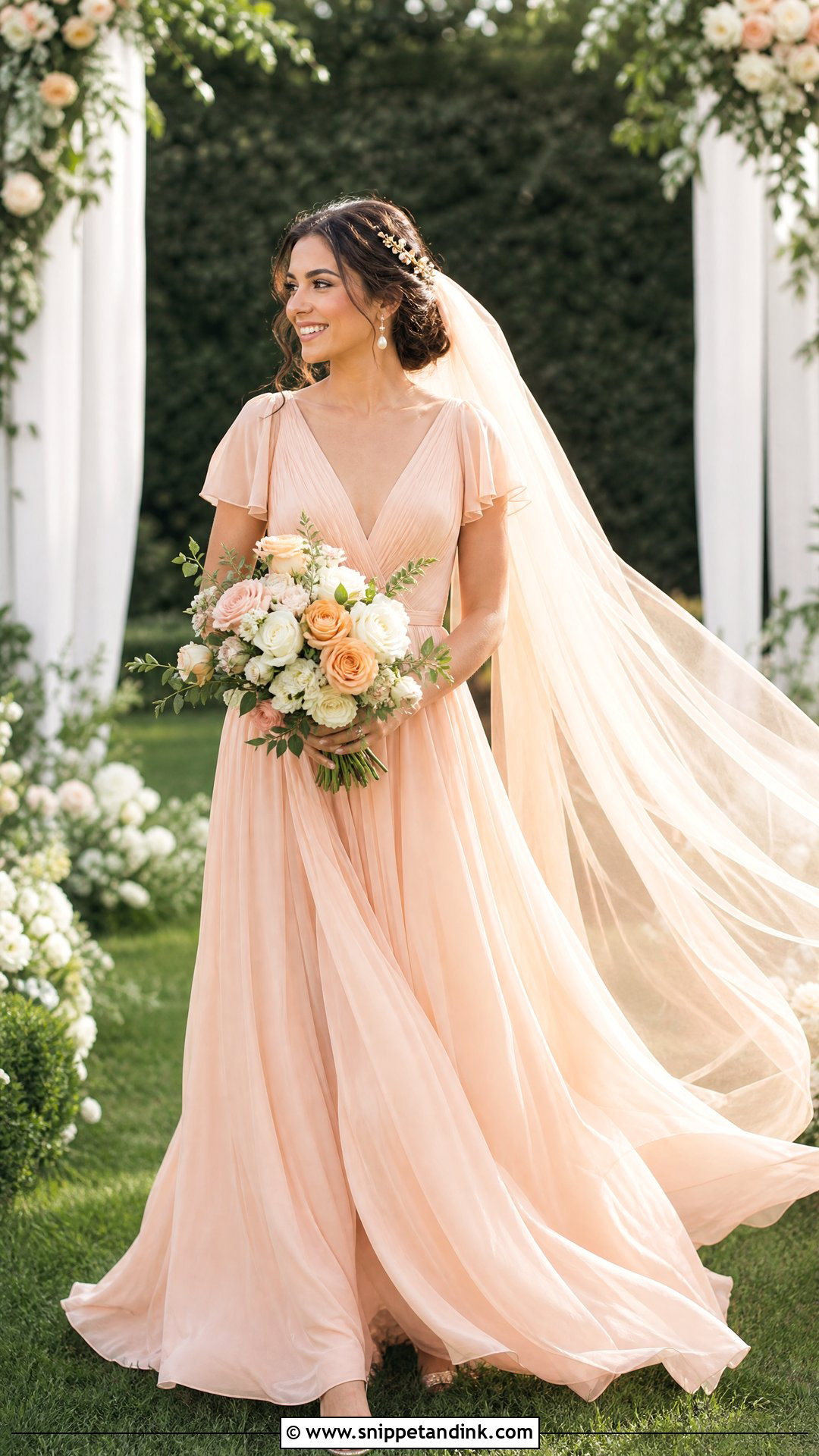
Peach is warm and cheerful, and it’s at its best in bright outdoor light. A soft chiffon gown with a wrap bodice, flutter sleeves and a long skirt suits a daytime garden; peach satin with a square neck and fitted waist is more formal. Very fair skin can wash out next to pale peach, so a slightly deeper apricot tone is sometimes kinder. Champagne sandals, pearl drops and a small gold comb suit it, with a sheer peach veil that doesn’t cover the details. Ivory flowers, peach roses and small greenery accents, an airy updo, and warm brown eye makeup with a coral-pink lip finish it.
13. Mint Green Wedding Dress
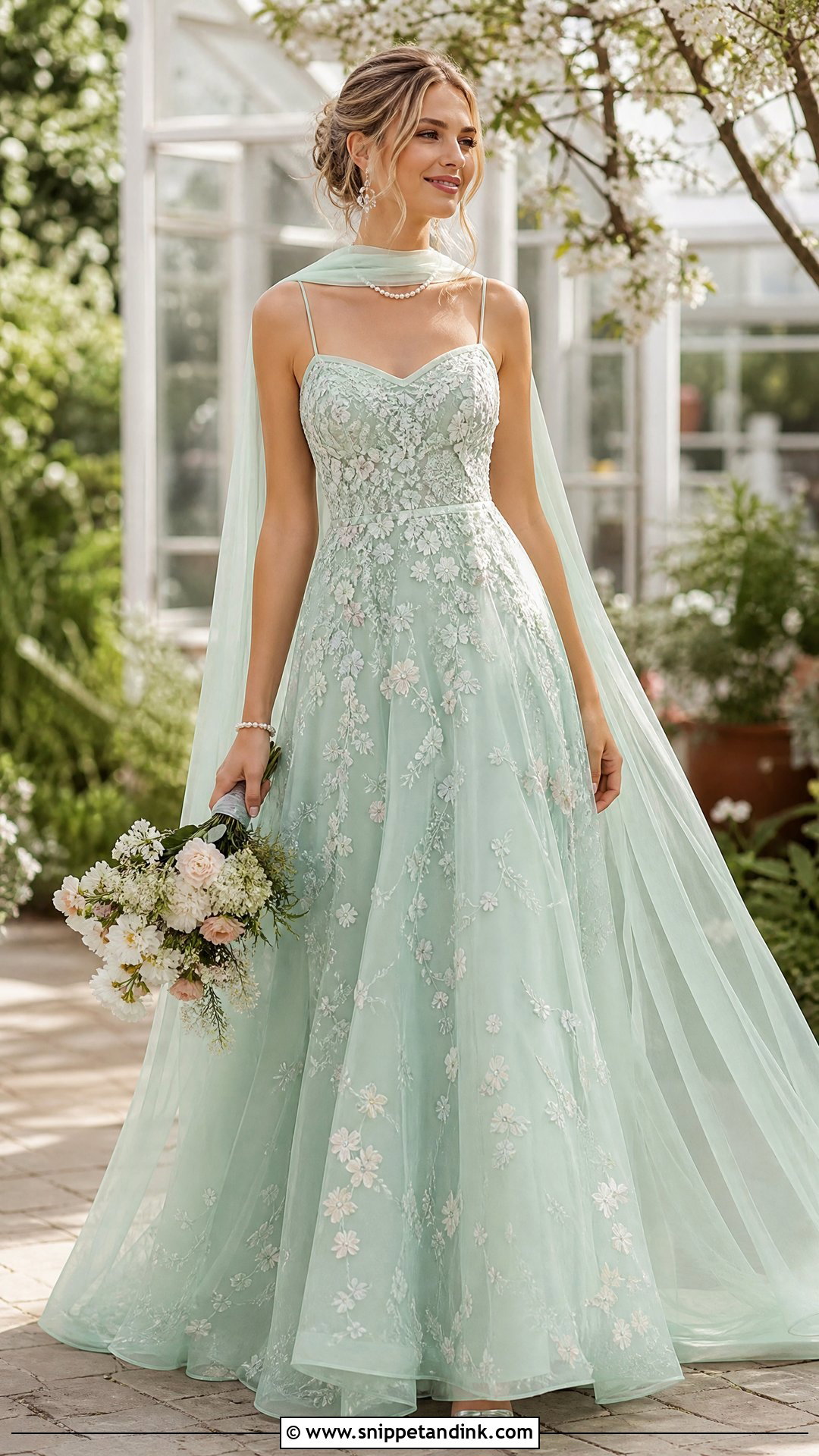
Mint feels fresh for spring and summer, and it stays soft in tulle, chiffon and organza rather than looking heavy. Choose an A-line with a lightly structured bodice, slim straps and subtle floral embroidery. Mint is one of the shades I’d check under the venue’s actual lighting if possible, because yellowish indoor bulbs can push it toward a dull green. Silver sandals, pearl jewelry and a small crystal clutch suit it. A pale mint cape can replace the veil for a modern effect. White flowers, pale foliage and a few blush accents, a braided low bun and luminous makeup with a nude-pink lip complete it.
14. Navy Blue Wedding Dress
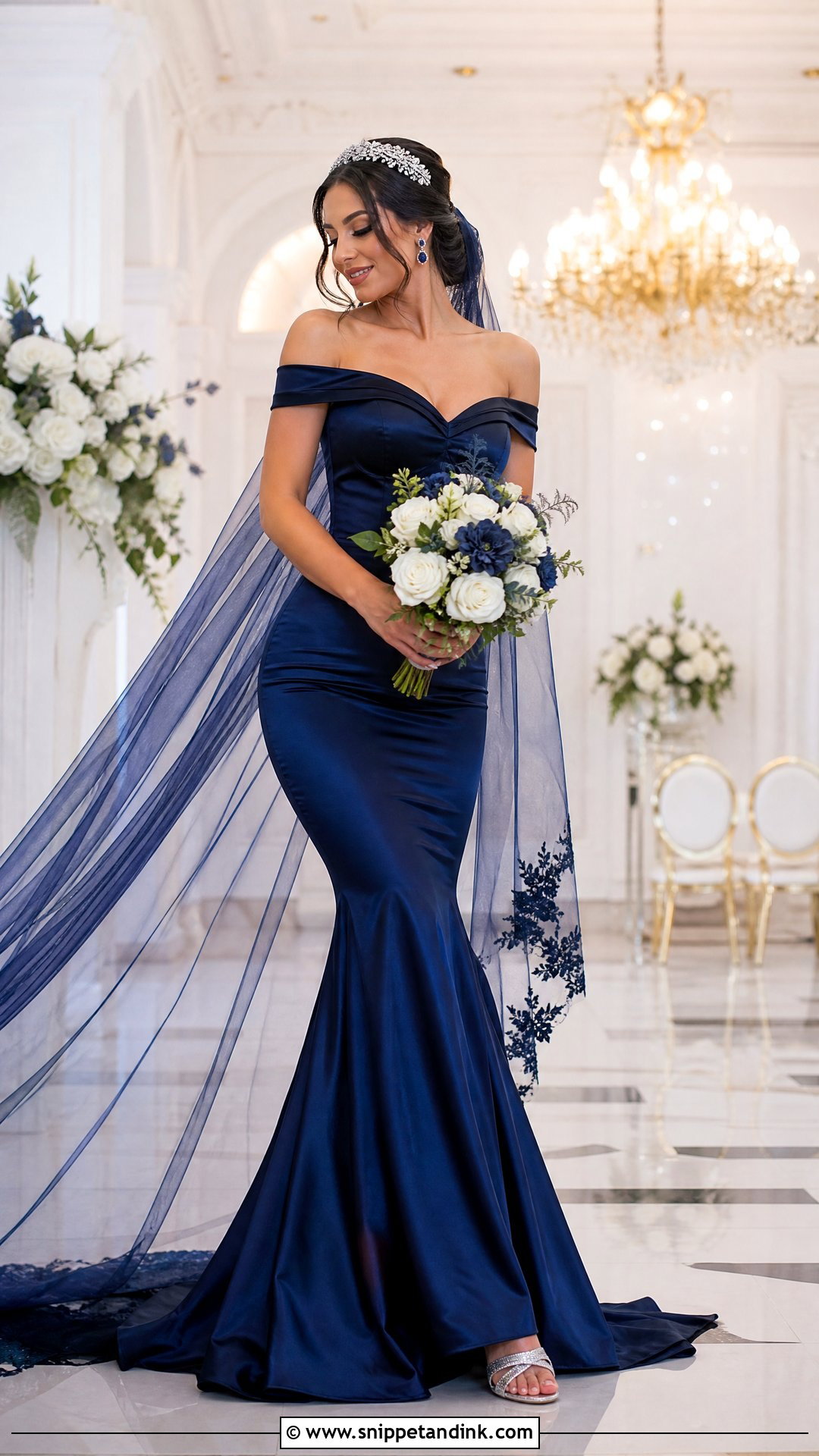
A navy blue wedding dress gives you the formality of a dark gown with a softer edge than black. Rich satin, velvet or embroidered tulle in a floor-length shape suits it; a fitted mermaid is sleek, a structured ball gown dramatic. Navy can read as black in evening photos, so a fabric with some sheen or texture helps the blue come through. Silver heels, sapphire earrings and a crystal hairpiece suit it. A long navy veil stands out against a bright setting; a sheer gray cape gives gentler contrast. White roses, blue flowers and dark leaves, polished waves or a smooth updo, and a rose or berry lip finish it.

15. Emerald Green Wedding Dress
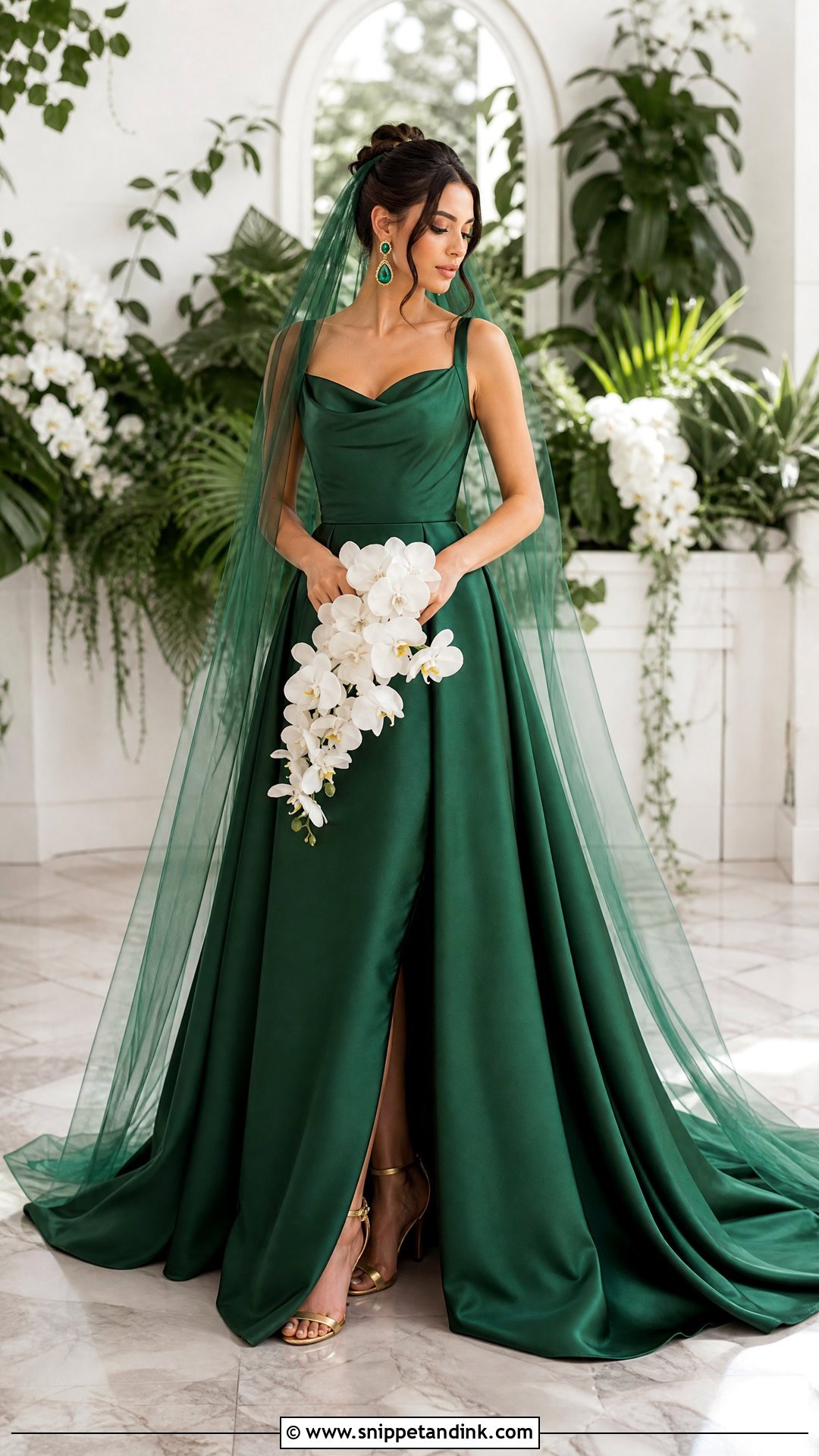
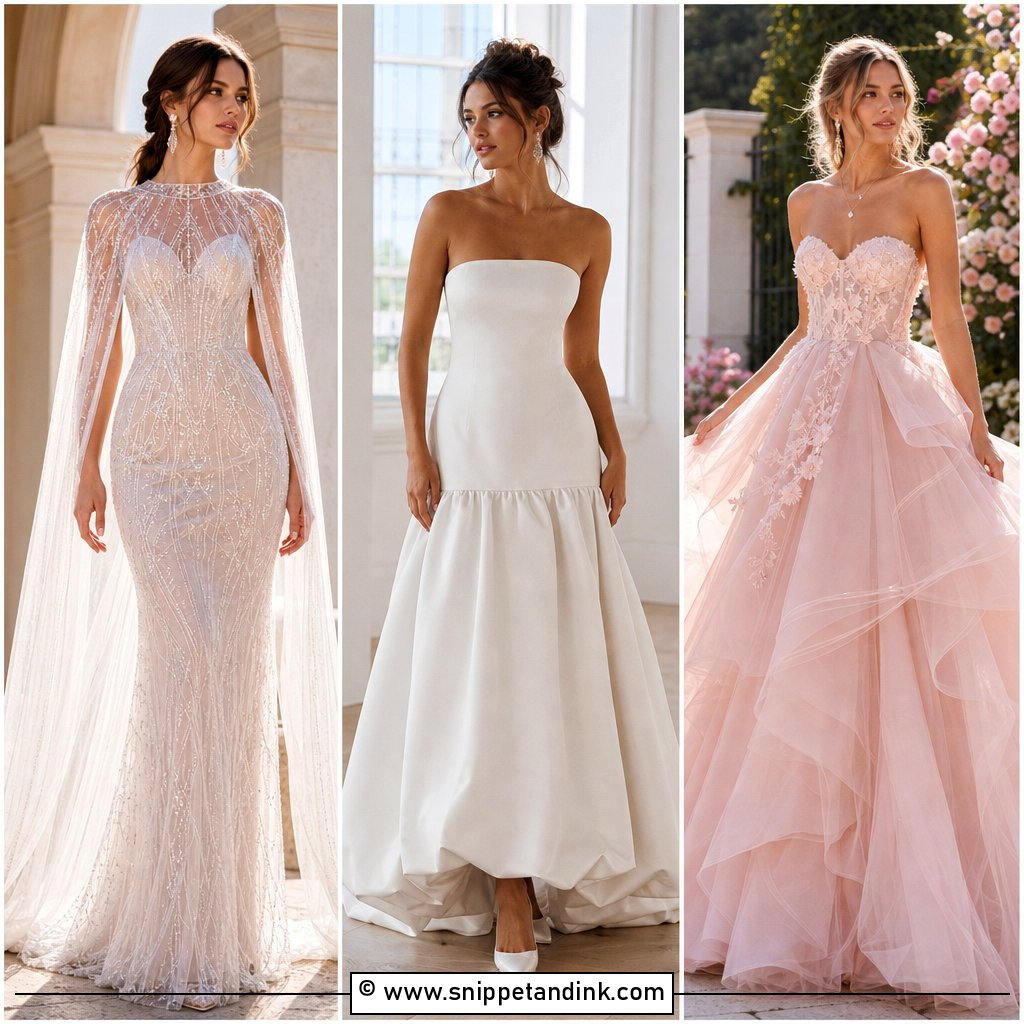
Emerald looks rich in both a classic ballroom and a forest. Velvet suits a cold-season wedding; satin works year-round. A fitted bodice, defined waist and long train make the color feel deliberate and formal. Gold heels, emerald earrings and a slim gold bracelet are the natural pairing. A green veil adds drama, and a sheer cape with gold embroidery is lighter. With a color this strong, I’d keep the bouquet pale: ivory roses, white orchids or soft foliage. A sculpted bun or glossy waves, warm gold eye makeup and a neutral rose lip balance it. Velvet crushes easily, so hang it the night before and steam it from the inside.
16. Burgundy Wedding Dress
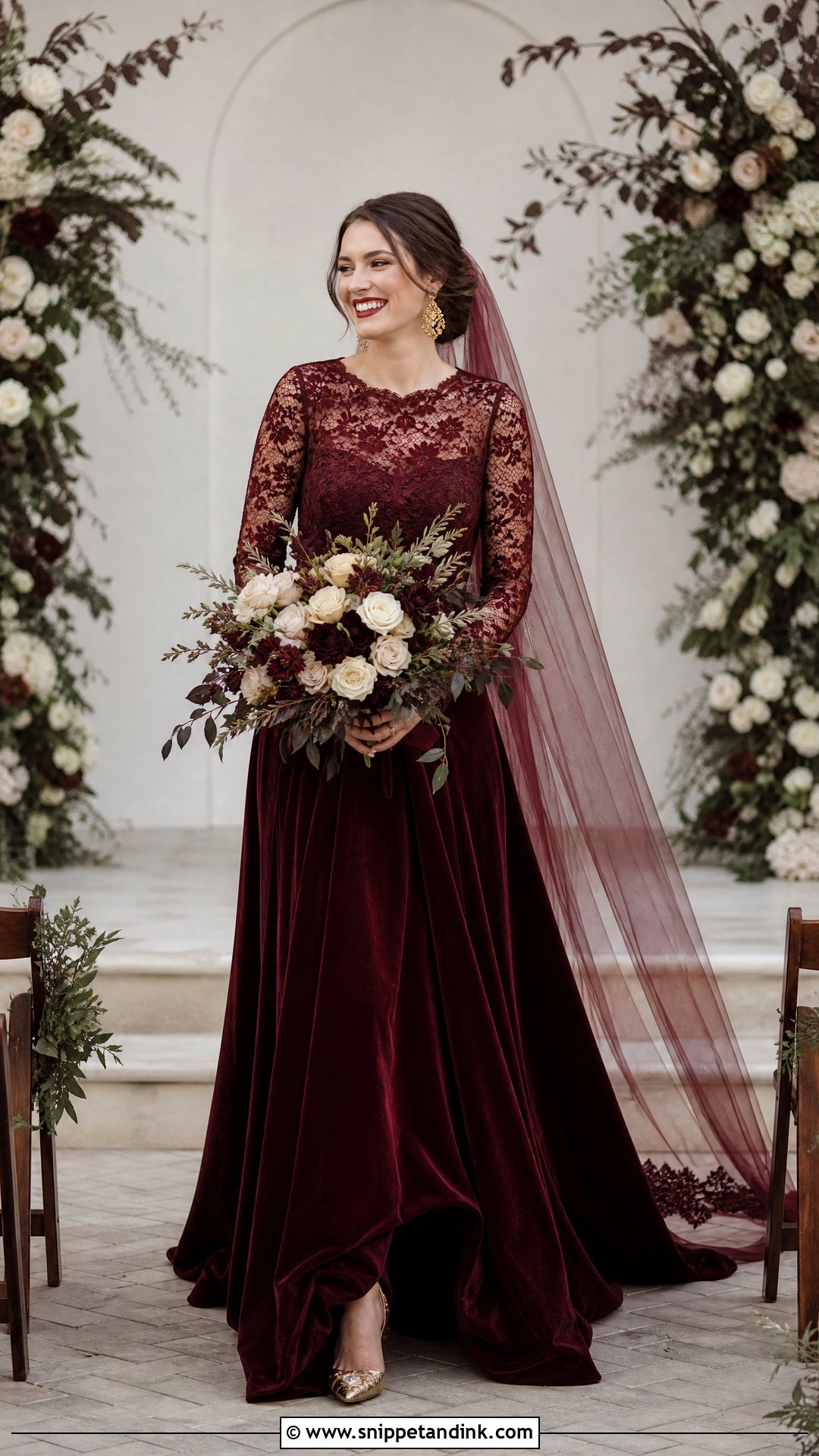
Burgundy turns a traditional gown shape into something warm and unusual. A long-sleeved lace dress, a velvet A-line or a satin ball gown with a structured bodice all carry it well. Gold shoes, antique-style earrings and a small comb above a low bun suit the deep red. A tonal burgundy veil makes a dramatic entrance; a champagne tulle cape softens it. Carry cream flowers with dark greenery and a few muted red accents. If the gown has intricate lace or beading, everything else should be simple. Warm brown eyeshadow, a little highlighter and either a neutral lip or a deeper berry shade finish it.
17. Lilac Wedding Dress
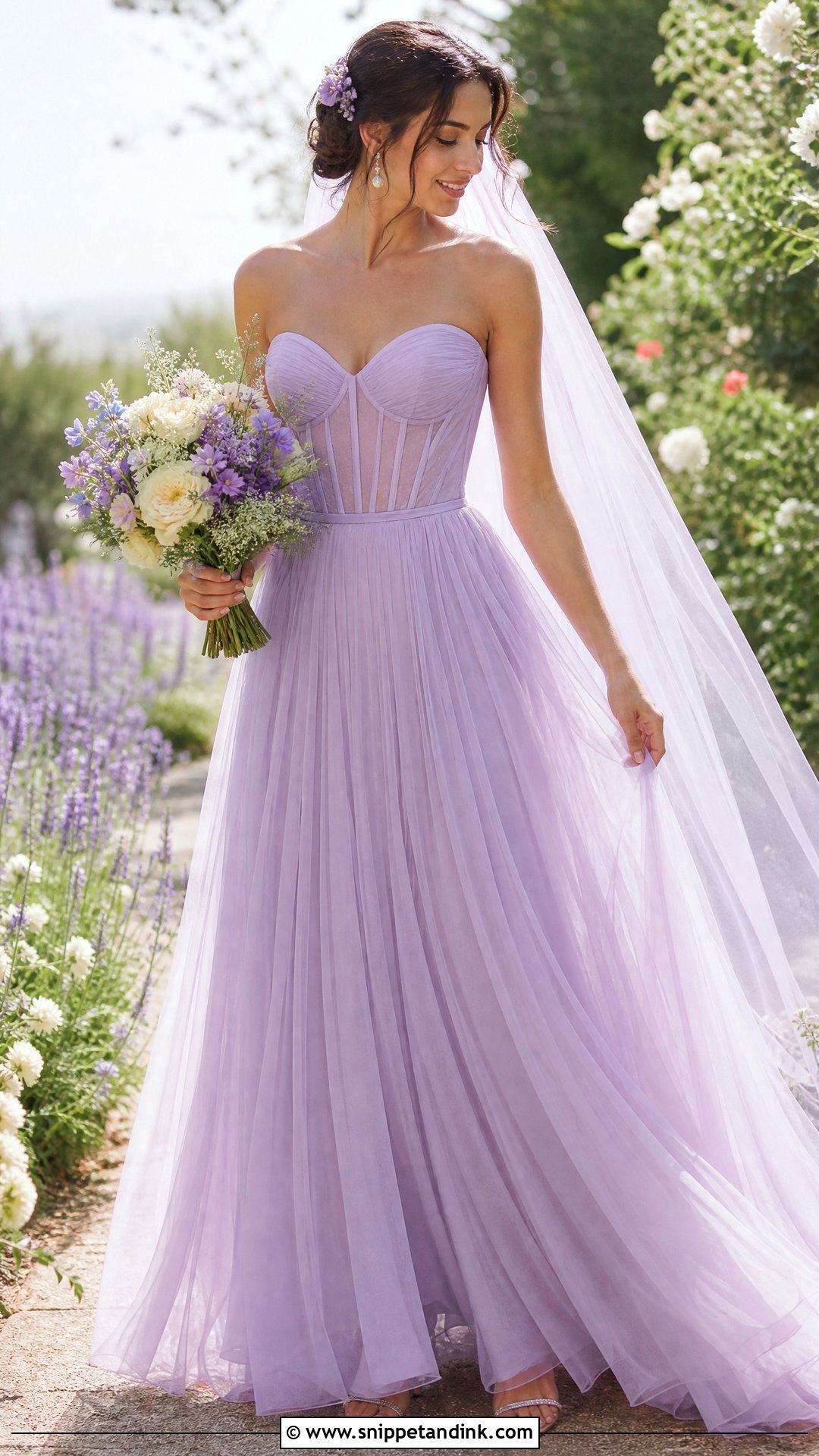
Lilac is lighter and pinker than lavender. Pleated chiffon, layered tulle or lace over a lilac lining suit it, and a corset bodice over a soft A-line skirt gives structure without stiffness. Because lilac is so pale, the lining color does a lot of the work; ask to see the gown with and without it if lace is involved. Silver sandals, pearl earrings and a small floral pin go well. A lilac veil blends in, while a pale gray tulle one adds understated contrast. Cream flowers, soft purple blooms and eucalyptus make the bouquet. A loose braided updo suits outdoors, smooth curls a formal venue, with cool pink blush and a mauve-nude lip.
18. Bronze Wedding Dress
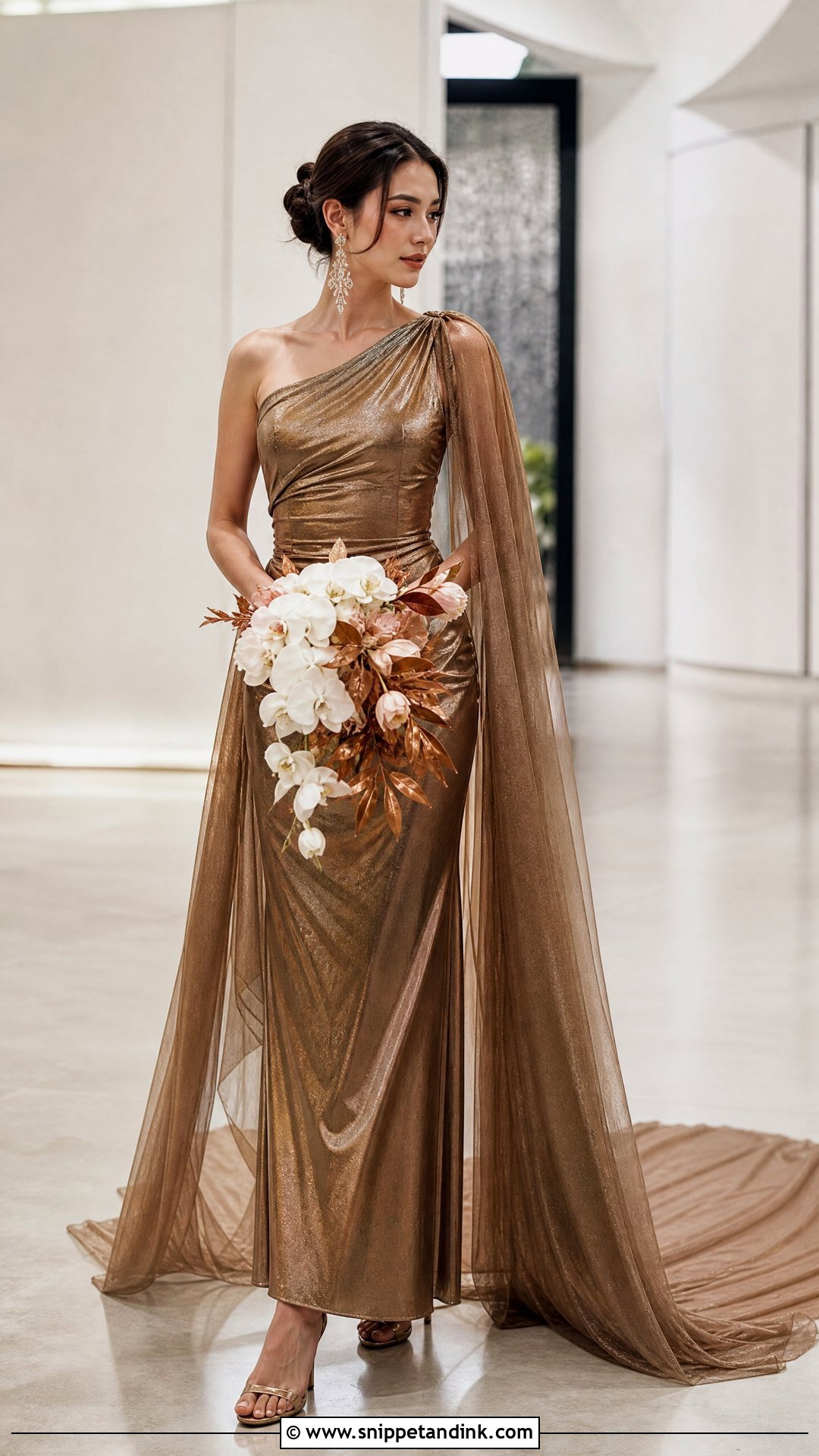
Bronze is deeper and warmer than pale gold, and it flatters olive and deeper skin tones in particular. Satin, lamé, beaded tulle or sequins in a streamlined shape keep it refined. A one-shoulder column with a detachable train feels contemporary; a bronze ball gown is a bigger statement. Dark gold heels, simple crystal earrings and a minimal clutch suit it, and a sheer bronze cape adds movement. Ivory flowers, dried grasses and copper leaves make a cohesive bouquet. Polished waves or a sleek low bun, plus Bronze eye makeup, glowing skin and a caramel lip, finish it.
19. Butter Yellow Wedding Dress
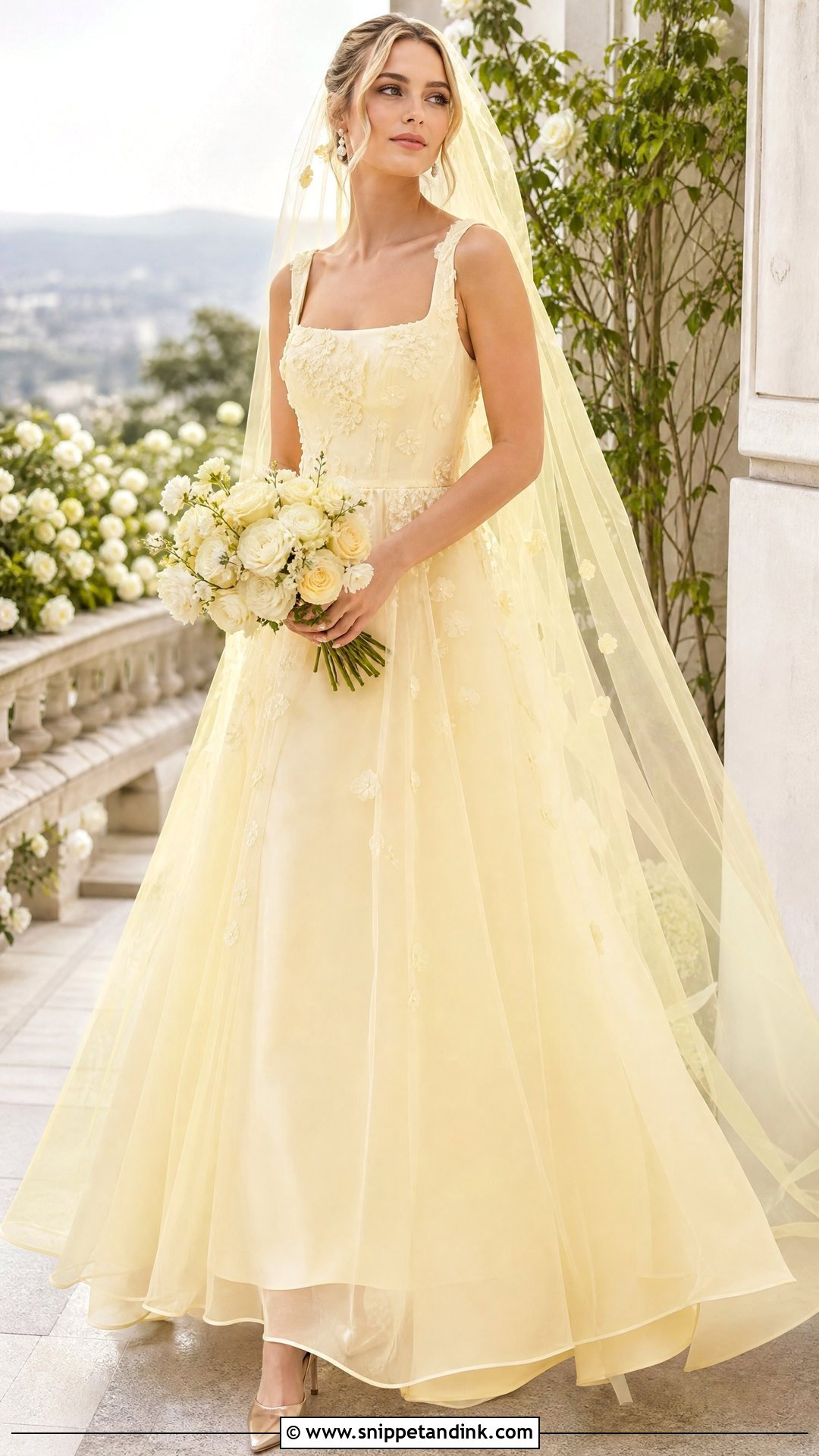
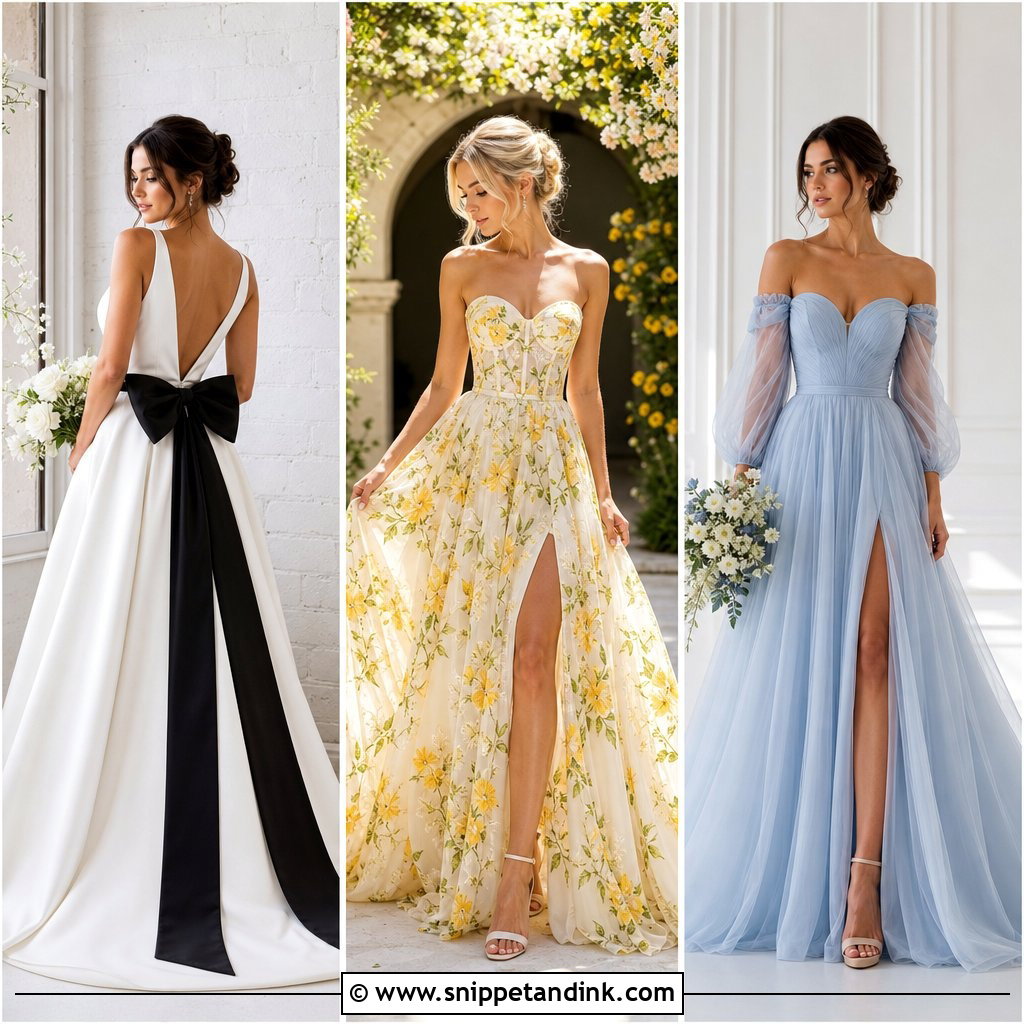
Butter yellow is unexpected but gentle, as long as it stays pale. In chiffon or organza it reads soft and bridal; in a heavier, brighter fabric it starts to look like a bridesmaid dress. A square-neck A-line looks clean, and floral appliqués add romance. Champagne heels, pearl earrings and a fine gold bracelet suit it. A yellow veil matches; a champagne cape adds tonal contrast. White flowers, pale yellow roses and fresh greenery work well. Loose waves, a low ponytail or a soft bun, with warm makeup and a natural coral lip, finish it.
20. Ombre Color Wedding Dress
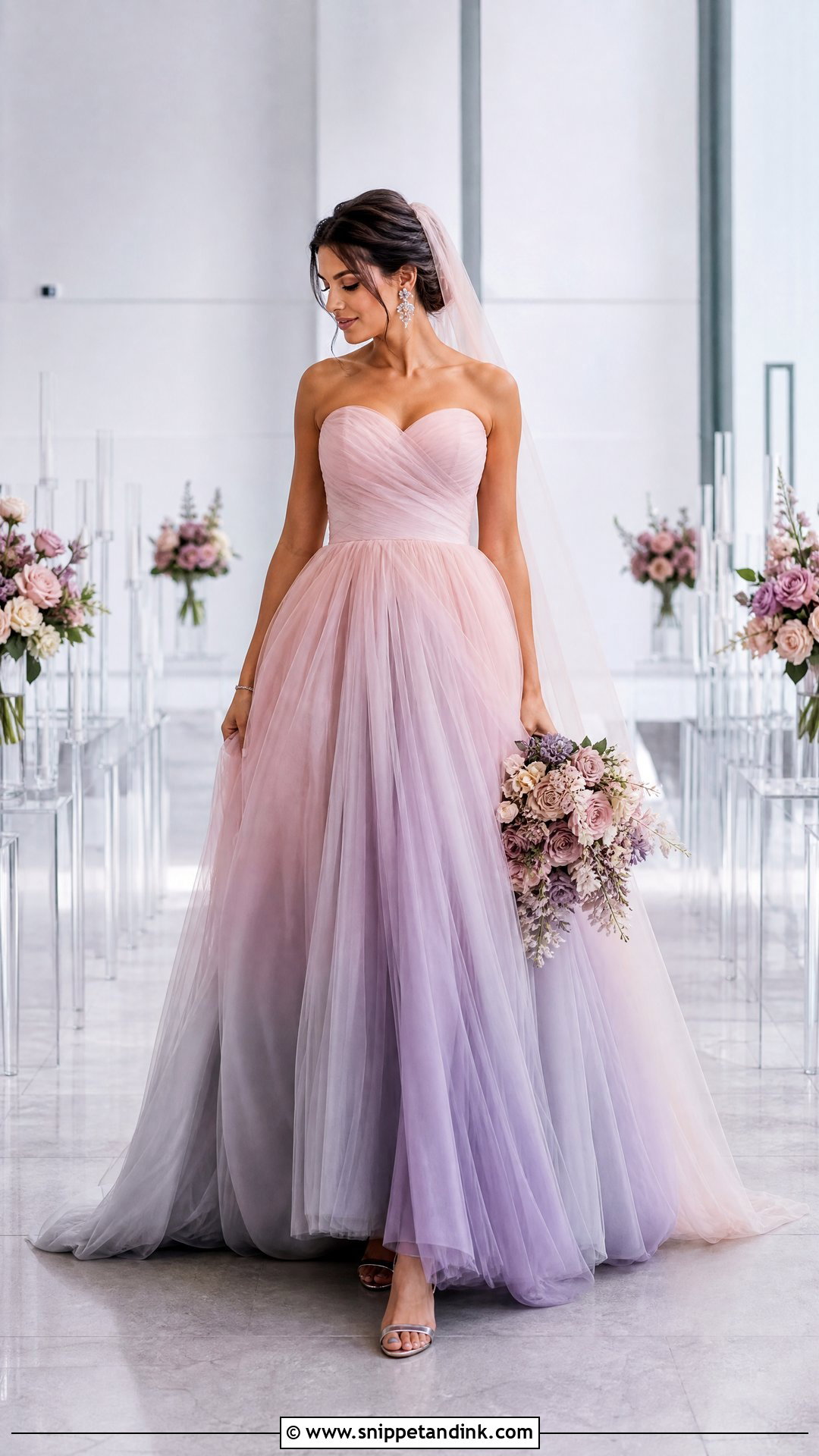
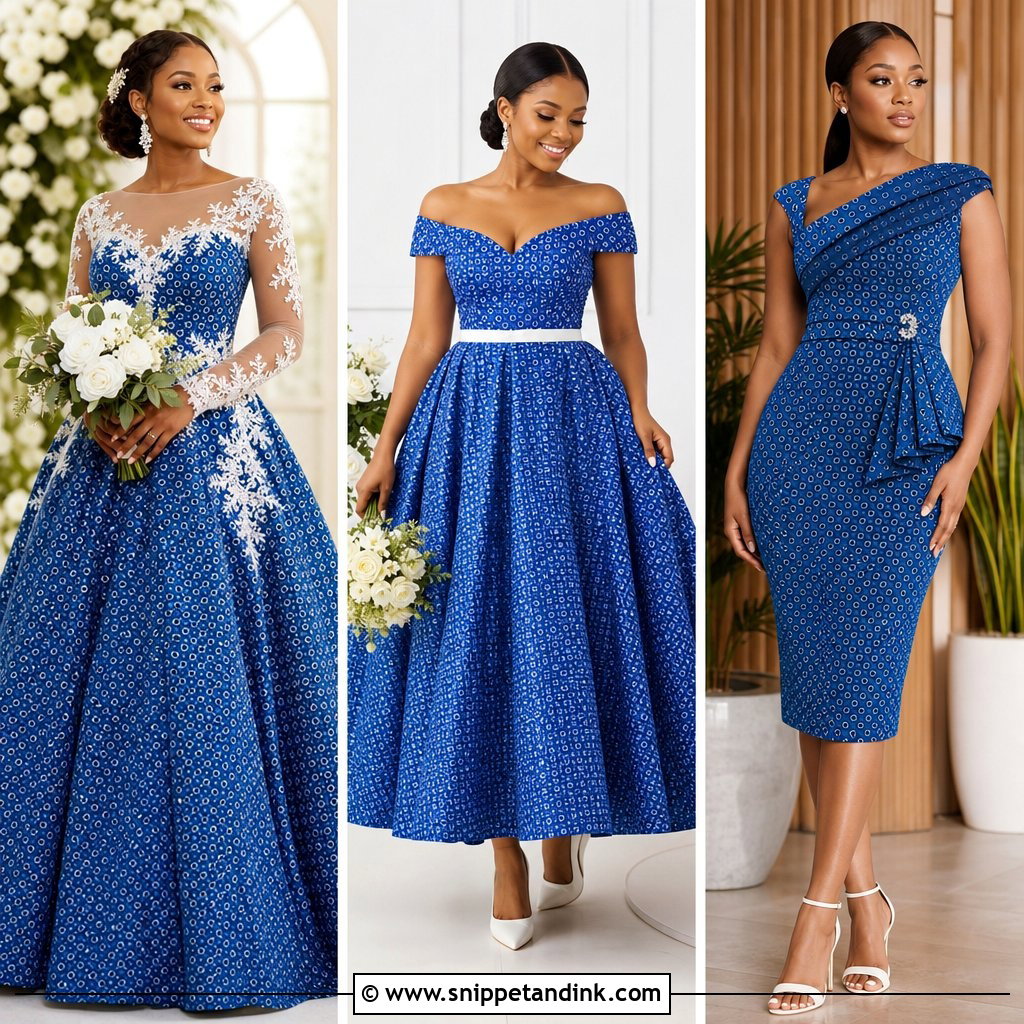
Can’t settle on one shade? An ombre gown fades from one color to another down the skirt, pale pink into lavender, blue into silver, champagne into gold. Tulle and organza show the transition best because the layers blend it gradually. Keep accessories simple: metallic heels, crystal earrings, a slim bracelet. Choose the veil in the lightest color of the dress so it merges with the bodice. The bouquet should repeat one or two shades, not every one. Ask how the gradient is made, too. Dip-dyed fabric varies piece to piece, so the gown you receive may not match the sample exactly.
Dye Lots, Rain Spots and Faded Pastels
Colored fabric behaves differently from white, and a few problems only show up after you order.
Ordering
Made-to-order colored gowns are dyed in batches, so the shade can vary slightly from the shop sample. If you’re buying a separate veil, cape or overskirt in the same color, order everything from the same maker at the same time so it comes from one dye lot. Colored gowns also aren’t always stocked, which can add weeks to the lead time, so start shopping early.
On the day
Deep reds, burgundies and navies can bleed if they get properly wet, and damp dark satin sometimes rubs color onto skin or a pale veil. Keep a large umbrella on hand if rain is possible, and don’t let anyone dab a spill with water before you’ve tested an inside seam. Pale silks show water marks more than white does, too.
Afterwards
Pastels fade in sunlight. Store the gown in a breathable garment bag away from windows, and take it to a cleaner who handles colored silks before it goes into storage.
What Makes a Colored Gown Read as Bridal
The right color is the one you feel most like yourself in. Pastels, jewel tones, metallics, florals and dark shades can all make a complete wedding look. Start with a color you genuinely like, then weigh the venue, season, fabric and formality. See the gown in natural light and indoor light before you decide. Coordinate your shoes, veil, jewelry, bouquet, hair and makeup without matching every piece. A bridal cut, a considered veil and good fit do the rest, and a colored gown made that way looks every bit as bridal as a white one.
You'll Like These Ideas:



Leave a Reply