
A two-color bridal look is harder to get right than an all-white one, because every extra shade has to agree with your skin, the room and the camera. When I style a colored gown, the second color is the thing I test longest. Bridal collections now go well beyond traditional white, so champagne linings, blush tulle, pastel blue embroidery and full jewel-tone gowns are easy to find on the rail. Below are twenty pairings I’d actually put together, from quiet neutrals to emerald and red, with notes on shoes, jewelry, veil and flowers for each, plus what I watch for when that combination moves from the fitting room to a long wedding day.
Hold the Second Color Under Your Chin, Not Against Your Hand
The color you see on a hanger is not the color you’ll wear, because a gown is judged against skin. When I work with a bride on a two-tone dress, I drape the swatch or the colored panel right under her jaw, since that is where the camera spends most of the day. Hands and arms tell you very little.
A five-minute test at your appointment
- Stand by a window, bare-faced if you can. Hold the ivory or white and then the accent color under your chin, one at a time. Whichever deepens the shadows under your eyes is the wrong one for your face.
- Check the metal next. Gold usually flatters warm and olive undertones, silver suits cool pink-toned skin, and rose gold sits comfortably between them.
- Take a phone photo of each with the flash off. A shade that looks soft in person can turn louder or grayer on a camera sensor.
- Ask to see the gown under warm indoor lighting too. Pastels in particular can shift by a full shade between daylight and bulbs.
If you love an accent color that doesn’t suit your face, move it away from the neckline. A colored hem, sash or underskirt gives you the palette without putting it next to your skin, and it’s often the version that looks most expensive in photos.
1. Ivory And Gold Wedding Dress
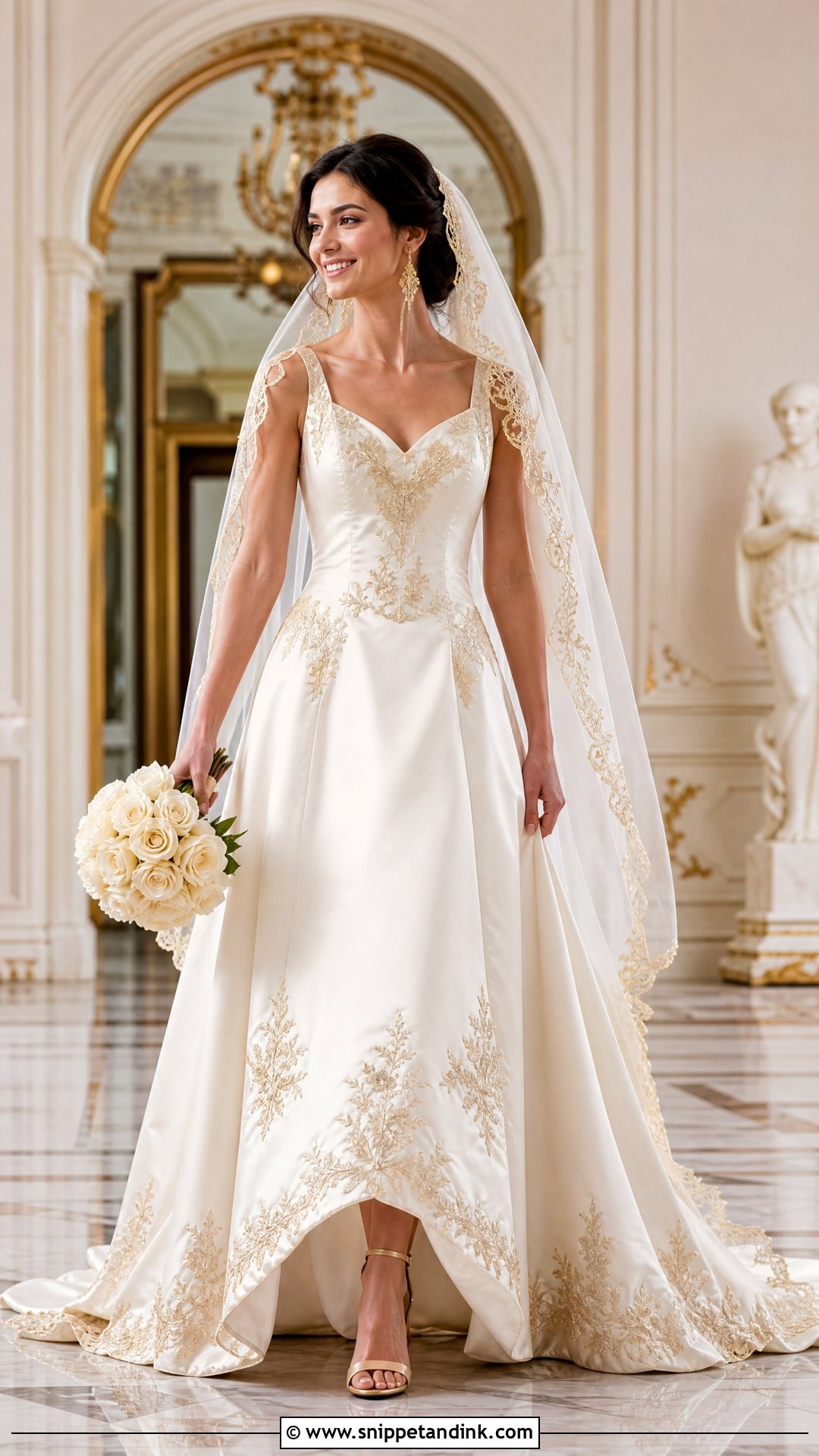
Ivory and gold read warm without tipping into flashy, as long as the gold stays in the thread rather than in big metallic slabs. I look for an ivory satin, lace or mikado gown with fine gold embroidery or a softly beaded belt, then keep the neckline bare so gold drop earrings and one delicate bracelet carry the metal. Champagne-gold heels and a small ivory clutch see you through the reception, and a sheer ivory veil with narrow gold edging ties the palette together. One thing I check first: metallic thread can look brassy beside a very pink ivory, so hold the embroidery up to your face in daylight. Cream roses, white ranunculus and a little golden foliage suit the bouquet, and historic rooms or outdoor light will pull out the gown’s golden undertone.
2. White And Silver Wedding Dress
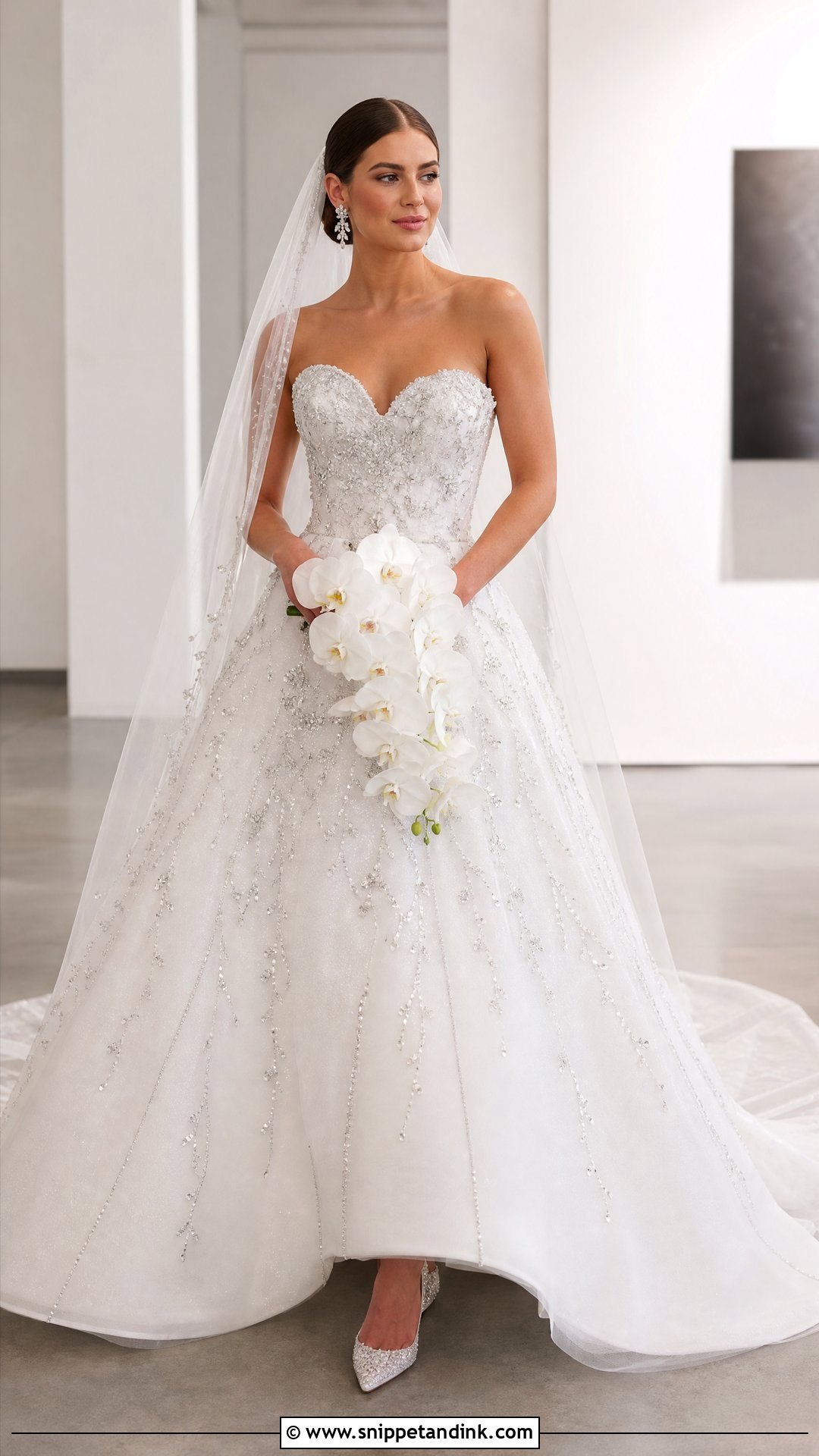
Pure white with silver is the coolest combination here, and it’s the one I’m most careful with on warm or olive skin, because bright white can make yellow undertones look sallow in close-ups. If it suits you, start with a white crepe or structured satin gown carrying silver beading or a slim metallic waistband. Pointed silver pumps, diamond-style studs, a tennis bracelet and a minimal hair comb give sparkle without pulling focus. A plain white cathedral veil keeps the line clean; silver-edged tulle gives it a crisp outline instead. White orchids or anemones with cool green leaves belong in the bouquet. City hotels, galleries and winter weddings with bright decor are where this pairing feels most at home.
3. Blush And Champagne Wedding Dress
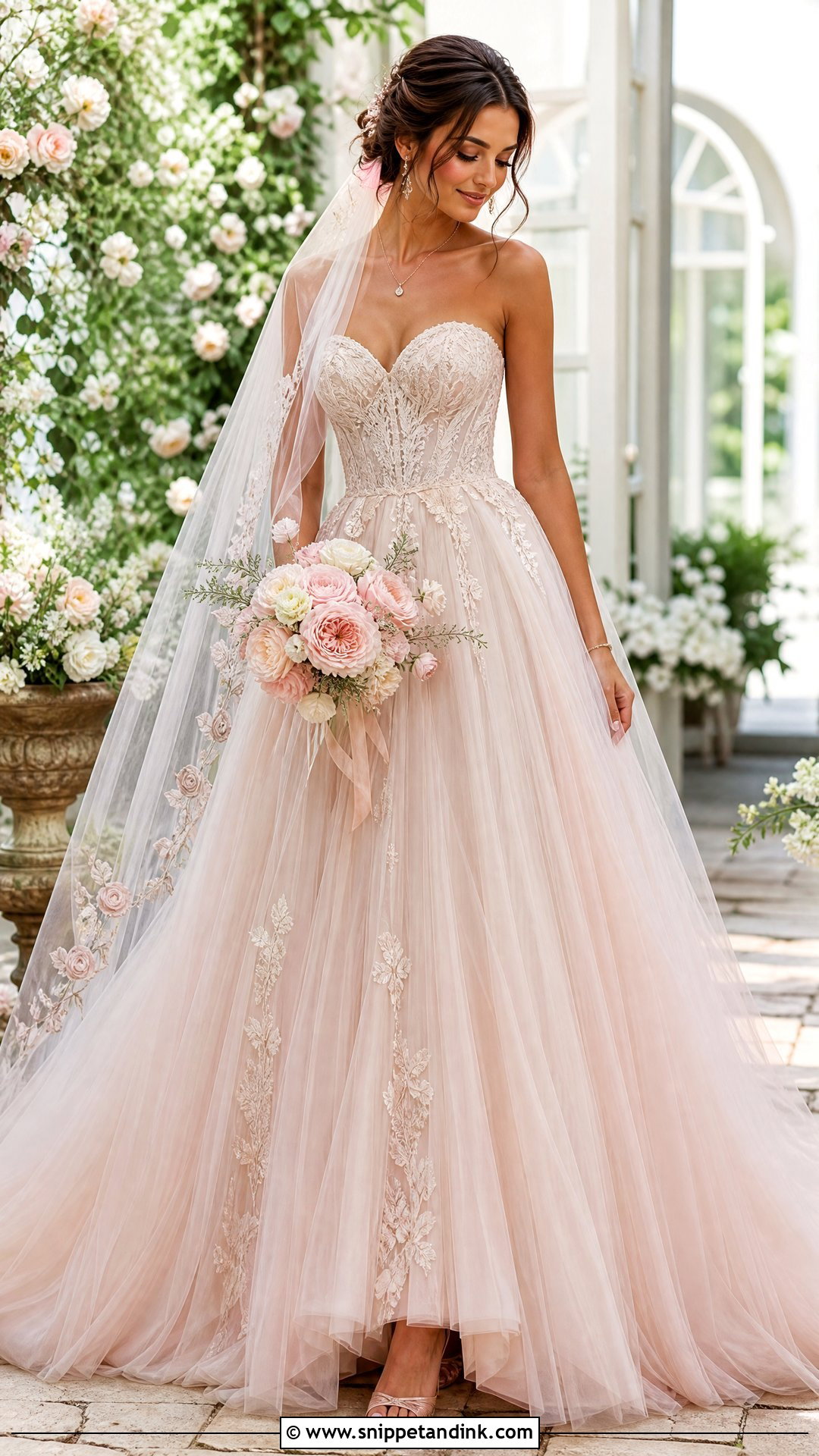
Blush tulle floated over a champagne lining is how most pink gowns in bridal shops are actually built, and the lining matters more than the tulle. Champagne underneath gives the skirt depth and lets lace appliqués stand out, while the same blush over a white lining can look flat and chalky. Look for an A-line or ball gown with a fitted bodice and layered movement. Champagne heels disappear under the hem and rose gold earrings pick up the warm pink. Your veil decides how pink the whole look reads: blush tulle pushes it further, an ivory veil with pale floral embroidery pulls it back. Blush roses, cream peonies and muted greenery finish it for garden celebrations and spring weddings.
4. Ivory And Sage Green Wedding Dress
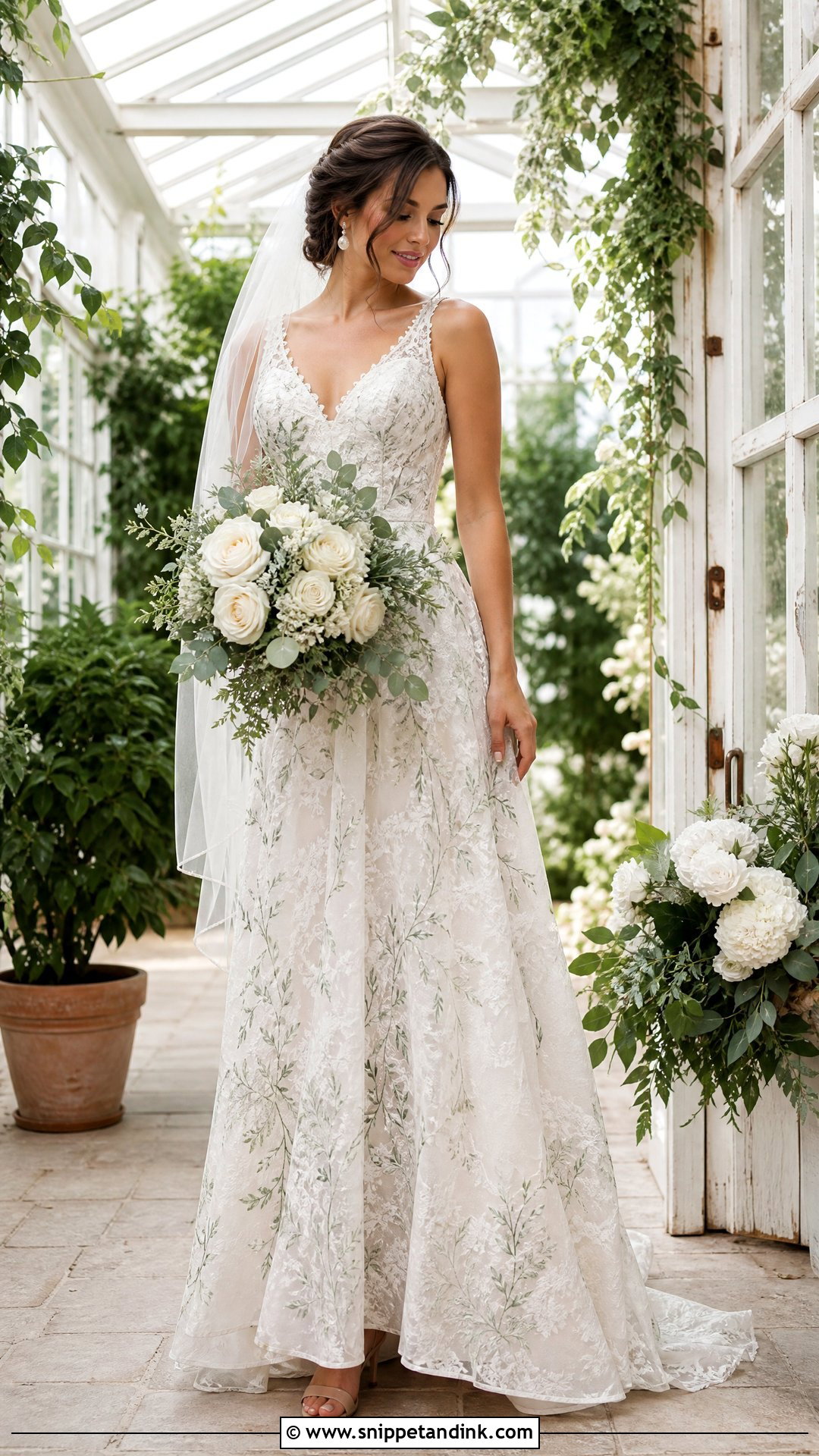
Sage is a color I’d introduce in pieces rather than across the whole gown, because large panels of gray-green can drain the face. Keep the dress ivory and bring the green in through embroidered leaves, a removable sash, appliqués or a soft cape. An ivory lace A-line with botanical green details works best outdoors, where real foliage repeats it in every frame. Pearl earrings, neutral heels and a small sage ribbon in the hair are enough. Leave the veil plain ivory. White garden roses with eucalyptus and olive leaves suit woodland venues, greenhouses and vineyards.
5. Ivory And Dusty Blue Wedding Dress
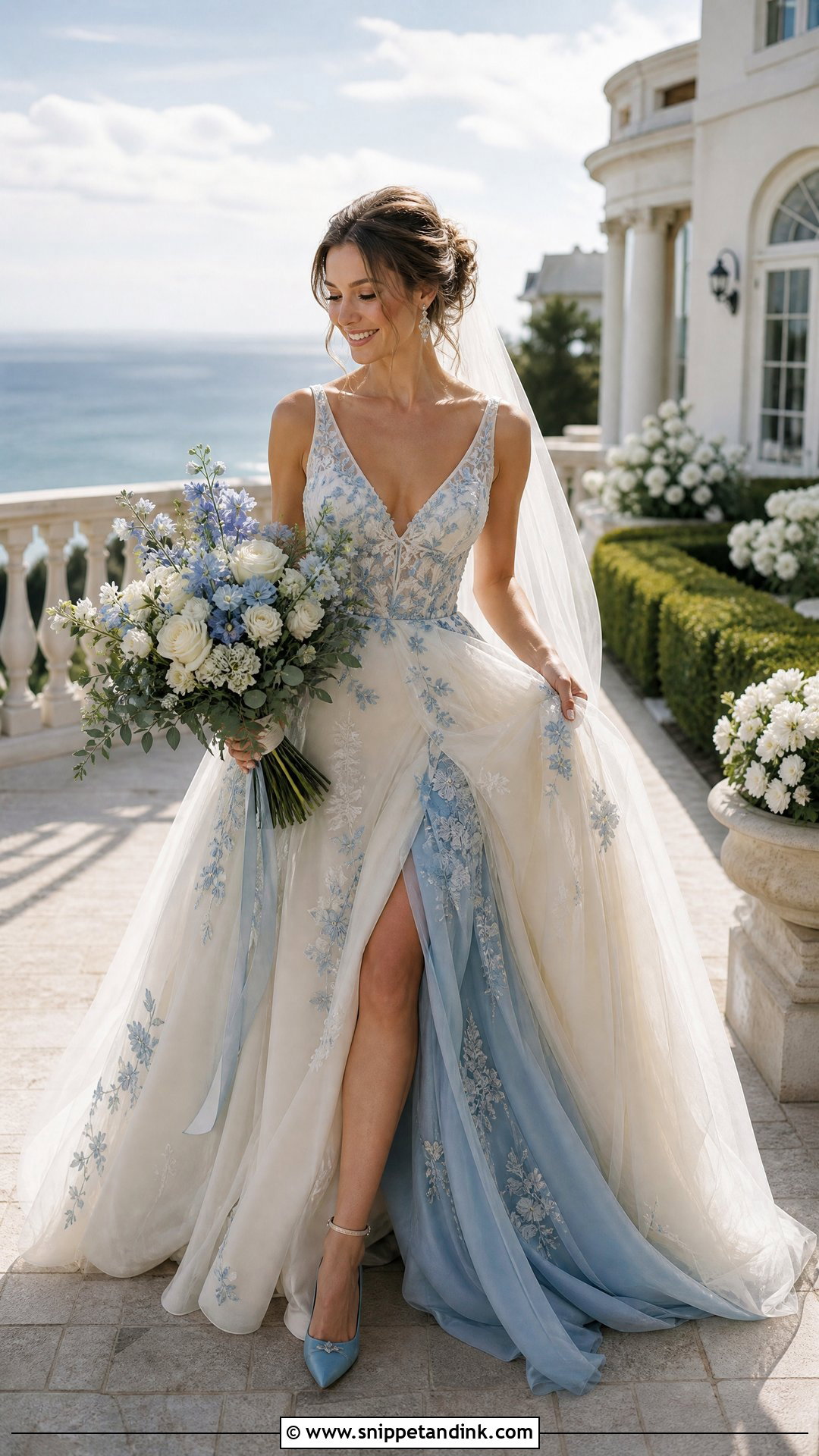
Dusty blue is the easiest something blue to wear at full gown scale, because the gray in it keeps it bridal. I’d look at an ivory gown with a pale blue underlayer, blue embroidered flowers or a detachable dusty blue overskirt; the overskirt is handy if you want to take the color off for dancing. The shade shows in photographs but stays soft. Blue crystal details on ivory shoes, or dusty blue heels, give you the hidden accent. Choose silver jewelry over gold here, since yellow metal fights the cool tone. A pearl-and-blue comb, a sheer ivory veil, and white roses with blue delphiniums finish it for coastal, estate or winter weddings.
6. Lavender And Silver Wedding Dress
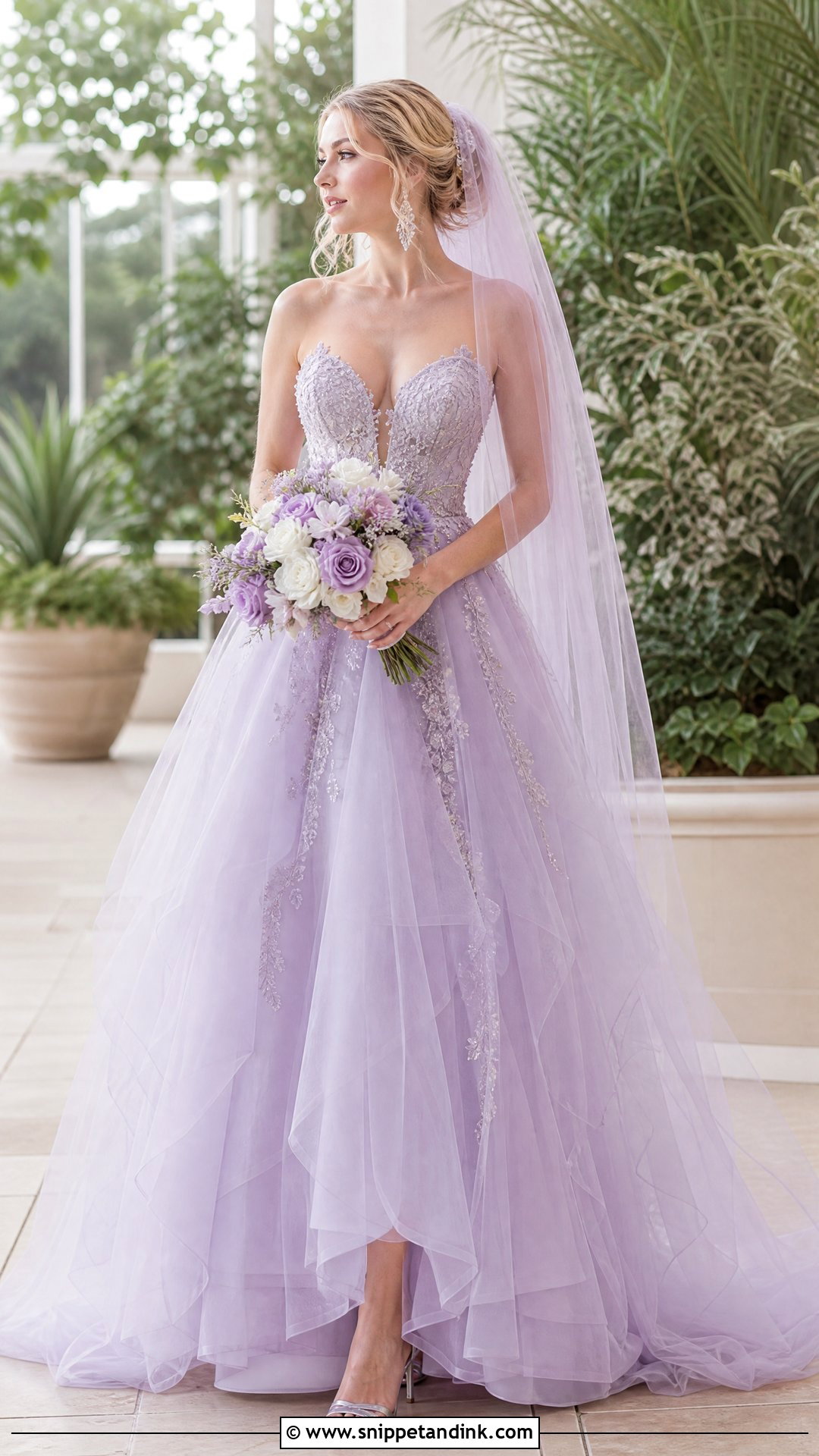
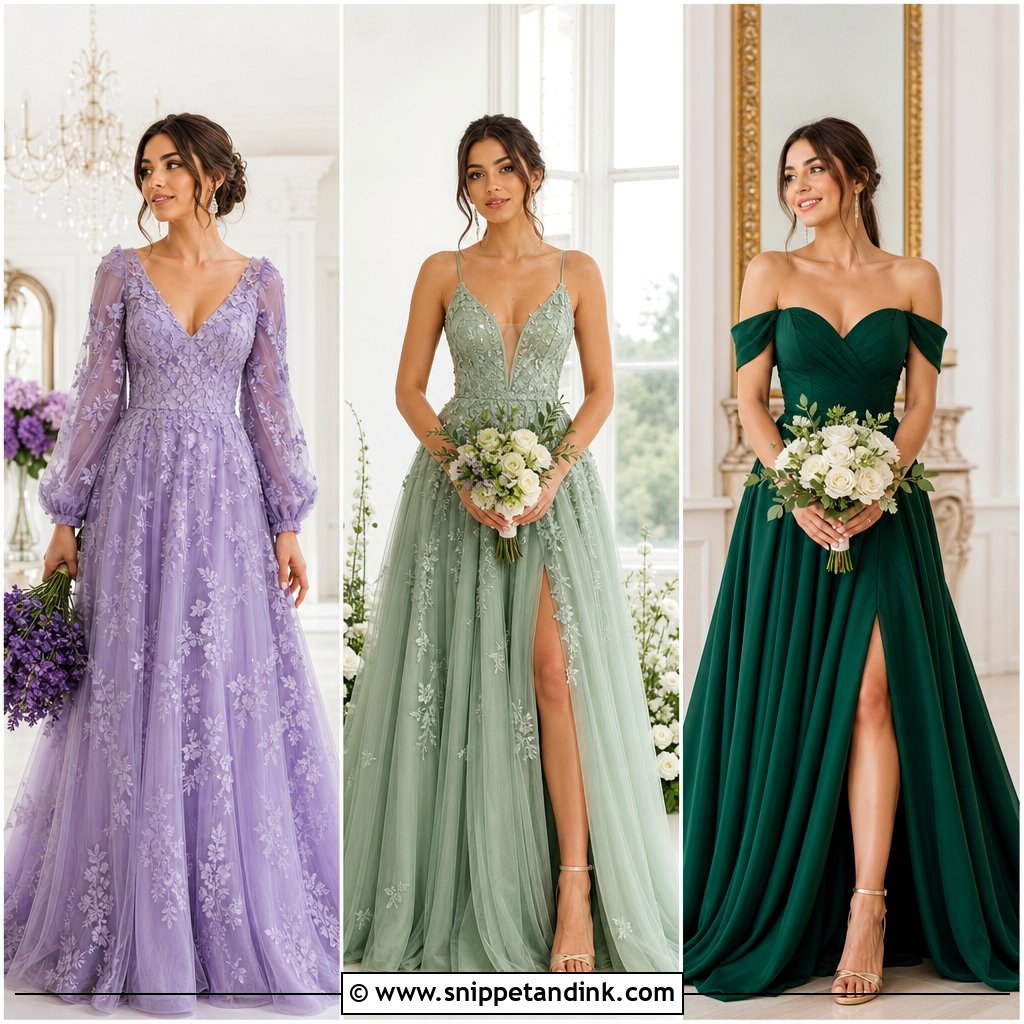
Pale lavender tulle shifts color more than almost any shade I fit. Under warm indoor bulbs it can turn pinkish gray, and in outdoor shade it reads nearly blue, so see it in both before you commit. With silver embroidery, crystal beading or a shimmering waistband it looks polished rather than sugary. An A-line or softly structured ball gown with an illusion neckline gives it a formal shape. Silver heels and crystal drops keep the accessories light. A lavender-tinted veil makes the color the headline, while a plain ivory one keeps things traditional. White roses, lavender sweet peas and cool foliage suit botanical venues and spring celebrations.
7. Peach And Champagne Wedding Dress
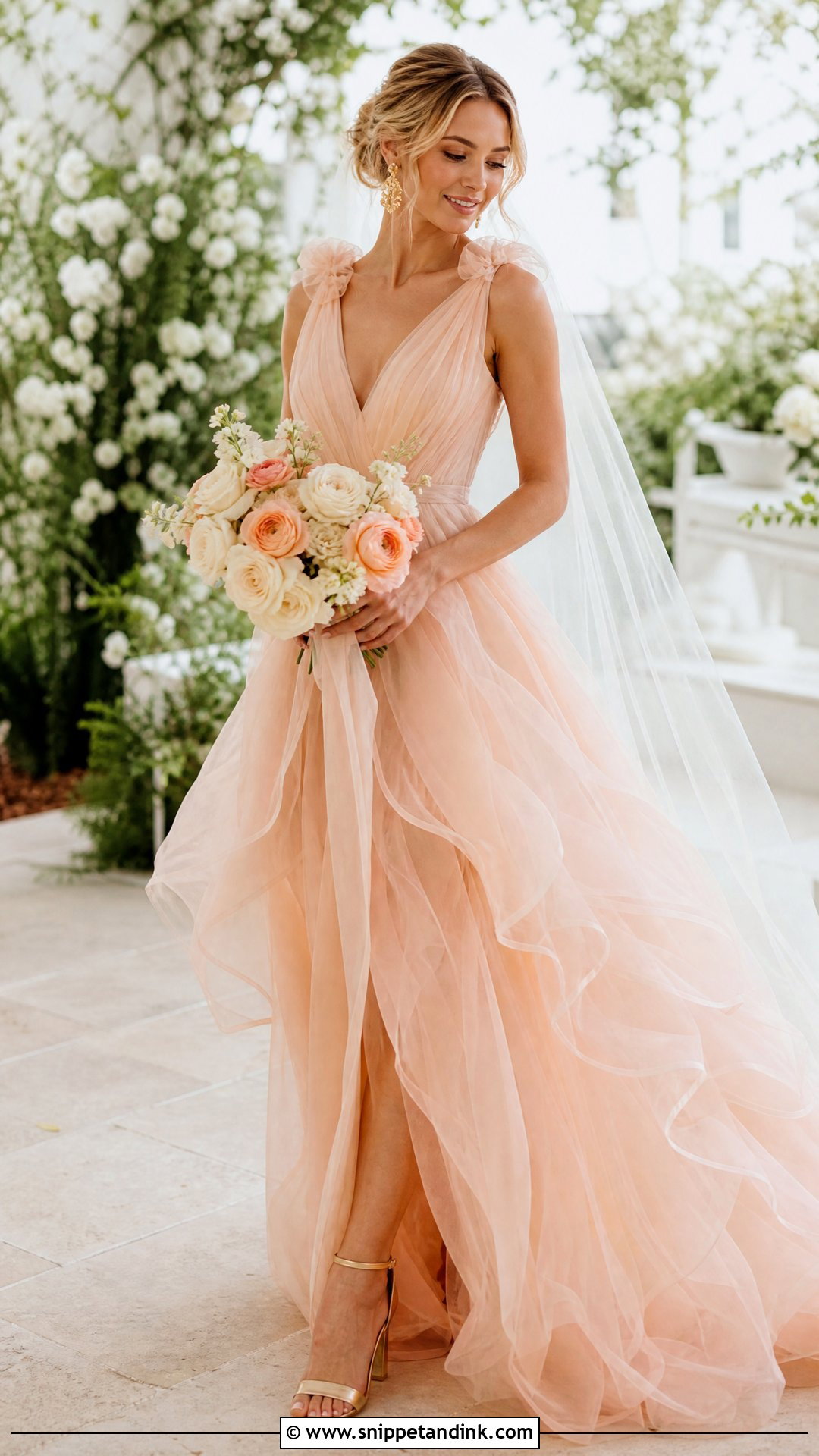
Peach and champagne only work when both stay pale. A saturated peach next to champagne starts to look orange on camera, so I steer brides toward a light peach chiffon or organza with a champagne lining and a little beading on a flowing A-line skirt. Champagne sandals, a pearl bracelet and brushed gold earrings add warmth without weight. A sheer ivory or champagne veil softens the peach near the face, which helps anyone who flushes easily. Cream roses, peach ranunculus and pale greenery complete it. Daylight ceremonies in gardens and summer estates, with stone or wood behind you, show this pairing at its best.
8. Ivory And Rose Gold Wedding Dress
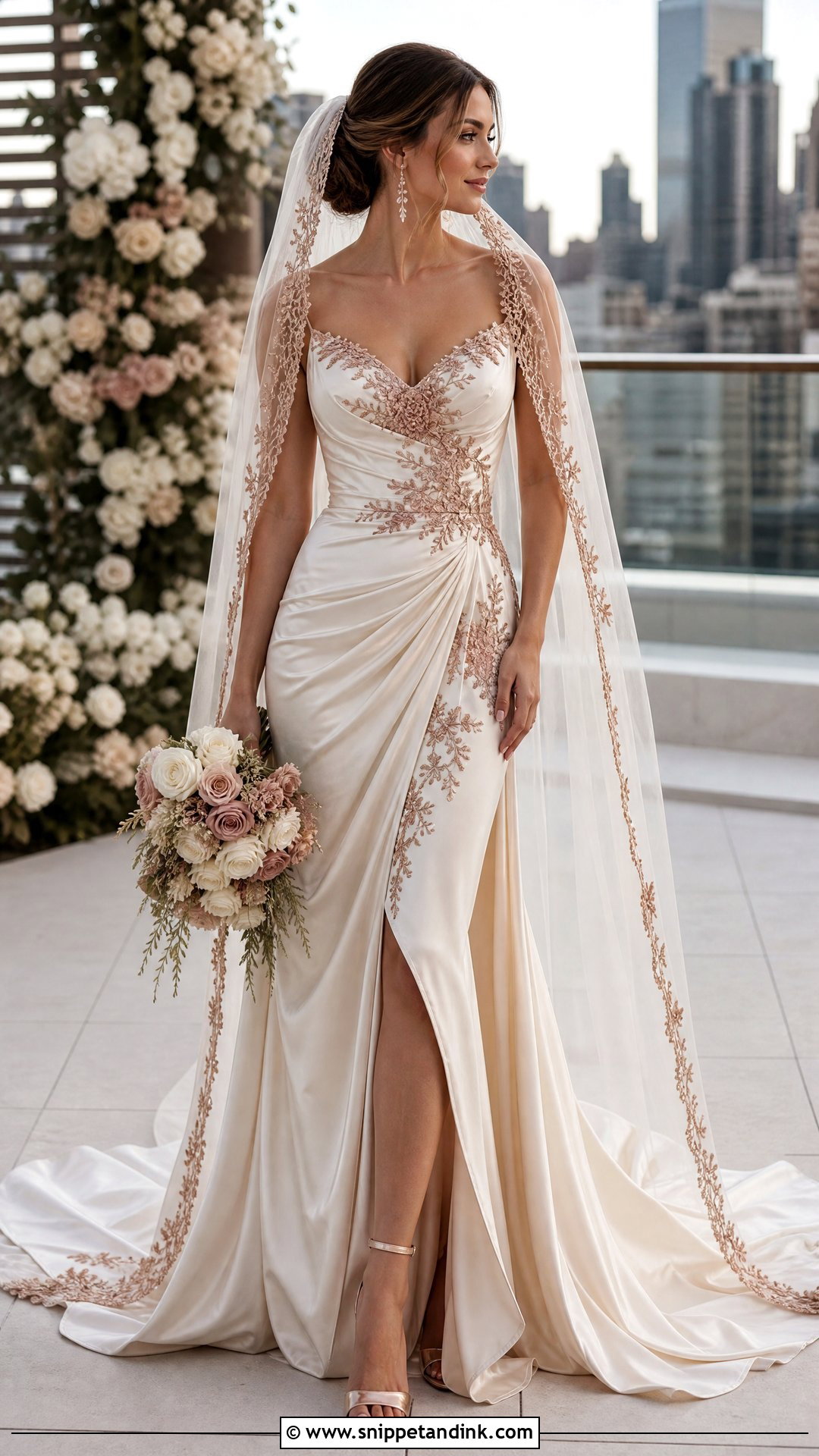
Rose gold flatters a wider range of skin tones than yellow gold or silver alone, which makes it my usual answer when a bride can’t decide between the two. Start with ivory satin or lace carrying rose gold beads, sequins or metallic floral embroidery, ideally concentrated on a fitted bodice so the skirt flows plain. Rose gold heels, small drop earrings and a thin bracelet keep the metal consistent. Rose gold varies a lot between makers, though, so bring a photo or swatch of the beading when you buy jewelry or the pinks won’t match. An ivory veil with faint rose gold edging, and cream roses with dusty pink blooms and pale eucalyptus, finish the look. Keep any other colors muted.
9. Burgundy And Blush Wedding Dress
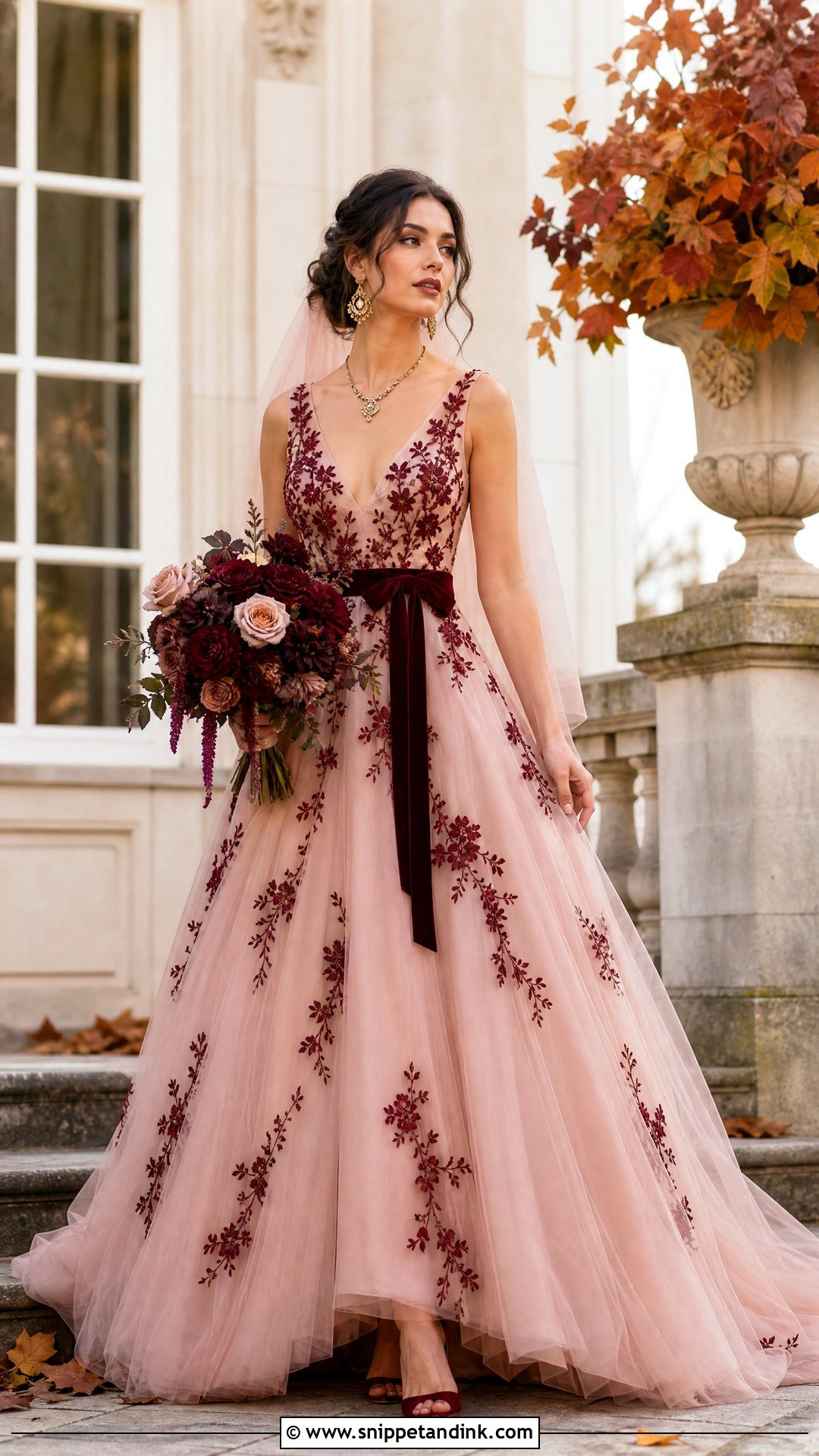
Burgundy gives depth to a blush gown, but the darker color has to be spread out or it lands as one heavy spot in photos. I like burgundy floral embroidery, a velvet ribbon or three-dimensional appliqués scattered across both bodice and skirt on a structured A-line. Burgundy heels make a hidden pop under the hem. Match rose gold or antique gold jewelry to the embellishment’s metal, and keep the veil plain blush. Velvet ribbon crushes after a long car ride, so plan a quick steam at the venue. Blush roses, burgundy dahlias and dark greenery suit fall weddings, historic venues and candlelit receptions.
10. Emerald Green And Gold Wedding Dress
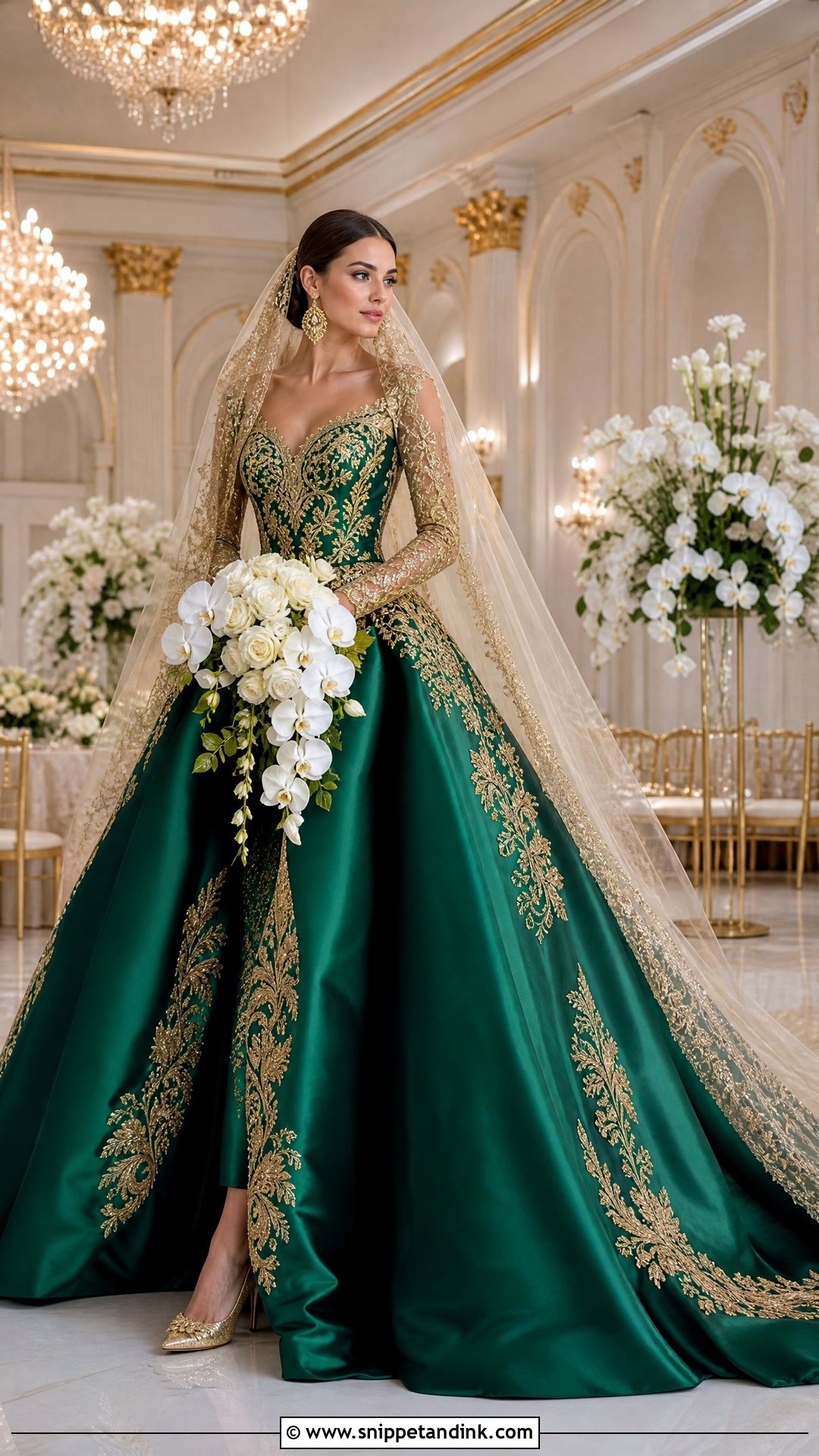
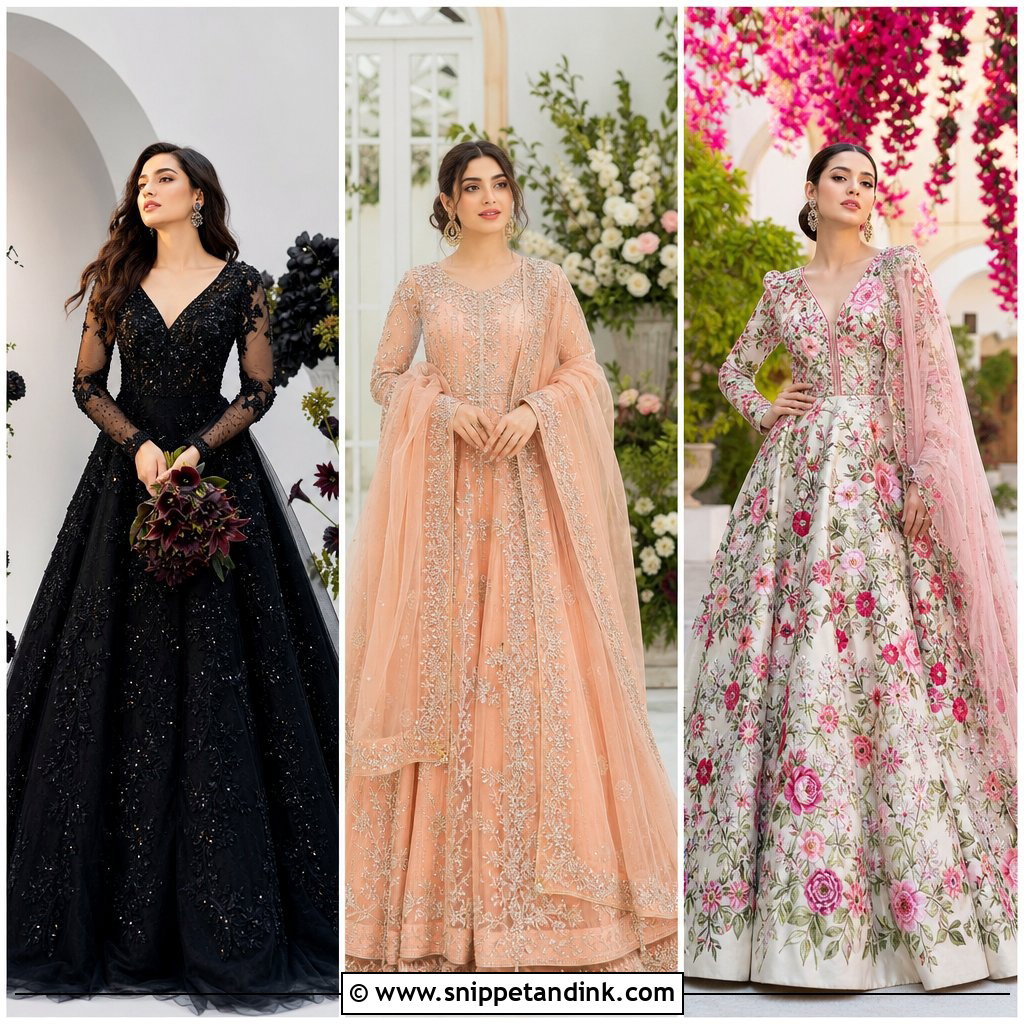
Full emerald with gold is a commitment, and I’d only suggest it to a bride who already wears jewel tones and feels like herself in them. Choose an emerald satin gown with a clean neckline, defined waist and sweeping skirt; gold embroidery, beaded sleeves or a metallic belt add the formal detail. Saturated satin shows every pull and wrinkle, so the tailoring has to be exact. Gold heels, sculptural earrings and one bracelet are plenty. A matching emerald veil is dramatic, a sheer champagne one softer. Keep the bouquet pale with white orchids and cream roses, or it vanishes against the dress in grand ballrooms and evening ceremonies.
11. Navy Blue And Silver Wedding Dress
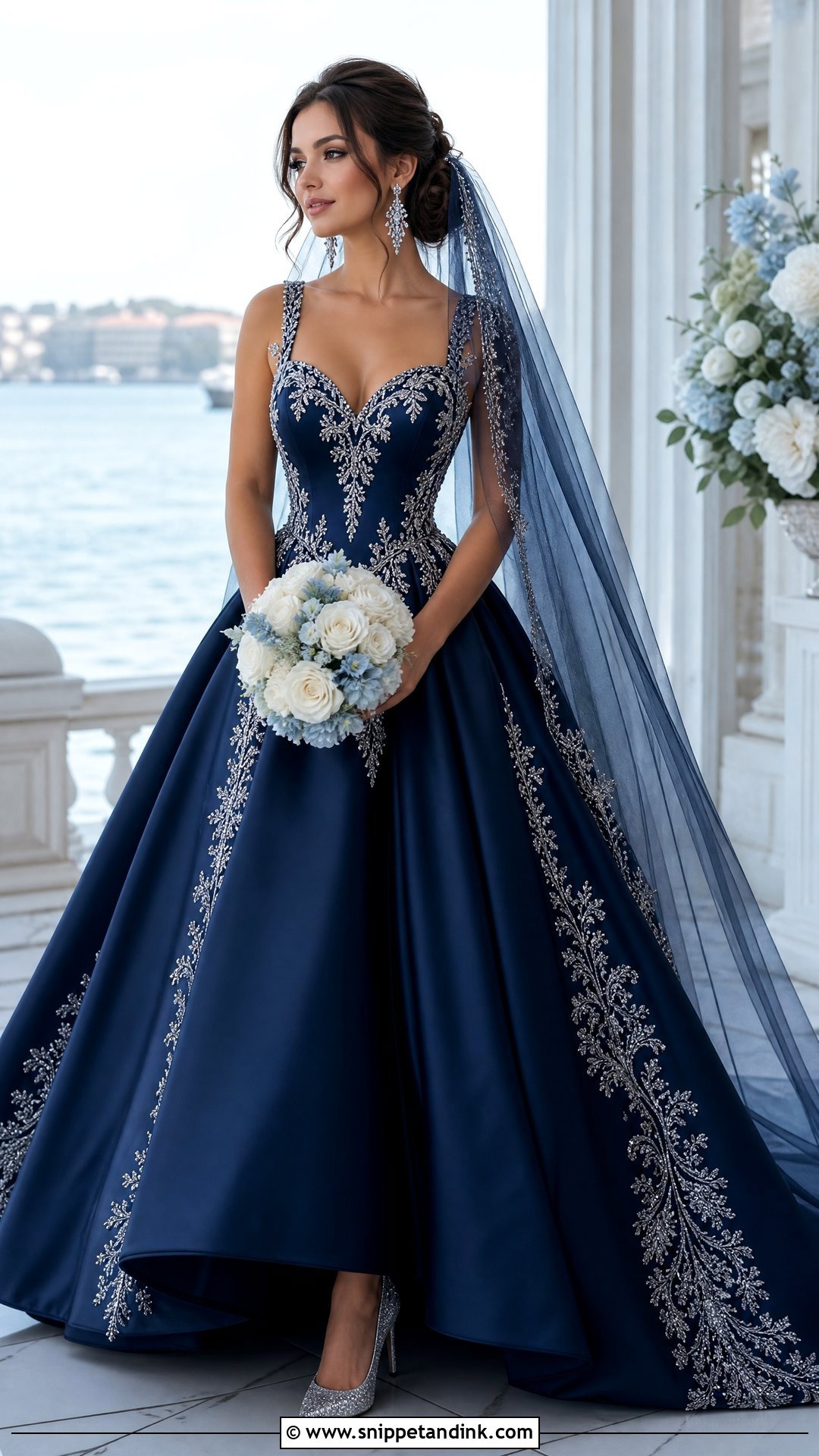
Navy is far more forgiving in photographs than black, which is why I suggest it to brides who want a dark gown without harsh contrast against their skin. Pick a navy satin ball gown, a sleek crepe column or layered tulle with silver beading at the neckline and waist. Silver pumps and crystal earrings brighten the dark base. A sheer navy veil scattered with tiny crystals softens the color near the face, and a silver comb can hold a low bun or soft waves. White roses, pale blue flowers and silver-green leaves keep the bouquet visible. Ask your makeup artist for a luminous base, since a deep gown can make matte skin look tired by evening.
12. Black And Ivory Wedding Dress
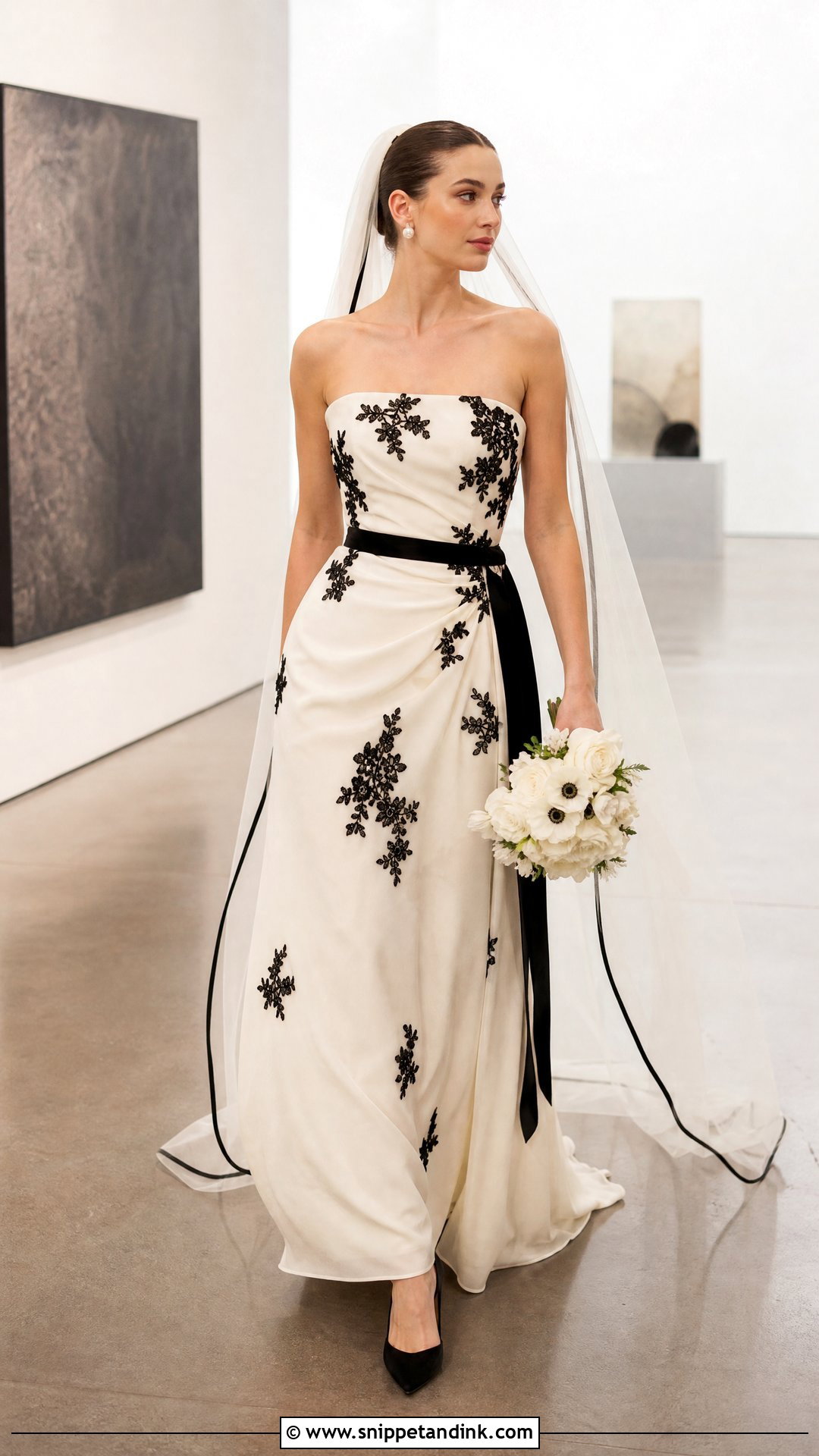
Black and ivory need tight control: one black element too many and the look stops reading as bridal. Start with an ivory gown carrying black lace appliqués, a black velvet waist ribbon or a removable black tulle overskirt on a clean strapless or square-neck shape. Black pointed heels and pearl earrings repeat both colors without adding a third. An ivory veil with a narrow black edge is the finishing line. Check where the black sits in seated photos, because a dark waist ribbon can visually cut you in half at the reception table. Ivory roses and white anemones with dark centers echo the palette in galleries, historic mansions and evening venues.
13. Red And Gold Wedding Dress
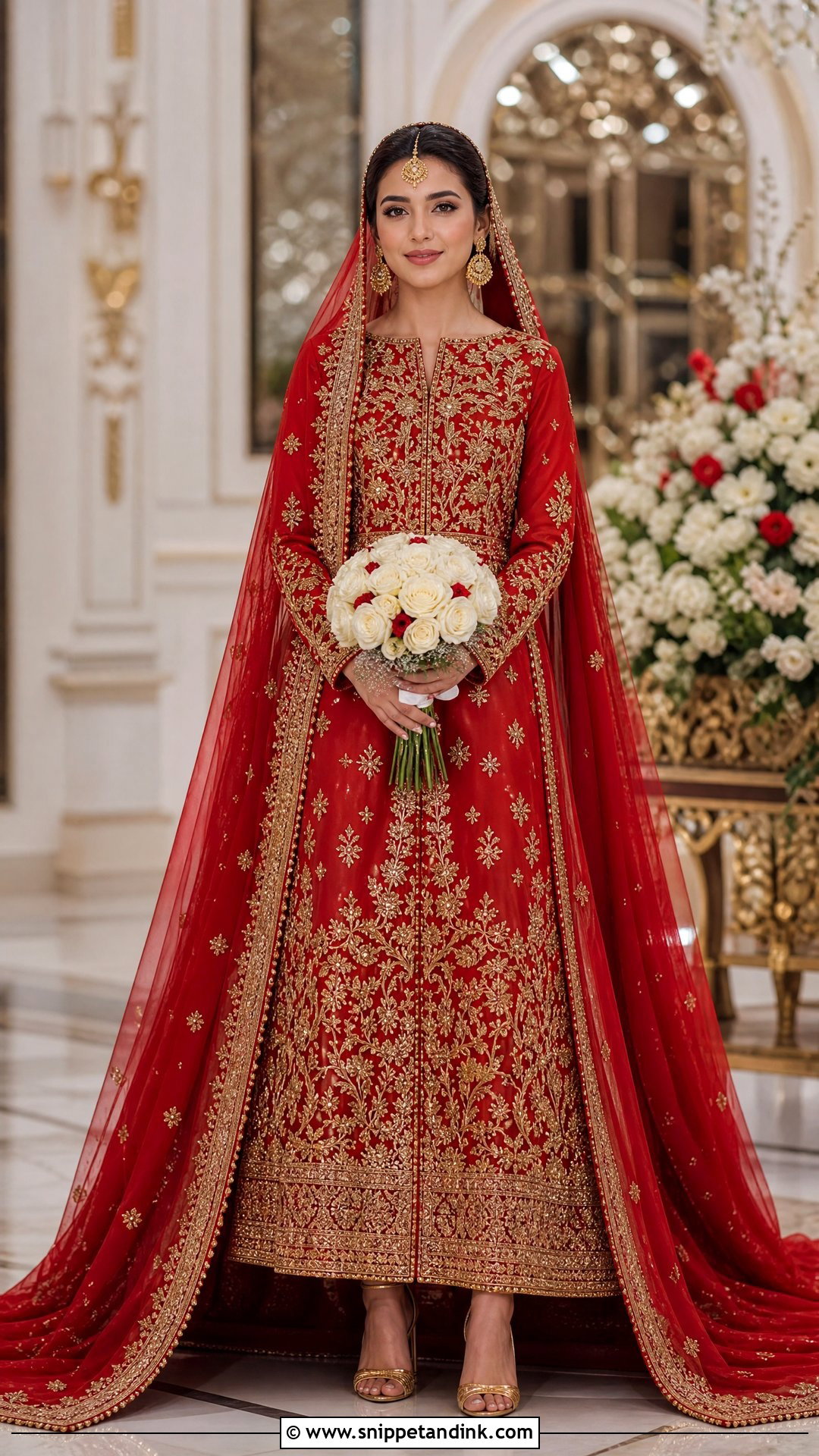
Red and gold carry deep meaning in many cultures, so this pairing often comes with family expectations about shade and embroidery, and I ask about those before anything else. Select a rich red gown in silk, satin, or brocade, then bring in gold through embroidery, beading, borders or a fitted metallic belt. A full skirt, long sleeves or a draped silhouette can follow the ceremony and its setting. Brocade is heavy, so walk, sit and turn in it at your fitting. Gold heels and coordinated earrings are enough; stacking large pieces fights the embroidery. A red veil with fine gold edging completes it, and cream flowers with small red accents give the bouquet contrast.
14. Teal And Champagne Wedding Dress
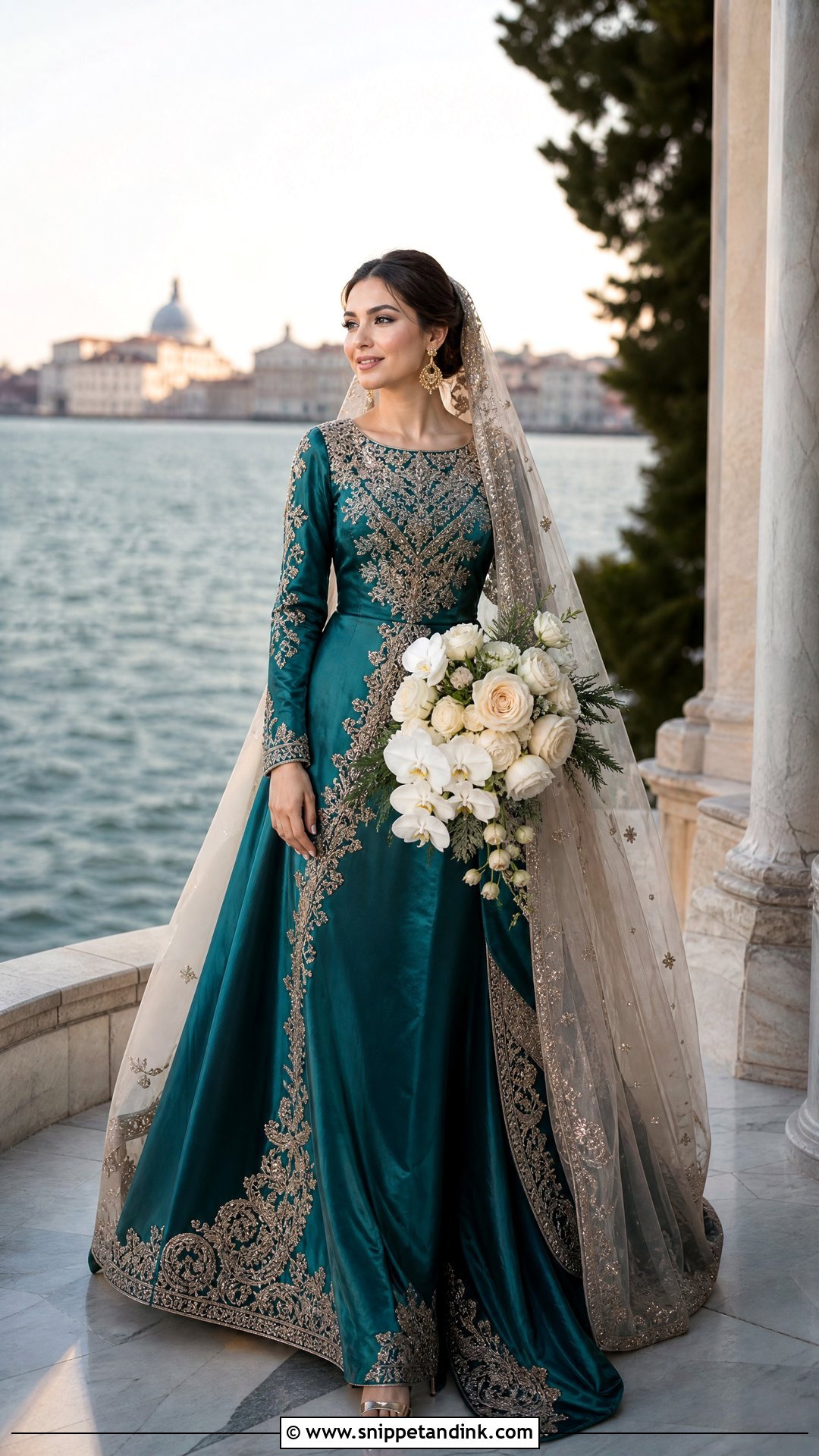
Teal changes personality with fabric more than any other color here. In satin or velvet it goes deep and formal; in chiffon or tulle it lightens toward sea green. Choose a deep teal gown with champagne embroidery concentrated around the bodice, sleeves or hem. Champagne heels, gold-toned earrings and a small metallic comb carry the warmth. A sheer teal veil adds drama, while champagne tulle keeps it understated. Cream roses, white orchids and eucalyptus suit the bouquet. Resist bright third colors. Evening ceremonies, waterfront locations and autumn weddings are where teal looks most natural.

15. Lilac And Blush Wedding Dress
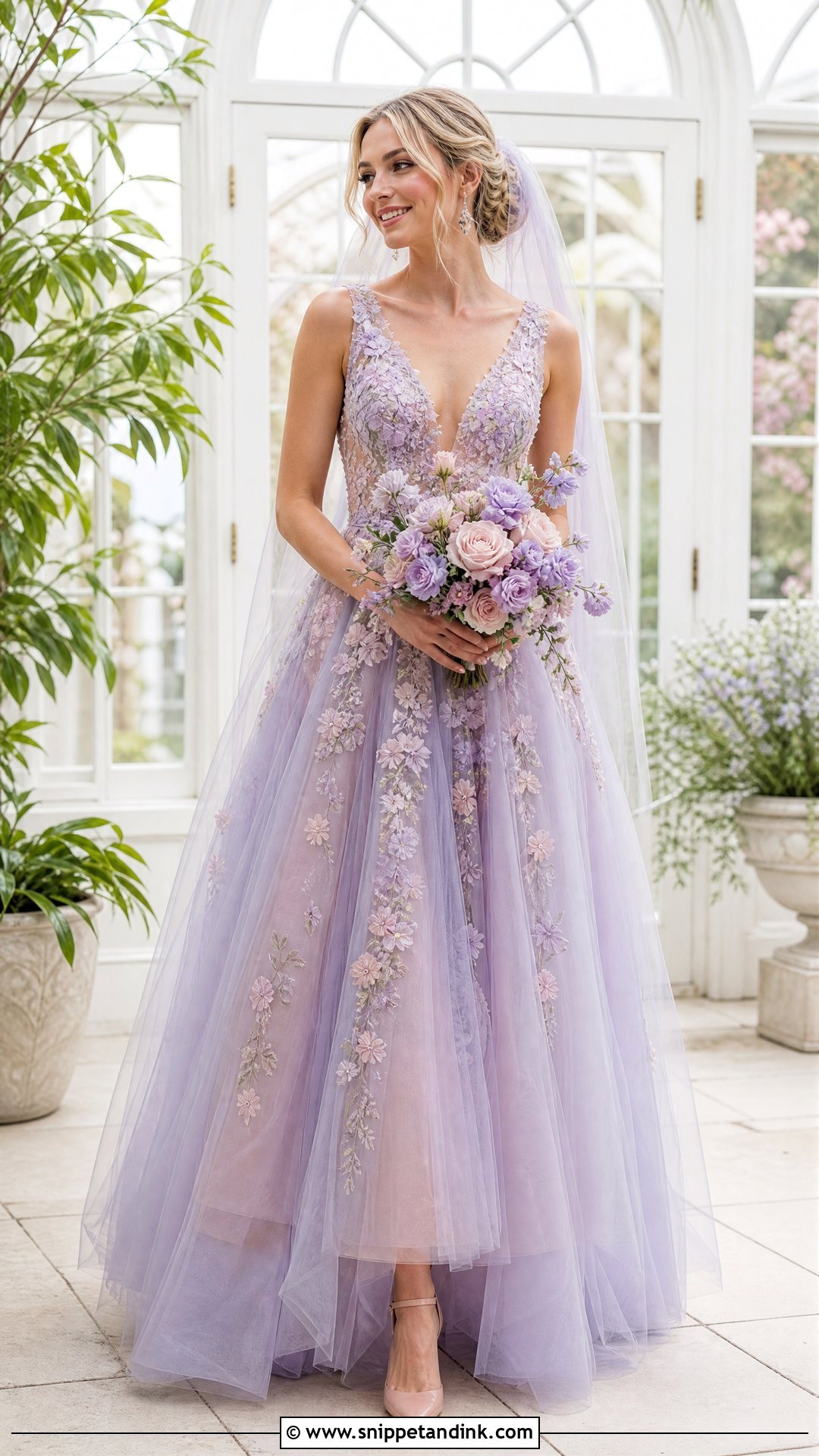
Two pastels side by side can look washed out unless one leans cool and the other warm, and lilac with blush is exactly that pair. A lilac tulle gown over a blush lining lets both appear as the skirt moves. Floral appliqués on a fitted bodice above an A-line skirt keep it airy. Blush heels and rose gold jewelry warm up the cooler lilac. Add a sheer lilac veil or an ivory one embroidered with small pastel flowers, and carry blush roses, lilac sweet peas and white ranunculus. Keep each pastel slightly muted; at full saturation this combination starts to look like a costume.
16. Champagne And Bronze Wedding Dress
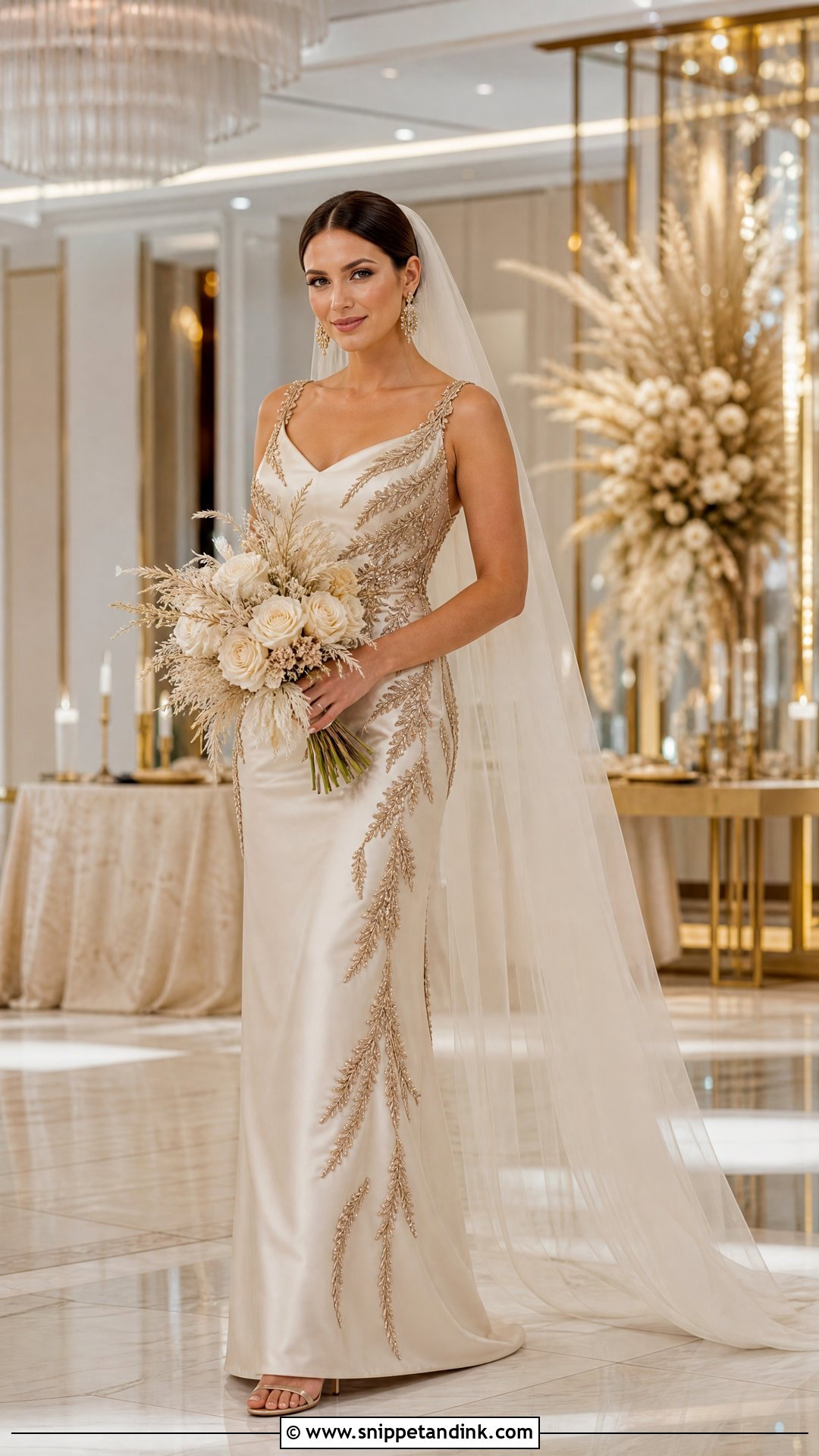
Champagne with bronze is a warm metallic look that suits golden and deeper skin especially well. Start with champagne satin or sequins and use bronze beading at the bodice, waist or sleeves for definition. A column reads sleek, an A-line skirt softer. Sequined gowns can scratch the inner arm over a long day, so check the underarm seams at your fitting and ask for lining there if needed. Bronze heels, warm crystal earrings and a small structured clutch complete the accessories, with a plain champagne veil to keep it bright. Cream roses, dried grasses and soft brown foliage suit ballrooms, desert settings and fall weddings.
17. Cream And Taupe Wedding Dress
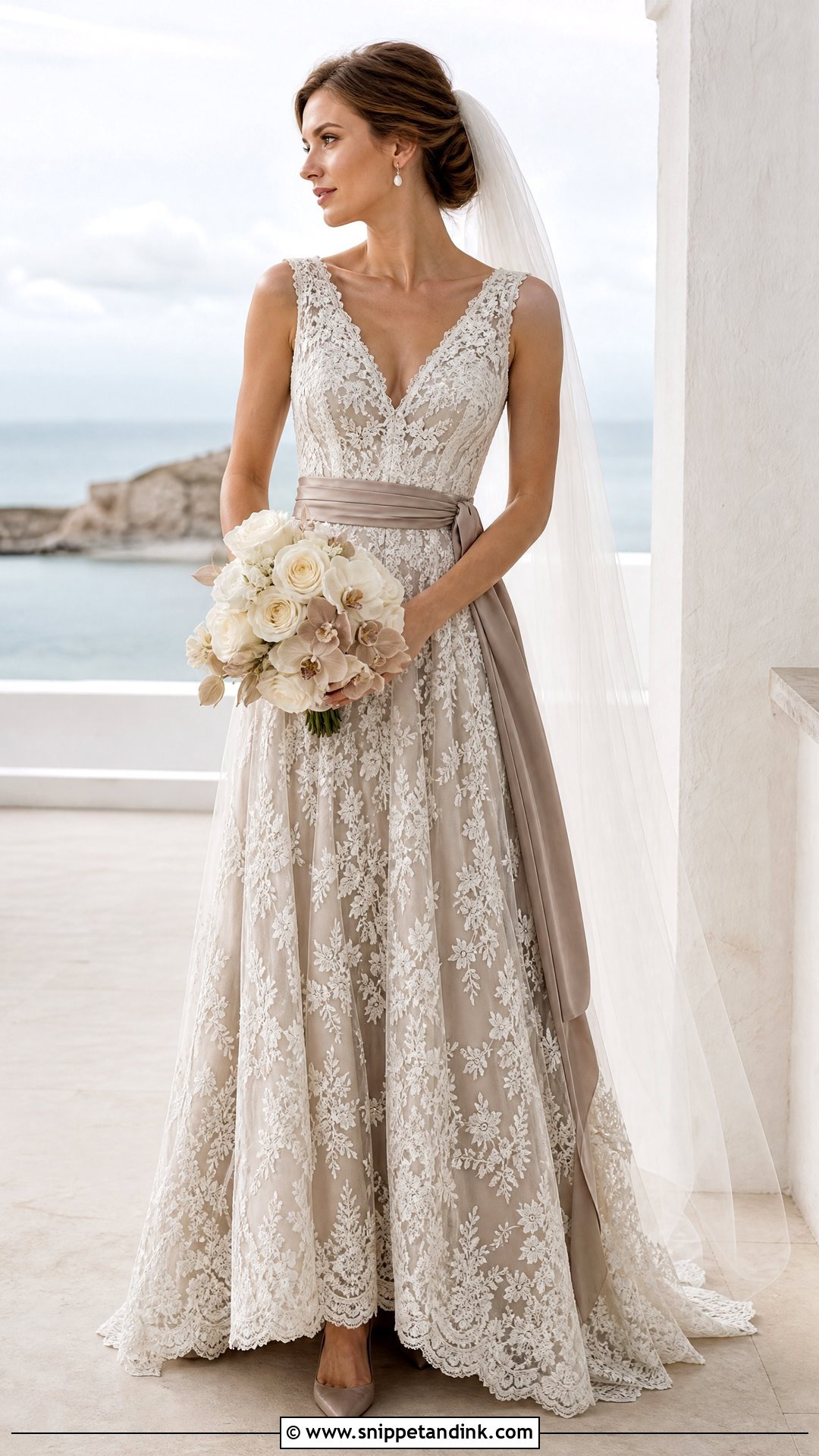
Cream and taupe sit so close in value that texture has to do all the work. A cream lace or silk gown with a taupe lining, sash, cape or embroidered botanical pattern needs contrast in surface, smooth satin against lace, fine tulle or subtle beadwork. Without it, the two shades blur into one muddy beige from a few feet away. Taupe pumps, pearl earrings and a cream hair piece keep the mood calm, and a plain cream veil finishes it. Compare swatches together in daylight, because a taupe with gray in it can make cream look yellow. Ivory roses, dried grasses and beige orchids suit minimalist venues and coastal spaces.
18. Coral And Gold Wedding Dress
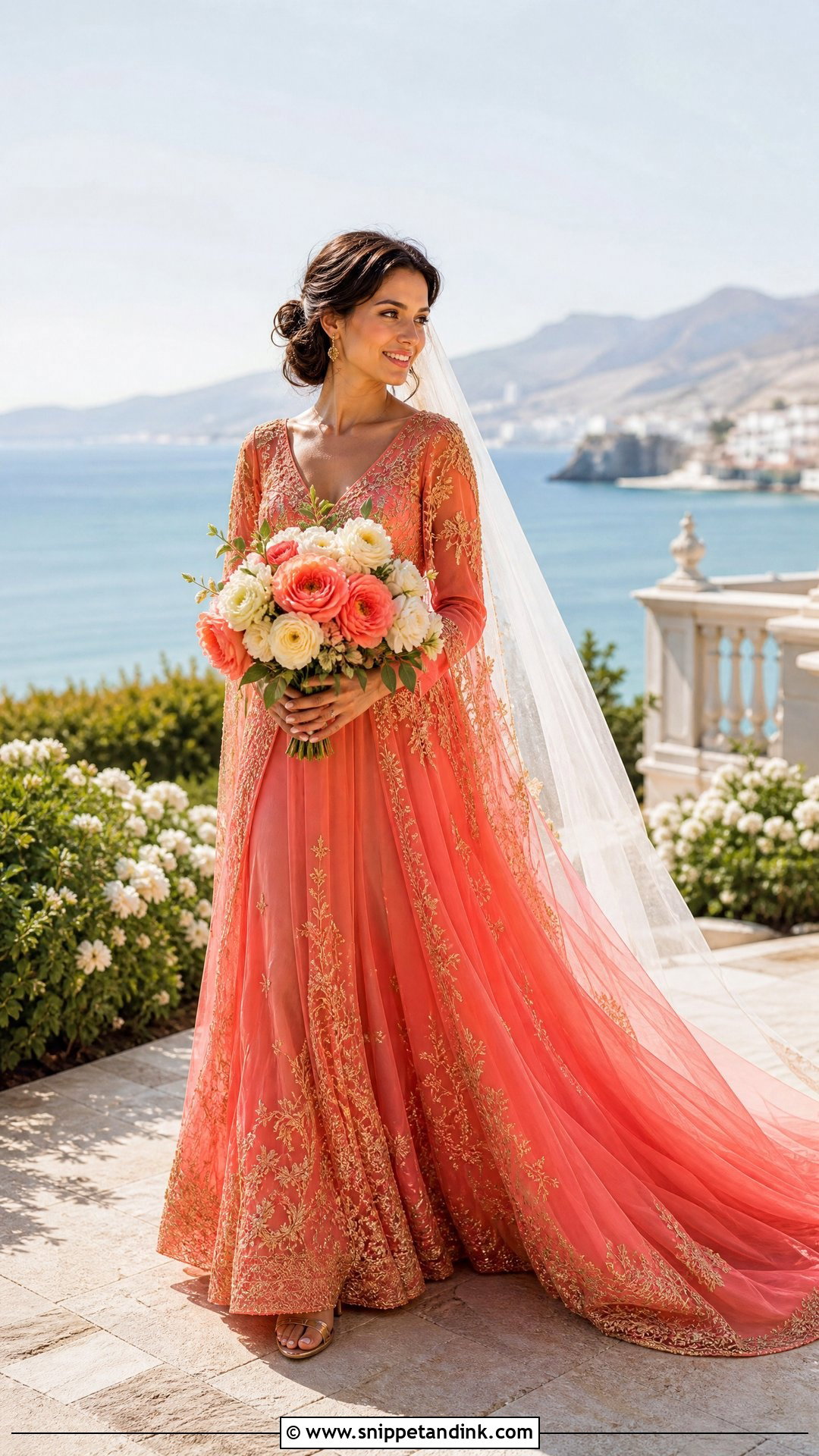
Coral belongs to heat and sunshine, and I’d keep it softened rather than bright orange, which can overpower the face. Choose a muted coral gown with fine gold embroidery or a metallic waist detail, on a flowing chiffon skirt with a fitted bodice and off-the-shoulder neckline. Chiffon moves well in a sea breeze but shows perspiration at the waist in hot weather, so a lined bodice is worth asking for. Gold sandals, small hoops and a polished comb continue the warmth. A sheer coral veil keeps it colorful, an ivory one adds contrast. Cream roses, coral peonies and light greenery suit beach venues and destination weddings.
19. Powder Blue And Blush Wedding Dress
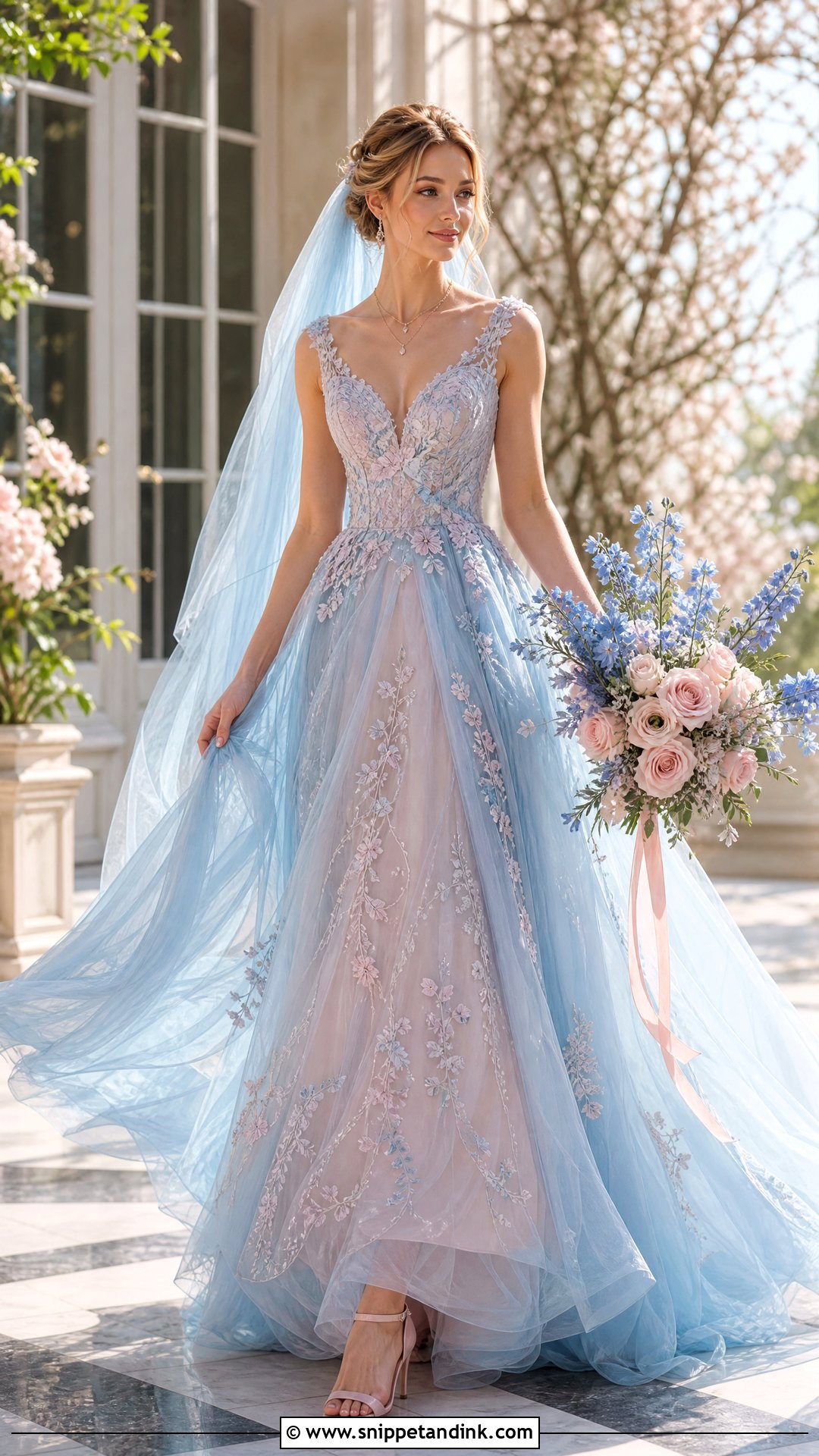
Powder blue tulle over a pale blush lining gives a two-tone shimmer, with the pink showing faintly through each layer as you move. Floral embroidery in both shades can decorate the bodice and drift lightly onto the skirt. The risk with this pair is sweetness, so I keep both colors low in saturation and mix the jewelry: silver with a touch of rose gold. Blush heels and a subtle blue comb finish the accessories. A plain powder blue veil keeps it cohesive. Blush roses, blue delphiniums and eucalyptus suit spring estates, conservatories and outdoor ceremonies.
20. Ivory And Multicolor Floral Wedding Dress
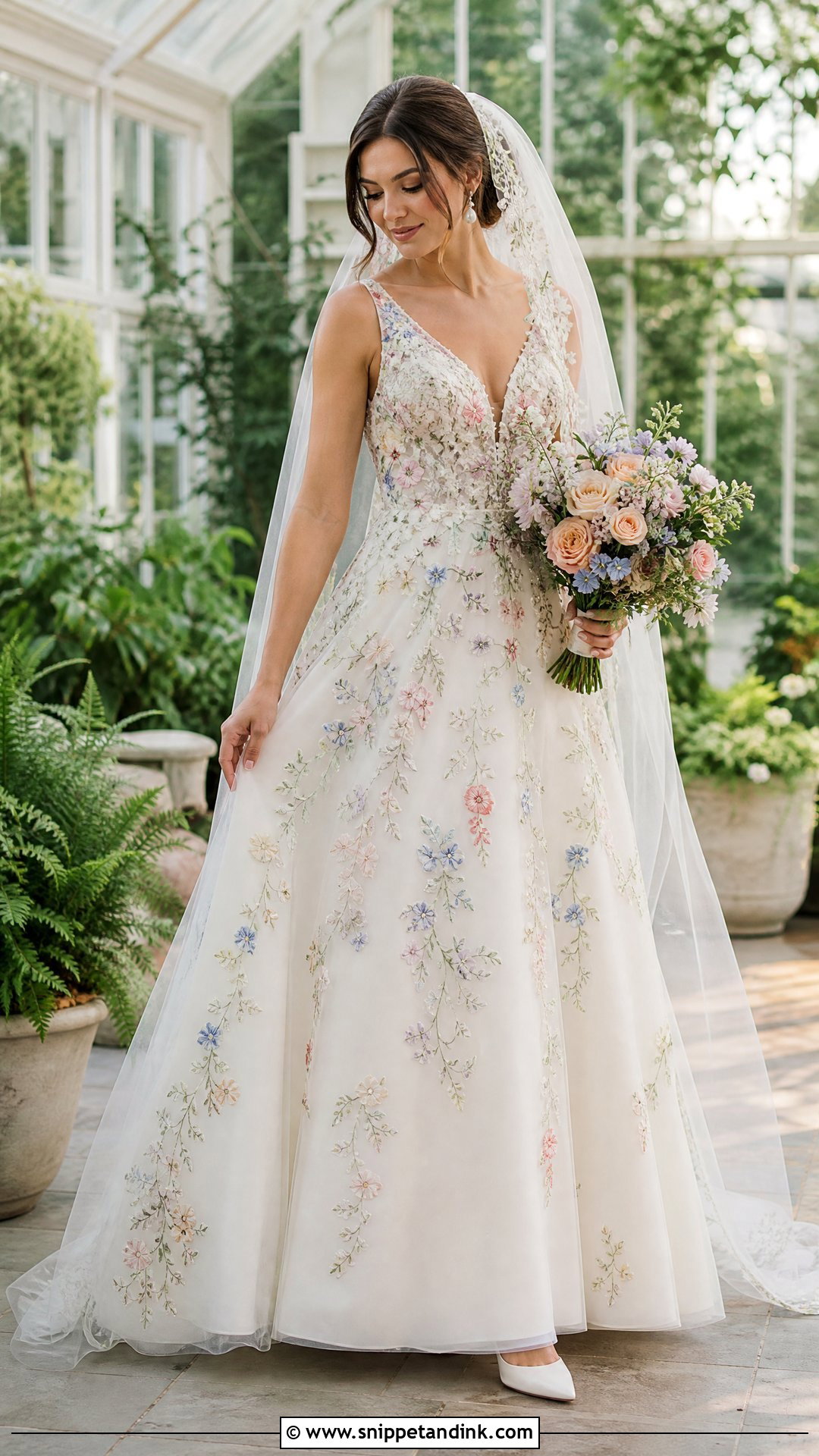
An ivory gown with multicolor floral details lets you wear color without committing to one shade. Pink, blue, lavender, peach and green flowers embroidered onto an ivory A-line or ball gown look most balanced when they cluster on the bodice and thin out toward the hem; even coverage from top to bottom looks busy. Ivory shoes and simple pearl or diamond-style earrings keep the flowers in focus, and a sheer veil with a few matching blooms along the edge connects it. For the bouquet, I pull two or three colors from the embroidery rather than all of them, which keeps the photos calm in gardens, greenhouses and summer ceremonies.
What Changes When There’s Dye in the Gown
Colored and two-tone gowns raise questions a white gown never does, and most of them surface at alterations or after the wedding.
Dye lots and the seamstress
Hemming a gown with a colored lining or overlay means matching thread, and sometimes replacement fabric, to one specific dye. Ask the shop whether spare fabric from the same dye lot exists before alterations begin. Tulle from a different lot can look visibly off once it sits beside the original, and that only shows up in full daylight.
Sun, heat and storage
Pale dyed silks and tulles can fade with long sun exposure, which matters for an outdoor afternoon ceremony followed by hours of portraits. Deep shades such as burgundy, emerald and navy can also bleed onto ivory lace where the two touch, especially once the fabric is damp from heat. Afterwards, have the gown cleaned by someone used to bridal fabrics, point out every color in it, and store it away from light in an acid-free box or a breathable cotton bag so the paler layers don’t discolor next to the darker ones.
Letting family see it early
If someone in your family is expecting white, show them photos well before the day. A soft accent such as a blue underskirt or a champagne lining usually reassures relatives who pictured a traditional dress, and it spares you a tense moment in the bridal suite.
Two Colors, Tested in the Light You’ll Marry In
A palette is right when it flatters your face first and the venue second. Ivory with gold stays quiet; blush, blue, lavender and sage bring in gentle color; and if you want something stronger you can go to emerald, navy, red, teal, or black. Whichever way you lean, compare swatches in daylight and under the venue’s own lighting. Coordinate the veil, jewelry, shoes and bouquet without matching each one exactly, and hold the outfit to two main colors. Treat these pairings as a starting point, then adjust shade and texture until the look reads as yours.
You'll Like These Ideas:





Leave a Reply