
Colour is the decision I spend longest on with brides, longer than silhouette. A shade that looks soft on a hanger can turn grey against one skin tone and glow against another, and the same dress reads differently in a garden at noon than in a candlelit hall. Done well, a coloured gown feels more personal than white ever could. Below are 25 shades and treatments, from blush and champagne to black, emerald, red and florals, each with the fabric, styling and lighting notes I’d give in a fitting room.

Hold the Swatch Under Your Chin in Daylight
Most colour mistakes come from choosing on a screen or under shop spotlights. Ask for a fabric swatch, or take the sample to a window, and hold it under your chin with no makeup or very little. Look at what happens to your skin rather than to the fabric. A good shade makes your skin look clearer and brighter; a wrong one adds shadows, greyness or redness.
Reading your undertone
- If gold jewellery flatters you more than silver, warm shades like peach, coral, champagne and burgundy usually suit you.
- If silver looks better, cooler shades like dusty blue, lavender, silver and blue-red tend to work.
- If both look fine, you probably have a neutral undertone and can wear most shades; choose by mood and season.
Bring a friend and a phone to the appointment, and take photos in daylight and indoors. The colour you see in the mirror and the colour the camera records are not always the same.
1. Blush Pink Wedding Dress
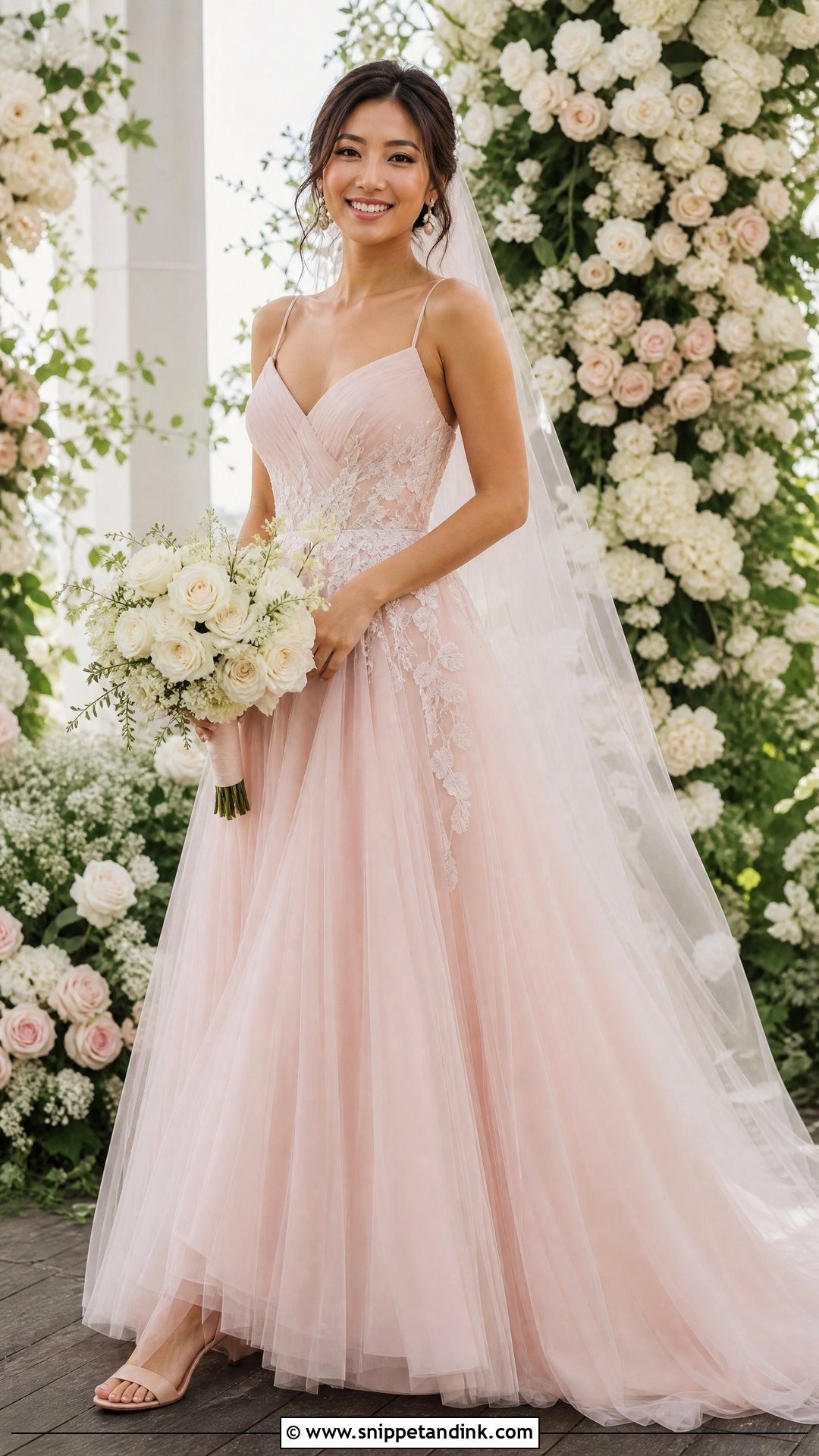
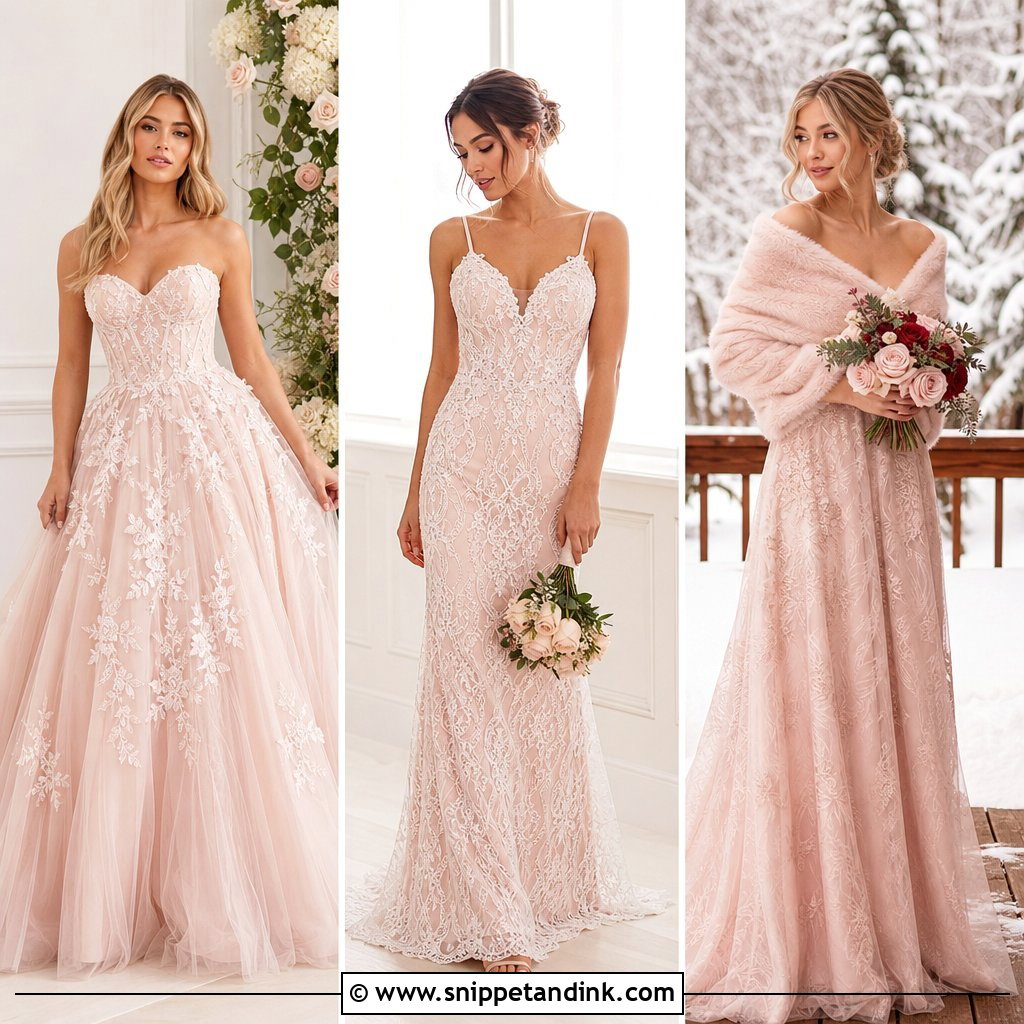
Blush is usually where a bride starts when she’s curious about colour but not ready to leave white entirely. The first thing I tell brides is that blush varies hugely: some lean peach, some lean lilac, and only one of those will flatter you. Tulle and chiffon show it softly; satin makes it look stronger. A blush A-line with a sheer veil and nude or blush heels looks right in a garden or ballroom. Ivory, peach and dusty rose flowers sit naturally beside it, and rose gold jewellery warms it slightly.
2. Champagne Wedding Dress
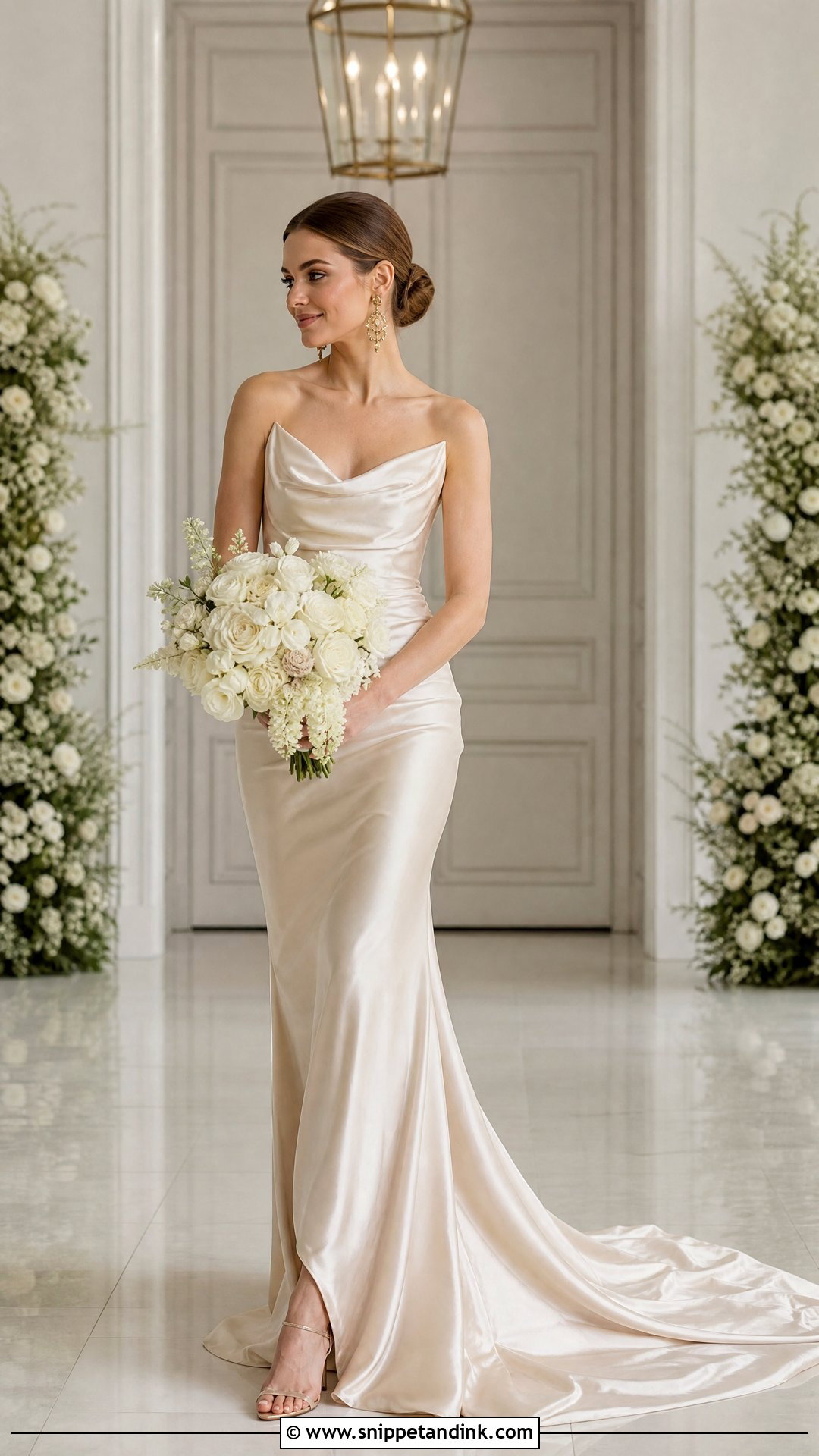
Champagne solves a common problem: bright white that makes skin look sallow or grey. Its warmth sits closer to most complexions. Satin, silk, beaded lace and mikado show the shade best, because they catch light gently rather than reflecting it hard. A fitted champagne gown, a long veil and metallic heels need little else. Match the veil to the dress in daylight; a white veil over champagne can make the dress look dirty in photos. Gold earrings and a cream bouquet suit evening and city venues.
3. Dusty Blue Wedding Dress
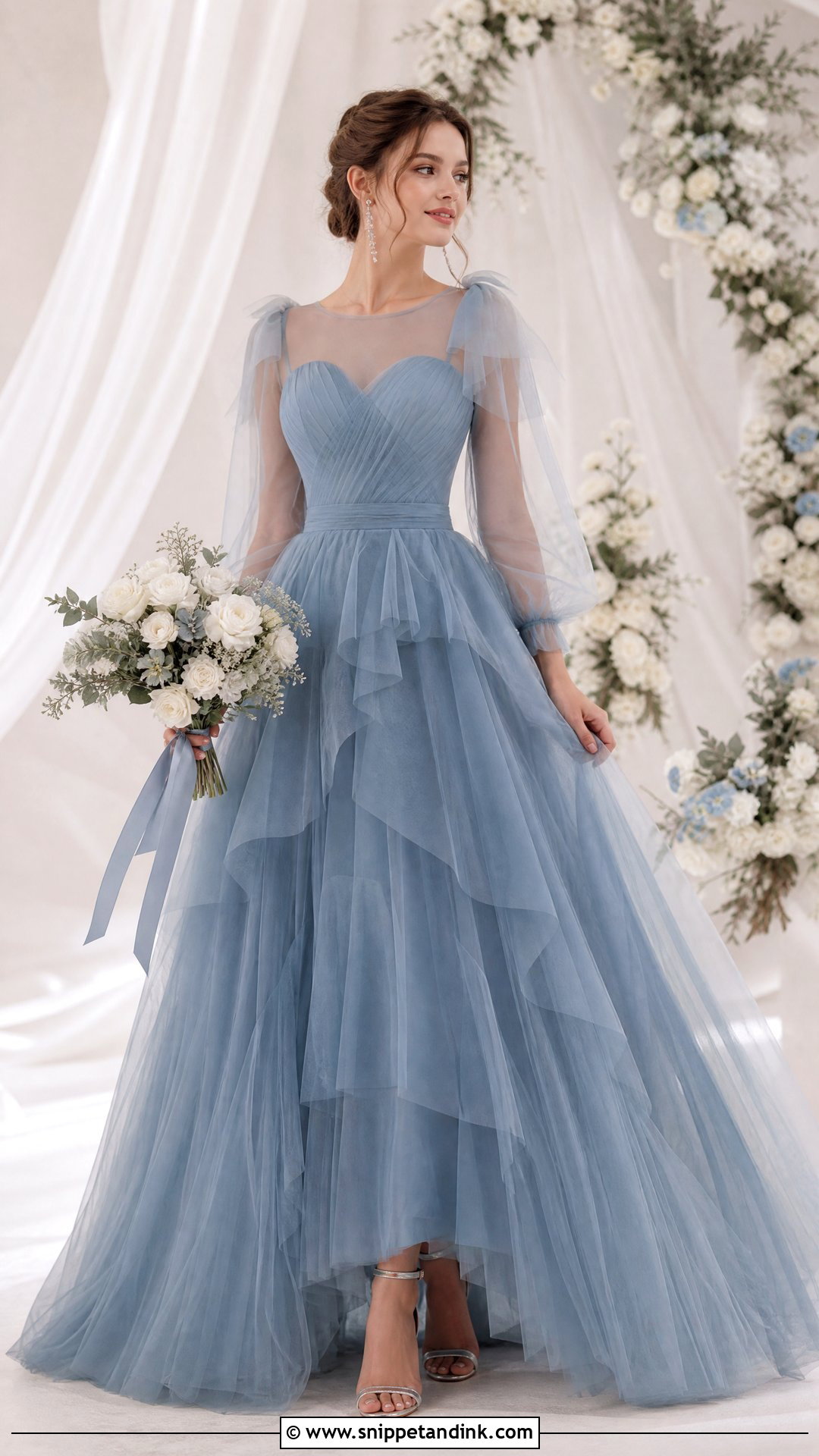
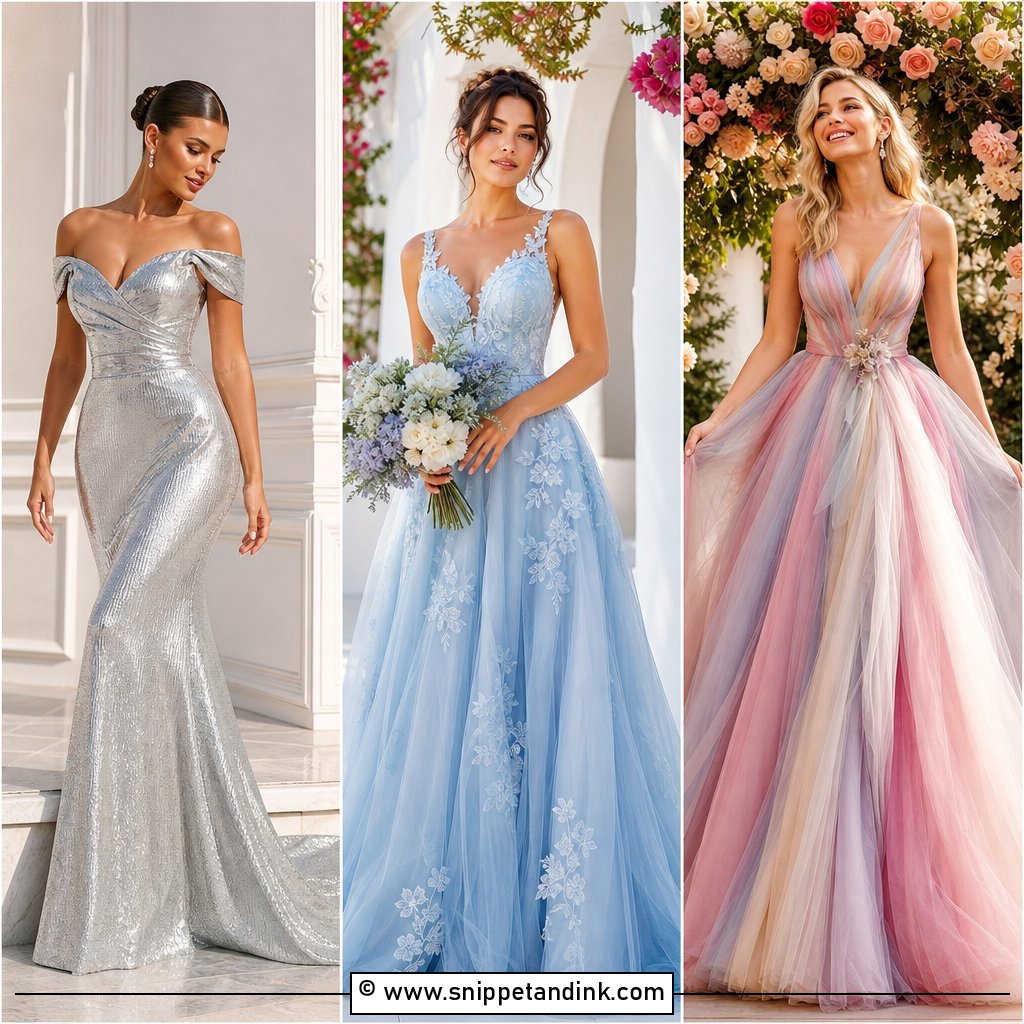
Dusty blue has grey in it, which is why it feels calm rather than bright. It’s kind to cool and neutral skin tones; on very warm, golden skin I’d compare it against a clearer blue first. Layered tulle or soft organza suits it best. A ball gown with a fitted waist and sheer sleeves keeps its shape. Silver heels, crystal earrings and an ivory and eucalyptus bouquet complete it. It suits spring, winter and coastal weddings, where its grey tones echo the sky.
4. Sage Green Wedding Dress
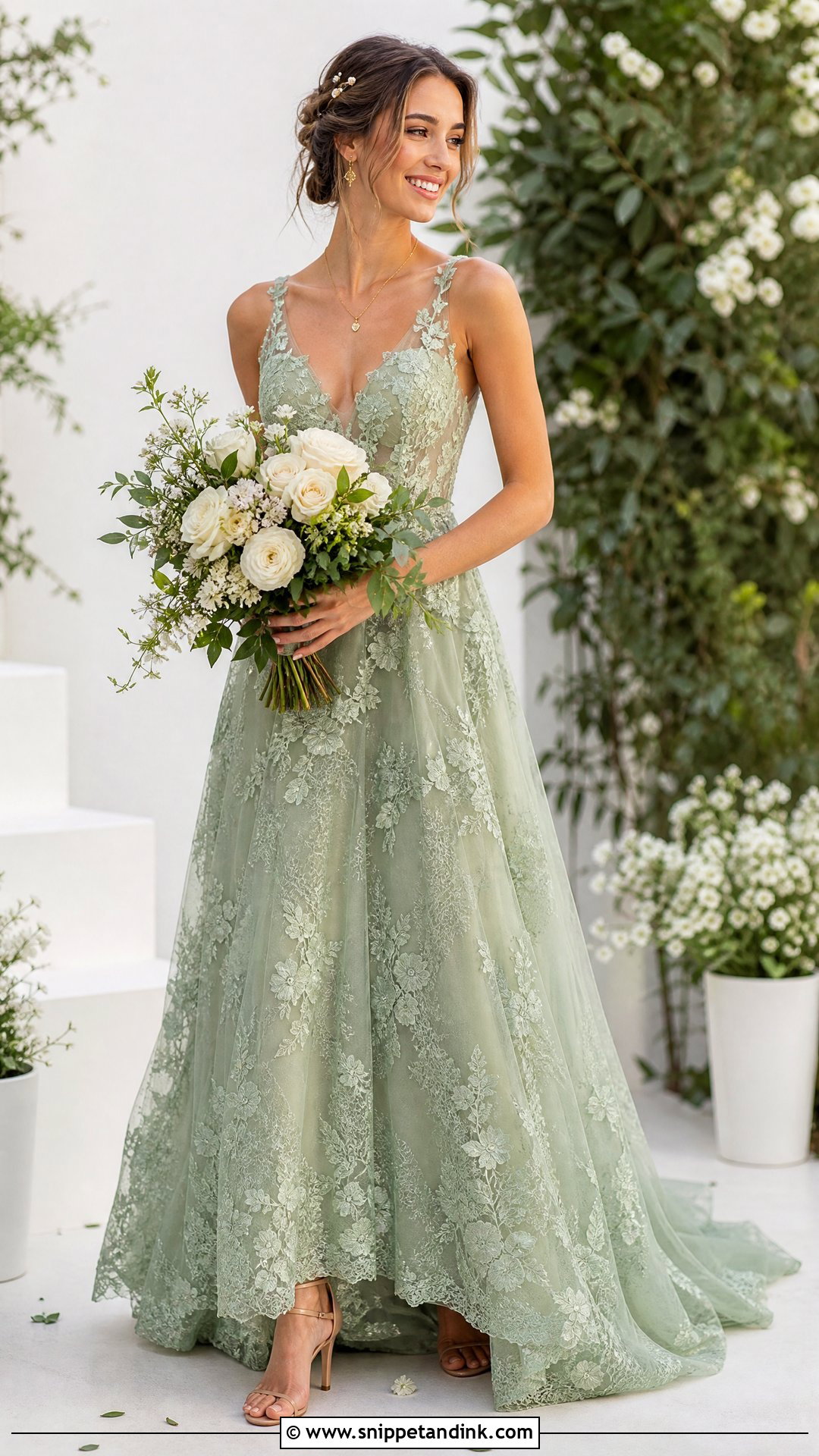
Sage is a muted, grey-green, and that greyness is why it flatters so many skin tones. It can tip into looking casual, though, so I always add something unmistakably bridal: lace, a structured bodice or a long veil. Floral lace, soft sleeves or a draped bodice work well. Nude heels, pearl pins and gold jewellery balance it, and an ivory bouquet with pale greenery keeps it looking like a wedding dress rather than a party dress. Botanical gardens and outdoor venues suit it.
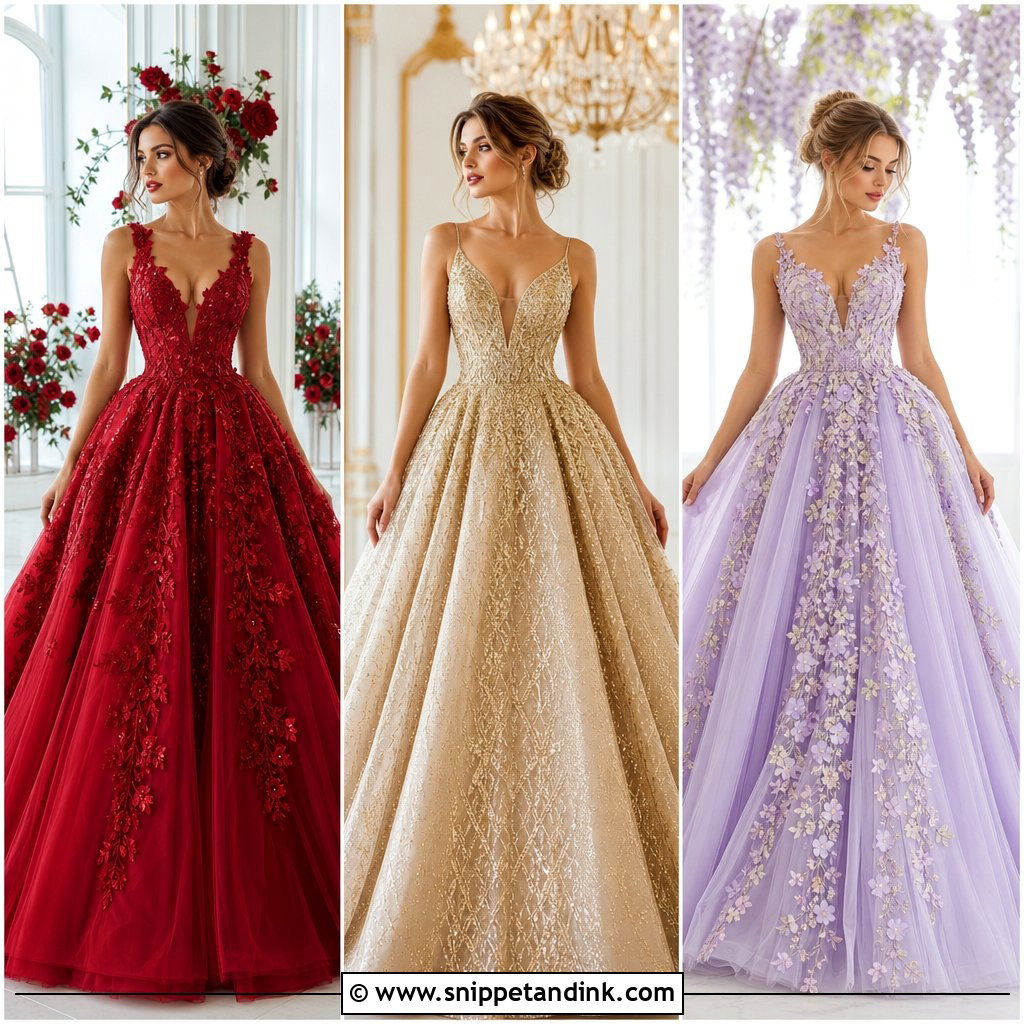
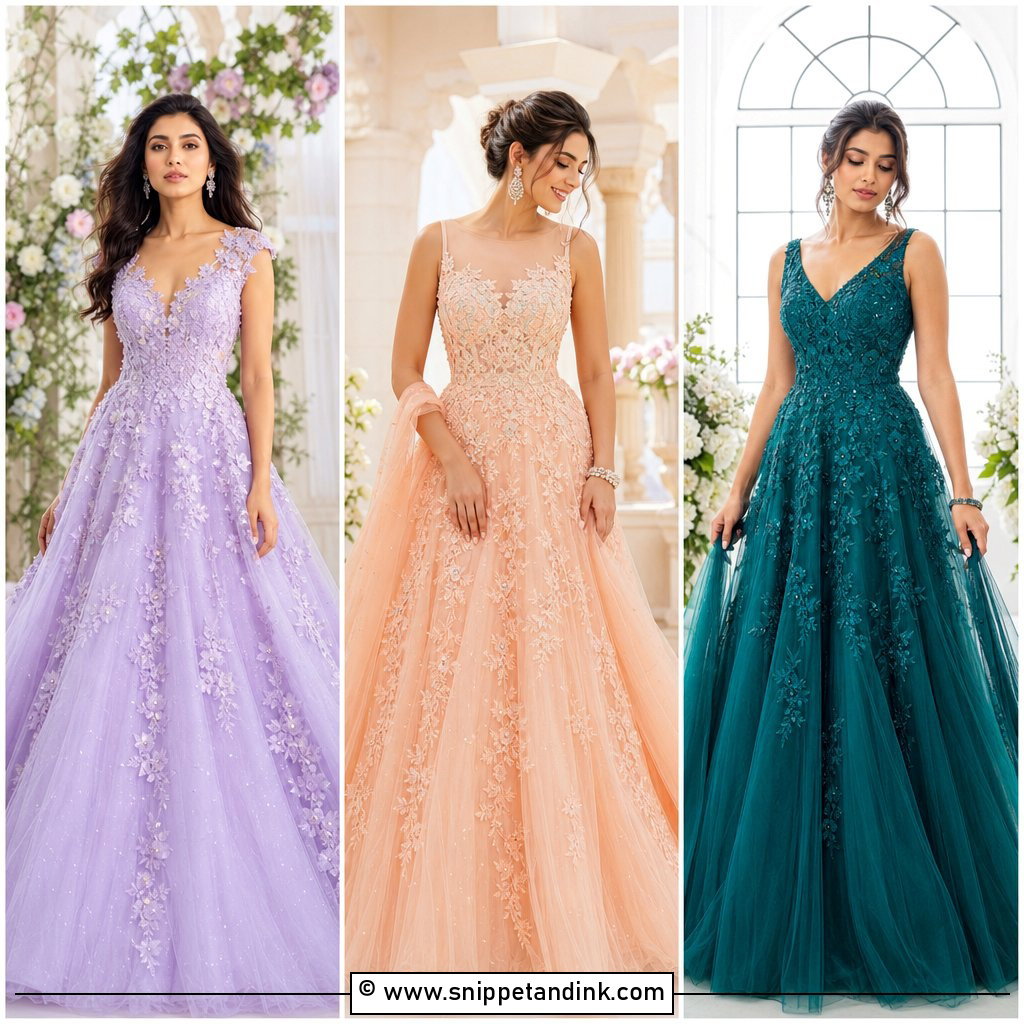
5. Lavender Wedding Dress
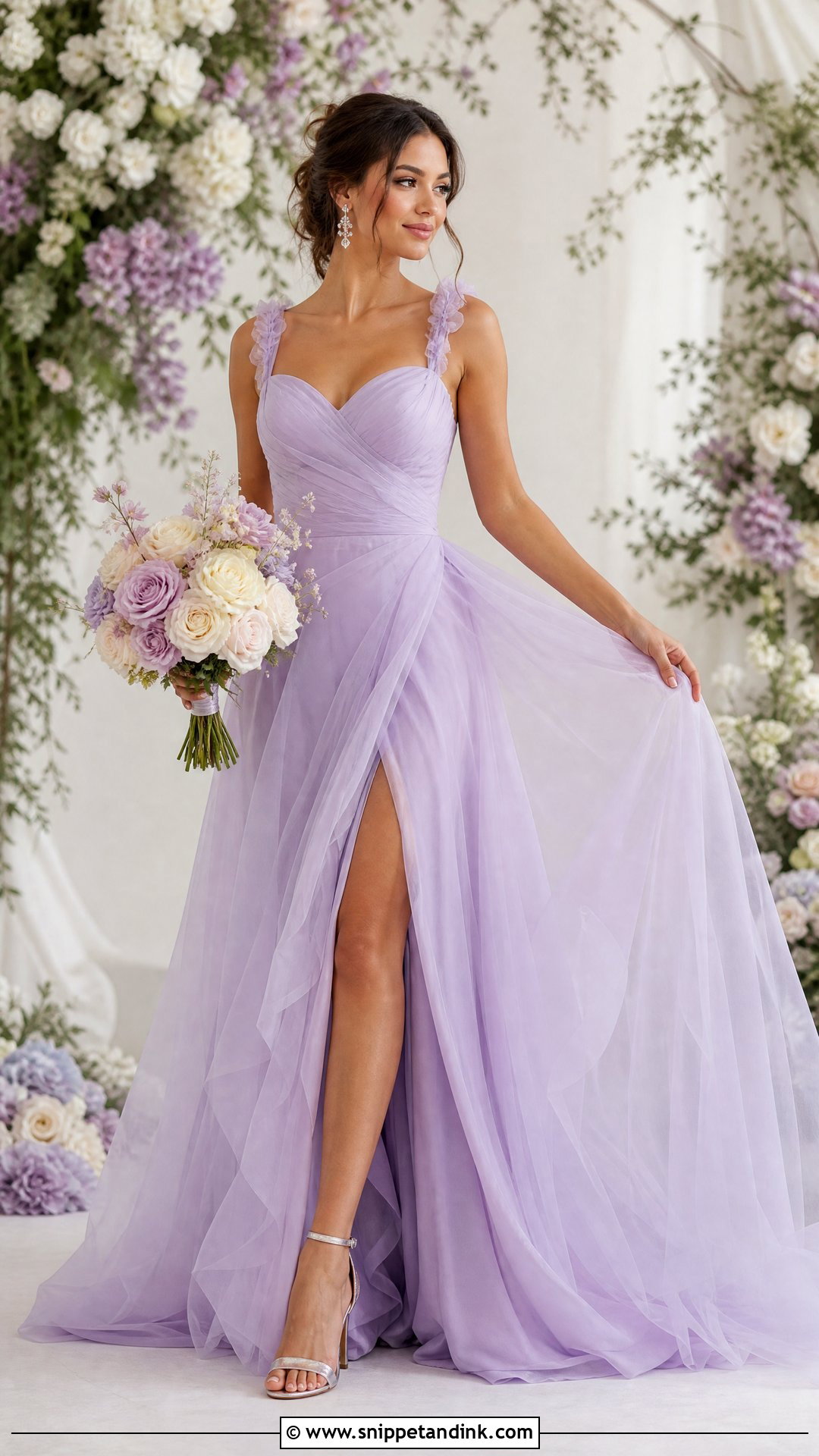
A lavender wedding dress sits between pink and blue, so its undertone matters a lot: warm lavenders lean pink, cool ones lean blue. Tulle, chiffon and organza keep it light. A corset bodice and flowing skirt with some floral appliqué suit spring and summer. Silver heels and small crystal earrings keep it fresh, and an ivory, lilac and pale pink bouquet ties it in. Be aware that lavender can photograph slightly bluer in shade, so check your photographer’s samples of purple tones.
6. Black Wedding Dress
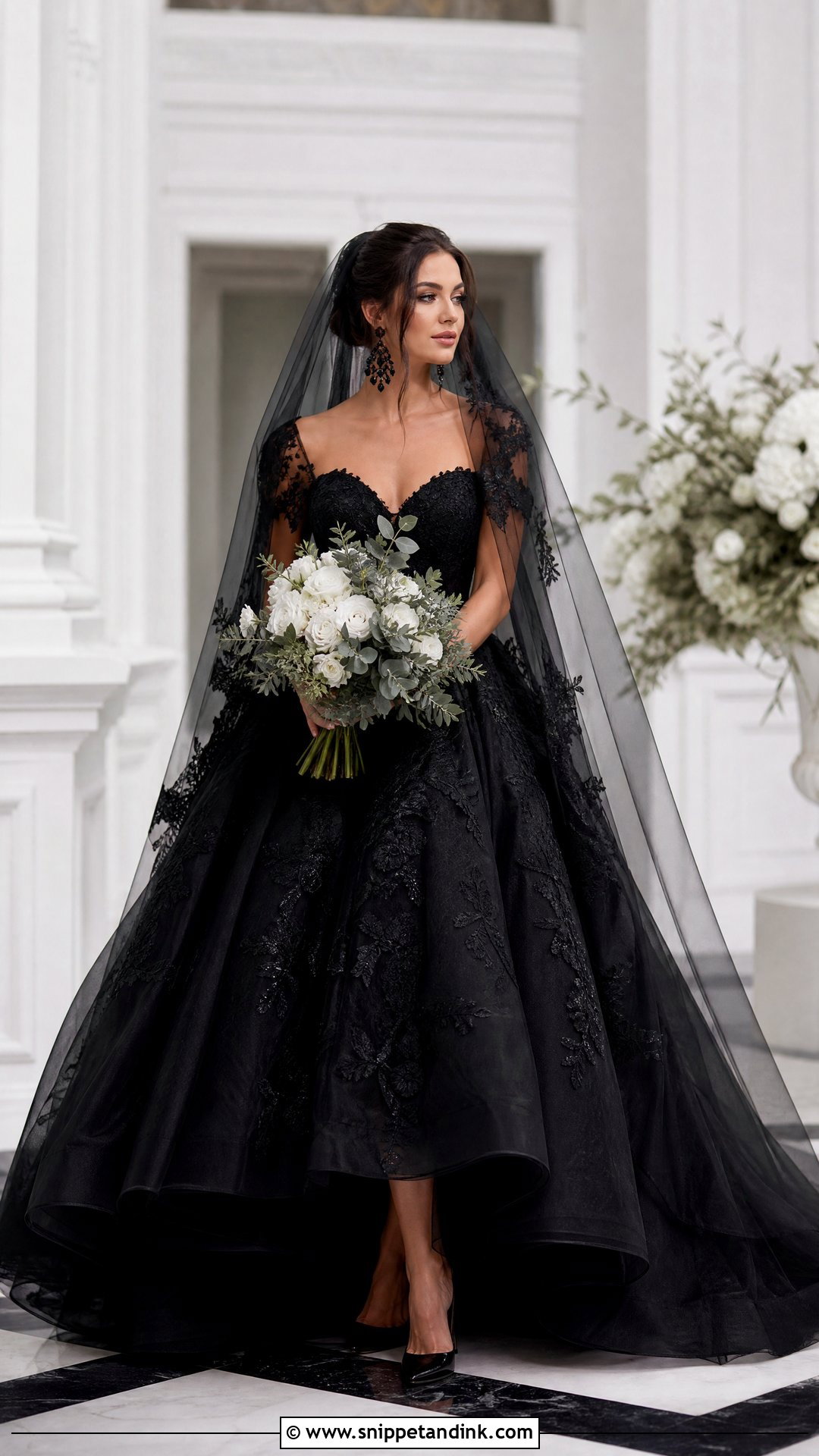
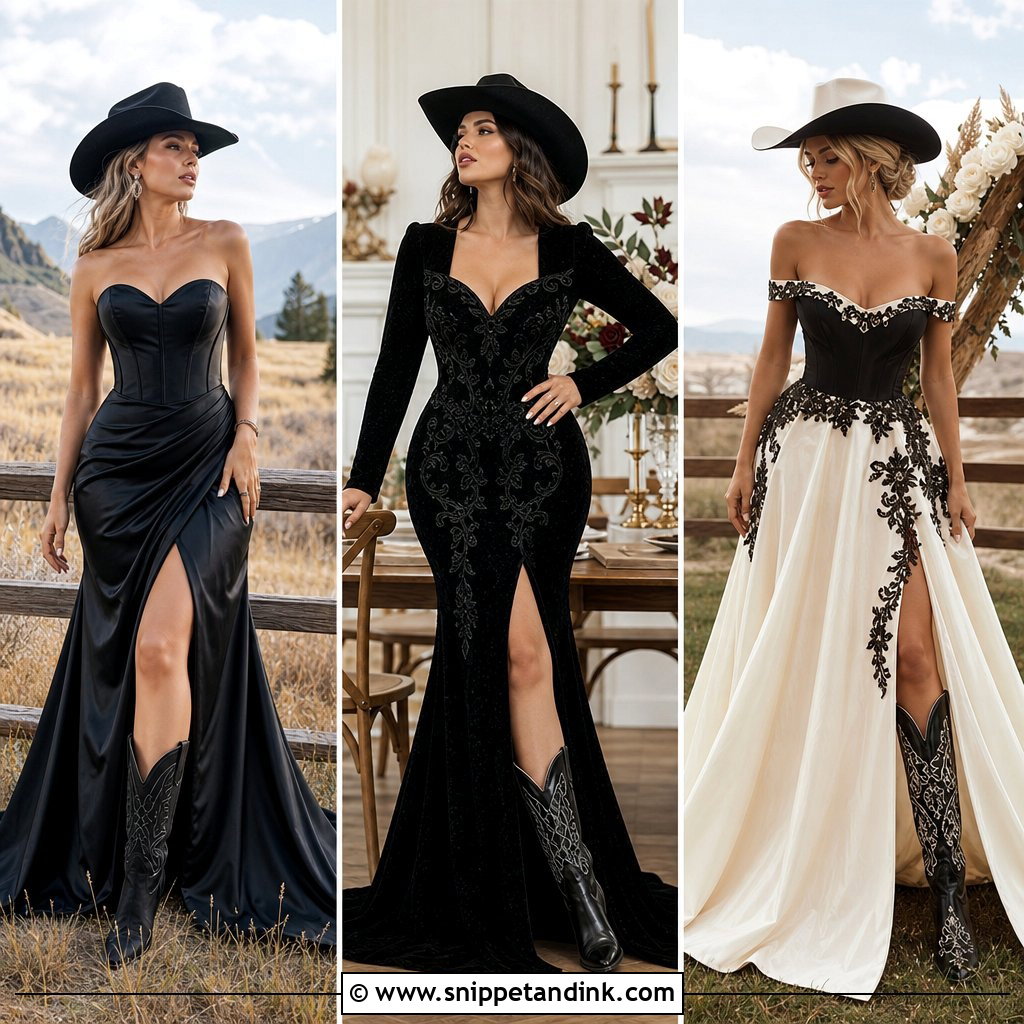
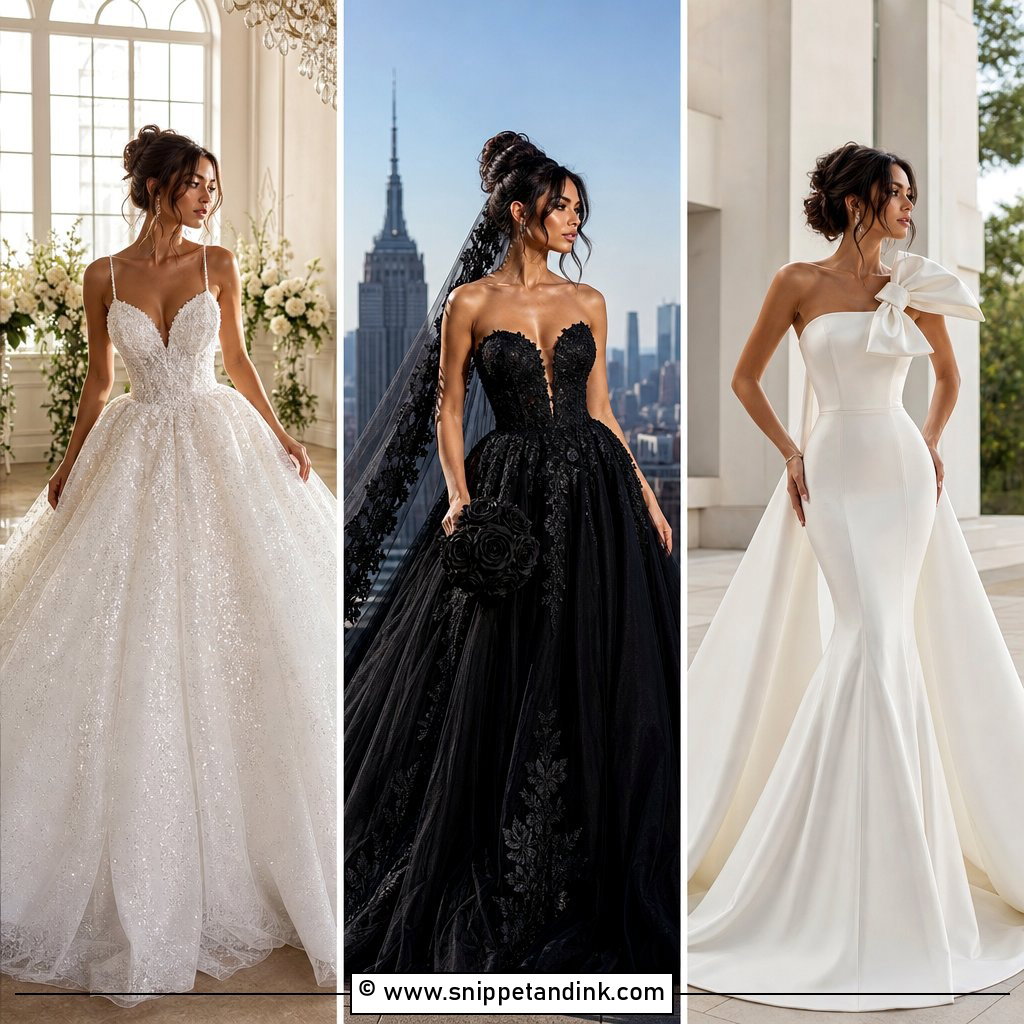
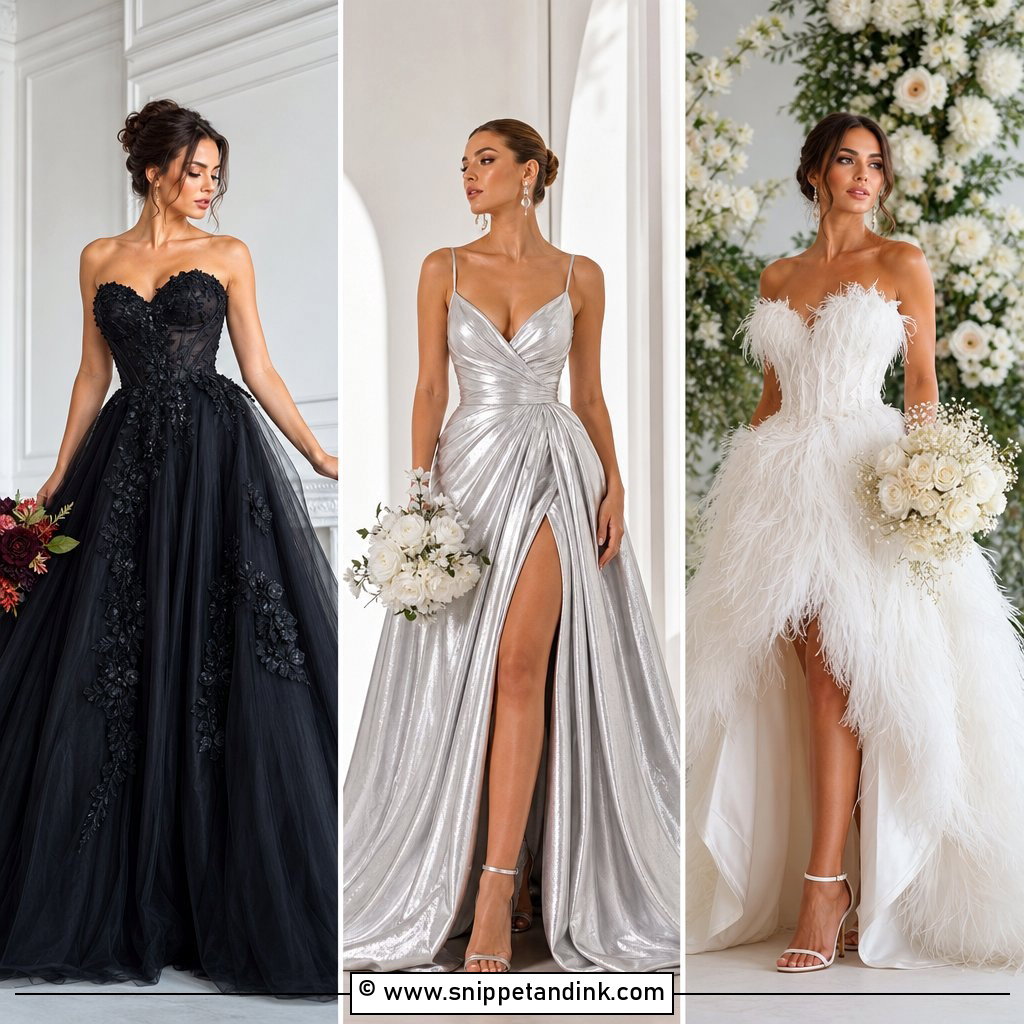
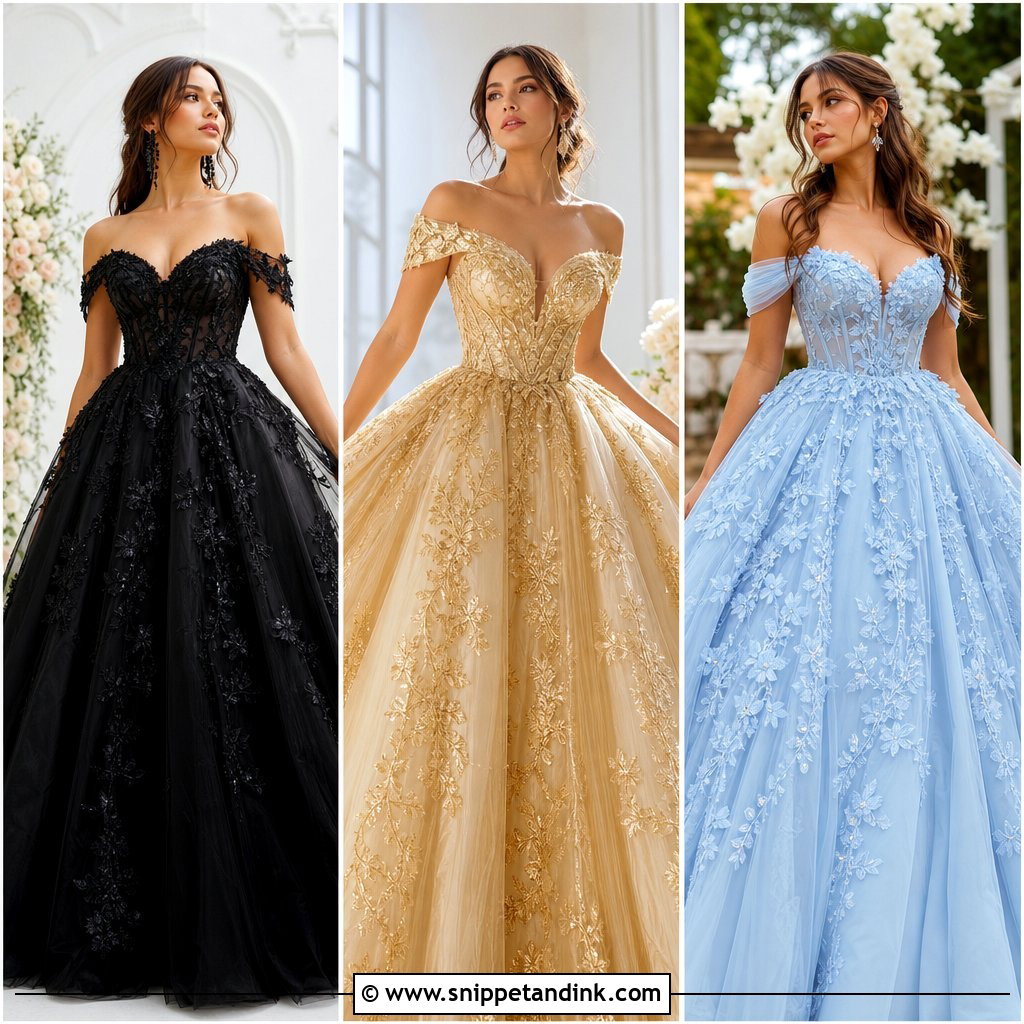
Black needs a strong silhouette, because colour alone won’t carry it. A black lace ball gown, a sleek satin mermaid or a structured off-the-shoulder gown all have that. The detail I check first is texture: flat black loses all definition in photos, so lace, beading or a satin sheen helps the camera find the shape. A sheer black or ivory veil keeps it bridal, and white flowers give contrast. It suits formal evening ceremonies and modern hotels.
7. Red Wedding Dress
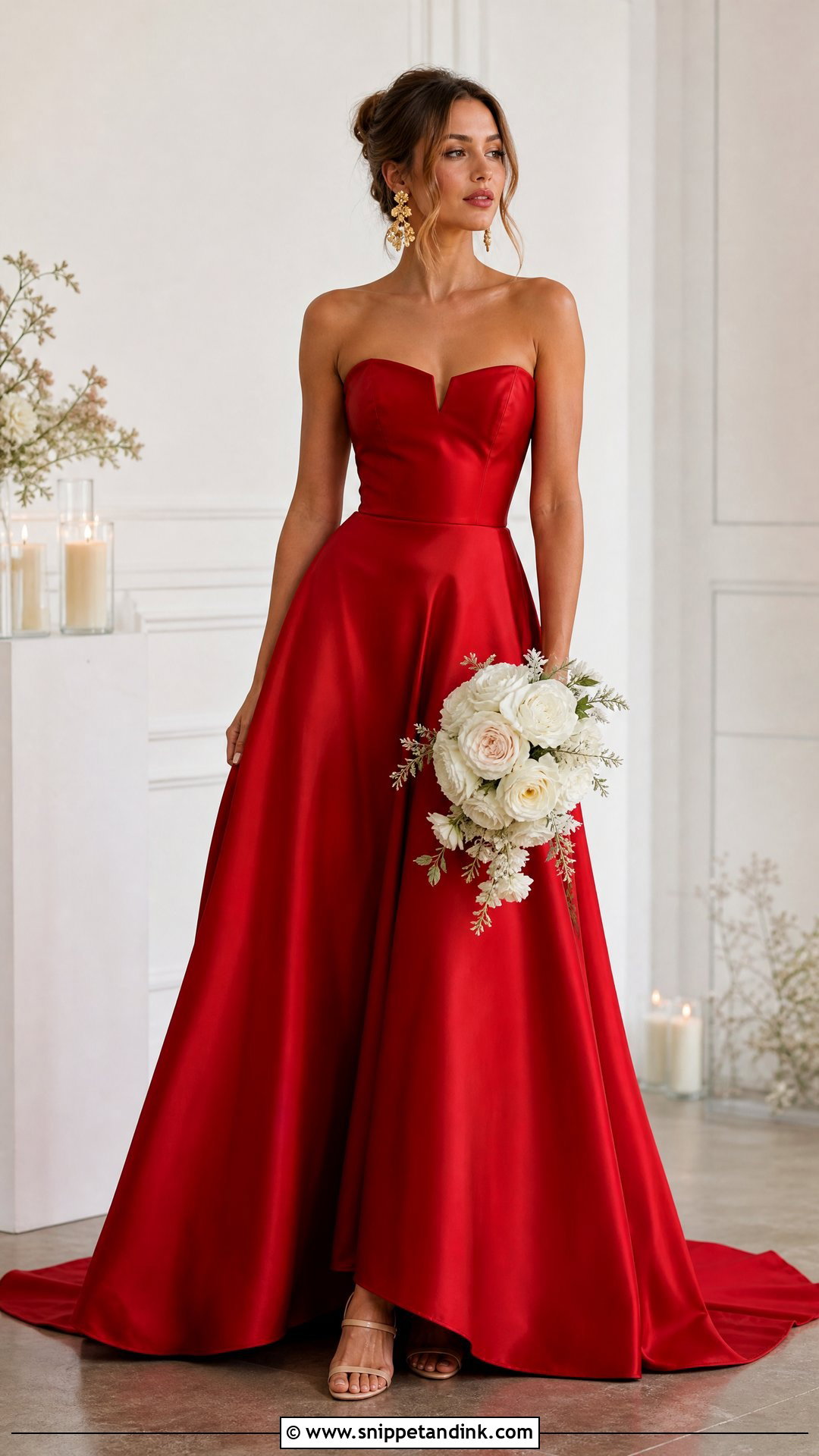
Red has long been the bridal colour in many South Asian and Chinese traditions, and for some brides it’s a way of honouring that. Satin, lace and structured crepe hold the shade well. A red A-line with a fitted bodice and full skirt looks regal. Choose the red against your skin; blue-reds suit cool undertones and orange-reds suit warm ones. Gold earrings, neutral heels and a sleek veil or cape balance it, and an ivory bouquet lets the dress lead. Red can oversaturate on camera, so mention it to your photographer.
8. Emerald Green Wedding Dress
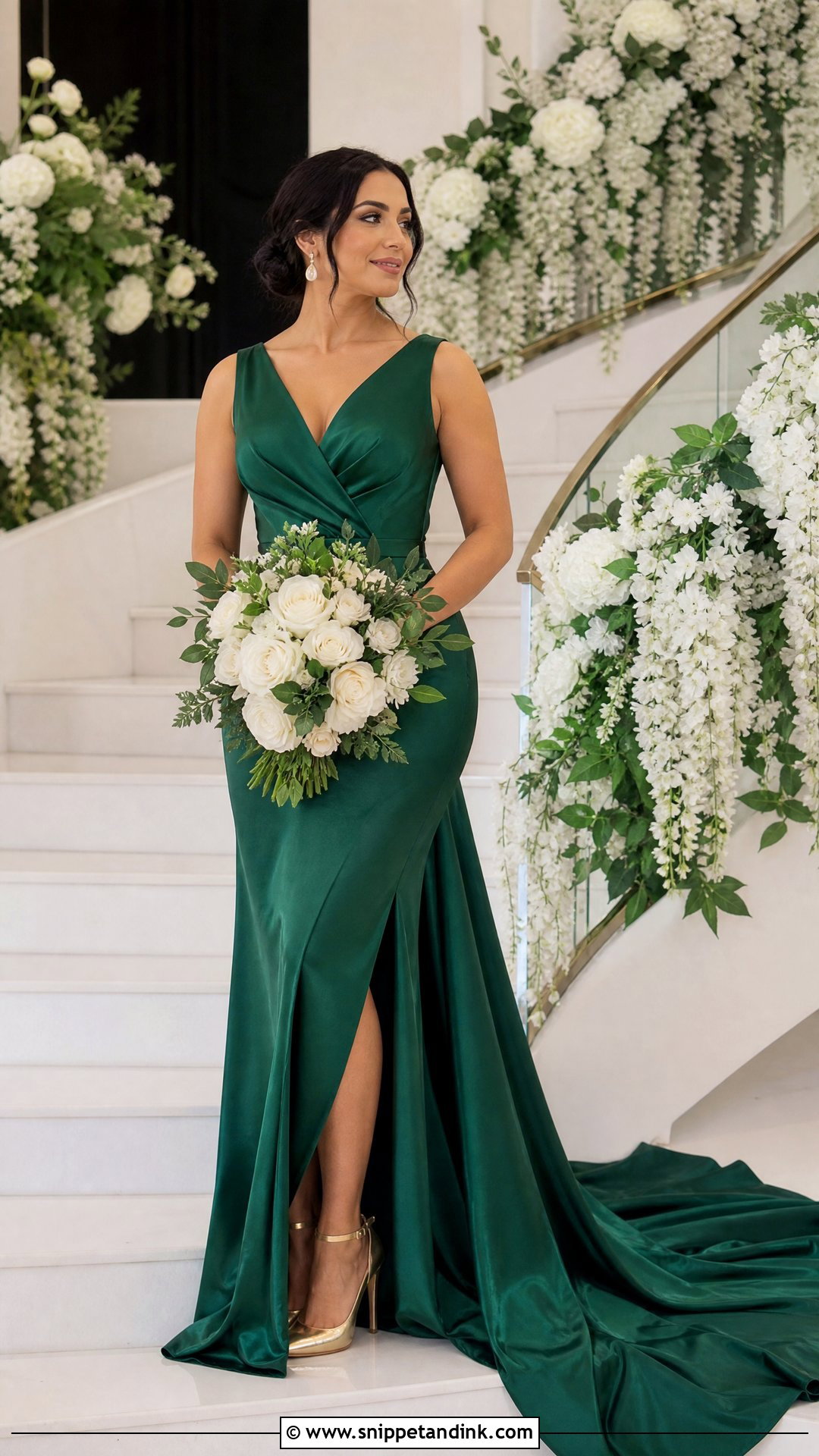
Emerald is a deep jewel tone, and it looks richest in fabrics with depth: velvet, satin, silk or embroidered lace. A fitted gown with a train, gold heels and a structured bouquet looks formal and composed. Warm gold jewellery suits it better than silver. Ivory flowers and deep greenery keep it bridal. Velvet shows pile marks where it’s pressed, so it needs careful steaming rather than ironing. It works best at autumn weddings and evening receptions.
9. Gold Wedding Dress
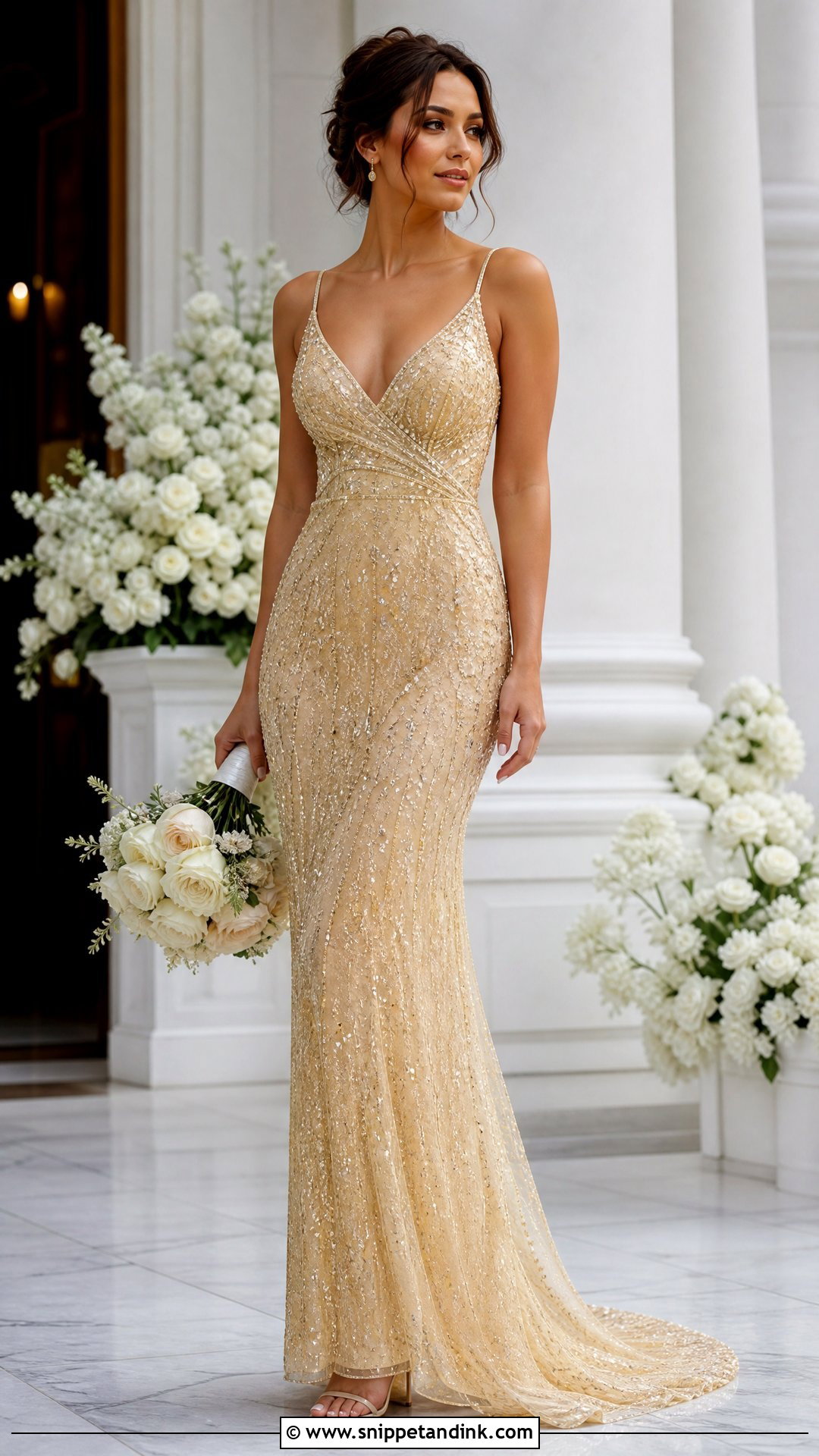
Gold is easiest to wear in its quieter forms: pale gold, antique gold or a muted metallic. Bright yellow-gold is harder on most skin. A slim gold beaded gown with a soft train and nude heels looks glamorous at a formal celebration. Beaded and metallic fabrics are heavy, so I always ask brides to stand in the sample for a good while before deciding. With heavy sparkle, skip the necklace and keep the hair clean.
10. Silver Wedding Dress
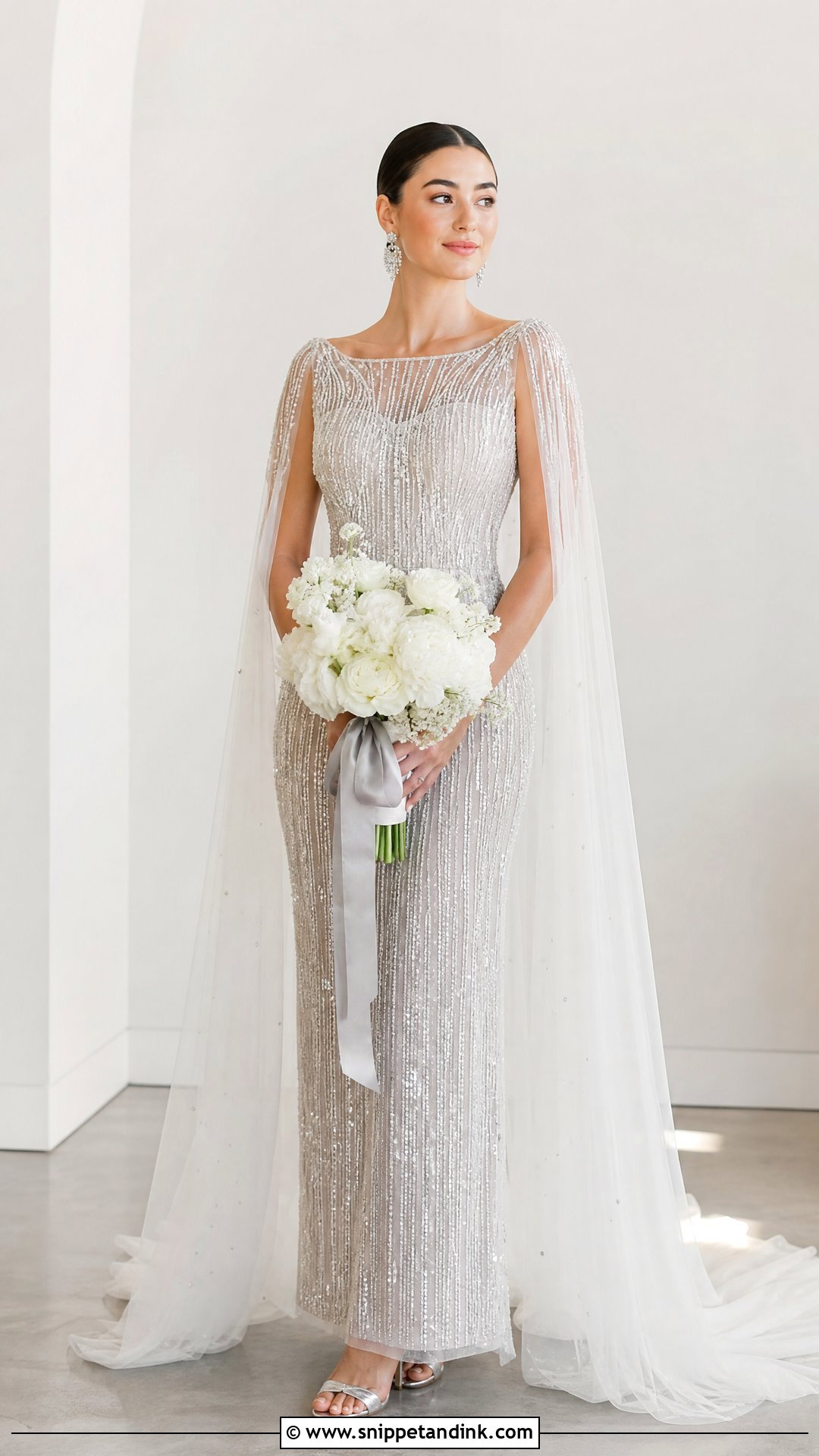
Silver gives shimmer with a cooler, cleaner finish than gold, and it flatters cool and neutral skin tones in particular. Sequined tulle, satin, beaded mesh or metallic-thread lace all suit it. A silver column gown with a soft cape, crystal earrings and silver heels looks modern. Sequins and metallic threads can scratch the inner arms, so check the underarm area during the fitting. It looks sharp under bright lighting and in winter settings.
11. Navy Blue Wedding Dress
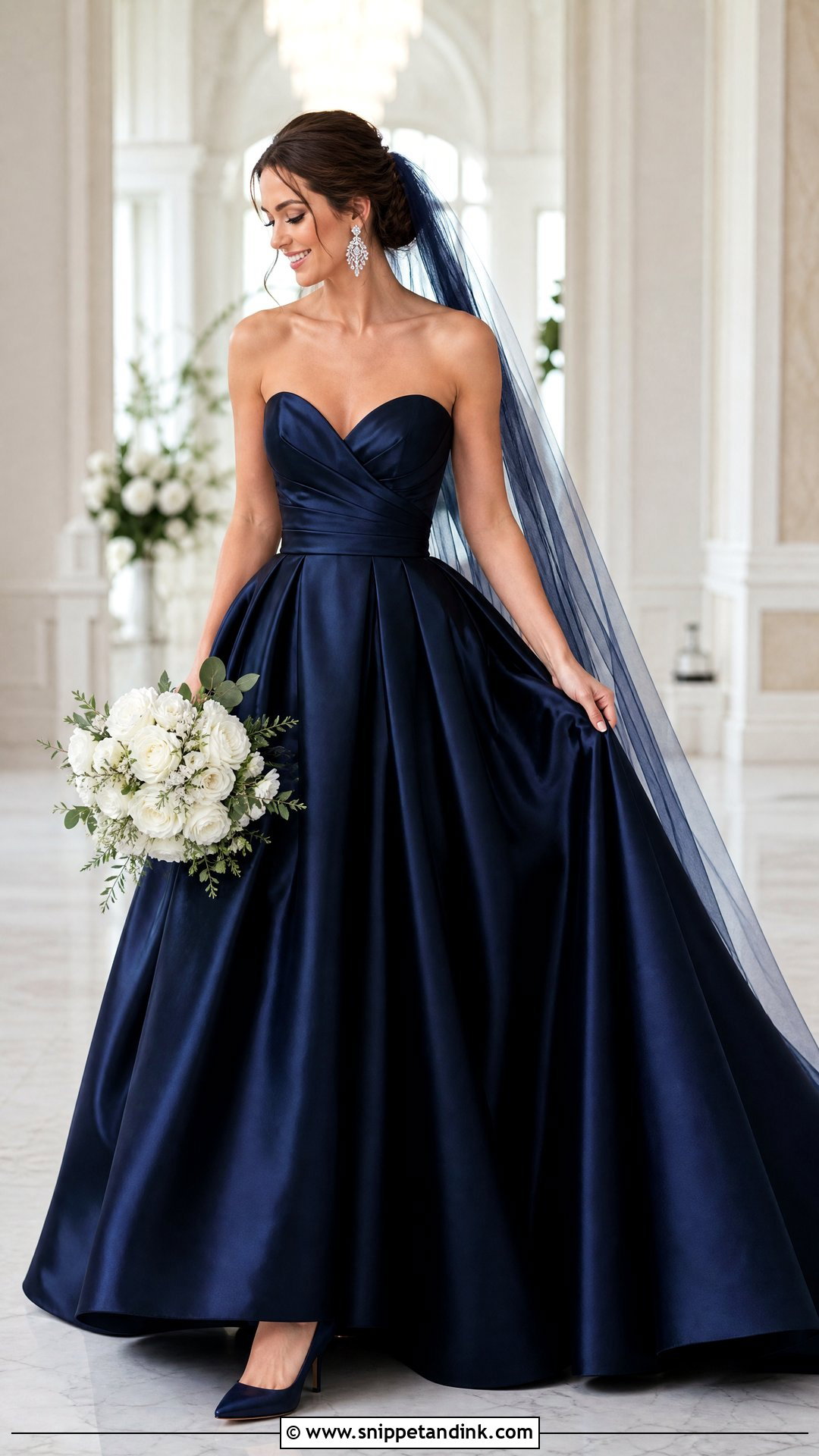
A navy blue wedding dress gives the formality of black with a softer edge, and navy tends to sit kindly against most complexions. A navy satin ball gown, lace mermaid or long-sleeve A-line looks right for evening ceremonies and classic indoor venues. Like black, navy needs texture or sheen to keep its shape in photos. Silver or pearl accessories and a white bouquet give crisp contrast, and a lightly sparkling veil softens the depth.
12. Baby Blue Wedding Dress
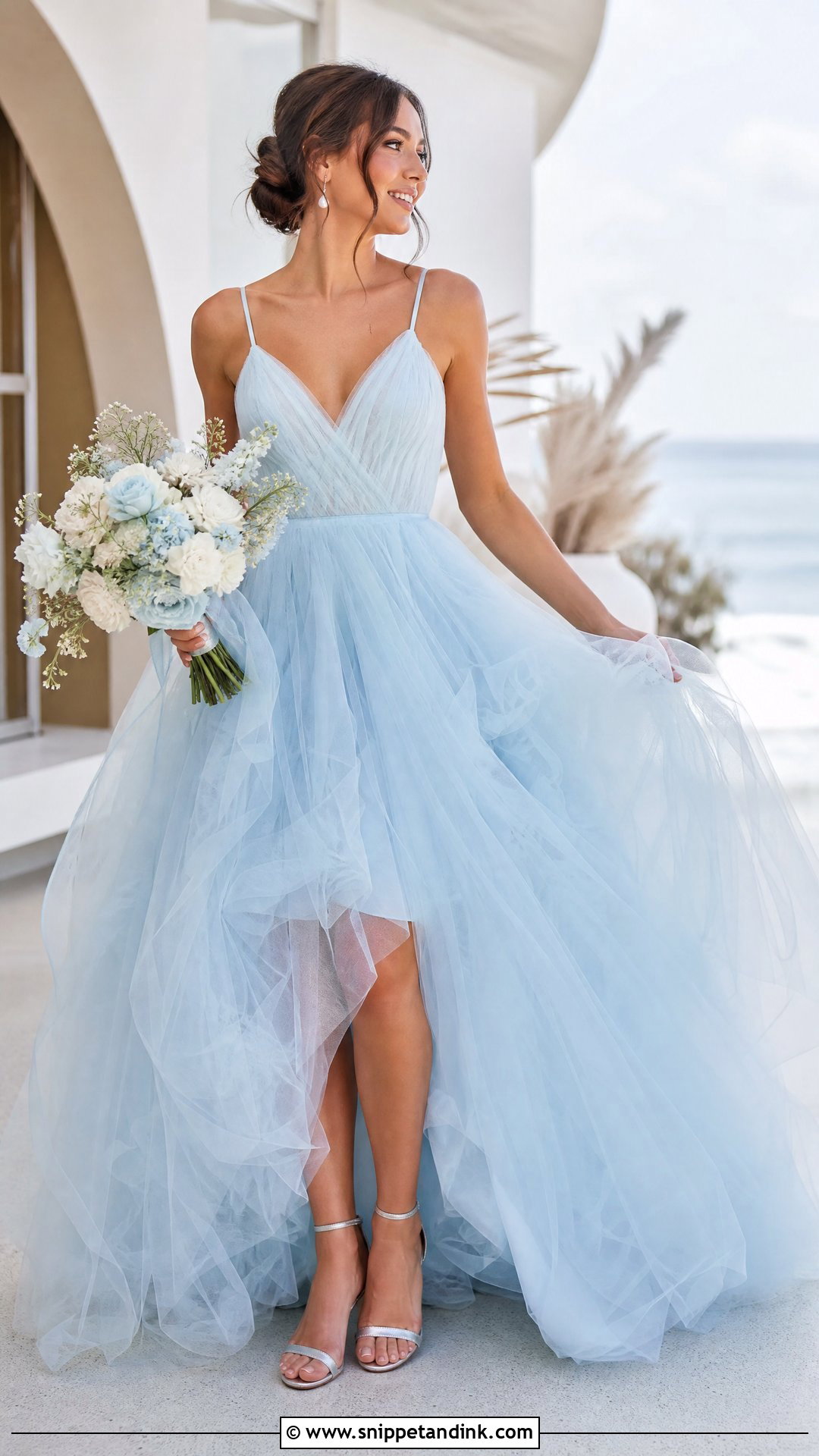
A baby blue wedding dress is light enough that it can look almost white in bright sun, which surprises some brides when the photos arrive. If you want the blue to show clearly, choose a slightly deeper tone than you think. Layered tulle, chiffon and organza suit it. A ball gown with a fitted bodice and delicate straps, pearl earrings and silver heels keeps it sweet. Spring weddings, coastal venues and outdoor celebrations suit it.
13. Floral Wedding Dress
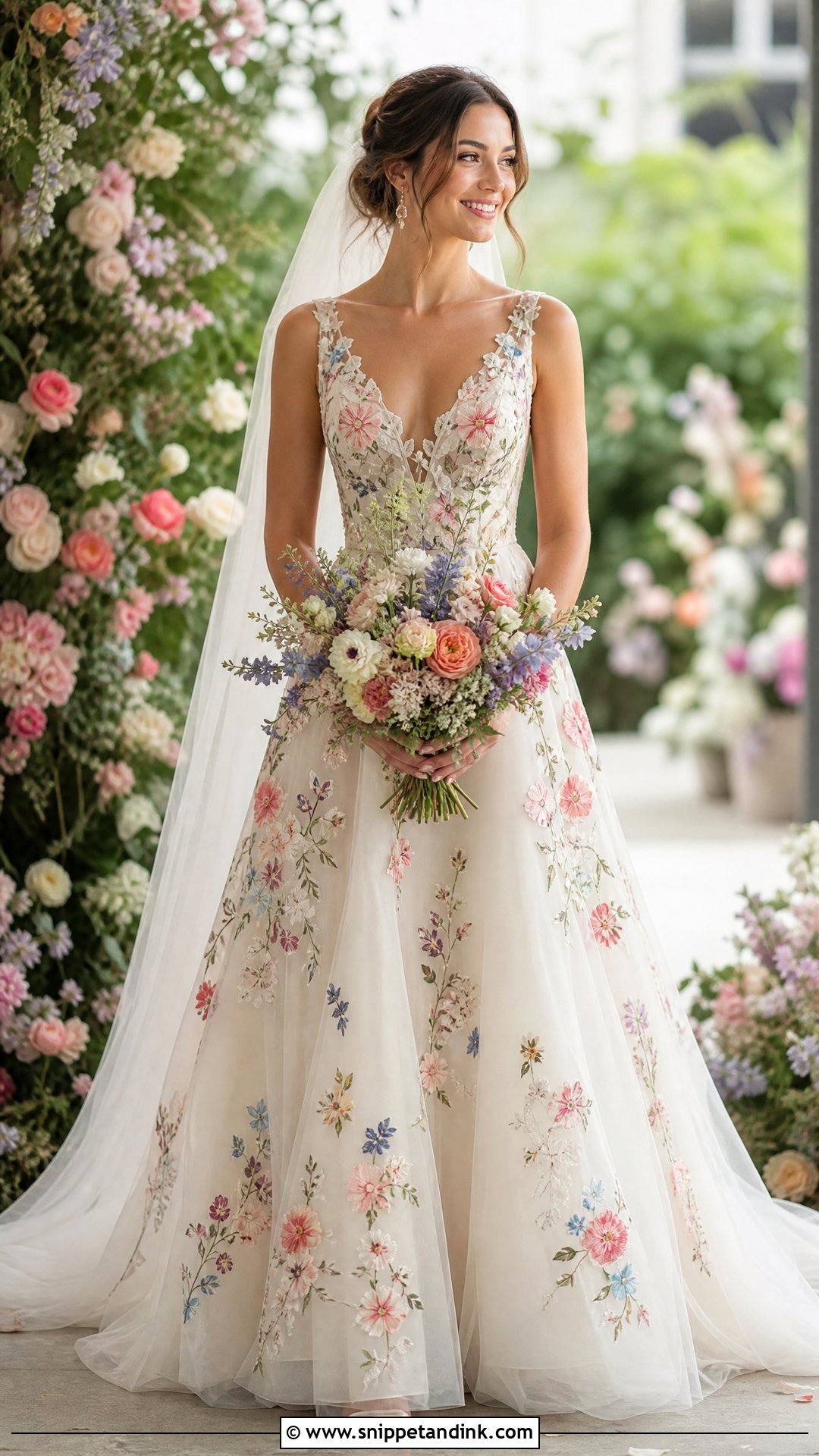
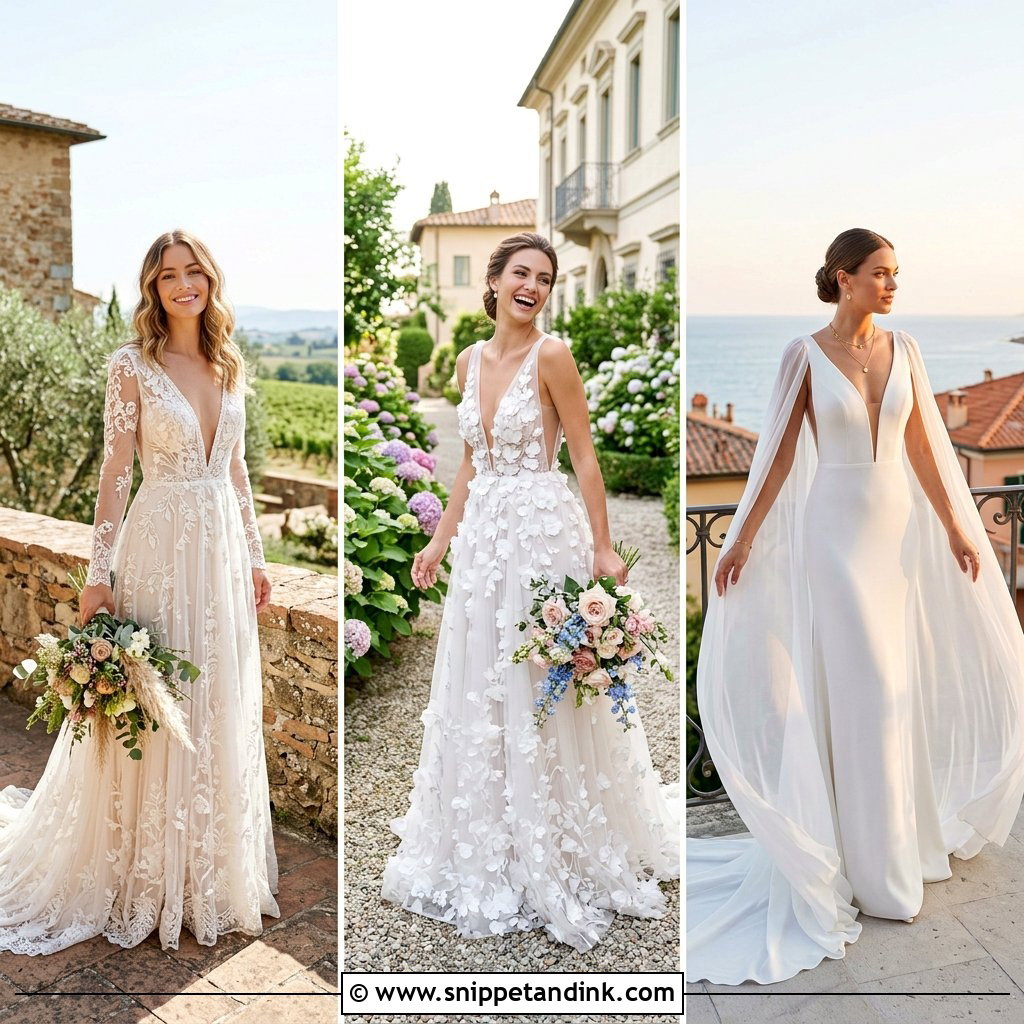
Floral dresses let you wear several colours at once without committing to one. Embroidery, painted prints or appliqué over an ivory or white base keeps the dress bridal. The scale of the pattern matters: small, scattered flowers read as delicate, large ones as bold. Simple heels and dainty earrings let the pattern lead. Pick one or two colours from the dress for the bouquet so everything looks planned. Garden and spring weddings suit it best.
14. Pink Wedding Dress
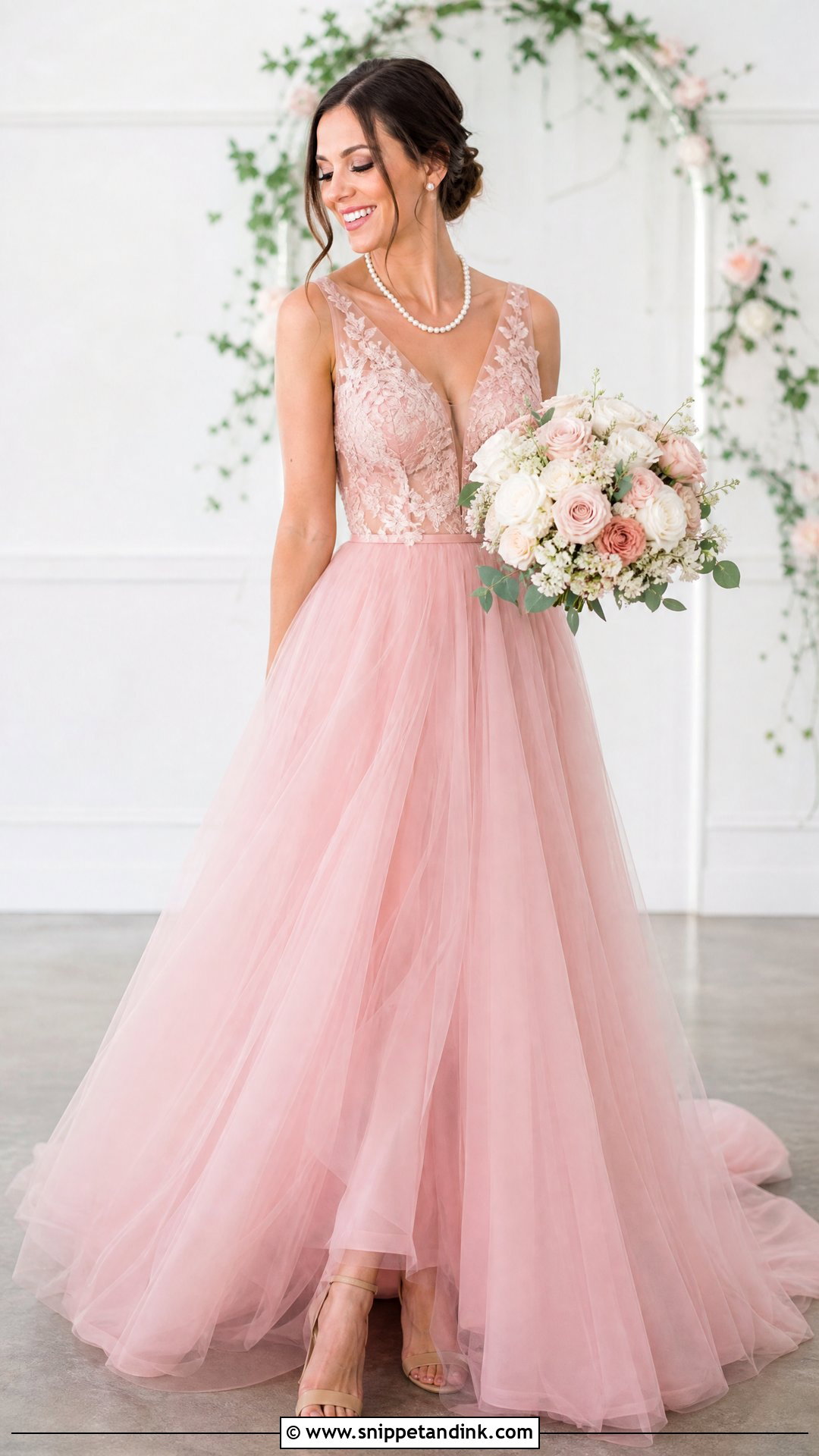
Pink covers a wide range, from pale and romantic to rose and polished to bright and fashion-led. Bright pink is the hardest to wear, as it reflects onto the face and can make skin look flushed in photos. A pink tulle gown with a defined waist and clean bodice looks bridal in most shades. Nude heels, pearl jewellery and an ivory and blush bouquet keep it balanced. With a bold pink, keep the veil plain and the accessories neutral.
15. Purple Wedding Dress
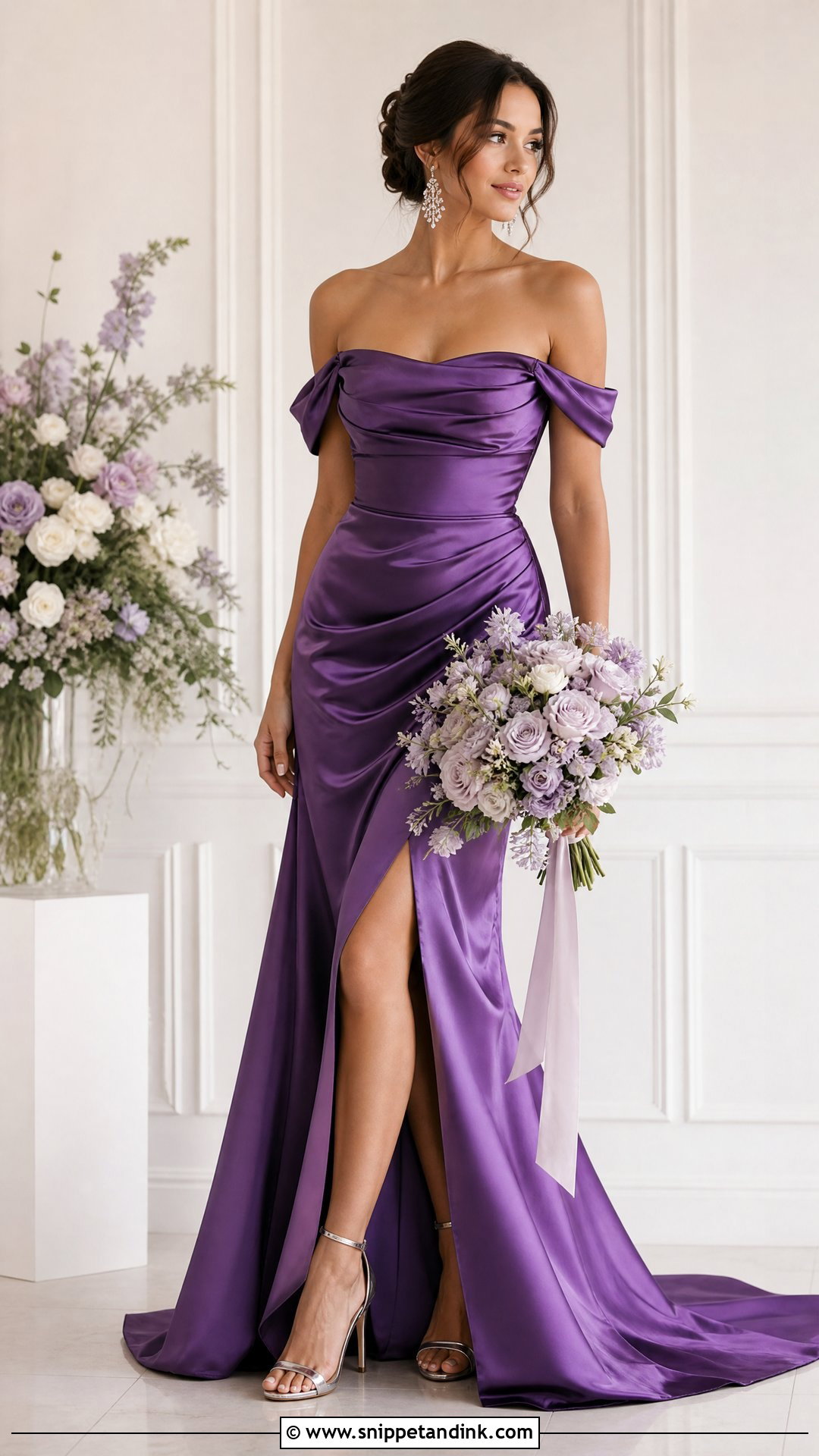
A purple wedding dress ranges from soft lilac to deep plum and violet. Lighter shades feel romantic; deep plum feels regal and suits autumn and winter. A purple satin gown with an off-the-shoulder neckline, structured bodice and long train makes a strong statement. Silver heels and crystal earrings suit cooler purples. Keep accessories clean, because purple with too many extras can start to look like a costume.
16. Peach Wedding Dress
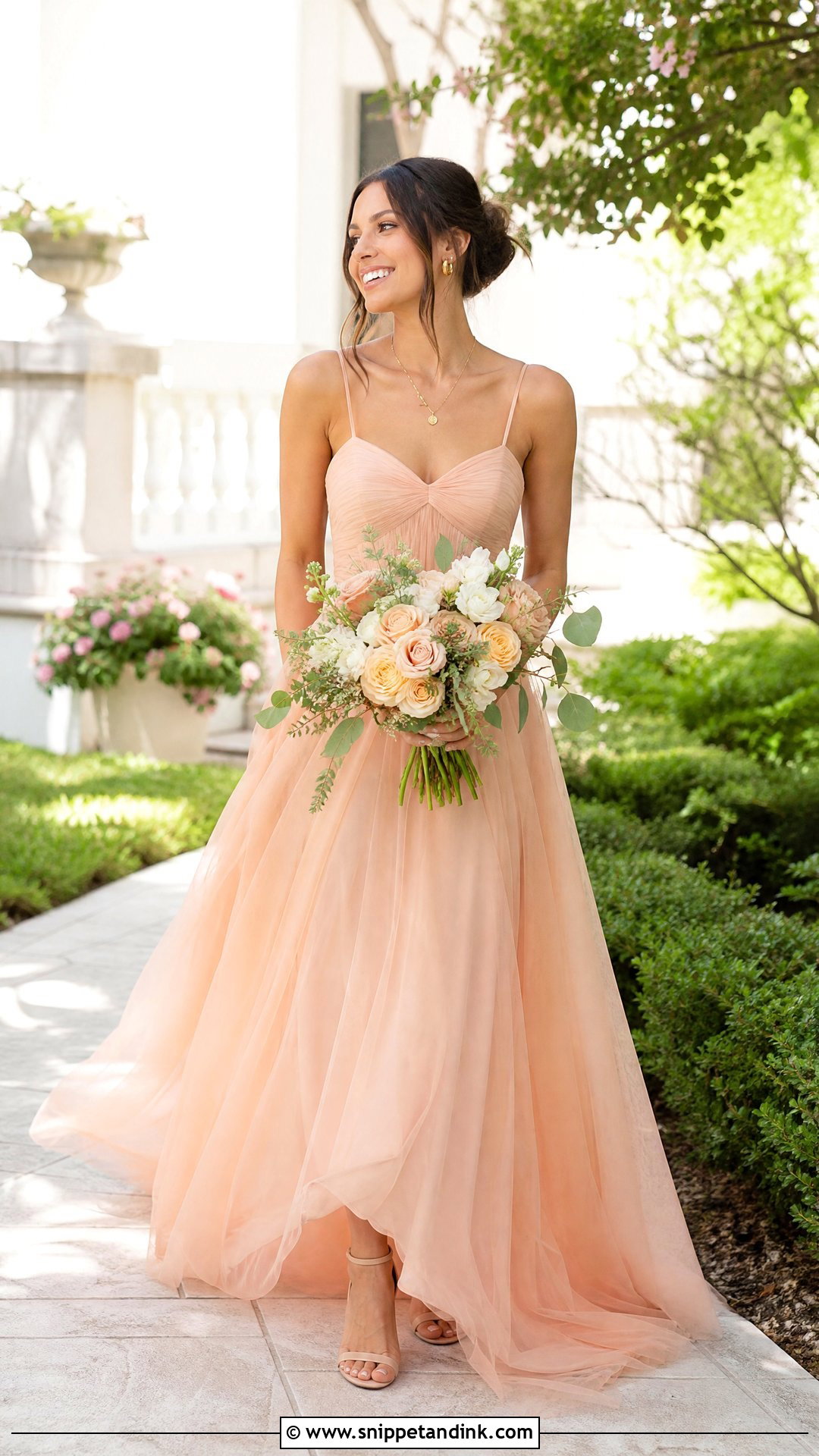
Peach sits between blush and coral, and it’s especially kind to warm and olive skin tones. Chiffon is its best fabric, with a flowing skirt, fitted waist and delicate straps. On very fair, cool-toned skin it can look washed out, so try it next to blush before deciding. Nude sandals or heels, gold jewellery and a bouquet of cream, peach and soft green suit it. A floral hair pin is enough. It suits outdoor ceremonies and beach weddings in warm light.
17. Gray Wedding Dress
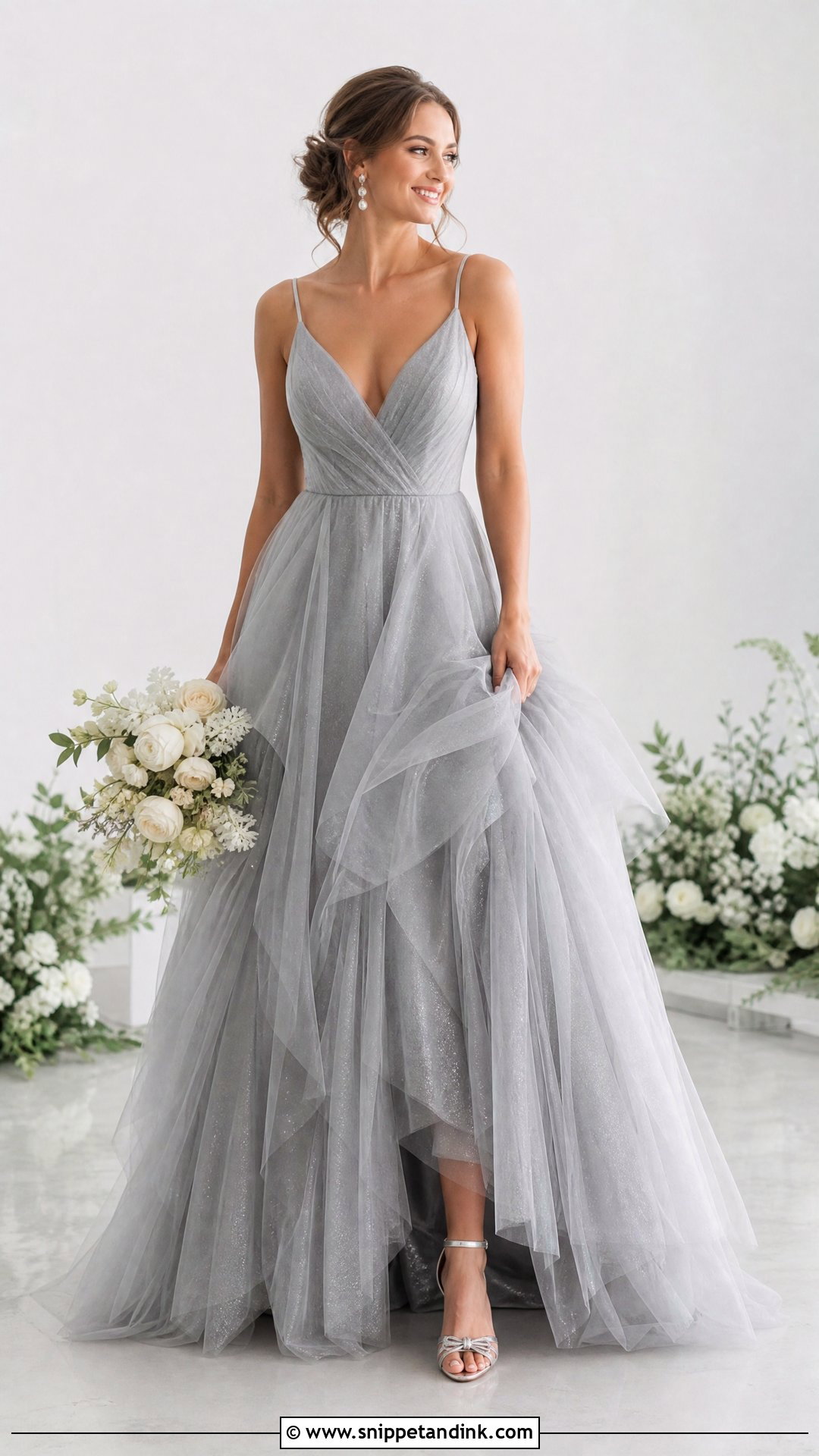
Grey is the quietest colour on this list. Dove grey feels soft; charcoal is more dramatic. A grey tulle gown with layered fabric, a fitted bodice and a little sparkle can look ethereal, but grey without shine can look flat in photos, so I always look for some sheen or texture. Silver heels, pearl earrings and white flowers keep it clean; blush flowers or rose gold add warmth. It also fits into almost any wedding colour palette.
18. Teal Wedding Dress
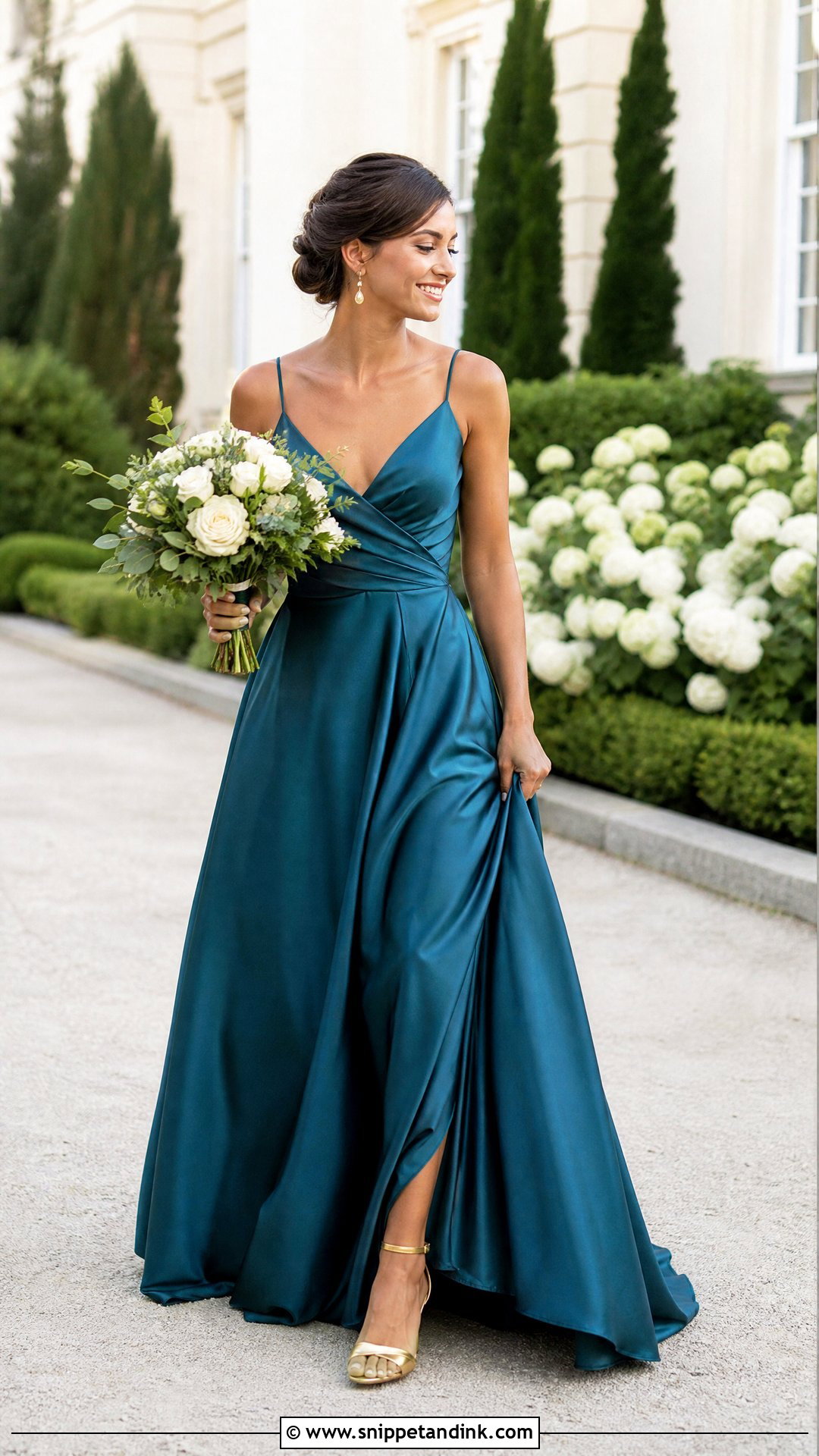
Teal sits between blue and green, and it changes noticeably in different light: bluer in shade, greener in sun. A teal satin or chiffon gown with a fitted bodice, flowing skirt and soft train looks rich. Gold heels and simple earrings warm it, and an ivory bouquet with greenery suits it. Keep makeup in soft neutrals so it doesn’t fight the colour. It suits outdoor venues, modern receptions and autumn celebrations.
19. Burgundy Wedding Dress
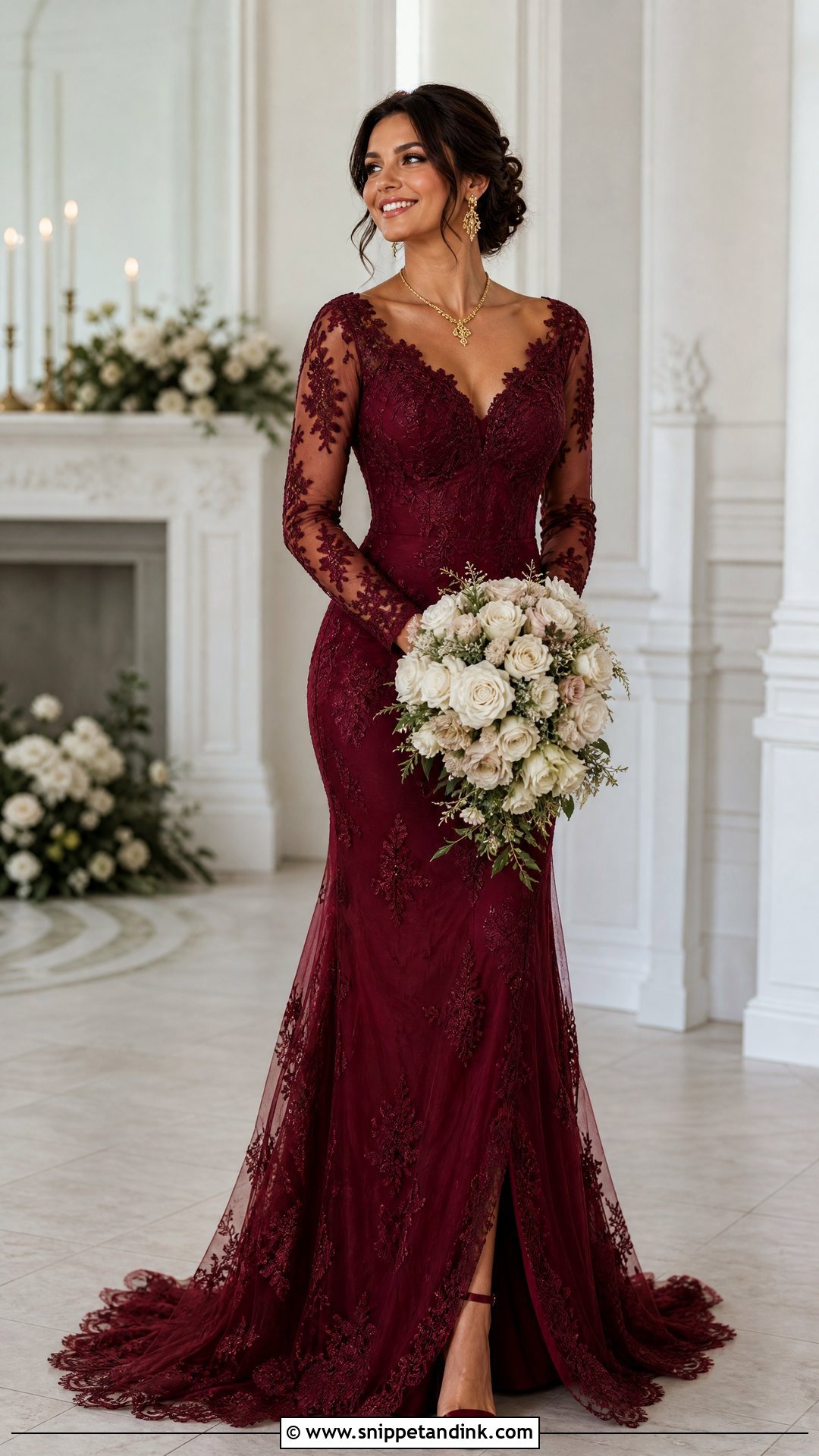
A burgundy wedding dress is a deep red that’s softer than bright red. It’s most flattering in velvet, satin and lace, which give the colour depth. A burgundy lace gown with long sleeves, a fitted waist and a flowing skirt suits autumn, winter and formal venues. Gold jewellery and matching heels work, and an ivory bouquet brightens it. A simple veil or cape adds a bridal note without hiding the colour.
20. Ivory And Blue Wedding Dress
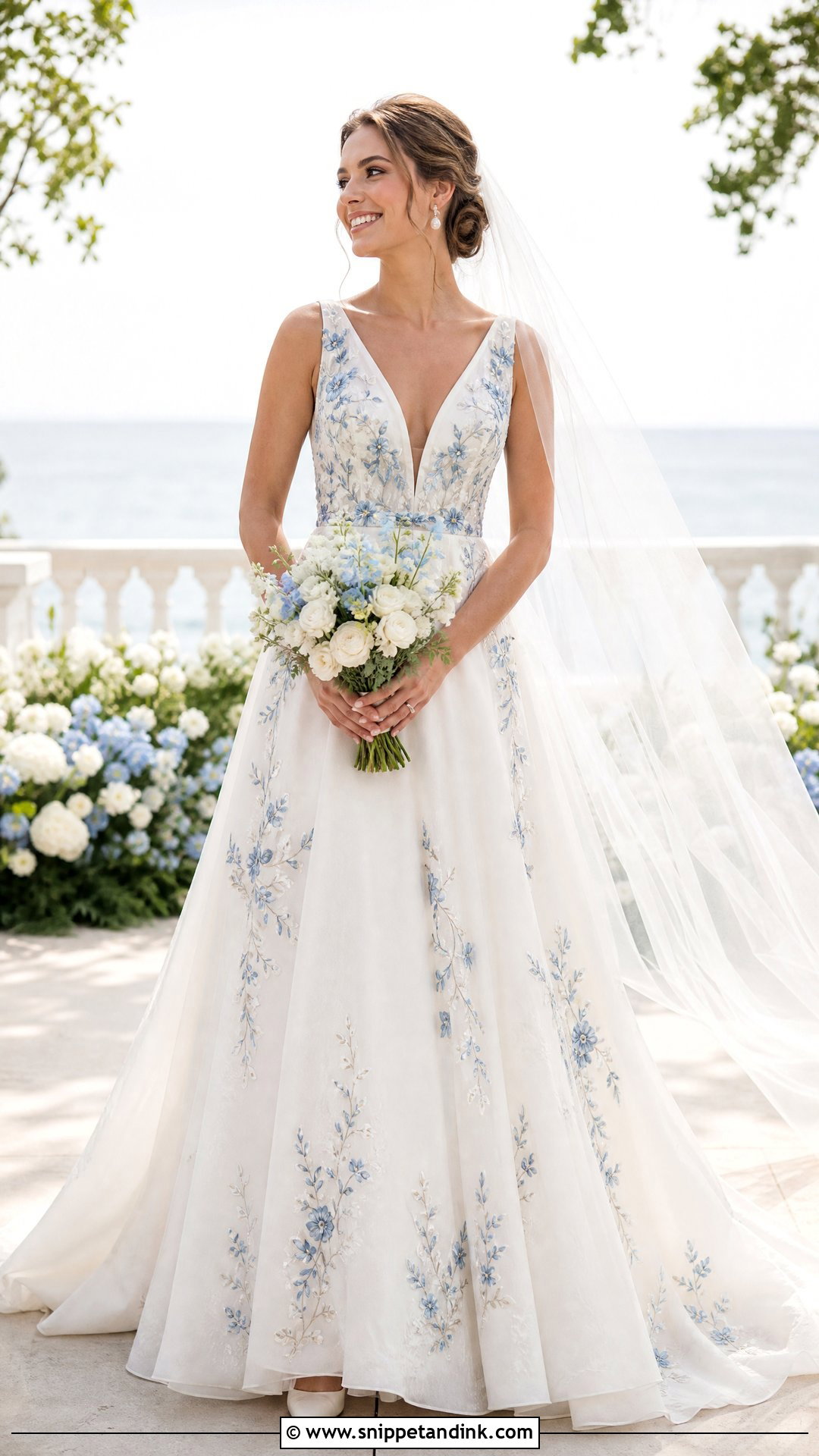
Ivory with blue gives you a traditional base with a clear touch of colour. Blue embroidery, floral appliqué, dip-dyed tulle or a blue sash all work, and the amount of blue is easy to adjust. A classic A-line with blue floral details, ivory heels and pearl earrings feels fresh. Match the blue in the bouquet to the blue in the dress, not just roughly. Garden, coastal and spring weddings suit it, and it’s a gentle way to include something blue.
21. Ombré Wedding Dress
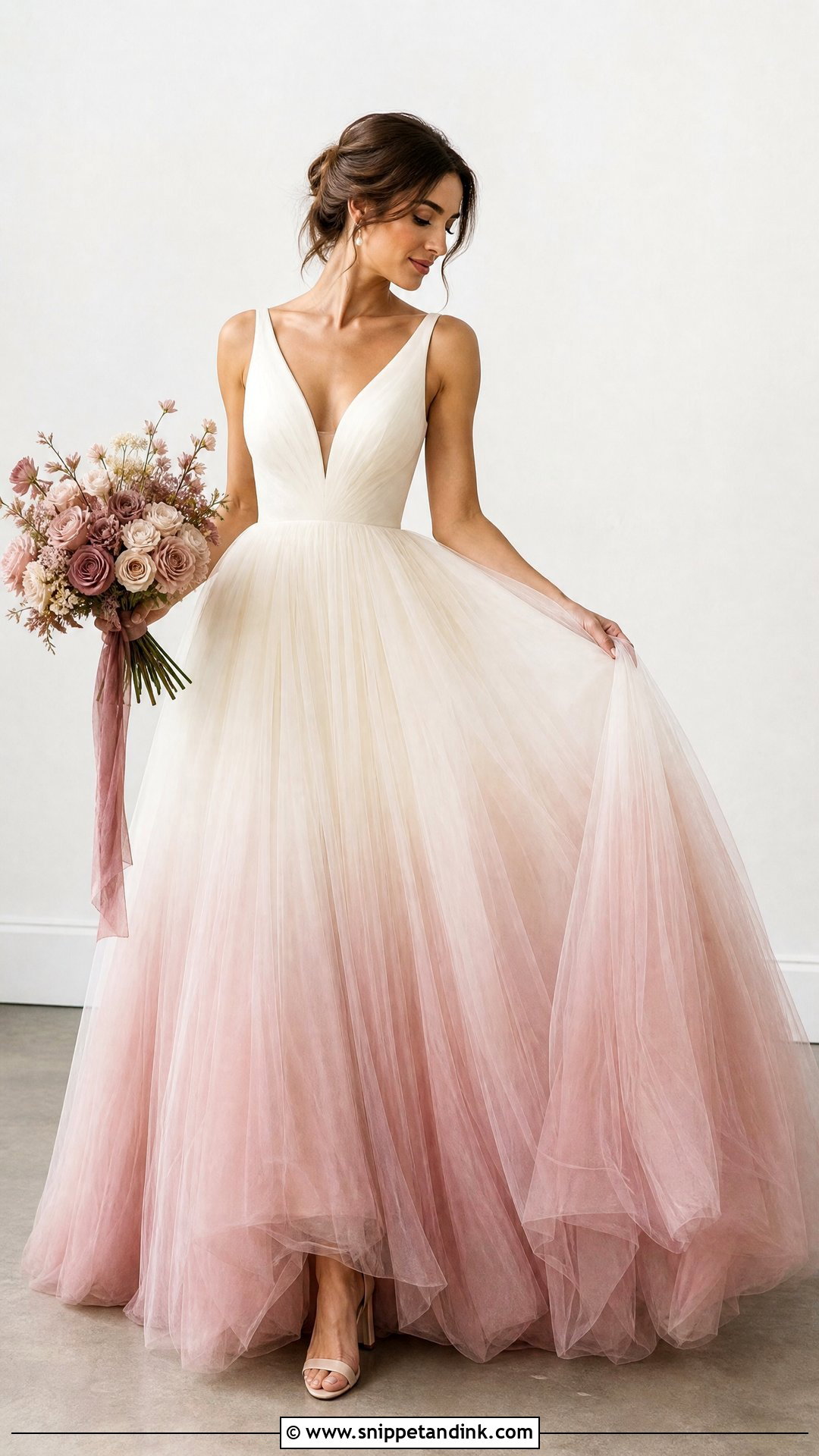
Ombré is dyed in a gradient, fading from ivory at the top to colour at the hem, so it looks different with every step. Blush, blue, lavender, peach and grey fades all work. A tulle ombré ball gown shows the change best, because the layers deepen the colour. I’d ask whether the fade is dyed or layered, as dyed gradients can vary between dresses. Neutral heels, simple earrings and a plain veil keep the gradient in charge.
22. Yellow Wedding Dress
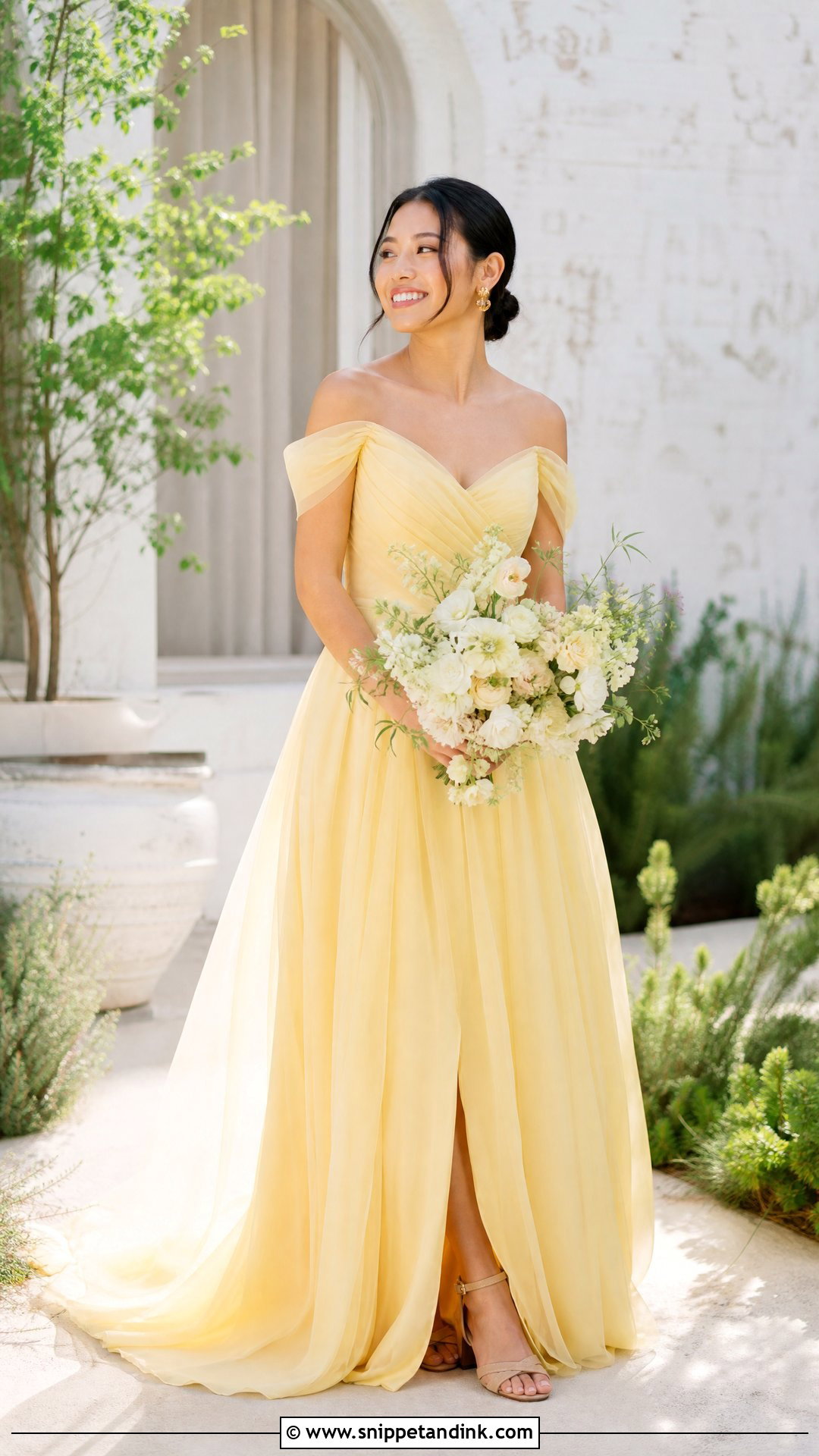
Yellow is cheerful, and butter yellow is the easiest version to wear. Deep golden yellow is more dramatic and suits warm, darker skin tones particularly well; on very pale skin, bright yellow can drain colour from the face. Organza or chiffon with a flowing skirt and soft sleeves keeps it light. Nude heels, gold jewellery and an ivory bouquet with light greenery finish it. Spring, summer and outdoor weddings suit it best.
23. Rose Gold Wedding Dress
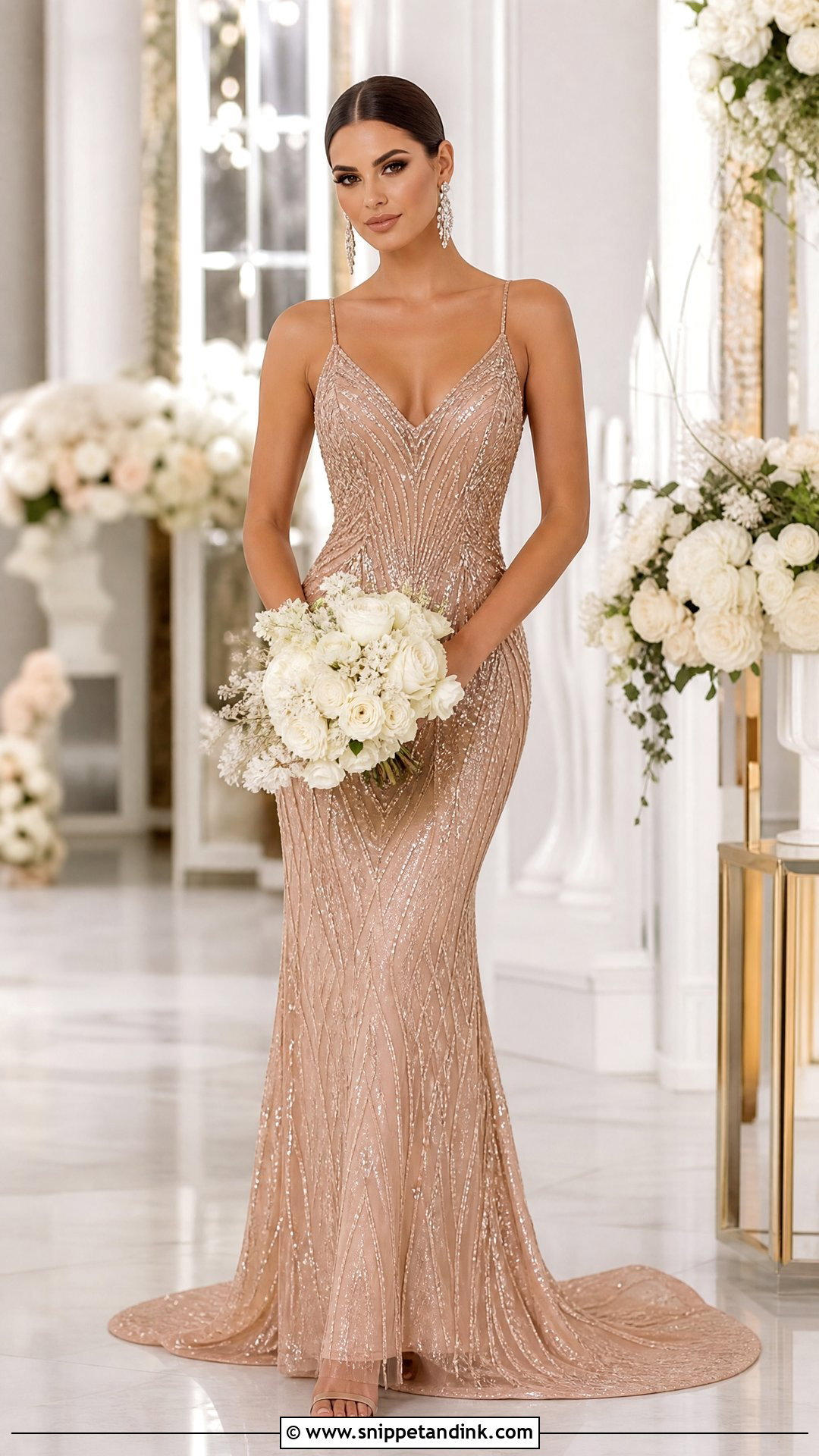
Rose gold blends blush, champagne and a metallic sheen. It’s glamorous but softer than gold, and especially flattering on warm skin tones and in candle or tungsten light. A rose gold sequined or beaded gown with a slim silhouette and soft train suits formal celebrations. Keep earrings delicate and the hair sleek. Very sparkly fabric needs minimal accessories and a simple veil, otherwise the look tips into costume.
24. Mint Green Wedding Dress
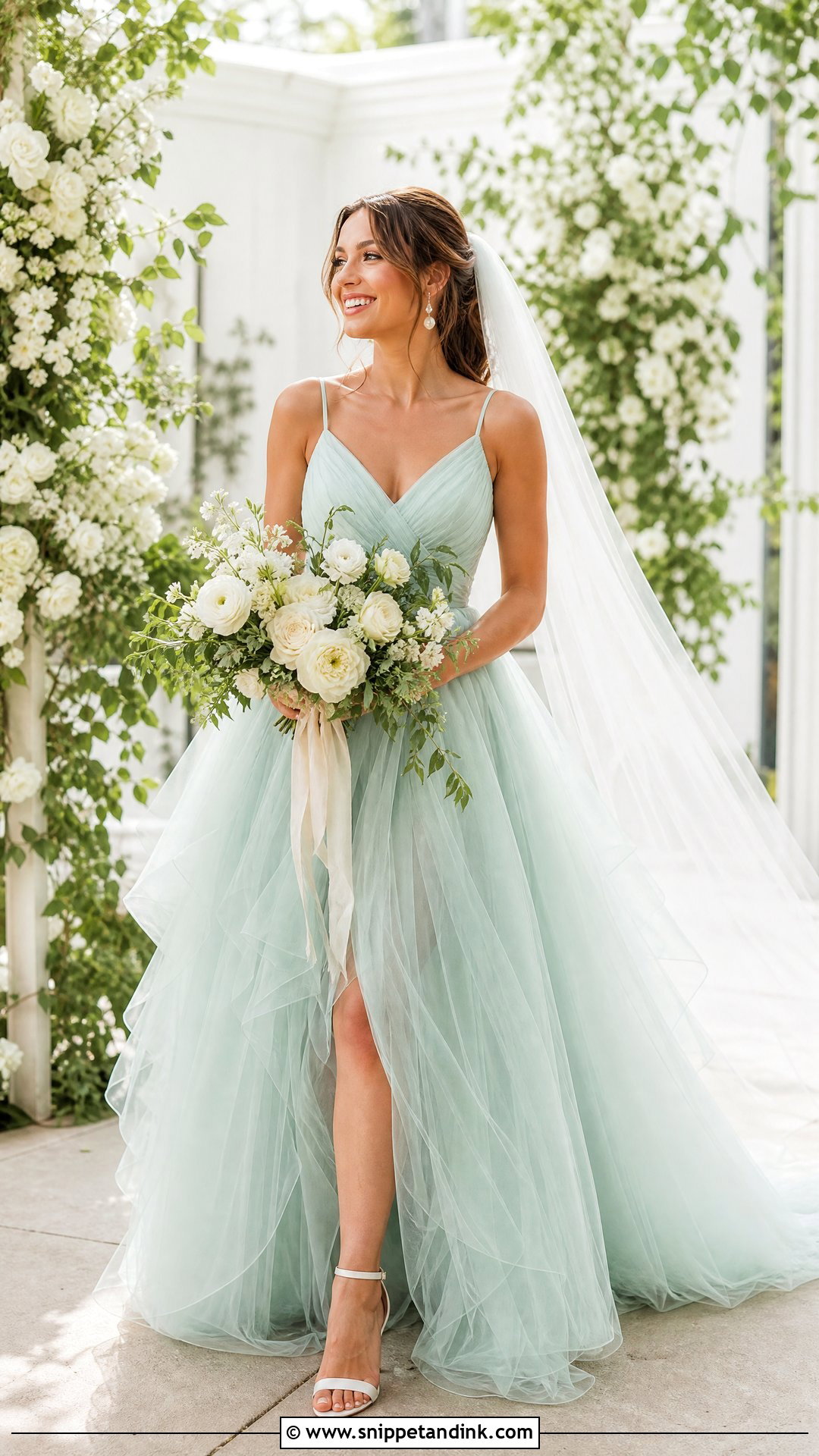
A mint green wedding dress sits between sage and emerald: brighter than one, softer than the other. Mint can look casual if the dress is too simple, so a fitted bodice, airy tulle skirt and a sheer veil help it read as bridal. White or nude heels, pearl earrings and an ivory bouquet with soft greenery suit it. Spring and summer gardens show it at its best.
25. Coral Wedding Dress
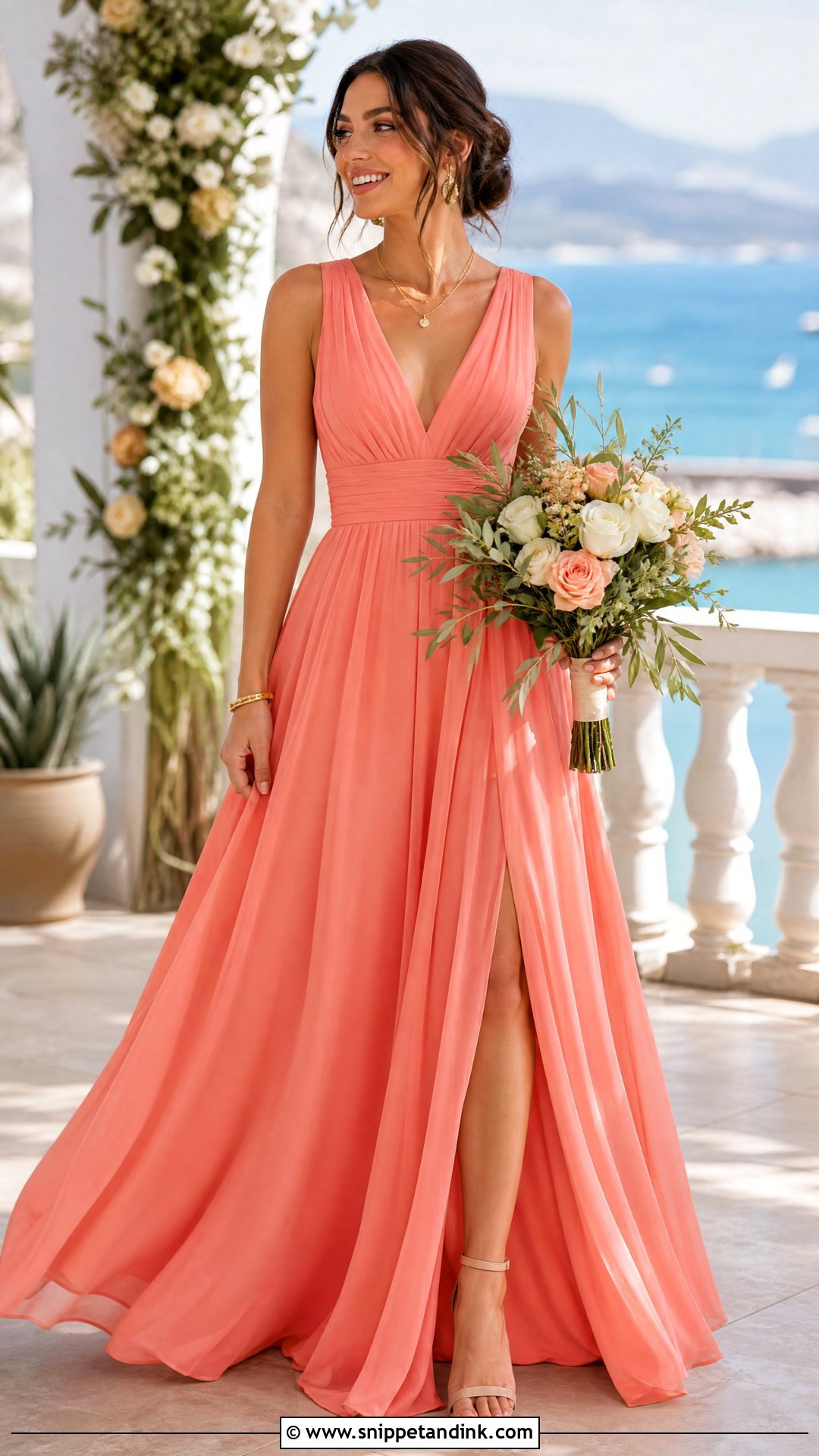
Coral is warm and bright, and it lights up warm and deeper skin tones. Softer coral suits chiffon or tulle, while brighter coral looks fashion-led in satin or crepe. A coral A-line with a fitted waist and simple neckline is easy to wear. Nude heels, gold jewellery and a bouquet of ivory, peach and greenery suit it. Skip the veil for a hair accessory if you prefer. Beach and summer destination weddings suit it best.
How Colour Changes Between Sunlight, Candlelight and the Camera
A coloured dress doesn’t stay one colour all day. Pale shades like blush, baby blue and mint can look almost white in bright midday sun, while warm indoor lighting pushes everything towards yellow and orange. Deep shades such as black and navy can lose their shape in dim rooms, and strong reds and pinks can oversaturate on camera.
I also suggest a quick test of your own: photograph the dress outdoors at midday, by a window in the afternoon and under a warm lamp in the evening. If you still like the colour in all three, it will hold up through the whole day.
Talk to your photographer about the colour before the day, and look at their past work for shades similar to yours. If they know they’re photographing a lavender or emerald dress, they can plan white balance and editing so the colour looks the way it does in person.
Ordering coloured fabric
- Always see a physical swatch; screens vary too much to trust.
- If you’re adding a matching veil, cape or alterations, ask for fabric from the same dye lot, since colours can shift slightly between batches.
- Keep a swatch for your florist and makeup artist so they can match it.
Let Your Skin and Your Light Pick the Shade
A coloured dress gives you room to make your wedding look personal, but the shade has to work for you in particular. Test it against your skin, think about the season and venue, and picture the light you’ll be standing in. Blush, champagne, lavender and sage are gentle starting points. Black, emerald, navy, burgundy and red make a stronger statement. Floral, ombré and two-tone gowns add colour while keeping a bridal base. Once the colour is right, the rest of the outfit simply follows it.
You'll Like These Ideas:






Leave a Reply