
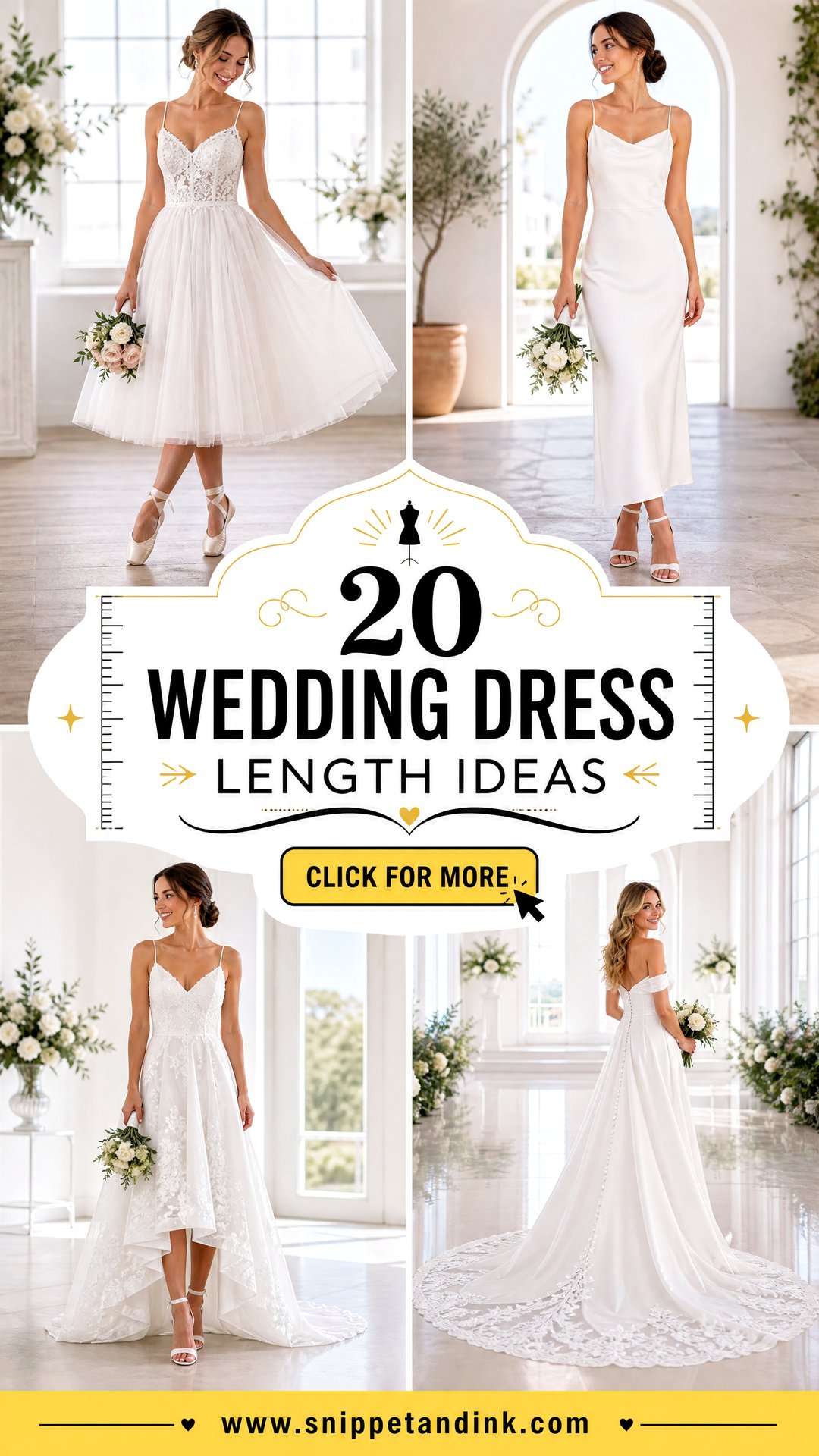
Measuring a Hem Against Your Own Legs
Length names like midi and tea are loose, and every label uses them differently. What matters is where the fabric ends on your body. The number boutiques and seamstresses use is the hollow-to-hem measurement: from the dip at the base of your throat straight down to where you want the hem, taken while you stand in your wedding shoes.
When I’m setting a short or mid-length hem, I look for the narrow points of the leg. Just above the knee, just below the knee where the calf starts, and above the ankle bone all tend to flatter. A hem that stops across the widest part of the calf makes most legs look heavier, whatever your height. Petite brides often look better a little shorter than the sample, and tall brides may find a midi lands closer to the knee than expected, so check before ordering, not after.
Heel height changes everything above the floor too. Two inches of heel lifts a floor-length front hem off the ground and shifts a midi up the calf, which is why the shoes need to be bought before the first fitting.
1. Micro Mini Wedding Dress
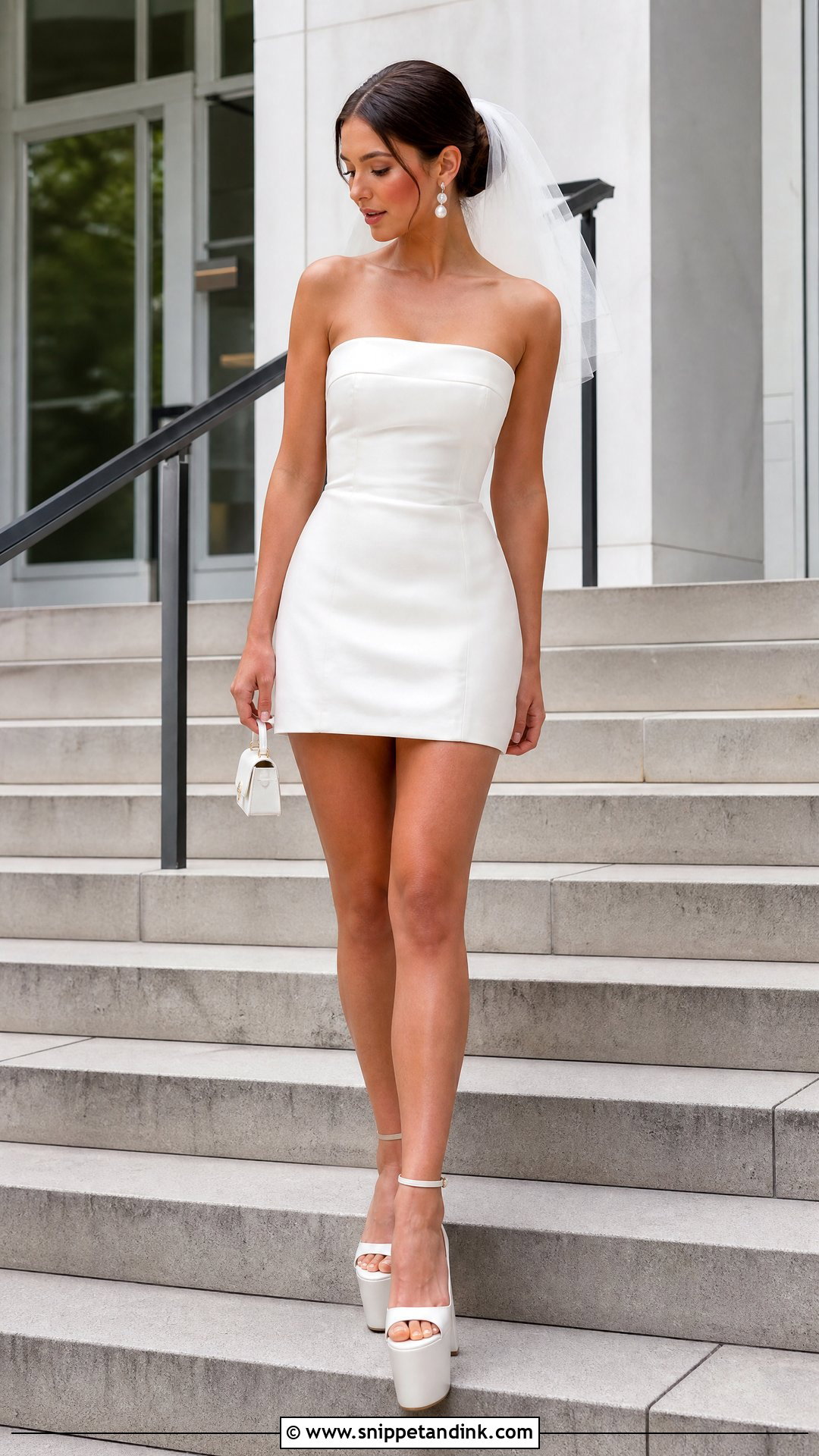
The micro mini is the shortest hem I’ll put on a bride, and it only works when the dress is properly structured. A fitted ivory bodice with a clean straight neckline and a skirt with a little flare keeps it from looking like a party dress. Sit down in it before you buy; a micro hem rides up a lot further when seated than standing, and that’s where most regret comes from. Pointed slingbacks or satin platforms balance the bare leg, with sheer tights in cold months. Pearl drops, a tiny top-handle bag and a shoulder-length tulle veil. A sleek low bun or polished ponytail. Courthouses, rooftops and lively receptions suit it.
2. Classic Mini Wedding Dress
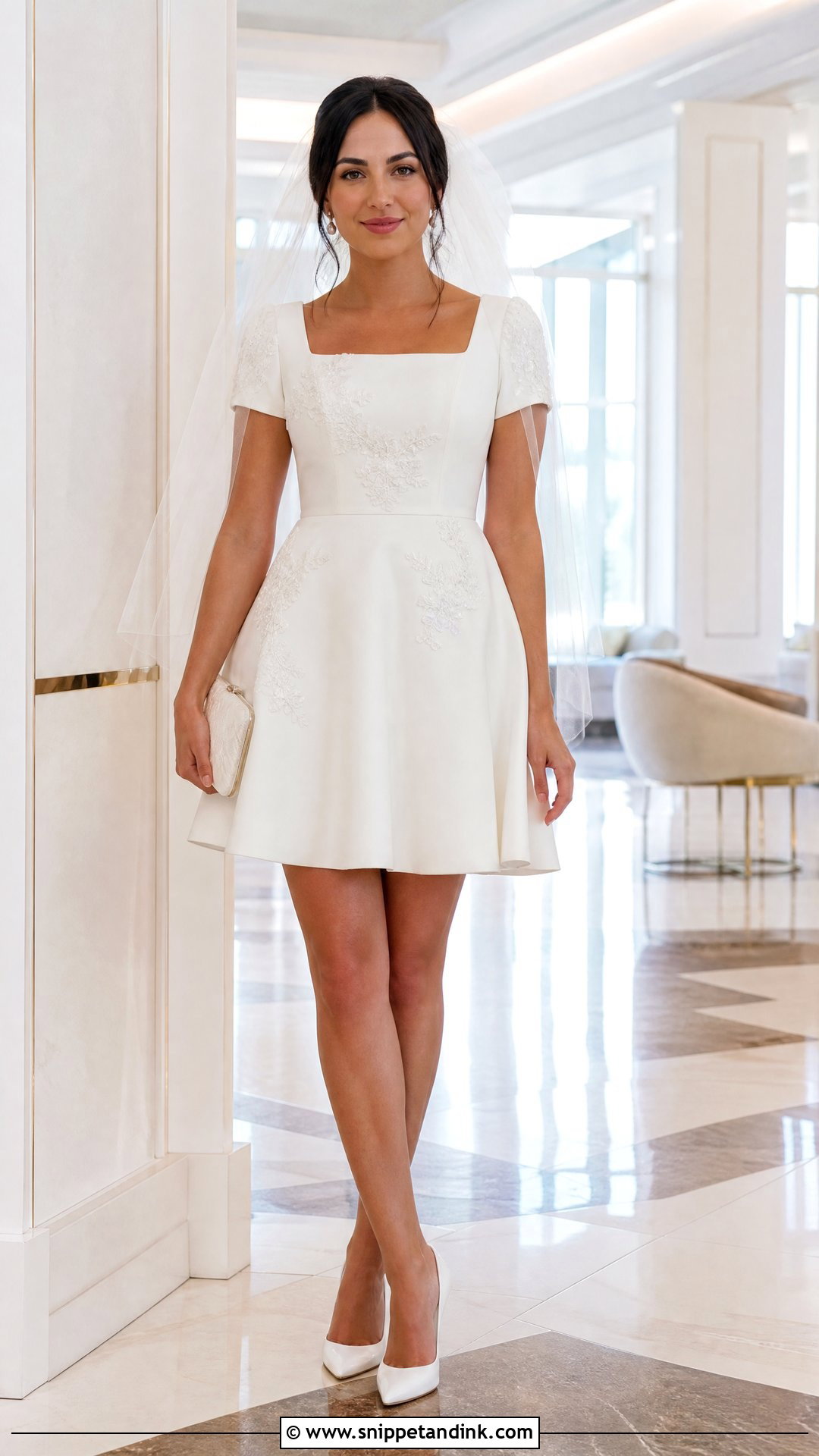
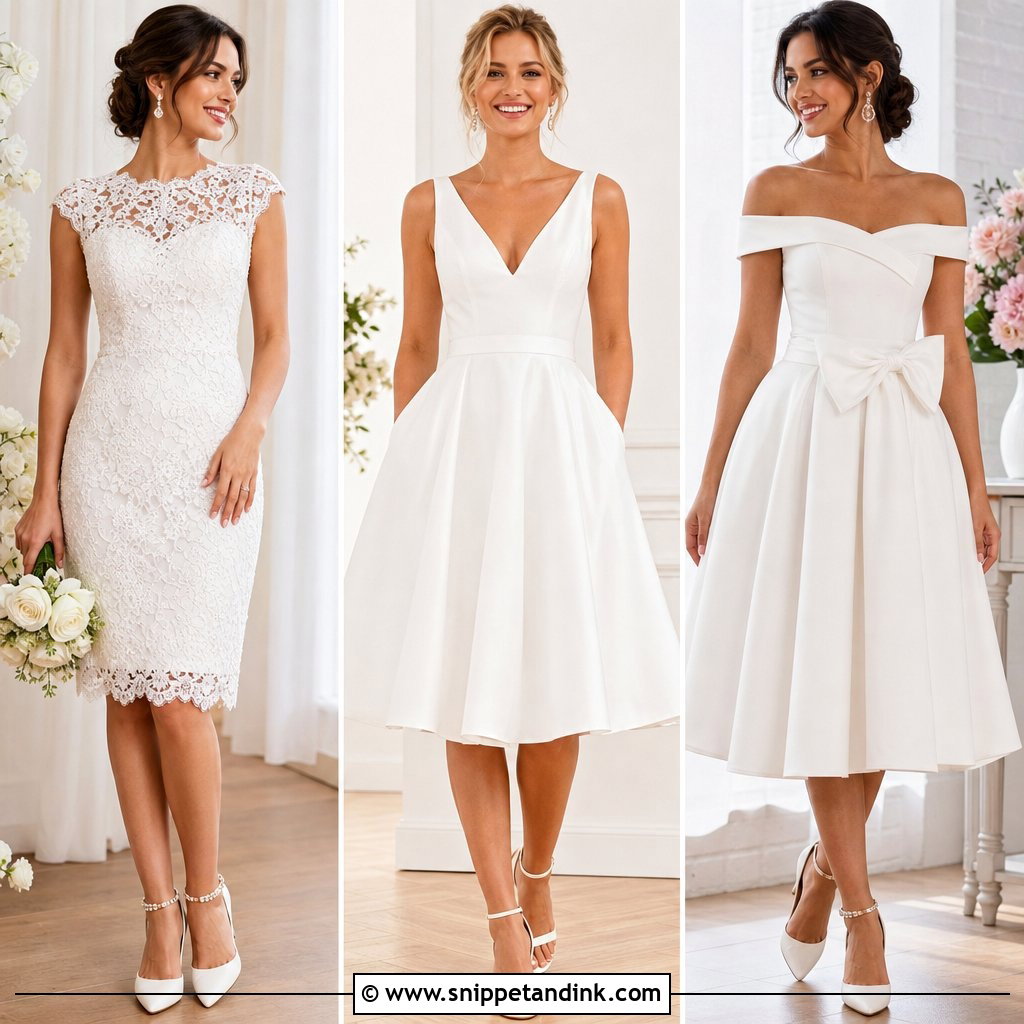
A classic mini sits several inches above the knee, and the bridal details are what stop it looking casual. Look for an A-line with lace appliqués, covered buttons or a satin bow, a square neckline and short sleeves. A fingertip veil against a short skirt is a contrast I love, though it does need a calm day outdoors. Closed-toe ivory pumps, pearl studs and a structured clutch. If a veil feels too much, a padded headband or small hair bow does the same job with less fuss. City weddings and small ceremonies suit it best.
3. Above Knee Wedding Dress
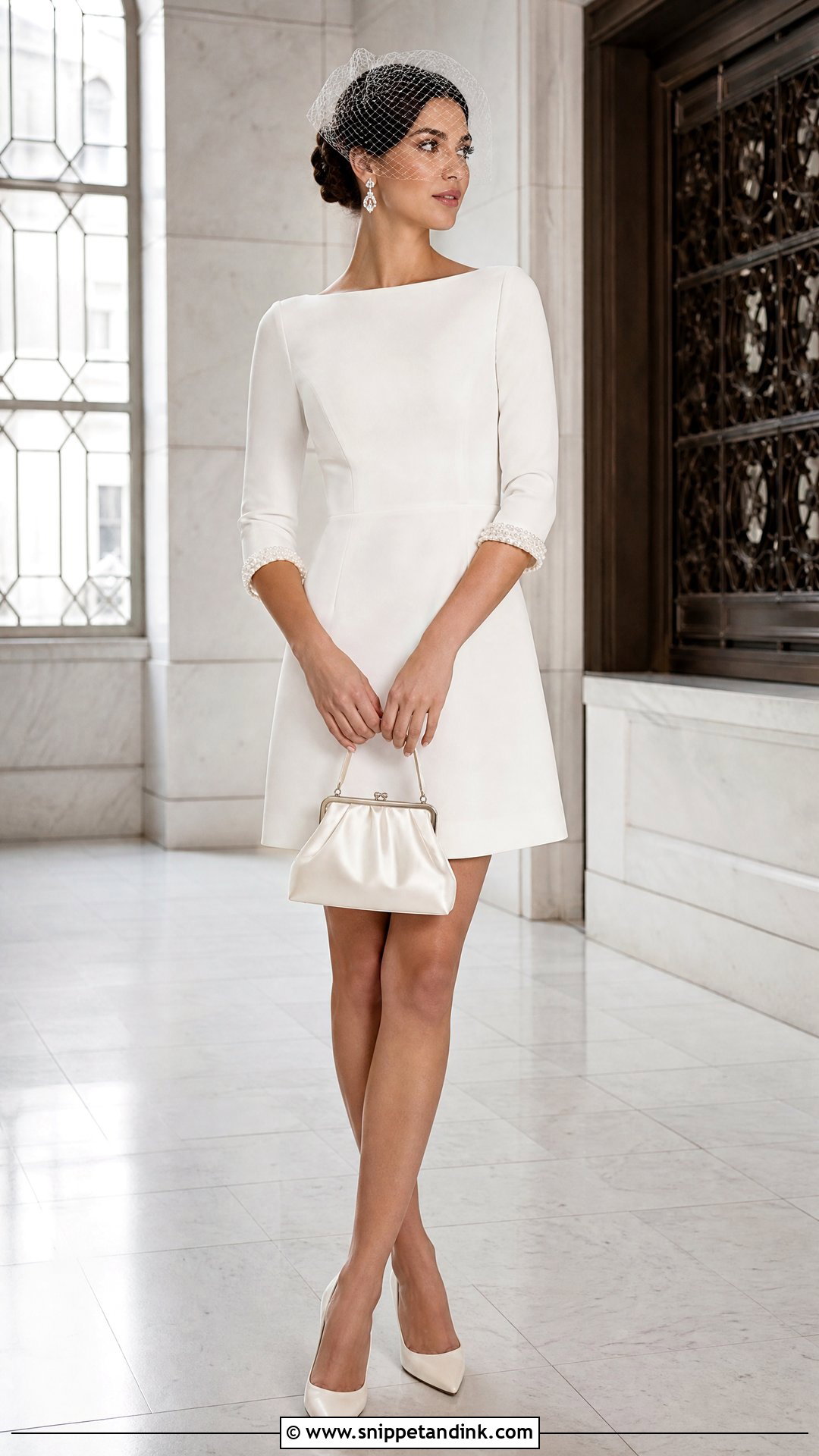
Just above the knee gives a bit more coverage than a mini and is much easier to sit in. A fitted sheath with a clean boat neckline, three-quarter sleeves and a little pearl detail at the cuffs keeps it grown-up. A low or medium pointed pump lengthens the leg. A slim bracelet, small crystal earrings and a compact satin bag. A birdcage veil leans vintage; a shoulder-length one is softer. I steer brides here when they want short but will be getting in and out of cars, sitting on low chairs and dancing, since the hem stays put.
4. Knee Length Wedding Dress
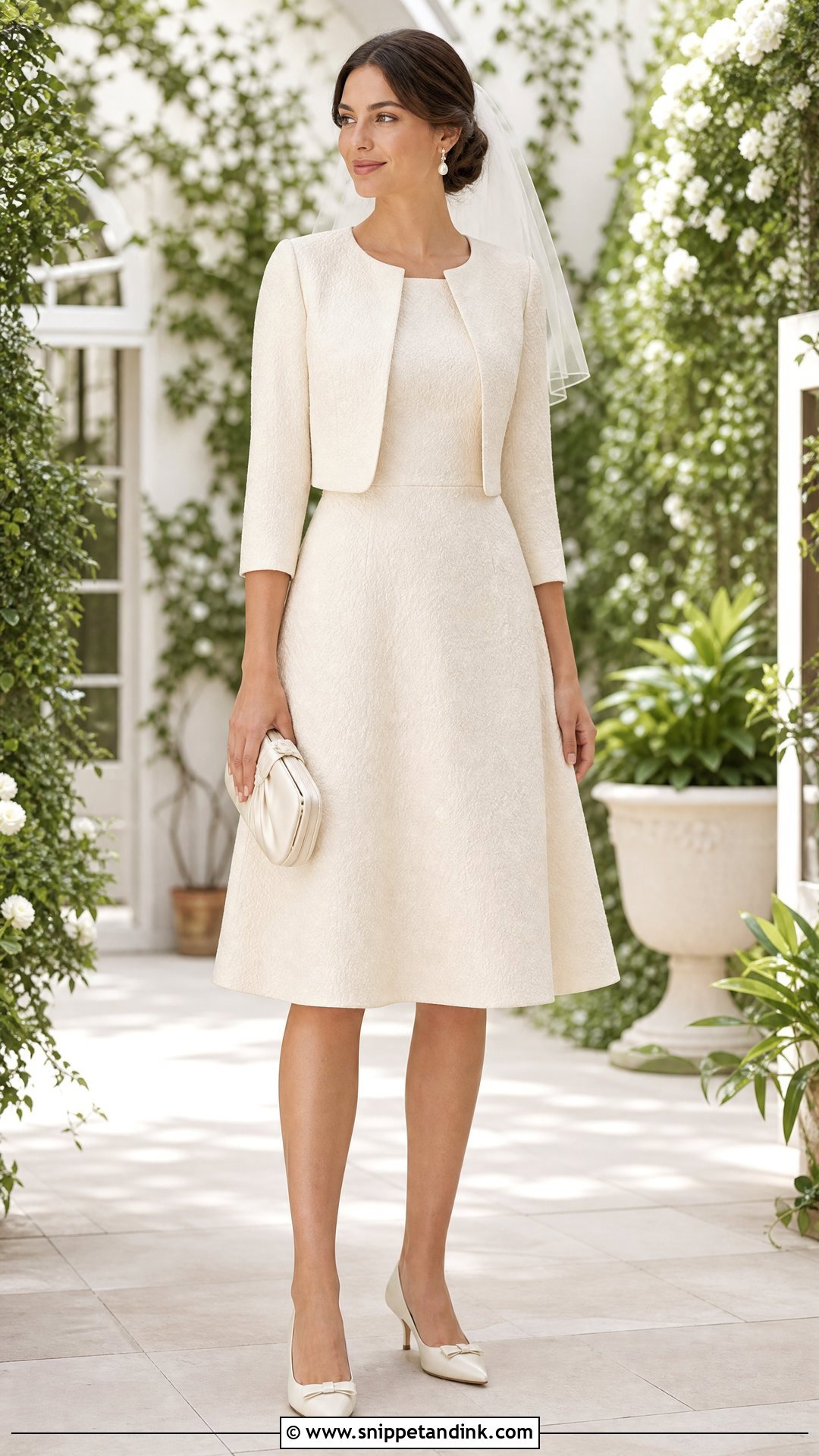
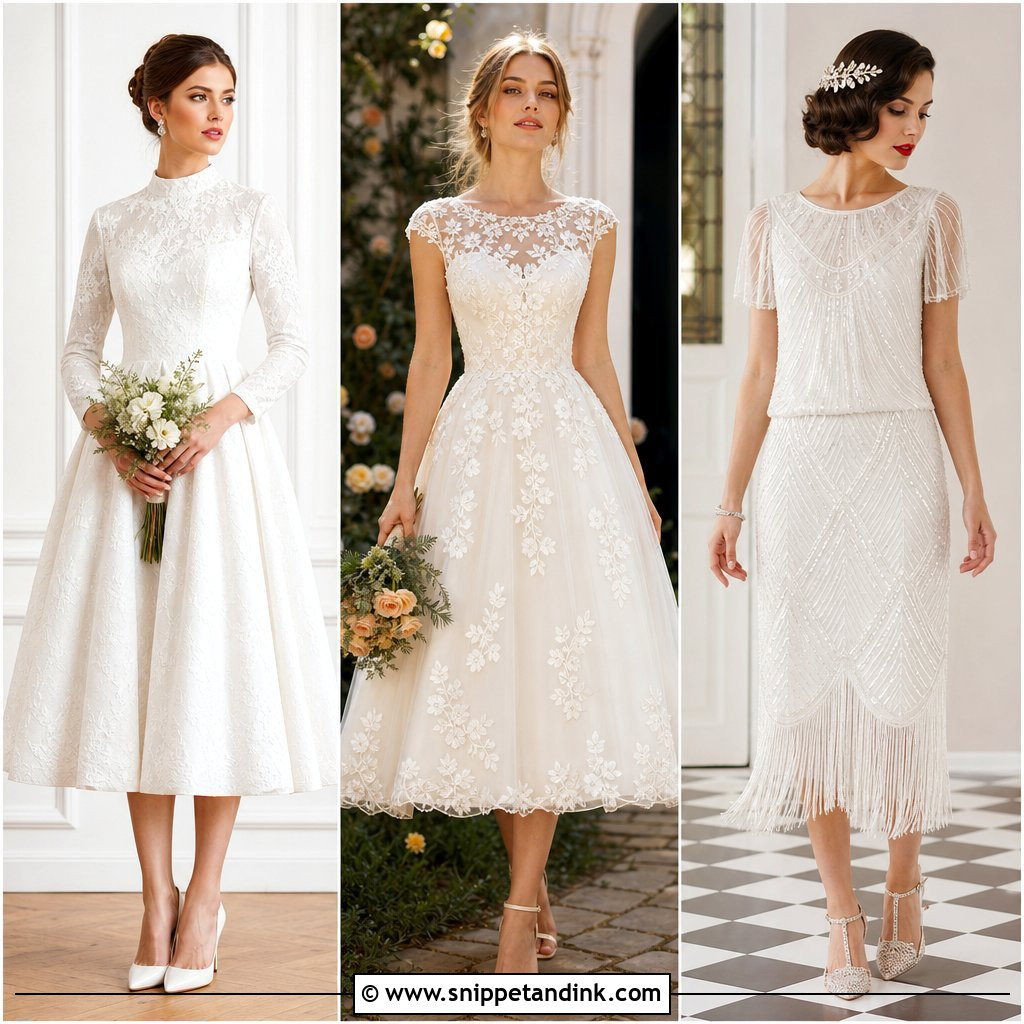
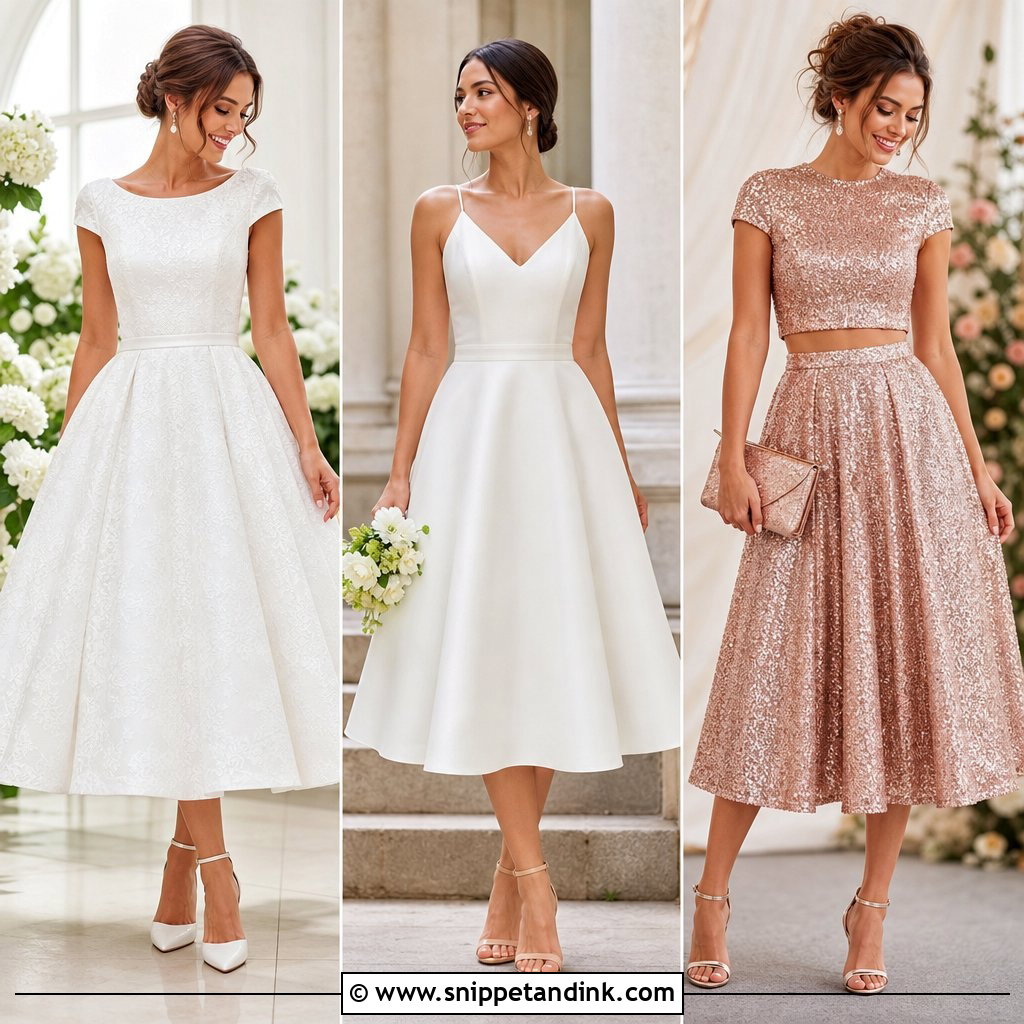
Knee length is the most adaptable short hem, because it reads as properly dressed at almost any daytime wedding. The hem should hit the center of the knee on a fit-and-flare with a defined waist and lightly structured bodice. Heavier fabric, lace, brocade, or textured jacquard, makes the shorter shape feel ceremonial instead of cocktail. Pointed kitten heels, a small bouquet and a pearl-trimmed clutch. A cropped bridal jacket covers the shoulders without hiding the waist. A neat chignon and a short veil. Stairs, lawns and busy walkways are no problem at this length.
5. High Low Wedding Dress
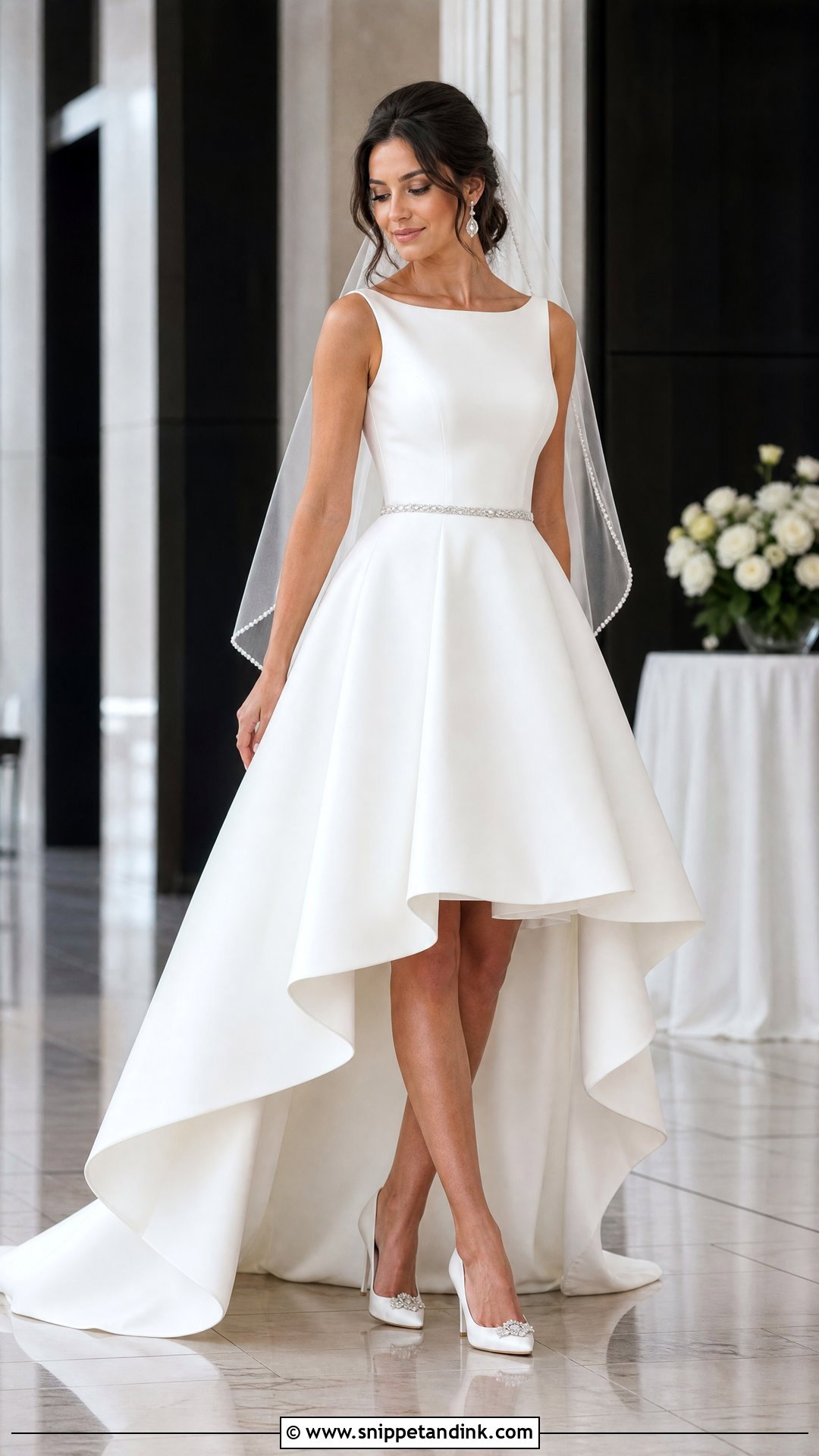
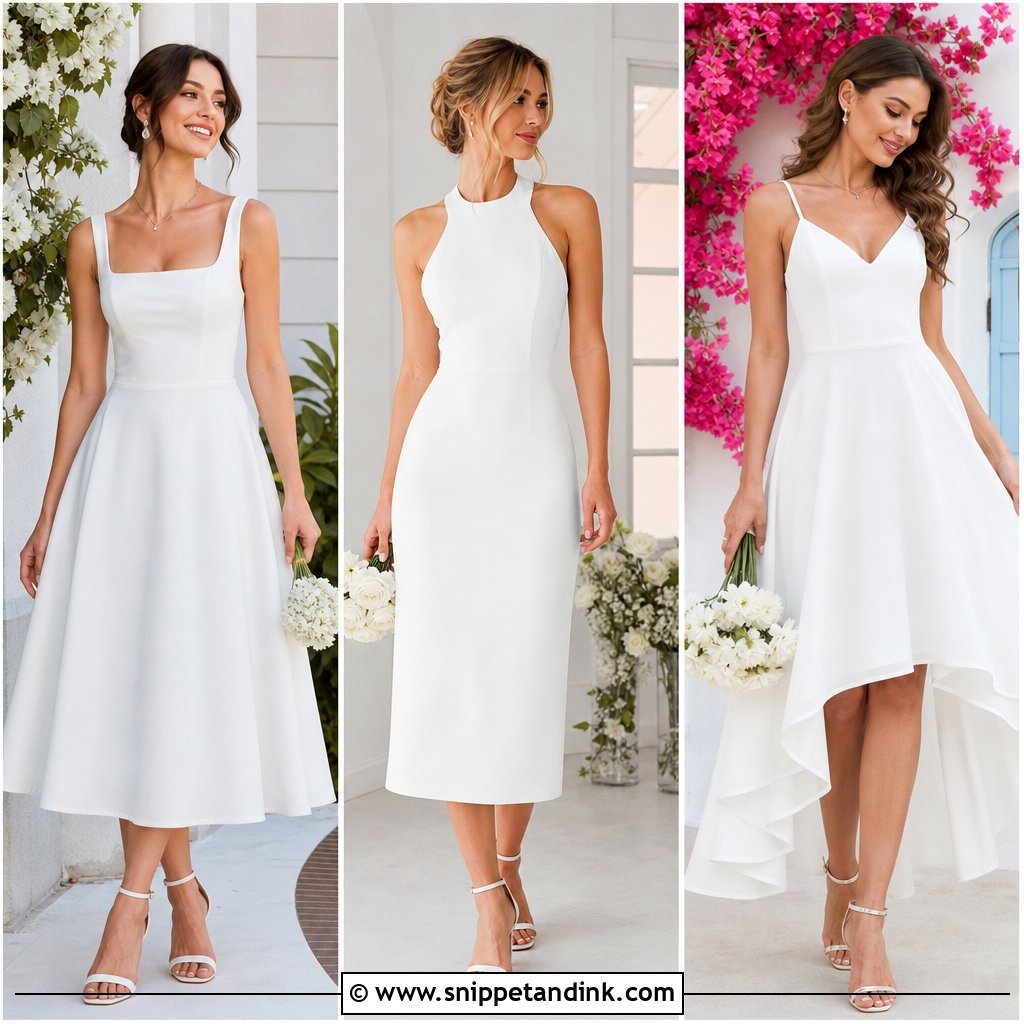
High-low hems are cut short at the front and long behind, so the shoes become a headline. On an ivory mikado gown, the stiff fabric holds the curve of the hem cleanly; in chiffon the same cut flutters and can look unfinished. The hem should drop smoothly from around the knee toward the ankle or floor. Embellished pumps, pearl sandals or satin ankle-straps. A slim crystal belt if the waist needs definition. A medium veil, drop earrings and a structured bag. Leave the big necklace at home; the skirt is the feature from every side.
6. Midi Wedding Dress
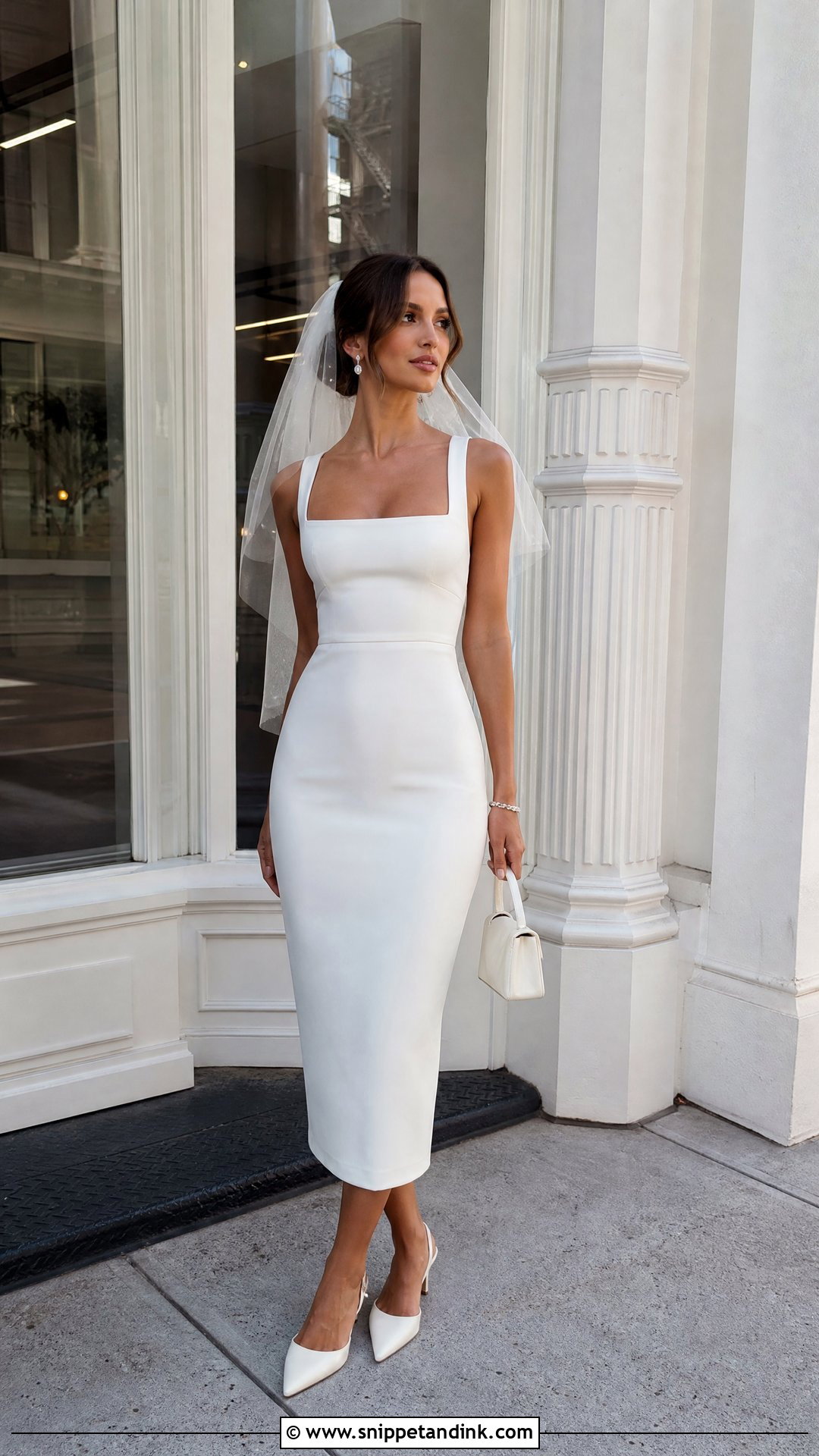
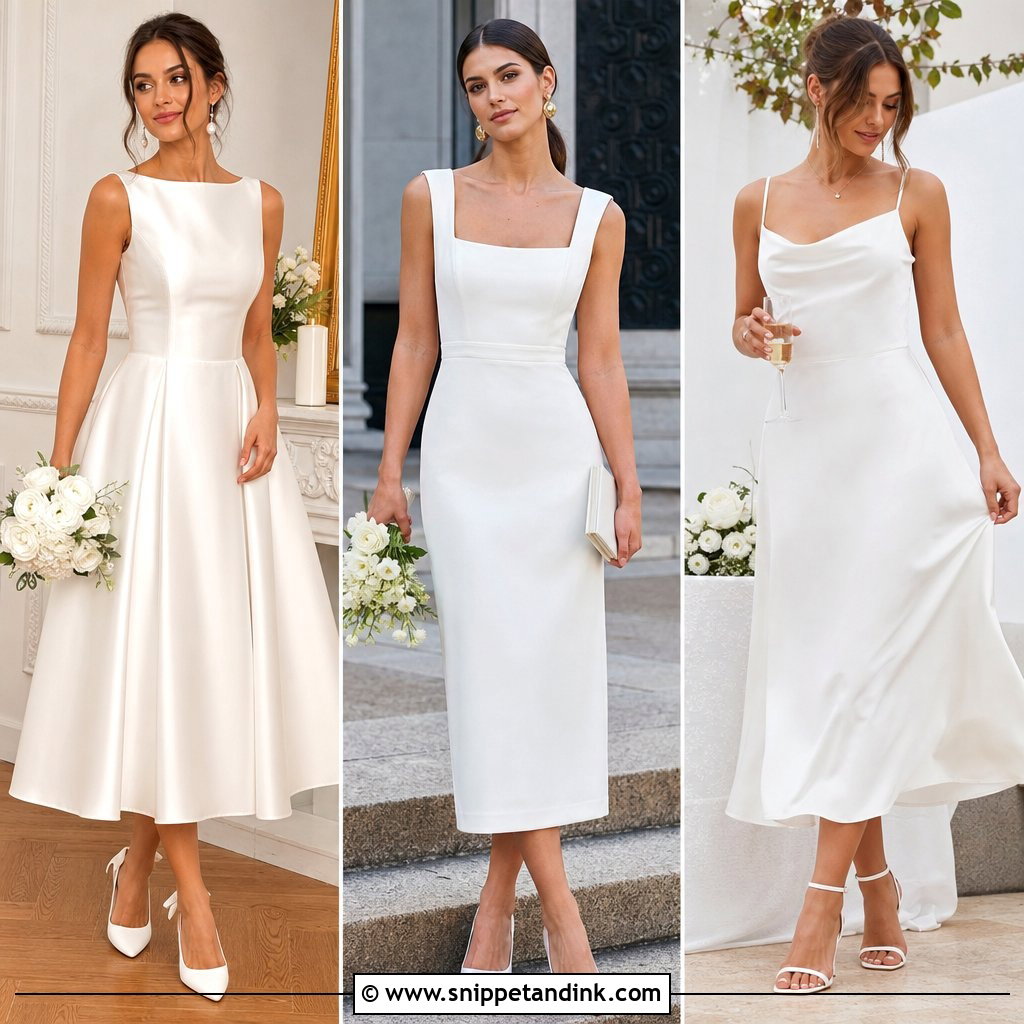
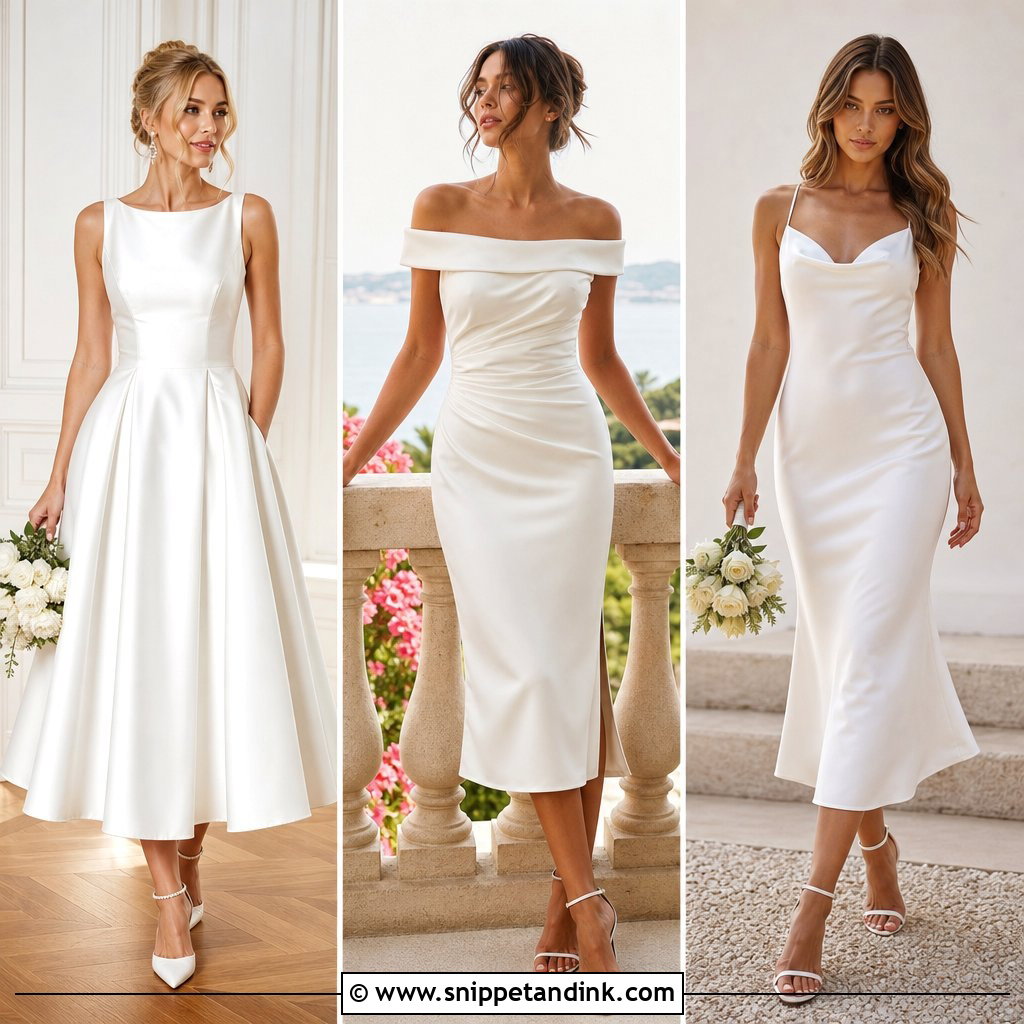
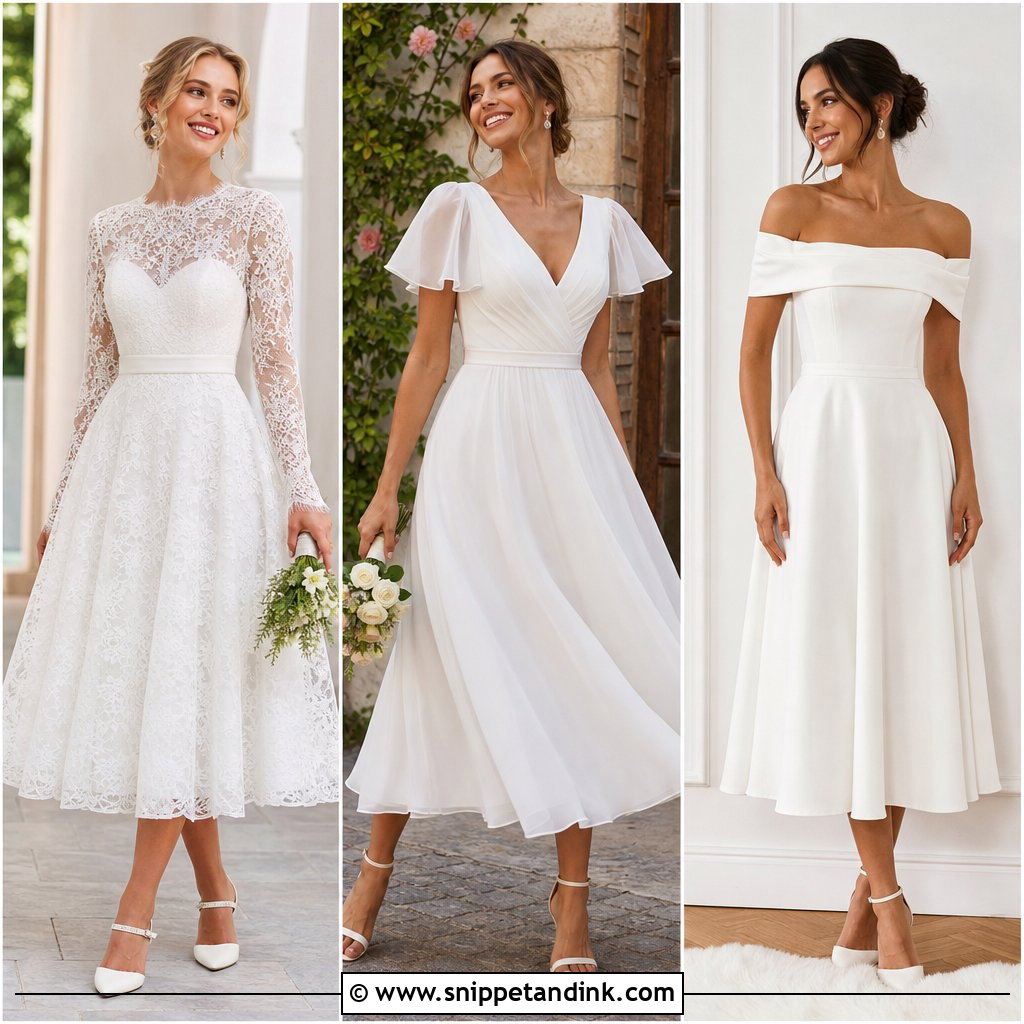
Midi hems fall between knee and ankle, and where exactly matters. On shorter brides a mid-calf hem can cut the leg at its widest point, so I usually move it a touch higher or lower. A fitted crepe midi with a square neckline, supportive straps and a back slit you can actually walk in is a good base. Pointed ivory pumps or metallic slingbacks and a small structured bag. Pearl hoops, a smooth low bun and a fingertip veil or sheer cape ending near the hem. Go to every alteration in your wedding shoes so the hem lands deliberately.
7. Tea Length Wedding Dress
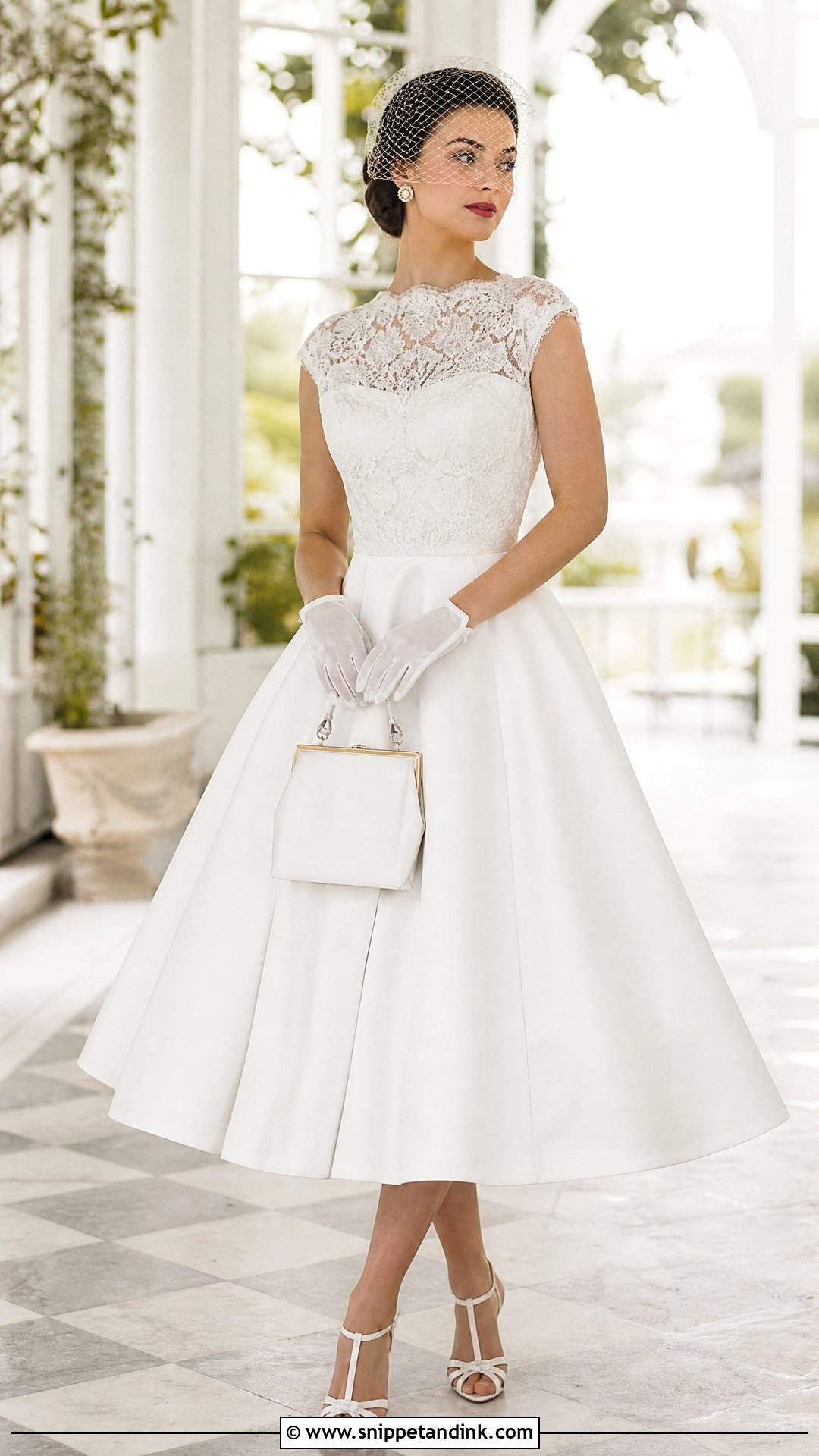
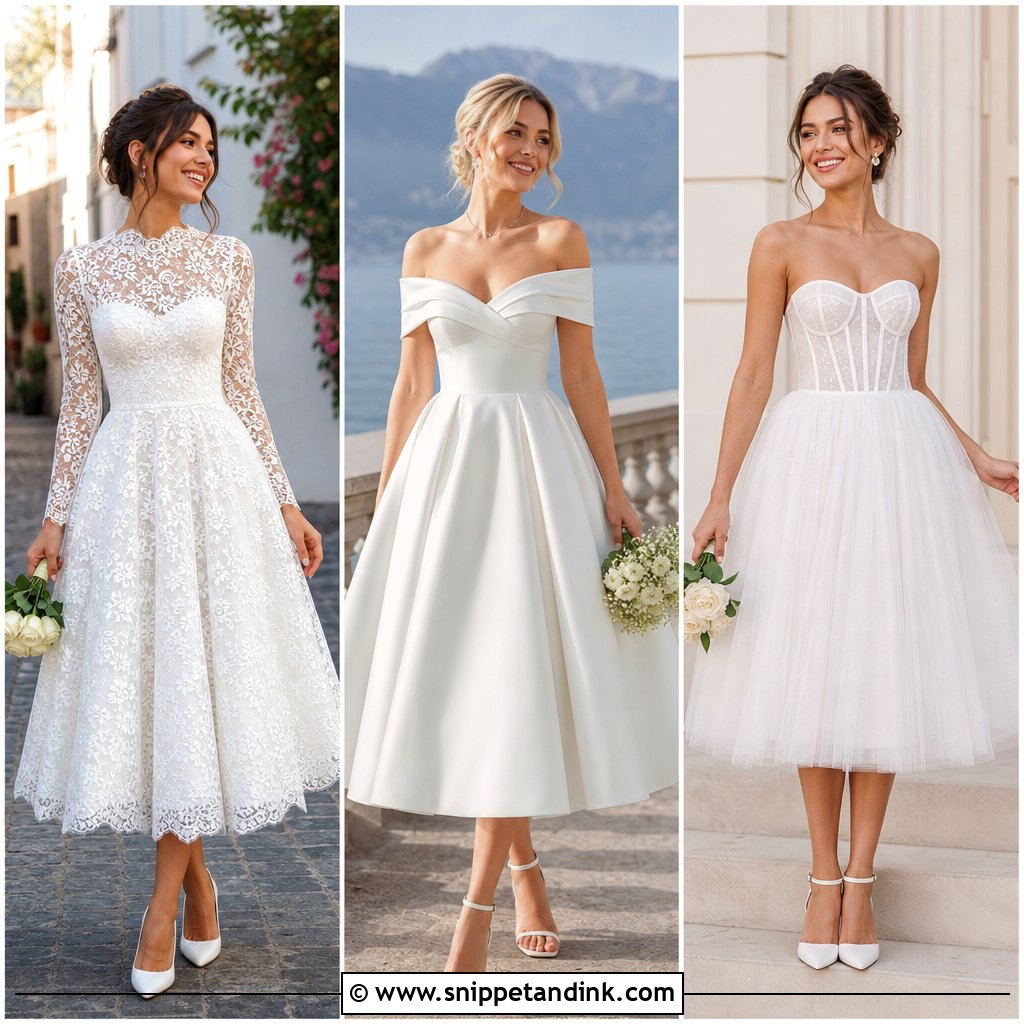
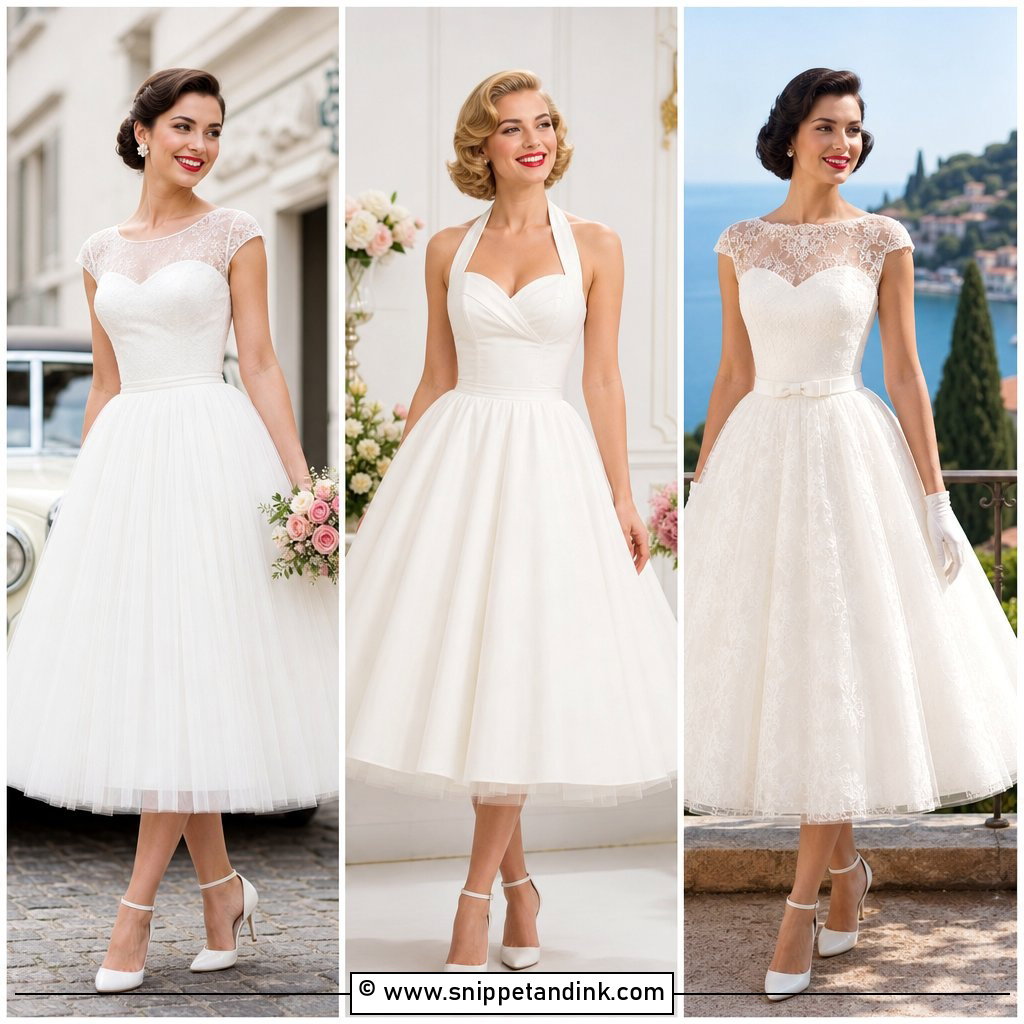
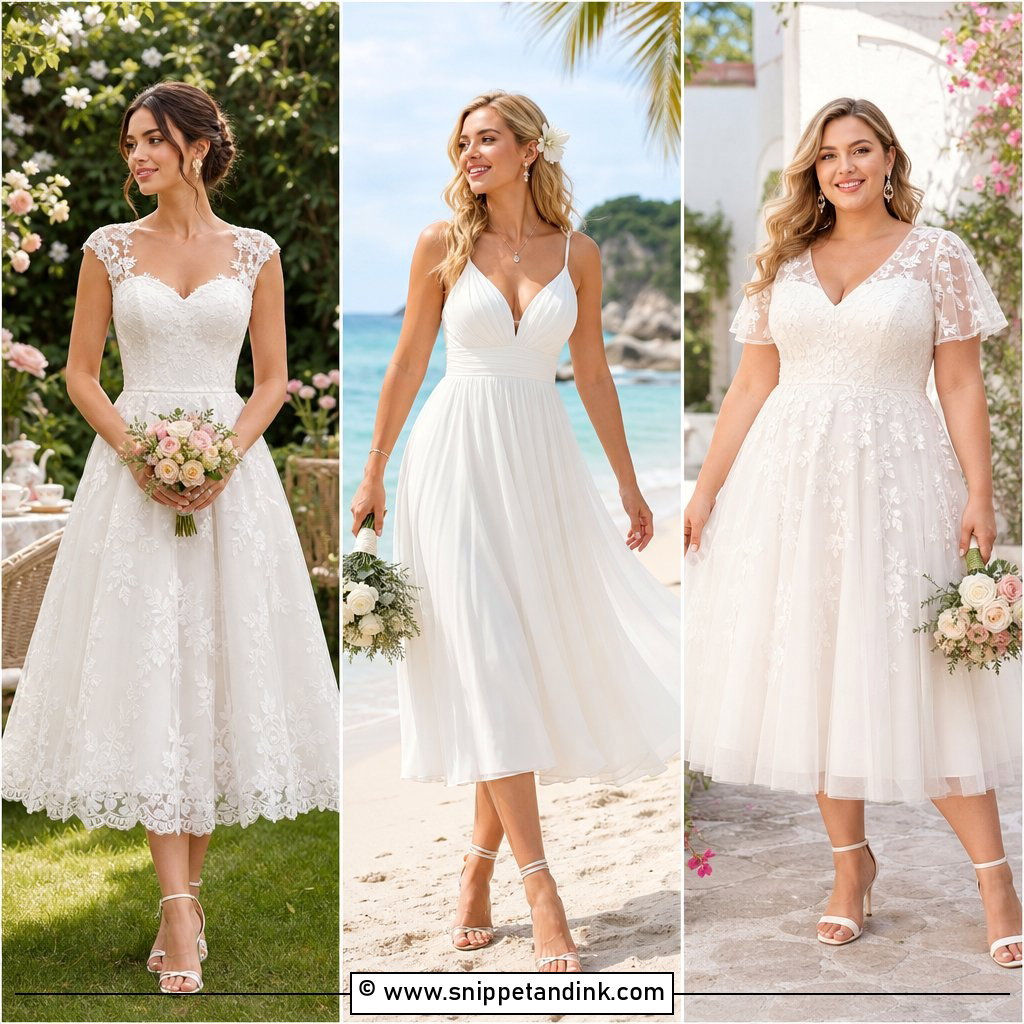
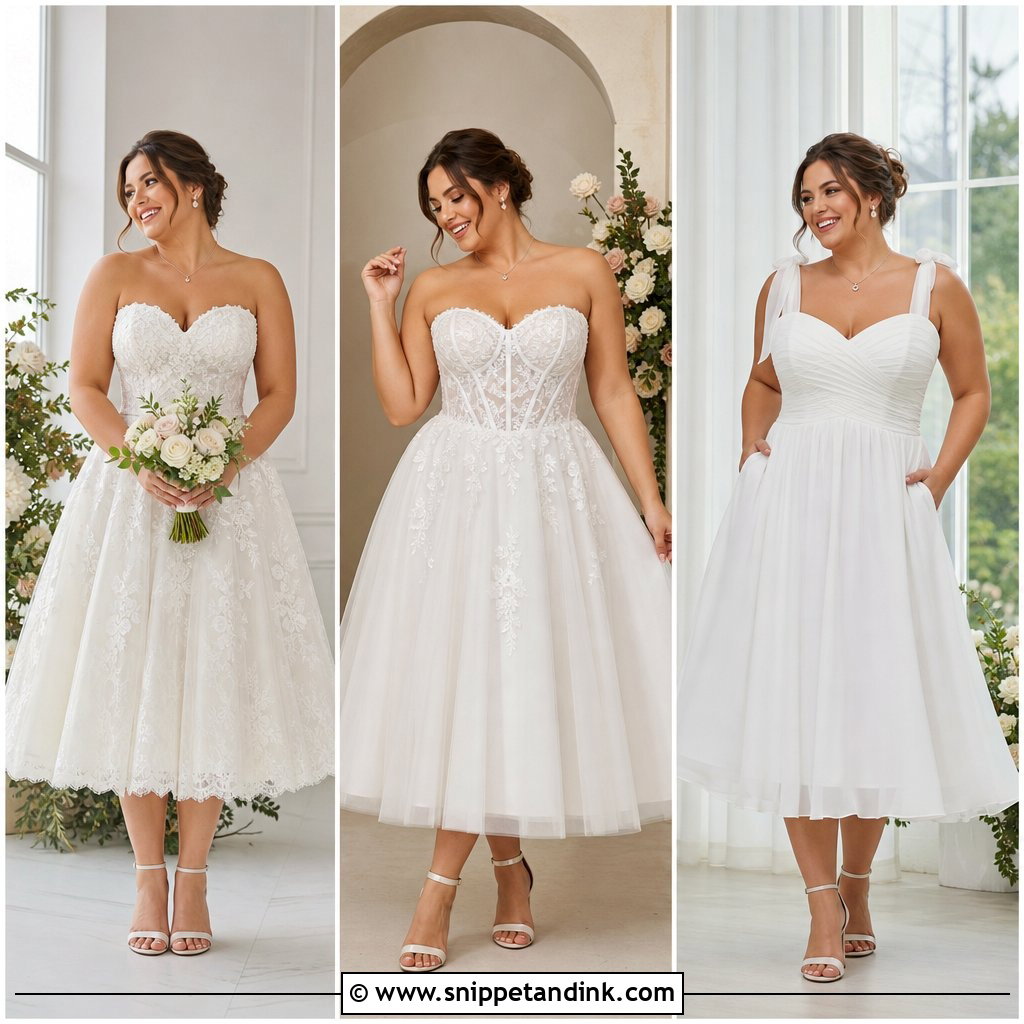
Tea length usually ends around the lower calf, with a full skirt that swings as you walk. A fitted lace or satin bodice over that skirt is the classic shape. Pointed pumps, T-straps or embellished slingbacks all suit it, and it’s one of the few lengths where short gloves look right. A birdcage veil makes it clearly retro; a simple fingertip veil keeps it current. If the skirt has real volume, pair it with a fitted jacket, not a loose wrap that adds width. Garden paths, restaurant receptions and long dance sets suit it well.
8. Ballerina Length Wedding Dress
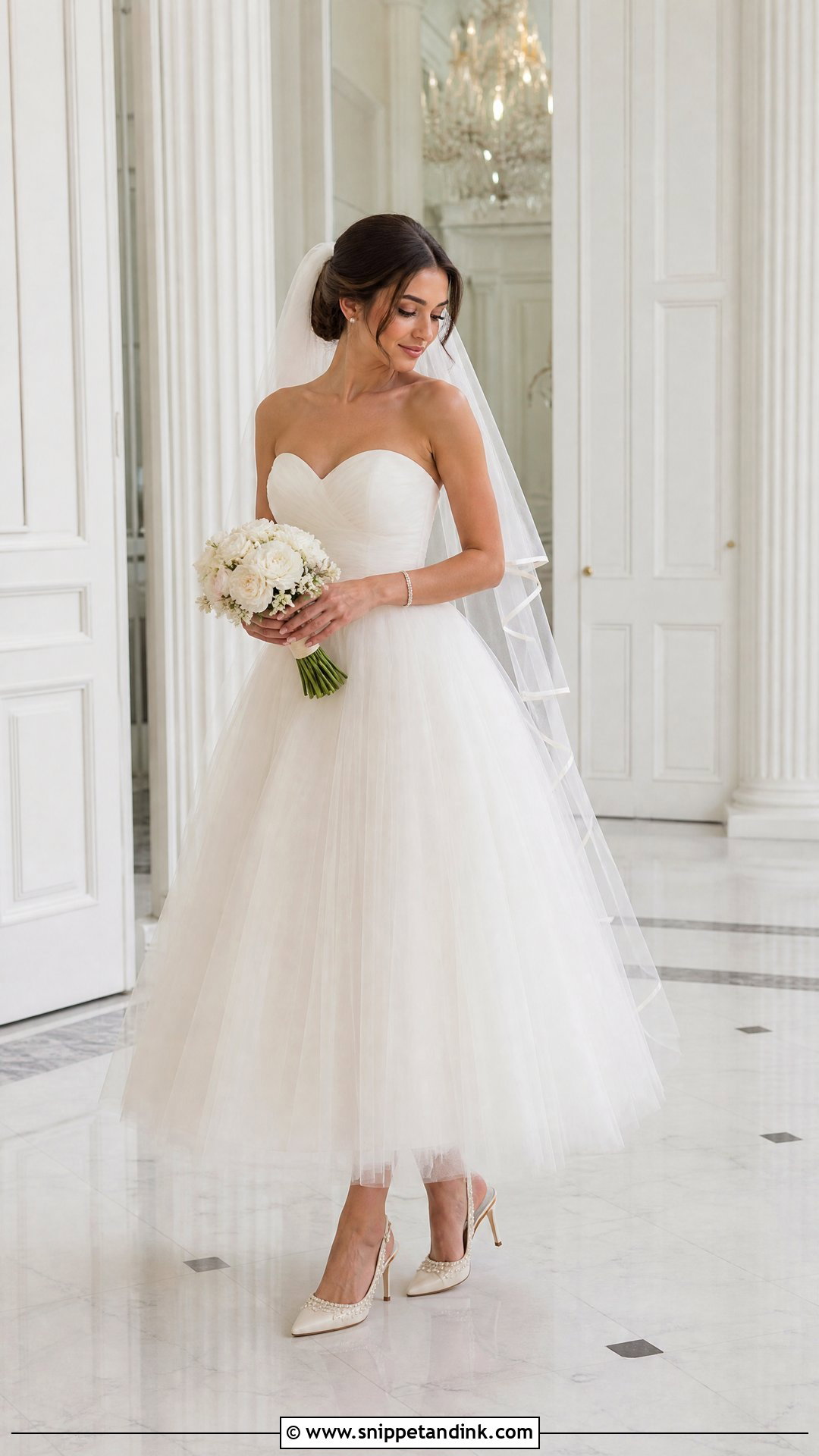
A ballerina length wedding dress sits around the lower calf with soft tulle layers that move without puffing out too far. The trick is hem placement: I ask the seamstress to set it where the calf starts narrowing toward the ankle, which flatters most heights. A scoop, sweetheart or off-the-shoulder neckline. Satin slingbacks, pointed kitten heels or flats with pearl detail. A thin bracelet, small earrings and a ribbon-trimmed veil, with a compact bouquet. Too much tulle at this length tips it toward costume, so keep the layers soft.
9. Ankle Length Wedding Dress
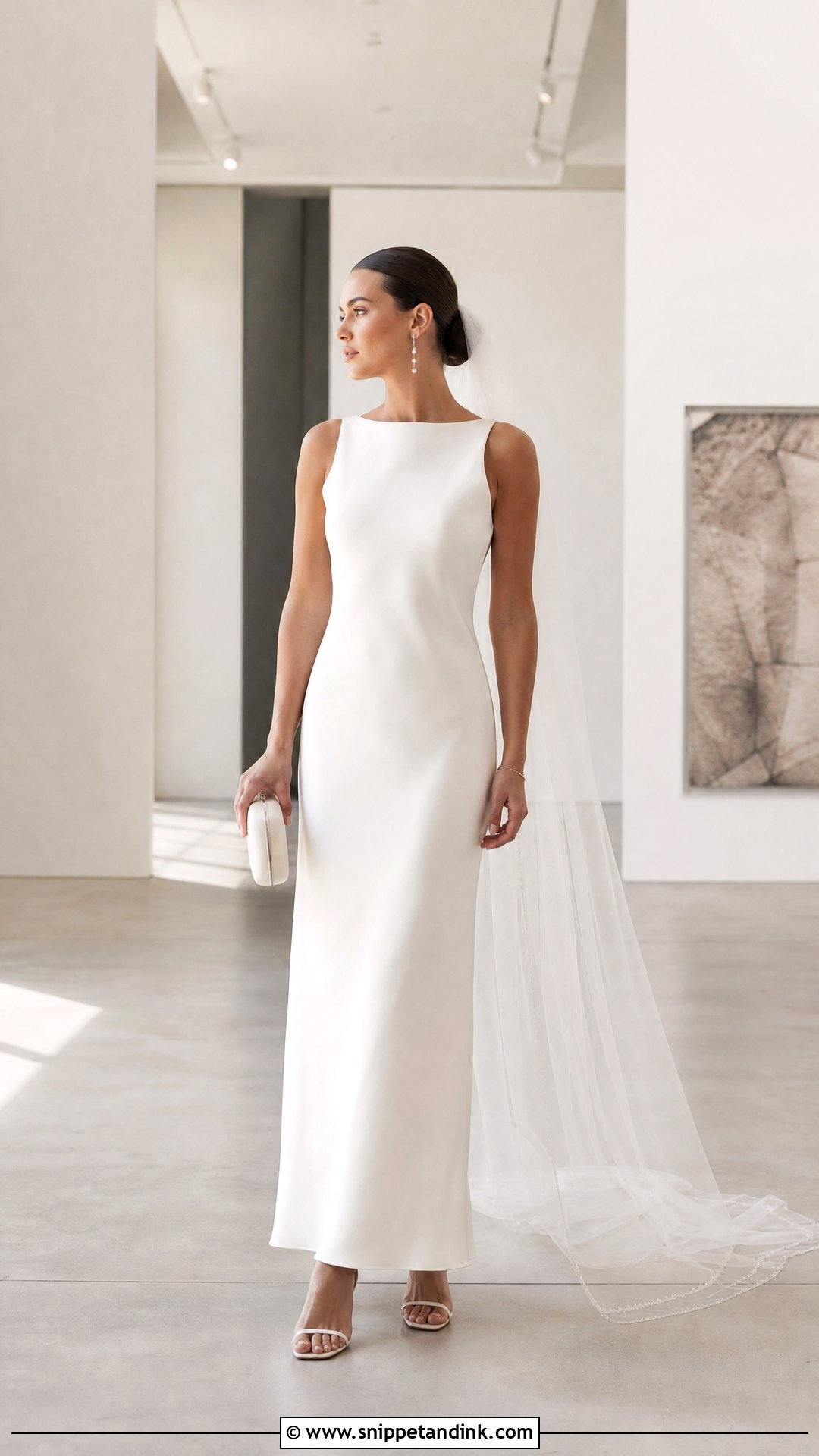
An ankle-length satin column shows the whole shoe and still looks formal. The fabric has to be fluid and the cut precise, since a column can’t hide a hem that’s off by a centimeter. Pointed pumps, delicate mules or minimal sandals in ivory, silver or soft gold. Long drops and a sleek clutch, nothing else. A floor-length veil running past the hem creates a lovely contrast; a shoulder-length one keeps the line short and clean. Galleries, modern hotels and destination weddings suit it, and the hem stays out of puddles and dust.
10. High Ankle Wedding Dress
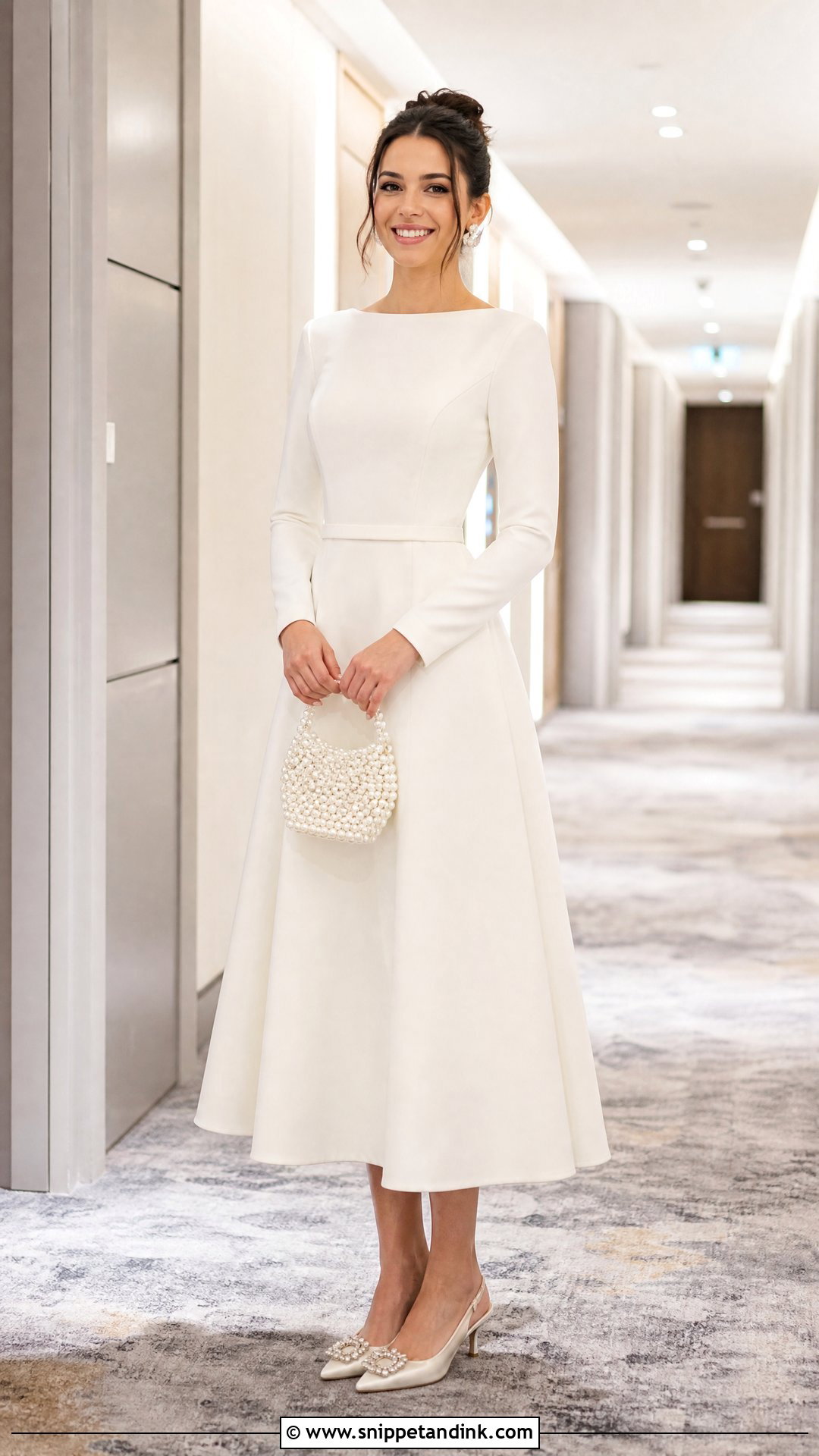
Would you prefer the elegance of a long gown without completely covering your footwear? A high-ankle hem ends just above the ankle bone, longer than a midi but far easier to manage than a floor-skimming skirt. An A-line in crepe or lightweight satin with a softly defined waist and no train. Embellished pumps or slingbacks worth seeing. A small pearl bag, sculptural earrings and a neat updo, with a narrow belt for more waist. It takes a lace topper, fitted long sleeves or a cropped cape well. Have the hem checked from all sides, because an uneven line is obvious at this length.
11. Maxi Wedding Dress
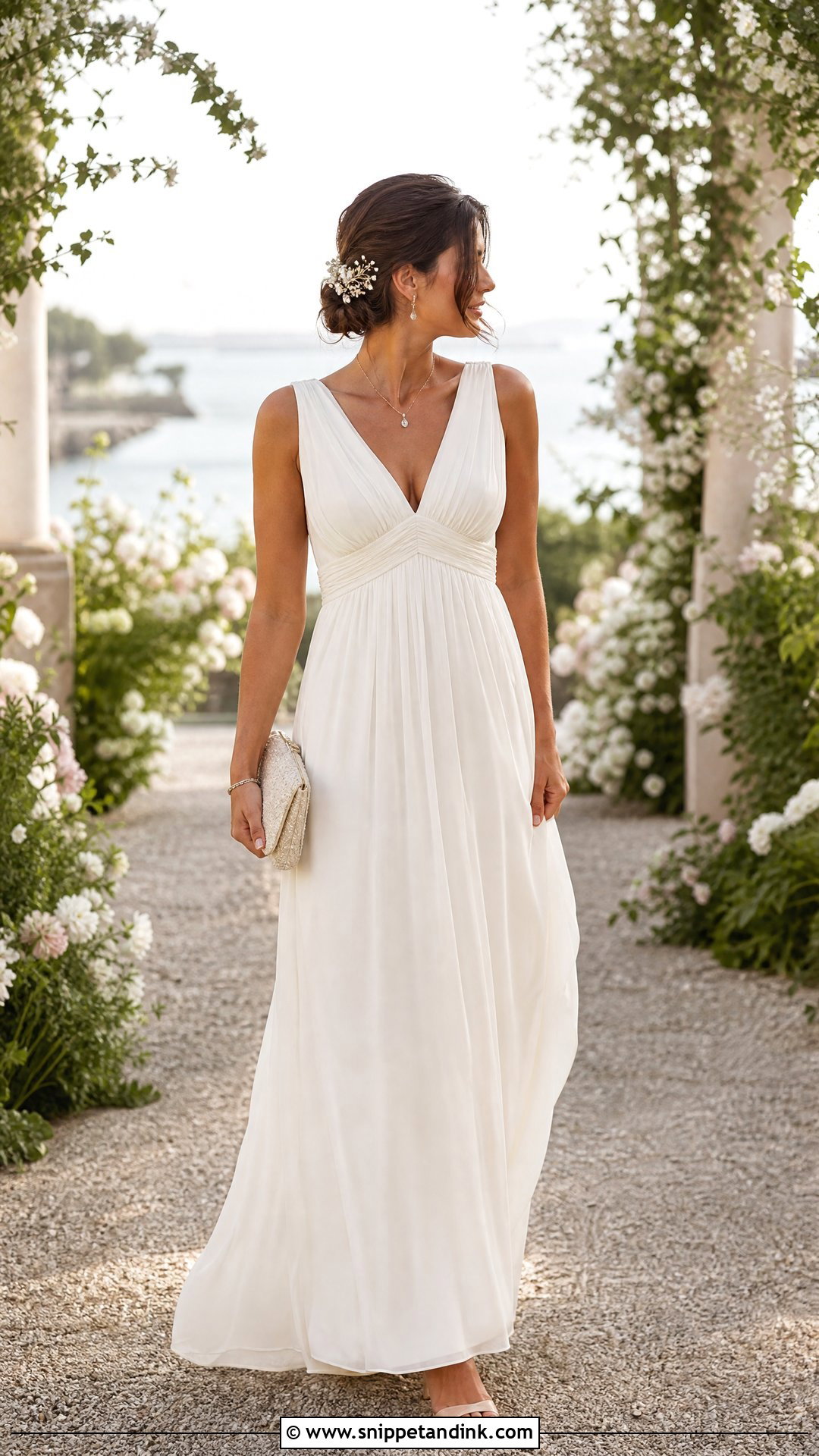
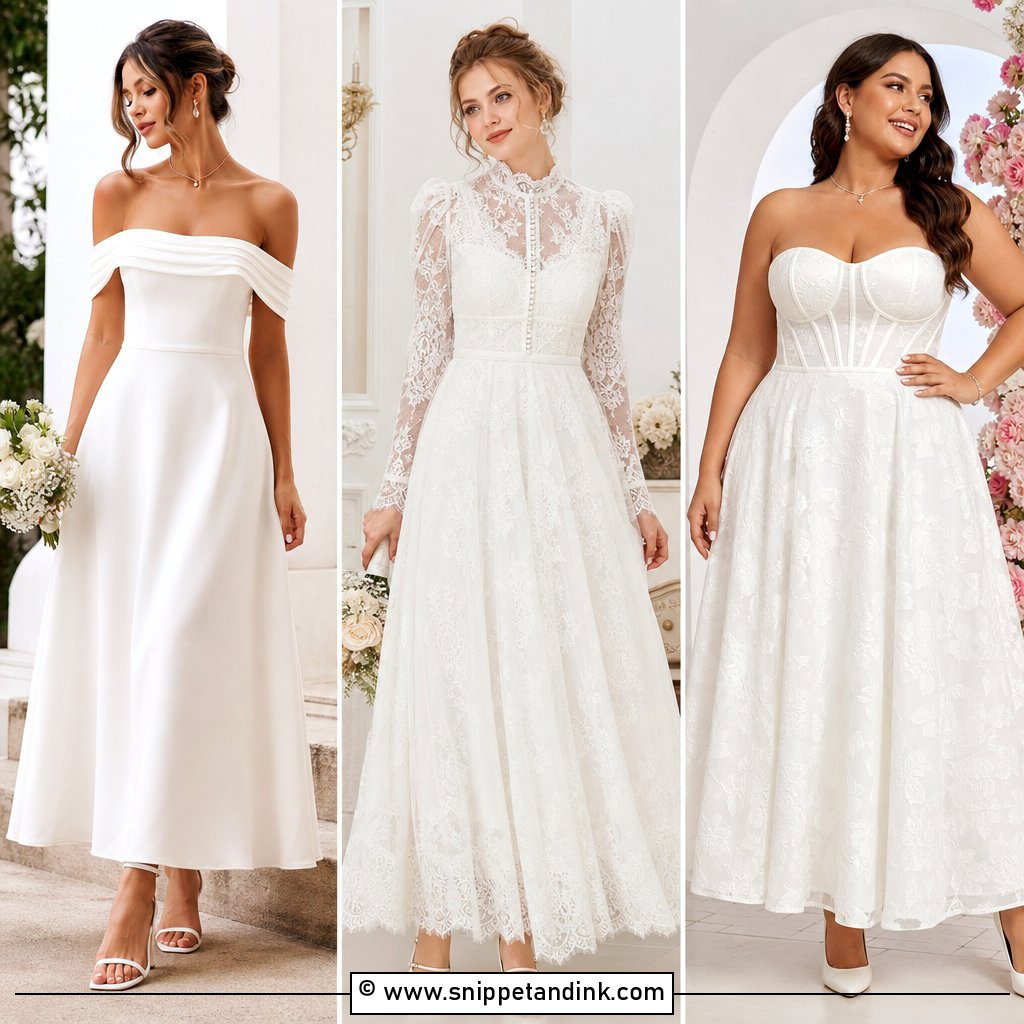
Maxi dresses reach the ankle or floor but keep a soft, relaxed shape. Chiffon or silk with an empire waist, flowing skirt and gentle V-neck is the usual cut, ideal for outdoor heat. The skirt should skim the feet, not pool around them; extra length here just looks too big and collects grass. Block-heel sandals or refined flats. A delicate pendant, small earrings and a loose low bun. Instead of a heavy veil, a sheer chapel-length one, a floral comb or a simple ribbon. A small clutch for the reception.
12. Floor Length Wedding Dress
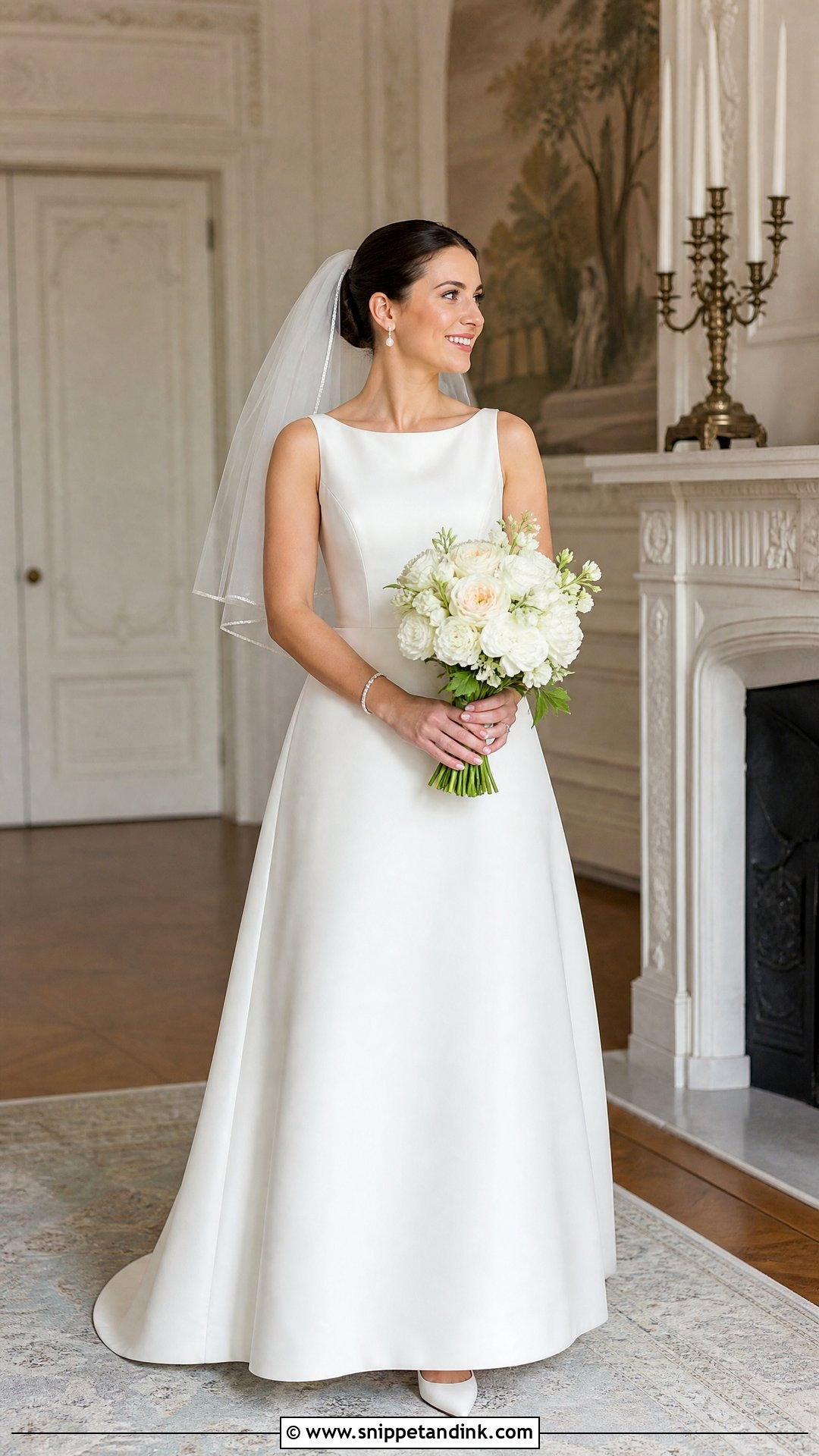
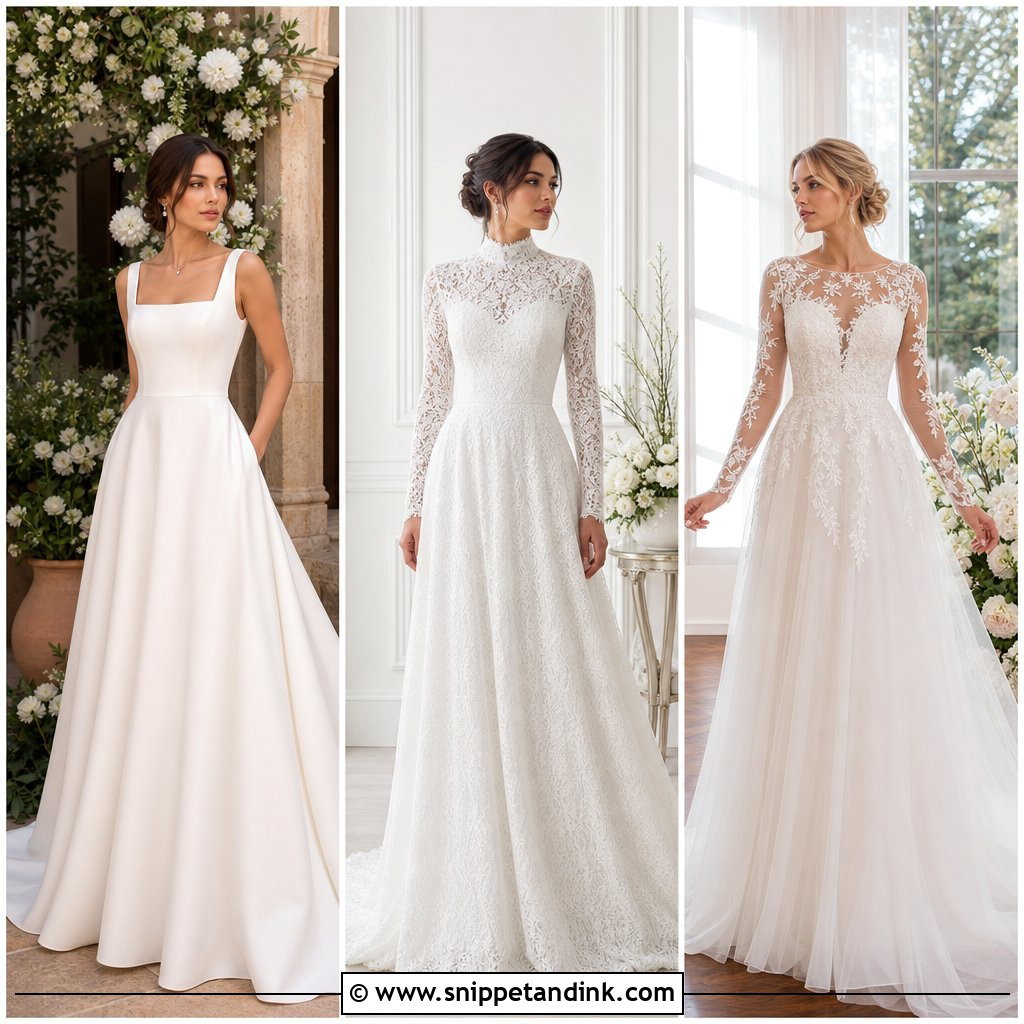
Floor length is the hem most people picture, and it takes the most precise tailoring. On a structured A-line, the front hem should just clear the floor in your shoes so you don’t step on it walking forward. Bring the exact shoes or the same heel height to every fitting. Classic pumps, pearl earrings and a medium-length veil. A tennis bracelet or delicate pendant adds light. Skip the necklace if the neckline is detailed and wear an updo instead. Ballrooms, estates, hotels and formal outdoor settings all suit it.
13. Floor Length Wedding Dress With Sweep Train
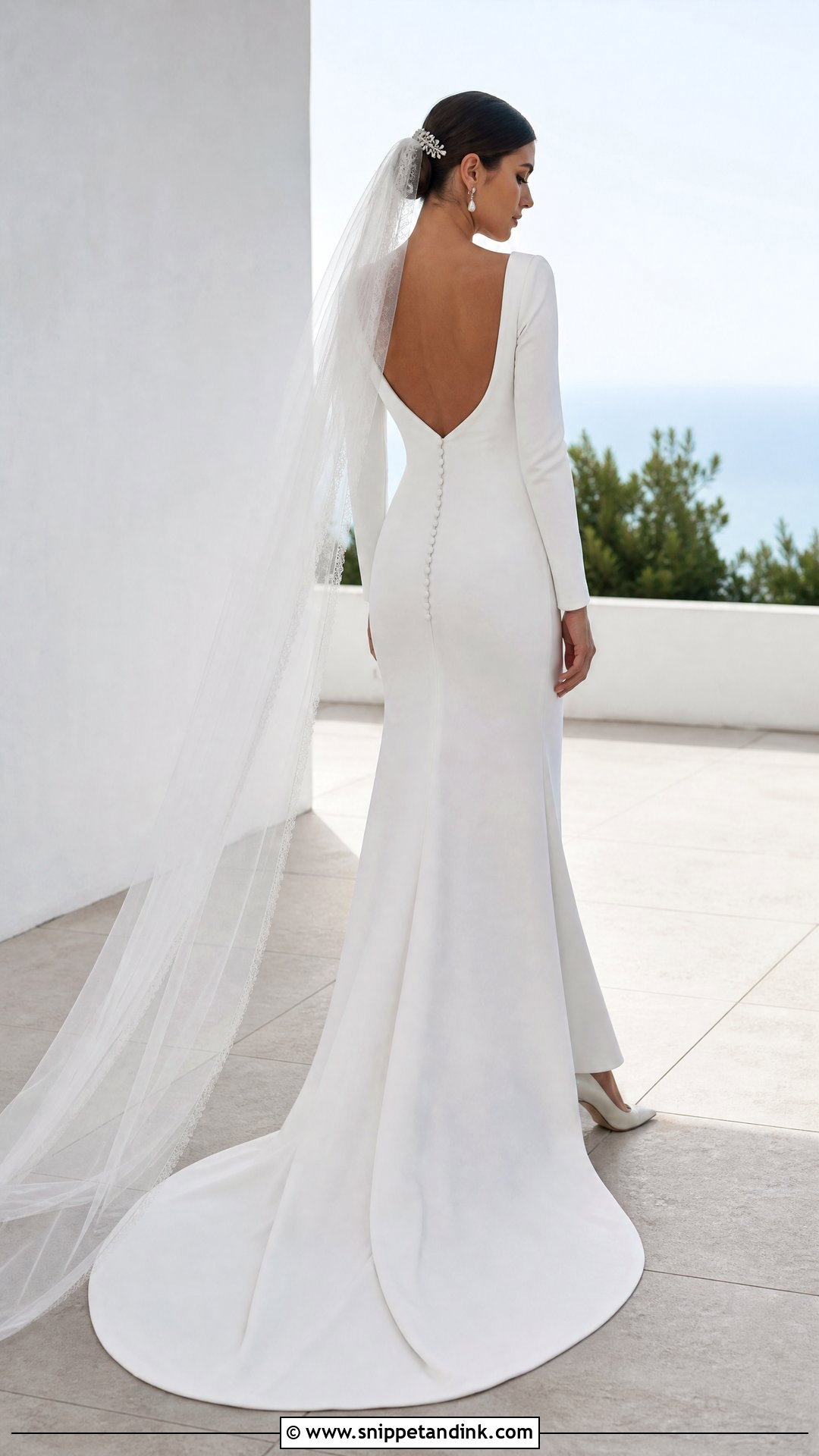
A sweep train barely extends past the hem, giving a little movement behind you without much to manage. On a crepe fit-and-flare with a low back, covered buttons and clean seams, it’s the length I recommend most to brides marrying outdoors. Pointed pumps, pearl drops and a narrow cathedral veil for extra ceremony drama. Take the veil off for the reception and add a sparkling comb. A slim clutch. Many sweep trains need no bustle at all, or just a single hook, so there’s little to go wrong.
14. Floor Length Wedding Dress With Court Train
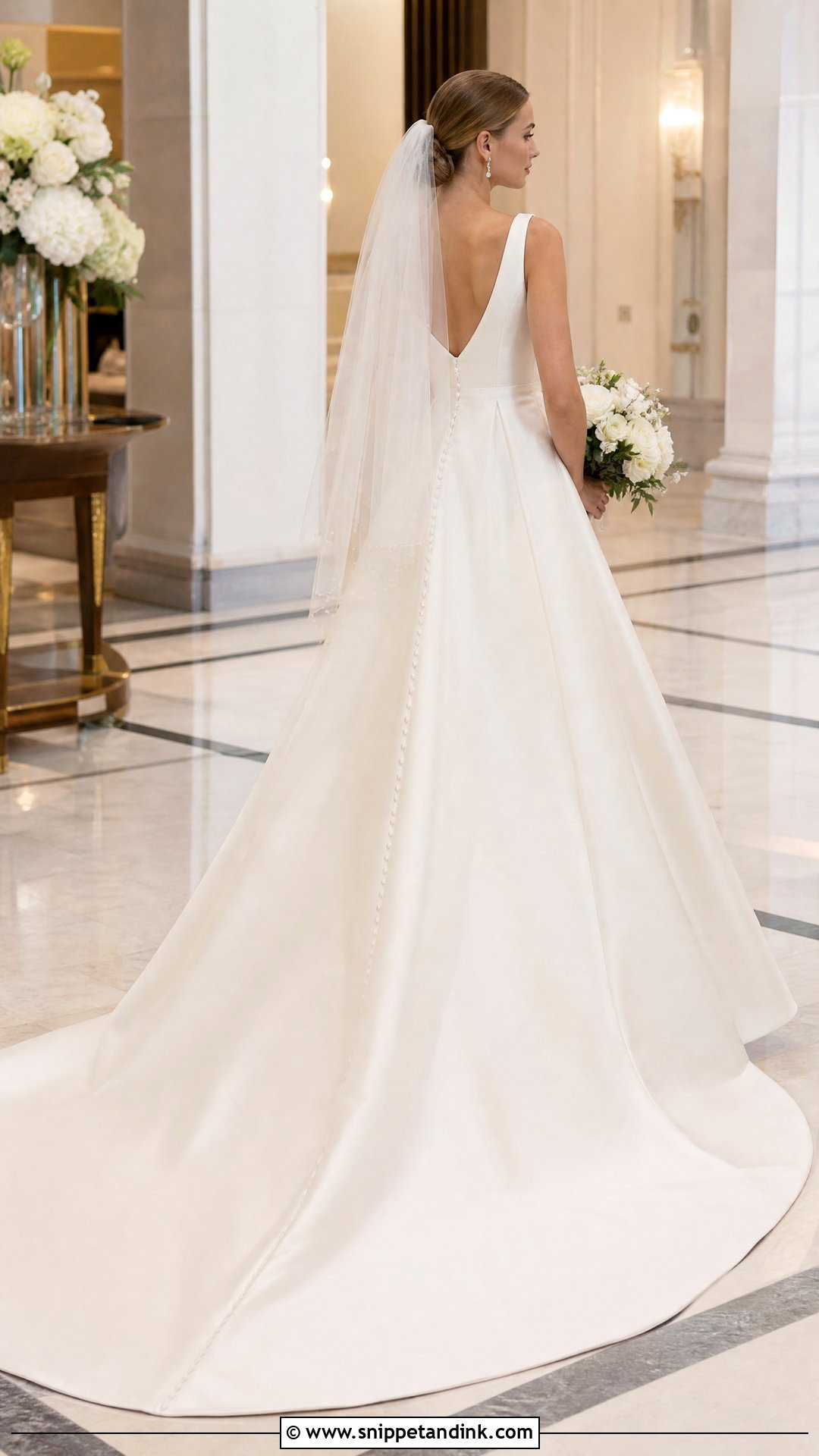
A court train extends noticeably behind the gown but stays manageable. Satin or mikado A-lines with a defined waist suit it best, because firm fabric keeps the train’s shape in photos rather than collapsing. Classic closed-toe pumps, a fingertip veil and pearl or crystal earrings. A structured bouquet and small top-handle bag. Ask about a bustle anyway, even if the train feels light during the ceremony; it gets stepped on once the dancing starts. Think about the back view, too: a neat bun, a decorative comb or a buttoned bodice.

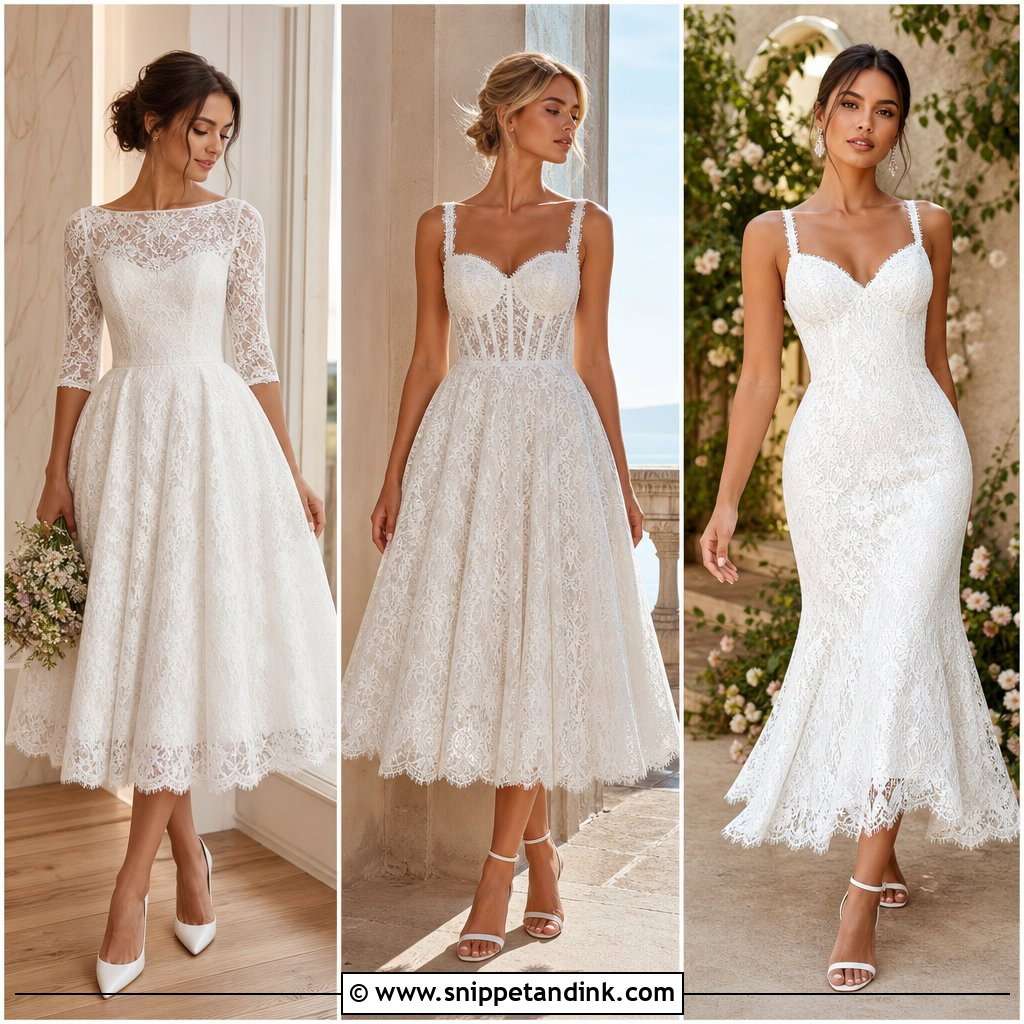
15. Floor Length Wedding Dress With Chapel Train
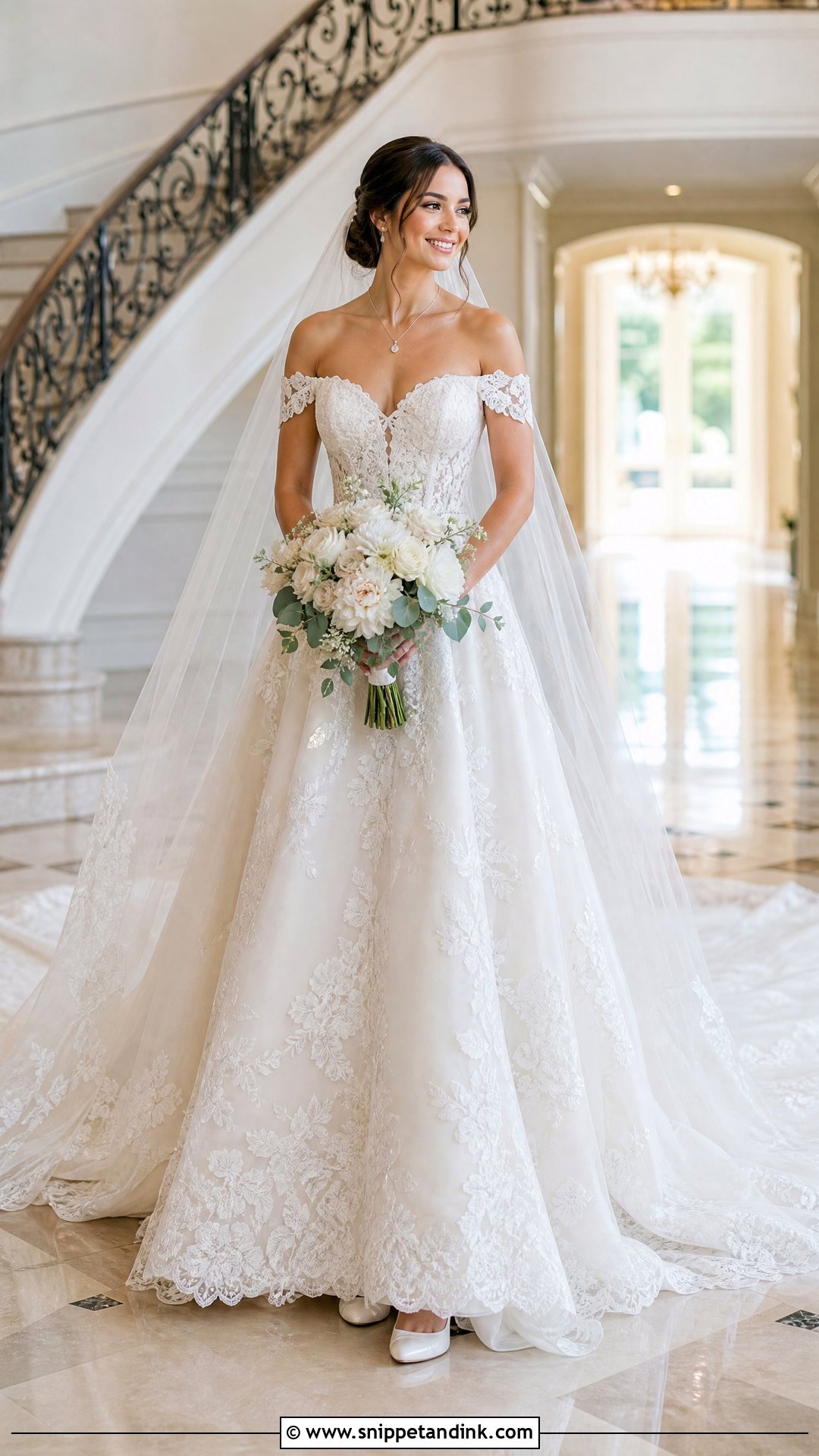
A chapel train gives a proper aisle moment without the scale of a cathedral gown. It extends a few feet behind you, enough to look formal, short enough to handle on your own. I like it on an off-the-shoulder A-line with lace appliqués running down onto the train. Satin pumps, a delicate necklace and a chapel or cathedral veil that doesn’t hide the lace. A low chignon keeps the neckline visible. A medium bouquet with a tidy shape. Before the day, practice walking, turning and the bustle in the full outfit and the actual shoes.
16. Floor Length Wedding Dress With Semi Cathedral Train
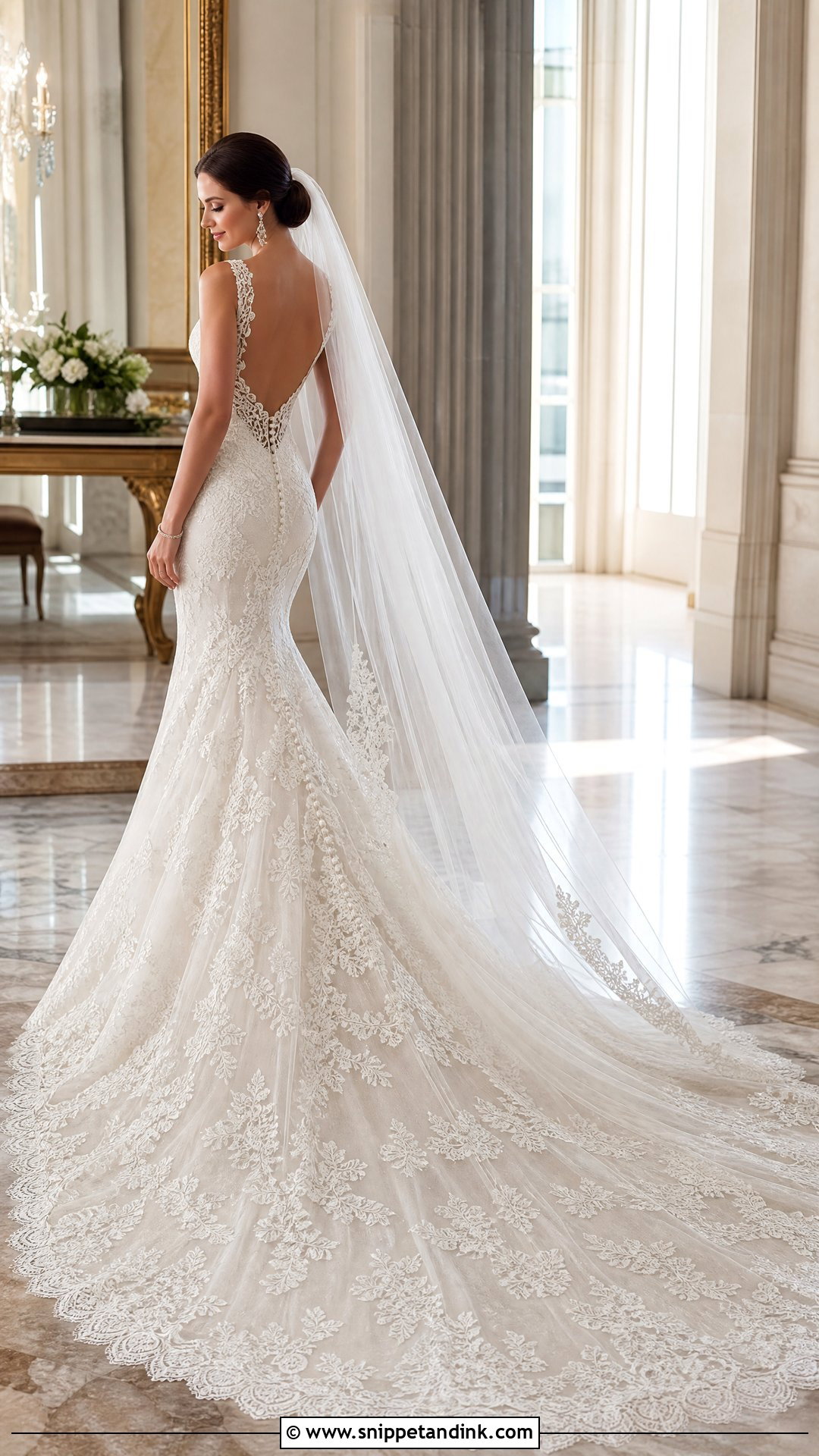
Semi-cathedral sits between chapel and full cathedral, dramatic without needing a team. On a fitted lace gown flaring below the hips, the lace pattern should continue from the bodice right to the edge of the train. If it stops halfway, the train looks borrowed from another dress. Pointed pumps, crystal drops and a long sheer veil with a plain edge; an embellished veil over intricate appliqués is too much. A smooth updo and understated bracelet. Have a reliable attendant learn the bustle. Grand hotels and estates with clear walkways suit it.
17. Floor Length Wedding Dress With Cathedral Train
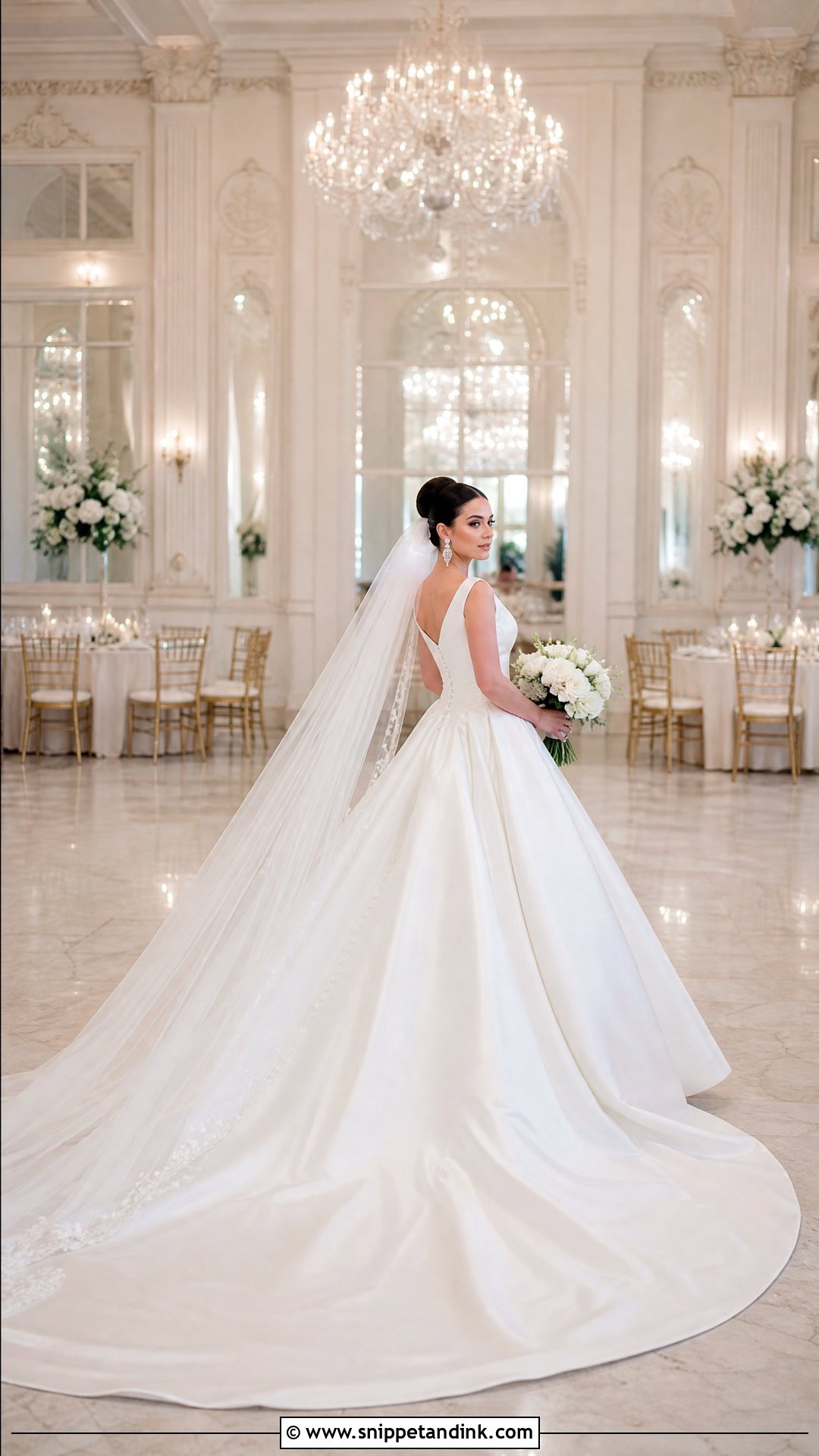
A cathedral train needs room and a plan. On a smooth satin gown with a corseted bodice and wide skirt, the train becomes the main decoration, so leave the surface plain. Closed-toe pumps, long earrings and a sheer cathedral veil. Keep the bouquet symmetrical and controlled. Practice walking slowly and turning in a wide arc rather than pivoting on the spot, which wraps the train around your feet. A well-planned bustle is essential for later. Ask someone to straighten the fabric before you walk in and before key photographs.
18. Floor Length Wedding Dress With Royal Train
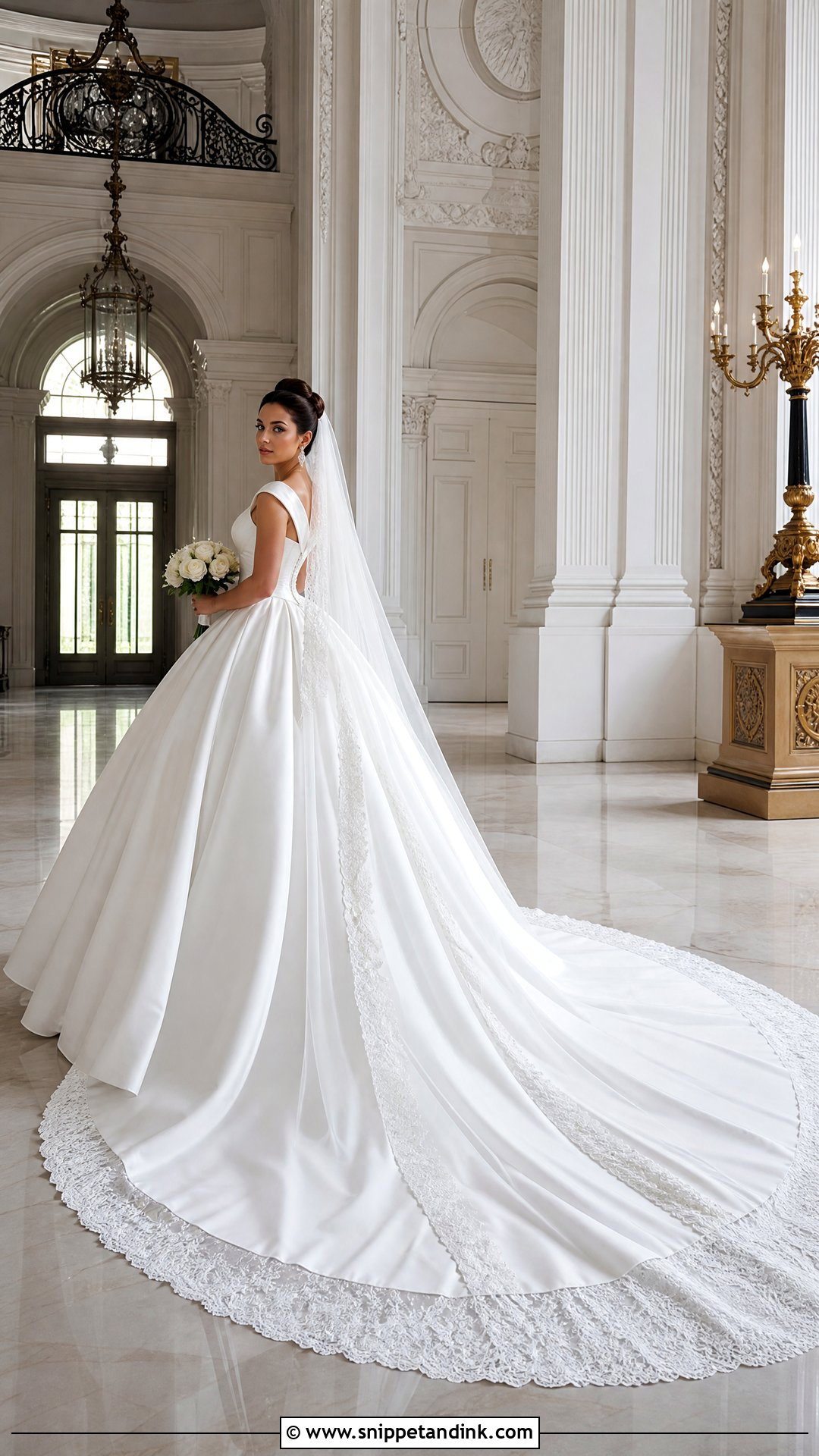
A royal train is the longest you can wear and it changes the whole logistics of the day. A grand ball gown with a structured bodice, defined waist and an expansive skirt running into the train. Satin gives a clean, architectural look; lace is more detailed and heavier to drag. Choose heels that stay comfortable under the skirt, since you won’t see your feet. Statement earrings, a formal updo and a long veil that matches the train’s scale. Keep everything else restrained. You need a large, clear venue, several practice walks and named helpers to position, carry and bustle it.
19. Mini Wedding Dress With Detachable Overskirt
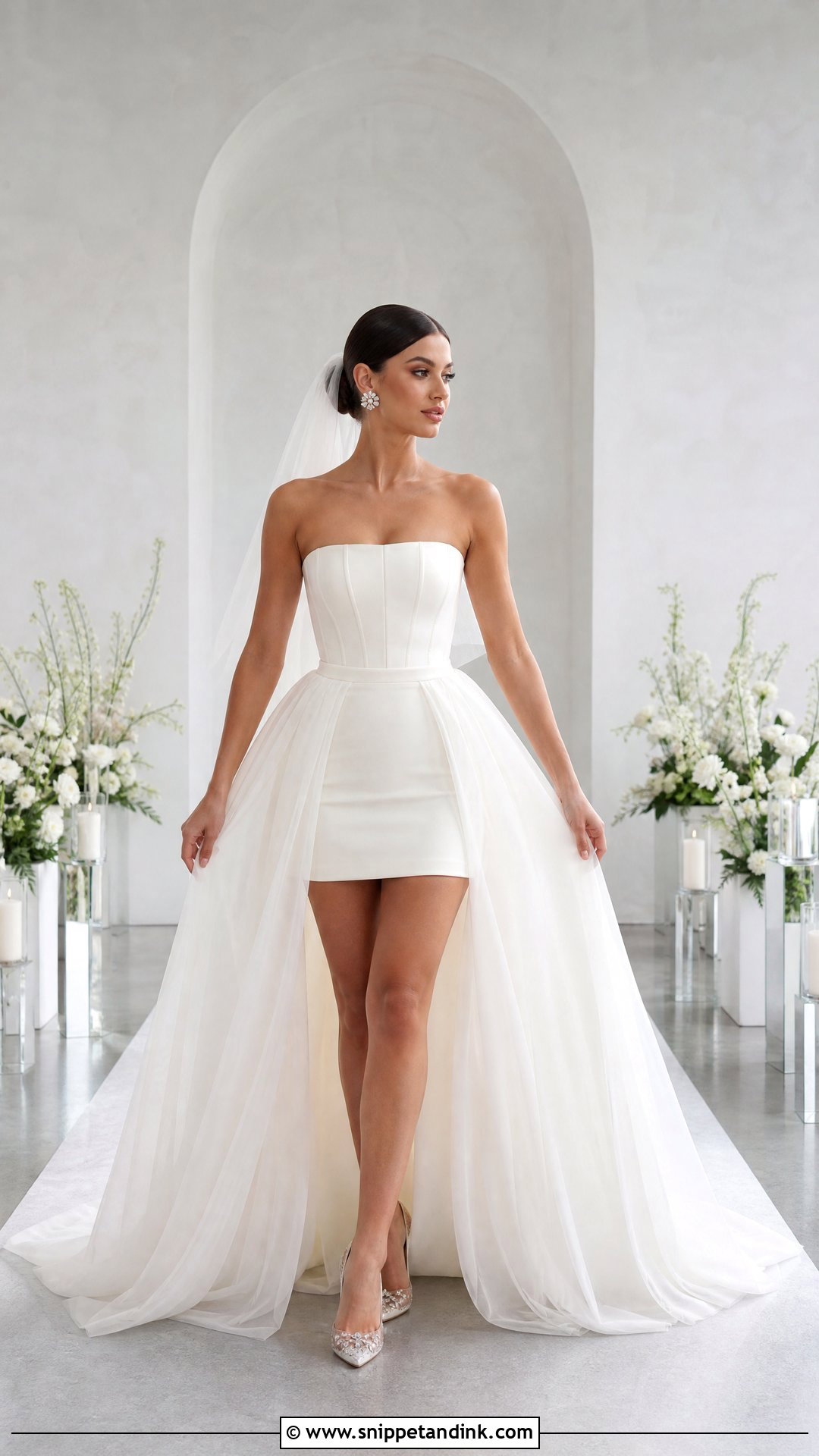
A mini with a detachable floor-length overskirt gives you two hemlines in one outfit. The mini needs a structured neckline and a supportive bodice, since it has to look finished on its own. A full satin or tulle overskirt reads as an A-line or ball gown for the ceremony, then comes off for the reception. Embellished pumps, statement earrings and a sleek low bun for both versions. The fingertip veil comes off with the overskirt. At your last fitting, check that the attachment points disappear when the skirt is removed.

20. Midi Wedding Dress With Detachable Train
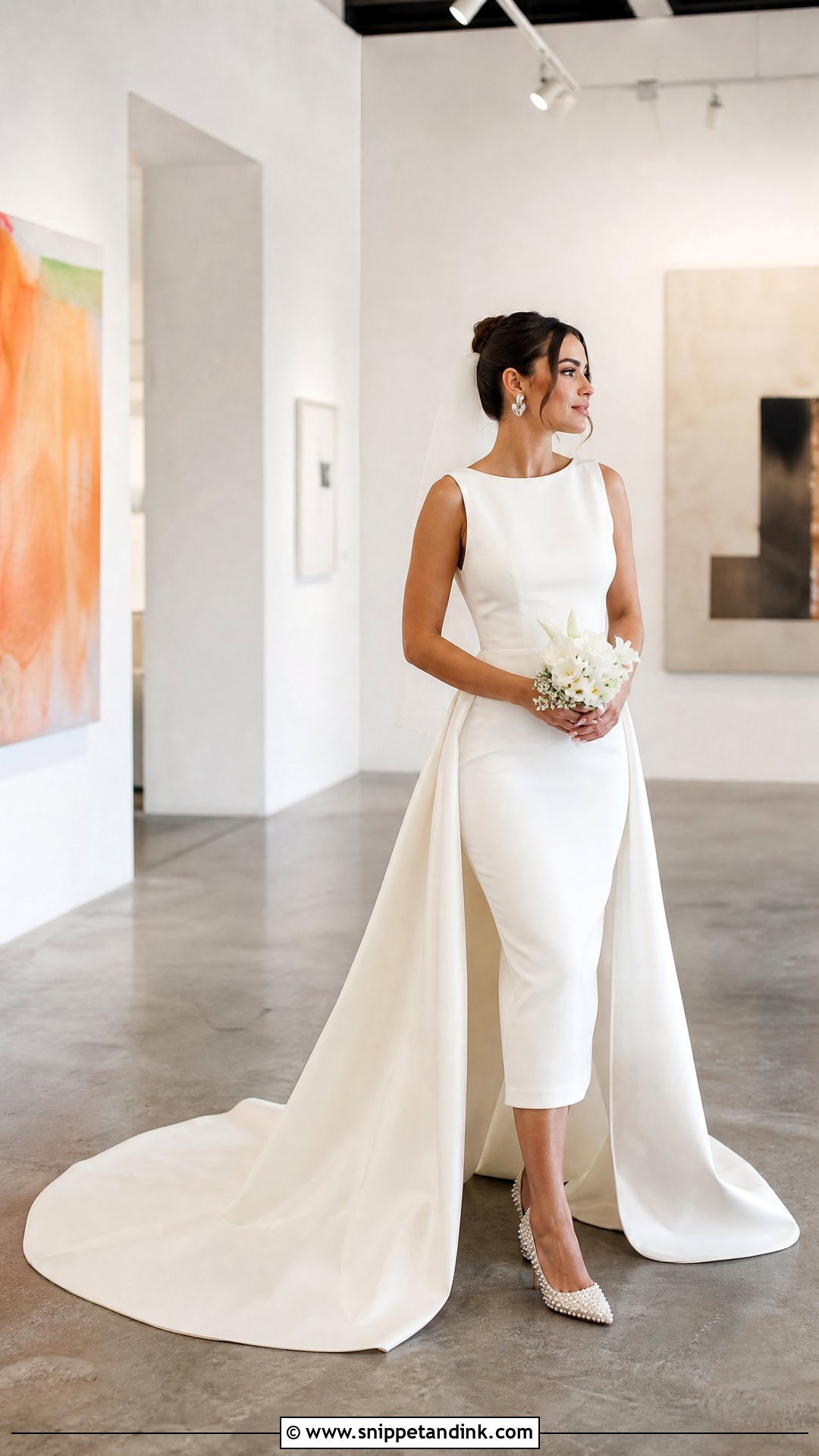
A midi with a detachable train keeps your shoes visible and still gives an aisle moment. A clean fitted midi in satin or crepe, with a sweeping back panel attached at the waist for the ceremony. Match the train’s fabric and color exactly, since a slightly different ivory looks like a mistake from the side. Pearl-covered pumps or metallic slingbacks. Sculptural earrings, a compact bouquet and a short veil that won’t catch on the fastening. Remove both before dancing. Test the fastenings during alterations so the train holds while walking and comes off without pulling threads.
Grass, Stone, Sand and Stairs: Length by Venue
The floor under you often settles the question faster than taste does. Here’s how I’d match length to ground:
- Lawn and garden: anything up to floor length works, but the hem will pick up grass stains and damp. A sweep train or no train keeps the mess down.
- Cobbles and gravel: ankle length or shorter means you can see your footing. Long trains catch and snag on rough stone.
- Beach: knee to ankle, or a light maxi. Wet sand clings to any hem that touches it.
- Grand staircases: a cathedral or royal train looks remarkable on stairs, but only with someone arranging it on every step.
- Registry office or restaurant: short lengths and midis suit small rooms where a long train simply has nowhere to go.
Short hem, cold weather
A mini or knee-length dress in winter needs a plan for the walk between car and door. Sheer ivory or nude tights, a cropped faux-fur or wool jacket and closed-toe shoes keep it comfortable without changing the look. Try the tights on with the dress, since some sheens look grey in flash photos.
Your Shoes Decide the Final Inch
Hemline changes how a wedding dress feels more than almost any other choice. Minis and knee-lengths give the most freedom; midi, tea and ankle lengths sit between practical and traditional; floor-length gowns can carry anything from a subtle sweep train to a royal one. Convertible overskirts and detachable trains give you both in one day. Whatever you pick, do every fitting in your wedding shoes and spend time walking, sitting and turning in the full outfit. The right length suits your venue and lets you move without thinking about your hem.
You'll Like These Ideas:


Leave a Reply