
Start with the silhouette. Once you know how much skirt you want, everything else (fabric, neckline, shoes, veil) narrows itself down. Full-length gowns cover a huge range, from structured satin ball gowns to relaxed chiffon A-lines, so there’s one for almost every venue and season. Recent collections keep returning to sculpted volume, floral jacquard, corsetry and soft draping. When I style a bride, I treat the dress, the foundation garments underneath and the shoes as one decision rather than three, because each changes how the others sit. Below are twenty complete looks with the fitting notes I’d give you for each: proportions, movement, fabric weight, train length and what alterations to expect.
Buy Your Wedding Shoes Before the First Fitting
This is the order I give every bride, and it surprises most of them. The hem of a full-length gown is cut to the height of the heel underneath it, so the shoes have to exist before the seamstress picks up her pins. Change shoes later and the hem is either dragging or showing your ankles.
A few things to settle when you buy them:
- Heel height you can stand in for eight hours or more. Under a long skirt nobody sees a block heel or a low platform, so comfort can win.
- Width and grip. Satin soles slide on polished floors and grass swallows thin stilettos. A scuffed sole or a heel protector solves both.
- Break them in at home on carpet, in short spells, over several weeks.
- If you plan to change into flats later, tell your seamstress. She can set the hem between the two heights or add a bustle so the skirt clears the floor in both.
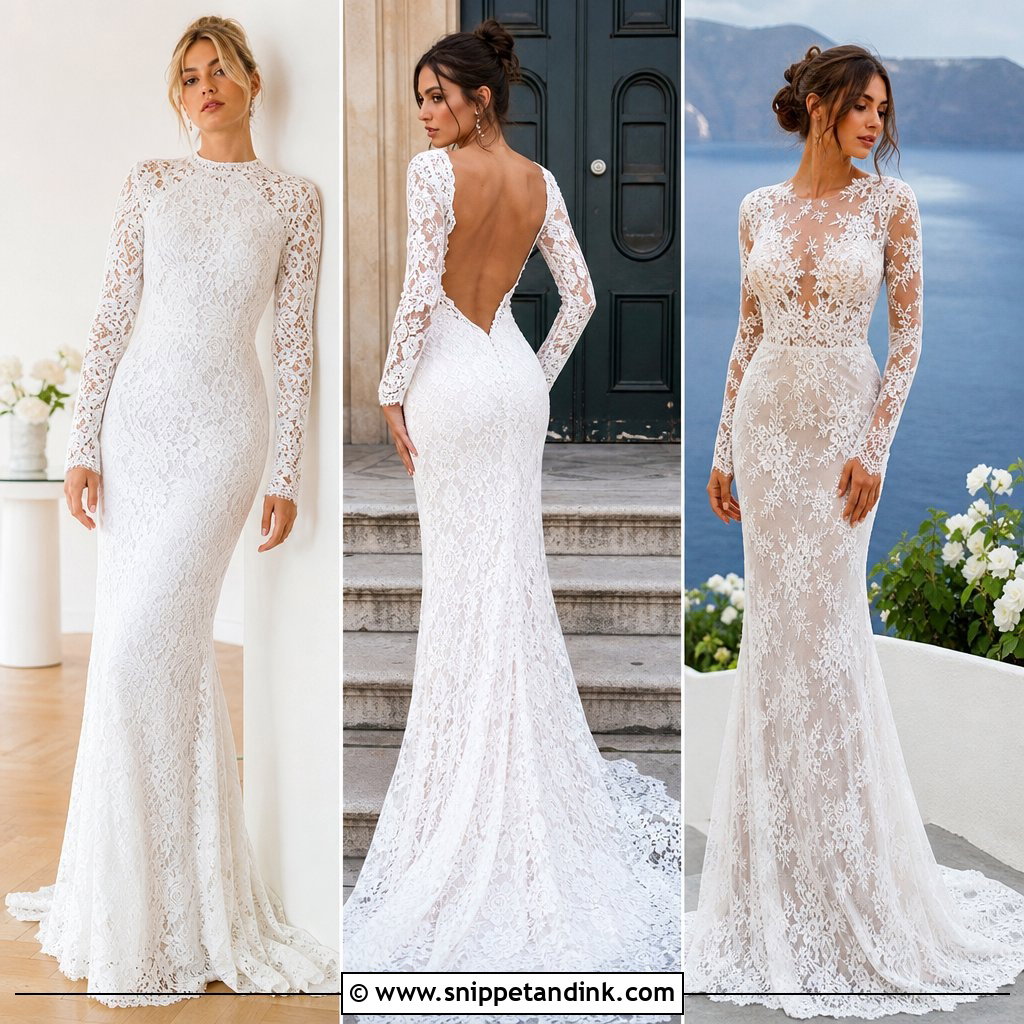
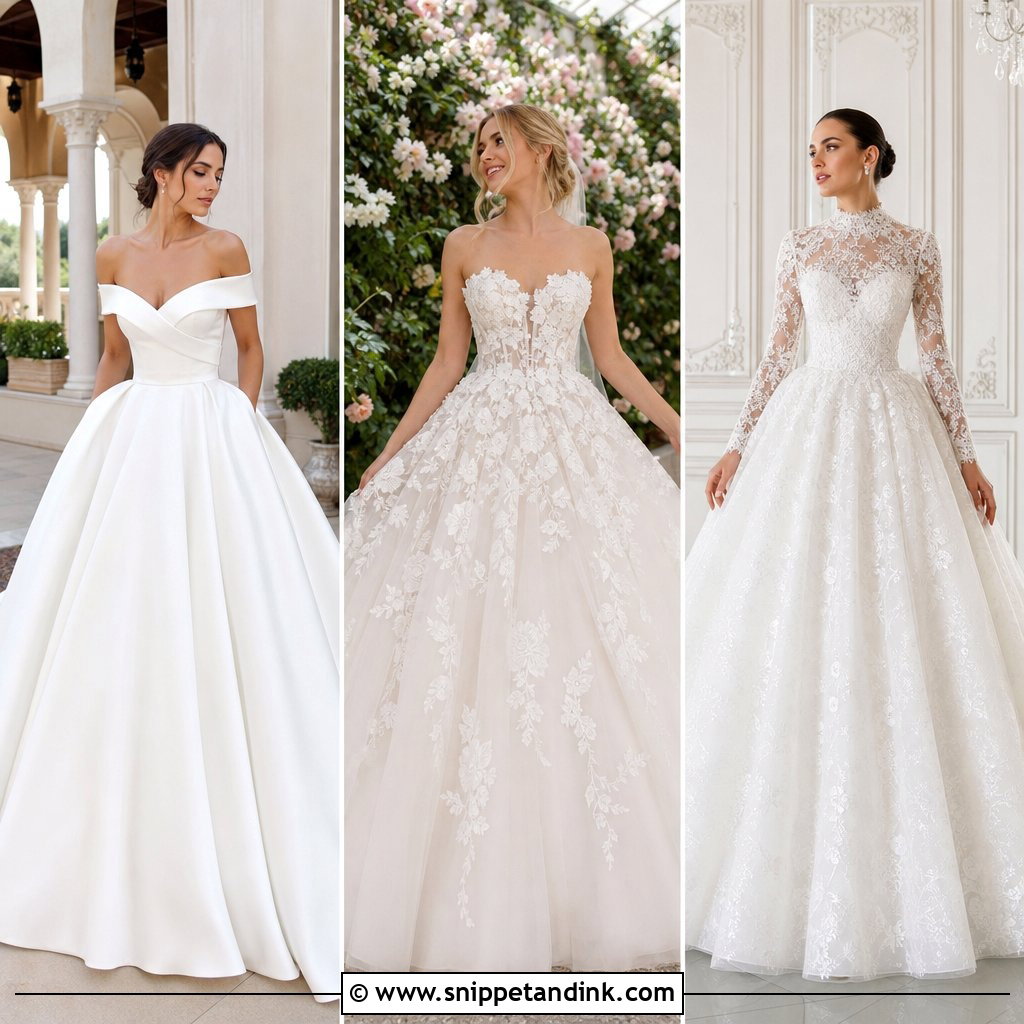
1. Strapless Satin Ball Gown Wedding Dress
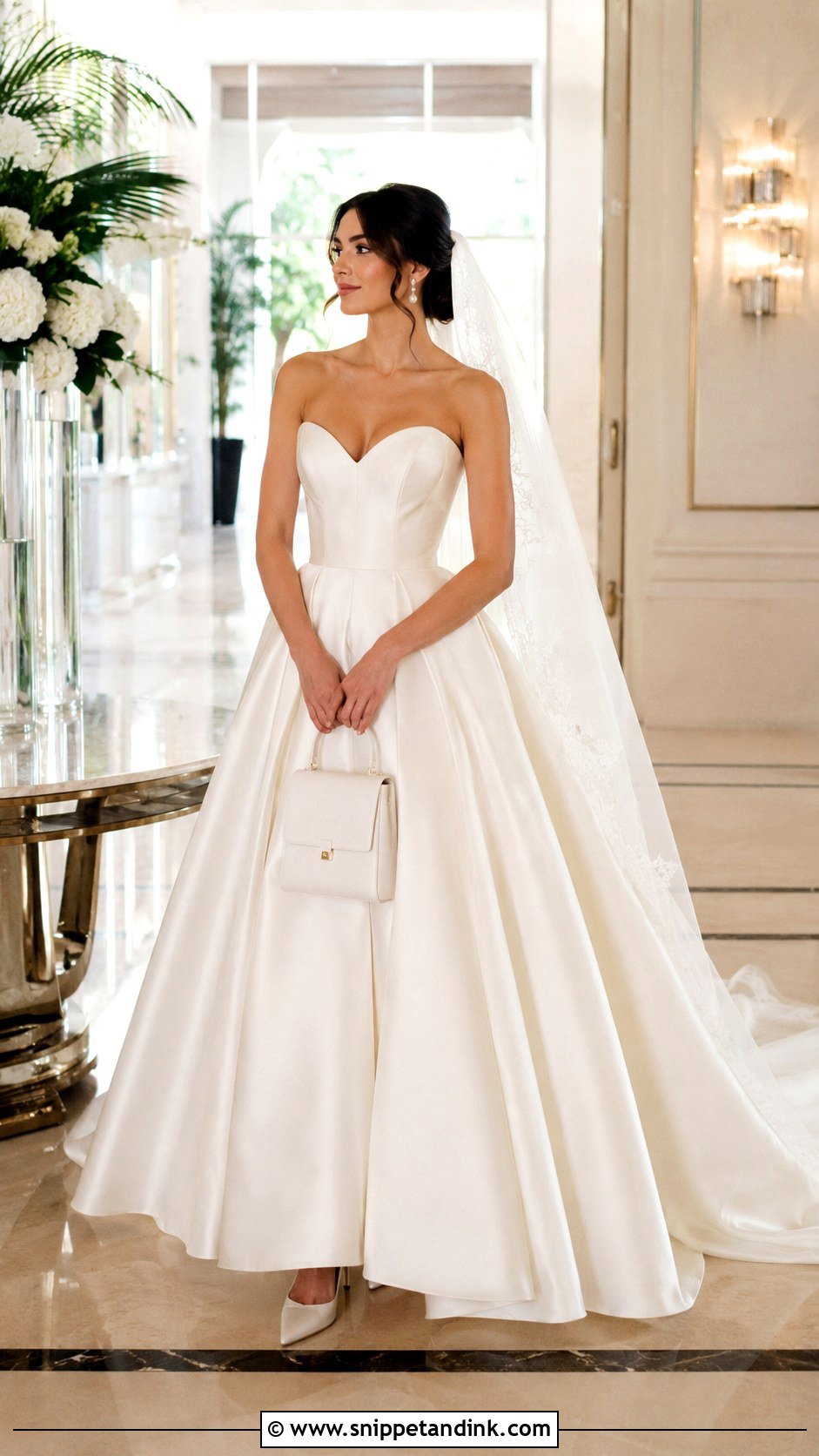
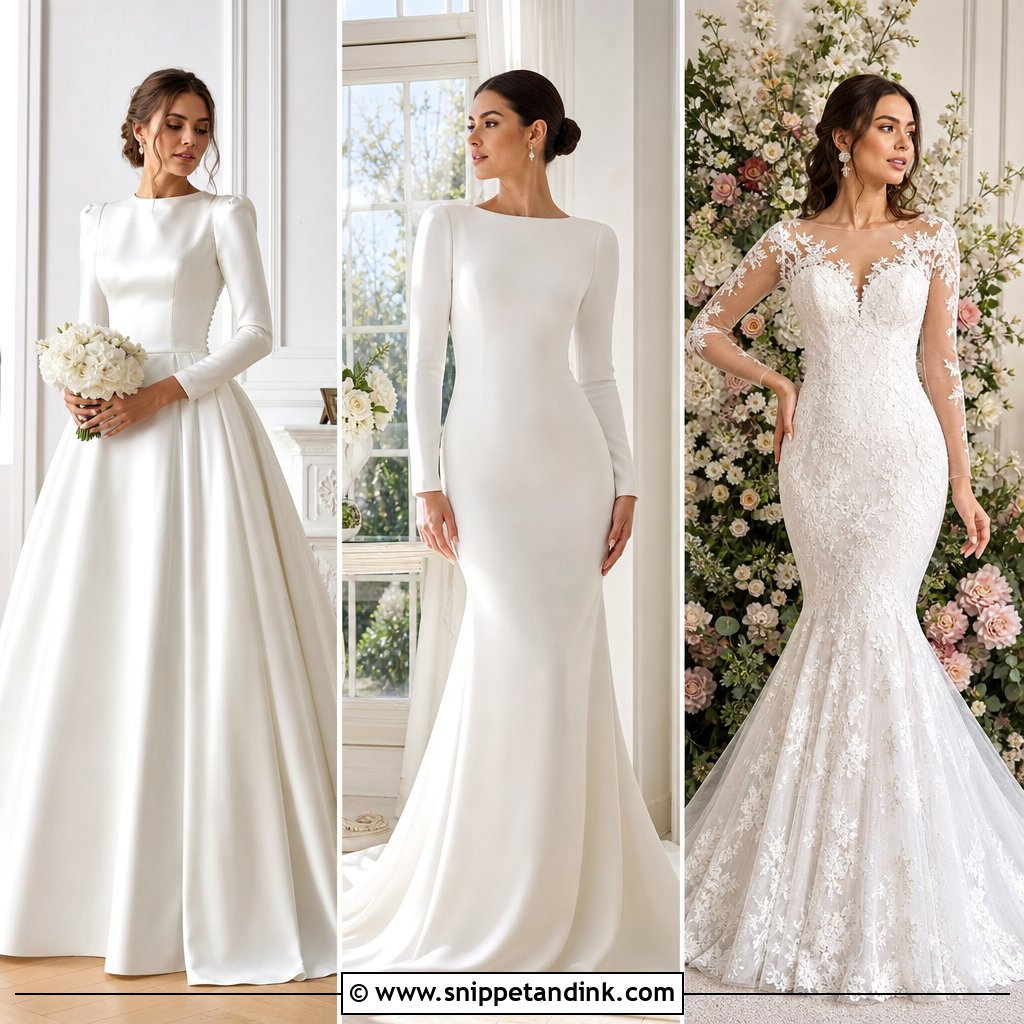
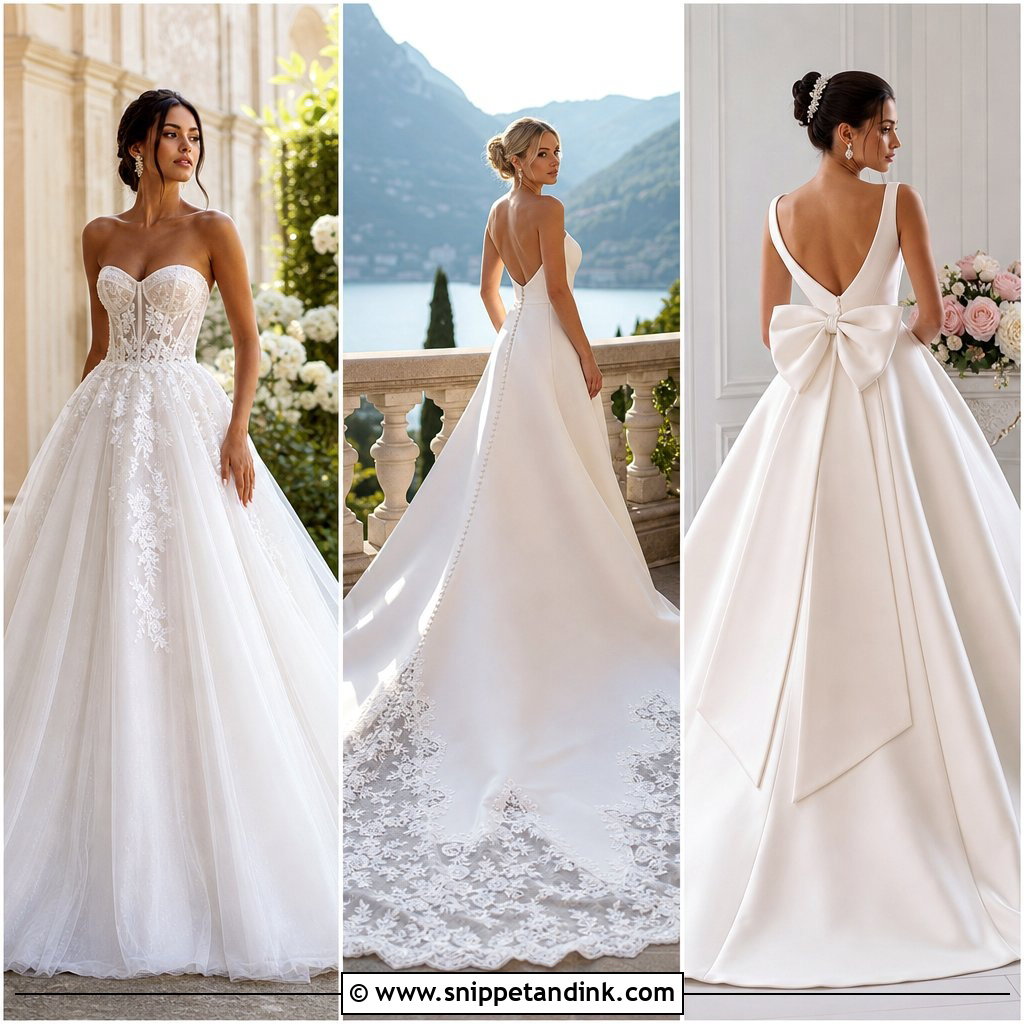
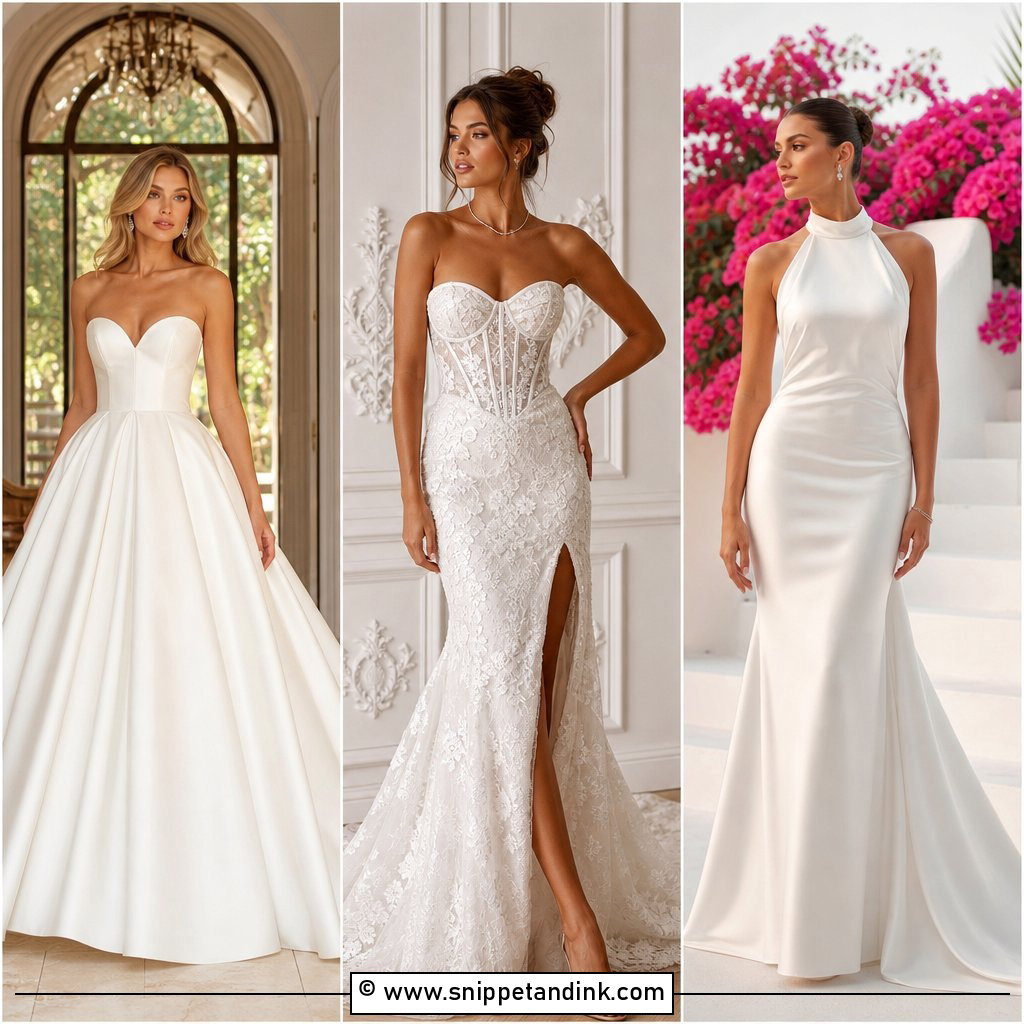
Strapless satin is as formal as bridal gets, and its success depends on the boning. A well-built bodice stays put through hugs and dancing without a single hitch upward. A softly curved sweetheart or a straight neckline keeps it classic. Pointed ivory pumps, pearl drops and a structured mini bag coordinate neatly. Pick the veil by how much you want to manage: a cathedral length for drama, a fingertip for ease. Satin already reflects light, so jewelry can stay simple. Get the hem set in the shoes you’ll wear. Half an inch too long and you’ll kick the front of the skirt with every step.
2. Long Sleeve Lace Ball Gown Wedding Dress
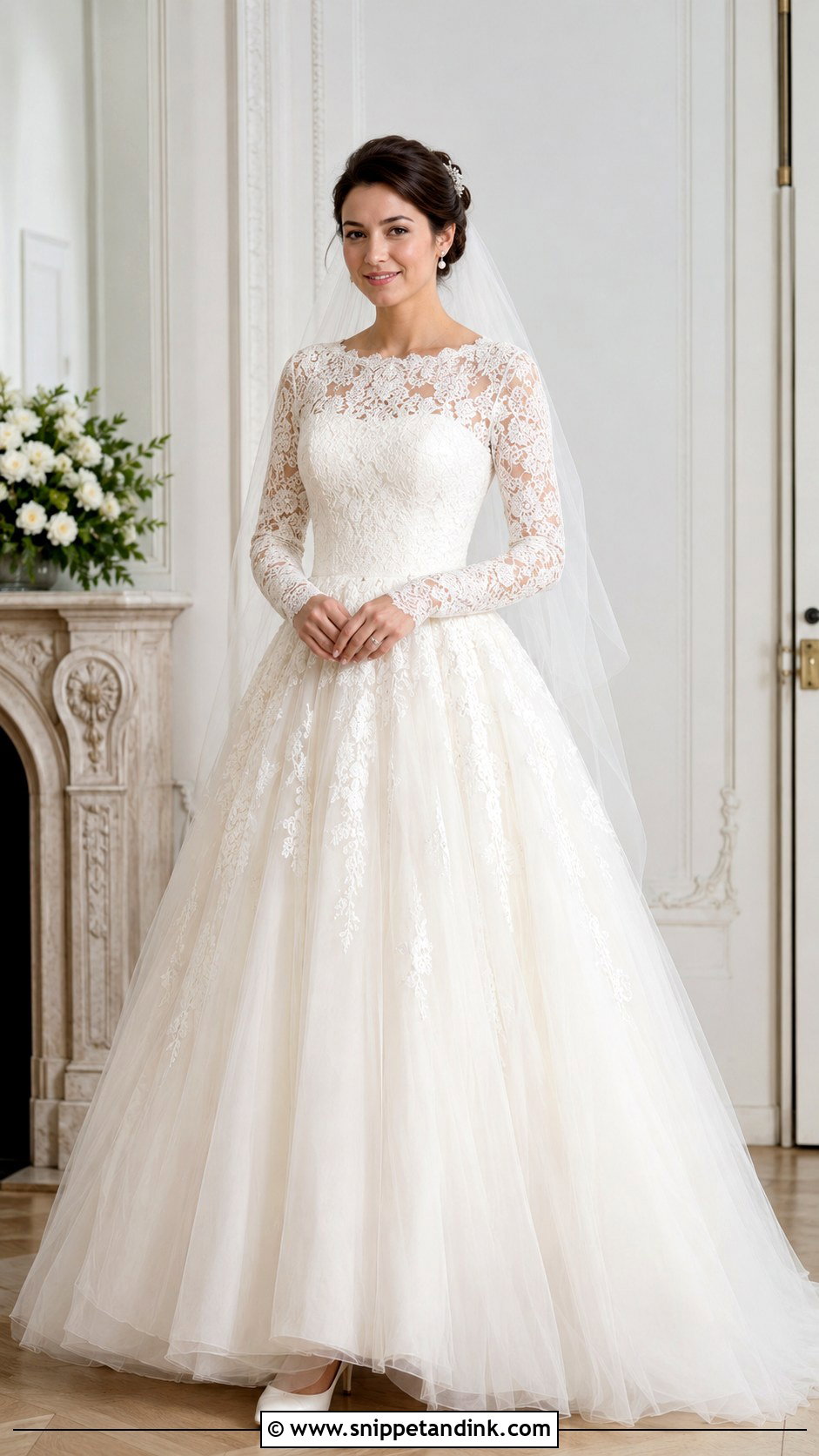
Lace and a full skirt are detailed enough that the accessories can almost disappear. The first thing I check on a long-sleeve lace bodice is the elbow, because lace with no stretch there pulls when you bend your arm to dance or hold a glass. A lined bodice gives more coverage; a lightly sheer neckline softens it. Closed-toe satin heels, small pearl studs and a single hair comb are plenty, with a smooth low bun so the lace at the shoulders and back stays on show. On a cold day an ivory wrap comes off indoors. Choose a plain tulle veil. Lace on lace starts to look busy in photos.
3. Off Shoulder Tulle Ball Gown Wedding Dress
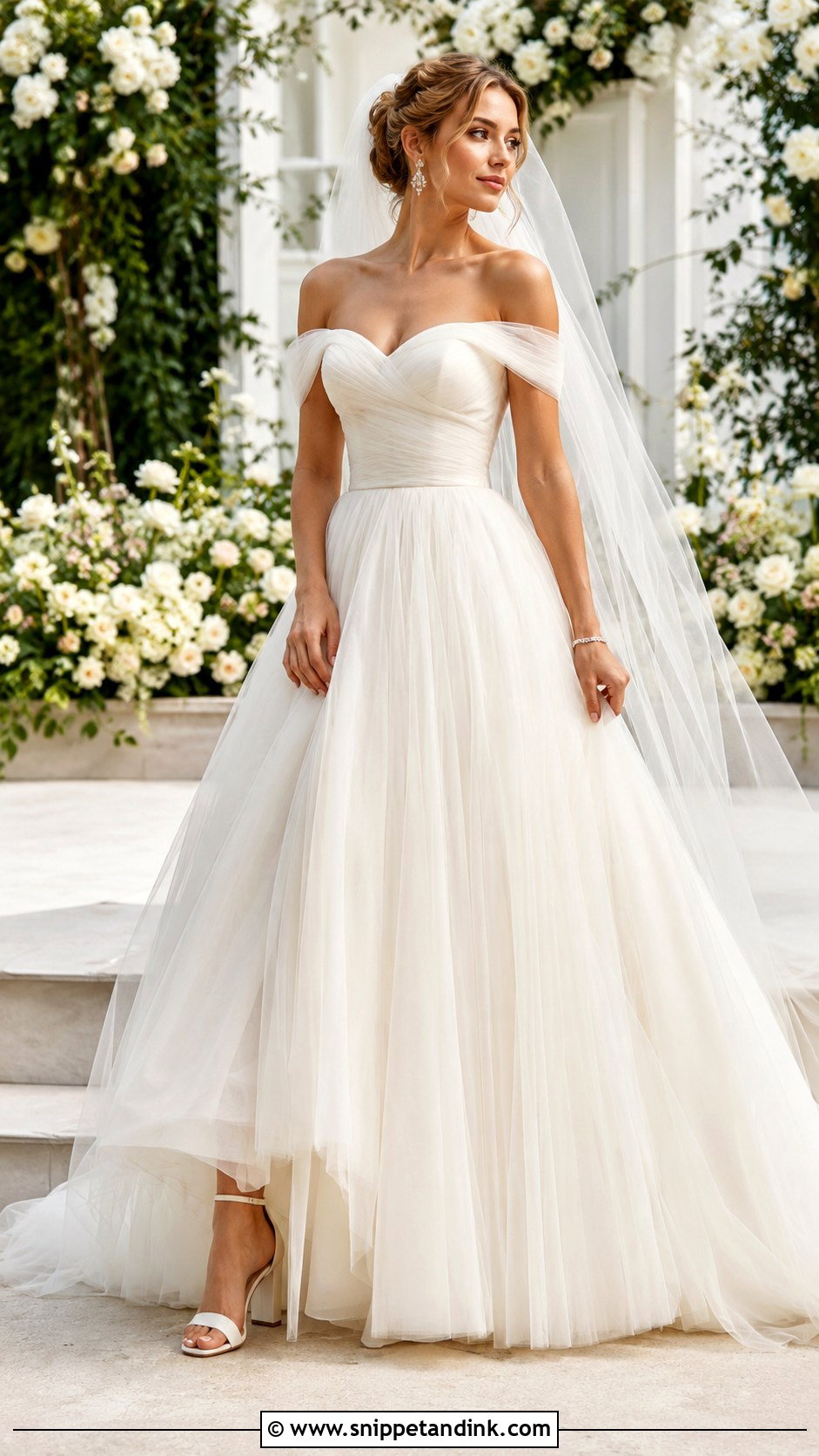
Off-shoulder sleeves on a tulle ball gown frame the collarbone, and the fitted waist keeps all that airy skirt in proportion. Fit is the whole story with this neckline. Sleeves pinned too tightly across the upper arm stop you lifting your hands to your face, so test that before alterations finish. Crystal earrings, a fine bracelet and ivory block heels for stability suit it, with a loosely pinned updo and a light layered veil. If the skirt has sparkle or appliqué, keep accessories understated. A narrow satin waistband helps define the shape. I see this look most at grand indoor venues, hotels and formal gardens.
4. Square Neck Mikado Ball Gown Wedding Dress
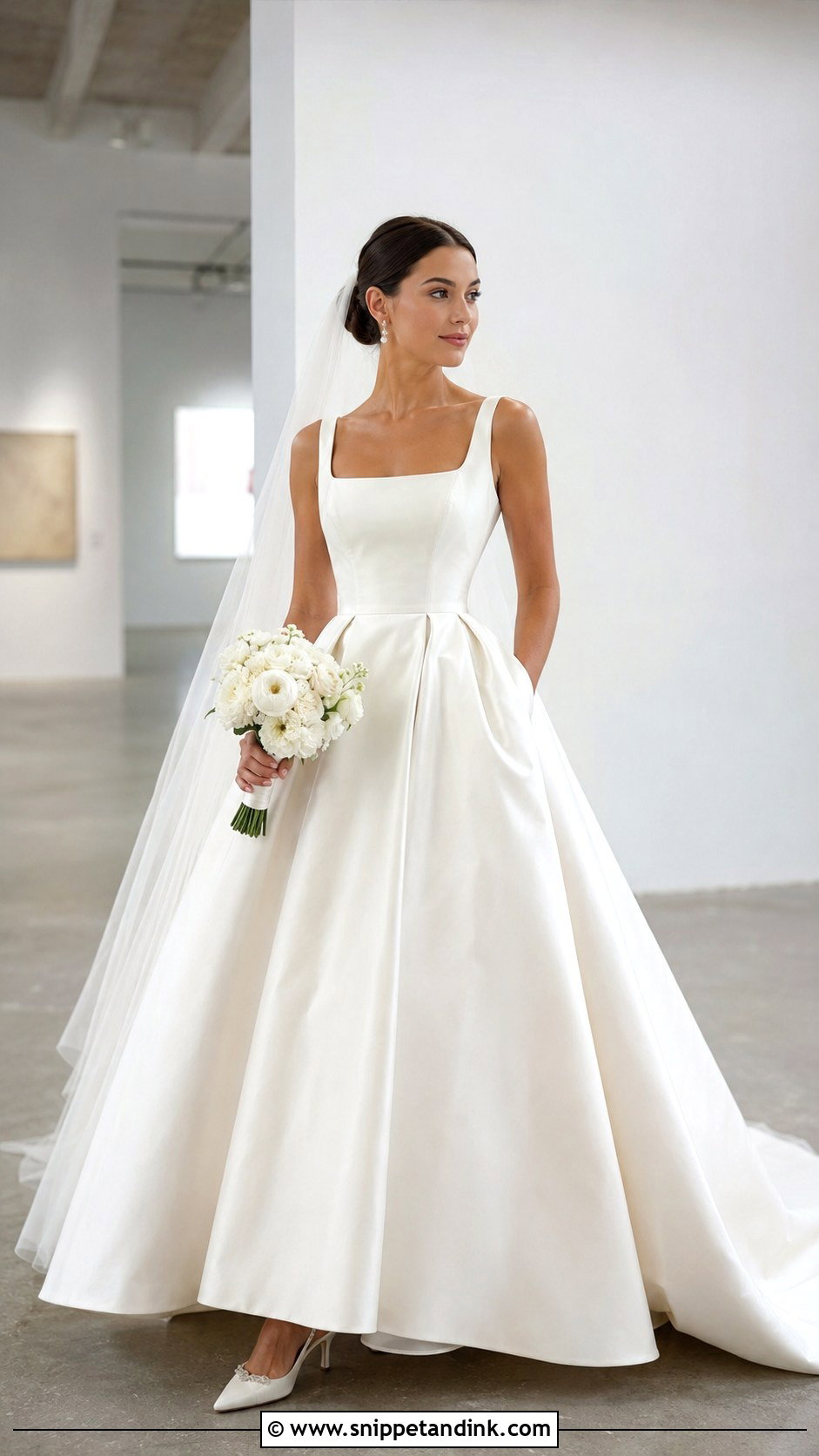
Want something traditional that still looks current? Square-neck Mikado is the one I’d point to. The fabric’s weight holds the skirt out on its own, so you need fewer layers underneath, and the straight neckline gives a crisp, defined top. Pointed slingbacks, pearl-and-crystal earrings, a sleek lightly trimmed veil and a polished chignon keep it tailored; a small white bouquet keeps it fresh. Hidden side pockets are handy for a tissue or lipstick during portraits. Mikado does feel substantial, and with no embellishment every seam is visible. Ask for a breathable lining, and expect your fittings to focus on the waist and bodice.
5. Floral Jacquard Ball Gown Wedding Dress
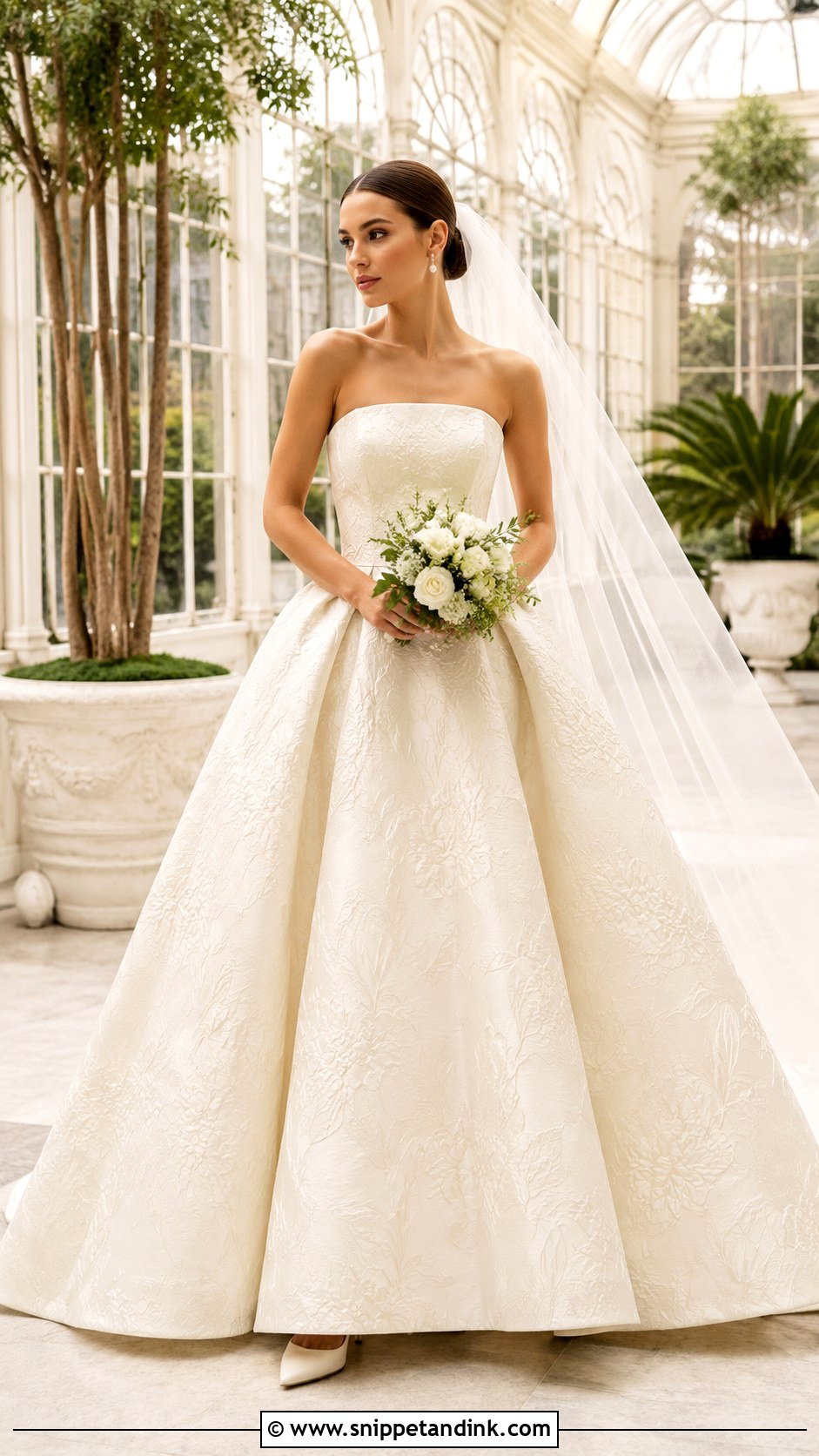
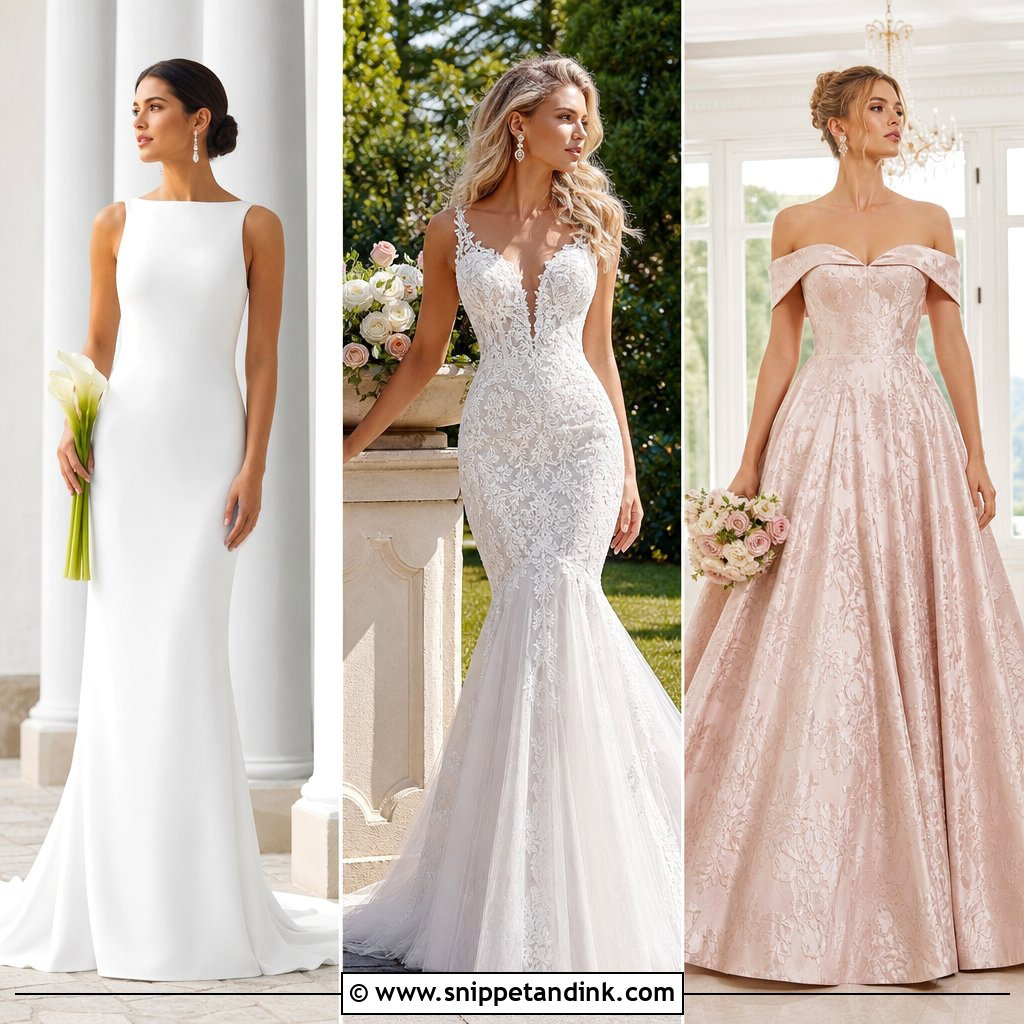
Jacquard weaves the pattern into the fabric itself, giving you texture and florals without lace or beading. It looks especially polished with a strapless, scoop, or square neckline. Satin pumps, pearl earrings and a plain tulle veil keep the fabric the focus. A structured bodice and defined waist make the volume look deliberate. I like a compact bouquet of white flowers and greenery that echoes the woven pattern. Jacquard holds its shape well, so it’s a strong choice if you want a firm silhouette. One caution: a bold pattern placed badly across the bust or seat looks odd, so check where the motifs land on your body.
6. Basque Waist Ball Gown Wedding Dress
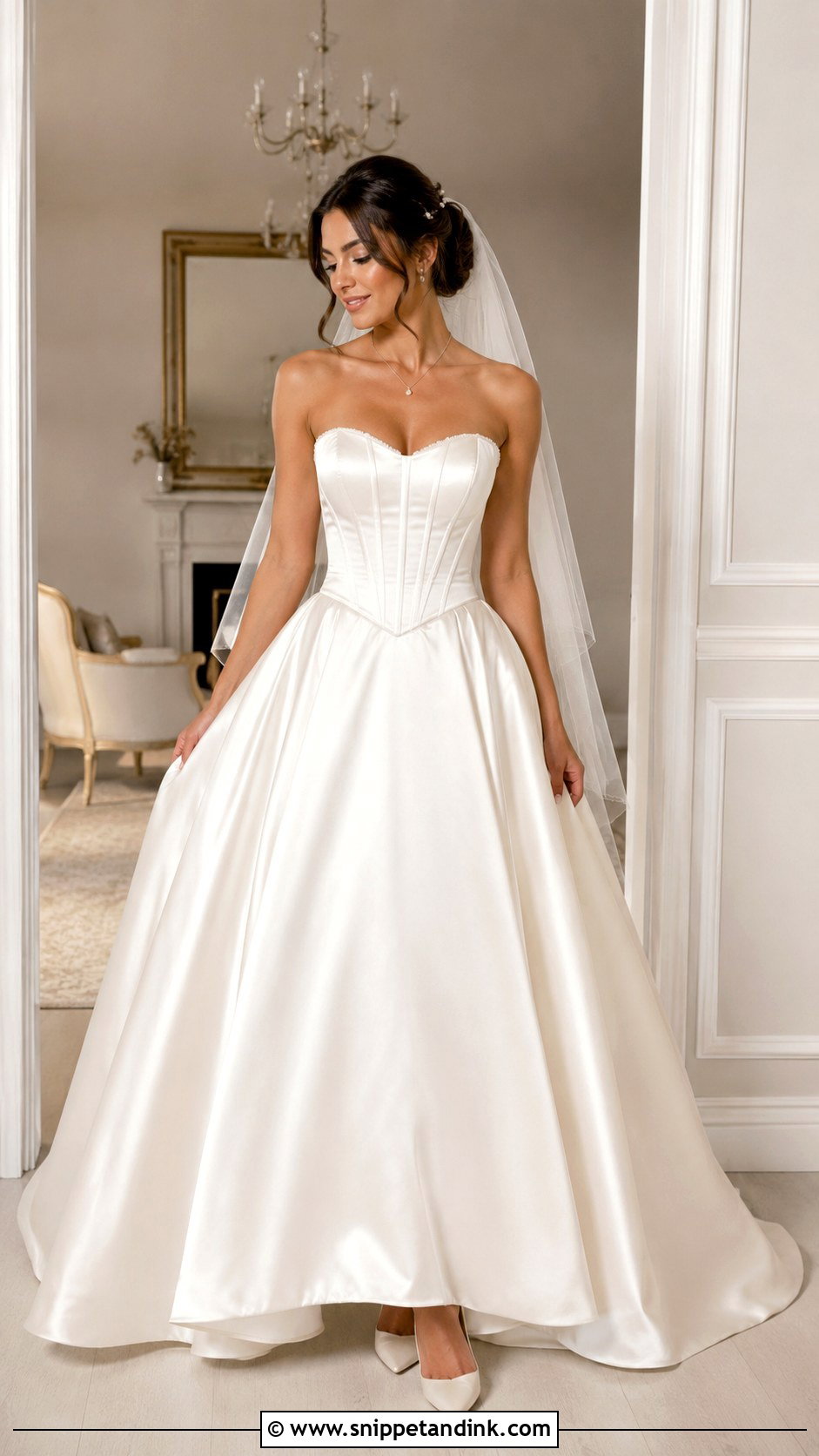
The point of a basque waist lengthens the line between bodice and skirt and gives a gown a vintage edge. It works in satin, tulle or lace. Almond-toe heels, a fine pendant and a sheer veil beneath a soft updo complement it. Never put a belt over it; you’ll cut through the very shape you chose the dress for, so let earrings or a hair piece add sparkle instead. If the bodice is corseted, take a deep breath and sit down at the fitting. The point should sit evenly at center front and flow into the skirt without pulling, and an uneven point is almost always a fitting issue rather than a design one.
7. Sweetheart Neckline Princess Wedding Dress
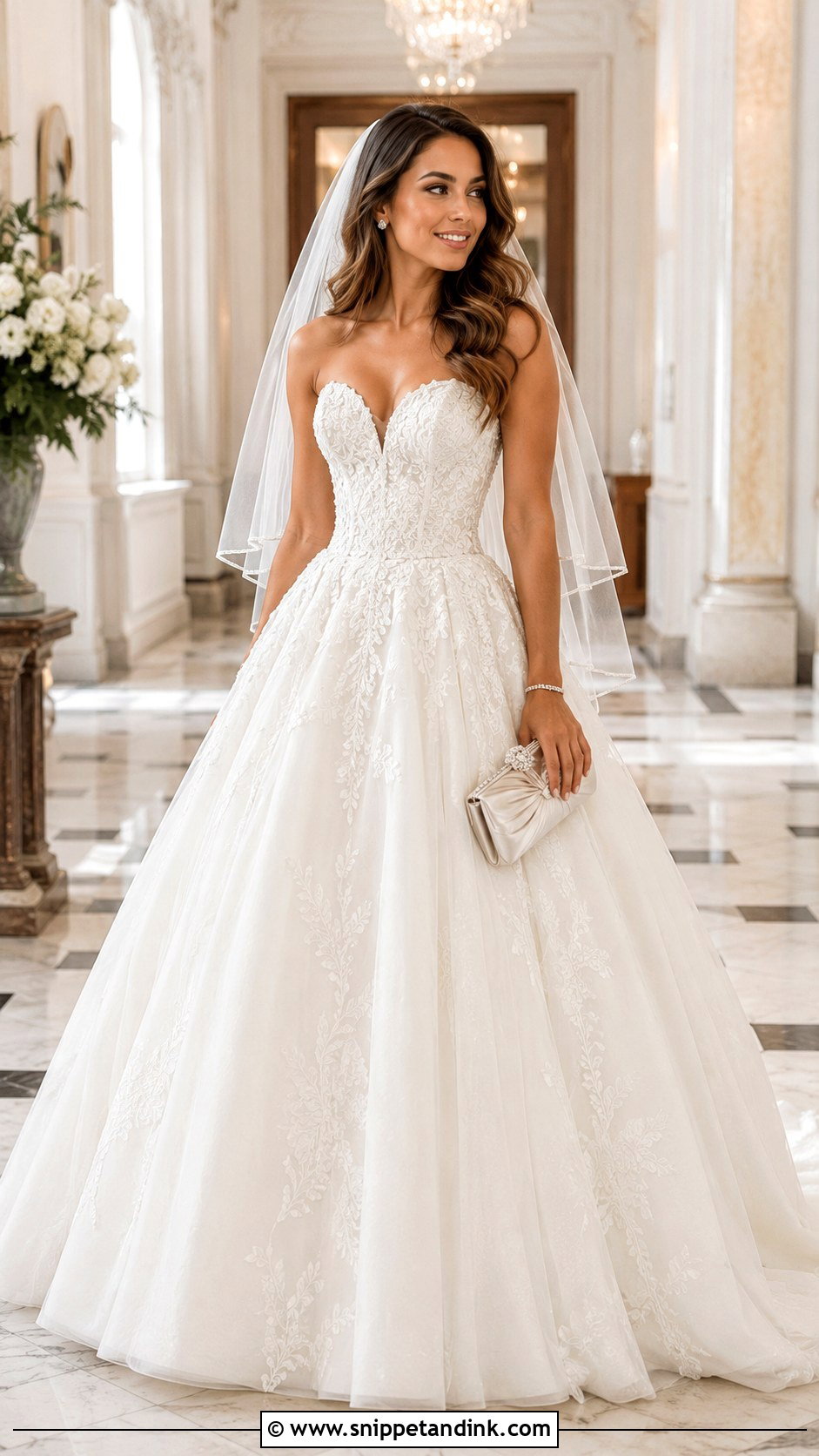
Sweetheart and princess skirt: the most classic pairing in bridal. The neckline follows the bust and the skirt gives balance and movement. What matters most is support. Supportive cups and secure boning mean you’ll never be tugging at it in photos. Add crystal studs, a fine tennis bracelet and platform heels hidden under the hem. A mid-length veil with a narrow edge suits it, with waves swept back or a low bun. If the bodice is embroidered, keep the skirt plain so there’s one clear focal point. A small satin clutch is a useful finishing touch.
8. High Neck Lace Wedding Dress
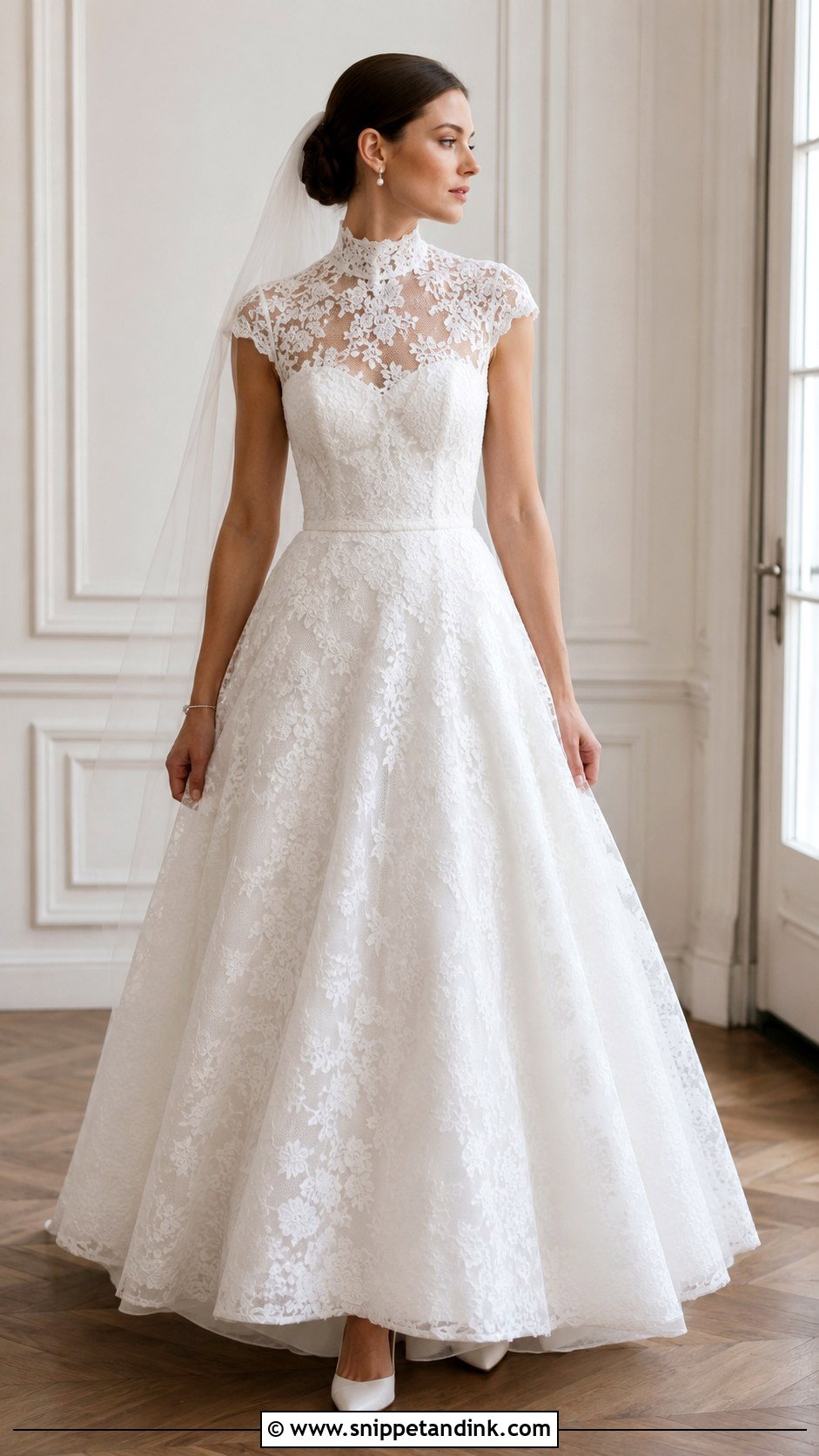
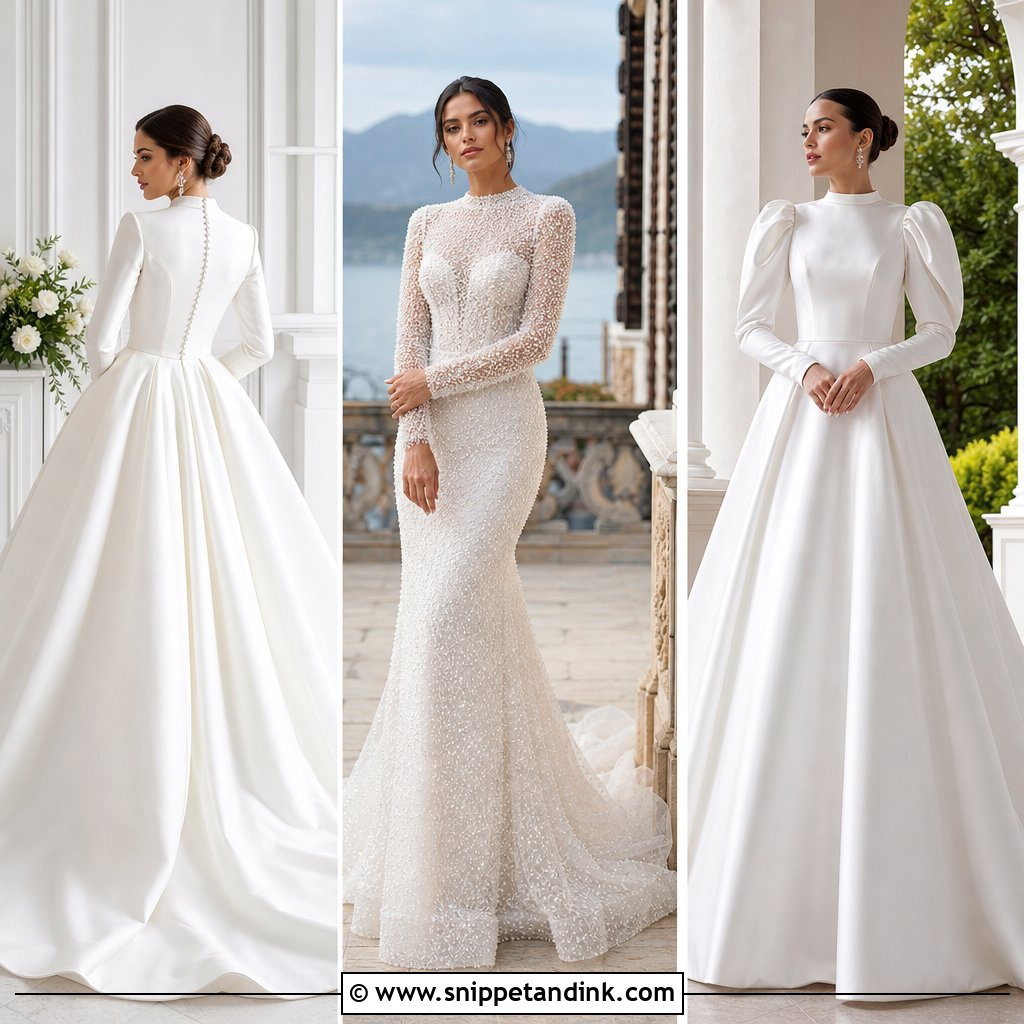
A high lace neck gives coverage while the full skirt keeps the gown feeling light. Balance comes from a fitted lace bodice and a defined waist. A keyhole back or covered buttons add interest behind without fussing up the front. Small earrings, a neat low bun and pointed closed-toe heels suit it, and the neckline does the necklace’s job. Fasten the veil below the bun so the collar stays visible. Lace collars can scratch. Turn your head side to side at the fitting, and if the edge rubs, ask for a soft binding on the inside before the day rather than after.
9. V Neck A Line Wedding Dress
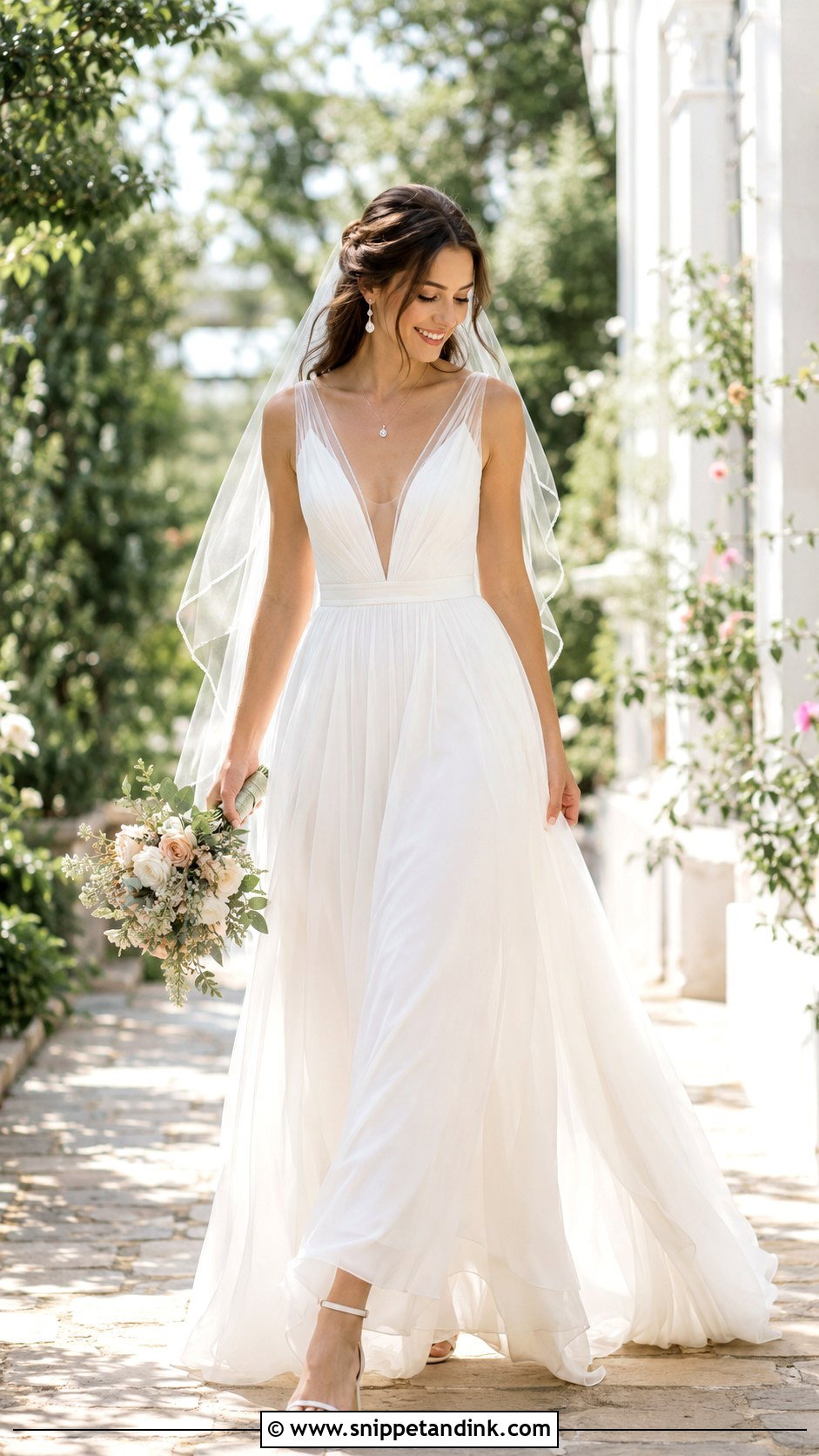
An A-line is the comfortable alternative to a structured ball gown, and the skirt moves with you instead of around you. A V-neck lengthens the upper body, and illusion mesh can raise or lower how much it reveals. Low block heels, a fine pendant, drop earrings and a light veil suit it, with a soft half-up style keeping hair off the neckline. Chiffon, organza and layered tulle all work, and a chapel train gives elegance without much weight. Walk, sit and raise your arms before you buy. A good A-line feels secure at the bodice while the skirt swings freely at the legs.
10. Cap Sleeve Lace A Line Wedding Dress
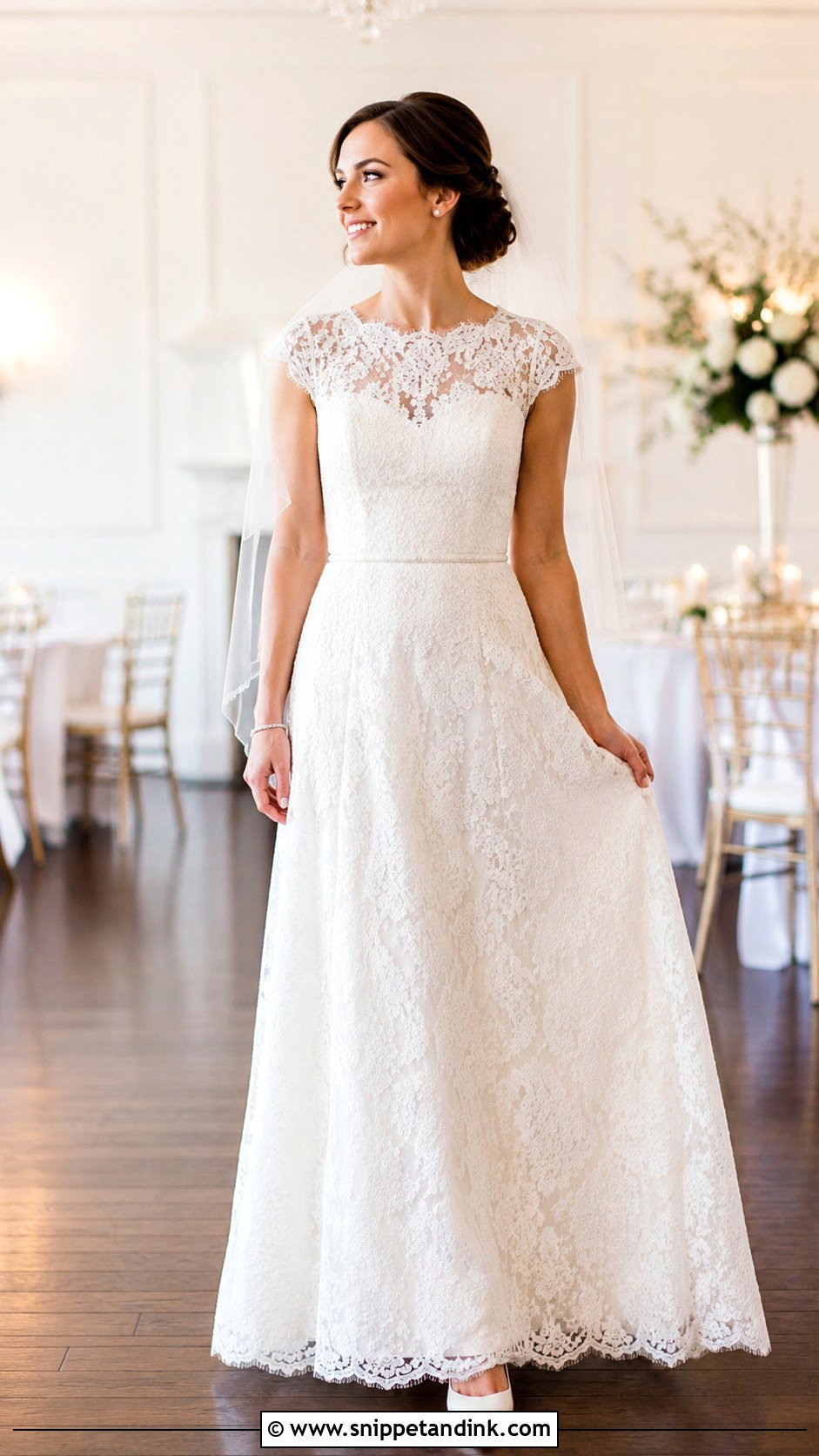
Cap sleeves add a little shoulder coverage to a lace A-line and suit most seasons. Watch the sleeve edge. If it presses into the arm, it’ll leave a red mark by the evening and look tight in every photo. Rounded-toe pumps, pearl studs, a simple bracelet, a fingertip veil and a low twisted bun keep it traditional without stiffness. If the lace covers the whole gown, choose a bouquet with a clean outline rather than trailing greenery. A softly defined waist adds structure. Small changes to where the sleeve sits on the shoulder make a surprising difference to how freely you move, so let your seamstress adjust it.
11. Satin Wedding Dress With Bow
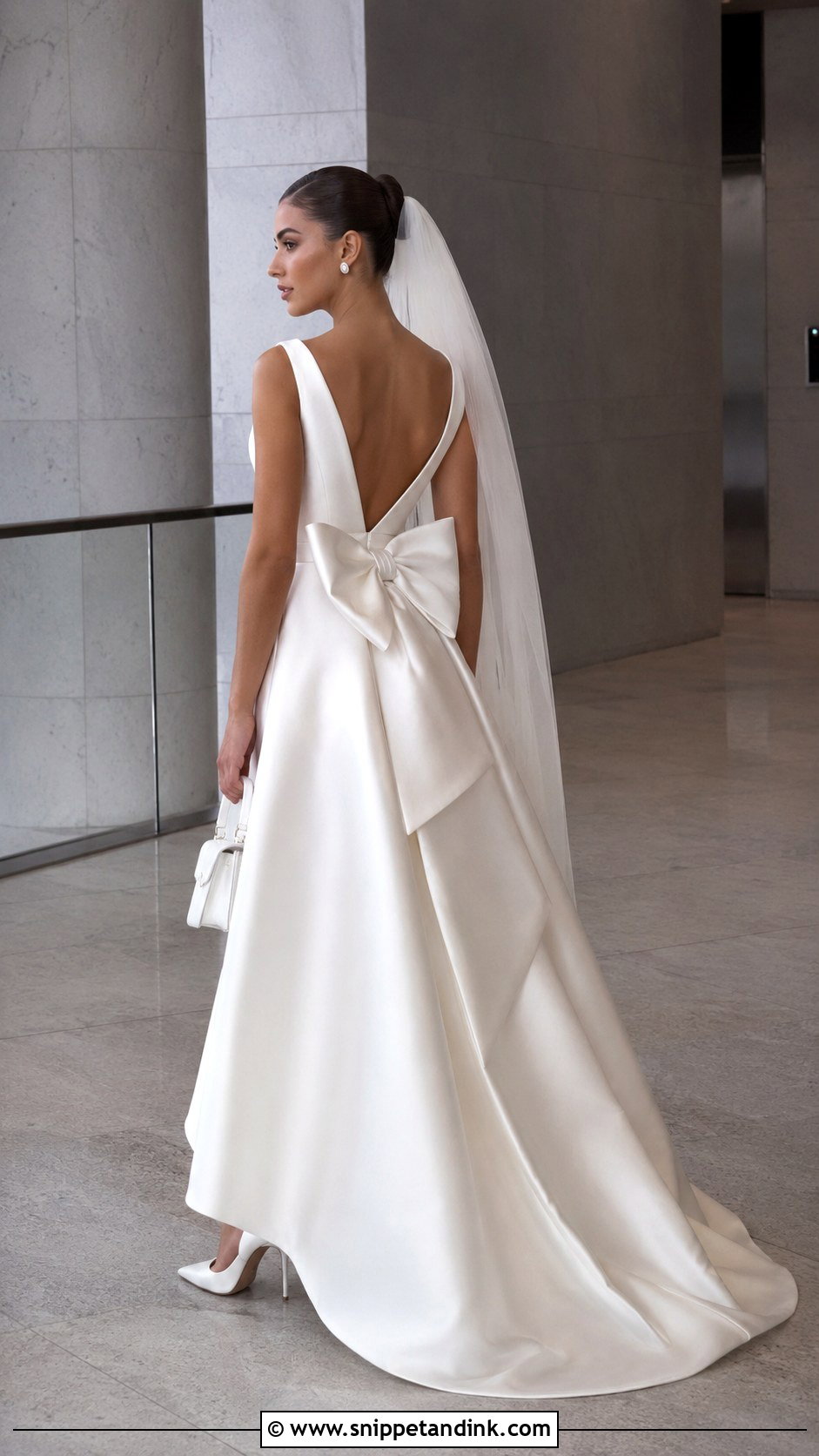
A big bow is a simple way to turn a plain satin gown into a statement. Place it at the back waist, the shoulder or on the train of a structured A-line or ball gown, and keep the front clean so it feels intentional. Sleek pointed heels, button earrings and a smooth updo show the back, with a plain veil sitting under the bun and falling behind the bow. Bows get crushed. I check at alterations that it’s firmly attached and keeps its shape from every angle, including after you’ve sat on it for an hour at dinner. A removable bow gives you a streamlined reception look; add a structured bag and very little jewelry.
12. Wedding Dress With Pockets
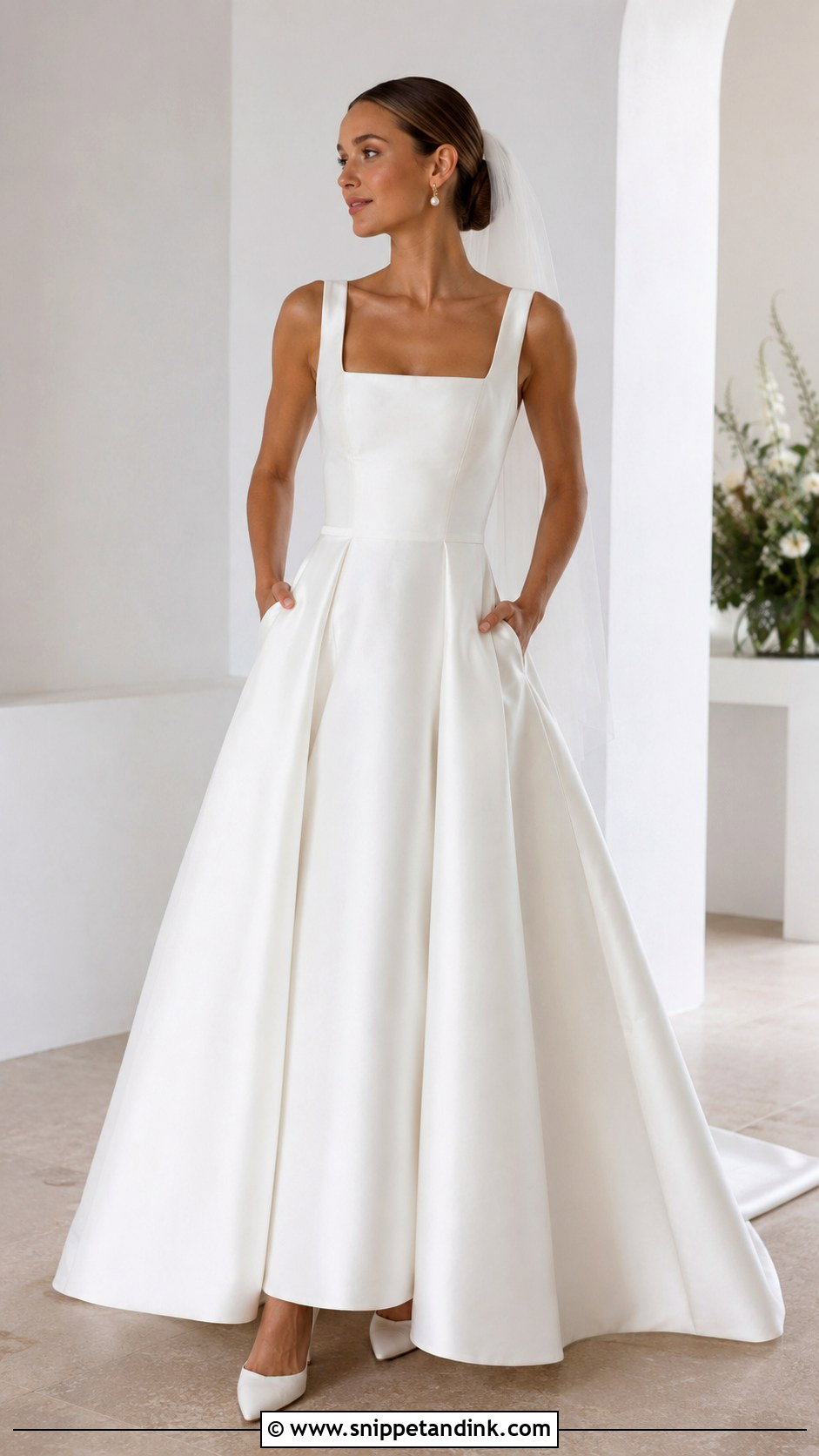
Of all the small requests I get, hidden pockets are the detail brides thank me for most often. They need fabric with body, such as satin, Mikado or jacquard, so the openings stay hidden. A square-neck or strapless bodice keeps the line clean, with block-heel pumps, pearl drops and a light simple-edged veil. Pockets give your hands somewhere natural to rest in relaxed portraits. Just don’t load them; a phone or a set of keys pulls the skirt out of shape and shows as a lump. Ask the seamstress to check both sit level and are easy to reach. A smooth bun or soft waves suit the unfussy design.
13. Beaded Bodice Tulle Wedding Dress
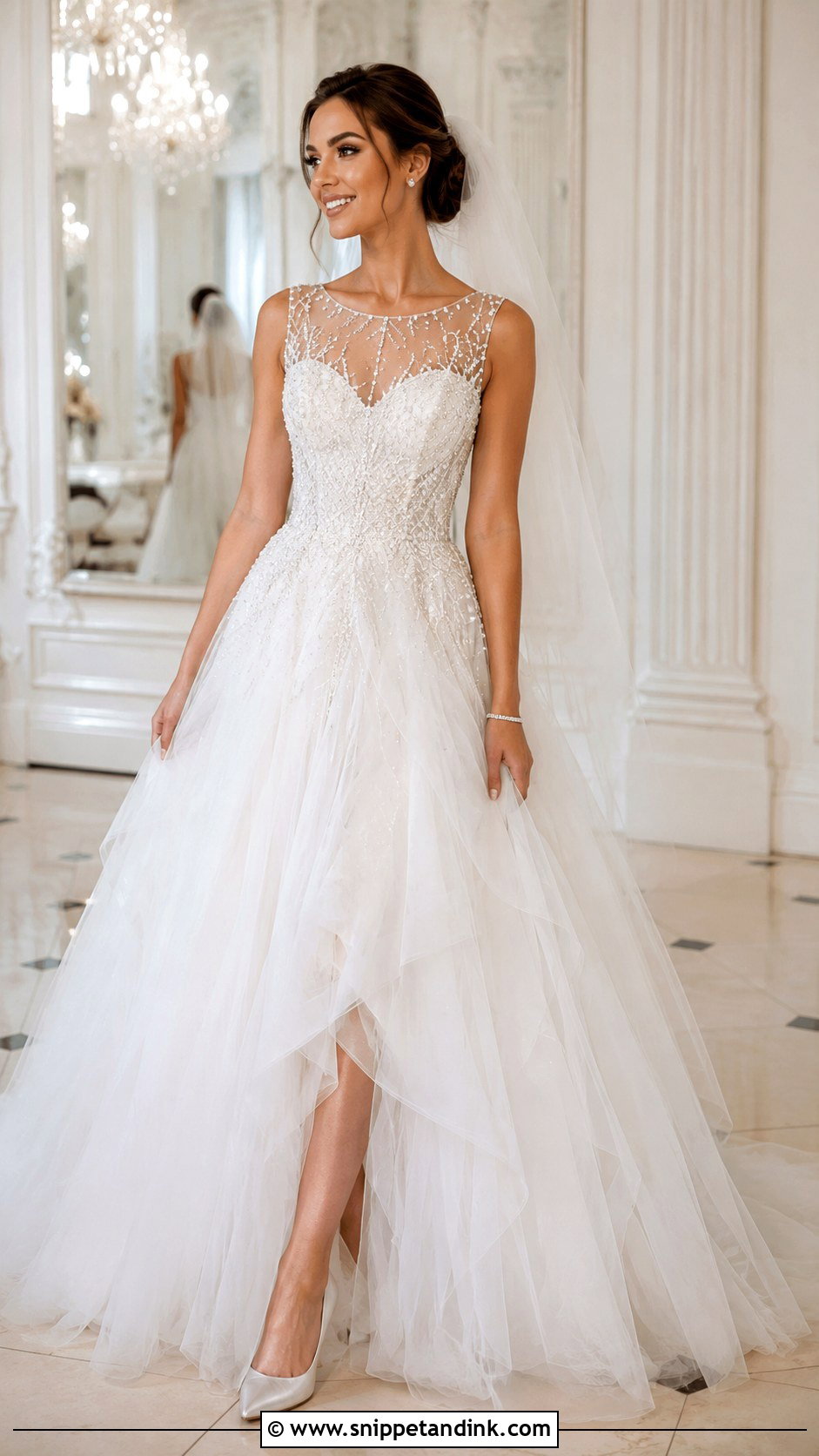
As light catches a beaded bodice, the full tulle skirt below softens all that sparkle. Check that the beads are secure and smooth under the arms, which is where they rub against the inner arm all day. A lined or illusion neckline gives whatever coverage you prefer. Simple satin heels, crystal studs and a slim bracelet are enough; skip an ornate necklace if the bodice already sparkles near the neck. A plain veil and polished updo stop it looking overdone. Choose several light tulle layers rather than stiff bulky net, since they move and photograph with softer volume. Look at the beading in daylight and indoors; some beadwork that glows gently by a window looks very sparkly under flash.
14. Minimalist Scoop Neck Wedding Dress
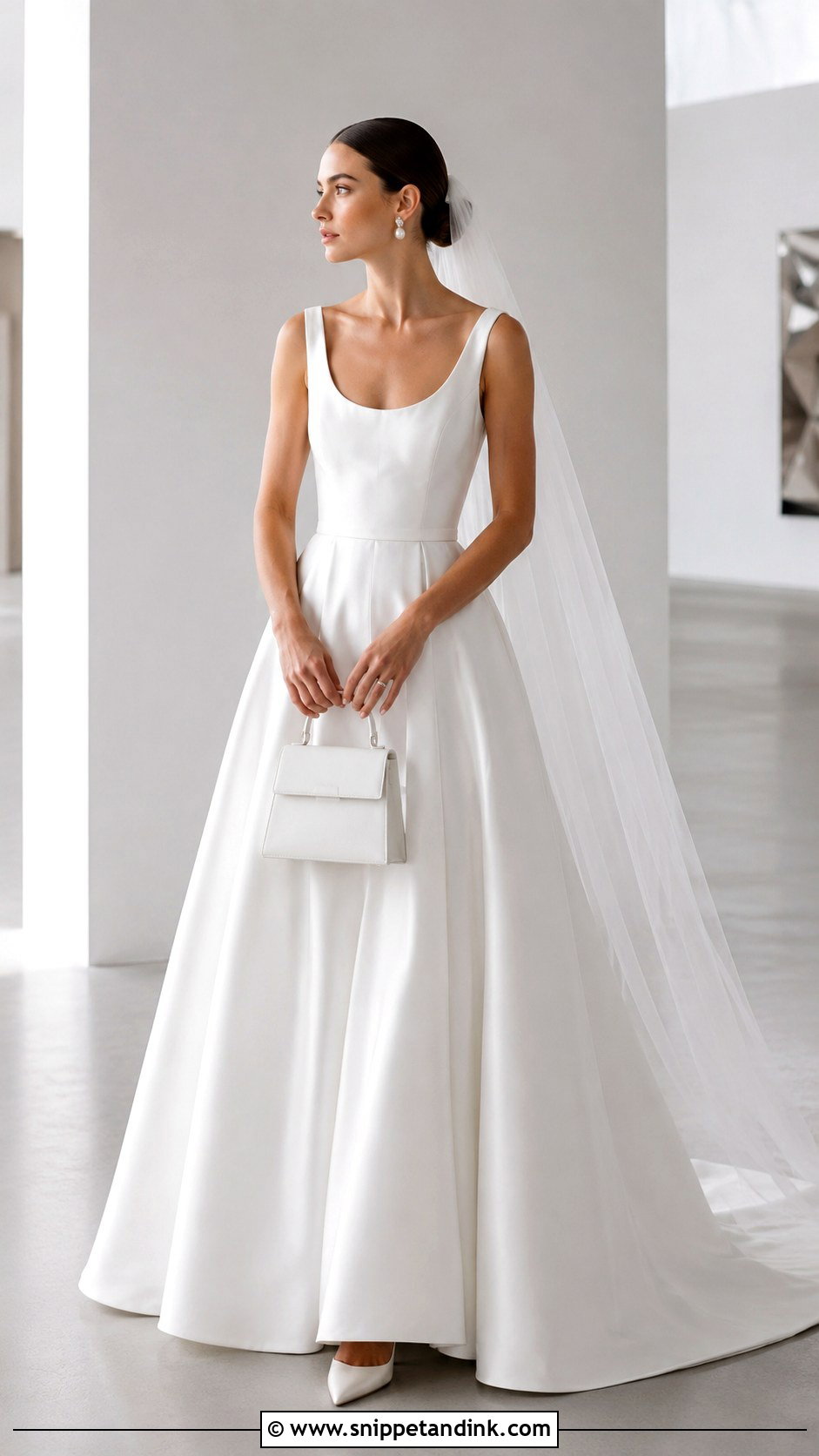
A minimal scoop-neck gown sounds easy to choose and is actually the hardest to get right, because with no embellishment the cut and the fabric quality are all anyone sees. A full A-line in satin or crepe-backed satin with precise seams and a smooth bodice is the base. Sculptural pearl earrings, a sleek bracelet, pointed heels and a structured ivory bag give it polish. A long plain veil adds movement. Wear your hair in a glossy bun, a low ponytail or smooth waves behind the ears. Covered buttons down the back are a subtle bridal note. It suits modern venues and formal rooms, and gives your flowers and accessories a clean background.
15. Organza Ruffle Wedding Dress
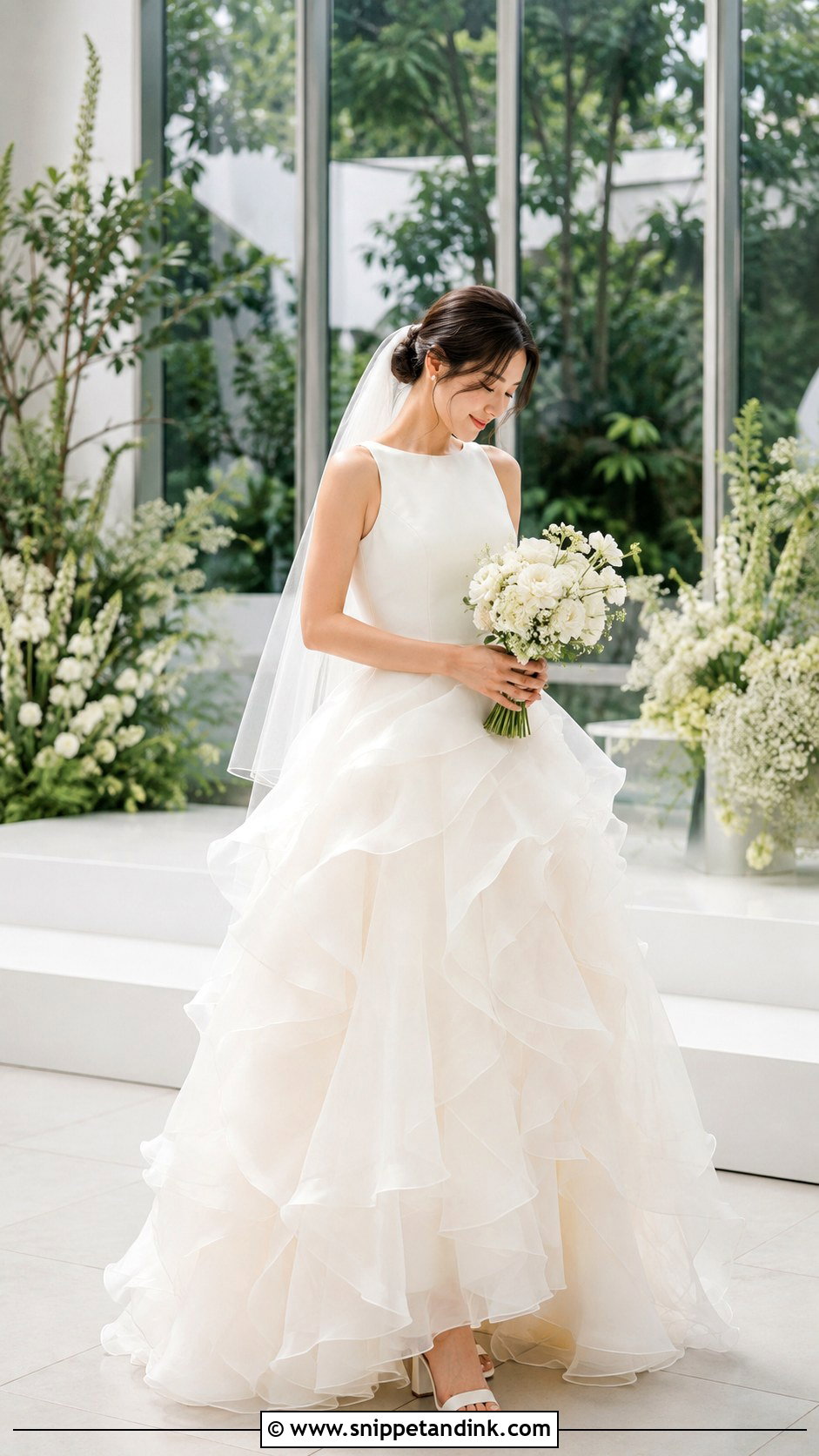
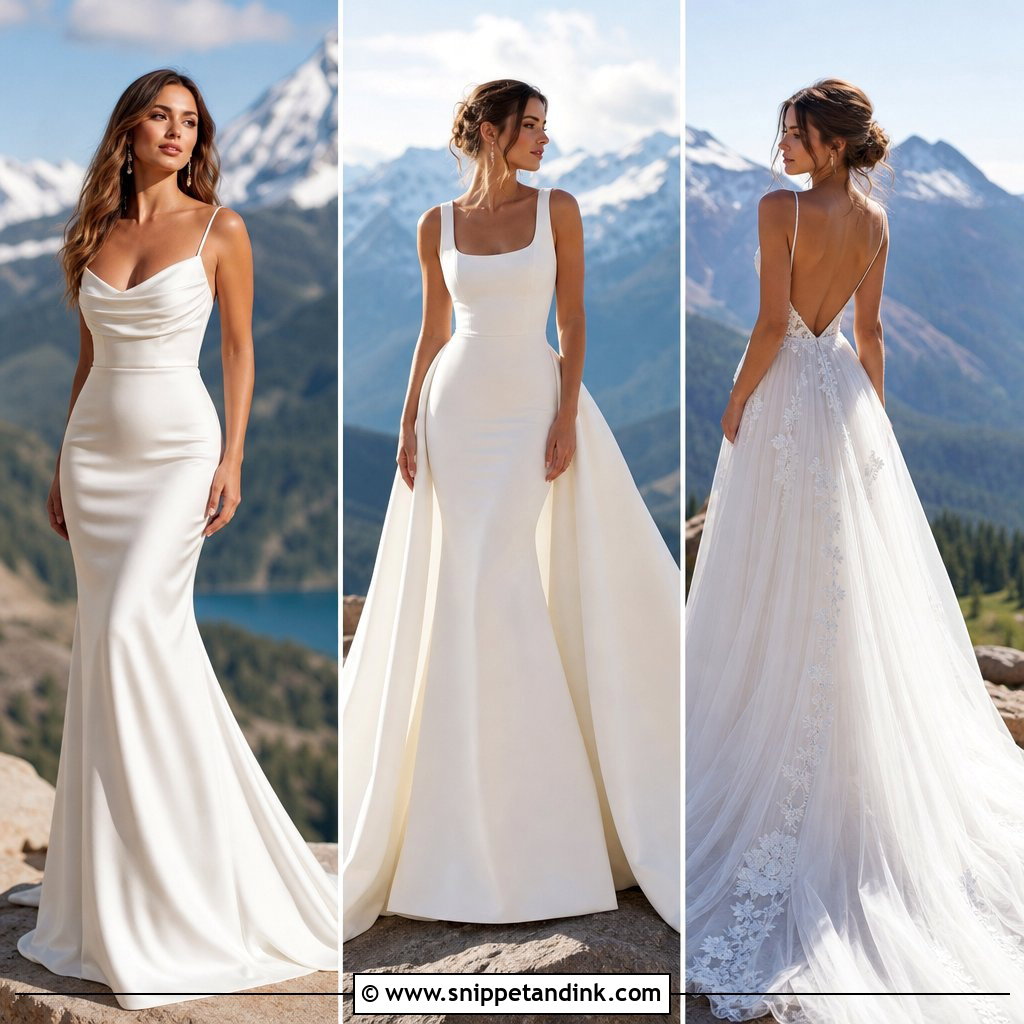
Organza ruffles give dimension without the density of heavy satin. Keep the bodice and neckline simple so the ruffled skirt leads. Cascading layers lengthen; evenly tiered ruffles make a bolder shape. Sturdy block heels, petite earrings, a light veil and a high or low bun keep the outfit neat. Don’t carry an oversized bouquet that buries the bodice. Organza is airy for its volume, but many layers still trap heat. Try the gown in motion, sit down, then stand up and see whether the ruffles fall back into place or stay crushed.
16. Detachable Sleeve Ball Gown Wedding Dress
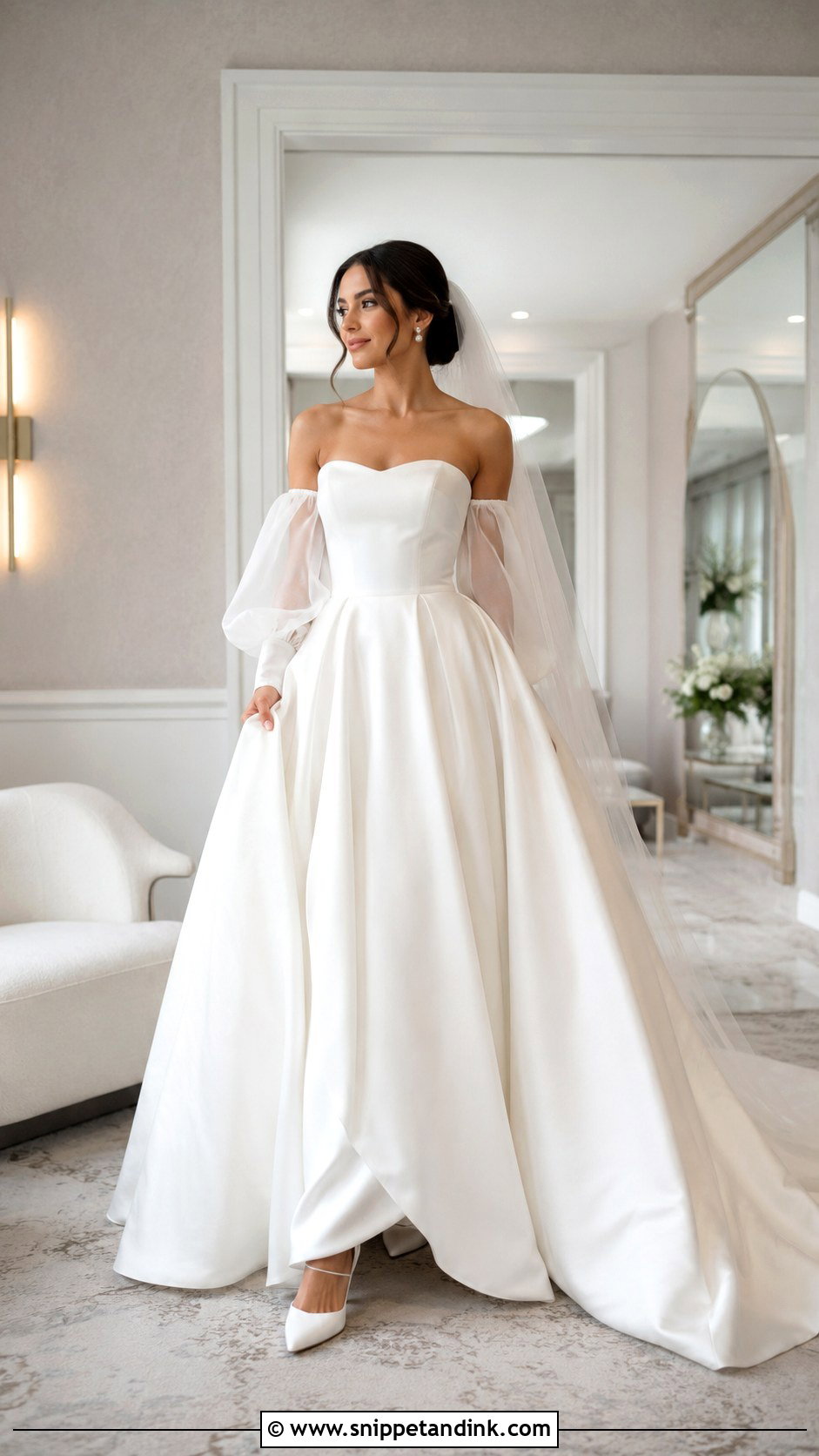
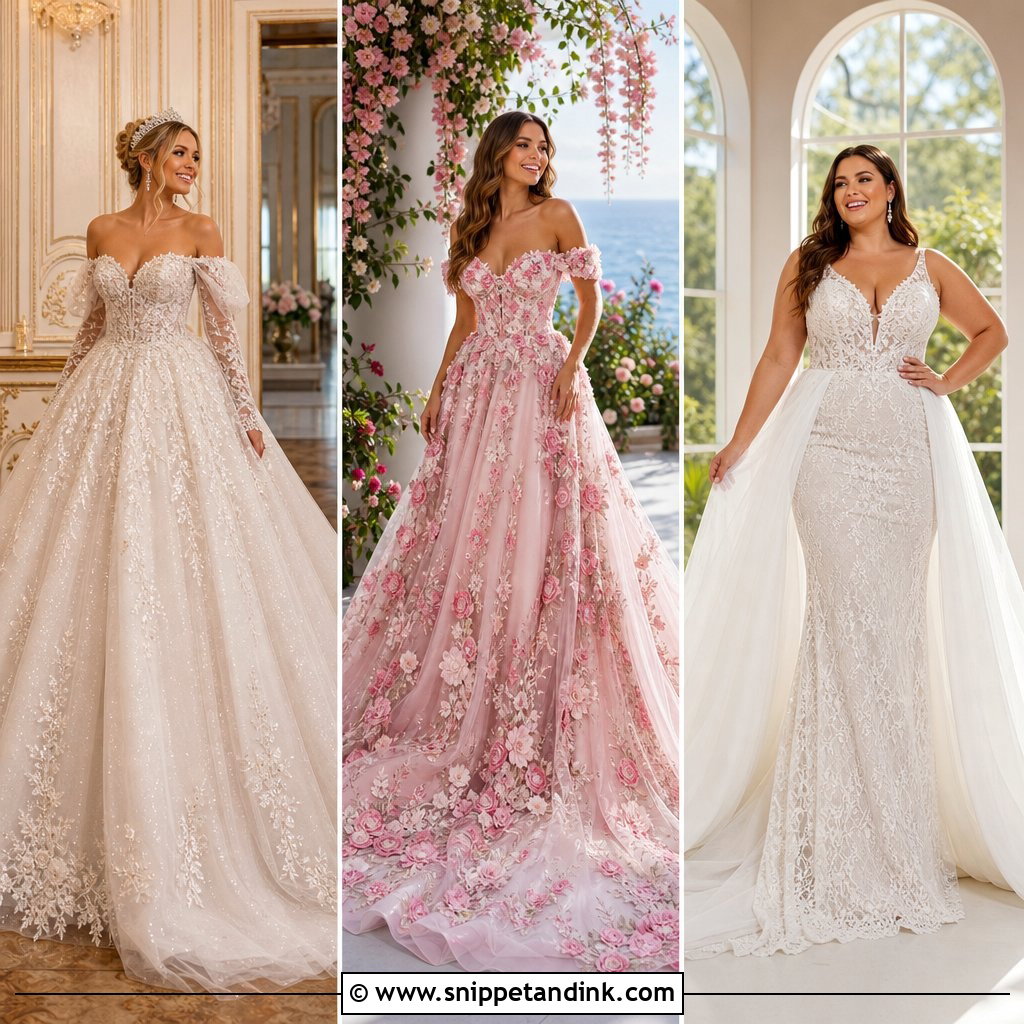
Detachable sleeves give you two looks from one ball gown. Fitted lace, puffed tulle or draped off-shoulder sleeves for the ceremony; bare shoulders for dancing. The strapless bodice underneath has to look finished on its own, so try it both ways before buying. Comfortable heels, pearl earrings and a veil that suits both versions tie it together. The attachments should lie flat and hide completely when fastened. Show your maid of honor or a helper how they come off, and give them a bag to store the sleeves in. It’s an easy way to have traditional coverage earlier in the day and freer arms later.
17. Wedding Dress With Overskirt
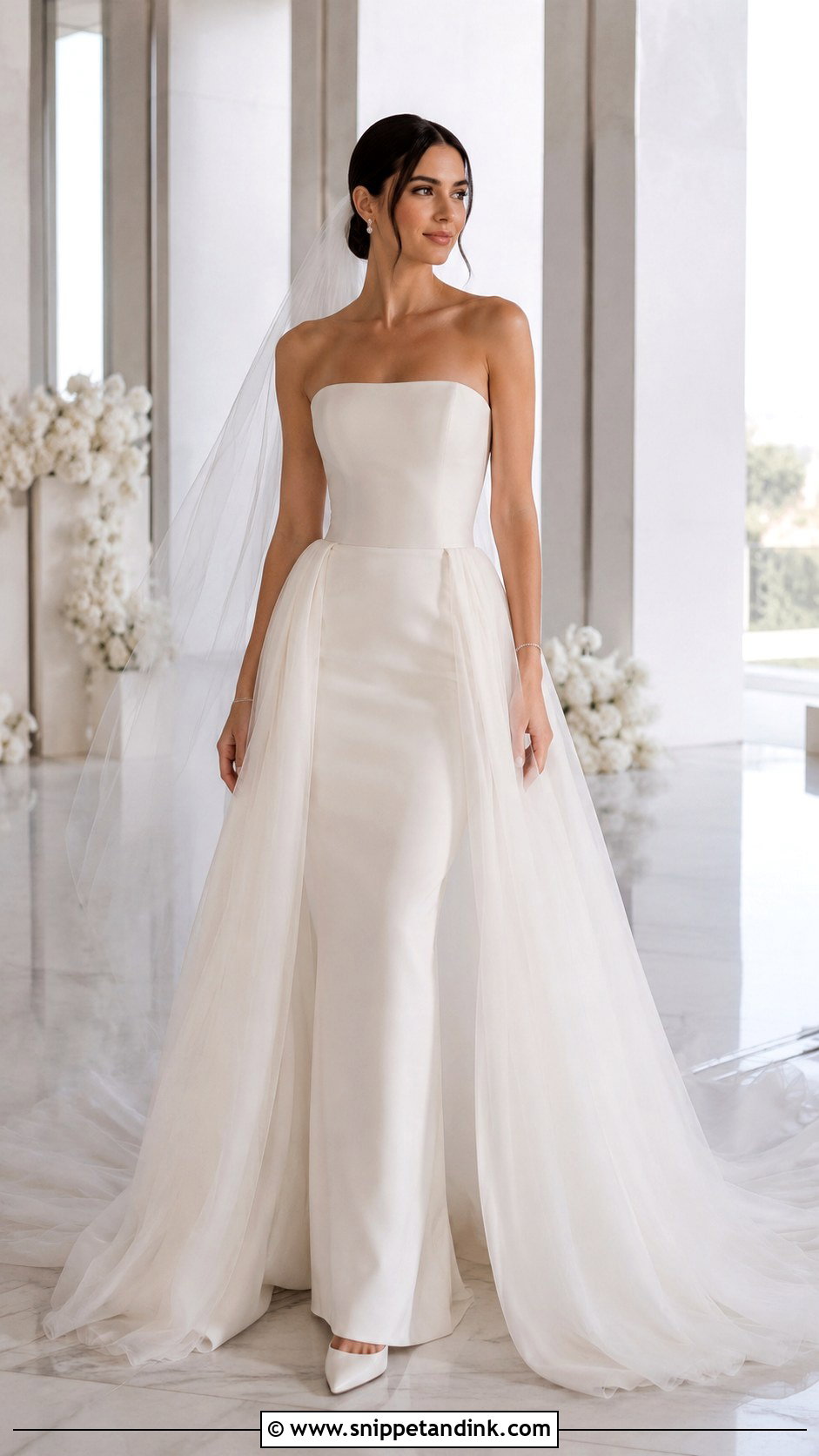
An overskirt gives a fitted gown sweeping volume and a dramatic ceremony entrance. Start with a column, sheath or fit-and-flare base, then add a satin, tulle or organza overskirt at the natural waist. Pointed heels, a simple veil and understated earrings work with both versions. The waistband closure should be hidden and the layer should sit without twisting as you walk. Practice the change before the wedding so it takes a minute, not ten. Once it’s off, the slim base dress gives you far more freedom on the dance floor while you keep the impact of a full gown for the ceremony.
18. Tea Length Full Skirt Wedding Dress
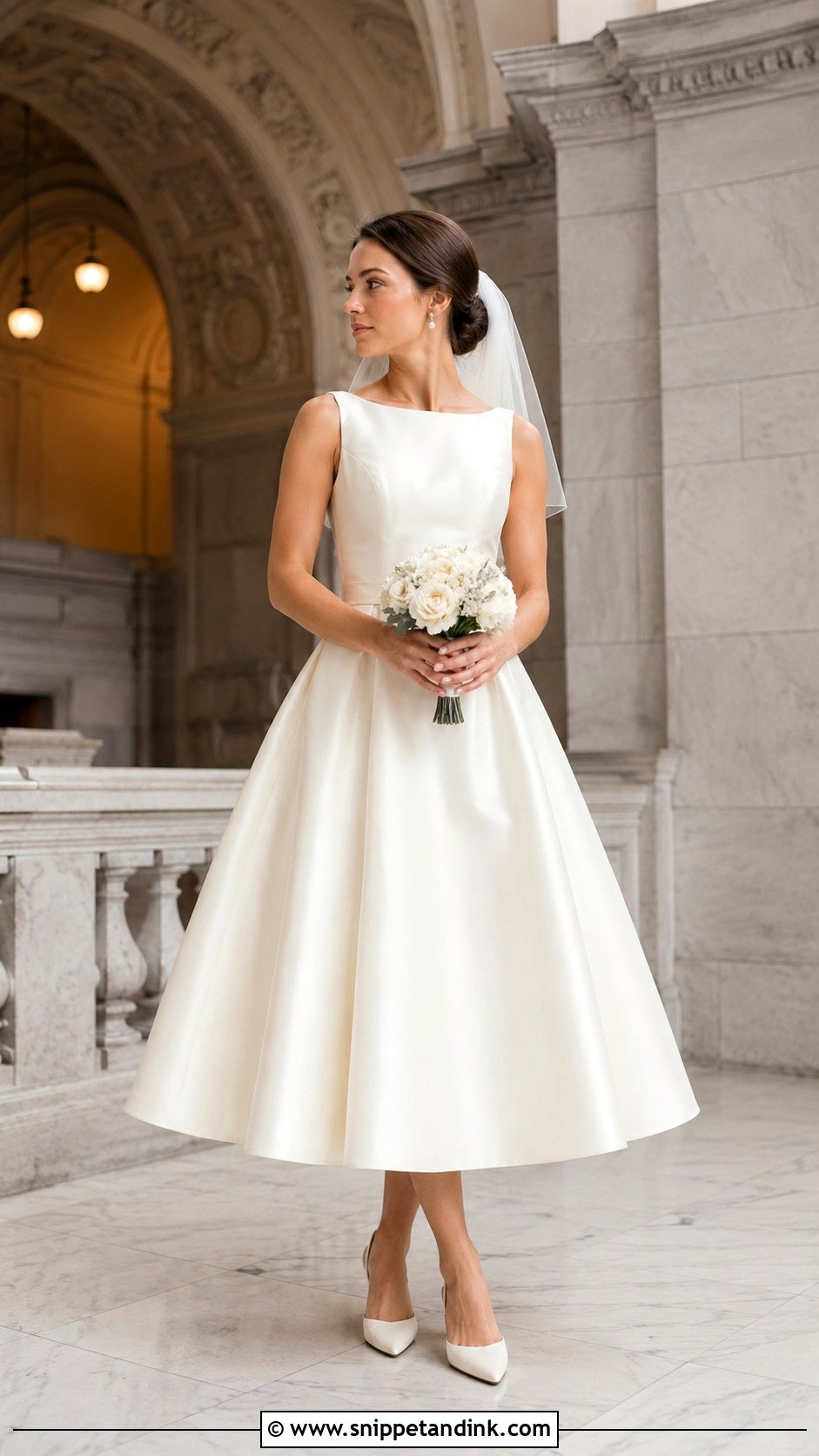
Tea length brings a vintage mood to a full skirt and puts your shoes in the spotlight. A fitted bodice with a bateau, scoop or sweetheart neckline and a skirt ending between knee and ankle is the shape. Polished pumps, slingbacks or embellished low heels all suit it, with pearl earrings, a compact bouquet and a short veil or a hair bow. Because everyone sees the hem, it must fall evenly and swing without catching on your calves. A supportive petticoat adds volume, but sit in it before you commit. It suits courthouse ceremonies, brunch receptions and smaller weddings, and walking is far easier than in a long train.
19. Plus Size Corset Ball Gown Wedding Dress
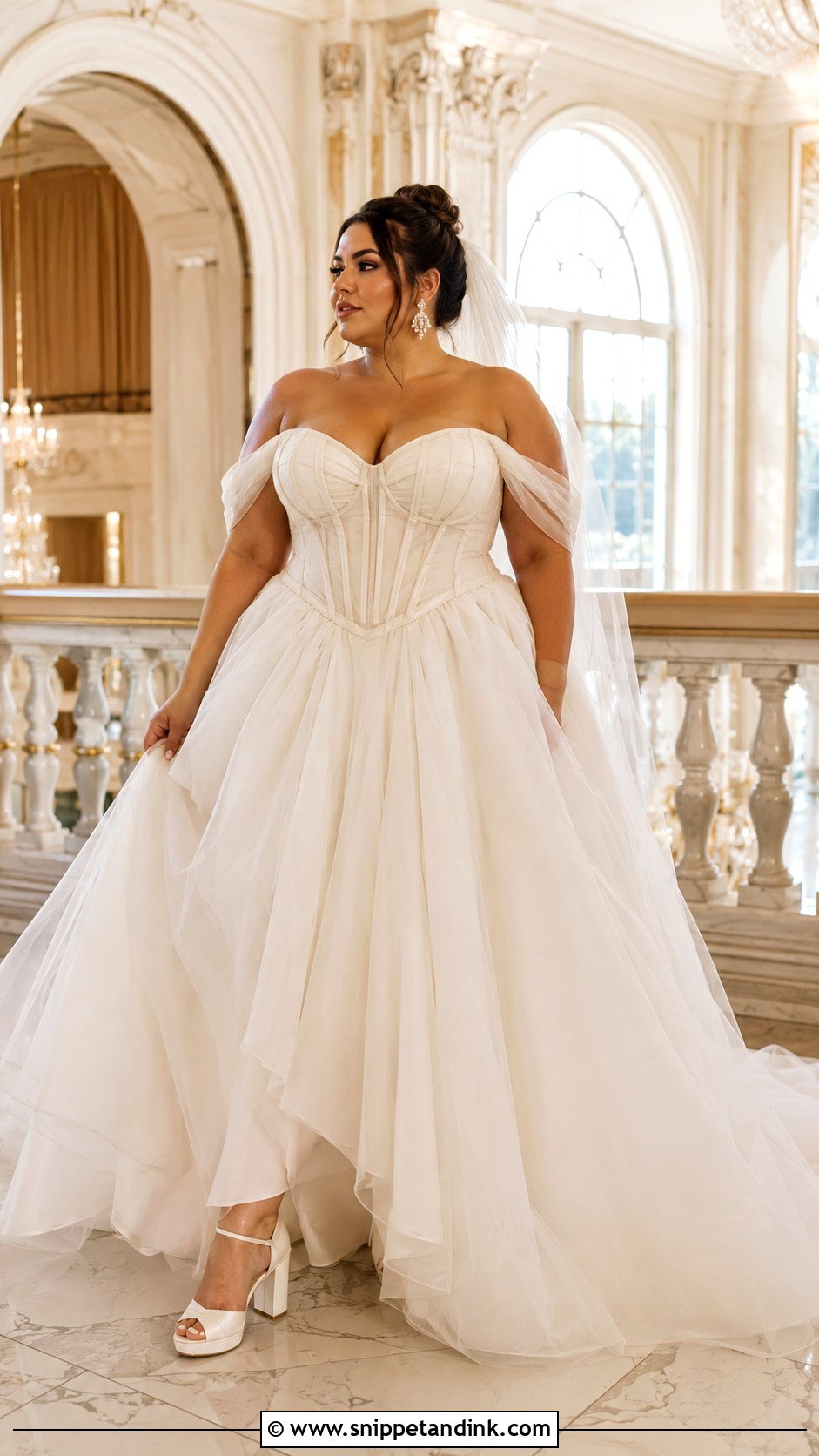
A well-built corset ball gown gives definition, support and real drama at every size. Look for adjustable lacing, flexible boning, supportive cups and a waistline that sits comfortably without digging in. Wide-fit block heels, statement earrings and a soft veil on a secure updo complete it. A basque or a natural waist can both work, depending on the proportion you like. Ignore the number on the label. Bridal sizing runs differently from everyday clothes, so I go by bust, waist, hip and bodice-length measurements instead. Alterations can refine the fit, but the gown should feel stable on you before any are made.
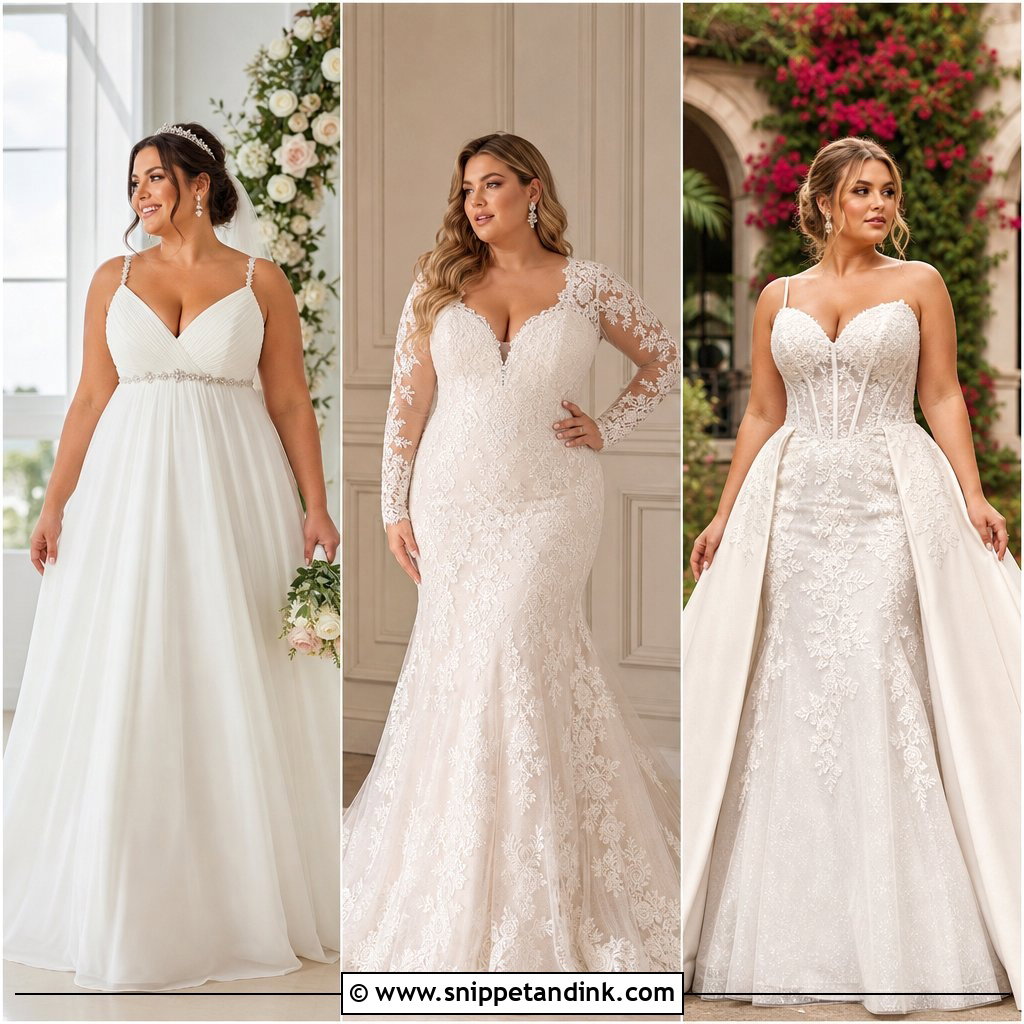


20. Chiffon Full Length Wedding Dress
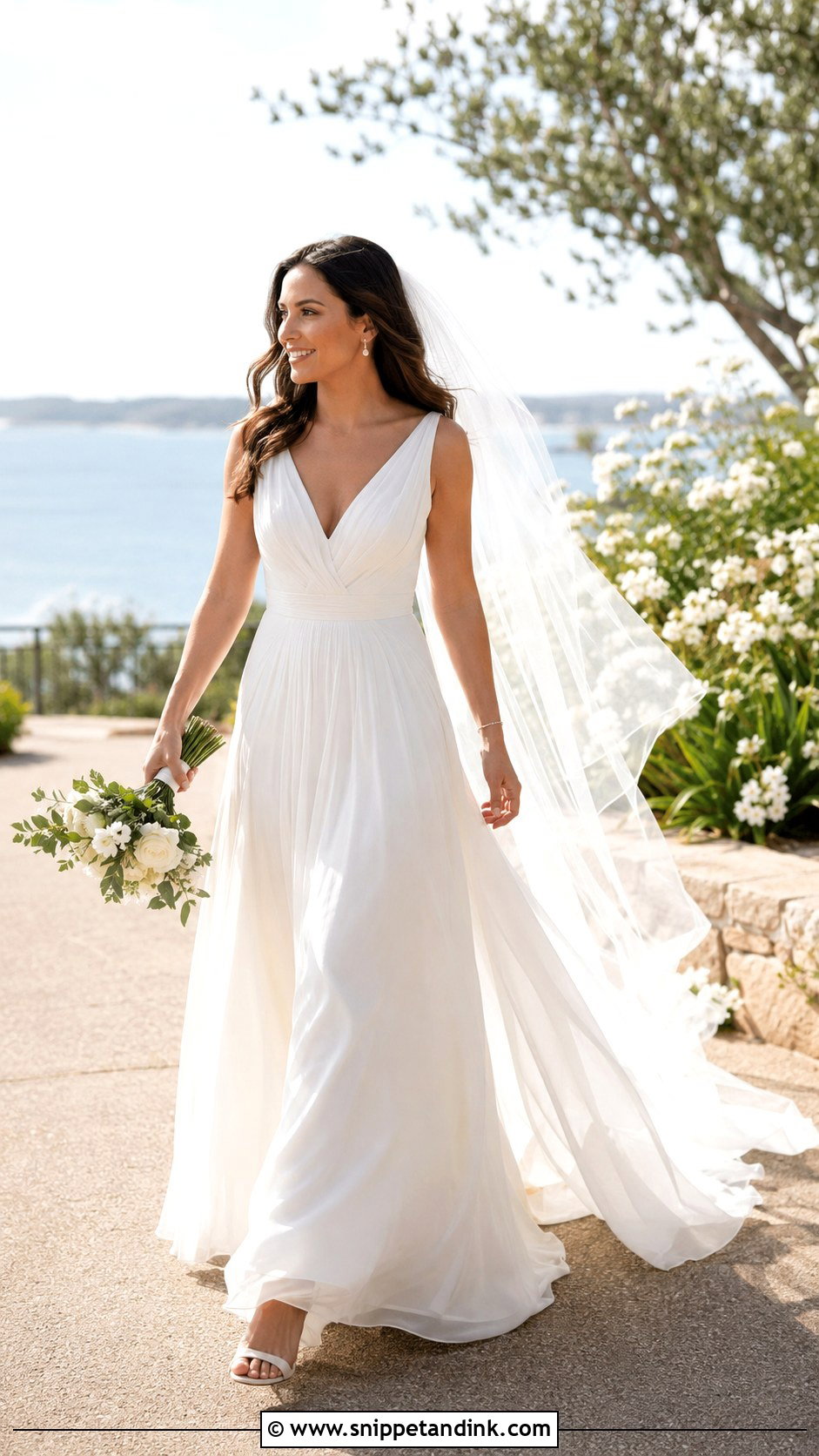
Chiffon is the softest full-length option, flowing where a ball gown stands. A gathered or pleated A-line skirt with a fitted V-neck, crossover or draped bodice is the classic build. Low block heels, delicate earrings, a fine bracelet and a fingertip veil suit it, with loose waves or a relaxed low bun. Chiffon can be slightly sheer, so stand in bright light and check the lining gives the coverage you want. A modest train keeps it manageable. It’s a natural fit for beaches, gardens and warm-weather weddings, where heavier fabrics would wilt you. Keep accessories light so the fabric’s movement stays the feature.
Caring for the Gown Before and After the Wedding
Once the final fitting is done, the gown usually comes home with you, and how it’s stored for those last weeks shows on the day. Hang it from the inner hanging loops, not the shoulders, so the weight of the skirt doesn’t stretch the bodice. Use the breathable fabric garment bag from the salon rather than dry cleaner’s plastic, which traps moisture. Keep it somewhere dark and cool, away from a radiator.
On the morning
Steam, never iron. Hold the steamer a few inches off the fabric and work from the inside on lace and beading. Tulle and organza relax with a light steam; satin and Mikado creases come out better if the gown has simply hung for a day or two. Give someone a small kit with white chalk for marks, clear tape for loose hems and safety pins.
Afterwards
Get the gown to a specialist cleaner within a few weeks. Spills of champagne, sweet drinks and cake are often invisible on the night but turn yellow-brown as the sugar oxidizes over time, and they’re much harder to lift once that happens. If you want to keep it long term, ask for acid-free tissue and a preservation box rather than a sealed plastic bag.
Put the Gown Through a Real Day Before You Buy
A gown earns its place by working from every angle and in every position: walking, sitting, hugging and dancing. The looks above cover structured ball gowns, flowing A-lines, overskirts, lace and clean minimalist designs, and the checks are the same for all of them: bodice support, fabric weight, hem length and how freely you move. Bring your shoes and undergarments to every alteration appointment. Let accessories support the gown’s strongest detail rather than compete with it. Above all, match the dress to your venue and your own comfort; a fit you trust is what makes you forget about the dress and enjoy the day.
You'll Like These Ideas:




Leave a Reply