
Pregnant brides usually walk into a first fitting with one worry: will anything still fit on the day itself? It can, if the gown is chosen for how your body will change rather than how it looks at that first appointment. The ideas below go well past the plain empire waist, into stretch crepe, bias-cut satin, lace sleeves, detachable overskirts, short courthouse dresses and loose garden styles. What they share is the thing I look at first in a fitting room: where the seams sit and how much give the fabric has across the bust and bump. Get that right and the shoes, veil and jewellery become the easy part.

Planning Fittings Around a Bump That Keeps Growing
Bridal gowns are usually ordered months ahead, and that is the awkward part when you’re pregnant. Bodies don’t change to a timetable, so I plan backwards from the wedding date rather than forwards from today. The first thing I ask is how many weeks along you’ll be on the day, because that, not your current size, decides what we order.
- Tell the shop your due date at the very first appointment. A consultant who knows can size for the wedding week instead of the week you walk in.
- Made-to-order gowns often take several months, while ready-to-wear and maternity lines can arrive much sooner. If your timeline is tight, start with those.
- Treat the first fitting as a check on length and style only. Snug fitting at that stage is wasted work.
- Book the final fitting as close to the wedding as your seamstress allows, often within the last couple of weeks, so the bodice is fitted to the bust and bump you’ll actually have.
- Bring the exact bra, support band and shoes you’ll wear to every fitting. Changing any of them later changes the hem and the bust.
What a seamstress can and can’t change late
Taking a gown in is easy. Letting it out depends on how much spare seam allowance the maker left inside, and many gowns have very little. That’s why I lean toward stretch fabrics, corset or lace-up backs, side ruching and wrap fronts for pregnant brides: they build adjustment into the design, so a late change becomes a quick tweak rather than a rebuild.
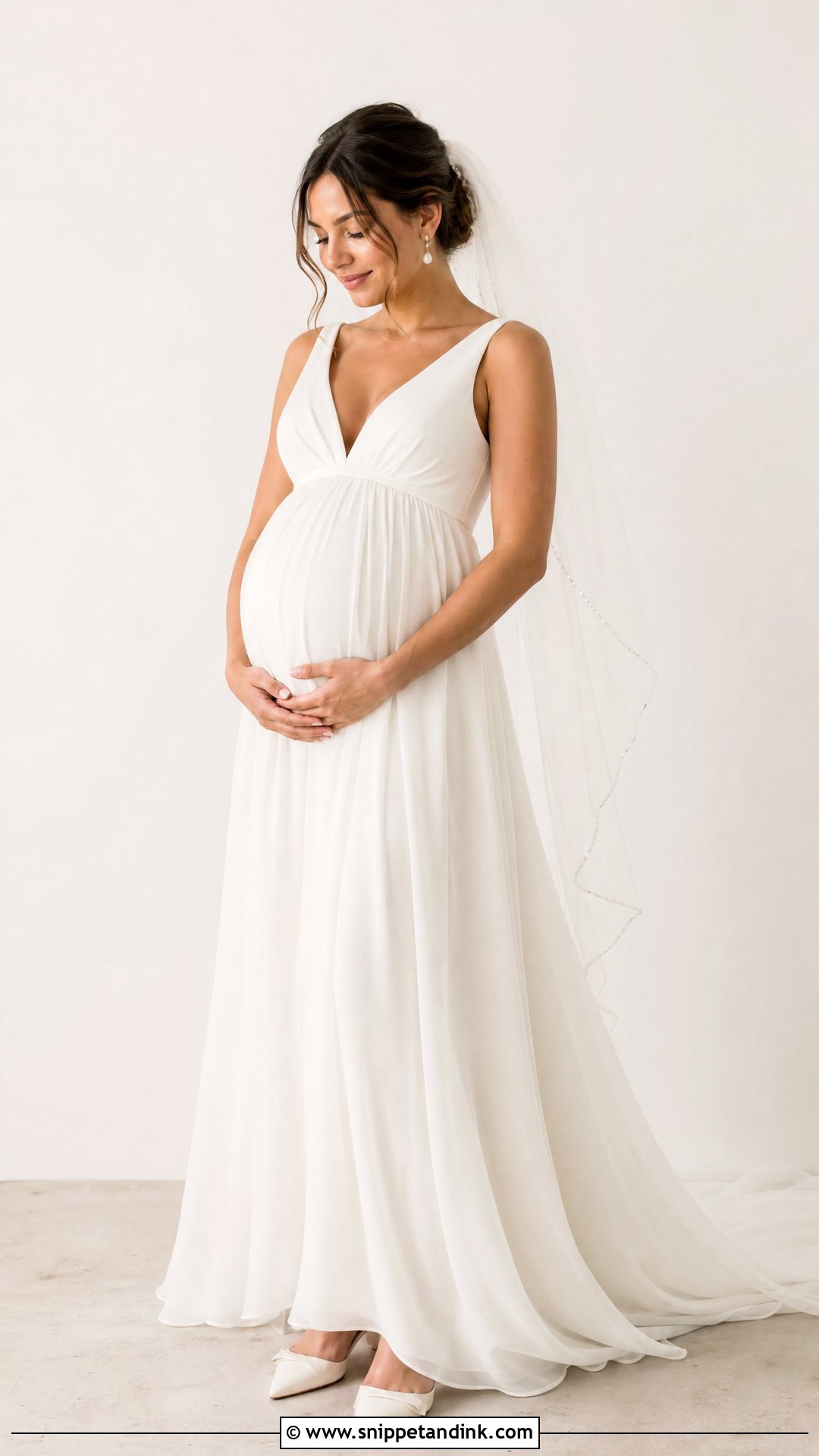
1. Empire Waist Maternity Wedding Gown
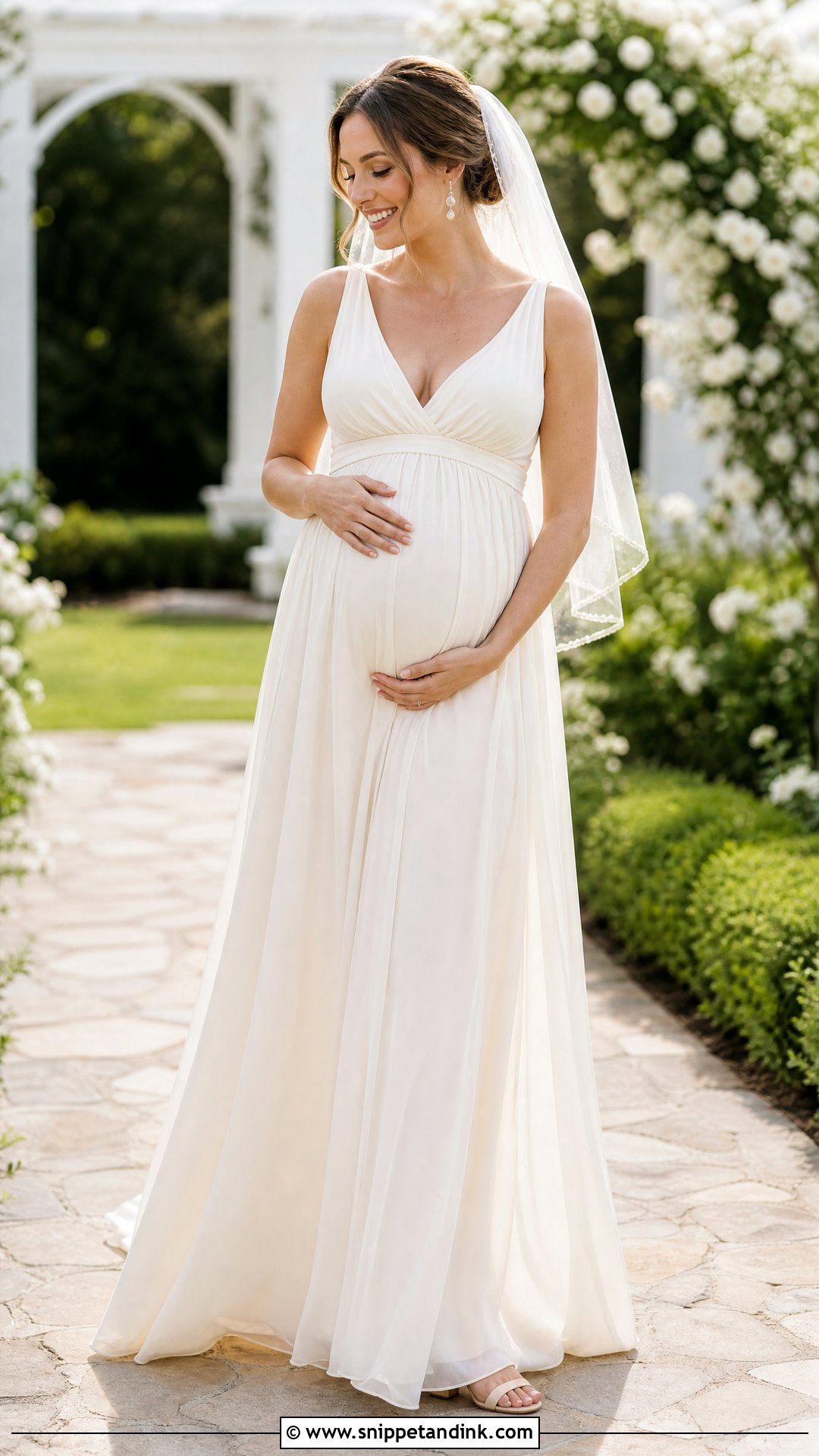
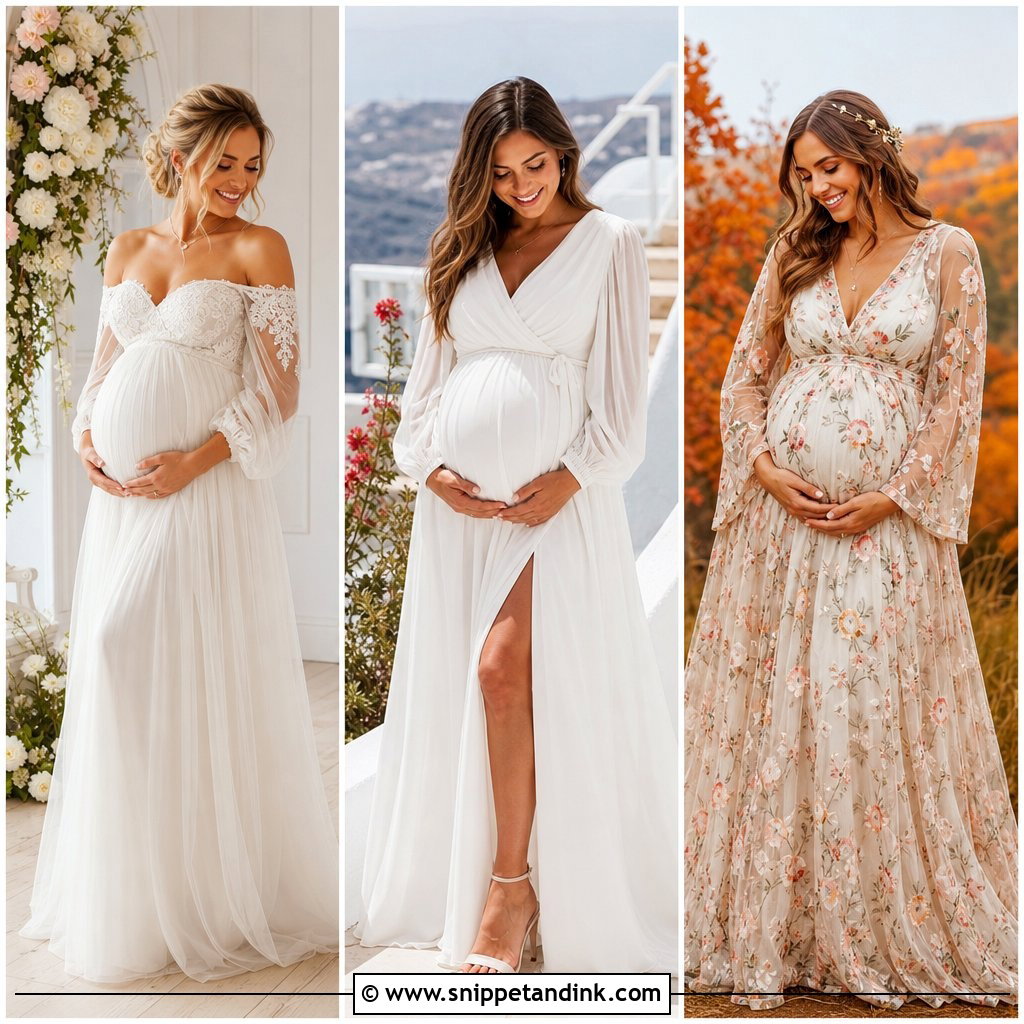
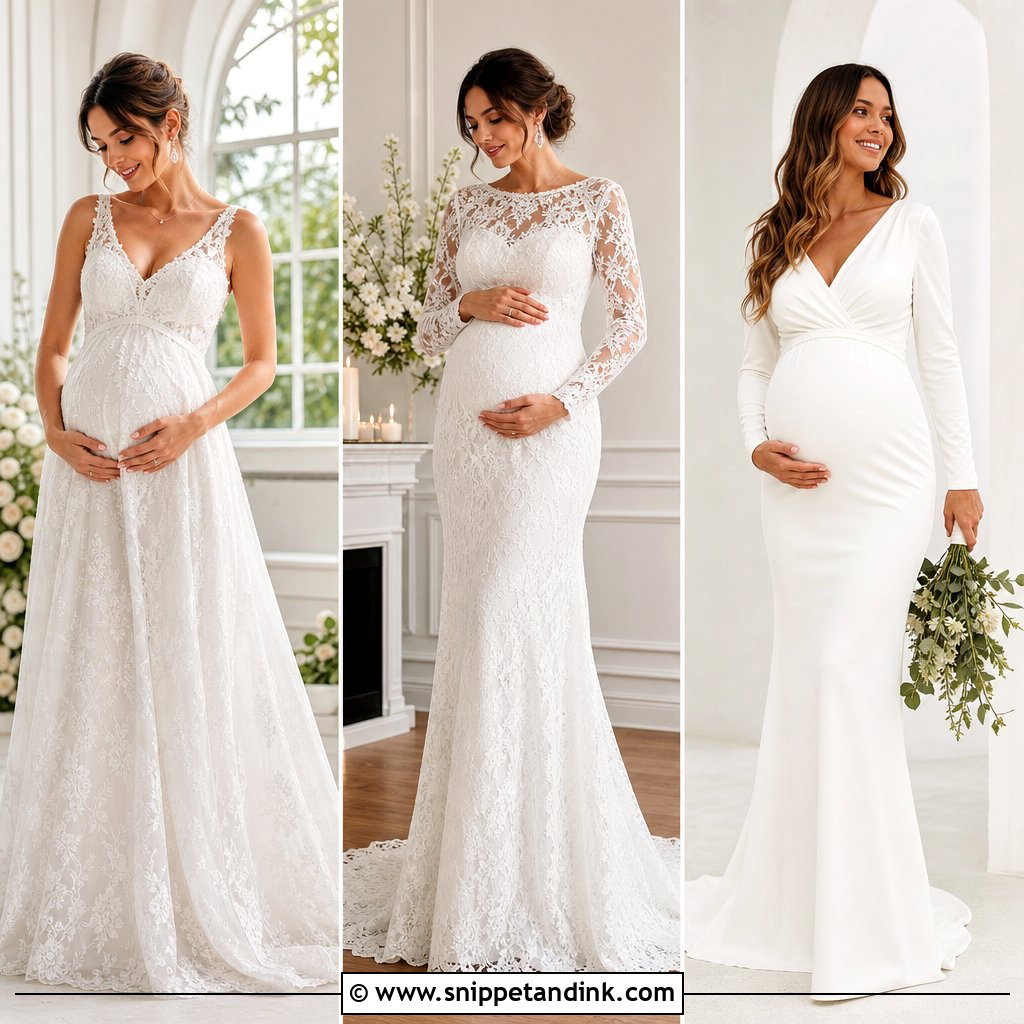
An empire waist maternity wedding gown is where I start most pregnant brides, because the seam sits under the bust and nothing presses on the bump. What I check is the seam height itself. The bust often grows in the last trimester, and a seam that sat neatly at the first fitting can ride up and cut across the ribs, so I like spare allowance left in that bodice panel. Chiffon, tulle or light crepe keeps the skirt airy. A V or sweetheart neckline leaves room for a proper maternity bra, and low block heels, pearl drops and a veil past the waist finish it without adding weight.
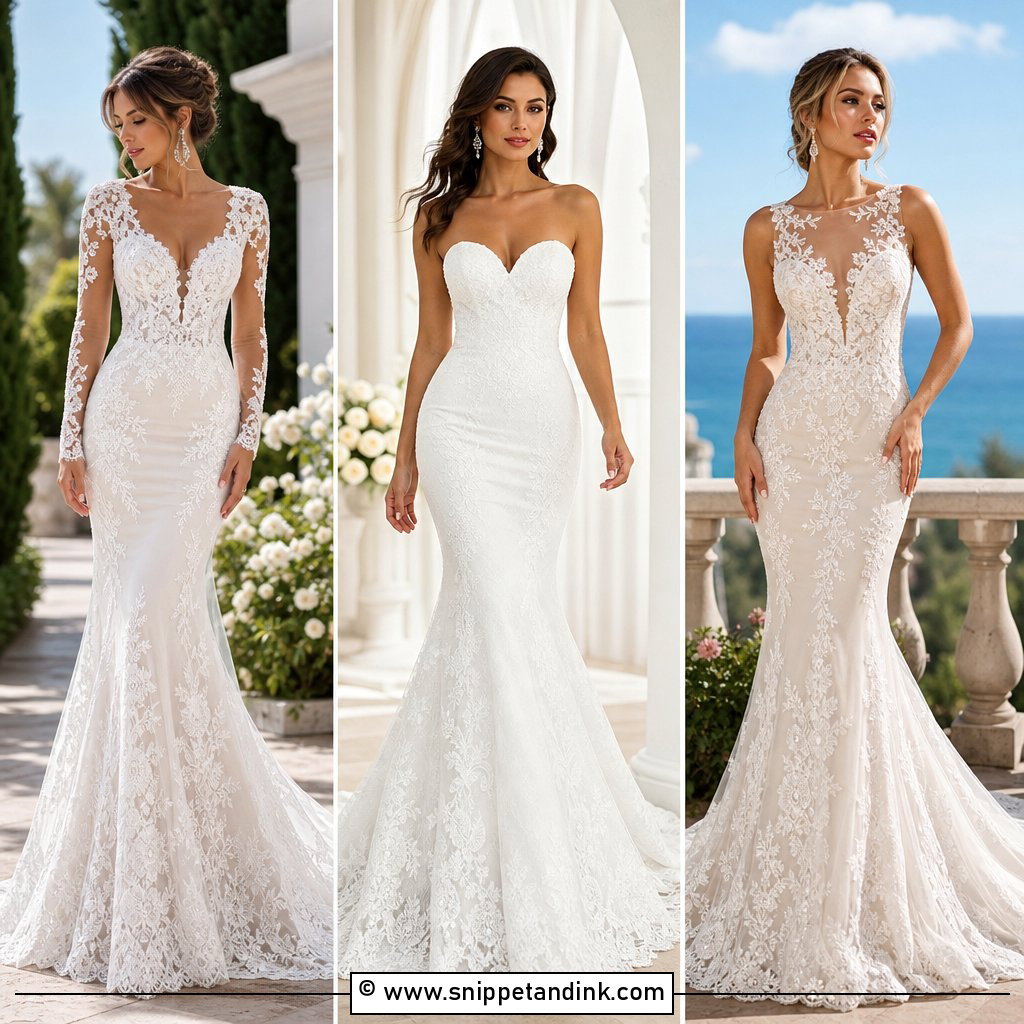
2. Lace Sleeve Maternity Wedding Gown
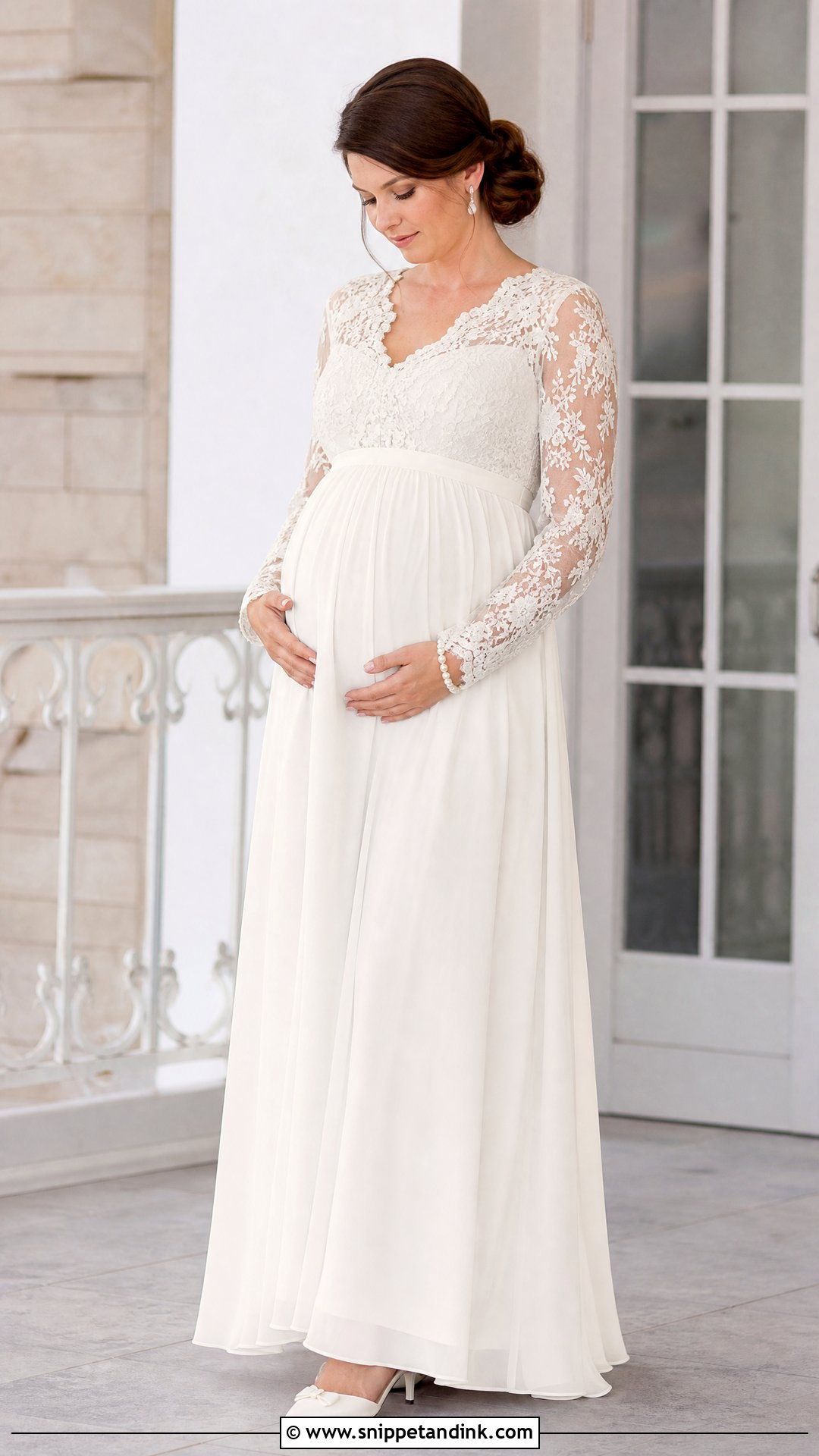
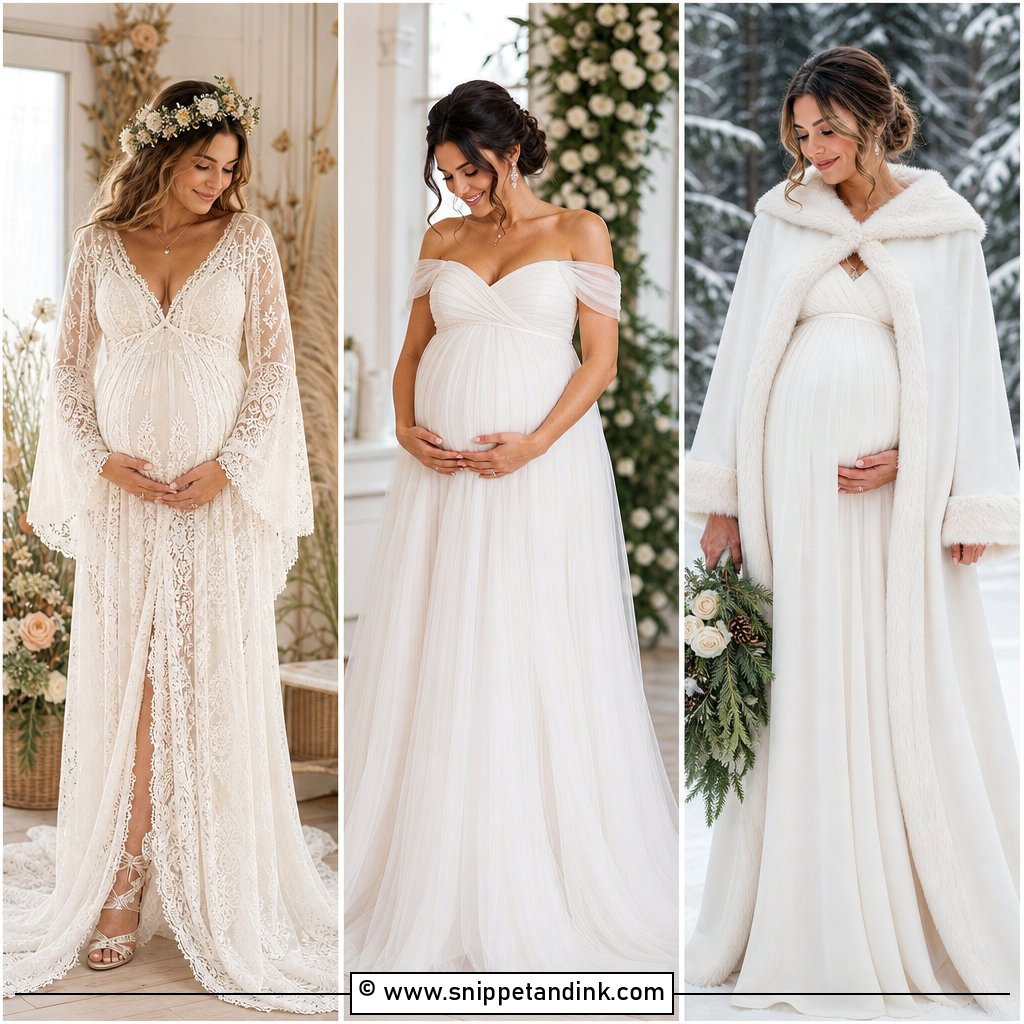
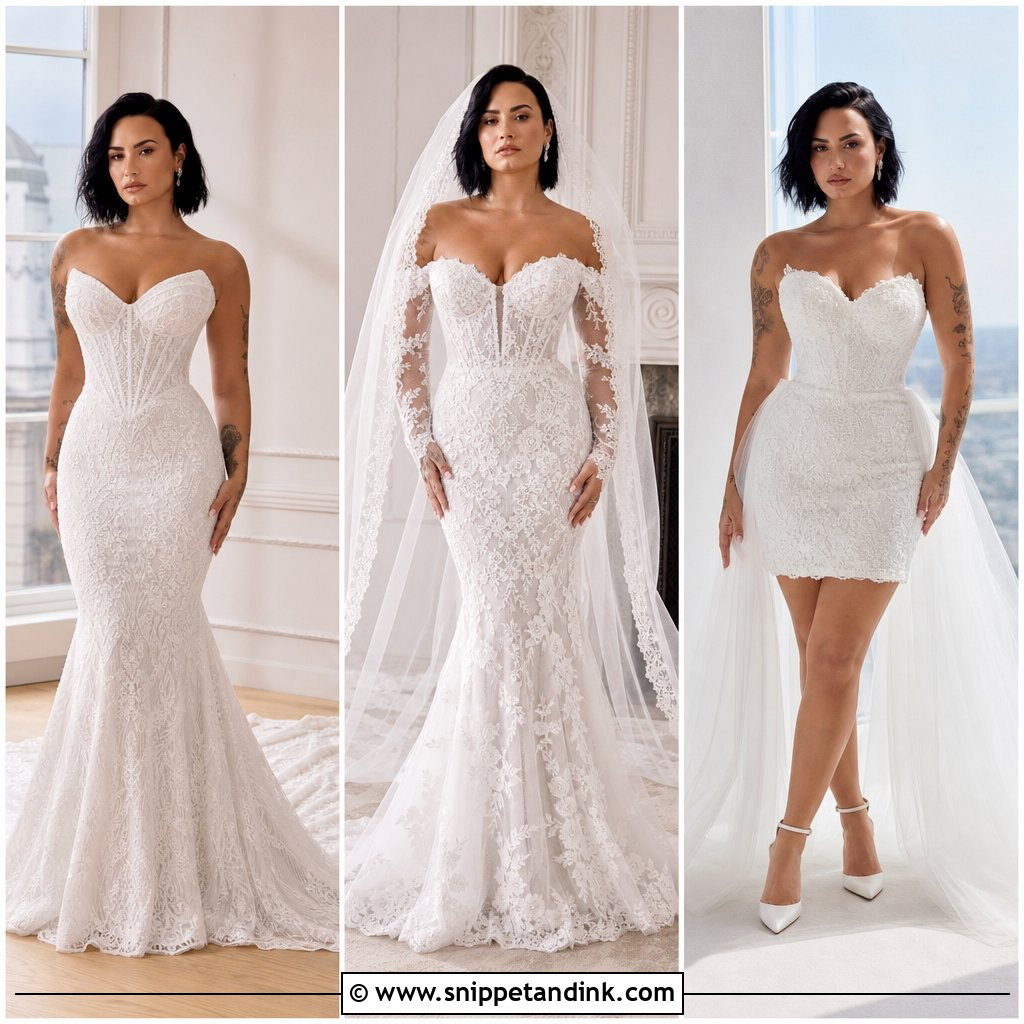
Lace sleeves give arm coverage, but on a pregnant bride I’m fussy about the kind of lace. Corded lace on rigid net has almost no stretch, and arms and upper back can swell later in pregnancy, so a sleeve that fit in the second trimester may feel tight by the wedding. Stretch lace over a soft lining avoids that. Keep the bodice seam high or let an A-line skirt take over below it. Closed-toe kitten heels and a low bun that shows off the neckline suit it, and it is warm enough for cooler months and formal rooms.
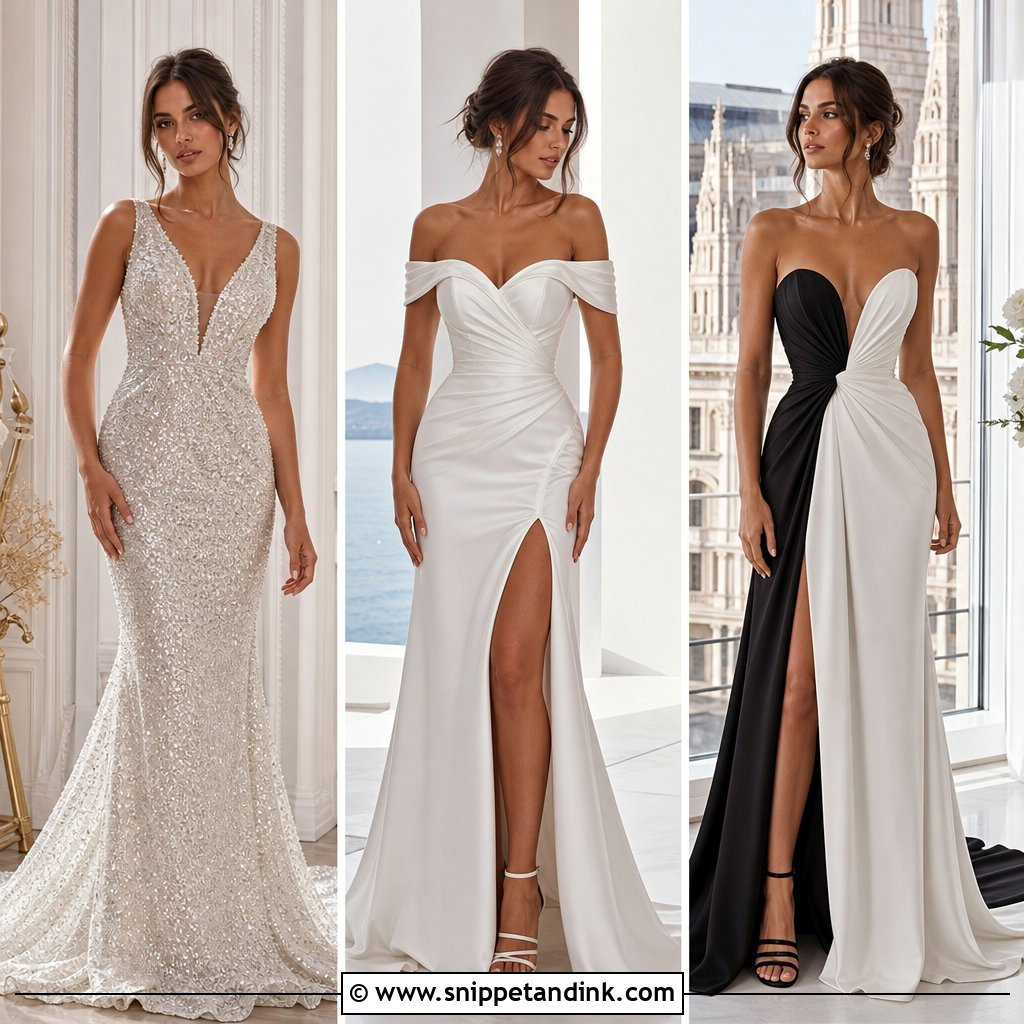
3. Off Shoulder Maternity Wedding Gown
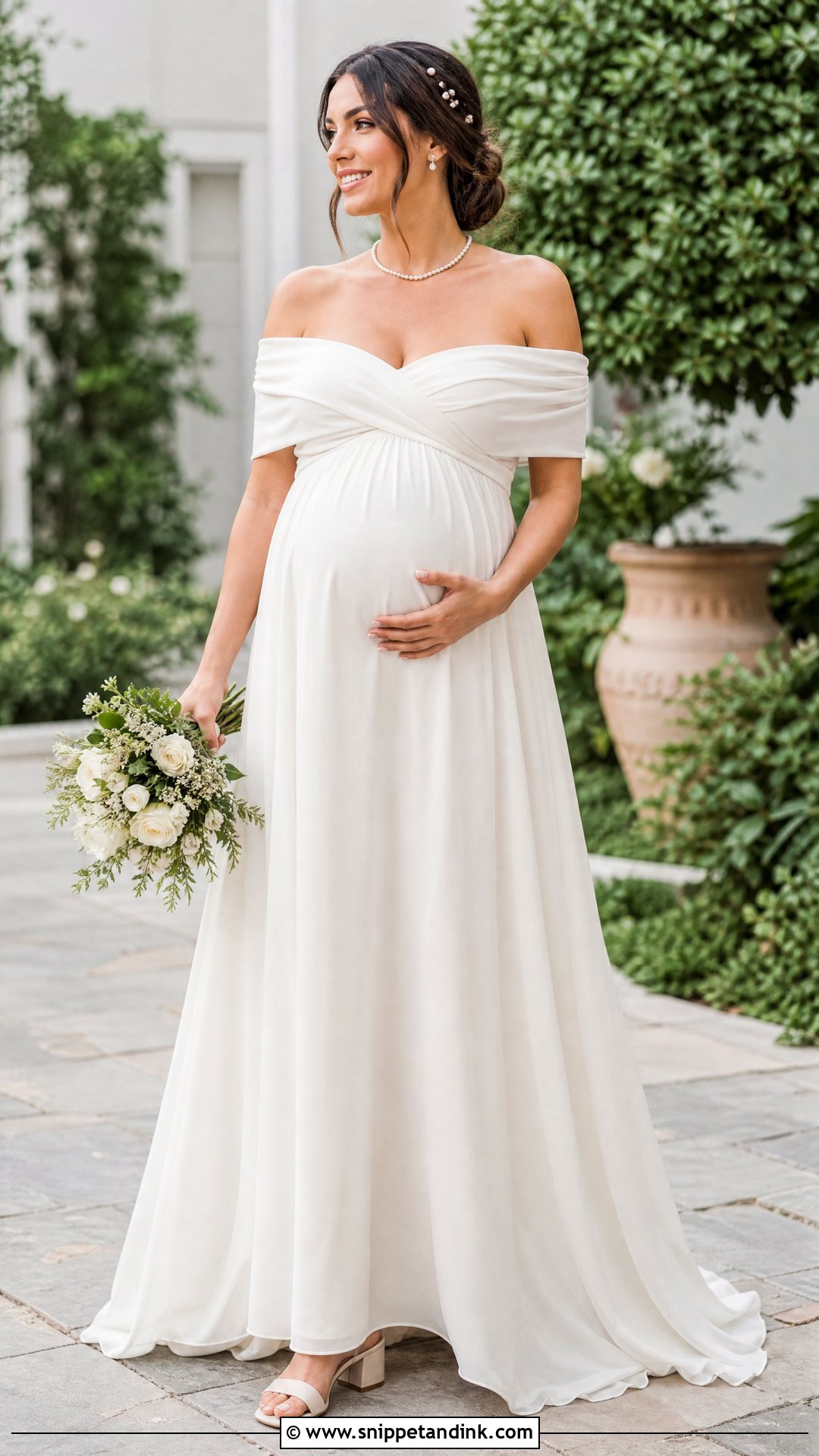
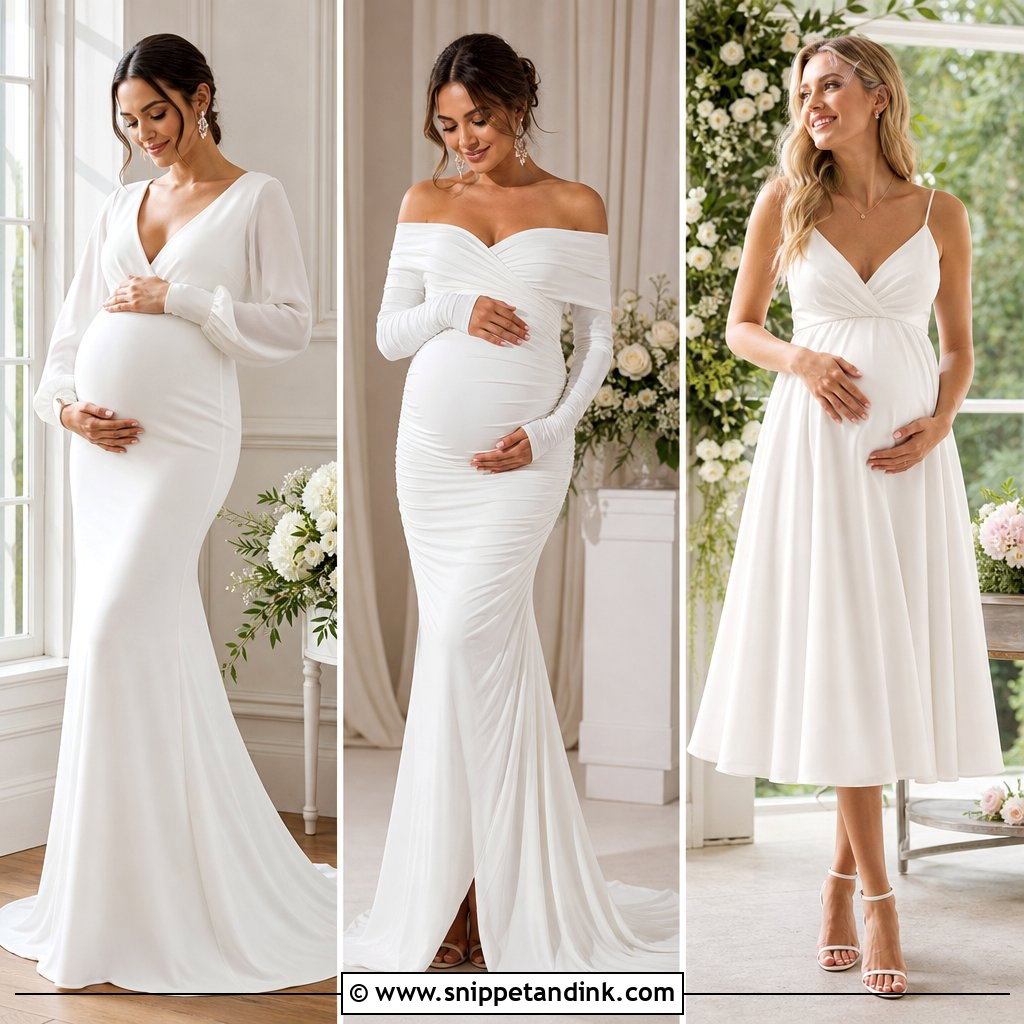
Off-shoulder bands are the detail I test hardest at a fitting, because you’ll be lifting your arms to hug people all day. A band with elastic or stretch lining stays put; a rigid one either slides down or digs in. The focus on shoulders and collarbones balances the bump well, and light ruching through the bodice gives the fabric somewhere to go when you sit. Keep the skirt to a simple A-line in chiffon or light satin. A short necklace and pearl pins in the hair are enough jewellery here.
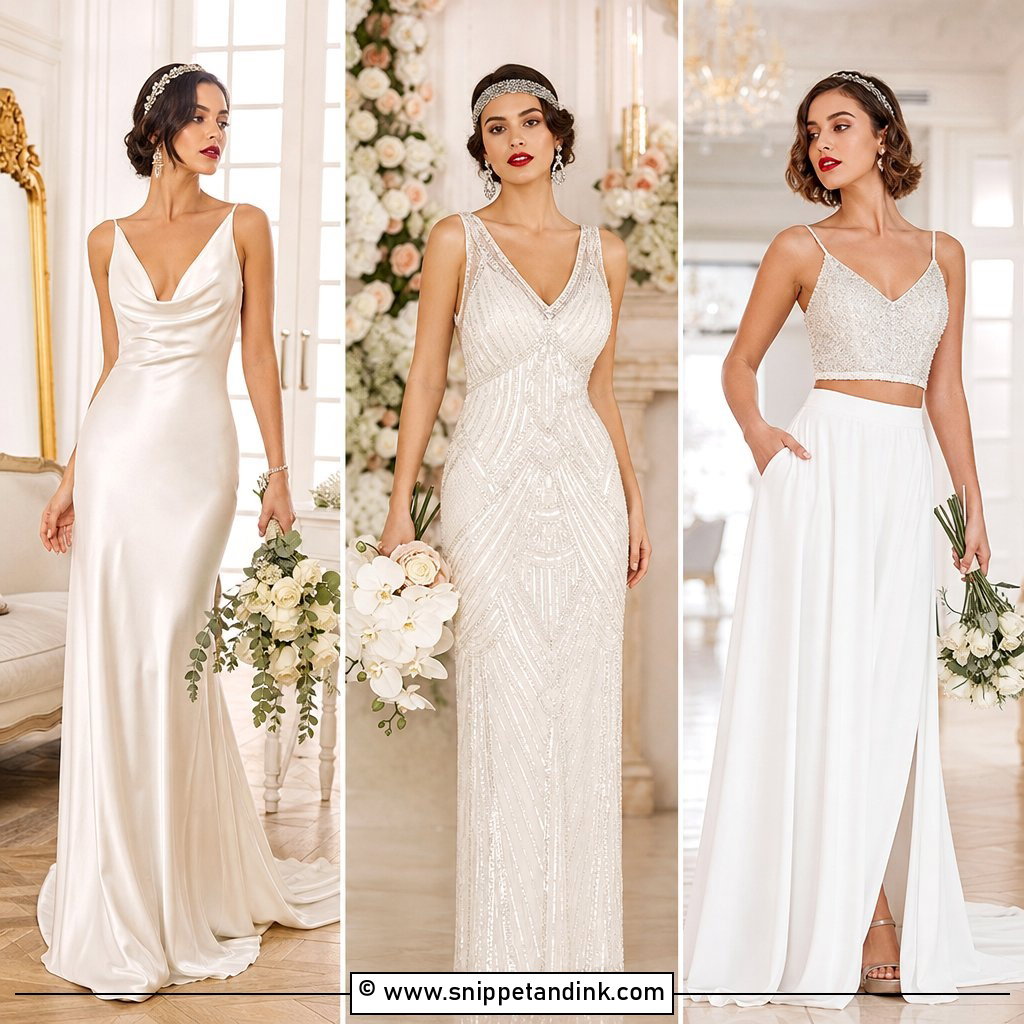
4. Satin Slip Maternity Wedding Gown
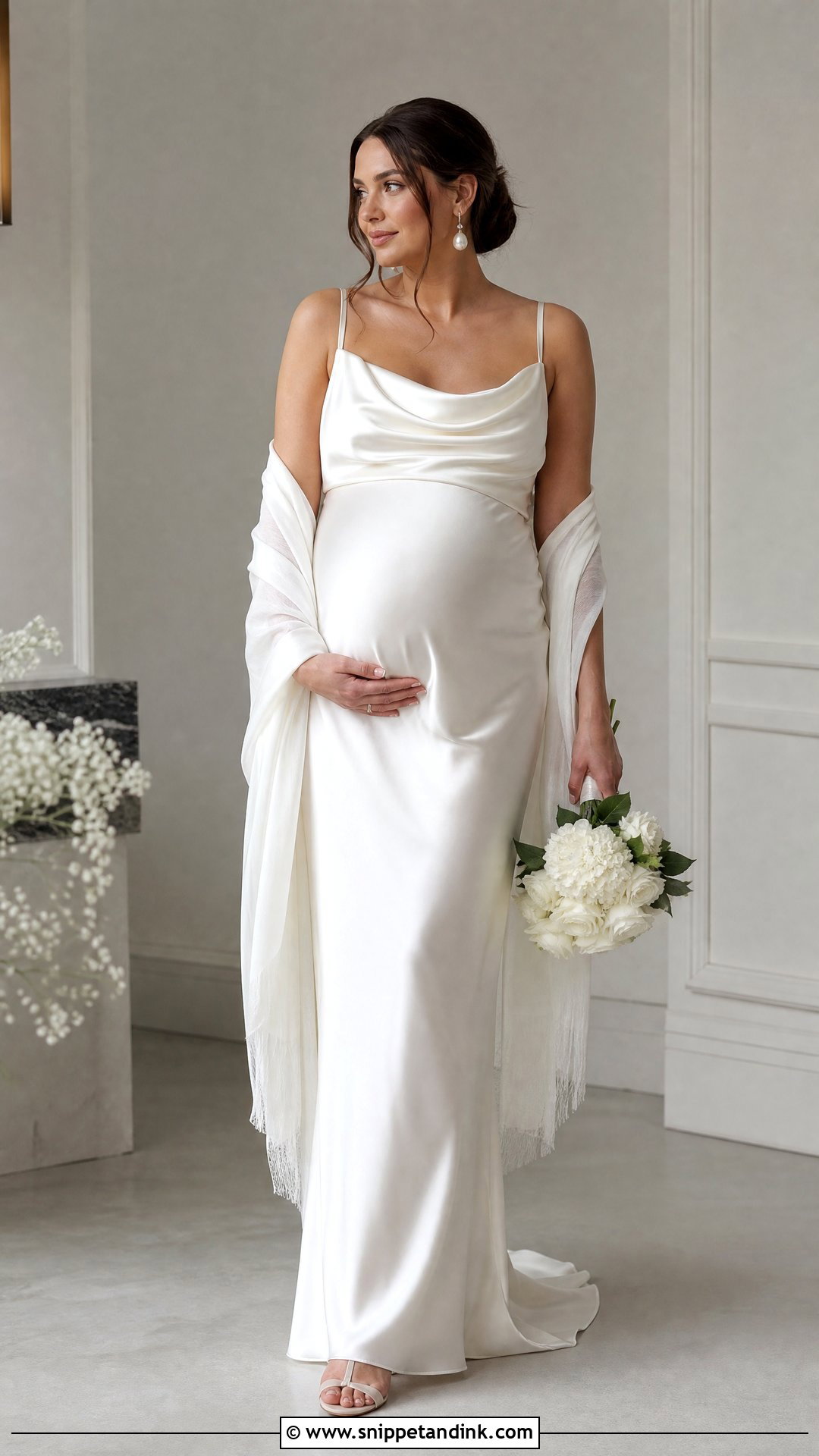
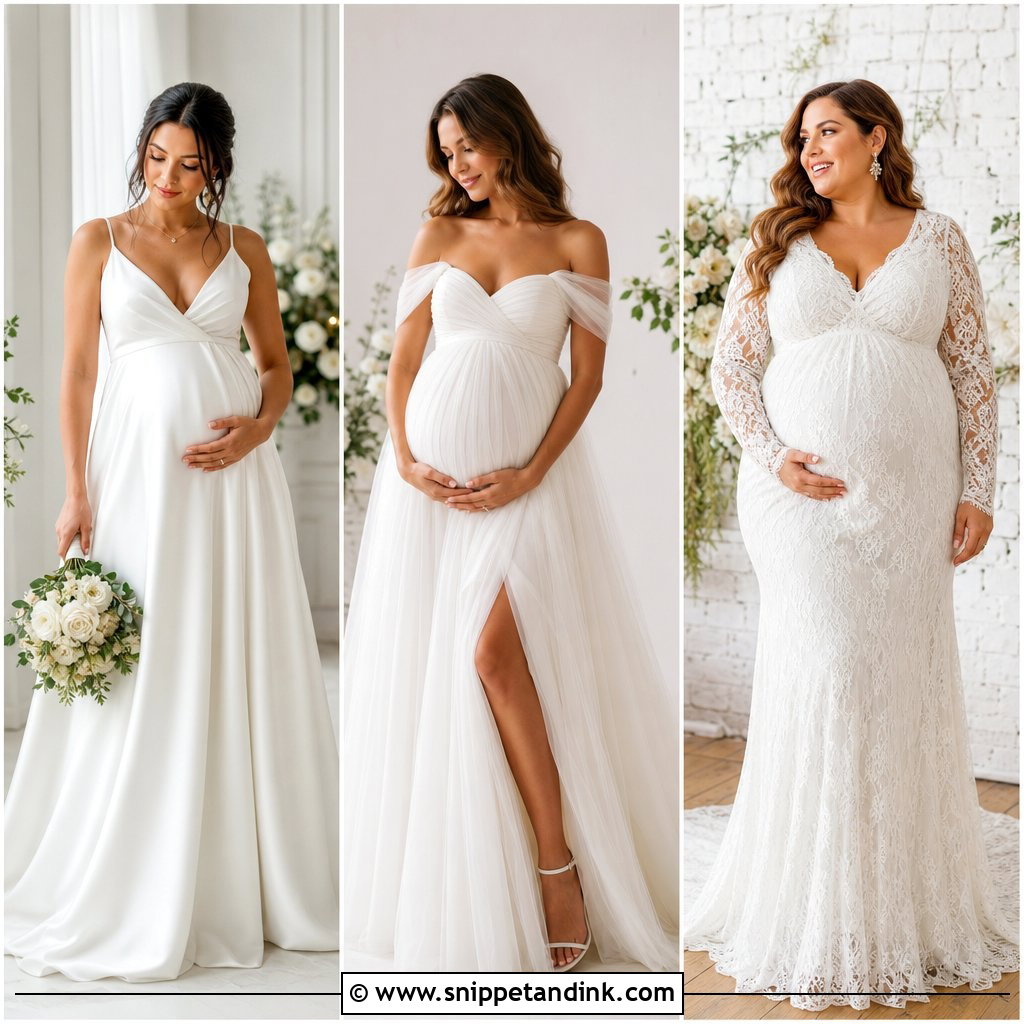
Satin is an honest fabric: it shows every line underneath. On a bump that’s fine as long as the slip is cut on the bias, which lets the satin give slightly and fall over the curve instead of pulling flat across it. Straight-grain satin clings at the belly and creases at the hips the moment you sit. Adjustable straps and a cowl neck cope with a changing bust, and a slightly raised seam or side ruching adds support if you need it. I’d pair it with a light shawl and sleek low heels for a courthouse or restaurant wedding. Smooth, no-line underwear matters more under satin than under anything else here.
5. Chiffon Beach Maternity Wedding Gown
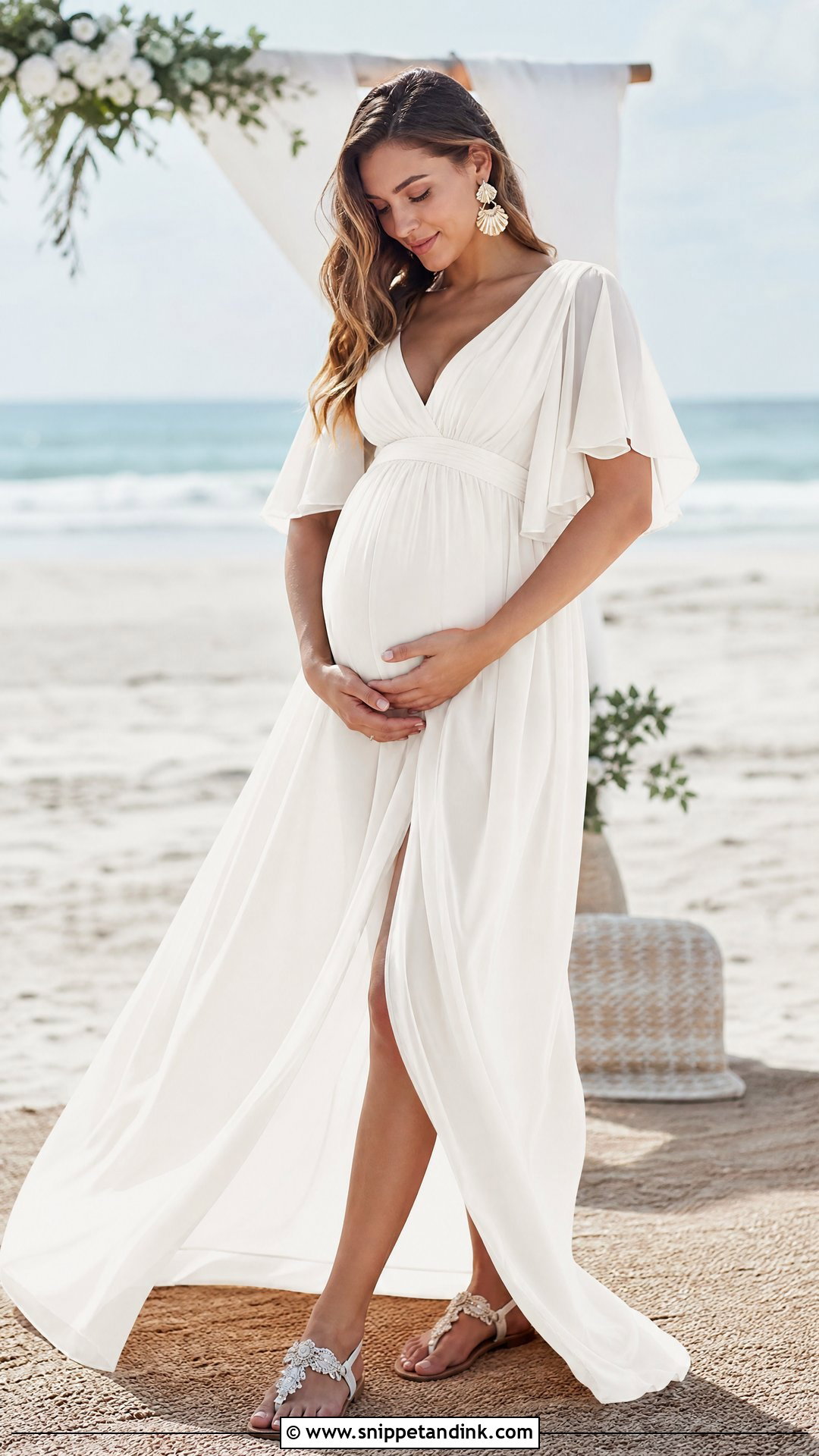
A chiffon beach maternity wedding gown earns its place because chiffon breathes, and heat is much harder to bear when you’re pregnant. Pick an empire waist, flutter sleeves or adjustable straps so the dress can follow your shape through the final weeks. On sand I always swap stilettos for flat embellished sandals or a low wedge, since your balance shifts with a bump and thin heels sink. Skip a long train near the water; wet chiffon turns heavy and drags. Loose waves and a small bouquet keep it relaxed.
6. Boho Maternity Wedding Gown
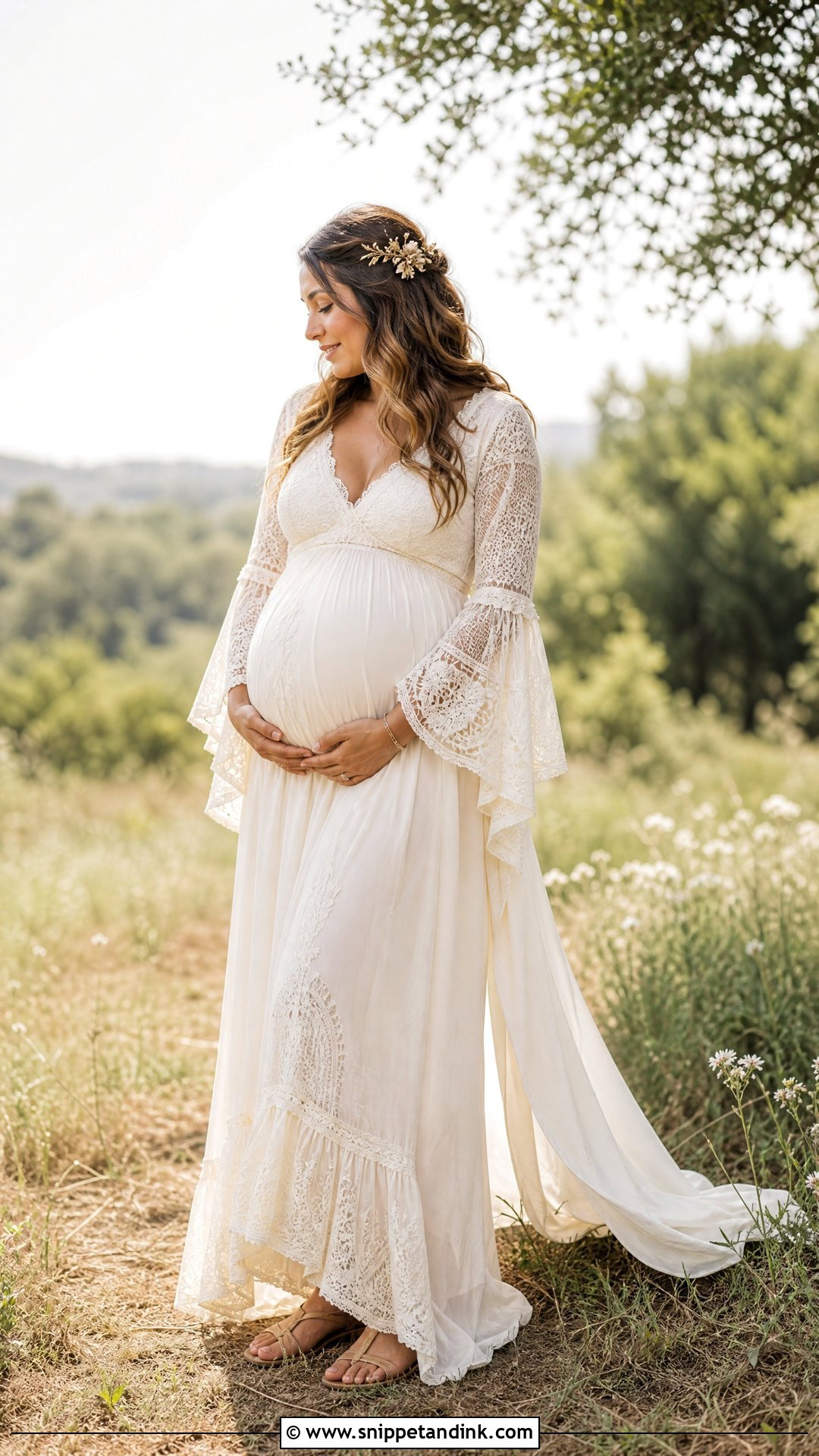
A boho maternity wedding gown forgives a lot, which is why I like it for brides who aren’t sure how big they’ll be by the date. Bell sleeves, crochet-style lace and loose skirts already have room built in. The one thing I watch is open crochet trim placed across the belly. It stretches out of shape over a bump and doesn’t spring back, so I keep texture at the yoke and sleeves. A wrap bodice or soft empire seam handles the fit, and ivory or warm cream with flat sandals and a flower comb finishes it.
7. Tulle A Line Maternity Wedding Gown
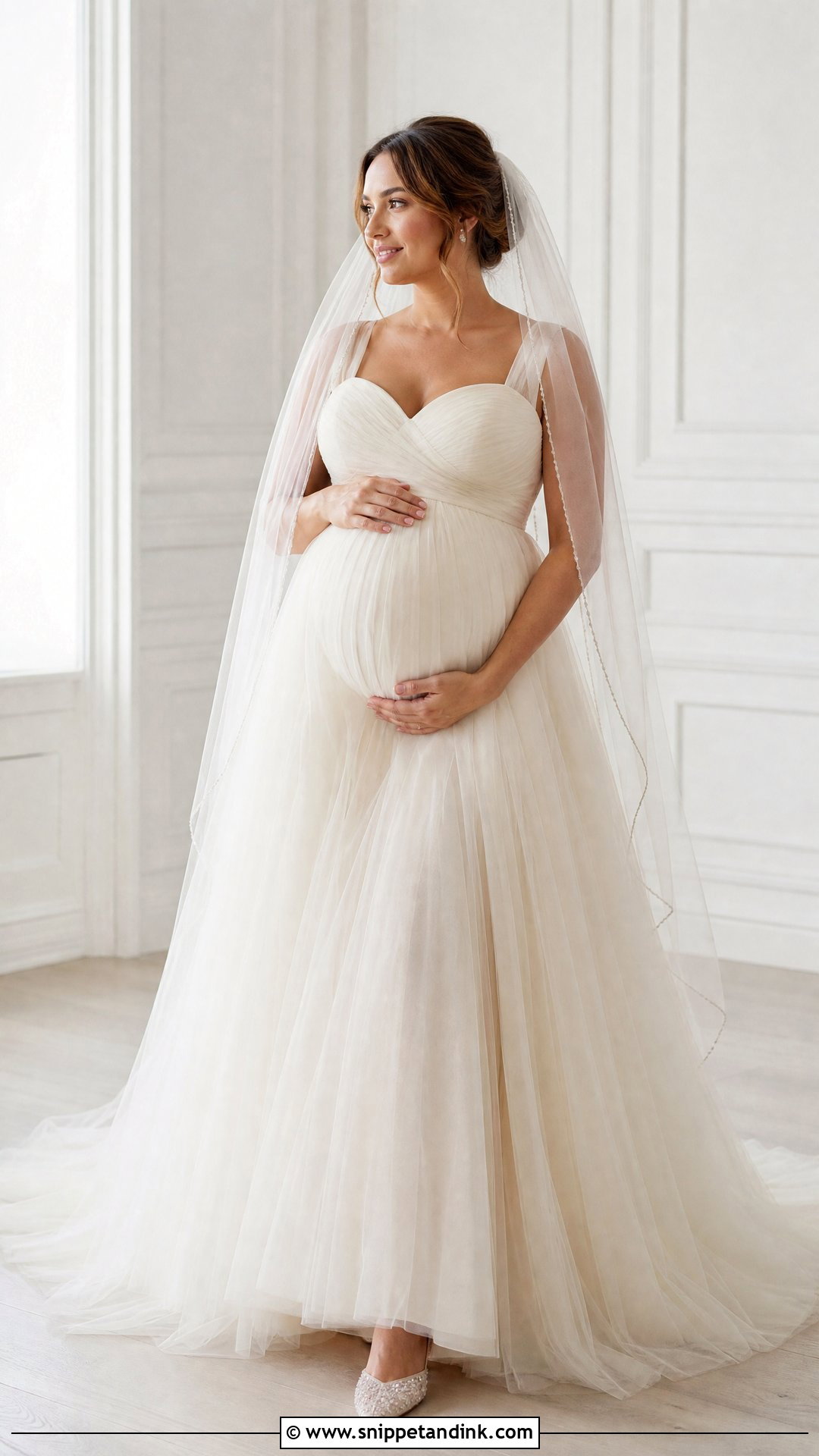
Tulle A-lines give you fairytale volume without a tight waist, since the skirt floats away from the body from the seam down. Ask for soft, silky tulle rather than stiff netting. The stiff kind scratches through thin linings and holds its shape when you’d rather it gave way as you sit. Wide straps or a V-neck make the bodice feel secure. Ballet flats and a fingertip veil keep the outline balanced through a long ceremony where you’ll be standing a lot.
8. Long Sleeve Crepe Maternity Wedding Gown
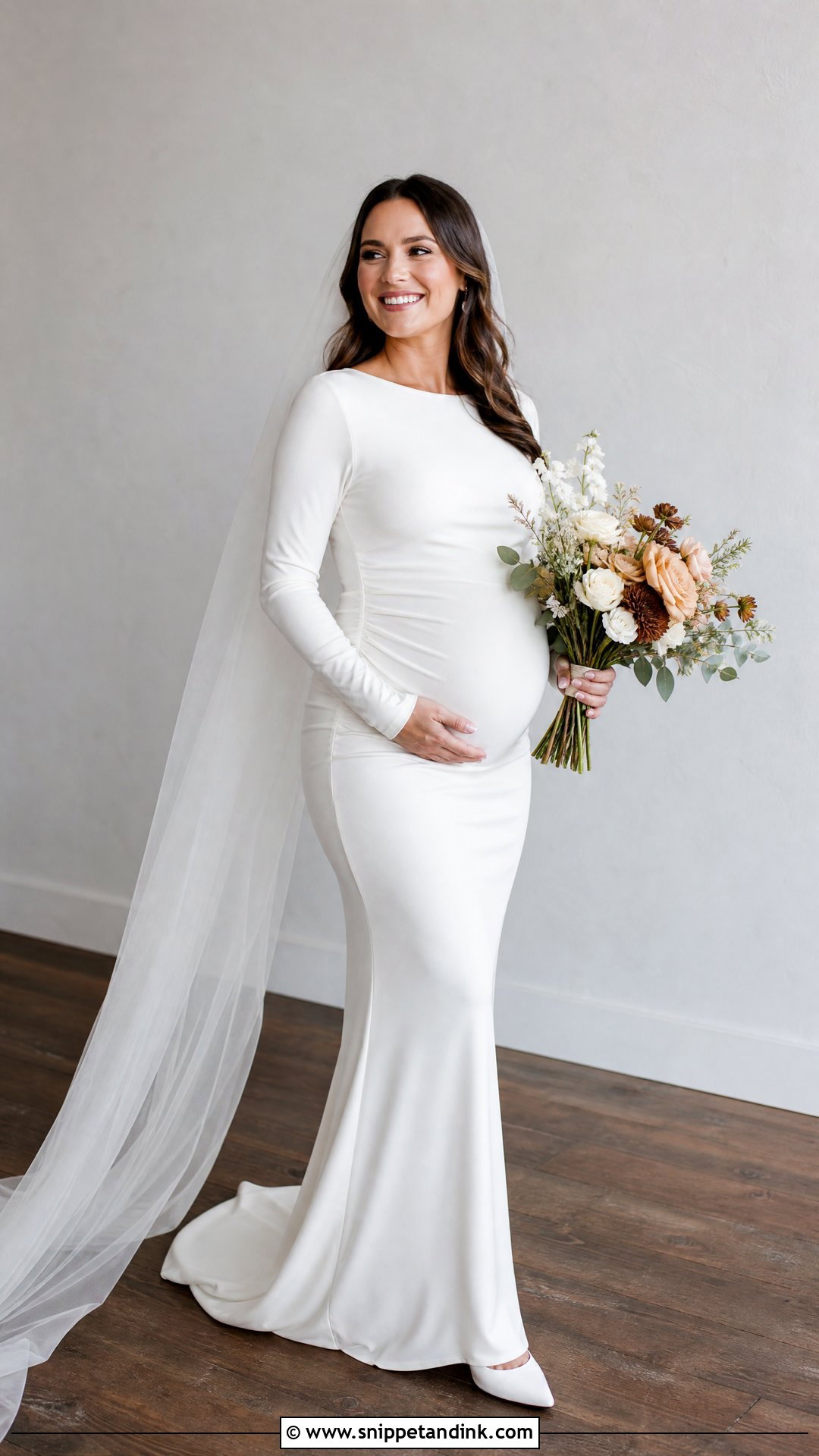
Stretch crepe is my favourite fabric for pregnant brides who want structure. It holds a clean line yet gives across the belly, and side ruching lets the dress take up slack if you measure smaller than expected. Non-stretch crepe is another story; it has to be fitted very close to the date or it pulls. Long sleeves suit autumn, winter or heavily air-conditioned rooms. Pointed flats, a plain veil and a compact bouquet are all it needs.
9. Wrap Maternity Wedding Gown
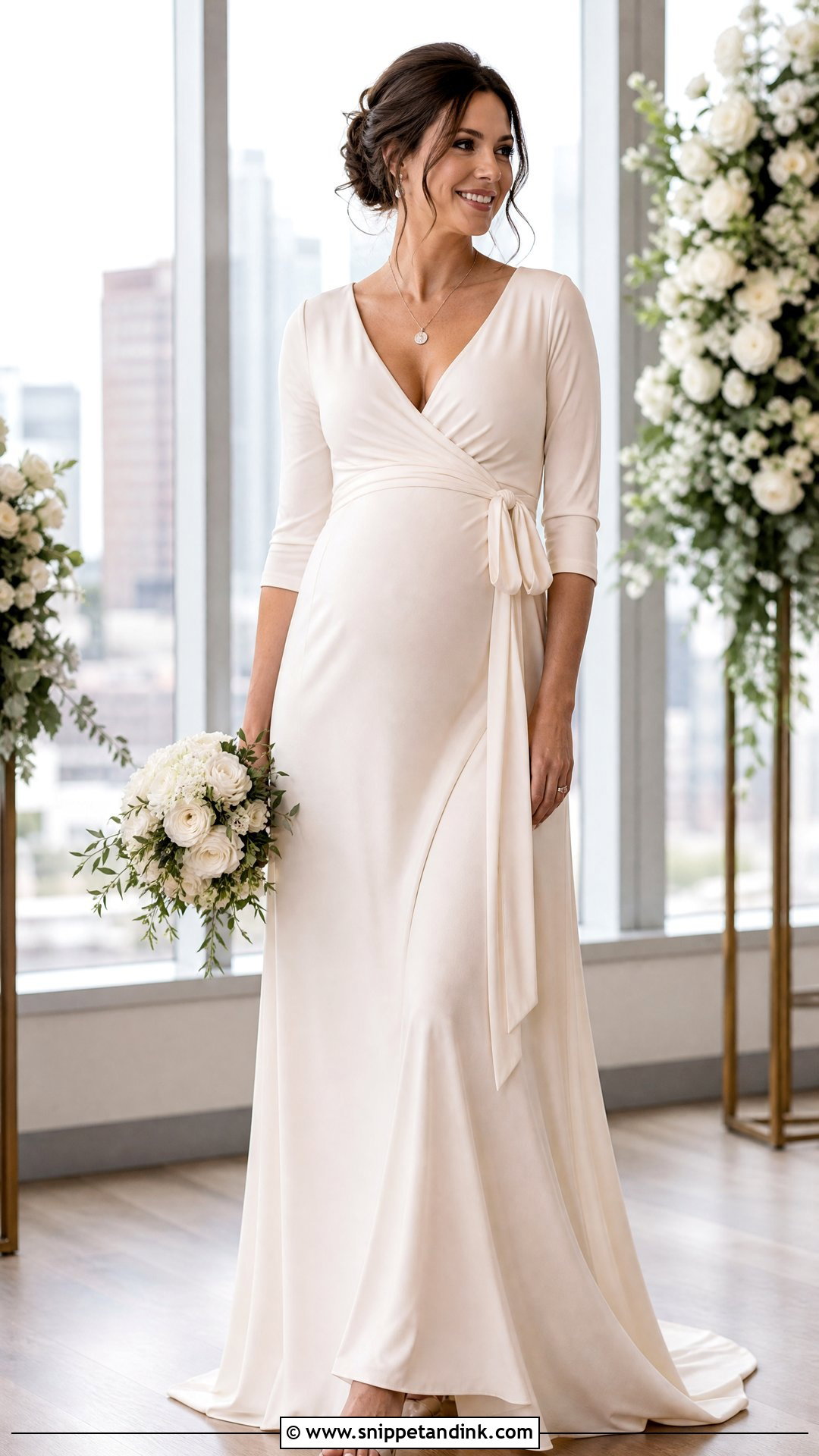
A wrap is the most adjustable gown in this list. You tighten or loosen it at the bust and under-bust, which matters if your body changes in the last few weeks. Jersey is the most comfortable, crepe reads more formal, and a chiffon wrap is the coolest in summer. The fault I see most often is a cross-over that gapes when you lean forward to sign the register, so insist on an inner tie and a hidden snap at the chest. Low heels and a soft updo suit casual and city weddings.
10. Floral Applique Maternity Wedding Gown
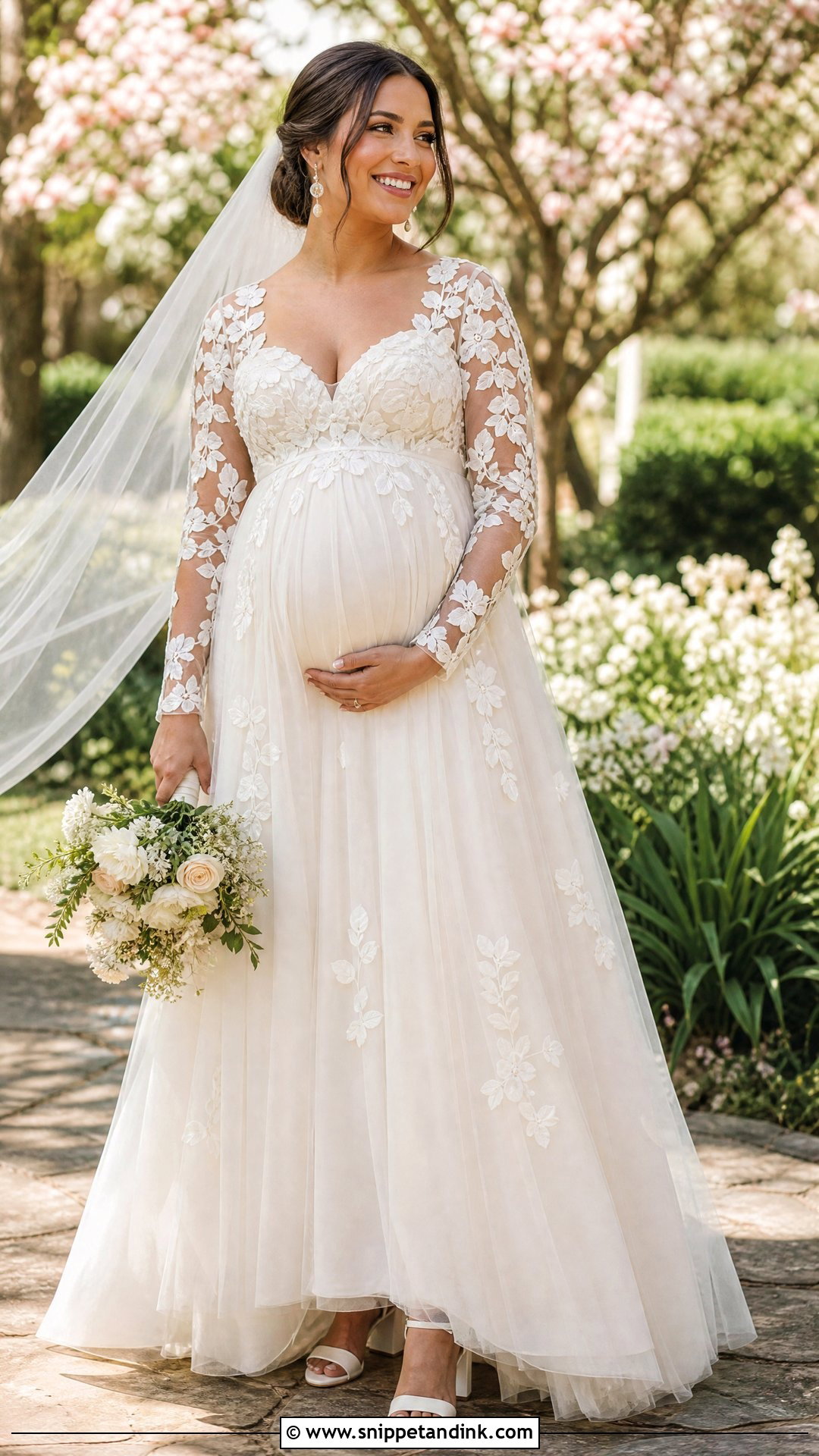
Appliqué flowers are stitched on one by one, and each adds a little weight and stiffness to the fabric beneath. That’s why I keep them above the bump or scattered loosely over a flowing skirt; a dense cluster across the belly stops the fabric stretching where you need it most. An empire waist or sheer sleeve frames them well. Pearl earrings, ivory block heels and a plain veil let the flowers lead, and spring garden venues suit it best.
11. Minimalist Maternity Wedding Gown
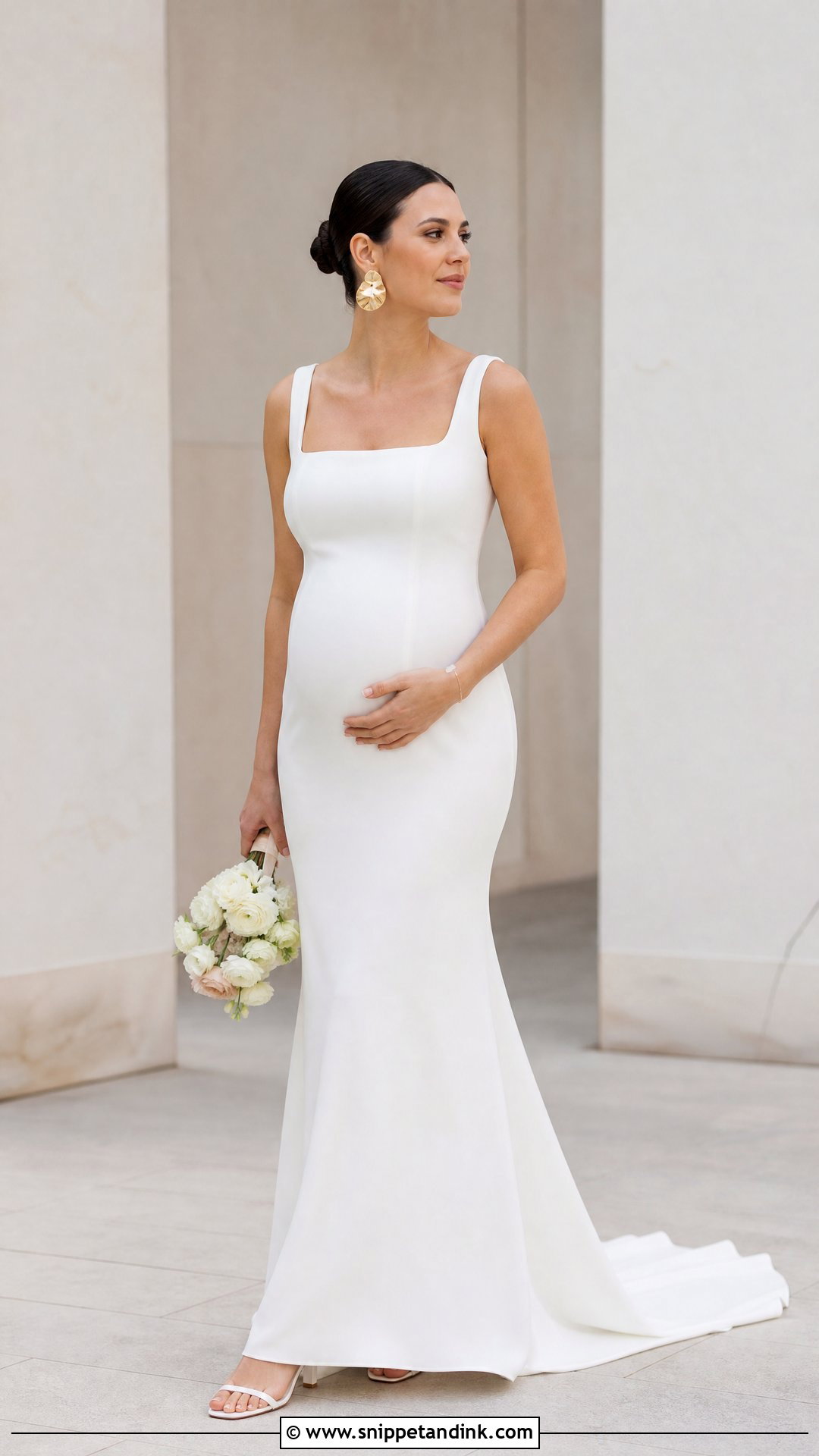
A minimalist gown has nowhere to hide a poor fit, so the tailoring is the whole design. Smooth crepe, satin or matte jersey should skim rather than squeeze, with a square neck, simple straps or long sleeves depending on the season. I always book the final fitting for these as late as the seamstress allows, because a two-centimetre change in the bust shows on a plain bodice in a way it never would under lace. Sculptural earrings, sleek hair and a small bouquet finish it for a courthouse, rooftop or modern venue.
12. Ball Gown Maternity Wedding Gown
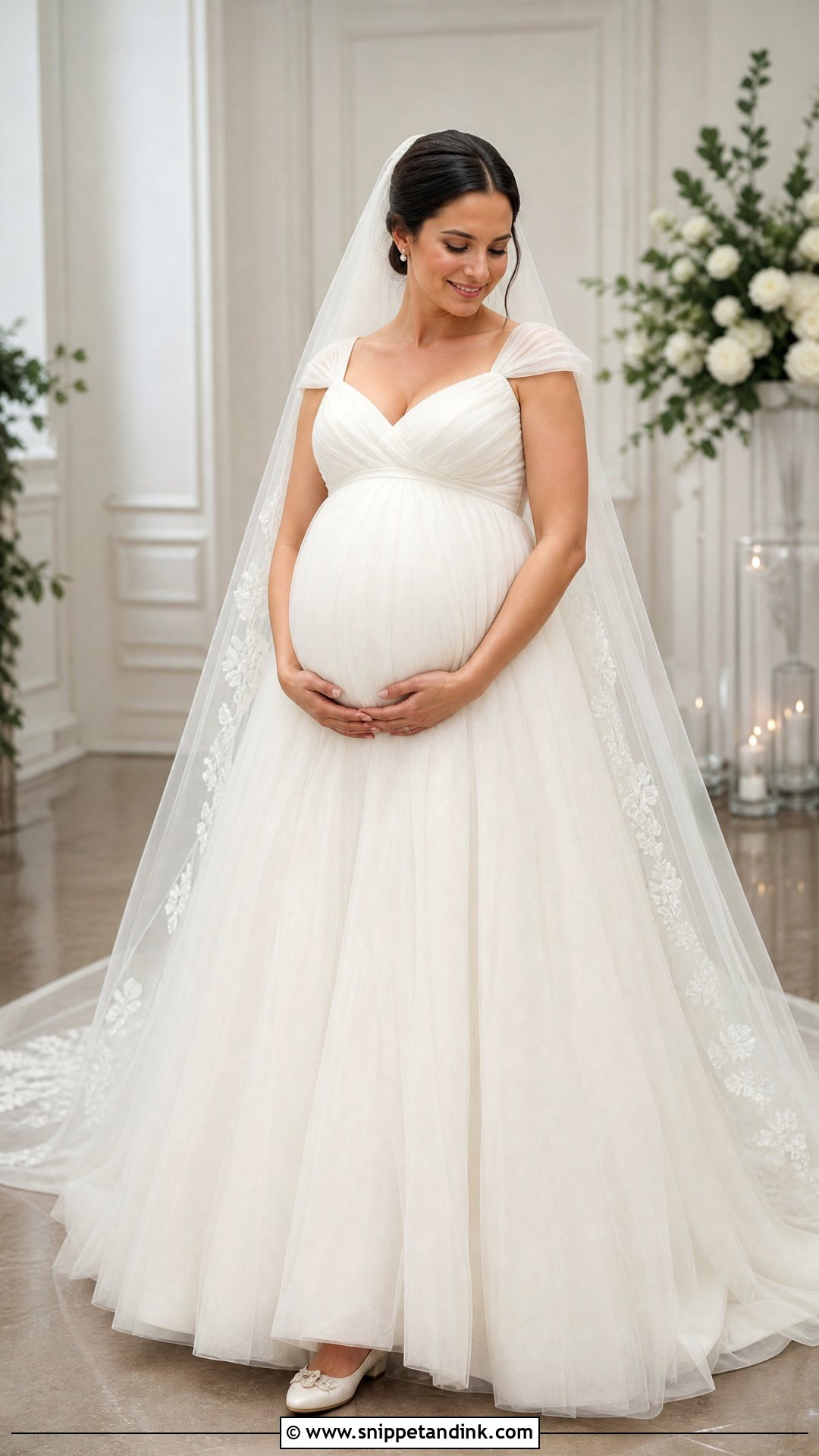
A ball gown can work in pregnancy if the structure stays above the bump and never on it. That means a soft empire seam and a skirt that starts high, not a boned corset at the natural waist. Full tulle or organza skirts look heavy but weigh less than you’d think, while layered satin can drag on your lower back by evening. Cushioned flats or low platforms, a cathedral veil and small earrings balance the volume. Sit down in it at the trial; a full skirt plus a bump makes some chairs awkward.
13. High Neck Maternity Wedding Gown
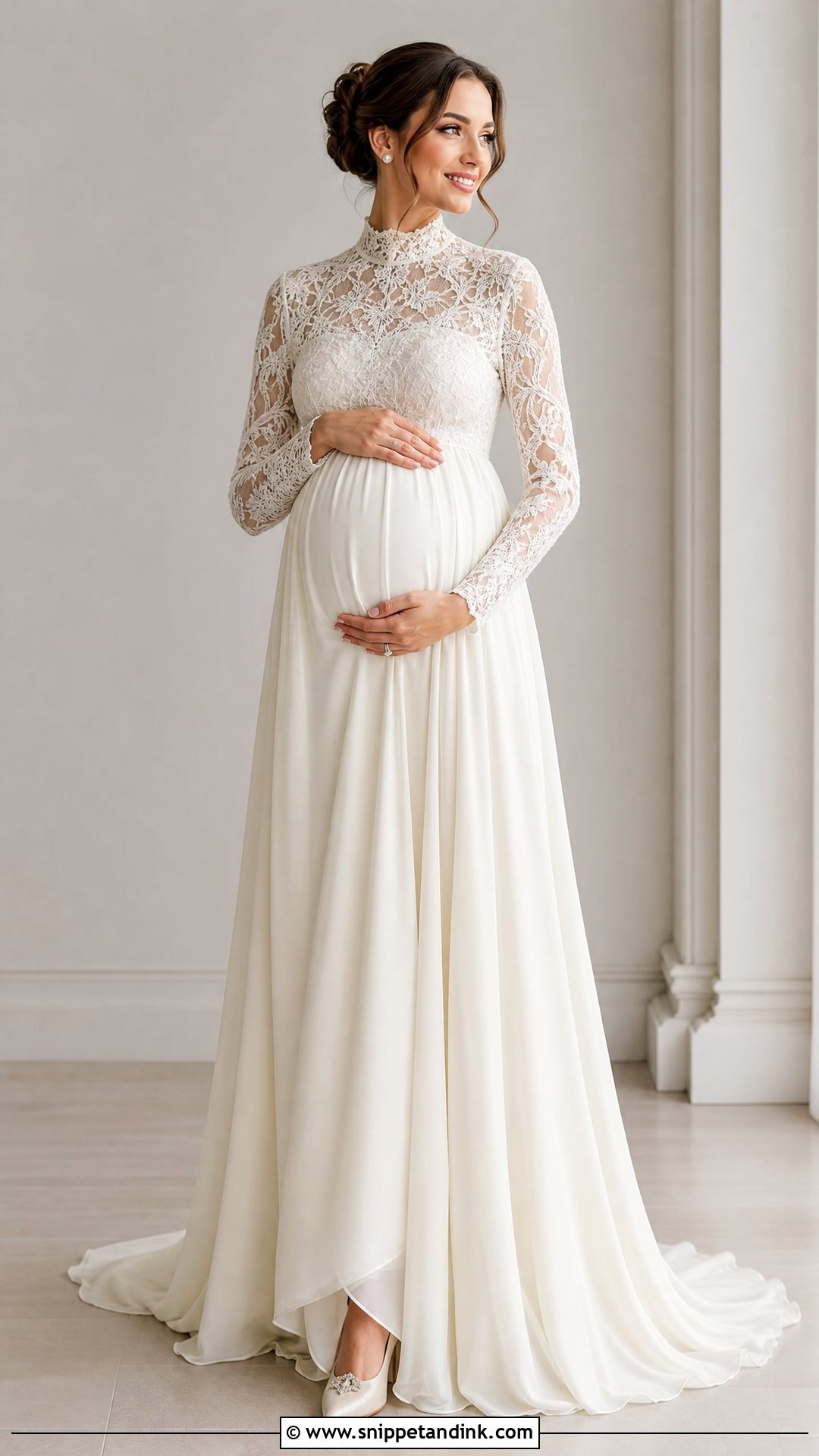
High necks look graceful, but they can feel close if your face and chest flush warm, which happens a lot in pregnancy. I steer brides toward illusion mesh, soft lace or chiffon at the throat rather than lined satin, with real room through the bust below. The neckline already frames your face, so an updo and pearl studs are plenty. Save it for cooler seasons and formal receptions.
14. V Neck Maternity Wedding Gown
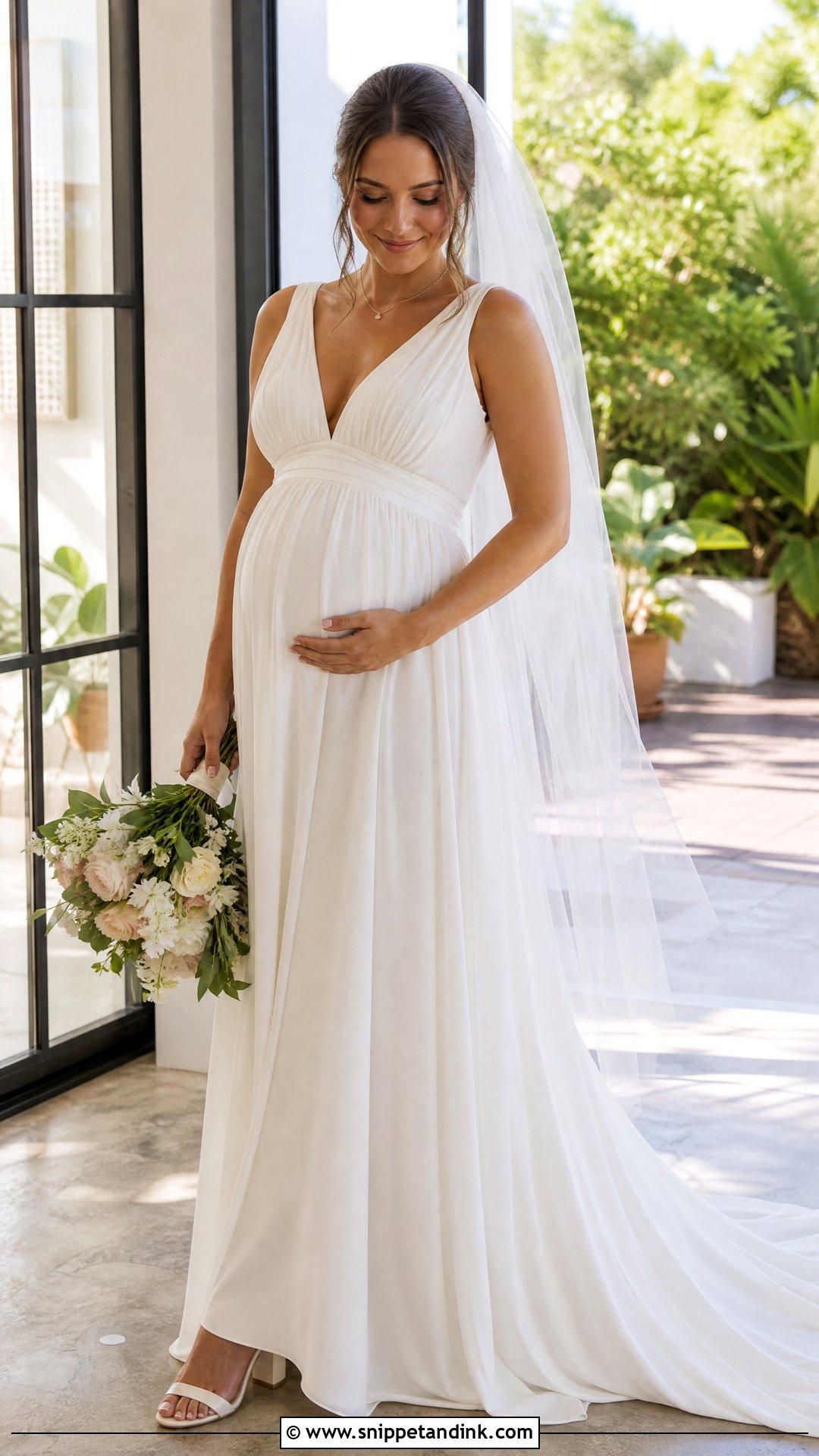
A V neck lengthens the upper body and balances the curve of the bump. You can wear it shallow or deeper, but a bust that grows late in pregnancy pushes a deep V open, so I like a removable modesty panel stitched in as insurance. Wide straps or cap sleeves carry more support than spaghetti straps. A chiffon skirt, stretch crepe or lace overlay all suit it, and the shape moves easily from a beach to a formal ballroom.
15. Ruffle Sleeve Maternity Wedding Gown
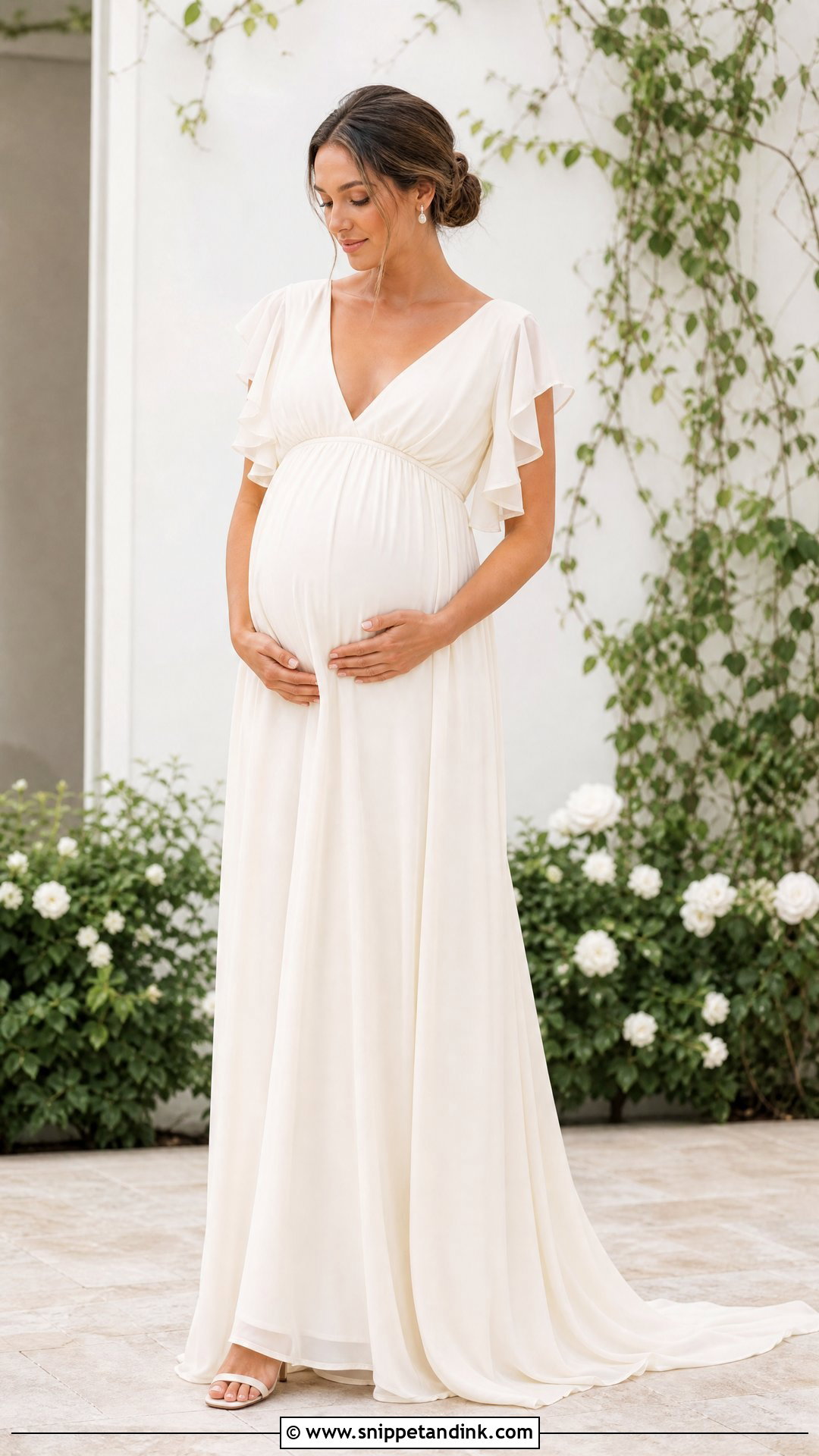
Ruffle sleeves add volume at the shoulders, so the skirt below should stay calm: an A-line or empire skirt in light chiffon or soft tulle that falls straight over the bump. Too many layers top and bottom make a pregnant frame look boxy in photos. Chiffon flutter ruffles are the most comfortable because they don’t bind the upper arm. A low bun, plain earrings and ivory sandals keep it fresh for a warm garden ceremony.
16. Detachable Overskirt Maternity Wedding Gown
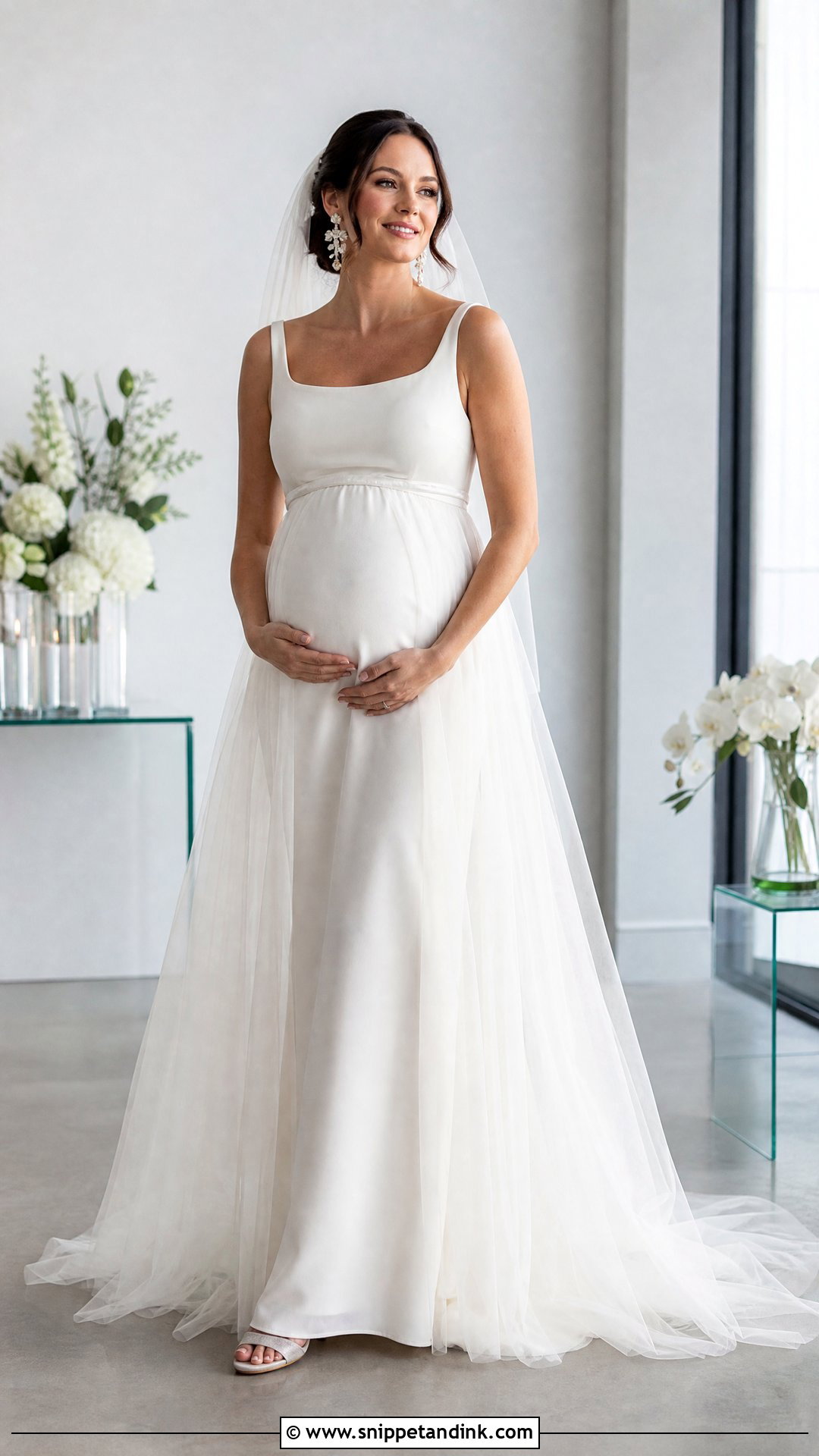
This is the gown I suggest to brides who already know they’ll be tired by evening. Wear the full overskirt for the ceremony and portraits, then unhook it for a lighter reception look. The detail to get right is where it fastens: the overskirt should attach above the bump, on the bodice seam, not at the natural waist where a heavy skirt would drag on the belly. Underneath, a maternity column or soft A-line in crepe works well. Practise the removal once with whoever will help you, because hooks hidden behind a bump are hard to find on your own.
17. Maternity Wedding Gown With Cape
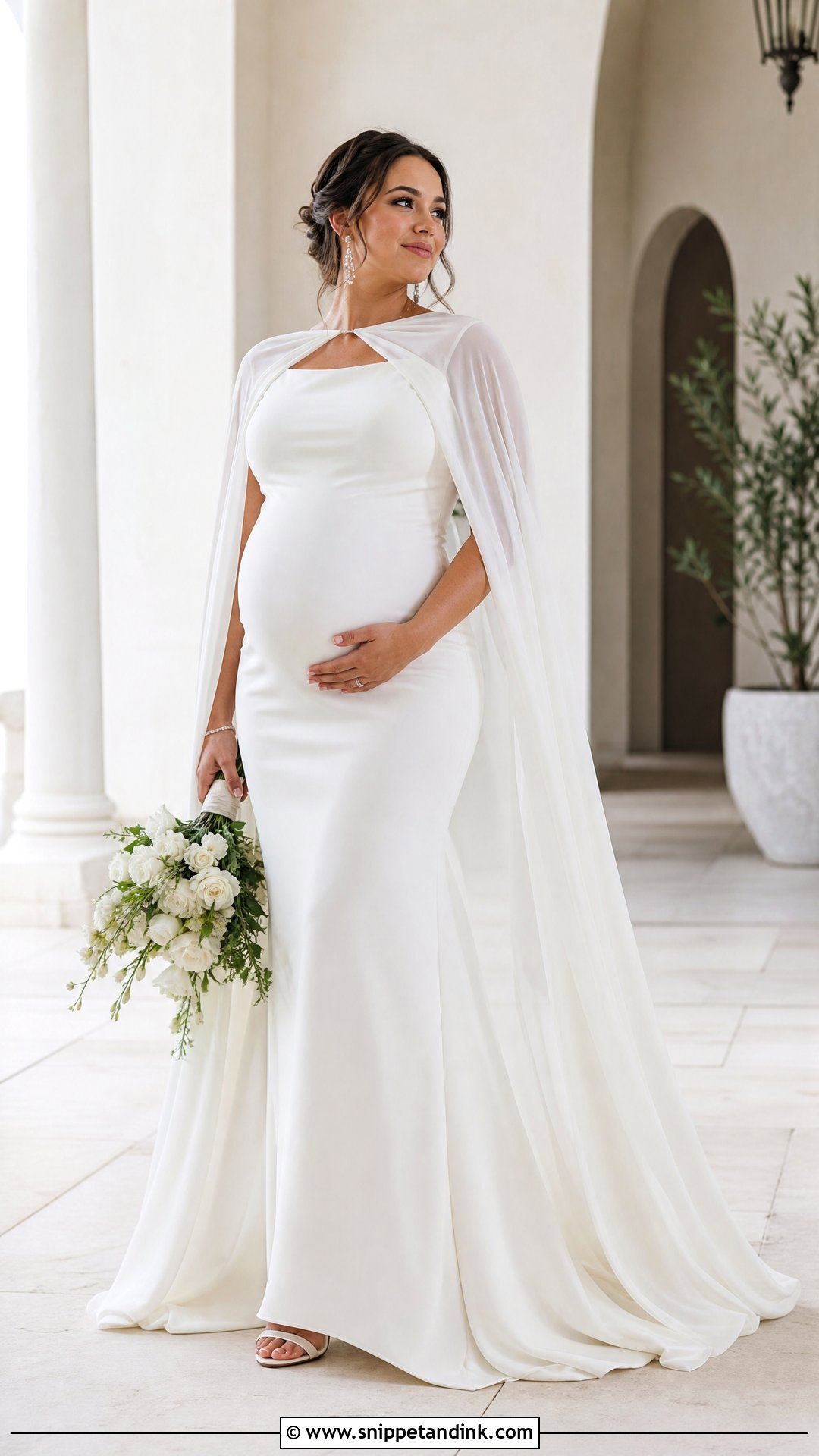
A cape gives the gown a moving outline without a train or a long veil pulling on your hair. It can attach at the shoulders, neckline or back, and in pregnancy I prefer shoulder attachment because it doesn’t drag on the neck. Keep the base gown plain, in crepe, chiffon or satin, so the cape is clearly the feature. A sheer cape catches wind and light outdoors, which helps portraits, and it covers arms and back on a cool day. Low heels and sleek earrings finish it.
18. Plus Size Maternity Wedding Gown
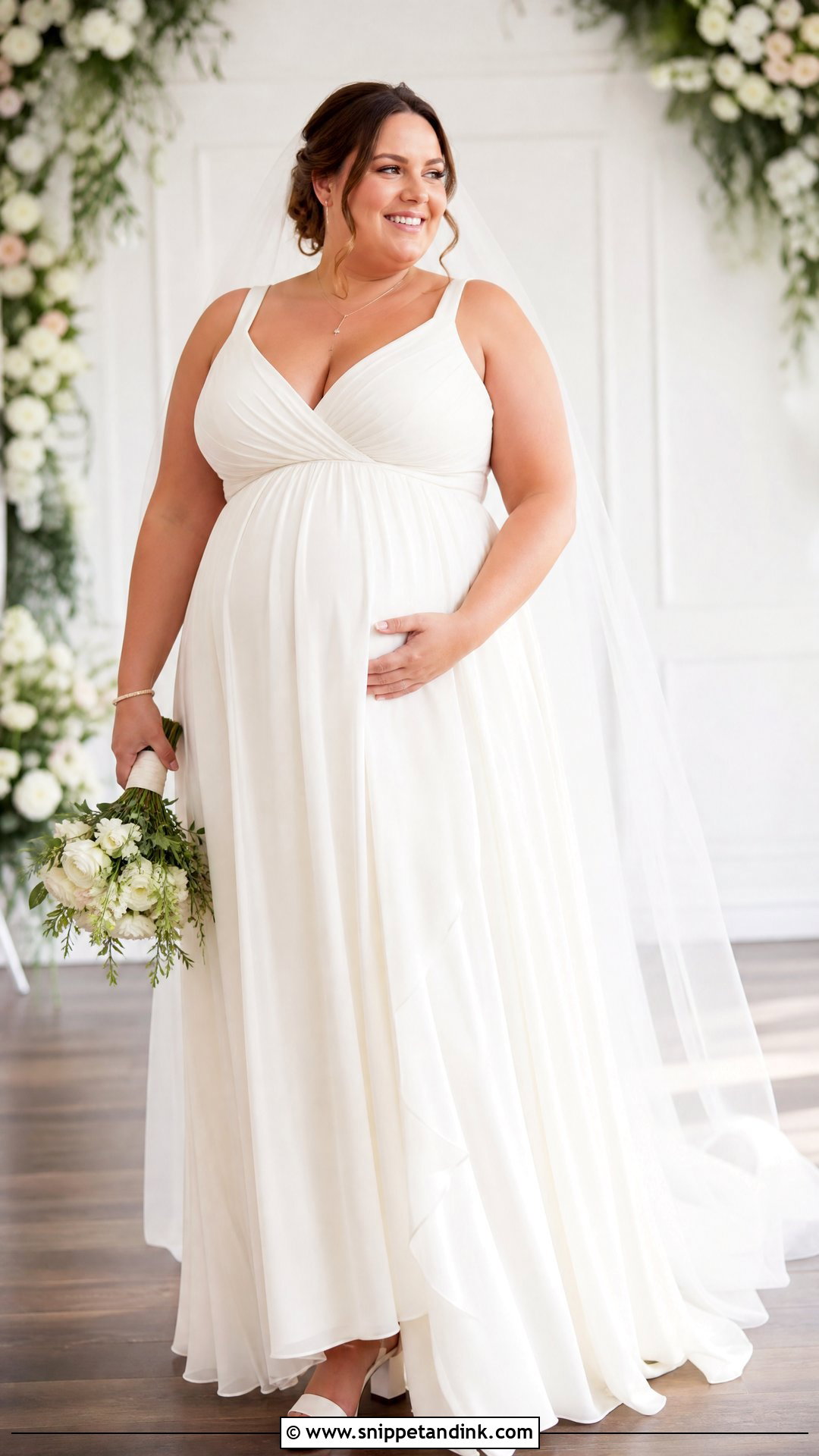
A plus size maternity wedding gown should support your shape, not hide it. Bust support comes first in my fittings: a built-in bra with real cups or a firm internal band, then a raised seam and a skirt that falls without pulling across the bump. Stretch crepe and lined lace both hold well. Wide straps, wrap bodices and V-necks spread weight better than thin straps do. Bring your undergarments to the first fitting, not the last, because they change how everything sits. The right gown here is the one you can breathe in.
19. Petite Maternity Wedding Gown
Petite brides lose height quickly under a heavy skirt and a bump. I use a high waist, a soft V and vertical seams to draw the eye up, and keep the skirt to a slim A-line in chiffon, crepe or satin. A slightly shorter front hem stops you treading on it, which matters more once you can’t see your feet. Low pointed heels lengthen the leg, an elbow or fingertip veil won’t swamp you, and an easy bustle frees you to walk later.
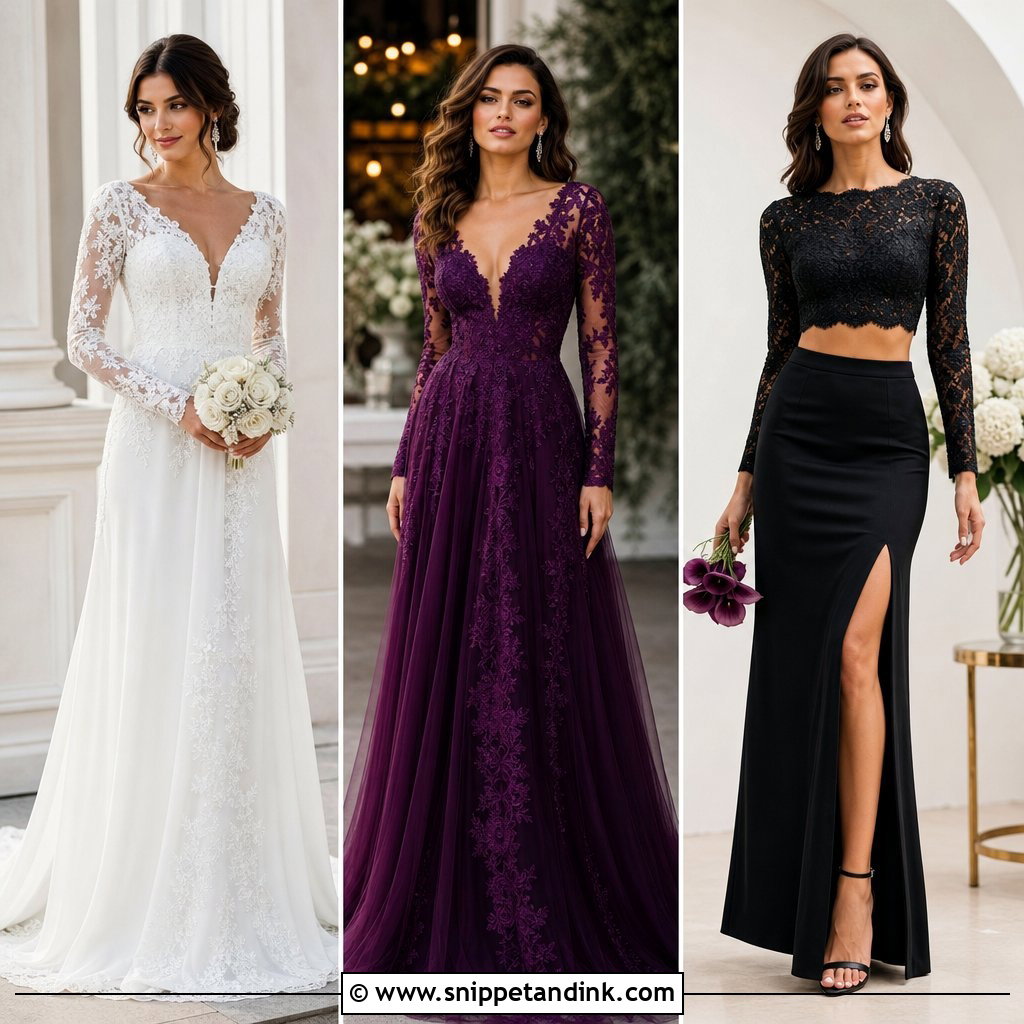
20. Winter Maternity Wedding Gown
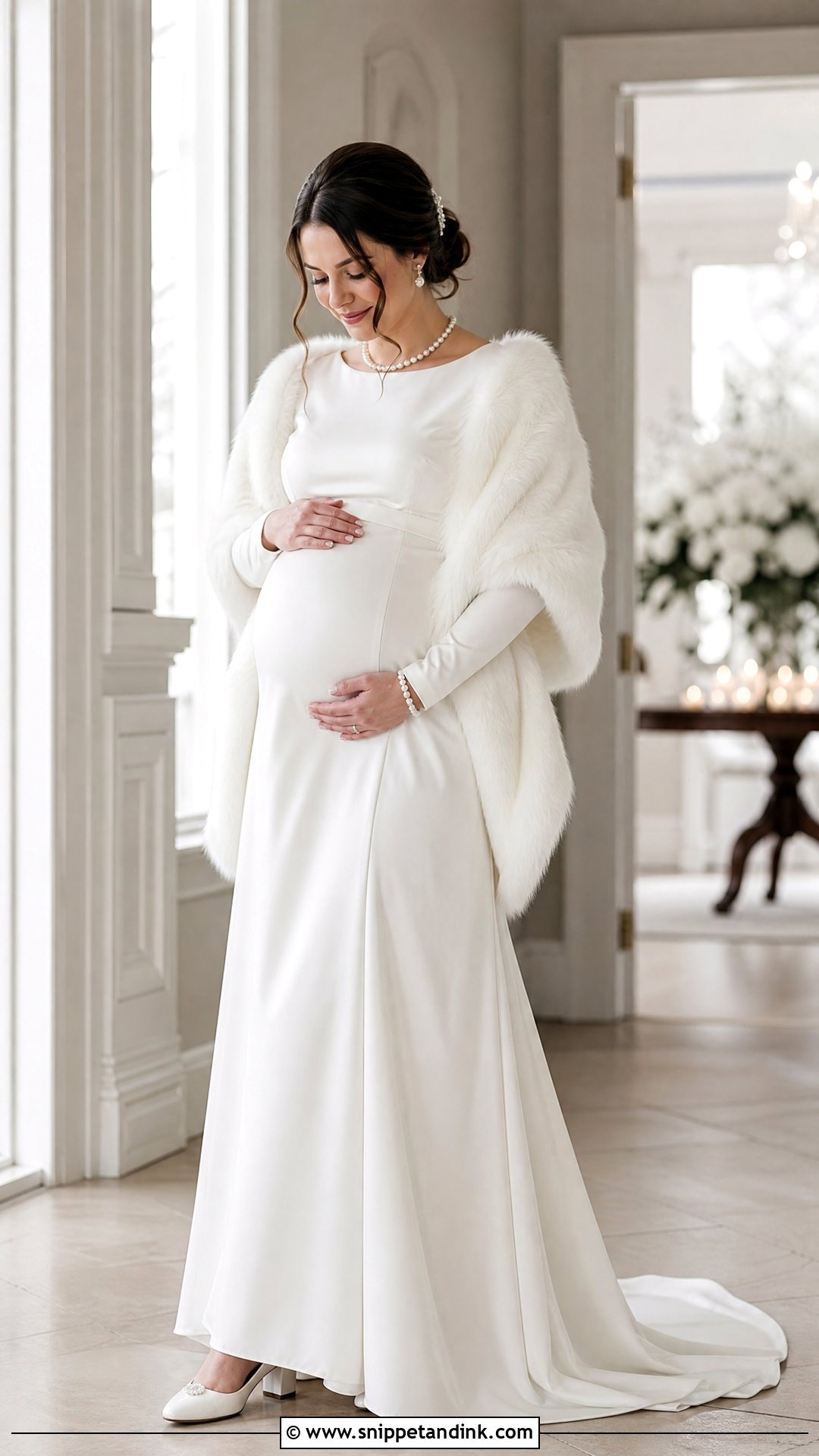
Winter needs warmth without bulk over the bump. Lined lace, stretch crepe or soft satin with long sleeves does the job, and a faux fur wrap covers you for outdoor photos. I’d insist on closed-toe block heels, since icy steps and a shifted centre of balance are a poor mix. Keep the high waist and flowing skirt so sitting and walking stay easy. Pearl accessories suit evening venues and candlelit rooms.
21. Summer Maternity Wedding Gown
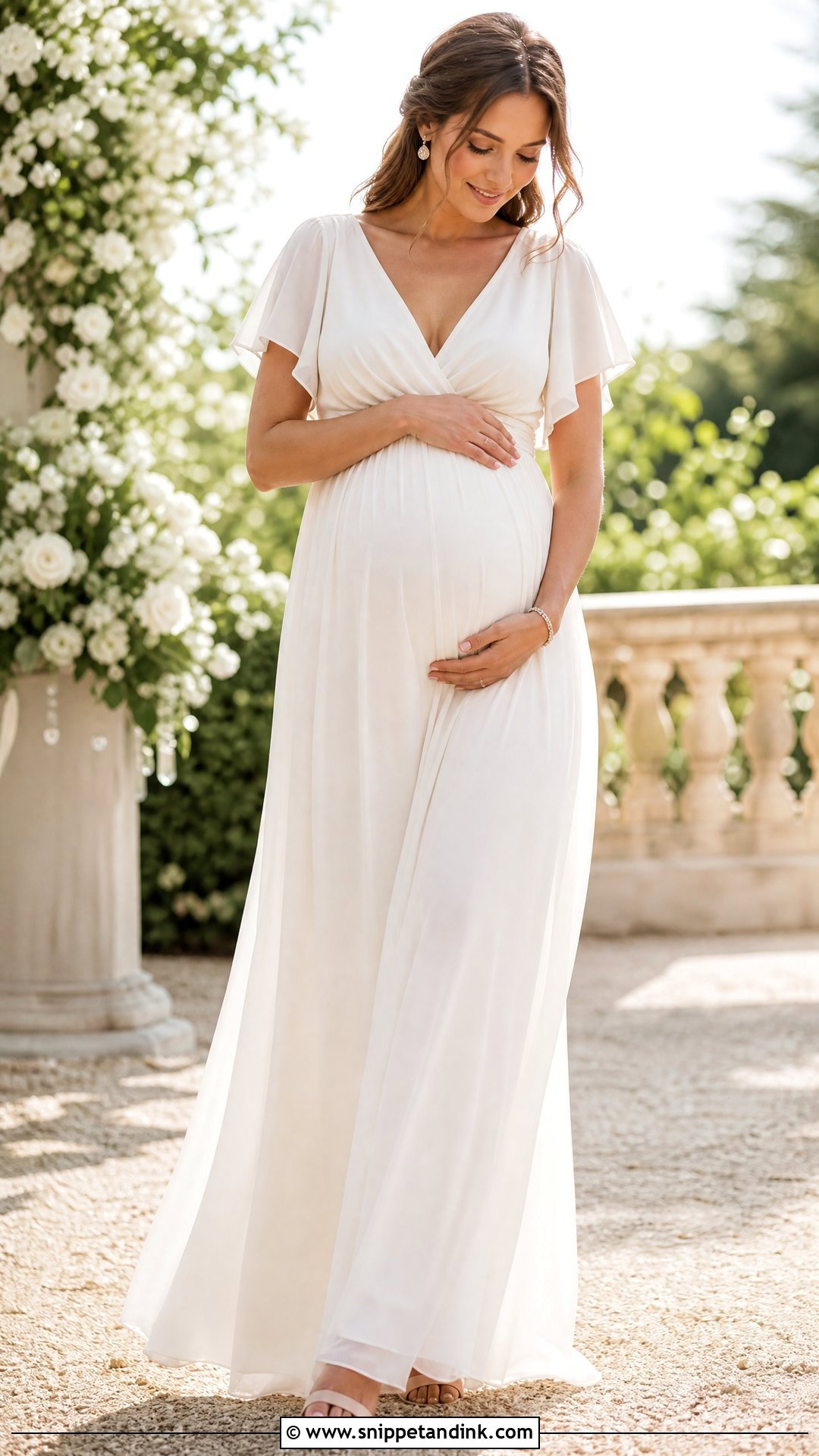
Heat is the main enemy for a pregnant summer bride, and the lining is where most of it gets trapped. Choose chiffon, cotton-blend lace, soft tulle or airy crepe with a single breathable lining, not three. Sleeveless, flutter sleeve and halter-inspired shapes work if the halter strap is wide enough not to dig into the back of your neck. Leave heavy beading and thick layered skirts for indoor weddings. Low sandals and hair worn up off the neck keep you cool at a beach, backyard or destination ceremony.
22. Courthouse Maternity Wedding Gown
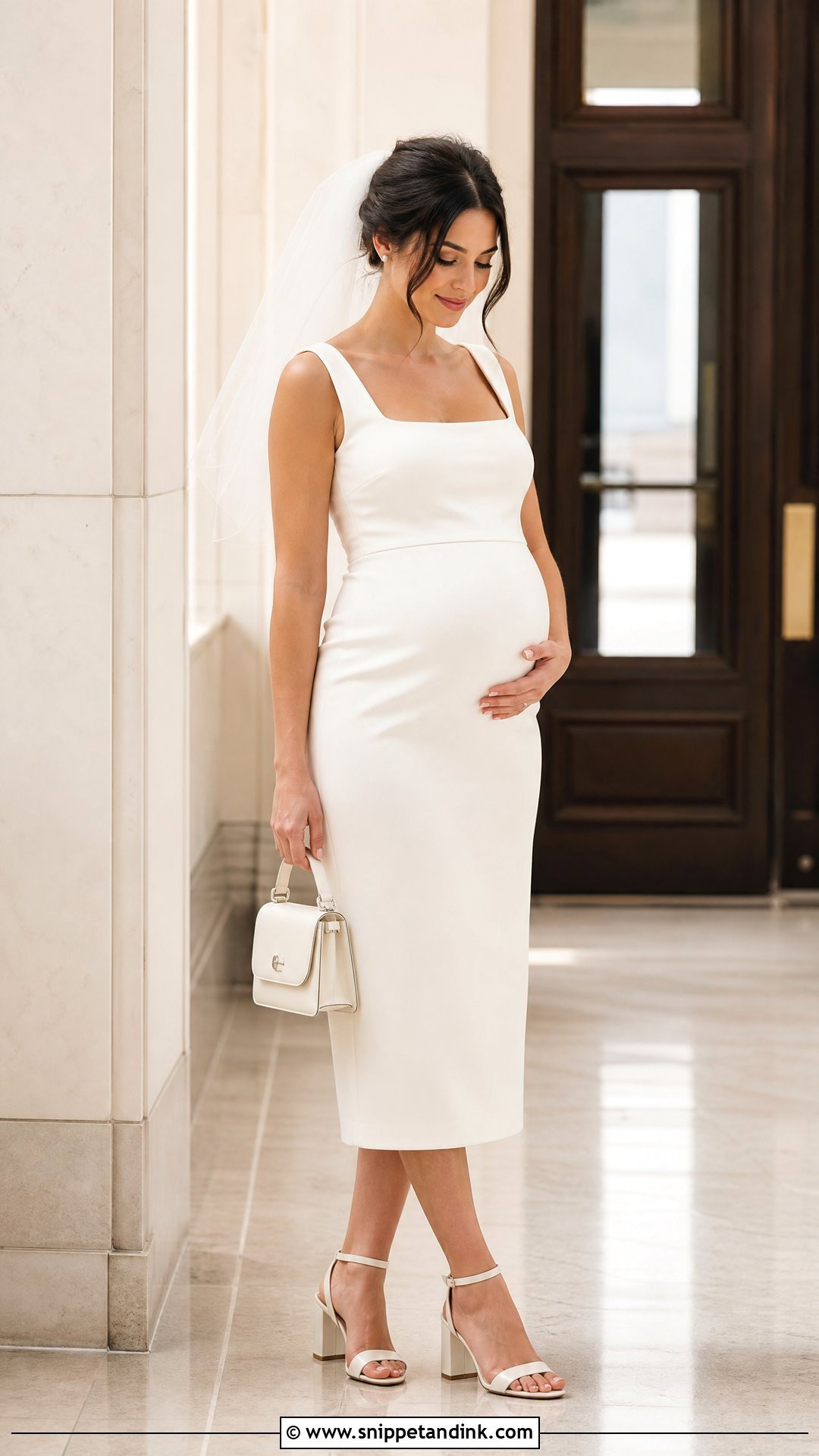
A courthouse maternity wedding gown can be short, and in pregnancy short is often the smarter call. A knee-length or midi dress in stretch crepe, satin or lace with a maternity waist means no hem to lift on registry steps. Add block heels or neat flats, pearl studs and a small structured bag. A short veil, bow clip or modern headband makes it read as bridal at a civil ceremony or a small lunch wedding.
23. Beaded Maternity Wedding Gown
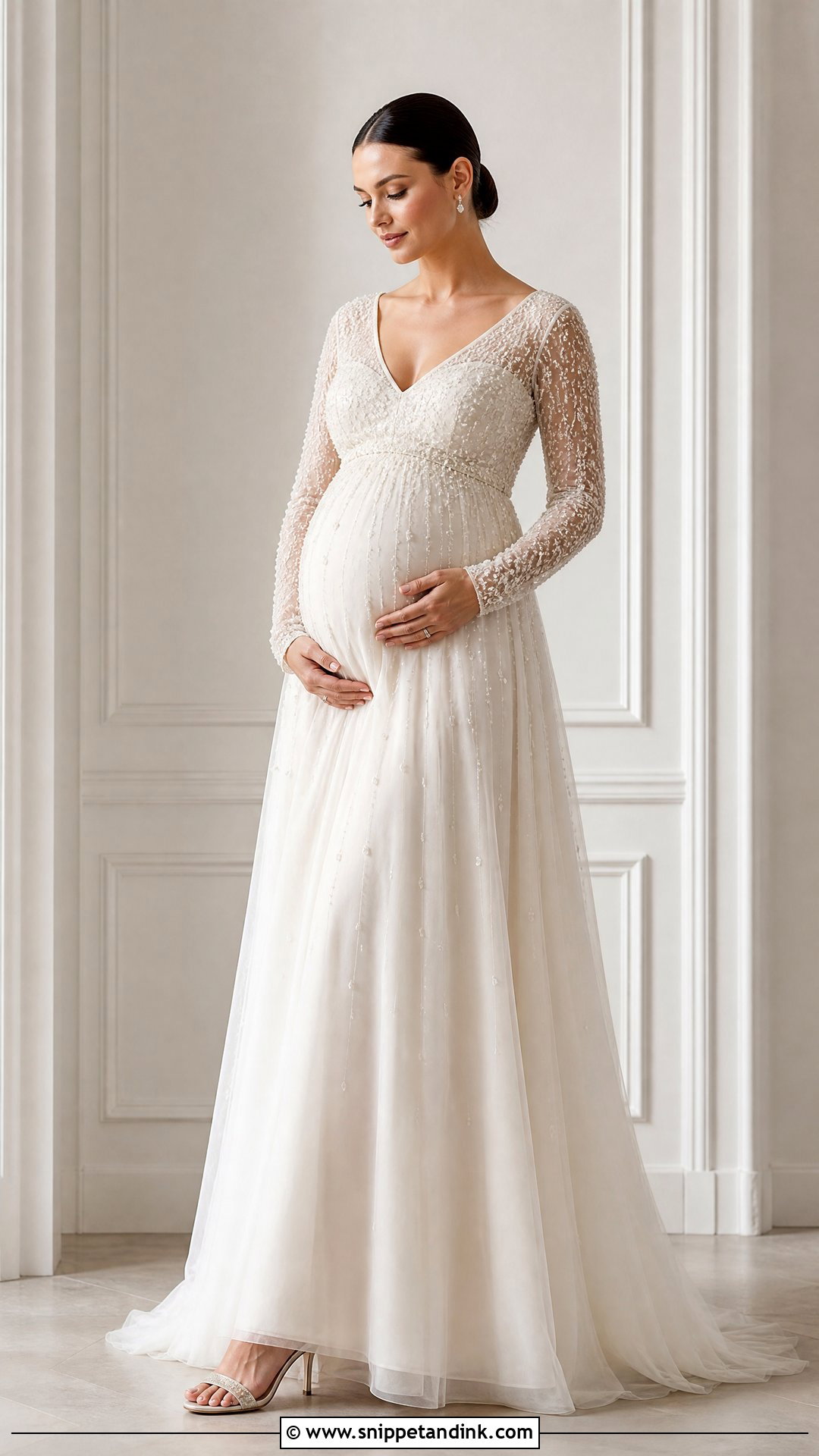
Beading weighs more than it looks, and it pulls the fabric down from wherever it sits. So placement is everything for a pregnant bride: keep the embellishment on the bodice, sleeves or neckline and leave the fabric over the bump plain so it drapes and stretches. Dense beading sewn onto stretch fabric also kills the stretch underneath it. A soft empire waist or relaxed A-line balances the sparkle. Keep jewellery minimal and hair sleek for an evening or hotel reception.
24. Two Piece Maternity Wedding Gown
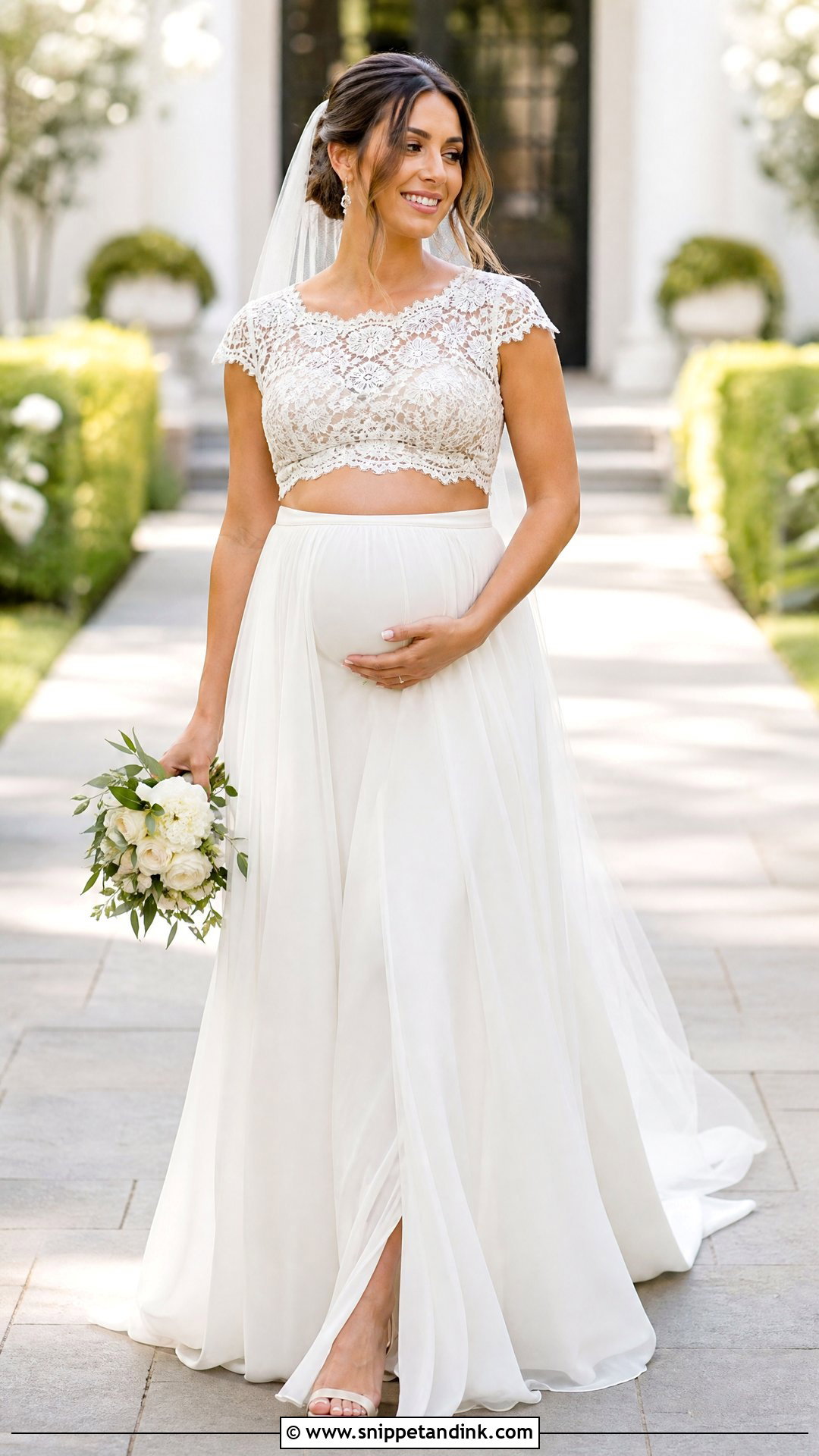
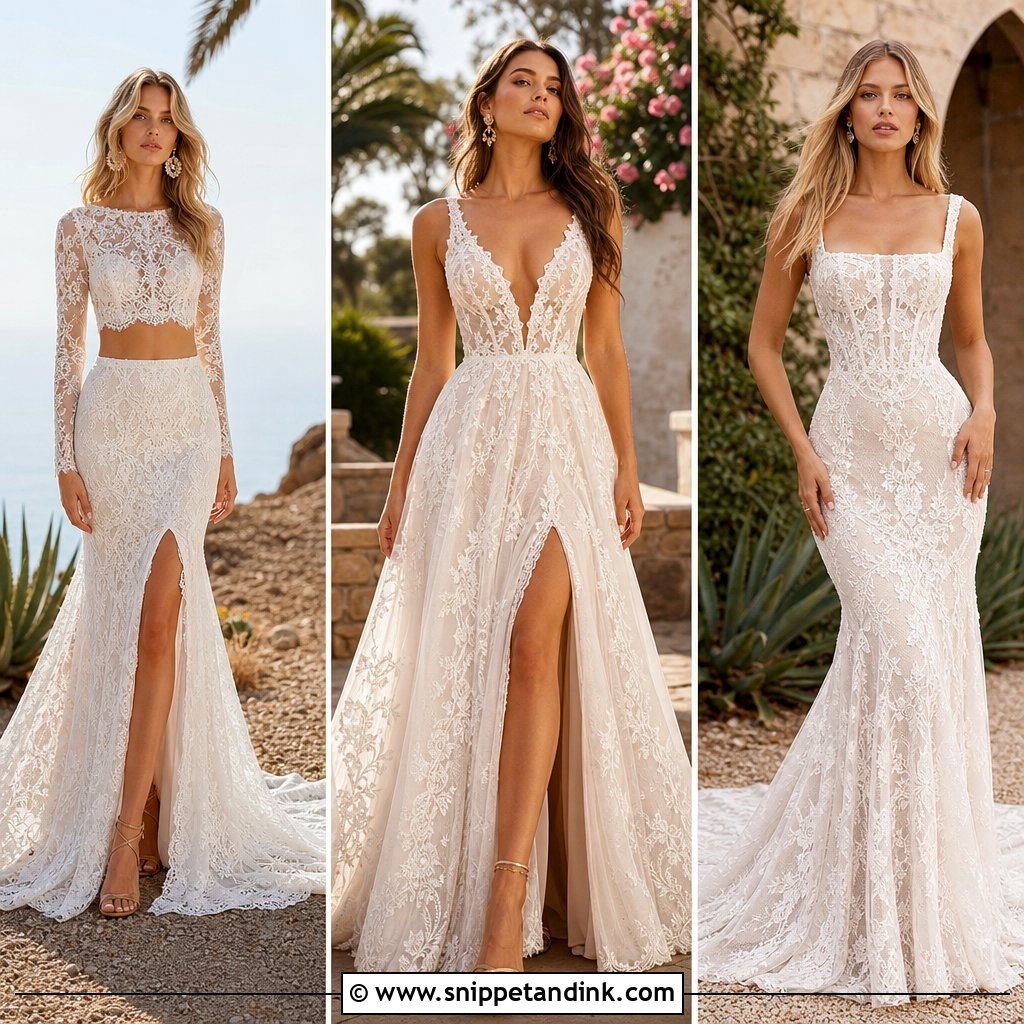
Separates are surprisingly practical when the wedding sits close to your due date, because the top and skirt are fitted independently. A soft bridal top with a high-waist skirt adjusts more easily than any one-piece gown. A cropped lace top that meets the waistband shows a little of the bump; a longer wrap top covers it. I’d ask for an adjustable back on the skirt so it can change size in the final week. Chiffon, satin or tulle keeps it bridal, with low heels and a plain veil.
25. Reception Maternity Wedding Gown
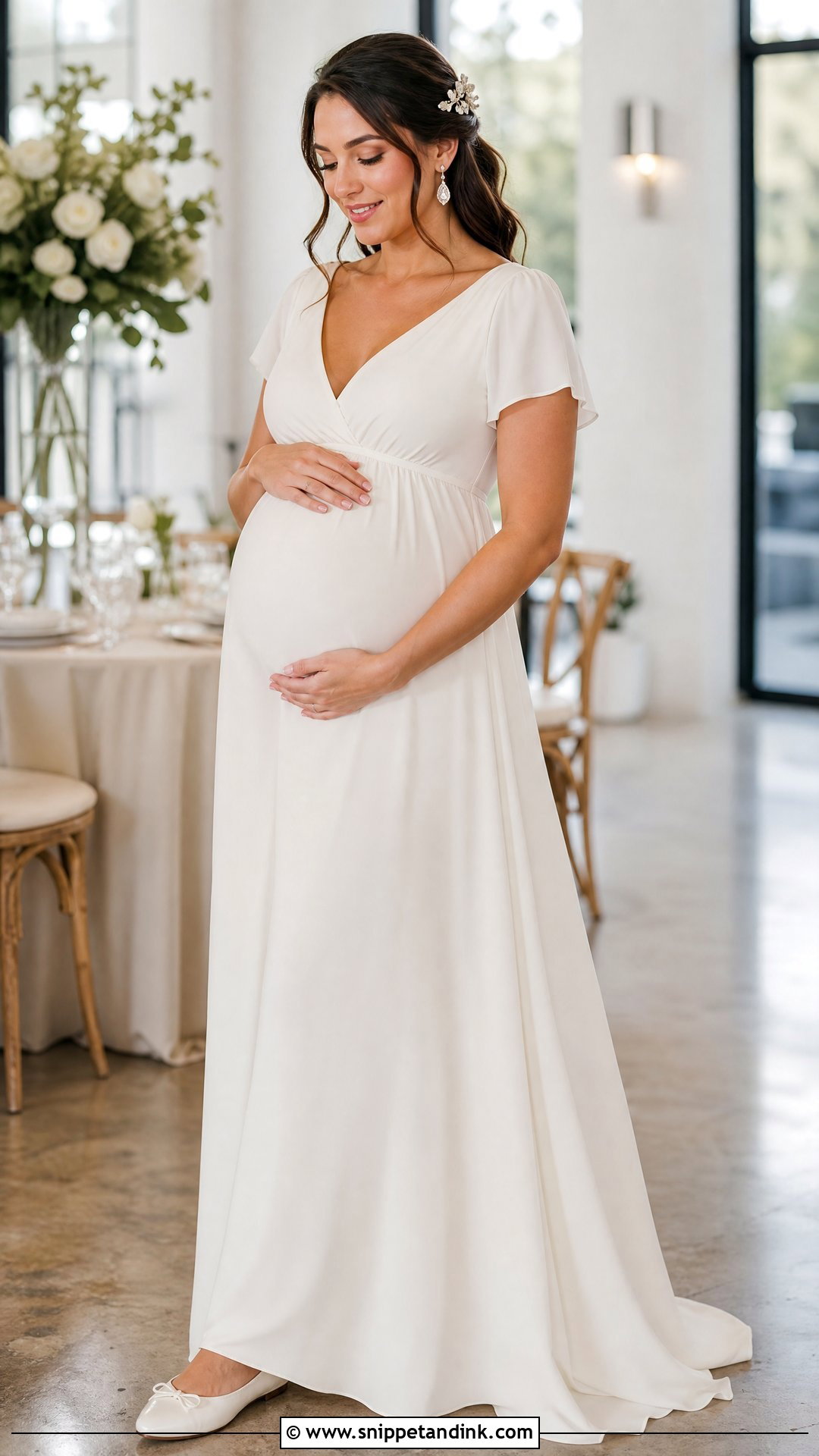
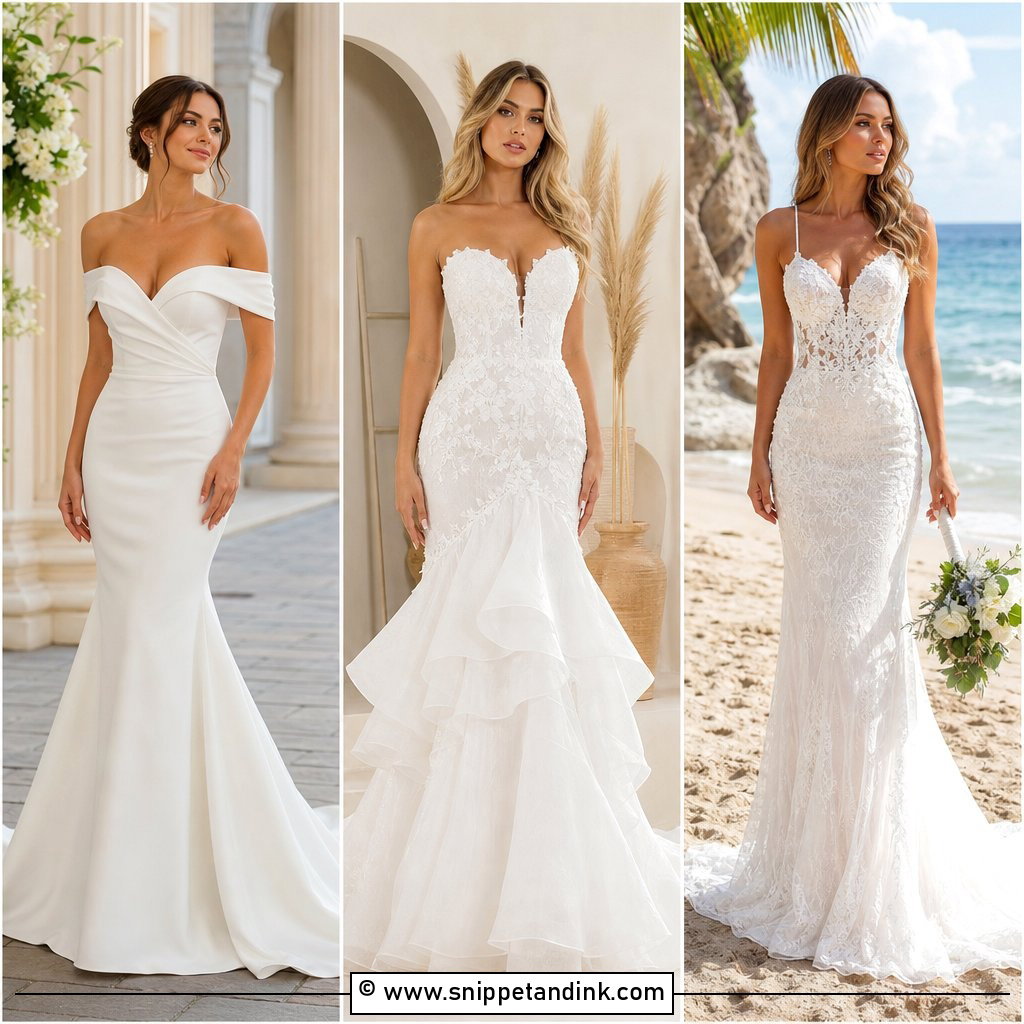
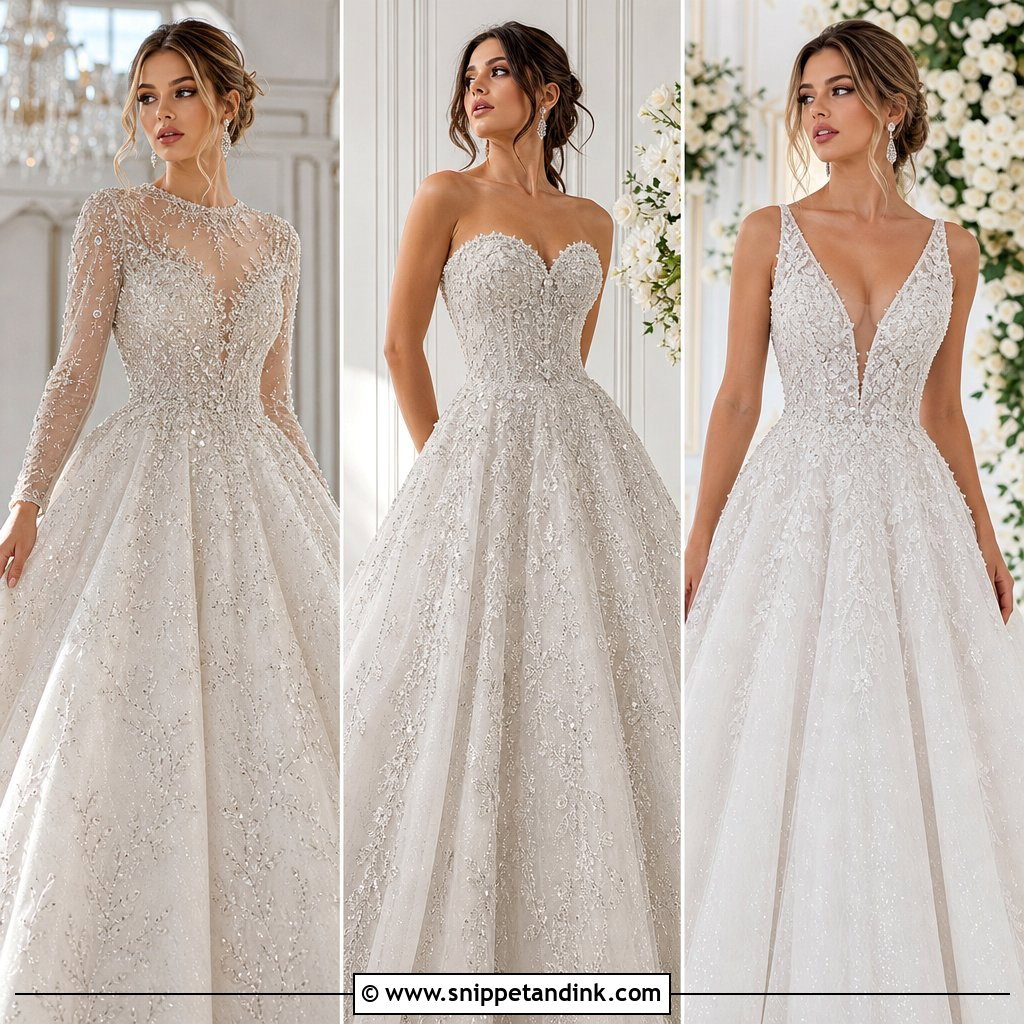
By the reception, most pregnant brides want to sit, eat and put their feet up, and a second dress makes that easy. Look for stretch crepe, jersey, satin or chiffon with a shorter hem and a simple empire waist. If the ceremony gown was dramatic, let this one be clean. Cushioned flats are worth packing even if you wore heels earlier, since feet often swell by evening. A small hair accessory and bridal earrings keep the change from looking like you’ve gone home.
Swollen Feet, Bathroom Trips and the Other Parts of a Pregnant Wedding Day
The gown is only half of comfort. The rest is planning for what a long day does to a pregnant body, and I’d rather sort these at the last fitting than discover them at the reception.
- Pack a second pair of shoes half a size up. Feet and ankles often swell after hours of standing, and a strap that fit at noon can bite by eight.
- Do a practice bathroom trip in the gown with the person who will help you. Learn which layers lift together and where the bustle hooks are before the day.
- Ask for a chair near you during portraits and the ceremony if it runs long. Standing still with locked knees in heat is when brides feel faint.
- Skip shapewear that squeezes the belly. A soft maternity support band under the gown helps your back without pressing on the bump.
- Keep water and a small snack with whoever holds your bouquet, and a bit of blotting powder for flushed skin.
Showing the bump in photos, or not
Decide before the day whether you want the bump to be part of the pictures, and tell your photographer. A three-quarter side angle with a hand resting low shows it proudly. If you’d rather it reads softly, a bouquet held at the high waist and straight-on angles in a flowing skirt do that. Either choice is fine; leaving it to chance is what makes brides unhappy with the album.
Sit Down in It and Lift Your Arms Before You Decide
A maternity wedding gown has two jobs: look like you, and work with a body that’s still changing. That means a supported bust, room for the bump, fabric with some give and shoes you can stand in for hours. Lace sleeves, satin slips, chiffon beach gowns, tulle skirts and short courthouse dresses can all manage both when the seams sit in the right place. Take your favourite to a fitting, sit down in it, lift your arms, and trust how it feels over how it looks on the hanger.
You'll Like These Ideas:


Leave a Reply