
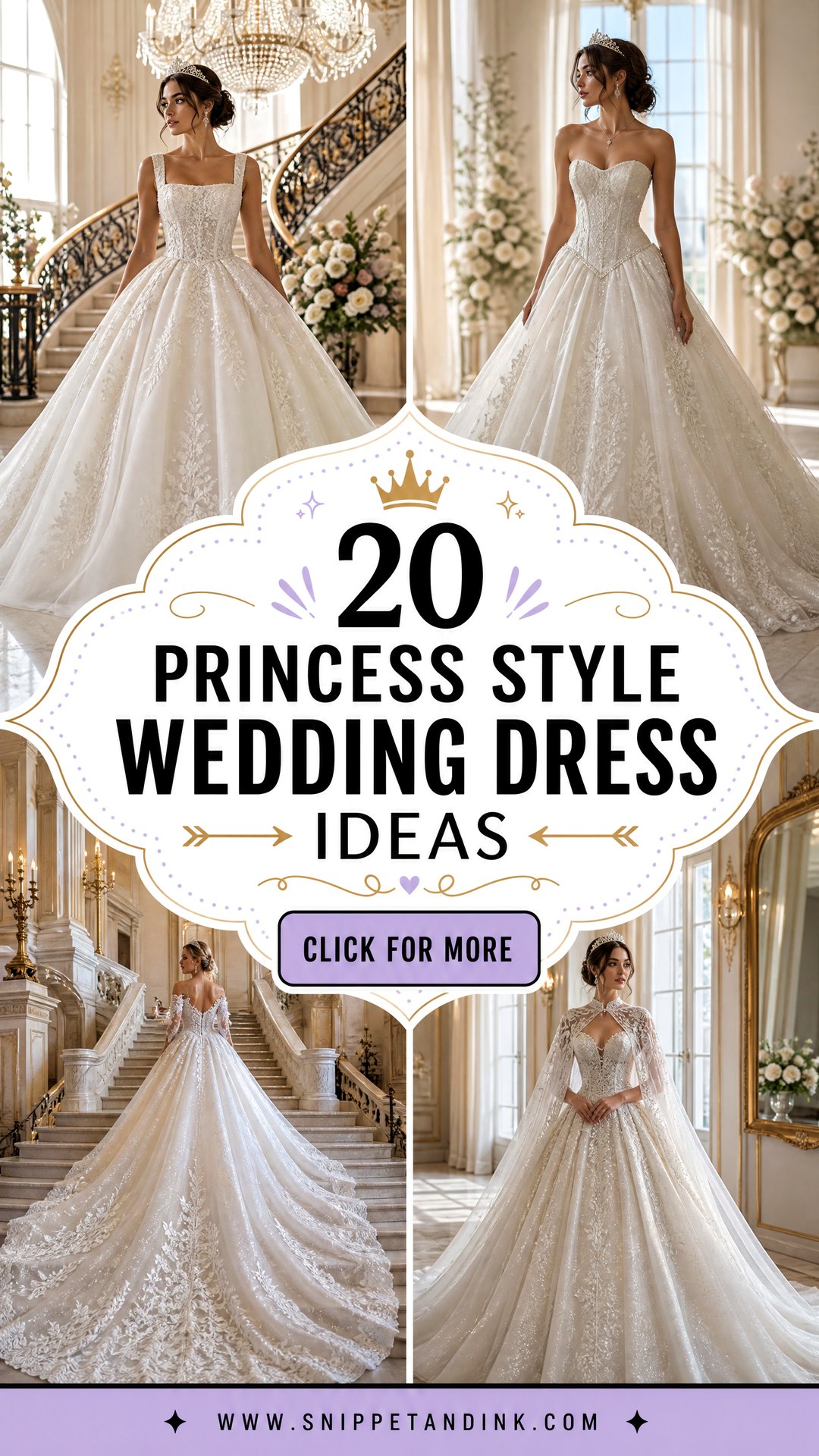
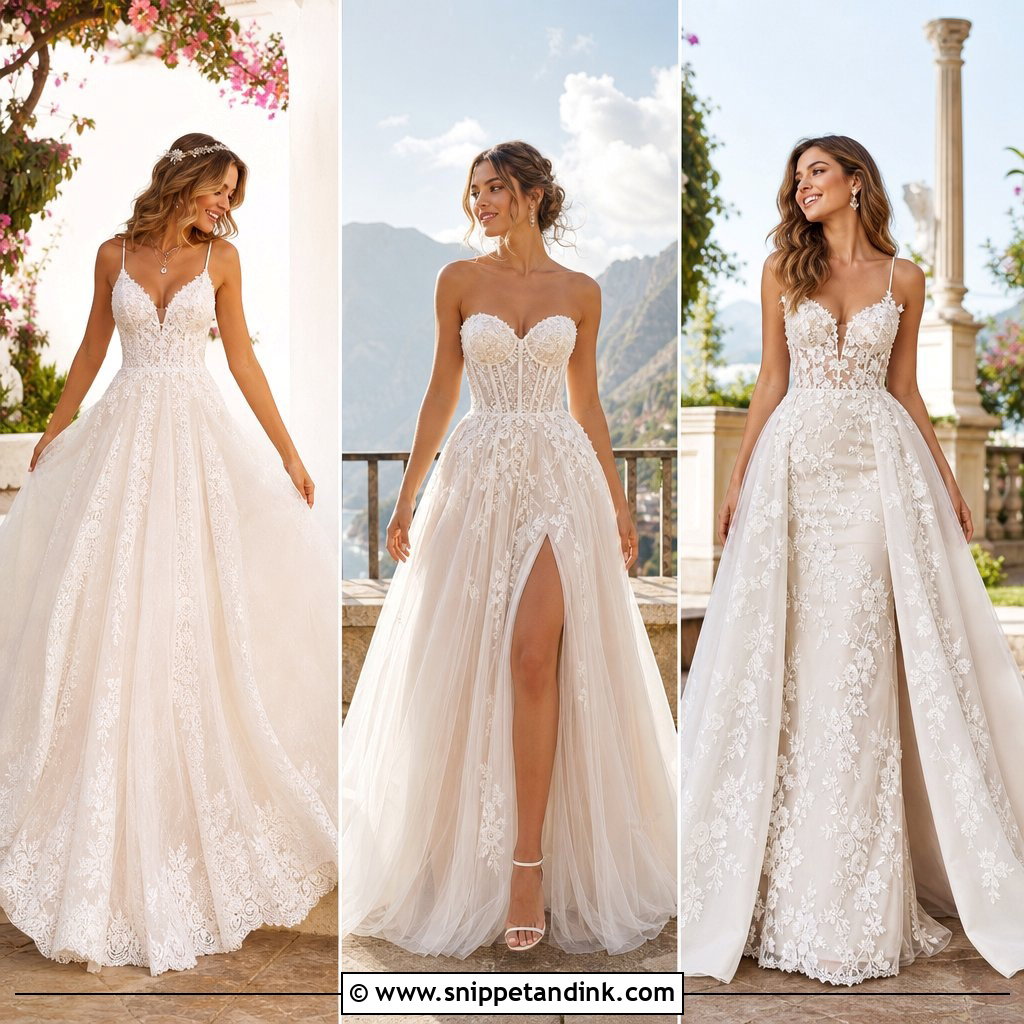
A princess gown is the one silhouette nobody mistakes for anything else: fitted through the bodice, then a skirt with real volume. It also carries unforgettable drama that a sheath or slip dress simply can’t. Below are twenty versions I’d happily pull for a fitting, from plain Mikado ball gowns to Basque waists, exposed boning, floral appliqué and detachable overskirts. What separates a good choice from a regretted one is rarely the neckline. It’s how heavy the skirt is by hour six, whether the bodice holds you when you sit, and whether your venue has room for the train. I’ll point those out as we go.
How Much Skirt Is Too Much for Your Venue?
Volume is the defining feature of a princess gown, and also the thing brides misjudge most often. In a boutique, with a mirror and open floor, a hoop petticoat looks perfect. At a small restaurant reception or a narrow register office, the same skirt fills every gap between chairs.
Before your first appointment, I’d find out three things about your venues:
- The aisle width and whether there are steps, stairs or uneven paving on the way to it.
- The car you’re arriving in. A full skirt in the back of a small saloon creases badly, so ask for a vehicle with a wide rear door.
- How tightly the reception tables are set, since you’ll be moving between them to greet guests.
Most of a ball gown’s width comes from the petticoat, not the dress itself. A hooped crinoline gives the widest shape and is the hardest to sit in. A layered tulle petticoat gives similar fullness that compresses when you sit. If the venue is tight, ask the boutique to show you the gown on both. Often the softer petticoat looks nearly the same in photos and is far easier to live in.
1. Satin Princess Wedding Dress
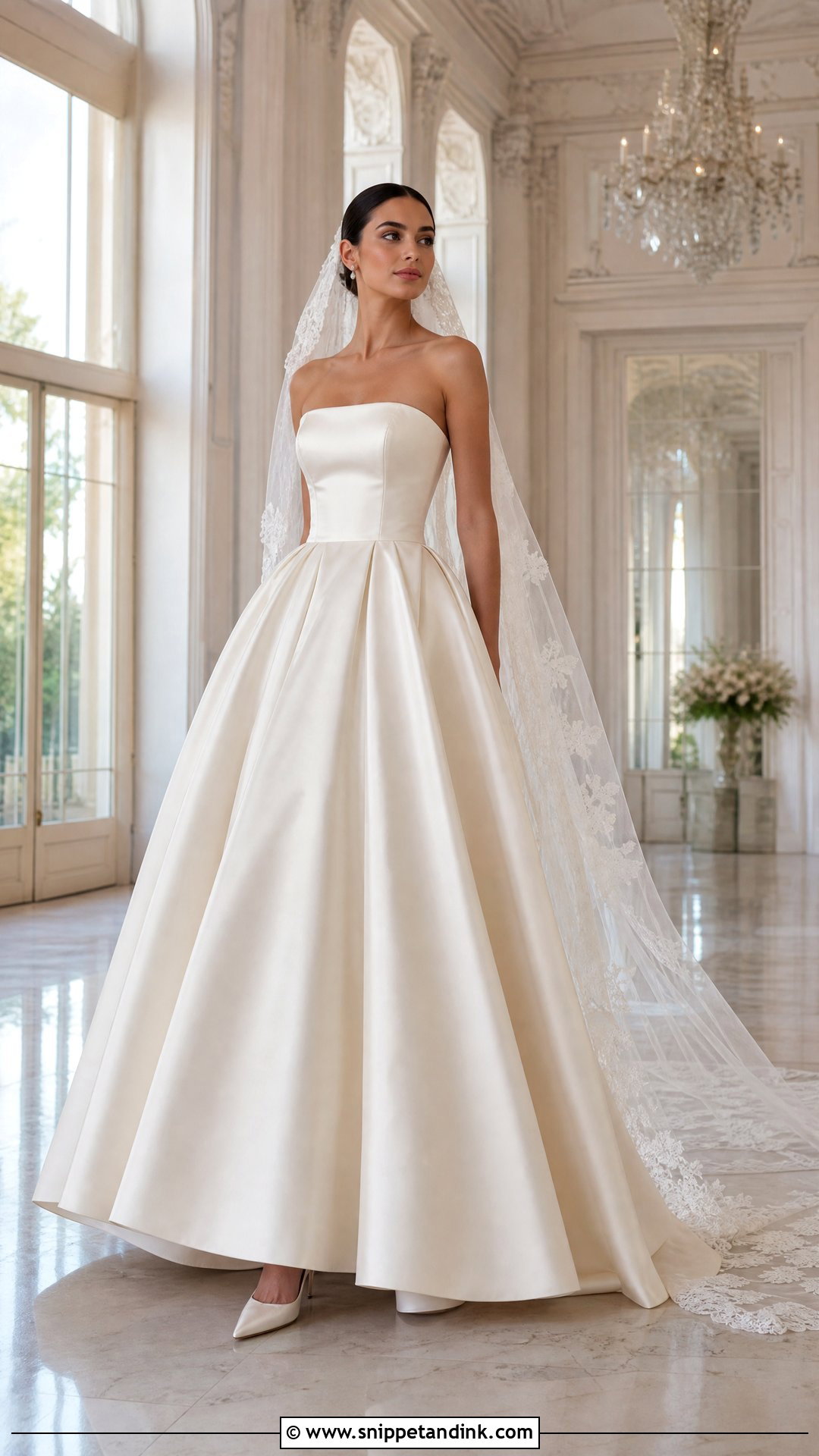
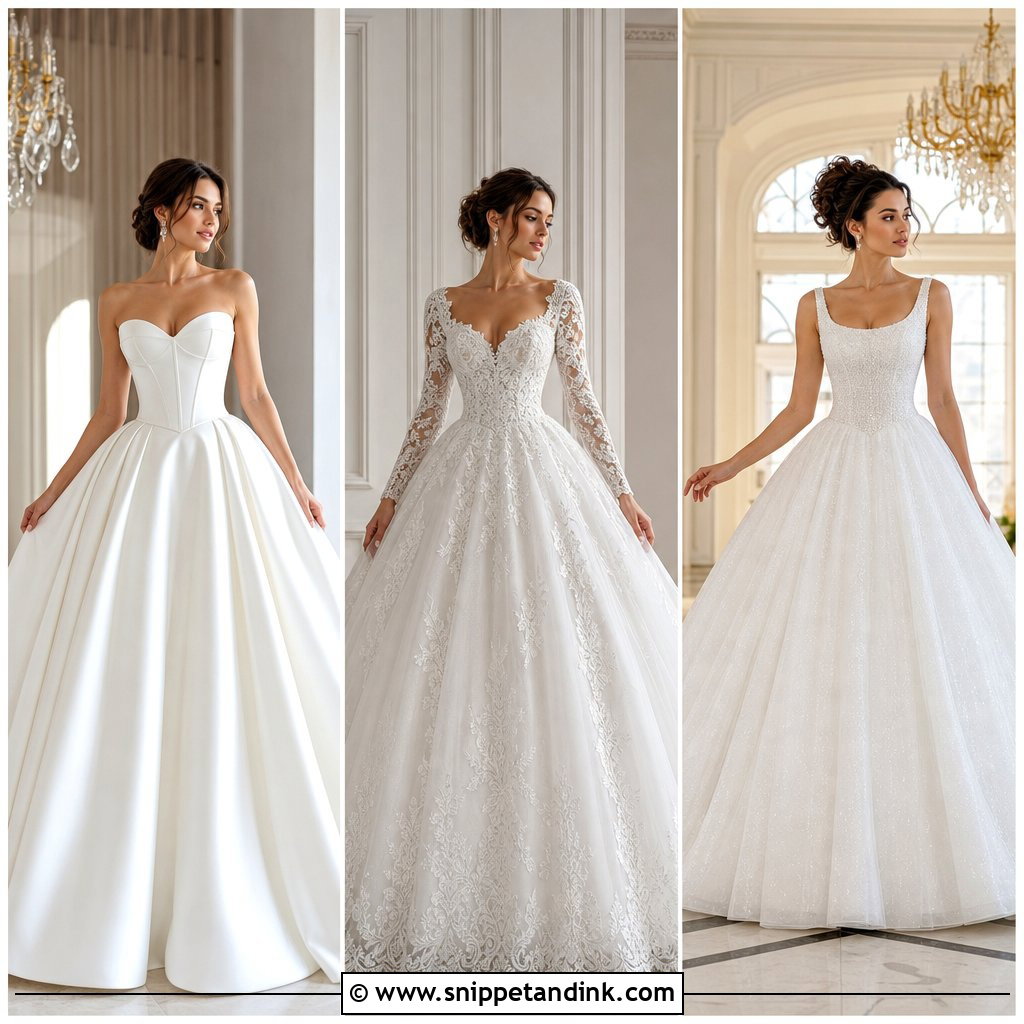
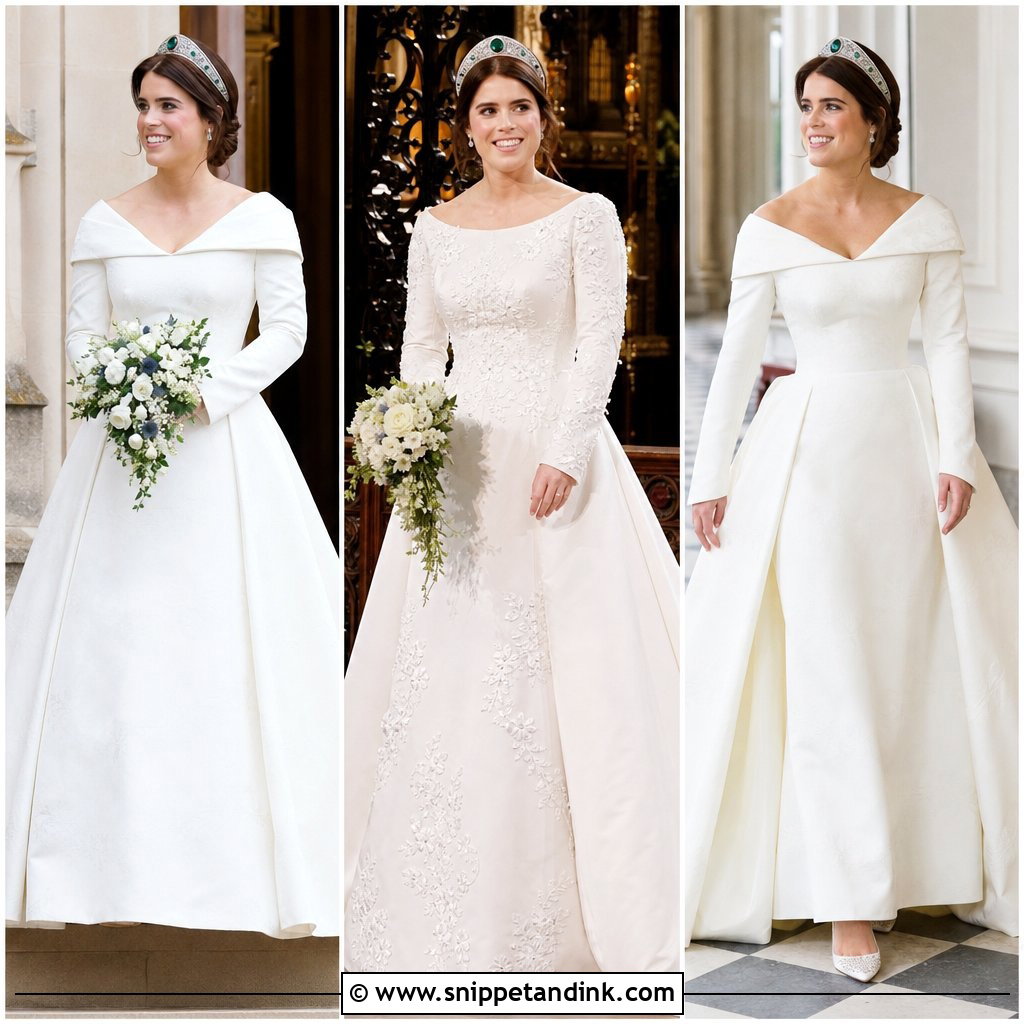
This is the gown I bring out first at most princess appointments, because it shows a bride what volume looks like with nothing distracting from it. Duchess satin and Mikado both hold a pleat crisply, so the skirt keeps its shape without a heavy petticoat doing all the work. The catch is creasing: satin marks wherever you sit, and those lines show in afternoon portraits. Wide straps give more support than strapless if you’re fuller through the bust. Keep the rest quiet with pearl earrings and a smooth cathedral veil, plus a low bun so the neckline stays clear. Ask your seamstress for a proper bustle, since a satin train has real weight once it’s been dragged across a dance floor.
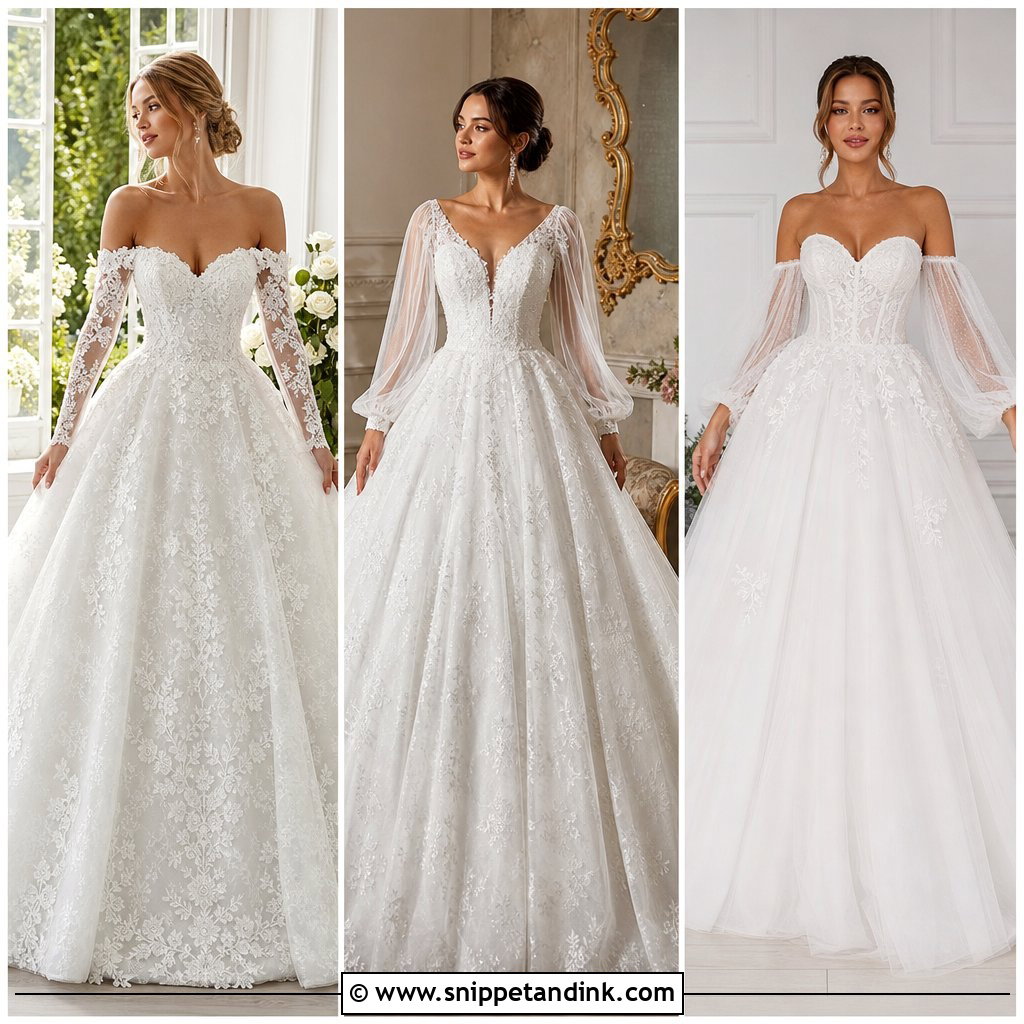
2. Lace Long Sleeve Princess Wedding Dress
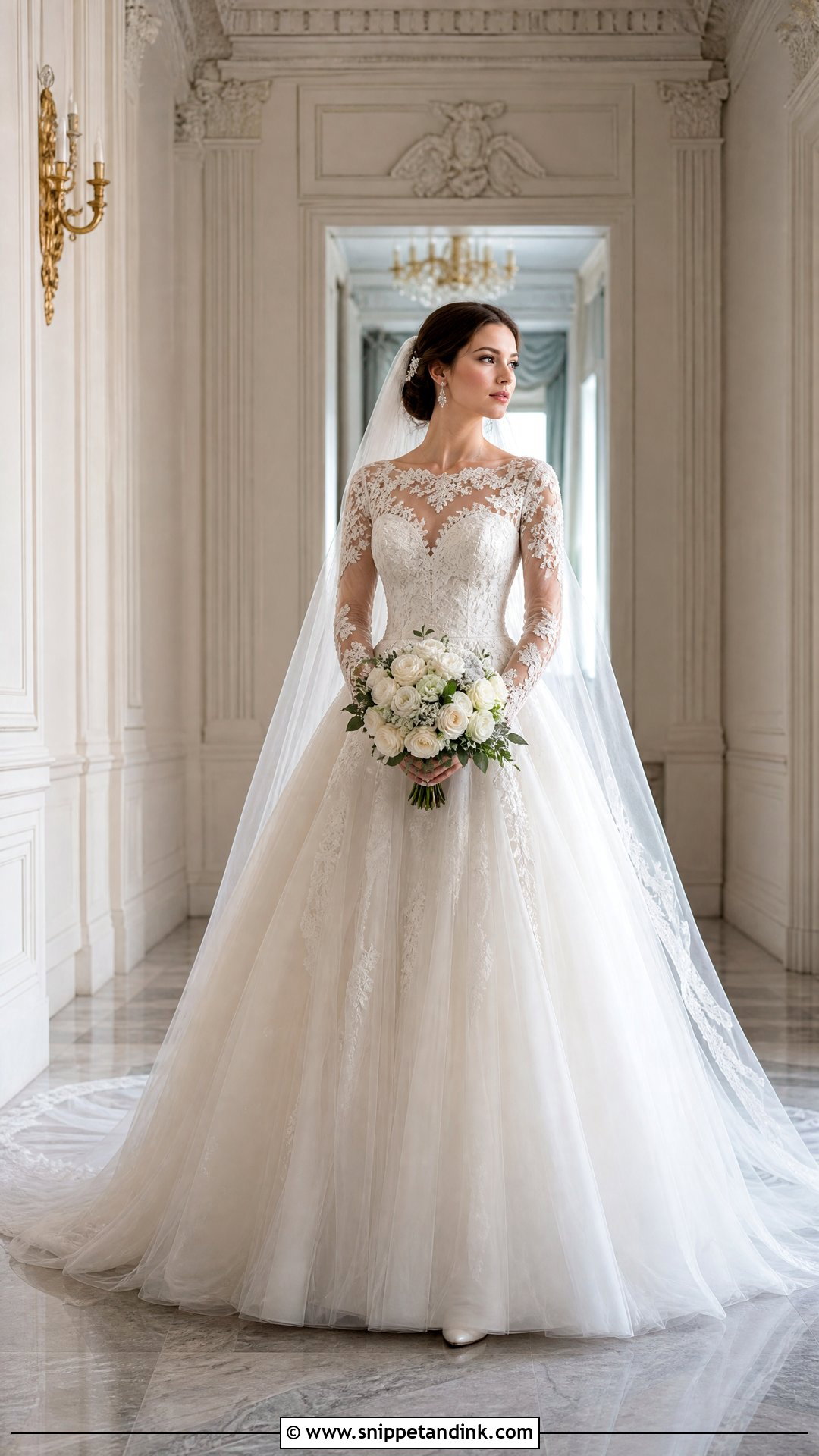
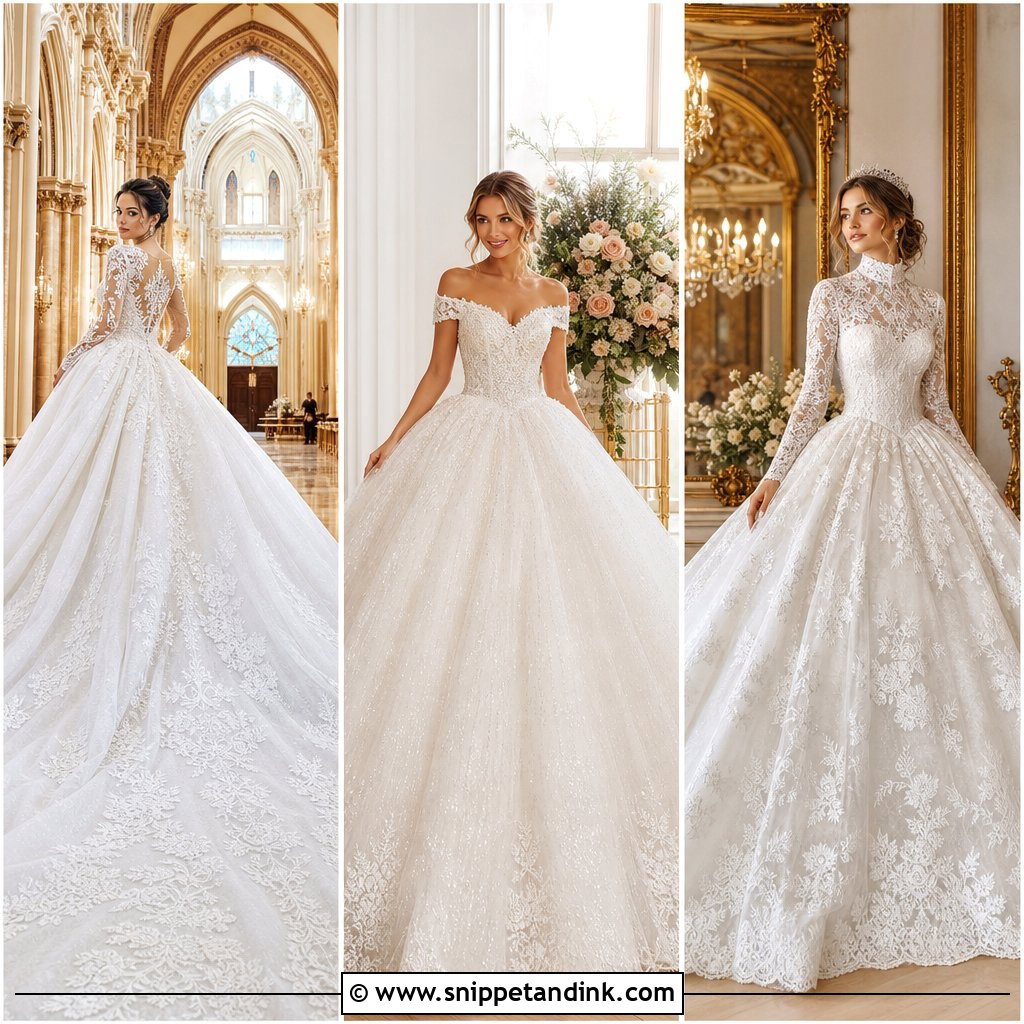
Sleeves change how a ball gown moves, so I always have brides lift their arms and hug someone during the try-on. A lace long sleeve princess wedding dress works best when the appliqués are placed on sheer tulle rather than solid lace all the way down, which can feel hot and stiff at the elbow. A bateau or soft V neckline stops the coverage from looking heavy. Pair it with a fingertip or chapel veil edged in matching lace and leave the hair in loose waves. It earns its keep at winter weddings and in cold stone churches, though a July garden ceremony in full lace sleeves is a hard day.
3. Off Shoulder Princess Wedding Dress
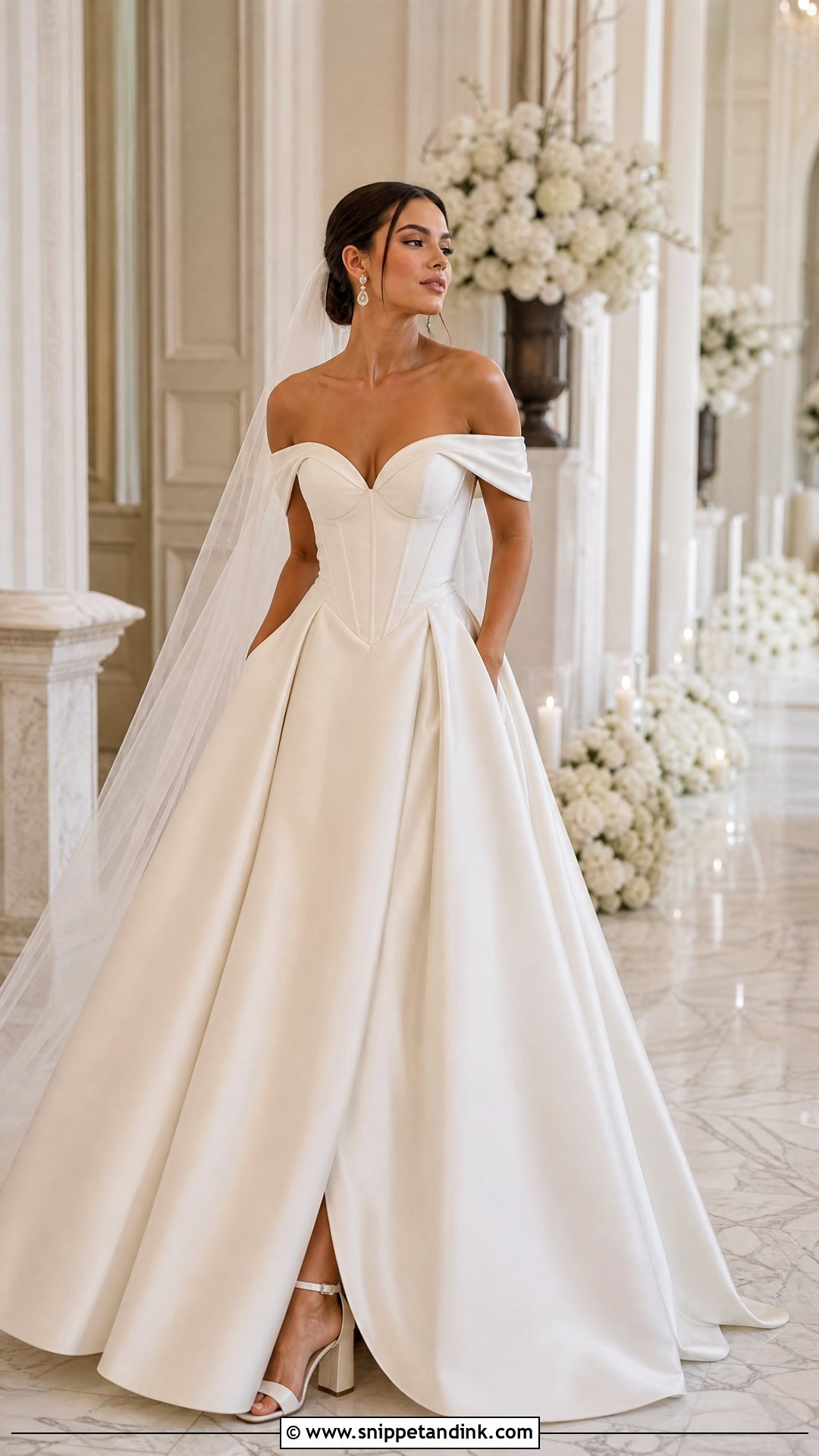
Off-shoulder bands look simple and are the hardest neckline to get right. If the bodice relies on the sleeves to stay up, you’ll spend the evening tugging them back into place, so I look for a fully boned corset inside that holds the dress on its own. Draped satin bands read cleaner in photos; tulle sleeves feel softer but can slide. Start the skirt at the natural waist for a true hourglass. A small pendant sits well in the open neckline, and block heels under that much skirt are kinder than stilettos. Test the arm range before you commit, because these bands limit how high you can reach.
4. Sweetheart Corset Princess Wedding Dress
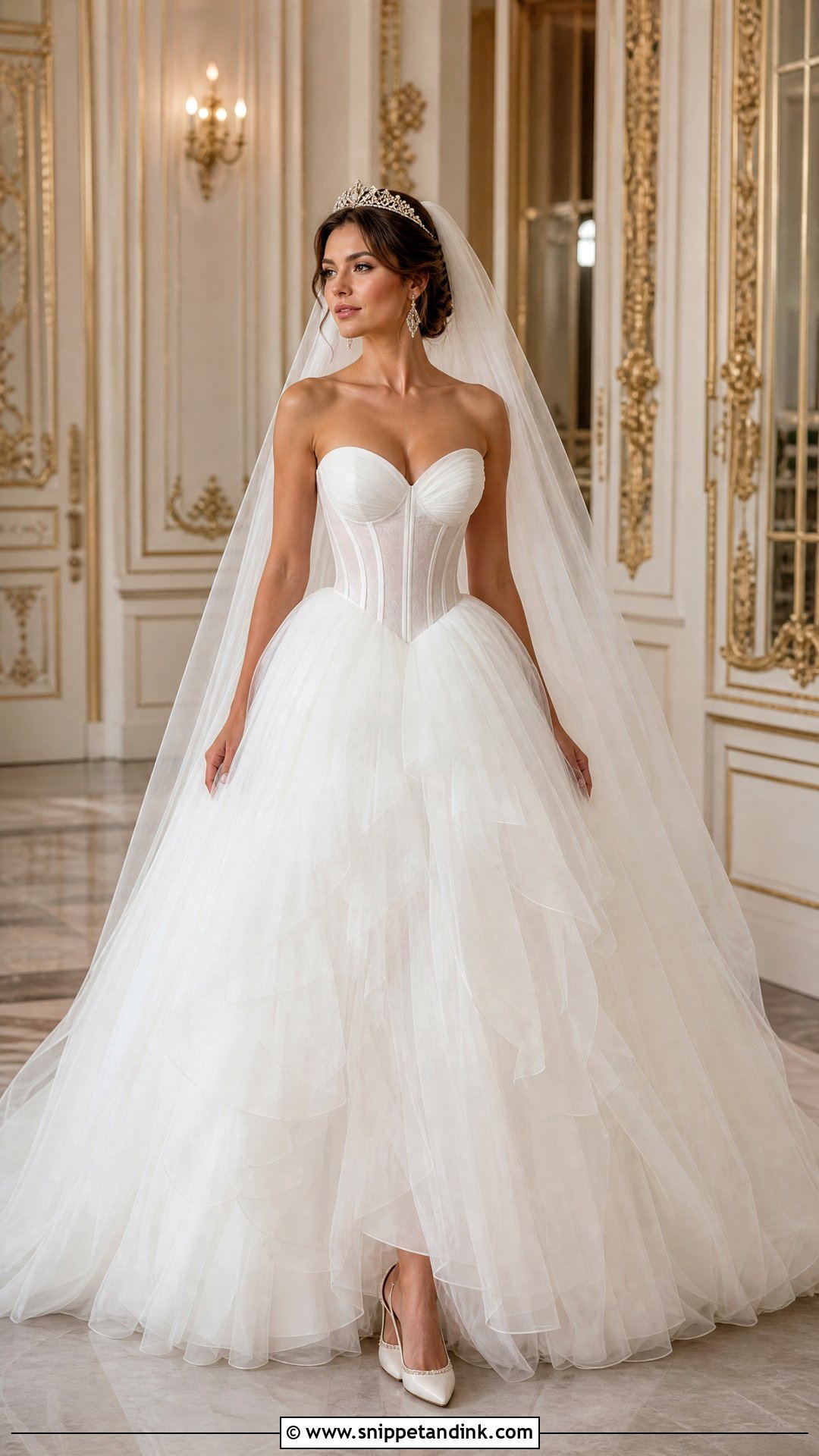
The sweetheart curve flatters most busts, and the boning underneath is what lets it carry a full skirt without the bodice collapsing at the waist. In a sweetheart corset princess wedding dress, I like visible seaming or tonal embroidery over a solid lining; sheer panels need that lining or they wrinkle once you’ve been sitting. Tulle layers move more, satin stands stiffer. A small tiara and a plain long veil keep the corset as the focus, and a half-up style suits the youthful shape. At fittings, sit down and raise both arms. If the top edge gapes or digs, it needs taking in before it’s worn for ten hours.
5. Basque Waist Princess Wedding Dress
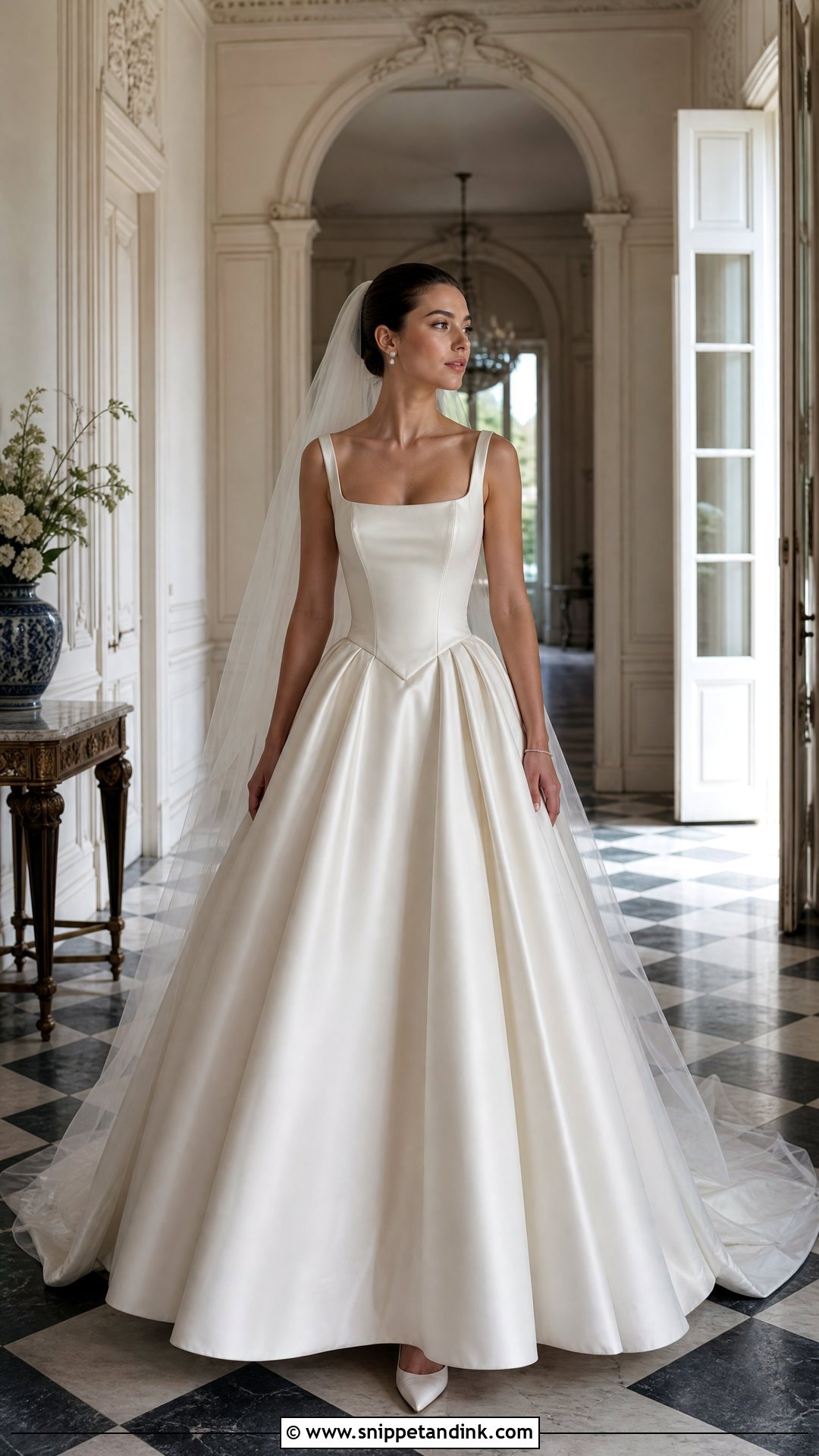
A Basque waist princess wedding dress dips into a V below the natural waistline, which lengthens the torso and pulls the eye to the centre of the gown. It suits brides with a shorter body or a less defined waist particularly well. Satin makes the point crisp; embroidered tulle softens it. Because the waist is already doing the work, I’d keep accessories to pearl studs and a fine bracelet, with a long veil tucked beneath a sleek bun. Alterations matter more here than on almost any other cut. If the point buckles or folds when you sit, the seam is too long for your torso, and the skirt will flare unevenly from it.
6. Square Neck Princess Wedding Dress
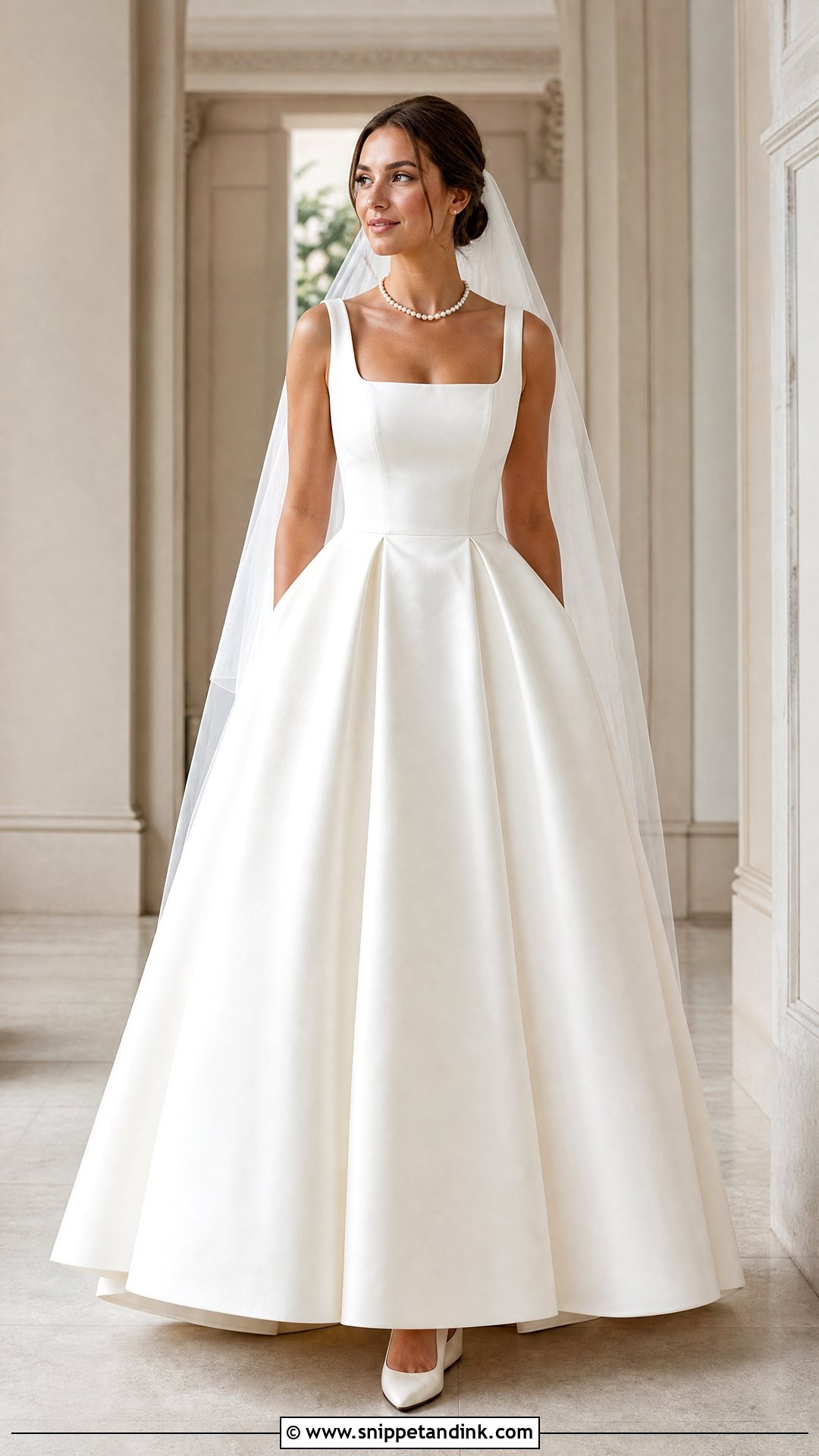
Straight lines across the chest give a ball gown a portrait-like calm, and they frame the collarbones without any plunge. A square neck almost always comes with wide straps, which leaves room for real internal support, so it’s my first suggestion for brides who don’t trust strapless. Smooth Mikado looks architectural; floral lace makes it gentler. A short strand of pearls sits exactly in the open space. Watch the width of the square: too wide and it can make narrow shoulders look narrower still, so try two versions side by side.
7. Drop Waist Princess Wedding Dress
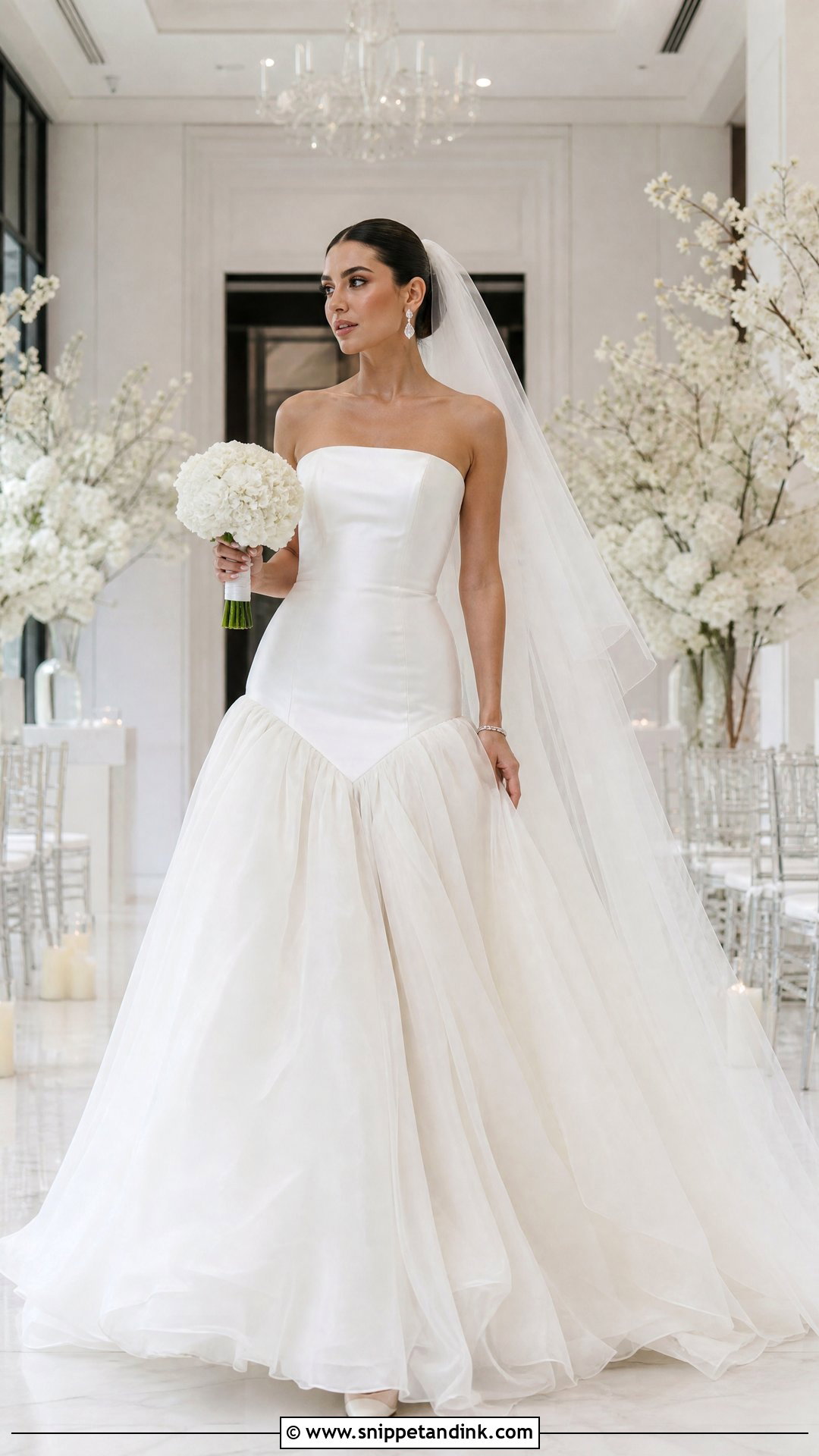
Dropping the waist seam several inches below the natural waist gives a long, lean torso before the skirt opens out. It’s a fashion-led shape and less forgiving than a classic ball gown, because the fitted section covers the high hip, where most of us change size during the day. Curved or V-shaped seams transition into the skirt more smoothly than a straight horizontal line. Skip any belt; it fights the seam. Sleek hair and pointed heels keep it modern. During alterations, sit and stand several times. If the bodice rides up, it hasn’t been fitted with enough ease through the hip.
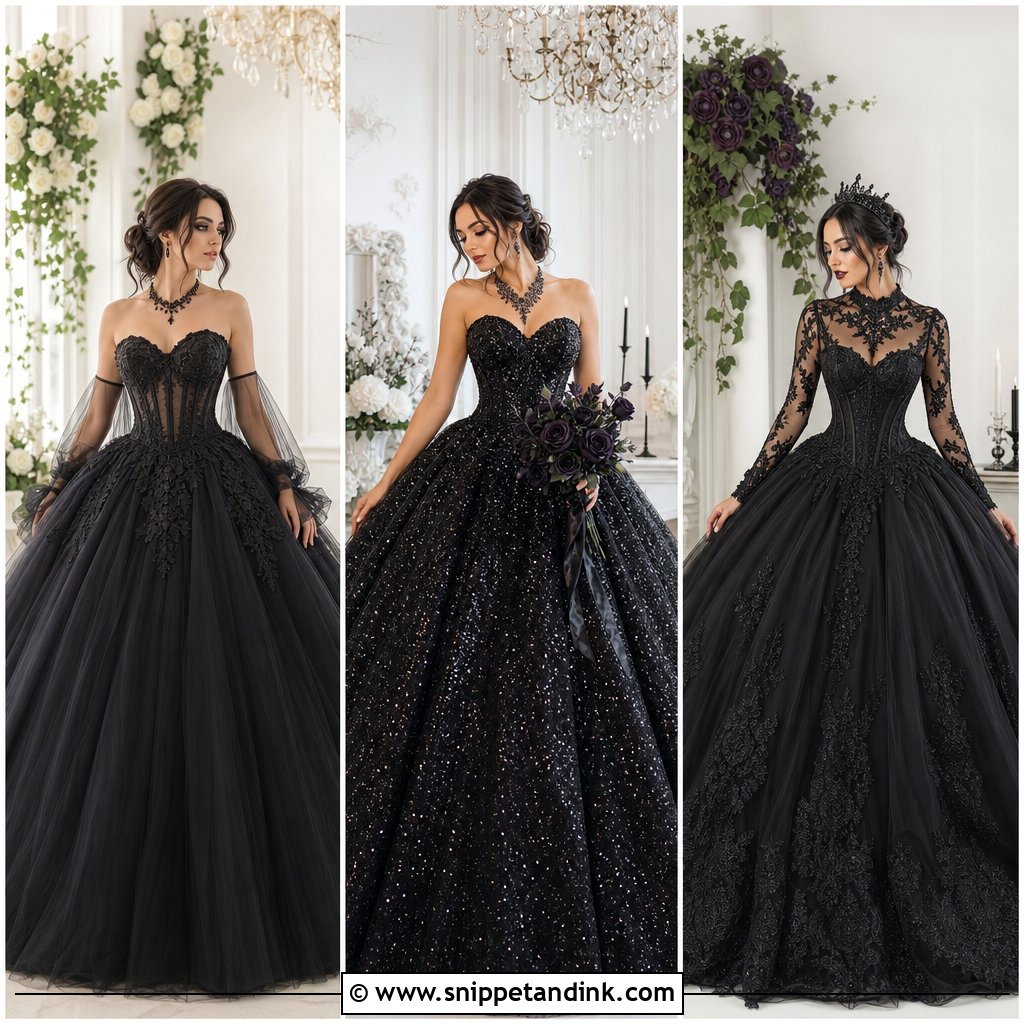
8. Sparkling Tulle Princess Wedding Dress
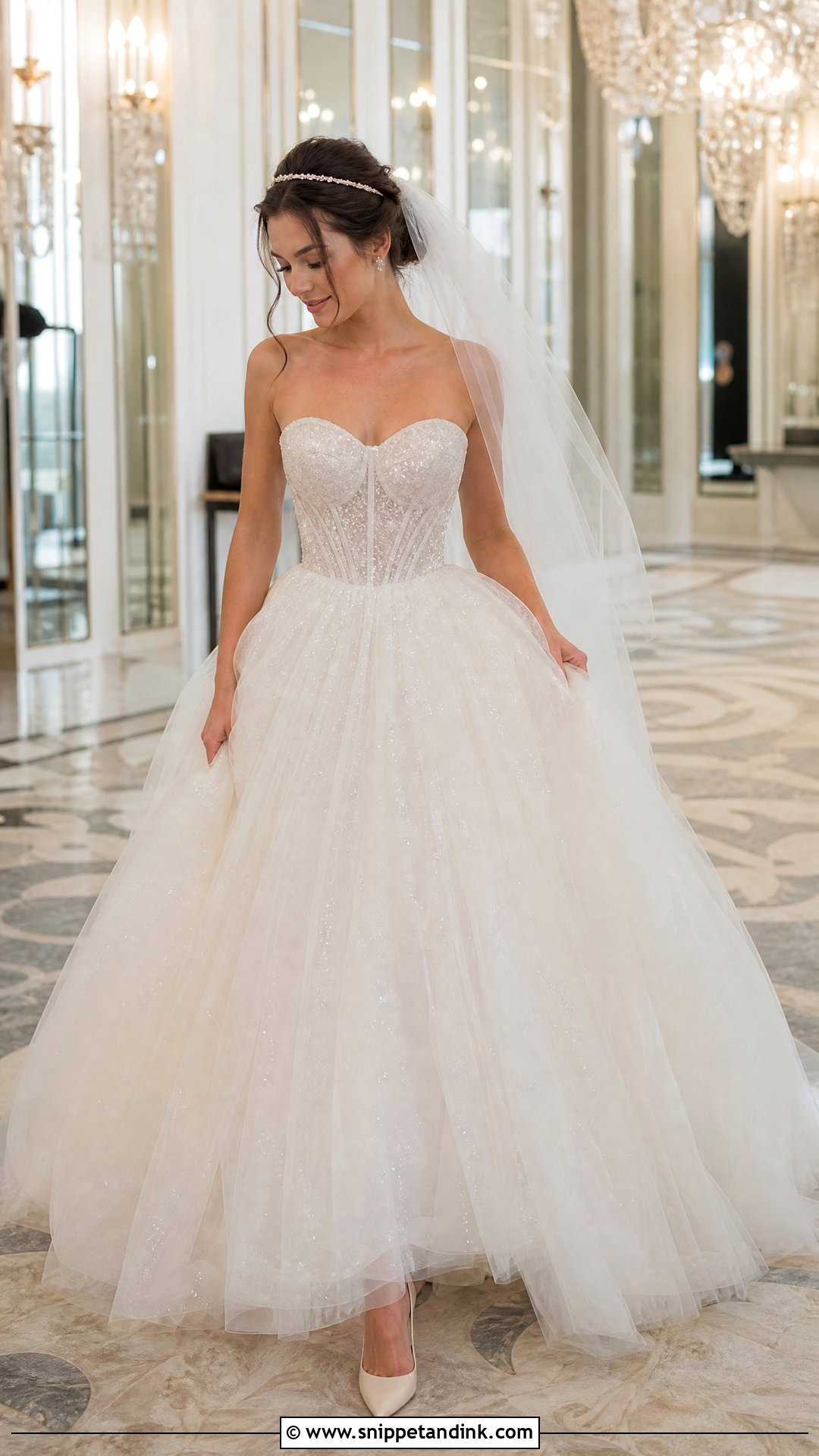
Glitter tulle behaves differently under every light source, and that’s the one thing I insist brides check before ordering. Under shop spotlights it can look like a faint shimmer, then turn almost mirror-bright under a photographer’s flash. Gowns where the sparkle sits in a layer beneath a plain top tulle read softer, and scattered crystals that thin out toward the hem stop the skirt looking busy. A lined corset bodice keeps the whole thing anchored. Pair it with a plain veil and a narrow headband, nothing more. Ask the boutique if you can step near a window, then take a phone photo with flash on.
9. Floral Appliqué Princess Wedding Dress
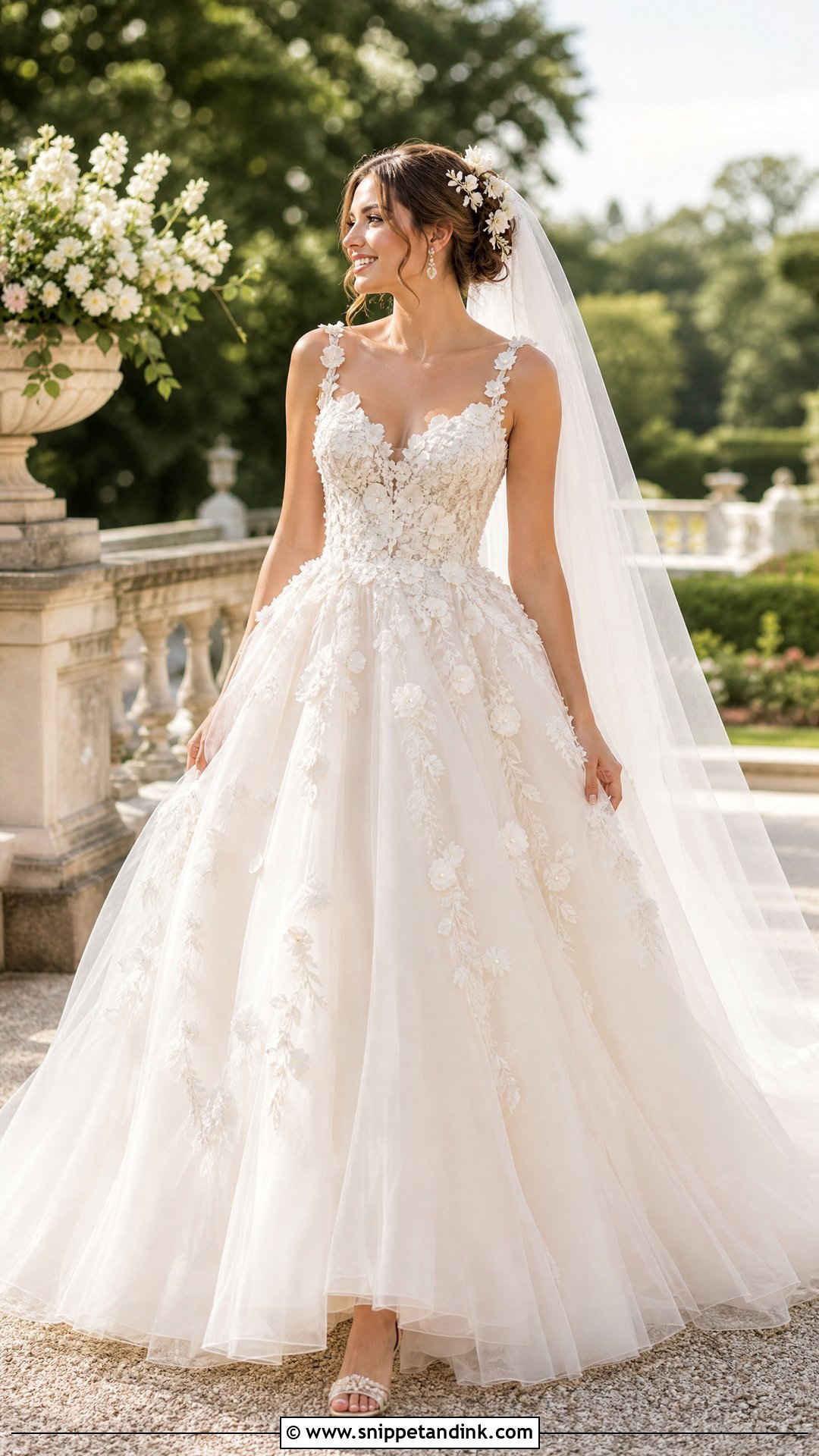
Raised flowers give texture that flat lace never will, and the best placement starts thick around the bodice and scatters loosely across the skirt. That keeps the waist defined without the skirt looking heavily decorated. Ivory-on-ivory is classic; pale blush embroidery is more personal. Floral pins in a loose updo echo the detail nicely. The practical worry with 3D appliqués is that they crush. Check that each petal is stitched down, not only glued, and ask how the shop will pack the gown so the flowers aren’t flattened in the bag before your final fitting.
10. Cathedral Train Princess Wedding Dress
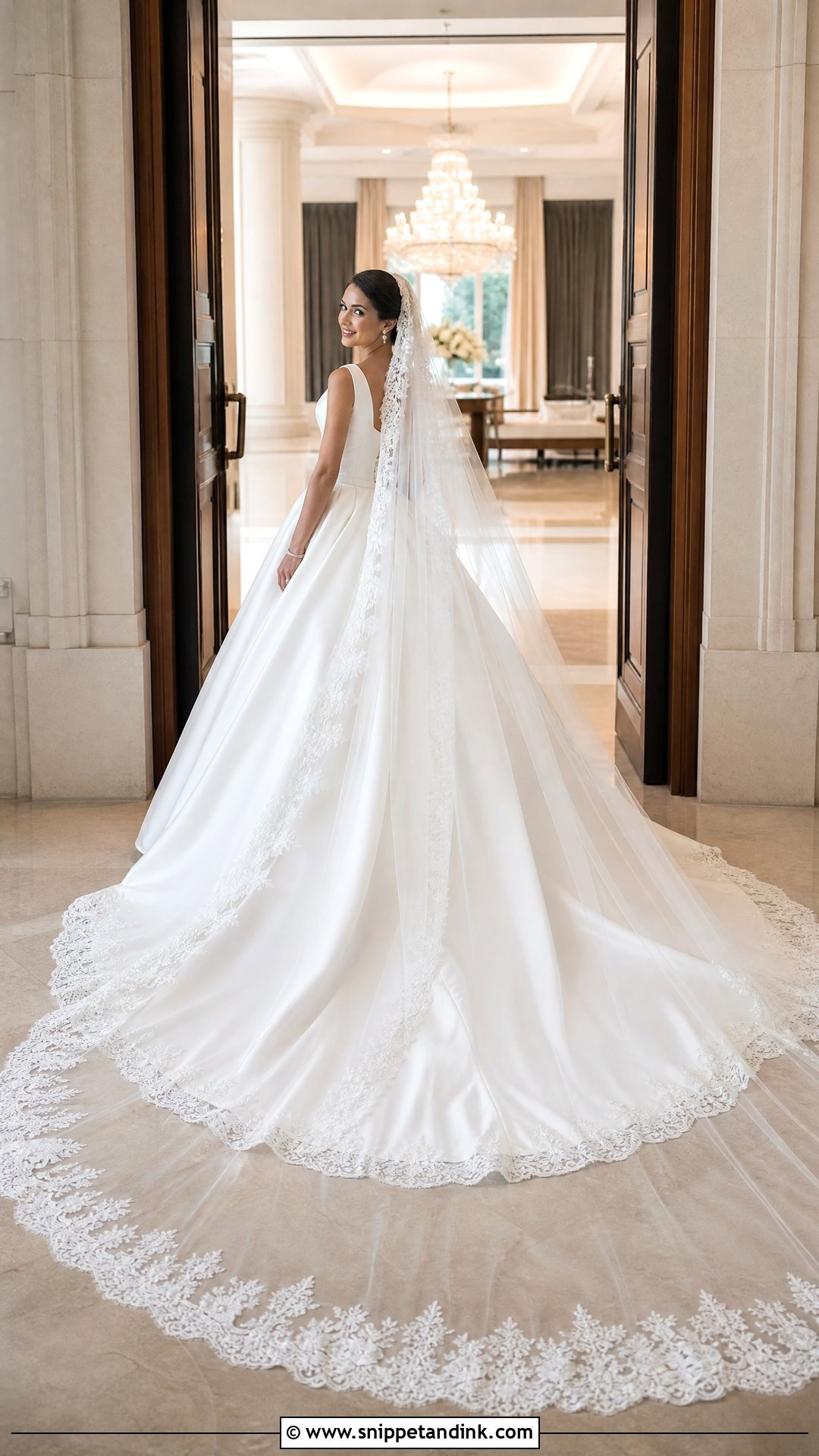
A cathedral train needs a venue that can hold it. Before anyone falls for one, I ask about the aisle width and whether the ceremony space has steps, because a long satin train on a narrow staircase becomes a hazard. Smooth satin shows the train’s shape best in aisle shots; lace appliqués add detail for the photographer’s wide angle. A cathedral veil that ends at or just past the train looks coordinated. Plan the bustle at your first alteration appointment, not the last, and teach two people in the wedding party how to fasten it.
11. Detachable Overskirt Princess Wedding Dress
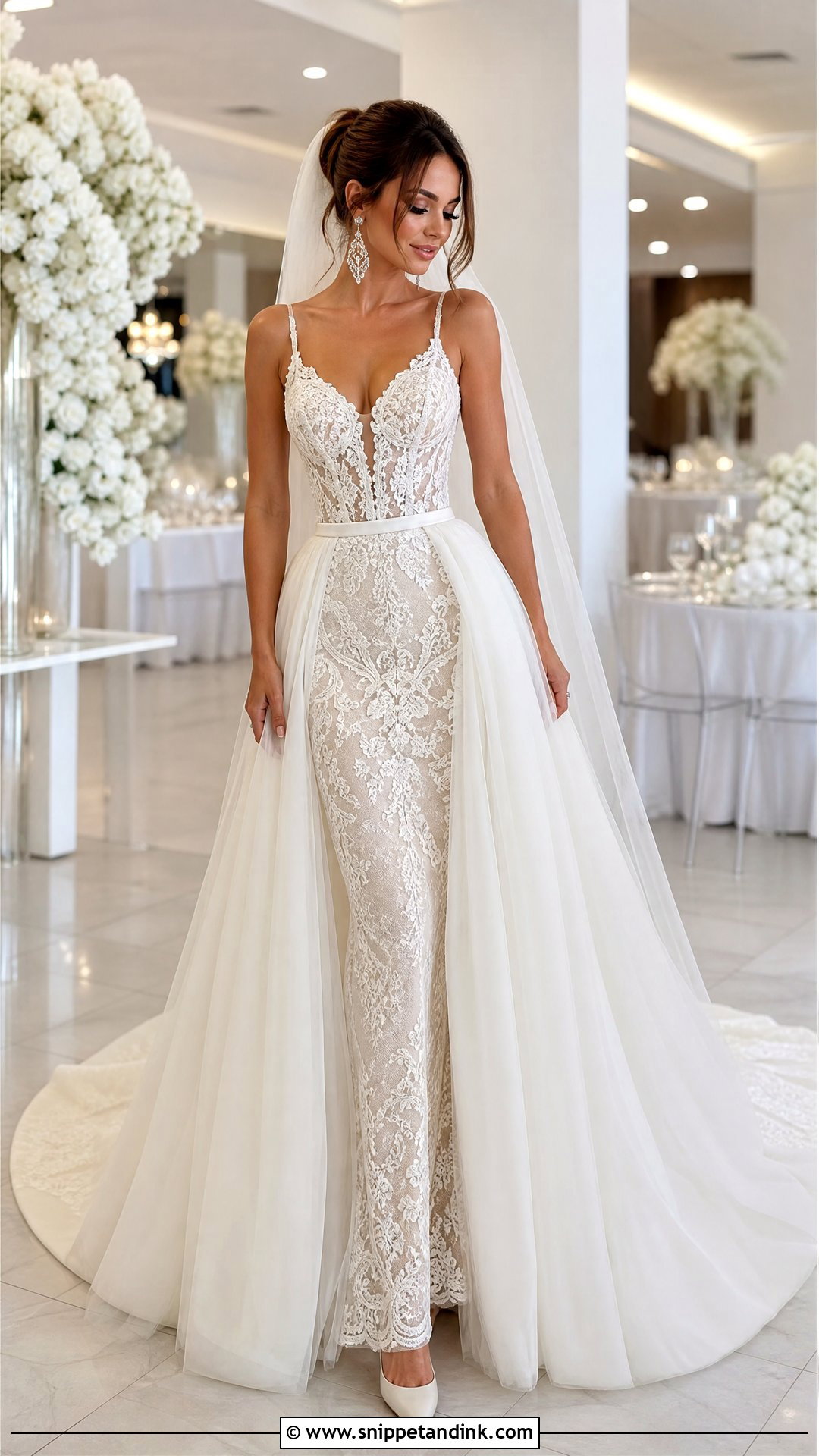
Two dresses in one, and it’s a sensible idea for a long day. The base is usually a fitted A-line, column or slim lace gown, and a full tulle or satin overskirt clips or buttons on at the waist for the ceremony. The join is where cheap versions show themselves: it should sit flat and hide under a waistband or bow, with no visible hooks from the back. Bigger earrings and a long veil suit the ceremony; switch to smaller pieces once the skirt comes off. Practise removing it twice before the day so nobody is wrestling with snaps in a corridor.
12. Bow Back Princess Wedding Dress
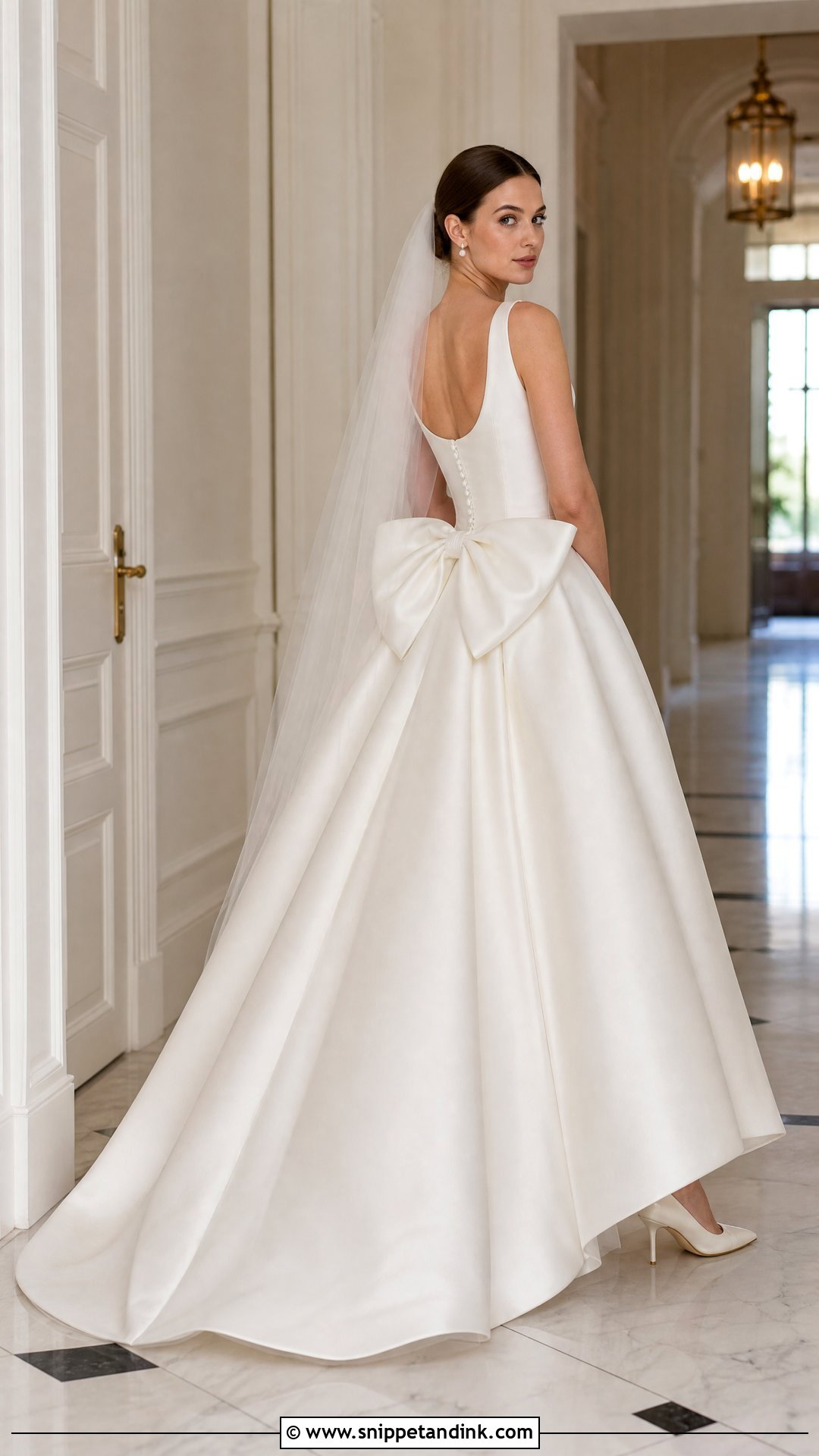
Guests spend most of the ceremony looking at your back, so a bow there isn’t a gimmick. Structured satin is the only fabric I’d trust to hold an oversized bow without it flopping by the reception. Place it at the natural waist for a traditional proportion or slightly lower for a more dramatic back view. Keep the front plain to balance it. The thing to check in the mirror is scale: a bow wider than your shoulders can swallow a small frame, and long tails can hide the buttons or lace you paid for. A removable bow gives you a cleaner shape for dancing.
13. Cape Princess Wedding Dress
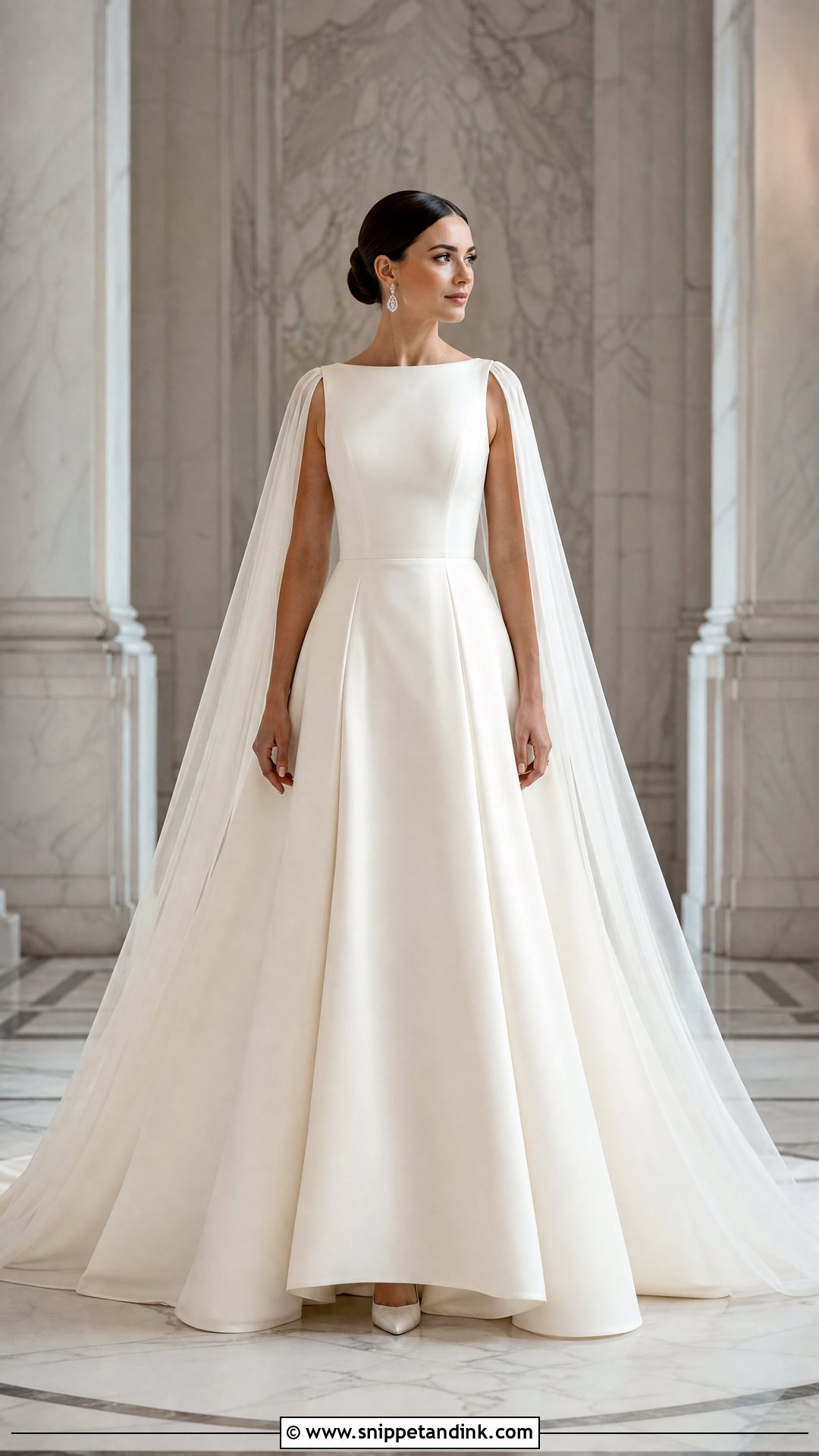
A cape stands in for a veil and adds movement every time you turn. Most attach at the shoulder seam or with small clips under the straps of a strapless gown, so the gown itself needs enough structure there to take the pull. Lace edging softens a sheer cape; a plain floor-length one looks very clean. Skip the necklace, since the cape already frames the neckline. The cape should skim the skirt, not bunch over it, which means checking its length with your actual shoes on. Make sure it can come off without anyone having to lift it over your hair.
14. Blush Princess Wedding Dress
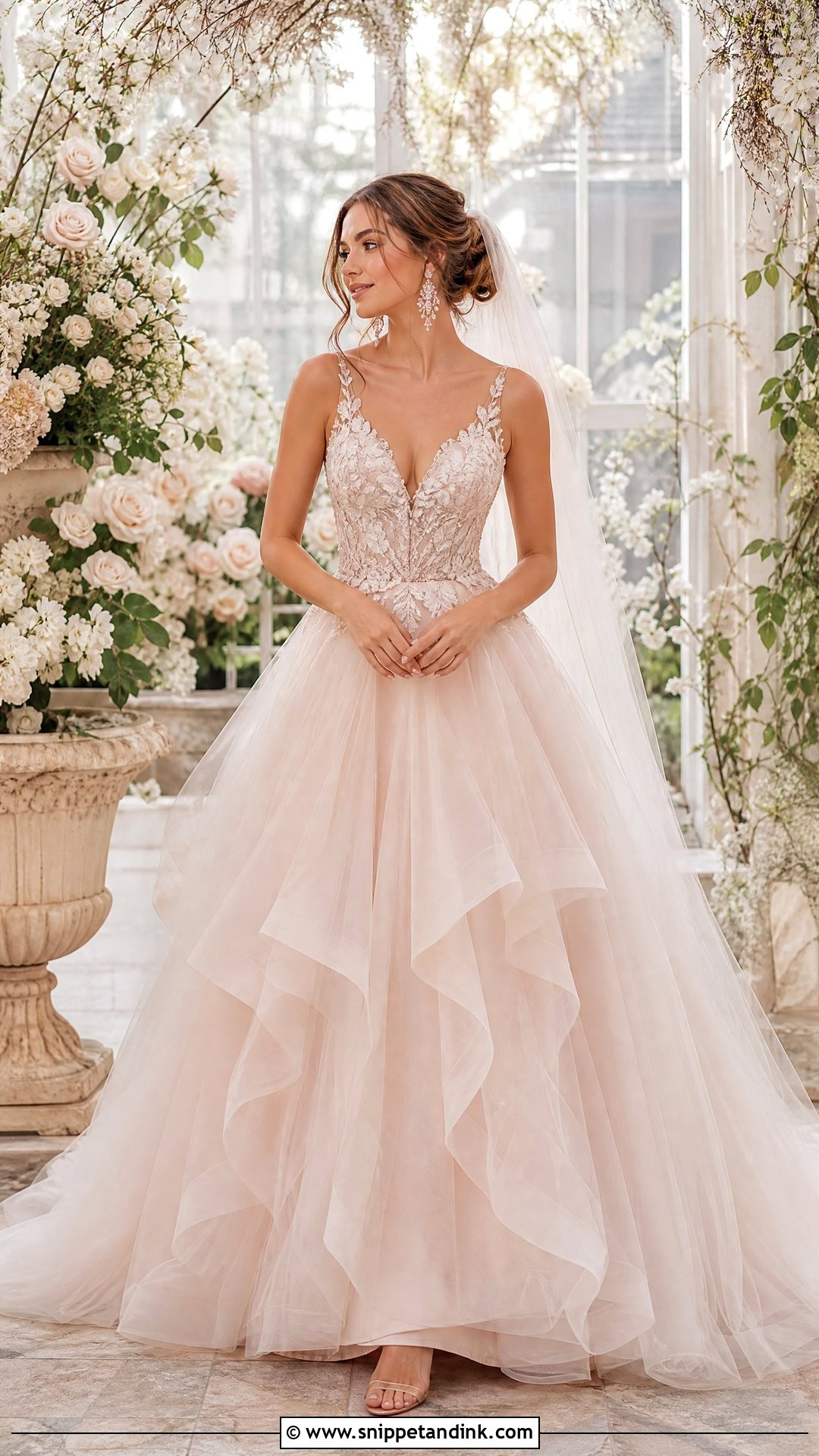
Blush gives lace and appliqué more depth than white because the shadows read warmer. The shade range runs from barely pink to champagne and nude-lined ivory, and undertone makes a bigger difference here than with any white. I’d always view a blush gown by a window before deciding, as shop lighting tends to flatter pinks. Rose-gold earrings and a light ivory veil let the colour stay visible underneath. Keep the rest of the palette muted, with bridesmaids in soft neutrals rather than a matching pink that competes with the gown.
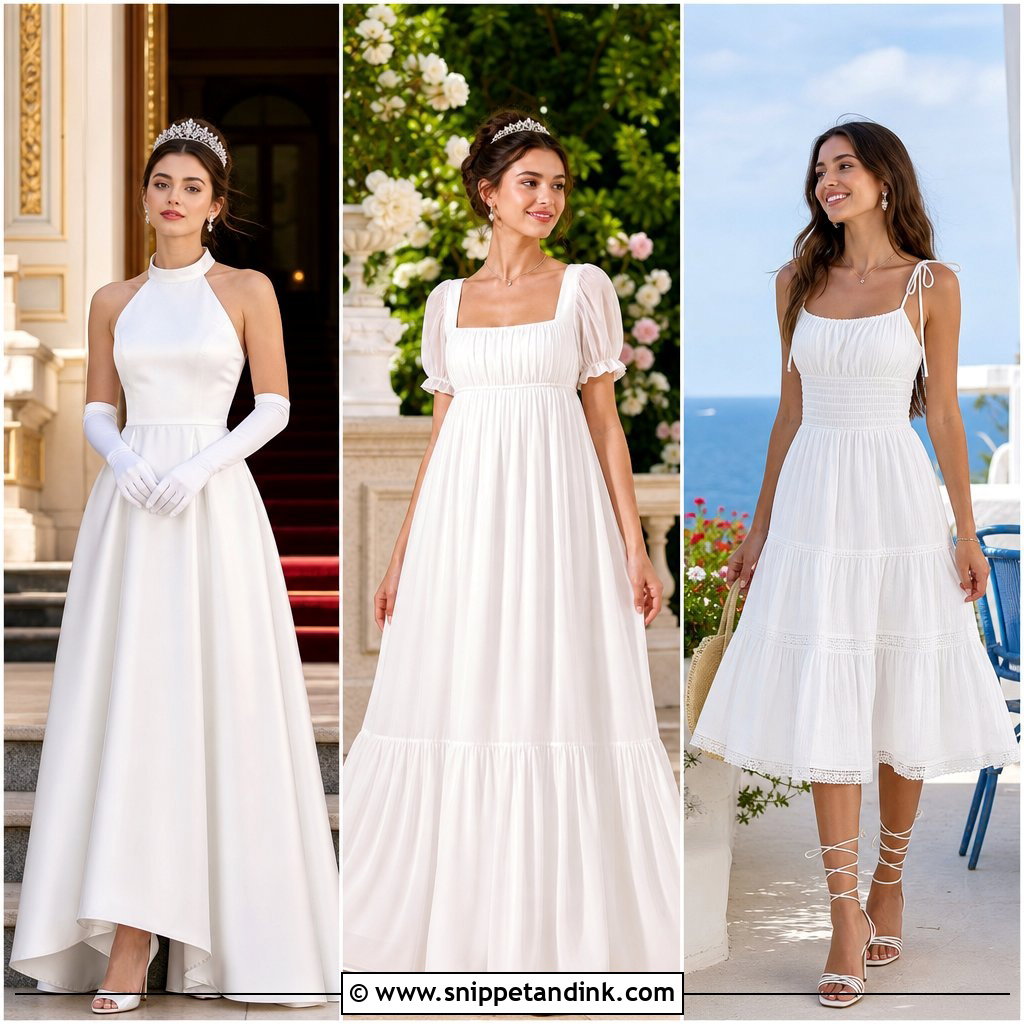


15. Mikado Princess Wedding Dress With Pockets
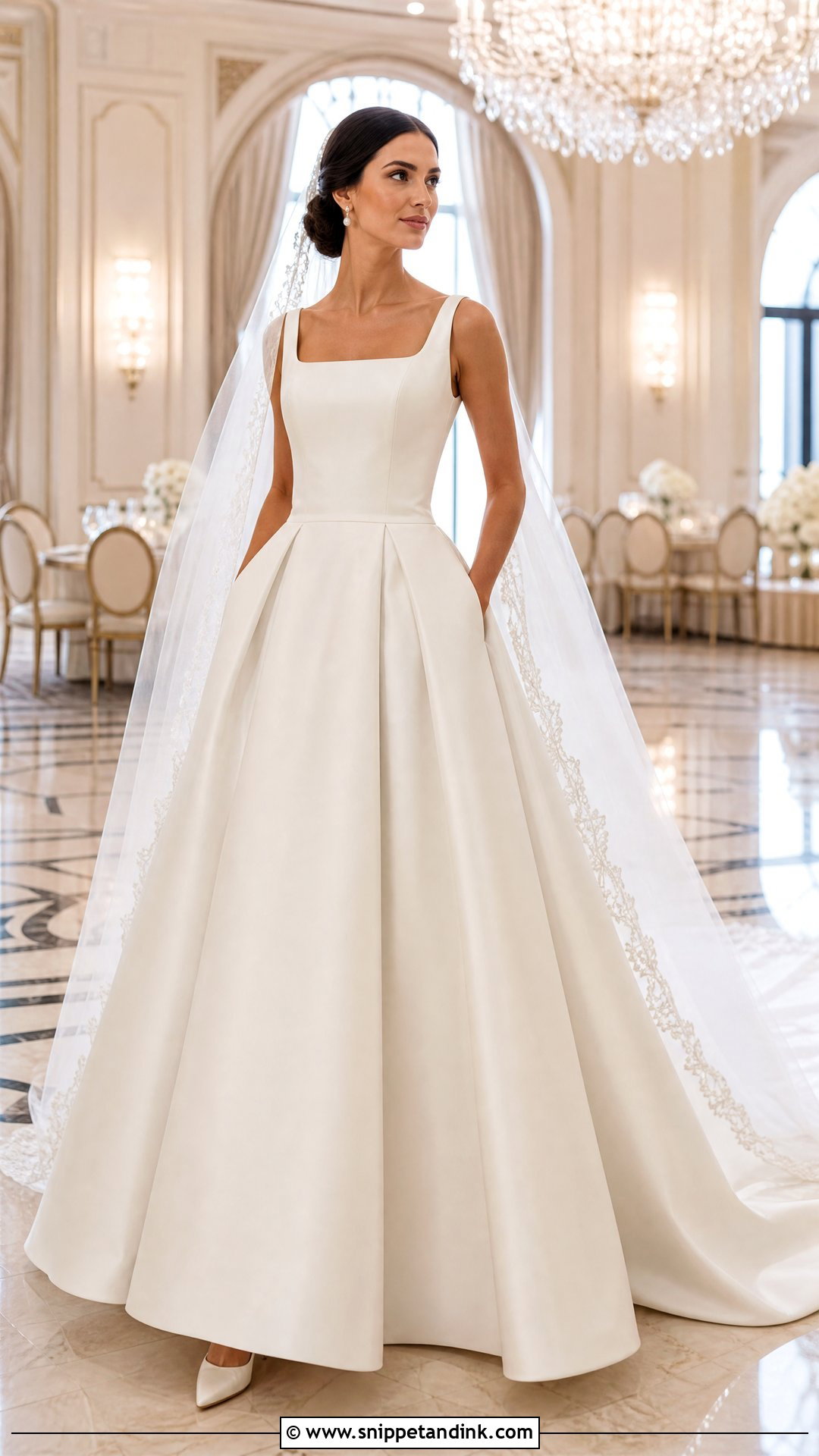
Pockets in a Mikado ball gown are one of those details brides thank me for afterwards. The fabric has the body to hold deep pleats and a full skirt, and it hides a seam pocket well. They give your hands somewhere natural to rest in portraits and hold a tissue or lip balm, though anything heavier drags the pleats out of line. Strapless, square neck or off-shoulder all pair well with it. Ask the tailor to set the openings into the pleats so they lie flat. A badly placed pocket gapes at the hip and widens the silhouette.
16. Illusion Bodice Princess Wedding Dress
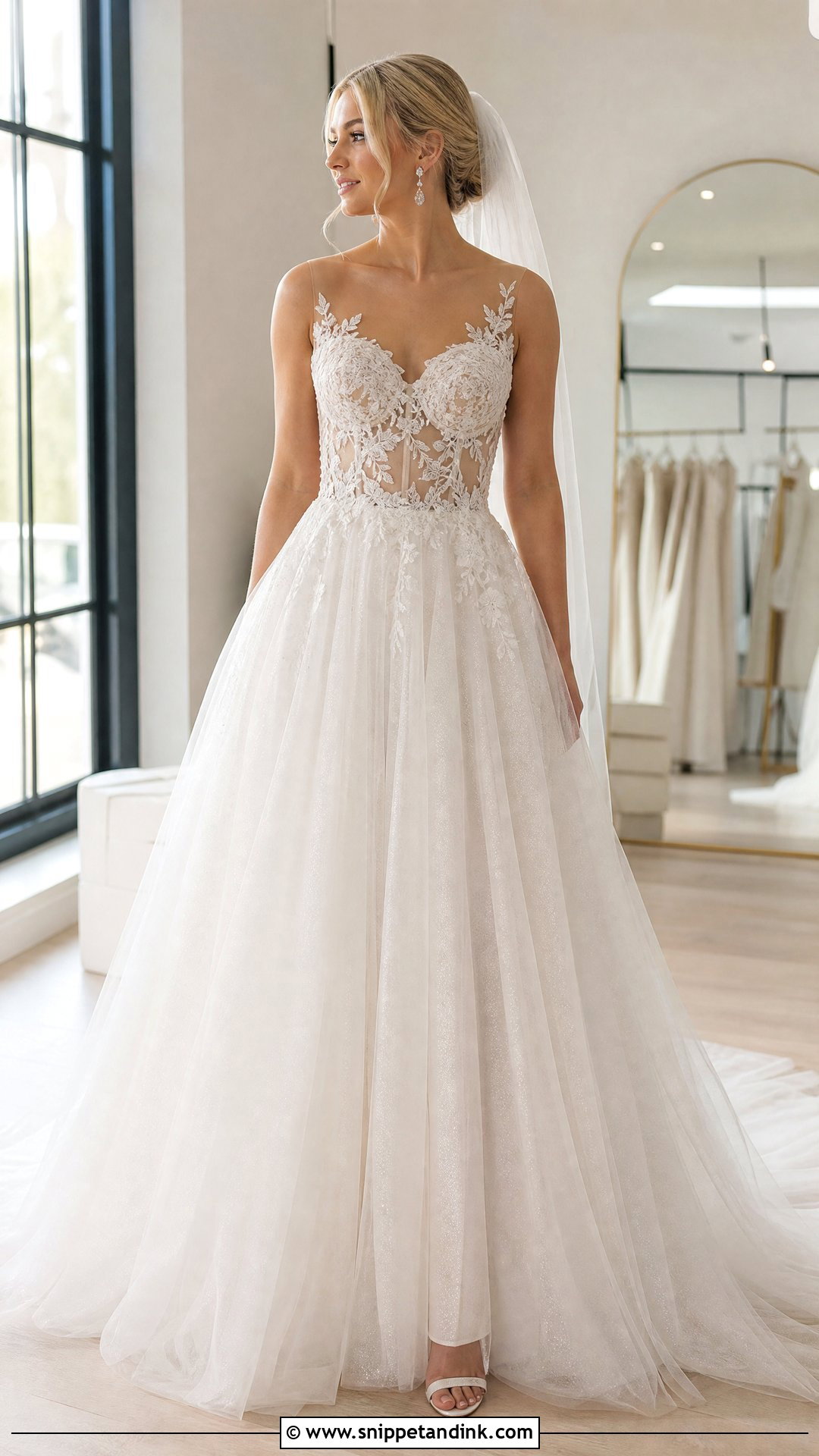
Illusion mesh only works when it nearly disappears against your skin, so the shade match comes first. I compare the mesh to the inside of the wrist in daylight. Underneath, the bodice should have proper cups and boning; the sheer fabric is decoration, never the structure. A full tulle skirt balances that lighter top. Skip necklaces entirely, since chains catch on beading. At fittings, look at the seams in two kinds of light, because a mesh that matches under warm bulbs can turn grey or pink in flash photos.
17. High Neck Princess Wedding Dress
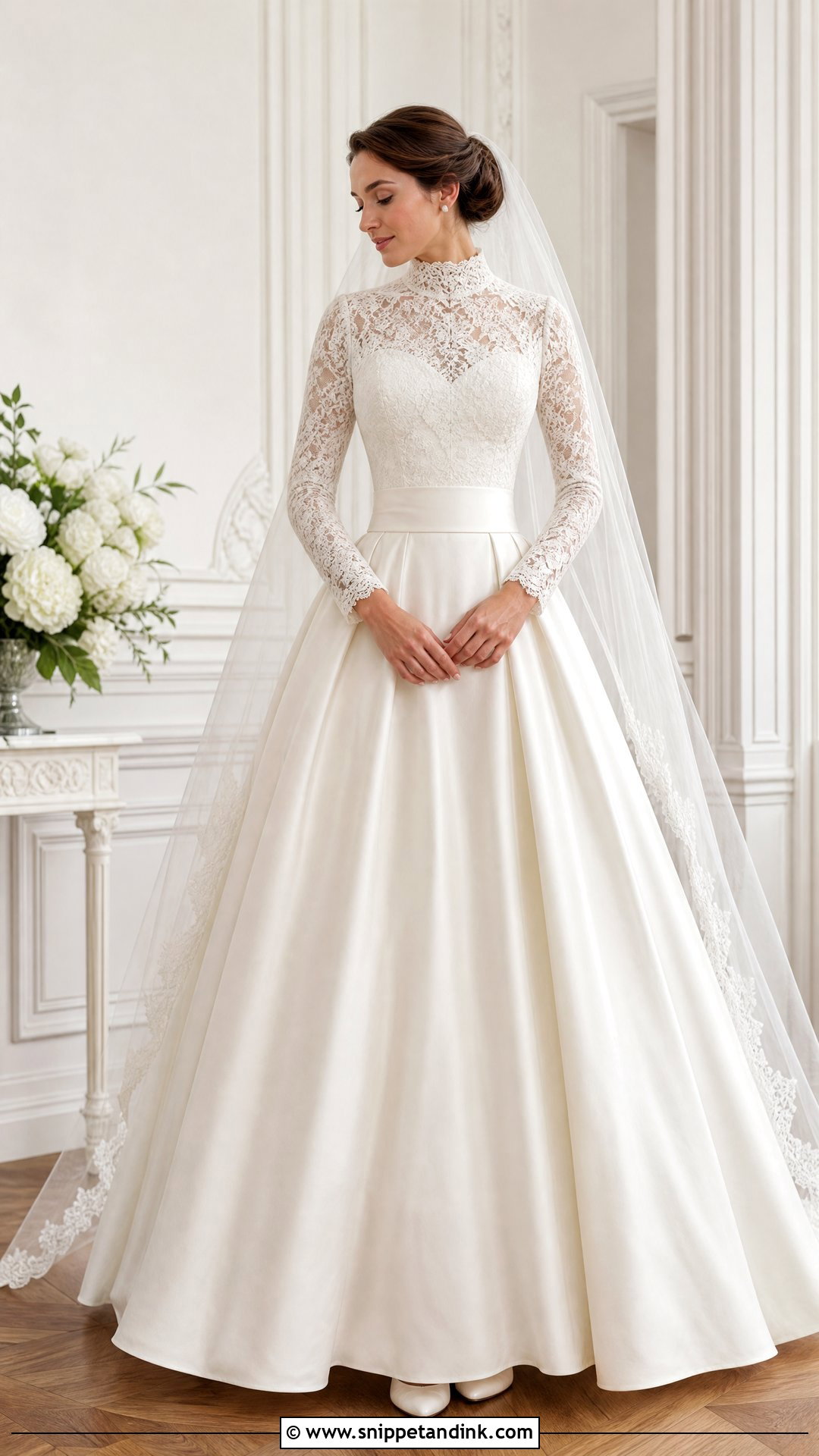
A high neckline covers the collarbone and throat, so it does the job a necklace would and frees you to wear only pearl studs. Lace or illusion collars on a fitted bodice keep it from looking severe. Sleeveless versions feel lighter; long sleeves make it formal and fully covered. I’d keep the lace concentrated near the bodice rather than scattered all the way down the skirt. Turn your head both ways at the fitting. A collar that feels fine standing still can rub raw by the evening, and a soft inner binding prevents most of it.
18. Plus Size Princess Wedding Dress
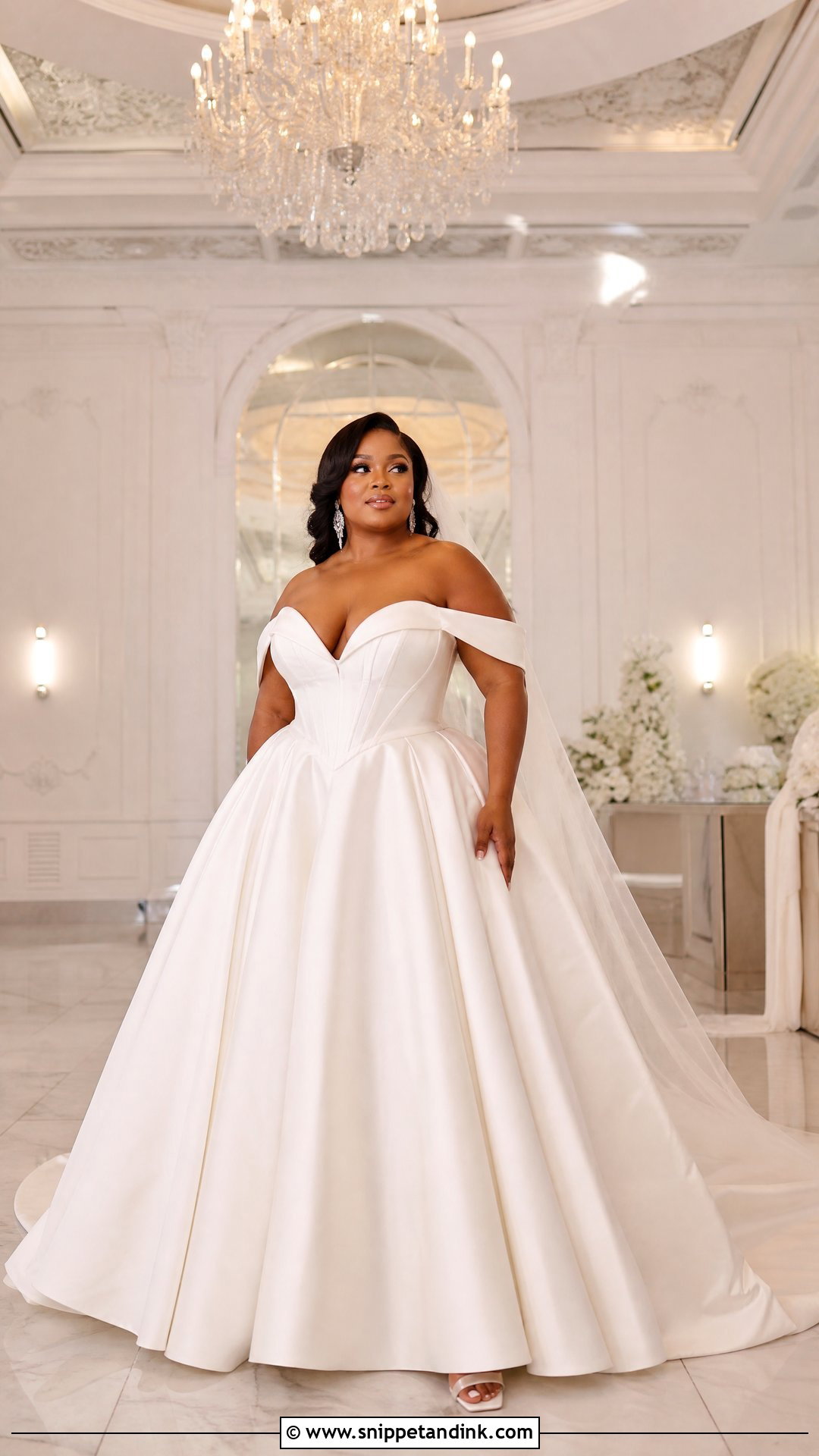
For curvier brides, support comes before volume, and the two are often confused. Extra layers alone add bulk; what actually works is a well-boned bodice, straps that carry some weight, and a waist seam placed where your own waist sits. A Basque or natural waist both define the middle, and the skirt should fall over the hips rather than start on them. Lightweight tulle feels softer to wear for hours, while Mikado gives a sculpted shape. Bring your real undergarments and shoes to every fitting. You should be able to breathe, sit and eat without the bodice pinching or sliding down.
19. Petite Princess Wedding Dress
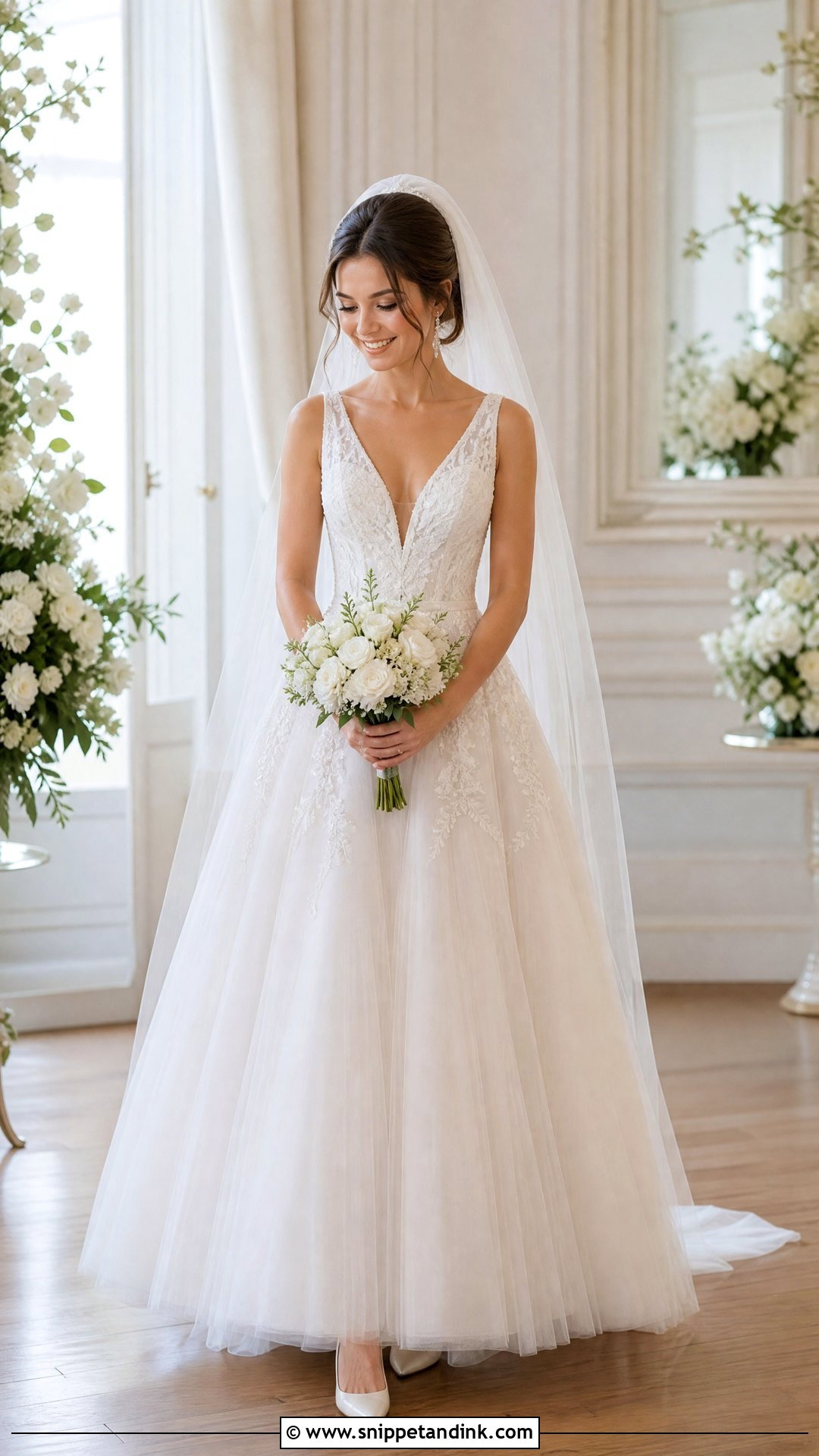
Petite brides can absolutely wear a full skirt; it just needs scaling. I look for a natural or slightly raised waist, vertical seams through the bodice, and a skirt with fewer layers so it doesn’t swamp the frame. Soft tulle usually feels lighter than heavily pleated satin, and a V-neck keeps the upper body open. Oversized appliqués and very wide bows are the usual mistakes. Expect to hem, and don’t be surprised if your seamstress removes one or two internal layers. It makes the skirt easier to walk in and keeps the proportions right.


20. Modest Princess Wedding Dress
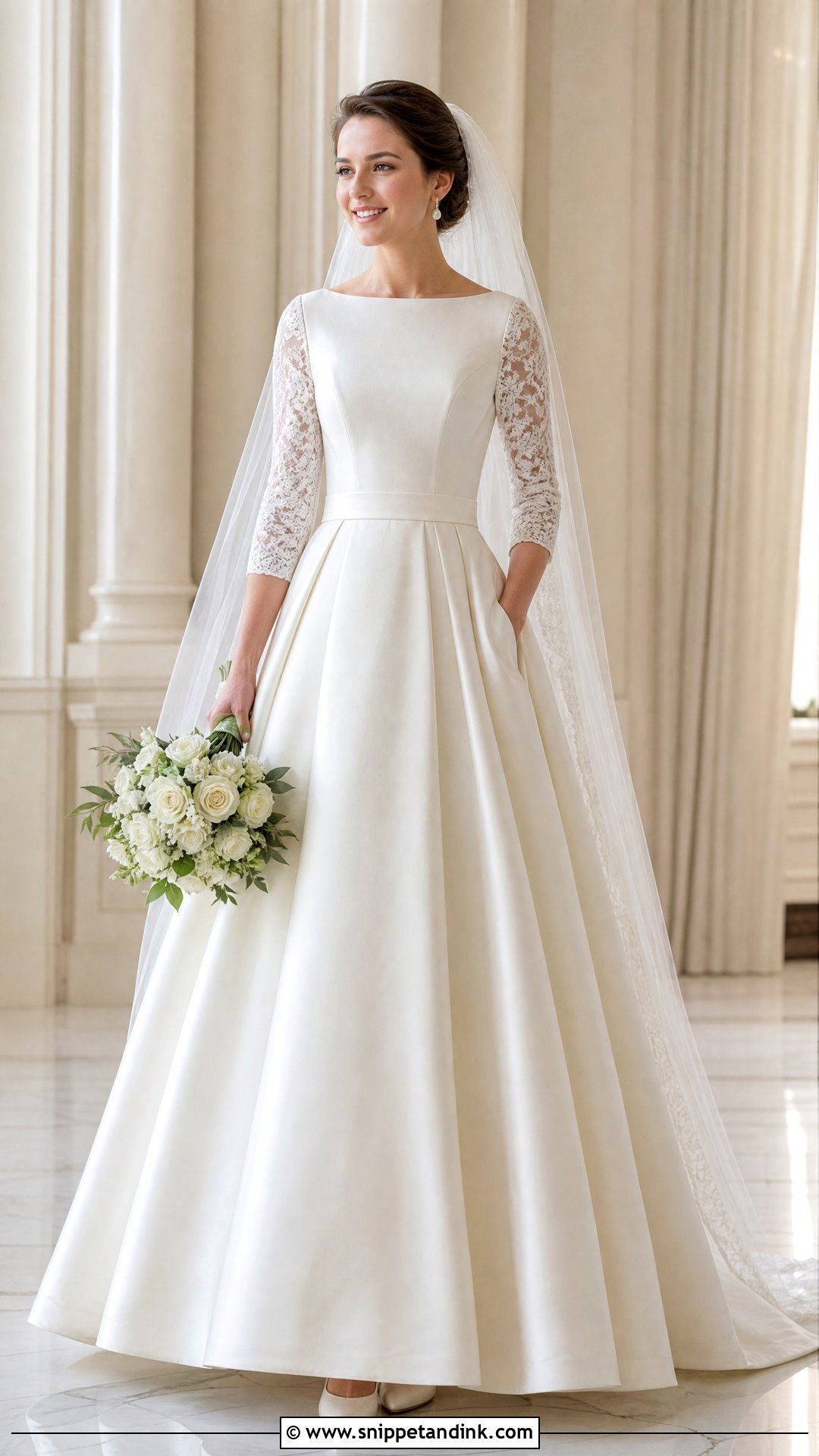
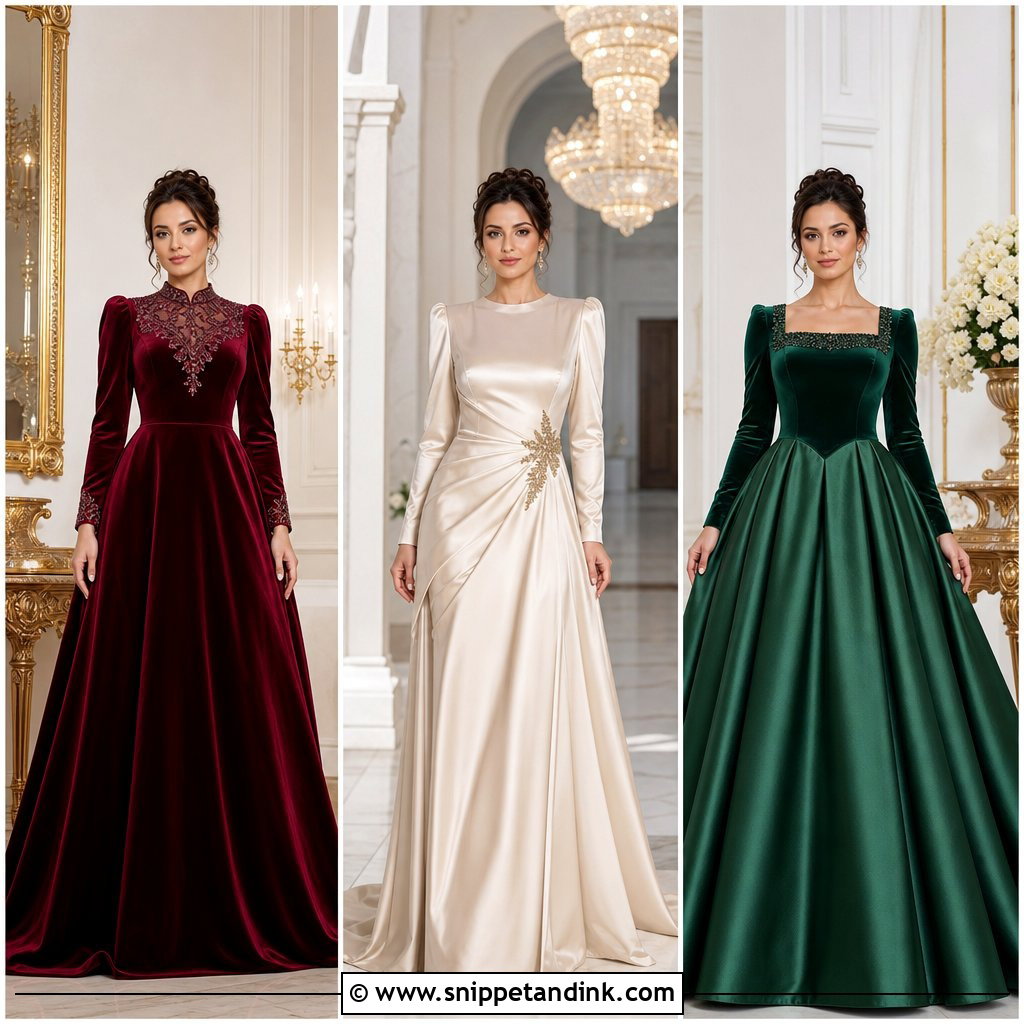
Full coverage and a full skirt sit together very naturally in a ball gown. For a modest princess wedding dress, I start with an opaque bodice in bateau, jewel or high neck, then add three-quarter or full sleeves. Satin looks stately, while lined lace gives texture with no transparency. Covered buttons down the back add detail without exposing anything. Sleeves are where modest gowns fail at fittings: raise your arms and reach forward. If the whole bodice lifts, the armhole is cut too low and needs reworking.
Ordering Early Enough for a Gown With Real Structure
Structured gowns take longer than soft ones. Boned bodices, hand-placed appliqués and Mikado pleating are made to order, and many bridal designers quote somewhere between four and eight months for production alone. Lead times vary a lot by designer and season, so ask the boutique for the real date, in writing.
Alterations then need their own block. On a ball gown I plan for two or three fittings, usually starting about two to three months before the wedding. The bodice is fitted first, the hem is set once you have your final shoes, and the bustle is built last. Rushing that order is how hems end up wrong: if the bodice is taken in after hemming, the whole skirt can drop.
What to bring to every fitting
- The exact shoes you’ll wear, even if they’re not broken in yet.
- Your wedding underwear and any shapewear, since both change how the bodice sits.
- The person who will bustle you on the day, so they can practise with the seamstress watching.
Living in a Princess Skirt From the Car to the Last Dance
The practical moments are the ones nobody shows you in a boutique. Getting into a car, go in seat first and then lift the skirt in after you, gathering it onto your lap. For the bathroom, step in facing the toilet and gather the skirt forward, or use a slip-style bridal skirt holder; a bridesmaid holding the volume makes it quick.
Satin will crease wherever you sit, so smooth the skirt under you each time rather than sitting into a fold. Keep a small kit for the day: clear thread, a few safety pins, a lint-free cloth and a white chalk stick for small marks on ivory fabric. After the wedding, have the gown professionally cleaned before storing it, and keep it in a breathable cotton bag with acid-free tissue in the folds. Plastic traps moisture, and that’s where yellow marks on satin usually start.
A Ball Gown Should Still Let You Sit Down to Dinner
Every gown here shares one test: can you wear it for a full day, not only for the aisle? Decide first how much skirt you genuinely want, then compare necklines, waist positions, fabrics and train length. Take your real shoes and undergarments to the appointment. Sit, walk, reach and turn, because most fit problems never show while you’re standing still in front of a mirror. Polished satin, floral lace, shimmering tulle or a transformable overskirt can all look regal, and good tailoring is what makes them comfortable.
You'll Like These Ideas:








Leave a Reply