
Dressing a bride for the desert is mostly about three things nobody mentions in the inspiration photos: wind, dust and the drop in temperature after sunset. Get those right and almost any style works against sand, stone and open sky. The twenty looks below run from loose bohemian lace to sleek crepe, colourful embroidery and short elopement dresses. Most use light fabrics like chiffon, lace, crepe, silk or tulle, with short trains, steady shoes and a layer you can take off. Each comes with shoes, jewelry, hair and outerwear, and I’ve noted the practical catch for each. They suit Joshua Tree, Sedona, Palm Springs or a private desert venue equally well.
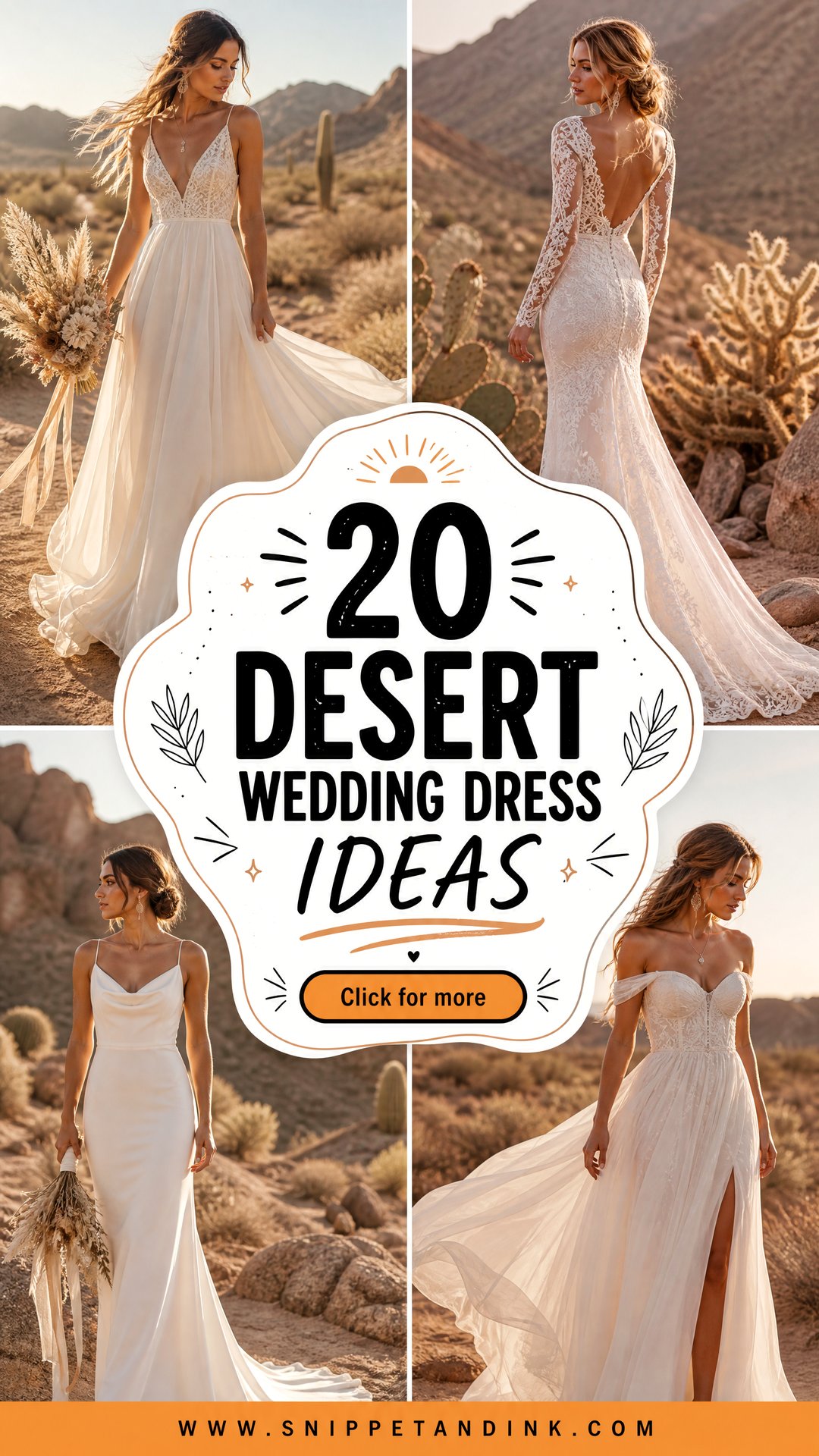
How Desert Heat and Night Cold Change the Dress You Pick
Desert air is dry, so sweat evaporates quickly and the sun feels hotter than the thermometer says. Then the sun drops and the temperature can fall sharply within an hour. Your outfit has to handle both ends of that.
Fabric matters more than style
Silk, cotton lace and light linings breathe far better than polyester satin or several layers of synthetic tulle, which trap heat against your legs. I always check what the lining is made of, not just the outer fabric. A cool outer layer over a polyester lining still feels like a greenhouse.
Shine in hard sun
Midday desert light is harsh. Shiny satin reflects it as bright hotspots in photos, and stark optical white can glare. Matte crepe, lace and chiffon handle strong light more kindly. If you love satin, plan the portraits for the hour before sunset, when the light is low and warm.
A layer for after dark
Choose your evening layer when you choose the dress, not the week before. A wool wrap, a cropped jacket or a faux-fur stole needs to match the gown’s white and sit right over the neckline. Otherwise you’ll end up shivering in the reception photos or wearing a guest’s coat.
1. Boho Lace Desert Wedding Dress
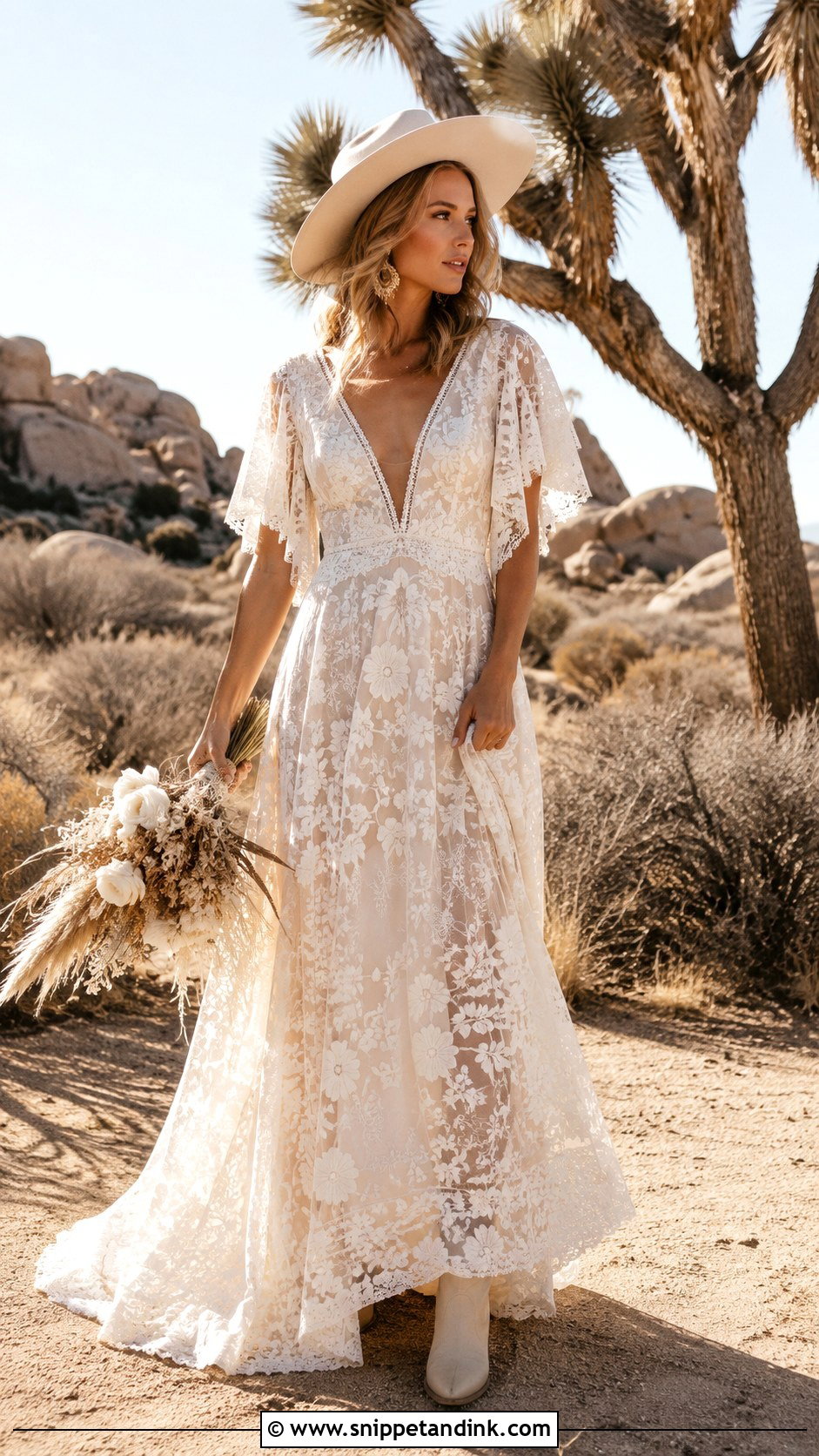
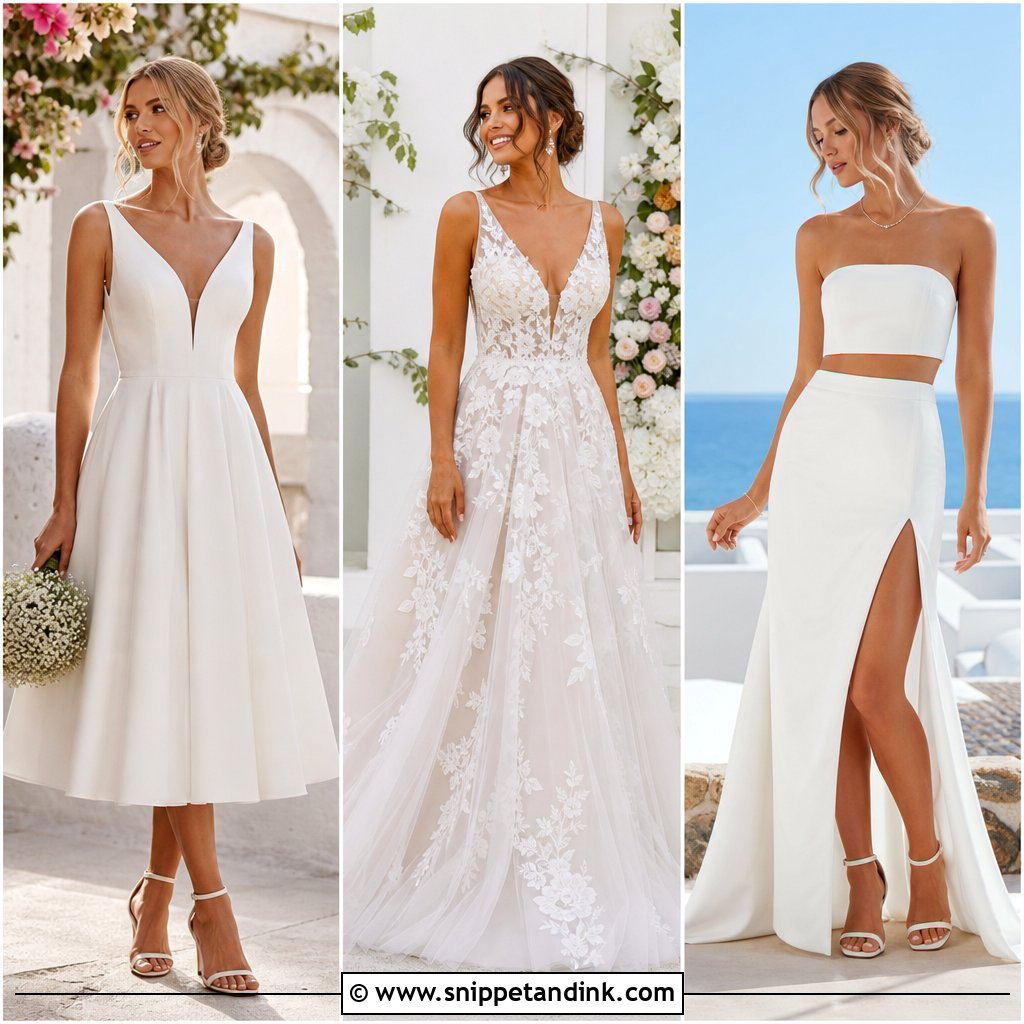
Allover lace sits naturally in the desert, partly because its texture holds up against such a big, plain landscape. Choose a soft A-line or a fitted sheath with botanical lace, a lined bodice and a sweep train, which is long enough to look bridal and short enough not to drag through dirt. Flutter or relaxed bell sleeves add movement. Ivory ankle boots, hammered gold earrings and a small bouquet of dried grasses and cream flowers suit it, with loose waves or a low textured bun. A wide-brim felt hat looks great in portraits, but only if it fits snugly; desert gusts take loose hats in seconds. If you want more support, ask for a structured underlayer with wider straps beneath the same free-spirited appearance.
2. Chiffon A-Line Desert Wedding Dress
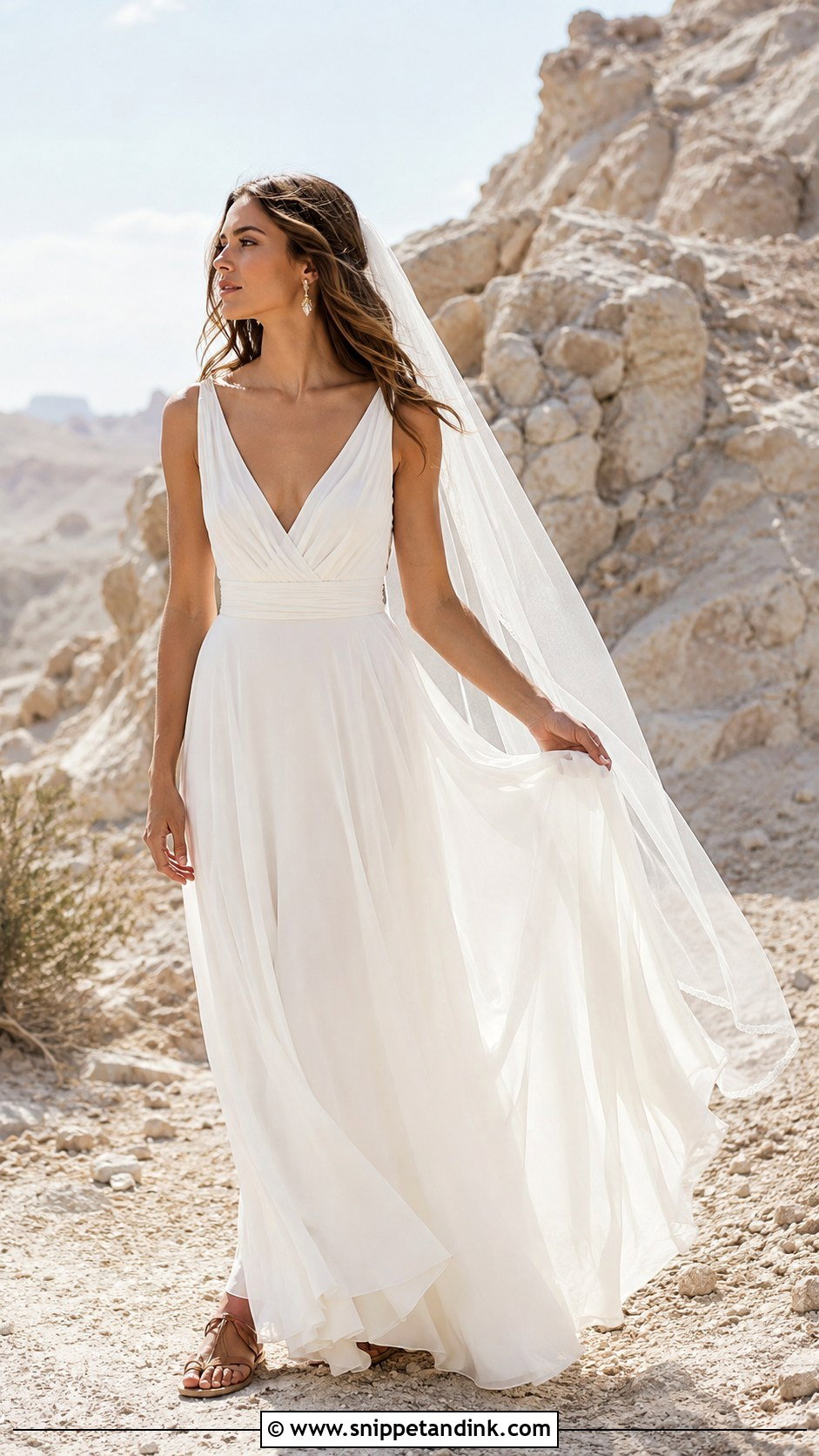
Chiffon is the fabric that moves best in desert wind, which is exactly why I love it and why I plan around it. An A-line with a V-neck bodice, a defined waist and a soft skirt with few layers stays cool through a warm afternoon. The flip side is that chiffon goes wherever the wind sends it, so ask your photographer to shoot with the breeze behind you, not into your face. Flat leather sandals or low block heels depending on the ground, delicate gold drop earrings, a slim bracelet and a fingertip veil you’ll take off after portraits complete it. A loose braided updo holds up in the breeze. The cut gives gentle waist definition with plenty of room through the hips.
3. Long Sleeve Desert Wedding Dress
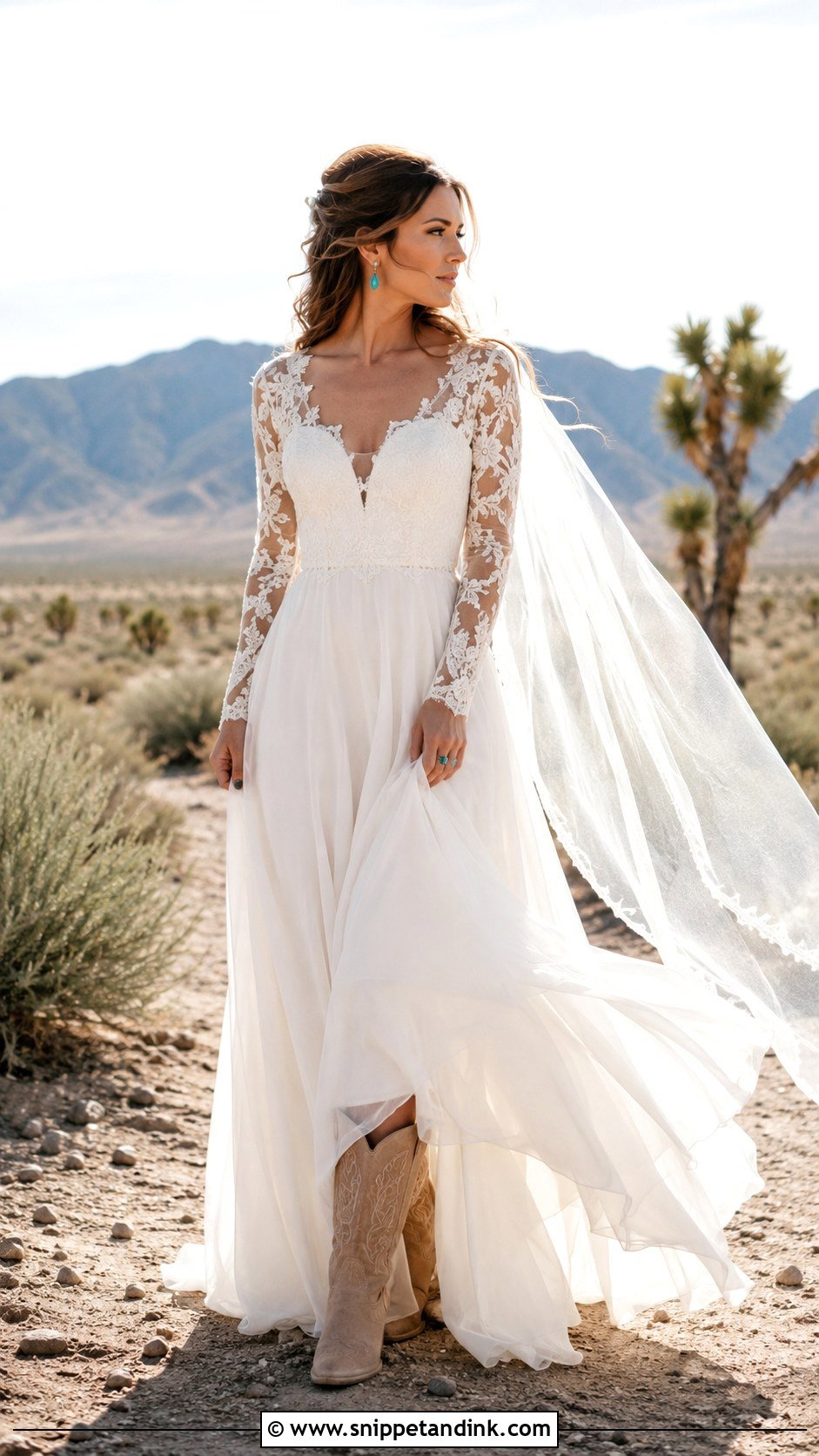
Desert nights get cold quickly once the sun drops, and that’s where long sleeves earn their place, mainly between autumn and early spring. Go for illusion lace sleeves rather than thick lined ones, over a fitted bodice and a flowing crepe or chiffon skirt. Pair it with ivory western boots, a raw-edge veil and small turquoise or opal earrings for a little Southwestern colour. A low bun keeps the veil and sleeves from competing. Keep a light wool wrap close for the reception and night photos. The sleeves give coverage for personal, cultural or comfort reasons without feeling heavy. Skip dense beadwork, though, because it adds weight and heat you won’t want at three in the afternoon.
4. Minimalist Crepe Desert Wedding Dress
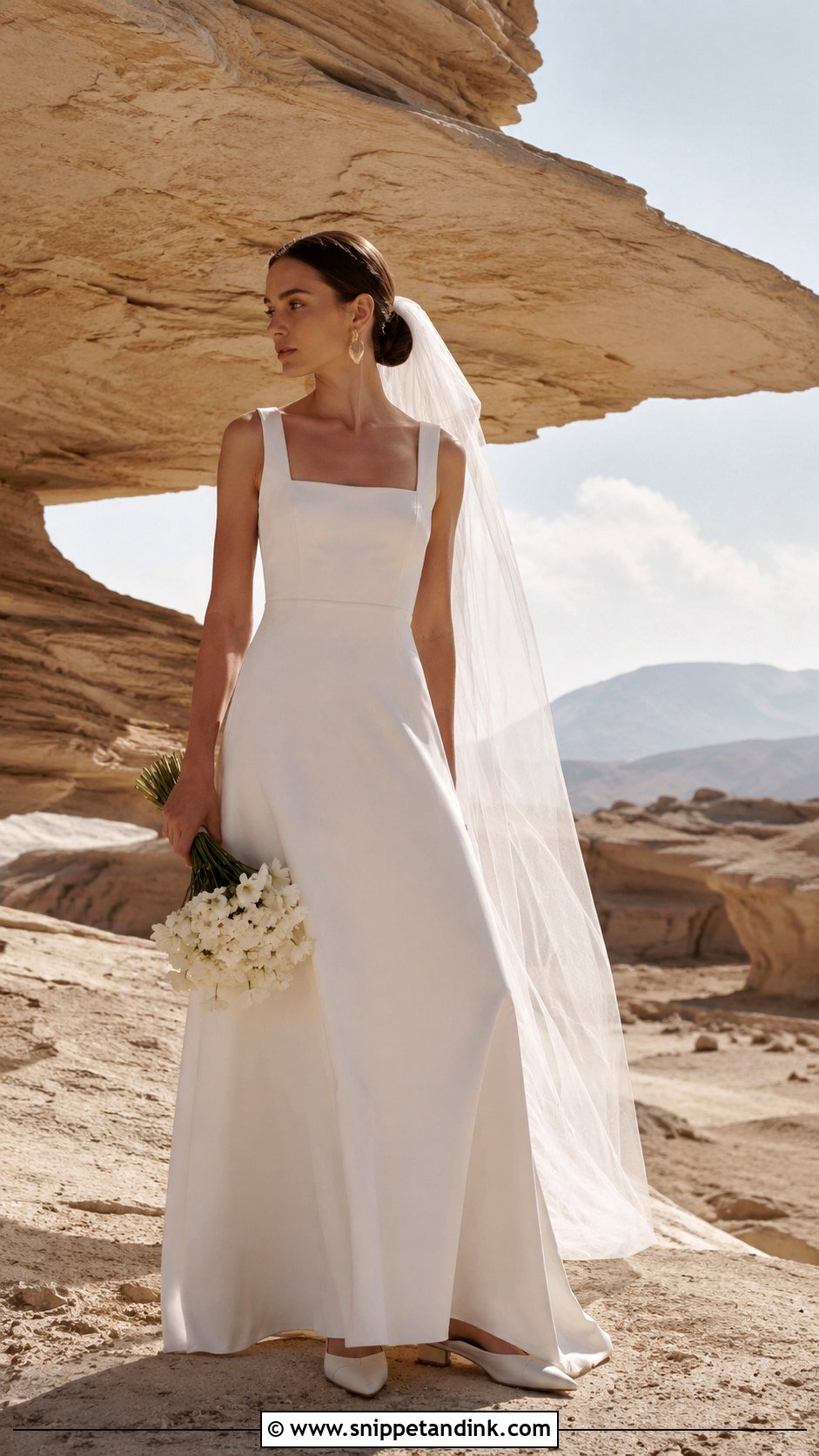
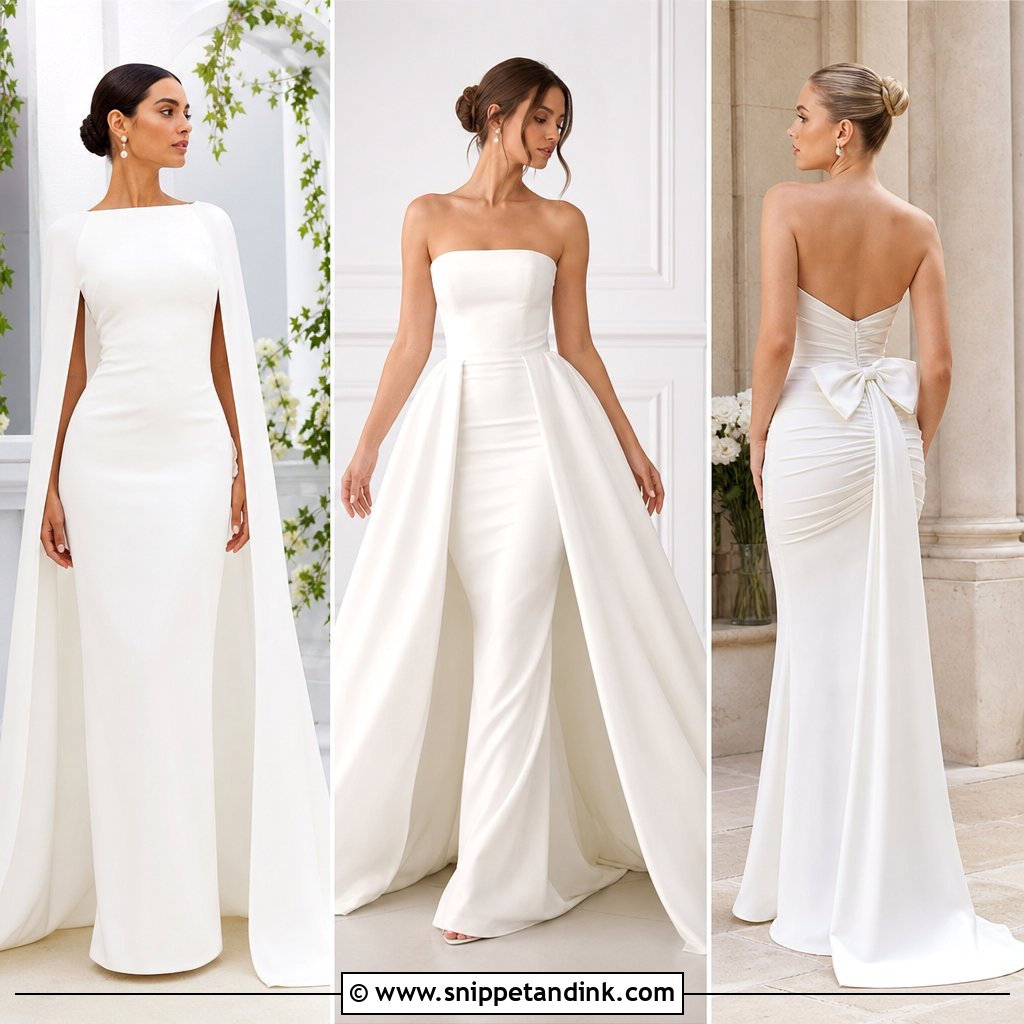
Clean lines look dramatic against rugged mountains and textured rock, since the landscape already supplies the detail. Choose a smooth crepe column or A-line with a square neckline, supportive straps and a low or draped back. Crepe with some stretch is what I’d look for. You may be climbing over rocks for portraits, and a stiff column doesn’t let you lift a knee. Pointed ivory flats, sculptural gold earrings and a sleek low ponytail keep it modern, with a simple bouquet of white flowers and desert greenery. A detachable chapel veil adds drama for the ceremony and comes off afterwards. The square neckline gives structure, and the unbroken skirt makes you look taller.
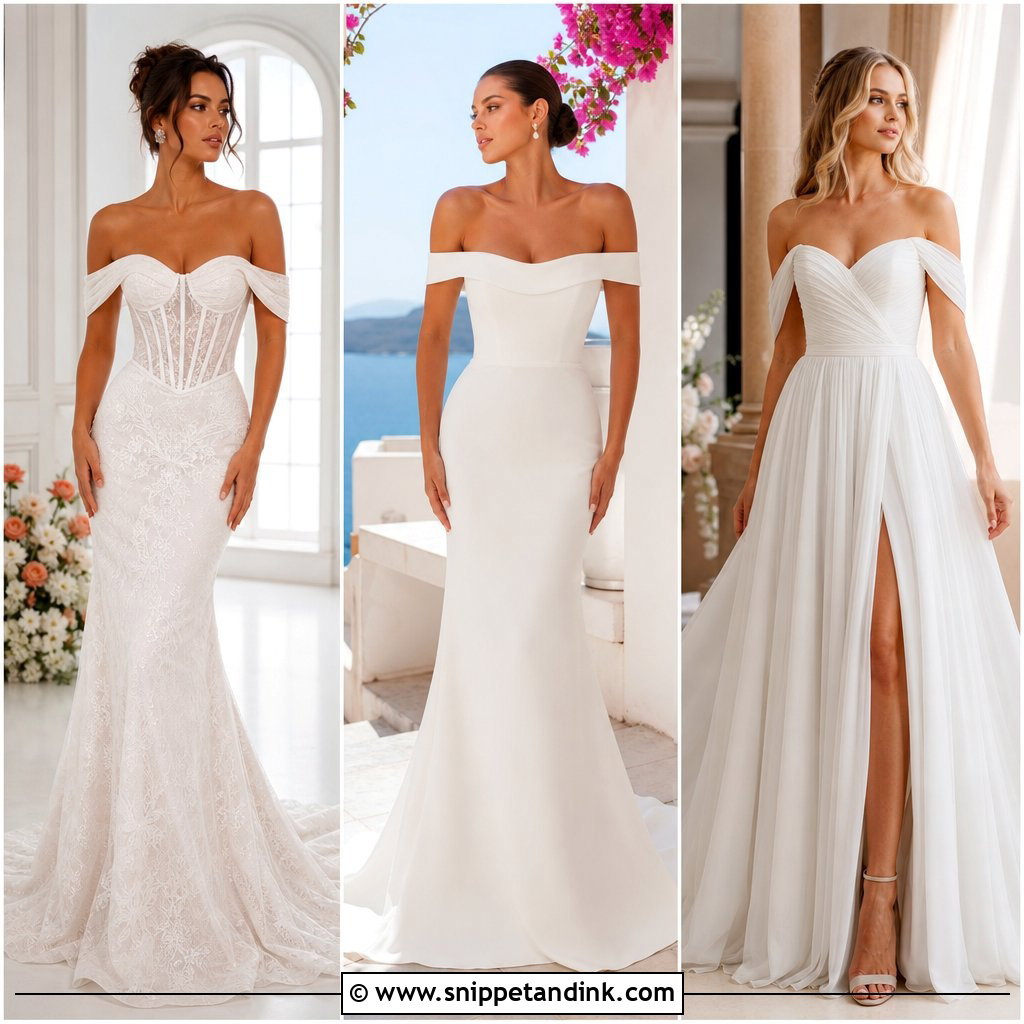
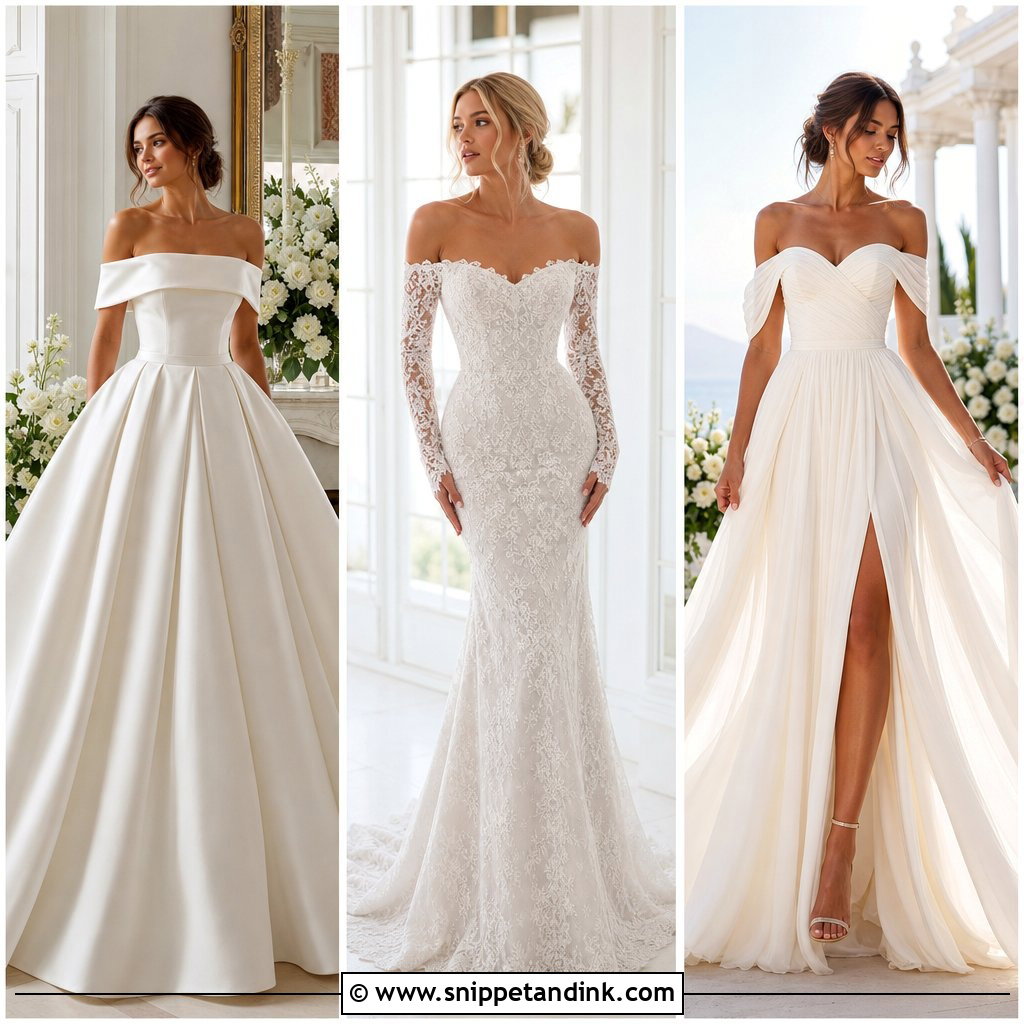
5. Off Shoulder Desert Wedding Dress
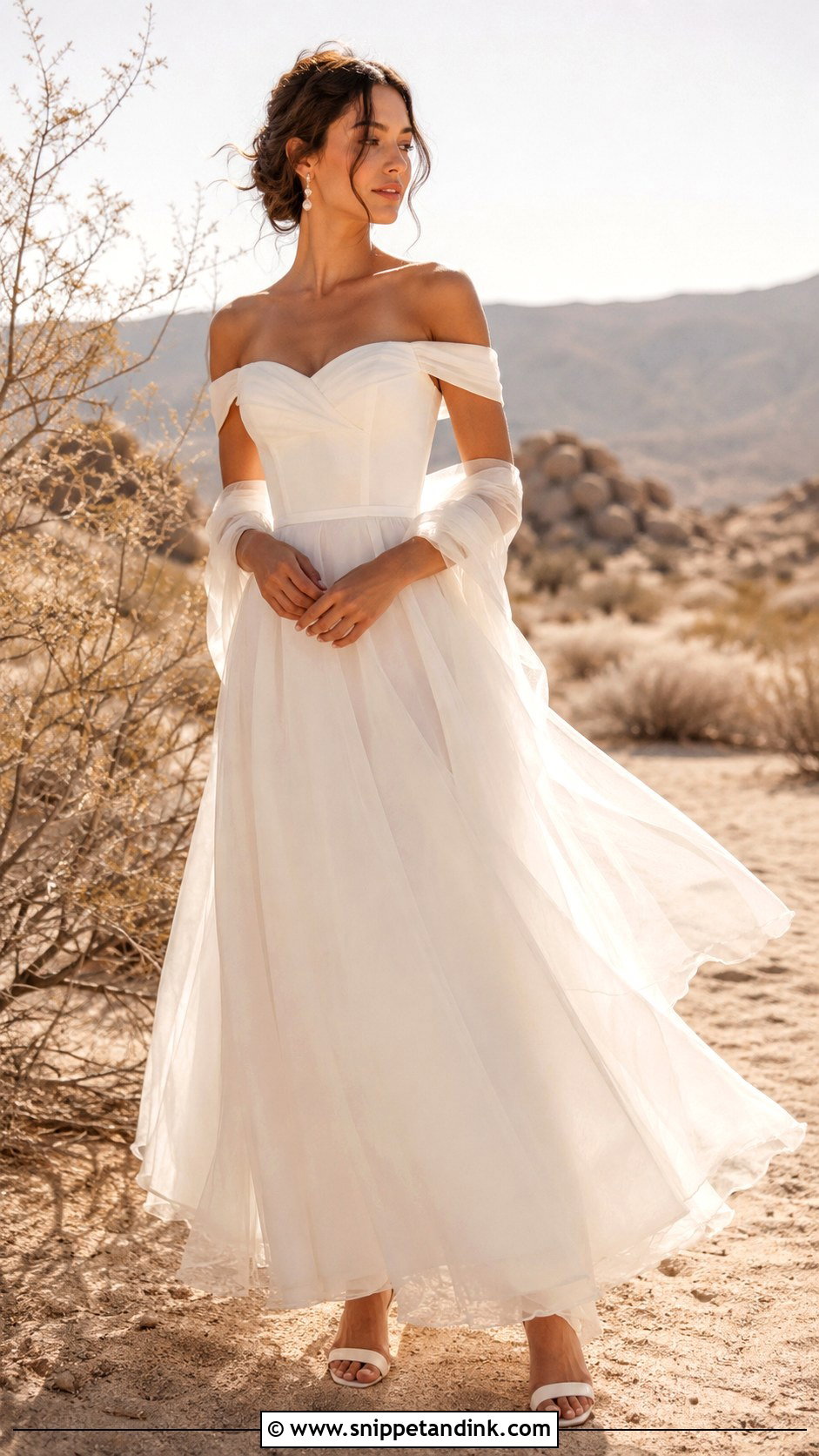
Off-shoulder gowns bring softness to a hard, rocky setting. The neckline needs a secure fold and internal boning, and I’d ask for removable straps you can clip in between photos while you walk. A light organza or chiffon A-line skirt keeps it airy. Low block-heel sandals, pearl drop earrings and a delicate gold cuff are all it needs, with a loose chignon to keep hair off the shoulders. Bare shoulders burn fast in desert sun, even in a short ceremony, so put sunscreen on early and let it sink in before you dress. For the cooler evening, add a light ivory wrap that sits just below the neckline instead of hiding it.
6. Open Back Desert Wedding Dress
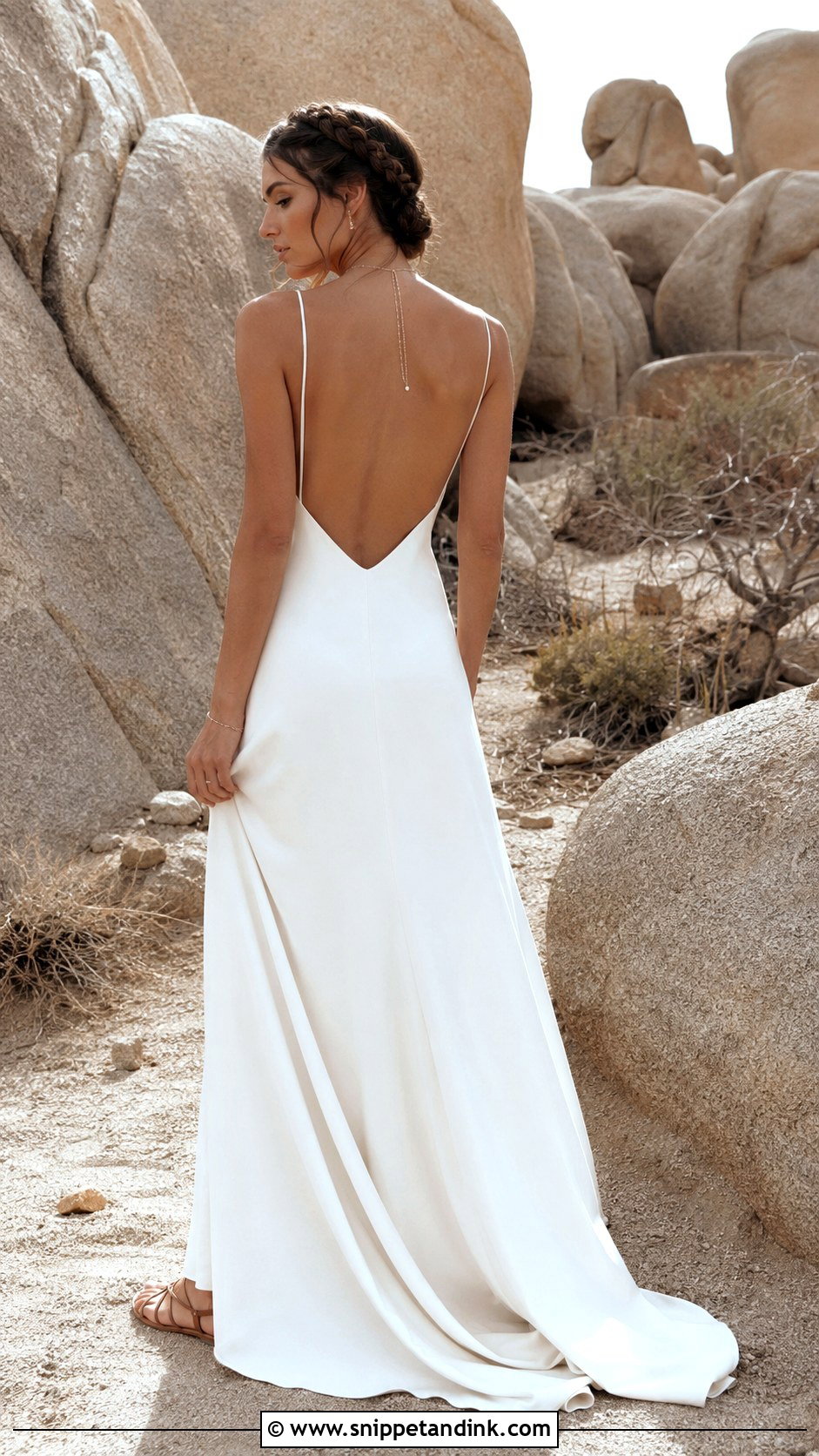
An open back keeps you cooler, and it’s what your guests see through the whole ceremony. Choose light lace or matte crepe with supportive side panels and secure straps, and settle the underwear question before you commit: bring the bra or adhesive cups you’ll wear to the first fitting. A slim A-line skirt and short train move easily around sand, brush and rocks. Strappy flat sandals, minimal earrings and a fine back necklace add a little sparkle, with a braided bun or polished updo to keep the back on show. Apply sunscreen to your back at least twenty minutes before dressing, since greasy cream marks light fabric. A removable veil adds romance for the ceremony, then comes off.
7. Desert Wedding Dress With Bell Sleeves
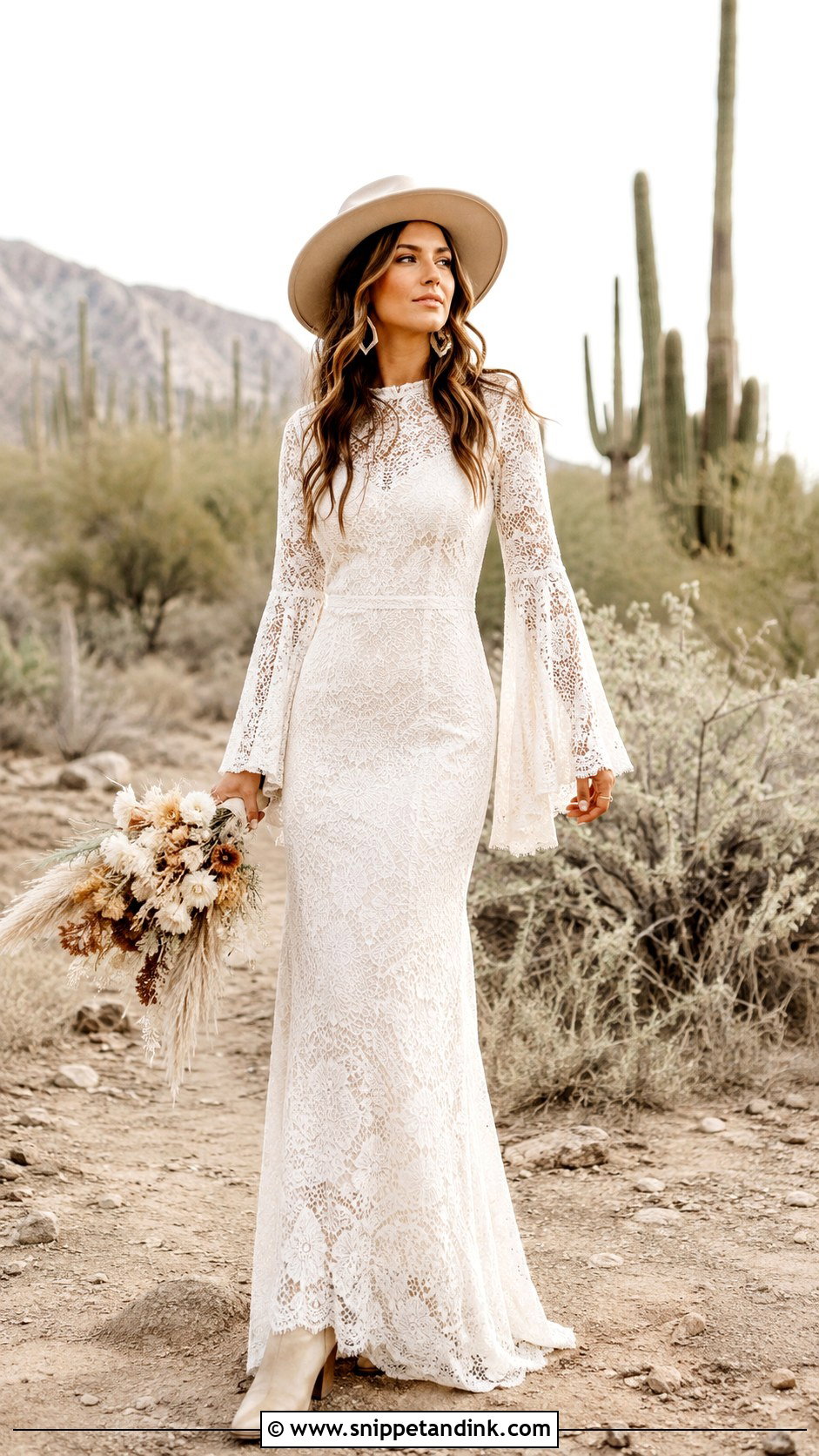
Bell sleeves are the most recognisably bohemian detail here. The length is what I check: they should widen below the elbow but stop near the wrist, because longer flares snag on cactus and drag through the dust when you reach for something. Pair them with a fitted sheath, a comfortable lining and a small sweep train. Cream ankle boots, geometric earrings and a narrow-brim hat for a few portraits suit it, with a middle-parted low bun. If the lace is busy, keep the bouquet calm in white, tan and muted green. It reads as ceremonial without the weight of a ball gown, which makes it a good fit for small outdoor ceremonies.
8. Desert Wedding Dress With Cowboy Boots
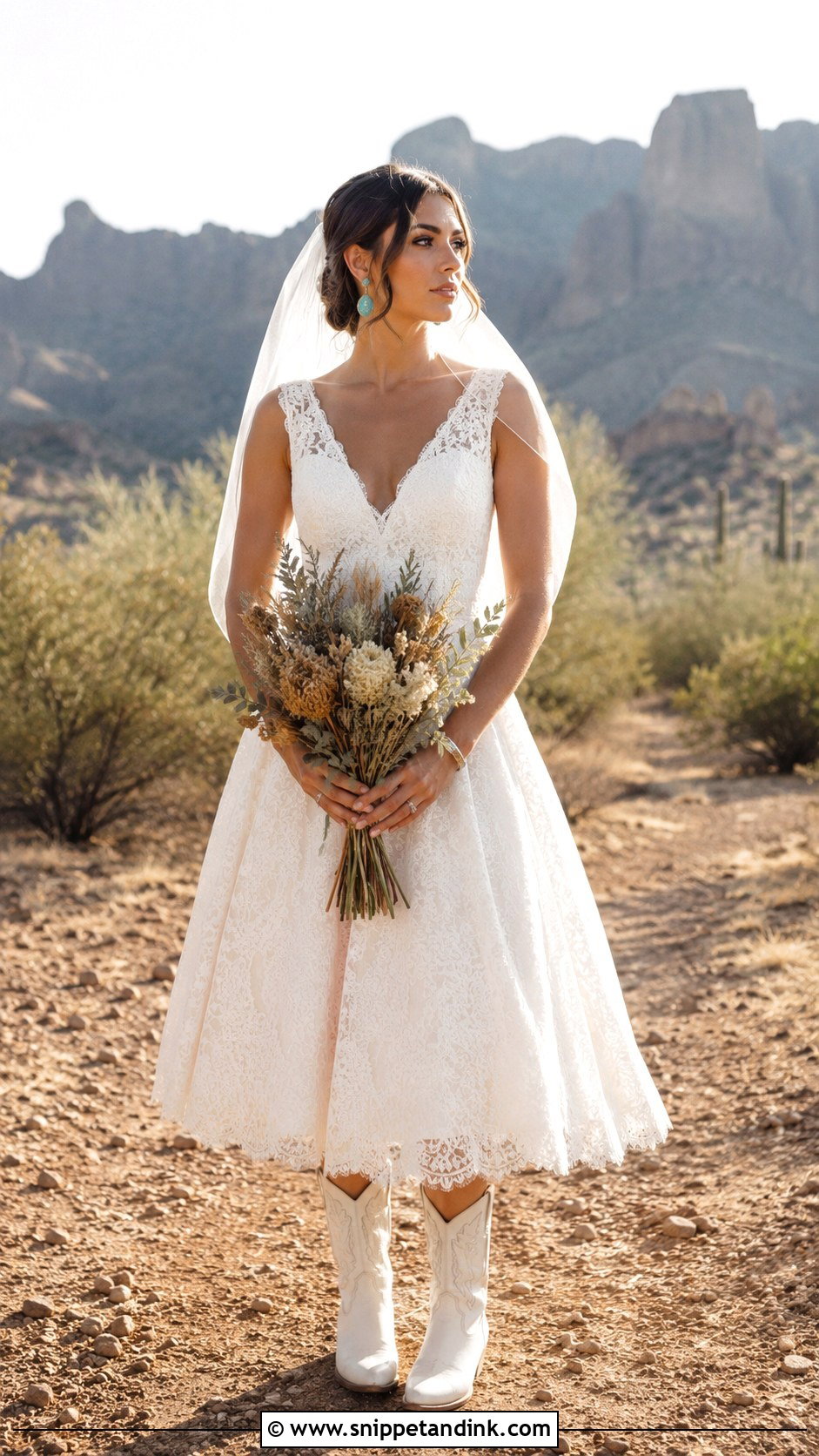
Western boots are as practical as they are fun in the desert. They protect your ankles on gravel, they don’t sink into sand like a heel, and they keep out spiny plant debris. Pair them with a tea-length or ankle-length lace dress so the boots show and the hem stays clear of dust. Pick pointed or almond-toe ivory boots with a stacked heel, and wear them in for a few weeks, because new boots blister. Turquoise earrings, a simple pendant and a dried wildflower bouquet add colour. A denim jacket works for the reception, and a fingertip veil keeps the ceremony bridal. Soft waves or a loose braid sit well under an optional rancher hat.
9. Slip Desert Wedding Dress
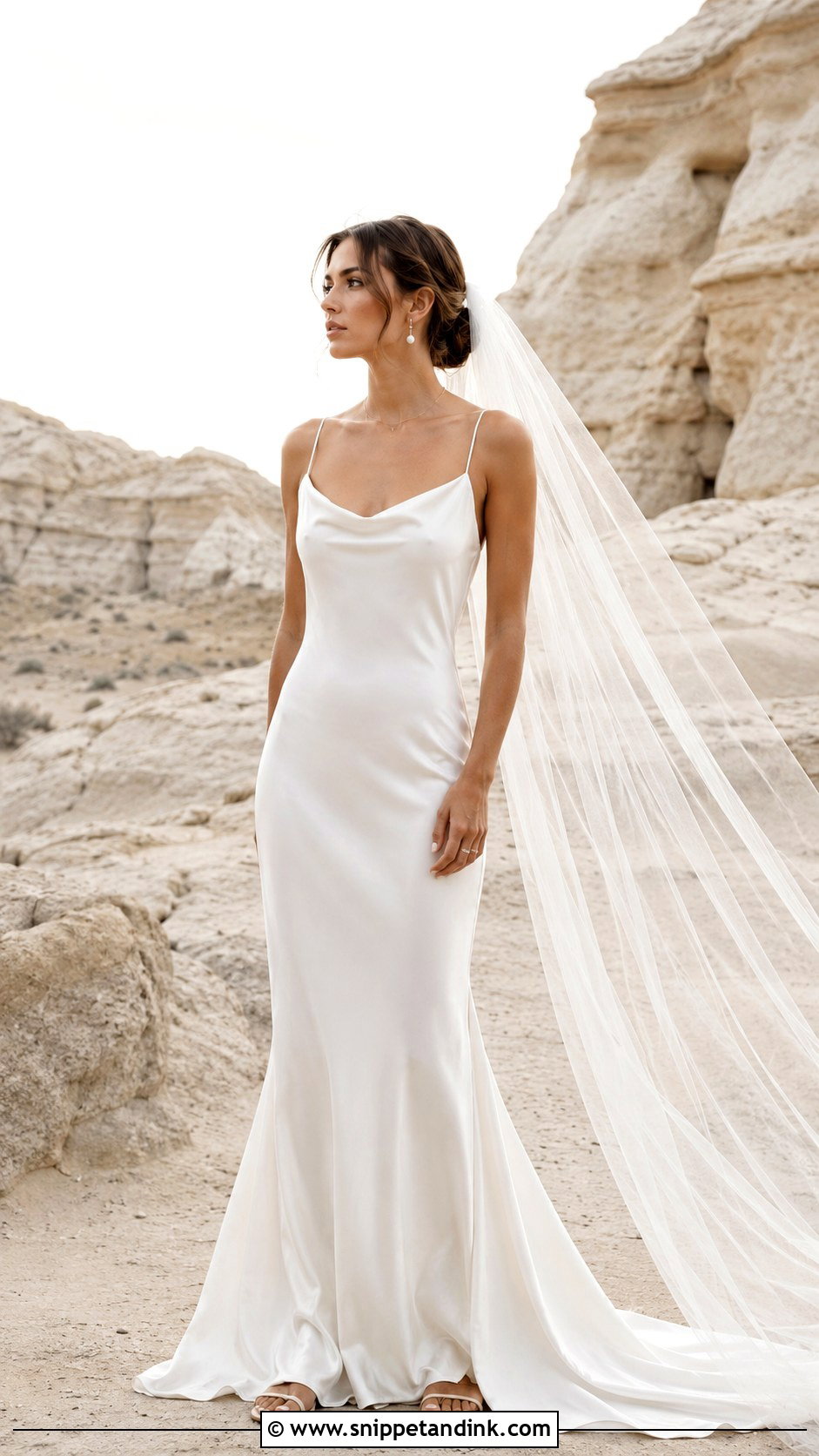
A bias-cut slip dress has no heavy structure, which is a real relief in heat. Silk, satin-backed crepe or a breathable matte fabric skims the body and moves with the breeze. Choose adjustable straps, a softly draped neckline and a hem that just touches the ground. Flat metallic sandals, a fine chain and pearl or mother-of-pearl earrings complete it, with a sheer cathedral veil for contrast at the ceremony and a low twisted bun. My caution with silk slips in the desert is sweat: silk shows damp patches clearly, so a matte crepe or a satin-backed crepe is safer for a hot afternoon. Smooth underwear and good alterations let it hang properly. A light lace topper adds coverage if you want it.
10. Tea Length Desert Wedding Dress
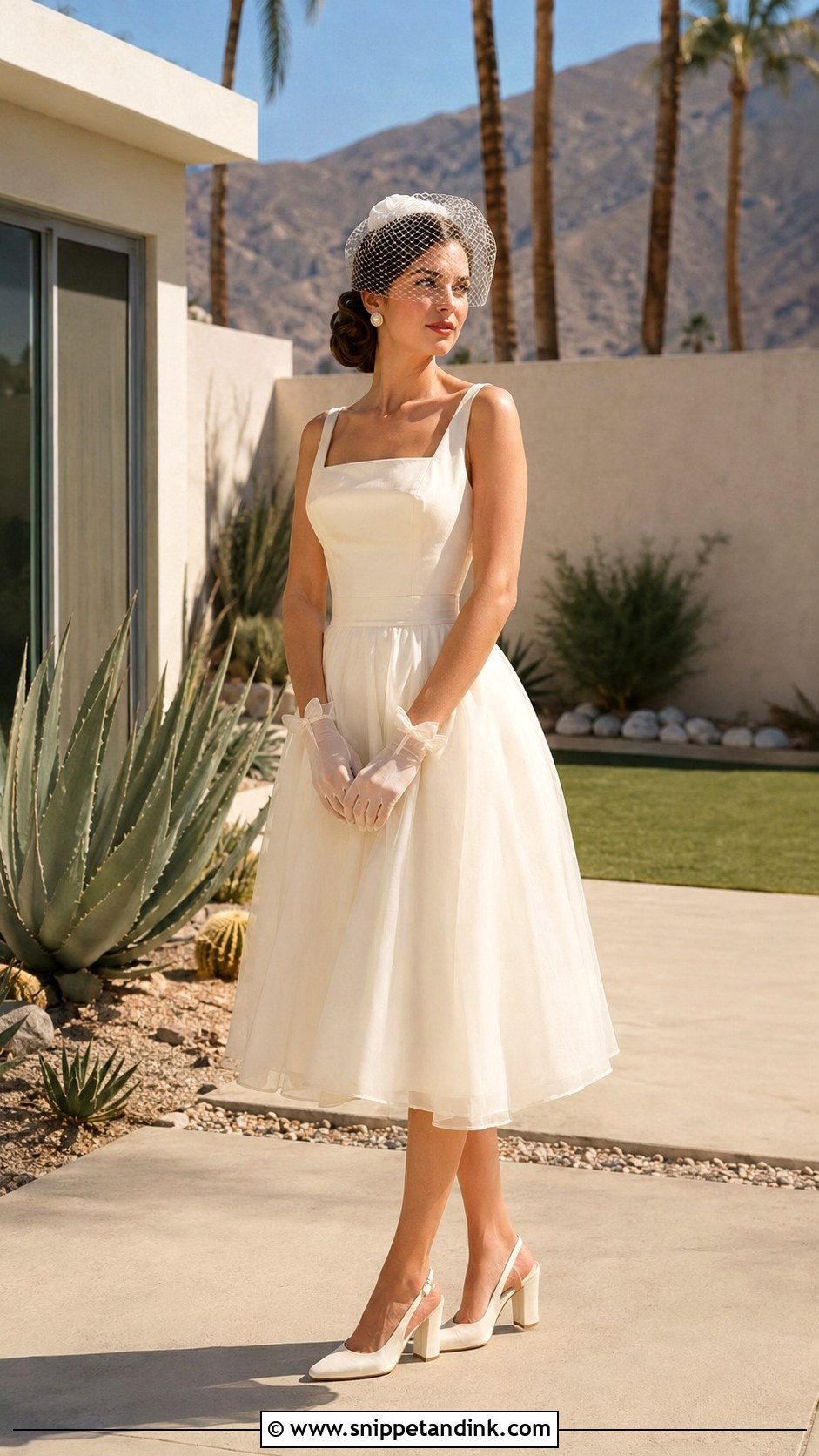
Tea length is the easiest dress here to walk in across sand and stone, and it has a cheerful retro feel. Choose a fitted bodice with a square or sweetheart neckline and a light skirt ending between knee and ankle. Cotton lace, organza or a light mikado will hold the shape without much weight. Ivory slingback block heels, short gloves, pearl earrings and a compact bouquet finish it. A birdcage veil or a small bow suits windy ground far better than a long veil. Since your shoes are on show, make them count. On petite brides I’d mark the hem at the narrowest part of the lower leg, just above the ankle or below the calf.
11. High Neck Desert Wedding Dress
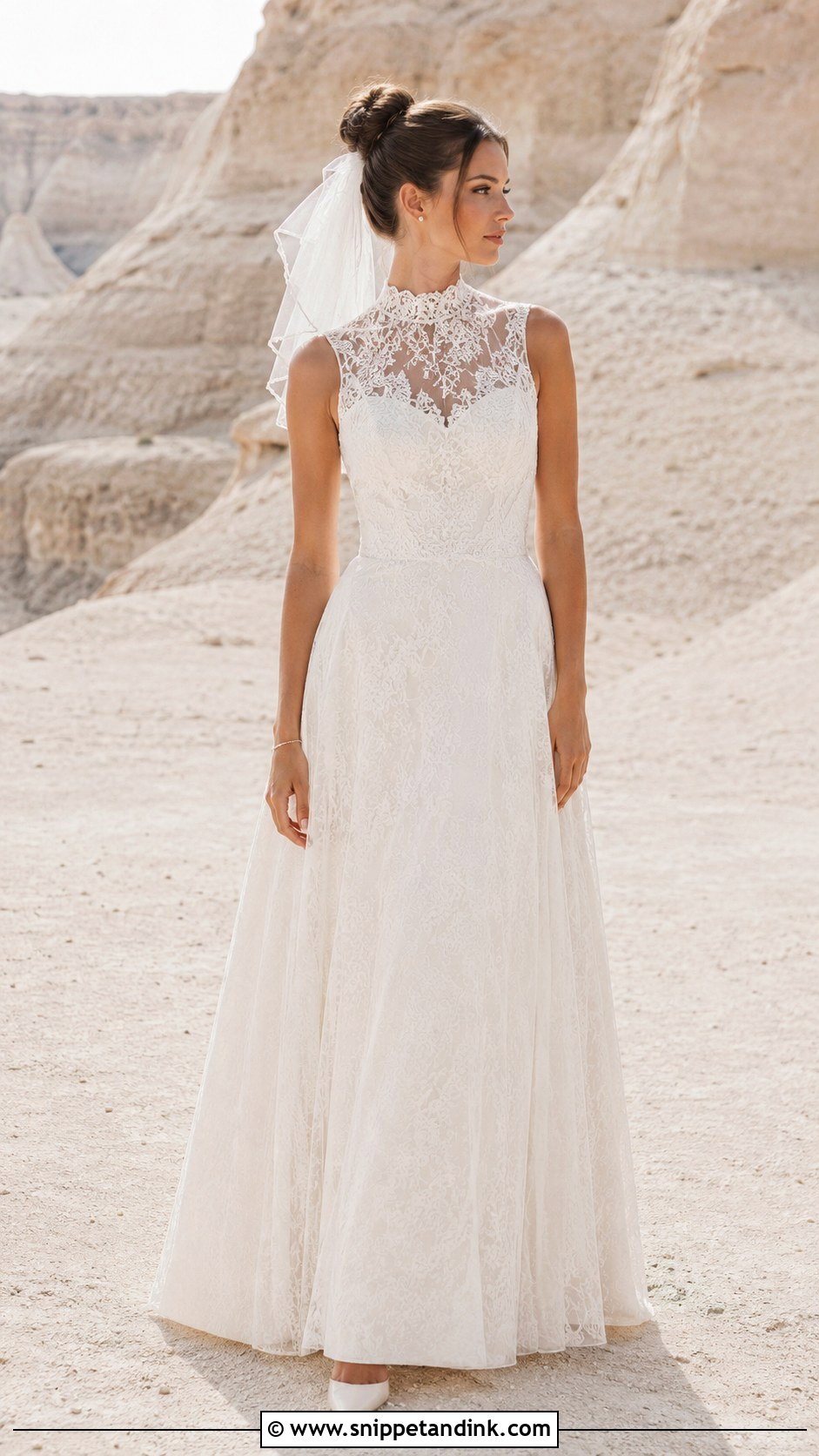
A high neckline frames the face, and it pairs well with detailed lace. In the desert I only suggest it with an unlined illusion yoke over a breathable sweetheart bodice, and sleeveless, because a covered neck plus covered arms gets very hot in the afternoon sun. A slim A-line or softly flared skirt keeps it light. Comfortable pointed flats, small studs and a slim gold bracelet stand in for a necklace. A high bun or relaxed ponytail keeps the neckline clear, and a short veil set under the hairstyle adds movement without covering the lace. Run your finger round the inside of the collar at the fitting; scratchy mesh there will bother you all day.
12. One Shoulder Desert Wedding Dress
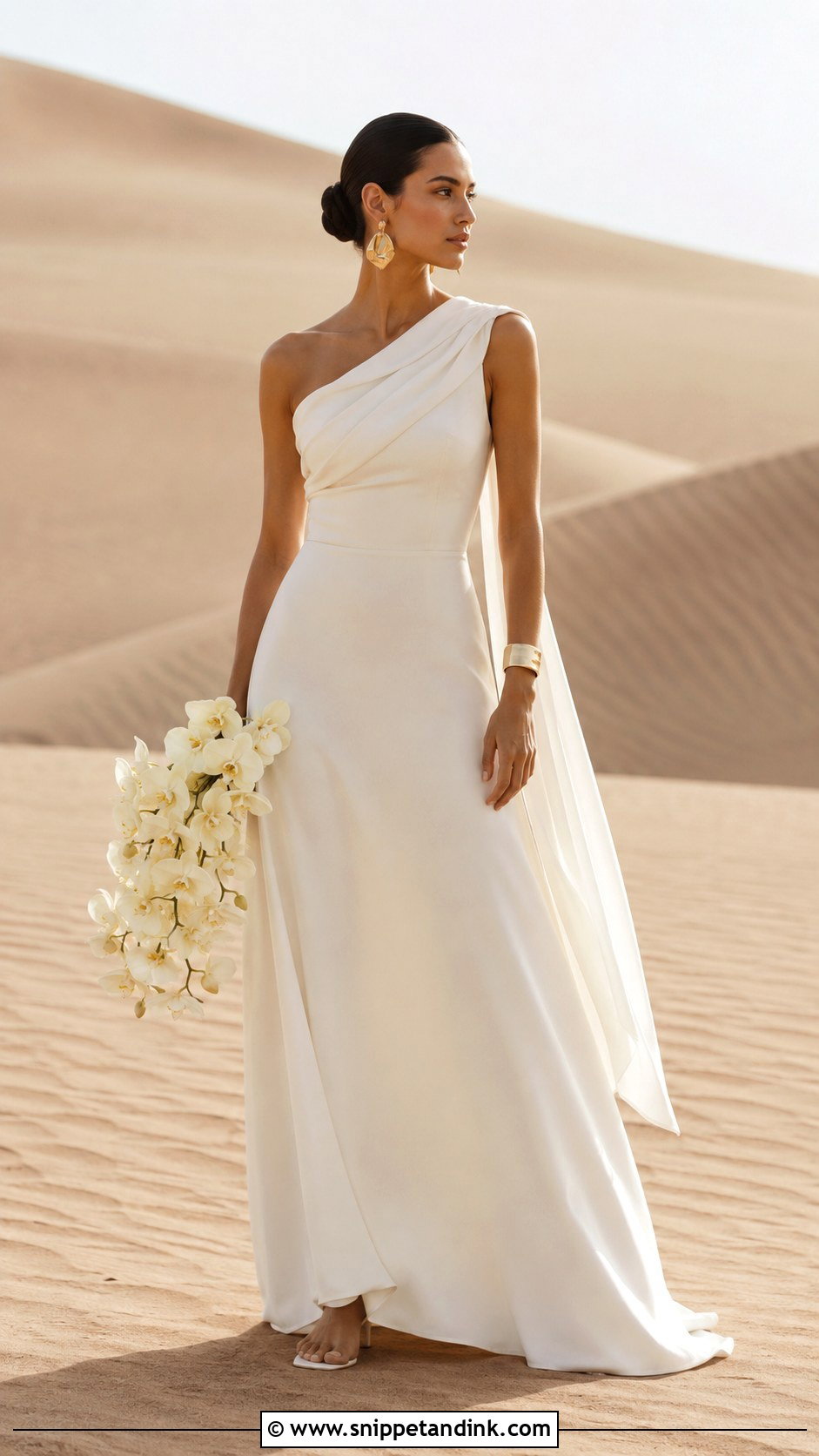
One shoulder echoes the lopsided shapes of dunes and rock formations, and it holds better in wind than an off-shoulder neckline. Choose stretch crepe or light chiffon with a structured inner bodice and an A-line skirt. If there’s a draped sleeve, keep it short, since a long trailing drape catches on brush. Sculptural earrings, a smooth cuff and low square-toe sandals finish it; skip the necklace. A sleek bun or side-parted ponytail keeps it modern, and cream roses, orchids and muted greenery suit the bouquet. Support depends on the shoulder seam and inner foundation being fitted to you, so lift your arms and twist at the final fitting to make sure it stays put.
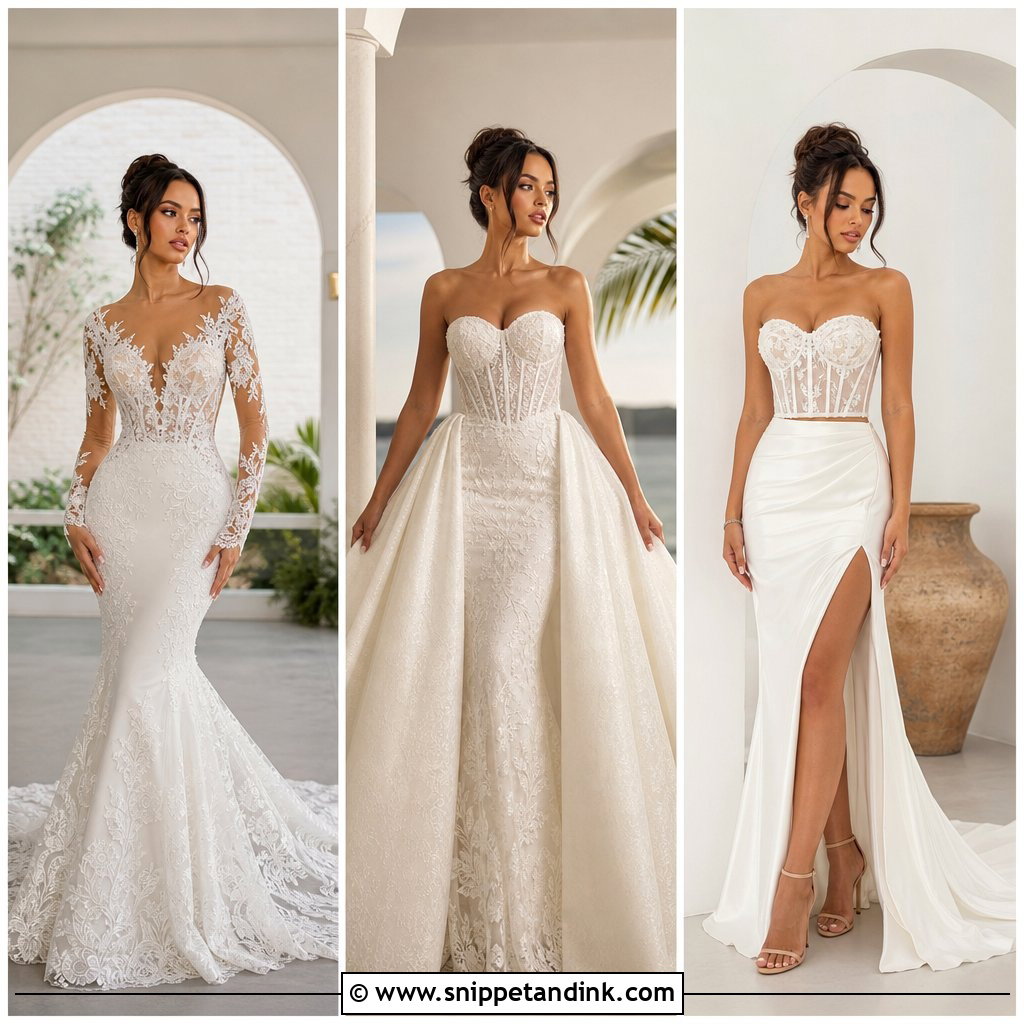
13. Desert Wedding Dress With Detachable Train
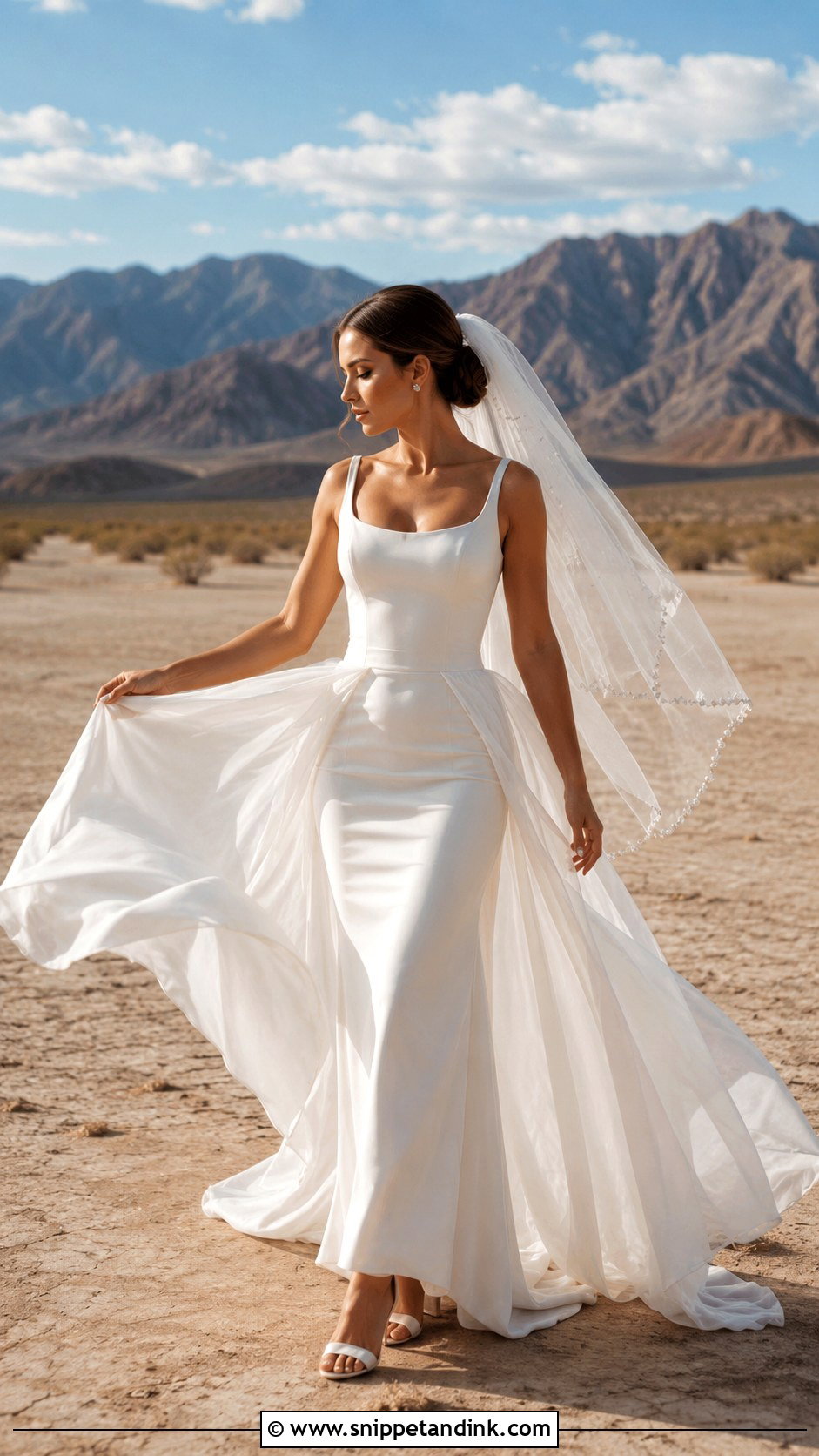
A detachable train is the answer for elopements that move between a ceremony spot, a hike and a few photo locations. Start with a fitted crepe, lace or stretch satin gown with a floor-skimming hem, then attach a light chiffon or tulle overskirt for the ceremony and the wide landscape shots. Take it off before you walk any distance. Sturdy block-heel sandals, crystal studs and a sleek fingertip veil complete it, with a polished low bun. The attachment points should lie flat at the waist and open with your fingers, no tools, because you’ll be doing this beside a car or on a trail. Bring a clean bag to carry the train in so it doesn’t end up in the dirt.
14. Embroidered Desert Wedding Dress
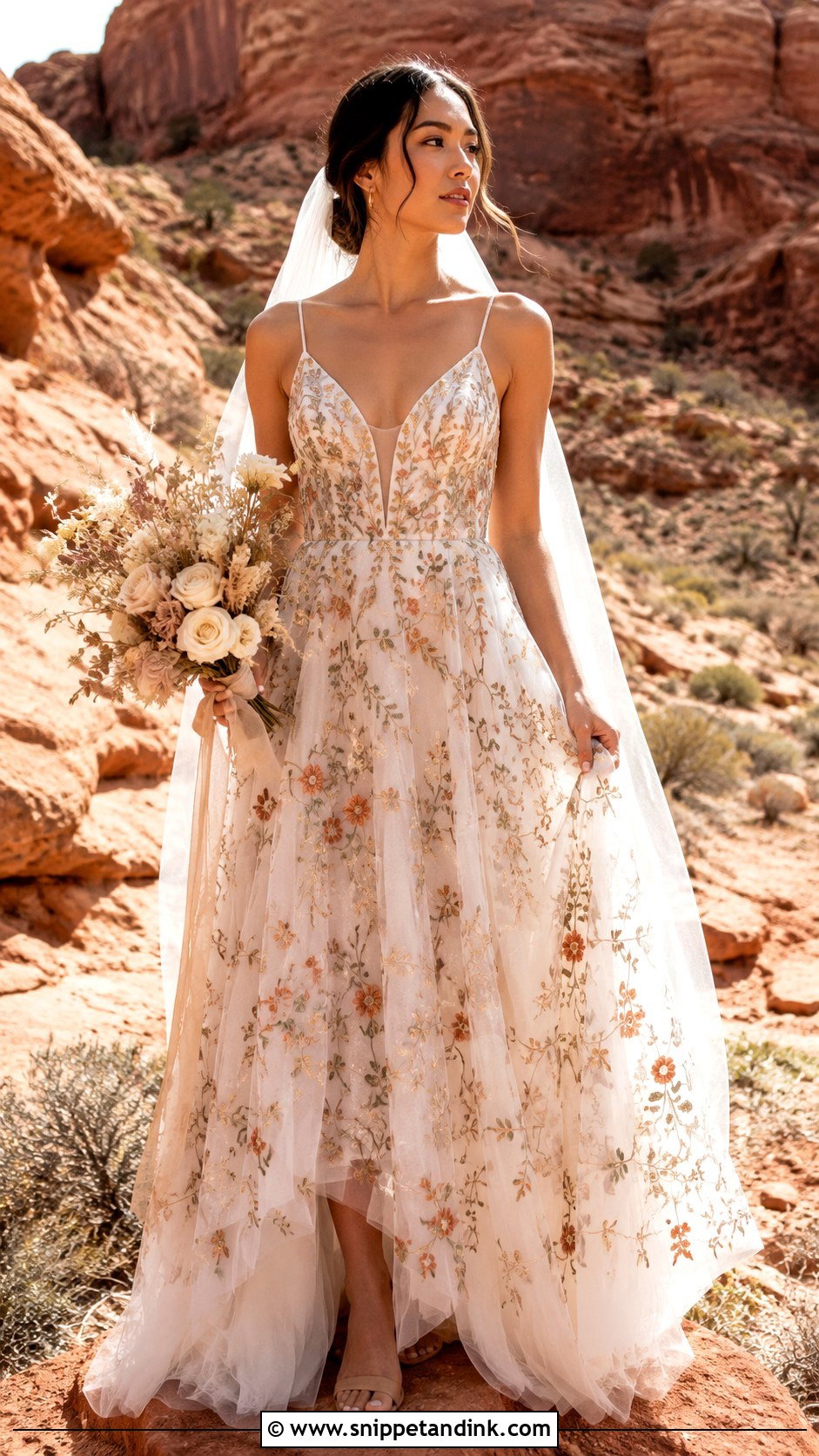
Colored embroidery lets you bring desert tones into an ivory gown without giving up the bridal base. Floral stitching in terracotta, sage, blush, sand or muted gold across a tulle bodice and flowing A-line skirt is the look. Keep the accessories plain: nude block-heel sandals, tiny gold hoops and a plain ivory veil. In the bouquet, repeat one or two colours from the stitching, not every one of them. A loose updo keeps embroidered straps visible. Turn the bodice inside out before buying. The back of heavy embroidery can be rough with knots and thread ends, and in heat and sweat it rubs, so you want a smooth lining over it.
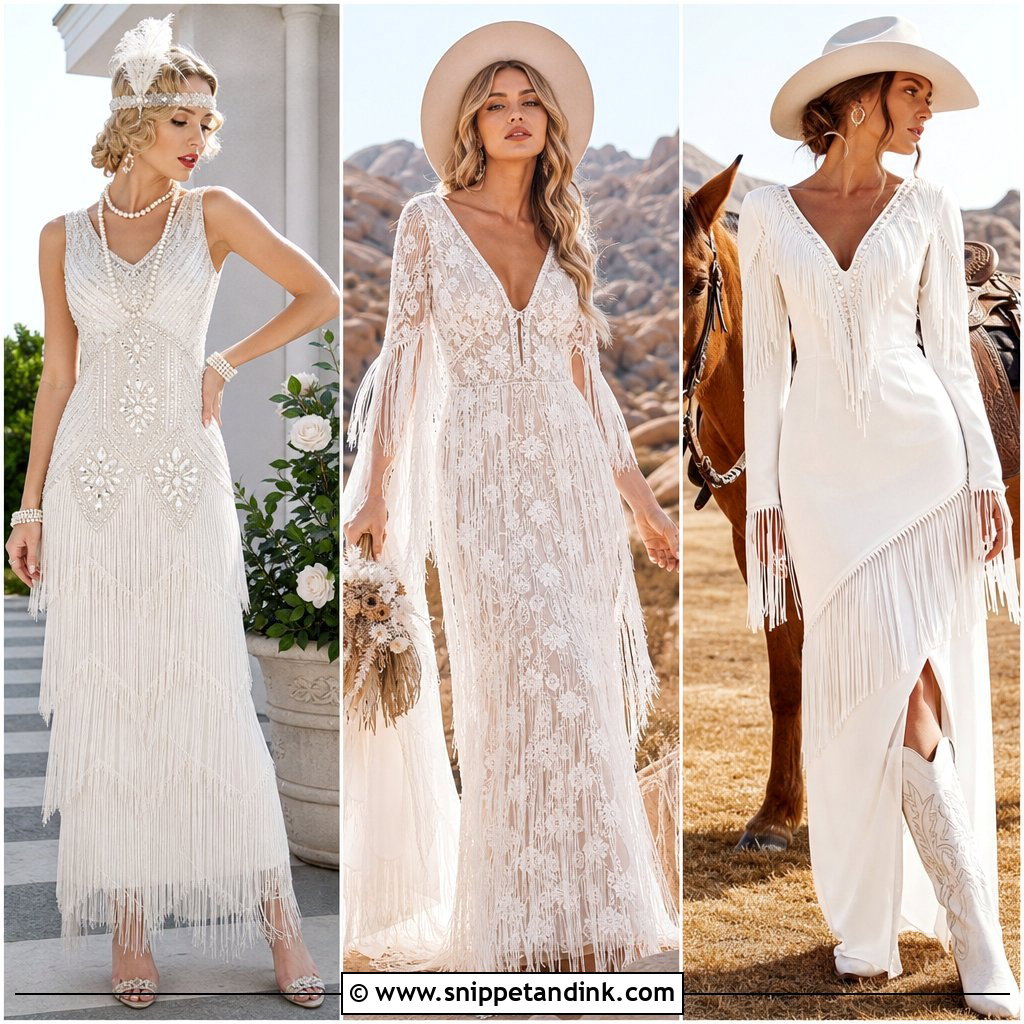
15. Two Piece Desert Wedding Dress
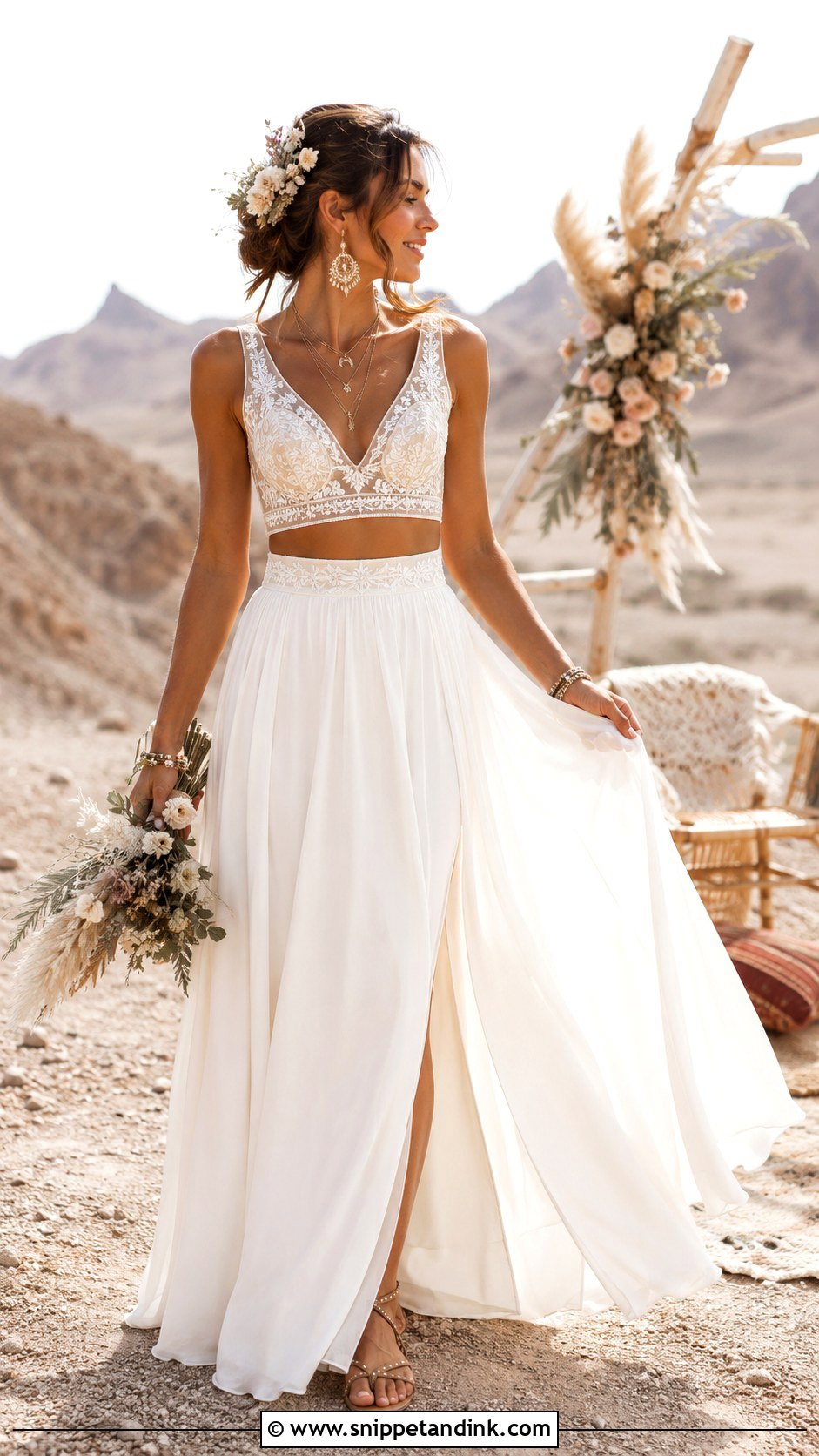
A bridal two-piece is relaxed, easy to pack and good on rough ground. Pair a structured lace or embroidered crop top with a high-waisted chiffon, crepe or georgette skirt. Check the gap sitting down: a waistband that meets the top standing can open up a few centimetres when you sit. Flat leather sandals, a layered gold necklace and light statement earrings complete it, and a floral comb can replace a veil for an informal ceremony. Bring a cropped jacket for after sunset. Separates let you take different sizes top and bottom, which is a real help if your bust and hips don’t match one size. They also fold into a carry-on far better than a gown.
16. Blush Desert Wedding Dress
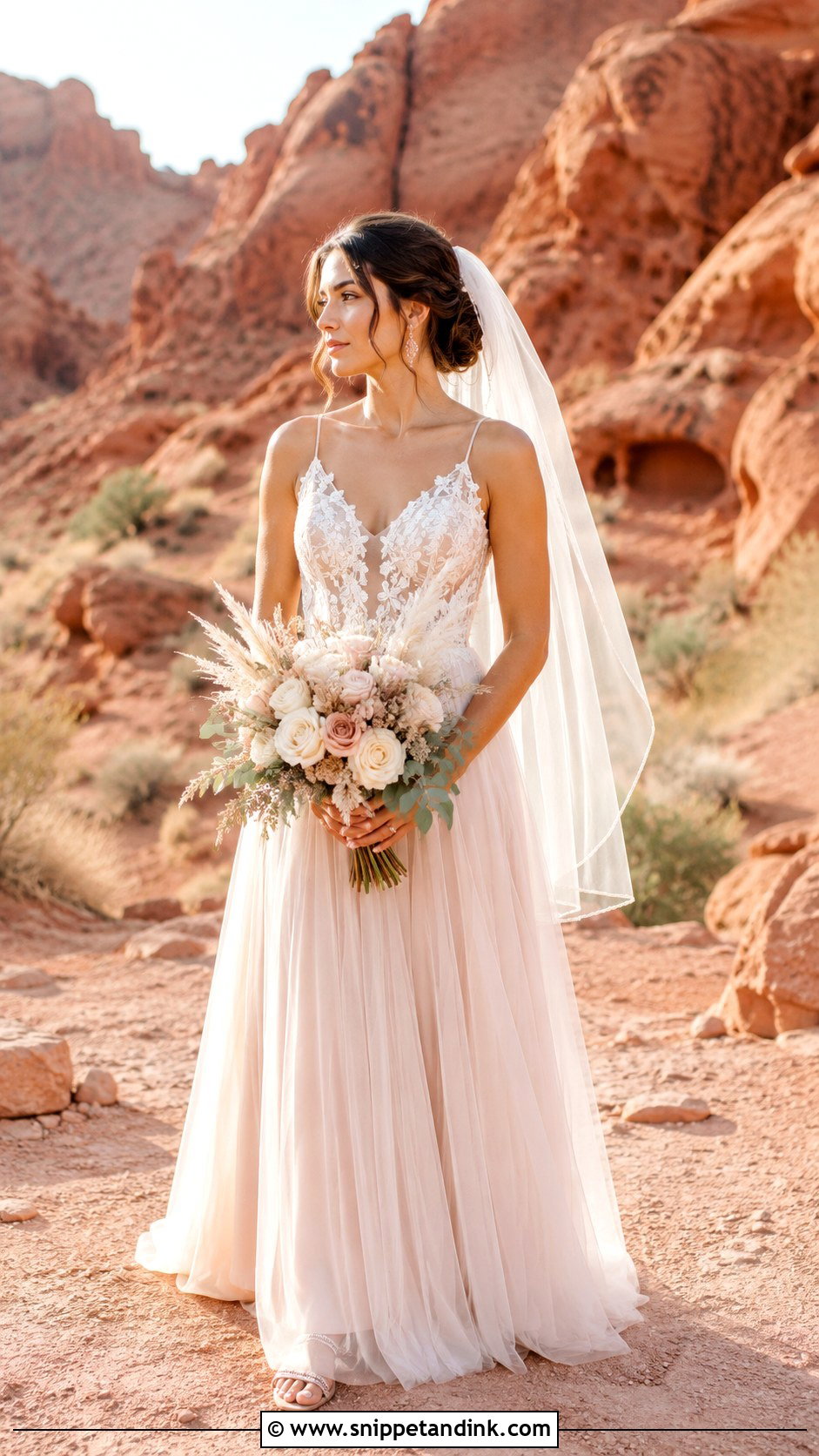
Blush picks up a warm glow against beige sand and red rock. The catch is that blush changes with light. It can look peach at golden hour, pink at noon and almost beige in shade, so test the gown outdoors before choosing anything else. A pale pink tulle or chiffon gown with a supportive fitted bodice and a flowing skirt is the base, with ivory lace appliqués for depth. Champagne flat sandals, rose-gold earrings and a neutral veil that doesn’t clash with the pink finish it. Cream flowers with dusty pink and muted greenery suit the bouquet, and a half-up style keeps it relaxed. It’s still clearly bridal, just softer against the landscape.
17. Champagne Desert Wedding Dress
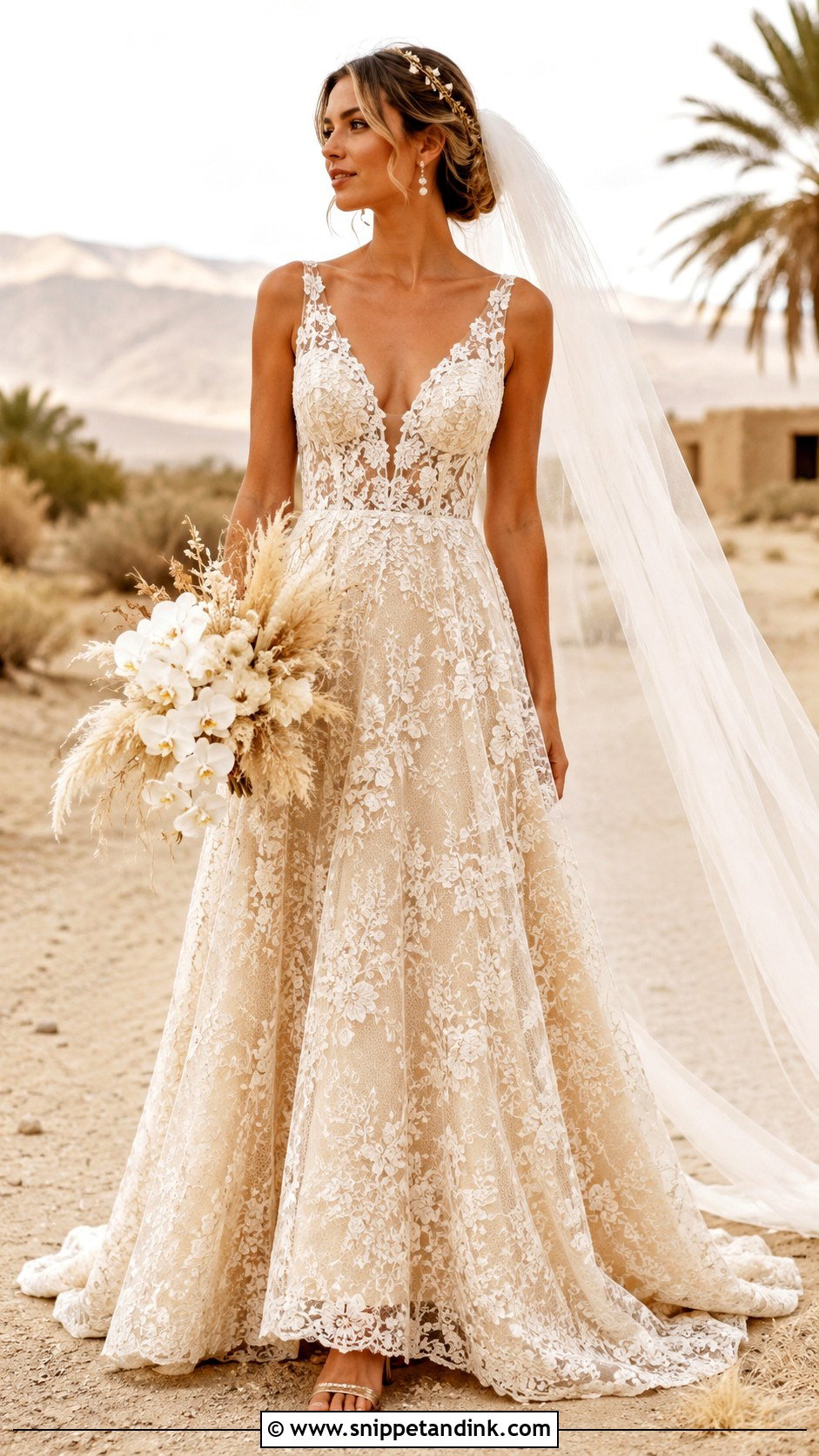
Champagne sits naturally in warm, golden desert scenery, and it’s kinder than bright white in strong sun, where pure white can glare in photos. Choose a gown with a warm beige lining under ivory lace, light beading or sheer tulle, in an A-line or gentle fit-and-flare. Metallic gold sandals, warm pearl earrings and a narrow gold hairpiece finish it; an ivory veil adds enough contrast to keep it from looking flat. White orchids, dried grasses and pale greenery make a refined bouquet. Champagne ranges from almost ivory to quite golden, so hold the fabric against your skin in daylight to find yours. At sunset ceremonies it blends with the landscape as the light warms up.
18. Short Desert Wedding Dress
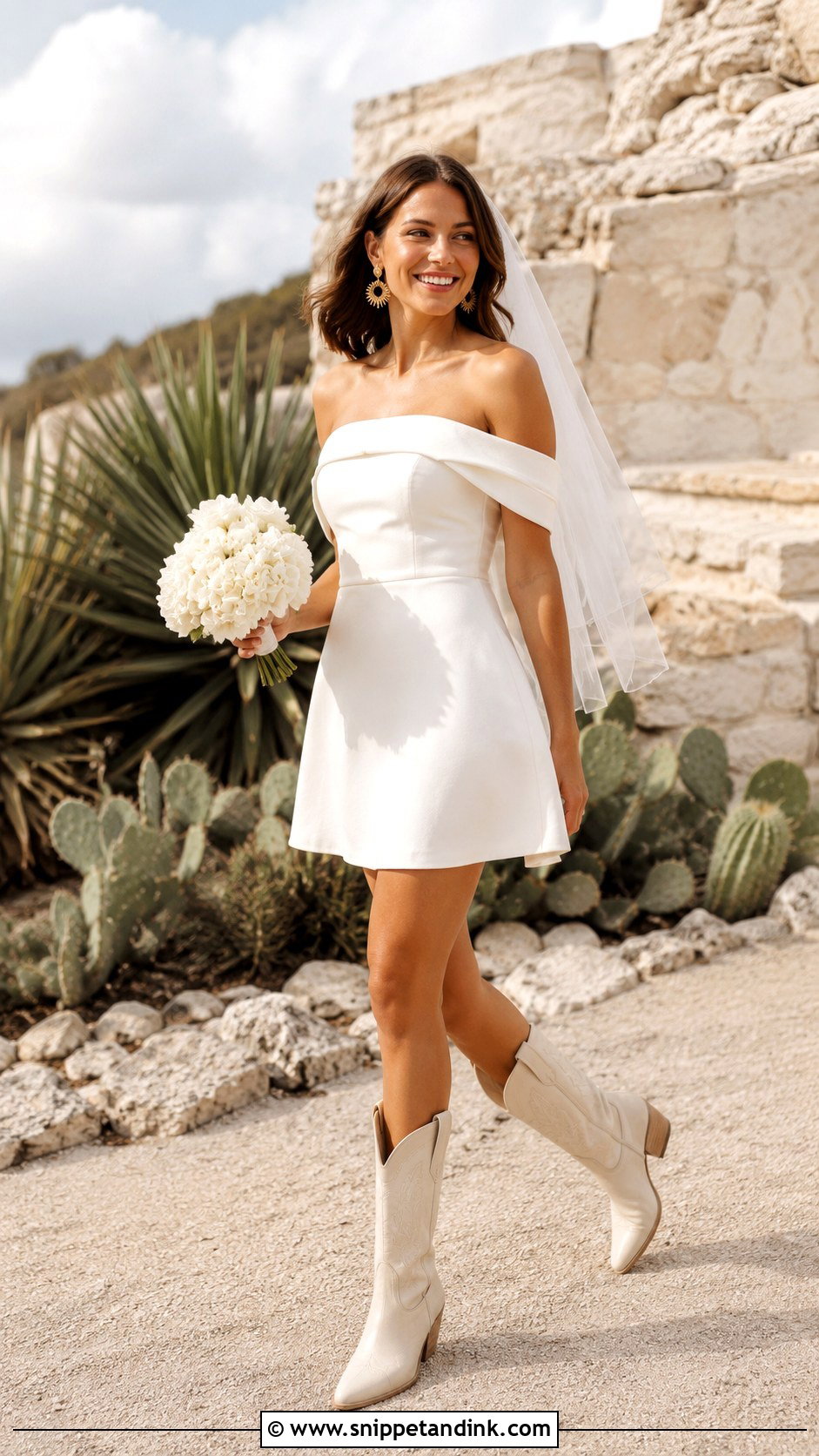
A short wedding dress suits a casual ceremony, a courthouse-then-desert day or a second look for the reception. A tailored mini or knee-length A-line with a secure neckline and some skirt volume is the shape. Textured crepe, embroidered lace or light jacquard make it feel special rather than everyday. Ivory western boots or low block-heel sandals, bold earrings and a small bouquet complete it, with a shoulder-length veil to mark it as bridal. A cream or light tan cropped jacket covers cooler evenings. Desert wind lifts short skirts, so wear fitted shorts underneath a full skirt. It’s playful, and it works at any age.
19. Cape Desert Wedding Dress
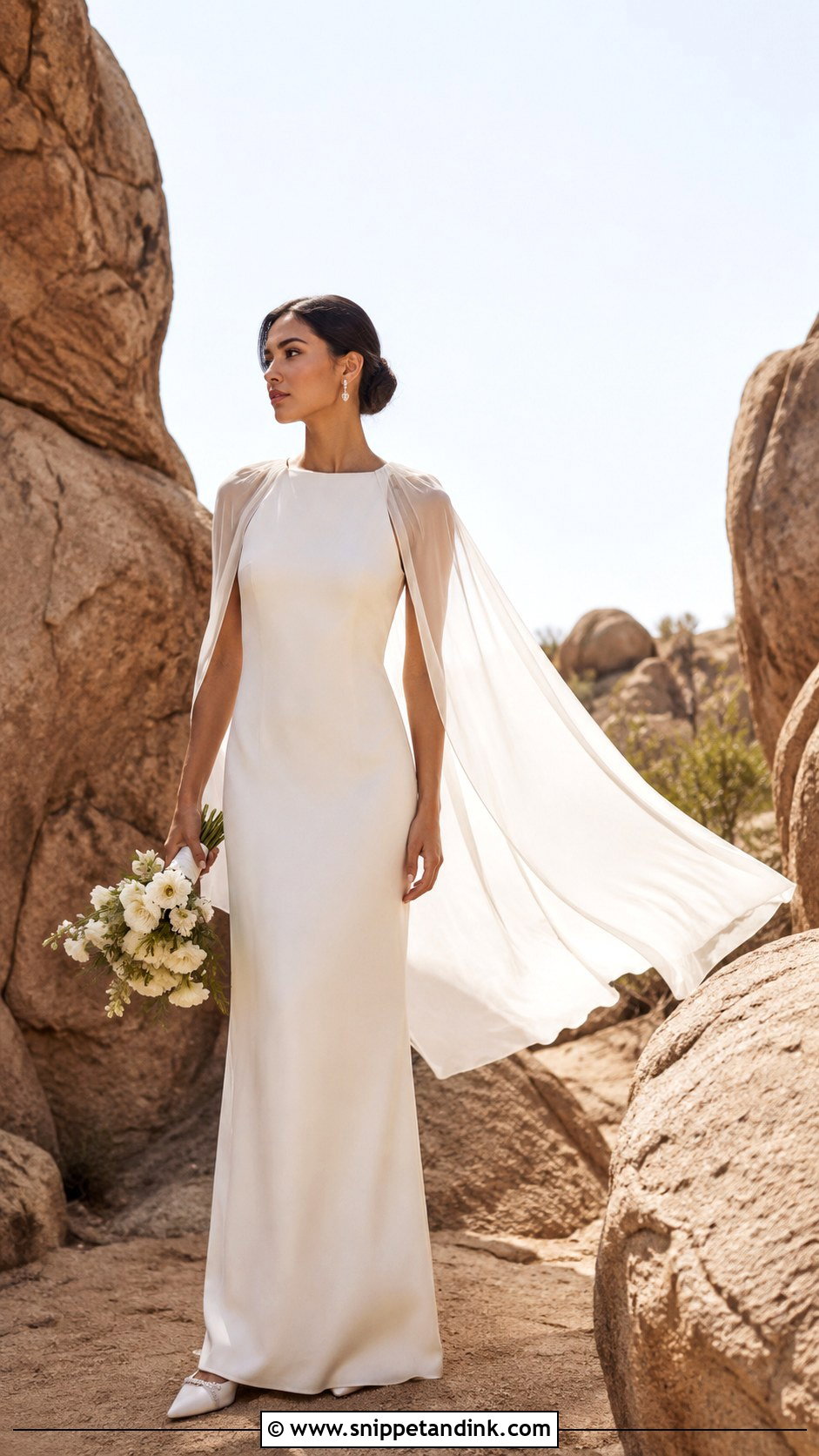
A sheer cape gives you the drama of a veil with far more control in wind, because it’s anchored at the shoulders, not the hair. Layer a light chiffon or tulle cape over a sleeveless crepe column, a slip or a fitted A-line. Make sure it fastens firmly at the shoulders and ends at fingertip or ankle length. Anything longer drags over rocks and picks up spines. Pointed flats, crystal earrings and a clean low bun complete it, with a white and green bouquet. Take the cape off for dancing, dinner or photos in strong gusts. If you want some arm coverage, choose a cape with soft elbow-length panels instead of fitted sleeves.
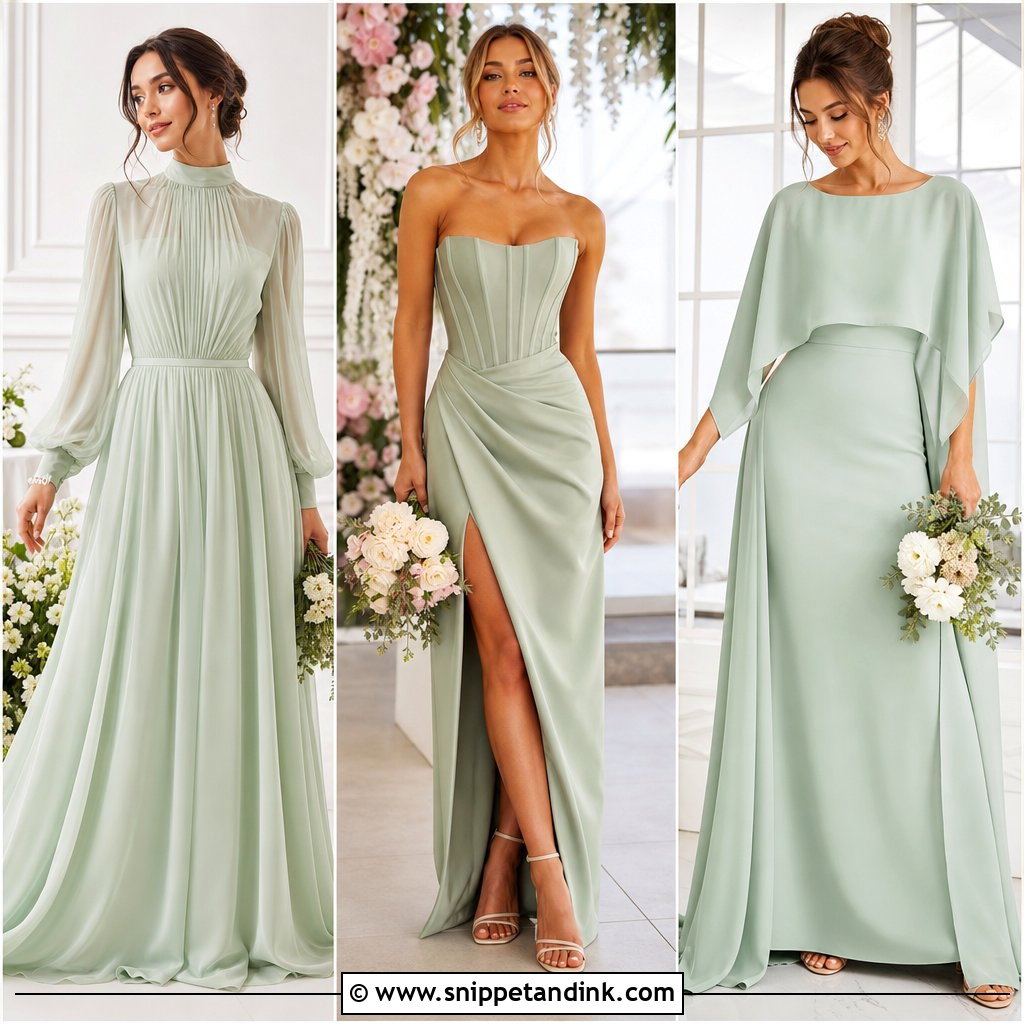
20. Plus Size Desert Wedding Dress
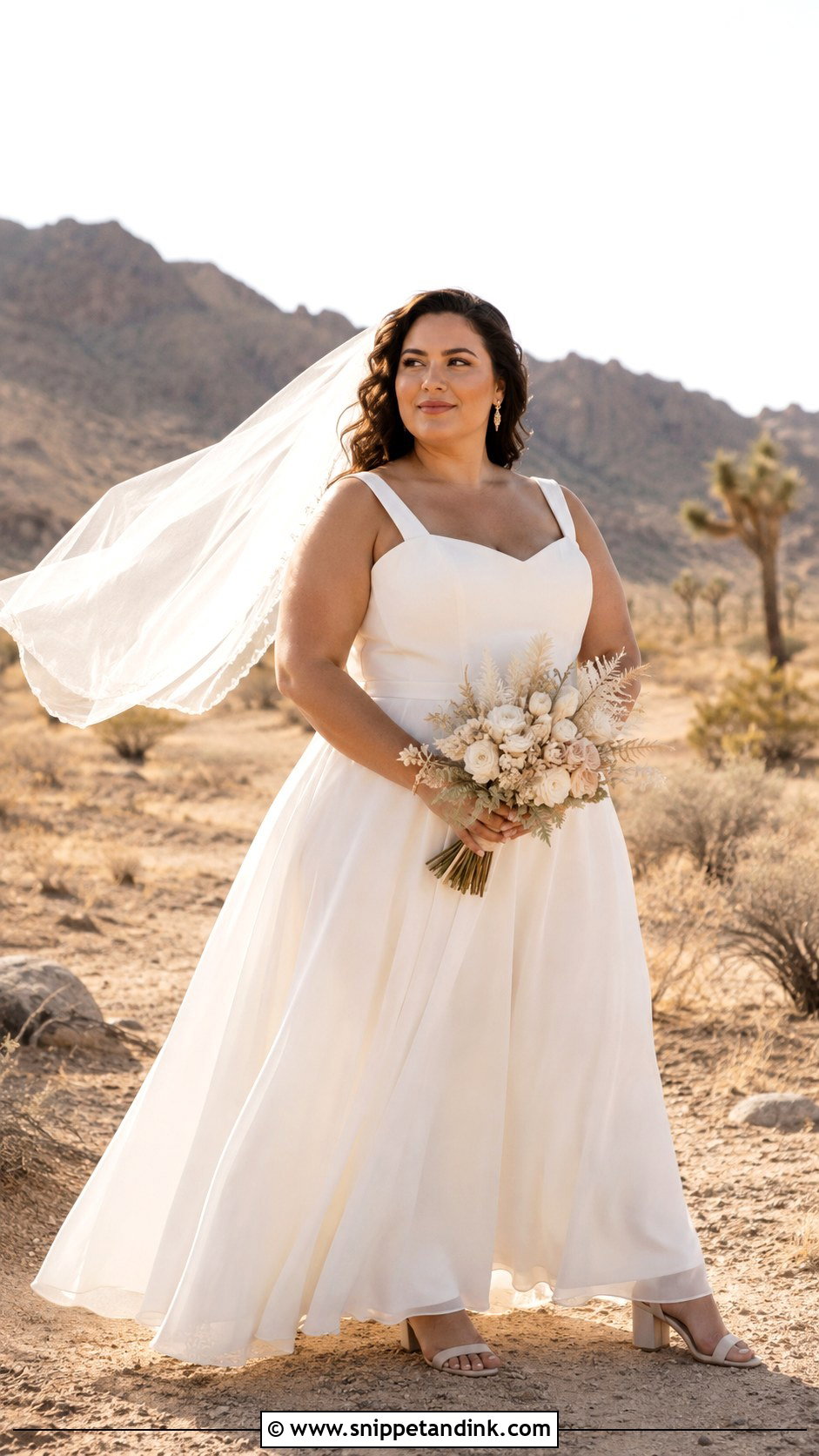
For a plus-size bride in the desert, comfort in the heat matters as much as support. A structured A-line with wide straps, a defined waist and a breathable chiffon skirt is my starting point; a stretch-crepe fit-and-flare or a flowing lace sheath works too. Ask for supportive cups, flexible boning and a smooth lining, and have every alteration done in the exact underwear and shoes you’ll wear. Thigh chafing is a real problem in dry heat under a long skirt, so plan anti-chafe balm or light shorts. Cushioned block-heel sandals, medium-scale earrings and a veil set into a secure low updo finish it, with a short bustle for after photos.
What Red Dust and Cactus Spines Do to a Hem
Every desert dress comes home with a darker hem. Fine dust works into lace and tulle, and in red-rock country it can leave an orange tint that’s harder to lift than ordinary dirt. Accept a little of that, but limit it: bustle the train after the ceremony, keep a clean sheet or blanket in the car to stand on while you change, and avoid shuffling through loose sand.
Spines are the other hazard. Cholla and other spiny plants drop segments that cling to tulle, lace and chiffon, and pulling them out by hand hurts. Pack tweezers or a fine comb. Walk the portrait route with your photographer beforehand if you can, and stay on cleared paths in a long skirt.
Packed in the Car Before You Hike Out for Photos
- Plenty of water, and a straw so you can drink without smudging lipstick
- High-SPF sunscreen for shoulders, back and the parting in your hair
- Blotting papers and setting powder, since dry heat dulls makeup by afternoon
- Tweezers and a lint roller for spines and dust
- Flat shoes or boots for walking, with your ceremony shoes carried separately
- Your evening wrap, so it’s there the moment the sun goes down
- Baby wipes to clean dusty feet and ankles before you put nice shoes back on
After the wedding, have the gown professionally cleaned soon, and point out the hem. Dust and dried sweat are much easier to treat while they’re fresh.
Will It Survive Wind, Dust and Sunset?
In the desert, the dress you love has to cope with real conditions as well as look right. Light fabric, steady shoes, proper support and a hem you can manage make the whole day easier, whatever your style. Bohemian lace, sleek crepe, embroidery, short dresses and detachable trains all have a place, as long as they suit your venue and you. Think about the time of the ceremony, the likely temperature, wind, how far you’ll walk and what the ground is like. Then try everything on together, underwear, jewelry, jacket and shoes included. If it’s comfortable on a long walk at home, it’ll be comfortable from the first portrait to the last dance.
You'll Like These Ideas:





Leave a Reply