
Most brides walk into their first appointment with a picture of one dress and walk out in a completely different shape. That’s normal, and it’s why I like brides to understand silhouettes before they shop. The shapes brides keep coming back to are the classic A-line, the ball gown, the fitted mermaid, the bias-cut slip and a growing number of short and two-piece looks. Each behaves differently over a long day: how heavy the skirt is by the third hour, whether you can sit at dinner, how the train handles grass. Below are twenty of them, with how each one is built, who it suits, what to pair it with and what I check at fittings.
How Long a Wedding Gown Takes From Order to Final Fitting
Brides are often surprised by the timeline. Most salon gowns are made to order after you choose them from a sample, and production commonly takes several months, often four to six, longer for heavily beaded or custom pieces. Alterations then need their own window of six to eight weeks. That’s why I suggest starting to shop around nine to twelve months before the wedding. Less time is possible, but it narrows your choice to off-the-rack or sample gowns.
Expect two or three fittings. The first deals with the big structure: bodice, straps, length. The second refines it. The last one, close to the date, checks that nothing has changed and teaches whoever is helping you how to bustle the train. Try to keep your shoes and underwear the same throughout; changing them late can undo weeks of careful hemming.
1. Satin A-Line Wedding Dress
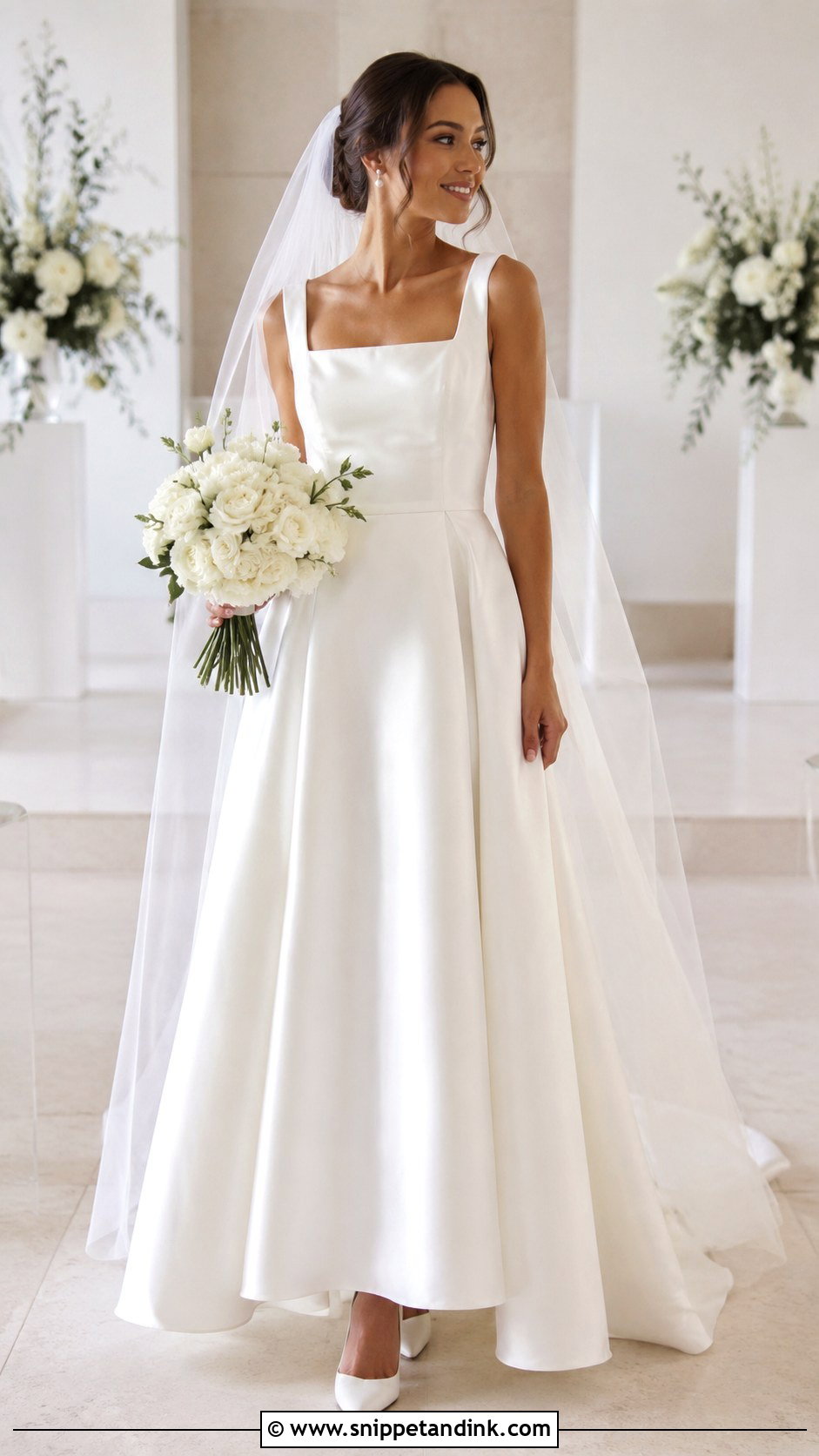
If you’re not sure where to start, start here. A satin A-line fits through the bodice and widens gradually, so it suits almost every figure and almost every venue. The finish of the satin changes the mood: matte reads quiet and modern, a brighter sheen looks richer in flash photography but also shows creases more. A square, scoop or strapless neckline personalises the shape. I pair it with pointed pumps, pearl earrings and a structured bouquet, and a fingertip veil for balance, or a cathedral length for a formal church. Satin holds its shape indoors and out, which is why this gown is so dependable.
2. Lace Ball Gown Wedding Dress
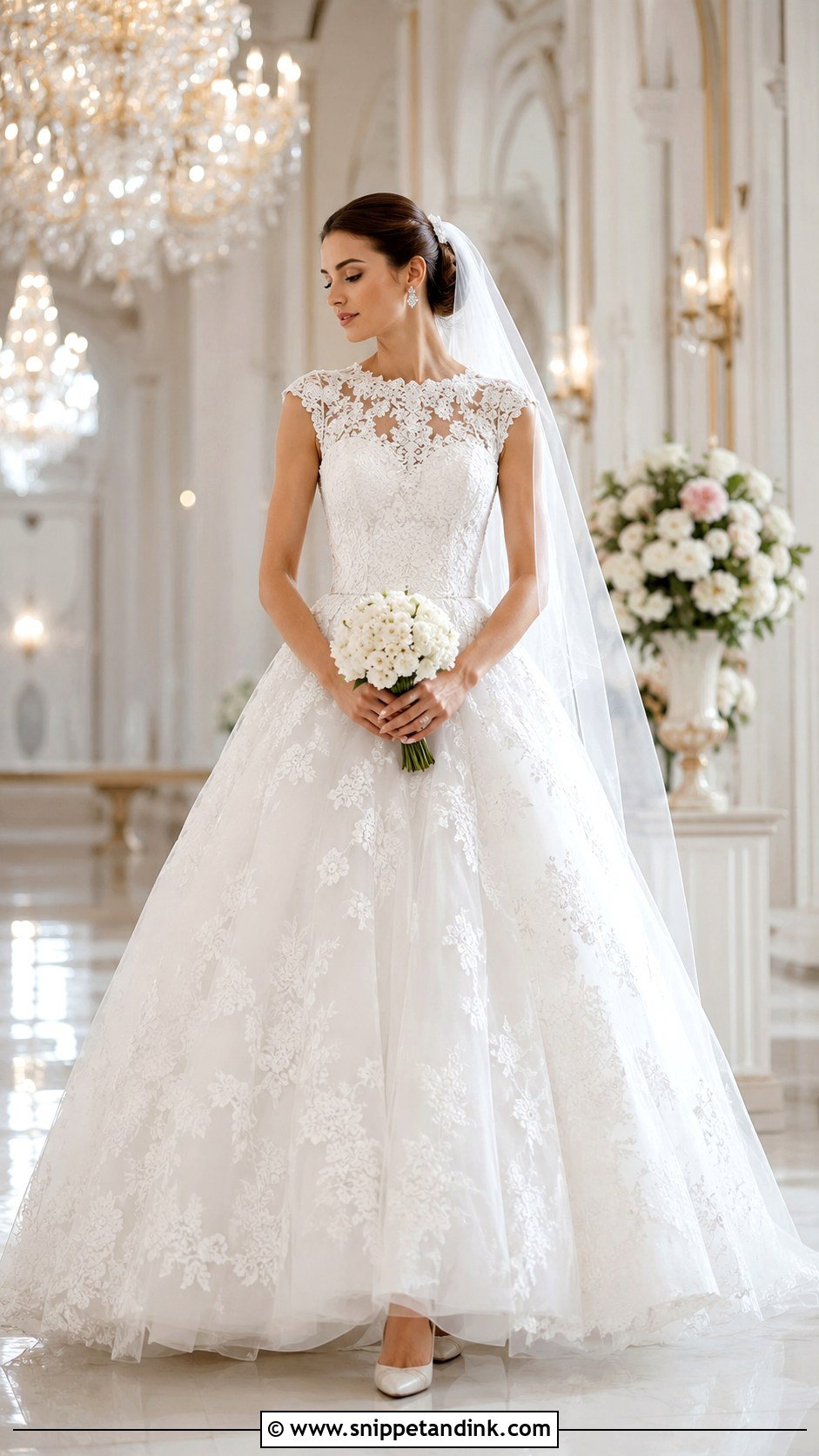
A lace ball gown is about the entrance. The fitted bodice and wide skirt show off the lace from every side; floral lace reads romantic, geometric lace sharper. What brides underestimate is the weight. Layers of tulle, lining and appliqué add up, and by the reception your hips are carrying all of it. Ask whether the skirt is supported by a built-in petticoat or a hoop, and try walking around the salon for ten minutes, not two. Keep accessories restrained: a plain veil, small sparkling studs and closed-toe heels. The bodice and hem must fit exactly, since a hem even slightly long gets trodden on with every step.
3. Strapless Mermaid Wedding Dress
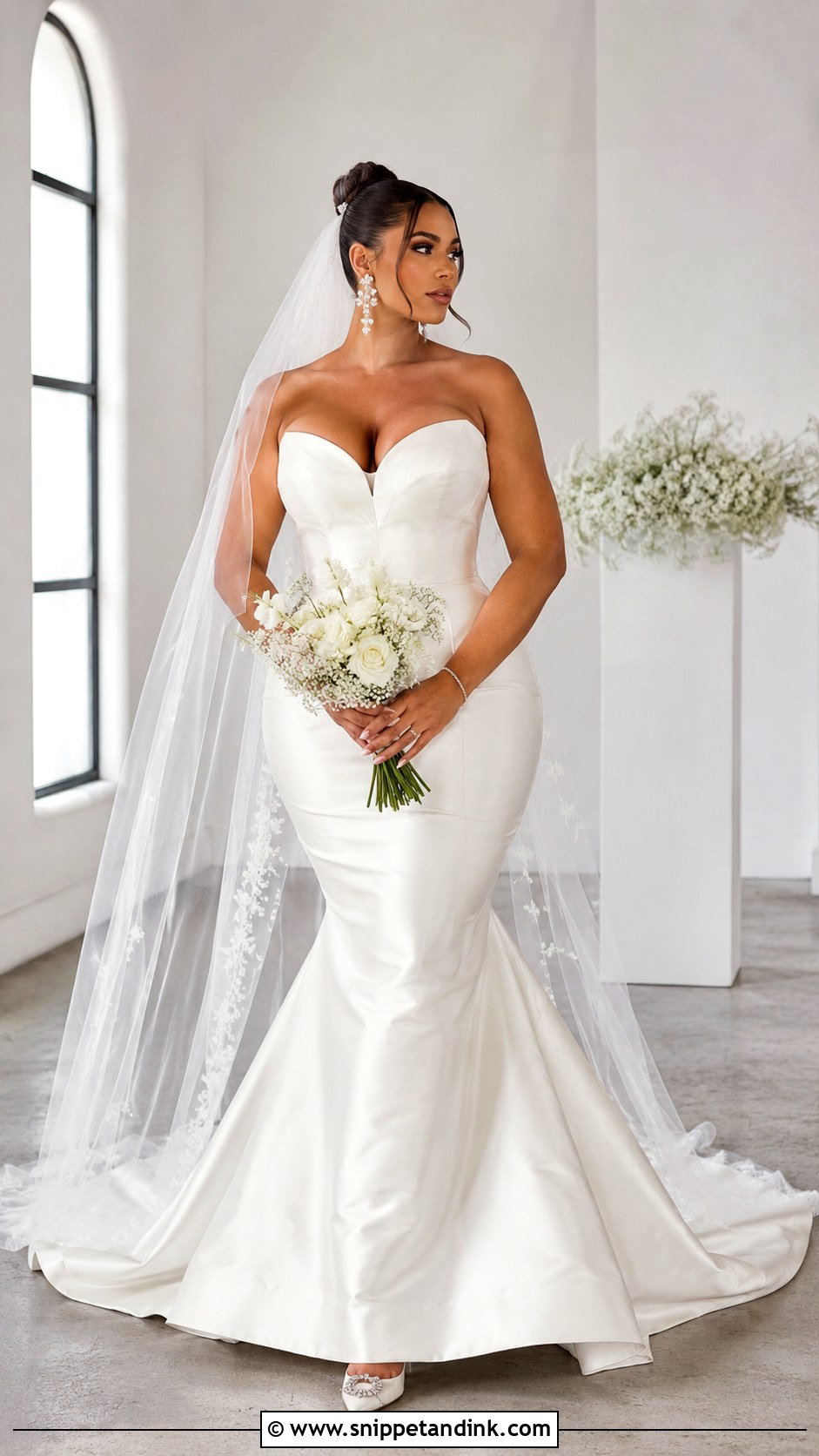
A mermaid follows the body to the knee and then flares, and the knee is where the trouble starts. If the flare begins too low, you’ll shuffle and climb stairs sideways. Satin, mikado, and structured crepe give the clearest line; lace softens it. A strapless bodice needs internal boning and a professional fit so you’re not hitching it up. Add a delicate necklace only if there’s open space at the neckline; otherwise statement earrings do the job. Pointed heels and a chapel veil suit the drama. Ask your seamstress about raising the flare an inch or two, or adding a stretch lining; both help you move without losing the shape.
4. Crepe Fit-And-Flare Wedding Dress
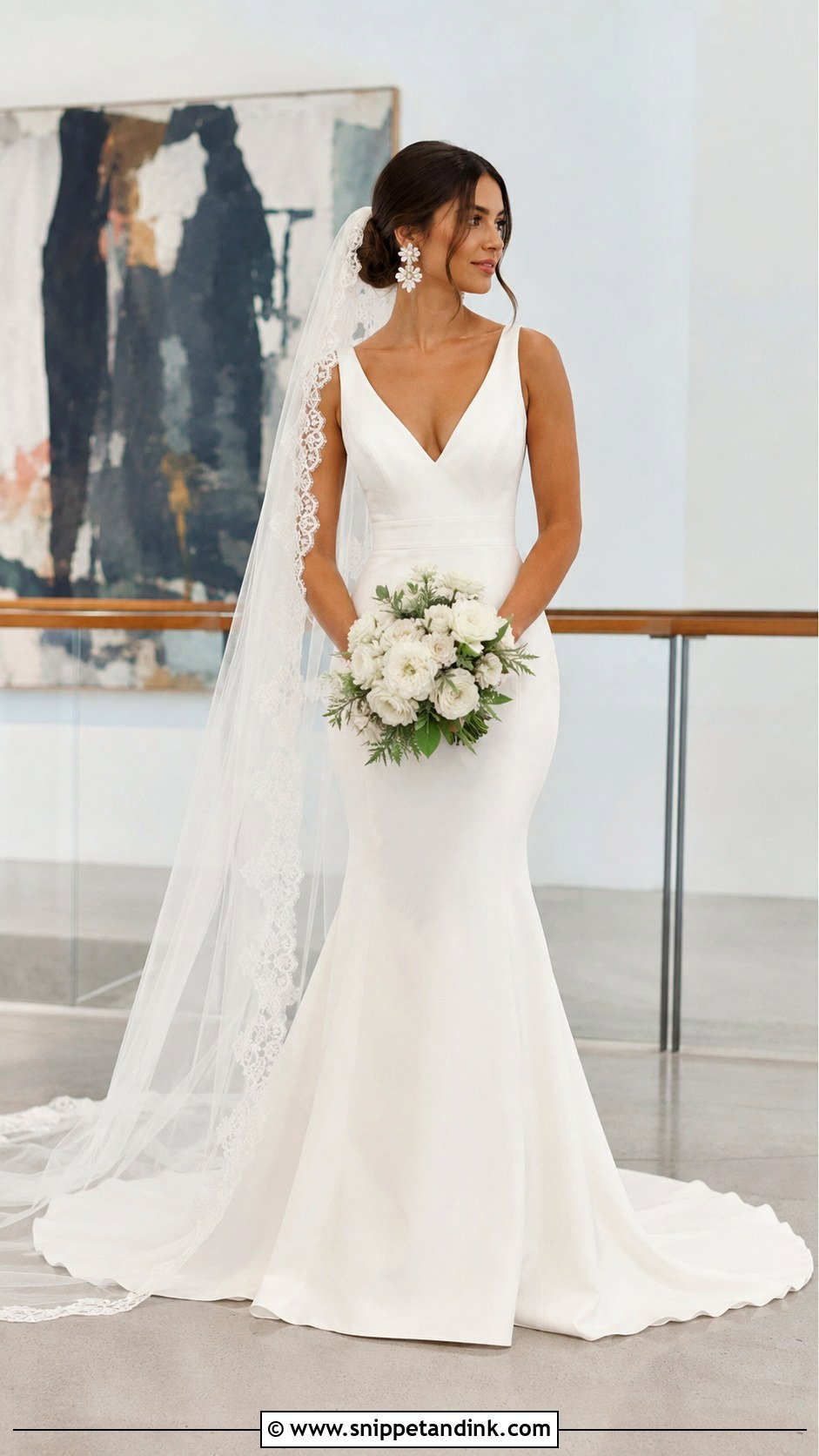
Crepe looks simple, which is precisely what makes it hard to get right. It reveals every seam, every pucker and every line of underwear, so the tailoring has to be precise. A fit-and-flare in crepe follows the torso and hips and opens into a moderate skirt, much easier to walk in than a mermaid. A V-neck or square neckline lengthens the upper body; wide straps support without a strapless bra. I style it with sculptural earrings, sleek heels and a low bun, and sometimes a lace-edged veil to add texture. Wear smooth, flat-edged underwear to every fitting, and bring the exact pair you’ll wear on the day.
5. Silk Slip Wedding Dress
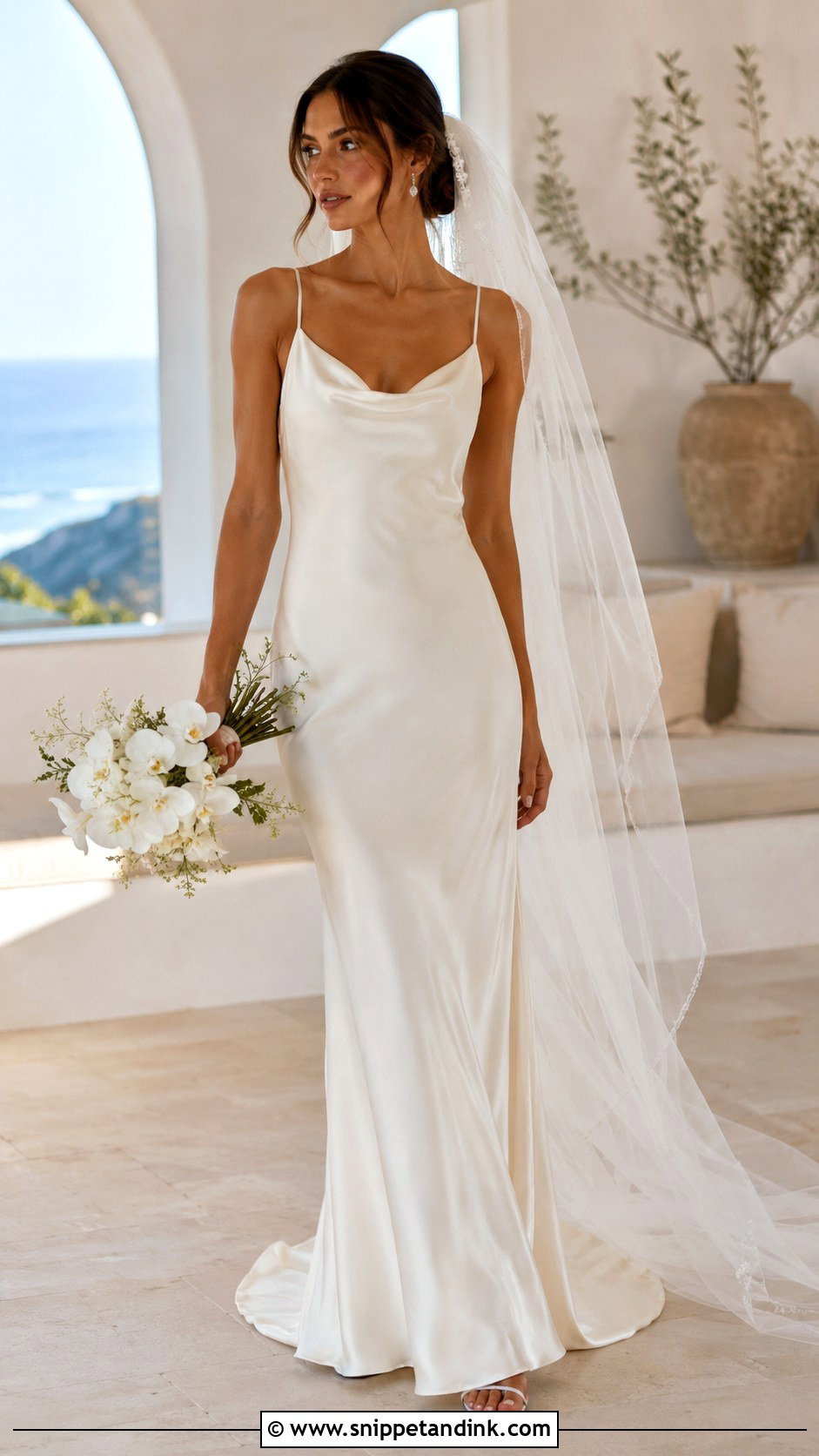
Bias-cut silk moves like water, and that’s both the appeal and the risk. Cut across the grain, it skims the body instead of holding a shape, so it shows everything underneath. I test several foundation pieces with slip dresses before any alterations, and I tell brides to expect wrinkles: silk creases when you sit in the car. Plan time to steam it at the venue. Spaghetti straps suit the minimal style; wider ones offer more support. Barely-there sandals, drop earrings, a simple bouquet and a sheer chapel veil are enough. It suits warm weather and smaller celebrations best, and brides who prefer one perfect fabric over decoration.
6. Drop-Waist Wedding Dress
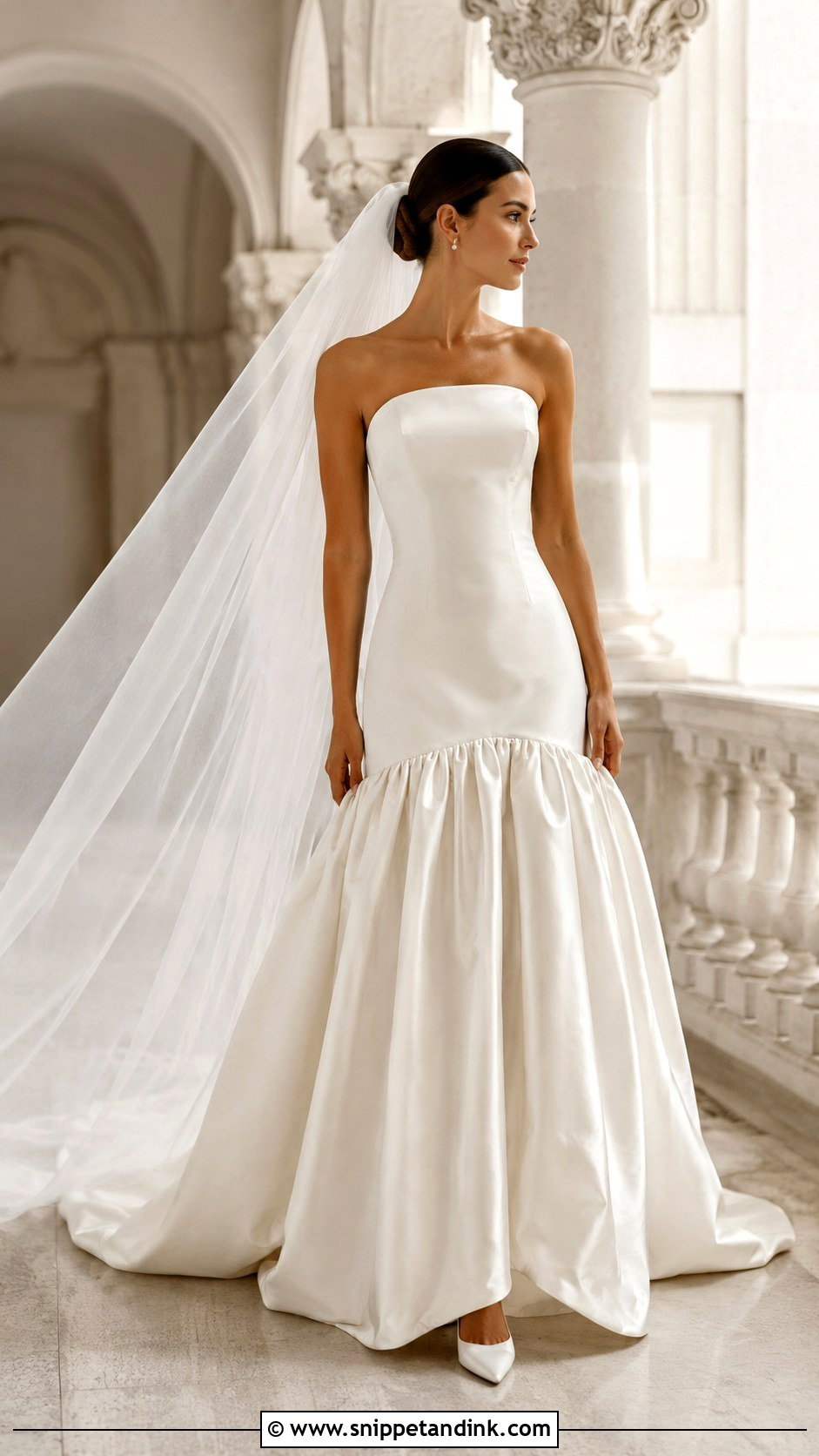
A drop waist lengthens the bodice past the natural waist before the skirt releases, giving a long, sculpted torso. Structured satin or mikado emphasizes the clean lines, and gathered tulle softens below the seam. It suits brides with a longer torso or straighter hips; on a very short torso the seam can land too close to the thigh and cut the leg line. A scoop or strapless neckline works with the long bodice. Skip a big belt, which breaks the proportions. Sit down during fittings, since the lowered seam must lie smooth over the hips when seated.
7. Basque-Waist Wedding Dress
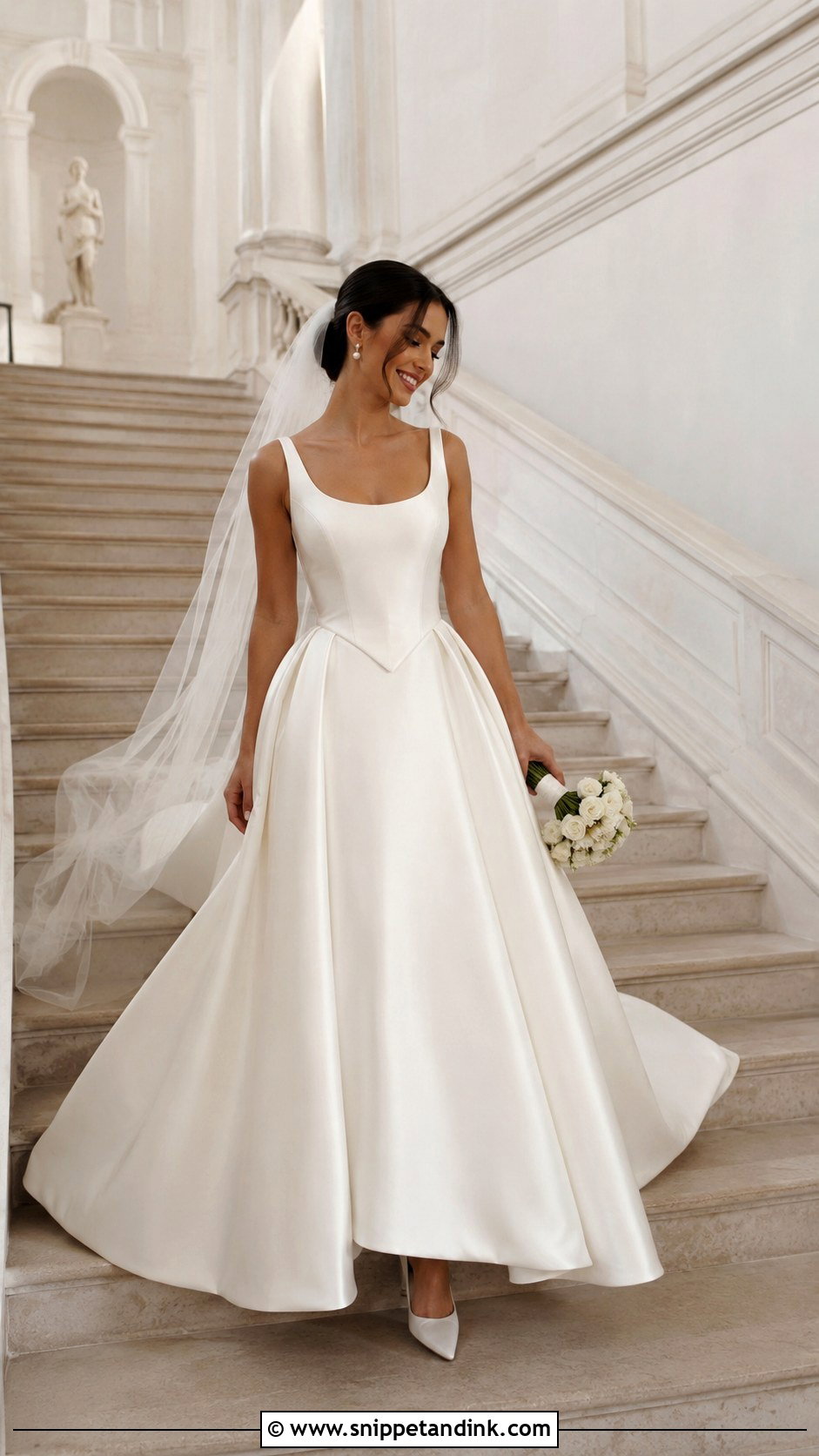
The basque waist dips into a V at centre front, which lengthens the torso and narrows the waist visually. Look at a basque-waist wedding dress in satin, mikado or brocade for the most structured effect, or lace for a softer one. Scoop, sweetheart and off-shoulder necklines balance the pointed waist. A long veil, classic pumps and small pearls complete it. The point of the V is the fit check: if it pulls upward or the fabric bunches either side, the bodice length is wrong. A good seamstress fixes that before anything else, and when it’s right the full skirt sits perfectly.
8. Long-Sleeve Lace Wedding Dress
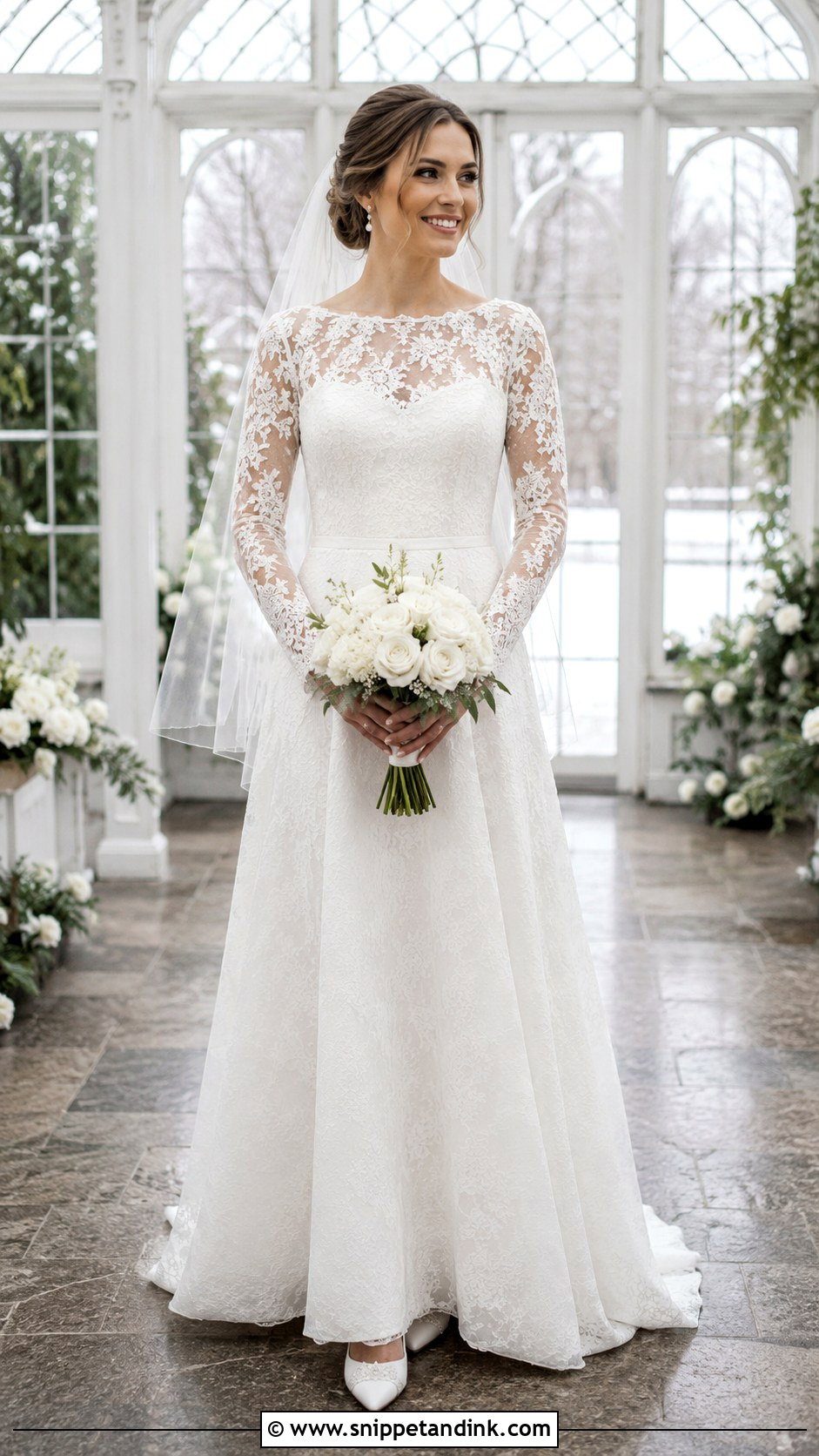
Long lace sleeves are lovely for cooler weddings, but sleeves are the first thing to feel tight. Choose soft, flexible lace at the elbow and shoulder; stiff lace rubs inside the elbow and limits how high you can lift your arms. A lined bodice gives more coverage, while sheer sleeves let the pattern sit on the skin. The skirt can be A-line, fitted or softly flared. Closed-toe heels, pearl drops and a simple veil that leaves the sleeves visible complete the look. At alterations, raise your arms, sit and hug someone. If the back pulls across the shoulder blades, the sleeve head needs letting out.
9. Off-The-Shoulder Wedding Dress
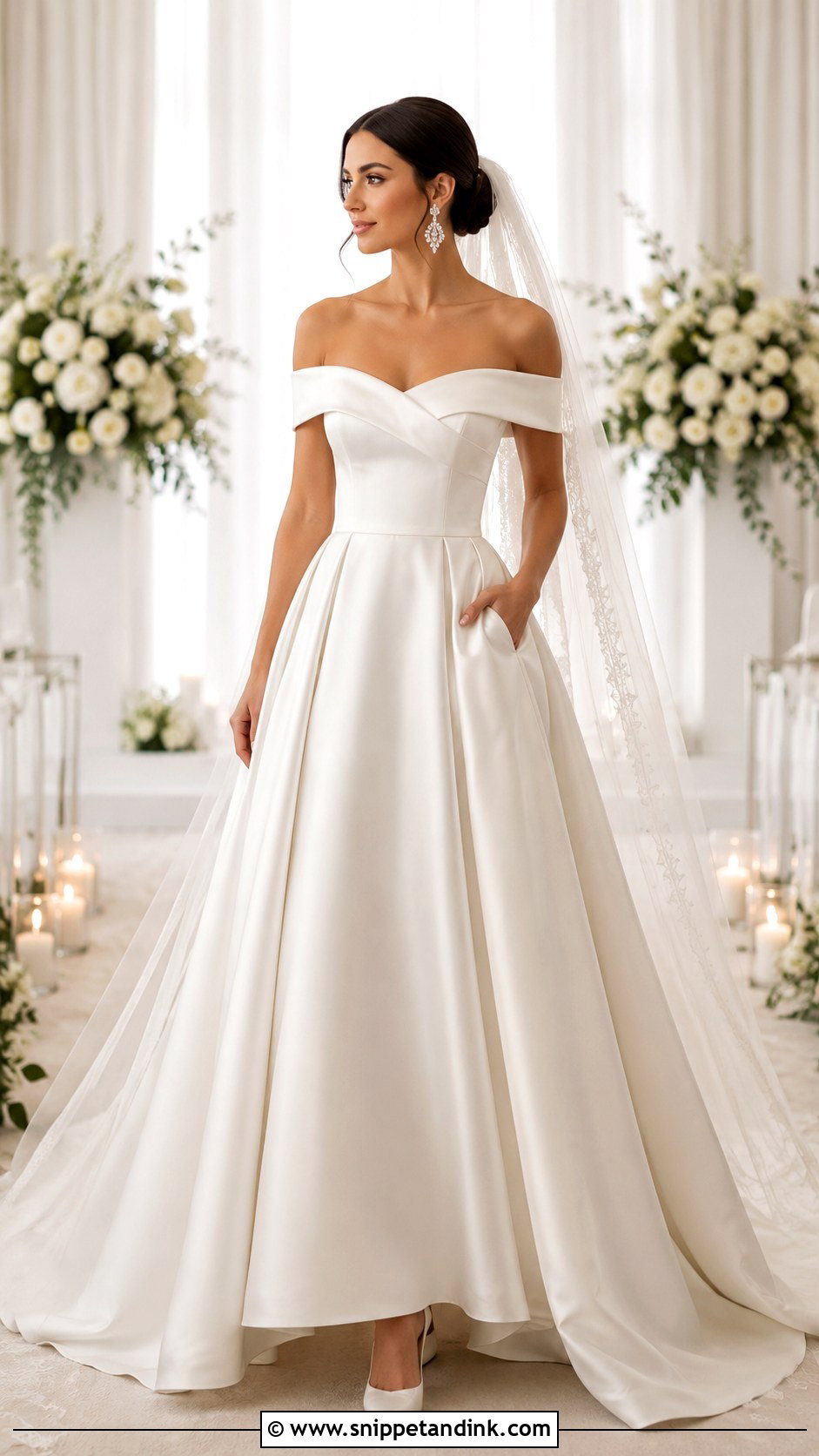
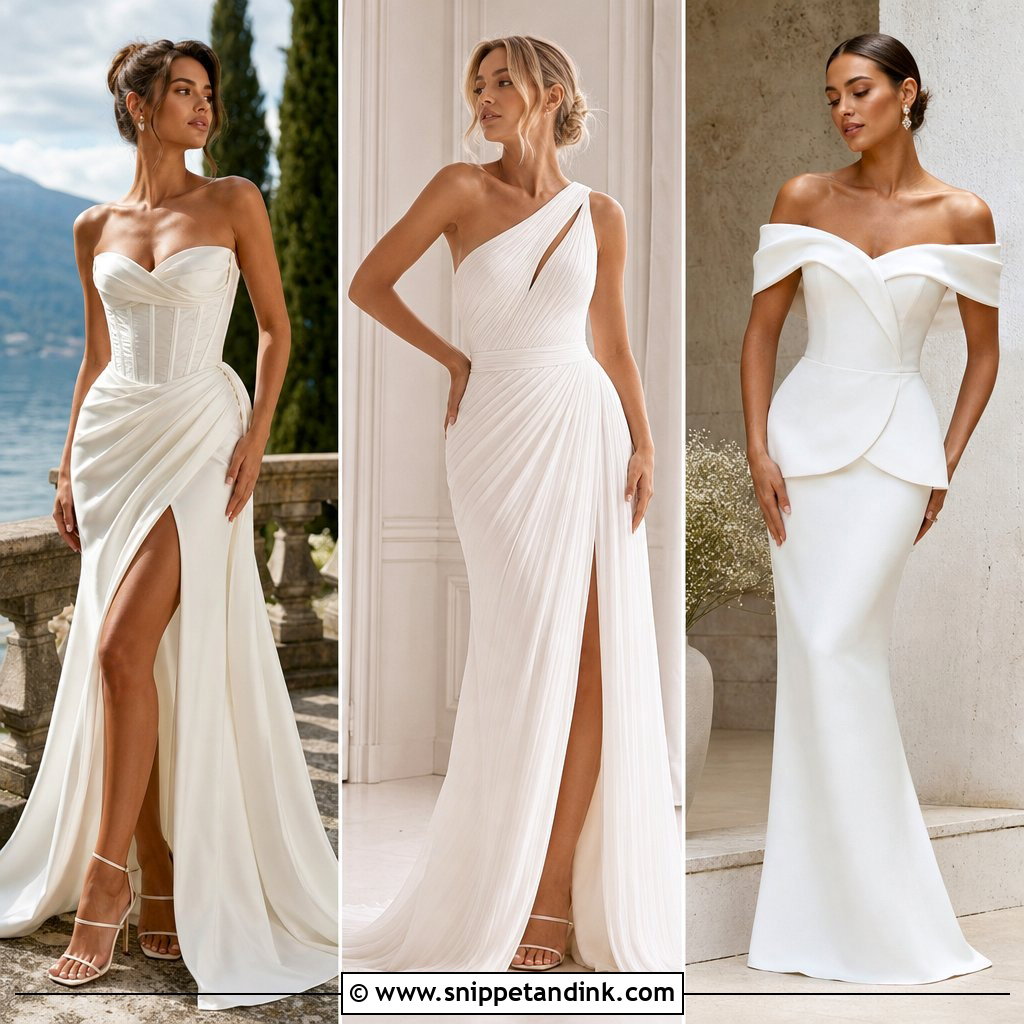
Off-the-shoulder works with nearly every skirt shape, ball gown to column, so it’s versatile. The challenge is keeping it in place. Draped sleeves feel romantic, a folded structured band looks architectural, and both need hidden elastic or silicone grip and a boned bodice underneath. Choose earrings over a necklace to keep the collarbone clear. A low bun, pointed pumps and a fingertip or cathedral veil balance it. Lift your arms during fittings; if the neckline slides up toward your shoulders, it will do the same during the first dance.
10. Square-Neck Wedding Dress
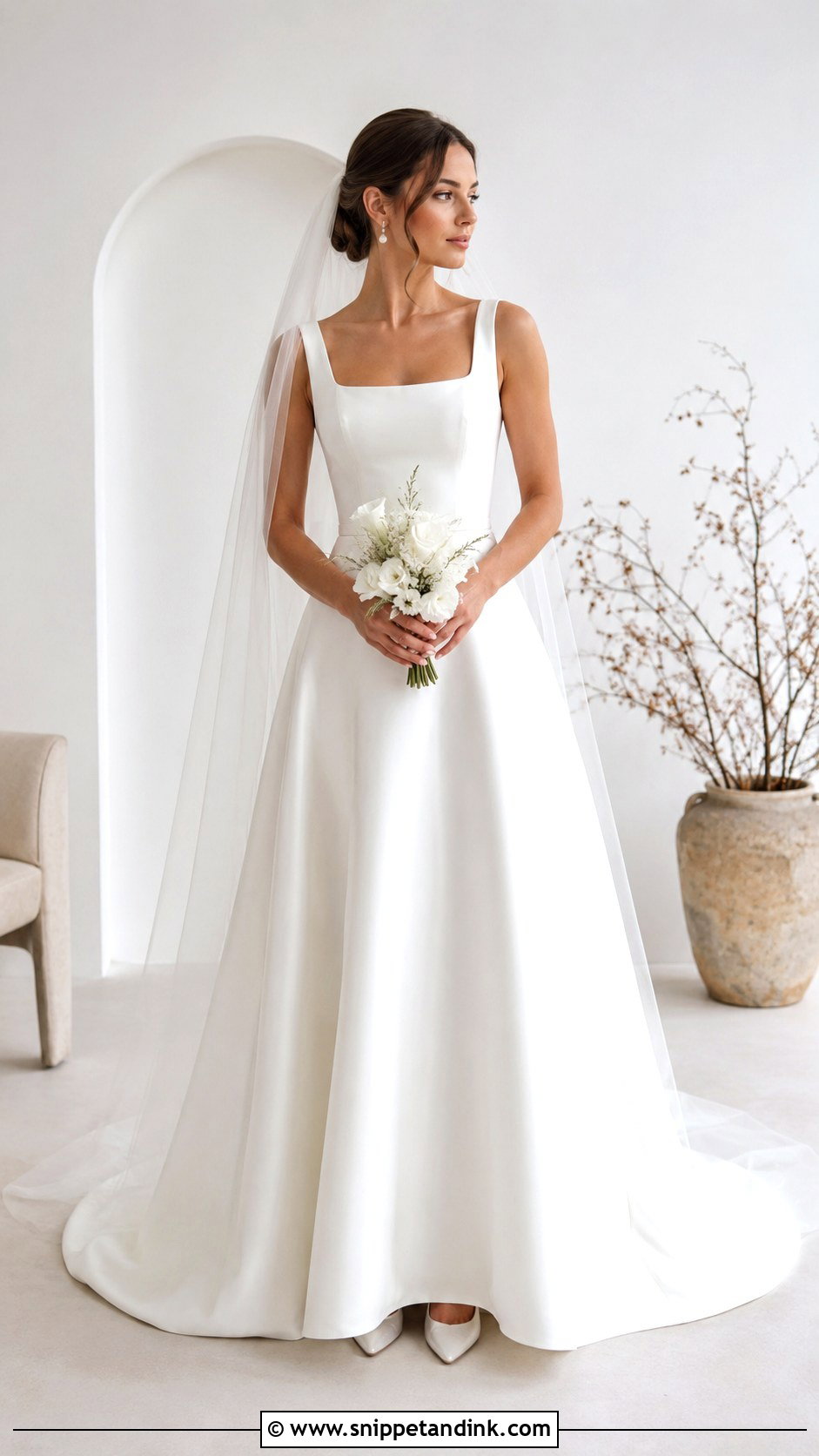
The square neck is having a moment because it reads crisp and slightly unexpected. The straight line shows the collarbone, and wide straps offer more support than delicate spaghetti straps. It works on satin A-lines, fitted crepe and textured lace. I style it with pearl earrings, a sleek bun and classic pumps, plus a simple veil with a finished edge. Check it seated: a square neckline that gapes at the corners when you lean forward needs taking in at the side seams. It’s a fresh alternative to sweetheart and V-neck, and very easy to accessorise.
11. Sweetheart Corset Wedding Dress
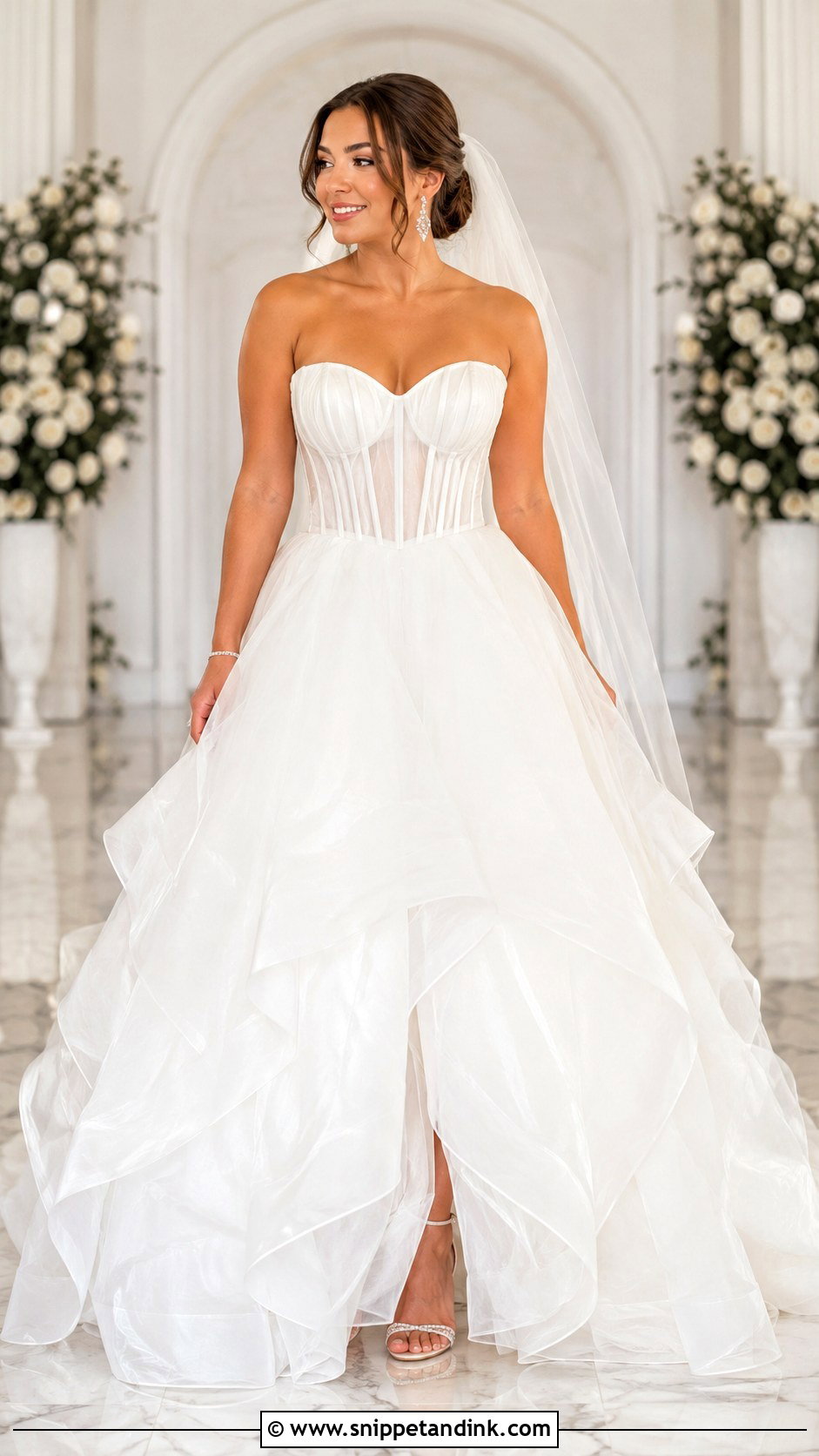
A corset should support you, not compress you. The sweetheart curve and structured bodice define the waist, with visible boning for a contemporary look or lace covering for a softer one. The skirt can be full or fitted, depending on how much drama you want. Drop earrings and a delicate bracelet are enough; skip a necklace if the bodice is beaded. In fittings, sit down and take a deep breath. If you can’t breathe into your ribs comfortably, you won’t get through the vows and a three-course dinner. Cup placement and bodice length are the two details that make a corset stay up without squeezing.
12. Halter-Neck Wedding Dress
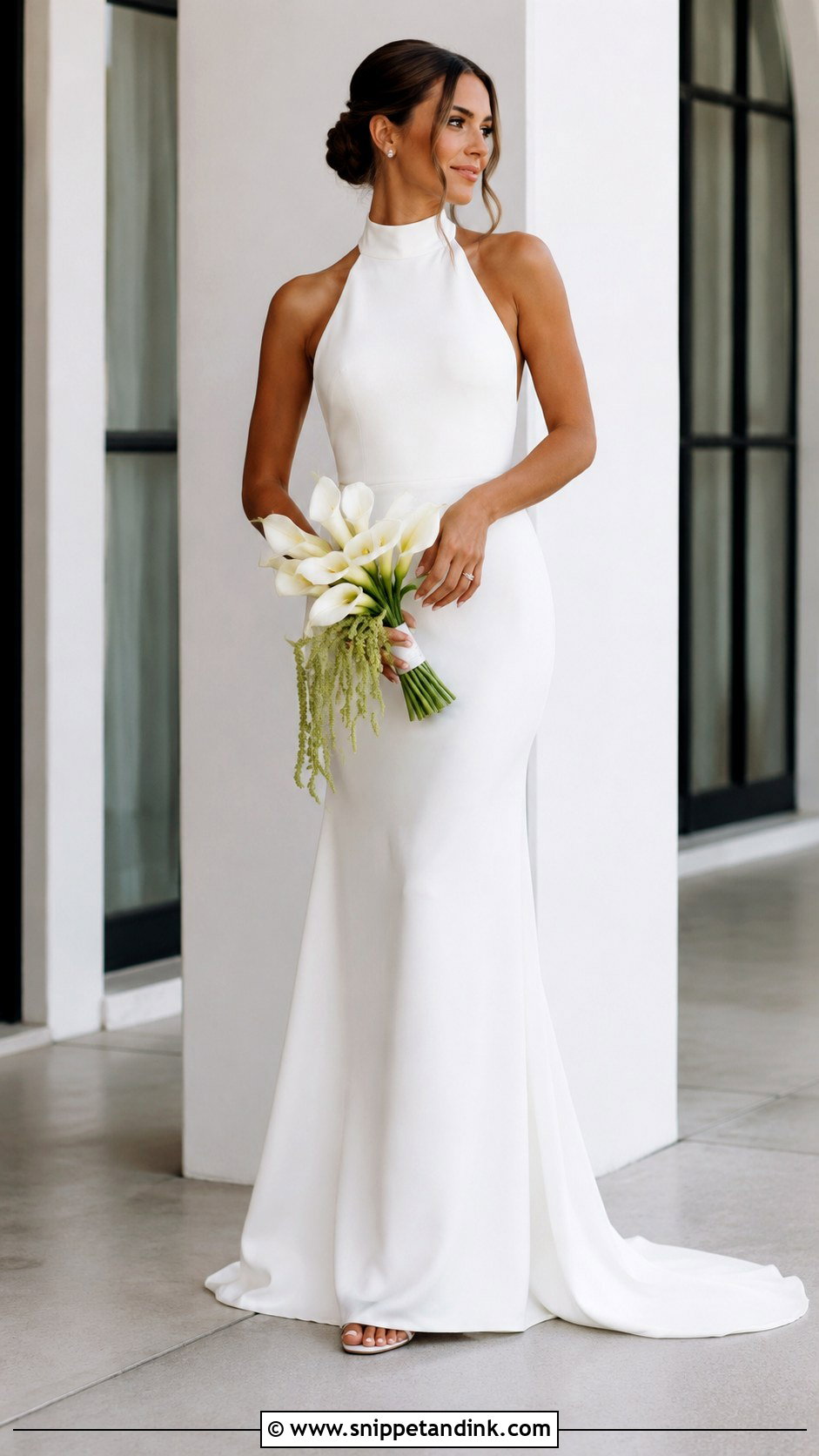
Halters frame the shoulders and lift the eye upward. A high halter reads refined, a slight plunge more dramatic. Fluid satin or crepe suits the sleek version; lace and beading add texture. The neckline is the jewellery, so I skip necklaces and add small earrings, a polished updo and clean heels. A low back contrasts nicely with the covered front, though it needs secure tailoring. The thing I always check is the back of the neck. If the halter strap carries the weight of the bodice, it will rub and leave a red mark by the evening. Ask for the bodice to be built so the strap carries less.
13. High-Neck Wedding Dress
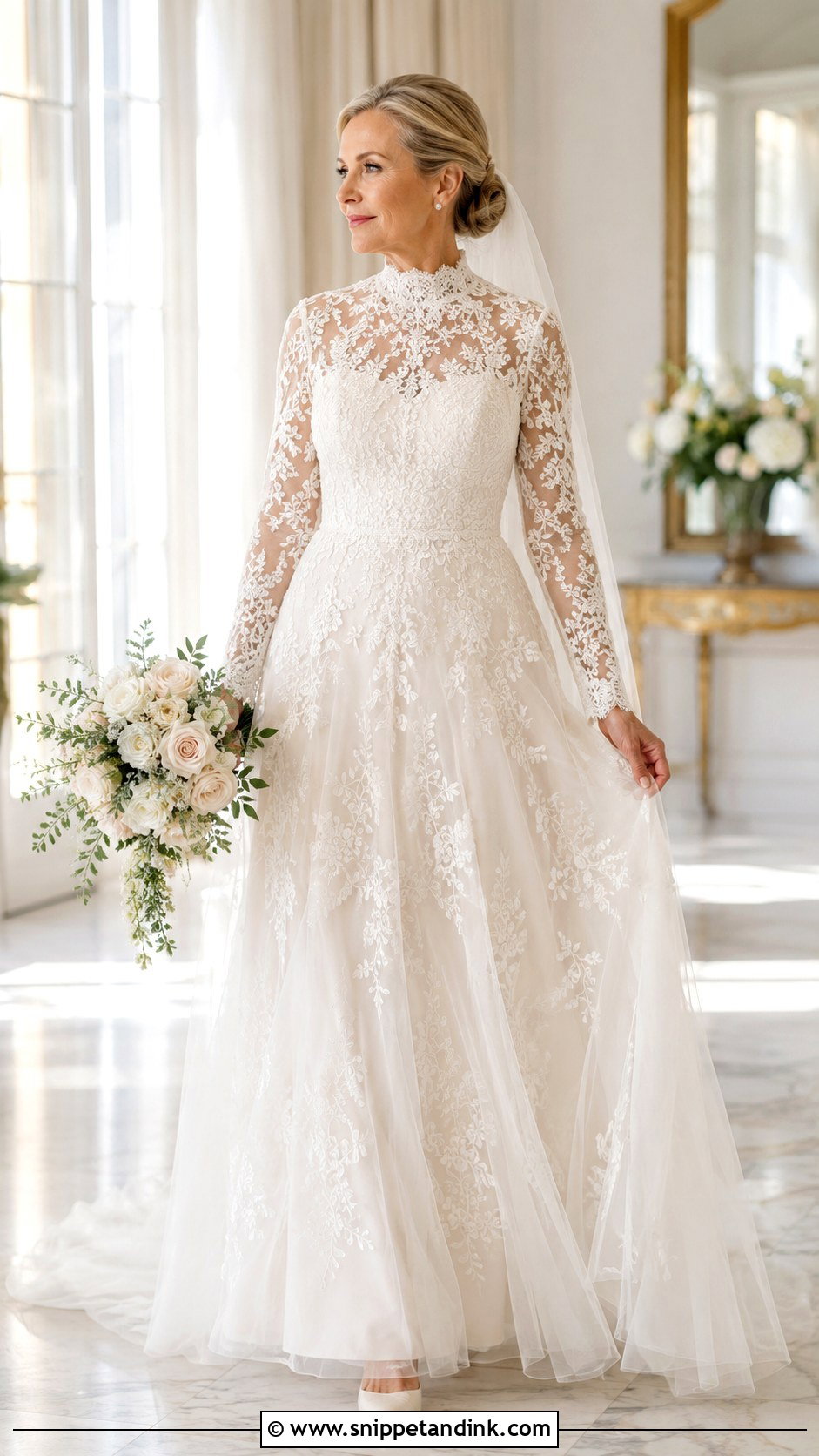
A high neck covers the chest and shoulders but still gives plenty of detail, through sheer lace, embroidered tulle or plain crepe. Sleeveless looks modern and elongates the neck; long sleeves read more traditional. Hair needs to go up, a low bun or soft updo, so the neckline shows. Stud earrings, pointed pumps and a veil attached beneath the hair suit it; necklaces crowd the bodice. Turn your head and sit in the fitting. A collar that grips when you look over your shoulder will be uncomfortable all day, and that’s an easy fix if caught early.
14. Empire-Waist Chiffon Wedding Dress
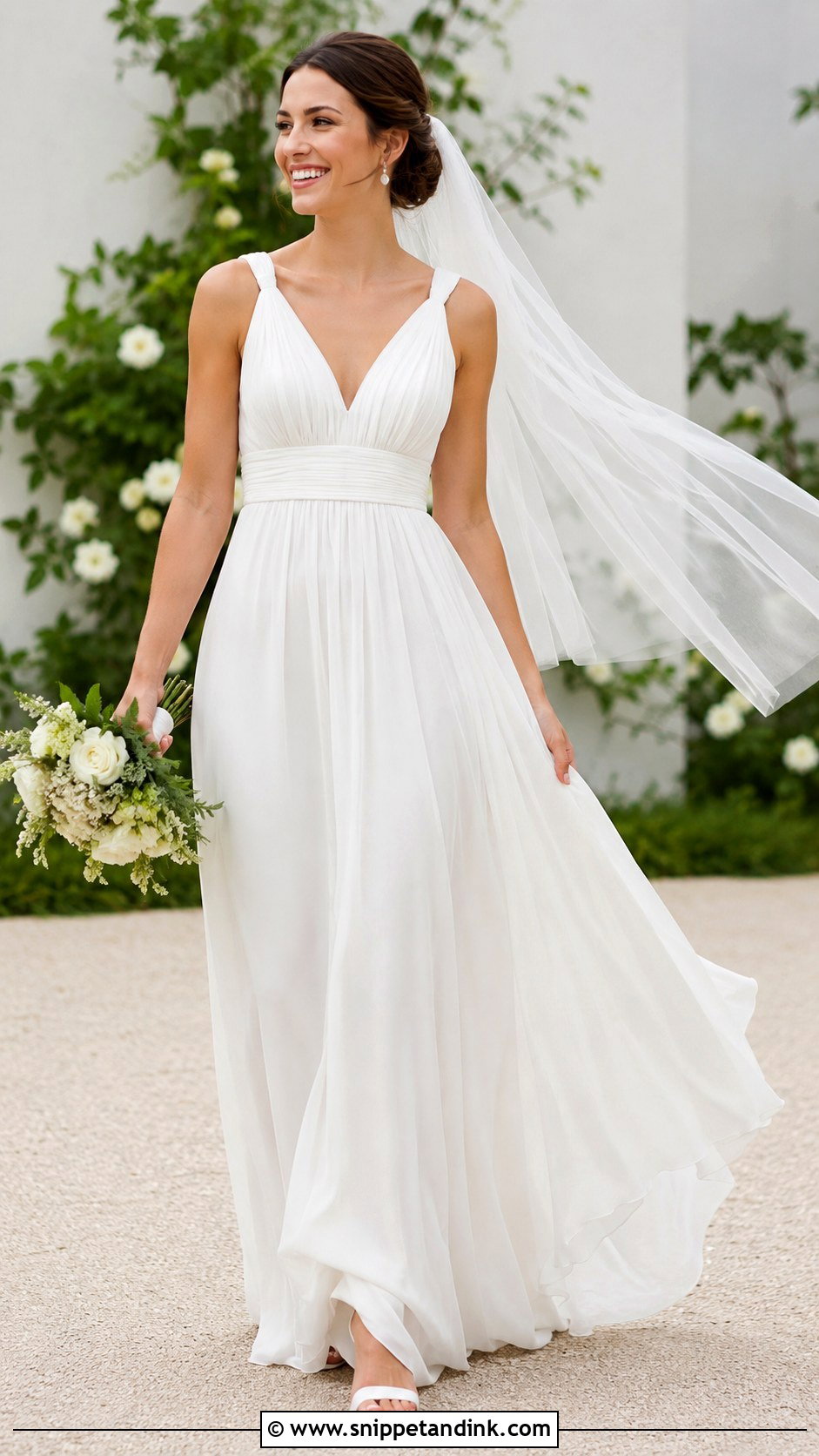
An empire waist sits just under the bust and lets chiffon fall loosely over the rest of the body. It’s comfortable in heat, at outdoor venues and for brides who don’t want a fitted natural waist. The catch is that without a supportive inner bodice it can look shapeless, so ask what’s underneath. A V-neck, flutter sleeve or gathered strap suits the airy fabric. Low block heels, delicate earrings and a lightweight veil finish it. Chiffon catches on bark, stone walls and rough paving; a manageable train and reinforced hem save it from snags.
15. Floral Appliqué Wedding Dress
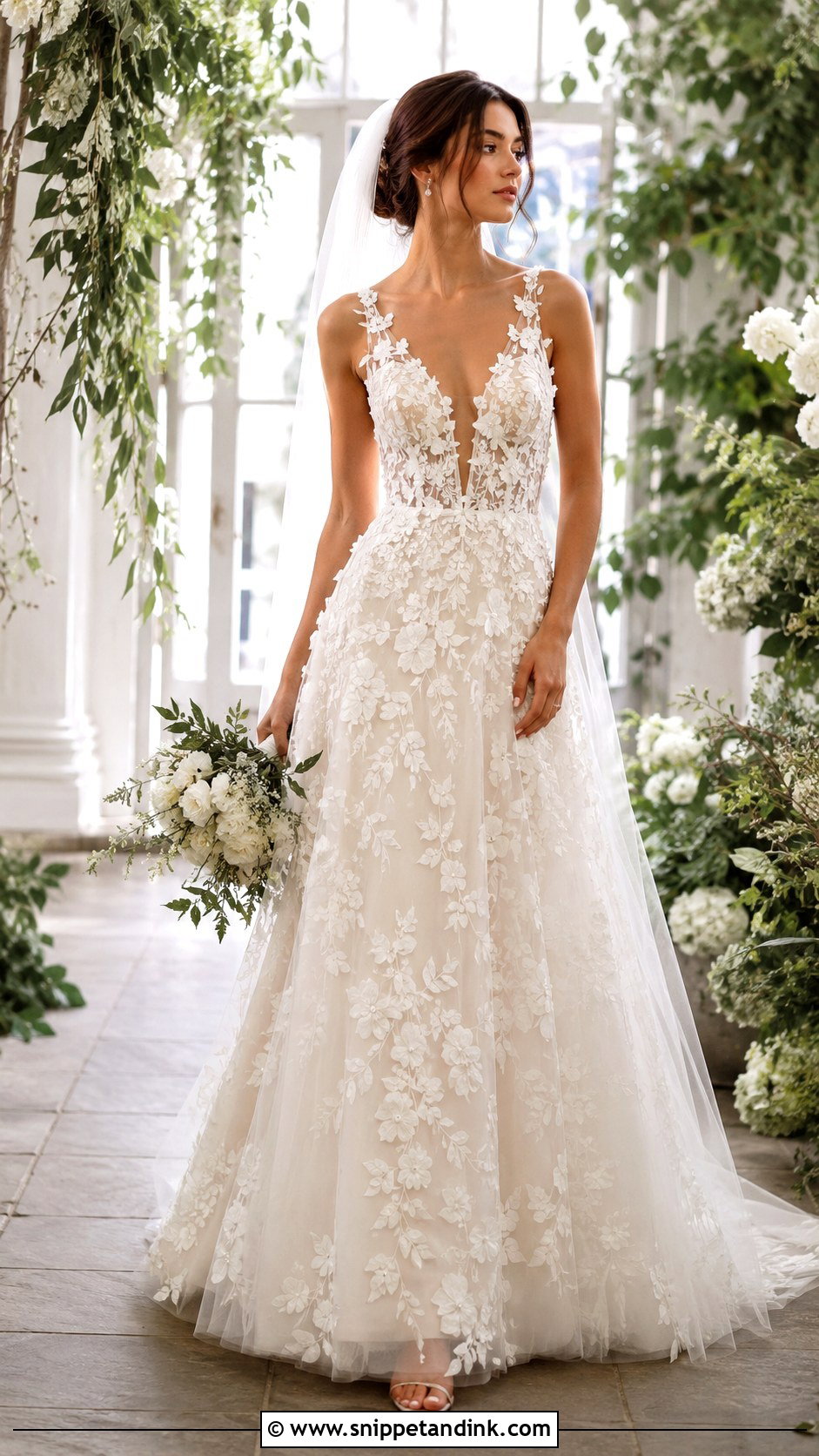
Floral appliqué rewards a close look: the flowers seem to rise off tulle, organza or lace as people come nearer. They can be clustered on the bodice, scattered down an A-line or massed along the train. Because the dress carries so much texture, keep the rest simple: plain heels, small earrings, a sheer veil with minimal edging and a streamlined bouquet. At fittings I study the appliqués where seams are taken in. A seamstress may need to lift and reposition flowers so they stay continuous across the altered seam, and that work is worth budgeting for.
16. Beaded Column Wedding Dress
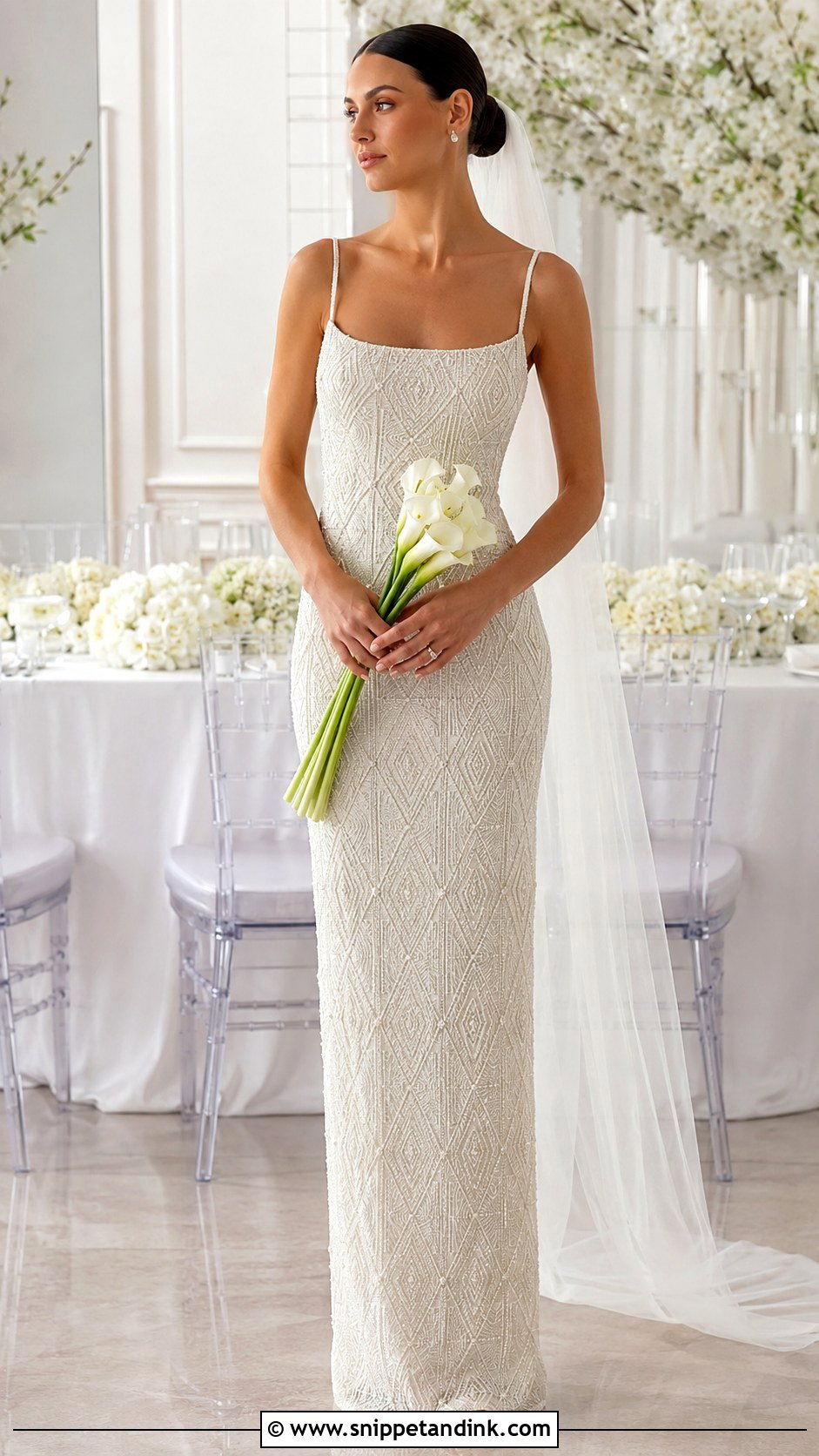
A beaded column falls straight and narrow, with no mermaid flare. Art Deco-inspired patterns feel geometric and glamorous; scattered crystals give a softer shimmer. Beading is heavy, so wear the dress for a full half hour at a fitting and notice where the weight pulls, usually the shoulders and waist. A narrow column also restricts your stride, and a back slit is the usual fix. Pair it with streamlined heels, studs and a simple veil or hair accessory; avoid extra sparkle. A smooth lining under the beads stops them scratching your skin.
17. Tea-Length Wedding Dress
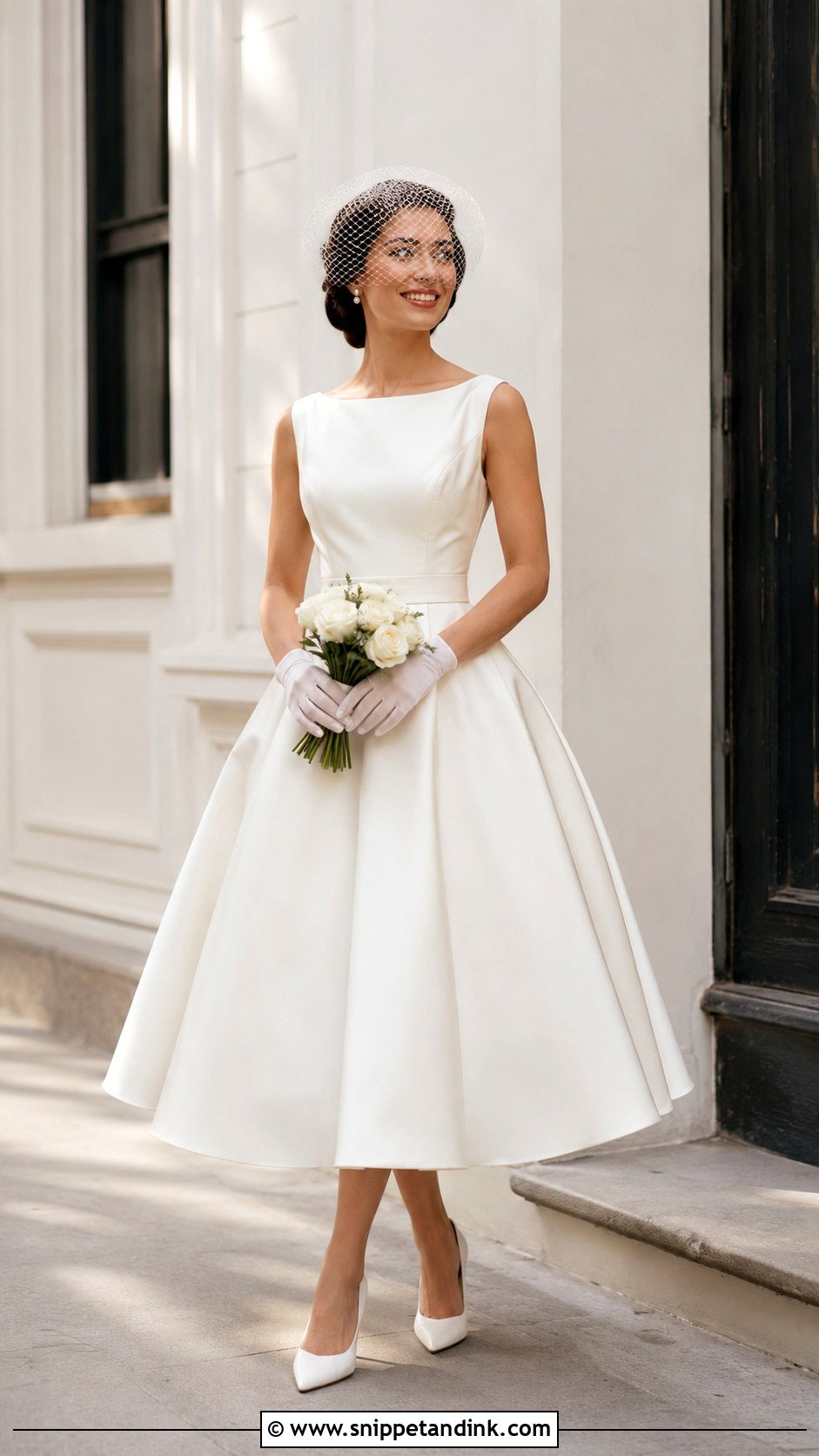
Tea length falls between knee and ankle, which puts your shoes on show, so choose them before the hem is set. A structured A-line gives the classic retro shape; tulle or chiffon feels lighter. Pointed pumps, embellished flats and ankle-strap heels all work if you can stand in them for hours. Pearl earrings, short gloves or a birdcage veil lean vintage; pick one of them, not all three. The right length depends on your height and the skirt volume, so stand in front of a full mirror while your seamstress pins it. It’s a natural choice for courthouse ceremonies and daytime parties.
18. Short Mini Wedding Dress
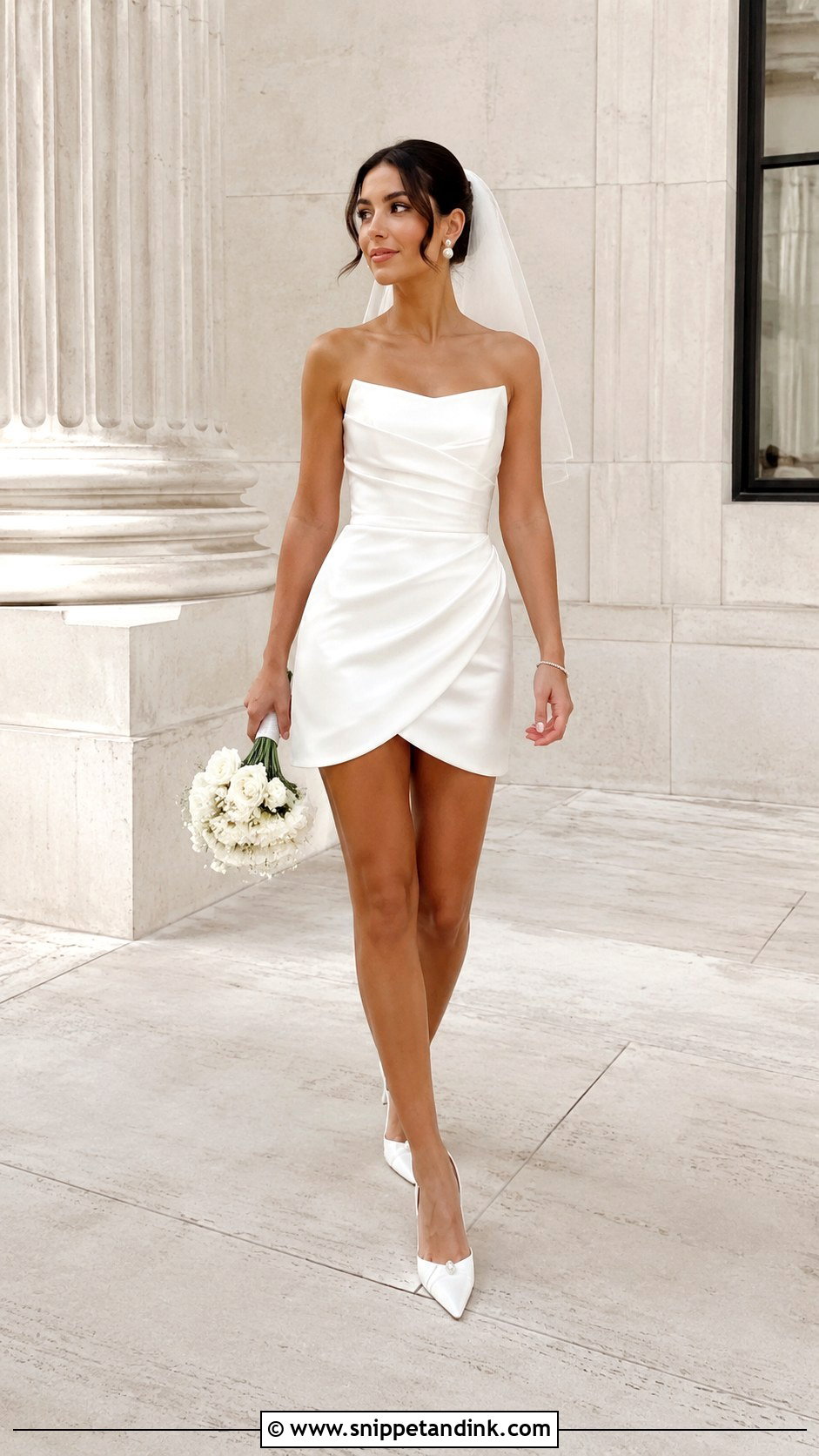
A mini is all about freedom to move. Crepe looks sleek, structured satin polished, and featherweight organza adds volume without length. Balance the short hem with a refined neckline and a tailored bodice. Pointed pumps or slingbacks, pearl earrings and a short veil keep it recognisably bridal. Many brides wear it as a second look after the ceremony gown, which also saves the long dress from the dance floor. Sit, walk and lift your arms in it in front of a mirror; a mini rides up faster than you think, so a full lining helps it stay put.
19. Draped One-Shoulder Wedding Dress
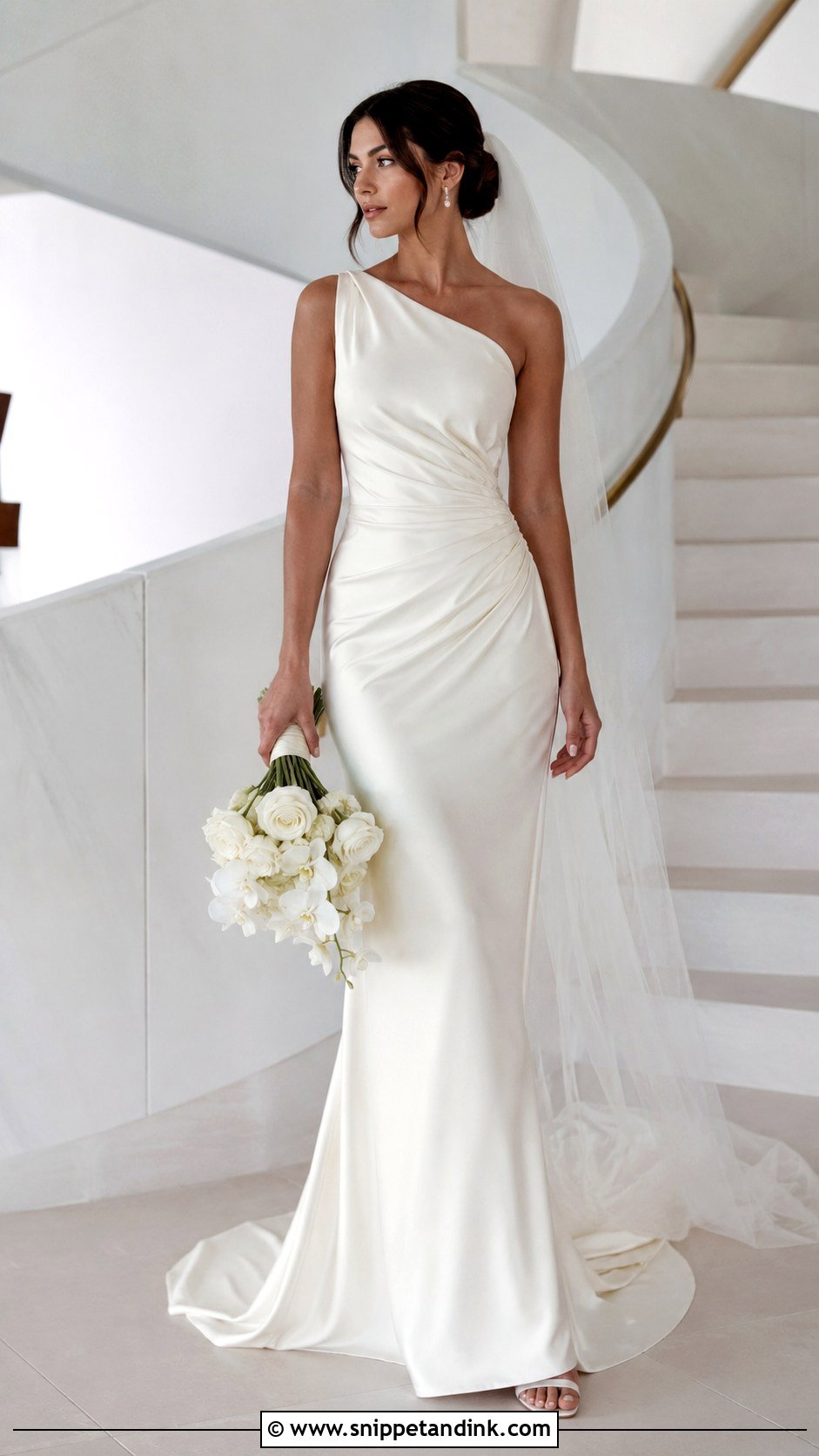
Asymmetry gives a one-shoulder dress interest without any decoration. Satin, crepe or chiffon sweeps across the bodice and gathers at the waist; a column skirt looks modern, an A-line more traditional. Skip the necklace and wear one pair of understated earrings, with sleek heels and a veil attached behind the shoulder line. The construction matters: the bodice should be built so the single strap isn’t carrying the dress. If it is, it digs into the shoulder and pulls the drape out of line. Lift your arms at every fitting and watch the drape; it should stay smooth.
20. Two-Piece Wedding Dress
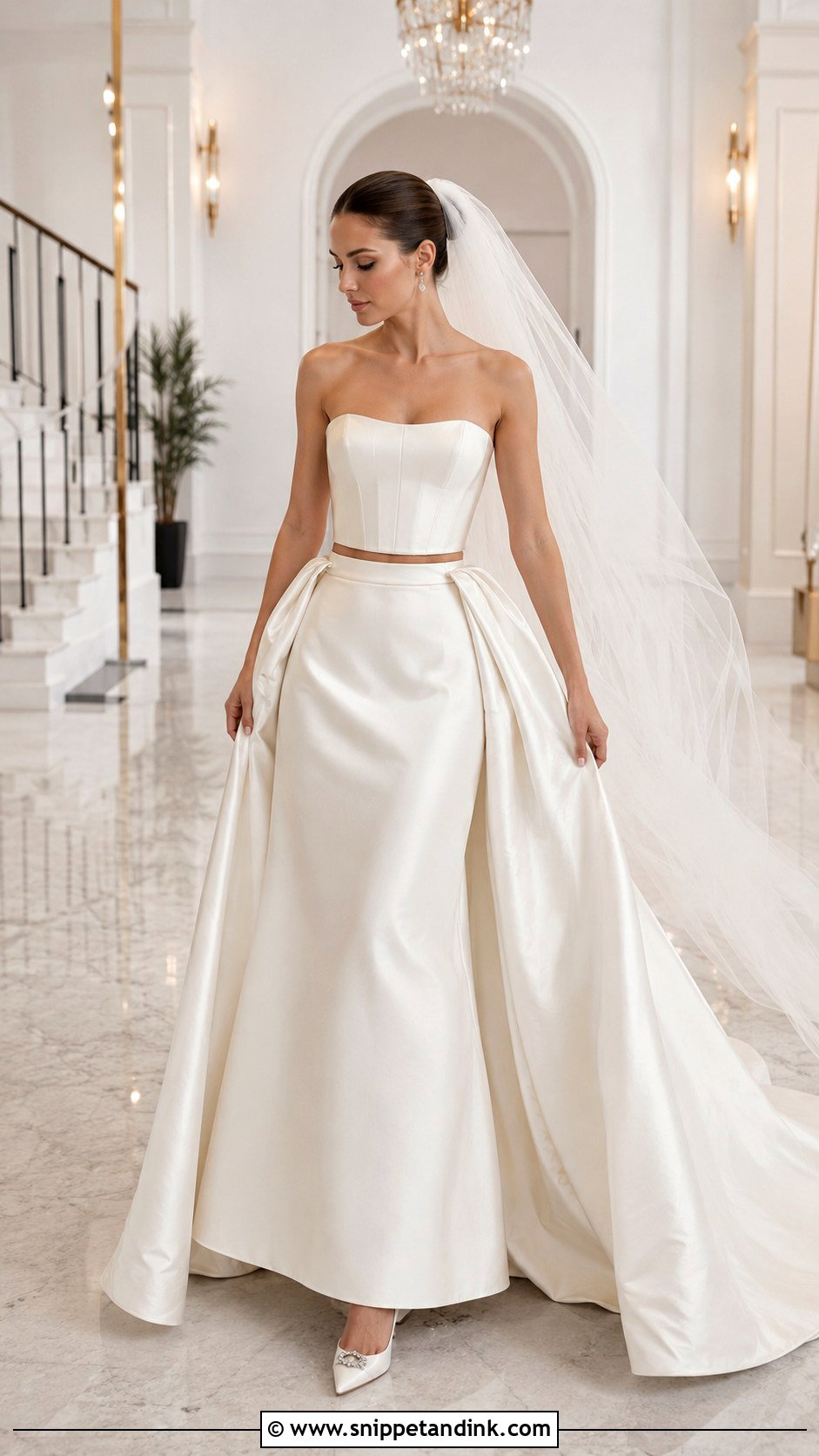
Two pieces give you options: a corset top over a full satin skirt, a lace blouse with a crepe column skirt, or a crop top with a flowing A-line. Matching fabric and detailing make it read as one outfit. Decide how much midriff you’re comfortable showing, and check it standing, sitting and dancing, since the gap changes with every move. Elegant heels, simple earrings and a veil in proportion to the skirt complete it. A detachable overskirt adds ceremony drama and comes off for the party. The waistband needs careful fitting so the top doesn’t ride up and the closures stay hidden.
Bustling the Train So You Can Dance
Any train longer than a sweep needs a bustle for the reception, and it’s added during alterations, not by the manufacturer. An over bustle lifts the train up and hooks it at the back waist, which suits lace and lighter fabrics. An under bustle, sometimes called a French bustle, tucks the train underneath with ties and gives a layered look that works on satin and full skirts. A ballroom bustle uses several points so the skirt hangs almost floor length all round, which looks neat but takes longer to do.
Choose your bustler in advance, often a bridesmaid or your mother, and bring her to the final fitting. Colour-coded ribbons inside the skirt help. Doing it for the first time in a dim corridor during cocktail hour is how hooks get torn.
What Happens to the Dress the Morning After
Get the gown cleaned within a few weeks, even if it looks clean. Spills of champagne, sugar or sweat are often invisible at first and then oxidise into yellow-brown marks over months. Choose a cleaner who specialises in bridal wear and point out any spots you know about. For storage, an acid-free box or a breathable cotton garment bag is safest. Plastic traps moisture, and long-term hanging stretches heavy skirts and beaded bodices, so fold the gown with acid-free tissue and keep it somewhere cool, dark and dry.
Try On the Shape You Expect to Dislike
A gown that looks impressive on the hanger isn’t always the one you’ll enjoy wearing for twelve hours. Across these twenty dresses, structured and fluid, long and short, the ones that work are those that support you, suit your venue and let you sit, hug and dance. Try at least one silhouette you think won’t suit you; brides are surprised more often than not. Bring your shoes and underwear to every appointment, test each dress sitting and walking, and trust good alterations to turn a well-chosen gown into yours. Go with the one that feels like you on your best day.
You'll Like These Ideas:






Leave a Reply