
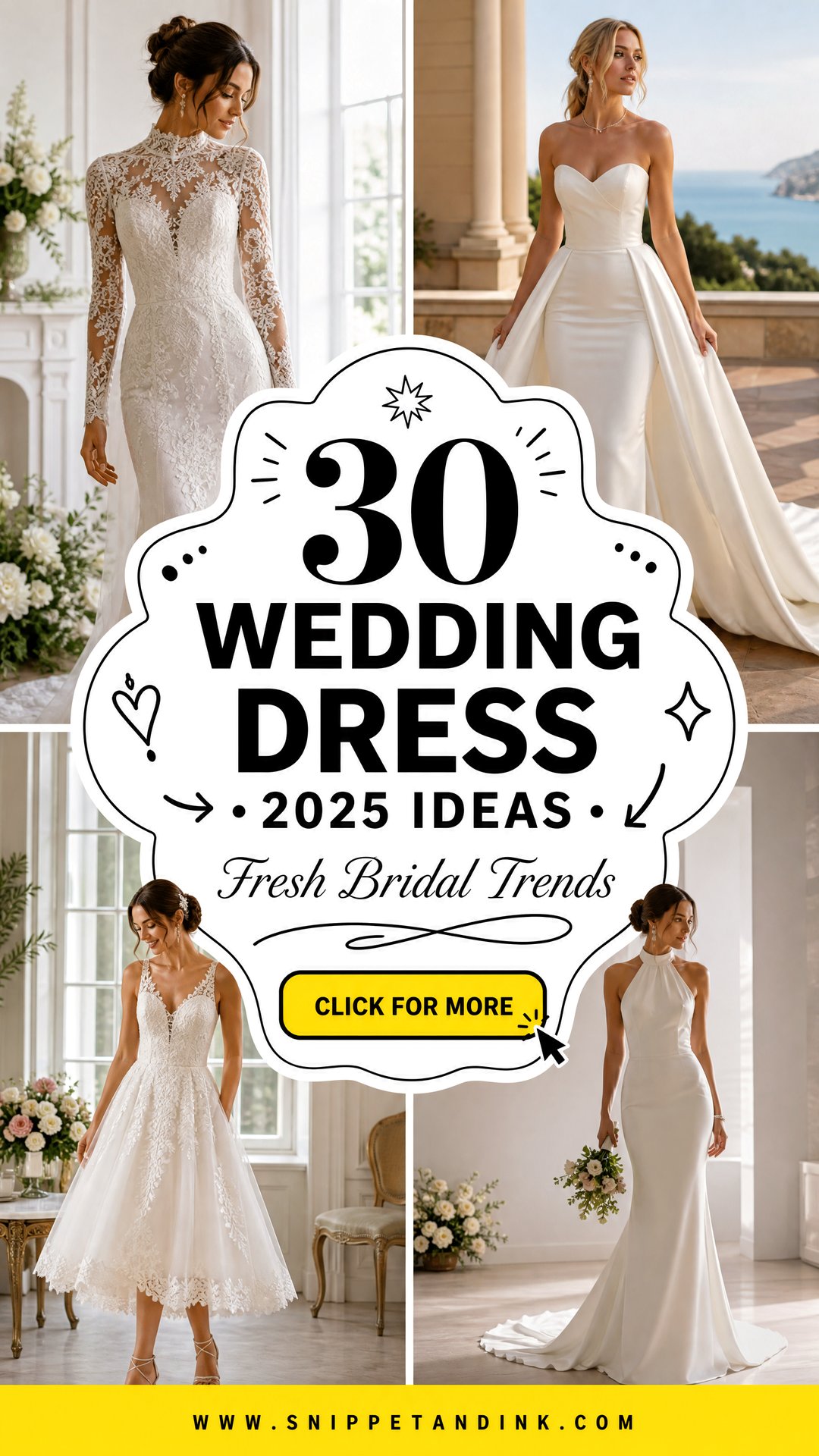
The brides I dress this year come in knowing what they want to feel, not just what they want to look like. That’s a healthy shift. Current bridal trends lean on visible corsetry, basque waists, sculpted ball gowns, clean satin, convertible pieces, bows, minis, sleeves, capes and soft color, so there’s room for a city bride in a sleek column and a garden bride in embroidered tulle in the same season. I’ve gone through thirty of them below with what I’d actually tell you in the fitting room: where each one pinches, what it needs underneath and when I’d talk you out of it.
Three Photos and a Budget Number for Your Salon Appointment
Bridal appointments usually last sixty to ninety minutes, and the brides who get the most out of them come prepared. I’d bring three photos of gowns you love and one you dislike. The dislike photo is often more useful to a consultant, because it shows what to rule out.
- A firm budget, including alterations. Alterations can add a meaningful amount on top of the gown price, and it varies by salon and fabric.
- Your venue, season and ceremony type. A religious service may need coverage; a beach needs light fabric.
- Nude, smooth underwear and a strapless bra. Sample gowns look different over patterned pieces.
- Shoes with a heel close to what you’ll wear. It changes how a hem falls.
- One or two people you trust. A big group makes decisions harder.
Samples are usually one size and get clipped to fit, so focus on shape and fabric rather than exact fit. If a gown feels right but the sample is too small to zip, ask the consultant to hold it open and show you the line in the mirror.
1. Corset Wedding Dress
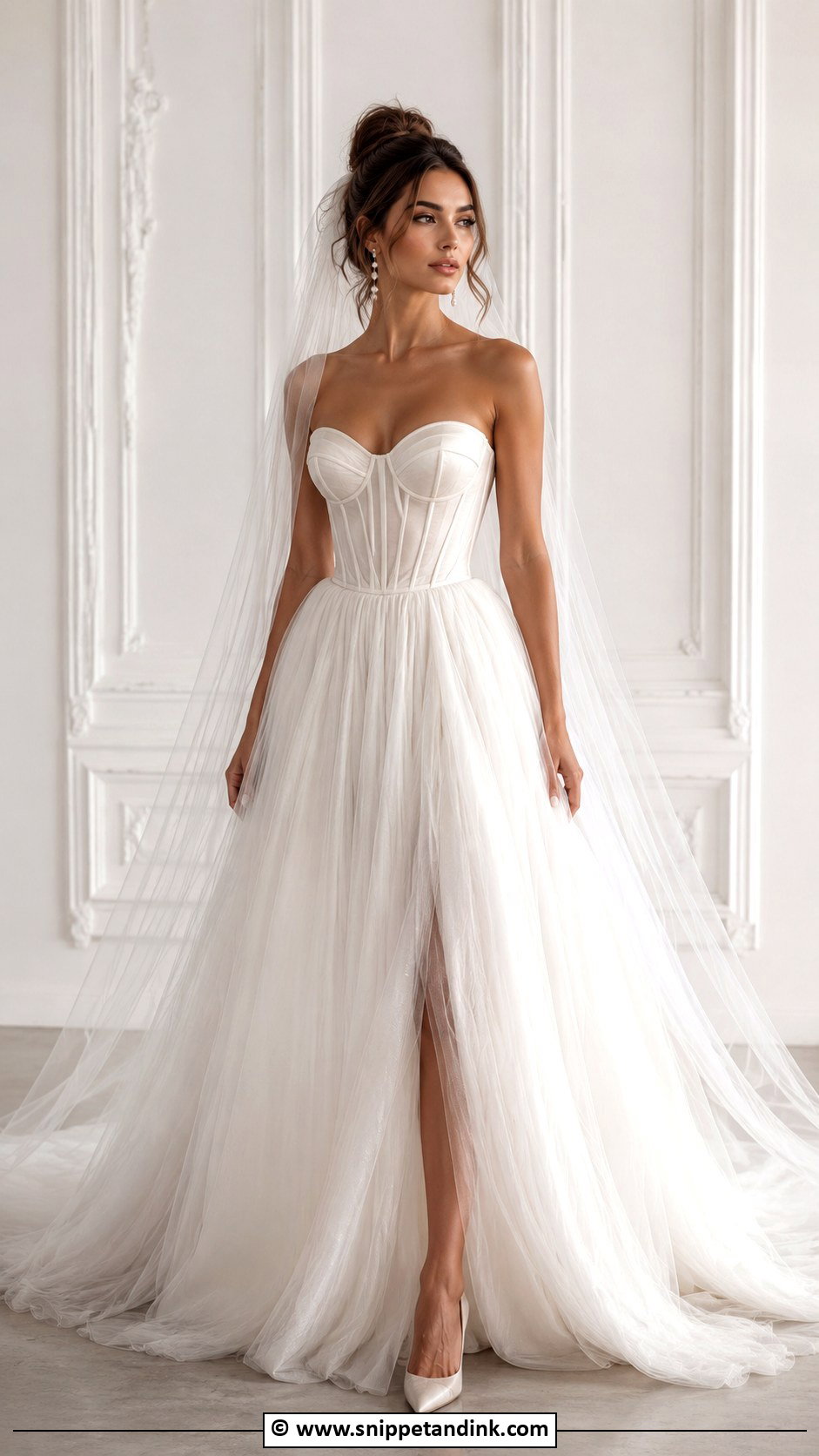
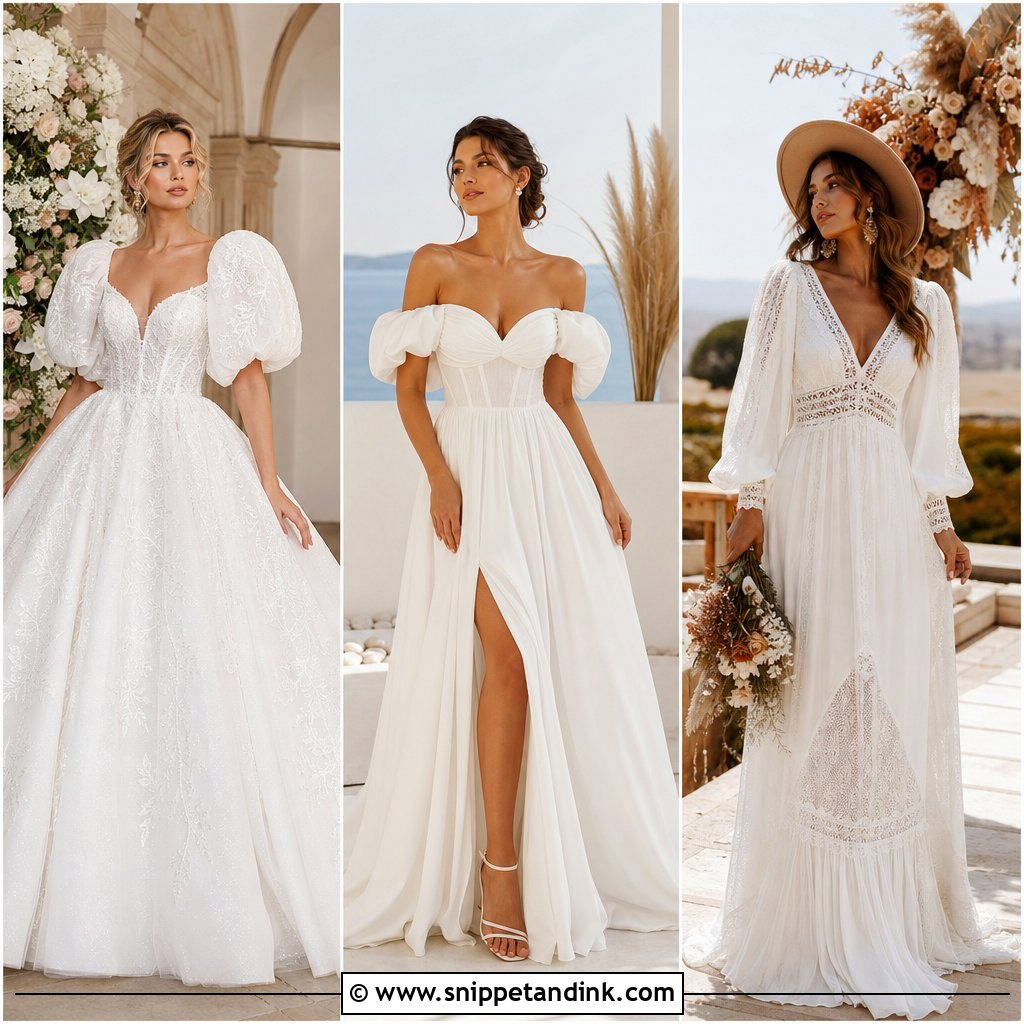
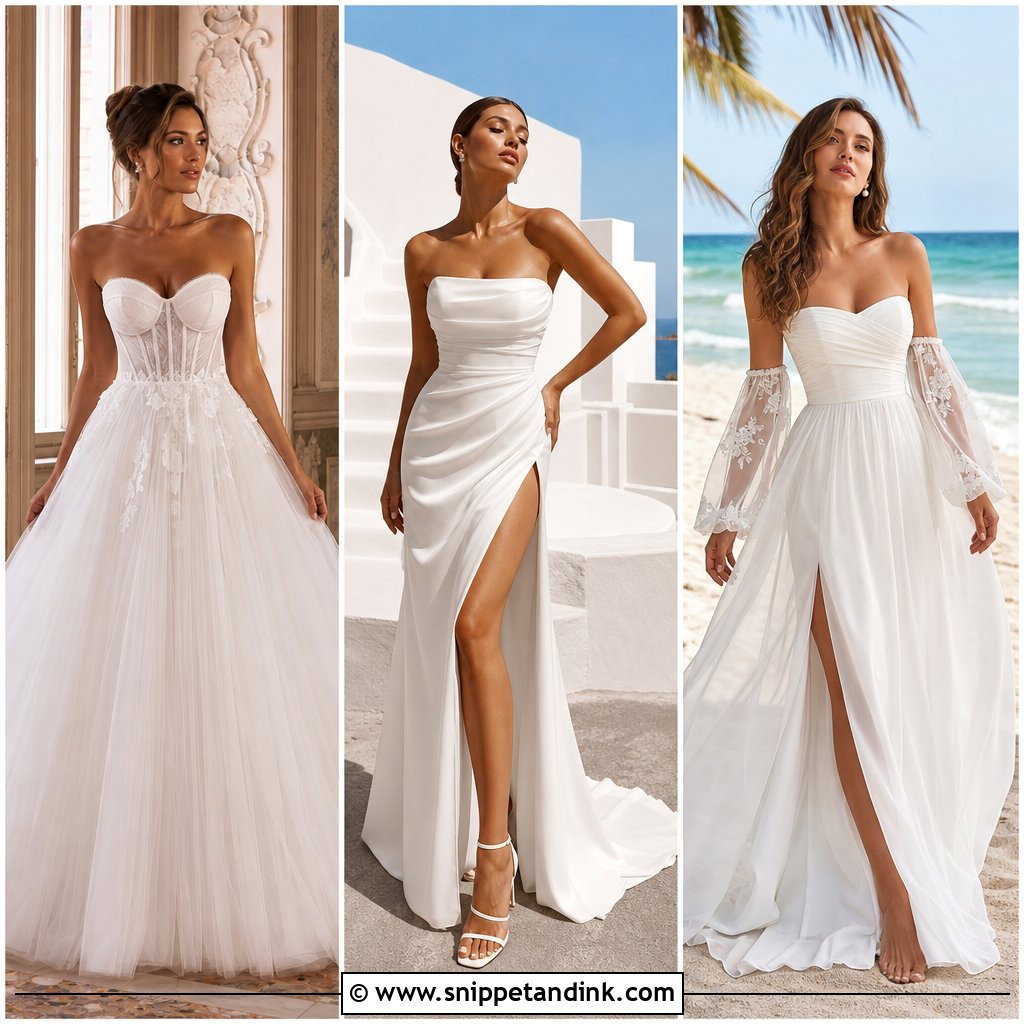
Corsets are everywhere, and the good ones feel surprisingly comfortable. The difference is the boning and the waist stay inside. I press along the bodice seams at a fitting; if the bones bow out when the bride sits, the bodice is too long for her torso and needs shortening. Visible seams or lace panels look current. Pair a full tulle skirt for romance or a satin A-line for a cleaner line, and keep the veil sheer so it doesn’t hide the structure.
2. Basque Waist Wedding Dress
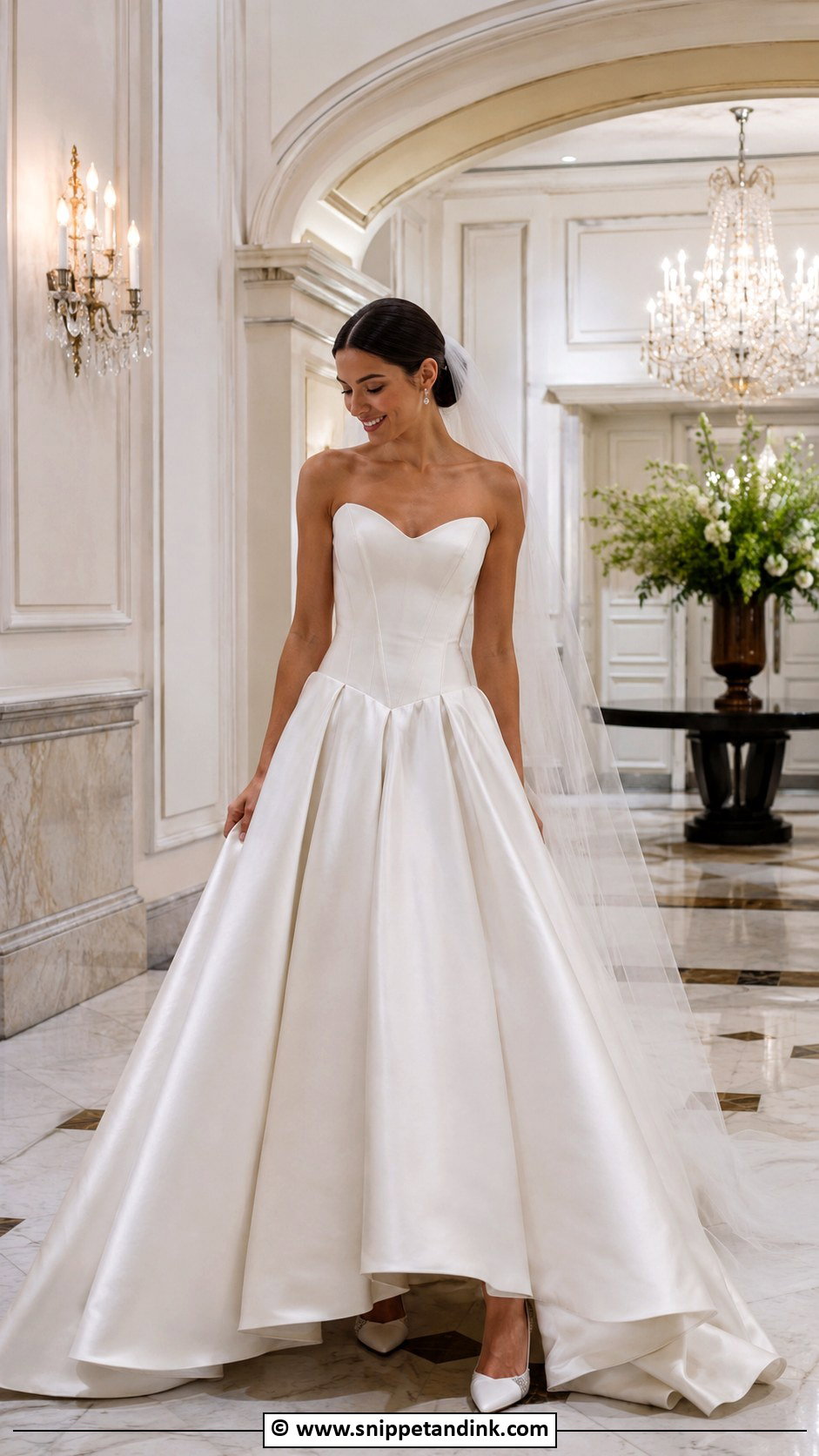
I love a basque waist wedding dress on brides with a short torso, because the V dips below the natural waist and buys length. Matte satin, mikado and light taffeta hold the point crisply; soft chiffon loses it. Set the veil comb low at the crown so its line continues the V downward. Slingbacks and a smooth bun suit estate, museum and grand hotel weddings.
3. Satin Ball Gown Wedding Dress
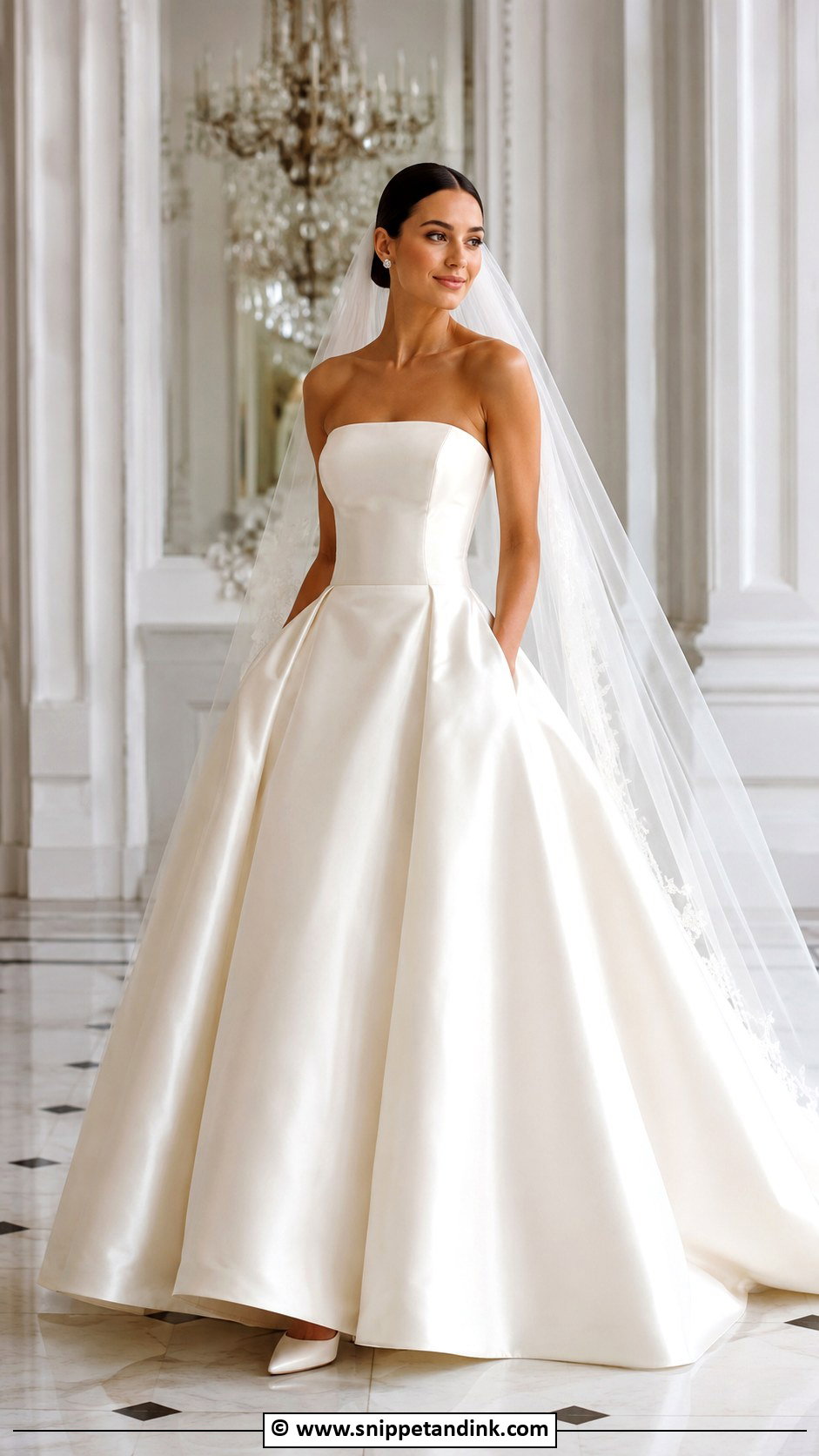
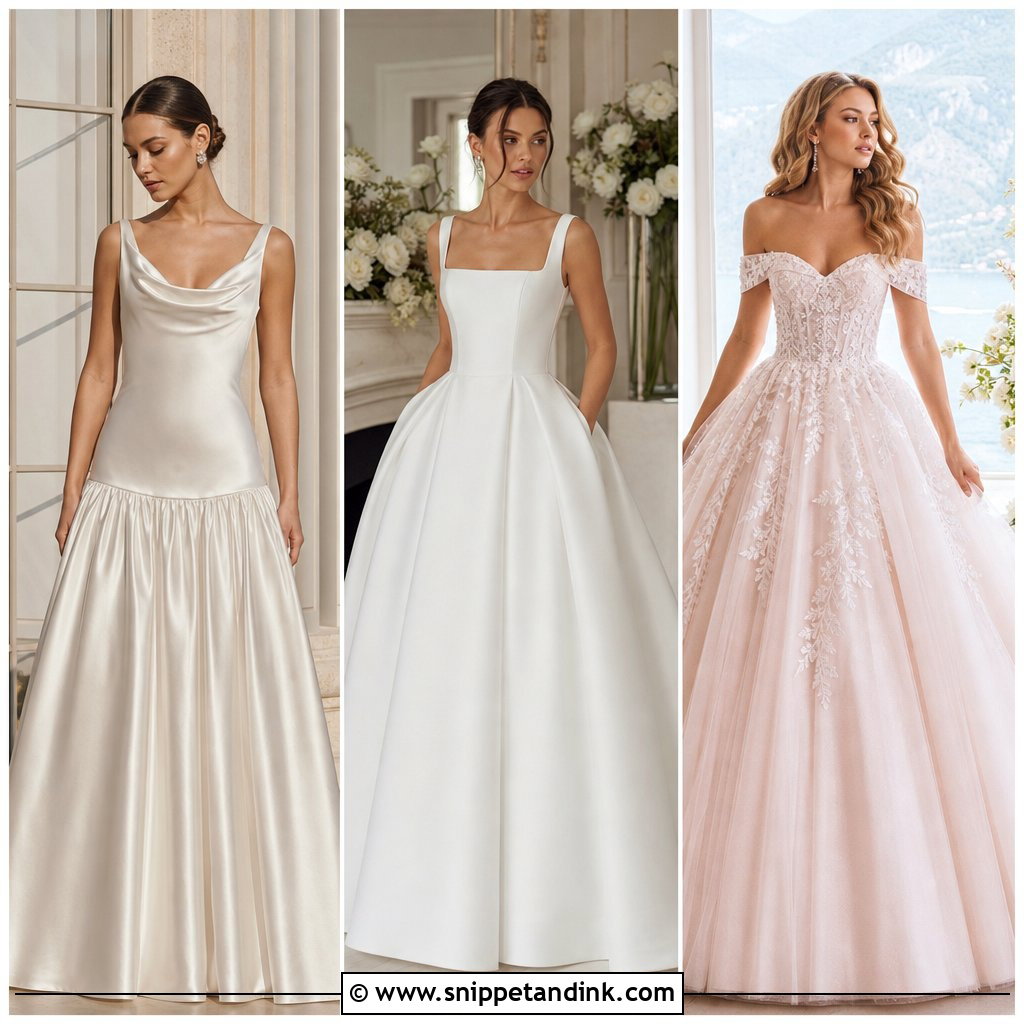
Satin ball gowns are about the skirt’s movement, so I always have brides walk the length of the salon before deciding. A good one swings cleanly; a stiff one bounces. The bodice can be strapless, scoop or off the shoulder. Diamond studs, satin pumps and a cathedral veil give the classic finish, and hidden pockets are worth asking for, because you’ll want somewhere for lip balm. Ballrooms and historic hotels give the skirt the room it needs.
4. Floral Applique Wedding Dress
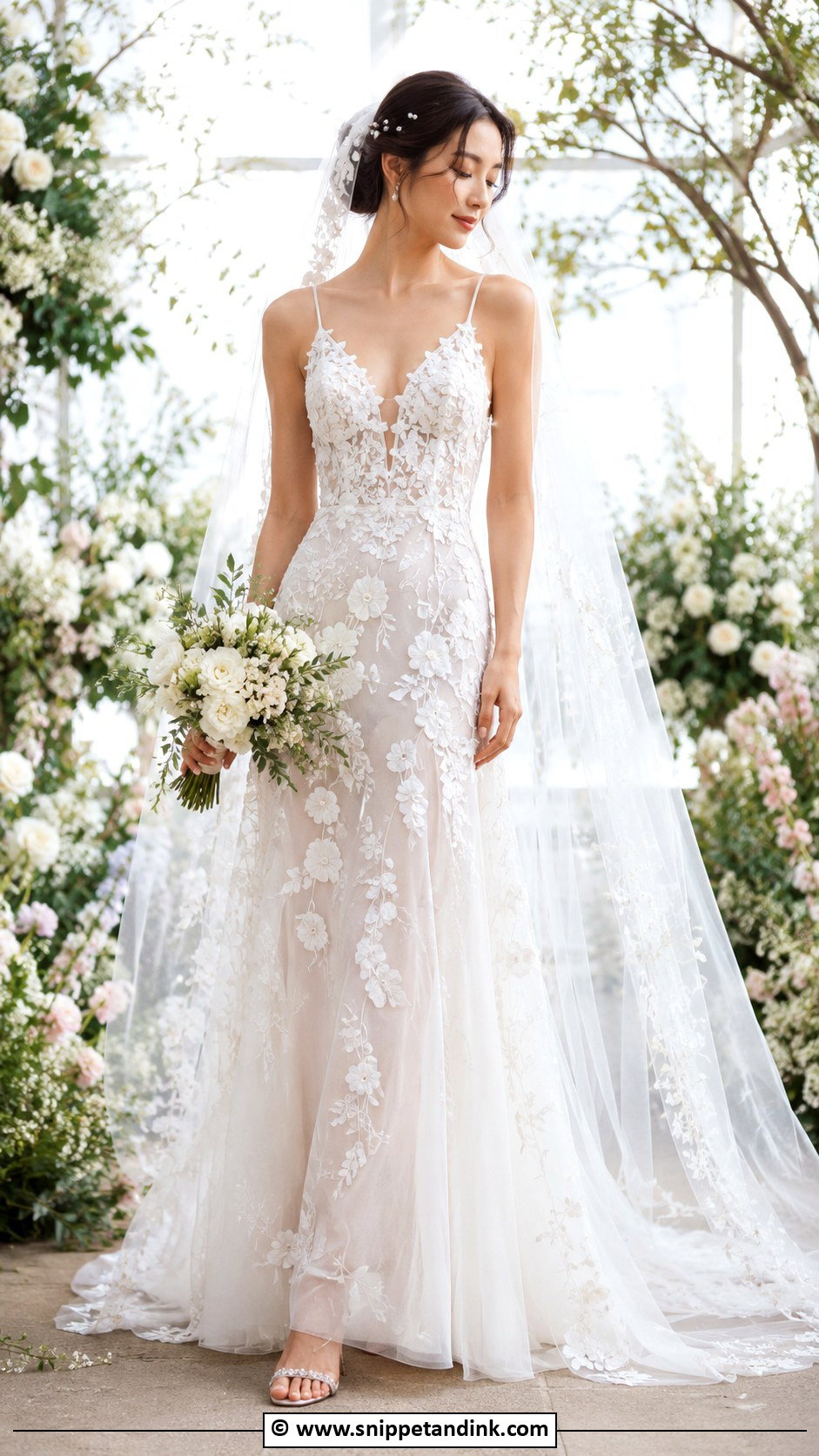
Floral appliqué looks best when it’s placed rather than scattered at random, trailing down from one shoulder or framing a sheer sleeve. Up close, you’ll see whether the flowers are hand-sewn or glued; glued pieces can lift after cleaning. Spring weddings and garden ceremonies in natural light show the texture well. I keep makeup fresh and the veil plain or lightly embroidered so the flowers carry the dress, and I pair it with barely-there sandals.
5. Minimalist Wedding Dress
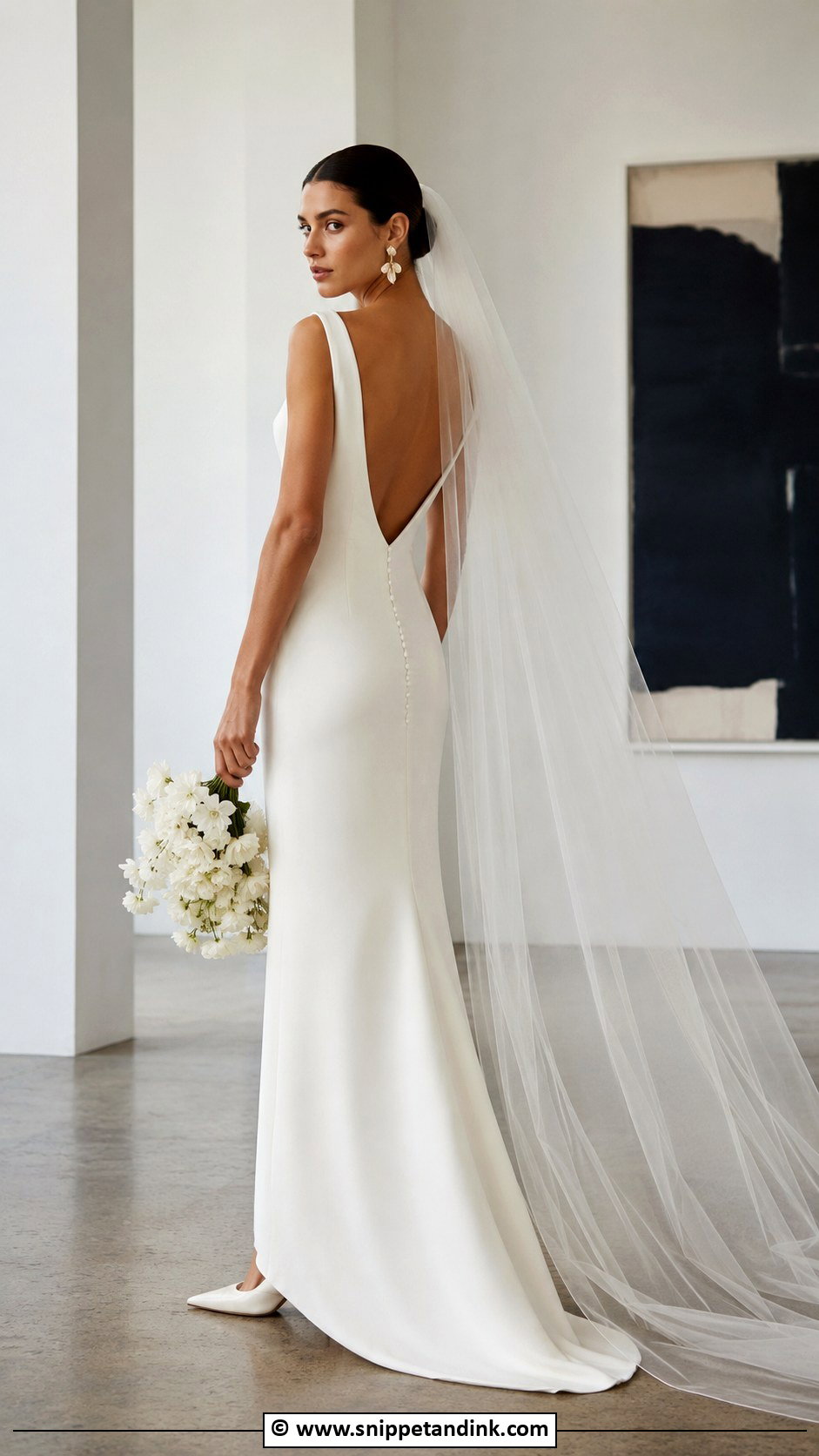
Minimalism is harder to wear than it looks. With no lace or beading to distract, the fit, neckline and fabric carry everything, so I’d budget more for tailoring. Crepe, silk satin and mikado are the usual fabrics. A column feels modern; an A-line is kinder for a long ceremony and dancing. Pick one standout detail, such as a low back, a cowl or a dramatic train. Pointed pumps and sculptural earrings finish it for city and gallery weddings.
6. Lace Long Sleeve Wedding Dress
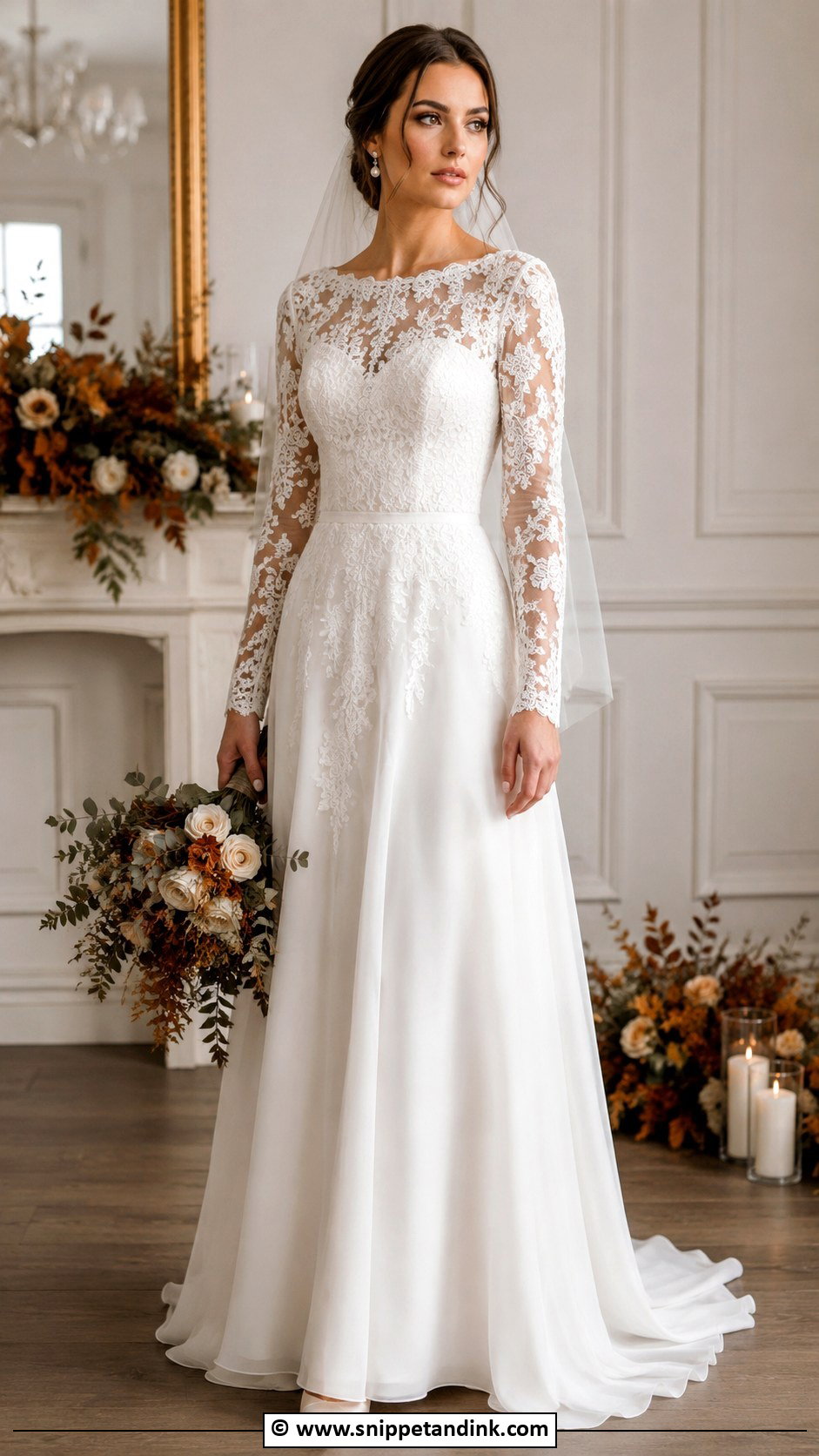
Lace sleeves give coverage, but heavy lace in winter can feel stiff and look dated. I steer brides toward light, sheer lace with clean lines this year. A fitted bodice and A-line skirt is the safe choice; a sheath reads more modern. Botanical lace and illusion cuffs feel fresh. Closed-toe heels and pearl earrings keep it soft for fall weddings and indoor winter ceremonies.
7. Off Shoulder Wedding Dress
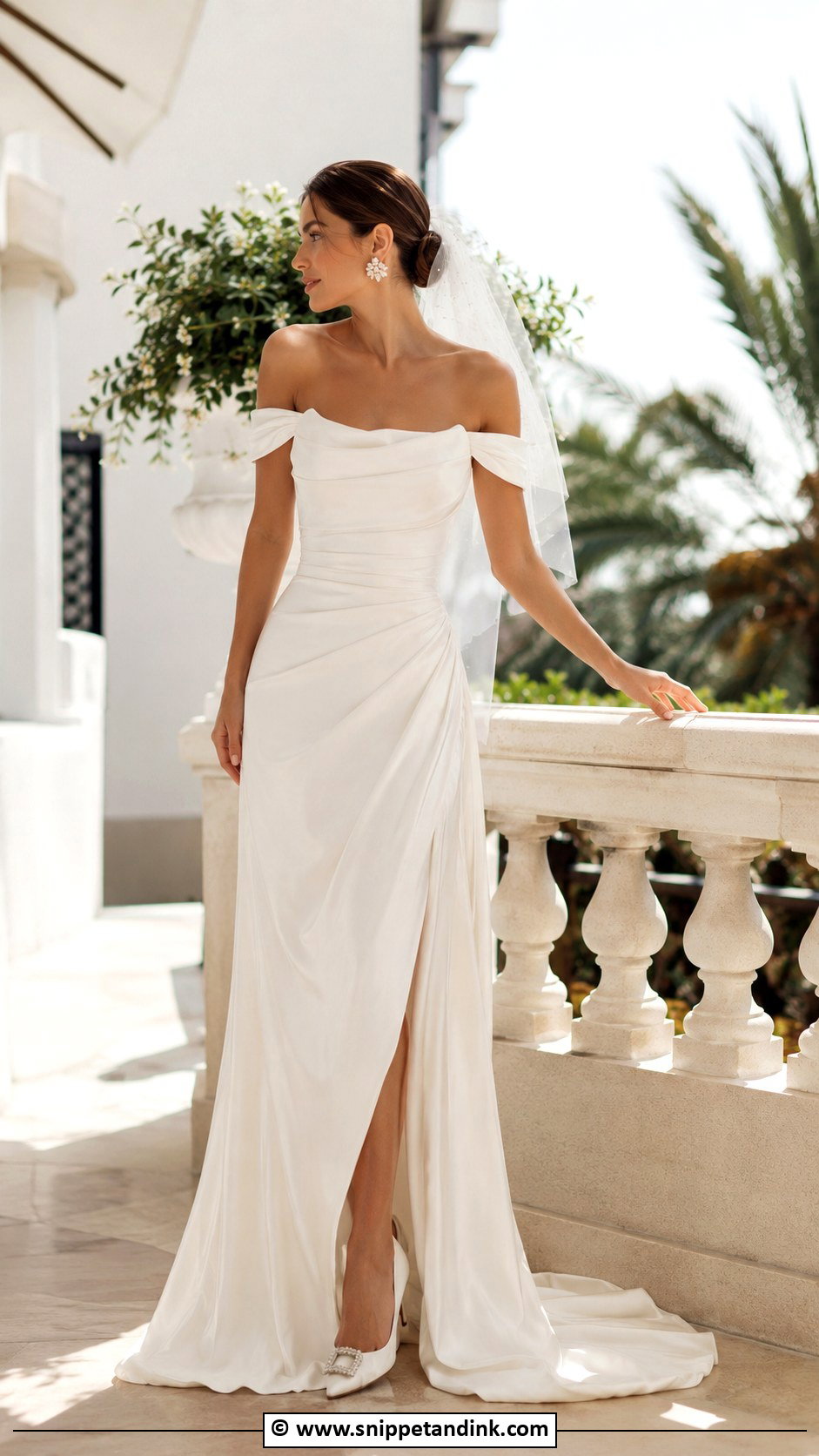
Off the shoulder is classic, yet the sleeves decide everything. If they’re tight across the upper arm, you won’t be able to hug or raise a glass, so I look for hidden straps and sleeves with a little give. Clean satin and gathered tulle both look current. I’d usually skip a necklace for statement earrings, a low bun and a fingertip veil. It suits ballrooms and coastal resorts alike.
8. Square Neck Wedding Dress
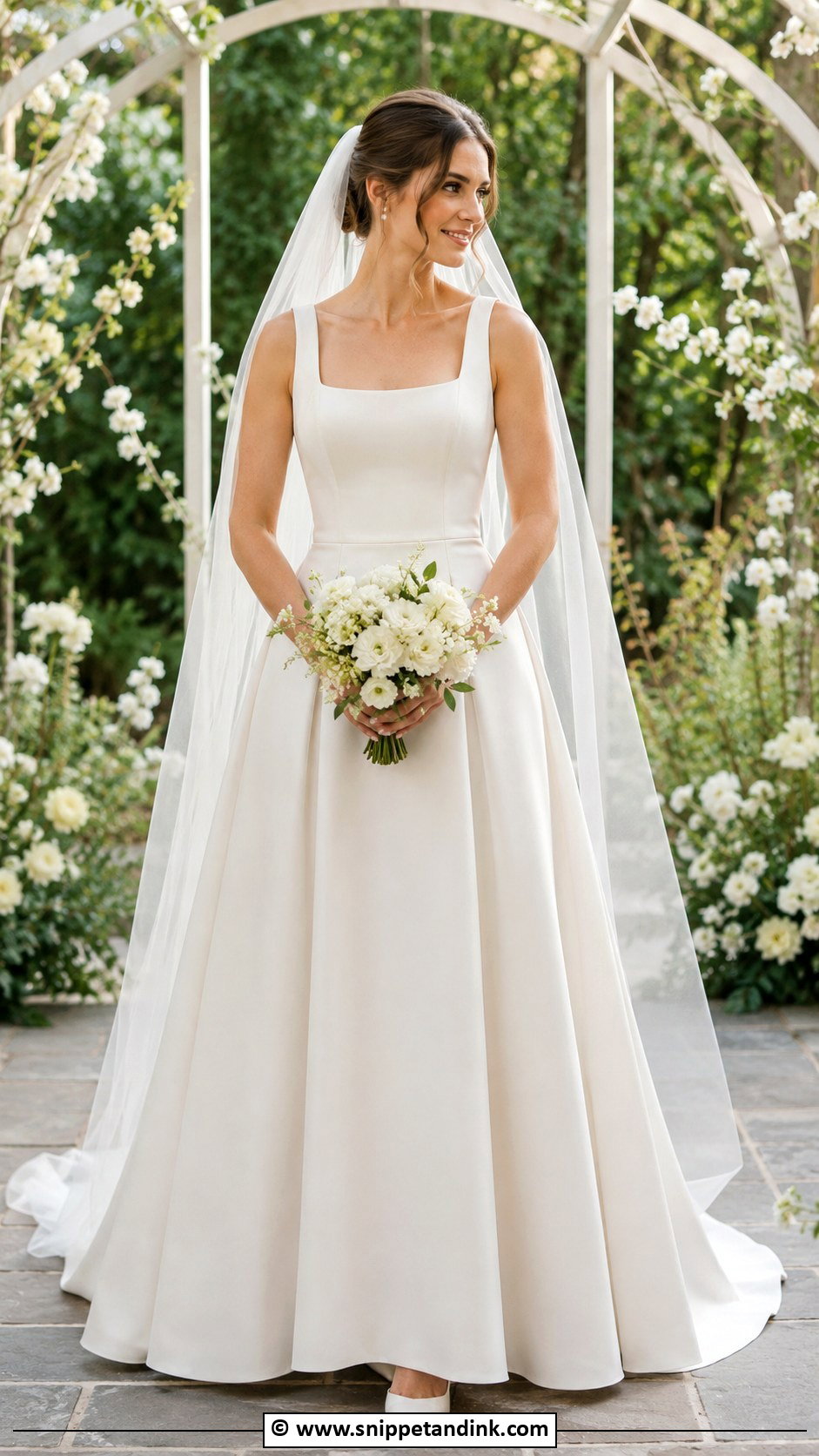
Square necks give a crisp frame and support without a high neckline. In 2025, I saw them with corset seaming, wide straps and low square backs. The strap width matters for the bra question: wider straps can hide a supportive bra, while thin ones usually need cups sewn in. A smooth chignon, pearl studs and a long veil placed behind the shoulders keep the line sharp at garden and city venues.
9. Drop Waist Wedding Dress
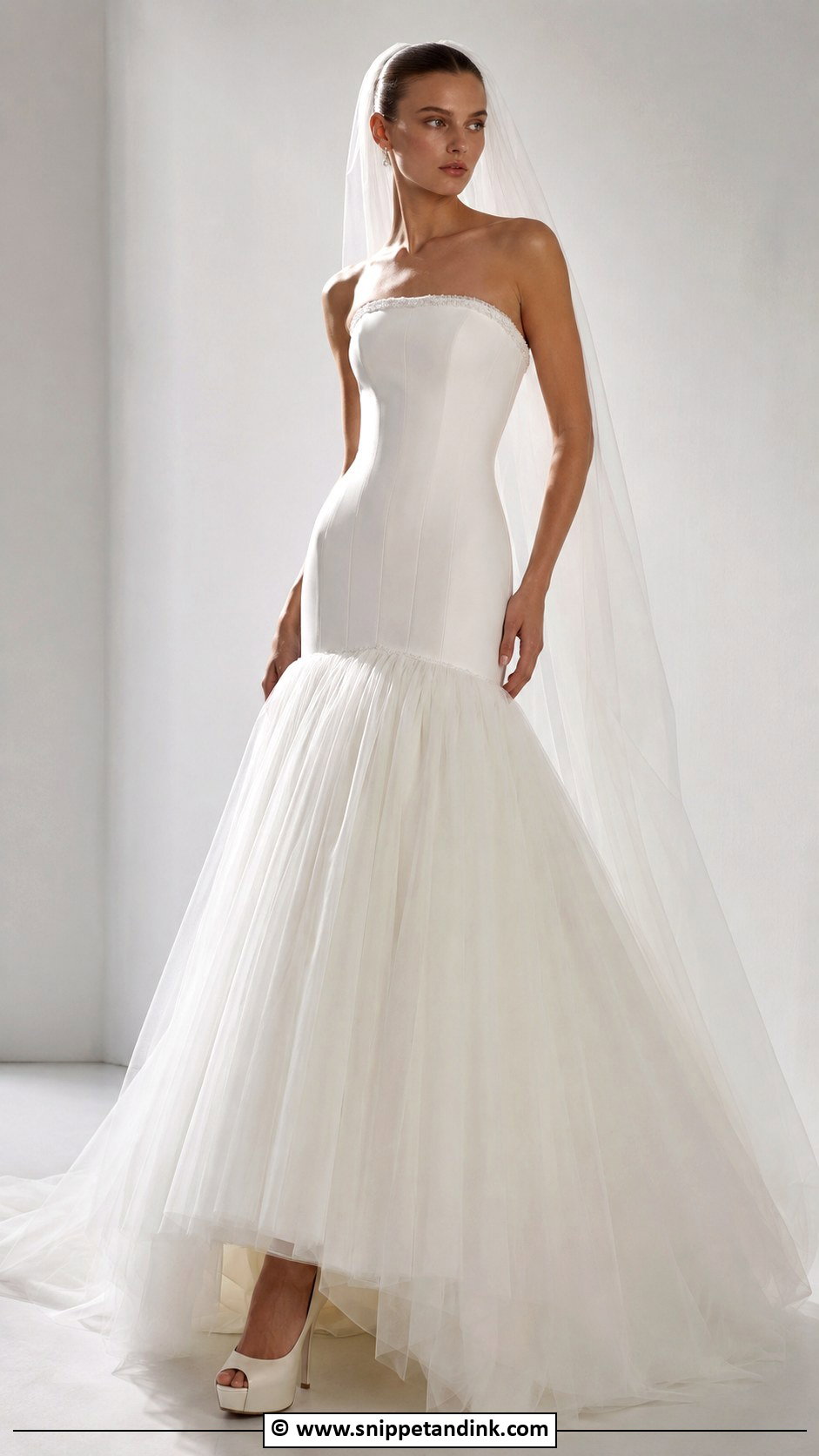
Here’s my honest take: a drop waist is the most divisive gown of the year. The low seam creates a long bodice and a dramatic skirt release, and on a tall bride it’s striking. On a petite one, it can cut the legs off, so a softer drop is usually better. Tulle, satin, lace and organza all work. Platform heels help with the proportion, and a sleek veil and small earrings keep it balanced.
10. Bow Back Wedding Dress
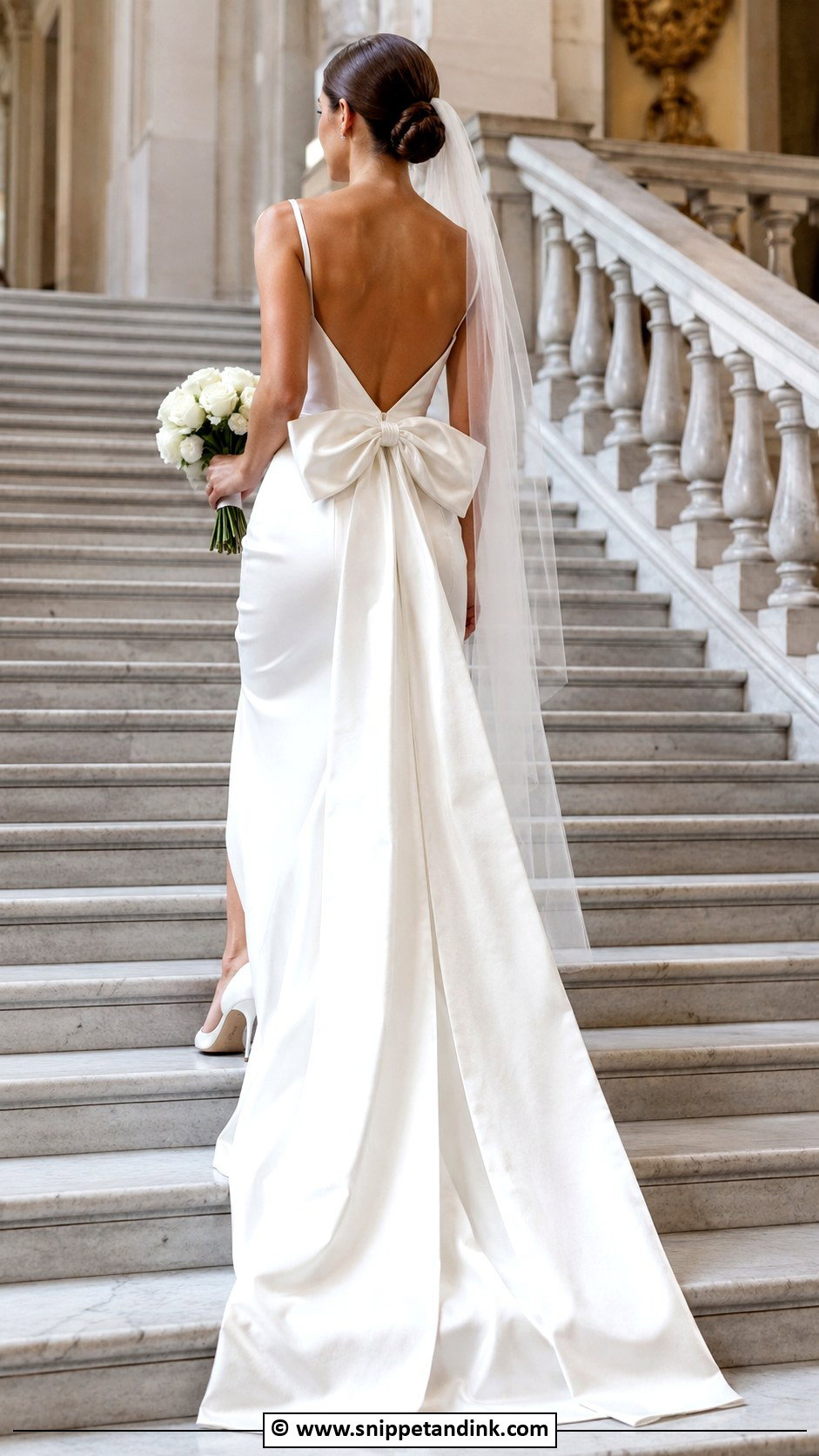
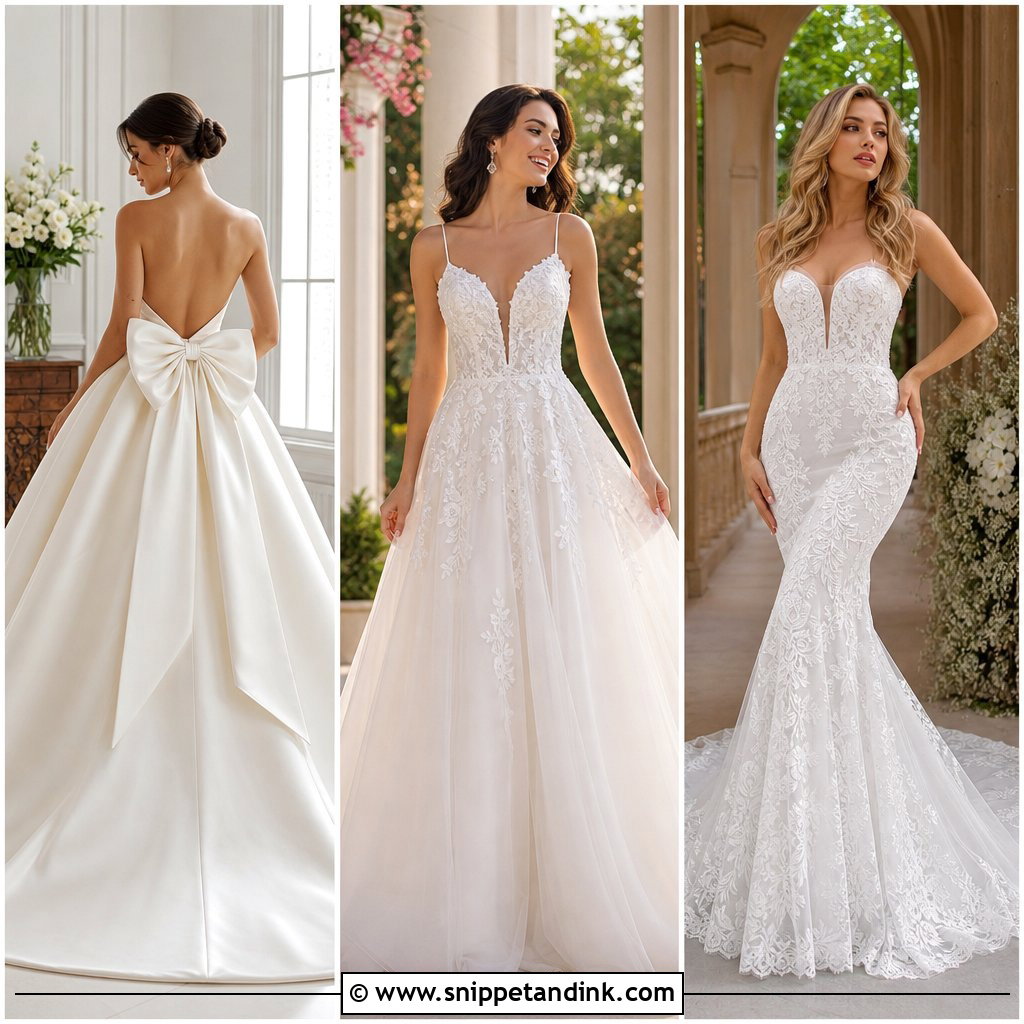
A bow back gives your exit and staircase photos their detail. Bows can be oversized, soft, structured, detachable or tied as a sash. Structured bows need interlining to hold shape through a long day, so I ask the seamstress what’s inside before ordering. A plain front keeps it intentional. Classic pumps, a low veil and polished hair let the back stand out in chapel exits and reception entrances.
11. Convertible Wedding Dress
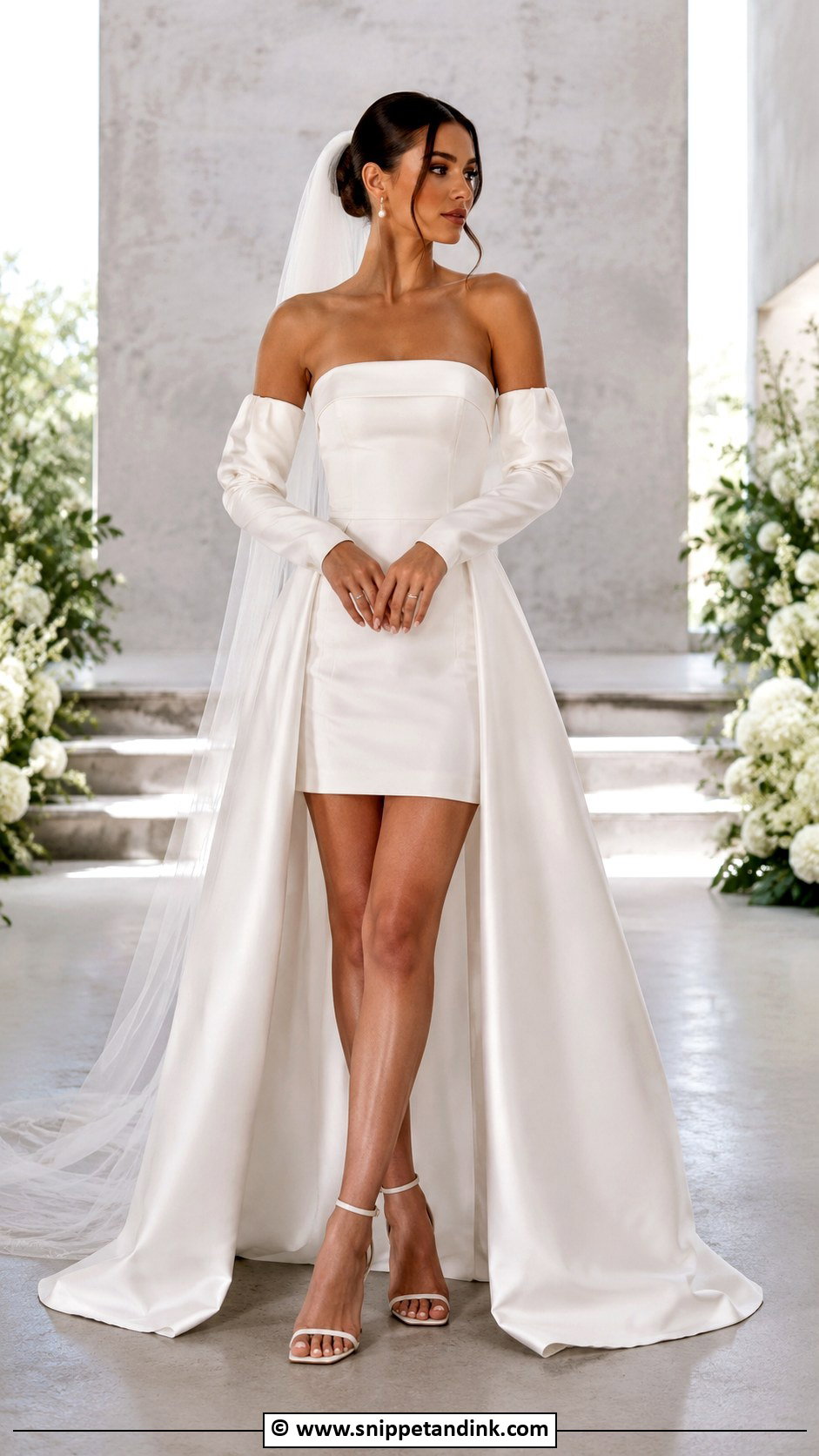
A convertible wedding dress lets you wear a full ceremony gown, then strip a layer for the party. Detachable overskirts, removable sleeves, cape trains and minis under a formal skirt all count. I’d test the changeover at the final fitting with whoever will help you, because a hook-and-bar closure you can’t see is easy to fumble. Swap the long veil and elegant heels for statement earrings and comfortable sandals later.
12. Wedding Dress With Detachable Sleeves
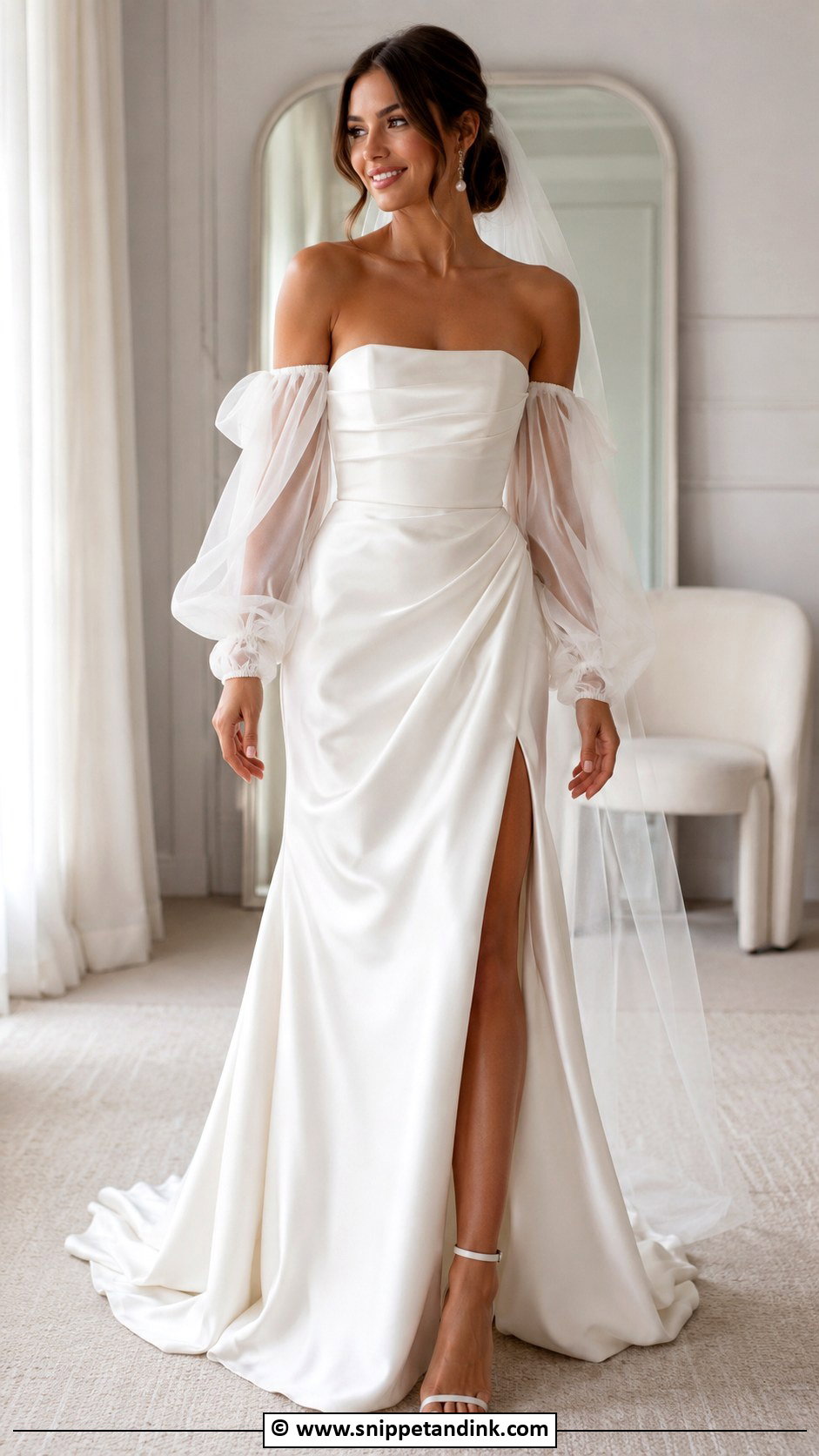
Detachable sleeves give a covered ceremony look and a lighter reception silhouette in one gown. Puffed organza, sheer lace, illusion fabric and draped satin all appear this year. Match the sleeve fabric to the dress so it doesn’t look like an add-on. Ask how they attach. Elastic bands can slide down the arm over hours, and snaps or ties hold better. Add a bold bracelet once they come off.
13. Wedding Dress With Cape
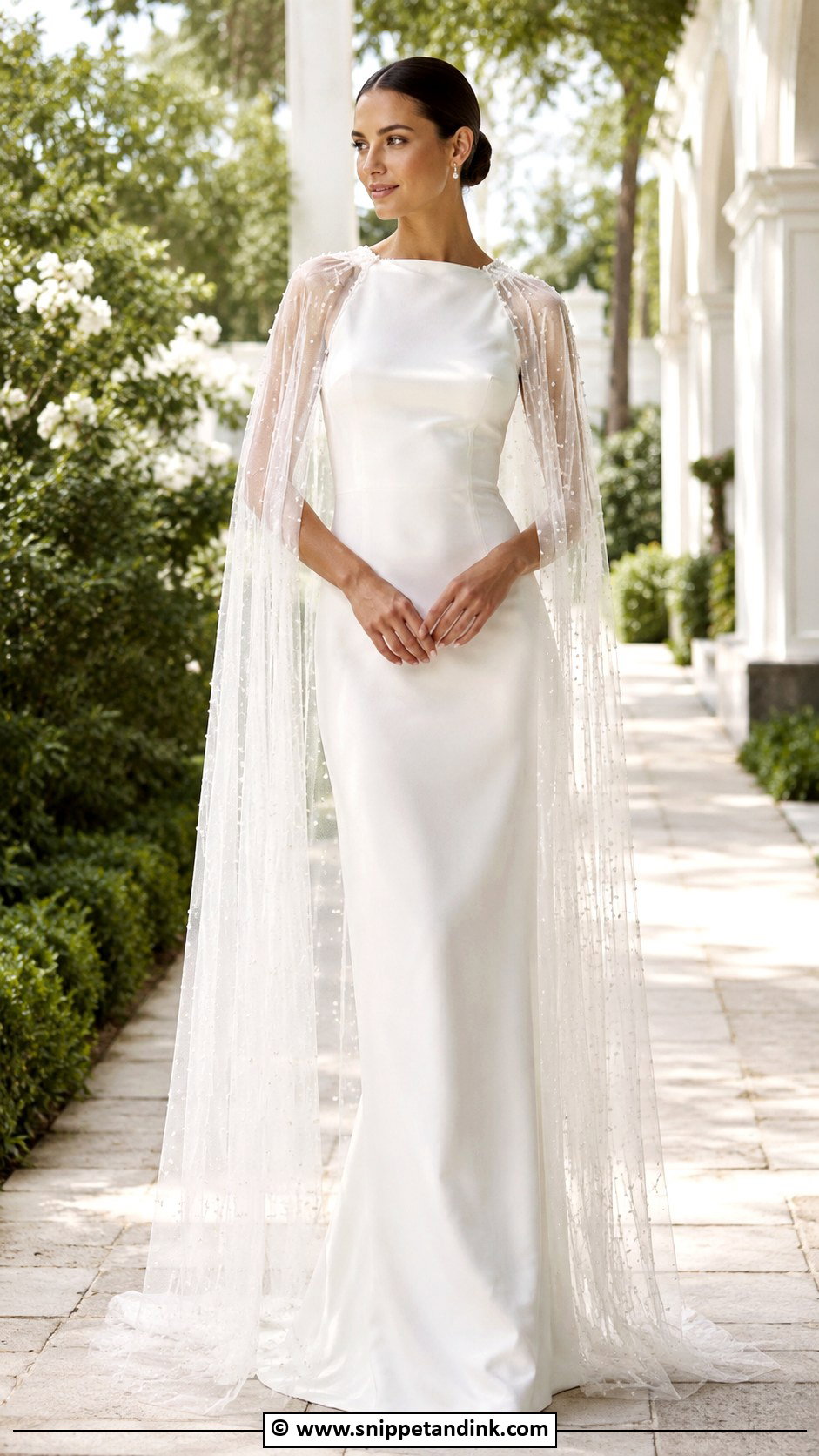
A cape gives a veil’s drama while staying attached at the shoulders or neckline, so it won’t blow off in an outdoor ceremony. Sheer tulle, lace, chiffon, pearl-dotted mesh and satin are all options. I’d pair a column with a sheer cape for a sleek look, or a ball gown with a cape for a grand entrance. Keep jewelry minimal. A removable cape gives the reception a lighter feel.
14. High Neck Wedding Dress
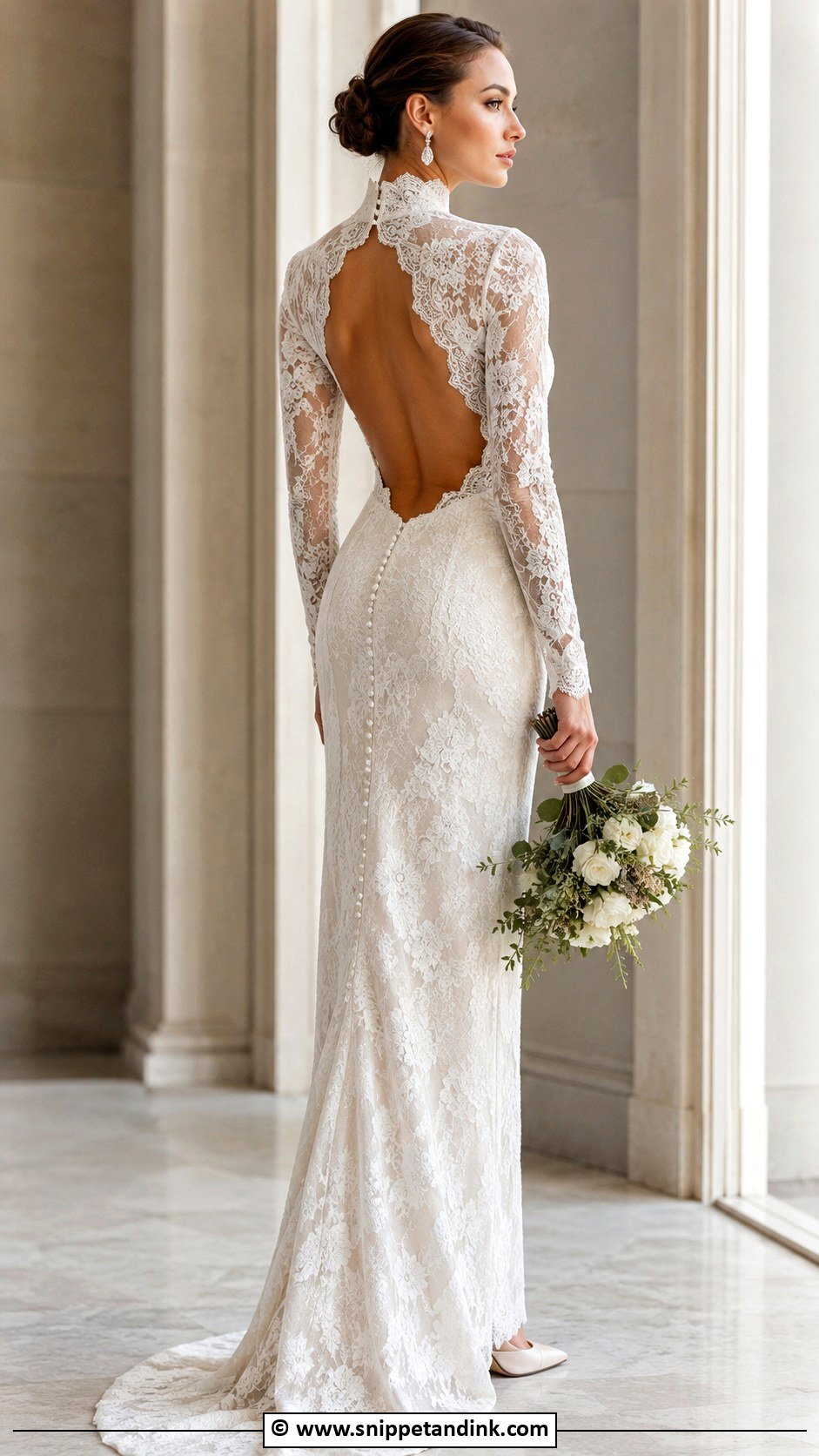
With a high neck, balance is everything. Pair it with an open back, a slim skirt or a soft waist so the dress doesn’t feel heavy. Lace, crepe, satin and embroidered tulle all work. I check the collar for comfort by asking the bride to turn her head and look down at her bouquet, since that’s what she’ll do all day. A clean updo and drop earrings suit elegant indoor and winter ceremonies.
15. Slip Wedding Dress
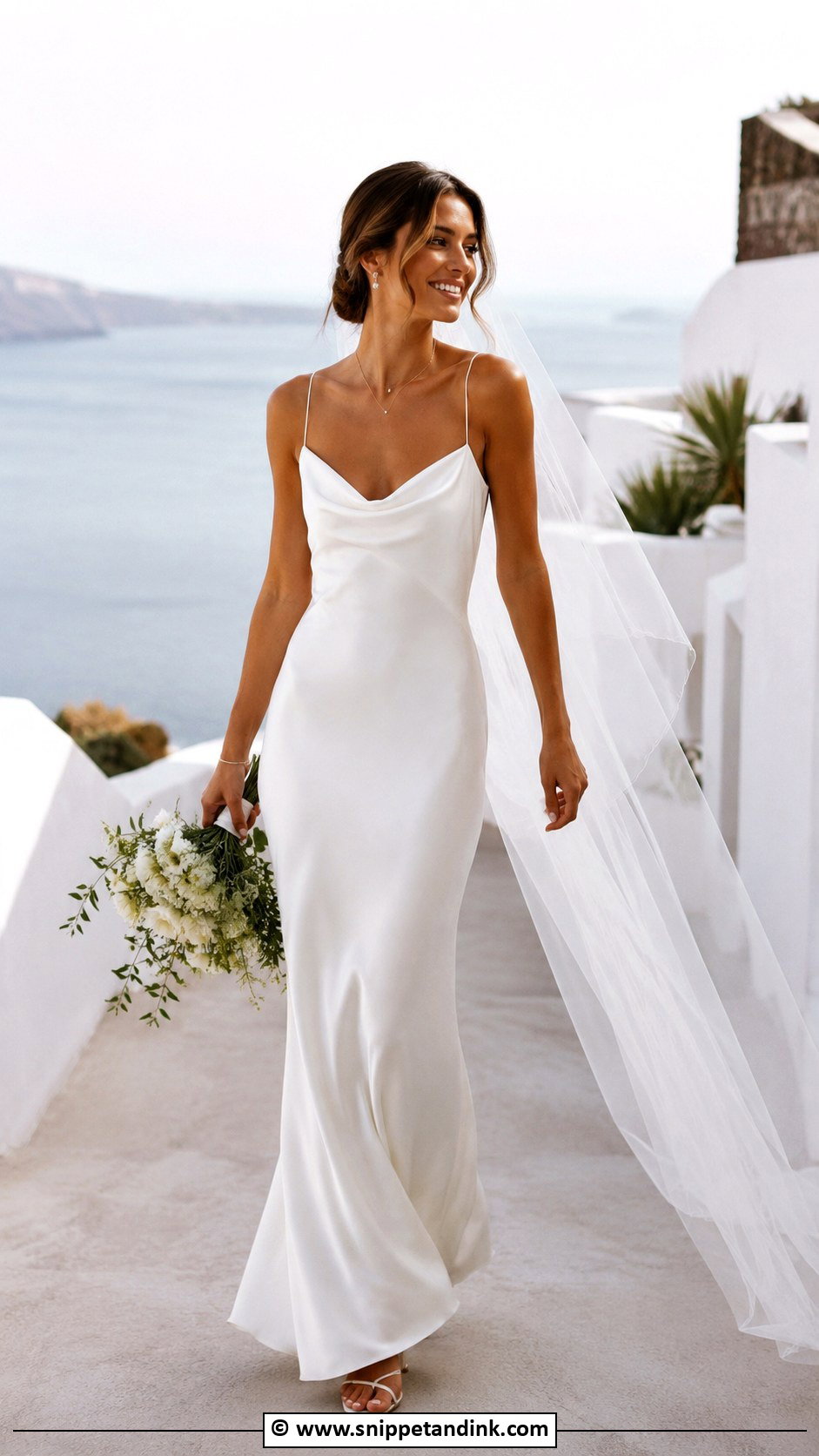
A slip wedding dress moves naturally, which brides love, though bias-cut silk shows every undergarment line, which they don’t. Silk satin, liquid crepe and charmeuse drape best. A cowl, thin straps or a low back adds interest. Strappy heels and a sheer veil keep it bridal, and a tailored blazer, sheer cape or lace bolero covers you for a religious ceremony. Destination weddings and second looks suit it.
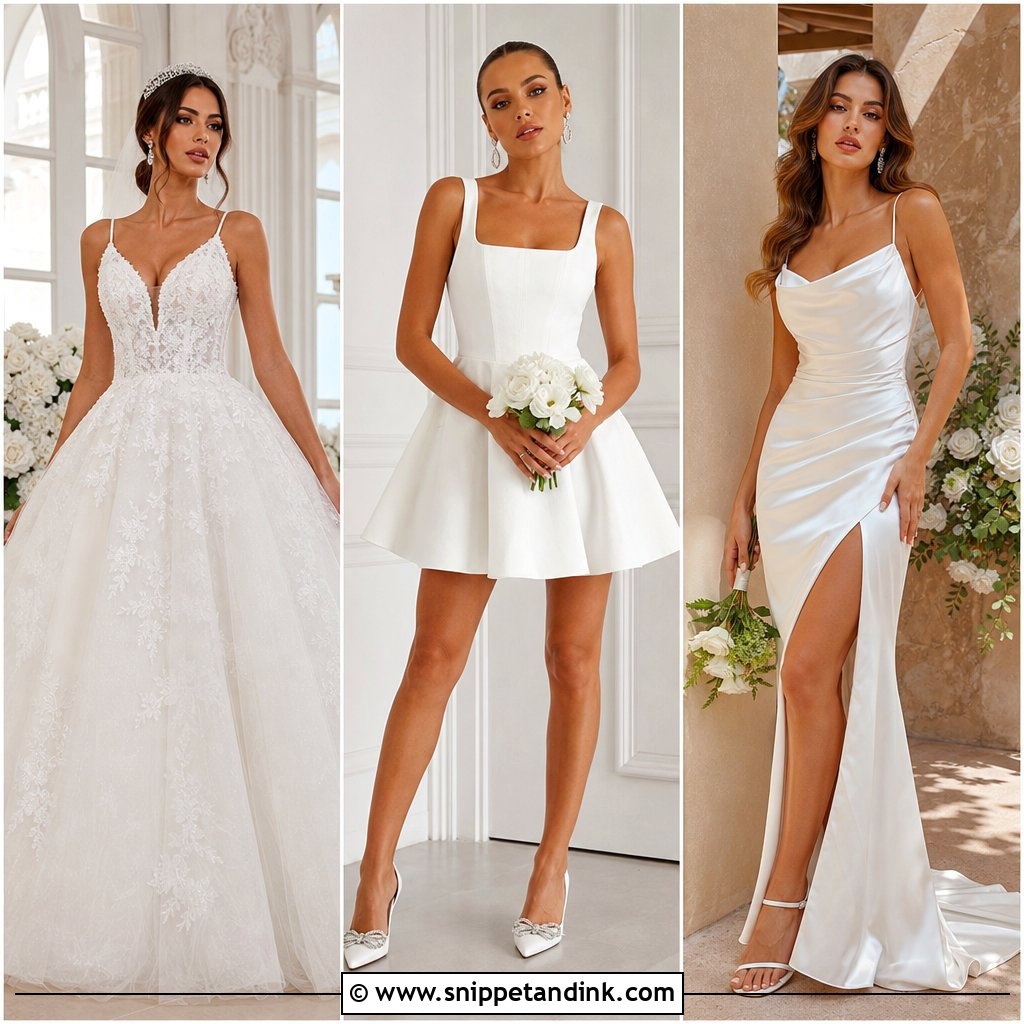
16. Mini Wedding Dress
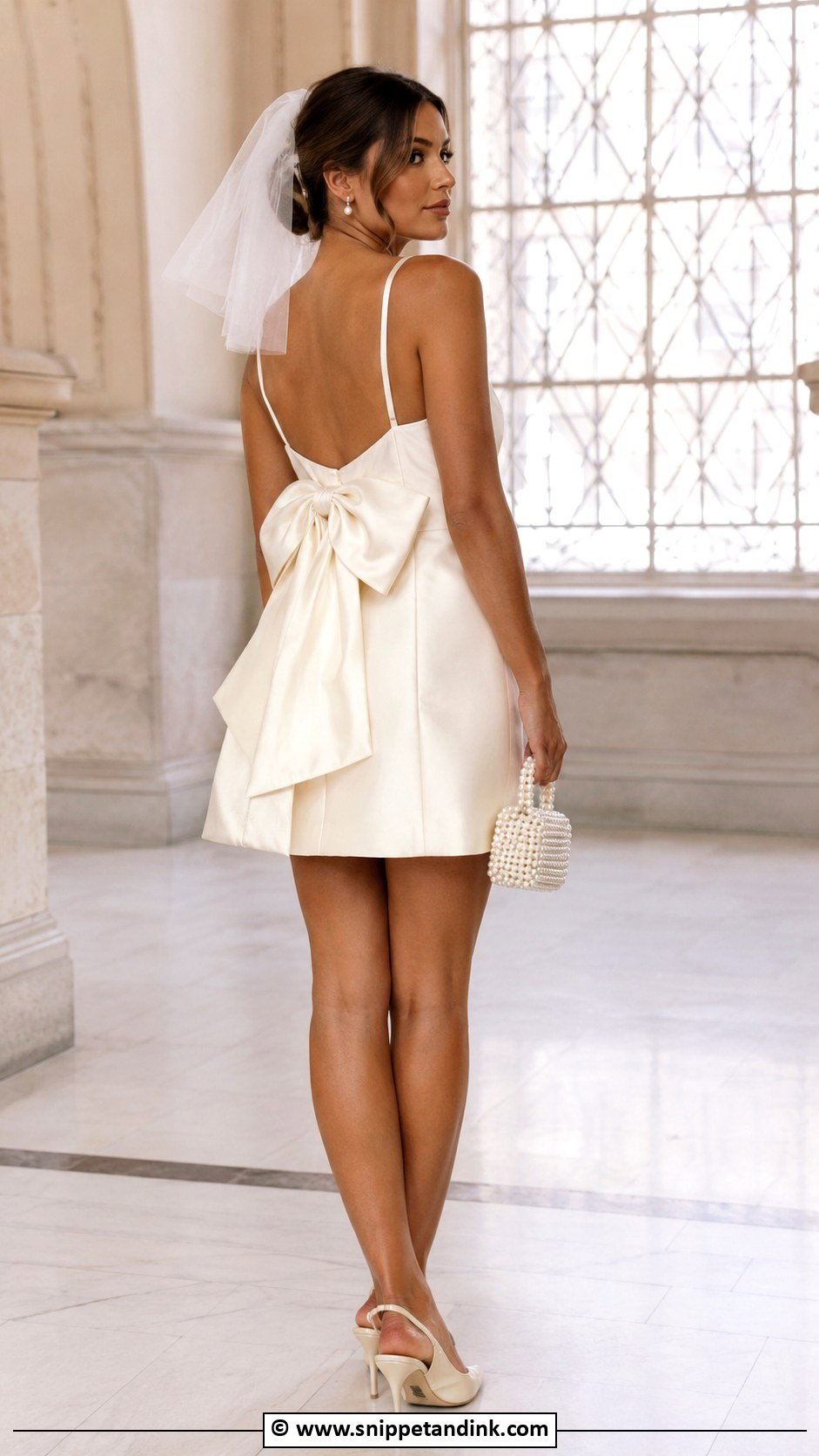
Minis are practical for civil ceremonies, receptions and after-parties. In 2025, they came with bows, feathers, structured satin, pearl trim and long sleeves. I’d pick one strong detail rather than several, because a busy mini looks cluttered in photos. Slingback heels, sheer tights for cool seasons and a short veil or hair bow keep it bridal. A small bridal bag finishes it.
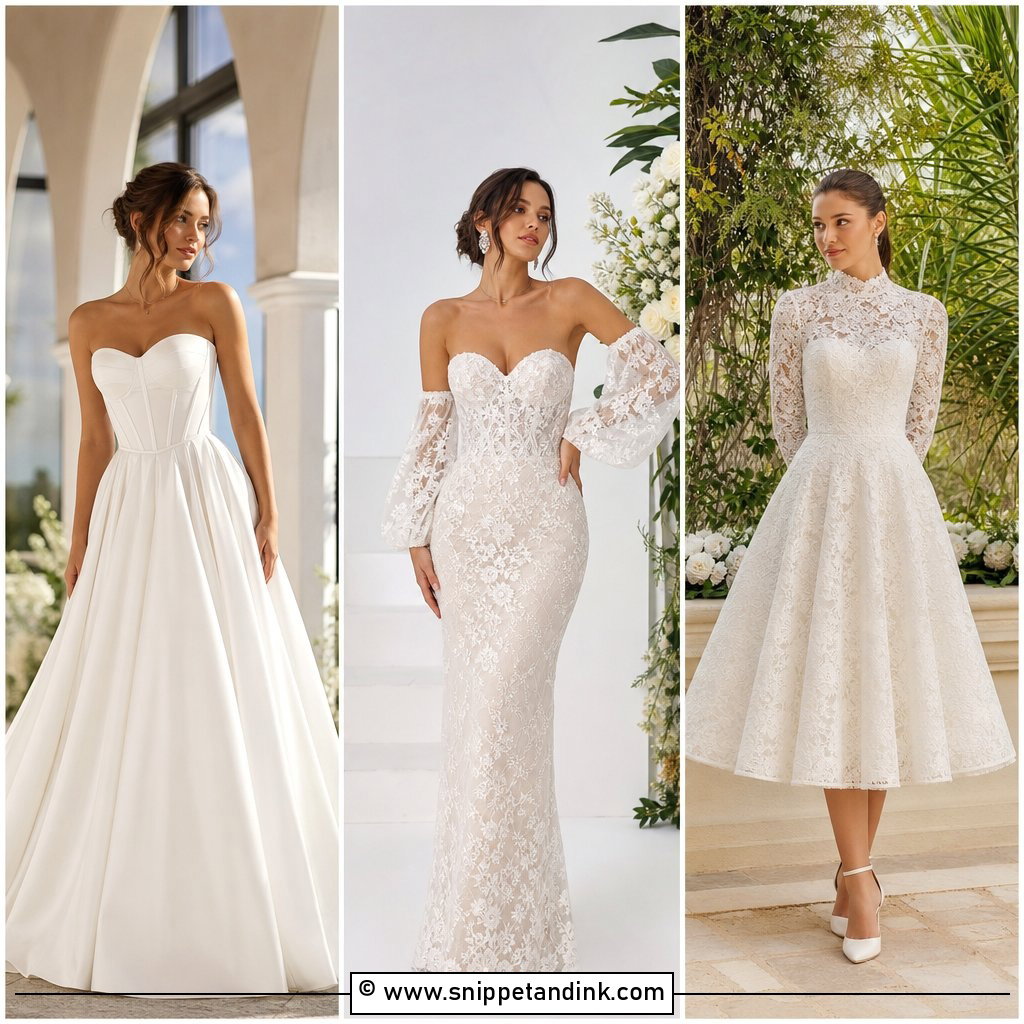
17. Tea Length Wedding Dress
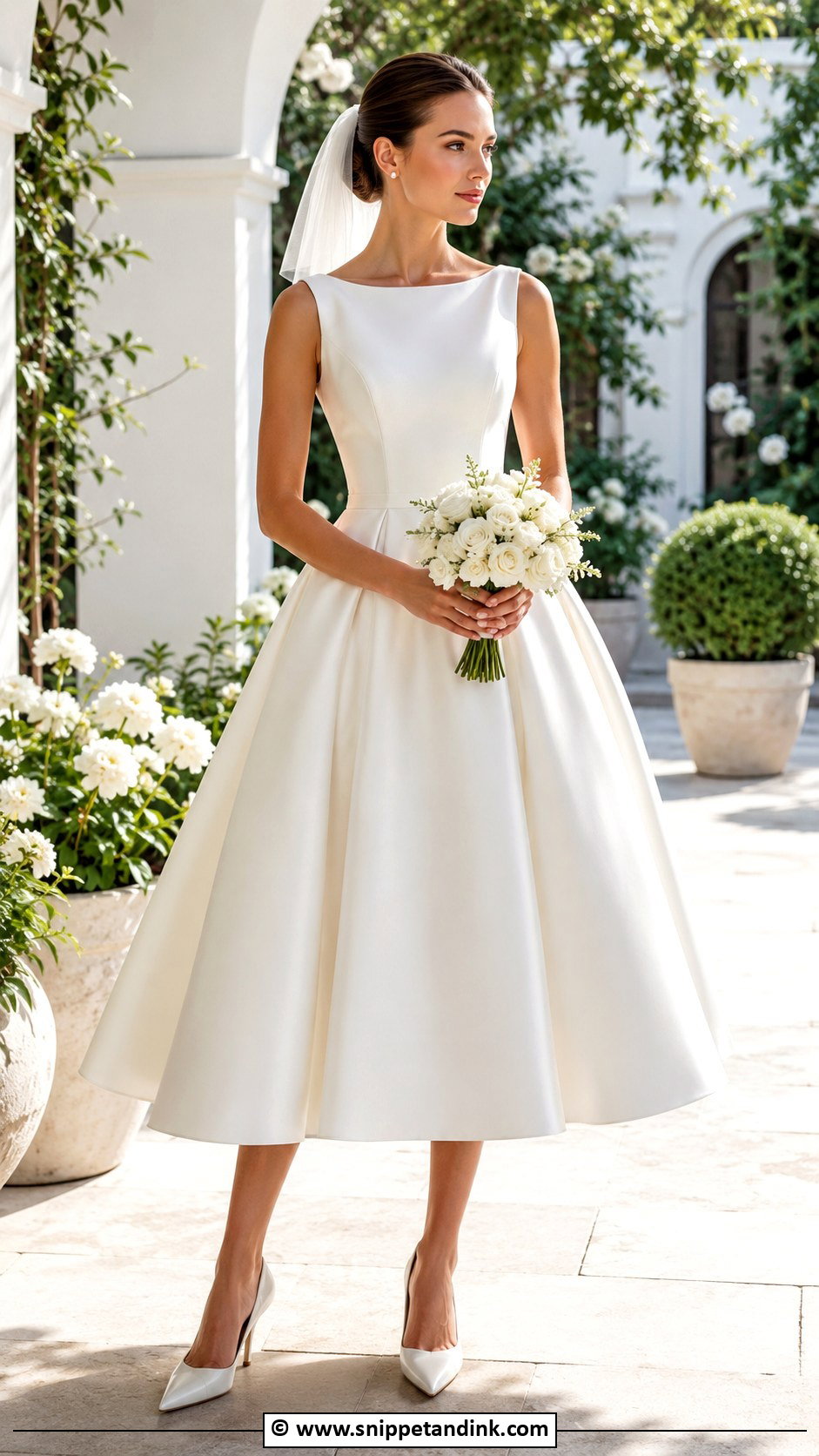
Tea length falls between the knee and the ankle, so shoes become part of the dress. I’d shop for them together. Structured satin, soft tulle, lace and organza all work with a fitted bodice. A petticoat adds lift; make sure it doesn’t show when you sit. Pearl studs, a short veil and a neat bun give a classic feel for courthouse weddings and garden receptions, and walking and dancing are much easier.
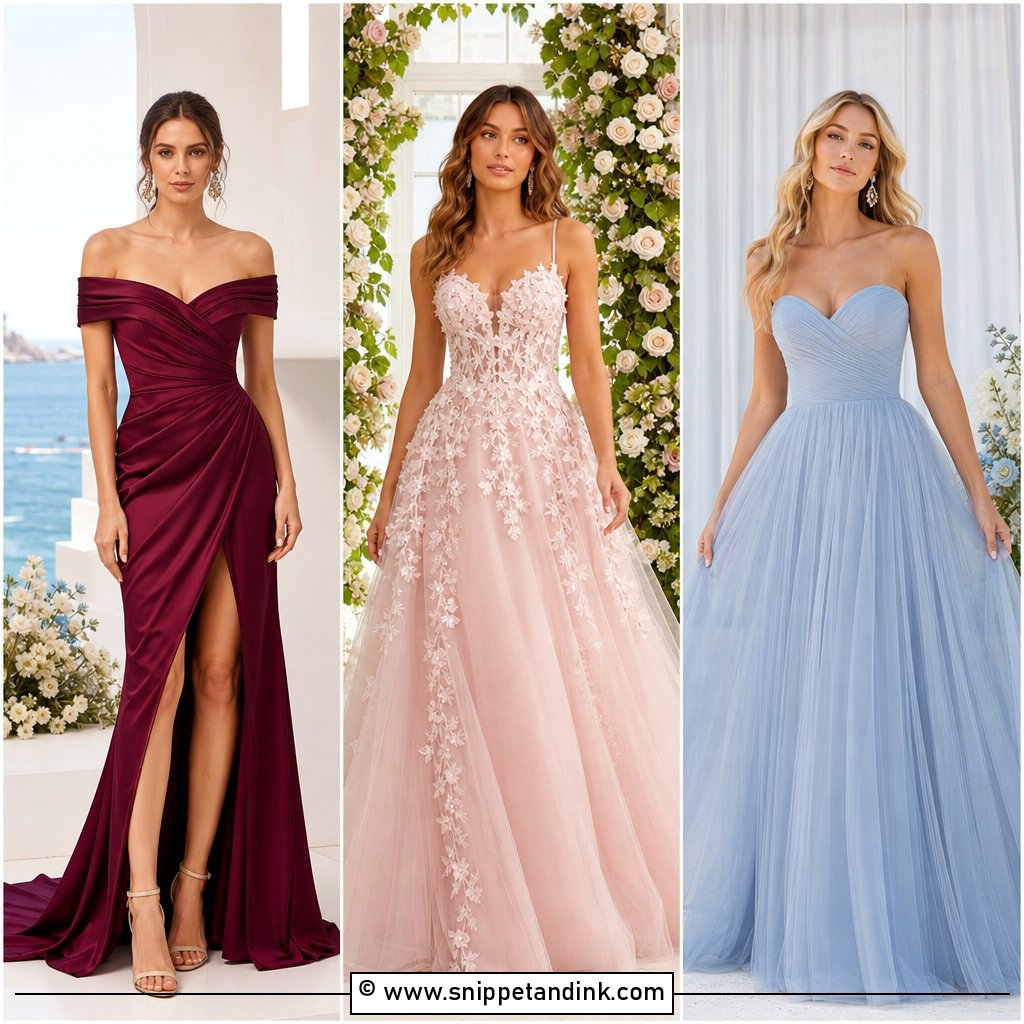
18. Colored Wedding Dress
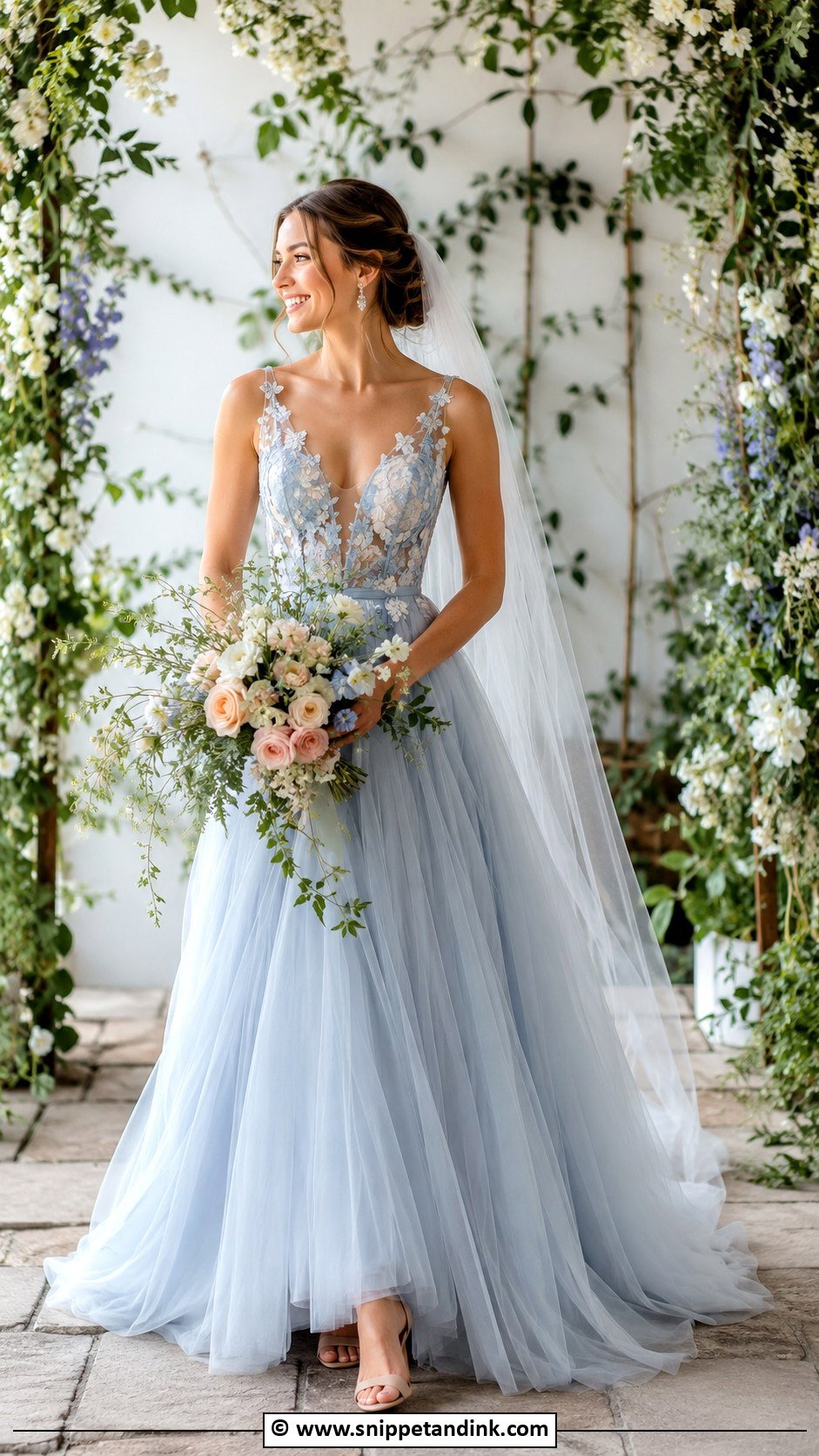
Color is the change I’ve seen brides embrace most. Pale blue, blush, champagne, buttercream, lavender and silver-grey are easy to wear. The test I use: hold the fabric near your face in daylight with no makeup. If it makes your skin look sallow, choose a different undertone. Ivory or matching veils, neutral heels and delicate jewelry keep it bridal. A tinted underlay or colored embroidery on white is a quieter route.
19. Pearl Wedding Dress
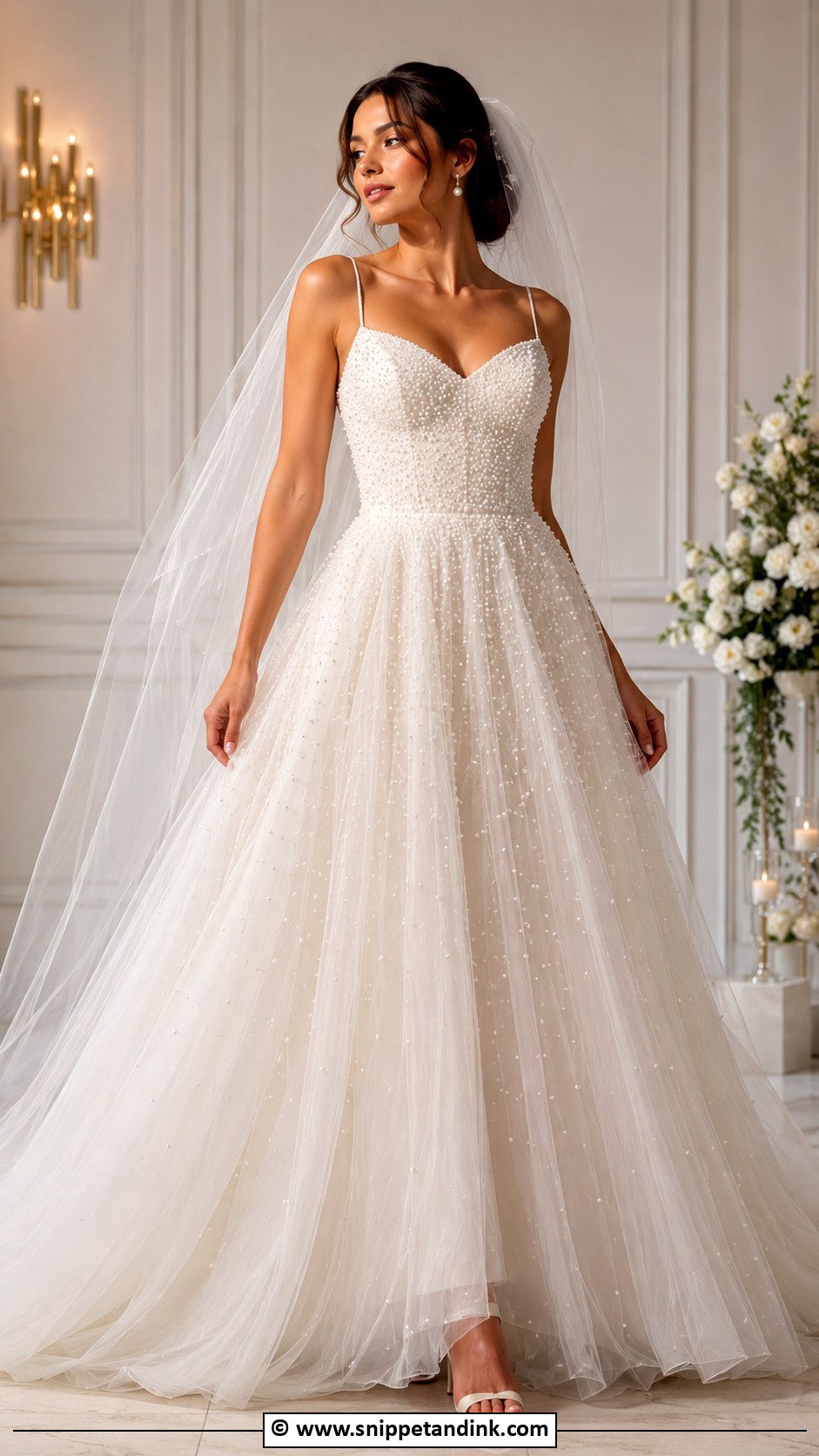
Pearls give a softer shine than crystals, and they look dimensional in close-ups. Scattered pearls feel delicate; dense pearl beading makes a statement but adds weight, so check the straps after twenty minutes of wear. Pearl earrings, satin heels and a simple veil keep the look cohesive. With heavy embellishment, keep the bouquet and accessories minimal for evening and formal indoor weddings.
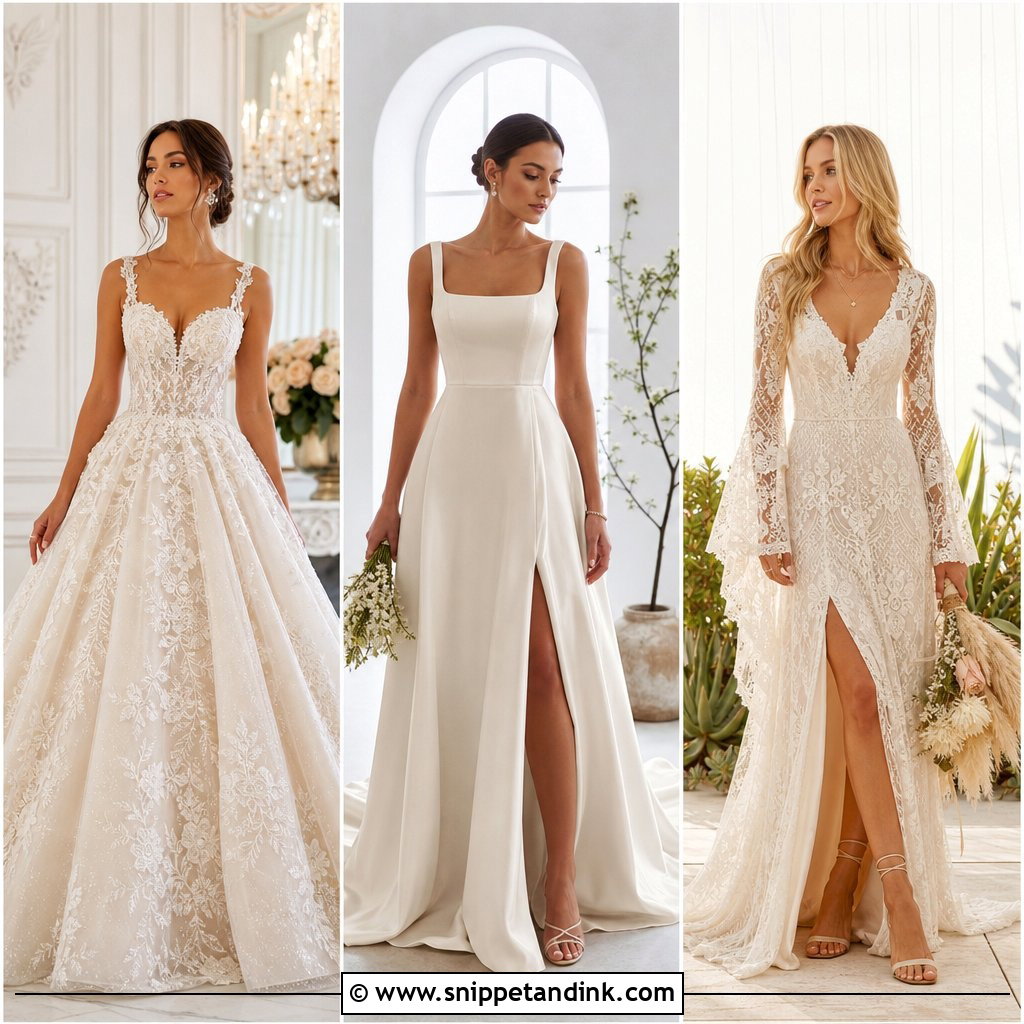
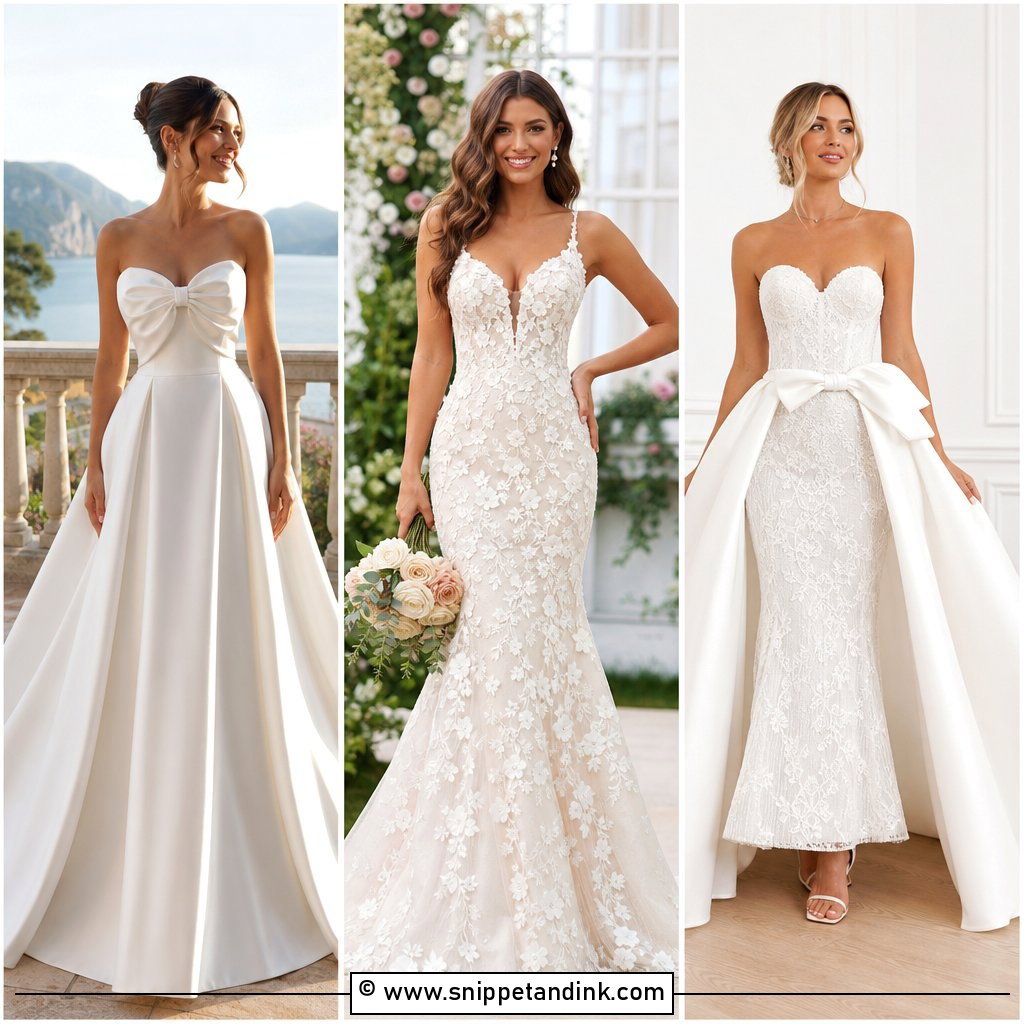

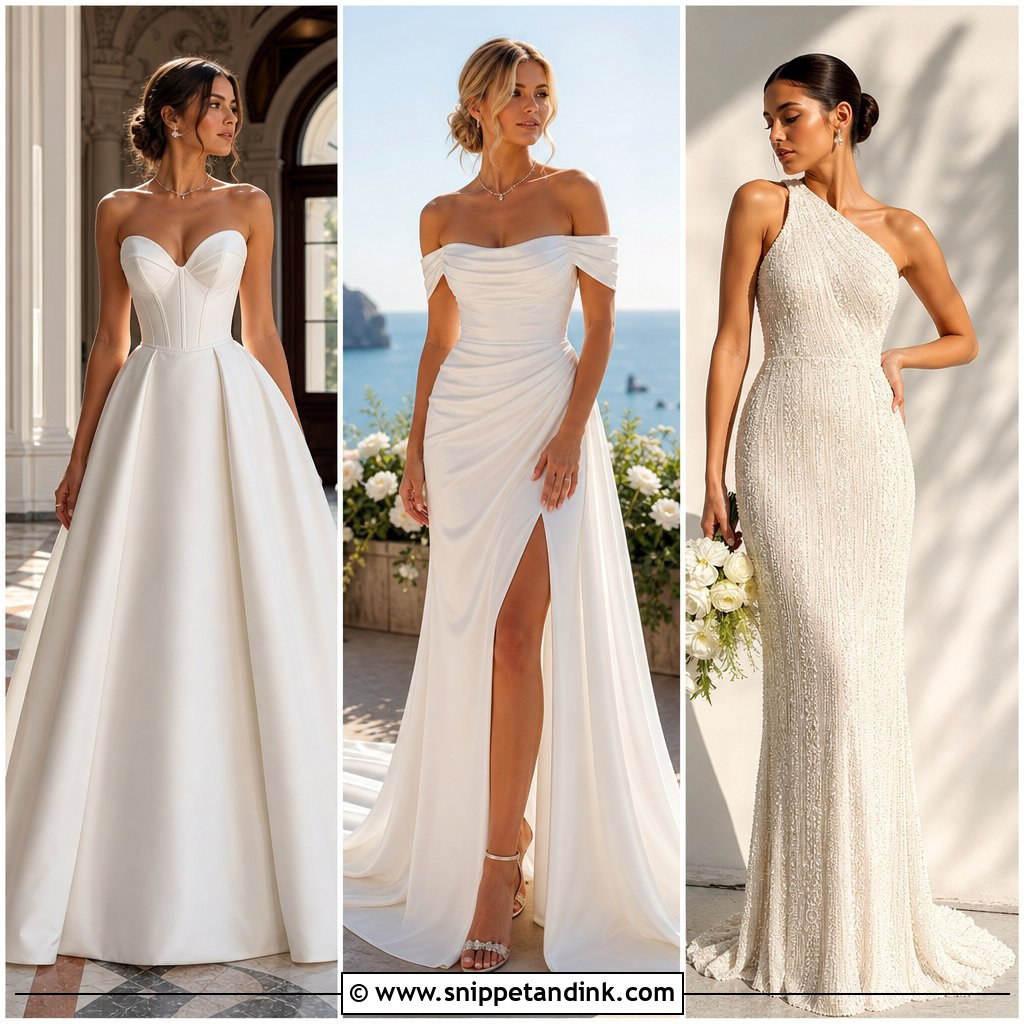

20. Embroidered Wedding Dress
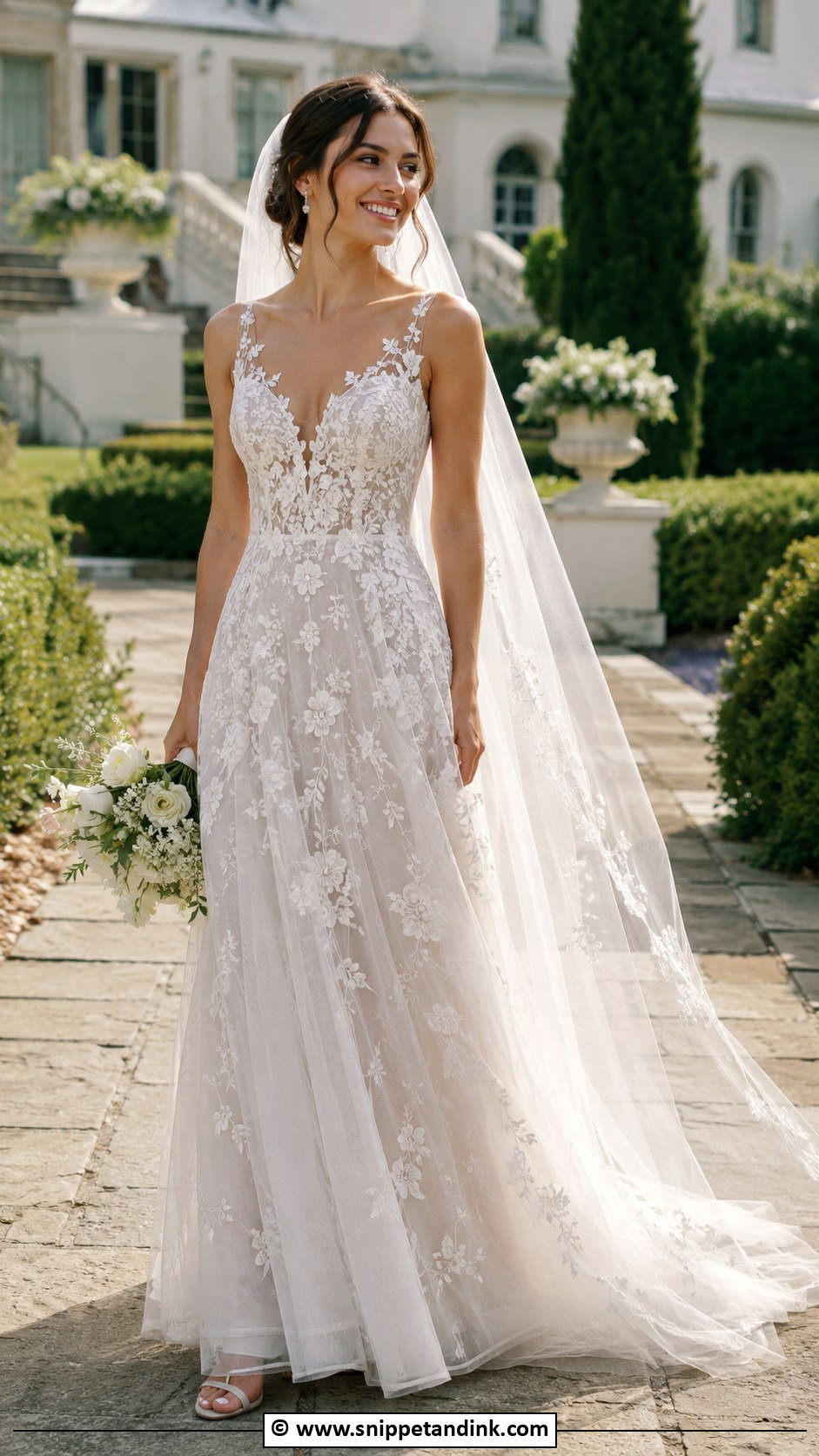
Embroidery is the middle ground between plain fabric and heavy beading, and I often recommend it to brides who want detail without weight. Floral vines, leafy patterns, tonal threadwork and subtle shimmer all show well on sheer overlays and A-line skirts. Placement matters: embroidery around the bodice and hem balances the gown, while allover work is a bigger statement. A veil with matching texture and simple heels suit garden and estate weddings.
21. Sheer Sleeve Wedding Dress
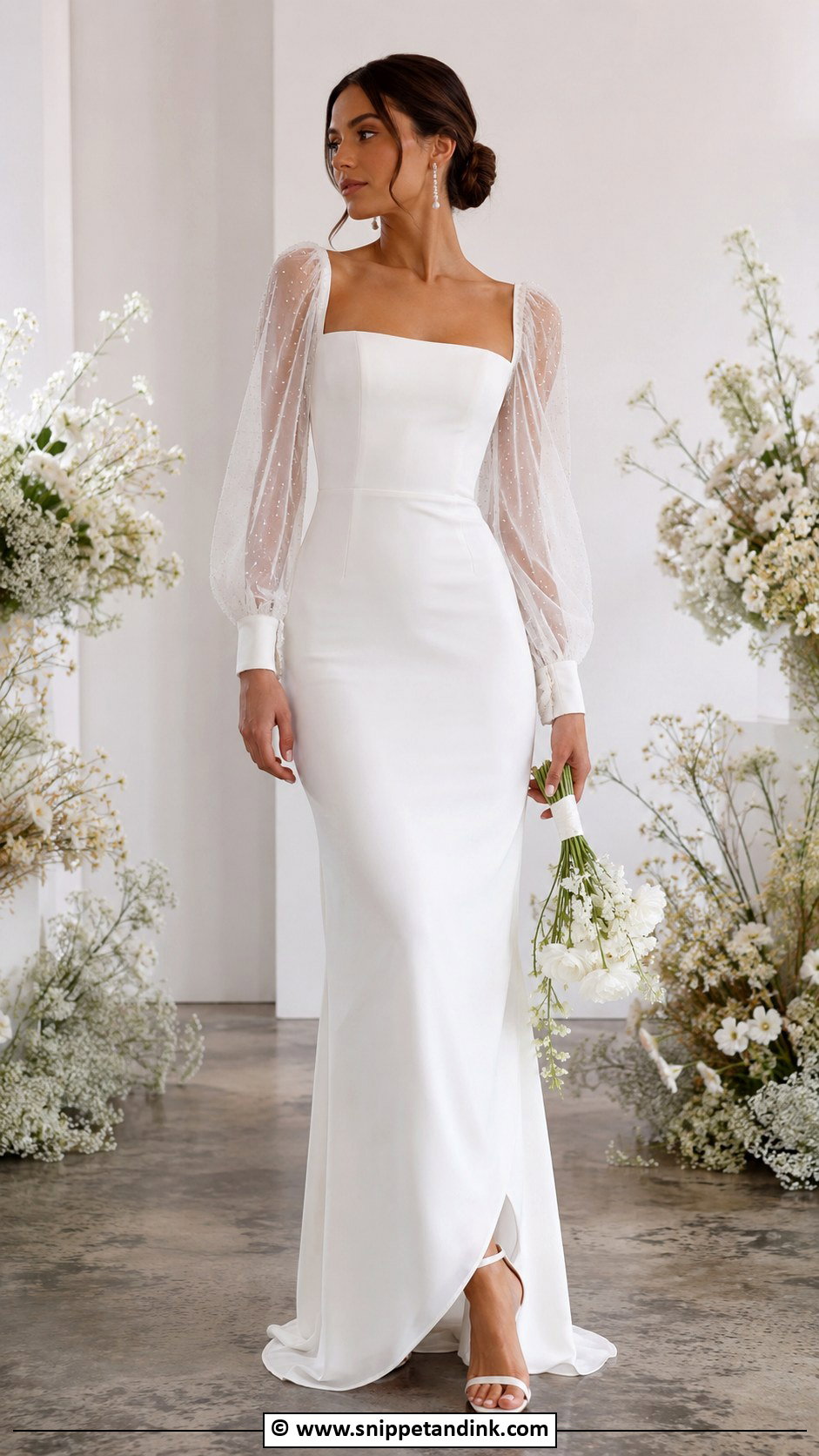
Sheer sleeves are light enough for spring and fall, and with a lining underneath, for indoor winter weddings. Illusion, bishop, puff and pearl-dotted mesh sleeves are all around this year. The cuff is where I see problems: a tight wrist can pinch after hours of dancing, and a loose bishop sleeve can catch on things. Pair with a simple bodice, a low bun and drop earrings.
22. Halter Wedding Dress
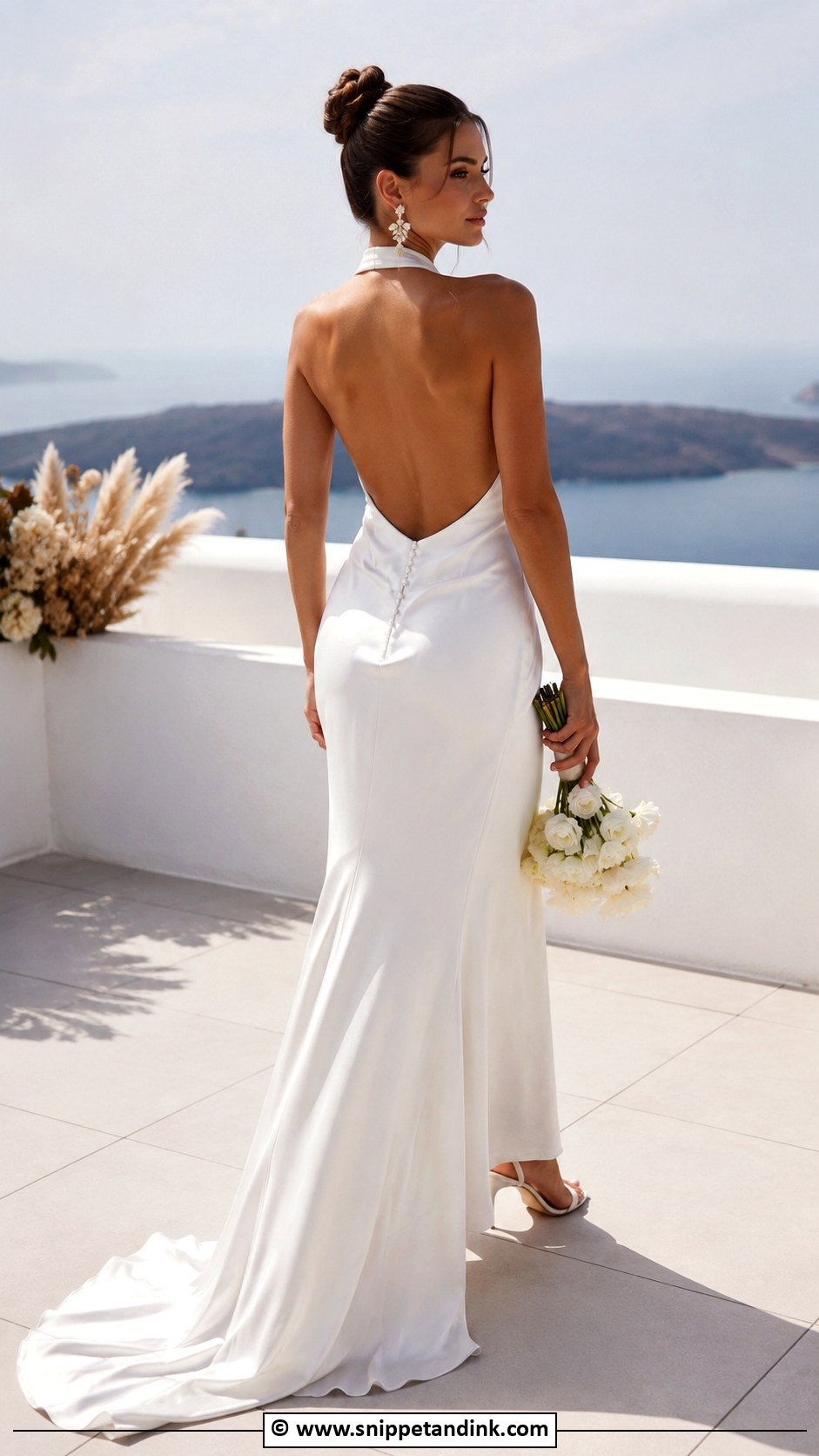
A halter shows the shoulders and gives a sleek line in satin, crepe or draped jersey. It puts weight on the back of the neck, so I prefer lighter fabrics for long days. A smooth updo, statement earrings and slim heels suit it. Skip the necklace. Beach weddings, rooftops and evening receptions show it well, and a low open back or a scarf halter that trails behind adds impact.
23. Tulle A Line Wedding Dress
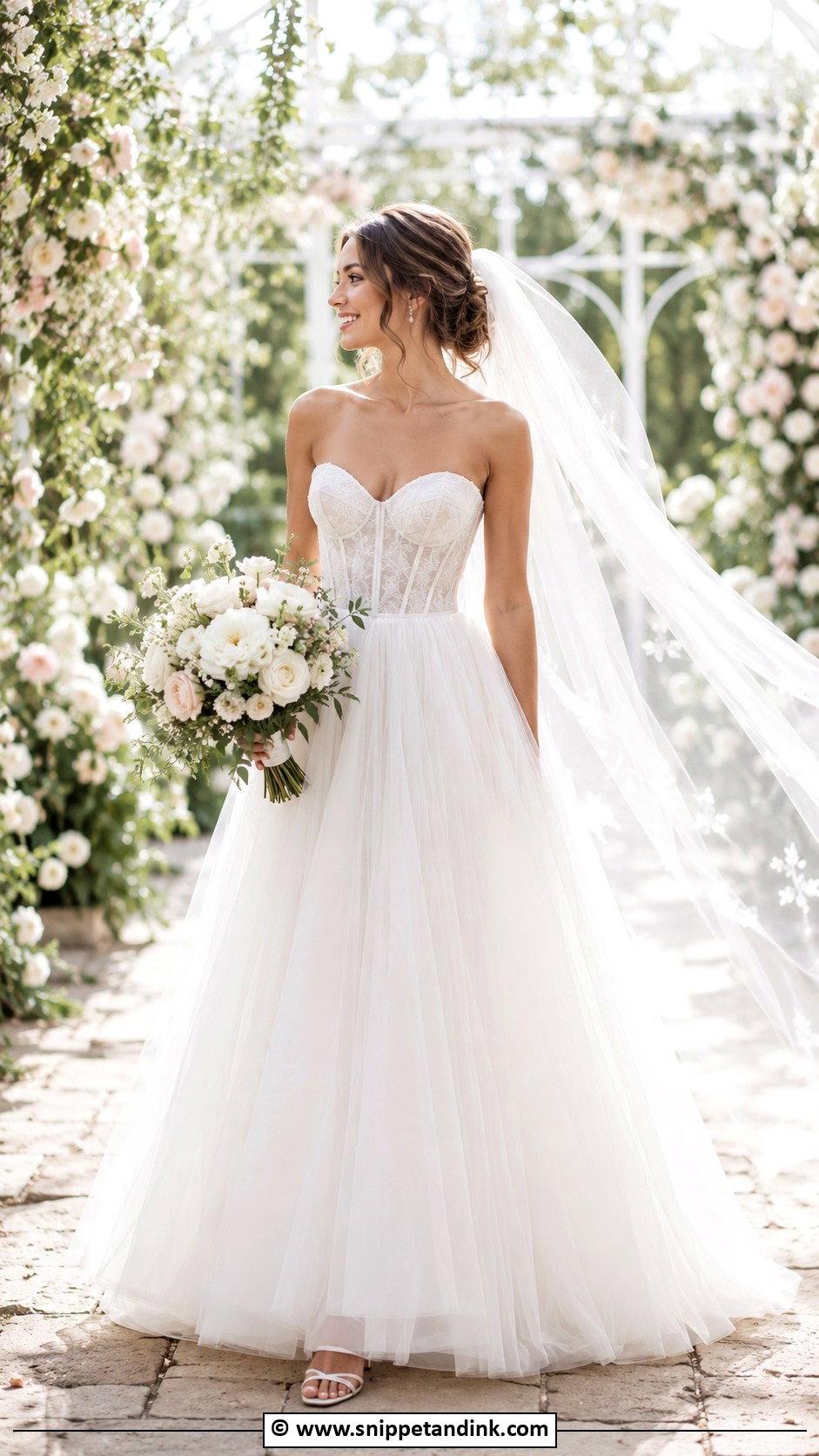
Tulle A-lines float without a ball gown’s weight, which makes them one of the easiest dresses to wear all day. The fitted bodice gives shape. This year, I saw them with corset bodices, floral appliqués, a little sparkle or a clean straight neckline. More layers aren’t always better; too many and the skirt looks bulky in photos. Delicate heels and a soft veil suit outdoor and garden ceremonies.
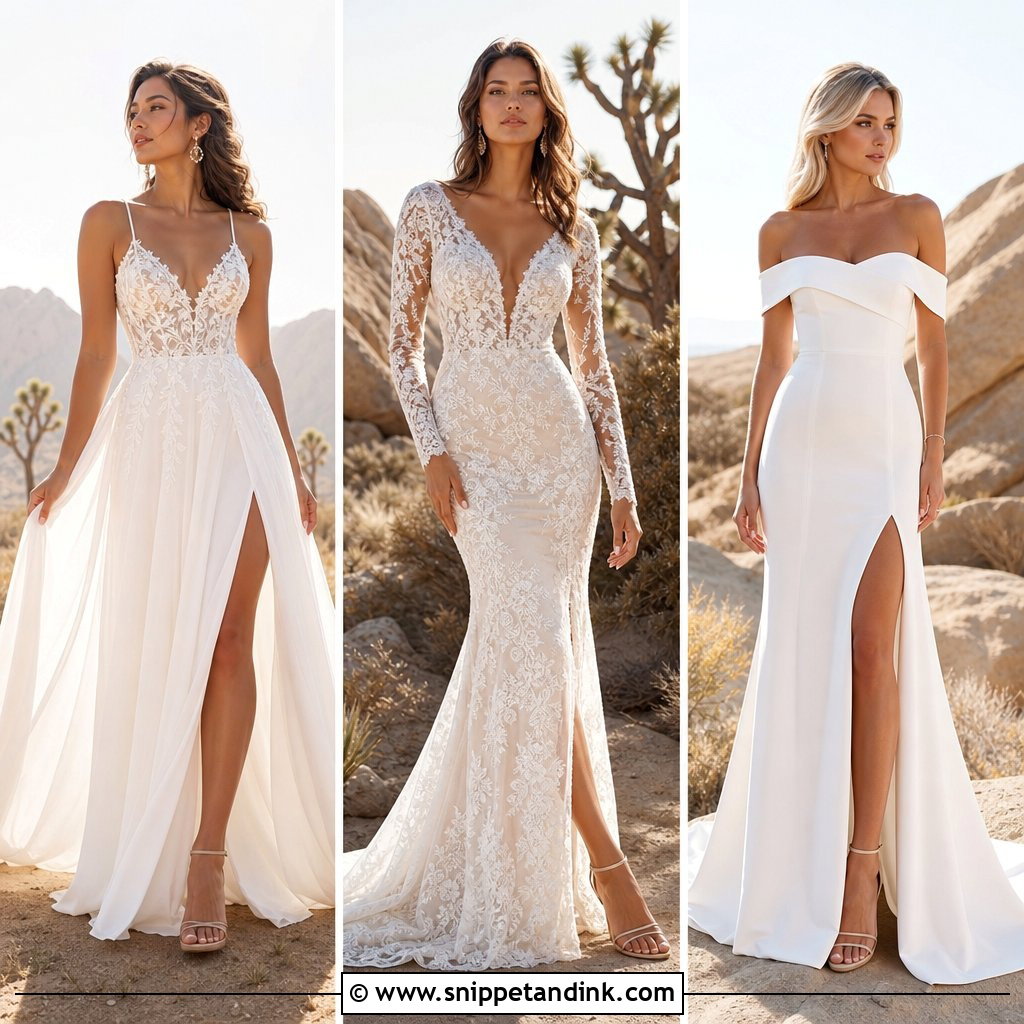
24. Mermaid Wedding Dress
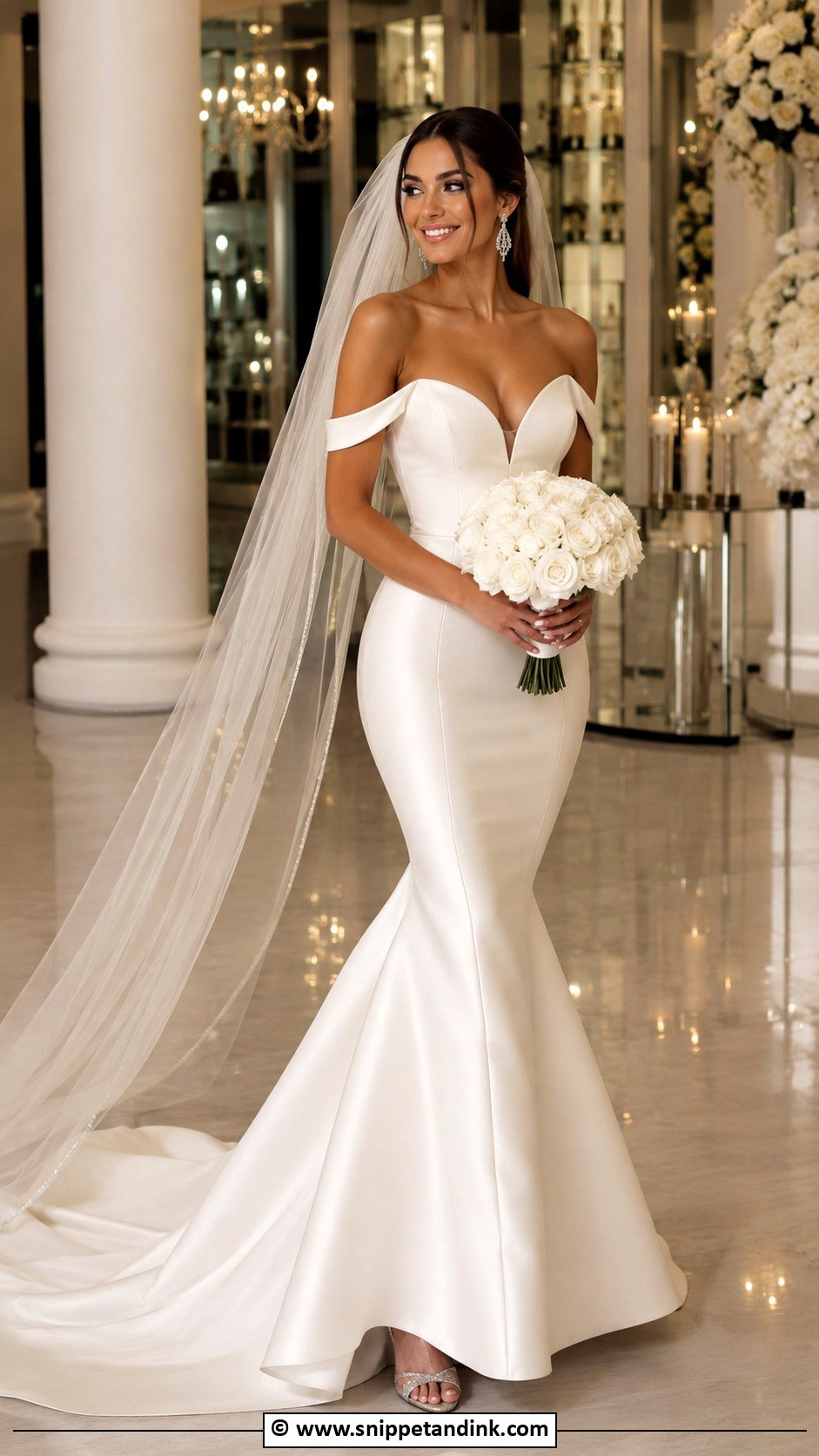
Mermaids flare at the knee or lower thigh, which creates drama and restricts stride. I always ask brides to sit, walk and climb a step in one before ordering. A fit-and-flare gives a similar shape with more movement, and it’s my usual alternative. Crepe, lace with sheer panels and sculpted satin are current. High heels, a long veil and earrings that add height suit formal evening venues.


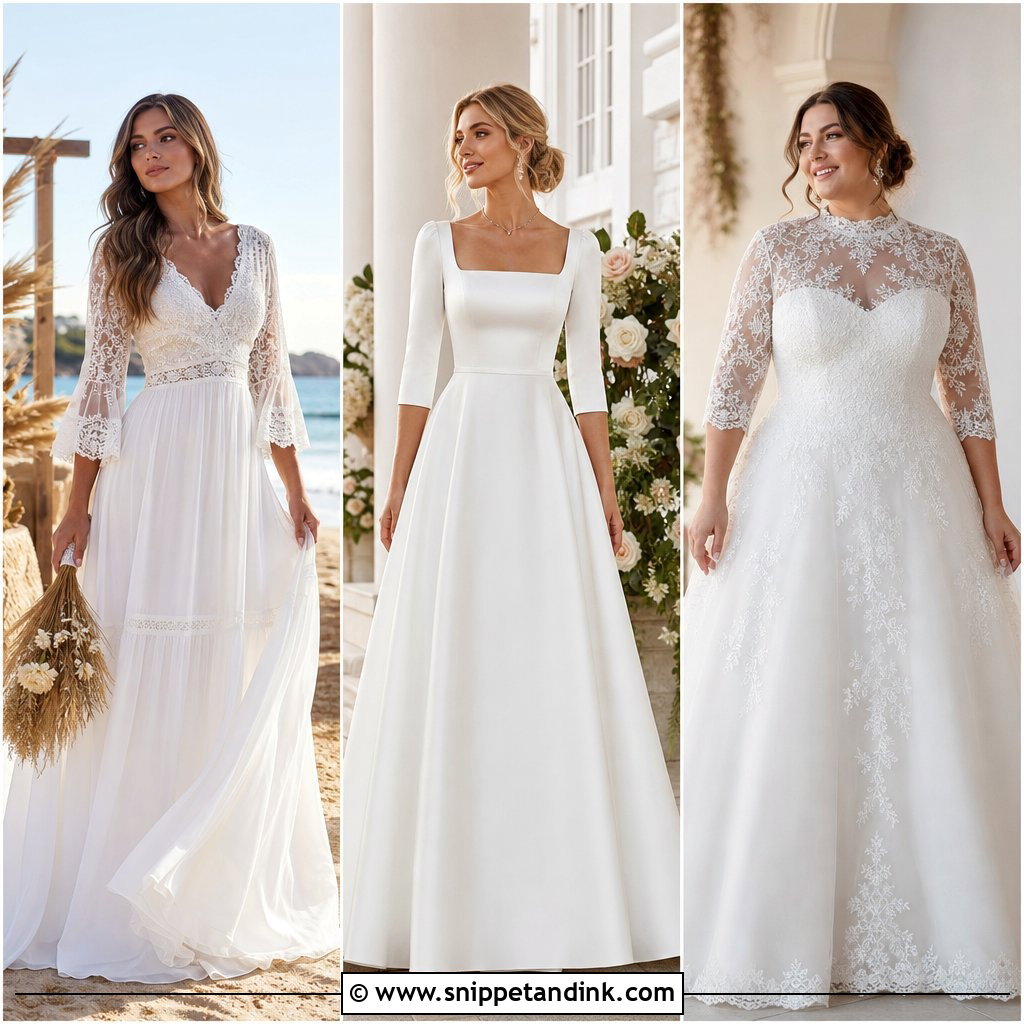
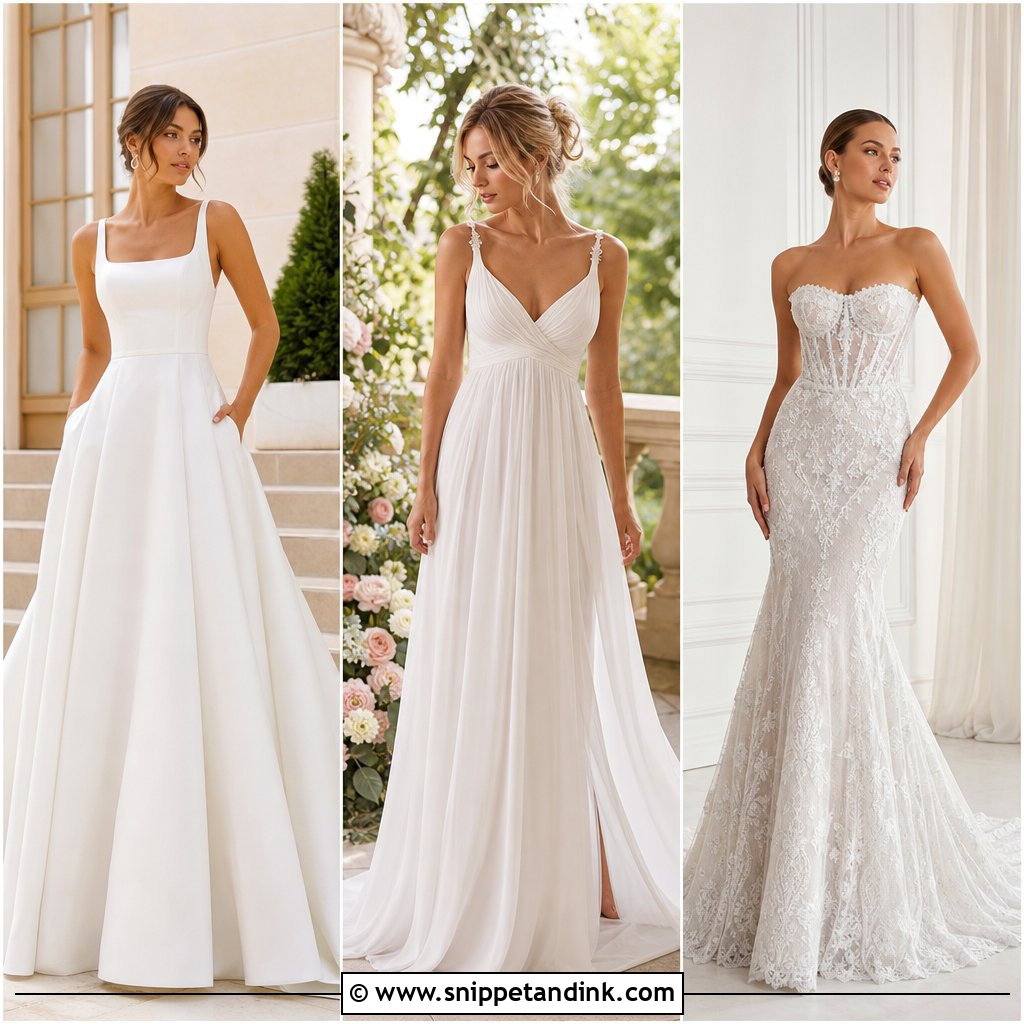
25. Short Sleeve Wedding Dress
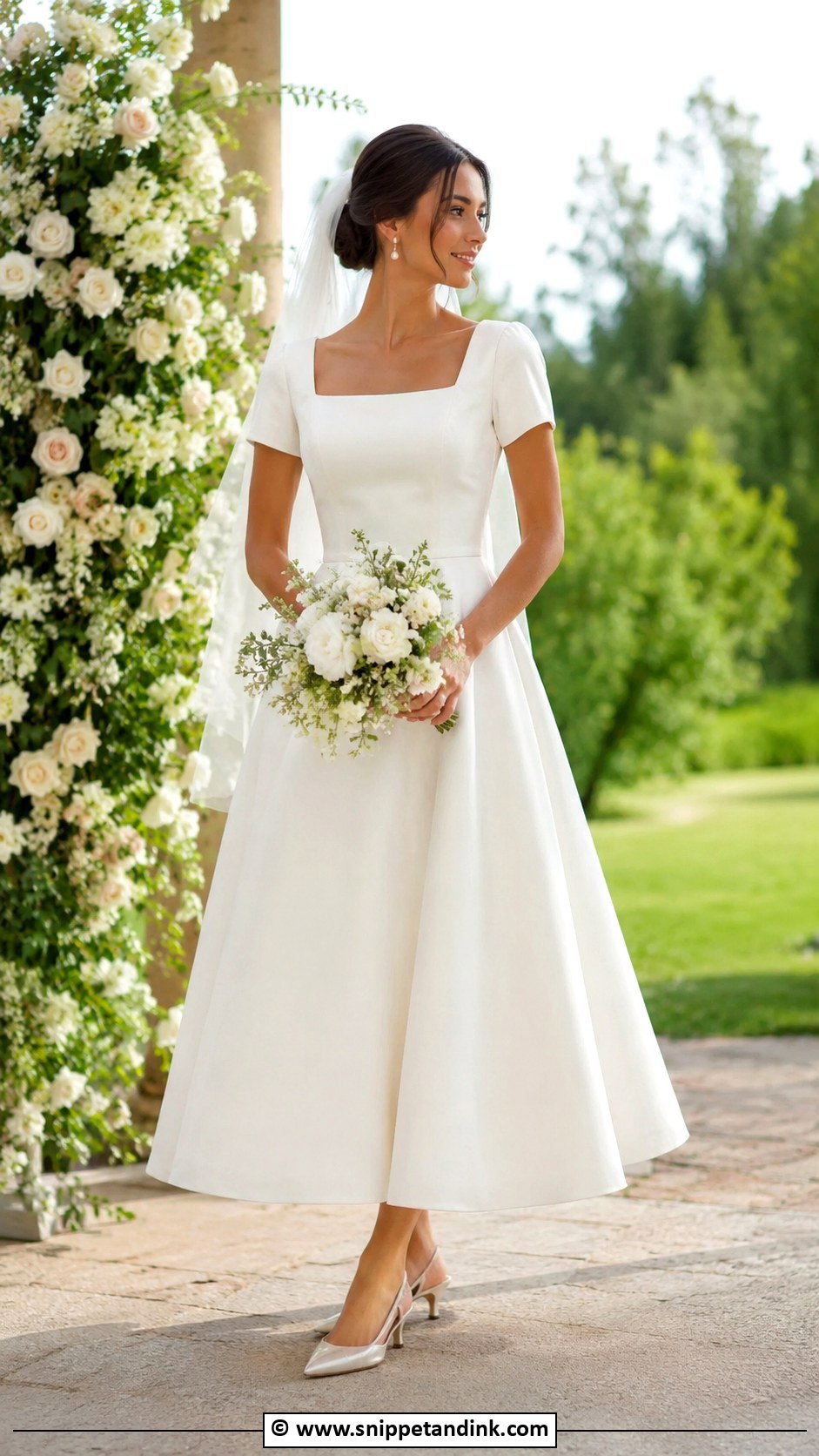
Short sleeves are the most underrated option for warm-weather brides who want some coverage. Cap, flutter, puff and tailored short sleeves each give a different mood. Lace, satin and crepe all work, including tea length. A square neckline feels modern; soft floral sleeves feel romantic. Slingback heels and pearl earrings suit daytime, courthouse and garden weddings.
26. Puff Sleeve Wedding Dress
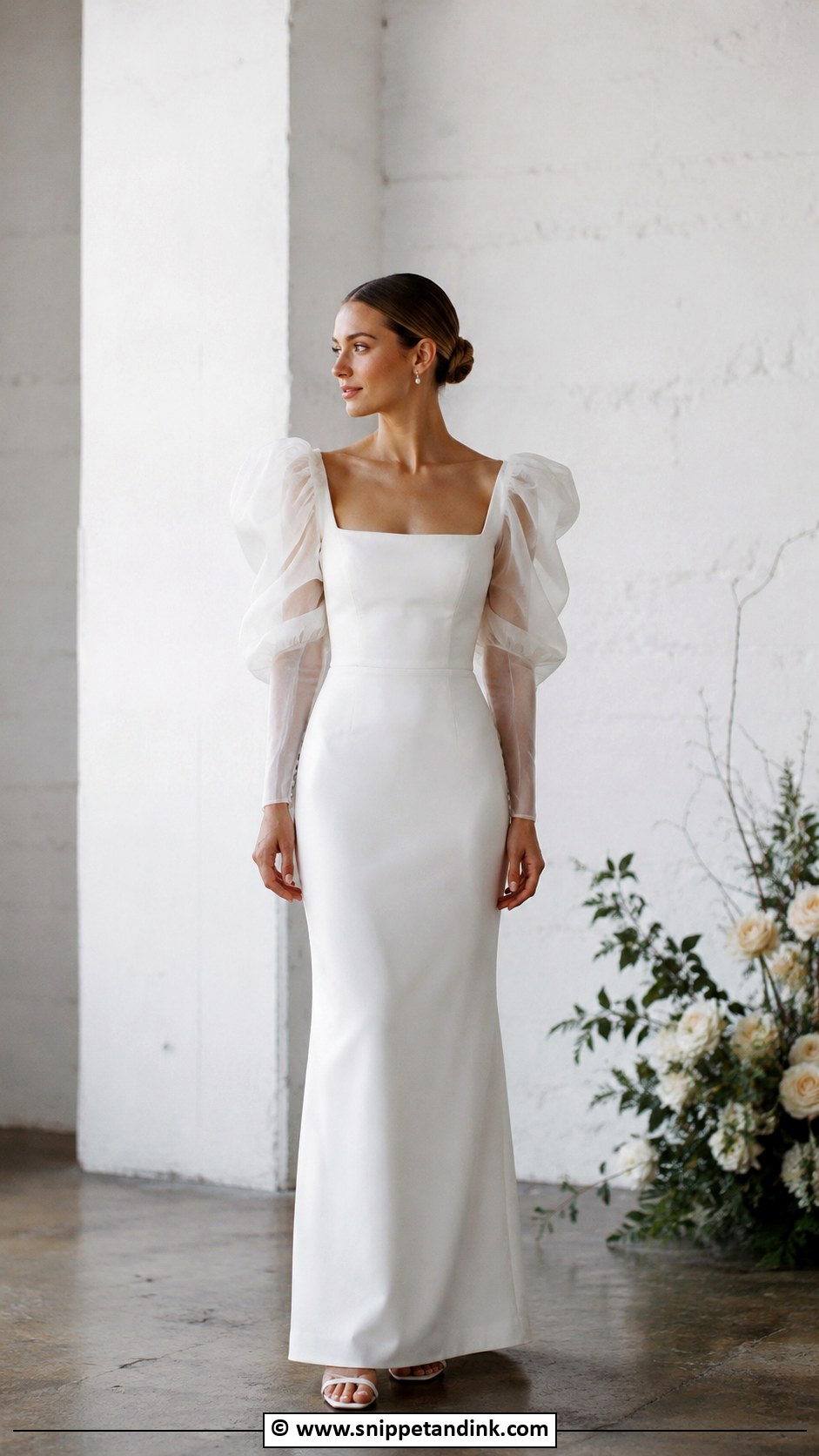
Puff sleeves are personality pieces, and they need a quiet bodice and skirt to work. Soft sheer puffs read romantic; structured ones look bold. A fitted waist keeps the shape flattering, and a straight neckline adds structure. Puffs can crush when you put a jacket on or hug, so I steam them just before photos. Detachable puffs give a cleaner reception look, especially at garden and creative venues.
27. Court Train Wedding Dress
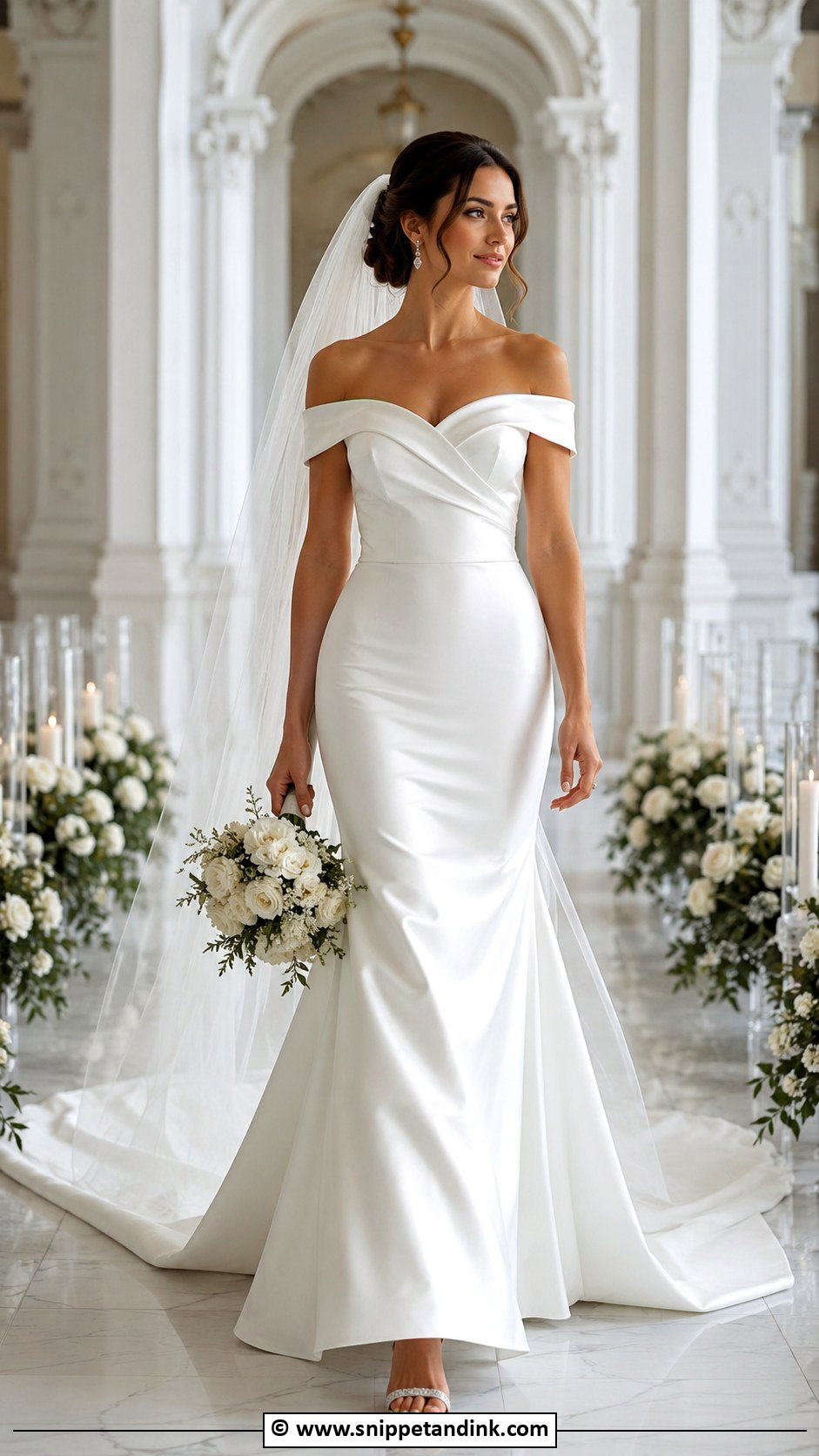
A court train gives drama without a cathedral train’s length, and it’s the length I recommend when a bride wants a train but has a long day ahead. It works on ball gowns, fit-and-flares, lace and columns. Ask about the bustle at the first fitting. French and American bustles lift the train differently, and the choice depends on the fabric. Match heels to hem height and keep the veil from competing.
28. Black And White Wedding Dress
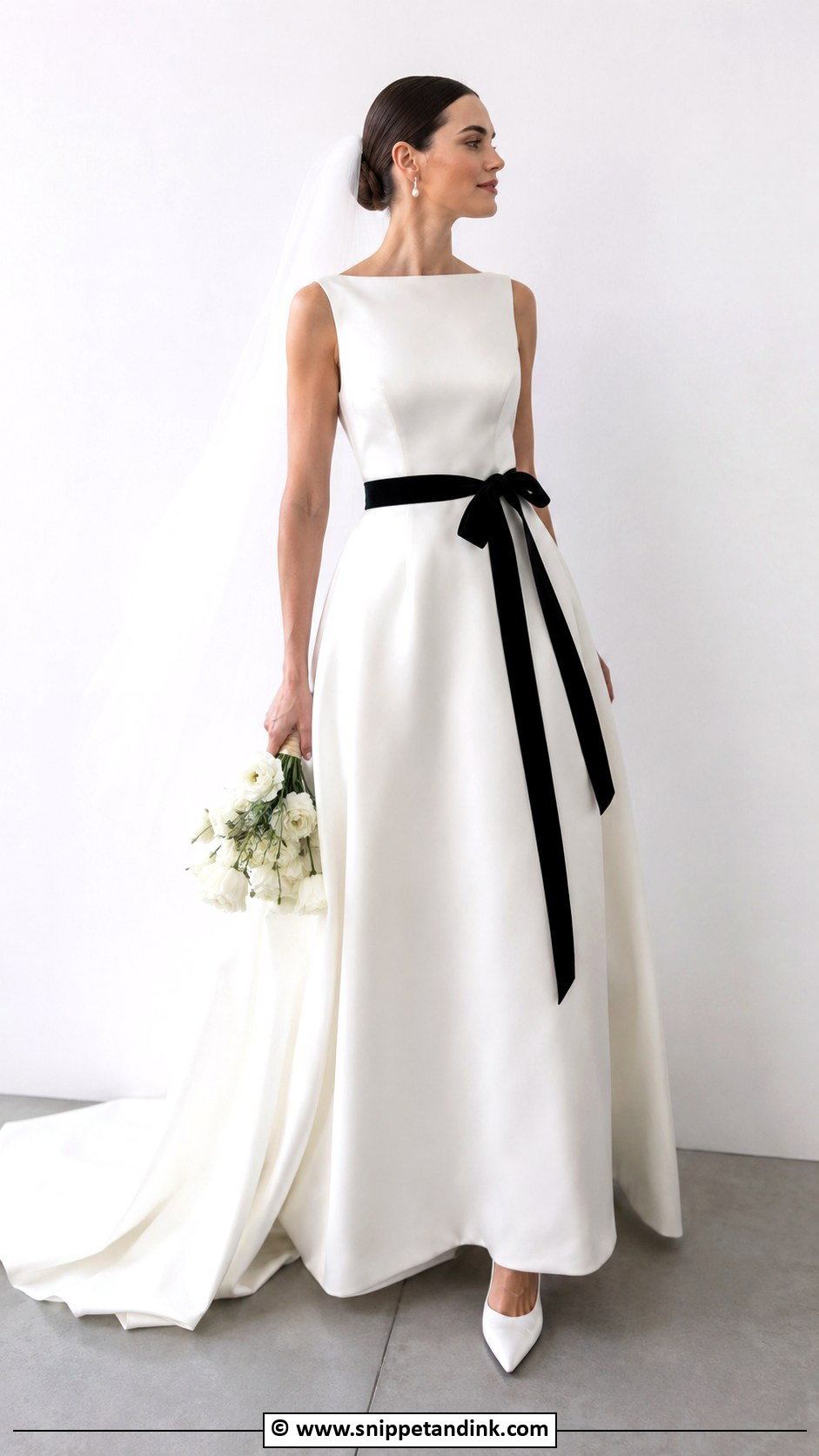
Black on white makes a bold statement, but only if the black is placed deliberately: a bow, gloves, a waistband, lace trim or embroidery. A clean silhouette lets the contrast work. Black ribbon is the easiest place to start. I’d keep the bouquet minimal and white so the color contrast stays the focus, and choose ivory or black heels for modern or gallery weddings.
29. Bridal Suit Wedding Dress
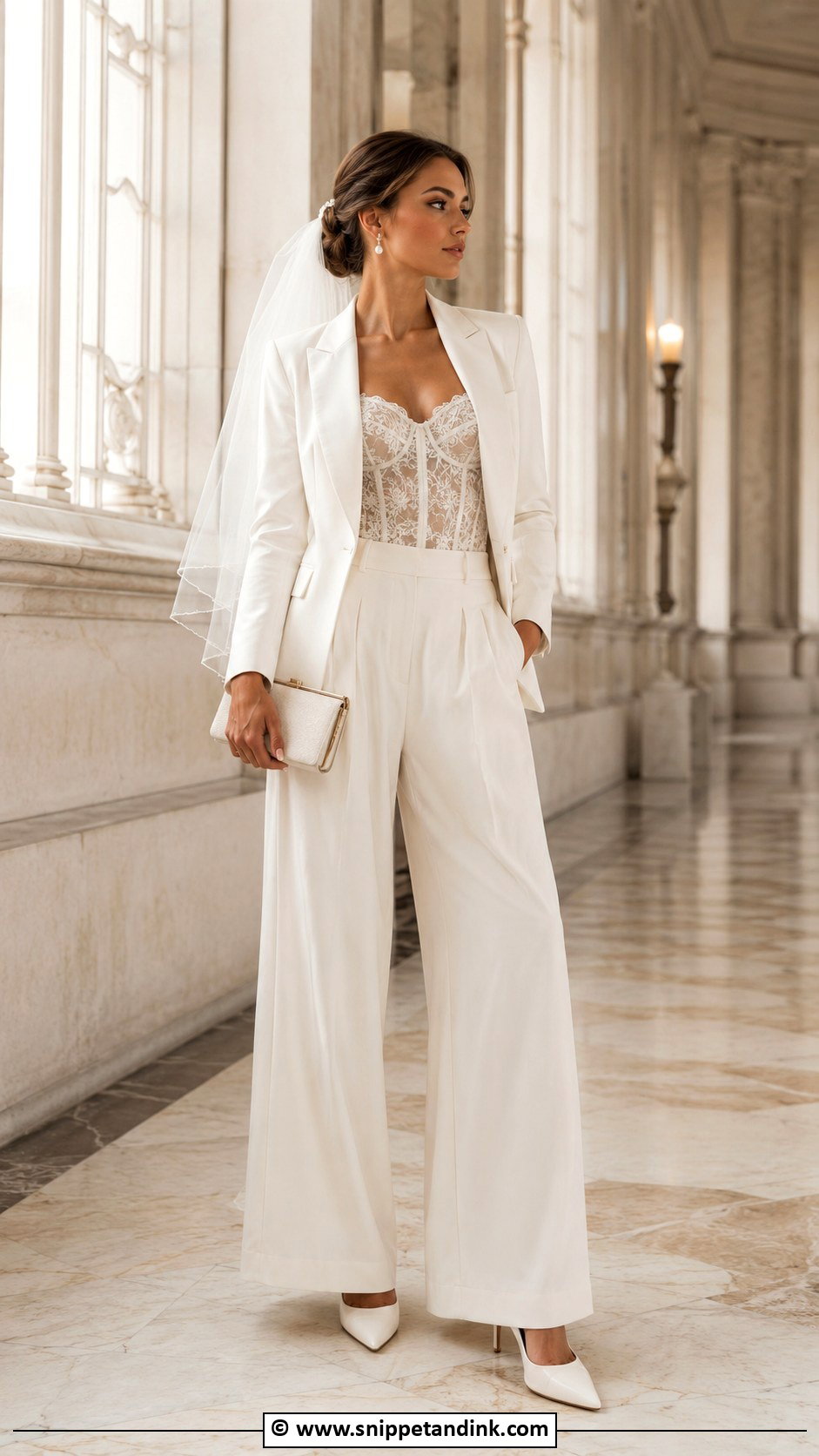
A bridal suit wedding dress look is tailoring in place of a gown, and it lives or dies on the fit. Plan for at least two fittings; jackets need work across the shoulders and trousers at the hem. White or ivory with wide legs and a lace corset or satin camisole underneath feels bridal. Pointed pumps, pearl earrings and a short or birdcage veil suit courthouse and city ceremonies.
30. Reception Wedding Dress
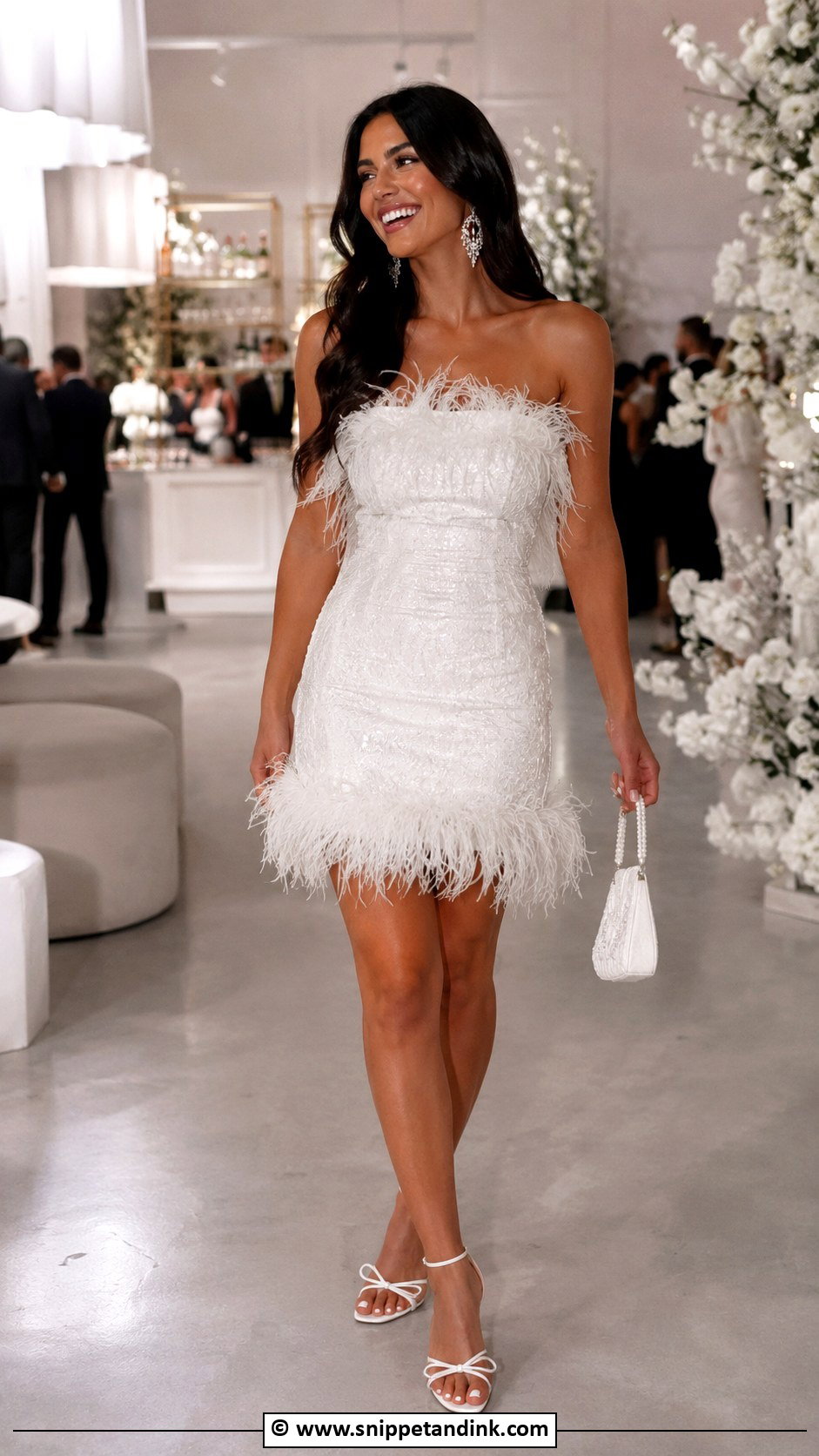
A reception wedding dress should let you sit, hug and dance freely while still looking bridal. Minis, slips, feather trims, tea lengths and columns all work. It’s a good place to show personality if your ceremony gown is traditional. Pick a breathable fabric, because reception rooms get warm. Comfortable heels, a small bag and statement earrings show up well in party photos.
Bustles, Bathroom Trips and Ten Hours in Tulle
The parts of the day nobody photographs are where a gown proves itself. I talk brides through these before the final fitting, because fixing them on the day is much harder.
The bathroom question
With a full skirt, the easiest method is to face the toilet and gather the skirt in front of you, with a bridesmaid holding the back. Some brides wear a slip that bunches the skirt up. Practice once at home so it isn’t new on the day.
Heat, sitting and bustles
- Heavy satin and multi-layered tulle hold heat; for summer outdoor weddings, ask about lighter linings or fewer layers.
- Tulle snags on rough chairs, so ask the venue for smooth seating or a cover at the head table.
- Have one bridesmaid learn the bustle at your final fitting. Color-coded ribbons inside the skirt make it quicker under pressure.
- Keep a small kit: safety pins, clear thread and needle, fashion tape, and a white chalk stick for small marks.
Fit First, Then the Trend
The year’s gowns give brides room to choose drama, softness, color, tailoring or tradition without one fixed rule. Whatever you lean toward, a corset, a slip, florals, a suit or a mini, test the fit and the movement in the venue’s conditions. Let accessories support the dress rather than compete with it. The right one is the gown you forget about once you’re dancing.
You'll Like These Ideas:








Leave a Reply