
Fringe is the one bridal detail that changes completely once you start moving. On the hanger it can look busy; on a dance floor it swings and catches light in a way lace and tulle never will. Bridal designers now use it on beaded minis, pearl-strand gowns, boho lace and convertible dresses with a skirt that comes off for the party. My first question to any bride drawn to fringe is how much of it she wants, because the amount matters more than the style. Fine tassels soften a dress; dense beaded fringe turns it into the main event and adds real weight. The dresses below cover ceremony gowns, reception changes and second looks, with notes on shoes, veils and hair that won’t fight the movement.
Beaded, Thread and Feather Fringe Wear Very Differently
Brides tend to choose fringe by how it looks in a photo. I’d choose it by what it’s made of, because each type moves, weighs and survives a long night differently.
Beaded and pearl fringe
This is the heaviest and the most dramatic. It swings with real momentum and catches light, but a fully beaded skirt can add noticeable weight, and that weight sits on your shoulders or bodice all day. Strands are usually threaded in sections, so one snapped thread can drop a run of beads. Ask whether the strands are knotted individually; good ones are.
Silk, rayon and chainette thread fringe
Light and fluid, and the easiest to dance in. The drawback is tangling. Thread fringe twists into knots when you sit on it or brush past people, and humidity makes it cling. A quick comb through with your fingers between ceremony and photos keeps it straight.
Feather and leather fringe
Feathers are delicate and shed a little; keep them away from rain. Suede and leather tassels suit western and boho dresses, hold up well outdoors and soften with wear, but they can mark if they get wet.
1. Beaded Fringe Wedding Dress
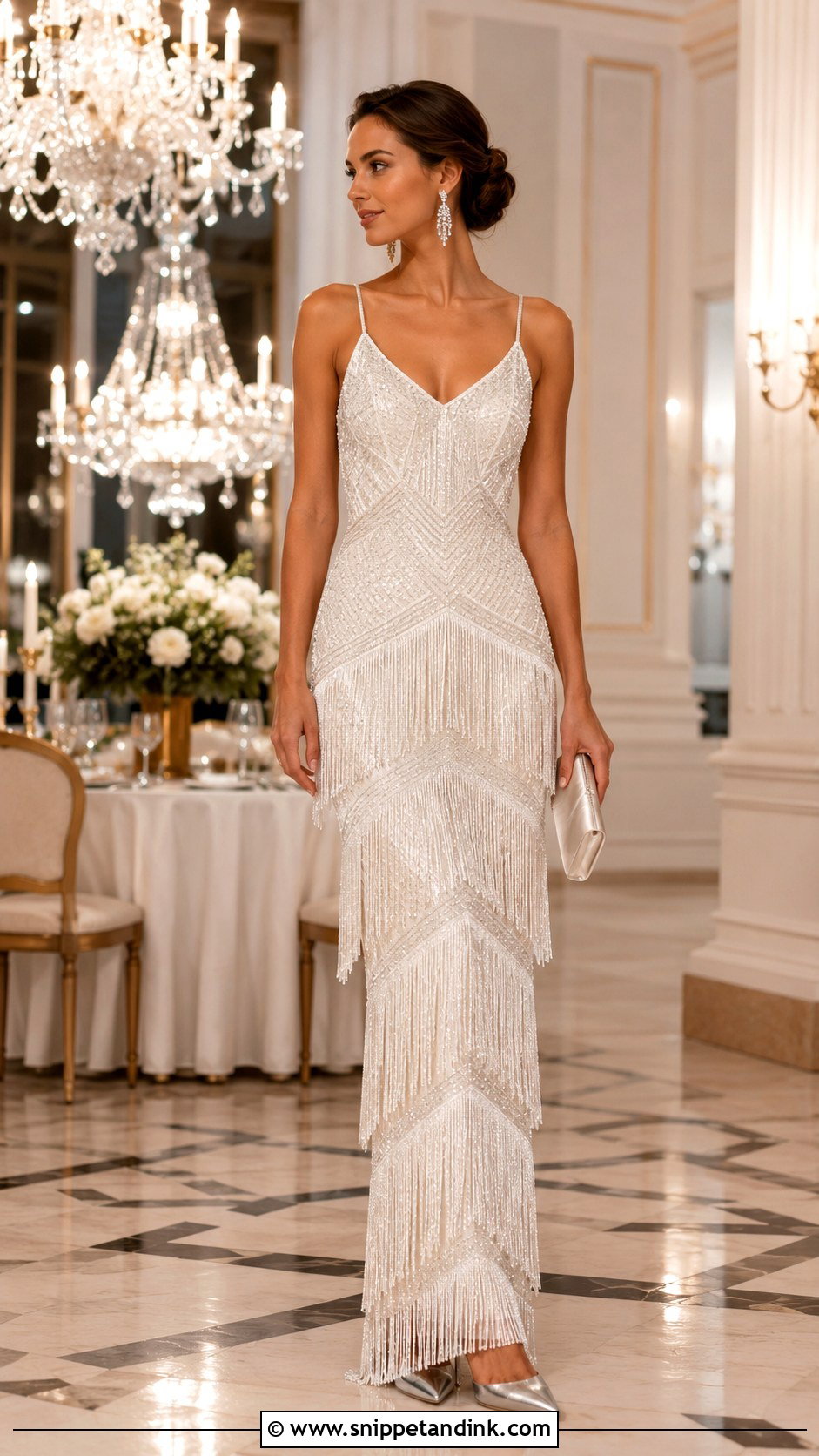
Heavy beaded fringe starting below the hips is the most flattering placement I know, because the weight pulls the skirt straight down and adds no width at the waist. Pick a fitted ivory gown with geometric beadwork and narrow straps. Silver pointed pumps, crystal drops and a small satin clutch are enough jewelry; anything more starts to clash with the beads. Wear the hair in a smooth low bun. Loose curls snag in beaded straps all night and pull the set out of shape. A fingertip veil with a cut edge, no lace trim, keeps the line clean for an evening ballroom or a city wedding.
2. 1920s Fringe Wedding Dress
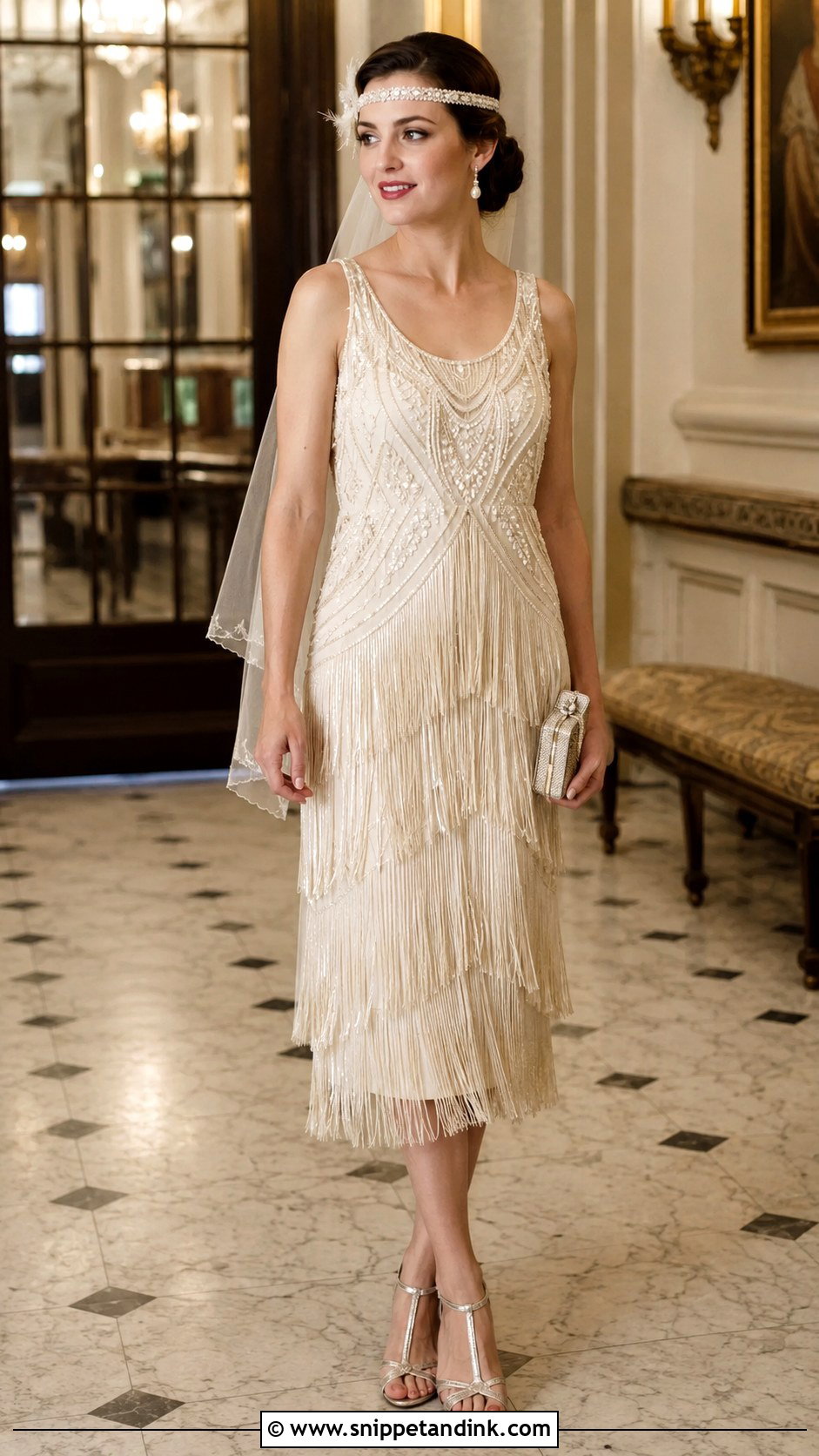
Symmetrical beading and tiered fringe set you straight into an Art Deco setting, and the trick with a 1920s dress is stopping before it becomes fancy dress. A straight or gently fitted cut with a knee or tea-length hem does that. Period beaded dresses were built to dance in, so walk and turn in the fitting room; the fringe should swing a beat behind you. Low metallic T-strap heels are kinder on a long night than stilettos and suit the era. Add pearl drops and an ivory box clutch, a crystal comb or narrow beaded band instead of a veil, and finger waves or a sleek side-parted bob. Defined eyes and a soft rose lip finish it.
3. Boho Lace Fringe Wedding Dress
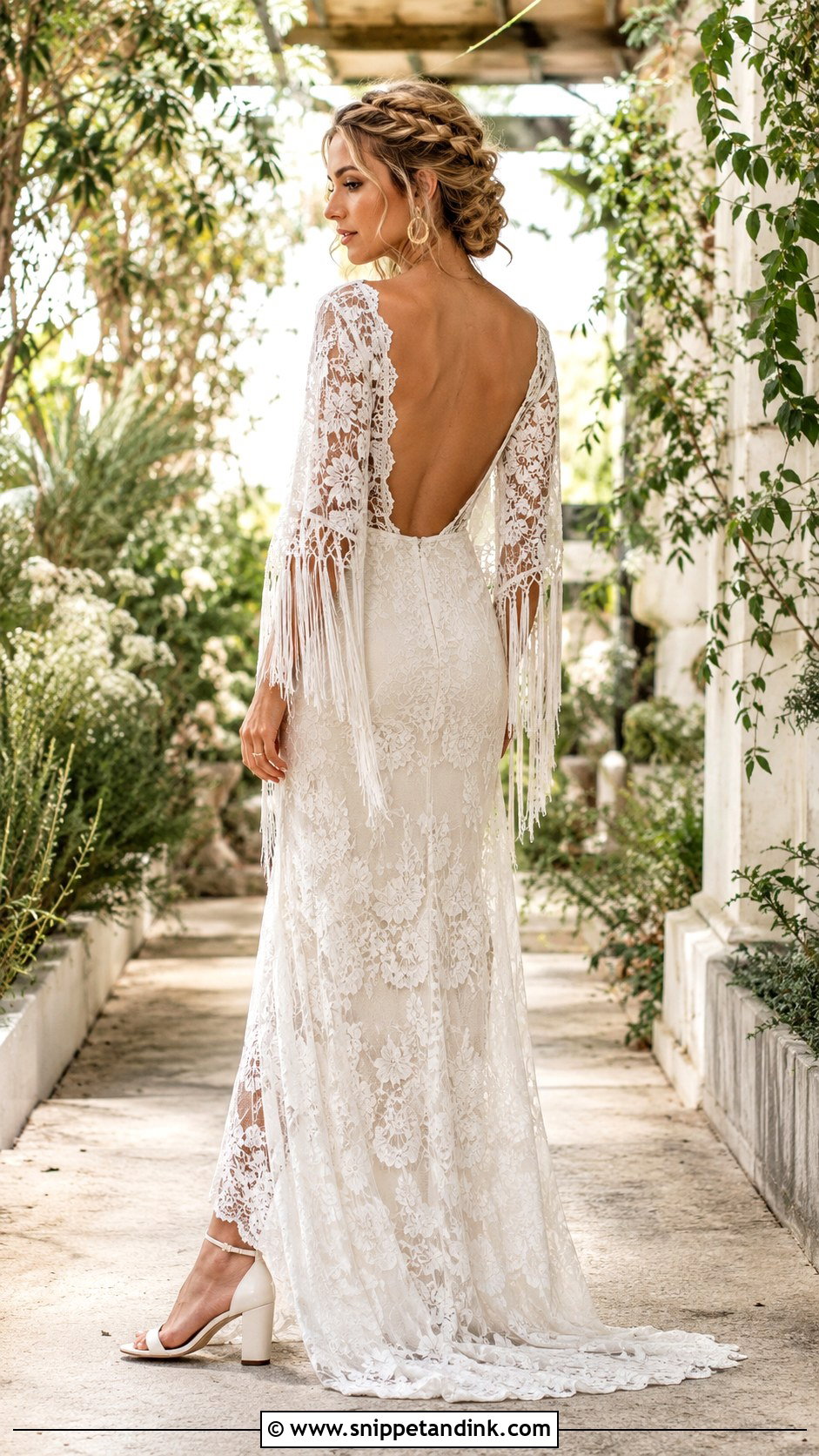
A boho fringe wedding dress works best when the tassels follow the lines of the gown, down the sleeves or along the skirt seams, rather than covering it. Choose a floor-length lace sheath with an open back. Outdoors, cotton and suede fringe picks up grass seed and burrs, so I’d shake the hem out before portraits. Ivory leather sandals with a low block heel keep you steady on grass, sand or uneven ground. A loose braided updo, small gold hoops, a seasonal greenery bouquet and a light lace-edged veil suit a garden, desert or woodland ceremony, and a woven cream clutch holds the essentials.
4. Pearl Fringe Wedding Dress
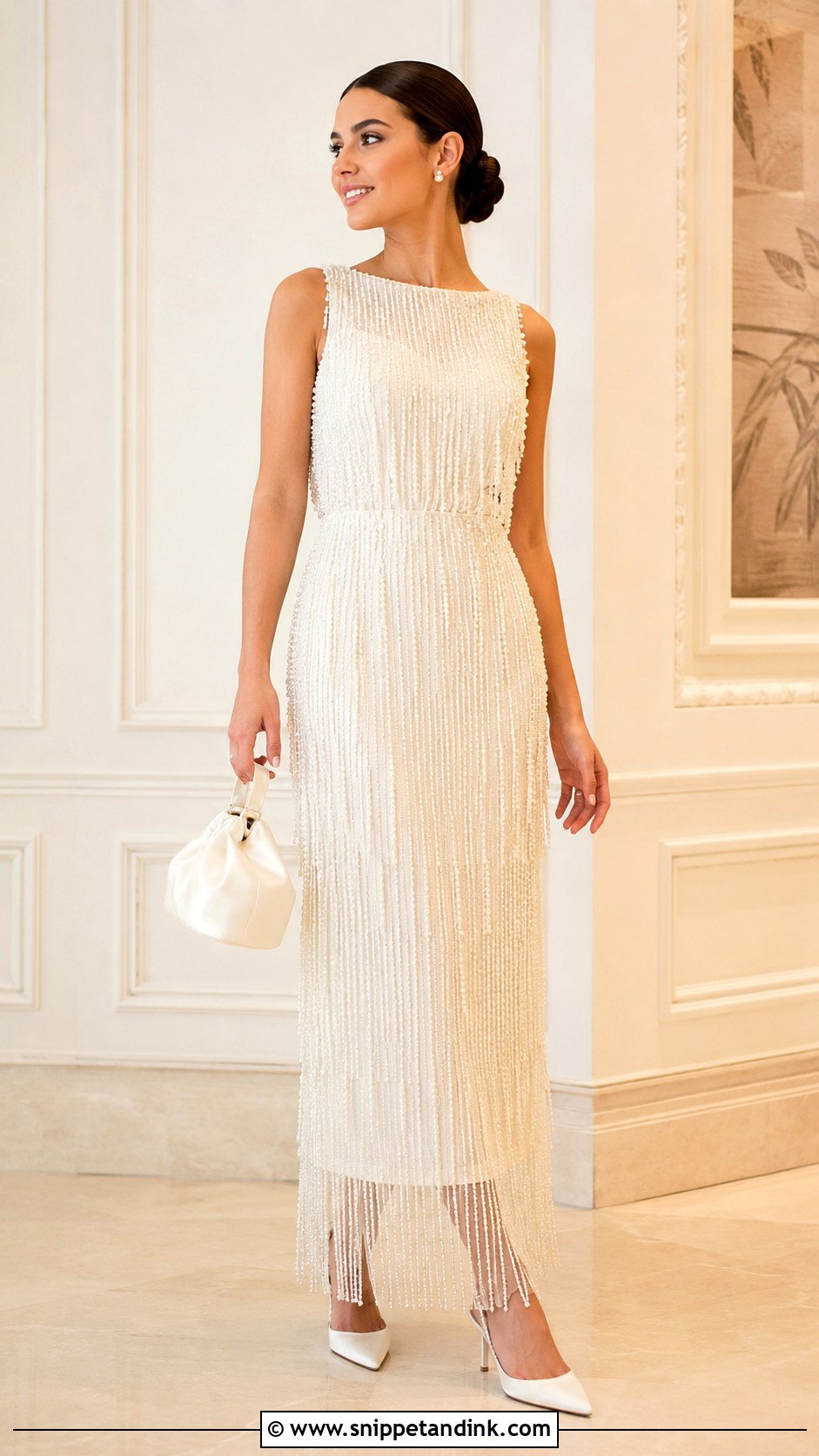
Pearl fringe is quieter than sequins, which suits brides who want texture without glitter. Look for pearl strands across the bodice, shoulders or hem of an ivory mini or column dress. Real pearls and good glass pearls are heavy, so strands on the shoulders need a sturdy strap underneath or they drag the neckline down by evening. Pair pointed slingbacks with pearl studs and a compact satin bag; with a high neck, swap the necklace for a fine pearl bracelet. A clean chignon and a plain cathedral veil for the ceremony, removed for the reception, make this an easy main dress or a second look.
5. Fringe Mini Wedding Dress
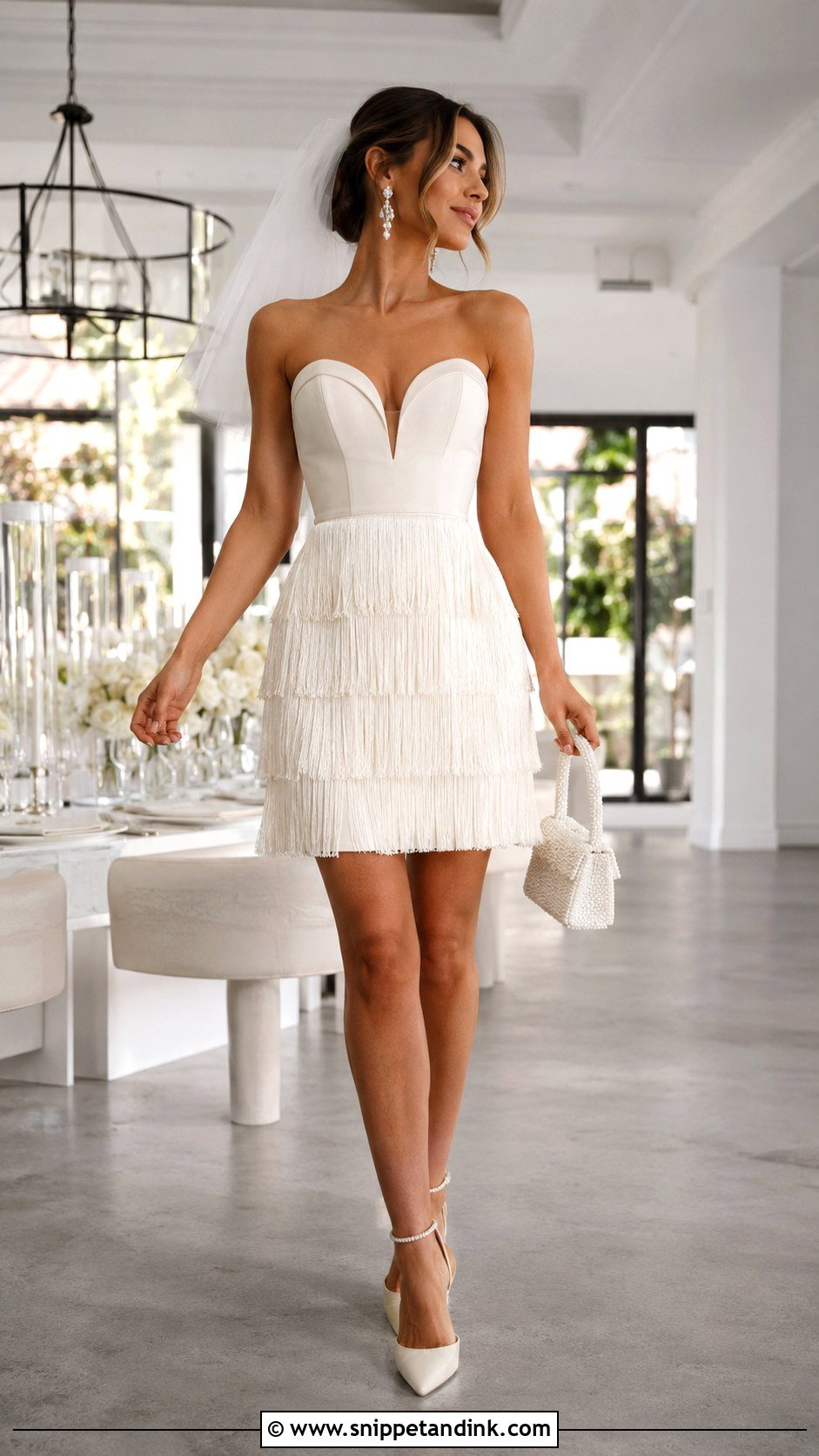
If dancing is your priority, a fringe mini is the most practical dress here. The fit has to be secure, though: you’ll be jumping around in it, so I check for a boned bodice and straps that don’t slip when the arms go up. Fringe should end around the knee. Satin ankle-strap pumps, crystal earrings and a small top-handle bag keep it bridal rather than cocktail. Sheer bridal tights help in cooler months, and a high ponytail or polished bun looks right with the short hem. A short tulle veil works for the ceremony. It suits a courthouse wedding, an intimate party or a reception change.
6. Fringe Midi Wedding Dress
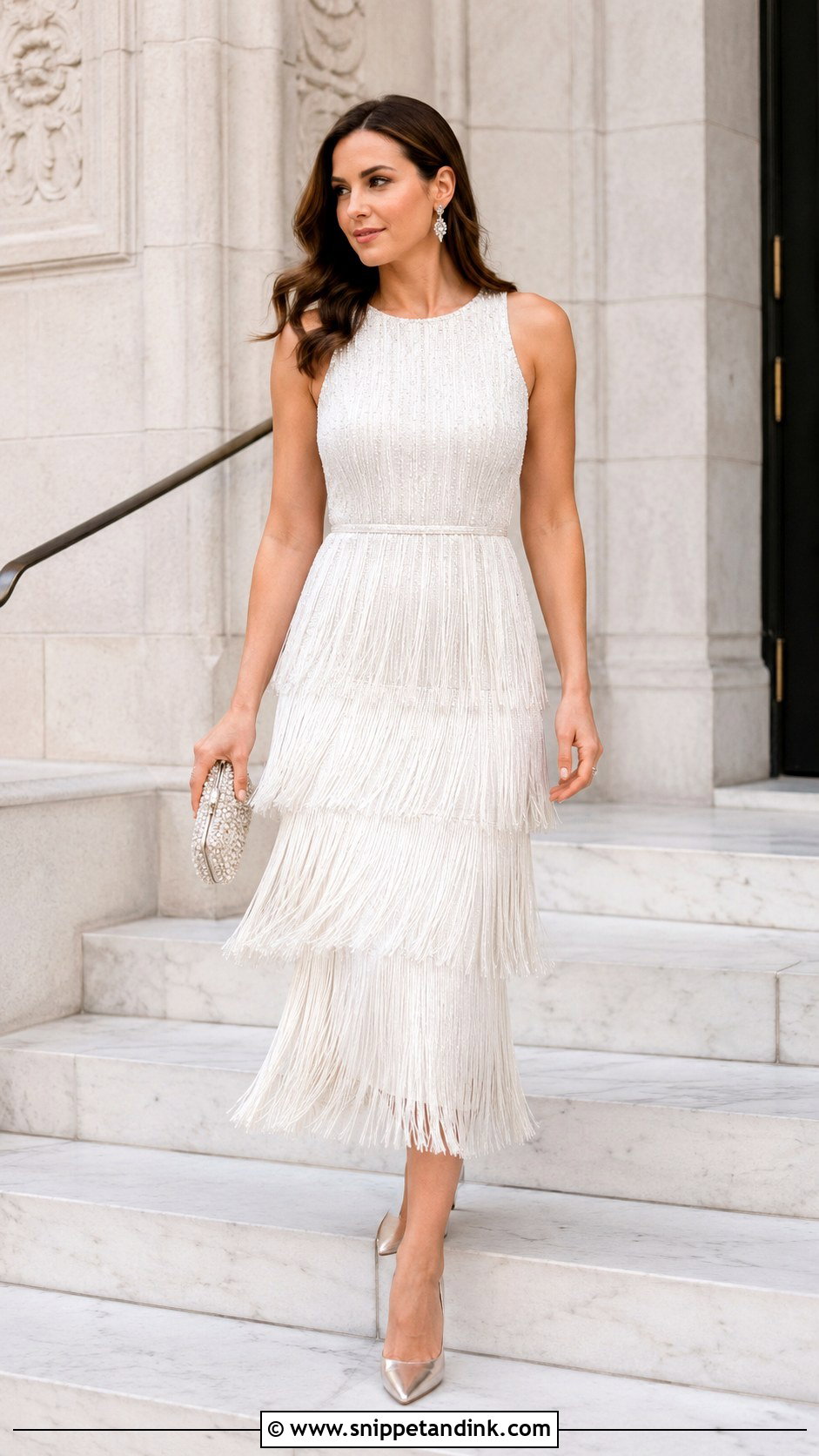
Is a midi the right middle ground? For many brides it is, because it covers more than a mini and still shows the shoes. Choose a sleeveless ivory dress with a defined waist and fringe concentrated on the skirt. Metallic pumps, a beaded clutch and medium crystal earrings work, and a cropped ivory blazer adds warmth without hiding the shape. Soft brushed waves or a sleek shoulder-length cut suit it. I’d steer clear of a long veil here, since a veil that ends near the hem blurs the length you chose. A birdcage veil or a comb looks sharper at a civil ceremony or a restaurant reception.
7. Long Sleeve Fringe Wedding Dress
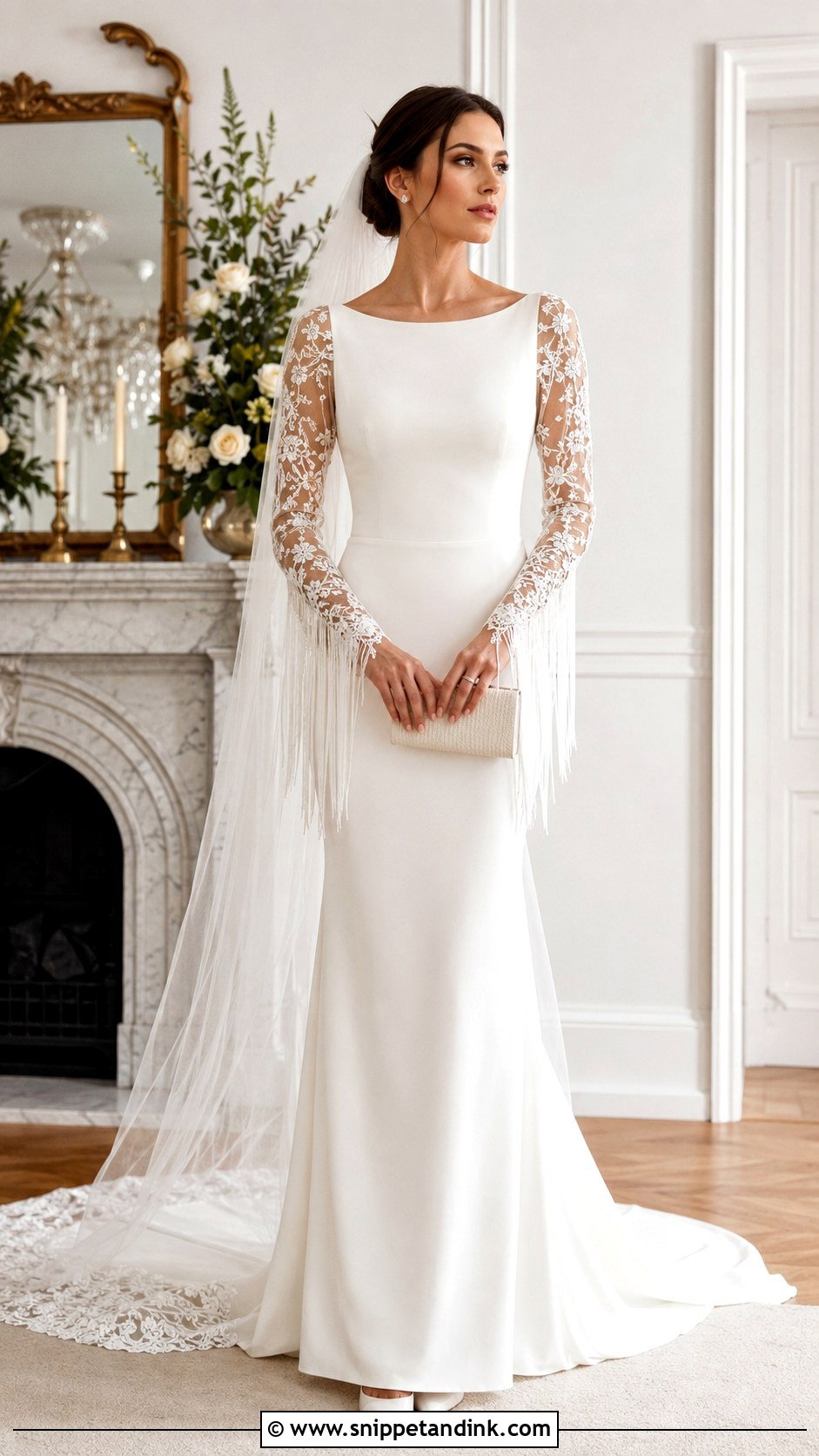
Long sleeves with fringe at the cuff look lovely in photos, but cuff fringe dips into everything: the cake, your drink, the guest book ink. I suggest brides keep cuff tassels short. Sheer lace sleeves with light tassels over a streamlined crepe or lace skirt give coverage without the weight of a heavy gown. Ivory closed-toe pumps and a structured clutch keep it polished; choose studs if the sleeves are heavily beaded and fine drops if they’re simple. A low twisted bun stops the neckline feeling crowded. Add a plain chapel veil for the ceremony and take it off before dancing. It’s a strong choice for fall and winter weddings indoors.
8. Strapless Fringe Wedding Dress
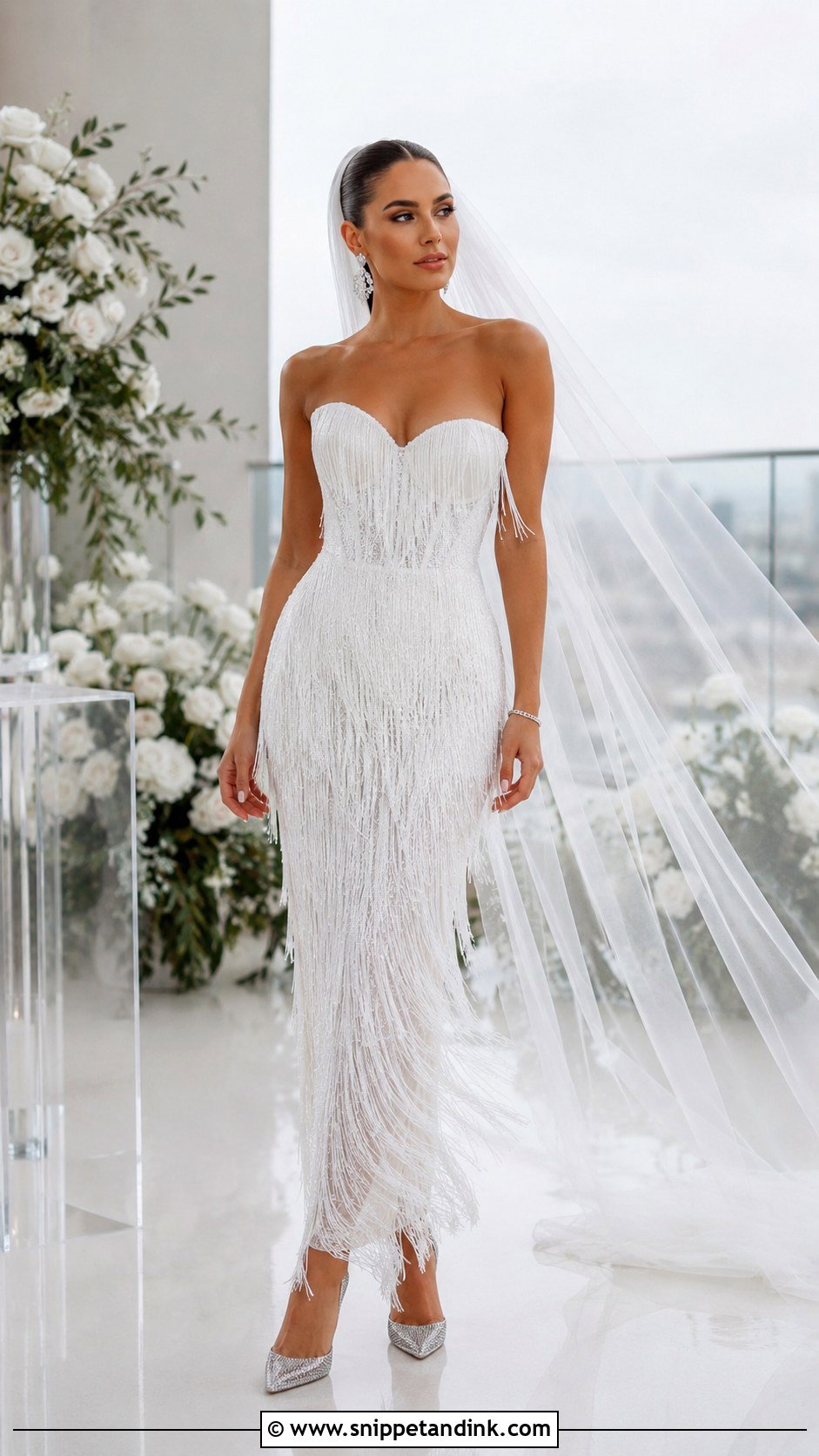
A strapless dress puts all the weight of the fringe on the bodice, so internal structure isn’t optional. I want to see boning and a waist stay inside before a bride commits; without them, a heavy tassel skirt slowly drags the top down. With a fitted corset bodice and evenly spaced tassels, crystal pumps, a narrow tennis bracelet and statement drops are the right balance. A fine chain necklace suits a straight neckline, while a sweetheart usually looks better bare. An updo or side-swept waves keeps the shoulders clear, and a sheer fingertip veil softens it for the ceremony at a ballroom or rooftop venue.
9. Halter Fringe Wedding Dress
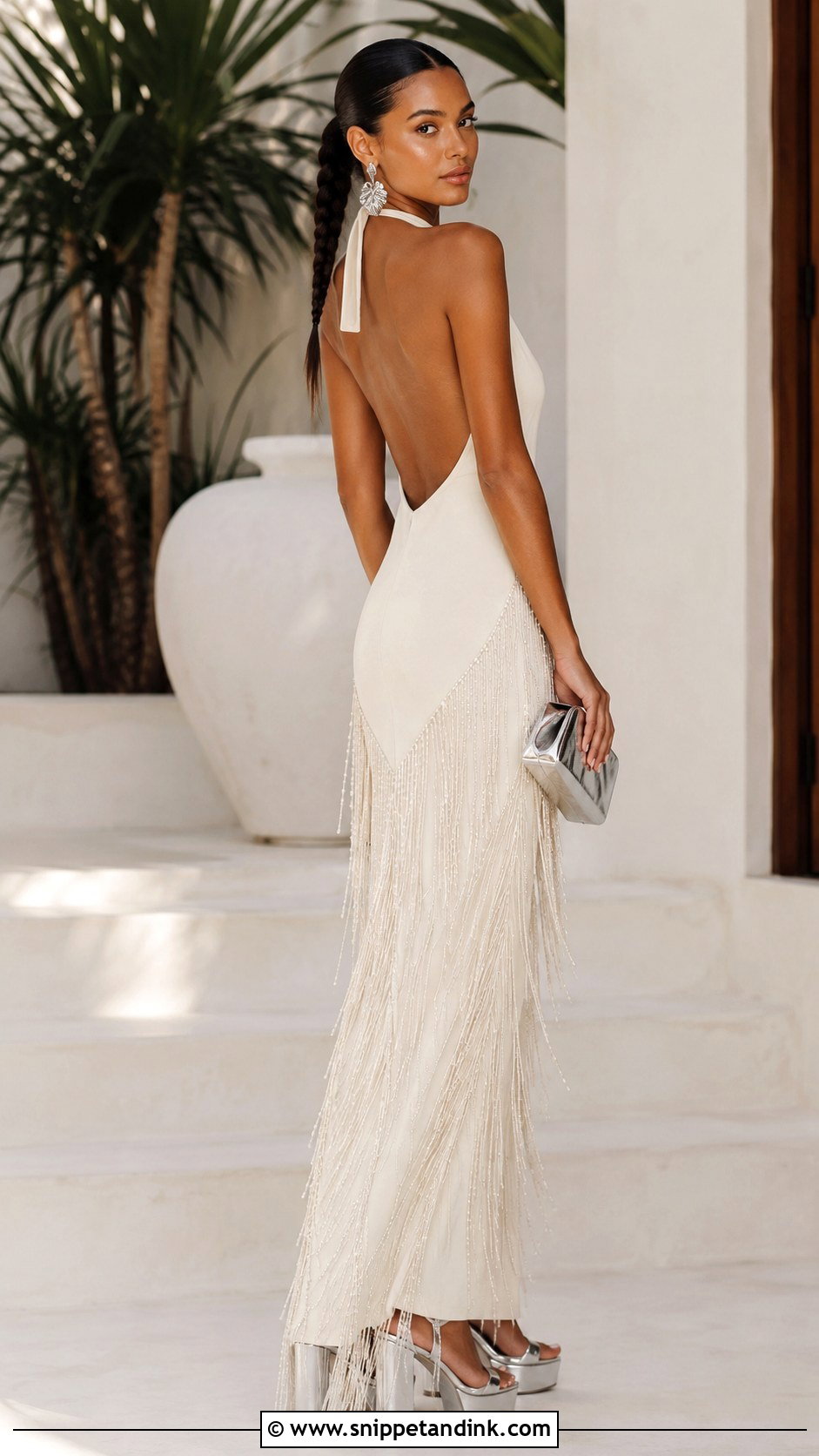
Halters hold a dress up from the neck, which makes them one of the most secure cuts for a lively reception. Picture an ivory column gown with a high halter, open back and narrow beaded fringe from the hips. Beaded halters can pull on the neck after a few hours, so I check the tie width during fittings. Metallic platform sandals give height with more support than thin stilettos. Sculptural earrings, a simple cuff and a compact silver clutch are enough, with no necklace. A sleek bun or braided ponytail shows off the back, and the veil should attach below the bun so the neckline stays visible.
10. Off Shoulder Fringe Wedding Dress
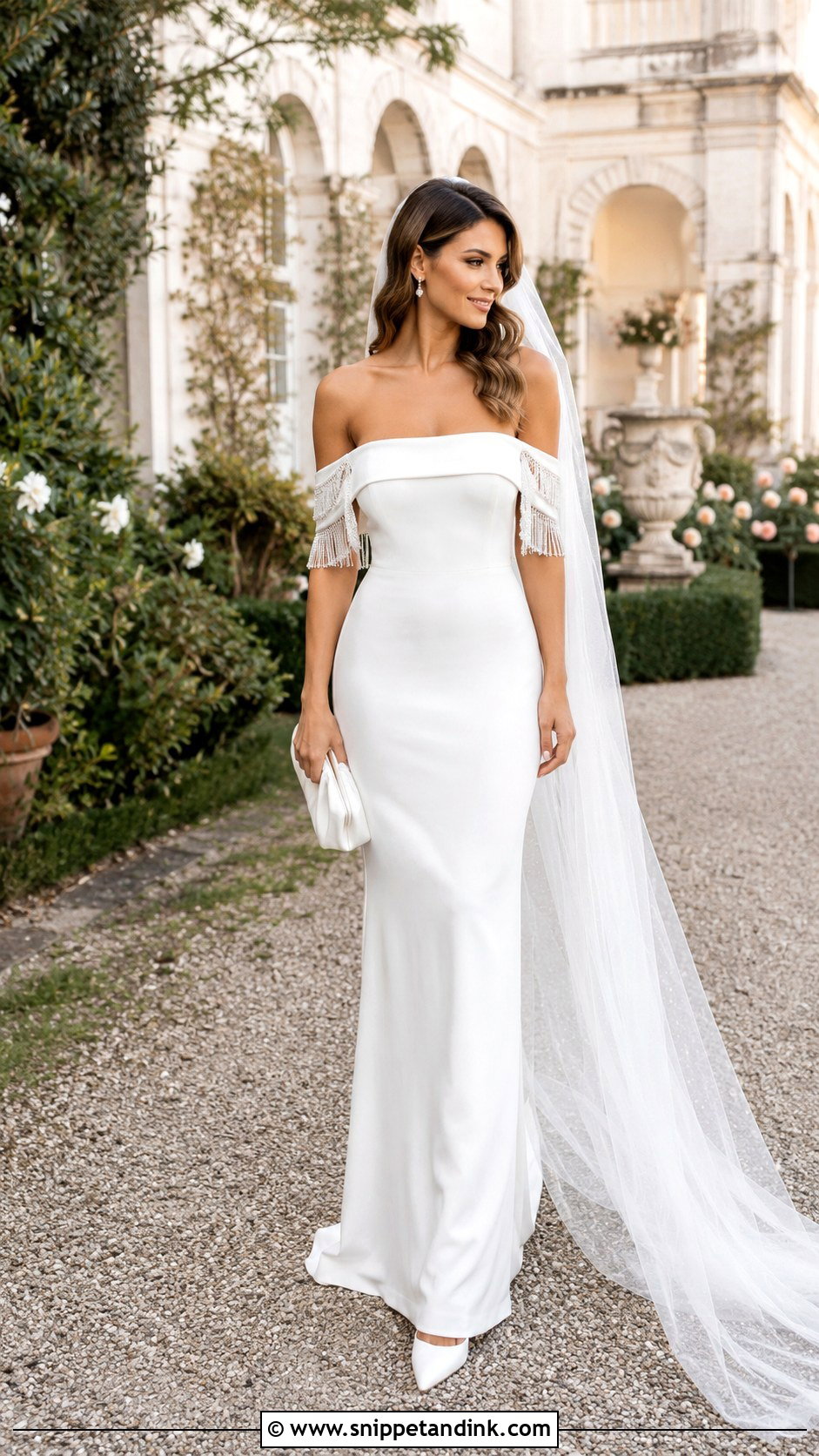
An off-shoulder gown with fringe on detachable arm bands gives you two looks: bands on for the ceremony, off once the dancing gets serious. Choose a fitted dress with a folded neckline. The neckline already draws the eye up, so keep earrings and bracelet understated, carry a smooth satin clutch and wear ivory pointed heels. Soft waves pinned behind one ear show the neckline. Arm bands do slide, so I ask the seamstress to add a fine silicone strip inside them. A low-set veil for the ceremony finishes it at a garden, estate or formal indoor wedding.
11. Plus Size Fringe Wedding Dress
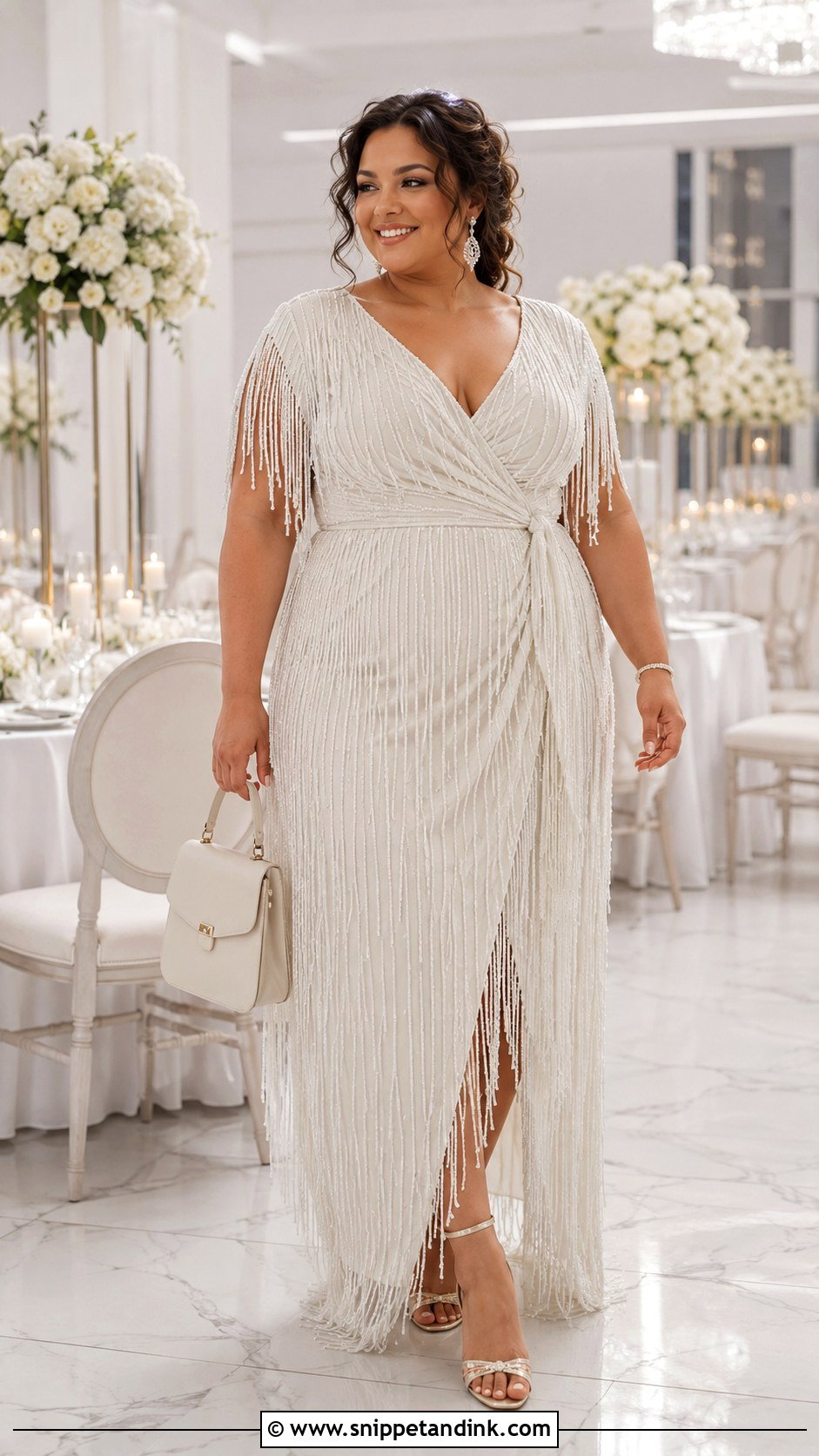
Fringe placement can define a plus size silhouette really well, and vertical lines are your friend. Strands that fall in columns, or start just below the natural waist, create movement and lengthen the body. Wrap gowns, supportive fit-and-flare dresses and structured columns all take it nicely. I care much more about the foundation garments and the alterations than any body-shape rule; a well-fitted bodice is what lets the fringe hang straight. Comfortable block heels, a structured ivory bag and earrings that echo the beadwork complete it. Wear a side-parted updo or soft curls, and choose a veil that attaches firmly so it doesn’t tangle in the tassels.
12. Beach Fringe Wedding Dress
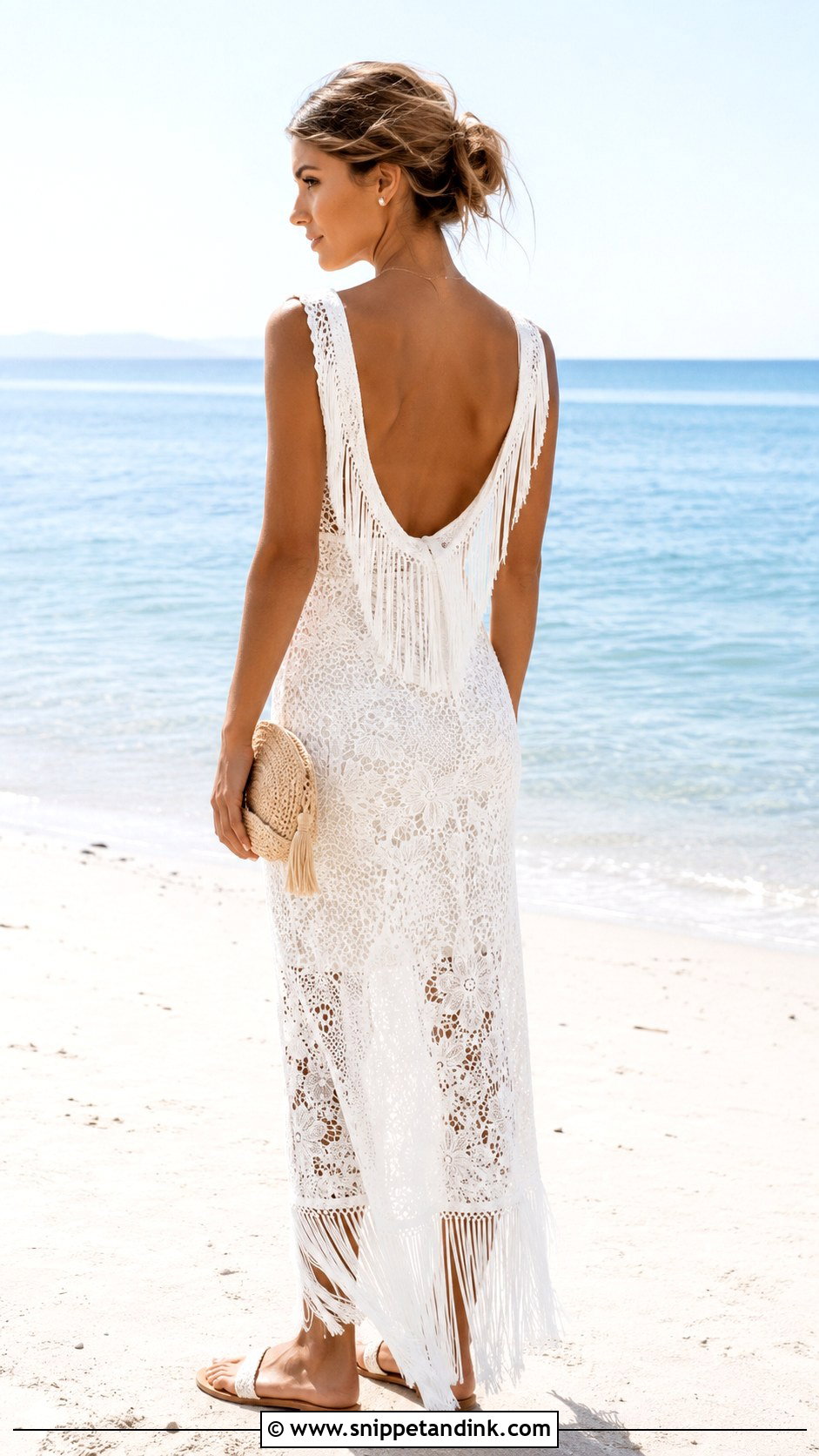
At the beach, heavy beaded fringe is a mistake. It gets sandy, swings wet against your legs and weighs the dress down in sea air. A sleeveless lace sheath with light, widely spaced cotton tassels, an open back and a short sweep train works far better. Wear flat ivory sandals or low espadrille wedges that won’t sink. Pearl studs, a thin anklet and a small woven clutch keep it simple. A loose textured bun stands up to wind, and a shoulder-length veil or floral comb won’t wrap around your face the way a long veil does.
13. Western Fringe Wedding Dress
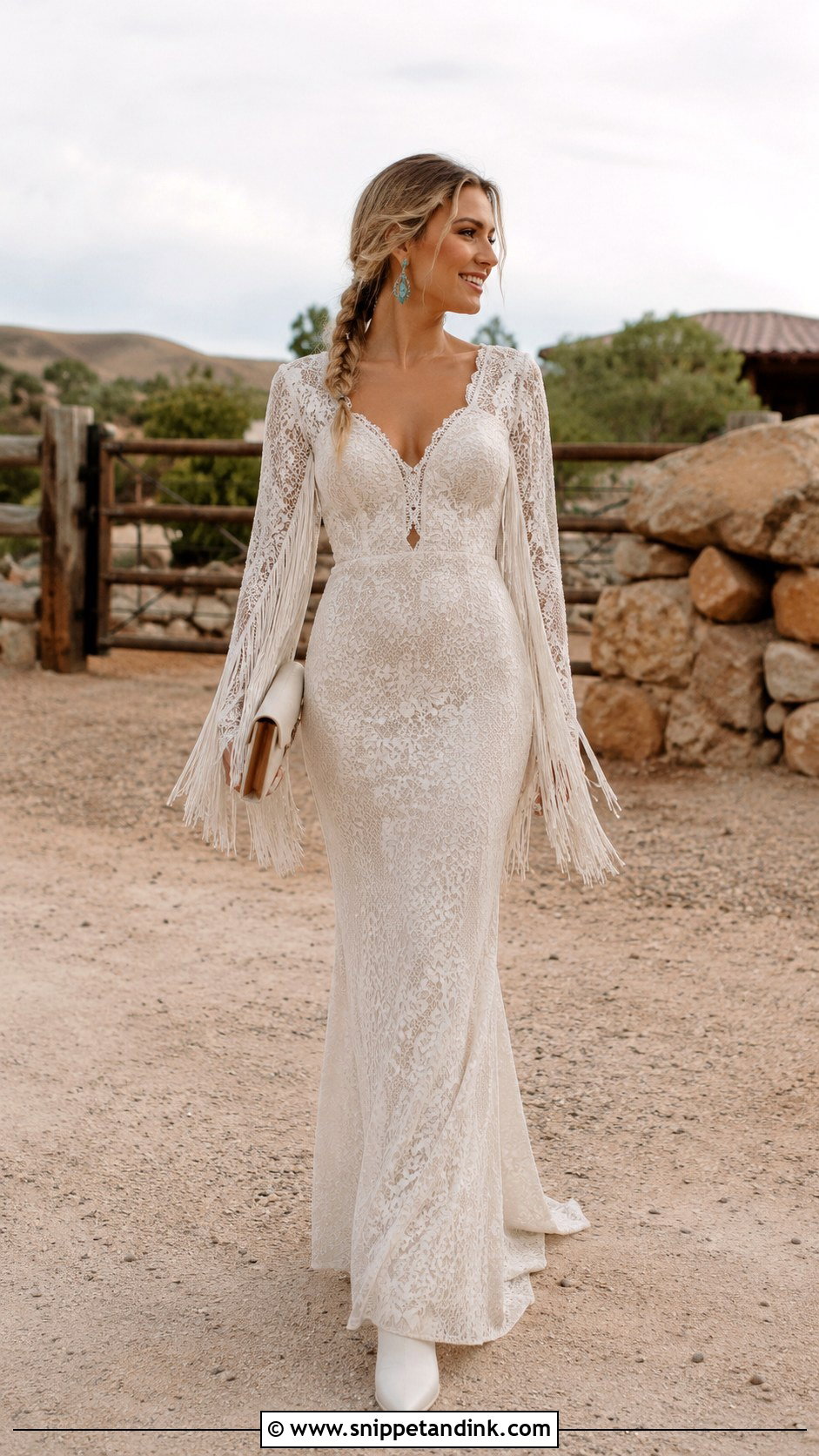
Western fringe looks right when it’s part of the dress and wrong when it looks added on. Look for an ivory lace gown with long fringe along the sleeves or the back yoke. Clean white leather boots with a pointed toe and moderate heel tie it together; keep the stitching subtle so the boots don’t take over. Break boots in for at least two weeks beforehand, because new leather rubs at the ankle on a long day standing. Small turquoise earrings, a smooth leather clutch and a low braid suit it. Wear a plain veil for the ceremony and swap to a structured ivory hat for outdoor portraits at a ranch, barn or mountain venue.
14. Sequin Fringe Wedding Dress
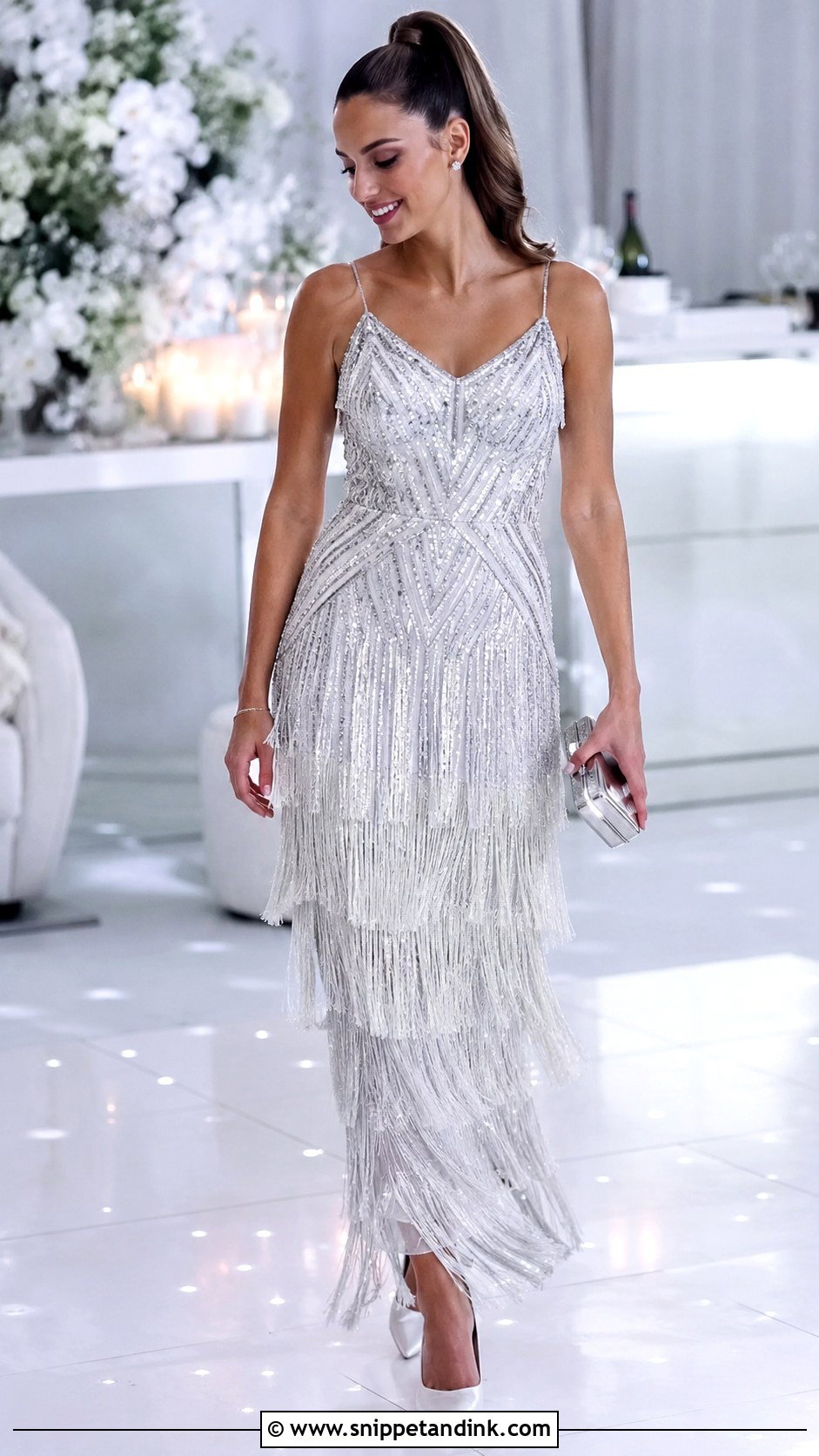
Sequins plus fringe means the dress already does all the sparkling. Choose a fitted ivory or silver-white gown with tonal sequins and layered fringe on the skirt, then keep everything else plain: satin pumps, crystal studs and a simple metallic clutch. The practical issue is friction. Sequin edges can catch fringe threads and knot them, so in the fitting I run my hand down the skirt to feel for snags. Check the lining too, because scratchy sequin backs rub the inner arms. A sleek ponytail or low bun keeps it modern, with a clean tulle veil or, for a reception-only dress, a minimal crystal barrette.
15. Floral Fringe Wedding Dress
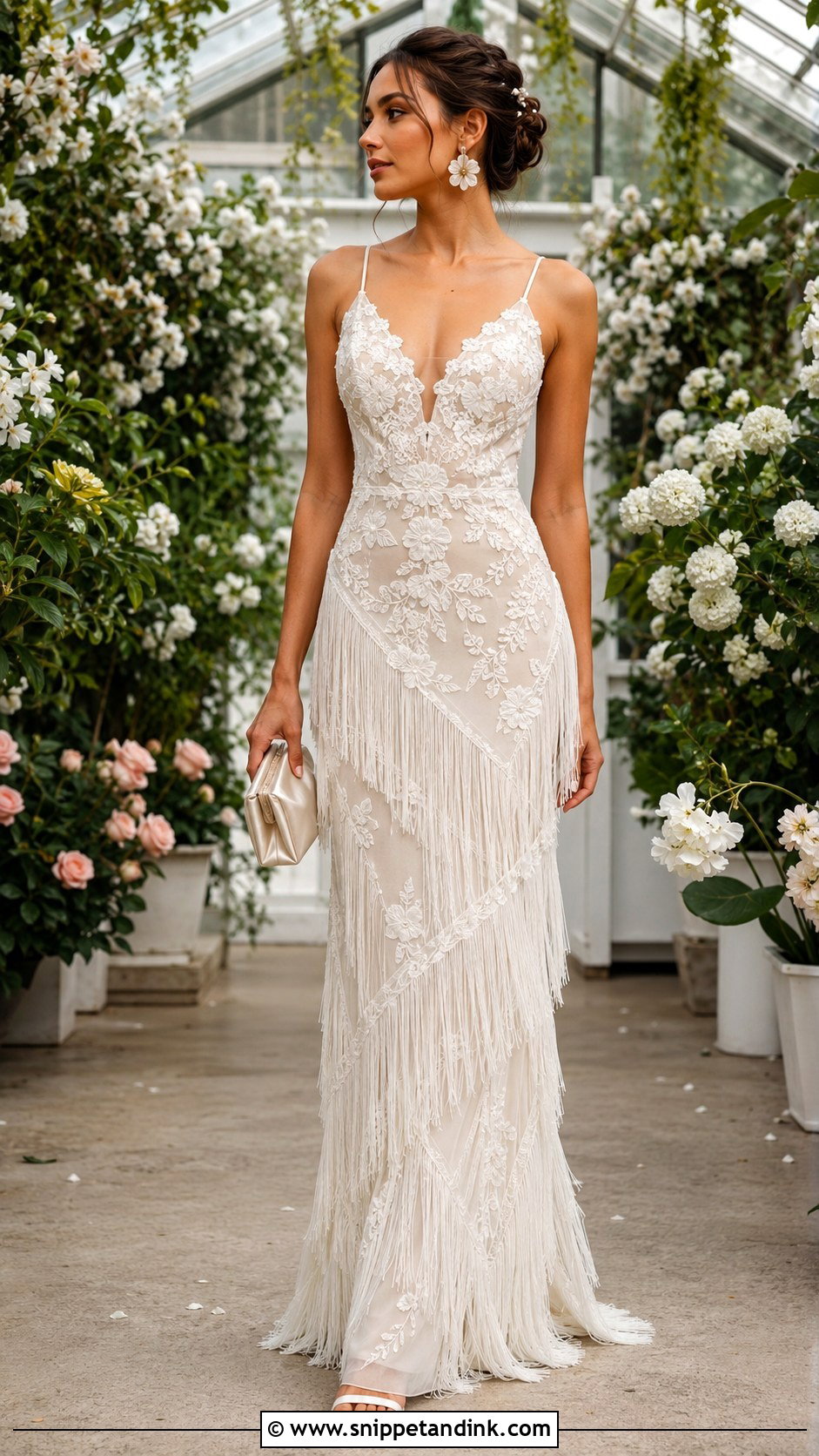
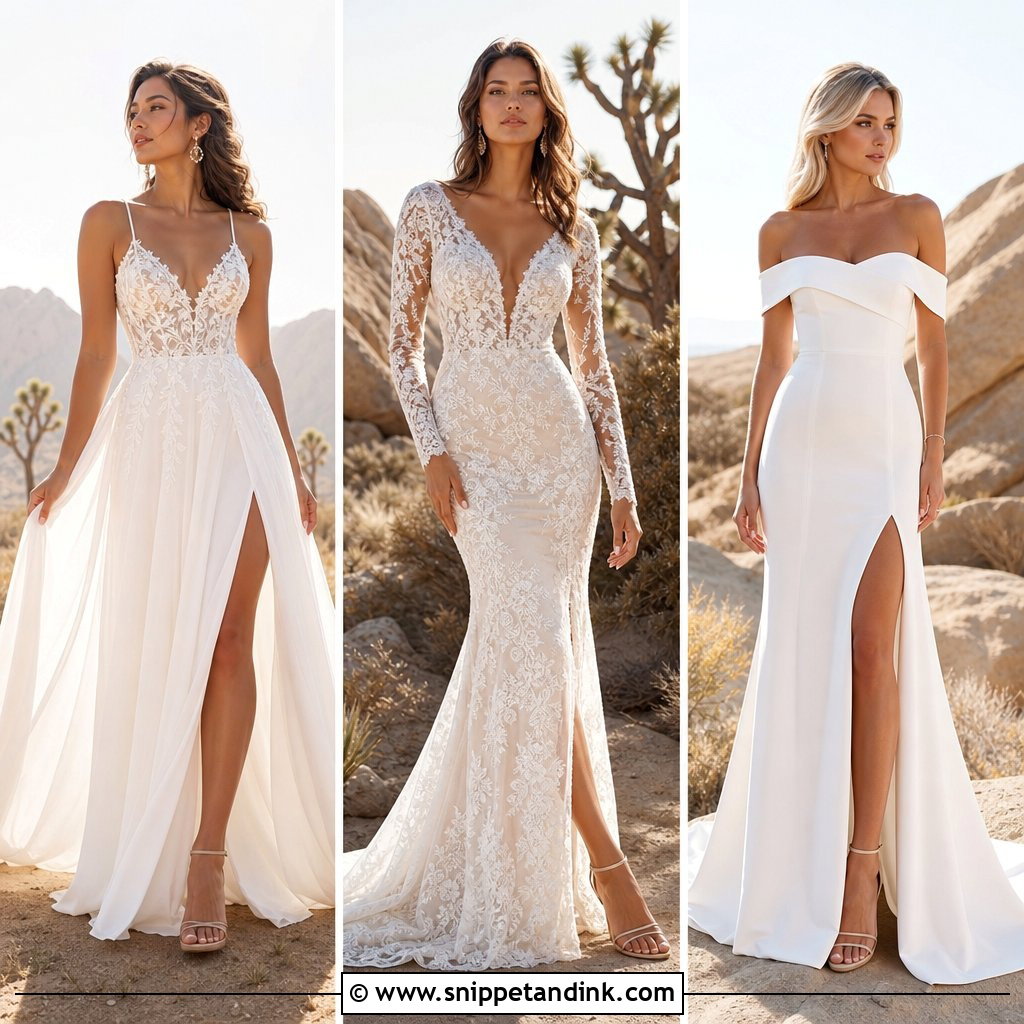
Floral embroidery takes the edge off fringe. A fitted tulle gown with ivory appliqués, narrow straps and fine fringe between the embroidered sections looks romantic rather than flashy. Nude or ivory sandals, small flower-shaped earrings and a matching satin clutch suit it. A loose updo with a few pearl pins carries the botanical idea without overdoing it. Keep the veil plain so the embroidery still shows, and choose a bouquet with only one or two flower varieties; a mixed bouquet next to this much detail looks crowded in photos. It’s lovely for garden, greenhouse and spring weddings.
16. Detachable Skirt Fringe Wedding Dress
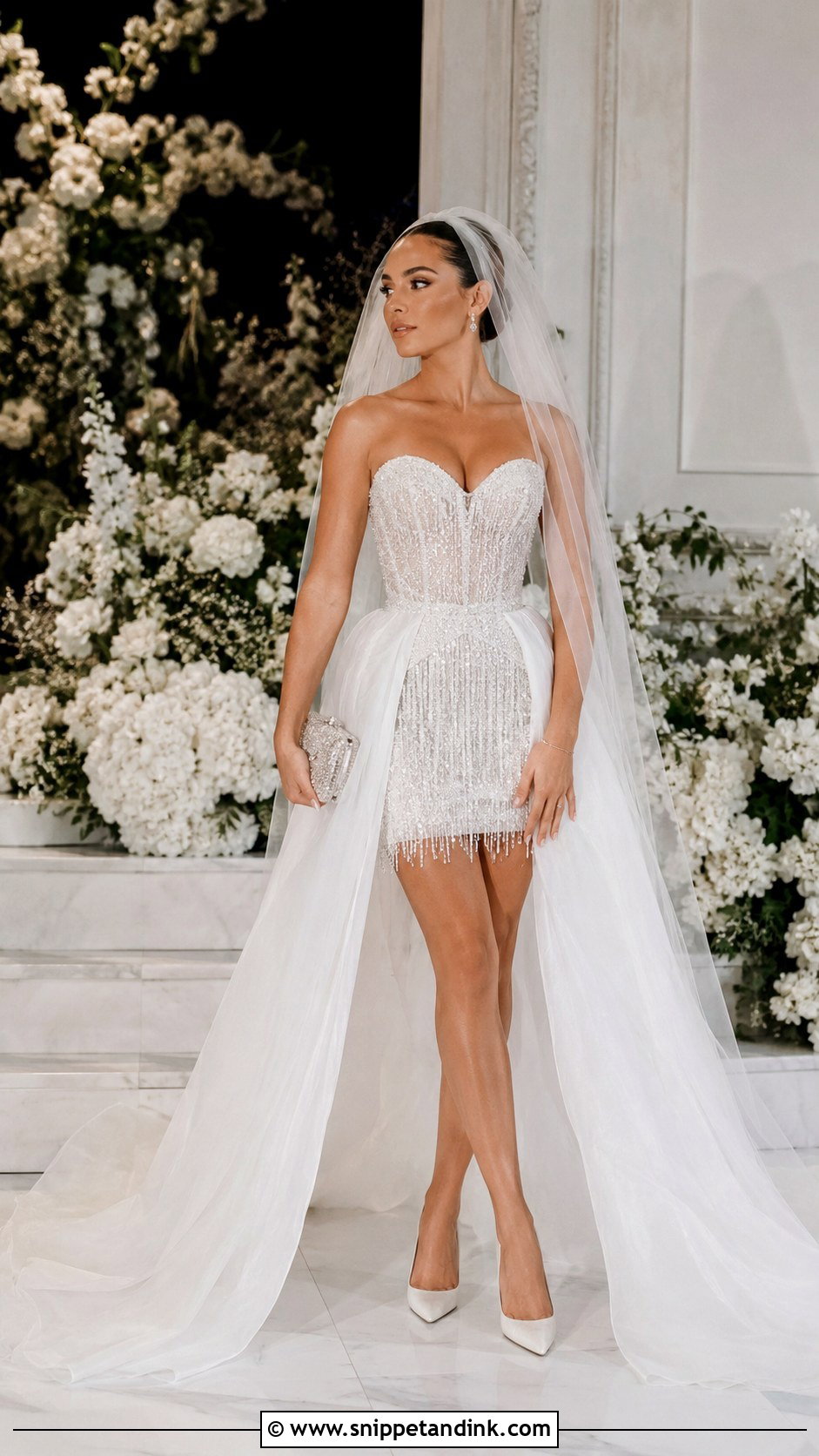
A convertible gown gives you two outfits from one dress. Start with a fitted pearl-fringe mini or sheath dress under a detachable organza overskirt with a sweeping train. Wear the full skirt with pointed pumps, a cathedral veil and delicate earrings for the ceremony, then take off the skirt and veil to reveal the shorter dress and switch to block heels or platform sandals. A small crystal clutch and a sleek bun work for both versions. I always have the bride practice removing the skirt at her final fitting with whoever will help her, because hooks and snaps are fiddly under pressure, and fringe can catch in the closures.
17. High Low Fringe Wedding Dress
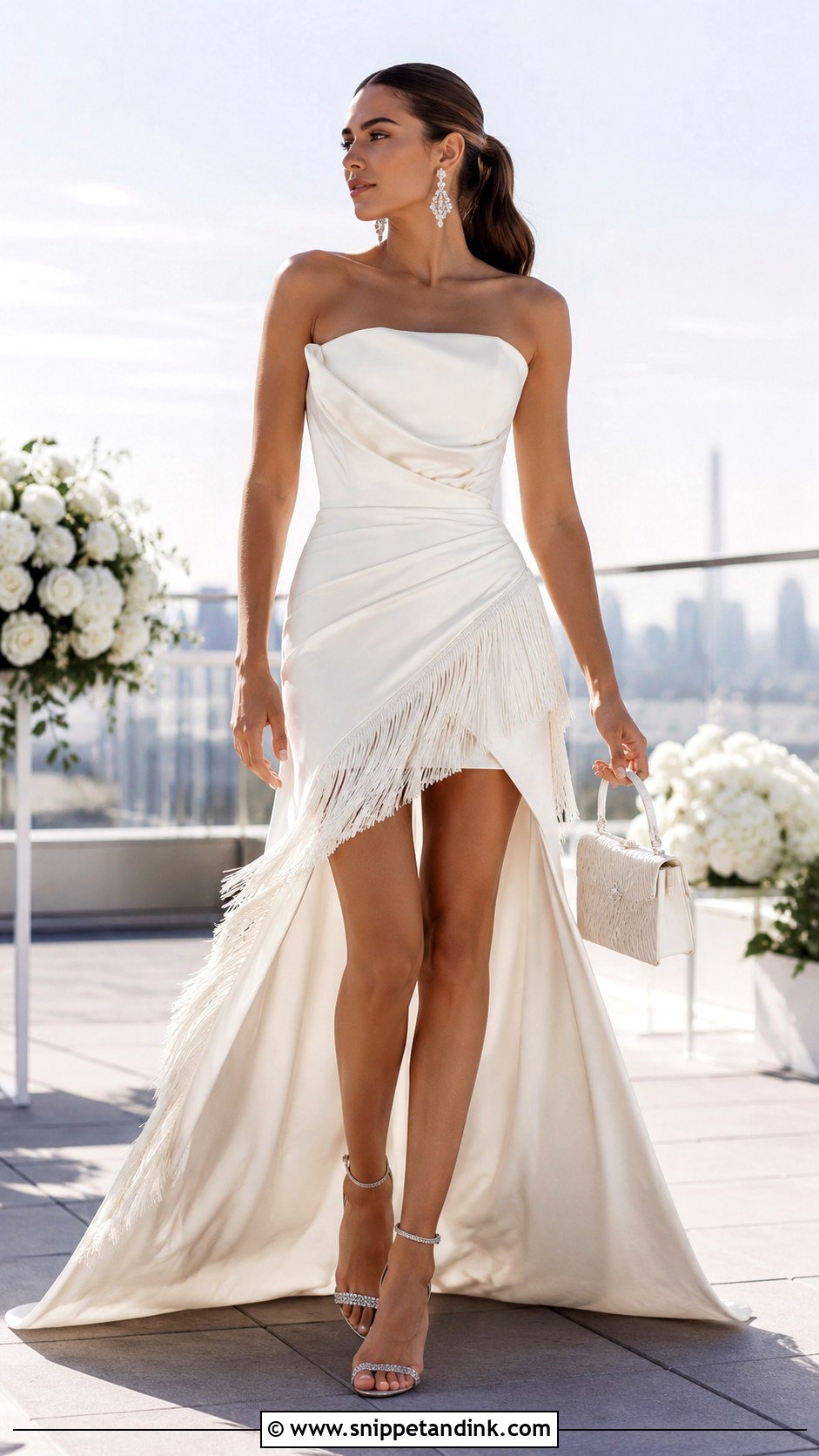
High-low hems were made to show shoes, so the shoes need to earn it. Embellished ankle-strap heels will be visible from every angle. Look for a structured bodice with a short front, flowing back panel and fringe along the angled edge. The front length is where fittings go wrong: check it seated, because fringe at the front rides up further than a plain hem. A small top-handle bag, crystal earrings and a polished ponytail suit the modern shape, and a fingertip veil sits better than a long one that would tangle with the uneven hem. It’s a good fit for rooftop and destination ceremonies.
18. Fringe Sleeve Wedding Dress
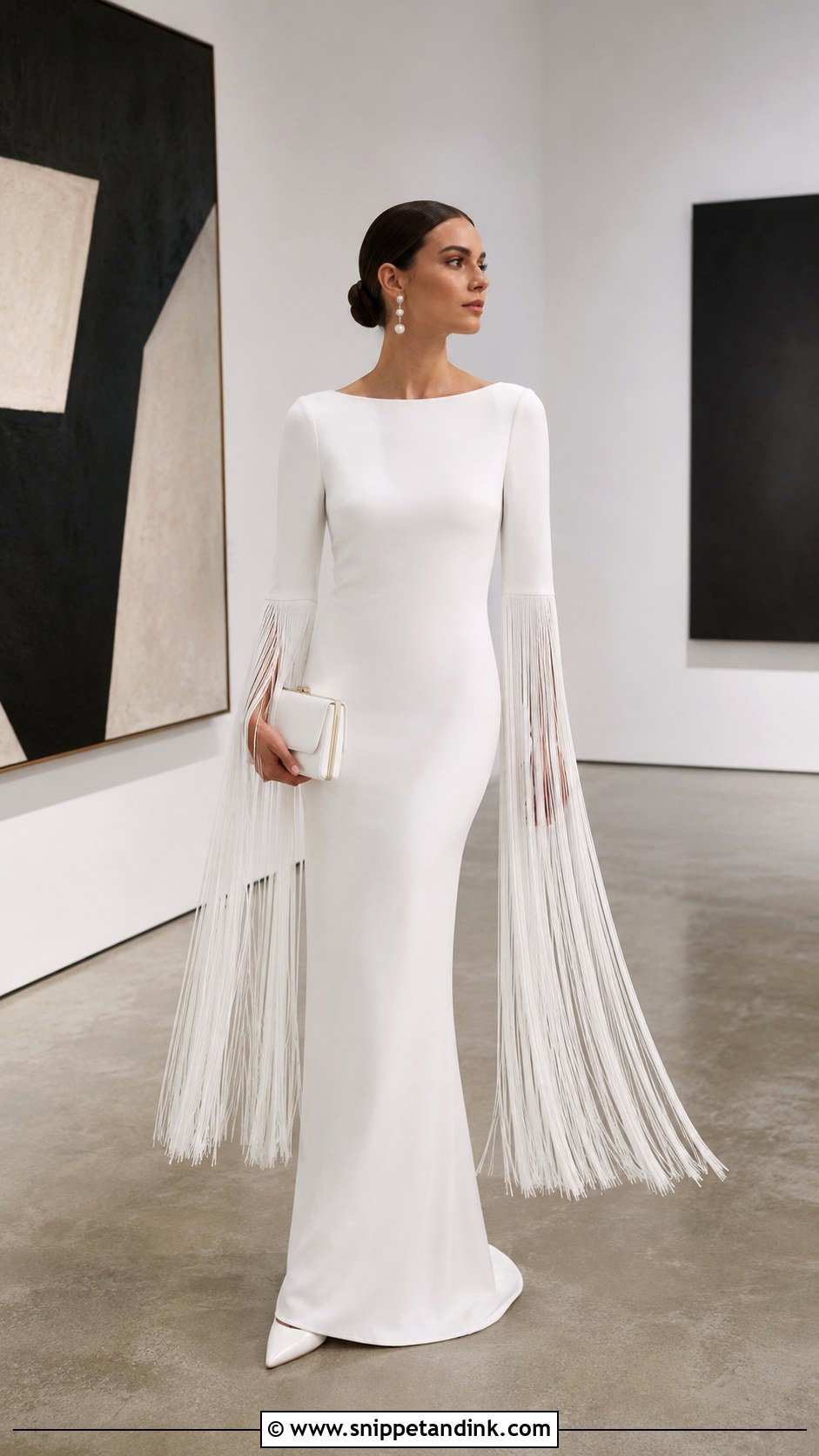
Fringe sleeves keep movement on the upper body and leave the skirt clean. A simple crepe column gown with dramatic fringe falling from fitted long sleeves or cape-like shoulders is modern and easy to sit in. I’d skip bracelets entirely here, because tassels and bracelet clasps knot together. Pointed ivory heels, modern pearl earrings and a rectangular clutch finish it. A smooth center-parted bun lets the fringe move, and a plain veil attaches beneath it. At alterations, raise, bend and reach with your arms; sleeve fringe that ends too low lands in your dinner plate.
19. Fringe Train Wedding Dress
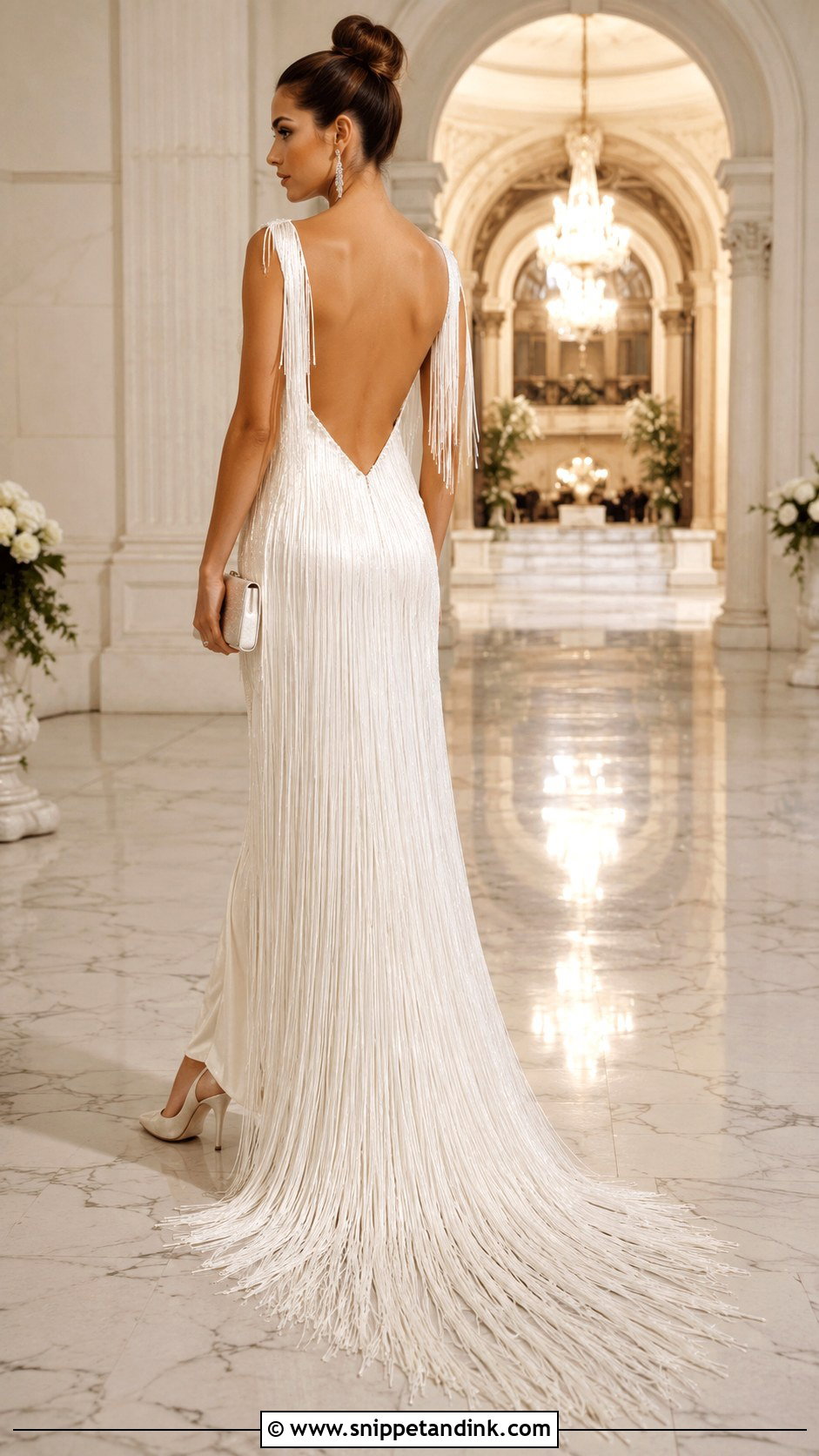
A fringe train saves the drama for your walk down the aisle while the front stays simple. Choose a backless lace or crepe sheath with long tassels running into a sweeping train. Wear understated ivory pumps, drop earrings and a smooth satin clutch, and put the hair in a high bun so the back and fringe stay visible. A short veil or hair comb keeps layers from piling up over the train. Fringe trains are heavy and tangle when dragged, so ask your seamstress for a strong bustle with several attachment points. It looks best on a long, clean aisle.



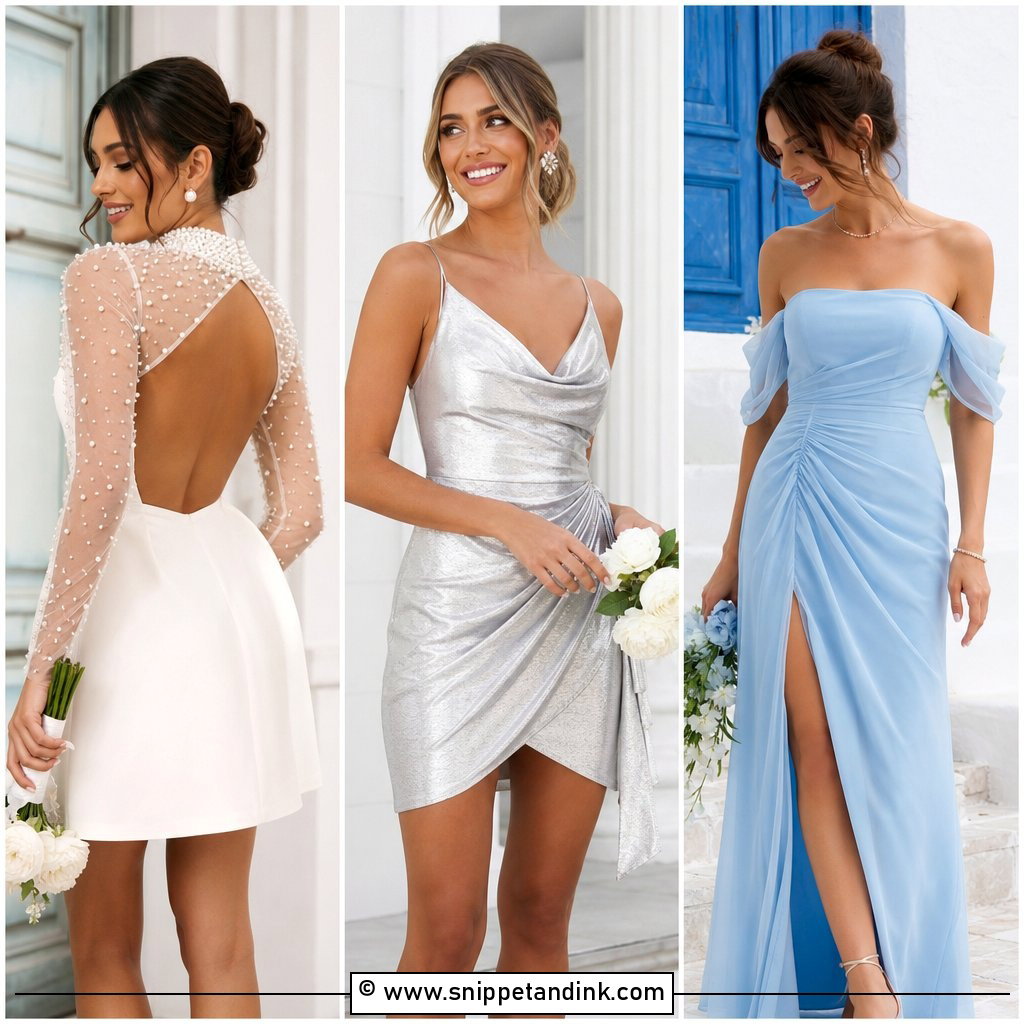

20. Satin Fringe Wedding Dress
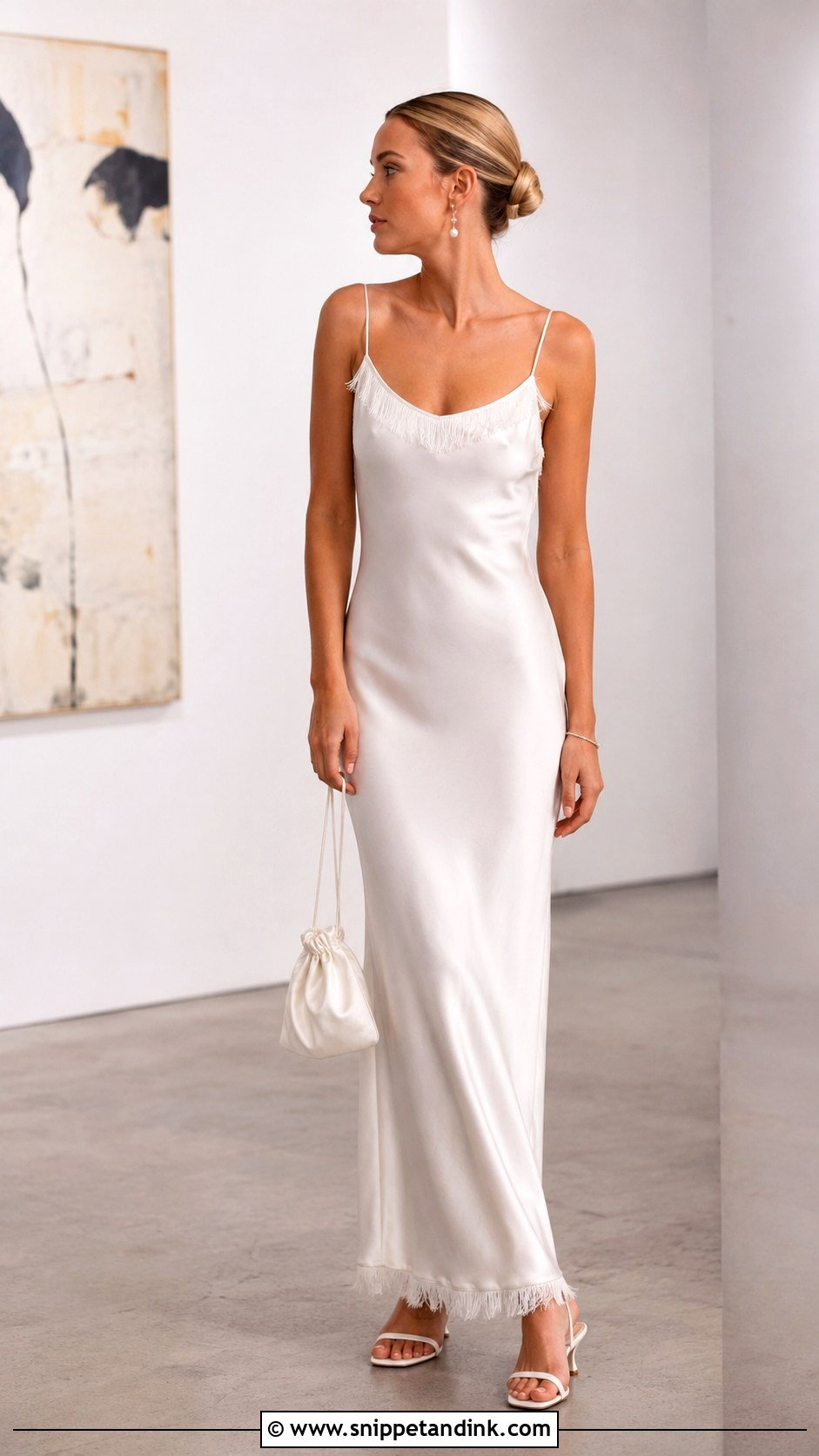
Satin and fringe make a good contrast, smooth against swinging. Start with a bias-cut ivory slip gown with narrow straps and fringe at the neckline, low back or hem. Bias-cut satin clings and shows everything underneath, so I fit these over the exact underwear the bride will wear. Minimalist slingbacks, pearl drops and a small satin pouch suit the fluid fabric, with soft waves or a low knot. A tailored ivory blazer adds coverage before the ceremony or in cool evening photos, and a simple chapel veil adds drama without competing. It suits restaurants, galleries and intimate city weddings.
Why Hemming a Fringe Dress Costs More Than a Plain One
You can’t simply cut the bottom off a fringed skirt. On a beaded gown, the seamstress has to unpick the beadwork near the hem, shorten the base fabric, then reattach or rethread each strand so it falls at the right length. That’s slow, careful hand work, so expect it to cost more and take longer than a standard hem. I tell brides to buy fringe dresses as close to their correct length as possible and to ask the shop before ordering whether the fringe can be shortened at all.
- Bring your wedding shoes to every fitting; fringe length is measured from the floor.
- Ask for a small bag of spare beads or tassels sewn into the lining.
- Have loose strands secured with a few extra stitches at the final fitting.
- Give whoever helps you dress a needle and matching thread for the day.
Storing a Beaded Fringe Gown After the Party
Never leave a heavily beaded dress on a hanger for months. The weight slowly stretches the shoulders and the fabric where the strands attach. Lay it flat in an acid-free box with tissue between the layers so the fringe doesn’t knot. Beaded and sequined dresses also need a cleaner who works with embellished garments, since heat and tumbling can melt glue, crack sequins and loosen threads. Have it cleaned soon after the wedding, before any spills set.
Does the Fringe Still Swing When You Sit Down?
A fringe dress should move with you rather than make you nervous. Beaded tassels bring an Art Deco mood, lace fringe a softer boho one, minis and midis free you up to dance, and floor-length gowns carry the ceremony. Before you decide, test it: walk, sit, turn and lift your arms, then look at the fringe in a phone video, which shows how it photographs. Check whether it catches on your jewelry, shoes, veil or nearby beading, and let your seamstress secure the heavier strands. From pearl reception minis to satin gowns with subtle trim, the right one will feel like yours the moment it starts swinging.
You'll Like These Ideas:


Leave a Reply