
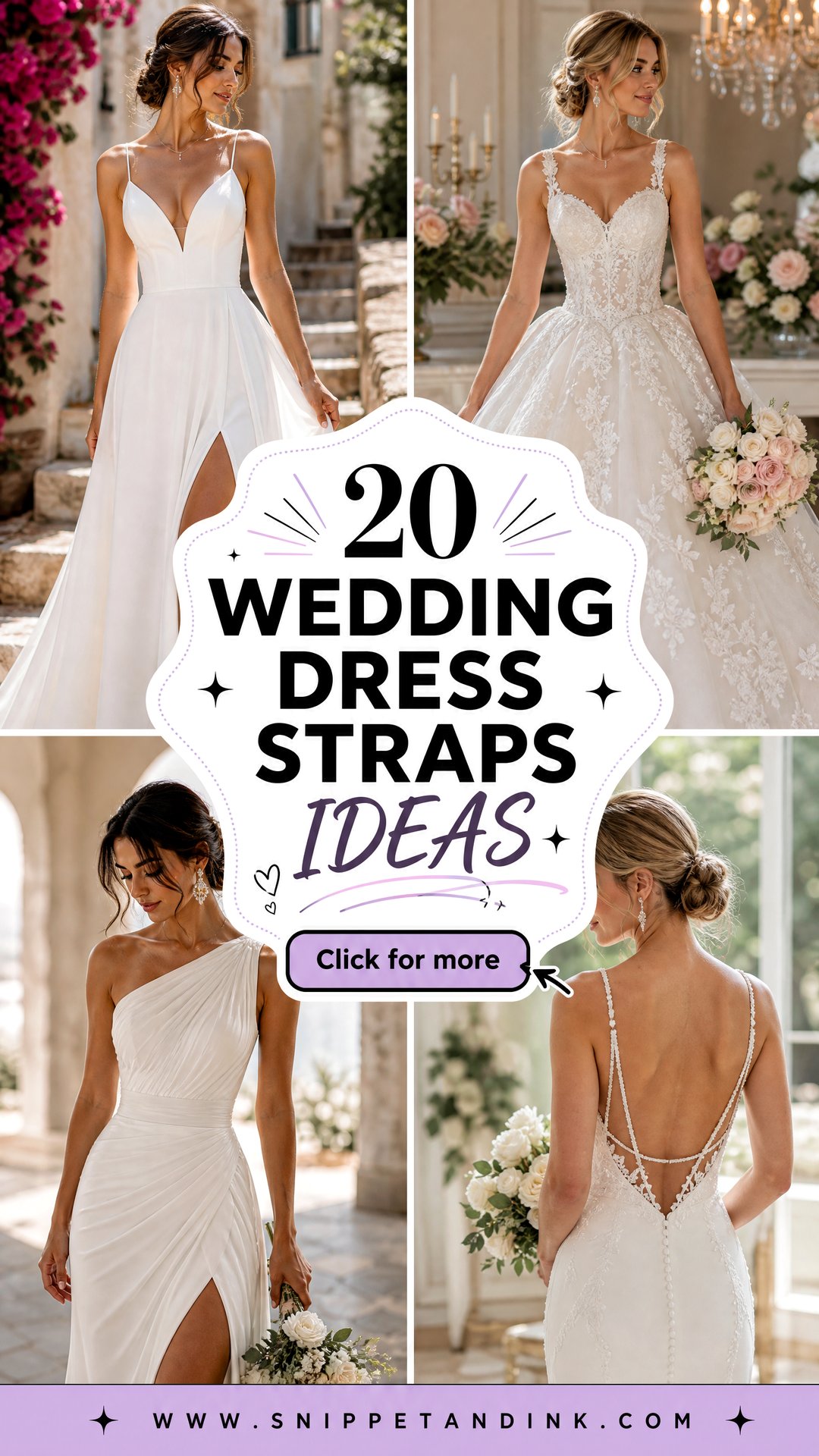
Straps look like a small detail on a hanger. Once a gown is on, they decide where the neckline sits, how much the bodice has to grip and whether you spend the reception hitching something back onto your shoulder. Below are twenty strap styles, from barely-there satin to pearls, lace and draped fabric, each shown as a complete look. As you read, think about the neckline and the back together, because guests spend most of the ceremony behind you. Hair, veil and jewellery all change how a strap reads too.
How Much Support Do Straps Really Give?
Brides often assume any strap means support. In most bridal gowns the bodice does nearly all the lifting through boning, a waist stay and sometimes built-in cups, while straps mainly stop the neckline sliding down. How much they can contribute depends on width and where they sit.
- Spaghetti, pearl and beaded straps hold position only. If you need lift, the bodice must provide it.
- Wide straps and thick straps on a V-neck spread weight across the shoulder and can genuinely help a fuller bust.
- Halters pull from the neck, which gets tiring when they’re asked to carry too much.
- Off-the-shoulder straps give no lift at all; they sit below the shoulder and rely entirely on the bodice.
Before a bride falls for a strap style, my advice is to ask the consultant how the bodice is built. If you normally wear an underwired bra every day, most strappy gowns will need cups sewn in. A seamstress can add them, and it’s far easier to plan from the first fitting than to rush at the last.
1. Spaghetti Strap A-Line Wedding Dress
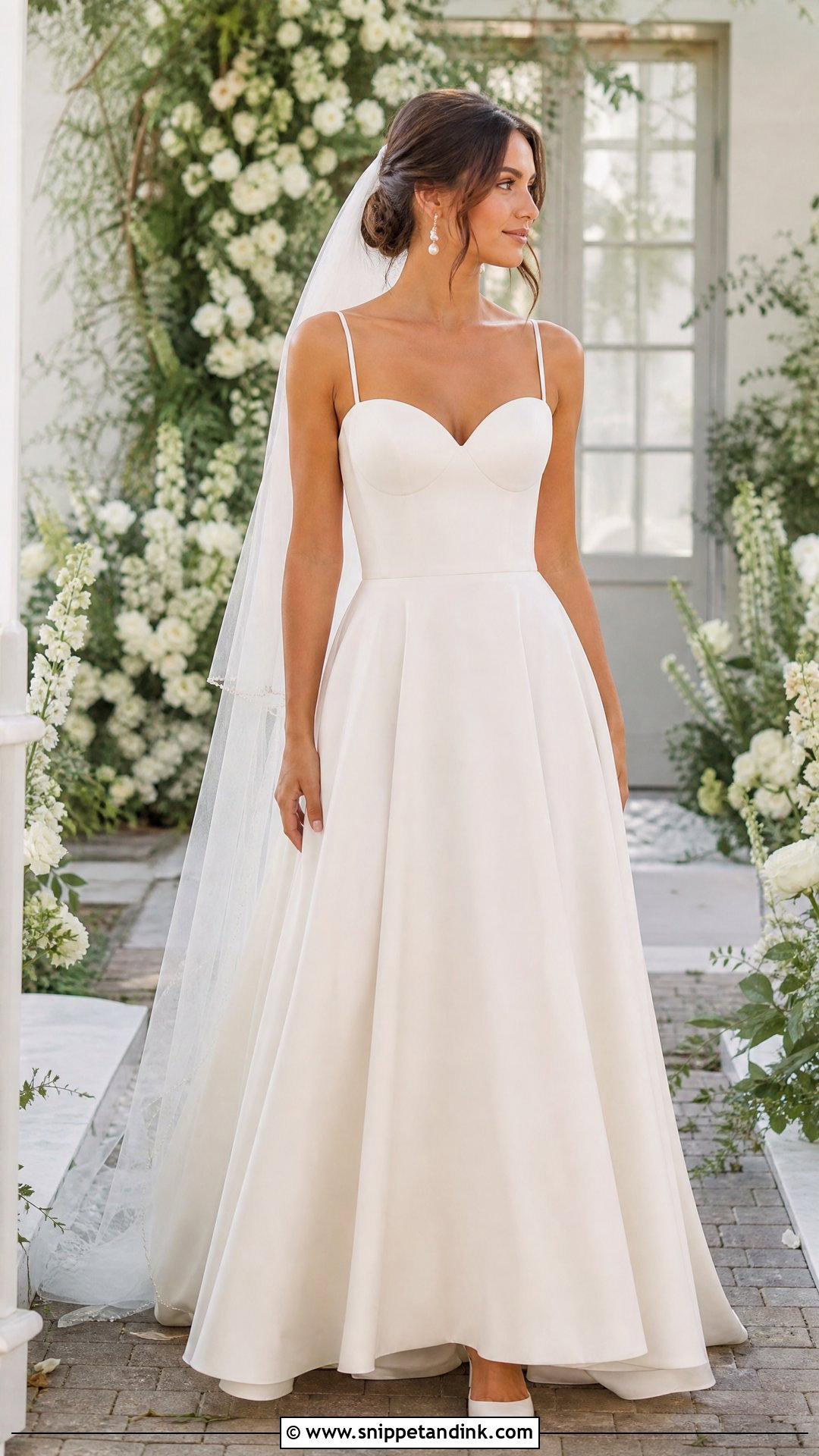
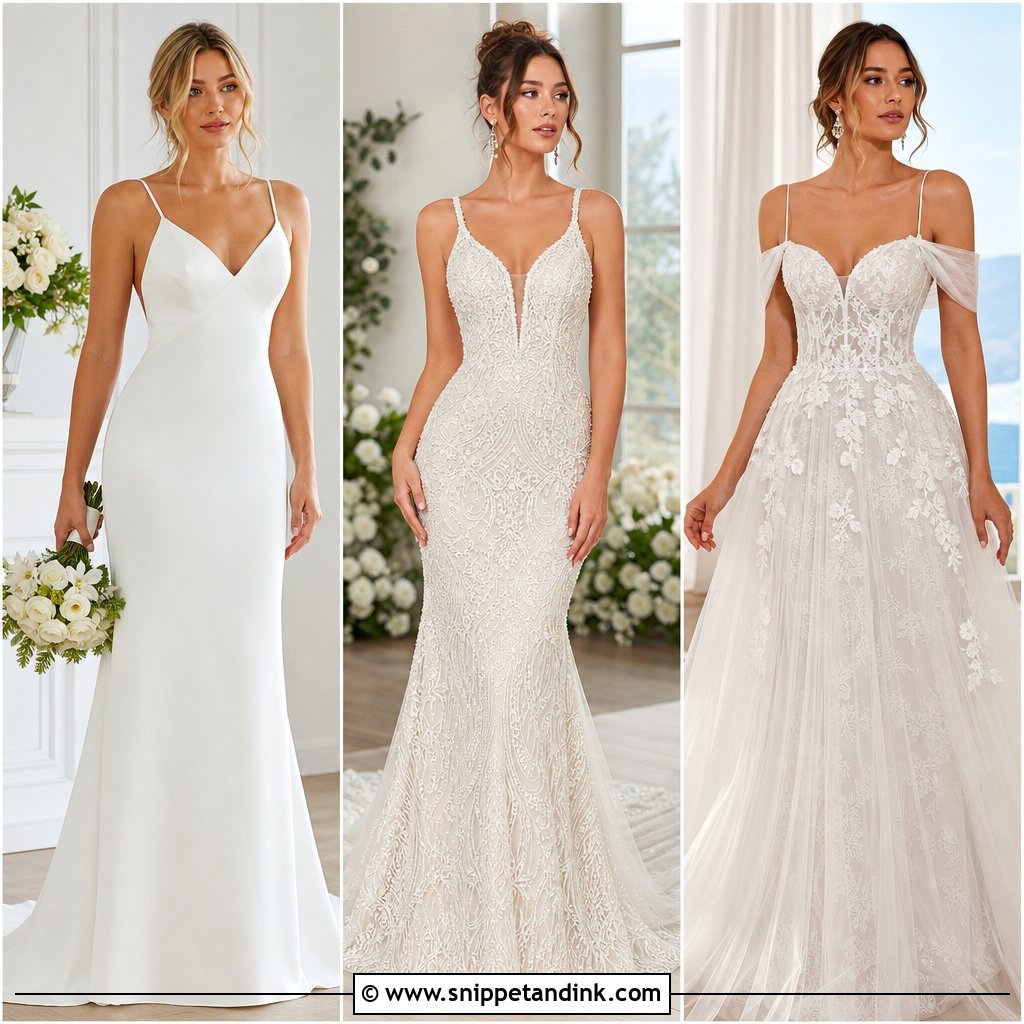
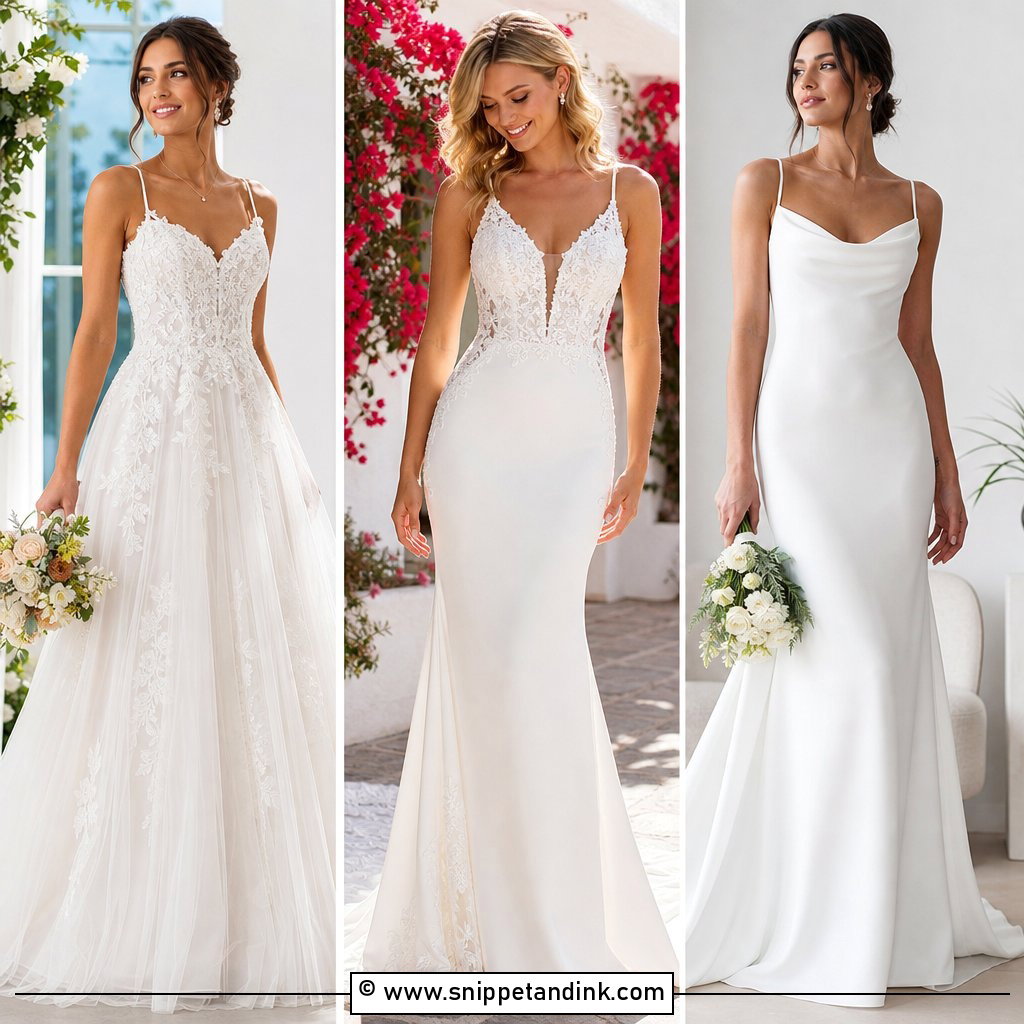
A spaghetti strap A-line wedding dress is about the lightest thing a bride can wear on her shoulders, which is also its limitation. Those slim satin straps hold the bodice in place but carry almost no weight, so the bodice itself needs boning and a snug waist to do the real work. A sweetheart or soft V-neck keeps the top delicate without feeling bare. Ivory pointed pumps, pearl drops and a fingertip veil with a fine satin edge suit it, and a low bun or loose waves leave the straps visible. I have the seamstress set the strap length while you stand naturally, not with your shoulders pulled back for the mirror.
2. Wide Strap Square Neck Wedding Dress
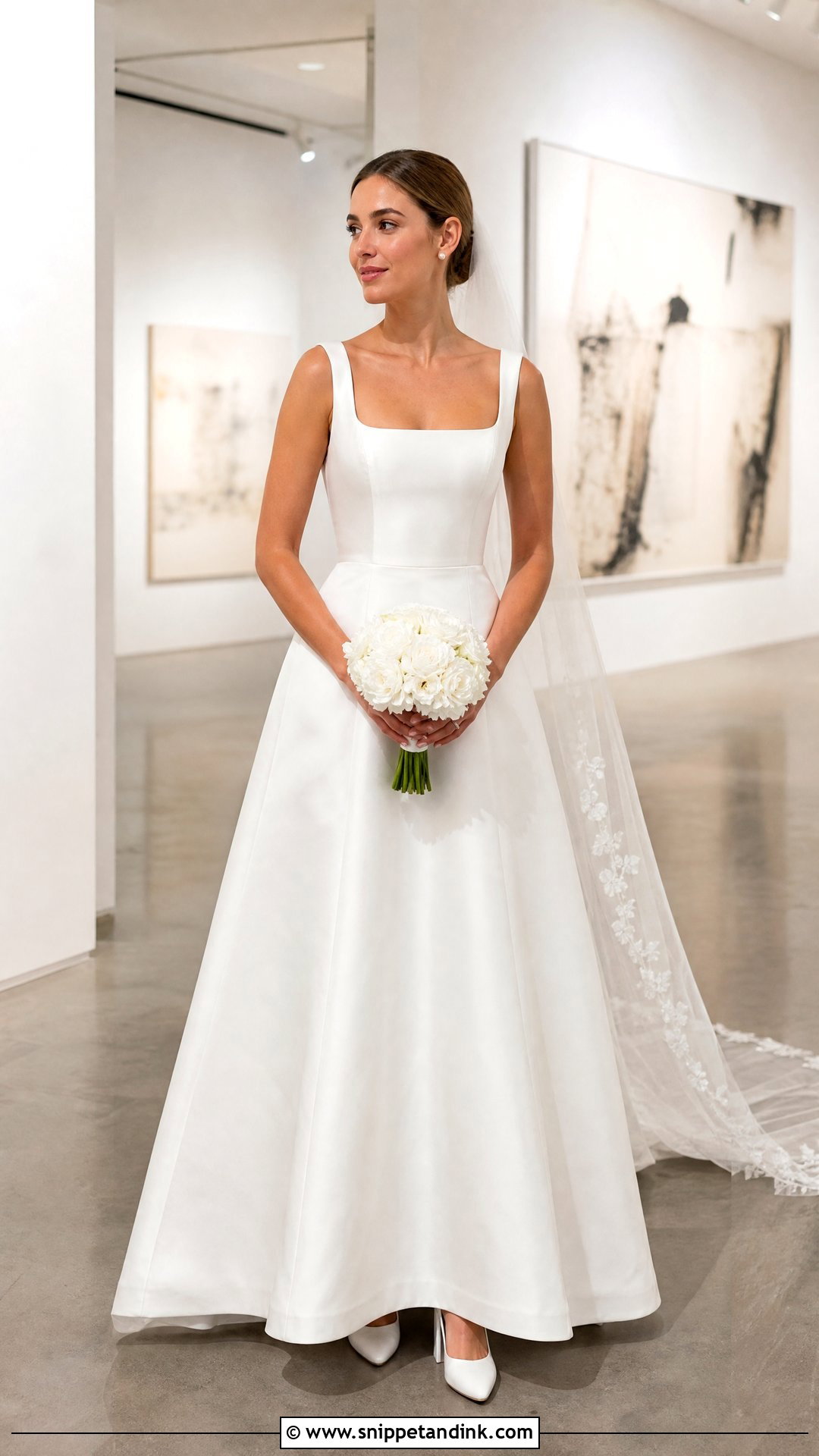
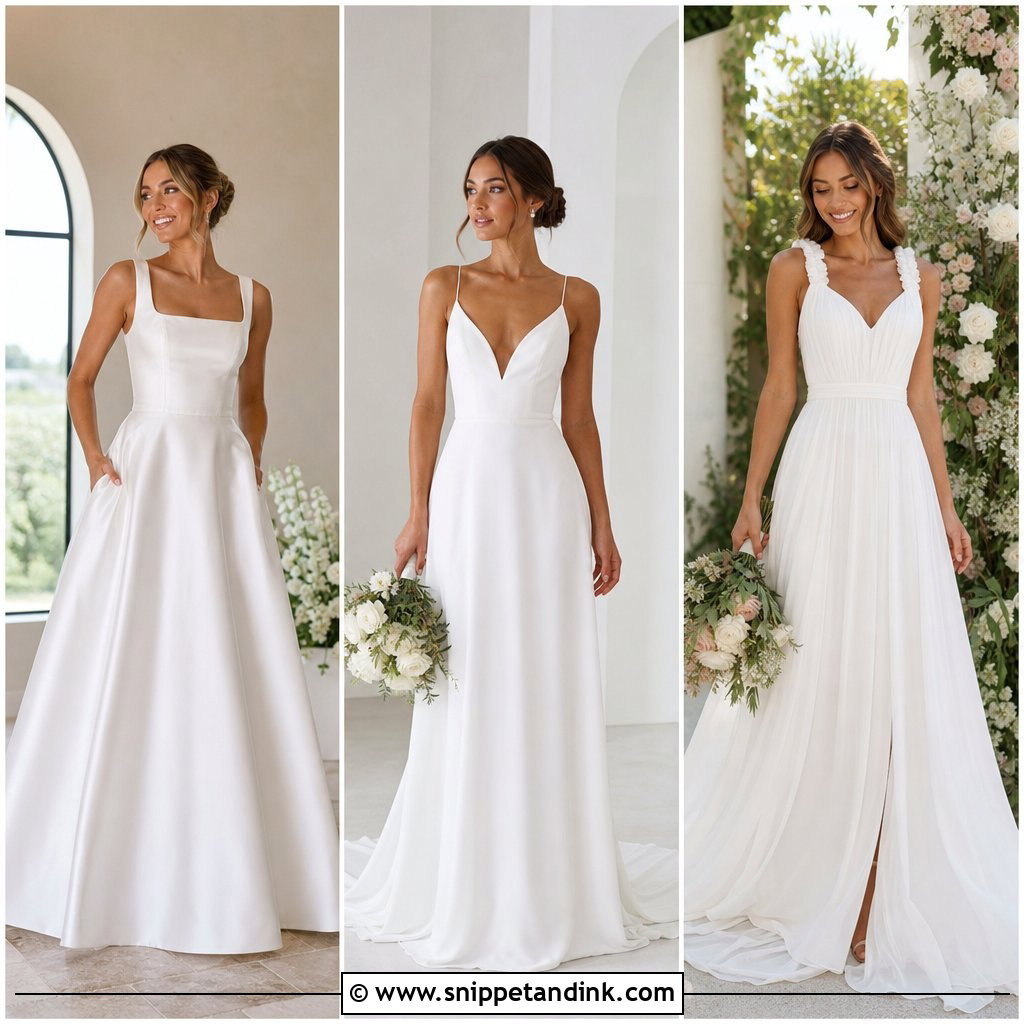
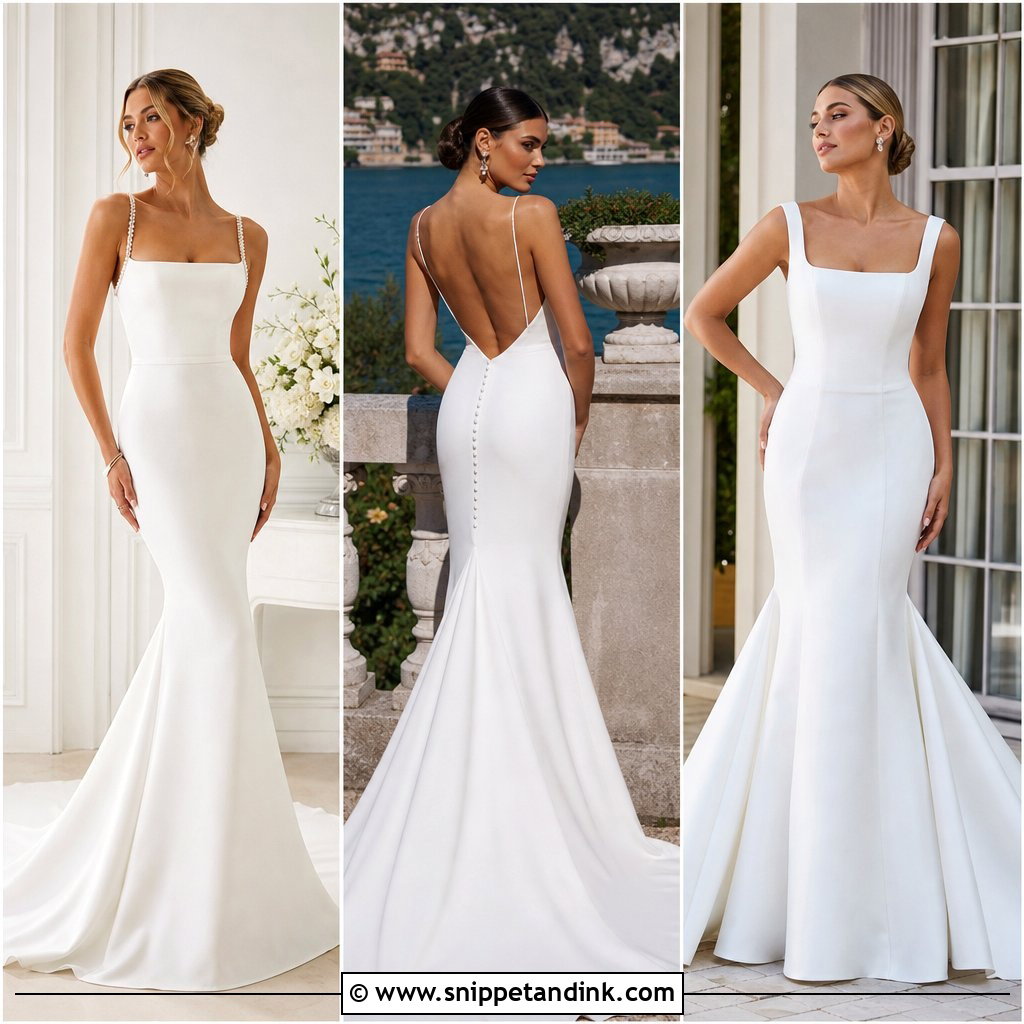
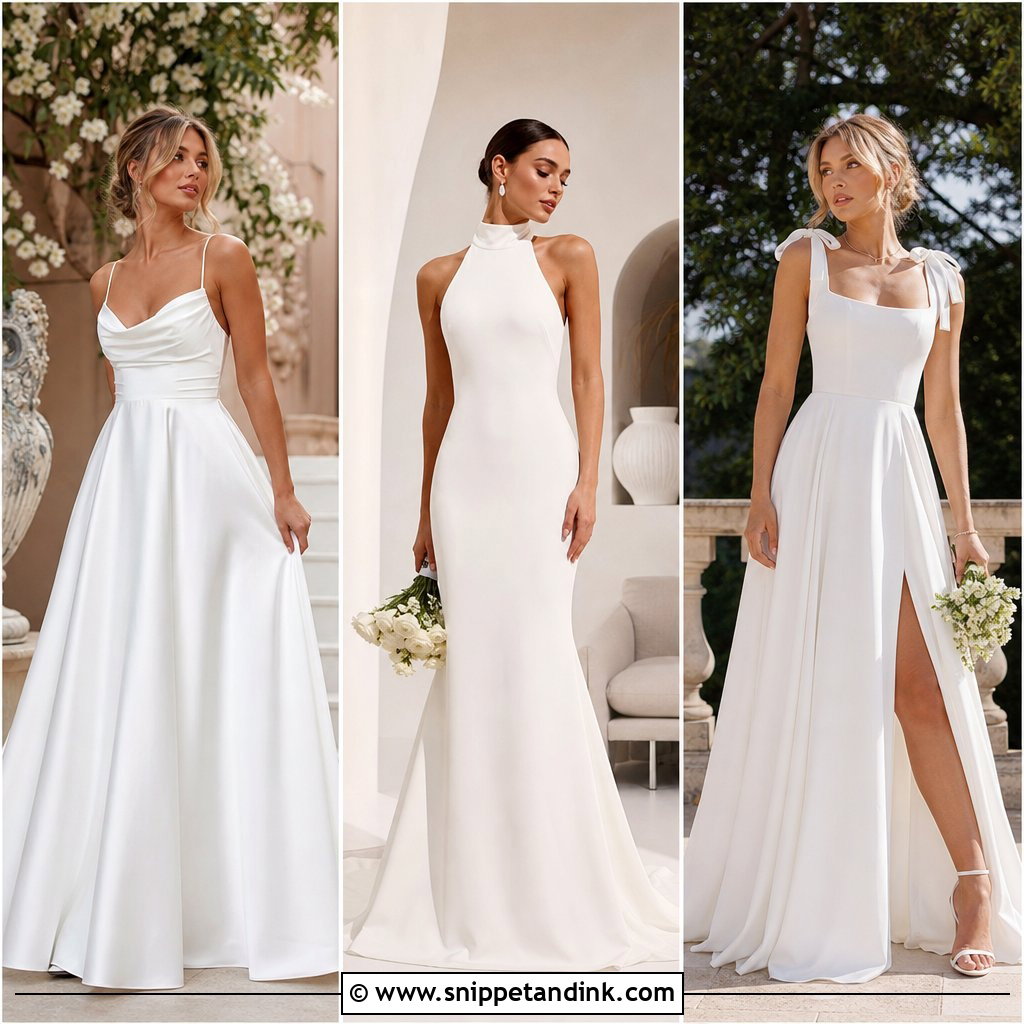
Wide straps on a square neck give the cleanest frame a bodice can have. They sit on the outer shoulder and blend straight into a structured bodice, which means far better support than anything thin. Put it over a smooth satin A-line or column skirt, and keep the rest quiet: pearl studs, a sleek chignon, a single-layer cathedral veil, closed-toe block heels. The common fault is gaping at the inner corner of the square when you lean forward. I check it from the side as well as the front and ask you to raise your arms; a well-cut wide strap shouldn’t move at all.
3. Lace Strap Ball Gown Wedding Dress
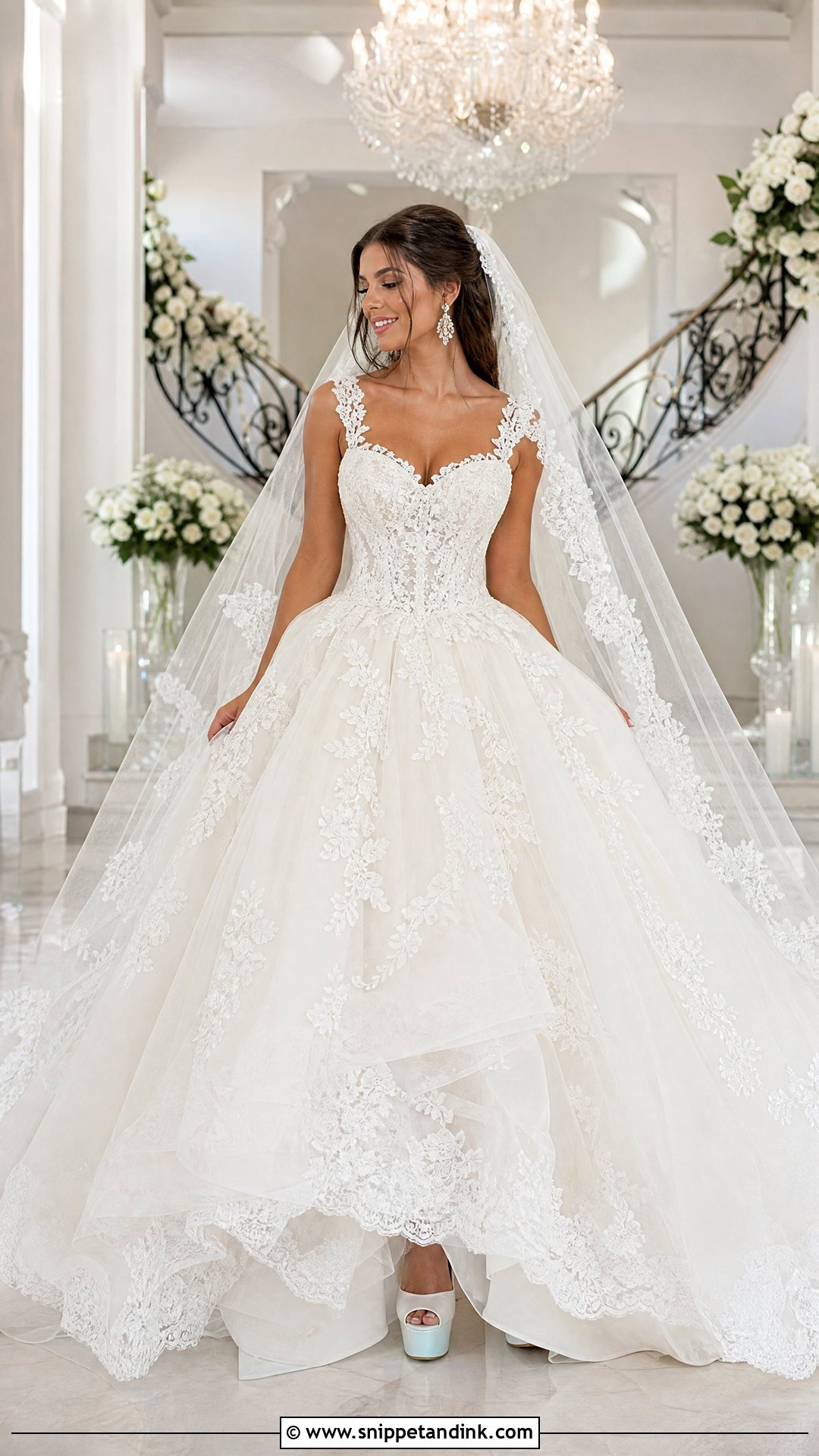
Lace straps soften the scale of a ball gown. The best versions continue into a lace bodice so the pattern runs unbroken from shoulder to waist, which is far nicer than a lace strap simply stitched onto plain satin. A modest V-neck or curved neckline balances the volume below. Classic updos show the strap pattern and any lace across the back; a lace-trimmed cathedral veil, crystal earrings and hidden platform heels finish it. I’d keep the bouquet a size smaller than you think. Corded lace can feel scratchy along the shoulder after a few hours, and a fine silk or tulle backing under the strap fixes that without changing the look.
4. Pearl Strap Satin Column Wedding Dress
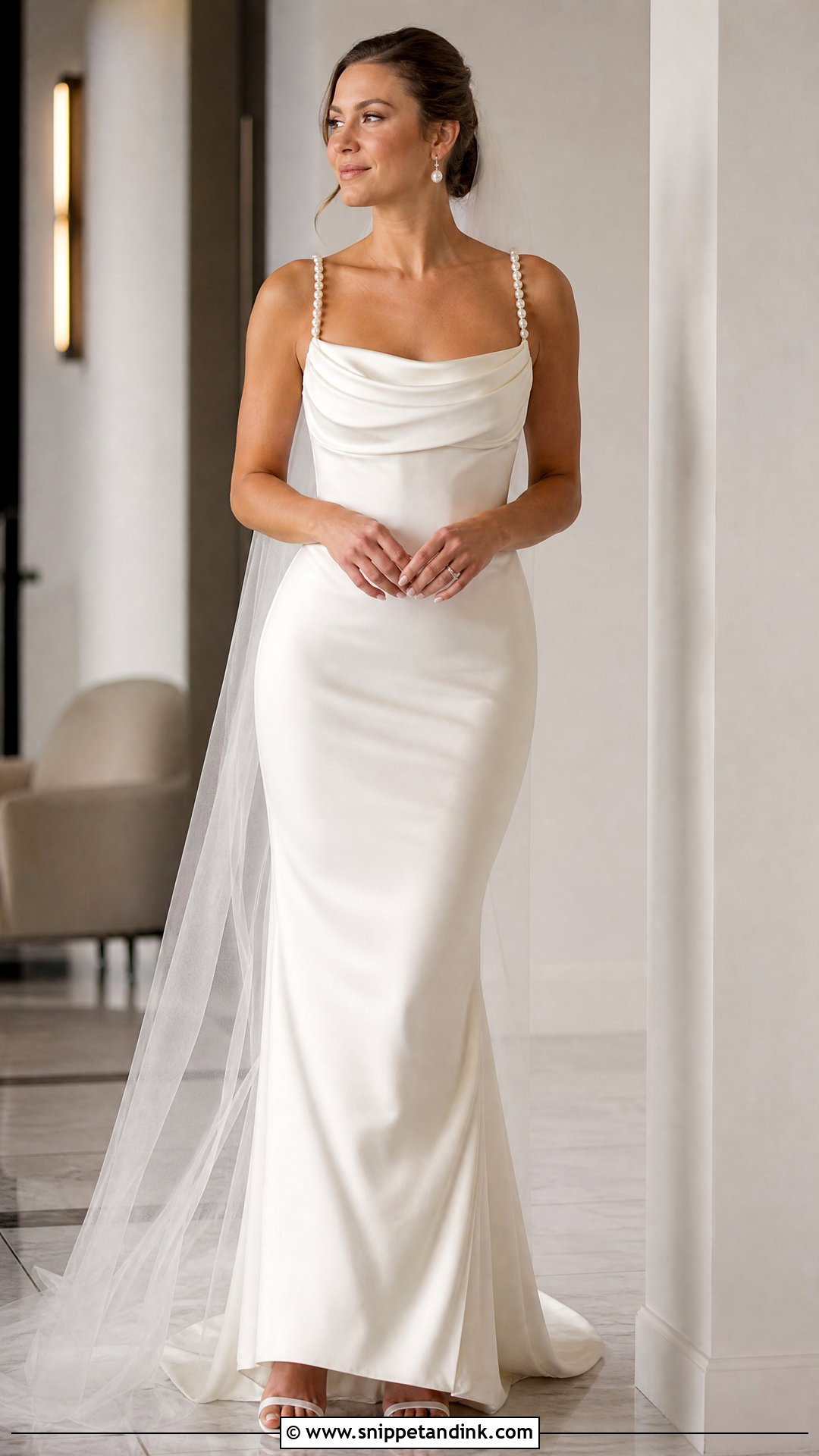
Pearl straps act as jewellery, so on a plain satin column you barely need anything else. Pair them with a softly draped neckline and a slim skirt with a back slit or short train. Pearl studs, ivory slingbacks and a clean-edged chapel veil are plenty, and a smooth low bun leaves the shoulders open to catch the light. Hotel ballrooms and galleries suit the polish of it. I always turn the strap over at a fitting: pearls are usually strung on thread or sewn to a ribbon backing, and a rough knot or exposed thread end rubs a sore line by the evening. Gently tug every few pearls too; loose ones scatter on a dance floor.
5. Beaded Strap Mermaid Wedding Dress
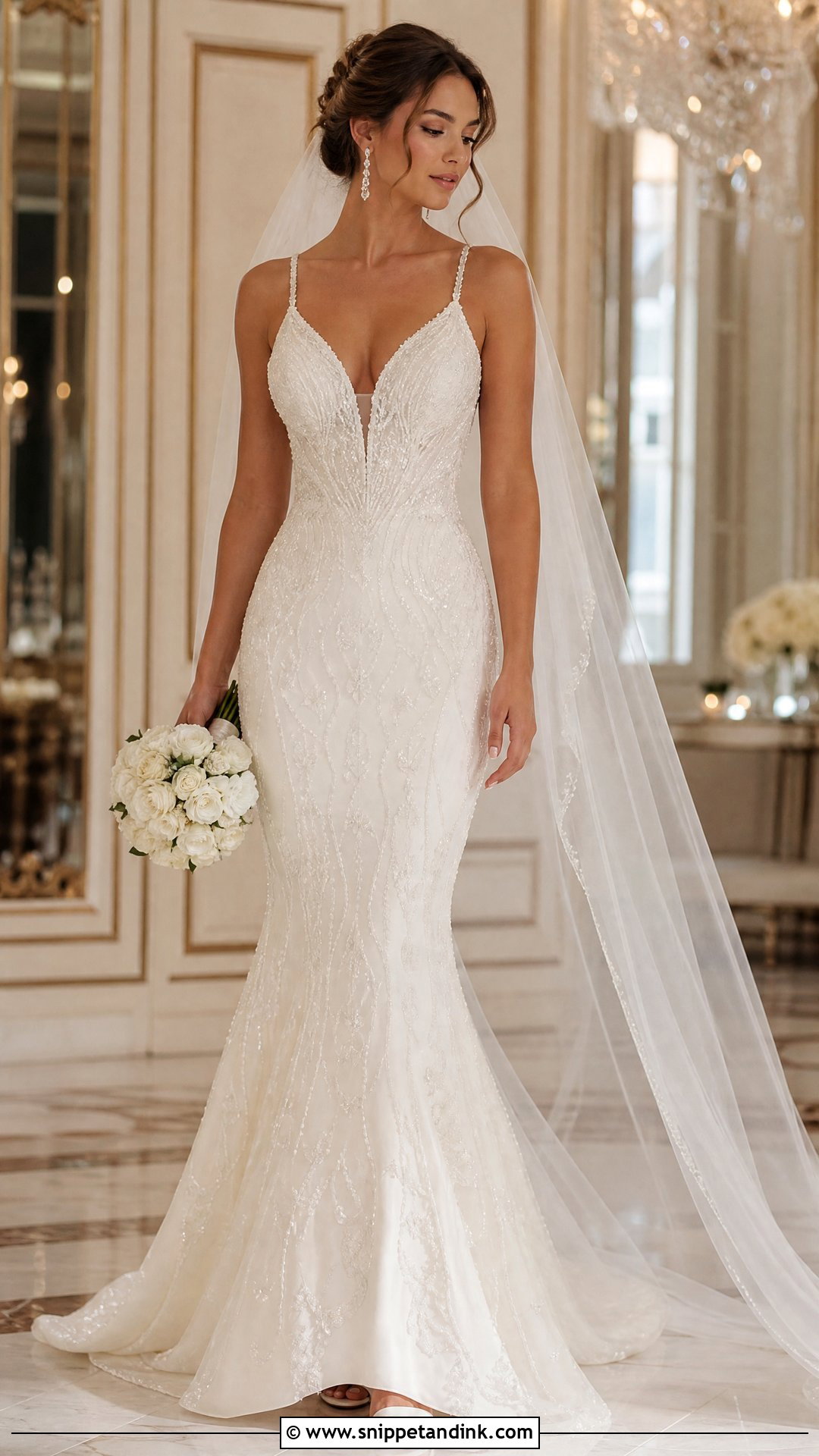
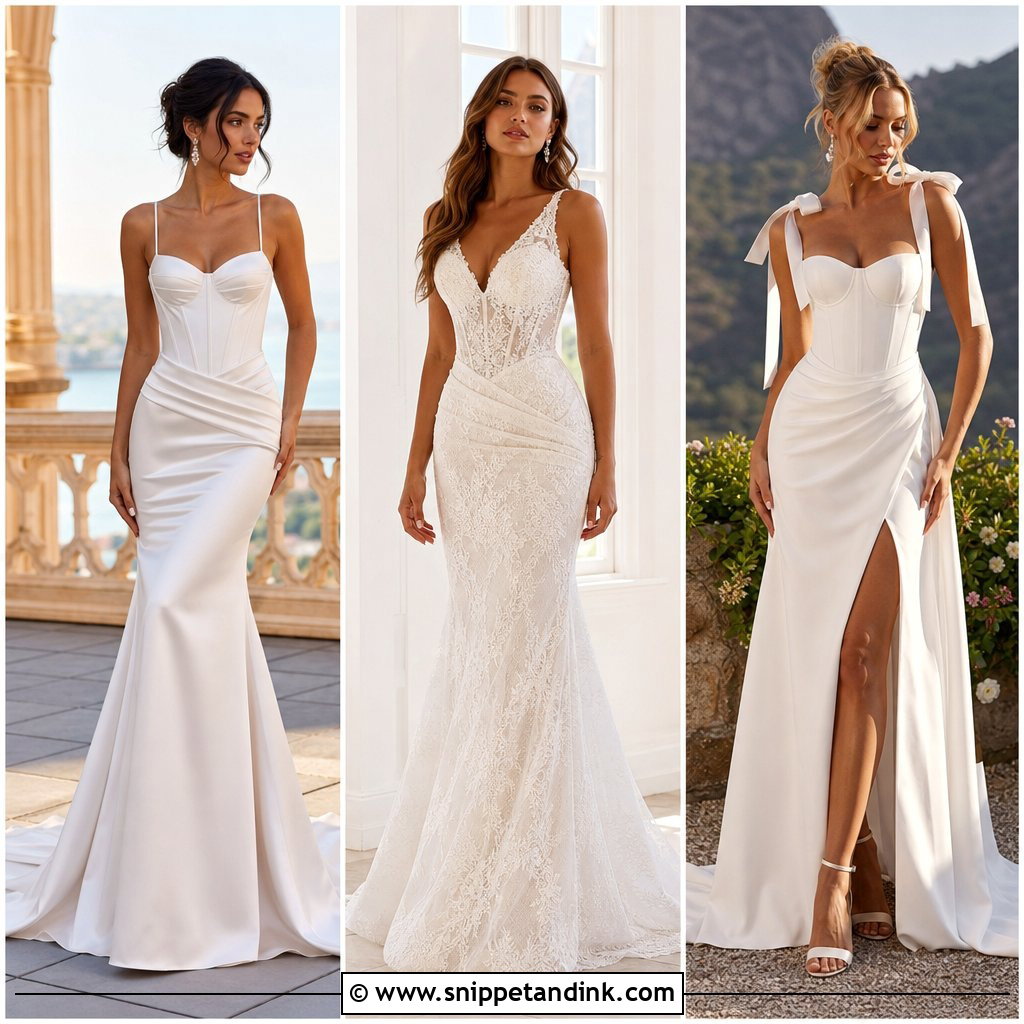
A beaded strap mermaid wedding dress pairs sparkle with a sculpted shape. Narrow crystal or seed-bead straps should anchor into a properly supportive fitted bodice; a soft V-neck keeps the long line going without fighting the beads. Crystal drops, pointed satin heels and a sheer chapel veil complete it, with a side-swept wave or polished updo. Skip the heavy necklace. Beaded straps weigh more than they look and tend to stretch slightly on their thread over a long day, so test the fit sitting and with arms raised, and ask your seamstress to reinforce where each strap meets the bodice.
6. Off-The-Shoulder Strap Wedding Dress
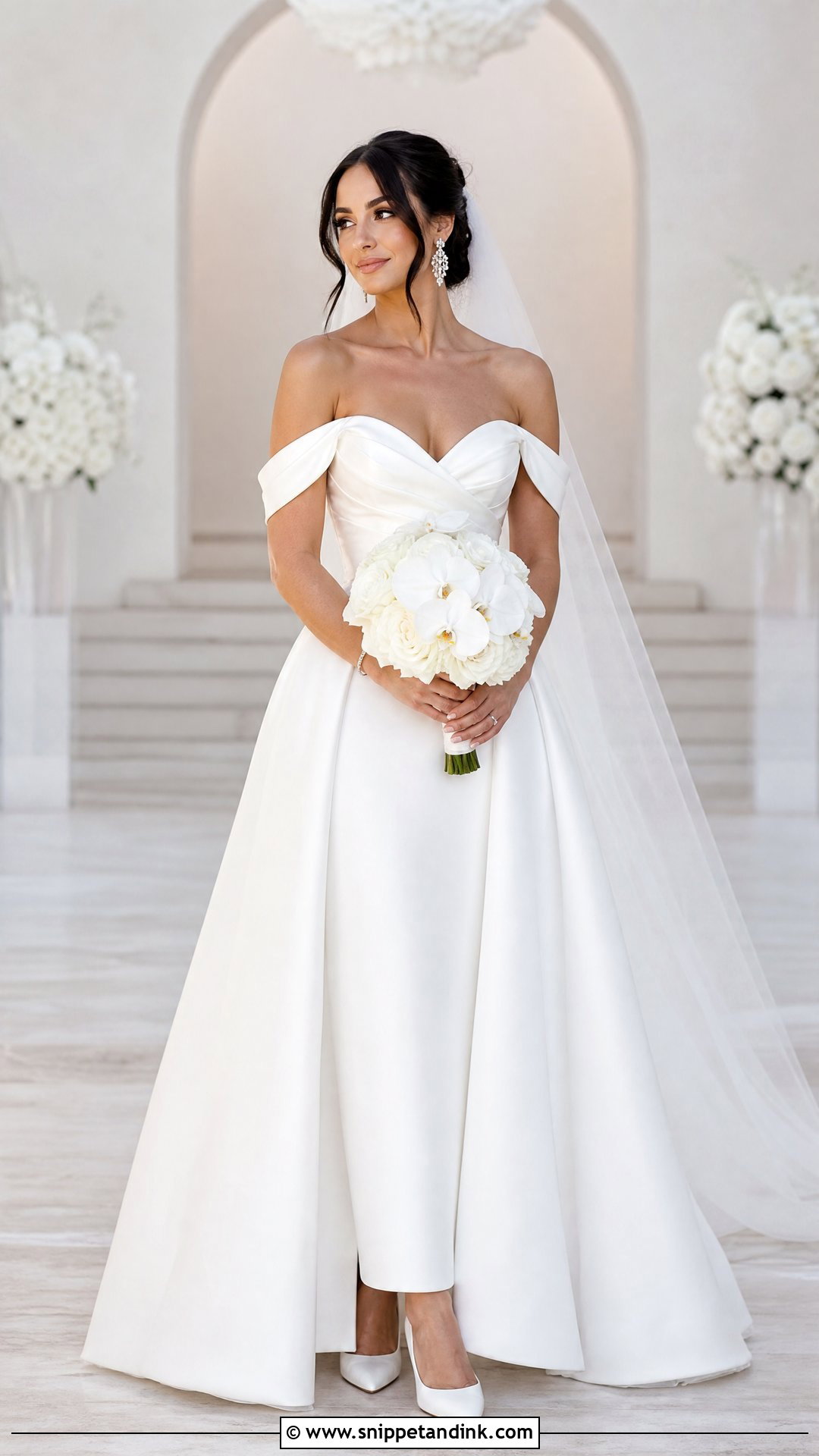
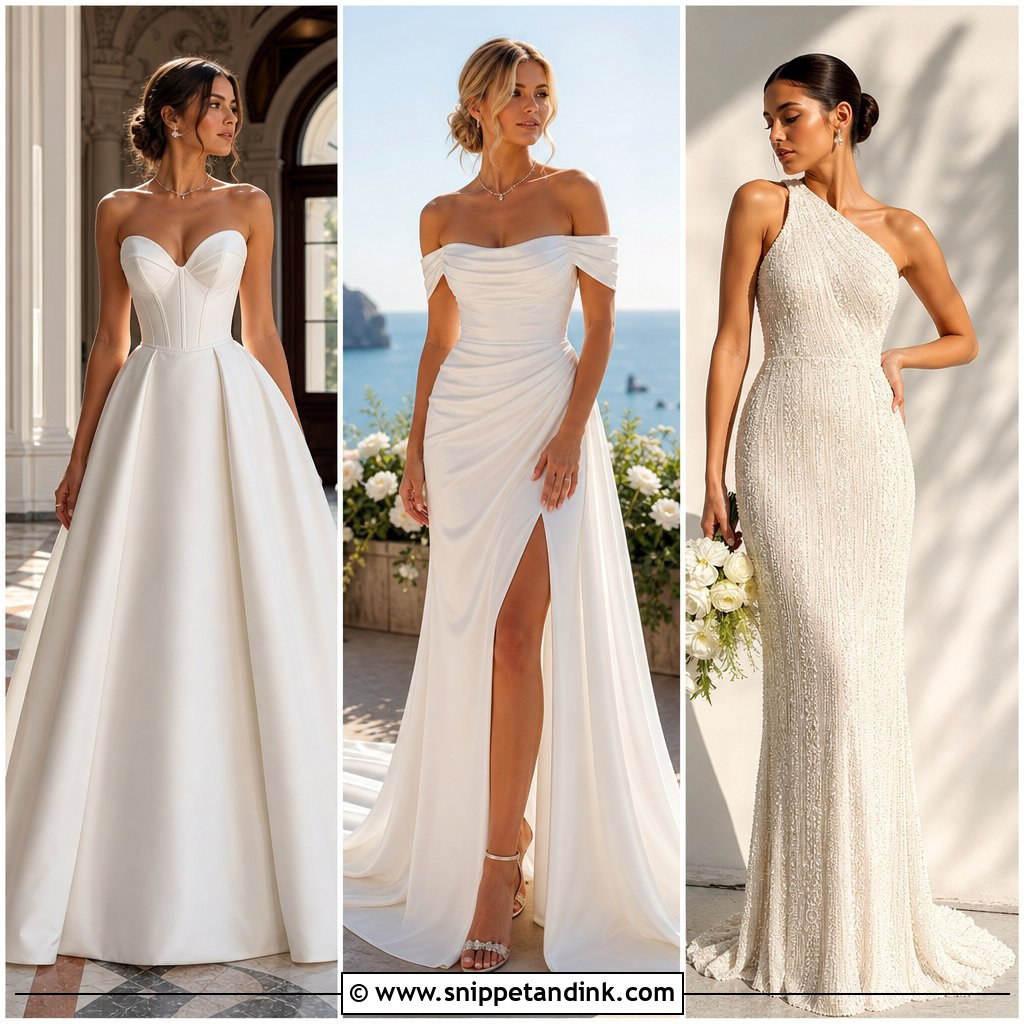
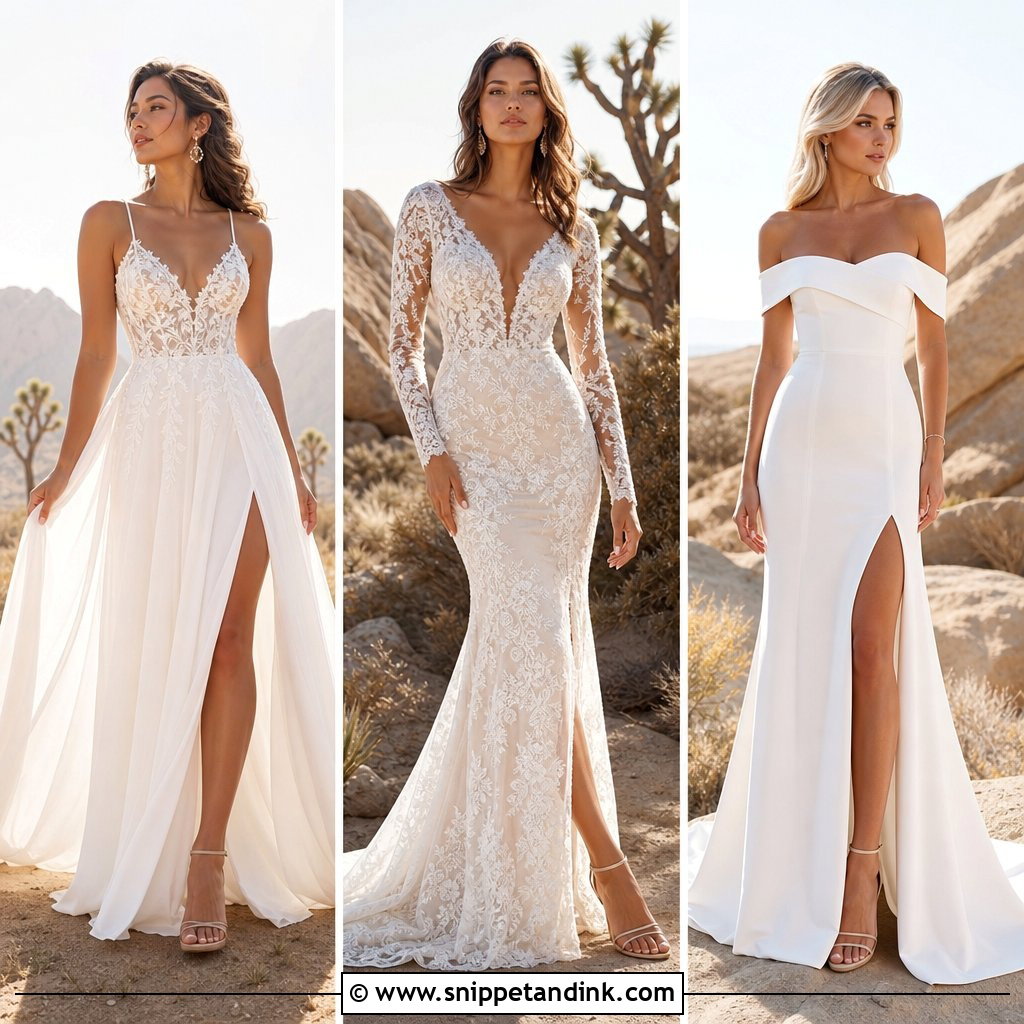
Off-the-shoulder straps frame the collarbone and upper arm in a way nothing else does. Draped satin over a structured bodice and full A-line skirt makes a formal balance, and A sweetheart neckline deepens the curve so you can skip a necklace. Chandelier earrings, a low textured bun and a long veil set under the hair suit it; pointed pumps and a small structured bag carry it into reception portraits. Here’s the honest trade-off: straps sitting on the upper arm restrict how high you can lift them. At fittings I make brides hug someone tall. If that pulls the bodice down, the straps need a little elastic or a slightly lower set, and detachable versions give you a fallback.
7. Detachable Strap Wedding Dress
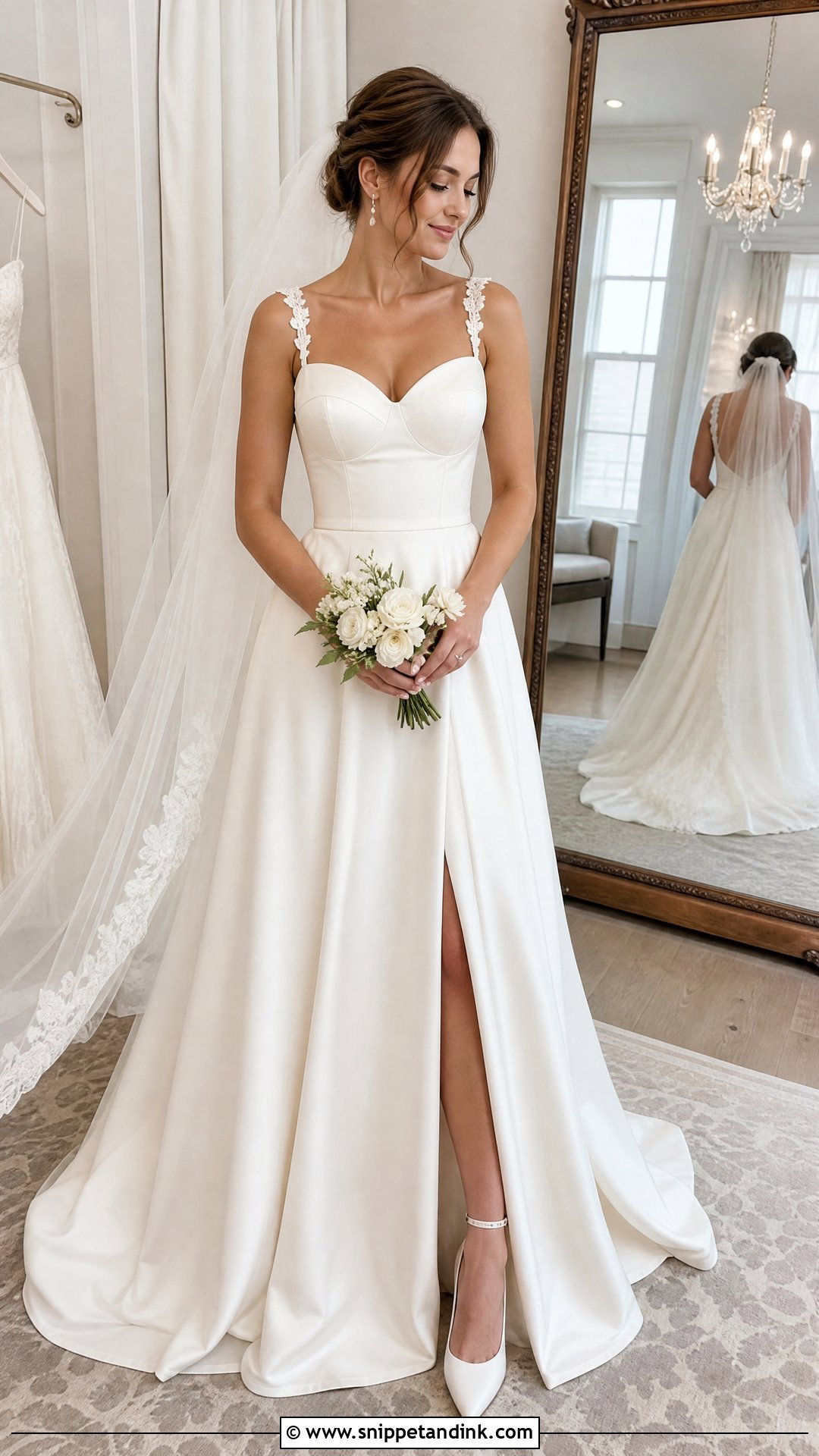
Two looks, one gown. A detachable strap dress starts with a structured strapless bodice and adds slim lace, pearl or satin straps for the ceremony, then loses them for the reception. Wear a long veil, delicate earrings and classic heels for the first look; switch to a jewelled comb and metallic clutch later. Ask for discreet, reinforced loops or hooks in matching fabric rather than buttons that show. The point people miss is that the strapless foundation must fit perfectly by itself, since once the straps come off nothing else is holding it. Practise the change with whoever will help you.
8. Halter Strap Wedding Dress
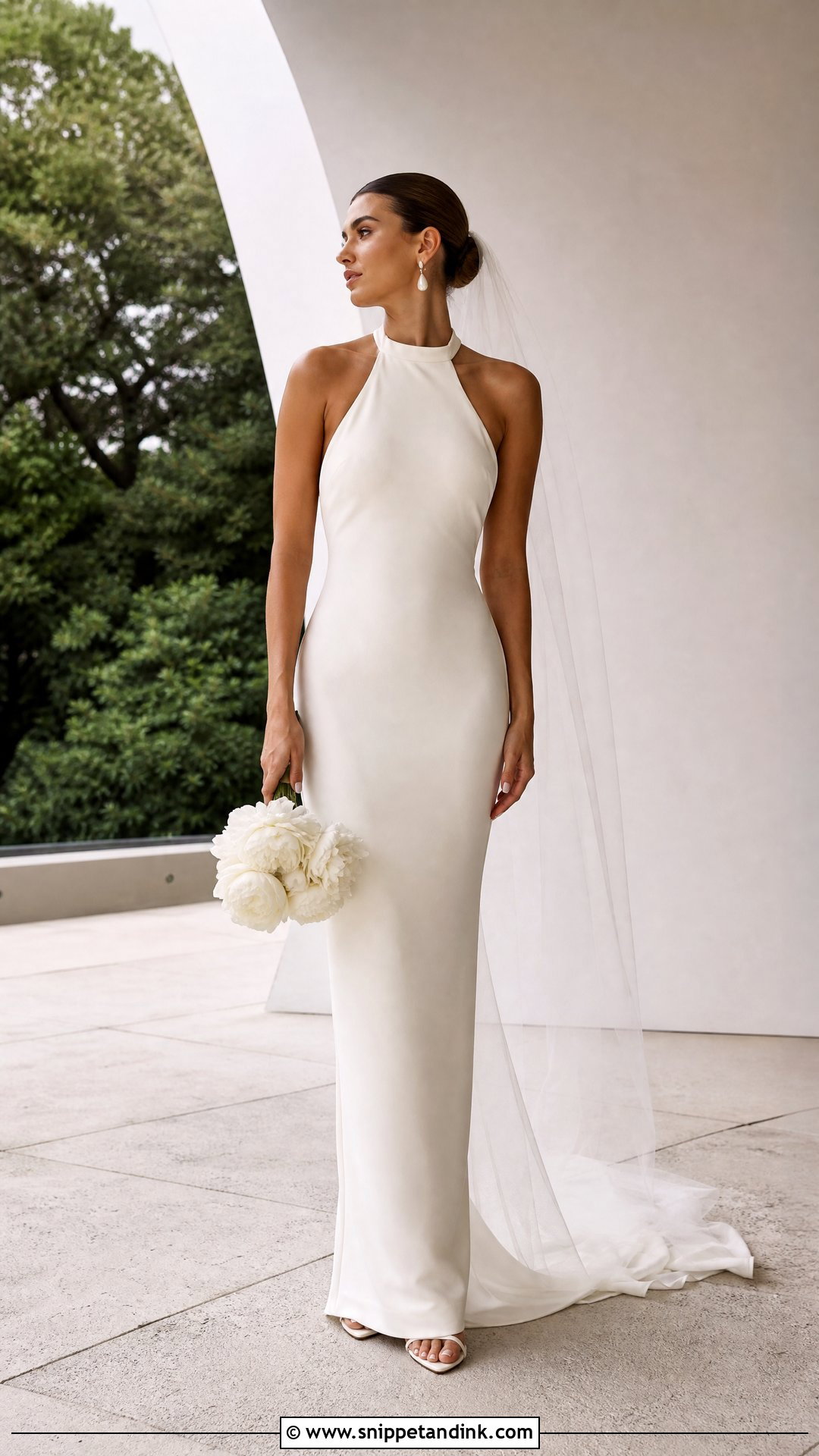
A halter strap wedding dress pulls the eye upward and lengthens the whole outline. Satin or crepe straps rising from the bodice to fasten behind the neck suit a fitted column or a soft flare. Statement earrings, a smooth ponytail or bun, a veil placed below the fastening, minimal sandals and a sculptural bouquet are all you want. No necklace. If the neck strap is doing the lifting, you’ll feel a headache coming on by dinner, so the bodice must carry the support and the halter should only steady it. Check the back closure carefully on open-back versions.
9. One-Shoulder Strap Wedding Dress
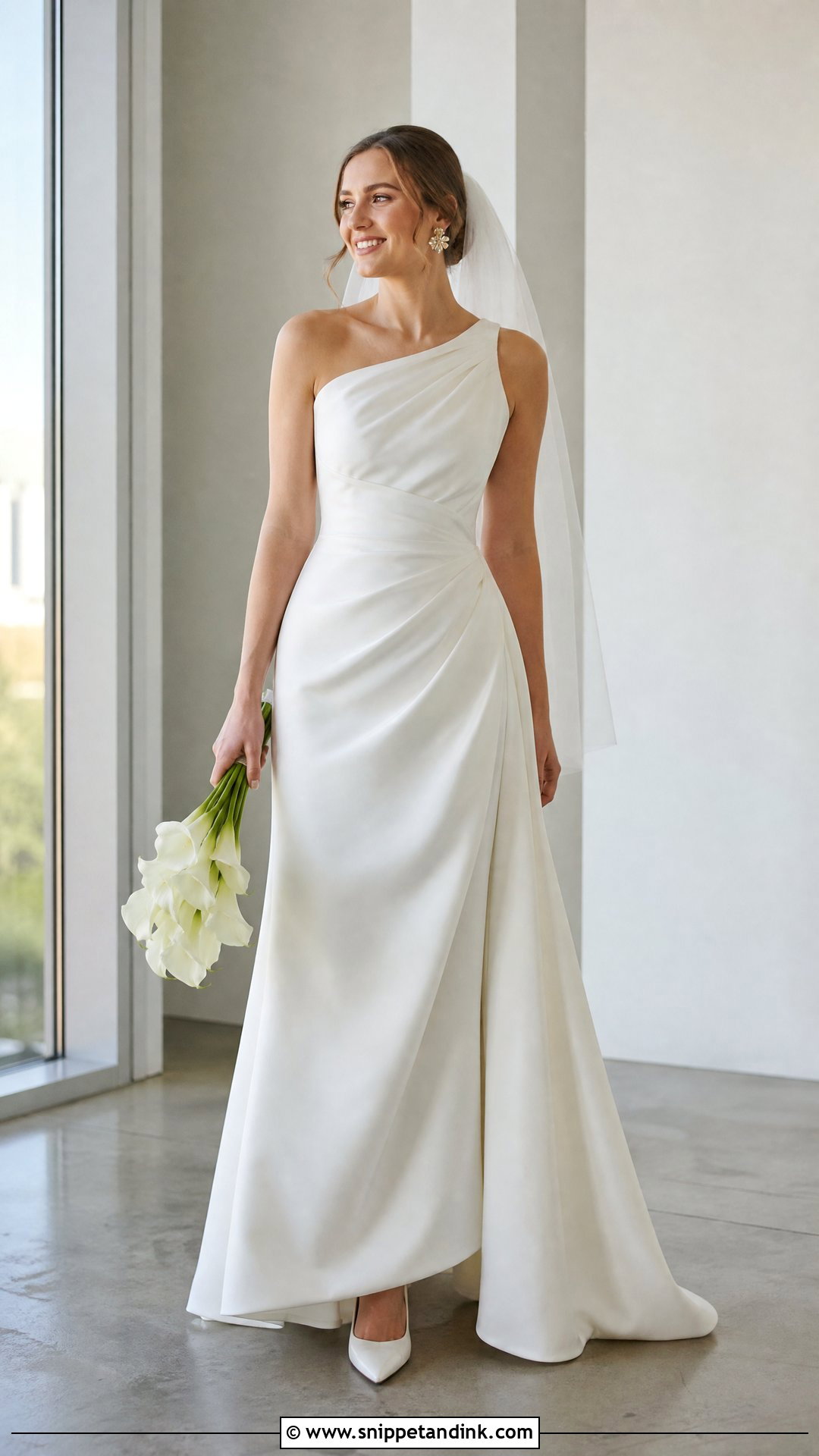
One shoulder strap makes an asymmetric line that reads modern straight away. Balance it with a fitted waist and a clean A-line, sheath or draped skirt. The strap itself can be plain satin, gathered chiffon or lightly beaded. Earrings instead of a necklace, sleek ivory heels, a simple veil behind a low bun and a narrow bouquet follow the vertical line. The single strap pulls the bodice toward the strapped side, especially when you lift that arm, so the gown needs firm internal boning to keep the neckline level. I check this one walking and sitting before anything else.
10. Double Strap Wedding Dress
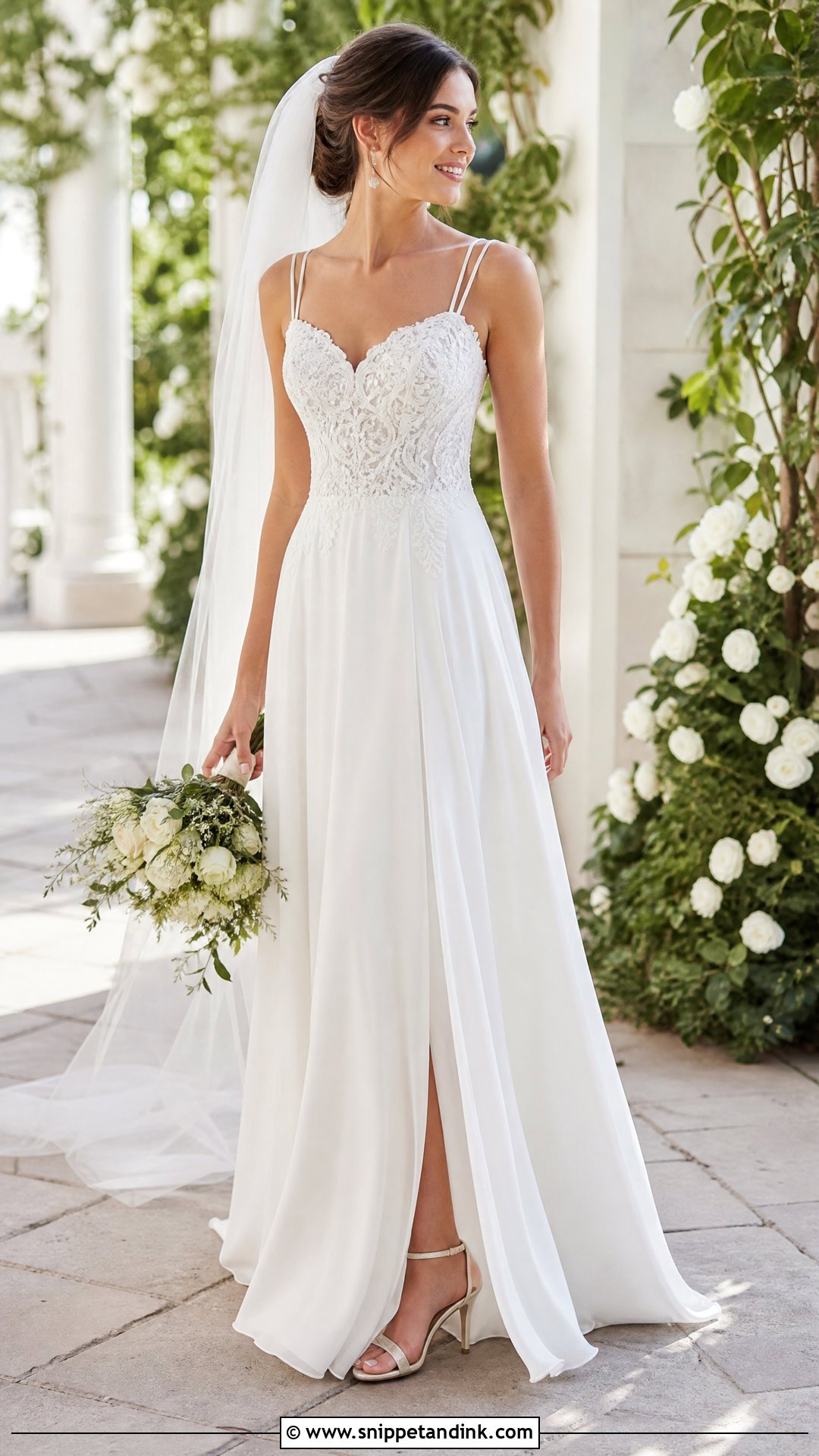
Double straps add interest without beads. Two slim straps on each shoulder can sit close together or slightly apart for a geometric effect, and they come into their own over an open or low back where they form neat parallel lines. A fitted lace bodice with a chiffon or tulle skirt works well, along with delicate earrings, strappy heels, a soft chapel veil and a half-up style. Keep the bouquet loose. Uneven tension is the giveaway on this design: if one strap of a pair carries more load, it twists or slides off. All four need matching length, set at a fitting.
11. Crisscross Strap Back Wedding Dress
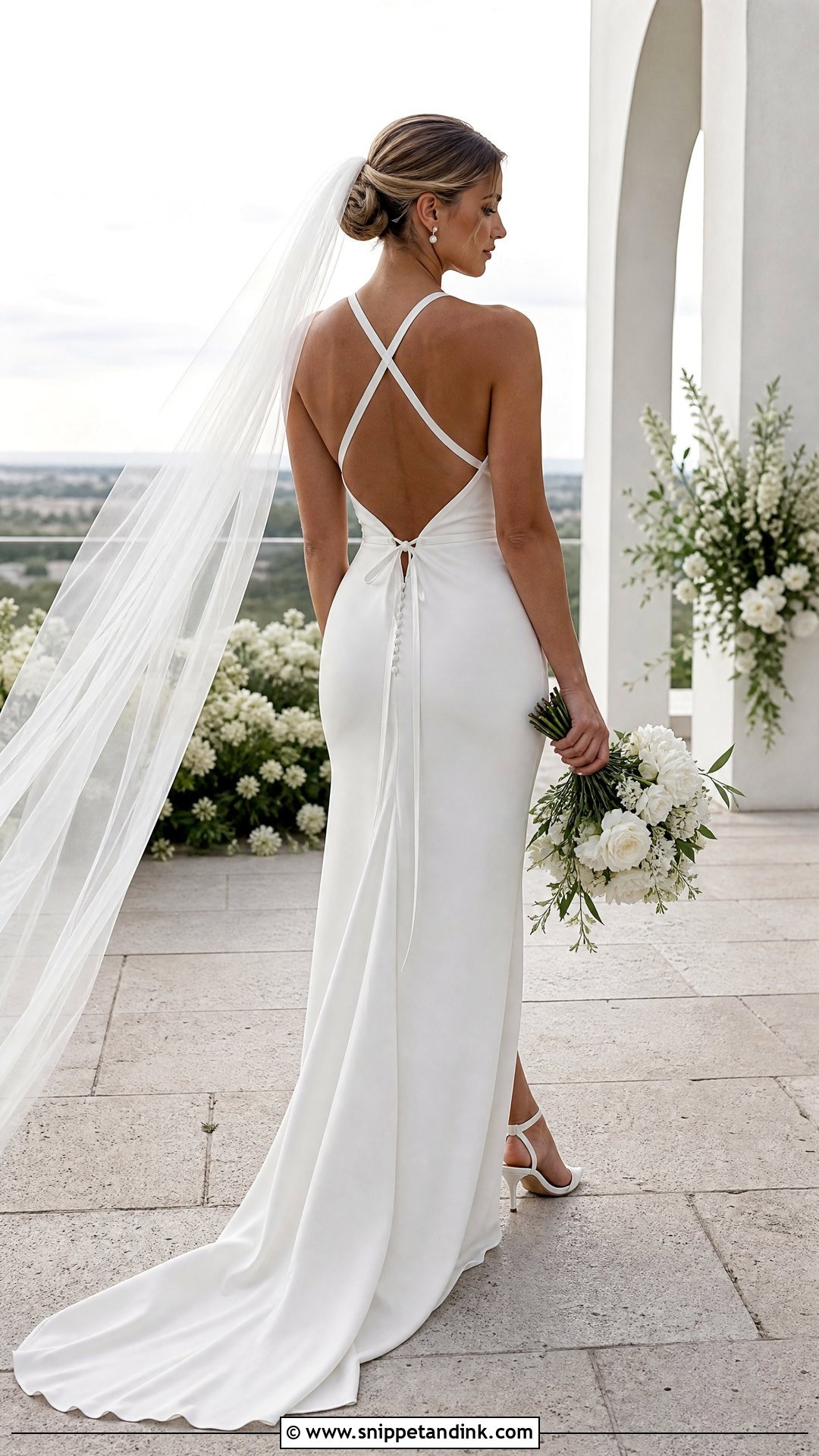
A crisscross strap back wedding dress gives the back view its own moment. Thin satin or beaded straps crossing over an open back pair best with a simple V-neck front and a fitted crepe or light A-line skirt. Wear your hair up so the cross shows during the ceremony, and add pearl earrings, comfortable slingbacks and a sheer veil that softens without hiding. Where the straps cross matters more than people think. Set too high, they cut across the shoulder blades; too low, they stop helping the bodice. Low-back undergarments or sewn-in cups are essential here.
12. Bow Strap Wedding Dress
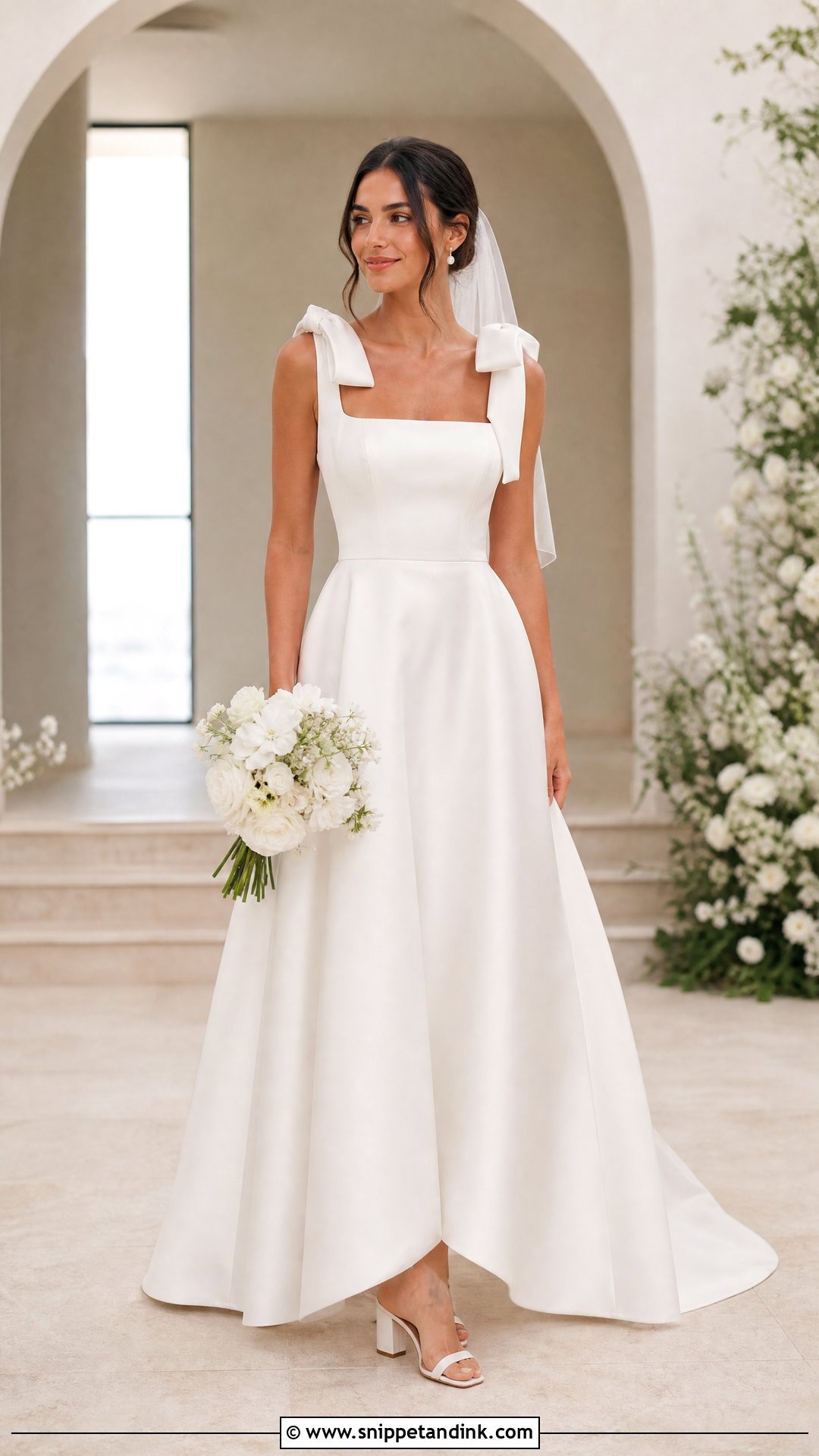
Bows bring a playful shoulder detail. Medium-width straps tied into structured bows or soft trailing knots sit well on a square-neck satin bodice over an A-line skirt. Pearl earrings, a short clean-edged veil and block heels keep it classic, and a low bun stops loose hair tangling in the loops. Big bows need a quiet bouquet; small ones tolerate a few floral accents. I’d ask for bows that are stitched or partly fixed rather than true ties. A real knot loosens with movement, and by the speeches one bow is longer than the other in every photo.
13. Floral Appliqué Strap Wedding Dress
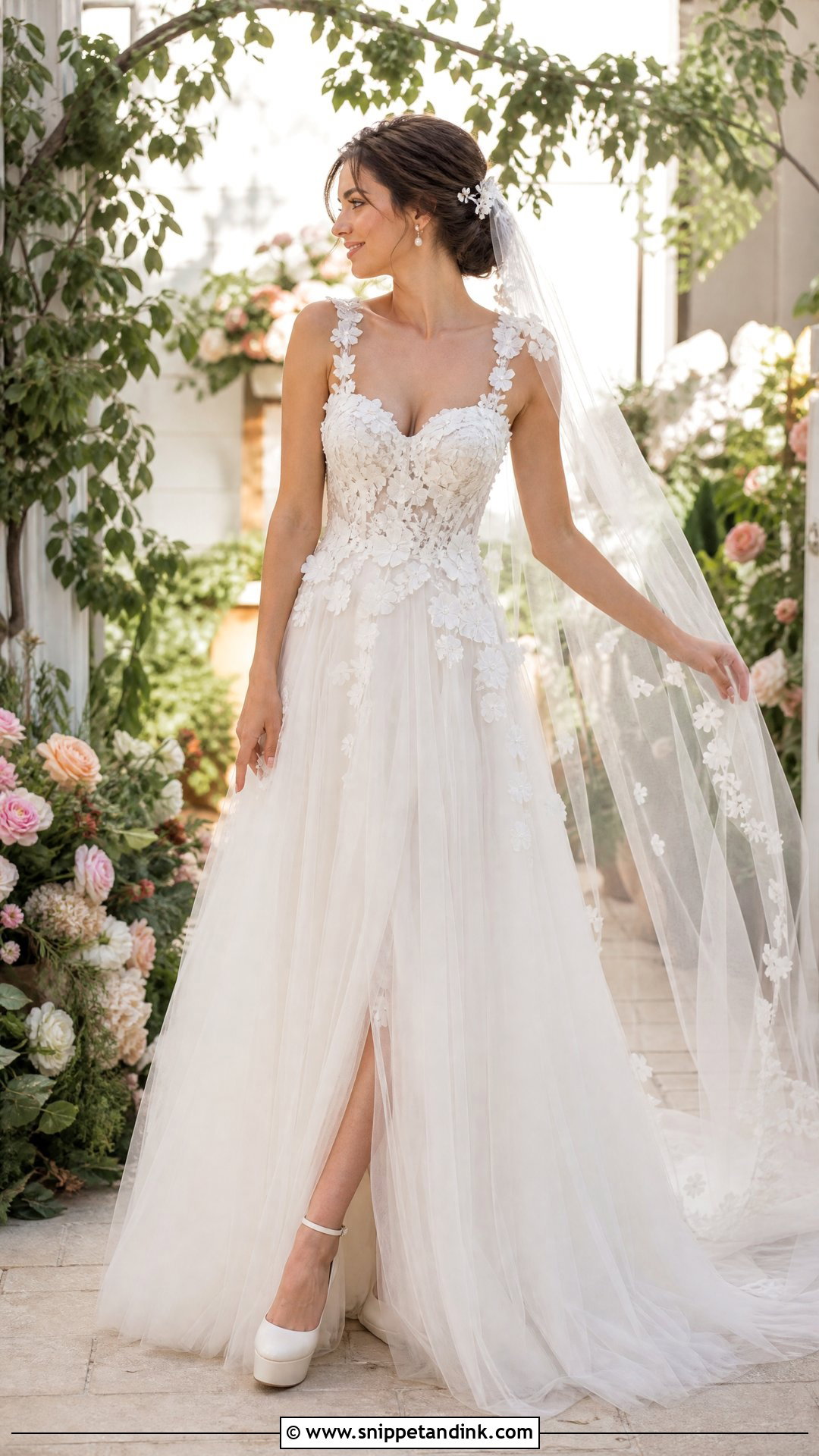
Floral appliqué straps give a simple gown dimension. The best ones start at the strap and spill across the bodice so the flowers look like they grew there. A tulle A-line or fitted lace gown carries them well with floral pins, small pearl earrings and understated heels. A veil scattered with matching motifs adds texture, but mixing different flower shapes gets busy fast. Keep the bouquet loose. Raised petals and beaded centres can scratch, so turn the strap over at a fitting; a seamstress can add soft backing and tack down any loose petal.
14. Illusion Strap Wedding Dress
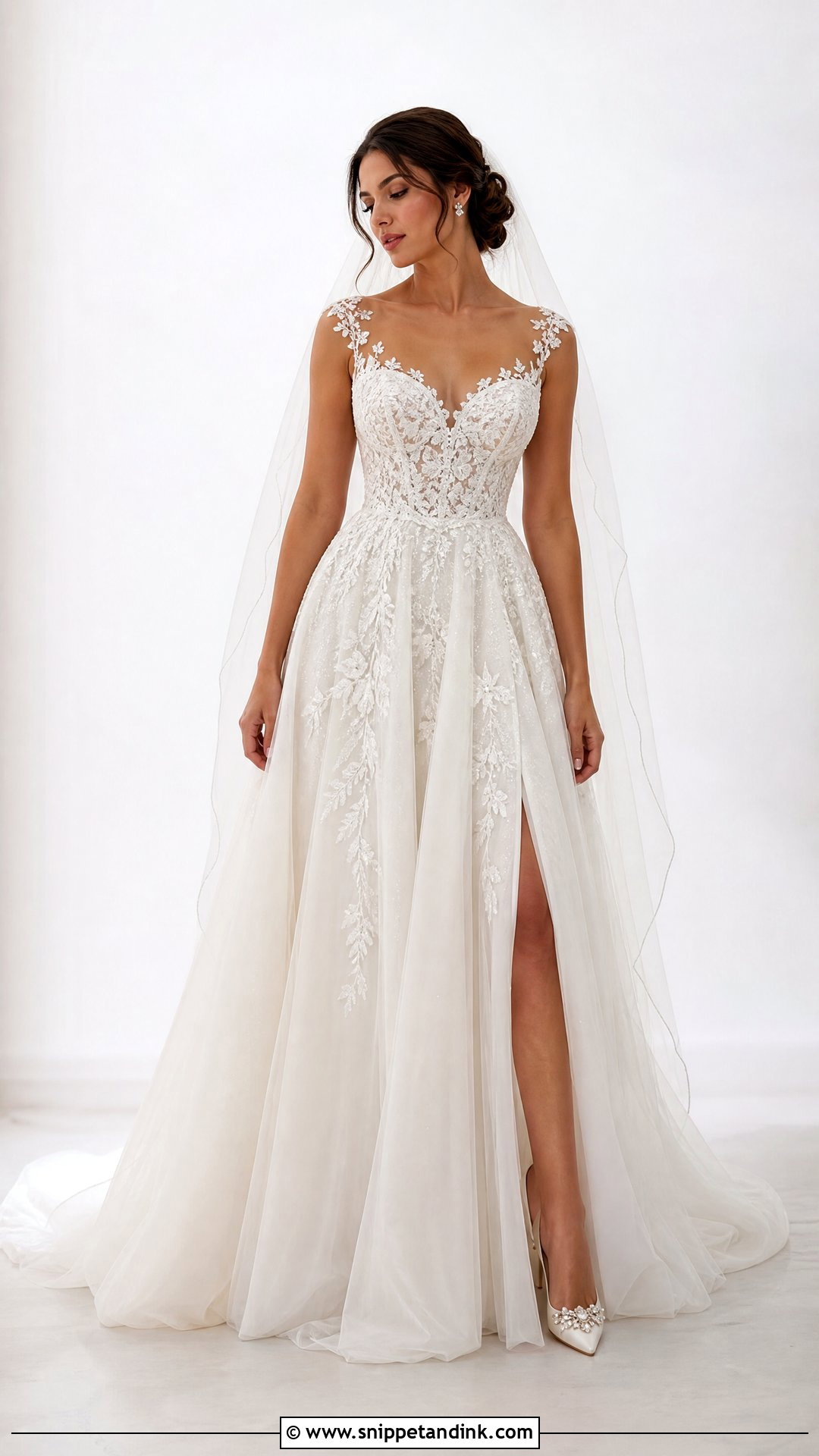
Illusion straps use sheer mesh so lace, crystals or appliqués appear to float on your shoulders. The whole effect depends on the tulle matching your skin tone, and that’s harder than it sounds: many shops stock only a few shades, so ask early if yours is darker or lighter than the sample. A lace A-line, beaded sheath or tulle ball gown all work. Fine-edged veil, crystal studs, pointed pumps and hair swept back. No necklace, since fine mesh snags. I look at the straps in daylight and under a camera flash before final approval, because flash can turn badly matched tulle grey.
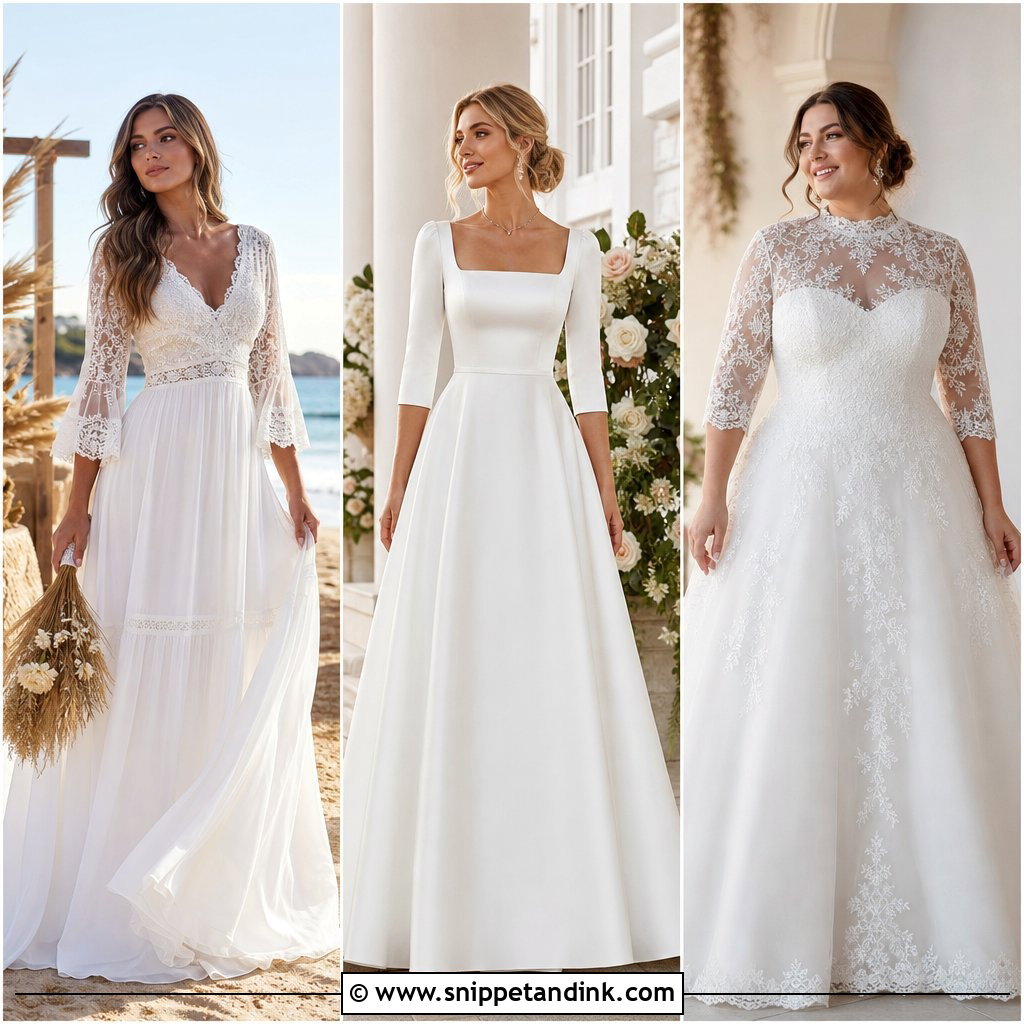
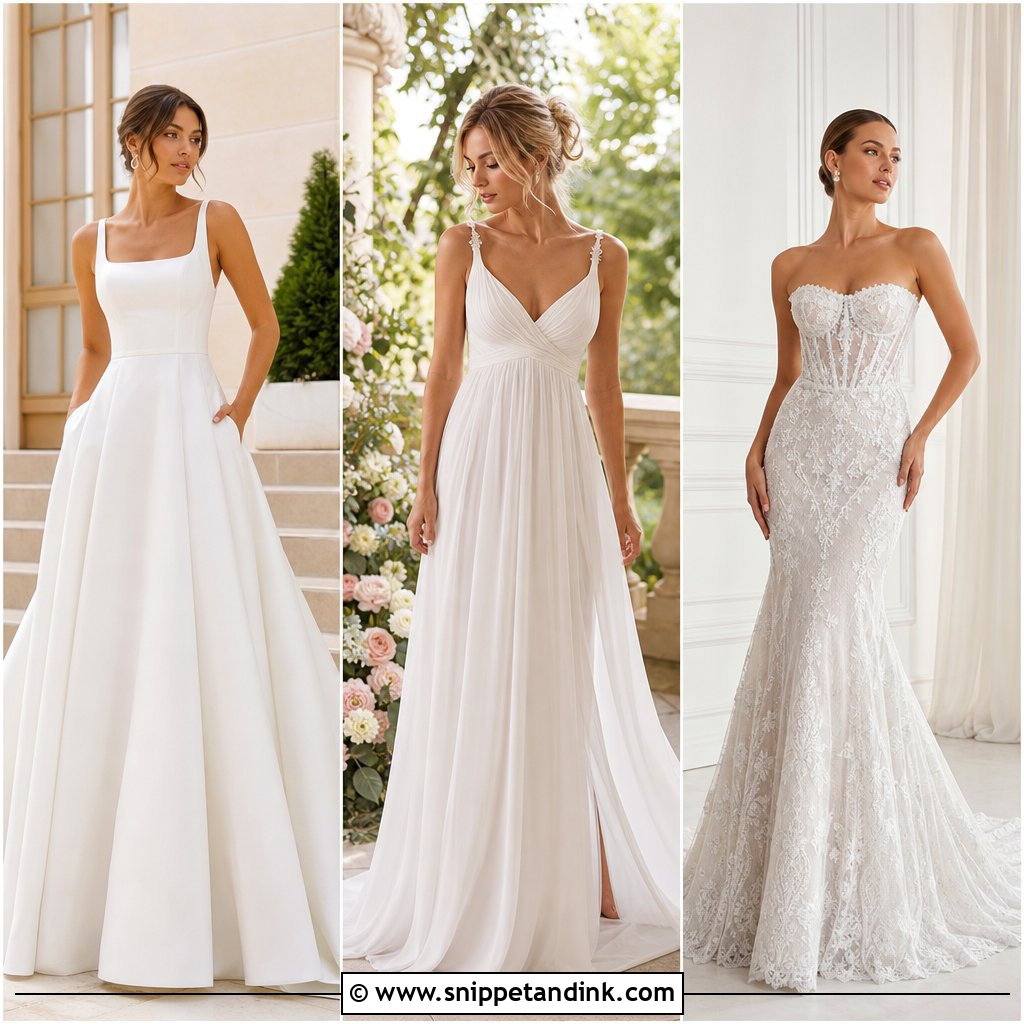
15. Ruffle Strap Wedding Dress
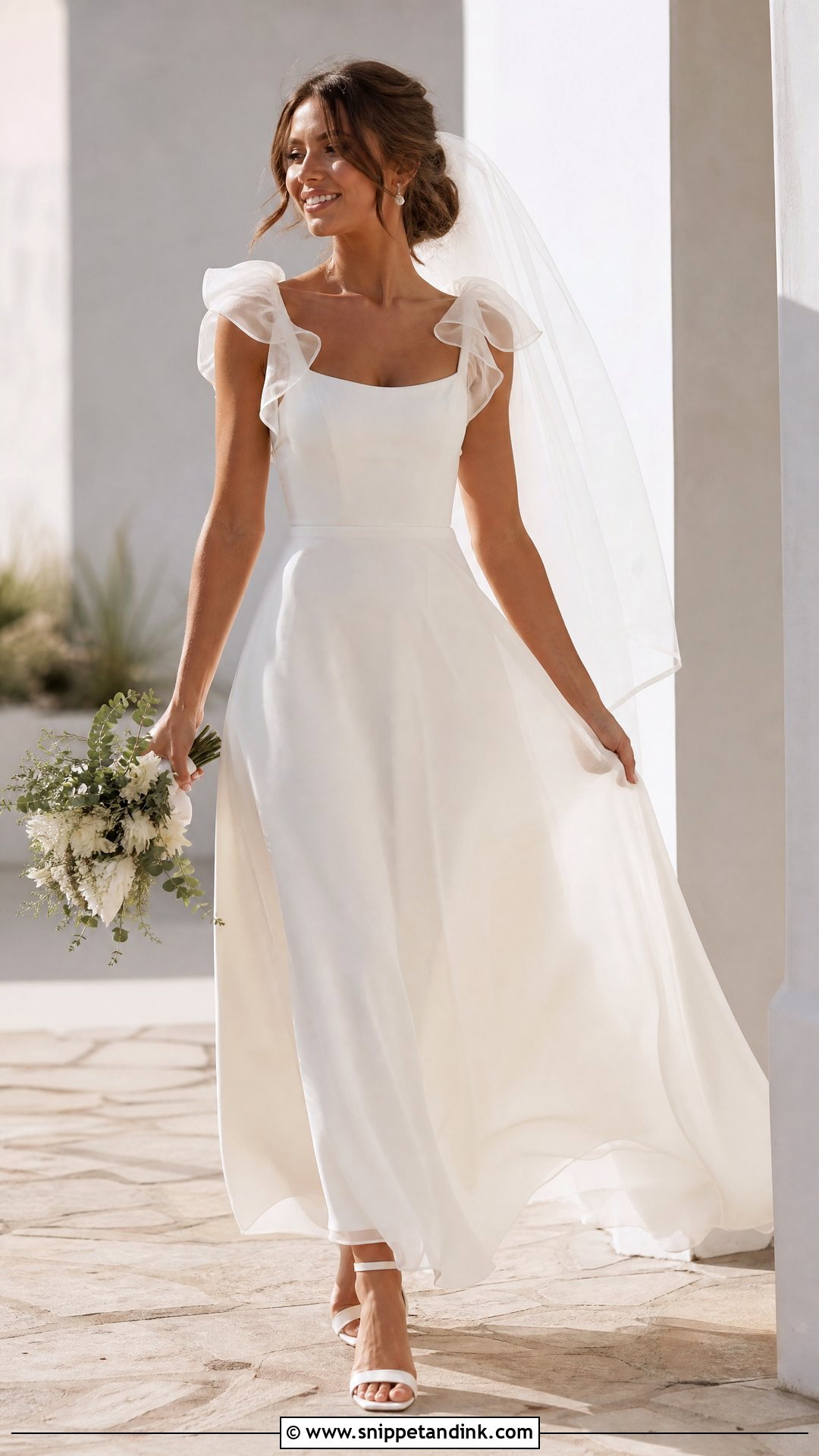
Ruffle straps give movement and a little volume at the shoulder. Narrow chiffon ruffles stay subtle; wider organza ruffles hold a crisper shape and make more of a statement. Keep the rest of the dress clean, a fitted bodice and plain A-line skirt, with simple earrings, block-heel sandals, an unedged veil and a relaxed updo or low ponytail. Open-air ceremonies are the catch. Light chiffon ruffles flip and lift in a breeze, so stand outside for a minute at a fitting if you can, and have both sides stitched to sit the same way.
16. Cowl Neck Strap Wedding Dress
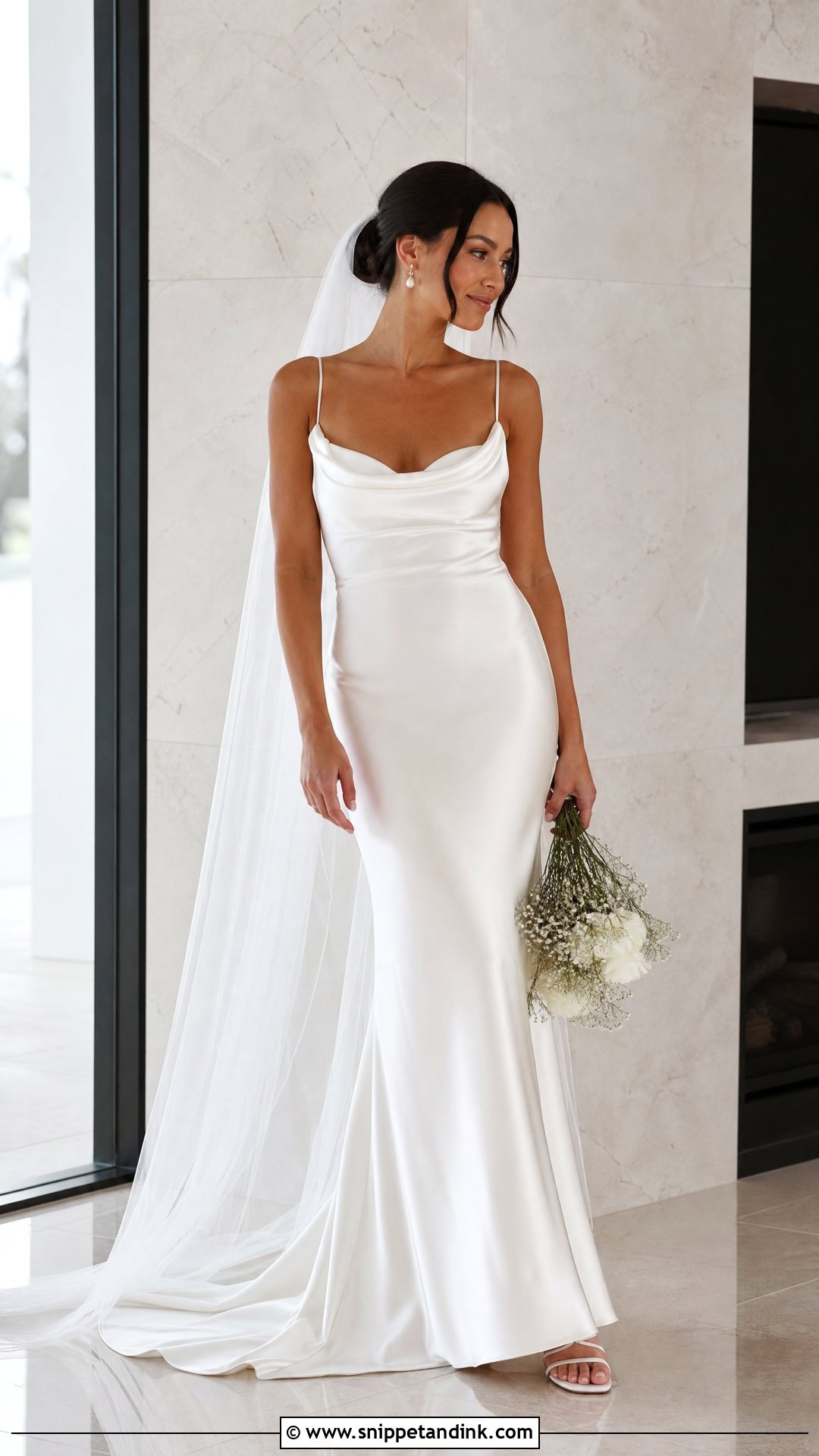
A cowl neck strap wedding dress is minimalist bridal at its most fluid. Bias-cut satin hangs from slim straps into a soft drape at the neck, and the line carries on through a column skirt, small train and low back. Modern pearl earrings, sleek sandals and a narrow cathedral veil suit it, with soft waves or a polished bun. Bias satin shows every seam underneath, so wear smooth, no-line underwear to fittings. Strap length controls the cowl entirely: a few millimetres shorter lifts the drape and adds coverage, a little longer drops it. Judge it seated as well as standing, because it falls lower when you sit.
17. Thick Strap V-Neck Wedding Dress
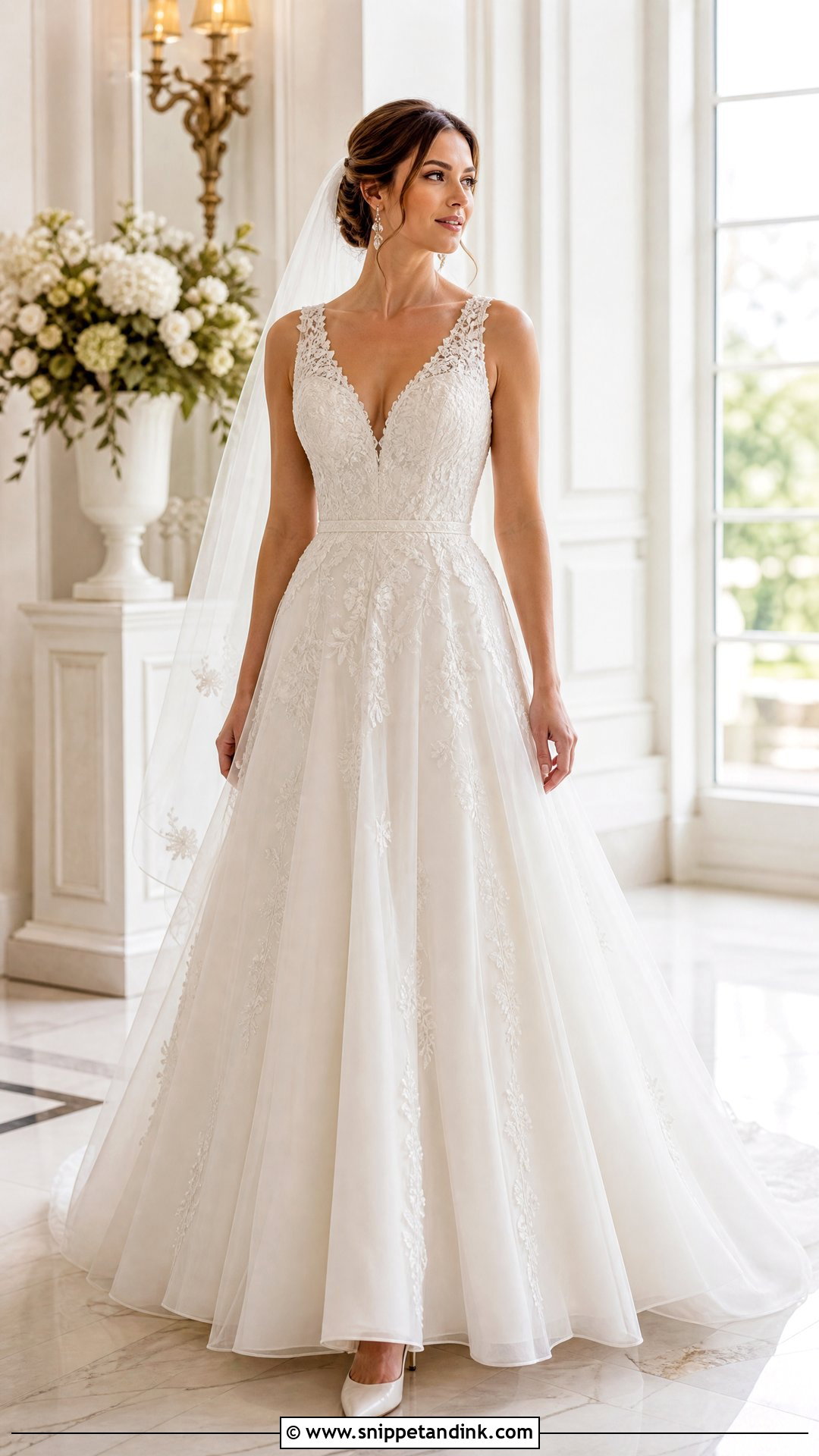
Thick straps with a V-neck give one of the most secure bodices you can wear. Because they flow straight into a structured bodice, there’s room inside for proper support and real coverage at the shoulder. Lace straps read traditional; smooth satin or crepe looks more modern. A fitted waist and A-line skirt keep the shape graceful, with drop earrings, closed heels and a veil under a soft updo. Leave the neck bare. Two checks matter: the V should lie flat without gaping when you lean, and the strap shouldn’t rub where it meets the underarm, which is where wider straps tend to chafe.
18. Cap Sleeve Strap Wedding Dress
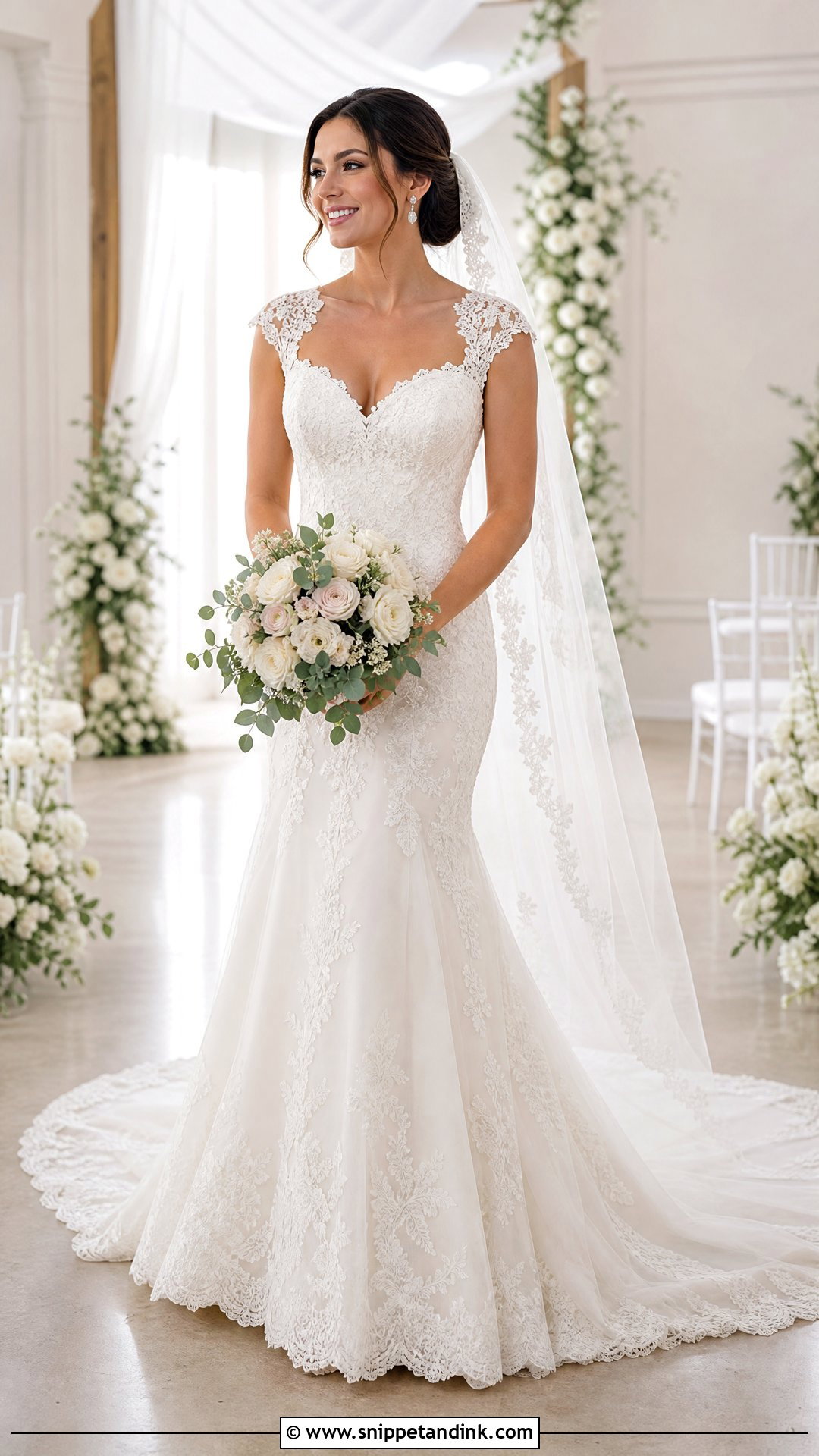
Cap sleeves give a little shoulder coverage while keeping the delicacy of a sleeveless gown. Small lace or beaded caps extend just past the shoulder and blend into the bodice, over a softly flared skirt with a natural waist and chapel train. Pearl earrings, low heels, a lace-edged veil and a classic chignon show off the cap and the back. The hem of the cap has to land on the right spot: too tight and it bites into the arm, too long and it reads like a short sleeve. Reach forward and lift your bouquet during the fitting to test it.
19. Draped Strap Wedding Dress
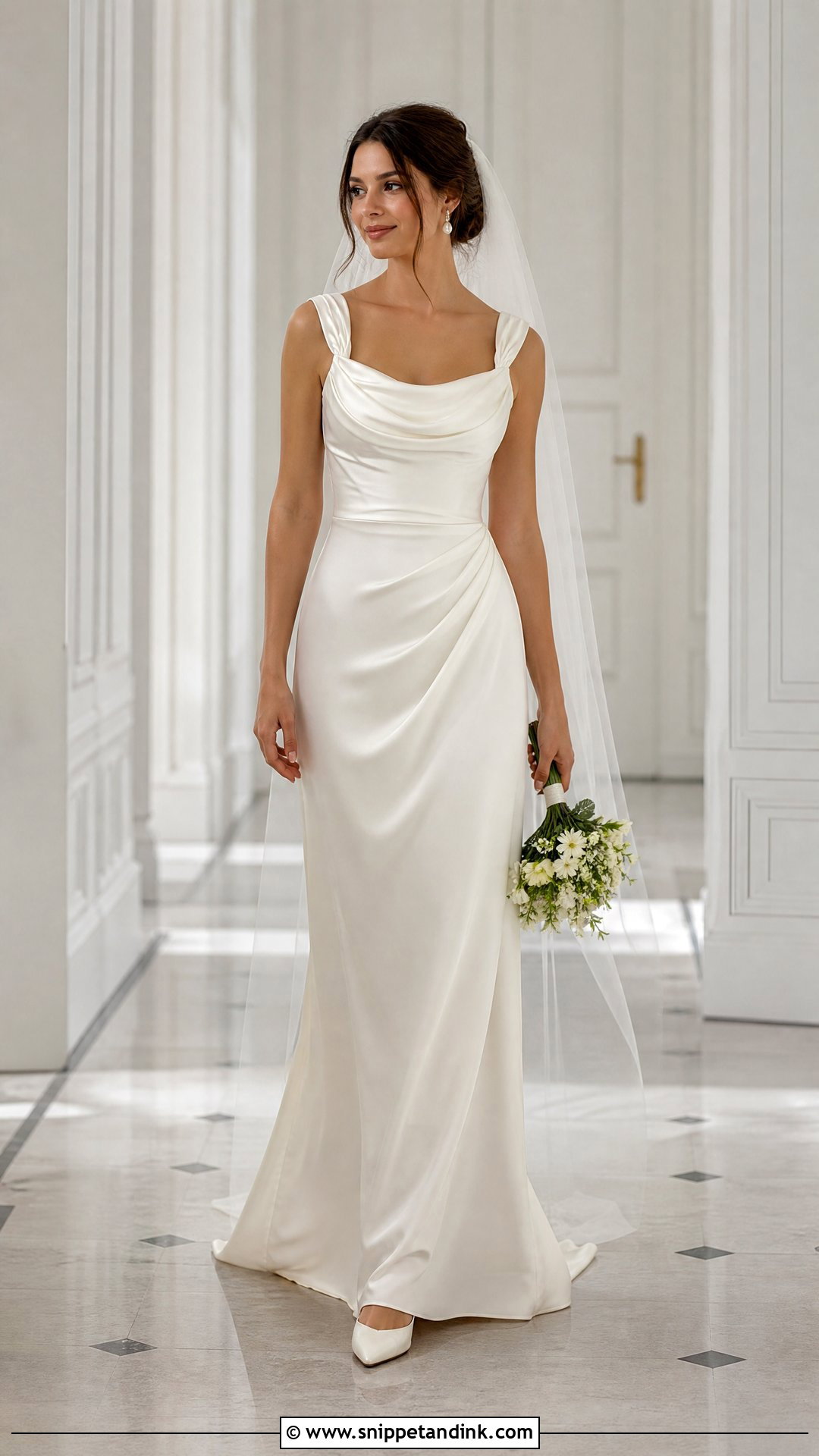
Draped straps add soft folds of gathered satin or chiffon around a sweetheart or curved neckline, continuing into a fitted bodice and flowing skirt. Understated earrings, pointed pumps, a single-layer veil and a low textured bun leave the folds alone. Avoid heavy necklaces. Draping looks casual but has to be controlled: without hidden stitches the folds migrate when you bend or raise your arms, and one shoulder ends up fuller than the other. Ask your seamstress to tack them at a few points and check both sides match in close-up.
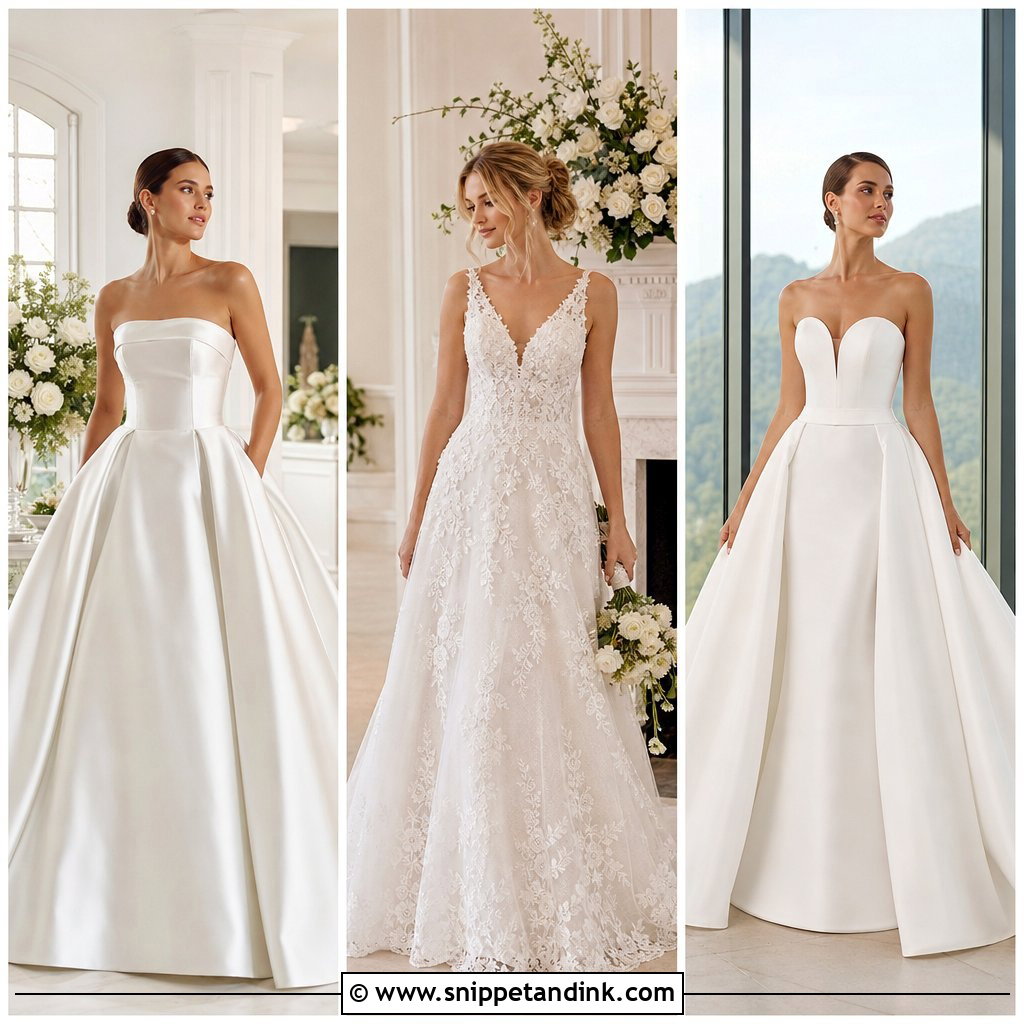
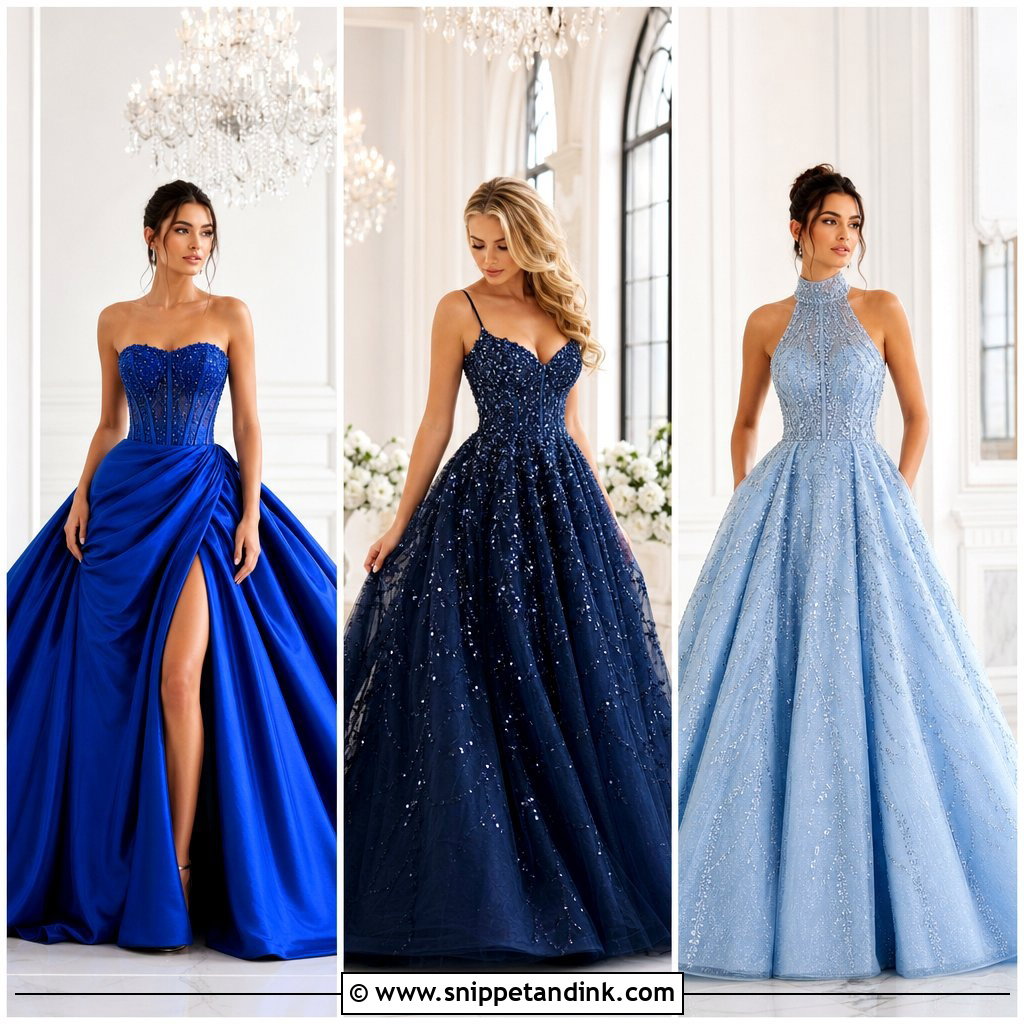
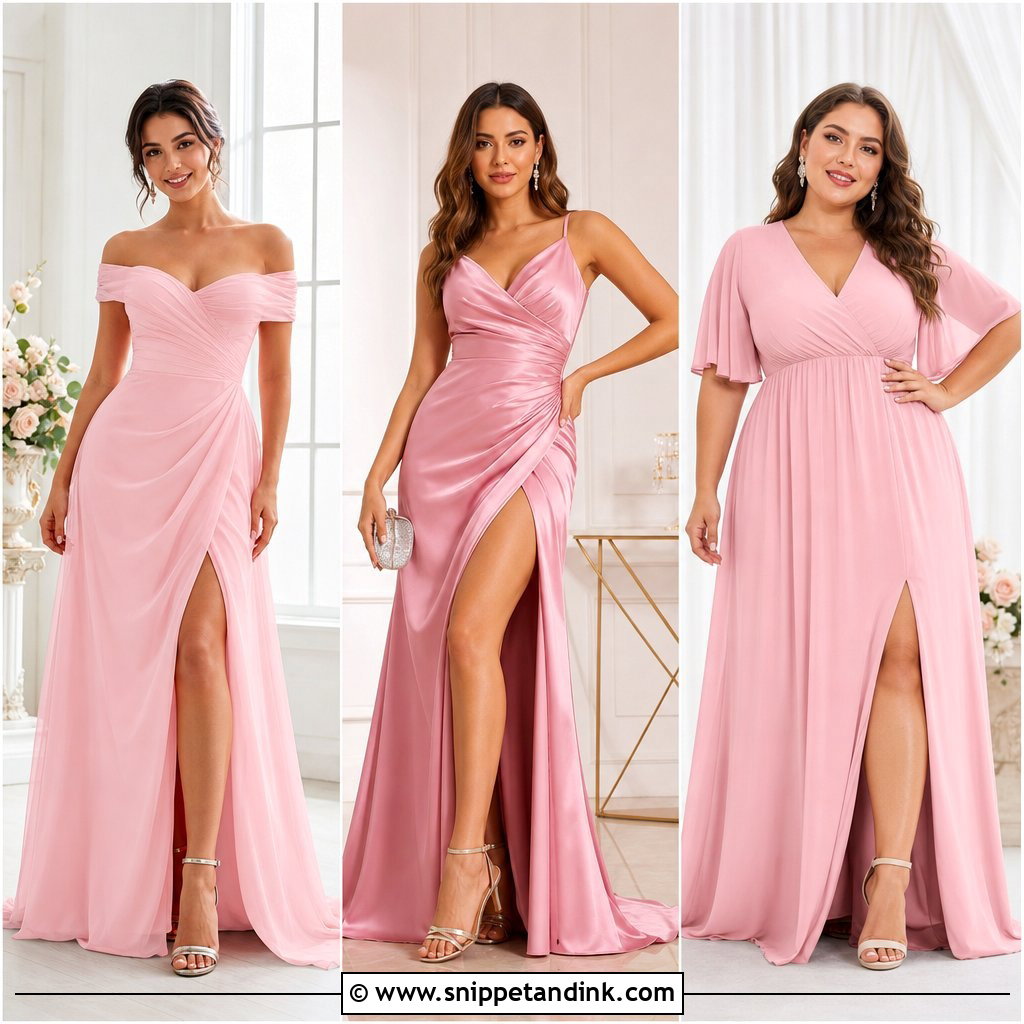
20. Low-Back Strap Wedding Dress
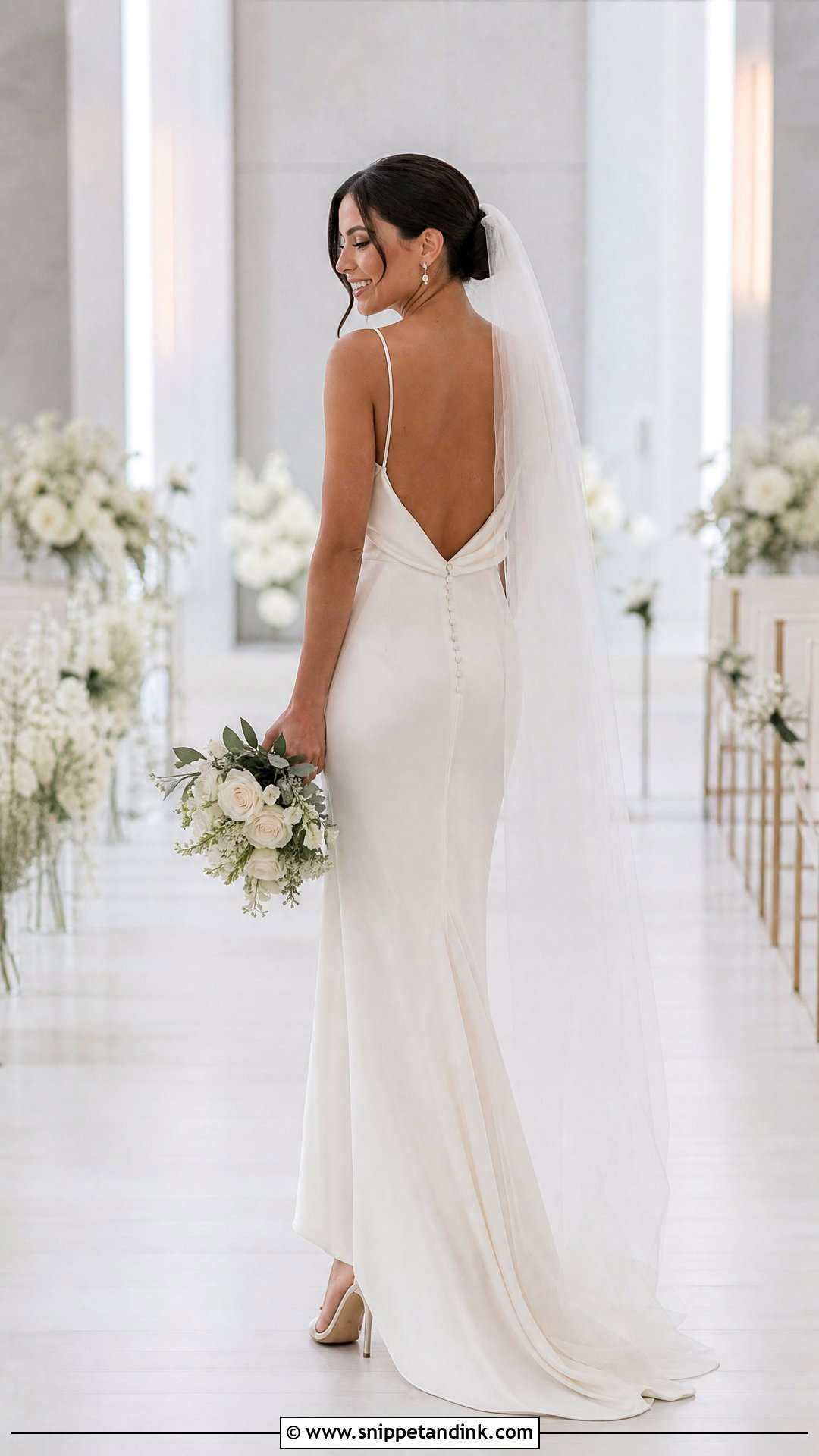
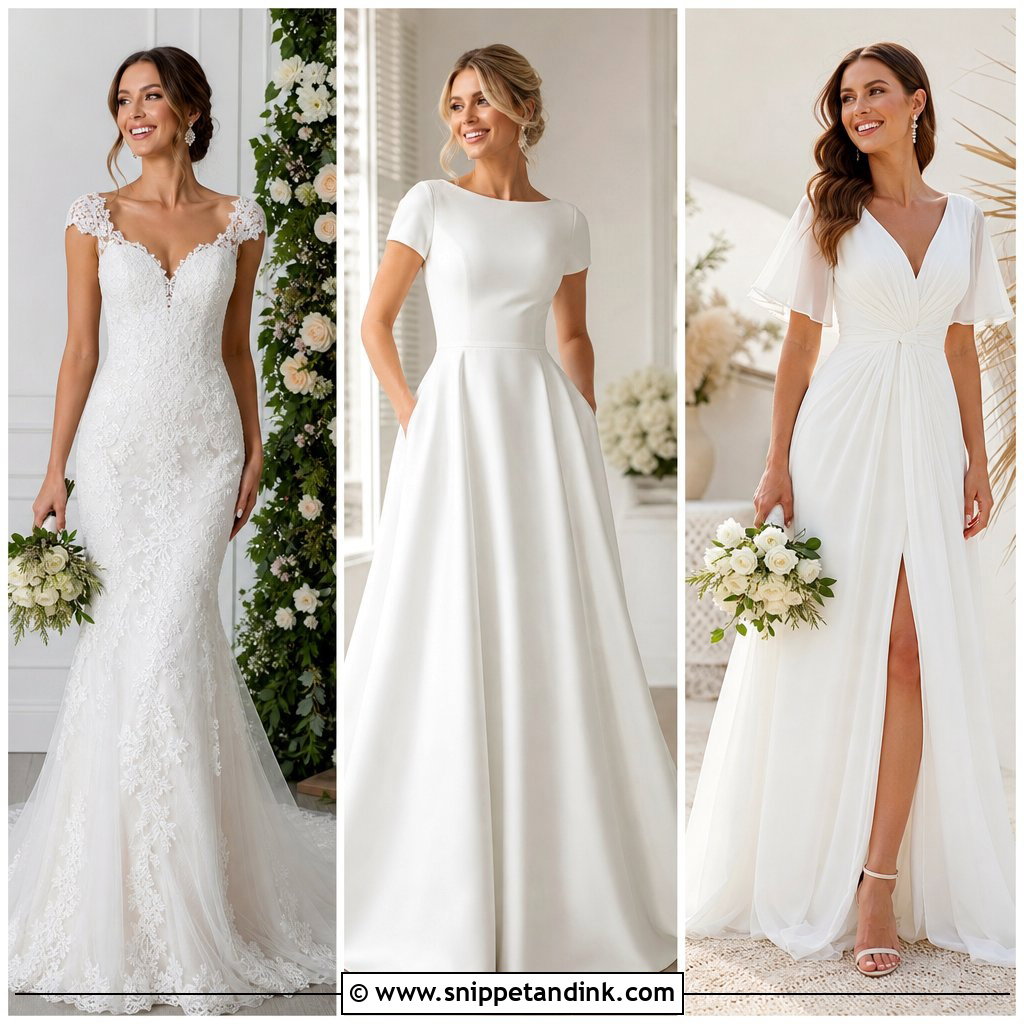
A low-back strap gown leaves a strong last impression as you walk away down the aisle. Slim straps run from a V, square or draped front to frame an open back, and a fitted crepe or satin skirt keeps the line long. An updo, sleek heels and either a back-drop necklace or just earrings suit it, with the veil attached below the hair so it falls over the opening without covering it. Choose one back detail, not three. With so little fabric behind, support has to come from boning and a firm waistband, so low-back cups or a sewn-in bra are worth sorting early.
Adding Straps to a Gown That Came Without Them
Love a strapless gown but hate hitching it up? Adding straps is one of the most common bridal alterations, and it usually works well if you plan it.
Ask at the point of ordering whether the designer offers matching straps as an option, since fabric from the same dye lot avoids a slight shade mismatch. If not, a seamstress can often make them from fabric taken up at the hem or from a matching lace motif. Straps attached inside the bodice at the boning are stronger than ones stitched to the outer layer. If you want the choice on the day, detachable straps on hidden loops cost a little more and give you both looks.
When a Strap Slips Mid-Reception
Even a well-fitted strap can loosen as fabric warms and relaxes over the evening. A few small things in your emergency pouch fix most problems in minutes:
- Double-sided fashion tape to hold a strap or neckline edge to skin.
- Small safety pins, placed on the inside so the head never shows.
- Ivory thread and a threaded needle for a loose pearl or a popped strap stitch.
- A lingerie strap holder, the small snap loop that keeps bra and dress straps together.
Give the pouch to a bridesmaid rather than leaving it in your bag, because she’ll be the one fixing it.
A Strap Should Disappear Until Someone Looks for It
Straps should look like part of the gown, never an afterthought. Their width, material and placement have to work with the neckline, bodice, skirt and back, and your hair, veil, jewellery and shoes should point in the same direction. Wear the dress at fittings long enough to walk, sit, hug and lift your arms, because even the prettiest strap needs good tailoring to stay put. Pearls, floral appliqués, wide satin bands or a single asymmetric strap: each can carry a whole bridal look once it fits properly.
You'll Like These Ideas:





Leave a Reply