
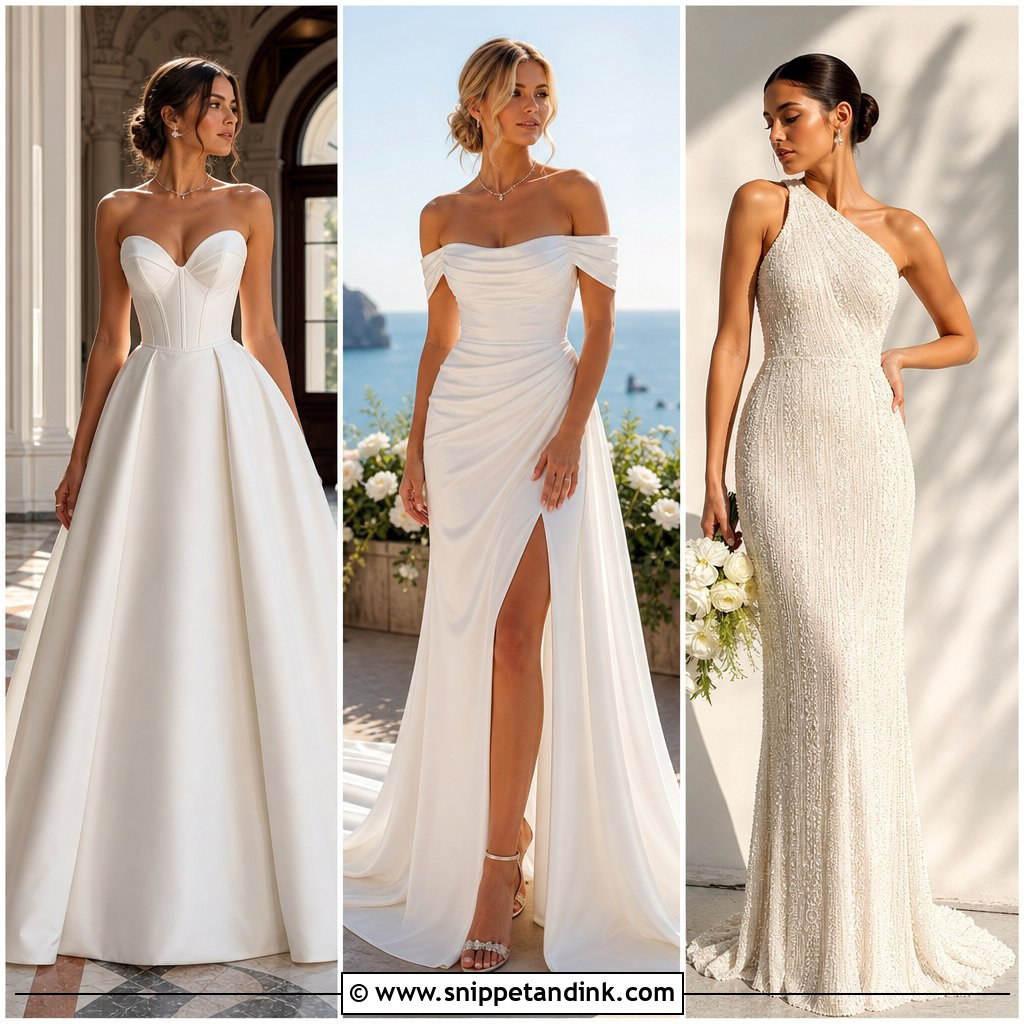
A strapless tube bodice leaves the shoulders, collarbones and face completely open, which is why so many brides try one on and stop talking for a second. Designers keep reworking the shape with corsetry, drop waists, sculpted satin, appliqué and detachable layers, and the cut now ranges from grand to barely-there. What nobody sees on the hanger is the engineering. A tube gown only works if the boning, cups and waist stay hold it up on their own, so you are never hitching it at the reception. Below are twenty versions I’d put a bride in, from full ball gowns to light destination dresses, with notes on how each one actually wears.
What Holds a Tube Bodice Up (Hint: Not Your Bust)
Brides often assume a strapless dress stays up because it’s tight across the chest. It doesn’t. A well-made tube bodice grips at the ribcage and the natural waist, where your body is narrowest and firmest, and the bust simply sits in shaped cups above that anchor.
Three things do the work inside the gown:
- Boning in the seams, either flexible synthetic or spiral steel. Steel follows curves better and holds its shape longer in a heavy gown.
- A waist stay, a firm grosgrain band sewn inside and hooked closed before the zip. It carries the skirt’s weight so the bodice isn’t dragged down.
- Sewn-in cups or a built-in corselet, so you don’t need a separate strapless bra fighting the dress.
When I try a bride in a tube gown, I ask her to take a deep breath and then lift both arms overhead. If the top edge slides more than a finger’s width, the fit at the ribcage is too loose, and no amount of pulling up will fix that during the reception. Take the gown in there, not at the bust.
1. Satin Ball Gown Tube Wedding Gown
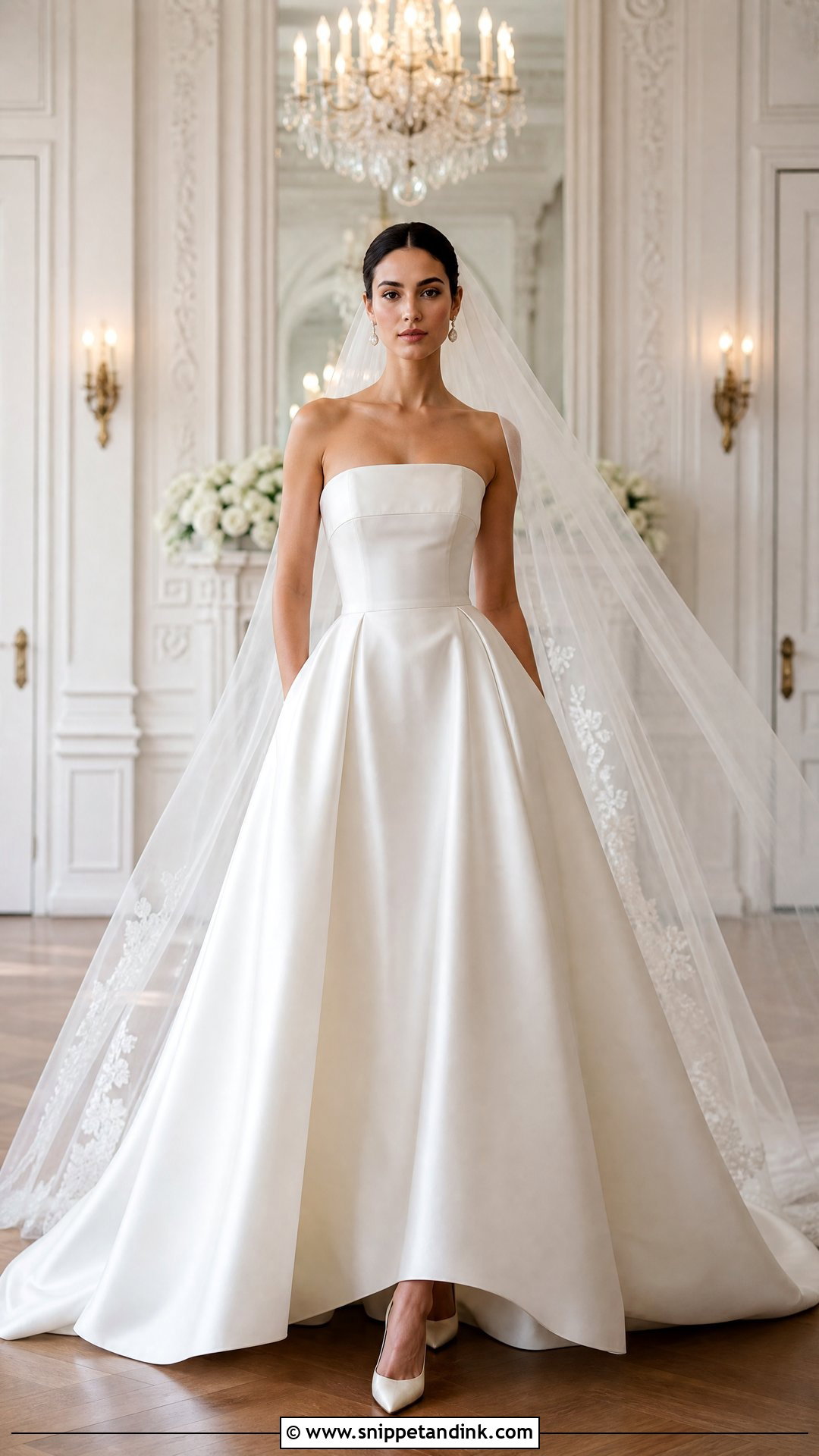
Satin ball gowns are heavy, and that weight is exactly what a strapless bodice has to carry. I only pull one with real internal corsetry and a defined waist, because a full skirt drags a loose bodice down within an hour. Matte satin reads expensive under ballroom lighting; a silkier face catches more flash. Pointed ivory pumps, pearl drops and a structured mini bag for portraits finish it, and a cathedral veil balances the width from behind. Keep hair to a low bun or side-parted waves so the neckline stays visible. Give it a room with space to turn, since this skirt needs a wide aisle.
2. Sweetheart Mermaid Tube Wedding Gown
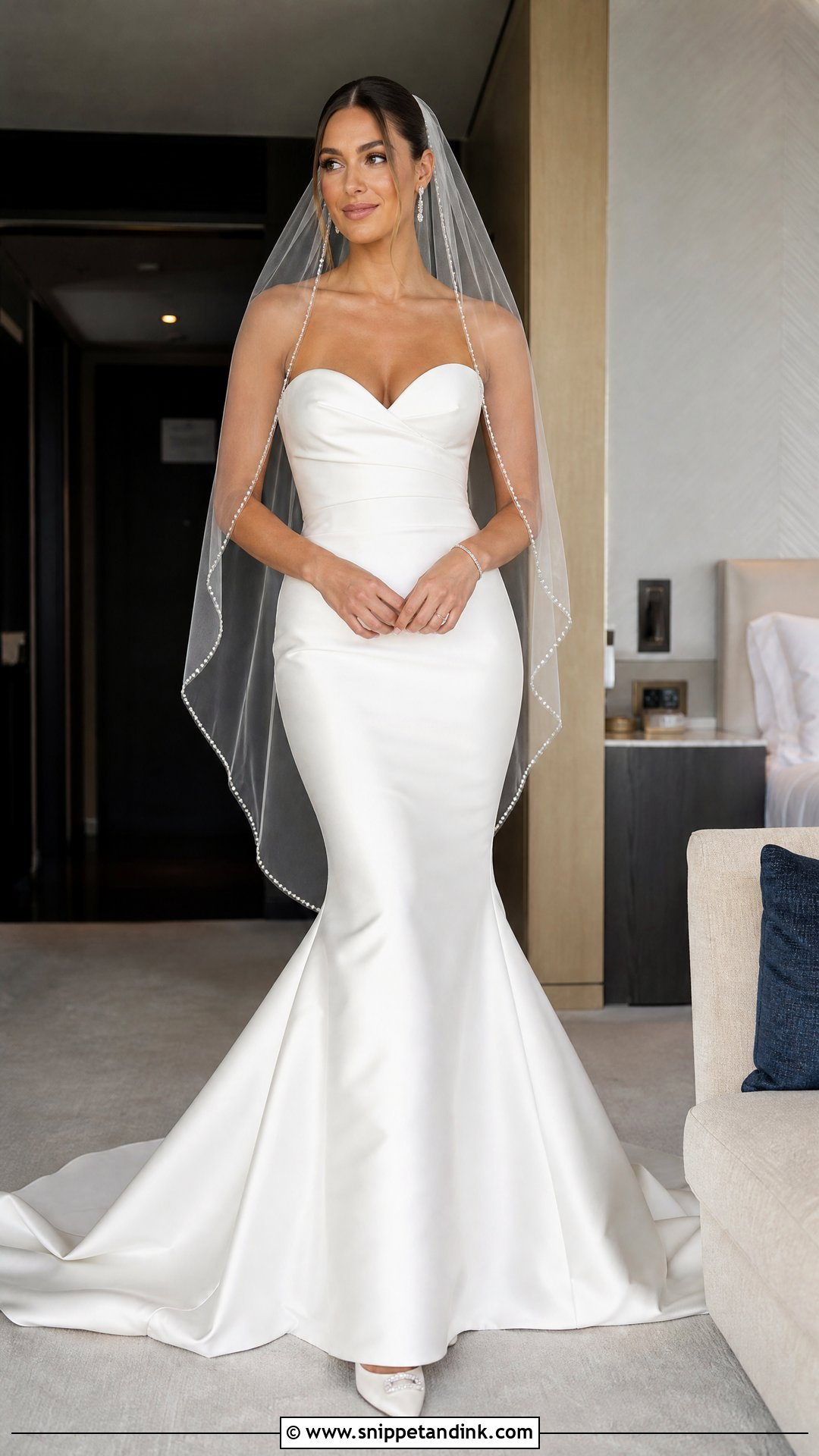
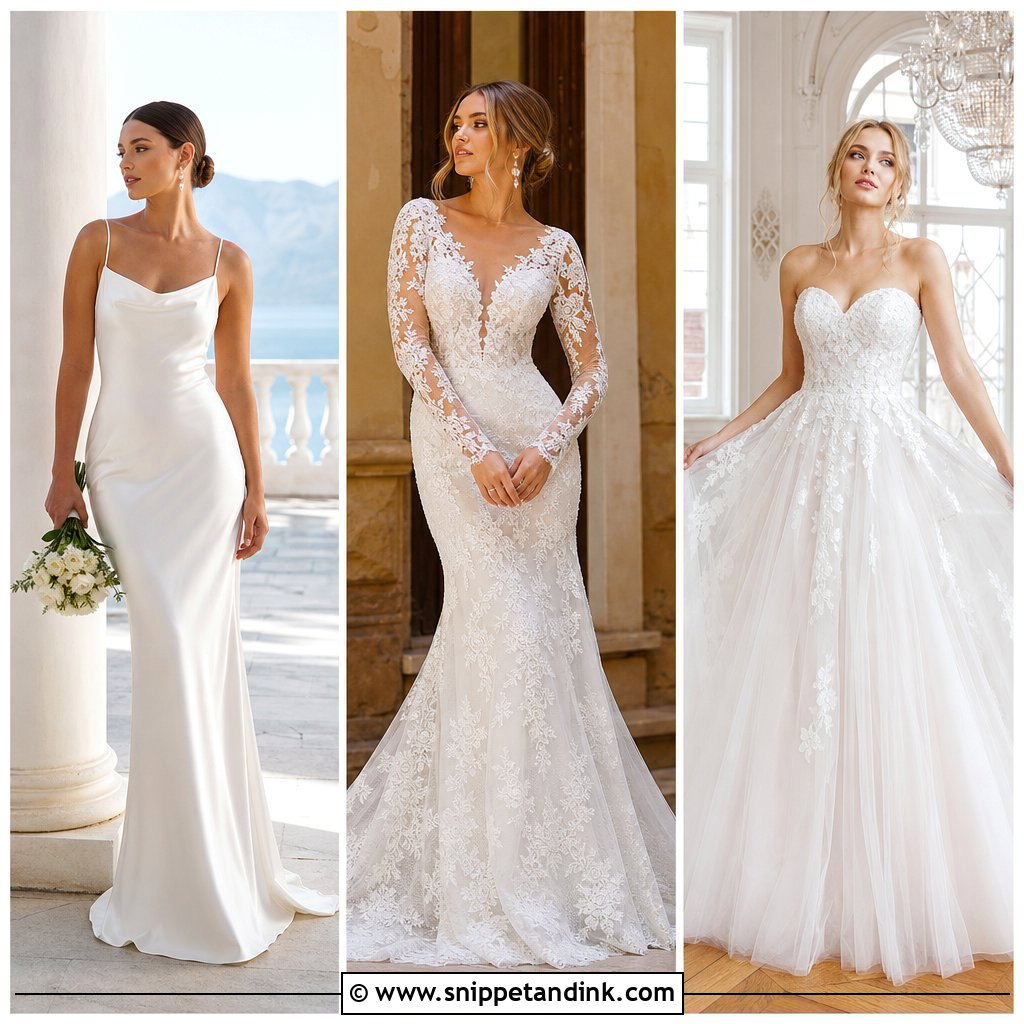
A sweetheart mermaid tube wedding gown does the shaping for you, so accessories can stay modest. The curved neckline softens the strapless edge, and the skirt follows the body to the knee before flaring. My first test at a fitting is sitting down: if the flare starts too high, you’ll perch on the edge of every chair, so ask for stretch lining and flexible boning. Crystal earrings, a slim bracelet and pointed heels in ivory or soft metallic are plenty. A fingertip veil stops above the flare instead of hiding it, and a smooth ponytail or waves pushed behind the shoulders keeps the line clean.
3. Lace A-Line Tube Wedding Gown
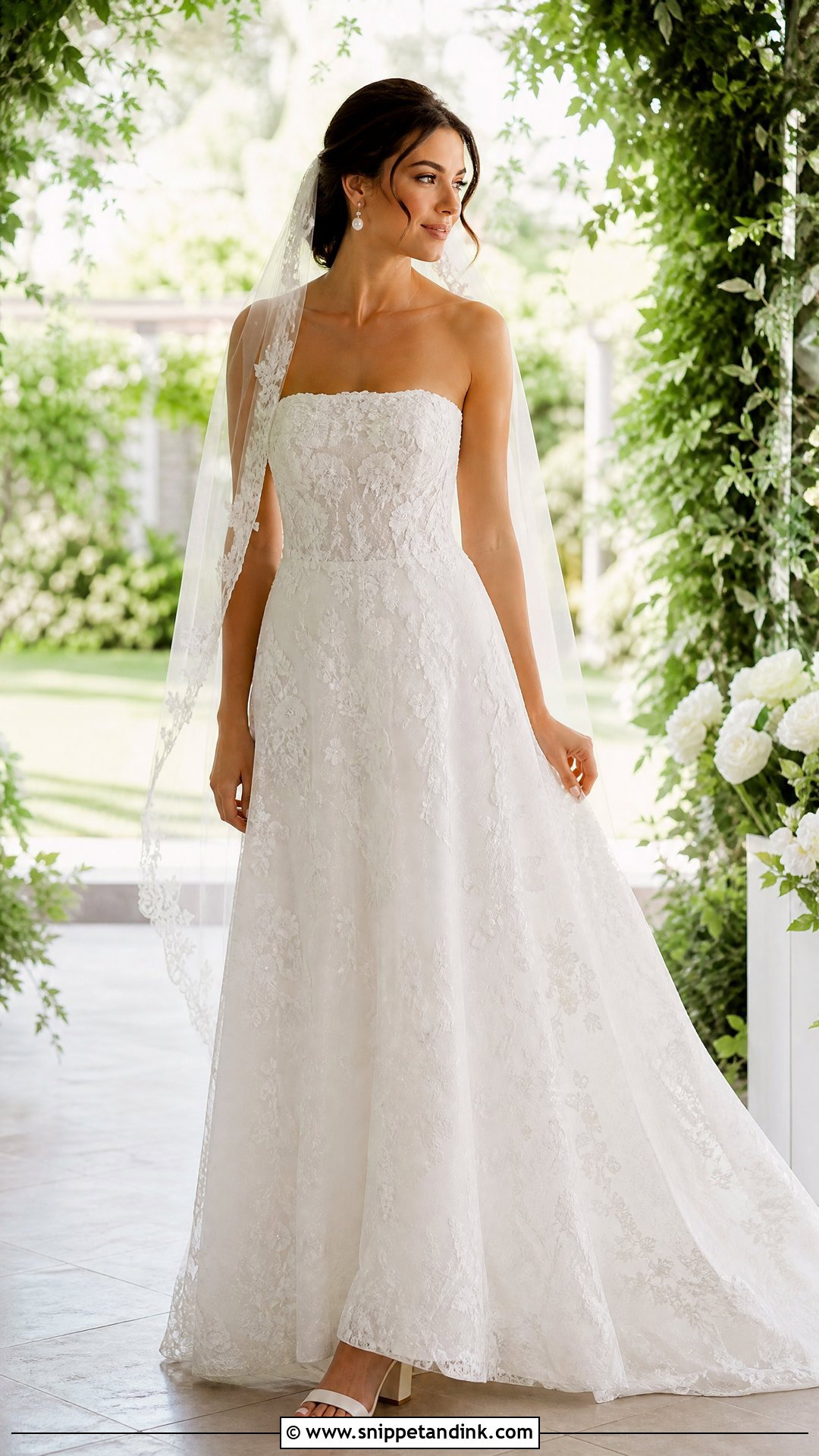
Lace takes the hard edge off a straight neckline. On an A-line skirt it defines the waist and falls past the hips without excess volume, which is why this is the shape I hand to brides who aren’t sure what they want yet. Floral lace looks romantic, geometric lace looks modern, and corded lace gives the most texture under light. Satin block heels, small pearls and a tulle veil edged in matching lace keep it gentle, with a loose low bun. If the bodice is sheer, ask for lining matched to your skin rather than a generic nude, because a mismatched lining shows as a pale panel in daylight photos. It suits gardens and estates in most seasons.
4. Minimalist Column Tube Wedding Gown
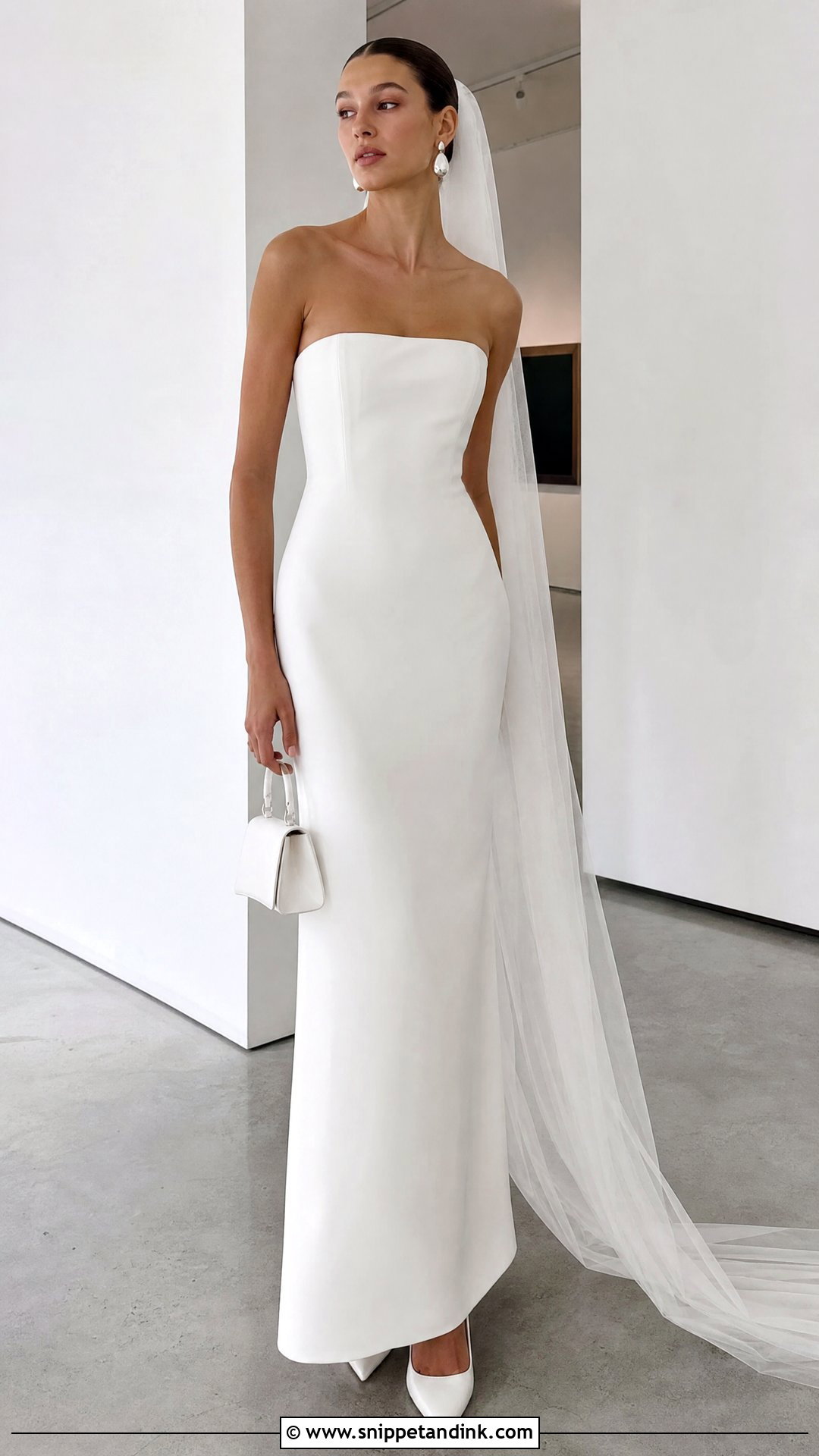
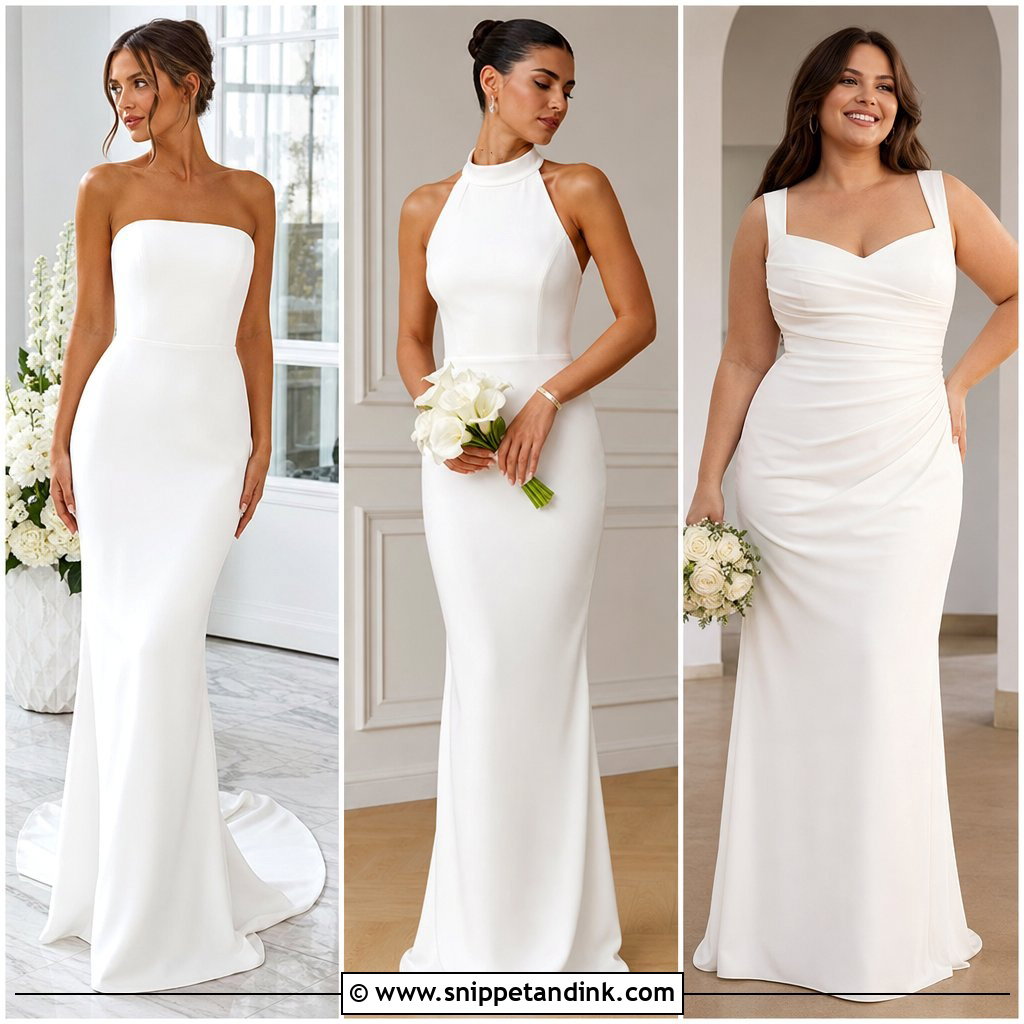
There is nowhere to hide in a column, and that’s the point. Crepe, satin or mikado with a structured straight neckline and a few vertical seams carry the whole design, so tailoring matters more here than in any other gown on this list. I check the hips and waist standing and seated: the fabric should skim, not pull into horizontal drag lines. Sculptural earrings, sleek pumps and a small top-handle bag suit it, and a long plain veil adds drama without breaking the minimal mood. A center-parted bun or smooth shoulder-length hair finishes it for a city hall, gallery or rooftop.
5. Drop-Waist Tube Wedding Gown
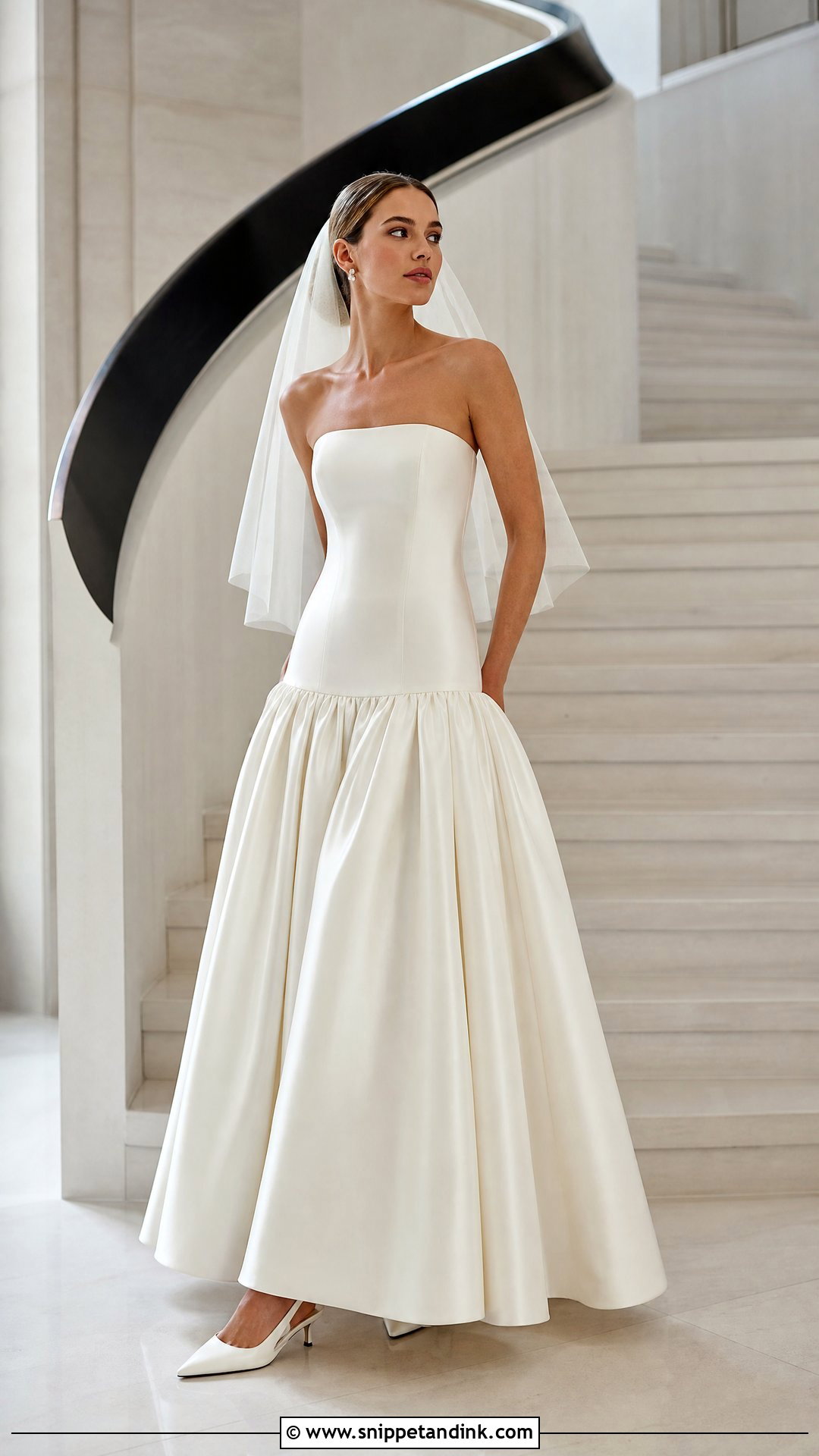
A drop waist lengthens the torso and then lets the skirt open around the upper hips. The seam is everything. A curved or shallow V seam flatters far more bodies than a flat horizontal line, which can cut you in half visually. Mikado and structured satin keep that architecture crisp, while taffeta moves more lightly. I’d skip this cut if you have a short torso, since the long bodice can sit awkwardly when you bend. Pearl studs, a tennis bracelet, slingbacks and a shoulder-length veil keep the waistline in view, with hair lifted into a high bun.
6. Corset Tulle Tube Wedding Gown
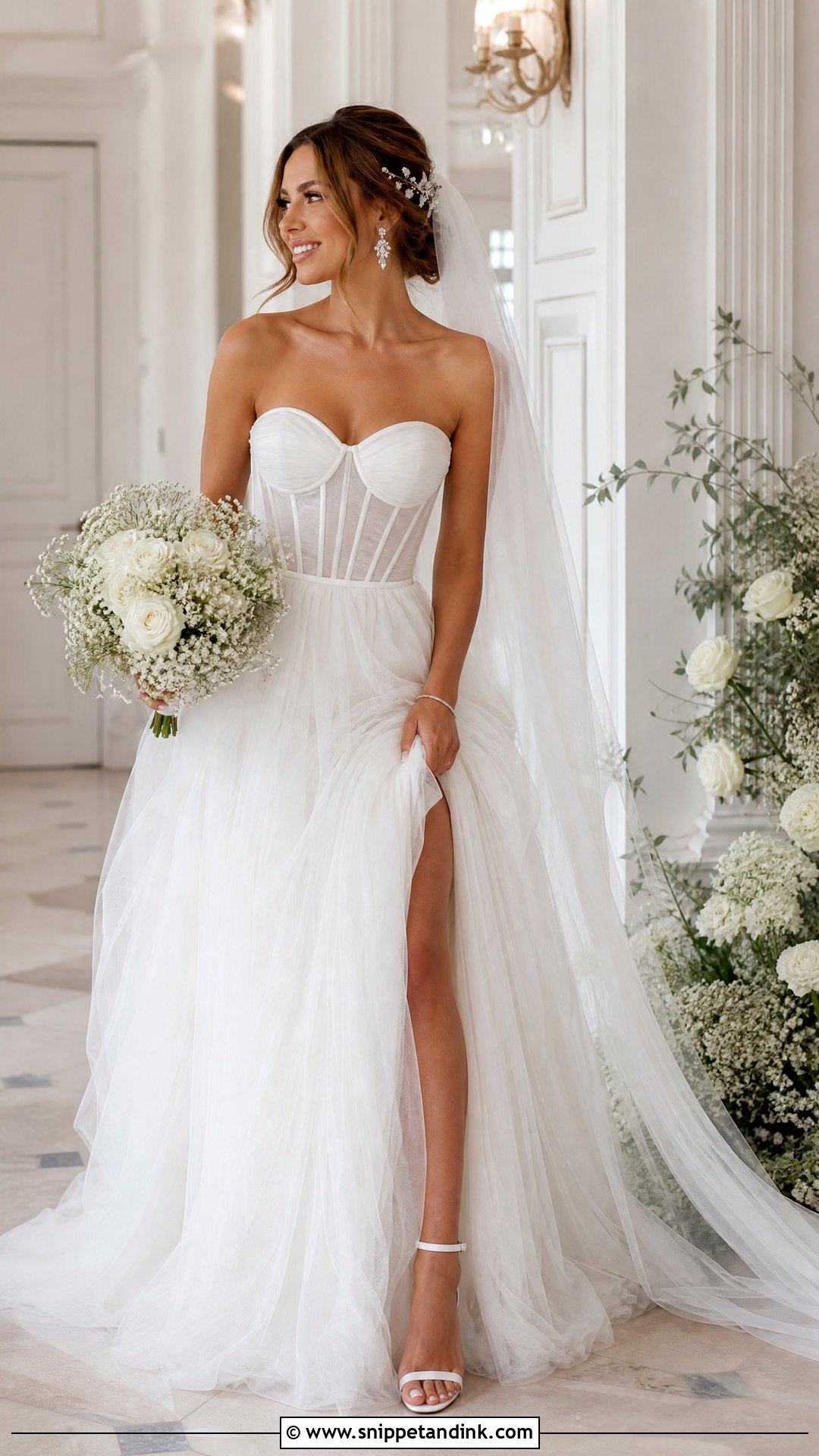
Tulle over a corset is the classic contrast: firm on top, airy below. Look for proper boning, secure cups and an opaque lining or well-placed appliqués so the skirt layers don’t reveal more than you planned. Gathered tulle gives volume without the weight of satin, which helps a strapless bodice stay put. Crystal drops, ankle-strap heels, a soft veil and maybe one floral comb are enough. When I fit a corset, I have the bride sit, lift both arms and walk the room. It should feel held, not squeezed; if you can’t take a full breath, the lacing or seams need letting out.
7. Basque-Waist Tube Wedding Gown
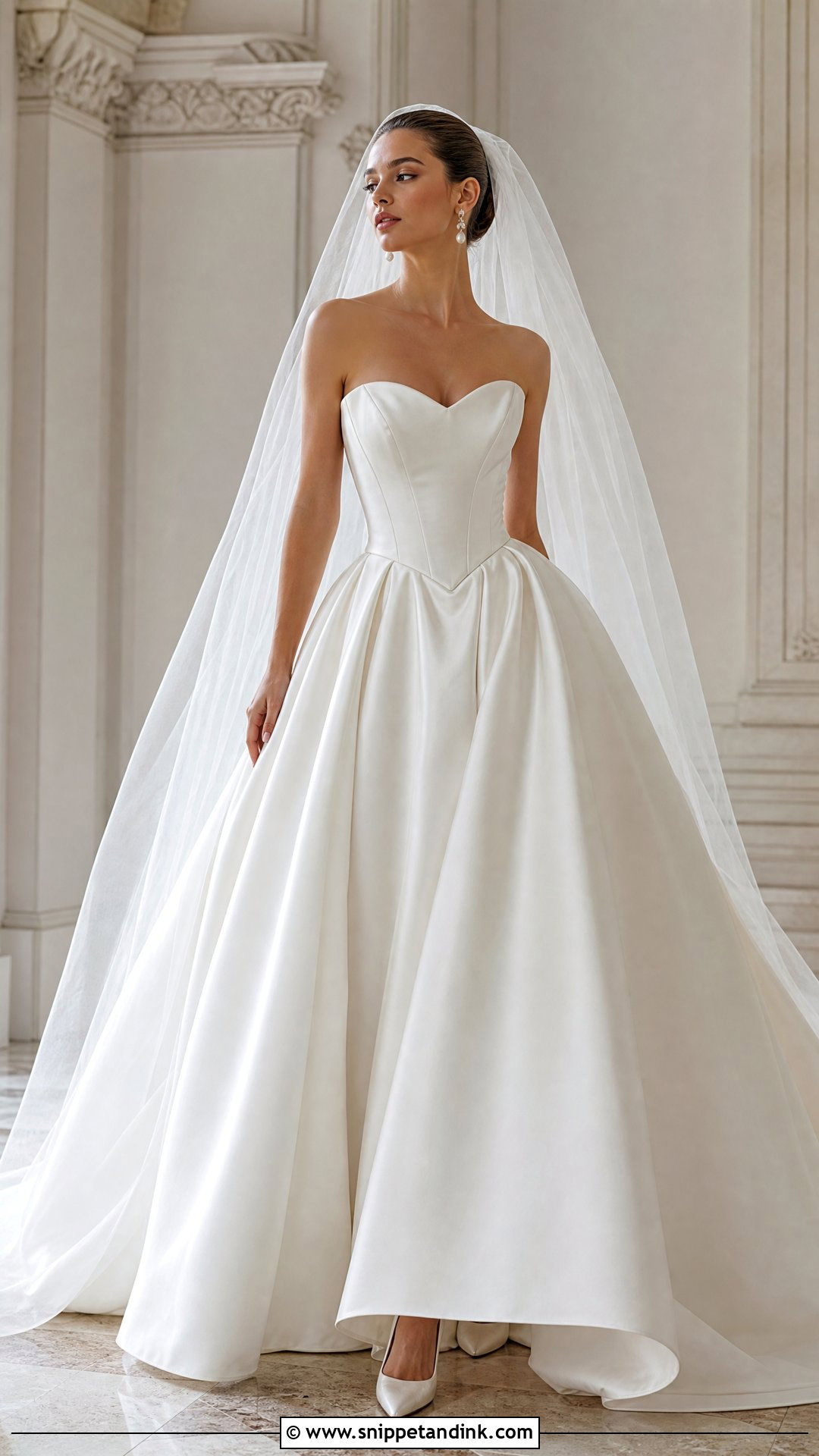
A basque waist dips into a point below the natural waist, and it’s one of the most flattering ways to join a strapless bodice to a full satin, organza or tulle skirt. Balance that sharp point with a softly curved neckline. Skip the necklace if the bodice has visible corset seams or texture; a fine bracelet or an heirloom ring does more. Pearl-and-crystal earrings, ivory pumps and a long veil under a polished bun complete it. Watch the point when you sit, because a stiff one can dig in, so ask whether the tip can be softened with lighter boning.
8. Draped Satin Tube Wedding Gown
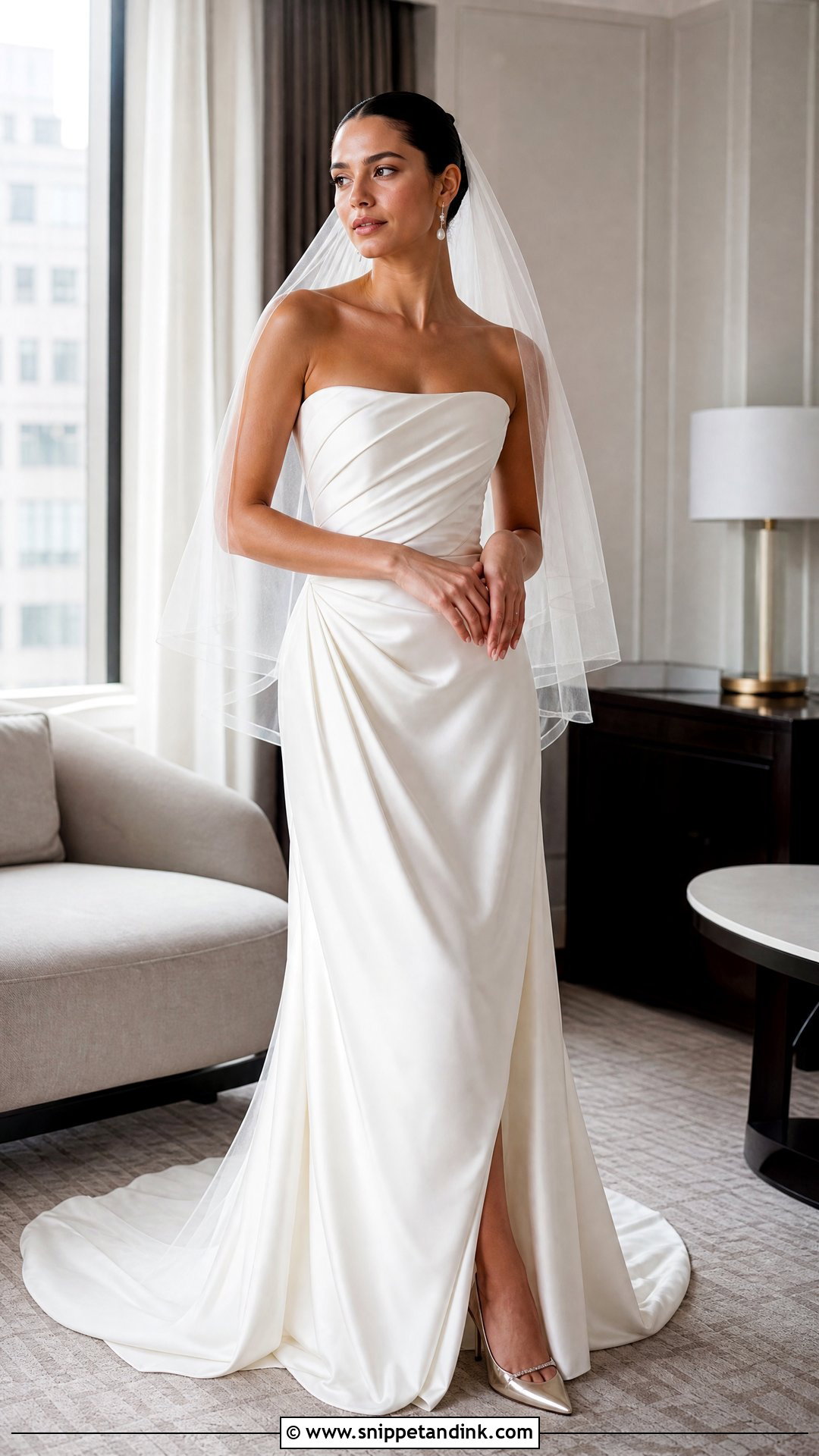
Draping gives satin movement, but bad draping adds bulk exactly where you don’t want it. Diagonal pleats across the bodice should define the waist and lie flat when you breathe out. I press on each fold at fittings; if it springs up or gapes, it needs tacking underneath. Pearl drops, metallic slingbacks and a compact satin clutch suit the fabric, with a plain fingertip veil that won’t fight the folds. Old-Hollywood waves or a side bun echo the fluid shape. It’s a quiet choice for hotel ceremonies.
9. Floral Appliqué Tube Wedding Gown
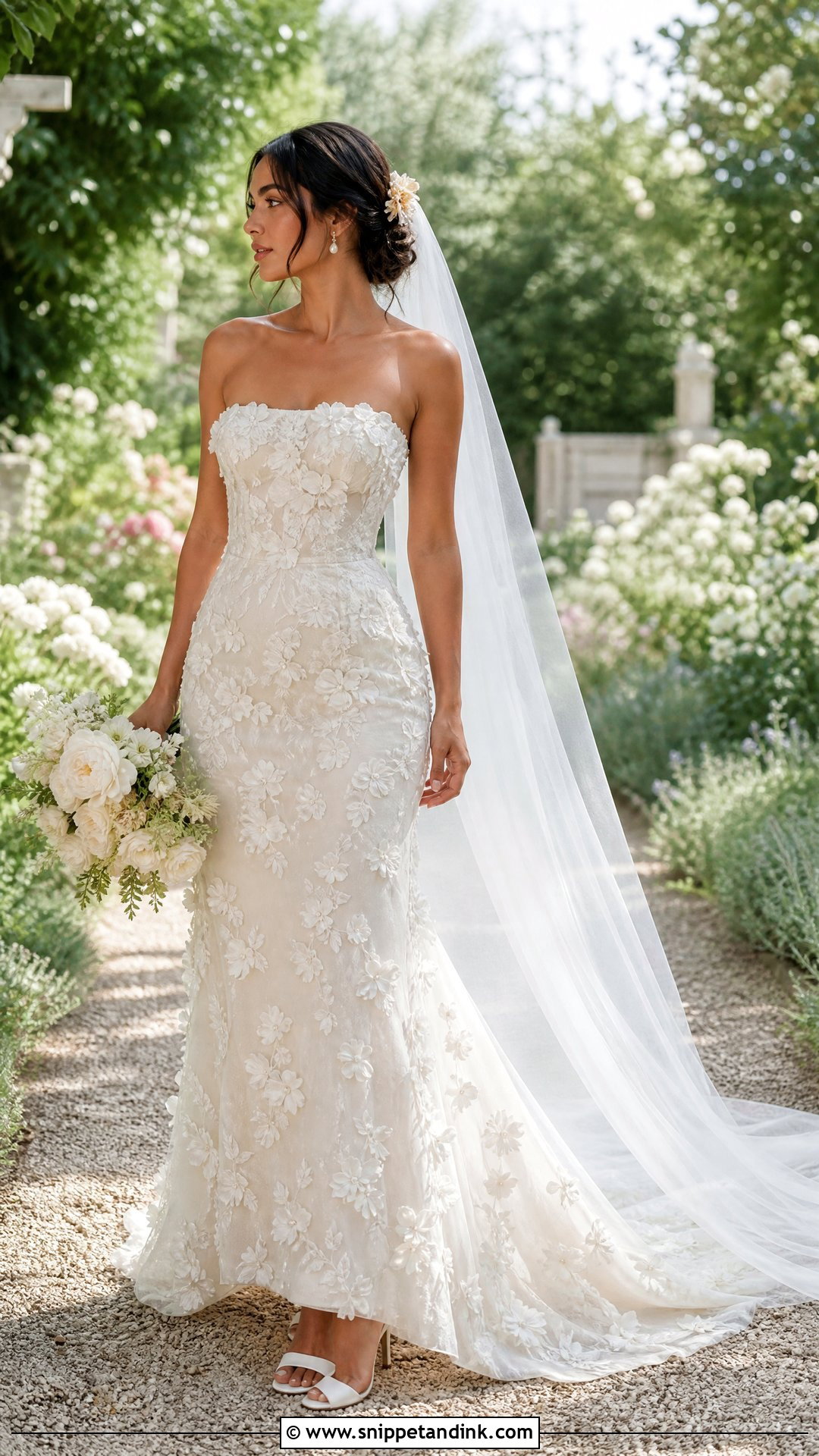
Three-dimensional flowers turn a plain tube gown into something soft and romantic, but only if you commit to one placement. Bodice, trailing down the skirt or framing the neckline: pick one, or the dress starts to look crowded. Raised appliqués catch on hair and veils, so I pair them with a plain veil and a low textured bun that won’t snag. If flowers sit near the underarm, lift your arms at the fitting; stiff petals can scratch for hours. Simple satin heels and pearl studs keep the focus where it belongs, and a spring garden setting suits it best.
10. Pearl Beaded Tube Wedding Gown
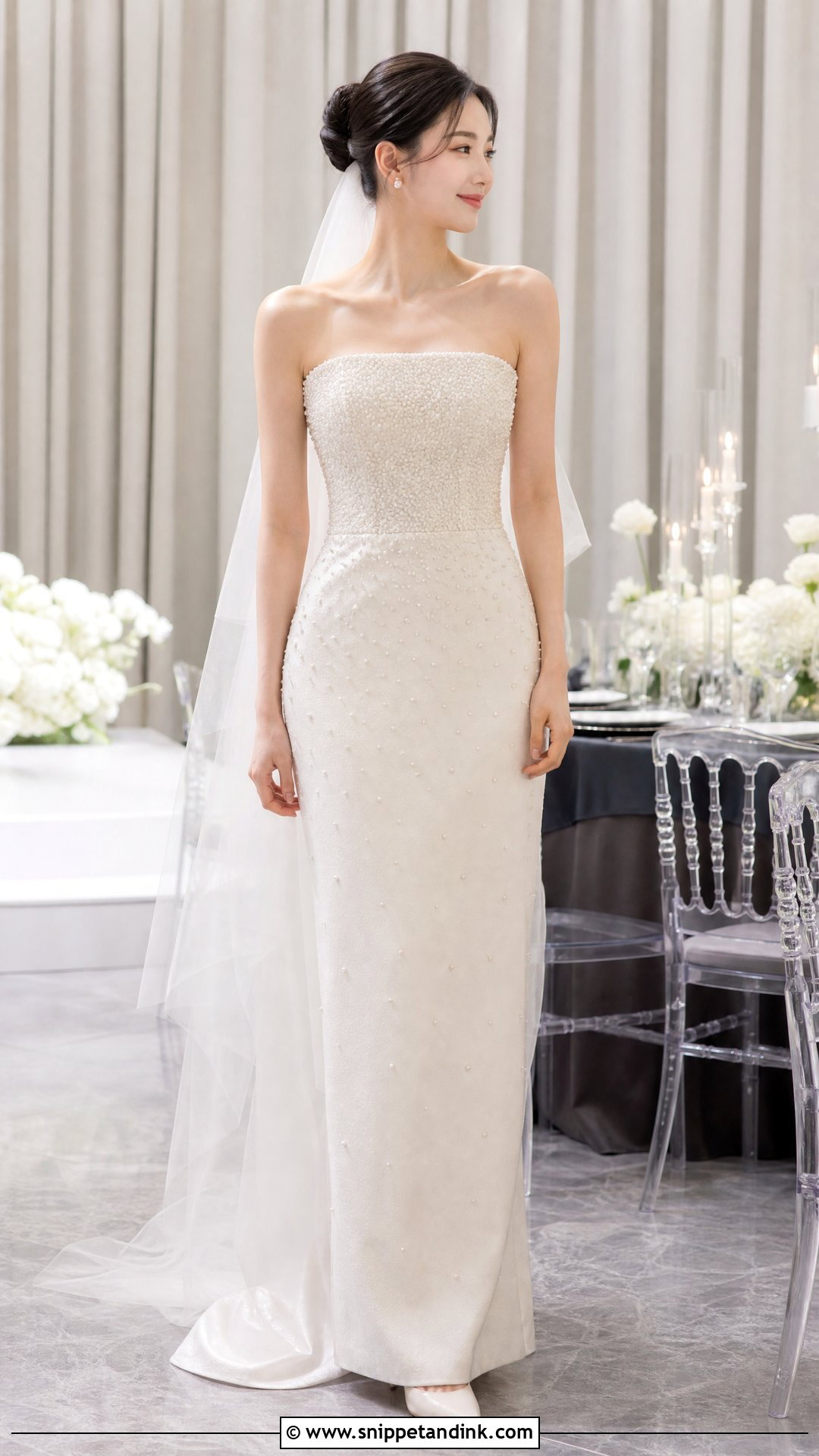
Pearls glow rather than sparkle, so they read softer than crystals in candlelight. Scattered beading looks delicate; dense beadwork looks formal and is noticeably heavier. That weight pulls on the bodice, so I won’t fit a heavily beaded tube gown without a waist stay, the grosgrain band inside that anchors the dress at your natural waist. Plain ivory pumps, pearl studs and an untrimmed veil are enough. Check the beads under the arms, where friction loosens threads first, and ask the seamstress to secure them before the wedding.
11. Ruched Tube Wedding Gown
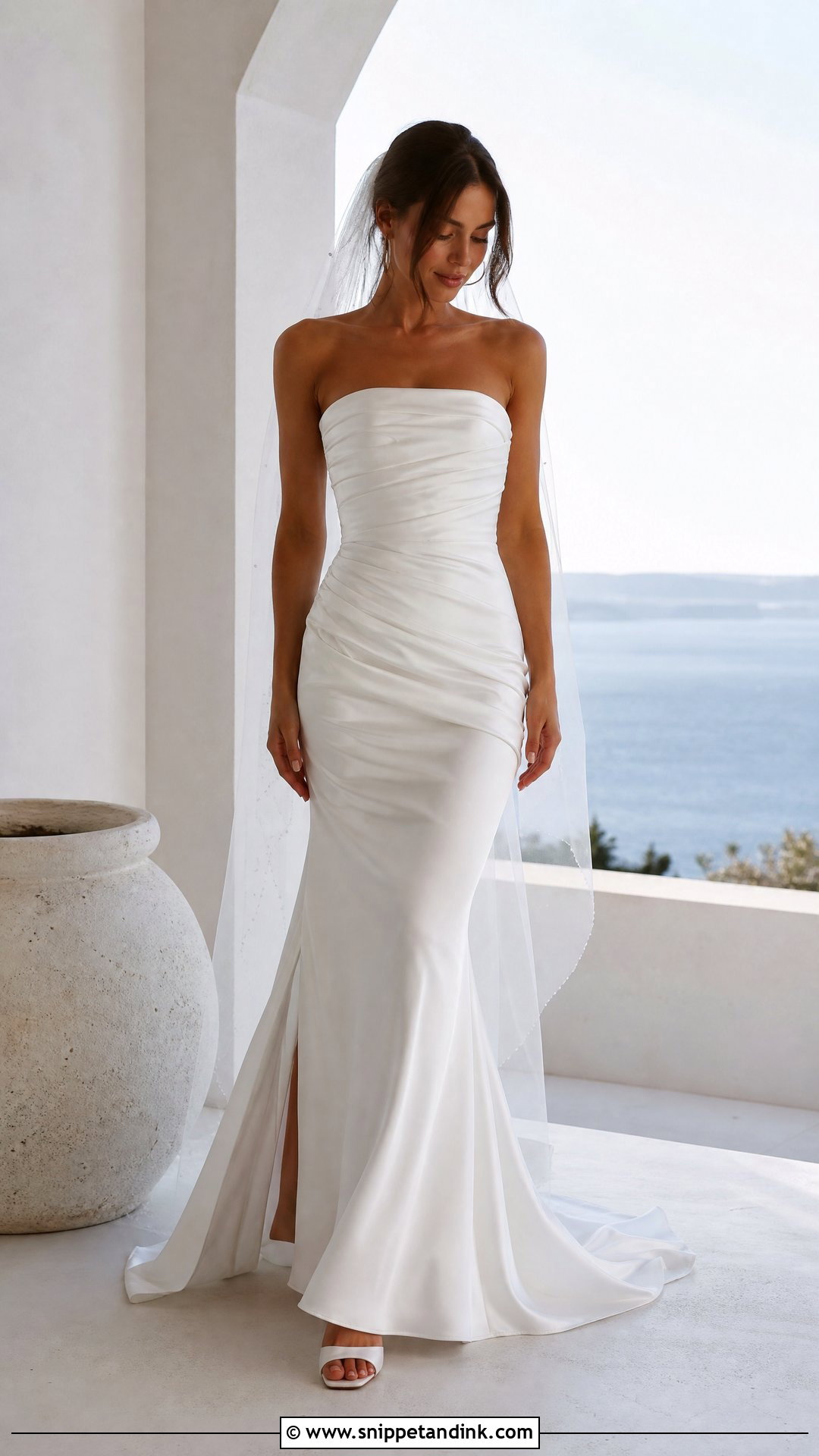
Ruching is forgiving. Diagonal gathers define the waist, vertical ones lengthen, and both hide the small shifts that happen when you eat and dance. Stretch satin, jersey and light crepe make sense when you want to move freely. The catch is that gathers drift. During alterations, walk and sit, then look again: they should land in the same place. Sleek block heels, small hoops and a fingertip veil fit the relaxed drape, as does a smooth ponytail. I like it for destination ceremonies and brides who dislike rigid boning.
12. Square-Neck Tube Wedding Gown
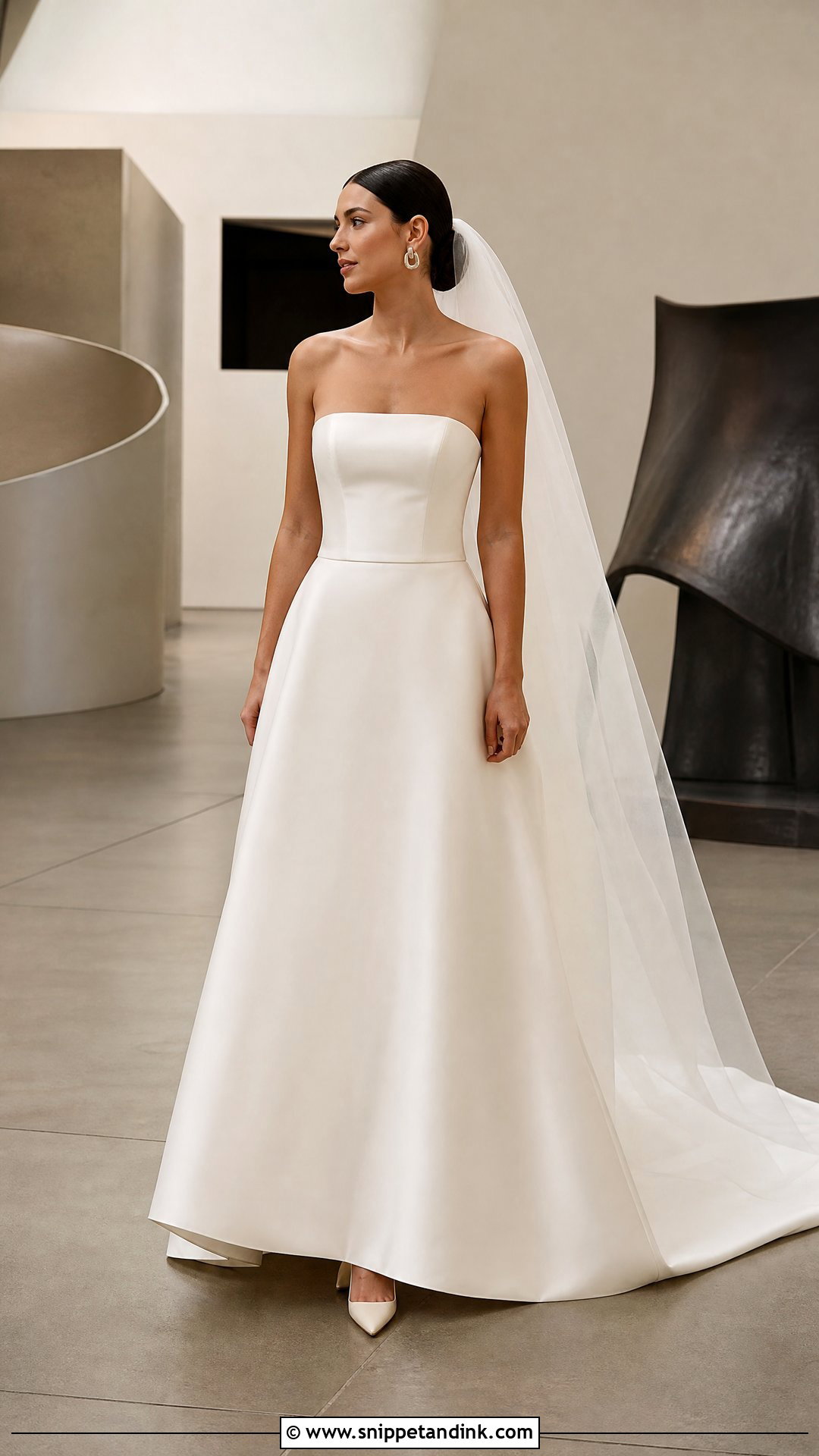
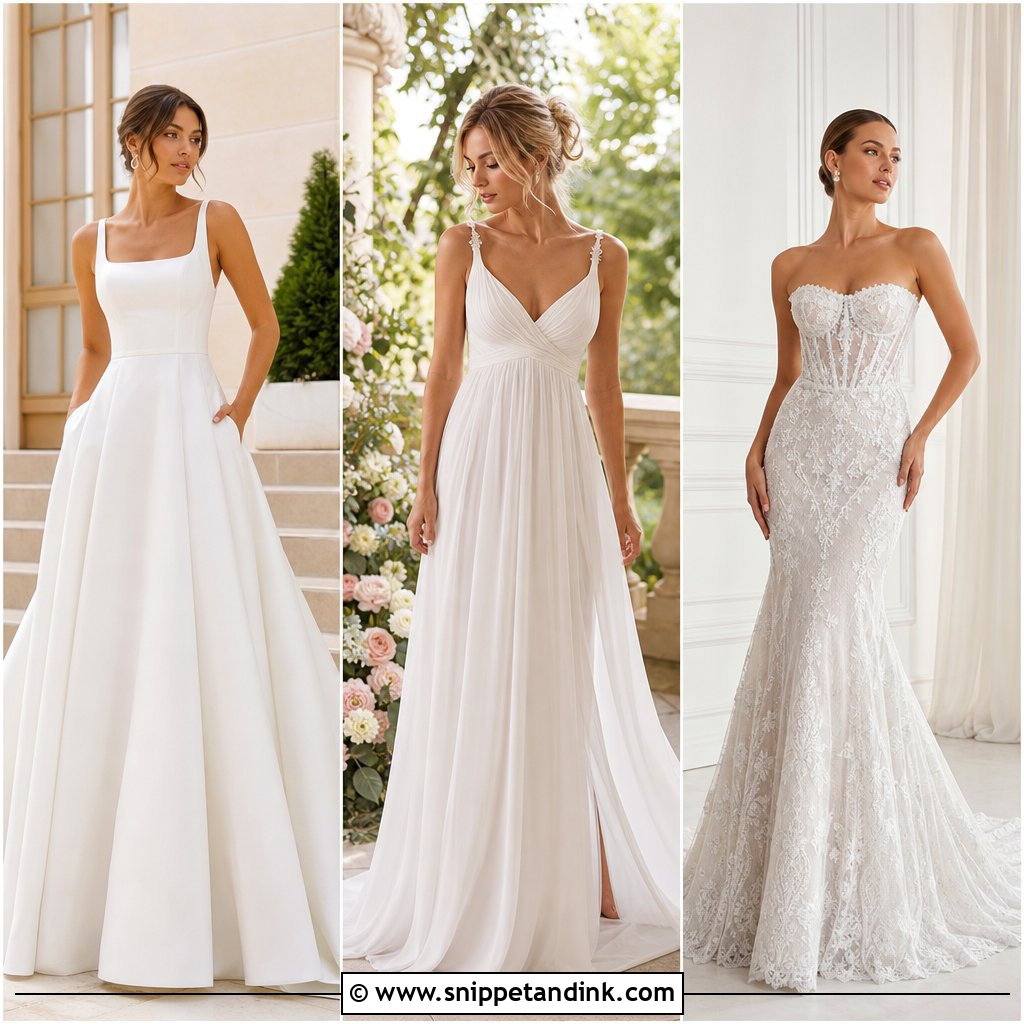
A square neck is the crispest version of the strapless line. The corners frame the upper body, and they hold best in thick satin or mikado. Those corners are also the hardest thing to fit: if they tilt or lift away from the skin, everyone notices. I check them from the side as well as the front. Choose a column skirt for minimal or a full one for ceremony impact. Geometric earrings, pointed pumps and a plain chapel veil suit it, and soft makeup keeps the whole effect from turning severe.
13. Scoop-Neck Tube Wedding Gown
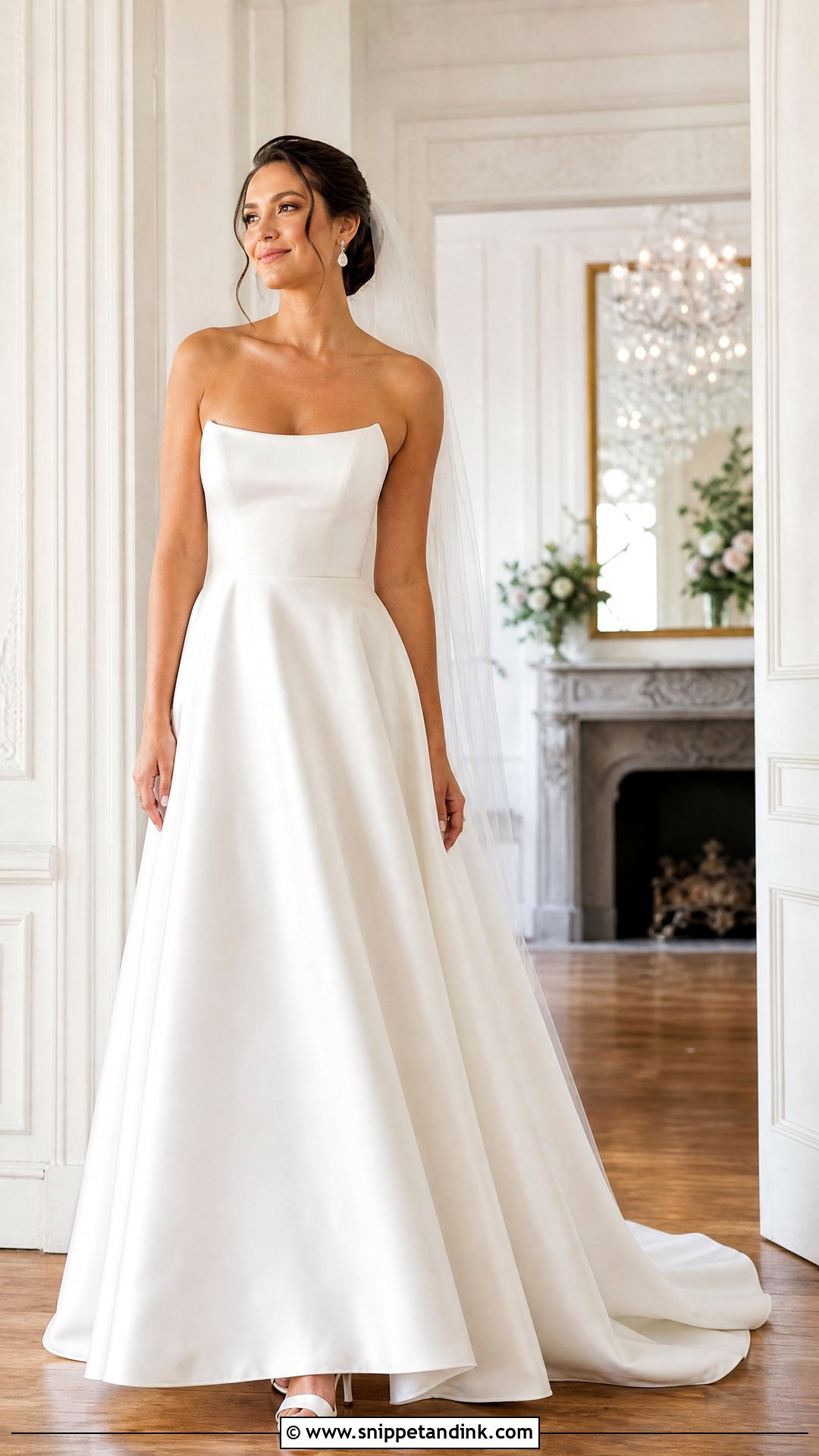
A scoop neck is the gentlest strapless frame. Shallow gives more coverage; deeper looks sculptural. It pairs with crepe, an A-line or full satin depending on how formal the day is. The curve can collapse at the center if the structure is weak, which shows as a small dent in every photo, so ask for boning that runs right up to the edge. Teardrop earrings, slim heels and a light veil behind the shoulders keep it airy. Wear hair up or tucked behind the ears so the neckline stays visible.
14. High-Slit Tube Wedding Gown
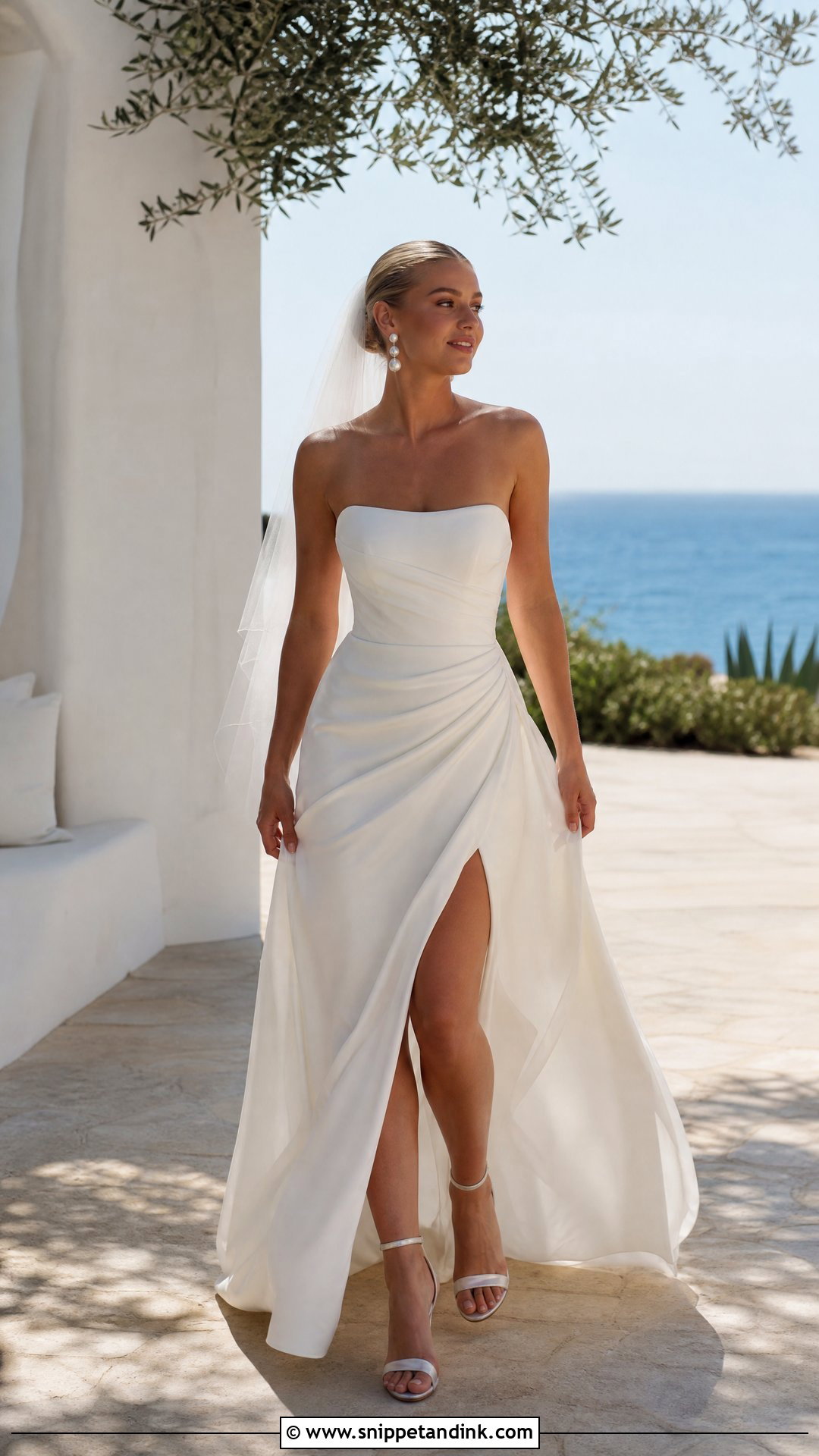
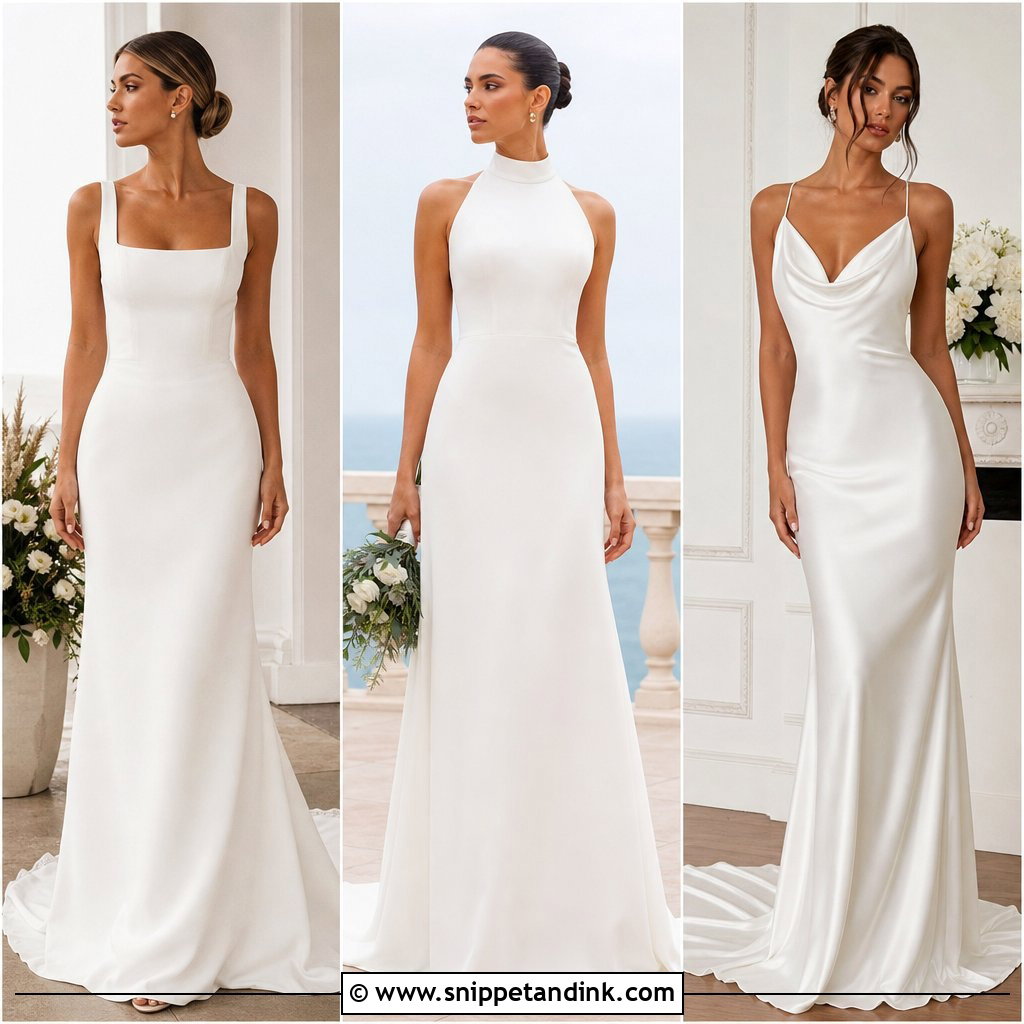
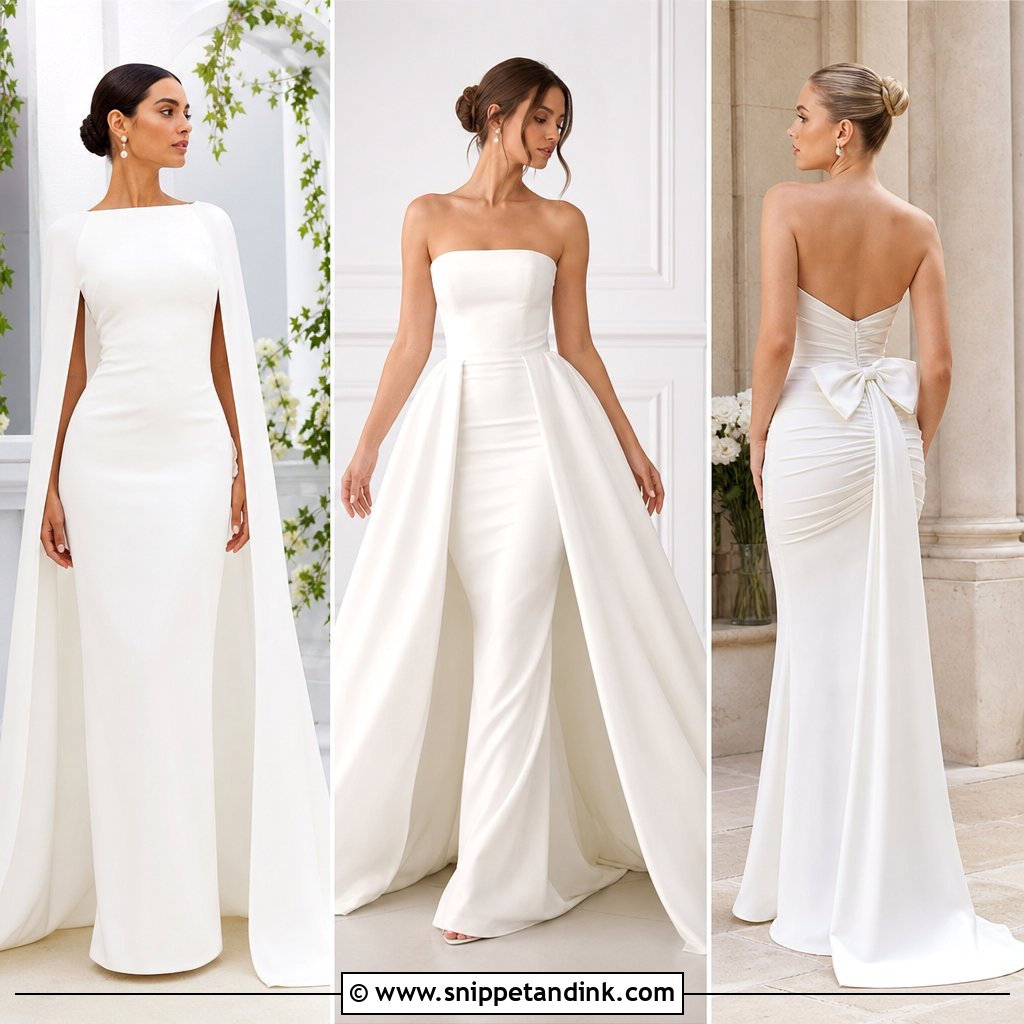
A high-slit tube wedding gown gives you a strapless bodice with real freedom through the skirt. The slit should open when you step and close when you stand. If it sits open at rest, it’s either too high or the skirt is cut too narrow. Crepe, satin and draped jersey handle a slit well. I always have brides climb a few steps and sit at a fitting, and a strip of fashion tape or a hidden hook can steady the edge. Ankle-strap sandals and a chapel veil give it ceremony weight; it really comes alive at a reception with dancing.
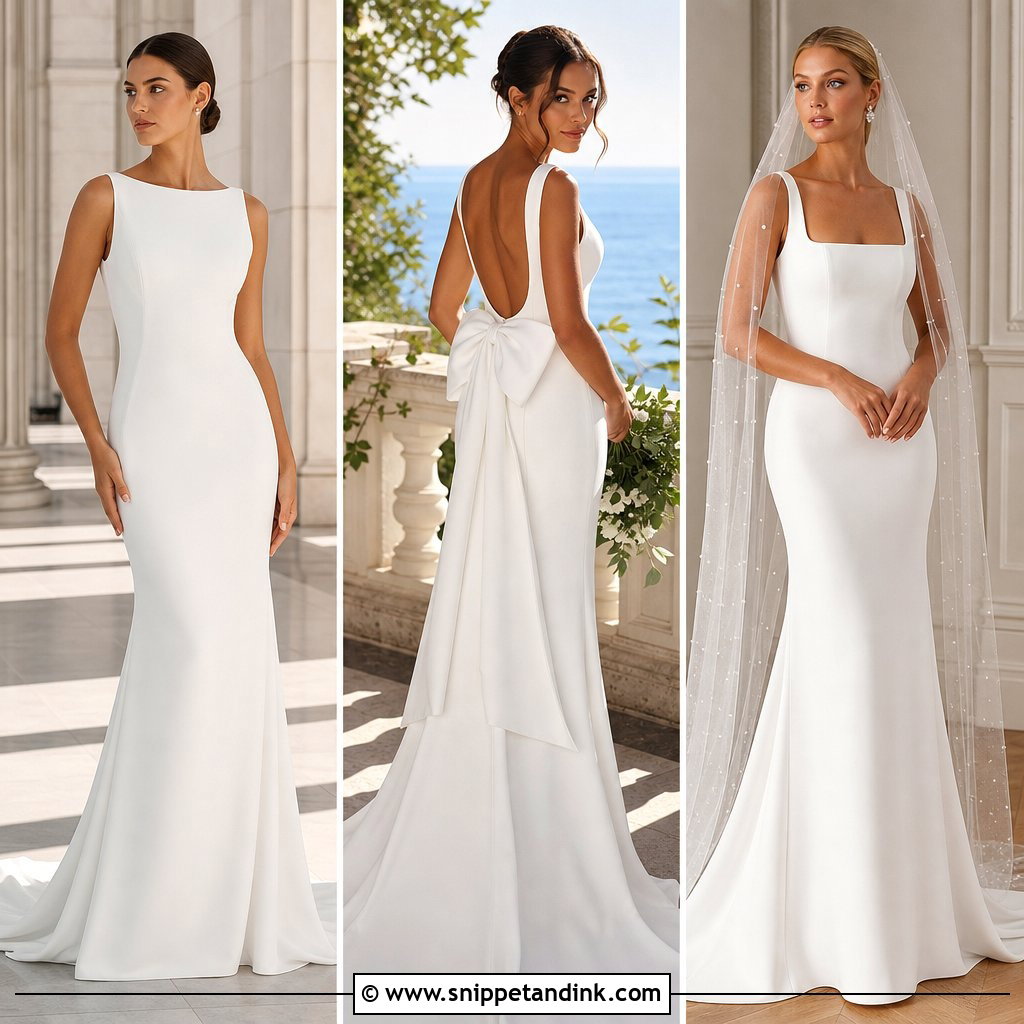
15. Detachable-Sleeve Tube Wedding Gown
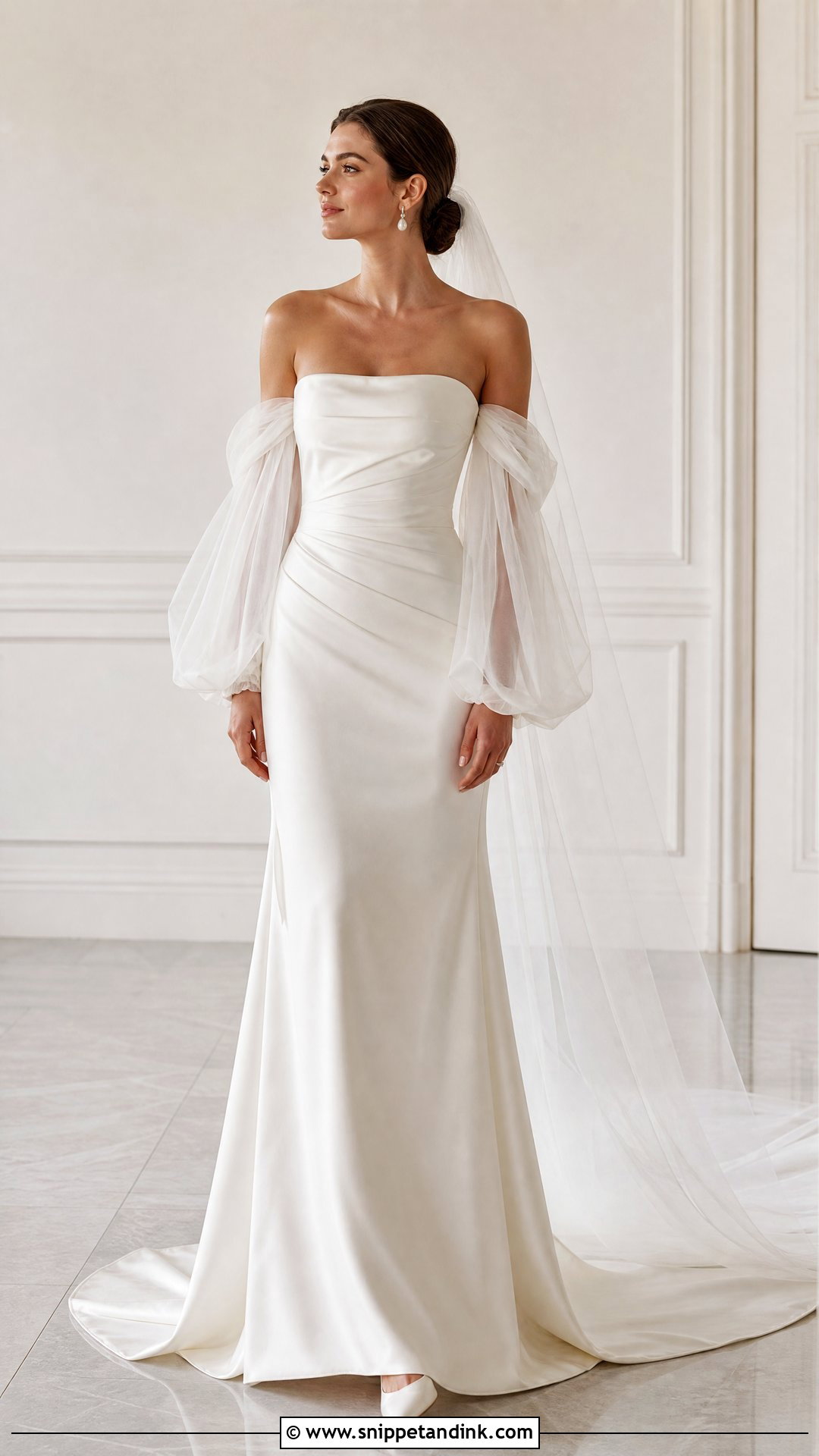
Detachable sleeves give one gown two moods. Lace, draped tulle or structured satin cuffs cover you for the ceremony, then come off for the party, which is handy in a cool church or when a family prefers covered arms. The sleeve fabric must match the gown’s ivory exactly; a slightly different shade looks like an afterthought in daylight. Check elastic and hidden fasteners through a full arm swing, and choose a veil that won’t catch on them. It’s a sensible middle ground if you hesitate over a permanently sleeved gown.
16. Overskirt Tube Wedding Gown
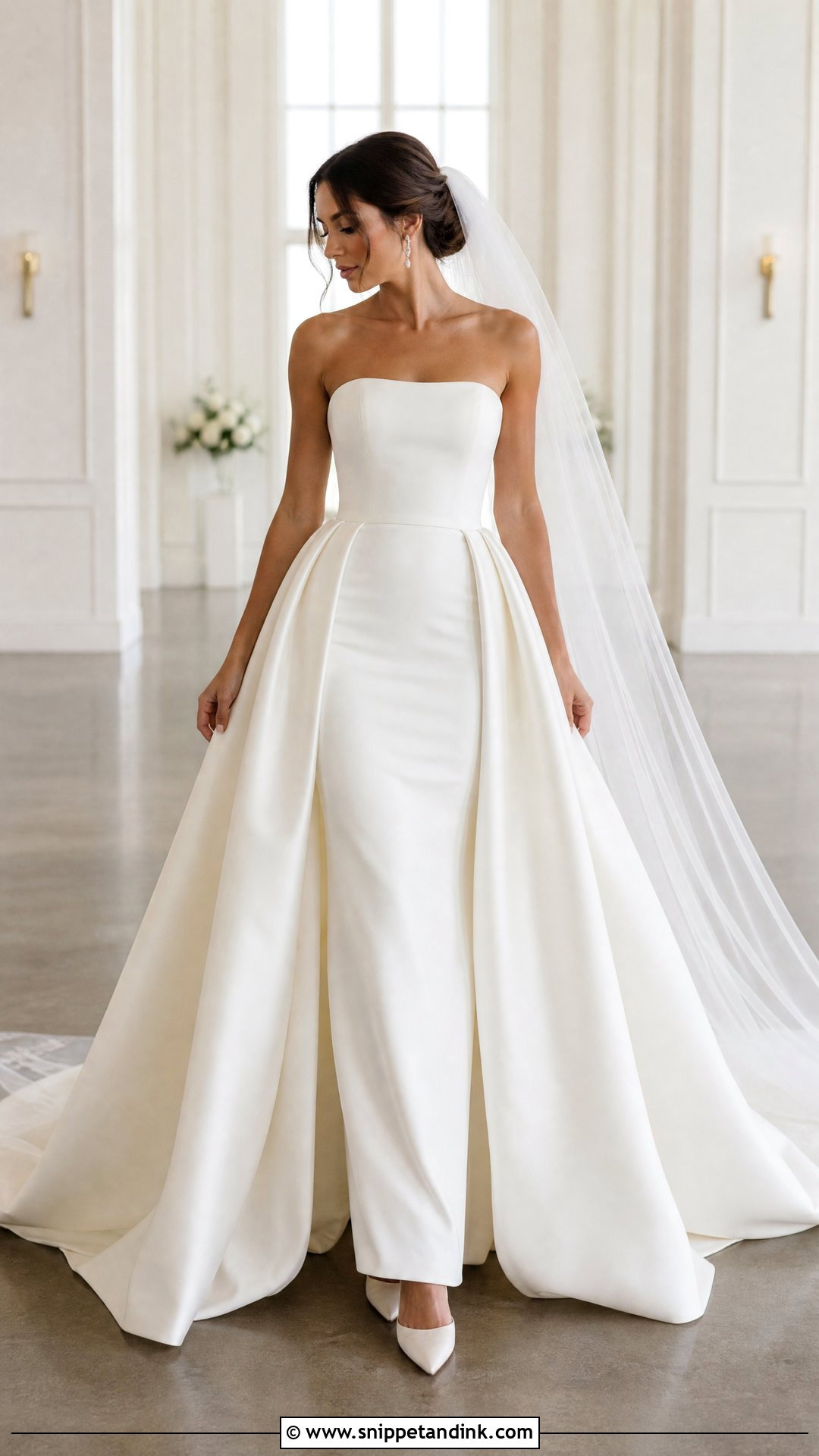
An overskirt adds ceremony volume to a fitted tube gown and leaves you in something you can dance in. Matching satin looks continuous; tulle gives softer contrast. The join at the waist is what I scrutinize: no gaps, no bulky closures, no dip in the hem. Practice taking it off and putting it back on with whoever will help you, because hooks and snaps behave differently in a crowded room. A sleek updo works for both halves, and a swap to bolder earrings marks the change.
17. Bow-Back Tube Wedding Gown
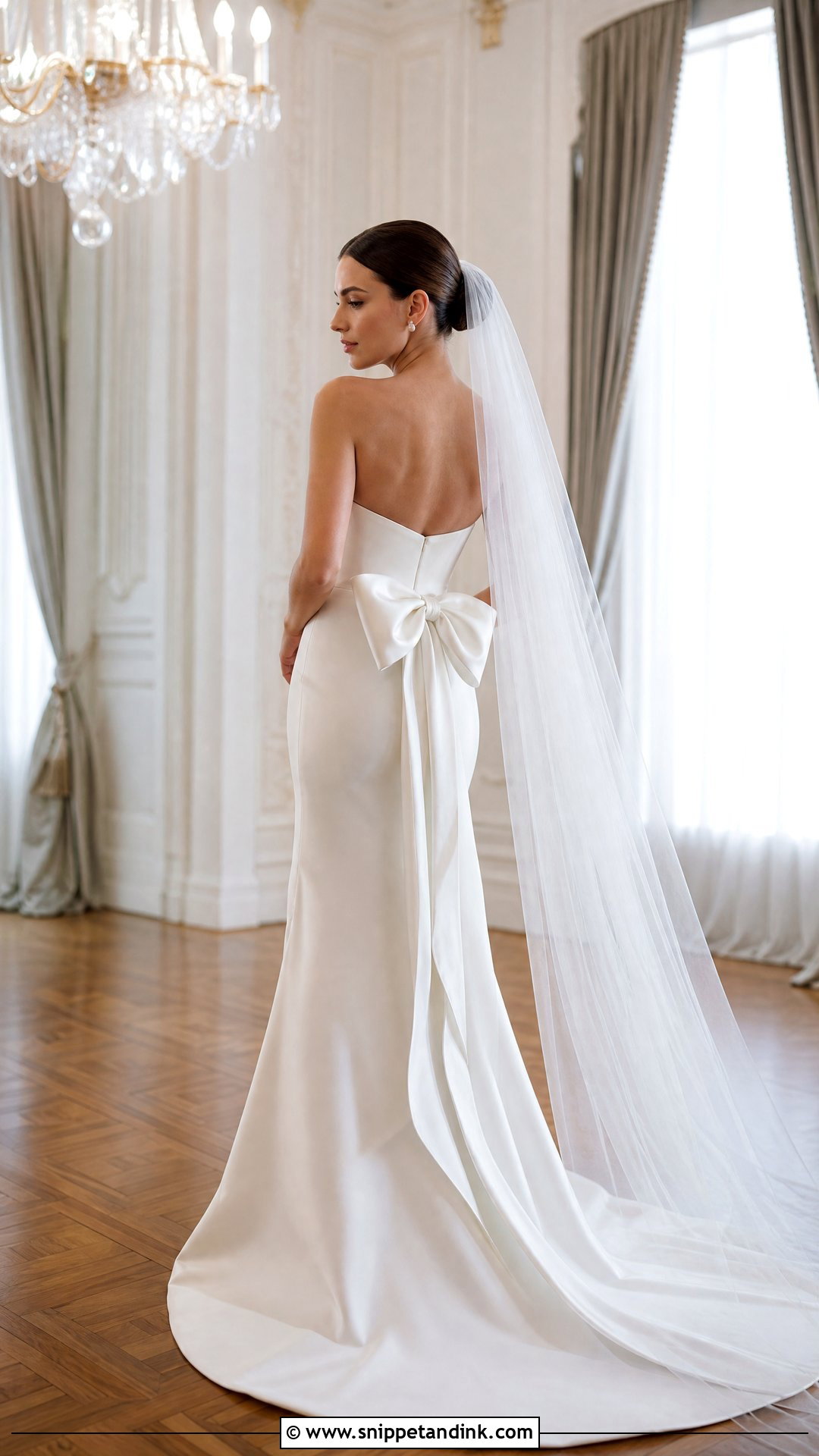
A bow keeps the front clean and puts the interest on the back, where the guests sit during the vows. A structured bow is sculptural; long ribbon tails move. It can sit at the waist, upper back or top of the train, and the weight matters: a heavy bow on a strapless back pulls the bodice down behind you. Ask how it’s attached. Hand-stitched and reinforced beats a single row of machine stitching. Stud earrings, classic pumps, a polished bun and a veil that stops above the bow or falls sheer over it keep the detail visible.
18. Chapel-Train Tube Wedding Gown
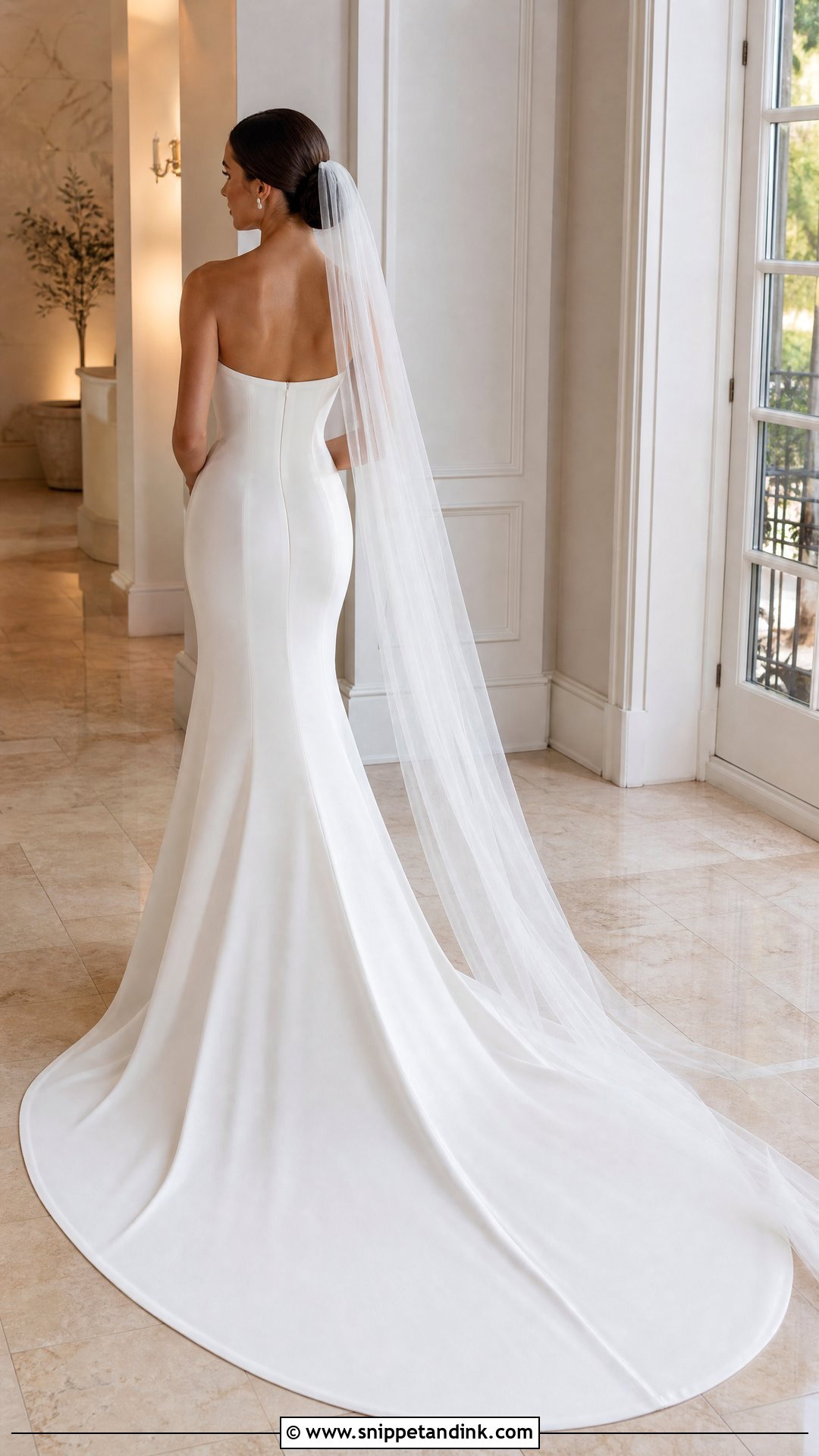
A chapel train gives you a proper entrance without the logistics of a cathedral length. Satin and crepe trail in a smooth line; lace and tulle look softer on the floor. The bustle is my real concern. Ask for one an attendant can fasten in a couple of minutes, and have her practice at the last fitting rather than on the day. Pointed heels you can actually walk in, understated drops and a low chignon complete it, with a veil matching or just past the train. Walk, turn and take stairs in it before the wedding.
19. Chiffon Beach Tube Wedding Gown
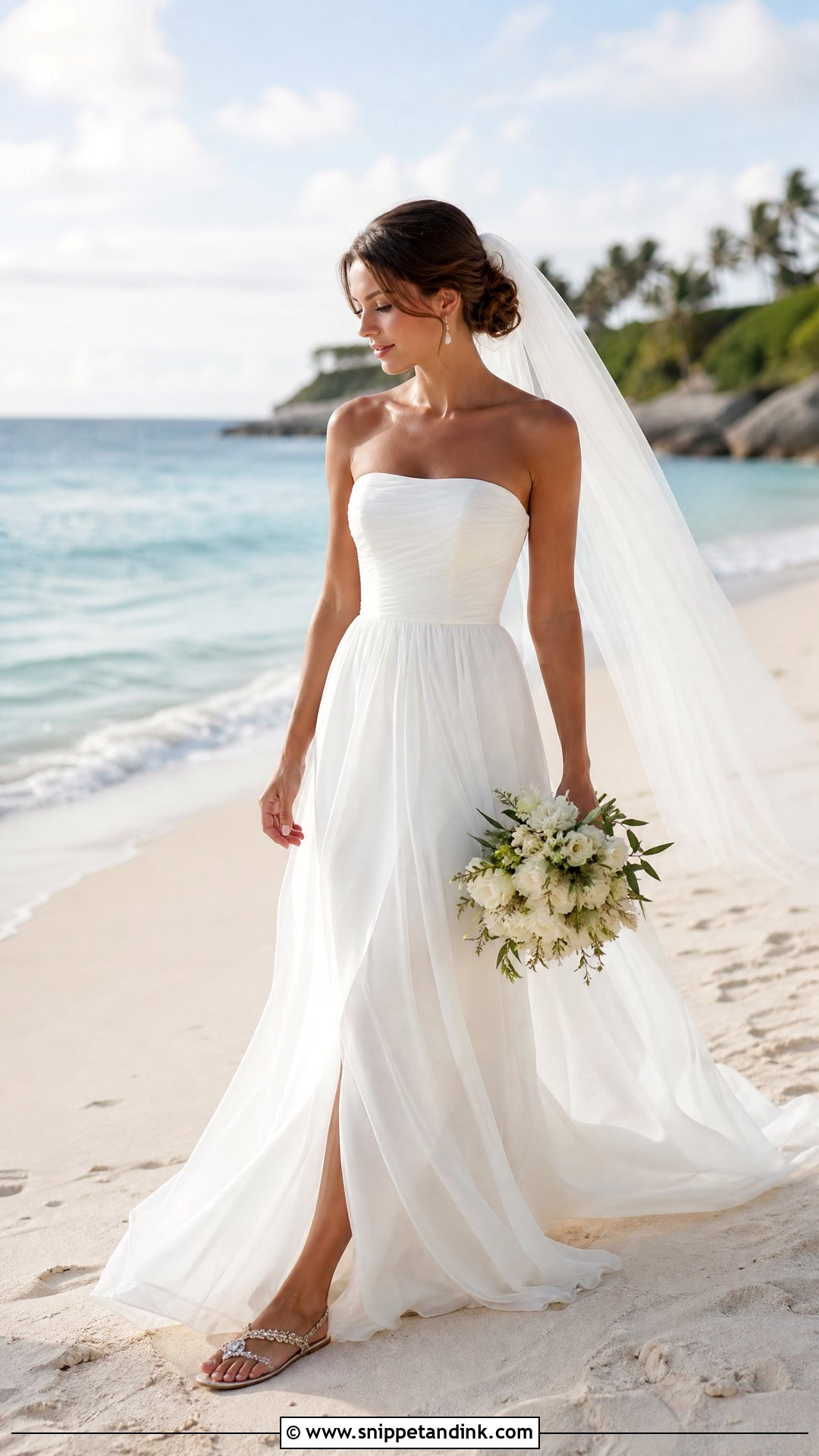
Chiffon is the right fabric for sand. It’s light, it moves in a breeze, and it doesn’t hold heat the way satin does. Keep a structured bodice above a soft A-line or column, and skip extra layers that trap warmth and collect sand at the hem. Sunlight goes straight through a single layer, so check the lining outside before you commit. I hem beach gowns to clear the ground barefoot or in flat sandals. Pearl earrings and a light veil pinned firmly under a braided bun or loose waves finish the look.
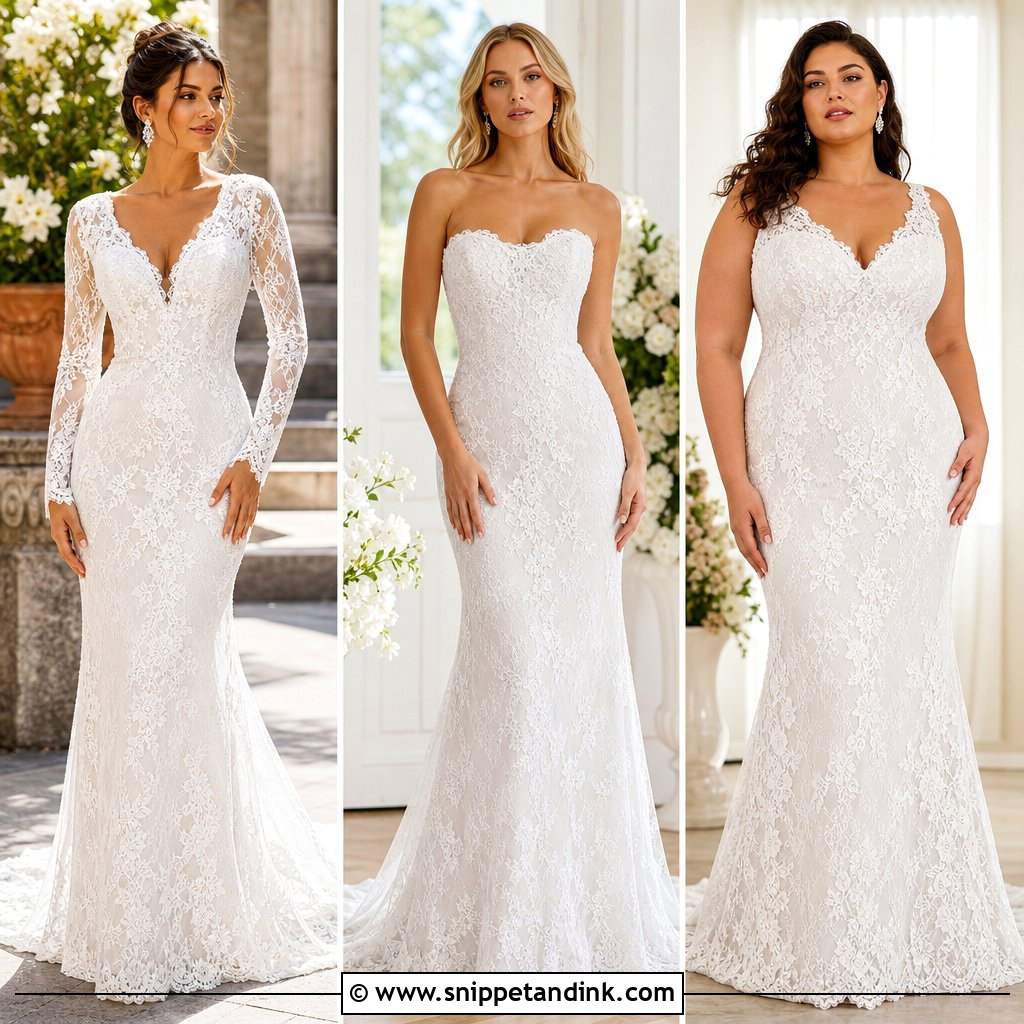
20. Short Reception Tube Wedding Gown
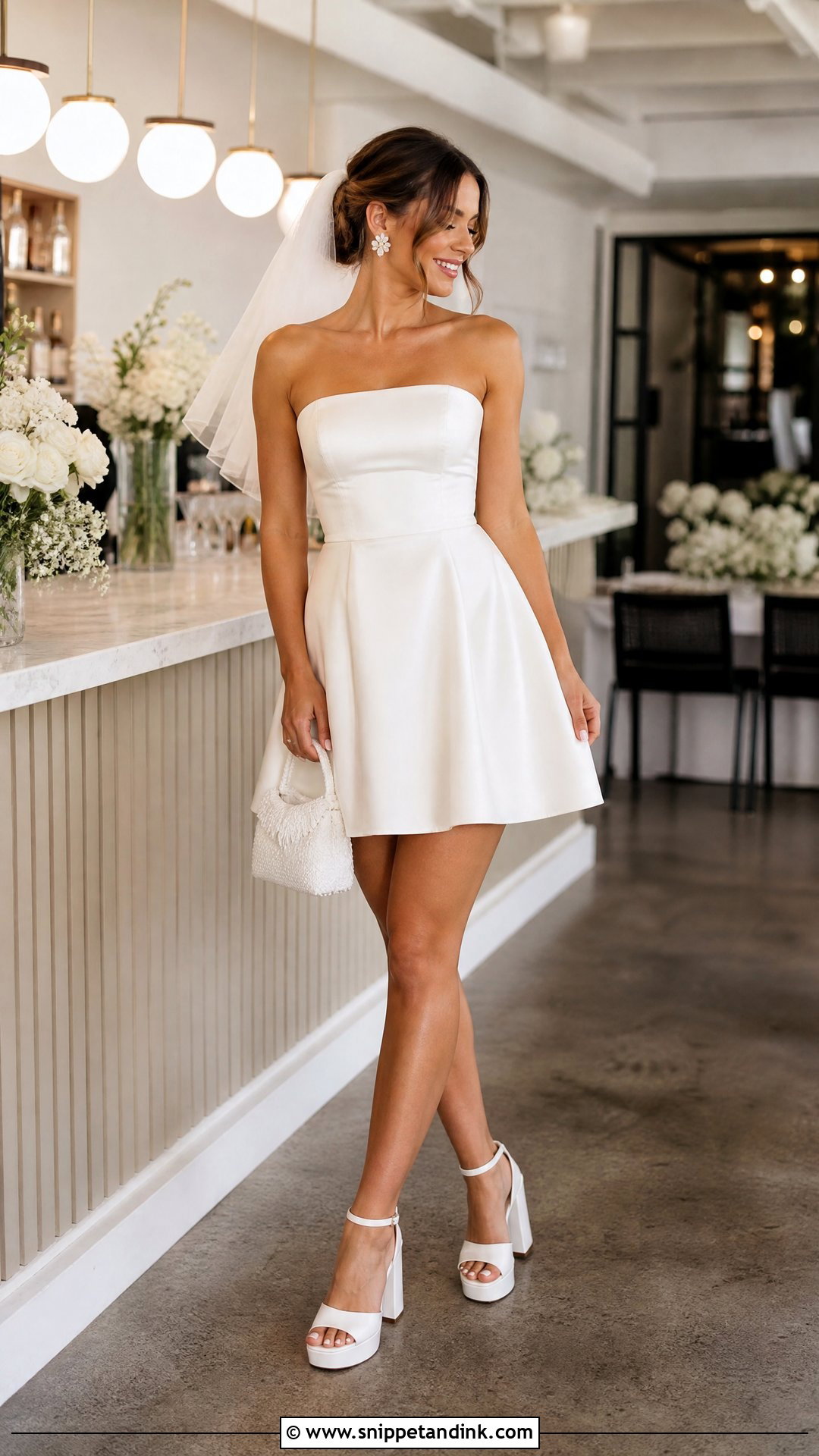
A short tube dress suits a courthouse, a second look or the last hours of a reception. A fitted mini, a structured tea length or a playful A-line changes how much coverage and movement you get. Satin looks polished, while sequins or embroidery feel like a party. Many short strapless dresses rely on an elastic top edge, and that’s not enough support for hours of dancing; look for boning inside. Block heels, statement earrings, a small structured bag and a short veil or pearl headband keep it clearly bridal.
Three Fittings for a Strapless Gown, and What Each One Is For
Strapless gowns usually need more alteration than gowns with straps, because the whole fit hangs on a few centimeters at the ribcage. I plan for about three fittings, starting roughly two to three months out, and the order matters.
First fitting: the bodice
Bring the exact shoes and any shapewear you’ll wear. The seamstress pins the side seams, places the cups and sets the waist stay. Don’t let her start on the hem yet; a bodice change moves where the skirt falls.
Second fitting: length and bustle
Now the hem and the train get pinned. Walk across the room and check that the front clears your toes by a hair. If there’s a train, this is when the bustle points get chosen.
Final fitting: the wear test
Keep this one close to the wedding, ideally within two weeks, since weight shifts in the final stretch can change how the bodice grips. Sit, eat a snack, hug someone, dance. Bring the person who’ll bustle you and the person who’ll zip you, and let them practice while the seamstress watches.
Undergarments and Small Fixes for the Straight Neckline
If the gown has good cups, skip the strapless bra; two structures pressing on each other create a ridge that shows through satin. A smooth, no-line nude brief and nothing else is often the right answer.
- Silicone gripper tape along the inside top edge stops a bodice from creeping, especially on brides with a straighter waist.
- Double-sided fashion tape is for slits and draped edges, not for holding the whole dress up.
- Moisturize the night before rather than the morning of. Oily skin under the top edge makes even a well-fitted bodice slip.
- Pack a few safety pins and a small sewing kit with ivory thread for a popped hook.
Strapless All Day Without Tugging It Up
Whatever silhouette you land on, a strapless gown lives or dies on its structure. Satin ball gowns bring drama; lace A-lines, columns, overskirt combinations and short reception dresses each give you something different. Test every bodice the same way: walk, sit, lift your arms and dance a few steps in front of the mirror. A good seamstress can move cups, add a waist stay, adjust the hem and make the whole dress easier to wear. Choose shoes, jewelry, a veil and a hairstyle that frame the neckline rather than compete with it, and you’ll spend the day forgetting you’re wearing a strapless dress at all.
You'll Like These Ideas:







Leave a Reply