
Brides often arrive at their first appointment with a screenshot folder full of dresses that have nothing in common. That’s fine. It usually means the silhouette hasn’t been decided yet, and that decision does most of the work. These 25 Dream Wedding Gown Ideas run from satin ball gowns to soft chiffon, sleek columns and lace, each styled with shoes, jewelry and a veil so you can picture the whole outfit. As you look, notice how each one would move, and whether you could wear it for eight or ten hours. A dress that looks right in a photo but fights you at dinner isn’t the one. Use the list to work out which shape keeps catching your eye.
Matching the Fabric to Your Wedding Month
Brides usually choose a silhouette first and the fabric second, but the season should have a say early. The same A-line can feel airy in July or sweltering, depending entirely on what it’s made from. Here’s how the fabrics on this list behave through the year.
- Chiffon and organza: light and breathable, good for summer and outdoor ceremonies. Chiffon wrinkles easily; organza holds its shape better.
- Crepe: smooth and fluid, comfortable in most seasons, but it shows every seam and undergarment line.
- Silk satin: luxurious and moderate in weight, though it marks with water and creases where you sit.
- Mikado and heavy satin: structured and warm, a better fit for autumn, winter and air-conditioned ballrooms than for a garden in August.
- Lace: depends on what’s underneath. Lace over a single tulle layer breathes; lace over a fully lined satin bodice is warm.
Long sleeves and high necklines add heat no matter the fabric, so if your heart is set on one for a summer date, look for sheer illusion versions rather than lined ones.
1. Classic A-Line Wedding Gown
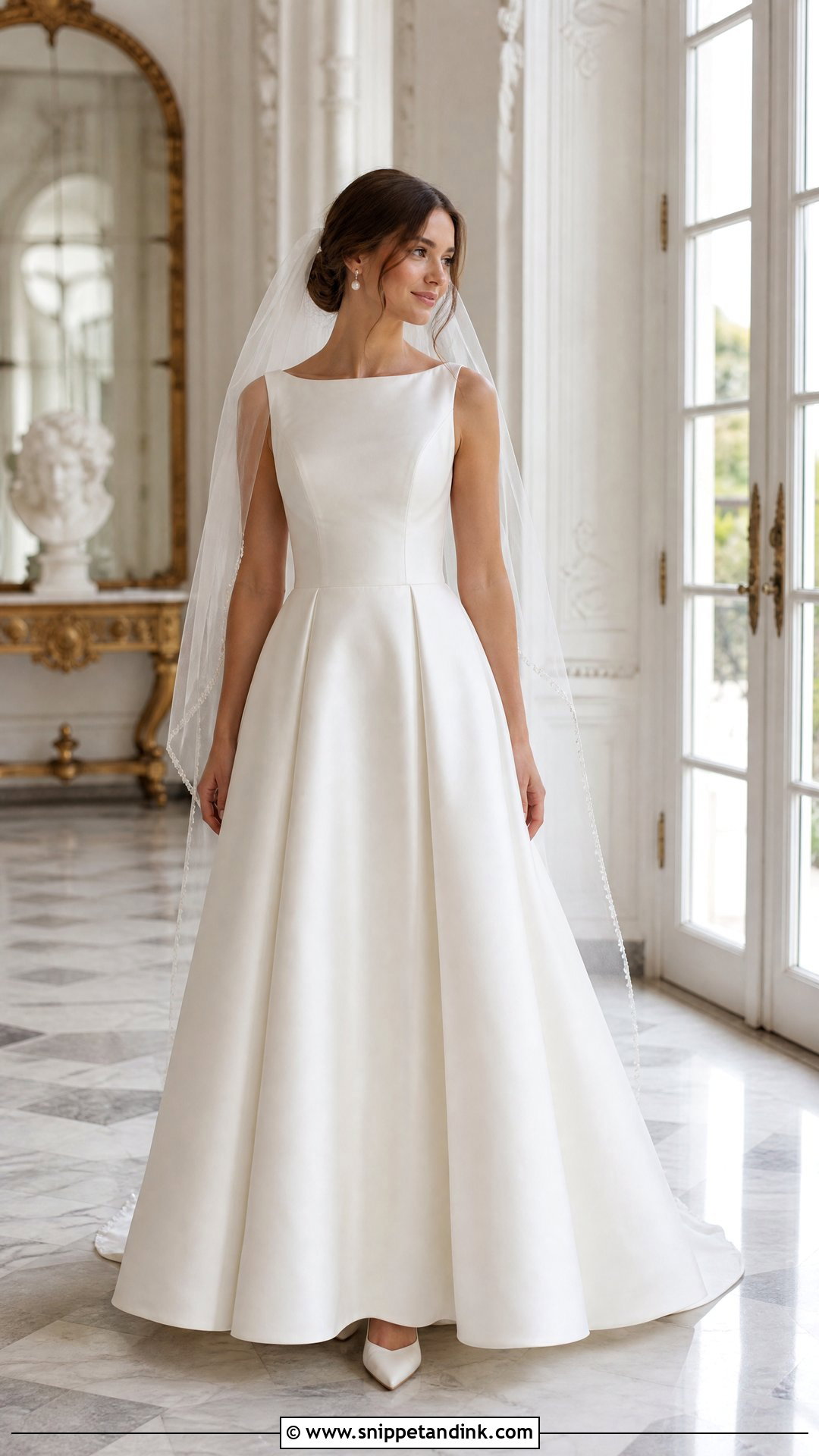
If I could put every bride in one silhouette to start, it would be the A-line. The bodice fits close, the waist is softly defined, and the skirt widens gradually without the bulk of a ball gown, so it suits nearly every body and venue. Mikado gives it crispness, chiffon makes it drift. Covered buttons down the back are worth having, though ask for a hidden zip beneath them, because thirty tiny loops take a long time to fasten on the morning. Pearl earrings, pointed ivory pumps, a fingertip veil and a low chignon keep it polished.
2. Strapless Satin Ball Gown Wedding Dress
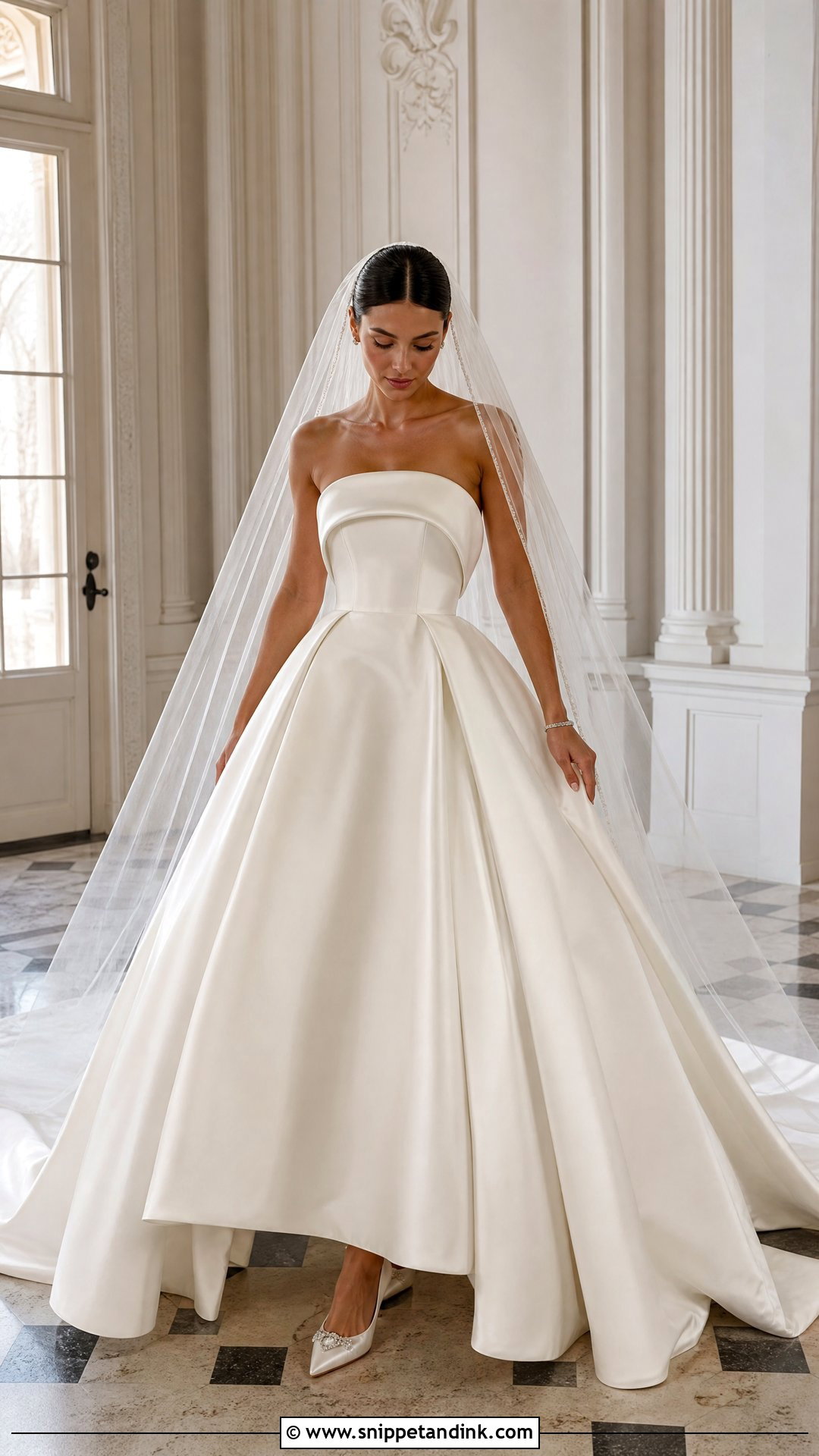
The sweep of a full satin skirt makes the entrance. A strapless version needs a properly structured bodice; that’s what holds you up, not the neckline. I prefer a folded neckline or light draping to applied decoration, since satin already carries plenty of visual weight. Wear a cathedral veil for the ceremony and take it off afterward so the shape shows. Crystal studs, a fine tennis bracelet and closed-toe satin heels are enough. If you’re unsure about strapless for a full day, removable off-the-shoulder straps are a sensible backup.
3. Long Sleeve Lace Wedding Gown
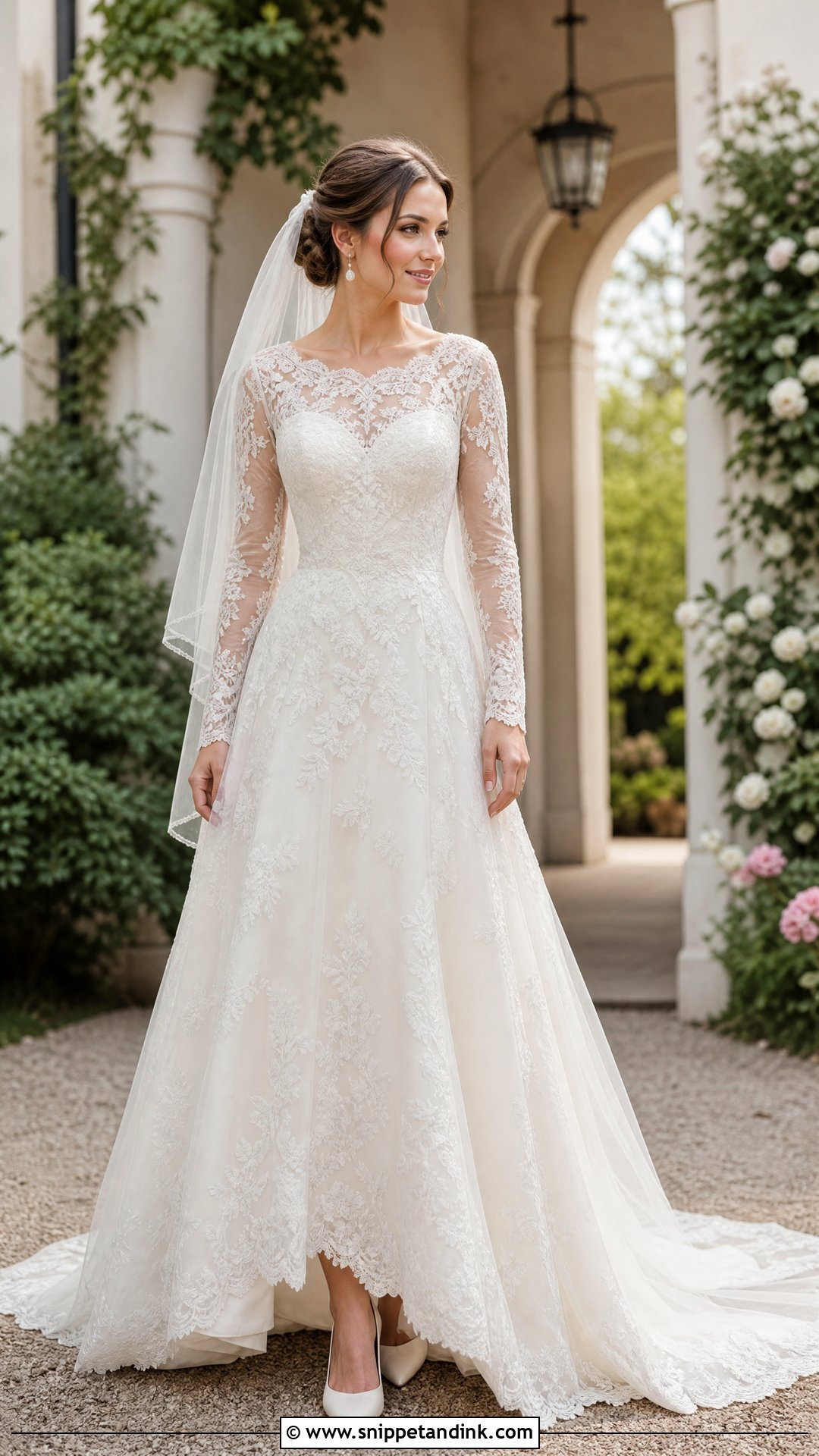
Long lace sleeves give coverage and romance, but they’re also where I see the most discomfort at fittings. The best construction pairs a lined bodice with unlined illusion fabric along the arms, so you get structure through the torso and lightness where you move. Reach forward and up during your fitting; if the armhole binds, it needs letting out or recutting. An A-line or fit-and-flare skirt gives the lace room to show. A plain tulle veil, pearl drops and a soft updo that reveals the back suit cooler months and historic venues.
4. Square Neck Wedding Gown
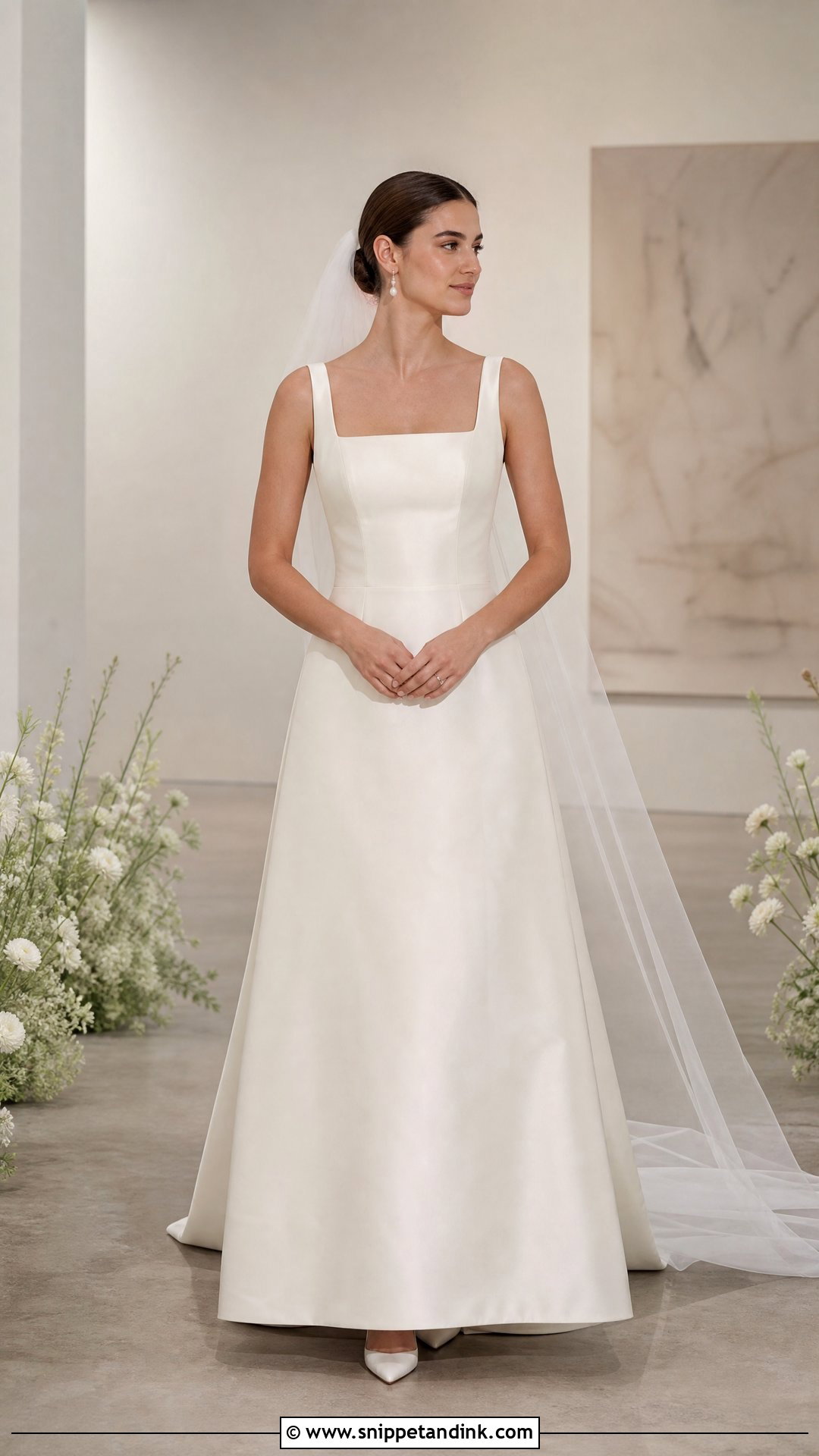
A square neckline feels traditional and modern at once, framing the collarbone with clean lines. Wide straps, short sleeves or a fitted long sleeve all balance it. Satin makes the corners crisp; crepe lets the dress flow. The one thing I watch is the corners themselves. If the bodice isn’t fitted precisely, they gape when you lean, so check it seated. A sleek low bun, small pearl earrings, a chapel veil and pointed pumps keep the line long. With a low square back, skip the necklace altogether.
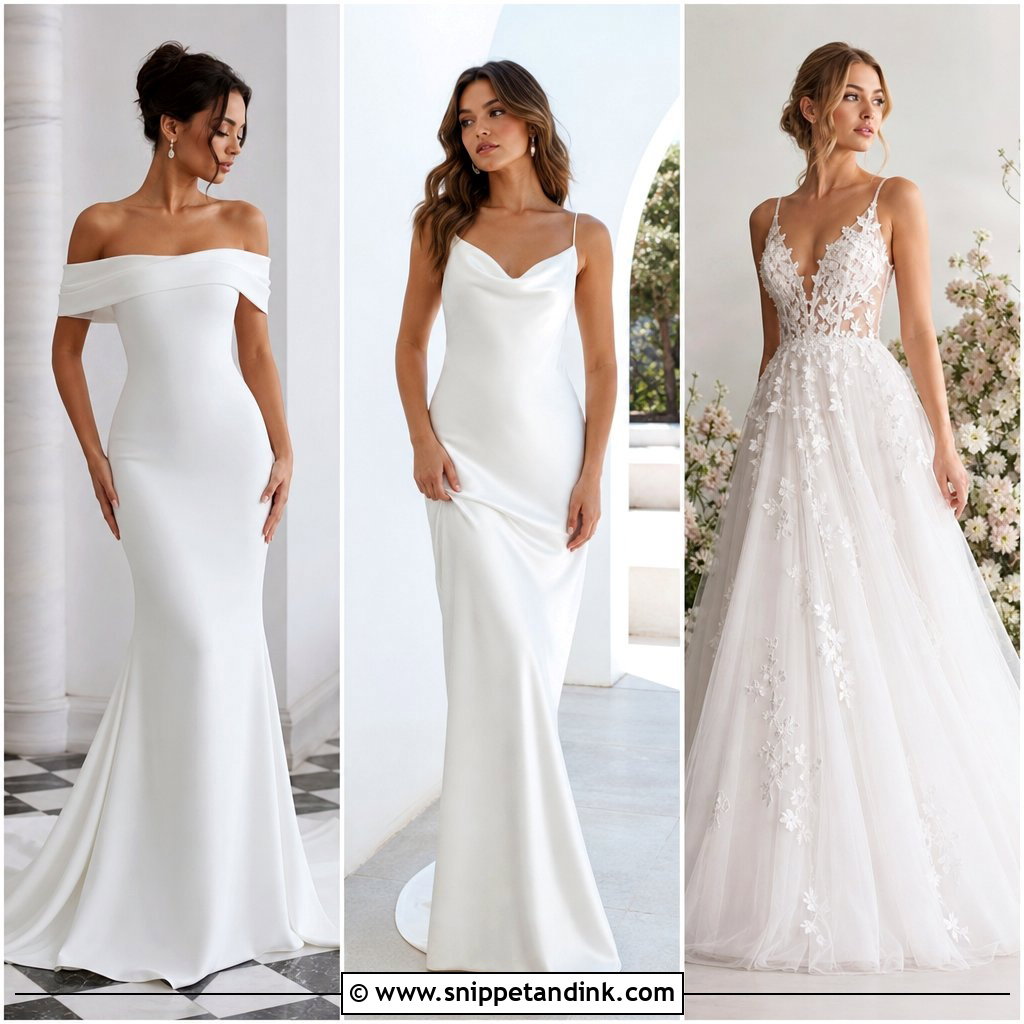
5. Off-the-Shoulder Wedding Gown
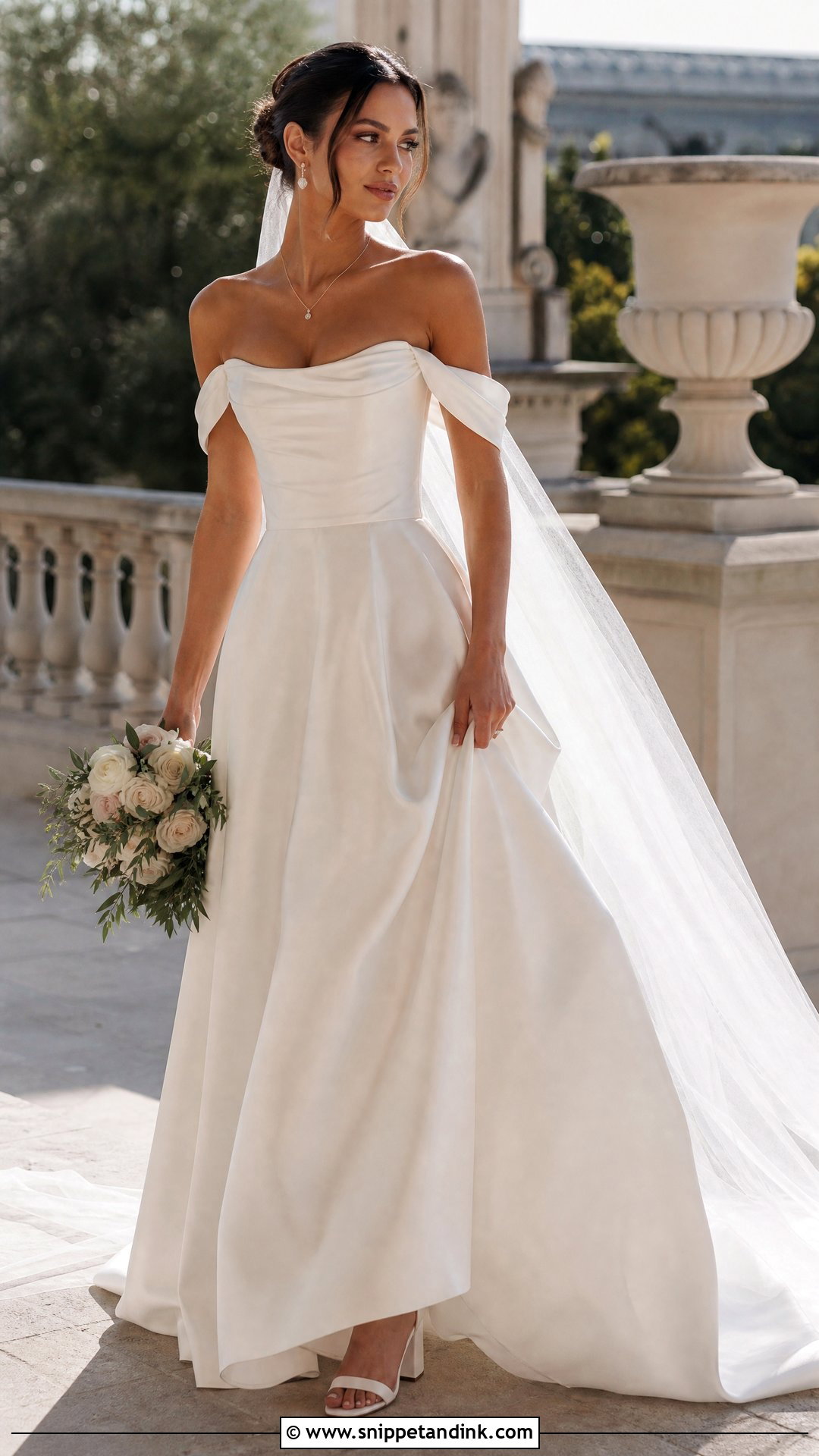
Draped sleeves sitting below the shoulders frame the face and collarbone. The rule I repeat at every fitting: those sleeves are decoration, not support. The bodice must hold the dress up by itself, or you’ll spend the evening pulling it back into place. A satin ball gown makes it grand, a fitted crepe version keeps it clean. Keep the bouquet compact so it doesn’t hide the neckline, and add a fine pendant, small crystal earrings and an upswept style. Raise your arms, sit and walk at the fitting before you sign off on the alterations.
6. Basque Waist Wedding Gown
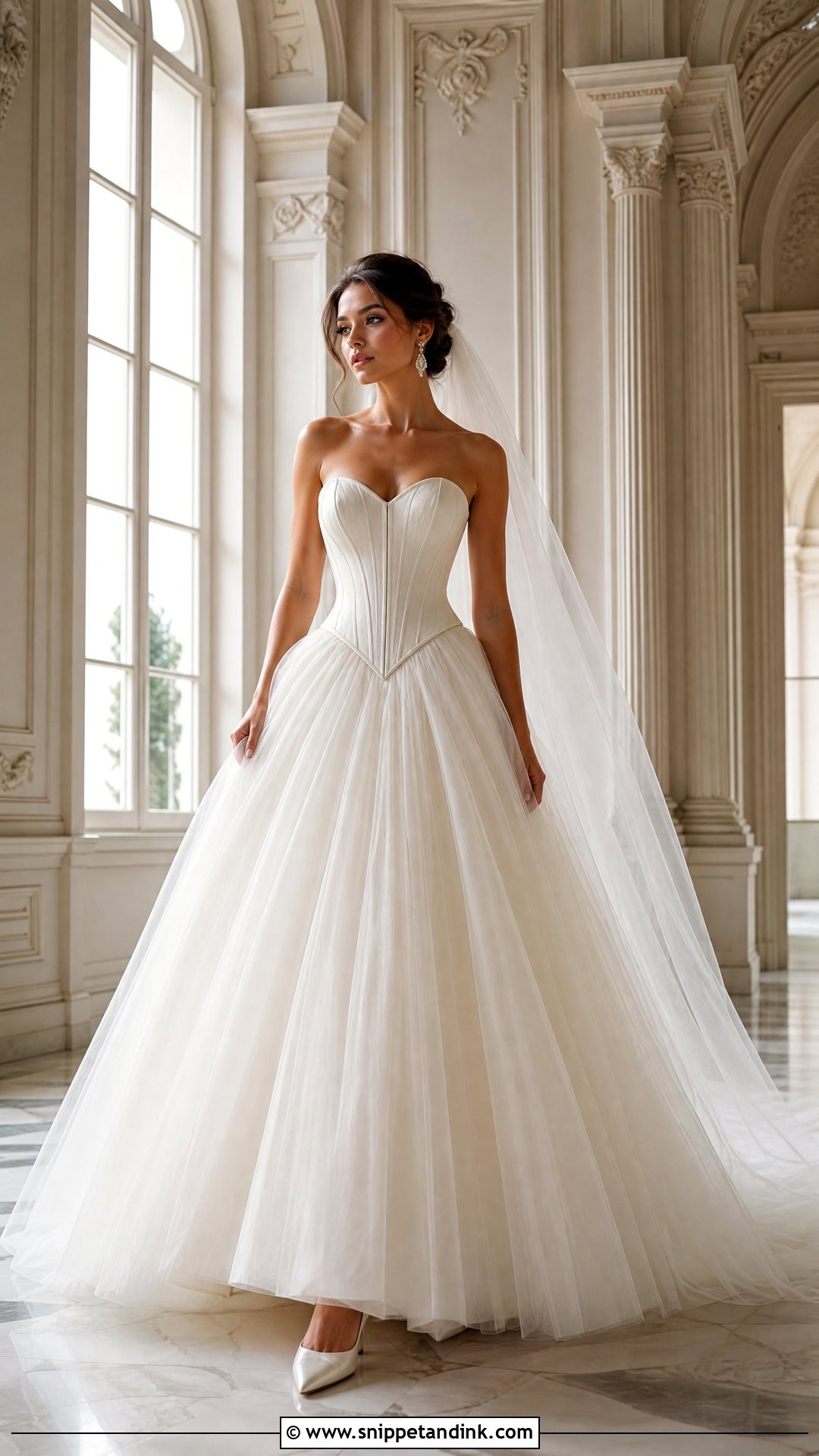
A basque waist wedding gown extends the bodice into a point or curve below the natural waist, giving a sharp transition into the skirt. Paired with a corset-style top and a full satin or tulle skirt, it’s one of the most regal shapes on this list. That extended point has to bend when you do. I ask brides to sit, walk and bend at the fitting, because a point that digs into the stomach when seated will be miserable by the speeches. Drop earrings, a cathedral veil, low satin heels and a polished bun keep the bodice in view.
7. Minimalist Silk Wedding Gown
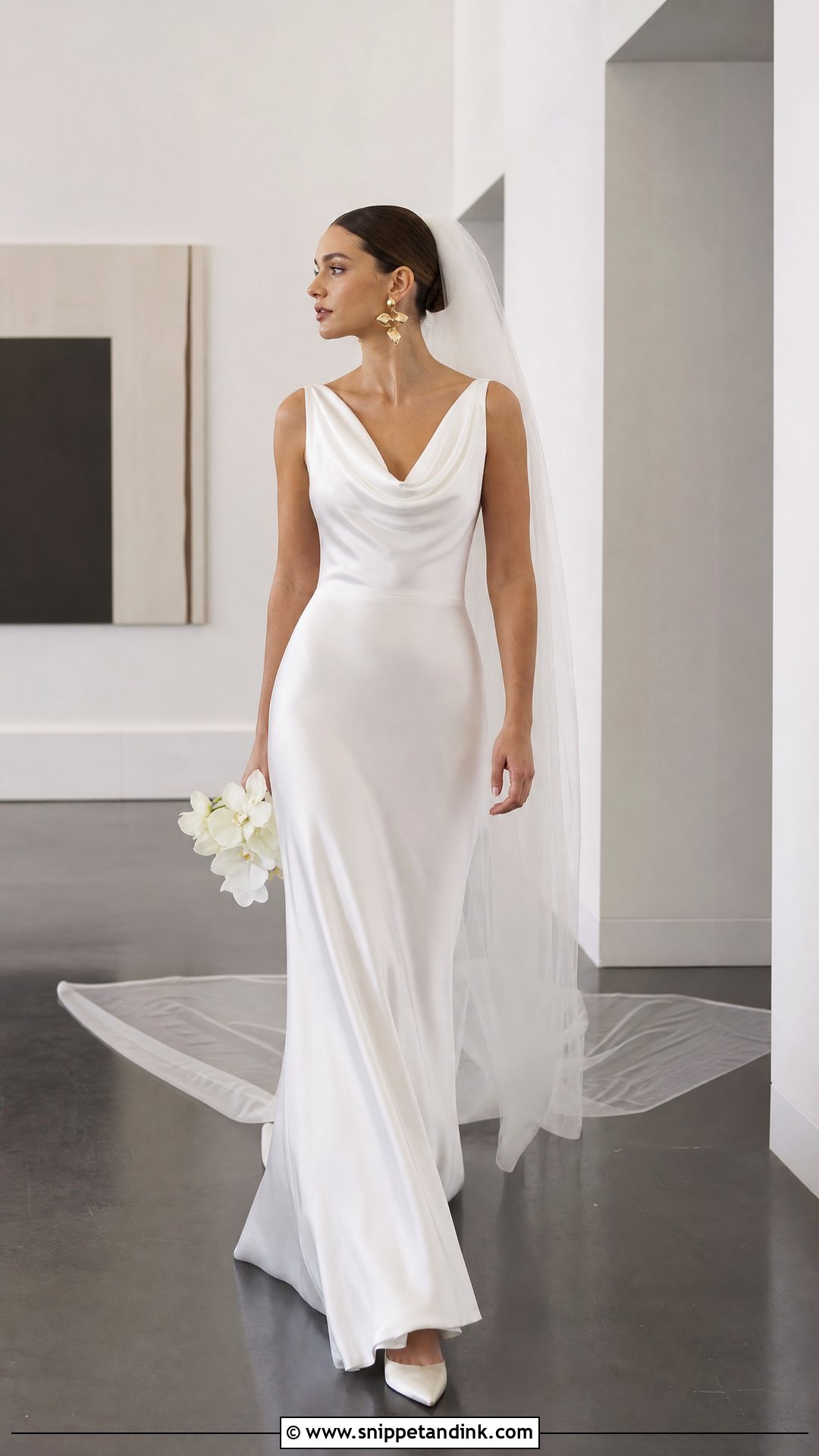
Silk with no embellishment is the most honest dress there is. Every seam, every bra line and every alteration shows. A bias-cut skirt drapes beautifully but clings, so smooth, no-line undergarments aren’t optional here, and I’d budget for precise tailoring at the bust and waist. Sculptural earrings, sleek heels and a narrow cathedral veil suit the clean look, with a low knot or glossy waves. A bouquet of one flower variety keeps the restraint going. Galleries, coastal venues and city spaces are where it looks most at home.
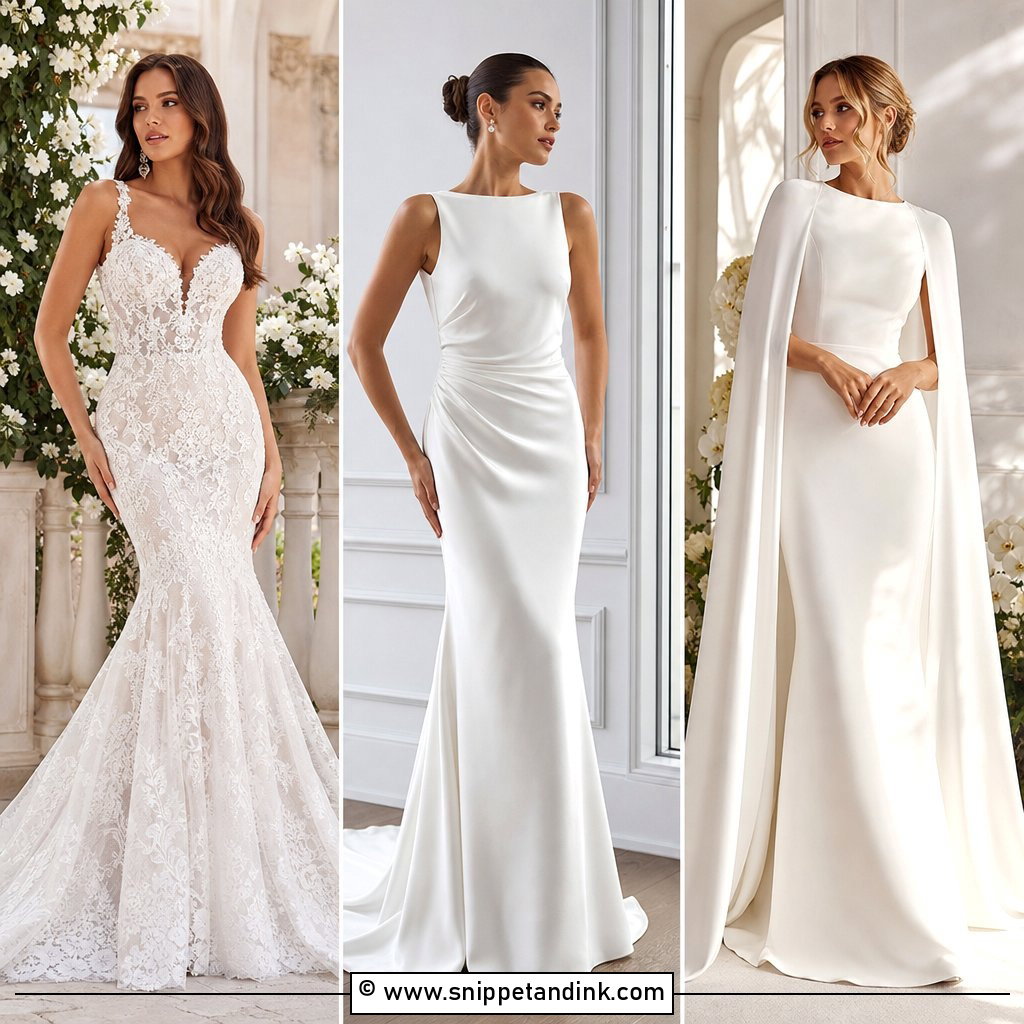
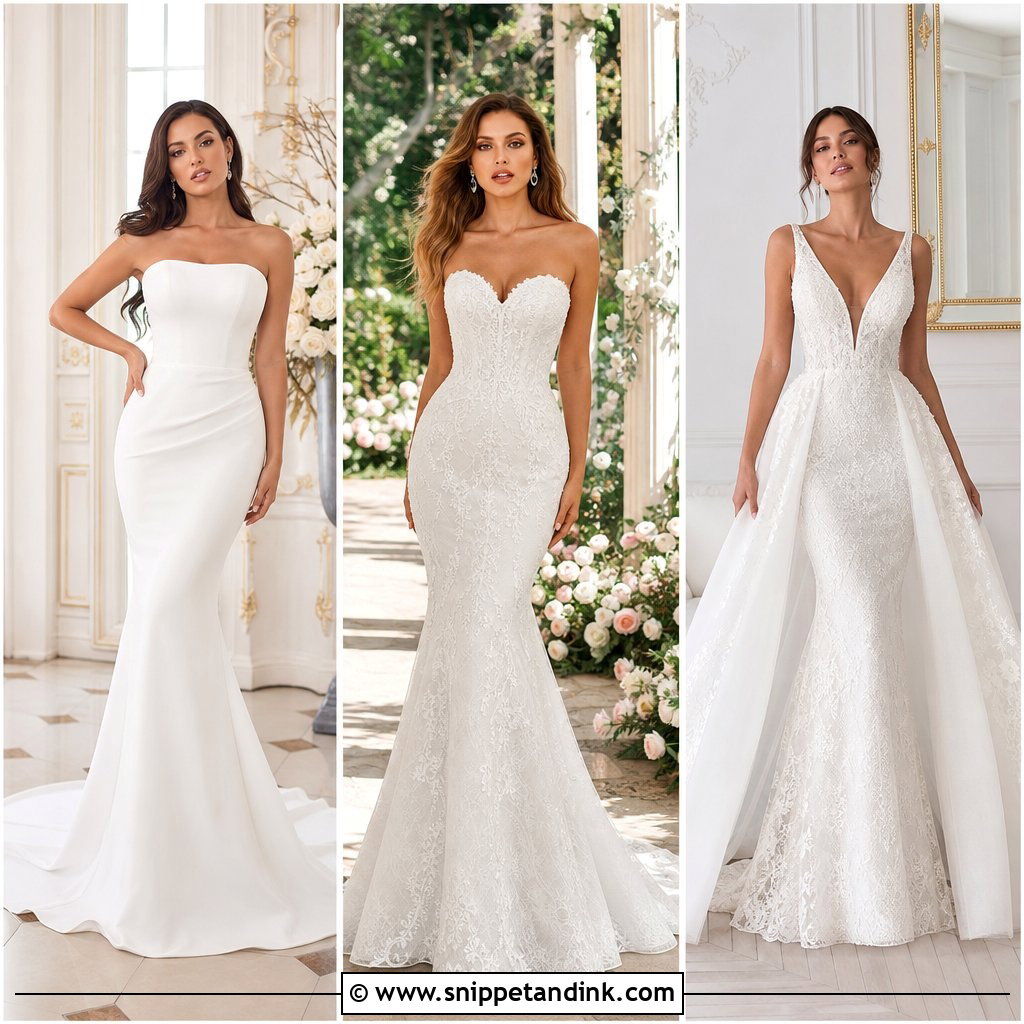
8. Mermaid Lace Wedding Gown
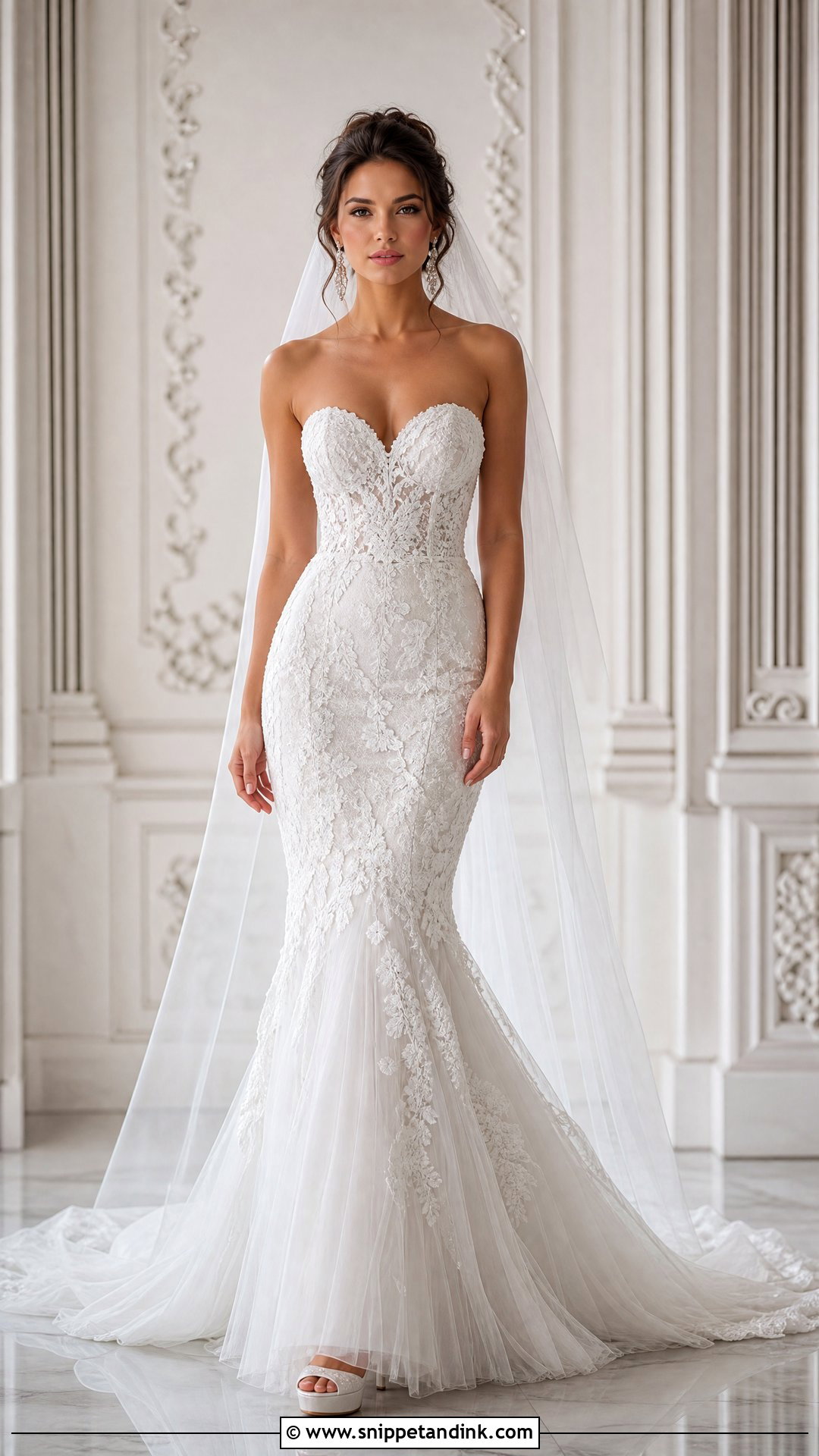
A mermaid follows the body closely and flares near the knee, which makes it the most dramatic silhouette here and the least forgiving to walk in. Try climbing a step in the shop. If the flare sits too low, you’ll shuffle. Lace appliqués that continue onto the tulle flare soften the fitted shape, and a sweetheart or V neck balances it. Ask for a strong bustle at your fitting, since a mermaid train is awkward on a dance floor. Crystal earrings, a long plain veil, hidden platform heels and a side-parted updo complete it.
9. Fit-and-Flare Wedding Gown
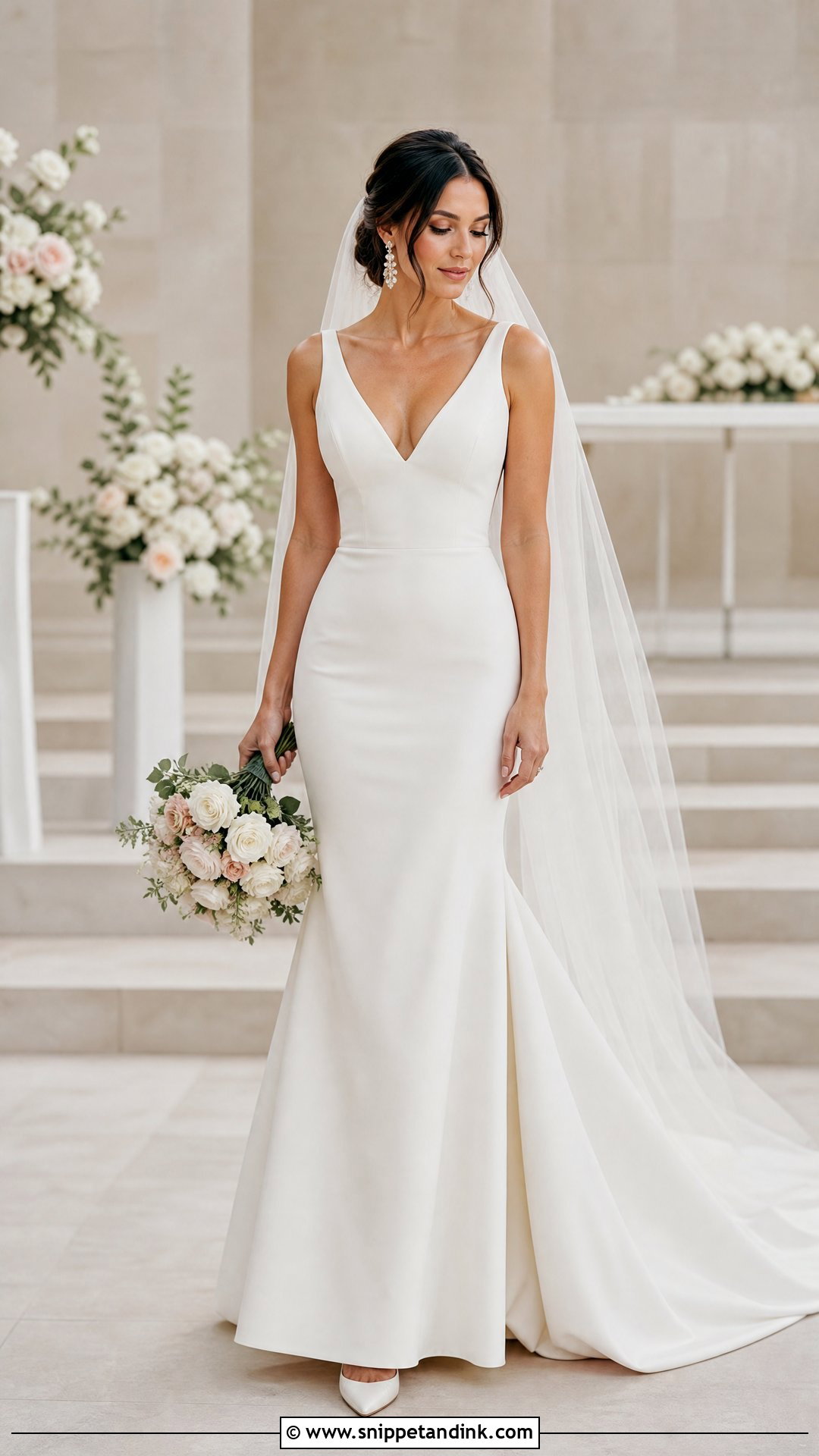
Fit-and-flare is the gentler cousin of the mermaid. The flare starts higher, around mid-thigh, so you can walk normally while keeping a sculpted line. Crepe looks smooth and modern; lace or beaded tulle adds romance. What I check most is the lining through the hips. The gown should skim the body, not pull across it, and pulling shows up as diagonal creases in photos. A V, scoop or off-the-shoulder neckline personalizes it. Pearl-and-crystal earrings, pointed heels, a chapel veil and soft pinned hair keep it from looking rigid.
10. Boho Chiffon Wedding Gown
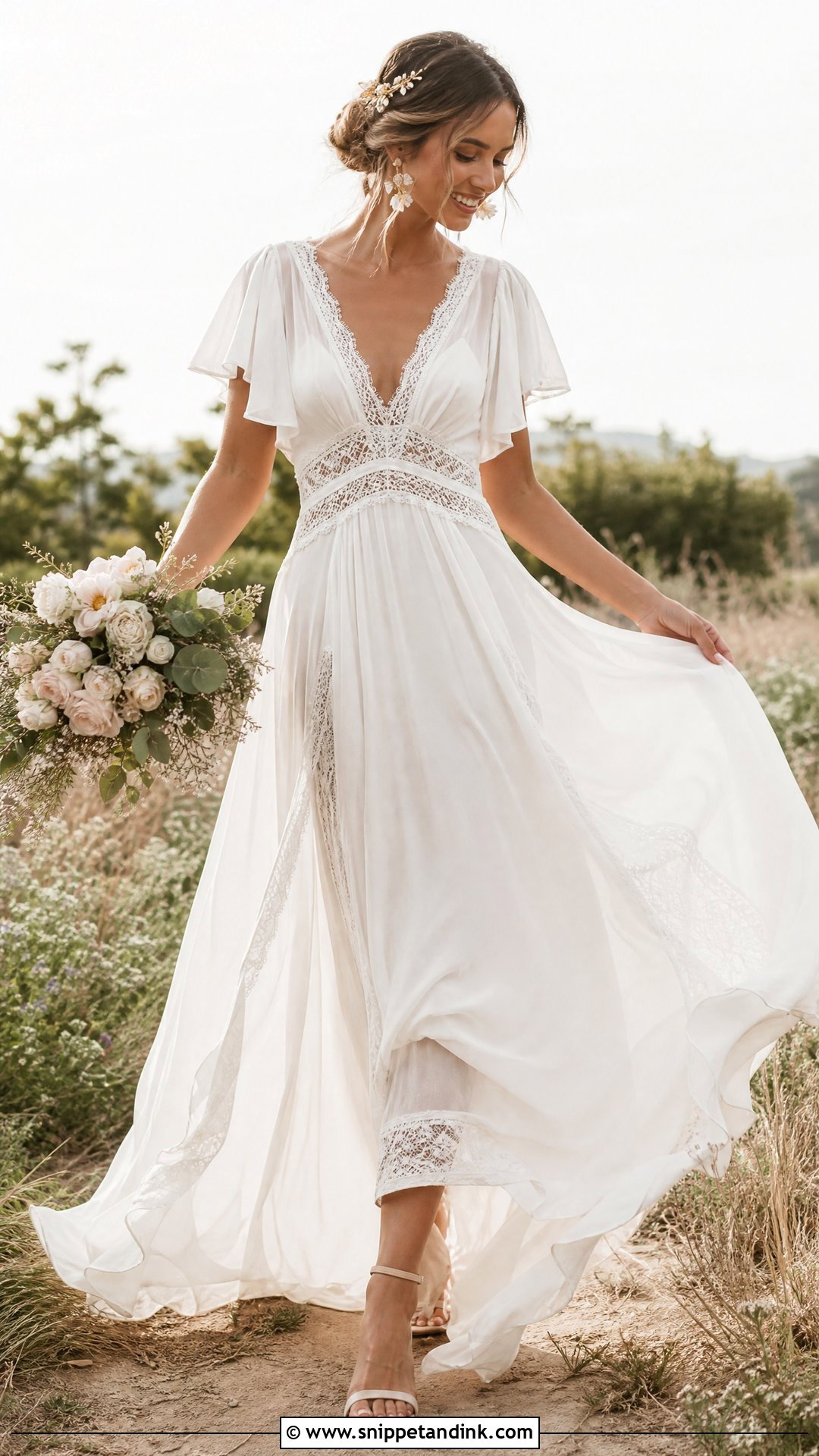
Chiffon moves with the breeze, which is half its appeal at an outdoor ceremony. Soft layers over an easy A-line, with lace panels or flutter sleeves, keep it airy. It’s also the fabric that shows grass stains and sand most quickly, so I’d keep the train short and make sure the bustle actually works on uneven ground. Low block-heel sandals sink less in lawns than stilettos. Small floral earrings, a light veil or a hair comb, and loose waves or a braided updo suit beaches, meadows and woodland.
11. Vintage Tea-Length Wedding Gown
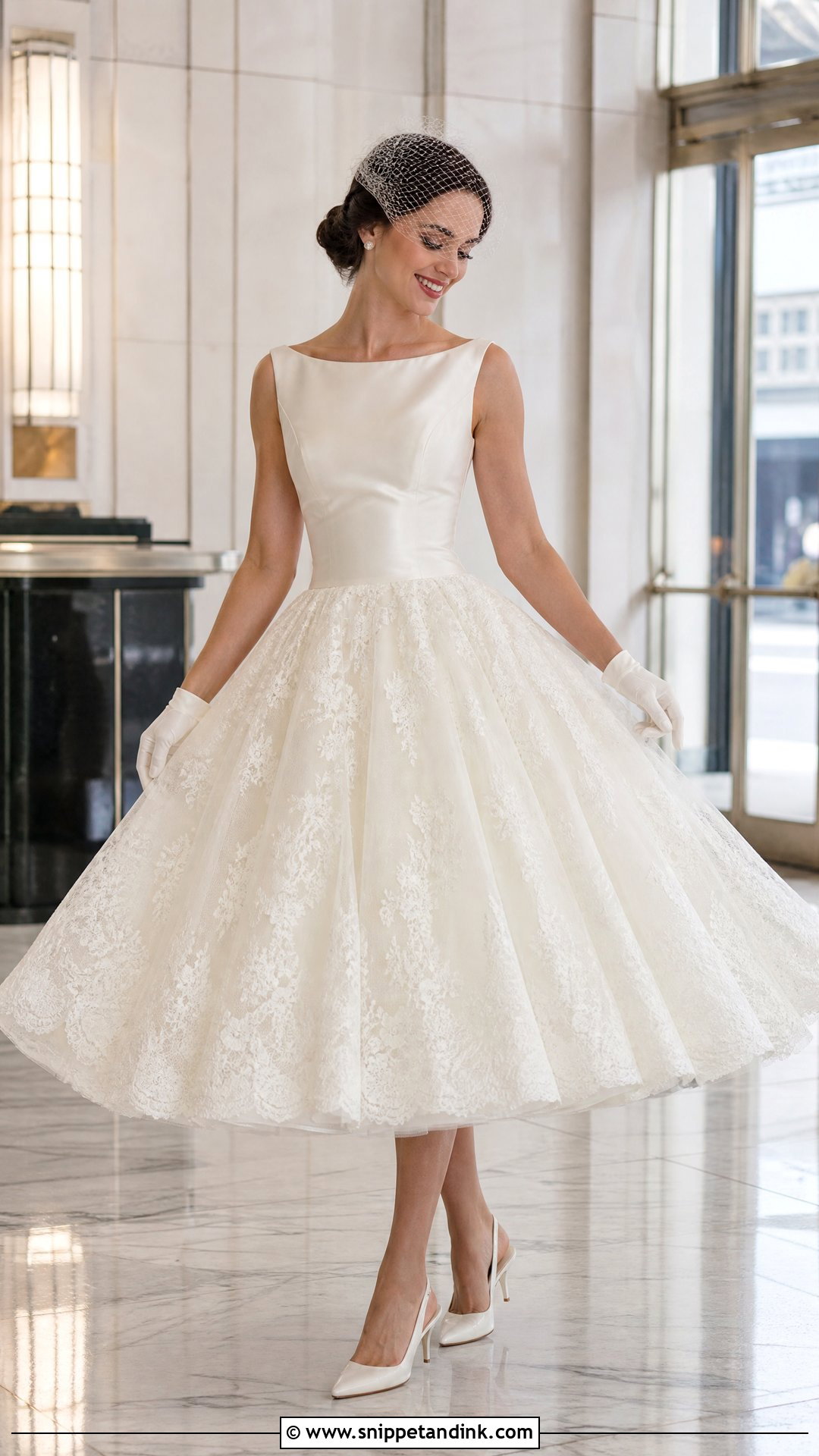
Tea length puts your shoes on show, so they become part of the outfit. The hem falls between knee and ankle, usually with a fitted waist and fuller skirt, in satin, organza, lace or dotted tulle depending on the decade you’re nodding to. Choose the shoes before the hem is finalized, since even a centimeter changes the proportions. Pointed pumps, slingbacks or polished flats all work. Pearl studs, short gloves and a birdcage veil finish the retro mood, with a low roll or a simple bun. It’s practical for courthouse ceremonies and restaurant receptions.
12. High Neck Wedding Gown
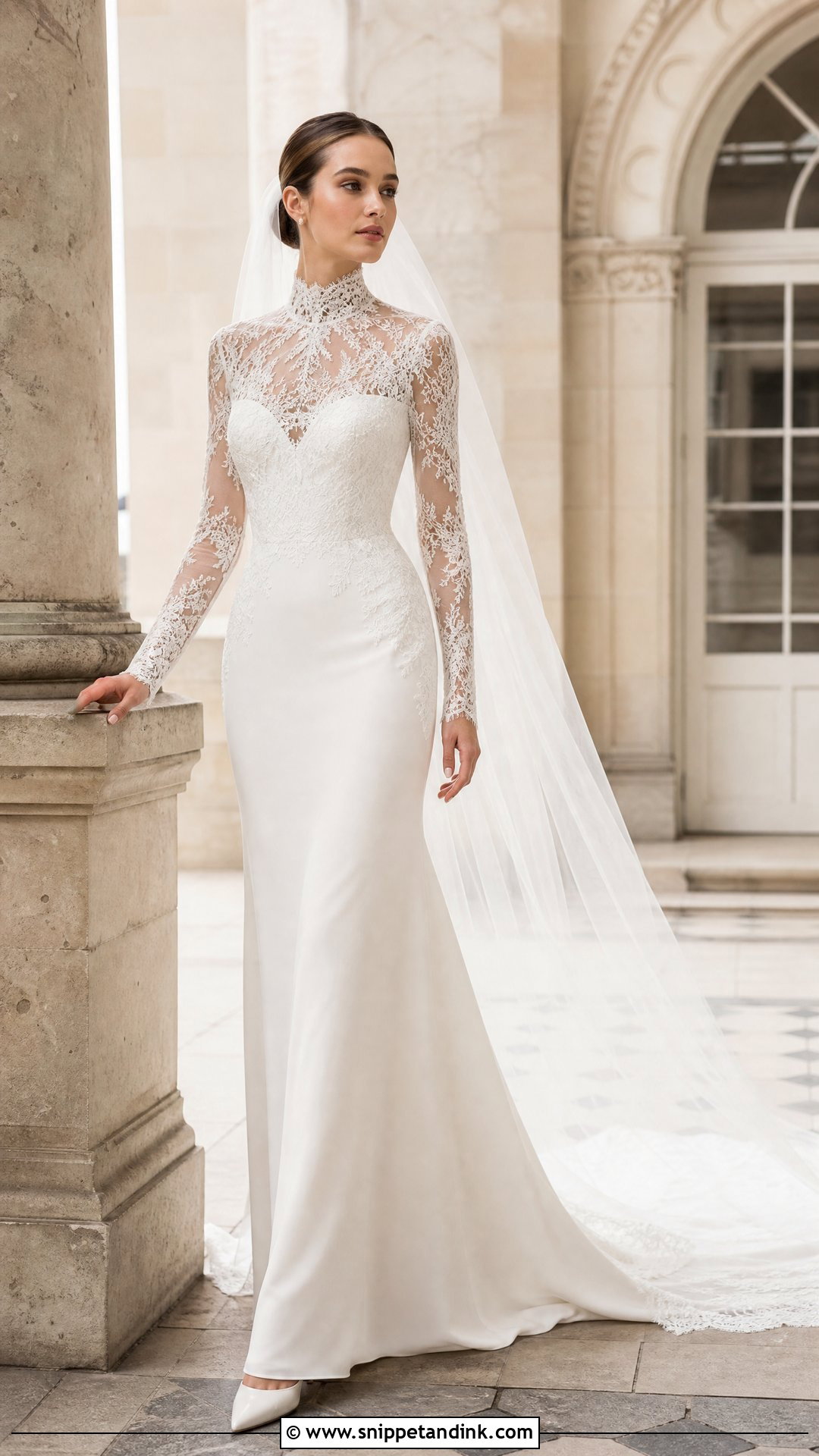
A high neck frames the face and shoulders. A lace illusion neckline stays soft, while a clean crepe bodice looks architectural. With so much coverage on top, an open back or a fitted skirt keeps the design from feeling heavy. Earrings only, no necklace. My fitting check here is simple: turn your head fully both ways. If the collar presses on your throat or rubs under the jaw, it needs adjusting now, because it won’t loosen by itself. A sleek updo, a plain veil and ivory pumps complete it.
13. Cape Sleeve Wedding Gown
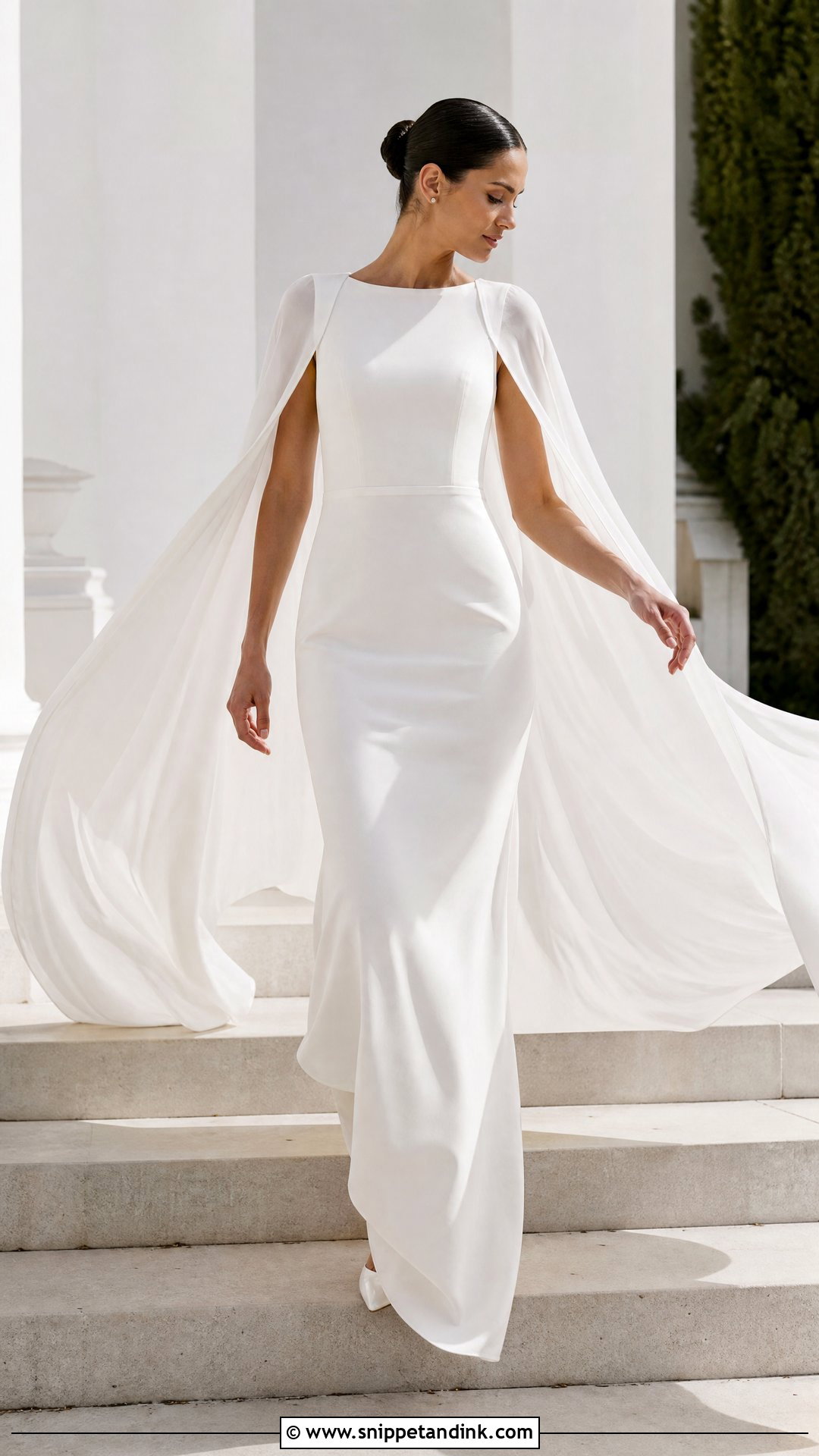
Cape sleeves fall from the shoulders in chiffon, tulle or organza and add movement without bulk. A column or A-line base gives them room. If the cape already reaches the floor, skip the veil; two long sheer layers tangle. Otherwise choose a short plain one. Outdoors, a long cape catches wind like a sail, so walk outside in it during a fitting if your ceremony is in the open. Some capes detach, which gives you a simpler reception look. Understated studs, a smooth bun and pointed shoes keep the focus on the sleeves.
14. Detachable Overskirt Wedding Gown
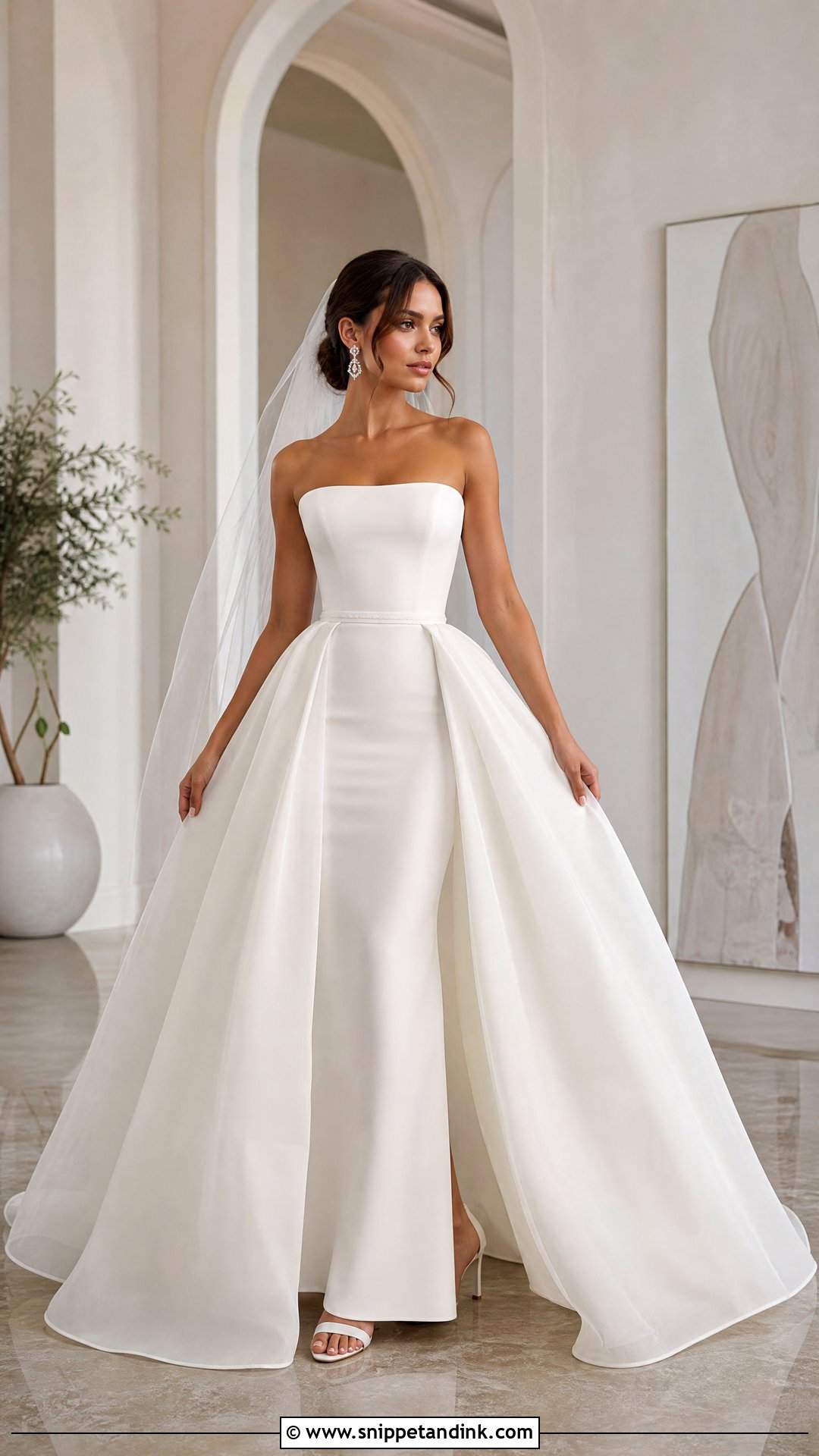
Why choose between a ball gown and a fitted dress when one can do both? A column, sheath or fit-and-flare base takes a full satin, tulle or organza skirt that fastens at the waist for the ceremony. The join is the detail I inspect most closely. It should look smooth from the side and stay put when you walk. Have someone in your party practice removing it, and plan where it will be hung once it’s off, since a loose tulle skirt dropped on a chair gets crushed. Afterward, bold earrings or a hair piece refresh the slimmer look.

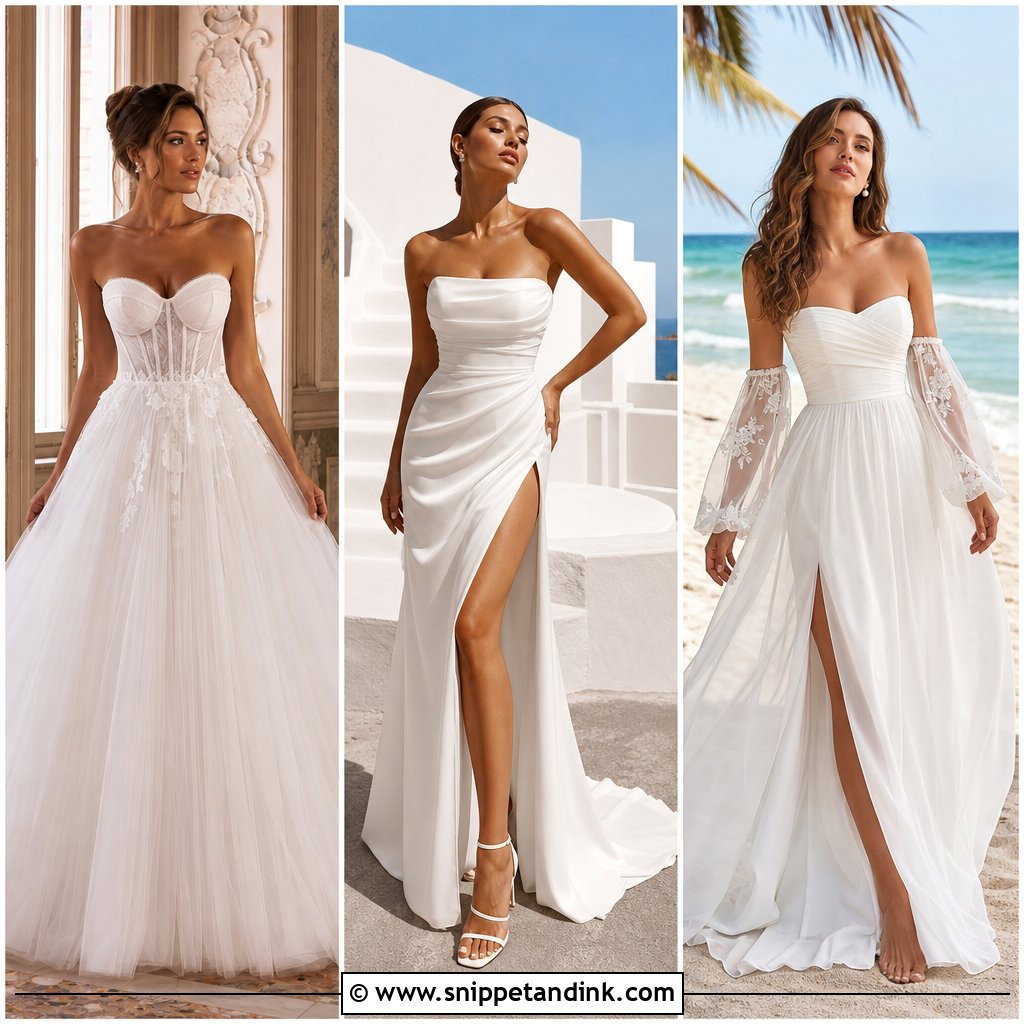

15. Floral Appliqué Wedding Gown
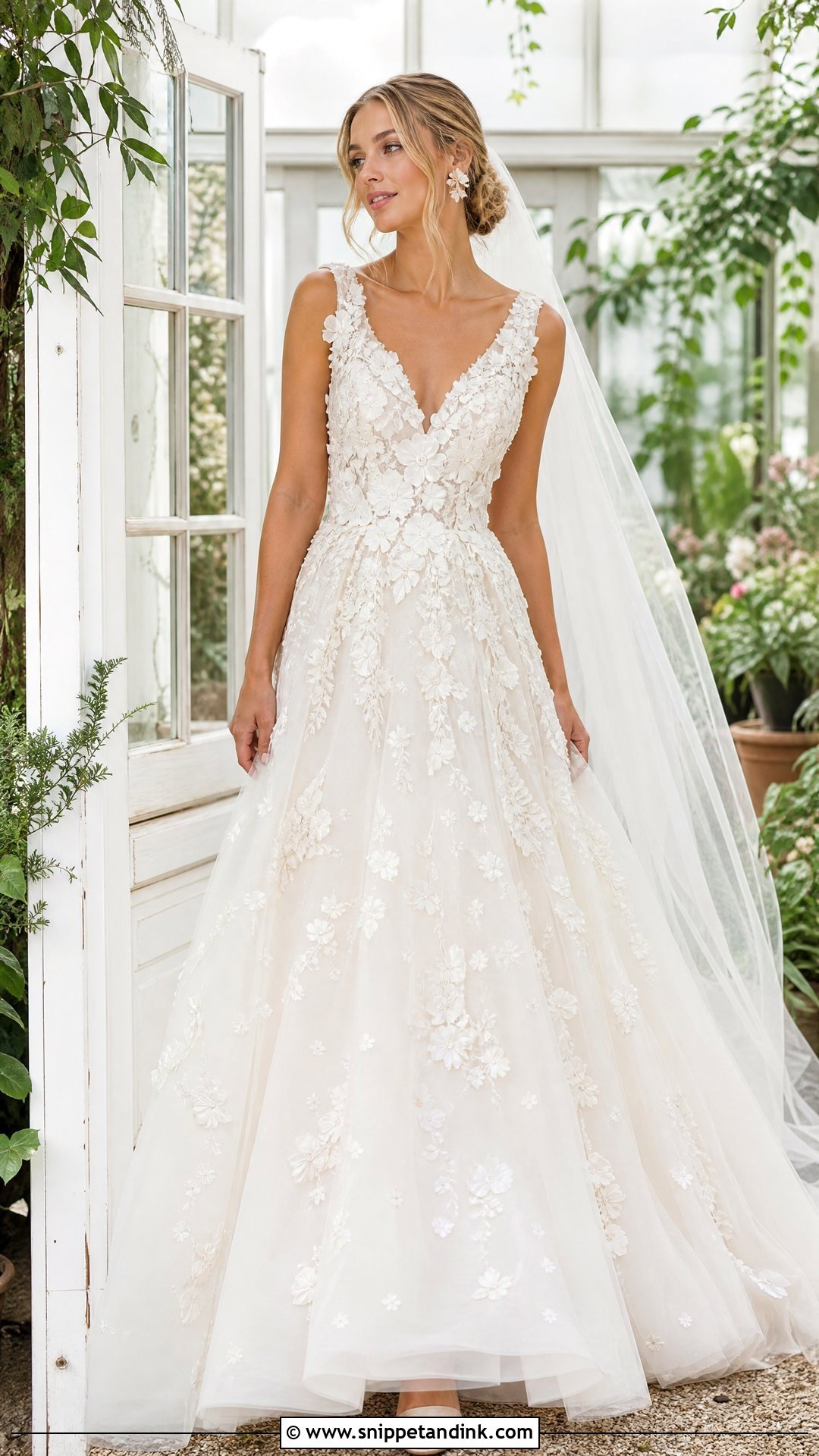
Raised flowers add depth, but placement decides whether it looks considered or crowded. I like them dense around the bodice and thinning out across the skirt. A sheer tulle base keeps it airy; lined satin gives more coverage and structure. Check how they’re attached. Hand-stitched appliqués move with the fabric, while glued ones can lift at the edges after a long day. A plain veil lets the dimension show, with delicate floral earrings, ivory sandals and a loose updo or polished ponytail. Gardens and conservatories suit it.
16. Pearl Beaded Wedding Gown
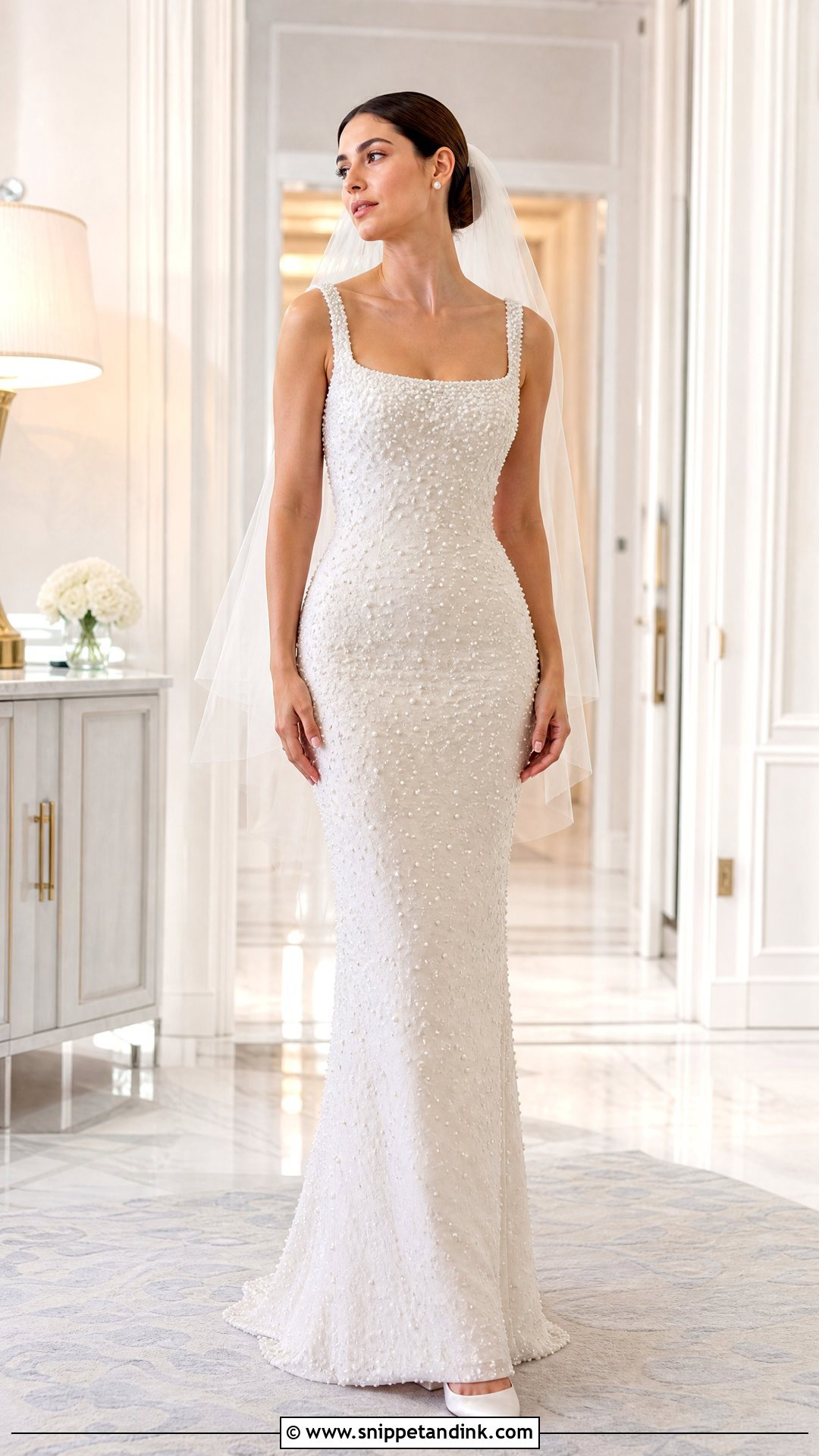
Pearls catch light more softly than crystals, so a pearl beaded gown glows rather than flashes. The beading might cover the whole dress or sit along the neckline, sleeves, waist and back. Fully beaded gowns are heavy and need careful handling: ask the salon how to bustle it without tearing beads, and never hang it by the straps. Inside, the bodice should be lined so nothing scratches. A column feels modern; a pearl-covered A-line feels romantic. Pearl studs, satin pumps and a plain tulle veil are all the accessories it needs.
17. One-Shoulder Wedding Gown
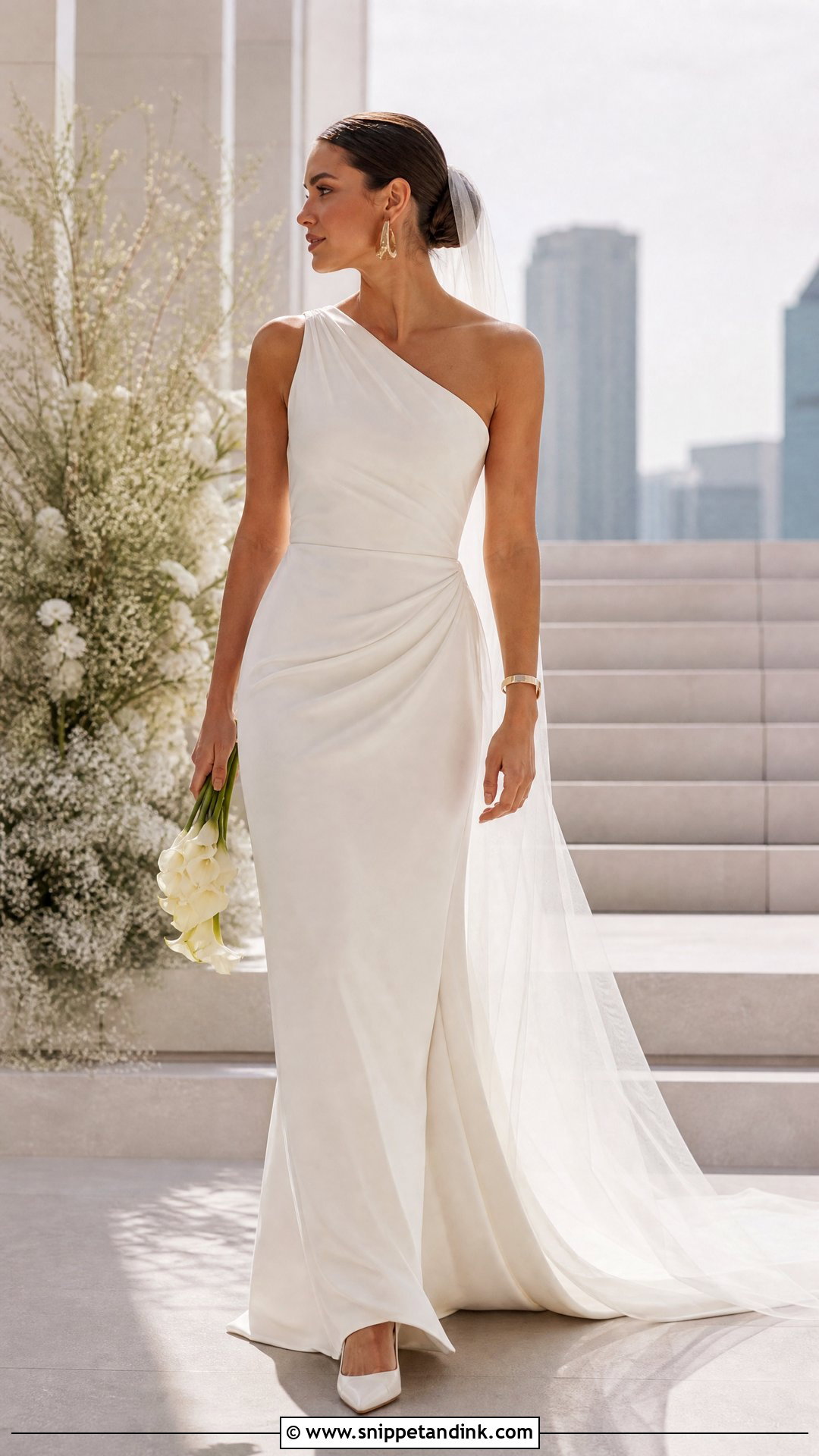
One bare shoulder makes the neckline the whole design. Smooth crepe in a column looks modern, while draped satin in an A-line moves more softly. A single long sleeve adds drama; a wide strap is cleaner. The fitting problem I see most often is the shoulder panel pulling the bodice diagonally across the chest, so check it in the mirror with your arms down and then raised. Small earrings or one cuff on the bare-arm side are enough. A sleek ponytail or side-parted bun keeps the neckline clear, with the veil attached low.
18. Scoop Neck Wedding Gown
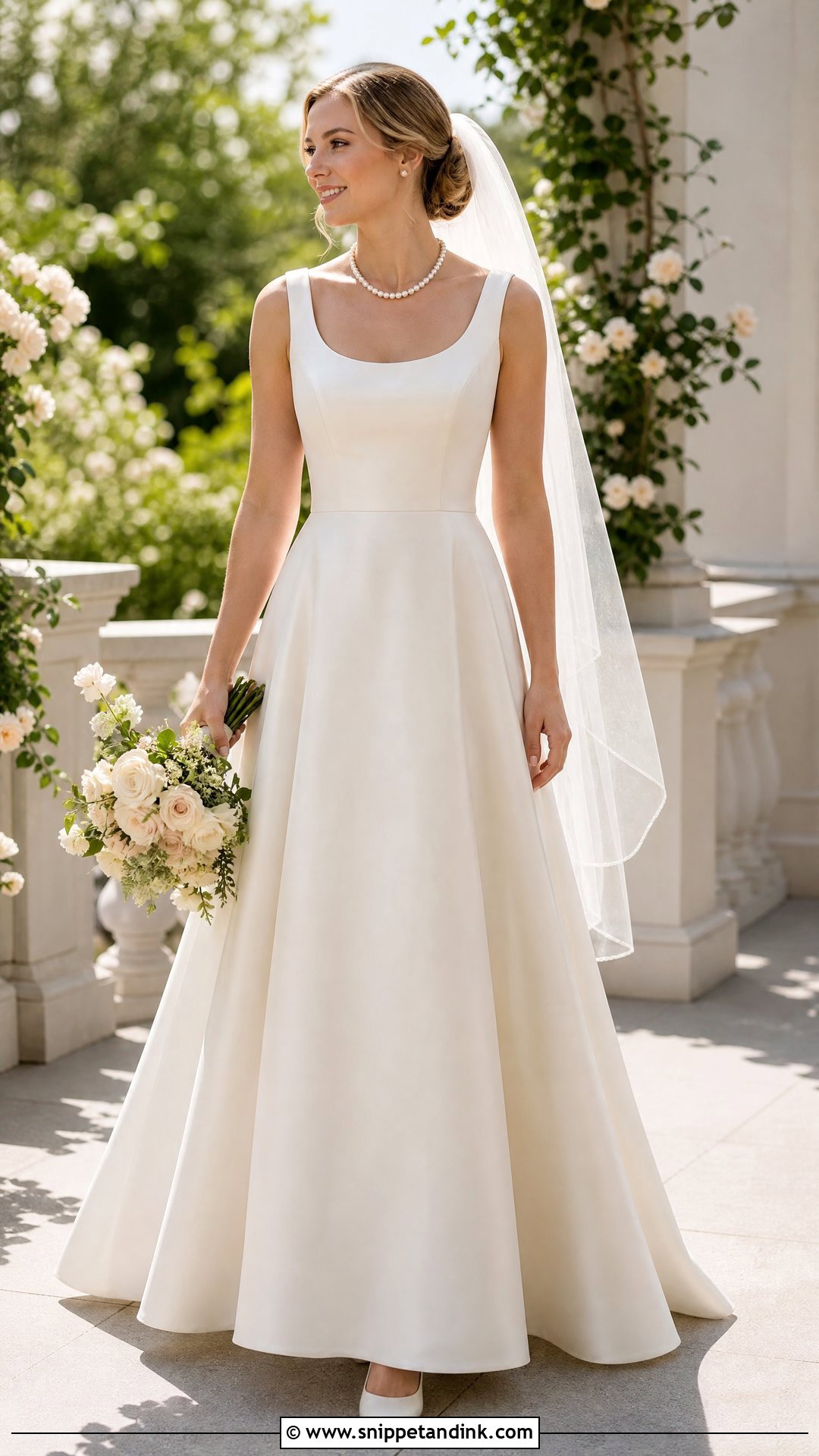
A scoop curves gently across the chest and suits a wide range of bust sizes, which is why I recommend it so often. Cut it modest or a little lower, with wide straps or fitted sleeves. An A-line skirt softens it; a sheath makes it sleek. Gaping is the risk. Cup placement and strap length must be set precisely, so lean forward at the fitting and look down. A short pearl necklace can echo the curve, though earrings alone work too. Add a sheer veil, rounded-toe pumps and a low chignon.
19. Corset Bodice Wedding Gown
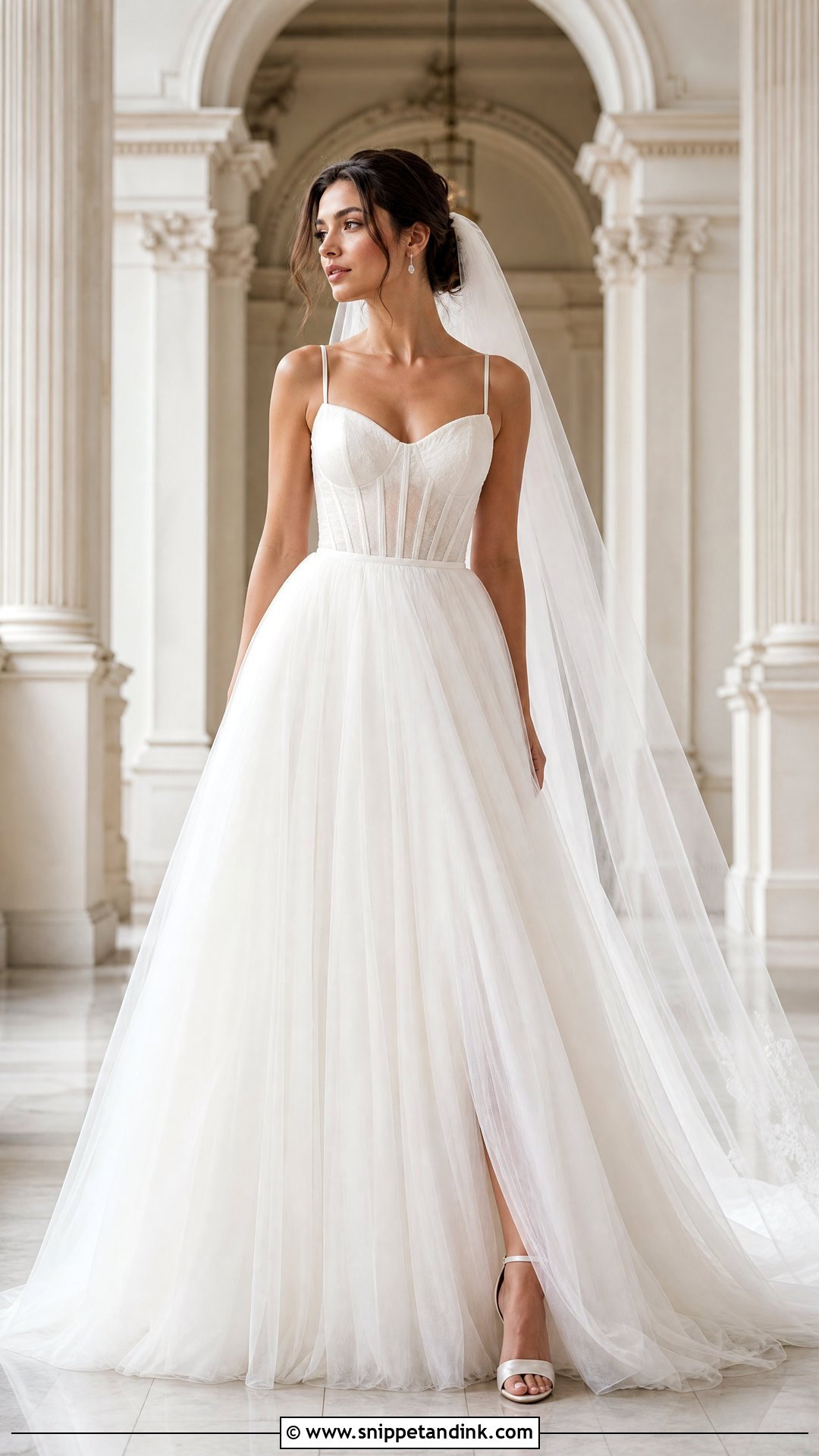
Visible boning and shaped panels give a corset bodice a strong foundation. Lace and tulle make it romantic; plain satin keeps it minimal. Real support comes from the interior construction, not from pulling the laces tight, and you can feel the difference when you sit. A full skirt balances the narrow top, and a dropped waist lengthens it. If there’s a sheer panel, decide on lining early, as it changes the whole look. Delicate earrings, satin heels, a simple veil and a neat updo. You should be able to breathe deeply and lift your arms without anything shifting.
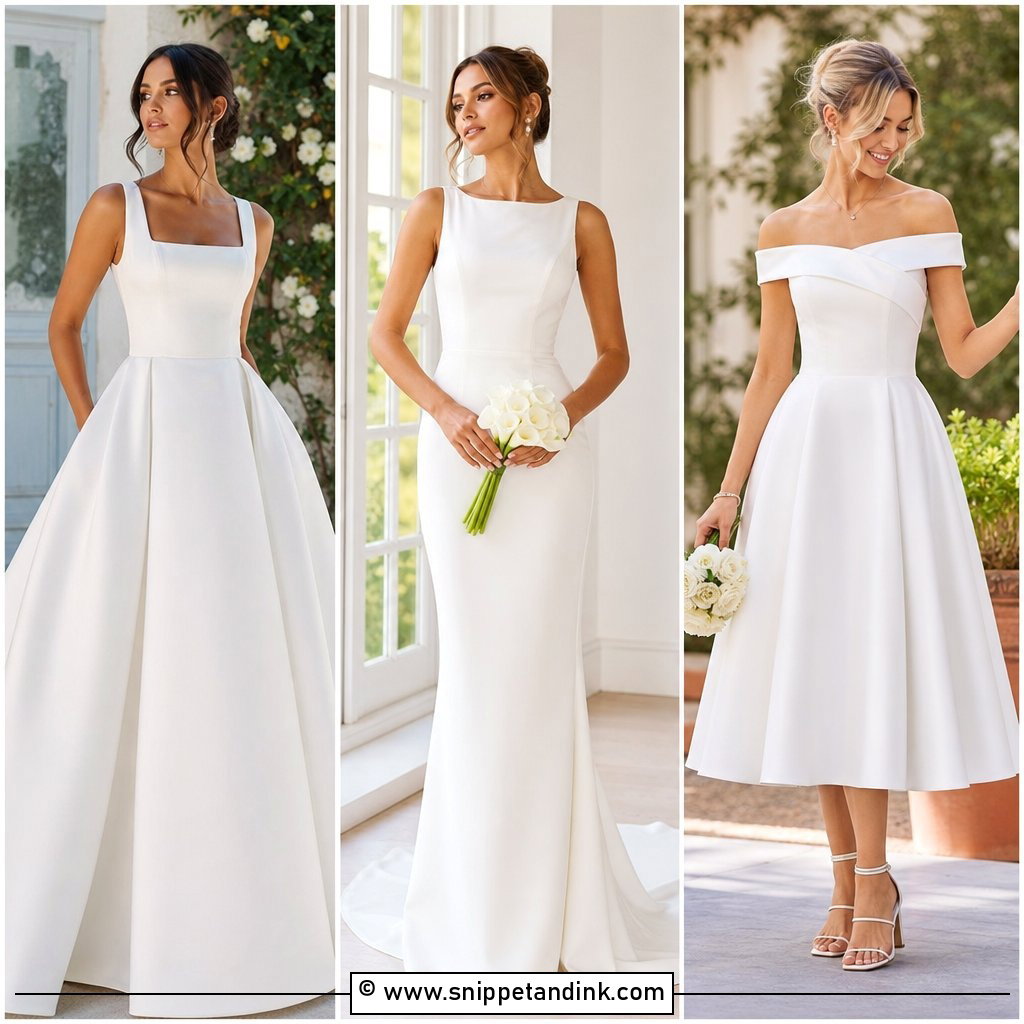
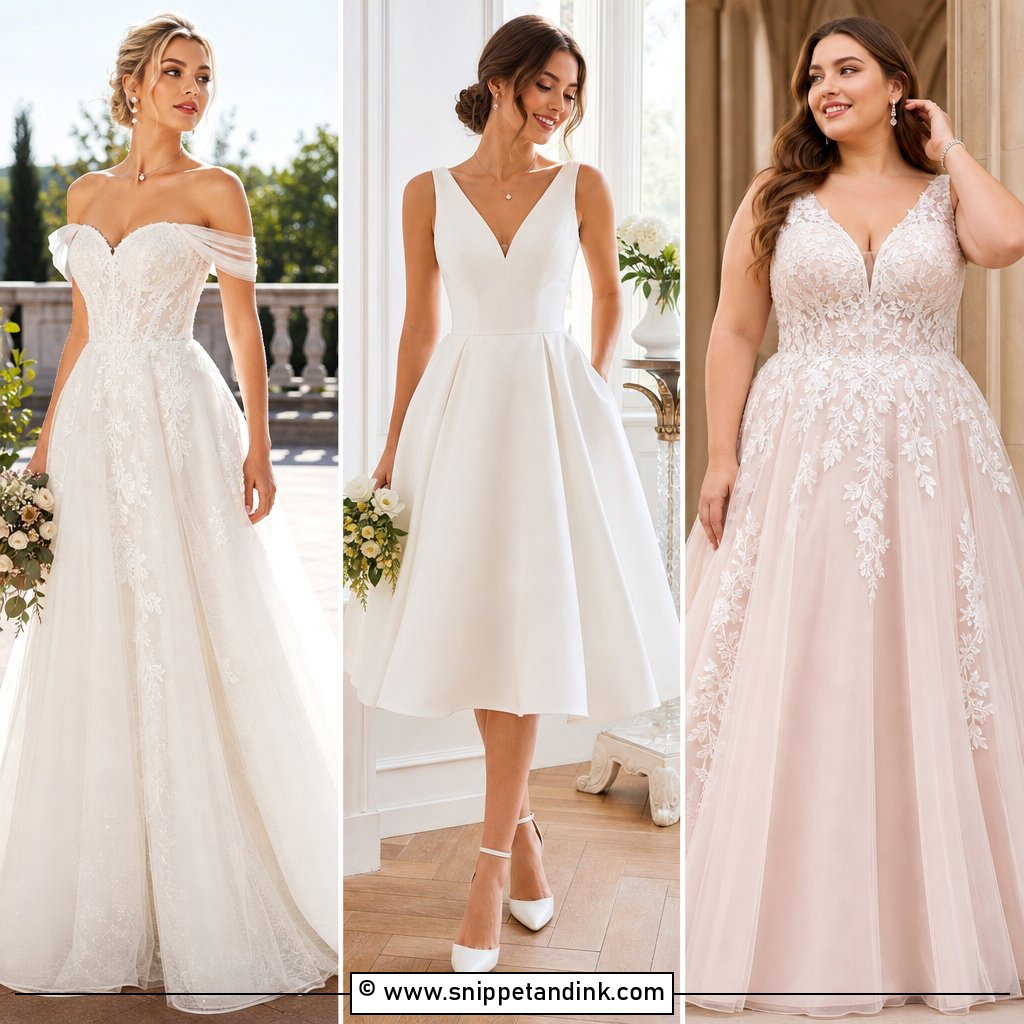
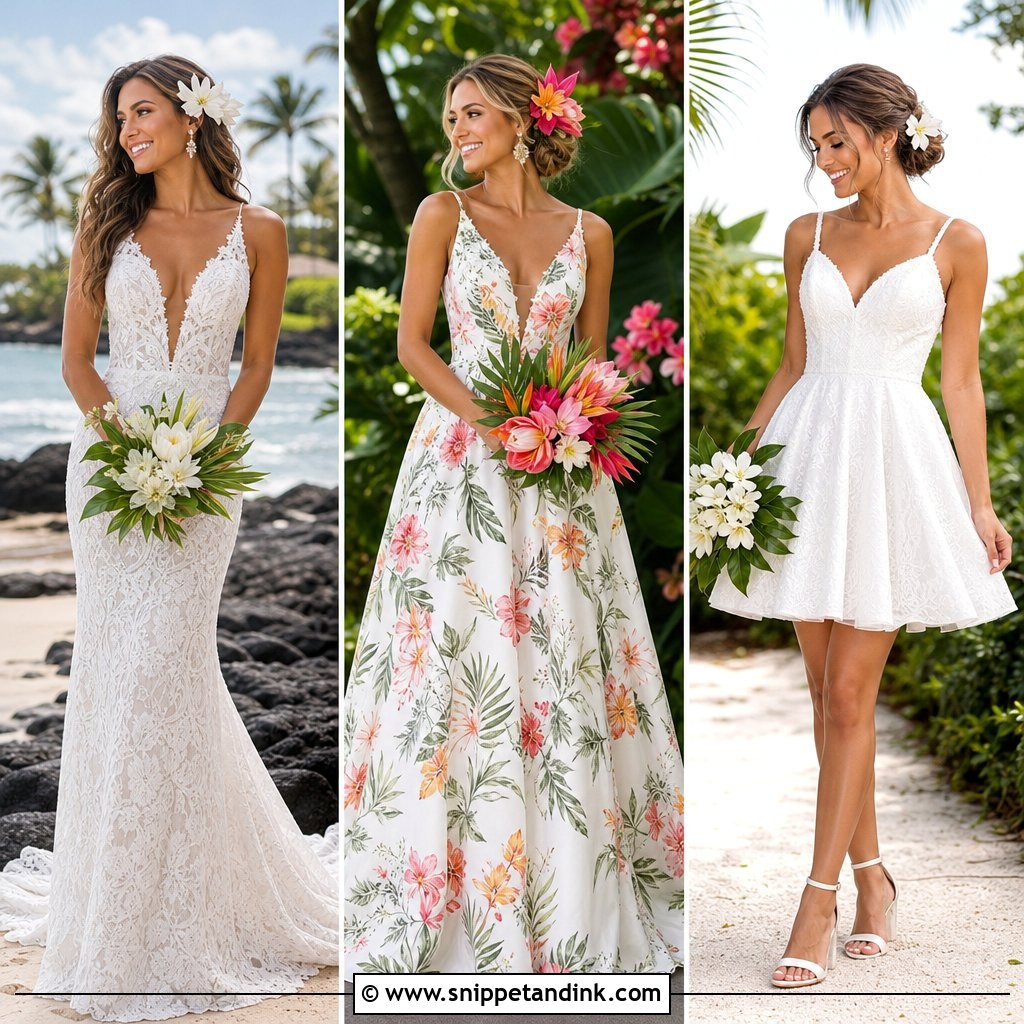

20. Drop Waist Wedding Gown
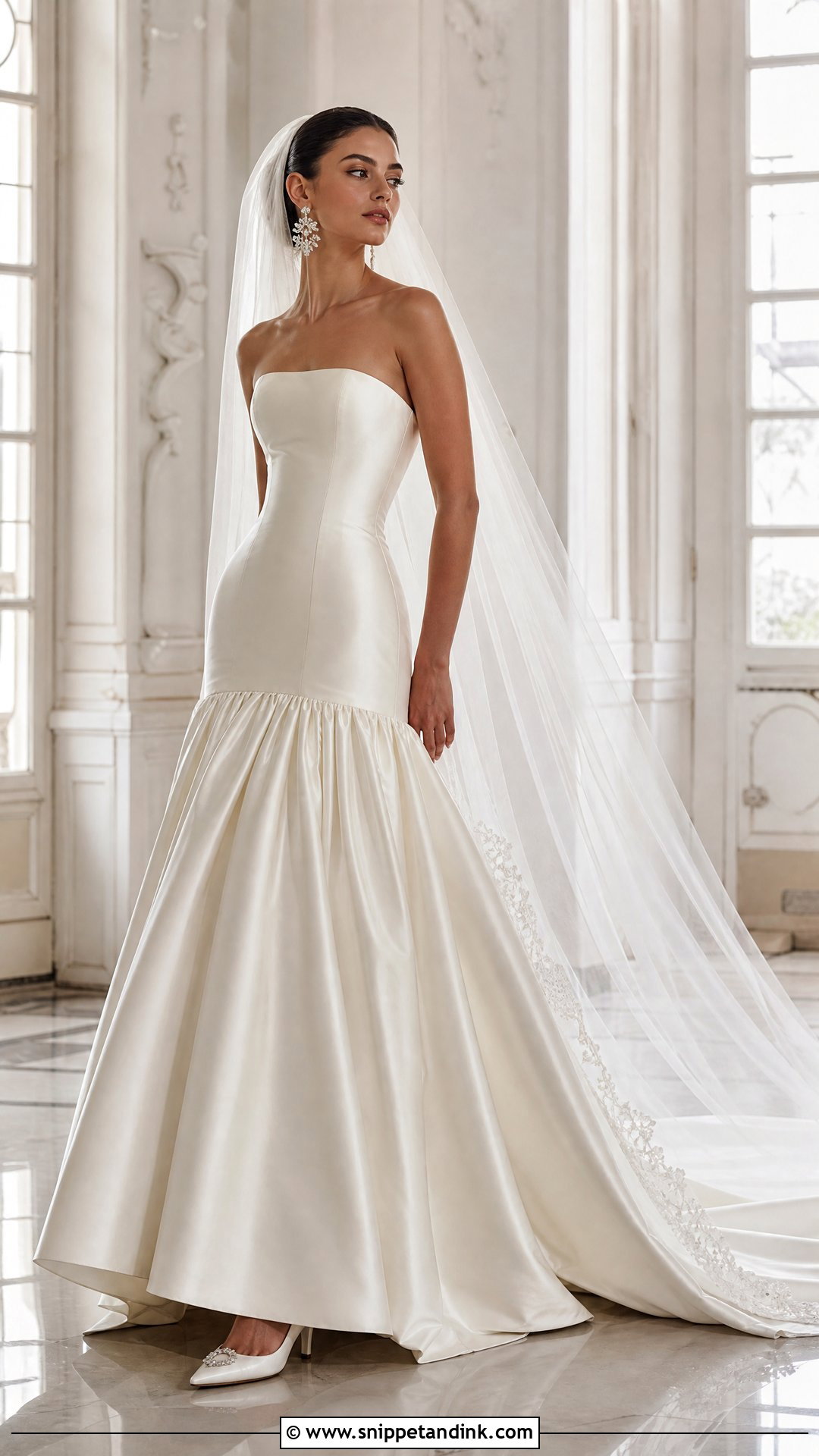
The bodice runs past the natural waist before opening into the skirt, creating a long, sculptural line in satin, mikado or structured taffeta. A gathered skirt keeps it soft; a crisp full skirt makes it dramatic. This shape is especially sensitive to torso length, so I always try it beside a natural waist to compare. Never belt it at the natural waist. Walk and sit at fittings to make sure the long bodice bends with you. Statement earrings, pointed pumps and a cathedral veil under a polished bun complete it.
21. Champagne Wedding Gown
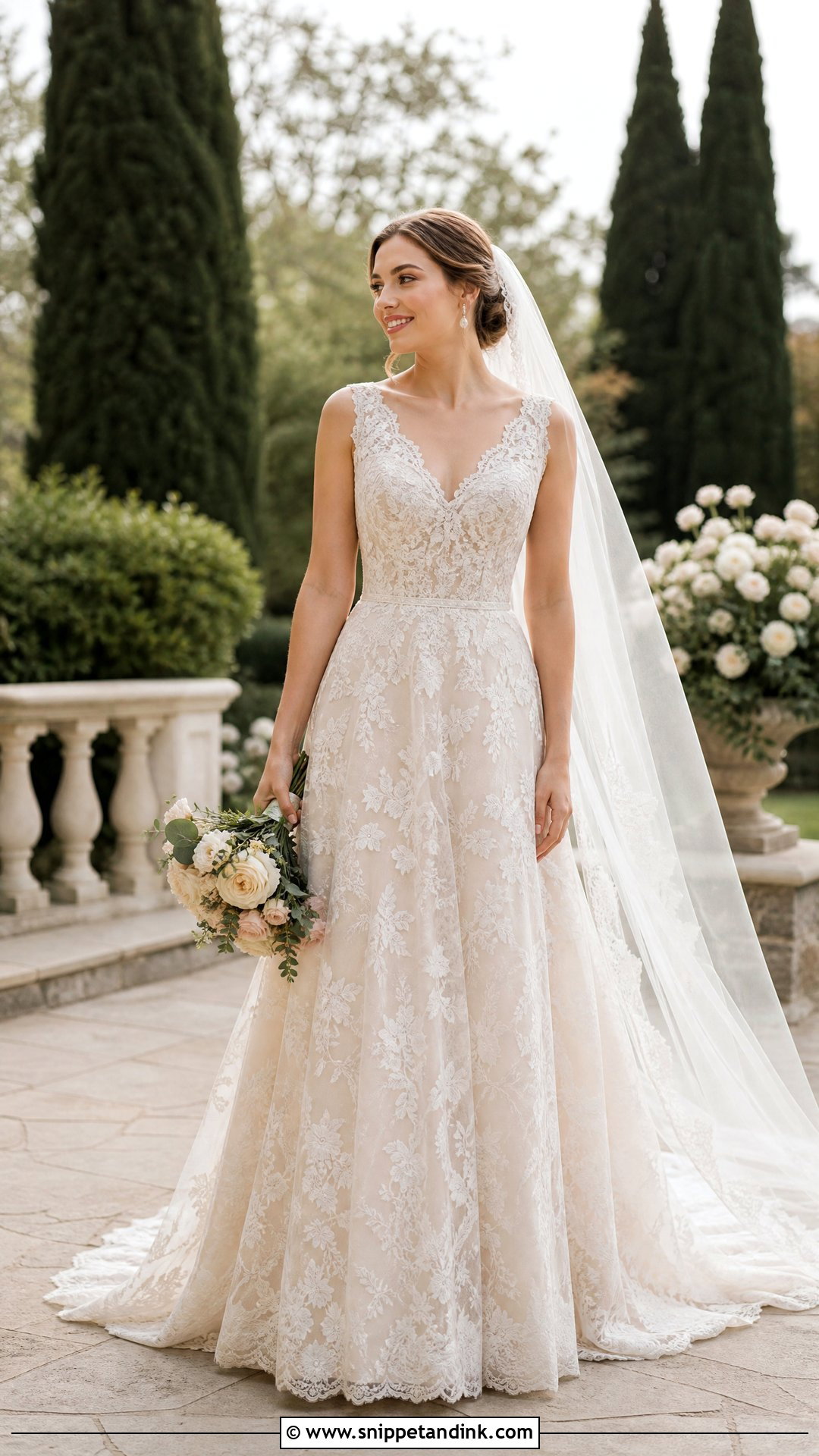
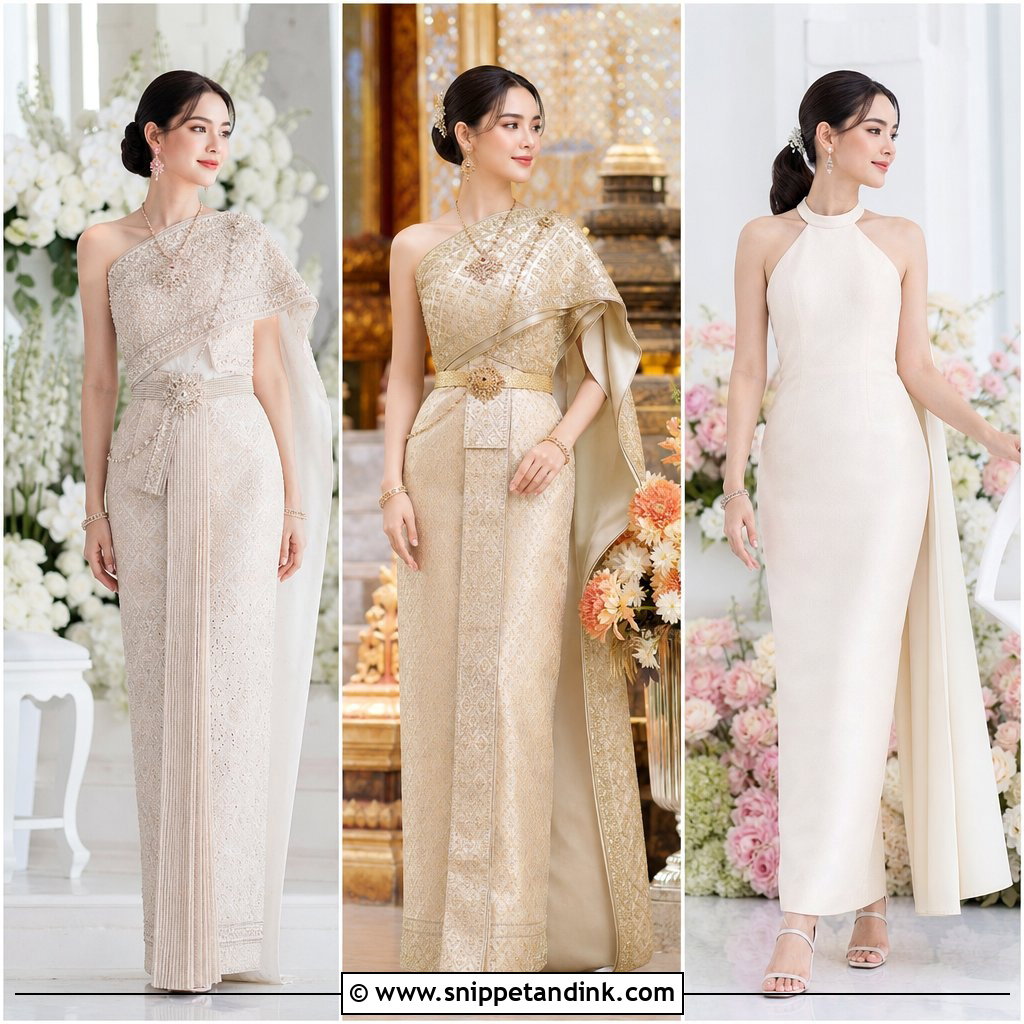
Champagne brings warmth, either as all-over satin or as a lining under ivory lace and tulle. It’s a shade that shifts between beige, gold and blush depending on the light, so look at it in daylight and under warm indoor bulbs before deciding. Match the veil to the outer layer of the gown, not the lining, or the veil will look grey beside it. Gold or pearl jewelry and neutral satin heels suit it. It works across ball gowns, A-lines and fitted shapes, and it is the gentlest step away from bright white I know.
22. Blush Wedding Gown
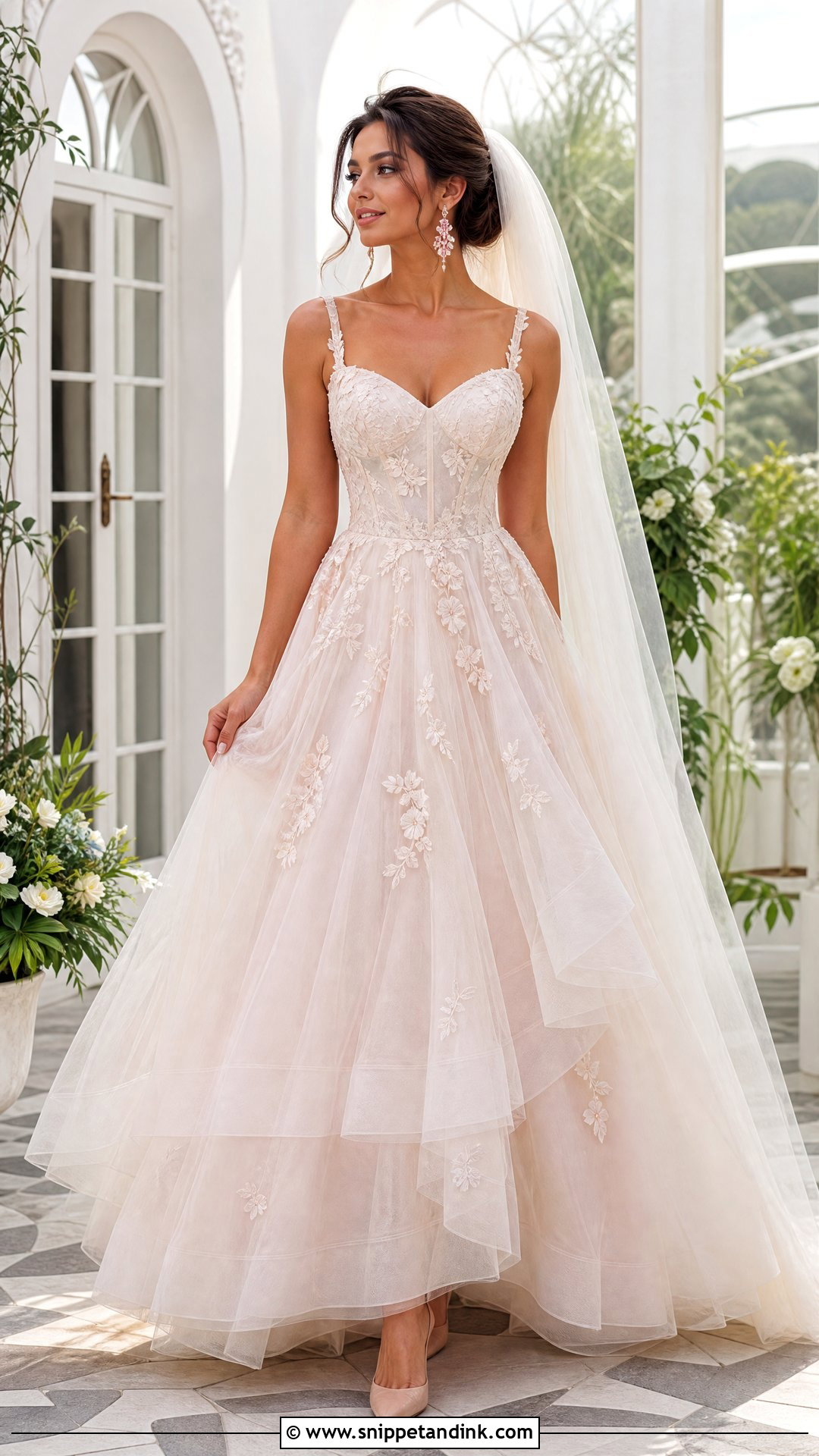
Blush can be a pale pink lining under ivory tulle or a clearly pink satin. Appliqués, soft pleats and layered skirts suit it, adding depth without harsh contrast. Choose the veil under the same lighting as the dress; a mismatch between ivory and blush looks much stronger in photos than in the shop. A bouquet of white flowers and muted greenery keeps the palette calm, and I’d limit pink accessories to one. Rose-toned earrings and neutral pumps finish it. Good tailoring matters here too, so the color isn’t the only thing people notice.
23. Wedding Gown With Bow
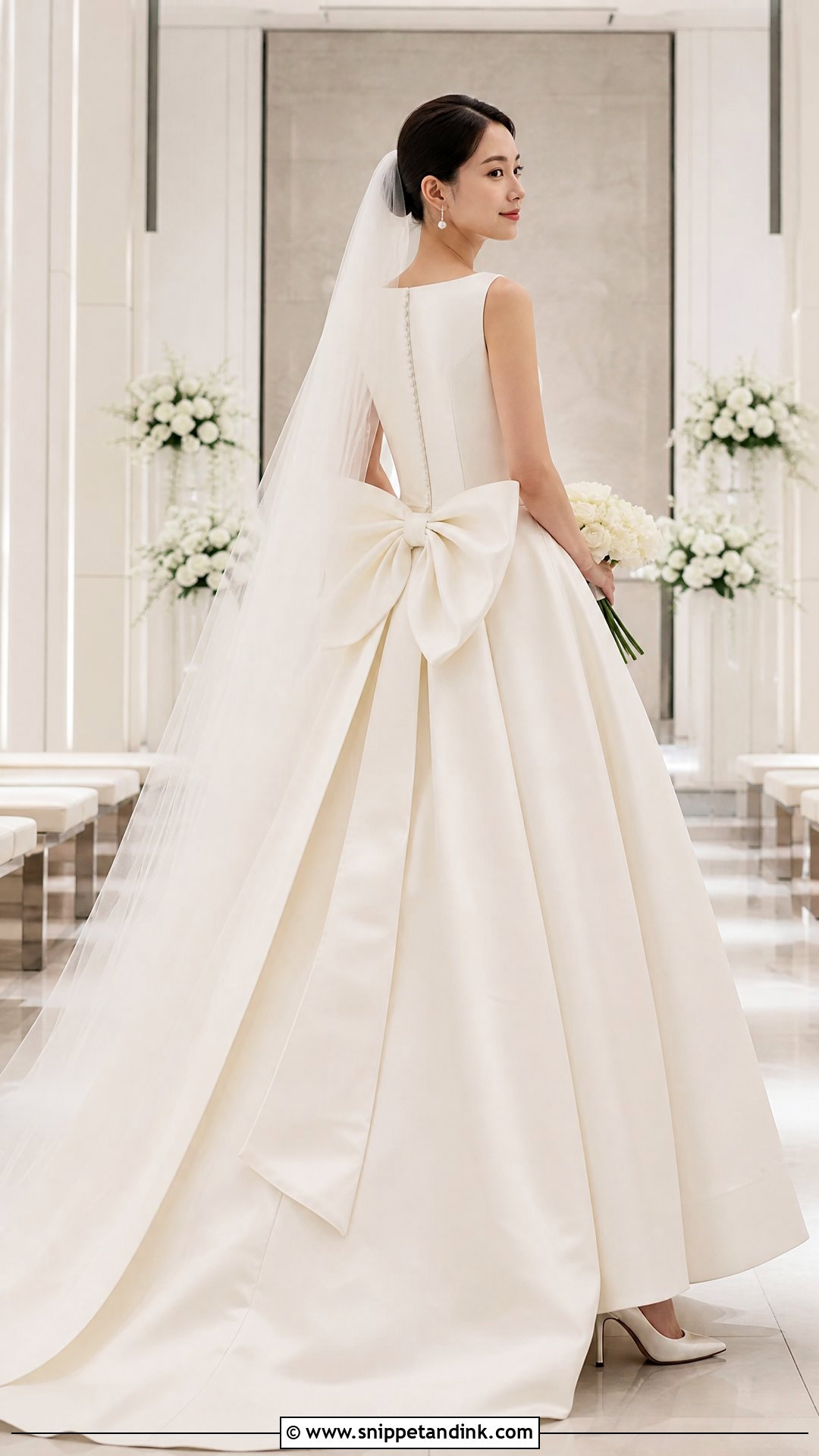
A bow at the back waist, a slim one on the shoulder or an oversized detachable one with long tails each changes the dress’s mood. Satin and mikado hold crisp loops; organza looks lighter and slightly transparent. Before you settle on placement, check that the bow doesn’t sit over the buttons or the bustle points, because that’s a common clash I see at fittings. Let the bow be the only statement: simple jewelry, smooth pumps, an unembellished veil. A polished bun shows off a back bow; shorter hair suits a shoulder one.
24. Short Wedding Gown With Train
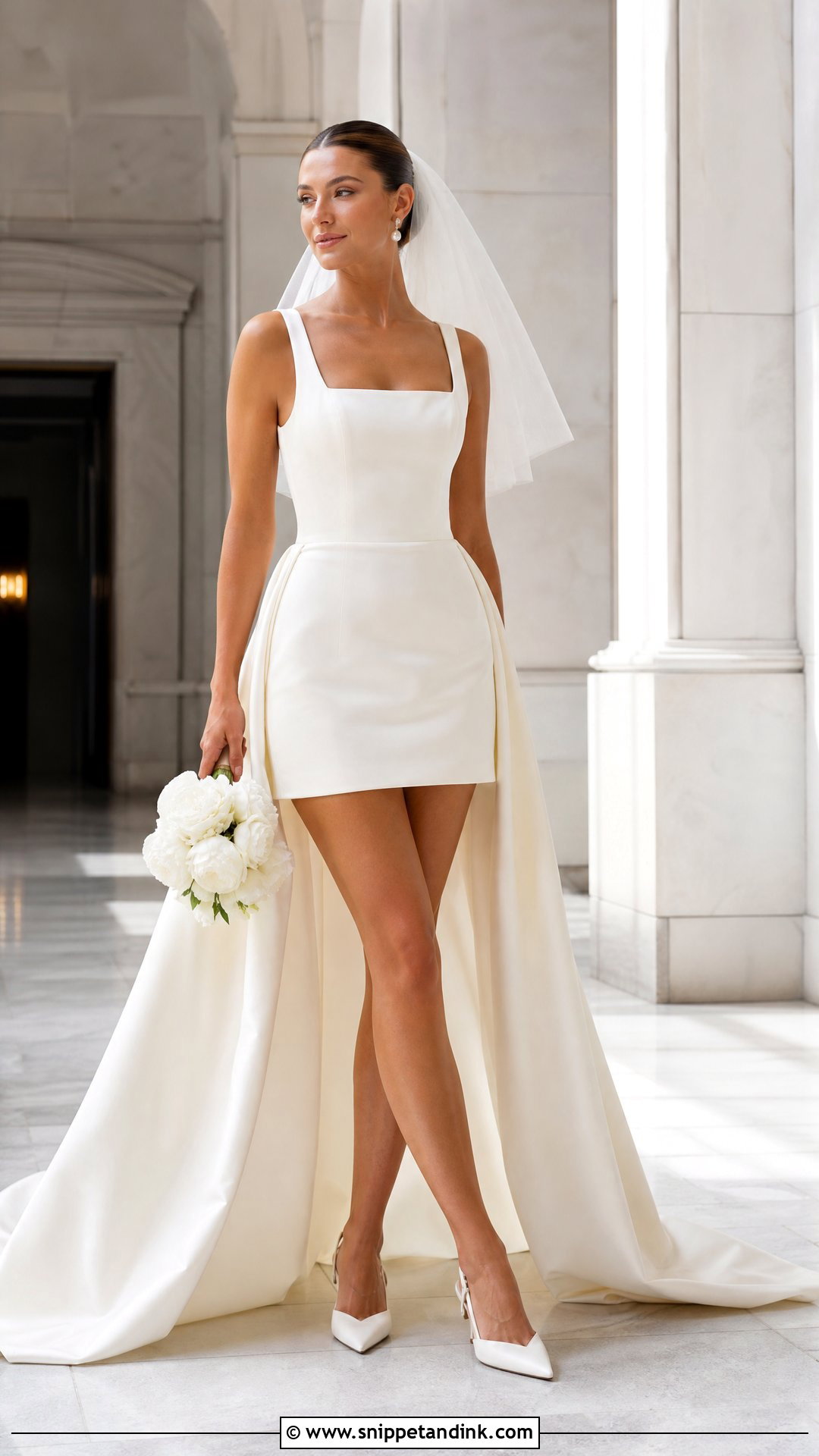
Short at the front, dramatic at the back. A structured mini or knee-length dress with a detachable overskirt, a back panel or a high-low hem gives you freedom of movement and a proper train for the walk. With your legs on show, the shoes matter as much as the dress, so choose refined slingbacks, embellished flats or platforms you can stand in for hours. A square neckline or long sleeves keep the short length polished. Pearl earrings, a short veil and a sleek ponytail or compact bun suit city venues and courthouse ceremonies.
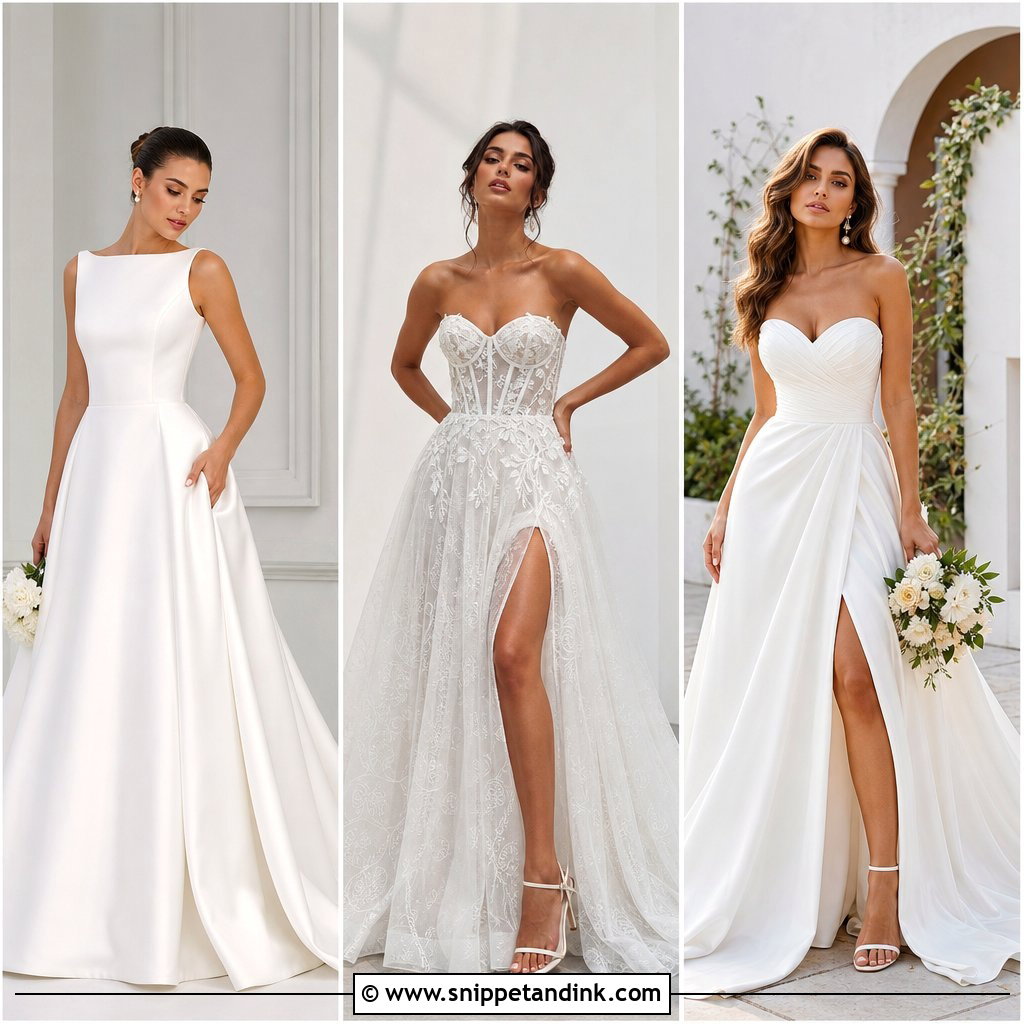

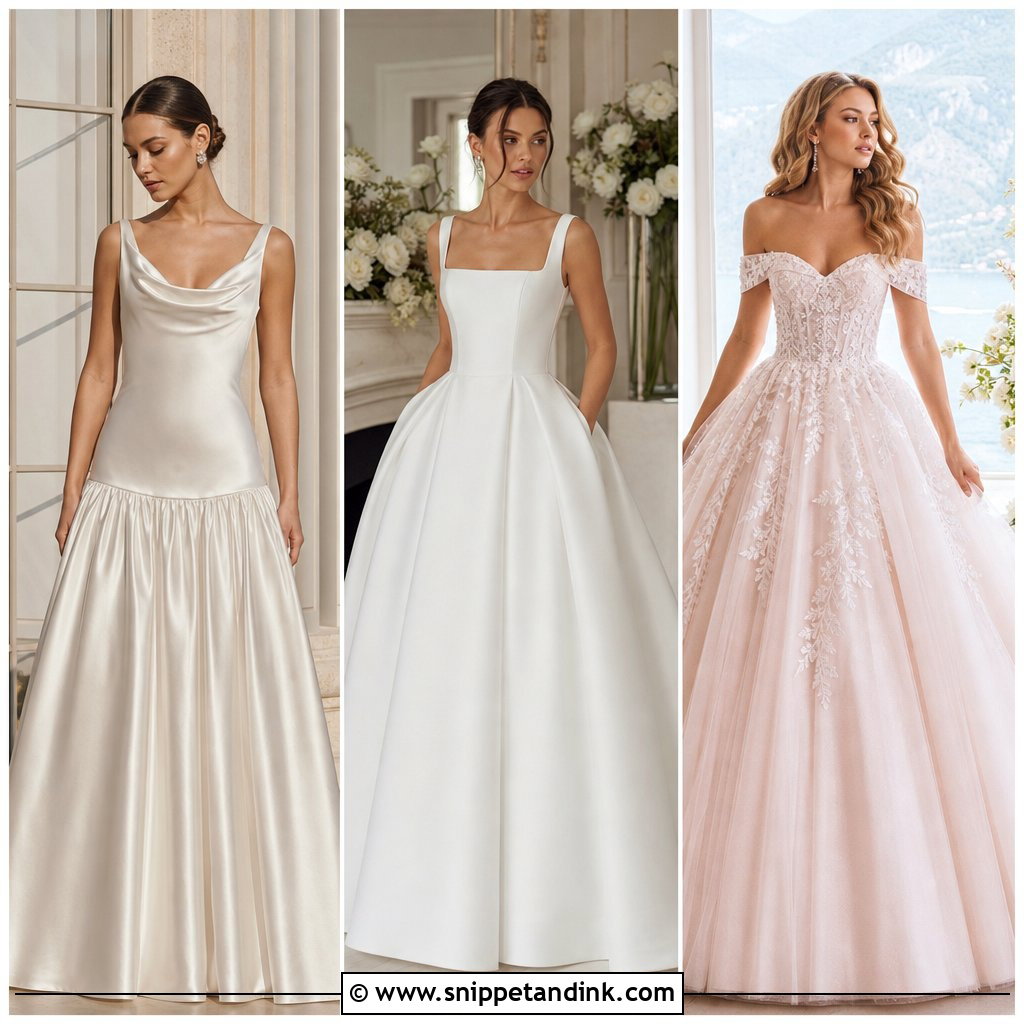
25. Convertible Two-Look Wedding Gown
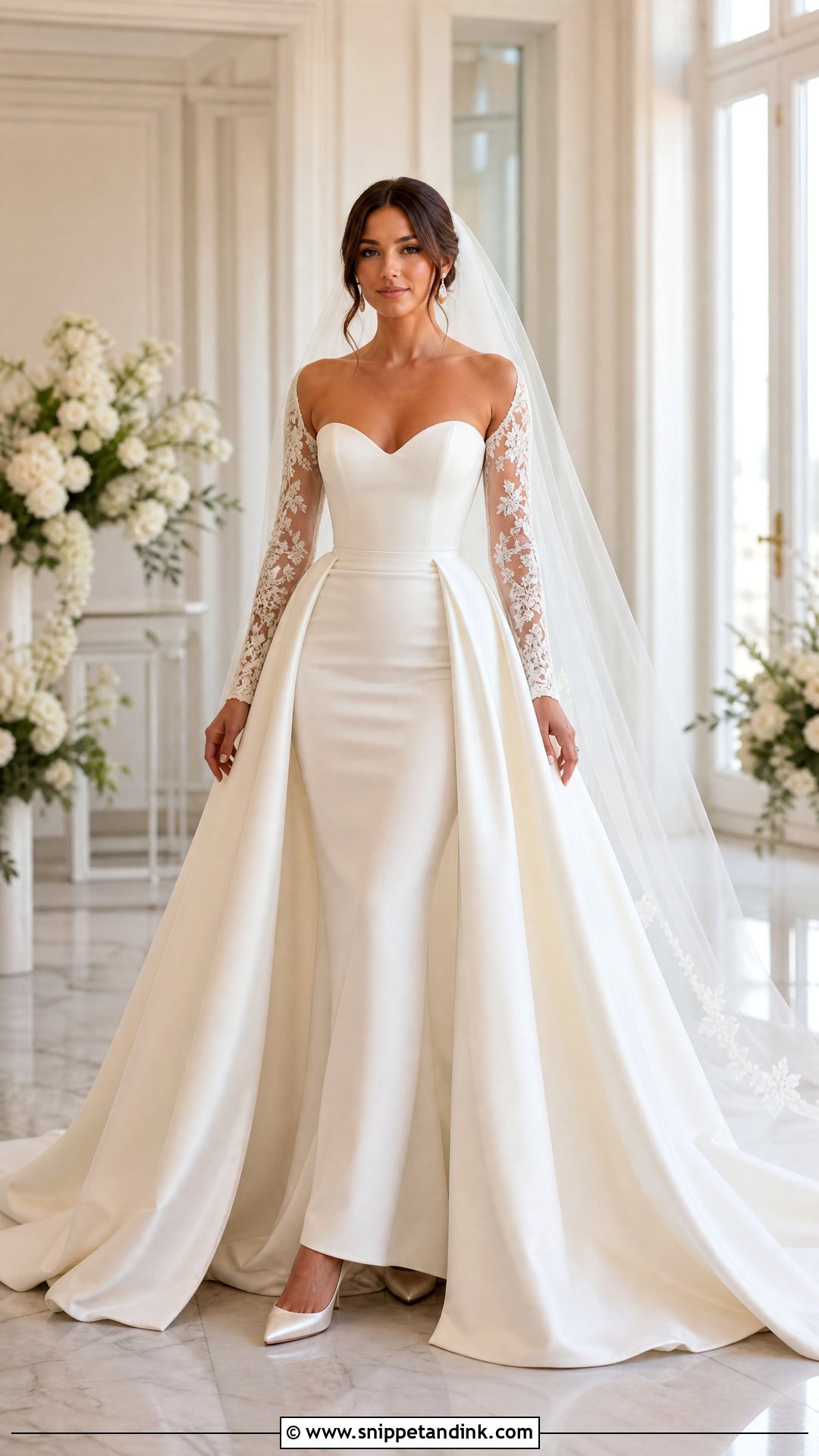
A convertible gown starts with a well-fitted base and adds removable sleeves, a cape, an overskirt or a train for the ceremony. The test I apply: take every extra piece off and ask whether the base still looks finished on its own. If it looks like something’s missing, it isn’t the right base. Attachment points should hide under buttons, seams or a narrow waistband. Swap the long veil for a hair comb and slightly bolder jewelry for the second look. Rehearse each change, and give one person the job of handling and storing the pieces.
The Costs That Never Appear on the Price Tag
The figure on the hanger is rarely what a wedding gown actually costs. Several extras turn up later, and they vary widely by shop, region and dress, so ask about each one before you order.
- Alterations, usually charged separately and often the biggest extra. Hems on layered skirts and bustles on long trains take the most time.
- A petticoat or crinoline, if the volume you tried on came from an underskirt that isn’t included.
- Rush fees, if your date is closer than the designer’s standard production time.
- Professional steaming or pressing before the wedding, especially for satin and organza.
- Cleaning and storage afterward, which is worth doing within a few weeks of the wedding.
The Night Before: Where the Dress Should Hang
Collect the gown from the shop as close to the wedding as they’ll allow, and ask them to bag it with tissue in the bodice and the skirt. At the venue, hang it from something high, like a door frame or a wardrobe rail, so the train isn’t folded on the floor. Unzip the garment bag fully so the fabric can breathe and relax.
Keep it well away from where people are doing makeup, eating breakfast or opening drinks. Put the dress on last, after hair and makeup, stepping into it rather than pulling it over your head.
Your Silhouette Shortlist Starts in the Fitting Room
The right gown supports your body, suits the celebration and matches how you want to feel when you walk in. Start with silhouette, then compare necklines, fabrics, sleeves, trains and removable pieces. Try a few shapes you’d never have picked, alongside gowns that already fit your vision; brides are regularly surprised. Keep movement, comfort and alterations in every decision, and let shoes, jewelry and the veil support the dress rather than compete with it. Save the looks you love here, note what they have in common, and take that list into the fitting room, where your body will make the final call.
You'll Like These Ideas:








Leave a Reply