
Shararas are what I reach for when someone tells me they want to dance all night at the mehndi and still sit on the floor for the henna. The legs give you the swing of a skirt without the weight of a lehenga’s can-can, and a short top keeps the whole thing light. This season I’m seeing a lot of lime green mirror work, mustard embroidery, ruffled dupattas, cape kurtas, peplums, pastel florals and loud multicolor sets. Most of the ideas below are written with sisters, cousins, bridesmaids and guests in mind, with a few that work for the bride herself. I’ve added notes on fabric, fit and the small things that go wrong on the night.
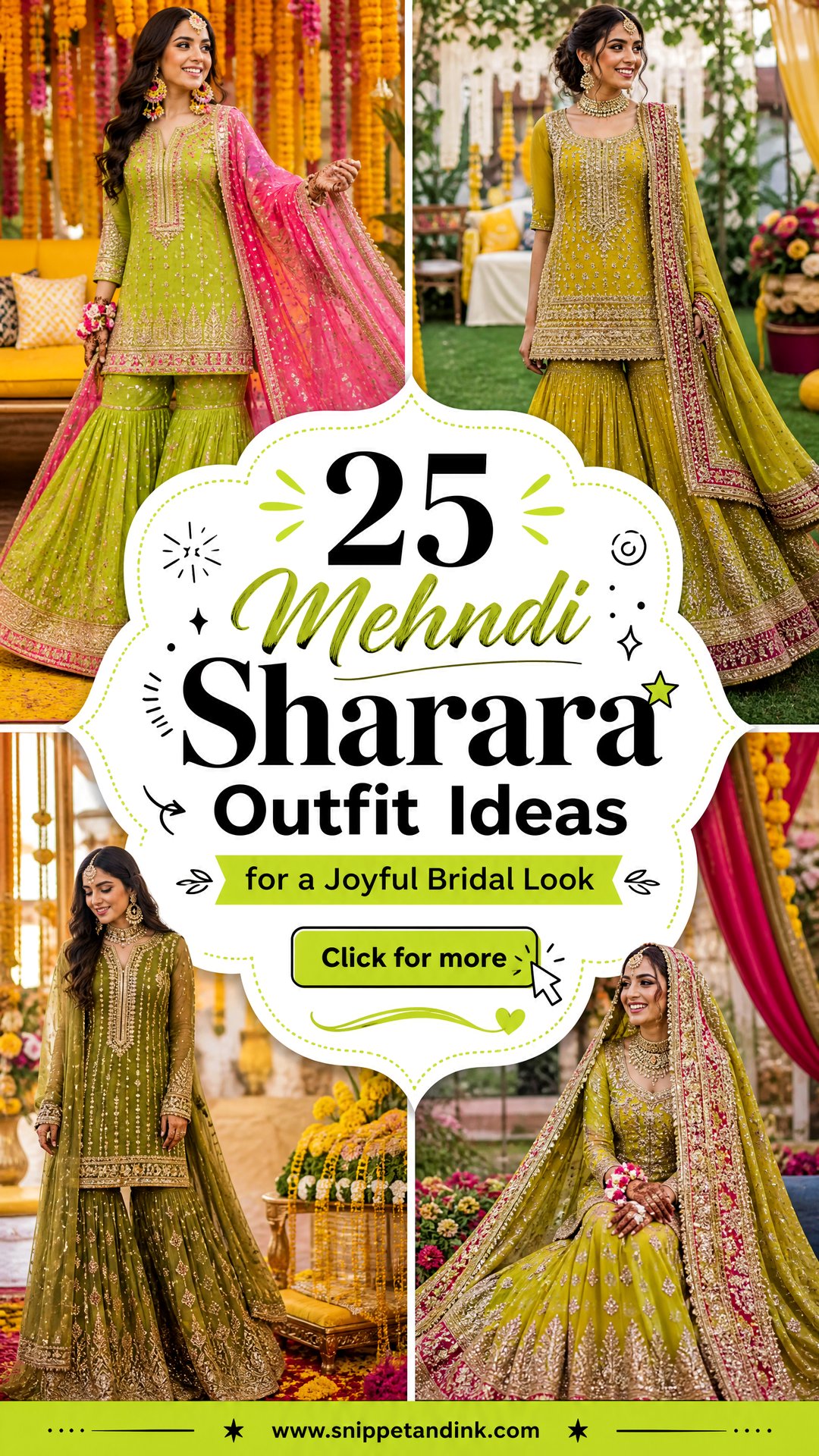
Sharara or Gharara? Telling Them Apart Before You Buy
Shops and listings mix these names up all the time, and they fit very differently. A sharara is wide from the waist down, like a divided skirt. A gharara is fitted through the thigh to the knee, where a gathered joint (often covered with a gota band) lets the fabric burst out into the flare. Ghararas look more formal and need more precise fitting; shararas forgive a lot more and are easier to dance in.
What I check on a sharara
- Fabric weight. Georgette and chiffon drape and swing; raw silk and brocade hold a crisp, wide shape but crease where you sit.
- The waist. A drawstring can be adjusted after a big dinner; elastic alone tends to roll under a short kurti.
- Hem length. Take it up with the shoes you will actually wear, so the hem clears the floor by a finger’s width. Wide legs that touch the ground get stepped on.
- Lining. A sharara with a lot of fabric and no lining can cling to your legs in heat and look sheer against the light.
If you’re buying ready-made online, I’d order early enough to have it altered. Hems and kurti lengths almost always need a tailor’s attention, and good tailors are busiest in wedding season.
1. Green Mehndi Sharara With Mirror Work
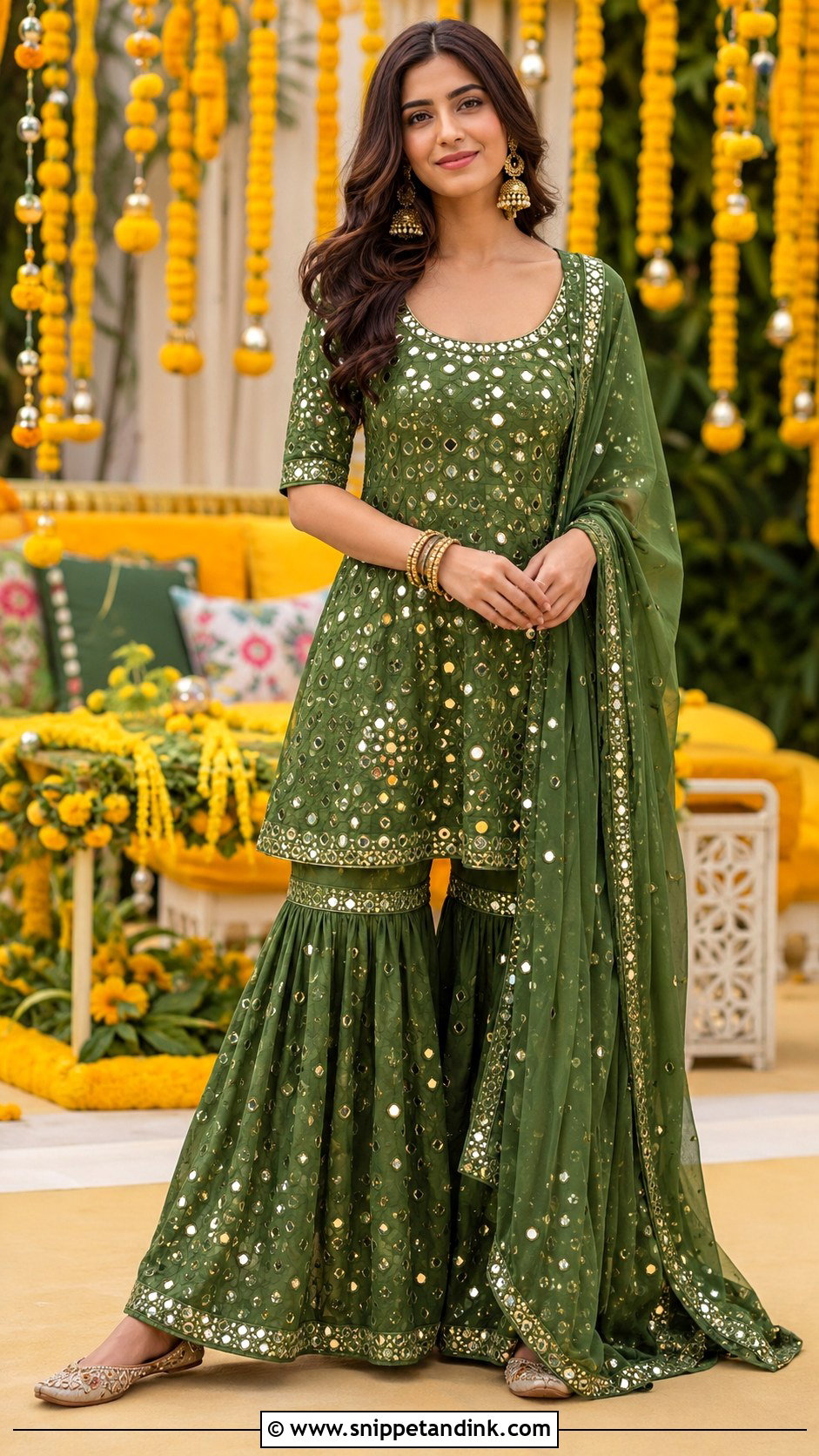
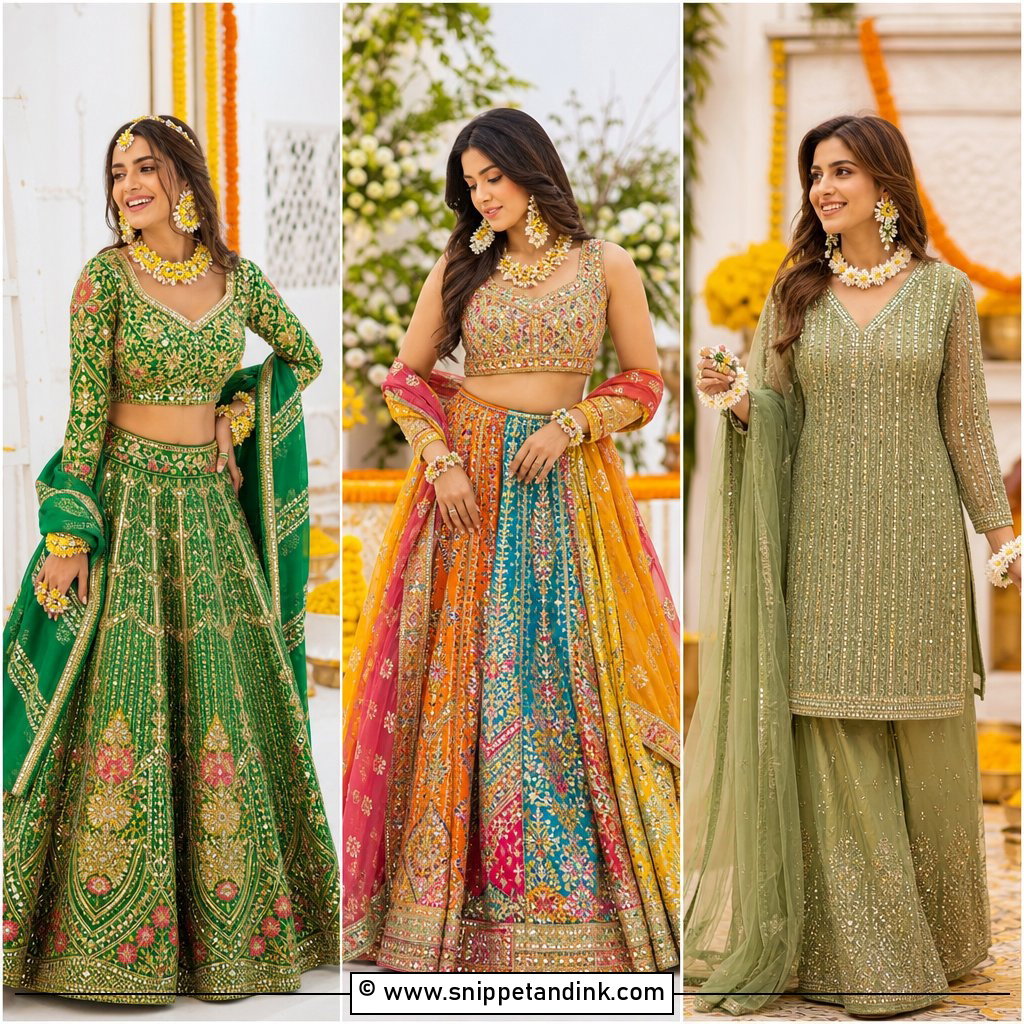
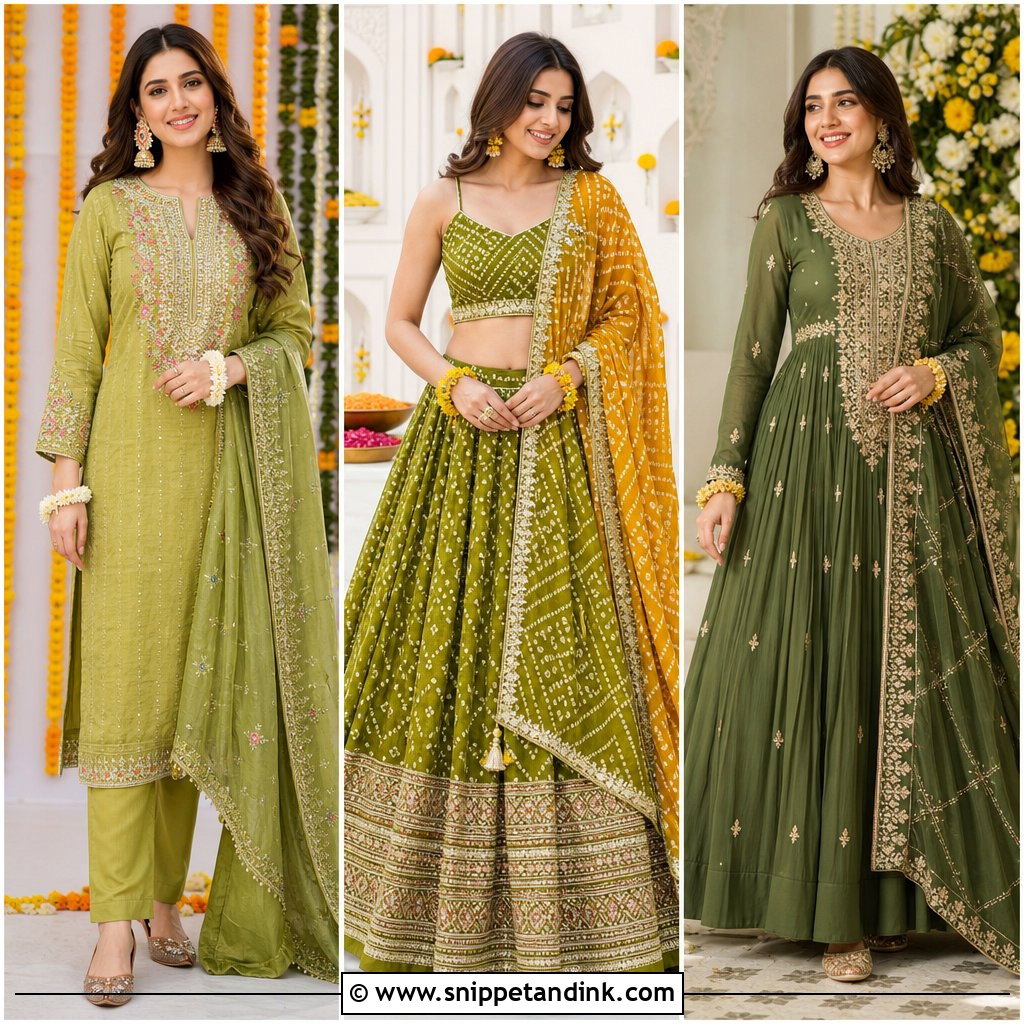
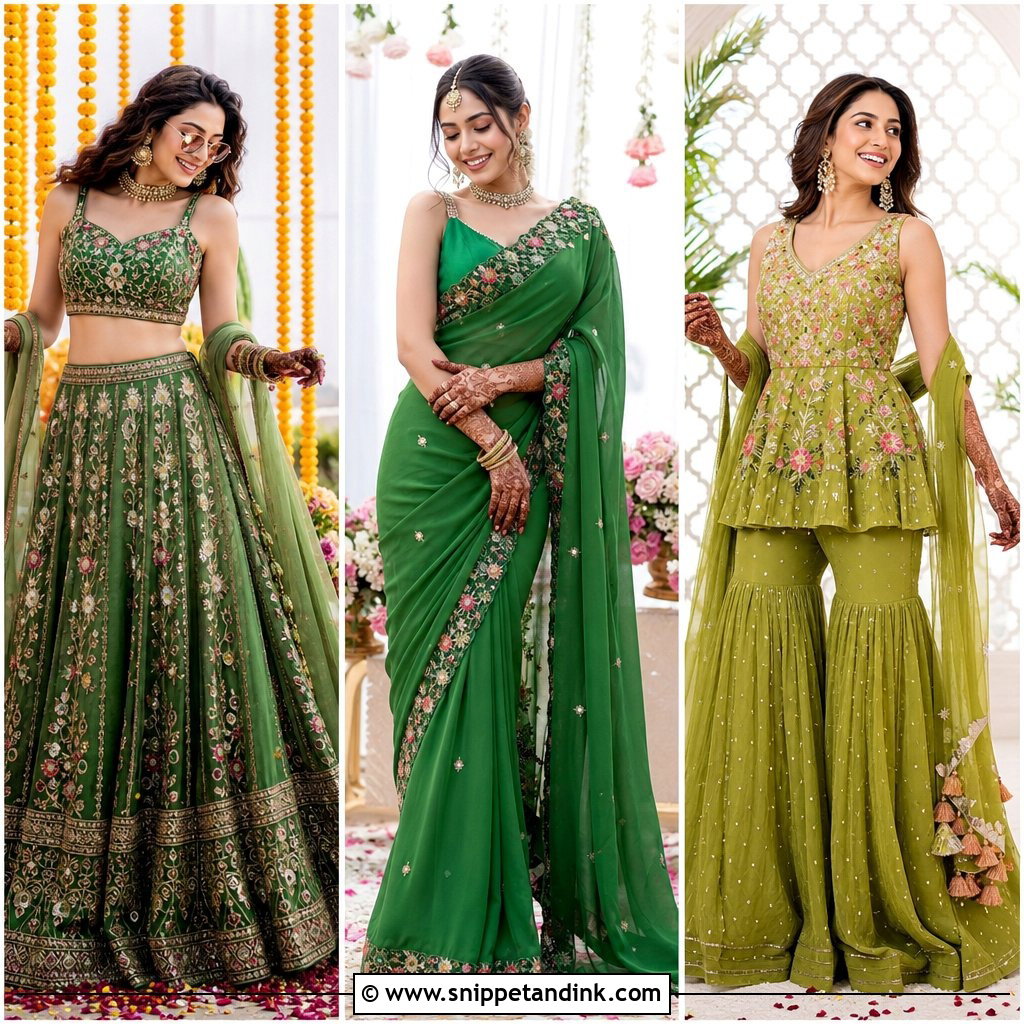
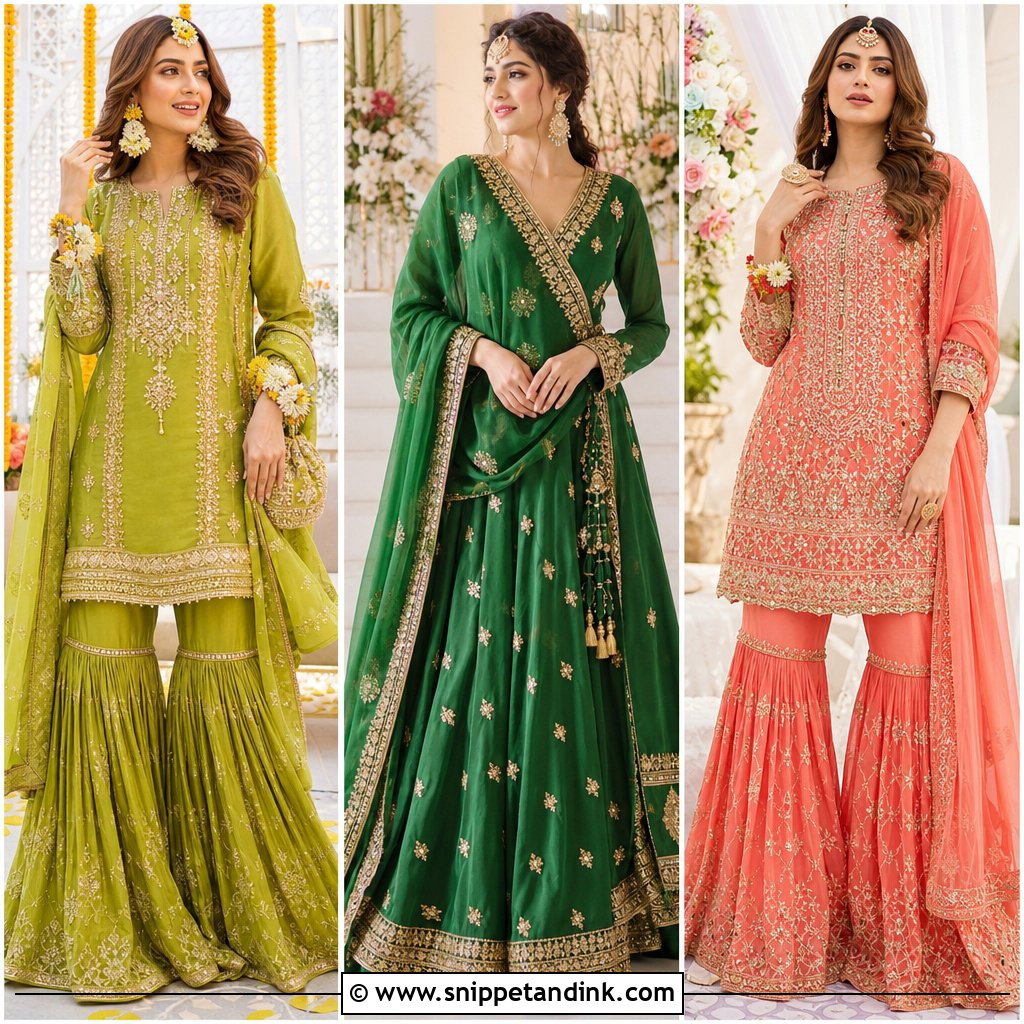
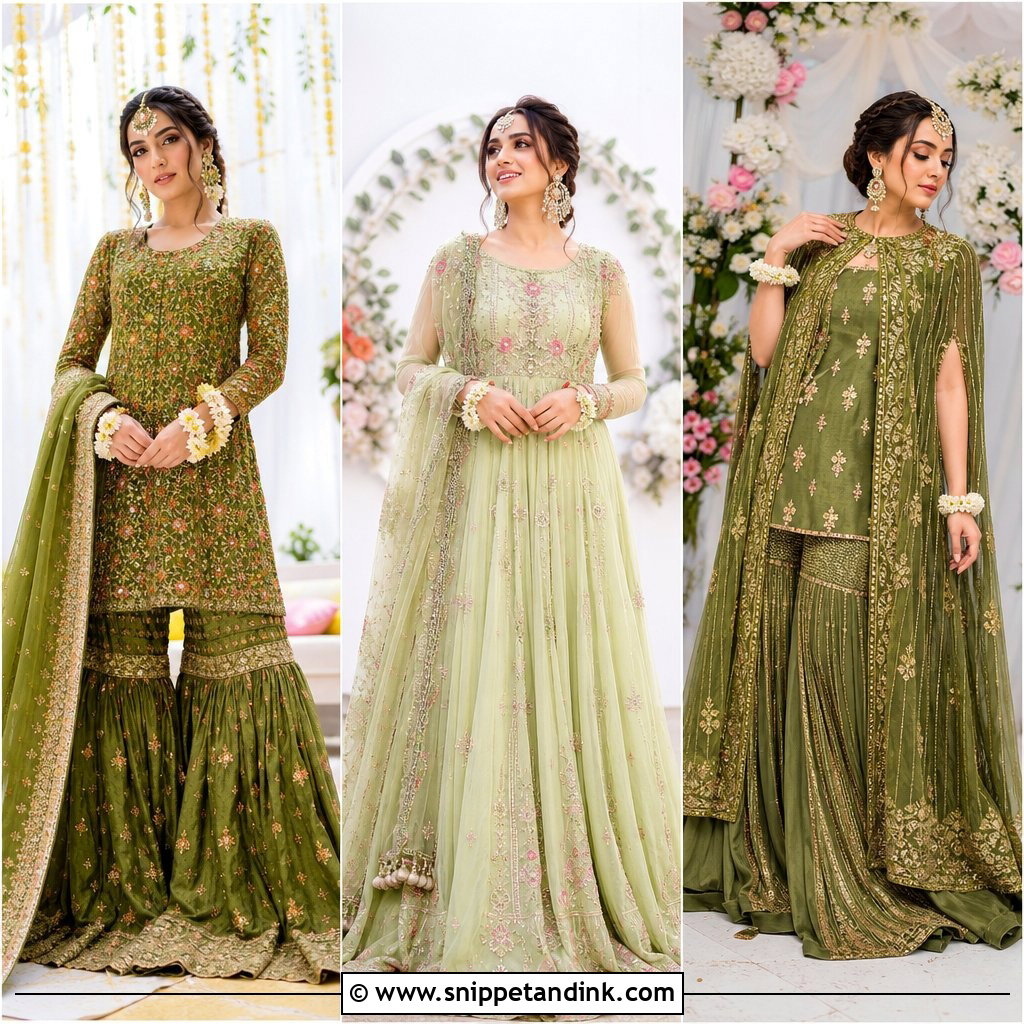
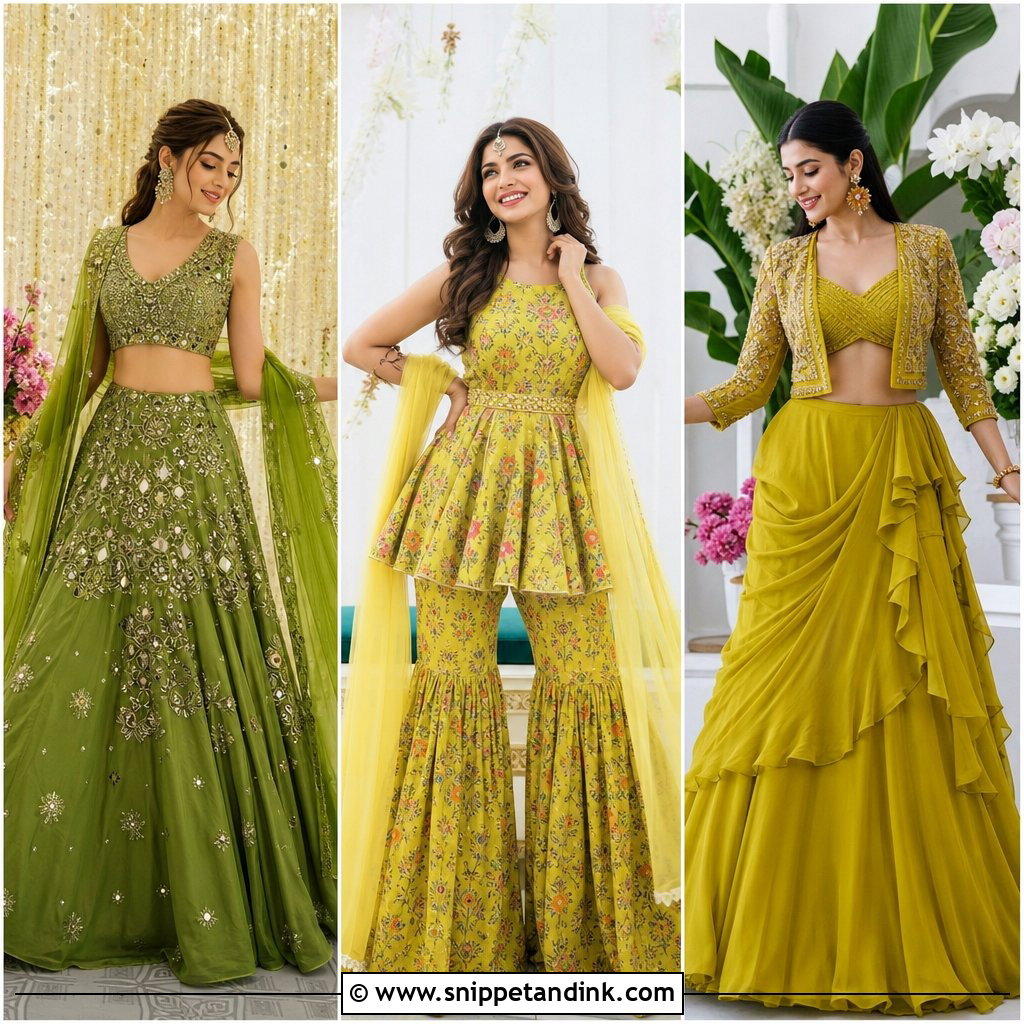
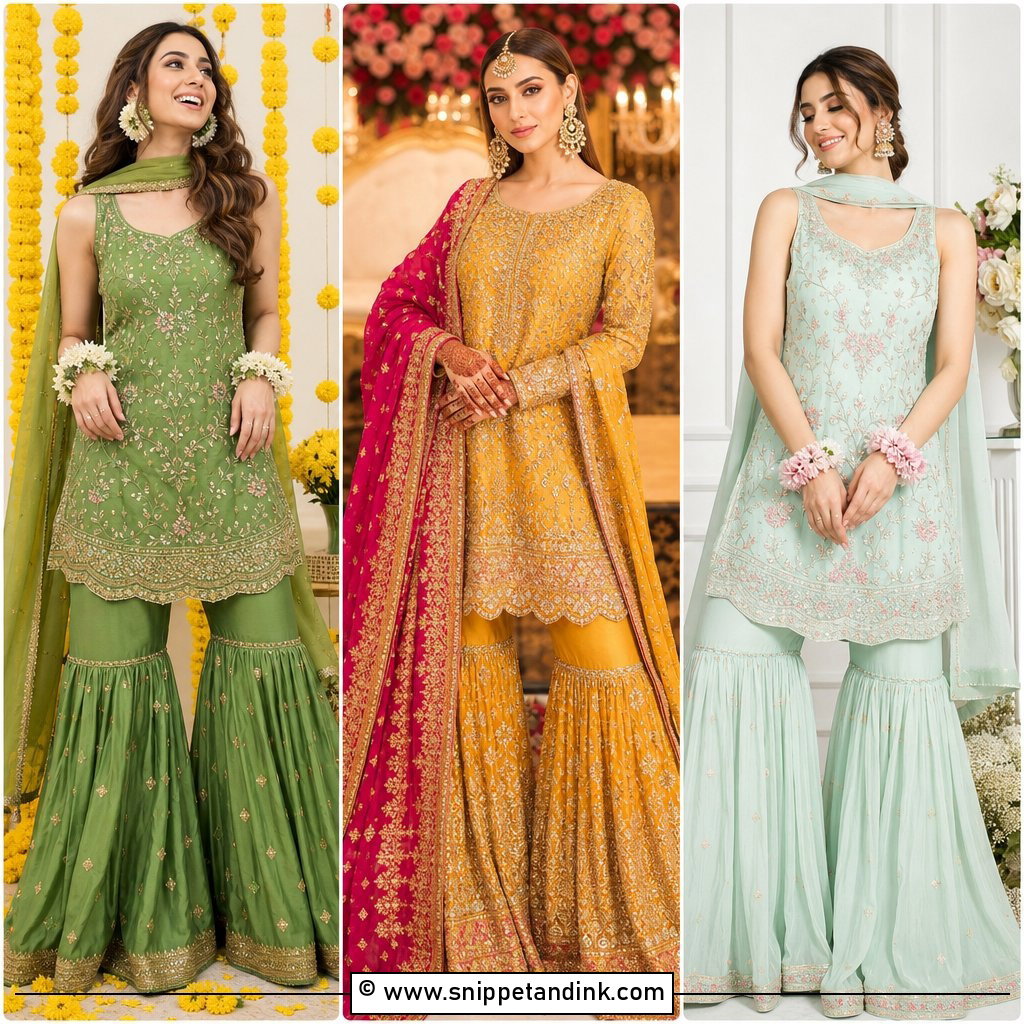
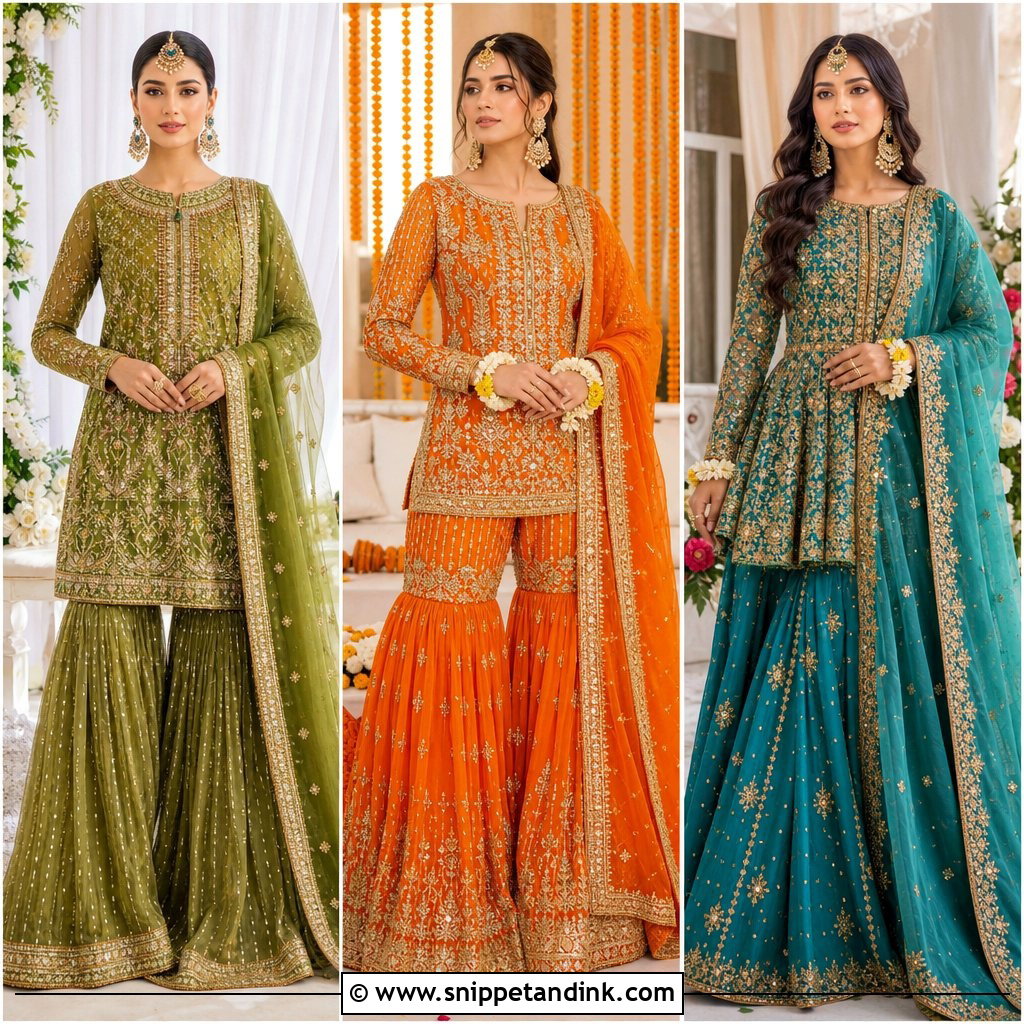
Green with mirror work is the safest bet at any mehndi, which is exactly why so many people wear it. Pick a short kurti with tiny mirrors and gota trim over a georgette or chiffon sharara, then a light dupatta with a narrow border. Jhumkas, stacked bangles, embellished juttis and soft waves or a loose braid finish it, and a heavily worked set wants a plain bag. Small mirrors are better than large ones on the sleeves. Large glass discs snag dupattas and catch on other people’s clothes in a crowded dancing circle. It reads bright without stepping into bridal territory, so sisters and guests can wear it comfortably.
2. Yellow Mehndi Sharara With Gota Patti
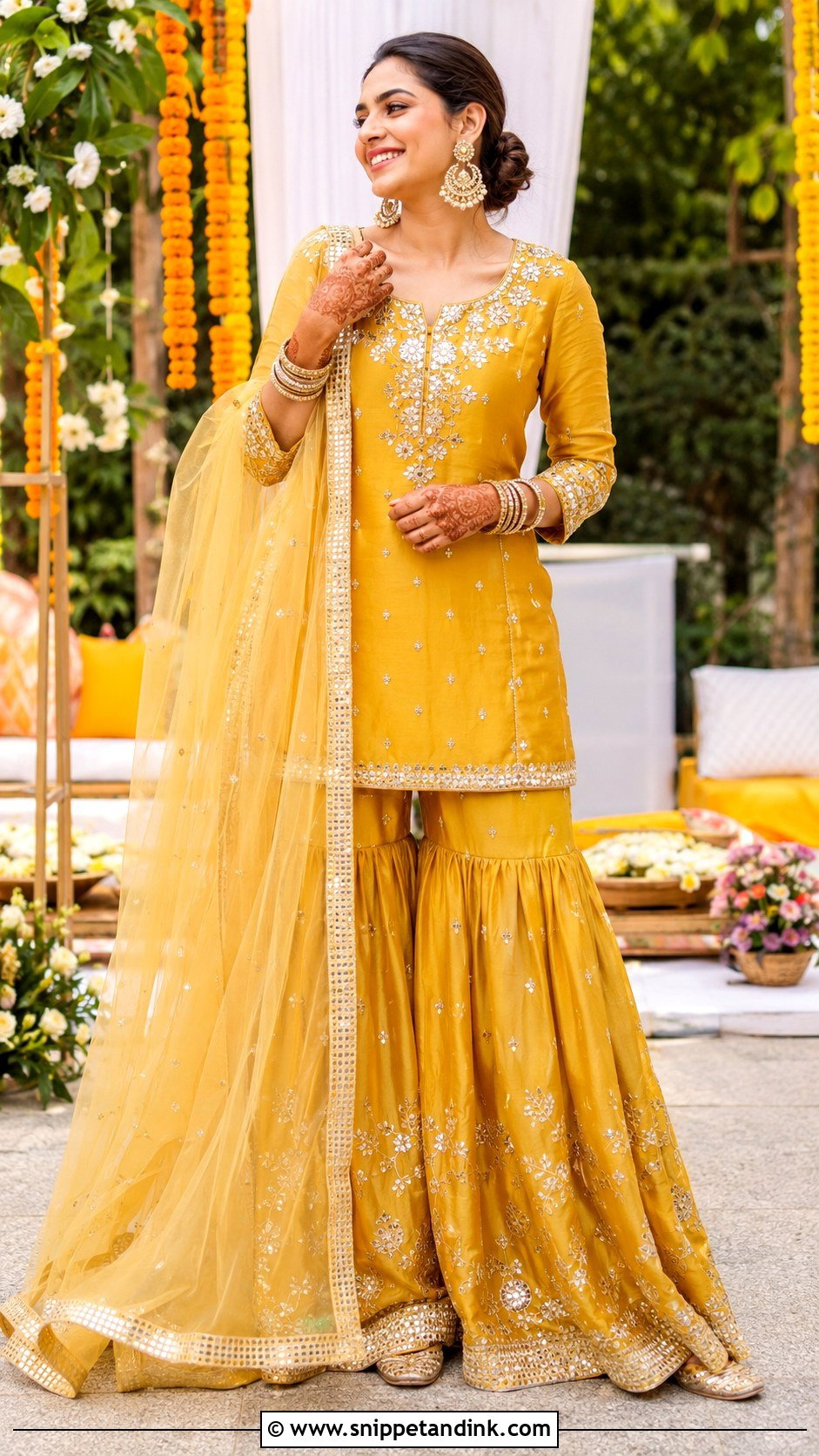
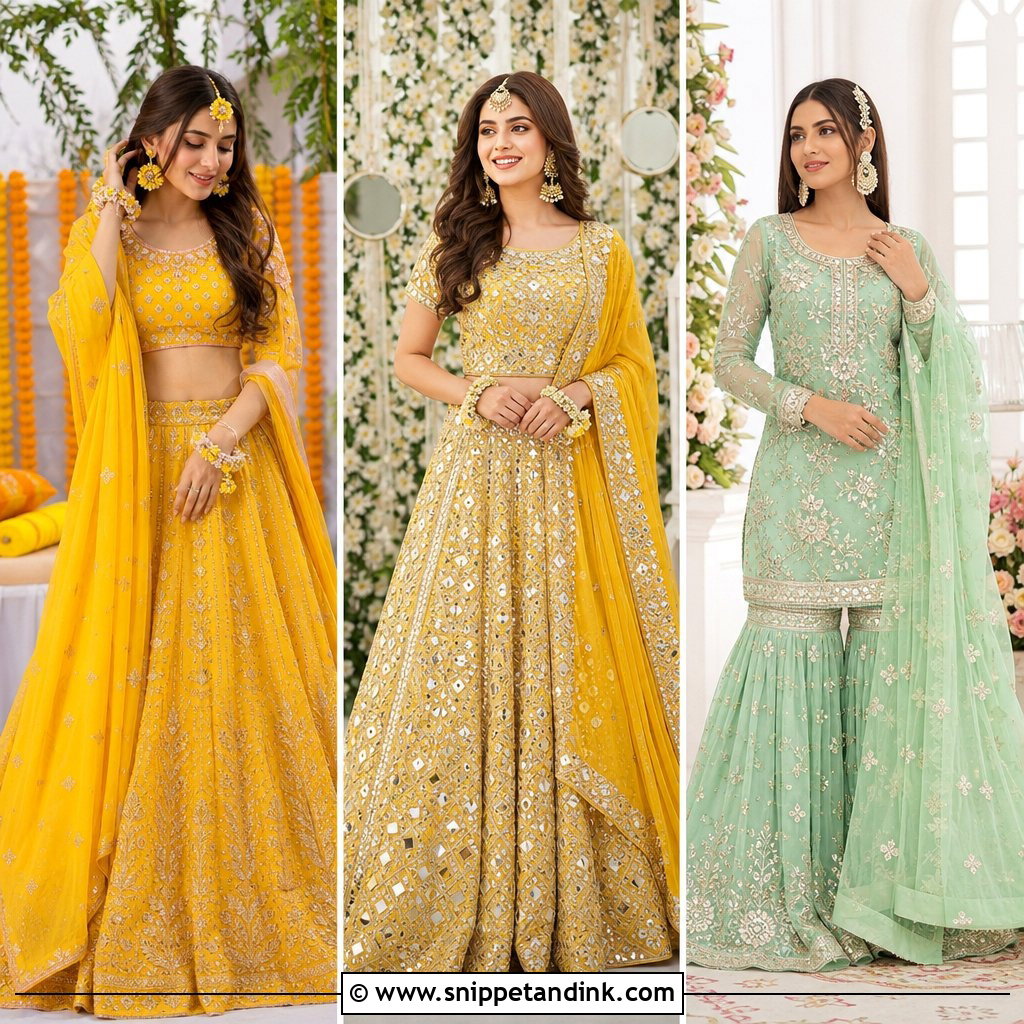
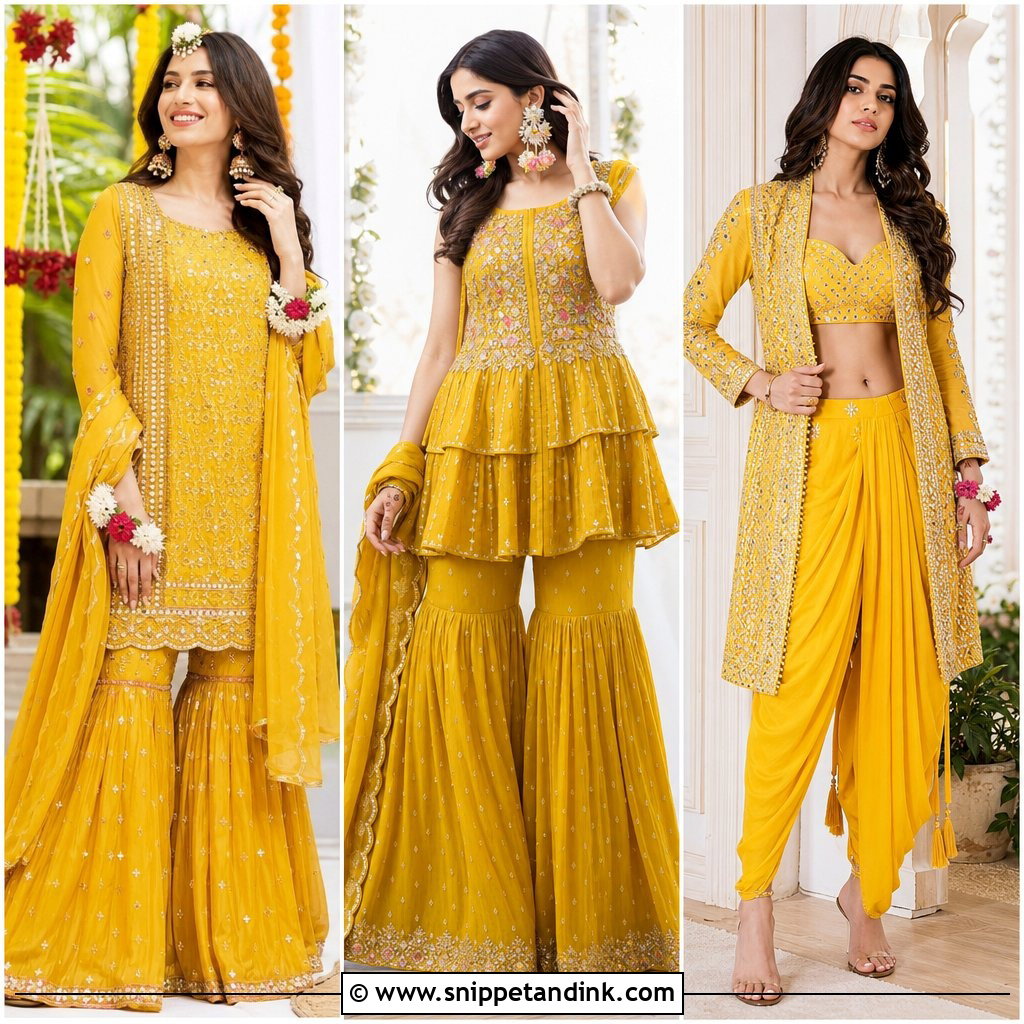
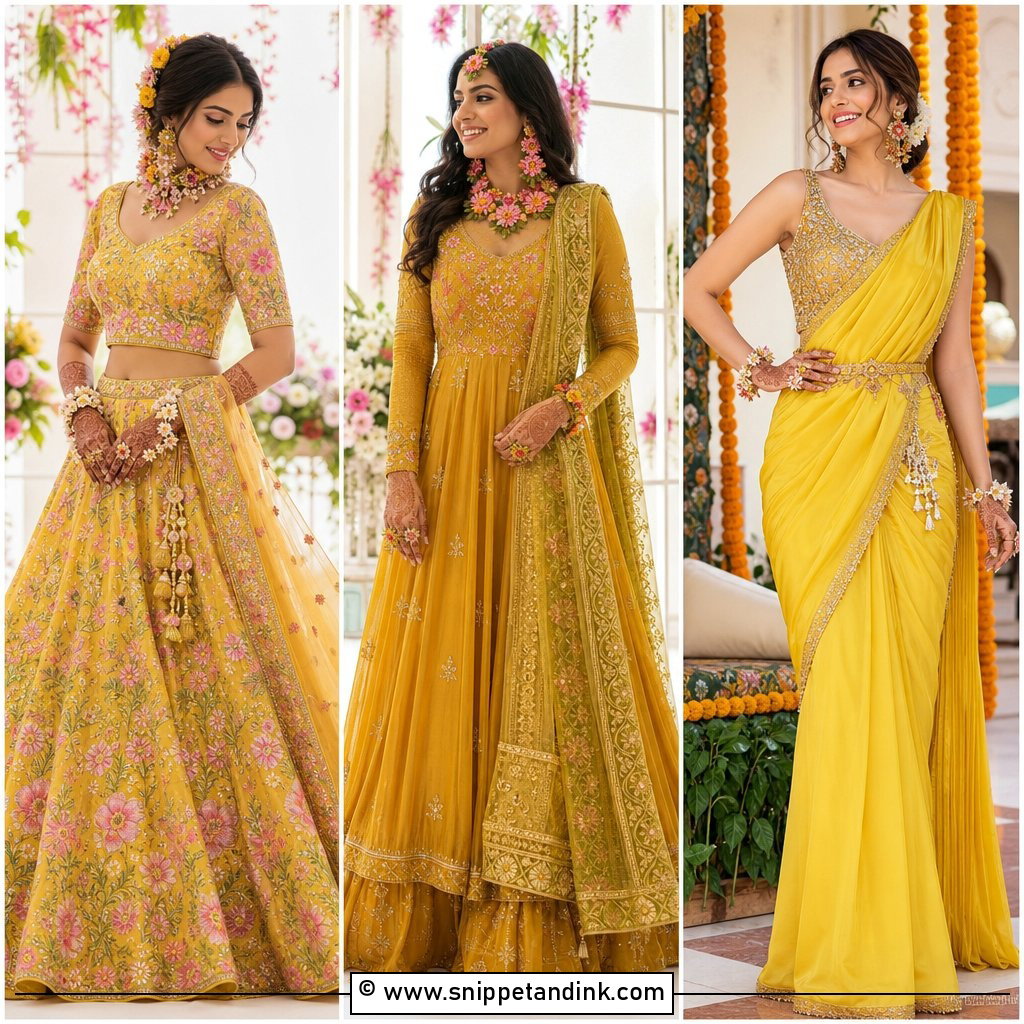
Yellow is the daylight color. A mehndi sharara with gota patti in mustard, marigold or turmeric glows outdoors, and the gold ribbon work catches the sun without needing sequins. Choose a short kurta or peplum edged in gota at the neckline, sleeves and hem, a wide sharara and a soft net or organza dupatta. Chandbalis, bangles and a tikka in gold suit it, with nude or gold juttis for dancing. Real gota is a metallic ribbon folded and stitched down, so it is stiffer than thread embroidery; I check that the sleeve edging doesn’t scratch the inside of the elbow.
3. Lime Green Mehndi Sharara With Pink Dupatta
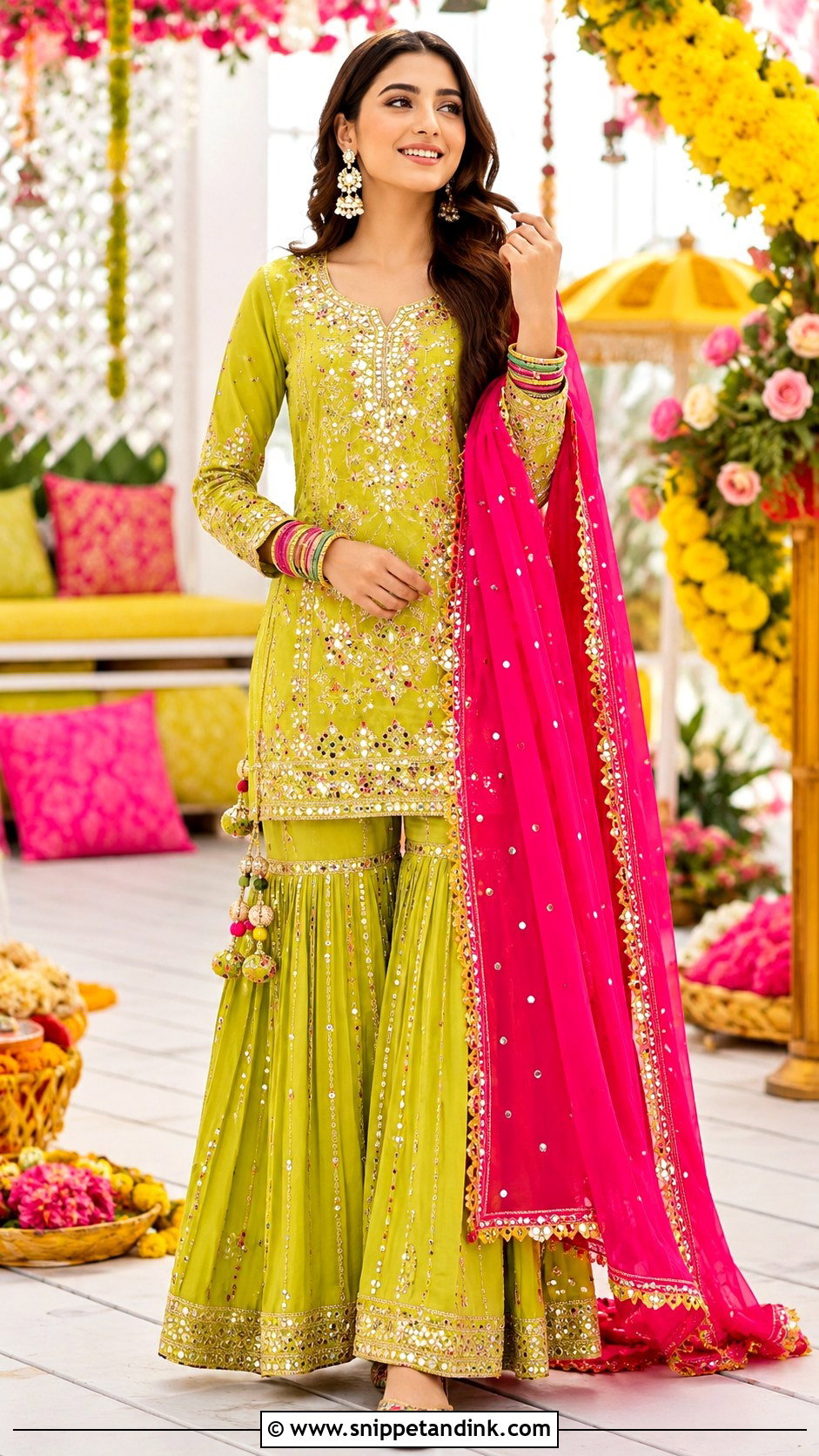
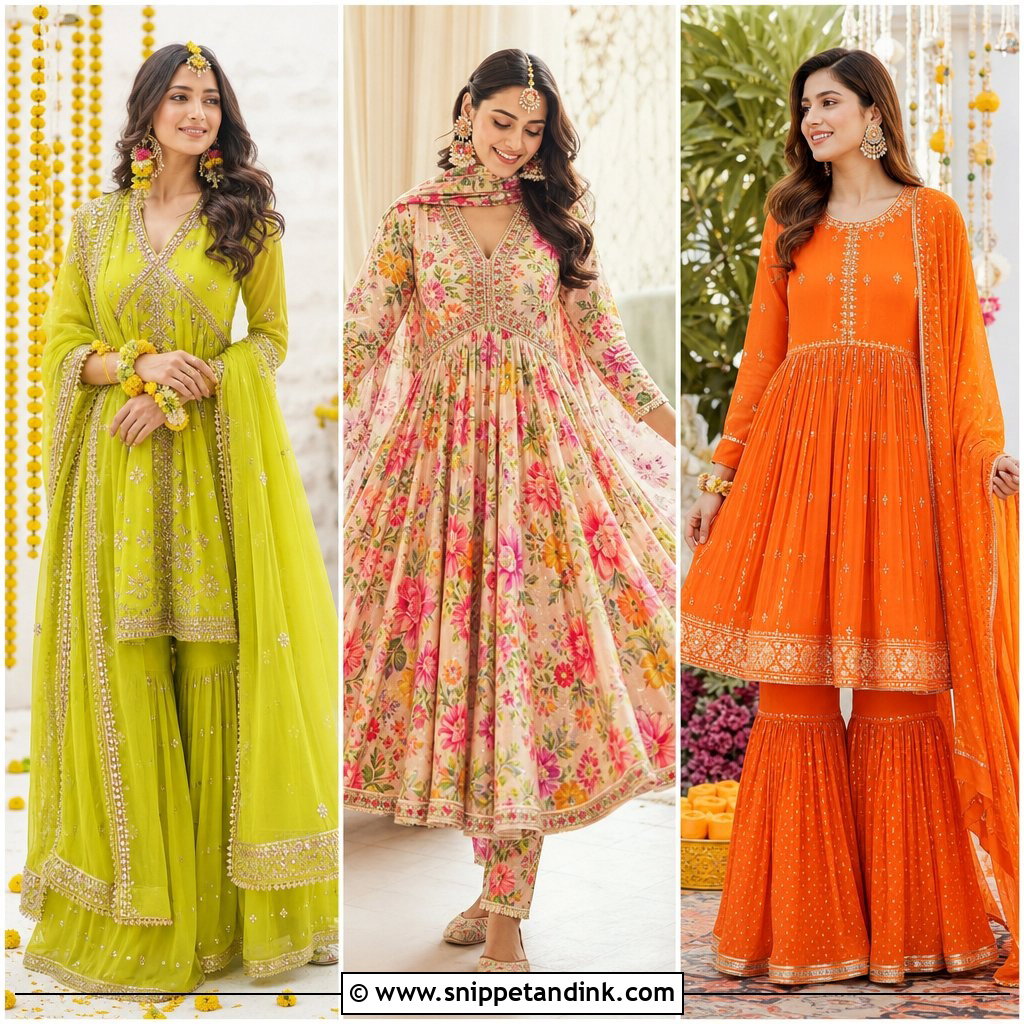
Lime with a pink dupatta is the most cheerful contrast on this list. The green keeps it right for the ceremony, and a fuchsia or rani pink dupatta with gota edging pulls it out of the ordinary. Thread embroidery, mirror work or a light scatter of sequins give enough shine. Pearl earrings, bright bangles, embroidered juttis, rosy cheeks and a soft lip are all it needs. One fitting note: lime is unforgiving on a blouse that pulls across the bust, because the color exaggerates every crease. Have the kurti eased there rather than taken in tight. Cousins and bridesmaids who want to stand out next to the bride tend to pick this one.
4. Mustard Mehndi Sharara With Short Kurti
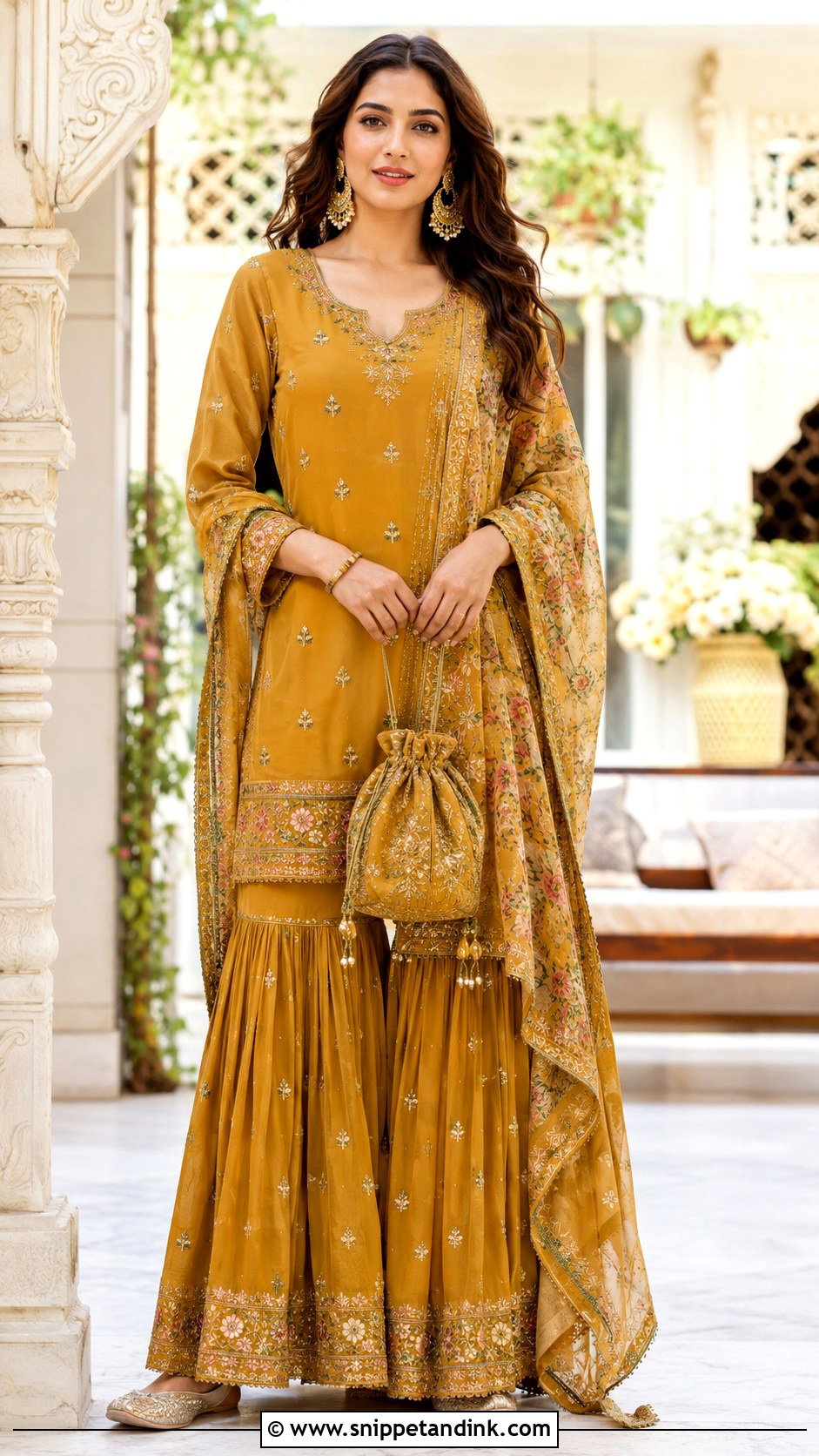
Mustard with a short kurti feels traditional without being formal. The short top shows off the flare and keeps the proportions right, especially on petite frames that a long kameez can swamp. Cotton silk, georgette or raw silk all suit a semi-formal event, with gold, ivory or rust embroidery. Add a printed or embroidered dupatta, a small potli and statement earrings, with juttis or block heels if you want height. Raw silk holds a crisp flare but creases where you sit, so I’d steer you to georgette if the event involves a lot of floor seating. Earthy tones suit anyone who finds neon a step too far.
5. Orange Mehndi Sharara With Embroidered Dupatta
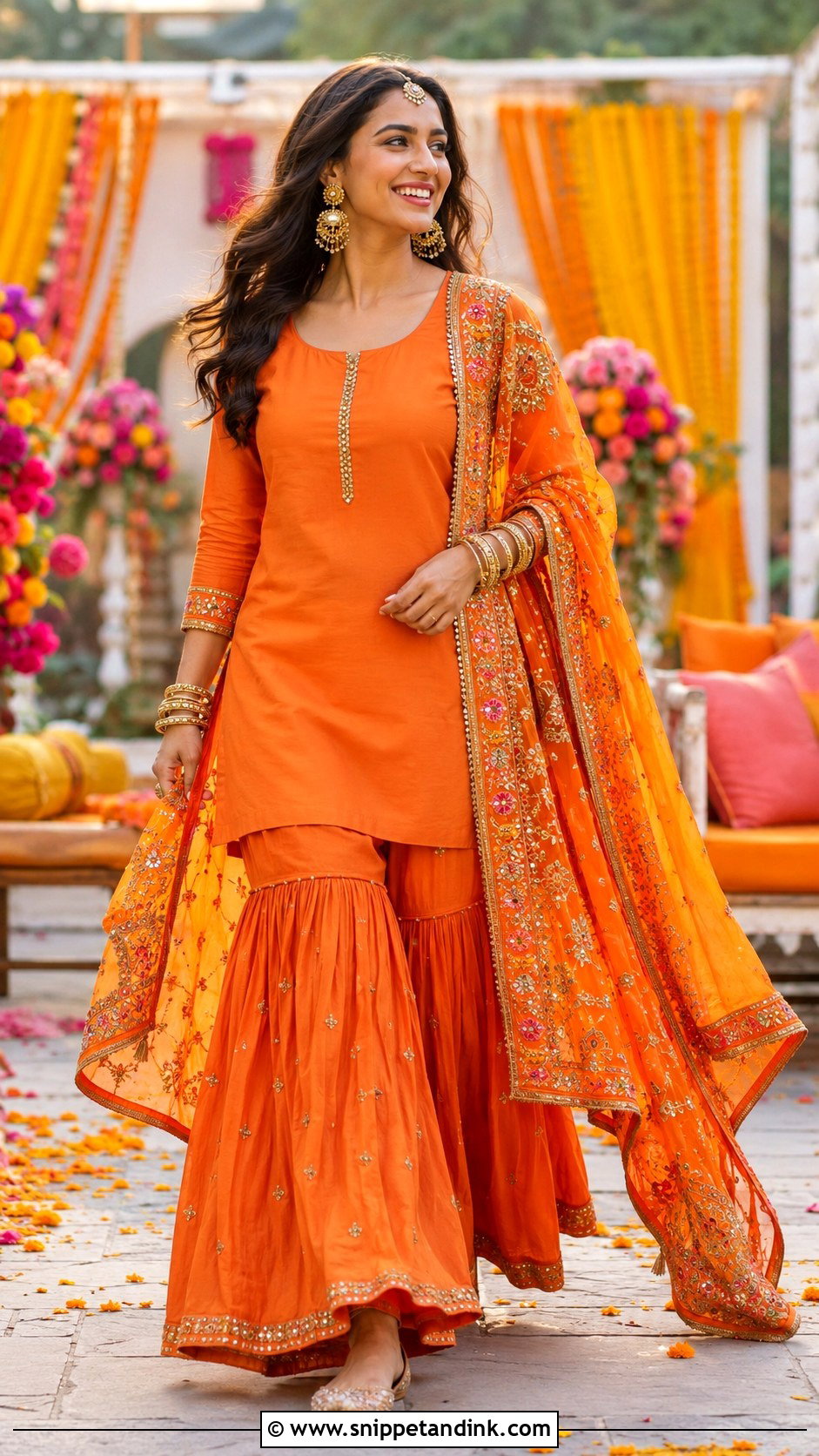
Let the dupatta do the talking. With an orange mehndi sharara in tangerine, burnt orange or marigold, keep the kurti and pants simple and put the thread work, mirrors or gota on the dupatta. That keeps the body of the outfit cool and the drama near the face where cameras find it. Antique gold earrings, bangles, metallic juttis and a sleek bun with fresh flowers polish it. Heavy dupattas pull to one side as the evening goes on, so I pin them at the back of the shoulder rather than the front. A close relative or the bride’s best friend can wear this with confidence.
6. Pink Mehndi Sharara With Green Jewelry
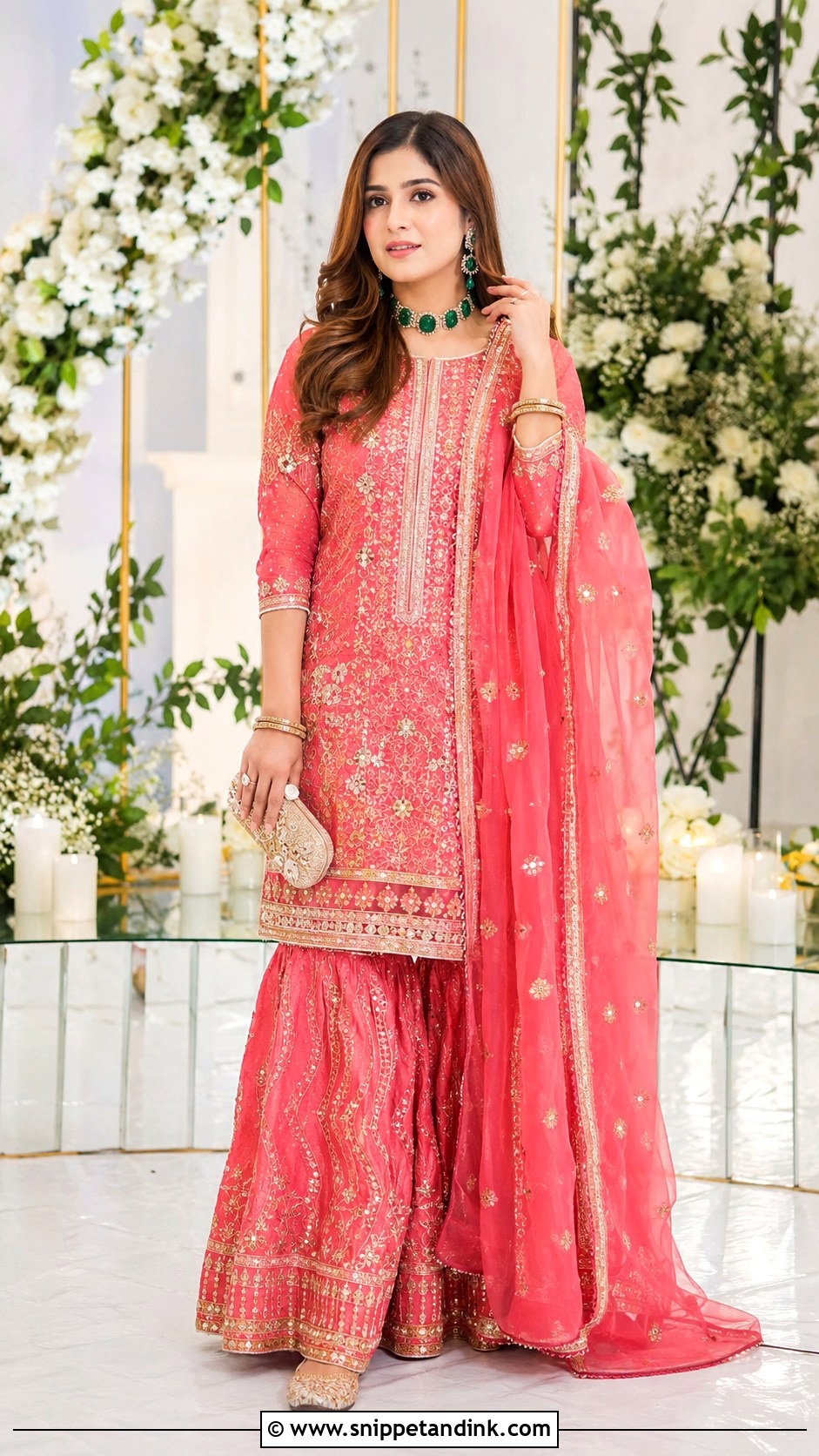
Pink and green is a classic contrast, and putting the green in the jewelry rather than the fabric is a clever twist. Pick blush, rose, hot pink or rani depending on how bold you’re feeling, with zari, mirror or floral embroidery. Green stone earrings, a choker or bangles bring in the ceremony color. A pink dupatta keeps it coordinated; a green one makes it more dramatic. Gold juttis and a small clutch finish it. Check the stones in daylight before you buy: many green glass and enamel pieces read almost black indoors and only show their color outside.
7. White Mehndi Sharara With Colorful Embroidery
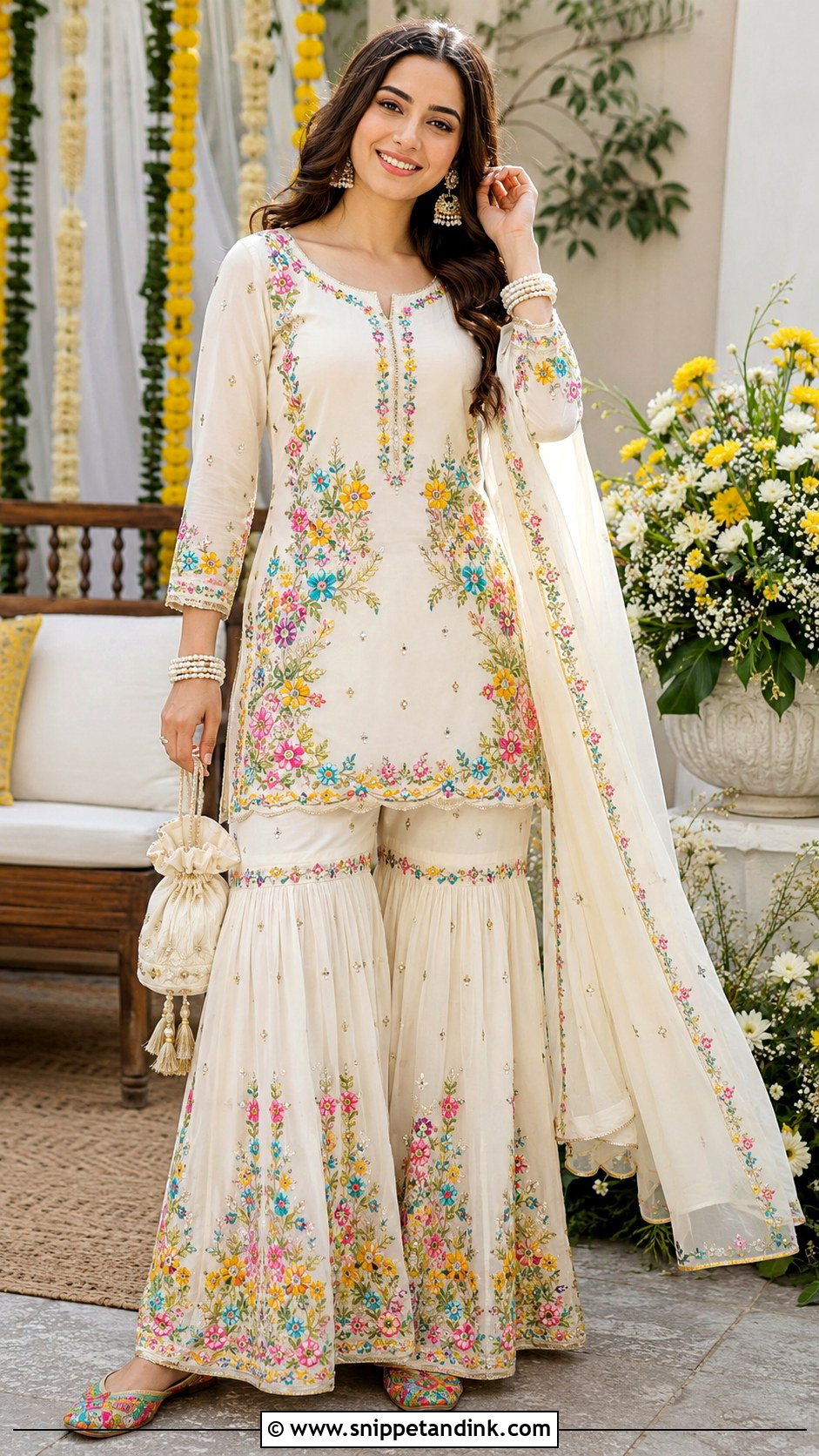
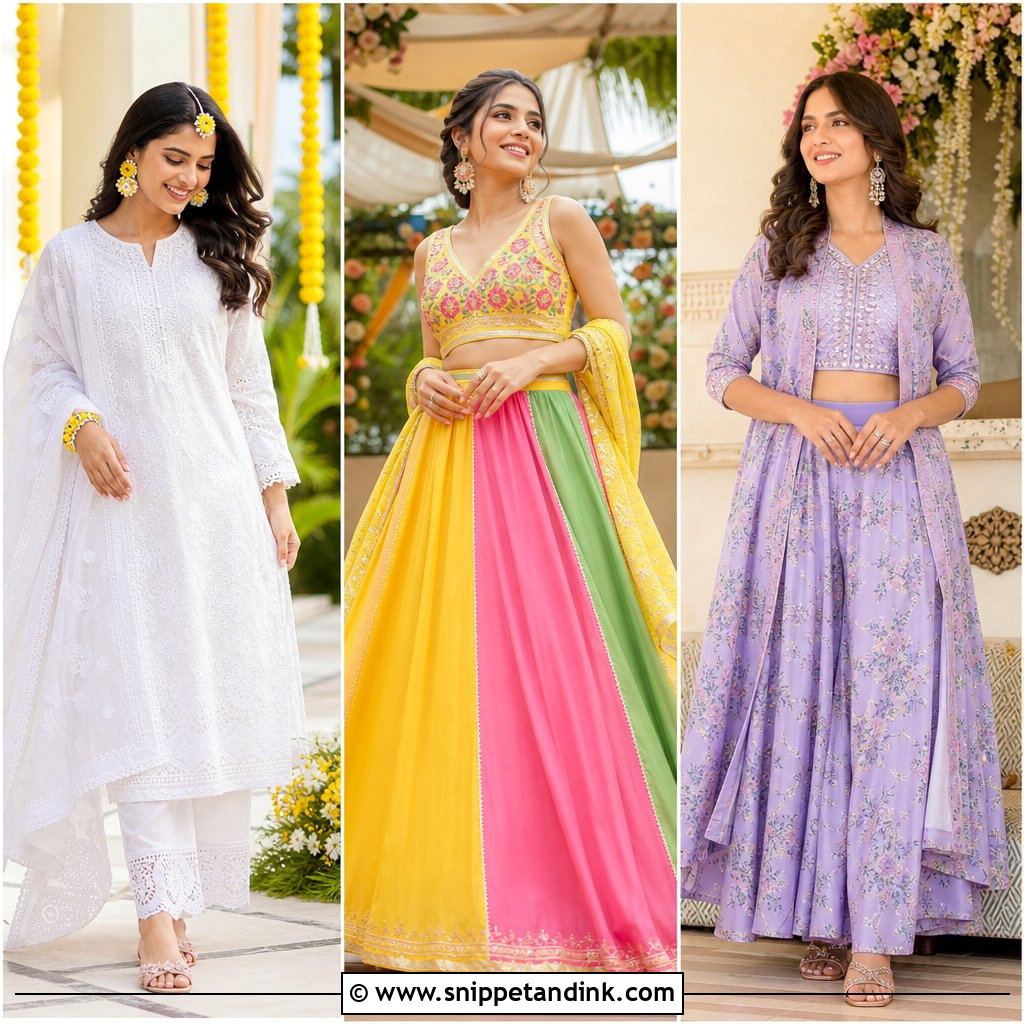
White with colorful embroidery is easy to make your own, since the threadwork color is what people notice. Yellow, pink, green, orange or blue threads, mirror accents and tassels all pop on the pale base. A short kurti gives shape over the flared sharara, and a lightweight dupatta keeps it soft. With that many colors, keep jewelry simple: gold hoops, pearl bangles or small chandbalis, plus colorful juttis. I always ask about the lining first. White georgette without a full lining is see-through in strong sun, and a mehndi is mostly photographed in strong sun.
8. Floral Mehndi Sharara With Organza Dupatta
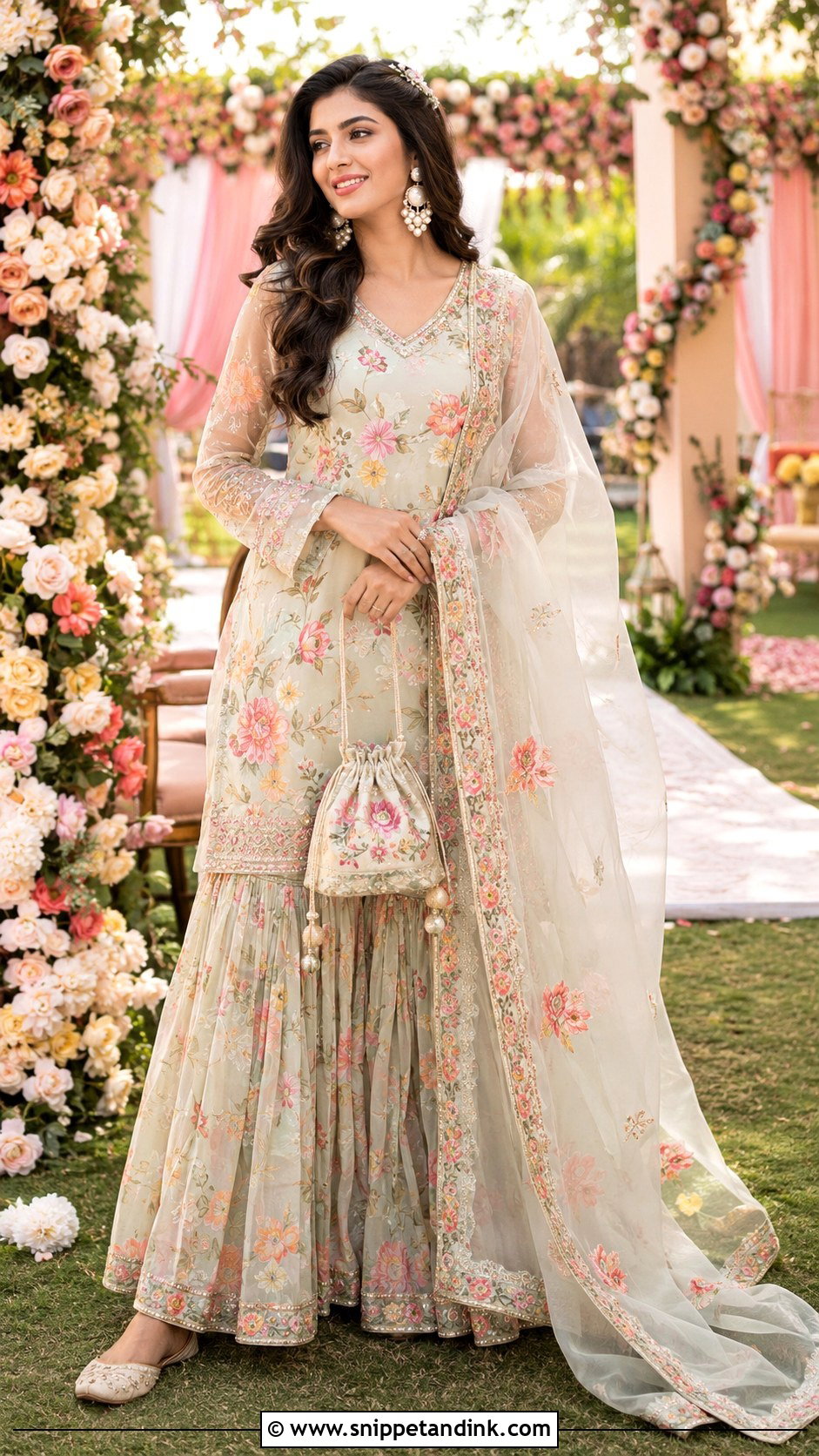
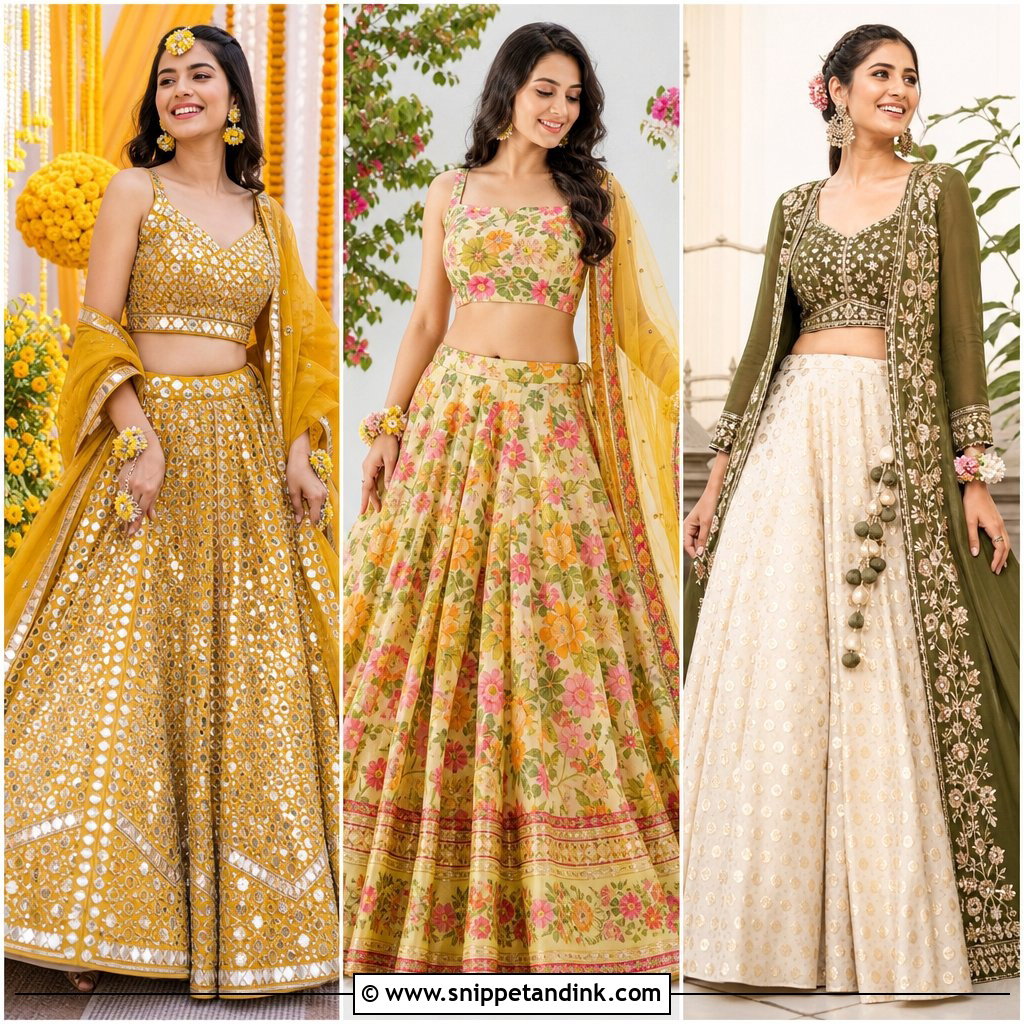
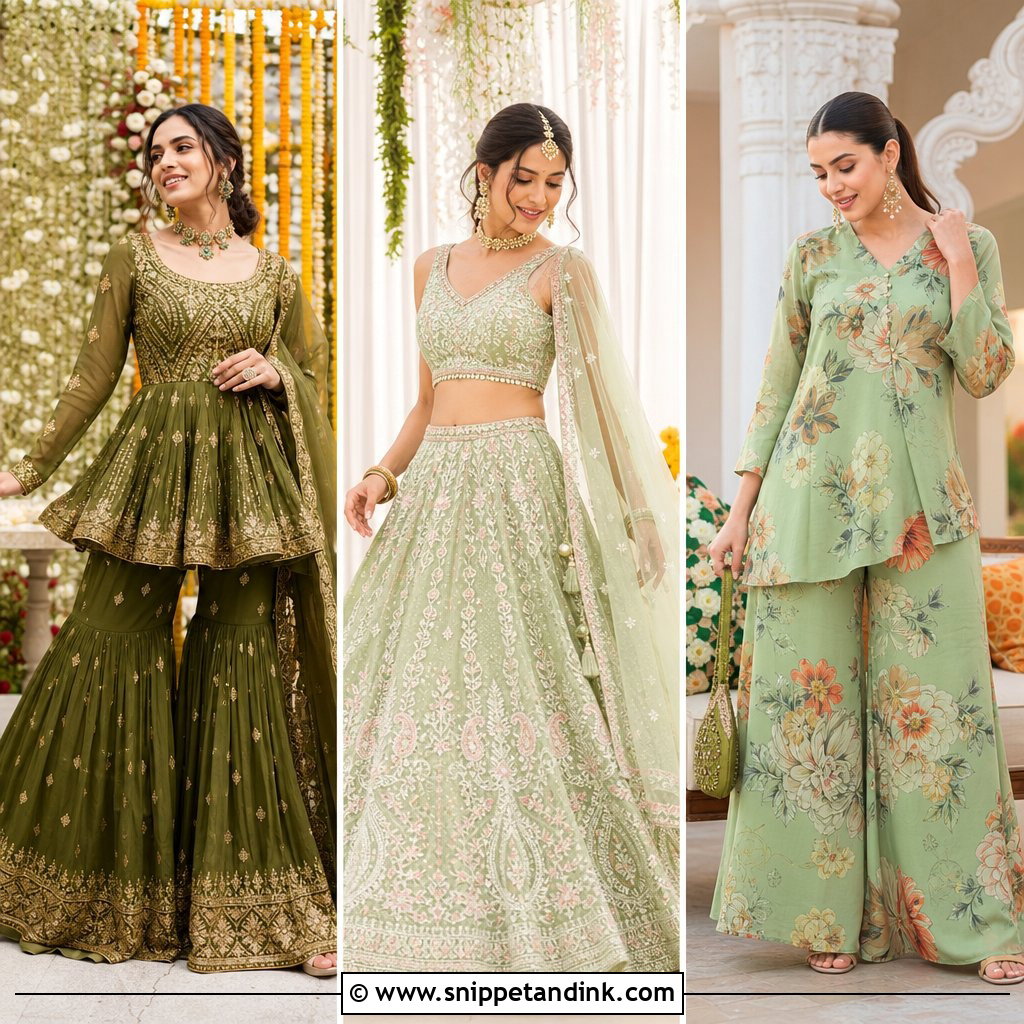
Florals and an organza dupatta suit a garden mehndi. Choose a pastel green, peach, yellow or ivory base with brighter floral motifs, and an organza dupatta with a thin embroidered border; organza holds a bit of structure, so it sits neatly instead of collapsing. Pearl jewelry, soft curls, neutral juttis and a potli in one of the print colors are plenty. The trap with printed sets is a print that’s too small: tiny florals turn into a blur in group photos taken from a distance. I prefer medium-scale motifs for anything that will be photographed across a lawn.
9. Multicolor Mehndi Sharara With Mirror Work
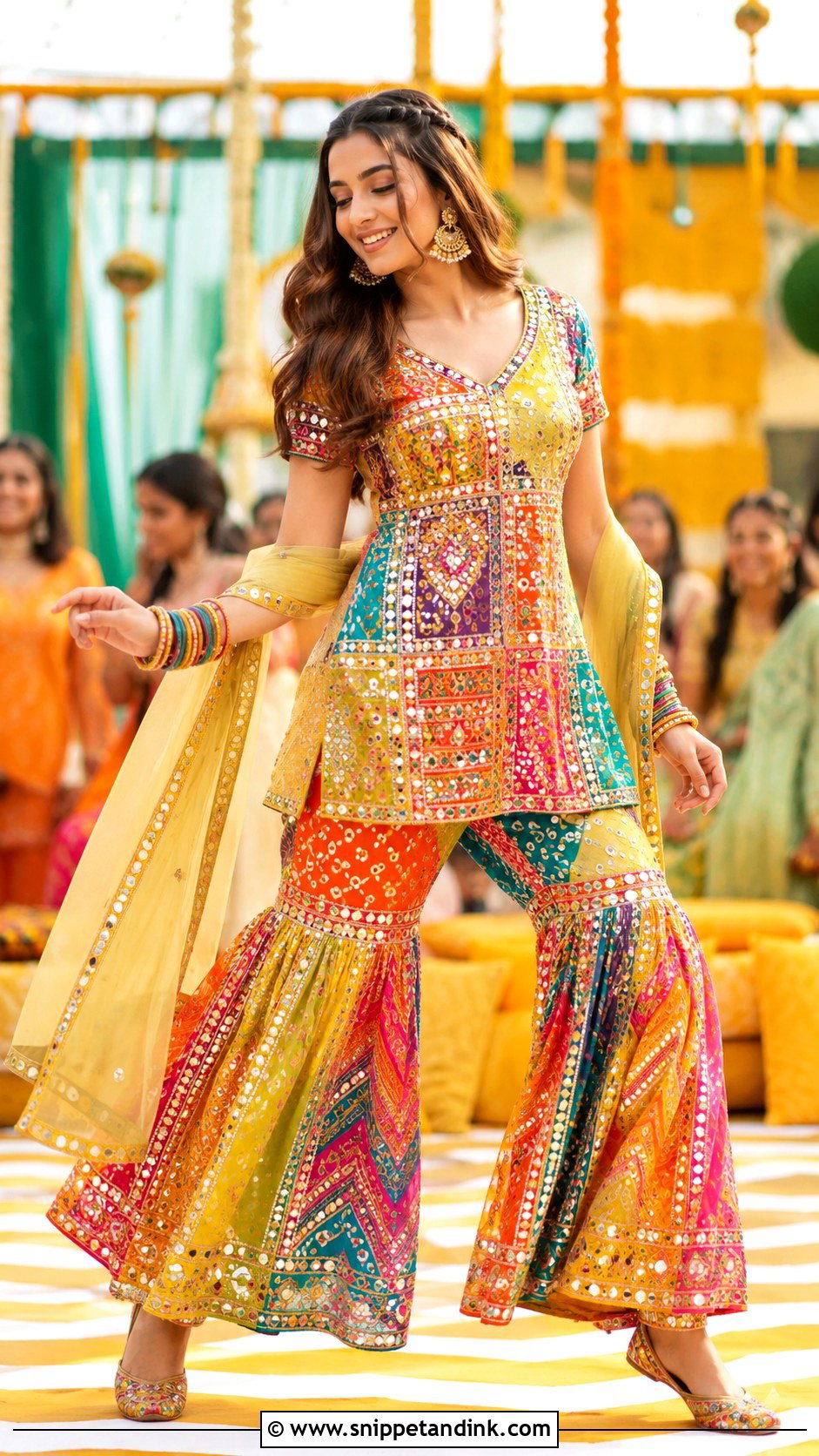
Multicolor mirror work belongs at a loud, happy mehndi. Yellow, green, pink, orange and blue in one outfit is a lot, so keep the cut clean: a short embroidered kurti, matching sharara and a plain dupatta. Choose oxidized earrings with silver-toned embroidery and gold jhumkas with gold work. Wear shoes you can dance in, because nobody stands still in this. It suits bridesmaids, cousins and anyone heading to a lively outdoor function. If several of the group wear multicolor sets, I suggest each picks a different dominant shade so the photos don’t turn into one block of pattern.
10. Pastel Mehndi Sharara With Pearl Details
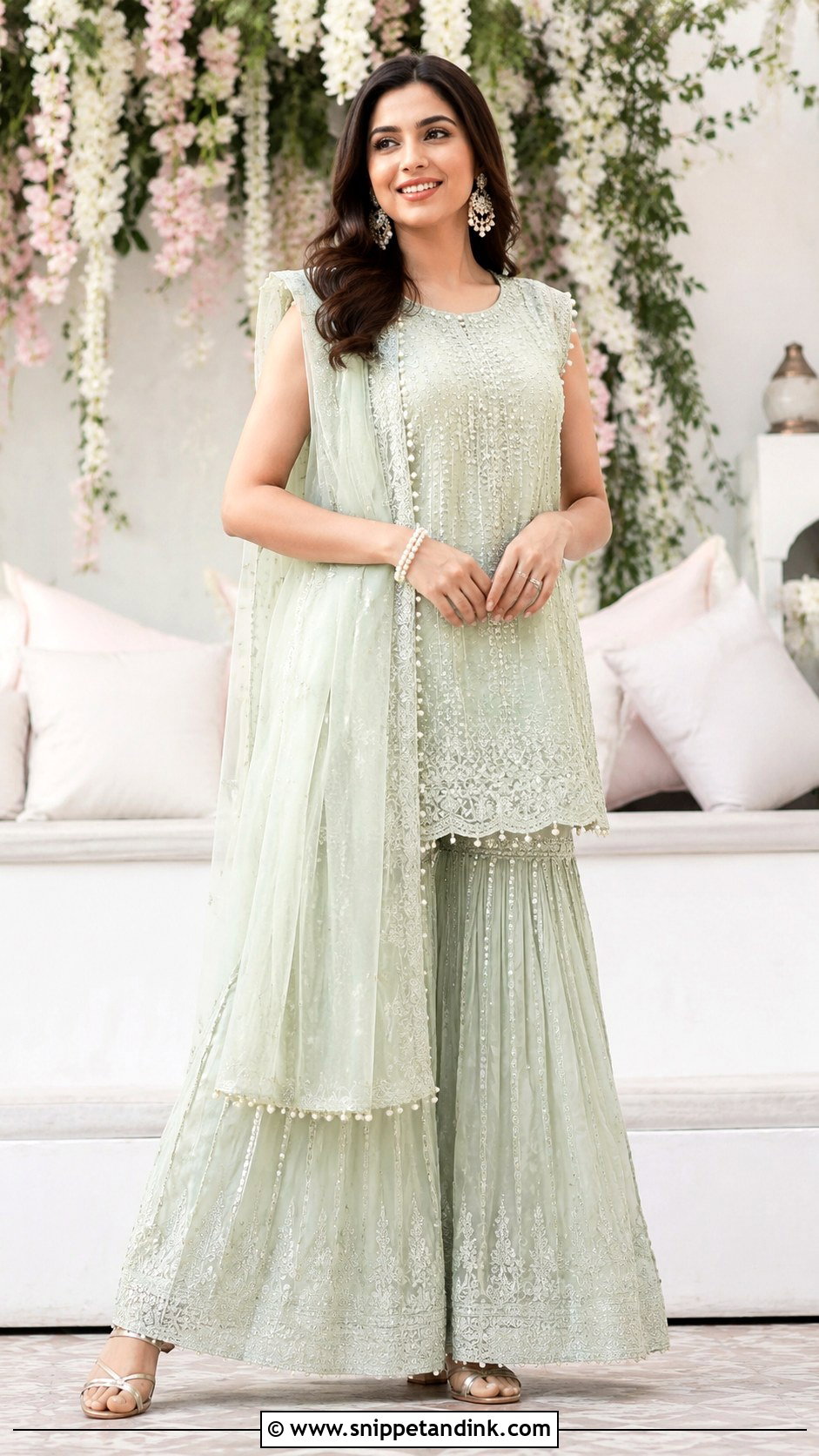
Pastels with pearl details are the quiet option. Mint, powder blue, peach, lavender and soft yellow all suit pearl accents at the neckline, sleeves, dupatta border or hem. Add pearl earrings, a fine bracelet and nude or metallic sandals, and keep the dupatta light. This can work for a bride who wants a subtle mehndi or a guest at a polished daytime event. I’d check how the pearls are attached before you buy. Glued or loosely threaded pearls pop off in a crowd, and a sharara hem gets stepped on more than you’d think.
11. Red Mehndi Sharara With Gold Embroidery
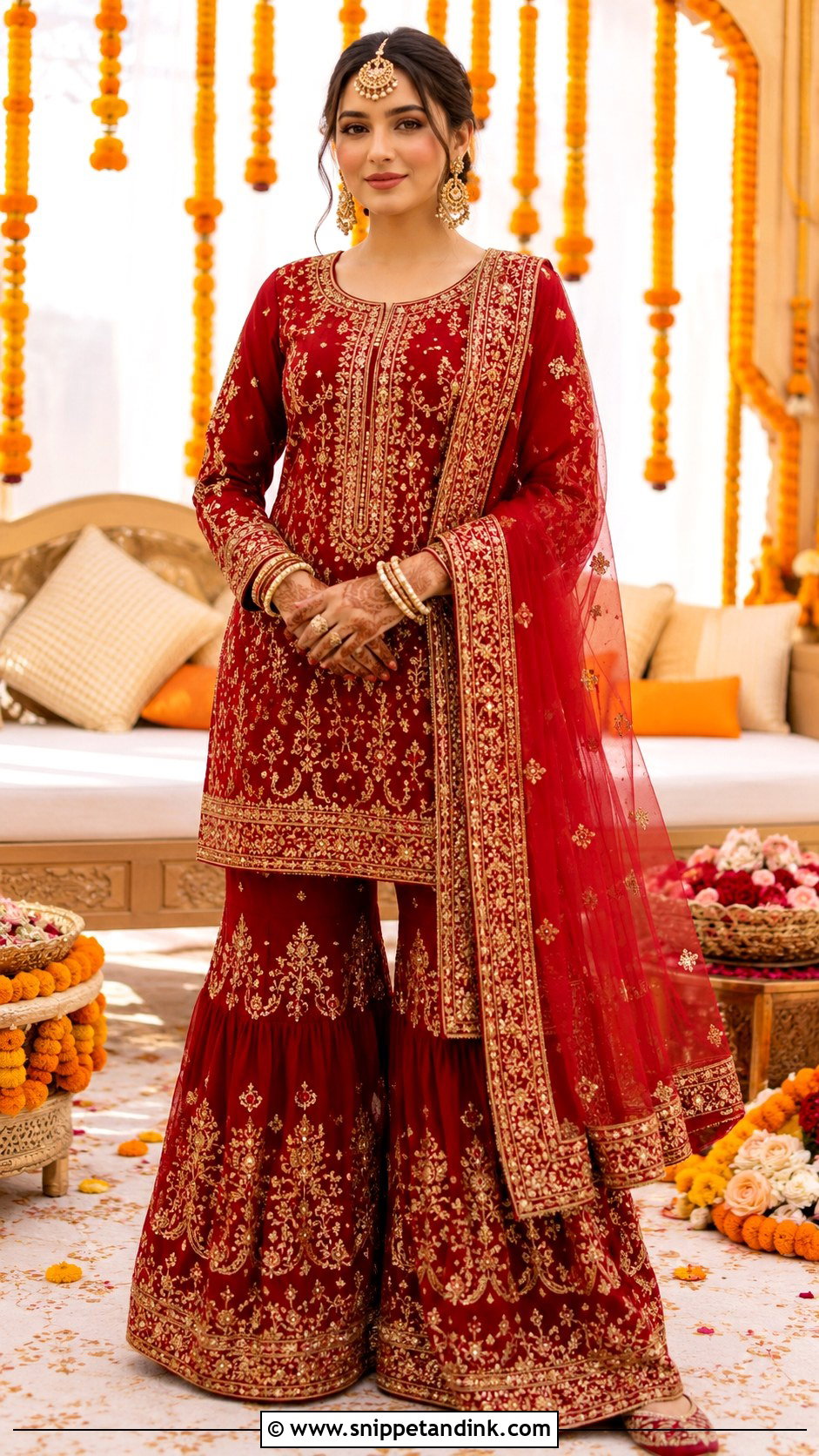
Red is the boldest pre-wedding color and it reads as bridal immediately. A red mehndi sharara with gold embroidery in a deep red, tomato red or rust red feels lighter than wedding-day maroon. Pair a short kurta with zari, mirrors or gota with a full sharara and a sheer dupatta so the whole look doesn’t get heavy. Gold jewelry, a tikka and embroidered juttis complete it. If you’re not the bride, ask before you wear it. In many families red is kept for her, and a guest in a full red set can cause a quiet stir.
12. Teal Mehndi Sharara With Gold Dupatta
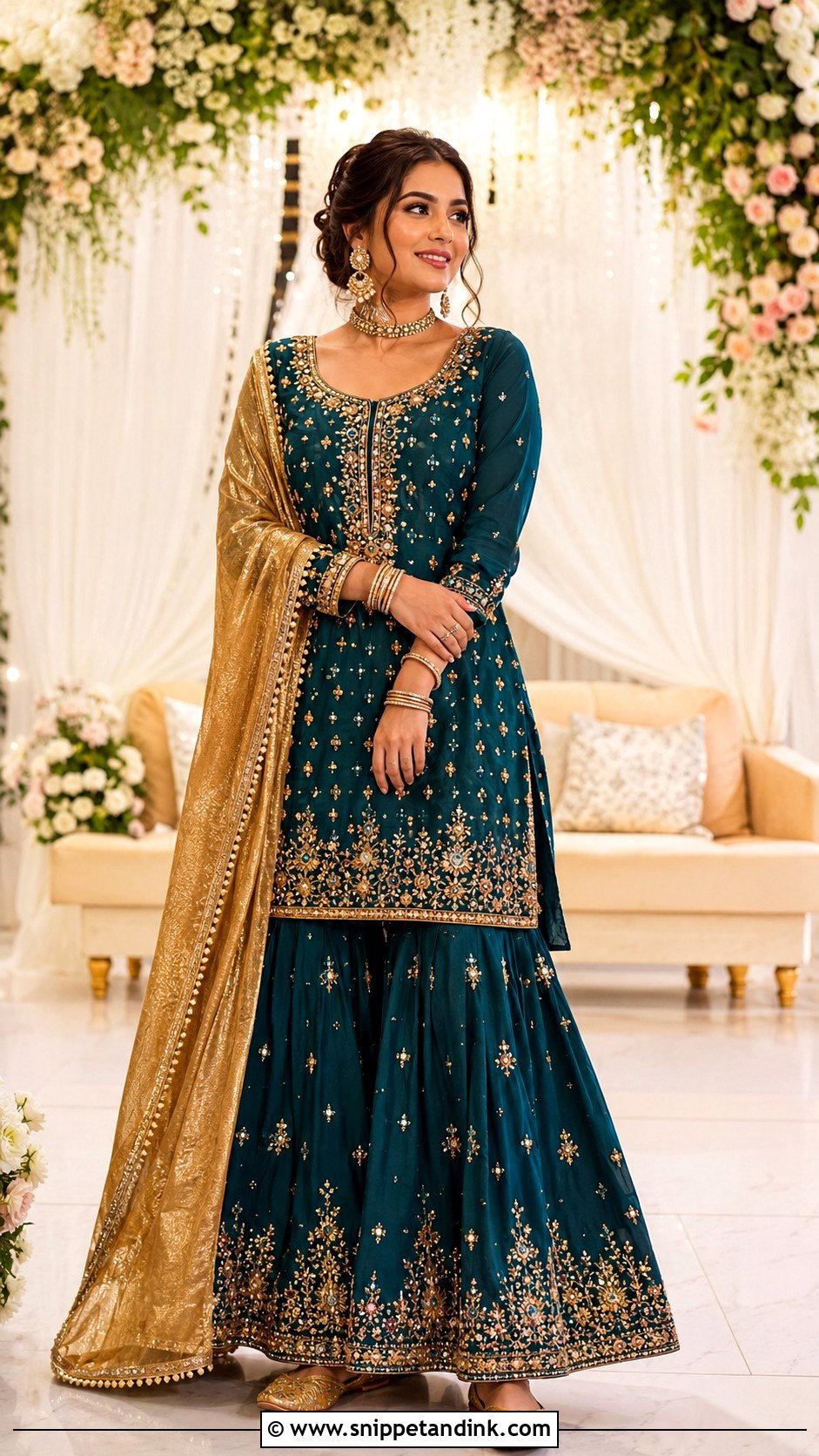
Teal and gold suit an evening mehndi, especially a more formal one in a hall. Teal holds its depth under warm lighting while still feeling festive. Pair an embroidered teal kurti and sharara with a gold net, tissue or organza dupatta, gold heels or juttis, kundan earrings, a slim choker or stacked bangles. Bronze eyes and a soft lip suit the warm metallics. Tissue dupattas have a metallic sheen that is lovely in photos but crackles and creases easily, so I fold it loosely over the arm rather than pinning it tight.
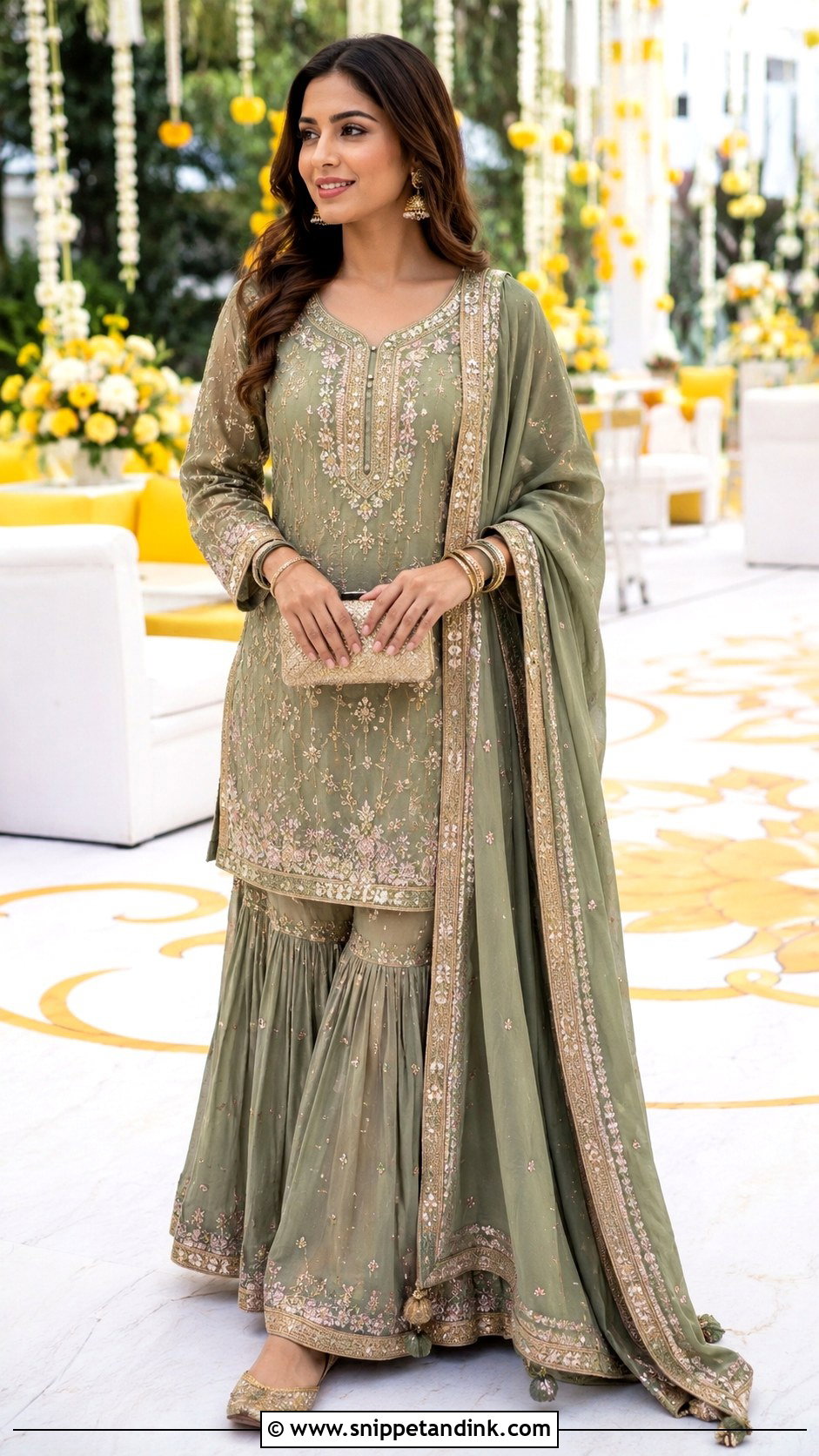
13. Sage Green Mehndi Sharara With Cape
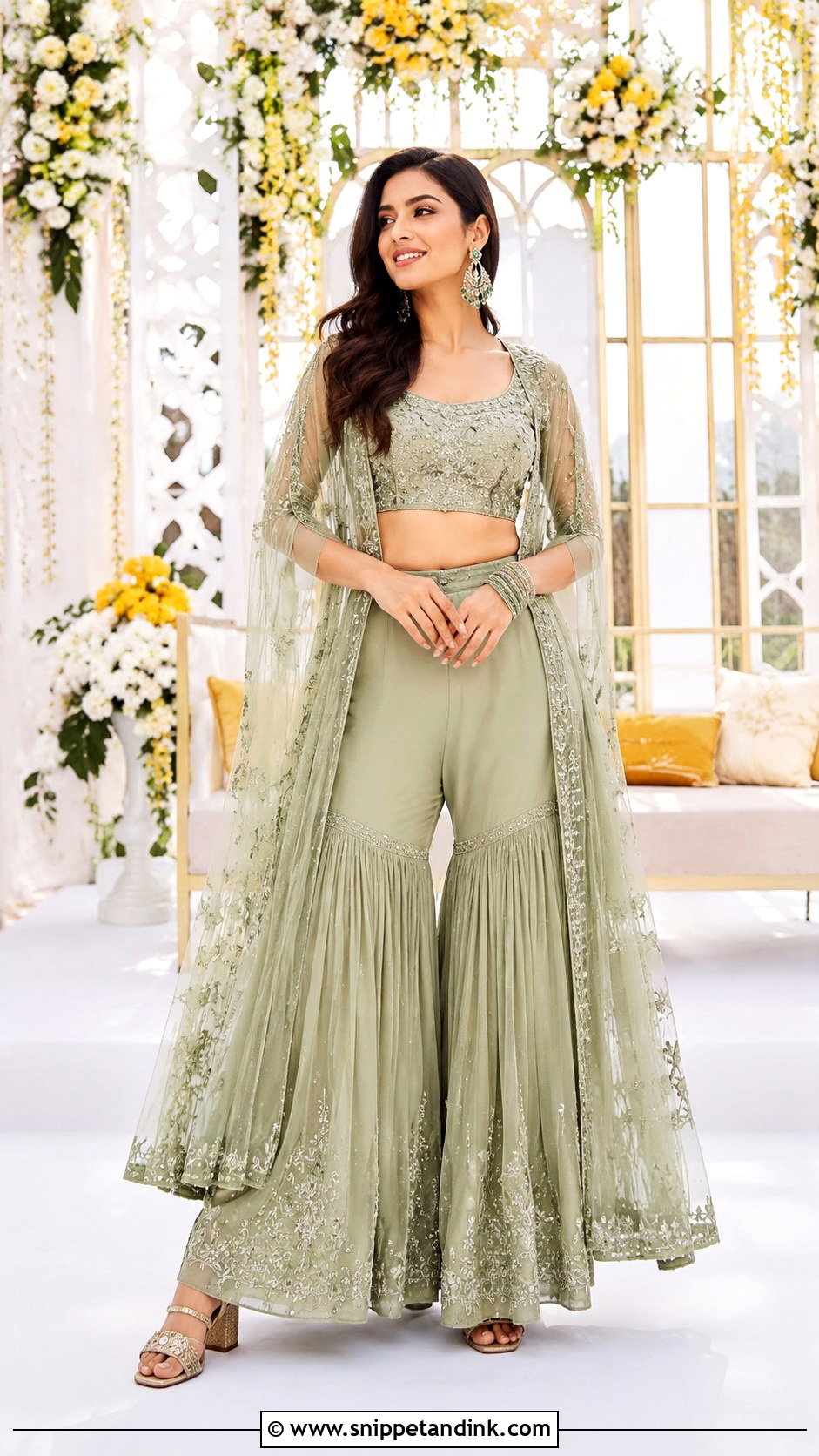
A cape replaces the dupatta, which makes sage green with a cape the easiest hands-free option here. Wear a fitted blouse or short kurti under it with a matching flared sharara, and let sequins, mirrors or embroidery on the cape frame the outfit. Keep the neckline clean if the cape is busy, with statement earrings, block heels or embellished flats. Brides and bridesmaids getting henna will appreciate not having anything to hold or pin. Sage is a muted color, and I’ve found it looks grey in shade, so stand in natural light when you try it on.
14. Ivory Mehndi Sharara With Yellow Dupatta
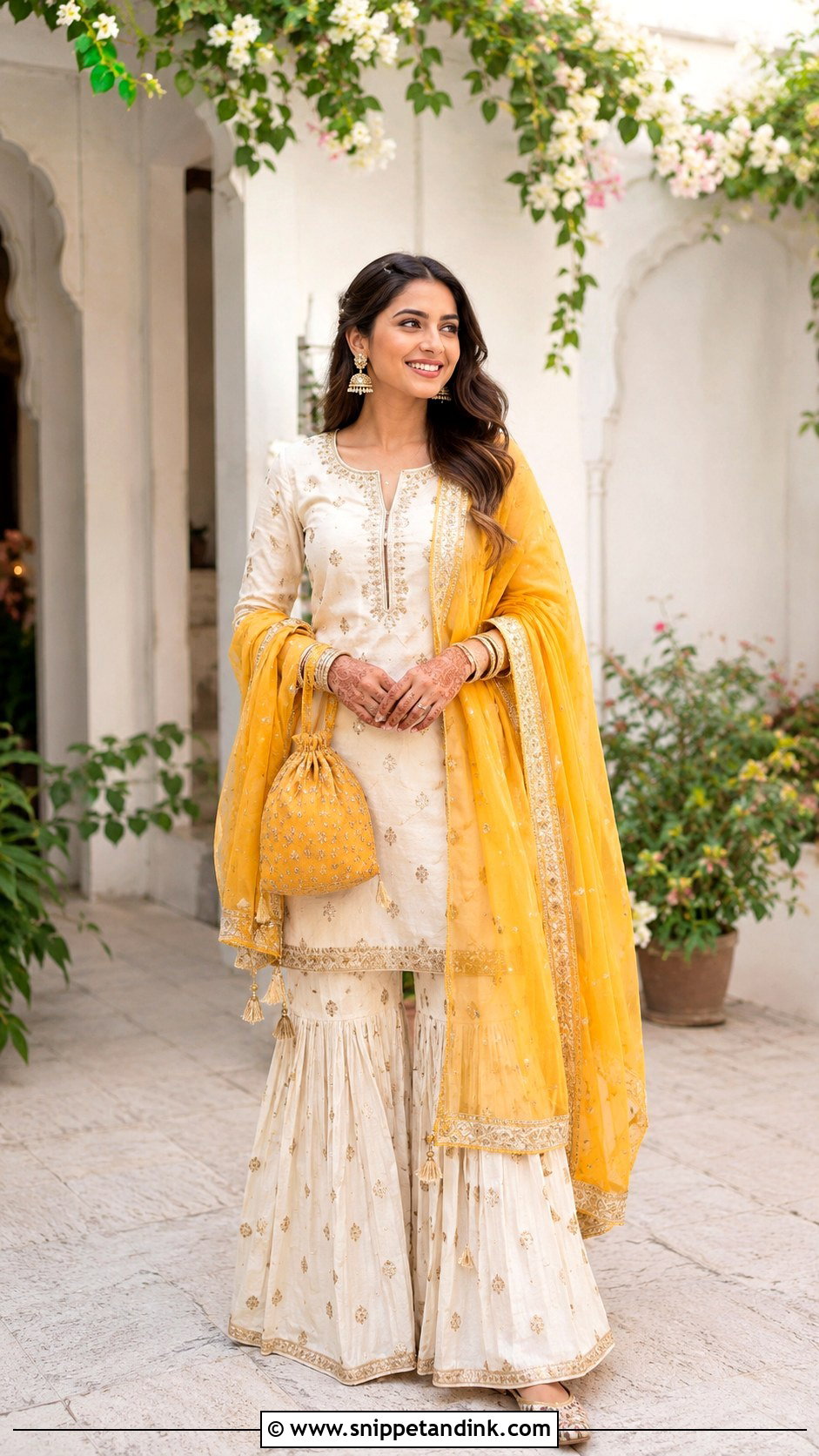
Ivory with a yellow dupatta suits guests who like lighter colors but still want to look properly dressed. The ivory base keeps it refined; a marigold dupatta with tassels or scalloped trim brings the festive mood. Look for light embroidery, mirror details or gota on the kurti and sharara. Gold earrings, bangles, embroidered juttis and a yellow potli finish it. A practical warning: if you’re having even a small henna design done as a guest, an ivory outfit is at risk from drips. Hold your hands away from the fabric until the paste is dry.
15. Purple Mehndi Sharara With Mirror Dupatta
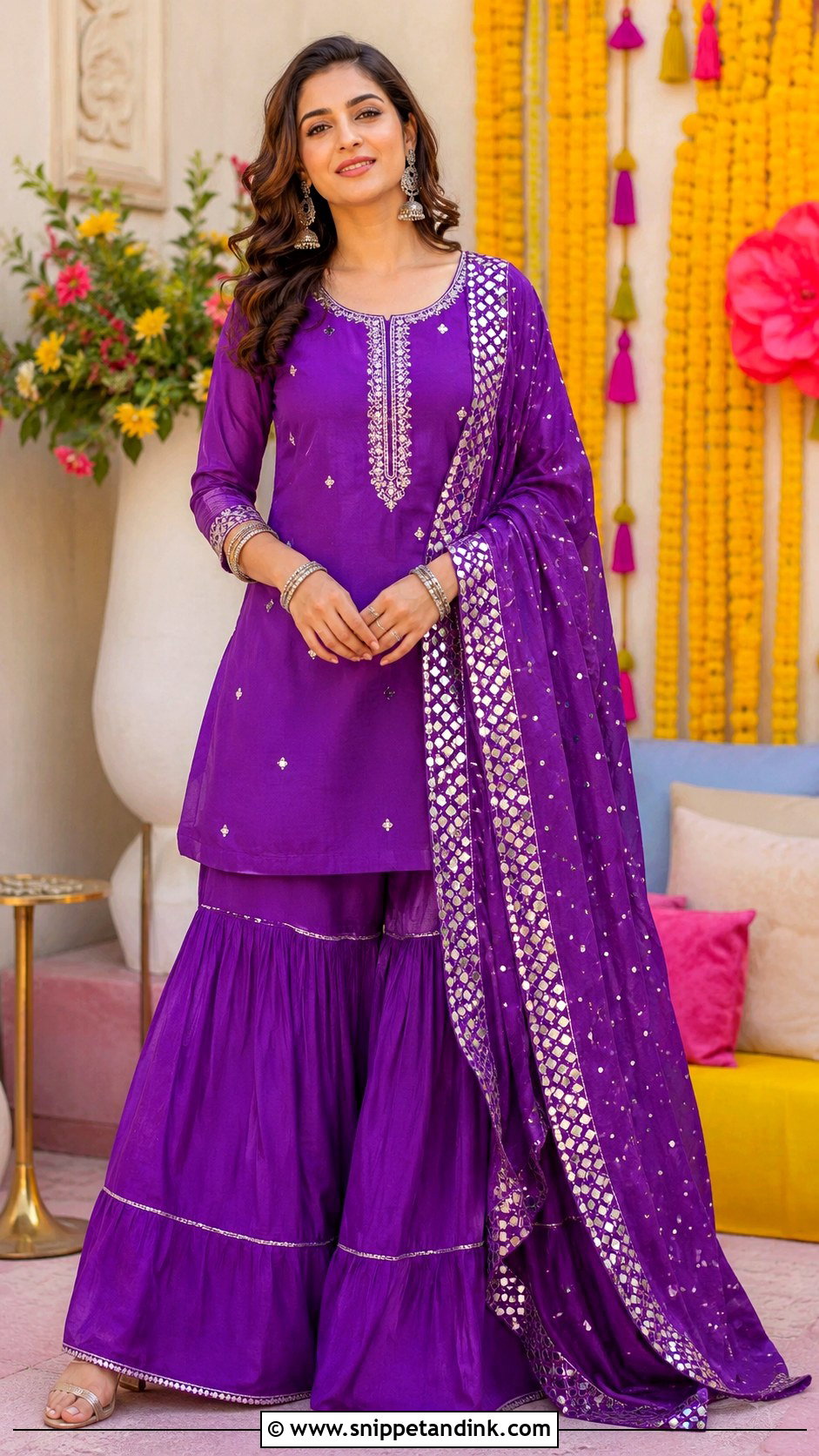
Purple with a mirror dupatta is for someone who wants to be colorful without wearing the same green as everyone else. Lavender is soft, plum suits evening, bright purple is bold. With the mirror dupatta as the statement, keep the kurti and sharara lightly worked. Silver or oxidized jewelry suits cool purples and gold suits warm ones. Comfortable sandals or juttis finish it. Mirror dupattas are heavier than they look; a full one can weigh a fair bit, so I suggest pinning it at the shoulder instead of draping both arms.
16. Black Mehndi Sharara With Colorful Work
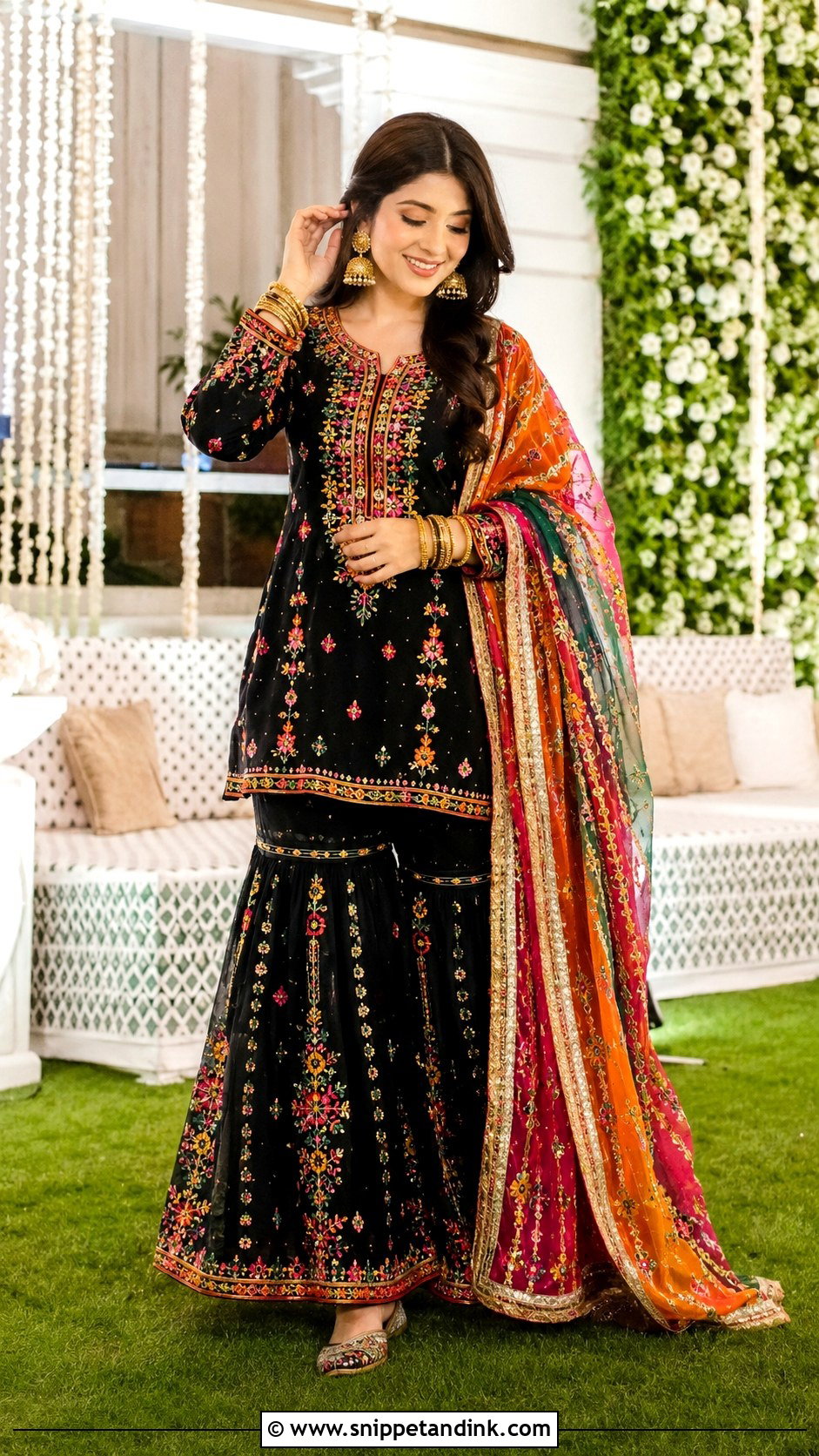
Black at a mehndi surprises people, and it works if the embroidery is bright. Pink, yellow, green, orange and turquoise threadwork keep it joyful rather than formal. A short black kurti over a flared sharara creates a sharp shape, and a bright dupatta brings color near the face. Gold jhumkas, bangles and colorful juttis complete it. Some families consider black unlucky at wedding functions, so check before you buy. Where it’s welcome, it’s at its best at an evening event with strong contrast lighting.
17. Blue Mehndi Sharara With Silver Embroidery
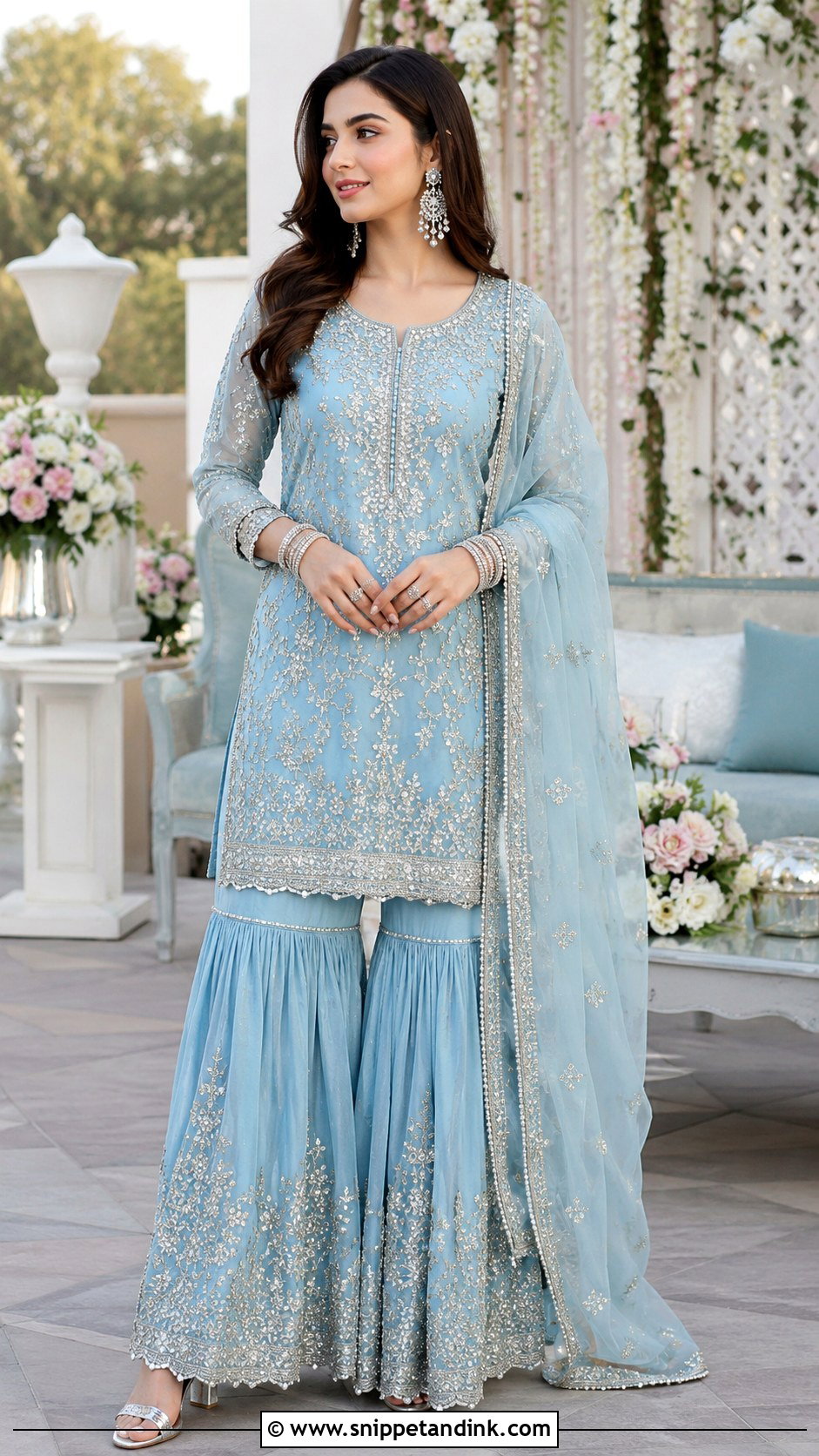
Silver embroidery on blue gives a cool, polished look. Sky blue, aqua and turquoise suit an outdoor afternoon; royal blue has more impact indoors or after dark. Silver thread, sequins or mirrors catch light softly. Pair a short embroidered kurti with a matching sharara and a light dupatta, silver earrings, crystal bangles and metallic sandals. I usually advise against mixing gold jewelry with silver work here, because the two metals fight each other close to the face.
18. Peplum Mehndi Sharara With Dupatta
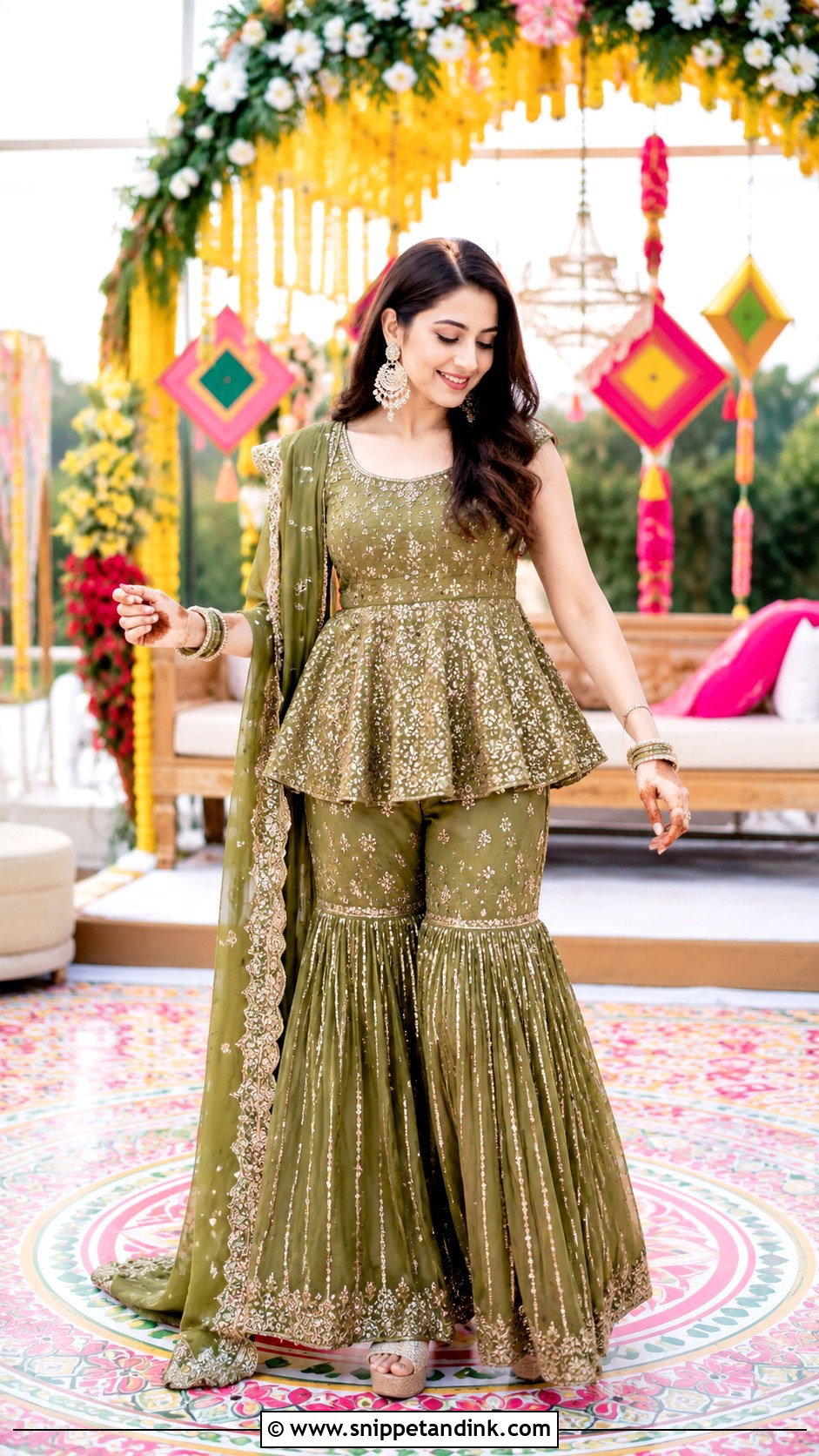
A peplum defines the waist and the sharara supplies the movement below it, so this shape flatters most bodies. Look for embroidery at the neckline, sleeves or hem, and drape a light dupatta over one shoulder or pin it neatly. Statement earrings, bangles and juttis or block heels finish it. It moves well on the dance floor and doesn’t restrict you. The fit point I watch is where the peplum seam sits: it should land at your natural waist, not below it, or the flare starts too low and shortens the legs.
19. Anarkali Mehndi Sharara Set
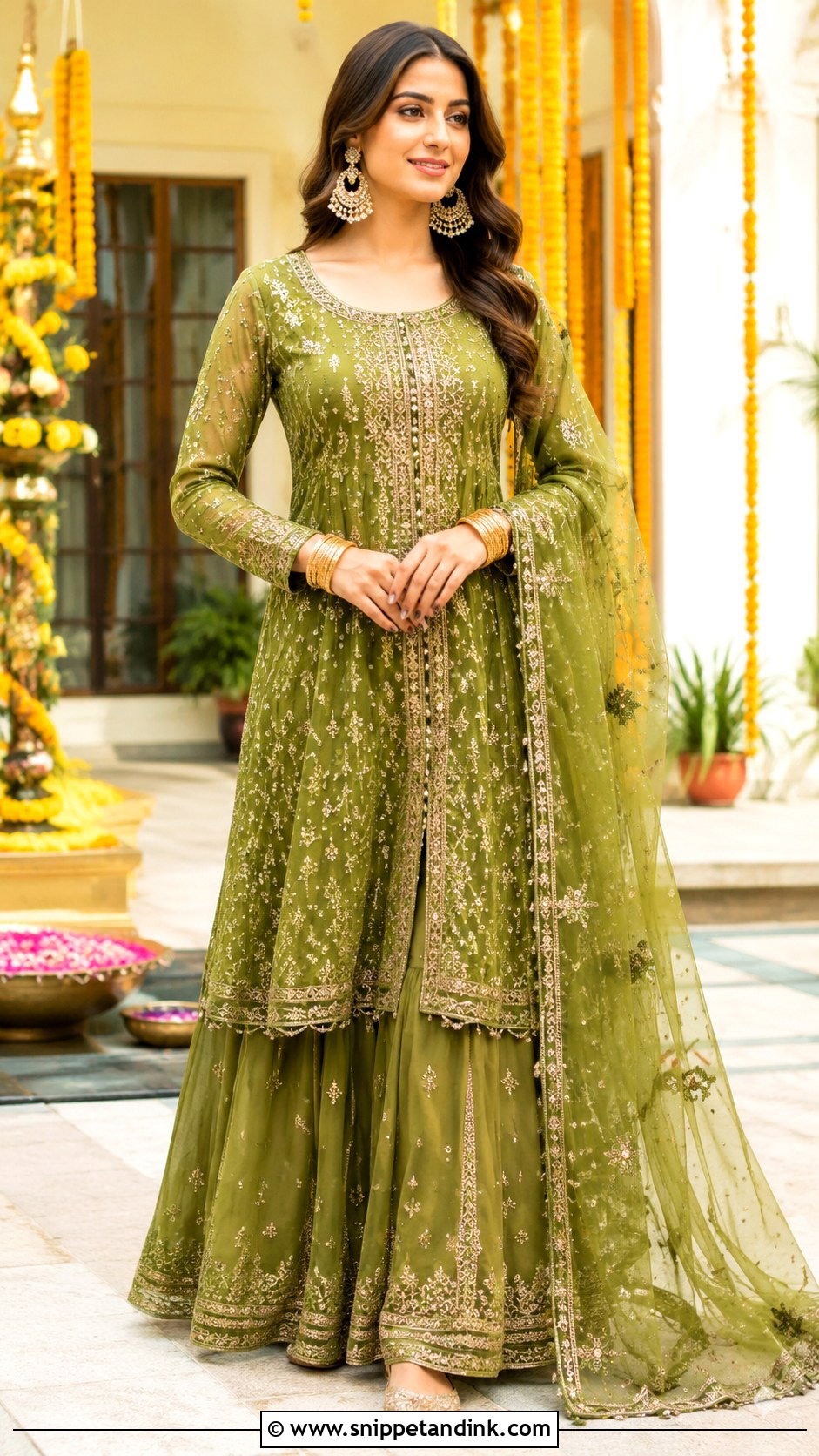
An anarkali over sharara pants gives you the swirl of a long kurta and the comfort of wide legs. Choose a front-slit or layered anarkali so the sharara still shows. Green, yellow, peach, teal and pink all suit mehndi. Put the embroidery on the bodice and sleeves and keep the lower half lighter. Chandbalis, a dupatta pinned to one side and comfortable juttis finish it. Two flared layers can feel bulky when you sit, so I’d pick a soft georgette for both. It suits relatives who want coverage and still plan to dance.
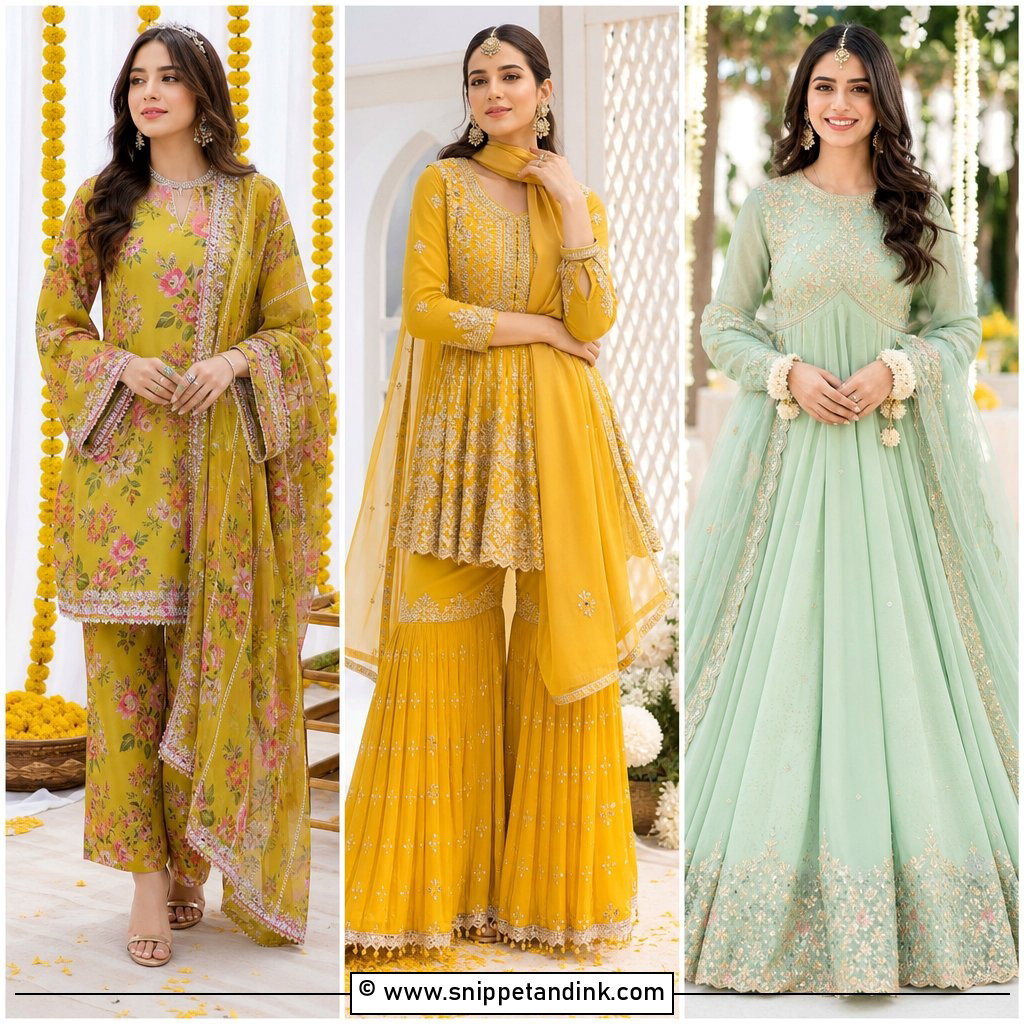
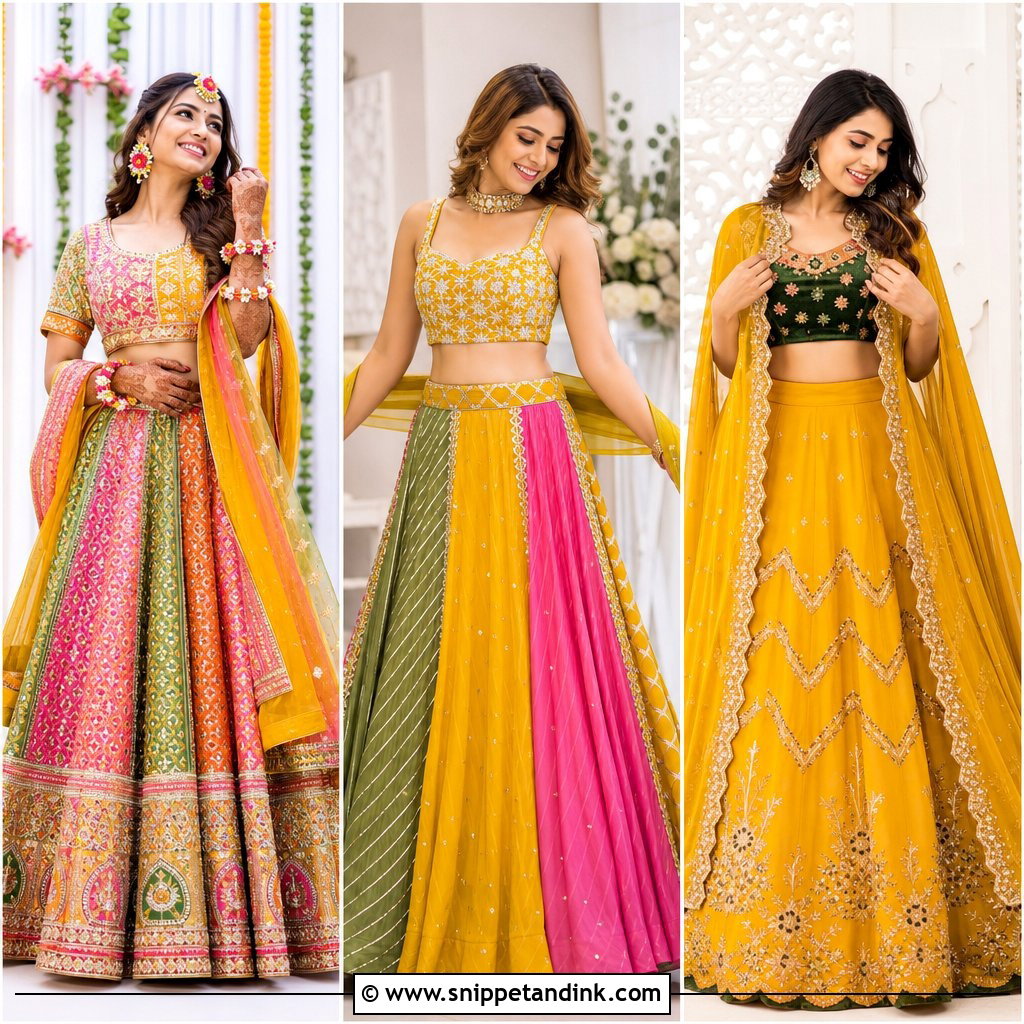
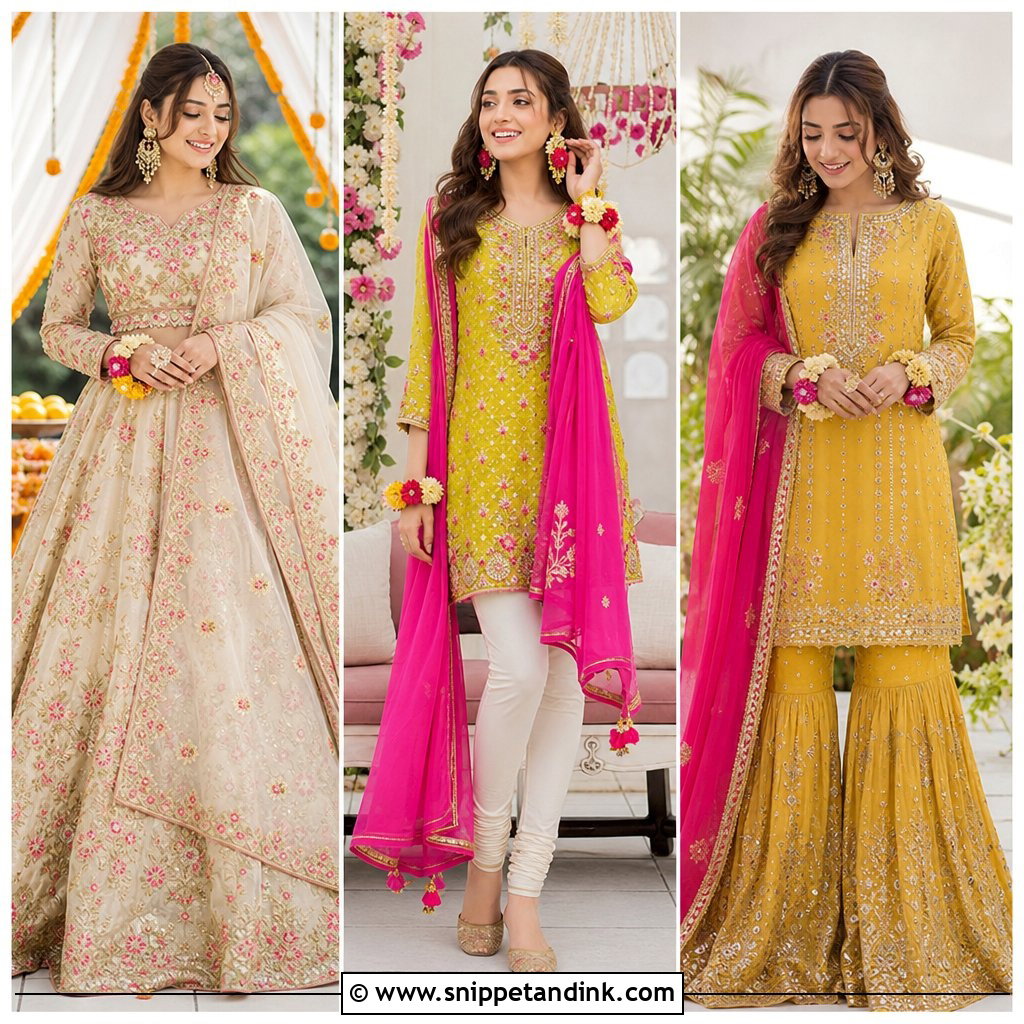
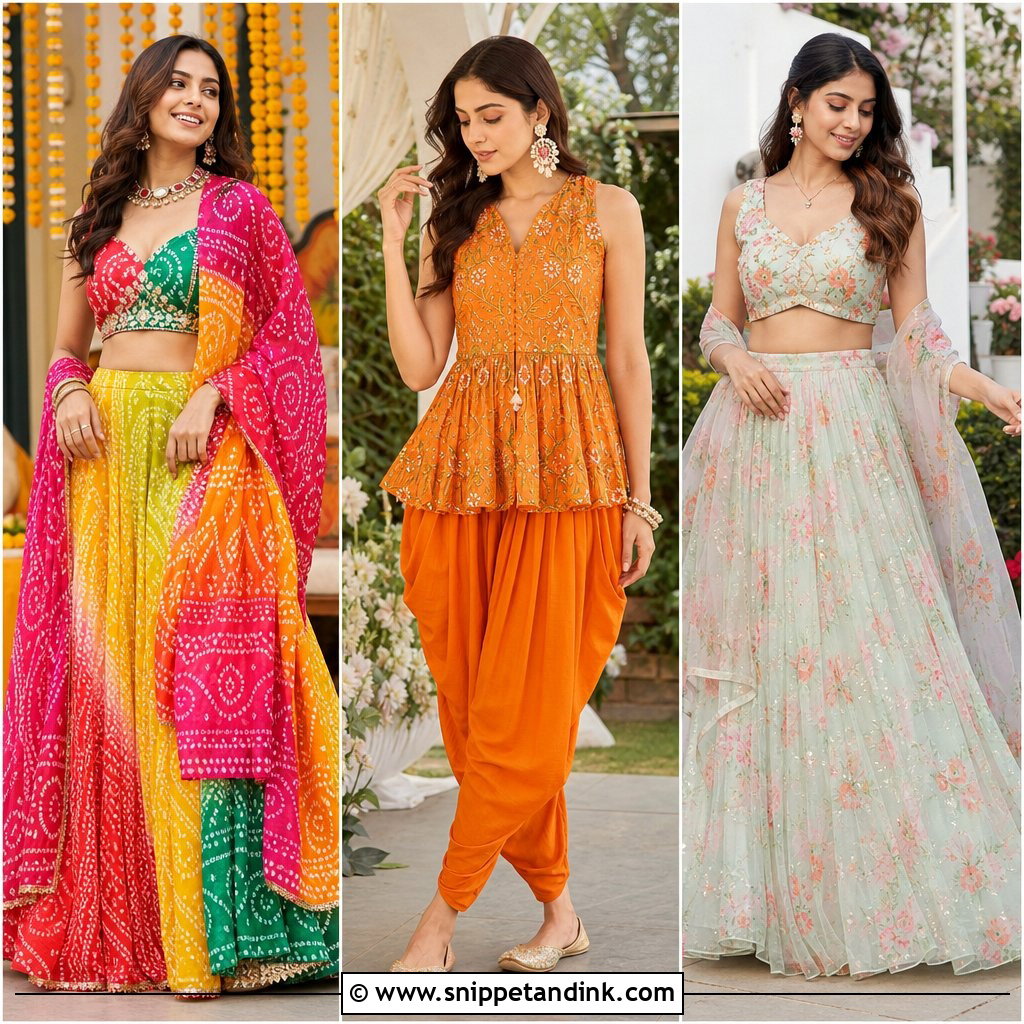
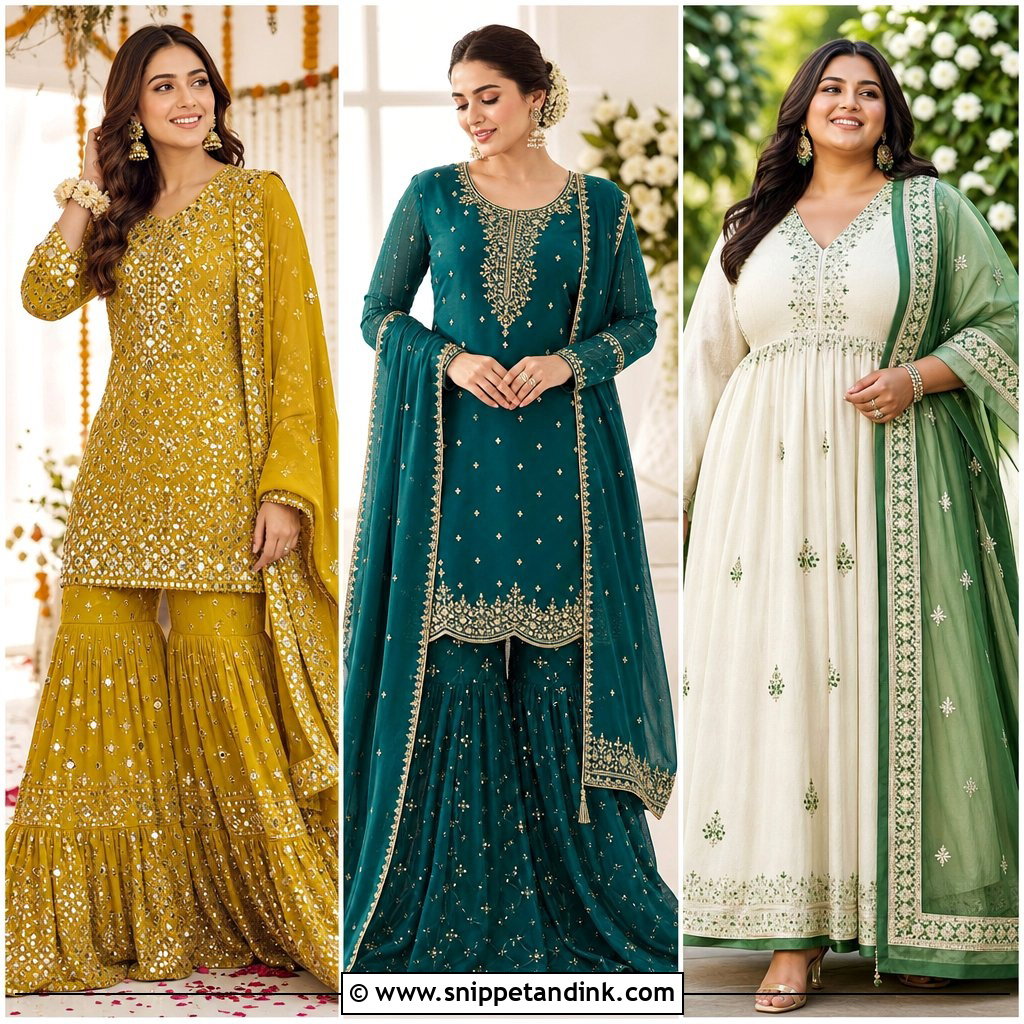
20. Short Kurti Mehndi Sharara With Heavy Border
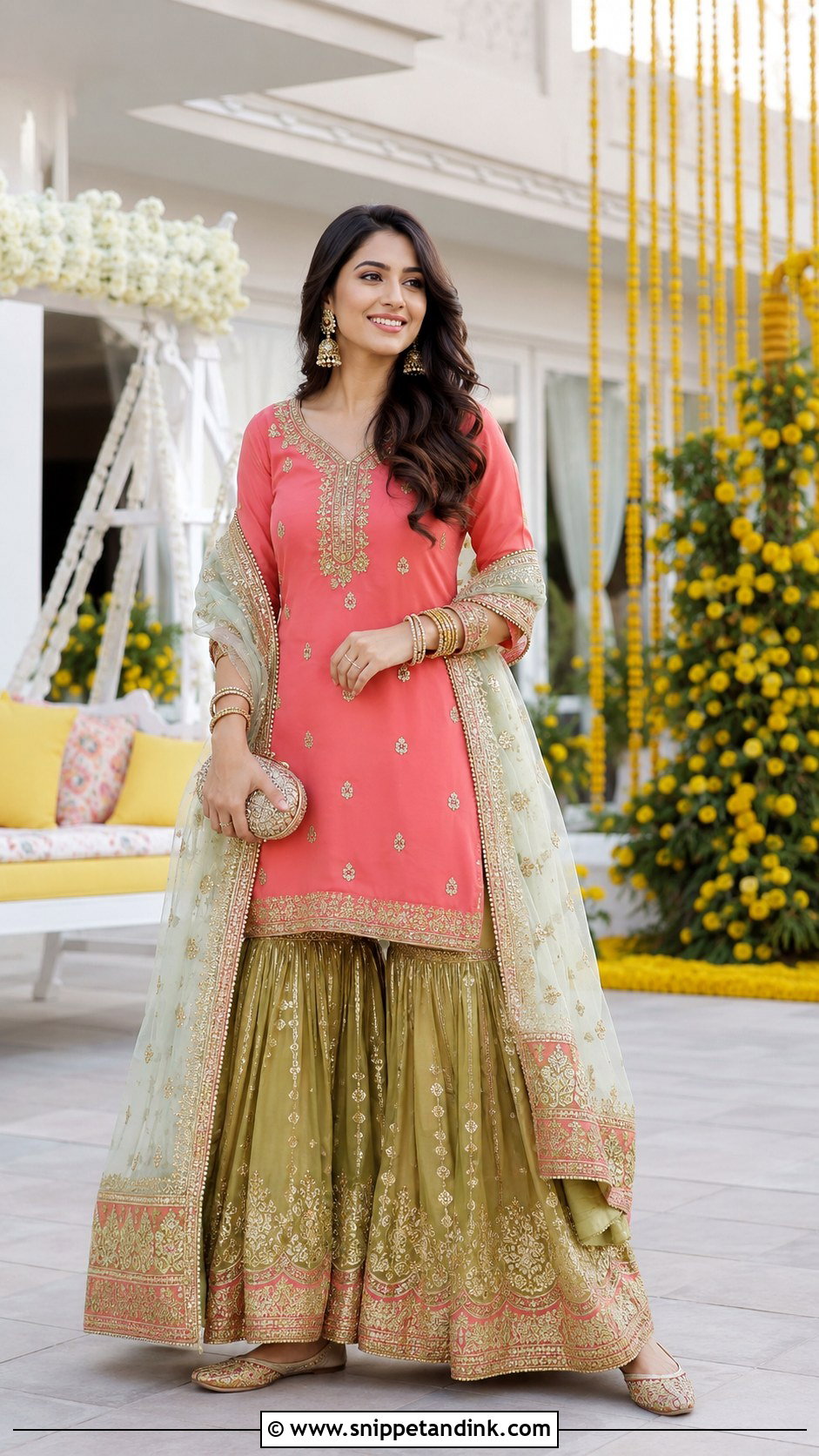
Here the border is the whole point. A short kurti lets a wide gota, zari or embroidered band along the sharara hem take center stage. Lime, mustard, coral and fuchsia all feel right for mehndi. Keep the dupatta light so the outfit isn’t top-heavy and bottom-heavy at once, and add jhumkas, bangles and a small clutch. Heavy borders add weight at the hem, which actually helps the sharara swing and hang straight. They also wear out fastest where they brush the floor, so get the length right.
21. Sharara Saree Look For Mehndi
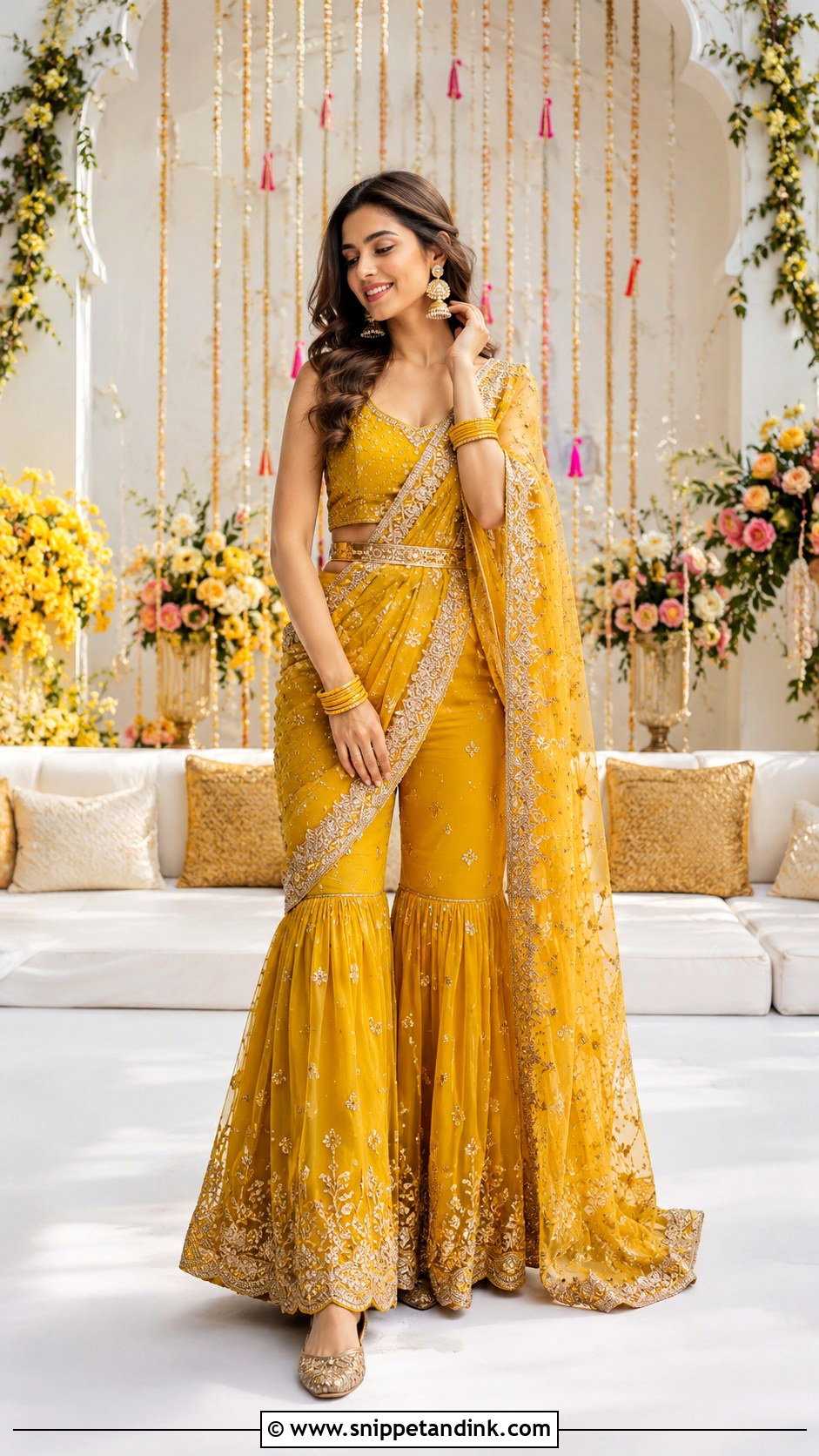
A sharara saree sits between a saree and a sharara set: flared pants, a blouse or short kurti, and a dupatta draped to give a saree shape. You get the drape without the pleats to manage. Bright colors, mirror work or embroidered borders keep it festive. Add a waist belt to hold the drape during dancing, plus statement earrings and heels or embellished flats. I always pin the pallu at the shoulder as well as the belt; the belt alone lets it creep up as you move your arms.
22. Pakistani Mehndi Sharara With Long Kameez
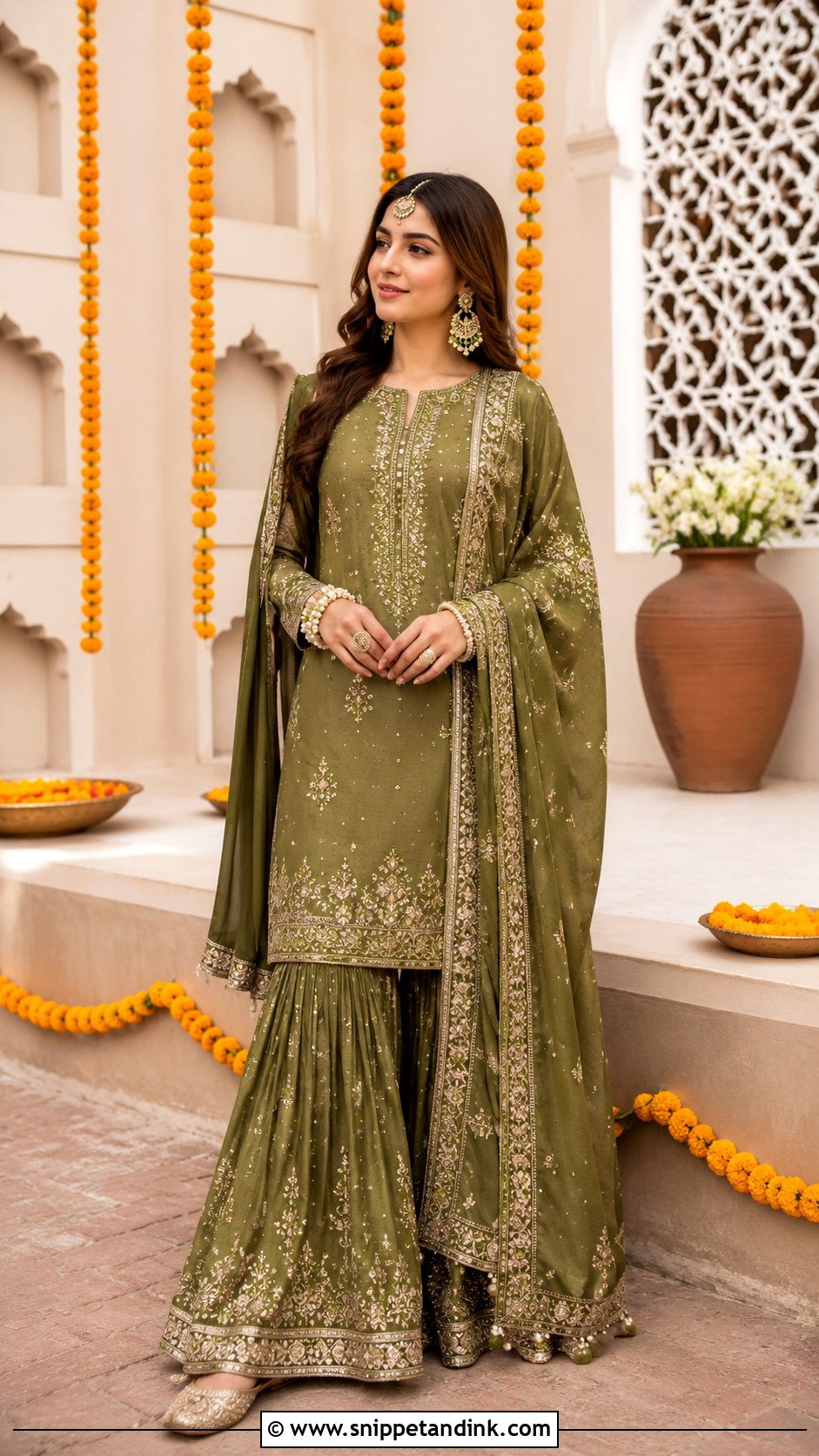
A long kameez over a Pakistani mehndi sharara gives a long vertical line with volume only at the hem. Mehndi green, mustard, rust, deep pink and teal suit it, with embroidery at the neckline, sleeves and hem and a dupatta with a detailed border. Kundan earrings, bangles and soft curls or a sleek bun complete it. The kameez side slits need to be high enough to sit in; I check by sitting cross-legged in the fitting room. Brides, sisters and close relatives who want modest coverage like this cut.
23. Bridal Mehndi Sharara With Heavy Dupatta
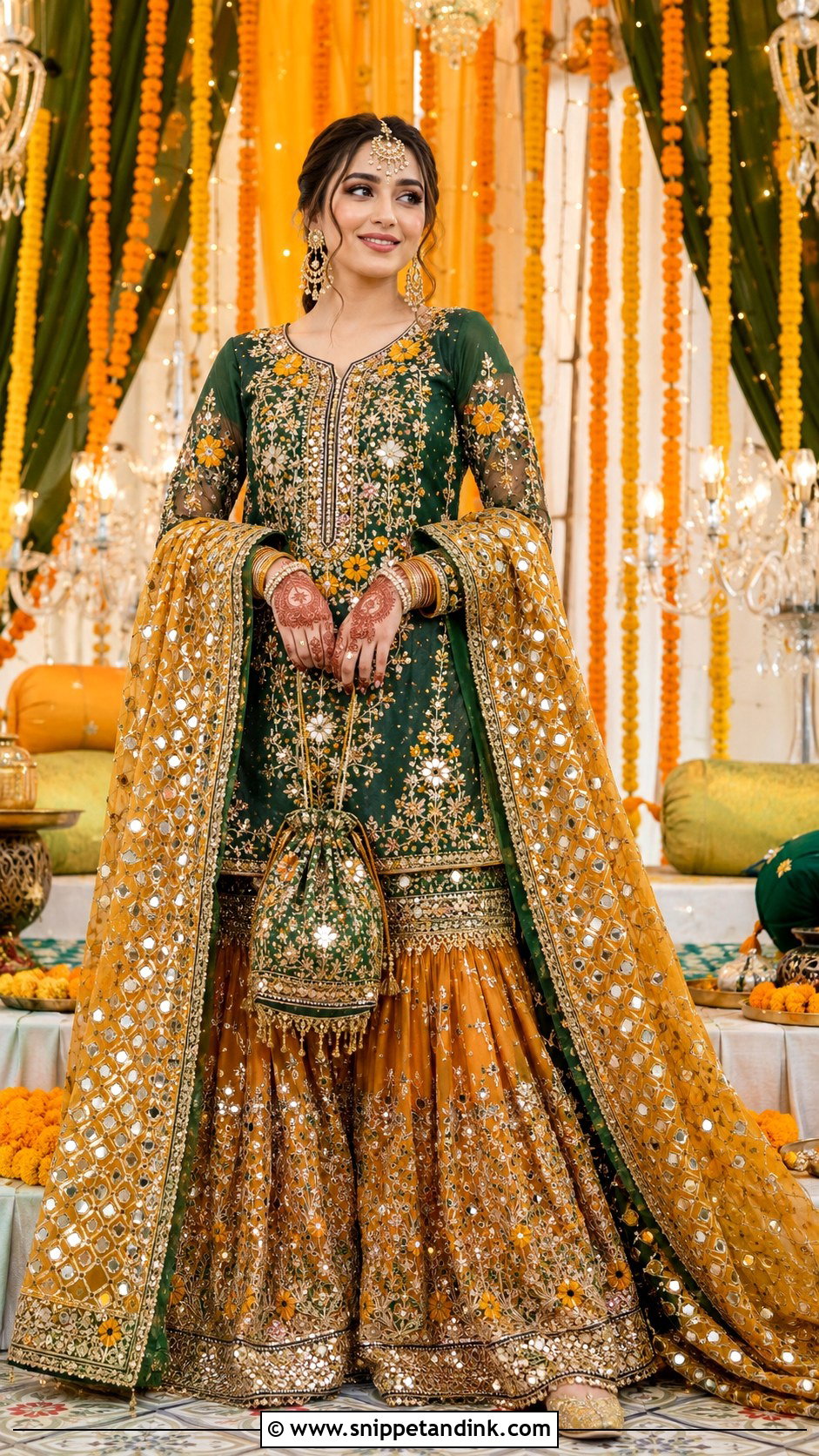
A heavy dupatta can give the bride her grandeur at the mehndi without a bridal lehenga. Keep the sharara embroidered but comfortable and let the dupatta, in emerald, marigold, rust, rani pink or multicolor, carry mirror work, gota, zari or scalloped edges. Drape it over one shoulder or across both arms for photographs and rituals, then take it off during application. Add a tikka, earrings, bangles, an embellished potli and comfortable footwear, since mehndi nights run long. I’d always have someone ready to hold the dupatta; a heavy one left on your shoulder while the artist works slowly drags your neckline off center.
24. Bridesmaid Mehndi Sharara With Matching Dupatta
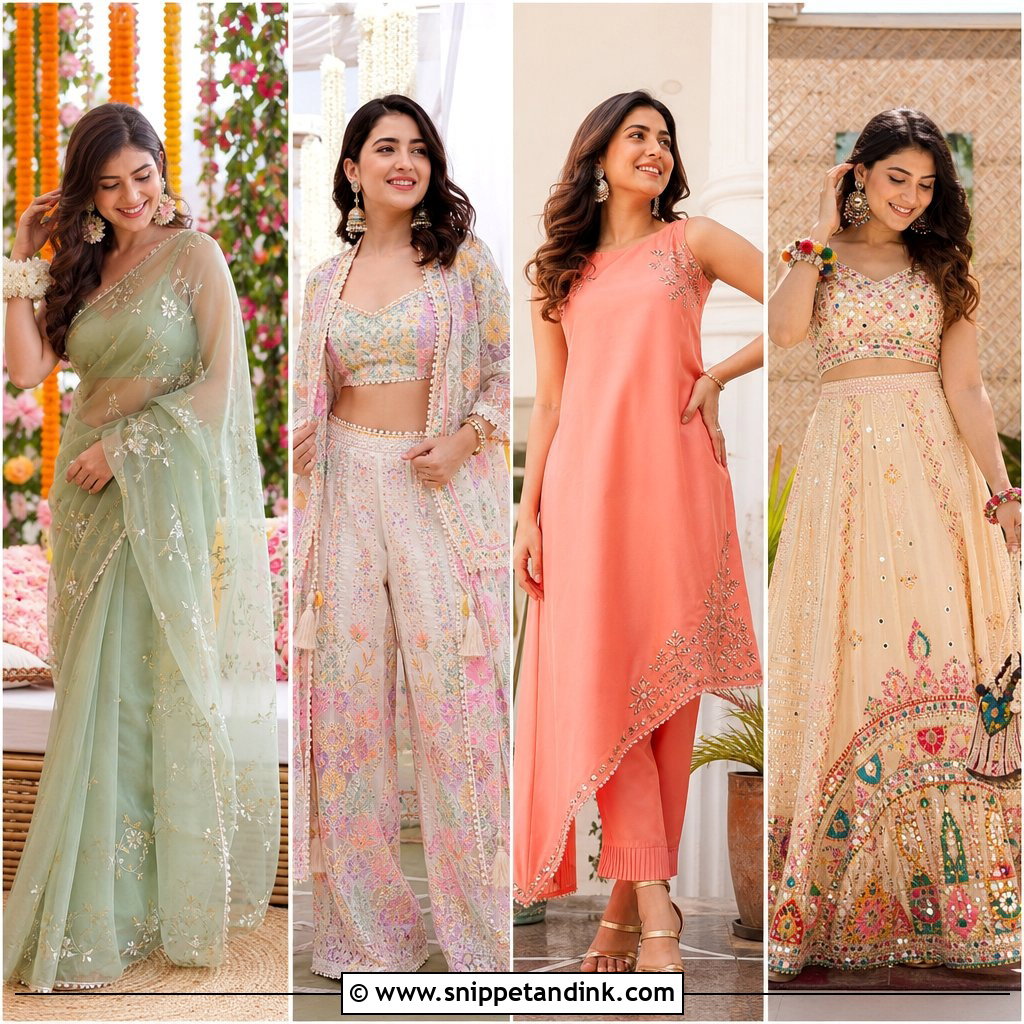
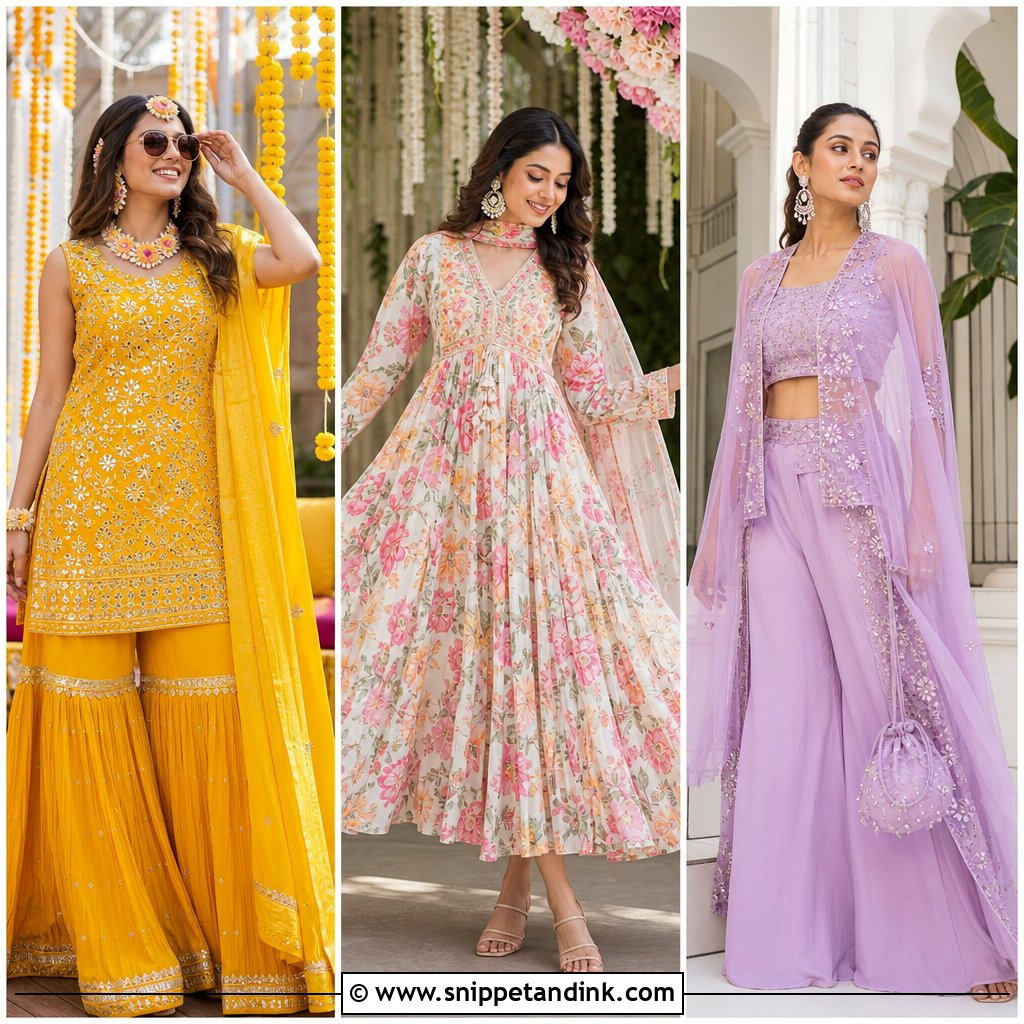
Matching sets make a bridal party look organized in group photos without upstaging the bride. Choose yellow, sage, coral, peach or turquoise to fit the wedding palette, with light embroidery, mirrors or gota. Coordinate the bangles, juttis and small earrings. If the group has different body shapes, my favorite approach is one color in a few different cuts: a peplum for one, a short kurti for another, an anarkali for someone who wants coverage. Everyone is comfortable and the group still reads as one.
25. Mehndi Sharara With Jacket
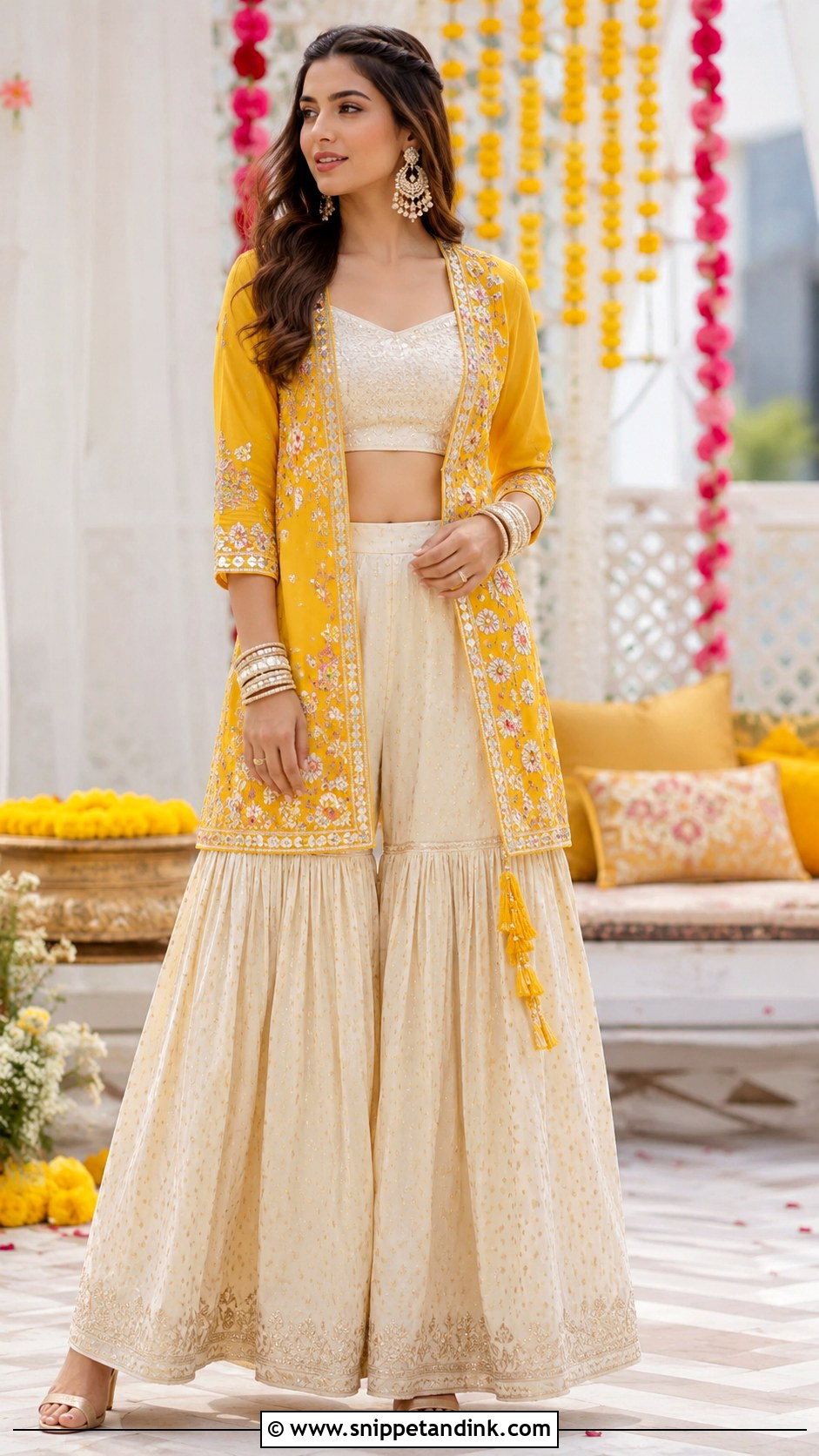
A mehndi sharara with a jacket means no dupatta to carry or pin. Short, long, sheer, embroidered or mirror-worked, the jacket goes over a simple crop top or kurti with matching pants. A bright pink, yellow or green jacket can also lift a plain neutral set you already own. With the jacket adding detail near the neckline, keep jewelry at the ears and wrists, and choose flats or block heels. I find this the easiest layer to re-wear afterwards, because the jacket works over jeans as well.
Guests, Sisters and Bridesmaids: How Bright Is Too Bright?
Most of the shararas at a mehndi are worn by people who aren’t the bride, and that brings its own etiquette. The easiest move is to ask the family whether there is a color theme. Many mehndis now have one, often green and yellow or a pastel range, and a single message saves you from turning up in the one shade nobody else wore.
Then think about the bride’s outfit. If you know she is wearing rani pink or red, I’d keep away from those exact shades even if they suit you. Close family can go richer and heavier; guests do well a step lighter in embroidery, so the bride still stands out in group photos.
Finally, plan for your own henna. Guests are often offered a small design on the palm or the back of the hand, so sleeves that end at the wrist with heavy cuffs are a nuisance. Elbow or three-quarter sleeves, a dupatta you can pin and a clutch with a wrist strap make it easy to say yes.
Sit, Stand, Dance: The Fitting Room Test That Settles It
From classic green mirror work to capes, pastel florals, heavy bridal dupattas and coordinated bridesmaid sets, the sharara covers a lot of ground. My test for any of them is simple: sit cross-legged, stand up, walk across the room and dance for a minute in the fitting room. Breathable fabric, a dupatta that is pinned rather than draped, comfortable shoes and jewelry that matches the outfit’s weight matter more than the exact shade. Bright colors read traditional; pastels and ivory feel softer. If you want drama, go for contrast dupattas or multicolor work, and if you prefer restraint, pearls, organza or a long kameez will serve you well.
You'll Like These Ideas:


Leave a Reply