
A shaadi is rarely one outfit. Mehendi, sangeet, nikah or pheras, reception, the walima or a post-wedding dinner each have their own mood, and you might be in each look for six hours straight. So when I style for a Desi wedding, the first question isn’t colour. It’s whether you can sit cross-legged on a mehendi floor, dance at the sangeet, and greet two hundred relatives without fighting your dupatta. Below are lehengas, sarees, shararas, anarkalis, gowns and fusion pieces, each with the jewellery, shoes, bag and drape I’d put with it, plus what to watch for once you’re actually wearing it.
Five Functions, Five Outfits, and a Suitcase That Closes
I plan a shaadi wardrobe by event, from lightest to heaviest, so the weight and the sparkle build toward the main day. A rough map I use:
- Haldi: cotton, chanderi or georgette you won’t mind staining. Minimal jewellery.
- Mehendi: light lehenga, sharara or kurta skirt in bright colour. Short sleeves for anyone getting henna.
- Sangeet: something you can dance in for three hours. Shararas, pre-draped sarees, cape lehengas.
- Ceremony: your most traditional and most worked outfit, chosen with the family’s customs in mind.
- Reception or walima: evening fabrics, velvet in winter, sequins or a gown if the family is relaxed about it.
For guests travelling, two outfits that share one set of jewellery and one pair of shoes save a lot of luggage. Pack heavy pieces in muslin or cotton covers, not plastic, and hang them as soon as you arrive.
1. Red Bridal Lehenga Outfit
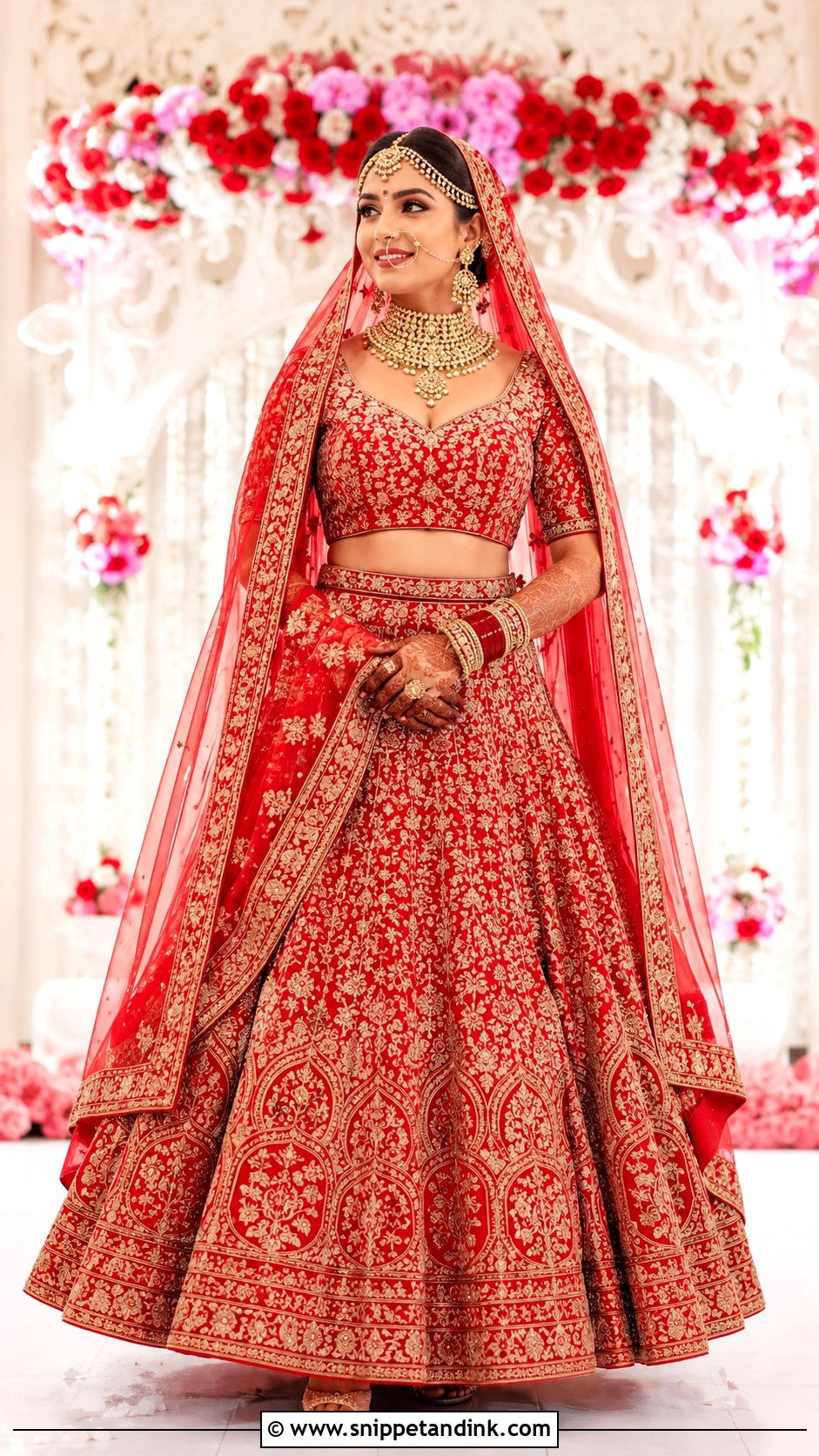
Red is still the colour most brides come back to after trying everything else, and for good reason: it holds its own under stage lights and against a gold mandap. Zari, zardozi, sequin or thread embroidery all work for the ceremony. The practical issue is weight. A heavily worked bridal lehenga can be very heavy, so ask the maker to add a can-can layer and a broad waistband with hooks rather than a drawstring, which digs in by the pheras. A fitted blouse, one dupatta over the head and a lighter second one across the shoulder give the full bridal look. Kundan, matha patti, bangles and embroidered heels finish it; soft gold eyes, defined liner and a red or rose lip suit most skin tones in that setting.
2. Pastel Lehenga Outfit
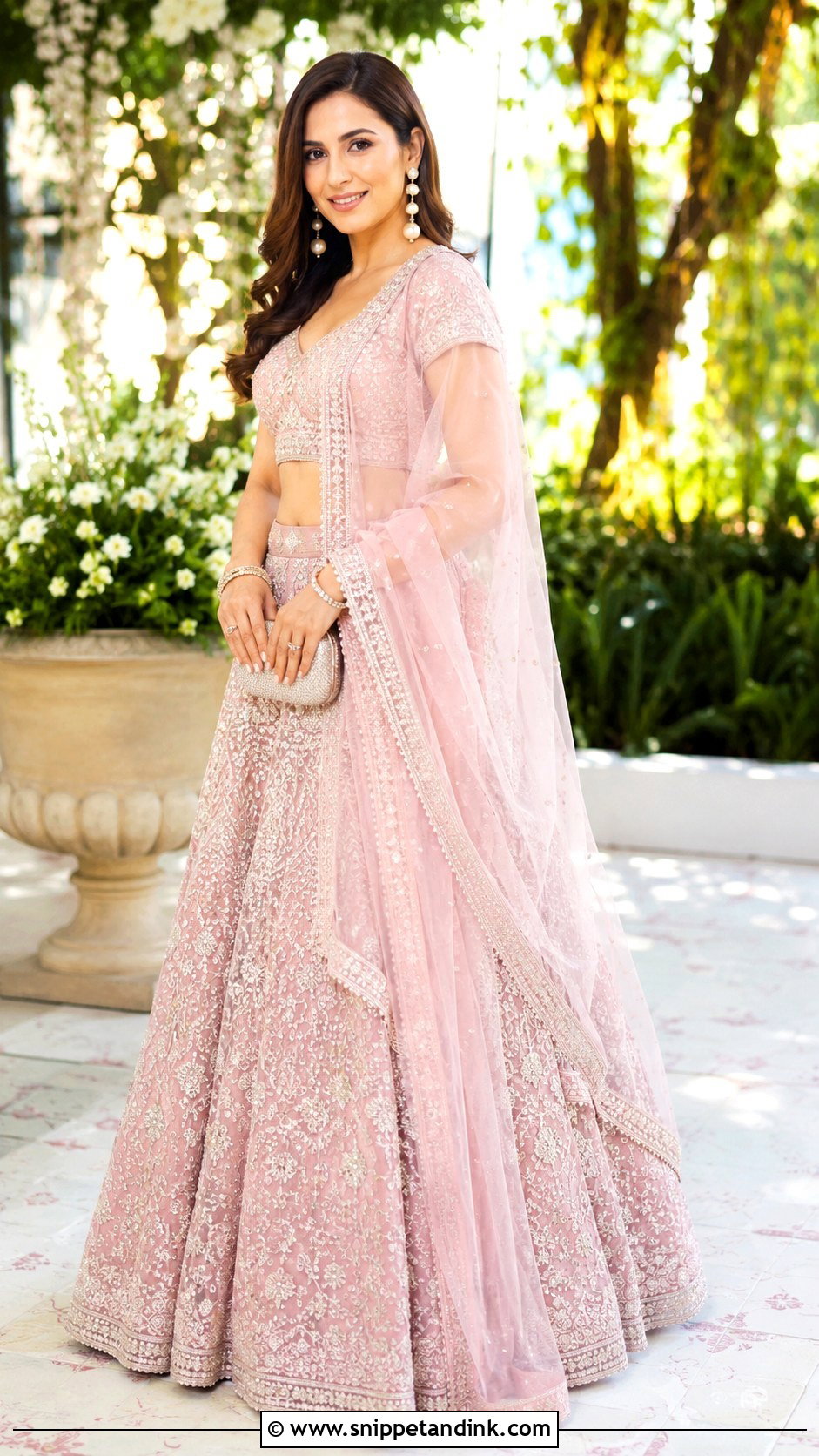
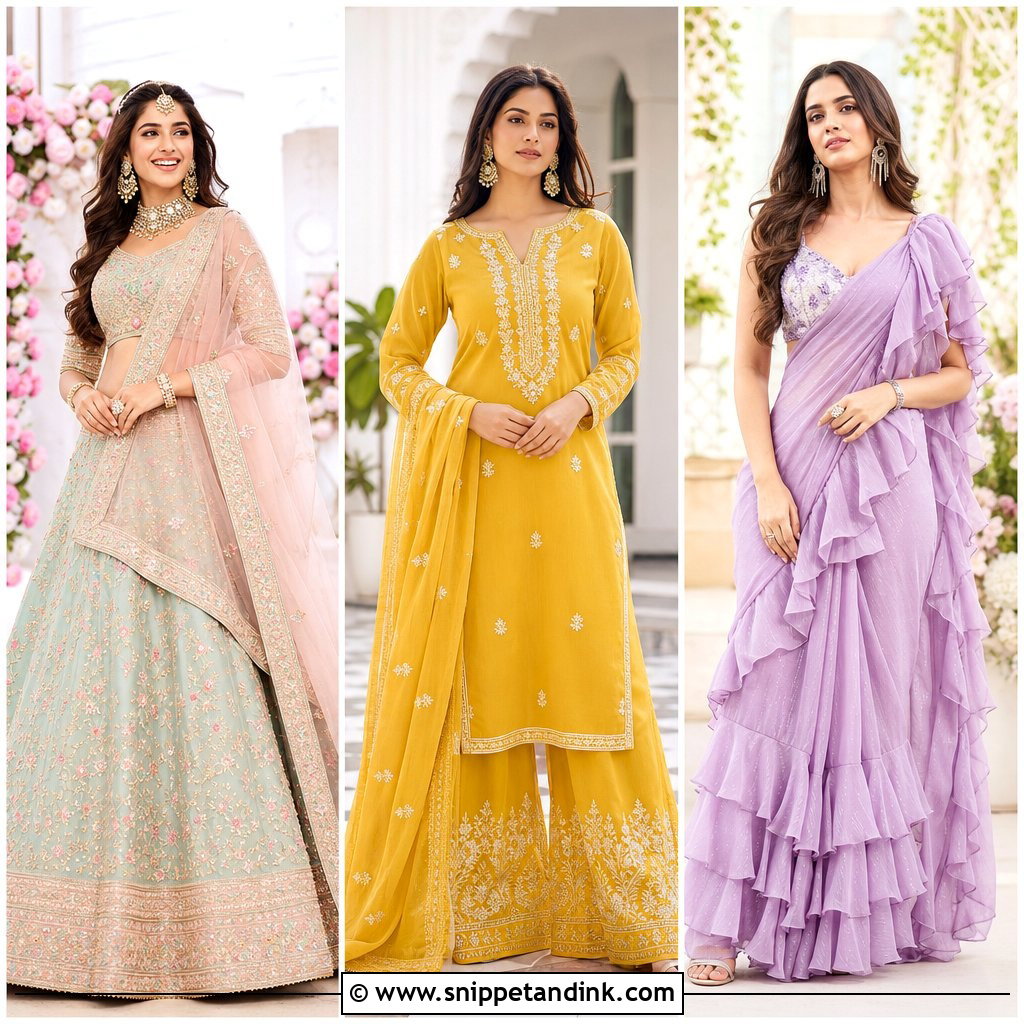
Pastels come into their own in daylight. Blush, powder blue, mint, ivory, peach and lavender with fine embroidery look fresh outdoors, but can wash out under warm evening bulbs, which is why I keep them for daytime and destination events. A net, organza or georgette dupatta keeps the outfit light. Pearl jewellery, polki earrings, a sleek clutch and metallic heels suit it. For more drama, a blouse with mirror work, tassels or a little shimmer does it. Sisters of the bride and bridesmaids reach for this look a lot.
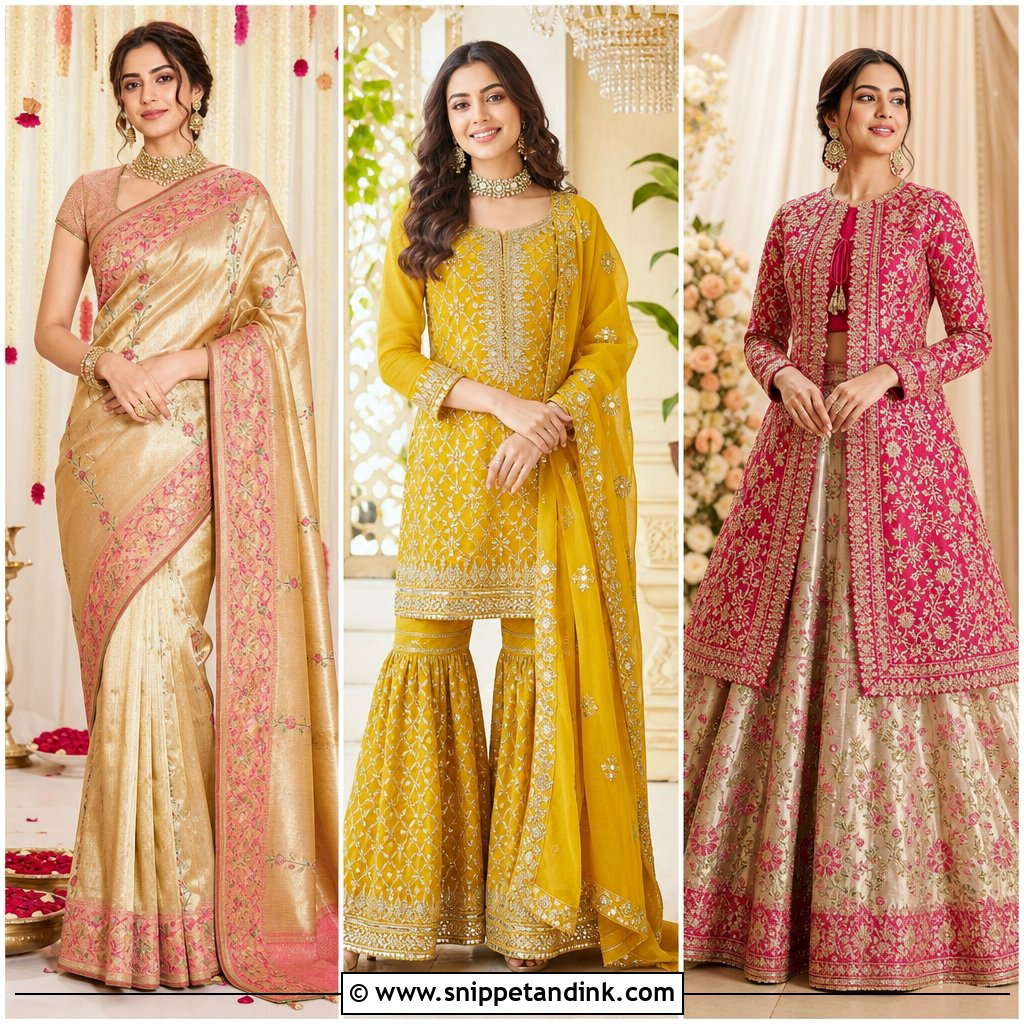
3. Banarasi Saree Outfit
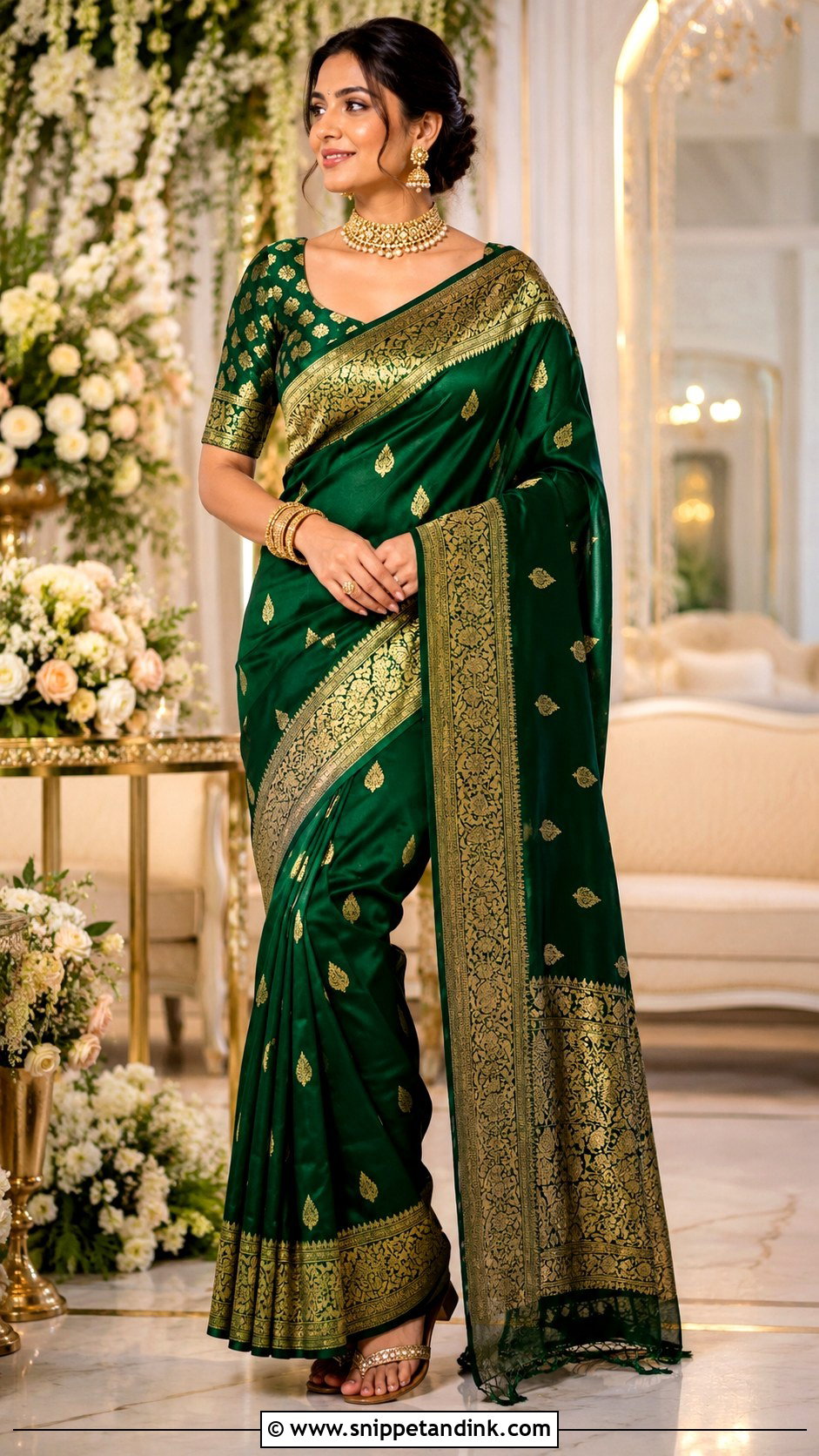
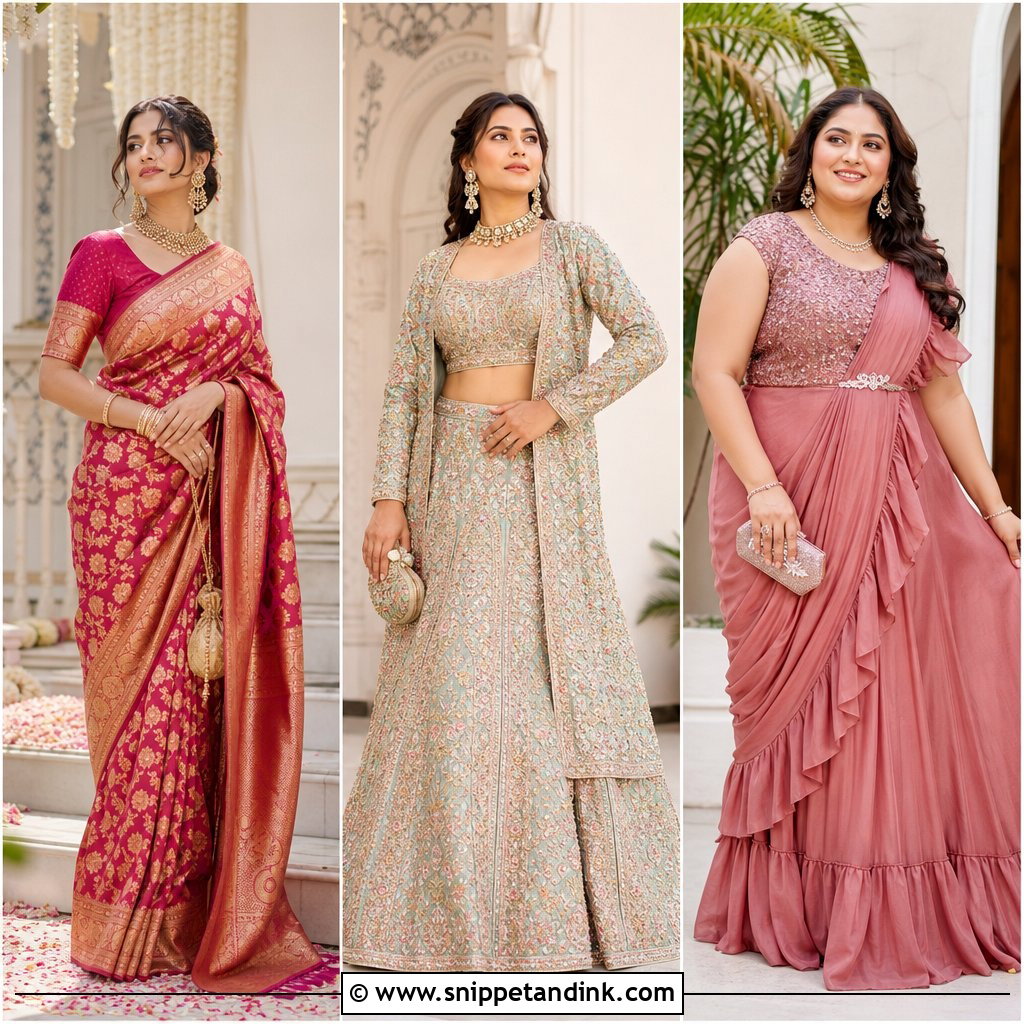
A Banarasi drapes with a weight and rustle that lighter silks don’t have. Emerald, maroon, royal blue, rani pink or mustard all suit a formal ceremony. Pair the saree with a fitted blouse in brocade, velvet or raw silk, and get the fall and pico done before the event, since an unfinished edge frays fast. Gold jhumkas, a choker, bangles and embellished sandals complete it, and a sleek bun with fresh flowers adds scent as well as finish. A real Banarasi lasts decades if aired and refolded every few months, so it’s money well spent for mothers and brides alike.
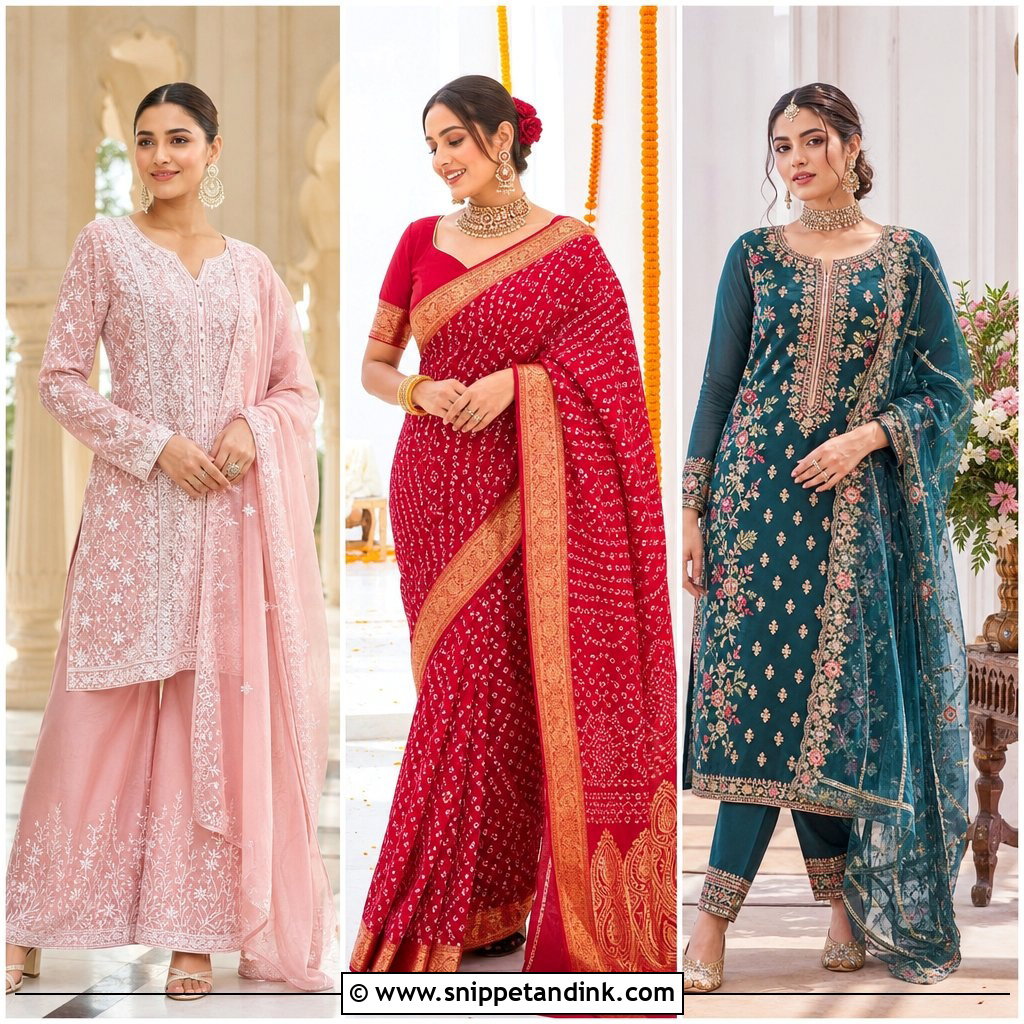
4. Sharara Suit Outfit
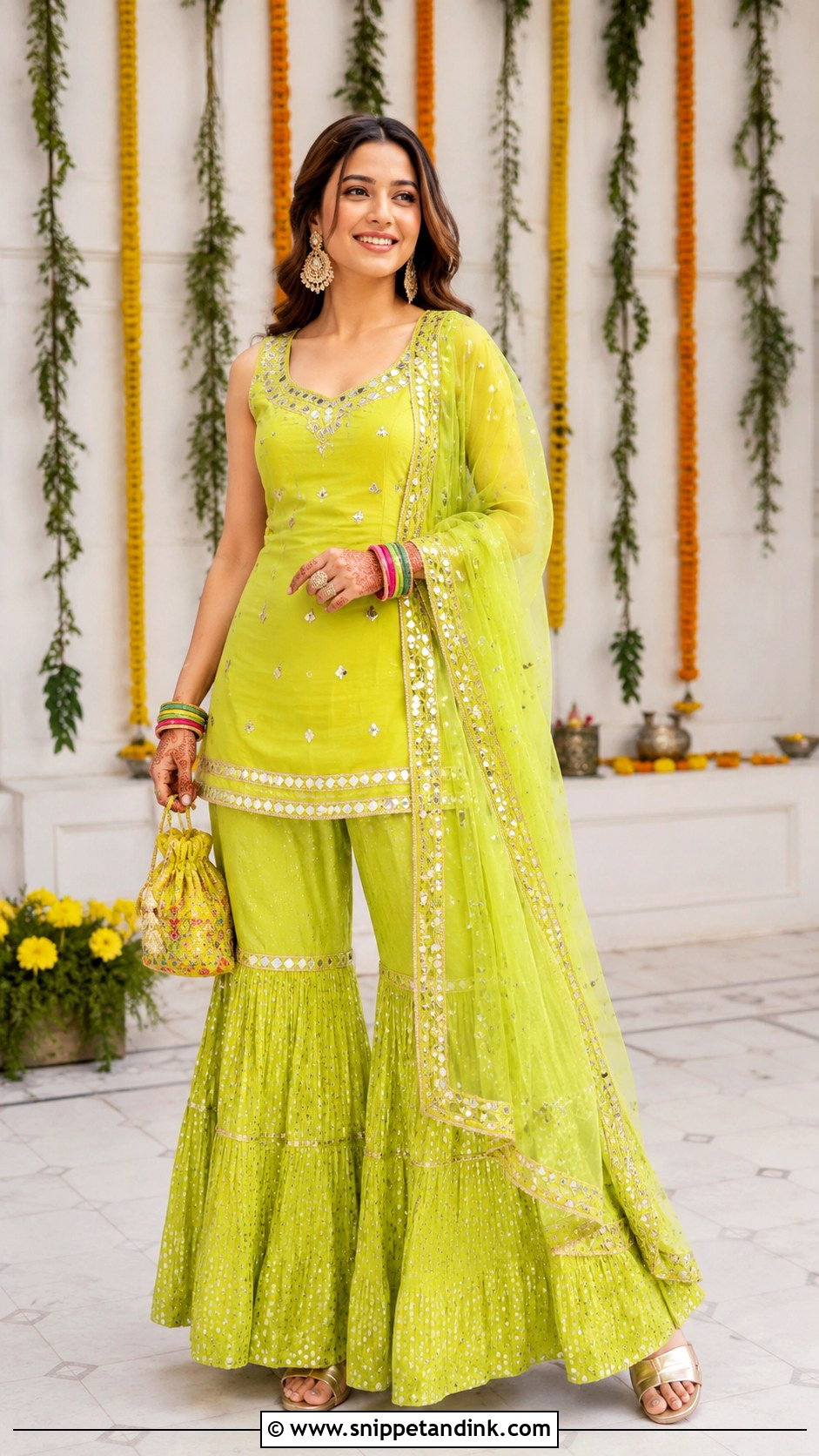
Shararas are what I suggest to anyone who knows she’ll dance. A short kurti over flared sharara pants with a matching dupatta looks festive without the bulk of a lehenga, and the split legs let you take stairs and sit on floor cushions comfortably. Gota patti, mirror work or sequins bring the shine. Chandbalis, stacked bangles and block heels or wedges keep you steady, and a potli bag carries your phone and safety pins. Yellow, green, coral and fuchsia are good for daytime pre-wedding events. Have the hem cut with your shoes on, because flared pants that brush the floor get stepped on all night.
5. Gharara Suit Outfit
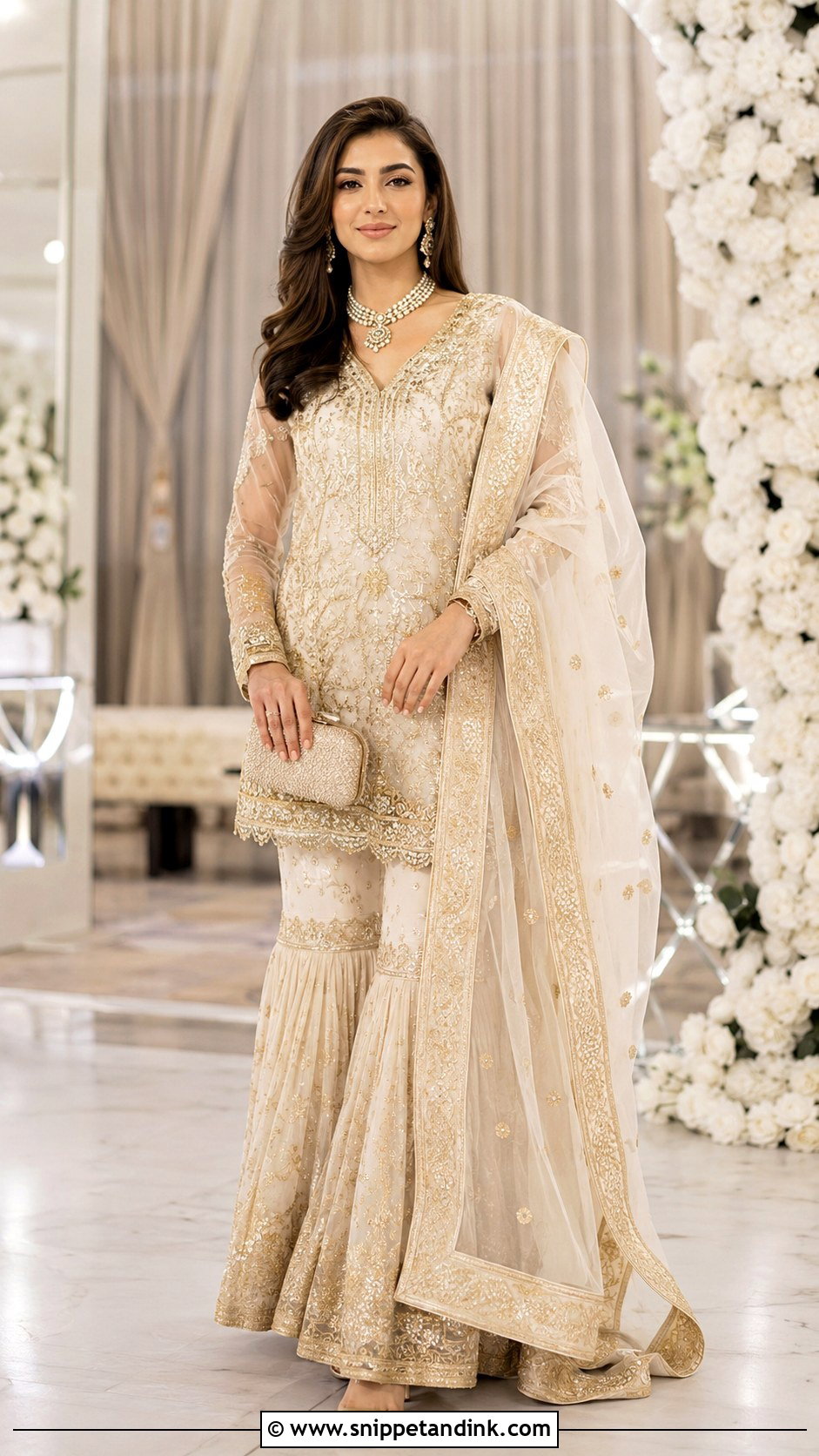
Ghararas look more regal than shararas because of the fitted thigh and the gathered joint at the knee, often covered with a gota band. Silk, chiffon, georgette or tissue with a worked hem and dupatta border suit a nikah, walima or reception. A short kurta balances the flare. The joint should sit right at or just below the knee; set too high, it makes legs look short, so I always check it with heels on. Pearl or kundan jewellery, a small clutch and heeled sandals, with soft waves or a low bun, keep it polished.
6. Anarkali Suit Outfit
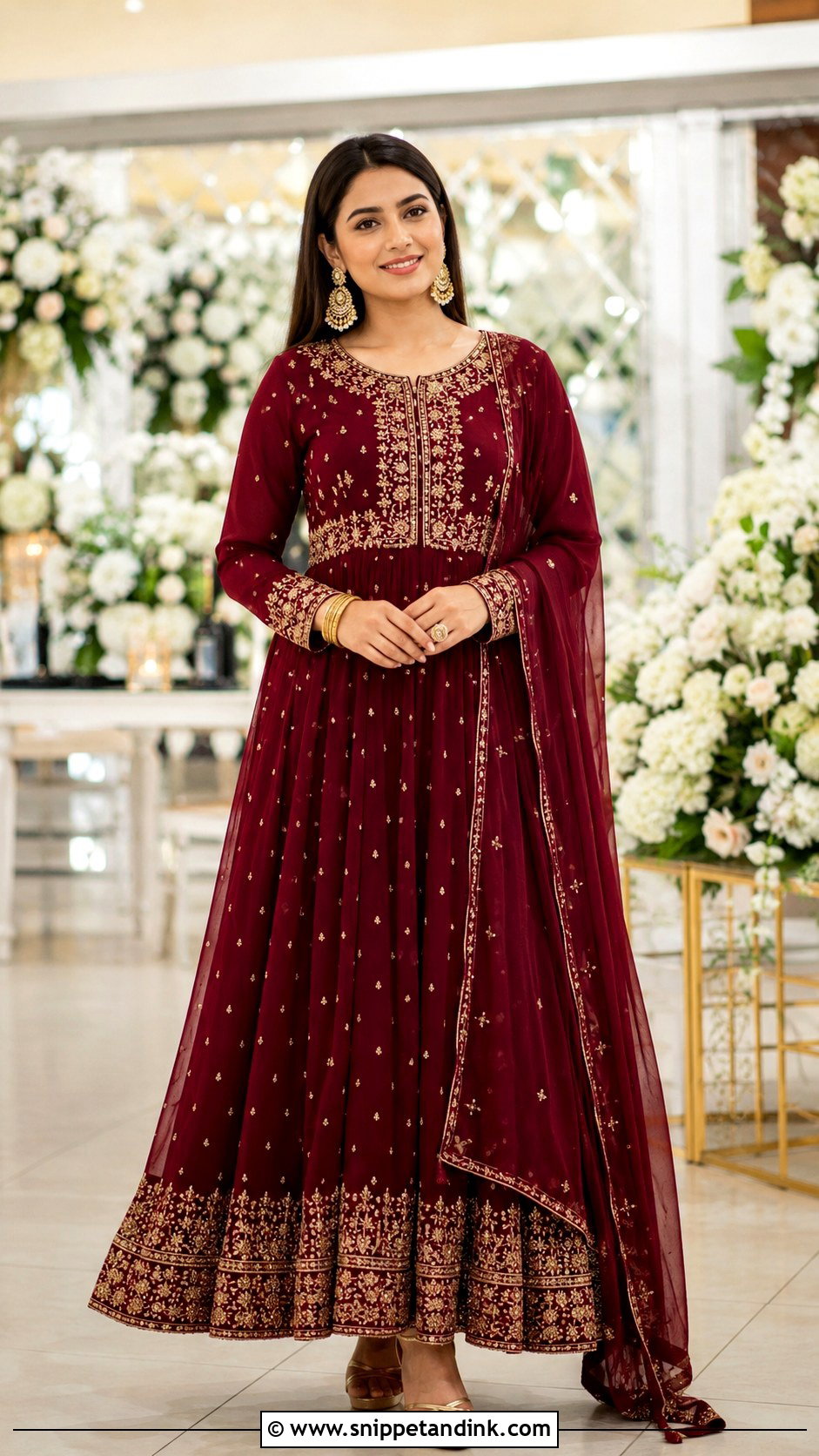
Anarkalis flatter a wide range of figures because the flare starts high and skims everything below. A floor-length cut with embroidery at the neckline, sleeves and hem is dressy enough for a ceremony. Georgette, silk, net and chiffon swing as you walk; heavy silk can get warm under a full lining. With churidar, dupatta, statement earrings and heels, focus the jewellery in one place if the Anarkali is heavily worked. I check the length in heels: just grazing the floor in flats will drag once the dancing starts.
7. Sequin Saree Outfit
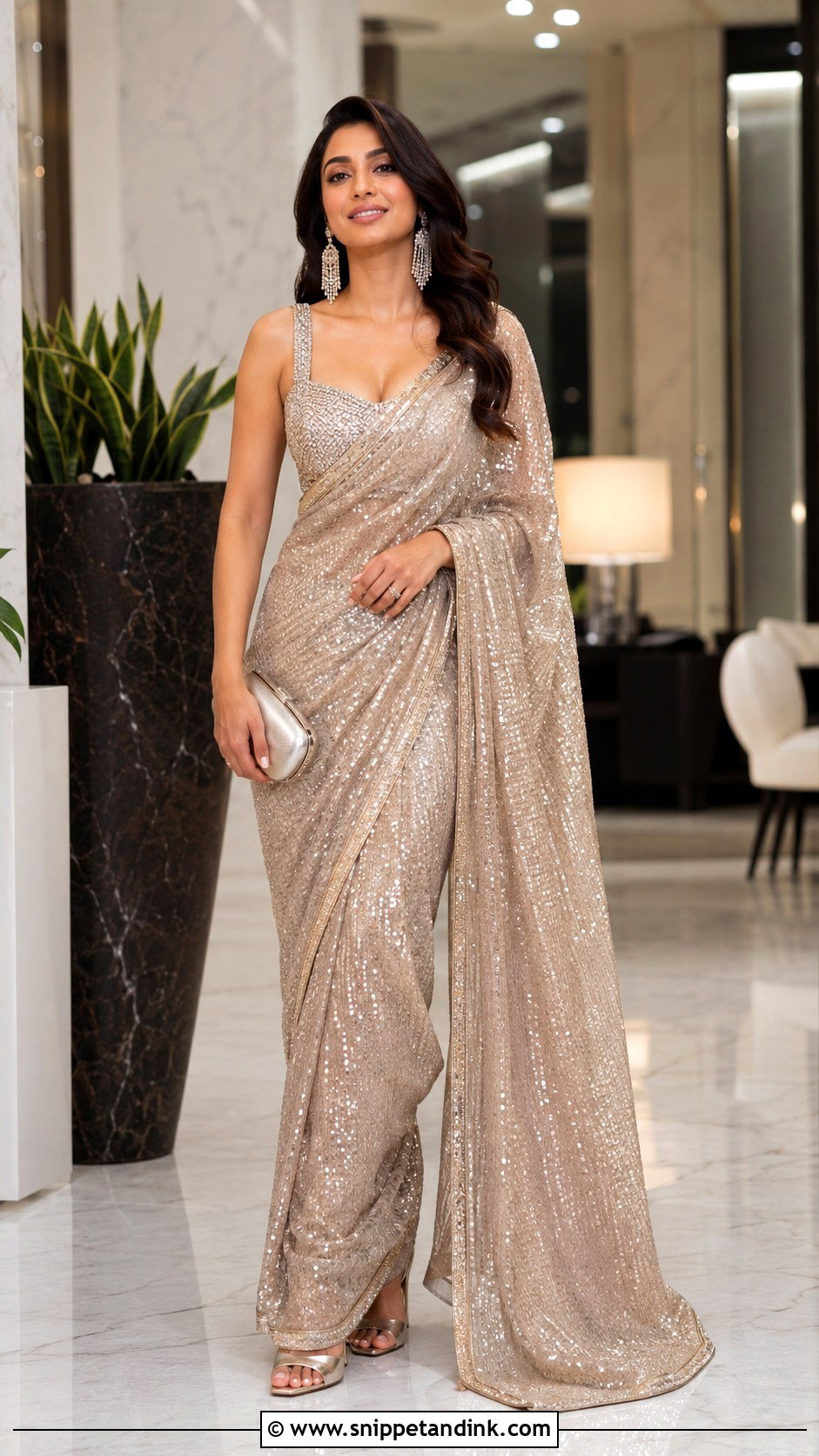
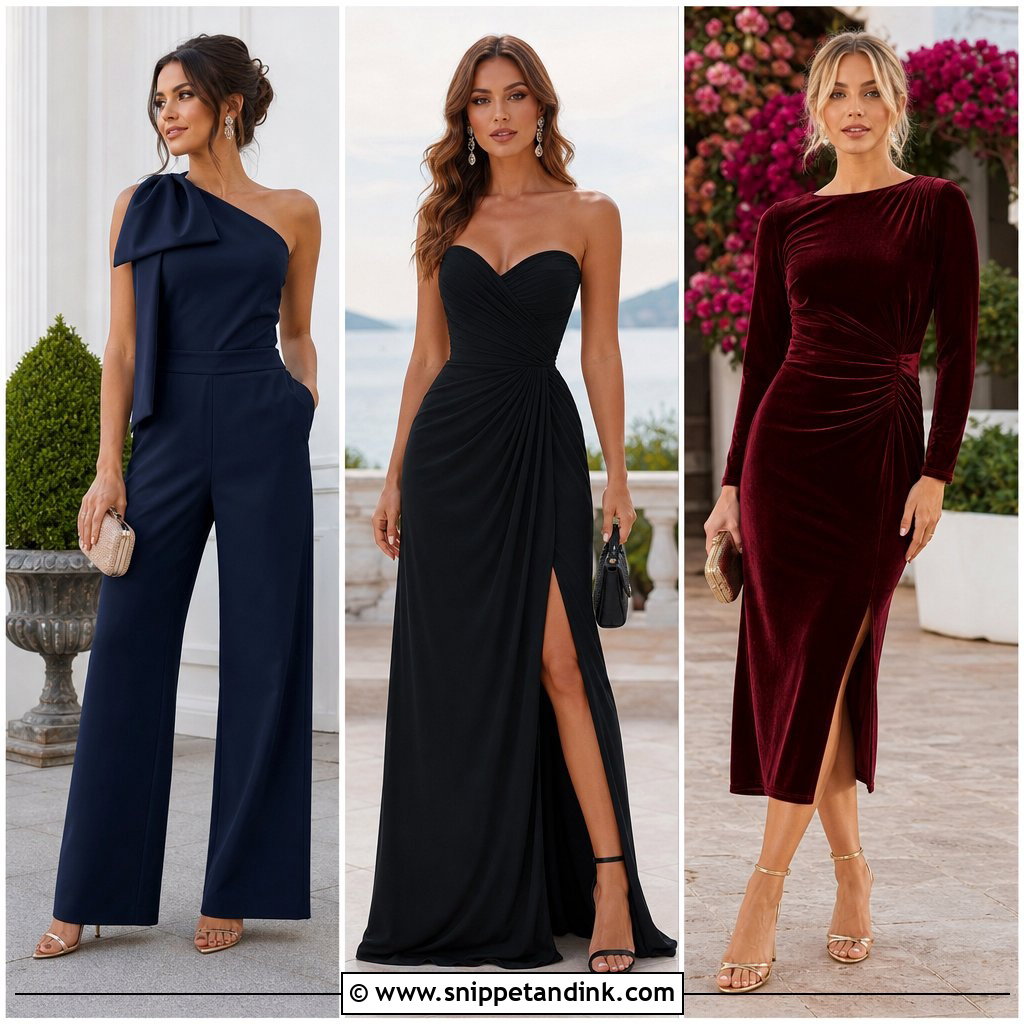
Sequin sarees are made for the evening: cocktail, reception, sangeet. Champagne, silver, rose gold, emerald, navy or black with all-over sequins or a shimmer border catch every light. Choose a lightweight base fabric, because heavy sequin pallus drag the shoulder down by the end of the night. Sleeveless, full-sleeve or structured blouse depending on comfort. Crystal earrings, a metallic clutch, simple heels, soft makeup and smooth hair; the saree already shines enough. Watch sequins at the underarm, as they can scratch skin over hours, so a lined blouse helps.
8. Mirror Work Lehenga Outfit
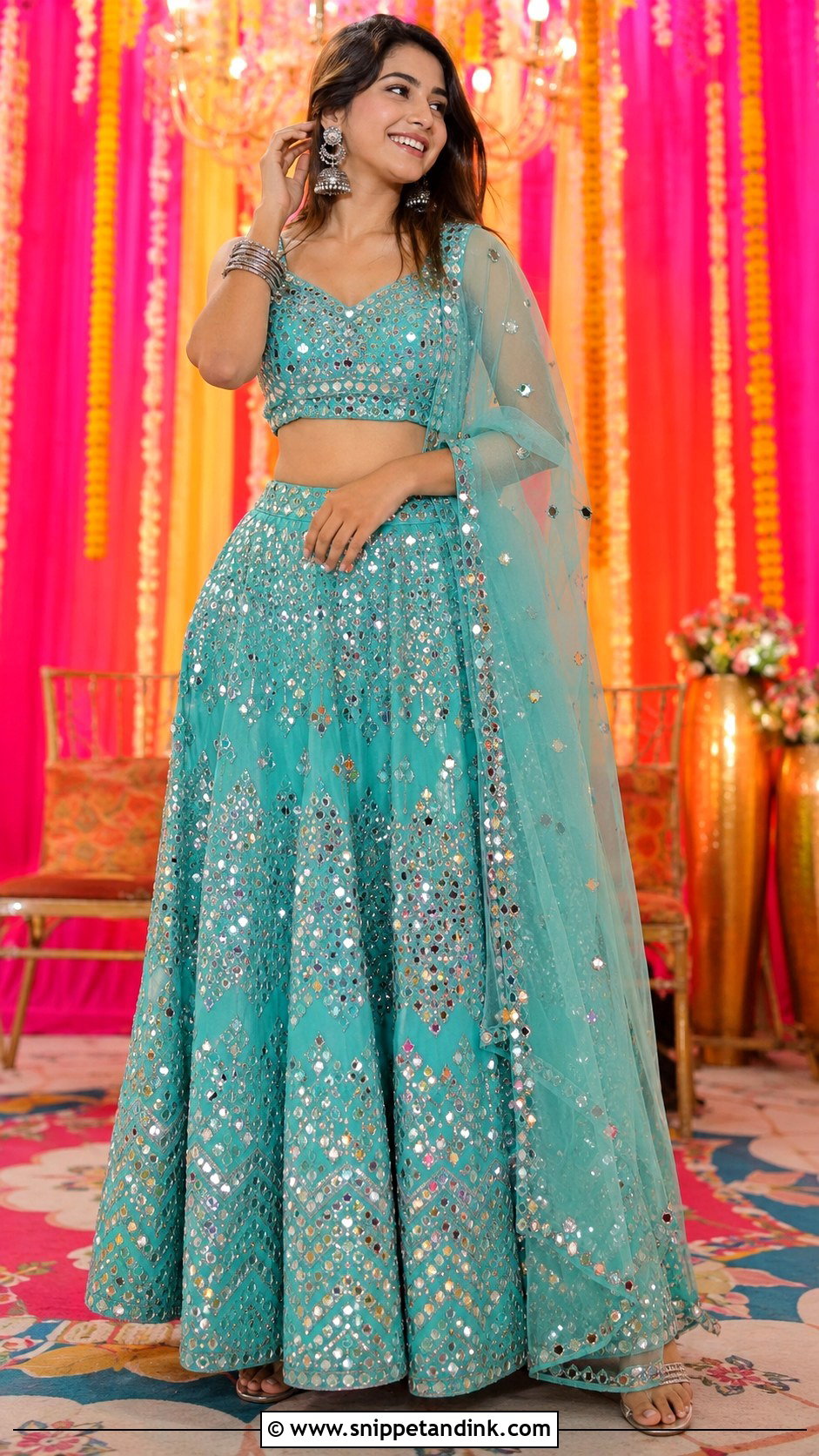
A mirror work lehenga outfit catches light every time you move, which is why mehendi and sangeet nights suit it. Lime, orange, turquoise, hot pink or ivory all work. Pair it with a cropped blouse and a light dupatta pinned firmly at the shoulder and waist so you can dance. Mirror embroidery can be heavier than it looks and the mirrors’ edges can catch fine dupattas, so I pair it with a sturdy georgette rather than a delicate net. Oxidised jewellery, colourful bangles, juttis or block heels, and a braid with small accessories suit cousins and friends who’ll be on the floor all night.
9. Silk Saree Outfit
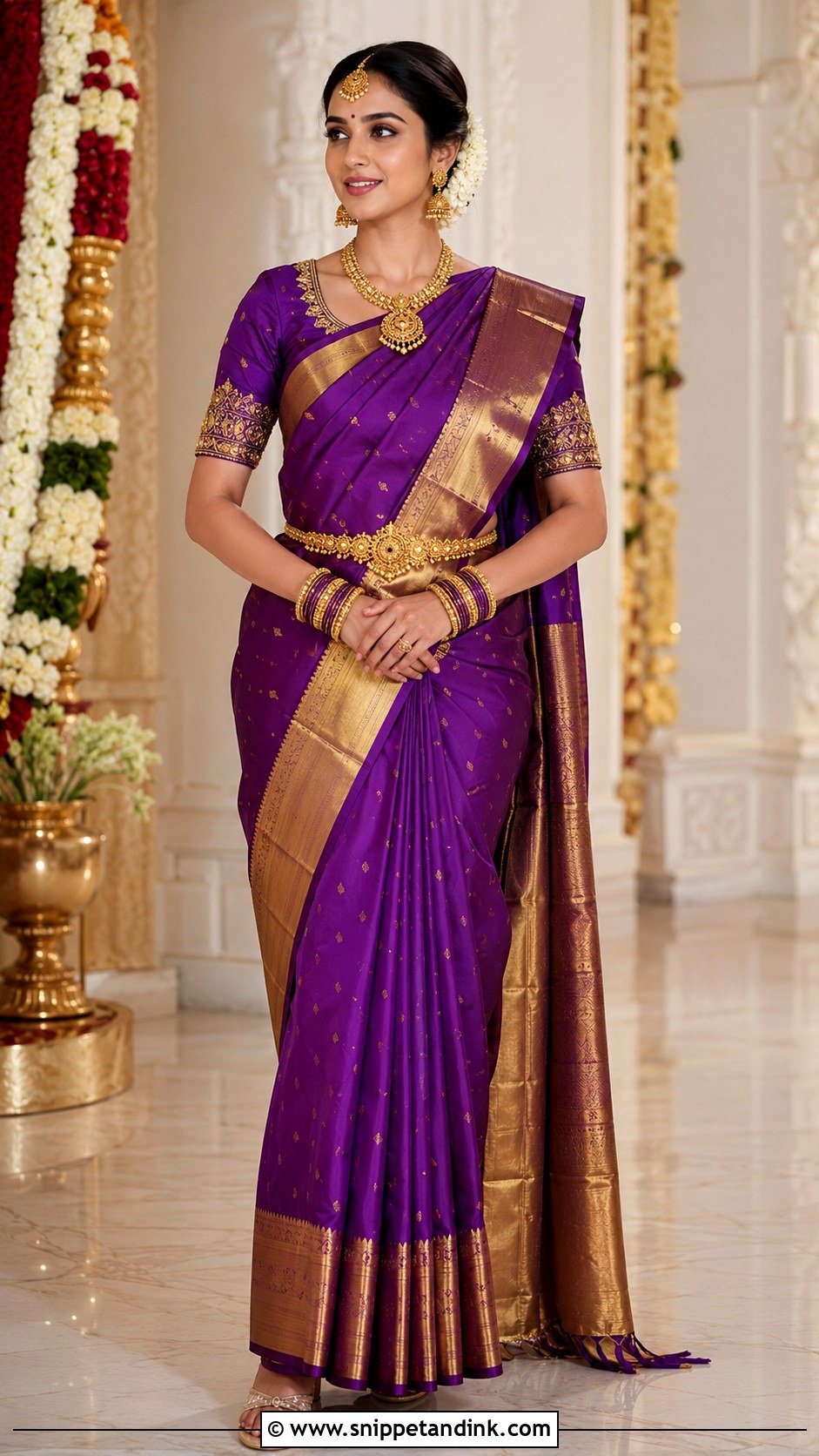
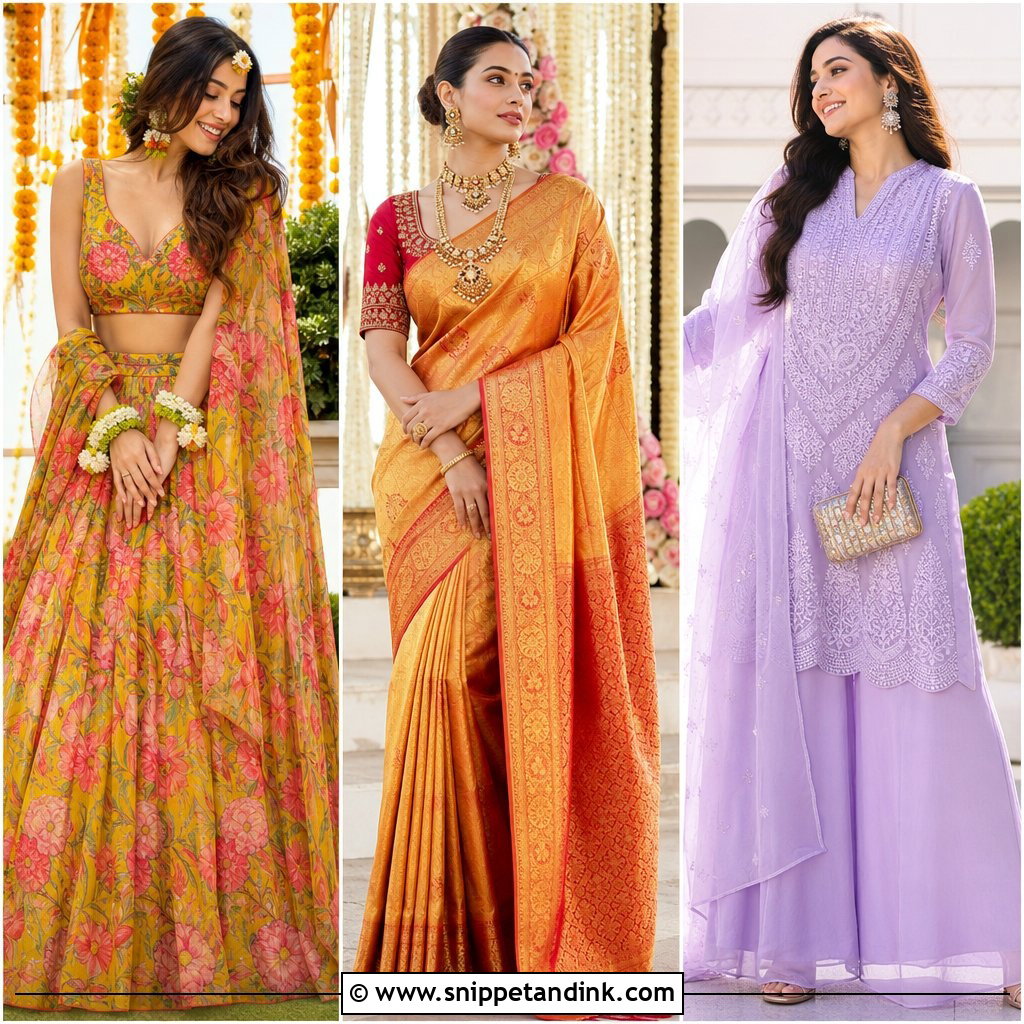
Regional silks carry real respect at a ceremony. Kanjeevaram, Paithani, Mysore silk and others bring richness through weave and border rather than embellishment. Red, green, purple, gold or orange all suit. Temple jewellery, bangles, a traditional blouse and a neat bun with fresh flowers complete it. Kanjeevaram is thick and holds pleats firmly, so I pin the pleats at the waist and the pallu at the shoulder; Mysore silk is softer and drapes closer. Mothers and aunties often prefer it, and brides who want a ceremony look that feels rooted.
10. Indo Western Lehenga Outfit
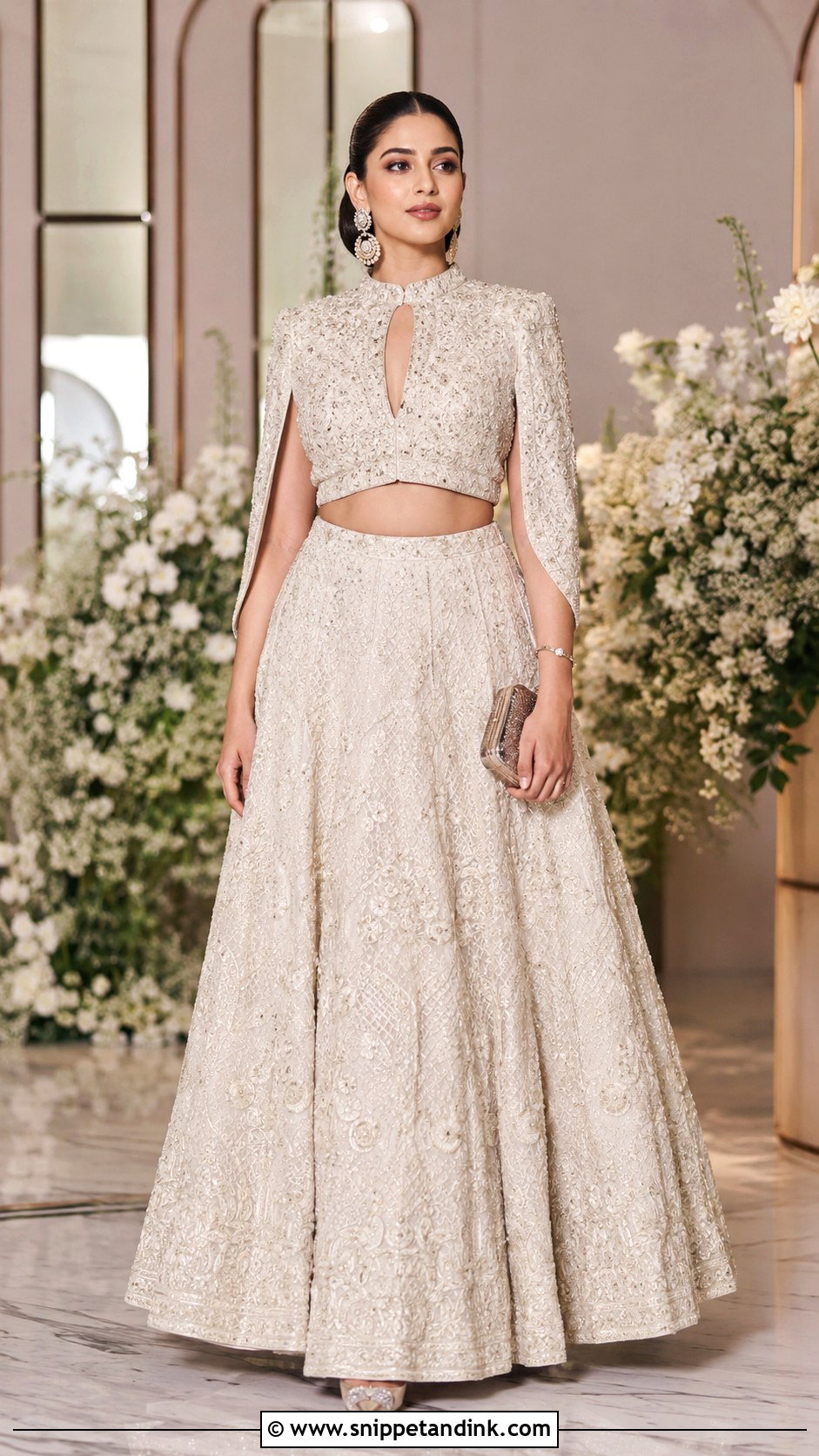
An Indo western lehenga outfit keeps the lehenga skirt and changes the top half: a cape blouse, peplum, jacket, corset-style blouse or asymmetric drape. Ivory, gold, sage, wine or dusty pink keep the palette clean. Statement earrings, a sleek bracelet and pointed heels or embellished sandals finish it. My rule is one modern element alongside traditional embroidery. Add two or three and it starts to look like a costume, not a shaadi outfit. Receptions, engagements and fusion events suit it.
11. Floral Lehenga Outfit
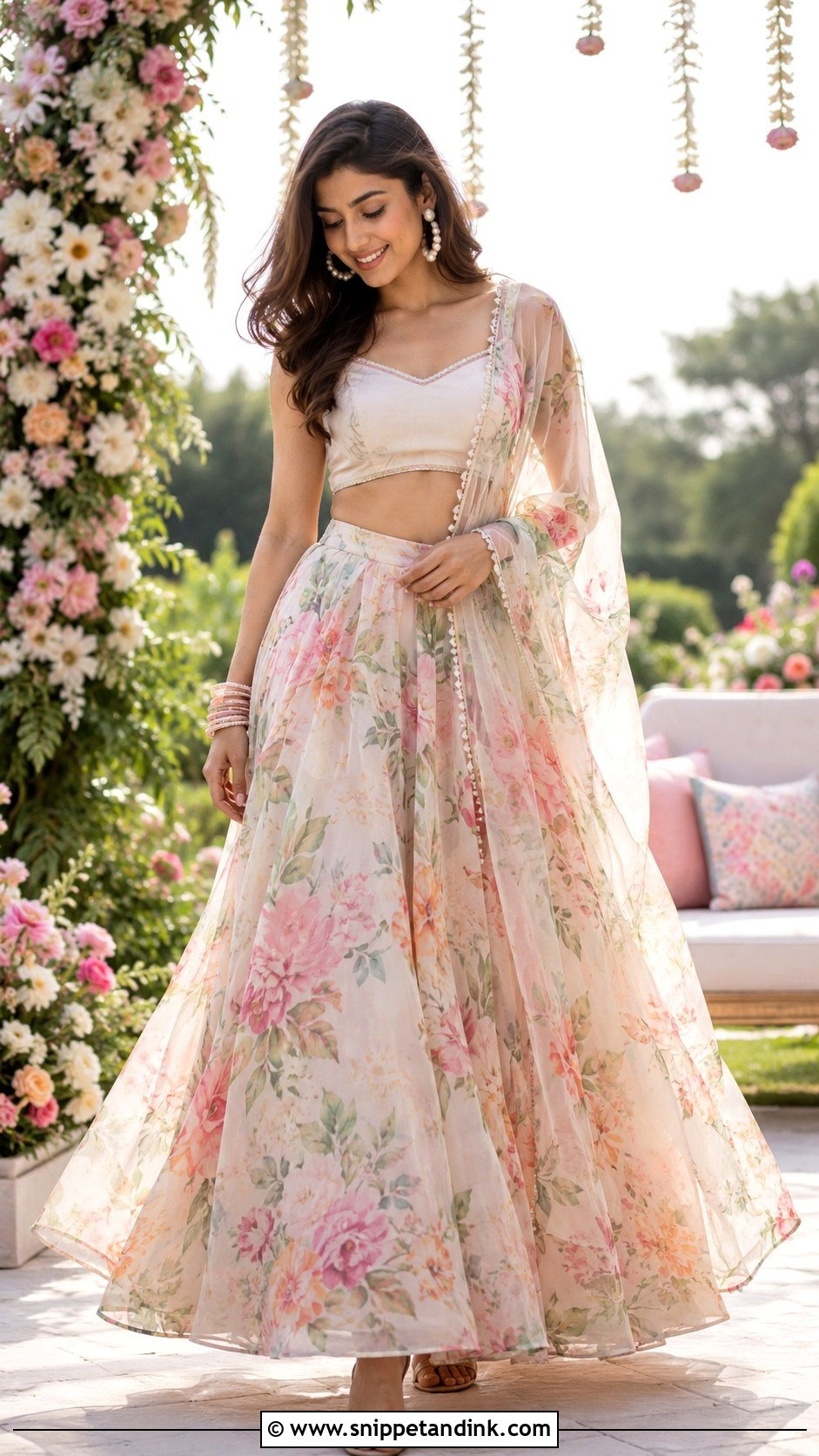
Floral lehengas suit daytime functions: haldi, mehendi, garden ceremonies, summer events. Printed, embroidered or 3D appliqué florals all work, on organza, chiffon, georgette or silk blends. A simple blouse, sheer dupatta, pearl earrings and pastel heels keep it light. Bold prints call for minimal jewellery; delicate florals can take a statement choker. 3D appliqué flowers flatten when you sit on them for hours, so for a mehendi where you’ll be seated, I’d keep them on the dupatta or blouse, not the skirt.
12. Palazzo Suit Outfit
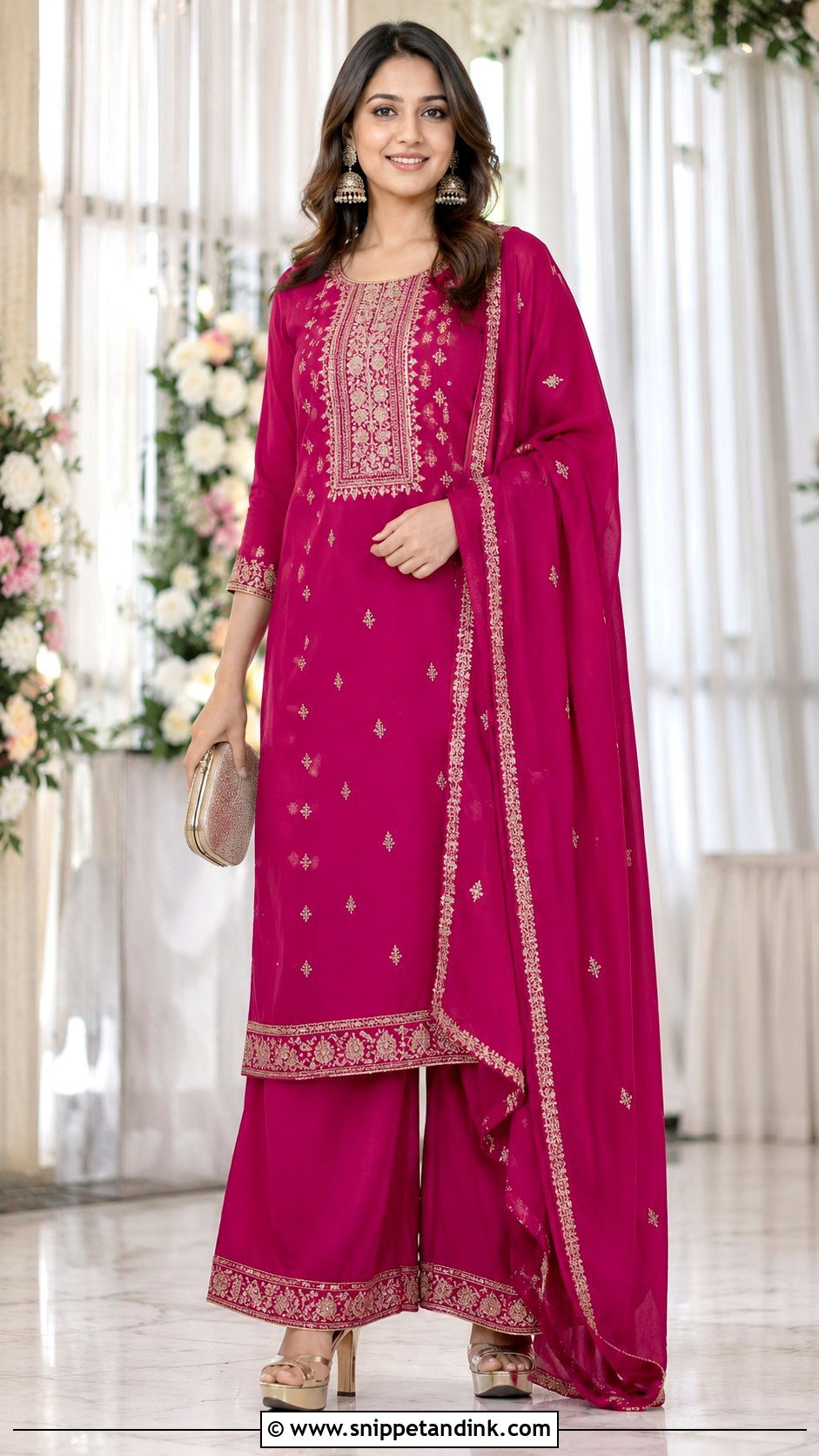
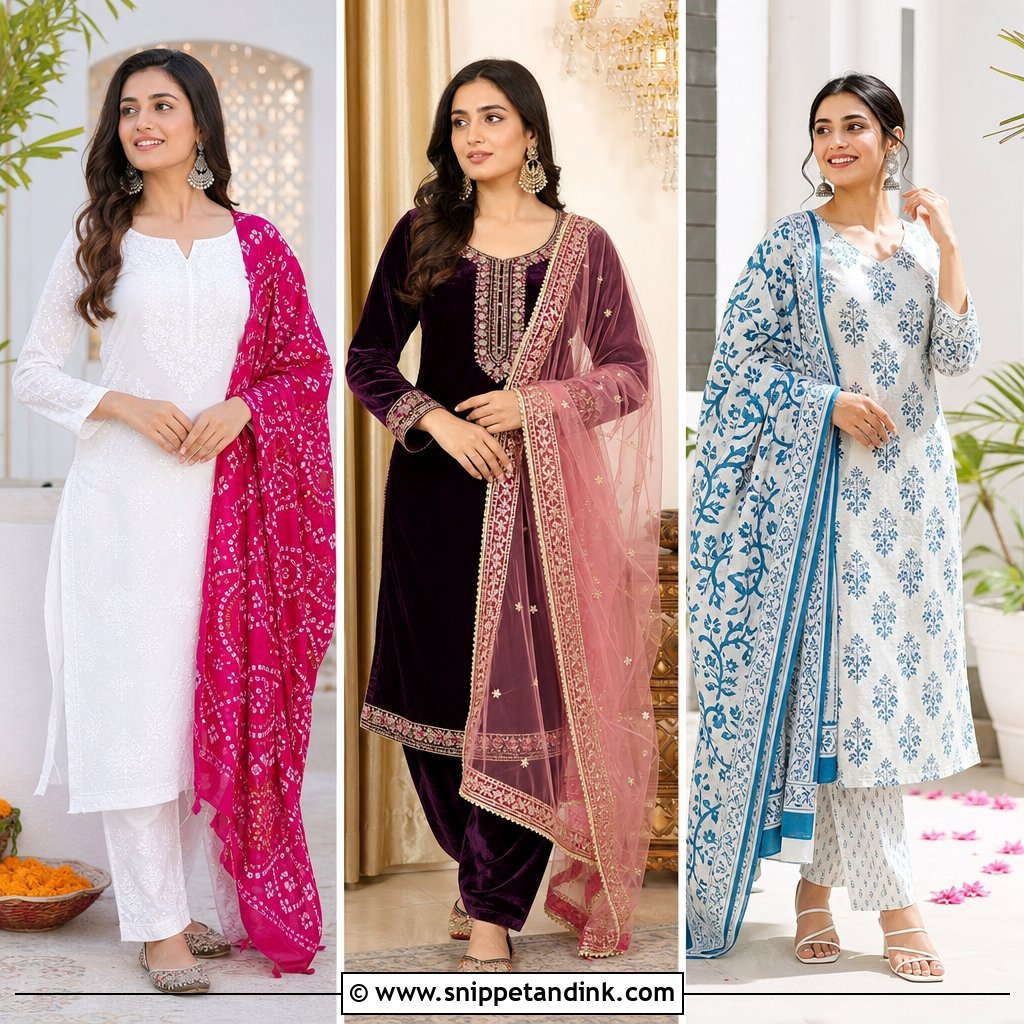
Palazzo suits are the travel-wedding workhorse: a straight kurta or festive kurti with wide palazzos and a matching dupatta packs flat and can be repeated with different jewellery. Embroidery at neckline, sleeves or hem is enough for a wedding. Jhumkas, a clutch and platforms or wedges suit it. Teal, magenta, wine and mustard look festive. Pick palazzos that end at your ankle in your shoes, because wide hems that pool on the floor get caught on chair legs.
13. Cape Lehenga Outfit
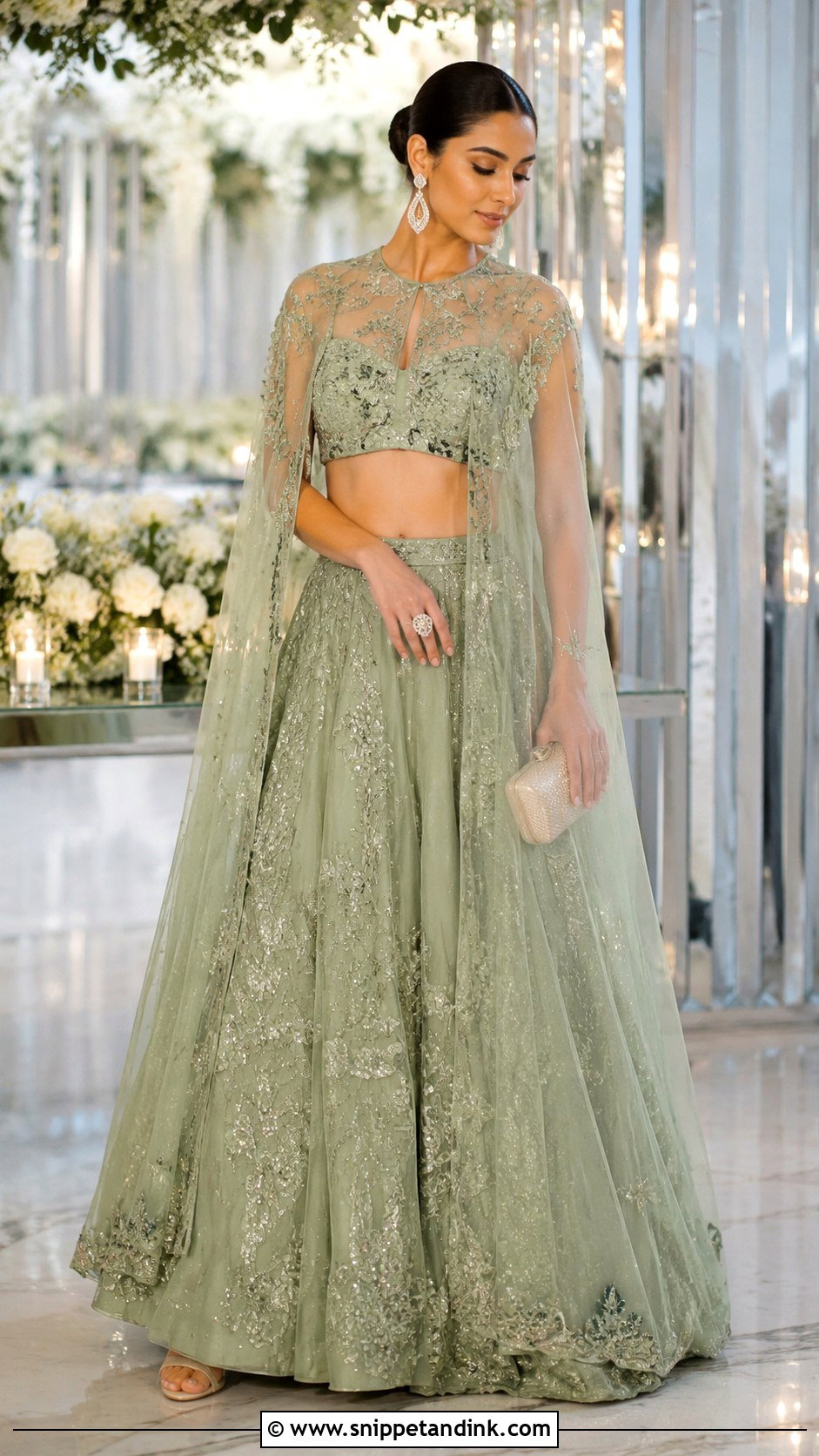
A cape replaces the dupatta, which is the main reason I recommend it to anyone who hates adjusting fabric all evening. Sheer embroidered capes, cape blouses or long jacket-style capes all work over a lehenga. Keep accessories sleek: earrings, a ring, a small clutch. Heels balance the long lines. Ask for the cape to be stitched at the shoulder seam, not just hooked, if you’re planning to dance, because a loose cape slides back when you raise your arms. Receptions, sangeet and engagements suit it.
14. Pre Draped Saree Outfit
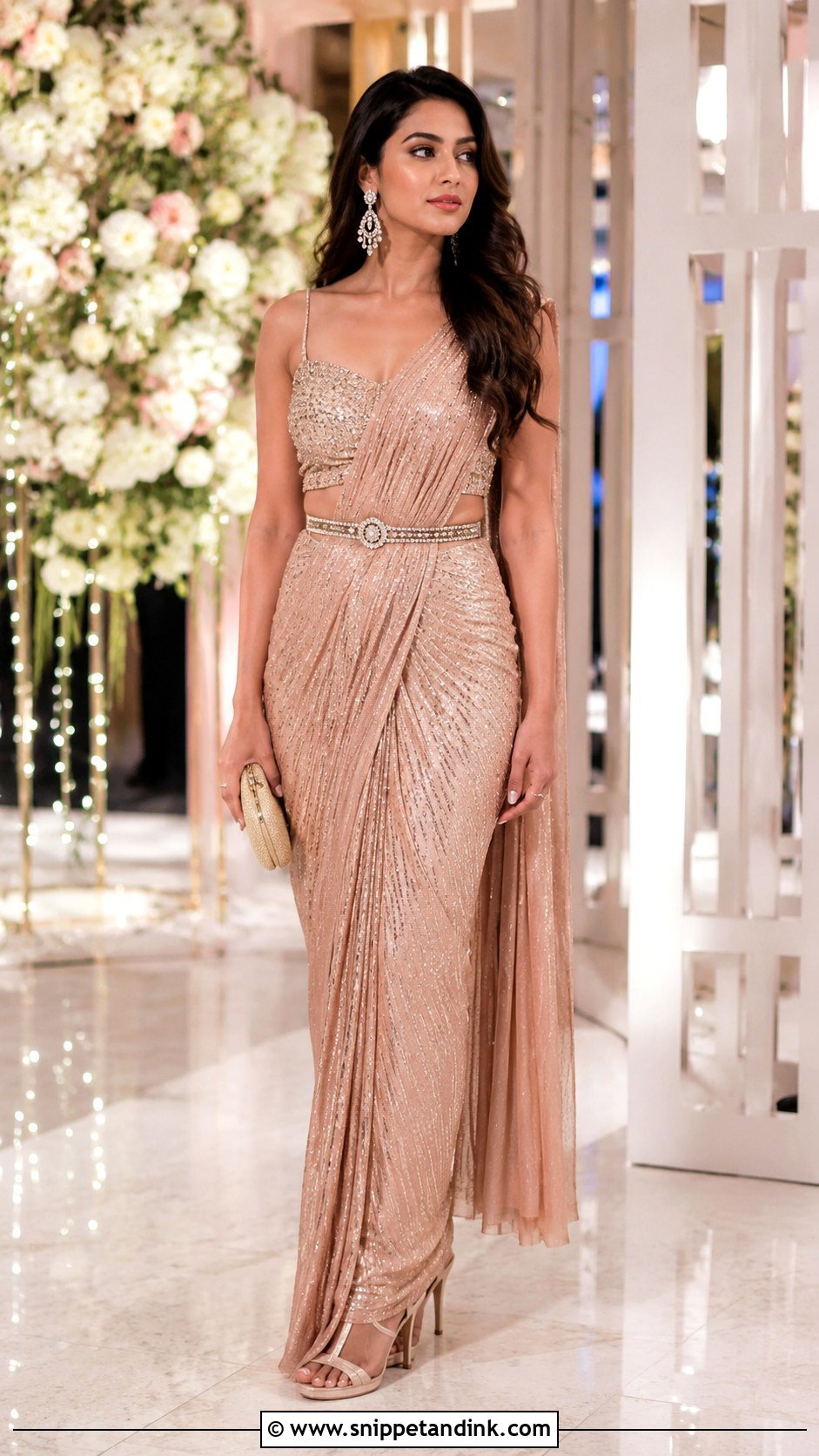
Pre-draped sarees give you the pleats and pallu without needing an hour and an auntie. Satin, georgette, chiffon or sequin fabrics look sleek. A statement blouse, a waist belt that defines the shape and holds the drape, earrings and high heels finish it. Try it on with the shoes before the event, since the pleat length is fixed and can’t be adjusted the way a draped saree can. Cocktail nights, sangeet and receptions suit it, and so do guests who want to dance freely.
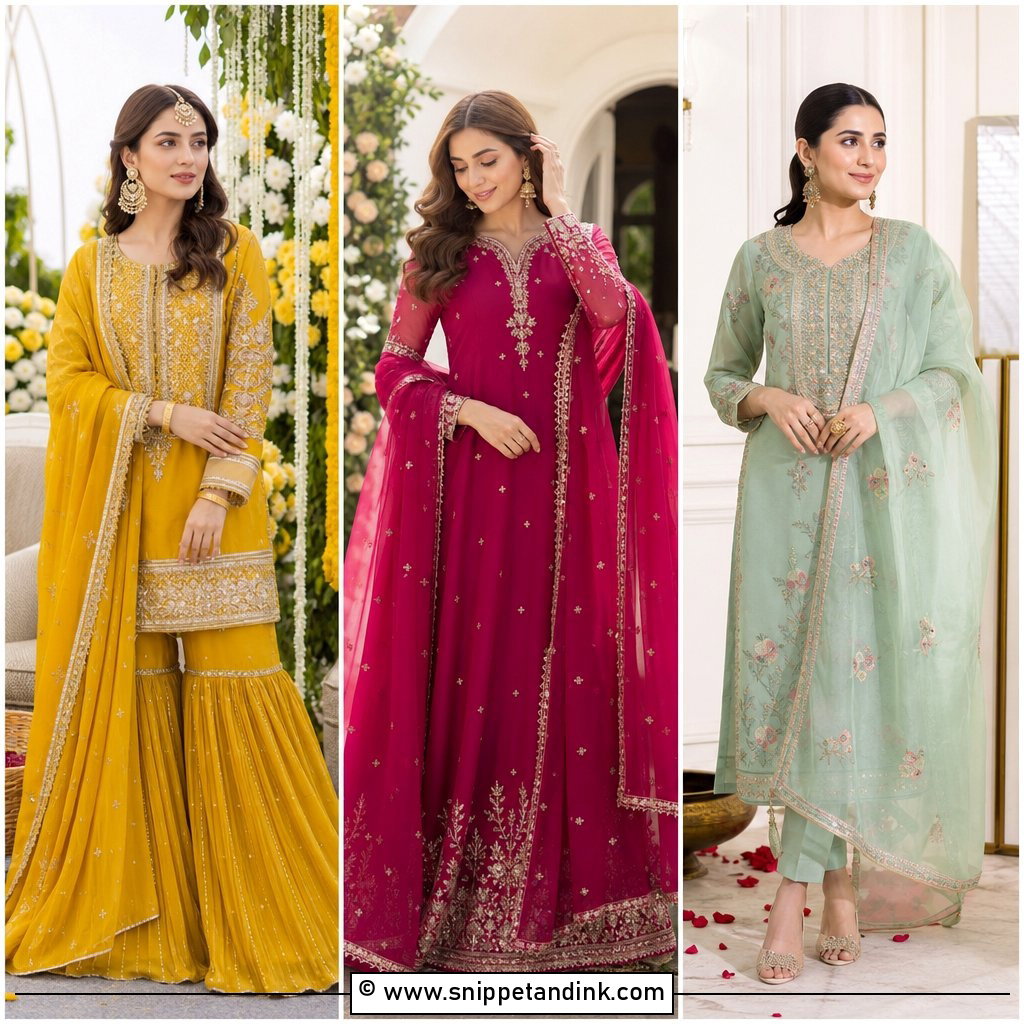
15. Jacket Lehenga Outfit
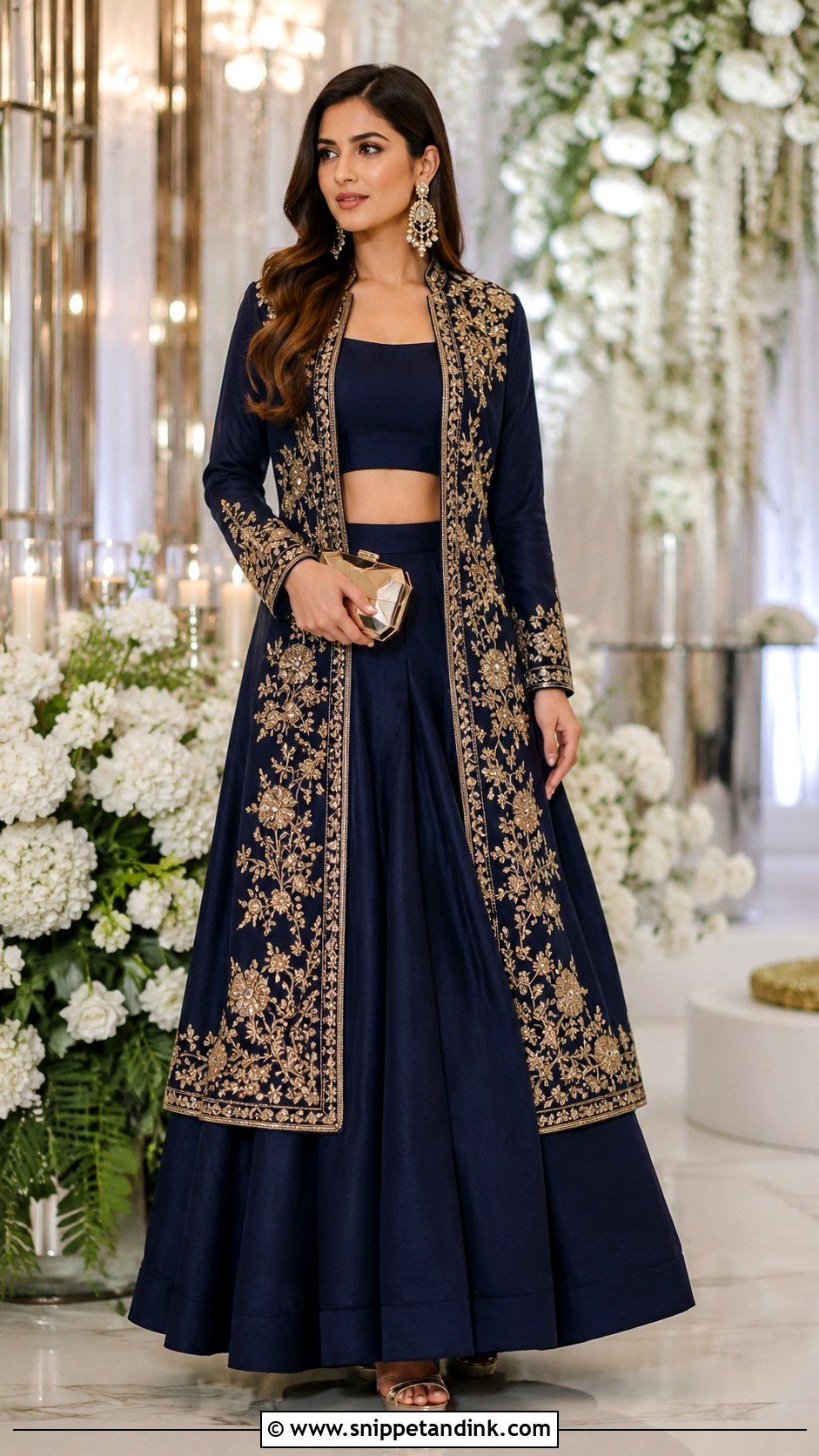
Jacket lehengas give coverage and warmth for winter weddings and cool evening venues. A long embroidered jacket, a short structured one or an open cape-style jacket can replace the dupatta or layer over a simple blouse. Velvet, silk or brocade for winter; organza for milder evenings. Statement earrings, a clutch and heels complete it. I like it when you’d rather cover your arms or waist without losing any of the impact. Check the jacket armholes while raising your arms; structured jackets cut tight restrict dancing.
16. Chikankari Lehenga Outfit
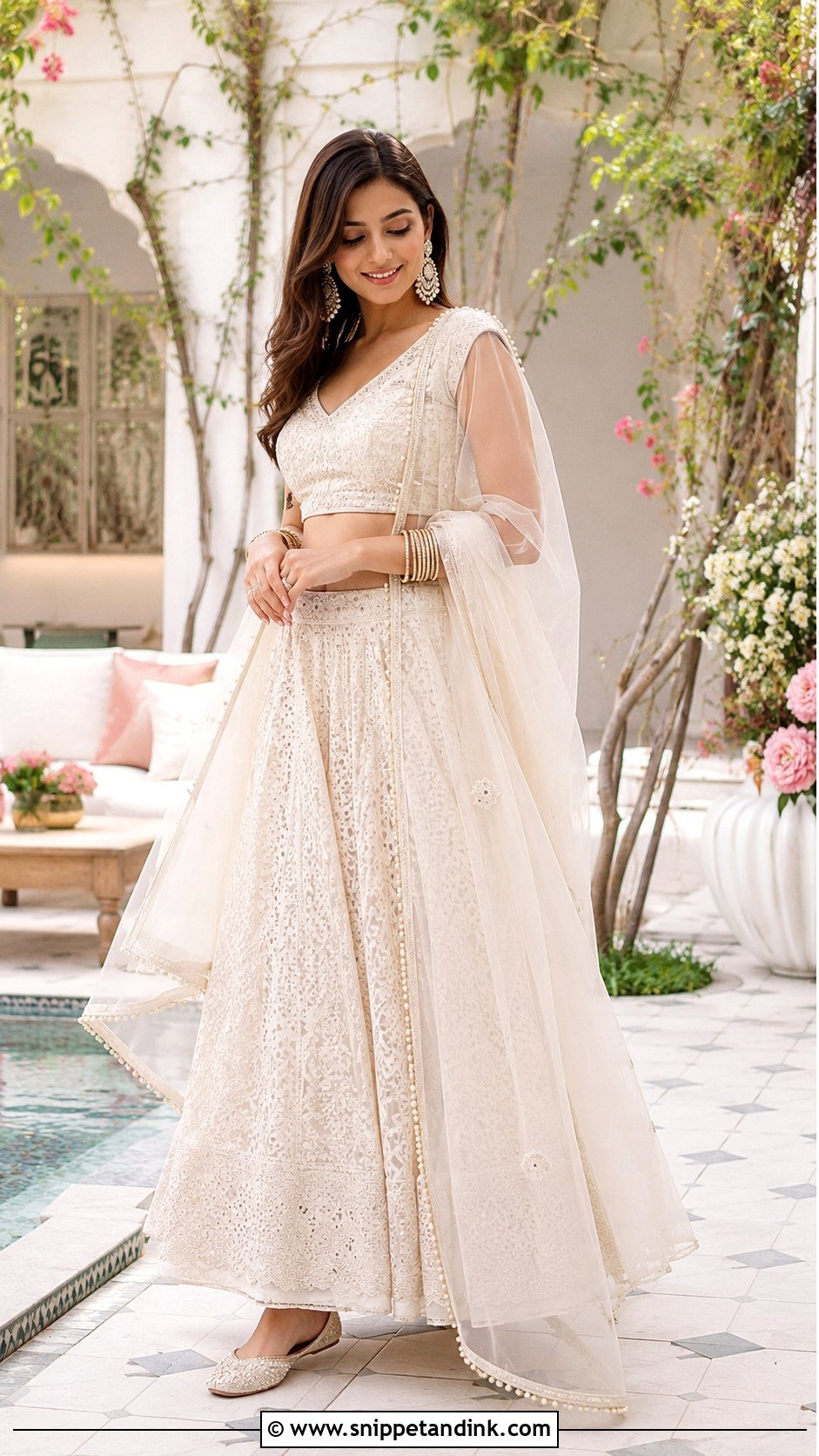
Chikankari is hand embroidery from Lucknow, traditionally white thread on fine cotton or muslin, and its charm is quietness. Ivory, blush, sage, lemon, peach and powder blue suit it best. Tonal thread with pearl or subtle sequin accents makes it wedding-ready. A fine dupatta, pearl earrings, soft bangles and embellished flats or heels for mehendi, haldi or an outdoor ceremony. Heavy jewellery drowns it. Fresh makeup and loose waves suit the mood. Fine fabric under chikankari wrinkles easily, so steam it at the venue.
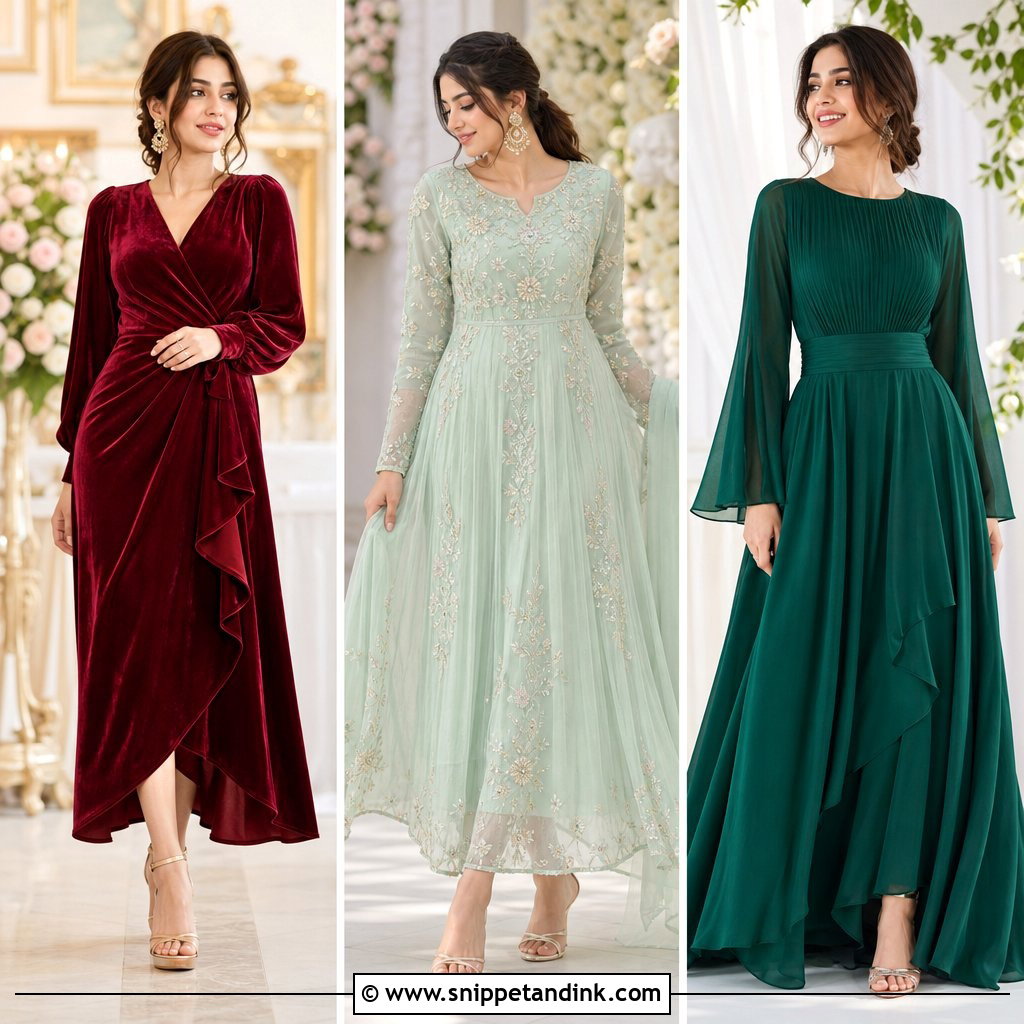
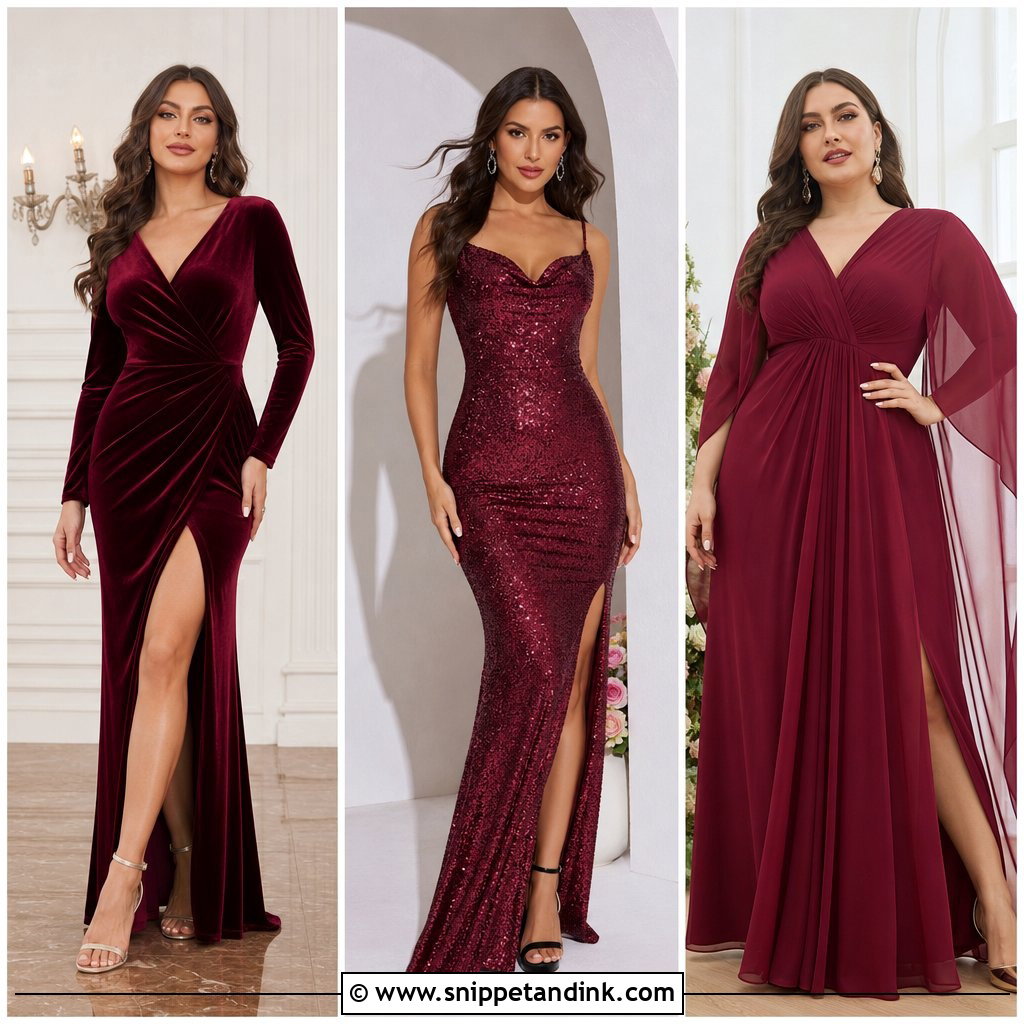
17. Velvet Lehenga Outfit
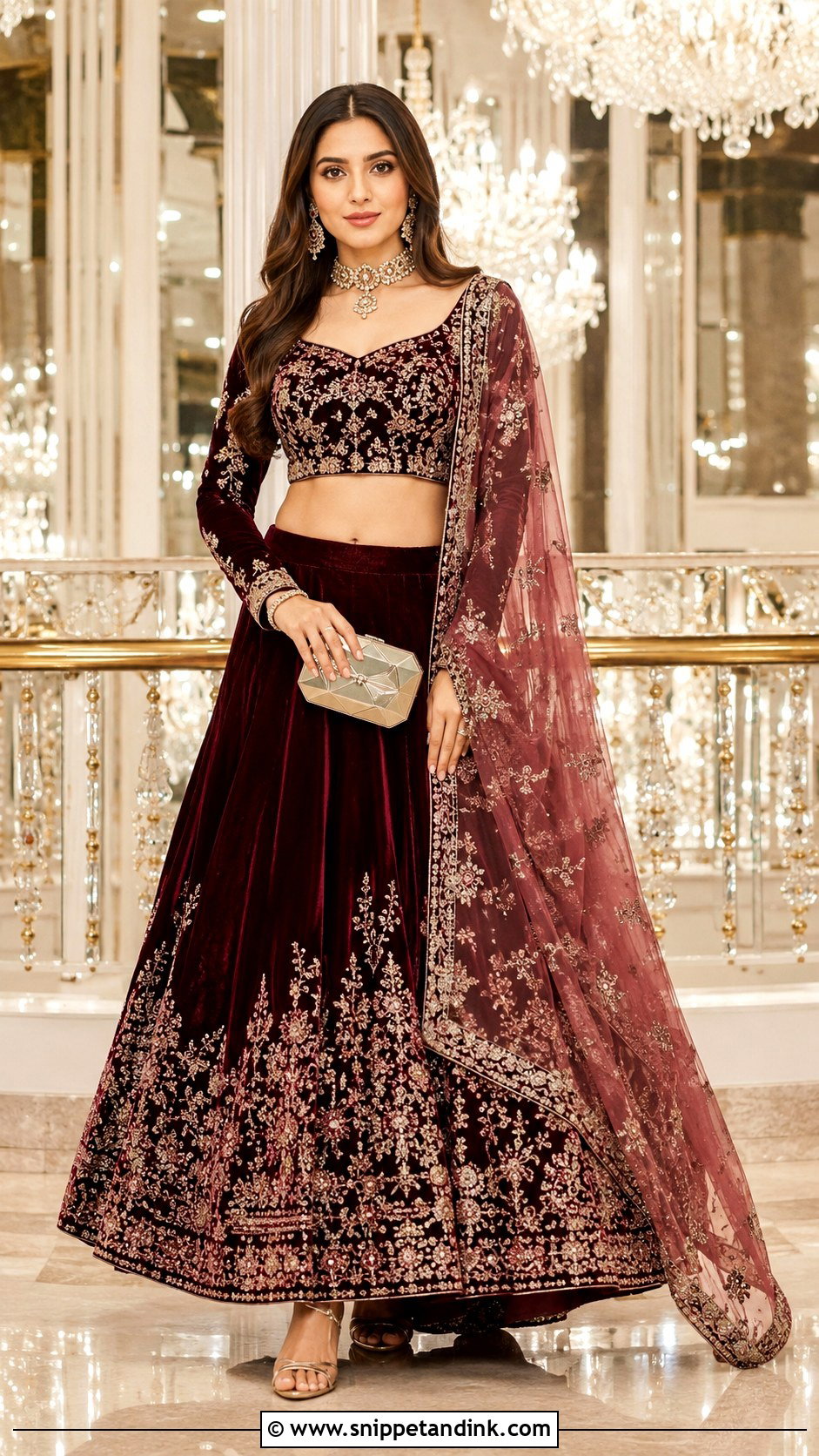
Velvet is for winter and evenings: maroon, emerald, navy, plum or deep brown. A full velvet lehenga gets very heavy and hot under lights, so I often suggest a velvet blouse with a silk or net skirt for the same richness at half the weight. Kundan, metallic heels and a structured clutch suit it. Keep the dupatta light. It absorbs light rather than reflecting it, which gives deep colour in photos under bright venue lighting. Grand dress codes are where it belongs.
18. Pakistani Suit Outfit
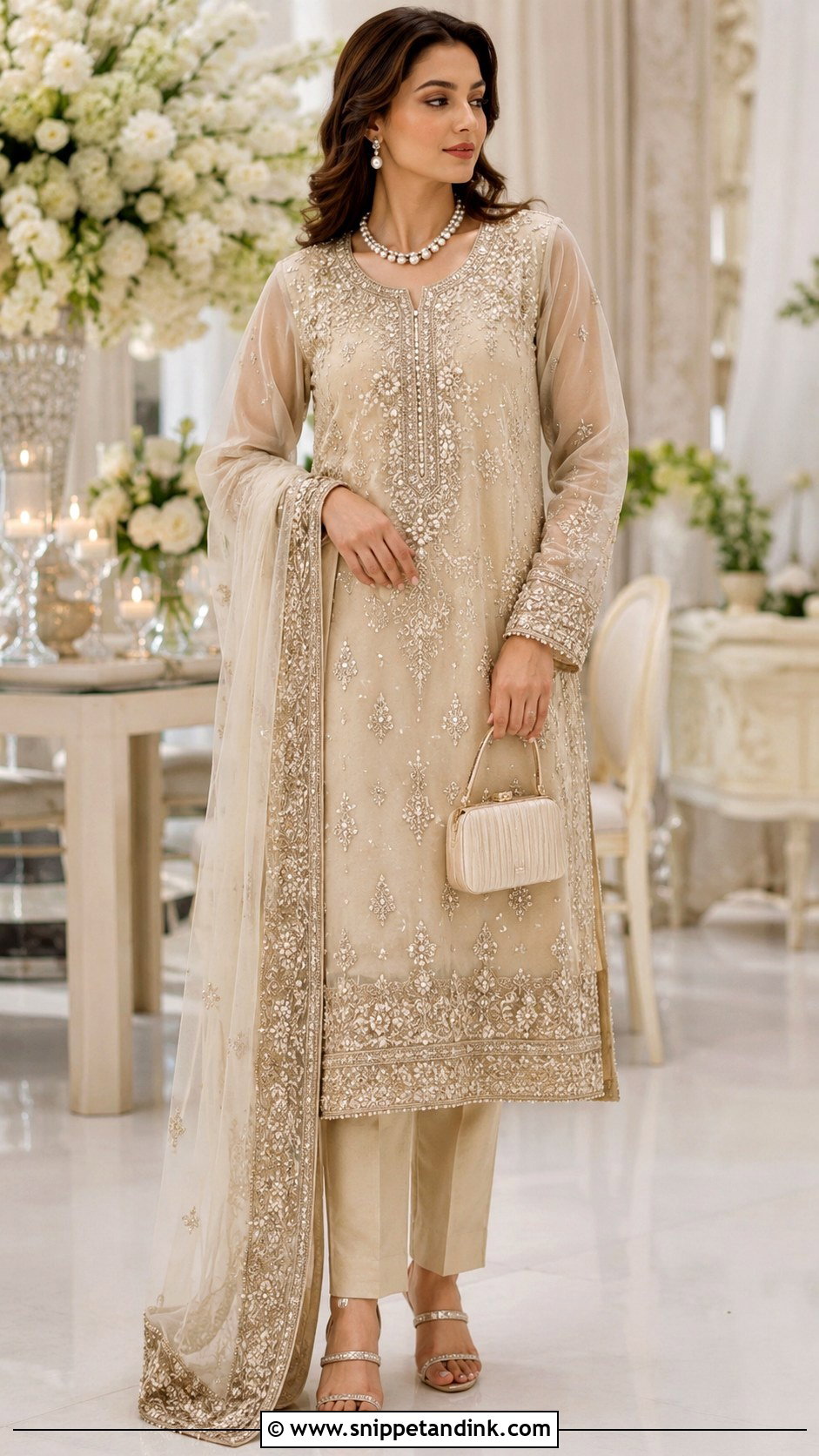
A Pakistani suit outfit relies on length and line: a long embroidered kameez over straight, cigarette, sharara or farshi-style bottoms. Chiffon, organza, silk and net give a refined finish. A heavily bordered dupatta carries the decoration, with pearl jewellery, heels and a small handbag. A centre part or low bun with soft makeup suits the silhouette. Farshi bottoms trail on the floor by design, so someone needs to lift them on stairs, which I warn about before anyone chooses one for a venue with steps. Nikah, walima and close-family receptions suit it.
19. Reception Gown Outfit
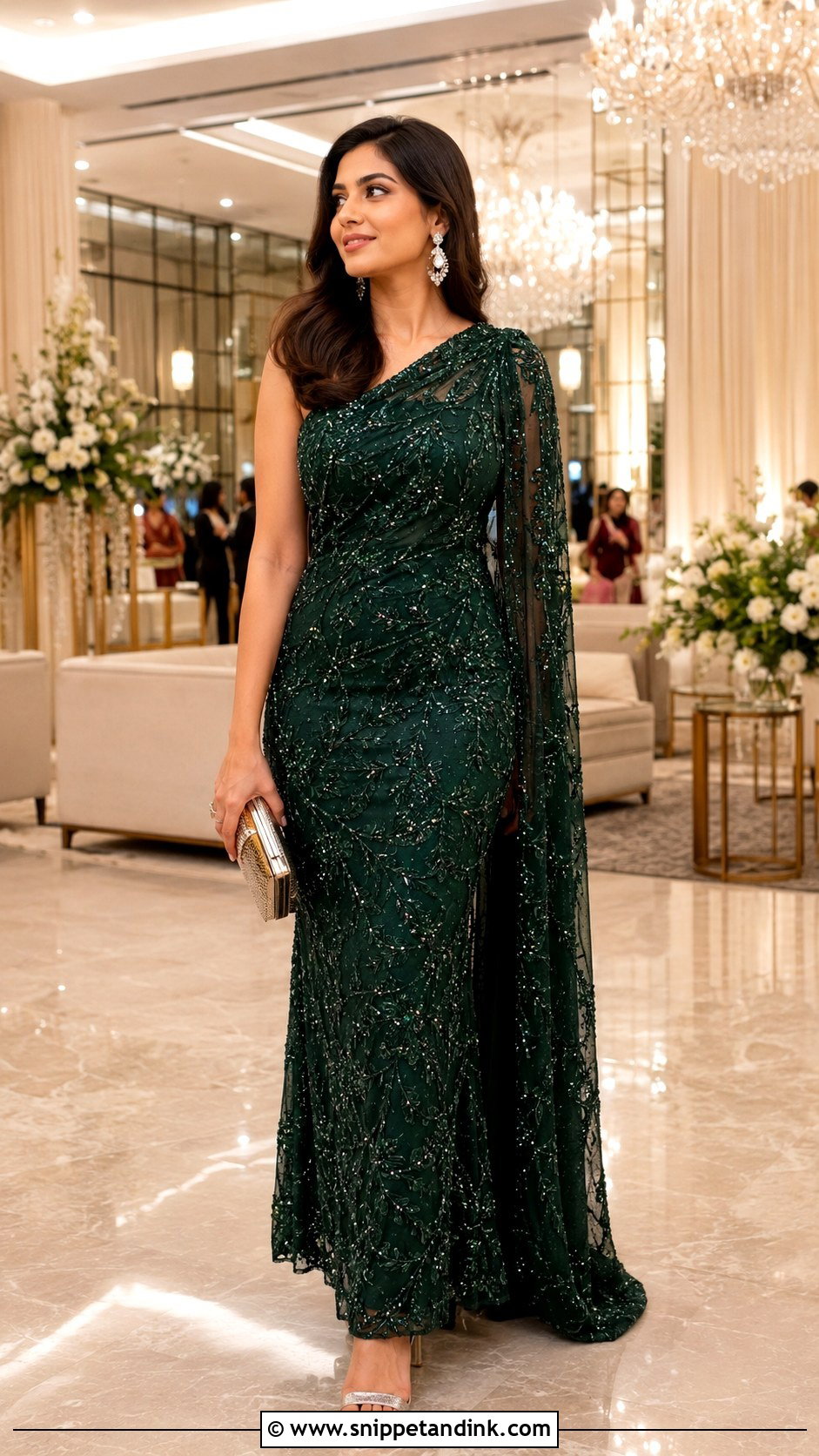
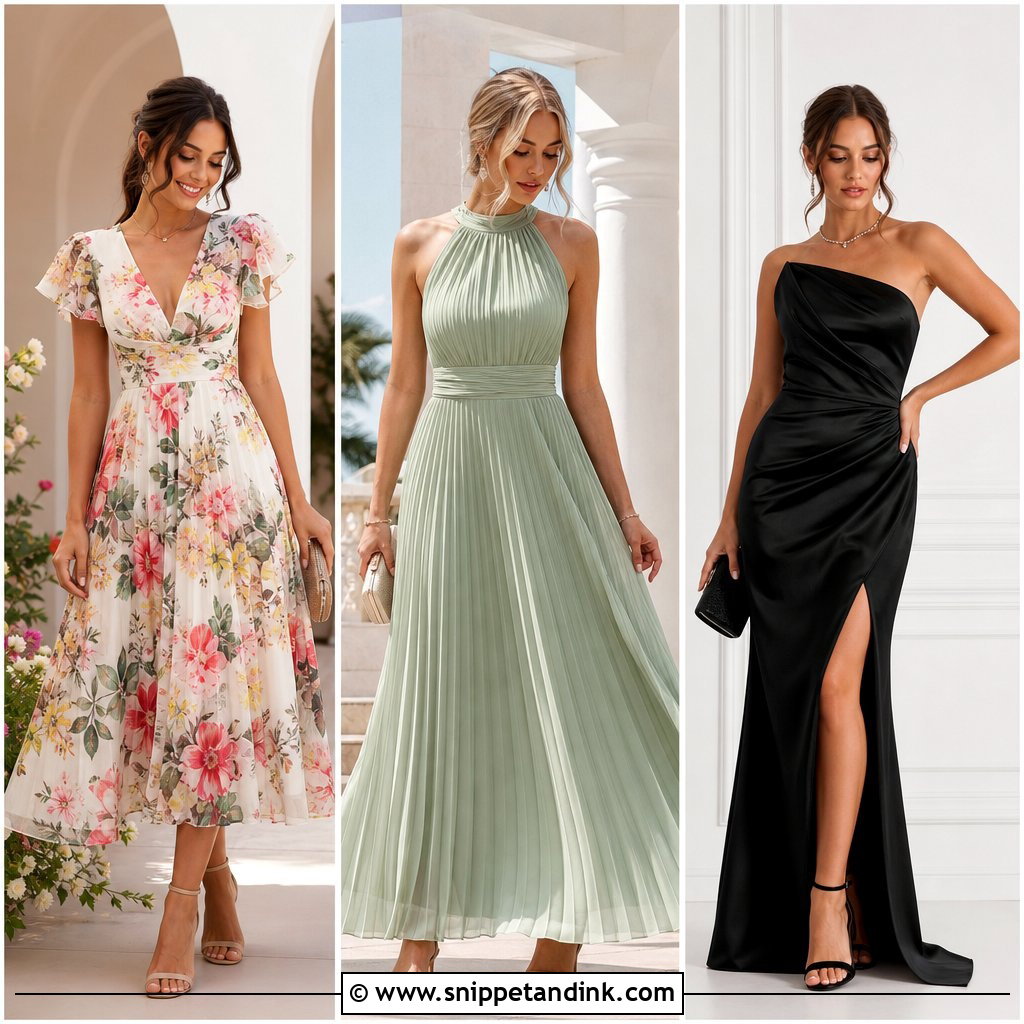
Reception gowns give an evening silhouette with Desi detail: embroidery, beadwork, sequins or a dupatta-style drape. Champagne, silver, wine, navy, emerald or blush hold up under reception lighting. Crystal earrings, sleek heels and a clutch are enough. If the gown is heavily worked, skip the necklace and let the neckline breathe. A gown is often easier to move in than a lehenga because there’s no separate skirt and dupatta to manage, which is why many brides change into one after the ceremony. Hotel and ballroom receptions suit it.
20. Kurta Skirt Outfit
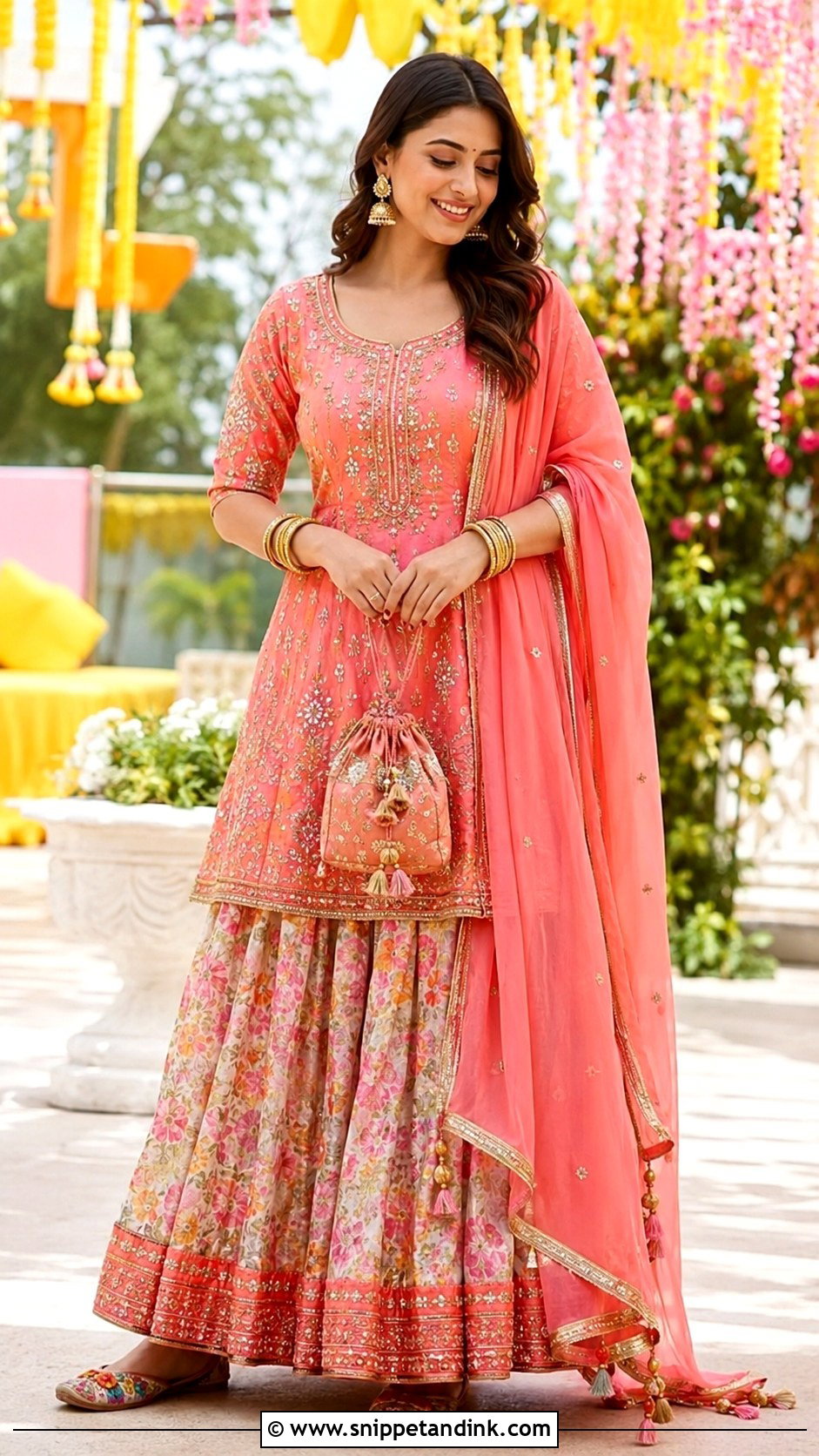
Kurta with a flared skirt gives the movement of a lehenga at a fraction of the weight. A short or mid-length embroidered kurta over a full skirt with a dupatta works for mehendi, haldi and smaller functions. Cotton silk, georgette, brocade or prints, depending on formality. Jhumkas, bangles, juttis and a potli bag make it traditional. For haldi especially, pick a fabric you won’t mind staining; turmeric marks cotton silk permanently. Younger guests and bridesmaids like it for a busy day.
21. White And Gold Saree Outfit
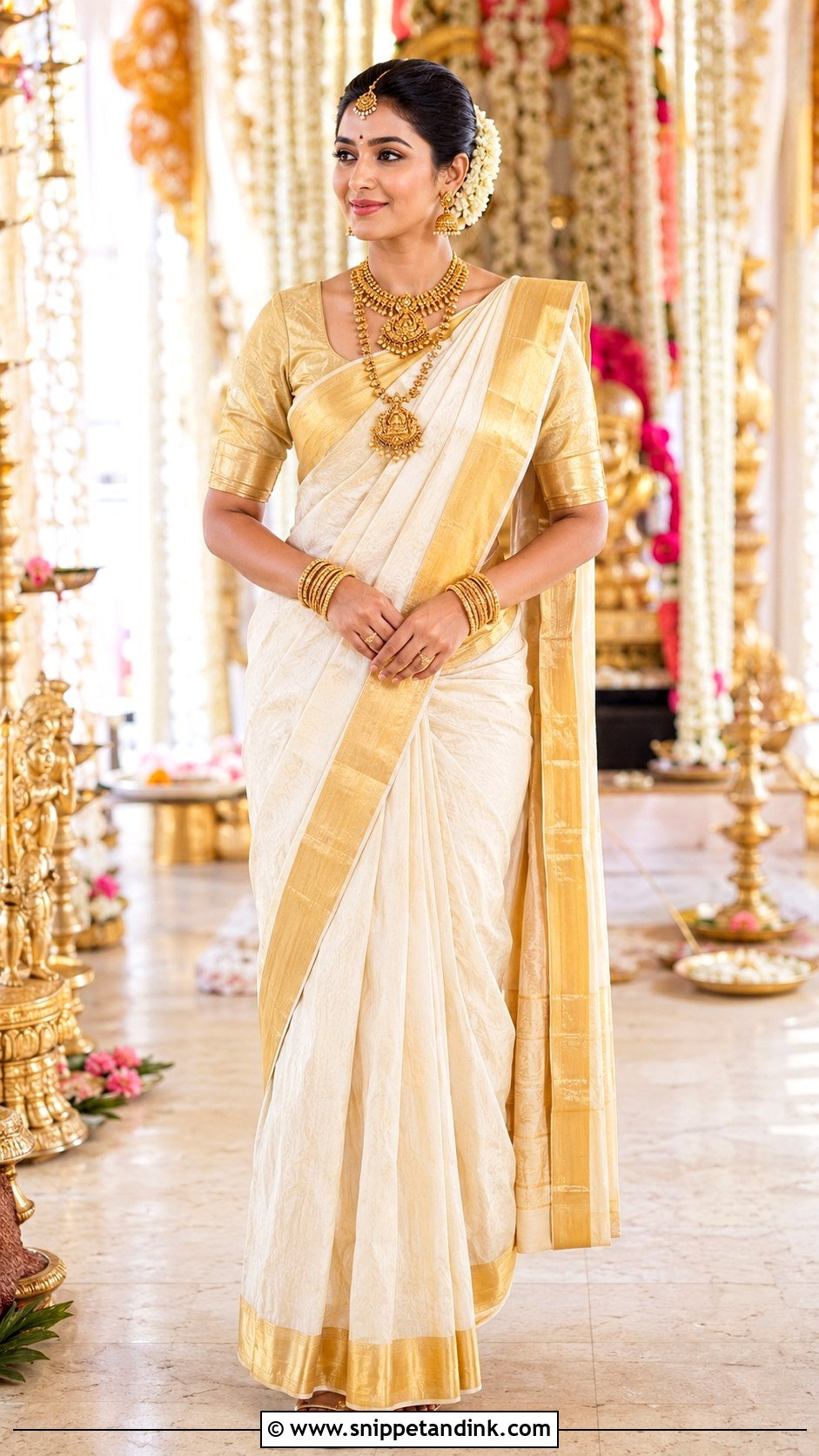
White and gold is ceremonial, especially at South Indian weddings, where an off-white or cream saree with a gold zari border carries real meaning. Ivory, cream or off-white with zari or subtle embroidery, a gold blouse, temple jewellery, bangles and metallic sandals. A sleek bun with jasmine makes it traditional. For a modern version, a tissue or organza saree with a structured blouse. Glowing skin and defined eyes suit it. Pale silk shows every mark, so I keep a stain pen and a spare safety pin in the potli all day.
22. Black Sharara Outfit
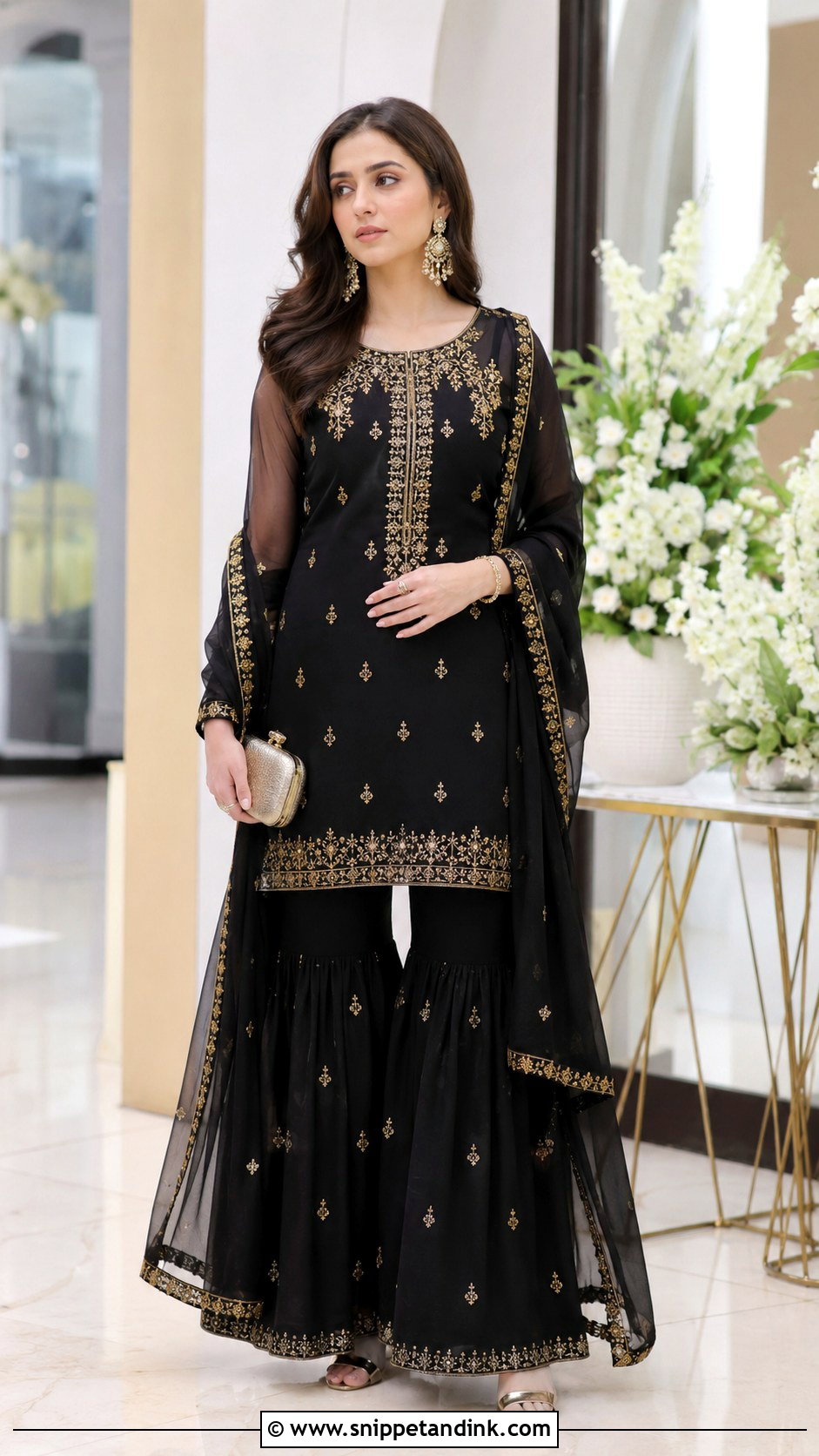
Black can look very chic at evening events, but some families avoid it at weddings for cultural or religious reasons, so ask before you buy. With gold, silver, mirror or thread embroidery it feels festive rather than sombre. A short kurti with flared sharara pants moves well. Statement earrings, metallic heels and a sleek clutch, with a light dupatta over one shoulder. Receptions, cocktails and sangeet nights suit it, where it’s accepted.
23. Yellow Haldi Outfit
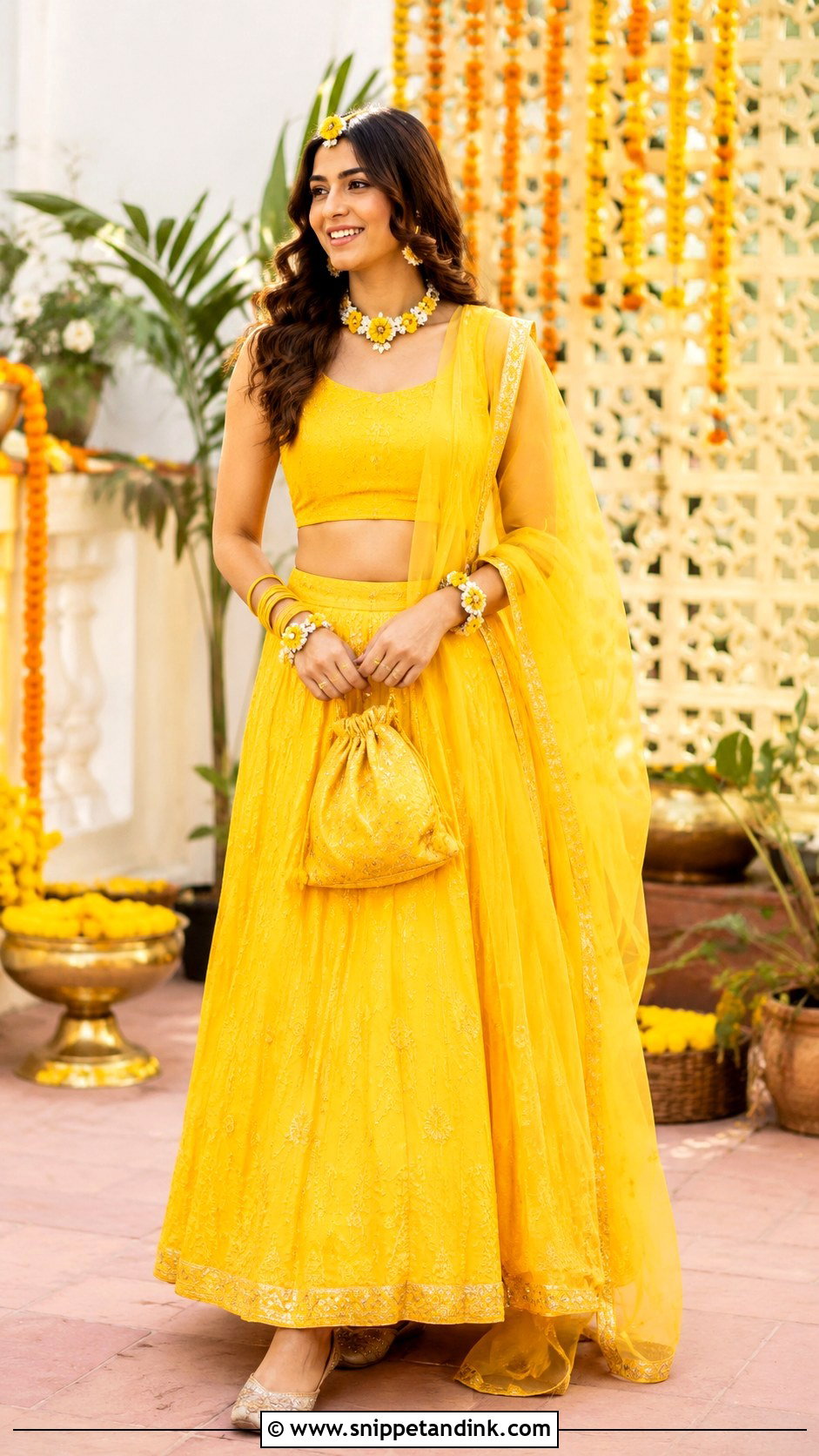
A yellow haldi outfit will get turmeric on it. Plan for that rather than fight it: choose a yellow lehenga, sharara set, kurta skirt or light saree in cotton silk, organza, georgette or chanderi that you’d accept being marked. Floral jewellery is ideal here, since metal and stones dislike turmeric paste. Juttis, bangles and a simple potli, with fresh, natural makeup for a lively, often outdoor event. Mustard, lemon, marigold and sunshine yellow all photograph well.
24. Green Mehendi Outfit
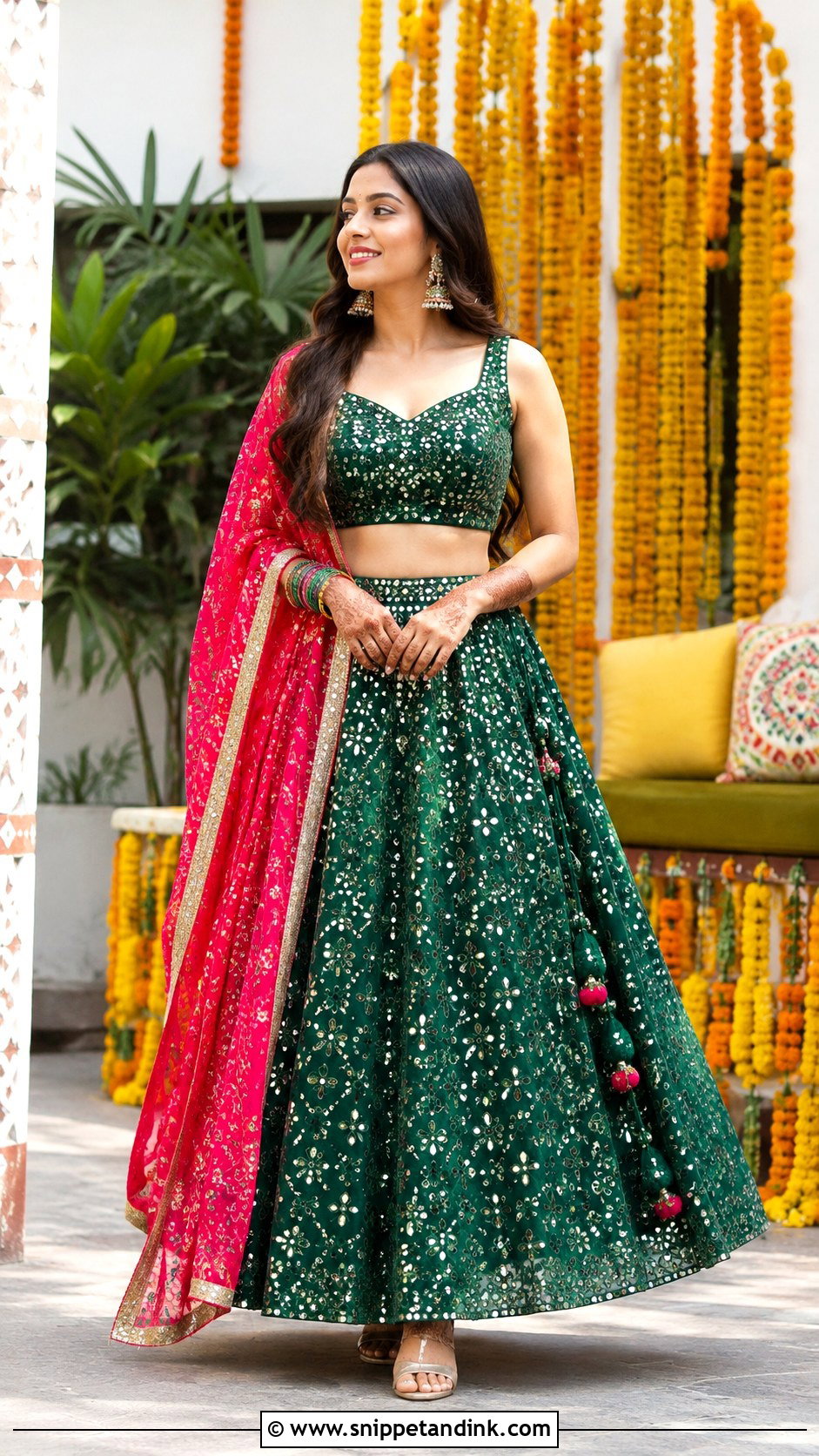
A green mehendi outfit suits the occasion, and emerald, parrot green, mint, sage or bottle green all work in a lehenga, sharara or anarkali. Mirror work, gota patti, thread embroidery and tassels suit the mood. The bride will sit for hours with wet henna on hands and feet, so sleeves should be short or roll up easily, and the skirt shouldn’t need lifting. Colourful bangles go on after the henna dries, not before. Jhumkas, comfortable shoes, a braid or half-up style, and a contrasting pink, yellow or orange dupatta if you want more colour.
25. Ruffle Saree Outfit
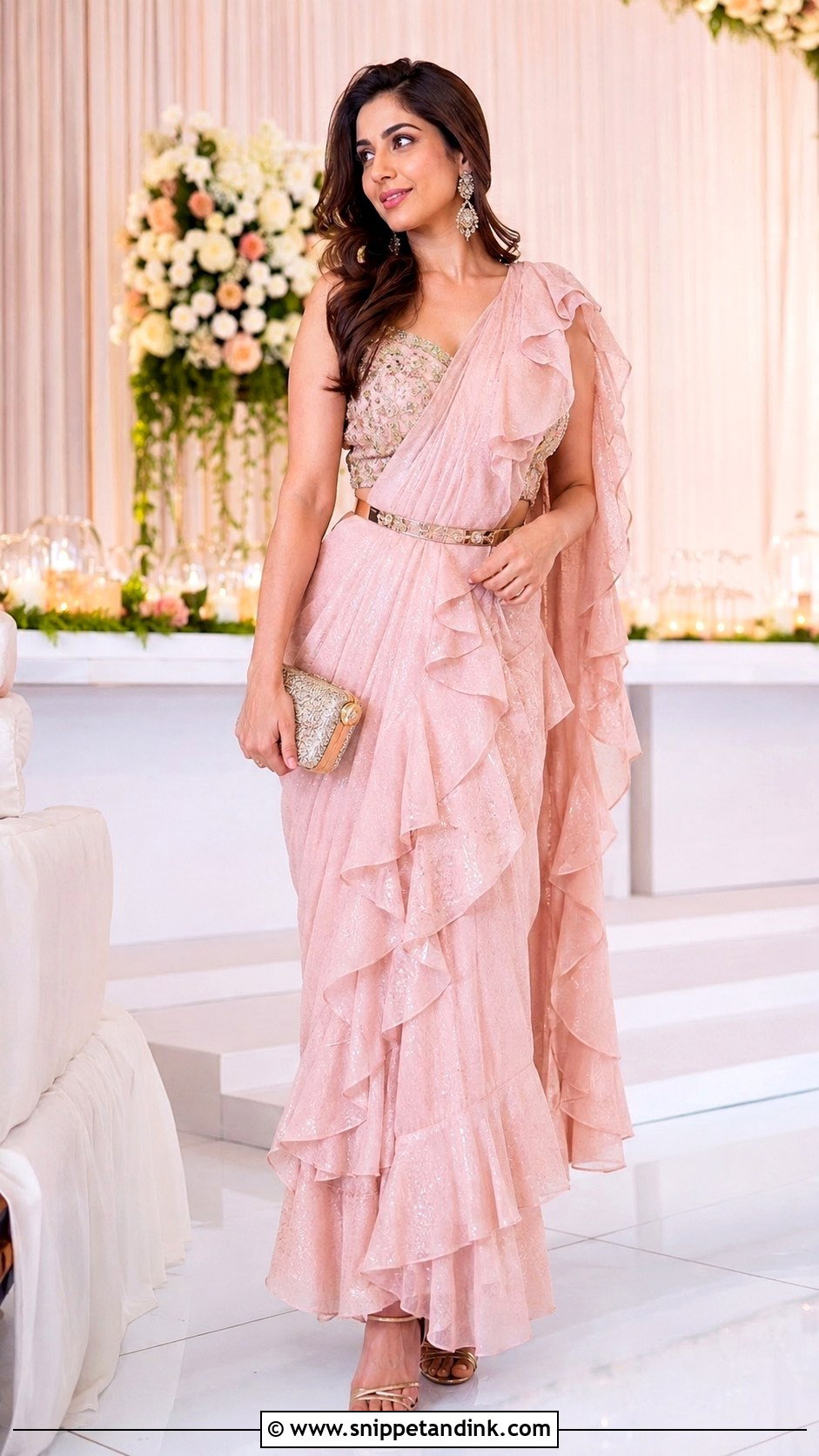
Ruffles add movement without heavy embroidery, so a ruffle saree feels light and modern at a sangeet or reception. Georgette, chiffon or organza in blush, teal, ivory, coral or metallic tones. A statement blouse, a belt, earrings and strappy heels; a sleek ponytail or soft waves keep it balanced. Ruffled edges on the pallu catch on bangles and earrings, so I keep jewellery smooth. Guests who find a classic saree fussy usually find this one easier.
Blouse Stitching Takes Longer Than Anyone Admits
The blouse is where most last-minute panic happens. A good tailor during wedding season is busy, so I hand over blouse fabric at least a month ahead for guest outfits and much earlier for bridal pieces, and I ask for a trial fitting rather than collecting it finished. Ask for extra seam margin so it can be let out, padding sewn in if you prefer it, and hooks rather than a zip on heavily worked blouses, since zips pucker against embroidery.
Bring the actual jewellery to the trial. A heavy choker changes how a high neck sits, and long earrings change where you want a boat neck to finish.
Colours Worth Checking With the Family First
Customs differ between families, regions and faiths, so I never assume. Guests often avoid bridal red at the ceremony, since it’s the bride’s colour. White and black are welcomed in some families and avoided in others, especially at a ceremony. A quick message to the hosts saves an awkward moment and lets you plan the rest of the week with confidence.
For bridesmaids and sisters, I agree a palette with the bride early, then let each person pick her own silhouette within it. Matching colours with different cuts looks coordinated on stage without forcing a petite cousin and a tall aunt into the same lehenga.
The Heaviest Lehenga Is Rarely the Right One
A grand lehenga belongs at the main ceremony; a sharara, anarkali or pre-draped saree makes dancing and socialising easier the night before. Think about the venue, the season, the family’s customs and how many hours you’ll be wearing each look, then choose colour, fabric, jewellery and shoes that support it. The heaviest outfit is rarely the right one. The right one is the outfit you forget about while you’re busy celebrating.
You'll Like These Ideas:


Leave a Reply