
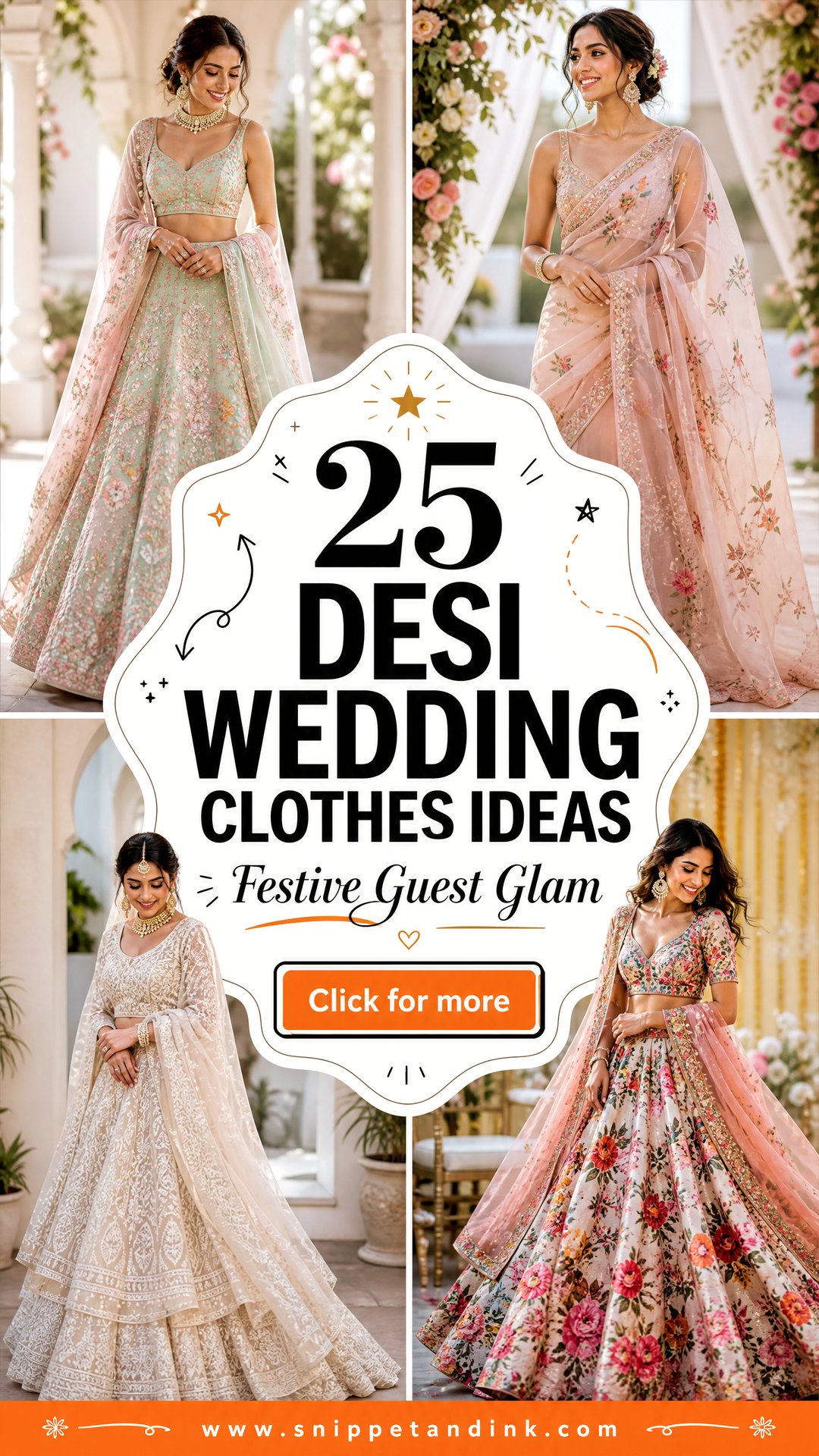
A Desi wedding rarely asks for one outfit. It asks for four or five, across a mehndi, a sangeet, the ceremony and a reception, and each one has to survive sitting cross-legged on the floor, eating near your dupatta and dancing in a warm hall. When I dress guests and family, I start from those hours rather than from the photo: a lehenga that pulls at the waist by the second hour will spoil the night however good it looked on the hanger. The ideas below run from classic lehengas, silk sarees, sharara sets and Anarkalis through pre-draped sarees, capes and modern Indo-western pieces, with notes on how each one actually wears.
Mehndi Wants Cotton, the Reception Wants Silk
Before I suggest a single outfit, I ask for the function list, because a Desi wedding is really several dress codes in a row. The events usually rise in formality, and the fabric should rise with them.
- Haldi: inexpensive cotton you don’t mind ruining. Turmeric paste stains, and it rarely comes out of silk.
- Mehndi: light cotton, chanderi or georgette with mirror work or gota. You’ll sit on the floor for hours, so nothing stiff at the waist.
- Sangeet: something you can dance in. Shararas, ruffle sarees, capes and co-ords beat a heavy lehenga here.
- Ceremony or nikah: your most traditional piece, with shoulders covered if the venue is a temple, gurdwara or mosque.
- Reception: velvet, sequins and heavier silk, which look richest under artificial light.
Dressing as a Guest Versus Dressing as Family
Guests have one firm rule: leave bridal red and heavy gold to the bride. A full red lehenga at someone else’s ceremony reads as competing, even if deep maroon usually passes. Sisters and mothers can go heavier than ordinary guests, and many families assign a color to each function, so I always tell clients to ask before buying anything. At a gurdwara everyone covers their head, and a dupatta does that job neatly.
1. Red Bridal Lehenga Outfit
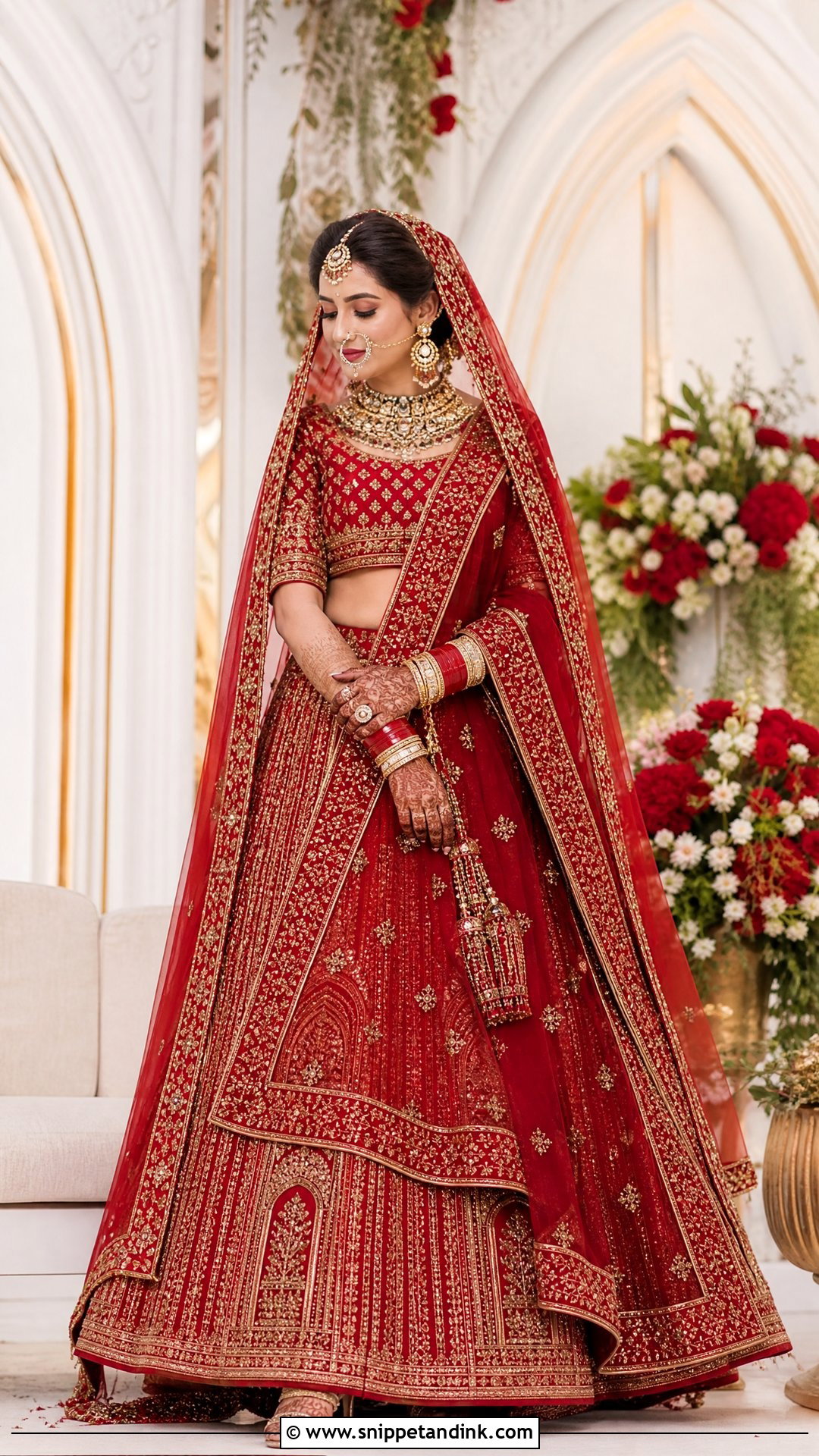
Red still owns the main ceremony, and there’s a practical reason beyond tradition: it holds its color under warm evening lighting where paler shades wash out. The first thing I check on a bridal lehenga is the skirt’s weight, because heavy zari and sequin skirts can run to several kilos, so I want a wide waistband with a drawstring and hooks rather than a zip alone. Pair it with a choker, layered necklace, jhumkas, bangles and juttis or heels you’ve already broken in. Pin the dupatta at the head, the shoulder and the waist so it frames your face without sliding during the rituals. A sleek bun gives those pins something to grip; loose waves look soft but leave a head drape with nothing to hold.
2. Pastel Lehenga Wedding Outfit
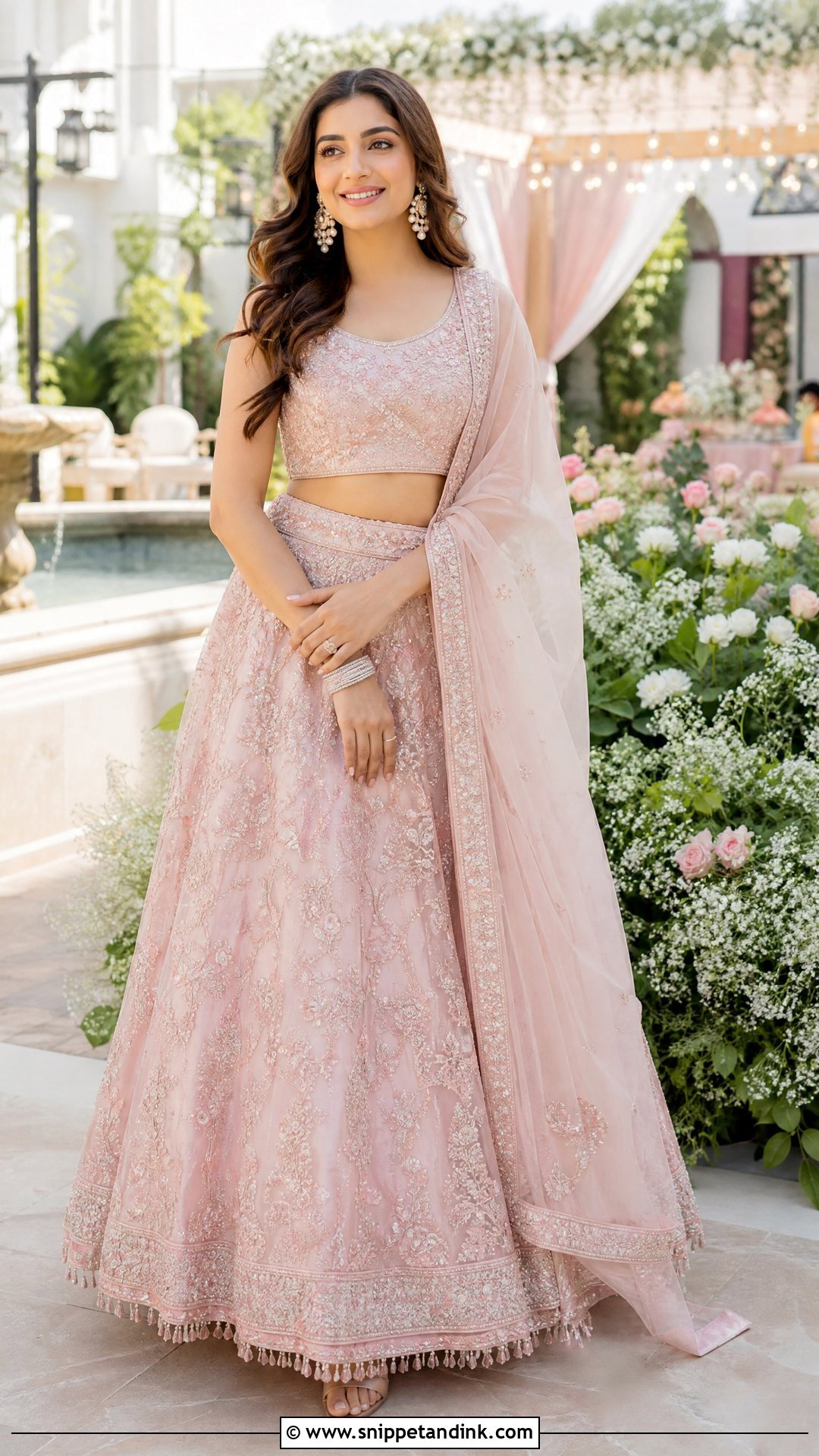
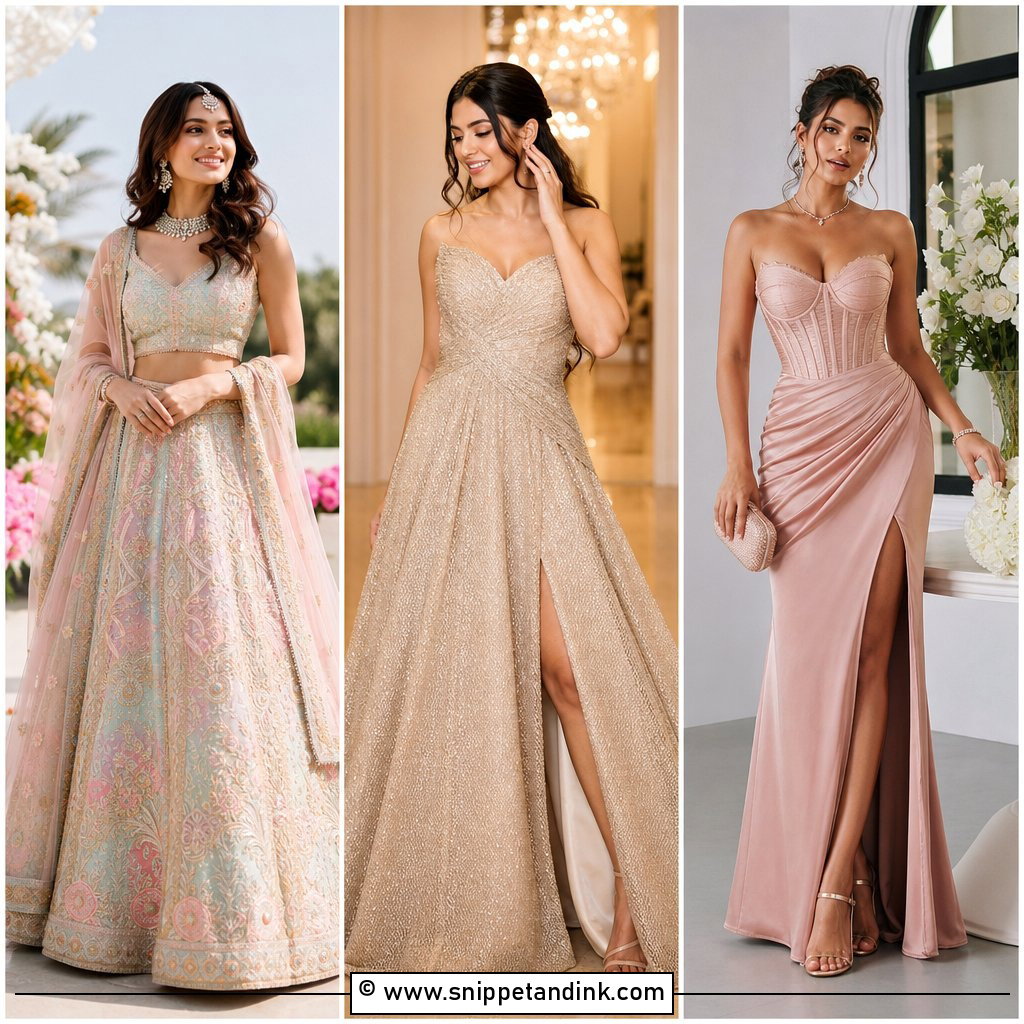
Pastels belong to daylight. Blush, pistachio, powder blue and champagne read fresh at an outdoor ceremony, but under yellow evening lights they can turn muddy, so I keep them for morning and afternoon functions. Delicate threadwork, pearls or small mirrors suit these shades better than heavy gold, which can make a soft color look tired beside it. A contrasting dupatta stops the whole outfit from blending into one pale wash on camera. For bridesmaids and sisters, check the bride’s palette before buying so nobody arrives in her exact shade.
3. Banarasi Saree Wedding Outfit
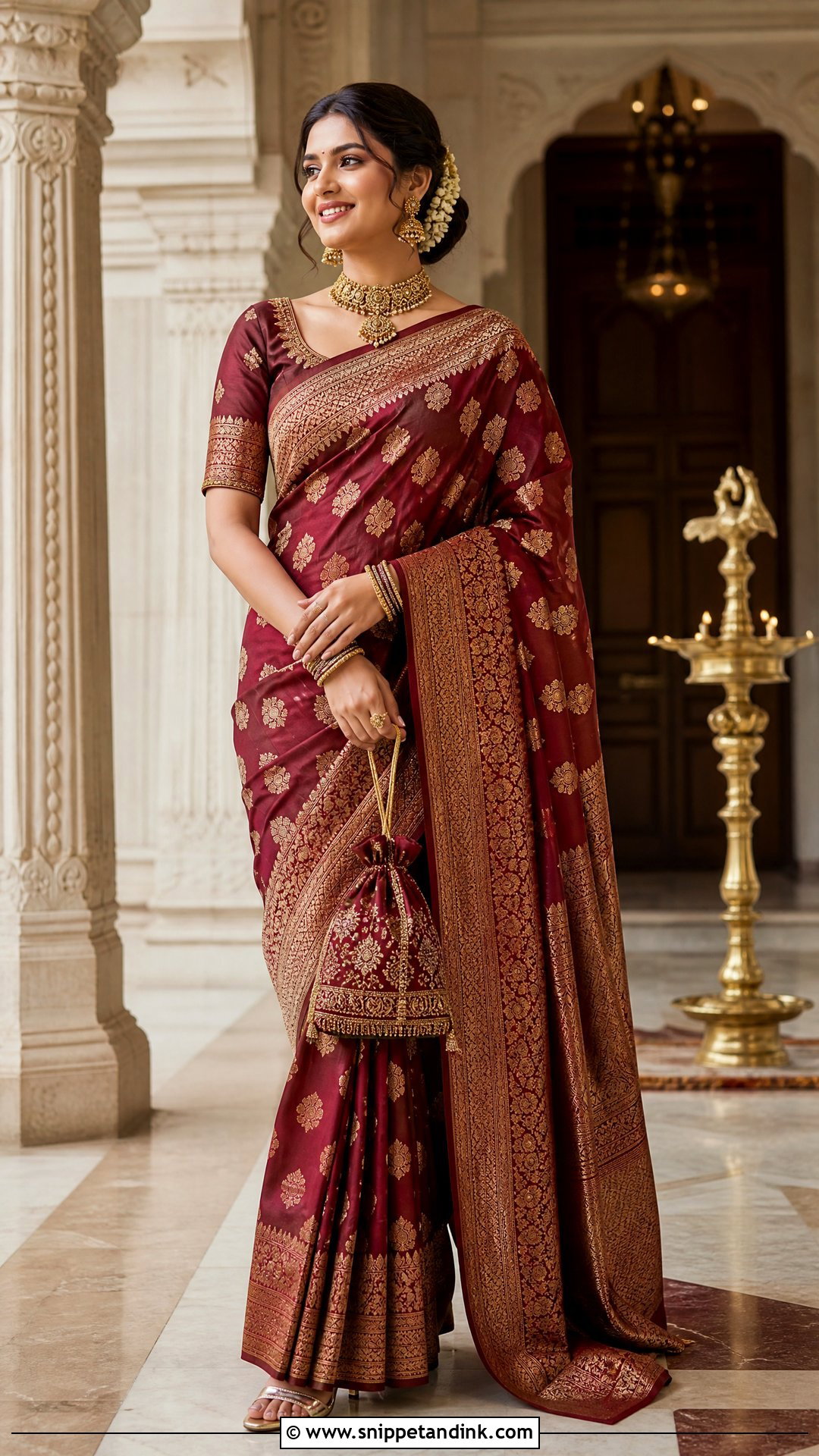
Banarasi silk is woven, not embroidered, so the motifs and border are part of the cloth, and that’s why a good one falls heavier and straighter than printed silk. Maroon, emerald or royal blue give the traditional read; a pastel body with gold weaving suits a daytime family function. I pair it with a fitted blouse and temple jewelry, and I set the pleats so the zari border shows at the hem when you walk. Real zari tarnishes where it meets perfume, so spray scent before you dress, not after. A bun with fresh flowers keeps the neckline clear, and block heels handle the long standing hours.
4. Sharara Suit Wedding Outfit
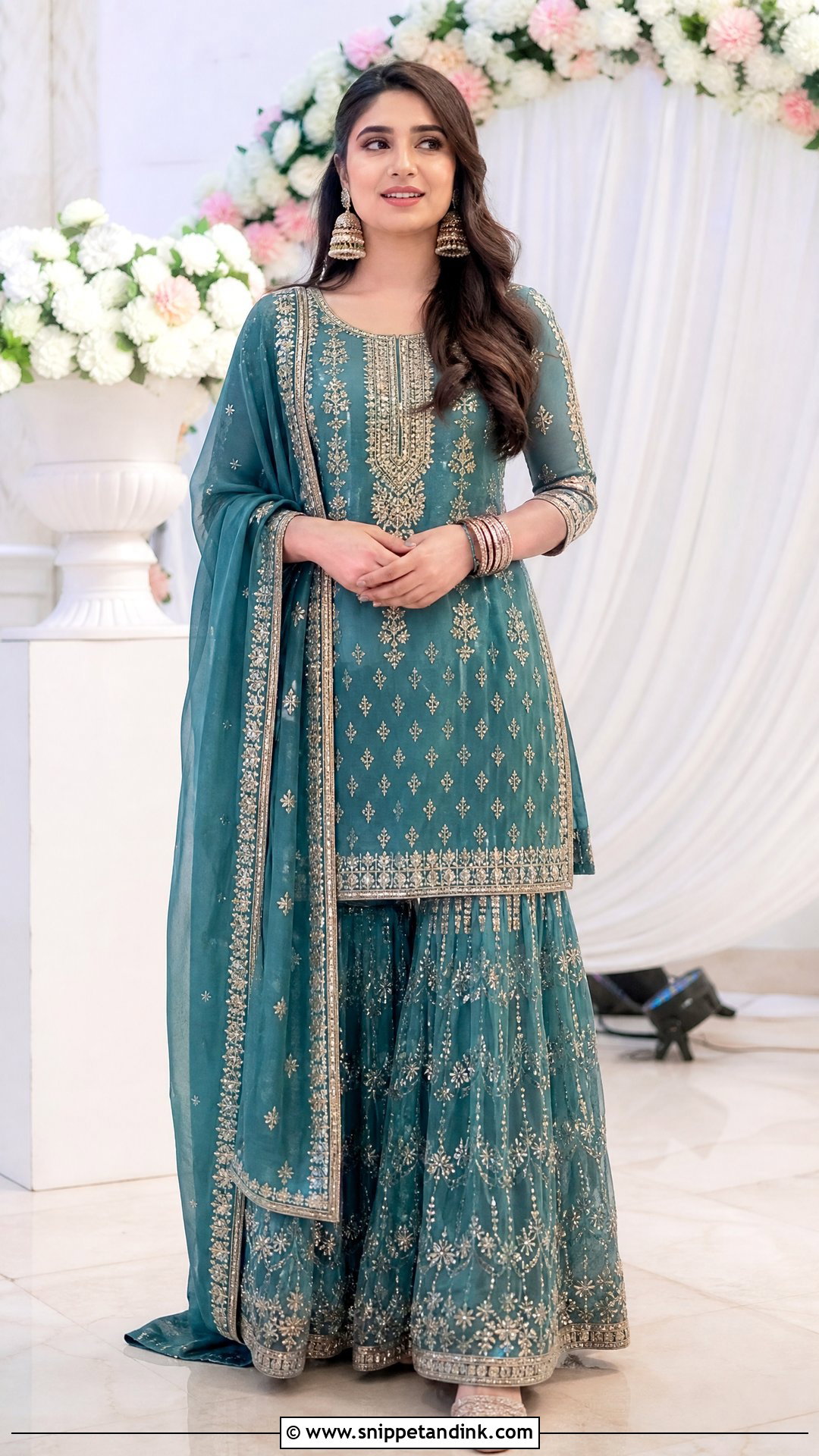
For anyone who plans to dance, a sharara suit is where I’d start. The pants flare from the knee, so you can take big steps and sit on a low mehndi cushion without hitching up a skirt. A short or mid-length kurta with mirror work, gota patti or zari at the neckline, sleeves and hem keeps it festive. One fitting note: set the pant length with the sandals you’ll wear, because hems that brush the floor collect mud and wet henna at an outdoor mehndi. Jewel tones or a two-tone pairing give it a modern edge.
5. Gharara Wedding Outfit
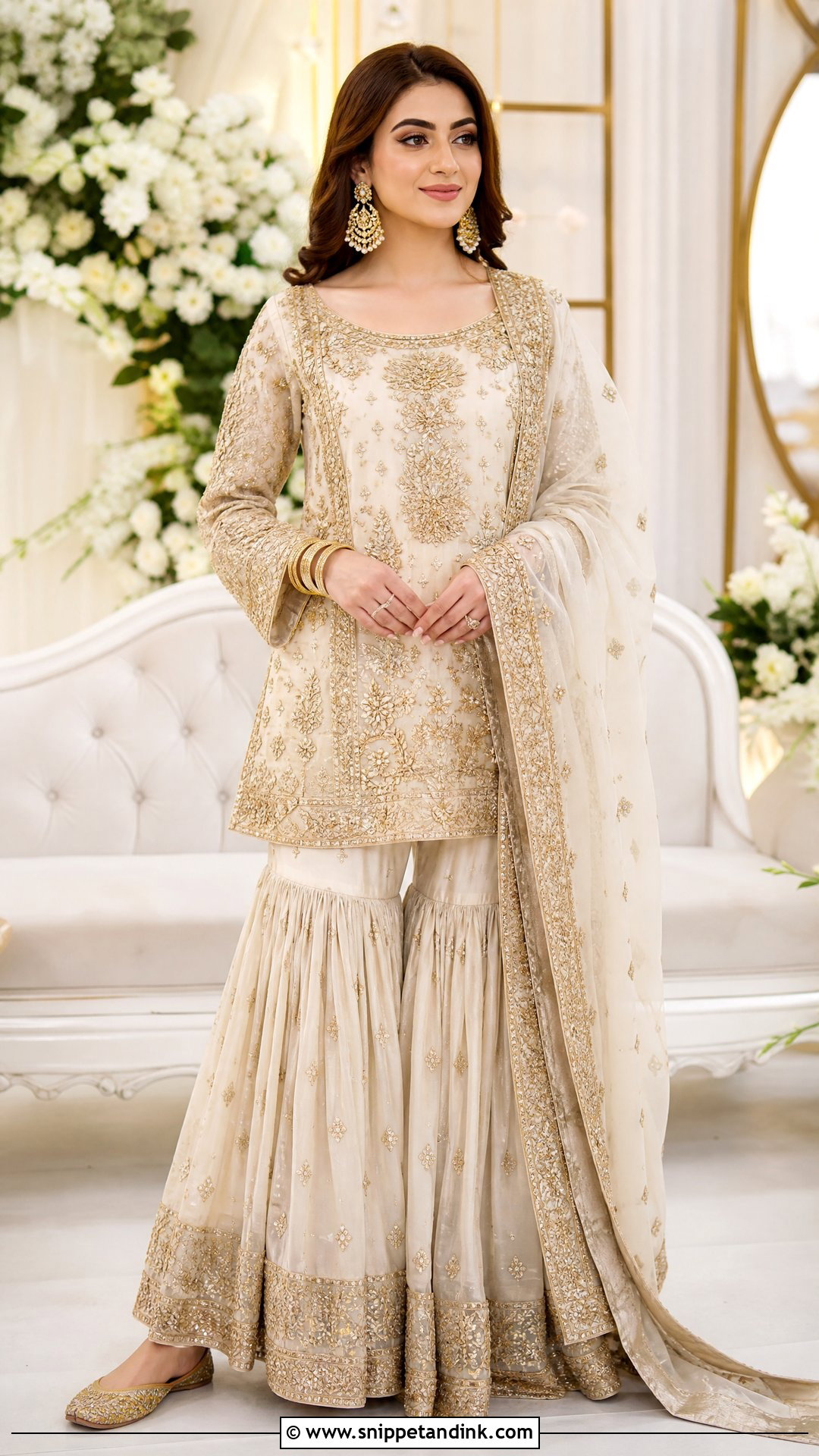
People mix up gharara and sharara constantly, and the difference matters at the fitting. A gharara fits close to the knee, where a decorative band joins it to a full flare below, so that joint has to be cut with enough ease to sit down. Too snug there and you’ll feel it the moment you kneel for the nikah. I pair it with a short kurti, an embroidered dupatta and khussas or block heels; gold, ivory, rose pink and maroon all suit the shape. Keep the dupatta off the band so the silhouette reads in photos.
6. Anarkali Gown Wedding Outfit
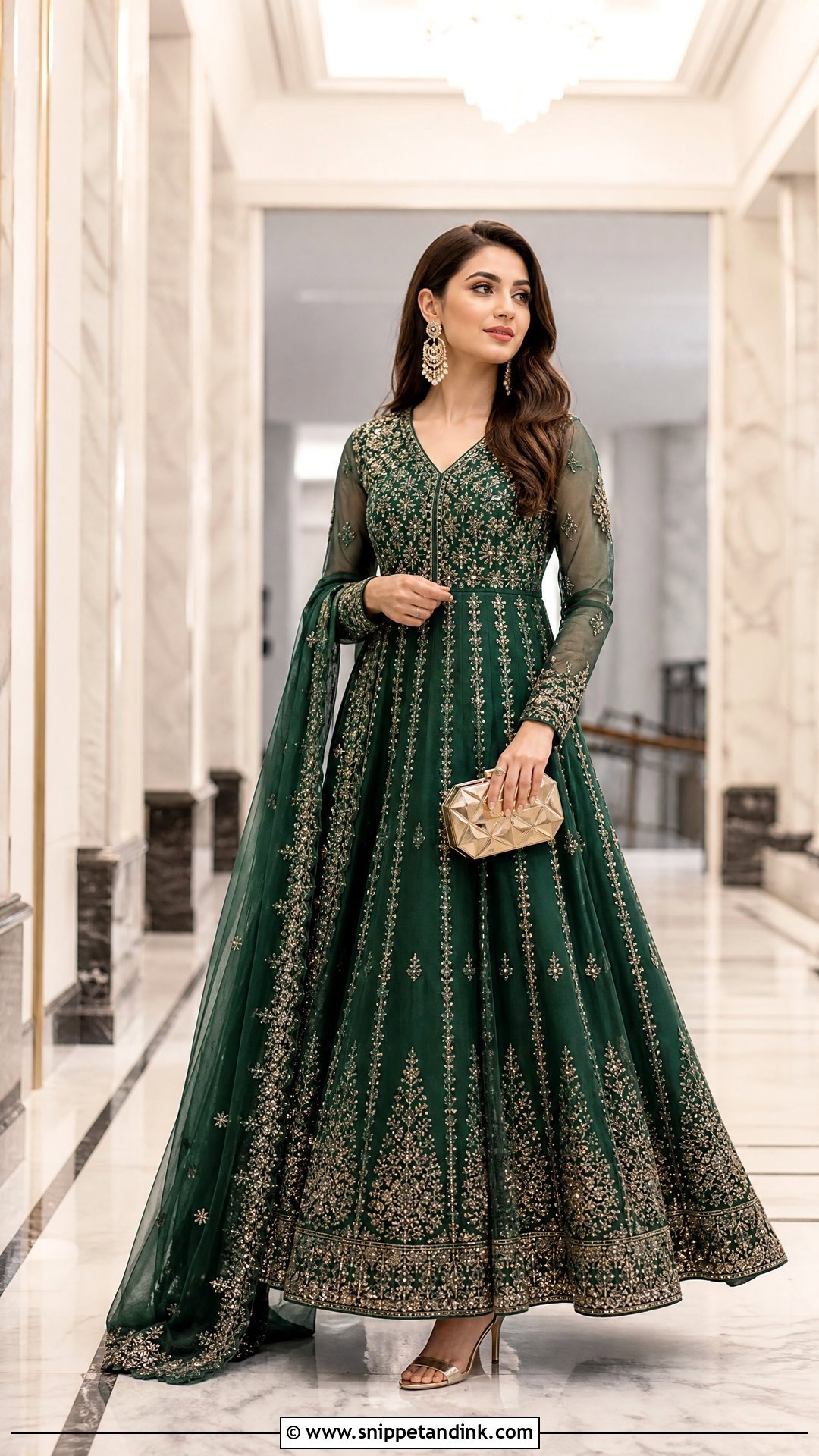
An Anarkali gives you lehenga drama in one piece: one zip, no skirt to hitch, nothing riding up when you lift your arms. The flare hangs from a high waist seam, so the fit at the bust and that seam is everything, and if it sits even an inch low the gown looks short-waisted. Silk, georgette, velvet or organza add depth, with embroidery on the bodice, sleeves and hem. With heavy embellishment I keep jewelry to earrings and a cuff. A center-part bun or soft curls finish it, and the shape suits guests, mothers and bridesmaids alike.
7. Pre Draped Saree Wedding Outfit
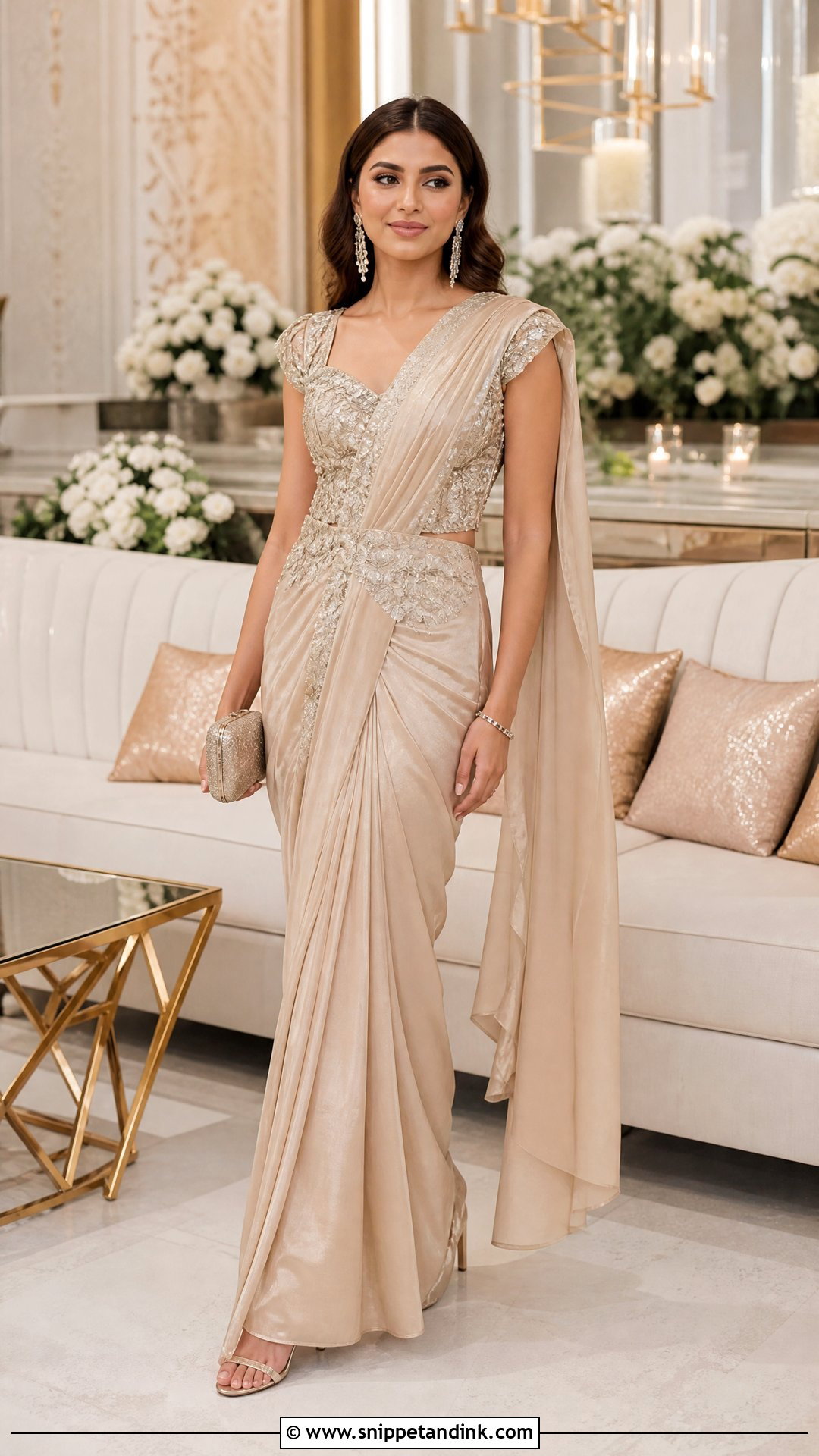
I recommend a pre-draped saree to anyone who has never pinned six yards herself and doesn’t want to queue for the one aunty who can. The pleats and pallu are stitched in place, so it goes on like a skirt and stays put through a long night. Sequins, metallic fabric, ruffles or light embroidery push it toward receptions and sangeet nights. It also packs flat, which is why I suggest it for destination weddings where there’s no draper on call. Heels, a clutch and modern earrings are all it needs.
8. Silk Saree With Statement Blouse Outfit
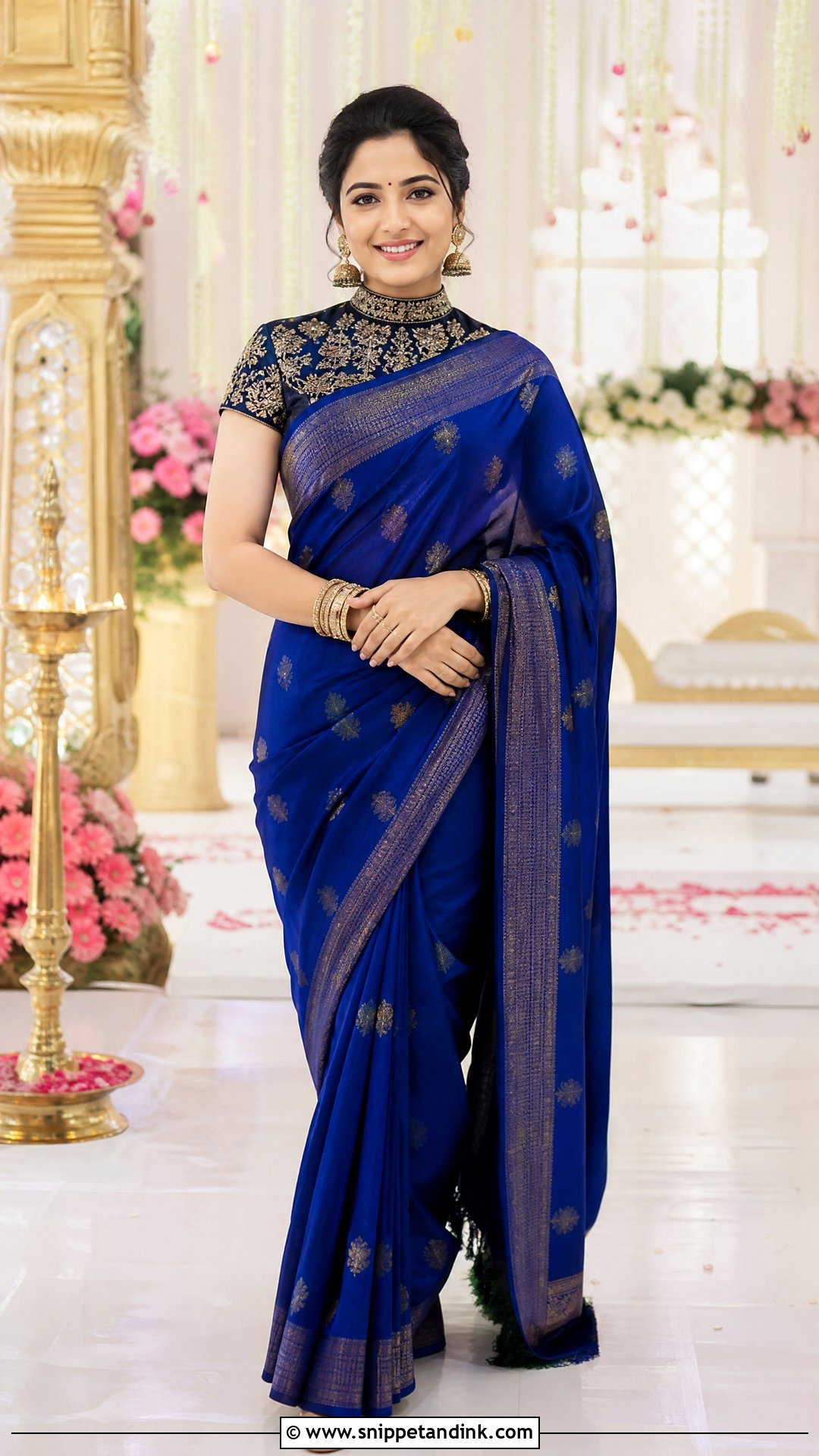
The blouse is the part of a silk saree you can make your own. With a Kanjivaram, Banarasi, Paithani or Chanderi, I’d choose one blouse feature, puff sleeves, a high neck or a worked back, rather than stacking all three, because silk borders already carry a lot. Ask your tailor for a cotton lining instead of polyester; it breathes through a long ceremony and stops the silk from clinging. Drape the saree cleanly so both border and blouse show. Temple jewelry, gold bangles, a bindi and comfortable heels are plenty.
9. Organza Saree Wedding Outfit
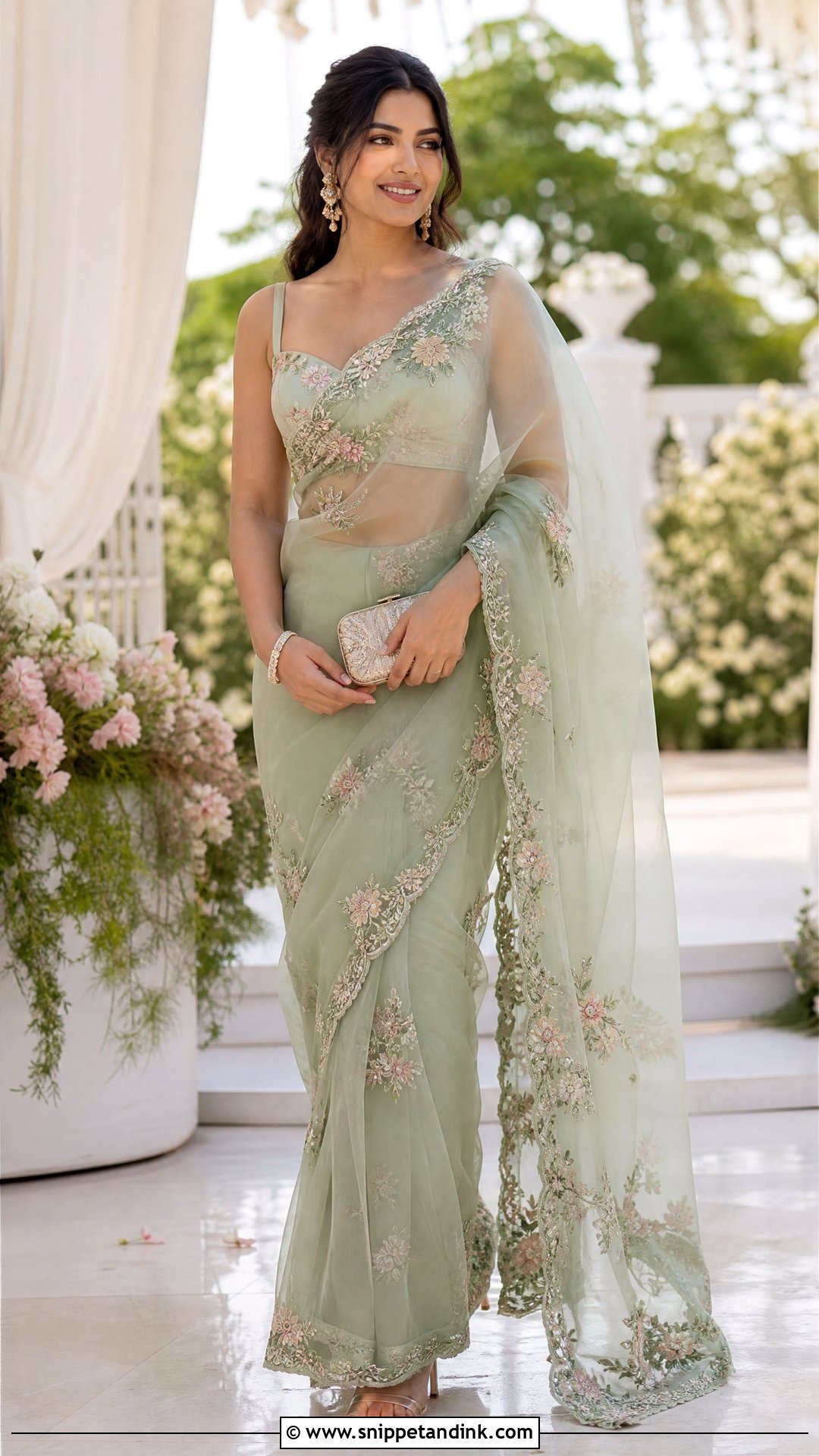
Organza is stiff and sheer at once, which gives it that crisp, floating fall. The catch is that it holds every crease, so I steam it on the hanger and drape it at the venue rather than sitting in a car in it for an hour. Floral embroidery, pearls or light sequins suit it, and ivory, sage, peach or lilac show off the transparency in daylight. Since the fabric already adds volume, keep the pleats neat and the accessories small. Soft curls or a low bun finish it.
10. Mirror Work Lehenga Outfit
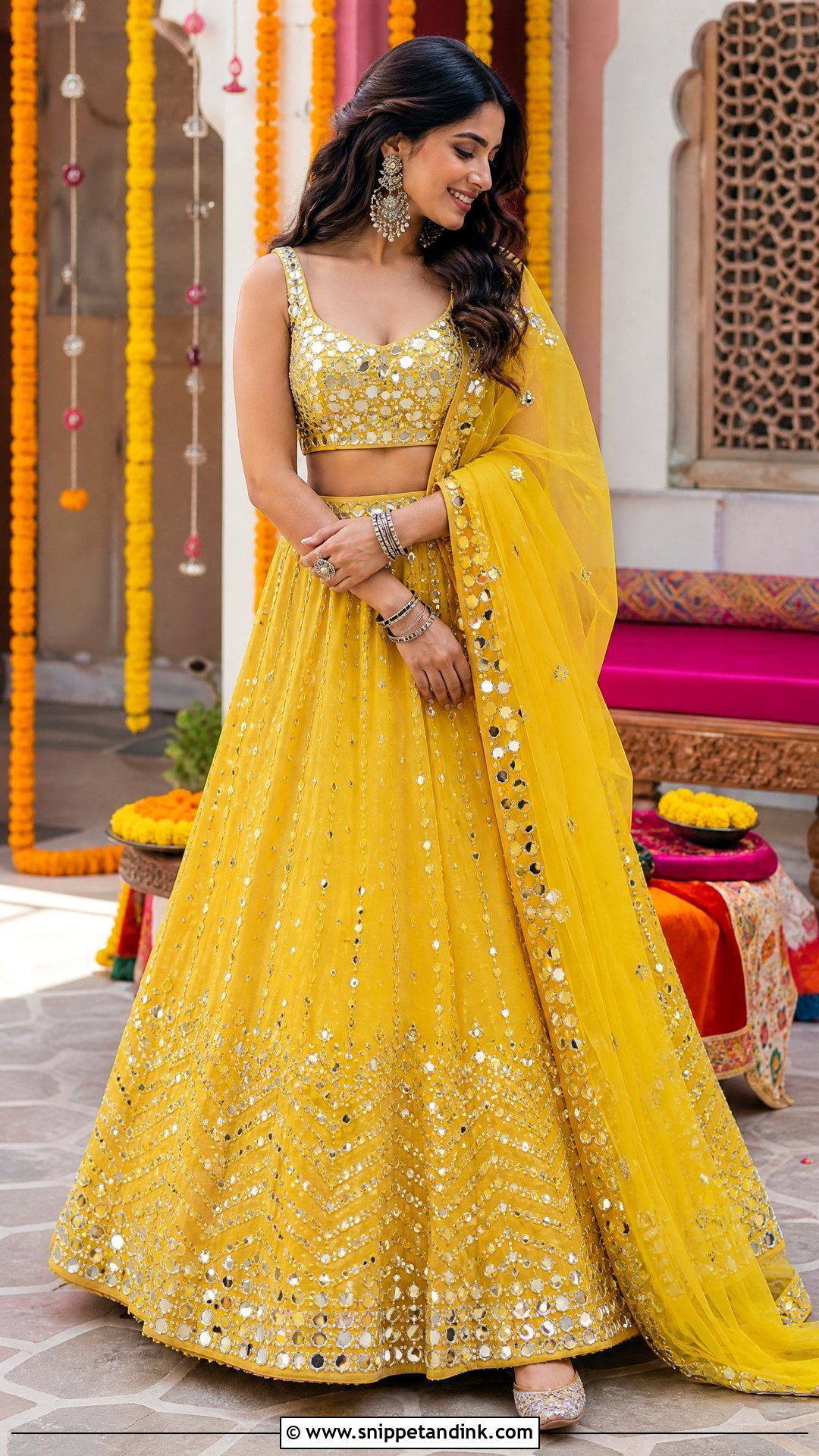
Mirrors exist to catch light while you move, so a mirror work lehenga earns its place at the mehndi and sangeet. Glass mirrors are heavier than plastic ones and their edges can snag a fine net dupatta, so I steer people toward a georgette or cotton silk drape instead. Yellow, fuchsia, teal and orange suit the playful mood. Oxidized jewelry, bangles and juttis keep it grounded, and with heavy mirror work I’d skip the necklace entirely.
11. Chikankari Lehenga Wedding Outfit
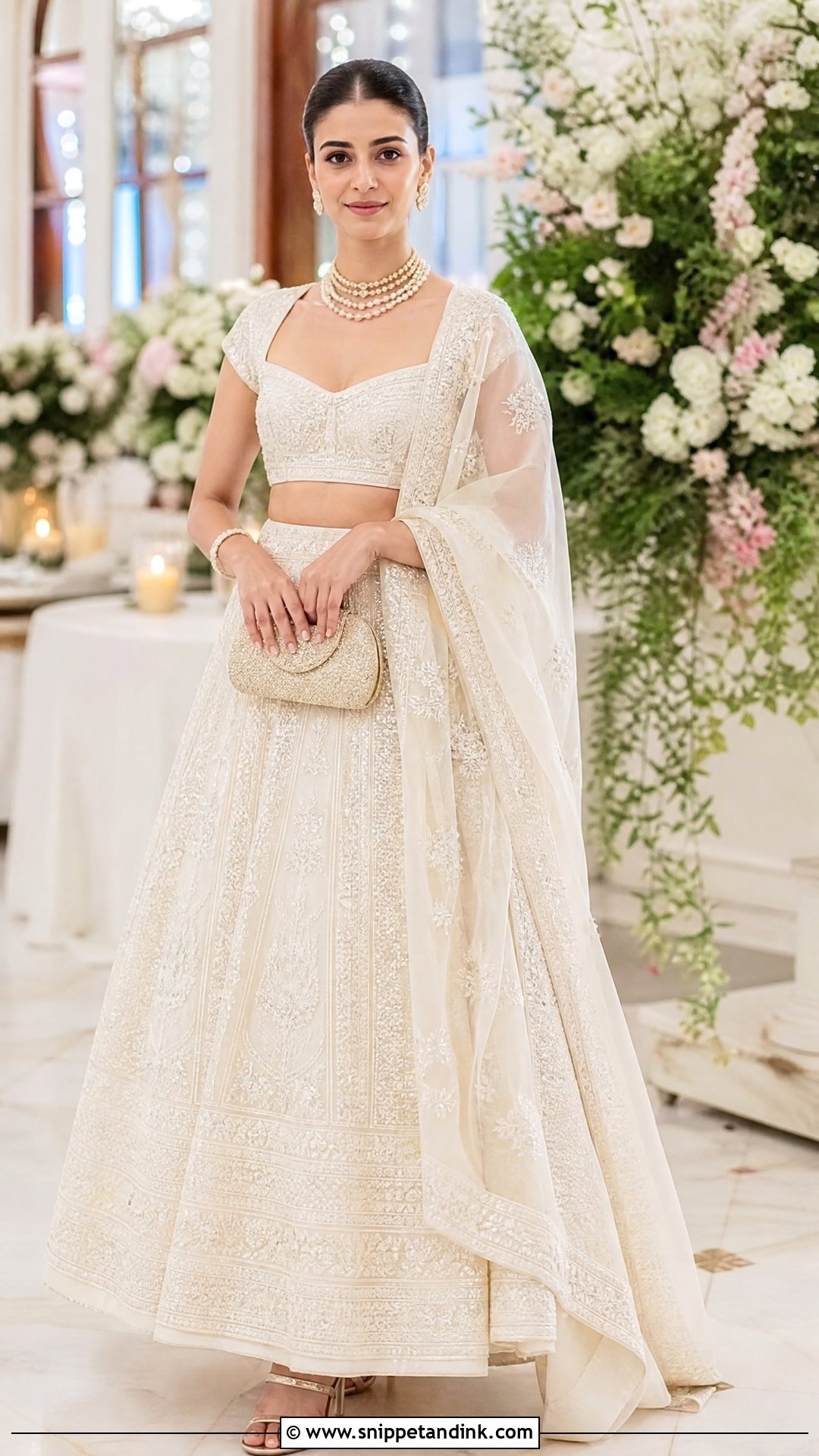
Chikankari is traditionally fine hand embroidery from Lucknow, and its charm is how quiet it is. That is also its limit: on a big stage at night it can disappear, so I save it for engagement ceremonies, daytime weddings and bridesmaid sets. Ivory, blush, mint or powder blue show the stitching best. For a little sparkle, look for mukaish or small sequins worked into the embroidery. Pearl jewelry and soft metallic heels match its scale, and dewy makeup keeps the outfit from looking flat.
12. Velvet Lehenga Wedding Outfit
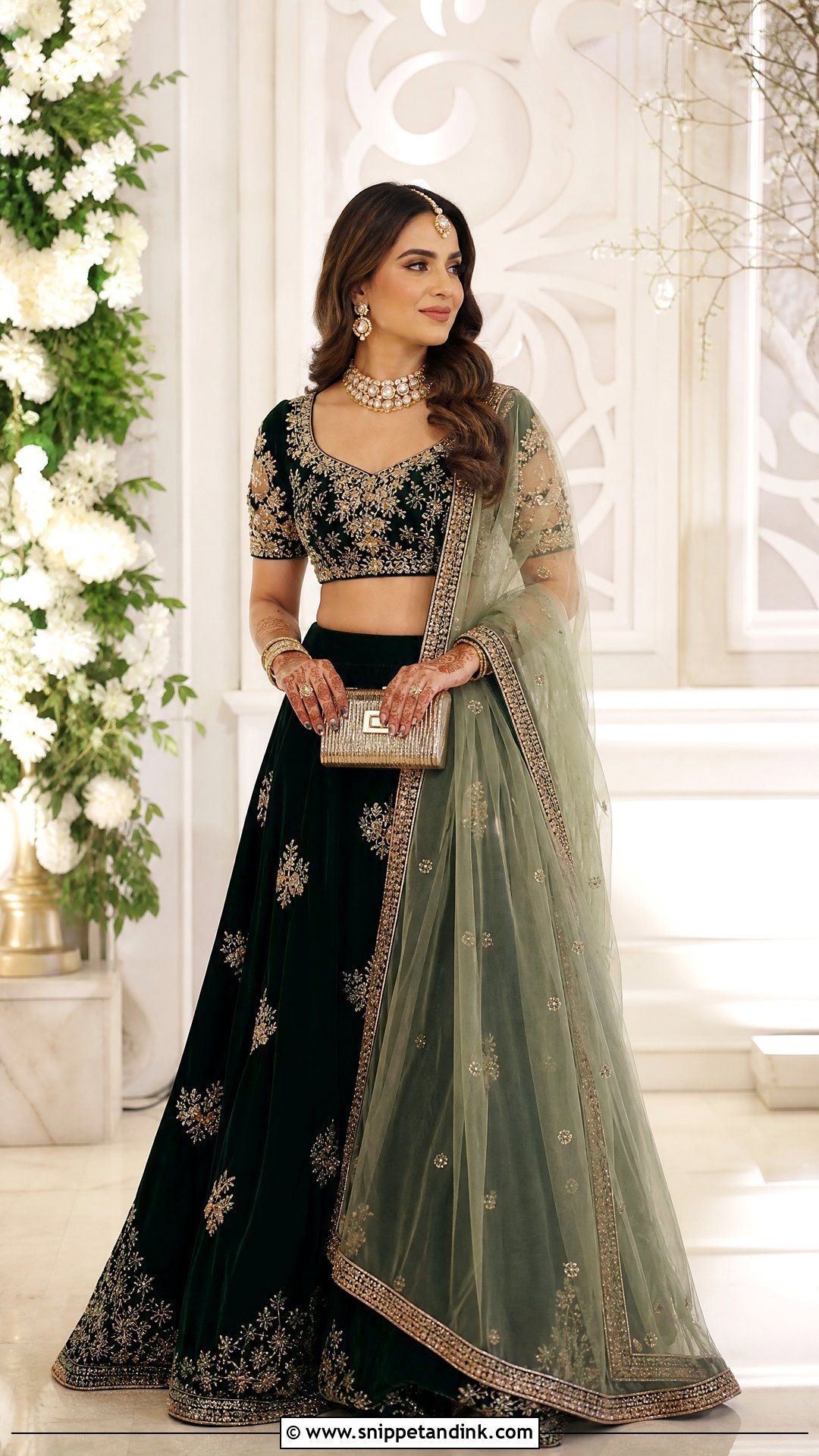
Velvet is the winter fabric. It absorbs light, so emerald, burgundy, navy or plum look richer in it than in silk, and it needs far less embellishment to read formal. It’s also warm and heavy, which is why I keep it for evening receptions in cold months and ask for a comfortable blouse with a soft lining. A net, organza or georgette dupatta lightens the whole outfit. Never press velvet flat; steam it from the back, or the pile crushes into shiny patches.
13. Cape Lehenga Wedding Outfit
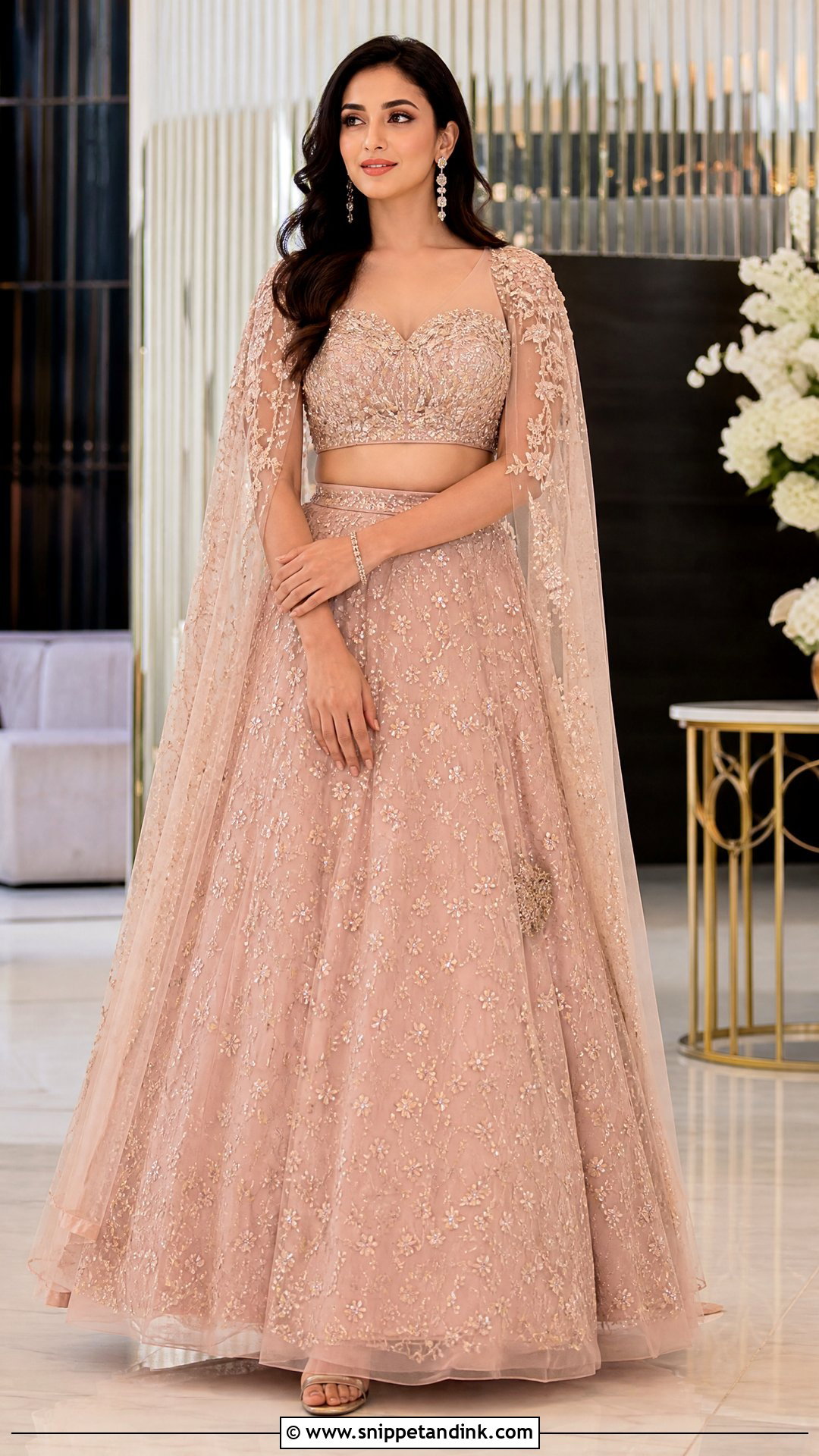
A cape lehenga solves the dupatta problem: nothing to re-pin every time someone hugs you. Choose a simple skirt, an embroidered blouse and a sheer or embellished cape, and match the cape’s weight to the season, since a heavily worked one at a summer sangeet gets hot fast. If the cape has neck detailing, skip the necklace and let earrings and a bracelet carry it. I like a sleek hairstyle here so loose hair doesn’t tangle in the back of the cape. Receptions, sangeet and engagement parties suit it, and it’s easy to dance in.
14. Jacket Lehenga Wedding Outfit
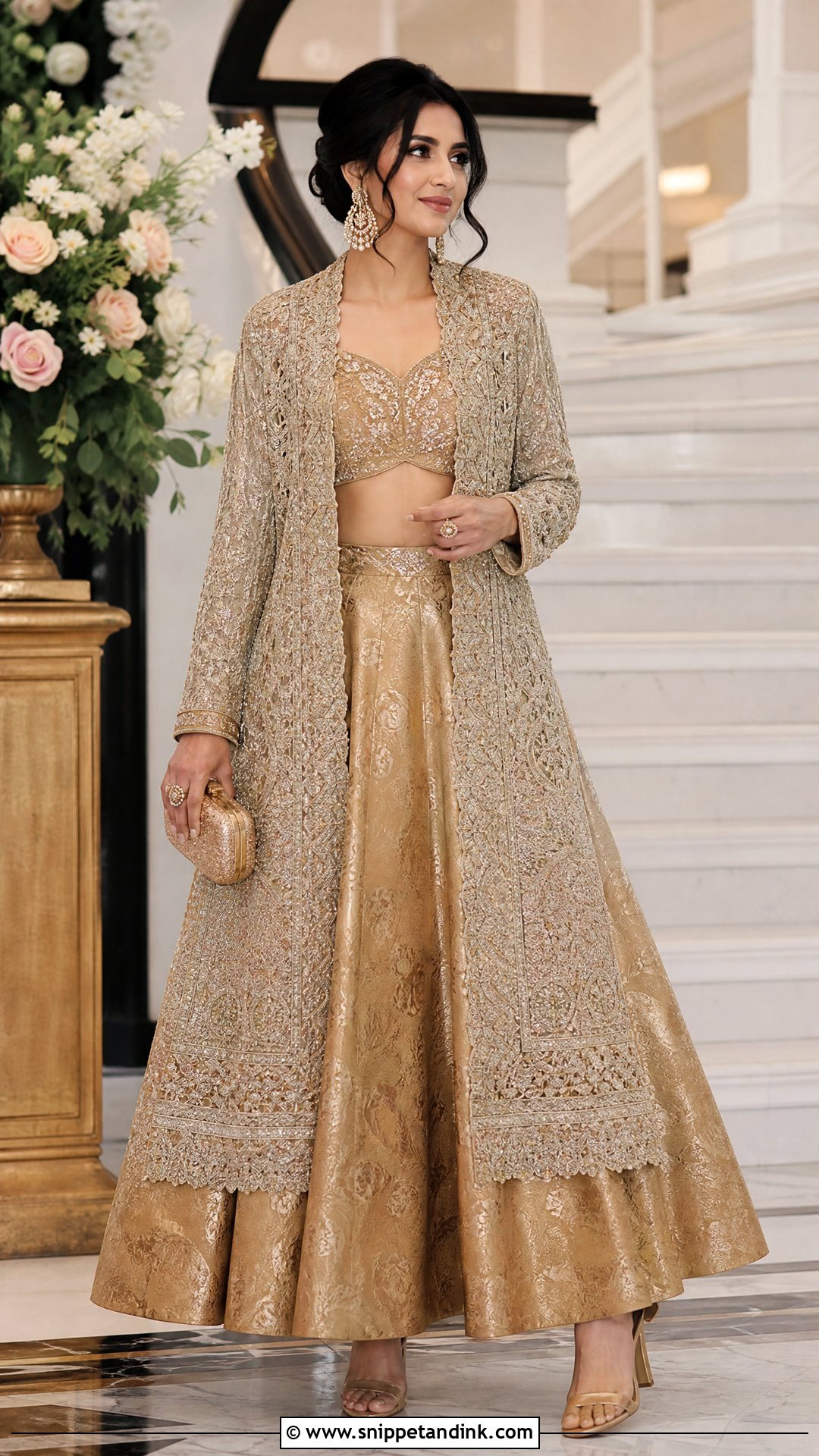
A jacket over a lehenga adds coverage and structure, and in a cold venue it’s warmth you can actually keep on for photos. Long jackets in brocade, silk or velvet read formal; shorter embroidered or printed ones feel lighter. When the jacket is heavily worked, I keep the skirt quieter so the two aren’t competing at the hip. Sit down at the fitting: a long jacket cut too narrow bunches across the lap. Statement earrings, rings and a small clutch are enough.
15. Indo Western Dhoti Outfit
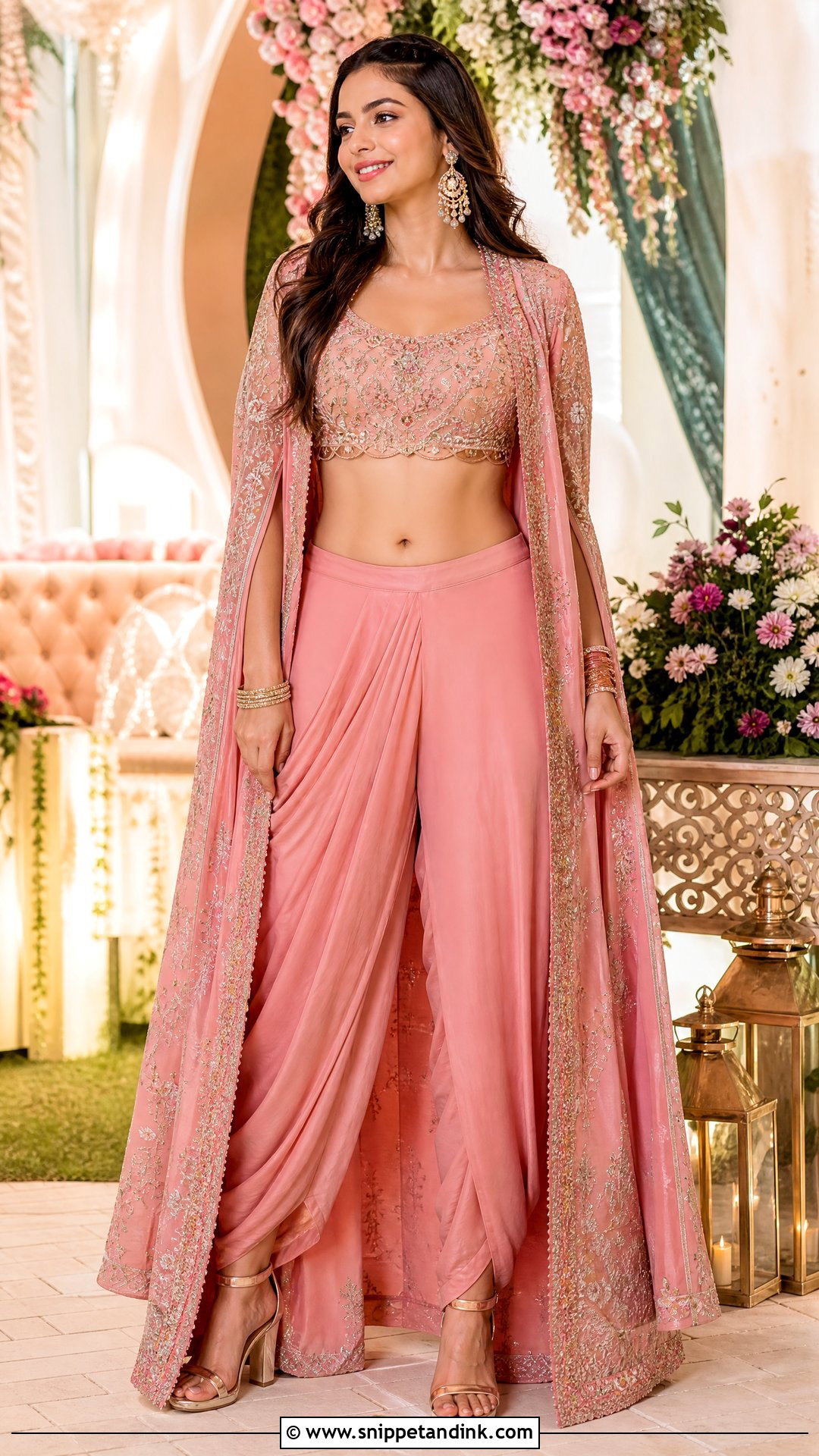
An Indo-western dhoti outfit pairs draped dhoti pants with a blouse or crop top and a jacket, cape or dupatta. The drape gives complete freedom of movement, so I suggest it for haldi, mehndi, sangeet and destination events on sand or grass. Watch the drop at the crotch: too low and it reads sloppy rather than festive, so have it fitted. Bright colors, mirror work or prints keep it celebratory. At a haldi, remember that turmeric marks light fabric for good, so wear something you don’t mind staining.
16. Palazzo Suit Wedding Outfit
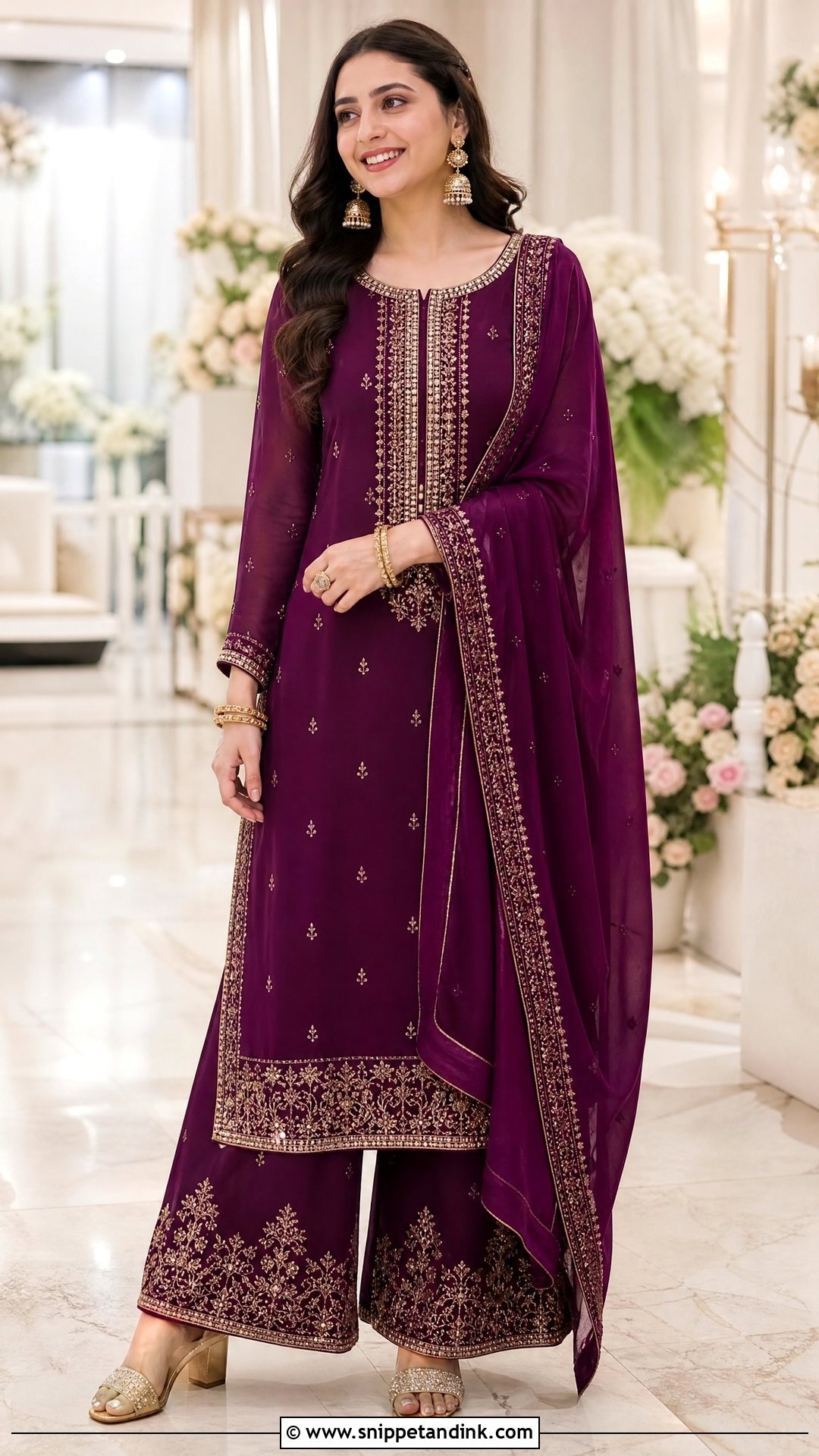
A palazzo suit is my quiet recommendation for mothers, older guests and anyone who’ll be standing to greet people for hours. Wide-leg pants with a long embroidered kurta and a soft dupatta look dressy as long as the fabric is right: silk, georgette, brocade or crepe rather than everyday cotton. Zari borders or sequins give the festive cue. Have the hem cut to the heel height you’ll actually wear, because wide legs drag and catch far more than straight ones.
17. Kurta With Lehenga Skirt Outfit
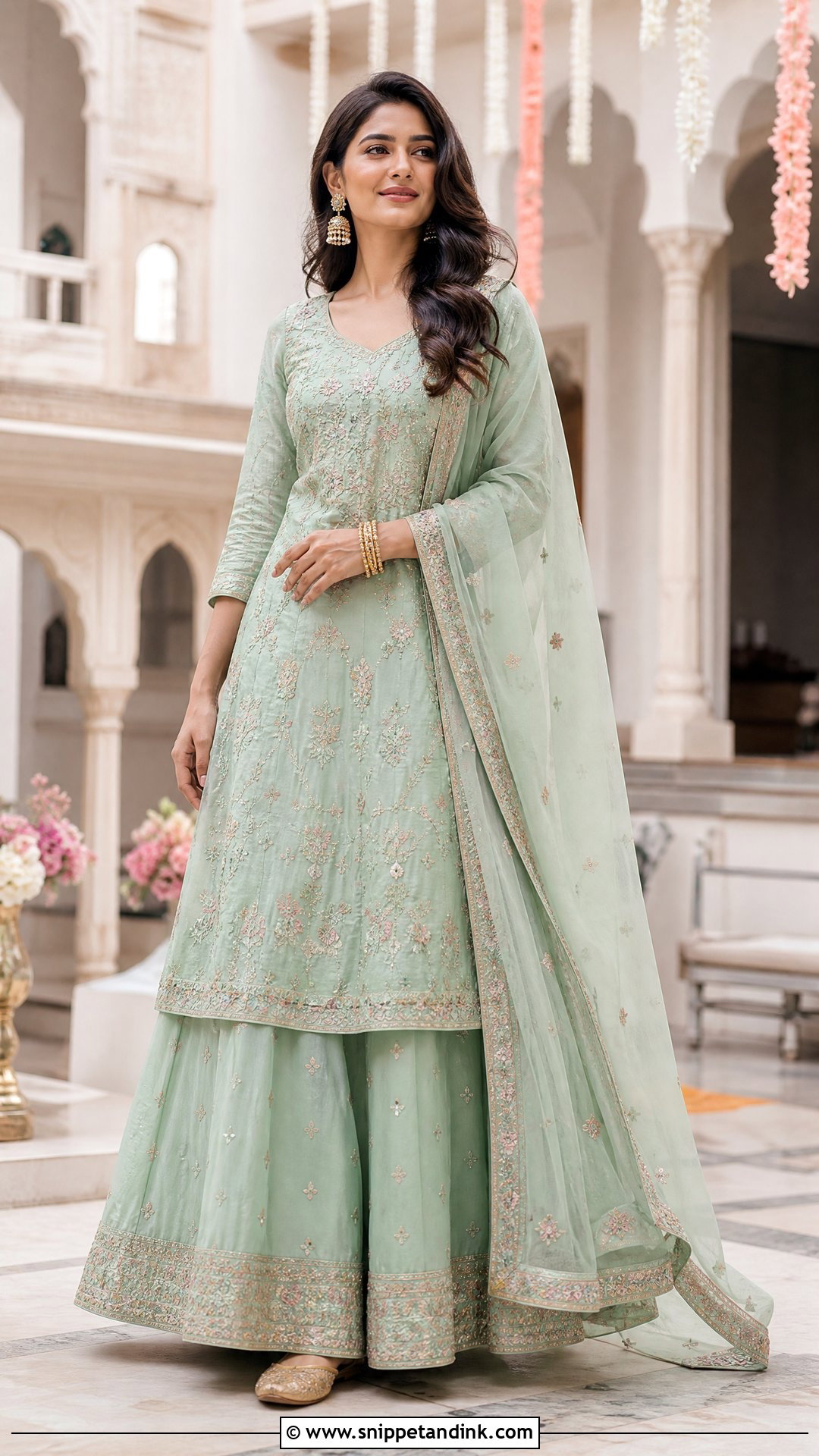
This pairing gives more coverage than a choli while keeping the volume of a skirt, and it’s the outfit I see re-worn most: the kurta goes with jeans later and the skirt goes with a plain blouse. A short, straight or A-line kurta all work, but keep its hem above the skirt’s widest flare so it doesn’t fight the shape. Embroidery at the neckline and hem ties the two pieces together. Earrings, bangles and juttis finish it for cousins, guests and bridesmaids alike.
18. Sequin Saree Reception Outfit
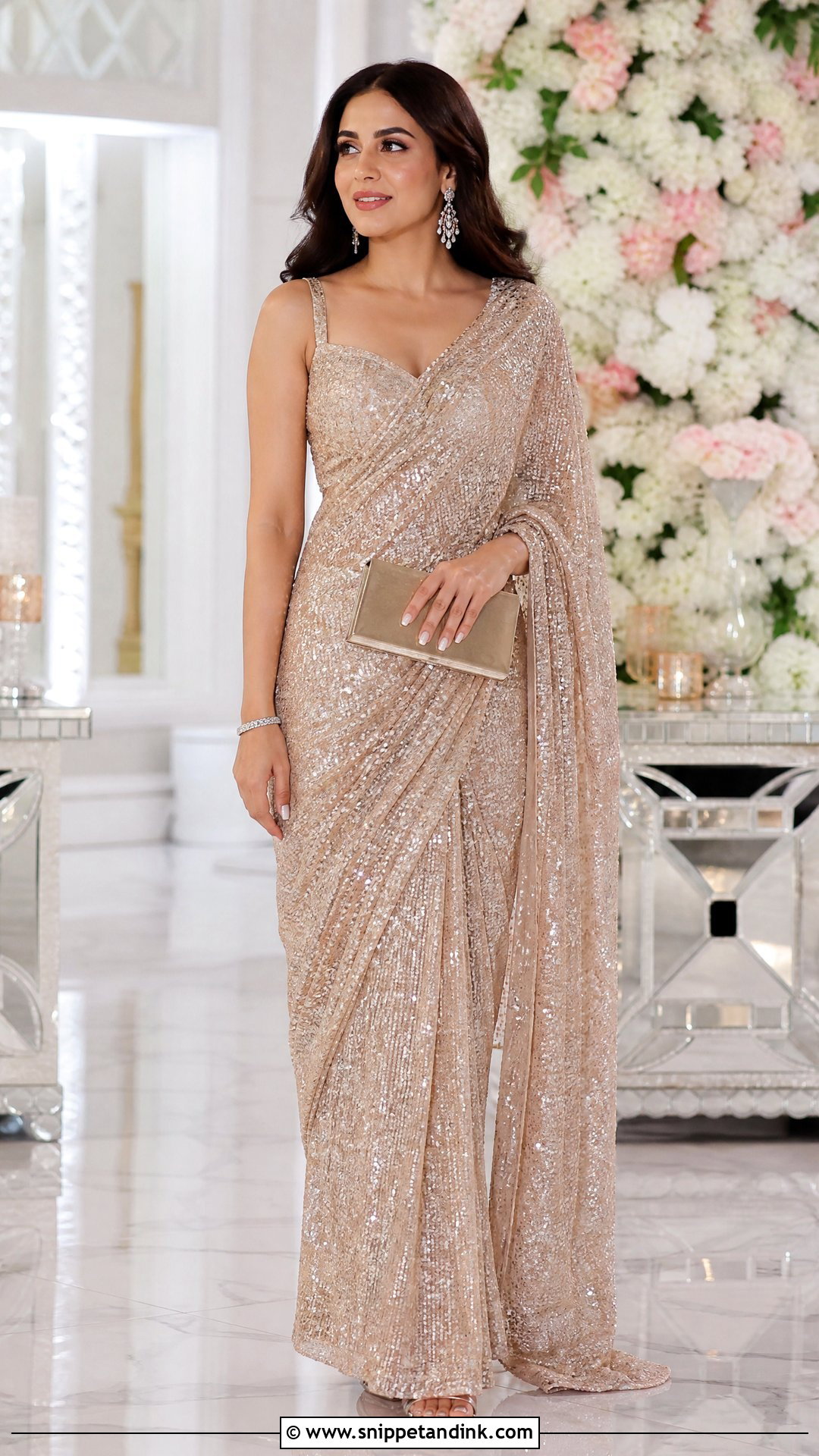
Sequins catch every flash and stage light, so they belong at an evening reception rather than a daytime ritual. The first thing I look at is the blouse: bold sequins on the saree want a plain blouse, while a matching embellished one turns the volume right up. Sequined fabric scratches the inner arm, so ask for a soft lining on the sleeves. Champagne, silver, emerald or navy all work. Keep the jewelry clean and wear heels so the drape falls straight.
19. Floral Lehenga Wedding Outfit
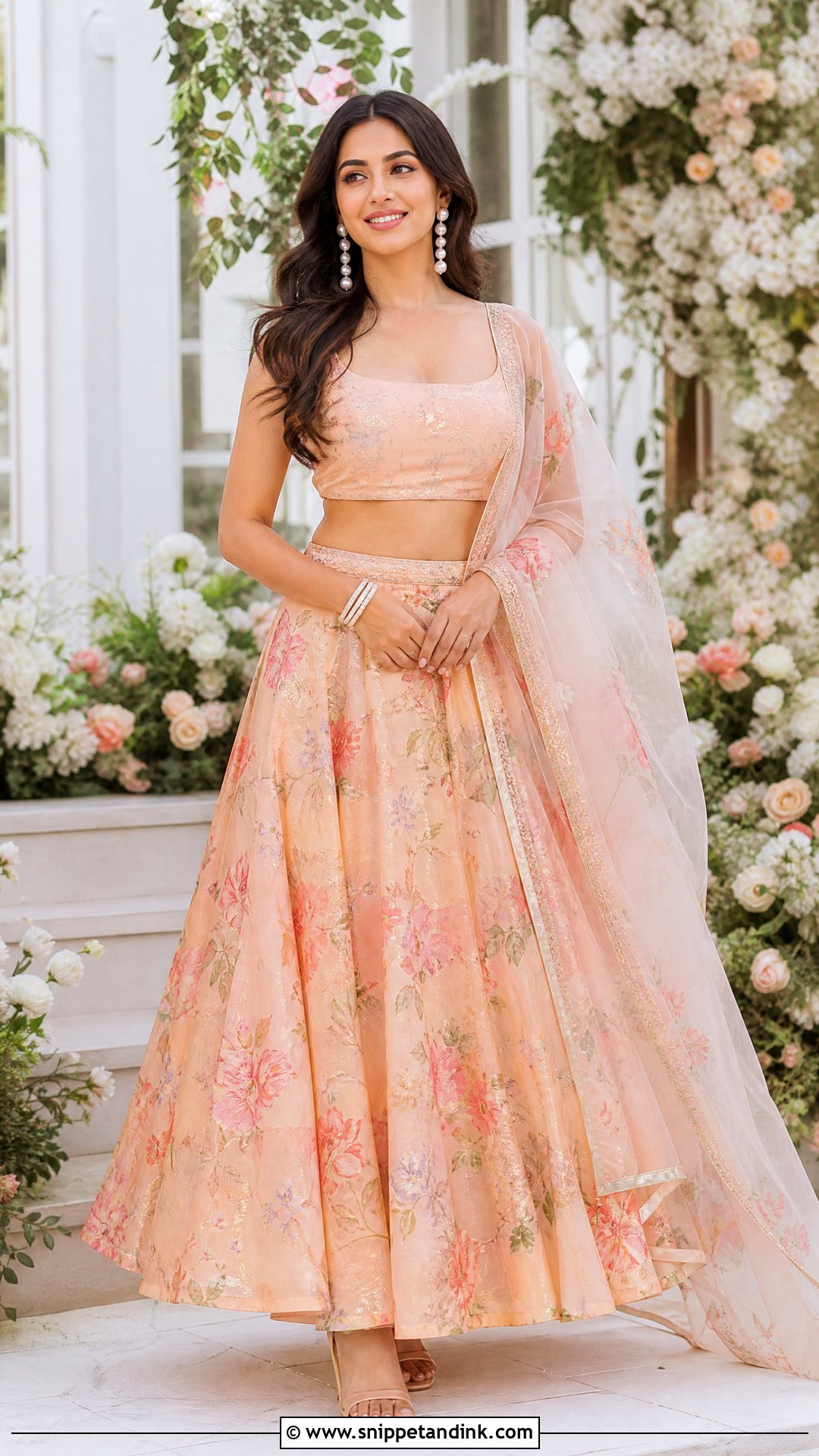
Florals are daytime clothes. Printed florals in light cotton or organza suit haldi and mehndi, while embroidered florals can carry a formal garden ceremony. Peach, mint, yellow and ivory look fresh in natural light. With a busy print, I keep the blouse plain and the dupatta light so you don’t end up with three patterns arguing. Pearl earrings and flat sandals are enough, especially on a lawn where heels sink.
20. White And Gold Saree Wedding Outfit
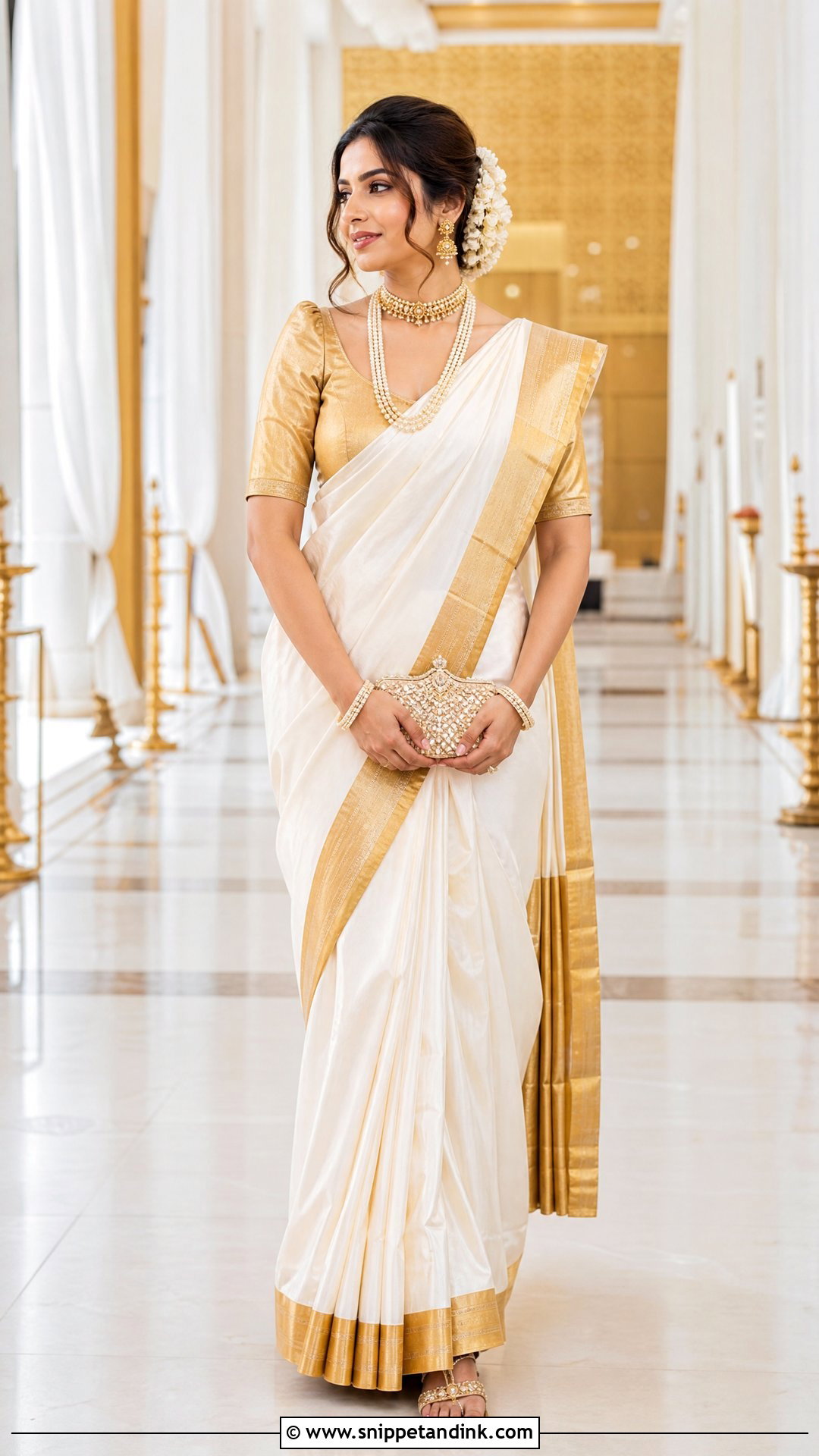
White and gold is a classic at South Indian ceremonies, and it’s unforgiving in one way: nothing distracts from fit or fabric. Silk or tissue with a woven gold border holds its shape, while chiffon and organza drape softer. I hold the saree up to the light before buying, since thin white silk can show petticoat seams, and a matching ivory petticoat fixes that. A gold blouse, temple earrings or pearls, a neat bun and a small bindi complete it. In some North Indian families plain white is linked to mourning, so as a guest, check before wearing it.
21. Pakistani Long Shirt Gharara Outfit
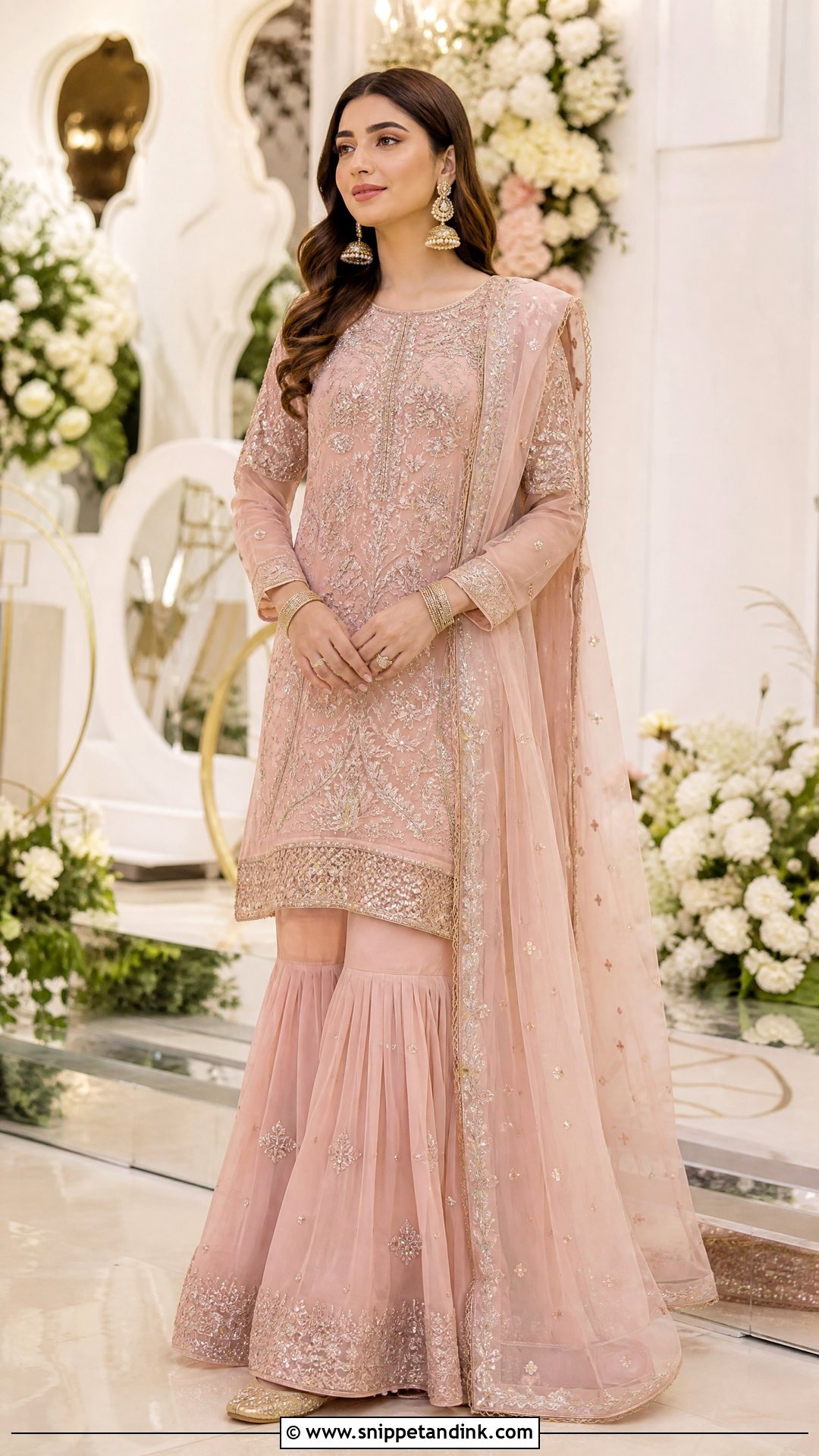
A Pakistani long shirt with gharara pants is the modest choice that still moves: the kameez falls to the knee or below and the gharara flares from there. Chiffon, silk, organza or net with embroidered neckline, sleeves and border suits nikah, walima and engagement dressing. Tea pink, sage or ivory feel soft by day; maroon, emerald and navy hold up at night. At the fitting I check that the kameez side slits land above the gharara band, or the two compete when you walk. Drape the dupatta so the neckline work stays visible.
22. Co Ord Set Wedding Outfit
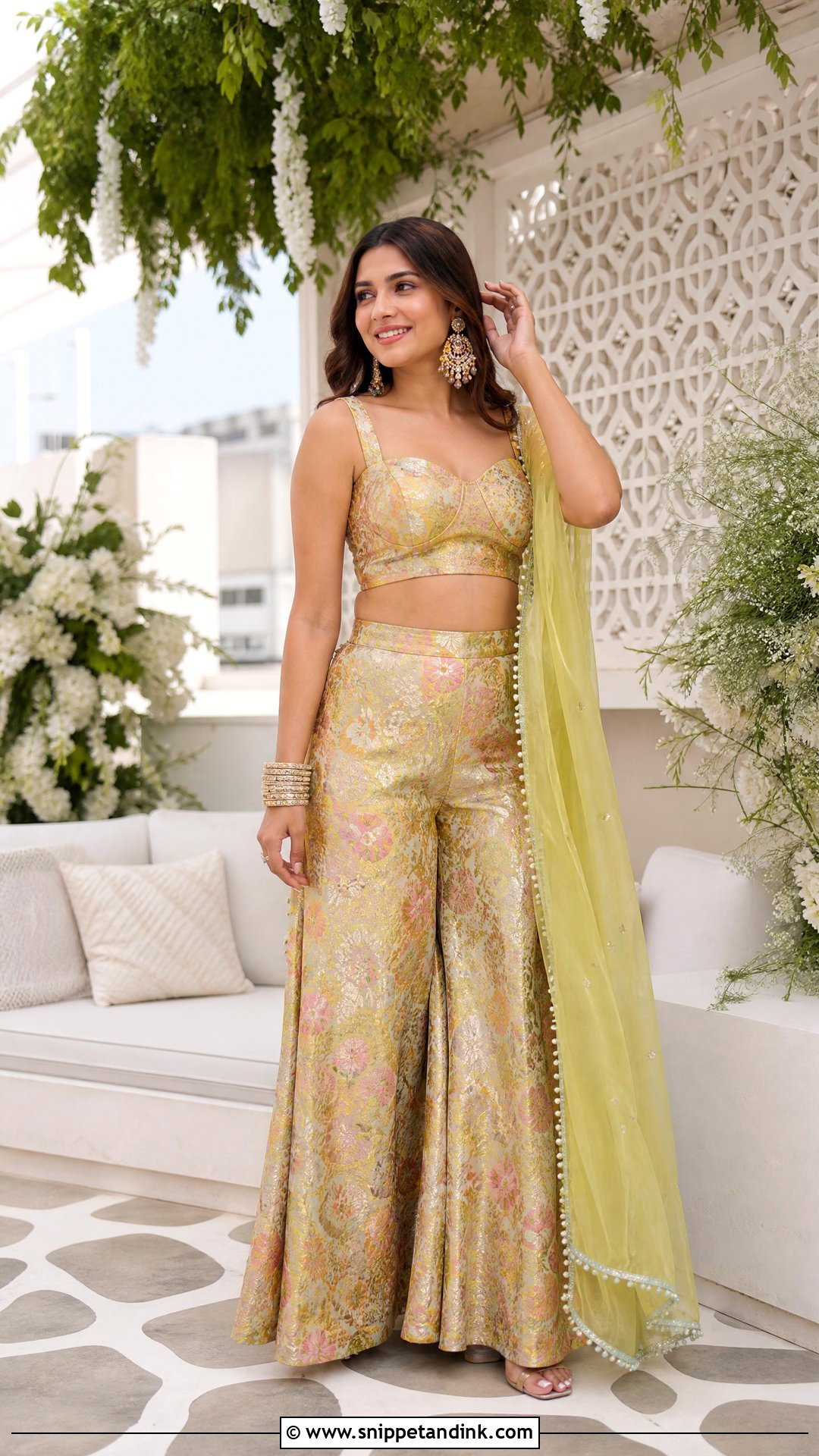
Co-ords are my answer for the pre-wedding events: a crop top and skirt, kurta and pants, or blouse and flared trousers in silk, brocade or georgette. Because both pieces match, they read as dressed up even with simple jewelry, and they split apart for later wear. When the family leans traditional, add a dupatta, cape or jacket. Mehndi, haldi and welcome parties suit them best.
23. Ruffle Saree Wedding Outfit
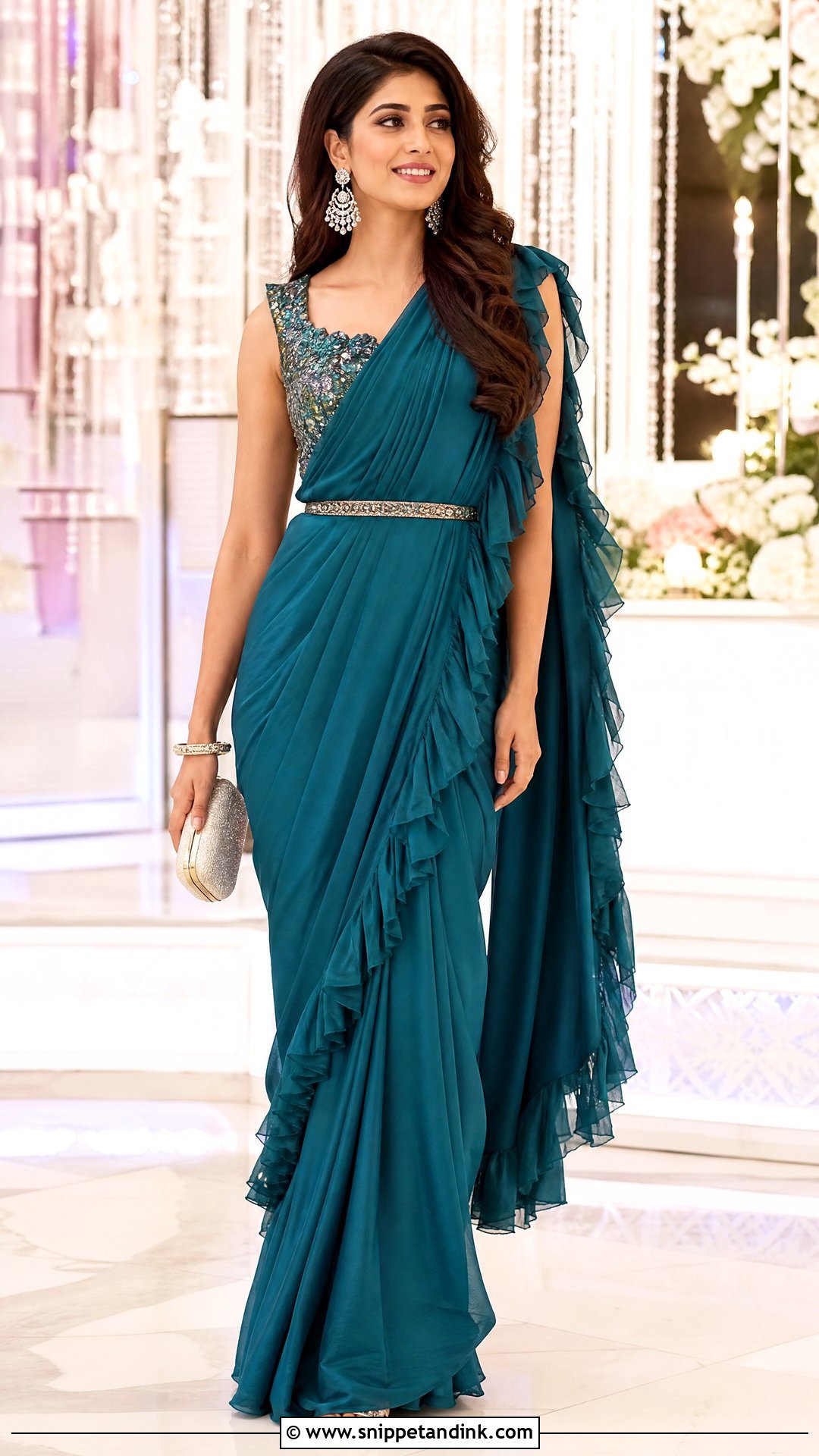
A ruffled hem gives a saree movement without any embroidery, and it’s more forgiving to drape than a plain one because the ruffle hides uneven pleats. Solid colors show the ruffle best, paired with an embellished blouse. Belt it: the belt holds the pallu on the dance floor and stops the pleats fanning open. Since the saree already carries volume, I stop at earrings, heels and a clutch. It’s the saree I hand to younger guests who are nervous about managing six yards.
24. Peplum Top With Sharara Outfit
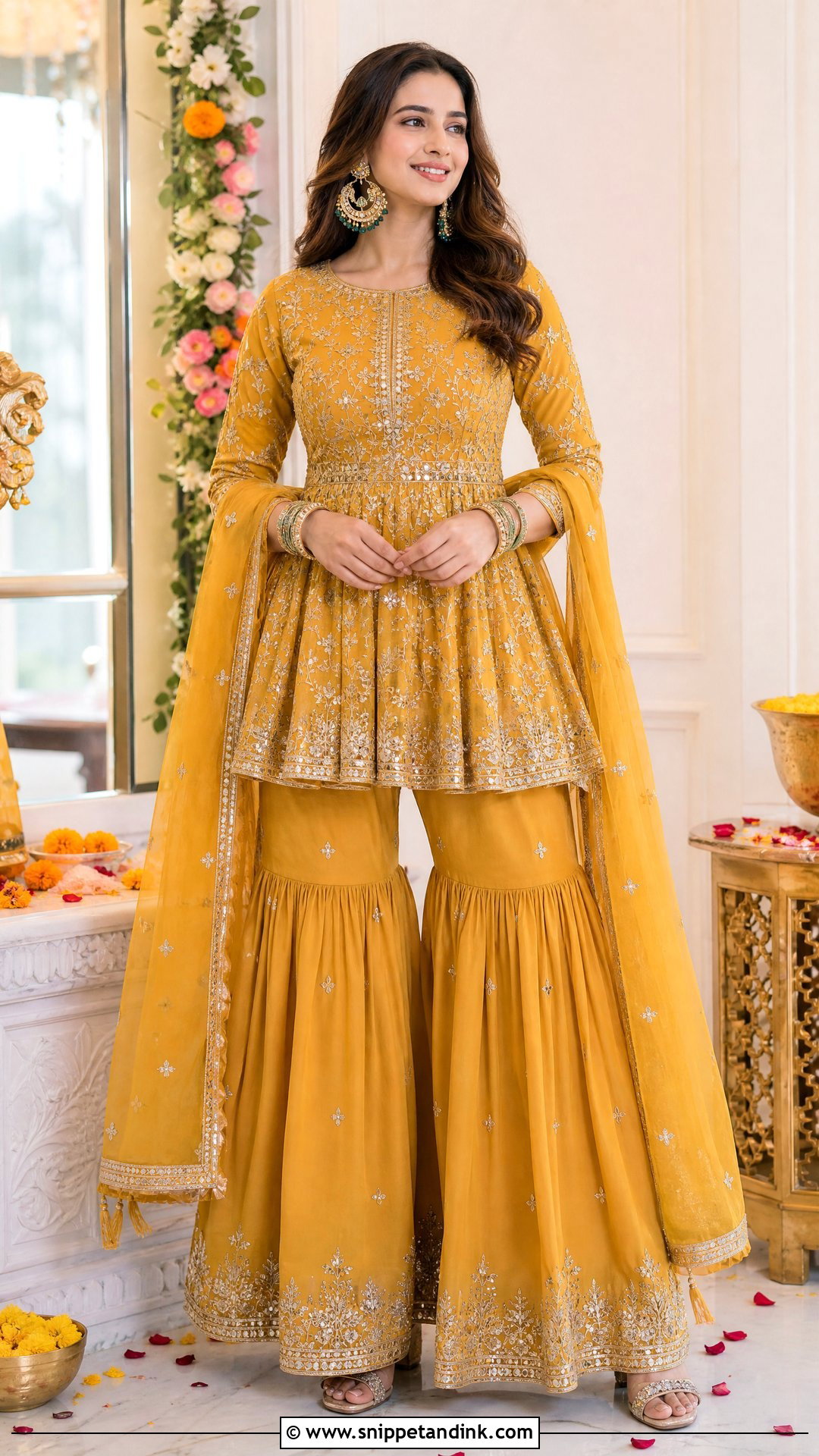
The peplum flares right at the waist, which gives definition and skims the tummy without hiding your figure. Over sharara pants, it balances volume below with shape above. I’d pair an embroidered peplum with plain shararas; fully embellished sets suit a formal function but can swamp a petite frame. Make sure the peplum ends at the high hip, not lower, or it shortens the leg line. Bright colors by day and jewel tones by night.
25. Fusion Jumpsuit With Dupatta Outfit
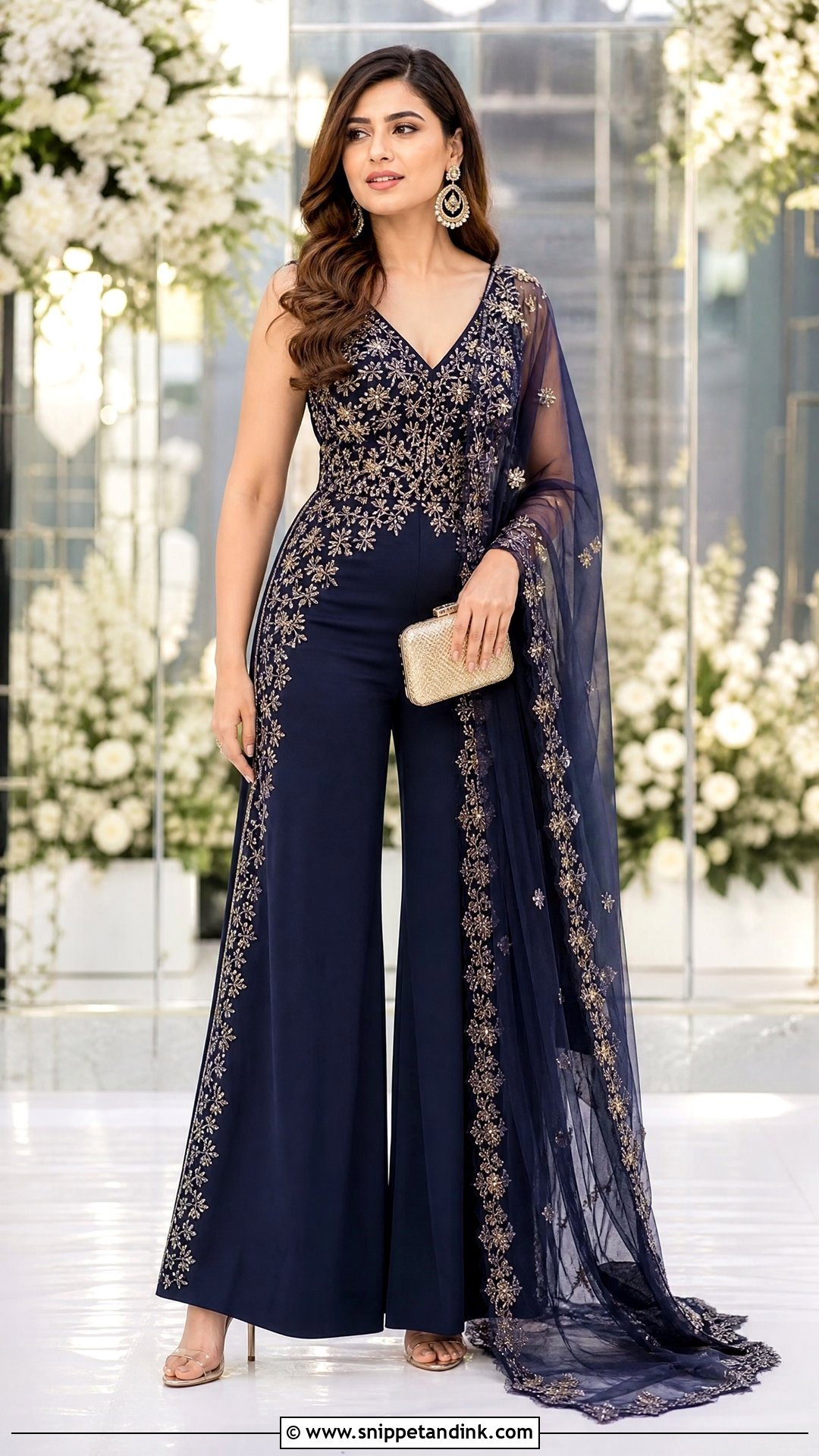
A fusion jumpsuit is the sleekest option here: wide-leg, often with a structured bodice or draped waist, plus a dupatta, cape or long jacket to bring it back to wedding territory. It moves easily, so destination weddings and sangeet nights suit it. The honest downside is the bathroom, since a one-piece with a back zip is awkward in a crowded venue, so I look for side zips or a wrap bodice. Polished hair and clean makeup make it look deliberate rather than casual.
Bring Your Wedding Shoes to the Final Fitting
Most Desi wedding wear gets altered after purchase, and custom stitching often takes several weeks before alterations even begin, longer in peak wedding season. Leave room for at least two fittings. These are the checks I run at the last one:
- Wear the exact shoes. Lehenga and sharara hems should skim the floor in them, not pool.
- Wear the bra or shapewear planned for the day, because blouse fit changes with it.
- Sit, cross your legs and raise both arms. A blouse that rides up now will be worse by the fifth hour.
- Ask for extra seam allowance in the blouse so it can be let out later.
- Practice the dupatta drape with safety pins, then take those pins home.
Storing Silk and Zari Between Functions
A multi-day wedding means heavy pieces waiting in a hotel room between wears. I never hang a heavy lehenga skirt, because the waistband stretches under its own weight; fold it with the embroidery inside and tissue between the layers. Let any sweat air out overnight before packing it away.
Afterward, store silk and zari in muslin or cotton bags, never plastic, which traps moisture. Refold silk sarees along new lines every few months, since old creases weaken the fiber. Steam embroidery from the reverse, and keep perfume and deodorant well away from metallic thread, which dulls and tarnishes with contact.
Fabric First, Then the Embellishment
Every outfit here solves a different problem. The red lehenga carries the ceremony, the sharara survives the dance floor, the gharara and long shirt suit a nikah, and the jumpsuit packs for a flight. Decide by the function and the hours you’ll spend in it, then by color, and only then by embroidery. Get the fit right, wear your shoes to the last fitting, and you’ll spend the wedding with your family instead of fixing your dupatta.
You'll Like These Ideas:


Leave a Reply