
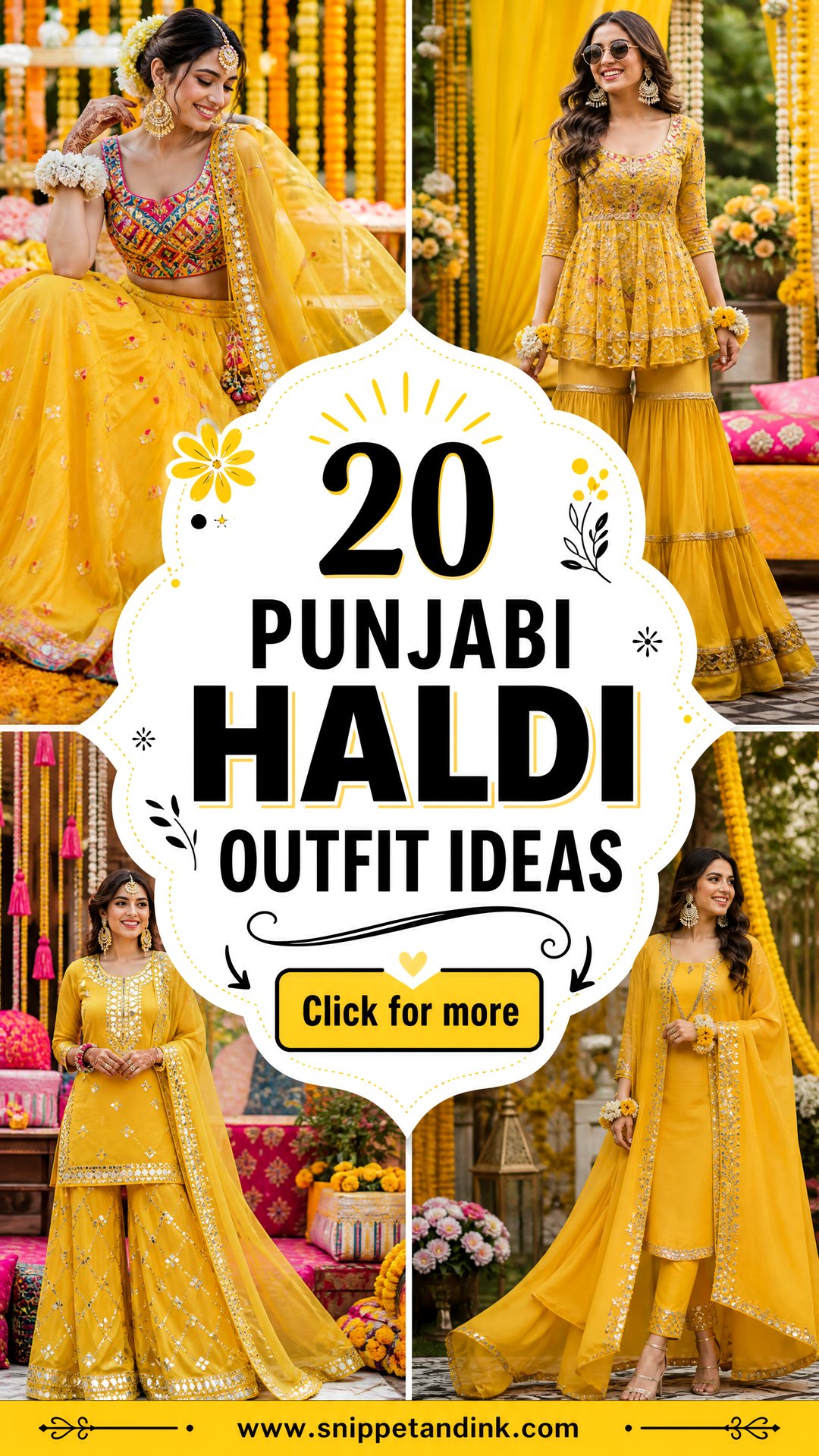
A haldi is the one wedding function where your outfit is supposed to get ruined a little. Aunties will smear vatna on your arms, cousins will chase each other with it, and somebody always ends up sitting in a puddle of yellow. So the outfits I put together for a Punjabi haldi start from fabric and movement, then color. You will find everything below, from traditional Patiala suits and phulkari dupattas to shararas, lehengas, sarees and co-ord sets. Yellow is the classic, but marigold, orange, pink, green and even ivory all have a place, depending on whether you are the bride, a sister or a guest standing a safe distance from the paste.
Dressing for the Paste, Not Just the Photos
At most Punjabi haldi or maiyan ceremonies, the bride sits on a low seat while family members rub vatna, a paste of turmeric, flour and oil, onto her face, arms and feet. The oil is what makes it stubborn. It soaks into natural fibers, and turmeric’s yellow pigment rides along with it. So my first question is always fabric, before color or silhouette.
- Cotton, mulmul and cotton-silk wash out far better than pure silk, satin or tissue.
- Prints and bandhani hide splashes; plain ivory and white show everything.
- Short or elbow sleeves let relatives reach your arms without soaking the cuffs.
- Skip real kundan or pearls if you will be in the middle of it; floral or gold-plated pieces are easier to clean.
- Wear a simple slip or cycling shorts underneath, since thin cotton can turn see-through when damp.
Before the paste goes on, I ask brides to rub a thin layer of coconut oil along the hairline, around the nails and behind the ears. It acts as a barrier, and yellow fingernails are the one haldi souvenir nobody wants in their ring photos two days later.
1. Punjabi Haldi Patiala Suit With Phulkari Dupatta
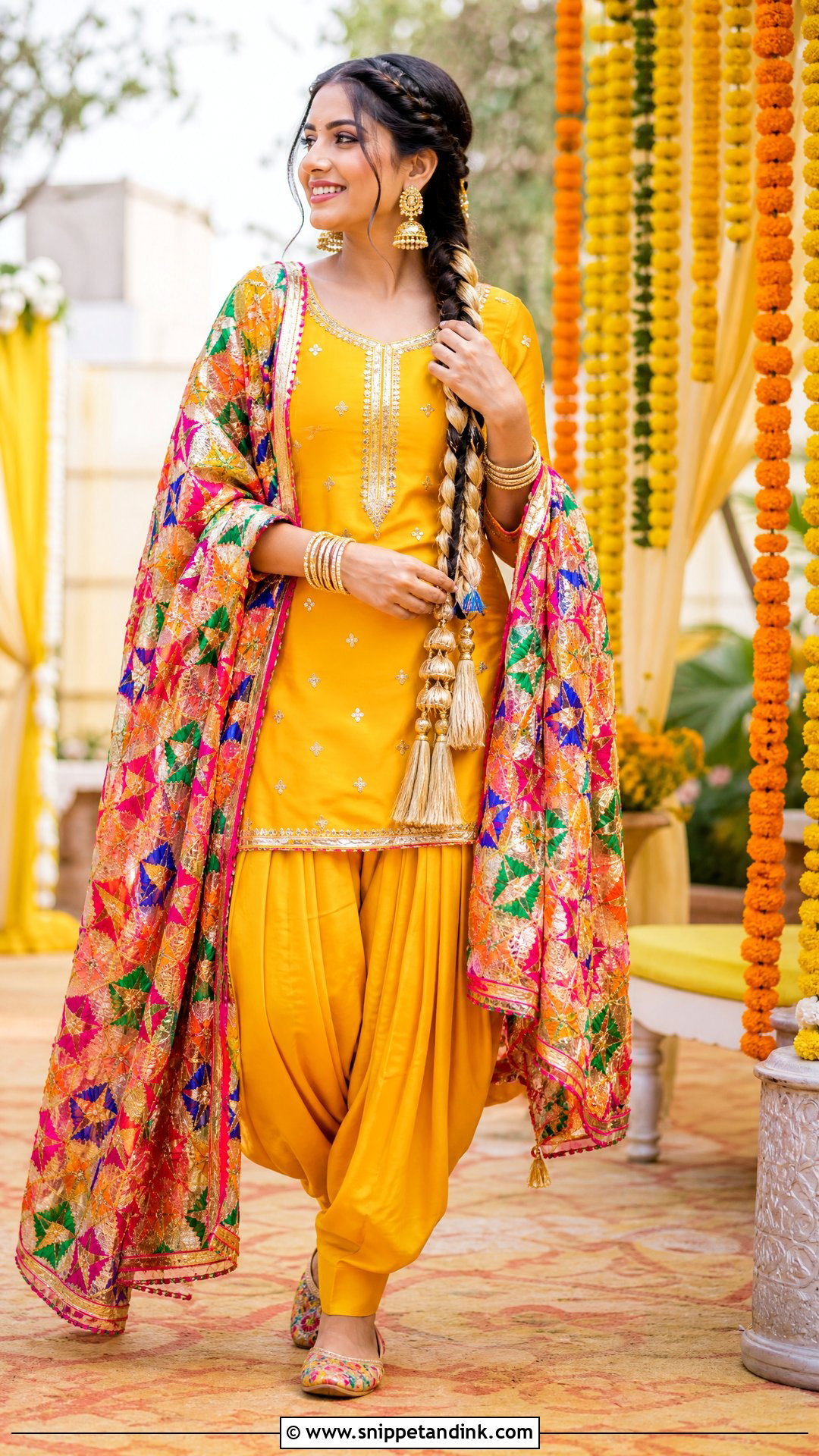
Start with the outfit that never goes wrong. A short yellow kameez with thin gota borders over a pleated Patiala salwar keeps the traditional shape, and the phulkari dupatta carries the color. I keep the top short because a long kameez over Patiala pleats looks heavy and swallows shorter frames. Embroidered juttis, gold jhumkas, colorful bangles and a small potli finish it. A side braid finished with a simple parandi adds a Punjabi touch that does not tip into costume. For the bride, brighter embroidery and floral jewelry; for guests, cotton or silk-blend. Pin the dupatta at one shoulder so your hands stay free.
2. Punjabi Haldi Yellow Sharara With Short Kurti
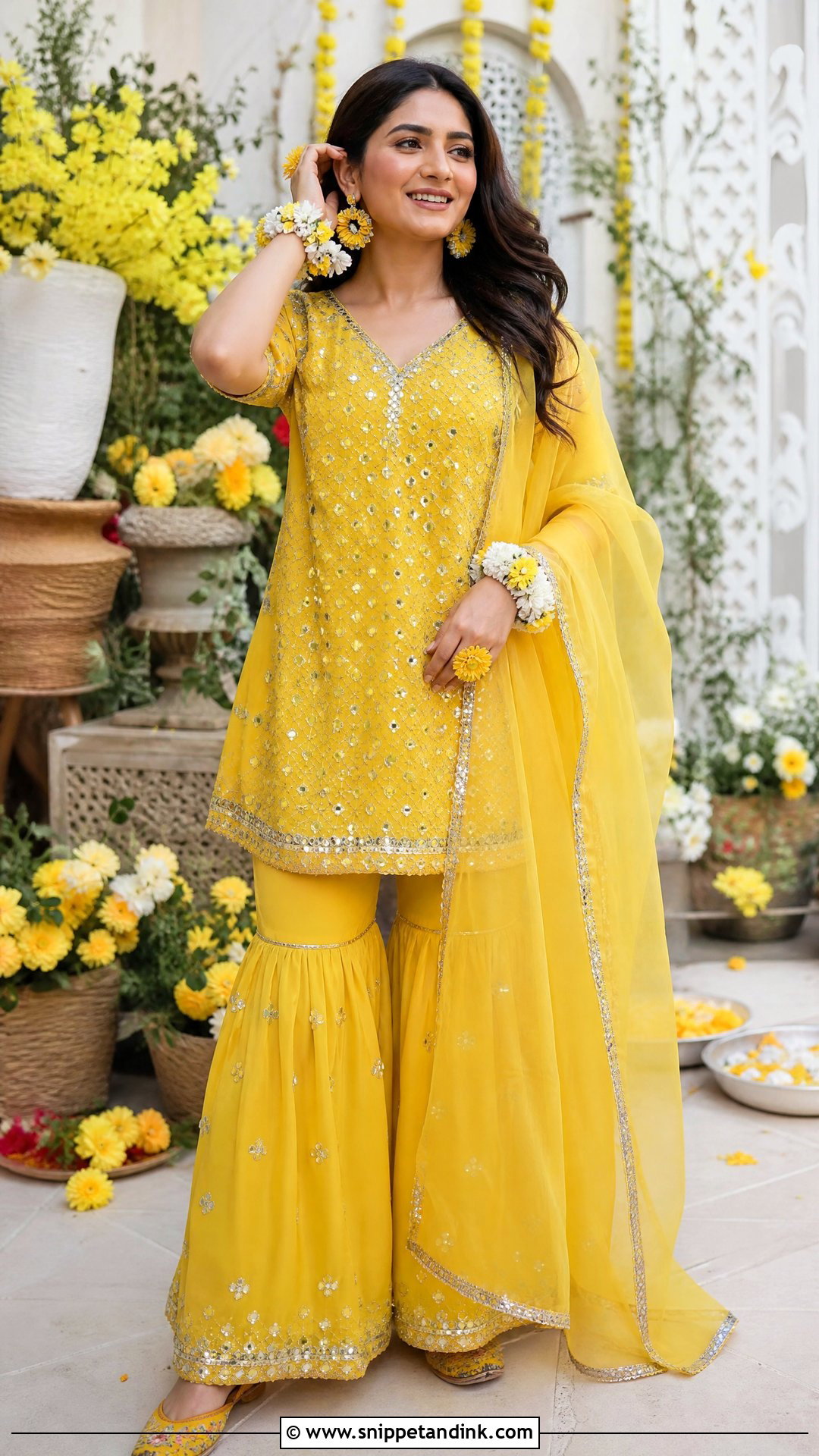
Shararas swing every time you move, and at a haldi that is half the fun. Go for a bright yellow flared pair with a short kurti in mirror work, gota patti or fine thread embroidery. Here is where I hold back: a light organza dupatta with a narrow border, not a heavy one, because heavy borders drag through paste on the floor. Gold jhumkas, floral bangles and yellow juttis finish it, with loose waves or a low ponytail with tiny flowers. A hip-length kurti in one continuous shade adds height. Bridesmaids can all wear yellow sets and change only the dupatta color.
3. Punjabi Haldi Mustard Anarkali With Floral Jewelry
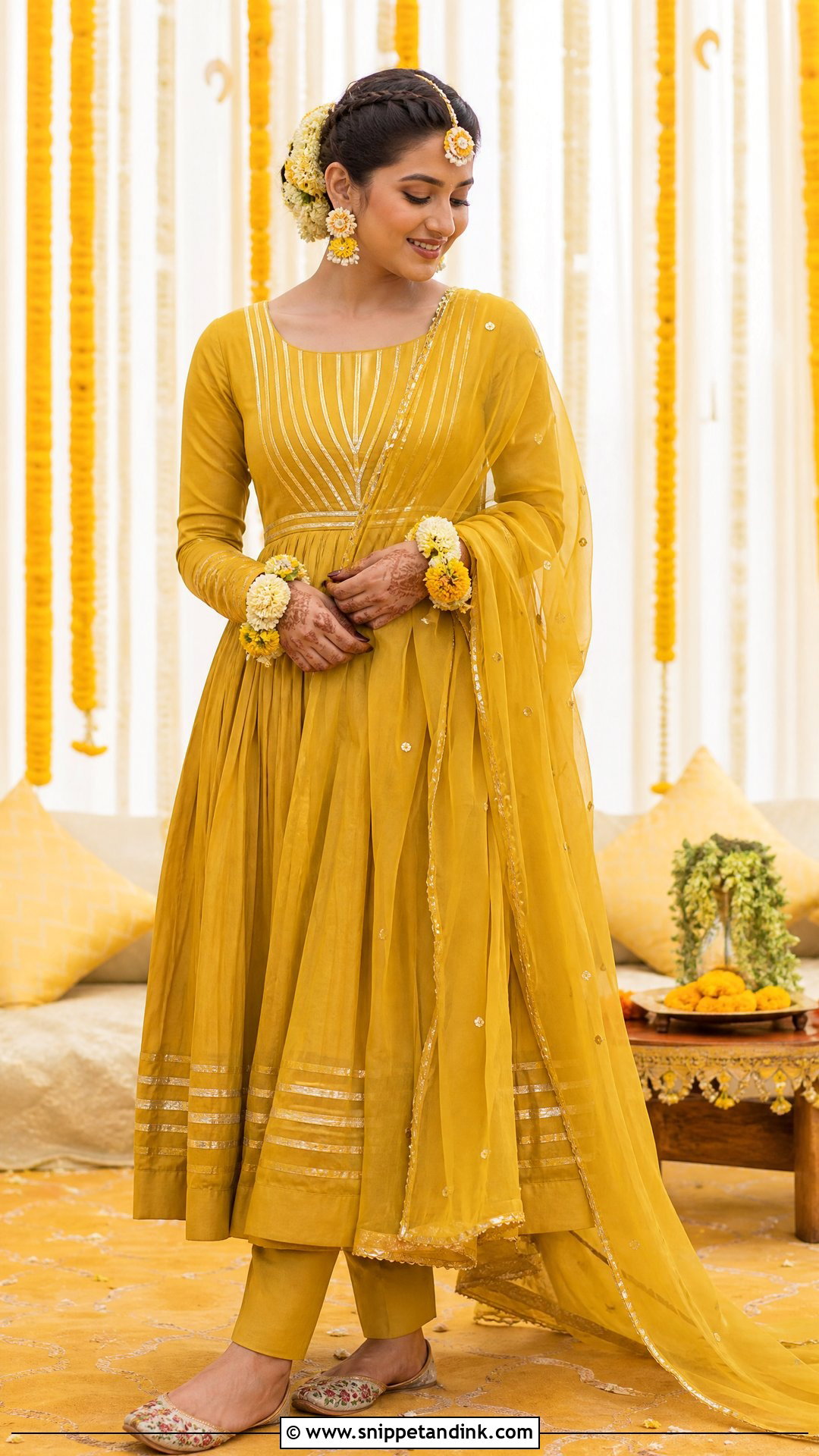
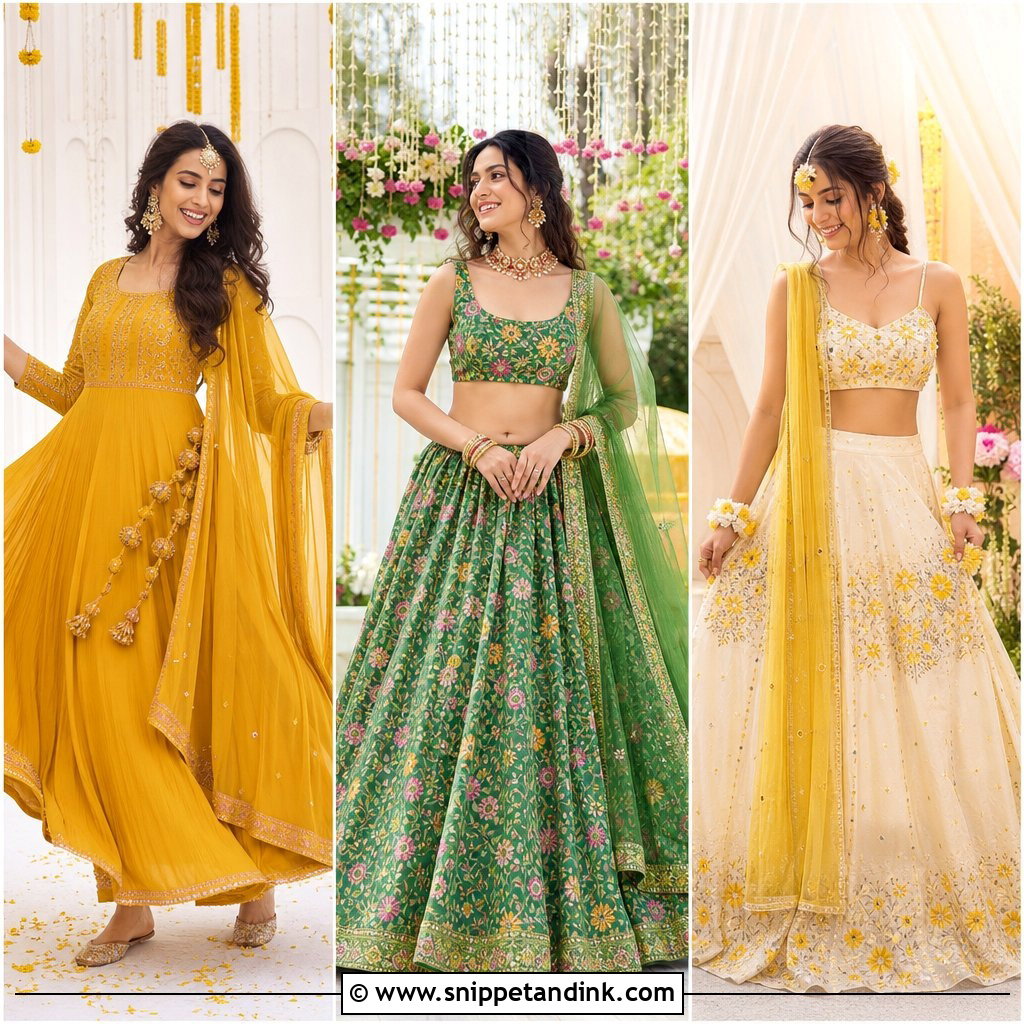
Mustard is kinder to most skin tones than lemon yellow, which can wash out deeper complexions in direct sun. An Anarkali in mustard gives full coverage without a heavy lehenga. Choose breathable cotton, Chanderi or light georgette, with a fitted bodice and a flare you can sit in without a helper. Gota around the neckline and hem gives enough shine. Pair with slim pants, flat juttis and a sheer dupatta over one shoulder. Flower earrings, a matching tikka and flower bracelets make it ceremonial. Keep makeup fresh with defined eyes and peach blush; paste-smudged foundation is impossible to fix, so go light on base. A braided bun keeps long hair out of the vatna.
4. Punjabi Haldi Lehenga With Phulkari Blouse
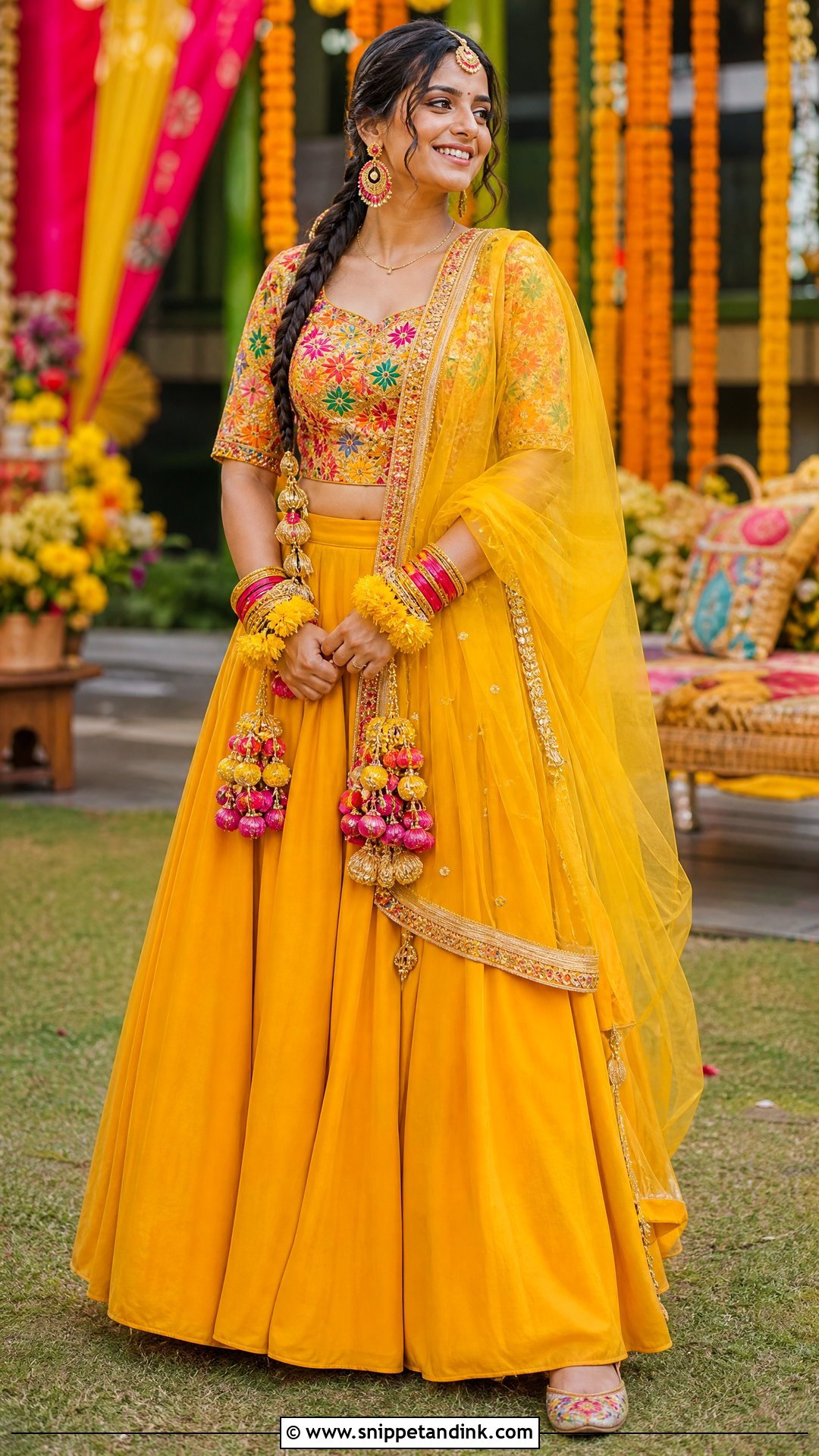
A plain marigold lehenga with a phulkari blouse puts all the color where the camera looks: your face and shoulders. The plain skirt keeps it from looking overloaded. Choose an A-line or lightly gathered skirt that lets you sit on a low stool and get up again easily, because that is exactly what a bride does at a maiyan. A sheer yellow dupatta with tiny gota edging can go diagonally across the body or be pinned at both shoulders. Floral kaleere, a small tikka, stacked bangles and juttis finish it, with a braid in flowers or a bright parandi. Keep the hem a little short; trailing hems collect turmeric and dust.
5. Punjabi Haldi White Suit With Yellow Phulkari Dupatta
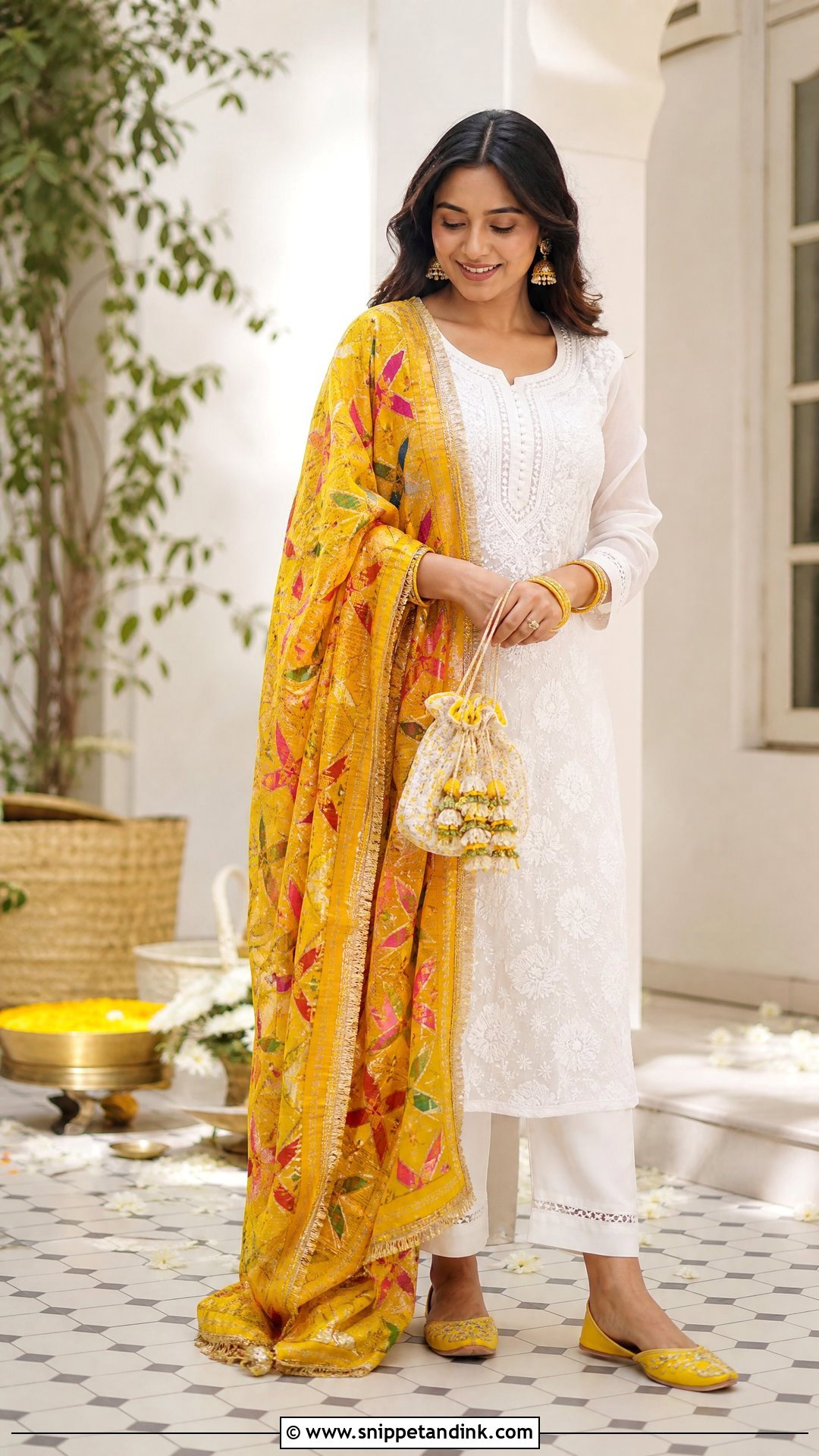
White with yellow is fresh and clean, and it is also the outfit most likely to be ruined, so I only recommend it for people who will not be in the thick of the paste. A white chikankari or embroidered straight suit with ankle pants makes a quiet base, and a bold phulkari dupatta in pink, orange, green or red thread on yellow does the celebrating. Yellow juttis, small gold earrings, glass bangles and a flower-trimmed potli suit it, with a low bun dotted with yellow flowers. Sisters and cousins look sweet coordinated this way. If you will be applying haldi, choose washable cotton chikankari, not silk.
6. Punjabi Haldi Green Gharara With Yellow Kurti
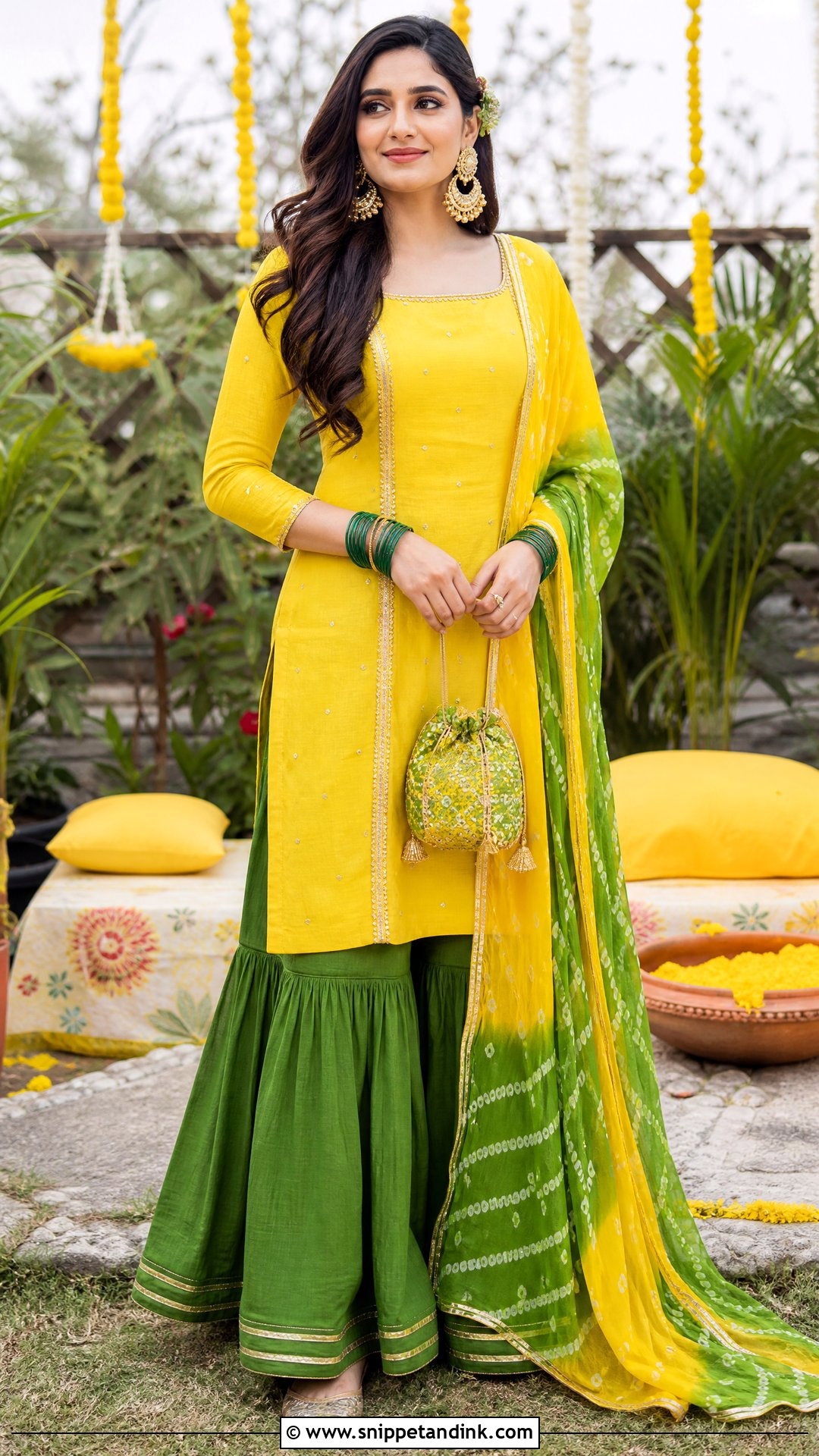
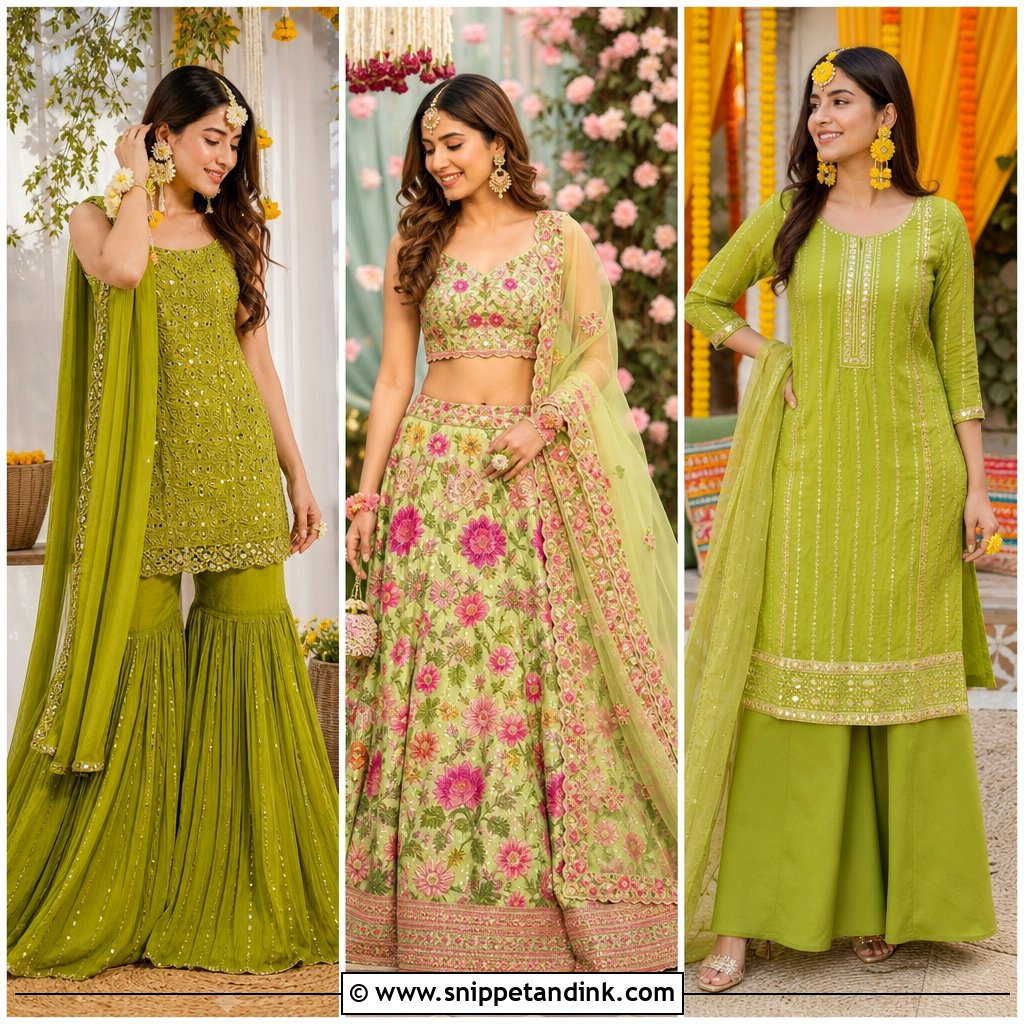
Your haldi outfit does not have to be all yellow. A lemon-yellow kurti over a fresh green gharara gives contrast and still feels like the day. The gharara is fitted through the thigh with a seam at the knee, then flares; that knee seam gives shape, which is why ghararas flatter so many figures. Keep the kurti waist-length with subtle mirror work. A yellow and green bandhani or organza dupatta ties the colors together. Metallic juttis, gold chandbalis, green bangles and a compact potli finish it. Ghararas need care when sitting cross-legged, so lift the flare slightly as you settle.
7. Punjabi Haldi Orange Salwar Kameez With Parandi
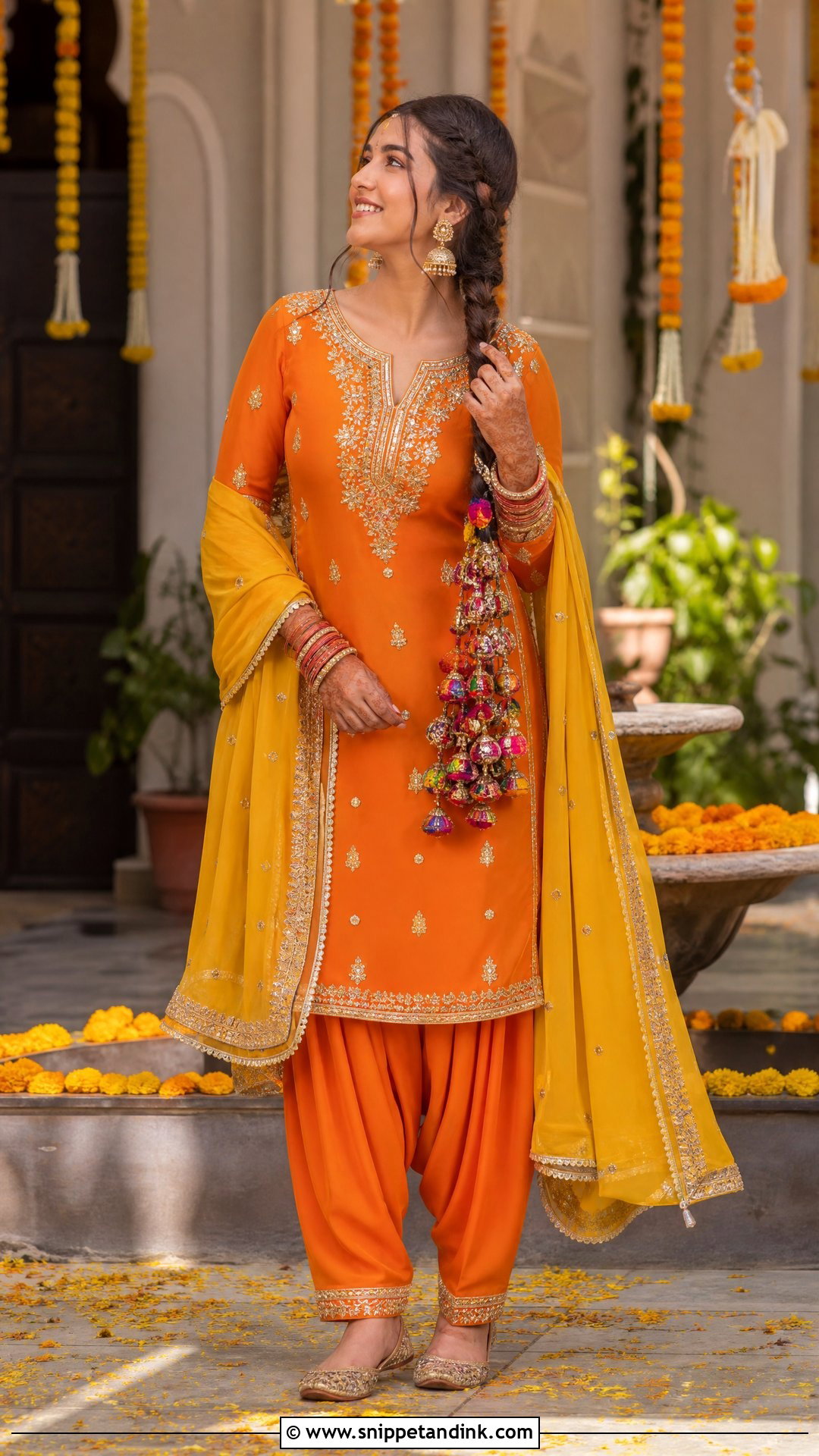
Orange is warm and photographs richly in morning light. A straight or slightly flared orange kameez with a traditional salwar and a contrasting yellow dupatta needs very little decoration; small gold motifs or gota edging is enough. Tan or gold juttis, dome jhumkas, stacked bangles and a long braid tied with a parandi keep it traditional. For petite wearers, a kameez ending above the knee balances the salwar. Brides can add floral jewelry and a busier dupatta, family a simpler cotton version. Test your juttis for a few hours before the day; new leather juttis rub at the heel until they have softened.
8. Punjabi Haldi Yellow Saree With Phulkari Blouse
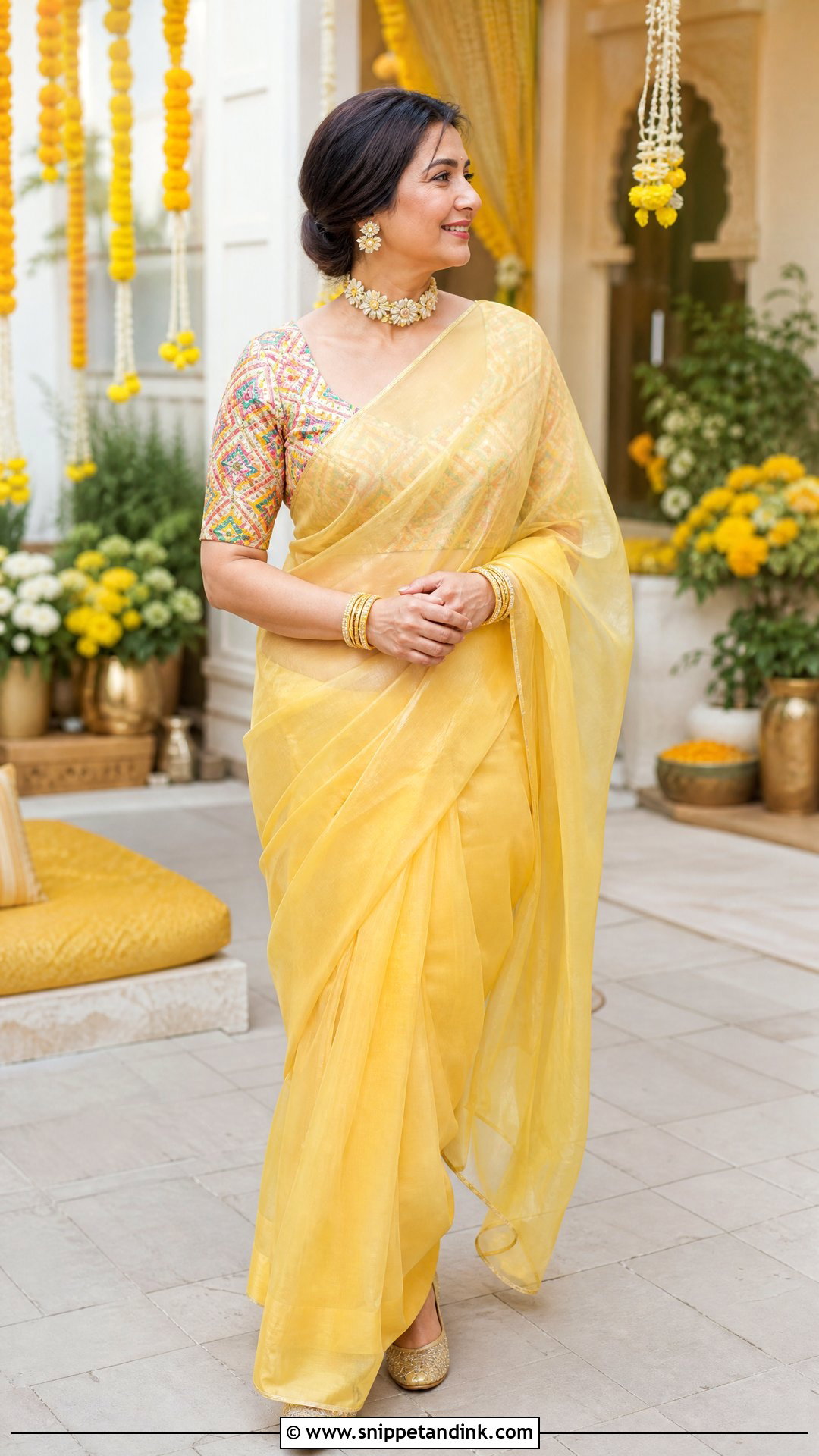
A yellow saree is the elegant option, but only in fabric that behaves. Organza, chiffon, georgette or soft cotton-silk all drape securely without feeling formal. Pair it with a fitted phulkari blouse with embroidery on the sleeves or neckline, and keep the saree plain. Pin the pleats at the waist and the pallu at the shoulder; a loose pallu drags in the paste and gets stepped on. A floral choker, small earrings, bangles and low heels or embellished juttis finish it. A sleek braid or low bun keeps the hair away from the embroidery. It suits brides, sisters and older guests who are comfortable in a saree.
9. Punjabi Haldi Peplum Top With Sharara
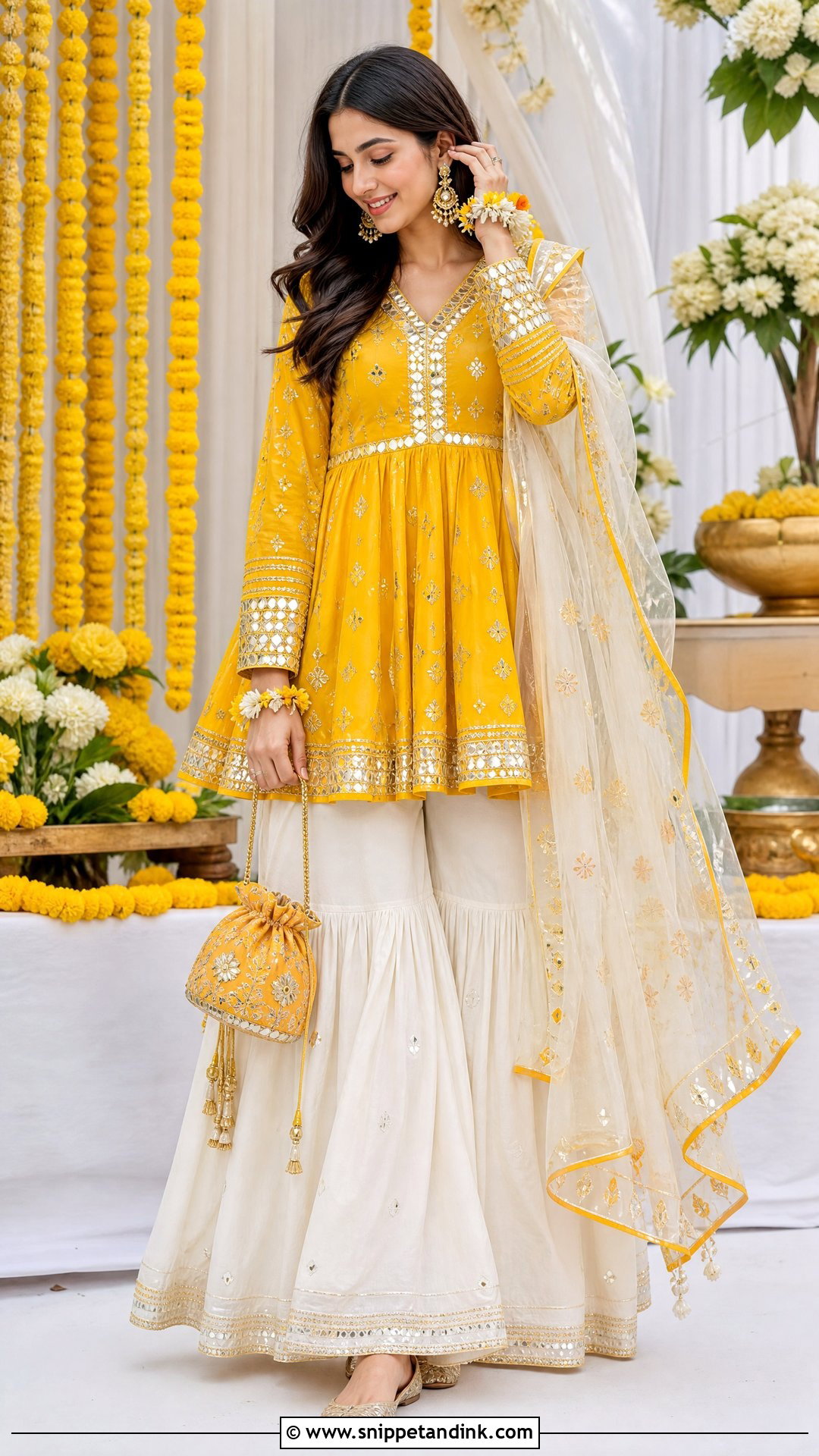
A marigold peplum kurti over a matching or ivory sharara gives you a defined waist without a cropped blouse. The peplum needs to sit exactly at the natural waist; set lower, it cuts the leg line short. Mirror accents, floral threadwork or a narrow gota border trace the shape. Drape a light net or organza dupatta over one arm so the peplum stays visible. Statement earrings, a floral haathphool, metallic juttis and a structured potli finish it. Brides can go for a longer, more dramatic peplum; guests a printed one. Soft curls or a high ponytail keep the neckline clear.
10. Punjabi Haldi Yellow Palazzo Suit With Mirror Work
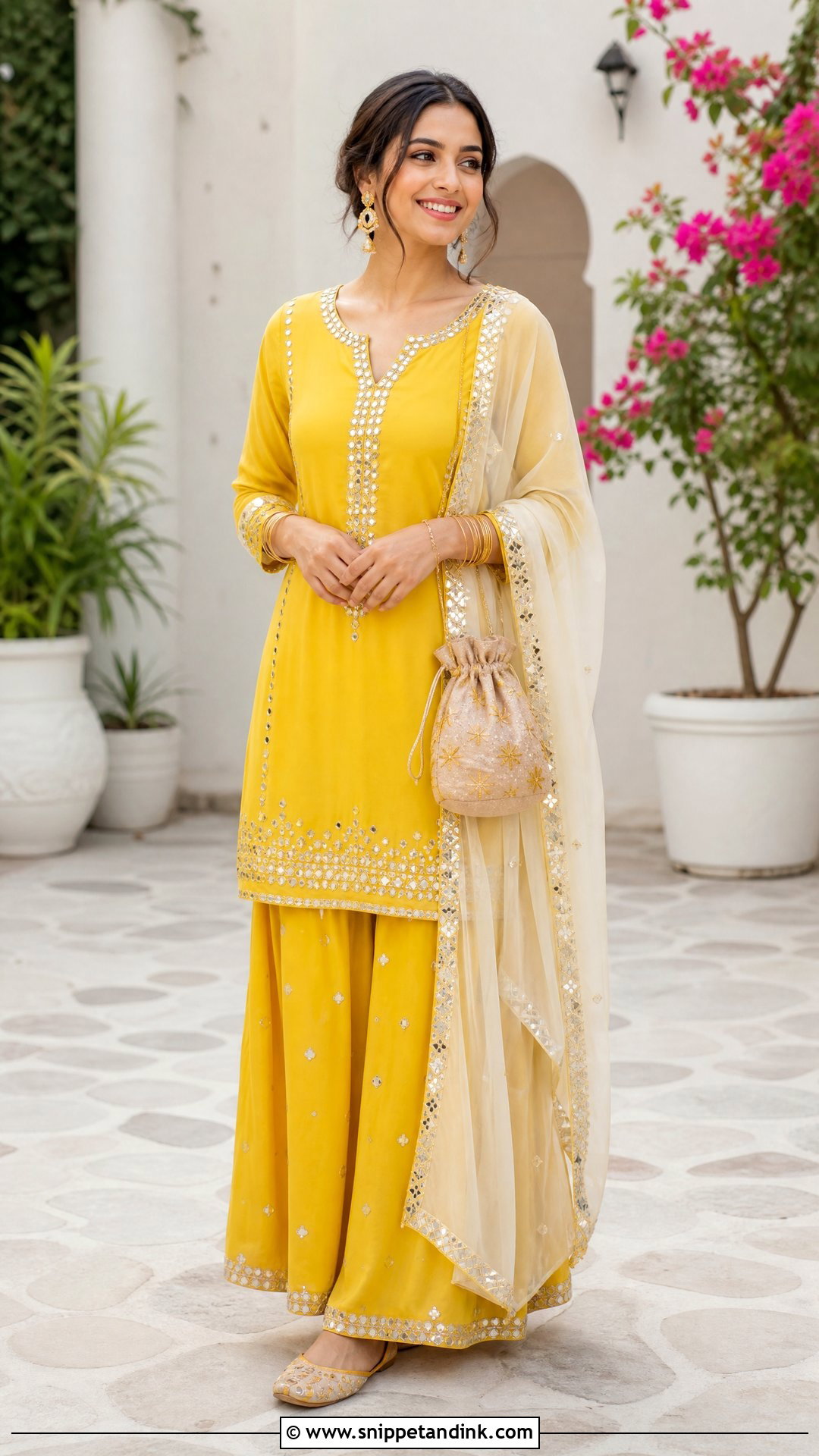
Palazzos are my go-to for a home haldi where you will be up and down all morning. Pair them with a straight yellow kurta with scattered mirror work instead of dense embroidery; dense work gets stiff and scratchy when it is damp with paste. A short kurta shows the trousers; a longer one covers more and looks streamlined. Add an airy dupatta in yellow, ivory or pink with a simple gota border. Mirror-work juttis, silver or gold earrings, slim bangles and a crossbody potli keep your hands free. The hem should skim the floor without covering your shoes, or you will trip.
11. Punjabi Haldi Bandhani Suit With Punjabi Juttis
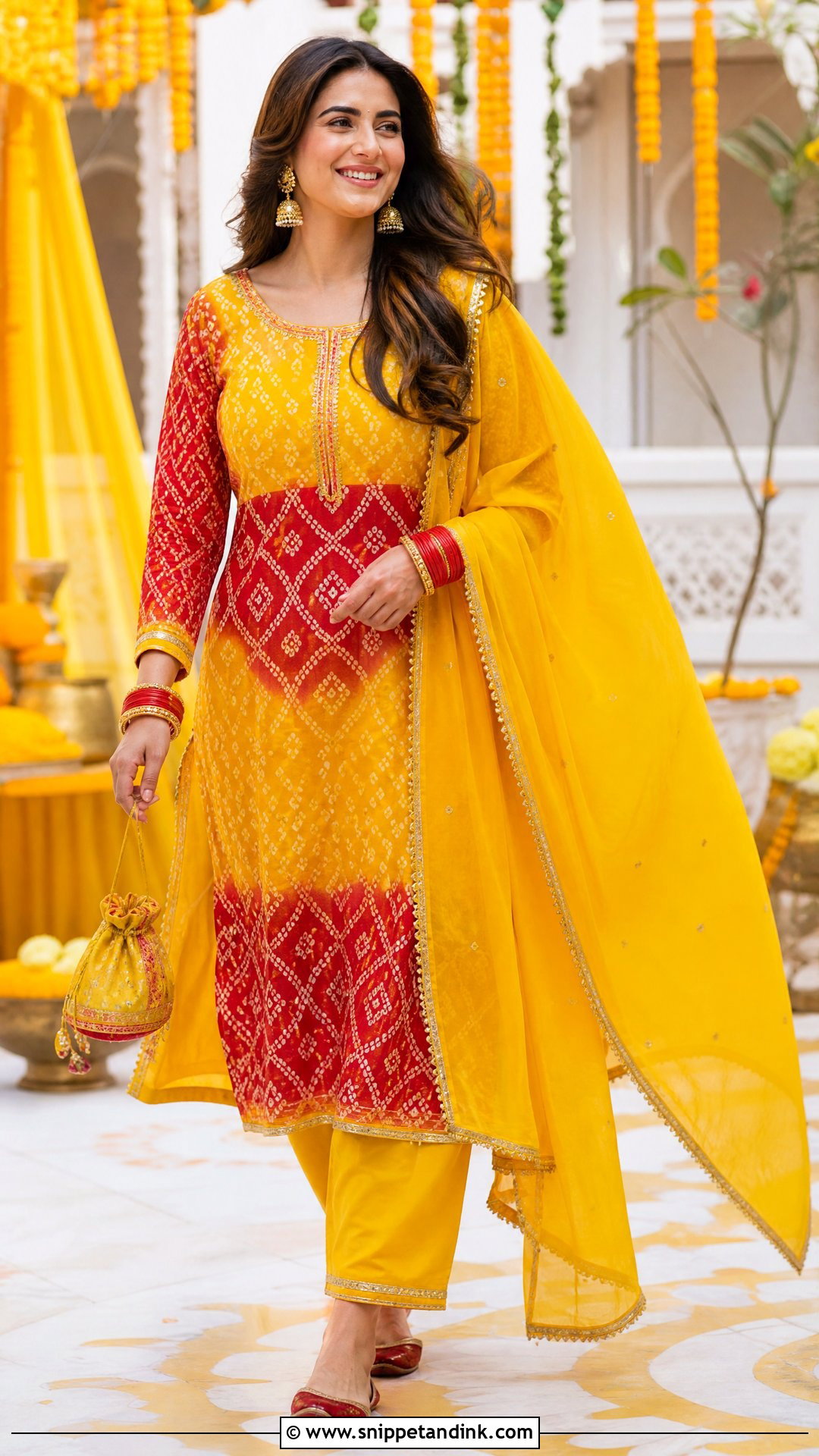
Bandhani is tie-dye made by pinching and binding tiny points of fabric before dyeing, and those little dots hide splashes of turmeric better than any plain fabric. A yellow and red bandhani kameez with straight pants or a salwar is festive without a single sequin. Add a plain yellow dupatta trimmed with gota so the print does not take over. Red juttis, gold jhumkas, glass bangles and a small potli finish it. For softer coloring, try lemon yellow with pink or green dots. Keep the hair simple in a braid or low bun. Real bandhani can bleed in its first wash, so wash it alone in cold water.
12. Punjabi Haldi Yellow Co-Ord Set With Dupatta
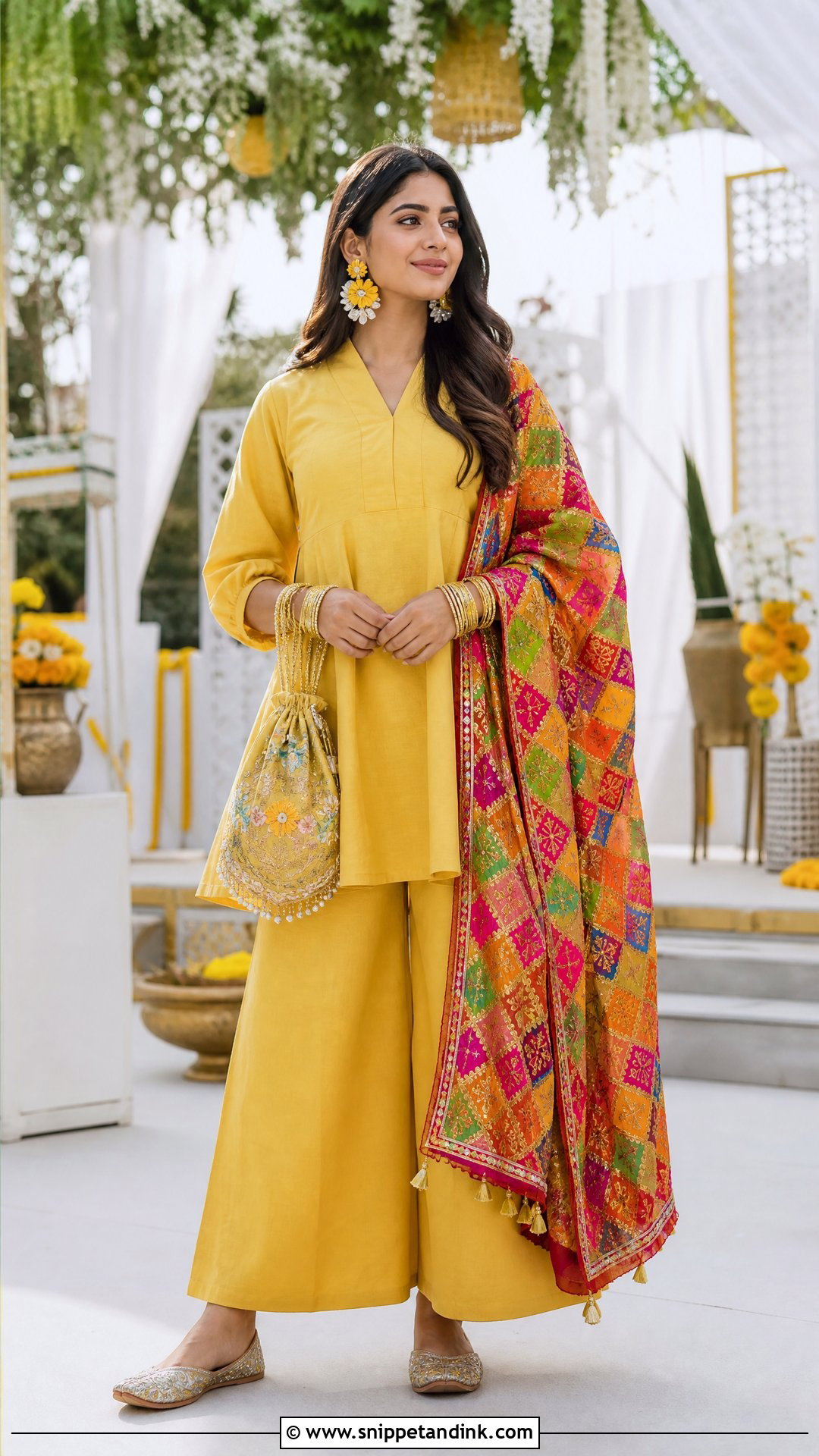
Co-ord sets are the modern route, and the dupatta is what makes one look like it belongs at a haldi. Pair a structured crop kurti or tunic with matching wide-leg pants, then add a phulkari or gota-trimmed dupatta for a clear Punjabi link. Floral earrings, metallic juttis, layered bangles and a small embroidered bag finish it. If cropped tops are not you, a longer boxy kurti with side slits works just as well. Bridesmaids can wear different shades of yellow, and guests can mix yellow pants with an orange or pink top. Check the waistband: elastic or drawstring beats a zip when you are sitting on the floor for an hour.
13. Punjabi Haldi Floral Lehenga With Yellow Dupatta
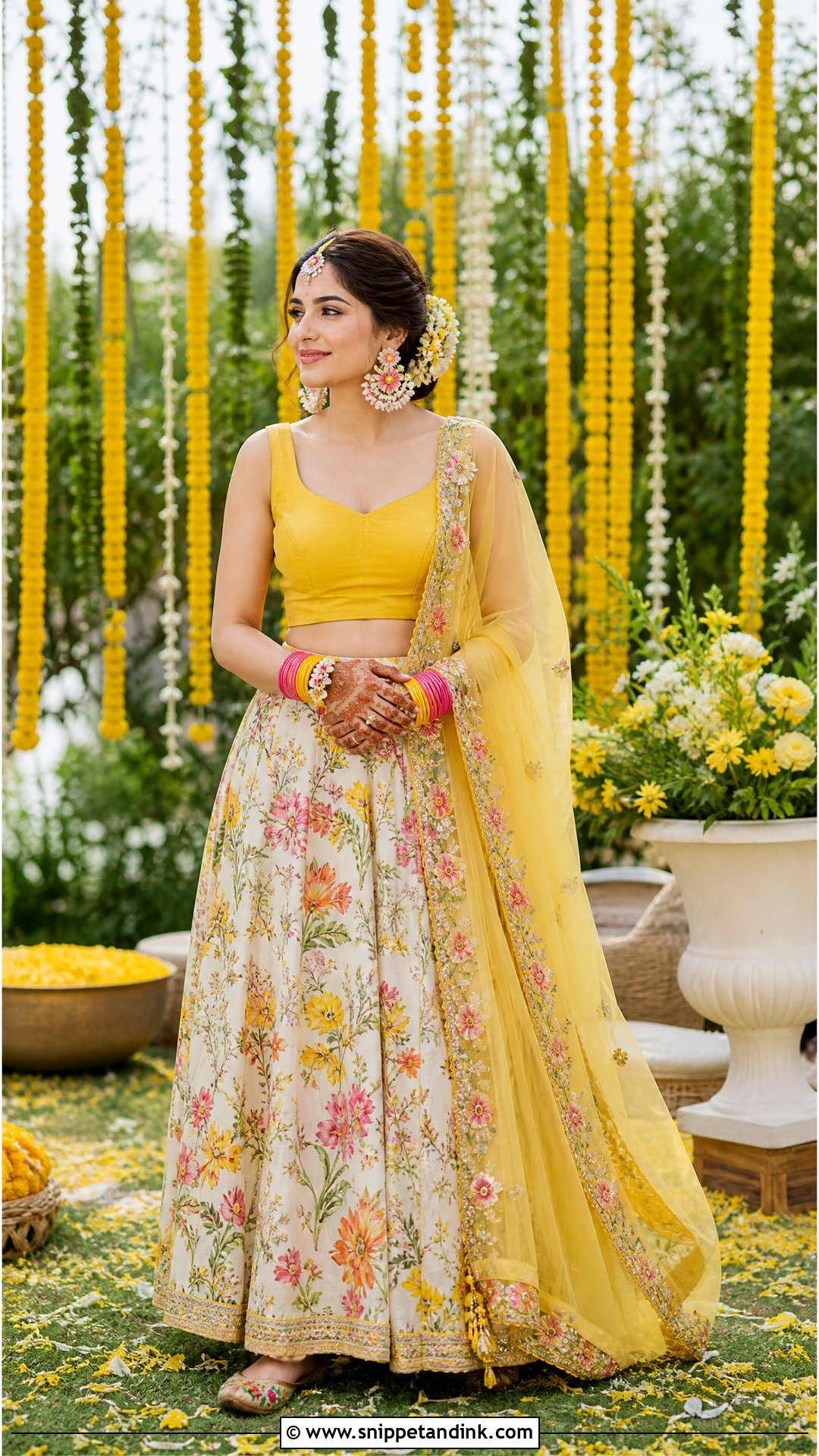
A floral lehenga brings in pink, orange and green while staying light enough for daylight. Choose flowers on an ivory or pale yellow base and pair them with a plain yellow blouse and a matching sheer dupatta. Floral earrings, a delicate tikka, colorful bangles and comfortable juttis finish it, with a flower-covered braid for the bride or loose waves for guests. I avoid multiple heavy layers here; if there is floor seating, a moderately full skirt is far easier to fold under you. Ask for straps or sleeves on the blouse so it stays put while you dance. It sits well against garden backdrops and floral decor.
14. Punjabi Haldi Short Kurti With Dhoti Pants
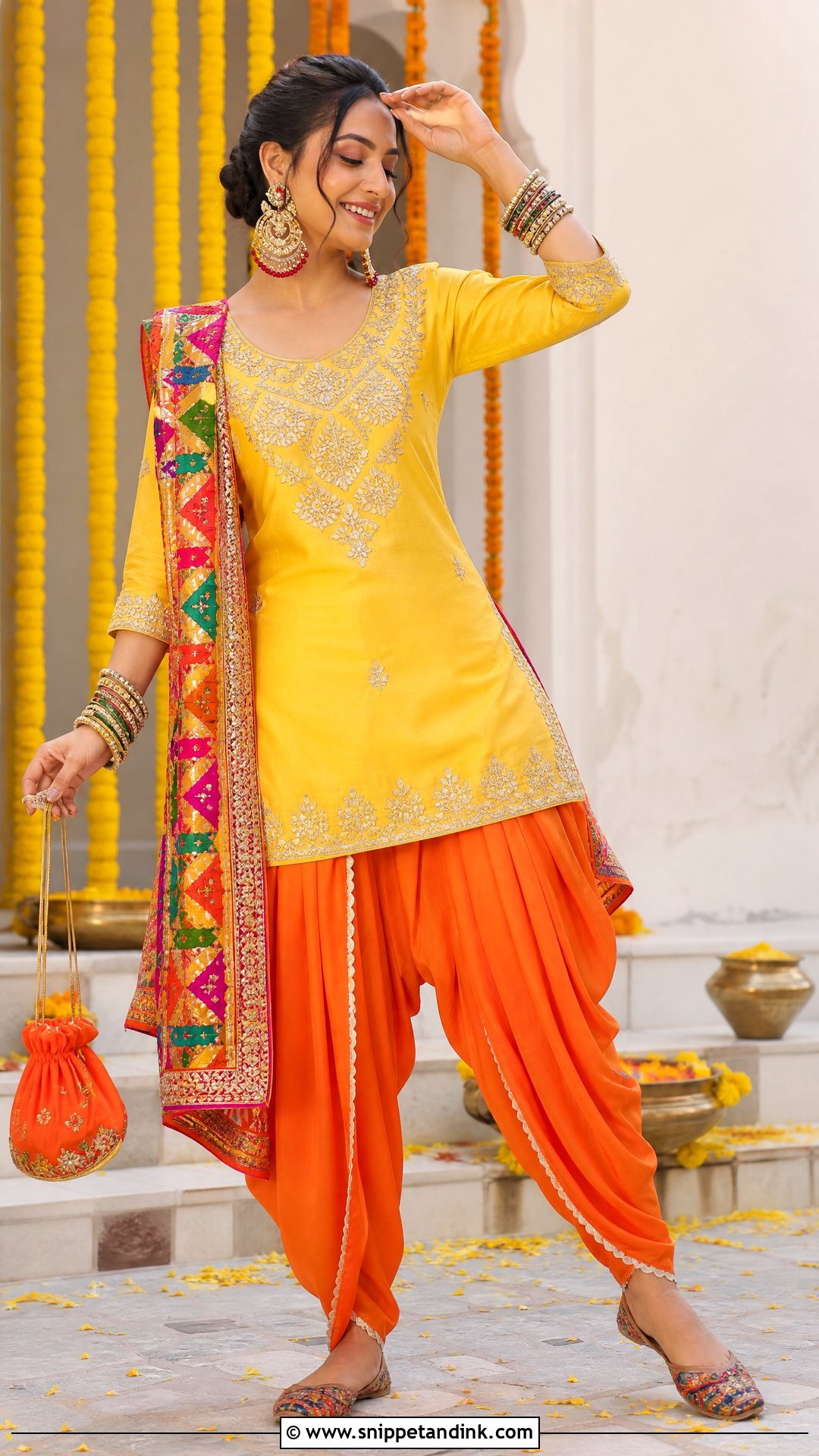
Dhoti pants with a short yellow kurti give you the most freedom of movement on this list, which makes them a favorite with sisters running around all morning. Choose a kurti with a defined neckline, small mirrors or neat gota, and pair it with orange, ivory or yellow dhoti pants. A phulkari stole or narrow dupatta over one shoulder adds color. Juttis, bold earrings, stacked bangles and a belt bag finish it. Buy dhoti pants with the drape stitched in place; a loose wrapped drape will come undone by the second dance. A fitted top balances the gathered volume, and a high ponytail suits the proportions.
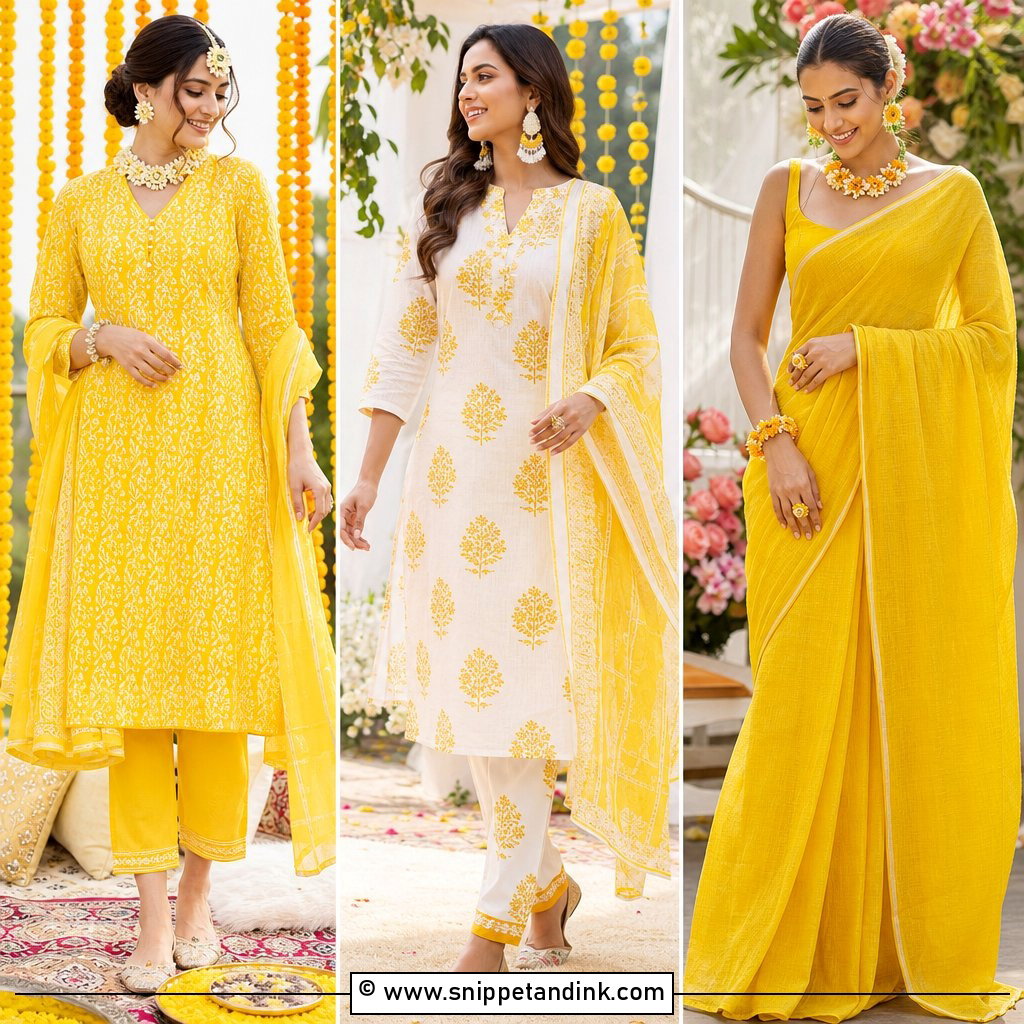
15. Punjabi Haldi Yellow Ghagra With Embroidered Kurti
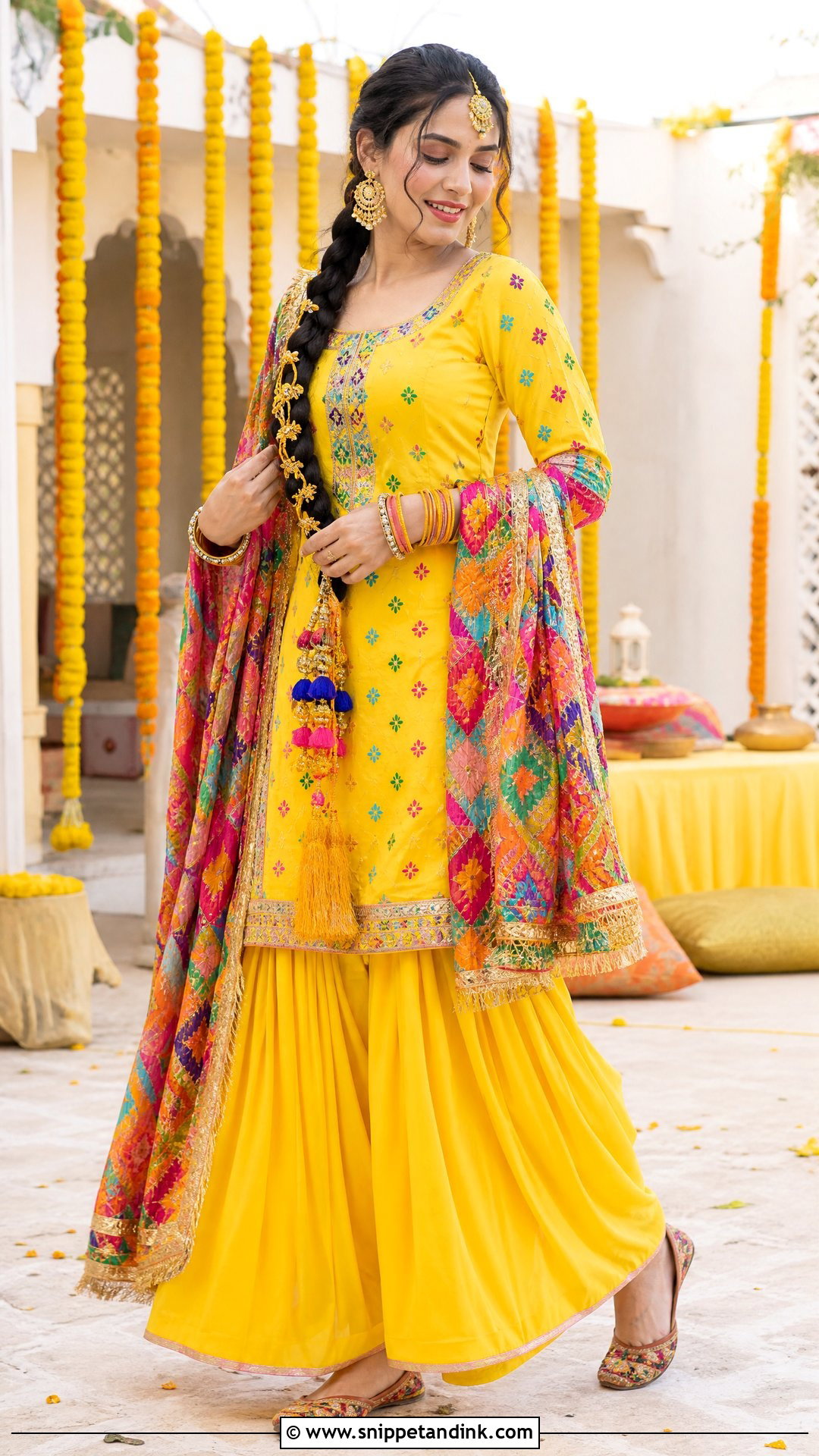
A Punjabi-inspired ghagra outfit moves generously and looks less expected than a lehenga. Wear a softly gathered yellow ghagra with an embroidered kurti ending at the hips, and drape a bright phulkari dupatta across the shoulders or over the head for photographs. Embroidered juttis, gold earrings, colorful bangles and a parandi in a long braid finish it. Lightweight cotton or silk blend keeps the skirt from feeling bulky. The waistband is what I check first on a ghagra: a full skirt pulls downward as you dance, so it needs a firm, wide band, and the hem should clear the ground.
16. Punjabi Haldi Pink Suit With Yellow Dupatta
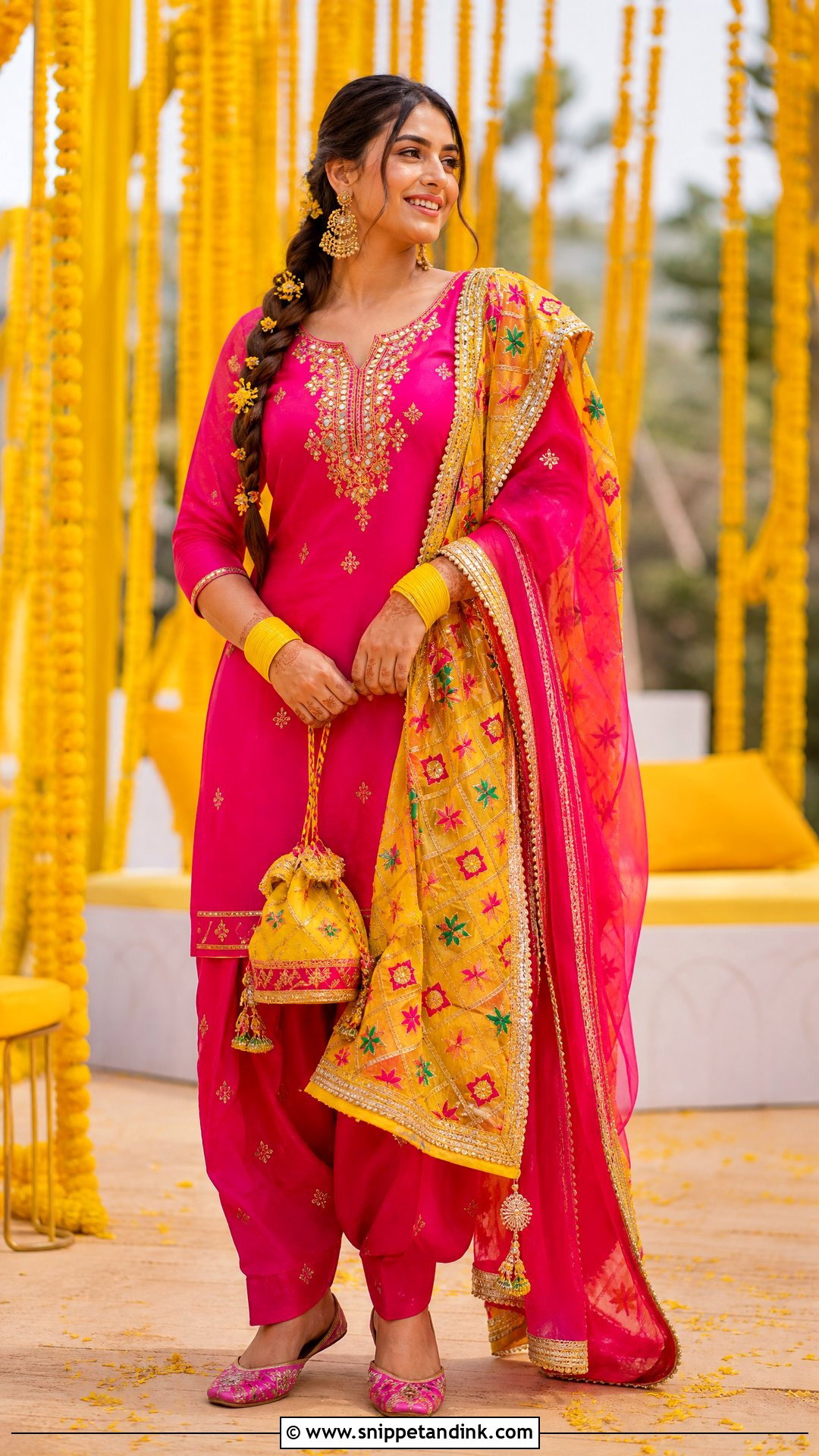
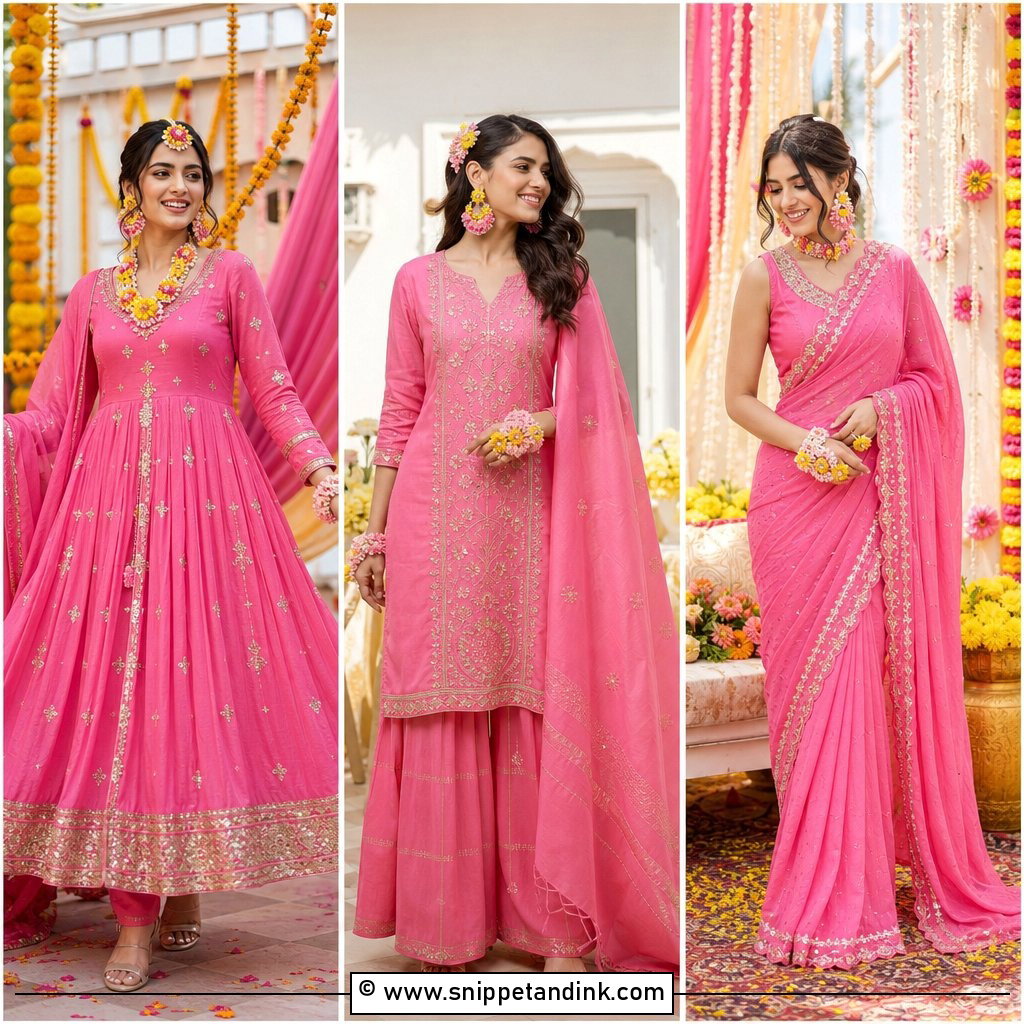
Pink is the best friend of a haldi palette, and it is also a smart way for bridesmaids to stand apart from a bride in yellow. Start with a hot pink or softer rose salwar suit, then add a yellow phulkari, bandhani or gota-edged dupatta. Gold jhumkas, yellow bangles, pink juttis and a matching potli tie the two colors together, with a low braid holding small yellow flowers. Balance the detail: plain suit with a dense dupatta, or embroidered kameez with a simple one, never both busy. Neckline, sleeve length and trouser cut are easy to adjust for any age.
17. Punjabi Haldi Cape Kurti With Straight Pants
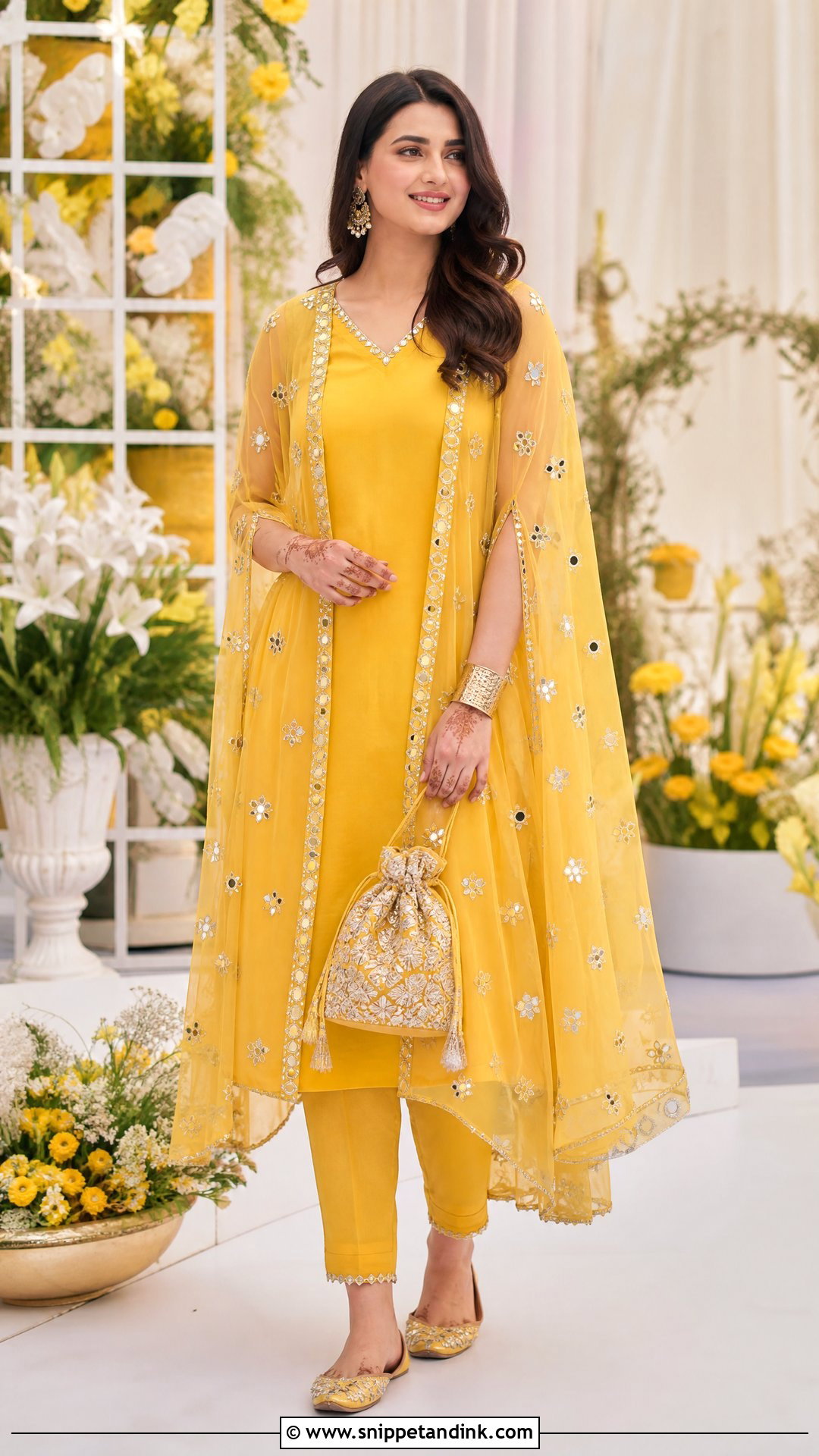
A sheer cape over a kurti does the dupatta’s job without the constant adjusting. Pair a sleeveless or short-sleeved yellow kurti with ankle pants and a knee-length embroidered cape. Small mirrors, floral applique or gota edging give it structure without stiffness. Pointed juttis, drop earrings, a cuff bracelet and a small potli finish it, with a neat ponytail or bun to keep the cape neckline clear. Capes in organza crease in the car; carry it on a hanger and slip it on when you arrive. Fitted pants contrast nicely with the cape’s movement.
18. Punjabi Haldi Ivory Anarkali With Marigold Dupatta
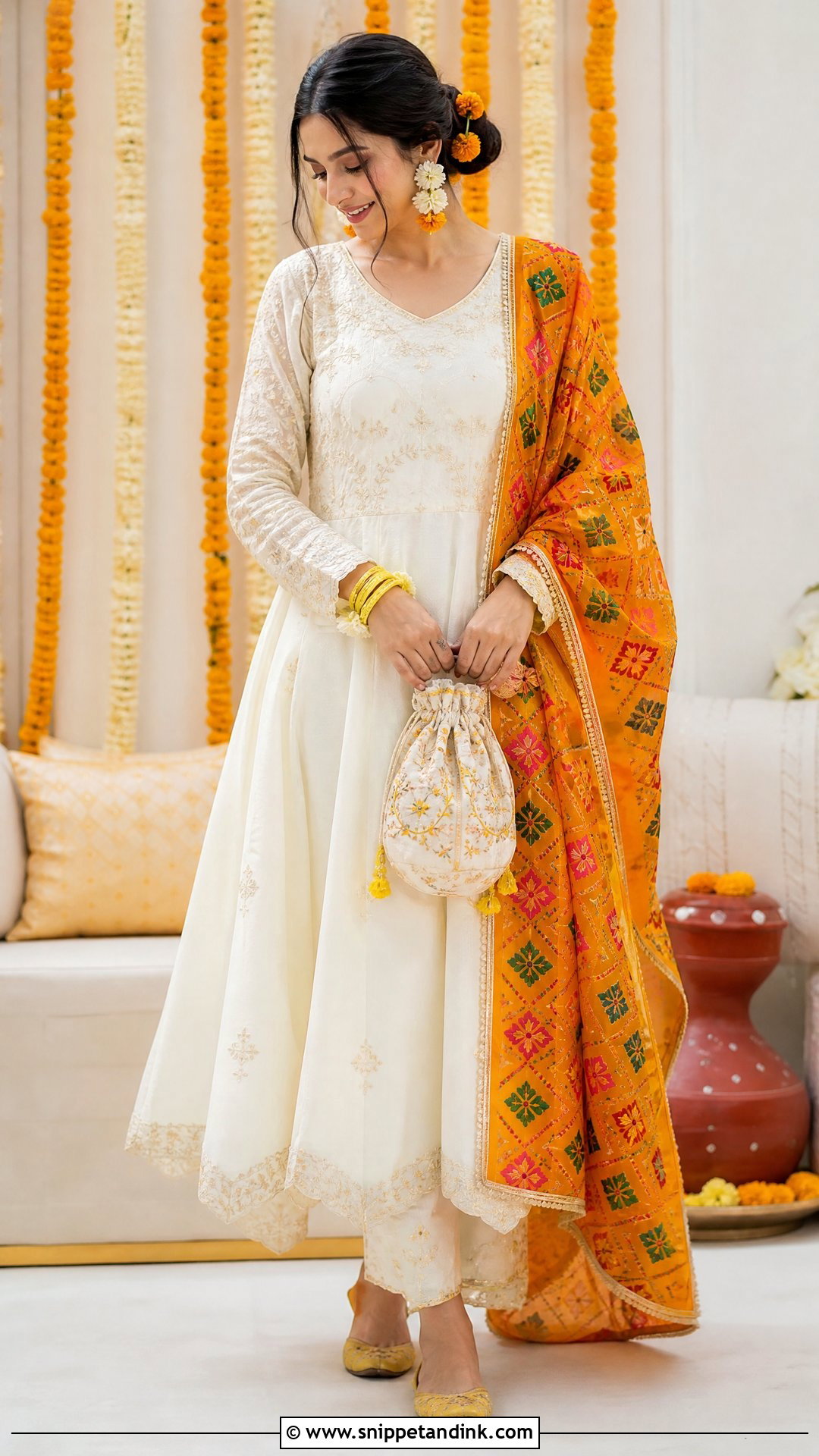
Ivory with a marigold dupatta is a calm, polished look, but it is an indoor, stand-at-the-back sort of outfit. Choose an ivory Anarkali with fine yellow embroidery, a comfortable lining and a moderate flare. Drape a marigold phulkari or gota-bordered dupatta over one shoulder, secured with small pins. Yellow juttis, flower earrings, gold bangles and an embroidered potli carry the color down the outfit, and a low bun with marigolds finishes it. Guests keep jewelry minimal; a bride can add kaleere or a bigger tikka. Keep the hem short enough to stay clean, since ivory shows every speck.
19. Punjabi Haldi Printed Kurta With Yellow Salwar
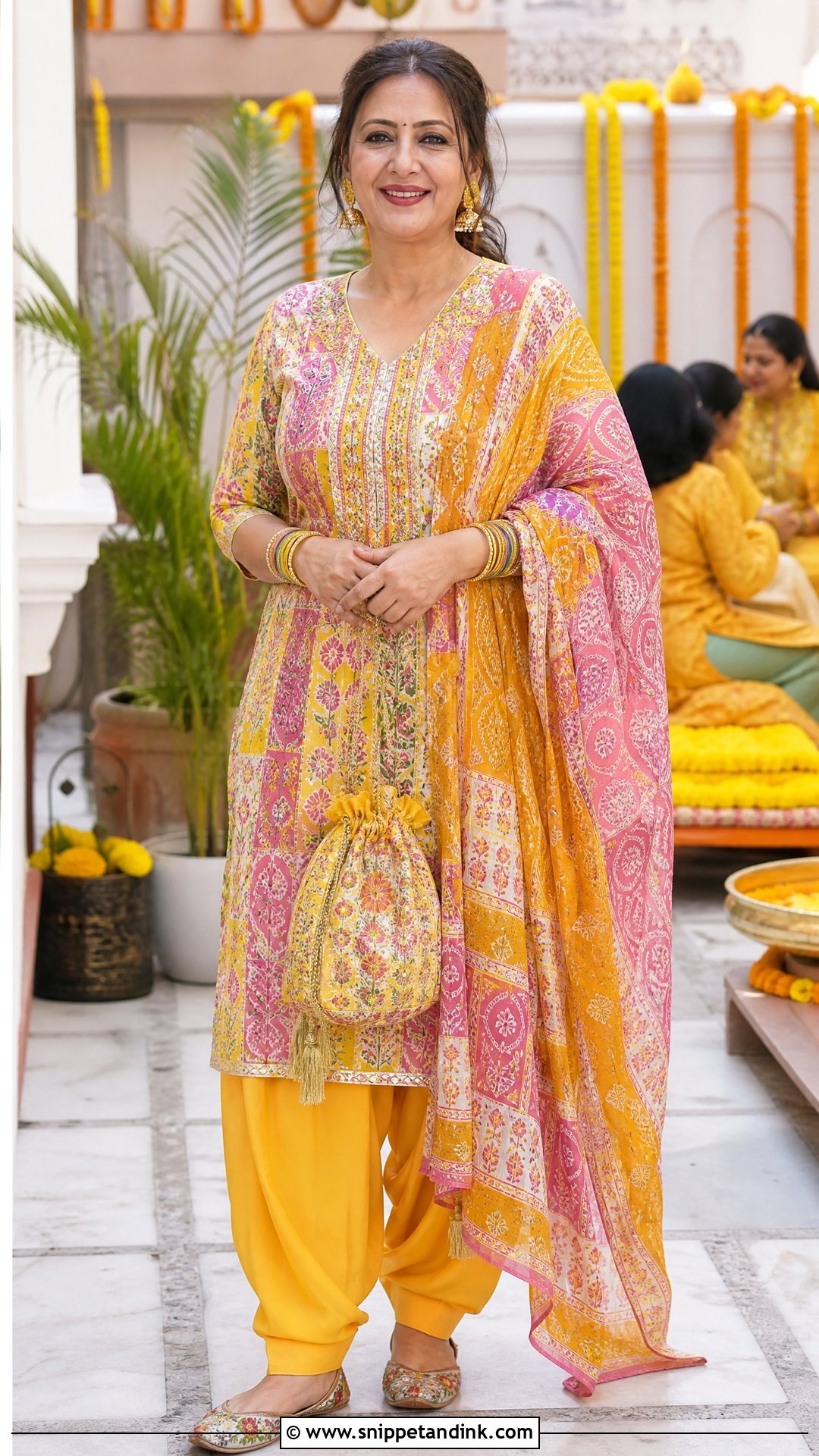
For a small family haldi, a printed kurta with a yellow salwar looks festive without being overdressed. Look for block-printed florals, paisley or geometric patterns that include yellow, orange, pink and green, and pair with a solid yellow salwar and a light dupatta that repeats one shade from the print. Embroidered juttis, simple jhumkas, glass bangles and a cloth potli finish it. Prints hide splashes, and cotton is cool in warm weather. Keep hair in a braid or casual bun with light makeup. You will wear this one again for other daytime gatherings, which is more than can be said for most haldi outfits.
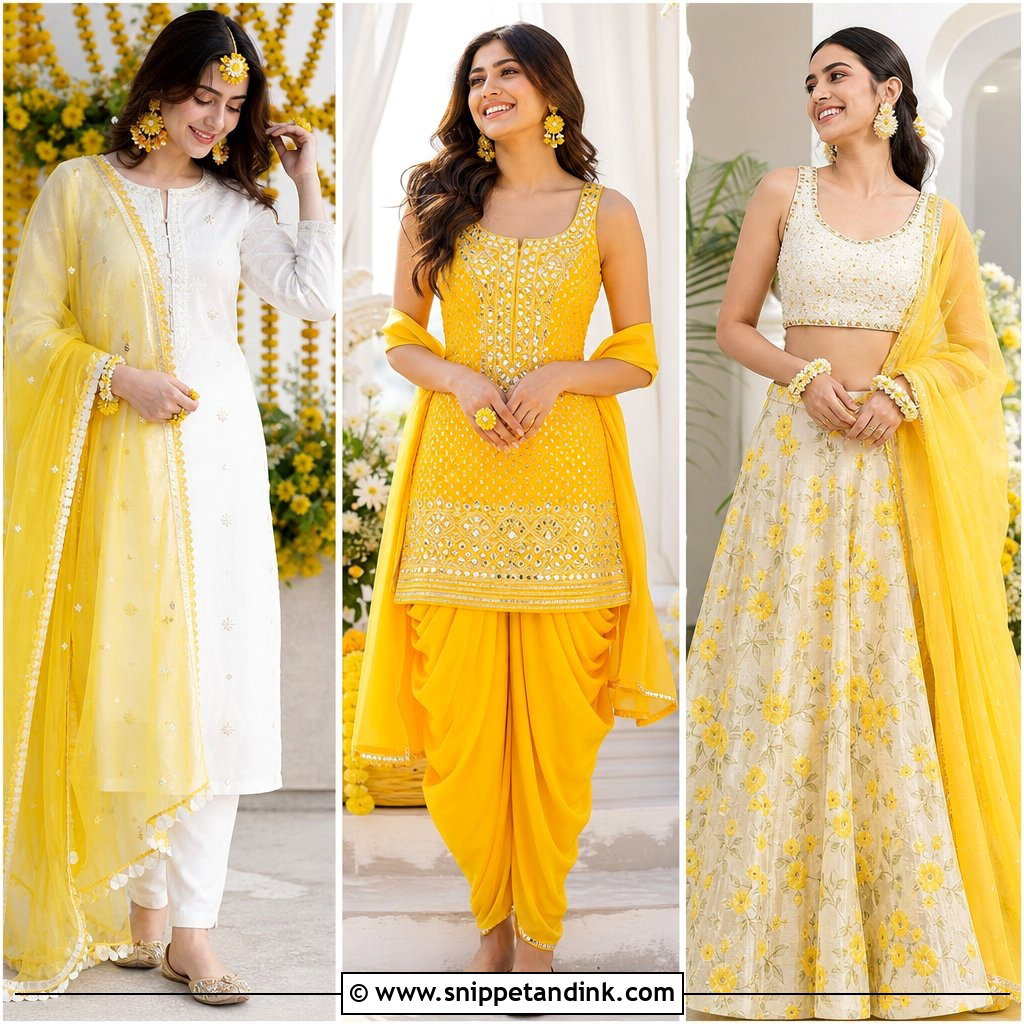


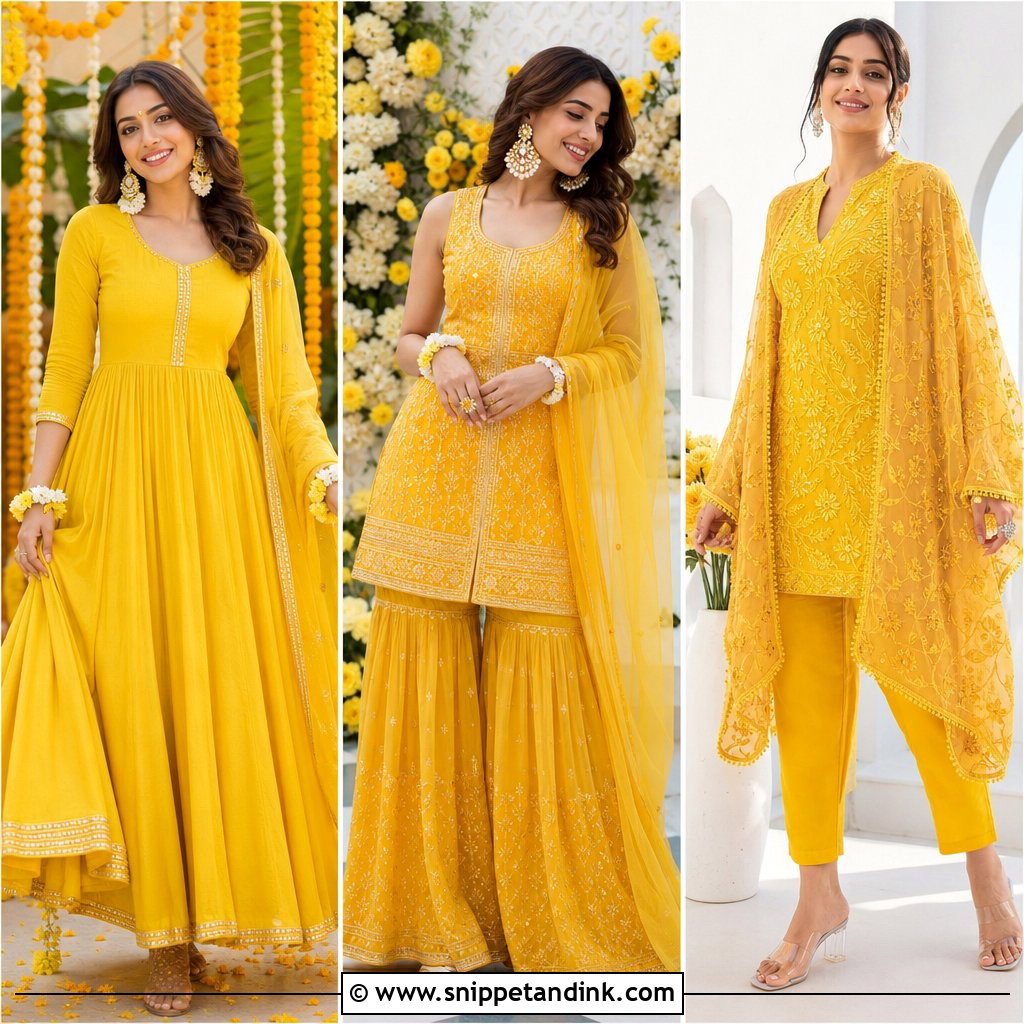

20. Punjabi Haldi Yellow Lehenga With Floral Dupatta
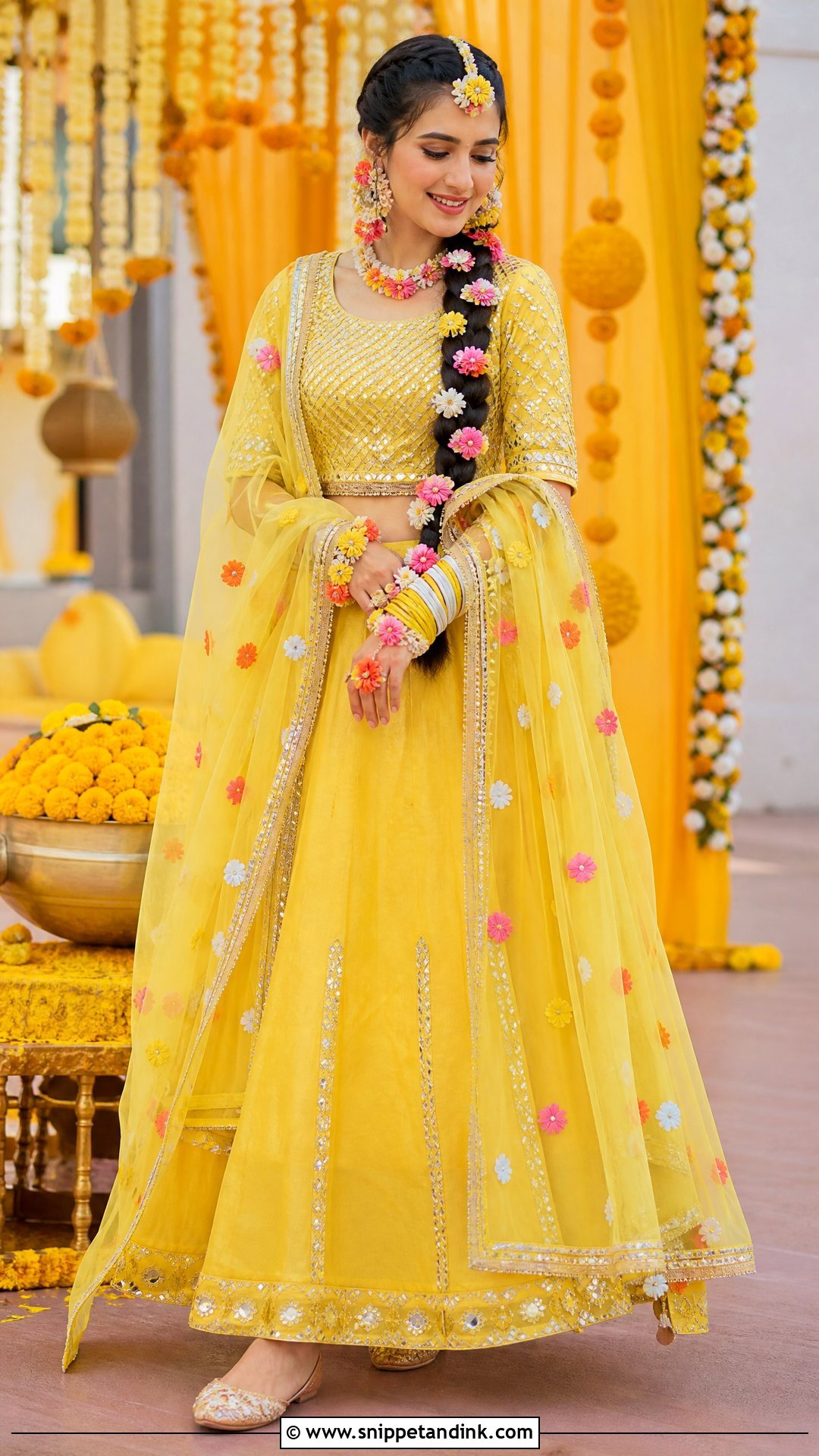
A monochrome yellow lehenga becomes memorable with a colorful floral dupatta. Pair a simple A-line or gathered skirt with a blouse carrying light gota, mirror or thread detailing, then add a sheer dupatta scattered with small fabric flowers in pink, orange, white and yellow. Floral jewelry, matching bangles, a tikka, juttis and a flower-covered braid complete the bridal version; guests can swap in smaller earrings and a printed dupatta. Secure the dupatta across the torso or at both shoulders. Ask for a soft cotton lining and an adjustable waistband, because you will be sitting, standing and dancing in it for hours.
Turmeric on Your Kameez? Treat It Within the Hour
Turmeric stains set the longer they sit, so change out of the outfit as soon as the ceremony is over and deal with it the same day. Scrape off any paste with a blunt knife or spoon rather than rubbing it in. Rinse from the back of the fabric with cold water, which pushes the stain out the way it came. Then work a little dishwashing liquid into the spot to break down the oil, let it sit for ten minutes and rinse again.
Here is the part most people do not know: sunlight fades turmeric. Drying a washed cotton kameez outdoors in direct sun often lifts the last yellow shadow that washing left behind. Do not use chlorine bleach on embroidered or colored pieces, and do not tumble dry until the stain is gone, because heat fixes it. Silk, tissue and zari work should go to a dry cleaner who handles bridal wear; tell them it is turmeric and oil.
Fresh Flower Jewelry in Midday Heat
Floral jewelry is made with real blooms threaded on wire, and it starts to wilt within hours of meeting warm skin. Have it delivered the evening before or the morning of, keep it in the fridge in its box with a damp tissue on top, and put it on last, right before you walk out. Jasmine, marigold and baby’s breath hold up better than roses. Fabric or artificial flower sets are a sensible backup for an outdoor haldi in summer.
Wear Yellow You Will Happily Get Messy In
Your role at the haldi, the venue and how much paste you expect to wear should decide your outfit before color does. Patiala suits, phulkari, salwars and parandis set a strong Punjabi mood; shararas, co-ords, capes and floral lehengas bring something more modern. Yellow is always cheerful, though orange, pink, green, mustard and multicolor combinations are just as festive. Keep fabric light, secure every dupatta and wear shoes you can stand in for hours. Above all, dress so you can move freely and join in, because the best haldi photos are the messy ones.
You'll Like These Ideas:







Leave a Reply