
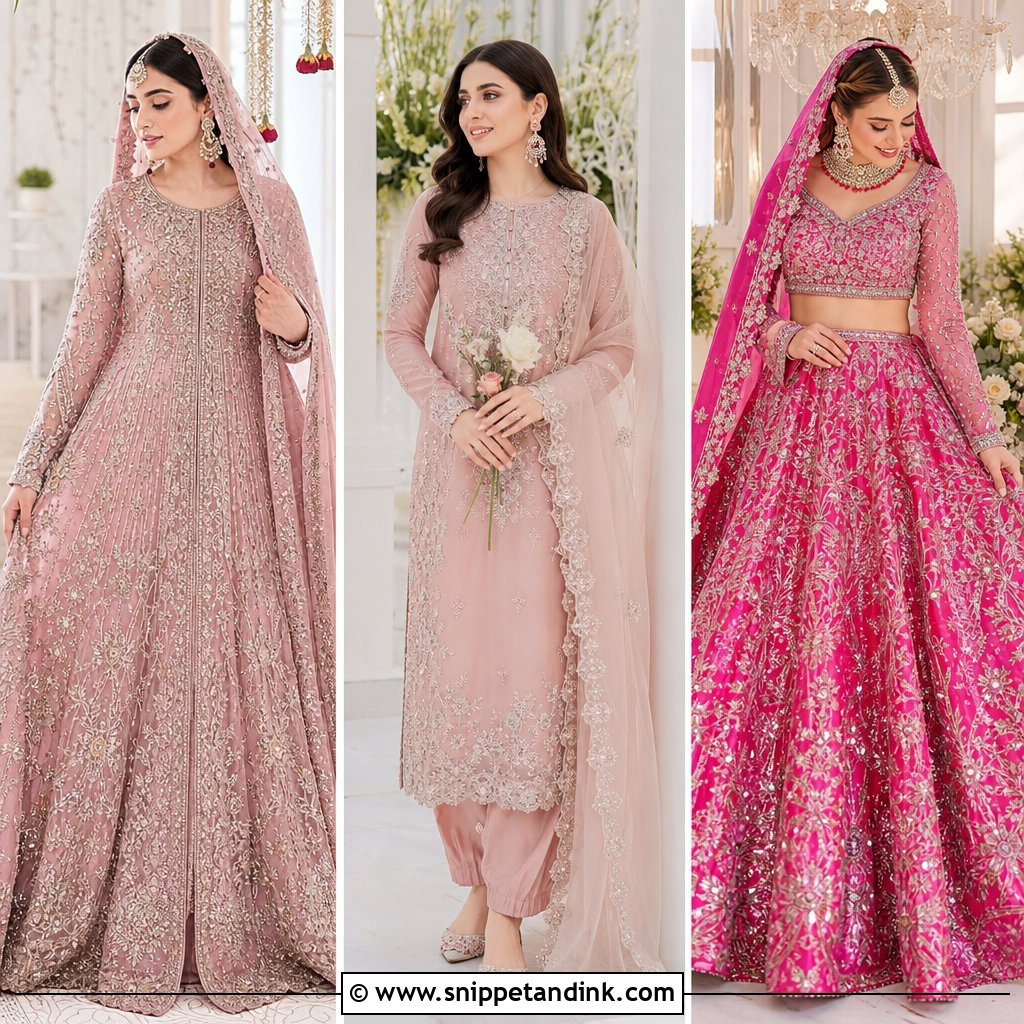
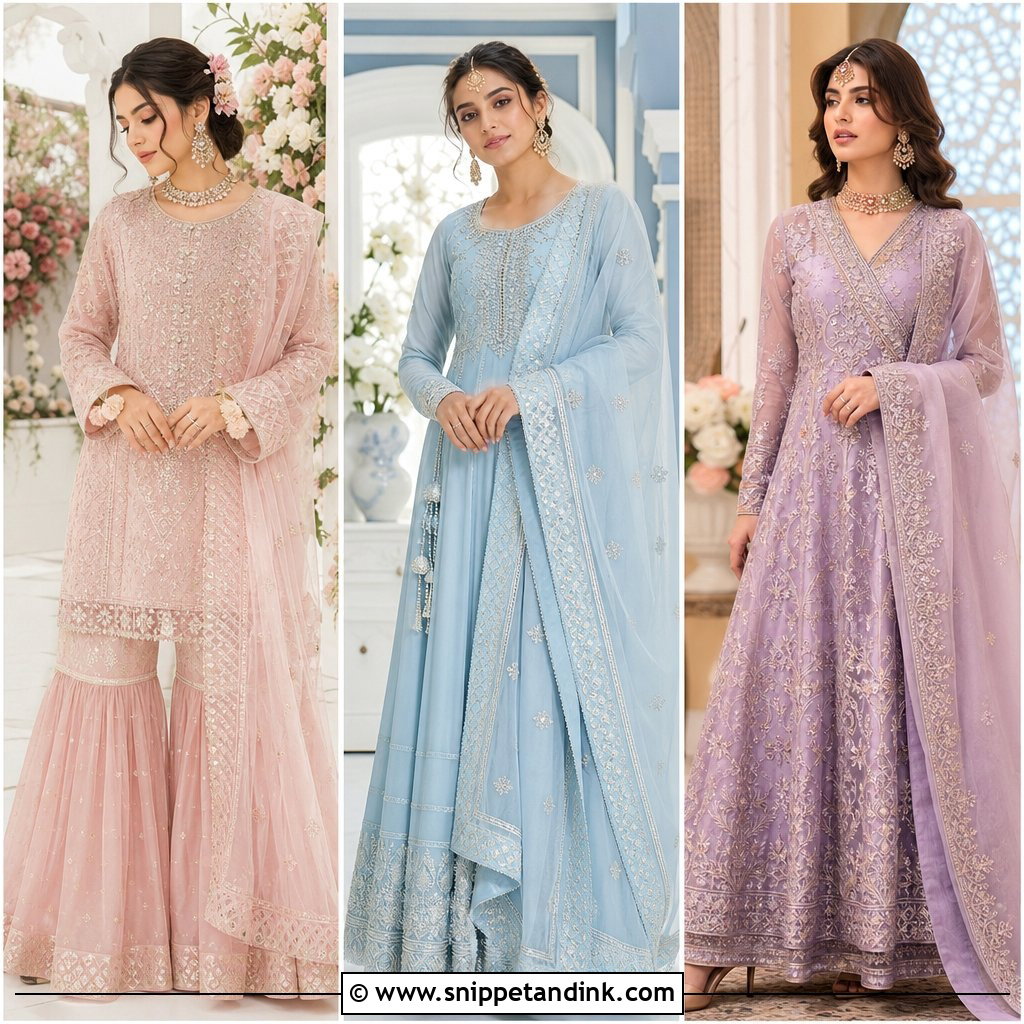
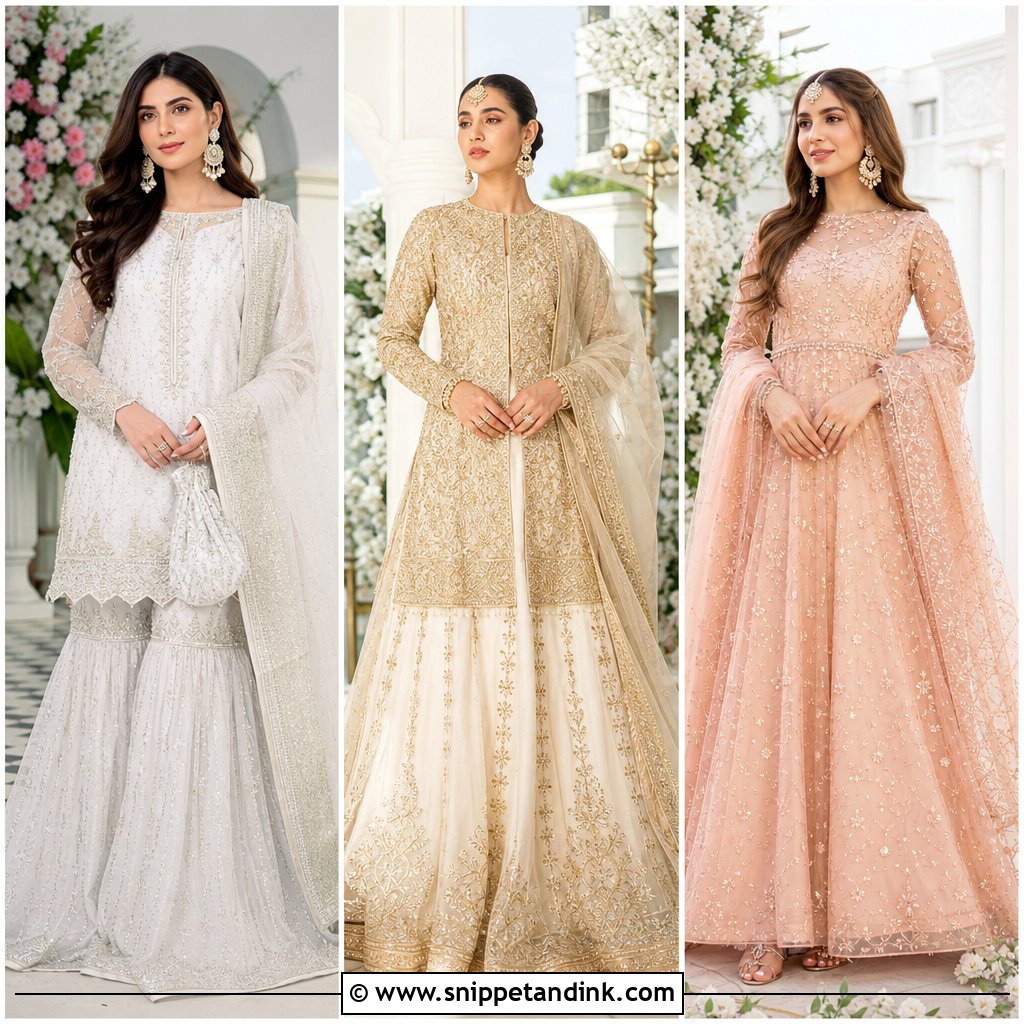
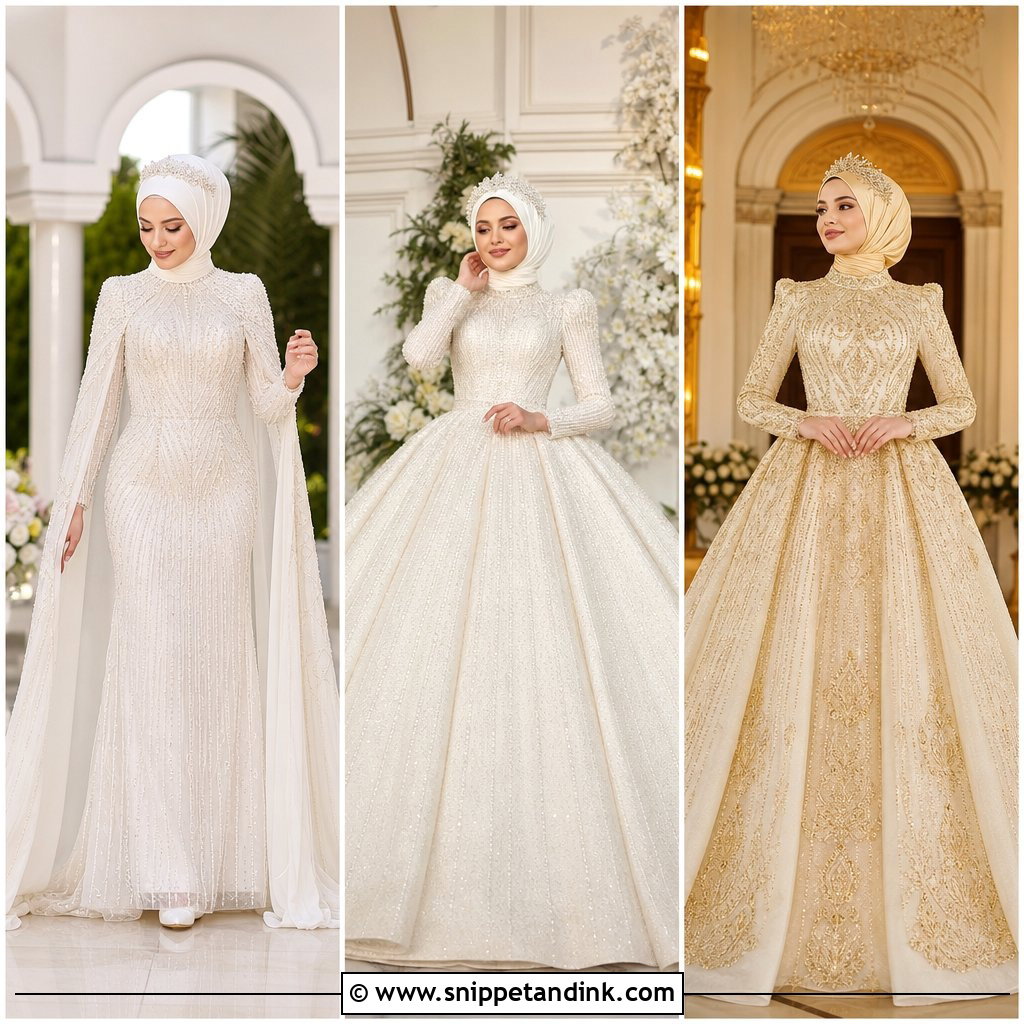
Pastel Nikkah outfits suit the ceremony itself: it’s quieter and more intimate than the baraat, and softer colours match that mood. The outfit still has to look clearly bridal while staying modest and comfortable for a ceremony where you’ll mostly be seated. Blush, powder blue, mint, lilac, peach and champagne all work in ghararas, pishwas, lehengas and shararas. Fabric does a lot of the work: organza holds structure, chiffon moves, and raw silk gives a clean, rich surface. Below are twenty complete looks, each with the dupatta, jewellery, shoes and makeup I’d plan with it.
Securing a Head Dupatta Through the Whole Ceremony
In a Nikkah, the head covering is not an accessory you can take off halfway through. It has to stay in place while you sit, sign, turn to family and hug your mother, and a sheer pastel dupatta slides more easily than a heavy red one. I set it in layers, starting with the hair.
- Build a low bun with a firm base; the bun is the anchor for every pin that follows.
- Add a thin inner cap or a slim band in your hair colour if your dupatta is very light, so the pins have something to grip.
- Pin the dupatta at the crown, then behind each ear, using pins that match the fabric so they disappear.
- Fix the shoulder fall with a hidden brooch or pin through the blouse strap.
- Sit down, turn your head both ways and lean forward as if signing. If anything moves, re-pin before you leave the room.
Organza holds its shape and stays where you pin it; chiffon and net slide more. Ask for a border with some weight in it, which helps the dupatta settle.
1. Blush Pink Pastel Nikkah Gharara
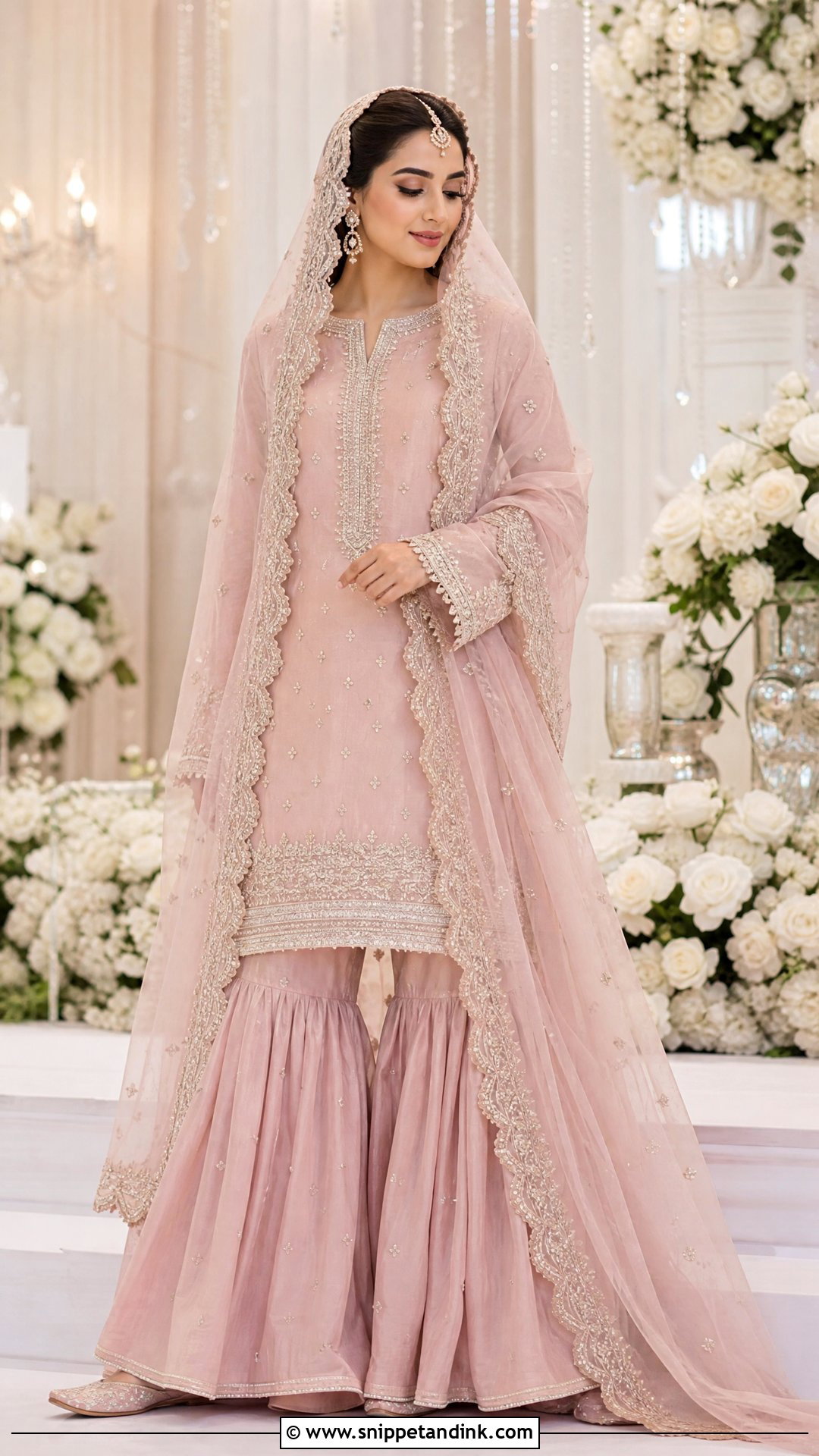
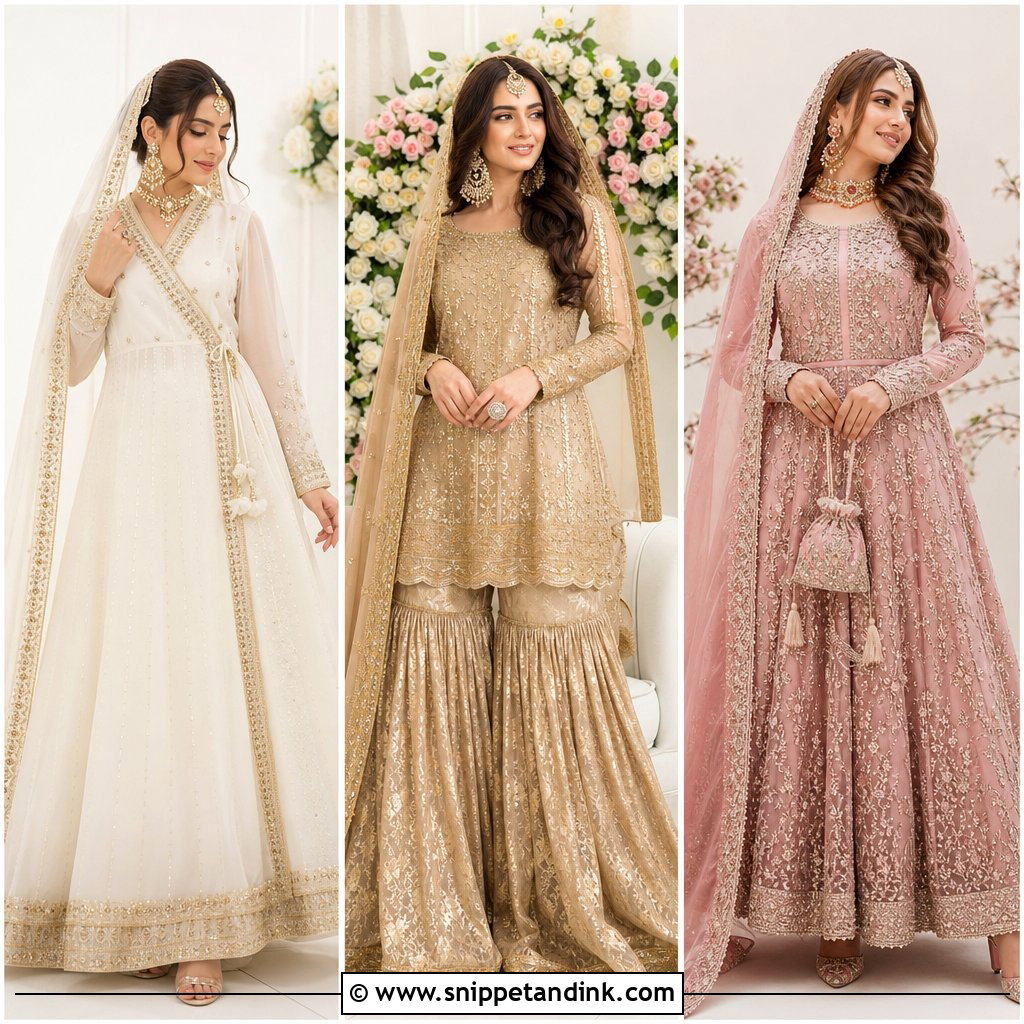
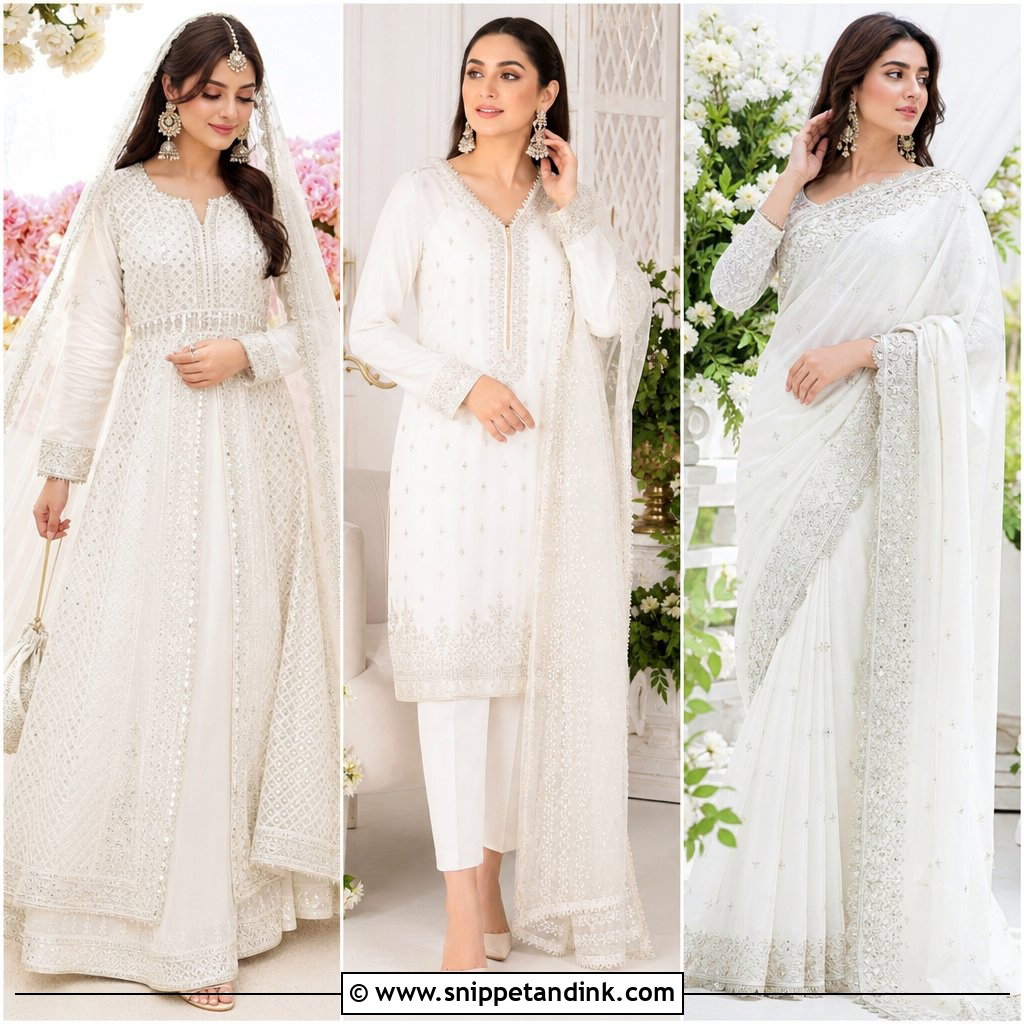
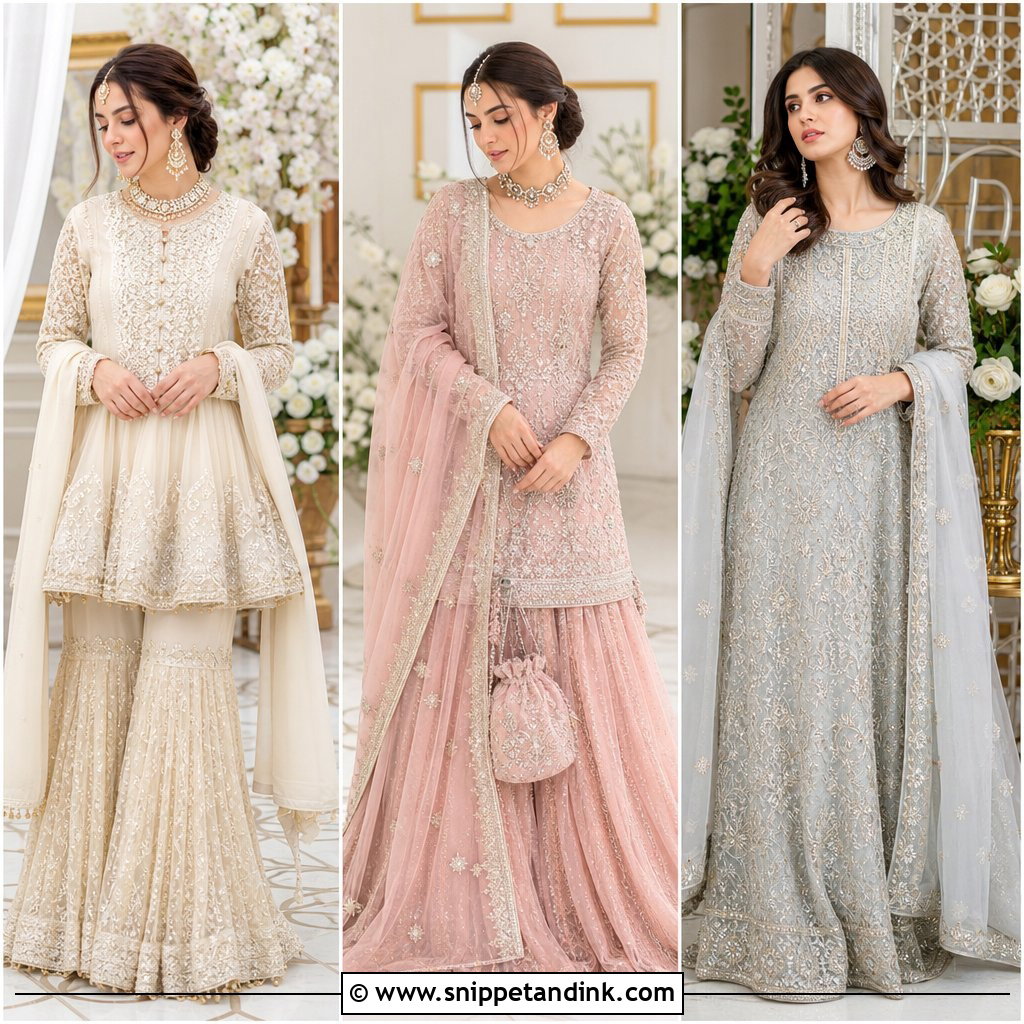
Blush is the gentlest way into bridal pink, and a gharara keeps it traditional without the weight of a full lehenga. A knee-length raw silk kurta with silver zardozi, pearls or threadwork at the neck and cuffs sits over a gharara with the work gathered at the knee band and hem. That knee band is the structural point, so I make sure it sits right at the knee when you’re standing, or the flare looks dropped. A sheer organza dupatta with a scalloped edge goes over the head and one shoulder. Pearl drops, a slim tikka, blush khussas, rose makeup and a low bun finish it.
2. Powder Blue Pastel Nikkah Pishwas
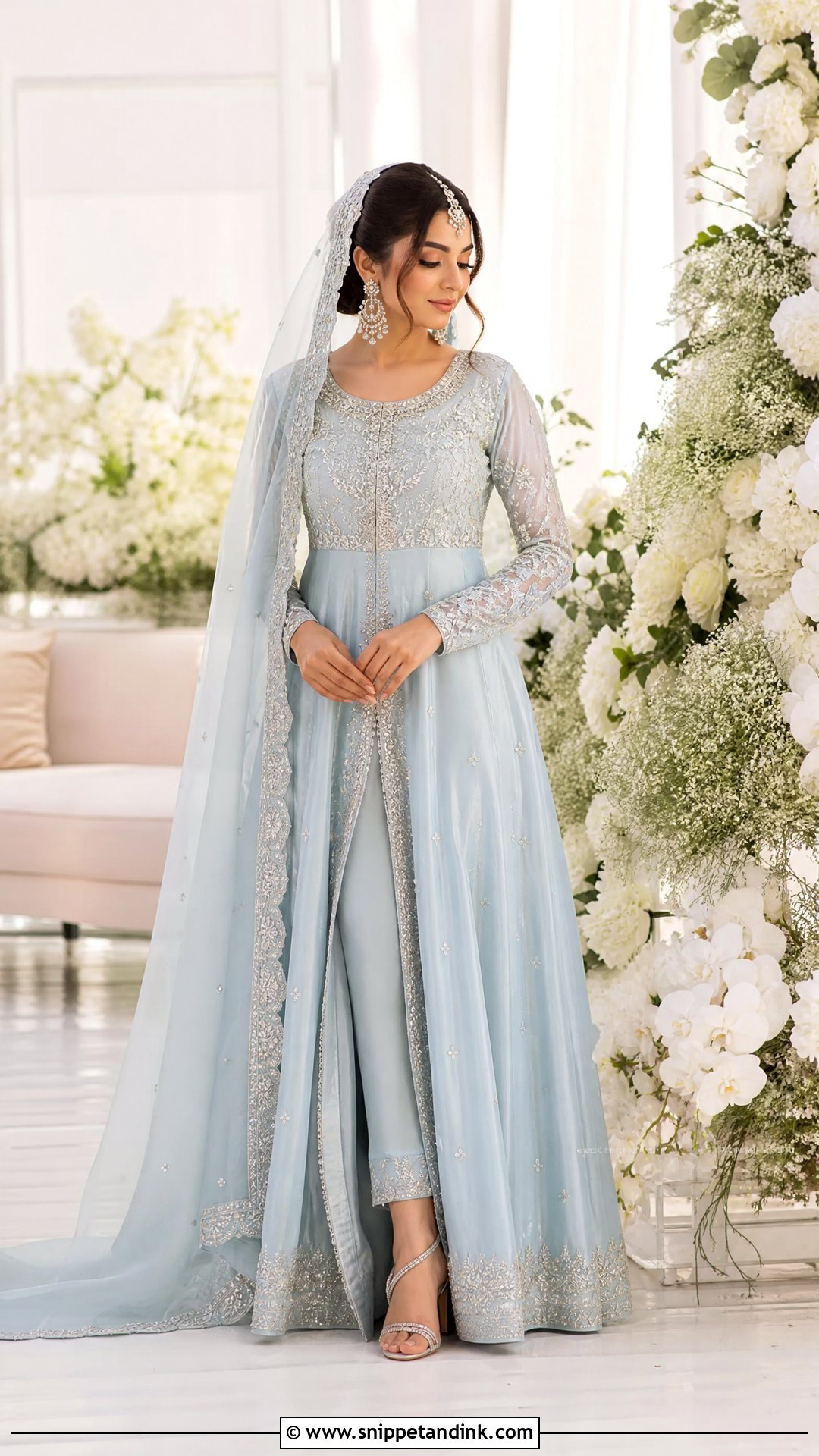
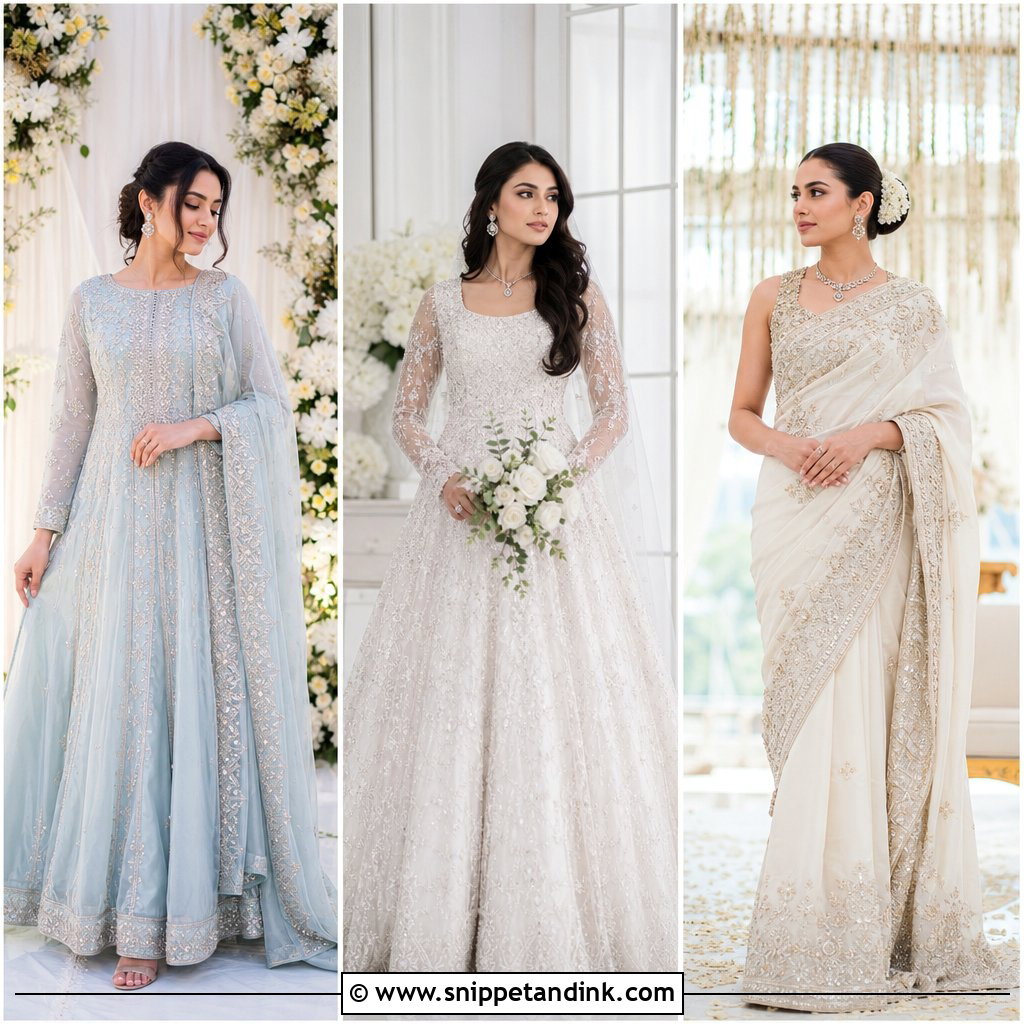
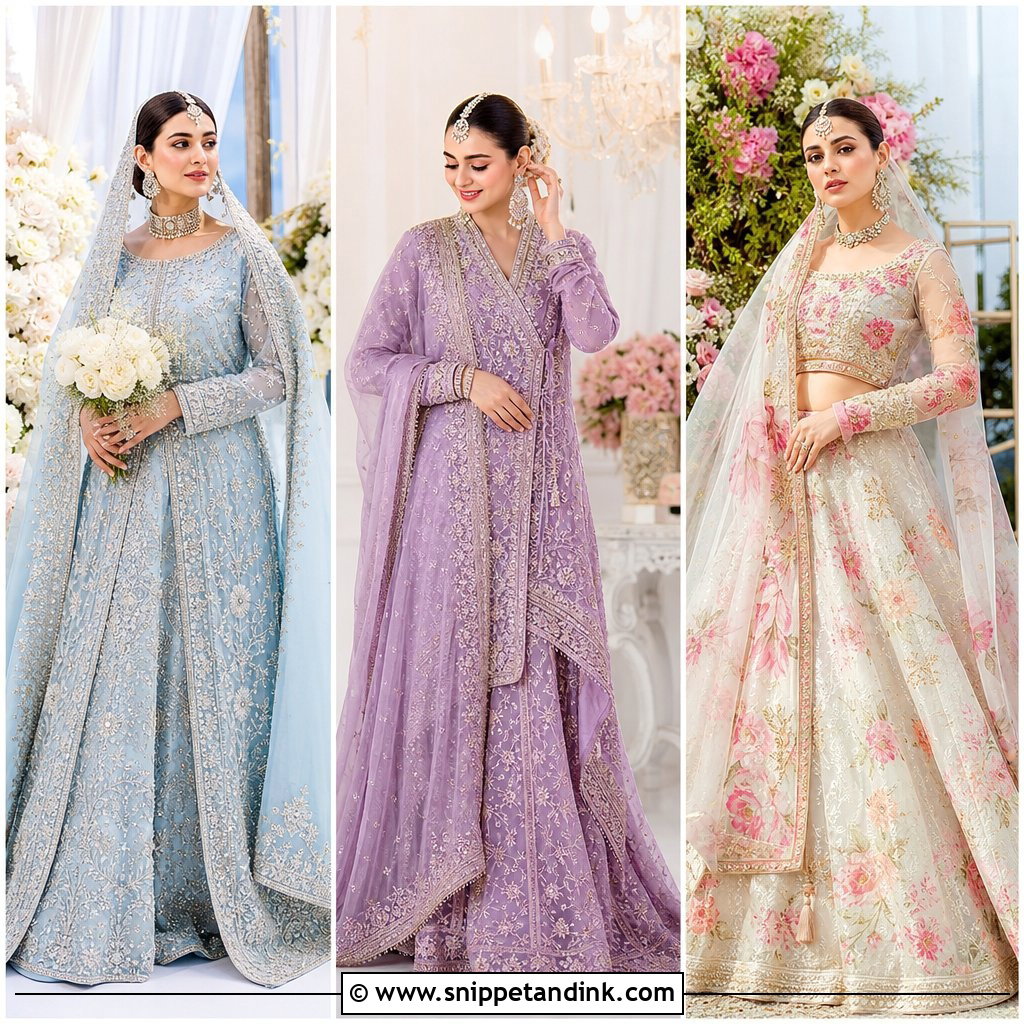
A powder blue pishwas is at its best at a daytime Nikkah, when the light makes the blue look clean. A floor-length cut with a fitted bodice, full sleeves and a wide flare, with silver dabka, crystals or sequins around the neckline, gives shape without covering every inch. Straight pants underneath give coverage when you sit. A pishwas has a lot of fabric in the skirt, and on a low stage it pools around you, so I arrange it before the photographer starts. An organza dupatta with a silver border, crystal earrings, a fine headpiece and silver flats complete it.
3. Mint Green Pastel Nikkah Sharara
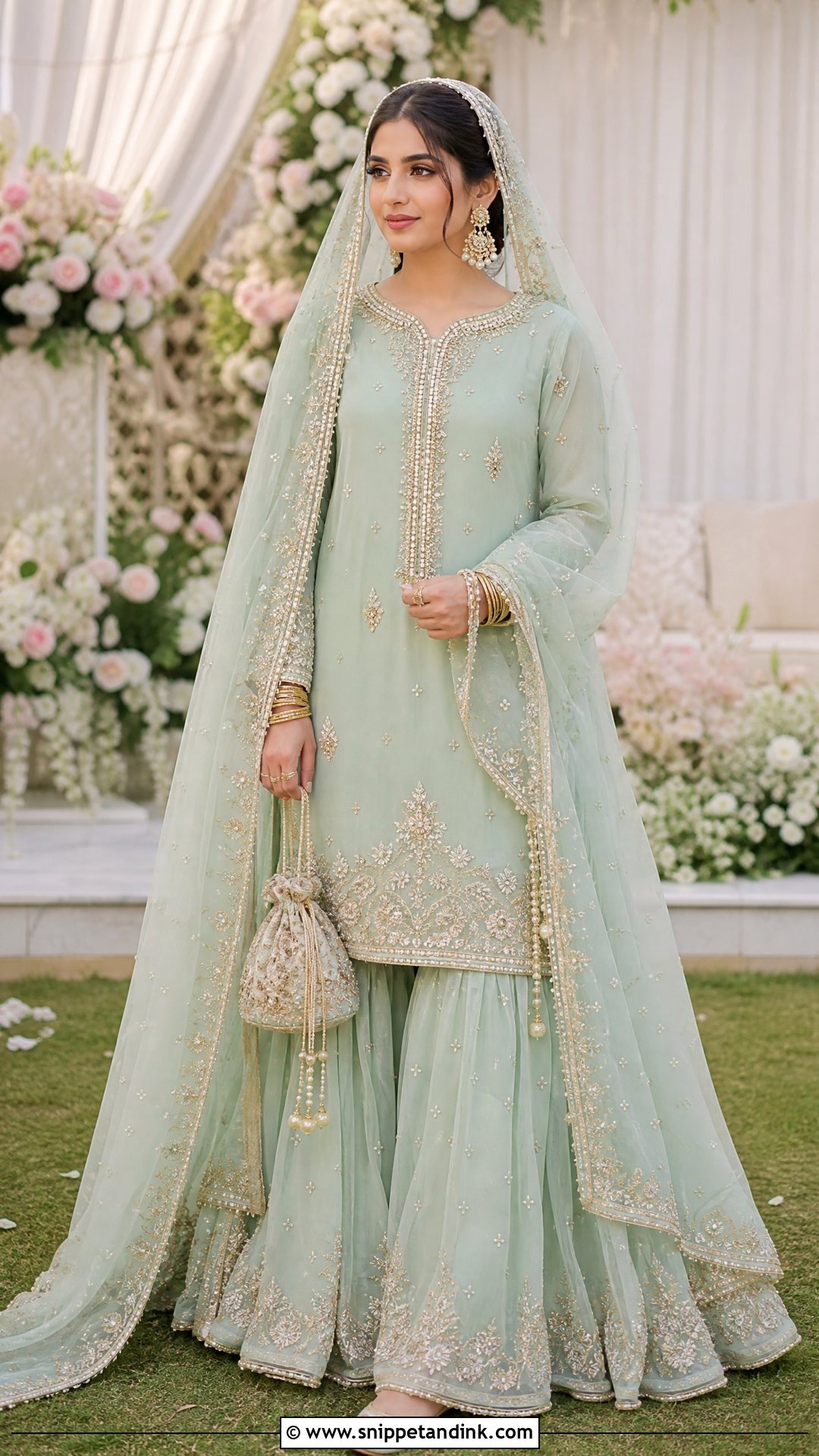
Mint green suits spring and summer ceremonies, with one caution: it can make the face look cool and slightly grey. A long chiffon kurta with tonal threadwork, tiny pearls and a touch of gold sits over wide sharara pants. I’d choose a high-rise sharara so the waistband doesn’t dig in when you sit for the ceremony. Drape a net dupatta over the head and bring one side forward to show the embroidered edge. Pearl chandbalis, a small passa and a few gold bangles keep it light, with ivory khussas and a structured potli. Peach makeup and a soft low ponytail warm up the cool shade.
4. Lavender Pastel Nikkah Anarkali
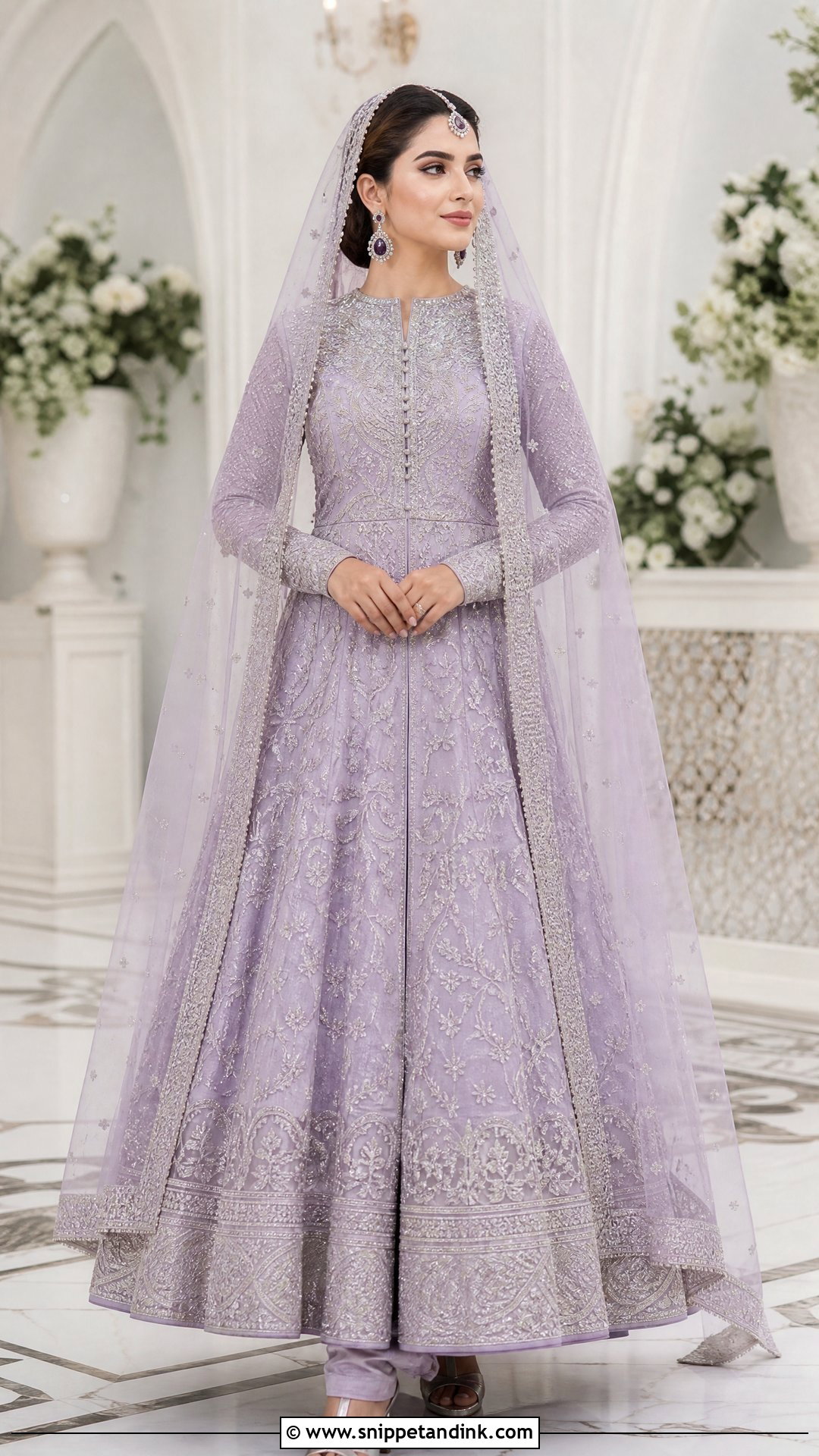
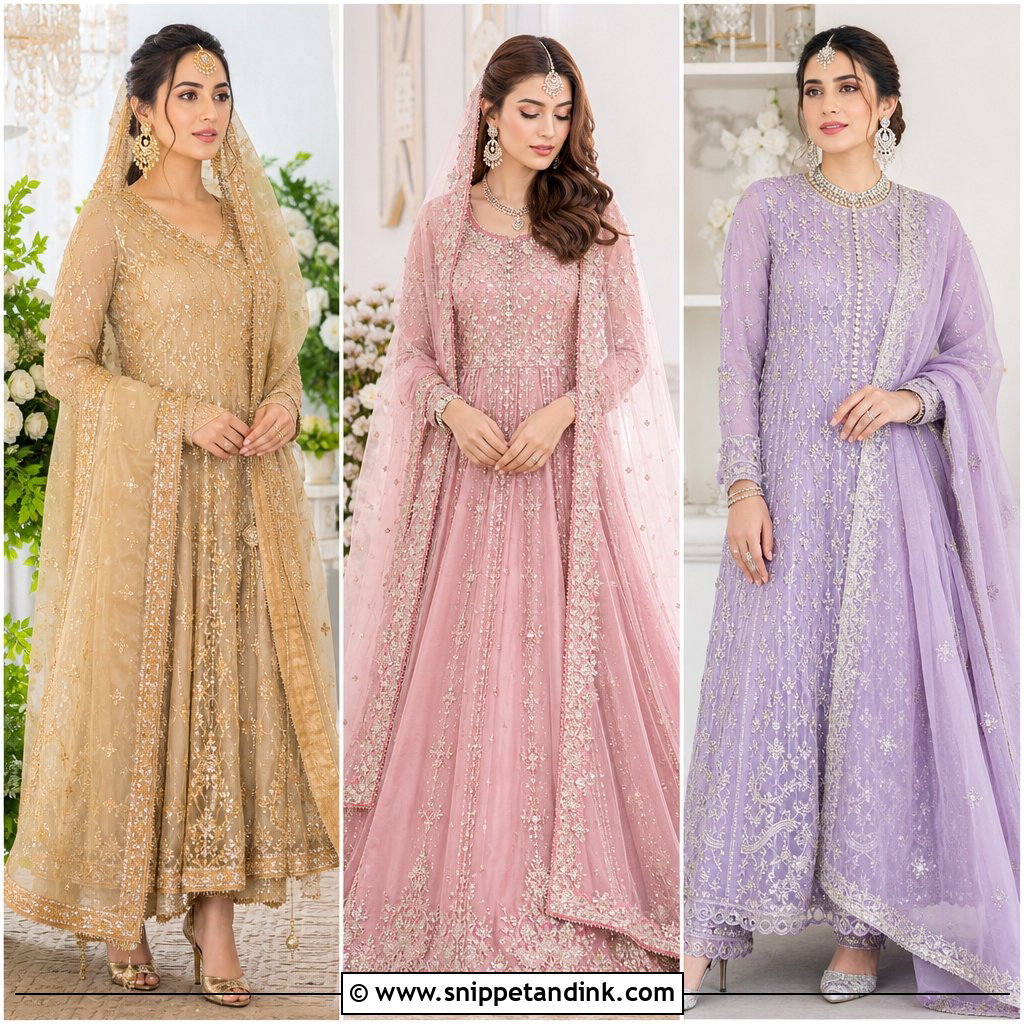
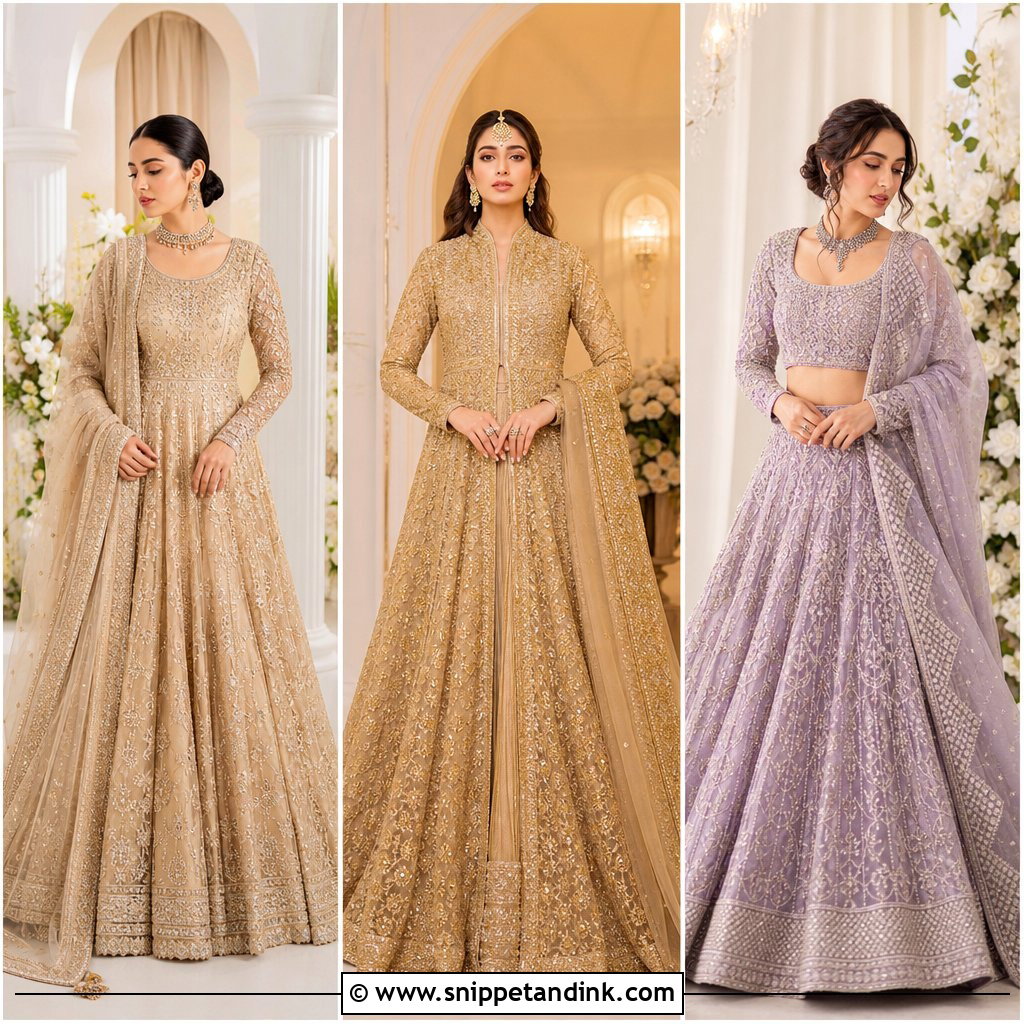
Could lavender replace the classic bridal pink? For many brides it does. A floor-length lavender Anarkali gives a romantic shape and full coverage. The bodice should be fitted with full sleeves, and the flare should start at the natural waist. Tonal embroidery with silver beads adds depth. Churidar underneath and closed-toe heels complete it. A net dupatta with scattered motifs frames the face over the head. Amethyst-toned earrings, a slim maang tikka and a silver clutch suit the cool colour. I’d book a centre-parted bun, since a centre parting balances the wide skirt and sits neatly under the dupatta.
5. Peach Pastel Nikkah Lehenga
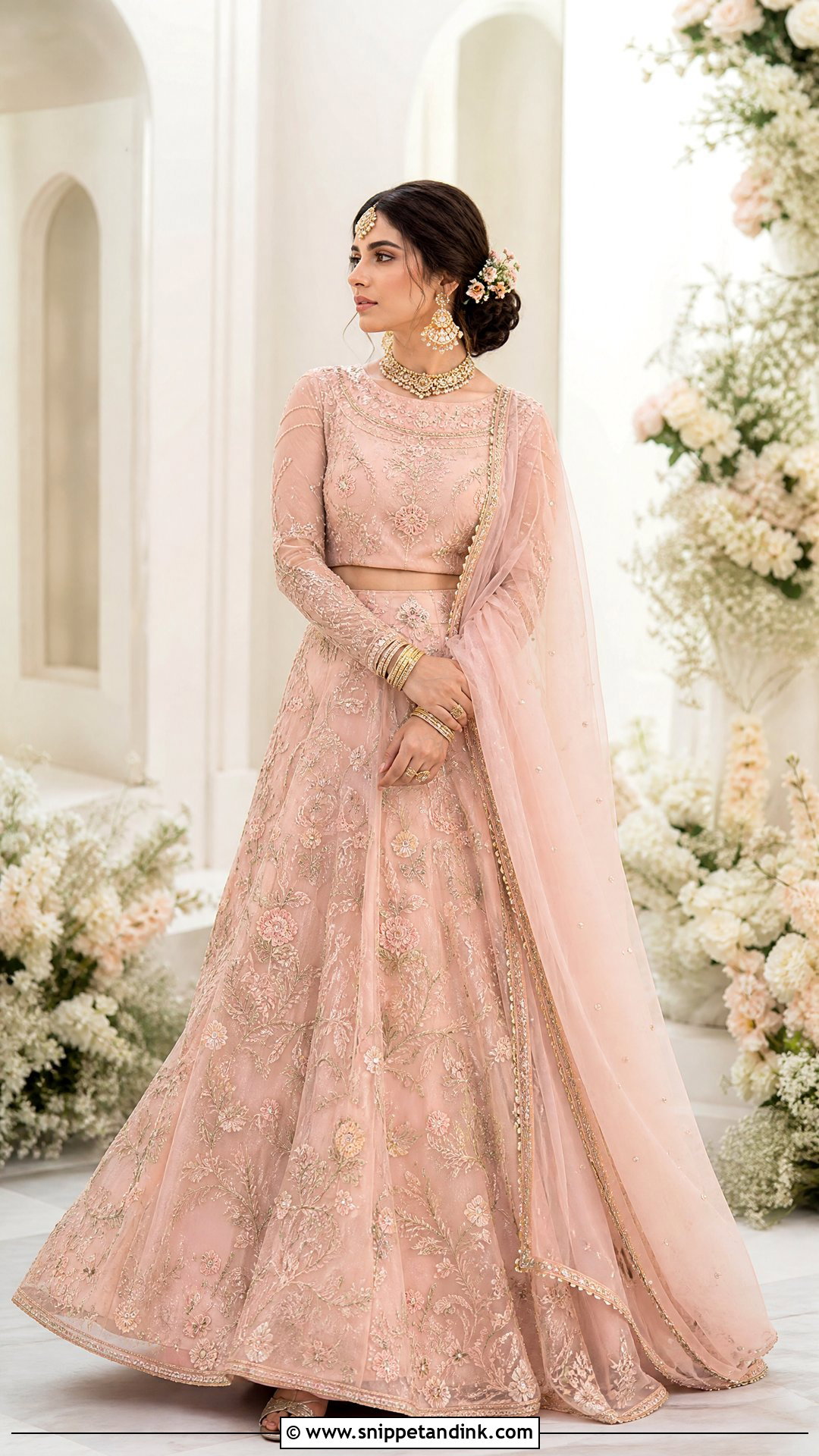
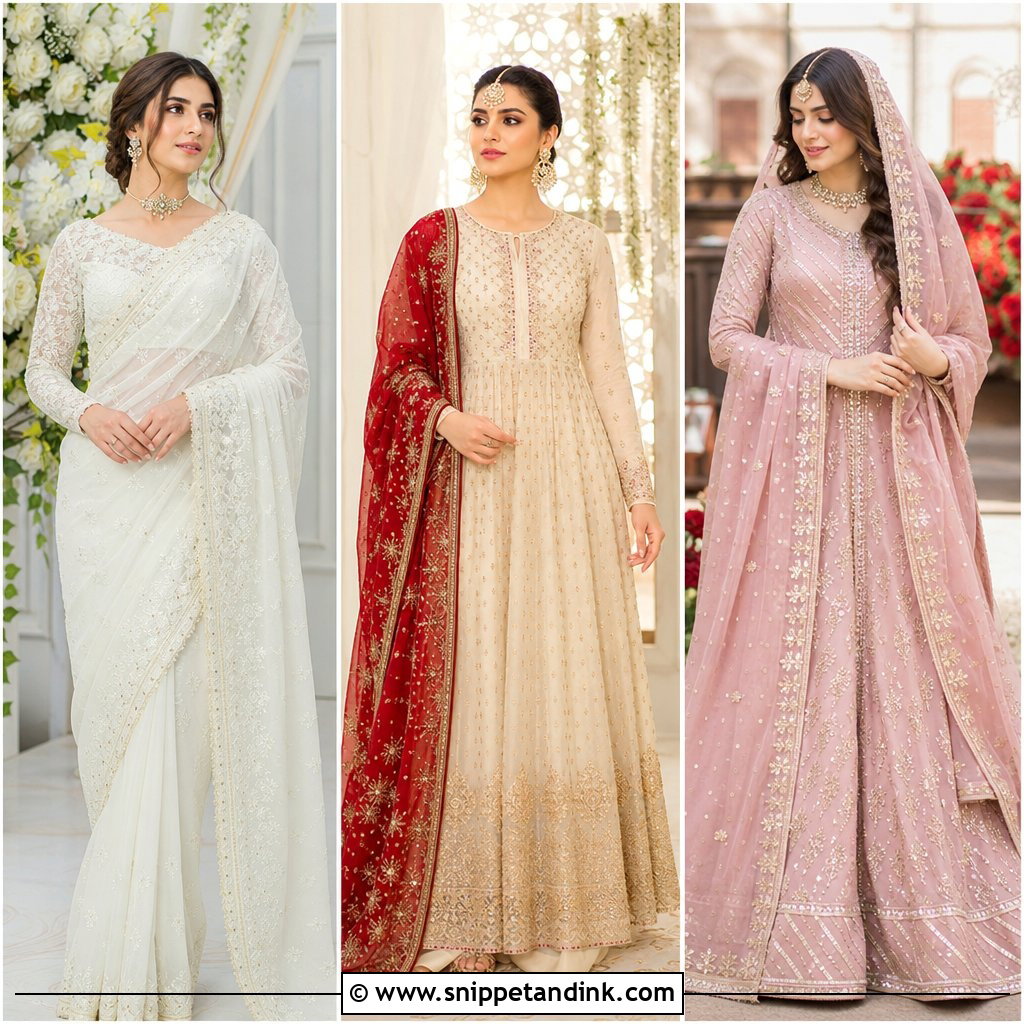
Peach is one of the warmest pastels and flatters a wide range of skin tones. A high-waisted skirt with fine florals and a manageable flare is easier to sit in than a huge one. A longer blouse with a modest neckline and fitted sleeves supports the dupatta. Champagne threadwork and small pearls suit peach better than bright yellow gold, which can make it look orange. A sheer dupatta over the head and a second one across a shoulder make a grander entrance; just know that two dupattas mean double the pinning. Polki earrings, a small necklace, cushioned gold sandals and a few fresh flowers in a low bun finish it.
6. Ivory And Sage Pastel Nikkah Gharara
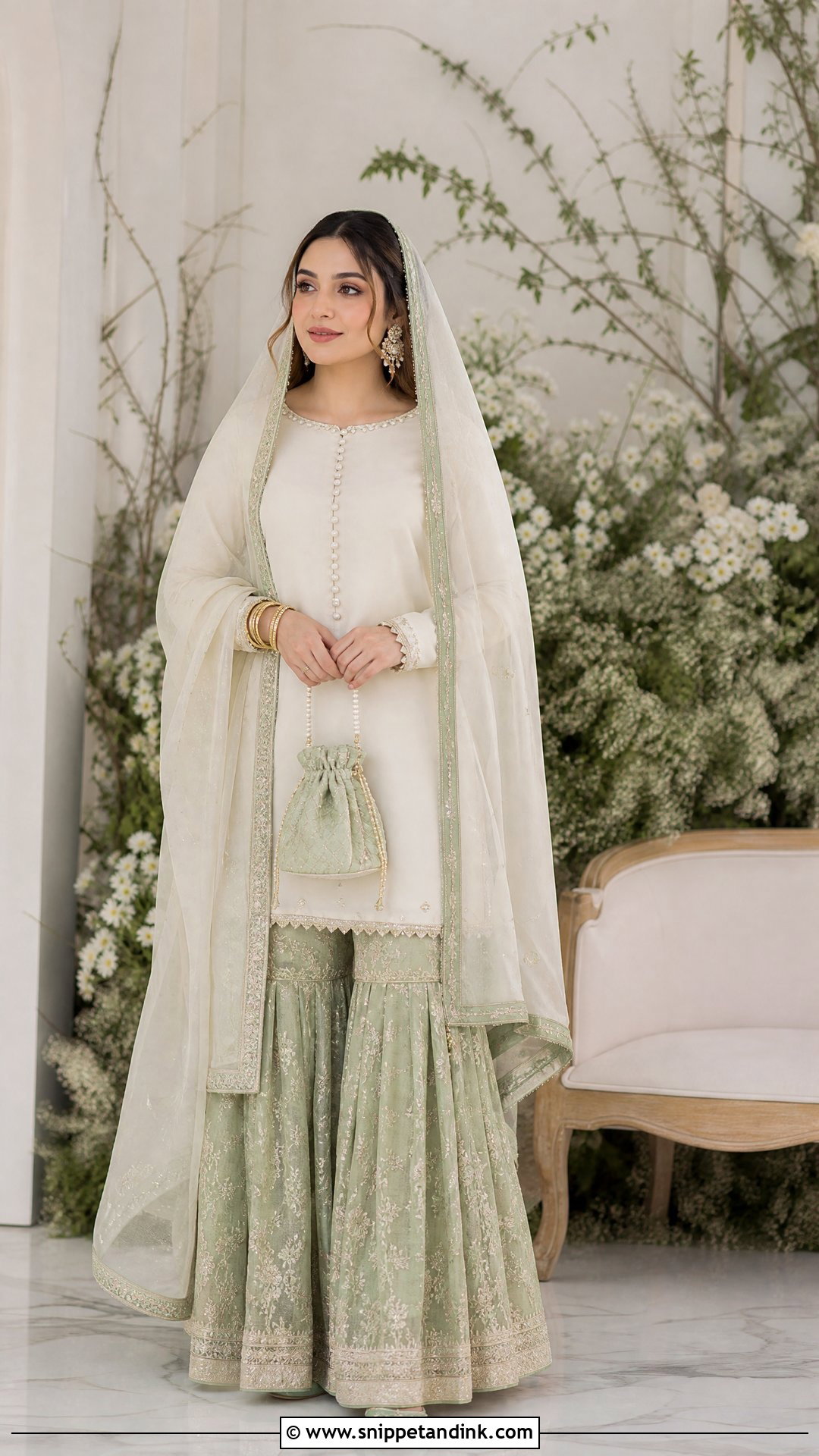
Ivory and sage together make a calm two-tone outfit. An ivory long kurta with sage threadwork, pearl buttons and a soft neckline sits over a sage gharara with an ivory border, so both colours appear top and bottom. An ivory organza dupatta edged in sage goes over the head with the other end falling over the arm. Pearl earrings, a matching tikka and sage velvet khussas finish it, and antique gold at the neck adds definition if the ivory feels flat. Ivory near the face reflects a lot of light, so I’d ask the makeup artist to keep a little more definition around the eyes. It sits well with greenery and ivory flowers.
7. Butter Yellow Pastel Nikkah Angrakha
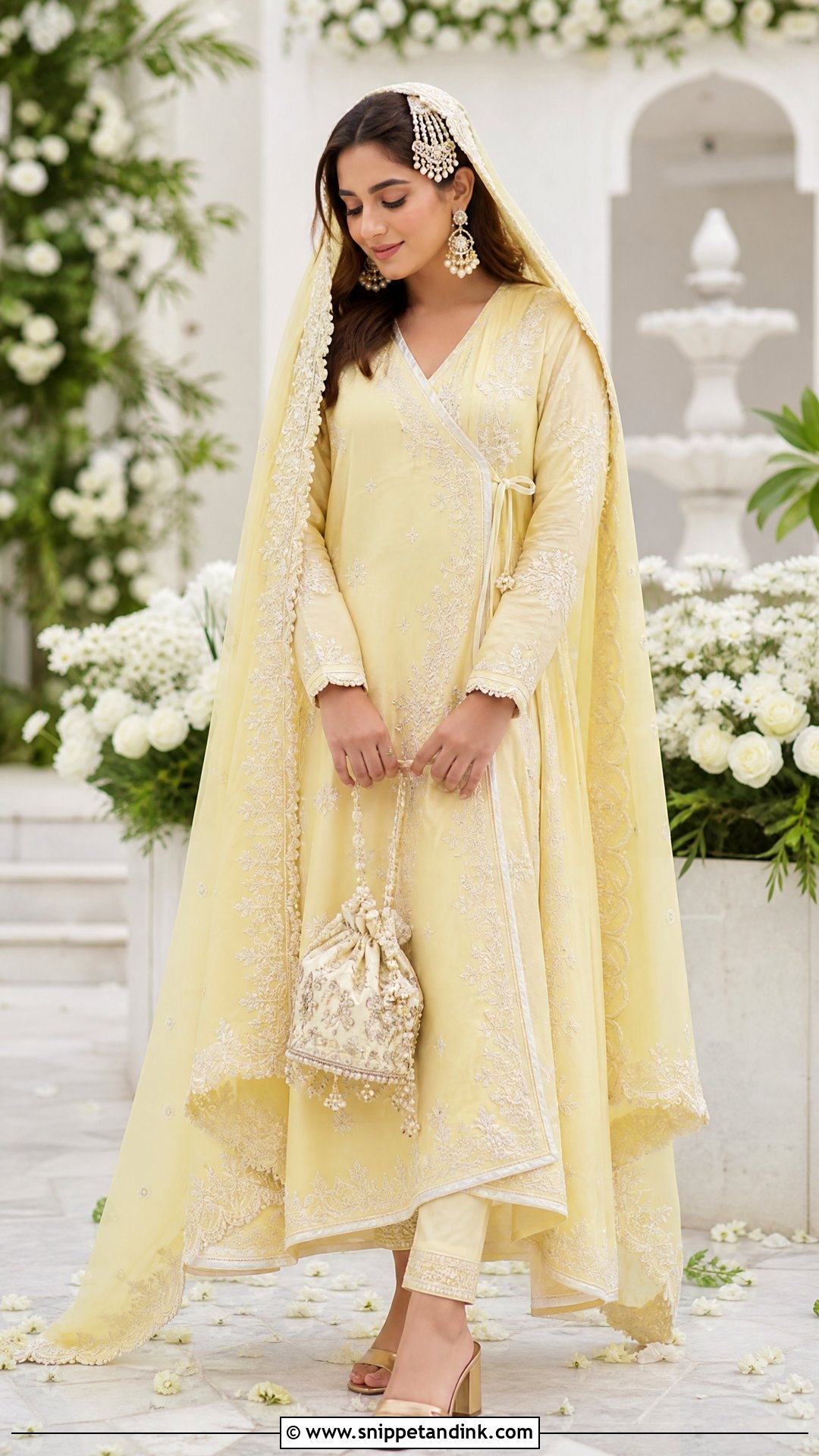
Butter yellow brings warmth without the intensity of a haldi yellow. An ankle-length Angrakha with a wrapped bodice and flared skirt, finished with ivory resham, small mirrors or pearls along the neckline, ties and hem, looks traditional and feminine. The ties do real work on an Angrakha, so I check they hold flat at the side when you lean forward to sign. Narrow ivory pants and pale gold block heels go underneath. A sheer yellow dupatta covers the head while leaving the neckline visible. Pearl jhumkas, a delicate passa and an embroidered potli complete it. Rosy blush keeps pale yellow from flattening the skin on camera.
8. Dusty Rose Pastel Nikkah Straight Suit
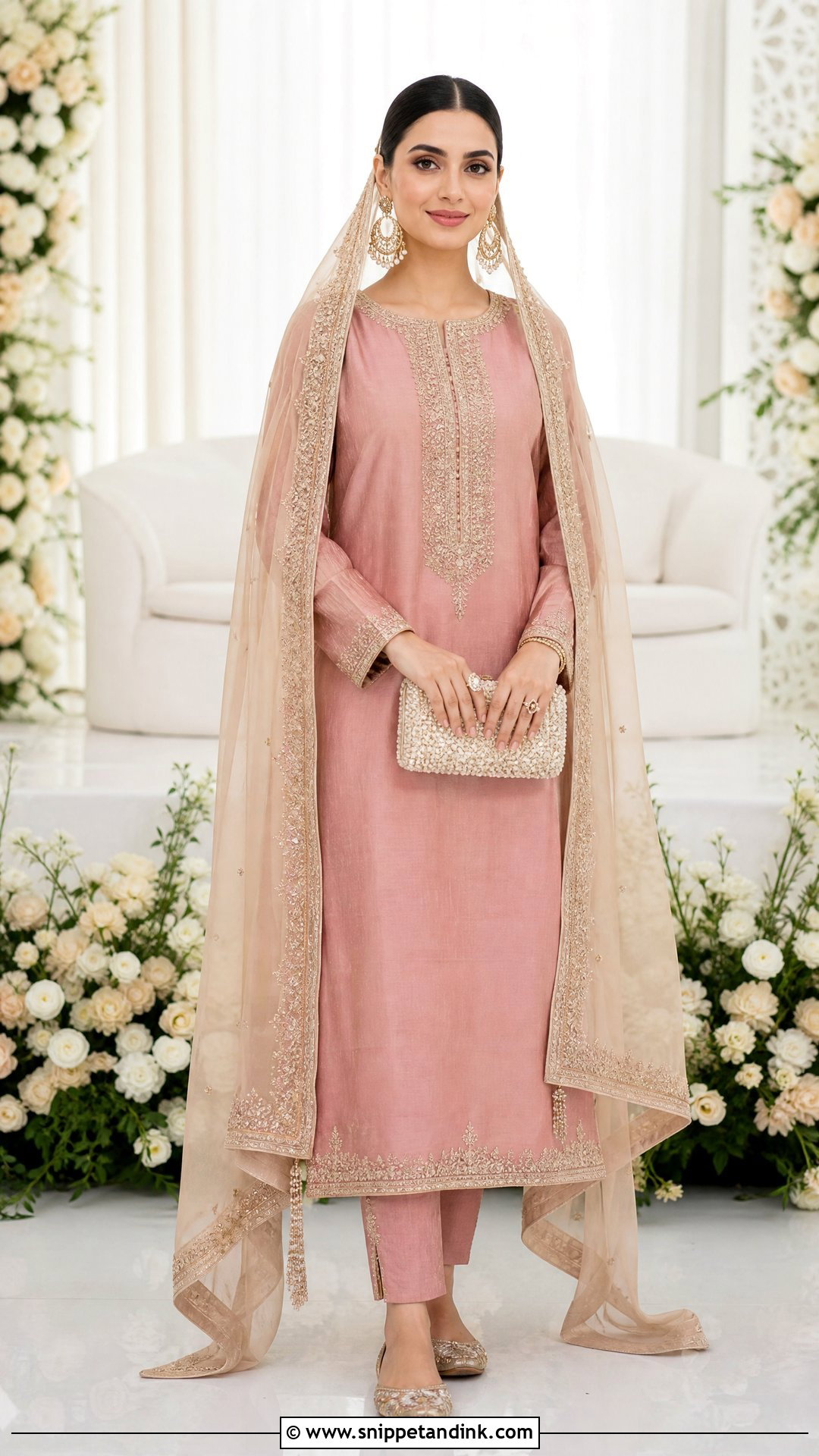
For a smaller ceremony at home, a dusty rose straight suit is quietly bridal. A long raw silk kurta with structured shoulders, full sleeves and dense embroidery at the neck and hem sits over slim straight pants in the same colour. A champagne organza dupatta lifts it and stops the single colour looking flat. Raw silk has a slightly nubby surface and creases at the elbows, so I’d steam it on the morning, not the night before. Rose-gold earrings, a small pendant, metallic khussas and a beaded clutch finish it. Petite brides look best with the kurta just below the knee.
9. Pistachio Pastel Nikkah Peplum Sharara
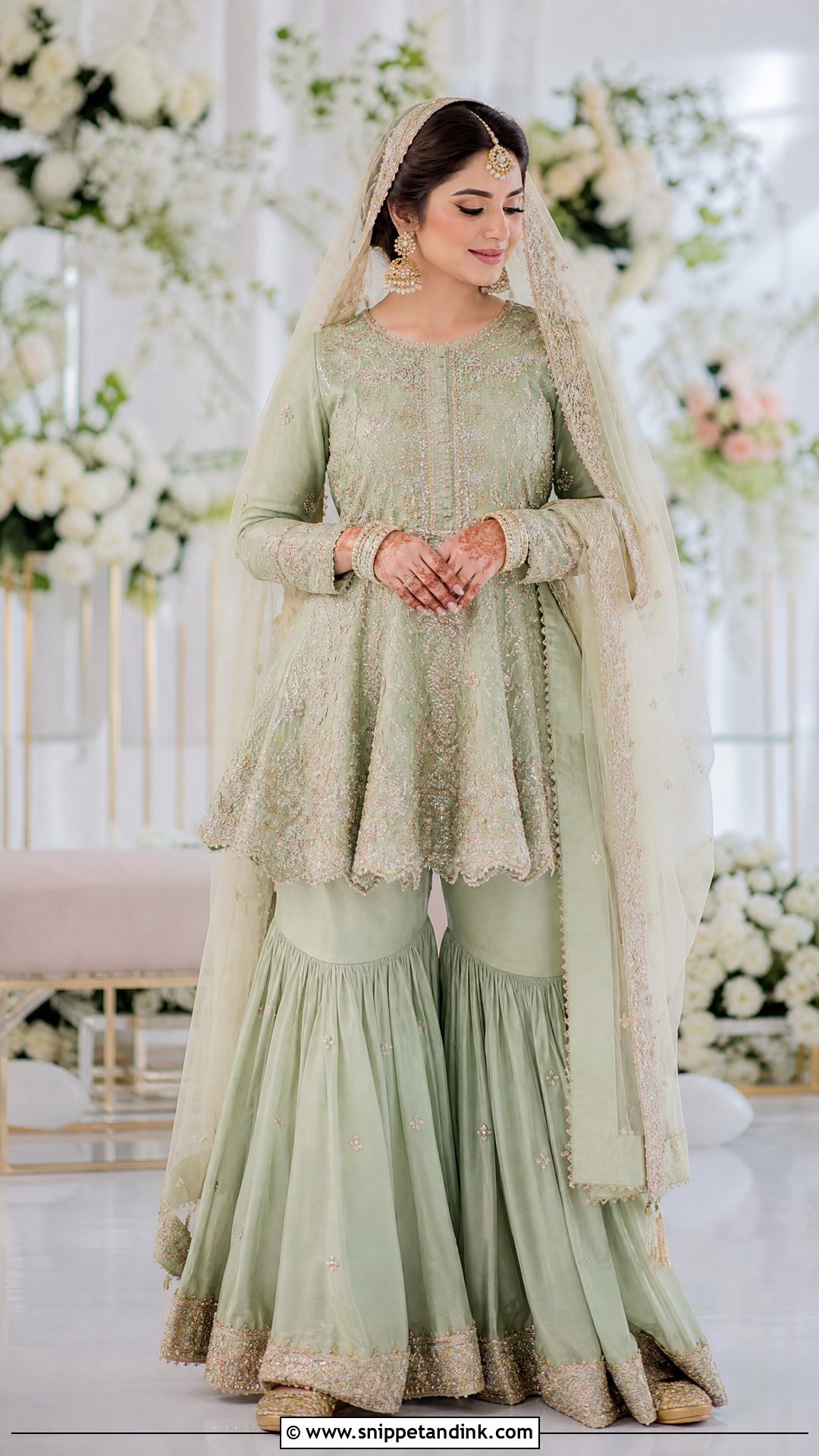
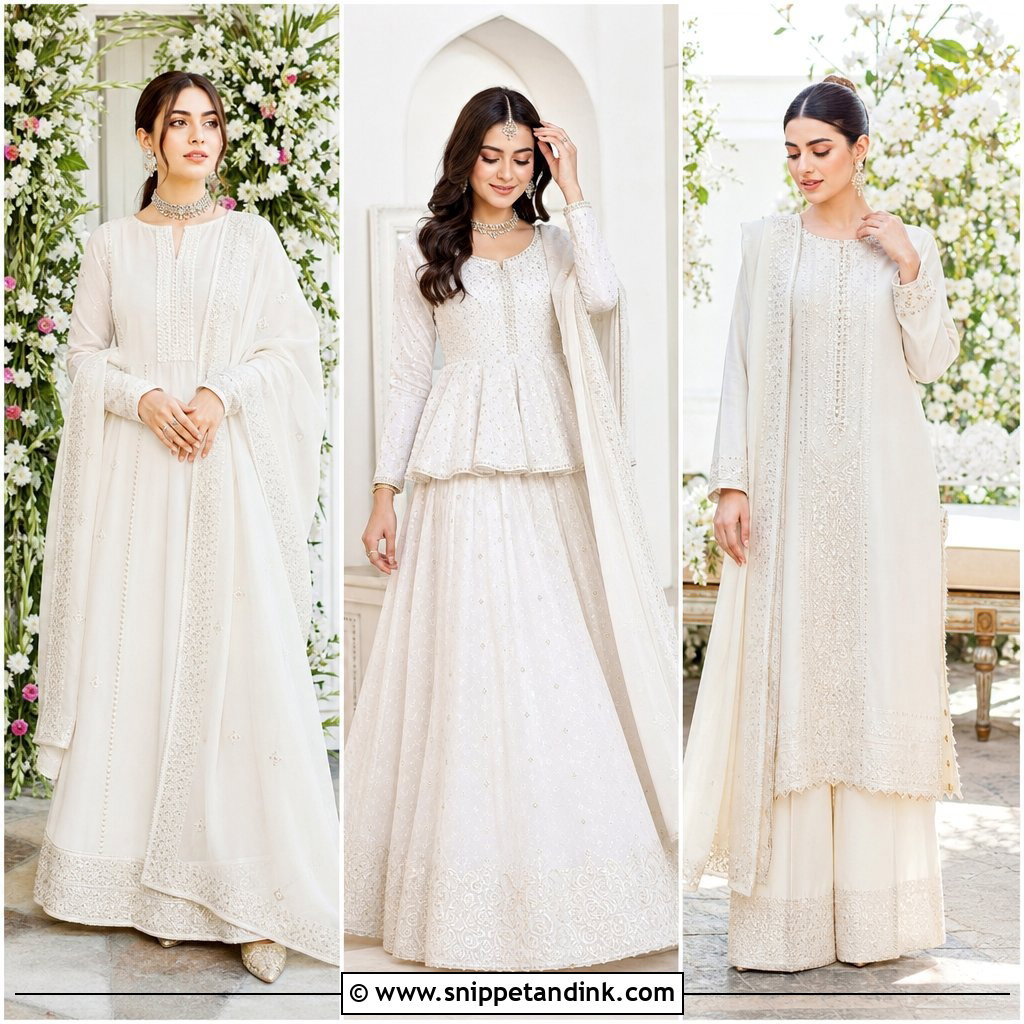
A peplum with a sharara gives shape and a lighter, more playful feel. The peplum should fall below the waist with a soft flare, with dense embroidery on the bodice and lighter work on the sleeves. Pair it with a high-waisted sharara cut in several fluid panels rather than masses of volume. Pistachio is a cool green, and warm brown eye makeup with a pink-nude lip brings it to life. A pale gold net dupatta with pistachio edging drapes loosely over the head. Traditional jhumkas, a small tikka, stacked bangles and gold khussas finish it. Keep the hair sleek so it doesn’t compete with the peplum.
10. Lilac Pastel Nikkah Saree
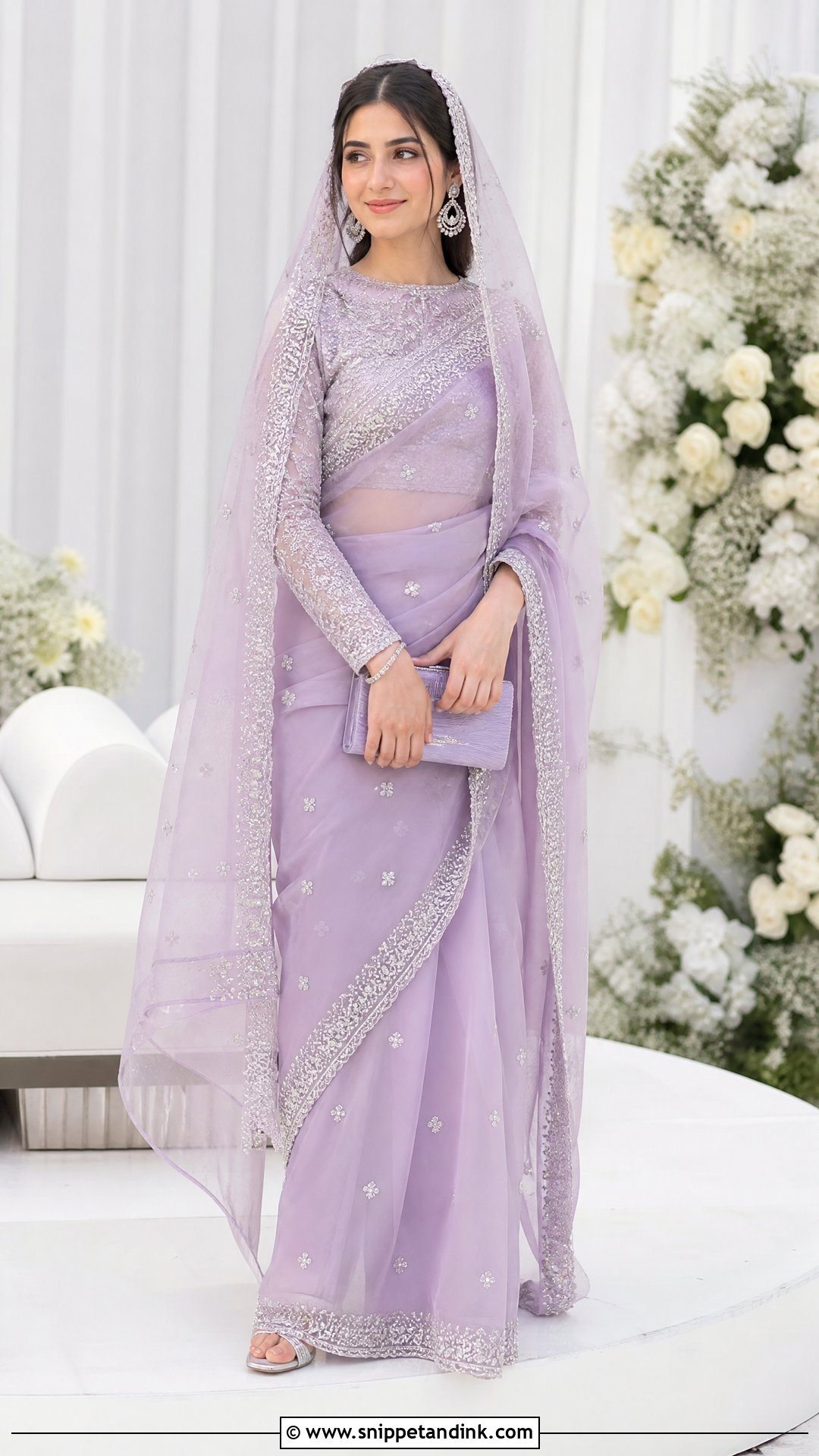
A lilac saree suits a bride who prefers a clean drape to a full skirt. Organza, chiffon or tissue with a detailed silver border and small motifs works best. Pair it with a modest blouse with a higher neck, elbow or full sleeves and matching beadwork. Using the pallu as a head covering takes careful pinning, at the shoulder and again at the hair, or it slides every time you turn your head. A second sheer veil is optional. Silver chandbalis, a slim bracelet, metallic heels, a smooth low bun and cool pink makeup complete it, with a structured lilac clutch.
11. Champagne Pastel Nikkah Maxi Dress
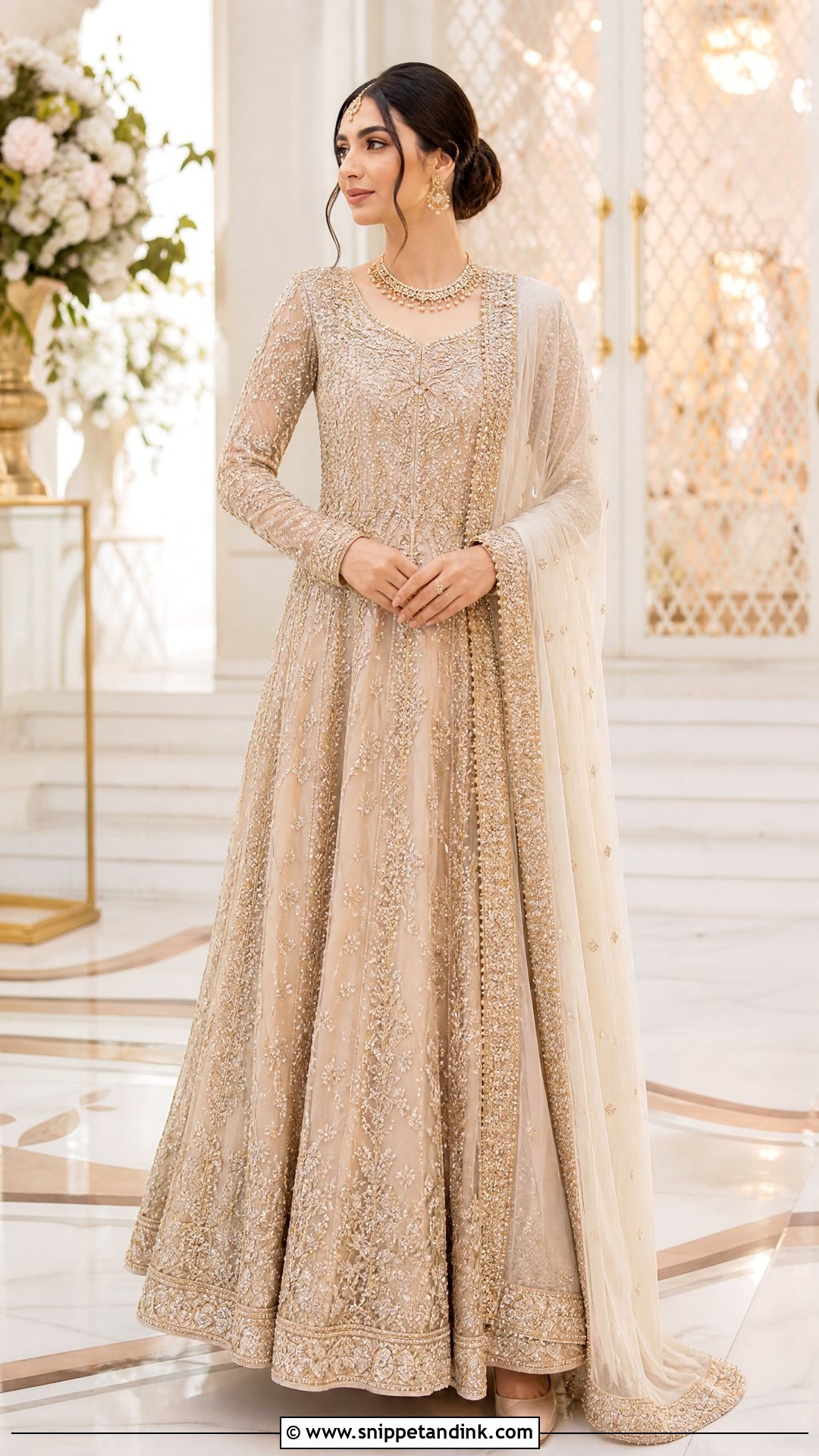
Champagne is the neutral pastel, with a soft glow under warm light. A floor-length maxi with a defined waist, full sleeves and an A-line skirt feels formal but easy. Tonal pearls, antique gold beads or fine sequins catch light subtly. An ivory chiffon dupatta with a champagne border goes over the head. The risk with champagne is that it blends into many skin tones, so I bring in definition with antique gold earrings, a fine necklace and a small tikka. Closed-toe champagne heels continue the colour down. A low bun with volume at the crown, defined eyes and rose-brown lips keep the face from fading into the fabric.
12. Sky Blue Pastel Nikkah Lehenga
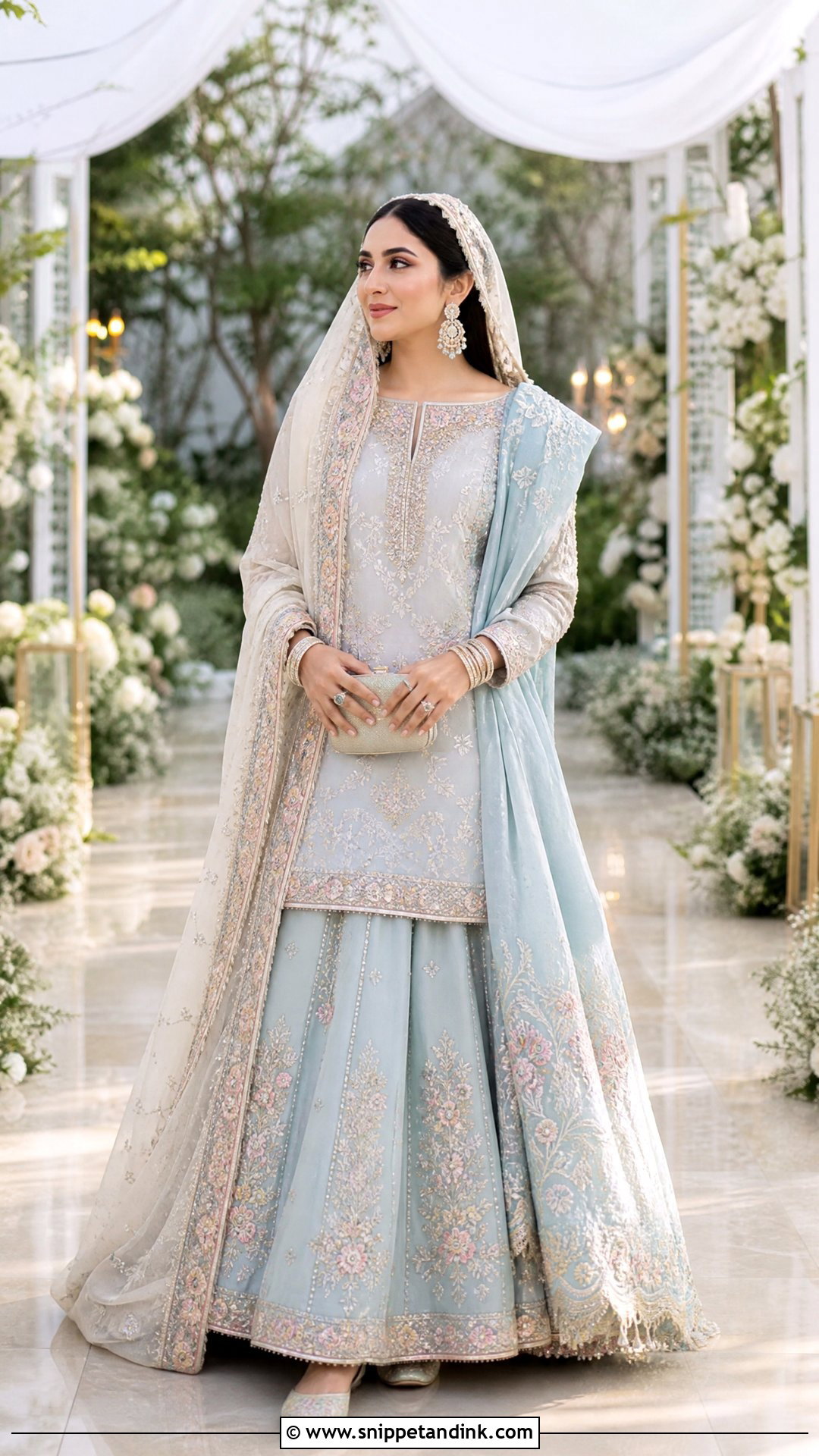
Picture sky blue moving across a bright garden ceremony. A panelled skirt with white threadwork, silver or small florals keeps it bridal. Pair it with a longline blouse with full sleeves and a modest round or square neck. An ivory dupatta over the head adds contrast, and a second blue one across the arms adds colour. Pearl-and-crystal earrings, a matching tikka, silver bangles and blue embroidered flats finish it. Sky blue is the pastel that suffers most in harsh noon sun, so I’d plan the portraits for the shade or late afternoon. A soft berry lip adds warmth to the icy tone.
13. Soft Coral Pastel Nikkah Kurta And Palazzo
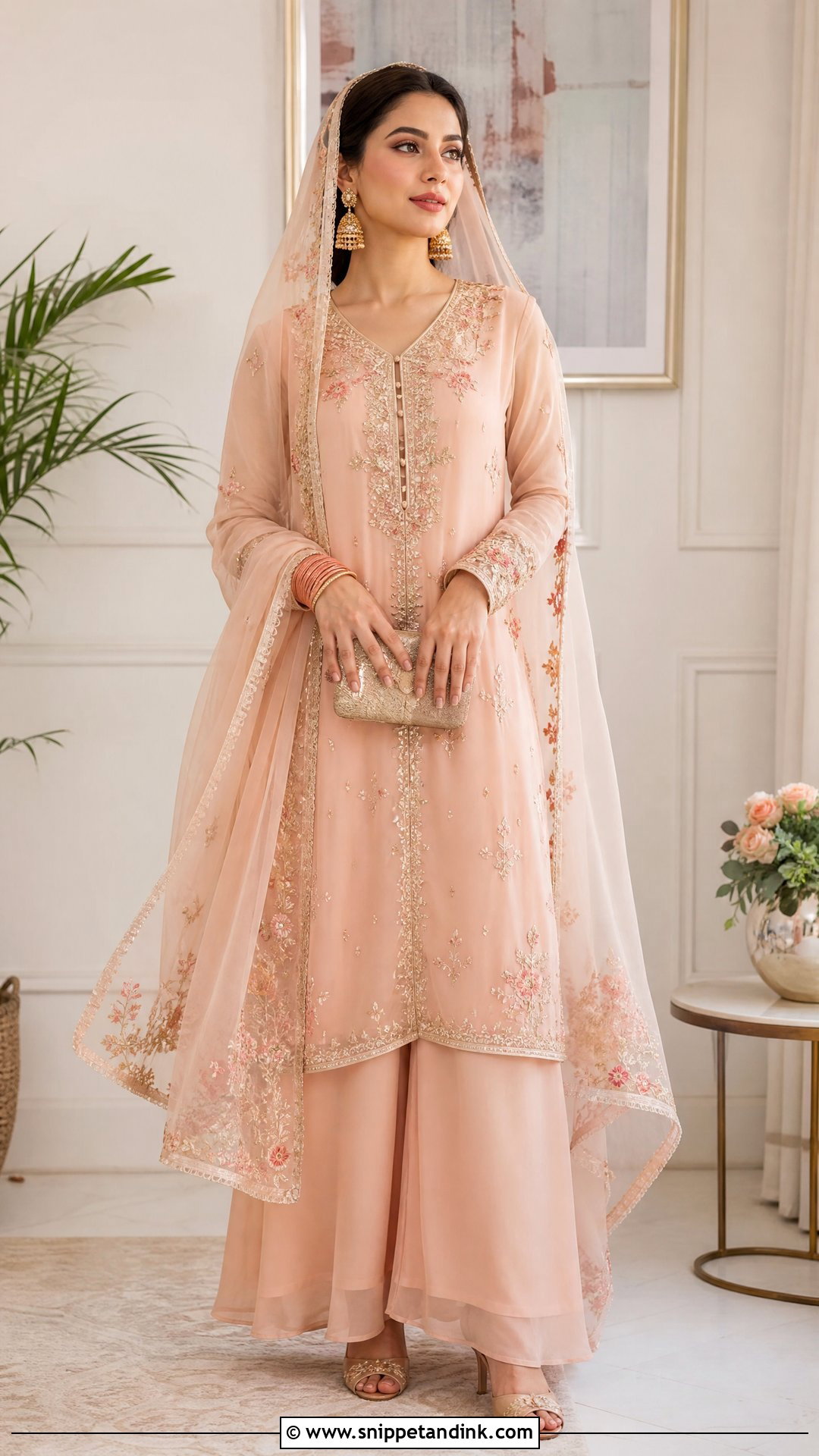
A soft coral kurta with palazzos is comfort first, and still looks ready for the ceremony. A calf-length kurta with side slits, full sleeves and delicate gold or ivory embroidery sits over wide palazzos that skim the top of the shoe. Chiffon or crepe keeps the lower half fluid; stiff fabric makes palazzos look bulky. A matching organza dupatta with floral corners goes over the head or across both shoulders. Gold jhumkas, a fine necklace, coral bangles and nude embroidered heels complete it. This is the outfit I’d suggest for a Nikkah held at home, where you may be sitting on cushions on the floor.
14. Dusty Mauve Pastel Nikkah Raw Silk Suit
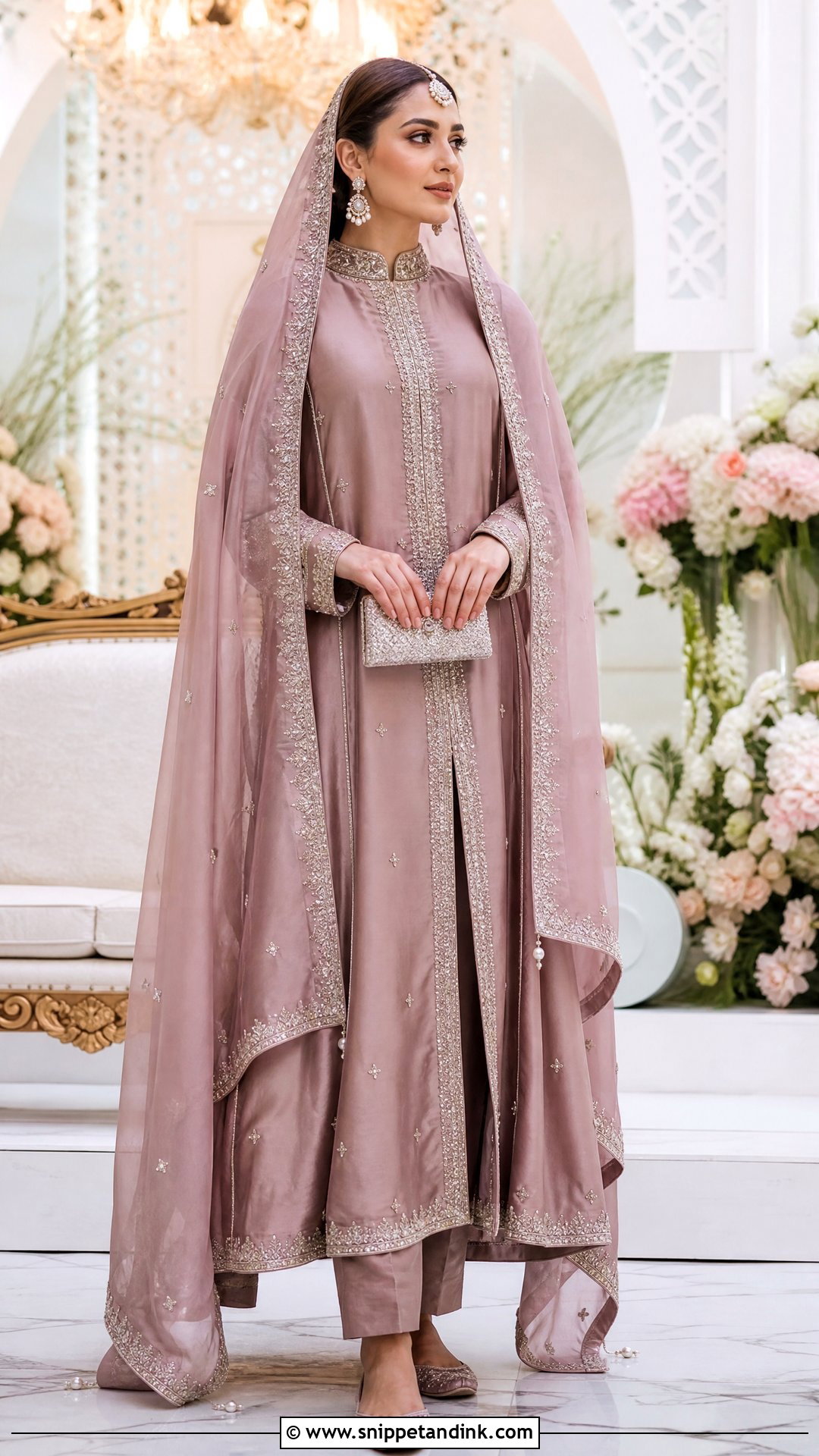
Cooler months call for a fabric with body, and dusty mauve raw silk has it. A long panelled kurta with fitted sleeves, a raised neckline and antique silver work suits straight pants or a soft flared trouser. A mauve organza dupatta with a heavier border stays on the head better than a plain one, because the border weight anchors it. Pearl-and-silver earrings, a small tikka, velvet khussas and a structured silver clutch keep the palette muted. Cool undertones suit a blue-based mauve, and warmer complexions do better in a rosier one. Softly smoked plum eyes deepen the look without making it dark.
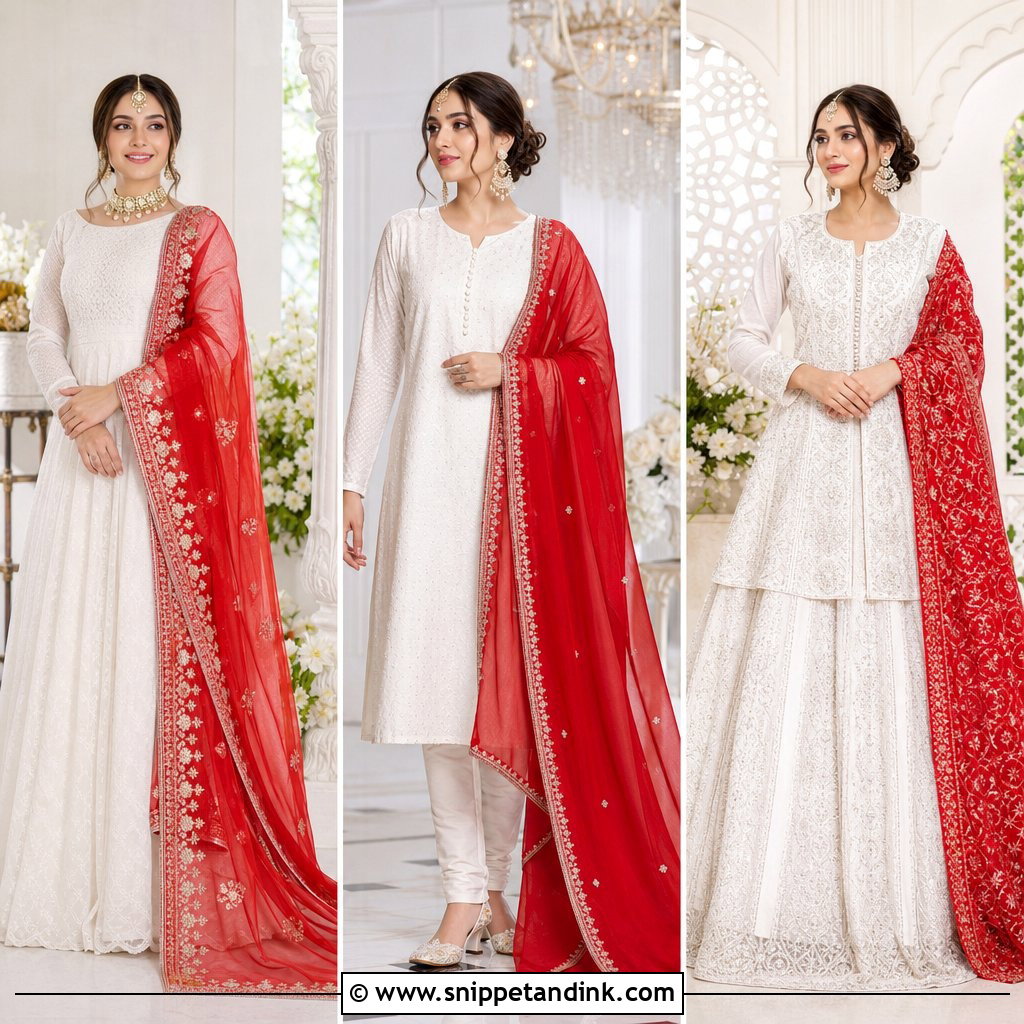
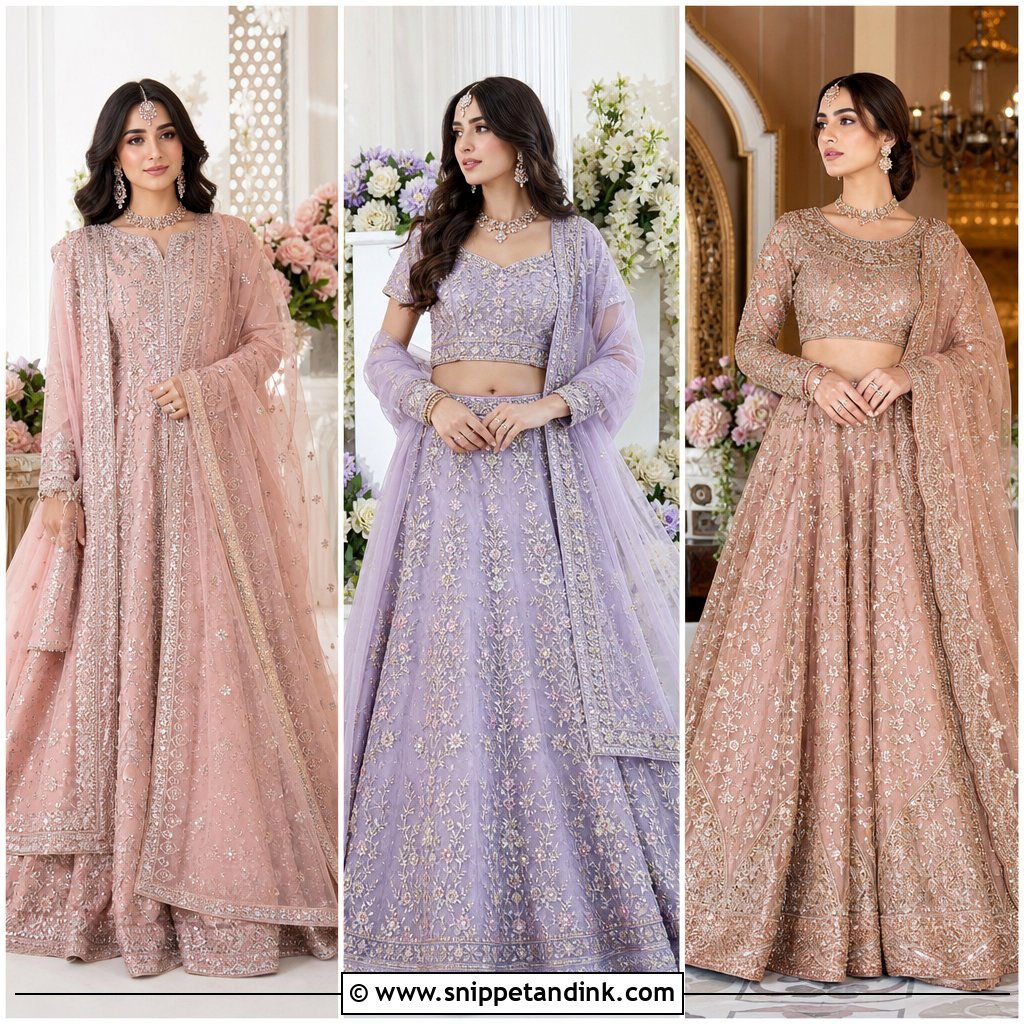
15. Pale Aqua Pastel Nikkah Cape Gown
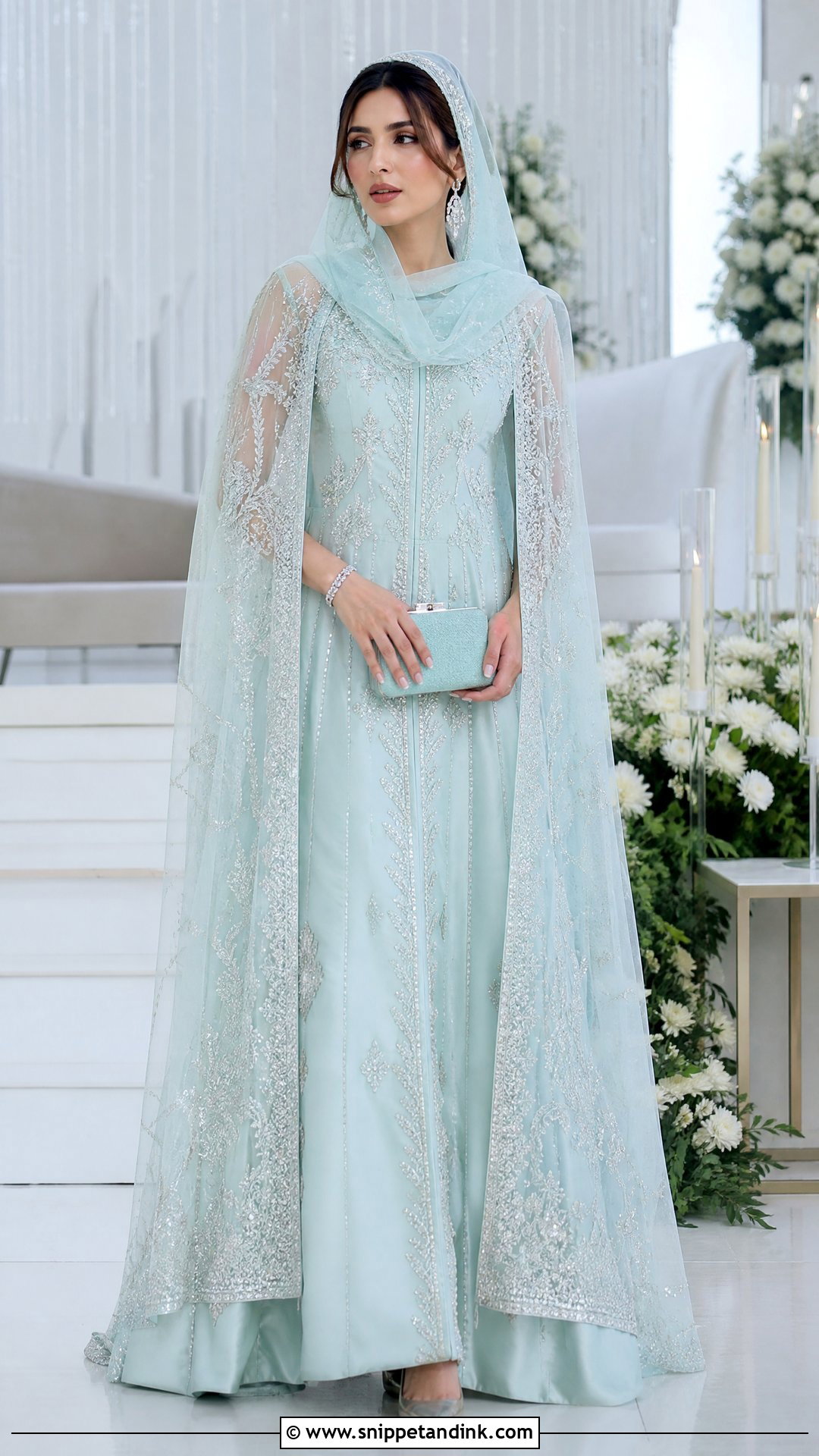
A pale aqua gown with a sheer embroidered cape is the most contemporary look here. The gown needs a modest fitted bodice, a defined waist and a floor-length skirt. A detachable cape covers the shoulders and arms. I’d still use a separate light dupatta over the head for the ceremony; a cape can’t double as a head covering, and pulling it up ruins its line. Silver, ivory or pale mint embroidery keeps the work in harmony. Crystal earrings, a delicate bracelet, silver pointed heels and a small aqua clutch suit it. Skip a big necklace, which fights the cape’s neckline.
16. Blush Pink Pastel Nikkah Saree
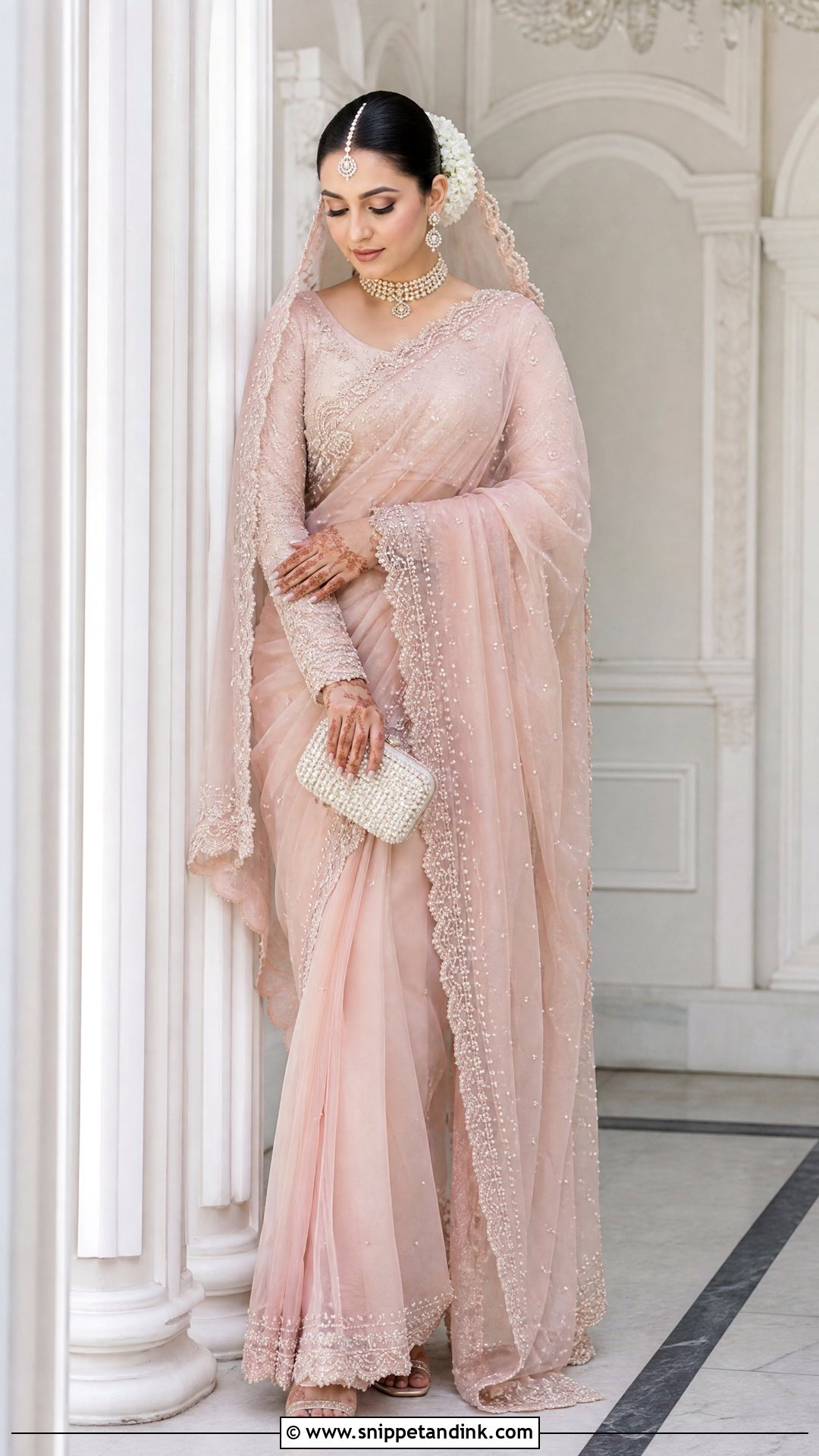
Blush in a saree looks refined and traditional. Tissue or organza with pearl work, a scalloped border and small tonal motifs suits it, with a longer blouse, full sleeves, a covered back and a modest neck. The pallu goes over the head so the border frames the face. Tissue is slippery, so the pleats need firm pinning or they loosen when you sit cross-legged. A pearl choker, matching earrings and a slim tikka make it more bridal. Rose-gold heels and a pearl clutch finish it. Small white flowers in a centre-parted bun, rosy cheeks and a satin pink lip suit blush fabric.
17. Mint Pastel Nikkah Jacket Lehenga
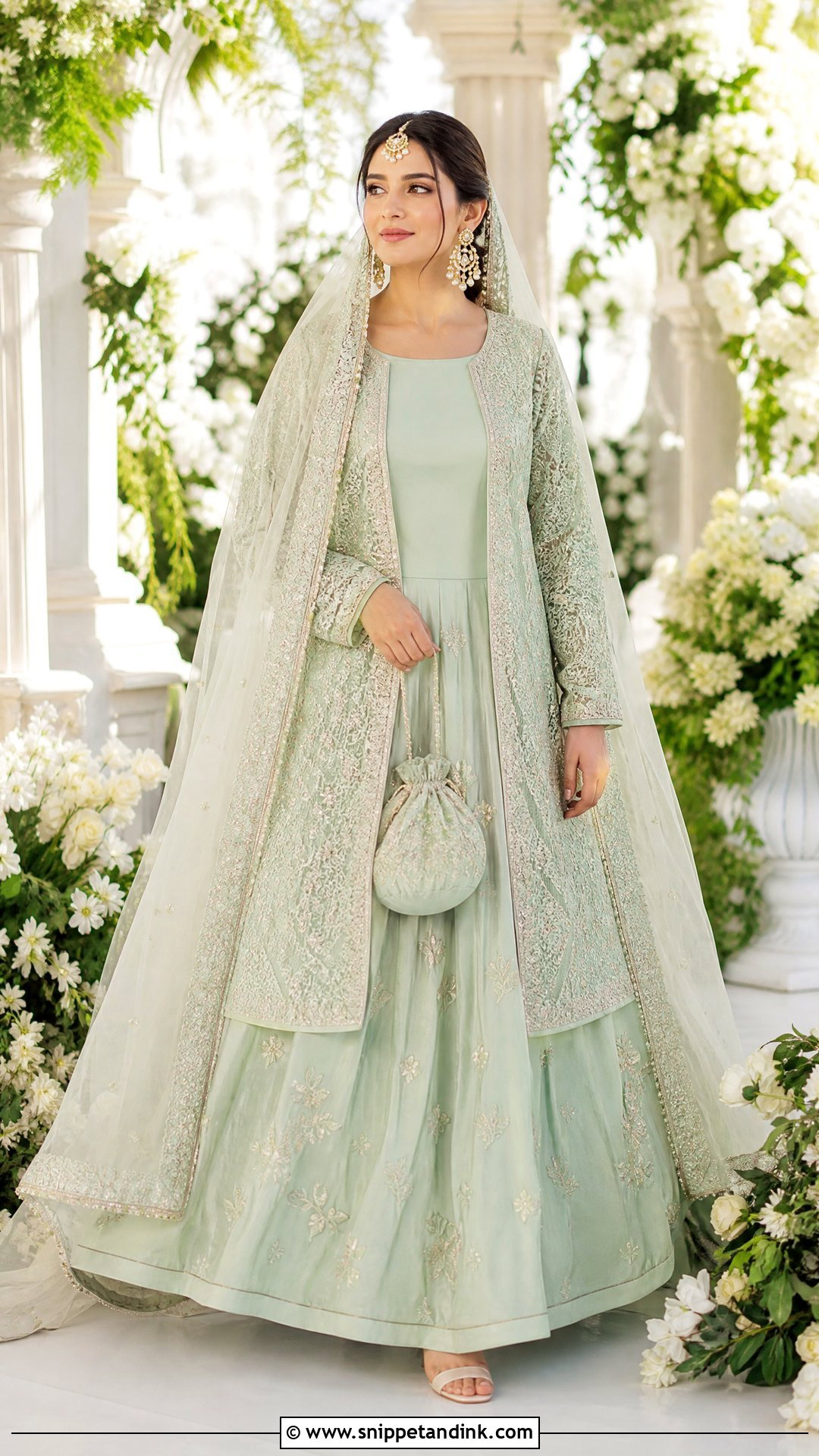
A long embroidered jacket gives a mint lehenga more structure and more coverage. A lightly embellished skirt and a simple sleeveless or short-sleeved blouse sit under a floor-length, full-sleeved jacket, left partly open at the front. Tonal florals and pearls add depth without busyness. An ivory net dupatta over the head is secured under the jacket’s shoulder line. The jacket must be tailored closely through the shoulders, since a loose one slides back and drags the dupatta with it. Pearl drops, a forehead piece, ivory heels and a mint potli finish it, with warm pink makeup to balance the green.
18. Lavender Pastel Nikkah Kaftan
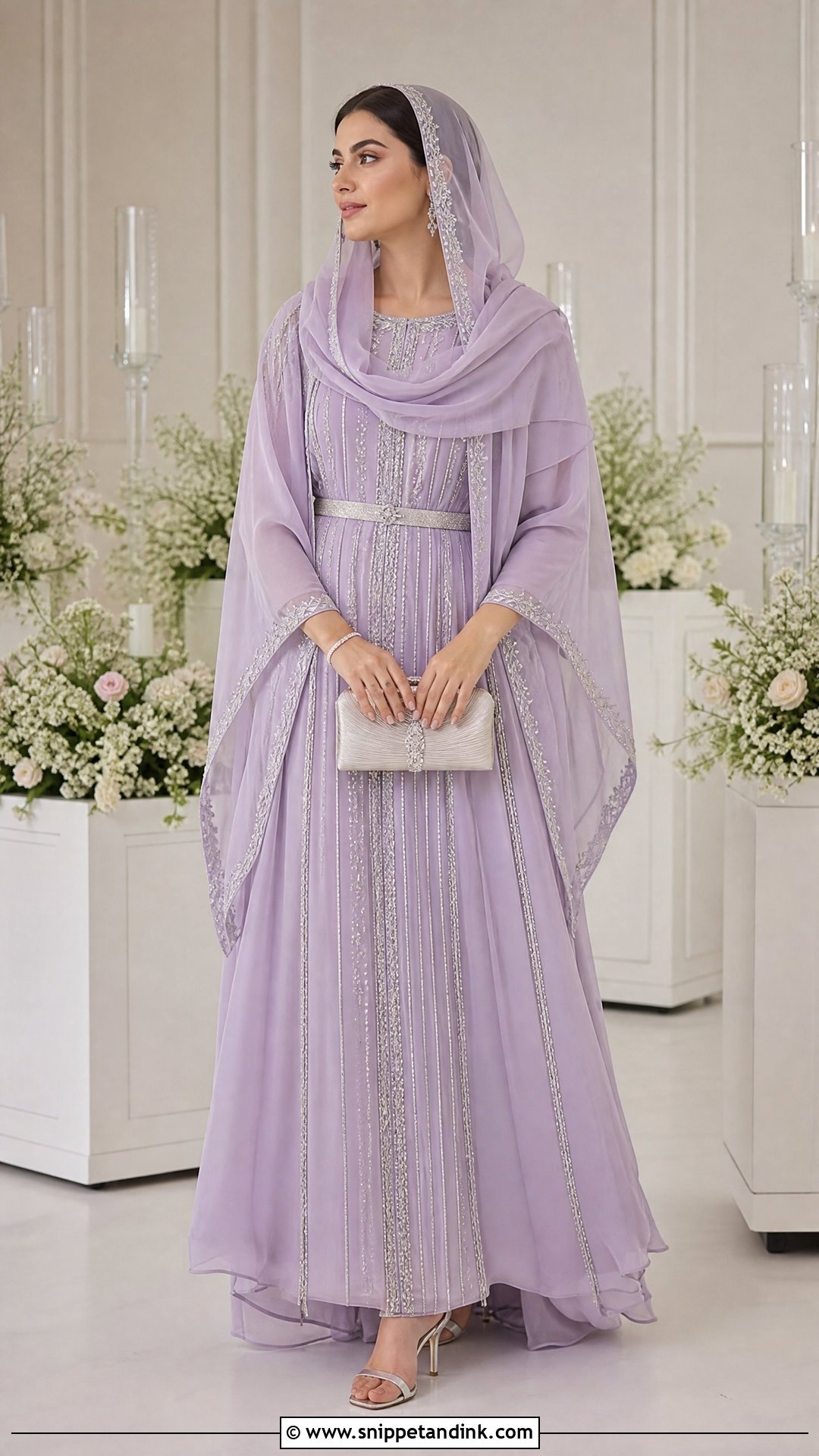
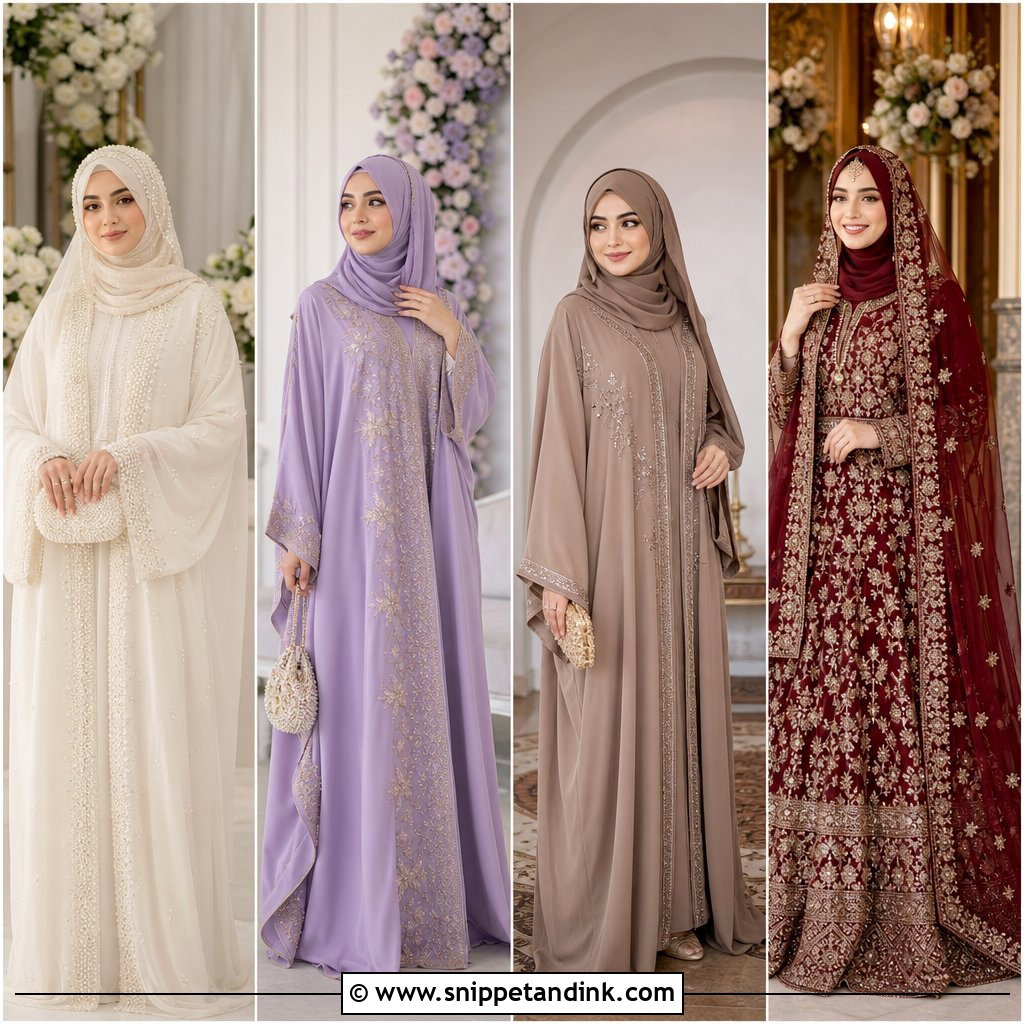
A lavender kaftan is the choice for a bride who wants ease above everything. A floor-length cut with a defined inner waist, flowing sleeves and embroidery running down the front keeps it from looking shapeless. Silver beadwork or pearls at the neck and cuffs make it formal. Wide kaftan sleeves fall back when you raise your arms, so for full coverage I’d add a fitted inner sleeve. A matching chiffon dupatta with a narrow border covers the head. Crystal earrings, a slim bracelet and silver low heels or flats suit it, with a small structured clutch. Defined brows and mauve eyeshadow keep the lavender bright on camera.
19. Peach Pastel Nikkah Farshi Shalwar
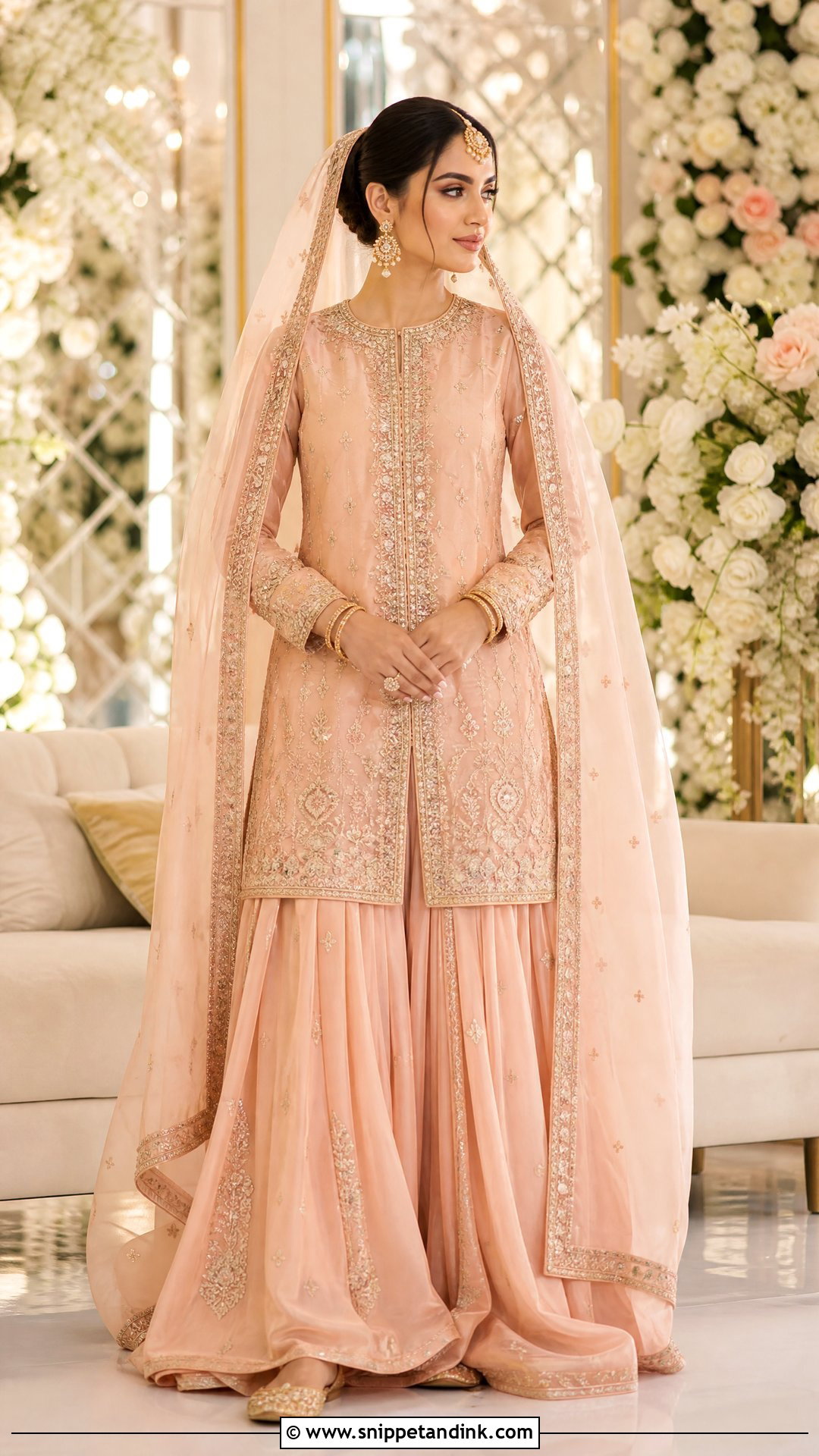
Farshi shalwar is old Mughal-era drama in a soft colour. The trousers sweep the floor, paired with a structured knee-length kurta with full sleeves and embroidery around the hem. Getting the length right is the whole job: long enough for the floor-grazing shape, short enough not to trip on. I’d walk and sit in the full outfit, including the shoes, at least once before the day, and a slightly raised hidden shoe helps. Champagne or antique gold work enriches the peach. A peach organza dupatta over the head, polki earrings, a small tikka, bangles and gold khussas complete it.
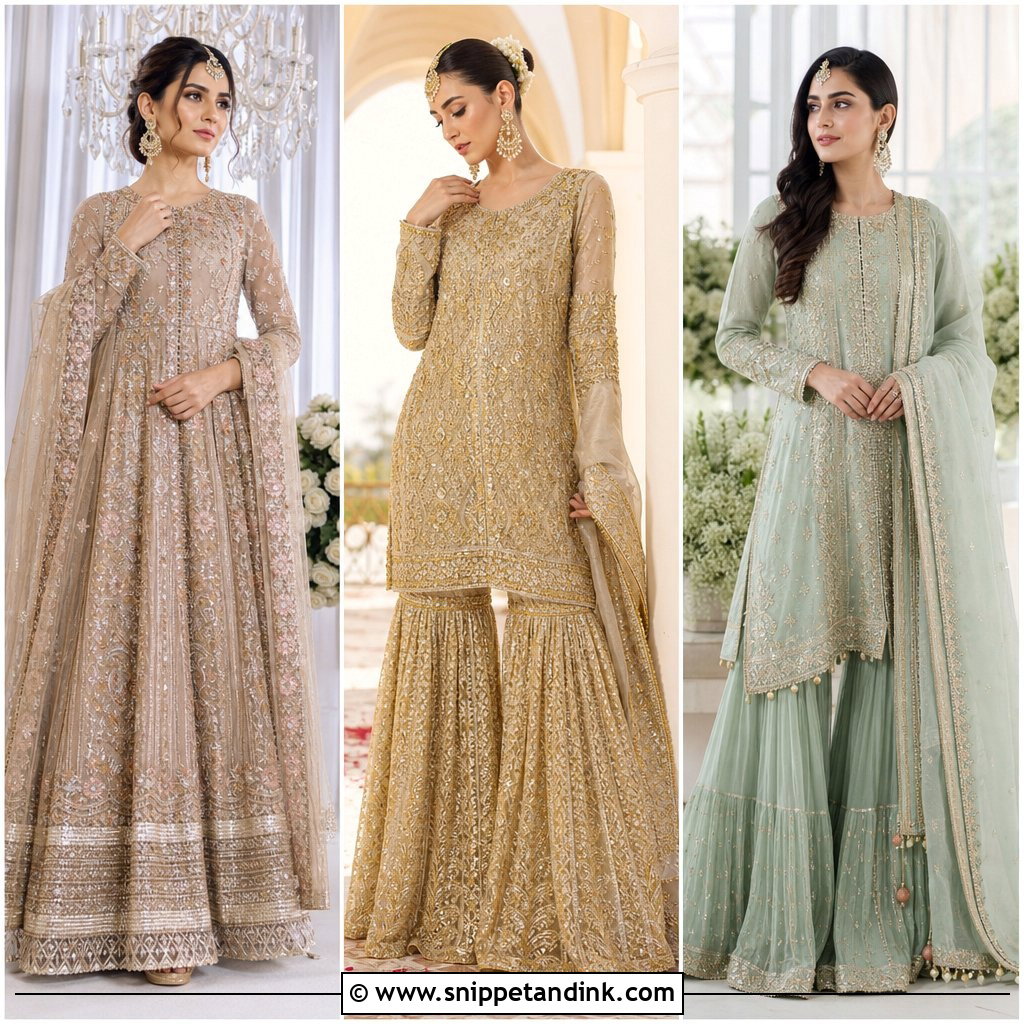
20. Multicolor Pastel Nikkah Paneled Pishwas
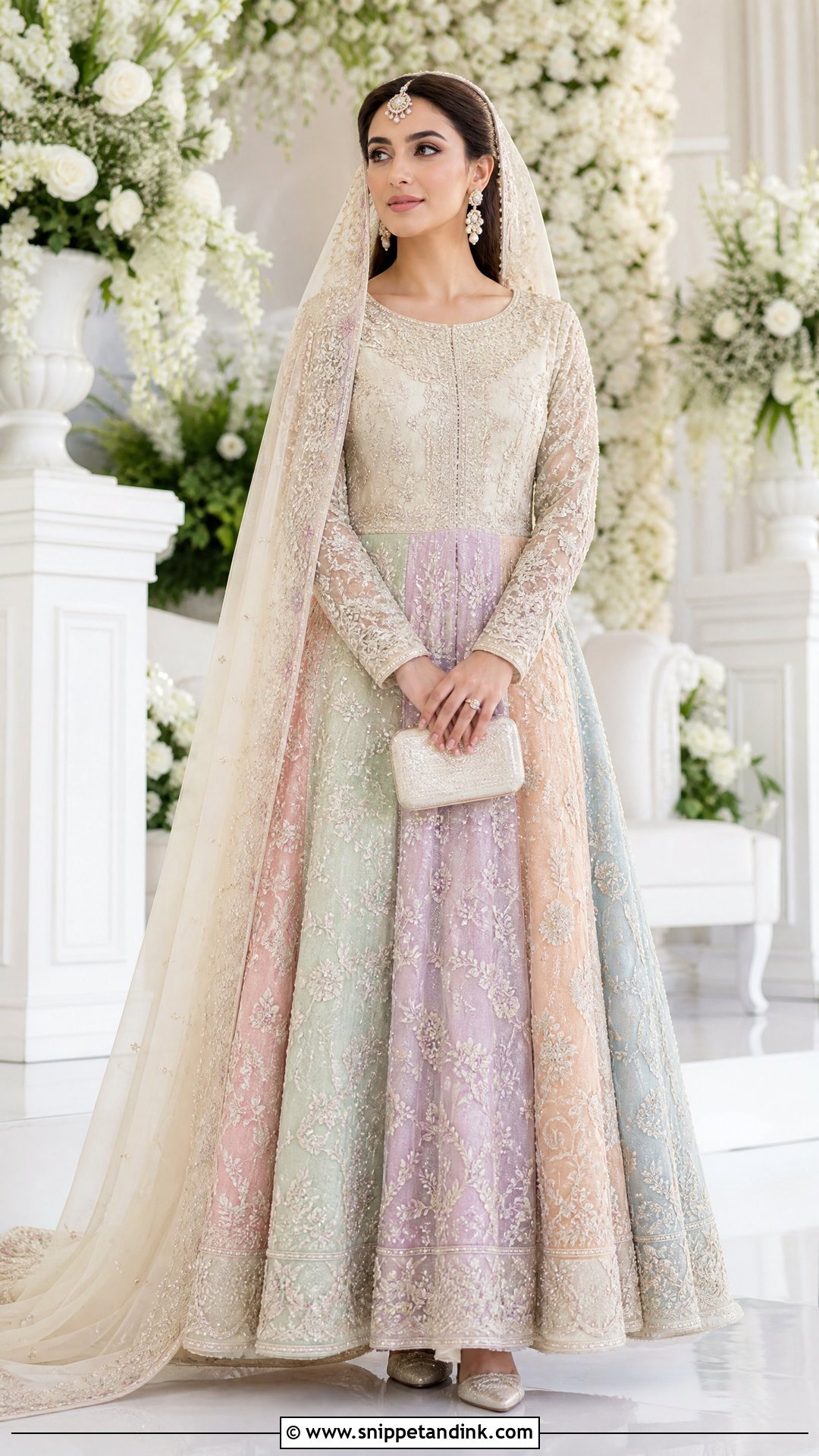
When you really can’t choose a shade, a multicolor pastel pishwas lets you wear them all. Blush, mint, lilac, peach and powder blue panels should be arranged evenly around the skirt so no colour dominates one side. Keep the fitted bodice ivory or one main pastel, and use tonal florals with a consistent silver border to tie the panels together. An ivory organza dupatta with small multicolour motifs covers the head. Pearl earrings, a small crystal tikka, silver shoes and an ivory clutch support the palette without adding another colour. Neutral makeup lets the skirt lead.
Dressing for a Mosque, a Hall or a Living Room Floor
Where the Nikkah happens changes what you can wear comfortably. In a mosque, shoes usually come off at the door, so slip-on khussas or flats save you from fiddling with straps in front of guests. Some couples sit on a low stage or on cushions, which suits ghararas, shararas and palazzos far better than a wide lehenga or a narrow saree.
- Check with the imam or venue whether there are dress expectations for the prayer hall.
- Line any sheer sleeves or back panels in skin-tone fabric so they stay modest under camera flash.
- Carry a small pouch with spare pins, a safety pin and blotting paper, since a ceremony can run long.
- If the bride and groom sign in separate rooms, plan where you’ll sit for photos so the skirt can be arranged.
Saving the heavier colours for later events
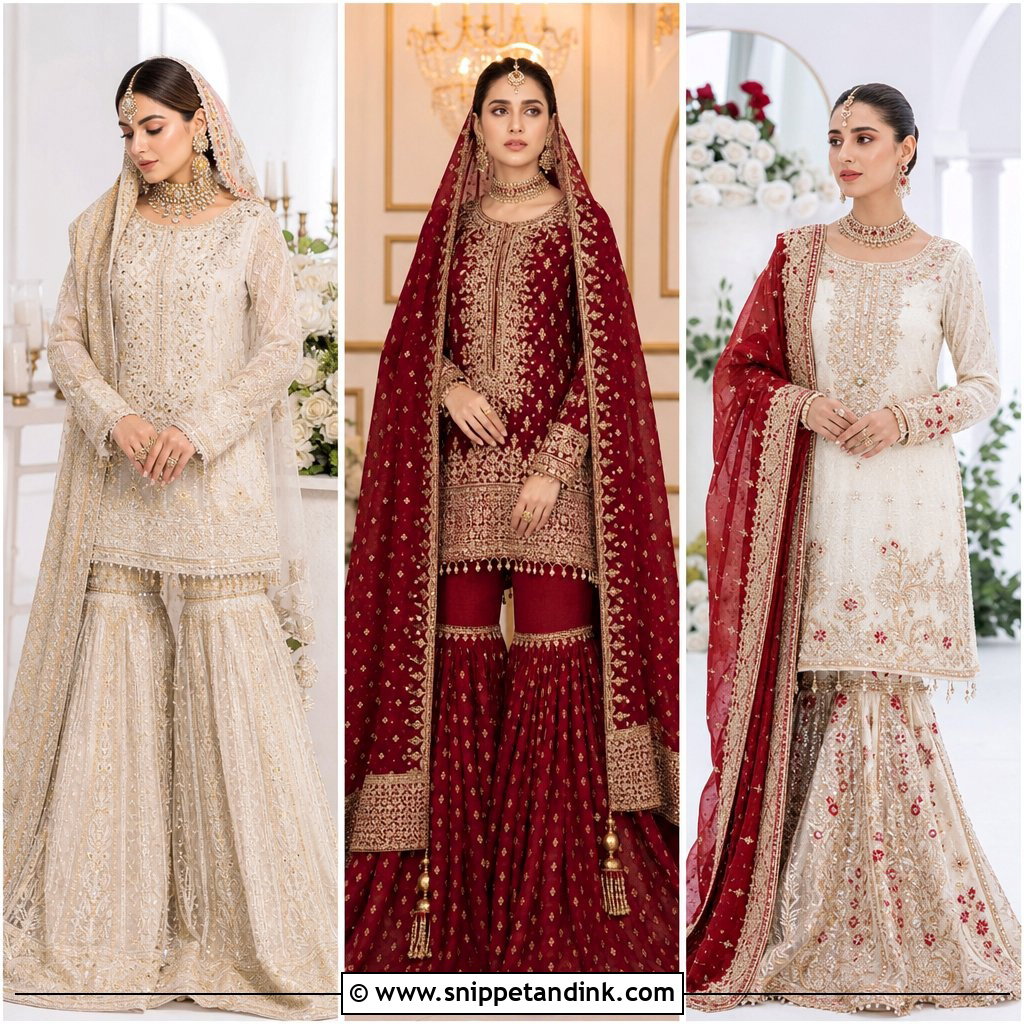
Many brides wear pastel for the Nikkah and save deep red or jewel tones for the baraat or rukhsati, with something lighter again for the walima. Planning all the outfits together keeps the jewellery from repeating and lets each event look different in the album.
Pale Colour, Full Coverage and a Ceremony You Sit Through
A pastel Nikkah outfit works when it balances your taste, your family’s traditions, comfort and careful styling. Soft shades look clearly bridal when the silhouette is graceful, the embroidery is considered and the dupatta is well placed. Think about the venue, the season, the photography and how much moving and sitting you’ll do before you settle on a fabric and shape. Test the complete outfit in daylight and indoor light, because very pale colours change on camera. A traditional gharara and a modern cape gown can both be right, as long as you feel at ease in it while the vows are said.
You'll Like These Ideas:


Leave a Reply