
A courthouse ceremony is short, but the outfit still has a big job. It has to look bridal in photos on the steps, survive a waiting room bench and a security line, and carry on to lunch or drinks afterwards. When I dress a bride for city hall, I’m usually working with shorter lengths and tailored shapes rather than full gowns: minis, midis, satin slips, suits, jumpsuits and matching sets. Clean lines and good structure count for more here than embellishment. Below are thirty courthouse looks I’d put together, with what I’d check on each one before you commit.
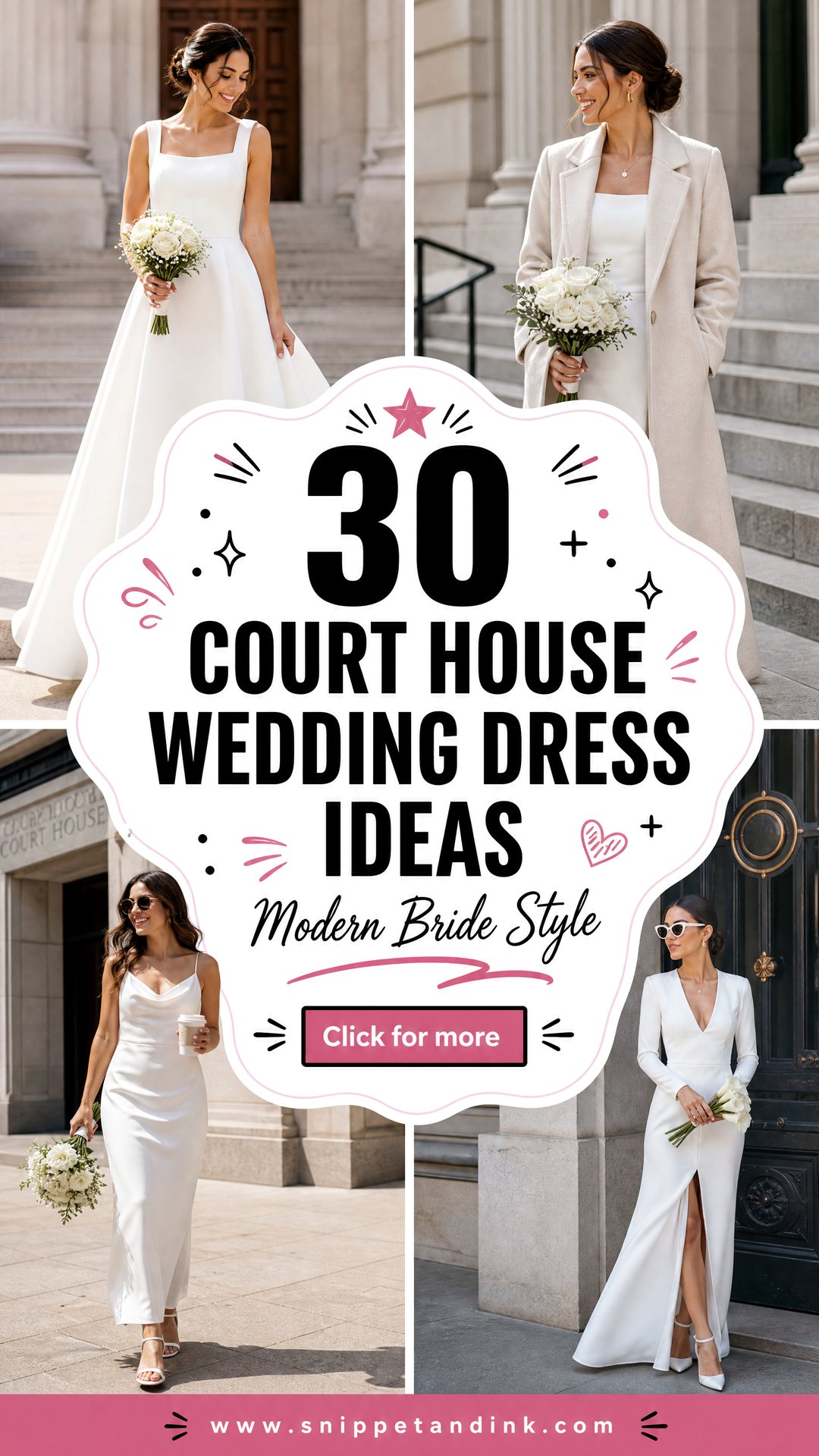
Courthouse Shopping Runs on a Shorter Clock
Many civil ceremonies are booked only weeks ahead, which changes how I shop with a bride. A made-to-order bridal gown can take months, but courthouse outfits usually come off the rack from bridal shops’ ready-to-wear lines or ordinary retailers. That’s good news, because you can try on and buy the same day.
Leave room for alterations anyway. A basic hem or strap adjustment is often quick, but busy seamstresses can be booked out in wedding season, so call before you buy and ask how long they need. Ready-to-wear sizing is rarely perfect off the hanger.
What I test in the fitting room
- Sit on a hard chair for a full minute. Watch where the hem goes and whether the waist digs in.
- Lift your arms and reach forward, as if hugging or signing. Sleeves and straps should not pull the dress up.
- Take a phone photo with the flash on. It shows whether the white fabric is see-through.
- Walk up and down a stair if there is one. Courthouse steps are often wide and shallow, which catches long hems.
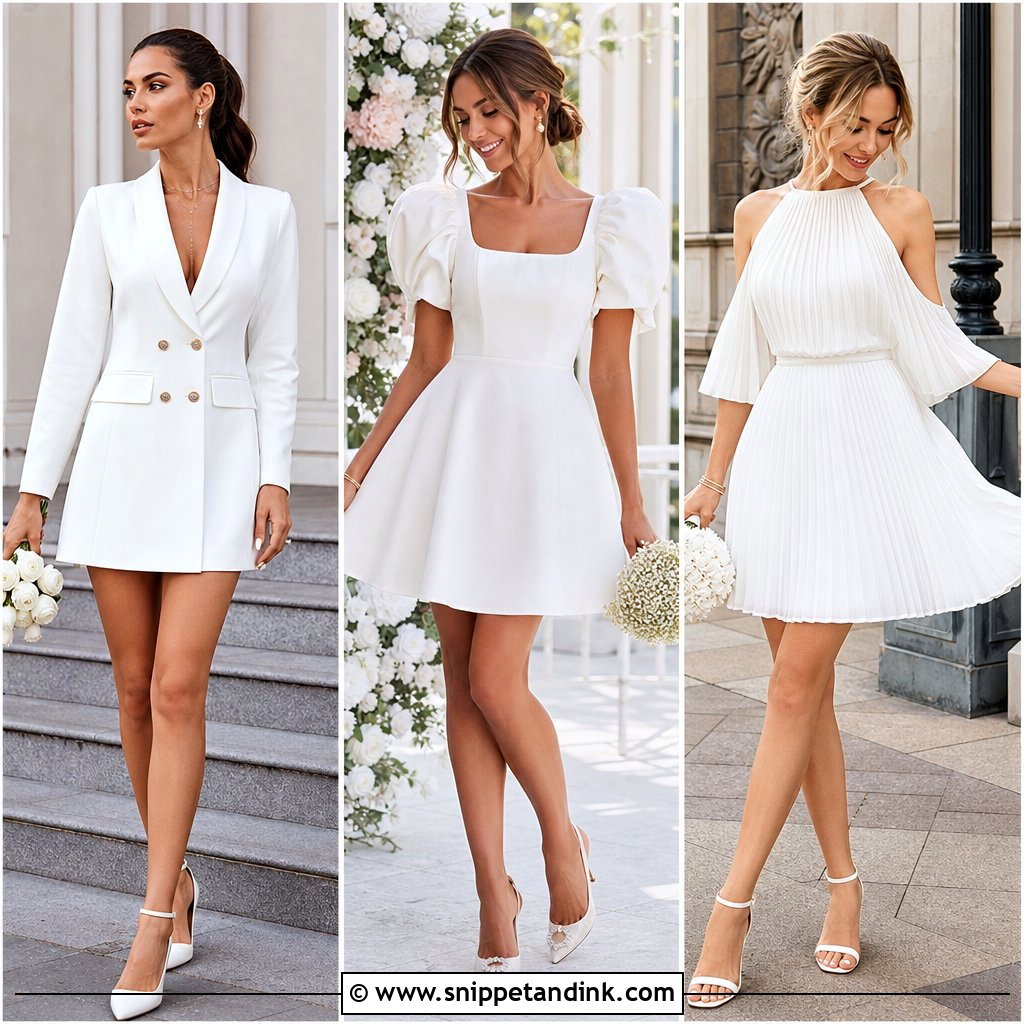
1. Short Court House Wedding Dress
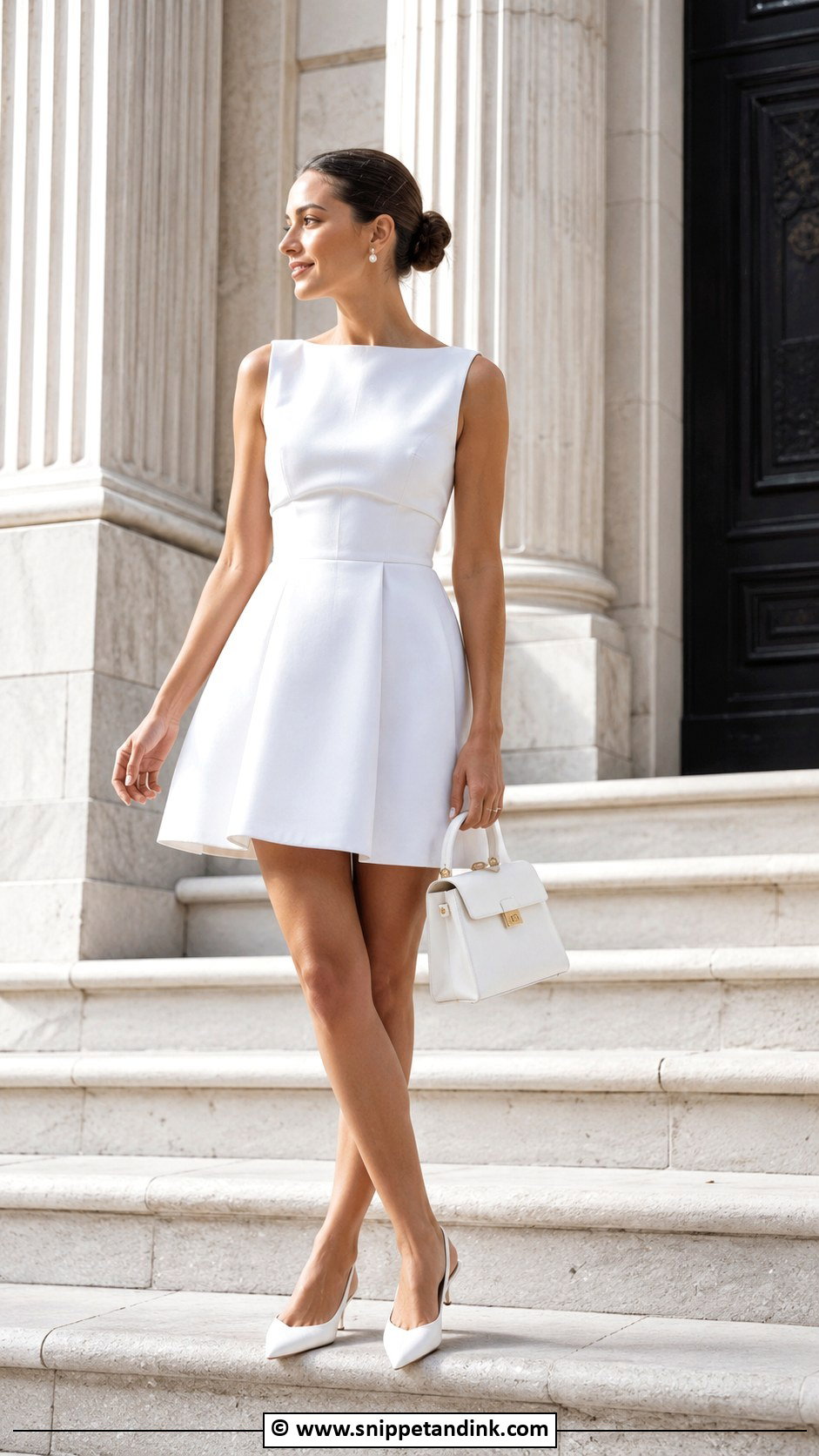
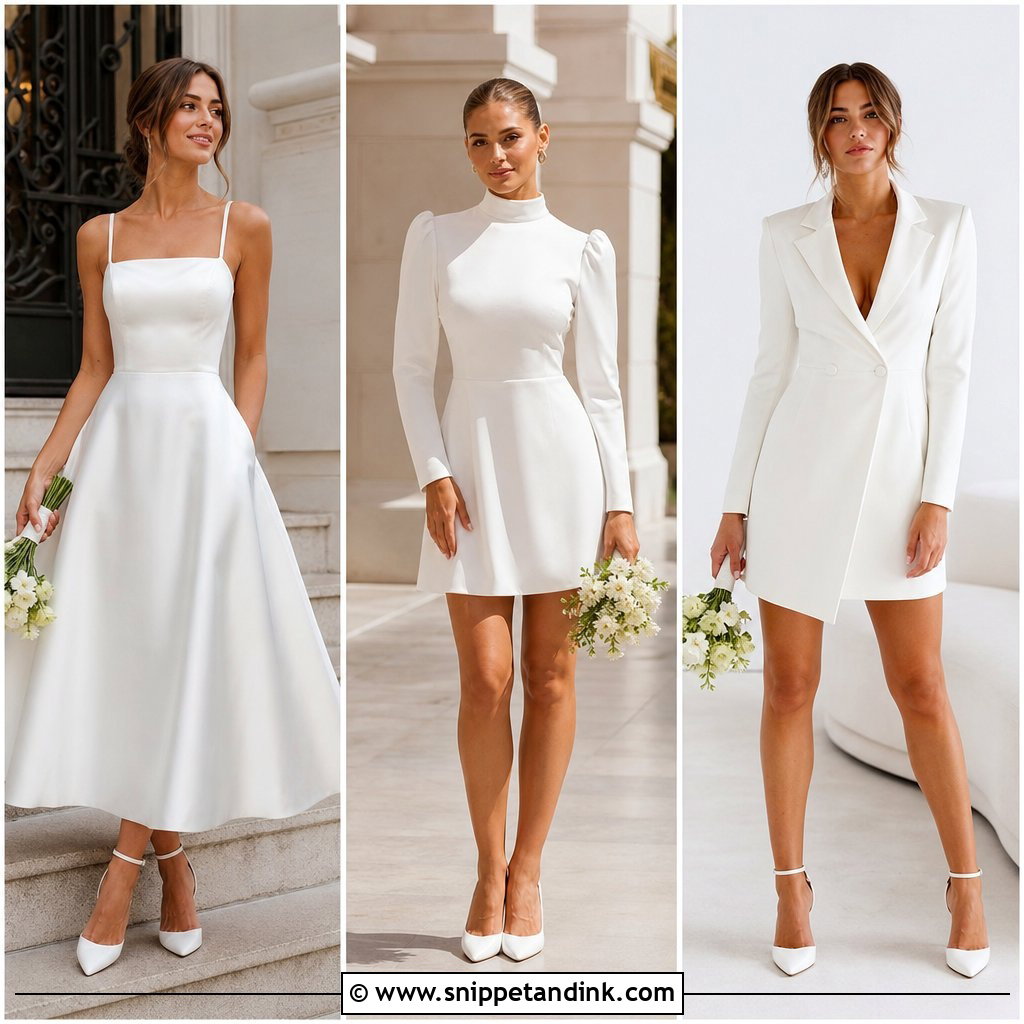
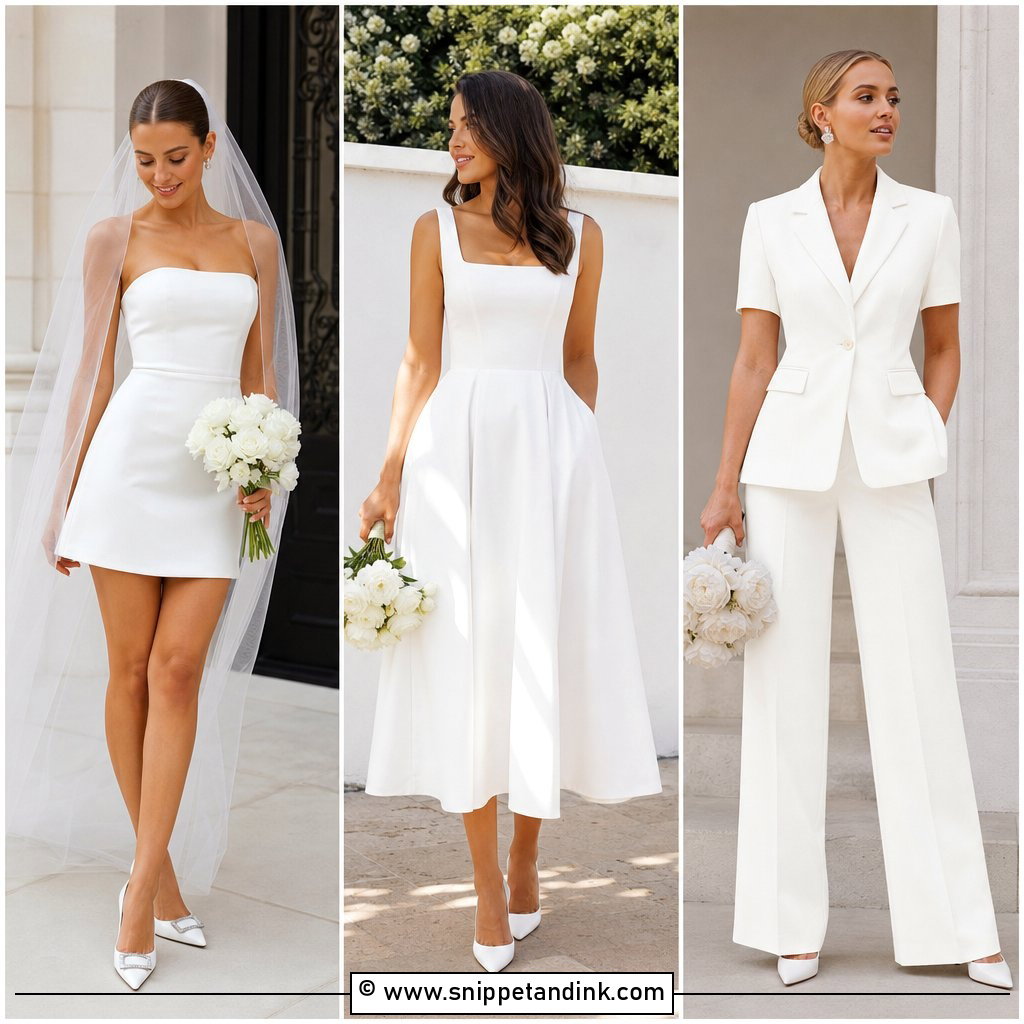
Short white dresses are the most mobile option on this list. I like a mini with some structure in the bodice, a clean neckline or a small bow, because a soft unstructured mini can read as a summer party dress rather than bridal. Pointed pumps, slingbacks or ballet flats all work. Pearl studs, a top-handle bag and a short veil or hair bow finish it. If the hem is very short, I balance it with a higher neckline or long sleeves. Sit down in it in the fitting room; minis ride up more on hard courthouse benches than you’d expect.
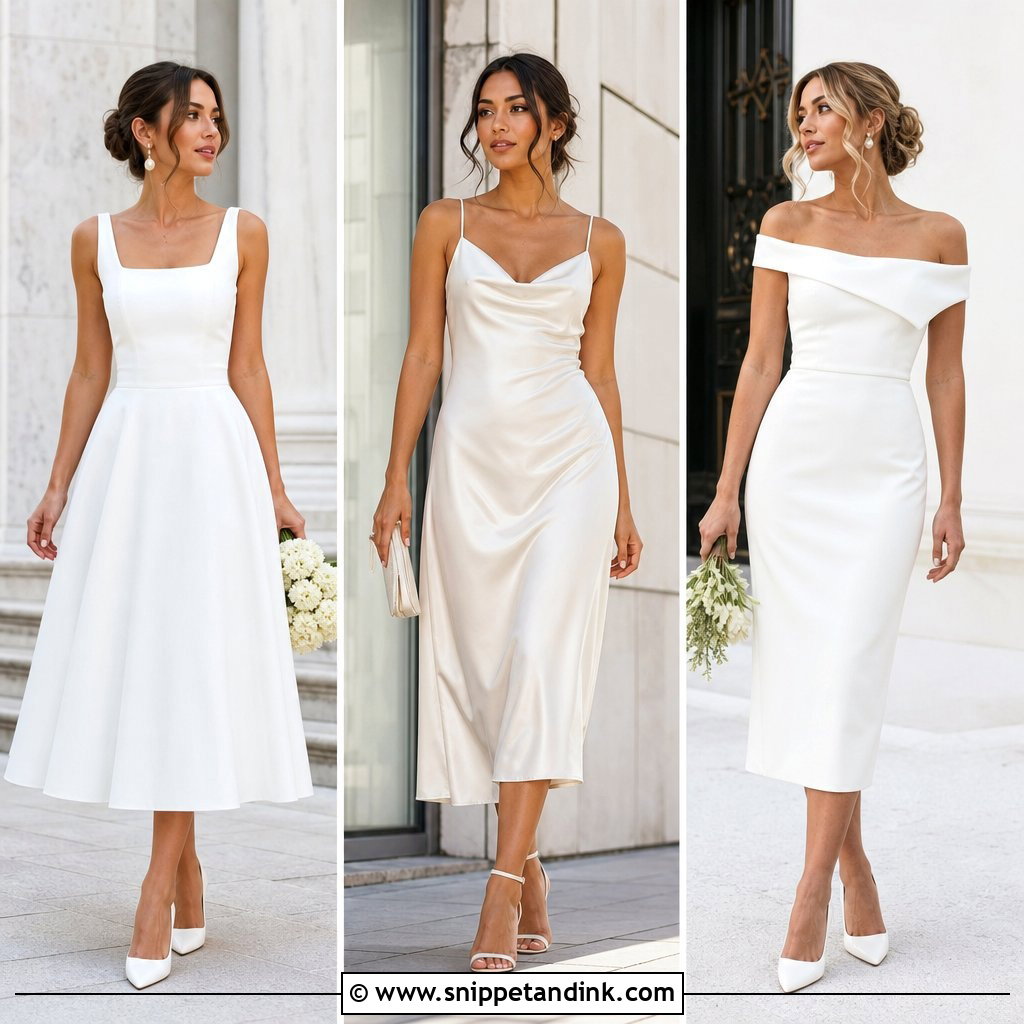
2. White Midi Court House Wedding Dress
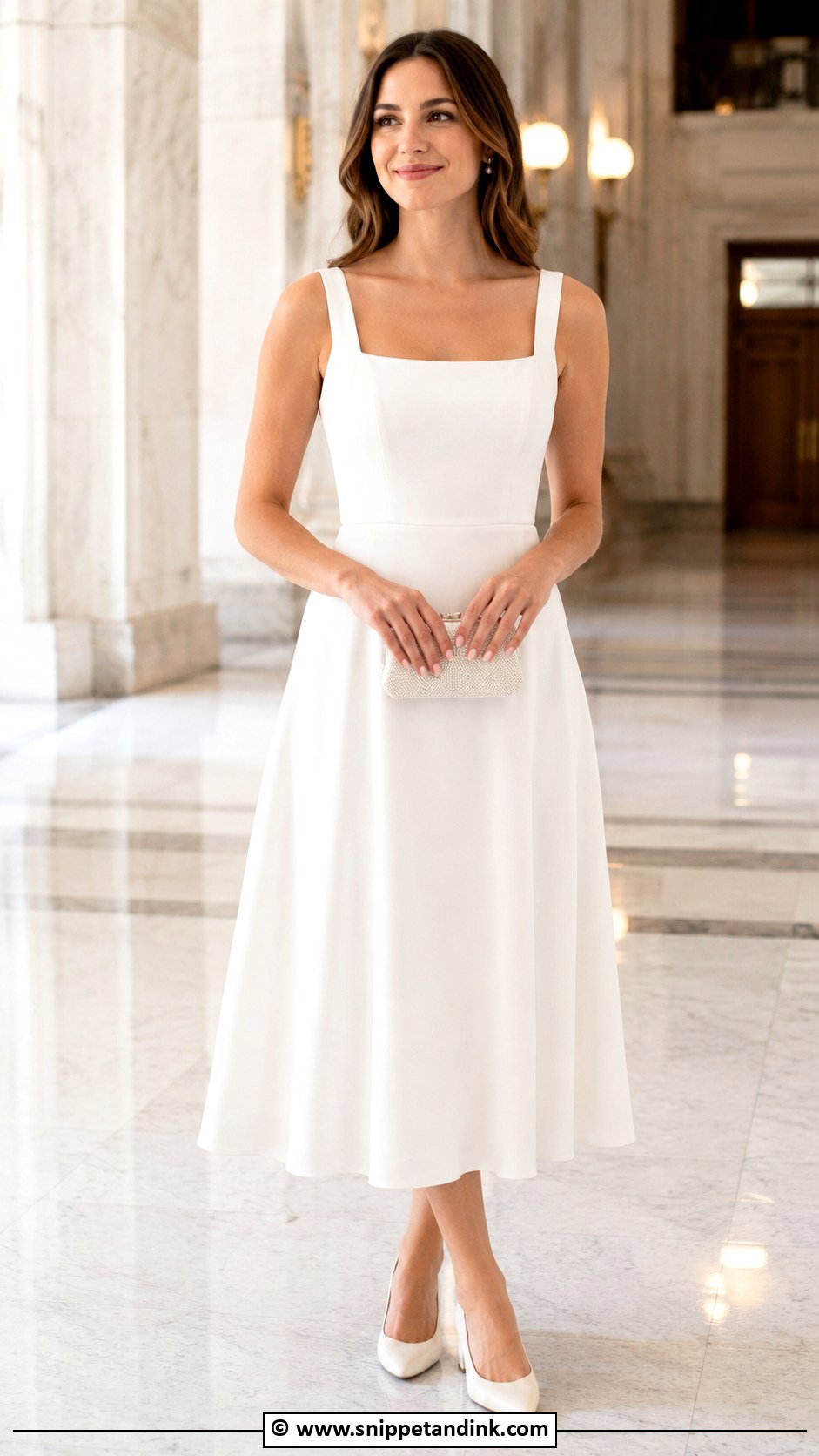
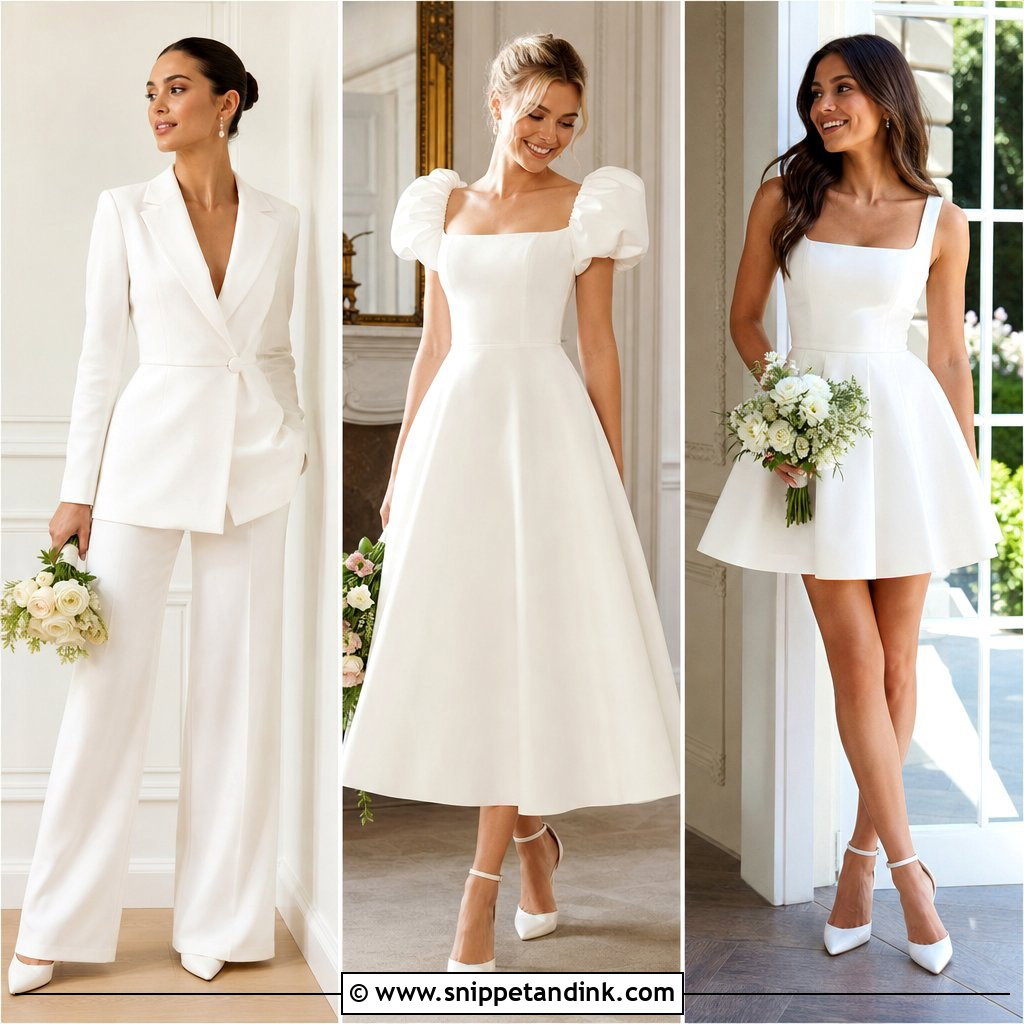
A white midi court house wedding dress is the length I recommend most. It looks considered for a civil ceremony and still lets you climb steps and get in and out of a car without holding your hem. Choose between a fitted waist with an A-line skirt, a square neck, or a sleek sheath, depending on your shape. Low block heels and a compact clutch keep it easy. In colder months a cropped blazer or tailored coat sits neatly over a midi without hiding the dress.
3. Satin Slip Court House Wedding Dress
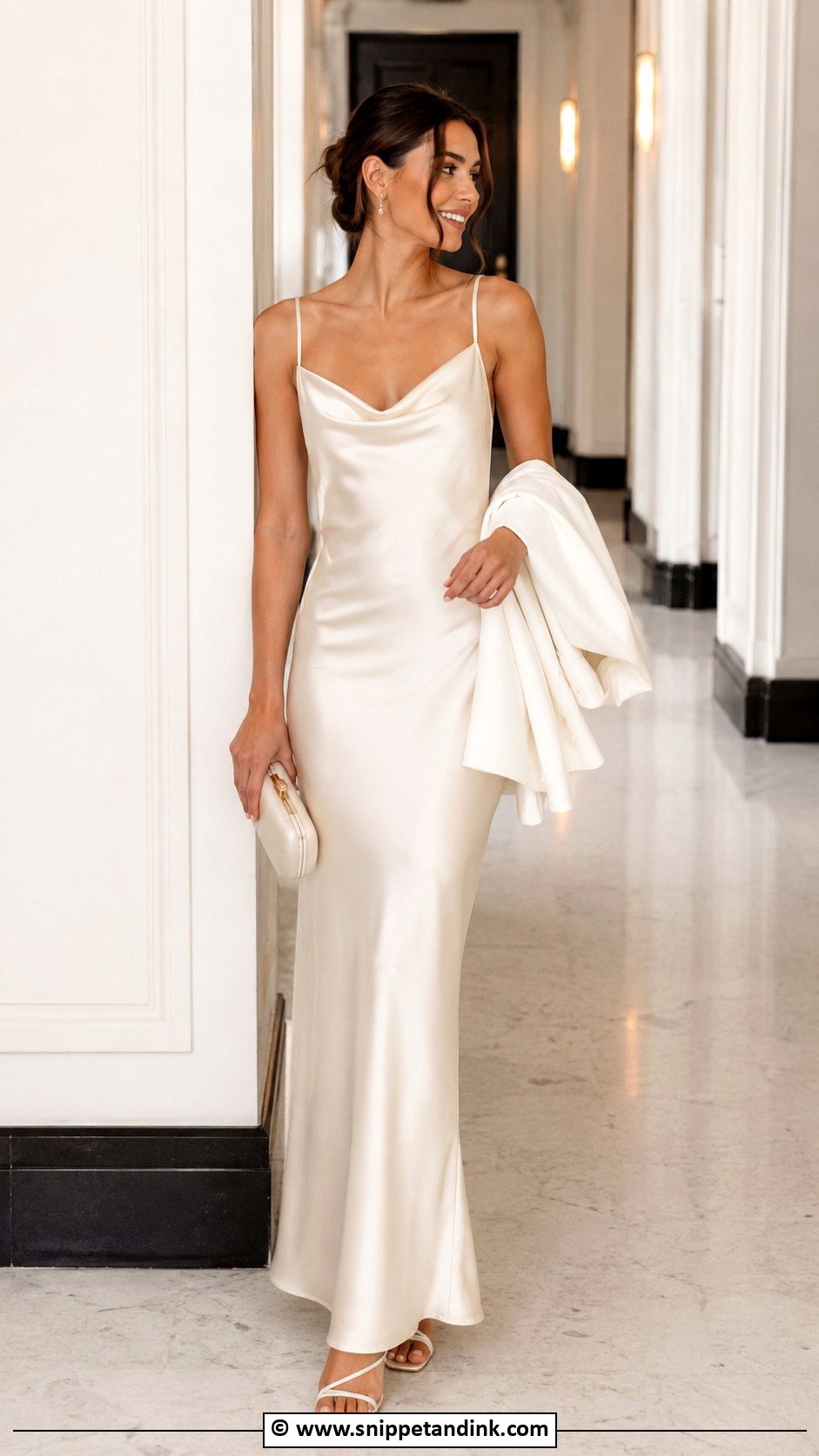
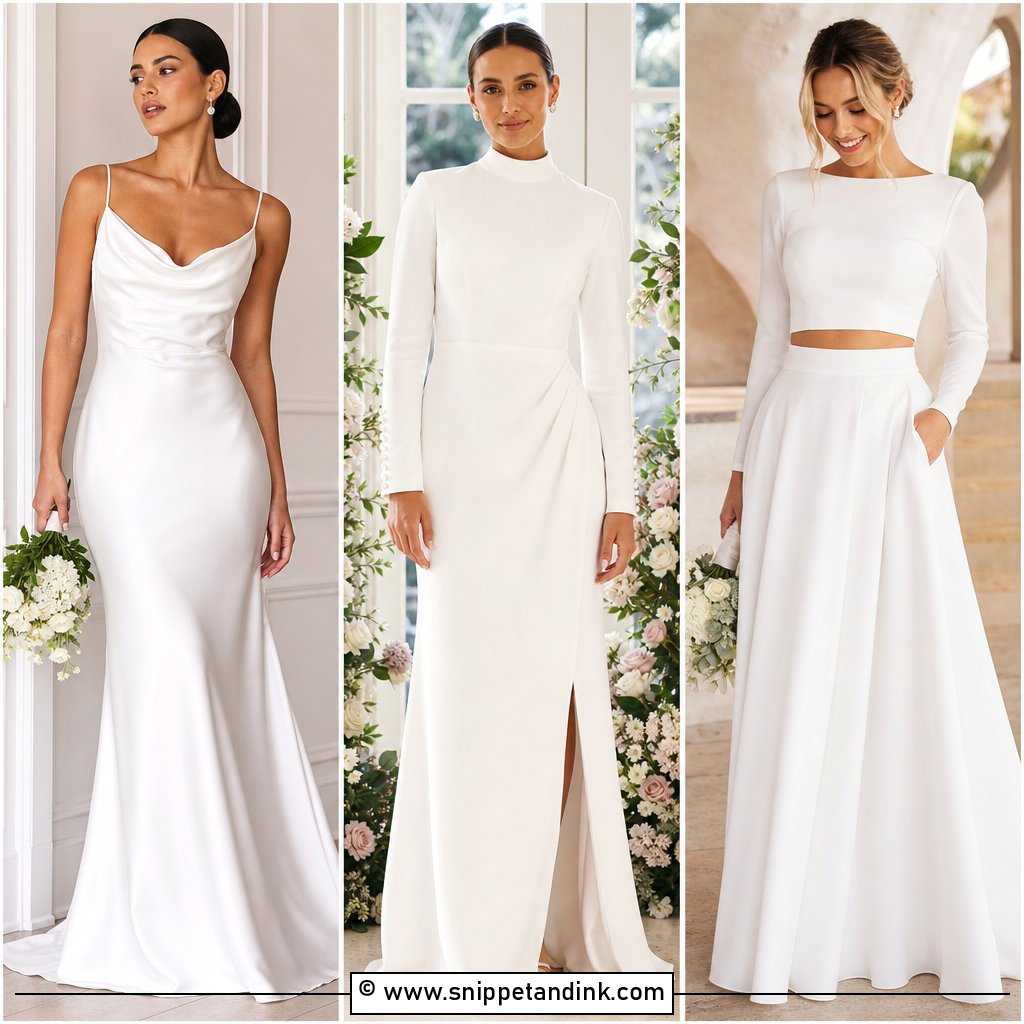
Satin slips are less simple than they look. Bias-cut satin clings wherever it touches, so the slip should skim rather than grip, and the underwear should leave no visible lines. I always take a slip in or out by a few millimetres at the hip; that’s what separates a polished slip from a nightdress. Ivory, champagne or soft white for the colour. Strappy heels or pointed mules, small drop earrings, and a cropped blazer or fine knit wrap if you want coverage in the building.
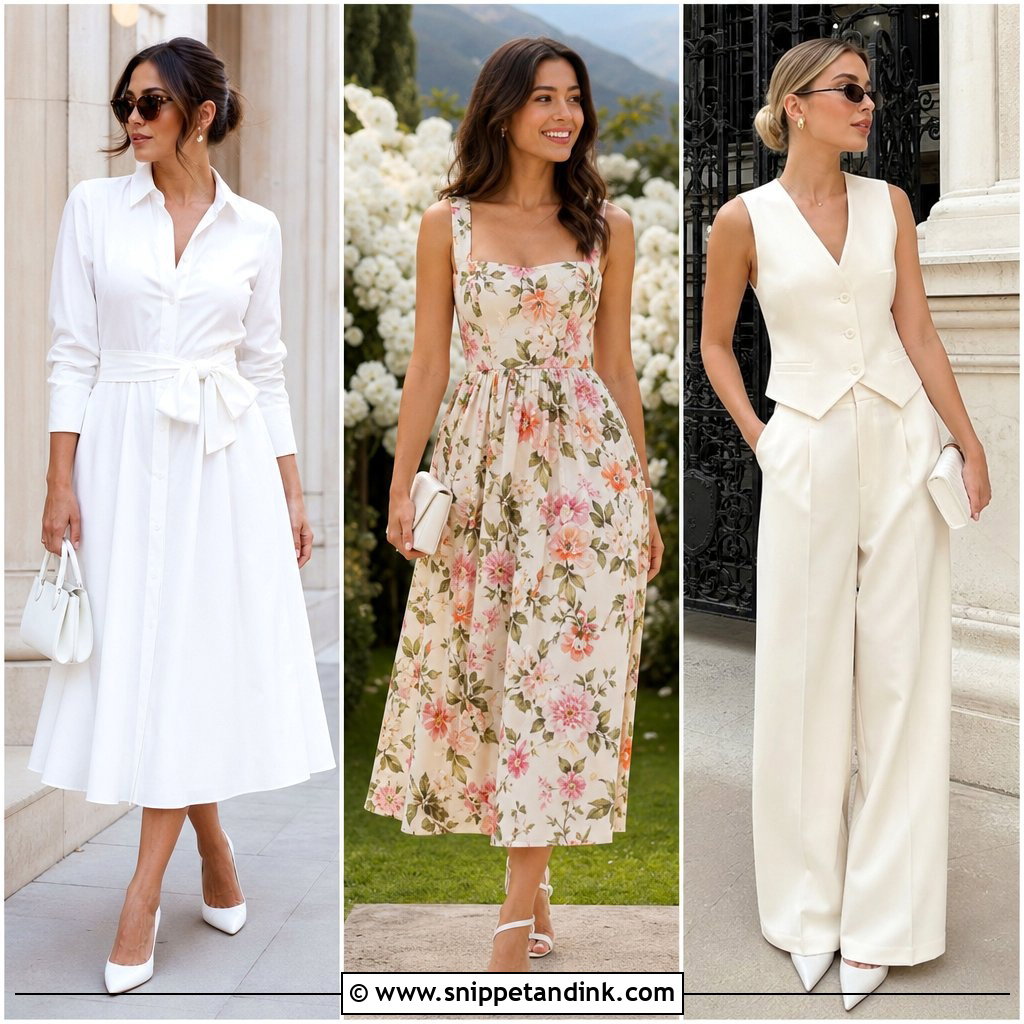
4. Long Sleeve Court House Wedding Dress
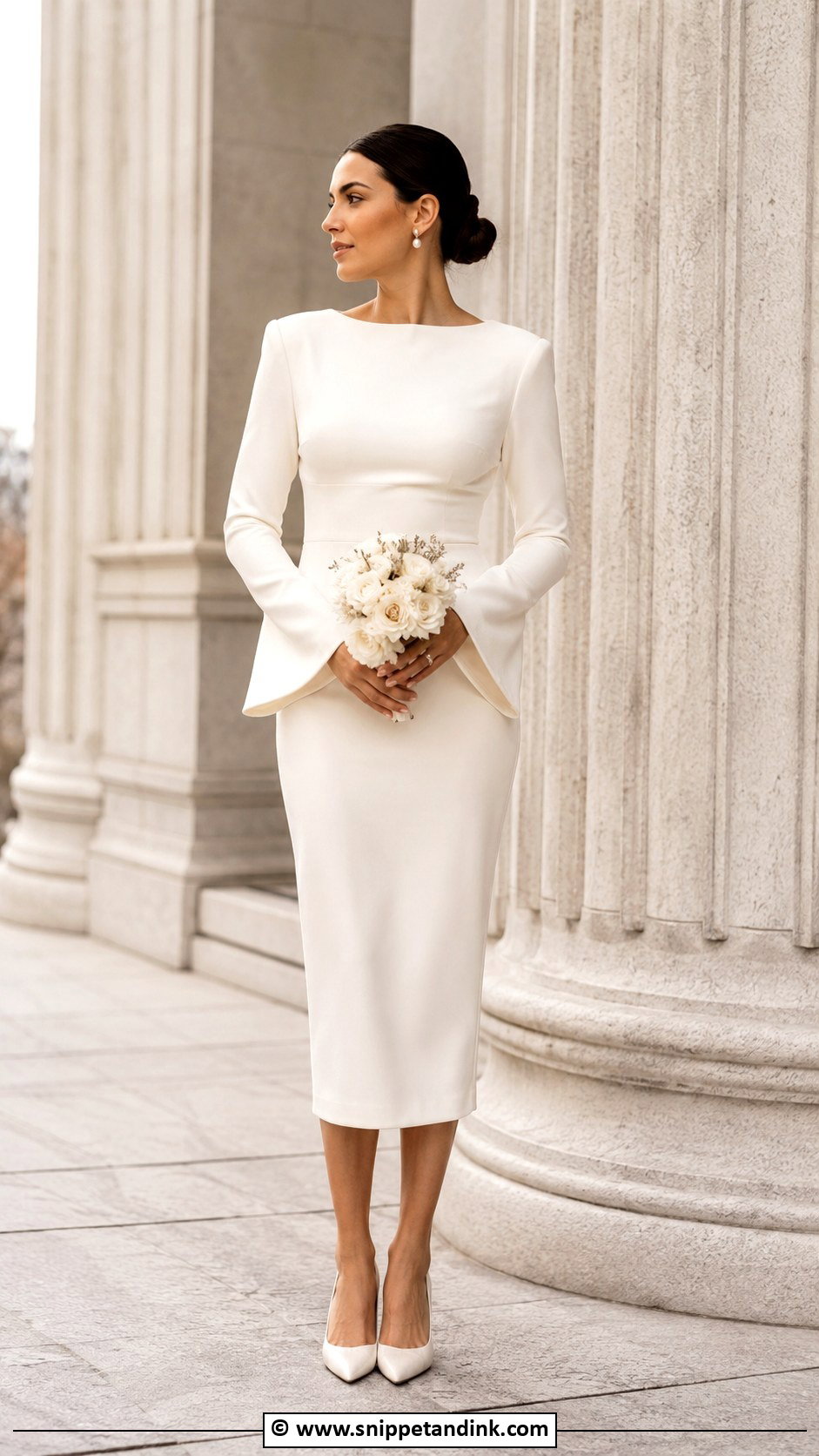
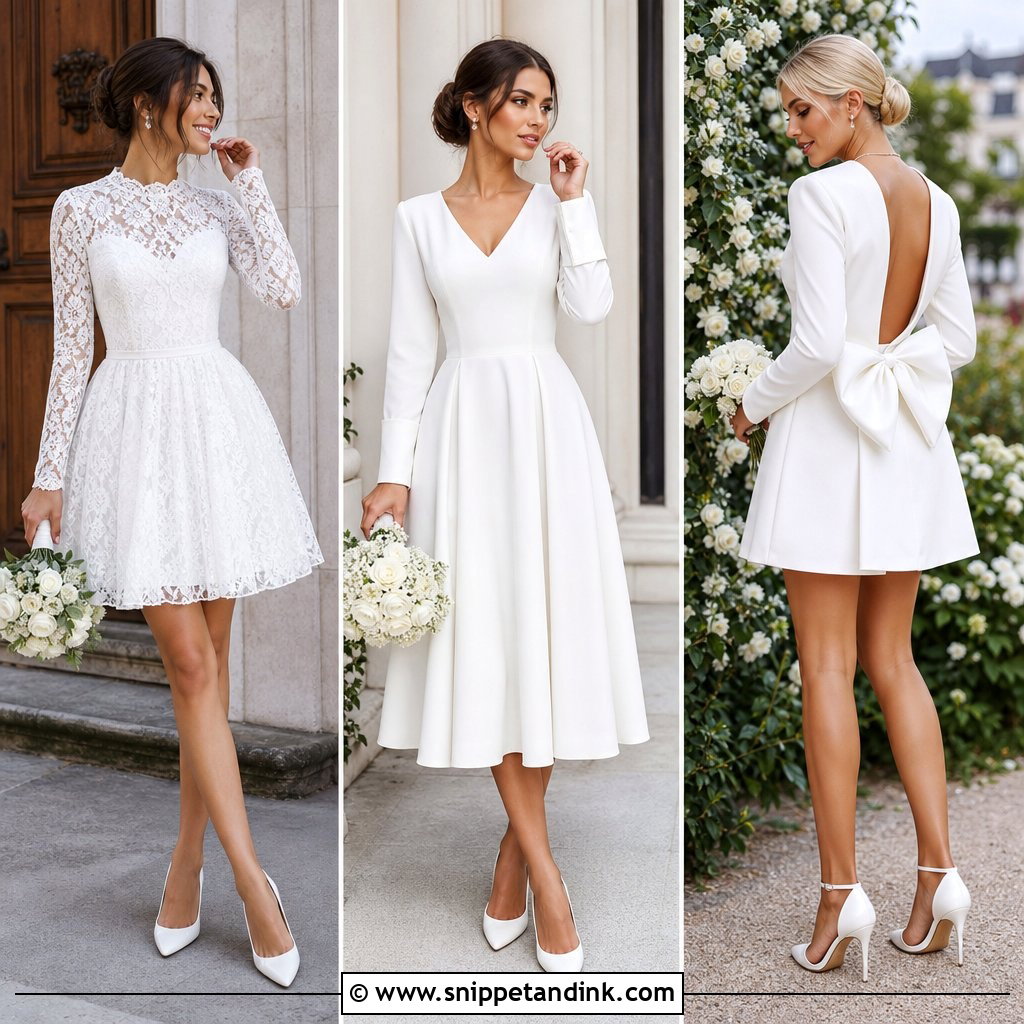
A long sleeve court house wedding dress does a lot of the work for you. The sleeves add interest, so the rest of the outfit can stay plain. Fitted, puff or sheer sleeves all work in a mini, midi or knee-length cut. In crepe, satin, lace or a structured cotton blend, it handles autumn and winter ceremonies without needing a coat in every photo. One fitting check: lift your arms as if signing the register and hugging family. Tight sleeves with no movement allowance pull the whole bodice up.
5. Lace Court House Wedding Dress
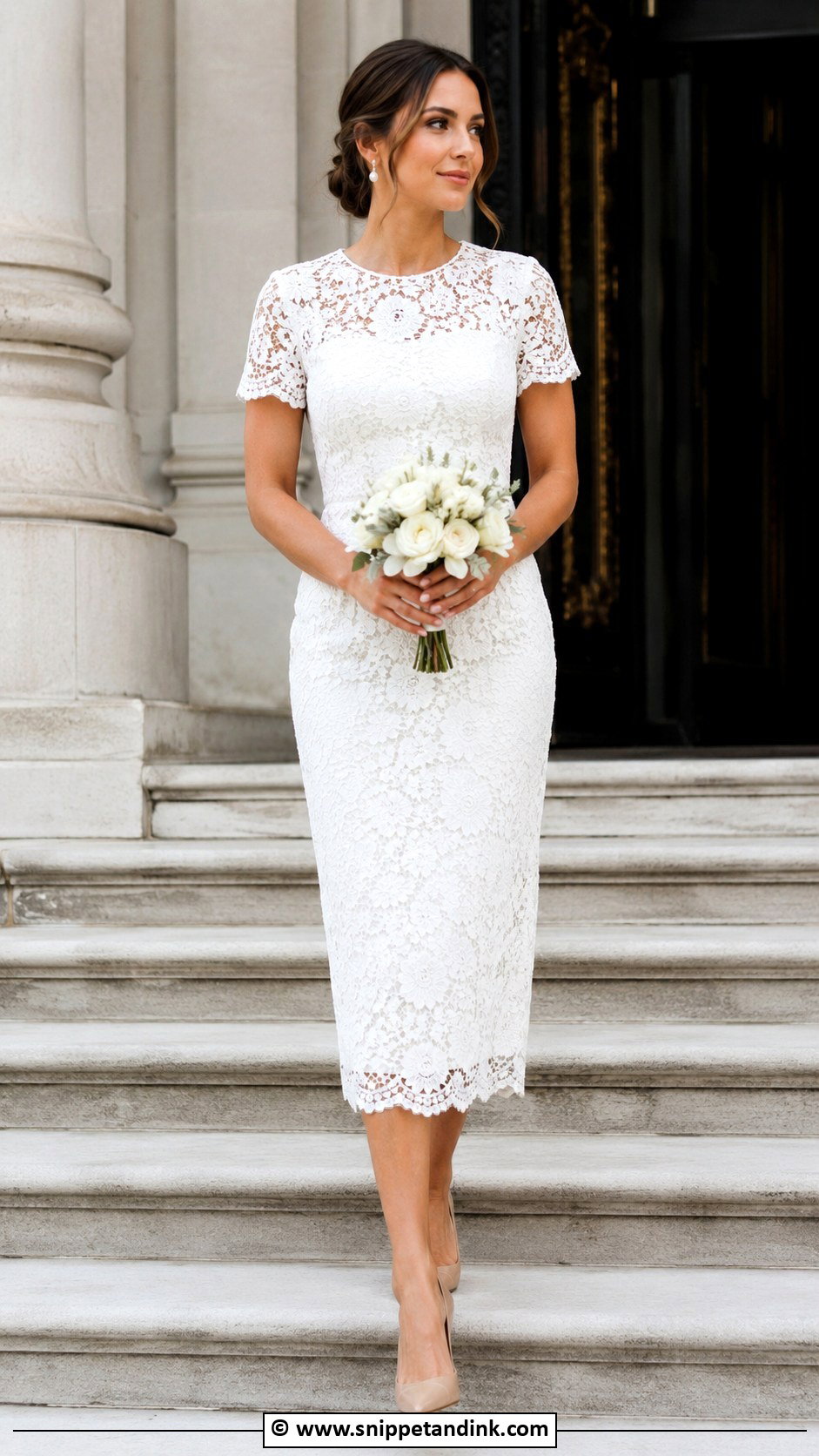
Lace is where courthouse dressing can go wrong, because heavy corded lace on a short dress can feel like a cut-down ballgown. Choose a finer, flatter lace on a mini, sheath midi or tea-length shape, or use lace in one area only, such as the sleeves or an overlay. Keep accessories minimal when the lace is detailed: plain nude or white heels, pearl earrings and a small bouquet. Check the lining; cheaper lace dresses can be scratchy under the arms after a few hours.
6. Blazer Court House Wedding Dress
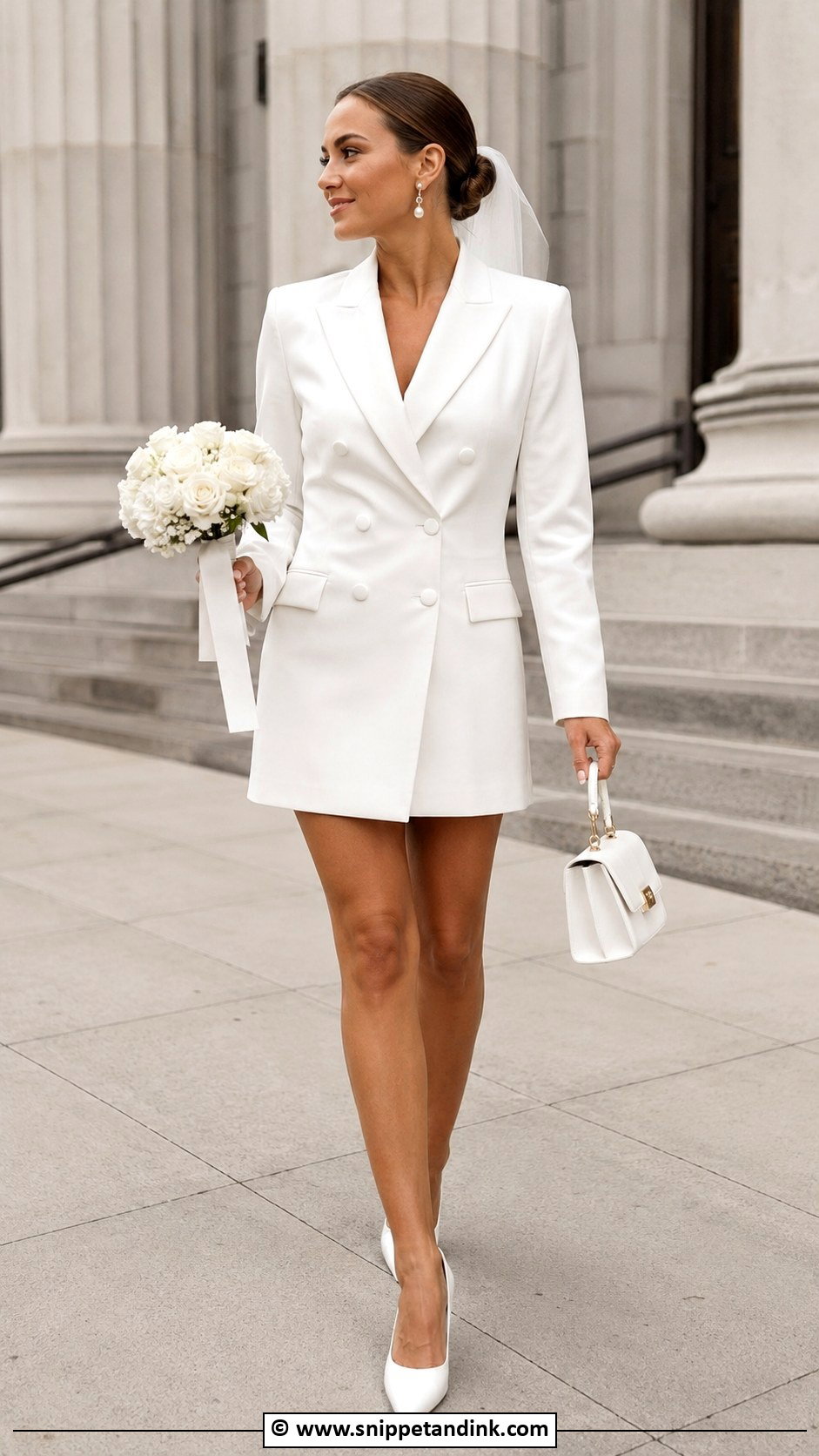
A blazer dress gives you shape at the shoulder and waist straight off the hanger, which suits city ceremonies and colder months. Double-breasted feels polished; a belted version is softer. You can also wear a mini under an oversized blazer, or a tailored jacket over a slip. Pointed pumps, a structured mini bag and sleek jewellery. The fitting point I watch is the button stance: if the blazer pulls into an X shape across the front when buttoned, it needs letting out or a size up.
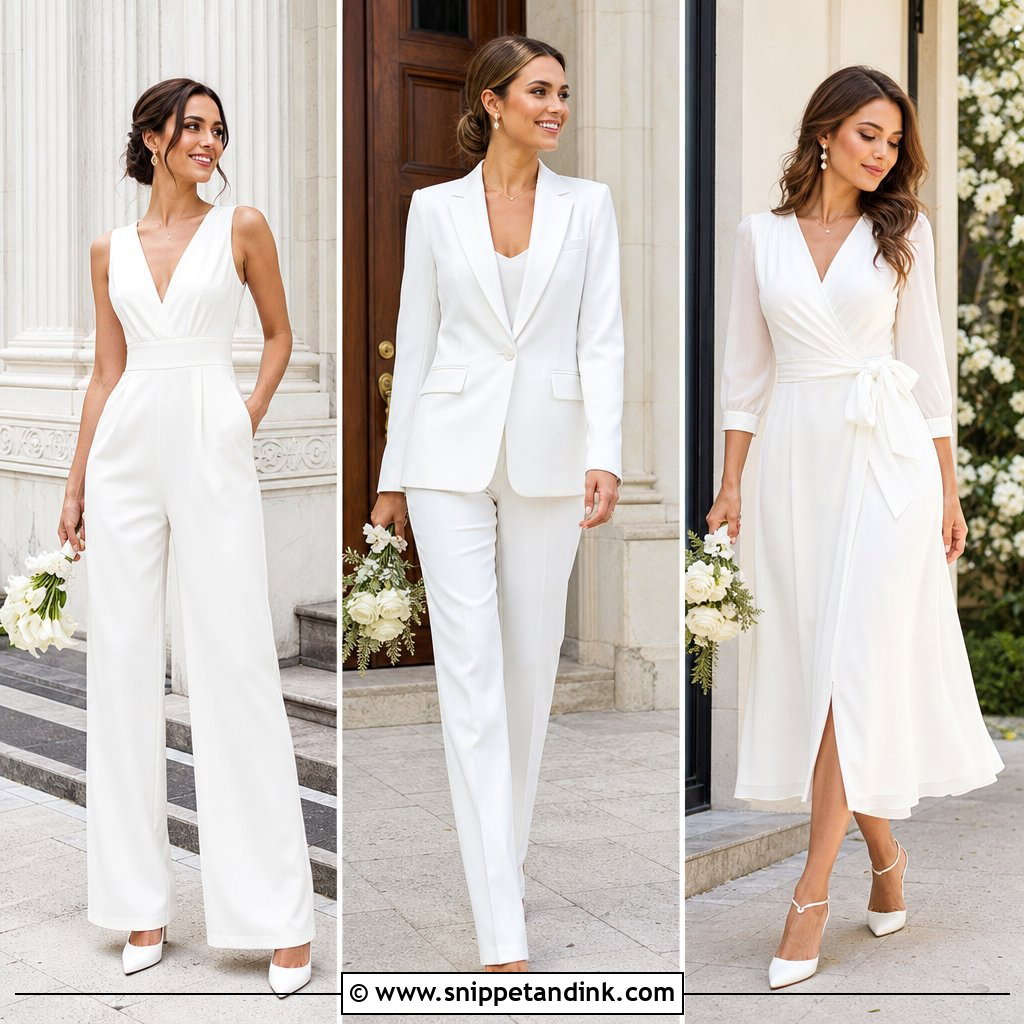
7. White Suit Court House Wedding Outfit
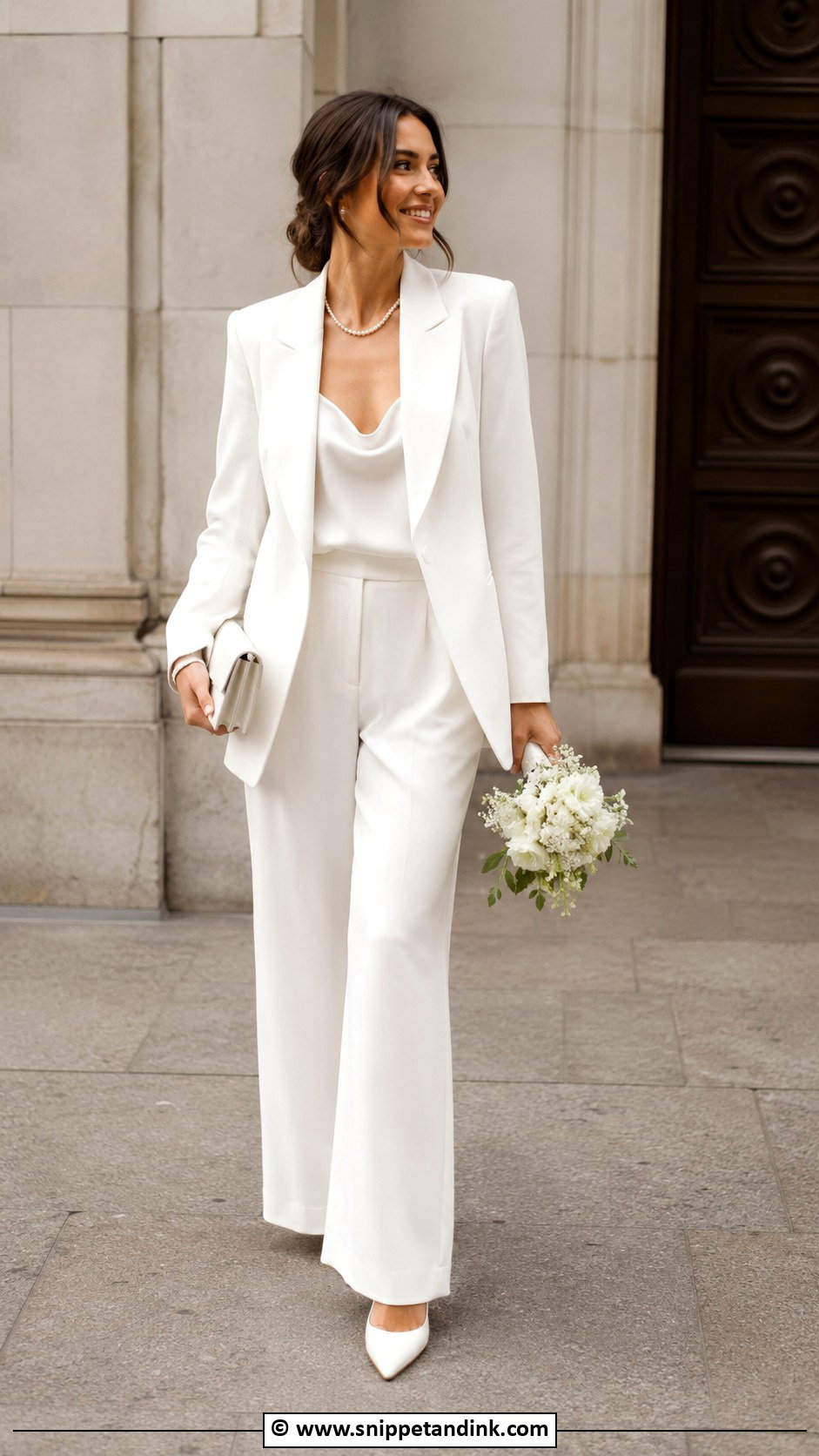
A white suit is my suggestion for brides who don’t feel like themselves in a dress, and for many second weddings. Wide-leg trousers lengthen the leg; slim trousers look sharper. Underneath, a silk camisole, satin shell or fitted top. The trouser hem matters more than anything else here: hem them for the exact heels you’ll wear, so the fabric just brushes the shoe. Pointed heels, a small clutch and statement earrings or pearls. You’ll wear the pieces again afterwards, which most brides like.
8. Bridal Jumpsuit Court House Wedding Outfit
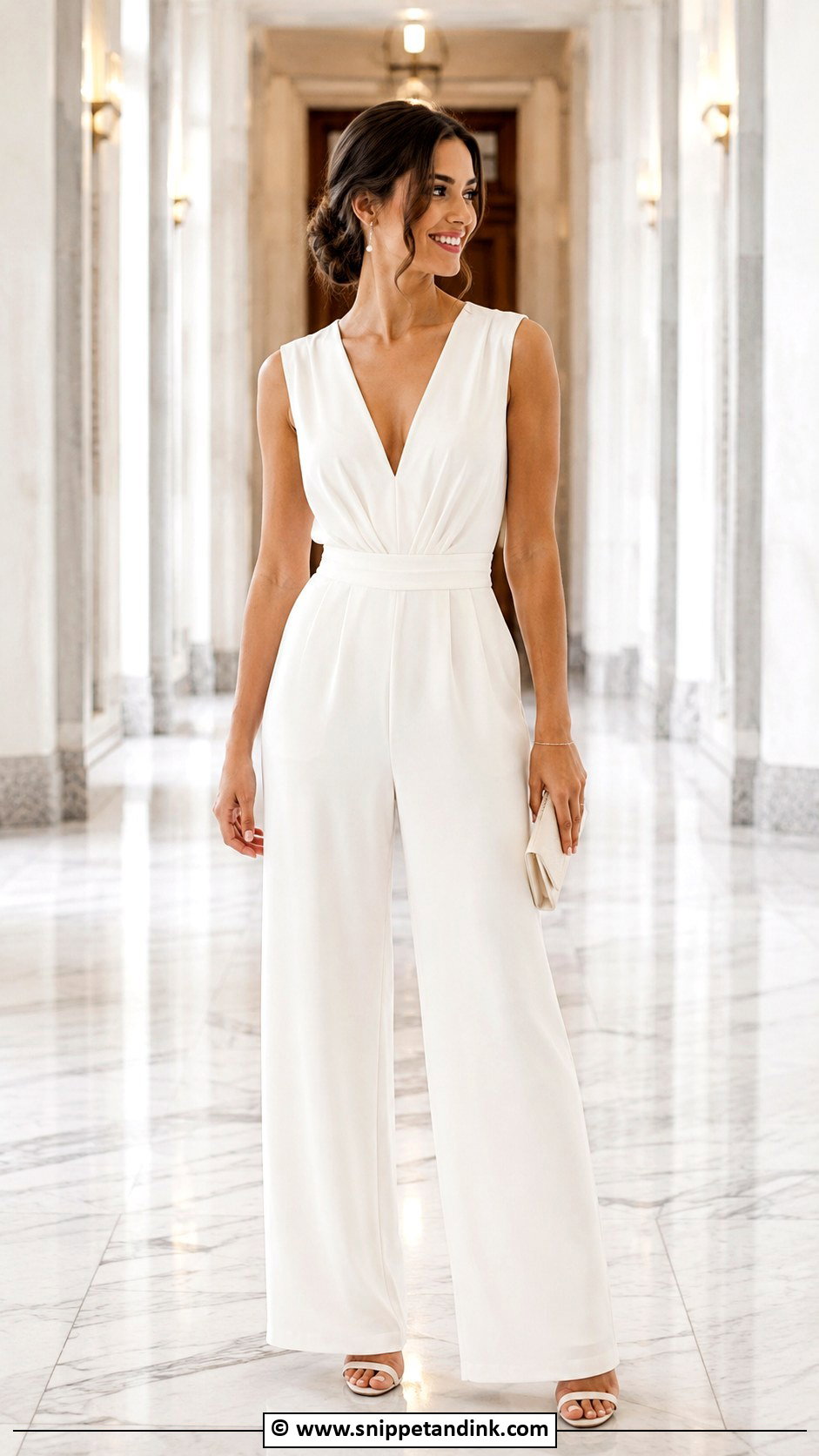
Jumpsuits look sleek and move easily, but there’s one practical issue I raise with every bride: the bathroom. A jumpsuit with a back zip means you’ll need help, so choose one with a side zip or a wrap top if you can. Beyond that, look for a defined waist, wide legs and a clean neckline or cape detail. Heeled sandals or pointed pumps lengthen the leg. A slick bun and delicate earrings, and a short veil or bow if the jumpsuit is very plain.
9. Tea Length Court House Wedding Dress
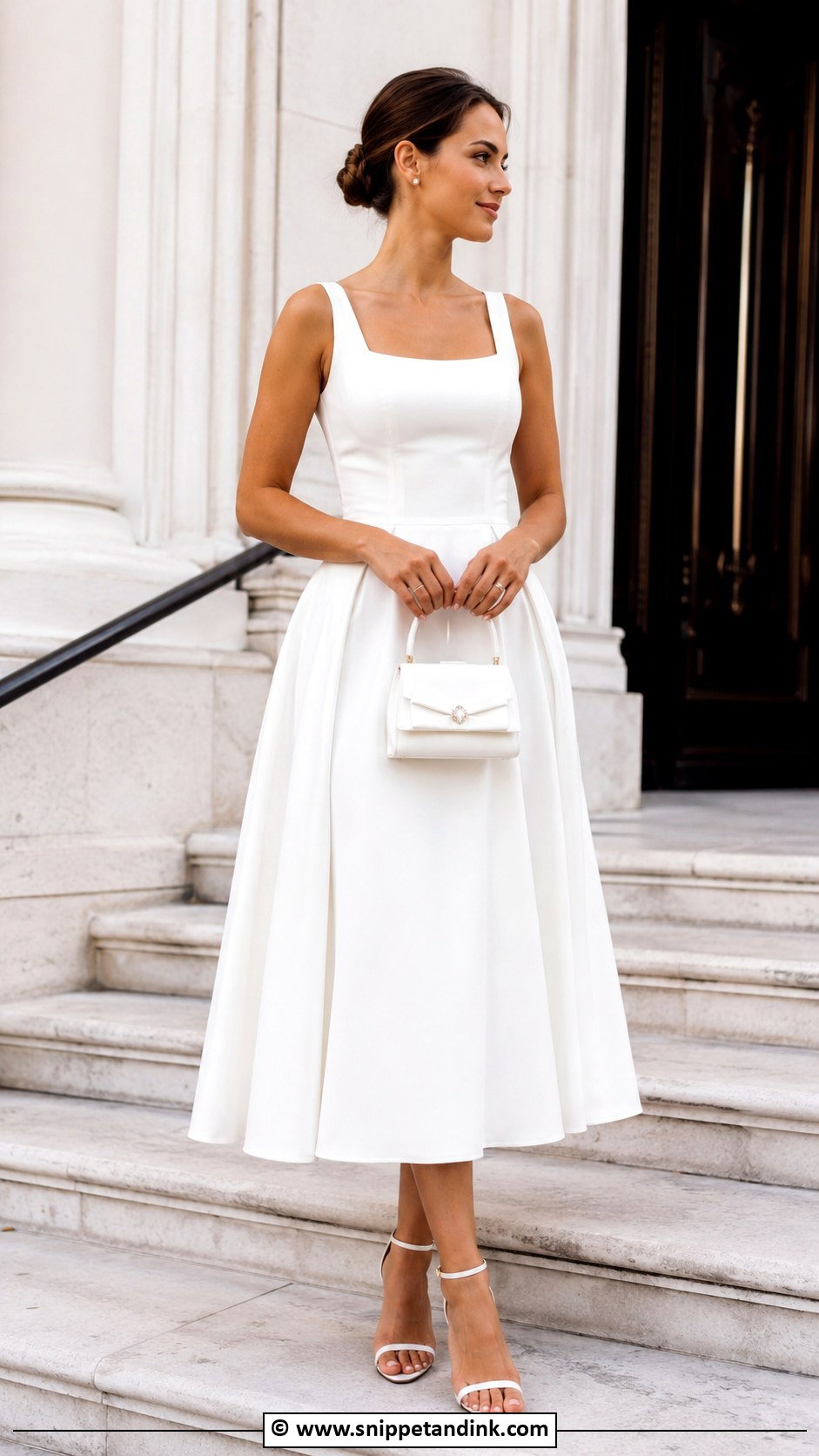
Tea length falls between knee and ankle, which shows off your shoes and gives a vintage feel without looking like a costume. A fitted bodice with a soft A-line skirt flatters most figures. Ankle-strap heels, slingbacks or satin flats, plus pearls and a small bag. The tricky part is the hem position: on petite brides tea length can cut the leg at its widest point, so I pin it at a few heights in front of a mirror before cutting. Twirling photos on the steps suit it.
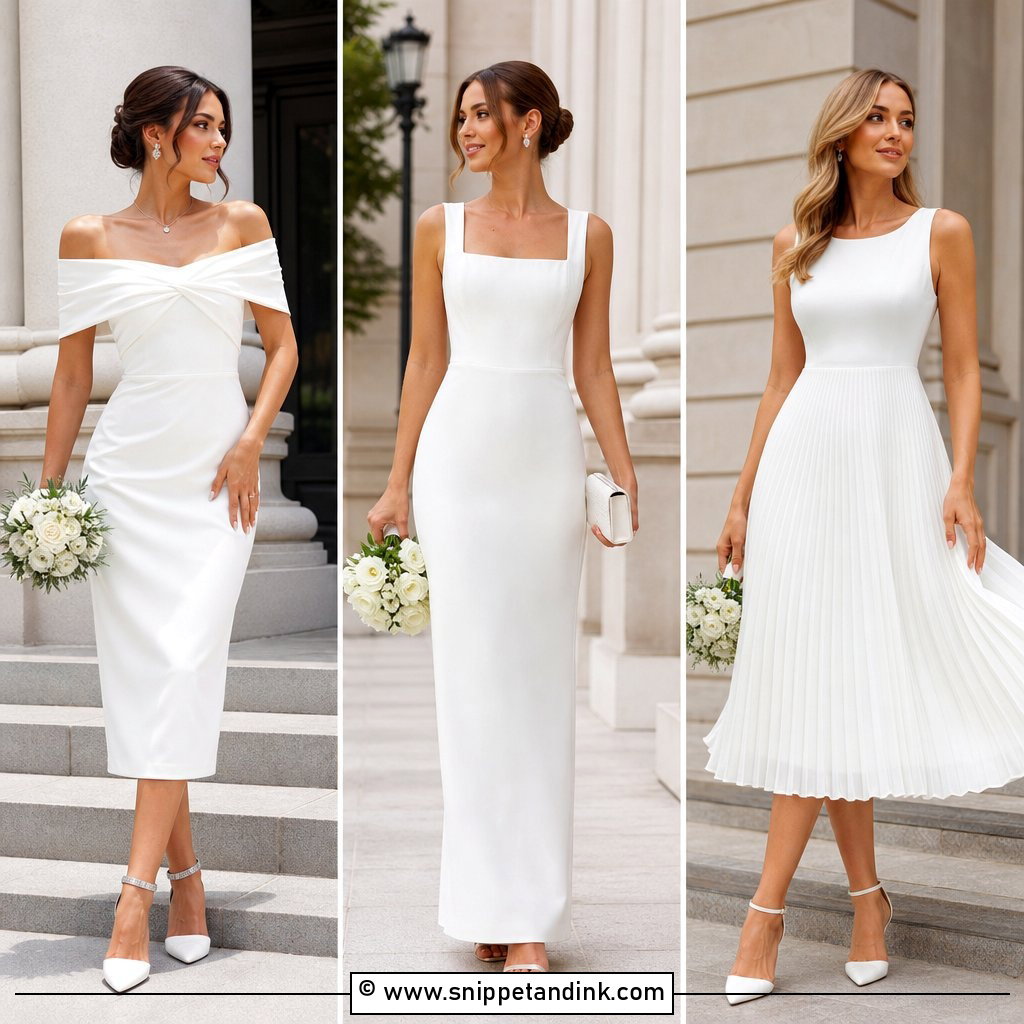
10. Off Shoulder Court House Wedding Dress
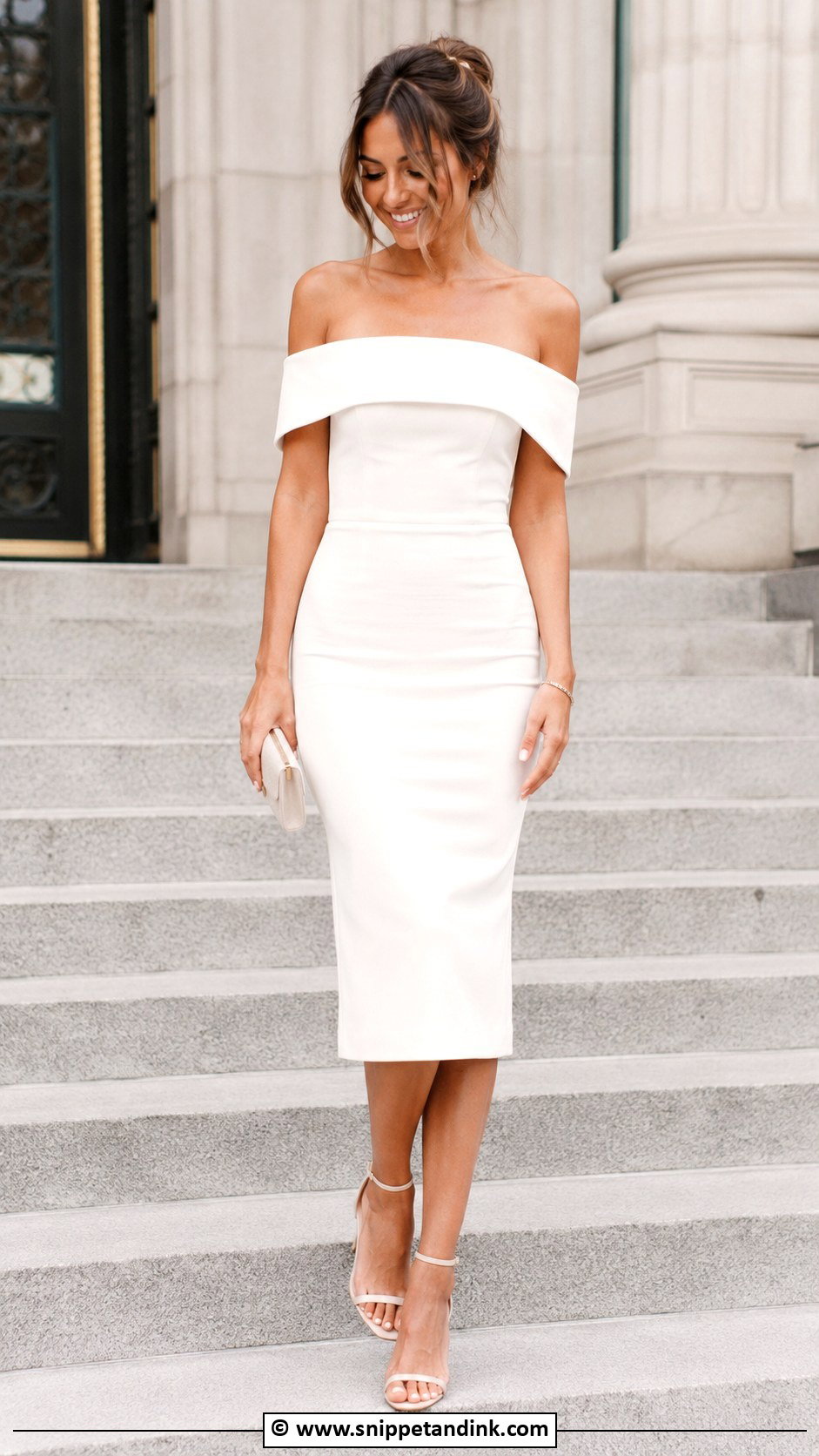
Off-shoulder necklines show the collarbone and shoulders, so the jewellery should be small: studs and a bracelet, no necklace. A fitted midi, sleek mini or structured knee-length cut works. What I check is grip. An off-shoulder band needs silicone or elastic inside to stay put when you raise your arms, otherwise you’ll spend the ceremony pulling it up. Bring a tailored coat or cropped jacket for the building, which is often air-conditioned.
11. Square Neck Court House Wedding Dress
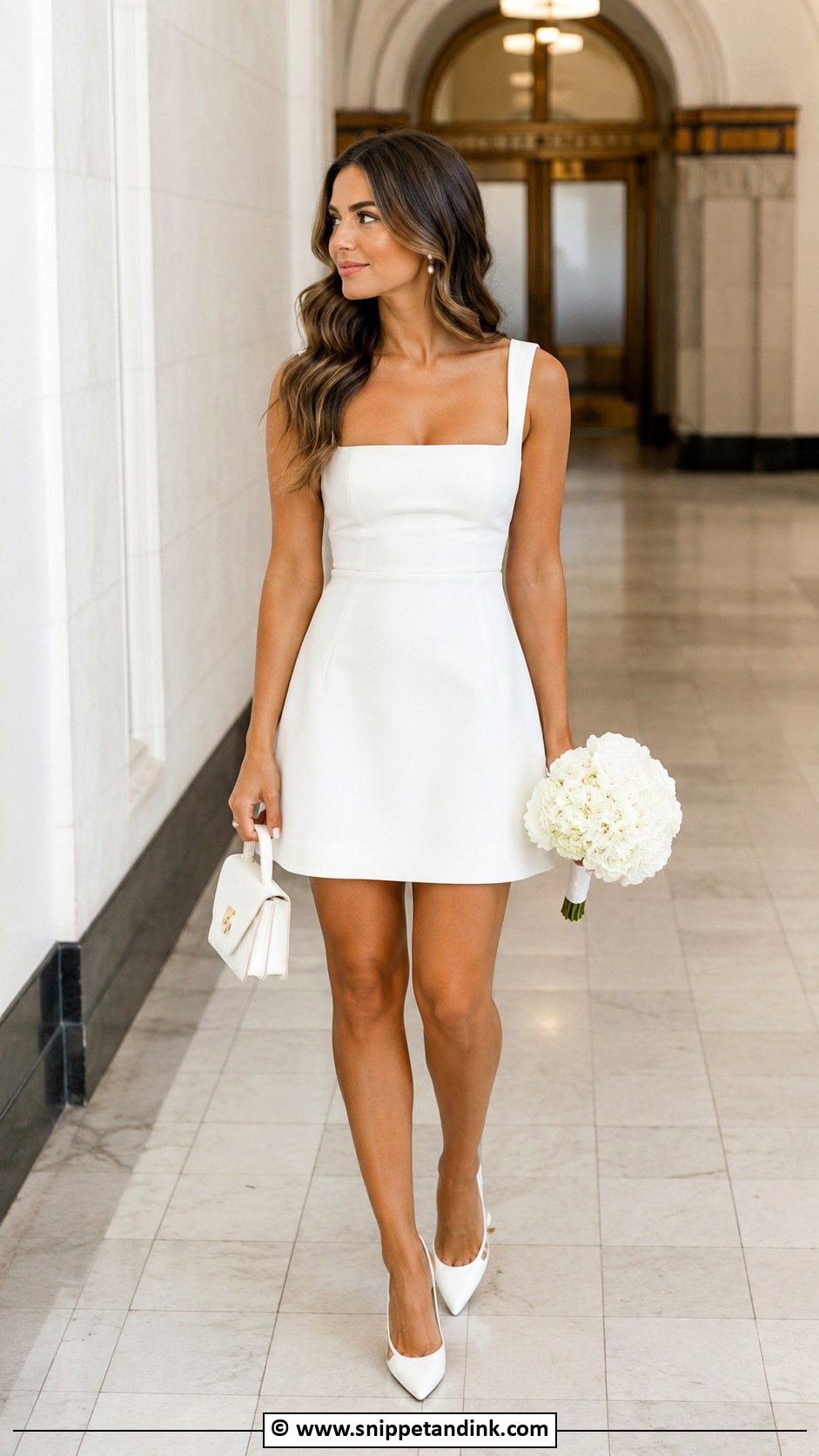
Square necklines frame the face cleanly and sit well with pearl studs or a fine pendant. A square-neck mini feels playful, a midi feels classic, and a column feels minimal. The neckline also balances puff sleeves and fuller skirts. Slingbacks, a structured clutch and soft waves or a neat bun. Have the corners of the neckline checked in the fitting; they should sit flat against the chest, not gape when you lean forward to sign.
12. Column Court House Wedding Dress
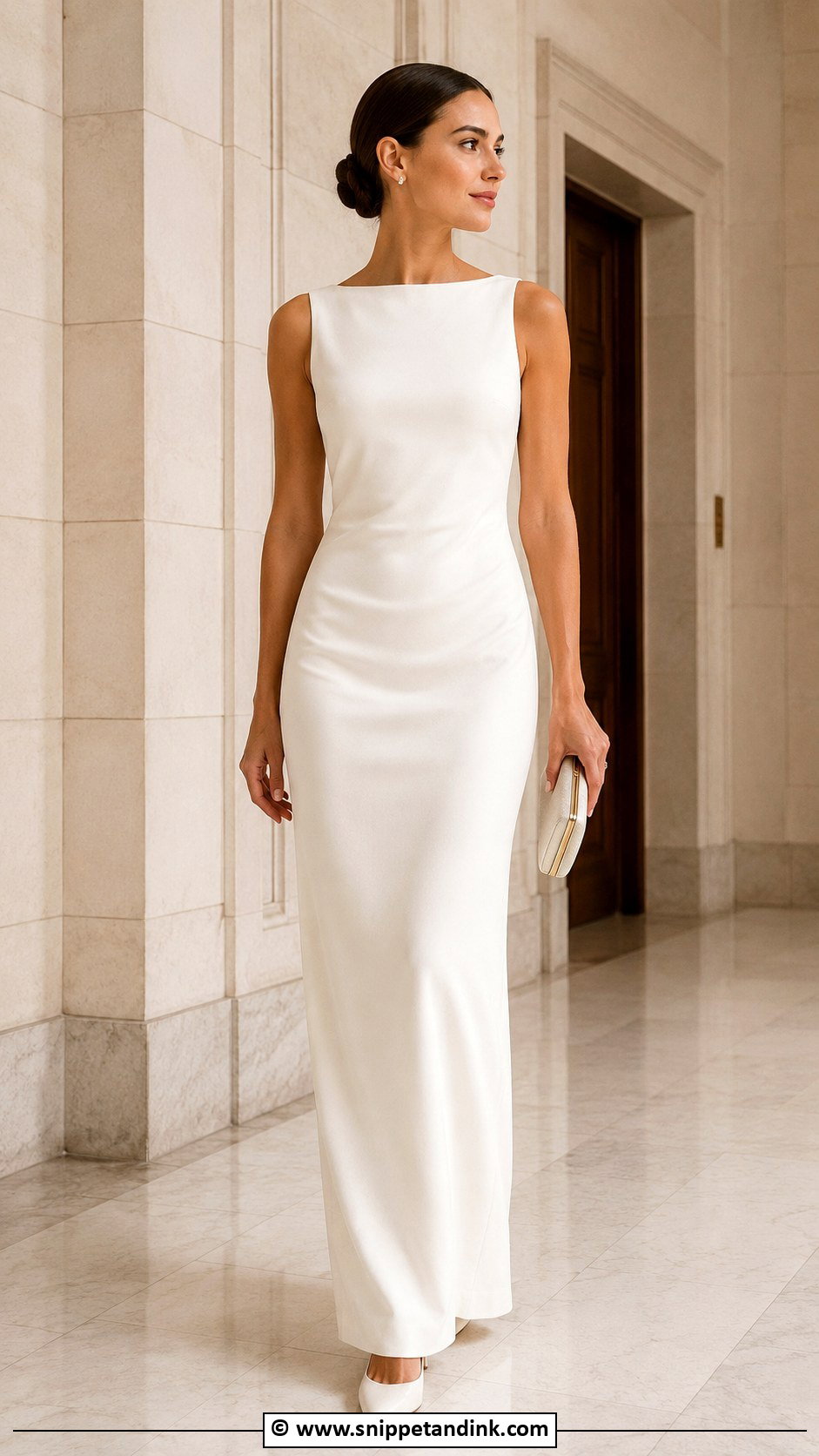
A column falls straight from shoulder or bust to hem, and that simplicity exposes everything about the fit. Crepe, satin or a structured knit in white or ivory. It suits taller and minimalist brides especially, and it’s easier to manage than a full gown on city streets. Pointed pumps, slim sandals or low heels if you’re walking. Get the hem and side seams tailored; a column that’s a centimetre too long or slightly tight at the hip loses its line immediately.
13. Wrap Court House Wedding Dress
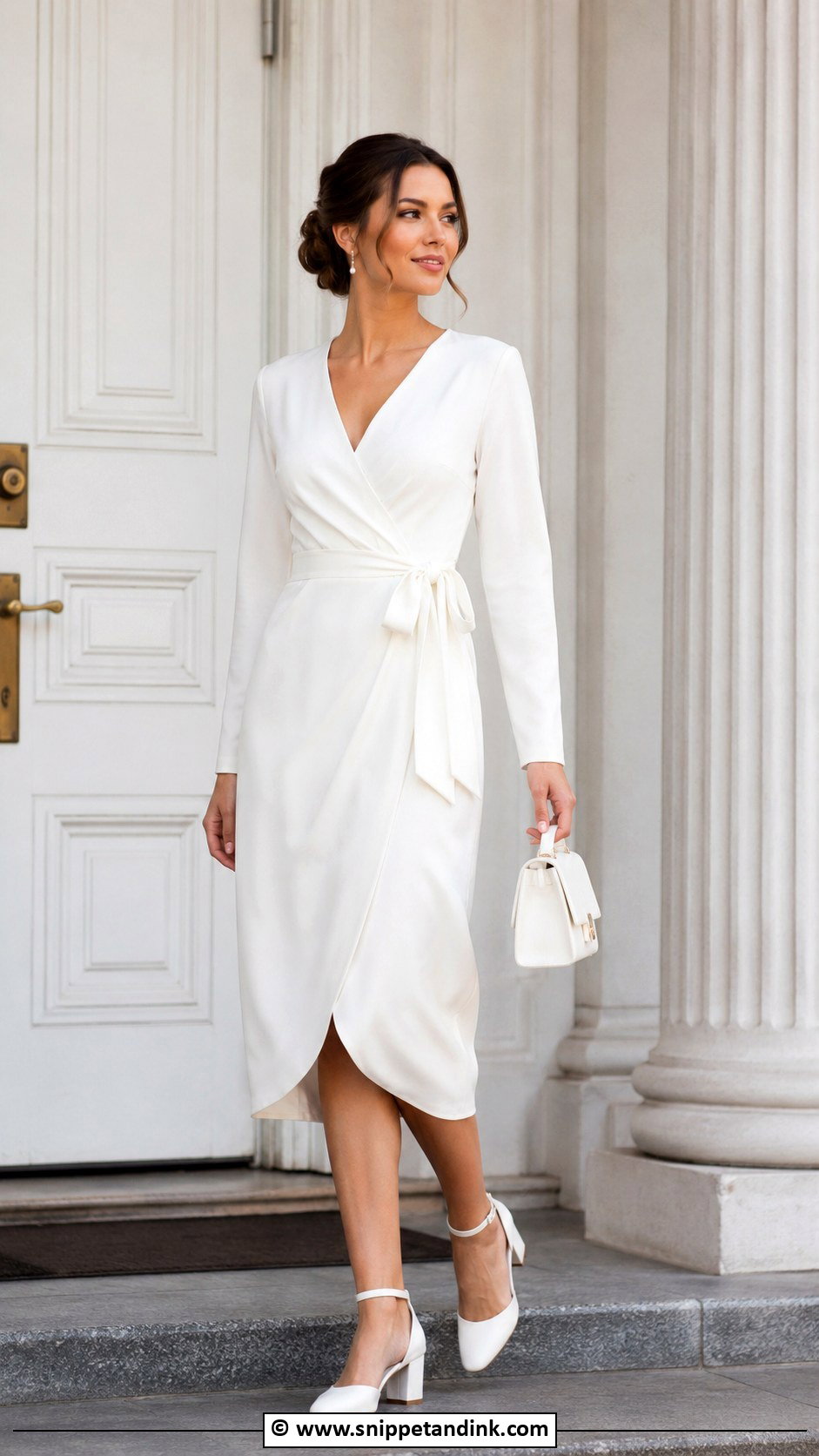
A wrap adjusts with you through the day, which makes it one of the most comfortable courthouse options. It defines the waist and creates a soft V neckline, so it works for curvy, petite and postpartum brides. Crepe, satin or soft chiffon in midi or knee length. Block heels, a small bag, simple earrings. The thing to watch is the neckline gaping; I add a small hidden snap where the wrap crosses, which takes two minutes and saves a lot of adjusting.
14. A Line Court House Wedding Dress
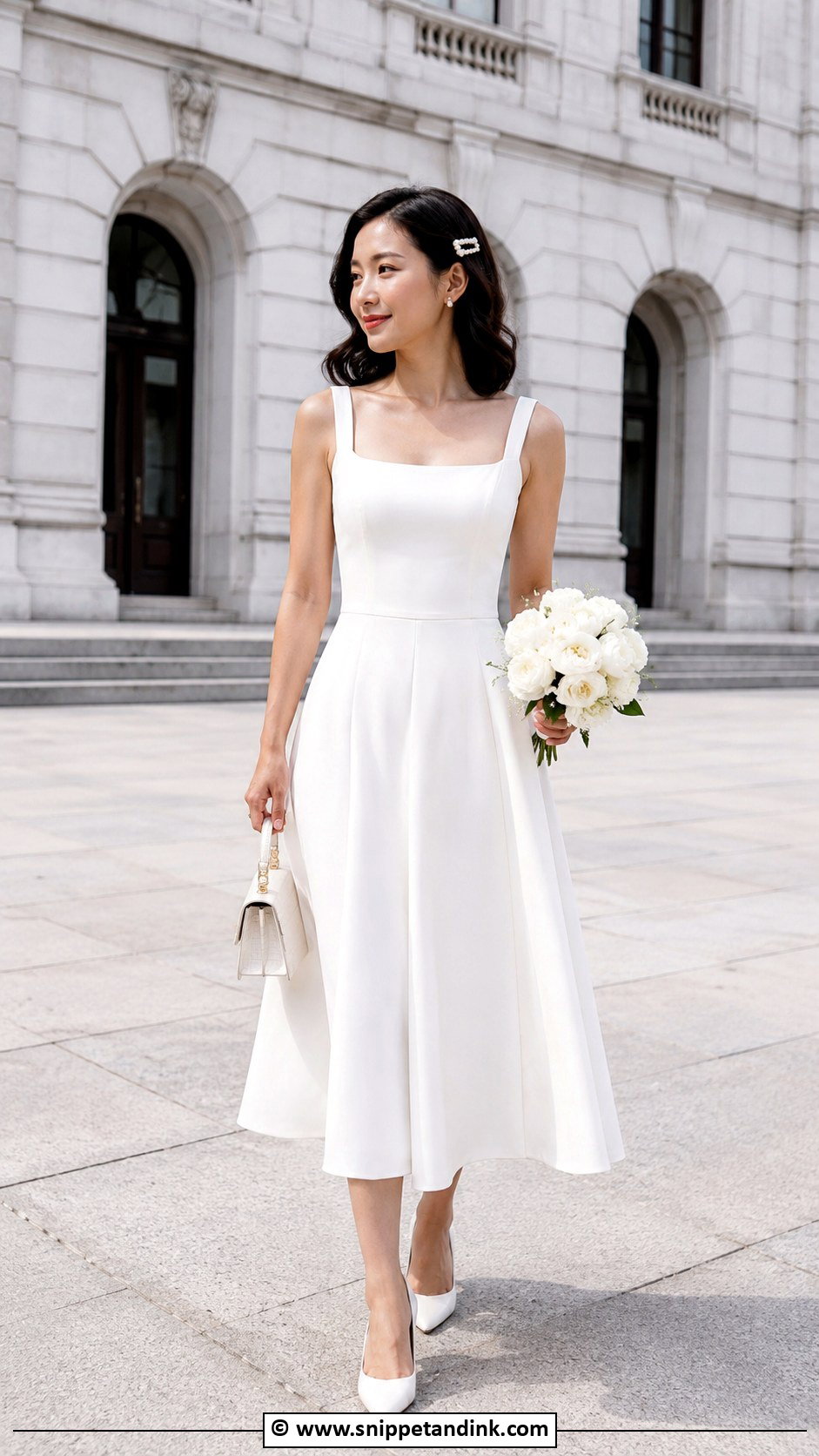
A-line is the shape I reach for when a bride isn’t sure what suits her. It marks the waist and skims the hips, and the length changes the mood: short feels youthful, midi feels classic. Slingbacks, a pearl hair clip and a structured handbag. If you want a little more, a subtle bow, textured fabric or pleats will do it. It’s forgiving if you’re sitting through a long wait before your slot.



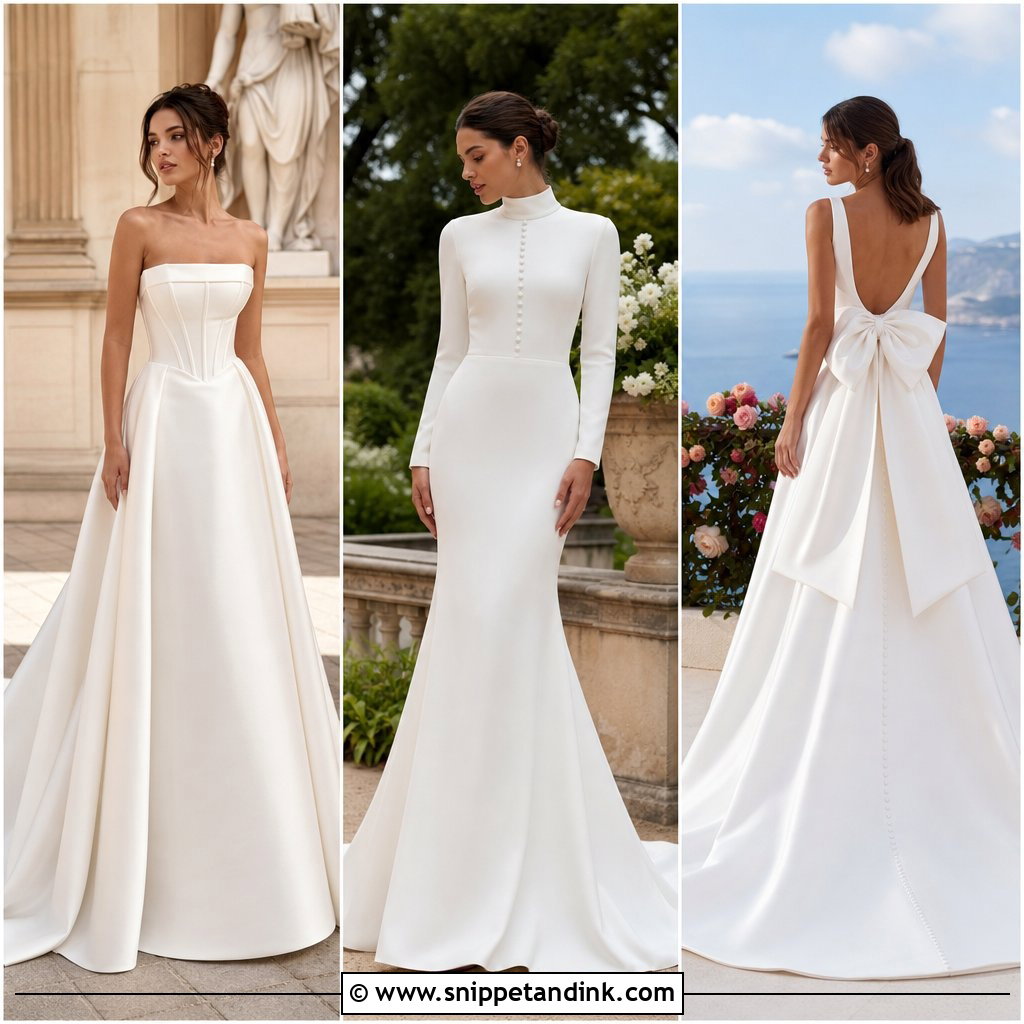
15. Courthouse Wedding Dress With Bow
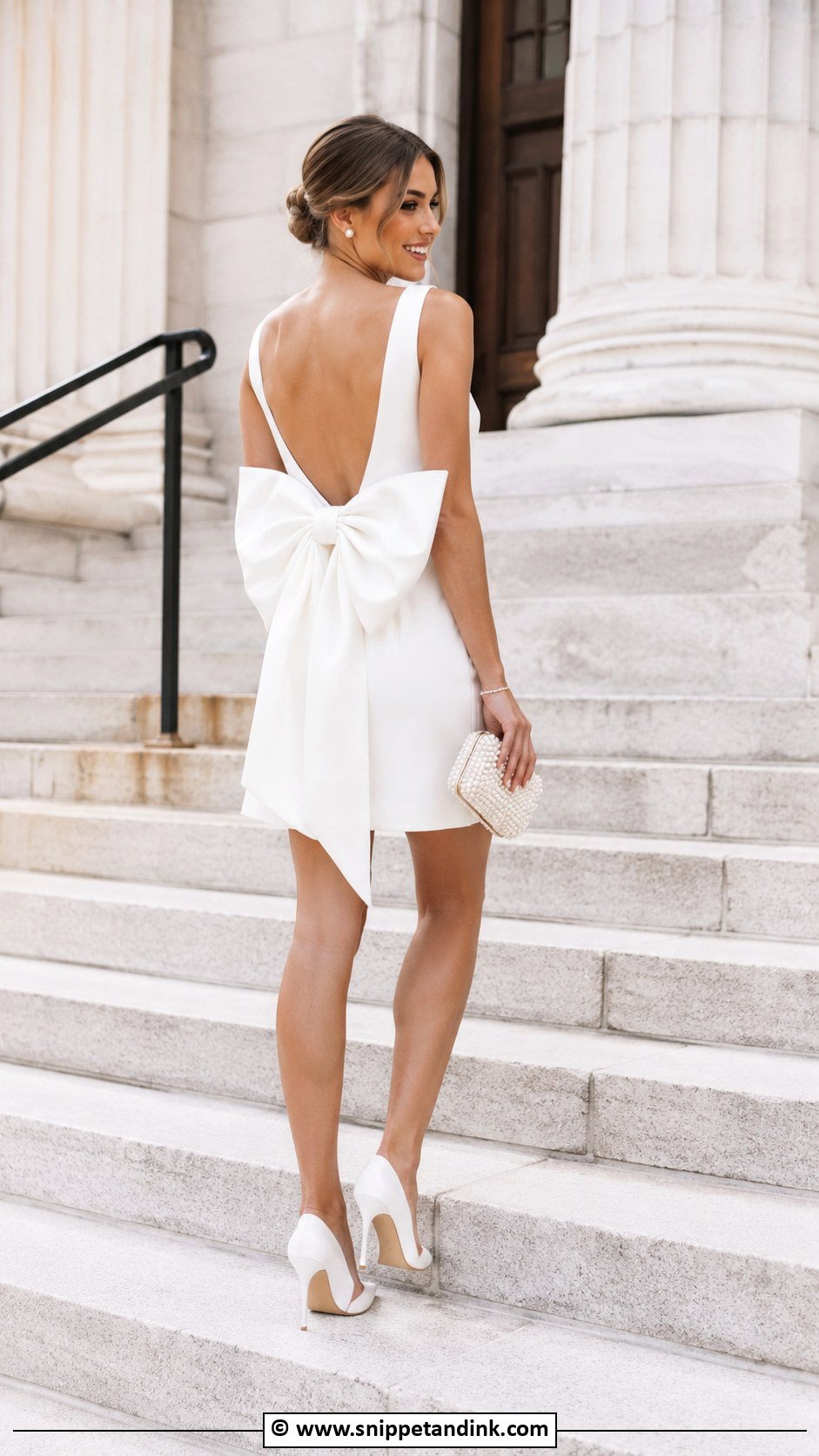
Bows are back, and they suit courthouse dresses well because they add a bridal note without volume. Placement changes the effect: a back bow is playful, a waist bow classic, a shoulder bow more fashion-led, a hair bow the most subtle. Keep the rest quiet: simple heels, pearl studs, a smooth clutch. A back bow shows up best in photos walking away down the steps, so tell your photographer it’s there. Large fabric bows crush if you lean back on a bench, so carry a small travel steamer if you can.
16. Courthouse Wedding Dress With Pearls
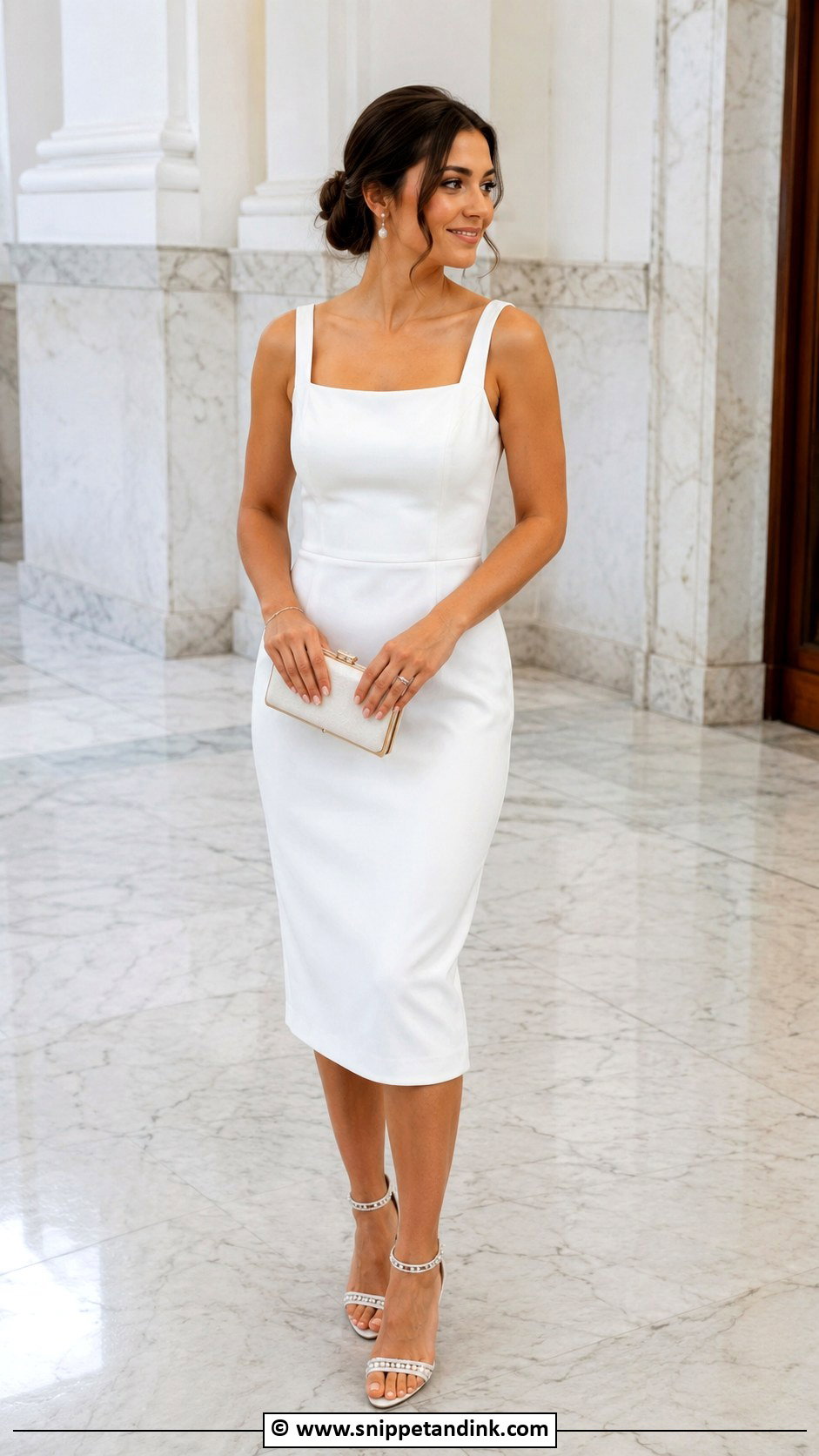
Pearls give a dress a bridal look without lace or sparkle. They can sit on the neckline, sleeves, buttons, shoes, veil or bag, but pick one or two places, not all of them. A plain white shift with pearl earrings and pearl-strap heels looks as special as a heavily embellished dress. Mini, midi or sheath. One practical point: sewn-on pearls can catch on lace and knit, so I avoid pairing them with a delicate wrap or veil that drapes over them.
17. Courthouse Wedding Dress With Feathers
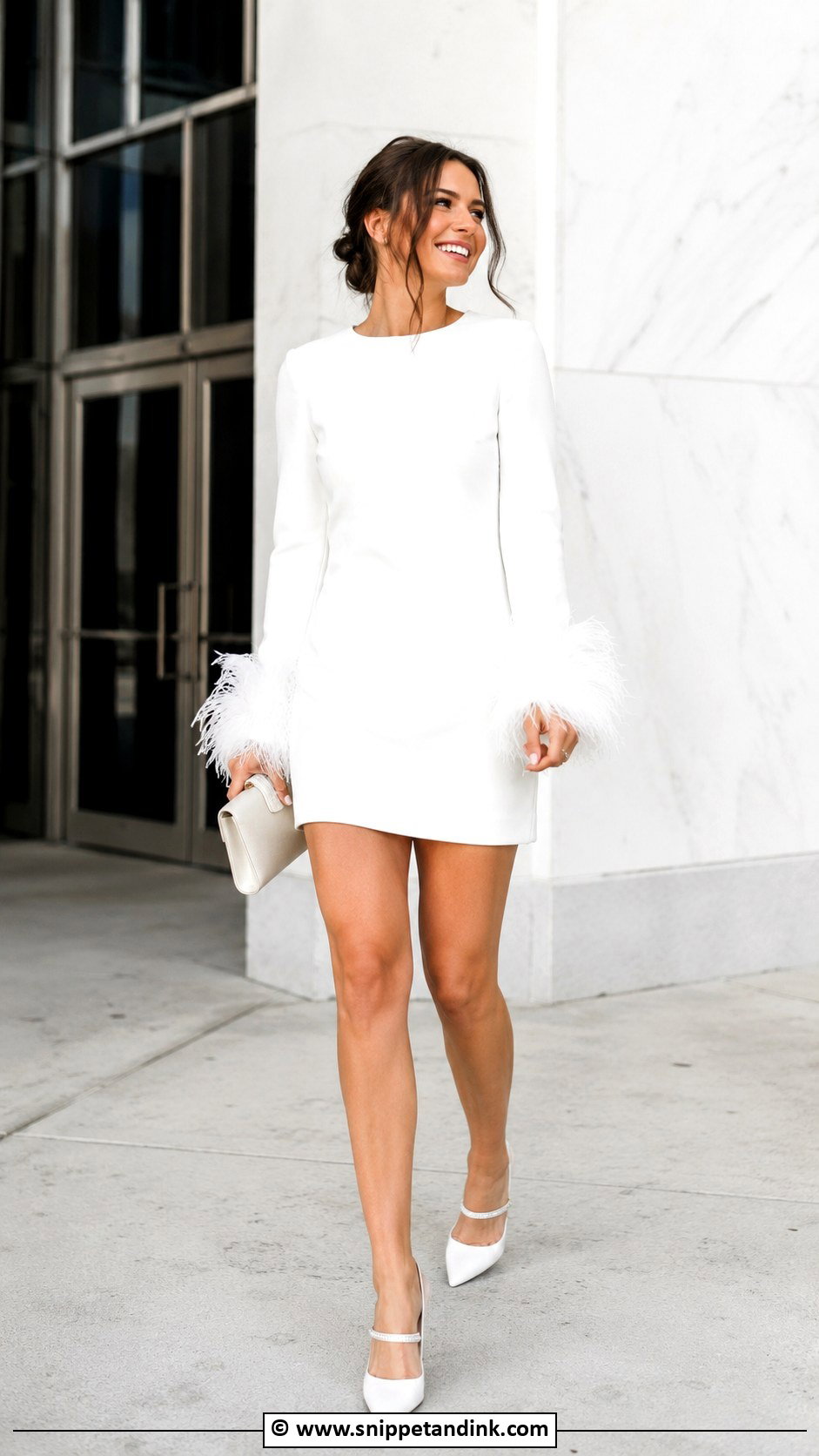
Feathers are fun and photograph with movement. I keep them controlled: feather cuffs, a feather hem or a light trim on a simple mini or midi. Plain heels, a plain clutch and little jewellery so the texture stands out. Petite brides should keep the feathers at the sleeves or hem rather than a big shape. Feathers also shed and crush, so store the dress hanging with space around it, and never pack it in a tight garment bag the night before.
18. Courthouse Wedding Dress With Blazer
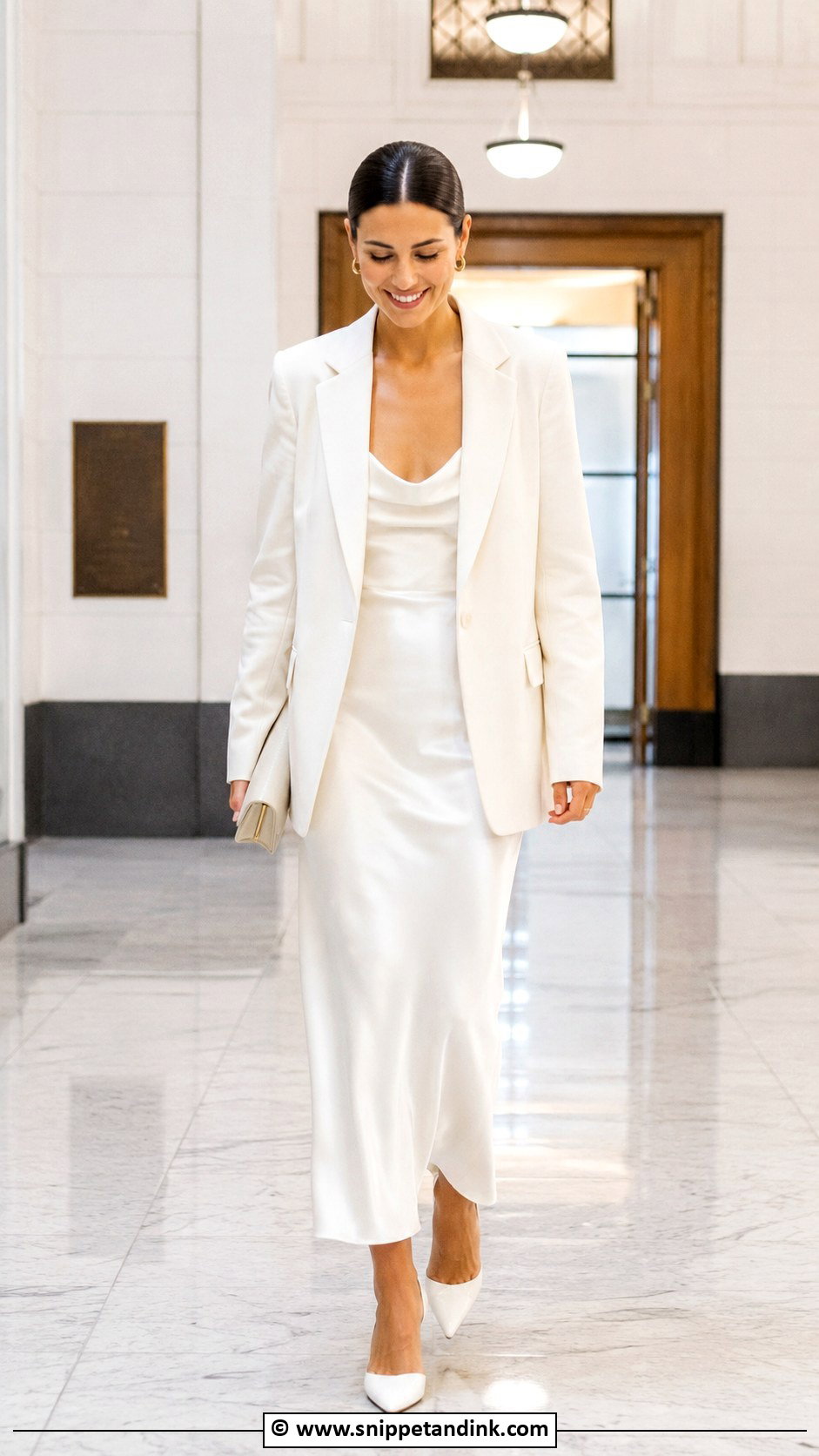
A courthouse wedding dress with blazer is one of the most practical outfits on this list. Start with a plain white slip, sheath, mini or midi, then add a fitted or oversized blazer. The blazer gives the outfit structure in a formal government building, and it comes off for outdoor portraits. Pointed pumps, a sleek clutch and small gold or pearl jewellery. A short veil or satin hair bow softens it. Match the whites: a bright white blazer next to an ivory dress looks mismatched in photos.
19. Courthouse Wedding Dress With Coat
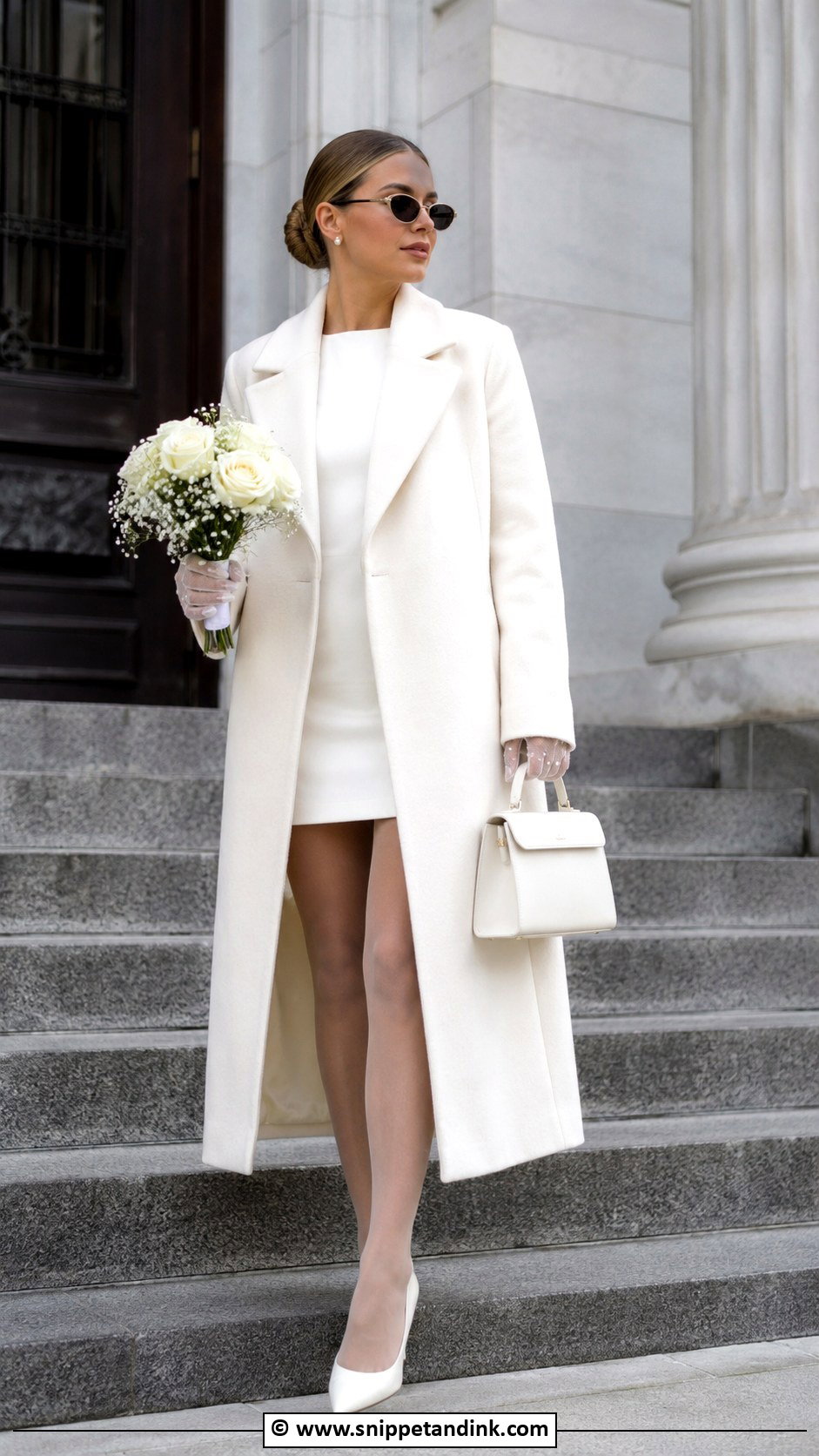
A courthouse wedding dress with coat is the answer to cold mornings, and the coat will appear in more photos than you think. A long wool coat over a mini looks modern; a cropped coat over a midi keeps proportions neat. White, ivory, beige or soft grey all work. The coat length should end above or well below the dress hem, never level with it. Closed-toe heels, sheer tights if needed, gloves, and a structured bag.





20. Plus Size Court House Wedding Dress
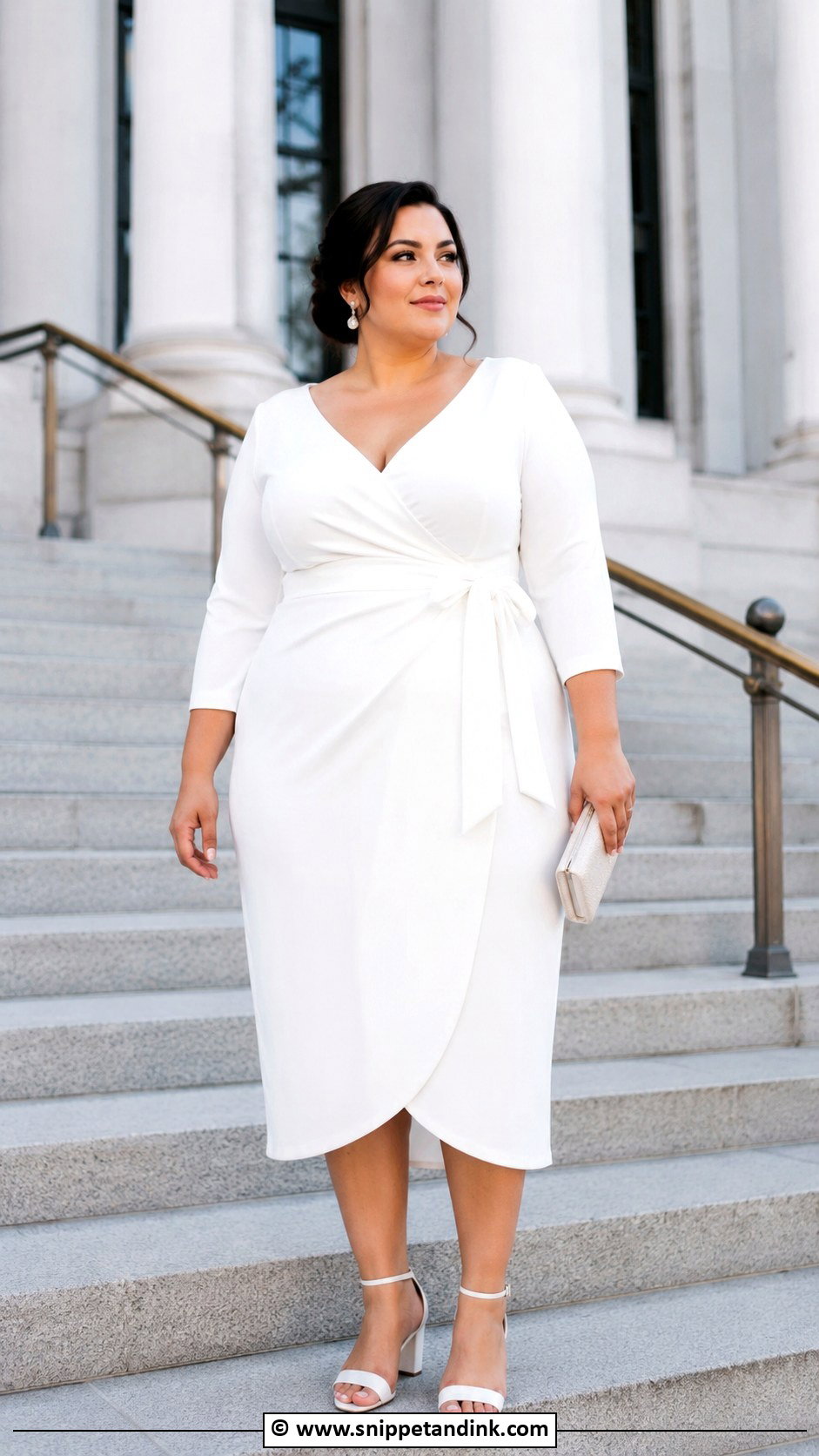
A plus size court house wedding dress should be built for support first. I look for a defined waist, a full lining, wider straps, or a structured bodice with boning. Wraps, A-line midis, fit-and-flare minis, columns and jumpsuits can all work. Don’t feel limited to plain fabrics; lace, satin, bows and pearls all look great. Block heels you can stand in during a long wait, and jewellery that follows your neckline. Comfort through the whole day matters more than how it looks for the first ten minutes.
21. Petite Court House Wedding Dress
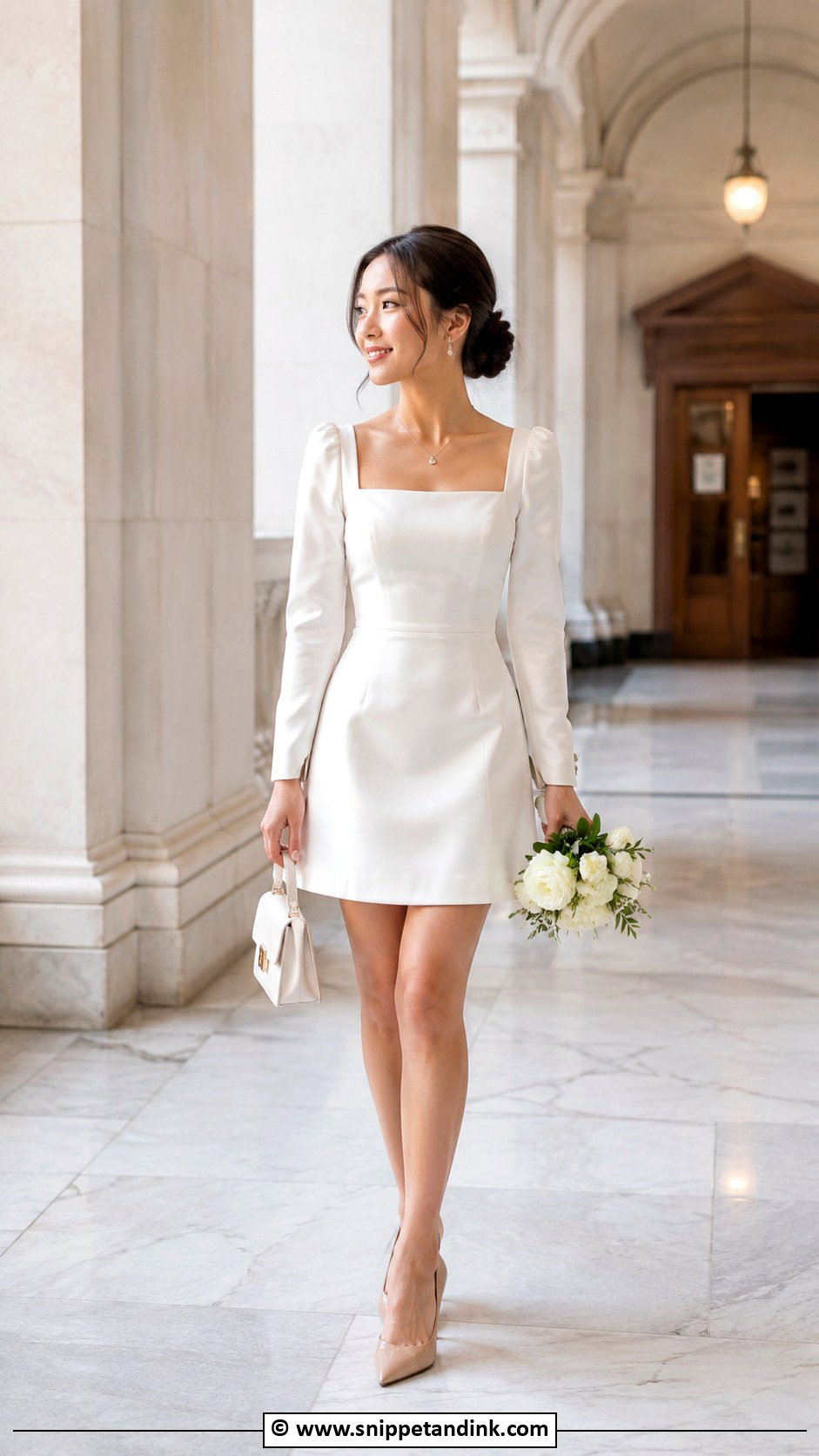
For petite brides, proportion is everything. Short dresses, high waists, fitted minis, narrow midis and columns lengthen the body; too much fabric swamps it. I usually take up the hem to the point where the leg looks longest, which is often just above the knee or at the narrowest part of the calf. Pointed or nude shoes extend the line. Choose scaled-down sleeves and bows rather than oversized ones.
22. Modest Court House Wedding Dress
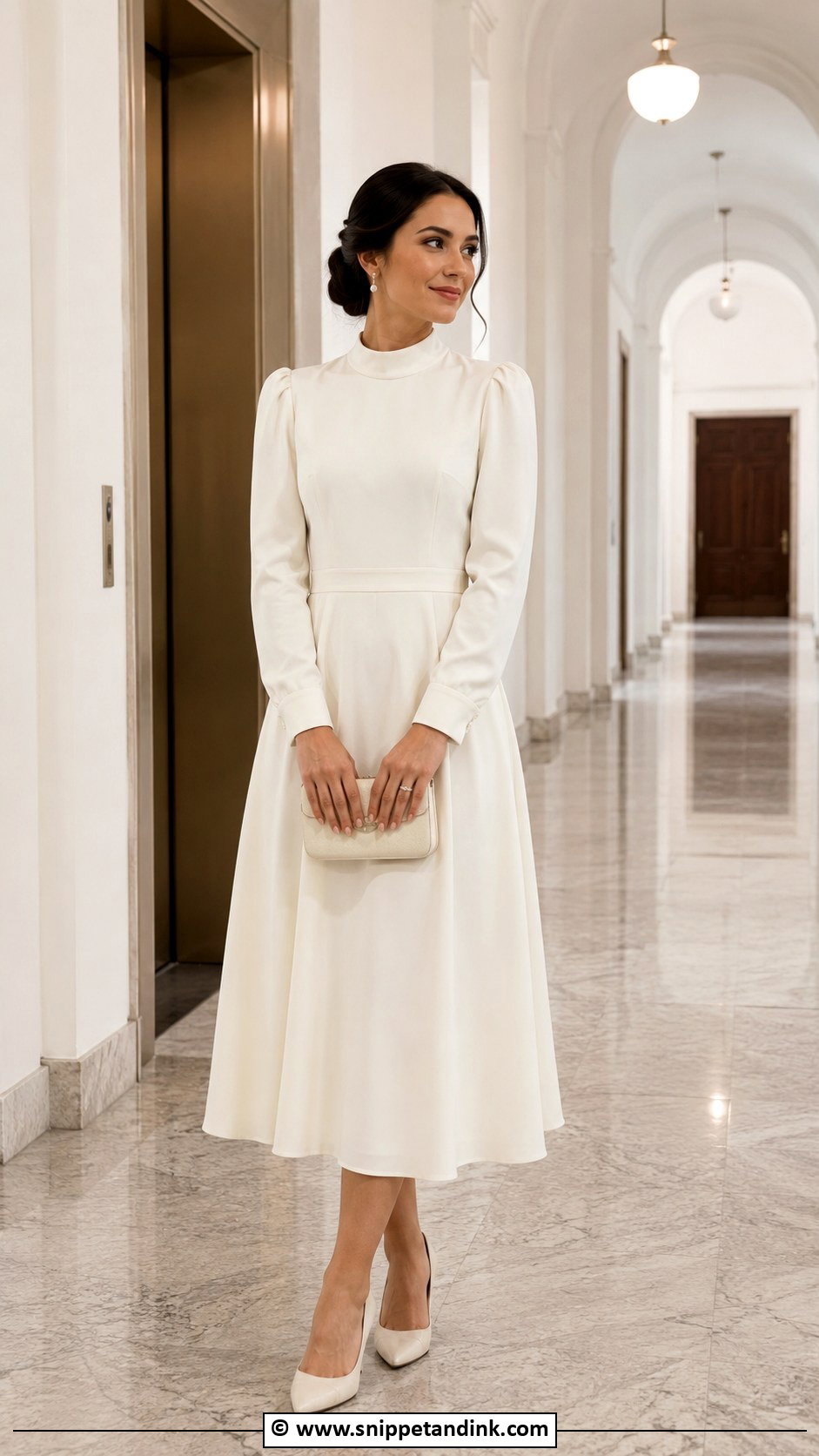
Modest courthouse dresses can be modern and well cut. Higher necklines, longer sleeves, midi or maxi lengths, and fabrics with structure, such as a long-sleeve crepe midi, a high-neck satin dress or a simple A-line maxi. A belted waist or tailored seams add shape. Closed-toe heels, pearl earrings and a neat clutch. Check sheerness by taking a phone flash photo in the fitting room; lighter white fabrics can show more than you expect.
23. Casual Court House Wedding Dress
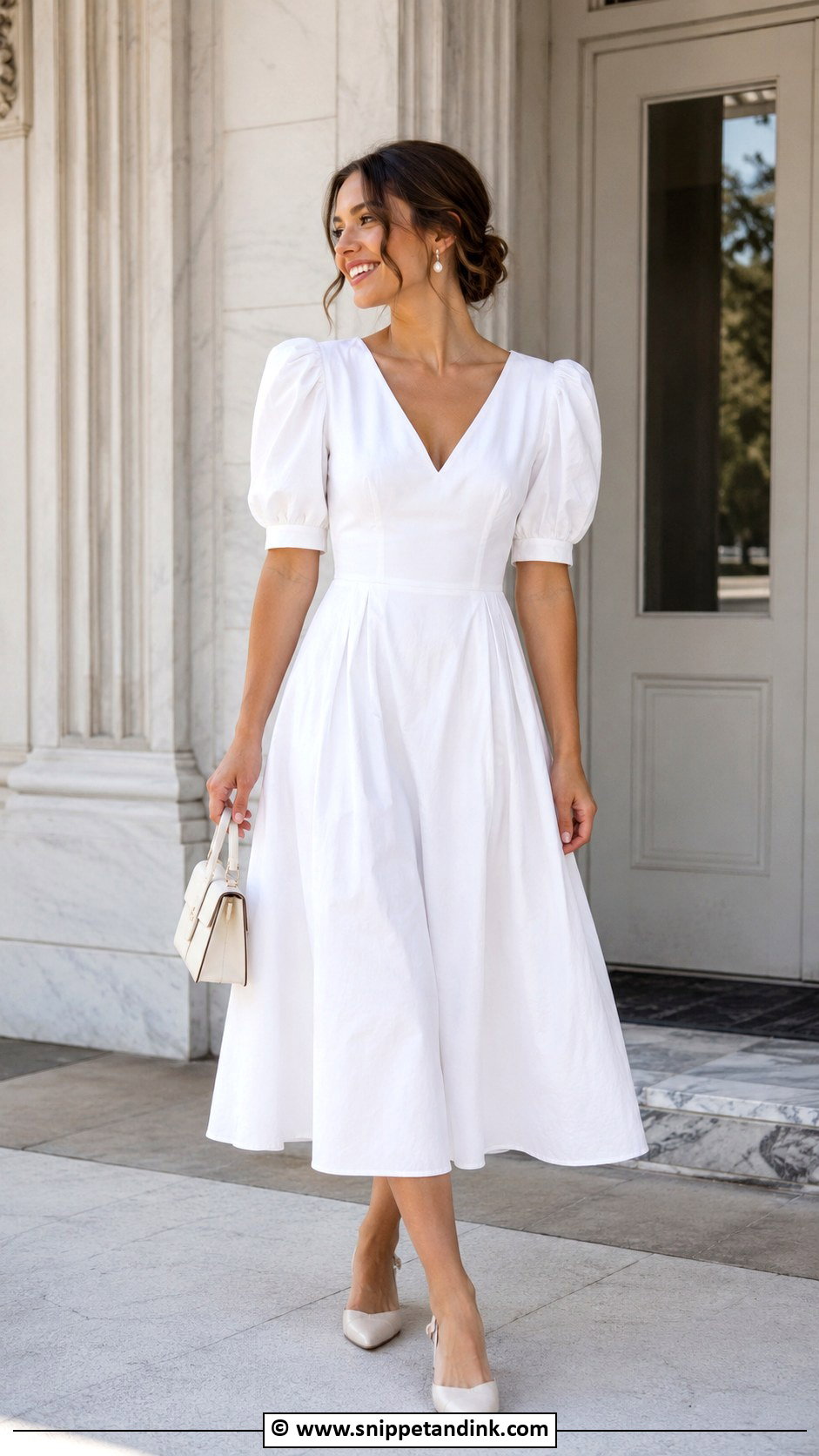
A relaxed dress still needs to look chosen. A white linen midi, cotton poplin mini or relaxed shift works, styled with polished accessories. Block heels, ballet flats or sleek sandals, a small bouquet, dainty earrings and a good bag. My warning is about linen: it creases within minutes of sitting, so for a long waiting room, a linen blend or poplin holds up better. This suits weekday ceremonies and small guest lists well.
24. Simple Court House Wedding Dress
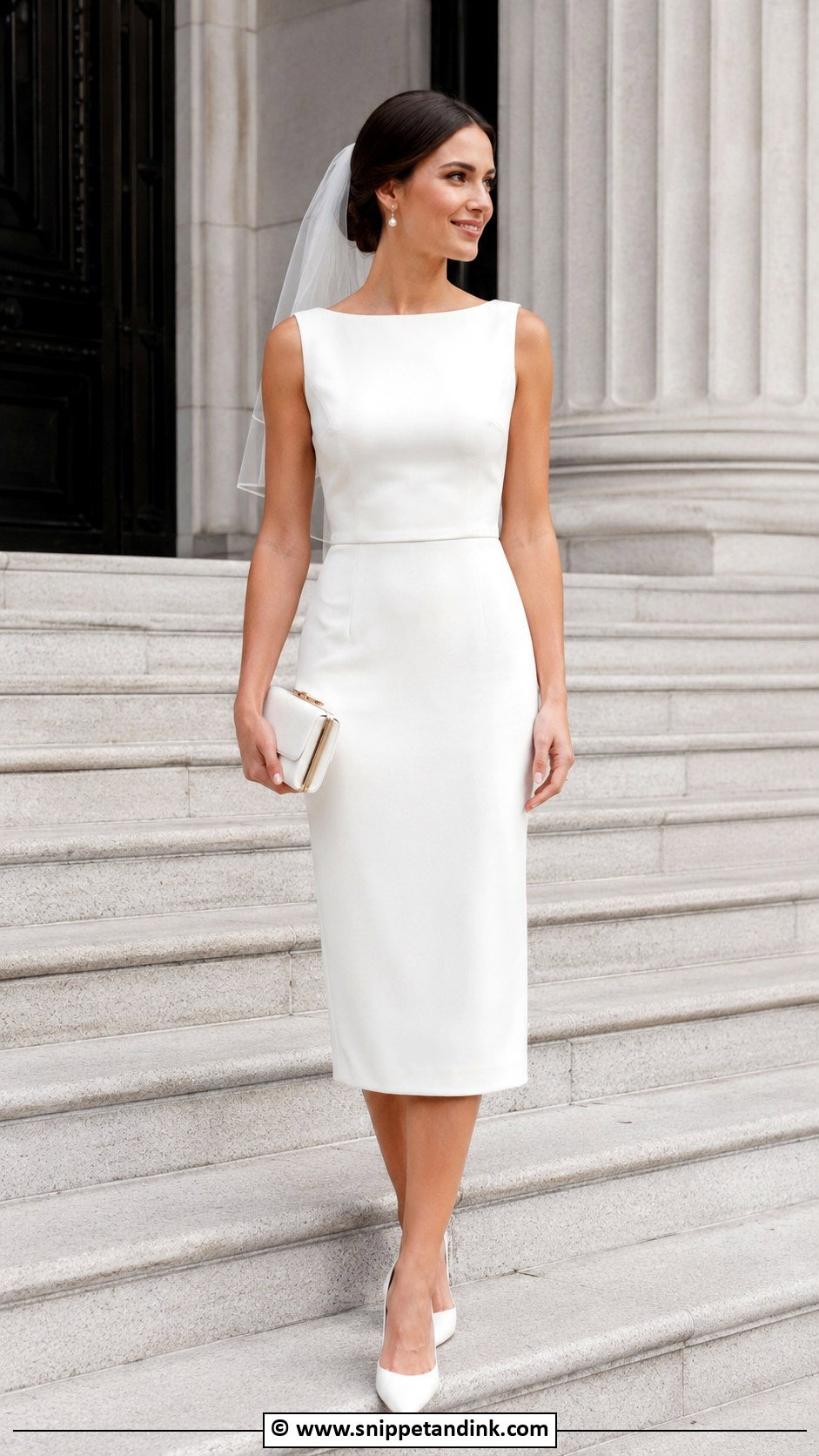
A simple dress shows every detail more clearly, which is why fit and fabric need extra attention. A white sheath, crepe midi, satin slip or tailored mini with little decoration. Then accessories carry the bridal feeling: pearl earrings, a short veil, a structured clutch and good heels. If the budget only stretches to one thing, I’d spend it on tailoring rather than embellishment. Simple dresses age well in photos.



25. Modern Court House Wedding Dress
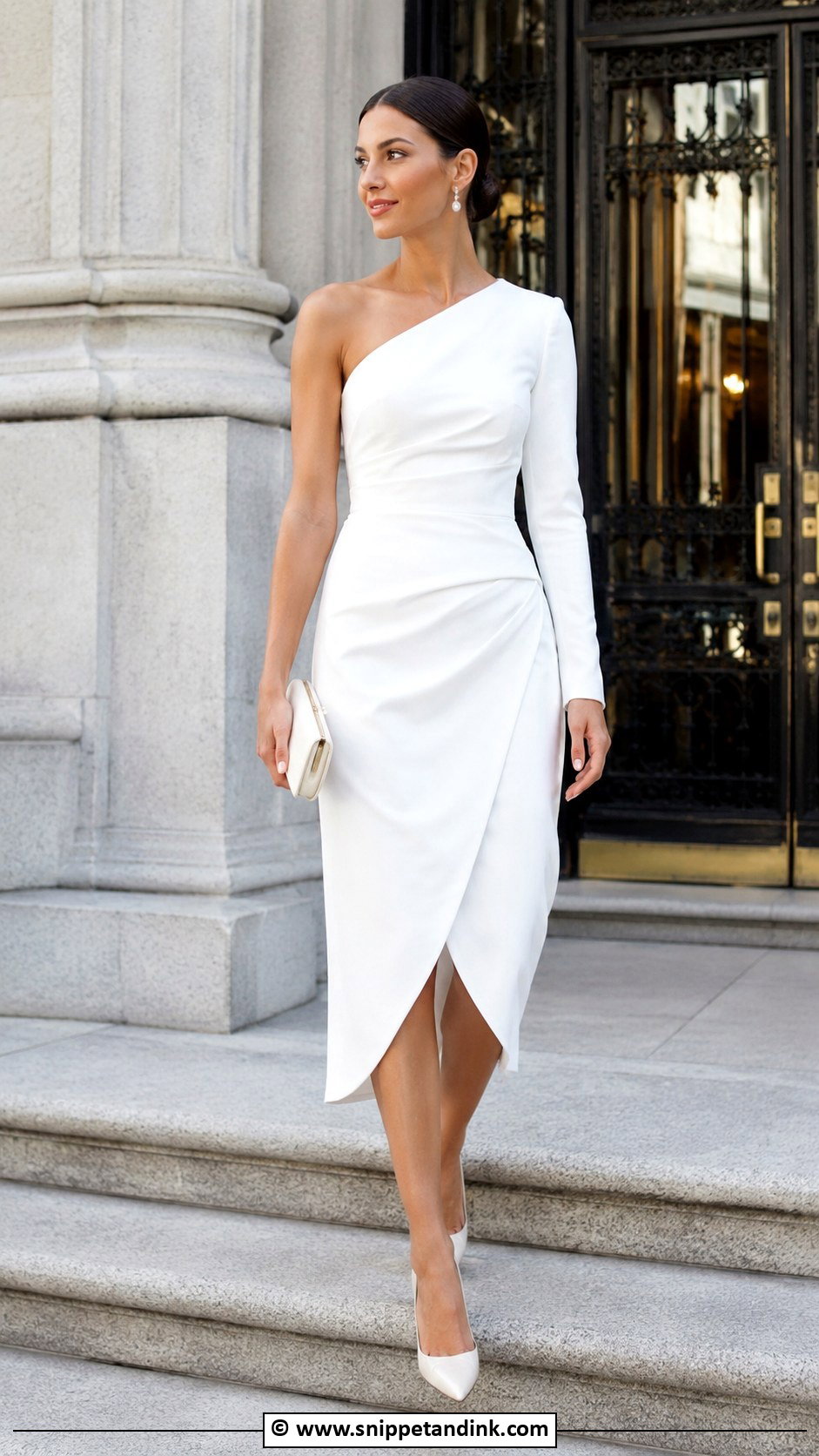
Modern courthouse dresses tend to have one interesting detail on a clean silhouette: an asymmetric neckline, a sculptural sleeve, a low back or a sharp mini length. Keep the colour in white, ivory or soft cream and edit hard: sleek heels, minimal jewellery, one structured bag and a smooth hairstyle. If you add a second statement piece, the look stops reading as modern and starts reading as busy.
26. Vintage Court House Wedding Dress
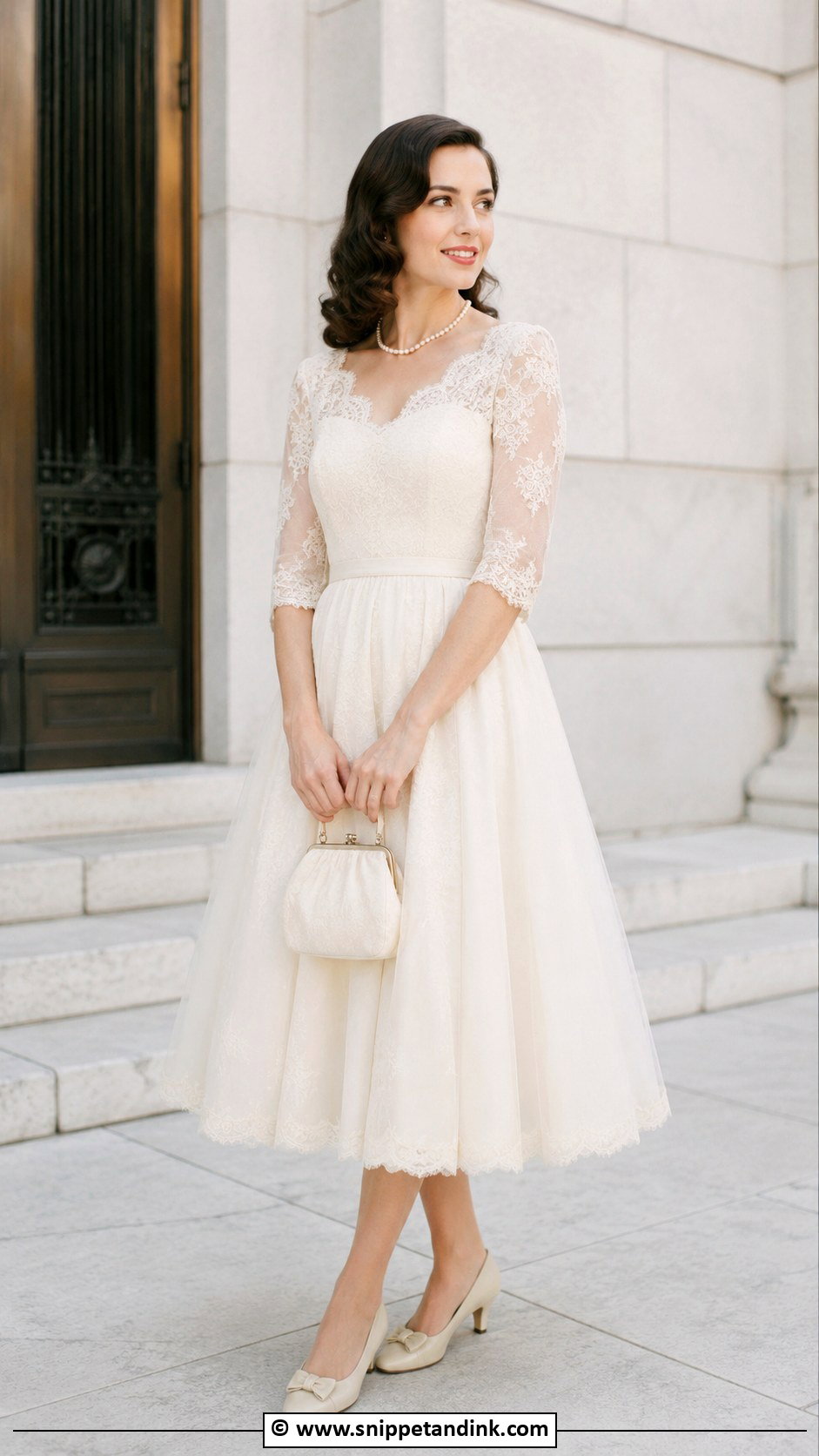
Vintage works best when you pick one era. Tea-length skirts and bateau necks point to the 1950s; lace sleeves and satin buttons to earlier; short shift shapes to the 1960s. True vintage, vintage-inspired or a modern piece with retro accessories all work. Low heels, pearls, a small frame bag, soft waves or a neat updo. With true vintage, budget for a seamstress, because older dresses often need seams reinforced and zips replaced before they’re safe to wear for a full day.
27. City Hall Court House Wedding Dress
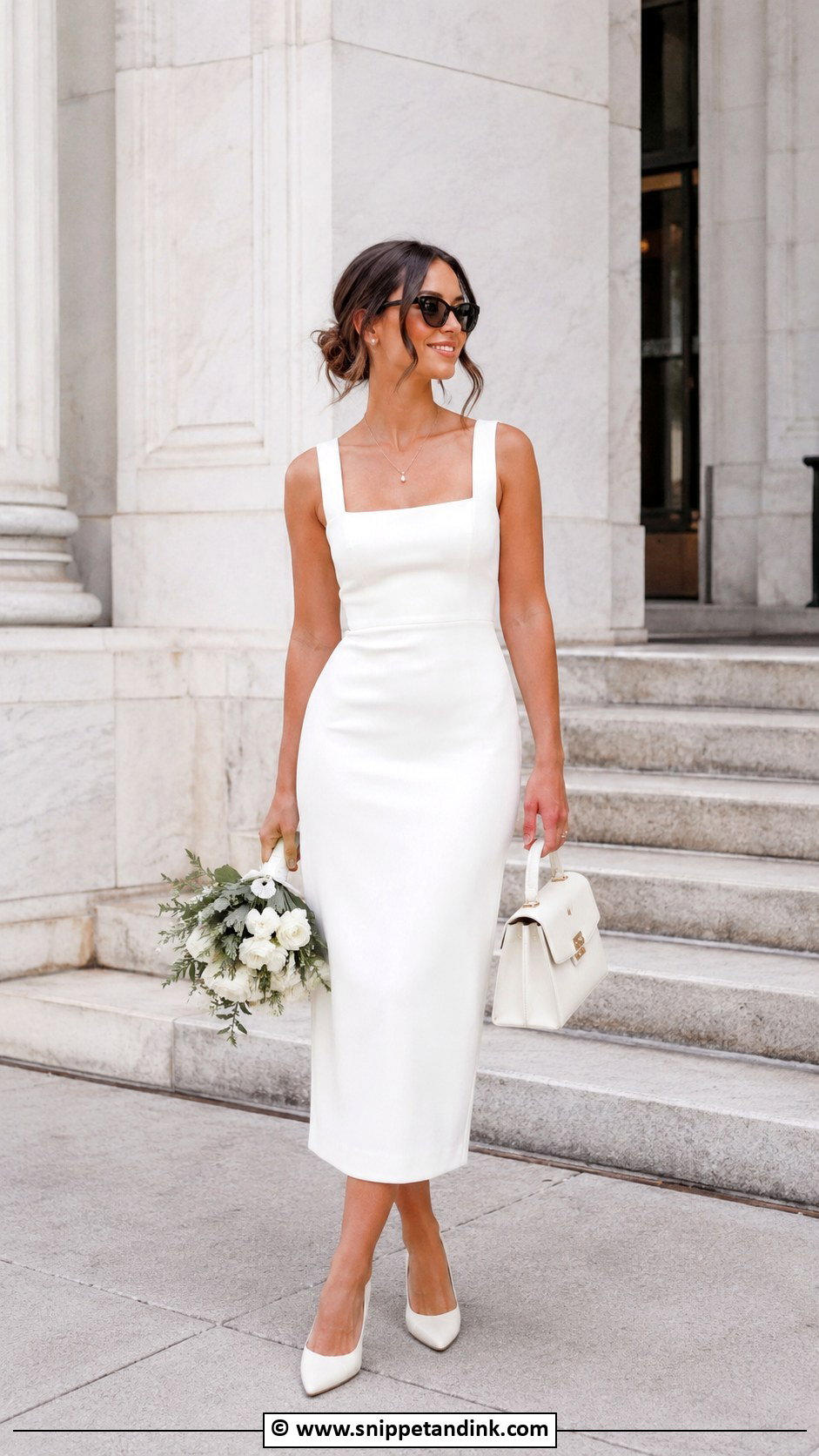
A city hall court house wedding dress has to work in the corridor, the registry room and on the pavement. A sleek midi, blazer dress, tailored mini or satin slip suits an urban setting. City hall weddings involve walking, queuing and photos outside, so choose shoes you can manage for a couple of hours. Sunglasses for outdoor shots, a structured bag and simple jewellery. A short veil or hair bow adds a bridal note without fuss.
28. Winter Court House Wedding Dress
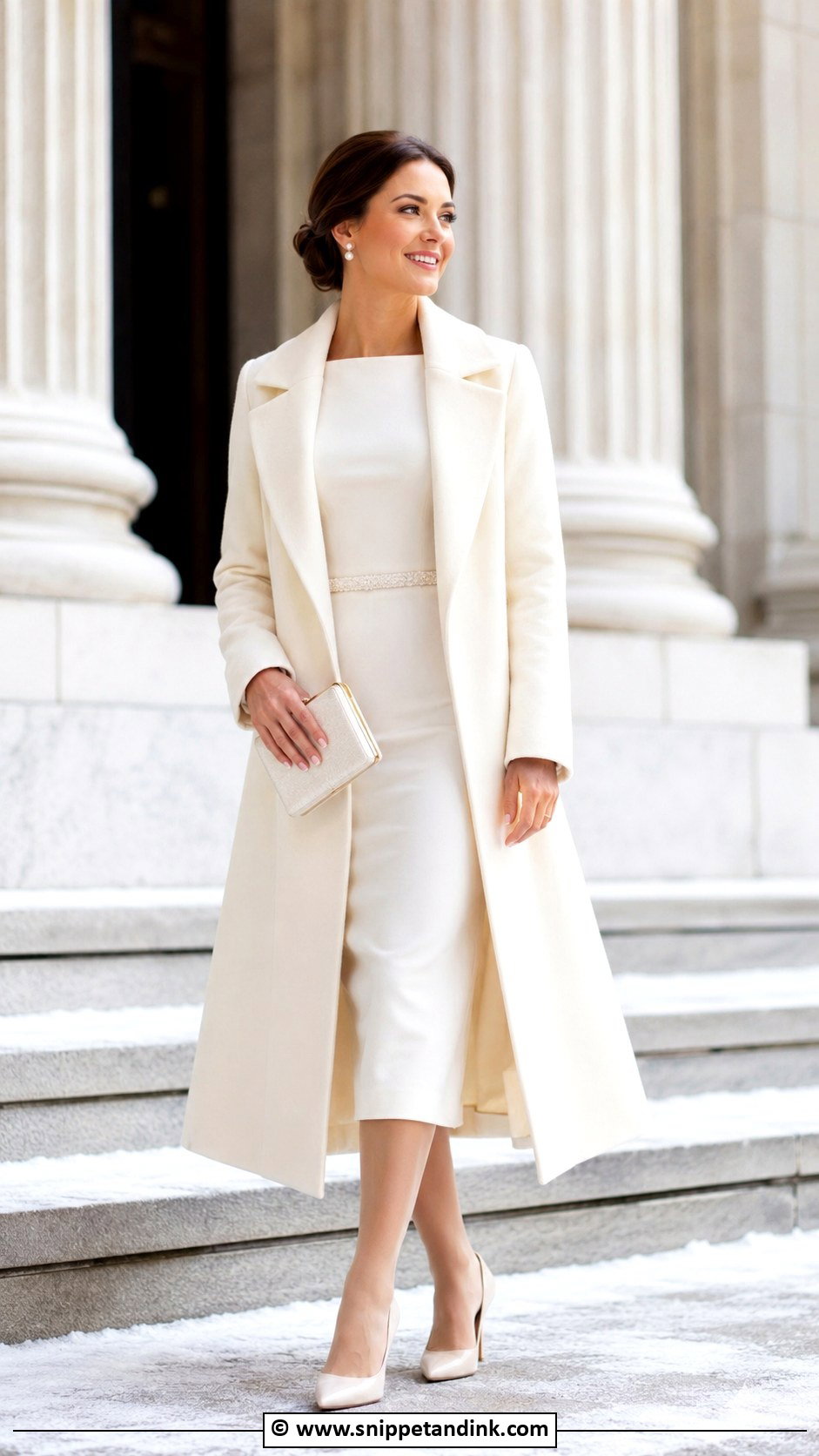
Winter dressing is mostly about the coat, because it’ll be in many of your photos. Underneath, a long-sleeve mini, crepe midi, satin column or tailored white suit; on top, a long coat that suits the outfit. Closed-toe heels, sheer tights and a structured clutch. Ivory, cream and pale champagne look warm in low winter light. Velvet trim, lace or pearl details add texture. Bring a shawl for the outdoor photos; you’ll want the coat off for a few minutes.
29. Summer Court House Wedding Dress
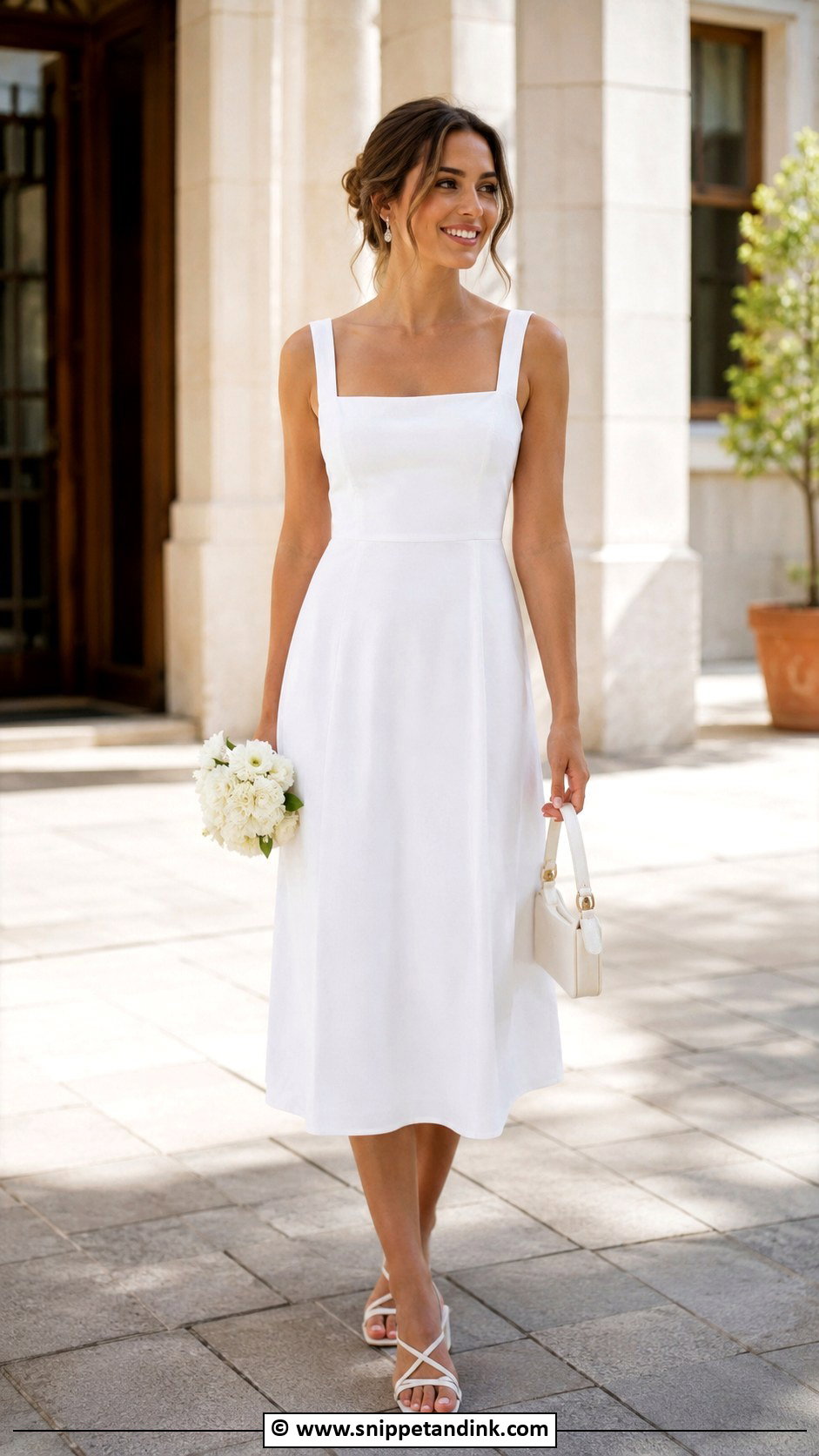
Heat is hard on fabric. Cotton poplin, linen blends, crepe, chiffon and light satin all breathe better than polyester. Sleeveless, square-neck and short-sleeve cuts in mini, midi or slip shapes, with comfortable sandals or low block heels. Check sheer dresses in daylight and choose smooth undergarments. Soft hair holds up better than a sleek blowout in humidity. Rooftop lunches and daytime photos suit this outfit.
30. Black Court House Wedding Dress
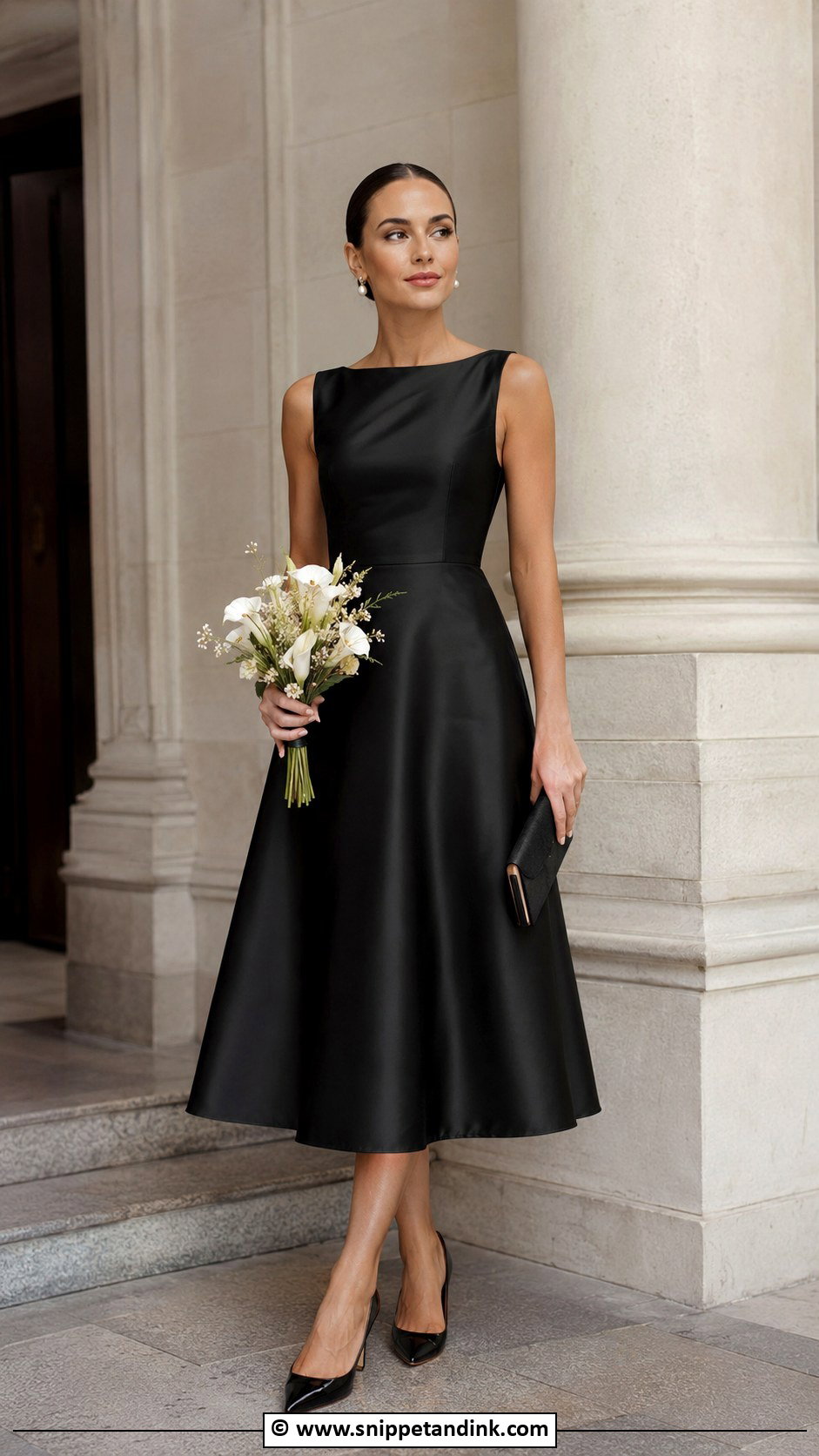
Black is a strong choice for brides who don’t feel connected to white, and it’s more common now for second weddings and modern couples. A black satin slip, tailored midi, blazer dress or column. Black or metallic heels, a structured clutch, minimal jewellery. A small bouquet, polished hair and pearl or crystal accents keep it bridal. Matte black can look flat in photos, so I prefer satin or crepe with a slight sheen. Stone courthouses make a good backdrop.
Security Scanners, Paperwork and a Long Wait
Courthouse days have practical steps that a church or venue wedding doesn’t. Most government buildings have a security check, so heavy metal belts, boning with metal stays and large hair accessories may set off the scanner. It’s not a problem, but allow time for it and leave anything sharp at home, including spare hairpins in a big bag.
- Choose a bag that fits your ID and documents flat. A tiny clutch won’t hold a licence envelope.
- Expect to sit. Satin and linen crease on benches, so stand when you can and carry a small fold-up steamer if the ceremony slot runs late.
- Ask about bouquet size. Some registry rooms are small, and a large bouquet gets awkward in narrow corridors.
- Check whether photos are allowed inside. If not, plan the outfit around the steps and the street.
Finally, think about what happens straight after. If lunch or drinks follow, pack flat shoes and a light layer in your partner’s bag. The outfit that looked right at ten in the morning should still be comfortable by mid-afternoon.
Dress for the Steps, the Bench and the Lunch After
You don’t need a full gown at the courthouse, and you don’t need to play the day down either. A mini, a midi, a suit, a jumpsuit or a slip can all look like a wedding outfit with the right shoes, accessories and fit. Think about the season, where you’ll be photographed, and how much walking and waiting the day includes. Then wear the thing that lets you feel calm and celebrated from the moment you sign to the last toast.
You'll Like These Ideas:


Leave a Reply